A Jurassic Park helicopter tour in Kauai reveals parts of the Garden Isle you can't reach from the ground. Once you take off, the heliport and roads fade away, and you find yourself surrounded by steep green valleys, hidden waterfalls, and untouched land. It's easy to see why filmmakers chose Kauai as Isla Nublar.
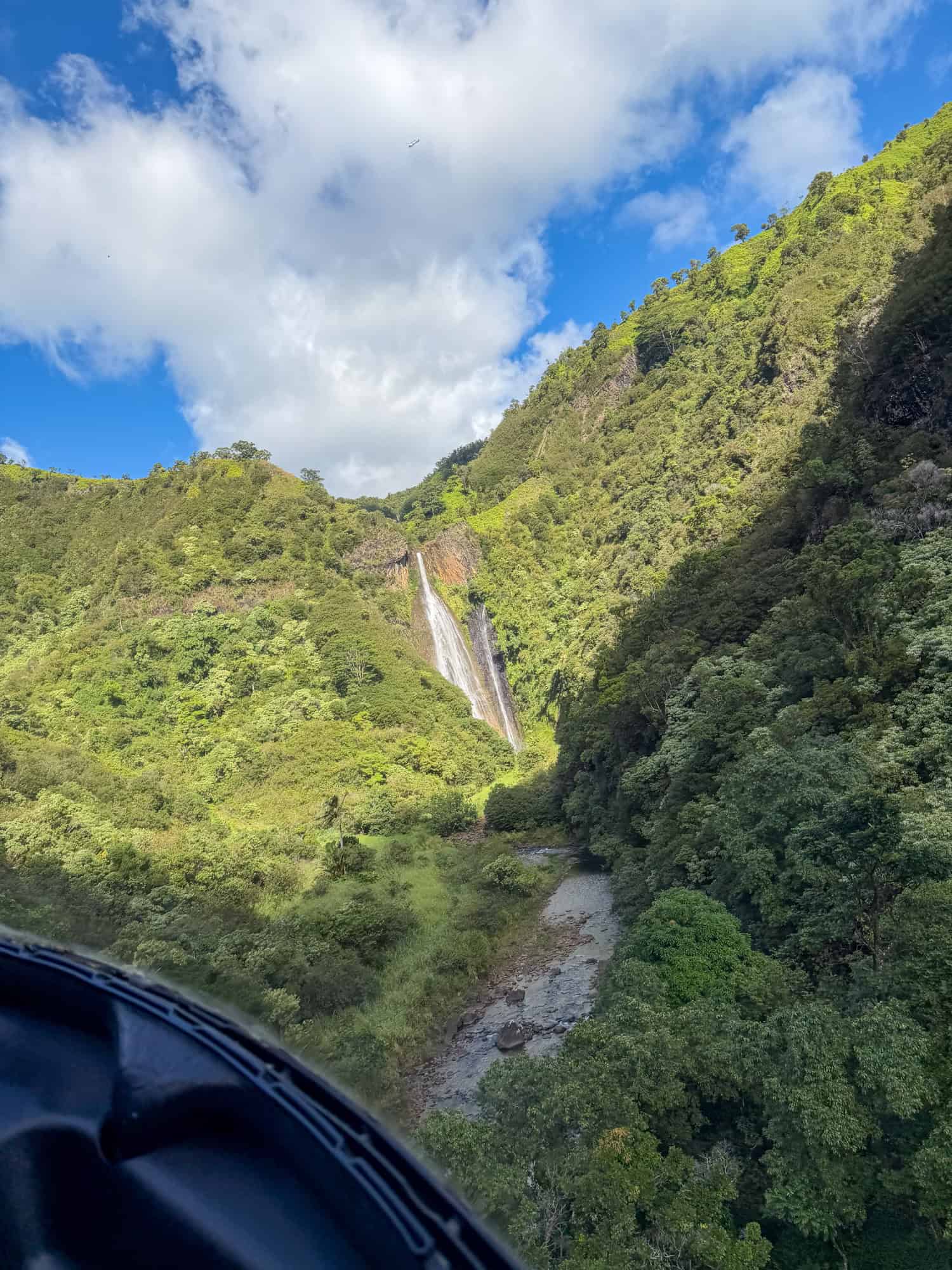
This flight was the best part of the Jurassic Park-themed trip Kel and I took to Hawaii. We began with a relaxed drive through filming locations at Kualoa Ranch on Oahu, but I was looking for something more thrilling.
We decided to fly out to Manawaiopuna Falls, a remote 400-foot waterfall featured in the first movie. You can't reach it by land, so the only way to see it is by helicopter or plane.
You land at the falls early in the 75- to 80-minute tour, but that's just the start. The rest of the flight takes you over Waimea Canyon and along the Na Pali Coast, showing how cinematic the island looks from above. Of the four helicopter tours I've taken, this was the longest and most impressive.
If this is your first time on the island, it pairs especially well with a few days exploring other highlights on Kauai.
Jurassic Park Helicopter Tour
Taking Off Over Kauai
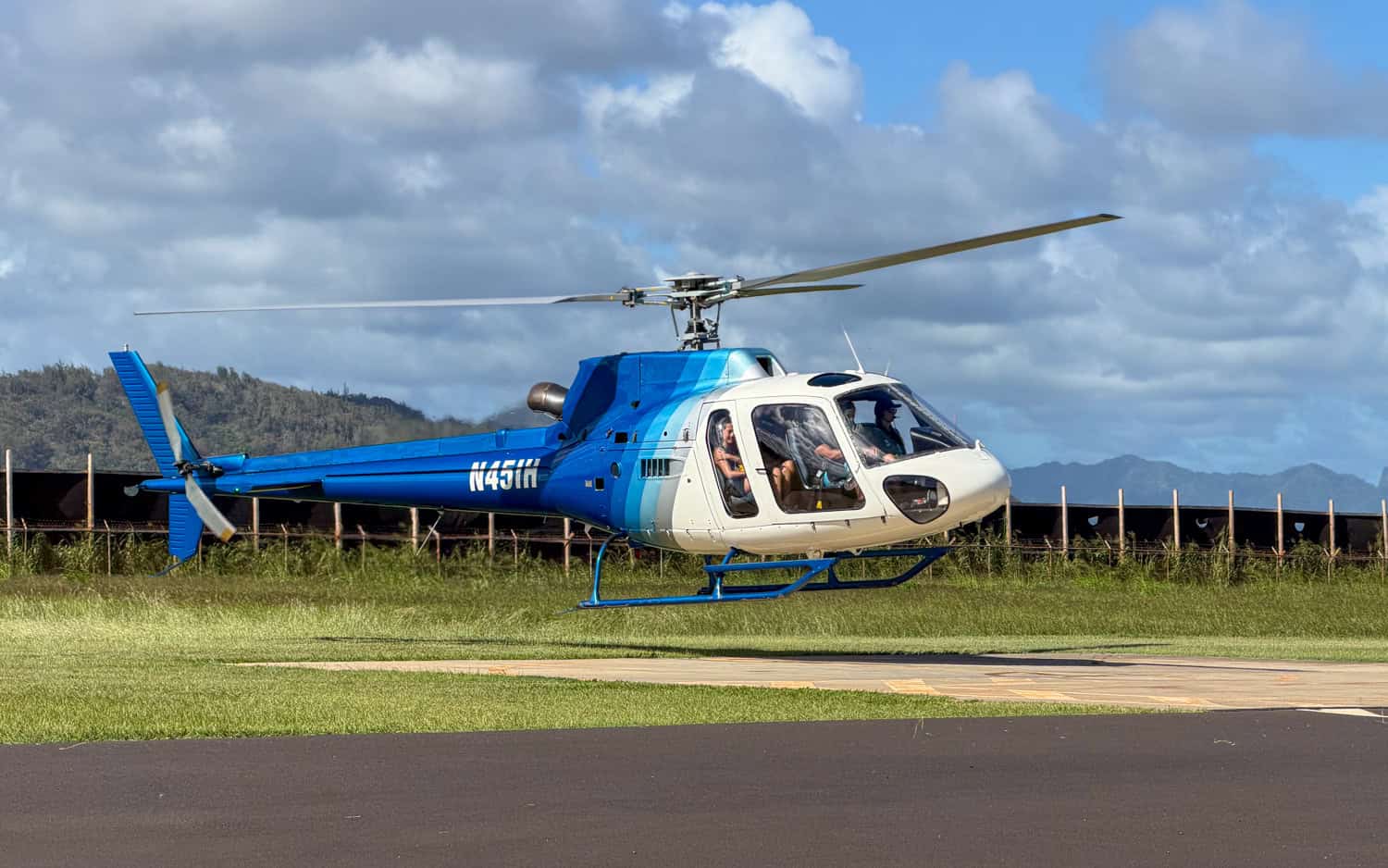
We took off from the landing pad behind Island Helicopters Kauai's office, next to the tarmac at Lihue Airport. The company uses Airbus AStar helicopters with powerful 1D1 turbine engines and large custom windows that go from floor to ceiling.
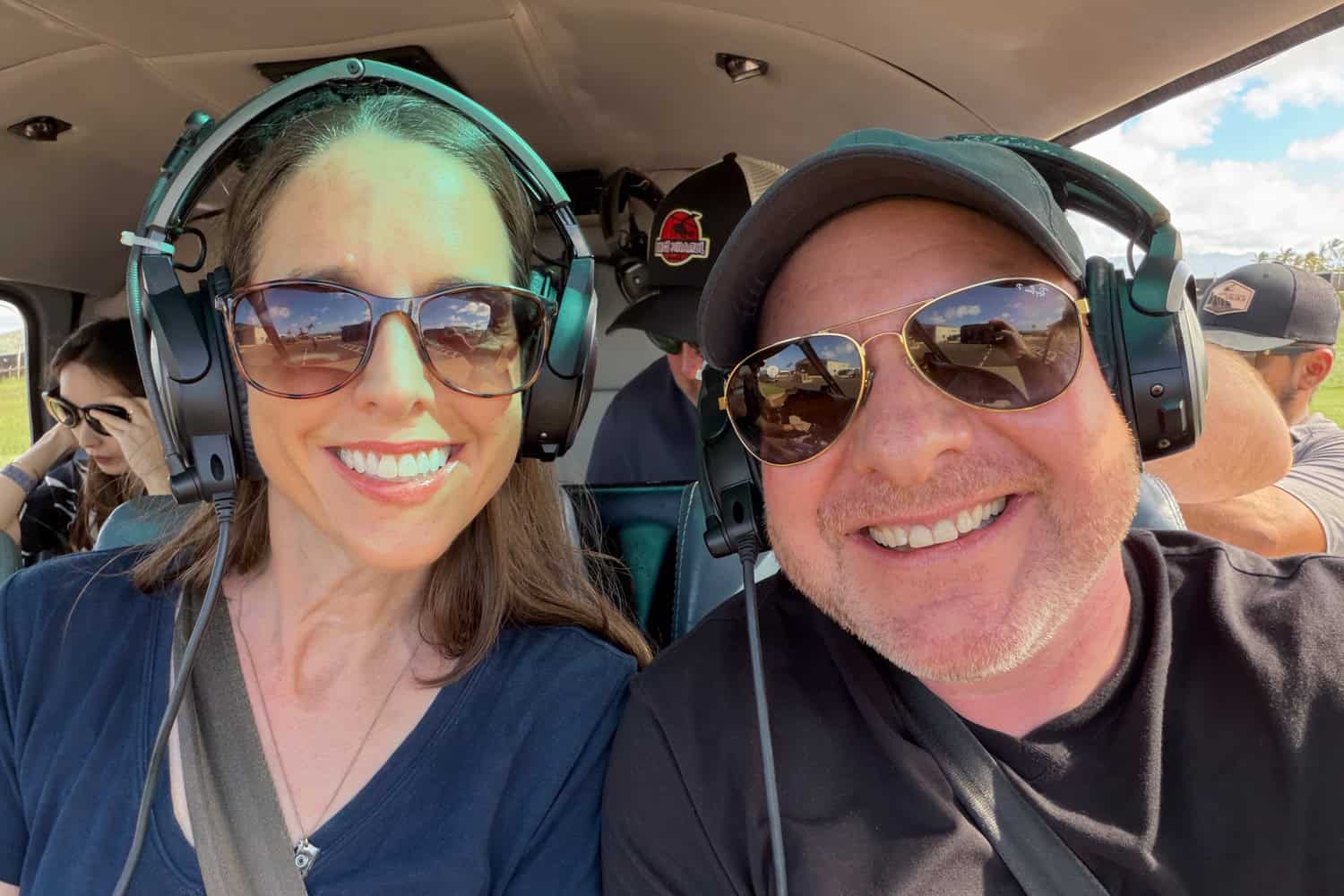
The cockpit is air-conditioned for comfort, and everyone wears noise-reducing headsets during the flight. The headsets block most of the rotor noise.
For safety reasons, the communication system prioritizes contact with air traffic control and other pilots, so passenger headsets mainly carry the pilot's narration and music.
Island Helicopters assigns seats based on weight balance, not personal choice, so keep that in mind before you go.
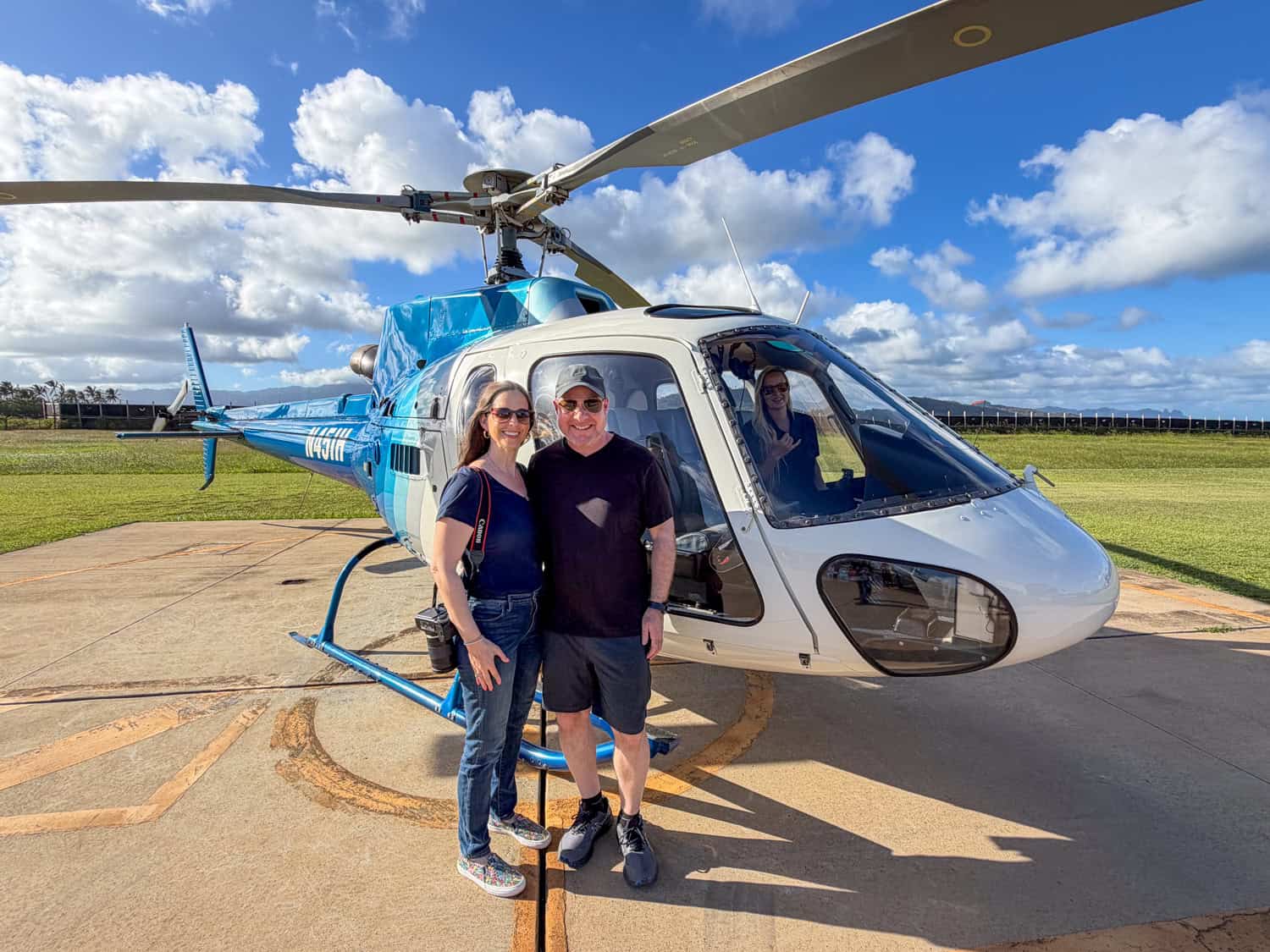
We were lucky-Kel got the middle front seat between the pilot, Isabelle, and me for her first helicopter flight, and I sat in the front-right seat.
The front seats are the best in the helicopter, supplying clear views and a close-up of how the pilot flies. Three other passengers sat in the back row on our flight, and there was one empty seat.
Landing at Jurassic Falls (Manawaiopuna Falls)
All helicopter tours in Kauai fly clockwise around the island, so you reach Jurassic Falls early in the flight. Soon after takeoff, we flew south toward the coast, then turned west over Kalapaki Beach.
About seven or eight minutes later, the helicopter started heading north up a narrow, verdant valley.
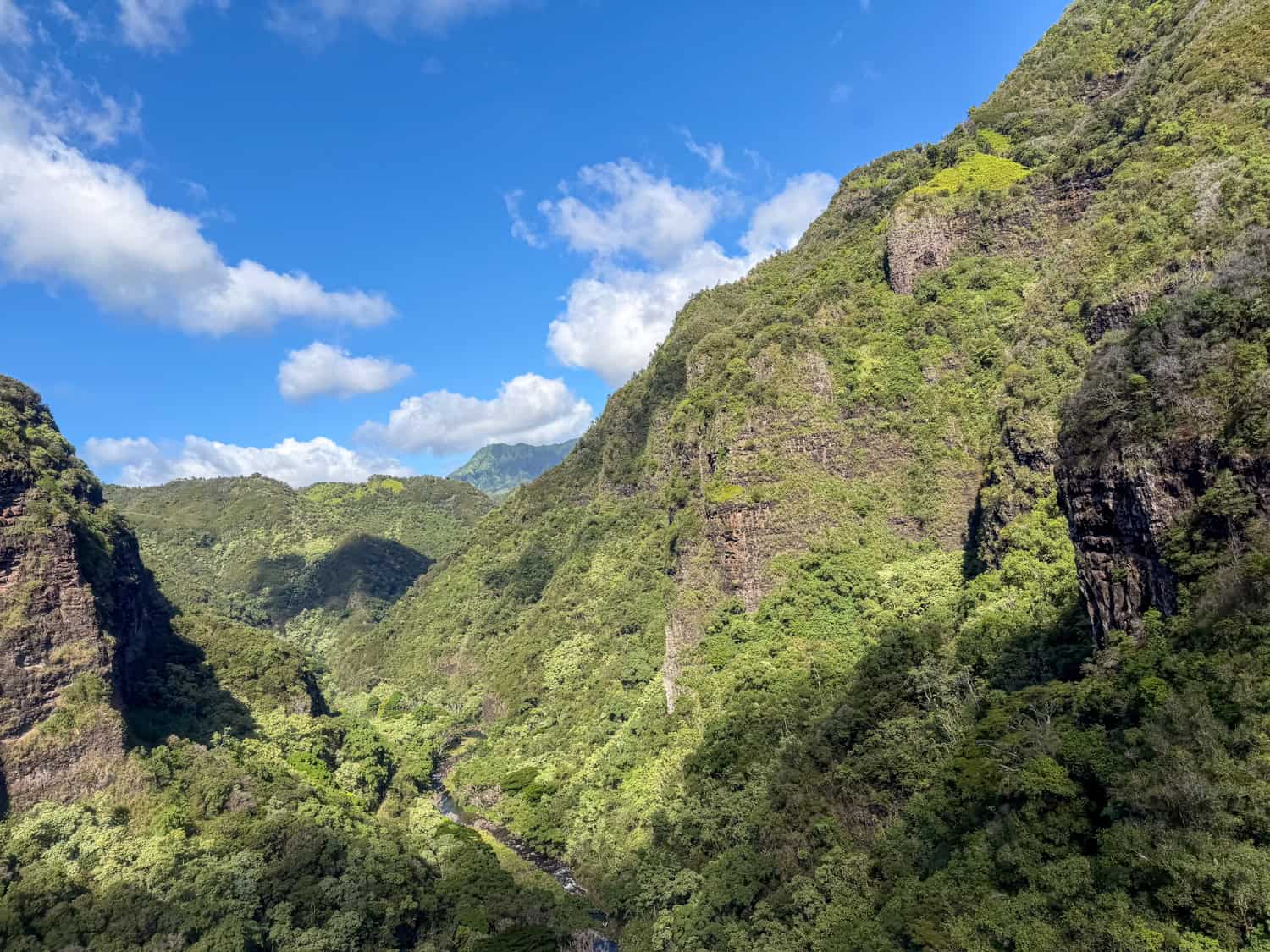
As John Williams' famous "Jurassic Park" theme played in our headsets on the helicopter tour, the valley narrowed, and the walls grew taller. Then the waterfall appeared, a 400-foot cascade pouring over the cliff.
Seeing Manawaiopuna Falls come into view felt familiar, as though stepping into a scene from the movie I first saw in the theater in the summer of '93.
On the Ground
Isabelle landed the helicopter gently in a small grassy clearing near the base of the falls, just ten minutes after takeoff. From there, it was a short walk-about a minute or two-along a concrete and dirt path to the waterfall.
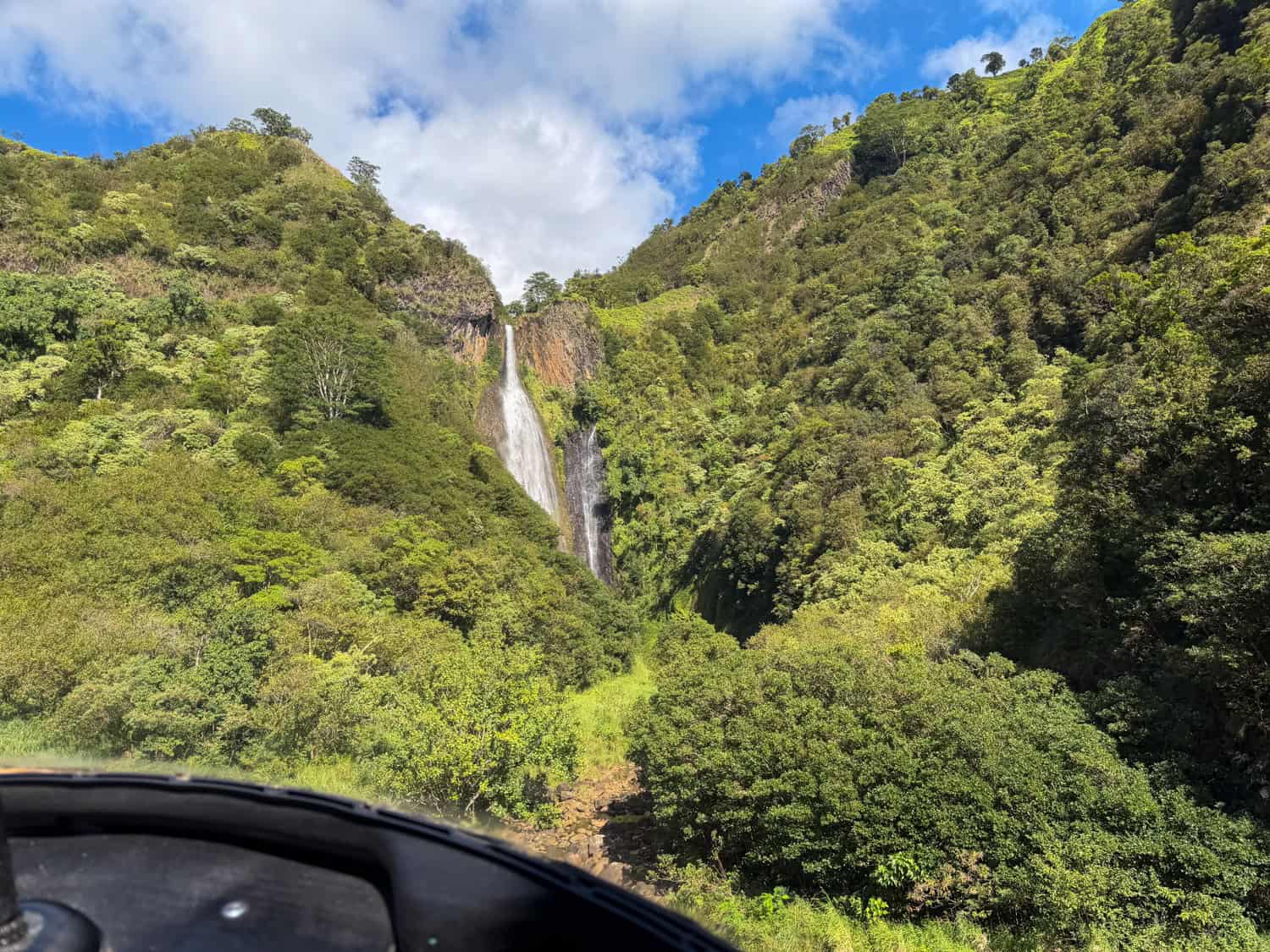
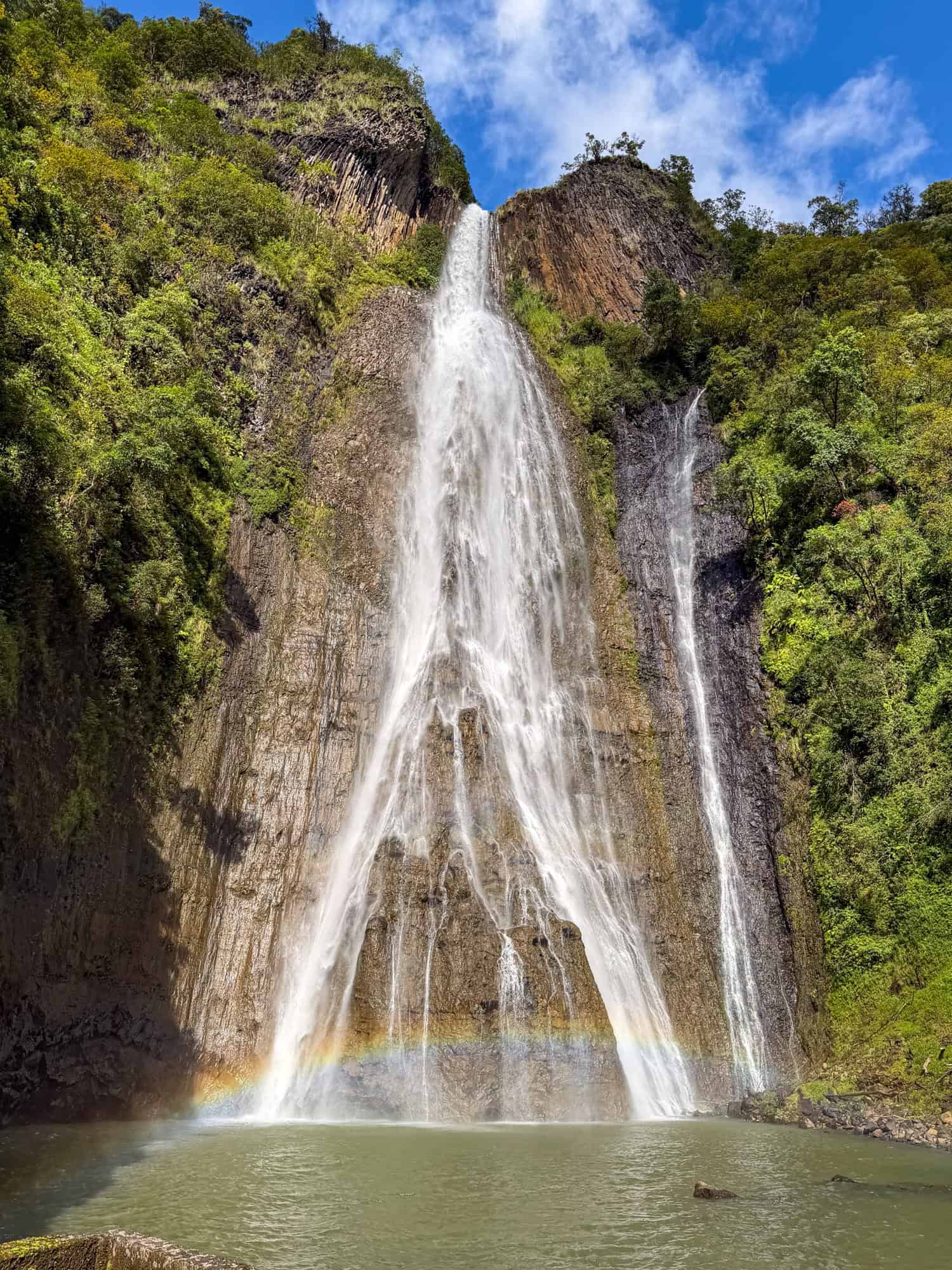
Standing at the base, with water crashing down the cliff, it was hard not to think of "Jurassic Park."
In fact, Island Helicopters is the company that helped director Steven Spielberg and crew scout this waterfall for the film in the early 90s. Decades later, they're still the only tour operator allowed to land here (the land is privately owned).
We were given fabric booties to place over our shoes to protect the environment. And then we walked around, took photos, and enjoyed the moment.
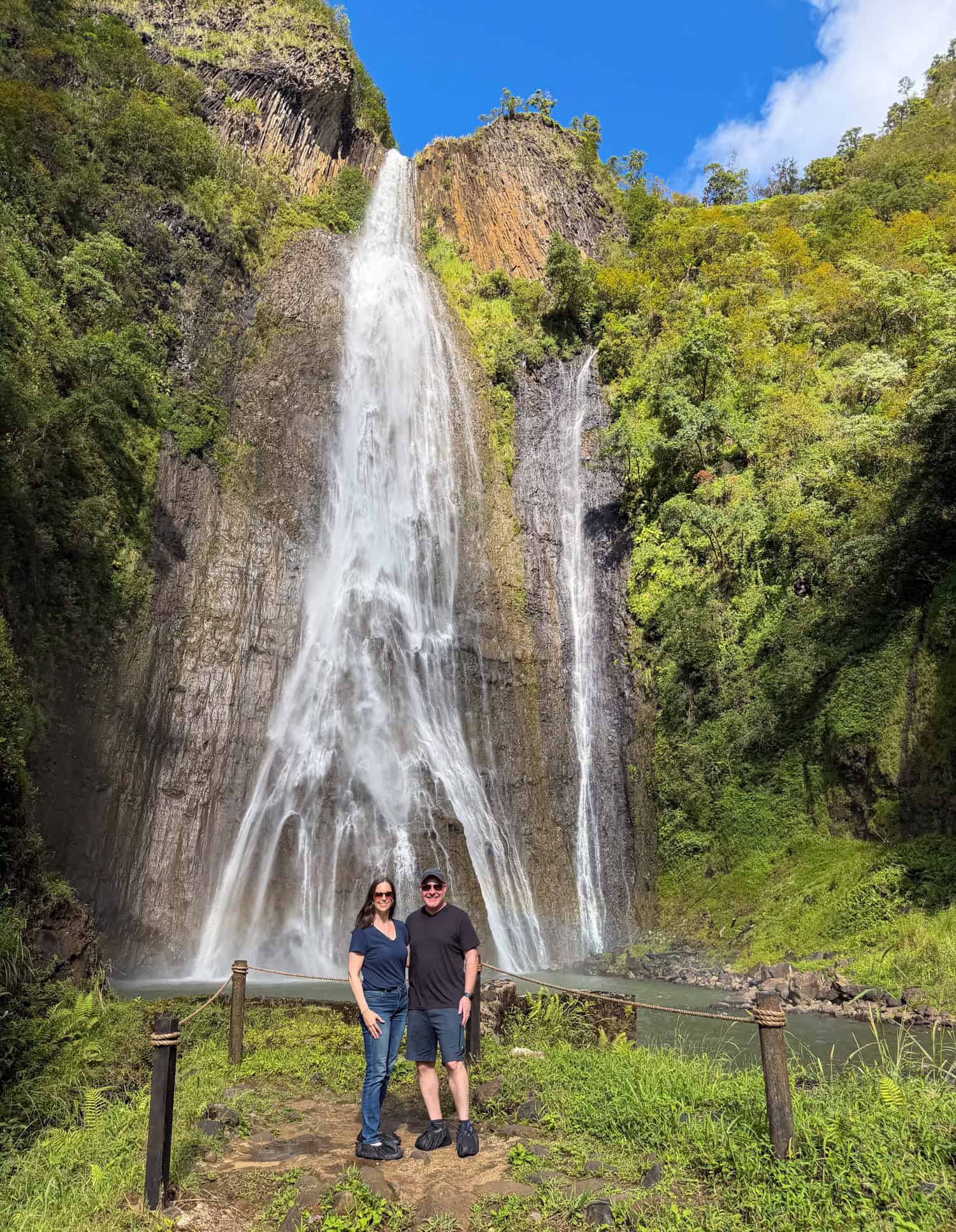
Our pilot patiently helped everyone get pictures, and I never felt rushed. And because this is Hawaii, we even saw a rainbow at the base of the falls.
After roughly 20 minutes, we headed back to the helicopter, snapped a few more photos, and took off again to resume the rest of the 80-minute tour around the island.
Flying Through Waimea Canyon
After leaving Jurassic Falls, our helicopter pilot flew west toward Waimea Canyon, often called the "Grand Canyon of the Pacific." Seeing it from the air gives you a sense of scale you can't get from roadside lookouts alone.
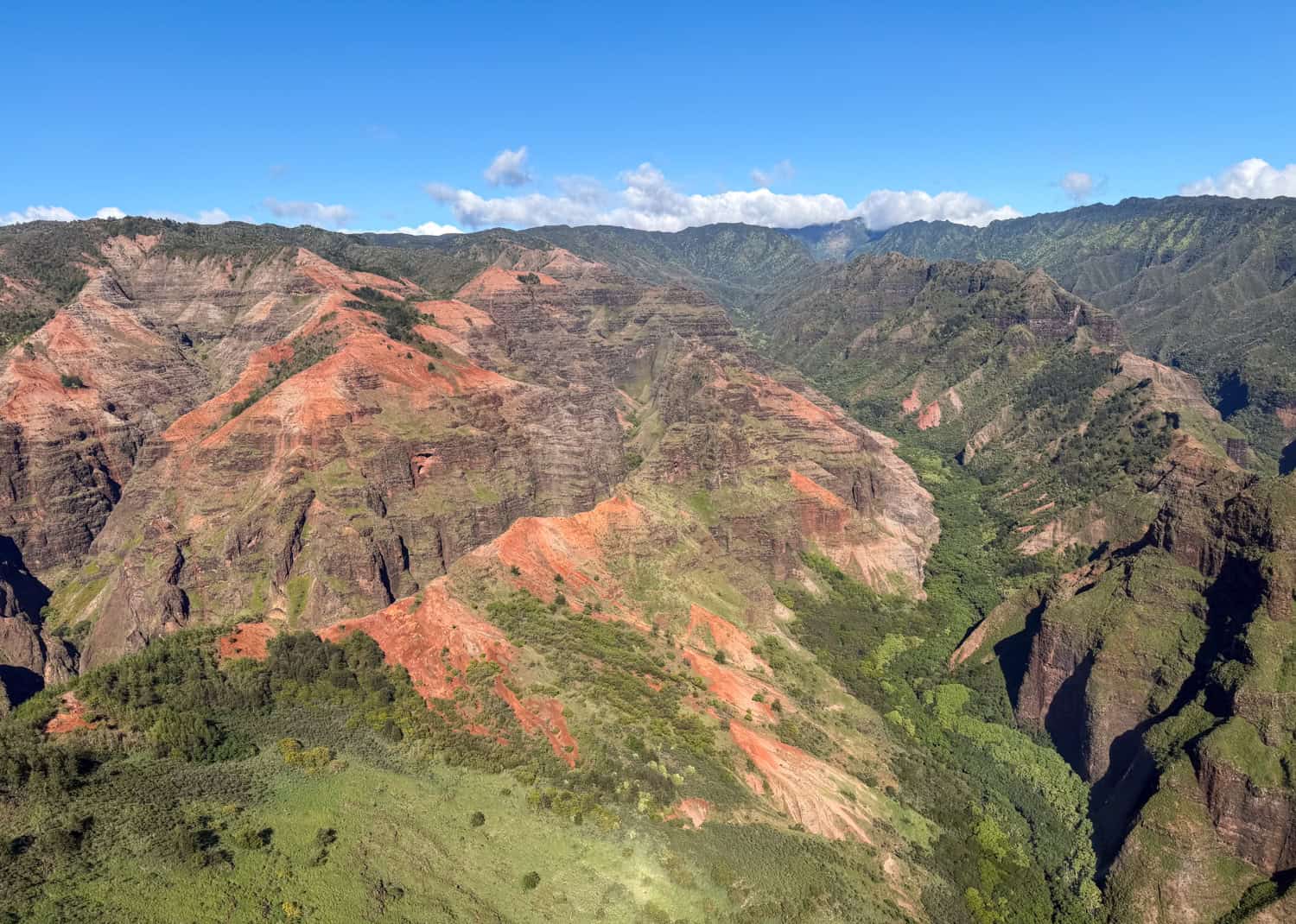
Waimea Canyon began forming about 4 million years ago, after the collapse of Kauai's central volcano.
Over time, heavy rain from Mount Waialeale and the Waimea River carved deep into the island's volcanic rock, exposing layers of basalt and red soil.
Today, the 10-mile-long canyon is up to 3,600 feet deep, making it one of the deepest in the Pacific.
From the helicopter, you can clearly see those layers. The canyon walls change from dark volcanic rock to rust-red earth, with green plants clinging to the slopes.
Narrow ridges separate dramatic drop-offs. When it rains, waterfalls streak down the sides, feeding streams below.
Along the Na Pali Coast
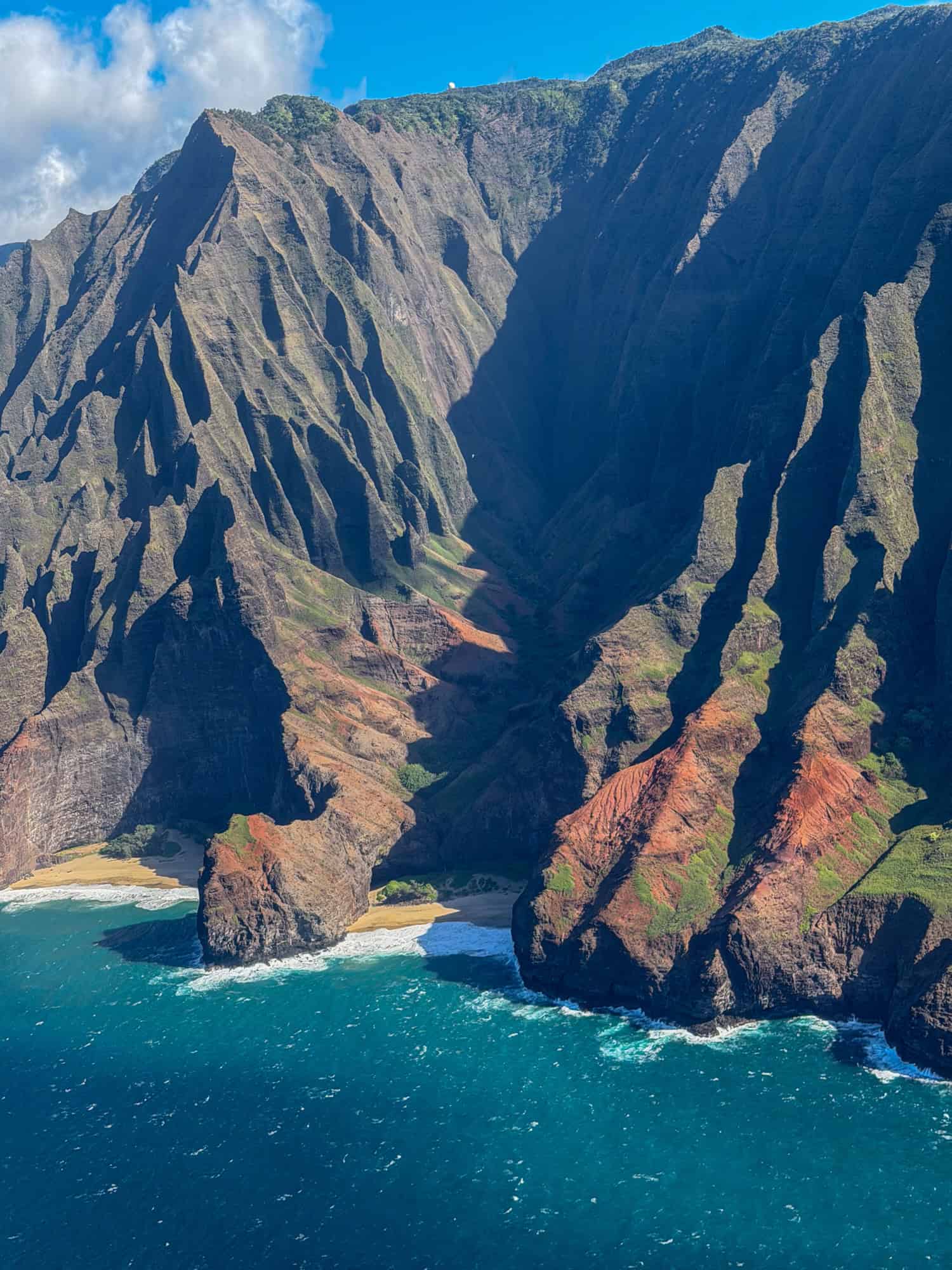
From Waimea Canyon, the flight continued north toward one of Kauai's most dramatic landscapes: the Na Pali Coast.
Even after seeing photos for years, nothing really prepares you for how sudden the coastline feels from the air. The island doesn't slope gently into the ocean here; it just drops.
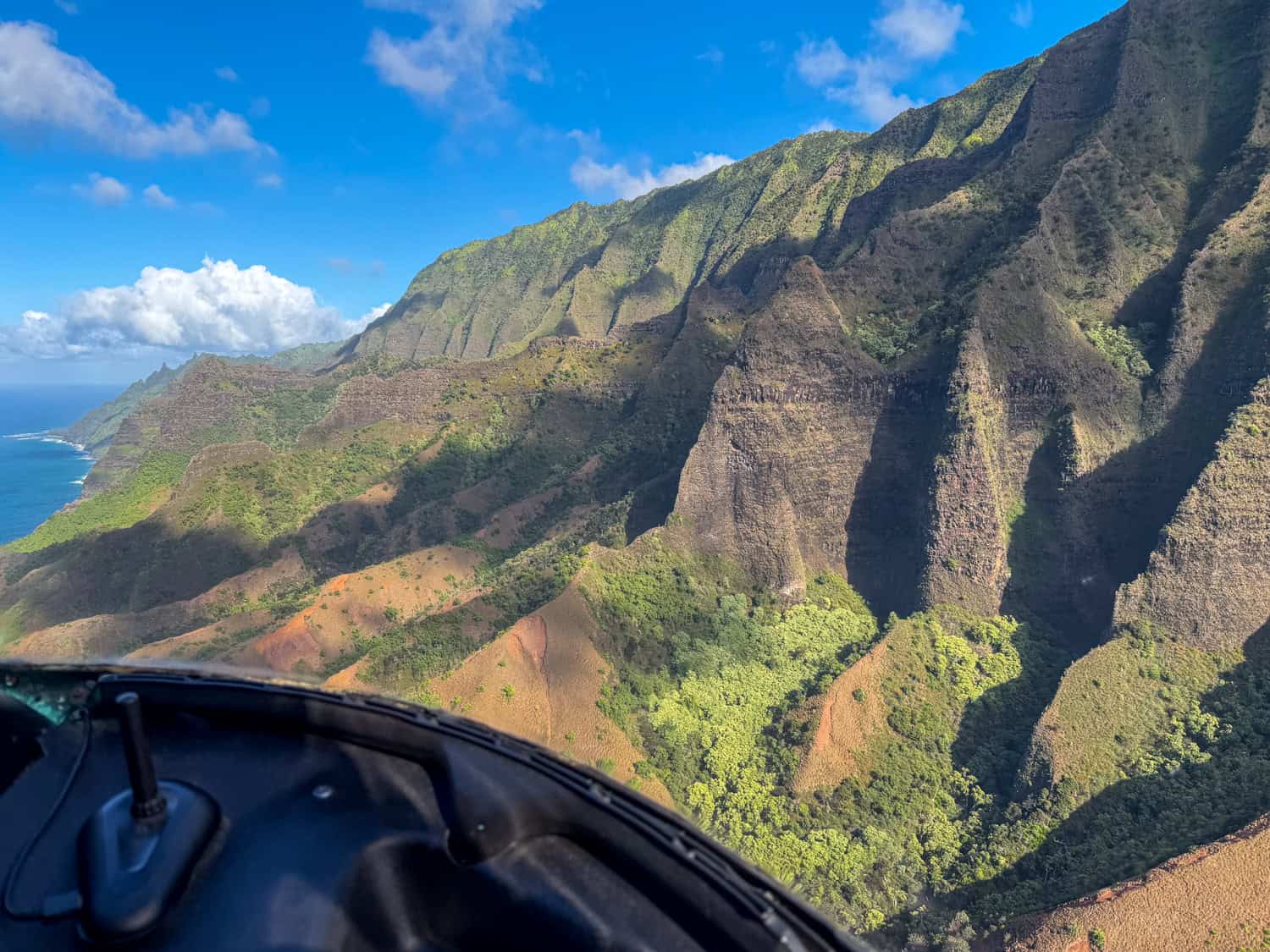
Geologically, the Na Pali Coast formed over millions of years as erosion shaped Kauai's original shield volcano.
About 4 to 5 million years ago, intense rainfall and flash floods carved these razor-sharp ridges. Over time, the softer volcanic material wore away, leaving the narrow spines and cathedral-like valleys that define the coast today.
Some sea cliffs rise more than 4,000 feet straight up from the Pacific, making them among the tallest in the world.
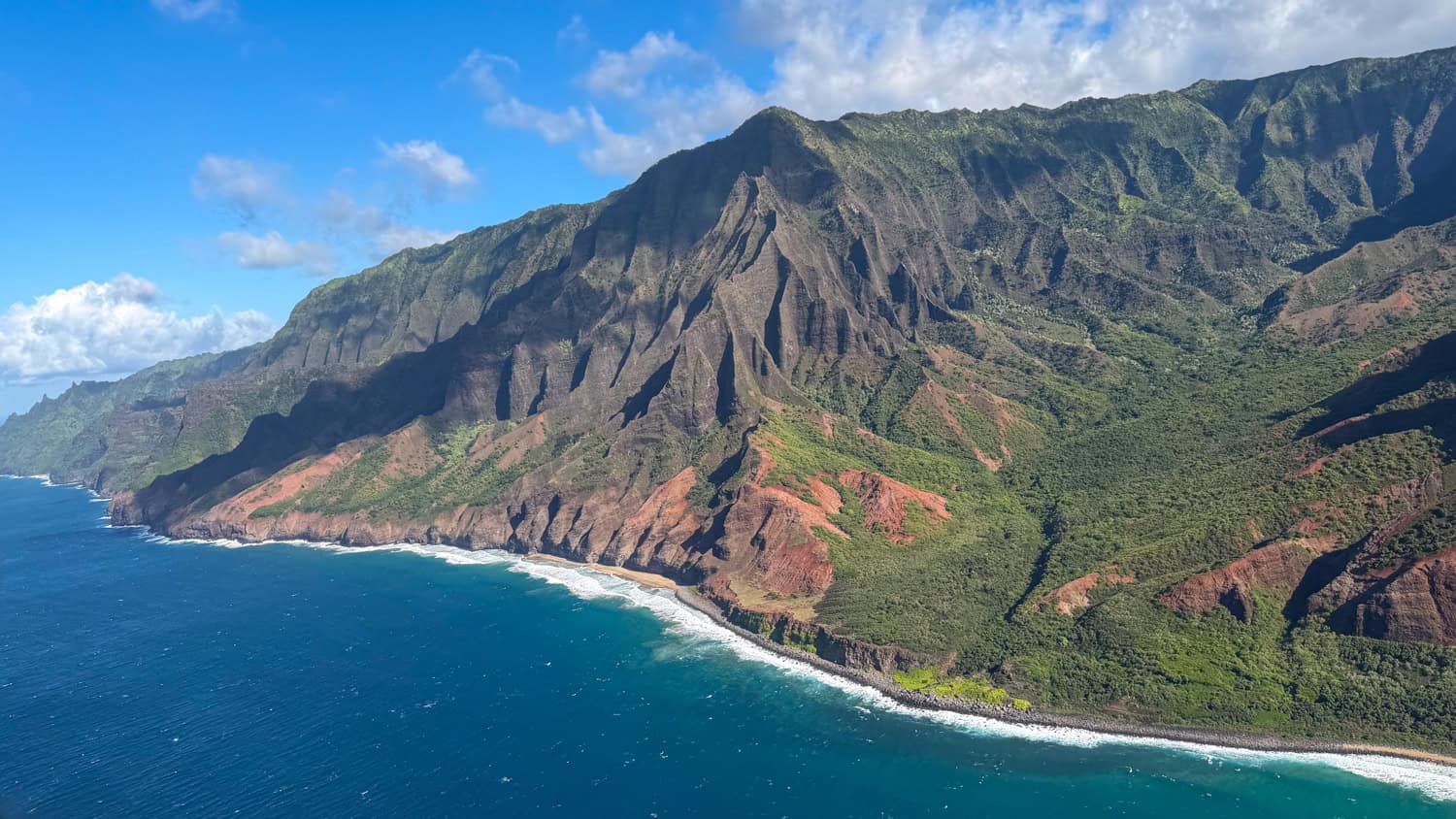
From the helicopter, the patterns are easy to see-deep, parallel valleys run from the island's interior to the sea, separated by knife-edge ridgelines.
After rain, waterfalls spill directly into the ocean, and sea caves create dark openings in the cliffs below.
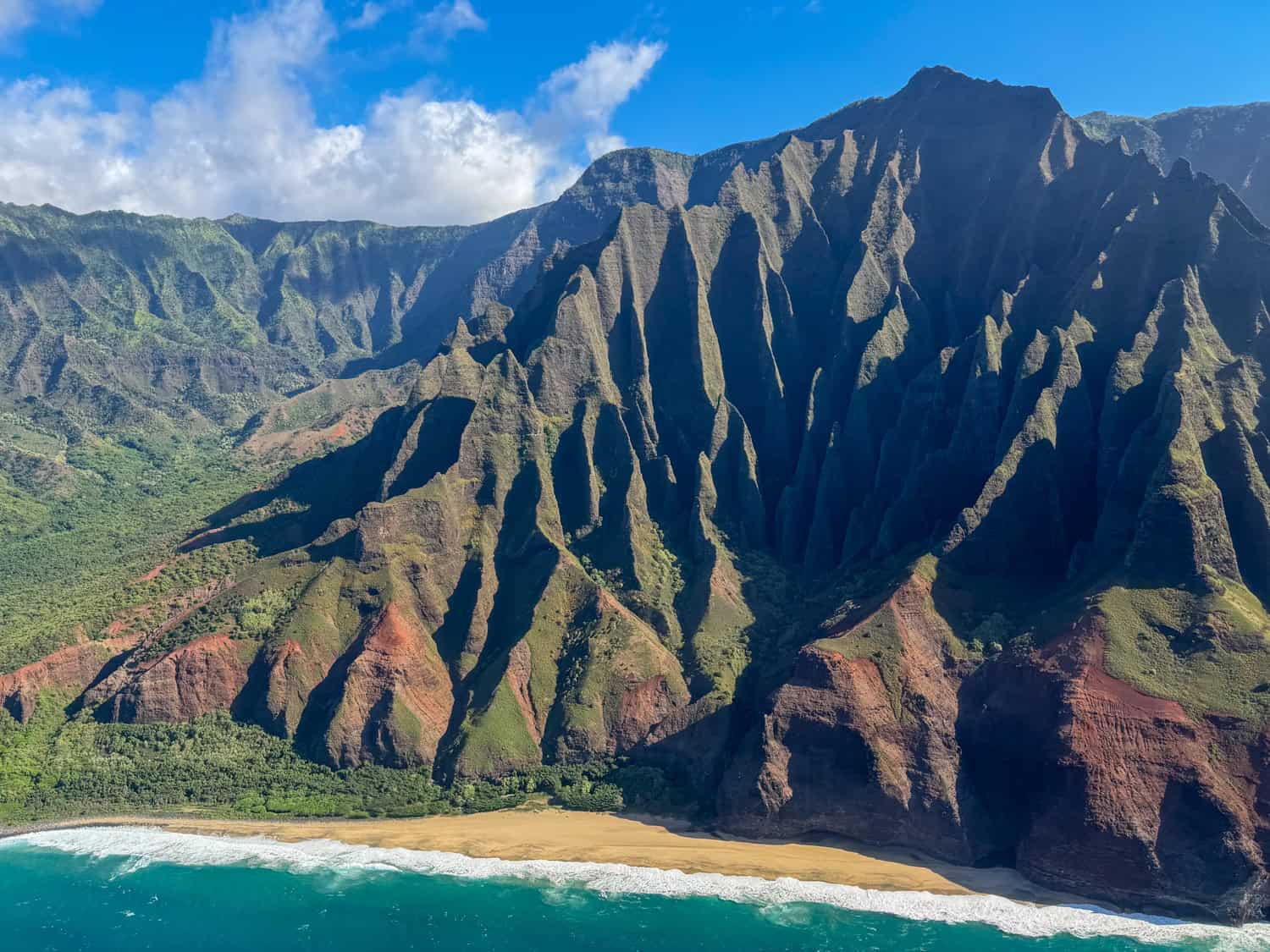
Seeing the Na Pali Coast from above was especially meaningful because we knew we'd be coming back the next morning by boat on a catamaran cruise with Captain Andy's.
Getting a birds-eye view first gave me a much better sense of the coastline's scale and shape.
Inland Over Hanalei Valley
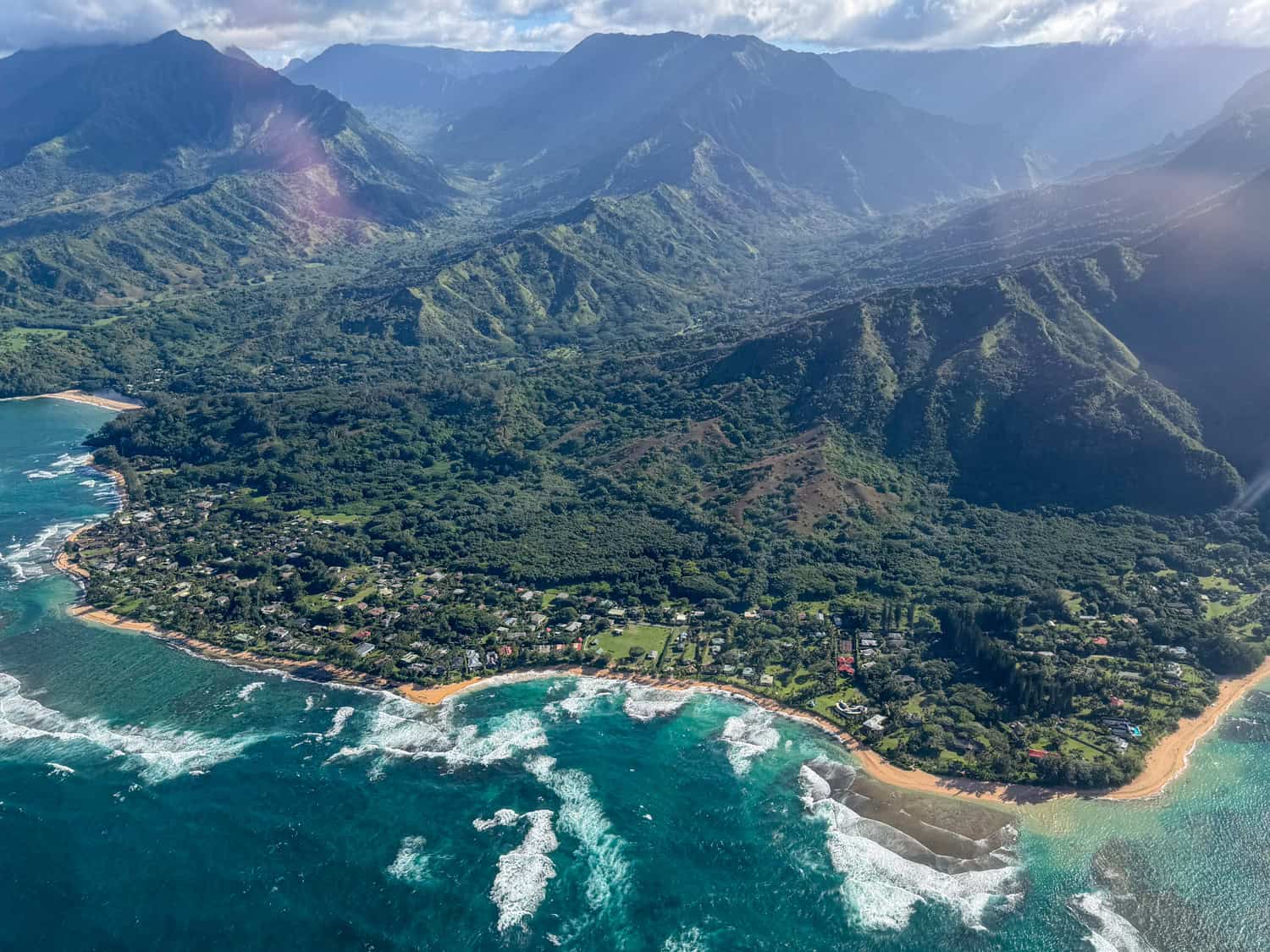
After flying along the cliffs of the Na Pali Coast, the helicopter turned inland near Hanalei Bay, marking the final part of the tour.
The change from coastline to interior was sudden. The ocean disappeared, replaced by wide valleys and dense green rainforest.
Flying over Hanalei Valley, the size of Kauai's farms and natural landscape became clear. Taro fields covered the valley floor below.
From there, we passed over the Halelea Forest Reserve, a lush stretch of rainforest that was remote even by Kauai standards.
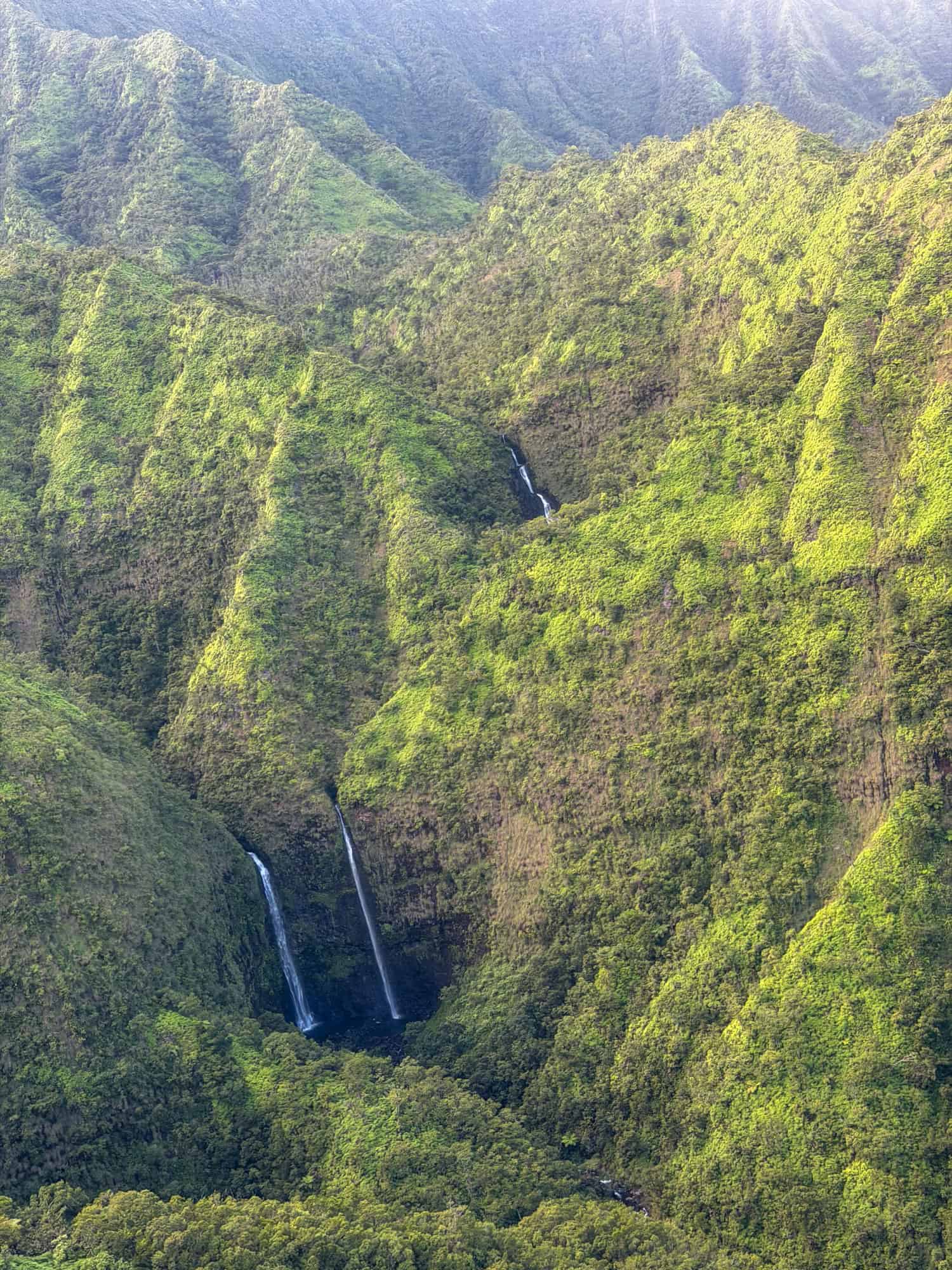
This part of the flight had some of the tour's most impressive waterfalls. Several cascades poured straight down steep mountain walls, so tall they seemed to rival the peaks themselves.
The waterfalls, valleys, and rainforest interior served a fitting end to our tour, showing how much of Kauai's beauty is far beyond the reach of roads and how much you miss if you never leave the ground.
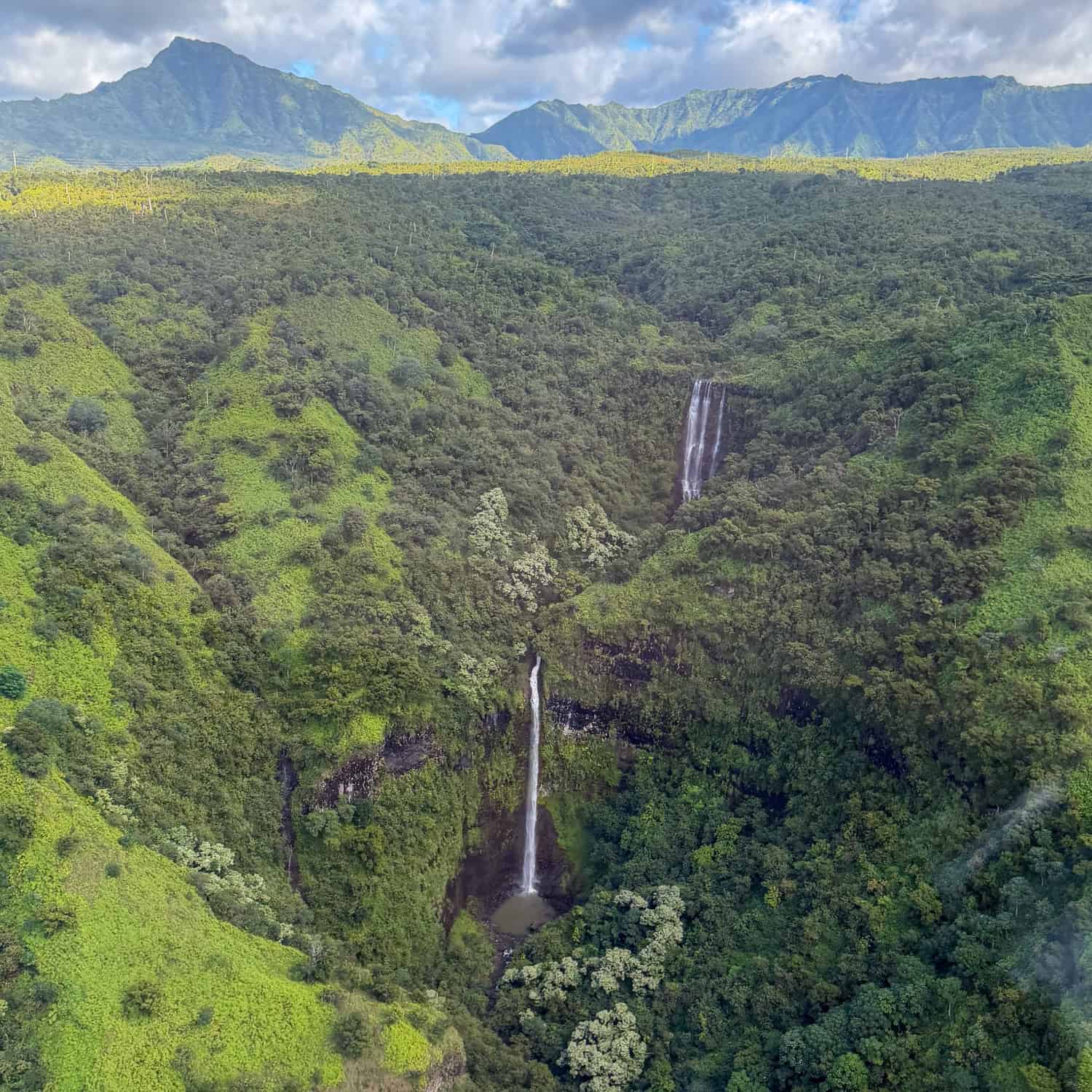
As we approached Lihue Airport for landing, I was honestly thrilled; the tour had surpassed my highest expectations.
Booking the Jurassic Falls Helicopter Tour
Booking the tour is simple, but there are a few things to know beforehand. We booked directly with Island Helicopters Kauai, which is the easiest way to check real-time availability and ensure the Jurassic Falls landing is included.
Because this is the only tour allowed to land at the waterfall, spots can fill up quickly, especially during high season (June to August and December to March). Booking in advance is a good idea.
Duration
The full island tour lasts about 75 to 80 minutes, with roughly 20 to 25 minutes spent on the ground at Manawaiopuna Falls.
Cost
The $ 432-per-person price reflects the longer flight and exclusive landing, making this one of the more premium helicopter experiences on Kauai. After experiencing the tour firsthand, I felt the cost was justified.
Seating
Logistics are managed efficiently at the heliport near Lihue Airport. Check-in is simple, and staff walk everyone through safety guidelines and what to expect once on board.
One important thing to know is that seating is assigned by the operator, not by request. Placement is based on weight and balance to make sure the helicopter operates safely.
If seat position is very important to you, chartering the helicopter is the only way to guarantee it. That said, I was happy to learn that couples are usually seated together, so one of the two will sit next to a window.
Comfort
Passengers wear noise-reducing headsets during the flight, which dampen the rotor noise and let you hear the pilot's narration clearly. The cockpit is temperature-controlled, and the large windows give you great views of the terrain.
As for what to bring, less is more, given the limited space in the helicopter cabin. Loose items aren't allowed onboard, and there's a limit on camera lens size you can read about in the FAQ.
Comfortable clothing, including a dark shirt to reduce reflections on windows, and closed-toe shoes, is recommended. For adventure-seekers considering a helicopter tour of Kauai, the extra cost means a longer, more immersive experience.
For more ideas on how to plan your trip - and where to eat after a day of exploring Hanalei Bay, Waimea Canyon, or Poipu Beach - read my guides to the best things to do in Kauai and where to eat in Kauai.
Final Thoughts
By the time we landed near Lihue Airport, it was clear this helicopter tour had lived up to all that we hoped for. And then some. Landing at Jurassic Falls was the highlight, but it wasn't the only one.
Flying over Waimea Canyon, tracing the cliffs of the Na Pali Coast, and drifting inland over Hanalei Valley showed just how much of Kauai is beyond the reach of roads (approximately 70%).
What stood out most was how complete the experience felt. In one flight, we saw the island's most dramatic landscapes from angles you can't get from the ground.
For anyone thinking about a Jurassic Park helicopter tour in Kauai, this flight is much more than a movie tie-in. It's a chance to see the Garden Isle at its wildest and understand why filmmakers found this landscape worthy of the big screen.
Island Helicopters
islandhelicopters.com