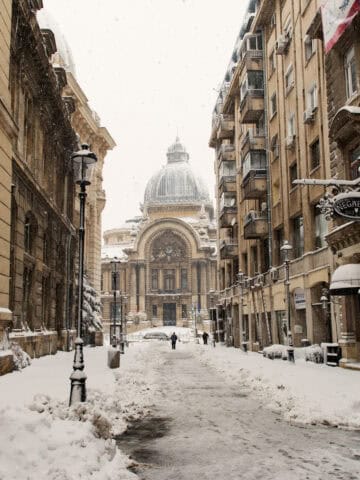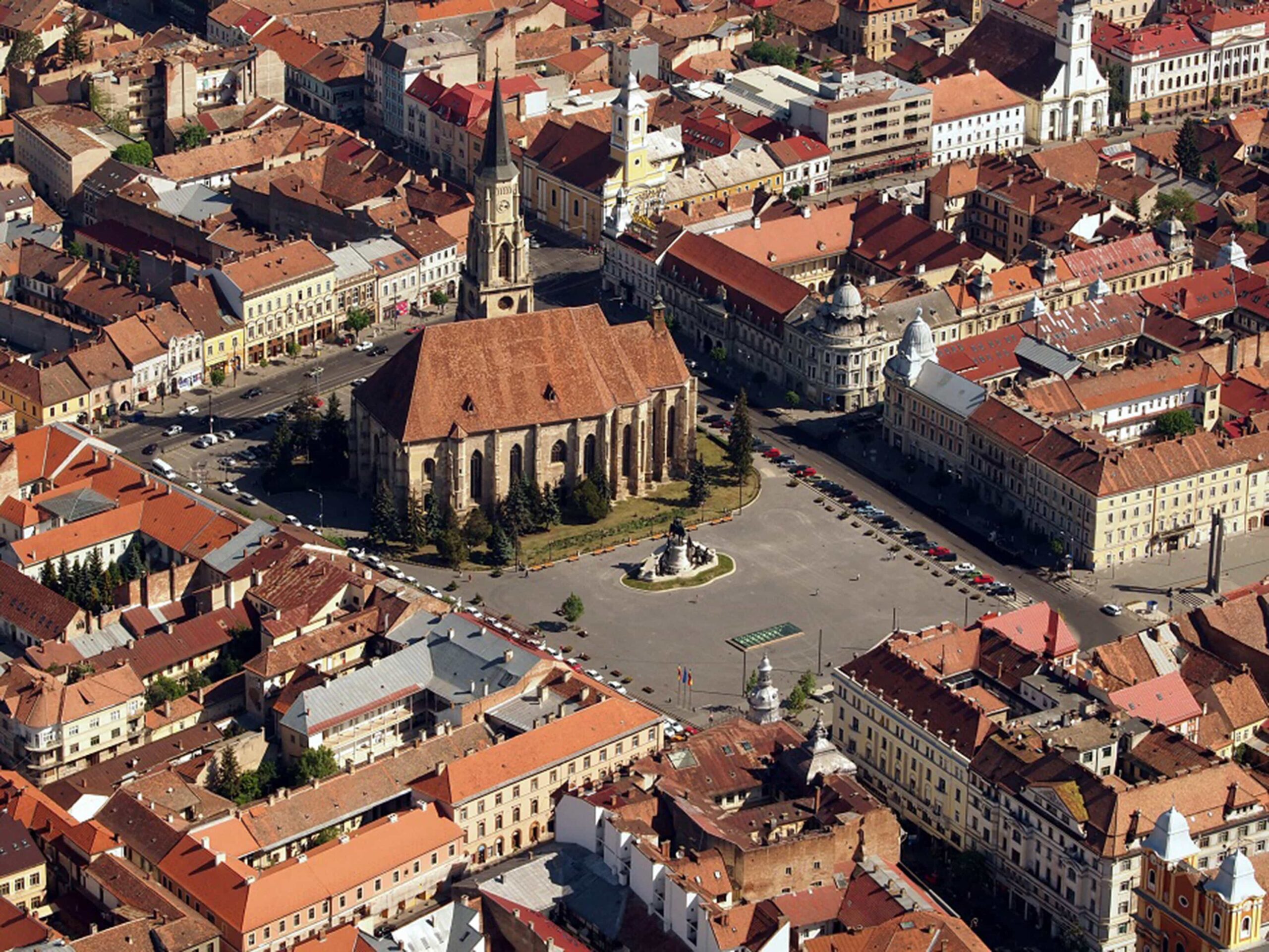
This article is based on my 2015 backpacking trip through Romania.
Romania wasn't even on my shortlist when I first mapped out that 2015 backpacking loop through Eastern Europe.
By the time I crossed into Romania that August, I'd already racked up four months of travel-Turkey, Georgia, Armenia, Greece-each country leaving its own mark and, honestly, wearing me down.
I was running on fumes, looking for a place where I could finally slow my pace, catch up on work, and settle into something that was a bit more like everyday life.
That's how I ended up staying in Bucharest for nearly a month, letting the city become my temporary home base until I finally felt rested enough to board a train north into Transylvania.
Back then, Romania felt like one of those rare places you could still have mostly to yourself. It was affordable, easy to navigate solo, and offered a mix of city life, mountain scenery, and medieval towns that rewarded slow travel.
I'm sure some of the details have shifted since then, but the feeling of backpacking through Romania remains one of the most vivid stretches of that long trip through Eastern Europe.
Why Romania Works Well for Backpackers
Romania had a different pulse than Western Europe, and I found myself appreciating those differences more with each succeeding week.
Life moved at a slower pace here. Trains jostled along for hours, a bit worn and noisy, but that just deepened the sense of being on a real journey. The cities felt lived-in, not polished up for visitors.
Even in the heart of Transylvania, I could wander for hours without passing through crowds or feeling like just another tourist in a pack.
What caught me off guard was just how much variety fit into such a manageable route. Bucharest teemed with the noise and movement of a capital, while a few hours by train brought me to towns like Brasov, Sighisoara, and Sibiu-each slower, quieter, and with its own particular character.
If you're the kind of traveler who likes to go at your own pace, hop on trains, and really dig into a place for a while, Romania is the sort of country that welcomes you in and makes it easy to stay longer than you planned.
My Romania Backpacking Route
I kept my route through Romania relatively simple:
- Bucharest: August 3-29
- Brasov: August 29-September 1
- Sighisoara: September 1-4
- Sibiu: September 4-7
- Bucharest: September 7-9
Most of my time was anchored in Bucharest, thanks to a tip from a friend, Wandering Earl, about renting a small apartment. The city turned into my base camp for remote work and slow, meandering days.
After nearly a month, I finally packed my bag, boarded a train north through Transylvania, and eventually flew to London to visit another friend before heading home to the States.
Looking back, I'm glad I didn't rush. Giving myself a month in one place helped me to experience Romania in a way that wouldn't have been possible if I'd tried to cram it all into a week.
Spending a Month in Bucharest
My First Impressions of Bucharest
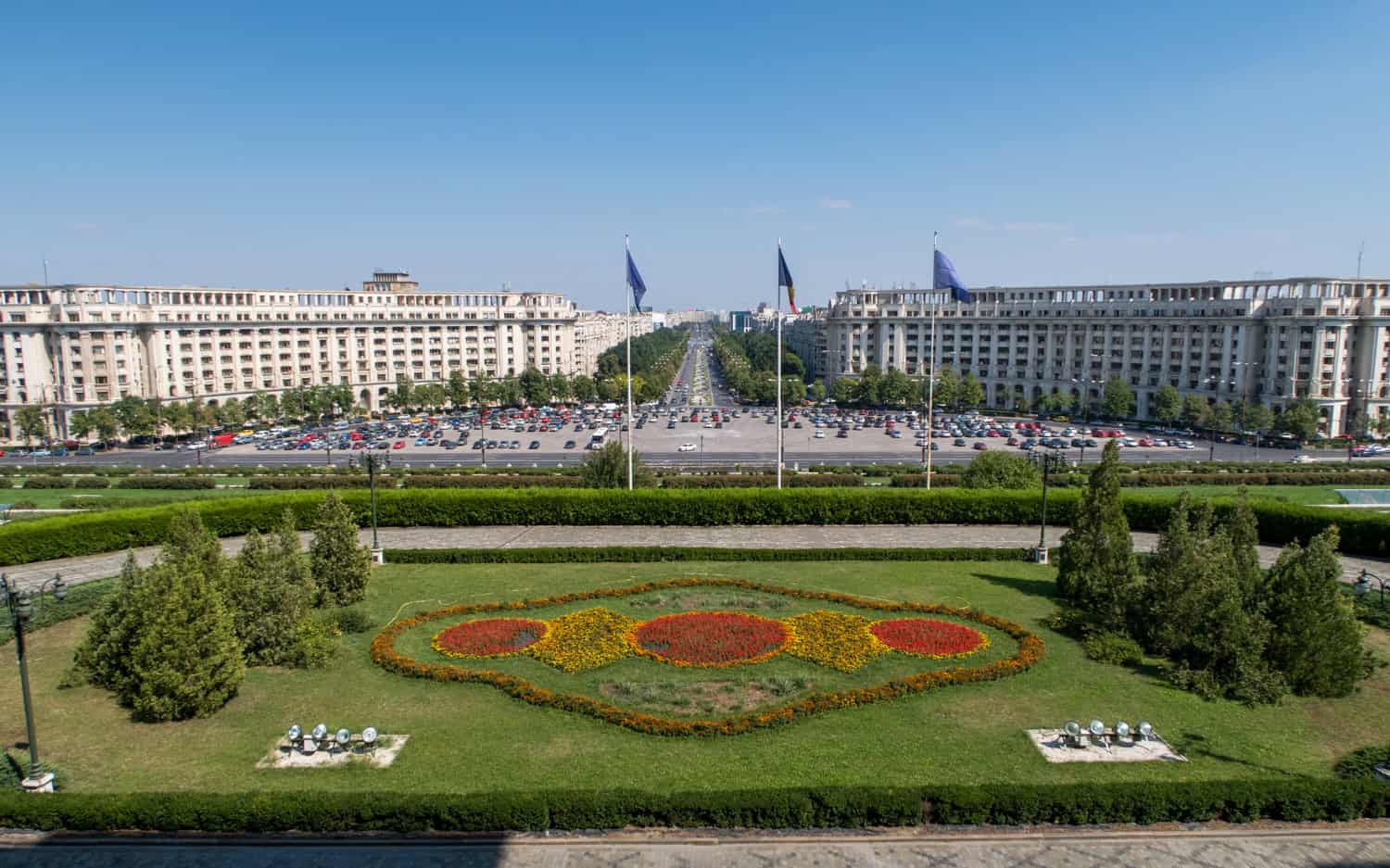
Bucharest didn't win me over right away. Those first days, the city appeared sprawling and a little rough around the edges-harder to get a feel for than other European capitals I'd passed through.
Wide boulevards would suddenly give way to rows of aging apartment blocks and hulking communist-era buildings. But the longer I stayed, the more the city opened up.
I stopped worrying about the big sights and started caring more about the small rituals-roaming through leafy parks, claiming a preferred corner in a neighborhood cafe, and exploring side streets.
Historic Sites and Everyday Life in Bucharest
One of the things I remember about Bucharest was how comfortable the city became once I stopped approaching it like a traditional sightseeing destination.
Instead of rushing from one attraction to the next, I let myself settle into a slower routine. My apartment sat in a quiet residential pocket, and most days ran together: a mix of remote work, long walks, hanging out in cafes, and the occasional burst of sightseeing.
One place I returned to regularly was Green Tea, a small tea house located across the street from my apartment. I'd often bring my laptop there to work from the peaceful outdoor patio for a few hours at a time.
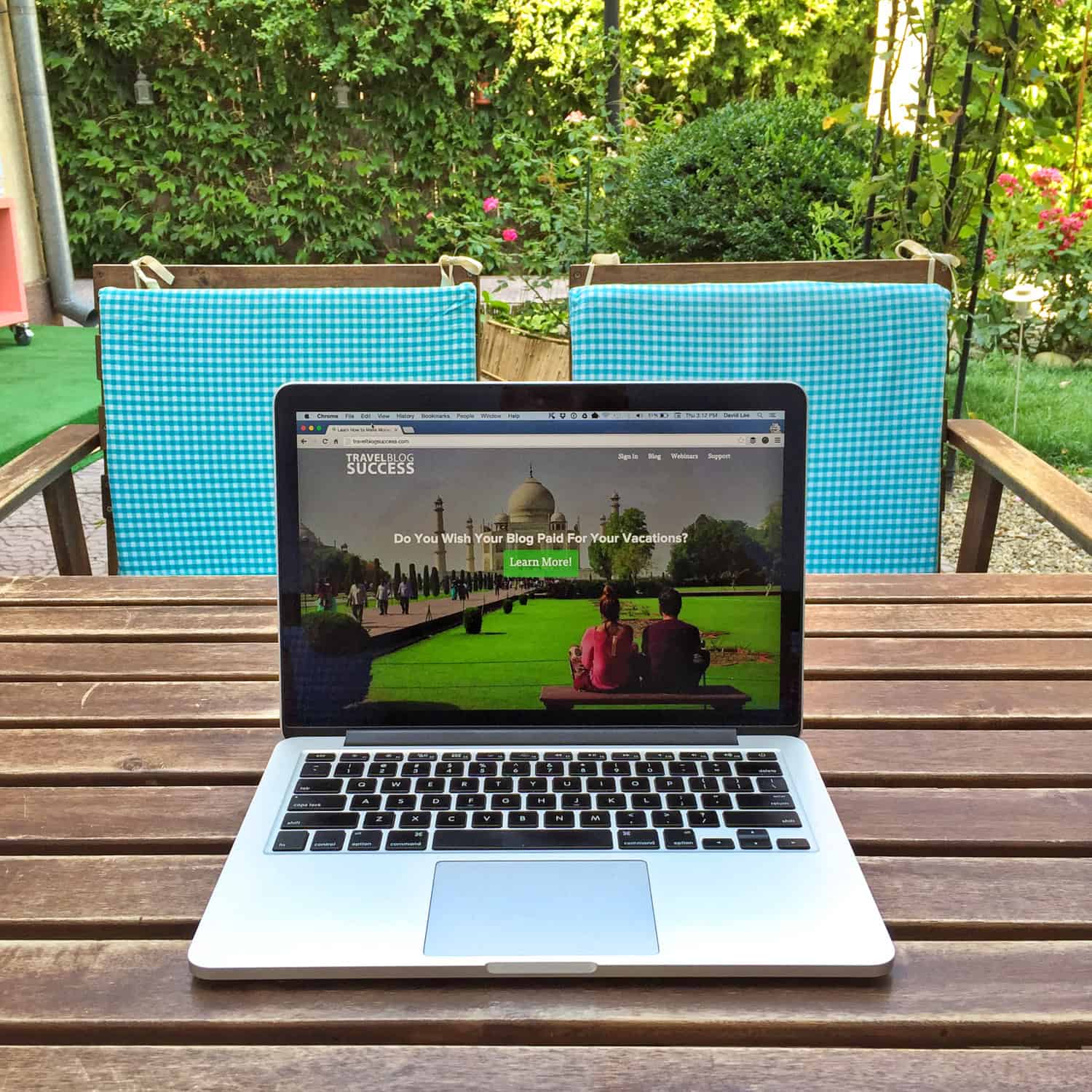
More than a decade later, I was pleasantly surprised to discover it's still open.
The term "digital nomad" was still a fairly new concept back then. Bucharest gave me something I badly needed at that stage of the trip: routine.
While I explored more of the city, I grew to appreciate Bucharest's history and contrasting architecture. I joined a walking tour with Walkabout Free Tours, which helped provide context for many of the places I'd been wandering past on my own.
One memorable stop was the controversial "Statue of Trajan and the She-wolf," which our guide used to spark discussion about Romanian identity and history.
Most of my sightseeing centered on Bucharest's Old Town, where centuries-old churches and collapsing medieval walls sit side by side with lively bars and busy pedestrian lanes.
I visited the Church of Saint Anthony, considered the oldest surviving church in Bucharest, and admired the detailed architecture of Stavropoleos Monastery, one of the city's most beautiful religious sites.
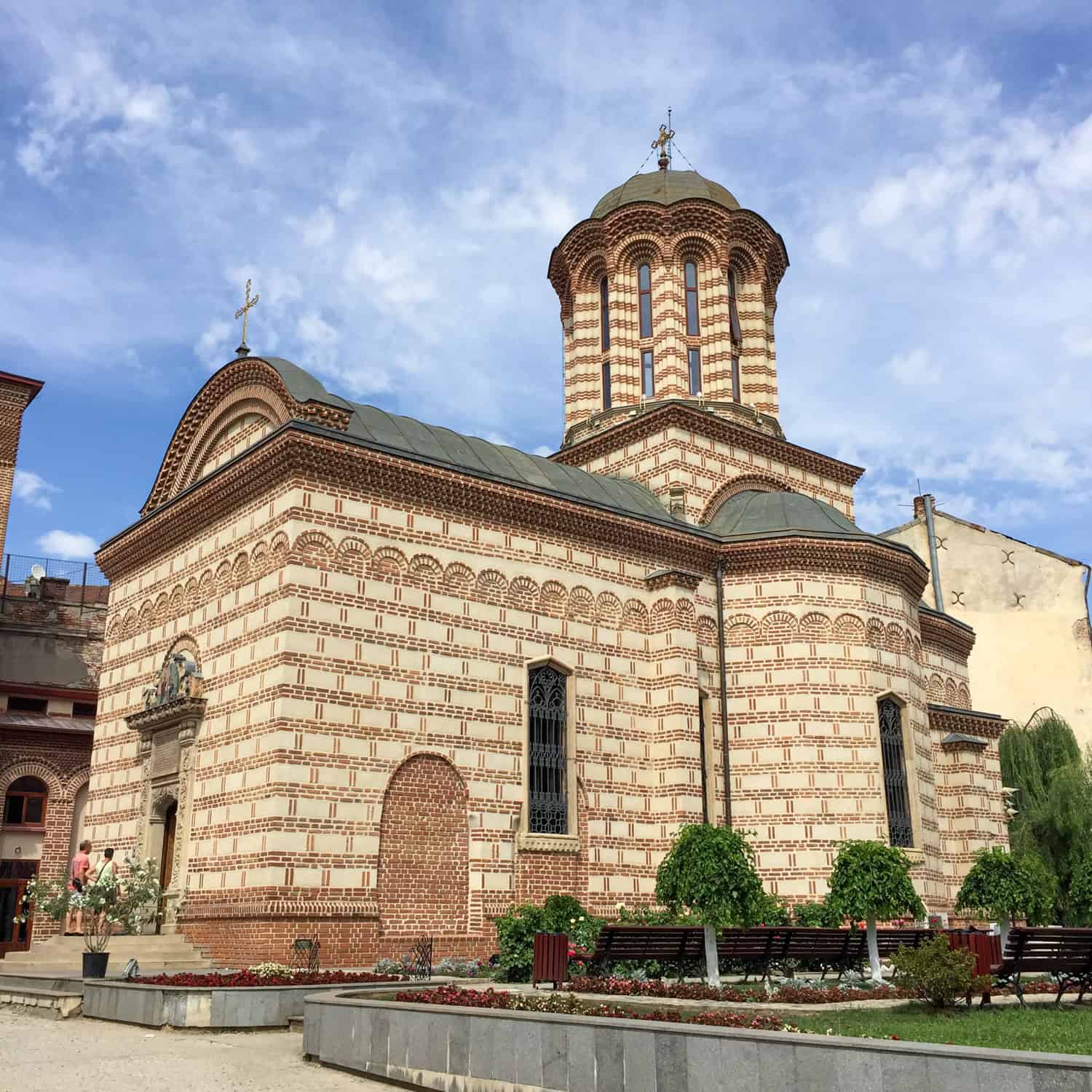
Nearby, I stopped outside the ruins of Curtea Veche, the Old Court associated with Vlad the Impaler, where a statue of Vlad III Dracula stands near the entrance.
Food became its own kind of sightseeing. I still remember settling in for traditional Romanian dishes at Hanul lui Manuc, a creaky old inn and restaurant dating back to the early 1800s, and slipping into Caru' cu Bere, the city's grand old beer hall, for a hearty meal and a cold pint.
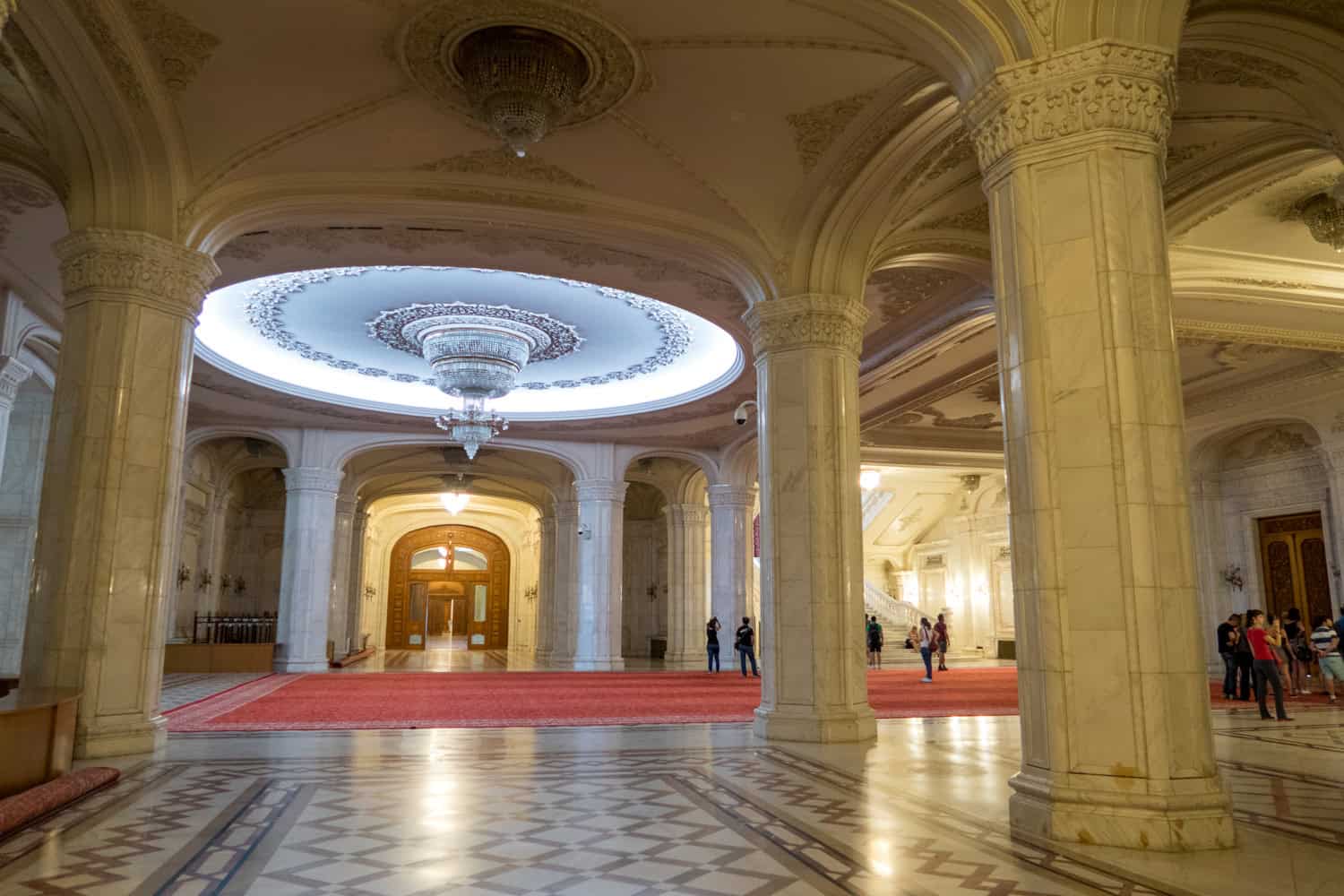
And then there's the Palace of the Parliament. It's impossible to ignore, no matter how hard you try. I toured the inside, and even after seeing photos, nothing quite prepares you for the sheer scale of the place when you're standing in those echoing halls.
Is Bucharest Worth Visiting?
I get why some travelers breeze past Bucharest on their way to Transylvania, but I think they're missing out.
Bucharest might not sweep you off your feet like Prague or Budapest, but giving it time allowed me to appreciate its peculiarities, its layers, and the slower rhythms that make it stick in your memory.
If you like to settle in and let a place reveal itself, rather than simply ticking off sights, Bucharest has a way of rewarding your patience.
Backpacking Through Transylvania by Train
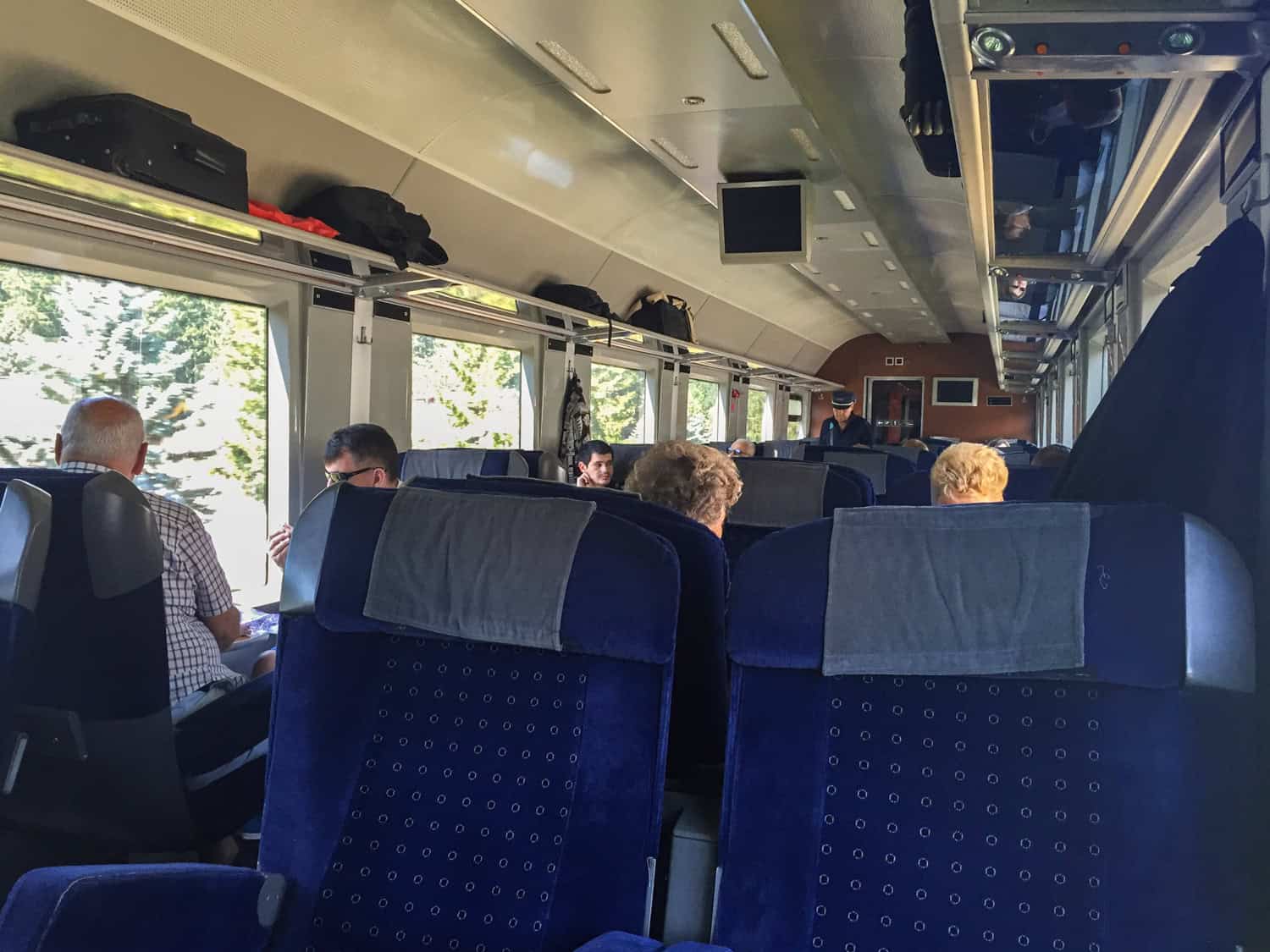
After nearly a month in Bucharest, I was ready to move again. From there, I traveled north through Transylvania by train, stopping in Brasov, Sighisoara, and Sibiu before eventually returning to Bucharest.
Romanian trains aren't built for speed, but that's half the fun. Those slow journeys gave me hours to watch the scenery change-from the din of city stations to quiet villages, open fields, and finally the mountains rising on the horizon.
Compared to other parts of Europe, traveling solo in Romania felt refreshingly simple. Most days, I didn't need to plan-show up at the station, buy a ticket, and see where the day led.
Brasov
A Relaxed Introduction to Transylvania
After weeks in Bucharest, Brasov felt instantly more approachable, like a place you could settle into and get to know in just a few days.
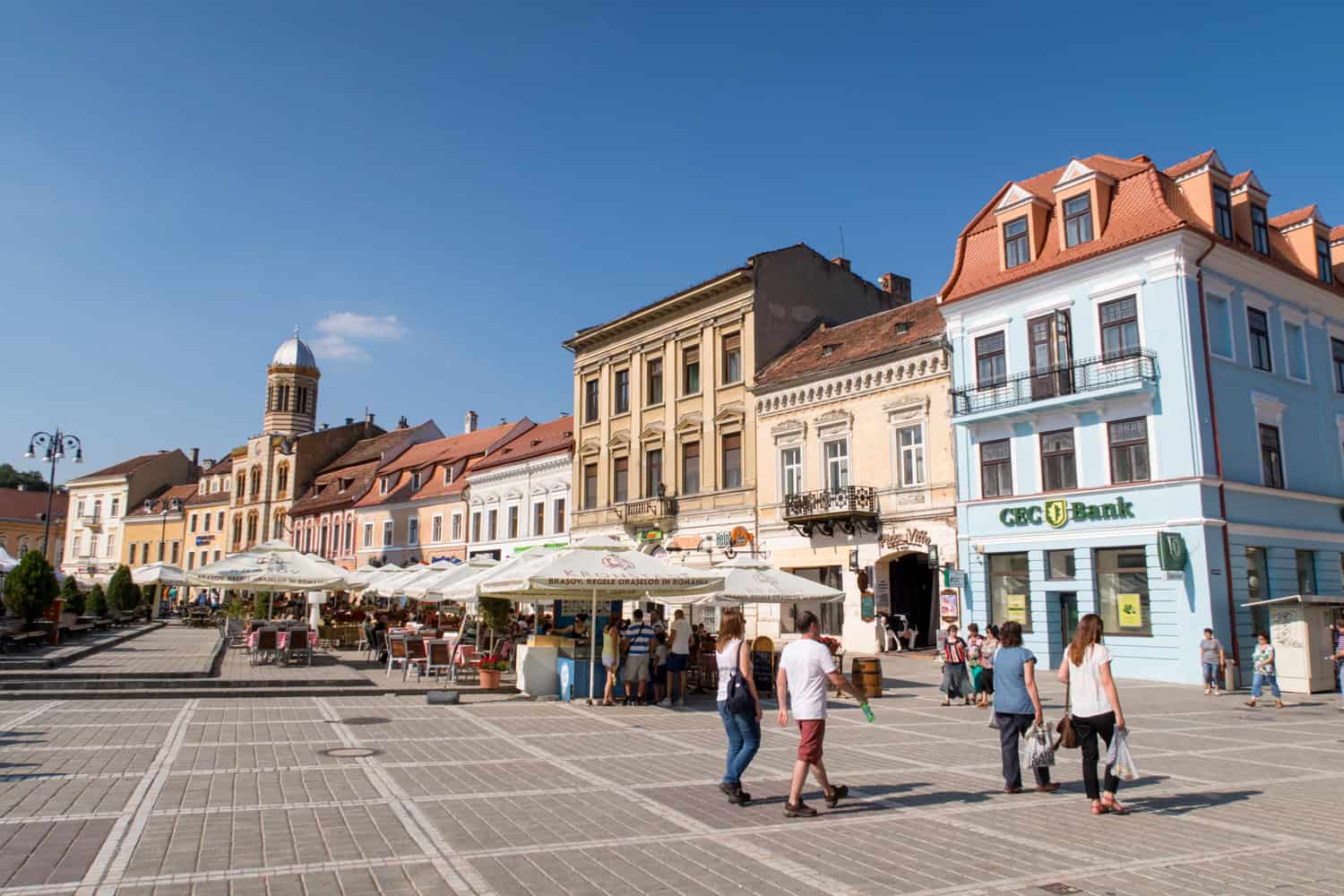
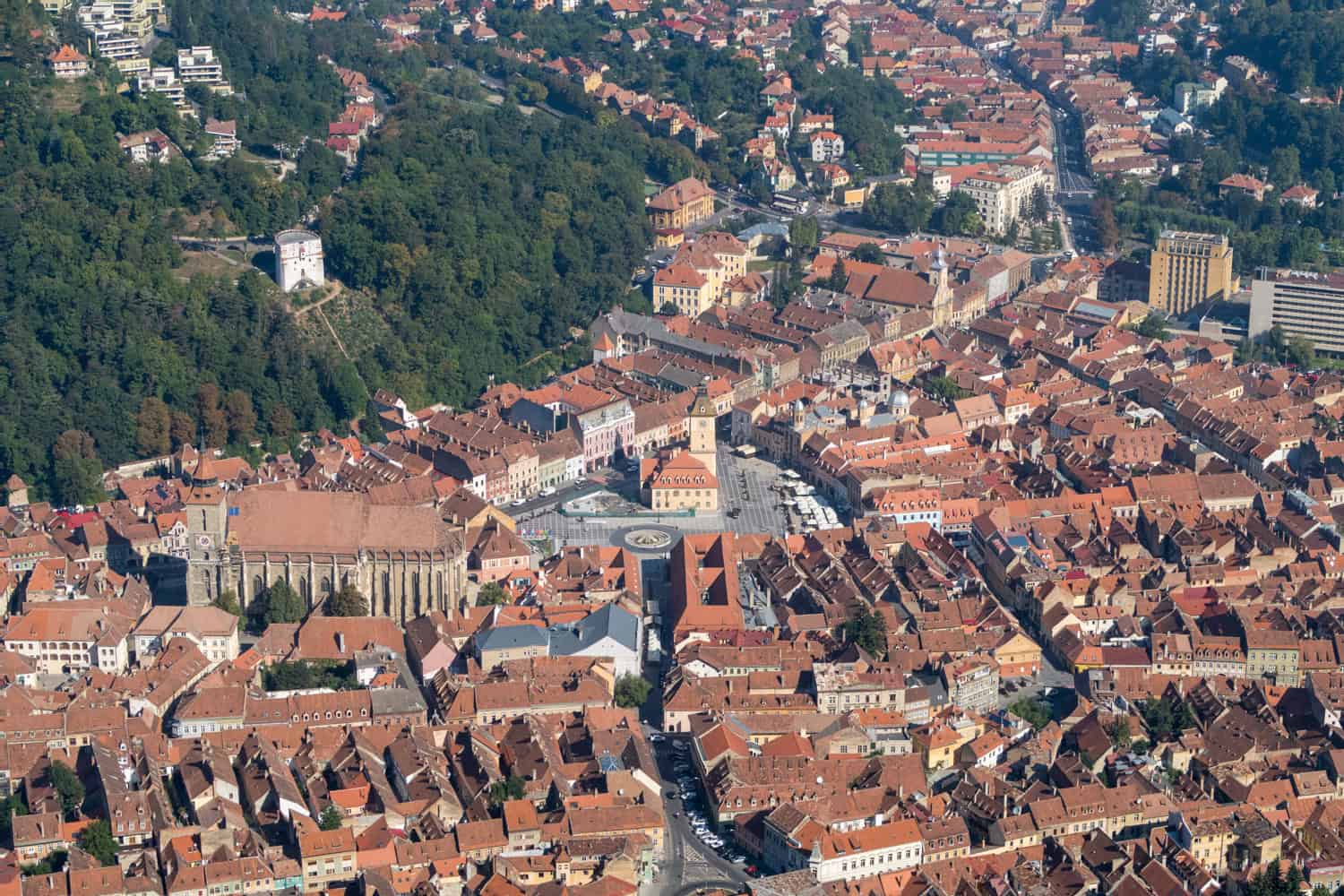
Ringed by mountains and anchored by its old town, Brasov moved at a gentler pace than the capital. I lucked out with the weather: sunny days, blue skies, and just enough warmth to make wandering the cobbled streets feel like a quiet reward.
Most days, I found myself circling Council Square and the nearby pedestrian lanes, soaking up the faded colors of old buildings, the hum of outdoor cafes, and that distinctive Transylvanian character that stays in the air.
Compared to sprawling Bucharest, Brasov was compact and easy to slip into. You didn't need a map; just a good pair of shoes and a bit of curiosity.
Exploring the Historic Center
Much of Brasov's appeal comes from simply spending time in the historic center.
Brasov's old town felt especially photogenic in the late summer light, with mountain views appearing between rows of colorful buildings and cafe terraces filling up throughout the afternoon.
Popular landmarks in Brasov include:
- Council Square (Piata Sfatului)
- The Black Church
- Rope Street (Strada Sforii)
- The old defensive walls and towers
- Scenic viewpoints around the city
Day Trips From Brasov
One of the reasons Brasov works so well as a base in Transylvania is the number of historic attractions located nearby. I spent one full day visiting several of the region's best-known sites.
Peles Castle
One of the highlights of my time in Romania was a walk through Peles Castle.
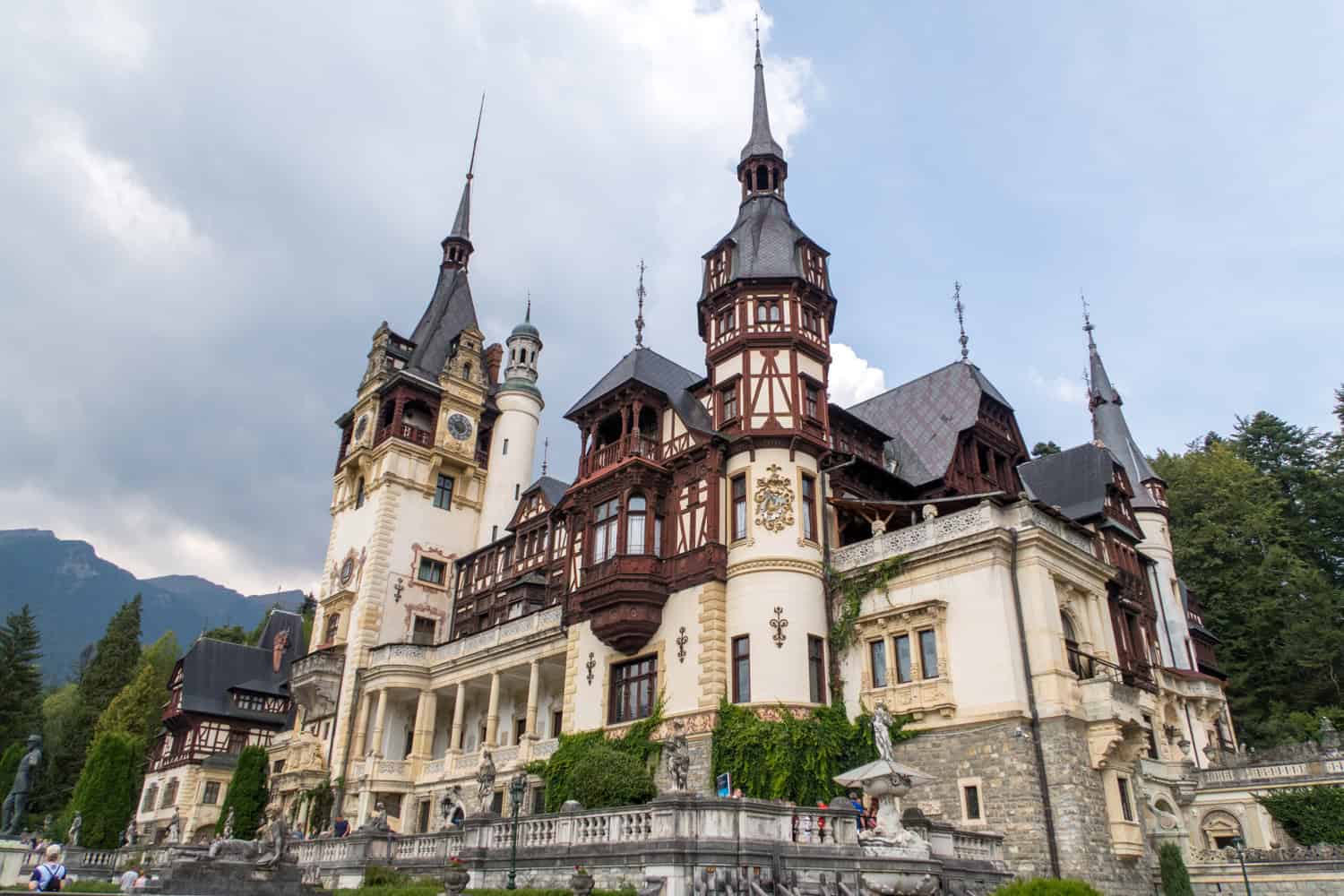
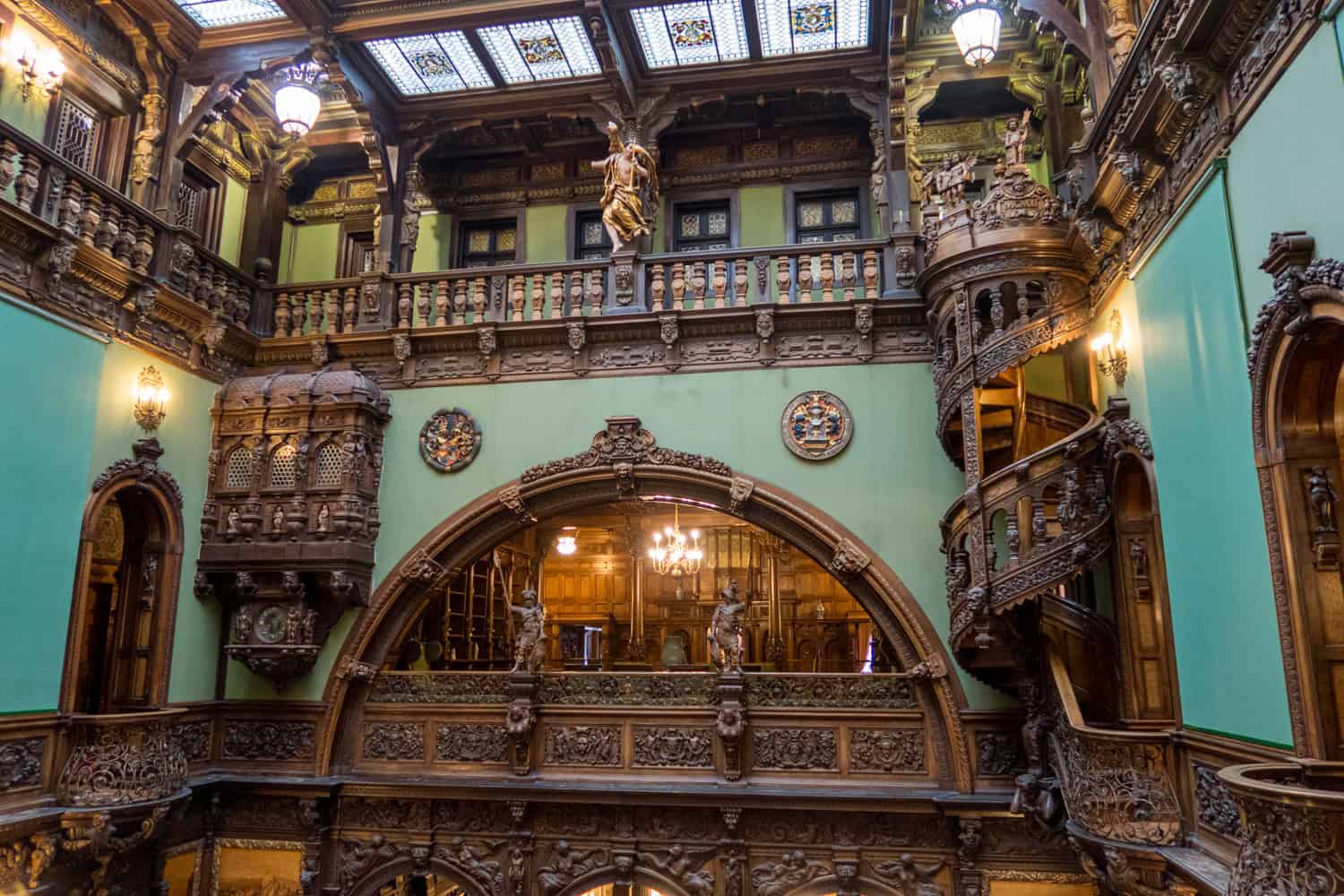
Set in the mountain town of Sinaia, the castle is famous for its elaborate architecture and lavishly decorated rooms.
Even after weeks of palaces and churches across Eastern Europe, the detail inside Peles still caught me off guard.
The setting only adds to the effect. Peles sits surrounded by thick forests and mountain slopes, and standing there, it really does feel like something from a storybook.
Bran Castle
Afterward, I made my way to Bran Castle, the fortress that's become synonymous with the Dracula legend.
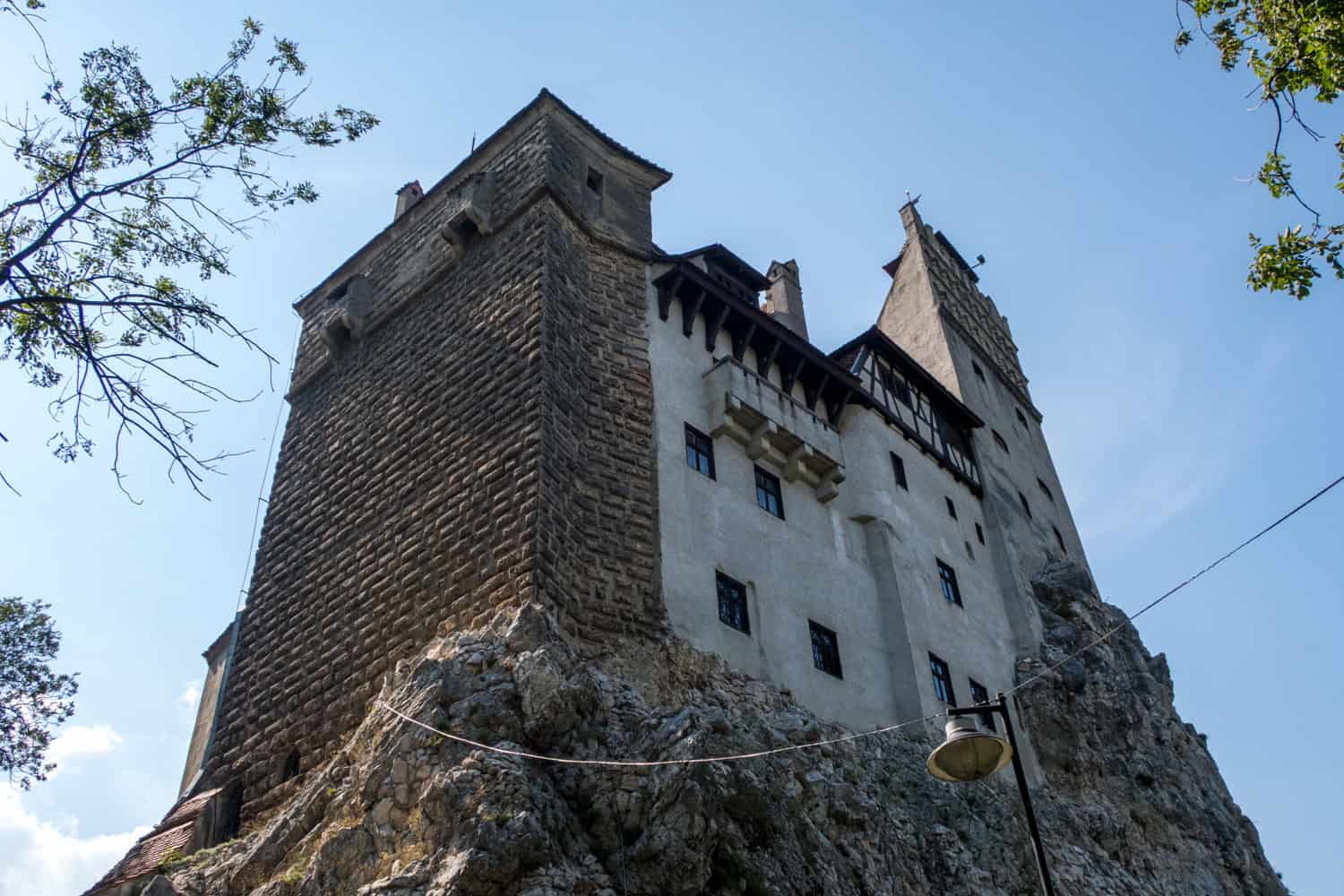
The Vlad the Impaler connection is pretty thin, but standing on that windswept hilltop, surrounded by medieval stone walls, I could see why the place kindled so many legends.
What stuck with me most were the displays of medieval torture devices-unsettling, even after all the castles and museums I'd seen.
Rasnov Fortress
My last stop that day was Rasnov Fortress, a timeworn citadel perched high above the countryside.
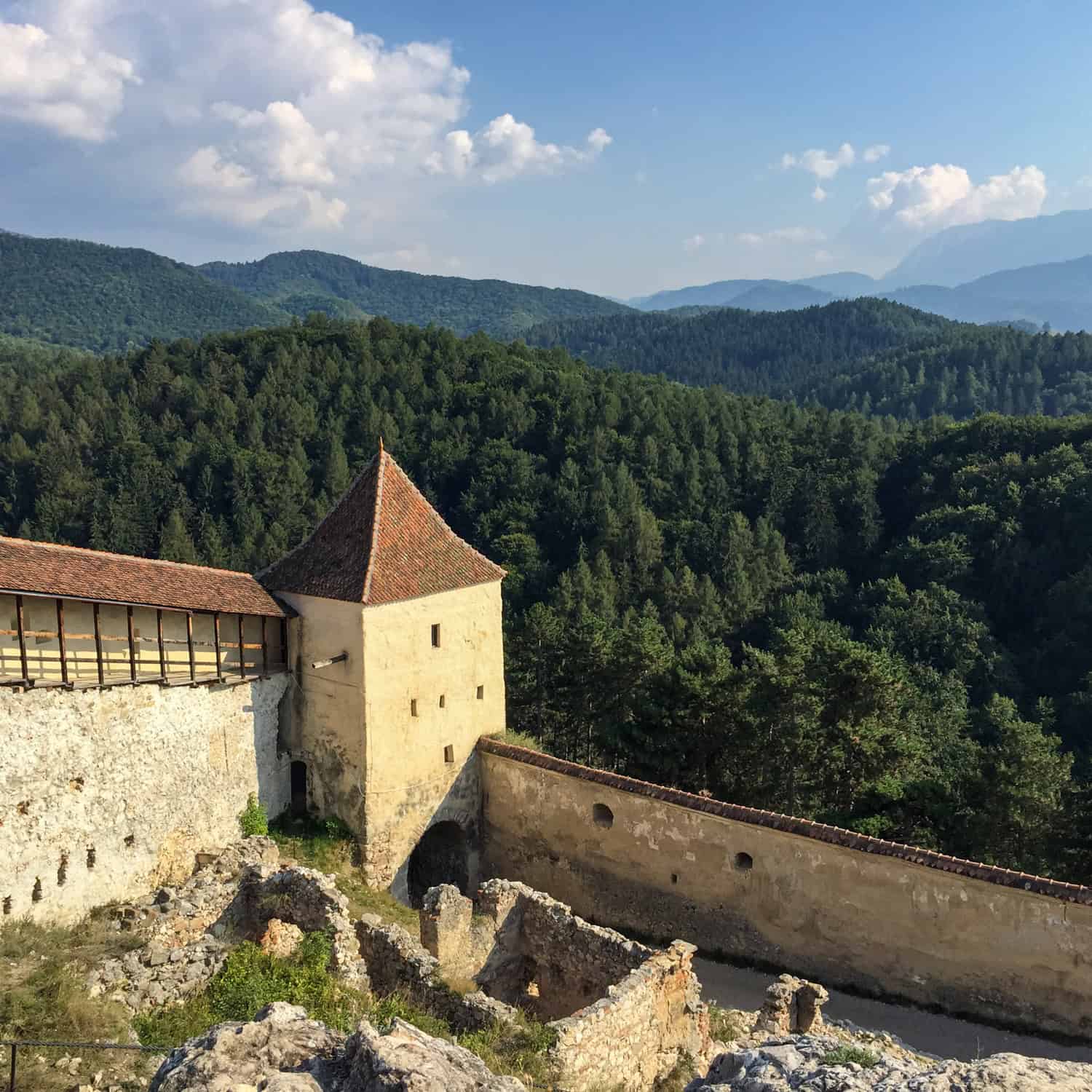
Compared to Bran, Rasnov felt quieter and a bit rougher around the edges, with wide views over fields and forests that made the climb up feel like all the effort was worth it.
Views From Tampa Mountain
On my last full day in Brasov, I started with a slow morning in a cafe, then rode the Telecabina Tampa up Tampa Mountain for a change of perspective.
From the summit, Brasov was spread below me: red rooftops, a patchwork of old streets, and the oversized "BRASOV" sign planted on the hillside, a cheerful nod to Hollywood.
Looking out over the rooftops and distant mountains, I realized this was one of my favorite views of the whole trip: quiet, wide open, and a little surreal after so many weeks on the move.
Sighisoara
Romania's Fairytale Medieval Town
Sighisoara was like a world apart from Bucharest or Brasov. This is the sort of place where you toss the checklist and just let yourself get lost in the winding medieval streets.
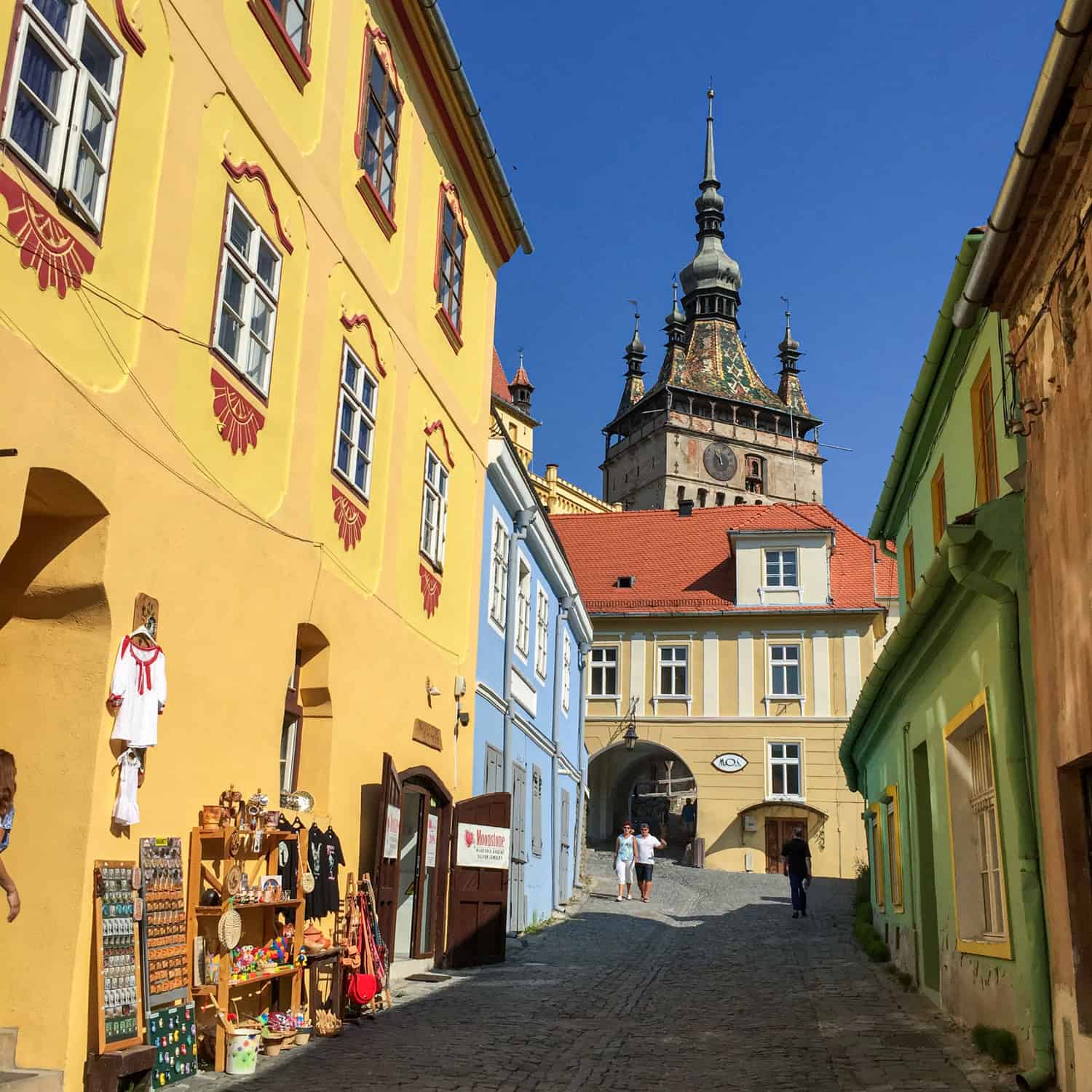
The old town is small, bright with color, and made for walking: cobblestones underfoot, ancient towers overhead. Because it's so compact, Sighisoara lets you slow down and soak up the atmosphere instead of racing from sight to sight.
I spent most of my time there simply photographing the architecture and enjoying how different the town felt from the larger cities I'd visited earlier in the trip.
What To See in Sighisoara
Some of the best-known sights include:
- The Clock Tower
- The Citadel
- Colorful historic buildings
- Churches and small squares throughout the old town
The city is also famous as the birthplace of Vlad the Impaler (Vlad Tepes in Romanian), the historical person linked with Dracula.
Sibiu
Slowing Down in Sibiu
By the time I reached Sibiu, five months of backpacking had caught up with me. I felt every mile. Sightseeing took a back seat. More than anything, I just wanted to slow down and be present, and Sibiu turned out to be the perfect place for that.
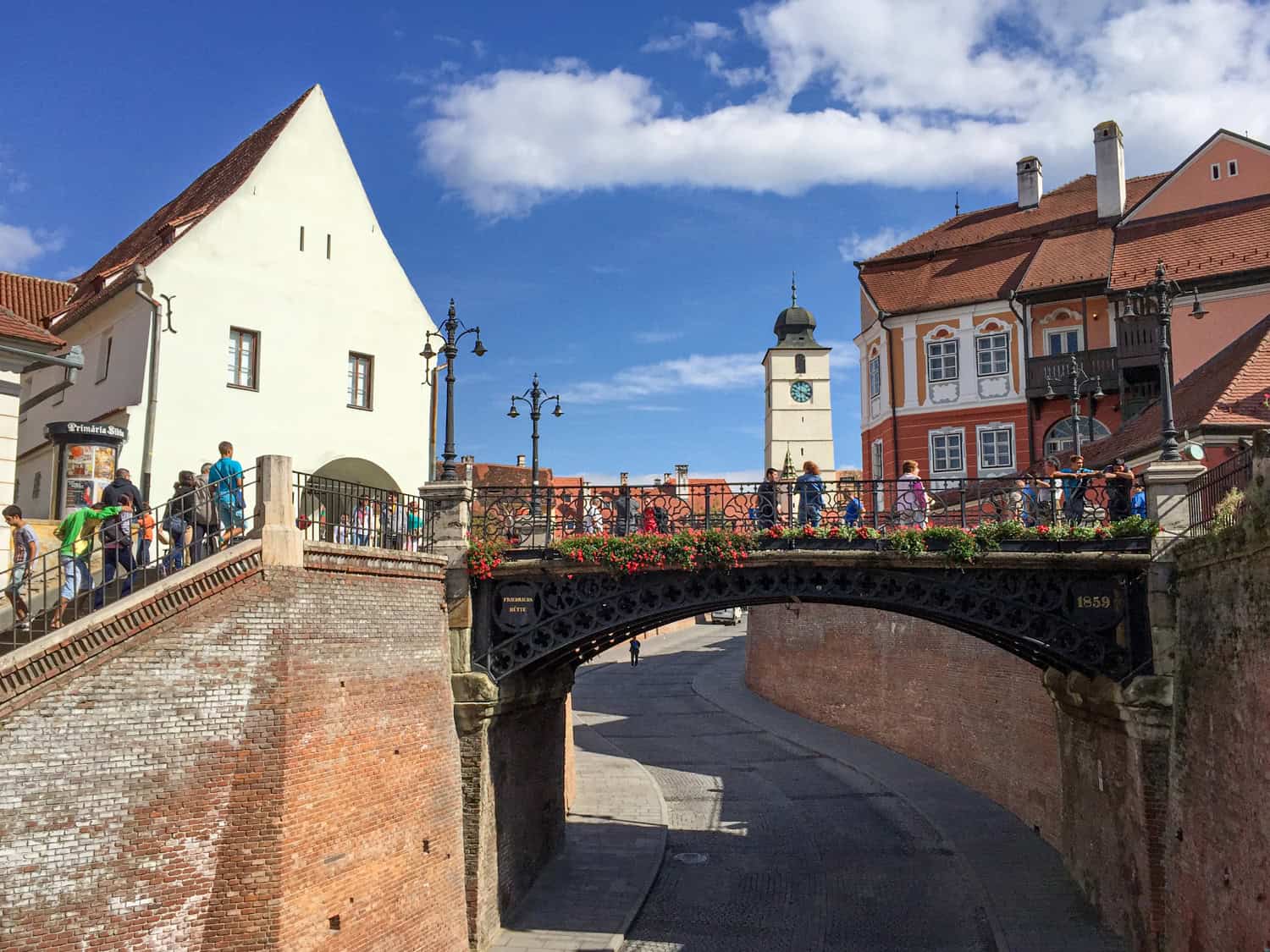
The weather held steady: warm sun, blue skies, and just enough breeze to make long afternoons outside feel like a small reward.
Sibiu felt instantly calmer than Bucharest. The old center is all wide plazas, pastel buildings, cobbled lanes, and church towers-an easy place to wander and let the day unfold at its own pace.
Walking Through the Historic Center
Most days, I wandered Sibiu's old town on foot, meandering from one square to the next, ducking into churches, pausing to admire a carved doorway or to sit in the sun before moving on.
After so much constant motion, Sibiu made it easy to take time to appreciate the slower pace of everyday life.
Some of the city's best-known landmarks include:
- Piata Mare (Grand Square)
- Piata Mica (Little Square)
- The Bridge of Lies
- The Lutheran Cathedral
- The historic towers and fortifications around the old town
What sticks with me most is how good it felt to be outside in Sibiu. The plazas buzzed with life, and the mix of old architecture and perfect weather turned even a simple walk into something worth remembering.
I'd duck into churches now and then, allowing the cool, dim interiors to offer a break from the bright afternoons and a window into Sibiu's past.
A Relaxed Ending to My Time in Transylvania
Looking back, Sibiu was the right place to wrap up my time in Transylvania before returning to Bucharest and, eventually, heading home.
It wasn't the city with the biggest attractions or the busiest itinerary, but after months on the road, that was exactly what made it stand out. Sibiu rewarded patience and unstructured days, which were exactly what I needed by that point in the trip.
Tips for Backpacking Romania
Give Yourself More Time Than You Expect
Romania really comes alive when you slow down. Staying longer in fewer places made the whole experience feel richer and a lot less exhausting.
Spend Time in Bucharest
Even if you're mostly here for Transylvania, the capital is worth more than a quick overnight.
Travel Romania by Train
Romanian trains aren't always quick, but they're easy to use and give you a front-row seat to the changing scenery.
Romania Is Easy to Explore Independently
It's approachable without feeling overrun, and it's easy to explore on your own while still feeling like you're discovering something fresh.
Final Thoughts
Romania showed up in my trip at just the right moment.
After months of constant movement through Eastern Europe, I had space to slow down, catch up on work, and travel at a more sustainable pace. The combination of everyday life in Bucharest and slower train journeys through Transylvania left a lasting impression on me.
More than a decade later, I still think Romania remains one of Europe's most underrated destinations for independent travelers.