In my opinion, Ethiopia is one of the top contenders for the best food in the world.
Not only are the stews and sauces powerfully rich and delicious, but the style of communal eating and sharing also encourages a strong culinary bond.
After you've read this brief introduction to Ethiopian food, you'll know everything needed to appreciate and enjoy this exotic African cuisine.
Traditional Ethiopian Foods
Injera
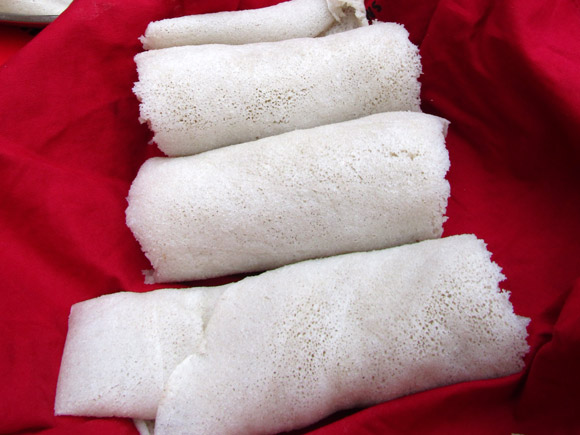
The foundation of Ethiopian food is injera, the staple, and main filler.
It's made from the little-known grain of teff, that comes from a grass that is exclusively grown in the Ethiopian highlands, and parts of Northern Africa.
Teff flour is mixed into a batter, fermented for a few days and then cooked in the shape of a massive pancake.
It has a spongy texture and a slightly sour taste, reminiscent of sourdough bread.
The flatbread is then rolled into pieces and eaten with various curries and vegetables.
Serving Ethiopian Food
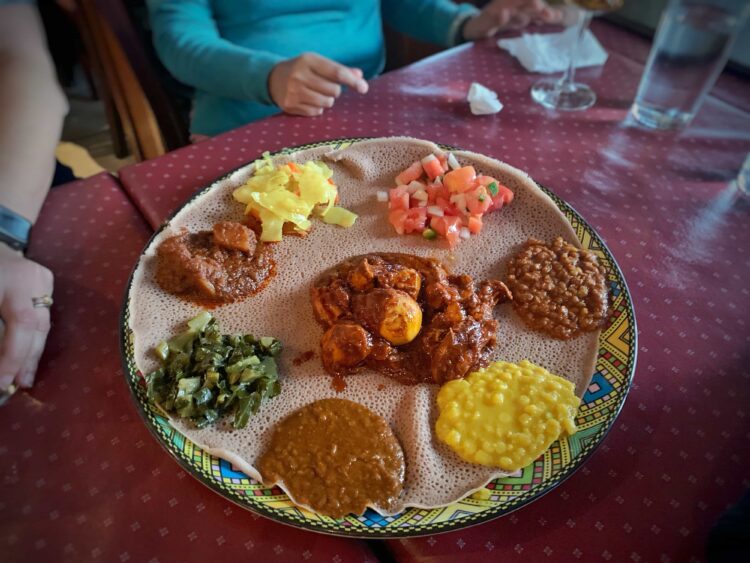
Ethiopian meals are commonly served off a communal platter.
The standard procedure is to lay out an entire circular round of injera on a metal plate and then scoop the colorful array of dishes on top of the initial blanket of injera.
Everyone then hovers around the plate with their roll of injera, breaking off bite-size pieces and dipping them into the delicious sauces and stews.
When the food off the top is finished, it's fair game to start eating the base (that first piece of injera) that has sopped up all the tasty flavor.
Berbere
Berbere is the Ethiopian version of curry paste.
It's made from a combination of fragrant ingredients that usually includes onions, garlic, ginger, chili, salt, paprika, cloves, cinnamon, nutmeg, cardamon, pepper and sometimes fenugreek.
The result is a thick paste that forms the underlying base of flavor for many Ethiopian dishes.
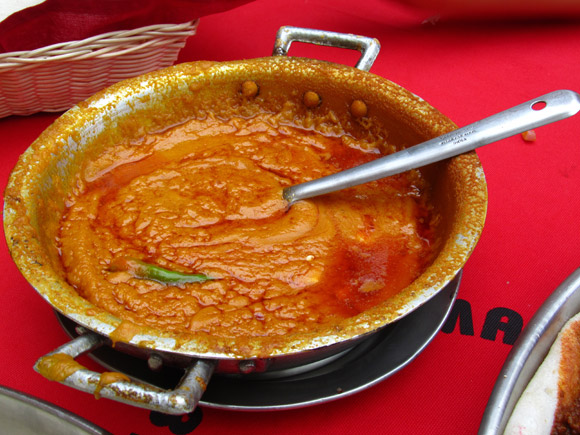
A few of my favorite Ethiopian dishes
Shiro Wat
Chickpeas are mashed into a paste and mixed with a heavy dose of berbere sauce and Ethiopian clarified butter to form a paste that's just packed with flavor.
Key Wat
Cubes of tender beef are marinated and made into a thick stew with a lovely spice to it.
A bit of key wat with a handful of injera is the ultimate bite to cherish.
Kitfo
Ethiopia's version of steak tartare is a combination of raw beef, seasoning spices, and a splash of Ethiopian butter.
The thinly sliced meat melts in your mouth.
Derek Tibs
I think every country in the world has a version of roasted meat.
Ethiopia's is charbroiled with peppers, onions, and oil to make it sizzle on the edges.
Gomen
This vegetable dish is made from collard greens and onions that are simmered until soft, mixed with a few mild spices, and served alongside the more flavorful stews.

Traditional Ethiopian Drinks
Honey Wine - Tej
It has a sweet bite, and the times I've had it, it reminds me of a fruity cocktail, but much better.
A homemade bottle of Tej goes incredibly well with an Ethiopian meal.
Ethiopian Coffee
As the birthplace of coffee, Ethiopia takes its brew seriously. You won't be drinking that weak instant stuff.
They roast the beans black, brew in a small clay pot, and serve the coffee thick and chocolatey.
If you have the chance, an Ethiopian coffee ceremony is a great experience.
In the middle of roasting the coffee beans, the server will bring the pan around to allow you to take a sniff.
After the coffee beans are finished roasting and the coffee is brewed, the server will pour it into small cups on your table.
As you sip on your fantastic Ethiopian coffee, your nose will be graced by the aromatic scent of burning frankincense that often accompanies a coffee ceremony.
Of course, the country of Ethiopia is the best place to eat Ethiopian food, but restaurants are starting to sprout up around the world.
I know in the United States the cuisine is available in every major city.
The next time you see an Ethiopian restaurant, go check it out and let me know what you think!