This guest article was contributed by Joseph of Nile Sport Safari and edited for clarity, style, and length by the Go Backpacking editorial team.
Most people come to the Nile for one day. They hear "Grade 5 rapids," see a few photos, book a trip - and that's it. Big water, big waves, maybe a couple of swims, and a cold beer at the end. It becomes a strong memory. But it's still only a superficial understanding of what this river really is.
Because the first time, you don't understand anything.
It begins early. A van from Kampala, packed with strangers who've all made the same decision, rattles through towns of dispersed huts and red dust roads on the way toward Jinja in eastern Uganda. Kids chase the truck through villages, shouting and waving. Someone cracks a joke about the potholes.
"You know what the most dangerous part of our day is?" says a guy in the back seat, lurching forward as the truck hits another bump. "The drive there."
Everyone laughs. It's nervous laughter, but it's real.
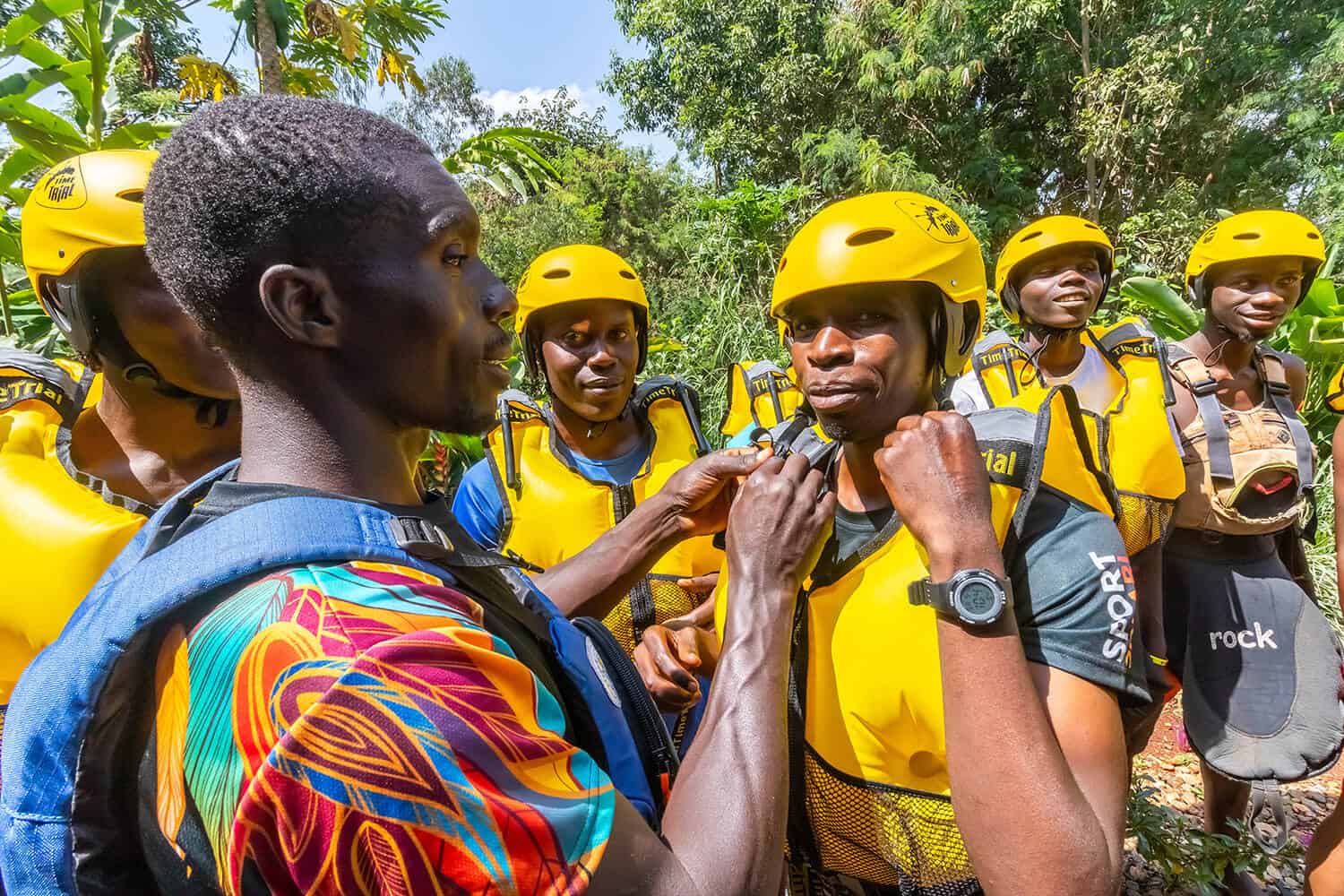
Then comes breakfast - a Rolex, Uganda's famous rolled chapati filled with eggs and vegetables - eaten quickly before the safety briefing begins. The guide covers hand signals, paddle commands, and what to do if the raft flips and you find yourself underwater.
Someone asks whether there are crocodiles.
The guide smiles.
It is not an entirely calming smile.
The First Rapids
The names of the rapids don't help much either: The Bad Place. Vengeance. Bubugo. Overtime. Itanda. They have been named by people who know them intimately, and the names are honest.
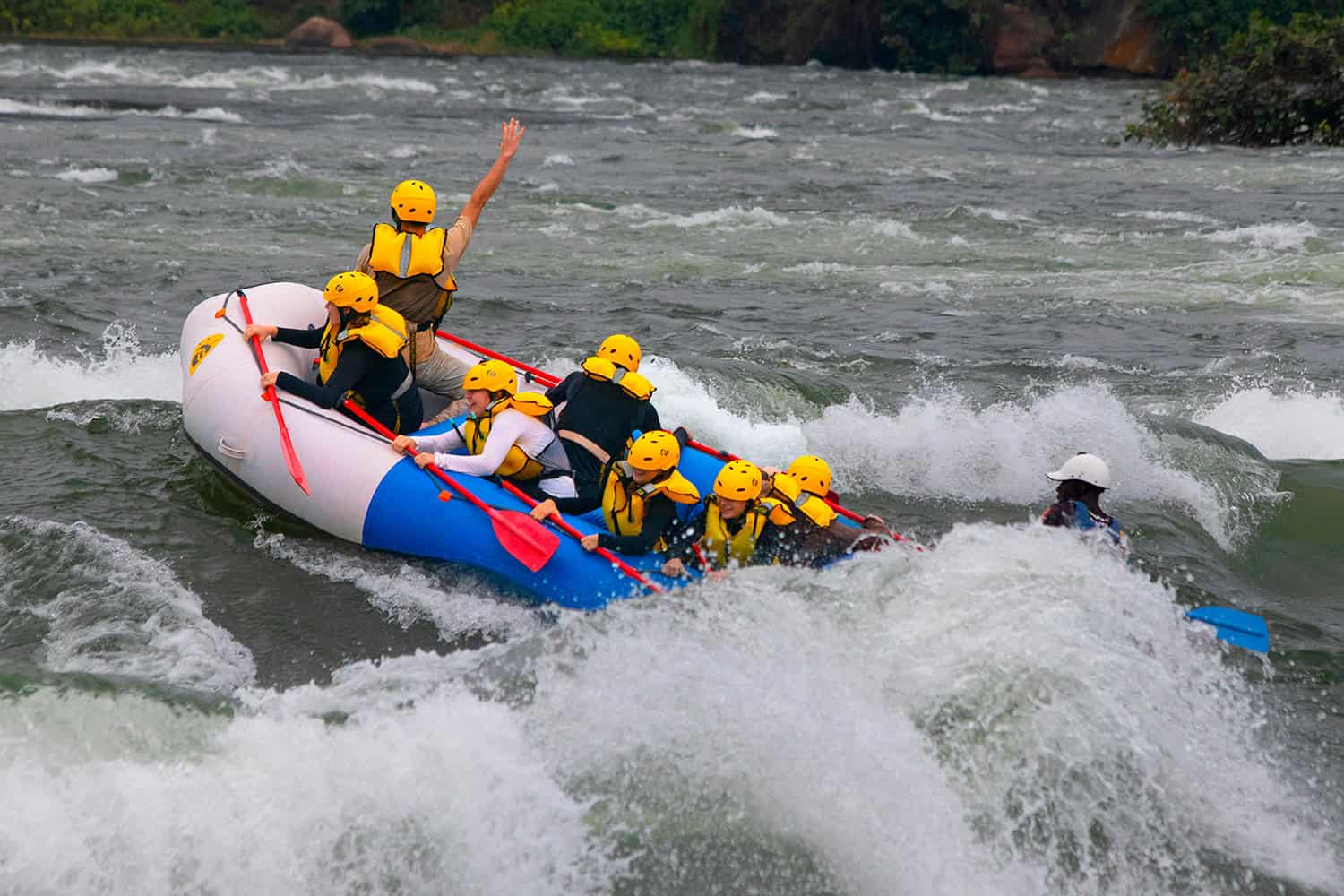
The first run feels like chaos. Water in your face. Commands half-heard. Your paddle is doing its own thing. You're mostly just holding on and hoping everything comes together.
The Nile near Jinja is famous for some of the world's largest commercially rafted whitewater. Even first-timers can tackle Grade 5 rapids here, though that doesn't mean it feels controlled the first time through.
It feels like survival.
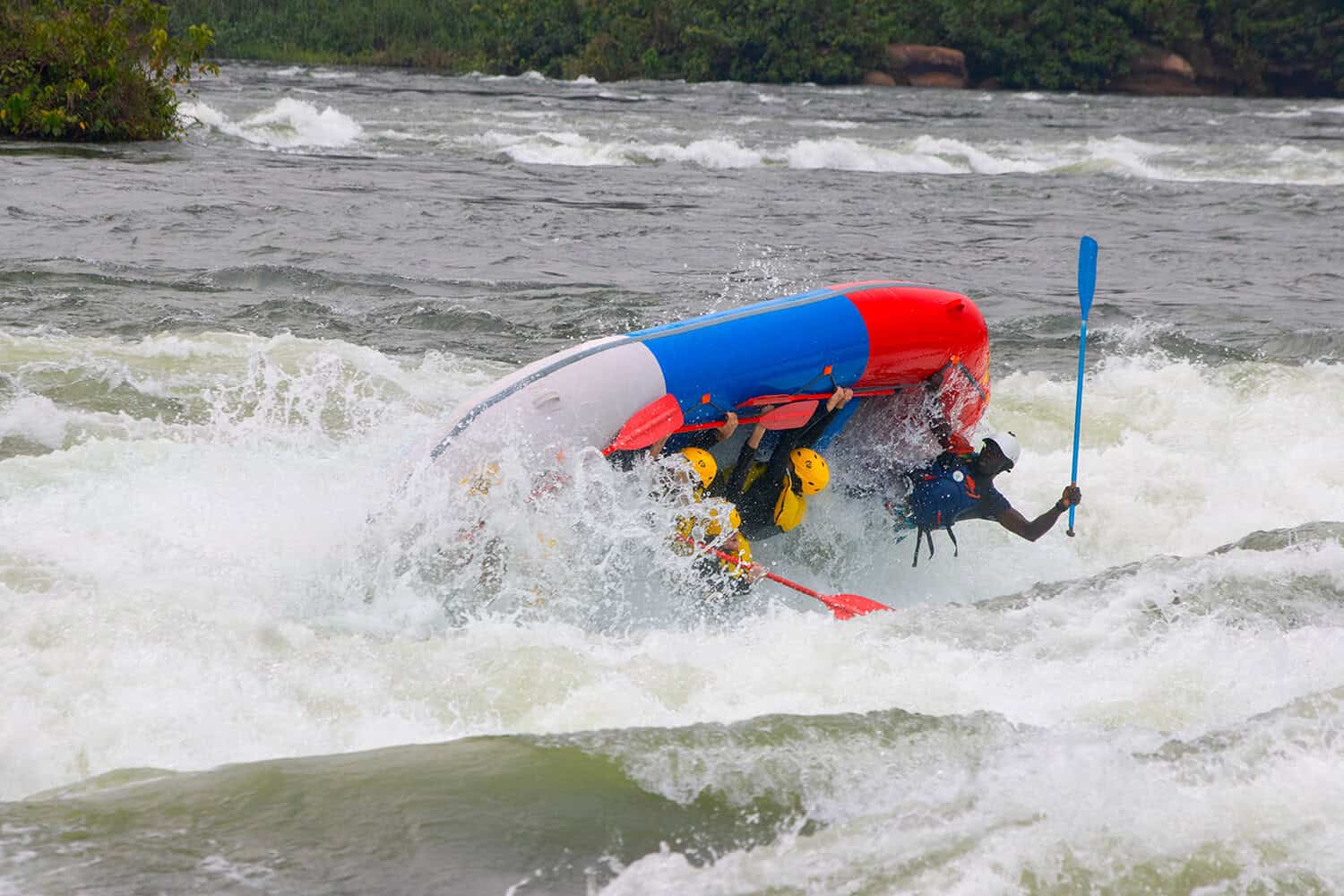
When you surface - aided by the life jacket, sputtering and probably swearing - one of the safety kayakers is already there. You grab the inflated hull, get towed back to the raft, and get hauled aboard again.
The guide hands you your paddle.
"That wasn't so bad, was it? Ready to keep going?"
You say yes.
You always say yes.
Learning the River
On the second day, something changes.
You start to notice that every single wave has a shape. That the chaos isn't random. The raft moves for a reason - sometimes because you sent it there, sometimes because you didn't stop it in time.
You begin to understand why The Bad Place is called that.
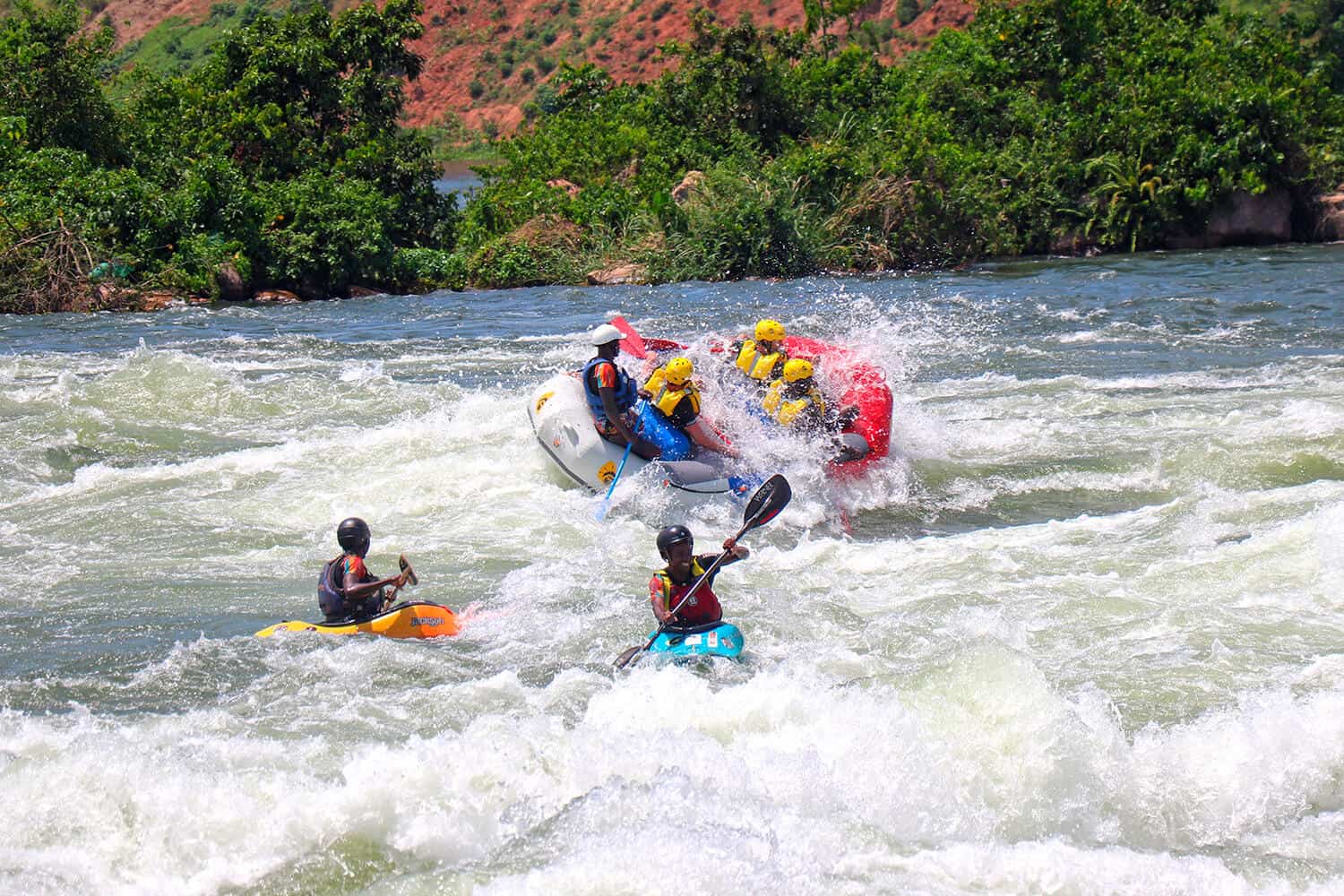
And quietly, you start wanting to run it again.
There's a particular quality to the fear on the second day that doesn't exist on the first. On the first day, you don't know enough to be afraid of the right things. On the second day, you do, and you go anyway.
By the third day, you begin to read the river. You stop trying to beat it and start learning how to move with it. Ask any kayaker here what that difference feels like, and they'll probably laugh, because it's difficult to explain.
It's something the river shows you.
That's when it gets interesting.
More Than an Adrenaline Rush
The Nile is warm. It sounds like a small detail until you experience it yourself.
In cold water, you're always thinking about getting out. Here, you stay. You float between rapids on your back, helmet tilted toward the sky, drifting through Uganda on one of the world's most famous rivers.
The life jacket holds you. The current moves you. The equatorial sun, if you forgot sunscreen, as many people do the first day, slowly works on your face.
You can spend hours on the water without rushing back to shore after every run.
And that changes everything.
The people who stay longer - kayakers, guides, and paddlers who come for a week and extend to two - experience a different river than the one-day tourists.
Kayakers sit in the same hydraulic hole for an hour dialing in a single move. Someone else learns how to hold a line in current for the first time while a guide patiently talks them through it. Another person finishes a full run, climbs out of the raft, and jumps right back into the eddy to feel the water moving around them again.
Same river. Completely different experiences, sometimes within a few meters of each other.
Life Along the Nile
Some guides have worked this stretch of the Nile for 10, 15, or even 20 years. They know every line, each hidden feature, and how the river changes with different water levels.
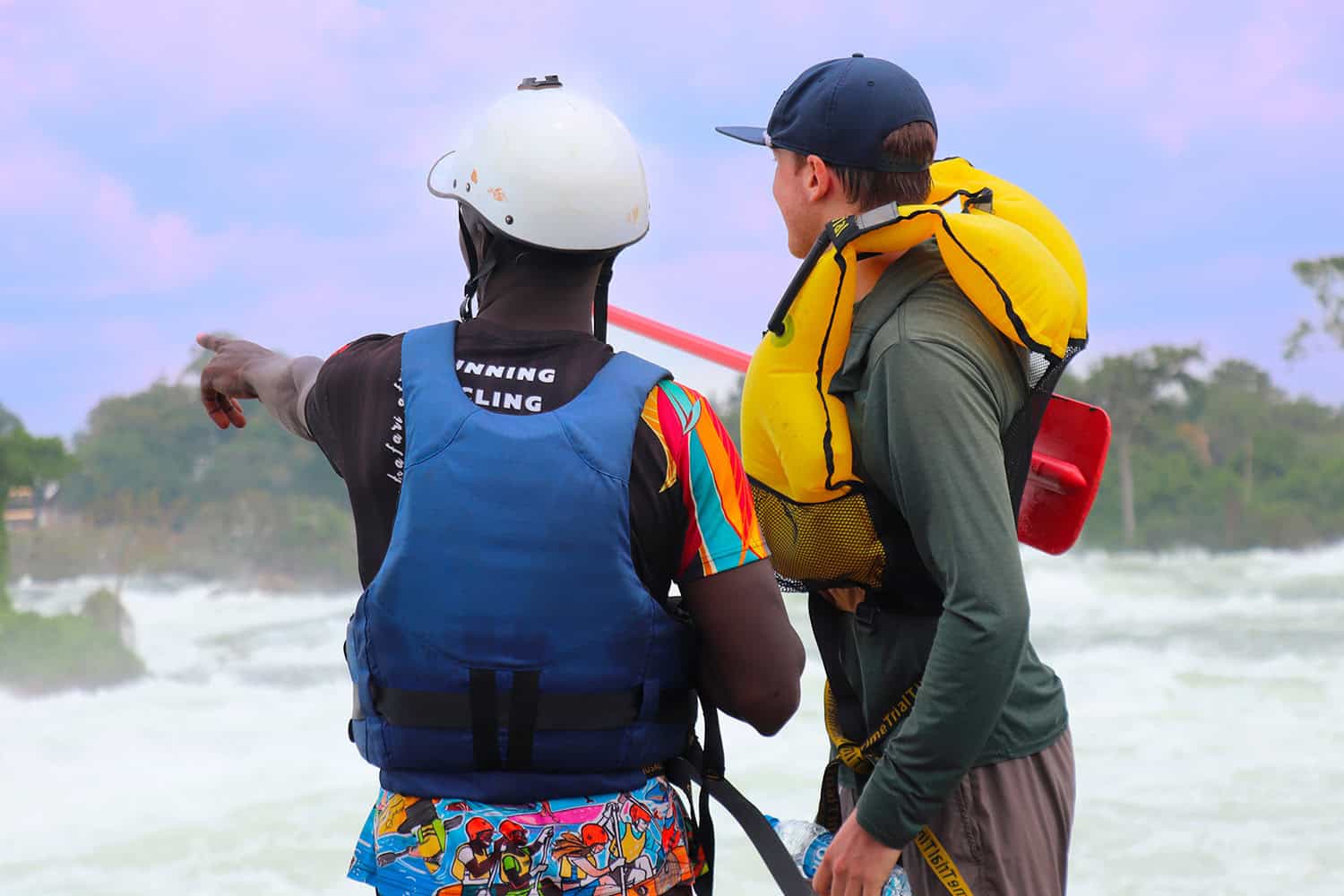
When a guide cracks a joke at exactly the moment you need it, reads the water before you can see what's coming, or positions the raft in the split second between chaos and control, that isn't instinct.
That's experience earned on the same river over thousands of runs.
And there's something else many travelers don't expect: the Nile here isn't empty wilderness.
It's a lived-in place.
From the water, you see Uganda differently. Villages along the banks. Wooden fishing boats crossing between islands. Fishermen standing silently in the shallows. Children waving from rocks above the river.
You're not separated from local life. You're moving through it at the speed of the current.
Between the rapids, the river goes quiet. Long stretches of green water drift past tropical islands and reeds where herons and kingfishers wait along the shoreline. Most first-timers are too focused on the next rapid to notice much of it.
That changes with time, too.
After the Last Rapid
After the final rapid, people often float the last stretch on their backs, laughing at what they just survived together.
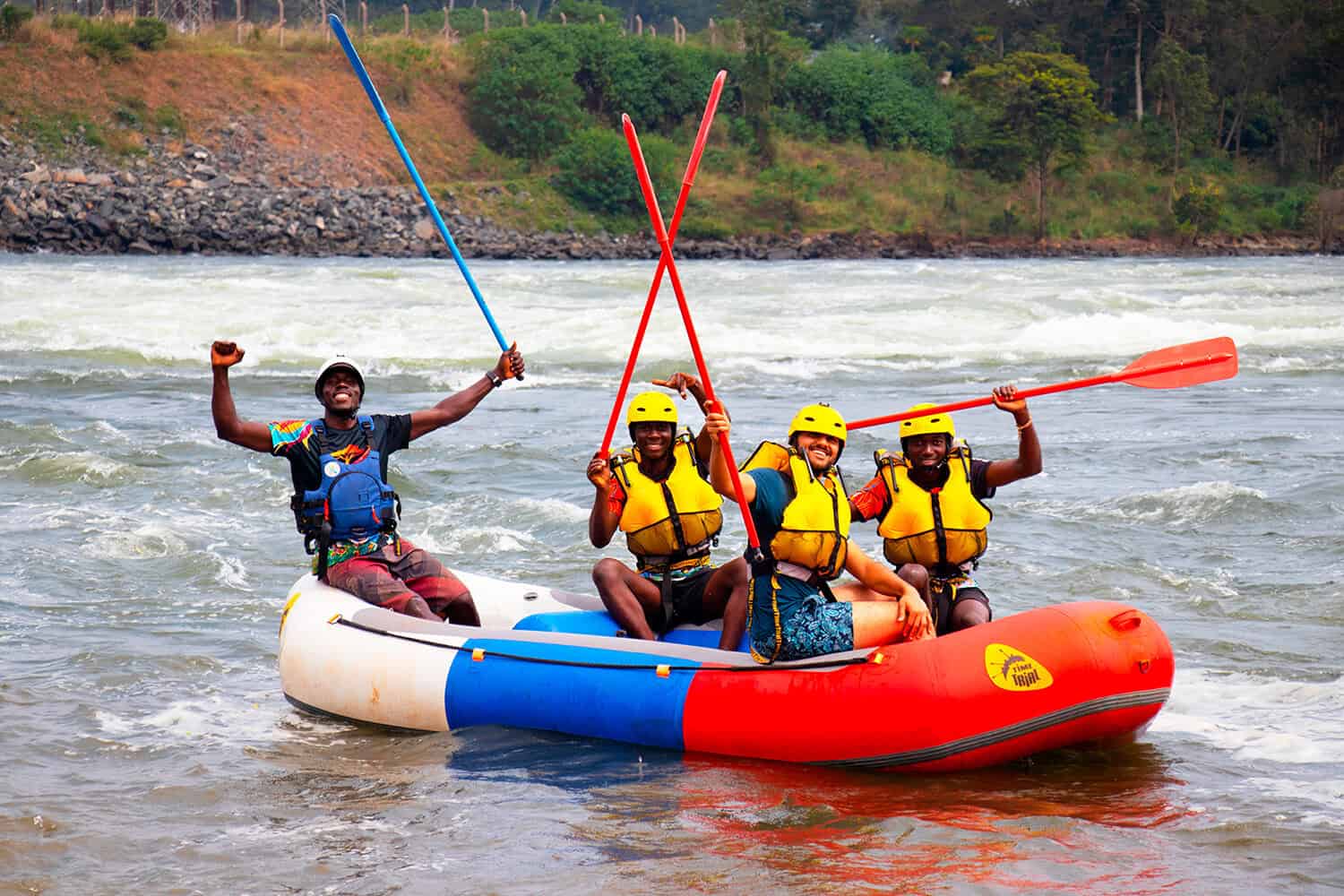
Lunch waits back on shore or at camp. Cold Nile Special beers appear from coolers. Photographers pull up the day's photos, and everyone wonders where exactly they were standing to get those shots.
The evening atmosphere has a distinct rhythm. Strangers who spent the day bouncing through managed chaos trade stories around a fire with the kind of cheerfulness that would seem bizarre almost anywhere else.
If you come once, you leave with a story about a powerful river.
If you stay longer, you start remembering specific lines and specific passages. You remember how the light hits the water late in the afternoon. You think about the swift pace, and you want another chance to run. You remember something a guide said halfway through the second day.
At some point, it stops feeling like just another adventure activity.
It becomes a place.
And places, unlike adventures, are somewhere you return to.
Plan Your Trip: Rafting the Nile in Uganda
Where does Nile rafting take place?
Whitewater rafting on the Nile takes place near Jinja, in eastern Uganda, about 53 miles (85 kilometers) from Kampala. Jinja, near the point where Lake Victoria flows into the Nile, is widely considered the adventure capital of East Africa. Many travelers combine rafting with a broader itinerary in Uganda.
When is the best time to raft the Nile?
Rafting runs year-round thanks to the consistent flow from Lake Victoria. June through September is generally considered the best season for dry, sunny weather, while December through February is another popular period.
Do you need experience to raft the Nile?
No prior rafting experience is required for standard trips. Guides provide safety and paddling instructions before every run. Grade 5 rafting is physically demanding, but many first-timers still choose it.
Can non-swimmers go rafting?
Non-swimmers can participate in gentler Grade 1-3 family rafting trips. For full Grade 5 whitewater rafting, operators generally require participants to be comfortable swimming and to be able to handle themselves in fast-moving water.
What should you wear rafting on the Nile?
Wear quick-dry clothing, a swimsuit or athletic shorts, and secure sandals or water shoes with straps. Avoid flip-flops. Sunscreen is essential near the equator.
Most rafting operators provide:
- Helmet
- Life jacket
- Paddle
- Dry bag for small valuables
Bring a full change of dry clothes for afterward.
How do you get from Kampala to Jinja?
Most rafting companies offer shuttle transfers from Kampala, usually departing around 6 or 7 a.m. Shared minibusses (matatus) and private drivers are also common options.
How long should you stay in Jinja?
Many travelers visit as a day trip from Kampala, but staying two or three nights allows time for additional activities like kayaking, riverboarding, boat cruises, cycling, bungee jumping, or visiting the source of the Nile.
Learn More
For trip options and booking information, visit Nile Sport Safari.