So you've decided to travel to a faraway corner of the Earth, but you have a lot of planning ahead of you, and you're lost on how to start.
Well, I can help, I may have been called over prepared on several occasions, but I've never been caught with my pants down.
When you're traveling, you want to be surprised by only the good things that happen around you, not when you unintentionally anger the locals by mistakenly calling the Czech Republic Czechoslovakia.
Before I can nail down a single detail, I need to get a feel of the country or region that I'll be exploring.
Luckily in the digital age, travel information has never been easier to come by and generally has never been of higher quality, if you look in the right places.
The problem is that there is too much information for one person to wade through effectively.
I take the spaghetti approach to travel research, throw everything at a wall, and see what sticks.
All the resources in this article stuck.
Wikitravel
The Holy Grail of travel information is Wikitravel, like Wikipedia for all things, travel this site is written by other travelers all over the world and continually amazes me by how accurate and insightful its content is.
99% percent of destinations are covered and if your destination isn't, then add it for other travelers to build upon.
If you need to know the top destinations in the country, and what they have to offer, Wikitravel is your Sherpa.
With Wikitravel at your side, the need for a guidebook is greatly diminished, though I would still suggest getting one for your pre-trip planning.
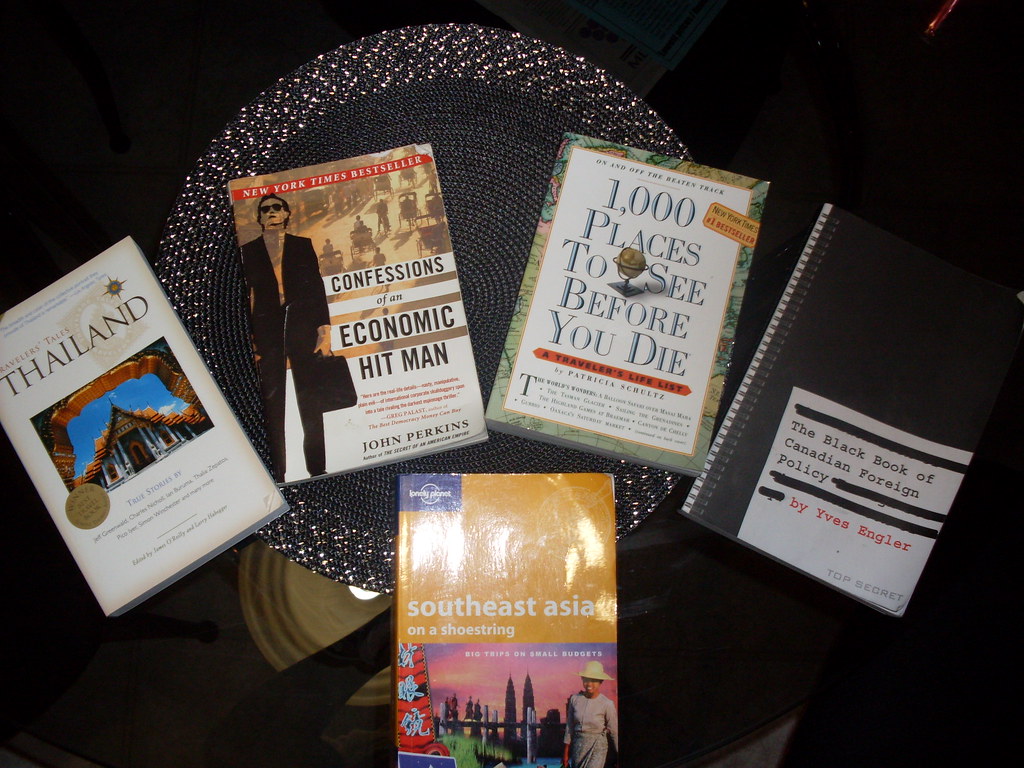
Lonely Planet has never steered me wrong, and I've been using Southeast Asia: On a Shoestring as my planning guide.
One of the most valuable sections will be the "Get in" section, unlike guidebooks which often offer only a few options and outdated prices, Wikitravel will usually cover travel options that you won't find elsewhere.
Lonely Planet
Speaking of Lonely Planet, they offer several other services that are valuable.
The Lonely Planet website is an excellent resource for basic information, and they are continually adding articles and other valuable content.
Without it, I would never have planned a three-day moto trip in Northern Thailand. Be sure to check it every once in a while for new content.
It is also an excellent guide for seasonal weather information.
Exponentially more valuable than their website is Lonely Planet's Twitter feed.
Users submit travel related articles by tagging a tweet with #lp and a team of Lonely Planet staffers review all the links and post the best of the best through their Twitter Feed.
This opens a whole new world of resources as you will find articles that would be lost in the noise of the blogosphere, let Lonely Planet do the filtering for you.
Be warned that if you follow their tweets, your do-before-you-die list will become substantially longer in a short amount of time.
UNESCO
UNESCO is a specialized agency of the United Nations, and as part of its duties, UNESCO designates locales around the world as World Heritage Sites.
These sites are named for their cultural, historical, or natural significance, and are always a great day out on the road.
If you're looking for the best attractions in a country the UNESCO website is a great place to start.
I've never been disappointed by a UNESCO site.
Though sites aren't present in every country, there are 890 sites worldwide, so the chances are that the country your visiting has several on offer.
Whatsonwhen
Some of the most memorable when times traveling are found at festivals when the locals are out and are exuding their culture.
Whatsonwhen.com is a global directory of festivals and events.
I dare you to search, the amount of information they have is stunning. If you can alter your plans slightly to attend a festival, I doubt that you would regret it.
Travel Etiquette
Every country has different customs and cultural norms; unless you're traveling with a local, then you may get caught in a few sticky situations. Travel Etiquette aims to help you act like a farang just a little less.
Travel Etiquette has a host of articles detailing the norms and no-nos for countries all around the world.
If you dropped a coin in Thailand, would you step on it to stop it from rolling?
I would hope not, that coin bears the likeness of the King of Thailand, and even the smallest sign of disrespect towards him will land you in hot water.
BootsnAll
The best information that you will ever get is from your fellow travelers, that is why travel forums like BootsnAll are so important.
All travelers love to share their experiences and wisdom, and as a result, these forums are a bottomless pit of information.
If you can't find the answer to your question with a search then, by all means, sign-up and ask away, your fellow travelers are willing and able to answer.
Bloggers
Before you can make any decisions, you'll need to be aware of the costs associated with a trip. Dave's cost sheet is an excellent way to understand the financial responsibilities of travel for your destination.
Travel Books
Of course, the web is not the end all be all of the information, books still offer a wealth of quality of information.
In addition to my guidebook, books such as 1,000 Places to See Before You Die: A Traveler's Life List are an excellent reference, though I would skip the hotel suggestions.
Books that focus on other travelers experiences are a valuable way to learn about life in another country, Travelers' Tales Thailand: True Stories gave me a unique perception of what it's like to be a traveler in Thailand, but only time will tell if it checks out.
As a political person, books like Confessions of an Economic Hitman and The Black Book of Canadian Foreign Policy provide a unique and in-depth understanding of the West's involvement in the region and the repercussions that those actions had.
For instance, The Suharto dictatorship in Indonesia received aid from Canada, and after the fall of the Khmer Rouge, Canada supported a coalition government in Cambodia that would have included the former brutal dictators.
Though not pretty, I'd much rather be an informed traveler, over a blissfully ignorant one.
If your still short on information, Wikipedia and Flickr are great backups. Flickr is especially valuable as a simple search will bring out the true beauty of any destination, even Winnipeg.
Here are a few other useful resources:
- Information on corruption around the world
- Quick visa information and travel warnings for every country
- World's best data on train travel around the world