
Fraser Island, known as K'Gari to the Aborigines, is located in southeast Queensland, Australia.
It's a popular tourist spot, attracting over 350,000 people a year, yet there are many things about the island you may be surprised to learn.
We take a look at some of the lesser-known facts about Fraser Island, a place full of natural beauty and fascinating history.
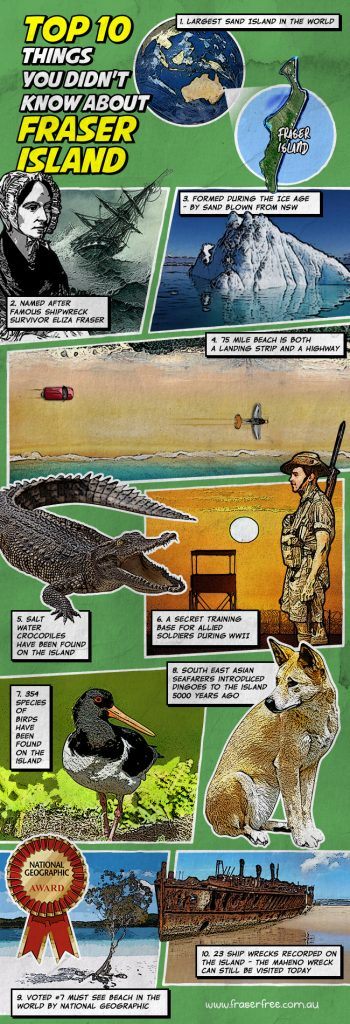
The island is named after a Scottish shipwreck survivor
Fraser Island was occupied by the Butchulla people for 5,000 years, although some say it could have been as long as 20,000 years.
They gave the island its original name of K'Gari (pronounced "gurri"), which fittingly means 'paradise.'
In 1770, the island was discovered by Captain Cook, who was responsible for giving 'Indian Head' it's long-lasting title.
It's said he named it this after noticing a group of three Aboriginals standing on the rocky outcrop.
Matthew Flinders initiated European contact of the island in 1802.
Initially, it was infrequent and limited to escaped convicts, explorers, and shipwreck survivors.
The ship Stirling Castle wrecked in 1836, and some of its survivors lived on the island for about six weeks. Eliza Fraser, the wife of the ship's captain, was one of those survivors.
She was the one that the Europeans named the island after.
Half of the world's perched freshwater dune lakes are located on the island
The island is home to 40 perched freshwater dune lakes, half those known to exist on earth.
Perched lakes are unique in the sense that the waters they hold do not flow from the ocean or come from a stream but are in fact rainwater.
Lake McKenzie (Boorangoora) is one of the most famous perched lakes to be found on the island.
It has a depth of five meters and measures over 150 hectares.
The water is a gorgeous vivid blue, not what you would expect from your average lake.
Due to its popularity and the fact that parking is limited, it is recommended that you get there early, preferably before 10:30 a.m.
The freshwater dune lakes offer immense environmental, recreational and cultural value to the island and were of great importance when it came to the island being successfully nominated as a World Heritage Area in 1992.
The secluded island was used as a secret training base during World War
One fact that is not generally known is that Fraser Island was a secret training base for commandos during World War II.
The Special Reconnaissance Department (SRD), Special Operations, ran the Fraser Commando School, the first of which was established in October 1943 for basic training.
The SRD was a nondescript cover name used for Z Unit, which was formed in response to the rapid Japanese invasion of the Pacific area.
The only ones to know about this particular unit were the Prime Minister and High Command.
The island was chosen because of its varied and challenging terrain, as well as its seclusion.
The environment lent itself perfectly to both amphibious and jungle training.
The preparation was intense, troops were not allowed local leave, and were trained every day from early in the morning, until late evening.
The base trained over 900 personnel of the Services Reconnaissance Department, teaching skills such as jungle craft, unarmed combat, and physical training, demolitions and weapons training, and folboats (canoes).
It wasn't until after the war that these details became publicly known.
For those interested in visiting, remnants of the camp can still be seen at the North White Cliffs site.

For every square meter of land, there is said to be a venomous spider
If you're scared of spiders, you're not going to like this fact. It is said that for every square meter of land on the island, there is a venomous spider. Spiders can be found all over Fraser Island, both venomous and non-venomous.
The island is home to the Funnel Web Spider, of which 40 different species can be found in Australia.
They tend to stay in moist, dark places such as logs, around tree trunks, in rainforest leaf matter, and ferns, since they have problems with drying out in less humid environments.
However, you don't need to worry too much, as the most dangerous of these is the Sydney Funnel Web Spider, and it's only found within 160 kilometers of Sydney.
Other spiders found on the island include the Red Back Spiders, which are close relatives of the North American Black Widow Spider, and the Golden Orb-Weaver Spider.
You will need permits for vehicles and camping
There are a lot of rules and regulations you need to be aware of before traveling to Fraser Island.
For one, all vehicles traveling to the Island must have an official permit attached to the windshield. These must be obtained before you arrive.
Due to the beaches and sandy forest tracks, you need high clearance four-wheel-drive vehicles to get around.
All-wheel-drives and caravans are not recommended, so keep this in mind if you plan on visiting the island.
Some areas are no-vehicle zones, and you should always check beach conditions before setting out.
There are 35 camping areas on the island, and you will need permits for the QPWS areas.
These need to be bought before you set up camp and be clearly displayed at your campsite.
Another important fact to be aware of is that domestic animals are not allowed in the Fraser Island part of Great Sandy National Park.
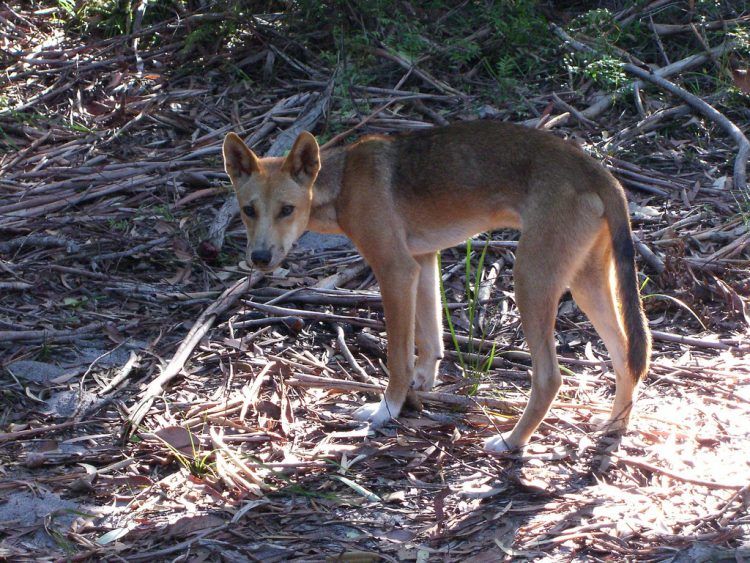
This is because they pose a risk to the local dingo population. If you bring a domestic dog onto the island, you risk a $100 fine.
If the animal is not removed within 24 hours, you face an extra $200 penalty.
Don't forget to do your research
The last thing you want is to end up having to pay a fine, and worse, endanger local wildlife because you brought your pet along with you on vacation!
_______
This story was brought to you in partnerships with FraserFree Tours.