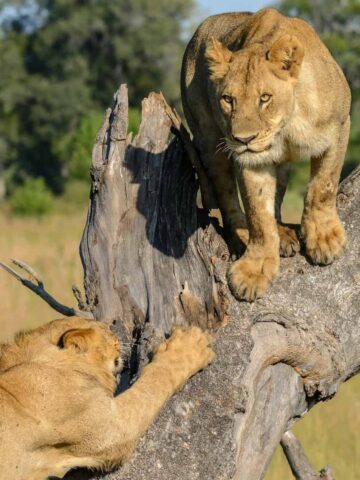
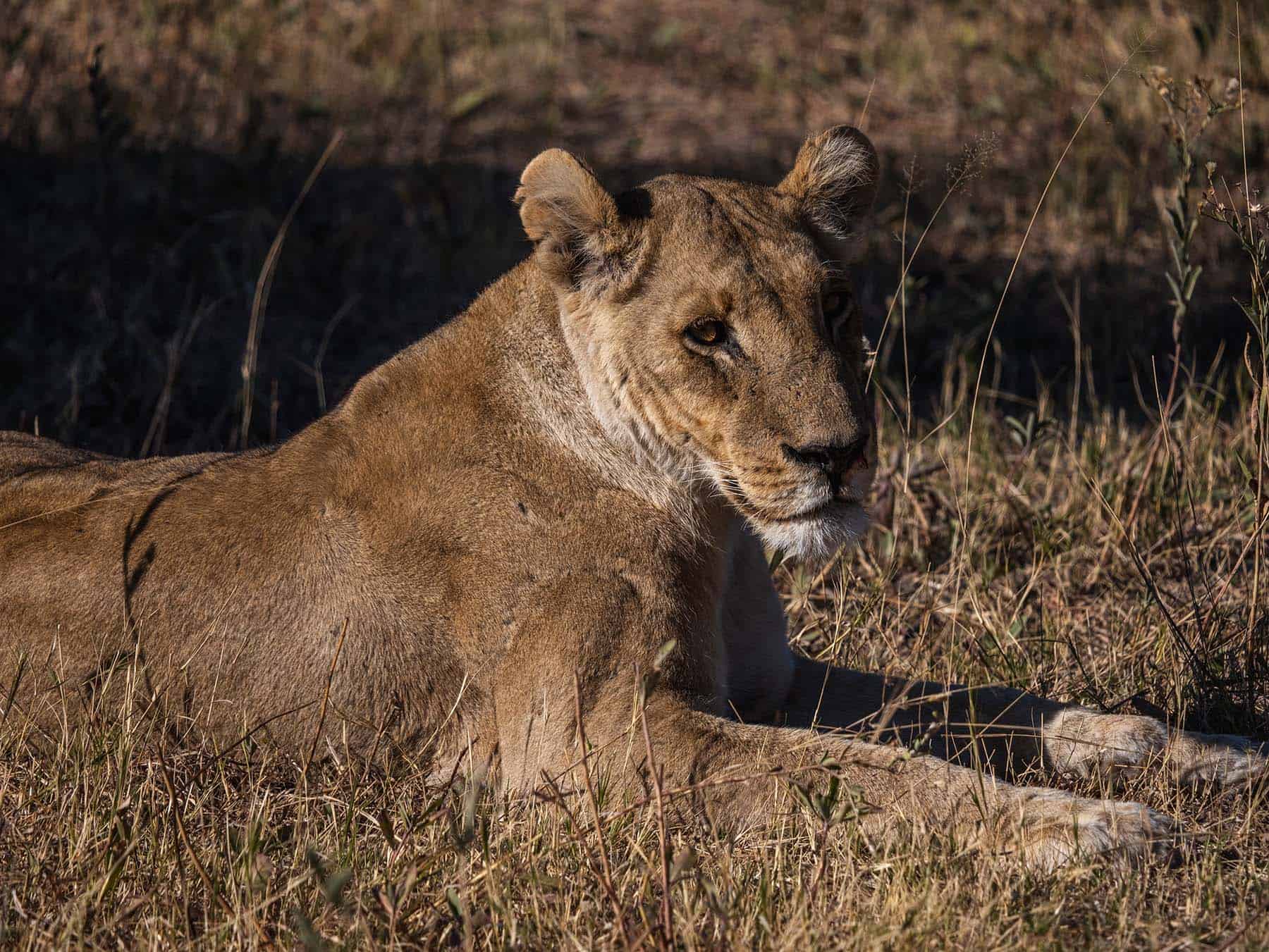
When I embarked on my first Botswana safari, the first thing that struck me was just how quiet the parks and reserves were. We were the only vehicle following two lionesses who were moving at pace, parallel to the shimmering Khwai River.
Having recently been on safaris in both Kenya and Tanzania, this lack of other vehicles was a striking change, and evidence that Botswana's high-price, low-impact tourism model was working.
Botswana is, in many ways, powering ahead in conservation. The country protects an incredible 29% of its land in national parks and game reserves, rising to roughly 37-40% once Wildlife Management Areas are included.
You can certainly feel the vast expanse of nature when on safari here. As we traversed the landscape in an open-topped Land Cruiser, untouched swathes of savannah and pockets of forest rolling out in all directions, it really felt like we were in one of the world's last true wildernesses.
Of course, this low-impact model does rely on safaris costing more than the continent's average. To see this, look at the price of lodging safaris. A night at a lodge within the remote Okavango Delta will set you back at least $1,000 per person per night.
But there's a more budget-friendly way to enjoy a safari in Botswana known as mobile camping. This is exactly how I spent 11 days on safari in Botswana.
What Is Mobile Camping?
In Botswana, mobile camping refers to a very specific type of safari.
As the name suggests, you move from location to location, often spending 2 to 4 nights at a remote campsite in the middle of a prime game-viewing area before moving on.
The word "camping," however, can be a bit deceiving. In reality, the experience is more like glamping.
Tents are large and typically include proper beds as well as other furniture, such as bedside tables. Tents also have their own adjoining open-air bathrooms, which include a toilet, basin, and bucket shower.
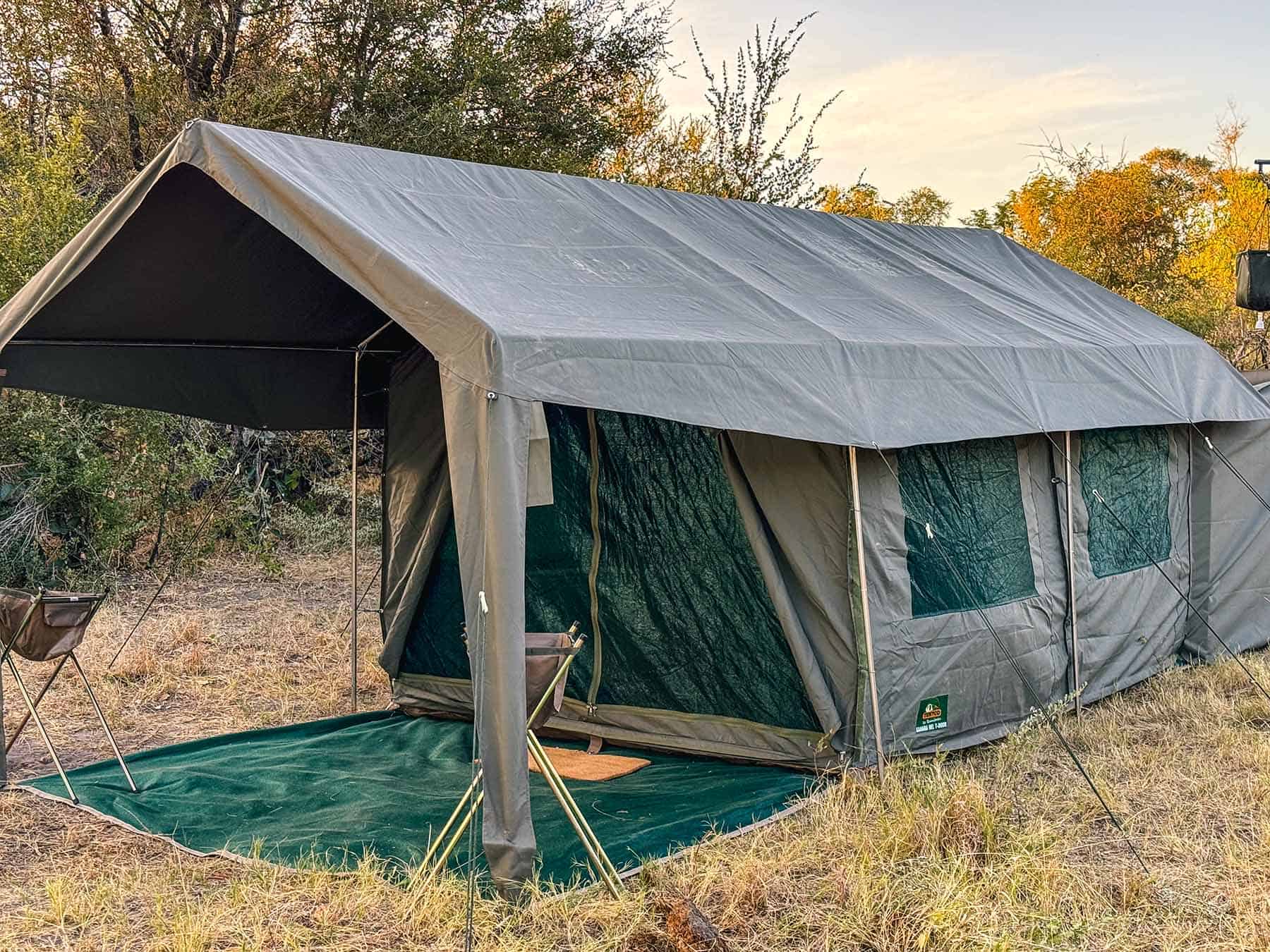
Meals are served in an open mess tent on a dining table with comfortable chairs. The standard of cooking is exceptional, with a dedicated chef making meals from scratch.
Mobile camping is typically non-participatory. You turn up, and the campsite is already made. There are typically 1-2 members of the camp staff who ensure your tent is ready, perform a turn-down service (where hot water bottles are placed in your bed!), and heat water for your bucket shower. Yes, the showers are lovely and hot!
Moving day is also a seamless experience. You pack your bags and load them in the safari vehicle on the morning of departure. The camp staff will then get to work, dismantling the tents and packing them up.
Whilst you're out on a game drive, the camp team will head to the next location and set up camp for you. When you arrive from your afternoon game drive, the camp will look almost the same as when you last saw it, except it's in a new location!
I will caveat that mobile camping can vary slightly depending on which tour company you go with. I personally opted for a private "luxury" mobile camping safari, which costs $650 per person per day.
There may be slightly cheaper options available that may not be quite to the same standard in terms of amenities and service. At the lower end, you can join participatory group camping safaris, where you'd have to erect your own tent. These start at $350 per person per day.
Getting to Botswana
Almost every northern Botswana safari begins in Maun, the small and charming gateway town for the Okavango Delta.
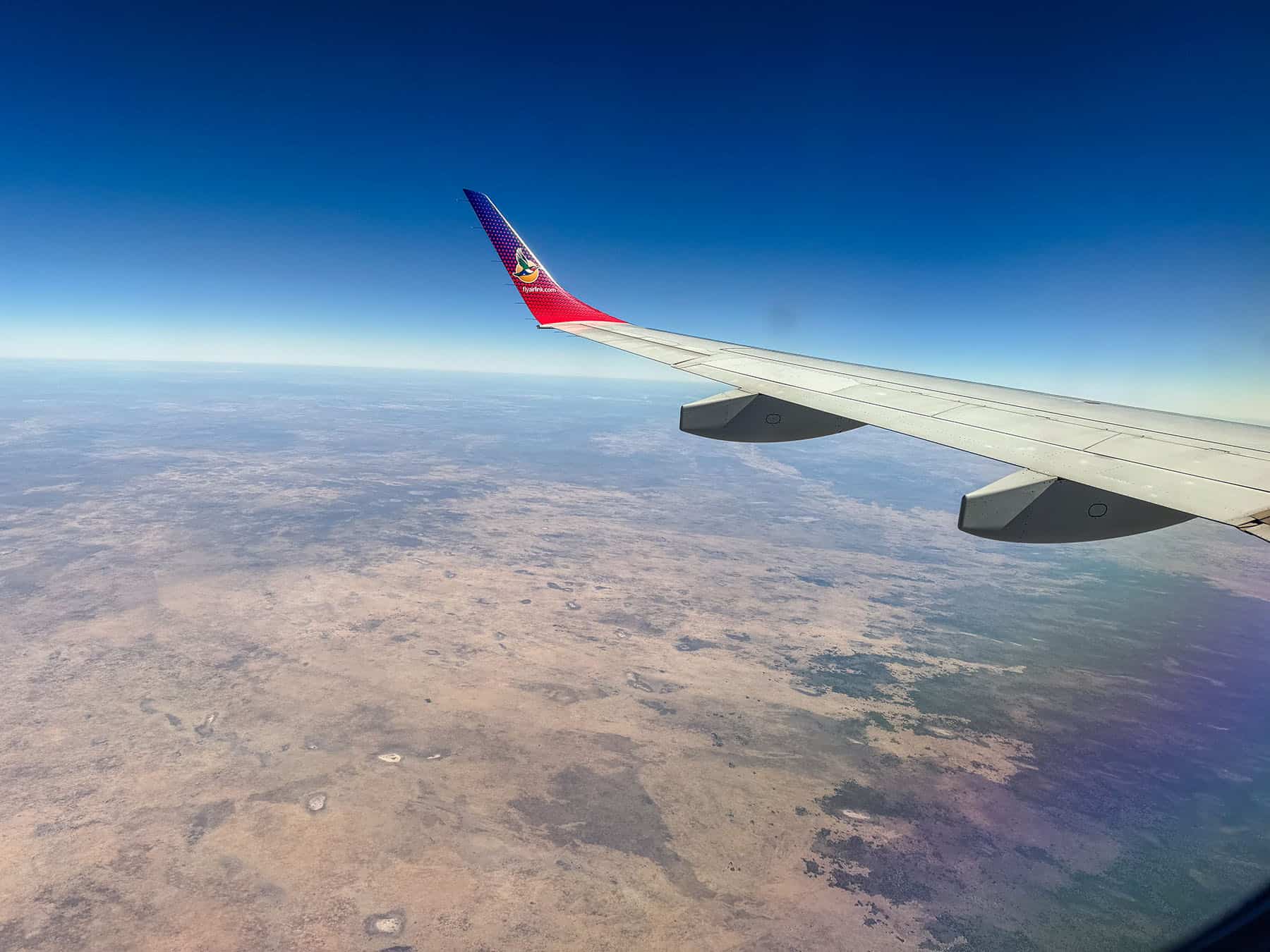
Both Johannesburg and Cape Town in South Africa run frequent flights to Maun. I flew through Johannesburg and arrived in Maun just past midday.
Whilst it is possible to embark on safari immediately, I always like to have a couple of days to settle into a new location. This turned out to be a very sensible decision.
Our friends who were joining us for the safari instead opted to go straight on safari. However, their flight from Cape Town was delayed by over 2 hours.
This several-hour delay meant they no longer had enough time to drive from Maun to the first location in Moremi Game Reserve (the drive takes 5 hours) and had to book a last-minute overnight stay in Maun, missing the first 24 hours of game drives.
From Maun, you have two options to reach your onward destination, often the Okavango Delta.
The first and most popular option is to drive. Driving normally takes around 5 hours, half of that being through protected wildlife areas, therefore doubling the drive up as a game drive. I managed to spot several groups of elephants as well as giraffes and impalas on this drive to my first campsite in Moremi Game Reserve.
There are a couple of drawbacks to driving. Firstly, the roads are badly corrugated in some places, making for a bumpy ride. Secondly, you're often driving in your safari vehicle, which is completely open and thus very windy!
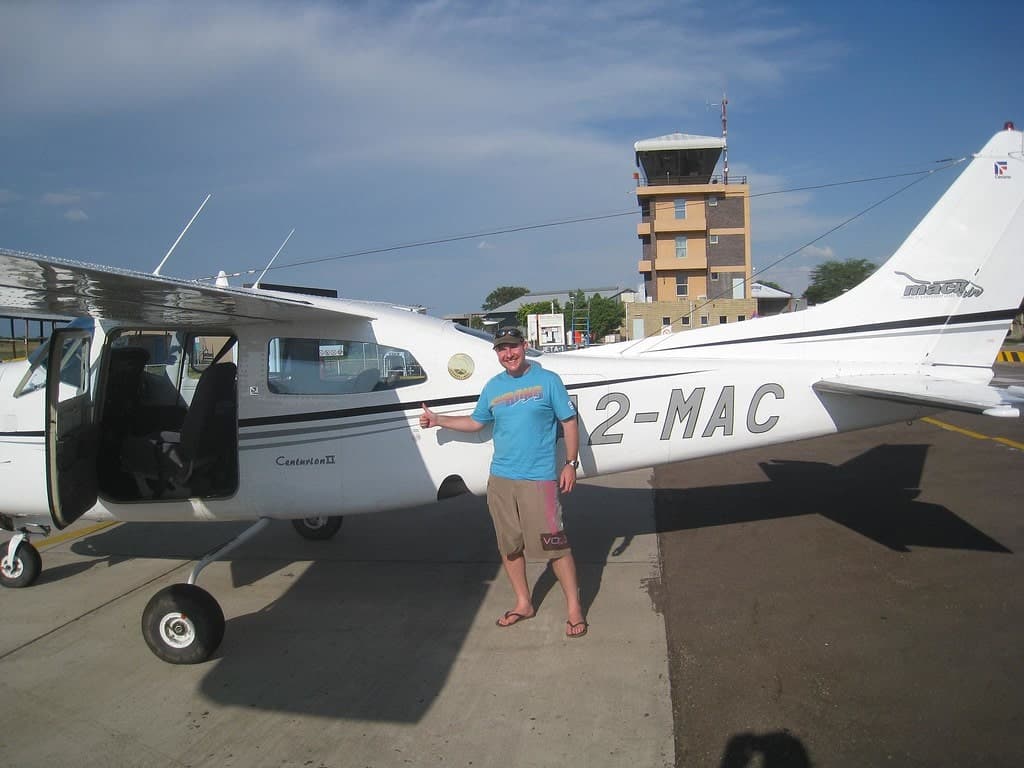
The other option is to fly via light aircraft. The flight takes about an hour, saving you time you can spend on a game drive. Bush flights cost around $300 per person per flight, so costs can quite quickly mount up if you're on a budget.
Generally, I tend to fly any leg longer than about six hours. On my northern Botswana trip, every drive came in under that, so I traveled by road, and many of the transfers were through reserves anyway, making them basically safaris.
It's worth noting that in Botswana, some Delta lodges have no road access, so flying is the only way to reach them.
My Safari in Botswana
Stop 1: The Okavango Delta (Moremi Game Reserve)
After a 5-hour drive from Maun, we arrived at our mobile tented camp in Moremi Game Reserve, part of the famous Okavango Delta, a UNESCO World Heritage wetland.
We were greeted at the camp, which had been erected in advance of our arrival, by a smiling team of porters as well as our own private chef.
We arrived just as the sun was setting, painting the bush with a beautiful orange glow which quickly began to fade. The sky darkened, and the first stars began to appear.
An elephant bellowed in the far distance, clearly unhappy. I couldn't help but wonder what startled it. A lion perhaps?
I felt a shiver as I remembered that campsites in Botswana are unfenced. We were truly at one with nature, and anything could pass through our campsite.
We had three nights to enjoy the Moremi Game Reserve, which encompasses the eastern part of the Okavango Delta.
What makes Moremi, and the Okavango Delta as a whole, unique is the waterways. Floodwaters arrive from the Angolan highlands each year, turning dry land into a maze of channels and lagoons and drawing wildlife into extraordinary concentrations.
We were here in mid-June, and the floodwaters hadn't arrived yet. They were supposedly due any day now. Despite this, Moremi was still filled with waterholes and rivers. So it's possible to see the beauty of the delta even without the floodwaters.
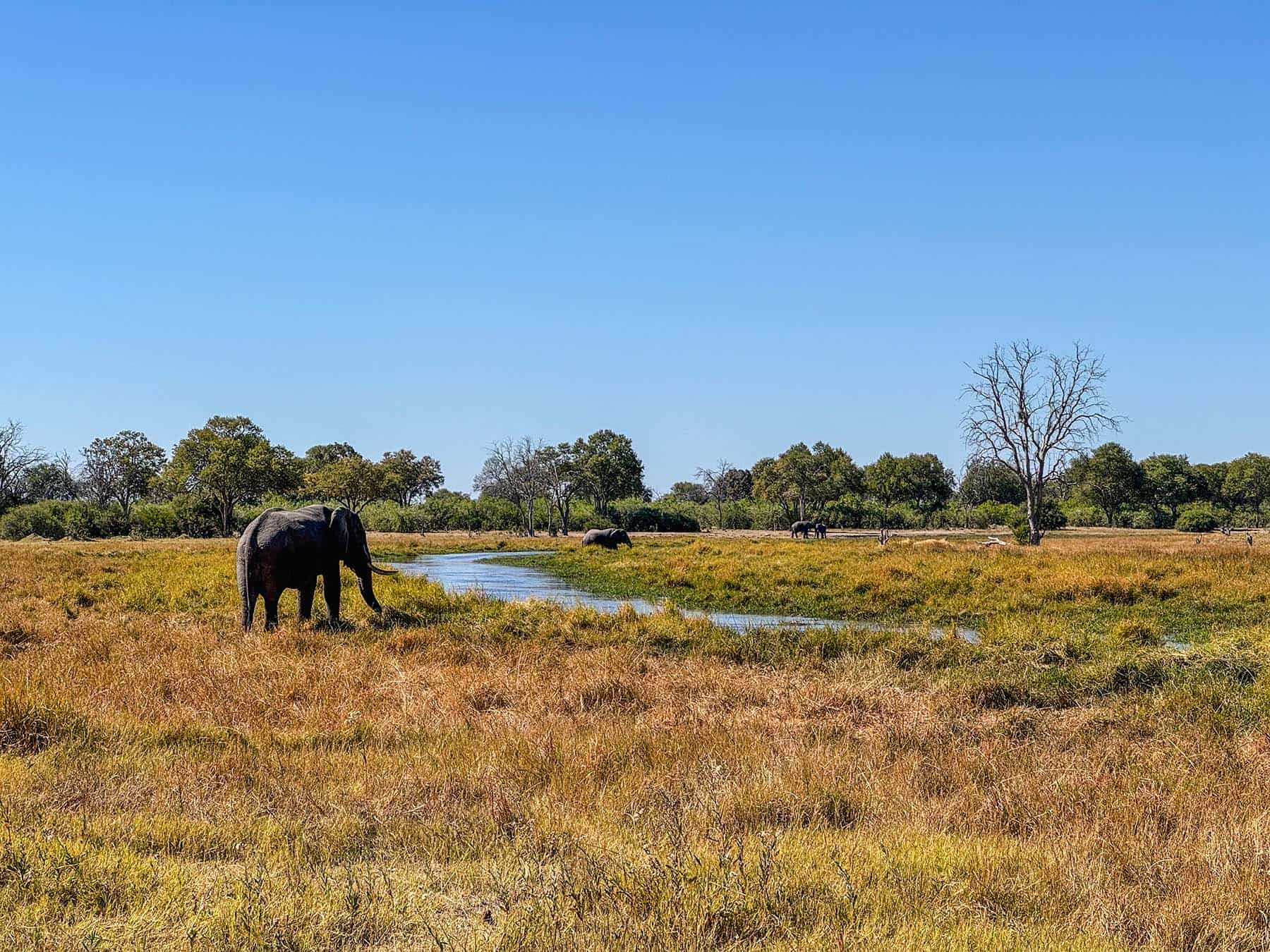
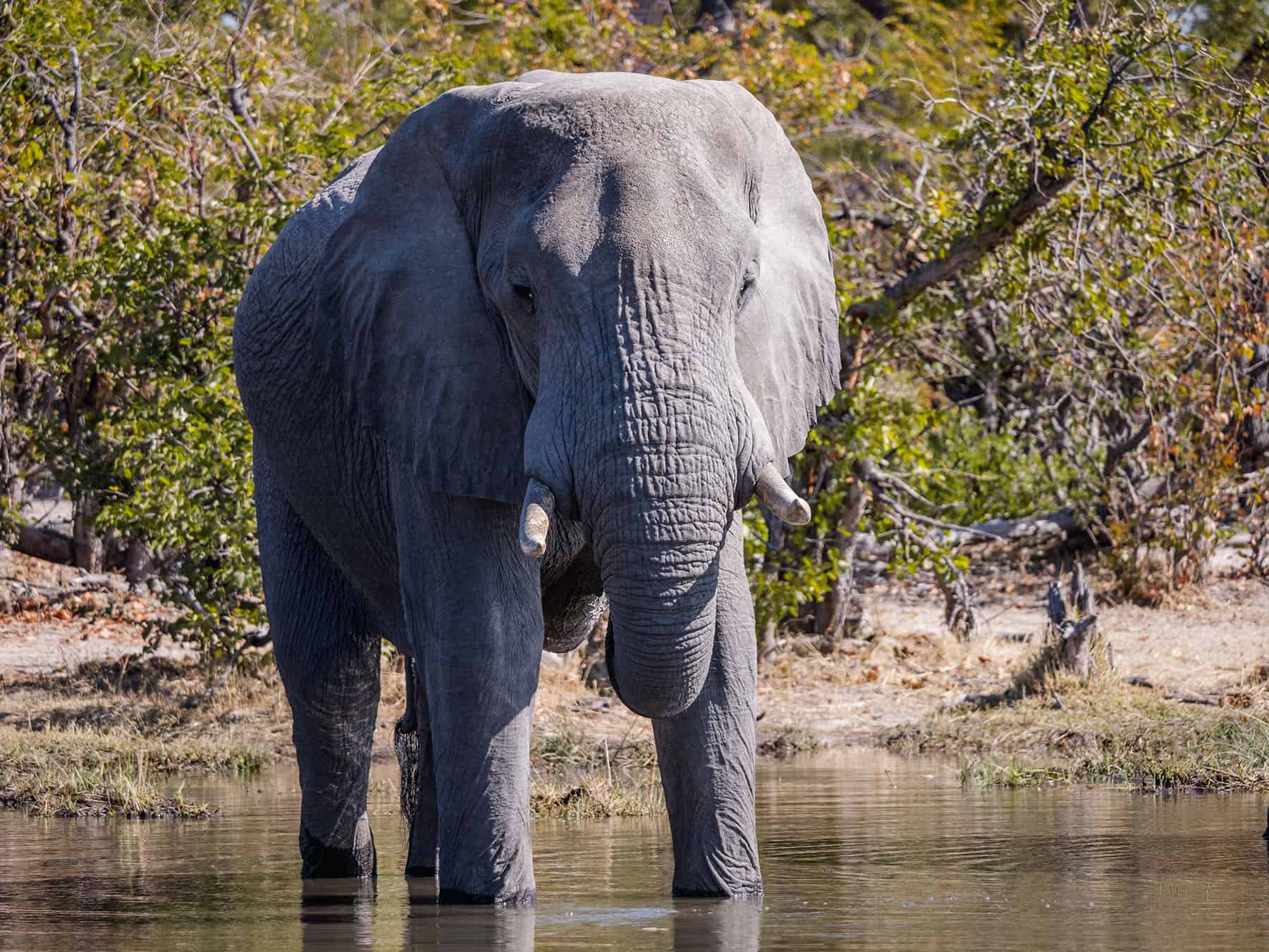
The lush waterways of Moremi Game Reserve make it a great place to see elephants. And sure enough, over the preceding three days, we saw plenty of the gentle giants!
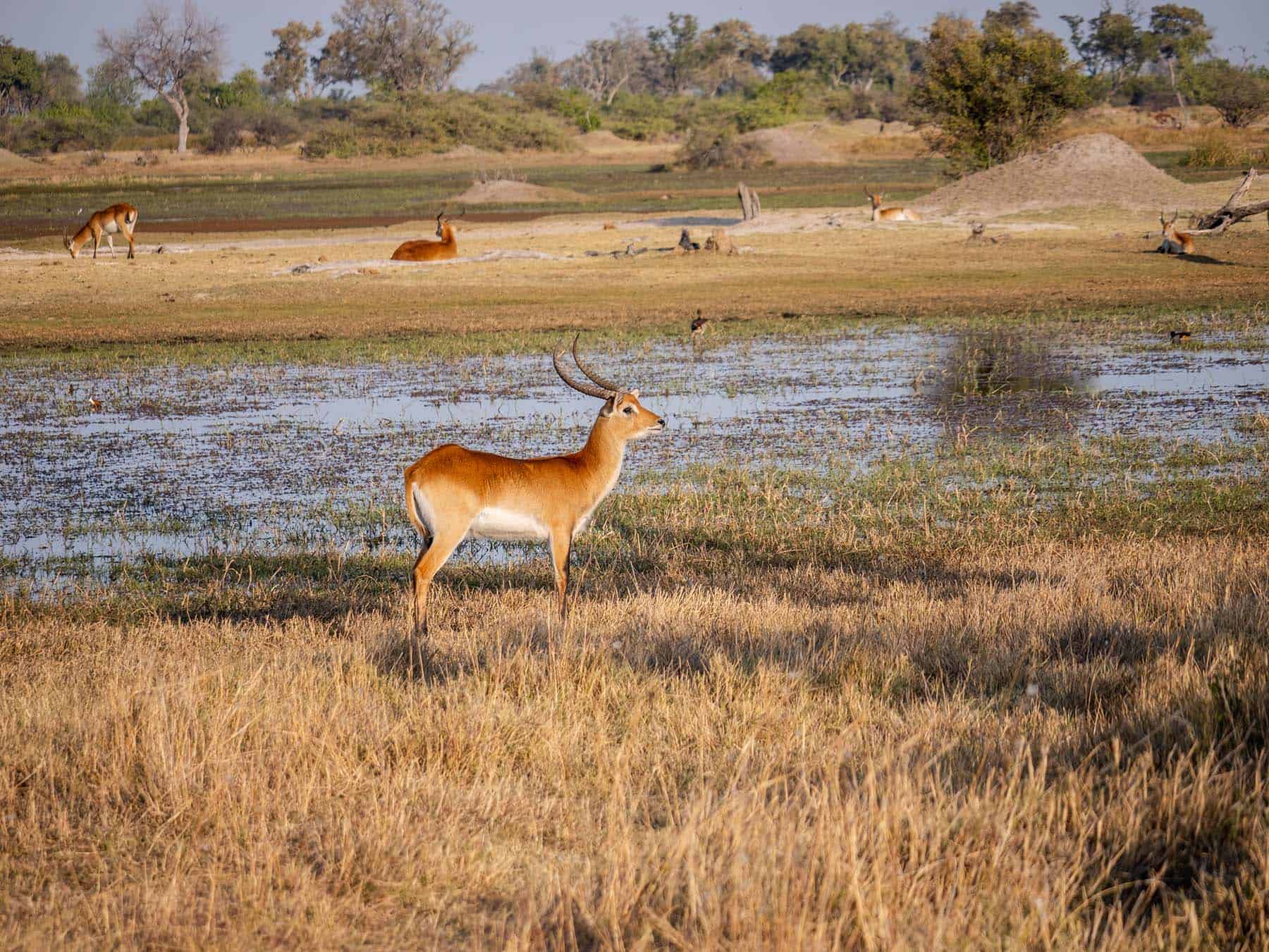
Red lechwe, hippos, and Nile crocodiles also made an appearance, as well as an abundance of waterbirds. Perhaps the highlight of my time in Moremi, however, was spotting a majestic male leopard at dusk.
We'd just finished watching a magnificent sunset. A breeding herd of elephants had crossed the floodplains, the sky turning blood-red as the sun melted into the horizon. We watched the elephants vanish into the forest before deciding to head back to camp for our evening meal.
I didn't think it was possible for things to get any better. But the Okavango Delta had one last surprise up its sleeve. As we passed through a dense mopane forest, the light fading fast, I noticed a cat shape through the trees.
"Leopard!" My guide and I called out in synchrony.
The car came to a screeching halt, and we all stared in awe as the large male leopard rose and sauntered through the forest, his coat tinged with pink in the fading light.
He lay down for a moment and began to groom his lustrous pelt before, only a few moments later, he rose again and vanished into the forest.
Related: Scenic Flight Over the Okavango Delta
Stop 2: Khwai Community Area
From Moremi, the camp moved 4 hours east to the Khwai Community Area, where we spent 4 nights.
Khwai sits at the very edge of the Okavango Delta, between Moremi Game Reserve and Chobe National Park. What's special about this itinerary is that you are entirely in protected reserves, surrounded by seemingly endless wilderness.
There are no fences between them, allowing the free movement of wildlife over an expansive area. This is a key reason why elephants and African wild dogs do so well in northern Botswana, as they require vast areas to roam.
Khwai is a bit different from Moremi and Chobe as it's not government-owned. Instead, it's owned by the local San community. There's even a village within the protected area called Khwai village. Here, people live alongside wildlife. Despite this, Khwai still has a very wild feel.
Another difference between Khwai and government-owned reserves like Moremi is the allowance of night game drives, as well as the ability to go off-road. Both of these came in very handy for our safaris in Khwai. Across our night drives, we managed to spot bushbabies, scrub hares, a genet, and a nightjar.
Our campsite in the Khwai Community Area sat right on the banks of a tributary where we could watch hippos, elephants, and waterbuck from camp.
Khwai is known for exceptional predator sightings, and boy, did we have many of those over our 4 nights here!
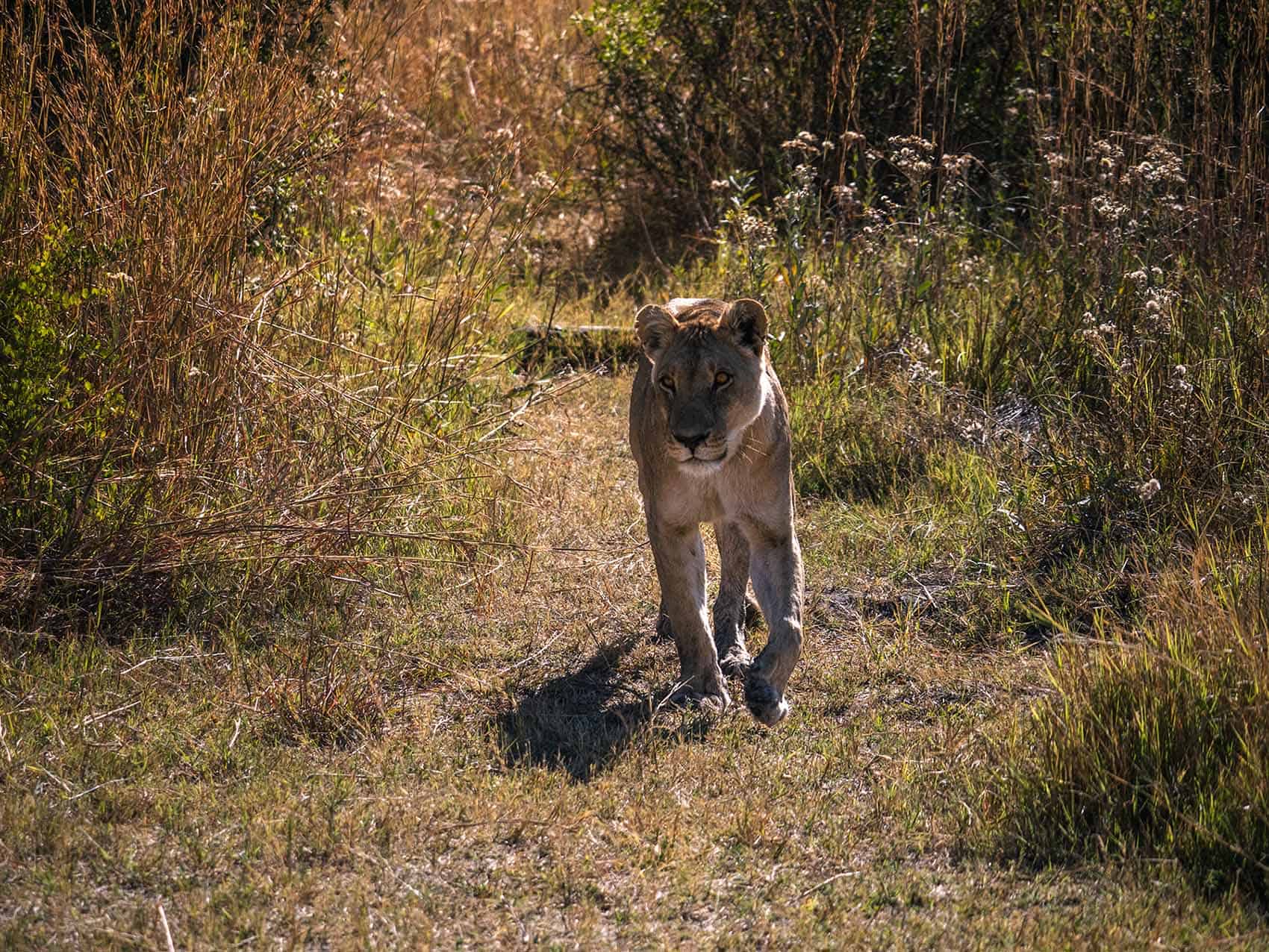
The first took place when we encountered two lionesses one morning. They were surprisingly active, stalking a waterbuck unsuccessfully before they began patrolling. At one point, they leaped across a tributary.
We had to go to a designated crossing point to reach the other side. But we weren't the only vehicle at the sighting, so we crossed one by one. Things got very interesting when all the other vehicles went right, while our driver took us left. We trusted his intuition, which turned out to be spot on.
I couldn't believe it when we pulled over by the Khwai River. A few moments later, the two lionesses emerged from the long grass and started walking alongside the river.
We were the only vehicle here enjoying this moment, and we had the privilege of staying with the lionesses for a couple of hours before they finally settled down to sleep during the heat of the day.
Another equally memorable sighting took place one afternoon. We found a half-eaten warthog wedged in the fork of a leadwood tree. Another vehicle reported seeing a male leopard haul it into a tree and begin his feast.
He later leaped down and crept into a nearby mopane woodland. There was no doubt that the male would soon return to commence his meal.
We decided to wait. Hours passed, the sun went down, and other vehicles gave up, but in the near-darkness, the leopard finally walked back, groomed himself at the base of the tree, then leaped up the trunk to feed again while a hyena circled below, hoping for scraps.
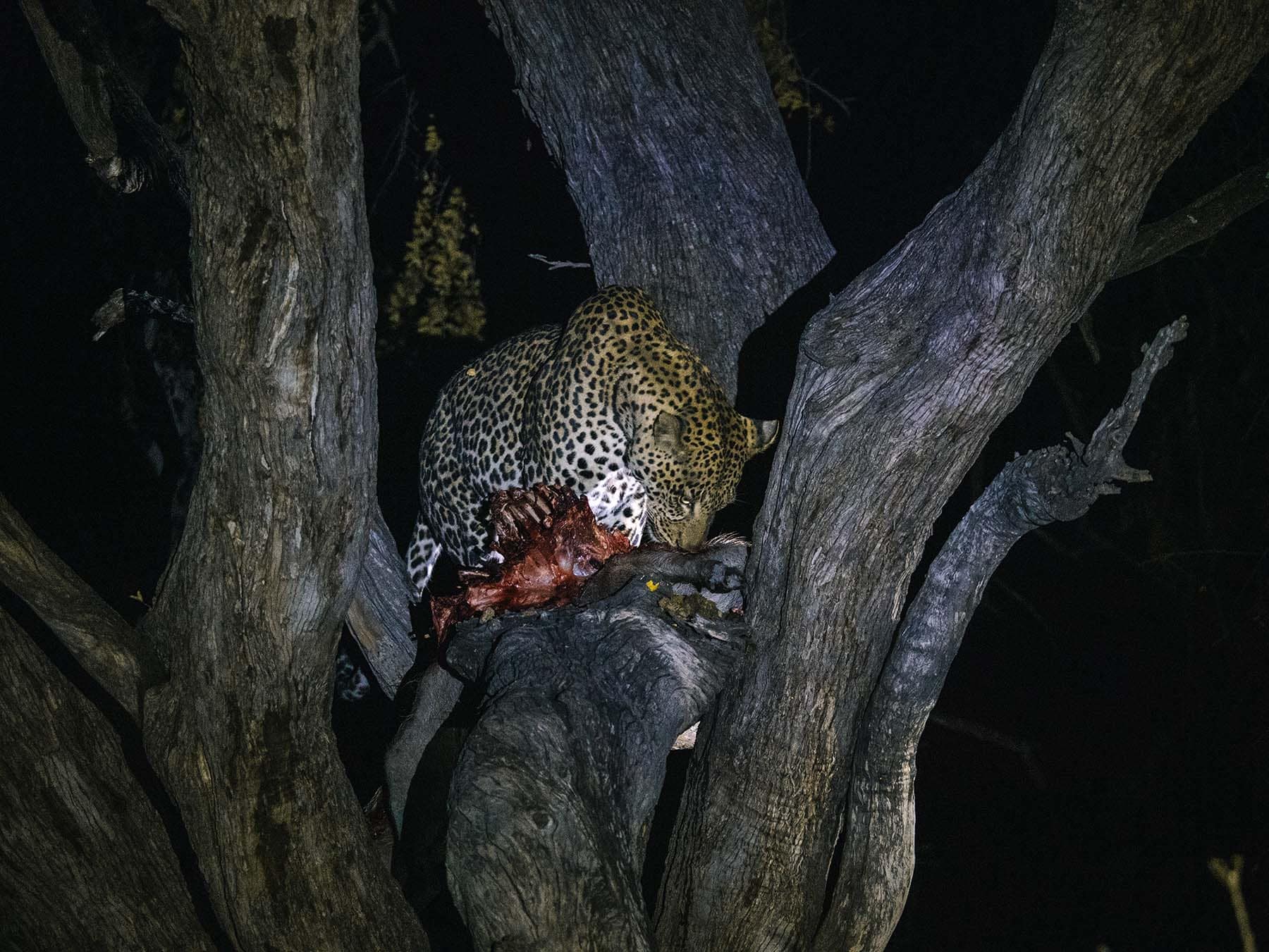
In a national park, we would have been forced to leave hours earlier. But as Khwai allows night game drives, we were able to stay with him as he ate, a few hours into the night.
Khwai is also a great place to embark on a mokoro ride. This involves taking a shallow tributary in a traditional canoe, offering a different vantage point on the Okavango Delta.
We were told that mokoro rides aren't so much about the wildlife we saw but more about the experience. As a result, we didn't expect to see much. You can imagine my surprise when we spotted elephants, waterbucks, frogs, fish eagles, and more!
Stop 3: Savuti (Chobe National Park)
From Khwai, we drove to Savuti, a predator-dense region within Chobe National Park, where we spent 3 nights.
Whilst the drive time between the locations is around 4 hours, we turned it into a full-day game drive, with one last morning in Khwai followed by a packed lunch on the road. This gave the team enough time to set up camp in our new location.
As we approached Savuti, there was one animal that I was particularly keen to see - African wild dogs. Despite our best attempts, we hadn't seen any of these endangered predators yet.
I didn't expect Savuti to deliver so quickly! As soon as we entered the region, our guide took us to an African wild dog den where six adults lay sleeping, each marked with its own unique pattern of black, tan, and white.
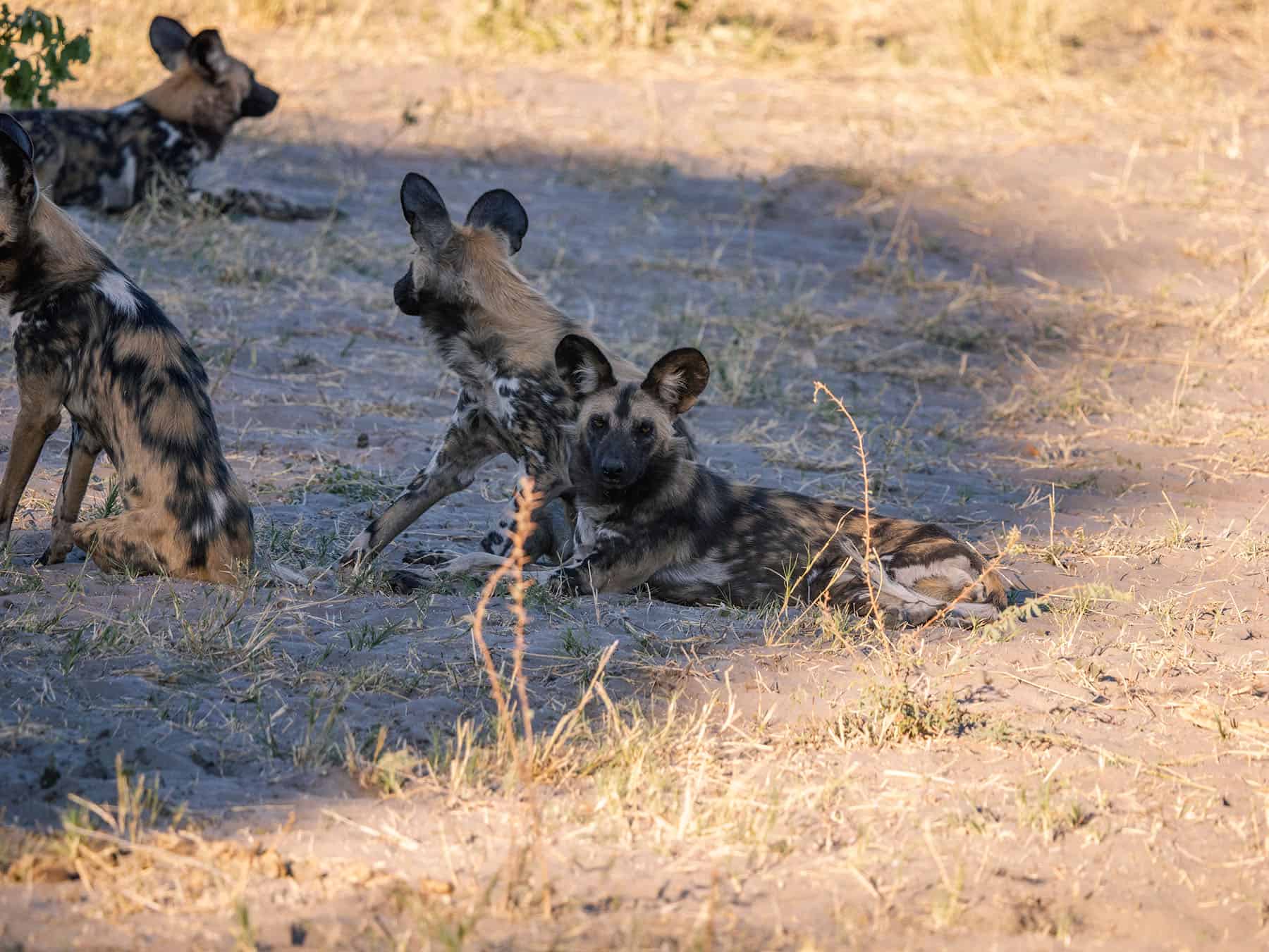
When they woke, the pack erupted into wonderful squeaking and twittering, rubbing against each other with tails wagging, and then the alpha female lay down as eight tiny puppies tottered out to nurse!
Botswana is one of the best places to hope to catch a glimpse of African wild dogs, and I'd intentionally timed my safari to give us the best odds.
Wild dogs den between May and September, and during this period, their movements become more predictable. As they have extremely large home ranges, they can be difficult to locate at other times of the year.
Savuti is just as famous for its lions, which include two distinct prides renowned for hunting elephants. One dawn, we heard roaring from camp. Our guide made a mental note of the direction and took us directly to the Northern Pride, who were spread out, feasting on not one but two elephant carcasses!
Savuti treated us to back-to-back sightings of an incredible variety of wildlife. I even saw my first-ever honey badger here. Due to the density of high-quality sightings, Savuti actually ended up being the highlight of my trip.
Stop 4: The Chobe Riverfront
From Savuti, we drove 5 hours north to the most popular and accessible part of the national park - the riverfront.
The Chobe Riverfront sits on the northern boundary of Chobe National Park and Botswana, with Namibia sitting on the northern banks of the river. The Chobe Riverfront offers water-based safaris, the most popular of which is a motorboat ride on the mighty river.
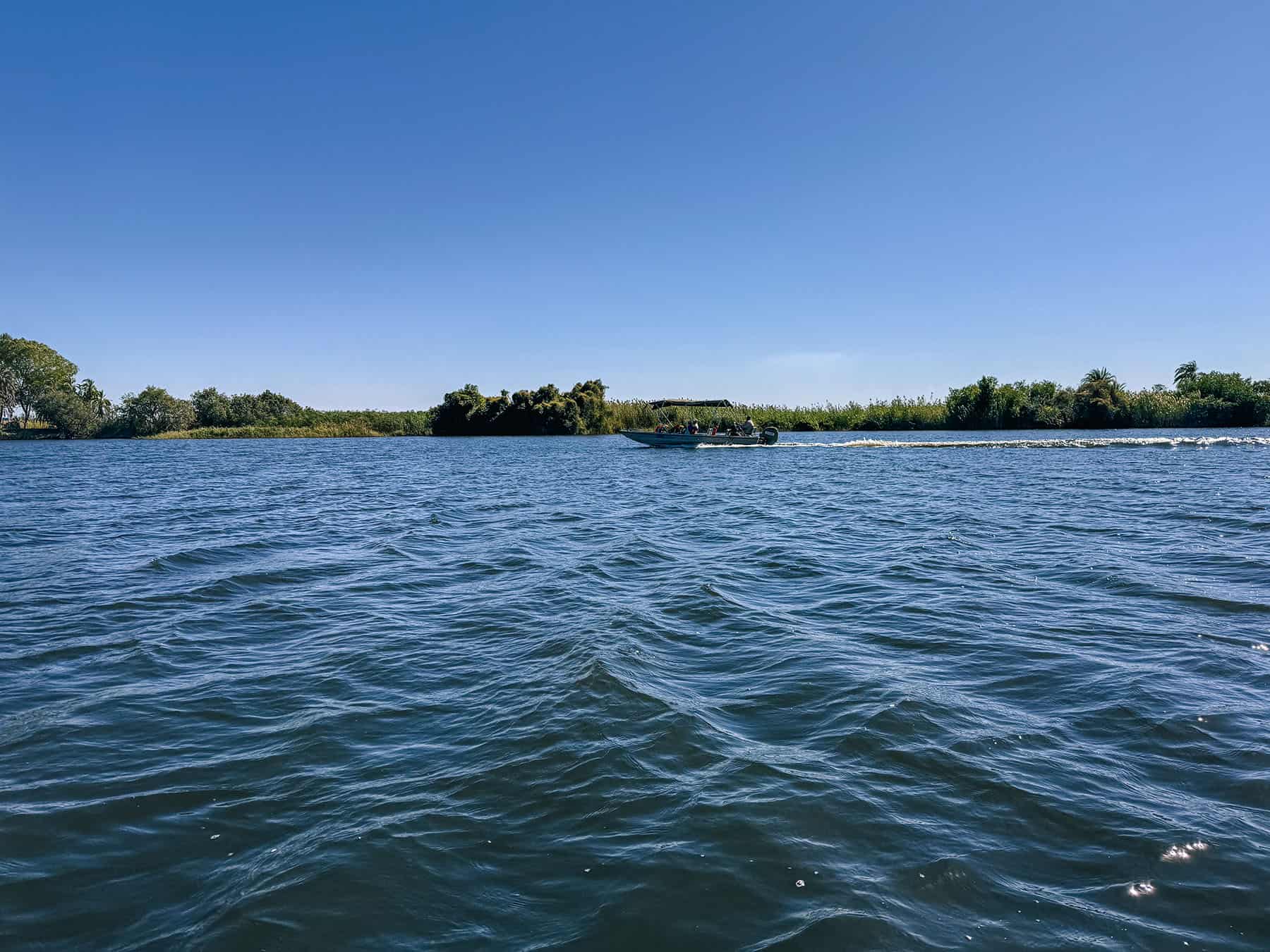
We set out by boat from the town of Kasane in a small, canopied motorboat. These boats sit low and open-sided, so they allow a different vantage point of the wildlife.
We saw an abundance of wildlife, including Nile crocodiles, water monitors, and hippos. Water birds were a common sight, too. I spotted herons, egrets, cormorants, and African fish eagles.
The best sighting of the whole cruise, though, was a herd of elephants crossing the river. The matriarch led the way into the water without hesitation, and the rest followed in single file, their trunks held high above the surface like snorkels as the current rose to their shoulders.
After the three-hour boat cruise, we spent the night in Kasane, which marked the end of our safari. Kasane has an international airport, allowing you to fly directly back to Cape Town or Johannesburg rather than journeying back to Maun.
What To Pack for a Mobile Safari
I learned a few lessons the hard way about what to pack for a mobile camping safari in Botswana, namely, that I was far colder than I ever expected and hadn't packed enough layers!
Below, I share the key things you'll need to consider when packing.
Clothing
When it comes to clothing, there's quite a bit to consider.
Firstly, temperatures in Botswana can fluctuate drastically, especially in the dry season, with evening temperatures dropping to freezing, whilst daytime temperatures often exceed 86 F (30 C). This can make it challenging to decide what to wear on a given day, but my best advice is to layer up.
For me, layering in the morning looks like a vest top base layer, covered by a shirt, then a jumper, then a gilet, then a lightweight windbreaker jacket. I will also have a beanie hat, scarf, and gloves. Trousers can be a bit more challenging to layer, so I wear one layer.
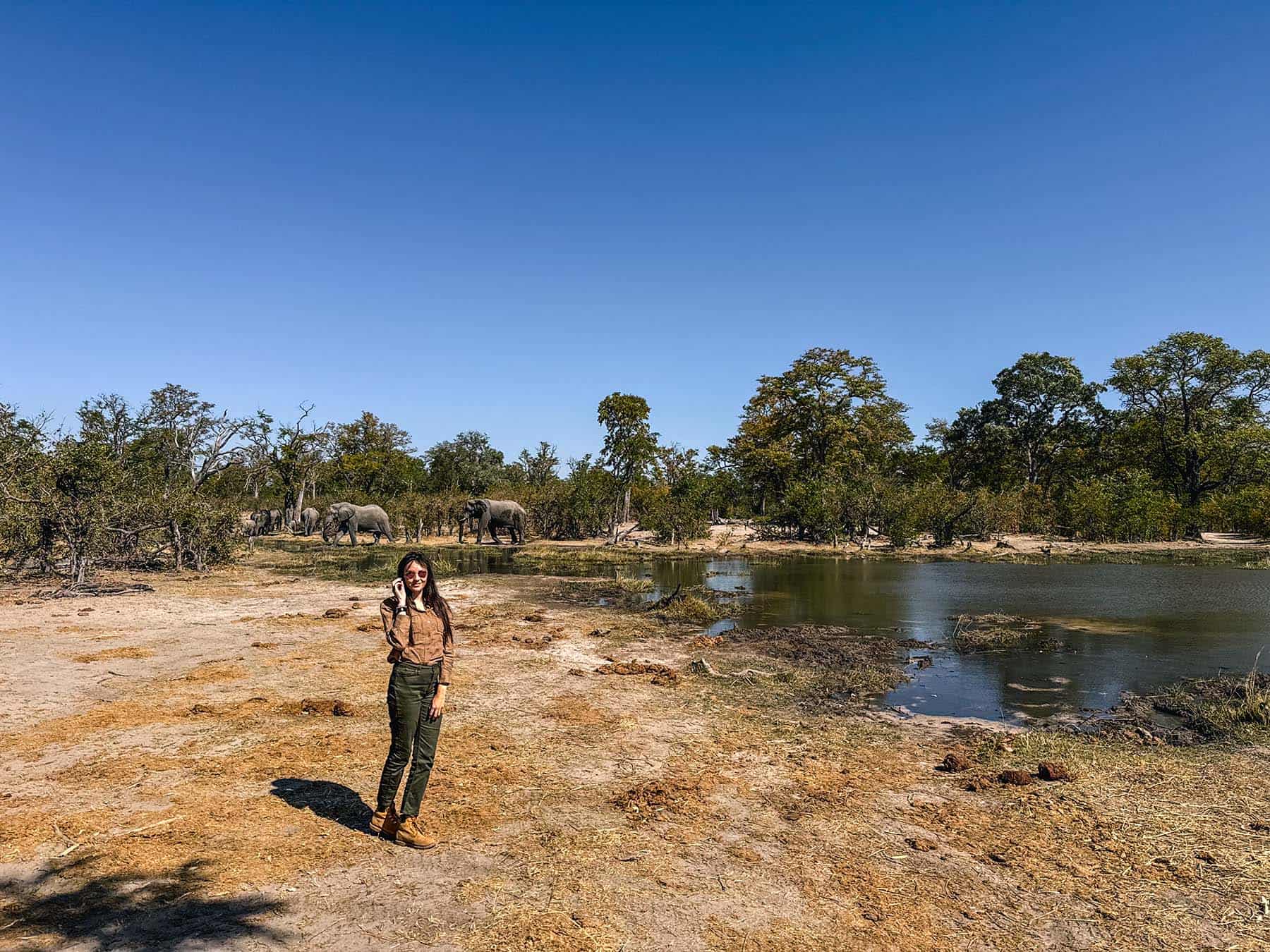
Except for moving days, you will return to camp for lunch. This allows you to get changed into lighter clothing for your evening drive, which is often warmer than your morning one.
For the afternoon drives, I will wear a lightweight top and shorts, but bring some layers with me, like my jumper and beanie hat, for when it starts to cool.
Clothing color is also a consideration. Although rare these days, tsetse flies are present in northern Botswana. These biting flies are attracted to blacks and blues, so I'd personally avoid these colors if possible. Very bright colors also aren't recommended as they could startle animals.
Luggage
If you're traveling by light aircraft at all, soft-sided duffle bags are often mandatory.
However, even for safaris without any internal flights, I would recommend them as they fit well in your safari vehicle, particularly if you're traveling with quite a few people.
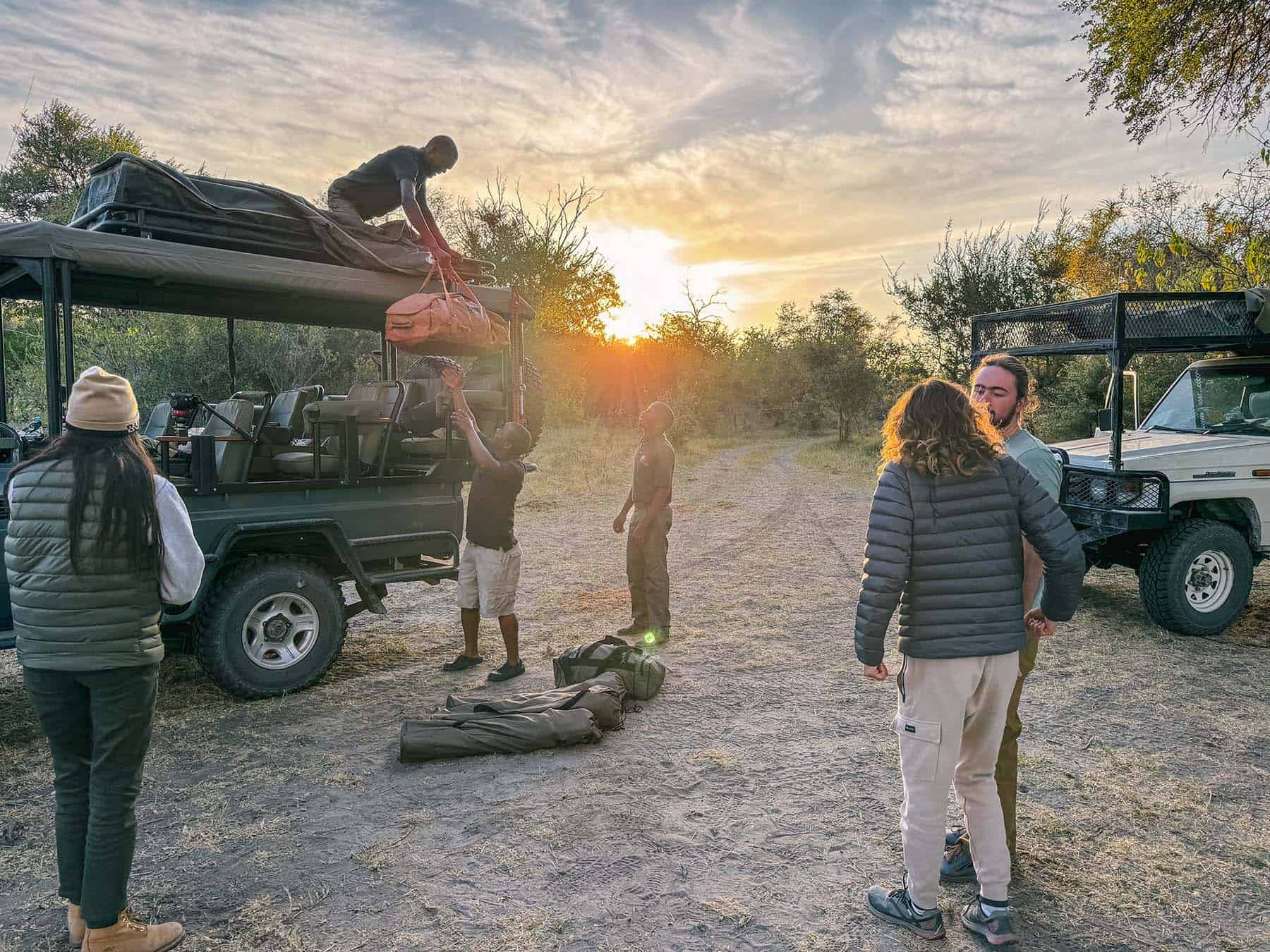
They are also easy for the team to transport to and from the tents, unlike wheelie suitcases, which would be harder to move on dirt and grass.
At the airports, I use a trolley to wheel the duffel bags around. In addition to my main bags, I carry a rucksack, which I keep in the safari truck and use as my cabin bag on planes.
Electronics
There is no electricity inside the tents, so I like to take a power bank for my phone and laptop. In my experience, they typically must be under 100 Watts to comply with airline rules and be transported in your carry-on luggage.
The safari vehicles do have multiple plugs wired to the car battery, so I charged my power bank and camera batteries as we drove.
There is also a large solar battery in camp to charge larger devices, such as laptops, during daylight hours.
It's worth noting we didn't have any phone signal or internet for most of our safari, which was nice for switching off. I purchased a local SIM in Maun, which ended up being redundant as there was never any phone signal. So, I wouldn't recommend that.
Practical Tips for the Perfect Mobile Safari
Below are a few tips and tricks I learned on my Botswana safari to help you avoid learning the hard way.
Best Time To Visit
A few decisions shaped my trip more than any others, and the first is when to go. I traveled in the dry season, and the wildlife viewing was exceptional, with animals concentrated around the shrinking water sources in the Okavango Delta and Chobe National Park. Vegetation is also less dense, making it easier to spot wildlife.
The key deciding factor for me visiting in the dry season was the higher chances of seeing African wild dogs as they den between May and September.
The trade-off is that the dry months are peak season and prices are at their highest, though I found it worth every penny.
The green season between October and April can also be rewarding. It's lower cost, and the prices are quieter. I also find that the green backgrounds and dramatic skies are great for photography. The only times to really avoid are January and February, as these are by far the wettest months.
Don't Rush Your Safari
A safari in Botswana is very different from safaris in Tanzania or Kenya. The radio network is largely quiet due to fewer vehicles, and the wildlife areas are huge.
As a result, you are unlikely to be rushing from sighting to sighting. The experience is instead focused on being present and meandering slowly through the bush, noticing everything around you.
This type of safari has a slower pace, so you really need more days to see everything you wish to see. Seven days is the absolute minimum I'd recommend to enjoy northern Botswana. If you have more time than 11 days, as I did, it allows you to enjoy northern Botswana at an unhurried pace.
If you want to include even more regions in your safari, such as the Central Kalahari Game Reserve, you'll need at least 2 weeks for your itinerary.
Final Thoughts
Botswana remains one of my favorite destinations in the world. Few countries feel so wild and remote, and I truly loved immersing myself in this vast wilderness through mobile camping.
Although a safari in Botswana comes with a higher price tag than in other African destinations, I truly believe the unique experience it offers is worth it.