Editor's Note: The following information was submitted to me in 2000 by Alexander, a traveler. Having visited South Africa and Botswana in 2008, his tips and warnings remain valid. The photos are mine.
I lived in Southern Africa, including South Africa, until 1995, and traveled extensively throughout the entire region. Also, I visited South Africa, Swaziland, Namibia, and Botswana last April. There are many group travel options available; however, this article primarily focuses on information for individual travelers.
Africa Travel Advice
Getting There
The price of air tickets varies significantly, and one must shop around. We found a Chinese travel agency in Toronto and paid $1,150 Canadian for the round-trip ticket with a Dutch airline. Plus, we arrived in Johannesburg and were allowed to depart from Cape Town.
Hostels
South Africa and Swaziland: As backpackers, we stayed in international hostels for about $10 Canadian per night per person (it's a bit of a myth that they only have bunk beds). Mostly, we had our own bathroom. Usually, we book on the same day, but not always, and we were never turned away.
One can benefit from hostels also by meeting other international travelers, and we made friends from all over the world. Additionally, since their interest is not in conducting business, information on places they have visited can prove very valuable.
I don't quite see the difference in comfort between bed and breakfasts (BBs) and hostels, but there are plenty of small, family-owned guesthouses.
Botswana and Namibia
Hotels can cost $100 Canadian and above, but there are also guesthouses and hostels available.
Car Rental
Initially, we considered booking from Canada, but we did not receive good offers. Therefore, we booked through a Johannesburg hostel and rented a fully insured, small Toyota hatchback for Rand 250 per day with unlimited kilometers.
Weather
April and May are excellent months to visit the area. Usually, the summer rains are over (we had two days of rain shortly after our arrival, followed by three weeks of sunny weather).
The temperatures are typically around 22 to 27 degrees Celsius. May evenings tend to be cool, and having a sweater or jacket on hand is advisable.

Scenery and Parks
Although most parts are semi-arid bushveld, there is still an enormous diversity: South Africa's southern and eastern Cape, as well as Swaziland, are partly very lush.
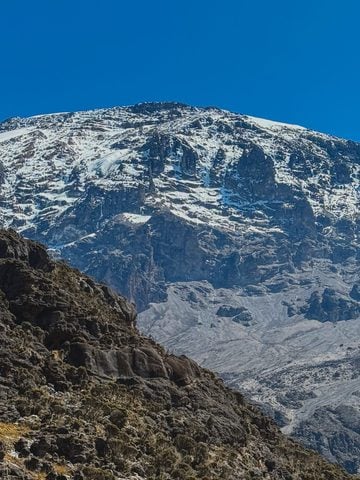
Botswana and many other parts are dry, but one can experience an outright Sahara-like desert in Namibia, mountains in many parts of South Africa, including some snow on the top of the Drakensberg (Dragon Mountains) near Lesotho, and savanna in the Karoo. Nature lovers will get their fill. Western South Africa is uninteresting.
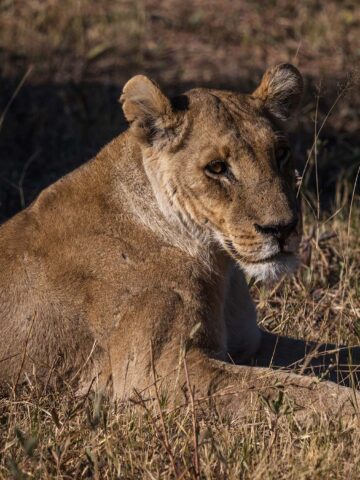
Visiting the Kruger National Park is simply a must, but it requires a few days' stay and patience to find all the animals, as they are not on display. We saw elephants, rhinos, hippos, leopards, cheetahs, and the rest. The lions eluded us, but we only stayed there for one night.
The park is well-run, and one can stay in bungalows or camp. Restaurants and picnic areas are plentiful. The signs "Do Not Leave The Car" should be taken seriously. Every park is safe if travelers adhere to the rules.
The roads are excellent, and the whole park is accessible by any 2-wheel drive. However, for people like me, Kruger is a bit too tame.
I lived in Botswana for a while and worked in the Chobe National Park, where I helped out conducting tours for individual travelers. This park is the real Africa, but it requires a 4-wheel drive vehicle.
Sunsets at the Chobe River are second to none, and in the morning, one can watch herds of 40 to more elephants. Incidentally, Richard Burton and Elizabeth Taylor remarried at the Chobe Lodge, a costly establishment (ranging from $200 Canadian per night and upwards).
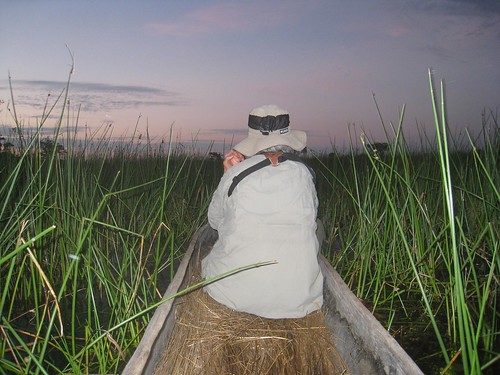
Attached are the Moremi Game Reserve and Savuti, which is known for its lion population, and the Okavango swamps, also a must-see if one is in the area.
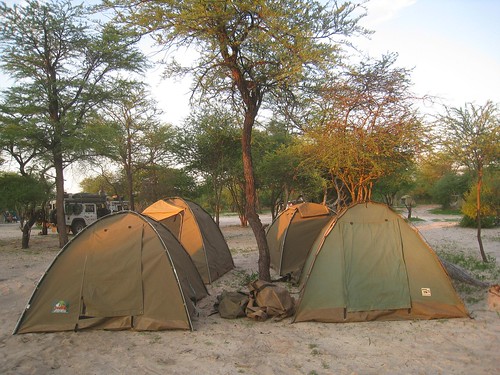
Staying in tents at night is safe as long as the tent is kept closed(!!!), i.e., zip-up! No animal will break into a closed tent.
The main problems of city slickers are that they walk too fast in the bush. Under normal circumstances, no animal, including lions, will ever attack a human being. Yes, there are snakes, but if you walk at leisure and give animals time to get out of your way, they will do so.
If Namibia is on the menu, one can find some flora that doesn't exist anywhere else. An extremely rugged and beautiful country. Interesting are the Namib Desert in the South, the Fish River Canyon, but every other part is a unique experience too.
South African Cities To Visit and Stay Away From
After experiencing a traumatic past, parts of South Africa are experiencing severe economic problems that are most visible in the Rand area (Greater Johannesburg), with up to 50% of Africans unemployed.
It is the world's crime city number one, and neither safe during the day nor at night. The inner city is an absolute "NO GO" at any time, and, frankly, nothing is missed.
[Editor's Note: In 2008, I did a few small, organized day tours in Johannesburg to visit the Apartheid Museum, Soweto township, and the top of Africa's tallest building. While it is still dangerous, I recommend spending a day or two exploring if you're passing through.
Since international flights end in Johannesburg, it cannot be avoided entirely, but one should make arrangements to be picked up from the airport.
There is a tourist office in the arrival hall where one can book a room from a hostel to a hotel, and even some hostels offer pickup services for their guests.
There are also car rental agencies, but I suggest renting a car once you are at the hotel; i.e., one can get a better price.
Coming from North America, it takes two nights to get there, and one night on the return flight.
There is nothing to see in Johannesburg, so one night might be ample enough. Durban used to be a fine city, but it is no longer safe there either. Not as bad as Johannesburg, I don't advise taking evening walks.
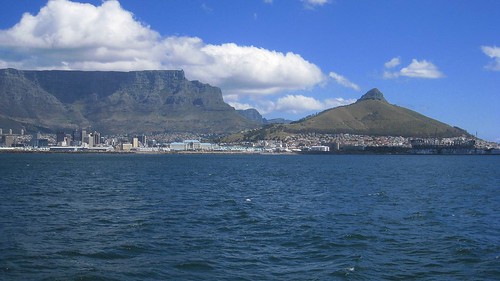
Although one must be cautious in any city (meaning don't be an obvious tourist and invite mugging), Cape Town, East London, and Port Elizabeth are as safe as any city in North America, and they are beautiful, especially Cape Town, with its rich history evident in its architecture.
All three are located on the coast, and their beaches are among the best.
Fascinating inland cities include Pretoria, Ladysmith, Pietermaritzburg, and Rustenburg, located near Sun City and Lost City.
If in Namibia, visiting Windhoek with its German colonial architecture and traditional German Beer gardens, as well as Swakopmund with the same offerings, but set in the Namibian desert and along the coast, is a unique and unforgettable experience. Both cities are safe, as is the rest of Namibia.
Gaborone, the capital of Botswana, is an unappealing city, characterized by its dirtiness, overpriced accommodations, and generally safe environment, except for occasional theft. There is little to see in the city.
Swaziland's cities, Manzini and Mbabane, are safe and enjoyable, as is the entire country. As a kingdom, it has many traditional lifestyles to showcase, which one cannot experience in South Africa anymore, except on the tourist stage.
Simply, although an island within South Africa, Swaziland is beautiful, definitely worth a visit, and within a day's drive from Johannesburg.
One country, another island within South Africa, which I purposely left out, is Lesotho. Although the Dragon Mountains cover all of it, it has been in turmoil for twenty years. In my humble opinion, it is not worth a visit.
[Editor's Note: In 2008, I enjoyed a day trip into Lesotho via the Sani Pass and would recommend a few days or nights there.]
Worthwhile visiting are the typical Afrikaner towns (of Dutch origin) in the Cape and Natal. They are, likewise, a unique experience.