The pitch for hiking out of a campervan is simple. Your bed, your kitchen, and your gear are all parked where you want to walk, so you can be on the trail at first light instead of driving in from a motel 40 minutes up the highway.
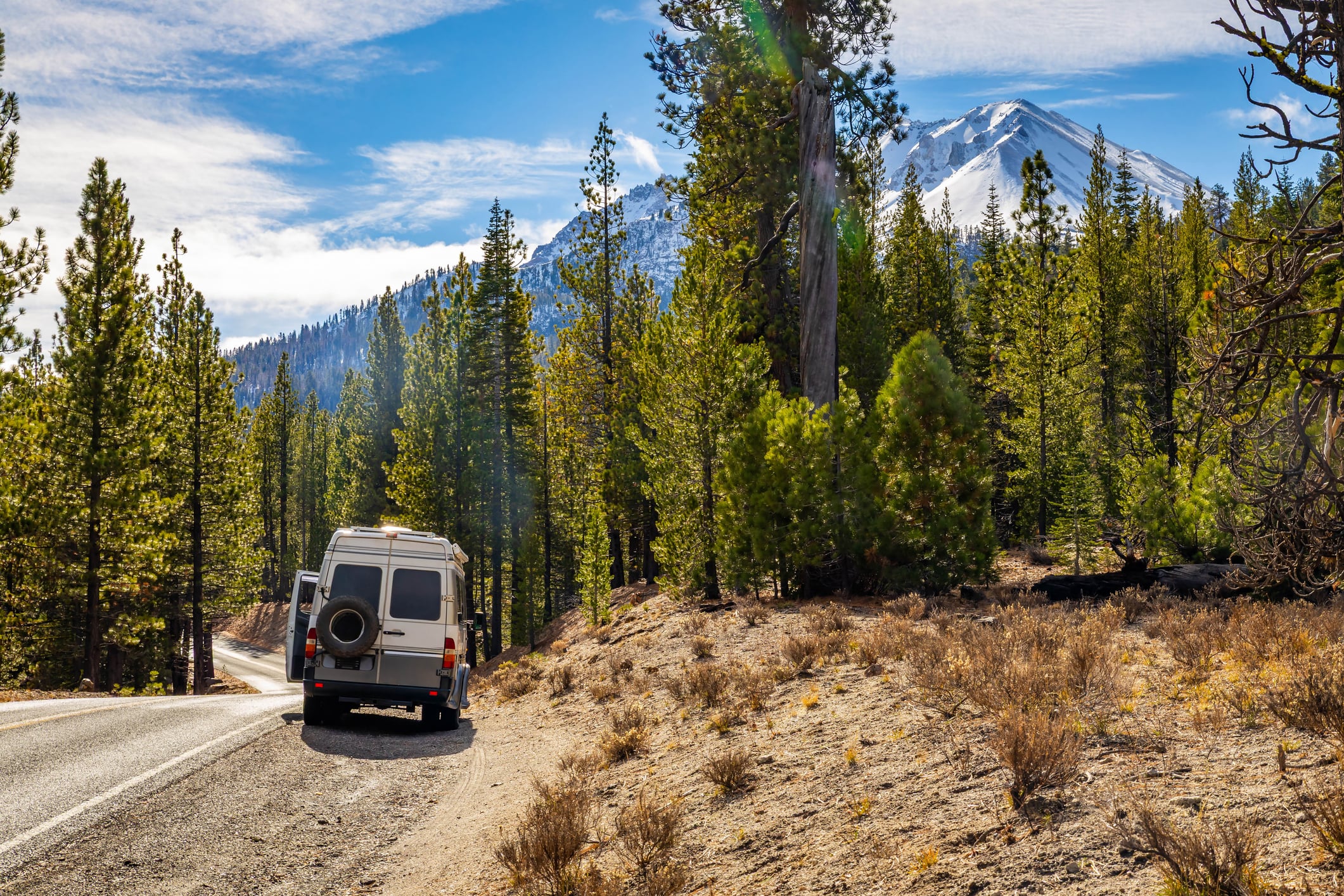
The reality is that it takes more planning because the American West is a patchwork of land agencies, each having its own rules about where you can legally sleep.
Get that part right, and a van is the best hiking basecamp there is. Get it wrong, and you'll spend your evenings circling gravel lots looking for somewhere you won't get a knock on the window at 11 pm.
Here's what actually matters.
You Usually Can't Sleep at the Trailhead
Start here, because it undoes the assumption most people arrive with.
Inside national parks, sleeping overnight in a vehicle is almost always limited to designated campgrounds. Capitol Reef states it flatly: camping or sleeping in your vehicle overnight is not allowed anywhere except a designated campground.
Grand Teton says the same and adds that overnight parking at trailheads is only permitted with a backcountry permit. Yellowstone, Glacier, and Yosemite take the same line.
Overnight sleeping or camping in pullouts, picnic areas, and trailhead lots is generally prohibited after dark, whether you're in a tent, a sedan, or a fully self-contained Class C.
National forest land is looser, but not as people assume. The Forest Service defines camping as spending the night on its land in any non-permanent structure, including sleeping in your vehicle. So a "No Camping" sign at a Forest Service trailhead applies even if you never open the door.
BLM land is the most permissive of the three, and it's where most legal free camping in the West actually happens.
Campground or Dispersed: Choose Based on the Hike, Not the Price
Developed campgrounds buy you certainty, a water spigot, and a legal place to be at 2 am.
Many popular national park campgrounds accept reservations up to six months in advance, but booking windows vary, so check the current listing on Recreation.gov.
A few numbers worth knowing before you book a vehicle:
- Watchman, Zion. 164 sites, all reservable, including 95 with electric hookups, plus a dump station and potable water. Generators are prohibited at Watchman; South and Lava Point allow them during limited hours (8 am - 10 am and 6 pm - 8 pm).
- Devils Garden, Arches. 51 sites; reservation only from March 1 to October 31; first-come, first-served the rest of the year: no hookups, no dump station, no showers.
- Willow Flat, Canyonlands Island in the Sky. Twelve first-come sites at $15 a night, a 28-foot vehicle limit, and no water at all. It fills daily from late March through June and again in fall.
- Fruita, Capitol Reef. 71 sites, reservable year-round six months out, no hookups.
Dispersed camping on BLM and Forest Service land is often free and can put you closer to an early trail start, but rules vary by location. Stay on routes open to your vehicle, use previously disturbed campsites, and check with the local field office or national forest for stay limits, water setbacks, fire restrictions, and camping requirements.
In Utah, BLM guidance limits stays to 14 days, prohibits camping near developed recreation sites like trailheads, and requires campsites to be at least 300 feet from corrals, gates, livestock water, and other range improvements. Review the BLM Utah dispersed-camping guidance and rules for the public land you plan to visit before camping.
The wrinkle is that "dispersed" increasingly means "designated dispersed." The Alabama Hills below Mount Whitney is the clearest example. Camping outside a developed campground there is now restricted to marked sites, and you need a free BLM permit that doesn't reserve or guarantee a spot.
Measure the Van Before You Plan the Route
This one is new, and it's already catching people out.
Since June 7, 2026, Zion National Park has banned vehicles longer than 35 feet 9 inches, wider than 7 feet 10 inches, taller than 11 feet 4 inches, or heavier than 50,000 pounds from the Zion-Mount Carmel Highway between Canyon Junction and the East Entrance.
The old $15 tunnel escort permit is gone with no replacement. Measurements include mirrors, rooftop air conditioners, and bike racks. Exceeding any single limit disqualifies you.
That's stricter than it sounds. Cruise America's C25, its most popular model, measures 24.93 feet long, 8.33 feet wide, and 12.20 feet tall. It fails on width and height. The height includes the rooftop air conditioner, which is standard on that unit.
If you're in a mid-size Class C, the classic east-side run between Zion and Bryce isn't available. The signed detour goes east on SR-59 from Hurricane, then on Arizona SR-389 and US-89, roughly 80 miles, taking about an hour and a half to two hours.
For Bryce, Highway 20 north of Cedar City adds about 63 miles. Do not let your phone reroute you onto Sheep Bridge Road or Smithsonian Butte Road; both are steep, dirt roads, and the park warns against them.
Some converted Sprinters and Transits clear all four limits, but dimensions vary by model, conversion, and exterior accessories. A Class C generally does not. Dimensions are listed on every vehicle page on rental comparison sites like Campstar, so it takes about a minute to check at booking. That beats finding out at Canyon Junction with a ranger waving you back.
Food Storage Is a Legal Requirement, Not a Suggestion
In bear country, this is regulated, and "food" is defined more broadly than most expect. Yosemite counts drinks, trash, toiletries, sunscreen, soap, lip balm, and even empty coolers.
The good news for van travelers is that hard-sided RVs and campervans count as adequate storage in Yosemite if everything is out of sight and windows, doors, and vents are closed when you're not at the site.
Pop-up and soft-sided campers do not qualify. Neither does a regular car after dark, which is why you'll find food lockers in most Yosemite trailhead lots. Sequoia is stricter still and expects lockers to be available at all times.
If you're choosing a rental, a canvas pop-top is a real trade-off in the Sierra. It's a lovely place to sleep, but a liability for storing food.
Leave No Trace, Van Edition
The standard seven principles all apply, but a few land differently when you're driving your accommodation around:
- Water in, water out. Dump blackwater only at authorized dump stations. Greywater rules vary by agency and location, so assume it must be contained unless the local land manager says otherwise. Carry it to a dump station and factor that into how long you can stay out.
- Use found sites, not made sites. Don't level ground, dig trenches, or build new fire rings. If there's an existing ring, use it.
- Check fire restrictions the week you travel, not the month before. Seasonal orders in the West change quickly, and in many places, stoves and campfires are restricted.
- Pack out everything, including pet waste. Most dispersed areas have no trash service.
Four Regions Worth Building a Trip Around
Eastern Sierra, California. Highway 395 from Lone Pine to Mammoth is arguably the best hiking corridor in the country for van travel, with trailheads climbing straight off the valley floor.
Base at Tuttle Creek (83 first-come BLM sites, $10) or Inyo National Forest's Lone Pine Campground, and treat the Alabama Hills as a designated-site option rather than a free-for-all.
Moab, Utah. Arches does not require timed-entry reservations in 2026, so visitors may enter during operating hours with a valid park pass. Parking remains the main constraint: once congestion builds and lots fill, the park may temporarily delay additional vehicles from entering.
These restrictions can last three to five hours. During the busy season, arrive before 8 am or after 4 pm, and have an alternative plan in case entry is restricted. Check the park's current traffic and travel guidance before visiting.
Zion and Bryce, Utah. Spectacular, heavily managed, and now size-dependent. Book Watchman early, size your vehicle to the highway limits, and build the detour into your drive times if you can't. Consider these additional hikes for a road trip to Zion National Park as you plan your route.
Rocky Mountain, Colorado. Timed entry runs from May 22 into mid-October 2026, with two permit types. Bear Lake Road access is controlled from 5 am to 6 pm, and the rest of the park from 9 am to 2 pm.
Reservations cost $2 on Recreation.gov, with a small extra release at 7 pm the night before. If you want an alpine start, entering before the window opens is a legitimate strategy.
A Planning Order That Works
- Book the hardest campground first and build the rest of the trip around it as soon as its booking window opens (for example as six months to the day).
- Check whether your parks require timed entry for the dates you want, and set an alarm for the release.
- Measure the vehicle against the routes you've drawn, not just the campground limits.
- Line up a dispersed backup for every in-park night you didn't get, and confirm it's on a designated route.
- Download offline maps and your reservation confirmations. Cell service at Devils Garden, the Needles, and most of the Eastern Sierra is somewhere between poor and nonexistent.
None of this is complicated once you've done it once. The rules exist because these places are loved to the edge of their capacity, and the small amount of homework buys you the thing you came for: waking up already there, boots by the door, with the trail starting 40 feet from where you slept.
This article was published in partnership with Campstar.