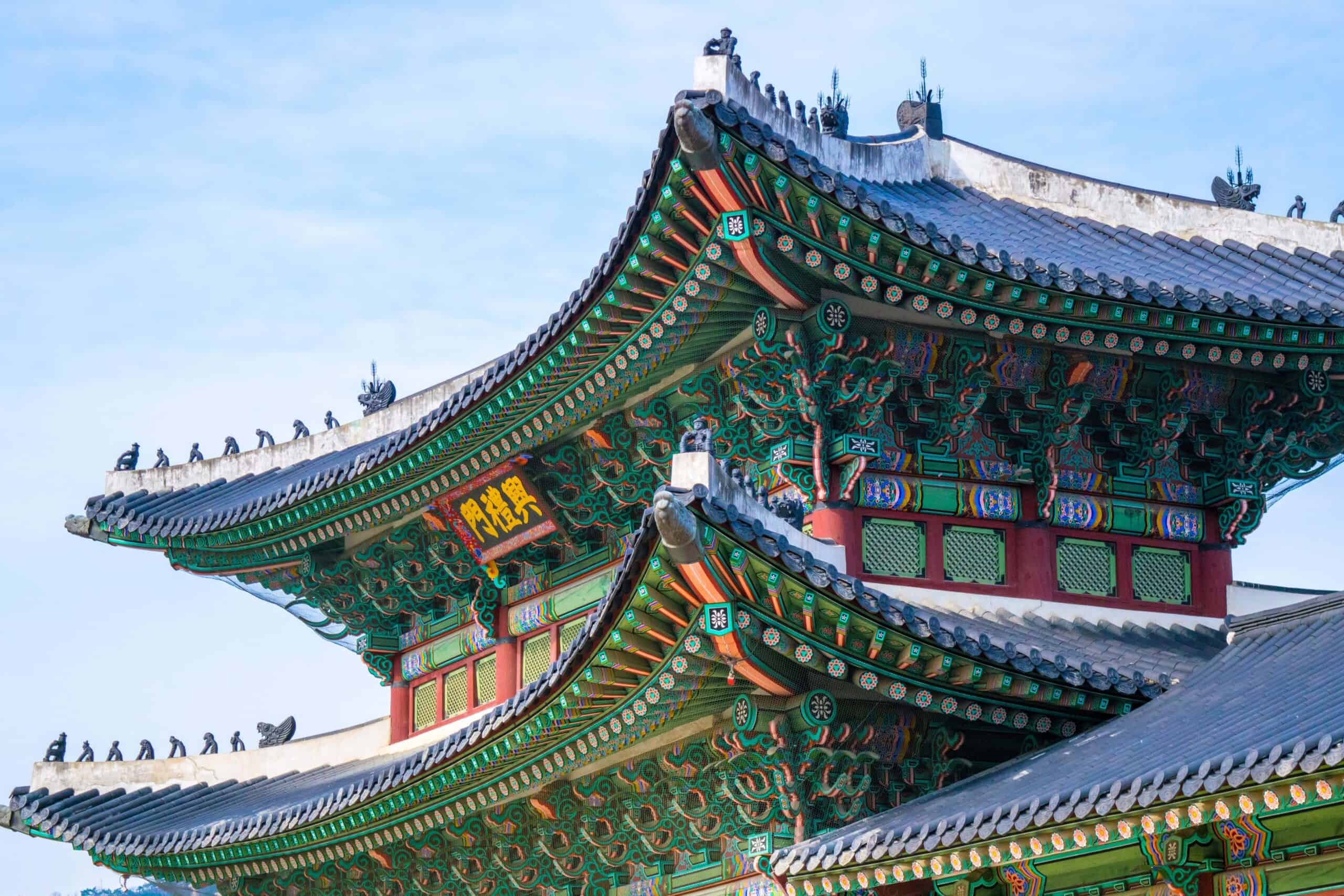
Korea is a small country with a very fast train, and that's a gift to travelers. In a little over two hours, you can go from the neon of Seoul to the beaches of Busan - no airport, no rental car, no traffic. If you visit Korea, you'll almost certainly end up on one of its bullet trains, and honestly, the ride is half the trip.
But first-timers hit the same small wall again and again: there are two high-speed brands (KTX and SRT), the booking app can quietly reject foreign cards, and nobody tells you the unwritten rules of riding.
I grew up in Busan and moved to Seoul for work, so the KTX has been my way home for years - and since I got married, my wife's hometown of Pohang has joined the rotation too.
I've spent a lot of my life in these seats. Here's the lived-in version of what I wish someone had told me the first time.
| Feature | KTX | SRT |
|---|---|---|
| Main Seoul Station | Seoul Station | Suseo Station |
| Operator | Korail | SR |
| Best for | Most tourists | South Seoul visitors |
| Speed | ~300 km/h | ~300 km/h |
| Price | Slightly higher | Usually a little cheaper |
For most travelers, the choice comes down to where you're staying in Seoul.
KTX vs SRT: What's the Difference?
Both are real high-speed trains running the same tracks at around 300 km/h, and once you're aboard, they feel nearly identical - so don't overthink this.
KTX is the original, run by the national railway (Korail) since 2004, with a wider network. SRT is the newer rival, launched in 2016 by a separate operator, and usually a touch cheaper.
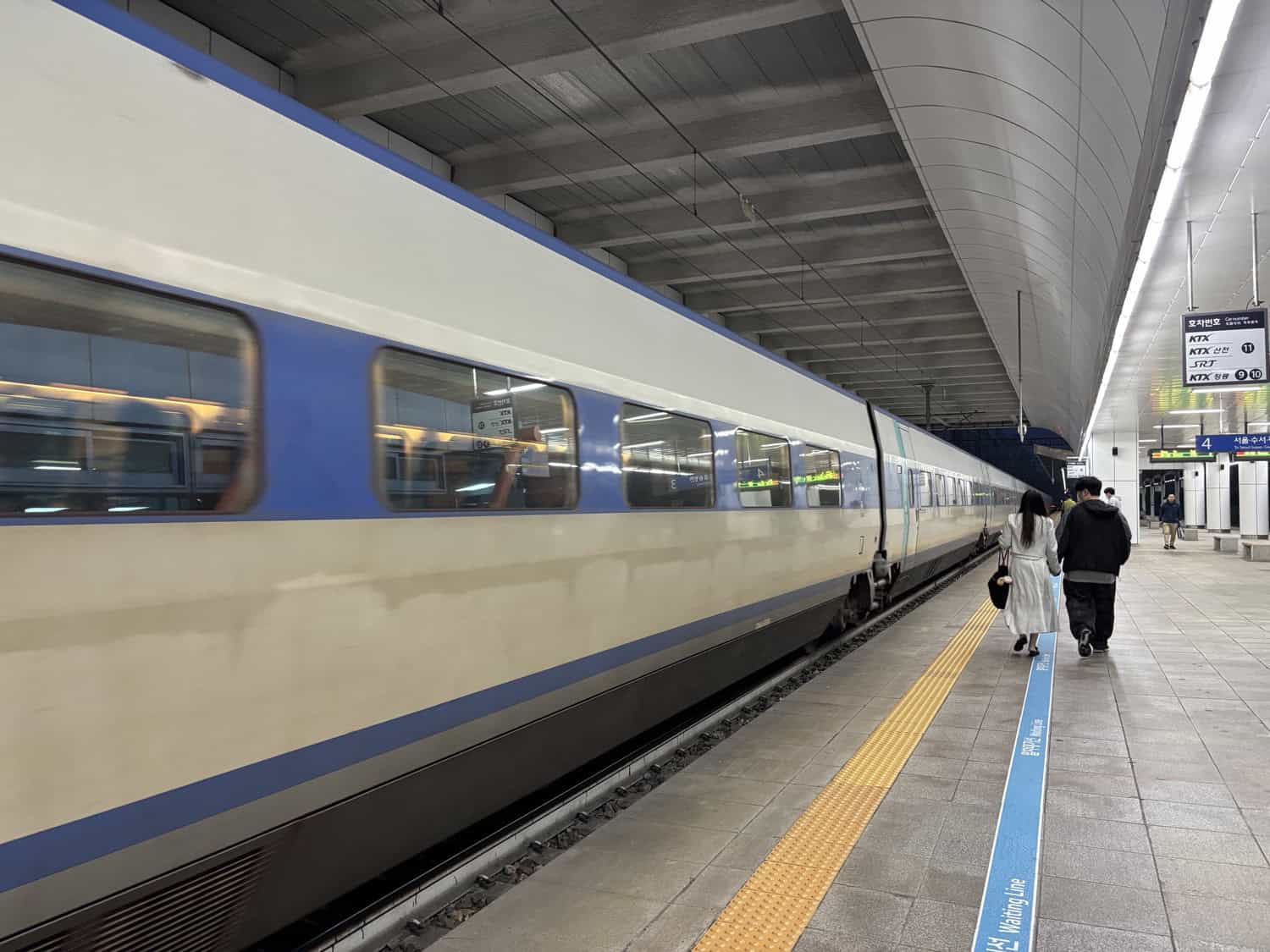
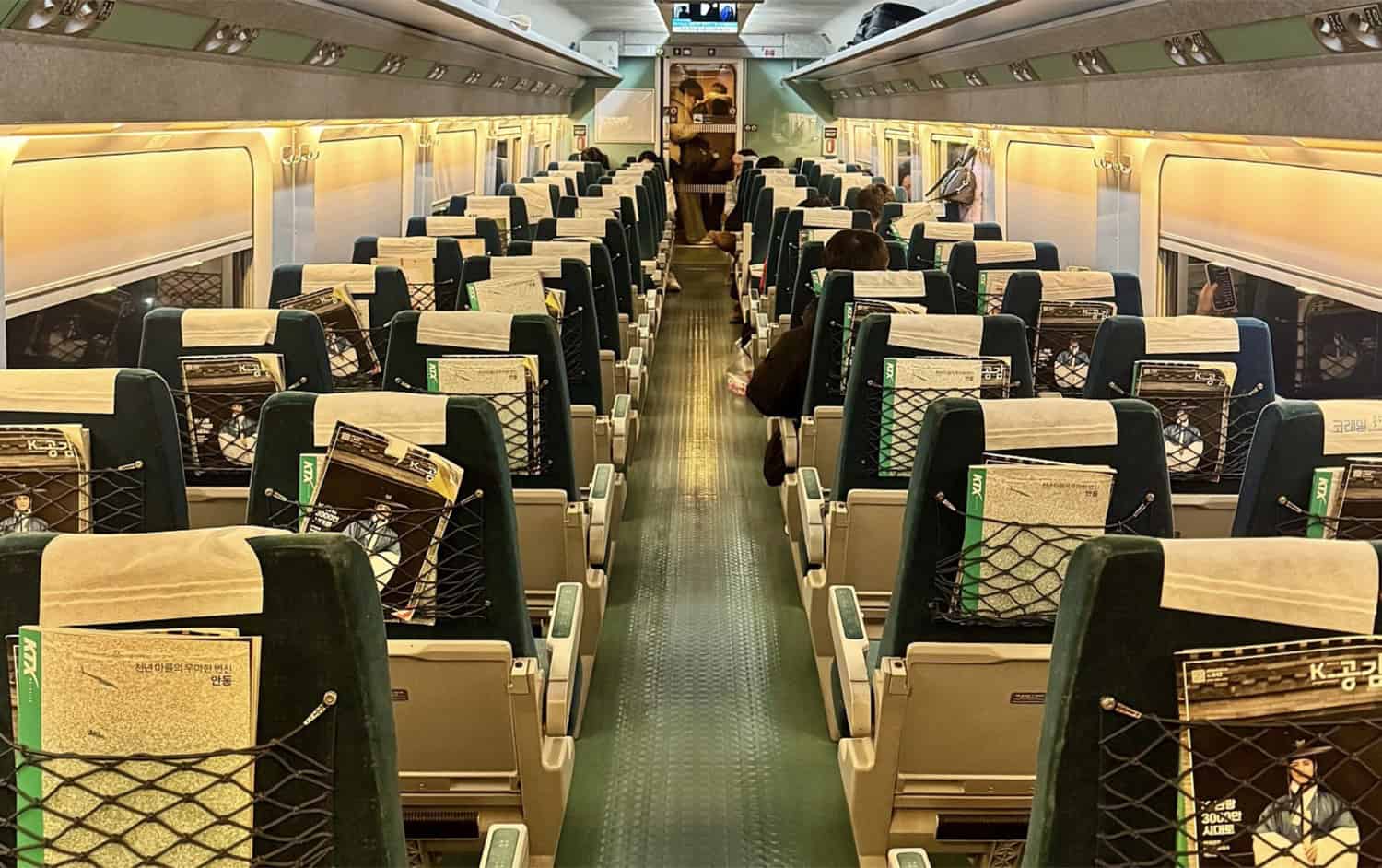
The one difference you'll feel is the seats. Older KTX trains - still most of them - pack the seats in tight, so legroom is snug. SRT came later and was built with more room, so it's more comfortable to settle into.
Korail clearly heard the complaints because their newest train, the KTX-Cheongnyong (launched 2024), is spacious too. And its seats are turned to face the direction of travel, fixing the old gripe about ending up in a seat that runs backward.
Traveling as a group? Look for KTX's family/group seats in the middle of the train, where four people sit facing one another around a table - made exactly for that.
Which One Should You Take?
For most visitors, it comes down to one thing: which station is closer to your hotel?
KTX leaves from Seoul Station, the most connected spot in the city - several subway lines cross there, and you're a short hop from Gwanghwamun and the main sights.
Staying anywhere central (Myeongdong, Hongdae, Jongno)? KTX from Seoul Station is the easy default.
SRT leaves from Suseo Station, down in the southeast. Here's the local truth you won't find in most guides: Suseo is really built for Koreans living in Gangnam or southern suburbs like Pangyo and Dongtan - a commuter's high-speed station, not a tourist one, with little to see around it.
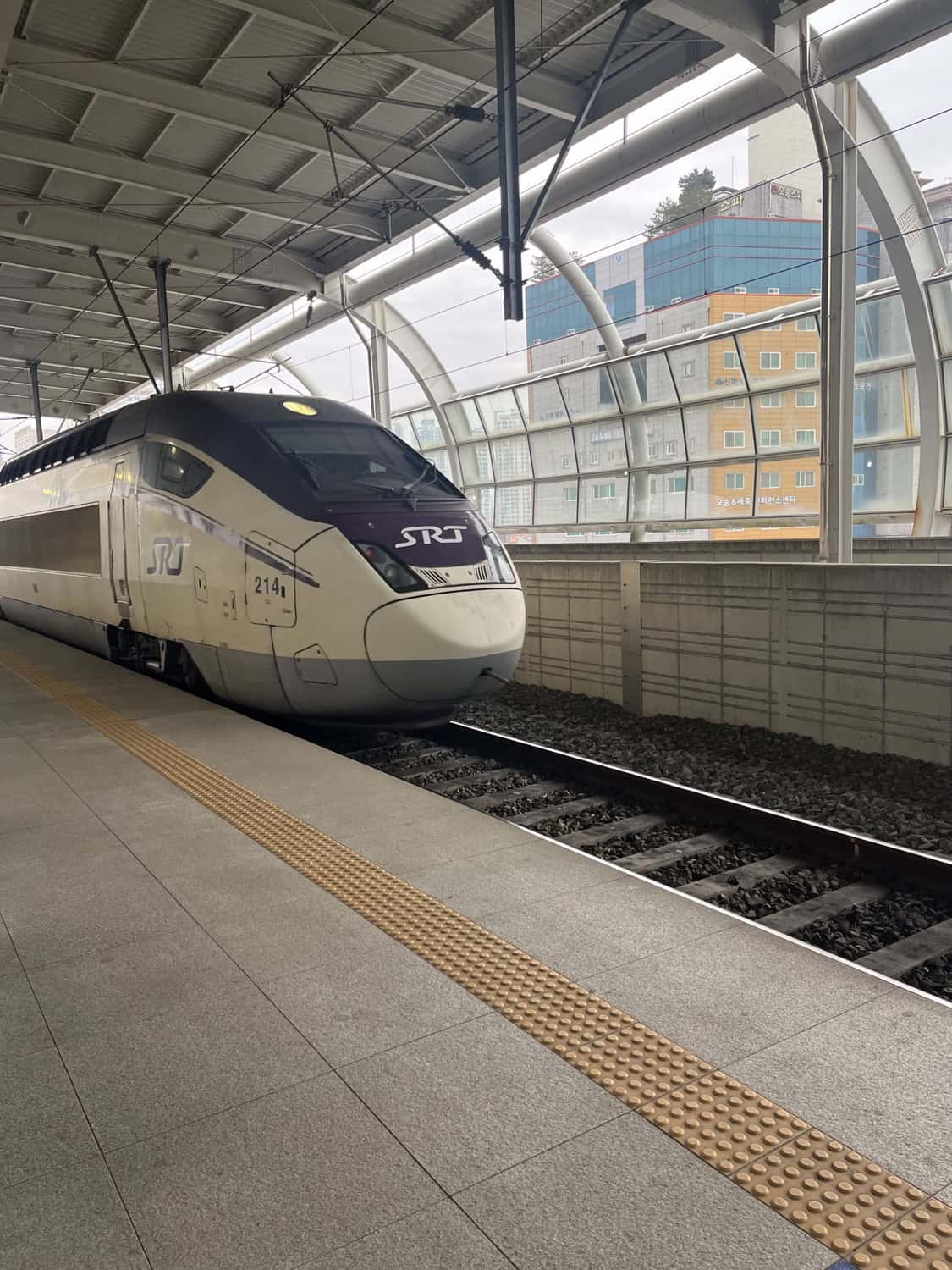
So unless you're staying in Gangnam or Jamsil, default to Seoul Station and KTX. (SRT is also a handy backup when KTX is sold out for your time.)
Before or after your train journey, classic Seoul neighborhoods like Bukchon Hanok Village offer a very different side of the city from its modern rail stations.
What It's Actually Like on Board
Korean bullet trains are quiet. Most people sleep or watch something light on their phones on weekday afternoons; you'll see plenty of business travelers working on their laptops.
Talk too loudly or take a call in the cabin, and a staff member walking the aisle will gently ask you to keep it down - so locals take calls in the vestibule between cars.
This is the one I'd underline for foreign visitors: it's easy not to notice how hushed the cabin is, and a loud phone call earns you some looks. Just read the room.
The exception: KTX has a family car that's officially the noisy zone - set up for traveling families. So, if you want to chat freely with friends, that's the spot. But fair warning: the toddlers in there are not messing around.
A few things I've watched first-timers get wrong:
- Big suitcases go between the cars, not overhead. There's dedicated luggage space at the ends of each car - leave it there and relax. Korea is very safe; no one's walking off with your bag.
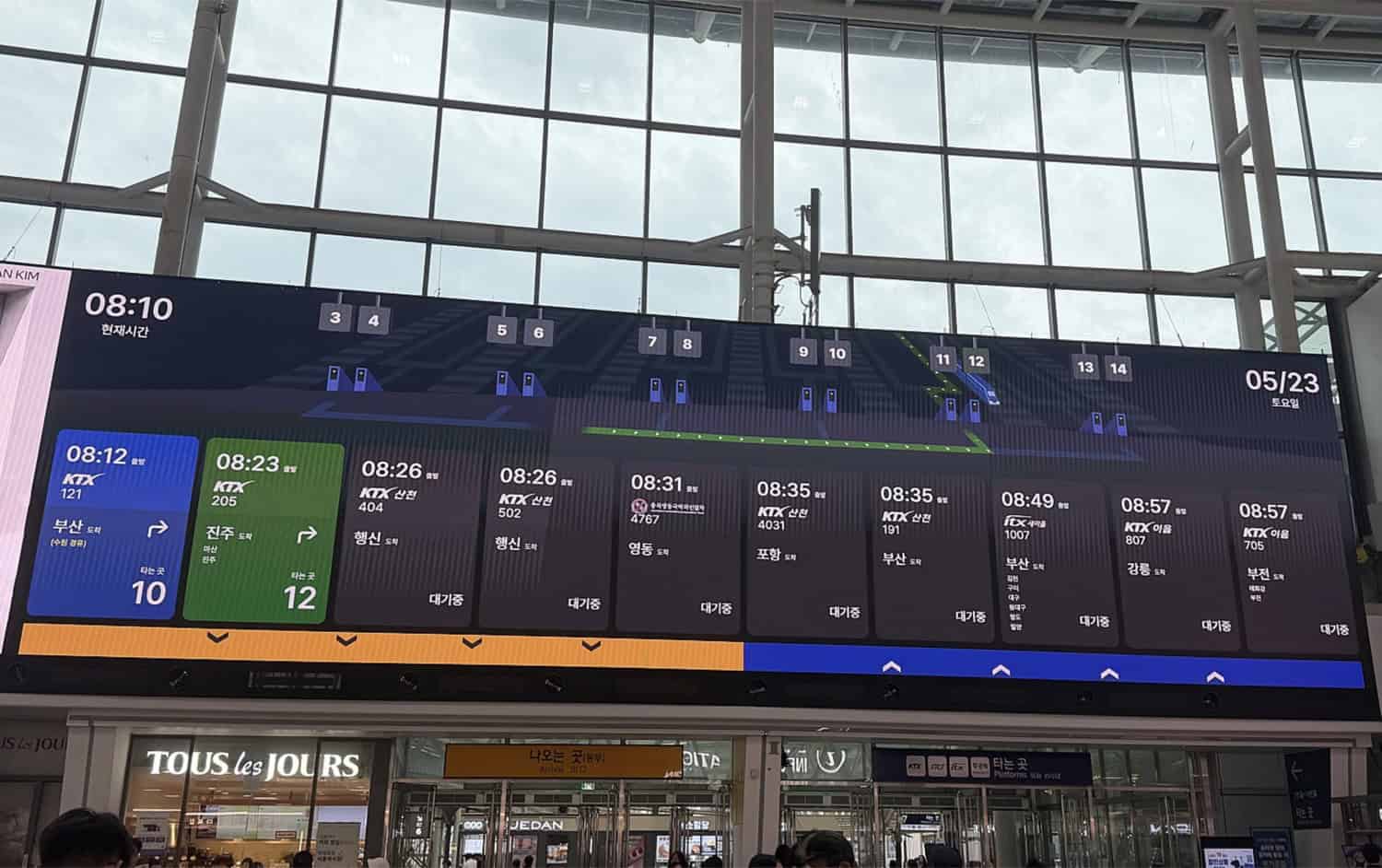
- Your platform appears about 15 minutes before departure - on the boards and in the app. Don't panic if you don't see it yet; just wait.
- Sit in your assigned seat, even on an empty train. There are no ticket gates; instead, staff walk through checking seats one by one, and they'll send you back to your seat.
Booking Your Ticket (And the Foreign-Card Problem)
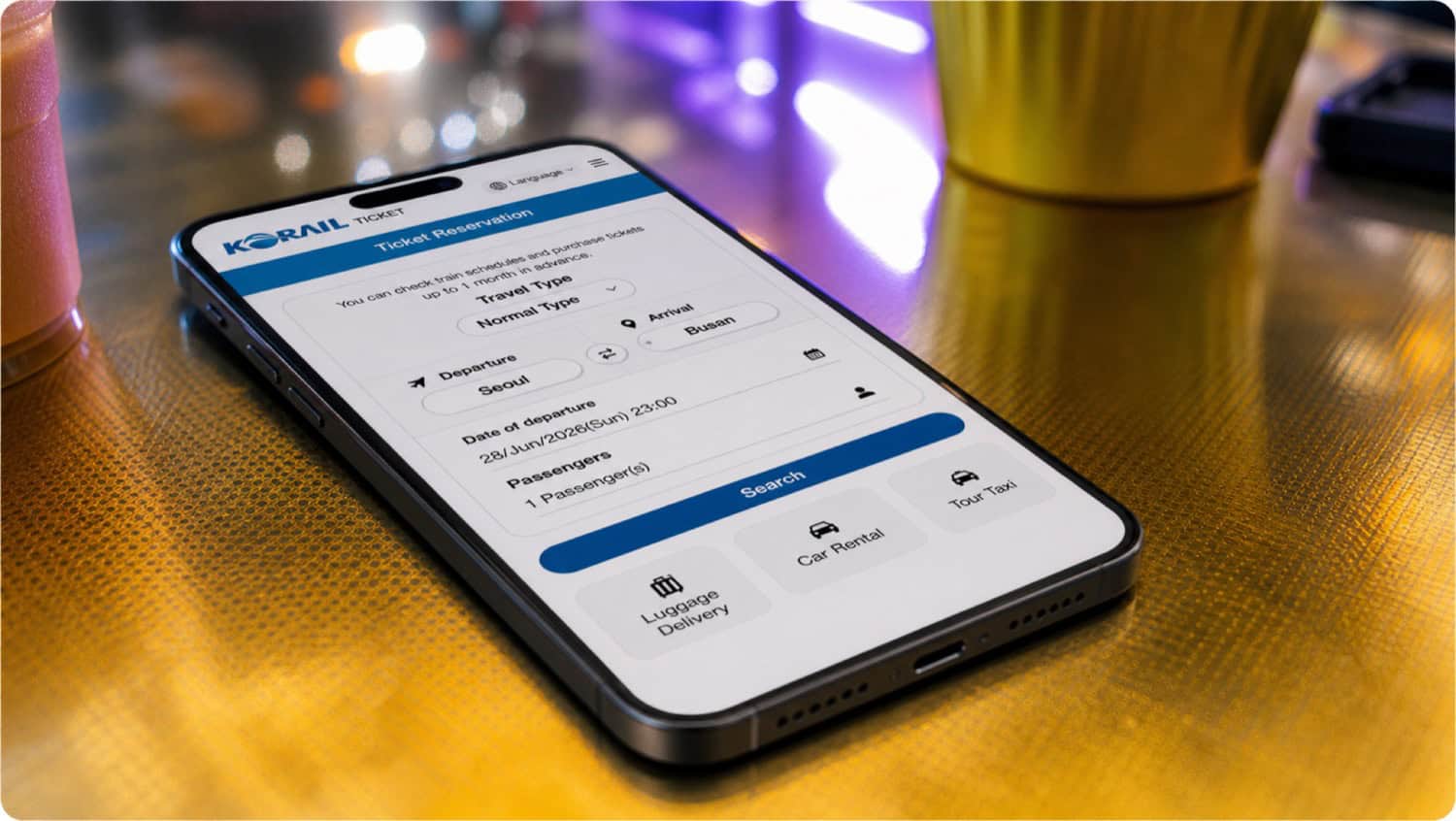
Here's the part that trips people up. Korea's booking app, KorailTalk, works in English right up until you pay - and then many foreign cards fail, often with no error, no charge, and no ticket. It's one of the most common Korea-trip headaches, and it's not your fault.
What actually works:
- Book on the Korail global website on a desktop - the most reliable route for a foreign card.
- Keep a backup card handy - a Mastercard sometimes clears when a Visa won't.
- Use a reseller like Klook or Trip.com - any international card, a QR by email, small markup, zero friction.
- Or buy at the station counter with your passport - it always works.
And one scheduling note for the busy times: trains sell out fast on weekends, and especially during the big holidays - Lunar New Year (Seollal) and Chuseok - when the whole country travels at once. For those dates, book as early as you can; midweek, you can usually buy same-day.
One note on price: KTX fares are fixed - no dynamic pricing - so booking early secures a seat, not a discount.
Where To Take Your First Ride
The classic is Seoul to Busan - about two and a half hours, the route nearly every visitor takes, and a proper beach city at the end of it.
But if I could send you one place, I'd add Gangneung, on the east coast. I first did it the slow way - a long Saemaeul ride in the middle of a hot summer, right in the thick of vacation season (the KTX now makes the trip in about two hours, so you've got it easier than I did).
What stuck with me wasn't the sea - honestly, you don't even smell it when you step off. It was the platform: families wrestling oversized suitcases, packs of three friends - three guys here, three girls there - all dressed up and buzzing with that we're-finally-on-vacation energy.
Gangneung draws Korean holidaymakers more than foreign tourists, and that buzz is contagious. Even now, getting off there in summer gives me the first flutter of a vacation, every single time.
Why Ride the Rails at All?
For me, the KTX has always been the road home. I grew up in Busan, and my parents are still there, so I usually board at Seoul Station with a burger from the station McDonald's in one hand - which might be my mistake, because somewhere around Daejeon, halfway down, the YouTube runs out, a heaviness settles over me, and I'm gone. I don't fight it.
One thought stays with me as I drift off: at the end of this line, once the dozing stops, there's a face I've been missing.
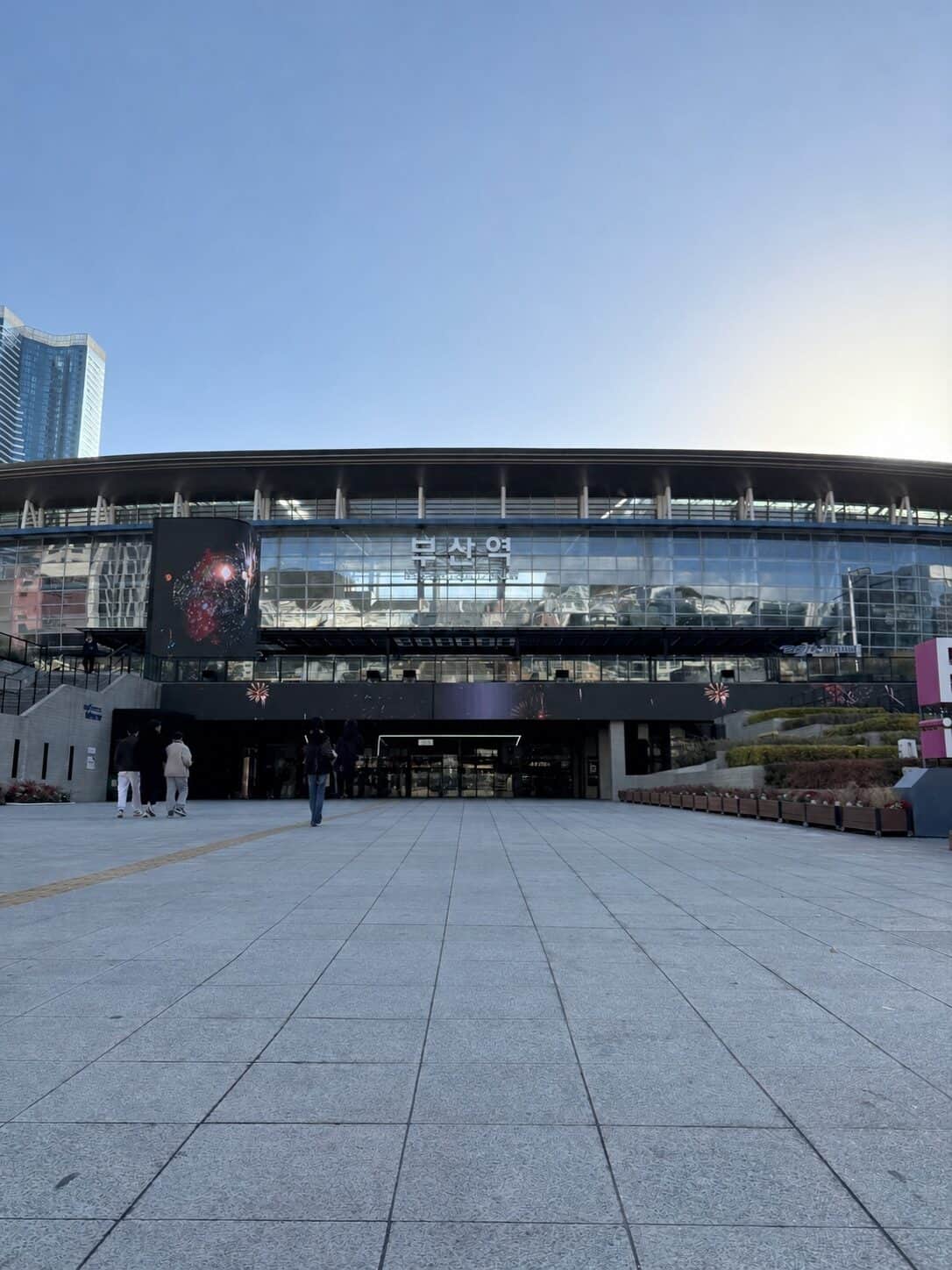
Busan Station understands this. So many of us shuttle to and from Seoul that its arrivals hall is bigger and busier than Seoul Station's own - a whole room of people waiting to welcome someone home, or hanging back to see someone off.
Mine is my mom. She's small, so the moment I step onto the platform, she throws her arm straight up over her head and waves it hard so I'll find her in the crowd. It gets me every time.
That's the thing about Korea by rail: it isn't only the fast, easy way around the country. It's where a lot of its quiet, ordinary tenderness lives. Ride it, fall asleep on it, and let it carry you somewhere good.