
Melody is Dominican, so people assume the Dominican Republic holds no surprises for her. Samaná proved otherwise. We loved discovering it together slowly, and that is why we keep pointing independent travelers toward it.
Most visitors meet the DR through the resort strip. Samaná is the opposite: a jungle-backed peninsula on the northeast coast where the beaches are still wild, the roads are still slow, and the best plan is often no plan at all.
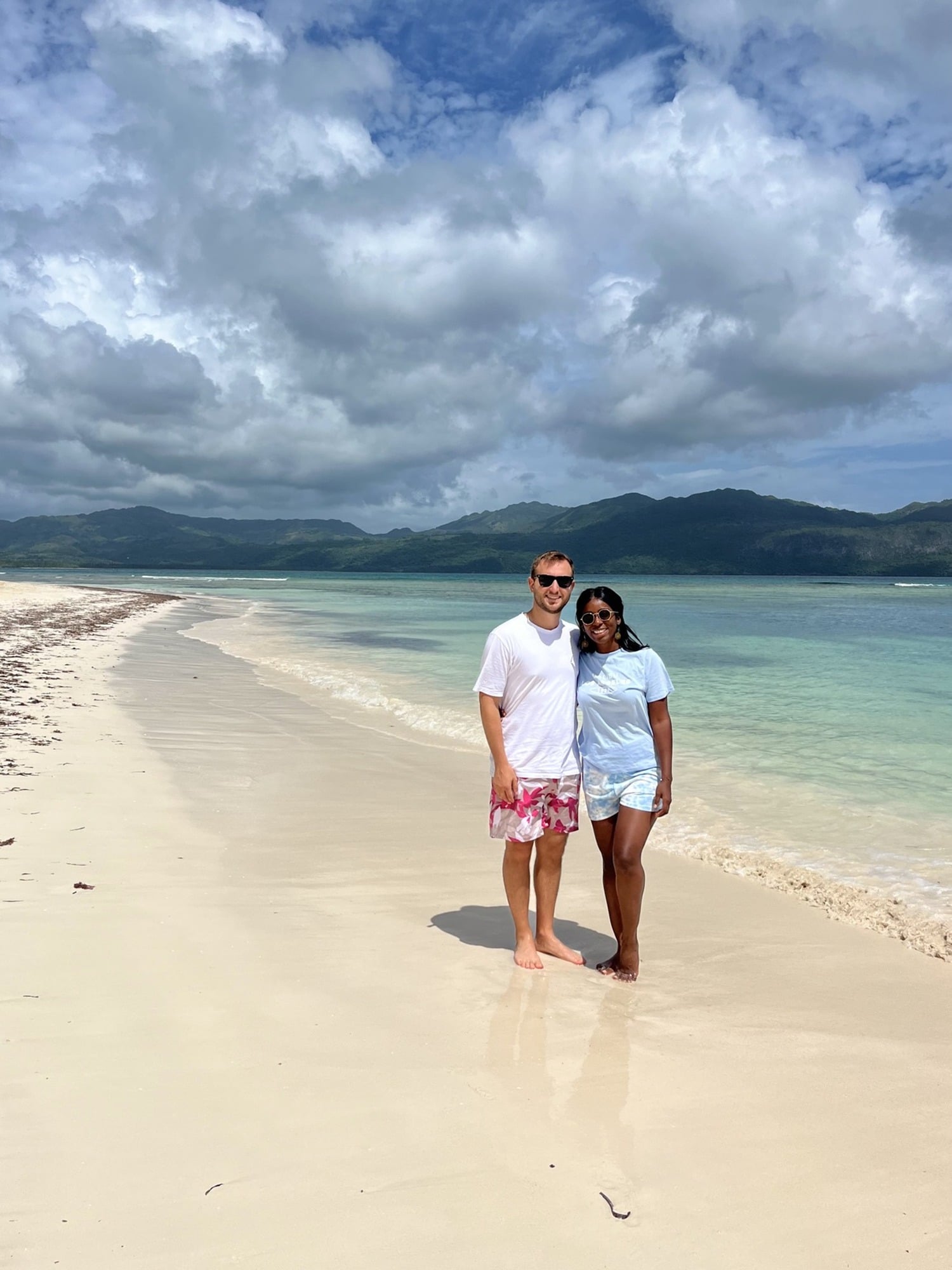
If we could give one piece of advice, it is this: see Samaná in parts, in phases, not all at once. That is how we did it and would do it again.
We split the peninsula into two phases: Las Galeras first and Las Terrenas second, with a few unhurried days in each. We let each place have its own rhythm instead of racing between them.
Samaná is one of several destinations featured in our Dominican Republic travel guide, which includes more photos and ideas for exploring the country.
Driving is difficult in the DR, so we do not assume we will drive everywhere ourselves. We arrange local transport or join a tour, and we build in empty time because island pace is part of the charm here, not a problem to solve.
Phase One: Las Galeras and Playa Rincón
Las Galeras is the sleepy town at the tip of the peninsula, and we chose it as our first phase for a reason. Everything here is close, quiet, and unhurried. The town itself is small and easy, the kind of place where the two of us walk everywhere and the day sorts itself out.
The beach that makes Las Galeras worth the trip on its own is Playa Rincón. Go early. In the morning, the sand is empty, the light is soft, and you get the long stretch of beach almost to yourselves before the day fills in.
Our favorite rhythm here was a long morning on the sand, a swim, a walk along it, and then a grilled fish lunch at a simple beach spot before the afternoon heat settles in. That easy pattern, an early beach morning and a lazy lunch, is the whole point of giving this phase its own days.
The Wild Coves: Playa Frontón and Playa Madama
From Las Galeras, the peninsula's wildest beaches are the ones you cannot drive to. You reach Playa Frontón and Playa Madama by boat, or a short hike, and that effort is what keeps them quiet. These are wilder, rockier, and far less visited than the main beaches. The reward is a beach that feels like it belongs to the two of you for the morning.
Two things matter here. First, water shoes. They are essential, not optional, because the shoreline is rocky in places and you will want them for getting in and out of the water and for walking the cove edges.
Second, cash. Boat rides and simple beach lunches require cash, so carry enough for the day before you set out and don't rely on a fixed timetable. Ask around in Las Galeras for a boat, bring water, and let the morning shape itself.
The Inland Break: El Limón Waterfall
El Limón is the inland break in a beach-heavy trip and is worth a full morning. The walk goes through tropical forest, and the reward is a swim in the natural pool at the base of the waterfall. It is a simple pleasure: forest shade, cool water, and a swim that feels earned after the walk.
Go with a local guide. The path is a forest walk, not a marked promenade, and a local guide makes the outing smoother and more enjoyable. Wear shoes you can walk in that can get wet, and leave the rest of the day open so you are not rushing back to the beach.
Phase Two: Las Terrenas
After the quiet of Las Galeras, Las Terrenas was our second phase with a different energy. It is a laid-back, slightly bohemian beach town where the two of you settle in rather than pass through. Days here are slower in a different way: mornings on the beach, long lunches, and evenings built around eating well.
The food scene is one of the reasons we love Las Terrenas. It has a French-Caribbean character you don't find everywhere in the DR, and spending a few days here means eating well without trying hard. We keep our evenings simple: a good meal, a walk together, and an early night so the next beach morning starts well.
The beaches around Las Terrenas are golden and easy to reach. Playa Bonita and Playa Cosón are the two we return to. The best way to enjoy them is without a plan: walk between them, stop for coffee when you feel like it, and swim when you feel like it.
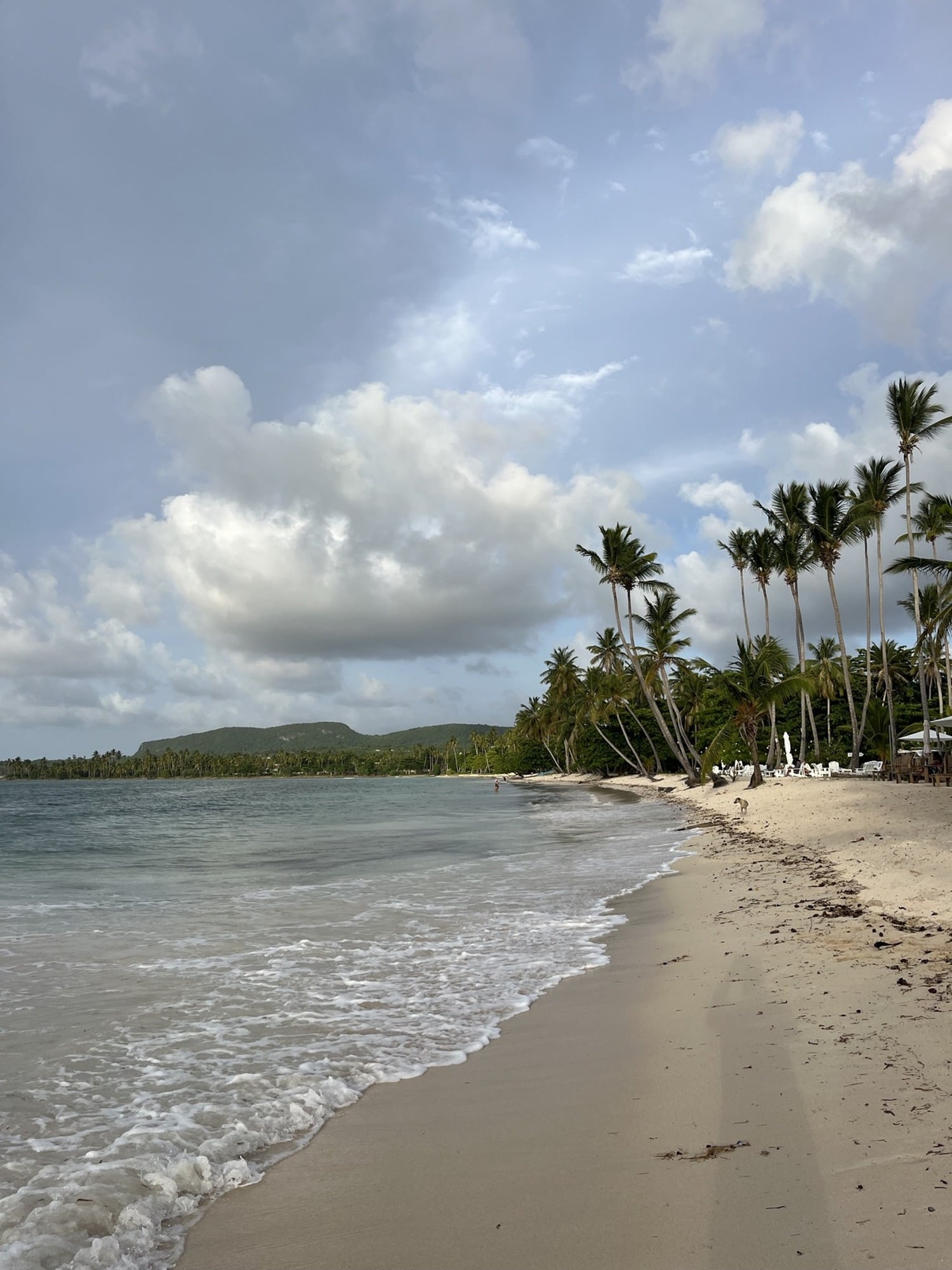
Cosón at sunset is the moment to plan your day around. The whole beach turns gold, the light softens, and it is the kind of evening that makes you glad you did not rush anywhere all day. Go early to find your spot, stay through the sunset, and walk back slowly together.
The Other Side of the Peninsula: Mangroves and Los Haitises
The bay side of the peninsula is a different world from the ocean beaches and worth a half-day rather than a rushed add-on. Floating through the glassy mangrove channels is quiet, green, and strange in the best way: still water, tangled roots, and birdsong instead of waves.
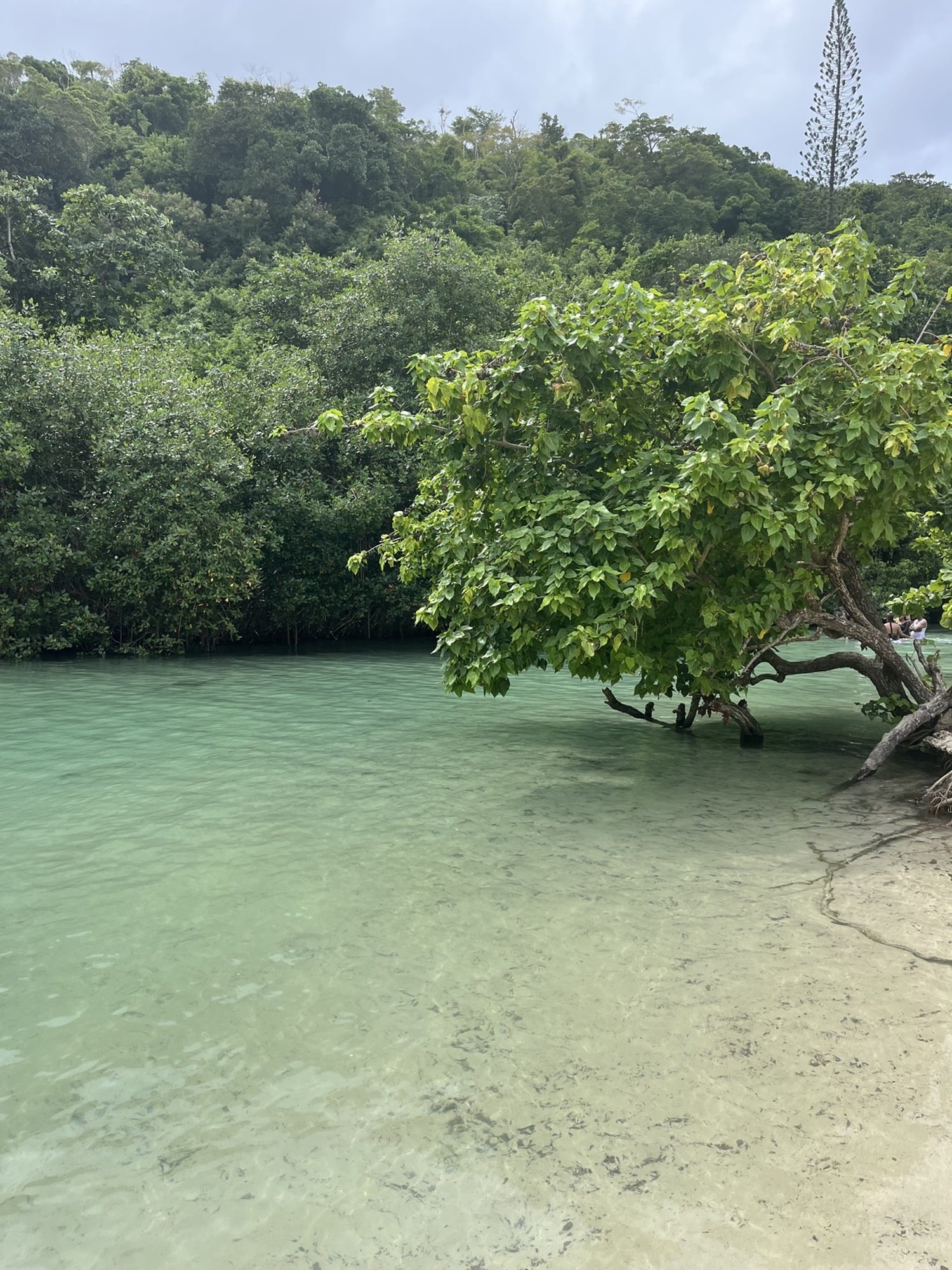
It pairs naturally with a boat trip to Los Haitises, where the caves and bird-filled islets are the main event. Together they show you a side of Samaná that has nothing to do with beaches, and the contrast is what makes the peninsula feel so complete.
If You Can, Time It for the Whales
If your trip falls between January and March, Samaná Bay is one of the world's best places to see humpback whales and is worth reshuffling the whole plan for.
This is the one exception to the slow plan: when the whales are in the bay, go. A whale morning is the kind of experience that rearranges everything else around it, and we would not trade it for a beach day.
Related: Explore the Dominican Republic on a Budget
Practical Notes for Doing It Independently
Pack water shoes because some of the best coves are rocky. Bring cash for boat rides and beach lunches. Don't try to drive everywhere yourself; arrange transport locally or join a tour.
See Samaná in phases, Las Galeras first and Las Terrenas second, and give each phase a few days. Accept that things move at island pace, which is exactly the point.
Samaná is the DR at its wildest, and discovering it together, even with one of us being local, is what made it special for us. Slow down on purpose, take it in phases, walk the beaches early, take the boats when they come, and leave room in the plan for the place that surprises you. That is the whole route, and it has never let us down.