Horseback riding travel is the essence of slow travel, exchanging speed for deeper presence and true connection with the land. Rather than racing from place to place, you experience each landscape at its own pace, guided equally by your horse and the world around you.
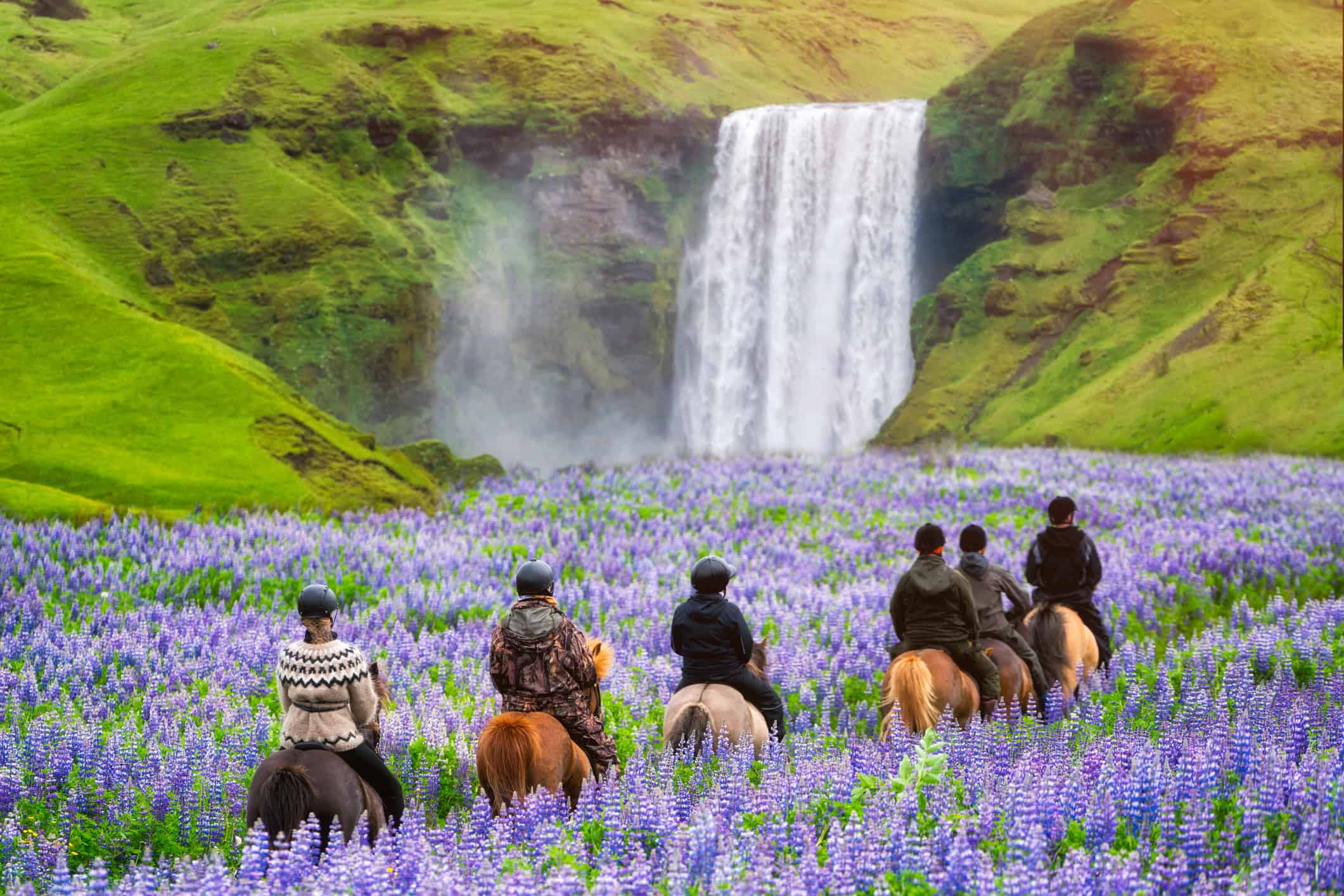
What Horseback Riding Travel Feels Like
There's a moment, usually just after the last visible road disappears, when travel stops feeling like transit and begins to feel like something else entirely.
It's not dramatic. There's no clear dividing line. Just a gradual shift, the kind you notice only because everything else falls away. The background noise fades first: engines, distant conversations, the low whirr of connectivity.
What replaces it isn't silence. Not exactly. Instead, it's a different kind of soundscape. Wind rustling through the grass. The dull rhythm of hooves on uneven ground. Leather creaking, slow and steady.
When you first travel by horseback, you realize how rarely you fully experience a place. This journey is not about passing through, but about being truly present each step of the way.
A Different Way of Moving Through a Destination
Backpacking, at its core, has always been about stripping travel back to essentials, carrying what you need, adapting to terrain, and accepting a certain unpredictability. But even then, there is often a forward drive, a low-key urgency to reach the next point.
On horseback, that urgency dissolves. The pace is not entirely in your control. It belongs to the horse, to the terrain, to the conditions underfoot.
You begin to understand distance not as something to overcome, but as something to inhabit. A stretch of land that might appear insignificant on a map becomes expansive when experienced step by step, breath by breath.
It's within this space that experiences curated by platforms like Globetrotting begin to make sense, not as luxury in the conventional sense, but as access to a slower, more intentional form of travel.
For travelers looking to experience this kind of horseback riding travel, guided journeys like these offer an accessible way to step into a slower rhythm.
The journeys are less about crossing off destinations and more about entering landscapes in a way that feels earned.
The Connection Between Rider and Horse
What may surprise you most is not the scenery, though that's often remarkable, but the relationship that forms without words.
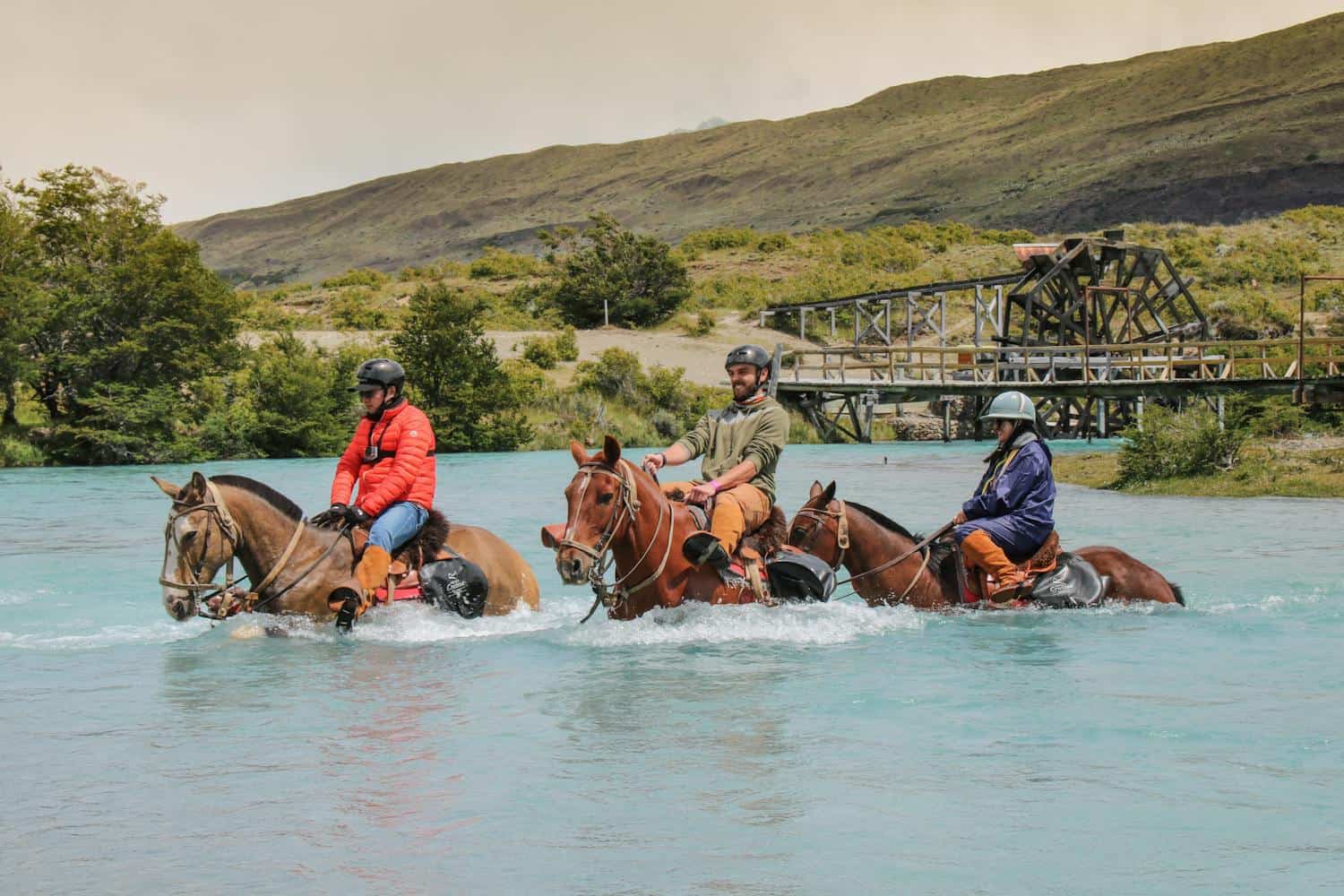
A horse constantly reads the world-its footing, the land's slope, subtle weather changes. You sense those decisions before consciously registering them: a shift in weight signals uncertainty, a confident stride reassures you, often before you're aware you needed it.
There is trust in that exchange, but also a kind of humility. You are not in full control, and that becomes part of the experience rather than a limitation.
Over time, the communication becomes quieter, more intuitive. You stop thinking in terms of commands and start responding to movement, to rhythm, to small adjustments that feel almost instinctive. It is not something that can be easily explained; it can only be experienced.
The Texture of the Day
By afternoon, the ride settles into your body. Your legs carry an ongoing ache from keeping balance. Your hands remember the tension of the reins. Your back adjusts constantly, following the motion beneath you. It is not discomfort in the usual sense; it is awareness.
And with that awareness comes a sharpening of everything else. You notice the smell of rain long before it arrives, carried gently on the air. Dust rises at every step, dry and mineral.
The saddle, warmed by the sun, releases a fragrance of worn leather which lingers in the heat. These details are not remarkable in isolation, but together they create a kind of continuity that stays with you.
There is no screen to mediate them. No need to capture them. They exist fully in the moment.
Why Horseback Travel Is the Ultimate Slow Travel Experience
Without schedules or signals, time loosens its grip. You begin to measure the day differently. Not in hours, but in shifts, light changing across a valley, the gradual cooling of air as elevation rises, the rhythm of movement that replaces the constant checking of what comes next.
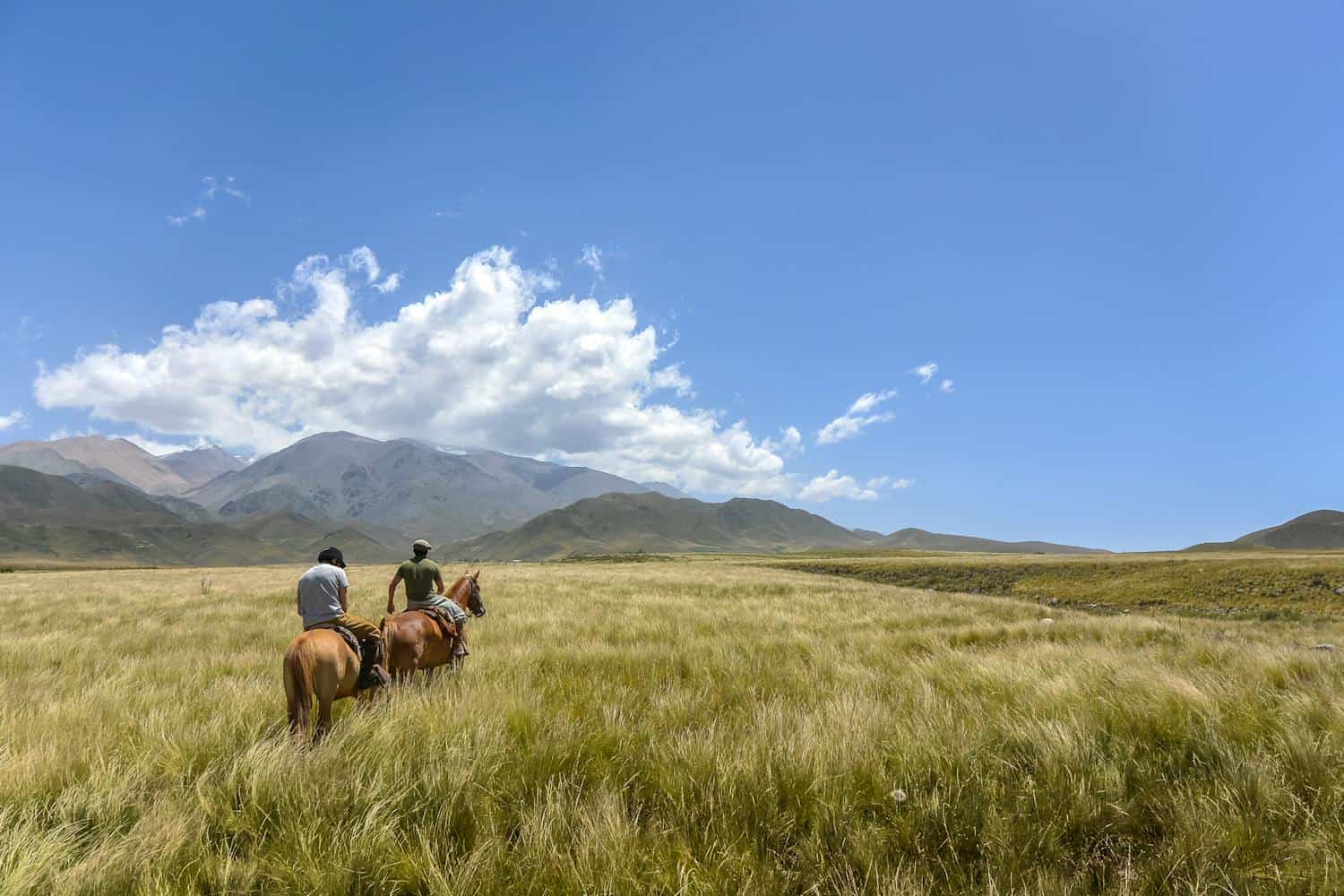
When you stop, it is not because a plan dictates it, but because the horses need rest or the terrain demands it. You dismount, stretch, and for a while, nothing happens.
The horses graze. The landscape stays unchanged. There is no performance in it, no sense that the moment needs to be shared or documented to have value. It simply is.
What Slow Travel Reveals
There is a tendency to think of slow travel as an escape, but it feels more accurate to describe it as a recalibration.
Moving at the pace of a horse reveals how much is missed when speed becomes the default. Landscapes flatten when viewed too quickly. Distance loses meaning. Even memory becomes fragmented when experiences are reduced to highlights.
Here, nothing is condensed. A valley is not something you pass through; it is something you inhabit for hours. A climb is felt in the body, not just observed. The weather is not the background; it shapes the experience directly.
This kind of travel does not offer constant stimulation. Instead, it asks for attention.
What Stays With You Following the Journey
By the end of the journey, what remains is difficult to translate. Not images, exactly. Not even specific moments. More a collection of sensations, the rhythm of movement, the subtle understanding between you and the horse, the physical memory of terrain underfoot.
These are not things that fit neatly into stories designed for quick consumption. They stay with you differently.
In a way, that may be the most defining aspect of traveling like this. It resists simplification. It asks for presence in a world that often rewards distraction.
Long after the ride ends, what lingers is not where you went, but how you moved-slowly, attentively, in step with something that cannot be rushed.
_____
This story was published in collaboration with Globetrotting.