Motivation can be one of the hardest challenges for people with ADHD. Tasks you want to do may still feel impossible to begin, and everyday responsibilities can drain your energy faster than they should.
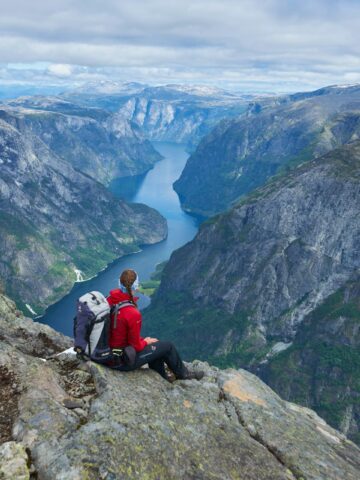
If you tried everything to cope with ADHD symptoms and improve motivation, one thing that's proven scientifically to help and also feels nice. Hiking naturally stimulates the ADHD brain, offering numerous mental health benefits, which we present below.

Main Symptoms of ADHD
Around 400 million people worldwide have ADHD, which is a neurodevelopmental condition that can be detected with the Breeze ADHD test, a trusted online test, but confirmed only by a psychologist or psychiatrist.
The ADHD profile includes these common symptoms that can also be regulated with hiking:
- Difficulty sustaining attention. Especially during repetitive, non-stimulating, or mentally demanding tasks.
- Executive dysfunction. It's an umbrella term for problems with planning, organizing, prioritizing, and starting tasks, regardless of one's motivation. Executive dysfunction can also lead to difficulties with setting and sticking to routines. Luckily, Breeze Mental Health offers a reliable tool to help build a routine to reduce mental overload.
- Impulsivity. Quick, half-baked decisions, interrupting, engaging in dangerous activities, etc.
- Emotional dysregulation. ADHD symptom that explains intense reactions and overwhelming feelings that are hard to cope with.
- Time blindness. A part of executive dysfunction that got separated into a distinct symptom because of its challenges in estimating how long tasks take or remembering deadlines.
- Forgetfulness and memory challenges. These can make everyday tasks or conversations harder to manage.
- Internalized challenges. This symptom includes mental overactivity, physical fidgeting, overthinking, and negative self-talk.

7 Mental Benefits of Hiking for ADHD
1. Hiking Increases Motivation in ADHD
Motivation is a result of neurochemistry in our brains. When a task generates enough dopamine in the brain, people are motivated to do it.
However, people with ADHD have dysregulation of neurotransmitters in the brain, including dopamine. That's why most ADHDers have what's called low tolerance, meaning they want to start a task, but just can't.
What are the mental benefits of hiking? Hiking stimulates natural levels of dopamine by overcoming mild challenges and providing sensory stimulation.
This feeling of "I can do this" carries into the rest of the day. After a hike, many people with ADHD experience stronger follow-through, better task initiation, and a noticeable reduction in procrastination.
2. Aerobic Component of Hiking Reduces Impulsivity
Impulsivity in ADHD is linked to underactivity in the prefrontal cortex, the part of the brain responsible for self-control. It means that the impulsive decisions in ADHDers are made deep in the brain, and these impulses are almost impossible to fight.
A study of adolescents and kids with ADHD studied how the impulsive symptoms of subjects would react to 20 minutes of aerobic activity* [1].
The results are promising: short periods of aerobic activities decreased impulses and improved cognitive abilities. Continuous hiking showed even better results: subjects improved their physical fitness, motor coordination, self-confidence, and even interpersonal relationships.
*Aerobic activity means continuous activity that engages large muscle groups, such as running, hiking, swimming, dancing, etc.
3. People With ADHD Are More Concentrated Post-Walk
Physical movement has a powerful effect on cognitive function, especially for people with ADHD. But why does it have to be hiking? And what is it about being in nature? Why can't people with ADHD just go to the gym?
While every form of physical activity has a beneficial effect on ADHD motivation and on concentration, hiking in nature is actually even more valuable.
It was found that walks in urban vs. green environments result in different post-walk concentration gains [2]. Hiking in nature showed much more considerable and lasting effects on concentration.
P.S. This study also found that children born in green rural areas have a lower chance of developing ADHD. It's not something we can change, but you can control it for your kids if you plan to have any.
4. "Soft Fascination" Maintains Engagement
The reasons why habits, including physical activity, don't stick with ADHDers are that they're not stimulating enough.
Hiking in nature, however, provides a type of attention called soft fascination, a concept from Attention Restoration Theory. It refers to environments that hold your attention enough to keep you engaged, but not so intense as to overwhelm your mind.
For ADHD brains, this balance is ideal. Hard-focus tasks might feel exhausting, while unstructured silence can be distracting.
Hiking offers the perfect middle ground: rustling leaves, changing light, water sounds, shifting terrain, all of which stimulate the senses without demanding effortful concentration.
5. Hiking Regulates Neurochemicals in ADHD Brains
As we already know, ADHD brains do produce neurochemicals differently, which makes them act differently from what's considered "normal."
One of the mental benefits of hiking for ADHD is that physical activity stimulates blood flow to the brain. How does it affect ADHDers?
- Brain flow is correlated with the production of dopamine and serotonin, neurotransmitters that ADHD brains desperately seek [1].
- Better regulation of neurochemicals enhances neuroplasticity related to attention and impulse control.
- This effect of aerobic activity is even comparable to that of certain ADHD medications.
- It's essential that hiking feels enjoyable and engaging so that this effect takes hold.
6. Hiking Eliminates ADHD-Related Stress
Although everybody has stress, people with ADHD can experience constant stress because of worries they forgot something, internal restlessness, and feeling "different" from others, and even "debilitated."
Hiking helps regulate stress by naturally balancing cortisol, a key stress hormone. Even short walks can down-regulate the sympathetic nervous system (fight-or-flight) and activate the parasympathetic system (rest-and-digest).
For ADHD adults who often feel overwhelmed by noise, responsibilities, or emotional intensity, hiking can feel like a sensory "reset." The combination of fresh air, open space, and repetitive movement releases tension stored in the body.
This shift doesn't just feel good; it actually improves mood stability, reduces irritability, and supports recovery from emotional overload.
7. ADHDers Are More Confident After Hikes
We can all agree that hiking can be a challenging activity, especially if you struggle with attention or ADHD motivation. One of hiking's benefits is that it offers different difficulty levels for everybody.
Some adults with ADHD might carry years of criticism, shame, or failed attempts in academically or organizationally demanding areas. Hiking can be an outlet for building confidence that carries over to other areas of life.
Completing a trail creates a sense of accomplishment, boosting self-esteem. The act of moving forward step by step mirrors the progress ADHDers can struggle to see in daily tasks.
Mastering a new route, reaching the top of a hill, or simply finishing a walk can challenge the internal narrative of "I can't do things right."
Overall, hiking is an excellent sport for people with ADHD and a non-medication method to regulate symptoms. It can be a great help in combination with therapy.
Don't forget to consult a mental health professional for professional advice. However, hiking will always be there for you when you need that extra confidence boost.
Sources:
- Effects of physical exercise on children with attention deficit hyperactivity disorder. By Yuan-Shuo Chan, Jia-Tzer Jang, Chin-Shan Ho. Biomed Journal. November 2021. https://pmc.ncbi.nlm.nih.gov/articles/PMC9250090/
- Association between exposure to the natural environment, rurality, and attention-deficit hyperactivity disorder in children in New Zealand: a linkage study. By Geoffrey H Donovan, Yvonne L Michael, Demetrios Gatziolis, Andrea Mannetje, Jeroen Douwes. The Lancet. May 2019. https://www.thelancet.com/journals/lanplh/article/PIIS2542-5196(19)30070-1/fulltext
_____
This story was published in partnership with Breeze.