What springs to mind when you think of Bali?
- Great surfing, heavy drinking binges, and wild dance clubs.
- Overcrowded souvenir-laden sprawl.
- Or perhaps luxurious vacation beach resorts.
That world does exist in a small region of south Bali. But if that's all you know about Bali, then you're missing Bali.
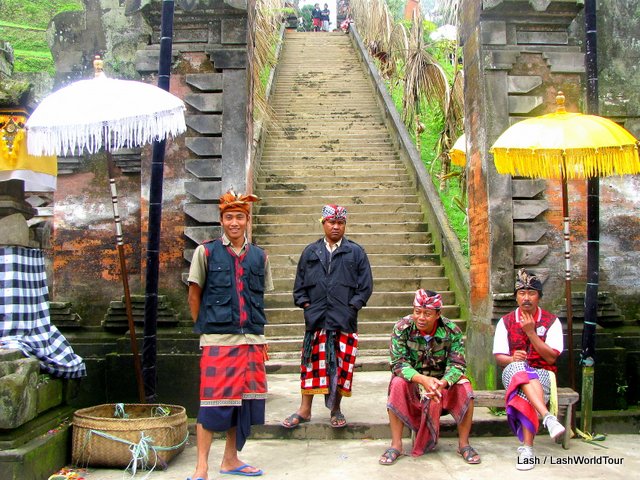
The rest of Bali, the real Bali, is blessed with volcanoes, crater lakes, mountains, hot springs, cold springs, gushing rivers, waterfalls, terraced rice fields, quiet beaches, coral reefs, and rural villages.
Central Bali offers scenic mountains with hiking to terraced rice fields, waterfalls, and centuries-old trees. Rural coasts are lined with gorgeous coral reefs, empty beaches, and stunning views.
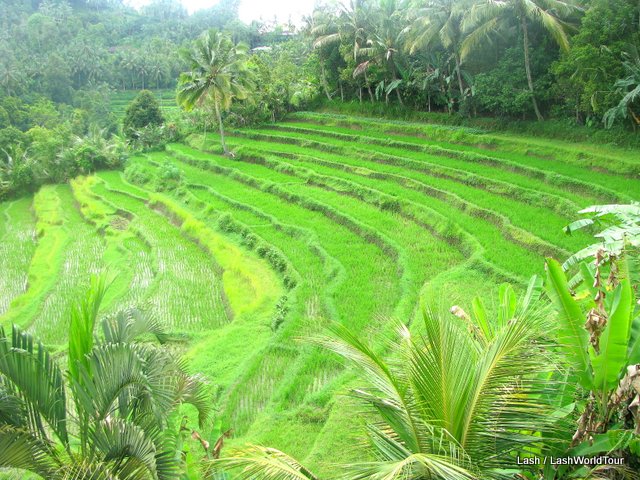
Tiny traditional villages are scattered all over the island, with residents going about their daily lives as they have for centuries. Hindu festivals, ceremonies, and daily ritual offerings fill people's lives.
If you're the kind of traveler who wants to experience nature and authentic culture, or if you're fed up with 'tourist-trap Bali' down south, head around the island. Find out how amazing the real Bali is.
To that end, here are ten beautiful places to get you started, beginning from Bali's northeast coast and traveling westward. You'll need your own transportation to reach most of these places easily, so rent a motorbike or tour the island by bicycle.
Editor's note: Mobile data also makes exploring Bali independently easier, whether you're checking directions, booking a guesthouse in Amed, or arranging a ride. Setting up an eSIM such as Saily before you fly means it's ready to connect when you arrive, without having to find a SIM counter after a long flight.
1. Amed
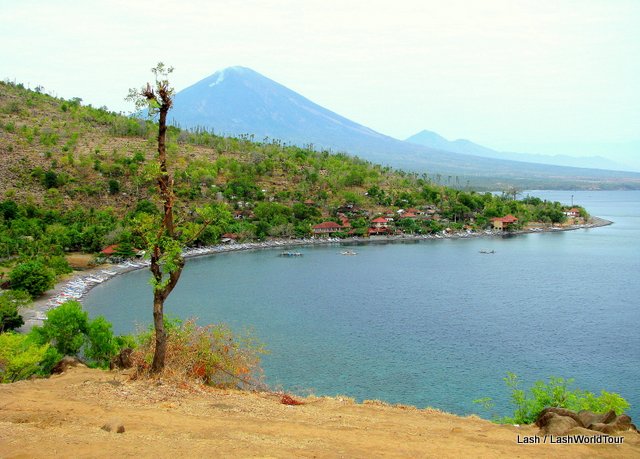
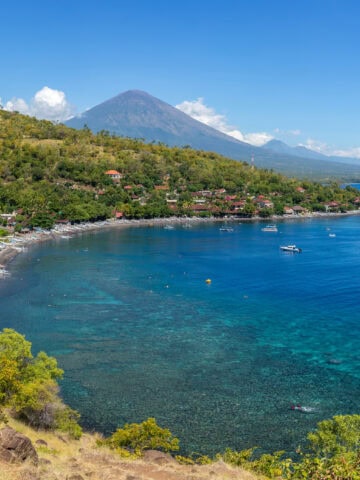
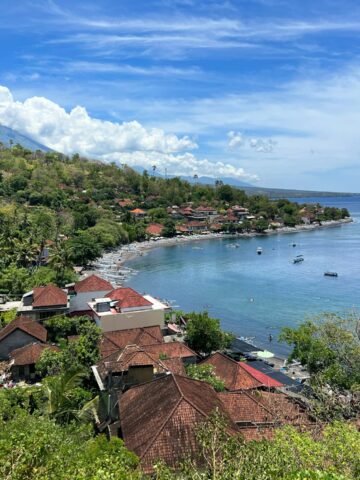
Amed is a charming coastal region of steep headlands and small beach-lined coves situated on Bali's far northeast coast. The area is dotted with traditional fishing/farming villages.
In the mid-1980s, a few low-key resorts began springing up. Since then, dozens of small boutique resorts have arrived. Fortunately, the resorts all blend into Amed's traditional villages rather than taking over.
Amed still looks, feels, and acts like a region of traditional Balinese villages and is best suited for relaxing and enjoying nature. The offshore waters offer superb coral reefs for snorkeling and diving.
Visitors can go sailing and fishing on traditional Balinese outriggers; sunbathe on quiet beaches. Hike the many trails that meander through Amed's hills. Get a massage on the beach or poolside from village women.
Location: Bali's far northeast coast
Main attractions: traditional fishing villages, boutique resorts, beaches, coral reefs, hiking, sailing
Cost: lowest-priced rooms start at 150,000 ñ 200.000 rp ($16-22 US)
2. Hot Springs in a Jungle
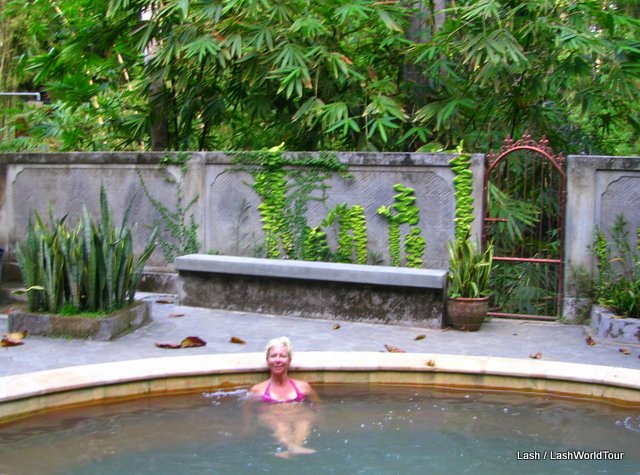
Have you ever lounged in a hot spring in a forest or jungle? If so, you already know how wonderful it is. If not, Bali has a great hot spring to get you started.
The hot springs are set on a mountainside in the dense tropical forest near the tiny village of Banjar, 10 km west of Lovina on Bali's north coast.
Several large stone pools are built in landscaped gardens beneath the forest. In the evenings, locals arrive in hordes with their families.
Children run, play, jump, scream, and generally turn it into a playground. If you prefer a more solitary, relaxing experience, visit in the mornings or midday.
Alternatively, a private pool area few people know about lets you relax in a hot jacuzzi under trees in complete solitude.
After entering the hot springs, follow signs for 'spa and massage' across a wooden bridge. You'll suddenly leave all the noise and commotion behind.
Location: Banjar village, turn-off about 10 km west of Lovina, then about 2 km south of Banjar.
Main attractions: hot springs set in a mountainside jungle
Cost: 5000 rp / additional 10,000 rp to enter the private 'spa' pools. ( $0.50 / $1 US)
3. Munduk
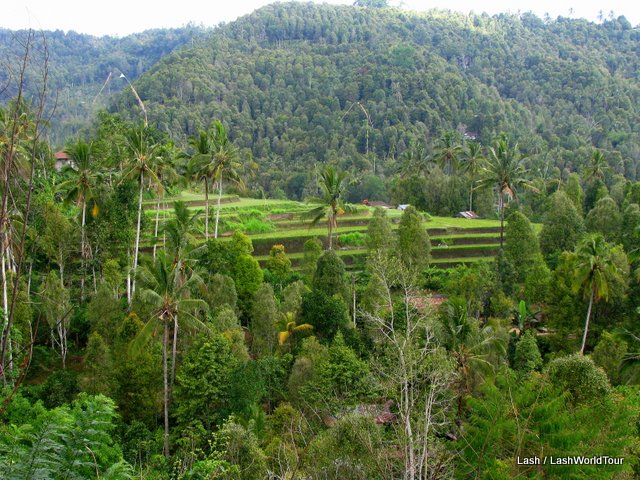
If you like hiking in the mountains and admiring sweeping views of ridges, valleys, and terraced rice fields, then head to Munduk in north-central Bali.
Munduk is a typical Balinese mountain village that has opened a few homestays and hotels for tourists.
Munduk caught on first with French tourists and is now a thriving mountain 'retreat' for visitors who want to escape crowds, enjoy Munduk's cooler air, and hike.
July-September can get a bit crowded, but during other months Munduk is practically empty, save for local inhabitants.
Munduk still retains its traditional village vibe. It's made up of residents, their homes, several small shops, and local eateries perched on a steep ridgeline.
Sprinkled in between are various small hotels and guest houses catering to Western visitors.
The Munduk region offers many hiking options- to terraced rice fields, along steep ridges, to waterfalls, and even to a huge banyan tree. Hotels provide guests with a basic hand-drawn map showing trails, roads, and attractions.
Visitors can either venture out on their own, map in hand, or hire a guide to lead them.
Location: Munduk is located about 15 up a winding mountain road from Seririt city on Bali's north coast. Seririt is about 10 km west of Lovina and 20 km west of Singaraja city.
Main attractions: mountain scenery, cool air, hiking, waterfalls, terraced rice fields, Banyan tree
Costs: budget rooms start from 100,000 Rp ($11 US)
4. Crater Rim Overlooking Lake Buyan and Lake Tamblingan
Bali's most popular volcano and crater rim is Mt. Batur. Unfortunately, most of the crater rim is lined with unattractive houses, shops, tourist restaurants, and hotels.
Tourists who arrive on the main routes will be stopped and charged an admission fee to enter the area. Also, the local inhabitants are notoriously pushy, even among Balinese. Mt. Batur has become a tourist trap.
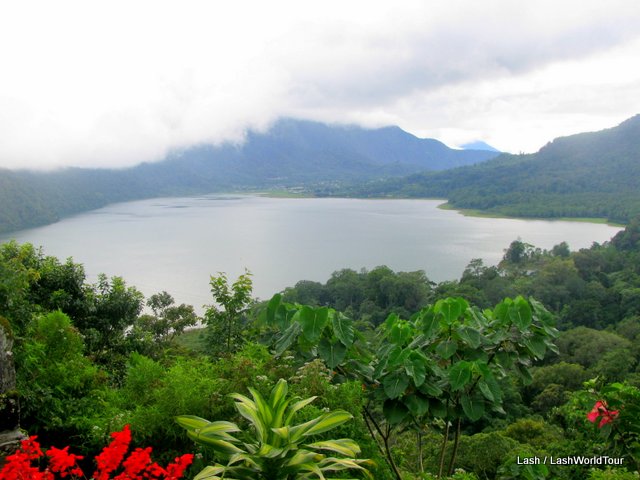
A much quieter, undeveloped, lesser-known crater rim nearby offers even more spectacular views than Batur and without the hassles. It's located west of Mt. Batur in the volcanic region containing Lake Bratan and Bedugul town.
Lake Bratan and Bedugul are also swamped with tourists. However, just a few km northwest of Lake Bratan, across the floor of that vast crater, a road switchbacks up onto the crater rim on the north side. From there, the main road heads steeply downhill to Bali's north coast.
Another road turns west and undulates along the top for over 10 km, offering astounding views of Lake Buyan and Lake Tamblingan, far below. Scattered along that crater rim drive are many superb lookout points.
A few shops and restaurants have set up tables along the crater rim. Visitors can stop to admire the views, drink Balinese coffee, or grab a meal. Incidentally, the crater rim is about 5 km north of Munduk village.
Location: central Bali. You can access it from either south or north Bali. ~ 25 km south of Singaraja and Seririt, ~5 km from Munduk, ~ 3-hour drive from south Bali
Main attractions: stunning crater lake views
Cost: free
5. Rice Fields South of Negara City
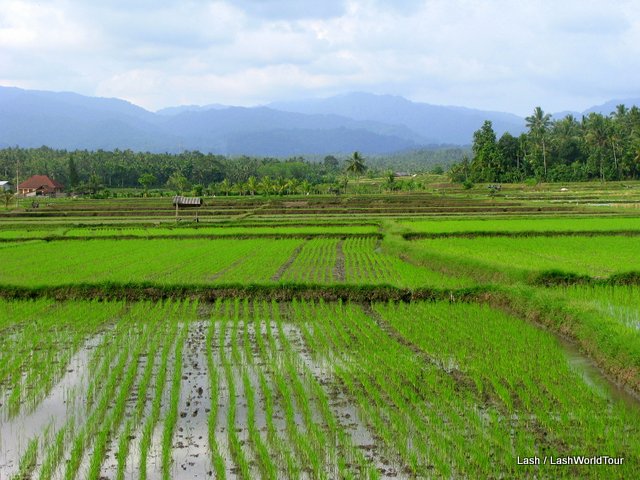
Negara is a small city in southwest Bali. Very few Western tourists visit. Negara city itself has few charms, but just outside of town, a fertile rice-growing region runs south from Negara to the sea. Vast tracts of flat rice fields spread out for several kilometers in every direction.
Inland, they're backed by the Bali Barat Mountains. Several paved country roads and unpaved dirt tracks weave around the rice fields.
Depending on the season you visit, you might see field workers plowing with water buffalo, planting young rice shoots by hand in long rows, cutting rice with machetes, or bundling stalks into huge bales. The area is so beautiful and filled with unusual sights that it's worth a few days of exploration.
Take any road leading south from Negara and wind your way through rice fields and small villages by bicycle or scooter until you reach the sea.
Negara city has many small hotels catering mostly to passing Indonesian businesspeople and truck drivers.
Westerners are also welcome to stay. Try it out. Staying in a predominantly Indonesian hotel, as opposed to a tourist hotel, is a unique experience in itself.
Location: Negara city is located in far southwest Bali, about a 3-hour drive from Denpasar / Kuta / Sanur
Main attractions: gorgeous rice fields and other 'surprises' in the area
Costs: Hotels range from 100,000 Rp and up. Explorations on your own are free, of course.
You might enjoy reading Dave's impressions of Kuta, Bali's main tourist trap, and his explorations inland when he visited Bali a few years back.