What weighs less than a headlamp and helps travelers remember a mountain view years later? A pocket-sized watercolor set. A simple painting of the glacial lake at Humantay on Peru's Salkantay Trek can be a more meaningful keepsake than 47 phone photos forgotten in a folder.
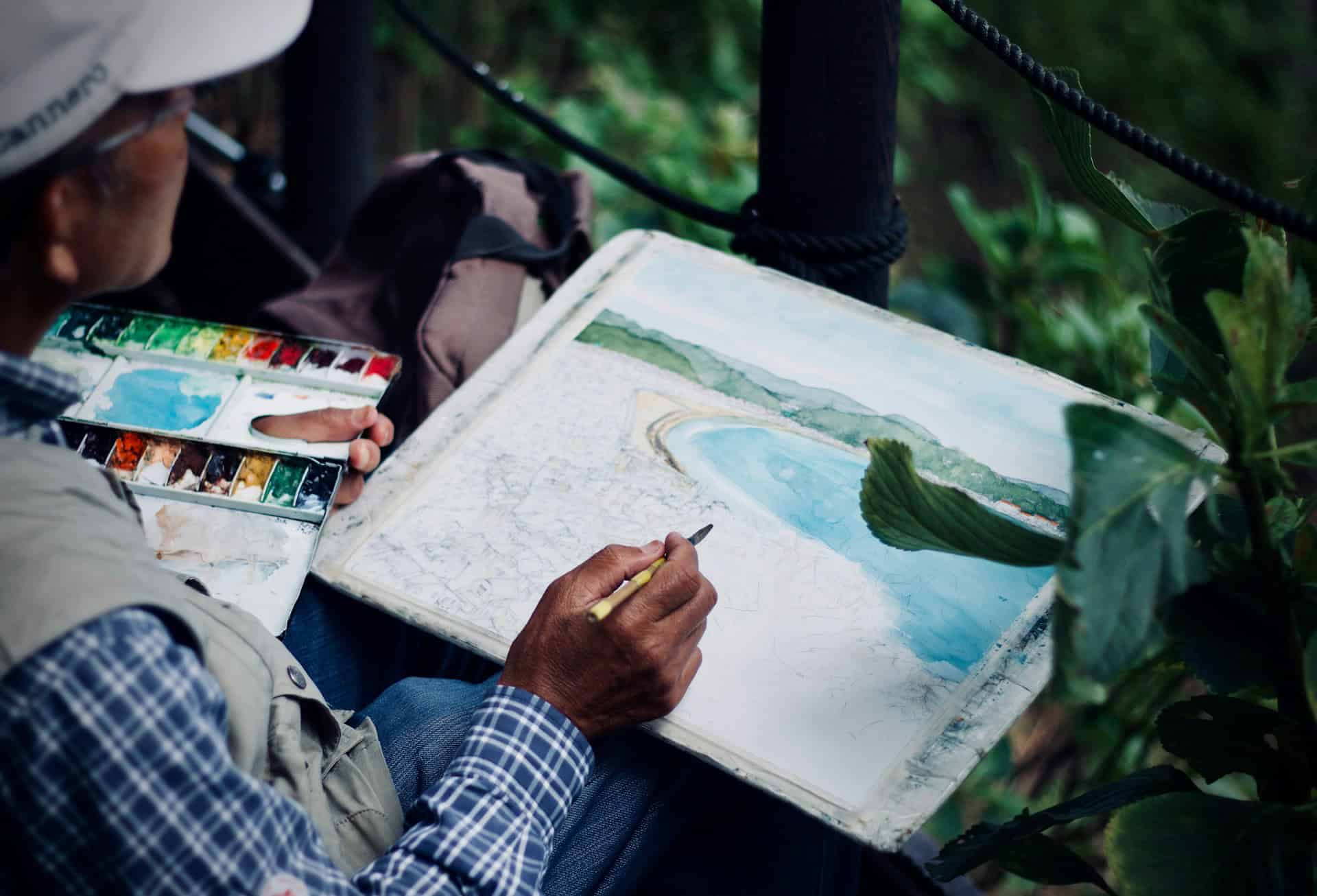
Your Phone Captures the Scene, but Your Brush Captures the Feeling
Backpackers are gear obsessives. Every gram counts. So it is understandable why some hikers raise one's eyebrow at adding art supplies to a pack that already includes a sleeping bag, rain shell, water filter, and three days of food.
But here is what many travelers miss: the weight argument actually favors watercolor over almost every other form of travel documentation.
A pocket watercolor set with a small paper pad and water brush weighs around 100 to 150 grams total. That is lighter than most portable chargers and than the paperback novel stuffed into a hip-belt pocket.
Unlike that novel, it gives hikers something to do during a two-hour afternoon rain delay at base camp, connecting them to where they are.
Photographs flatten a place. They are useful for logistics, for showing friends the route, and for Instagram. But painting forces travelers to sit still and notice that the cloud shadow upon a ridge has a violet edge, or that the river below camp is not blue at all but a murky ochre-green.
Those details stick in memory in a way that tapping a shutter button rarely replicates.
Rest Days and Downtime Are the Real Opportunity
On multi-day treks, the hours between arriving at camp and eating dinner can feel surprisingly empty. Socks have been changed. Water bottles refilled. Now what? Some hikers read. Some nap. Many scroll through their phones until their batteries die.
Painting fills that gap with something relaxing. It slows breathing, shifts attention outward, and offers a creative method to engage with the landscape.
Watercolor kits regularly appear along trails from Annapurna Base Camp to a refugio along the Via Francigena in Italy, and even on the beaches of the Galapagos. Almost every time someone starts painting, nearby hikers wander over to watch. It initiates conversations in a way that staring at a screen rarely does.
On one trek in Nepal, a traveler who had not painted since primary school borrowed a watercolor set for twenty minutes and ended up making a charming painting of Machhapuchhre. He appeared genuinely delighted by the experience.
Practical Advice for Painting on the Trail
What To Pack and Where To Stash It
Travelers do not need a fancy easel or a roll-up palette with 36 colors. Twelve pigments cover nearly every landscape, from desert sandstone to tropical jungle. All-in-one watercolor kits that clip into a single pocket-sized unit are especially useful for backpackers, as they require almost no setup.
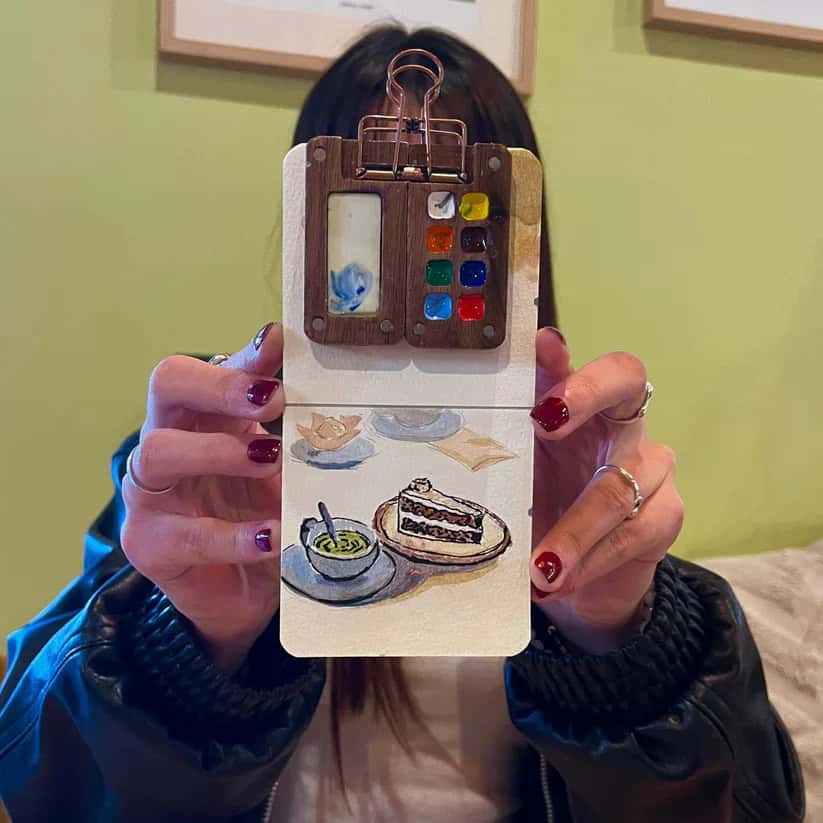
Open the kit, paint, close it, and slide it back into a hip belt pocket or the top lid of a backpack. No loose caps rolling around a tent floor. No dried-out palettes. No mess.
A water brush is one of the biggest trail-painting upgrades. It stores water in the barrel, so there is no need to carry a cup or search for a stream whenever inspiration strikes.
A gentle squeeze keeps the bristles wet, and when the session is over, the brush caps shut again. The entire process takes less time than boiling water for instant coffee.
How to Actually Paint When You Have Never Painted Before
The biggest barrier is usually not the gear. It is the voice in someone's head saying, "I can't draw."
After watching many non-artists try watercolor painting on the trail, one thing is clear: the first painting will probably look a little strange, and that is fine. Nobody is submitting these sketches to a gallery. The goal is to create a personal record of a place that mattered.
Start with the simplest thing in view: a single mountain peak against the sky or a rock in a stream. There is no need to paint the entire panoramic view from Thorong La Pass on a first attempt.
Lightly wet the paper, drop in a wash of color for the sky, and let it bleed downward. Add a darker shape for the ridgeline and stop there. In just a few minutes, the result becomes something way more personal than another phone photo.
It also helps to paint the same scene at different times of day. Sunrise light at 6 a.m. looks different from the soft radiance of late afternoon, and watercolor captures those shifts well because it is a transparent medium.
Layers of colors naturally overlap, and even imperfections add texture and character. The loose, imperfect quality is part of the appeal.
One final tip: sit down before painting. Taking off a backpack and spending 15 quiet minutes in one place usually leads to a better sketch and overall experience.
More importantly, it gives travelers time to notice the sounds, smells, and atmosphere around them. That is the real reason to carry a watercolor set into the backcountry. It is not about creating perfect art. It is about paying closer attention to the places worth traveling so far to see.
This story was published in collaboration with Tobios Commerce and lightly edited by the Go Backpacking team for clarity.