Go Backpacking

  • About
  • Travel Tips
    • Accommodations
    • Budgeting & Money
    • Adventure Travel
    • Food & Drink
    • Gear & Gadgets
    • Packing Tips
    • Travel Blogging
    • Travel Insurance
    • Trip Planning
    • UNESCO Sites
  • Destinations
    • Africa
      • Botswana
      • Egypt
      • Ethiopia
      • Morocco
      • Rwanda
      • South Africa
      • Tanzania
    • Asia
      • Cambodia
      • China
      • Hong Kong
      • India
      • Indonesia
      • Japan
      • Laos
      • Malaysia
      • Nepal
      • Philippines
      • Thailand
      • United Arab Emirates
      • Vietnam
    • Europe
      • England
      • France
      • Germany
      • Greece
      • Iceland
      • Ireland
      • Italy
      • Portugal
      • Spain
      • Switzerland
      • Turkey
    • North America
      • Canada
      • Costa Rica
      • Cuba
      • Guatemala
      • Mexico
      • Nicaragua
      • Panama
      • United States
    • Oceania
      • Australia
      • French Polynesia
      • New Zealand
    • South America
      • Argentina
      • Bolivia
      • Brazil
      • Chile
      • Colombia
      • Ecuador
      • Peru
  • Advertise
menu icon
go to homepage
  • About
  • Travel Tips
    • Accommodations
    • Budgeting & Money
    • Adventure Travel
    • Food & Drink
    • Gear & Gadgets
    • Packing Tips
    • Travel Blogging
    • Travel Insurance
    • Trip Planning
    • UNESCO Sites
  • Destinations
    • Africa
      • Botswana
      • Egypt
      • Ethiopia
      • Morocco
      • Rwanda
      • South Africa
      • Tanzania
    • Asia
      • Cambodia
      • China
      • Hong Kong
      • India
      • Indonesia
      • Japan
      • Laos
      • Malaysia
      • Nepal
      • Philippines
      • Thailand
      • United Arab Emirates
      • Vietnam
    • Europe
      • England
      • France
      • Germany
      • Greece
      • Iceland
      • Ireland
      • Italy
      • Portugal
      • Spain
      • Switzerland
      • Turkey
    • North America
      • Canada
      • Costa Rica
      • Cuba
      • Guatemala
      • Mexico
      • Nicaragua
      • Panama
      • United States
    • Oceania
      • Australia
      • French Polynesia
      • New Zealand
    • South America
      • Argentina
      • Bolivia
      • Brazil
      • Chile
      • Colombia
      • Ecuador
      • Peru
  • Advertise
search icon
Homepage link
  • About
  • Travel Tips
    • Accommodations
    • Budgeting & Money
    • Adventure Travel
    • Food & Drink
    • Gear & Gadgets
    • Packing Tips
    • Travel Blogging
    • Travel Insurance
    • Trip Planning
    • UNESCO Sites
  • Destinations
    • Africa
      • Botswana
      • Egypt
      • Ethiopia
      • Morocco
      • Rwanda
      • South Africa
      • Tanzania
    • Asia
      • Cambodia
      • China
      • Hong Kong
      • India
      • Indonesia
      • Japan
      • Laos
      • Malaysia
      • Nepal
      • Philippines
      • Thailand
      • United Arab Emirates
      • Vietnam
    • Europe
      • England
      • France
      • Germany
      • Greece
      • Iceland
      • Ireland
      • Italy
      • Portugal
      • Spain
      • Switzerland
      • Turkey
    • North America
      • Canada
      • Costa Rica
      • Cuba
      • Guatemala
      • Mexico
      • Nicaragua
      • Panama
      • United States
    • Oceania
      • Australia
      • French Polynesia
      • New Zealand
    • South America
      • Argentina
      • Bolivia
      • Brazil
      • Chile
      • Colombia
      • Ecuador
      • Peru
  • Advertise
×
Home

Without Reservations: The Travel of an Independent Woman

Before embarking on my 340-day traveling adventure, I was beyond nervous. Not only do most students not study abroad for a complete year, but they definitely don't do so alone. Most programs are large, it is nearly expected that you will know at least one or two people... the Chile program, on the other hand was only in it's second semester. And so I flew out of JFK airport with 9 other strangers, got to know them for a month in Ecuador and then met the other 3 once we reached our destination in Santiago.

This personal challenge to meet new people, new friends, in a completely unfamiliar setting is what led me to pick up Alice Steinbach's novel, Without Reservations: The Travel of an Independent Woman. Before purchasing I noted that I loved the delicate cover and genuine character. What I didn't realize, was how much warm nostalgia the travel book & memoir would evoke as Steinbach wanders through European cities for months on end without a true agenda.

Those familiar with Paris, London, Oxford, and various Italian cities won't miss the surface descriptions of those lively and dynamic places. However, those of whom are less experienced as European travelers, may feel as lost as Steinbach in the beginning of the novel.

An overworked journalist with a Pulitzer-prize, she begins with a bout self-reflecting boredom. She is clearly accomplished, her children have grown, and she finds herself bored with her habitual and uninspiring days. She uses travel as her time "to take chances. To have adventures [and] to see if I could still hack it on my own, away from the security of work, friends and an established identity."

She truly gives herself time to rediscover her passion and her zest for life, her joie de vivre, if you will. This alone is relatable to most women who are expected to balance the role of caregiver with a successful career and happy home, but as a reader from a younger generation, I was also able to resonate with her honest insecurities which she overcomes daily. Furthermore, the postcards she sends to herself, which begin each chapter, encompass a sentimental piece of advice or memory for the reader and Steinbach alike.

If you're looking for to read the story of an adventurous traveler, you may be disappointed with her calm yet pleasant international experiences. However, if a light read of a warm journey of emotion is your cup of tea, then I'd recommend you pick this up. As you slowly but steadily make your way through this beautifully written narrative, the jet-setter on a home-locale break will surely be able to find a place of peaceful travel contentment.

Why I Hate the Indian Bureaucracy

Near the middle of my travel notebook are three pages labeled "Problems," which outline the state I was in when I arrived in Lusaka, Zambia, on my last week in Africa. They were evacuation plans from my very vulnerable state and the continent. During this trip, I also dealt with the complexities of obtaining an Indian visa.

The first worrisome truth: my ATM card wouldn't work in the country, a country more expensive than my home. Without cash, I couldn't afford the hostel accommodations, taxis around the sprawling and scorching city, or the ever-increasing price of my Indian visa "possibility."

Able to afford one night at Chachacha Backpackers, I made the most of the resources at my disposal: I boiled water in the kitchen for hydration, washed clothes in the outdoor basins, and asked the hostel staff for detailed instructions on internet and grocery locations to avoid taxis.

Luckily, my MasterCard was accepted for the internet time I used to contact local friends who could help me. ShopRite also let me swipe for a week's worth of food: six eggs and a few cups of rice.

The second worrisome truth: the visa to India was virtually guaranteed to take longer than my coming flights would allow. The wise advice is to obtain visas before that first wondrous jet out of your homeland.

As a penny-pincher, I aimed to be, I refused to obtain an Indian visa at home because it would have meant purchasing a one-year visa, instead of the minimum six months, to keep my travel dates valid on such a visa.

And so I tried, across the globe, to wrangle this coveted visa as a nomadic, budget-minded foreigner, but I was never in the right place for long enough.

With a week between trucking in Africa and my flight to Delhi, Lusaka was the only option at the end of this dusty road.

It's safe to say that, at this point, I had done my research on Indian visas, and the High Commission in Lusaka knew I was on my way, or so one would believe.

Any other establishment would have seen my preparation and advance notice as thorough and helpful, except maybe the BMV.

So, one can imagine my stupefied state when the indifferent receptionist reported that the duration of the process would last up to three weeks, the same woman who had told me three days earlier over the phone.

When the High Commissioner addressed me personally, albeit in a robotic tone, that I was "up poop creek," I made my first frantic reach for the motherland in five months. I ran blurry-eyed to the US Embassy.

There are few things more annoying than a company, operation, establishment, branch, etc., whose employees abandon their human instinct to help others and refuse to do or say anything that isn't in their well-articulated job description.

These are the same people who expect everyone to know the details of their operations, while also making sure to inform you of the painfully obvious truths they assume you've forgotten or aren't smart enough to know prior.

Once again, I'm talking about immigration (and the BMV). The American Embassy wasn't all that concerned with me.

I've never had a genuine need for the embassies abroad, and I assumed this fragile situation, with one expiring visa, another visa's complications, and the always entertaining money troubles, would merit a sympathetic, "Get it done" attitude.

Though my tears and hyperventilation were real, I allowed them to get a bit pathetic and theatrical to get me the thing I needed: the backing of the American government.

As Frida Kahlo once said, "Never trust a limping dog or the tears of a woman." I got help. But it cost me.

There were fees out the wazoo to India, and I found myself leaving the Indian High Commission with the equivalent of about $80 less than what I needed to survive at the bare minimum for the next five days. Was this the end of my visa troubles? Not at all.

Stay tuned for the conclusion of Lindsay's "Why I Hate the Indian Bureaucracy" tomorrow.

Post by contributor Lindsay Clark of Nomadderwhere.

Introducing Leslie: Travel Addict and ESL Survivor

Leslie Brand
Leslie Brand

Four years ago, I called myself a traveler for the first time.

I was a junior in college, not yet two decades old, and three weeks into my first semester abroad (location: London), I was itching to explore. 

A short AIM conversation with a friend studying in Paris later, and the following weekend, I jetted off Ryanair-style for 58 hours in Dublin.

Six of those hours were spent sleeping; otherwise, I remember every minute, a rare feat in Ireland. 

There was the raw chill in the September air, the lush green beyond the city limits, the velvety thickness of my first Guinness. 

Most important, though, was the adrenaline: I felt alive.

I have never been one of those lucky ones who knew exactly what I wanted out of life. 

I'm an overachiever with an ever-present artistic streak, but I am also indecisive. 

But, since that first trip of my first study abroad semester, I have been sure about one thing, and that is travel.

That's why I followed that semester with a second (this time: Prague). 

That's why I got on a plane to Israel 36 hours after throwing my graduation cap in the air. 

That's why I went back to Prague for a full year of post-collegiate life and work.

Studying abroad is one thing, but working is an entirely different animal. 

For many of us, it is the only way to realize the international adventures our rootless spirits so desire. 

And so, newly awarded B.A. in hand, I ran back to Prague two years ago, ready to become the just-graduated cliche: an ESL instructor.

After a crash course in TEFL, I bonded with the city's many expats over the obscure locations our schools sent us to explore, the intimate secrets our students insisted they share, and the realization that the English language simply doesn't make a whole lot of sense.

I'm very excited to be joining the Go Backpacking team, and I'll be posting weekly on the grand experiment: the ESL life abroad. 

Ups, downs, and mispronunciations, there are never enough words to fully tell the tale. I'll do my best, and I hope you'll read along!

So, What Exactly Is Couchsurfing?

Q: So, what exactly is Couchsurfing?

A: Let me begin my answer by quoting Couchsurfing's mission statement, as I believe it succinctly sums the project up:

Participate in Creating a Better World, One Couch at a Time.

Sadly, many people mistake this awesome travel community for simply free accommodation, when really the goal is to create an international network of friends with the common interest being the love of exploration. 

Yes, one of the many benefits of Couchsurfing is that it makes travel more affordable, but the most meaningful benefit is that connection you make with your host/s or with other Couchsurfers; the cultural exchange that takes place is priceless. 

And the hope is that this cultural exchange will in some way make the world a better place through:

"rais[ing] the collective consciousness, spread[ing] tolerance, and facilitat[ing] cultural understanding (1)."

One of the biggest misconceptions about Couchsurfing is that it is only a hospitable exchange. 

This could not be further from the truth.

There are approximately 1.4 million members worldwide (even in places such as Antarctica!). 

Thus, you will find that most cities have a Couchsurfing group. 

These groups have regular local events that you can participate in and are wonderful opportunities to share your travel stories and to make new friends and potential travel partners. 

Plus, it is a great way to get your travel fix when you are not able to travel.


The site also features collectives that are held around the world every year. 

These collectives sometimes have up to a thousand attendees. 

An example of this is the next collective that is being held in Rio, Brasil in celebration of New Year's Eve. 

There will be events days before and after the holiday too. 

It is anticipated that this will be the largest collective to date. 

I will make sure to report back, as I am attending!

Another way you can use the site is by contacting other members in the city you will be traveling in to see if they can either offer advice on what to do and see or, and this is the best part, if they might be interested in meeting for a coffee/drink, as well as possibly offering their guide services. 

You will find that most Couchsurfers love helping you in any way they possibly can. 

Make sure to search the online forums for even more invaluable advice.

DC Travel Happy Hour

Recently, I've had the chance to meet a lot of wonderful travel enthusiasts, writers, editors, photographers, bloggers, and tweeters in New York City and Washington, DC.  Topics of conversation often included travel (duh!), media (print and online), blogging, freelance writing, non-conformity, and Moo cards.

With that in mind, and an excitable co-host in Stephanie from Twenty-Something Travel to share in the experience, it is time to take a hand in organizing a tweetup.

If you're reading this and live in the DC-metro area, Stephanie and I would like to meet you!

Click on the twtvite banner below for further details and to RSVP.  Please use #dcthh hashtag in your tweets so we can track this event.

World Hum & Art of Non-Conformity Happy Hours

Busboys & Poets in Washington, DC
Busboys and Poets in Washington, DC

I was lucky enough to cross paths with a handful of travel bloggers during my trip around the world, and it was a lot of fun to meet the people behind the travel blogs I'd been reading. 

I find it at once striking and strange that you can get to know a person through their writing.

Last week, I had the opportunity to attend two happy hours and meet many new and interesting people in the Washington, DC area.

Travel Writers

The first happy hour took place in The Saloon on U Street and was a get-together of World Hum contributors, travel writers, and friends.  I arrived at about 6:30 pm, as suggested by Michael Yessis, a co-founder of World Hum who lives in the area.

While sitting at the bar, I realized that aside from a photo or two from Twitter and his blog, I had no clue how to identify Michael from the other patrons. 

At least the bar was small because it made approaching random strangers and asking them if they were traveling writers a palatable task.

Five approaches and a few awkward laughs later, I met Michael, Julie Ross, and Andrew Evans. 

Throughout the evening, we were joined by Adam Karlin, a writer for Lonely Planet, Chris Gray, Travel Editor for USA Today, Chris' husband, and Joanna Kakissis. They had just returned from a trip to Bangladesh. 

Plus, there was Benjamin Spatz, who, after returning to the States after a few years in Liberia, was as confounded by his new Blackberry as I was when I got mine.

The conversations were great, as you might expect from such a well-traveled group, and also touched on the changing face of travel writing and media.

Non-Conformists

A few days later, I enjoyed attending the Art of Non-Conformity gathering at Busboys and Poets on 5th and K Street. 

As a reader of Chris Guillebeau's blog by the same name, I'd seen photos of past meet-ups and knew there could be a big turnout.

I went early, arriving at about 6 pm on the dot, and the first reserved table on the second floor was already full. 

A kind soul vacated their seat to join the group, which also gave me the chance to talk a little with Chris before he'd have to start mingling with the new arrivals.

In his invitation, Chris mentioned, "The best thing about AONC meetups has absolutely nothing to do with me -- it's about everyone else who shows up." 

I didn't believe it until I began to meet other attendees!

I got to know the lovely Jen Lemen of Mondo Beyondo and the friendly Justin Premick of AWeber (an email service I use for GoBackpacking's weekly newsletters). 

I met many others, including Nicholas Kralev, who writes for the Washington Times, and Thursday Bram. 

I couldn't bring myself to mingle fast enough to meet even half the people who showed up over the three-hour event.

During the night, perhaps at the end, as the tab was being closed out, I remember telling Chris about going to Gary Vaynerchuk's recent booking signing for "Crush It!" and feeling inspired by the guy. 

If Chris could garner that kind of response from the people who come out to meet him, including next year when his first book launches, he'd be in great shape.

He responded that "it's all about building relationships."

It wasn't until I reflected on the evening later that night that I realized he had done just that with as many people as possible, and without knowing it at the time, with me as well.

Hey Rich People! Enjoy Polar Exploration on Legendary Icebreaker

Polar Exploration with Quark Expeditions

I received the following e-mail from Quark Expeditions recently:

Dear Dave,

If you've been promising yourself that one day you will explore the polar regions in an icebreaker, delay no longer. Our flagship, Kapitan Khlebnikov, will end her career as an expedition vessel in March 2012, returning to escort duties in the Russian Arctic.

The End of an Era expeditions begin with Khlebnikov's final west to east transit of the Northwest Passage, from July 18 to August 5, 2010, and end with an exploration of Antarctica's Far East, December 6, 2011 to January 5, 2012. In between, the icebreaker will return to the High Arctic, Ellesmere Island, and Snow Hill Island, home to Emperor Penguins.

Now is the time to sightsee in helicopters. Cruise bird cliffs in Zodiacs. Savor meals as tasty as any served in a fine restaurant. Now is the time to treat yourself to the ultimate polar adventure aboard the legendary Kapitan Khlebnikov.

We have invited a number of special guests to mark the End of an Era. Each is passionate about the polar regions and looking forward to sharing their expertise with you.

Since polar exploration is high on my list of unfulfilled and exotic travel experiences, I was curious to see what such an adventure would run me.  Greenland is fairly close to the East Coast of the US, so I clicked on the Ellesmere Island and Greenland: The High Arctic trip.

And that's when the sticker shock turned my icebreaking explorations into a pipe dream for the foreseeable future.

The price range for a 16-day expedition aboard the mighty, nay, legendary Khlebnikov is $13,990 to $23,990.

Friday Flashback - The Ganges River and Ghats in Varanasi

_

Varanasi is a pilgrimage site for many Hindus in India (and around the world) as it sits along the holy Ganges River.  Along with Old Islamic Cairo in Egypt and the old part of Kathmandu in Nepal, Varanasi offers great photographic opportunities with every step.

These two Varanasi posts include a lot of my favorite shots, while the side trip to Sarnath offers views of the site where Buddha gave his first sermon.

Hot, Hot Varanasi

An Early Morning Visit to Sarnath

A Sunset Stroll Along the Ghats

Destination Asia: So Many Questions

Why are you going? When are you going? Where are you going?

These are always the first questions I'm asked when I tell someone I'm planning a trip. The when and the where are the easy parts, the why is somewhat more complicated.  As with any big decision there were multiple factors involved.

When I returned from Europe in June, 2008 the only thing I could think about was travel: where, when, how? My initial intentions were of returning to Eastern Europe or trekking through Central Asia. Unfortunately Central Asia is too volatile right now and getting even more so.

Eastern Europe was thrown to the wayside when a backpacker friend of mine suggested South East Asia.

His answer to Why? The full moon party on Ko Pha Ngan, and treks in the jungle were the first things he mentioned, both of which perked my ears right up.  I knew that South East Asia had a well worn backpacker trail and that it had ample amounts of everything I was looking for: wilderness, an alien culture, a handful of countries that can be traveled overland, danger, and a great party scene.

Although I had the time of my life in Europe I had an immediate drive to top it.  When I stood in the German Alps, I told myself that I would find a place even more beautiful before it was all over. I'm still looking...

After watching an episode of Top Gear which featured Ha Long Bay in Vietnam, I knew Asia was in my future.  Europe lacked the danger and adventure that I now crave, and to cure that I would need to push my limits with a venture into Burma.

Asia will be a trip of many firsts for me both in culture and length, which I think is what ultimately drew me away from Europe and set my compass towards Asia­. In my mind, Europe will always be there but Asia is currently in the middle of a tourism boom and rapid industrialization, much like Cuba.  I consider it necessary to see Asia now, before its countries become further developed and industrialized.

Then the questions turned to when to go and where to go. My departure in April of 2010 made sense as I'm taking a second gap year from university along with several other factors. The length of my time off will allow me to accumulate enough funds for a 4 month trip and allow me to make another small trip in February.

After reading about the area and finding this blog, I started to get a good feel of the region and what each country had to offer.  I formulated a route that would take me through Thailand, Burma, Laos and Cambodia.  As I began to plan, I reconnected with a friend I had first met in Berlin, who conveniently lives in Singapore.  With a open invitation from my friend, Malaysia and Singapore were both added to my route. As these things go, the trip continued to expand in my mind to include Vietnam and balloon to 4 full months abroad.

Often after I answer these three questions, people ask me what I'm going to be doing, almost with a tone of disbelief at the amount of time I will be away from home. Although my answer is usually a simple "backpacking around" my mind always starts to race from destinations to adventures: trekking in the Lao jungle, fishing in the world's oldest forest, exploring ruins in Cambodia, volunteering in Laos, and so many more.

As a traveler I'll always seek the next experience, the next story.  To experience is to grow, to grow is to live. I hope you`ll follow along with me over the coming weeks as I dive into the details.

Next week, I`ll be writing about how to research a country you know little about.

Couchsurfing Uganda: A Mzungu in the Midst (Part 2)

Post by new contributor Lindsay Clark of Nomadderwhere.

The first mission of the day was to make it to the city, as the locals do, wandering up weaving lames and jumping garbage heaps until Entebbe road appeared, in all its smoggy splendor. On the way, I began to re-experience the wonder of being a walking spectacle, the extreme and never-before-seen minority, an Average Jane celebrity.

Children ran around in circles, announcing to their kin the presence of the "mzungu" in their midst. If I responded to their screams, waves, or salutations, huge smiles formed on their faces before they darted home to giggle behind their working mothers.

The taxis: one driver, one screamer, and a 14 passenger bus that almost always breaches the legal limit of riders. They get you from A to B, though you may be sitting on someone's lap. These services are offered at a wonderfully reasonable price: 20 minutes of bouncing around Kampala for 30 cents.

Kampala is the result of a tribal collision and explosion, a city smashed with basic homes and millions of people breathing in a nicely concentrated formula of oxygen and diesel exhaust. Not many people own cars, so it's a bit of a mystery as to why the air is opaque. It's deceiving, but everyone is always on the move, which is why the population calls for the organized chaos of the taxi parks.

They all crowd and congregate like hungry coy fish, drivers jumping for passengers and squeezing through openings not big enough for their cars. You could find a ride to anywhere and meanwhile purchase peanuts, beer, scrunchies, and hair extensions while waiting in your seat by an open window.

Of course, where there are people, there are people selling crap - the biggest taxi park bumping butts with the biggest mad house market. Massive bags of rice and spices, washing soaps and appliances, second hand clothes and dried sardine heaps, and about forty men with wedding proposals for my very eligible hand.

I grasped my bag, half hidden under my shirt, and skillfully maneuvered away from the forceful arms trying to grab my attention. Weaving through the roughly covered maze of stalls, I had to laugh at the exclamations people would shout: "Hey Mzungu!", "Marry me?", "Come come you buy something!", "Lips!". Paul loved the show as well.

It was all a pulsating whirlwind erupting around me. I had to step back and get a hold on where I was. We climbed a closed up shopping center to view the sudden wash of rain that swept the littered streets and nearby music festival in sight. The city was impressive, in a shocking way, as I couldn't believe such a tattered place existed. The essence of "shambles," but it was mysteriously hypnotizing nonetheless.

From a cathedral on a nearby hill, the improved view gave me a sight more removed and peaceful, where I could finally see the urban rain forest at arm's length. It was a smoggy mess, a sore on the terrestrial crust, but viewing the palms and rolling lushness with raw sugar cane sweetness tossing in my mouth made me find a twang of admiration for the basic nature of Kampala's exhausted inhabitants. I had a strong desire to stop time and paint the most complex picture of each tiny moment that were cultural time-bomb slaps in the face. This is Africa.

Meals of plantains by candlelight and chapatis by rooster crows hugged my stomach with simple fulfilling pleasures only possibly by my mental smiles, thankful I was seeing such a real experience. Authenticity, my friends; there's no substitute.

My last day in Kampala was all about family. We strolled to Paul's aunt's home on a nearby hill where I got my first real chicken coop experience. Given it wasn't in the back of a truck after hitchhiking in the countryside, but it still satiated an odd desire to see feathers fly.

I fed little piggies palm leaves and stepped over coffee beans drying on the ground. Baby goats chased each other and dove under the full utters of the mother, only until Paul wrangled one for a quick pet of its soft cowlicked coat.

Just then, Paul's niece came running down the red dirt road from school and joined us for the jaunt back to his abode. We all ate a quick bite of potatoes and avocado before I had to skidaddle. I introduced the young eyes of Latisha to the world of photography and let her snap it around the family compound. She was so quiet, but after sharing a smashed airplane Mars bar and clicking the camera shutter, she was glittering.

As I left Masajja for Jinja town, a shower smoothed the rough appearance of Kampala and left the bright red dirt and clean green lushness vibrating in my enamored eyes. Uganda was already a glowing memory and in Kampala nonetheless.

Have you couchsurfed in a foreign country?  Leave a comment and let us know if your experience was good or bad.

Couchsurfing Uganda: A Mzungu in the Midst

Post by new contributor Lindsay Clark of Nomadderwhere.

The first time I flew into NYC at night, the infinite stretch of lights had a deep impact on me - seeing the development and magnitude of the world from a pilots-eye view.

Alike, yet opposite, the moment occurred with the descent into Entebbe, Uganda.

There were minutes of time I saw not one single light in the darkness. What was below me was simply nature, no embellishments.

After immigration, I dawdled around the exit, hoping my first couchsurfing host would recognize me from my profile picture since unfortunately my previously given description of "brunette girl with all the bags" was not valid at the time [thanks to lost baggage].

Paul found me and took me away from the probing taxi drivers and towards the capital city of Kampala.

I knew I made a fantastic decision to couchsurf when my drive from the airport got me closer to the real Uganda than I ever could have gotten otherwise.

As we chatted through the hour-long drive, I realized the scene outside was unfolding something so eerie and intense.

The dust of the streets created a fog through which car headlights revealed hundreds of wandering silhouettes.

Things didn't feel so familiar anymore, as I realized the streets were littered and webbed with people, even out here in the dark of night, somewhere on a stretch of highway. Finally came the realization, the zing I sought for months:

"Wow, I'm traveling."

Paul lived in a village right on the edge of Kampala, one called Masajja, which was connected by dirt roads, all veined and rutted by the wet season's downpours.

The first few bouncy minutes brought to mind Ace Ventura on his jungle rides through Africa, singing Chitty-Chitty-Bang-Bang with head bouncing from the passenger's seat across and out his driver's side window. I needed a helmet there in the back seat.

The Ssenoga family, Paul, and siblings live in a home attached to a few rooms, which they rent out for their income.

My travel goal of never using a squat toilet went out the window when I got a look at the compound latrine.

I was in no way discouraged though, as I knew my immersion was deeper than I could have anticipated (and that doesn't mean I fell in).

Though I hadn't slept in about three days, I stayed up to chat with my host about his family, his village, and life in Uganda.

Outside his window, the sun was far set, but the neighborhood was still throbbing.

On the corner, a man made a stand to sell chapatis (essentially flour tortillas) for cash flow.

Boda-boda drivers (guys with motorbikes) surfed the dirty waves while trying to find passengers to transport and charge.

In this community, everyone was a family man and every one an entrepreneur.

The noise was a constant, but at 2 a.m., when I awoke to roll over, I could have heard a rooster toot in the next village over.

Old MacDonald lost control of his livestock as they all crowded around my window to oddly awaken me in the morning.

Roosters were crowing every thirty seconds, goats were screaming like little children in agony, motorbikes streaking across my sightline and every human being on the block took to the streets to get it done, whatever "it" was, as they had been since 4 am.

I drew my first breath at 8:30 am and sought some relief at the long drop.

One cannot wander in there half asleep without losing a leg to the earth's dirty mouth and cracking your pelvis on the wet cement surrounding the hole.

I sure do have a delightfully poetic mind.

And then I walked miles to sit on someone's lap all the way into the city.

Introducing Danielle - Travel Fanatic & Foodie

Danielle in Istanbul
Istanbul

Hello world! I would consider myself pretty well-traveled for a 21-year-old, because, well, I suppose I should start from the beginning...

As an American college student with a multicultural background, my fascination with travel and cultures, languages and food had already led to many international excursions. But simply visiting different places wasn't enough for me.

In addition to studying magazine journalism, I also spent my first two years advancing in my comprehension of Spanish and beginning to delve into French. With fluency in two languages just over the horizon, I took a leap of faith and signed up for an entire year, two academic semesters, or 340 days studying abroad.

During that time I lived with three different host families, attended multiple universities, became close friends with Ecuadorians, Chileans, and many French, while also bonding with fellow foreigners. Not to mention that I found three distinct and wonderful homes away from home.

And, if that weren't enough for me, I've also had multiple opportunities to travel, to get a taste of other South American and European cities and countries, and explore places I had only yet dreamed about going.

I accomplished more than I thought possible on my trip of a lifetime, having lived and traveled abroad; I have gained an intermediate fluency in Spanish and French, I have found my place is various cultures, I have tasted some of the most delicious, and oftentimes, healthful foods that the world has to offer. And since being back, I have done my fair share of travel-reading as well. You know, gotta feed the travel bug somehow.

Now that I'm home again, changed forever, I'm in the process of finishing up my college degree, figuring out what the future hold for me career-wise, and finding my place again in the U S of A. I am so honored to be one of Dave's first contributors and share my past and present experiences with like minded, travel-enthused individuals. Maybe doing so will be able to help us both find our next destination.

Until next time!

Friday Flashback - Stress & Meditation in Bodhgaya

Entrance to Mahabodhi Temple

34 hours.1 taxi.1 share jeep.1 overnight train.1 bus ride.3 autorickshaws.1 bicycle rickshaw.

In 20 months abroad, my longest continuous period of travel was the trip from Gangtok, Sikkim to Bodhgaya.

We passed a young woman in a bright, flowing silk sari talking to a man and my mind couldn't reconcile how such a beautiful woman could coexist with the filthy streets.

It was not easy, however the payoff was the opportunity to sit and meditate in the same place as Buddha when he attained enlightenment.  Powerful stuff.

Looking back at these posts, I believe they capture some of the most fascinating moments of my backpacking trip around the world.  Chai tea on the train.  Uncomfortable bus rides.  Public urination.  Sleeping on the property of a Tibetan Monastery.  And even a Bollywood movie being filmed.

Pilgrimage to Bodhgaya (includes my first train ride in India)

Monasteries and Mahabodhi Temple

Meditating Under the Bodhi Tree

Expat Life in Chengdu, China

Charlie

I lived with Charlie for two years in Virginia.  After we parted ways, I began saving for my RTW trip, while he was establishing a new life in the Sichuan Provence of China, learning to speak fluent Mandarin, and building a career as a professional DJ.

I was lucky enough to visit him for two weeks on my trip around the world, and see first hand how well he had adapted to life in China.  Enjoy!

GoBackpacking: Why did you choose to leave your job as a graphic designer in the USA and travel to Asia?

Charlie: I got bored. My life turned into uninteresting routine and I had to break out.

I could see colleagues who, through decades of meaningless office toil, had lost something very precious. I decided that no matter what the cost I wouldn't befall the same fate.

Asia was one of several candidates - it turns out that it suits me well so I've been here for several years.

You now call Chengdu home. What were your first impressions of the city upon arrival, and how does it differ from the other large cities in China like Beijing or Shanghai?

Chengdu has a unique charm that's difficult to describe. It's at once a bustling metropolis and a very friendly laid back place.

Chengdu, and West China in general, are vastly different from cities on the east coast including Shanghai and Beijing.

Personally, I wouldn't choose to live in the megacities on the east coast because to me they are too much of a compromise. Shanghai and Beijing are so developed and westernized that I don't really feel like I'm in China.

Enjoying the Chengdu Nightlife

When did you realize you could earn a living as a DJ instead of the more common approach of teaching English?

I quickly realized that there are many paths to earning income besides teaching English.

Music and DJ'ing were things I had been involved with for years before coming to Asia so it was a natural fit.

The truth is that there are countless opportunities overseas at the moment if you can produce a competitive product or service - teaching English is the easiest path which is strewn with many people who do it because they don't see or don't want to pursue the other options.

Showing off a spa-issued Chinese bathing suit

What challenges did you face while learning to do business within China's nightlife and entertainment industry?

As far as doing business, the most difficult part was adapting to the language and culture.

Learning to fend for myself as an entrepreneur and not allow people to take advantage of me just because I'm a guest in their country.

Staying productive and pushing forward is sometimes a challenge when I vacation several months out of the year and don't have anyone making a schedule for me.

These have probably been the biggest challenges but I don't see them as very unique to the music industry in China.

Where were you on May 12, 2008, when the magnitude-8 Sichuan Earthquake struck near Chengdu? Have there been any lasting effects or has the region fully recovered?

During last year's earthquake, I was on Qing Cheng Shan which is one of the birthplaces of Daoism.

That day I was on a motorcycle excursion with several friends and the earthquake hit when we were making our way back down the mountain.

We were trapped in a section of the mountain with about 100 locals and had to hike down the mountain which took 24 hours.

During most of this time, it was raining and there were constant and powerful aftershocks as well as no roads due to landslides taking them all out.

A few months later I returned to the mountain to retrieve my dirt bike which was where I left it.

To this day the part of the mountain that I was on (the backside, called Hou Shan) is closed due to the damage it sustained.

Are there any misconceptions or stereotypes about life in China you'd like to clear up?

It's difficult for me to address misconceptions about China because I rarely interact with people who have no exposure to China.

Before arriving in China several people were stunned to hear that I would willingly commit myself to China but I did and do consider those people to be narrow-minded.

China isn't for everyone but I've found that it's a wonderful place that I'm happy to find myself.

With that said, I'm sure I could say the same of many other countries as well.

Ping-pong in PJs at a Chinese spa (~3am)
Ping-pong in PJ's at a Chinese spa (3 am)

Do you have any tips or tricks for learning Mandarin?

My number one tip: speak and hear Chinese all day. Don't just go to Mandarin class and return to English when you finish.

Whether this means finding a companion or friend who doesn't speak English or surrounding yourself with non-English speakers, this is the quickest path to proficiency.

There are many aids which will speed the process, the most important being your own motivation and fascination.

From the very beginning, keep a journal and write down every word and phrase you learn.

I haven't taken a single lesson in Chinese but my skills have eclipsed those of Chinese language majors in the States.

I don't believe that speaks to my natural intelligence as much as my learning methods.

For more information on how to quickly become proficient in foreign languages, I recommend checking out Tim Ferriss' blog. I've utilized a lot of his methods and found them to be very practical and effective.

Beyond China, which countries would you like to visit next and why?

At the top of my list is South America. It's a region that I haven't personally explored and it interests me because, like Asia, it's developing very quickly.

The fact that most of the continent speaks a single language makes it very accessible as well.

Also on my list is Iran - I have a lot of Iranian friends and Iranian politics are of particular interest to me.

Like China, I believe that Iran has the power to destroy popular misconceptions about people and culture that linger in the back of my own mind.

Gap Year Support: Resume To Interviews

Resume to Interviews

I first learned about Resume to Interviews earlier this year in Medellin, when I ran into the owner, the man behind the scenes.

We kept in touch after going our separate ways, and when I finally began looking for a job back in the States, he offered to put his services to the test in exchange for a review.

I welcomed the help, as I'd taken the easy way out and left on my trip around the world without taking the time to add my accomplishments from the prior 5 ½ years.

The first thing I did after receiving the offer was to check out the website.  I was immediately drawn to the Testimonials page.

It was filled with a long list of quotes from satisfied customers, such as:

" Just got a job offer yesterday for a company that I sent my resume to 6 days ago. Many thanks for the excellent resume! If nothing else, the design is well worth the money. Having an easily readable and flowing resume is incredibly advantageous."?

The site layout is clear and uncluttered.  Pages include a FAQ, Terms of Service, basic tips for writing resumes and cover letters, and interview advice.

Satisfied with the customer feedback, I accepted the owner's offer and forwarded him the resume with which I'd been struggling.

I asked for two different versions - one that emphasized my recent travel writing/blogging experience, and one that emphasized my professional management and customer service experience.

I knew I had been on the right track with the content to include. However, the design and organization were "schizophrenic" according to my Dad.

Frankly, I'm incredibly self-assured about what I can offer the right company.  I am confident I can come up with great ways to leverage my recent travel experience in an interview. And I have former bosses who would be happy to help with great recommendations.

However, none of that matters if I can't present myself clearly and professionally via resume.

Four days later, I received the revamped resume that would serve as the basis for specialized versions. Downloading the new resume and opening it up was a real "Wow" moment for me.

It was immediately obvious that the new layout resolved the problem I'd been having with organizing content, and I also thought the new font (Garamond) was an improvement.

I edited the regular version and returned it, and the specialized copies I sought were created, which I then edited at least once more. The owner responded within a day or two on each occasion and provided final versions in two standard formats, Microsoft Word, and PDF.

Resume to Interviews specializes in Gap Year scenarios and the Testimonials page reflects the success his customers have experienced in landing jobs.

The cost for a new customer to have a standard resume created within five days is $65.

Faster delivery is available for an extra $10, and going a step further is same-day service for an extra $20. Additional services include phone consultations and cover letter assistance and critiques.

While I have yet to land the perfect job, I am happy to endorse the services of Resume to Interviews for helping me present my experience in the best light possible.

Mediabistro Seminar: How To Pitch An Editor

A chance to write for AskMen.com about Medellin fell into my lap this past Spring, wholly the result of building a noticeable web presence through Medellin Living about what it's like to live in Colombia as a foreigner. 

When I delivered, in spite of a very tight deadline, the managing editor suggested I pitch a few additional ideas. I knew I had a golden opportunity.

Of course, I had no clue as to how to pitch editors at the time. No...clue. So I shot from the hip and fired off a few sentences on a variety of ideas. 

Perhaps I was already a proven entity by then, or perhaps they just needed content. Either way, they gave me two more stories - one of my ideas and one of theirs.  I was lucky.

A few weeks ago, I attended my first Mediabistro seminar on the topic of pitching editors. It was held in a very small theater in Georgetown, with about 15 people in attendance.

Carl Hoffman, a contributing editor with National Geographic Traveler and Wired magazines, gave the class. 

Prior to class, I had already read through the 17-page outline (twice). In and of itself, it was worth the price of admission.

Carl brought the outline to life over the next two hours, finished with a Q & A, and stuck around to let a few of us talk his ear off while we had the chance. 

Also, he opened himself up to let us send him pitches for feedback in the future, which I believe is incredibly generous.

To give you a feel for the material we covered, here are a few quotes from the outline:

Generally, only amateurs write articles without assignments, because professionals don't want to chance wasting their time writing stories that may not be purchased or published.

Question is always what is the story, and then why you?

You don't just pitch to publication. You pitch to a particular section of a publication, and ideally to the editor in charge of it.

Socialize. No question that it's easier to sell work to editors you know personally.

I left the seminar feeling empowered.  I had already gained 1,001 stories from my travels, and now I had a blueprint for submitting professional pitches to editors.

A National Geographic Evening With Simon Winchester

Lonely Planet's Guide to Travel Writing

The publishing world may revolve around New York City, however National Geographic calls Washington, DC home.  As a result, they frequently host live events which draw engaging crowds to the theater in their headquarters.

Last Thursday night, I answered the tweet of Don George, former editor of Lonely Planet, and made the commute into the city despite cold temperatures and driving (ok, drizzling) rain.  The talk with Simon Winchester, British author and editor of The Best American Travel Writing 2009, was preceded by a reception.  Not knowing anyone, but clearly amongst my people (aka the well-traveled), I grabbed a complimentary beer and introduced myself to a few of the other guests.

When the lights began to flicker, we headed for the theater.  Two armchairs were placed on stage, with a world globe in between.  I was impressed with the turnout, since $25 per ticket isn't chump change.

A brief introduction was given by Keith Bellows, editor of National Geographic, and then Don and Simon took the stage.  A big part of the reason I attended the event was to hear more of Simon, as I enjoyed his comments at the book launch party in New York City the week before.

The evening turned out to be quite pleasant, with Don effectively interviewing Simon in a relaxed and lighthearted manner.  A lot of time was spent discussing how Simon is approaching the process of writing his latest book, a biography of the Atlantic Ocean.  A question and answer session occurred at the end, and then the two authors were available for book signings.

I decided to make this the occasion that I picked up Lonely Planet's Guide to Travel Writing, which had been updated earlier this year.  Since I was buying the book, I had to get it signed as well.

When I reached Don, I made sure to mention the NBC News piece by Wendy Rieger in which we both appeared back in Fall 2007 before my trip around the world.  The video is conveniently embedded below for a good laugh at my expense.

httpvh://www.youtube.com/watch?v=qHRDDLX9F-U&feature=player_embedded

Contributors Wanted

(Last Updated:  March 3, 2011)

Thank you for your interest in contributing to Go Backpacking.

As one of the top independent travel blogs, we receive pitches from potential contributors on a daily basis.  In order for you to better understand the kind of content we like to publish, and ensure the best chances for your article or photography to be accepted, please read on.

Before submitting an article, please make sure it:

  1. reflects quality advice or travel stories based on your first-hand experiences.
  2. is able to be used exclusively at Go Backpacking (ie. do not ask us to republish an existing post from your blog).
  3. includes a headline, body text, author byline, and at least one image.
  4. does not infringe upon copyright laws, in regard to either text or images.

Table of Contents

  • Topics
  • Text Formatting
  • Contextual Links
  • Post Length
  • Editing
  • Byline
  • How to Contact Us

Topics

Articles that work best on Go Backpacking reflect practical travel tips people can apply while planning or embarking on their next trip.  Photography essays on a specific theme also have the potential to do well.

We are currently interested in (but not limited to) the following topics:

  • Planning tips:  personal finance, budgeting, what to pack, gear tips/reviews
  • Stories from countries not previously covered on the blog (check the "Destinations" category)
  • Volunteering, working, and/or living overseas
  • "How to" articles
  • List-style posts (Top 5, Top 7. We no longer accept "Top 10" articles.)

A few of Go Backpacking's most popular posts in 2010:

  • Top 10 Travel Movies to Get You Going in 2010 (guest post)
  • How to Avoid Bed Bugs While Traveling (guest post)
  • 10 Secret Items to Pack as a Woman on Your Next Trip (guest post)
  • Photo Essay: Winter Street Scenes in Bern

Text Formatting

If you have your own WordPress blog, our preference is that you draft the post there, and email us the HTML code which ensures your preferred formatting will remain intact, photos will be captioned, etc.

If you do not have access to WordPress, your article can be sent in Microsoft Word, via Google Document, or in plain text.

  • Subheadings:  use the <h3> tag, or bold them so they stand out from the normal text

Contextual Links

In the context of your post, you may want to include links.  Whenever relevant, a link to another Go Backpacking article is appreciated.  If relevant, you can and should link to other authoritative websites that do not belong to you.  Unfortunately, we are not prepared to allow contextual links to your own website(s) as this opens up the floodgates for lower quality contributions.

Hyperlink your preferred anchor text, or include the URL in parenthesis immediately after the words you want linked.

Images

Every submission should include at least one image, which is used on Go Backpacking's home page, as well as throughout the archives in a thumbnail format.  Ideally, 2-3 images are included per article, while photo essays are made up of 8-12.

  • Article images should be a maximum of 580 pixels wide
  • Photo essay images should be 925 pixels wide
  • We prefer horizontally-oriented images as they fit better within the text
  • It is your responsibility to ensure proper credit is given when using photos that are not your own (ie. licensed via Creative Commons)

Whenever possible, please provide URL's to reference the images you want to include.  This means the actual image is hosted on your own site, or a photo sharing site such as Flickr or SmugMug.  If this is not possible, the images should be attached to the same email as the article text, and should be no larger than 2 MB each.

Post Length

Blog posts are typically 500 to 800 words in length, however this is a rough guideline.  Use as many words as are necessary to convey your ideas or story.  We can also accept and run a finite series of posts on a particular topic or trip.

Editing

All posts that appear on Go Backpacking are reviewed for proper spelling, punctuation, and grammar.  Headlines may be altered to ensure the post has the best chance of being successful.

Byline

In appreciation for your time and effort writing a great guest post, we want to help promote your blog or website.  Author bylines appear at the end of every guest post.  Include a one or two sentence biography, along with no more than 2 links to sites such as your primary blog or social media profile (ex. Twitter).

IMPORTANT:  Please mention up front the link you want in your byline.  We do not allow links to commercial sites, or blogs designed solely to drive affiliate sales.

For top-notch advice on guest posting, read 9 Ways to Become an Exceptional Guest Poster or 10 Proven Steps to Snag a Guest Post on an A-list Blog.

How to Contact Us

To get started, share your ideas via our contact form.

Mexican Food, Soccer, & Pickle Juice in New York City

Fresh Guacamole @ Rosa Mexicano in NYC

I've already written about the book launch party for The Best American Travel Writing and the 2009 Adventures in Travel Expo, so it's now time to fill in the gaps of this 4-day NYC escapade.

Friday morning, I twittered my way into consciousness and made plans to meet my friend at the offices of College Humor near Union Square.

Expecting to exit the elevator into a maelstrom of sophomoric hijinks, I was instead met by the sound of silence. Even the crickets had left for the weekend.

We walked a few blocks to meet my brother at Rosa Mexicano.

The interior of the restaurant, with its wall of cascading water, was very inviting. We grabbed a booth in the back and ordered lunch.

Chicken tacos @ Rosa Mexicano in NYC

Fresh guacamole was made to order tableside and served in a giant mortar. 

Along with freshly made tortilla chips, it was the bomb. I love "good" fat. 

I ordered the chicken tacos, though the menu description and a photo are necessary to do them the slightest bit of justice:

Grilled chicken marinated in ancho chiles, garlic, cumin, cloves and cinnamon. Topped with slow cooked peppers, served with melted Chihuahua cheese. Served in a cast iron skillet with red bean-chorizo chili, corn esquites, chile de árbol salsa and freshly made warm corn tortillas.

Rosa Mexicano might cost a little more than your local Mexican restaurant, with lunch entrees hovering around $13 apiece, however, the food is to die for. 

I left with little desire to do anything but sleep, yet I had more internet company offices to visit.

Absinthe on the rocks

Next was Yext. You remember Yext, right? 

I wrote about them a few months ago during a previous visit to NYC.

Since then, they debuted at TechCrunch50 and secured $25 million in new venture capital. 

My brother left his production work on Hollywood movies to join them. 

The new office in Chelsea Market looked like it offered plenty of room for growth. 

Even though I wanted to crash The Food Network studios (located there as well), I had one more office to visit.

I took a taxi to the new Soho office of Sean, Alisha and the gang of Sosauce.com. 

They welcomed me with open arms, and we talked about the postcard contest they've got running and South Africa, among other saucy things.

I forgot what I did Friday night, but I assure you it was awesome.

Saturday night, my brother took me out for sushi on St. Mark's, and then we shot some pool at his favorite local dive bar, Cherry Tavern. 

I noticed absinthe on the menu and remembered hearing that some kinds were now legal in the US. 

After assuring the bottle on the bar included the fear-inducing ingredient of wormwood, I ordered a glass on the rocks. 

At 100 proof, it takes a good constitution to drink slowly, but I enjoyed (most of) it.

We then met my friend at Nevada Smith's for the USA v. Honduras World Cup Qualifier. 

For stupid foreign TV rights and money reasons, this very important match was only available by pay-per-view, so options for viewing it were limited. 

And as I previously wrote, Nevada Smith's is NYC's best soccer bar.

It was packed on both floors with shoulder to shoulder drunk dudes. 

It was insanely hot and smelled of B.O. and bad beer breath, but the match was awesome, and the USA clinched a 1st round appearance in the 2010 World Cup in South Africa.

Jameson, pickle juice, and Pabst Blue Ribbon

After the match, we had a beer at a bar across the street with a friend of my friend and grabbed a taxi to a speak-easyish bar called The Randolph in Little Italy. 

My friend had been talking incessantly about how you can chase a shot of Jameson whiskey with pickle juice to cut the bite. 

I had no choice but to participate in imbibing this odd combination, though it'd be my last drink of the night. 

After hanging out and congratulating some Honduran fans on a great soccer match, we hit one last bar.

Home Sweet Home was busy and stocked with a wide arrange of stuffed fowl.

In the early morning hours, the dance floor filled with New Yorkers getting their (drunken) groove on, I wondered whether the bartenders named the stuffed geese.

Friday Flashback - Sikkim Adventures

Ever wondered who defied death to build these roads? BRO that leads the way.
"Ever wondered who defied death to build these roads? BRO that leads the way."

Sikkim is a former Buddhist kingdom nestled along the Himalaya, bordered to the west by Nepal, the north by Tibet, and the east by Bhutan and China.  About 30 years ago, India took the reigns, yet its unique identity is still reflected throughout the state.

Narrow, winding roads are etched into the sides of steep mountains prone to landslides.  Despite the dangerous conditions, the roads are paved and often surprisingly smooth.  The Border Roads Organization (BRO) take immense pride in these results and there are street signs throughout the state which praise the laborers and also caution people against driving dangerously.

4x4's are the primary form of transport.  I took two jeep tours - the first a day trip, and the second a 3-day journey into the northern reaches of the state.  Sikkim is also home to the world's 3rd tallest mountain, Mt. Kanchenjunga, which I was able to catch glimpses of from Gangtok.

To discover Sikkim, please follow these links:

Sikkim Bound (the jeep trip from Darjeeling)

Good Time Gangtok (exploring the capital city)

Yak Rides at Tsomgo Lake

Big Waterfalls, Long Drive (1st of a 3-part series)

The Tsopta Valley and Jeep Drama (part 2 - includes our jeep breakdown)

Yumthang - Valley of the Flowers (part 3)

Navigating the Adventures in Travel Expo

The day after attending the launch party for The Best American Travel Writing 2009, I noticed (via Twitter) that several other big events were occurring in New York City over the weekend. 

While Anthony Bourdain's talks were sold out for The Food Network New York Wine & Food Festival, it'd be no trouble for me to attend the Adventures in Travel Expo at the Jacob Javits Convention Center.

Before backpacking around the world in 2007, I attended the same convention in Washington, DC, so I knew what to expect. When I re-read what I wrote about that first experience, it occurred to me that I may have become slightly jaded since then. 

Either that, or my recent travel experiences have filled in a lot of blanks in my mind about what it is like to visit remote tropical islands, scale high-altitude mountain passes, and discover foreign cultures.

Musher with Jamaican Dogsled Team
Musher with the Jamaican Dogsled Team

I went with an open mind, a handful of Moo.com business cards, and one planned tweet-up. The admission at the door was $15, and unlike my last experience, I didn't have a National Geographic coupon to waive it. 

Once inside, I was faced with a massive room filled with booths highlighting everything from local trips to the Poconos to summer camps in Greenland and cruises to the Antarctic.

The first booth I approached was Contiki. I began speaking with Jennifer, who turned out to be the Sales Manager for the Mid-Atlantic Region. I asked her about whether Contiki trips are good for people who enjoy independent travel. 

She handled the question well, selling the fact that sometimes it can be nice to relax and let other people worry about managing logistics. After taking two guided trips in southern Africa last year, I could relate.

Every traveler has a personal threshold for dealing with the challenges that can present themselves on the road. If paying a premium for an organized tour helps someone feel more comfortable exercising their passport, then more power to them.

As I was talking to Jennifer, I began asking questions about her experiences guiding Contiki trips and working for the company. 

I realized the event was more than just an opportunity to discover new travel companies and advertise my blog. It was a great chance to speak with people in various jobs within the travel industry. 

I collected her card in addition to giving her mine, as she was open to fielding future job-related questions from me.

My next memorable visit was with the founders of Great Beyond Adventures. Their booth was the antithesis of the convention strategy. 

No marketing gimmicks, women, contests, candy baskets, or kitschy giveaways. In the name of eco-awareness, they didn't even have a stack of catalogs for visitors to take away. Simply a sign-up form to receive their newsletter.

I began talking with one of the guides about my adventures in Nepal last year, and he mentioned a future expedition he may be taking to Cho Oyu, the 6th-tallest mountain in the world (with a view of Mt. Everest). 

I forgot how the topic of Ethiopia arose; however, I expressed my interest in visiting. It turned out that John "JR" Ricci, the company's founder and executive adventurer, had just returned from a trip there. 

When John returned to the booth, he relayed a few of his experiences visiting remote tribal villages. Now I definitely want to go!

Shark Photographer
Shark photographer

I stopped by the Globe Trekker booth, where I spoke with one of the two women who work on the show from the US office, which is based in Los Angeles.

I signed a "no finning" petition at the Shark Research Institute booth, where I encountered an extremely passionate shark photographer (pictured). 

I felt bad walking away, but after 10-15 minutes of politely listening, I could tell he wasn't going to stop relaying shark stories like machine gunfire.

I had been asked via Twitter to pet a dog at the show, which made no sense to me until I saw an adorable pair of husky puppies with Oswald "Newton" Marshall, a musher for the Jamaica Dogsled Team. 

In case you're wondering, the team trains out of Minnesota. They plan to compete in the 2010 Iditarod.

And somewhere in the middle of all this, I met Maggie Soladay, a professional photographer, by the zipline. I was just about to respond to her latest direct message via Twitter when she noticed me standing two feet in front of her. I really suck at this, I thought!

Maggie recently returned from guiding a trip to India with SalaamGarage, "a citizen journalism organization that partners with International NGOs and local non-profits." 

I found speaking with her to be incredibly inspiring. As I shared some of my own travel tales, she offered encouraging feedback that I had stories that could be further developed in the interest of being published. 

For the rest of the weekend, I started to see how some of my favorite stories from the last year and a half could take on new life if I properly put together pitches for the right publications.

She also gave me another reason to ditch my Blackberry in favor of an iPhone: a mobile application for Tweetdeck. It's very cool and much more efficient than what I'd been doing. (Note: I've since installed UberTwitter, but it's not the same.)

If you are passionate about travel, I believe you'll find at least one booth at the Adventures in Travel Expo that will be worth your time. 

Otherwise, you can use it as a networking and promotional opportunity like I did, or simply as a reason to meet up with the local travel tweeters in your area.

____________________________

Future Stops in 2010

  • Chicago, IL:  January 9-10
  • Los Angeles, CA:  February 13-14
  • Washington, DC:  March 6-7
  • Seattle, WA:  November

The Best American Travel Writing 2009

"How did you find out about it," my Dad asked, after I announced the reason for my impromptu weekend trip to New York City.  "Twitter," I responded with a satisfied grin.

The next morning, I was barreling northward on I-95 aboard the Megabus from DC to NYC to attend the book launch party for The Best American Travel Writing 2009. 

I've attended a sum total of zero book launch parties, so I had little idea of what to expect, though I was glad to know a few guys I'd been following on Twitter would be there.

Idlewild Books is located near Union Square, which made it a convenient destination from my brother's East Village apartment. 

I arrived within minutes of the official 7 PM starting time to find a small, independent travel bookstore already filled with people chatting in small groups and browsing the shelves. 

My initial instinct led me to pick up a few books on Nepal and the Himalaya, though my curiosity about the people in attendance soon took over.

I walked to the nearby coffee table with wine and poured myself a cup. 

And in the blink of an eye, I was chatting with sisters Emily and Bernadette, the former a student and writer from Drexel, and Joy who worked in public relations for Houghton Mifflin.

I thought I recognized Craig from his Twitter photo when he entered the store, but I wasn't sure. 

Thankfully, his facial recognition is better than mine, and he came over to introduce himself. 

Craig is a freelance writer, and technically the first person I've met through Twitter.  We were soon joined by Grant Lingel, author of the recently-released Imagine: A Vagabond Story.

After talking to the guys for a bit, my curiosity took hold again, and I approached a young woman in yellow.

Turns out she'd submitted a story of her own for consideration in the anthology and was there to "check out the competition."

Inside Idlewild Books

A few minutes later, Simon Winchester took the podium to introduce The Best American Travel Writing 2009. 

Simon is this year's guest editor for the series. I had noticed him earlier as he was the most distinguished-looking man in the room. 

(Side note: Last year's guest editor was none other than Anthony Bourdain. I'm always one step behind the guy!). 

Simon took a few minutes to read aloud his thoughts on the importance of knowing world geography and then introduced three of the authors included in the anthology.

Andre Aciman, Matthew Power, and Elisabeth Eaves all read for 5-10 minutes from their contributions. 

My favorite was the piece by Matthew, which he wrote after joining an anarchist/punk rafting trip down the Mississippi River. 

The description of the make-shift raft was enough to hook me, let alone the character whose idea it was to put together such a modern-day adventure.

When the readings wrapped up, and the applause was rendered, I introduced myself to Mike Barish. 

I lucked out because his Twitter headshot, a photo of him eating a hamburger, does not make him the most easily identifiable person. 

He was dressed stylishly in a bow-tie and sporting a fantastic beard which has since become a Twitter phenomenon in its own right. 

Mike was incredibly friendly and introduced me to several people including Eva Holland.  While Mike writes for Gadling, Eva is a senior editor over at World Hum. 

And there I was, DIY blogger amidst two titans of travel in the online world.

Later, I also met Jason Wilson, the series editor for The Best American Travel Writing 2009 and editor for Smart Set, an online magazine supported by Drexel University, before heading off to meet friends and continue the New York City night.

_______________________

The Best American Travel Writing 2009 is now available on Amazon.com for the small sum of $10.98

Follow the tweets:

@simonwinchester

@elisabetheaves

@gadling

@mikebarish

@mikebarishbeard

@worldhum

@evaholland

@stayadventurous (Craig)

@vagabondstory (Grant)

@idlewildbooks

Walking Tour of Washington, DC

Vanessa (Germany) on Capitol Hill

I learned a valuable lesson in Colombia earlier this year - when you stay put, it's only a matter of time before other world wanderers visit your neck of the woods. 

Of course, it helps to live near a major city, and in my case, that city is the US capitol of Washington, DC.

National Gallery of Art - East Building

Vanessa and I met Christmas Eve 2007 when we arrived in Queenstown via the same Stray bus. 

A few days later, we exchanged e-mail addresses as so often is the case and stayed loosely in touch via Facebook. 

I skipped visiting her in Germany this past January, in part, due to the cold winter weather. 

A few weeks ago I received a message that she would be visiting Washington, so I offered to play tour guide.

I took the metro to the Eastern Market station and walked to William Penn House, her Quaker-run hostel located on Capitol Hill. 

When I later joked about her hostel being run by Quakers, I realized she had no idea it was a religious group.

We set off down East Capitol Street, our first stop being the Supreme Court building. 

A few cameras were set up and a local homeless person was across the street yelling his objections to something or other. 

I mentioned it was the first day of the Court's new session and this was a popular place for rallies to gain attention.

Next, we walked across the street toward the Capitol Building. There is a newly-opened, underground visitor's center, however, the day was so beautiful, neither of us was inclined to go inside. 

Vanessa liked the sunlight, and I can never get enough of the white Washington buildings and monuments set against cloudless blue skies.

We walked around the Capitol Building and down to the Mall, passing our first monument of a General on a horse. 

Vanessa highlighted men on horseback as a popular theme in America (she had previously visited Boston). 

Such an observation is exactly the kind I so often make in other countries.  For example, noticing the ubiquitous Chairman Mao statues in China.

I showed her the optical illusion at the National Gallery of Art's East Building, where if you stand at the right spot, it appears as though part of the building is only two dimensional like a piece of paper. 

In the past, you could walk right up to the building to see it, but someone recently decided to plant shrubbery in front, thus distancing tourists from that particular corner.

Washington Monument as seen from WWII Memorial

We continued westward, through the Sculpture Garden, set across the street from the National Archives. 

I suggested we take a look at the original copy of the Constitution and Declaration of Independence, the perfect excuse to get my bald head out of the sun for a bit. 

When I visited as a kid, you could walk straight up the front stairs, through the big doors, and into the open rotunda. 

These days, the front doors are closed for security reasons.  There is a street-level entrance with metal detectors and scanners sensitive enough to pick up the foil wrapping of my gum.

Next, we swung by the White House for photos, and then up to the Washington Monument for 360-degree views of The Mall. 

We walked through the World War II Memorial, and then past the always somber Vietnam Memorial. It was here that I had to conclude my portion of the tour as I had an evening activity to attend.

Vanessa's month-long tour of America continues with stops in Niagra Falls, Chicago, Las Vegas, the Grand Canyon, San Francisco, and Los Angeles.

Friday Flashback - Exploring Darjeeling

Shrine to Sherpa Tenzin Norgay, porter who accompanied Sir Edmund Hillary to the top of Mt. Everest
Shrine to Sherpa Tenzing Norgay at the Himalayan Mountaineering Institute.  Tenzing accompanied Sir Edmund Hillary to the top of Mt. Everest in 1953.

I knew nothing of Darjeeling before my trip last year, except for the region's reputation for quality teas. 

One of the greatest aspects of long term travel, and around the world trips, in particular, is the freedom the time allows you to change plans and follow your curiosities.

It turns out Darjeeling has a lot to offer, and I was easily able to occupy myself for a full week. 

Check out the posts below to see if you'd enjoy a visit to this Indian hill station too:

Getting to Know D-town (first impressions)

Mt. Kanchenjunga, A Tea Plantation, and The Snow Leopard

The Darjeeling Himalayan Railway (historic toy train ride)

Himalayan Sunrise and Buddhist Monasteries

High Heels and a Head Torch: The Essential Guide for Girls Who Backpack

A little over two years ago, I read and reviewed my first travel book aimed squarely at the female population. Despite having "lipstick" and "women" in the title, I also found it to be perfectly suitable for men.

When I was offered the chance to review Chelsea Duke's first book, High Heels and a Head Torch:  The Essential Guide for Girls Who Backpack, I figured, why not? Since I'd learned with the lipstick book to take titles with a grain of salt, it wasn't Duke's cover that tipped me off that this would indeed be a book geared for women. Nor was it the feminine, cursive typography sprinkled throughout the text. Not even the little pair of illustrated, strappy high heels underneath the page numbers gave me that ah-ha moment.

When I started chapter one, "First Things First," which details putting one's kit (or backpack and belongings) together, I realized I was in for a steady dose of the female perspective. I noticed an excessive amount of time spent on clothing and accessories, not just on which items to bring but also on ensuring maximum coordination opportunities. I learned, among other things, that make-up can melt and make a mess in hot weather.

Sure, guys think about what clothes to take, but I've never seen so much time and care devoted to the topic in a backpacking guidebook. Perhaps most writers, even the female ones, assume femininity is sacrificed on the backpacker trail. Chelsea Duke disagrees. For example, she suggests women "take a skirt and heels or make-up - something to make you feel a bit girlie and sexy."

As I continued to read, I started to realize that while a man can effortlessly build a rugged persona during a backpacking trip, a woman has to be creative to maintain her sense of sex appeal (which we all know is required to attract a man - a fact not at all lost on Duke given the number of condom and safe sex references). I also learned women have built-in money belts in the form of their bras. Duke regularly recommended stashing stuff there for safekeeping.

I appreciated the author's tongue-in-cheek sense of humor and could clearly tell she was passionate about sharing her lessons learned from a trip around the world. Duke weaves plenty of anecdotes from her adventures in Asia, Australia, Africa, and South America into the book, offering lists of do's and don'ts at the end of every chapter to summarize her best advice.

She covers the typical budget travel topics, like managing a good night's sleep in hostels and meeting new people. In addition, she humorously touches on topics you'd be hard-pressed to find in other guidebooks, such as tricks for ensuring you can use squat toilets effectively and how to go about bush peeing without making a mess. I imagine reading High Heels and a Head Torch would be like reading a backpacking column in the pages of Cosmopolitan. It's perfect for women, but guys should look elsewhere.

_____

High Heels and a Head Torch:  The Essential Guide for Girls Who Backpack by Chelsea Duke is currently available in paperback and for Kindle on Amazon.

Close Encounters of the Creepy-Crawly Kind

Spider with egg sack - McLeod Ganj, India

Have you ever jumped atop a piece of furniture in your home or workplace after seeing a mouse run by? 

Grab your significant other to squash a spider?

Or douse a trail of ants with a full can of Raid?

The above reactions are all normal in the cities and suburban dwellings of developed nations, though if you're going to be a world traveler, it's time to desensitize yourself to close encounters of the creepy-crawly kind. 

And not just the little buggers you're accustomed to at home - we're talking large, exotic, potentially poisonous, monster-movie inspiring creatures!

Worse than the actual close encounter is the state you'll likely be in - buck naked, or close to it.

The Big Hairy Spider

I encountered a big, hairy spider protecting its egg sack when I walked into my hotel bathroom one morning in McLeod Ganj, India. 

I nearly jumped out of my boxers at the sight of it chilling out near the window above my shower/bathtub. Conveniently, I was overdue for a day without a shower. 

The next morning, it was still there, and I wasn't about to move it, so I mentioned it to the hotel staff who said they'd take care of it.

Whether it was the hotel staff, or the spider exiting on its own accord, it eventually left the bathroom and I was able to make use of the shower again.

Dustball-encased scorpion - McLeod Ganj, India

The Big Black Scorpion

The biggest, blackest, badass scorpion I'd ever seen up close walked out of my bathroom in a hostel in McLeod Ganj. 

My room was tiny, and I was abandoning it that morning for a 4-day trek. 

I couldn't let the beast stick around. 

The only thing worse than seeing a critter in your room is seeing it and then losing track of it. 

You end up living in fear that it will crawl over your face while you're lying in bed. Or hitchhiking in your backpack!

After snapping the requisite photo for proof of the encounter, I scooted the aggressive little bugger out the door. 

A hostel worker looked at it with the same level of surprise that I had and suggested the rain may have brought it out. 

How it arrived in my bathroom, I could not figure out.

The Dreaded Cockroach

I use to think the itsy, bitsy roaches that invaded my Arlington, VA apartment were bad. 

Then I traveled overseas to places like Belize, where a prehistoric, palm-sized cockroach landed at my dinner table while I was staying at Ian Anderson's Caves Branch Adventure Lodge. It was horrifying.

Luckily, on my trip around the world, I didn't see any more such monsters, but I did run into lots of roaches a good 3-4 times bigger than the ones I'd seen in my old apartment. 

Actually, I ran into the first few the 5th night of my trip, as they were scuttling around the floor of my Couchsurfing hosts' house on Tahiti.

Cockroach - Bali, Indonesia

One time when I walked into the bathroom of my bungalow on Bali late at night, I had the pleasure of seeing a rather big roach with twirling antennae on my sink. 

Not the kind of thing you want to see when you turn on the lights, bleary-eyed at 2 AM.

A few months later, during my attempt to go off the beaten track by visiting Koh Phayam near the Thai-Burmese border, I ended up in a rustic bungalow on a deserted island. 

Unlike the well-known islands, nobody goes to Koh Phayam during the offseason. But I digress. The night was spent with my headlamp and roaches galore. 

I was so glad the morning arrived without a giant boa constrictor slithering through the open windows and slipping into bed with me.

Ambitious dung beetle - Elephant Sands, Botswana

The Fascinating Flightless Dung Beetle

The flightless dung beetle lives and breathes crap. 

When an elephant drops a bomb, these unique dung beetles no doubt follow their noses and jump head first into the massive piles of dung. 

As I found out in South Africa's Kruger Park and later Botswana, it is immensely fascinating to watch these beetles at work. 

They try very, very hard to form the biggest balls of dung possible. 

After observing the beetles at length, I can assure you it is no easy task.

If the dung beetles want to get the balls back to their homes (where I think they use them to lay eggs), they have to ensure the balls are well-rounded. 

Otherwise, they can't roll them efficiently. It seemed especially hard for the ones we saw at Elephant Sands (campground) in Botswana because they had to try and roll the balls on soft sand.

Flightless dung beetle - Kruger Park, South Africa

Of course, all this observation requires that you stare at a giant mass of elephant dung - the fresher the better, but it's worth it.
I highly recommend you see them up close if you can.

Now it's your turn. What's the scariest bug, spider or critter you've encountered abroad?

Friday Flashback: Crossing Nepal's Eastern Border

When this jeep taxi got stuck on a pipe in front of us, we had to take a detour

Crossing international borders over land can be full of headaches, from filling out paperwork to bureaucratic delays, insidious money changers and scams galore. After convincing myself to finally leave Nepal, I clearly had the desire for more adventure because instead of making the trip from Kathmandu to Darjeeling, India with new friends, I decided to leave a few days ahead of them and go it alone.

Re-reading the Nepal-India Border Crossing, I'm reminded of the tropical heat and humidity which surprised me upon stepping off my Yeti Airlines flight in eastern Nepal. I can taste the dirt kicked up from the roads, which necessitated a bandanna be tied around my nose and mouth. I can hear the excessive use of horns on the roads once inside India, and see the utter mayhem firsthand - a mix of trucks, cars, tuk-tuks, rickshaws, bicycles, pedestrians, and livestock jostling for position.

Thankfully, one thing I cannot recall, is the smell of the bathroom in that tiny Nepal airport.

Souvenir Spotlight: Thai Beer Can Tuk-Tuk

Thai Singa Beer Can Tuk-tuk

We've all done it - bought the souvenir from abroad, which once opened at home, results in thoughts like "what the hell was I thinking?"

For me, nothing came remotely close to topping the Thai tuk-tuk carefully crafted out of a Singha beer can. 

I'm going to attempt to dissect, for your amusement, how I could end up buying such a souvenir, and massively overpaying for it to boot.

Bangkok Night Market

Bangkok's Khao San Road is filled to the brim with souvenir stalls.  It is impossible to see every t-shirt design, let alone every form of cheap souvenir on offer, regardless of how many times you visit. 

After several months of island-hopping in the south, I returned to the capital with the company of two new Canadian girl friends, Josie and Catherine. 

It was their first time in the city, and like most women, they loved to shop!

One night, we took a taxi to a night market situated within a red light district. 

According to Lonely Planet, the market had become more of a tourist draw than the strip clubs. 

First, we ate dinner at a restaurant across the street, and then we stormed the market. 

Not surprisingly, it it was stocked with much of the same cheap stuff found on Khao San Road.

I came across a few small magic tricks and began playing around with them, wondering if I could manage to master each if I actually bought them. 

When I asked the guy for the price of a few, he threw out a figure so high, it was worthy of a laugh. 

I knew the tricks were probably worth one tenth of his suggested price, but didn't yet have the faith in my bargaining skills to get him so far down. I walked away.

Then, I came across the Thai beer can tuk-tuk and thought it was the coolest thing! 

A souvenir that could remind me of my favorite Southeast Asian beer AND the colorful Thai tuk-tuks. The perfect combination, I thought.

Upon asking the price of such a fine piece of art, the man responded with a figure in the area of $20.

Ha! What does this guy take me for, a fool? It was a cheap piece of aluminum - weighed next to nothing, sculpted out of a beer can.

I held it in my hand.  It was as light as a feather. I knew it was cheap. The sales guy knew it was cheap. 

I countered his offer, probably throwing out a figure close to $5 (which was still too much). He detested, and knocked some Baht off his original price, leaving it still far too high.

I fondled the tuk-tuk again, as though the more I felt it up, the more I would be convinced that it was a wise and worthy investment for reminiscing about Thailand once home. 

I threw out another amount, and the guy again detested. Tiring of the negotiation process, as usual, I agreed on his rate. 

I think I paid about $14.  t seemed like a lot, but I did bargain, and it did come with a sturdy cardboard box to protect it from being shipped half way around the world. How considerate!

The next morning, walking from the hostel to Khao San Road with Josie and Catherine, we passed by a sidewalk display of 50-100 Thai beer can tuk-tuks.

Asking price -- $2

Fair post-negotiation price? Just $1.

The Singapore Food Scene

The grimy seafood tanks at Sin Huat

This past Sunday's Washington Post Travel section featured a great story for foodies about Eating Well on Singapore's Seedy Side. 

It brought back memories of visiting the various food stalls around the city and sampling everything on offer. 

The author, Cheryl Lu-Lien Tan described the scene at Sin Huat quite adeptly:

The place also has an especially bare-bones setting, even by coffee-shop standards:

On the night we went in June, the restaurant's lights would periodically flicker and go dark for several long seconds before coming back on.

Our table by the grimy, greenish fish tanks also offered us front-row seats to the sweaty cooks reaching into the tanks up to their armpits to scoop out shellfish whenever a customer placed an order.

My first impressions and fondest memories of Singapore will always be tied to the food scene. 

I discovered I could enjoy soup for breakfast and savor the stinkiest fruit known to man (durian). 

I also learned an original Singapore Sling at the Long Bar will set you back close to $20 and just because a restaurant looks like a dump, doesn't mean it won't be prepared to charge you $35 and up for fresh crab and noodles. 

Ironically, I thought to myself at the time, I'm not even a fan of crab!

While both experiences cost more than I expected, it gave me a chance to enjoy a few spots featured on Anthony Bourdain's "No Reservations." 

The unassuming Sin Huat Eating House was the scene of the crab feast. 

It sits across the street from one of Singapore's red-light districts, a fact that Ian, my Couchsurfing host, mentioned to me when I first gave him the address.

Friday Flashback - Boudhanath Stupa

Boudhnath Stupa, Nepal

Since rioting Tibetans and the iron-fist of the Chinese government meant I'd miss the chance to visit Tibet, I was soaking up as much of the culture as possible in Nepal. 

Nowhere was it more alive than around the Buddhist pilgrimage site of Boudhanath Stupa, the 5th World Heritage Site I visited in the Kathmandu Valley.

Life literally revolves around the stupa. 

From sunrise to sunset, and well beyond into the night, Tibetans walk clockwise around the stupa, spinning the prayer wheels, repeating mantras and counting them on malas (prayer beads in the form of a necklace), and catching up with their neighbors.

Moving out of the brash and hectic tourist district, Thamel, to the serene, traffic-free area around the stupa was one of the best decisions I made on my trip. 

I was able to photograph the stupa in all manners of light, from every angle I could come up with. 

I woke up early in the morning to the echoing drums and Tibetan chants from the monks next door in the monastery that ran my guest house...which I much preferred to being kept awake every night by the brash sound of cover bands playing the same rock 'n roll classics over and over.

Om......

Blissful Boudhnath Stupa (my first impressions)

Daily Life In Boudha

More Images From Boudhnath Stupa (less writing, more photos)

My Actual Costs - Europe - Summer 1998

Venice, Italy

Thoughts on money for the budget-minded

When it comes to travel, there are two things you can count on: (1) you'll always find a cheaper exchange rate after you've traded your money, and (2) you'll always go over budget. 

I don't mean to be negative, but these are Murphy's Laws of travel. 

Yes, there are more, but this article is only concerned with money.

By the way...Congratulations! If you're sitting somewhere reading this then you are probably already planning a trip. 

So you've already decided to go, but now you want to know how much your little adventure is going to cost. 

Unfortunately, there is no universal rule or formula that will calculate your total costs. 

However, I do hope to show you how easy it can be to put together an estimate, using my own experiences.

The Budget Breakdown Of My 2-Month Backpacking Trip To Europe (Summer, 1998)

Airfare = $450 (round trip, Boston, USA - Paris, France)

Finding a good deal on airfare can dramatically lower your overall costs. 

The good news is more of those deals are now easier to find thanks to the internet. 

The days of paying a travel agent to find your deals are over. 

Now you can perform your own searches from home, in your pajamas. 

Since I was traveling with the son of a travel agent, I did not get a chance to purchase my ticket over the internet. 

However, it will definitely be the first place I go when I begin planning my next trip.

The cost of a round trip airline ticket is going to vary, depending on your dates of travel and the distance you are traveling. 

I can tell you that I thought my $450 round trip ticket from Boston to Paris was cheap. 

However, if you are in Australia, and planning a trip to Europe or the USA, expect your airfare to eat up a greater portion of your overall budget. 

And for all the lucky British readers, we envy you for your ability to reach mainland Europe for $50. 

Regardless of where you're coming from, it is worth your time to research a good airfare deal. Below are some of the basic options you have:

Major Airlines - This is a good place to start. Spend some time collecting average airfares between the major airlines. This will provide you with a good jumping-off point.

Charters - I have to admit, the word "charter" gives me an ill feeling after my experience. 

Since charters operate at a very low-profit margin, they have a tendency to make drastic schedule changes on little notice, and even cancel flights altogether. 

The former happened to me. I ended up having to buy a ticket home, from United Airlines, for $600 (which was a deal I lucked out on). 

Still, if you're willing to take a chance, this can be a cheap, if not reliable, option.

Consolidators - Consolidator fares are airline tickets purchased by "airline wholesalers" and then resold to travel agencies at substantial discounts (up to 70% off regular fares).

Airhitch - This company will place you on flights that have openings. 

The catch is that you must be extremely flexible regarding which airport you fly out of, which one you land at, and the dates of your departure and return. 

The reward is one of the cheapest ways to reach your destination (continent).

Eurorail Flexipass - 1998

Rail Pass = $450 (10 Day Eurorail FlexiPass)

Travel costs between cities and countries will vary greatly, depending on how much you want to see, and how long you have to see it. 

I found my 10-day Eurorail pass to be just right for my 2 months. Of course, it wouldn't have lasted that long (with 2 days leftover) if it weren't for my trusty erasable pen. 

There are so many options when it comes to picking out a Eurorail pass, that it is definitely worth your time to find the one that best suits your planned itinerary.

I probably don't need to mention this, since I'm sure everyone reading this is budget-minded, but don't even think about buying a First Class ticket. 

They're more expensive, and you're a lot less likely to meet up with other backpackers and young people. 

Other options for travel include buses, renting/buying your own car (or motorcycle), cycling, or hitchhiking. 

Each has its own pros and cons, which I'm not going to get into here.

Picnic in Prague, Czech Republic

Equipment/Clothing = $300 (total cost of essentials only - backpack, sneakers/socks, guidebook)

This is one of the best places to save money. I figured this out after my trip was over, and I was looking back at my various costs. 

I got a little carried away with my whole "trip of a lifetime" and ended up buying lots of new things. 

A good example of this was a pair of $70 North Face cargo pants I bought. 

I had several pairs of pants that I already owned and could have brought, but once I found myself in a big camping store, I couldn't control myself. 

I'm still making good use of them, but they were definitely not a necessity for my trip. Below is a list of what I believe is worth the investment for any backpacker. 

And of course, you might not need to buy some of these things if you already have them or can borrow them from someone else.

Backpack - Look at buying a good backpack as a long term investment. Most backpackers wouldn't think of traveling any other way (if you've experienced it, you know what I mean). 

For this reason, you can easily get several journeys out of a quality pack. I bought my Gregory Chaos (2,700 cubic inches) for $150 at an outdoor store. 

I kicked that thing across every dirty train station floor in Europe, and it held up superbly. I'm looking forward to using it on my next trip, and I am happy to recommend Gregory packs to everyone.

Daypack - Most people have a regular book bag that they used for school. If you do, you've just saved yourself $20.

Clothing/Footwear - Don't make the same mistake I made, and go out buying a whole new wardrobe. 

However, you should definitely buy a new pair of walking/all-terrain sneakers. 

Expect to pay $50-75 for a quality pair. I recommend New Balance, which was on 4 out of 5 of my friends' feet (myself included). 

New hiking/walking socks ($10 per pair) are also worth the cost, as you probably can't imagine how painful it can be to walk on blistered and sore feet. *cringe* 

This wasn't my experience, and I attributed my comfort to the sneakers and socks I wore daily.

Guidebook - $15-20 expense if you don't have an older brother or sister who can lend you their beat-up copy. 

But seriously, although the major all-in-one guides are updated yearly, the majority of the information remains the same. 

However, I'd put a limit on how old a book I would use. 5 years sounds too old, right?

Passport/Visas - $60 in the US. I had already renewed my passport for another ten years prior to my trip, so I didn't even have to worry about it.

Optional - Besides the above, there are probably a ton of other items you'll be bringing, but for the most part, they're all optional.

Nice, France
Nice, France

Daily Living Expenses = $2,500 ($50 per day x 50 days)

Establishing your daily monetary allowance will be the most important aspect of your overall budget. 

This is where you can get by dirt cheap, or go for broke! 

But seriously, I found the $50 mark to be the perfect balance between roughing it and splurging. 

I was able to drink, a lot. I ate at one sit down restaurant per day. I was able to go to every museum and castle that interested me. I saw 7 musicals in London.

OK, I'll admit that I went overbudget for 2 of my 5 weeks. 

But, it was only because I decided to travel over to England and Ireland, where the dollar isn't as strong. 

Plus, I had the extra travel expenses (my Eurorail FlexiPass wasn't good in England). 

Anyway, $40 is definitely the lowest daily allowance I would plan on. 

Any less than that and you'll have to resort to hitchhiking, sleeping/camping out, and working. 

Of course, some people will say that's how'd they'd prefer to travel. 

Try it, and if you enjoy it, more power to you.

Kilkenny Castle, Ireland

My Total = $3,700 for a 2-month trip to Europe

At this point, those of you who actually read this article carefully will be concerned because I actually spent several hundred $'s more than I'm showing. 

Well, if I could go back and correct my mistakes, the total $ amount above would be correct. 

Besides, I don't want to scare anyone off because of my mistakes.

Don't let money alone determine whether or not you can take your trip. 

If worst comes to worst, just scale back to a few weeks rather than a few months. 

You've got a long life ahead of you, and I'm sure you'll have plenty of other opportunities to travel. 

Another option would be to ask others for help in funding your trip.  

You can ask to receive portions of your expenses as gifts, such as your backpack or airline ticket. 

Find out who in the family has been saving up frequent flier miles for just such a gift. 

Offer to repay your relatives once you return. 

Or, and I don't recommend this option, get a few credit cards together, and become a slave to debt for a few months.

On that note, happy travels!

Packing List For A Summer In Europe

I brought much of the following on my post-college, 2-month trip to Europe in 1998.  Since posting the original list online upon my return home, I added a few reader suggestions.  I think most of it still hold true today.

My Chaos Pack - Vientiane, Laos 2008
My Gregory Chaos Pack - Vientiane, Laos 2008

Backpack - Gregory "Chaos" (Medium, Red, 2,700 cubic inches)
I purposely bought a small backpack to help limit me in what I brought on the trip. This mentality worked very well, and I recommend it highly. When buying a pack, go to an outdoor store that specializes in camping, etc. Ask a lot of questions and shop around. Make sure your pack fits well, and be willing to return it if you have any problems packing it.

It is very important that you spend some time walking or hiking with your pack fully loaded before you leave. This will get you comfortable with how to load/unload it and how to adjust the straps for ultimate performance and comfort. I tested mine out by walking with it on a tread mill for two miles per day, the whole week before my trip. Remember that if you buy a quality backpack, you should be able to use it for more than one trip.  [Author's Note:  My Chaos is now 11 years old.  I've taken it to 29 countries, and my brother borrowed it for his own post-grad Summer in Europe.  It still fits and works perfectly.]

Daypack - Jansport (Green, Standard school size)
I wasn't quite sure of what a "daypack" was when I kept running across it in books. The term is actually a catch-all that describes whatever smaller backpack you use to carry around your things during the day, like your camera, journal, food, water, etc. I brought the backpack I used in college, and it turned out work just fine.

Me and my pack - Blarney Castle, Ireland - 1998

Clothing - see below

Pants: bring 1 pair in the Summer, 2 in the Winter. Don't bring jeans - they take too long to dry, and they are very heavy. Do bring khaki pants. They will match all your clothes, they are lighter, and compress better in packing. I bought a pair of North Face pants for my trip. They were very expensive, and I should have just brought a normal pair of khakis. Cargo pants are helpful for their extra pockets. [Author's Note:  I used the same pairs of North Face pants and shorts on my RTW trip as I did in Europe 11 years earlier.  Don't be cheap - make the investment in a few pieces of quality gear and clothes!]
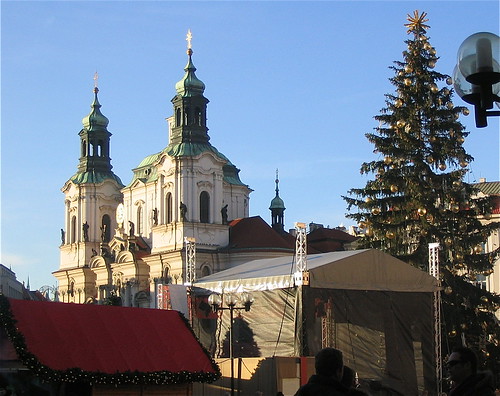
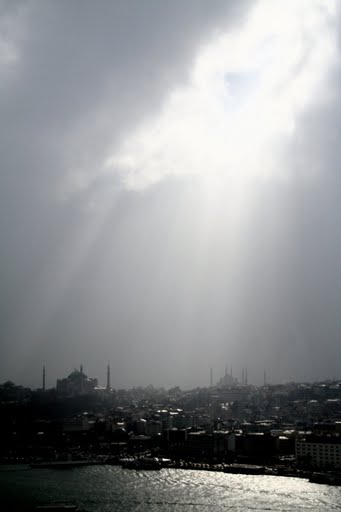
Shorts: bring 1 or 2 pair in the Summer, none in the Winter. Bring a pair of shorts that either is a bathing suit, or is light enough that it can double as one. You might not even have a need for shorts during your trip.  The only time I wore my shorts was during my time in Italy and Nice. If you only plan on visiting the British Isles, you definetly do not need shorts. Check out what the averages temperatures are for the places you are going, and pack accordingly. Only bring what you need.
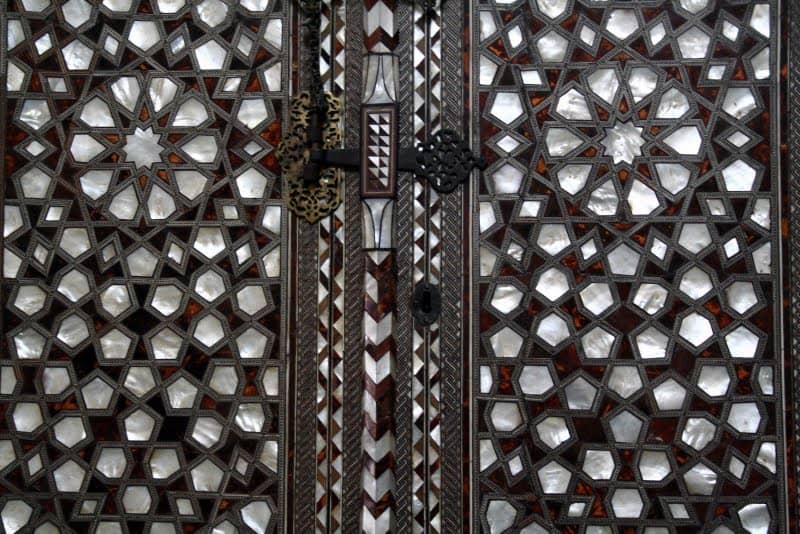
Shirts: 2 short sleeve, 1 long sleeve. What kind of shirts you bring really depends on where you are going and when. I think it is the biggest variable for clothing. I brought 3 short sleeve t-shirts and 2 long sleeve shirts. I ended up wearing one of my shirts (a polyester Addidas soccer shirt) for 90% of my trip. I threw out one of the long sleeve shirts and one of the short sleeve shirts. I would have gotten rid of a second short sleeve shirt, but it was one of my favorites, and I ended up having to carry it for the rest of my trip. Bring less than what you think you'll need. And only bring shirts that you would be willing to throw away. This isn't a fashion show, you won't even be seeing the same person for more than a day or two anyway.

Sweatshirt or sweater: none in summer, 1 in winter. These articles of clothing really do take up a lot of space. I seriously considered bringing a hooded sweatshirt during my trip, and I'm really glad I didn't. Even when I encountered cold weather in Ireland, I kept warm by simply layering my clothes. A t-shirt, long sleeve shirt, and windbreaker worked just as well as a sweater.

Footwear: 1 pair of all-terrain sneakers, sandals and shoes optional. Your choice of footwear is an area where you don't want to be cheap. I bought a pair of all-terrain New Balances (801). They were expensive at $80, but unbelievably comfortable during the whole trip. Plus, I'm still using them after the trip. Don't bring boots unless it is winter and you plan on hiking through the woods a lot. They are too bulky and heavy. Sandals are good if you are worried about the dirty showers like me. In reality, I ended up using them at the beach and during the warm weather parts of my trip, and almost never used them in the showers. Only bring dress shoes if you are interested in getting into the expensive, trendy clubs of Paris and London. Otherwise, they are a big waste of space.

During my trip, I saw an unbelievable range of footwear. I couldn't believe some of the girls would bring 2-3 inch platform shoes with them. Others wore converse sneakers which offer no support, and fall apart quickly. Whatever you decide to bring, break them in before you leave. Trust me, if your feet are happy, you are happy.

Costa Rica - 2005
Costa Rica - 2005

Socks: bring 3-5 pairs. I brought 4 pairs of hiking socks with me. They were expensive at $10 a pair, but they were padded, and dried very quickly. Don't skimp when it comes to your feet. There is no quicker way to problems, than lack of mobility. I attribute my lack of foot problems to my choice of socks and sneakers. Oddly enough, I got giant blisters on my toes, but they never hurt to walk on.

Underwear: bring 3-5 pairs. I brought 3 pairs, and ended up throwing them out for about a week, then bought 2 more pairs. Traveling commando is an effective way to cut down on clothes, as long as you are comfortable. I found that all the walking I did daily led to chaffing, and decided I was pro-underwear on the whole. But be willing to go without, on those dreaded laundry days.

Jacket: 1 windbreaker in Summer and Winter. Don't bring heavy jackets! To stay warm, whatever the temperature, layer your clothes. Then, all you have to do is put your light jacket on to keep you dry. Make sure to bring a jacket during the summer too, in case of rain and cool nights. Bring a jacket that is packable, or compresses easily.

Hat: optional. I brought a Columbia hat with a 360 degree rim. I only wore it at the beach to help fight the sun, but even then it wasn't necessary. No one seems to wear hats like these in Europe. For that reason, I stuck out like the biggest tourist when I would walk around a city like Rome. For that reason, I recommend sun tan lotion, and a hat only if you can't live without it.

Sleep Sack: I don't recommend bringing a sleep sack. About 90% of the hostels I stayed at had sheets, and you could rent sheets at the places that didn't provide them. Even the cheapest hotels have clean sheets.  One of my friends did say he used it at a campground in Greece. But, I don't see how a sheet can provide comfort against the ground? Anyway, I thought about throwing mine out several times during the trip, and probably should have. Even when I did need to use it, I was too lazy to take it out from the bottom of my pack, and ended up just wrapping myself in the blanket provided. They are a waste of space, and a giant part of your dirty laundry.

Towel: Everyone has a different opinion when it comes to this. I bought a packtowel and cut it down to about the size of an 8 ½ by 11 inch piece of paper. Although at times, I longed for a normal cotton towel, my approach worked just fine. The best part was that I could use it in the shower as a washcloth, then ring it out, and dry myself off. These things are amazing! If you are not as gung-ho about saving space as I am, then you'll probably want a hand towel. Anything bigger is not really needed.

Swiss Army Knife: This is the easiest way to carry a corkscrew. Everyone drinks wine in Europe, and you'll find yourself coming to the rescue of many people. The knife was also helpful in fixing meals, especially when it came to slicing cheese. It doesn't pay to buy cheap imitations. My friend had one with a corkscrew that broke when we tried to uncork a bottle!

First Aid Kit: You can assemble your own kit, but I found it useful to buy a small one at an outdoor store and then supplement it with more medicine and band aids. I think the price alone was worth it for the little booklet that describes the common travel ailments and their recommended cures. You should bring a lot of band-aids since they tend to fall off (especially when on your feet). Tweezers are good for splinters.

Bring several types of over the counter medications for coughing, fever, headaches, muscle cramps, diarrhea, and general pain. Don't bring full bottles, you only need enough to last you a day or two, thereby giving you time to find a pharmacy. I found the pharmacist I talked to in Venice to be very helpful, I just pointed to the problem areas (throat, nose and head) and he was able to recommend some medicines. You should also make sure to bring supplies of any medication you take on a normal basis.

Soap/Shampoo: I brought two small bottles of all purpose Campsuds. It worked well as shampoo and soap, but was not very helpful in doing the laundry. I also tried using it for shaving, which turned out to be a masochistic experience. When I lost my Campsuds, I was forced to buy a bar of soap, which I ended up preferring. But that meant I had to buy a bottle of shampoo too, and I could only get a bigger than I needed bottle. Whatever you bring, make sure to keep it in a ziploc bag.

Shaving Cream: One travel size bottle will last you two months, and you probably won't even be shaving every day.

Toothpaste and Toothbrush: Bring a medium sized tube and a normal toothbrush will do. You might want to invest in one of those little protective covers if you are squeamish about your bristles getting dirty.

Tampons: For all the female readers, I doubt you'd forget this but I've received many e-mails to add it to the list.

Sun Tan Lotion: Bring a big bottle in the summer, and a small one in the winter (good if you are going skiing?). Of course this is an optional item for the lucky people that don't burn (not me).

Journal: I brought an almost standard size composition book. It was a little big, and I could never just carry it in my pocket. I suggest a pocket size book with no lines. This will allow you to whip it out at any time, while at a restaurant or museum, and make a quick note of something. Remember to draw pictures! And bring a couple of pens too.

Camera w/film: I brought a mid-priced auto-zoom Minolta camera that worked just great. I brought 12 roles of 24 exposure film, and used 10 of them in 7 weeks. Don't bring more than one role of film per week . You'll just end up with a lot of crappy pictures. Instead, try and budget your film, and only take worthwhile pictures. Whatever you do, don't bring a video camera. I've seen people's vacation video, and I've talked to people that have edited them It always turns out duller than when you took it, and you'll probably never watch it. Plus, you'd have to deal with all the voltage differences and the constant charging of batteries.  [Author's Note:  Remember, this was in 1998 before the advent of cheap digital cameras.  I definitely was opinionated back then.]

Back-up glasses or contacts: I brought a back-up pair of glasses, but never needed them. Still, go out and buy a cheap pair if you don't already have one. I can't imagine what I would do if I lost or broke my glasses, and didn't have a second pair readily available. It would also be helpful to bring a copy of your current prescription, so you wouldn't have to pay for a new exam.

Miscellaneous - see below

Spoon: One of the most valuable tools you can bring on your trip. There were countless times I wanted to buy yogurt, but couldn't due to my lack of this utensil. A knife and fork are a distant second to the spoon.

Cups: Not necessary. Just drink from the bottle. In Italy they give you free Dixie cups when you buy a bottle of wine. Sometimes you need to ask for them.

Ziploc Bags: Bring a lot of these things. They were great on my trip. The gallon sized ones are great for keeping wet clothes separated in your pack. They are also good for storing food, and packing up meals for picnics. Cheeses belong in these bags. They are also handy for keeping spillable liquids like soap and detergent contained.

Packing for Belize & Guatemala - 2006

Optional Items

Walkman w/8-10 AA batteries: Bring a cheap walkman, and 2-3 110 minute mix tapes. This was one item I didn't mind carrying around. I used it most when I was traveling between locations. My friends would listen to theirs while walking around the cities. I think that isolates you from your surroundings. You can't fully experience a new culture like that. A bonus is your ability to receive foreign radio broadcasts, which can either be an interesting or boring experience.  [Author's Note:  Remember, it was still the 90's.  These days, bring an mp3 player of course.]

Books: Don't carry more than one small paperback at a time. There are plenty of people willing to trade books, and most major cities have large book stores. If you are reading an interesting author, it's also a good way for strangers to start conversations with you. This happened to me more than once. I suggest "On the Road" by Jack Kerouac.

Rope and clothespins: You definitely don't need to bring these items unless you take great pride in doing your laundry. Don't worry, there is always something to hang your clothes from, normally it's your bunk bed.

Sunglasses: Either you wear them or you don't. I didn't before I went, and I ended up not wearing the ones I brought.

Toilet Paper: Looking back, I think I took all the threats of bad toilet paper a little too seriously. The only country's toilet paper I had a problem with was the Czech Republic. Even then, it was bearable for a few days. I ended up using the toilet paper I brought for my cold. After running out, I never had a problem since I would just steal some from a hostel or restaurant.

Multivitamins: Since you'll be on the road for an extended period of time, you're regular diet will most likely be interrupted. Vitamins are a good way to help make sure you stay healthy on your trip.

Condoms: Always be prepared.

Sachet: A small packet of perfumed powder used to scent clothes. Probably a good idea for girls to carry something like this to help keep their (dirty) clothes smelling good while confined to their backpacks. Available at Victoria's Secret.

6 Tips for Reaching the Greek Islands

The Greek Islands have been luring travelers since Ulysses made his meandering way home to Ithaca from Troy. The beauty of the Aegean Sea, "wine-dark" in the greater depths but translucent turquoise in shallow waters along the shore, combined with the whitewashed buildings that glow in the fantastic Mediterranean sunlight, creates an unforgettable sight.

Church of the Martyrs, Kastro
Church of the Martyrs, Kastro, Siphnos

But the traveler's first questions are how to choose among the islands and how to get there. Each of Greece's approximately 100 habitable islands will show you a different personality. If you only have time for a day trip to the Greek Islands, try the tiny Saronic islands near Athens.

Have you got a little longer? Consider sailing in the Saronic Gulf to explore the beautiful islands of Poros, Spetses, and Hydra. Booking a Saronic yacht charter is a relaxing and stylish option. The largest island, Crete, and the capital, Heraklion, take the longest to get to but are well worth the trip.

Santorini, one of the many beautiful Greek Islands
Santorini Caldera View

At the northern end of the central Cyclades island group, Mykonos has resorts, crowds, nightlife, beautiful villages, and the archaeological site of Delos.

The famous Santorini is at the south end of the island group, nearer Crete. Its dramatic volcano shell, with whitewashed villages clinging to the black and red lava cliffs, represents Greece in many travel books and articles.

Sailing into the caldera of Santorini ranks as the most breathtaking moment I have experienced in the Greek Islands. If you go, fly out if you must, but take the ferry during the day to arrive.

Greek ferries range from rusty old tubs (fewer these days, thankfully) to sleek jetboats. The jet boats and hydrofoils get you there fast but don't cope well with high winds and waves, so the weather may stop them before the slow ferries.

If you're uncertain about where to go and what to explore, you can delve into Greece tours that provide curated experiences. These tours often highlight the best of what the country offers, making it easier for travelers to enjoy their journey without the guesswork.

Table of Contents

  • Greek Islands Travel Advice
    • 1. Ferry Reservations
    • 2. Ferry Schedule
    • 3. Booking Accommodation
    • 4. Ferry Reliability
    • 5. Avoiding Crowds
    • 6. Embrace the Culture

Greek Islands Travel Advice

1. Ferry Reservations

Although you can reserve online, I recommend you don't. Instead, wait until you get to Athens and go to one of the multitudes of tourist agencies around Syntagma Square or near the port at Piraeus.

You cannot guarantee that the schedule you saw online will be the one on the day you sail. Schedules for the Greek Islands are set weekly. While they probably will go on the same hours they did last week, month, or year, there is no guarantee. Don't worry; they are not going to run out of tickets.

2. Ferry Schedule

The Greek National Tourism Office puts out a weekly ferry schedule. If you can find their office, pick up a copy because if the line the travel agent represents does not sail today, they will not tell you about another line that does go today.

3. Booking Accommodation

Because of the whimsical nature of ferry schedules, it is best not to guarantee room rental. Unless you go to the islands in July or August, which is a terrible idea as it's the peak tourism season and, therefore, more expensive, you will not need a reservation in advance.

4. Ferry Reliability

NEVER count on a ferry, even a high-speed one, to get you back to Athens on the same day you fly home. Give yourself a day or even two in Athens before your departure.

5. Avoiding Crowds

If you yearn for less-visited Greek Islands, remember that the fewer visitors, the smaller the population, and the less frequent the ferries are.

6. Embrace the Culture

Think of all this uncertainty about schedules as your crash course in Greek culture, and instead of getting uptight about it, shrug and say, "Endaxi." (Okay.)

___

Photographs by Vera Marie Badertscher. All rights reserved.

Now Available: Free Dare Me! eBook

Dare Me! Off the wall adventures from a RTW trip

Free eBook

During my 'round the world trip from 2007-2009, I entertained 17 dares from family, friends, and readers in exchange for free beer and cash donations.

"Dare Me!" is a compilation of all the bets I received and what happened when I tried to win them.  From the simply embarrassing to the death-defying and disgusting, there's sure to be a dare that makes you laugh, or cringe.

In addition to the original text, I've added extra commentary and new photos, plus the chance to win $30 in my own dare to YOU!

There are two ways to receive your free copy of "Dare Me!"

1 - Subscribe to GoBackpacking via RSS reader or e-mail. A download link for the eBook will be included at the bottom of every post for at least the next 30 days.  In addition to an entertaining eBook, new blog posts will be delivered straight to your virtual doorstep.  Existing subscribers can simply click on the download link at the bottom of this post.

2 - Subscribe to GoBackpacking's new, twice-monthly newsletter. Simply click this link or enter your first name and e-mail address in the boxes to the top right of this post.  The first newsletter will be sent later this week, and will include highlights from the last few weeks of GoBackpacking, as well as links to other great travel-related articles, stories, and interviews from around the web.  In the future, I also intend to share stories and advice which will not appear on the blog.

Friday Flashback - World Heritage Sites In Kathmandu Valley

Monkey at Swayambunath Stupa
Monkey at Swayambhunath Stupa

At the rate I'm going with flashbacks, I'll be stuck in Nepal forever, but truth be told, the little Himalayan country holds a special place in my heart.

Here are the posts I wrote after visits to 4 of the 7 World Heritage sites in the Kathmandu Valley:

Kathmandu's Durbar Square (cool architecture)

Touring Swayambhunath Stupa (aka the Monkey Temple, plenty of prayer flags)

Patan's Durbar Square Sans Camera

Hinduism's Holy Pashupatinath Temple (Kama Sutra carving, public cremations, hermits)

Next week's flashback will be dedicated to a 5th World Heritage site, and one of my favorite places in the entire world.

Trip Advice: South Africa, Swaziland, Namibia, Botswana

Editor's Note: The following information was submitted to me in 2000 by Alexander, a traveler. Having visited South Africa and Botswana in 2008, his tips and warnings remain valid. The photos are mine.

Sunrise mokoro ride - Okavango Delta, Botswana

I lived in Southern Africa, including South Africa, until 1995, and traveled extensively throughout the entire region. Also, I visited South Africa, Swaziland, Namibia, and Botswana last April. There are many group travel options available; however, this article primarily focuses on information for individual travelers.

Table of Contents

  • Africa Travel Advice
    • Getting There
    • Botswana and Namibia
    • Car Rental
    • Weather
    • Scenery and Parks
    • South African Cities To Visit and Stay Away From

Africa Travel Advice

Getting There

The price of air tickets varies significantly, and one must shop around. We found a Chinese travel agency in Toronto and paid $1,150 Canadian for the round-trip ticket with a Dutch airline. Plus, we arrived in Johannesburg and were allowed to depart from Cape Town.

Hostels

South Africa and Swaziland: As backpackers, we stayed in international hostels for about $10 Canadian per night per person (it's a bit of a myth that they only have bunk beds). Mostly, we had our own bathroom. Usually, we book on the same day, but not always, and we were never turned away.

One can benefit from hostels also by meeting other international travelers, and we made friends from all over the world. Additionally, since their interest is not in conducting business, information on places they have visited can prove very valuable.

I don't quite see the difference in comfort between bed and breakfasts (BBs) and hostels, but there are plenty of small, family-owned guesthouses.

Botswana and Namibia

Hotels can cost $100 Canadian and above, but there are also guesthouses and hostels available.

Car Rental

Initially, we considered booking from Canada, but we did not receive good offers. Therefore, we booked through a Johannesburg hostel and rented a fully insured, small Toyota hatchback for Rand 250 per day with unlimited kilometers.

Weather

April and May are excellent months to visit the area. Usually, the summer rains are over (we had two days of rain shortly after our arrival, followed by three weeks of sunny weather).

The temperatures are typically around 22 to 27 degrees Celsius. May evenings tend to be cool, and having a sweater or jacket on hand is advisable.

Male lions - Kruger Park, South Africa

Scenery and Parks

Although most parts are semi-arid bushveld, there is still an enormous diversity: South Africa's southern and eastern Cape, as well as Swaziland, are partly very lush. 

Botswana and many other parts are dry, but one can experience an outright Sahara-like desert in Namibia, mountains in many parts of South Africa, including some snow on the top of the Drakensberg (Dragon Mountains) near Lesotho, and savanna in the Karoo. Nature lovers will get their fill. Western South Africa is uninteresting.

Visiting the Kruger National Park is simply a must, but it requires a few days' stay and patience to find all the animals, as they are not on display. We saw elephants, rhinos, hippos, leopards, cheetahs, and the rest. The lions eluded us, but we only stayed there for one night. 

The park is well-run, and one can stay in bungalows or camp. Restaurants and picnic areas are plentiful. The signs "Do Not Leave The Car" should be taken seriously. Every park is safe if travelers adhere to the rules.

The roads are excellent, and the whole park is accessible by any 2-wheel drive. However, for people like me, Kruger is a bit too tame.

I lived in Botswana for a while and worked in the Chobe National Park, where I helped out conducting tours for individual travelers. This park is the real Africa, but it requires a 4-wheel drive vehicle.

Sunsets at the Chobe River are second to none, and in the morning, one can watch herds of 40 to more elephants. Incidentally, Richard Burton and Elizabeth Taylor remarried at the Chobe Lodge, a costly establishment (ranging from $200 Canadian per night and upwards).

Attached are the Moremi Game Reserve and Savuti, which is known for its lion population, and the Okavango swamps, also a must-see if one is in the area.

Our tents at Elephant Sands - Botswana
Our safari tents at Elephant Sands - Botswana

Staying in tents at night is safe as long as the tent is kept closed(!!!), i.e., zip-up! No animal will break into a closed tent.

The main problems of city slickers are that they walk too fast in the bush. Under normal circumstances, no animal, including lions, will ever attack a human being. Yes, there are snakes, but if you walk at leisure and give animals time to get out of your way, they will do so.

If Namibia is on the menu, one can find some flora that doesn't exist anywhere else. An extremely rugged and beautiful country.  Interesting are the Namib Desert in the South, the Fish River Canyon, but every other part is a unique experience too.

South African Cities To Visit and Stay Away From

After experiencing a traumatic past, parts of South Africa are experiencing severe economic problems that are most visible in the Rand area (Greater Johannesburg), with up to 50% of Africans unemployed. 

It is the world's crime city number one, and neither safe during the day nor at night. The inner city is an absolute "NO GO" at any time, and, frankly, nothing is missed.

[Editor's Note: In 2008, I did a few small, organized day tours in Johannesburg to visit the Apartheid Museum, Soweto township, and the top of Africa's tallest building. While it is still dangerous, I recommend spending a day or two exploring if you're passing through.

Since international flights end in Johannesburg, it cannot be avoided entirely, but one should make arrangements to be picked up from the airport. 

There is a tourist office in the arrival hall where one can book a room from a hostel to a hotel, and even some hostels offer pickup services for their guests. 

There are also car rental agencies, but I suggest renting a car once you are at the hotel; i.e., one can get a better price.

Coming from North America, it takes two nights to get there, and one night on the return flight. 

There is nothing to see in Johannesburg, so one night might be ample enough. Durban used to be a fine city, but it is no longer safe there either. Not as bad as Johannesburg, I don't advise taking evening walks.

Although one must be cautious in any city (meaning don't be an obvious tourist and invite mugging), Cape Town, East London, and Port Elizabeth are as safe as any city in North America, and they are beautiful, especially Cape Town, with its rich history evident in its architecture.

All three are located on the coast, and their beaches are among the best.

Cape Town, Table Mountain, & Lions Head - South Africa
Cape Town, Table Mountain, & Lion's Head - South Africa

Fascinating inland cities include Pretoria, Ladysmith, Pietermaritzburg, and Rustenburg, located near Sun City and Lost City.

If in Namibia, visiting Windhoek with its German colonial architecture and traditional German Beer gardens, as well as Swakopmund with the same offerings, but set in the Namibian desert and along the coast, is a unique and unforgettable experience. Both cities are safe, as is the rest of Namibia.

Gaborone, the capital of Botswana, is an unappealing city, characterized by its dirtiness, overpriced accommodations, and generally safe environment, except for occasional theft. There is little to see in the city.

Swaziland's cities, Manzini and Mbabane, are safe and enjoyable, as is the entire country. As a kingdom, it has many traditional lifestyles to showcase, which one cannot experience in South Africa anymore, except on the tourist stage. 

Simply, although an island within South Africa, Swaziland is beautiful, definitely worth a visit, and within a day's drive from Johannesburg.

One country, another island within South Africa, which I purposely left out, is Lesotho. Although the Dragon Mountains cover all of it, it has been in turmoil for twenty years.  In my humble opinion, it is not worth a visit. 

[Editor's Note: In 2008, I enjoyed a day trip into Lesotho via the Sani Pass and would recommend a few days or nights there.]

Worthwhile visiting are the typical Afrikaner towns (of Dutch origin) in the Cape and Natal. They are, likewise, a unique experience.

Useful Foreign Phrases

Tis the season for new travel books, and they're piling up faster than I can read them.  My most recent receipt is "The Third Tower Up from the Road: A Compilation of Columns from McSweeney's Internet Tendency" by Kevin Dolgin.

These are humorous sketches of over 50 world cities by a guy who travels for mysterious reasons. Dolgin is a New York City expat living in Paris who speaks three languages.  While it will be another month or two before I post a review of the book, I did read a funny excerpt which I have permission to share here.

" Useful Foreign Phrases"?

by Kevin Dolgin

Long ago, I determined that there are three broad categories of linguistic fluency. The first is the perfectly comfortable level, ranging from your native language to any language in which you can converse with ease, although at the lower end of this scale you probably have a headache at the end of the day.

The second category consists of those languages in which you can generally make yourself understood with the aid of sweeping gestures and meaningful grimaces.

The third category comprises languages that are a complete mystery to you.

I'm fortunate to have three languages in the first category and one or two more in the second. This means, though, that every other language is in the third category. I have a theory about these. For me, these languages are either/or affairs. If you travel to a country in which the principle language is a category III language, then either you work on it enough to get it to category II, or you learn only how to say " please,"? " thank you,"? " excuse me,"? and one phrase that is perfectly nonsensical.

The principle reason for the nonsensical phrase is that it's a sure conversation-opener. No one will imagine that the only thing you know how to say in their language is " My hovercraft is full of eels,"? (to borrow someone else's nonsensical phrase) and therefore an immediate cultural exchange will ensue. Really, this works.

I thought I would give you a number of these, in case you plan on traveling to countries with category III languages. I've given them to you in the languages in which I use them, but you can use the same nonsensical phrase in a variety of languages, and I confess that I have learned the first phrase I cite in four or five different languages, ranging from the original Swedish to Cantonese.

I'll also point out that for the most part, I'm not trying to spell these words properly. I'm using approximate spellings, as if they were spelled the way one would expect (or at least the way I would expect), and not with silly squiggles and such. I'm doing this because the last time I tried to write something in Swedish in a column (about Ingrid the intelligent rat), I was informed via email that I had not gotten it right at all, so I'm not even going to attempt it any more.

Enough of the preliminaries; let's get to the useful phrases.

" My hedgehog isn't stupid."? In Swedish: " Min igelkot e inte dum."?

This was my first nonsensical category III phrase. I used to hang around with a Swede, who decided to teach me some of the language, which was a thoroughly frustrating exercise for us both. Eventually he gave up and suggested: " Learn to say "˜Min igelkot e inte dum' and no one will expect it's the only thing you can say."? I therefore learned this and we tested it out on a couple of friends of his who came from Göteborg to visit. When I met them I rose, shook their hands, explained about my hedgehog, and smiled. They looked very surprised and started speaking rapid Swedish to me. I protested, explaining that this was all I knew, which they refused to believe, and a long conversation ensued (in English), which quickly veered toward more interesting topics. Hence was born my theory about nonsensical phrases.

This phrase has served me well and long; I even employed it when giving a speech to 350 Swedes, with much the same effect (at a ski resort in the middle of Sweden, but that's a story for another column). The most convincing example, however, did not occur in Sweden at all, but in Massachusetts, of all places.

I was in a bar one evening with a couple of Americans and a very unusual Argentine who had a French name and lived in Mexico. He was part pharmaceutical executive, part fashion photographer, and part party organizer, and he had been telling us a highly embarrassing story about an incident involving fifty cardiologists, an airport security system, and a nipple ring (I won't get into the details, but it ended with his assertion that it would have been much worse had he been wearing his other body jewelry).

Anyway, at that point, a young man entered the bar accompanied by two young ladies. They had apparently stepped in out of a commercial for the World Wrestling Federation, because he was certainly built like a member of that esteemed organization, and was glowering as well. For all I know, he was indeed a wrestler "” " Nick the Neanderthal"? or something.

He looked around the bar, and disappointment registered on his prominent brow ridges, probably because there weren't enough people around to admire his upper arms and the women clinging to them. The three of them sat near us and ordered something (champagne for the girls, warm blood for him). We ignored them and continued our revelry.

Before long, the wrestler muttered something, ostensibly for the benefit of his companions, calling into question the masculinity, or at least the heterosexuality, of our Argentine friend, who luckily didn't understand it (he was just crazy enough to challenge this guy to a duel or something). I therefore hastily took the floor in our little group and began expounding on my theory about category III languages and nonsensical statements (see above). In the course of explaining this, I taught them all how to say " Min igelkot e inte dum."?

Immediately, the two girls sitting with fireplug-man squealed, leaned over, and said, " Din igelkot e inte dum!?"? Then they started speaking in rapid Swedish. I stopped them, explaining that this was all I could say, they didn't believe me etc. The normal routine.

They left their companion and came to join us, asking all the while about how I had learned to say this, and who we were, and what we planned on doing later that evening. Needless to say, this annoyed the inert mass of muscle with whom they had entered the bar, but he was too confused to do anything about it except to grunt " let's go"? to them. They replied with what I assume is a Swedish insult, and he left, after making a rude gesture at us all.

" There is a penguin in my closet."? In German: " Es gibt ein Pinguin auf meinem Schrank."?

German is, in fact, more of a category II language for me, but it's pretty low on the scale, and besides, this is a great phrase to use in German. I particularly recommend it for hotels, if you'd like to get to know the staff. This will also provide you with an introduction to the word " bitte,"? which will inevitably be the response of any German to this phrase. Bitte is a great word. It can mean many things, depending on the intonation. It can mean " please"? or " thank you"? or " are you out of your mind?"?

Needless to say, it's in the latter sense that it's generally employed when responding to the phrase " there's a penguin in my closet."? Of course, you don't want to be nasty, you need to explain rapidly to the hotel staff that there is not, in fact, a penguin in your closet, and that you were just employing your single phrase of German. If you do not explain this quickly, them being German, they will dutifully send someone to remove the penguin from your closet, and that would not be a very nice thing to do to the cleaning staff.

" I would like a large chessboard."? In Spanish: " Quiero un gran tablero de ajedres."?

This actually began as a useful phrase, since I really did want to buy a large chessboard (in Toledo, if I remember correctly, which is a beautiful city that you should definitely visit). I wandered around asking for large chessboards, and did indeed end up buying one (upon which I regularly play). However, I have since employed it as a nonsensical category III phrase.

This has come in handy in a number of instances. One comes to mind from an evening in Barcelona (which reminds me that I'll have to write about Barcelona soon how I love Barcelona!). I was having dinner on the terrace of one of the delightful restaurants near the navy museum, on the harbor. I was alone, which is unfortunate in a city like Barcelona. Anyway, the waiter was a very pleasant gentleman who spoke to me in Catalan, and then in Spanish. I speak neither, and I explained this to him in slow Italian, but then told him that I wanted a large chessboard in Spanish. He was perplexed, he shook his head and pointed at the menu, apparently reiterating that this was a restaurant and that chessboards were not food. I tried again to explain, in Italian, that this was all I could say. He eventually understood and was intrigued.

It was a slow night in the restaurant, and the waiter, who it turns out was an avid chess player, sat down after a while and we engaged in a spirited conversation about chess (specifically about the king's gambit opening), in a mix of Catalan, Spanish, and Italian. A wonderful evening.

" Is that a kind of frog?"? In Japanese: " Koreiwa kairu no ishu des ka?"?

The whole " koreiwa [thing] no ishu des ka?"? construction can be very useful. For instance, if you replace " kairu,"? meaning frog, with " sakana,"? meaning fish, then you can pretty much know what can and can't be eaten in Japan, which is handy, since you can't even make the usual supposition that things must first be dead, let alone cooked, before you eat them. If it's a kind of fish, though, then you can eat it, even if it's trying to swim or crawl away. However, the frog phrase will get you more conversational mileage, at least partially because the answer is rarely " Yes, that is a kind of frog."? (" Hai, korewai kairu no ishu des."?)

This particular phrase has actually proved most useful to me in Paris. I once saw a young Japanese man standing on a street corner on the boulevard Sevastopol, studying a tourist map. He had a backpack on, and sewed onto the backpack was a cartoon character that seemed to be a kind of frog. With no introduction I said, " Sumimasen [excuse me], koreiwa kairu no ishu des ka?"? This was one of the few times that I have actually been able to stun a Japanese person. " Hai! [yes],"? he replied. I nodded significantly and walked away.

It should also be added that the way one comes out with the words is important in Japanese. If you are a man, you should spit the syllables out as though you were expelling vile-tasting marbles from your mouth. If you are a woman, you should murmur them demurely, while behind them you suppress something between a giggle and a plea. I confess that I would hate to have to be a woman in Japan.

" I love you; I want to spend my life with you."? In French: " Je t'aime; je veux passer ma vie avec toi."?

French is a category I language for me, and this is hardly a nonsensical phrase, but I thought I should include this one all the same, not for its shock or conversational value, but rather because it's possible that if you live abroad for a while you may end up needing it. Of course, by that time, I assume French (or whatever the language of your host country might be) would be category I for you as well, but you should be warned about this one either way. I suggest you think twice before saying it "” use the utmost discretion, because it can have a profound effect on your life. However, if used in the right circumstances, and especially with the right person, then I can tell you from personal experience that this phrase is capable of bringing you unspeakable joy.

You can find more of Kevin at these sites:

McSweeney's Internet Tendencies - Kevin Dolgin Tells You About Places You Should Go In Europe

Kevin Dolgin - the author's simple, biographical website

The Blog of Kevin Doglin (collaboration - news of intelligent travel commentary from around the web)

Friday Flashback - Whitewater Rafting & Camping Trip

Rest break en route to the the river

In Nepal, I had my pick of the rivers.  From day trips to 10-day expeditions, costs were low by western standards and opportunities for adrenaline rushes were high. 

With only two day trips to my credit, I decided to go with a 3-day trip on the holy Kali Gandaki River, which included a few Class IV rapids, in addition to many Class III's and lesser.

Rafting Nepal's Kali Gandaki River highlights the adventure from Pokhara, to the river campsites, and back again.

Interview - An American Expat In Costa Rica

Astrid, Casey (middle) and me in Medellin

I met Casey during my last week in Colombia. 

More than a decade earlier, he had left the United States to start his own business in Central America, which surprised me considering how he seemed about my age!

In the interview below, he talks about his move to Costa Rica after college, how the country has changed since he arrived, why a trip to Panama should be on your bucket list, and his first impressions of Medellin.

GB:  Describe your first experience traveling outside the United States.

Casey: My first ever trip abroad was a family vacation to Aruba. I loved it.

Speaking terrible Spanish with Venezuelan tourists, I was very intrigued by the idea of travel abroad, but this visit to a touristy strip of white sand was hardly a real indoctrination into a culture.

My first solo effort was when I studied abroad in San Sebastian, Spain. That was the clincher.

I was the only gringo for miles and professors at my university turned my classes into anti-U.S. rants for my benefit.

I was hooked and wanting more. I only worked for one year in the U.S. upon graduation, then moved to Costa Rica to start my own biz.

GB:  How long have you been living in Costa Rica, and what lead you there?

Casey: I moved in 1998. I can't remember the exact moment when or why I decided on Costa Rica, but at my first and only job, I did some research on the then-very-clunky Internet to see where I felt there were opportunities in Latin America that might suit my web marketing skillset.

I looked into Argentina, Venezuela, Mexico, and Costa Rica. In hindsight, I'm very lucky I chose Costa Rica.

GB:  How has tourism in Costa Rica changed during your time there?

Casey: Massively. The changes I've seen in just over a decade are astonishing. Once quiet beach towns are not thriving tourist destinations.

Some have changed for the worse, with crime, pollution, and prostitution run amok.

The type of tourists who visit now are also different, following a natural and well-documented curve that starts with trend-setting adventurers and ends with those types who complain if even the most remote resort doesn't have U.S. grade-A steak and CNN. 

I cannot complain since my company has benefited directly from the masses arriving in Costa Rica, but it has also given me insight into just how important it is for countries to carefully plan their tourism infrastructure, building codes, enviro-regulations, etc.

GB:  What do you appreciate most about living and working in Central America?

Casey: The fact that just about any good idea, well-executed, can work. Competition is weak for those who are willing to dig in and work hard.

I also enjoy the fact that most natives to the region force we gringos to look at life differently, slow down a bit and enjoy the moment. 

This change of pace and mindset is also probably the most documented negative for many expats and I have my moments too...but the randomness of life here makes things so much more interesting, I'd hate to be without it.

GB:  Why is Panama a "must see" destination for travelers?

Casey: Several reasons:

1. Native Cultures -- Panama is one of the few Latin countries with thriving native cultures. 

There are 8 indigenous tribes here, many of whom are living a simplistic lifestyle that hasn't changed in a hundred years.

2. History -- Few countries can compare to the rich history, past, and near-present, of Panama. 

From the Spanish Colonial days with regular visits by pirates like Henry Morgan, to the country's fascinating separation from Colombia (due in part to Teddy Roosevelt and some Wall Street profiteers), The Canal, the U.S. military presence, Noriega and the U.S. invasion, it's a country with living history at every turn. 

Just seeing the Panama Canal in action and a few former military bases is an incredible site.

3. Local Traditions -- Panama's rich and diverse culture has been the catalyst for a bevy of traditions, from the beautiful to the bizarre.

Carnavales, a week-long celebration that is Panama's version of Mardis Gras, is probably the most famous.

4. Nature -- Most folks don't associate Panama with nature, and the country itself has done a poor job of protecting its resources, but even still the nation is surrounded by lush rain forest and is home to a treasure of bio-diversity. 

Nearly everything you can find in Costa Rica can be found here...and then some.

5. Be First -- As mentioned above, you can find most of what you'll encounter in Costa Rica...except hordes of tourists. 

Very often you may find yourself alone on a lovely hilltop or beach, wondering.."where are the tourists?" 

They're somewhere else, obviously...so enjoy it!

Salsa dancing in Medellin

GB:  We met while you were visiting Medellin, Colombia for the first time.  What were your first impressions of the city and its people?

Casey: It was a really incredible trip, and I appreciate your being my guide on 2 occasions. 

What struck me first in Medellin was how lovely the city planning is in upscale parts of town, which makes Panama and Costa Rica look somewhat sad in comparison. 

The metro system is fantastic. The weather near-perfect. Of course, the women are nearly as lovely as the legends and overall the people are so darn polite. 

That's one element I really wish would rub off on Panama.

GB:  If you could wake up anywhere in the world tomorrow, where would it be?

Casey: I'm pretty content to wake up in Pedasi, Panama. That's where I have a B&B with my parents. 

It's really neat when we're all working there together, just like at my Dad's hardware store back in rural Pennsylvania...which I HATED :) 

The difference this time is that I get to boss my old man around, so that's fun.

Seriously though, I love being in the countryside of Panama where neighbors are neighborly, doors regularly go unlocked and beer is $.50. 

If I could press a button and be somewhere else, I'd like to zip down to Medellin more frequently and am itching to get back to Guatemala. What a magical place that is!

Trip Advice For Kenya

Preface:  I did some house cleaning around GoBackpacking in preparation for the launch of the new layout.  Any useful bits of information that had been stored in the corners of the castle are being dusted off and presented anew.  The following information was sent to me around 2000 by a traveler named Alexander.

Flight across Africa

Since we are all running on our stomachs here the kitchen first:

Kenya, among all the African countries has the richest variety of food to offer, in places ranging from high class restaurants to simple market stalls. You can eat European food there, east-Asian, south-Asian, African food, and what have you, and when I was there I gobbled up the lot.

In Nairobi you want to try steaks. Like in southern Africa, cattle run freely and are not fed with unpronounceable things. Hence, the original delicious taste of beef remains unchanged and I can tell you that is what I am missing most. In Mombassa and along the coast fresh fish is a must! Actually, we went deep sea fishing and brought our catch to the hotel where the chef prepared it for us. I also ate African food (did so for most of my life) and if you eat from stalls go by the worldwide rule "where the longest lines are it is best!"

You might also want to try game! I lived on the farm for a long time and we ate a lot of game; deer, of course, but if you want to try more exotic things, be our guest. It is available.

The restaurant "African Heritage" on Banda Street has developed African food to a cousine at, then, reasonable prices.

At the "Malindi Dishes" on Gaborone Road you get a good mix of Afro-East Indian food.

At the Kariokor Market you get the same food for less than a third from market stalls.

And if you really want seafood in Nairobi then "Alan Bobbe's Bistro" is the place.

(Yeah, well, I am one of the lucky ones. I can eat anything and never put on a pound.)

Kenya is a beer drinking country and the beer is truly very good! The best ones on the market are Tusker and White Cap. Try them.

1 word of precaution: Most digestive problems occur, because a battle between southern and northern bacteria cultures arises. I had problems when I came to North-America. Knowing your own stomach, you be the judge, but if you start taking medication a day or two before you leave your home country, you should have no problems and plenty of culinary fun. Also, African food is very delicious.

Nairobi, where you will most likely arrive if not in DarEs. I stayed at the 68 Hotel, downtown on Kenyatta Avenue. Very comfortable, but a bit pricey. Another hotel where I also stayed occasionally was the Fairview Hotel, which is still very comfortable, but less expensive. Like in the 1st world, you can find hotels at any range, including rooms at the YMCA. I would make arrangements for the first three nights or for the end of the journey to wind down a bit.

Although, Nairobi has something to offer, it is not worth staying for more than 2 full days.

Places to see in Nairobi:

The National Museum on Museum Hill - flora, fauna, prehistoric, tribal ceremonial; very much what Kenya has to offer.

The City Park has rare and beautiful plants, hedges, trees. Although, not dangerous during the daytime, it is more fun to go there with a male companion, lest you want to find one there.

The market on Muindi Mbingu Street.

Traditional dancing at Bomas of Kenya on Langata Road.

Again, a word of caution: There are thieves out there during the daytime and robbers at night. While I have never encountered a problem during the daytime (unlike Joh'burg), it is wise to take a taxi after sunset.

And now we go to my favored city Mombassa

Its old, its exotic, its beautifully degenerated, and it smells like the Orient resurrected, not always good, but sometimes very amazing. It actually consists of two cities and two harbors, of which - no problem guessing - the old city is the more exiting one. Mombassa's history goes back to before the birth of Christ and you will find 2,000 years of tradition there.

Again, the old harbor is the place to go to. There you can watch ocean going Arab Dhows (sailing ships) coming and leaving; yes, they are still in business and transport spices and other things to the Arabian peninsula.

If you want to see the remains of the Portuguese's attempt to take over, visit Fort Jesus.

Along Moi Road you get to the new city through an arch of metal elephant tusks. Worthwhile seeing there are the Indian Bazar, African Market in Mwembe Tayari (a city part), and the Hindu Temples.

Johnny Colt Rocks The Travel Channel

Muay Thai in Chiang Mai, Thailand

I think it was about 10 AM this Labor Day morning when I joined my parent's for breakfast, and decided to take control of the kitchen TV.  I stumbled across the start of a No Reservations episode set in Laos, which I had visited on my RTW trip last year.  After breakfast, and that episode, I realized it was a marathon day of Anthony Bourdain leading up to the season premiere tonight.

But first, this rock guy named Johnny Colt blasts onto the TV screen at 9 PM (EST) in the series premiere of At Full Volume.  The guy is covered in tattoos and the intro tells of his rock star life in bands such as the Black Crowes.  He was well spoken, and I took an immediate liking to him.  Yes, I was hooked after the first few minutes.  It appeared like this show was a derivative of No Reservations - just amplifying the rock star approach to travel.

The first episode was shot in Thailand, the first segment following Johnny and some Thai rock climbing instructors in Krabi.  Of course some of the funny footage was Johnny simply trying to get up the rope ladder hanging off the rock, let alone him trying to scale the sharp limestone rock face.

Next, handling poisonous snakes, followed by a segment about the construction of a Thai musical instrument, and then Johnny exposing the spiritual side of tattooing by getting the back of his head inked at a Buddhist monastery.

And for the finale, Muay Thai training and fighting which Johnny says he has practiced as well. But after seeing the Thai fighters in action first hand, we all knew he was going to get a whooping.  Just when I thought the way the fight was being edited in a way that made it seem scarier than it was, Johnny tries to block a kick to the head and ends up with a broken hand!  Very rock star to be breaking bones on a pilot episode.

Clearly, the first show is congruent with this rock star's approach to life, which I appreciate.  And if I can't be traveling myself, then watching Johnny kick ass across the globe will suit me fine (for now).  Check out Johnny Colt's blog for more.

Did you catch the show?  Leave a comment and let me know what you thought.

The Decision Not To Travel After 9/11

Big Statues - Luxor(?) Egypt 2008
Twin Statues - Luxor, Egypt 2008

The morning of September 11, 2001, is well ingrained in my memory. 

Within a few days of the attack, I called Adventure Center and verified my October trip was still scheduled, which meant I had to decide whether or not to head for the Middle East. 

My parents definitely did not want me to go. 

My brother, on the other hand, took the opposing view.

Deep down, I knew fear alone was not a reason to cancel my plans, however, the 24/7 media coverage of death and destruction was effective at swaying me. 

And then there was a sign, in the form of Delta canceling their service to Cairo. 

Suddenly, I would be due a full refund on my airfare, which made giving up my $200 tour deposit seem inconsequential.

Life seemed to sway me away from international travel, thereafter, as it wasn't until several years later in 2005 that I would dust off my passport and board a flight to Costa Rica. 

If it weren't for that complete lack of travel in my early 20's, I might not have decided to make up for it with a big trip around the world in my early 30's.

And it was on that RTW trip that I made sure to visit Egypt - Cairo, the Pyramids, Luxor, and Aswan - complete with Nile River cruise and several felucca rides to make up for 2001.

« Previous Page
Next Page »
Dave at Ahu Ko Te Riku on Rapa Nui (Easter Island), Chile.

Hi, I'm Dave

Editor in Chief

I've been writing about adventure travel on Go Backpacking since 2007. I've visited 68 countries.

Read more about Dave.

Footer

back to top

About

  • About
  • Archive
  • Privacy Policy
  • Cookie Policy

Follow Us

Contact

  • Contact
  • Work With Us
  • Submissions

Copyright © 2025 Go Backpacking