Go Backpacking

  • About
  • Travel Tips
    • Accommodations
    • Budgeting & Money
    • Adventure Travel
    • Food & Drink
    • Gear & Gadgets
    • Packing Tips
    • Travel Blogging
    • Travel Insurance
    • Trip Planning
    • UNESCO Sites
  • Destinations
    • Africa
      • Botswana
      • Egypt
      • Ethiopia
      • Morocco
      • Rwanda
      • South Africa
      • Tanzania
    • Asia
      • Cambodia
      • China
      • Hong Kong
      • India
      • Indonesia
      • Japan
      • Laos
      • Malaysia
      • Nepal
      • Philippines
      • Thailand
      • United Arab Emirates
      • Vietnam
    • Europe
      • England
      • France
      • Germany
      • Greece
      • Iceland
      • Ireland
      • Italy
      • Portugal
      • Spain
      • Switzerland
      • Turkey
    • North America
      • Canada
      • Costa Rica
      • Cuba
      • Guatemala
      • Mexico
      • Nicaragua
      • Panama
      • United States
    • Oceania
      • Australia
      • French Polynesia
      • New Zealand
    • South America
      • Argentina
      • Bolivia
      • Brazil
      • Chile
      • Colombia
      • Ecuador
      • Peru
  • Advertise
menu icon
go to homepage
  • About
  • Travel Tips
    • Accommodations
    • Budgeting & Money
    • Adventure Travel
    • Food & Drink
    • Gear & Gadgets
    • Packing Tips
    • Travel Blogging
    • Travel Insurance
    • Trip Planning
    • UNESCO Sites
  • Destinations
    • Africa
      • Botswana
      • Egypt
      • Ethiopia
      • Morocco
      • Rwanda
      • South Africa
      • Tanzania
    • Asia
      • Cambodia
      • China
      • Hong Kong
      • India
      • Indonesia
      • Japan
      • Laos
      • Malaysia
      • Nepal
      • Philippines
      • Thailand
      • United Arab Emirates
      • Vietnam
    • Europe
      • England
      • France
      • Germany
      • Greece
      • Iceland
      • Ireland
      • Italy
      • Portugal
      • Spain
      • Switzerland
      • Turkey
    • North America
      • Canada
      • Costa Rica
      • Cuba
      • Guatemala
      • Mexico
      • Nicaragua
      • Panama
      • United States
    • Oceania
      • Australia
      • French Polynesia
      • New Zealand
    • South America
      • Argentina
      • Bolivia
      • Brazil
      • Chile
      • Colombia
      • Ecuador
      • Peru
  • Advertise
search icon
Homepage link
  • About
  • Travel Tips
    • Accommodations
    • Budgeting & Money
    • Adventure Travel
    • Food & Drink
    • Gear & Gadgets
    • Packing Tips
    • Travel Blogging
    • Travel Insurance
    • Trip Planning
    • UNESCO Sites
  • Destinations
    • Africa
      • Botswana
      • Egypt
      • Ethiopia
      • Morocco
      • Rwanda
      • South Africa
      • Tanzania
    • Asia
      • Cambodia
      • China
      • Hong Kong
      • India
      • Indonesia
      • Japan
      • Laos
      • Malaysia
      • Nepal
      • Philippines
      • Thailand
      • United Arab Emirates
      • Vietnam
    • Europe
      • England
      • France
      • Germany
      • Greece
      • Iceland
      • Ireland
      • Italy
      • Portugal
      • Spain
      • Switzerland
      • Turkey
    • North America
      • Canada
      • Costa Rica
      • Cuba
      • Guatemala
      • Mexico
      • Nicaragua
      • Panama
      • United States
    • Oceania
      • Australia
      • French Polynesia
      • New Zealand
    • South America
      • Argentina
      • Bolivia
      • Brazil
      • Chile
      • Colombia
      • Ecuador
      • Peru
  • Advertise
×
Home

A Praying Statue, Not Buddha

This is a guest post by Michael Lynch. If you want to guest post on Go Backpacking, please read more here.

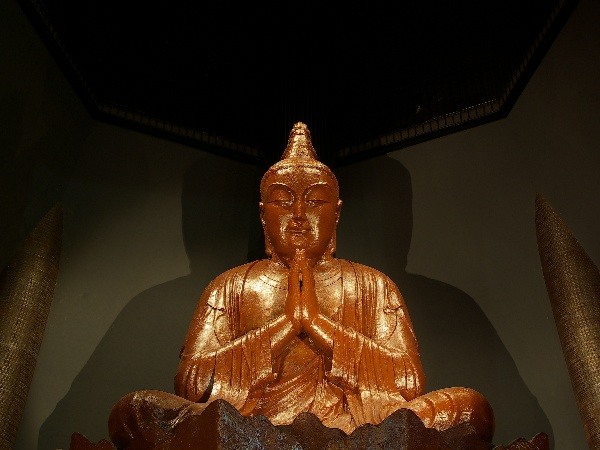
Okinawa's biggest praying statue

The weather not being especially great for landscape photography the past few months convinced my shooting partner, Doc and I that we ought to drive around and find some interesting things to take pictures of indoors. I'm an outdoors type person and not really thrilled about going to museums or shopping centers to use my camera. I'd rather be using my digital film on the beach or in the jungles.

We live on the island of Okinawa, in Japan. Sunday is the day, once a week we get a chance to pack up all our camera gear and drive to remote locations, get pictures of wildlife, castles, or scenery and get off the beaten path. Most importantly, we get to speak our native language, English with someone who understands every word we say. I guess the talking without teaching is just as important as the time spent with the camera. Our wives are Japanese and so is everyone else we see all week long.

So, Doc shows up at my house one morning in December (He lives 40 miles north of me) and asks, " Where should we go today?"? My usual response is " Anywhere, just follow the sun."? But, as it turned out, there was no sun; it was a windy, cloudy day.

Doc asked me if I'd ever seen the biggest Buddha statue on the island; it's indoors. So, I said, " Sounds like a plan to me. Let's go."?

Located about half an hour's drive south of Naha International Airport, is Peace Memorial Park. Located on Mabuni hill and cliffs are several stone monuments and shrines dedicated to peace. Many people, during the Battle of Okinawa, during World War II were either killed or committed suicide during the war in and around this location, civilians and military alike.

On previous visits, I had seen all the stone monuments and the black walls inscribed with over 200,000 names of those who died during the battle. I didn't want to see them again. The visit and chance to photograph the humongous statue of Buddha, indoors, was what I came to do. Doc had been there before on a guided tour. This time, however, he was going to get a chance to use his camera skills he'd developed over the past 10 years and get some professional photos.

The statue is located inside what looks like a white tower. It reminds me of a New England Lighthouse, only as you get close to it, you see it's not round. It has seven columns. They represent the seven seas of the world.

Inside, at the entrance, you pay 450 yen (about $5.00) and are handed a pamphlet which describes what you are about to see. This was quickly stuffed in my camera bag while I started setting up equipment to compose my photos. The place was nearly deserted and I wanted to use my tripod before a busload of tourists arrived.

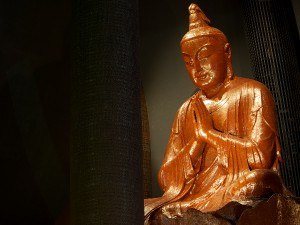
An alternate view

Over 36 feet tall and 24 feet in diameter, the statue appears to be bronze and it is illuminated by spotlights from above. As I tried to move around composing the picture and focusing on the face, something dawned on me. This didn't look like any Buddha I'd ever seen before.

That's when I decided I'd better check the literature they gave me at the door. It wasn't Buddha. The artist who created this statue was a man named Shinzan Yamada. During the war, he lost two sons in the battle. He wanted to create a statue dedicated to peace, world peace.

The materials used in creating this monument, were imported from China, three and a half tons of lacquer ware. The artist was 72 years old when he started the project. He worked by himself. Twice, during the construction of his masterpiece, he fell from the scaffolding, injuring himself. The project took 18 years; Shinzan was 90 years old when he put the final touches on it.

The Peace Prayer Statue is simply a symbol of an Okinawan man praying for world peace. A single photo of it from one angle cannot do justice to this work of art, nor can my words accurately describe it. It radiates the artist's determination and hopes for a better world to live in. Not just for the people of this Pacific island. It's for everyone around the world. It'd be worth your while to come and see.

__________

About the Author: Michael Lynch is a wildlife photographer and travel writer living in Okinawa, Japan.  He has been published in several online magazines and writes Camera Talk for In The Know Traveler.

More of his work may be seen at http://www.mikesryukyugalley.com

Climbing Mt. Kilimanjaro: Conquering the Summit and Myself

"It's not a hike at all; it's a personal journey," Brennan says as we sit clutching hot cocoa in our mess tent with two pairs of gloves on, teeth still chattering. It's 11 p.m. and -4 degrees Fahrenheit outside the tent, and we're on the verge of climbing Mt. Kilimanjaro.

We wear everything we own, five layers of pants, six layers of shirts and jackets, to the "Last Supper" before beginning the summit push at midnight.

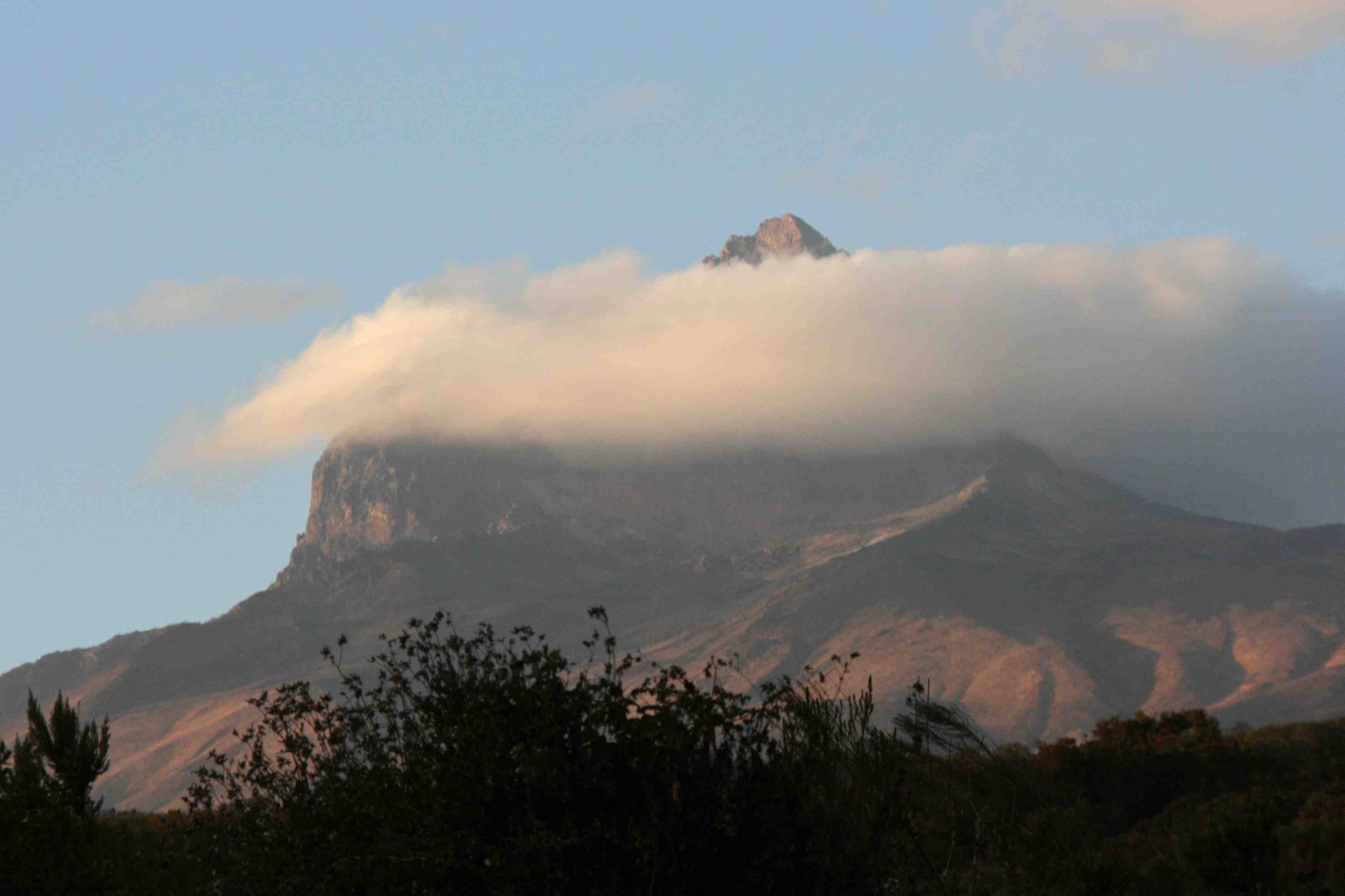
Mt. Mawenzi
Mt. Mawenzi

Twelve of us had come this far, hiking four days to 15,500 feet to Kibu Hut. Now, it was time to summit Mt. Kilimanjaro, and at 19,330 feet, not all of us would make it.

Tonight. Tonight is where you feel the mountain. Tonight, it is you against the mountain. Everyone wants to reach the top for personal reasons, having their odyssey.

Climbing Mt. Kilimanjaro has been a trek to self-awareness, climaxing tonight, the push to the summit. You versus the mountain, and who is going to win?

It was only yesterday that I sat on the edge of the Earth, on top of brownish-red volcanic rocks, staring at the jagged peaks that form Mawenzi Peak (16,890 feet), one of Kilimanjaro's three dormant pinnacles.

The saw tooth crests, which started so far away as a tiny apex just three days ago in the distance, are now upon me, and I have walked to see them up close and personal.

A few people have tried to summit Mawenzi Peak, but they have all failed or died trying, as the volcanic rocks crumble easily.

Ocean of Clouds
Ocean of Clouds

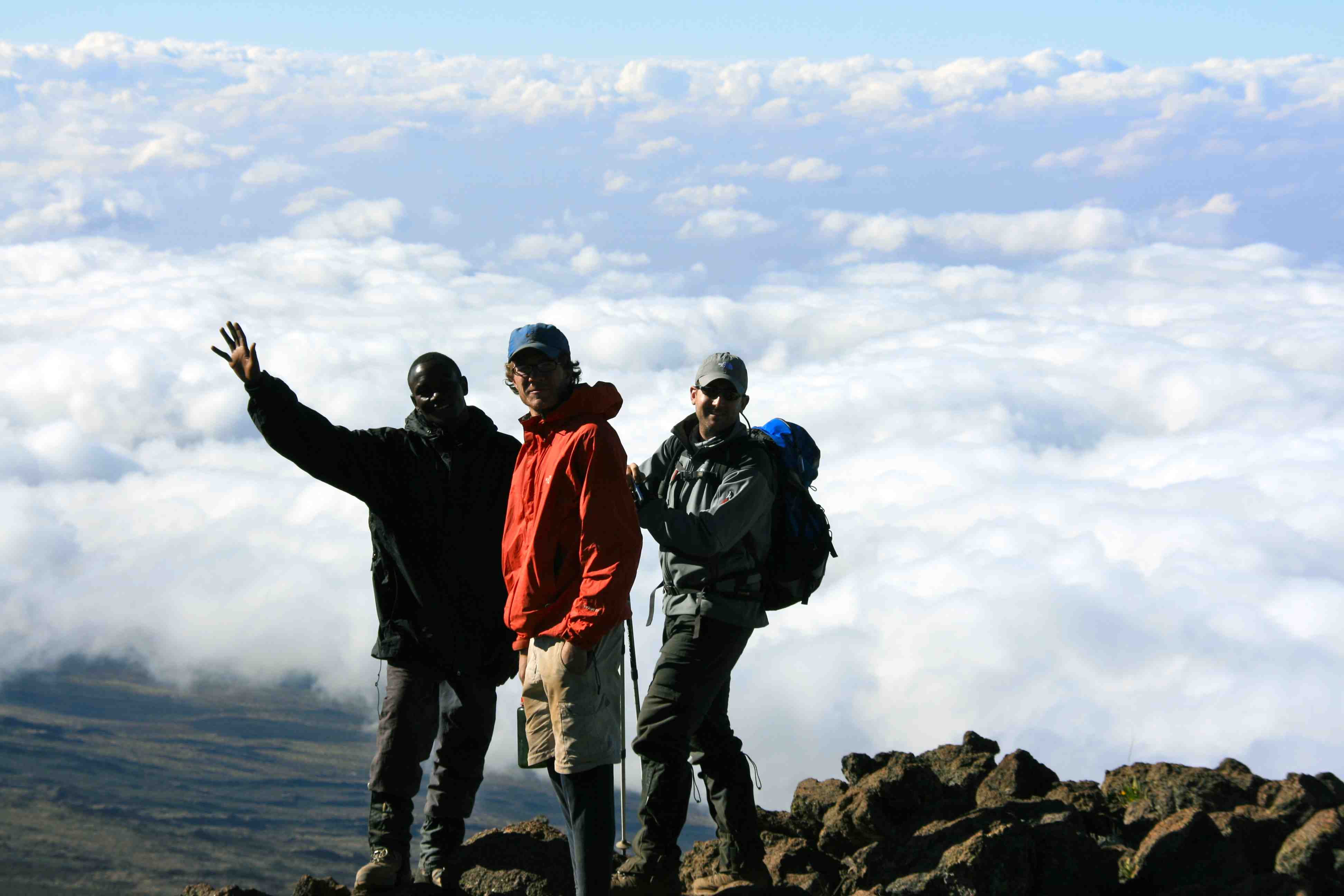
Turning around and dangling my legs over the rocks, I look down onto the endless ocean of white fluffy clouds and watch the ever-changing, endless cloud formations under my feet.

The Buddhists say, "Clouds are like thoughts." I see the truth in this; some thoughts are thick and heavy, some are light and fluffy, some are quick to form and ever-changing.

They are real and imaginary all at the same time, and both are fields of energy. From here, it looks like you could float on top of the billows, as they seem to have matter to them, substance, and depth.

But they don't, just like thoughts. Heaven must look like a barren valley landscape with clouds drifting to infinity, and these are the gates to paradise.

Looking around from the vast white sea with sparse vegetation, the dry landscape should be covered with snow this high up at 13,800 feet, but man's actions have deprived the peaks of moisture.

Soon, Kilimanjaro will not have snow on it, and the glaciers will have all melted. This is a clear representation of global warming and our direct effect on this planet.

Mt. Kilimanjaro is the most accessible of the seven summits for tourists to climb, offering several different routes, accommodations, and trip lengths.

I chose to do the Rongai Route, a 6-day hike, on the easier end of the spectrum, with camping in tents.

Although it's the highest, most walkable mountain in the world, with its gently sloping topography until the last day, where the trek to Gillman's Point is a steep climb to a plateau of Kibu Summit, fitness is critical, and walking 6-8 hours a day is not uncommon.

My guide company, Africa Travel Resource, subcontracts out to The African Walking Company, which is highly regarded for its skillful guides, excellent service, and high success rate of clients reaching the summit.

AWC led the Red Nose Climb, a trip of British celebrities that climbed Mt. Kilimanjaro for charity. Matthew, a 22-year-old Brit in our group, even slept in Cheryl Cole's sleeping bag!

Climbing Mt. Kilimanjaro in Tanzania
Hiking above the clouds

To reach this magical place above the ocean of white, we scrambled upwards for three hours and watched the landscape reshape before our eyes from vegetation to volcanic rocks, flowers, and birds to nothing except the everlasting flower.

True to its name, the everlasting flower can withstand all conditions. Hiking Mt. Kilimanjaro is unique because it involves passing through four different microclimates: rainforest, savannah, glacial, and high desert.

Samuel, our 55-year-old guide, who has been leading treks (and consequently smokes cigarettes during breaks as we are panting and struggling for breath) for over 20 years, sets the pace.

The local mantra is "pole pole," which means "slowly, slowly." Altitude acclimatization is essential. However, it is too pole-pole for me as one of the strongest in the group, along with Henry, a professional trekker and medical student.

We converse with the guide to see if we can proceed just a little bit so we won't trip over the rest of the group, and he obliges.

I understand the purpose of going slow and know I must stay with the group, but frustration can get the best of me. However, "pole-pole" is a good life lesson.

Not everything in this world needs to happen now or quickly. Everything happens in its own due time, and I must respect that.

As Americans, we are accustomed to our fast-paced society, and everything is now, now, now, but the rest of the world does not work on our schedule.

It's good to slow down and look left and right as I'm hiking. Since I am going so slowly, I can appreciate the views, breathe everything in, lift my head to see the world around me, feel what's in the air, and see the horizon.

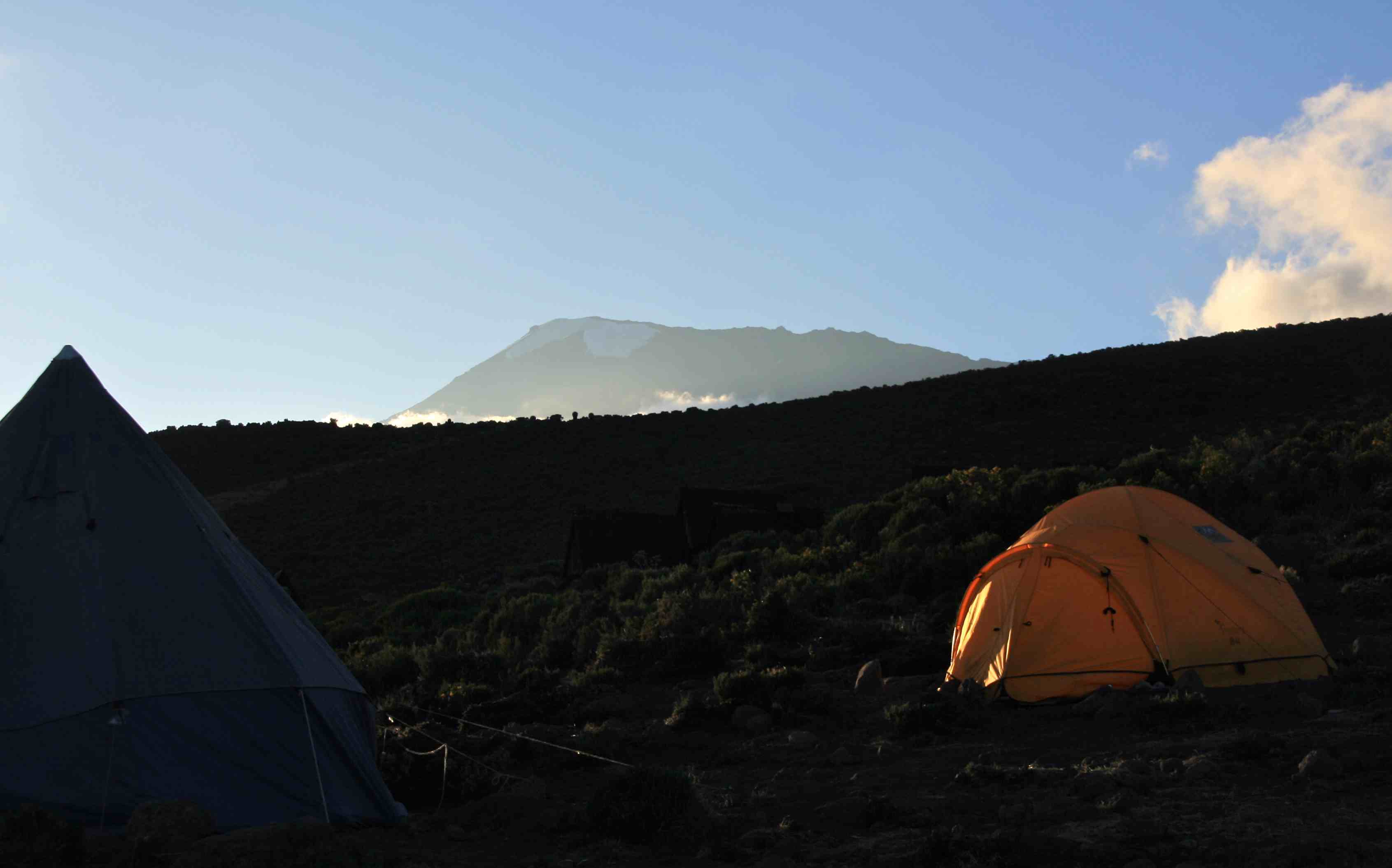
Camp - Day 5 on Mt. Kilimanjaro
Camp - Day 5

It's midnight, and we all queue up, frost hanging on every visible breath, headlights spotted to emulate a small circle in front of us, walking sticks in hand, as we start the six-hour pilgrimage to the top.

With the sky bearing down on us, the darkness surrounding us, and the stars illuminating the sky, our group trudges upward, scree underneath our feet.

There was utter silence except for the guides singing melodious African songs, which kept us focused and aligned with them and the universe.

Following the stars, I think about being one with nature and observing the natural forces of things. I also realize that events are not random and situations shouldn't be judged as good or bad.

On that mountain, nothing else matters except putting one foot in front of the other. If nothing else matters, then I should concentrate on living in the present, in what is happening right now, opening myself up to feeling every experience rather than just having it.

The star-filled night was cold, and my feet and fingers tingled from numbness, but I had on too many layers and began feeling warm.

The altitude sickness hit, and the weight of the mountain was revealed. I felt dizzy, couldn't walk straight, was very lightheaded, and my mind started to lose focus.

I was hot and didn't like the Balaclava (a ski mask-like item of clothing). My legs turned to jelly and mush. But I could view the immense beauty creating the night and began concentrating on the stars.

I followed the outline of the Kibu Summit against the glow of the backdrop of the universe, and as I continued upwards, the outline and the curvature of the Earth would change. I knew time was passing, and I was gaining altitude.

The magnificence of the night sky engulfed us along the mountain. Some people in the group didn't even notice the stars or the sky; all they did was look down at their feet, counting steps.

I don't want to live that way anymore. I don't want to look down all the time and not see anything happening around me.

I want to open my eyes, look around, and see the outline of mountains in the darkness, the brightness of the stars, and the tiny pebbles slogging underneath my feet.

The mental game in climbing Mt. Kilimanjaro begins, trudging along for hours uphill in silence.

Can I zig-zag up a mountain, not even on a path, just sludging through loose gravel for six hours in the middle of the night at -4 degrees Fahrenheit, with the altitude affecting me in many different ways?

It was a mental game against myself, and I was sometimes losing. I envisioned turning around, as Martin and Fiona had, feeling so sick and wanting to vomit anytime I ate anything, but I had to keep up the energy. Failure was not an option.

About two hours into the hike, I couldn't imagine doing this for another four hours, but after three hours, I thought, " Well, I can't go back, as it's just as far to go back as it is to finish it up. "

Sunrise from the summit of Mt. Kilimanjaro

And so I dragged on, this lunar landscape, scree underneath my feet. Suddenly, Henry halted in front of me, pointing to the night sky: "Look, a shooting star!"

A big white ball of illumination flew across the heavens. I knew then that the universe was taking care of me, giving me the strength to carry on.

Finally, less than two hours were left, and I knew I would reach the top. Around 5:30 a.m., the sky was getting a bit brighter, and the first light was close.

My energy shifted, adrenaline kicked in, and I had a second wind, with actual spring to my step as we scrambled over thick boulders.

Paulo Coelho best sums it up in The Valkeries: "I died, and I was reborn again."

The mountain kicks your ass, drags you down, beats you and sucks every ounce of life and energy out of you, and leaves you for dead, and then the light comes and revitalizes your heart, mind, and soul.

Out of the darkness, the sun started to rise about 20-25 minutes before we reached the pinnacle, the orange and red peaking out of the black to outline the Mawenzi Peak.

As Brennan said the day before, "I better see God up there," and I believe we did. Looking towards Mawenzi Peak, lit in golden light and peering down onto infinite white clouds, tears flowed out of me like a faucet.

After overcoming such obstacles and conquering the mountain, I stood on the top and looked around. I had reached the roof of Africa.

See also: Climbing Mount Meru in Tanzania

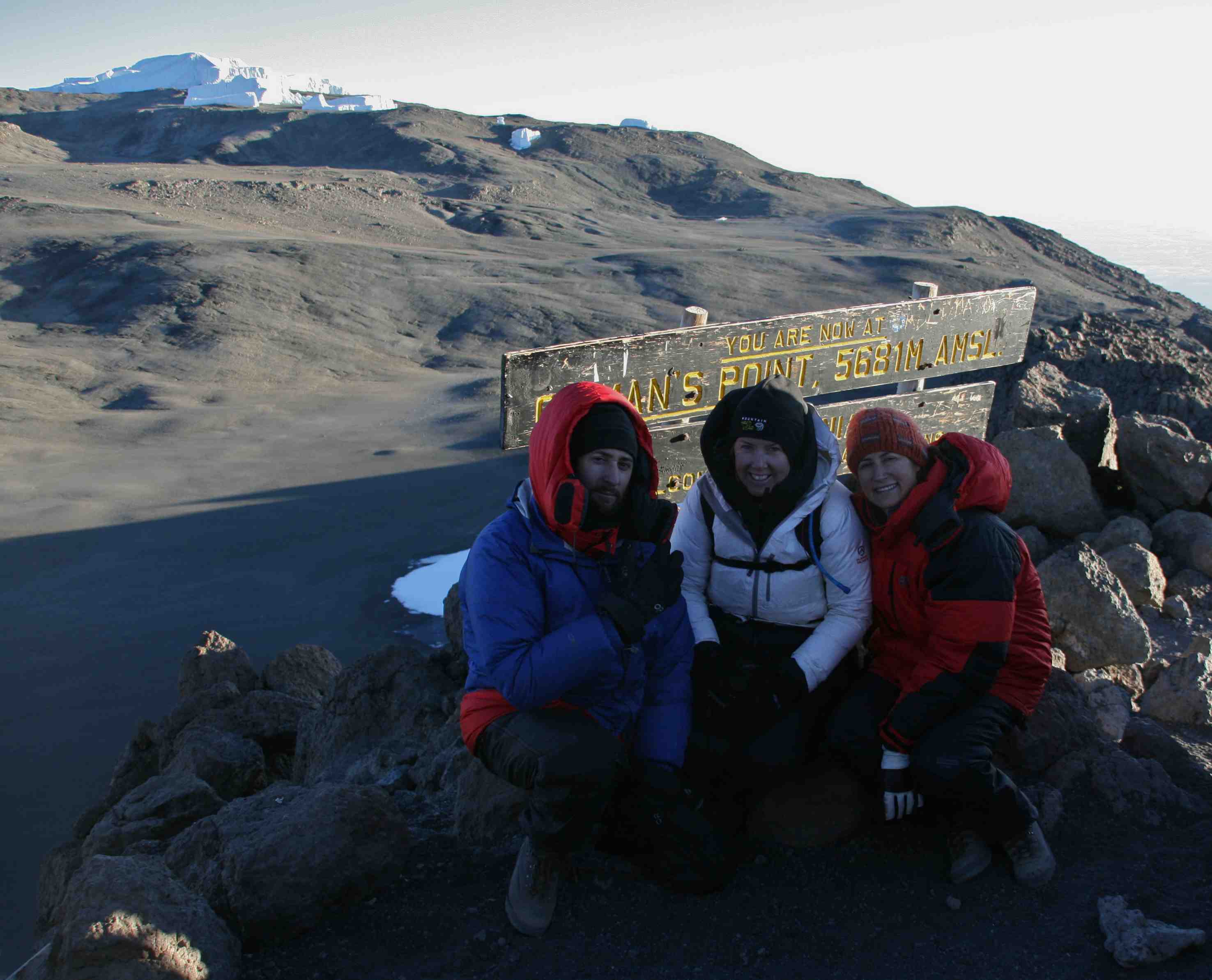
David, Harriet, and Lauren (the author) at summit, after climbing Mt. Kilimanjaro
David, Harriet, and Lauren (the author) at the summit

Climbing Mt. Kilimanjaro is a very humbling experience. It essentially strips the roles in which we identify: husband, wife, mother, father, profession, class, social status, the city you live in, etc.

It peels away your ego and forces you to look inside yourself, see what you are made of, and find out who you are. All that's left is YOU and the mountain.

As Hassan, the psychotherapist on the trip, said, "You climb the mountain from the outside and the inside."

____________

About the Author: Lauren Becker is a filmmaker turned travel writer who is lucky enough to travel the world for work and fun. She enjoys sharing her experiences through the written word, still photographs, and moving images. Watch her videos on Vimeo or follow her on X @filmlb.

Friday Flashback: Vang Vieng & Luang Prabang

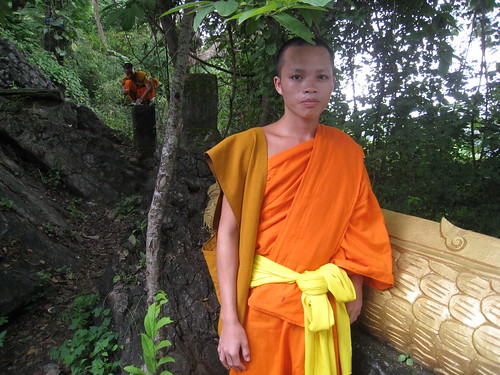
Monks in Luang Prabang

Tubing in Vang Vieng was the driving force behind my visit to Laos.  It turned out to be as good a reason as any, and I was glad to make it to the little backpacker haven for my 32nd birthday as well.  I celebrated with rock climbing by day, and Korean BBQ and beers by night.

Then it was on to Luang Prabang, and a little culture (ie. more temples), before I jetted over the border to northern Thailand.

  • The Birthday Rock Climb
  • Tubing in Vang Vieng
  • Photogenic Luang Prabang
  • Mountain Biking and Elephants
  • Final Thoughts: Laos

An iPhone App for Travel Health

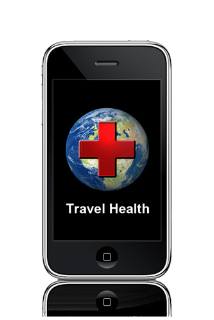
Travel Health iPhone app

There is a new addition to iTunes' line-up of travel apps. The app, called Travel Health, is based on the book "Travelling Well" by Dr. Deborah Mills, a travel medicine specialist in Australia.

While the medical information in the app is accurate, easy to read, and understand, there is much room for improvement in three key areas.

1. Design

I would like to see the categories organized alphabetically or in a "head to toe" fashion. Searching to find the desired topic would be easier this way.

When some of the categories are opened, a pop-up STOP window opens and alerts the reader of potential emergencies. I found this to be irritating.

The information is important, but I'd rather see it highlighted at the beginning of the description. I also didn't care for the arrows to open/close the topics of the category.

2. Search function

This is lacking, and many symptoms cannot be found using search.

For instance, CPR (Cardiopulmonary Resuscitation) cannot be found in the search box, but it is listed under Collapse in the Emergencies category. Searching "yeast" will also not appear, but yeast infections are covered under the topic of "Thrush."

Being an international application, I think it's important to include additional names for problems to find them using search. It would also be nice to be able to search for drugs using the search function.

3. Important missing symptoms

Under Chest Problems, there is no mention whatsoever of chest pain or heart palpitations, an important oversight.

Since 16.7 million people globally die of cardiac disease, it is vital to include its signs and symptoms.

What I Liked

The feature I really like is the drug reference table. Its design is easy to use, and it gives pertinent relevant information.

The layperson can easily look up a drug name and view other names for the drug, which is helpful for the international traveler.

The dosing information is convenient also. The information on Altitude Sickness is excellent, and I also like the bookmark function to save favorite topics.

As an emergency department registered nurse, I believe this app has a good start.

The developers need to work on the design issues a bit, especially the search function, and it is imperative to add cardiac symptoms to its Chest Problems category.

The app is currently on sale for $2.99 with a regular price of $7.99. I rated the app a 3 out of 5 stars.

Signs of South Africa

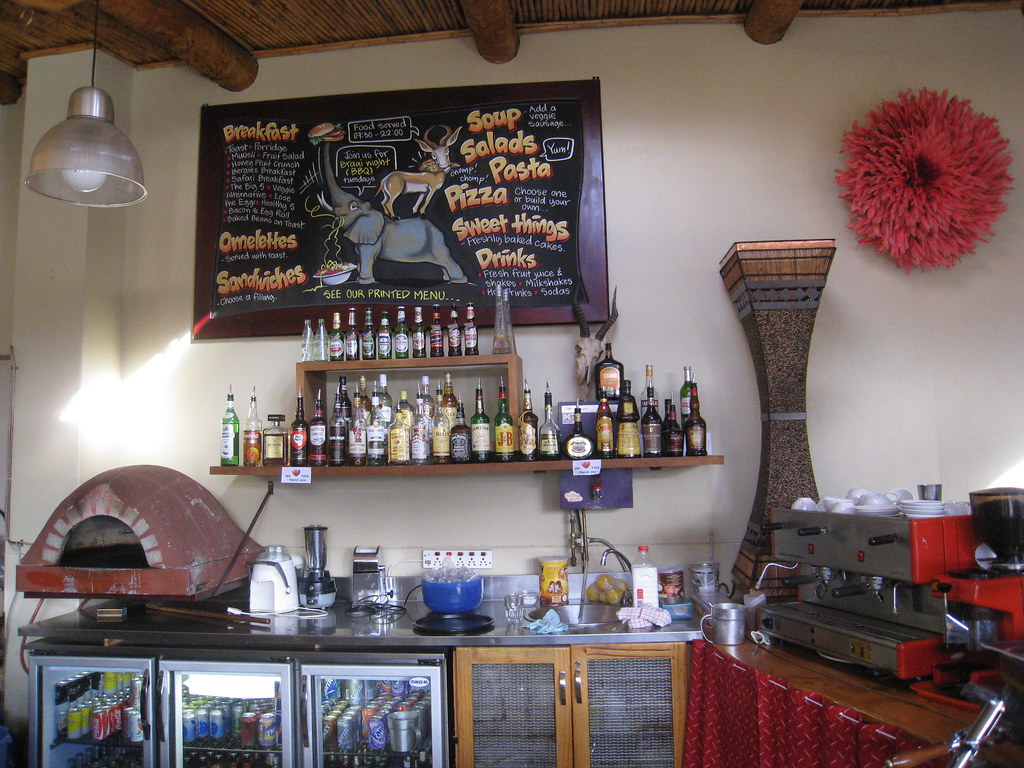
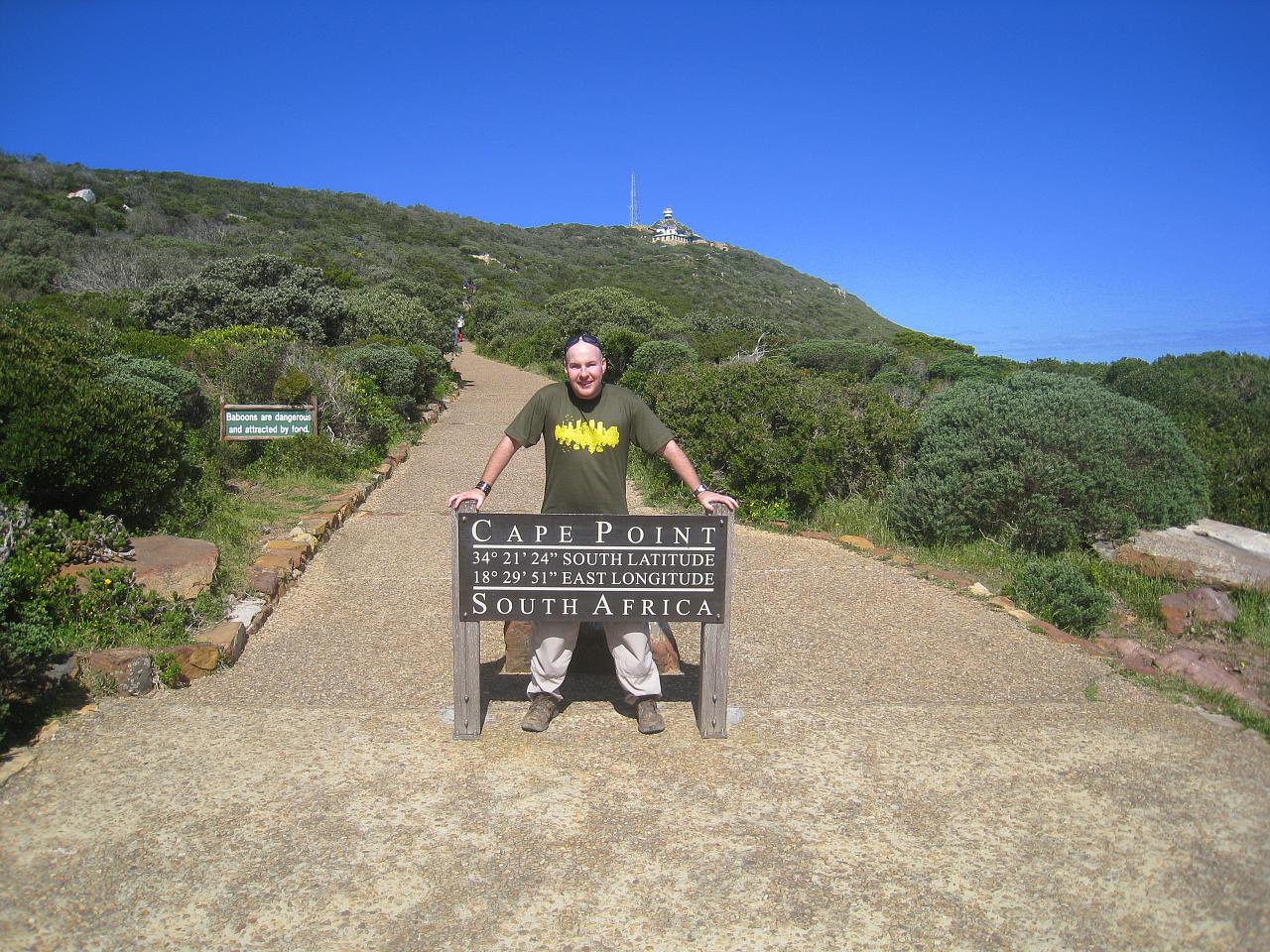
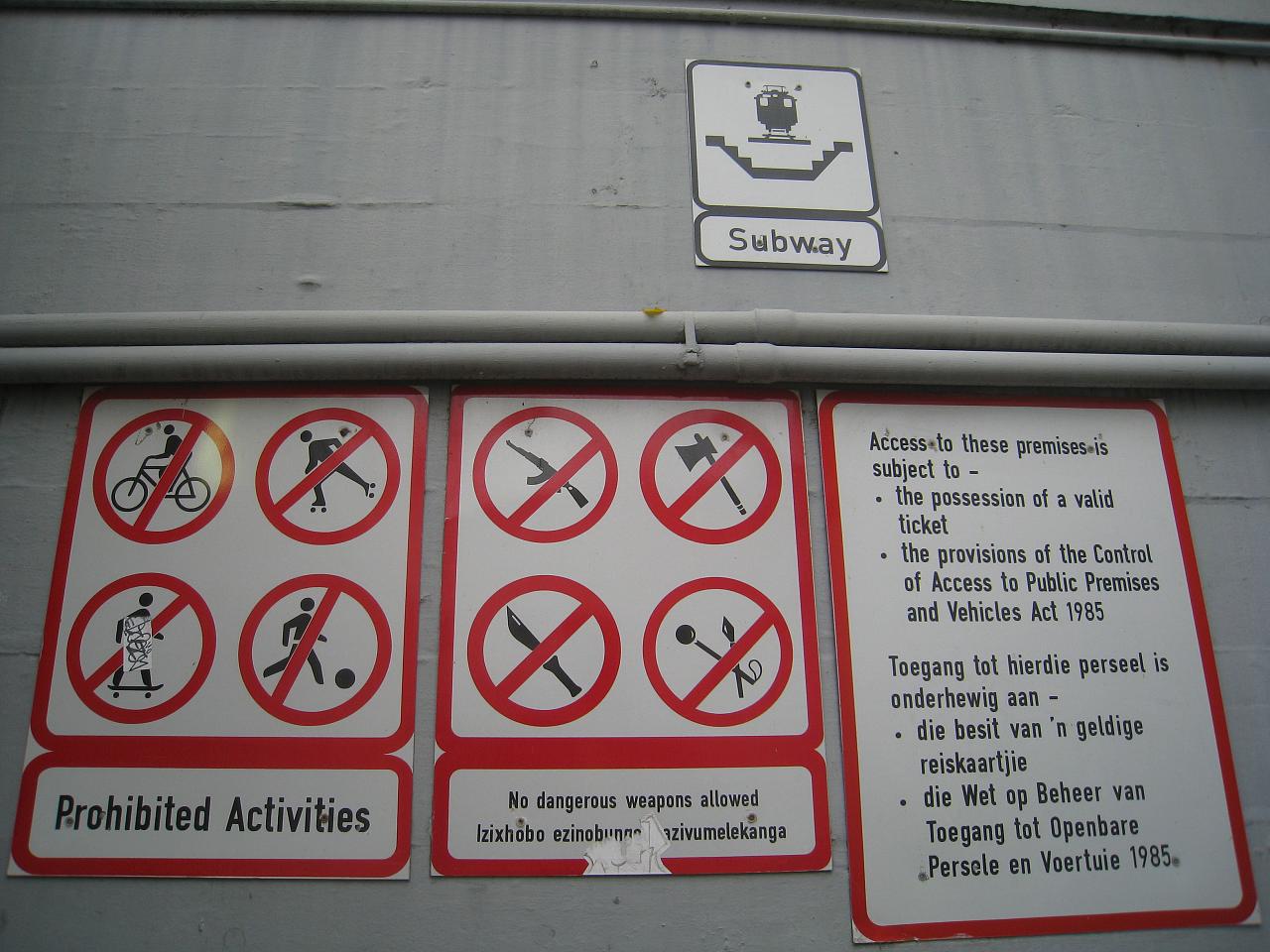
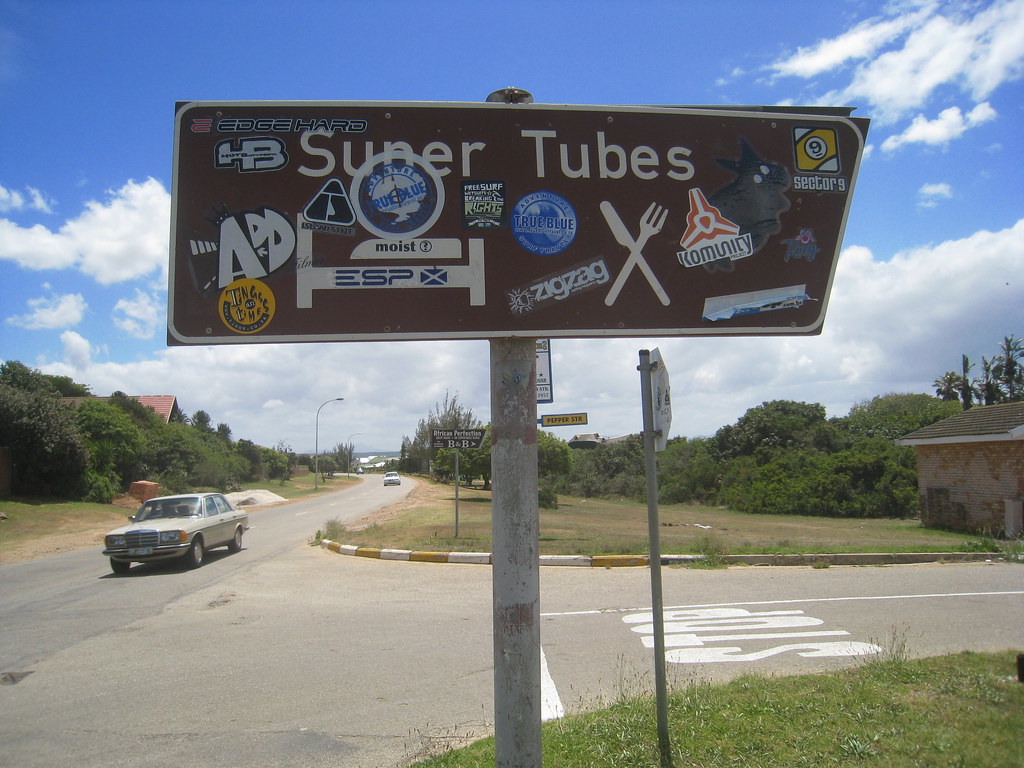
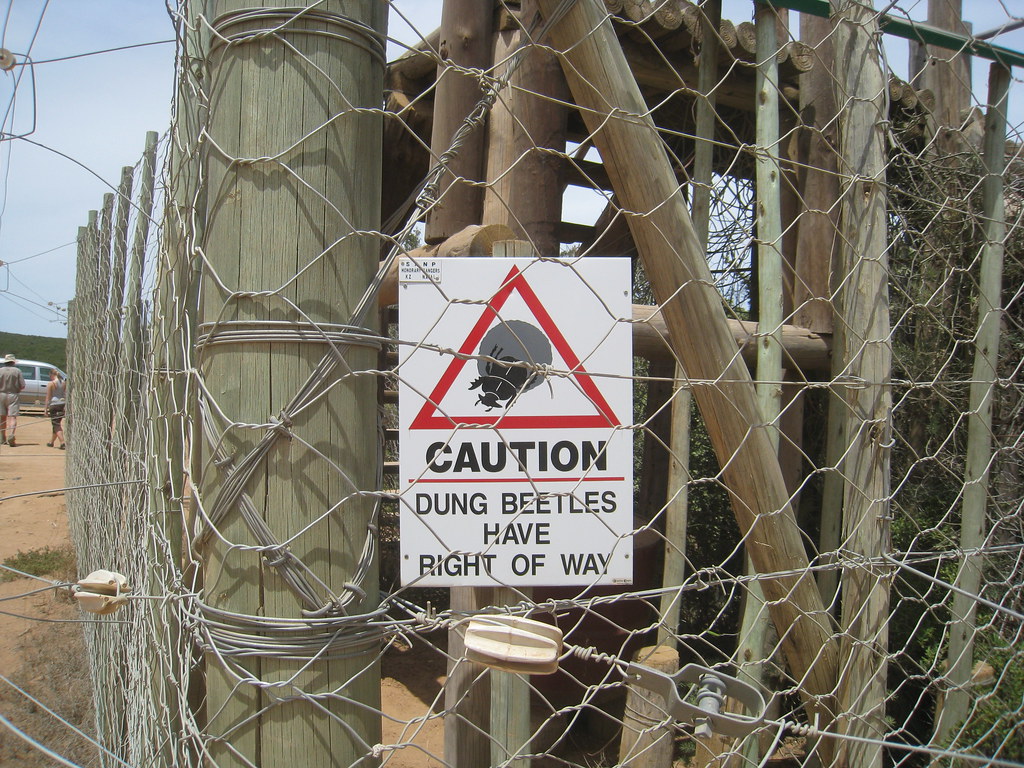
The signs of South Africa reflect two realities coexisting within the country hosting 2010's World Cup: the diversity of wildlife, and the high crime rate.

Food options at The Backpack (hostel) - Cape Town

Cape Point
Cape Point

Subway Warning - Cape Town

Caution: Western Leopard Toads - near Cape Town

The Great White Shark Festival - Hermanus

Riding of Ostriches at Own Risk - Outdshorn

Slippery Boardwalk - Storms River

Super Tubes - Jeffrey's Bay
Super Tubes (popular wave in surfing) - Jeffrey's Bay

Mugging Beyond this Point - Jeffrey's Bay

Dung Beetles Have Right of Way - Addo National Elephant Park

Dazu: An Under-Visited Treasure of Sichuan

Dazu carving
Dazu rock carving

Most people who come to Sichuan either do so because they are about to head to Tibet on a trek, or to visit Chengdu and its surrounding tourist attractions, especially the pandas and Lei Shan and Emei Shan, two large standing Buddhas. Few ever go see Dazu Rock Carvings, which is convenient from both Chengdu and Chongqing.

To be honest, I wouldn't have ever gone to Dazu if it weren't for my art historian father. But still, at his imploring and the advice of a guidebook, I figured why not? Plus, I usually figure things were named UNESCO World Heritage sites for a reason. That's been a good rule of thumb for me in the past.

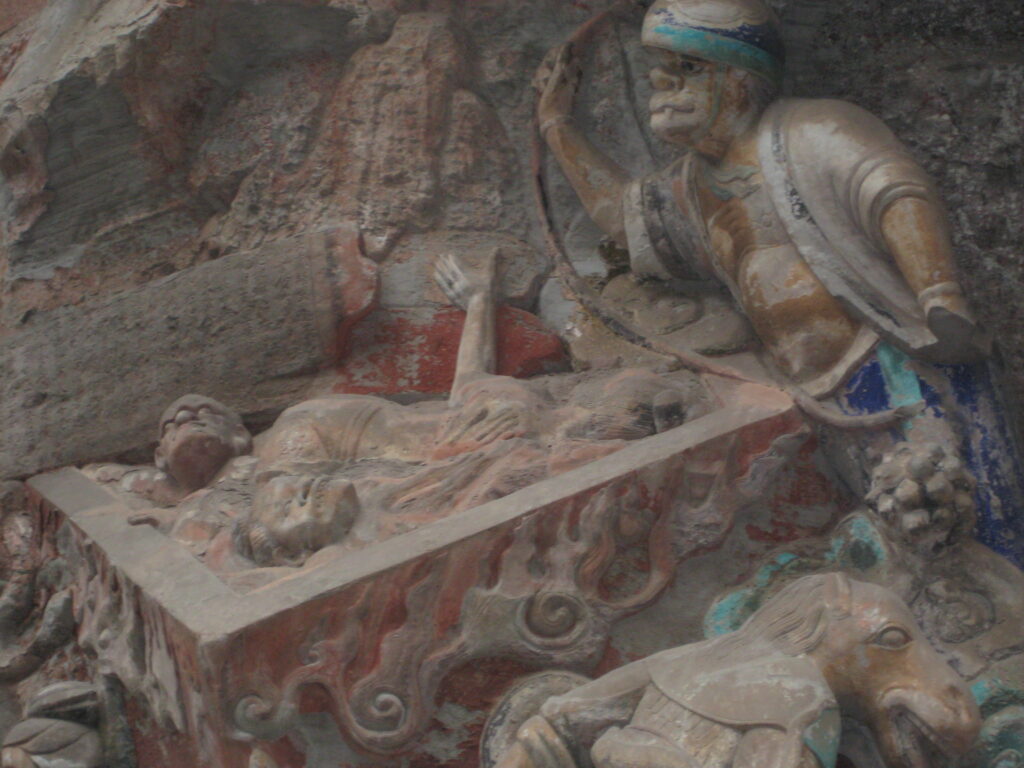
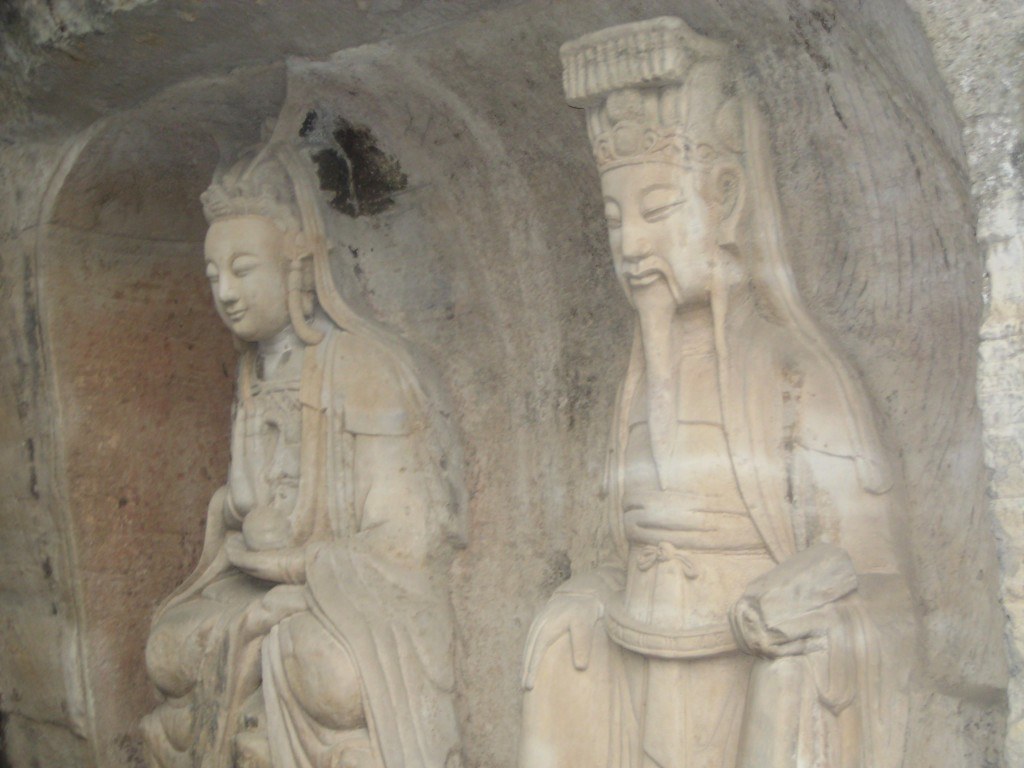
In this case, my rule held true- Dazu is absolutely worth a visit. It's a beautiful site with carvings dating back to the 7th century, though the vast majority of them were made from the 9th to 12th centuries.  Dazu rock carvings are actually at five separate sites, but Baoding shan (or Mount Baoding) is the most famous one, and the one you are most likely to go to, especially on a tour.

Dazu rock carving
Dazu rock carving

While the vast majority of the carvings are typical Buddhist scenes, such as Buddha entering nirvana, what's particularly neat about Dazu is the scenes where Confucianism and Buddhism seem to mix. For example, the stories of Buddha offering his eye to his father, when his father needed nutrition, and other such tales are very influenced by Chinese filial piety. There were also many " Boschian"? images of gruesome tortures in hell. There are even special kinds of hell like knife-stabbing hell. Yeah, that'll teach you.

So, if you do decide to go (and you should), you can do so easily from either Chongqing or Chengdu. I went from Chongqing, opting for a day package trip rather than personally arranging the public bus, though either is possible and guidebooks or Wiki can tell you more. Any of the multitude of travel agencies in Chongqing that offer river cruises will also have a trip to Dazu, usually starting at about 300 RMB but you should be able to get them down to 150 RMB or so.

Dazu is one of the best places in Sichuan you've never heard of. Look into it.

#Rwanda Trip: Vaccinations & Preventing Malaria

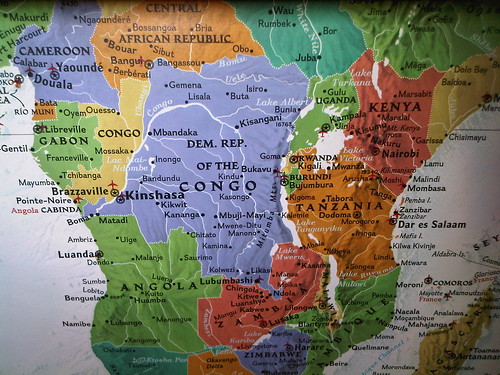
Map of Central Africa

For such an exotic, far-flung trip to central Africa, there isn't a whole lot I need to do in terms of preparing for my Rwandan adventure.

After backpacking for 15 straight months, and always being on the go, the process has become like second nature to me.  I know what I will pack, and how I will pack it.  I know there are a few toiletries and miscellaneous items I'll want to pick up, but there's no rush, and none of it is critical.  I could be asked to leave tomorrow morning and I'd chuck my stuff in the 'ole backpack and know I'd have a great time of it.

After buying the cheapest plane ticket I could find, ensuring my immunizations were up-to-date for that region was the next most important thing I could come up with.  I Google'd "CDC Rwanda" and the first result was the recommendations by the US Centers for Disease Control and Prevention.

Recommended Immunizations

  • Routine (includes Measles, Mumps, & Rubella, Diptheria, Pertussis & Tetanus, Polio)
  • Yellow Fever
  • Hepatitis A & B
  • Typhoid
  • Rabies

As a result of all the shots I got before my 'round the world trip back in Fall 2007, I only needed to re-up my Typhoid.  The oral vaccine lasts 5 years, and I had gotten it the first time for my trip to Costa Rica in 2005.

The Rabies vaccine is expensive, and even if you're bitten by a rabid animal, you still need to get shots.  Instead, I intend to keep a safe distance from all primates, bats, and miscellaneous mammals I come across.

Malaria Prevention

According to the CDC:

All of the following antimalarial drugs are equal options for preventing malaria in Rwanda: Atovaquone/proguanil, doxycycline, or mefloquine.

Thankfully, my drug of choice, doxycycline, is an option for Rwanda.  No side effects to-date, and since I don't have prescription drug coverage, the inexpensive cost is also a factor for me.

The Appointment

I made an appointment with a county-run travel clinic, and when I met the nurse who took my info, and said I was going to Rwanda, she responded "where is that?"  I got up and pointed to what seemed like the tiniest country in Africa on the same National Geographic map that I use to have hanging on my apartment wall for years.  Her response was something along the lines of that being a region of the world where all the diseases come from.

Her chat about food and water safety was all a formality, nothing I wasn't already aware of, though I suppose it's good to have a reminder from time to time - keep oneself in check and all.

Then the doctor came in and gave me the little box of live Typhoid vaccine, which requires refrigeration, and a doxy prescription.

Cost

  • Office visit = $42
  • Typhoid (oral) = $60
  • Malaria (40 pills) = $30

Total = $132

Lunch at Blue Ribbon Sushi (Manhattan)

In April 2007, I wrote about one of the best late-night dining experiences of my life, courtesy of Blue Ribbon Manhattan. Ever since I've wanted to go back.

When I won a Sosauce postcard contest recently and a $50 gift certificate to the New York City restaurant of my choice, I felt like the time was right to try Blue Ribbon Sushi.

I invited Michaela from Briefcase to Backpack to lunch, and as the snow was starting to accumulate on the city streets, we met outside the signless entrance to a little culinary slice of Japan.

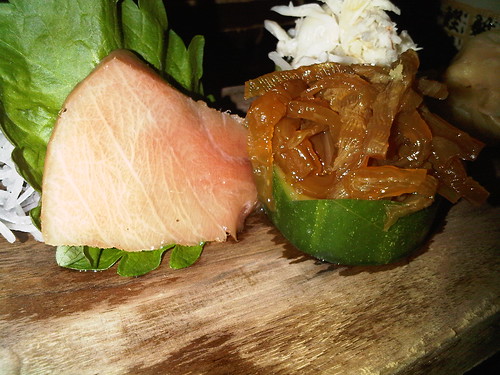
Sashimi: O toro (blue fin tunabelly), jellyfish, and blue crab
Sashimi: O toro (bluefin tuna belly), jellyfish, and blue crab

The intimate restaurant featured a sushi bar, a few small tables, and 6 booths (where we were seated). 

Further back beyond the booths was a narrow hallway leading to restrooms, a table in an alcove perfect for giving a small dinner party that exclusive feel, and then extra tables in the far back.

I was excited to push my sushi boundaries and try some new things. 

My first course included a single o toro, the highest quality piece of tuna you can get, jellyfish, which I'd never tried before, and some blue crab for good measure.

The $15 piece of tuna melted in my mouth, however, it wasn't an Earth-shattering experience, and now that I've tasted the tender belly of a tuna, I'll be happy to return to the more moderately priced regions. 

The jellyfish was dipped in something, possibly soy sauce, to give it color and flavor, as I don't think it has much of either on its own. 

I liked it because it had the consistency and shape of gummy worms. 

Trust me, nothing to be afraid of with jellyfish (at least not the kind I ate). And the crab was crab. 

I enjoyed having it nicely presented to me, sans claws and shell.

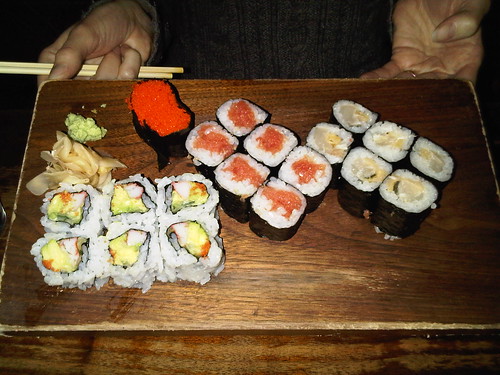
Rolls: California, tuna, and mackerel

Of course, three pieces of sashimi are hardly enough to fill one's stomach, so Michaela was kind enough to share her California and tuna rolls with me as we talked about the business of blogging. 

Meanwhile, I ordered a few more items and drank about a dozen cups of green tea (they were very on-point about refilling my cup, which was a nice way to keep warm given the snow and cold weather outside).

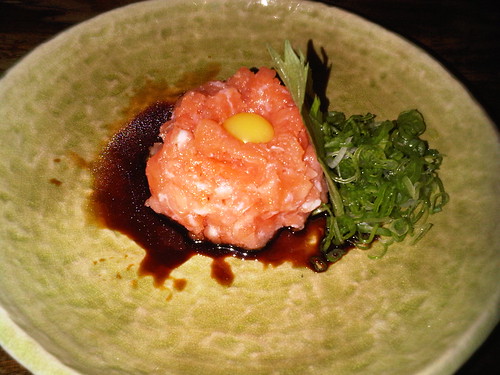
Salmon tartare with quail egg

My next dish was an appetizer of salmon tartare with a quail egg, scallions, and soy sauce. 

I mixed it all with the chopsticks, and it turned out to be quite a lot more than it seemed at first. 

I was starting to feel full, but there was still room for more.

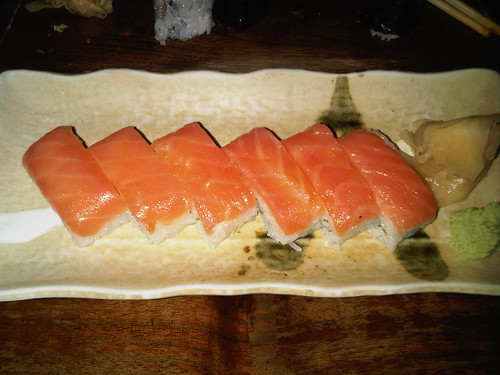
Smoked salmon and shiso

I believe I ordered the tuna with avocado, but when smoked salmon and shiso (a green leafy herb) arrived, I didn't feel the need to send it back. 

The shiso was nicely tucked inside the rice, and it provided a freshness in each bite, kind of like eating a breath mint.

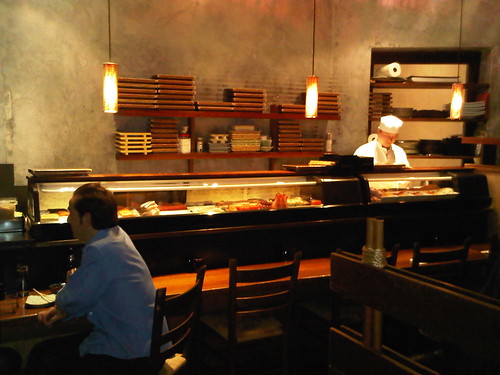
Blue Ribbon Sushi bar

Our lunch easily lasted two hours, and I never felt rushed, which earns the restaurant bonus points in my book. 

The quality of food was excellent, the service was solid, and the atmosphere was perfect.

Blue Ribbon restaurants are two for two in my book.

____________

Blue Ribbon Sushi - 119 Sullivan Street (between Prince and Spring Streets), New York City

#Rwanda Trip: The 6-Day Itinerary

Downtown Kigali
Downtown Kigali

In less than two weeks, I'll be exploring the Rwandan countryside in the heart of Africa. 

Yeah, I still can't get over that, and probably won't until I'm actually there, and then I'll still feel like I'm in a surreal dream.

I'm a big believer in dropping oneself in another country with a guidebook and without a plan, but when time is limited, and countries are on the less developed side of the spectrum, an organized tour can be a welcome thing. 

I learned that first hand when I took package trips to Kruger Park in South Africa, the Okavango Delta in Botswana, and on a cruise ship down the Nile River in Egypt.

Here's what my schedule looks like, minus all the airplane rides.

Day 1 - March 20th

  • Arrival in Kigali

Day 2 - March 21st (Kigali - Ruhengeri)

  • Kigali City tour (4-hour tour around historical sites of Kigali, view latest developments, visit the Kigali Genocide memoriam)

Day 3 - March 22nd (Ruhengeri - Gisenyi)

  • Trek to see Mountain Gorillas
  • Afternoon visit to Iby'Iwacu Village

Day 3 - March 23rd

  • Tour of Gisenyi (L.Kivu, Paradis Malahide, Akeza Island, Bralirwa, Amashyuza)

Day 4 - March 24th

  • Boat Ride to Nyungwe stopping at Cyangugu
  • Visit Interpretation Center/ Trek to see Colobus monkeys

Day 5 - March 25th (Nyungwe)

  • At 4am - Track Chimpanzees at Cyamudongo Forest
  • Canopy Walk, Visit Dubai World Hotel /waterfalls

Day 6 - March 26th

  • Drive to Kigali, Visit National Museum

I have a 7th day and night in Kigali to do whatever I want before I head home.

Rwanda is a small country, however I still have a feeling the days will be long, especially when we're waking up early to track gorillas and chimps in the forests.

Is there any aspect of the trip you'd like to see covered more than another? 

Food, wildlife, local people, safety situation, genocide, political climate, etc?

Dogs & Beers: DC Travel Happy Hour #4

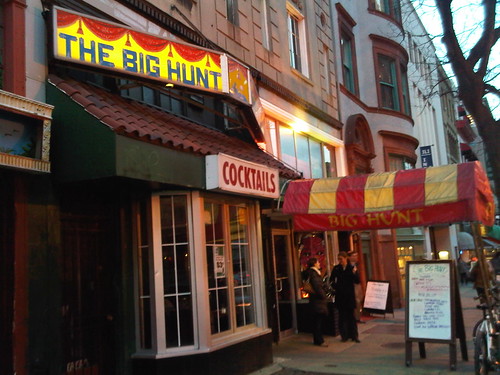
The Big Hunt - Dupont Circle

DC Travel happy hours are starting to gain traction in the best way possible. 

A mix of regulars and newbies show up at each one, and whether the people have been around the world, or just around a city block, makes no difference.

March's venue, as chosen by Stephanie of Twenty-Something Travel, was The Big Hunt, a perennial favorite in Dupont Circle.

I arrived early and met up with Carolyn, who I was initially e-introduced to by Sherry Ott. 

Carolyn started a non-profit called Dog Meets World, which aims to bring people together through photography. 

The idea is for travelers to carry a little stuffed dog, and a portable photo printer, wherever they go.

Then, when they inevitably want to take a local's photograph, they can share the dog, take the photo, and print a copy for them on the spot.

I liked the idea the moment I heard about it, and I am planning to try it for myself in Rwanda later this month.

Steven (@travelojos) was the next to arrive. He's currently planning a trip to Guatemala.

Diana from The Adventures of D rolled up soon after.  She recently quit her PR job to travel through Europe and northern Africa....starting today!

Chelsey (@chelseydc), a relatively recent transplant from Iowa, joined us, as did my friend Todd.

And then I lost track of the order, as usual.  I swear it wasn't the hearty porter I was drinking.

Molly (@travelwithcurls), one of our regulars, congratulated me on the launch of Travel Blog Success last month and confirmed her intent to sign up soon.

Sonia (@pulpologist) and her husband Mark arrived as well, though Marilyn from National Geographic couldn't make it (so the saga of their inability to meet in person goes on)

Lauren had previously contacted me through Medellin Living as she was interested in moving to Colombia to teach English in the city of the eternal Spring.

On a random note, our waiter was cool, gave Diana a free beer at the end of the night, and mentioned he'd done a Peace Corps stint in Malawi. 

There were a few people I didn't get the chance to meet, and a few whose company were missed altogether.

Thankfully, warmer weather and longer days are just around the corner, as is April's DC Travel Happy Hour!

_______

Special thanks to Melanie at Sisarina for the Twitter name tags, and Kelsey for photographing the event. All of the photos in this post are hers, except the exterior shot of the bar, which I took.

Friday Flashback: Splurging in Vientiane

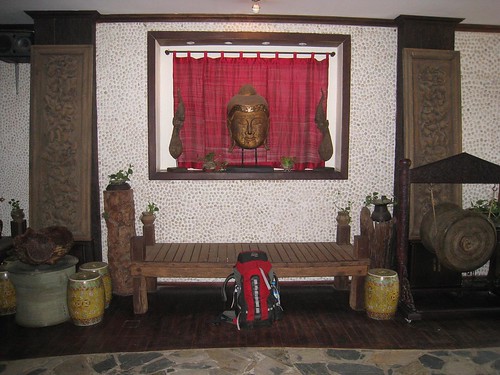
Backpack and Buddha in the InterCity Hotel lobby

I stopped in Vientiane for 4 nights of boutique hotel bliss and top notch French food.  I found there was actually quite a bit to do in and around the capital city of Laos.

  • Pakse Pitstop
  • A Deluxe Apartment in the Sky - photos from the only boutique hotel of my trip.
  • My 3-Course Lunch at Le Central - a fine French dining experience for foodies.
  • MAG, COPE, Wat, and Wrap - learning about the challenges of unexploded ordinances and amputees.

East Village Comfort Food: Sarita's Mac and Cheese

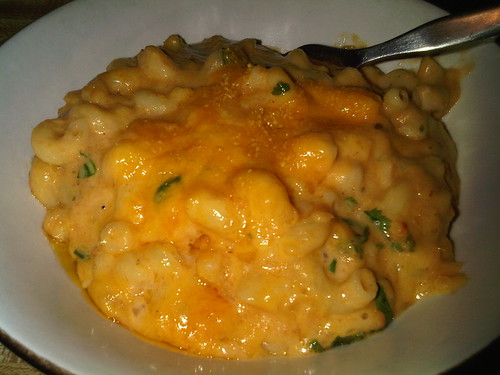
Masala Macaroni and Cheese

It's a good thing I don't live with my brother, because I'd have a hard time staying away from Sarita's Mac and Cheese now that I've sampled the goods.

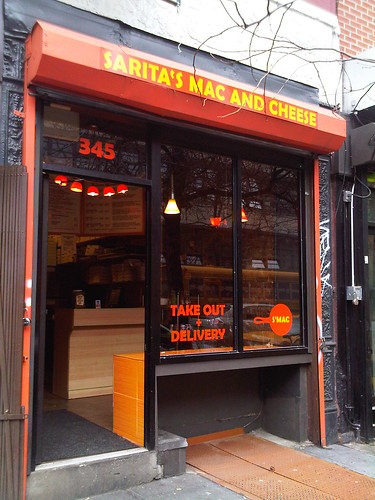
Sarita's Mac and Cheese

I first caught a glimpse of this East Village eatery's orange exterior a few months earlier while exploring the neighborhood.  I made a mental note to try it out, though in NYC, one's head can quickly fill up with such mental notes.

Last week, with snow in the forecast, the craving for rich, oh-so-bad-for-you, comfort food struck, and I picked up the phone to place an order.

I've grown up with mac 'n cheese, and tasted a wide range from the frozen, low-fat Lean Cuisine version, to my own go at a Quattro Formaggio recipe featured in Gourmet magazine.  I was being presented with a menu of options, and I had to think outside of the box to take advantage of the opportunity.

Masala macaroni and cheese piqued my curiosity.  Indian spices mixed with cheesy goodness.  How could you go wrong?

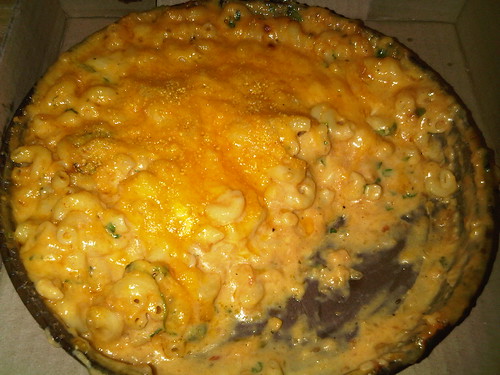
I phoned my order, and opted for the dinner portion (aka "major munch"), which turned out to be a pie-size platter large enough to give an elephant high cholesterol.

On the website, it appeared as though the establishment was a sit down restaurant, but when I went to pick up my order, all I saw inside was a small kitchen set up for take out and delivery.  Did they forget to update their website, downsize, or was I missing something?

The "Major Munch" serving is enough to last a few days

I returned to my brother's apartment, and served up several hot spoonfuls of the pasta.  The Indian spices gave it a kick, which turned out to be an enjoyable new take on a classic American dish.

_________

Sarita's Mac and Cheese - 345 East 12th Street, New York City

Winter Street Scenes in Bern, Switzerland

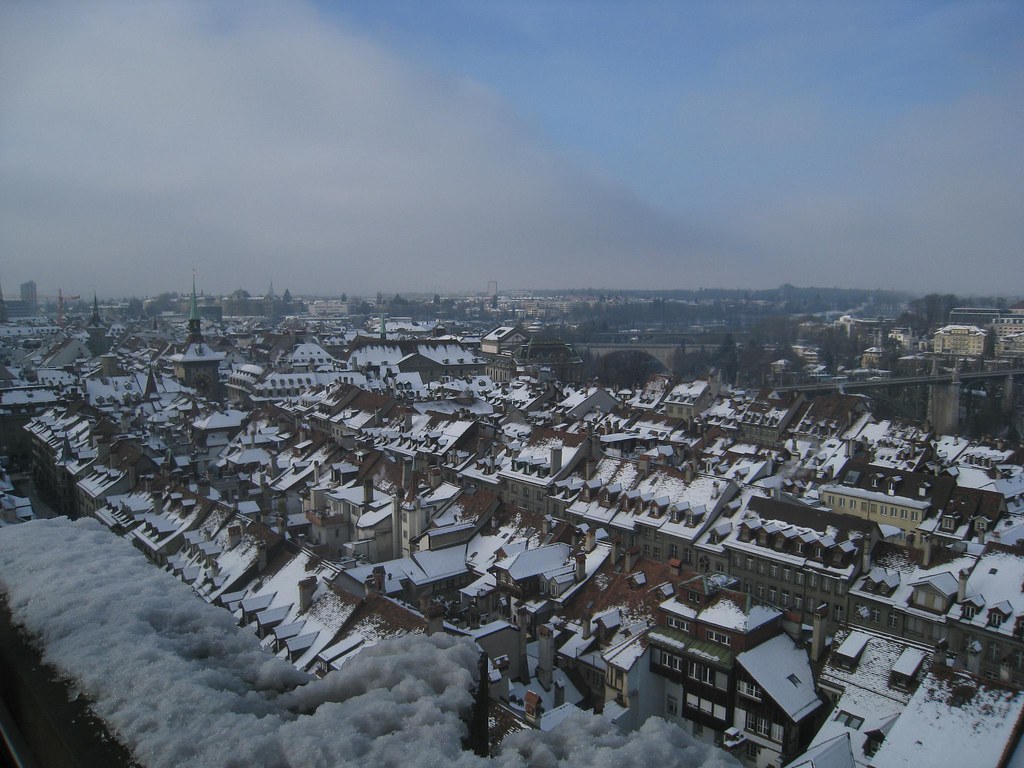
The Swiss capital of Bern was my first stop in the country, and I had the chance to stay with a friend I made in Nepal for two of my three nights.

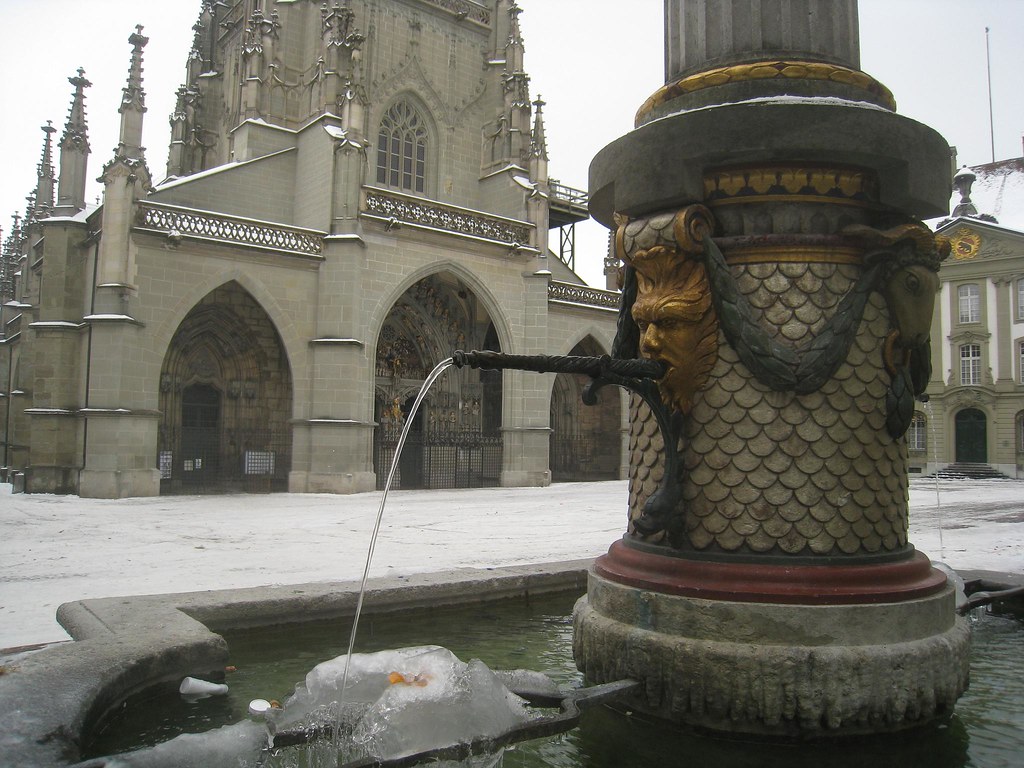
I found the relatively small city full of curiosities, like the numerous water fountains, some of which are hundreds of years old.

The River Aare runs through Bern

One of the many city fountains, some of which date back to the 16th century

View from atop the cathedral

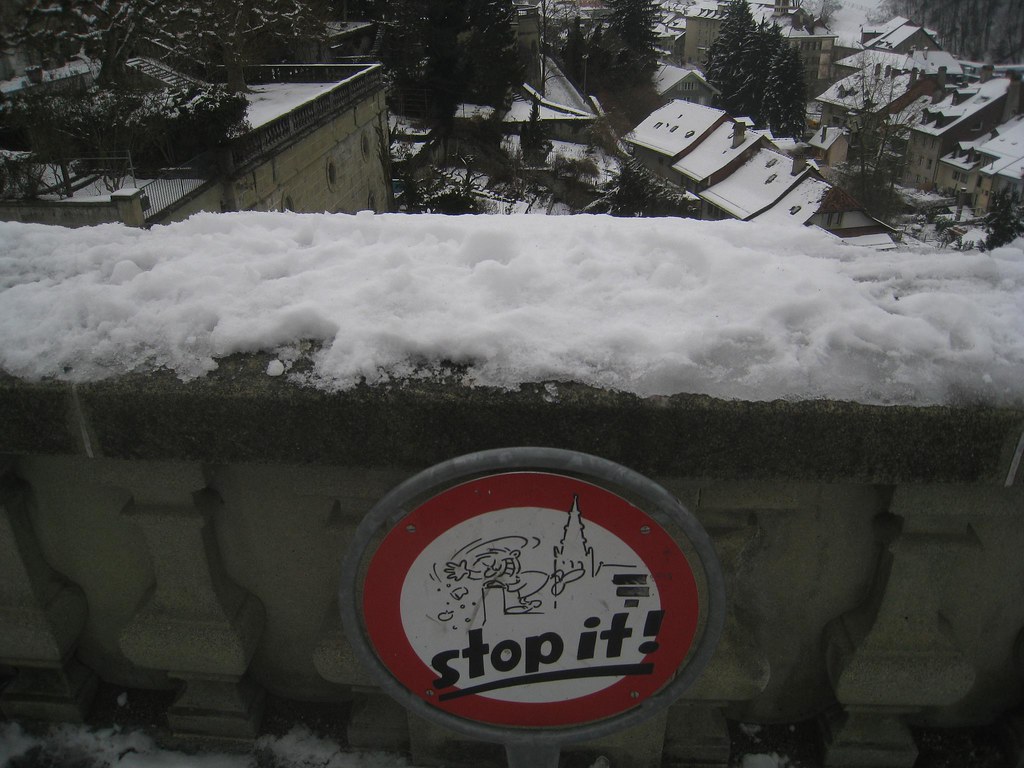
Will this sign really stop mischievous kids?

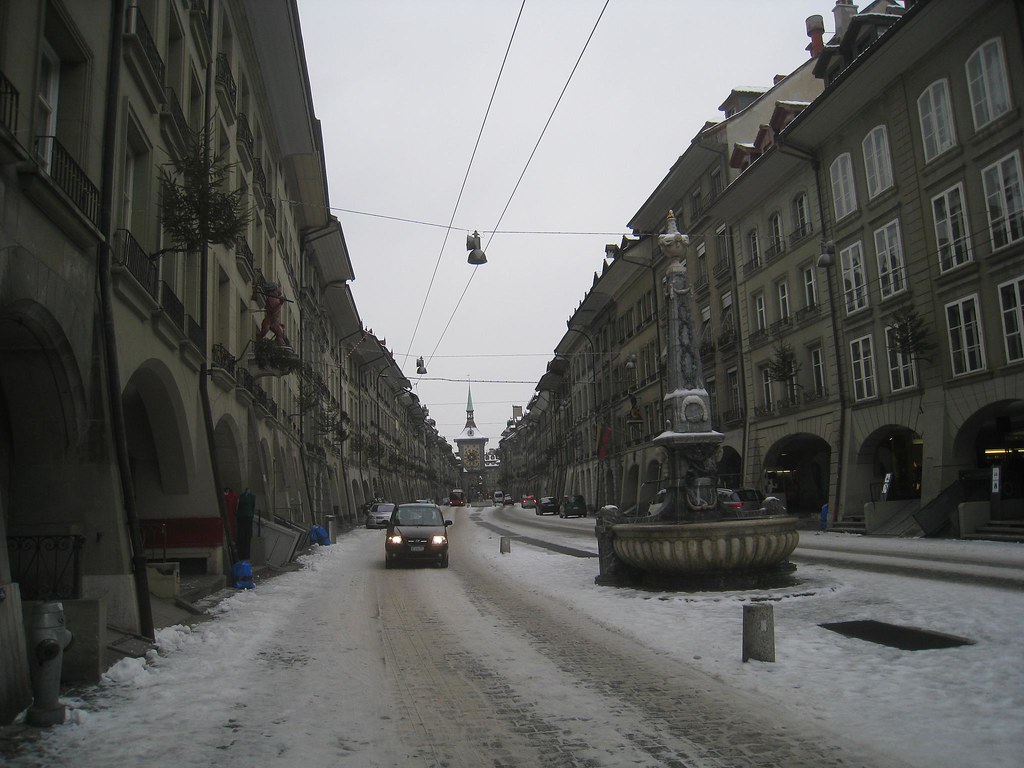
The city's town clock in action

A distant view of the city clock

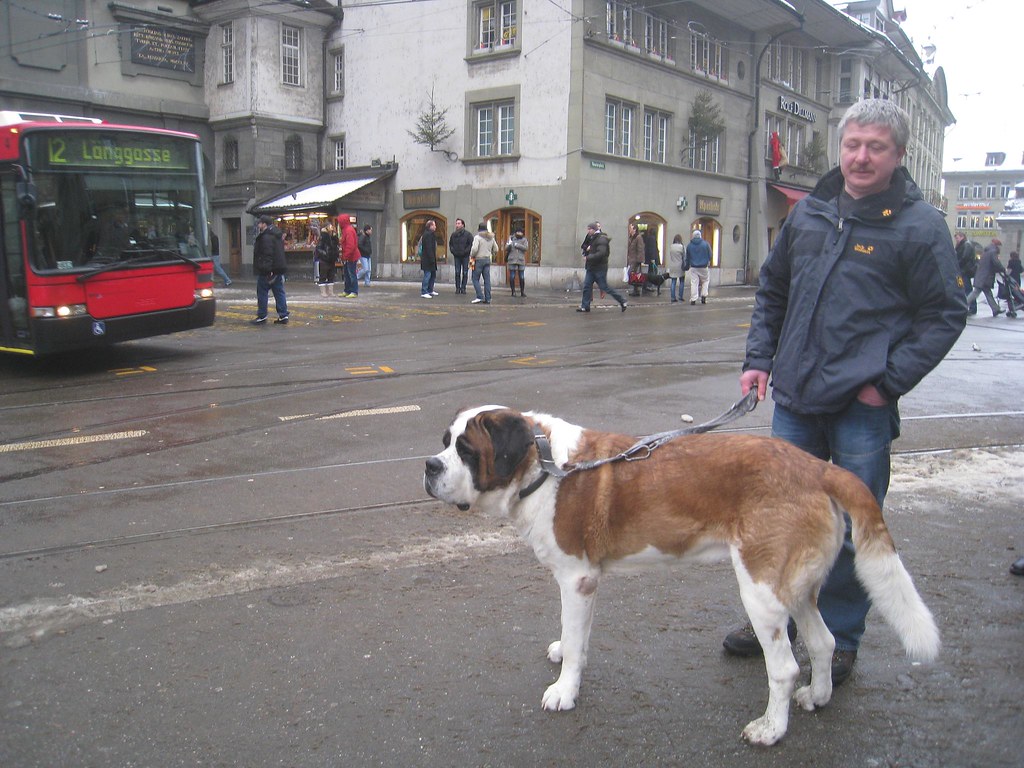
Saint Bernard
Saint Bernard

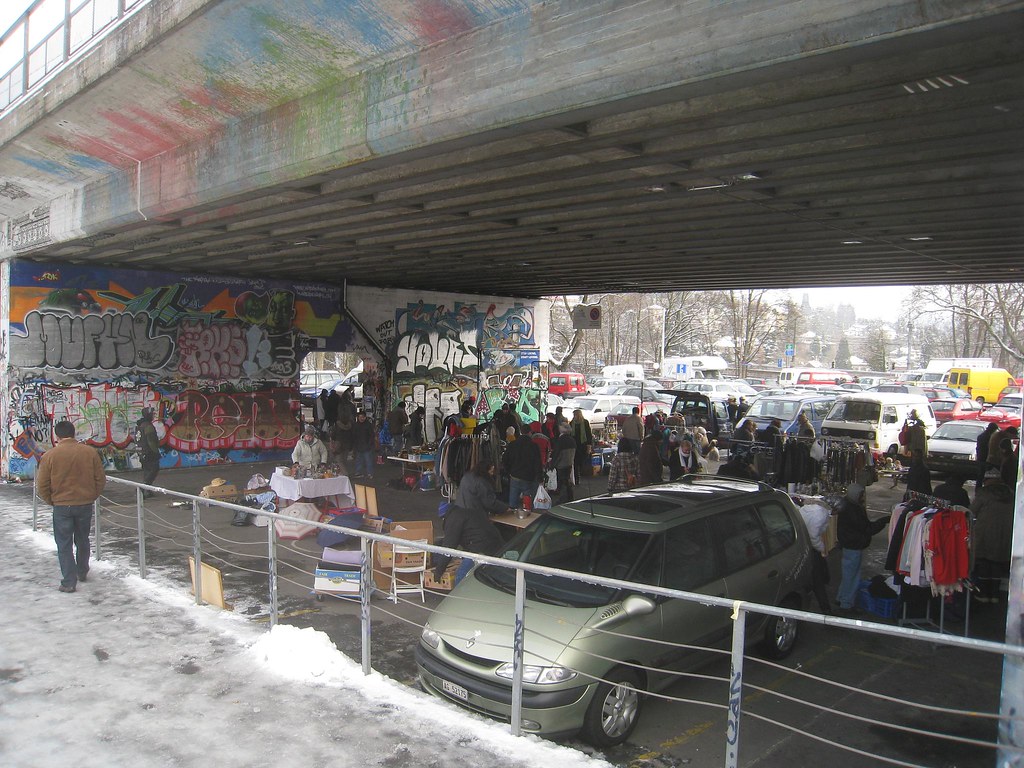
Flea market under a graffiti'd bridge

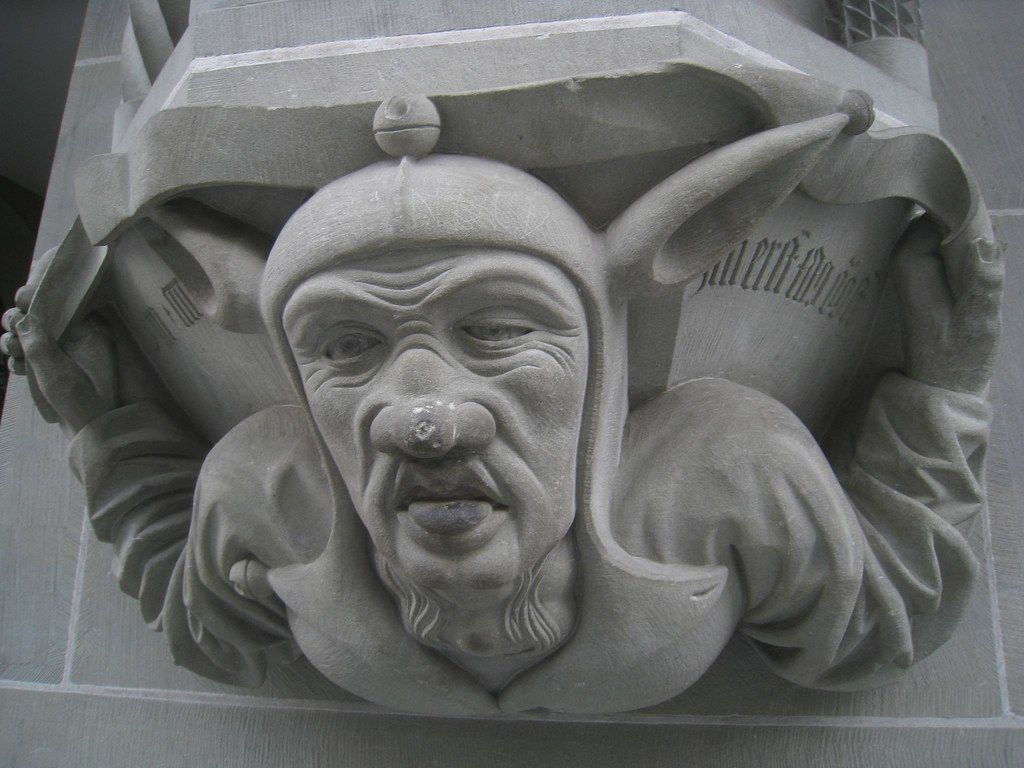
A sign of Switzerland's medieval past

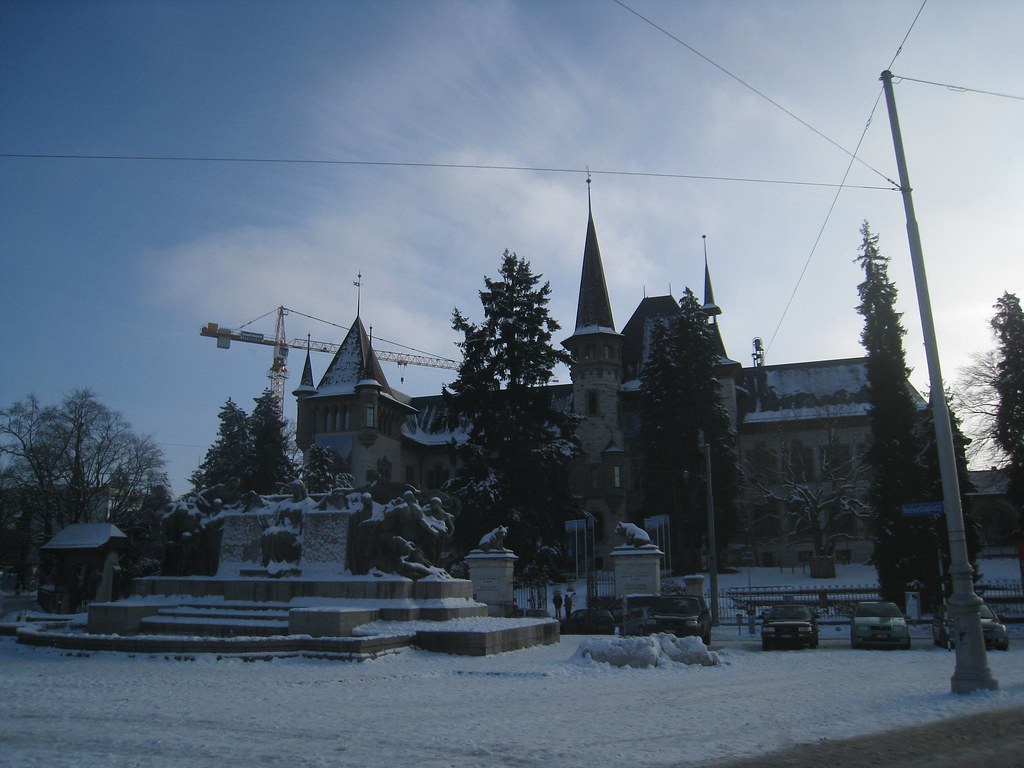
The building housing the Einstein Museum

The New York Times Travel Show

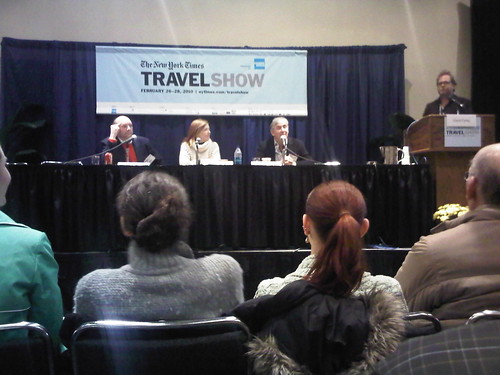
Panel (left to right): Don George, Susan Orlean, Tony Perrottet , and David Farley
Panel (from left): Don George, Susan Orlean, Tony Perrottet , David Farley

Last Saturday, I returned to the Jacob Javitz Center for The New York Times Travel Show.  The day before, I had picked up a free ticket from the guys and gals at the GAP Adventures store, however I conveniently forgot it at my brother's apartment.  I politely turned down the cabbie's offer to take me back across town to pick it up, which would've doubled his fare in the process.  If there is one constant in this world, it is that taxi (tuk-tuk, rickshaw...) drivers trying to get as much money from their customers as possible.

Upon entering the convention center, I immediately noticed to my right that Arthur and Pauline Frommer were signing books.  I seized the opportunity, and introduced myself to both of them.  Pauline recognized me from Twitter as "rtwdave" which had me wondering if I should bite the bullet and simply introduce myself by my nickname going forward.

I continued walking through that area, as it was for African countries.  Botswana was in the house, but no Rwanda.  Ethiopian Airlines was present, and offering a contest for roundtrip airfare to Addis Ababa.  I threw my name in the basket, and then canvassed the rest of the show for other contests worth entering.  I cast my line for free trips to Costa Rica, Croatia, Puerto Rico, and a few others.

As 1pm approached, I ducked downstairs for the seminar called "Travel Through the Eyes of Travel Writers" which included former Lonely Planet Editor (and new Gadling contributor) Don George, author Susan Orlean (who claimed not to be a travel writer, but a writer who travels for work), and author Tony Perrottet.  The discussion was moderated by another book author, David Farley.

I enjoyed hearing their travel tips, and could easily relate to much of what they said.  For example, George was big on aimlessly wandering around a new town, while Orlean professed to not know much about a destination until she arrives and can explore it for herself.  I never realized my cultural ignorance included such wonderful company.

After the panel concluded, I bumped into Michaela and her husband from Briefcase to Backpack, and together we wandered back upstairs.  We stopped by the authors' table, and I introduced myself to Farley while Michaela picked up a copy of his new book, An Irreverent Curiosity: In Search of the Church's Strangest Relic in Italy's Oddest Town.  More aimless wandering, and I saw them both off.

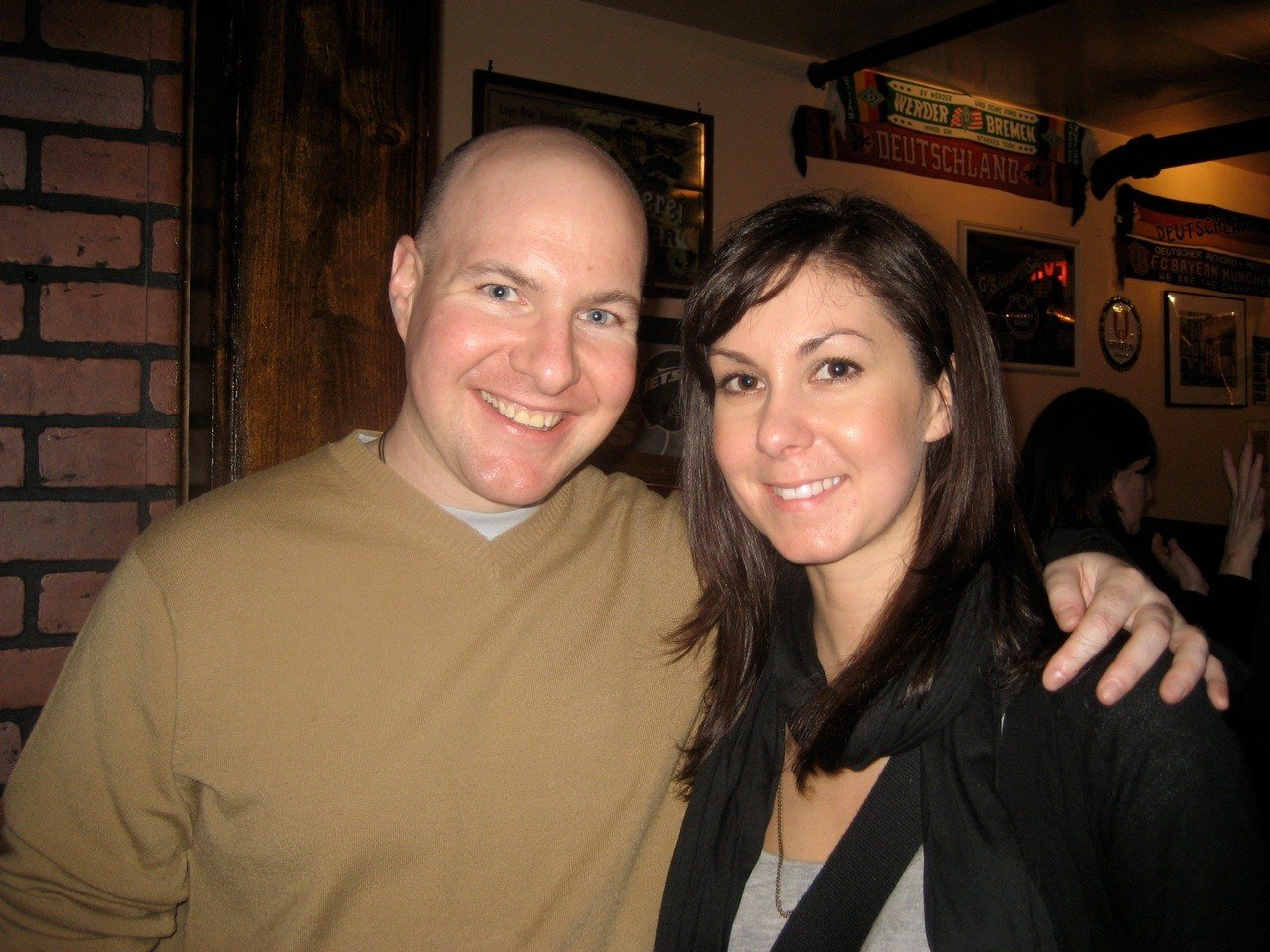
Me and Gina at the German bar

And then I descended to the first floor again for Julia Dimon's talk, "Beyond the Tourist Zone."  Before she got started, I met up with Gina of Warm October, who had also been at the Matador-Sosauce BBQ in Brooklyn last Summer, though we didn't manage to meet that night.

Of all the professional travel writers and gurus I've been listening to and meeting lately, Julia seemed like the one I could identify with the most.  Young, well traveled, and incredibly attractive - that's us!  Which is exactly why it sucked that I only had 15 seconds of her time after the talk to say "hello" while getting our photo taken by a random man with a giant SLR camera.

Gina and I walked around a little more, before catching the end of the "Travel Writing 201" panel (where Max Hartshorne of GoNOMAD.com said a bunch of things about the lack of potential for individuals' travel blogs to make money from advertising that I wholeheartedly disagreed with).

Chris was German in a former life

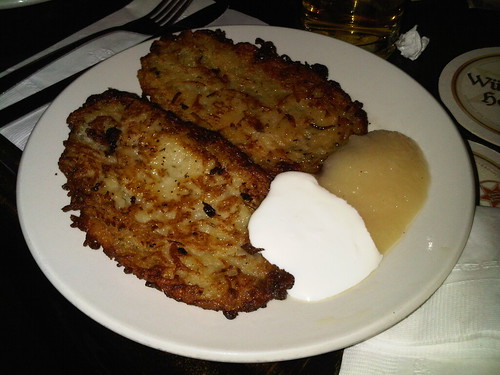
Next, it was on to meet good friends at a German bar to get the night started.  This is where my recollection of events starts to grow fuzzy.  I do remember my dinner consisted of deliciously greasy potato pancakes.

In addition to getting to know Gina better, I also got to spend time with my friend Naveen (from my Jersey days) for the first time in about 12 years.  Joined by my brother Jon, and good friends Kai and Chris, we soon hit another bar, and another, and well, you get the point.

Potato Pancakes
Potato Pancakes

Does Nightlife Exist in Rural China? Kind of...

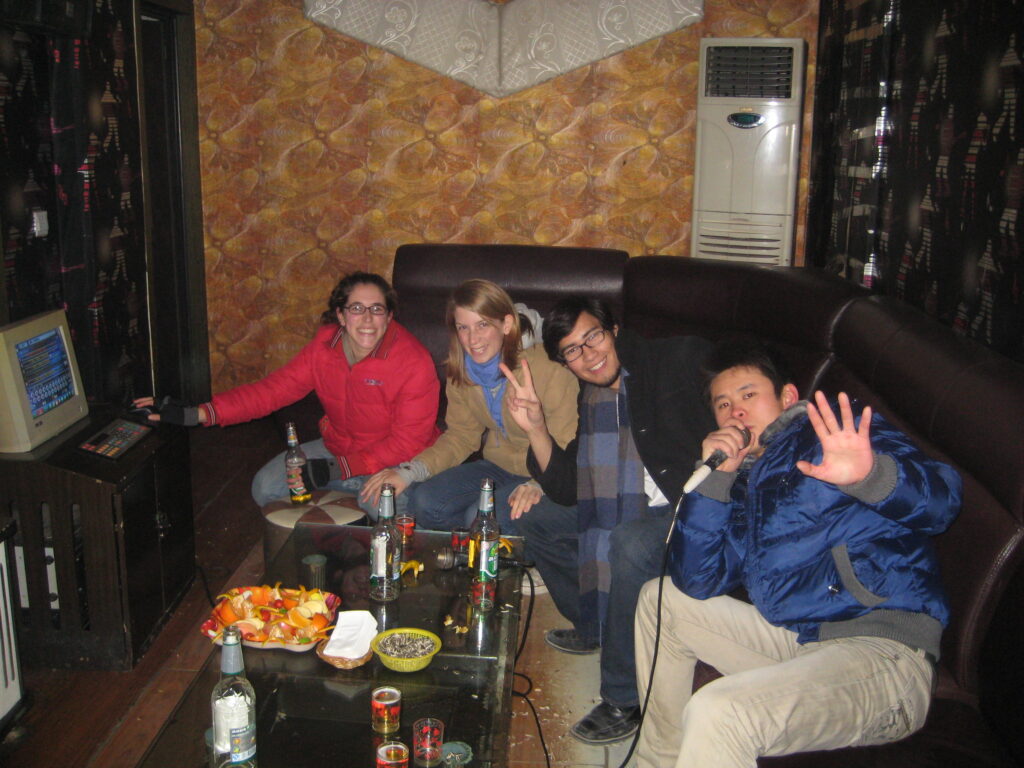
An ordinary night at a KTV place in Jincheng, Sichuan

There are three foreigners in this town, total. Residents estimate that the town is 60,000, and while that may be true, it doesn't always feel that way since the town is basically only four streets, so you're not going to find much in the way of nightlife. Actually, you're not going to find much in the way of anything except hair salons, phone stores, corner/variety stores, pharmacies, and Sichuanese restaurants. Truly.

So, if your idea of a good night is getting your hair washed (which does come with a 20 minute head massage) then you're in luck, but otherwise, you have roughly three options.

You can go to KTV. KTV is the Chinese karaoke (sometimes actually said as ka li OK). You go into a private room with your friends, select your music, and sing songs until your time there runs out. It also usually features quite a bit of drinking, sunflower seeds, and a fruit platter with interestingly carved items and cherry tomatoes. While KTV's private rooms eliminates the fun of watching your friends humiliate themselves in public at a bar, it does allow you the chance to sing as much as you want"”or until you run out of English songs. If you do come to China, brush up on the Titanic song, Hero by Mariah Carey, and Edelweiss-- the three songs I have been asked to sing each time we've gone to KTV.

You can also go to a tea house. Tea houses are nice because they are heated, which is not actually that common for places in this town. You sit in comfortable chairs and drink your 5RMB (less than US$1) glass of tea and generally either converse, or gamble. There are three major gambling games that I've come across. Ma jiang (mahjong), dou zi zhu (beat the landlord), and xiang qi (elephant chess or Chinese chess, depending on the translation). Of those, my favorite is dou di zhu, as it's basically a modified version of the game most college students know called As*hole. Or, as I called it for my ten-year-old campers, President.

Your third option is to play pool. Most pool houses here actually have snooker, not 8-ball, but some have both. No pool hall I've been to yet has had anything to drink or eat and they're not really leisurely-- it's business time when you play pool in China. This can be a fun and cheap way to entertain yourself, but let's be honest- there are only so many games of pool you can play in a week.

And, last but not least, you have the drinking option. There are no bars in this town. There's nothing that even resembles a bar. Most people just drink in restaurants and then pour themselves into bed at an early hour because baijiu, their liquor, is incredibly strong. If you want to drink after a meal (novel concept!) one restaurant is decked out as if it were a jungle-- ambiance fail? They're open into the wee hours of the night compared to everyone else-- e.g. after 11 PM. You can always go sit in a private room there (private rooms are big here) and drink beer while admiring the fake ivy clinging to every surface.

So, the lessons from this are:

  1. Perfect your Chinese gambling games.
  2. Get used to tea.
  3. Readjust your sleep schedule, as party o'clock does not exist in rural China.

Driving Cross-Country

The mysteries of my own backyard.

I have been to 18 countries in my lifetime, I've lived in four international cities in the past two years, and yet I'd say that I've only familiarized myself with a small handful of states in my home country of the U. S. of A.

For this, my globetrotting friend and I have decided against a backpacking trip in exchange for a driving one.

With my new Garmin and a world of possibility ahead of us, we intend to spend some graduation money on a cross-country road trip: from New York to San Francisco, and back again.

My Open Road

We plan on couchsurfing as well as crashing on our college friends' couches.

Also, I assume an excursion of this magnitude will take a month, maybe longer, and we've already factored in the fact that we must take two different routes to include the South and the North of all that is still (personally) considered to be the vague Midwest.

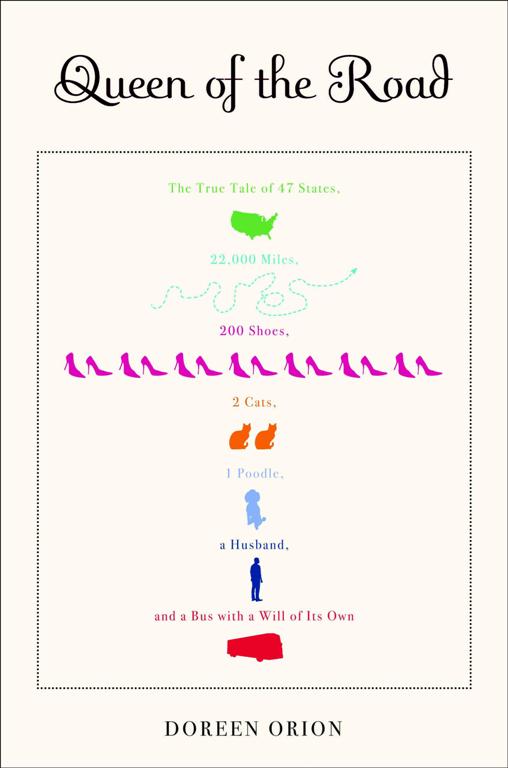
My inspiration, I'll admit, was not that born from an original idea, however. I attempted to read Doreen Orion's Queen of the Road over my winter vacation.

It is the story of a "princess of the Island of Long" who quite literally takes the ride of her life with her psychiatrist husband and three pets across 47 states.

Queen of the Road

It certainly sounded entertaining, and yet I could not get over the voice.

Doreen is a psychiatrist, like her husband, but unlike his seemingly laid-back and dedicated demeanor, she comes across as the woman she makes herself out to be: pampered, grouchy, and lazy.

Perhaps it is just me, but I found this fact, amongst other blatant complaints about their marvelous adventures, quite honestly, annoying.

Although, to be fair, I do understand how others would find her hilarious.

And, as I got further into Queen of the Road, I too found the odd couple's misadventures and the lessons they learned from them (both practically and philosophically) to be inspirational.

I suppose I should work on having more patience; maybe then, I'd be able to finish possibly the most unique travel memoir I have ever gotten my hands on. 

Until then however, I've decided to put all my free time efforts into planning my own cross-country trip.

You wouldn't happen to have any must-stops in mind, would you?

Rwanda Trip: Finding Cheap Airfare with Kayak

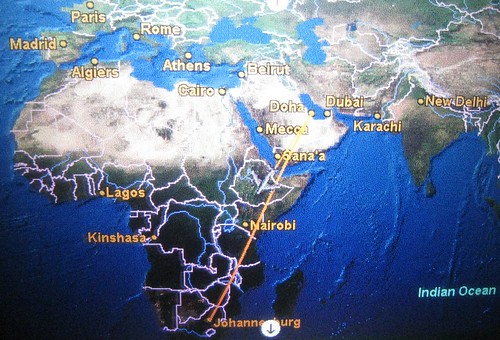
Flying over Ethiopia en route to Cape Town

As I announced February 12th, I'm going to Rwanda for the first time in late March. 

On my trip around the world, I spent a few months in southern Africa, and a few weeks in Egypt, but I purposefully chose to leave the adventures of the countries in between for a future adventure.

For the record, all of the in-country expenses will be paid for by the country's tourism bureau, including accommodation, food, transport, tours, and permits. 

In exchange, while they have no expectations of me regarding coverage, I intend to do what I do best - write about my experiences on this blog and spread the word via social media. 

While I'll be responsible for incidentals like alcohol and souvenirs, the big expense on my end is the roundtrip airfare.

Before I could accept the trip, I searched online to ensure I could cover the flight myself. 

Since Jen from Kayak had recently introduced herself to me on Twitter, I decided to give them a try. 

In the past, I've used Orbitz to search for and book airfare and Air Ninja to scout out routes flown by discount airlines.

On Kayak, I did a quick search from Dulles, Virginia to Kigali, Rwanda, and found the cheapest option to be about $1,500 on Ethiopian Airlines. 

The next cheapest listing was a whole $500 higher, so I jumped over to Ethiopian Airlines' site and played around with the dates. 

$1,477.00 was the going rate, and it was just about as much as I was willing to spend. 

It is by far the most expensive flight I've ever booked.

Seriously, I don't hand over that much money to anyone but my dentist and even that is begrudging.

But I already knew from the occasional glimpses at adventure tour company catalogs that such a trip as I was taking would normally cost three times as much. 

The permit to see the endangered mountain gorillas alone is $500.

I booked the flight, which initially appeared to have one stopover in Addis Ababa, Ethiopia, which made sense, only to find that there are actually three stopovers!

Dulles, Virginia ---> Rome, Italy ---> Addis Ababa, Ethiopia ---> Entebbe, Uganda ---> Kigali, Rwanda

...and then the exact reverse for the return flight.

I also made sure to Google Ethiopian Airlines to get a feel for their safety record.  Remember that plane that went down off the coast of Lebanon January 25, 2010?

Yes, that was Ethiopian Airlines.

Suddenly, I felt like I was going to be taking a ride on the Lunatic Express a lot sooner than I expected.

Friday Flashback: Southern Laos & The Mekong River

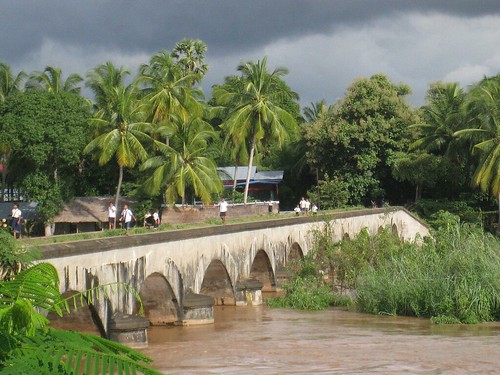
School kids cross the old train bridge to Don Det (island)

Aside from river tubing in Vang Vieng, I didn't know what Laos would hold for me.  Crossing over from Cambodia, I quickly found myself on Don Det, one of the better "developed" islands situated in the midst of the Mekong River in southern Laos.  Life was slow, very slow.  Sip a beer, talk with other travelers, watch the muddy water wash by, and maybe go for a walk.

When it came time to move onward with my new Parisian friends, we headed further north to check out an old temple complex, Wat Phu.

  • The Journey to 4,000 Islands
  • Slow Down, You Move to Fast
  • Ferry Funny
  • Bicycling to Wat Phu

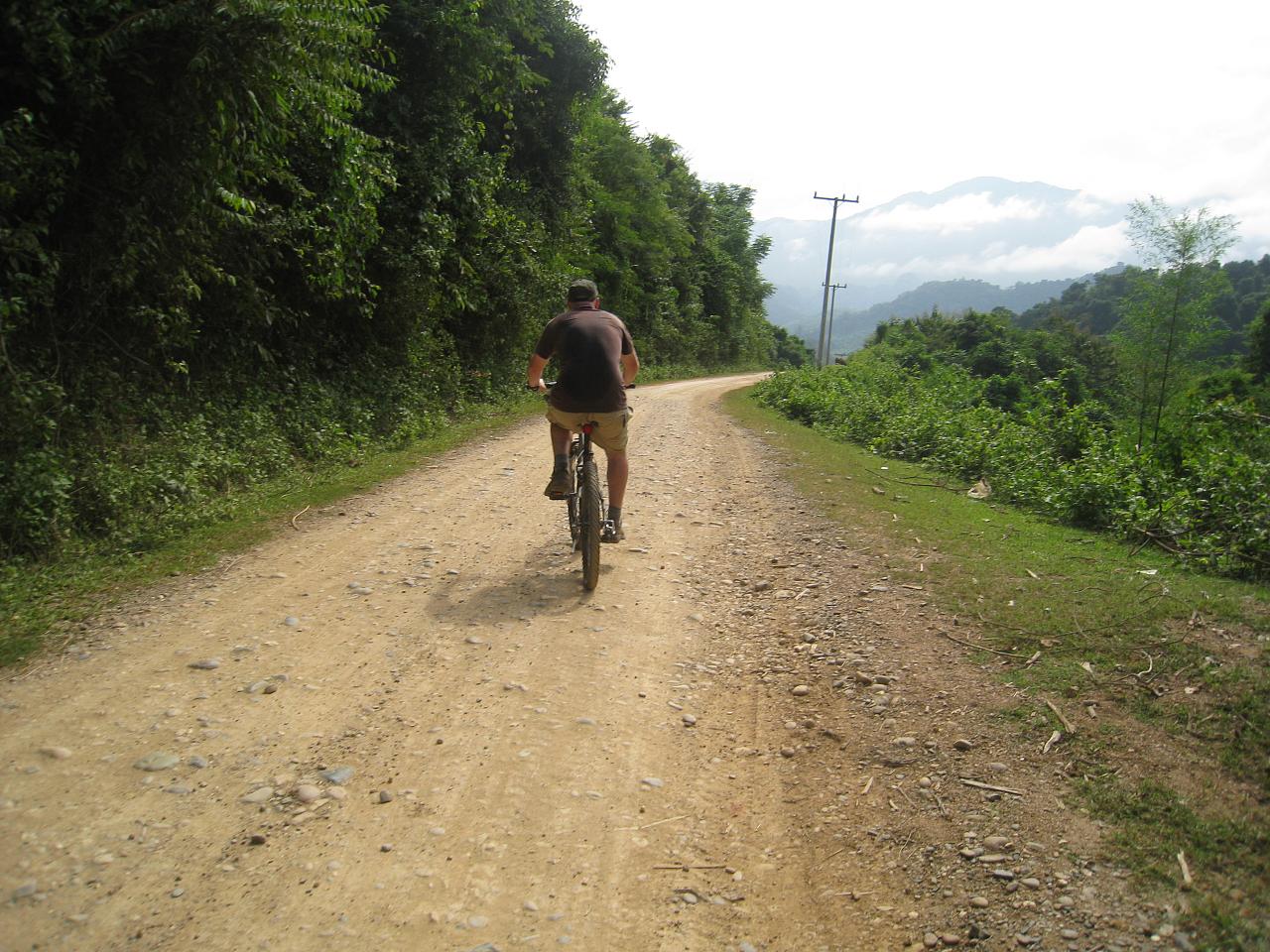
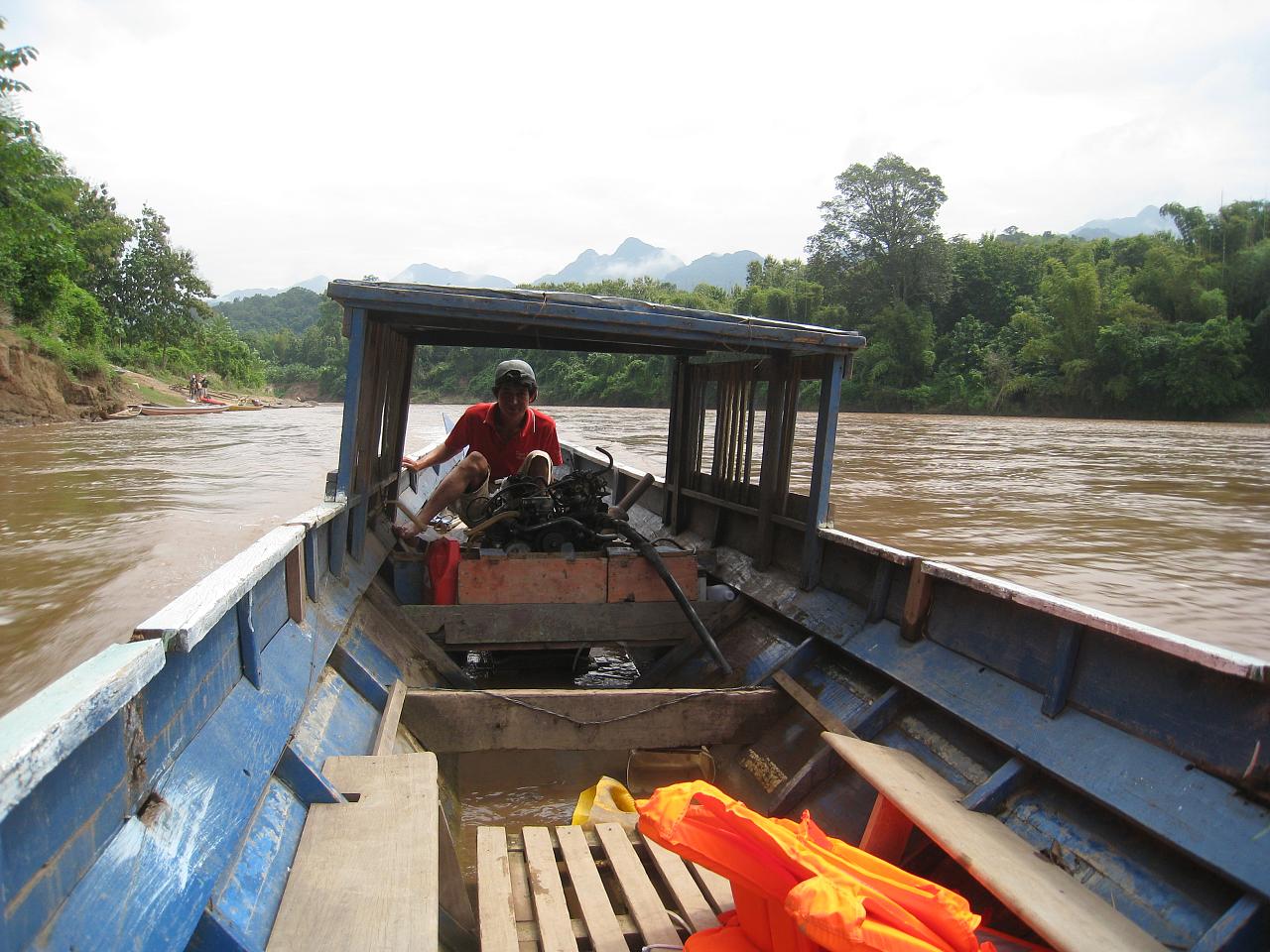
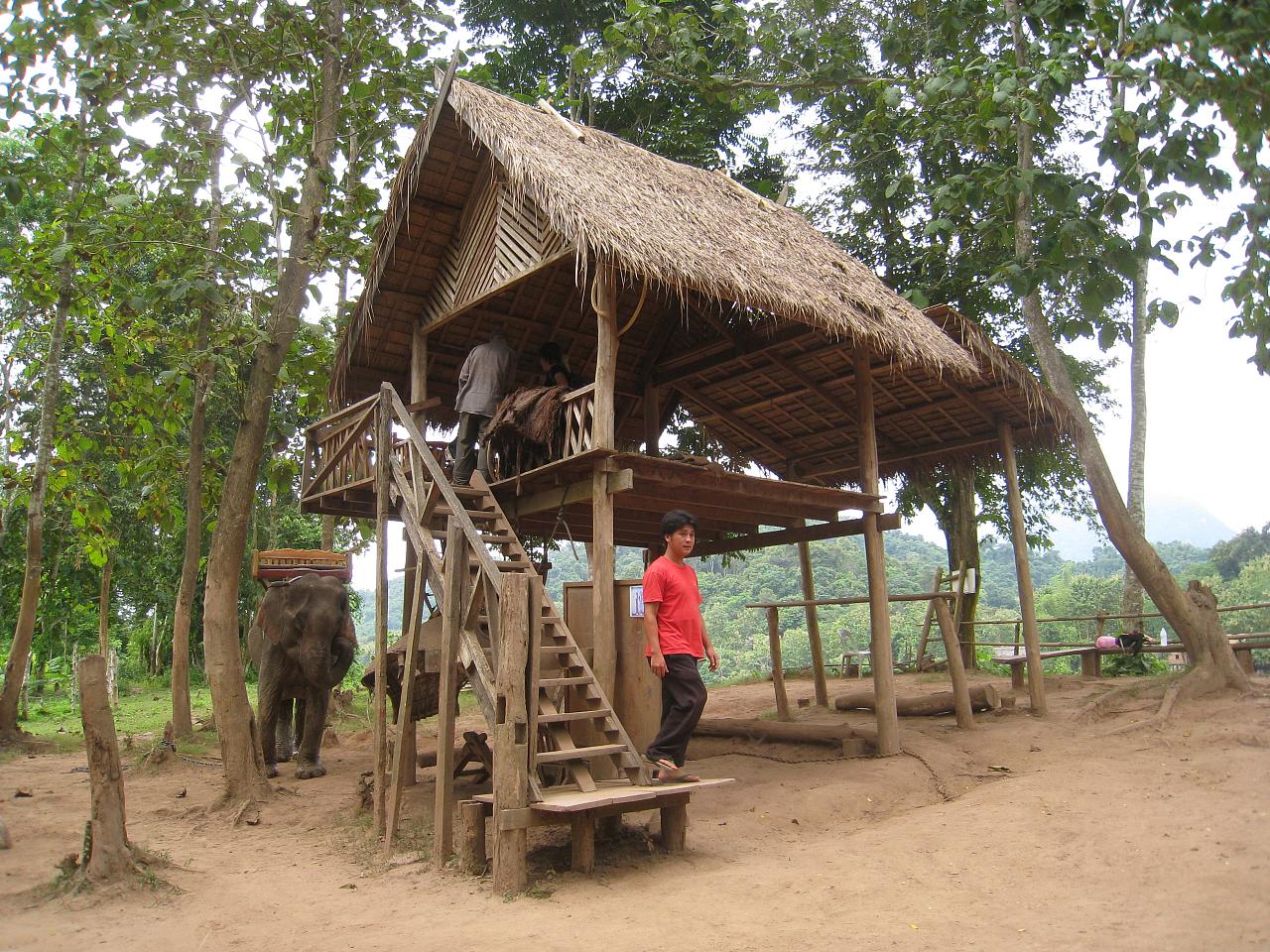
Mountain Bike Tour in Northern Laos

There are a lot of activities you can book from Luang Prabang in northern Laos. 

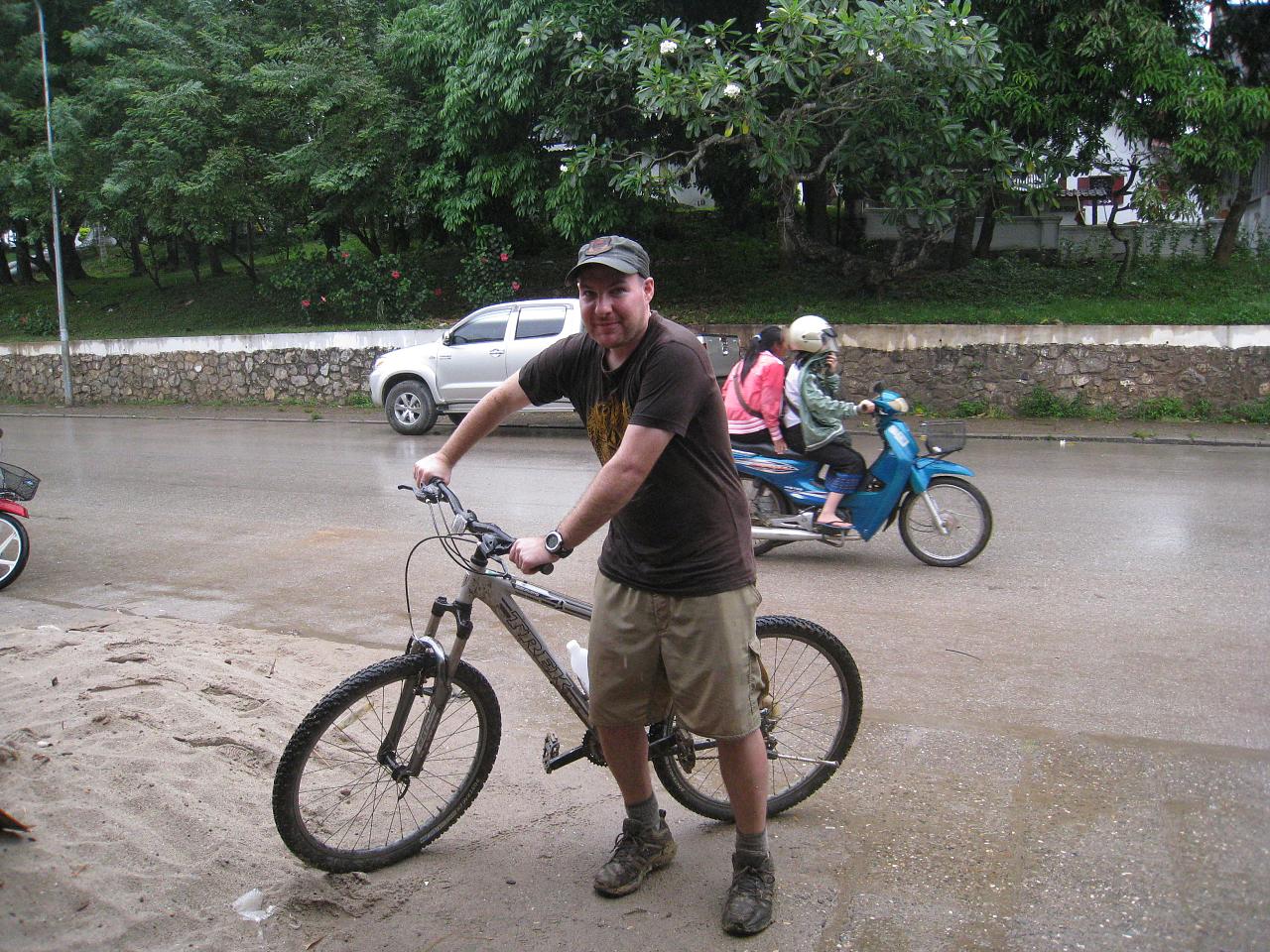
As I planned to do a multi-day hill tribe trek across the border in Thailand, I decided to opt for a mountain biking excursion, which included my first elephant ride.

By the time my guide and I reached the waterfalls and ate lunch, it had started to rain. 

Needless to say, the rest of the way back to town, which included 10 km on the mountain bike, was less than pleasant.

Mountain biking in northern Laos

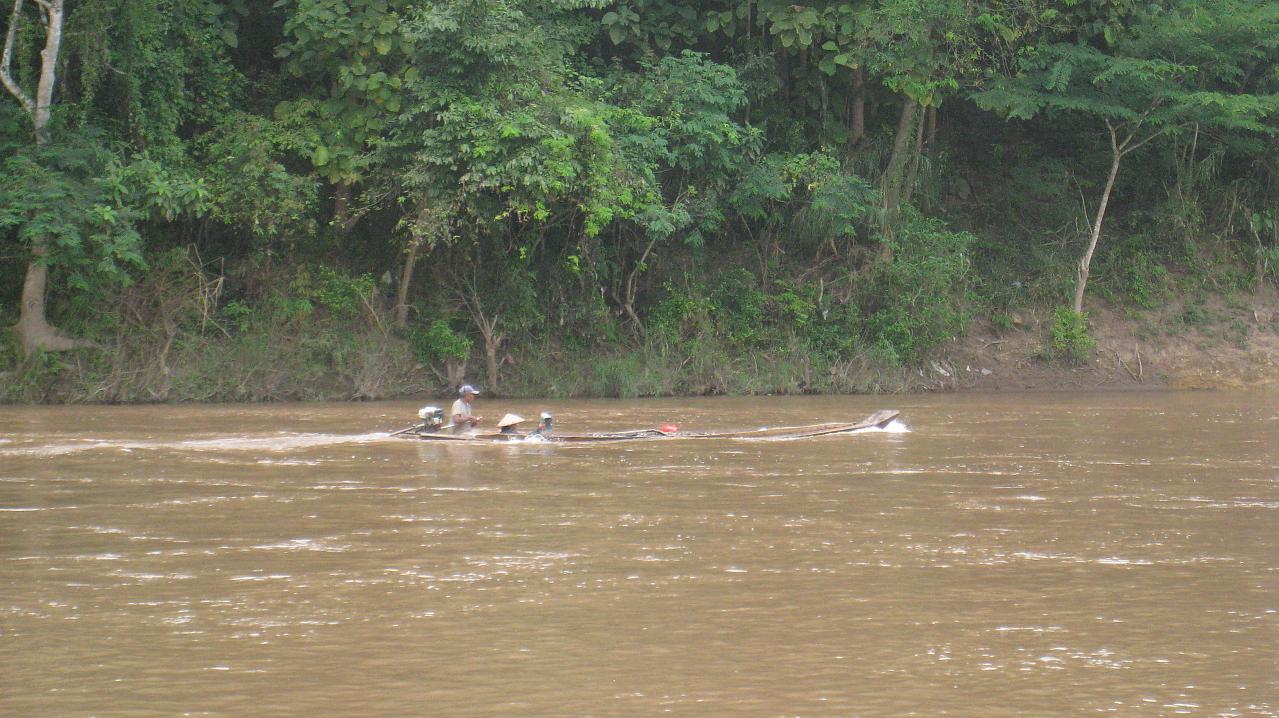
Leaving the bikes behind, we take a boat upriver

Ominous clouds foreshadow future rains

Here comes the next elephant

My boat wasn't the safest looking vessel, but at least I didn't have to bail water out!

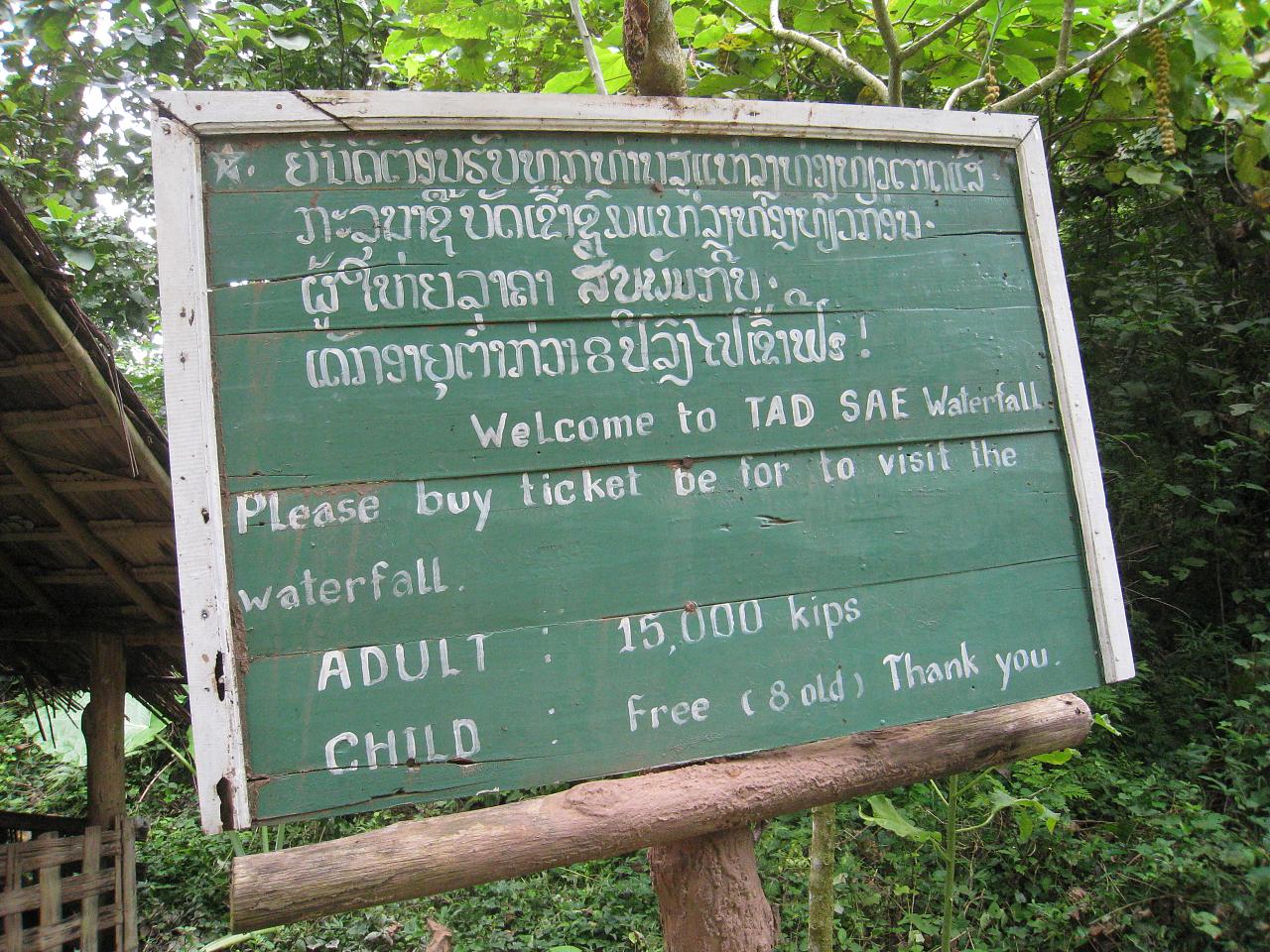
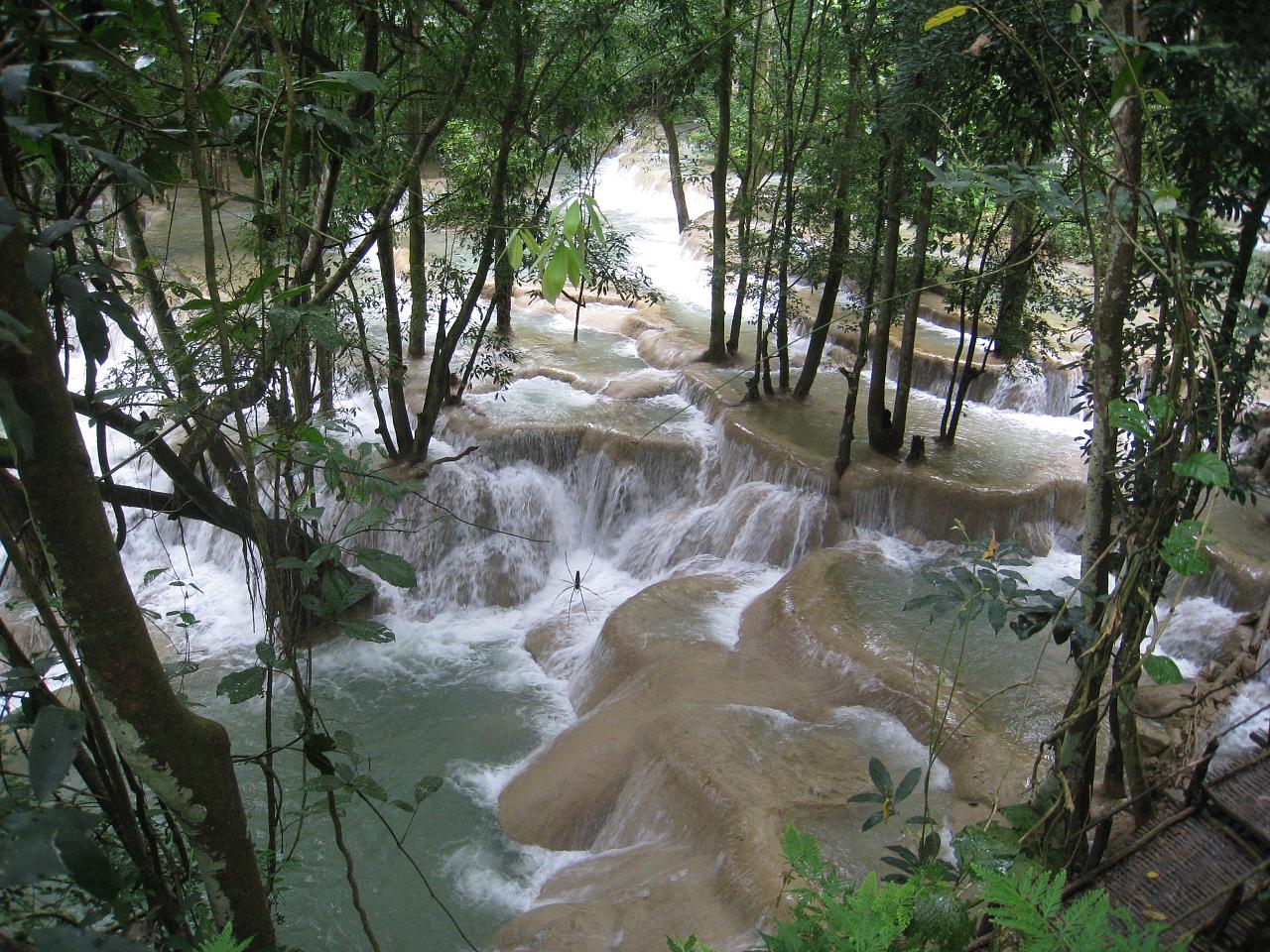
Welcome to TAD SAE Waterfall

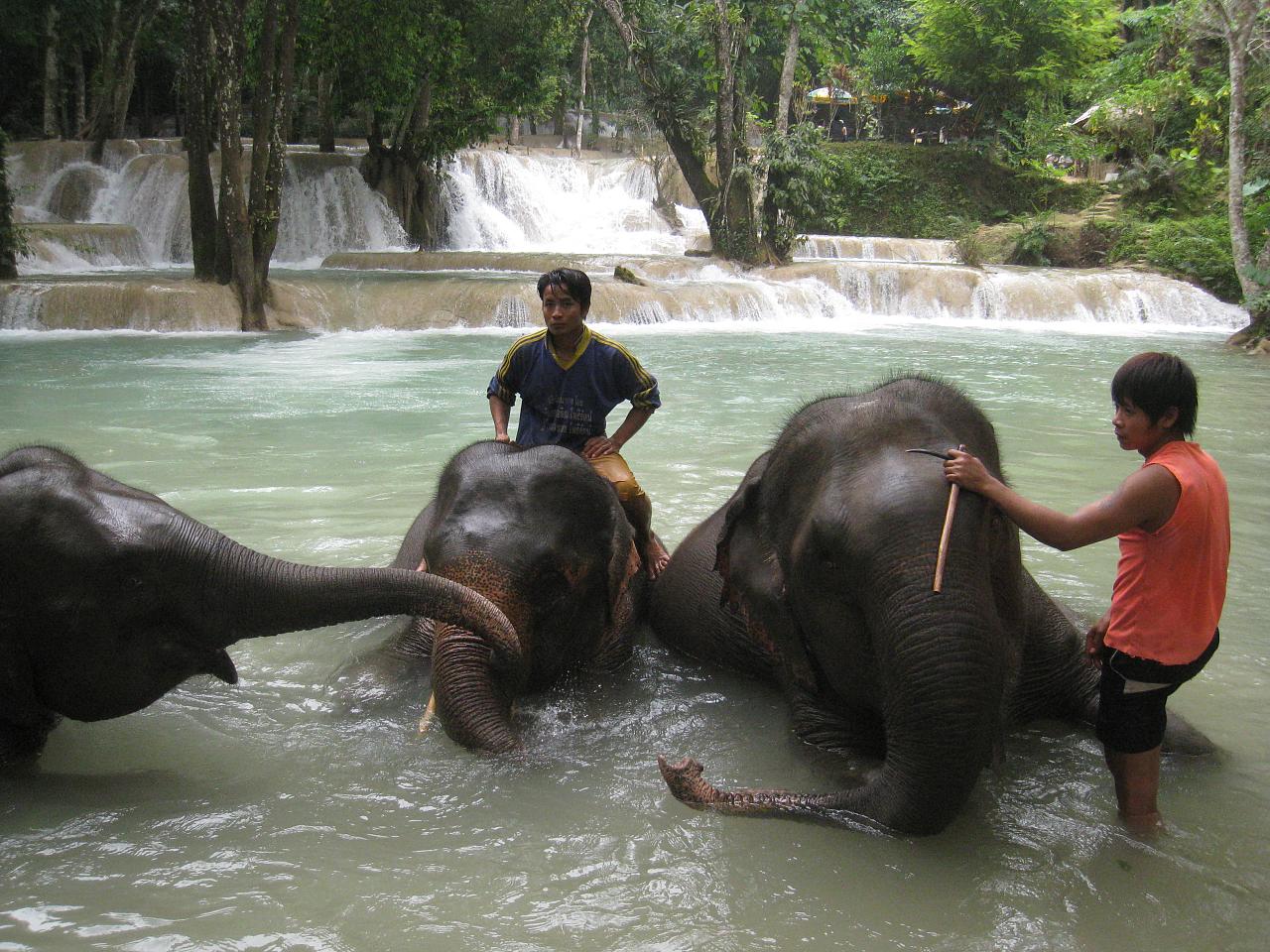
Elephants are bathed at the waterfalls

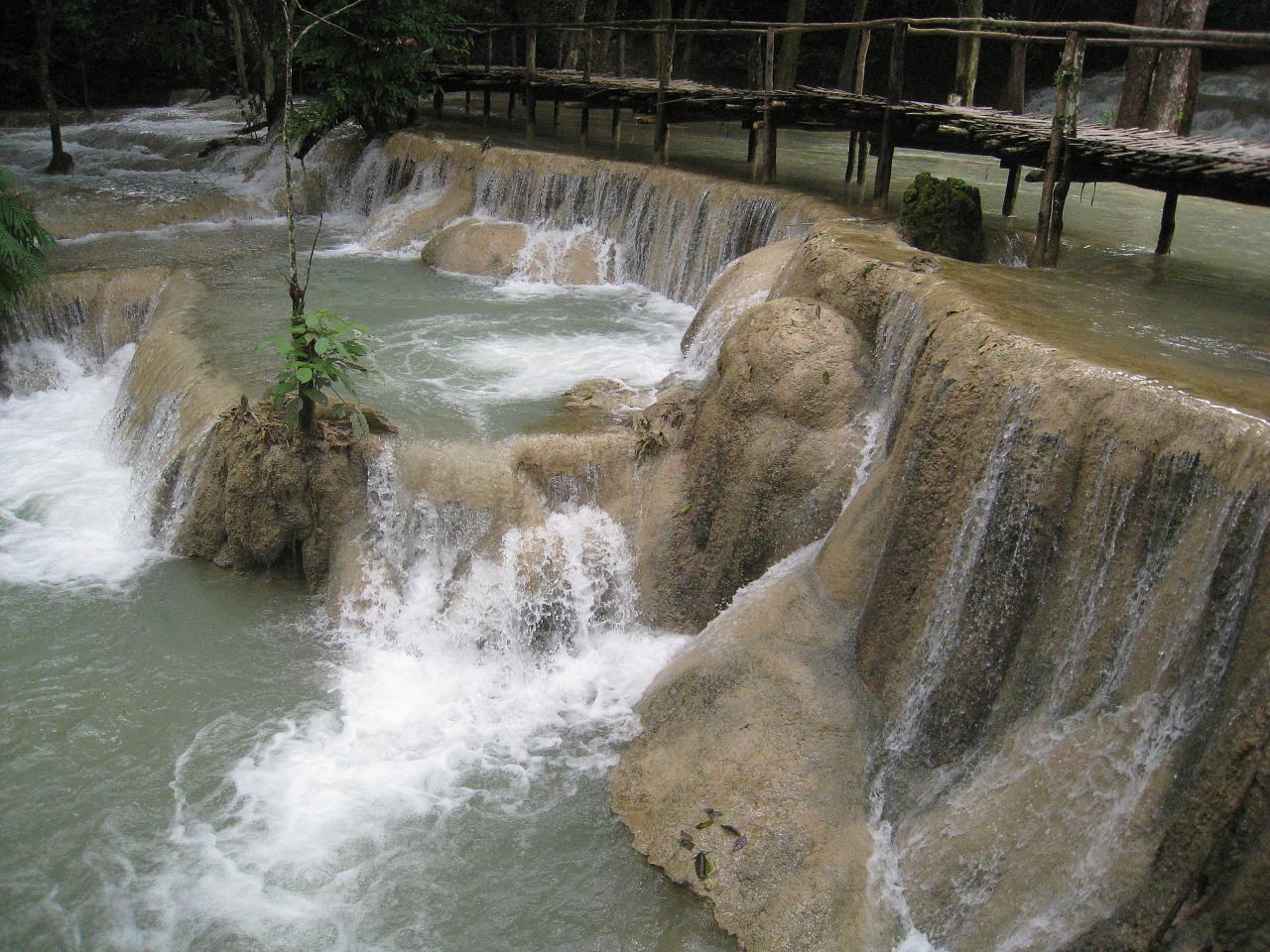
A rickety bridge across the falls

A giant spider hangs around in its web

Soaking wet and saddle sore back in Luang Prabang

The Smartest Ethnic Group in China

The Santa stuffed animal given to me by a friendly high school student who didn't quite understand why Santa doesn't visit the Jews...

I'm not usually one to broadcast my religion as I travel, but around Christmas time, as people continuously asked me how I celebrate the holiday, I began to tell them I was Jewish.

To date, every single person to whom I have told I am Jewish has responded with the same thing: " You're so smart!"? Um, thanks? You've probably never met a Jew before, where is that stereotype coming from?

Well, it turns out that in this town, it's coming from the geography class where the students are taught that Ashkenazi Jews have the highest IQs of any minzu, or ethnic group. While that doesn't explain where the stereotype comes from in other cities, I have to assume it's similar.

Sometimes reactions have also involved follow-ups. Most of the time, it's simply that we're really good at business. Ok, that stereotype is worldwide, I get where that came from. Others have been less founded in reality, or more hilarious.

A coworker, for example, once petted my arm for awhile and asked me to teach her. She didn't specify what I should teach her, but seemed to hope that any teaching coming from my minzu would be particularly awesome.

One person, upon hearing that I was Jewish, paused, squinted at me, and then said, " Well, why aren't you black?"? The person next to her then told her she was an idiot, Jews aren't black, so that probably isn't a commonly held misconception, but it does highlight that these stereotypes are based not on actually having met any Jews.

And, perhaps my favorite moment came when I actually asked why people think Jews are so smart. We were near computers, so this friend typed into BaiDu, the most popular search Engine in China, " Which ethnic group is smartest?"?-- top hit? Jews. Nice. If the internet confirms it, it must be true.

As I mentioned, this came up most around Christmas, as people really couldn't figure out why I don't celebrate the holiday. People usually looked perplexed and then asked, " Why don't you have a New Year?"?-- turns out there's a common misconception that because Christmas is the biggest holiday in the US, that it's also our New Year, similar to the Chinese New Year. It took me awhile, but I finally figured out the confusion.

At least in this town, not a single person knew that Christmas was related to the birth of Christ. Old Man Christmas (the literal translation for Santa Clause in Chinese) was known, presents were known, and many in this town even " celebrated"? Christmas (giving gifts and eating a lot), but no one knew about the religious aspects. It's funny what we export, eh?

Once I set some folks straight, I told them my own Christmas tradition involved eating Chinese food. Now that was well-received, and many joined in my festivities.

Social Media and the Travel Industry Roundtable

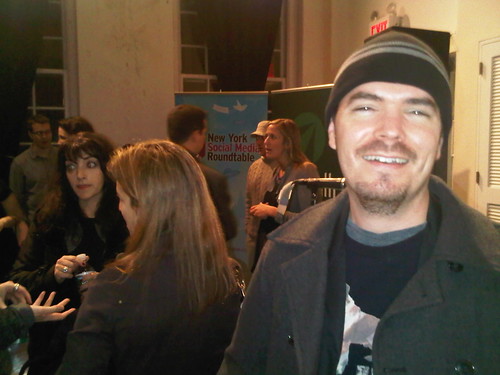
Mike Richard of Vagabondish

I boarded the Megabus to New York City yesterday to attend a roundtable discussion about how social media has impacted the travel industry.

The panelists included:

  • Stacy Small- President of Elite Travel International, @elitetravelgal
  • Brian Simpson- Director of Social Hospitality at Roger Smith Hotel, @RSHotel
  • Kim Mance- Editor of GoGalavanting.com and TBEX 2010 Host, @KimMance
  • Meg Nesterov- Account Executive at Hawkins International PR, @thenotoriousmeg

To be honest, I enjoyed meeting people at the event more than the actual discussion (search #NYSMRT on Twitter), though I did find it interesting how Meg approaches social media from a professional PR standpoint, and Stacy was leveraging Twitter to gain business for her travel agency. 

I had already become familiar with the social media success of the Roger Smith Hotel at the last roundtable I attended in Tribeca.

Before the event, I bumped into Mike from Vagabondish, who was just as funny in person as he was when I interviewed him for Travel Blog Success. 

I also met Robert Reid from Lonely Planet (and Reid on Travel), Pete Meyers from EuroCheapo, Anna from Frill Seeker Diary (and moderator for the night), and a few others. 

I confirmed with Sean and Alisha from Sosauce that their office had fully recovered from the New Year's Eve fire.

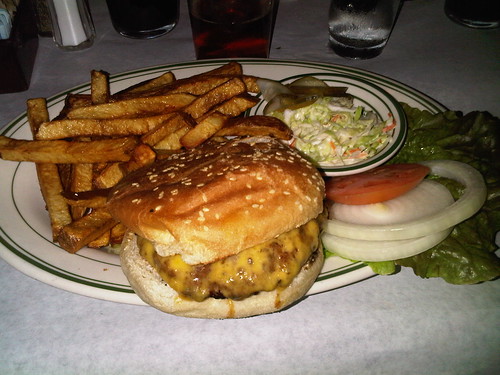
Buffalo burger with cheddar cheese

After the post-discussion mingling settled down, a bunch of us headed to Tavern on Jane for beers and late-night buffalo burgers. 

Our motley crew included Robert, Kim, Mike, Michaela from Briefcase to Backpack and her husband, Erick from Adventure Insider, and myself.

The banter was off the charts, and I teared up more than once from the laughter.  If last night was any indication of what the Travel Blog Exchange conference will be like in June, we're all in for A LOT of fun that weekend.

The Smell of Genocide

This is a guest post by Emily Baughman. If you want to guest post on Go Backpacking, please read more here.

Tuol Sleng Genocide Museum (formerly S-21 prison) - Phnom Penh, Cambodia

The Smell of Genocide

I once burned (accidentally) three strands of my hair
heavy putrid wafts swallowed the room
and all adjoining enclaves down the hall.
Does my nose dare imagine
a head of blonde disappearing to black ash?
What is the smell of genocide?

Is it gardenias that grow in Rwanda?
flourishing in blood-rich soil
the fragrance of spring, this fanciful Venetian mask
like rose water enshrouding a cheap whore
forevermore the musk of atrocity
What is the smell of genocide?

Or the crows in Poland savaging for
worms squirming their way among human skulls.
the defecation of the living
the sweet smelling mockery of lesser forms
What is the smell of genocide?

Perhaps, the sharp cloud of cadaverine
when the upper arm becomes a humerus
When the last drops of marrow
seeped from the bleached bones of Cambodia.
What is the smell of genocide?

Abandoned shoes of old rotting leather.
The warden's sandalwood cologne.
The garlic breath of the executioner.
What is the smell of genocide?

What is the smell of genocide?

_____

About the Author: Emily Baughman has a big appetite for unconventional adventures.  She also enjoys sticky rice.  Contact her at emilyabaughman(at)gmail.com

Photos:  David Lee

Friday Flashback: What's in Northeastern Cambodia?

Boat ride in northeastern Cambodia

In an effort to go off the beaten track in Cambodia, I decided to explore the rural, northeast province.  Aside from my minivan breaking down both on the way there, and on the way out, I had the chance to visit ethnic villages and swim in my first volcano crater lake.

  • Welcome to My Nightmare
  • Swimming in a Volcano's Crater Lake
  • 4x4 Action in the Name of Culture
  • Breakdown
  • Final Thoughts: Cambodia

Next week, we head into southern Laos along the Mekong River.

Holiday Extras Travel Insurance

Holiday Extras Travel Insurance

No traveler can leave their home country without travel health insurance; being injured abroad is an event that no traveler wants to face. 

Facing a severe injury abroad without the support net of travel insurance makes an already bad situation worse.

Holiday Extras is a UK-based company that has been serving the travel community for over 25 years.

They arrange travel insurance, airport parking, and other related services for over 5 million travelers annually.

They offer complete coverage for single trips as well as annual policies for frequent travelers.

For example, a one week holiday in the Caribbean, including full health insurance, cancellation insurance, and protection against lost or stolen luggage,  is only £33.

On average, Holiday Extras offers more comprehensive coverage than its leading competitors. 

For instance, in the above example, Holiday Extras is both cheaper and offers more coverage than World Nomads.

Also, Holiday Extras offers £5,000,000 in emergency medical insurance, while World Nomads only offers £3,000,000.

Holidays Extras exceeded my expectations when it came to understanding their policies; not only do they provide a standard legal document detailing your policy, but they also provide a document describing the key points of your policy so you don't have to sift through complicated legalese.

Policies are available for all ages under 86, though children and senior citizens may be subject to reduced coverage. 

Holiday Extras does not cover any claim relating to excessive alcohol intake, and as a result, they may not be the best choice for wild backpackers; however, they are an excellent choice for families traveling abroad as those under 18 are covered free of charge.

One part of Holiday Extras' policies that I do find troubling is the exemption from cancellation insurance. 

If a relative who is not on the trip becomes ill, you are not covered if they required treatment or prescribed medicine in the 90 days before departure.

Many, if not most of us, have relatives who would fall into this category. 

Depending on your situation, this may be a point of concern.

Coverage is only available to those whose primary residence is within the UK. Still, for those eligible, Holiday Extras is an excellent option for not just holiday insurance, but cancellation and theft insurance as well. 

In particular, families should seriously consider their policies as the potential cost savings are considerable.

_____

This story was brought to you in partnership with Holiday Extras. 

Daily Life at Boudhanath Stupa

After my Annapurna trek, I returned to Kathmandu for my last week in Nepal. 

I could only handle a few nights in rockin' Thamel (the tourist district) after having experienced the tranquility of Pokhara, so I sought refuge in nearby Boudha, home to one of the valley's seven World Heritage Sites.

My new base camp was much quieter at night, and by spending my last few days in Nepal there, I was able to photograph Boudhanath Stupa at all times of day, from sunrise to sunset.

I observed the daily life of the Tibetans who lived there.

I watched them walk around the stupa, spinning prayer wheels, and counting their prayers on malas (beaded necklaces). I walked around spinning prayer wheels too.

And I bought a few wonderful souvenirs from the shops that enveloped the stupa.

Tibetan Buddhism is alive and well in Boudha, and it quickly became one of my favorite places in the world.

Sign at entrance to Boudhanath Stupa

The first view most people experience

Colorful prayer flags flutter in the wind

The big picture
The big picture

Map of monasteries
Map of monasteries

Minor stupa along the perimeter

Wedding procession
Wedding procession

5 of the 108 prayer wheels surrounding the stupa

Tibetans walk clockwise around the stupa at sunset (note the malas they hold in their hands)

The top of the stupa glows golden at sunset

Sunrise prostrations by a Westerner (note the plane and bird in upper left corner!)

Stupa
Stupa

The Bristol International Balloon Fiesta

The sky is filled with flickering lights and shapes, and the crowd marvel at the spectacle above them. The annual Bristol International Balloon Fiesta is famous for the Night Glows, the most popular part of the four-day festival.

The pilots create various dazzling effects from "burn', "flicker' and "flash' which are set to music.

The array of sequences is impressive and expertly choreographed, and the dramatic finale is a colorful firework display that leaves even the most mature feeling like young children again. It's a night to remember!

Bristol International Balloon Fiesta (photo: 4atom)

The Fiesta began in September 1978 after Don Cameron of Cameron Balloons (the world's largest balloon manufacturer) decided to create an event for ballooning enthusiasts.

Local firms sponsored balloons and were allowed to help crew them.

A small gathering of balloonists from England, Ireland, Germany, and Luxembourg came together at Ashton Court (less than 2 miles from the city center) to celebrate what was to become the first-ever Bristol International Balloon Fiesta.

Spectators witnessed a mass ascent of 27 balloons and marveled at the weekend's 117 flights. A great success for Don, he decided to make the event an annual fixture.

Bristol is now a world center for ballooning, and the International Balloon Fiesta is Europe's largest balloon event, with over 100 balloons attending and crowds coming in their hundreds of thousands.

Seeing the Fiesta for yourself is well worth it, but good vantage points are at a premium, so get there early!

The event is held in August over a long weekend (Thursday to Sunday). Ashton Court opens on Thursday, and you can check out the various stalls and a free pop concert.

The first Night Glow is one of the Fiesta's most significant attractions as thousands of people flock to the official opening ceremony to catch sight of the breathtaking spectacle of some 30 tethered balloons illuminating the night sky.

There is another Night Glow on Saturday.

Related: Cappadocia Hot Air Balloon Ride

Dragon hot air balloon (photo: Emma)

The unique shaped balloons are also launched on Thursday at about 6 pm. You can see all sorts of wacky shapes, from cathedrals to lighthouses!

If mass ascents are more your thing, they happen between 6 am and 6 pm on Friday, Saturday, and Sunday.

Over 100 balloons take off in less than half an hour from a small patch of ground.

Many take part in a "hunt' across the sky for the "hare' (a balloon that takes off ahead of the rest).

You can see large clusters of balloons in hot pursuit. The pilot from the 'hounds' who manages to land nearest the 'hare' wins.

The festival's success relies on the weather as balloons need calm and clear skies to fly, the unique shapes even more so.

No need to worry because throughout the Fiesta, there are sideshows such as stunt bikes, parachute displays, and, if you are lucky, even the Red Arrows demonstrate their daredevil skills.

To see events from a higher perspective, take a ride in the basket of a balloon. It's a fantastic feeling drifting with the wind.

The journey is silent, apart from the firing of the burner to gain height. Sounds on the ground can be heard as you drift through the skies.

The landing will not necessarily be a smooth experience, though. You are sitting back in the basket in a brace position; you hit the ground with a thud.

The basket will not always stay upright either, as the balloon can drag it over the land. That said, the experience is fantastic, and if anything, the landing adds to the adventure.

________

About the Author:  Rebecca Tom lives in England and loves to travel.  You can catch up with her on Twitter @travelsoon1.

Destination Asia: Vaccines and Prescriptions

Vaccines are just one of those things that every traveler needs, but nobody wants to get or pay for it. 

The farther afield you venture, the more vaccinations you will need. 

Southeast Asia may be a common backpacking destination, but that does not preclude the necessity for preventive vaccinations.

Canada's universal health care system is truly great for most health issues, and for the most part, I wouldn't change it.

But one thing that is not covered is what Manitoba Health considers travel medicine. 

This means that any visits to a doctor for vaccinations, prescriptions or consultations are not covered.

My trip to a local travel medicine clinic marked the first time in my life I have ever paid to visit a doctor, though it is still hard to argue with a $45 charge for the first visit and $20 for each follow-up.

Through my own research, I had concluded that I would need to be covered for Hepatitis A & B, Typhoid, Polio, Rabies, and Japanese Encephalitis. 

In addition, I took the opportunity to be vaccinated against H1N1 and the seasonal flu late last year.

Prior to my visit to the travel clinic, I did talk to a walk-in clinic doctor and was not impressed by his lack of knowledge.

He also wasn't able to prescribe the Japanese Encephalitis vaccine.

This is where a travel clinic really becomes useful; not only are they knowledgeable and travel-trained, but they have all the vaccines on hand so there is no need for a trip to the pharmacist.

My goal going in was to be covered against only what I needed, with the ultimate goal of keeping costs down. I received the Twinrix vaccination for both Hepatitis A & B.

Though it does appear expensive at first, it does cover me for almost a quarter of my life and is much more cost-effective than separate shots for A and B.

I had two options for Typhoid, a shot that would cover me for 3 years, or a few pills that would cover me for 7 years.  At only $5 more, the pills were a bargain.

Perhaps the biggest advantage of using the travel clinic was that I was advised against some vaccines, allowing me to keep costs down.

The Rabies vaccine is not only expensive at $800, but not necessary unless I were planning for close contact with wild animals. 

I was also advised against the Japanese Encephalitis vaccine, as it shouldn't affect me, and the vaccine itself may be largely ineffective.

I had overlooked the need for other types of preventative medicine, but the staff at Skylark Medical Clinic made sure that I was aware of the risks for Malaria and traveler's diarrhea. 

They suggested a daily pill for Malaria prevention, but I refused in order to keep costs down.

As a result, I did get very frank advice on what to do if I develop a fever. 

Without this advice, I would have likely just stuck out any illness I contracted rather than seek help; a potentially life-saving nugget of information. 

If I do start to run a fever in Asia, I will seek medical help within 24 hours, in accordance with her advice.

In the likely event that I am hit with a bout of traveler's diarrhea, I received a double prescription of Zithromax.

Ciprofloxacin is the standard prescription but is less effective in Cambodia. I hope I never need to use it, but at least I'm covered.

All told, my vaccinations and medicine only cost me about $250, which is much less than I had expected.

Much more valuable then even the vaccines was the advice I received.

The staff knew what I needed and were familiar with the region I was visiting. 

They made sure that I was educated and had the right information. 

I can't recommend the services of a travel clinic enough to anyone planning a trip abroad.

Below is a chart of the vaccinations I received and several online resources for vaccinations.

Vaccines

Links

  • Center for Disease Control
  • Vaccinations for an around the world trip

Notes

This post does not constitute medical advice. Be sure to consult a medical expert when deciding which vaccinations and/or prescriptions you should get for your trip. All prices in this article are in Canadian Dollars.

Let's Go Backpacking in Rwanda

Welcome to Rwanda
Welcome to Rwanda

A few weeks ago, I entered a contest for travel bloggers and writers sponsored by Rwanda Tourism for a free, 6-day VIP tour of the tiny central-African country. 

Entry was simple, I tweeted their message just once. It was so simple, in fact, that after looking over the Facebook page with the contest rules, I didn't think anything of it.

Then, a few days ago, I saw that Kristin Luna announced on her blog, Camels and Chocolate, that she and Katie Hammel (new Editor at BootsnAll) won. 

I was happy for them, and buried my nose back in my laptop. And then, a few days ago, I received a tweet from Ben, who is representing Rwanda for the trip. 

Turns out they had an opening (Katie couldn't make it after all), and it was being offered to yours truly!

I am bouncing-off-the-walls excited to announce that I've accepted the 6-day tour of Rwanda!

That's right, there is no way I could pass up the chance to see endangered mountain gorillas in the wild, track chimpanzees, and learn about the tragic genocide that occurred there all too recently.

More specifically, the tour will include:

1. Rwanda's Volcanoes National Park and Nyungwe National Park
2. The cities of Kigali (capital) and Gisenyi
3. Gorilla trekking and bird watching
4. Rwanda 's newly launched boat on Lake Kivu
5. The canopy walk in Nyungwe and the Congo-Nile trail

The organized tour with myself, Kristin, and 3 other journalists will occur from March 20-26, 2007, however I intend to allow myself a few extra days in the capital city of Kigali to hopefully enjoy a homestay with the locals, and decompress before and after my flights on Ethiopian Airlines (via Addis Ababa).

Friday Flashback: Phnom Penh

Street scene - Phnom Penh, Cambodia

After zipping through rural Cambodian villages outside Battambang on the back of a motorbike, I found downtown Phnom Penh to be rather unpleasant.  I had to go though, if for no other reason, then to visit the former Khmer prison of S-21, which was an emotional, thought-provoking experience.

  • Destination: Phnom Penh
  • The Royal Palace
  • French Colonial Architecture
  • A Morning of Reflection at S-21
  • The Killing Fields at Choeung Ek
  • MP3 Meltdown (x2)

Airports and Airplanes from Around the World

I passed through a lot of airports on my trip around the world, big and small. 

I boarded everything from a six-seater in Botswana to a jumbo jet to Thailand, and I always had my camera ready to go.

I was "that guy" fiddling with his camera on the tarmac as the flights were boarding in China, Qatar, and many places in between. How else could I get you some of these shots?

Departure board at Singapore Changi International Airport

Singapore's airport features its own cactus garden

Guidance for departing passengers at a Chinese airport
Guidance for departing passengers - Chengdu, China

The all important backpack weigh-in

3,500 meters above sea level - Lhasa Gonggar Airport

Who can pass up the chance to fly Yeti Airlines? Kathmandu, Nepal

Tiny Bhadrapur Airport in eastern Nepal is a gateway to India

Photo-op at the Maun Airport after my scenic flight over the Okavango Delta in Botswana

Catching some zzz's before the flight from Geneva to Bordeaux

Yellow plays a prominent role in the design of the Madrid Barajas Airport

Jose Maria Cordova International Airport - Antioquia, Colombia

Destination Asia: Burma's Political Turmoil

Perhaps the most essential component of travel is experiencing a culture different than that of your own. 

In order to truly experience a culture, you have to have at least a reasonable grip on its history and current events. 

I start this process long before I board my plane and jet off to a foreign land.

You wouldn't be able to truly grasp German culture without knowledge of WWII nor could you understand the Cuban psyche without learning of the Cuban Revolution.

I am by no means suggesting that a Ph.D. in history is required to travel, however, awareness is essential. 

I have quite the affinity for history and politics so I enjoy this process greatly.

Although I do review the history of a country, what truly interests me are current events, particularly events that may be overlooked by Western media.

I feel that learning about under-reported issues gives me a deeper understanding of the culture. 

Most people would be surprised at how much is overlooked by Western media.

For example, at present there is an armed insurgency in the South of Thailand, bombings and shootings are common, and tourists have been killed including a Canadian teacher.

The conflict is a direct result of Thailand annexing what is now Southern Thailand from Malaysia in 1902.  

The conflict has gotten so out of hand that the Thai government has started to arm Buddhist citizens.

Though not quite under the radar as other issues in the region, the political strife in Burma was brought to the attention of the world most recently in September 2007.

Most of the coverage centered around a peaceful uprising that happened in Burma.

You probably saw the images that were broadcast around the world of monks marching through the streets.  

These images were almost exclusively taken by an independent news organization called "Democratic Voice of Burma" (DVB).

They are an organization in exile who sponsor undercover video journalists to secretly capture private and political life in Burma.

As the uprising grew, they did what other journalists could not, and thus gave strength and worldwide support to the movement.

A film has been compiled together from the footage shot by DVB, and the result is Burma VJ, a gripping journey that takes the viewer through the history of rebellion in Burma, from the lead up of the uprising all the way through the brutal repression by the military.

The story follows a single reporter exiled in Thailand, watching helplessly as his countrymen fight for their freedom.

His scenes were recreated to lend dramatic effect and emotional weight to the film.

A few events in the film really struck me as unique and acutely interesting.

While watching the film, you see the video of tens of thousands in the street shouting "Reconciliation now! Our cause! Our cause!"

You are hit with a wave of emotion, from the voice of thousands you can feel their struggle and the voice of a nation emerging.  

What I found interesting was that the crowd was calling for negotiations and not the outright fall of the government. 

If I was in their situation, I would not have been so generous, and perhaps that highlights a stark difference between Western and Buddhist culture.

Later in the film, the issue of the military is highlighted. If they had joined the uprising, the government would have fallen. 

I expected hatred to be directed at the brutally oppressive military, yet only pity was expressed for the soldiers. Again, I believe this is a product of Burma's strong Buddhist culture.

Whether you are aware of Burma's political instability or not, Burma VJ is an amazing must watch for any traveler considering visiting the country. 

Not only will you be a better-informed traveler, but you will see the country in a whole new light.

Burma VJ currently has limited showings in Europe with a few showings coming in the States later this year.

Unfortunately, most people will have to wait for a wider release or find the film through more dubious means.  If you have the ability to see it don't rob yourself of this great experience.

Follow Up: 10 More Travel Movies To Get You Going in 2010

After the post I did about "Top 10 Travel Movies To Get You Going in 2010" received so much feedback, I thought I would do a follow-up list.  

There were a lot of good suggestions in the comments about other titles, and I was happy to see some good independent travel movies recommended as well.

One thing is for sure (and I stated this before), everyone has a different opinion on what constitutes a good travel movie.

Sorry Sherry (author of Ottsworld.com), and Michaela (co-author of BriefcasetoBackpack.com), but I've got to point you out on this.  

Sherry wanted to add Revolutionary Road and Michaela wanted to add The Devil Wears Prada.

In no way did any one of these movies ever inspire me personally to travel in the slightest bit.  

I didn't care for Devil Wears Prada, and personally I could think of 20 other films that better represent New York City life.  

Revolutionary Road was a good movie, and although I know why it was listed as a good travel choice, to me it was more about suicide/marriage problems/reunion of Titanic than anything else, as I felt travel only played a very small part of it.

That being said, I watched XXX and wanted to go to Prague the next day because of it.  

Some people who have watched it would say it was a good action movie, but it didn't inspire them to quit their jobs and buy a one-way ticket to travel the world.  

They would think I'm even crazier for listing this movie on a Top 10 travel movies list.

So bottom line, everyone is different.  

Everyone gets inspired in a different way, everyone thinks differently and everyone is right in their own way.  

If you were in the fashion industry in Japan and watched Devil Wears Prada, then it might well be the best movie to get you to travel to New York or Paris in the future.

Below are some suggested titles of other great travel movies that will hopefully inspire you.  

Again, all new suggestions are welcome in the comment section.

_____________________________________________________________

Independent Movies

_____________________________________________________________


Last Stop for Paul

Last Stop For Paul

In Last Stop for Paul, two guys travel the world to as many countries as possible in two weeks.  

They carry the ashes of a friend along the way, and get into trouble in every way possible.

Shot with one camera, and a truly bare-bones budget, it won more awards in 2007 than any other independent movie.

The Art of Travel

The Art of Travel

Man gets dumped by fiancee and takes the honeymoon on his own to South America.

He meets other travelers along the way and the name (The Art of Travel) pretty much says it all... it's about travel!

Que Tan Lejos

Que Tan Lejos

Two girls hitchhiking Ecuador because of a bus strike.  

One is trying to see the country and the other is trying to stop a wedding.  

Que Tan Lejos is all in Spanish and some of the jokes you have to be Ecuadorian to understand but it's a sweet movie about traveling, getting lost and meeting new people.

A Map For Saturday

A Map for Saturday

"On a trip around the world, every day feels like Saturday.

A MAP FOR SATURDAY reveals a world of long-term, solo travel through the stories of trekkers on four continents."

Genghis Blues
Genghis Blues

A blind blues player goes to Mongolia to jam with Tuvan throat-singers in Genghis Blues.

A beautiful, soulful movie about one man's dream and two different cultures coming together.  

If you haven't heard of Tuvan throat-singers, they can sing 3 notes at one time and there is nothing else like it in the world.

One Week

One man's journey across Canada from Toronto to Vancouver on a vintage motorbike.

___________________________________________________________________

Hollywood Hits

___________________________________________________________________


Up In Air

Up in the Air

George Clooney flies around America firing people but his only wish is to become the 7th member of American Airlines to reach 10 million frequent flyer miles.

There is a lot more going on in Up In The Air, but as far as extreme travel goes it hit a high note.

Easy Rider

Easy Rider

Easy Rider is a cult-classic about two Americans in the 60's traveling the badlands tripping off life.

An original road tripping film that set the benchmark.

Chasing Liberty

Chasing Liberty

The president's daughter runs away from her Secret Service protection to explore Europe.

Chasing Liberty is a chick flick but has some great backpacking scenes from Europe that any traveler will be able to relate to.

View From The Top

View from the Top

Small town girl with dreams of escaping her dead-end life by becoming an international flight attendant.

View From the Top shows the joys and pains of working as a flight attendant and Mike Meyers is funny as hell "I want my warm nuts!" Not a real serious movie but a fun one.

Darjeeling Limited

Darjeeling Limited

Three American brothers traveling by train to find their reclusive mother in rural India.

The Darjeeling Limited is a funny movie with a superb cast!

A Teaching in Tibetan Buddhist Beliefs

This is a guest post by Stephen Barrett. If you want to guest post on Go Backpacking, please read more here.

As part of a larger backpacking trip around the world, Stephen Barrett had the good fortune to be in McLeod Ganj, seat of the Tibetan Government in Exile, for the first day of a series of lectures given at his residence by Tenzin Gyatzo, His Holiness the 14th Dalai Lama.

Prisoner account in the Tibetan Museum

I wander into the small museum close by within the complex. Within this small space the museum successfully tells the story of Tibet's interwoven spiritual and political history and the current Dalai Lama's selection at the age of two under the direction of his predecessor who took instruction from his dreams. It goes on to illustrate Chinese occupation and the subsequent plight of so many people.

Photographs, videos and detailed descriptions bring this hidden history to the fore and the effect is powerful. First hand accounts of seemingly impossible journeys fill the air and only then can I begin to understand those damaged people outside. It is a profound experience.

The main hall within the Tsuglagkhang Temple complex is large and airy with gold colored prayer wheels on the inner walls. Groups of monks and lay people from all corners of the world mill around talking excitedly, scoping out positions and choosing a floor space to seat themselves. Many have brought cushions to sit on and carry bowls or cups, the use of which is yet to become apparent.

The main hall
The main hall

To the front an enclosed area with space for maybe two hundred devotees houses a raised wooden stage with a simple white seat decorated with multicolored and gold inlaid covers. Behind it sits a large golden Buddha. Large windows and wide doors mean there is no problem for the rest of us to observe what is to take place. Immediately outside this enclosure sit five rows of monks.

I manage to find a space in the sixth row among the first of the lay people. I settle in to sample the atmosphere and regret my lack of a cushion as I got used to the hard ground. Teenage boys, shaven headed and barefoot skilfully weave through the seated crowd carrying large kettles filling the cups and bowls with sweet, milky tea. I am spotted and a plastic cup is produced from beneath a robe just for me. The atmosphere is alive with anticipation and it is obvious that this is an honor for many of the monks too, not just us lucky visitors.

Soon every inch of floor space is taken, leaving just enough space for people to pass single file around the outer hall. Latecomers quietly scurry in and apologize to their neighbors. Many, including me, produce small radios and earphones and tune in to listen to the simultaneous translation. It is at this moment that the screen on my digital MP3 Player/FM Radio decides to freeze and I am left dumbfounded. I am going to miss the whole point of the gathering. I study the player, fiddle with the buttons and scan the crowd above the heads of the monks for anyone who looks vaguely "˜techie', all to no avail.

The Dalai Lama is entering and the people stand as he passes. He is smiling and polite, shaking hands and bestowing blessings as he makes his way to the platform. It is all about to happen and I am not going to understand a word. Just then a young female monk or Bikkhuni taps me on the shoulder and takes the player from my hands, she pulls a pin from the hem of her robe and carefully inserts it into a tiny hole on the side of the player marked "˜Reset', a hole I had never noticed. The player obeys her and reawakens. She smiles at my look of gratitude and surprise before returning her gaze to the platform. I am saved!

To my shame I often forget that despite their other worldly appearances these are regular people just as involved and abreast of the modern world as you or I, often more so. Within Buddhism, Monkhood is not necessarily a permanent state, it is something that can be entered into and left at different stages in life, depending on the individuals own path.

His Holiness the Dalai Lama after a teaching

His Holiness takes his seat. He wears the same maroon and yellow robes as the other monks, right arm free to elaborate his speech, left arm concealed beneath the robe. He begins by answering a few questions in English. His demeanor is open and relaxed. His voice is deep, warm and authoritative. With eyes fixed attentively on each questioner in turn it is clear that when you speak you are important to him and there is a promise there that he will give his best in his response.

In the course of answering the questions he touches on a meeting with Chairman Mao in 1954 in which the Chairman endorsed the use of the Tibetan flag, tells a humorous tale of pulling his fathers mustache as a child and instructs a mother on raising her son with compassion, patience and clear explanations. The serious question of whether a student should have blind faith in a master is raised. This brings an eloquent explanation that contrasts sharply with the dogmatic teachings of many religious leaders.

The Dalai Lama instructs his students to question their masters in the light of their own experiments, investigation and reason, and only then, if they are satisfied, should they accept the teaching. Faith and devotion to a master should not be allowed to color an individual's judgment. He goes on to explain that the Buddha himself said that oneself is one's master, Buddha is not the creator, merely a teacher, so you alone are responsible for satisfying yourself. It is a graceful and, to my mind, irrefutable response.

The final question, considering this is a brief and semi formal Q & A, is a big one. " Is there an end of "˜I'?"?

Without a pause for thought the answer begins to flow back to the questioner. The Dalai Lama responds by first defining the self as pure conscience. If we take this definition, he elaborates, then it is possible to argue that there is no end because there is no "˜counterforce' to pure conscience, therefore no reason for it to end. Things made of mere matter are destroyed by counterforces, their opposites. Impurity in the mind can be destroyed by meditation and right thinking. What is left is purity. A true buddha's mind is a pure one with no reason to end so the essence remains.

He goes on to cite as evidence, children with very clear memories of previous existence but he also leaves room for further debate by stating that there are many views on the subject from various religions. His final words on the subject, as you would expect, reflect an open and inquisitive mind; " Which is right? We must investigate."?

Tibetans, monks, and lay people listen to a teaching by his Holiness

Switching to Tibetan now, he addresses the text he is to discuss this afternoon. As this happens a quiet whisper begins in my ear. His faithful translator, sitting attentively to one side, is discretely whispering in English probably for half the people present or more, as well as all those gathered in cafes, hostels and classrooms across the town.

The Dalai Lama is addressing us on the text of Je Tsongkhapa's Song of the Stages for the Path to Enlightenment, someone and something I have never heard of. His discourse is all about clarity and removing "˜obscurations' in order to obtain a correct view of reality. Throughout his discourse the emphasis is on the ability of everyone to do this. No man, not he or the Buddha himself has an innate advantage in this area. Everyone must learn and develop to improve their mind.

The feeling of equality is the wonderful thing about attending a lecture such as this, given by someone who has clearly devoted a lifetime of study to the subject. There is no condescension, no inflated ego, no political grandstanding. Although he is held in the greatest awe by everyone in the room he never gives the impression that this is relevant to him. The feeling he has created in the room is that we are all equal and he just happens to be the one speaking today. Everyone is engaged, thoughtful and, to a greater or lesser extent, enlightened.

Walking through the forests around McLeod Ganj
Walking through the forests surrounding McLeod Ganj

Two hours later, we disperse and I come away feeling a little lighter. It's like the physical feeling you have after vigorous exercise, but transposed to the brain. The walk back up the hill crackles with debate and discussion. Everyone has a view they are keen to share.

As the sun starts to slip behind the mist veiled mountains and the air take on its evening chill the people disperse to gather in homes, gompas, tearooms and cafes. The strings of their conversations will lengthen with the shadows long into the coming night.

_________

Stephen BarrettAbout the Author: Stephen travelled the world in 08 and 09 and actually made a few dollars with a few little tricks along the way.

Check out his advice at http://80bays.blogspot.com or follow him on twitter @80bays

Photo Credit: All photos of India by David Lee

A Chance Encounter with the Dalai Lama

This is a guest post by Stephen Barrett. If you want to guest post on Go Backpacking, please read more here.

As part of a larger backpacking trip around the world, Stephen Barrett had the good fortune to be in McLeod Ganj, seat of the Tibetan Government in Exile, for the first day of a series of lectures given at his residence by Tenzin Gyatzo, His Holiness the 14th Dalai Lama.

Tibetan restaurant in McLeod Ganj, India

I wake up in The Lady's Adventure Guesthouse in the small town of Mcleod Ganj, high in the mountains of Himachal Pradesh State in northern India. It is a short walk uphill to the town's two main commercial streets to seek out breakfast. Like many westerners passing through Upper Dharamsala, I amble into Gakyi Restaurant and order momos (dim sum like veggie dumplings) and a cup of spicy ginger tea. It's a small place; the tables are close together which makes for a friendly atmosphere. The conversation around the room is polite and convivial.

" So, are you going to see the Dalai Lama today?"? I am asked matter of factly by a gentle looking Canadian guy in glasses, white kaftan and a long graying beard.

Correctly reading my blank stare as recently awoken and bewildered by his question, he kindly elaborates.

The Dalai Lama is in residence and will be giving two talks per day for the next three days. This surprise news brings me to my senses and I immediately start asking questions. I glean all the information I need from the customers of the tiny cafe, with people pitching in from every table in the place. His Holiness would indeed be giving two talks per day at the request of a Buddhist group from Singapore and the talks were open to anyone who wished to attend. They would be translated into English and broadcast live on FM radio throughout the town.

In fact the first of the talks is already underway and I realize it can be heard on the cafe's tiny transistor radio brought out especially for the occasion. There is no need to have booked months in advance or anything like that; all that is required is security clearance from the staff at the temple complex.

Tibetans always turn their prayer wheels in a clockwise direction

One thing I love about India is the way the best laid plans so often change five minutes after getting out of bed. Today will be no exception. This is too great an opportunity to miss.

There is no time to lose. I wolf my momos, drain my tea and head through the town to seek out the compound's security team. Walking through Mcleod Ganj is like nothing I have ever experienced.

The prayer wheels laid out along the side of the town's central temple face the main tourist and commercial street. This makes a quick spin of the wheels, and therefore a prayer, an almost involuntary action.

As you pass them you can't resist holding out a hand to spin them, this in turn focuses your mind on the reason behind them and there you are, meditating, just for a moment, almost by accident.

The wheels are just part of a colorful scene that constantly reminds the visitor that they are in a unique place of religious teaching and observation, yet it never overwhelms.

Perhaps this is because the practitioners too are visitors of a sort to this country, already so rich and diverse in its spirituality. Witnessing older monks barter in markets and younger ones play basketball in the grounds of a monastery, or gompa, reminds you that this is a place where spirituality, pragmatism and fun can happily co-exist.

The temple aside, Post Office Road is a mixture of small shops, cyber-cafes, treatment centers and travel agents all actively pursuing your tourist dollar. Tibetan influences are very strong with many family businesses proudly displaying the Tibetan flag. Turning to Temple Road, the other main street in the small town, things change. There is a panel of craft shops on one side with the usual phalanx of touts unashamedly cajoling tourists into splashing the cash.

To the other side there is the Lha Charitable Trust which provides training, medical assistance, clothing, and clean water to those in need in the local community. The Trust also coordinates volunteer work and it's a great place to start to get involved and connect with the local community. On the other hand it also offers the chance to learn language, traditional drawing techniques or craft skills native to Tibet.

Heading down the hill to the Tsuglagkhang Temple complex is a fascinating stroll. To the right, in the distance, there is the breathtaking view of the mountains, lower lying farmlands and lakes. Much closer to you stands a line of chaotic stalls offering everything from practical hats, gloves, pots and pans, to the more exotic hand held prayer wheels, mini cymbals, inlaid daggers and sheaths.

Moonpeak Expresso, one of McLeod Ganj's upscale cafes

On the left, after the shops stuffed with counterfeit clothes and shoes there is a series of elevated pretty restaurants and hotels. Some of these would not look out of place in the middle of Soho. Western clientele recline outside, sip lattes and take advantage of a new WiFi service. The contrast between the two sides of the street is glaring. In every way except geographically, the other side of the street is a million miles away for the impoverished stall holders.

As I approach the compound entrance, the crowd intensified along with the stray dogs, hawkers and many disfigured people asking for alms. Most of these people have fingers, toes, hands or feet missing as a result of frostbite caused by the fierce conditions encountered when crossing the Himalayas from Tibet. They fled from Chinese rule, often by night, often leaving friends and family behind. The Dalai Lama himself undertook this arduous journey back in 1959 to claim exile here and so begin a new chapter in Tibetan history.

Getting into the compound is relatively straight forward, I am simply told to come back with my passport and two passport size photographs. A quick dash back to the guesthouse and a brief stop at the small shop of two young entrepreneurs with a camera and a printer sort this out. Within fifteen minutes, I return and collect my pass for the afternoon session. Now all that remains is to wait.

To be Continued...

_________

Stephen BarrettAbout the Author: Stephen travelled the world in 08 and 09 and actually made a few dollars with a few little tricks along the way.

Check out his advice at http://80bays.blogspot.com or follow him on twitter @80bays

Photo Credit: All photos of India by David Lee

Manila: The Forgotten City

Re-discover Manila and be prepared for the surprises it'll bring you.

Less than P50 is all you need to ride public transportation: be it a jeepney, FX or a bus going to Manila where fun and good times meet.

Manila is the city long forgotten by many because of the exciting, overly-secure, and posh malls of Makati.

Home to the President of the Republic, the glaring red light district and the obscure menu is also the city that never sleeps.

What once was the pride and glory of the country is now part of history books and police watch lists.

We all want a little thrill once in a while, so the next time you're planning a vacation, plan a trip to Manila.

Here's a roundup of cool things to do in the metro area.

Manila by night
Manila by night

Sights

Manila is a beautiful city that boasts arts, leisure, and entertainment.

Erected with numerous landmarks like the National Museum, the Planetarium, Luneta Park, and Manila Zoo amongst others.

A short trip will do good for your head, so you can start brushing up again on your knowledge of history and science.

Part of any experience in Manila is the gorgeous sunset of Manila Bay. 

World-famous for its harbor view, one can experience the tossing of the day and night in the benches while you enjoying your "sopdrink" in plastic and old-style "mamon."

At night, Manila turns into a throbbing district littered with anything that screams good times, fueled with a display of electric light shows from the many bars, massage parlors, saunas, and clubs. 

Walking in the streets of Malate is a treat as it is the real heart of Manila nightlife. Local and foreign restaurants offer the real food for the gods, the ultimate Pinoy Inuman combo of Pork Sisig, and San Miguel beer.

Sounds

Manila's natural sound may be annoying to some, but for many of its foreign lurkers, it is the perfect key to the culture.

One can find the best cover singers of Matt Monroe and Elvis Presley in the spirit of popular live acoustic bars, or maybe one can listen to new Manila sound of OPM chill out music as you navigate the streets of Orosa and Nakpil.

Manila at night isn't just about listening to music, it's about creating some.

The most popular hobby at this side of the metro is the pinoy star dreamer in all of us, so be prepared to sing you favorite anthem, be it "Lak-Lak" or if you're the moody type, maybe some Air Supply and Barry Manilow.

Taste

Food in Manila is unlike anywhere else in the world. It's unique, flavorful, and definitely not for the fainthearted.

Manila offers the most absurd, and surprisingly most sumptuous, local delicacy anyone will ever taste.

Balut and Penoy are for tourists. Western food has finally hit the core market of Manila.

Forget about paying P300 for a plate of pasta in a fine dining restaurant, and head to the Quiapo market along Villalobos and order a single serving of sweet-style spaghetti and palabok. 

Plus, you can order crispy Fried Chicken with wings at less than P50.

One may also discover the secret hub for Chinese food lovers in a place called Estero in Binondo for huge servings of Mami, lomi and pancit at dirt cheap prices.

If the pressure of designer living in the city center has taken its toll on you, head to Manila where you can feel the spirit of luxury living for a fraction of your peso.

Manila, where every visit seems like the first time. Cheers Panyero!

Manila sunset
Manila sunset

Top things to do in Manila:

  1. Manila Bay Sunset while drinking your chilled San Miguel pale pilsen.
  2. Dinner at the harbor view while eating you less than P100 grilled barbecue feast.
  3. Time to keep fit with jogging in Luneta Park.
  4. If you're in dire need of a makeover, head to the true blue discount shops of 168 and Divisoria for some 101 on style.
  5. Chill out in one of the many bars in Malate and you might just earn yourself a date.
  6. Ride the Pasig riverboat cruise from Makati to Manila.
  7. Sing the latest (as of press time) videoke anthem "Bugoy's Paano na kaya" in one of the many homey videoke bars.
  8. They say there's a poet inside each of us. So write some poetry and read it aloud in nightly poetry reading sessions in one of the art cafes in malate.
  9. Ride a kalesa. Help the hardworking drivers earn a living.
  10. Make new friends. Talk to Manilenyos, they are the most welcoming people in metro Manila.

__________

About the Author: The author currently lives in Manila, has traveled around South East  Asia but always finds himself going back to his roots, roaming the streets of this enigmatic and one of a kind city, and finding the pleasure that is innate in a city like no other. He narrates his journeys in his blog called Pinoy Boy Journals www.jerik76raverz.blogspot.com

Flashback Friday - Adventures in Battambang, Cambodia

Memorial at a killing field outside Battambang

I spent a full afternoon cruising through floating villages to arrive in Battambang.  It was here that my motorbike guide gave me his first hand account of living through the Khmer Rouge genocide, and later invited me to eat dinner with his family.  In the most unassuming, and seemingly random location, I had several of my most memorable moments of the whole trip around the world.

The kindness of strangers can have that kind of an affect on a traveler.

  • The Boat to Battambang
  • A Tour to Remember (visiting the "killing caves" and rural villages, plus a few bugs to eat)
  • Dare #13 - Completed - It's a Dog Eat Dog World (eating dog for the first, and last, time)
  • Cambodian Hospitality (dinner at my guide's home)
  • Morning Market, Crocs, Snakes, and a Field

Photo Essay: Pyramids & Temples of Egypt

I raced around Egypt in December 2008 as I only had 11 days before my onward flight to Brussels.

It was enough time to see all the major sites, and while I had tour guides for them all, I can't remember a single thing they said.  And I didn't think I would.

Instead, I focused on taking photos.

Exploring the Great Pyramids of Giza by camel

The Sphinx
The Sphinx

In comparison to the Great Pyramids, The Sphinx is quite small

As the sun sets, dogs sleep amidst the oldest pyramids in Egypt

Valley of the Kings
Valley of the Queens

Luxor Temple at sunset

Hieroglyphics on temple facade

Having a little fun in a grand setting

Abu Simbel
Abu Simbel

Early morning tourist rush at Abu Simbel

The Oddities of a Rural Chinese Office

A common dance performance in a local village

For those of you who thought siestas were only for people working in Spain, you've obviously never worked in Sichuan before. Indeed, each day my microfinance organization has between 12 PM and 3 PM off for lunch, and a good xiuxi, or rest. This is the kind of thing that you don't learn in your Chinese class, and the reason that working in a foreign office is fun.

Here are some of the things I've found most amusing, note-worthy, or frustrating about working in an all-Chinese office in the countryside of Sichuan:

1.  I have yet to meet someone in China who does not have a QQ name. QQ is basically their instant messaging program, but it also has features that resemble Twitter or Facebook applications, all rolled into one. Most noteworthy is that one of these games is a garden-growing game that I've seen people of all ages play. It's basically like a tamagatchi (blast from the past) game where you simply water the garden and plant things. No winning, no losing, and no noticeable fun, yet everyone in my office has one. For the really hip, there is also a fish version-- you feed them, they swim around, and yeah, that's all that happens. I mean, I've wasted my share of time on my RSS feed and I know others use Twitter-- I guess since those things are blocked (in China), fake fish are the next logical option...
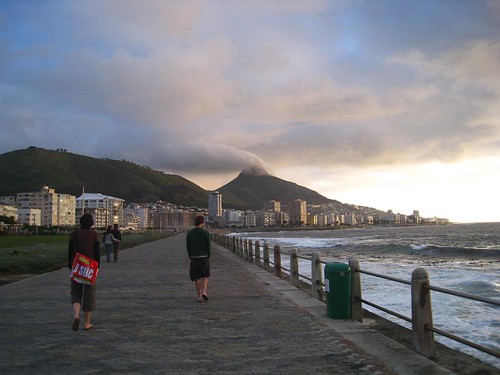
2.  One of my coworkers brings me presents of fruit most days. Lovely tradition-- everyone enjoys getting an apple, an orange, or a really large pomelo on their desk on a Monday morning. True? True.

3.  Every office phone has a popular song as its ring tone, and each one goes off about 5 seconds after the first one. A cacophony of Chinese pop. Not really the professional, quiet demeanor I've seen offices strive for in the US, but it certainly does make you answer the phone more quickly. People positively run to answer them to stop the madness.

4.  Sometimes our power goes out-- probably not that surprising for rural China. However, one time when it went out my office went on what can only be described as a field trip. We piled into the little buses that run out of our town, and went to watch the villagers nearby do a dance performance. It's still not clear to me if this performance was because we had a power outage, or if it was scheduled beforehand (see what I mean about not quite getting it all?) but either way, it was hilarious. They knew so many line dances, I half expected to see the macarena. In fact, maybe I should teach them the macarena...

5.  It's probably about 35 degrees here, yet all the windows in all of the offices are open. Why? Because of some combination of feng shui (we need the qi flowing) and H.E.N.E (that's what it sounds like if you pronounce H1N1 in Chinese-- yi in Chinese is one) fears. As a result everyone clusters around the heaters in the room, which are open flames. Seriously. The heaters are gas fed and they could all double as cooking devices if you just put a pot on top of them. The combined silliness of gathering around a heater when the windows are wide open and there is a safety hazard of a flame in the middle of the room never fail to amuse this laowai (foreigner).

The Beaches and Nightlife of Boracay Island, Philippines

White sand beaches of Boracay

Boracay Island is undoubtedly the number one tourist destination in the Philippines.

Often called "the best beach in the world" by locals and foreigners, this island lies in the pristine region of Panay in the province of Aklan in the Visayan region.

How To Get There

Traveling is cheap in the country by Western standards so if you're a foreigner and you want to go here, fly my friend.

As of late, there are no direct flights from anywhere in Asia, so you have to leave from the capital city Manila.

The good life
The good life

From Manila to Boracay, flying is best advised. You have two choices.

One: Manila to Kalibo

Two: Manila to Caticlan

Airline companies in the Philippines with routes to Boracay Island include the following:

  • Cebu Pacific
  • Philippine Airlines
  • Zest Air
  • Seair

Getting Around the Island

Once you've arrived in the Caticlan airport, hire a tricycle/multi-cab for about P15-25 that's half-cent a dollar you're in the jetty port.

If you're traveling alone, you don't need to pay any more tax, just the boat ride. If you're going in a group, you need to pay a fee of a few dollars.

A few years back, tourists, islanders, and heck everyone was dropped off right at the white sand beach of Boracay. 

Now everyone is dropped off at the back of the island along the paved roads. Here they hire another tricycle to get to anywhere in the three stations of Boracay. Don't worry; it takes less than 15 minutes.

Station 1: This station is where big bets stay. Resorts and hotels here are far more expensive than in the other stations.

The big names such as Fridays, Cocomangas, the newly built Discovery Shores, and the Shangrila Hotel are littered north of the island.

Station 2: This station is where I stay most of the time. There are loads of resorts to stay at like Red Coconut, among others.
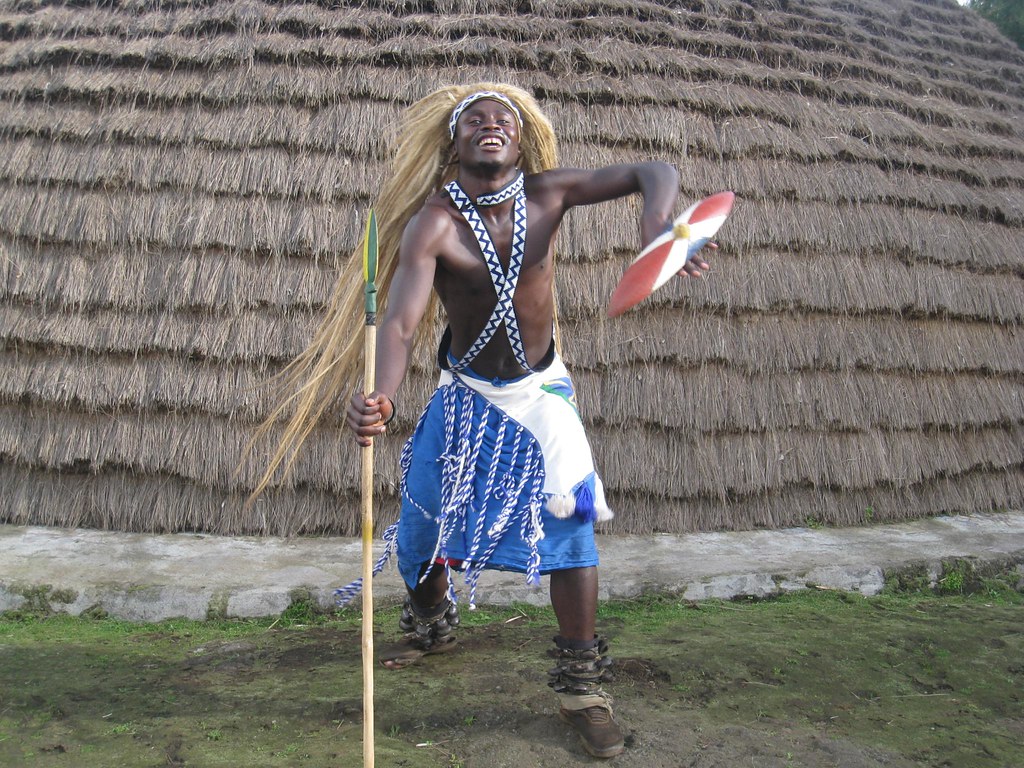
What's cool about this station is it's in the center of everything happening. Lots of restaurants, eateries, the mall is here, and of course for me, still the number one bar/club in Boracay, "Hey Jude."

Station 3: This station is on the far south of the island. 

Forgive me for the lack of a better term, but this side is Class-C, where locals frequent a couple of inns, huts, hotels and resorts, and their foreign boyfriends.

If you're like me, a guy who can go anywhere and doesn't care much, I strongly advise you to visit those at the back of the beach.

Some rooms are cheaper because they're not located on the beachfront, as if a 2-minute walk is such a pain.

As for me, I always stay in Seabird International Hotel.  It's in station two at the back of the Red Coconut Hotel.

I like the location because its near the beach, near "Hey Jude," and near the mall. So I can get drunk and not worry about long walks.

Food is quite expensive if you eat at those fancy looking restaurants with buffets and seafood galore.
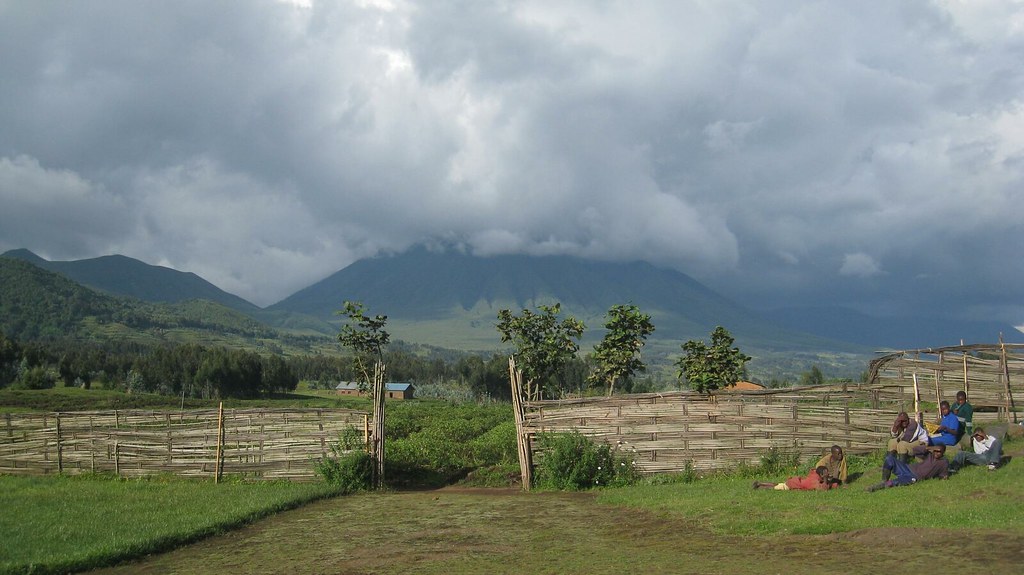
Try the back of the mall where there are bluefish, a couple of grilles, or you can go for fast food at Andoks.
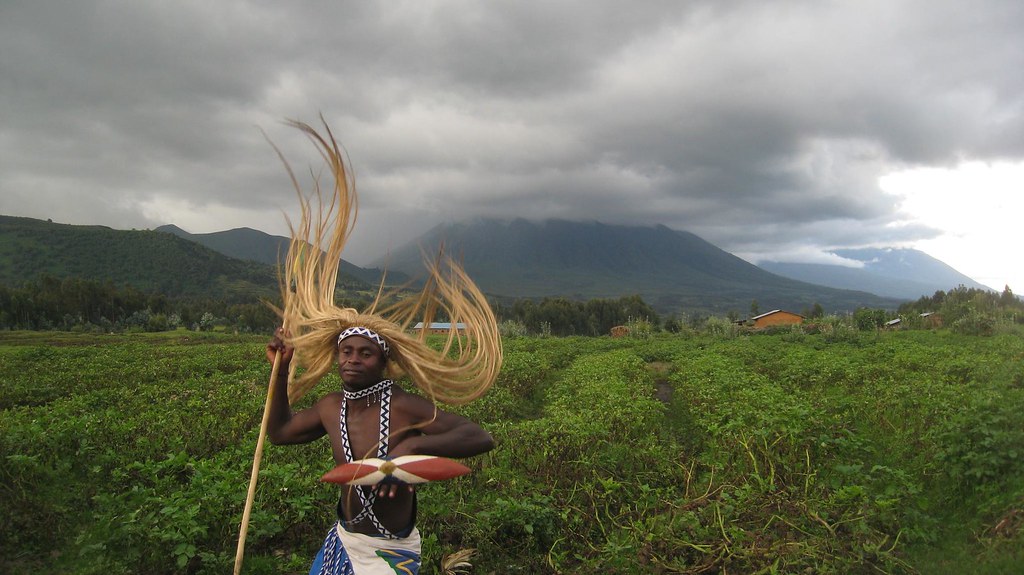
A hearty meal shouldn't cost you more than $4. Walk around at night and try to scout out a party. They tend to change locations. Some bars/clubs have events.

As of late, there's Juice Bar, Cocomangas, and heaps of other drink out places. I happen to find my spot right in "Hey Jude."

Friendly people, efficient bartenders, excellent DJs, and an atmosphere you cannot find anywhere else.

So you've successfully landed on arguably the best beach in the world. Tap on the back, my friend.

Even if everyone is saying Boracay is overrated, it's nothing compared to, let's say, Phuket or Krabi.

Boracay is like a small kid who is wandering around in his pubescent youth - searching for something, making friends, making out.

Nightlife on Boracay's beaches

Where To Go Out At Night

Boracay is a sleepless island. Twenty-four hours a day, there's always something going on.

You have to know where the smoke is, and a fire must be burning. There are a couple of bars/discotheques around stations 1-2-3.

But mostly eateries, restaurants, and cafes are sprouted across the white beach. I'll let you in on a secret, walk.

Walk around north to south, and for sure, you will find a spot you like. Whether you are a romantic, the quiet type, or a party animal, there's a place for everyone.

I want to suggest a couple of places I like. Have a drink, make friends, don't swim in the waters (or maybe you can), don't mind the exhibitionists on the beach if you come across one.

And of course, Hey Jude.

I like the place a lot. I've been going there since I can't remember when.

It's a place where DJ's play outstanding house music, where waiters talk to you when you're traveling alone, where people cheer you with their drinks, where you can be crazy because its free to do so, but mostly the ambiance is impeccable.

There's something about the set-up that makes you feel at home, in a far-away tropical beach. That's Hey Jude. Vodka Red Bulls, Rum 'n Cokes, San Miguel Light. What is there not to like.

If you like Koh Pha Ngan, Thailand, my friends... this is like his little brother, a paradise with good vibes and awesome beats.

Not many people, no twenty thousand worshipers for the Full Moon Party, no peeing punks on the beach, no f**k buckets, we have San Miguel. Good clean fun. Mostly.

And of course, the beach here is incomparable. If you're lucky enough to survive the night without passing out, try to wait for the sun to rise, the beach is cest' magnificique.

The water is greener. Sand is whiter. The sky is bluer. And your face will light up because you know you've found paradise in the Philippines.

_________

Beach chair image by http://www.flickr.com/photos/ple101/ / CC BY 2.0

Extreme Tourism, according to Chuck

To Hellholes and Back by Chuck Thomspon
to hellholes and back by Chuck Thompson

I have a few opinions on travel: one should learn some historical background to understand the culture of today, one should try their best to speak the native language as to not "lose things in translation," and one should never expect a place or its people to adjust to one's own way of life.

For as seemingly inconvenient and ridiculous in the eyes of an American, many customs are just that, customs of one beautiful and distinct culture, and should be approached with an open mind.

Chuck Thompson is a native Alaskan, the former and first editor in chief of Travelocity magazine, a travel guru (according to his publisher), and the author of Smile When You're Lying, and most recently, To Hellholes and Back. And his travel opinions most likely differ greatly from my own.

I am making this assumption from personal experience as I had the pleasure of hearing him speak on January 21st at my university while he was in the midst of his book tour around our "great country with a real screwed up foreign policy."

Immediately I was struck by his casual, laid-back demeanor.

I found him to be strongly opinionated, fearless in how he would be perceived as a result of this, and finally, wickedly entertaining as he led us through a book reading and answers to audience members' questions.

Would I want to read his books, however? Probably not, too tongue-in-cheek for me.
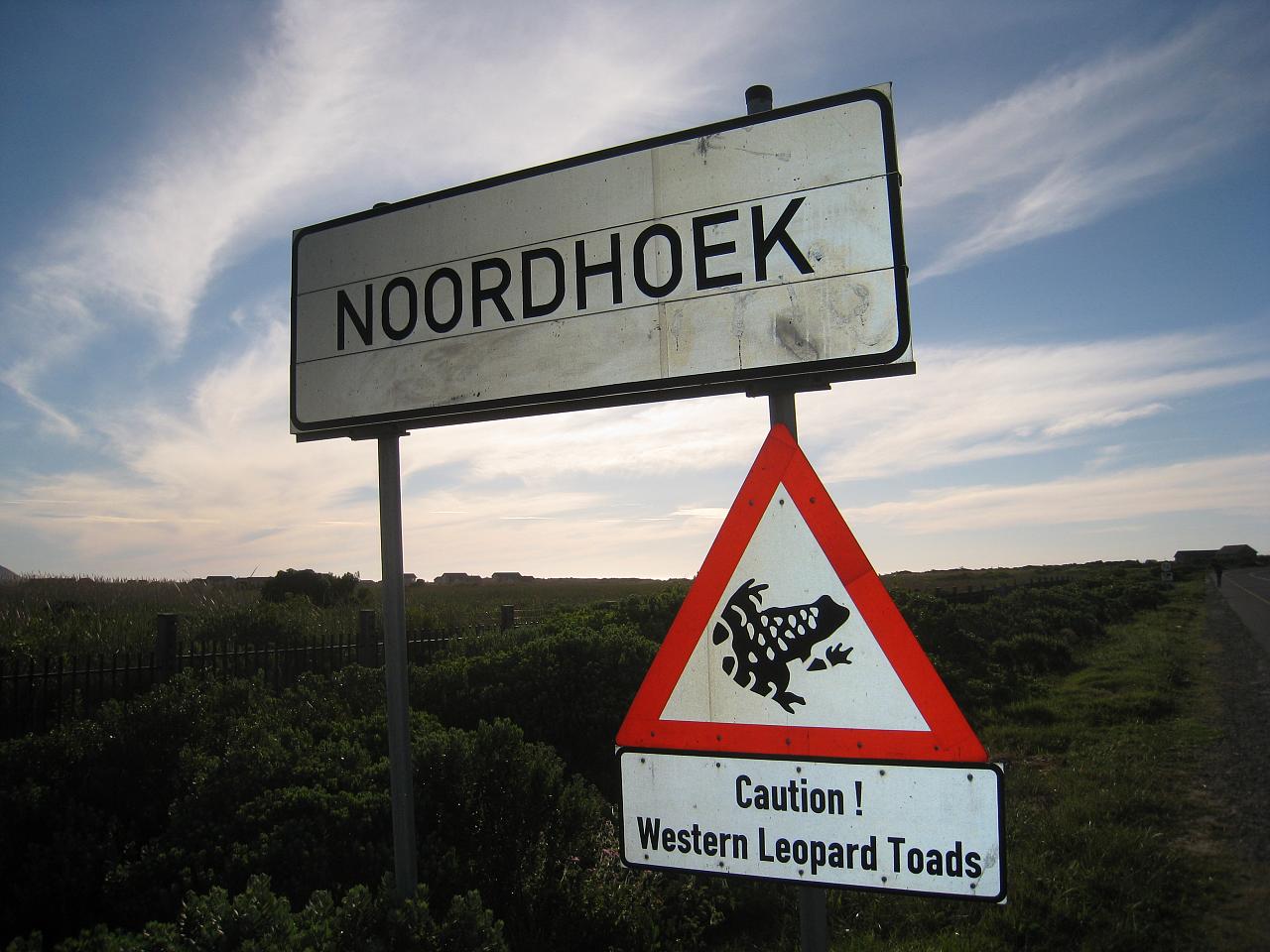
But I'll let you make your own decision, of course.
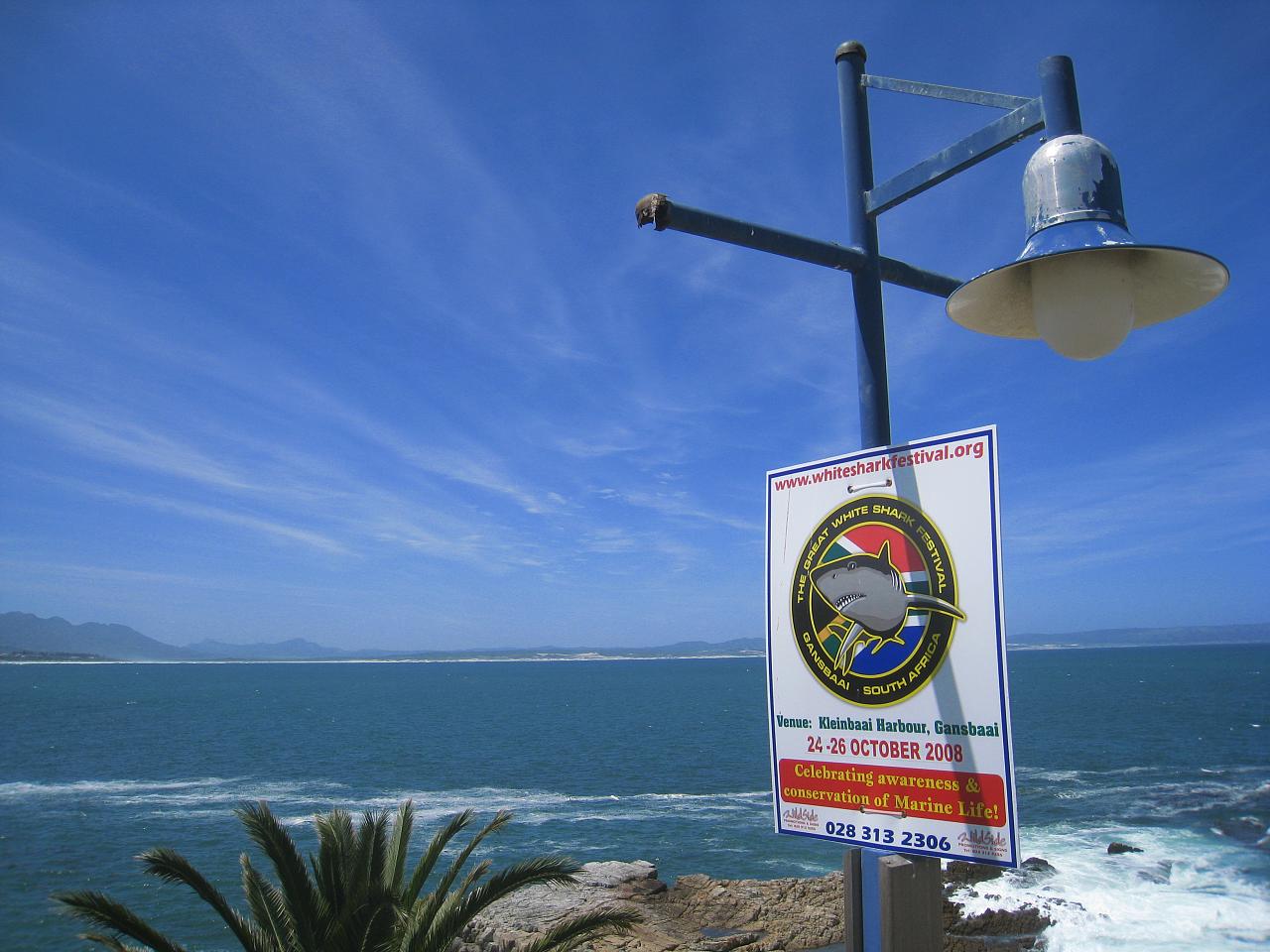
He was inspired to write To Hellholes and Back by the concept of extreme tourism.
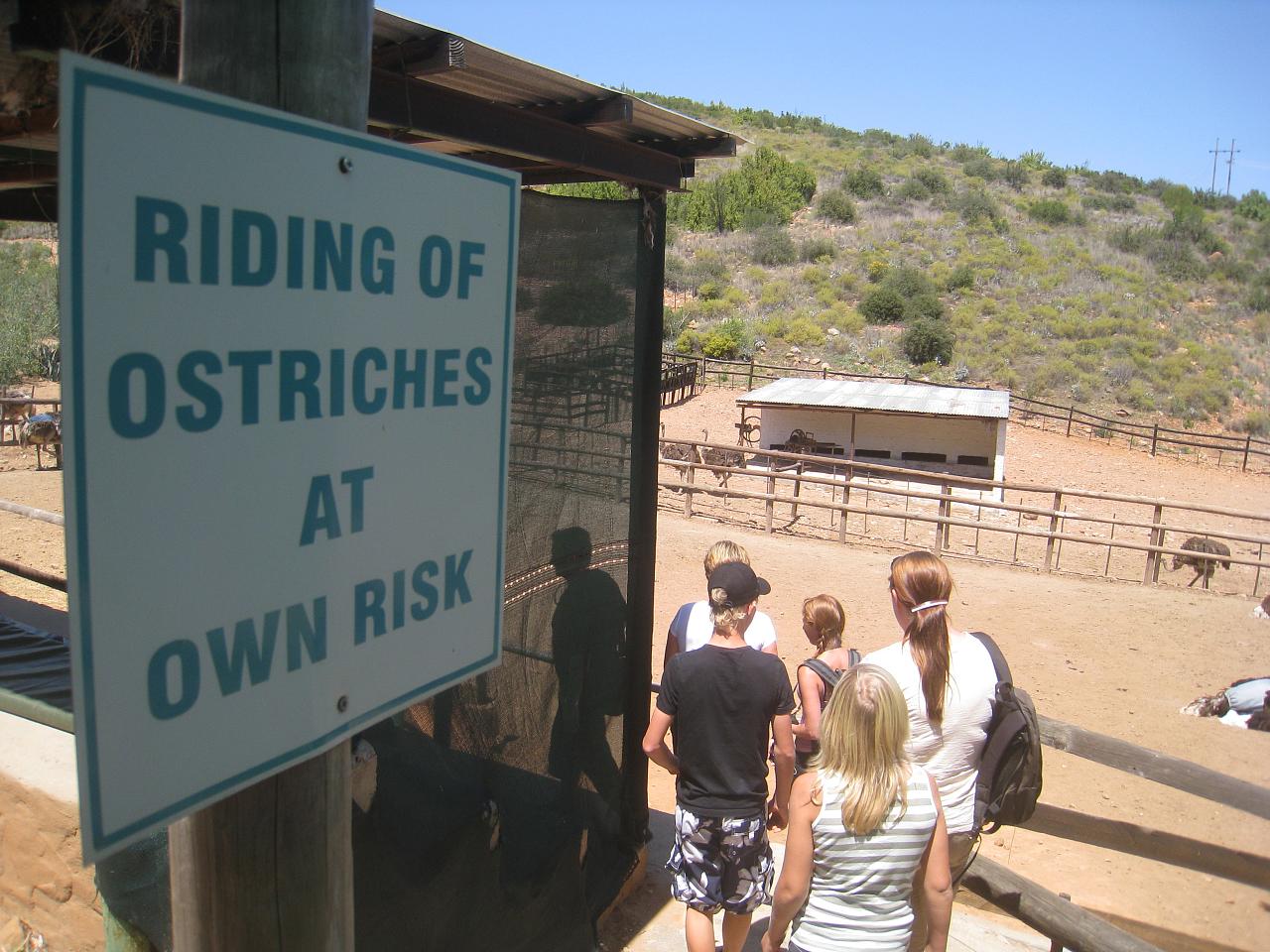
To most, he says, images of million-dollar space trips, and grass-huts in rural Asia come to mind, but to him, extreme tourism could lead you anywhere, so as long as you are taken outside of your comfort zone.

And so he made a list, a long list of places that he was intimidated by, had prejudices against, and would never in a million years want to travel to: The Congo, India, Mexico City, and Disney World.

To him, the Congo was the sum of all African fears, the heart of darkness as described by Joseph Conrad.

He found the idea of India to be surrounded by the paranoia of economic fears, terrorist threats, and the horror stories of friends.

Mexico City was controversial in the midst of a heated immigration debate and the capital of Latin American drug lords.

And Disney World, oh Disney World, combined all the pains of traveling, in his opinion, with the glory of "dumb animated figures in a stupid and juvenile environment" alongside bratty children.

What he found, was that countries are a lot like people in high school, 90% of what you think is hearsay.

He then spent six weeks in the Congo, 31 days in India, five weeks in Mexico City, and seven days in Disney World (he claimed to not have been able to handle any longer of a stay).

He did thorough pre-trip research, took endless amounts of notes, and met multiple people like Ahri in Africa who, "turned out to be as much of an experience as the country itself."

And then, after many months of writing and re-writing, his second book, To Hellholes and Back, was published.

It is described by Jaunted.com as "well-written, funny, and fast paced."

They say that "it's refreshing to read a travel writer who eschews all the "sun-dappled vista'-style prose and tells it like it is."

Surely they have met Chuck Thompson because according to him, that is what his book is all about.

"You can only describe sunsets and food for so long, what really brings a country to life is people."

Planning an Appalachian Trail Thru-Hike

Thinking about planning an Appalachian Trail thru-hike -- that 2,174-mile footpath between Springer Mountain, Georgia, and Maine's Mt. Katahdin?

Great! I highly recommend the journey, which was one of my life's most soul-satisfying, difficult, wonderful, uncomfortable, inspiring, tiring, exhilarating, challenging, and fun experiences.

Appalachian Trail bridge (photo: Jonathan Kemper)
Bridge (photo: Jonathan Kemper)

I'm quite the anal planner, and I started my Appalachian Trail thru-hike adventure well before passing the first white blaze by attempting to plan every day of it.

Once I decided to fulfill my dream, I set out the pens, notebooks, books, and calendar. I made lists and more lists and began scheduling to the max. I'd hike 15 miles this day and stay at that campsite or lean-to. I'd send a maildrop with pre-purchased food to such-n-such a town, where I'd arrive on a particular date.

Then, one day, I tossed the whole thing. Sure, planning is good practice, even if you scrap the entire kit and kaboodle before putting any of those best-laid plans to the test. After all, the process can teach you much about what you're setting out to do and help avoid potential problems just by the knowledge and awareness you'll gain.

     See also: Walking Nepal's Great Himalaya Trail

At the same time, it's almost impossible to plan for every situation, whim, and factor beyond your control. This is especially true when talking about roughly six months of backpacking through 14 states, six national parks, eight national forests, and more than 400 named peaks.

Most people who try to stick to a schedule on the Appalachian Trail fail or find it too confining and illogical within the first few weeks, if not the first few days. And many thru-hikers who pre-pack maildrops find they're sick of certain foods in no time and leave much of their maildrop contents in hiker donation boxes or, unfortunately, trash cans.

There are, however, certain things you can plan for and count on when setting out for an end-to-end Appalachian Trail thru-hike (or even a long section), regardless of which direction you hike, your experience level, or what Mother Nature and other forces lay in your path.

Appalachian Trail marker (photo: Steve Raubenstine)

Tips for an Appalachian Trail Thru-Hike

Plan to be spontaneous

Follow your heart and sometimes your whims. Drop your pack and sun yourself on that warm slab of rock. Take ten to take in the view. Make that dip in the cool mountain stream.

Get that burger and big salad you've daydreamed about for the past few days as you rehydrate your dinners. Don't pass up the chance to do what tickles your fancy to stay on some predetermined schedule.

Plan to be flexible

A change in the weather? A sore foot that's giving you grief that day? Whatever it may be--something physical that's bugging you, someone you want to continue hiking with who doesn't want to go as far on a particular day, a stretch of trail more difficult than you'd expected--it's okay to bend.

Do fewer miles than you may have expected to cover, or maybe no miles at all. Or, occasionally, hike a few more miles if you're up to it.

Plan to be cold

Yes, you'll get chilled, at least for short periods, till you can retreat to your sleeping bag or put on those extra layers. As long as you're prepared for it, though, and don't leave out vital insulation because it is warm while packing and trying to go ultra-light, you should handle the cold just fine.

Plan to be hot

And plan to be that way for days at a time. Embrace the sweat dripping into your eyes and off the tip of your nose. Be one with your body odor and that of other thru-hikers who come anywhere near. Just don't short yourself on water. 

Take a siesta during the hottest part of the day, and hike early and late. Take a bandanna bath or use a refreshing wet wipe when you get to where you'll camp. Just think about how cold you've sometimes been and enjoy the heat!

Plan to be wet and dirty

There's nothing like hiking in a downpour or sloshing through the mud for miles, and you'll undoubtedly do both on an A.T. thru-hike.

So, keep a spare set of clothing deep in your pack in a big Zip-Lock baggie or a garbage bag or Sil-nylon stuff sack, so you know you'll have something dry to put on when you're finished hiking for the day.

It's comforting to know the dry and at least somewhat cleaner clothes are in there, not to mention a physical relief when it's time to put them on.

Plan to have sore feet

Breaking in boots before hitting the trail will certainly help, but I haven't met a single thru-hiker who has not experienced blisters, bunions, a multi-colored toenail or two (if not the whole set), or just plain ol' foot pain during the trek. But sore feet show-and-tell is a great way to bond with your fellow hikers.

Plan to have new aches and pains

It's not just the feet. Maybe you'll get some cool chafing from your backpack, clothing, or even skin rubbing against your skin for hours.

Your back and neck might ache, especially if you're not used to carrying a full pack for eight or twelve hours a day and sleeping on hard, uneven ground or the planks of a shelter floor. And the knees--even with trekking poles, your knees will be tested. You'll perfect the art of the "hiker hobble."

Plan to be at least a little scared

Lightning, bears, boogie monsters, oh my! Rattlesnakes and copperheads don't let you know they're there until you almost step on them. The occasional bit of terrain gives you the willies. Or maybe that was just me?

Plan to be tired

But it's a good kind of tired-an "I lived today" kind of tired. It's a twenty-miles-on-my-feet-up-and-down-five-mountains-today kind of tired. I loved it! And if you enjoy physically putting yourself to the test as I do, you'll love it, too.

Plan to laugh

Even things that aren't ordinarily funny will probably be funny, like being filthy, soaked, and smelling like rotten peaches. There are lots of things to laugh at about life on the trail. So laugh and laugh often.

Plan to live for the moment

Be here, now, on the Appalachian Trail. Hiking a long-distance trail is a chance to slow down and suck the juice out of life.

Plan to be part of a great community

If you want to be alone, you can find solitude. But the friendships are out there if you want them. It doesn't matter who you are, where you're from, whether you're shy or outgoing, or your background.

The shared experience of hiking the Appalachian Trail creates a bond that surpasses most differences that otherwise might make a difference off the trail.

A moment of celebration
Author celebrating

And plan to be fulfilled

It just gets under your skin--the fresh air, the sheer physical exertion, the camaraderie with others who walk with packs on their backs. That 2,174-mile footpath, marked with 165,000 painted white blazes as it winds, climbs, and descends from Georgia to Maine, has a way of grabbing hold of your psyche and heart and not letting go.

_________

About the Author: Deb Lauman, the long-distance backpacker known as "Ramkitten," is also a writer and a member of a Search and Rescue Team based in Flagstaff, Arizona. You can read about her SAR experiences at Deb's Search & Rescue Stories.

Deb will be spending three months in Nepal, learning about the country's only rescue squad so she can write a book about them and the many lives they've touched. Learn more about the Himalaya Rescue Dog Squad Nepal Book Project on Kickstarter.

Launch of Travel Blog Success

Travel Blog Success

Today I am excited to announce the launch of Travel Blog Success, a new website and community aimed at helping travelers build successful blogs, whether they measure that success in terms of readers or revenue.

In 2009, my travel blog success resulted in online earnings of more than $10,000, plus I was offered a paid blogging trip to Colombia. 

I don't say these things to brag. I say them to encourage other travelers to join me in taking advantage of the shifting media landscape.

Travel Blog Success

How It Works

Travel Blog Success is an online course consisting of 12 lessons, covering essential topics such as picking a smart domain name, building an engaged audience, SEO, and how to make money online (hint: Google AdSense is old news).

Unlike other "how-to" sites and eBooks, this program addresses issues unique to travel blogging, such as mobile technology, and blogging while always on the move in foreign countries.

Travel Blog Success includes an exclusive Blog where additional tips and podcasts with subject matter experts are posted regularly. 

To kick off the audio interview series, I spoke with Mike, Editor of Vagabondish.com, about the importance of web design to a travel blog's success.

To ensure every member has direct access to me, plus a way to ask questions, network with others travel bloggers, and collaborate, there is a Forum.  I invited a few veteran travel blogger friends to join us there.

I'm offering a super-low introductory rate for the first 100 members who join. 

After that, a price increase is likely because I want to ensure I can continue to offer personal support to everyone who joins. 

By the way, the membership comes with a 60-day money-back guarantee.

Early Reviews

  • Gadling - "The service isn't free, but for anyone who is new to blogging and serious about making money from it, the fees are probably a decent investment."
  • Twenty-Something Travel - "I posted a question about advertising and received several really helpful answers..."
  • Ottsworld - "I had so wished there would have been something like this out there in 2006 when I started Ottsworld!"
  • Briefcase to Backpack - "The core lessons are great for beginners, but the ongoing content (blog, interviews, forums) is what really makes it a valuable resource.
  • Rerunaround - "...I've gotten some priceless feedback, ideas, and motivation from the other folks in the TBS forums."
  • Drifting Focus - "...community emphasis is part of what I feel sets Travel Blog Success apart, and it also means that for your one-time investment, you get perpetual content and assistance."
  • Travel Blog Advice - "...will save you months and perhaps years of trial and error if you read through all of the lessons and interact on the community forum."

When you join, we'll start working together immediately to improve your travel blog.

If you have any questions, please leave a comment below, or send me a private message (via the contact form). I'll get back to you promptly.

___________

PS - I'd really appreciate it if you can help me get the word out, either by sharing this post or a link directly to Travel Blog Success (http://travelblogsuccess.com) on your favorite social media sites, such as Twitter, Facebook, StumbleUpon, or your blog.

« Previous Page
Next Page »
Dave at Ahu Ko Te Riku on Rapa Nui (Easter Island), Chile.

Hi, I'm Dave

Editor in Chief

I've been writing about adventure travel on Go Backpacking since 2007. I've visited 68 countries.

Read more about Dave.

Footer

back to top

About

  • About
  • Archive
  • Privacy Policy
  • Cookie Policy

Follow Us

Contact

  • Contact
  • Work With Us
  • Submissions

Copyright © 2026 Go Backpacking