Go Backpacking

  • About
  • Travel Tips
    • Accommodations
    • Budgeting & Money
    • Adventure Travel
    • Food & Drink
    • Gear & Gadgets
    • Packing Tips
    • Travel Blogging
    • Travel Insurance
    • Trip Planning
    • UNESCO Sites
  • Destinations
    • Africa
      • Botswana
      • Egypt
      • Ethiopia
      • Morocco
      • Rwanda
      • South Africa
      • Tanzania
    • Asia
      • Cambodia
      • China
      • Hong Kong
      • India
      • Indonesia
      • Japan
      • Laos
      • Malaysia
      • Nepal
      • Philippines
      • Thailand
      • United Arab Emirates
      • Vietnam
    • Europe
      • England
      • France
      • Germany
      • Greece
      • Iceland
      • Ireland
      • Italy
      • Portugal
      • Spain
      • Switzerland
      • Turkey
    • North America
      • Canada
      • Costa Rica
      • Cuba
      • Guatemala
      • Mexico
      • Nicaragua
      • Panama
      • United States
    • Oceania
      • Australia
      • French Polynesia
      • New Zealand
    • South America
      • Argentina
      • Bolivia
      • Brazil
      • Chile
      • Colombia
      • Ecuador
      • Peru
  • Advertise
menu icon
go to homepage
  • About
  • Travel Tips
    • Accommodations
    • Budgeting & Money
    • Adventure Travel
    • Food & Drink
    • Gear & Gadgets
    • Packing Tips
    • Travel Blogging
    • Travel Insurance
    • Trip Planning
    • UNESCO Sites
  • Destinations
    • Africa
      • Botswana
      • Egypt
      • Ethiopia
      • Morocco
      • Rwanda
      • South Africa
      • Tanzania
    • Asia
      • Cambodia
      • China
      • Hong Kong
      • India
      • Indonesia
      • Japan
      • Laos
      • Malaysia
      • Nepal
      • Philippines
      • Thailand
      • United Arab Emirates
      • Vietnam
    • Europe
      • England
      • France
      • Germany
      • Greece
      • Iceland
      • Ireland
      • Italy
      • Portugal
      • Spain
      • Switzerland
      • Turkey
    • North America
      • Canada
      • Costa Rica
      • Cuba
      • Guatemala
      • Mexico
      • Nicaragua
      • Panama
      • United States
    • Oceania
      • Australia
      • French Polynesia
      • New Zealand
    • South America
      • Argentina
      • Bolivia
      • Brazil
      • Chile
      • Colombia
      • Ecuador
      • Peru
  • Advertise
search icon
Homepage link
  • About
  • Travel Tips
    • Accommodations
    • Budgeting & Money
    • Adventure Travel
    • Food & Drink
    • Gear & Gadgets
    • Packing Tips
    • Travel Blogging
    • Travel Insurance
    • Trip Planning
    • UNESCO Sites
  • Destinations
    • Africa
      • Botswana
      • Egypt
      • Ethiopia
      • Morocco
      • Rwanda
      • South Africa
      • Tanzania
    • Asia
      • Cambodia
      • China
      • Hong Kong
      • India
      • Indonesia
      • Japan
      • Laos
      • Malaysia
      • Nepal
      • Philippines
      • Thailand
      • United Arab Emirates
      • Vietnam
    • Europe
      • England
      • France
      • Germany
      • Greece
      • Iceland
      • Ireland
      • Italy
      • Portugal
      • Spain
      • Switzerland
      • Turkey
    • North America
      • Canada
      • Costa Rica
      • Cuba
      • Guatemala
      • Mexico
      • Nicaragua
      • Panama
      • United States
    • Oceania
      • Australia
      • French Polynesia
      • New Zealand
    • South America
      • Argentina
      • Bolivia
      • Brazil
      • Chile
      • Colombia
      • Ecuador
      • Peru
  • Advertise
×
Home

The Taj Mahal

THE tourist photo op

I rolled out of bed at 5:30am to see the Taj at sunrise, though from the hotel roof, it didn't look too different from the night before. I met Laura and Dan at the eastern entrance, and we proceeded to tour the site along with everyone else trying to get an early jump on the crowds. While there was plenty of blue sky to create a great backdrop for photos, the reflecting pools were drained for cleaning.

Detailed stonework at Taj Mahal

Up close, the beauty of the building in my eyes lay in the intricate, inlayed carvings. Precious stones sourced from around the world were used, and it is a big part of why the building took 30+ years to complete.

Taj Mahal


Arriving In Agra

Another pretty sunset from an Indian train

My overnight train from Varanasi departed at 5pm so I spent the morning in my air-con room, and the afternoon twiddling my thumbs beneath the fans of the Hotel Buddha restaurant. Once on the train, I chatted briefly with Laura (France) who mistook me for someone she had met in SE Asia.

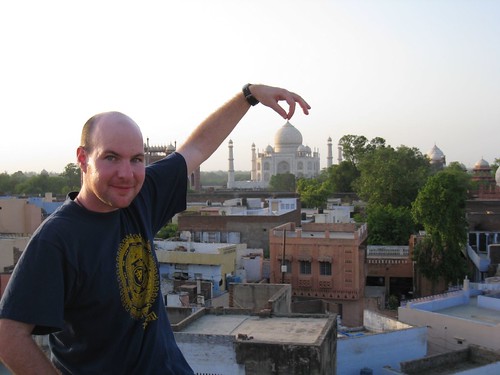
Taj Mahal from hotel rooftop restaurant

I didn't sleep as well this second time, so it was a nice surprise to receive what seemed to be a reasonable quote for a rickshaw ride to Taj Ganj, the tourist area directly south of the Taj Mahal. The first view of India's iconic mausoleum resulted in another "wow" moment for me. After checking out a few hotels, I settled on a room in the same place as Laura and Dan (England). Strong winds whipped up sand, and rain soon followed, thus postponing our plans for a rooftop dinner overlooking the Taj at sunset.

A Korean girl fires on a nearby monkey

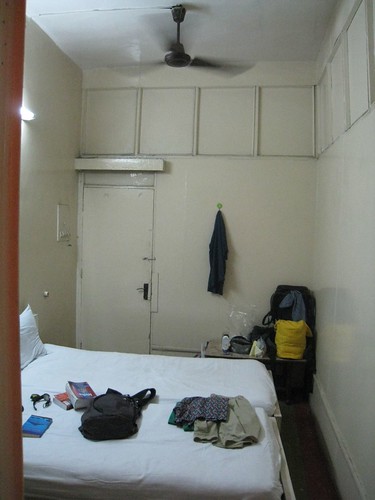
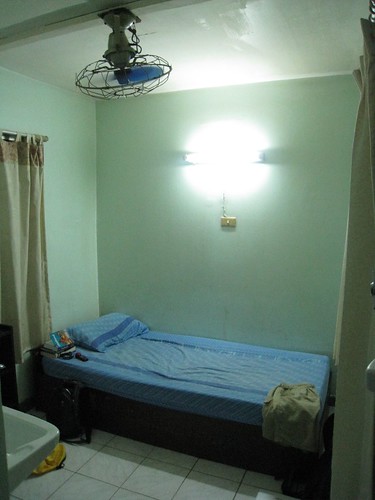
The paint was peeling off the ceiling in my hotel room. At first I saw it as a charming detail, however after waking up the next day in a bed covered with flaking paint, I found it less appealing. I also learned that a vent in the wall does not constitute air-conditioning.

A Sunset Stroll Along The Ghats

Varanasi's ghats at sunset

Benares (Varanasi) is older than history, older than tradition, older even than legend, and looks twice as old as all of them put together. -- Mark Twain

People and livestock bath in the holy Ganges River

After 6 hours of intentional confinement to my air-conditioned hotel room, I felt it was time to see Varanasi's main draw, the ghats which run along the Ganges River. In my mind, I had pictured the dirtiest, darkest, smelliest, smokiest hell on Earth type of atmosphere. After all, according to The Lonely Planet, " the water is septic, no dissolved oxygen exists"?, and " the water has 1.5 million fecal coliform bacteria per 100mL of water"? whereas safe bathing water should be less than 500.
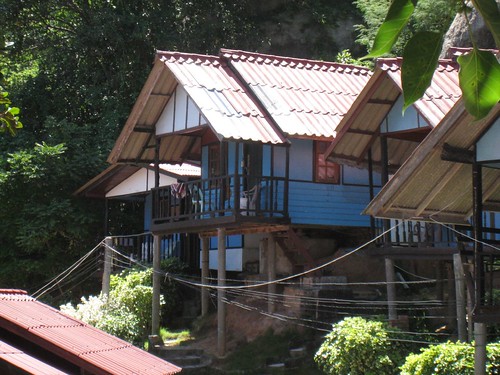
The view north from Assi Ghat

In reality, as I walked out of an alley onto Assi Ghat, the furthest south of the main ghats, I was surprised by the serenity of my surroundings. Boats were floating along the river and people were simply hanging out. I began to walk north, declining boat ride offers with politeness. A young kid struck up a conversation with me, and invited me for a chai. As I sat there burning my tongue on the hot tea, I must admit I was wondering if it had been somehow spiked with a drug, and I was about to keel over and be robbed. Such are the worries of the single traveler who stays open to the kind offerings of strangers. Shortly after taking tea, the kid waved goodbye to me which was the sign that his company had been genuine.

One of many cricket games (note the drying dung patties in left foreground)

I continued to make my way north past kids playing cricket, water buffalo bathing, people of all ages swimming. I sat by one of the smaller burning ghats for a short explanation of the cremation process from another local. When he turned to the topic of touring nearby silk factories, I made my retreat.

A boat awaits its next customer

As I neared Dasawamedh Ghat, home to most of the boats and a nightly ceremony, a young kid struck up a conversation with me. I clearly told him he could walk with me but I would not pay him anything. He proceeded to walk me down to Manikarnika Ghat, the biggest cremation ghat. He showed me up to a balcony overlooking the site, meant specifically for tourists (as the family occupies the space at ground level). After a few minutes of watching multiple pyres burn, we headed back toward Dasawamedh for the nightly puja. For 5 rupees (12 cents), I bought a candle with flowers and set it adrift on the Ganges (earning me some good karma in the process). A crowd of mainly Indian, with a sprinkling of Western, tourists had gathered.

A pair of goats admire the Ganges

The ceremony and music seemed interesting enough, however by 7:30pm, I was sapped of energy, and tired of wiping the sweat from my brow. My young tour guide was keen to show me his silk shop, however I continued to decline in favor of an autorickshaw back to the hotel (and a cold shower). I gave the kid a generous tip in the end. Despite his efforts to get me in a silk shop, he was quite helpful.

A crowd of mostly Indian, and a few Western, tourists watch the nightly puja

I agreed on 100 rupees for my rickshaw ride back to the hotel, which I knew to be too much but seemed to be par for the course in Varanasi (for this tourist anyways). When we got going, I noticed the driver was someone other than who I negotiated the price. I didn't think anything of it until we were outside my hotel and he was demanding 150 rupees. I scoffed, and stood my ground. He asked for 120 and I paid it to be done with the situation. While fifty cents means more to him than me, I'm not immune from getting pissed off about the principle and dishonesty in such situations. It is no wonder Varanasi (and India as a whole) has a reputation for tourist ripoffs.

An Early Morning Visit To Sarnath

Mulgandha Kuti Vihar

I awoke at 4:45am to the now familiar series of beeps from my Casio Pathfinder watch. I set my alarms the night before, figuring I could always go back to sleep if I didn't feel like making my way down to the Ganges River for a sunrise boat ride along the ghats. I went back to sleep.

Two hours later, I stepped out of Hotel Buddha to the almost serene streets of Varanasi. I hailed an autorickshaw to take me the 10km to Sarnath, the location where Buddha gave his first sermons in a deer park. It is one of four primary pilgrimage sites on the Buddhist circuit. I had skipped Lumbini (his birthplace in southern Nepal) because it was a few days out of my way, and didn't intend to visit Kushinagar, India (where he died) for the same reason.

English translation of Buddha's first sermon, under descendent of original Bodhi Tree

The rickshaw let me off at the entrance of Mulgandha Kuti Vihar, a temple built in 1931 to house sacred relics from Sakyamuni Buddha. Next to the temple was a bodhi tree, around which were giant stone plaques bearing the engravings of Buddha's first sermon in a variety of languages. I was given a kata (scarf) to tie around the bodhi tree in exchange for a little baksheesh (a tip or bribe depending on your perspective and the situation).

Dhamekh Stupa

Next, I headed to the prominent 34-meter high Dhamekh Stupa which marks the spot where Buddha's first sermons were given. The stone carvings around the stupa are thought to date back to the 5th century AD. It was only 8:30am, yet the sun was fierce and I could feel my energy waning. I continued to walk through the excavated ruins in the complex, occasionally shooing away the touts trying to sell me cheap Buddha statues (both kids and adults). There persistence and presence can test even the most patient people.

Temple at Sarnath

As I gulped some water near the entrance of the site, I saw a young girl begging through the metal fence. Clearly I was her target as there was barely a tourist around so early, let alone a stick-out-like-a-sore-thumb white person. I began to walk toward the rickshaw stand and she followed me on my left. She barely rose to my waist, yet she was carrying a small baby, muttering the same two words over and over again in a quiet, sad tone. " Please sir, please sir."? At least that's what I think she was saying. I apologized to her, I bowed in respect to her, I said " no"? many times to her. I walked on for a block or two under the increasingly hot sun. " Please sir, please sir."? At one point I heard her voice fade, and I had hoped she had given up, however when I turned around I saw that she had only stopped to pick up the cloth which had been over her head. " Please sir, please sir."? The refrain began again once she had caught up.

Stone carvings on stupa

Knowing you're not suppose to give money to begging children, I gave money to her (3 rupees...7 cents) when I passed upon a man who could render small change. I didn't give her the money out of compassion (either a true or false sense). I gave her the money so she would leave me alone. So I wouldn't hear her voice continue to repeat those words over and over as though I was being haunted.

Hot, Hot Varanasi

Gaya train station at 5am

I was beyond pleased to see my autorickshaw driver awaiting me at 4:20am outside the Karma Temple's gate. I shook his hand, he started the motor, and we were off in the dim pre-dawn light. I realized my decision to take the early train to Varanasi meant a peaceful, cool ride back to Gaya which was in stark contrast to the " like a bat out of hell"? rickshaw ride to Bodhgaya two days earlier.

The 5:15am train arrived on time, and I boarded my 3AC carriage to find most people asleep. I heaved my pack onto the upper berth, grabbed a pillow, turned on my mp3 player, and began to enjoy the air-conditioning.

After a few hours, I descended from my perch to a friendly Indian family occupying the other berths in my section. I asked one of the guys to help me ensure I got off at Varanasi, which he did. Otherwise, I watched the farmland fly by, and the mom playing with her little daughter on the seat opposite me. At one stop, a young child missing his left forearm (below the elbow) entered the carriage and approached me for money. I nodded " no"? and averted my eyes. He took care to point at the scars with his right hand. An older Indian guy next to me said something to him, yet the child just kept repeating " money"? and holding his scarred arm in front of me. I didn't relent, and the mother eventually gave him a one rupee coin. Satisfied, he left.

Typical white taxi in India

We passed over the Ganges River as Varanasi approached. The guy who was helping me warned that it was " terribly hot"? outside as the locals could be seen with their faces and heads covered with long scarves.

We pulled into the station and I stepped into the steamy sauna that was Varanasi. I made my way out, stopping for a map and hotel recommendation at the tourist office (really just a guy at a desk). I grabbed one of the old white taxis to Hotel Buddha. The driver suggested it was about 42 degrees Celsius (~108 degrees Fahrenheit). I had already decided to splurge and budget around $20/night for a nice room with air-conditioning and other appreciated amenities (private bath, cable TV, lots of light, balcony, generator for power outages). Hotel Buddha wasn't in the old city along the ghats, but I only expected to spend two nights in Varanasi so paying for local transportation didn't bother me.

Room at Hotel Buddha

I showered, ordered room service (tasty chicken chili w/naan), finished Khaled Hosseini's " A Thousand Splendid Suns"? which had only been given to me a few days earlier (amazing and sad story based in Afghanistan), and waited for the sun to set. My first mission was to secure my train ticket out of Varanasi, so I walked back to the train station along a dirt road under construction. A young Indian man helped me out when he saw another guy couldn't understand my question about directions. The young man walked his bike alongside me, surprised I wasn't in a rickshaw. He said I had a " good heart."? He was headed to the train station too, and as we prepared to cross the two busy intersections, motioned me to stand behind him (basically, as a way to protect me). While he eventually disclosed he was a driver, and was probably trying to secure my business the whole time, he also helped me survive the 15-minute walk to the station, and for that I gave him a sincere thank you.

Varanasi train station at sunset

The foreigner's ticket office was hot and filled with people. It is exactly what you would imagine if you closed your eyes at home and pictured a ticket office in an Indian railway station. I was thankful to buy my next 3AC overnight train ticket (to Agra, home of the Taj Mahal) on the day I wanted. I took a bicycle rickshaw back to the hotel, which was almost as crazy and vulnerable an experience as walking.

Bicycle rickshaw ride in Varanasi

Meditating Under The Bodhi Tree

Monks under the Bodhi Tree

The next morning I slept through the 6am puja held at my monastery's temple. I deserved the extra rest. I also deserved to sit under the Bodhi Tree, alone, for a few minutes of quiet meditation! I made my way to the temple complex around 7am, sat on a stone bench under the tree behind the temple, closed my eyes, and did a short breathing meditation.

Killing time indoors

After breakfast, I kept myself occupied with reading, writing and music under the ceiling fan in my room.

I mine as well have walked across hot coals...

Around 2pm, I decided to walk the two blocks to see the 25m-high Great Buddha Statue unveiled by His Holiness the Dalai Lama in 1989. As you get closer to it, you have to remove your shoes. I slipped off my flip-flops to the painful realization that the stone (perhaps marble) path was VERY hot. As I approached the statue, I thought about the walk as mind over matter. Once in the statue's shade, I took a few photos, and headed back. This time, my feet felt like they were on fire, especially on the last few steps over a black section of the path. Hoping for relief, I put on my flip-flops, though in those few minutes, they too had become painfully hot. I was left with no alternative but to douse my feet with mineral water to cool them off.

Another Bollywood hit in the making

A few hours later, I headed back to the Mahabodi Temple for one last visit. Near the entrance, I ran into Ramesh, and then a Bollywood movie shoot in full swing. A well-quaffed actor was on a motorcycle while a pretty Indian actress in orange was to be riding in a bicycle rickshaw. The production assistants wielded field hockey sticks to help with crowd control.

Stupas and flowers around Mahabodhi Temple

After a quick walk through the temple grounds, I invited Ramesh to dinner with me. While I found his presence overbearing at times, he clearly seemed interested in hanging out and helping me, without anything in return (except maybe a new watch or camera if I were to return some day).

Ramesh

Monasteries And Mahabodhi Temple

Mahabodhi Temple at sunrise

I took an hour to unwind, shower, and get my bearings before heading out to sightsee. Due to the intense sun during much of the day, I knew I had to take advantage of the early mornings and late afternoons.

Thai Monastery

Bodhgaya is peppered with monasteries built by different Buddhist countries, each with their own unique architecture and style. After peeking into a few, I made my way to Bodhgaya's ace attraction, the Mahaodhi Temple. It was originally constructed in the 6th century AD, next to the spot where Buddha attained enlightenment. All visitors are required to remove their shoes when entering the complex. It's free to visit, yet you pay a small fee to take photos or video.

Monks meditate under the Bodhi Tree

I had barely set eyes on the temple when a local, Ramesh, latched onto me and wouldn't let go (figuratively speaking). As usual, I clearly told him I wouldn't pay any money for a tour. He said he wasn't interested in money, and proceeded to guide me around the site. I took a seat under the Bodhi tree (a descendant of the original which was destroyed) and tried to soak in the experience.

Really, really old Buddhas at Mahabodhi Temple

I continued to walk through the gardens and around the stupas, at times getting frustrated with the amount of talking done by Ramesh. Despite his kind nature, there are times when I simply want to experience a place alone, quietly! And I told him as much. We parted ways and I grabbed dinner at a nearby restaurant before retiring for the night. Walking past the main gate to the Karma Temple, and into the open concrete courtyard under a sky full of stars was a wonderful experience. As I went back to my room, I could see and hear young monks talking enthusiastically (perhaps even playing) in a grassy area. Later, around 8 or 9pm, I could hear their evening puja.

Pilgrimage To Bodhgaya

3AC train carriage

34 hours....1 taxi....1 share jeep....1 overnight train....1 bus ride....3 autorickshaws....1 bicycle rickshaw....

Chai tea - a staple offering on the trains

I awoke around 6am to ensure I was on one of the first share jeeps south to Siliguri. I paid for the two front seats so I could have a little extra space on the four and a half hour drive. As we left Sikkim and dropped in altitude, the cool air gave way to heat and humidity. Thankfully, we arrived an hour early. I hired a rickshaw to take me to the train station, where I had four hours to kill.

Indian guys in my section

The 3AC carriage was nicer than I expected. Once the air conditioning ramped up, my sweat-soaked clothes began to dry off and I felt more relaxed. As we began to roll along, I couldn't believe I was watching a giant yellow sun set over India. An hour or two later, a few Indian men joined me in my section. I'm sure they made a few jokes at my expense in Hindi, however they also made me feel welcome in their country by buying me a cup of chai and sharing their peanuts (also purchased aboard the train). I got a solid 5-6 hours of sleep and felt well rested in the morning.

Catching some zzz's with my pack as pillow

I'll never forget walking into the Patna train offices to try and get a rail ticket to nearby Gaya. People were lying all over the dirty floor, sometimes on blankets which were just as dirty. It wasn't a far stretch to wonder if some of them were still alive. I walked upstairs past a series of beggars with different physical ailments to find there were no train tickets available to Gaya. It was only mid-morning yet the sun was beaming down on me as I exited the ticket building.

Clearly, I'm not amused

I didn't get far before being picked up by a young kid who lead me to a nearby travel office where I bought a bus ticket to Gaya. The kid also accompanied me on a rickshaw to the bus stand (a muddy field) where he made sure I boarded the right bus (in exchange for a tip, of course). I was sweating profusely, guzzling water by the liter at this point. The 45 minute wait in the bus (nay...oven) felt like an eternity. I let go of my dignity and took a needed piss behind the bus before we got going. People pee everywhere in India (and to a similar extent in Nepal), and if you don't adapt, you risk making uncomfortable bus rides far worse. Eventually, the bus filled up and we left at 10:30am, only to get stuck in traffic on our way out.

Trash in the streets...a common scene

We drove along trash-strewn streets, kids defecating a few meters from the roadside, and lots of farmland. The Indian man in the seat next to me finished his paper, and proceeded to fall asleep against my sweaty shoulder. The bus arrived in Gaya an hour late. I only saw a few sections of street in the city, however their condition bordered on the repulsive. We passed a young woman in a bright, flowing silk sari talking to a man and my mind couldn't reconcile how such a beautiful woman could coexist with the filthy streets.

Rickshaw ride to Bodhgaya

I had a rickshaw the moment I exited the bus, though I asked him to hold on while I took yet another pee. The ride to Bodhgaya lasted 30 minutes, the first half of which entailed exiting Gaya. The driver was insane, playing chicken with the oncoming traffic. As we approached Bodhgaya, the ride quieted down, the traffic lessened, and the scenery became more rural.

Not a bad temple to come home to!

Dropped off in the center of the little town, I hired a bicycle rickshaw to take me to the Bhutanese Monastery where I had hoped to spend my two nights. It was full, so we proceeded to the Tibetan Monastery (Karma Temple), where after a short wait, I was shown to my basic room.

Different Directions

 Mt Kanchenjunga from Gangtok

The day after our jeep tour of the north, Cameron and Natalie set about organizing a six day trek to a 5,000 meter pass with close views of Mt. Kanchenjunga. As I got to know Cameron, it slowly became evident he not only liked to trek, it was his passion. In 2007, he walked from Mexico to Canada over four months along the Pacific Crest Trail. I told him he was the kind of guy doing the things I read about in National Geographic Adventure. When I asked him how high he had been, his response was the second or third base camp on the Tibetan side of Mt. Everest at around 6,300 meters.

Natalie and Cameron

I, on the other hand, was due for entry into the " real"? India. Ironically, despite my plan to leave Buddhist Sikkim, my first destination would be Bodhgaya, the location where Buddha attained enlightenment under the bodhi tree. It seemed fitting that it would require a lot of effort to make it there from Gangtok. Due to all the Indians traveling this time of year on holiday, I'd heard some people were having difficulty getting westbound trains. It must've been my lucky day because for merely double the price, I reserved an " emergency"? 3AC (air-conditioned) sleeper for the 17-hour overnight ride to Patna, capital of Bihar (state).

Day 3 - Yumthang - Valley Of The Flowers

A few of the peaks visible at 5am

I couldn't sleep well the second night, so at 4:45am I got out of bed to check for mountain peaks like a kid checks for presents on Christmas morning. My insomnia was rewarded with views of snow-covered mountains in almost all directions. Perhaps not as much snow as I had hoped, however beggars can't be choosers.

Raging river

A few massive waterfalls seemed to start at the top of one mountain ridge, while the loud sound of rushing water I could hear was a nearby river we had crossed the previous night.

Yumthang Valley

Once everyone was up and about, we learned our guide had arranged for the hotel owner's son to drive us to Yumthang Valley in a nice, comfortable, private SUV. Riding in an SUV with a considerate driver made up for the death-defying experience the night before. Meanwhile, our original driver was awaiting the spare part needed to fix the jeep we'd take back to Gangtok after lunch.

Dave and Dave upon a boulder

Passing through a rhododendron forest, we came upon Yumthang Valley, along with a horde of Indian tourists. The altitude was around 3,800 meters, and cloud cover would again mask the peaks of the mountains around us. Our guide said we would've seen new snow falling if we had arrived a day earlier!

Flags, a river, and a glimpse of snow

The Lonely Planet describes the sight as follows: " ...weather permitting, you should have 360-degree views of an utterly magnificent Alpine scene: glaciers, spiky peaks and a veritable candelabra of jagged mountains rising toward Tibet."? It is amazing how much time and energy a traveler can invest in an experience so dependent on mother nature.

A yak grazes by a field of white prayer flags

The ride back to Gangtok was tortuously long. Even though I hadn't been feeling motion sickness on all the jeep rides, I was fed up and feeling worn out by the time we were done. The decision to condense a 4-day trip into 3 days, late starts, and breakdowns left us all feeling as though we spent too much time in the jeep.

Border Roads Organization (BRO) at work

Typical hairpin turn

Day 2 - The Tsopta Valley And Jeep Drama

I think I can handle these roads...

The next morning, we could see patches of snow on some of the mountains around us, however the cloud cover was low enough to temper my excitement about the potential for clear views higher up the valley.

We all use the Army toilet at 4,000 meters

Our day's highlight came early when we arrived at an Indian army base in Tsopta Valley, elevation 4,100 meters (about 13,500 feet).

The sensitive border situation with Tibet/China and a plethora of military installations are the cause for all the permits required to travel anywhere of interest in Sikkim.

Thankfully, most of the permits are free and arranged via tour operators.

Tsopta Valley

Guide close at hand, we walked a little further up the road which lead north through the valley to Tibet.

Large military vehicles were constantly rumbling by us, along with the occasional jeep of Indian tourists who were allowed to visit a lake 30km to the northwest. I was ecstatic to be so high up.

There was a distinct change in the terrain at that altitude, and to our west we could catch glimpses of Sikkim's Himalayan peaks.

The southern border of Tibet was a mere 20km north of us.

Sikkim's Himalaya

After enjoying ourselves, breakfast was consumed and we were back in the jeep, backtracking a few hours before heading north again toward another valley to the east.

Our driver made a stop for gas, and as he began to pull back onto the road, ran over a large rock which had probably been used as a brake behind the tire of the last jeep to stop there.

The jeep was now stuck in first gear due to a broken clutch.

We puttered our way back to nearby Chungthang where several hours were spent trying to fix the problem.

Contemplation pose

As darkness approached, our guide who was clearly stressed out, found a jeep to take us the relatively short 20km to Lachung (elevation 2,900 meters).

Unfortunately, the only jeep we were able to get was a piece of crap. The hood was raised so it could be started, and the right side mirror was non-existent.

The young guy driving was the owner of the jeep, and I felt he was going too fast, and not paying enough attention.

At one point, after dark, he was changing the music on his cell phone while we careening along the precipitous edges of cliffs.

I had a distraught and tense look on my face the whole time.

Playing with rocks while the broken jeep is evaluated

Once settled into our rooms, I let off some steam about how angry I was at the situation I had allowed myself to be put in.

I didn't feel safe, and even our guide said at that point that there was a moment when he was scared.

Natalie and Cameron mentioned that there were fumes from the engine coming through the dashboard.

Eventually, I regained my composure with the help of a beer.

Day 1, Big Waterfalls, Long Drive

Valley view

There was a delay in getting the necessary permits for the jeep tour north so we ended up leaving an hour late.Then, a little ways outside of Gangtok, we stopped at a scenic outlook for 30 minutes though clouds hid the mountains of interest.We left a stop at Phodong Monastery for the ride back so as not to lose further daylight.None of us were interested in riding around on the steep, rough, and sometimes wet mountain roads at night.

Bridge to North Sikkim

Along the way, we crossed bridges strewn with colorful prayer flags, rows of bamboo poles bearing vertical white prayer flags (planted when someone dies), gigantic waterfalls, and a zillion BRO signs. My favorite reads " Ever wondered who defied death to build these roads? BRO that leads the way."? Many of them rhyme, and they all bear swastikas. In fact, Project Swastik is the name associated with a road construction plan. By the time I left Sikkim, I felt the road workers deserved as much credit and attention as all the signs provided.

Seven Sisters waterfall

In addition to a sense of pride in road building efforts, Sikkim's government clearly wants visitors to know it is dedicated to the environment. " Protect forests for survival of mankind"? is the state's green mission. Another sign said " forests have made us a beautiful people."? It is worth noting that Sikkim was an independent country until 1975.

Rolling past another landslide

As we continued our driving after lunch, we passed schoolchildren walking along the sides of the road. I couldn't imagine having to make such walks every day, especially in the rainy season when roads are often closed due to landslides.

Water from streams and falls often ran over the roads

We drove for 30-45 minutes in the dark before arriving in Lachen (elevation 2,775 meters) for the night. I had occupied the front seat for 5 of the 7 hours we were on the road, and had felt increasingly confident in our driver. Still, it was a relief to exit the jeep as it had been a long day. After a delicious dinner, we all hit the hay.

Cliffhanger

Yak Rides At Tsomgo Lake


Beautiful Sikkim

The jeep ride to Tsomgo Lake took a little less than two hours thanks to our fast driver who thought nothing of overtaking other jeeps along the precipitous mountain roads. As we gained altitude, we began to literally drive through clouds. The air temperature became noticeably colder.

Passing landslides and clouds as we head up to Tsomgo Lake

We passed landslide zones, stopped at a big waterfall (where I bought a cowboy hat for the yak ride), and soon arrived at the holy high-altitude Tsomgo Lake.

Yee-haw, I'm riding a yak!

My first order of business was a yak ride. I had gone on about it so much in the preceding days, I think Cameron was going to get a bigger kick out of watching me on one then seeing the lake itself. Natalie joined me for the 10-minute plod along the barely visible lake's shore. I found the ride to be quite comfortable. It helped that there was a saddle I'm sure. Every now and then the handler would whack the yak with a wooden stick, which seemed unnecessary.
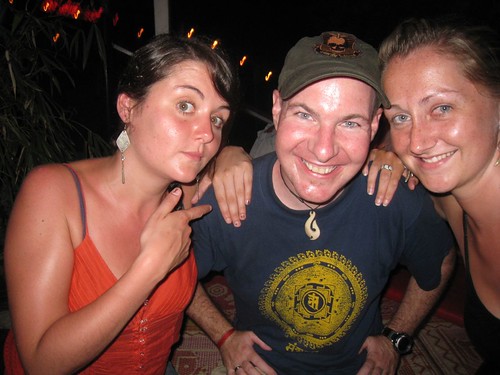
Dave and Natalie pose while Cameron is farther up

After the yak rides, our guide let us hike up a steep, muddy hill opposite the lake. The fog had begun to clear, exposing the little lake (1km in length) and snow along the opposite bank. When it began to rain steadily, we headed down to a small restaurant where Tibetan momos (dumplings), instant noodles, and small cups of chai (tea) were consumed. I used some of the freshly made green chili sauce and felt a burn on my tongue equivalent to anything I felt in Sichuan (except the hot pot).

Tsomgo Lake - Elev. 12,400 feet

Before I knew it, we were heading back down to Gangtok. Halfway down, and once the rain was behind us, we took a rest break so the driver could pour water on the tires and brakes to cool them down. We dined at a popular Indian restaurant along the pedestrian mall before packing up for our multi-day tour of two northern valleys.

Bonus Video


Good Time Gangtok

Procession

After breakfast, Natalie and I stepped outside of our hotel's restaurant to a procession of monks and lay people descending Tibet Road in celebration of Buddha's birthday. We made our way to Mahatma Gandhi Marg, the pedestrian-only road which marks the center of city life (at least as far as tourists are concerned). The quiet road was a much-appreciated oasis after the incessant honking jeeps of Darjeeling.

Getting a haircut...Indian style!

Clouds began to approach in the early afternoon so we took shelter in Bakers Cafe, which had all the hallmarks of a western-styled cafe (including a tasty cappuccino, my first in months). We used the time to get to know each other a little better. I admired Natalie's willingness to take on long term travel in India (and unexpectedly, Nepal) as a single woman.

Natalie takes a photo of an Indian family in front of a statue of Gandhi

When the rain let up, we made our way back to the hotel restaurant where Cameron was hanging out (we had planned to meet him there sometime that afternoon). We began to discuss the sightseeing options along with Dave (Australian) whom Natalie and I had met earlier. I wanted to see Tsomgo Lake which sat at an altitude of 3,800 meters. I was sold by two factors, reaching a new high in terms of altitude and the chance to go for a yak ride. Natalie was eager to seen snow-capped mountains and thus wanted to do a multi-day jeep tour of the north.

Dave (left), Cameron (right), Natalie discuss our options

We found a tour agency on the pedestrian road that afternoon which managed to obtain our permits for the lake trip on short notice, thus allowing us to head there the next day. We also shared our intention to book a 3-day/2-night jeep tour of the north through them for the day after. Our plans settled, we enjoyed a cozy dinner at Tangerine, overlooking the Himalaya at sunset.

Sikkim Bound

View of Himalaya at sunset from Tibet Road in Gangtok

Sarah is traveling around the world as I am, and her time in Asia was wrapping up in Darjeeling while I was ready to bust up to Sikkim for closer Himalayan views. Cameron would stay with Sarah through her last night, while Natalie joined me in a share jeep a day earlier for the four-hour mountainous drive to Sikkim's capital, Gangtok.

We occupied the back seat of the jeep, though it wasn't overly crowded. After a few hours, we made our first stop, which lasted thirty minutes. Oddly, it seemed to be more for the purpose of washing the jeep then allowing the passengers some rest.

Border crossing between West Bengal and Sikkim

Once on the road again, we reached the border between West Bengal and Sikkim just as it began to rain. It was the first time I've had to cross an official border within a single country. Natalie and I hopped out of the jeep which was sprayed with a chemical, and stopped into the foreigner's office to show our passports and permits.

As we continued to drive, Natalie would doze off listening to her Ipod while I was confounded by road signs bearing the acronym BRO. The signs had the air of propaganda, and seemed to be centered around roads and driving safety. Later, I would find out BRO is short for Border Roads Organization.

On the road to Gangtok, Sikkim

We arrived in Gangtok around 6pm. After a quick look at some dreary rooms on Tibet Road (historically, part of the trade route which literally lead north to Tibet), we settled on The New Modern Central Lodge which had a ground floor restaurant perfect for meeting other backpackers (just like The Lonely Planet said, of course). Unfortunately, our room had no windows, though at $3.75 a night (split between two people), it was hard to complain. On the way to drop off some laundry, we caught a glimpse of Mt. Kanchengjunga at sunset.

Sikkim - same as India, but different

We grabbed dinner in a hotel restaurant overlooking the main pedestrian mall which was filled with Indian tourists strolling around in the cool evening.

Himalayan Sunrise And Buddhist Monasteries

Atop Tiger Hill - Natalie (left) and Sarah (right)

Tiger Hill is a thirty minute jeep ride south of Darjeeling, at a higher altitude of about 2,600 meters. It is a popular place to watch the sun rise over the Indian Himalaya, and specifically, Mt. Kanchenjunga. As it was the pre-monsoon season, clear views of the mountains were hard to come by, even in the early morning. I wasn't going out of my way to get up early for a Tiger Hill sunrise, though when the opportunity to share the experience (and cost) with Natalie, Sarah, and Cameron arose, I figured it was worth a try.

Arriving late to the sunrise

I met them at 4:45am in the morning. There was enough light for us to see cloud cover, yet we were hopeful it might break apart if we were patient. We had decided to leave a little later than the recommended time (4am) so we could enjoy a bit of extra sleep. We hired a jeep (about the only one left in Darjeeling) and made our way up the hill. As we neared the top, we ran into a massive parking lot of share jeeps. It appeared as though every Indian tourist in Darjeeling had decided to go up Tiger Hill that morning.

Clouds roll over Darjeeling

The clouds would not part for us, and we spent about thirty minutes peering down into the valley and snapping photos of Darjeeling. Meanwhile, a massive exodus of the Indian tourists lead to a noisy traffic jam down the hill. While we didn't see the sunrise, or the mountains, at least we avoided the traffic.

Touring monasteries on our way back to Darjeeling

We had the jeep drop us off at the bottom of Tiger Hill, in the town of Ghoom (which also happened to be the turnaround point for the Darjeeing Railway joyride). We proceeded to walk back toward Darjeeling, visiting three or four Tibetan Buddhist monasteries along the way. As much as I enjoy Tibetan and Buddhist culture, the monasteries do start to run together after awhile.

Big Tibetan Buddhist monastery

Posters in a monastery

The Darjeeling Himalayan Railway

Darjeeling Himalayan

The day after visiting the zoo I set my sights on a joyride on the Darjeeling Himalayan Railway. I was up at 5:30am, out of bed by 7am, queued for a train ticket at the rail station around 7:30am, and enjoying breakfast at the popular cafe Glenary's by 8:30am. I received an email from Natalie stating she, Sarah, and Cameron just arrived in town.

At 11am, I paid for a taxi to take me back and forth for the necessary (and free) permit to enter Sikkim in a few days. The process of shuttling between two offices still took an hour but it was well worth the cost.

Chugging along the main road

Around 12pm, I headed back down to the train station to await my turn on the World Heritage listed toy train. When the little locomotive pulled into the station and people began to disembark, I bumped into Natalie, Sarah and Cameron. It was nice to see familiar faces, and we made plans to meet later that evening at 6:30pm back at Glenary's (restaurant).

Photo stop

I jumped on the train and was immediately asked to switch seats by two separate Indian families. I agreed to both, moving from the front of the train to the last seat, however on the way back, it meant I had the absolute front seat (so I could watch the engineers and brakemen at work).

Stoking the coal fire

The little train took off, chugging parallel to the road I had taken up to Darjeeling. The train is over 100 years old, running along the side of mountains, so it doesn't move much faster than the people walking on the street. At first the train just seemed to be a noisy, pollution-spewing, antiquated mechanical contraption, however it's charms grew on me over the course of the ride. The views were fantastic, and riding the rails was a lot smoother than driving on the roads.

Turnaround point - Ghoom - Elev. 2,258 meters

Regular Updates To Resume Soon!

Good news...I'm alive and well in the sweltering heat of India.  :)

Since leaving Darjeeling, and a great little internet cafe with lightning fast broadband, I've been left adrift from quality internet connections and computers from which to upload my latest photos and stories.

I hope to get back on track in the next few days, with posts to include high altitude lakes and mountains in Sikkim, entry into the "real" India with a 34-hour pilgrimage to Bodhgaya, and later Sarnath outside the holy Hindu city of Varanasi (along the Ganges), the Taj Mahal, and more.
Mt. Kanchenjunga, A Tea Plantation, And The Snow Leopard

Himalaya of northern India

At 8,586 meters, Mt. Kanchenjunga is the world's third highest mountain, and only 10-20 meters behind K2 in Pakistan for second place. Spending additional time in the shadow of the Himalaya was a big reason for my decision to enter India via Darjeeling.
Mt. Kanchenjunga - 3rd highest mountain in the world

On my second morning, I awoke around 5:30am, saw blue skies out of my window, and trucked it to the viewpoint on Observatory Hill, hoping to get my first glimpse of Mt. Kanchenjunga. As I walked, I noticed I was heading opposite most of the Tibetans and joggers on the path. I realized they were up early to circumambulate the stupas at the top of the hill. My motivation was reward with a fairly clear view of the Himalayan range. I enjoyed the view for a half hour or so, found a small cafe, and dined on porridge and Darjeeling tea before returning to my room for more quality time in bed.

Happy Valley tea plantation in Darjeeling

I met Viet (American) later in the morning and we shared a taxi to the nearby Happy Vally tea plantation. We received a short tour of the factory, and had the opportunity to view some of the workers picking the leaves in the fields. To my surprise, we couldn't taste the tea, however I didn't let that stop me from buying a souvenir bag.

Indian tiger

The next day I went to the zoo, which according to the map, while small (about 70 acres) is at the highest altitude in the world (about 7,000 feet). Before it rained, I caught a glimpse of a sneezing Indian tiger, and the elusive snow leopard.

Snow leopard

The latter cat being well worth the price of admission. I was especially excited to see it after having read Peter Mathiessen's "The Snow Leopard" in Nepal. Normally the cats are lying around during the day, however the snow leopard put on a real show for us both before and after the rain shower. He was eating grass, jumping around, and practically posing in regal form for the cameras. It's a beautiful animal.

Snow leopard

The zoo also had cloud leopards, black bears, Tibetan wolves, jackals, and yaks. While the variety of animals was small, they were all native to the Himalaya and therefore new to me.

Himalayan black bear - up close and personal


Getting To Know D-town

Morning view from Darjeeling hotel

I spent my first full day walking around Darjeeling.

Thankfully, the city center turned out to be smaller than I expected, however you're often either walking up or downhill given the city is on the ridge of a mountain.

Monkey warning on Observatory Hill

While I was trying to find Observatory Hill, a lookout point topped with Hindu temples and Buddhist prayer flags, I met George and Lee (or Leigh perhaps) from the UK.

We found our way past the monkeys to the top of the hill, though there were so many trees and flags you couldn't see much from it (a lower path that runs around the hill has the actual lookout point).

Map of tea plantations

Since they'd been in Darjeeling a week already, they wanted to taste and buy some tea before leaving the next day.

We each bought a small pot of a different kind at Goodricke's, House of Tea. We made plans to meet up later for dinner at a Tibetan restaurant nearby.

Amazing sunset

The sunset over the mountains that evening was amazing.

After dinner, I joined Viet and Richard (two guys we met at dinner) for a drink at Buzz, a bar in the basement of landmark bakery/restaurant/internet cafe Glenary's.

The cover band was awful, however I was up for a Kingfisher beer.

Unfortunately, they were all out, so I ended up with Foster's, while Richard opted for the ultra super strong (and I kid you not), He-Man 9000. Only in India!

He-Man 9000 beer

The Rocky Road To Darjeeling

Share jeep to Darjeeling

Fully loaded, my share jeep held 12 people and 1 baby. I occupied a seat in the far back, which turned out to be a blessing in disguise as it allowed me to take in the beautiful valley views as we wound our way up the rough and narrow roads. The experience of sitting in the back of a jeep filled with Indian tourists heading to the same place as me was priceless, and far more comfortable than it sounds.

The driver only had half a seat most of the trip - it did not inspire confidence!

As we rose in elevation, the sun began to set. Soon we were passing plantations known for producing some of the best teas in the world! We arrived in central Darjeeling at 6:30pm, just late enough for it to be dark and cool. A guy was standing right near me when I whipped out my Lonely Planet to orient myself. The map looked like a maze of criss-crossing roads. Given the late hour, colder temperature, and higher elevation, I opted to check out the guy's hotel, even if it would cost me a bit extra.

Obviously this is jeep territory

It only took a few steps up a steep gradient for me to feel the effects of the higher altitude. I was breathing harder and could feel my heart pounding. Hotel Polynia turned out to be in Lonely Planet's listing under the midrange accommodations. I had a giant room with a king size bed on the top floor, plus a private bath and plenty of western cable TV channels.

View of the valley as we head up the mountains

For dinner, I ordered some plain rice and a pot of Darjeeling tea to my room. While flipping through the channels I found both of the live (and decisive) matches for the English Premier League's 2008 season. Reception was better on the Chelsea game, however it would be Manchester United's night to reign supreme.

My first room in India

Finally, after all the stories and questions, I was in India. Cold India. I went to sleep under three thick blankets.

Nepal-India Border Crossing

Yet Airlines flight

As much as I enjoyed playing chicken with oncoming traffic in Kathmandu's little white taxis, I was happy to have a seat on Yeti Airline's 11:40am flight to a small border town in southeastern Nepal. The 30 seat twin prop plane had a nice green and yellow paint job and I felt at ease boarding it for the short 45-minute trip. I noticed I was the only white guy, which surprised me given I was on the preferred morning flight for those heading to Darjeeling, India.

Seating was first come, first serve and I nabbed a single window seat in the front left, hoping to catch a glimpse of Mt. Everest on my way out of the country. A pleasant stewardess kept us hydrated and the plane took off and landed exactly as scheduled. We flew at 15,000 feet however the clouds hid any potential mountain views.

Airport near Nepal's eastern border

As we disembarked at a tiny airport, I was immediately struck by the heat and humidity of the lower elevation. I went to use the men's room and after a few seconds at the urinal, realized there was no pipe connecting the porcelain with the floor. I was basically pissing on my sneakers. I peered into the squat toilet which looked even fouler and resigned myself to such situations for the duration of my travels in India.

Gangster trippin'

As I waited for my backpack, a Buddha Air flight landed and an older Swiss woman caught my eye. We recognized each other from the Indian Embassy and found we would be able to travel across the border and as far as Siliguri together. We shared a taxi to the border with two girls. Due to a local strike, we had to take an alternative route via dirt roads and small farming villages. The delay was minimal, though the extra dust required we all cover our noses and mouths.

We were dropped off near the border, along an endless stream of big trucks heading for India. As we walked a few meters toward the border post, a guy quickly approached us and offered to take us to Siliguri. I changed my Nepali Rupees for Indian, we took care of paperwork in the Nepali immigration office, and took the taxi across a long bridge to the Indian border post.

Nepal's eastern border crossing with India

As we approached the immigration office, which was akin to a ramshackle single room hut, a guy in a white undershirt emerged from the house next door. Turns out the border guy lives next to his office. We filled out our paperwork, and then he wrote our information down into a large logbook and stamped our passports. We jumped in the taxi again and took off for Siliguri.

I made it to India! Yep, it's dirty

We arrived in Siliguri, a hectic transportation hub, just before 4pm. I said ciao to Bettina and was ushered to a share jeep heading for the hill station of Darjeeling, perched along a ridge 2,000 meters above our current location.
___________________

Note: I had the option of delaying my departure to India by two days and making the journey with Natalie, Sara and their friend Cameron. All had traveled in India before Nepal, however I felt as though I needed to do the border crossing on my own.

Final Thoughts: 7 Weeks In Nepal

Dhauligiri from Poon Hill at sunrise

Nepal had always represented world-class trekking for me, yet I found the country to offer so much more.

Beyond the beautiful snow-capped mountains, green valleys, peaceful lakes, raging rivers, colorful flowers, and a wide array of birds were incredibly kind people, a lively Tibetan community, delicious food, and rich cultural history.

Reading The Snow Leopard in Chomrung

Table of Contents

  • Highlights 
  • Lowlights 
  • Nepali Food and Drinks
  • # of Nights Couchsurfing 
  • Average Daily Budget 

Highlights 

  • Flying past Mt. Everest and over the Himalaya
  • My first cup of Nepali milk tea
  • Meeting Rosie and Rob (the kayakers) on the bus ride to Pokhara
  • The view from the Boomerang restaurant's garden patio (and every meal I ate there)
  • Meeting Gela
  • Trekking for 10 days in the Annapurna region
  • Seeing three of the world's top 10 tallest mountains (Everest, Dhauligiri, Annapurna I)
  • Riding on the roof of the bus from Nayapul back to Pokhara after the trek
  • Spending 3.5 weeks in Pokhara simply because I liked it so much
  • Paragliding off Mt. Sarangkot
  • Hiking up to the World Peace Pagoda at sunrise and eating breakfast overlooking the Annapurna Himal
  • 3-day meditation course in Pokhara
  • Meeting Steven, Kevin, Stefan, and Marie
  • Spending a day paddling around Lake Phewa with Steven, Kevin, and Marie
  • A 3-day whitewater rafting trip on the Kali Gandaki
  • Meeting Natalie and Sara
  • Thangka shopping in Kathmandu
  • Walking to Kathmandu's Durbar Square
  • Visiting the monkey temple
  • Patan's Durbar Square
  • Pashupatinath Temple
  • Spending 4 days/nights around Boudhnath Stupa
  • Sitting in on a Buddhist monastery's morning puja
  • Surrounding myself with Tibetan culture - the food, religion, people
  • Shopping for authentic Tibetan items in Boudha
  • The prayer flags
  • The sunsets
  • The flowers
  • The birds

Marie chats with a Tibetan woman in the refugee center north of Pokhara

Lowlights 

  • Recurring digestive discomforts
  • Feelings of stress in preparation for the trek
  • Not reaching Annapurna Base Camp
  • Realizing my laptop's AC adapter was broken the first night
  • The slow breakdown of my digital camera (and need to buy a new one)
Nepali breakfast
Nepali breakfast

Nepali Food and Drinks

Lots of Dal Bhat (rice and lentils), chicken or potato curry, momos (Tibetan dumplings), pizza pizza, tea - milk, masala, mint, chocolate, peanut butter granola bars, banana lassis.

Giant butter lamp

# of Nights Couchsurfing 

0

Souvenir: Knife and chopsticks (made of yak bone) from Tibet

Average Daily Budget 

$42

Note: this is especially high due to the inordinate amount of money I spent on souvenirs and a new digital camera.

Bonus Video: Sunrise Over Himalaya As Seen From Poon Hill

More Images From Boudhnath Stupa


A wedding procession circles the stupa

A marching band accompanies a wedding procession around Boudhnath Stupa one afternoon.

Butter lamps

Butter lamps.

A Tibetan woman spinning prayer wheels

A Tibetan woman spins prayer wheels.

Rooftop restaurant view of stupa

A rooftop view of the stupa...well worth the extra dollar or two per meal.

A child requests a donation from a local monk

A monk tries to ignore a begging child....but later relents and offers a donation.

Behold the pigeons at sunrise

Pigeons being fed at sunrise.

Room at PRK Guest House

My room at the PRK Guest house - one of my all time favorites!

Boudha shop

A colorful shop selling drums, incense, and other decorations to tourists, locals, monks, and monasteries.

Daily Life In Boudha

A westerner performs full body prostrations at sunrise

The second morning I awoke in Boudha, I satisfied my curiosity about the ringing bells at 5:30am. I put on some warm clothes and stepped outside of the guest house to see people walking down the alleys toward the stupa, counting their prostrations on malas (prayer beads) hanging from their hands. I joined the procession and walked around the stupa a few times.

Boudhnath Stupa

Since most tourists tend to spend only an hour or two around the stupa, my plan to have it all to myself paid off! One or two other westerners were up at sunrise, however the crowd was mostly Tibetans in their traditional clothes, spinning hand held prayer wheels, counting prayers, and chatting with one and other. It looked and felt like what I always imagined of Tibet.

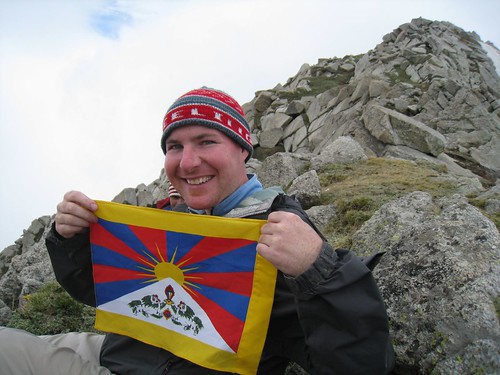
Free Tibet

After earning some good karma, I stepped into the courtyard of the monastery which runs my guest house. Once inside, a monk indicated I could enter the gompa. The morning puja was in session, and I quietly took a seat in a back corner so I could listen to the prayers. Every ten minutes, cymbals would crash, small kids would blow through giant white shells (bigger than their heads), and two massive drums were banged. When the instruments were used, I closed my eyes and it felt like I could've been in a movie scene from Kundun, or in some old monastery on the Tibetan Plateau. Opening my eyes and recognizing I was in a monastery in Nepal suited me fine!

Monastery overlooking Boudhnath Stupa

I had to run a few errands from Boudha which meant some extra cab fares, however being able to return to the Tibetan community at the end of each day was well worth the extra cost. I picked up my backpack from Thamel, organized my Indian Visa, and bargained for a new Canon Digital IXUS 860 IS from a shop on New Road (the electronics hub of Kathmandu).

Boudhnath Stupa as seen from a restaurant rooftop

During my first few days in Boudha, I enjoyed fantastic stupa views from the tourist restaurants that occupied the rooftops.

Nepali sunset

I even caught a great sunset with my new camera over the Kathmandu Valley one night.

How To Obtain An Indian Visa In Kathmandu

Sunday -

  • Receive advice to get to the Indian Embassy early.

Monday -

  • 8:45am - Arrive at Indian Embassy 45 minutes prior to opening.
  • Take a number - 79 to be specific.
  • Realize you may not be able to drop off your Telex form today (cutoff is 12pm).
  • Security guy suggests I return at 8pm to get a lower number for the next morning.
  • Later that night, enjoy dinner with Natalie, Sara, and their friend Cameron and skip the extra visit to the Embassy.

Tuesday -

  • 6:30am - Arrive at Indian Embassy 3 hours prior to opening.
  • Take a number - 36
  • Realize the earlier numbers all went to people who came the night before.
  • Chat with one of the English guys I met in Sinuwa on the Annapurna trek, eat breakfast, waste time.
  • 9:15am - Queue is formed outside Embassy gate, ten people are allowed in at a time.
  • Pass through security check, fill out Telex form, and stand in right queue at Visa/Telex window. Left queue is for people who dropped off their Telex forms three days prior.
  • 11am - Drop off Telex form, pay small deposit, and leave.

Thursday -

  • 7:30pm - Take taxi to Indian Embassy to pick up lower number.
  • Arrive at same time as two English girls I met Tuesday in line.
  • Obtain number 26, with understanding that we're each to provide a small "gift" the next day.

Friday -

  • 8:30am - Having secured a lower number the night before, I'm able to arrive later in the morning.
  • 9:15am - Queue up for entry to Embassy, pass security, line up in left hand queue at Visa window.
  • 10:30am - Confirm I was cleared for a new Visa, drop off Visa application and passport, and pay full fee.
  • 3:30pm - After eating lunch, booking a flight to eastern Nepal for the travel day to India on Sunday, and spending time on the internet in Thamel, return to cafe outside Embassy.
  • 4pm - No numbers this time, we all pass through security and wait outside the Visa window for 20 minutes before the guy starts handing out passports. As names are called, people smile and it feels like you've won a prize (and you deserve one after patiently going through the whole process).
  • 5pm - Return to Boudha victorious!

Other Tips -

Be sure to bring a black pen, one passport photo on the day you drop off your passport, sufficient cash, and a good sense of humor!

First Hand Account Of China's Earthquake

" The mountain blew up right in front of us. There were tremors every few minutes. I will never forget the thunderous echo of those boulders, as big as two-story buildings, crashing down the mountain and into the gorge. We saw a small bridge that crossed the gorge and led to a small hotel with an open field in front of it. We reluctantly crossed it and our way to the wide grassy area in front of the hotel."?  ---  The Ace of Diamonds: Surviving the Sichuan Earthquake on a Daoist Mountain

A few days after the initial report of a big earthquake in Sichuan, I e-mailed my friend Charlie with whom I stayed in Chengdu for two weeks this past March. He has written a harrowing account of his experience on the side of a crumbling mountain.  Thankfully, he and his friends escaped without injury.

Hinduism's Holy Pashupatinath Temple

Pashupatinath Temple

After my first peaceful night in Boudha (the area with the stupa), I awoke early to the the sounds of the nearby monastery's morning puja (prayers). I put my curiosity on hold and stayed in bed.

Kama Sutra carving

Later in the morning, I caught a cab south to my 5th World Heritage Site in the Kathmandu Valley, Pashupatinath Temple. The temple grounds and river are holy territory for Hindus, and I had been told it was akin to a small scale version of Varanasi in India. Only Hindus can enter the temple, so I was left to walk around the exterior grounds, taking in more Kama Sutra carvings and the cremations going on right before my eyes.

Creamations in progress

A smooth-operating tour guide started to take me around, and after a few minutes I realized what was happening, however because he said I could pay whatever I felt was appropriate at the end, I continued with him. Since I had obtained rates at the Durbar Squares, I had a sense of what the tour would be worth ($5-10 max). The tour guide spoke quickly, but he was informative and told me where I could take photos.

I'm not sure if it's appropriate to post the photo of the cremations in progress, however feel free to comment one way or the other. The atmosphere was rather somber, and you couldn't help but be respectful as people's loved ones were unfurled on the pyres.

Hindu hermits

After the tour wrapped up, I handed the guide about $6. He was anything but grateful, insisting that students often pay several thousand rupees. In other words, he was asking for $20-30 which was laughable. I tried to present my logical argument that I wouldn't have taken the tour if he had told me what he expected up front, however he didn't relent. I handed him 500 rupees, or about $8, and walked away.

Courtyard of the old folks home

The whole situation felt a bit awkward as it took place in the central courtyard of an old folks home. Sadly, the old folks sitting around did not have anyone else to care for them, and were awaiting their maker next to the site of their eventual cremation.

Blissful Boudhanath Stupa

Entrance to Boudhnath Stupa

After a few nights at the historic Kathmandu Guest House in the heart of Thamel (Kathmandu), I was ready to escape the live cover bands and honking taxis for some peace and quiet.

I put my main pack in storage and grabbed a taxi east toward Boudhanath Stupa, an important site for both Buddhists and Hindus.

Tibetans spinning the prayer wheels

Upon catching my first glimpse of those all-seeing Buddha eyes, I knew I was going to spend my last few nights in Nepal nearby.

From sunrise to sunset, Nepalis, Tibetans, tourists and all circumambulate the stupa in a clockwise direction.

There is a palpable sense of energy created by so many people moving together.

One hundred eight prayer wheels are ensconced in the outer wall.

My view from the PRK Guest House room

I booked a room at the PRK Guest House, which is run by the nearby monastery.

My room overlooked their garden and had a view of the courtyard of a school. 

For half the price of the Kathmandu Guest House ($6/night), I had a better-decorated room with a fantastic view and a sparkling clean bathroom. I was delighted.

Photo op with the Buddhist monks

The stupa is surrounded by monasteries, restaurants, Tibetan souvenir shops and thangka schools which have grown up around it. 

Despite the occasional motorbike,  it is a very tranquil space for pedestrians to stroll around.

Local monastery by the stupa

I met up with two girls from my rafting trip, Natalie (Canada) and Sara (Australia), around 4 pm.

One of the first places we went to was a monastery immediately opposite the stupa.

A few monks took to us, and I received a blessing, and we all received khatas (a traditional scarf given to a lama or teacher who blesses it and returns it to the giver).

The monk performs for us at the orphanage

One monk, in particular, showed us a larger monastery nearby, and then a small orphanage he runs.

While we got the sense we were being kidnapped by the guy only to be asked for a donation, we all knew it was going toward a worthy cause.

Patan's Durbar Square Sans Camera

My first digital camera was a Christmas gift from my parents in 2006. I had been receiving compliments on the Canon PowerShot SD700 IS Digital Elph all along my trip, and had been very happy with the photo quality. I was a quick draw as Gela and others who spent any length of time with me could attest. Unfortunately, the camera started to go haywire toward the end of my trek. I took the opportunity to have it looked at via a camera shop in Thamel (tourist enclave in Kathmandu). There was no charge to investigate the problem and I was assured it'd be looked at by the best technician in the city (what a line!).

For a guy averaging 1,000 photos a month, sightseeing without a camera is tantamount to torture. I figured Patan's Durbar Square would be nothing to write home about, and therefore a great place to go without a camera.

I was wrong!

Patan is a few kilometers south of Kathmandu, and home to the oldest pagodas of the three big Durbar Squares. Time after time, I find myself in awe at the sights in Nepal. The woordworking on the pagodas seemed a clear step above those of the ones in Kathmandu, and I started to become aware of the Kama Sutra scenes etched into the lower ends of the wooden brackets. If the normal stuff didn't float your boat, there was a carving of a woman with a horse!

I ate lunch in the palace restaurant and toured Patan's museum (also within a renovated section of the palace), which was filled with Buddhist and Hindu artwork. The collection on display was fairly small, however the experience of walking through the little doorways and peering out the windows toward the square and palace courtyard were well worth the cost of entry.

Touring Swayambhunath Stupa

Swayambhunath Stupa

From the restaurant rooftop in Durbar Square, I could see Swayambhunath Stupa as it was up on a hill to the west. I grabbed a taxi for yet another kamikaze ride through narrow streets filled with buzzing motorcycles and pedestrians.

Entrance to Swayambhunath Stupa

For most of my taxi rides around the city and valley, I've paid about 150-200 rupees ($2-3), which is probably 30% more than the locals.  I've found the best strategy for landing a lower rate is to ask Nepali shopkeepers for their estimation, be confident with your negotiation, and make an agreement before getting in the taxi (I learned that last one in Bali).

Sometimes I hit the target, and sometimes I can't be bothered about an extra dollar. There's a fuel shortage right now and the taxi drivers are keen to point out the gas lines as you drive around. At any rate, I've always gotten where I've needed to go, alive.

Prayer flags were everywhere

To climb up the monkey temple, you walk past a steady stream of stupas and religious statues. Where there are tourists, there are locals selling souvenirs. It was a perfect gauntlet. As I approached the top, a few teenagers started chatting with me which is always a sign that you're about to solicited for money, food, or a tour. I was up front with them about not giving any money even if they walked around with me. I don't think they got the message, as an hour passed with them slowly guiding me around before they asked for cash. Unlike the adult tour guides, they were rather relaxed and low key, so I gave them $1.50 for their time.

Kathmandu Valley as seen from Stupa

There was much more to the hilltop then I expected - a monastery, trees draped with prayer flags, restaurants, souvenir shops, and a fantastic view of the Kathmandu Valley. In addition to a bunch of monkeys running around, I saw a pair of snakes about two meters long slither through some dry grass on the way down to Buddha Park (a new park of Buddha statues...duh!).

Prayer wheels with


Kathmandu's Durbar Square

Kathmandu's Durbar Square

Rarely am I keen to follow the city walking tours in the Lonely Planet guides, however I had a feeling the one from Thamel to Durbar Square in Kathmandu would be interesting.

Buddhist monastery

As I left the tourist area, I soon found myself passing Buddhist monasteries, stupas, and Hindu temples left and right. Walking through the older part of the city, you felt as though little had changed over the centuries. Daily life was on display, up close and personal, whether it was the butchering of goats, sale of vegetables, or praying of Hindus.

Street scene in old Kathmandu

Every now and then I'd spot a tourist having as much trouble taking photos as me. There was simply too much going on...to many amazing shots. Eventually, I just gave up. It didn't help that my camera had been having technical problems since the end of my trek, making quick shots more difficult.

Durbar Square

After about an hour of winding my way south, I arrived at Durbar Square. Durbar means palace so there are actually several Durbar Squares in the Kathmandu Valley. Sometimes it pays to be completely unaware of the sights you're going to see because it means you leave yourself open to be completely surprised (usually in a good way, though not always).

Typical window

I studied a bit of architecture in college, though mostly Medieval and Modern. I was blown away by the pagodas in the square - their shapes, intricate woodwork, everything! After saying "no" to about five guys who wanted to be my guide, I sought food on a rooftop restaurant overlooking the square. The midday sun was intense, so I had some fruit with yogurt (known as curd over here).

Then it was off to Swayambhunath Stupa (aka the monkey temple) because in the Kathmandu Valley, one World Heritage Site per day is child's play!

Thangka Shopping

Thangka Salesman

Upon my return to Kathmandu, I dedicated a full day to thangka shopping. Thangkas are traditional Tibetan Buddhist paintings made on cloth. They are often framed with a brocade and depict one of five different topics: Deities (like Buddha, Tara, etc.), Life of Buddha, Wheel of Life, and two types of Mandalas. I've wanted one for years, however at the one Himalayan store in Washington, DC I found, they were around $500. The selection was also quite limited.

Thangka shops and schools are as numerous in Kathmandu as fake t-shirt shops are in Bali. If I had any hope of making a decision by day's end, I needed to narrow the field by picking a subject. I went with the Wheel of Life which depicts the psychological states associated with an unenlightened mind. All thangkas are steeped in religious symbolism and while I learned quite a bit during my shopping experience about the iconography, I'm not even going to attempt to explain it.

After looking at enough thangkas, you learn what to look for when determining quality and value (even before you ask the price). The fineness of lines, harmony of colors, and use of 24k gold are big differentiators. In general, the student quality is the lowest, followed by a middle ground, and lastly the "master" quality. Once I found the finest quality thangka of the day, I could hardly bear to look at the lesser ones in other shops (even if they were cheaper).

So I negotiated a 30% discount, and still spent almost three times the initial figure I had in my head. Money seemed to matter a little less when I reflected on my opportunity to own a piece of art so beautiful, let alone the three months it took to create it. I chose the color and design of the brocading and picked it up a few days later. I only had a quick glimpse of the framed painting before it was rolled up and packed in a large cardboard cylinder for shipment home.

Dares, Polls, And India

Dares

I know it has been awhile since I completed a dare, however they are always in the back of my mind. To recap what is outstanding:

  • For $100, my friend Bob wants me to get a photo with a topless girl.
  • For $50, get my photo taken with a ladyboy in Thailand.
  • For $30, Tim wants me to eat a scorpion.
  • For $25, Dan wants me to ride a motorcycle in an obscene amount of traffic.
  • For $200, my brother Jon wants me to get a tattoo.

It's quite possible that I can make a run at all of these once I arrive in Thailand come June! Keep 'em coming. Every time I talk about the dares, the eyes of other backpackers seem to light up. By far, the most discussed (and profitable) dare has been the one about the woman's arm around my shoulder.
Polls

Thank you to everyone who votes in the polls I set up in the right sidebar. I look at the results every few days to see what you think I should be doing.

In regard to the activity I should do after trekking, you now know I went with paragliding and rafting. By the time I got back to Kathmandu, base of Everest scenic flights, I was ready to stop big expenditures on activities and focus on local sights and souvenir-buying. Besides, I got a great view of Everest from my flight to Nepal!

As for your desire to see me head to India via bus, I know it'd be an adventure, however based on the stories I've heard, I'm taking a plane. No need to spend 2 days in transit and risk theft, vomiting, and bladder discomfort when I can get a 1-hour flight for about $150.

India

Once I get a new 3-month visa for India in Kathmandu, I'll immediately fly to Varanasi, India. A guy who just came from there said it was running about 105 degrees a day, so I expect to hang around just long enough to tour the ghats (to satisfy my morbid curiosity about public cremations) and take a cruise on the Ganges.

From Varanasi, I intend to take a train west to Agrah to see the Taj Mahal, before heading north to Delhi for a few days. From Delhi, I'll head further north to Rishikesh, ground zero for yoga and meditation in India (so I hear). Perhaps I'll join an ashram for a few days and try to learn some new yoga poses. And then it is up to Dharamsala, and the slightly higher McLeod Ganj, which is home to the Tibetan government in exile and His Holiness The Dalai Lama. Depending on how I'm feeling, the weather, and money, I may push further north to Manali. And if I'm really up for an adventure, bus it up to Leh (elev. 3,500 meters / 11,500 feet) near the Indian Himalaya!

Leaving Pokhara For Kathmandu

(from left) Dhaulagiri, Annapurna I, and Machhapuchhre

Two days after returning from the rafting trip, I boarded a tourist bus back to Kathmandu. After 3.5 weeks, and countless adventures, it felt right to leave. The mountain views I once enjoyed each morning had disappeared in a thick haze which had descended on the valley in mid-April. I felt bad for the people who visited Pokhara and never got those amazing views.

Tea Time Bamboostan restaurant
The views were clearer on the return ride to Kathmandu, so I was able to enjoy the same scenery almost as though it was new. As occurred when leaving Kathmandu, we hit traffic upon returning to the city outskirts. An extra hour or more was added as we sat still in the hot bus.

Pokhara lizard

After about 9 hours in transit, I paid too much for a taxi to the heart of Thamel, where I found a $4/night room at the district's epicenter of bars and restaurants. I was quickly reminded of the incessant honking, motorbikes, bicycle rickshaws, and general hassle and dirt I had been so happy to escape a month earlier.

Cover band at The Busy Bee

Rafting Nepal's Kali Gandaki River

Unloading the bus at our put-in point

I was still having trouble bringing myself to leave Pokhara so I signed up for a 3-day/2-night rafting trip through Paddle Nepal/Ultimate Descents. I chose a trip on one of Nepal's holiest rivers, the Kali Gandaki. It offered class III and IV rapids, so I knew it'd be exciting without scaring the hell out of me. I'd been rafting twice before in West Virginia (remember Michele?) and Costa Rica, however both had been day trips. Taking a 3-day trip meant one full day on the river without bus rides.

View of the river from our first campsite

The group consisted of 13 customers and 5 guides. There was a guide for each of the two rafts, the oar boat (which carried the heavy equipment), and two safety kayaks. Amongst the customers, the USA was represented well with 5 people. Australia offered 3 people, Holland and England 2 people each, and Canada 1 person.

Rafts at campsite number two

We were on the bus for about 2.5 hours the first day. We unloaded it by the river, and lunch was prepared. Once on the water, we almost immediately had to get off the rafts as they were pulled through a class V rapid that recently overturned a raft, causing one fatality. After passing on "Little Brother" we hit our biggest rapid of the trip, class IV "Big Brother." All I can remember was watching the left side of my raft head straight toward a giant boulder. We bounced off of it safely and only had another hour or so on the river before we arrived at our campsite for the night.

I paired up with Richard from Australia, and we shared a tent which was good because I can't remember the last time I had to set one up. He was one of the first people I'd met in Nepal who had done a more remote camping trek (not one of the big 3 - Annapurna Circuit, Sanctuary, and Everest Base Camp). He had also summited a 7,000 meter peak in South America!

View of the river from camp two

In the evening, we all got to know one and other. Everyone was drinking beer and rum punch except me, as I had decided to take a few nights off. The guides had us playing silly games, and a good time was had by all. The stars were out and it felt great to sleep in a tent by the river.

The next morning we were up by 7am, eating by 8am, and on the river by 9am. We hit our second biggest rapid of the trip within the first 10 minutes (a class III). I was disappointed to learn there would be no more of that size (partly due to the low water level this time of year). All the same, I was in the front of the raft for most of day two so I was soaked regularly.

Helping with dinner prep on night two

On the second night, we skipped the games and spent the time after dinner talking to one and other around a campfire. The stars were out again, and our guides even helped a groom and best man to cross the river as they were late for their own wedding (we could see and hear the party up on a nearby ridge).

Our third day was especially quiet. The first 30 minutes had small rapids (class II+), followed by about two hours (9 km) of near still water (due to our approach of a dam). The lack of rapids allowed for a few water fights between our boats, and another group of rafters, as well as a chance to guide the rafts. All along the trip we passed dead bodies buried under stones along the sides of the river. On the last day we literally passed a cremation in progress, a sight I am sure to see up close and personal once I reach Varanasi, India.

A long windy mountain road back to Pokhara

We helped carry the gear up to our awaiting bus, ate lunch, and hit the road for the 5-hour bus ride back to Pokhara. It was a ride full of hairpin turns along mountain cliffs, yet I felt fairly comfortable the whole way. In the evening, we went to dinner with our guides at The Love Shack, and followed it up with drinks at The Busy Bee.

Saying Goodbye...Again

Steven and Kevin at the Hungry Feel restaurant

New relationships seem to break apart as quickly as they form. Lately, it feels like I've been saying goodbye a lot. Luckily, quite a few of the people are headed toward northern India at the same time as me so there's a possibility we'll meet up again. However small the chances, we all seem to enjoy the idea when it comes time to part ways.

Tatiana helps me earn another $5

On our last night together, Marie, Steven, Kevin, Stefan (Switz), Tatiana (Russia/US) and I met for dinner at the Hungry Feel restaurant. The service was often remarkably slow there, yet we were rarely in a rush. The power outage left us eating by candlelight as usual, which turns a rough looking place into something a little more intimate.

Stefan and Marie making music together

After dinner, we said goodbye. The next morning Marie was to start trekking the Annapurna Circuit, Steven was taking a bus to Kathmandu to begin a 10-day residential Buddhism course at Kopan Monastery, Kevin was to take a side trip near Pokhara, Stefan was hitting a river as part of a 4-day kayaking clinic, and I was about to embark on a 3-day whitewater rafting trip down the holy Kali Gandaki.

Paddling Phewa Lake

Boarding our paddle boat

One of the luxuries of traveling alone for an extended time is your ability to do whatever you want, whenever. It is the feeling of absolute freedom I worked so hard to enjoy. So once the meditation course wrapped up, I decided to stick around Pokhara a little longer to spend time with some of the cool people I met. Kevin (Swiss), Steven, Marie (both English), and I hired a paddle boat for a day on Phewa Lake.

Kevin (left, Swiss) and Steven (right, England) paddle hard

The square contraption set on two pontoons looked dodgy but performed quite well. We took turns on the pedals, steering with a metal rudder. We motored across the lake and picked up a few beers on the opposite end, then ducked into an area where some water buffalo were bathing. We took our first swim there, though I was a bit apprehensive about the state of the water near such large beasts.

Sneaking up on the bathing water buffalo

We continued to cruise toward the north end of the lake, enjoying the views and each other's company. Conversations ranged from the silly to serious, personal to reflections on what we learned in our Buddhist meditation course.

Marie (England) and Kevin go for a swim

We went for swims on several occasions, working on either dives or our forward flips.  I think I landed 2 of my 5 flips properly, so it was no surprise I had a sore back the next day!

Sunset over Phewa Lake

After about 6 hours on the lake, we came ashore and grabbed an early dinner together.  Worn out by the heat and Everest beers (which continue to kick my butt), I slept a solid 11 hours.

My 3-Day Tibetan Buddhist Meditation Course

Class photo -

A week to the day after completing my trek, I walked to the Ganden Yiga Chozin Buddhist Meditation Center in the northern section of Pokhara's Lakeside district.

I wanted to find out about the 3-day meditation course they offered. My timing couldn't have been better, as it was a weekend course set to start in 30 minutes.

Buddhist meditation center

The residential course is taught by an American monk, Venerable Losang Yeshe.

Participants spend at least Friday, Saturday, and Sunday in dorms, however since the class was abnormally large (13 people), there wasn't a dorm available for me.

Communal lunch

While Friday and Monday were half days, they followed the same schedule as our two full days.

We had a 30-minute meditation at 6:30am, followed by breakfast, Hatha yoga, a teaching, lunch, group discussion, 2nd meditation, dinner, and 3rd meditation at 7:30pm.

After our evening meditation, we were to remain silent until the completion of the following morning's meditation.

We were to refrain from listening to music and using the internet as well.

This was a bit harder for me since I had to walk back to the busier part of town each evening.

All of our meals were vegetarian...and quite tasty!

View of the lake frrom atop gompa

Overall, I enjoyed the meditations (it's been awhile). It felt really cool to do our evening meditation by candlelight due to the power outages.

I kept my eyes slightly open for them so I could enjoy the environment inside the gompa.

The introductory teachings were a good refresher, plus I liked watching others grapple with concepts like reincarnation and karma, and spending time with a great international crowd open to new ideas.

Switzerland, Holland, Israel, England, and the USA were represented.

On the last day, a bunch of us went out to dinner at the Boomerang restaurant (while their nightly cultural song and dance performance occurred) and drinks at the ever-popular Busy Bee (cover bands nightly).

I continued to spend time with several of the people I met through the class over the following week.

Morning Hike To The World Peace Pagoda

Rowing across the lake (Pagoda just visible in upper left of photo)

When I first arrived in Pokhara, I distinctly remember looking up at the World Peace Pagoda and thinking that it would be a strenuous hike to get up to it (despite the guide book stating it only takes an hour). I decided to put the climb off until after my trek.

World Peace Pagoda

What a difference a 10-day trek can make for your perspective. On a fairly clear morning, I stepped out for a walk along the lake around sunrise. I ended up hiring a rowboat and crossing the lake, ascending the 300 meters or so to the World Peace Pagoda. As I was plodding up the steps alone, I felt a sense of pride in having greatly expanded my personal comfort zone for outdoor adventures.

Himalaya as seen from World Peace Pagoda

Upon reaching the pagoda, the view of the Annapurna range (and to a lesser extent, Dhaulagiri) was stunning. There was some haze, however you could clearly recognize all of the peaks. I found it amazing how much of the mountain range you could see by simply crossing to the other side of the lake, let alone climbing up a few hundred meters. On a perfectly clear morning, the view would easily rival that which we had from Poon Hill.

What a great breakfast view

After poking around the pagoda, and chatting with the few other tourists up there so early, I realized I wasn't ready to go back down. I walked a few minutes along the ridge and grabbed breakfast from a small restaurant. An older Canadian woman and her guide sat at the adjacent table for a snack and we chatted for a bit. She had completed a short trek in the region and was heading to eastern India and Bhutan with an organized tour.

It was up on the ridge that I decided it would be a shame to bypass India for fear of how crazy it will be. Her advice was to go with the flow. My perspective suddenly changed, and I soon found myself wanting to take on the challenge of traveling through India (if only for a few weeks in the relatively cooler, Buddhist north of the country).

Mountain reflection

After a quick descent back to the lake, I took a leisurely row back to central Lakeside, managing to capture something of a snow-covered mountain reflection in the still waters.

I Want To Fly Like An Eagle

Sunset over lake from Snowland balcony

I allowed myself a few days to recover from the trek, despite having felt far more sore the day after a dodgeball tournament then tramping around in the mountains. I gave up my Super Deluxe room at the Snowland Hotel ($25/night, complete with balcony overlooking the lake), for a more affordable room with bath at the Yeti Guest House ($6/night).

Ready for take off atop Sarangkot mountain

Pokhara, Nepal is a mecca for paragliders and I'd noticed them on a daily basis since arriving. It cost $95 USD for a 30-minute flight over the valley. I signed up for a morning group, though by the time we had taken the 30-minute jeep ride up Sarangkot mountain, clouds had descended over most of the peaks behind us. Instead, we had breathtaking views of the green valley, Lake Phewa, and the city.

Xavier applauds a paraglider's take off

After reaching the pinnacle of physical fright in my life with the canyon swing in Queenstown, paragliding seemed like a walk in the park. All the pilots were of different nationalities. I was paired with a French guy. We made a little small talk, as did all the pairs, however we were soon just sitting around watching everyone take off before us. Last to launch, I received the bare minimum of instructions, and was soon running down the edge of the mountain until we took flight.

3 paragliders and 1 eagle take flight

Himalayan eagles soared around us as we caught the thermals up and made swooping turns to the left and right going down. It took a few minutes to feel comfortable in the seated position, with nothing below you but the terraced farmland. At least with skydiving you know you're going straight down. Paragliding is all about staying aloft. I can't imagine a sensation closer to flying then being up there with the birds. It was fantastic.

Self portrait

Everyone is encouraged to take photos, so when I managed to get my camera out and start taking some, I lost track of shifting my weight with the pilot to help with the turns. He made a sarcastic remark about me not helping him out much so I apologized (given my life was in his hands) and put the camera away.

Let's land

As we prepared to land I received the simple instructions for what to do - stand up and start running. And it was as easy as it sounds.

Himalayan eagle

Annapurna Sanctuary Trek: A 10-Day Adventure

My good friend Annapurna South

Never Ending Peace And Love

Perspectives from a first-time trekker on the Annapurna Sanctuary trek in the Himalaya of Nepal.

The Scenery

Hopefully, the photos I've posted speak volumes about the scenery. Words hardly do it justice, so I'm not going to try too hard.

Green forest valleys gave way to snow-covered mountains of the highest caliber.

Waking each morning to new and stunning views of the mountains with perfect blue skies in the background hardly felt real. It took me days to realize I was in the midst of such an experience.

Beautiful rhododendron flowers paint the sides of mountains in red and pink. Forests seem magical...rivers powerful...stone steps never-ending.

The smallest of flowers growing between the stone steps were as beautiful as the larger-than-life mountain views.

Watching the sunrise over the Annapurna range from Poon Hill was akin to walking into St. Peter's Basilica in the Vatican City for the first time - a spiritual, awe-inspiring experience for even the non-spiritual among us.

Gela
Gela

People

The locals were warm and friendly, which continues to be a reason I enjoy spending time in Nepal.

Gela was an all-star trekking partner who indulged my desire to take silly photos all the time.  The other trekkers met along the way were also cool.

Our guide, Mohan, worked out well. At any given time, he was a masseuse, singer, dancer, magician, mathematician, comedian, and doctor.

Our porter, Nima, worked hard, kept a watchful eye on me when I needed it, and made the experience extra fun (especially toward the end when he'd enter the dining room after a few drinks).

Nepali boy at Himalaya Guest House in Chomrong

Lessons Learned

Western companies and tour groups are not the way to go. Who wants to walk in such majestic places with a giant crowd of people no doubt talking to one and other all the time.

Support Nepali travel agencies, guides, and porters. It's cheaper and gives you a closer cultural connection.

It's as easy to hire a guide and porter for a trek in Nepal as it is to go skydiving in New Zealand. And there's no paperwork to sign!

Be clear about the goals of your trek when hiring a guide. If you want to be able to take your time, then stress that reaching base camp is not critical.

On the popular routes (Sanctuary, Circuit, Everest), guides and porters are not necessary. Take a book or a map; however, the maps and trails are so obvious it'd be hard to get lost.

If traveling during the high seasons, there are plenty of other trekkers to meet in advance or along the way, and guides are always around for you to ask questions (how far is it to X, what do you think the weather will be like today, etc.).

Prepare for all weather conditions. Ask, "what happens if I get caught in the rain my first day?"

At the same time, don't feel the need to bring an entire waterproof outfit, as you can usually do your walking in the mornings before it rains, and dry your wet clothes (or laundry) by the guest house stoves or heaters each night.

Layering is essential. I wore 1-4 layers at any given point in the day/night. It would be blisteringly hot under the sun at times, and cold in the evenings.

Invest in an authentic sleeping bag, and know how it performs in varying degrees of cold. I'd rather be too warm than too cold.

Gela was comfortable in her friend's real North Face -7 degree Celsius sleeping bag the whole time, even above 4,000 meters at ABC.

My fake -5 degree bag sucked balls, and I had to depend on guest house blankets and extra clothes (not a good feeling)

Nima leads the way
Nima leads the way
  • Take your time. Walk slow, watch your steps - up and down. Use a walking stick for added support and balance.
  • Greet the locals with "namaste."
  • Drink water and eat snacks (chocolate, granola, etc.) at your rest stops. Drink and eat more than you think you need.
  • Drink herbal teas and warm water.
  • If you feel worried about the remoteness, the steepness of trails, the weather, the altitude, RELAX and try to stay in the moment, focusing on the scenery and people around you.
  • Breathe evenly and deeply.
  • Find food you like and eat a lot of it (stay consistent, trekking isn't the time to experiment).
  • Establish an eating routine - eat the same meals each day (porridge w/apple for breakfast, pizza/noodles for lunch, dal bhat for dinner).
  • Adding sugar to tea, water, and food is an excellent way to consume extra calories and gain quick energy.
Nancy reviews photos with another trekker in Chomrong

Trekker Nationalities (met along the way)

  1. German
  2. Austrian
  3. Dutch
  4. English
  5. Swiss
  6. Estonian
  7. French
  8. Italian
  9. Irish
  10. Czech
  11. American
  12. Polish
  13. Malaysian
  14. South Korean
  15. Israeli
  16. Canadian
  17. Thai
  18. Japanese
Nima and I watch a donkey train
A noble dog of the Himalaya

Truly Final Thoughts

The difficulty of trekking in Nepal will depend on the person, route, time allowed, season, etc.

Having practically no outdoor experience myself, I found the first few days challenging - mentally and physically.

Yes, I tend to worry a bit in life, yet there's no getting around the fact that you quickly realize how much work it takes to travel 1...2...3 days into the mountains, let alone the logistics and effort of trying to get back out if you injure yourself, or mentally lose it.

Despite having hired a guide, I quickly found you need to look out for yourself first and foremost.

What a view!
What a view!

Still, on those days when I was waiting for Gela, I started to miss the routine of getting up early and hitting the trails.

We never stretched our legs before setting off - we just started walking. After a few days, your body seems to adapt.

There were as many trekkers in their 40's and 50's as there were in their 20's and 30's.

Despite all my concerns around Altitude Sickness, I never reached the heights where it became a significant concern.

Still, at certain heights, I was acutely aware of the extra effort and breathing it took to do seemingly easy things like going up and down a flight of stairs.

Usually, I was fine after a night's sleep, though. Guess I'll save my Diamox for the next mountain adventure.

Colorful prayer flags
« Previous Page
Next Page »
Dave at Ahu Ko Te Riku on Rapa Nui (Easter Island), Chile.

Hi, I'm Dave

Editor in Chief

I've been writing about adventure travel on Go Backpacking since 2007. I've visited 68 countries.

Read more about Dave.

Footer

back to top

About

  • About
  • Archive
  • Privacy Policy
  • Cookie Policy

Follow Us

Contact

  • Contact
  • Work With Us
  • Submissions

Copyright © 2025 Go Backpacking