Go Backpacking

  • About
  • Travel Tips
    • Accommodations
    • Budgeting & Money
    • Adventure Travel
    • Food & Drink
    • Gear & Gadgets
    • Packing Tips
    • Travel Blogging
    • Travel Insurance
    • Trip Planning
    • UNESCO Sites
  • Destinations
    • Africa
      • Botswana
      • Egypt
      • Ethiopia
      • Morocco
      • Rwanda
      • South Africa
      • Tanzania
    • Asia
      • Cambodia
      • China
      • Hong Kong
      • India
      • Indonesia
      • Japan
      • Laos
      • Malaysia
      • Nepal
      • Philippines
      • Thailand
      • United Arab Emirates
      • Vietnam
    • Europe
      • England
      • France
      • Germany
      • Greece
      • Iceland
      • Ireland
      • Italy
      • Portugal
      • Spain
      • Switzerland
      • Turkey
    • North America
      • Canada
      • Costa Rica
      • Cuba
      • Guatemala
      • Mexico
      • Nicaragua
      • Panama
      • United States
    • Oceania
      • Australia
      • French Polynesia
      • New Zealand
    • South America
      • Argentina
      • Bolivia
      • Brazil
      • Chile
      • Colombia
      • Ecuador
      • Peru
  • Advertise
menu icon
go to homepage
  • About
  • Travel Tips
    • Accommodations
    • Budgeting & Money
    • Adventure Travel
    • Food & Drink
    • Gear & Gadgets
    • Packing Tips
    • Travel Blogging
    • Travel Insurance
    • Trip Planning
    • UNESCO Sites
  • Destinations
    • Africa
      • Botswana
      • Egypt
      • Ethiopia
      • Morocco
      • Rwanda
      • South Africa
      • Tanzania
    • Asia
      • Cambodia
      • China
      • Hong Kong
      • India
      • Indonesia
      • Japan
      • Laos
      • Malaysia
      • Nepal
      • Philippines
      • Thailand
      • United Arab Emirates
      • Vietnam
    • Europe
      • England
      • France
      • Germany
      • Greece
      • Iceland
      • Ireland
      • Italy
      • Portugal
      • Spain
      • Switzerland
      • Turkey
    • North America
      • Canada
      • Costa Rica
      • Cuba
      • Guatemala
      • Mexico
      • Nicaragua
      • Panama
      • United States
    • Oceania
      • Australia
      • French Polynesia
      • New Zealand
    • South America
      • Argentina
      • Bolivia
      • Brazil
      • Chile
      • Colombia
      • Ecuador
      • Peru
  • Advertise
search icon
Homepage link
  • About
  • Travel Tips
    • Accommodations
    • Budgeting & Money
    • Adventure Travel
    • Food & Drink
    • Gear & Gadgets
    • Packing Tips
    • Travel Blogging
    • Travel Insurance
    • Trip Planning
    • UNESCO Sites
  • Destinations
    • Africa
      • Botswana
      • Egypt
      • Ethiopia
      • Morocco
      • Rwanda
      • South Africa
      • Tanzania
    • Asia
      • Cambodia
      • China
      • Hong Kong
      • India
      • Indonesia
      • Japan
      • Laos
      • Malaysia
      • Nepal
      • Philippines
      • Thailand
      • United Arab Emirates
      • Vietnam
    • Europe
      • England
      • France
      • Germany
      • Greece
      • Iceland
      • Ireland
      • Italy
      • Portugal
      • Spain
      • Switzerland
      • Turkey
    • North America
      • Canada
      • Costa Rica
      • Cuba
      • Guatemala
      • Mexico
      • Nicaragua
      • Panama
      • United States
    • Oceania
      • Australia
      • French Polynesia
      • New Zealand
    • South America
      • Argentina
      • Bolivia
      • Brazil
      • Chile
      • Colombia
      • Ecuador
      • Peru
  • Advertise
×
Home

Naha Tug of War: When East and West Collide

This is a guest post by Rose Witmer (text) and Michael Lynch (photos). If you want to guest post on Go Backpacking, please read more here.

The golden ball waits to be raised in the air

The Naha Festival is host to one of the largest celebrations on Okinawa, Japan.  The usual bustle and traffic of highway 58, which cuts through Okinawa's capitol city, is shut down as tens of thousands gather in the streets around an enormous rice straw rope.

Everyone is chatting with excitement of the battle to come.  Cameras are raised high above the crowd as the user stands on tip-toe in hopes of capturing the spectacular scene.  Suddenly a gong rings out.

Attention turns toward the two lengths of the rope where figures in traditional dress of the kings of the Ryukyu Kingdom era are carried on a wooden platform by four men.  The platforms of the East and West stop and the Kings bow.  Then each king readies their weapon of choice and a battle is acted out between both sides.  It ends in a draw.  The Kings withdraw and everyone prepares for the beginning of the main event.

The end of the male rope faces East

Men climb on top of the rope and the crowd closes in, taking hold of the many extended lines of rope.  Where East and West meet, high above the crowd a solid gold ball hangs from a crane at the top level of a tall downtown building.  Eyes watch the ball intently and the throng waits in hushed anticipation.  Suddenly, it breaks open and streamers and confetti of every color twist down to the masses below.  This is the signal.  The war has begun.

The preparation for the event begins long before the day of the tug of war, which is held the weekend of the Japanese National Sports holiday.  Rice straw from the year's harvest is collected and woven into thicker sections, which are then woven together into two 100 meter halves.  Over 200 smaller ropes are then woven into the main piece for the 20,000 plus participants to grab on to and use to pull the main rope in the center.  During the event, both halves will be connected by a long, sturdy log made of dense wood.

In the end, the rope will span several blocks of the island's capitol and will stand taller than most cars.  It will wait in place of Highway 58's median until the day of the festival when the roads are shut down and cars are replaced by thousands of people waiting for the battle to begin.   In 1997 the Guinness Book of World Records made this 200 meter, 43 ton rope made of natural materials as an addition to their collection of record-breaking entries.

A Lively Dance
A Lively Dance

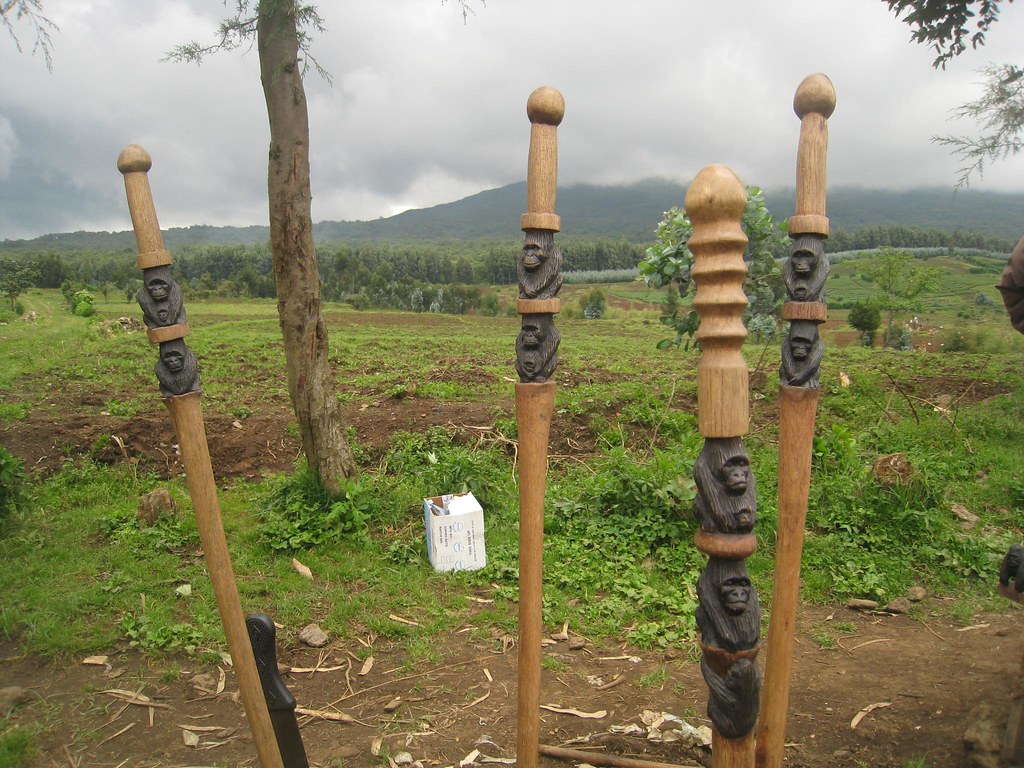
The Naha tug of war festival dates back to the 17th Century Ryukyu Kingdom.  During these times it was used to predict the coming year's fortune as well as pray for rain, a healthy and abundant harvest, and thank the gods for the fortune in the years prior.  Then, the festival would kick off with four main villages demonstrating their strength and skill during Hatagashira, a type of competitive dance with tall poles bearing their village's symbol.

Today, the competition involves many more groups in addition to the four original villages.  As they parade down the street each dancer balances these seven to ten meter poles in a thick bundle of cloth tied around their waist and use their legs to lunge the 40 to 50 kilogram pole in the air before catching it again.  This difficult task can become tiring. The dancer's teammates surround him at all times holding long rods with hooked ends ready to catch the pole should it fall.  Several others wait to step in to continue if the dancer needs to rest.

Panraku
Panraku

Amongst the sounds of the crowds and competition, the full, low tones of conch shells accompanied by the Sanshin, a three-stringed instrument shaped like a small banjo and covered in snake skin, float through the air.  The deep fog-horn like call of the shells and the twang of the strings blending smoothly with the booming of drums and lively shouts of celebration in the Okinawan language.  Dancers kick their legs up high and spin with drums hanging from their shoulders in the traditional Ryukyuan Eisa dance.  Among the music of the old kingdom, many dojos of all forms of martial arts scattered throughout the southern region of Okinawa will take advantage of this celebration to showcase the talents of their style at different levels.

Amidst the growing air of anticipation, this parade of Hatagashira, Eisa, and Karate leads to a crowd of tens of thousands of people in the center of the city.  Here friendly and excited crowds of people move toward the rope and ready their cameras as the main performances are brought to center stage.  The contest of strength and skill with the competing villages' hatagashira begins, followed by Karate demonstrations by each school's Sensei, or master, while conch shells are blown and drums are beaten.  These are all events leading up to the grand finale, the tug of war.  After the battle between the King of the East and the King of the West, streamers and confetti twirl down from the giant gold ball swinging from a crane above.

People scramble to cut a piece of the rope

Young children and old grandparents.  Okinawans and Americans.  Everyone pulls with all of their strength on the smaller branches of ropes extending out from the main rope.  The event may last up to 30 minutes, however, it usually only takes 10 before everyone begins gasping for breath and laughing from the exhausting joy and celebration of the games.

Men dressed in traditional Okinawan atire stand on top of the ropes banging metal plates and crying out "Hai-ya!" and "O-Shoi!" encouraging the masses to "pull harder!" and "heave-ho!".  Unbelievably, the 40 metric ton rope is dragged to one side and the end is called.  Immediately, hundreds of people pull out knives to cut off a piece of the rope to take home for luck in the coming year.

Families and friends excitedly climb up on top of the rope that is higher than most cars to take pictures as proof that they were a part of the world known tug of war.  The once world's largest rope is cut down and taken home, a unique memento of the memories spent celebrating at the Naha Tug of War festival.

_________

Rose Witmer is a young traveler at the beginning of a long journey around the world.  She currently lives in Okinawa, Japan, exploring the jungles and mountains when not enjoying the Japanese city life.  She loves to write and never leaves home without a camera and a notebook.  You can find her on Matador Travel and at her new blog, Samayou Meigui.

Mike Lynch is a photographer in Okinawa, Japan.  For more info visit www.mikesryukyugallery.com

How To Prevent Bed Bugs When Traveling

After my confession of getting bed bugs myself, I thought I would at least post some tips on how to prevent bed bugs when traveling from the research I did after getting them in Asia.

In the last ten years, bed bug infestations have quadrupled. It's not just hostels either, as 4-5 star hotels are getting hit with the same problem too.  

Man packing on a bunk bed in Buenos Aires, Argentina (photo: Greta Schölderle Møller)
Buenos Aires (photo: Greta Schölderle Møller)

Prevent bed bugs before they attack: Click here to buy pre-trip supplies!

Bed bugs do not discriminate, and the traveler is the most susceptible to getting a case of them. Since most countries in the world have outlawed the chemical DDT, bed bugs are coming back in a whole new way!

There isn't a full-proof way of detecting bed bugs in a room. I know that's not what you wanted to hear.  

They can be hiding anywhere, strike anytime, and it almost takes a case of them infecting someone before you can diagnose what it was. Bed bugs can live as long as 18 months without having to feed.  

Odds are, you might have stayed in a bug-infested room already, but nothing happened because they weren't out on the prowl the night you slept. That being said, you can still check for signs.  

A good traveler should always ask to see the room first, but before you go straight to the bathroom once you hit the light, go to the bed first.  

The bugs are nocturnal and only move around when it's dark, so the best time for seeing signs (or one) of them is right after the light is turned on.

What To Look for When Inspecting a Room

Check under the bed mattress first. Look for stains of black or brown fecal matter. You will typically find this around their nesting area.

Be sure also to check out the mattress tag; they love to hide there for some reason.

Check the sheets and pillowcases by pulling them back. Look for signs of minor blood stains that they leave after feeding.

Check the back of the headboard for nesting areas as well. You may also see translucent light brown skins in this area.

Check the walls for cracks where you might see signs of fecal matter. Most bed bugs nest about 10-15 feet from the bed.

If the room has furniture (couch or chairs), lift the cushions and inspect for the same signs as above. Bed bugs can just as easily nest there.

King Kong Hostel, Rotterdam (photo: Marcus Loke)

How to Avoid Bed Bugs

Inspection on your part is the best thing. Hotels and hostels aren't going to tell you on a scale of 1-10 if there are bed bugs in the room they're trying to sell you.

Never leave your bag or suitcase on the floor or bed. Always store bags in an elevated area, and if the room has a nightstand or luggage rack, use it. Even the top of the TV is better than nothing.

If you suspect an infestation, immediately grab all your stuff and go to the front counter. Inform the management of what you saw and request a room change or refund.

I would go with the refund; if one room is infested, I assume the whole place is. The place your staying isn't worth the risk of getting torn up. If you don't believe me, see the other article I wrote here.

Note: if you paid $5 for your room in a developing country, just leave. Getting angry with the owner and making demands will do you little good.

Learn how to prevent bed bugs to avoid being bitten (photo: Alexandra Gorn)
Woman covering her face (photo: Alexandra Gorn)

What To Do If You Get Bitten

Don't mistake mosquito bites for bed bugs. Bed bug bites usually come in rows of three and will not have a blood dot in the middle of the bite like a mosquito bite would leave. When in doubt, ask!

HEAT, HEAT, and more HEAT! Wash your clothes and anything you can afford to get wet in the hottest water you can find.  

I boiled water and dipped all my clothes into a pot three times. Bed bugs can take temperatures up to 100 F (38 C), so you need your water to be at least 120 F (49 C).  

It's the only 100%-certain way of ensuring you rid your clothes of them and do not take any home with you.

Don't bother with freezing or chemicals. Freezing them only puts the bugs into hibernation, and chemicals are sketchy at best.

See a doctor and get some meds to help with the healing. It will speed up the recovery time of the bites, and it's better than having to walk around, say, Thailand, in the middle of the summer with a long sleeve shirt.

Afterward, you might have difficulty convincing yourself that something isn't eating you every time you go to sleep.

It took me three months to get a good night's sleep after I got bitten, and it was all psychological.

Learn from my experience and use these tips to prevent bed bugs while traveling. Good luck out there!

Go Backpacking: Celebrating 3 Years and 1,000 Posts

Smokin' sheesha and sippin' tea - Aswan, Egypt

January 14, 2007 - Three years ago, and four days, I installed WordPress on www.gobackpacking.com and began to figure out how to develop a travel blog for my trip around the world. Looking back, I didn't have a clue as to how to attract visitors (though I knew my trip was going to be exciting), let alone make money.

As evidence, here's my first post, presented in its entirety:

Eureka! Installing this blog software by WordPress on my own website was a snap. I had already done the message boards a few months ago, so I'm sure that experience helped. Still, with this up and running so quickly and easily, I'm now psyched to host my Round the World travel blog on home turf! The biggest benefit will be a somewhat unlimited sense of photo storage. Life is good.

https://gobackpacking.com/2007/01/14/new-day-rising/

I'm a big BootsnAll fan, but when I signed up for a travel blog with them, and saw they were using WordPress, I figured I could just create my own.  Almost immediately, my life was turned upside down, as I quickly became addicted to WordPress, and the act of writing/blogging.

Now, three years later, I wanted to take a moment to recognize this anniversary, with post #1,000.

While I've written over 900 of them, this milestone would've taken several months longer to reach if it weren't for Go Backpacking's growing list of regular and guest contributors.

Thank you to everyone who has contributed over the years, whether in terms of reading, sharing comments, donating money, submitting stories and photos, or sponsoring this travel blog.  It's helped to keep me motivated, whether traveling halfway around the world or sitting on a couch in my parent's house, pondering what happens next.

I know one thing for sure - 2010 is going to be an exciting year here at Go Backpacking!

Getting Bed Bugs in Chiang Mai, Thailand

Bed Bug Club
Bed Bug Club (photo: Jason Eppink)

I can finally admit it...I got bed bugs once! One of the worst things I have ever had happen to me while traveling, and I guess maybe if you travel long enough, it's bound to occur.  

I wasn't sure about writing this story because frankly it's embarrassing and I felt so skanky after it happened, but six months later I can now emotionally deal with the issue (or at least that's what my therapist says).

Below is what I wrote six months ago while waiting at the train station to leave Chiang Mai for Bangkok, Thailand.  

Steve is the guy who I was doing photography work within Bangkok.

***

"Today has been a new one for me here in Chiang Mai. I came up here with a friend to shoot some photos of the area. 

We had been staying at a recently renovated hotel called The Mercure and were using it as a base for going out to sites in extreme northern Thailand.

We had gotten to Chiang Mai late evening, and for 800 baht per night ($22.50), it came with four stars and breakfast. 

Usually this would be over my budget, but Steve wanted to stay there because he knew a friend who was a teacher from Bangkok that was bringing her class, 100+ students, to do a music show there for a week. 

She made all the arrangements, and we were given the same discounted price as the school was getting. 

So for a little more and being such a nice hotel I was ok with it.  

After all, I thought it's ok sometimes to splurge and not stay in a $5, steamy hot, hostel room.

The second night we went to the night market and shot the flowers there, which Chiang Mai is known famously for. 

Steve wasn't up for much walking that night, and since it was my first night out, I went out on my own to see the rest of the market. 

I got rained in and took cover at a little bar for a few hours, then made my way back to the hotel.  It put me back kind of late but overall I had a good night and got some great pictures.

The next morning, I woke up with a whole bunch of sores on my upper body. 

Mainly along my arms/back and to me it looked like mosquito bites. 

The thing that got me was that the night before I never really remember the little zappers bothering me much. 

They itched like hell the next morning, and I decided I would take some precautions when out at night again (something I hardly ever do).

I told Steve about the bites that morning, and he said maybe they were bed bugs. 

Never really thought it was that but that night while laying in bed it had me freaked was I sleeping with a 1,000 little body munchers???

 It freaked me so much that I ended up sleeping in my clothes that night and every time a hair on my body twitched I was turning on the light.  

Made for a long night, and the next day, I just chopped it up as a "Steve story."

We got out early the next day and headed further north to Changi Rai and spent the day shooting The White Temple (fantastic place by the way!). 

Got back and had a ton of pictures to edit. 

When done I decided to watch a season of Dexter and hit the sack. 

I'm laying there watching a movie on my laptop, and somehow I saw this little bug the size of a pinhead move on the bed (I guess I have 15/20 vision). 

I got on all fours and scooped it up and put it into a glass. Was this me paranoid? 

Had to find out, so I started tearing the bed apart, first the sheets, then the under sheets, pillows flipped, then flipped the bed too and after 20min I had eight bugs in my glass. 

A few the size of a small ladybug but there isn't anything cute about them.

This was the evidence I was hoping I wouldn't find. 

I knew 100% what had eaten me up two nights before. 

I went into the bathroom and started counting the bites stopped at 98!!!  I wasn't so much mad as I didn't want to be there. 

I planned to go to the hospital and confirm for sure what it was, then confront the hotel about it the next day. 

One thing for sure was that I wasn't lying in that bed again.

Stayed up for as long as I could but couldn't make it and ended up curling up in the corner of the room, on a chair like a crack head, using a bathrobe as a blanket. 

I felt like some bum on the street in my hotel room that I was paying good money for the night's stay.

Called Steve the next morning in his room and we went to the hospital.  

Within 5sec, the doctor confirmed what I thought. 

She told me things like this happen but not to worry, as they carry no diseases that I wasn't already vaccinated for.  

Total cost for doctors visit was about 500 baht ($15), and with the cream and meds she prescribed for me, it came to about 1,500 baht ($42) total.  Pretty cheap doctor visit and was happy about that.

Went back to the hotel and Steve told me the hotel would pay for all the doctor costs and move me into a new " clean"? room. 

Screw that I thought!  

You don't eat twice at a restaurant that gets you sick, because if it happens again, it's your fault for knowing. 

I loaded all my clothes into one bag (had to get them all washed with some scalding water, as I had bought some new ones on the way back from the hospital) and was ready to get out of that place. 

Steve kept trying to get me to stay, but what sane person would and in the end, I decided just to leave and head back to Bangkok early. 

We were supposed to leave the next day, but I didn't see the point of renting another hotel room (no way in hell I was staying in that hotel another night) to ride back with him.

So as I write this now, I'm at the Chiang Mai train station and getting ready for an overnight train ride in a seat.errrr! 

It's going to be murder, but a seat was all they had left, and the thought of sleeping in my safe bed was enough to merit the cost." ~ Written May 29, 2009

***

I hope this doesn't discourage people from traveling. 

I have been on every continent in the world (except for Antarctica), stayed in some nice hotels to some dodgy hostels and this is the first time anything like this has happened.  

It happened in a place I thought it wouldn't as if it had occurred in a $4 hostel bed I could at least say it was a cheap room and that's what I get for being cheap.  

It won't stop me from traveling, but I think I'll invest in a silk blanket to give me a buffer zone. 

The joys of traveling outweigh anything like this, but it's not something I want to experience again.

The worst part for me wasn't the scars I had to wear for a month...it was the physiological part that took hold of my mind.

 I didn't sleep in my bed back in Bangkok for the rest of the time, and it did take me about three months before I could get a good nights sleep again.

Sleep tight and don't let the bed bugs bite... brings a whole new meaning to me now.

Becoming an Italian Daughter While Studying Abroad in Florence

As the van screeches to a halt, the driver forcefully launches my bags onto the sidewalk. I am far from the familiar. One-way Via Della Vigna Nuova in Florence fills with people and light.

I yell back at the driver," Che numero e?" in a shaky, uncertain voice." Tre!" she screams back at me, mid-exclamation, and already the white van has turned the corner.

The king of the Italian language, Dante, rests in Santa Croce in Florence
Dante rests in Santa Croce.

I look for Biliotti on the golden doorbell frame. Just below, Dolce & Gabbana shares a spot in the building. I notice a Gucci store is my neighbor. I begin to wonder if I have reached Italian fashion heaven, that if I ring Dolce & Gabbana, who or what will open those impressive caramel-colored, gold-detailed doors? Instead, I decide to stick to the plan. I will ring my assigned host family.

The van that dropped me off held a handful of excited, gabbing American college students, ready to begin their semester abroad in Florence. However, most of these students had not faced those intimidating doors before me.

The majority will live together in apartments around town, speaking English as their common foreign language. One chatty Kathy begins to go around the van, asking everyone if they know Italian.

I am the only one with any experience. It seems most make their way to Florence to guzzle down the wine, meet hunky Fabio, and travel around Europe.

Who can blame them? Florence is an idyllic city, covered in Renaissance art and architecture. Some of the greatest minds and artists hail from Florence, including Dante Alighieri. Dante supposedly lived just down the street from where I make my new home.

He is credited with glorifying the Italian language as we know it today, the language that forty-somethings have started to learn post "Under the Tuscan Sun" for its romantic appeal. I have, however, come to live with Mauro and Loriana, two older Florentines looking for some American company.

Via Della Vigna Nuovo, my Italian home in Florence

The door buzzes open, and I maneuver my cumbersome bags through the threshold. An older red-faced Italian man rushes down the stairs, excitedly greeting me with those overly expressive Italian hand gestures.

He stops to give me the double Euro kiss. I am always so awkwardly American at those, never knowing if I should go right or left first, making the exchange more of a standoff of head bobbing.

We climb the stairs and I meet Loriana, Mauro's wife. My jetlag subsides, and I feel that excitement. I am crossing over, but not in the hokey John Edward TV show sense. I am crossing cultures, becoming an Italian for a semester.

Travelers can easily get by without speaking a word of Italian in Florence. Students studying abroad in the city mostly bring their mini-America to the streets that the Medici used to rule.

At the end of the semester, a few students confided in me their envy at my host family set-up, jealous of my connection to actual Italians, which I can take home in memory.

Florence is full of English speakers. A red-headed, American girl, even if she speaks Italian to get those scoops of gelato, is usually met with English.

The Florentines are just so used to the English invasion of their city, with thousands of foreign students studying abroad in Florence every year making no attempts towards speaking Italian. On a small scale, I tried to change that impression.

The only advice I give to those college students choosing the independence of studying abroad is to stay with locals. Most home stay programs include meals with your Italian family.

Those breakfasts, lunches, and dinners turn into Italian conversation lessons. Some days, after five classes, you do not have the energy to do it, but you must sit with your family and try out of courtesy.

Powering through bad moods and fatigue creates an overwhelming sense of independence. You do not just come home with a slew of photos from all over Europe to show to your family and friends. You come home with friends and family from another culture and a wider understanding of life in general.

Mauro, my host dad enjoying his vino
Mauro, my host dad, is enjoying his vino.

Night after night, I dined with Mauro and Loriana, learning about their sons, previous lives, and Italian history. Mauro's know-it-all Italian male nature was apparent, telling my roommate Lisa and me how life goes, at least according to Mauro.

We would later return to our room, chuckling about Mauro's persona, but there was something so fatherly in how he treated us.

Loriana fulfilled the motherly role, always ensuring I left home with a sweater and umbrella. On sapphire blue colored sofas, I would lounge with Loriana, discovering she was once a famous Florentine fashion designer. We would watch Italian talk shows and dramatic soap operas.

Tonight, Loriana is probably up late, glued to the newest soap. What I would not give right now to be doing the same, not only speaking Italian but bonding over Italian TV with "i miei genitori Italiani," as I call them, my Italian parents.

__________

Suzy Guese is a travel writer based in Denver, Colorado. Travel has always been an integral part of her life, with family vacations at a young age and her year in college studying abroad in Florence, Sicily, and Sorrento. Find out more about Suzy by following her on Twitter or reading suzyguese.com, where she takes readers physically or mentally around the world with a red-headed temperament.

Friday Flashback - Maya Bay and the Koh Phi Phi Islands

Koh Phi Phi Don, Thailand

After spending a week on Phuket that was intended to be spent on smaller, more idyllic Koh Phi Phi Don, I finally boarded a ferry toward Maya Bay, aka The Beach.  The first person I spoke with, before the ferry even left, was Josie from Canada, and her friend Catherine.

In addition to the company of two attractive French Canadians, I also had the chance to meet Nate, a fellow travel blogger (Ubertramp.com) who was working in a dive shop on the island.

For an island that was devastate by the massive tsunami, it was hard to tell so much destruction had occurred.  I know it wasn't easy, but it was clear that locals and expats alike were quick to try and put the pieces back together again.

  • Making New Friends on the Phi Phi Ferry
  • Finally...Maya Bay
  • More Photos from Phi Phi Leh
  • Koh Phi Phi Don - Take 2
  • Life's a Beach
  • Meeting the Ubertramp
  • Last Day on Koh Phi Phi

Next on the itinerary, an impromptu trip to Ko Tao with my new Canadian friends.

What to Expect Eating in Sichuan, China

Dinner in Chengdu, China

Manners

Manners certainly differ across countries, but by American standards, some Chinese manners are, um, severely lacking.

For example, everyone screams fu yuan! ("waiter") to get attention in a restaurant.

For any food with bones, you put the entire piece, bone and all, into your mouth, then simply spit the bone back out onto the table afterward.

Used napkins get thrown to the floor. One ashes cigarettes on the floor.

And one should continuously spit on the floor during the meal--either simple saliva, or else one of the many foods the Chinese like to eat, simply to spit more: watermelon, sunflower seeds, and peanuts.

At multiple meals, I have seen men take off their shirts (perhaps a good reason for private rooms?).

However, don't be fooled. They still have rules of etiquette. I got reprimanded for using a cloth napkin to--shocking!--wipe my face.

Paper napkins are for wiping (then throwing down on the floor, amidst the spit and seeds). 

Different strokes for different folks.

In China, communal Lazy Susans and dishes are universal.

This is great for sampling, but unspoken yet complex rules govern when one can spin the Lazy Susan to get that one dish one wants to eat.

I hope to learn this convention soon because Murphy's Law dictates that fish heads usually lie closer to me, while tasty, bone-free tofu always sits just out of reach.

I could stand up to get it, reaching over everyone, since that's not considered rude, but spinning the Lazy Susan seems to be forbidden. Fascinating.

Spicy, Sichuan-style flavored dipping oil

Regional Delicacies

Sichuan region is best known for spice and hot pots.

Most local spice is bearable, but one, the "numbing spice" (ma la), seriously tingles, then numbs your mouth, lips, and ultimately trachea.

After my leg fell asleep, I learned that our sensation called "pins and needles" is the same word as this spice.

Great, Sichuan. Your spice makes your body feel asleep and tingly. No one wants that.

Hot pot also provides a unique experience, certainly worth a try in Sichuan.

This dish involves cooking all your ingredients in boiling oil at your table.

These pots are usually ridiculously spicy-- all of the ones I have tried have had oil that looked like boiling blood-- yum.

What one dips in the hot pot is usually mystery meat, so it is best to leave the dictionary at home. What I first thought were tofu-like noodles turned out to be duck intestines.

They were more palatable as tofu-noodles! Most interesting perhaps was their hot dogs, cut so that they bloomed in the oil.

Odd-- hot dogs that appear to bloom in bloody oil. Delicacies abound!

Actually, though, I now love hot pot-- but it did take me a few months to get used to it, a lot of oil stains on my clothes (seriously- almost everything I own), and the discovery of the "yin yang" hot pot-- the half spice, half soup variety.

No wonder the Chinese ask me so regularly if I've "acclimated"-- they knew I'd come around to this tasty treat.

See also: Basic Tips for First Time Travelers in China

Fresh produce - Shenzhen, China

Markets and Cooking

Living and cooking with a Chinese roommate exposes one to several interesting dishes not on a restaurant menu.

For example, the copious hot dog aisle in the supermarket (yes, it's an entire aisle), produced one stupendously inedible dish involving pickled eggs and hot dogs.

Now, I hate nothing more than pickling, but I also am queasy about eggs, so perhaps I am the wrong person to judge, but these eggs were the worst things I've ever tasted, and not made better by the hot dogs, which smelled like cat food.

While I find almost all Sichuan food delicious, this one is beyond me even its texture is appalling since pickled eggs are preserved in sand of sorts. Scrumptious.

This dish also includes MSG, of course--everything we cook does. 

My roommate (who is Chinese and thus controls all essential purchases for our kitchen) needs the all-white spice set:  salt, sugar, and MSG. Flavor be damned!

Meat market - Shenzhen, China

The meat market has also proved to be a real adventure.

Many sights there are daunting: entire pig heads, bloody puddles, baskets of lungs (don't bump them!), and piles of pig feet.

I also have seen women throw their money onto raw meat while paying, which is gross for the cash, grosser for the meat, and grossest when someone with bloody hands picks up the money.

This lack of sanitation tries my Western phobia of raw meat, but some things are particularly shocking, especially the meat grinding.

To get your meat cut, you put it into filthy plastic baskets, then put it through a grinder, which is slathered in meat from previous grindings and appears never to have been washed: no gloves, no refrigeration, no problem.

Oh, when you purchase meat at the market, it usually sits afterward on desks at the office for hours before one goes home to cook it for lunch.

My neighbor likes to leave an entire, dead duck on her desk. Maybe it helps you build up an appetite.

Despite my distrust of the hygiene in the meat market and my distaste for pickled eggs, most cooking experiences here are delightful, and I love trying new vegetables, many entirely new for me.

Also fascinating is what one cannot get in China.

For example, milk is only sold in small juice-box size, never larger.

Prepared chicken broth simply cannot be bought in China.

However, other things are readily available: cilantro (which my roommate cautions is terrible for men's' health) or winter melon (gigantic--tastes like a potato but with melon texture) and other unfamiliar produce.

Pig's heart at the Shenzhen Walmart

Final Course

Eating in China will never be boring. 

Delicious food will be coupled with hilarious observations and lavish hospitality, maybe involving unwanted pig hooves.

You can't separate the food from the accompanying hospitality rituals and the distinctive local manners. 

And you can never distance yourself from eating-- it's the heart of the day.

Just be advised, the food is oily, and chopsticks don't help.

If I've learned any one thing, it's to bring along a Tide pen-- you will get oil on every piece of clothing you own. 

That is a Sichuan certainty. There are no ifs, ands, or buts about that one.

______

Photo Credit:  All photos courtesy of David Lee.

Photo Essay: Kruger Park Safari 1

This is part 1 of a 2-part photo essay.

In late November 2008, I embarked upon a 5-day safari of Kruger National Park in South Africa.

My camera was a standard point-and-shoot,  Canon Digital IXUS 860 IS (aka PowerShot).

Because fencing marks the perimeter of the park, there is an abundance of wildlife, including the Big 5.  I managed to see them all, except a leopard, which is considered the hardest to spot.  There were also a few cheetah running around, but I didn't see them either, as they are often stationary during the midday heat.  I saw a white rhinoceros on my last day, however it was too far back in the brush to capture clearly on camera.

Giraffes were a common sighting

A herd of elephants enjoy a swimming hole in the distance

Breakfast was the same every morning - scrambled eggs, ham, and a mix of mushrooms, tomatos, and onions

Lizard eating scrambled eggs (someone fed him to get a better photo)

Elephants were often seen feeding, but not usually this close to the road

The view from our 4x4 safari truck

Why did the chameleon cross the road?

Monkey
Monkey

A map of central Kruger Park

Yawning hippo - catching this was pure luck

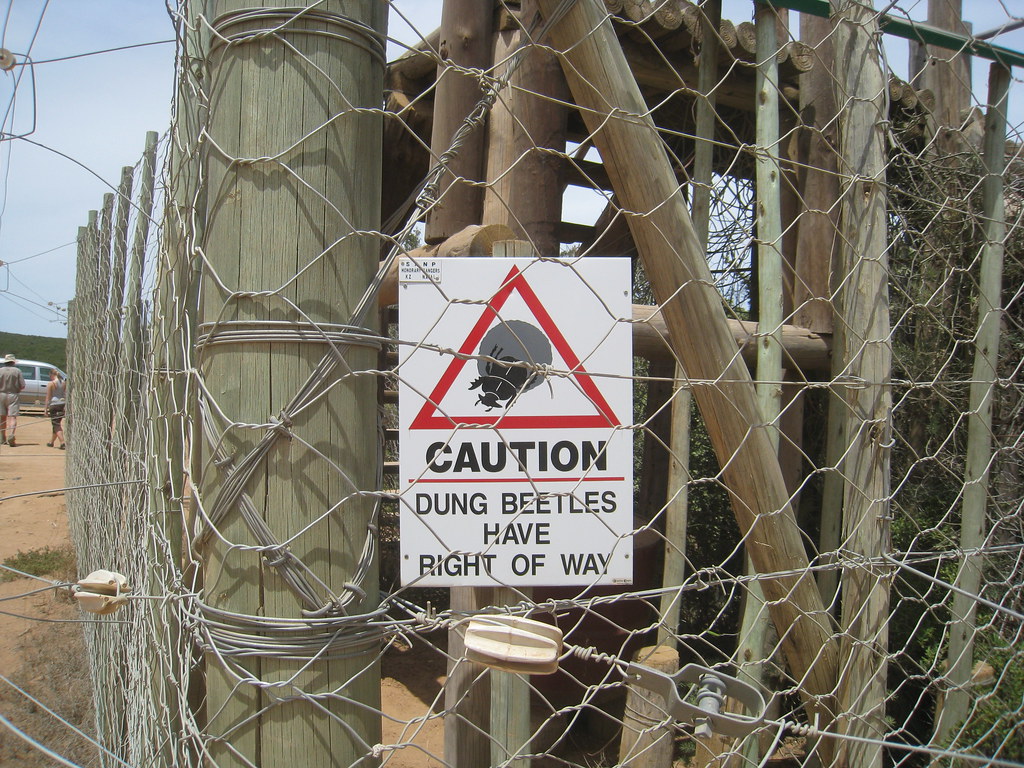
The rare flightless dung beetle at work

A pride of male lions takes shade from the midday sun

______

Photo Credit:  All photos are by David Lee, and may not be used without express written consent.

Fish Eyes and Chicken Feet: Hospitality and Eating in Sichuan, China

Picture at a Sichuan restaurant

In China, food pervades everything. A large percentage of each day seems to be filled with going to the market, eating, or just talking about food. In my Chinese textbook I learned that one common greeting is, " Have you had your rice today?"?  While this doesn't seem to be true here in Sichuan, it's completely normal to talk to people and ask them if they've eaten, if they're full, what they ate, and also to caution them either to eat slowly or eat quickly, depending on the situation.

People in Sichuan are also inclined to tell you about their regional foods, particularly their specialty peppers. Additionally, food is fundamental to their hospitality and social interactions, as I have learned from living with a Chinese roommate, with whom I visit markets and cook on a regular basis.

What I have observed follows in a 2-part series of anecdotes, all told through the medium of food:

Hospitality

My first week in China was spent being ushered into a variety of tiny rooms in restaurants that all served the same food. The Chinese seem obsessed with " VIP"? treatment"”whether " VIP discount cards"? for discounts, or, for me, private dining rooms.  After two full months here, I have yet to eat in a restaurant without  having a special room, reserved for ten of my new best friends. Most restaurants feature a large empty area where nobody eats and many small, private rooms for actual dining. Go figure. I guess only plebeians would visit a restaurant where they had to eat in public.

Being hospitable to a Westerner seems to involve catering to a lot of stereotypes about Westerners, but it's the thought that counts, right? For example, while all the Chinese will drink tea, they usually get me coffee, which is much more expensive, without even checking first.  When I finally declined coffee (I get uncomfortable being continually hosted), they gave me sugar water instead. Why? Because Americans love sugar, they believe. They often give me bowls of sugar with things like rice, just to be nice. Thanks? Then they worry whether I can tolerate spice.

When I went to a hot pot restaurant with a colleague, she took things out of the spice and dipped in a water bowl before placing it before me.  I could not help noticing that the only other person who got this treatment was her three-year-old. And I wonder whether the overabundance that they force on me is because I'm a guest, an American, or just way bigger than most Chinese people, but it's definitely enough for at least three people.

Tea in the People's Park - Chengdu, China

Offering things to people is also incredibly hospitable. One gives others tea before taking it. One hands out chopsticks and, sometimes even dishes that could easily be reached without help. For example, the standard bucket of peanuts on the table is always placed directly in front of me, together with the caution that I eat them slowly. I can reach them easily myself, thanks, but I appreciate your forcing them upon me.

Asking others to sit is also incredibly important-- even if you are standing outside, good hospitality requires that chairs and stools and benches be brought to you, so the gathering soon goes outdoors, seated. In fact, more commonly in rural Sichuan, one winds up dining al fresco. Additionally, the role of filling cups of tea falls to the youngest woman at the table, and filling glasses becomes an enormous sign of respect and politeness.

Toasting demonstrates hospitality in another way too. Most Westerners know the Chinese toast, gan bei (which literally means " dry glass"?), but the intricacies of the drinking ceremonies are truly amazing. First, one always wants to fill the glasses of others, but they will resist and try to pour them instead. This ritual leads to violent grabbing of hands and glasses and forcing alcohol on others, a real spectacle!

There follows intense peer pressure towards competitive drinking-- if others are drinking, you must too, no matter how many times you say you'd rather not (or cannot handle it). You also have to finish the entire glass, since the person toasting you does; otherwise, they hold out their dry glass, point at it, and mock you until you do. Oh, you might be excused from drinking if you don't start at all, but once you do start, there is no escape. They will chase you down.

3 preparations of chicken's feet at a Walmart - Shenzhen, China

Finally, giving people delicacies obviously forms a big part of hospitality. Bringing gifts, particularly fruit (better if wrapped in cellophane), is excellent form and will win you a lot of " face"?-- Chinese respect. However, at restaurants, the gifting involves putting tasty morsels in other people's bowls.

For me, this is almost always disgusting, especially that fish head, complete with eyes, in my bowl--even if it is a great honor. Some honor: I have to eat fish eyes. Nor do I also really want chicken feet, especially offered talon-first. Trying to eat around the edges of the chicken feet and thus avoid bones (I hate bones) actually led to the joint bending"”yuck! One woman even bit walnuts in half to give them to me. I was raised right, trained to eat everything put in front of me so as not to be rude, but obviously some forms of hospitality require cultural adjustment.

Lest this make you think otherwise, overall I love the food in China-- but it certainly is an adjustment!

Stay tuned for another post about my reflections on food in Sichuan....coming tomorrow.

_______

Photo Credit:  Restaurant picture photo by Laura Silver.  All other photos courtesy of David Lee.

ESL Teaching: Look on the Bright Side

Prague: Old Town Square
Prague

Within the international staff of an ESL school, the overwhelming majority are typically young - early to mid-twenties, fresh out of college, unwilling to sentence themselves to the corporate world just yet.

During my time abroad, I was a part of that group. Never before having worked full-time, aside from short summertime gigs, my peers and I in the post-collegiate category perfected the art of complaining about work.

For instance:

  • An ESL schedule can be quite irregular and unpredictable: you might teach at 7:30 AM, have the afternoon free, and find yourself with chalk in hand once again at 7 in the evening.  So, we'd complain about the lack of routine.
  • Your students might not do their homework, or they might throw fits in another language when the textbook appears.  We'd complain about our lack of authority, and then we'd complain about the belligerent adults we called students.
  • You'll inevitably have some work to do outside of class, lesson planning, homework-grading, exam-writing, and you likely won't be compensated for that time.  So, we'd complain about being overworked and underpaid.

This is where I learned to be appreciative of the older folks on staff.  Whenever a post-collegiate began to moan, our elders provided some perspective.

They had a bit more life experience behind them.  Some were our parents' age, perhaps fresh divorcees, perhaps recently laid-off.  Those I knew all seemed to be handling mid-life crises with huge life shake-ups.  Others were a bit younger: newlyweds in their early thirties or corporate burnouts in their late twenties, escaping after just a few years climbing the workplace ladder.  All had experienced a bit of life, but all were searching for something more.

They were mentors for those of us in the younger generation, preparing us for the real world we had yet to face.  They taught us to appreciate what we had.

Sure, teaching hours weren't ideal.  But having a free Tuesday afternoon week after week is something anyone in corporate America would kill to have.  And yes, the students could grate on our nerves, but better it be a student we could reprimand, than a boss around whom we'd have to remain tight-lipped.  And, again, while there was work to do after class ended, twenty minutes of lesson-planning at home in our pajamas would always beat slaving at the office two hours after the sun has gone down.

Like any job, ESL has its ups and downs.  It's good to understand what you'll be getting into before accepting a post, but at the same time, it's important to keep the glass half full.  It can always be worse, and at the end of the day, you're living abroad.  That simple fact makes every complaint well worth it.

Destination Asia: The Visa Run-around

Image by Photobunny
Egyptian Visa

Some things about Asia make me miss Europe. For backpackers, Europe is simple, easy and accessible.

For myself as a Canadian, I had no visa requirements and for the most part, I only had to deal with one currency. It made moving around and seeing multiple countries easy.

I have been spoiled so far, not only have I never needed to apply for a visa, but I've rarely been scrutinized at border crossings, and all entries were free of charge.

This is far from the case in Southeast Asia, though I enjoy more lax requirements than other nationalities, I still have to pay fees for visas in multiple countries, apply in advance for my Burmese and Vietnamese visas, and there is no such thing as an unguarded border in SouthEast Asia.

The most important thing is to be knowledgeable about the requirements before you go and to know which crossing you will likely be using.

Which crossing is especially important, as different border crossings have different options available; some may offer visas on arrival, while others may not.

Select crossings may only be open in one direction, and nothing is worse than making your way to the border only to find out your trip was in vain.

In addition, some countries have other requirements such as proof of onward travel, proof of funds, required vaccinations, or finger printings. It is important to check requirements for your specific nationality as it can vary greatly.

Two of the best tools that you have at your disposal for researching the status of border crossings are a Google search organized by most recent entries and Wikitravel.

Wikitravel is written by travelers and it is likely that if a backpacker had a bad border experience, it will be added to the site. Use Google to search for individual crossing and be sure to organize the search by date.  

You will get a lot of bad results, but are much more likely to find relevant information.

The first place to check is your home country's website for your visa requirements. Most countries will make this information available online.

The information isn't automatically updated when visa requirements change, so it isn't infallible, but it's an excellent start.

As with most countries around the world, your passport needs to be valid for 6 months after you enter a country.

Burma and Vietnam require me to apply for a visa in advance, which I will do in Bangkok, and Sihanoukville respectively.

Thailand offers its own visa conundrum and really epitomizes why visas are such a hassle.

For a country with such a developed tourism industry, it sure seems like Thailand doesn't want any visitors to stay. The country's visa rules have changed multiple times in recent years, and as a result, I am only able to receive a 15-day visa when entering Thailand at a land border crossing, while a 30-day visa is issued only at airports.

This is not so much a problem for me as I will be splitting my time in Thailand with a trip to Burma.

I did, however, have to adjust my schedule slightly to fit under the 15-day limit, and if I decide to spend more time in southern Thailand, I may end up overstaying my visa, at the cost of 500 Baht a day.  

30-day visas as a bare minimum, are extremely common around the world.  

For a country such as Thailand to restrict tourism like this is acutely frustrating, but what can you expect from a government that seized power via a military coup?

Most of the countries charge fees for a visa.  This is important to note as it can easily make an impact on your budget depending on your citizenship.

I've budgeted $150-$200 USD as there are visa costs associated with entering Burma, Laos, Cambodia, Vietnam, and Indonesia.

The baffling reality is that visa costs vary depending on where and how you obtain one.

For this reason, and the possibility of border shakedowns, I have to budget for a range of costs and not an exact amount.

It's not all bad, a person from Israel would certainly face more red tape, fees, and hassle than a Canadian with a golden passport.

It is important to remember that visa information is subject to change at any time, so be sure to double-check your information before you depart.

Below are links to the visa requirements for common backpacker countries.

Resources:

  • Travel Canada
  • U.S. State Department
  • British Foreign & Commonwealth Office
  • Australian Department of Foreign Affairs and Trade
  • Project Visa

______

Photo Credit: http://www.flickr.com/photos/71502646@N00/ / CC BY-NC-ND 2.0

The Sakura Season in Japan

This is a guest post by Rose Witmer (text) and Michael Lynch (photos). To guest post on Go Backpacking, please read more here.

Japanese Cherry Blossoms
Japanese cherry blossoms

The coming spring heralds the dawn of the Sakura season, also known as cherry blossom season, in Japan. Tourists come from all corners of the world to view the snow-white blossoms blooming. 

However, long before the Sakura arrives on the mainland, Okinawans endure the Siberian winds that chill the cherry blossom trees in January, coaxing the island's uniquely deep pink petals from the barren branches. Soon, the rough brown is softened by a blush of pink, foreshadowing warm spring days.

The Japanese White-Eye

The Japanese white-eye, a small green bird with a distinct white ring around its eyes, flits from one blossom to another, using its long, curved beak to sip nectar from the cup of each flower. 

Sometimes hanging upside down, hiding behind pink branches before zipping off to another bloom, these birds have been depicted in many paintings and poems when celebrating the season of the Sakura.

A bee harvesting pollen from the Cherry Blossoms
A bee harvesting pollen from the cherry blossoms

The Sakura serves as more than an alluring display of pink buds. Many view its brief and beautiful existence as a reflection of life itself and has been an inspiration throughout Japanese history.  

The proud Samurai found a special connection with the blossoms. These warriors saw the Sakura's life as one akin to their own, full of divine elegance but cut down early by sharp winds; their existence was both fleeting and radiant.  

Not only warriors but also poets, artists, philosophers, kings, and peasants all spent what little time they could beneath the Sakura trees, watching the snow of petals whirl in the air as the wind ripped them from their branches.

Today, the Sakura inspires photographers to mountain cherry blossoms to capture that perfect moment. The pink petals begin to glow as the sun peaks out from behind a cloud, its rays streaking down in golden shafts of light. Drunk on pollen, a lazy bee drifts to a flower while the birds flit from branch to branch. Click. An image of beauty made eternal with film.

Enjoying the Hanami, or flower viewing party

The Hanami, or flower viewing party, is a long-held tradition special to the Sakura season. Families and old friends gather together over blue tarps with neatly packed picnic lunches or bentos and plenty of sake for those old enough to indulge. Wrapped in thick jackets, the cold is barely noticed as the time spent reminiscing and laughing with friends and loved ones warms the air.

Festivals also add to the excitement of the season. Tents line the streets with paper lanterns, illuminating the various festival foods, such as grilled noodles, meat, and octopus. 

Children run to their parents begging for money in hopes of winning a prize from balloon and bottle games, and old men sit along benches enjoying the aura of the season and the lively excitement in the air. Of course, with any Okinawan festival comes the display of traditional dances and the energy of the Eisa, a dance of drums unique to the Ryukyu Islands.

Decorated trucks illuminate the Cherry Blossoms at night
Decorated trucks illuminate the cherry blossoms at night.

Most Sakura festivals will end with a display of fireworks. However, even when a village cannot afford expensive pyrotechnics, the Okinawan spirit remains tenaciously undefeated. 

One year, instead of loud cracks and bright flashes lighting up the night sky, a group of truckers decided to provide the festival's grand finale. Loud rumbling drew the village's curiosity as enormous trucks dressed in strings of Christmas lights and neon fluorescence made their way down narrow Okinawan roads. It may not have been an impressive display of color and fire, but it added a unique excitement to the night's end.

As February passes in Okinawa, the winter breezes tear the last petals from their safe haven and carry them on whirling paths to join the carpet of pink below. The Sakura's life of climbing into dense jungle mountains, its soft pink petals contrasting with the spreading leaves of the tropical palm trees, is past. The footsteps of pink scattered throughout city parks and lining paths to quiet shrines fade to blend with the lush jade of the coming tropical Spring.

Pink Cherry Blossoms
Pink cherry blossoms

The few remaining petals are replaced by vibrant Irish green leaves that push through from beneath the flower. Only memories and photographs prove the fleeting life of the cherry blossoms. The contrast of pastel pink to vibrant green is so astounding that it leaves one wondering if Sakura had ever existed. Life continues.

However, the Sakura celebrations are only the first of many to come. Sakura is an unofficial national symbol and a source of pride for the Japanese; Okinawa is honored to see it first. Once the Sakura season in Okinawa ends, many will flock to travel agents to book flights to the mainland in preparation for their spring Sakura to bloom in April and May, leaving a trail of snowy white blossoms up Japan's main island.

_________

Rose Witmer is a young traveler at the beginning of a long journey around the world. She currently lives in Okinawa, Japan, and explores the jungles and mountains when she is not enjoying Japanese city life. She loves to write and never leaves home without a camera and a notebook. You can find her on Matador Travel and her new blog, Samayou Meigui.

Mike Lynch is a photographer in Okinawa, Japan. For more info, visit www.mikesryukyugallery.com

International Relations

Good times abroad
Good times abroad

Almost all of my American friends I made while studying abroad were majoring in international relations. At Syracuse University, like most others, it is a broad field, incorporating law, organizations, security, diplomacy, political economy, and international communication in each geographic region of the world.

As a a magazine journalism and modern foreign language major, I was certainly the odd one out in the academic sense. I'll admit that I'd never taken an economics class and was somewhat ignorant on specific political histories, but in my 10 months outside of the country, I was exposed to all of this knowledge and more.

You see, there was one thing that I and every single other American student had in common, our cultural baggage. No matter how aware we were (or weren't), we each carried a collection of values, beliefs, concepts and behaviors. They were uniquely developed within us as children in our respective homes, and yet all the while in our shared home country. And it was at their mercy that we experienced the world.

The first step to cultural understanding is a simple recognition of this perspective within yourself and within each and every other person you meet. Overall cultural themes can be summarized, in fact, by one simple question, the one that is asked immediately upon meeting someone new.

In the United States that question is most often, "What do you do?" Us Americans live in an individualistic, capitalistic society, and thus, we are defined by our jobs or careers. It is a central part of our identity, and it is a double-edged sword.

Struggling for time and balance we have come to depend on efficiency and convenience. As I touched on in my review of The Geography of Bliss, for as positive as this constant motivation to be and do better is, it can also negatively affect our relationships, our happiness and our health.

In Ecuador I often was asked, "Are you married?" For the most part, it wasn't a rude or even flirtatious inquisition, just a way to get to know me better as family plays a prominent role in most Latin American cultures.

Living in Santiago, Chile, however, I was met with "Where do you live? and "Where do you go to school?" by numerous twenty-somethings. The first one can be attributed to the fact that my address is powerful enough to dictate my economic status. While Dictator Pinochet was in power, he organized the city's neighborhoods in such a way that the upper class, middle class, and lower class were clearly defined and segregated within their area. It is often still like that to this day and according to my host mom, the prejudices that have been born from it can reach as far as to affect the hiring process.

The other, is a little less devastating. In Santiago, like most places outside of the US, children, teenagers, and young adults live at home while they study. They go through the education system with the same classmates and groups of friends, often until college graduation. Thus, not only is it difficult for outsiders to integrate themselves into deeply-rooted friendships but it also, as a stereotype, says a lot about their political stance. If you were wondering, the public U. de Chile is considered liberal, while the also public yet religiously-affiliated U. Cathólica is conservative and upper crust. Interesting stuff.

Somewhat less telling were the first questions I was asked in France and throughout my European travels, "Where are you from?" To non-native speakers it was nearly impossible to differentiate whether I was British, Australian, Irish or American among others.

Furthermore, in countries in which I could communicate (Spanish/French-speaking) locals could only reach the point of being sure that I was not from their respective country. To them, I could've been from "anywhere but here." And that was especially flattering for a foreign speaker like me :).
I am certainly not a social anthropologist, nor do I support generalizations of any form, but I do find it absolutely fascinating how far that Q & A period, at the earliest point of first impressions, can reach into our own cultural core.

Ranking Morocco's Most Memorable Medinas

In the medinas of Morocco, a donkey walks past the cooking-meat smoke of a food stall, a television set tied to its back. Teenage boys on motor scooters zoom and honk, as veiled women fill water jugs at an exquisitely tiled fountain alcove.

The sound of the adhan booms through loudspeakers, echoing off crumbling buildings and down narrow, cat-slinking alleyways. And you are hopelessly lost amid it all.

As quintessential as couscous, medinas are the walled, crowded, maze-like aortas of any Moroccan travel experience. While modern development and orderly urban planning have sprung up around them, medinas are the ancient heart of any city in Morocco. Here, East meets West, past meets modernity, and tourist meets local.

Some are reconstructed, some are touristy, some are pure snake-charming insanity. But none are alike. Here are my rankings for the most memorable medinas visited on my recent Moroccan adventure.

Table of Contents

  • Moroccan Medinas
    • Seediest: Tangier
    • Most Like an Outdoor Mall/Disneyland: Casablanca
    • Most Downright Wild: Marrakesh
    • Least Likely to See Another Traveler: Tiznit
    • Best Local Vibe, and Most Like a Flea Market: Meknes
    • Mazingest, Crumblingest, and All-Around-Coolest: Fez

Moroccan Medinas

Seediest: Tangier

American expats Paul Bowles and William Burroughs may no longer be on the prowl. Still, the narrow alleys of the Tangier medina feel just as gloriously grimy and hopelessly hash-laced.

Glue-sniffing kids lurk past pushy medina touts, while fresh-off-the-ferry tourists sip mint tea at the old cruising spots of literary giants. Tangier's proximity to Europe has long left it open to all sorts of Western influence, much of it nefarious. I didn't feel unsafe anywhere in Morocco except the dark back alleys of the Tangier medina.

Most Like an Outdoor Mall/Disneyland: Casablanca

From the wide, evenly paved lanes to the lackadaisical shopkeepers, Casablanca's medina feels more like a recreated theme park or worse, an outdoor mall than a relic of ancient urbanity. Even the stray cats are missing.

The medina itself is only a little over 100 years old, which accounts for the fresh facades and lack of historical ambiance.

Swap the trinkets at the kiosks for cell phones and add some piped-in music, and it'd be an American mall. But if you've been battling hustlers for a few weeks, the peace is a welcome break, even if it feels Disney-ized.

Most Downright Wild: Marrakesh

The Marrakesh medina is touted as a steaming, honking, pulsing mess of humanity, and it doesn't disappoint. The famed open square Djemaa el-Fna is ground zero for witch doctors, meat stalls, buzzing gas lamps, and elbowing crowds.

Spontaneous street theater erupts, motorbikes nearly run tourists over, and multilingual boys offer to guide you through it all. Hassles, pushy shopkeepers, and plenty of tourists come along with the territory, adding to the chaotic energy that's become legendary.

Least Likely to See Another Traveler: Tiznit

The Tiznit medina has nothing to draw tourists; it's a functional urban area with no glitz or particular allure. This is why you won't see another foreign face, pay expensive hotel rates, or get baited into carpet shops.

Folks go about their daily business, meaning you get to explore a little deeper, let your guard down a little more, and spy on unself-conscious, daily Moroccan life.

Most likely, Tiznit will be a stop-off on your way either down the Atlantic Coast or into the Ameln Valley. Its low-keyness is your first clue that you're headed off the beaten path.

Best Local Vibe, and Most Like a Flea Market: Meknes

Due to its proximity to Fez, imperial city Meknes doesn't get as many visitors as it should. Which means you don't get as much hassle as you should. You won't be the only foreigner around, but you will be immersed in a sea of locals.

Inside the medina, there are plenty of jewelry and textile souqs (squares), but the thoroughfares that wrap around it like boa constrictors are the real draw.

Shoulder-to-shoulder throngs push past haphazard stalls selling cheap clothes, toiletries, bootleg DVDs, and other everyday goods. Hawkers shout, buyers dig through piles, and you get a pretty authentic experience.

Mazingest, Crumblingest, and All-Around-Coolest: Fez

The largest car-free urban zone in the world, the Fez medina is 9,000 tangling alleyways of Fassi history and Moroccan modernity. Continually inhabited for 1,200 years, the falling-down buildings are studded with satellite dishes.

Narrow lanes veer, turn, and dead-end; people step into doorways to make room for passing donkeys; and little boys offer to lead your lost self back into daylight (for a couple of dirhams).

Home to the oldest mosque in Africa and one of the oldest universities on earth, Fez's appeal lies in its rootedness and embrace of the present, and in its food. Nothing like a little lamb tagine to fuel you through a day of medina meandering.

_______

Lauren Quinn

Lauren Quinn is a travel-addicted freelance writer based in Oakland, California. She's traveled independently (and once illegally) to over twenty countries across four continents.  Her work has appeared on Matador, BootsnAll, Girl's Getaway, and lonelyplanet.com. Catch up with her at lonelygirltravels.com.


Introducing Laura - Globe Trotting from Sichuan to Sorrento

Visiting the home of microfinance clients in China-- I look like a giant in this country, don't I?

My name is Laura Silver, but I'm presently answering to anything from " Laur"?  (pretty close) to  " Little Song,"? (or " å°?宋). I'm 23 and living in rural Sichuan, China to work at a microfinance bank. I decided to pack up and move to the middle of nowhere to get a good sense for how microfinance organizations operate on the ground, to improve my Chinese, and generally to find out what rural life was like in China.

I only have a few more months left here, as well as some traveling in other parts of China, but I want to share some of the stories from my experience, as well as some tips about living and working abroad in China, especially if you are going to be six hours from any sort of Western or expat comforts.

Prior to moving to China I worked in Washington, DC for a year, and before that was a student at Wesleyan University in Connecticut. I had an interdisciplinary major and also studied international relations, taking four years of Mandarin as well. Turns out that those four years meant almost nothing when I got to a restaurant in China and could barely order food for myself, but five months in China have done a lot to fix that, thankfully.

I come by my love of travel honestly, as my parents would say, having started international travels at age eight when my parents took me to Southeast Asia. I'm also the daughter of an art historian so I have been to (dragged to?) more than my share of temples, mosques, pagodas, churches, art museums, etc. around the world. I even set myself a goal when I was in elementary school to always have been to more countries than I am years old. I'm more than making good on that pledge to this day.

Not long after I return to the States, I'm going to be packing up again to go on Semester at Sea, a floating university program that will be touring the Mediterranean this summer. I'll try and chronicle some of the best (and worst) of the seven ports we visit this summer.

I've really enjoyed blogging (minus the proxy hassles... China! Unblog blogspot!) for the last few months and am excited to share some of my reflections and commentary with this wider audience.  Feel free to drop me a line-- I welcome feedback, suggestions, and more.

Friday Flashback - Phuket, Thailand

Sea kayaking in Thailand

The Beach may have become a backpacker cliche for many by 2008; however, it continued to be a big motivator for me to explore Thailand. 

My first few nights in Phuket were at the On On Hotel, which was featured in the movie's opening scenes when Richard was portrayed as staying in a cheap Bangkok hotel. 

The broken window in my room reassured me that indeed, the hotel hadn't changed much since the movie!

Ready to book your ferry or flight to Phuket? Search online at Bookaway. 

Then, I took the short ride to Patong, Phuket, for a few nights. I shot my first handgun, enjoyed good sushi, and explored the sex tourism capital of the world. 

Seriously, every night like clockwork, a legion of prostitutes would arrive on Bangla Road and get to work. 

The scene of tourists - men, women, couples, and even some children, walking down the street taking it all in was very reminiscent of Amsterdam's red-light district.

I was only supposed to stay two nights, but I got sick with some form of infection which left me so exhausted, for so long, I contemplated a return to the USA for the first time in my nine months of travel.

  • Phayam to Phuket
  • On On Hotel - early Bangkok hotel scenes from The Beach were shot here.
  • Shopping for Camera #3
  • Banana's Tacos, Sushi, and a 9mm - firing my first gun.
  • Falling Ill on Phuket
  • Adventures in Thai Medical Care
  • A Second Opinion
  • James Bond by Speed Boat - visiting the island used in the filming of The Man with the Golden Gun.

Next in the series, I reach the long-awaited Maya Bay and explore the beautiful Koh Phi Phi islands.

All You Can Eat Tacos @ Mercadito Cantina

My last New York City meal of 2009 was at Mercadito Cantina in the East Village.

It just so happened that I was leaving on a Wednesday, and Tuesday night's special is an all-you-can-eat feast of gourmet tacos.

My brother, friend Kai, and I all wanted the tacos, while Kai's friend did not.  Due to a (reasonable) concern on the part of the restaurant about cheating, we had to buy a 4th order of the tacos if we wanted our 4th person to be able to stay seated at our table.

And once the dust of that confusion settled, the plates of tacos came out like clockwork until we were stuffed beyond belief.

Menu at Mercadito Cantina - East Village, NYC

Carnitas - michoacan style braised berkshire pork, cacahuate salsa

Chorizo - homemade green chorizo, manchego cheese, tomatillo salsa

Al Pastor - ancho-guajillo marinated red snapper, grilled pineapple

Tinga de Mole - pulled organic chicken, mole poblano, sweet potato

Estilo Baja - beer battered shrimp, roasted habanero, avocado cole slaw

All of the tacos were rich and wonderful, however my favorite were the Carnitas - michoacan style braised berkshire pork, cacahuate salsa.  Muy delicioso!
____________

Mercadito Cantina - 172 Avenue B (between 10th & 11th St), New York City

Do you have an idea for a photo essay? Please contact us for consideration.

Top 10 Travel Movies To Get You Going

Have you ever watched travel movies, and while the credits were rolling up, thought to yourself, "I so want to travel there now?" 

Movies are a great way to inspire, motivate and bring to light unique places in the world.

To be honest, though, a Top 10 list is a joke and almost impossible to do.  

I know some will be mad at this list. You didn't have Indian Jones anywhere. What the hell, you bastard! This is why I added to to the Honorable Mentions section at the end.

Longboats in Maya Bay, Thailand before it was closed due to overtourism
Longboats in Maya Bay before it was closed (photo: marinaoffice0850, Pixabay)

Others will be confused. Why is the City of God on this list?

And maybe, just maybe, a few will agree. But for the record, there is no perfect list.  

For me, though, after I watched these travel movies, I wanted to book a flight the next day and head there, so maybe you will too.

So to keep it civil and fair, if you have a movie to add, please do so in the comments section.  

I know I couldn't fit them all in, but I would love to hear your favorites or even your Top 10 list as well.

Table of Contents

  • Top Travel Movies
    • 10. The Beach
    • 9. City of God
    • 8. Shanghai Kiss
    • 7.  Eurotrip
    • 6. Lost in Translation
    • 5. Slumdog Millionaire
    • 4. Under the Tuscan Sun
    • 3. Into the Wild
    • 2. The Motorcycle Diaries
    • 1. Outsourced

Top Travel Movies

The Beach

10. The Beach

Ok, I know some of you will stop reading right now just because of this one, but you have to admit when you first watched it, it made you want to look for Daffy in Thailand.

It's been overused and abused by the backpacking community as the staple for what backpackers should do, and if you have traveled more than a few months, odds are you have seen The Beach in your hostels at least 10x.

That being said, it's still a good movie and made me want to see Phi Phi Island in person one day (which I did and loved it!).

After receiving a not-so-secret map to a secluded island from a stoned-out loony (Robert Carlyle, full of dark portent and spittle), Richard sets out to find the hidden paradise with a young French couple (Virginie Ledoyen, Guillaume Canet).

What they find is a tropical commune existing in delicate balance with Thai pot farmers, and before long--as always--there's trouble in paradise.

There's trouble in the movie, too, as DiCaprio is reduced to histrionics when the plot turns into a muddled mix of Lord of the Flies and Apocalypse Now, with shark attacks tossed in for shallow tension.

Jeff Shannon
City of God

9. City of God

This movie doesn't show the traveler the perfect beaches of Brazil or the famous sites.

It does show you the struggles of real life in one of the most dangerous cities in the world, Rio de Janeiro, Brazil.

The whole movie is in Portuguese, but you don't even notice having to read the subtitles because it grabs you from the start and never let's go.

It will make you think twice about traveling to Rio, but at the same time, it will make you want to see it that much more.

Celebrated with worldwide acclaim, this powerful true story of crime and redemption has won numerous prestigious awards around the globe!

The streets of the world's most notorious slum, Rio de Janeiro's "City of God," are a place where combat photographers fear to tread, police rarely go, and residents are lucky if they live to the age of 20.

In the midst of the oppressive crime and violence, a frail and scared young boy will grow up to discover that he can view the harsh realities of his surroundings with a different eye: the eye of an artist.

In the face of impossible odds, his brave ambition to become a professional photographer becomes a window into his world ... and ultimately his way out!

Amazon.com
Shanghai Kiss

8. Shanghai Kiss

This one doesn't get much attention, but I found it worthy because I think too many people can relate to it.

Mid-life crises, an unexpected trip to China, and bang next thing you know, it's life-changing.

It's filled with lots of cultural interactions from East meets West, and after watching it, you'll want to see China too.

Be sure to pay extra attention to the taxi scene because you will encounter this in your travels at some point.

Set in two dichotomous worlds, Shanghai Kiss tells the story of a Chinese-American actor who doesn't quite fit in anywhere.

In his hometown, he's considered a foreigner even though he's American. And in his family's native China, his mannerisms make him stick out in sea of familiar faces.

Ken Leung (The Sopranos) does a wonderful job portraying Liam Liu, a complicated young man whose flirtation with the teenage Adelaide (Hayden Panettiere, Heroes) is reminiscent of Timothy Hutton's cautious infatuation with the Natalie Portman character in 1996's Beautiful Girls.

Jae-Ha Kim
Eurotrip

7.  Eurotrip

Who doesn't love this movie?

I mean, it has everything: funny one-liners, covers most of Europe, highlights all the unique things about each country (the drinking of Absinthe in Amsterdam was priceless!) to why we travel in the first place... to score and get laid!

This movie will have you laughing and make you want to buy a one-way ticket to Europe to see for yourself why "Scotty doesn't know..."

Eurotrip views the Old World as a goofy parade of soccer hooligans, horny camera saleswomen, and pawing lechers reeking of cologne.

After being dumped by his girlfriend, Scotty (Scott Mechlowicz) discovers that the German e-mail correspondent he thought was a guy is actually a hot girl--so naturally he jets off to Europe to find her, joined by his friends Cooper (Jacob Pitts), Jamie (Travis Wester), and Jenny (Michelle Trachtenburg, trying to leap into sexier roles after her adolescent characters in Buffy the Vampire Slayer and Harriet the Spy).

Bret Fetzer

Lost in Translation

6. Lost in Translation

Written by Fancies Ford Coppola's daughter, Sofia Coppola, this movie throws you right in the middle of modern-day Japan from the perspective of someone who knows nothing about its ways.

You will feel just as lost as Bill Murray was but at the same time ok with it.

If you want the feeling of being in a new country and not understanding anything... this movie is the one!

Like a good dream, Sofia Coppola's Lost in Translation envelops you with an aura of fantastic light, moody sound, head-turning love, and a feeling of deja  vu, even though you've probably never been to this neon-fused version of Tokyo. Certainly Bob Harris has not.

The 50-ish actor has signed on for big money shooting whiskey ads instead of doing something good for his career or his long-distance family.

Jetlagged, helplessly lost with his Japanese-speaking director, and out of sync with the metropolis, Harris (Bill Murray, never better) befriends the married but lovelorn 25-year-old Charlotte (played with heaps of poise by 18-year-old Scarlett Johansson).

Even before her photographer husband all but abandons her, she is adrift like Harris but in a total entrapment of youth.

Doug Thomas
Slumdog Millionaire

5. Slumdog Millionaire

Director Danny Boyle must know something about movies that involve exotic locations and traveling (he also directed "The Beach," see #10).

The plot, the acting, the travels through India, and the soundtrack all make this movie awesome!  

Never mind all the awards Slumdog Millionaire won because this means little to a backpacker.

We want to know what it's like to live in India, and this movie delivers on that in a new way.

Jamal Malik (Dev Patel) is just one question away from winning a fortune on India's version of "Who Wants To Be A Millionaire?"

But how has this uneducated young man from the slums succeeded in providing correct responses to questions that have stumped countless scholars before him?

And will he ultimately win it all or lose everything, including his true love?

Amazon.com
Under the Tuscan Sun

4. Under the Tuscan Sun

This one is for you ladies out there!

Getting a divorce, buying a shamrock villa in the Tuscany region of Italy, and learning to cook has never looked so good until after you have watched this beautiful movie.

It's the romantic idea all women have and makes you want to put your corporate life behind and soak up another culture.

Based on the #1 New York Times best-selling book, Under The Tuscan Sun follows San Francisco writer Frances Mayes (Lane) to Italy as a good friend offers her a special gift -- 10 days in Tuscany.

Once there, she is captivated by its beauty and warmth, and impulsively buys an aging, but very charming, villa.

Fully embracing new friends and local color, she finds herself immersed in a life-changing adventure filled with enough unexpected surprises, laughter, friendship, and romance to restore her new home -- and her belief in second chances.

Amazon.com
Into the Wild

3. Into the Wild

A must-see and an obvious choice!

It's what most backpackers dream of doing one day, and although the guy took his travels to the extreme, it has inspired many people to let go and see the world in a new way.

If you want the feeling of leaving everything behind in search of proving to yourself that you can see the world, consider Into the Wild your #1 movie.

This is the true story of Christopher McCandless (Emile Hirsch).

Freshly graduated from college with a promising future ahead, McCandless instead walked out of his privileged life and into the wild in search of adventure.

What happened to him on the way transformed this young wanderer into an enduring symbol for countless people -- a fearless risk-taker who wrestled with the precarious balance between man and nature.

Amazon.com
The Motorcycle Diaries

2. The Motorcycle Diaries

If you haven't seen this movie... shame on you!

It's all in Spanish, but who cares, as who doesn't want to take a motorcycle trip across a continent with your best friend, living from town to town, using your wits to get by, and in the process, you learn a valuable life lesson.

Oh, plus start a military coup, win a revolution, and become an icon for sticking it to the man. Yeah, you'll be pumped after this movie.

The beauty of the South American landscape and of Gael Garcia Bernal (Y Tu Mama Tambien, Bad Education) gives The Motorcycle Diaries a charisma that is decidedly apolitical.

But this portrait of the young Che Guevara (later to become a militant revolutionary) is half buddy-movie, half social commentary--and while that may seem an unholy hybrid, under the guidance of Brazillian director Walter Salles (Central Station) the movie is quietly passionate.

Guevara and his friend Alberto Granado (Rodrigo de la Serna, a lusty and engaging actor) set off from Buenos Aires, hoping to circumnavigate the continent on a leaky motorcycle.

They end up travelling more by foot, hitchhiking, and raft, but their experience of the land and the people affects them profoundly.

No movie could affect an audience the same way, but The Motorcycle Diaries gives a soulful glimpse of an awakening social conscience, and that's worth experiencing.

Bret Fetzer
Outsourced

1. Outsourced

And the #1 pick is another movie that most people don't know about, but Outsourced covers everything.

Love in a foreign country, forgetting your Western ways, adopting local customs, finding yourself at the end of the road, and knowing what you want.

If you watch this movie and don't want to see India, then sorry, my friend, you are a lost soul.

There are so many things about this movie that people can learn from when traveling.

I found it to be beyond inspiring!

Todd Anderson (Josh Hamilton-Kicking and Screaming, The Bourne Identity) gets the bad news from his boss: his job has been outsourced. Adding insult to injury, Todd must travel to India to train his own replacement.

Through a series of hilarious misadventures, this charming, critically acclaimed romantic comedy reminds us that sometimes getting lost is the best way to find yourself.

Amazon.com

Honorable Mentions 

  • Seven Years in Tibet
  • A Good Year
  • Medicine Man
  • The Gods Must Be Crazy
  • Lawrence of Arabia
  • Before Sunrise
  • Roman Holiday
  • Vicky Cristina Barcelona
  • Indiana Jones - The Complete Adventure Collection

Pin for Later

travel movies

ESL Lesson Planning: Breaking the Ice

Remember ice-breakers?

For me, they bring back two associations: one, awkward moments at teenage summer camp, and two, awkward moments at college freshman orientation.

There were the games where you had to throw a ball from person to person, I have no hand-eye coordination, so those were always uncomfortable.  Or, there were the wordy ones where you needed an adjective to place in front of your name, for some reason, no good adjectives begin with the letter " L,"? other than loud, which I am not.

Basically, ice-breakers and I don't get along.

As an ESL instructor, there are times that may require you to become a bit of a hypocrite.  January often brings along new courses, new schedules, and new students, meaning one important thing: you need to learn everyone's name.

And so, as a teacher, I found myself armed with an ever-growing supply of ice-breaking games.  Some came from textbooks, usually for lower levels.  Others came from summer camp: requesting students find an adjective to describe themselves, as well as remember those of their peers, turned out to be a great way to build an introductory list of vocabulary.

Those fuzzy memories from freshman orientation had their place as well.  Drinking games made remarkable ice-breakers, even without the courage-inducing liquor.  Two truths and a lie was my go-to game on every first day: no materials were required, save for a pen and a paper, which students (hopefully) provided themselves.  Even better, the statements very often sparked further conversation, which is a big help in that first class, when textbooks haven't yet been purchased.

I knew I would have groaned at the thought of playing a name game had I been the student, but selfishly, ice-breakers made my life a lot easier.   I always remembered Marketa as the uncoordinated one, just like me, who nearly took off Jan's head throwing around a ball.  I might have otherwise struggled to distinguish between Petr and Tomas, had Petr not called himself "pretty" on that first day: it's tough to forget a bald, burly man who chooses that word.  Plus, I learned that if you're not required to participate, ice-breakers can be a whole lot of fun.  When you're teaching, fun makes all the difference in the world.

2 Wheels and The French Riviera

ExcaliberWhile Shelly and I were in the French Riviera we decided to check out, and see if we could rent, a scooter.

We had previously thought about this many times in different locations, but due to not finding a shop or being scared to death, we avoided the situation. In Nice, France we stayed at a hotel that was located about 2 blocks away from a scooter rental shop. Why not try to scooter up and down the French Riviera?  And Shelly was the one who suggested it!

Once we got our scooter, and Shelly on the back, we took off for a quick spin to try out the new wheels. Boy it was fun, but very scary. Driving in a foreign country on a two-wheeled bike is both exciting and thrilling. It is hard to navigate certain areas, especially if you cannot read the language very well.  Luckily, we had GPS that guided us most of the way.

After a quick bite to eat, we decided to head over to Cannes. The ride was amazing because it was on a highway next to the beach. It was very pretty and seemed straight from a movie. Traffic was not bad at all and we were flowing smoothly.

Then we came to an intersection where we could not decide which way to go.

Green or Blue?

We chose Blue wrong decision.

Blue means the French Interstate. I saw the speed limit of 125 Km/Hr and tried to convert it in my head as cars were whizzing by us at a high rate of speed. Shelly, after about a mile on the interstate, very calmly stated that I should probably take the next exit. Very wise words of wisdom that I took to heart because I will now only follow green signs in France, unless in a car.

Once we got into Cannes we had a great time viewing the big boats in the marina and walking/scootering up and down the sandy beaches. During our walk, we decided that our scooter needed a name. We decided to name it Excelsior after the name of the scooter model, and South Park.

One really cool thing we saw in Cannes was a guy making a sand sculpture of 2 people riding on a motorcycle. How fitting for our little adventure. Shelly had a great idea, ice cream on the beach. She saw a Haagen Dazs about 2 blocks away from where we were, so we got some ice cream and sat on the beach. The beach was wonderful and calming.

And highly entertaining when a little boy pulled down his pants and proceeded to pee on the beach, near the water. I wanted to start filming, but Shelly said it may be illegal in some states. So we just laughed that his parents just watched him and did nothing to stop him.

Sand Sculptures
Sand scupture

Following our adventure to Cannes, we went back up to Nice to grab some more clothes for our ride back to Monaco. But we failed to grab enough clothes. All of a sudden, Shelly just stopped talking. I thought she fell off, but it turns out she was freezing. It took her about an hour to warm up after the hour long ride.  during the warming up process, she twisted her ankle and started cursing at Monaco and their curbs.

It turns out that Monte Carlo is a ghost town at night, and everything was closed at 8 pm. Even restaurants! We thought people here ate late, but not in Monaco. We walked around for two hours taking some cool night pictures of Monaco. During the picture taking process, we were looking for restaurants as well. We finally found one, a pizzeria. We basically lived off pizza in France and Italy, but once it hits your lips it is so good.

Shelly had an idea of driving slower on the way home, it actually worked and made the ride enjoyable and calming. Did I mention I am a genius? I had hand warmers that Shelly dug out of my bag. But anybody going to the French Riviera, we suggest renting a Vespa because it is better than sitting in a train, makes you feel very independent, and is very picturesque.

Shelly Observing Monaco
The French Riviera

Dare to Travel Beyond Your Comfort Zone in 2010

Steve Roll on location in Mexico
On vacation in Puerto Vallarta, Mexico

This is a guest post by Steve Roll. If you want to guest post on Go Backpacking, please read more here.

In Dave's e-book Dare Me!, he describes the dares his readers put him up to during his trip around the world. In exchange for performing a dare, Dave received a small cash gift.

Despite Dave's best efforts he couldn't accomplish some of the challenges because he found them to be either too socially awkward or dangerous.

While Dave sometimes came up short, I believe his willingness to take risks enhanced his travel experience.

Traveling can be risky. Plenty of news outlets will tell you the world is a dangerous place. In Latin America---the area of the world I blog about---2009 was marked by saturation coverage of the drug cartel crisis in Mexico, followed by wide-spread hysteria over the H1N1 virus.

Red Carpet Treatment

But that didn't keep my family and I from taking a 10-day vacation in Mexico soon after the Centers for Disease Control lifted its non-essential travel warning. I'm glad we did. Besides finding incredibly low room rates and a peso that was at historic lows against the dollar, we received the red-carpet treatment from nearly everyone we met.

The trip reaffirmed my relatively new-found belief that avoiding risk at all costs can be just as ruinous to a person's quality of life as illness or being victimized by crime.

Our attitude about risk shapes many aspects of our lives, including how we handle our finances. In the volatile economy at the outset of 2009, it seemed only prudent to remove your retirement savings from the stock market. But doing so would have meant missing out on the gains the market recorded by the end of the year.

Not so long ago, when it came to travel, my risk tolerance level was about as low as the interest rate on a U.S. savings bond. I believed it was best to play it safe by restricting my travels to the U.S., Canada or major European destinations such as London or Paris.

Guadalajara's Centro Historico near Plaza Tapatia

Orchid Thief

But my attitude about risk began to change after I read The Orchid Thief by Susan Orlean. The book is a biography of orchid enthusiast John Laroche. Orlean begins writing about Laroche soon after he is prosecuted for picking rare orchids in a protected wetland in south Florida.

What makes the book special is that Orlean will stop at nothing in doing what it takes to describe the orchids and the subculture that is so passionate about them. At one point, she wades neck deep in an alligator infested swamp in search of a rare Ghost Orchid. Her only protection is two machete wielding convicts who wade in with her. The book is filled with accounts of Orchid enthusiasts who have taken far greater risks throughout history.

The Orchid Thief prodded me to accept a little more risk in my life. This means taking vacations in Mexico or Costa Rica instead of Disney World---even if it means fending off warnings from the latest news reports.

So far, the returns have been very good.

______

Steve Roll writes about traveling to Mexico and Latin America on his blog Travelojos. Follow him on Twitter at @Travelojos

Backpack with Brock On A 'Round the World Trip

Backpack with Brock
Backpack with Brock

I remember reading Brock Groombridge's first e-mail to me while I was sitting at a computer in the reception area of Casa Kiwi Hostel in Medellin, Colombia last year. 

He was planning a trip around the world to begin in January 2010 and had been reading up on my experiences at this blog.

His writing reflected his enthusiasm, and I enjoyed taking the time to answer his questions regarding how to go about setting up a great travel blog for his impending adventures.

The result of his efforts is Backpack with Brock, a straightforward and stylish WordPress-based video blog using a Woo Theme.

His tagline says it all:

Follow one guy around the world in HD video & learn how you can to

That's right, Brock wants to video blog his way around the world to over 20 countries on 6 continents.

Less than 24 hours from the time this post is published, he'll be flying over the Pacific toward New Zealand, which should be a good bit warmer than his native Toronto.

From there, his itinerary indicates a swing through Australia before heading to Southeast Asia and then China and Nepal in April, and India in May. 

From there, he'll head up to Europe and then back down to Africa, hopefully hitting Kenya before jetting off to Brazil and exploring a bit of Latin America before stopping off in New York City en route back to Canada.

Bet Brock is a way to share in the experience.

He's putting himself on the line for some challenging (or more likely, funny and embarrassing) activities. 
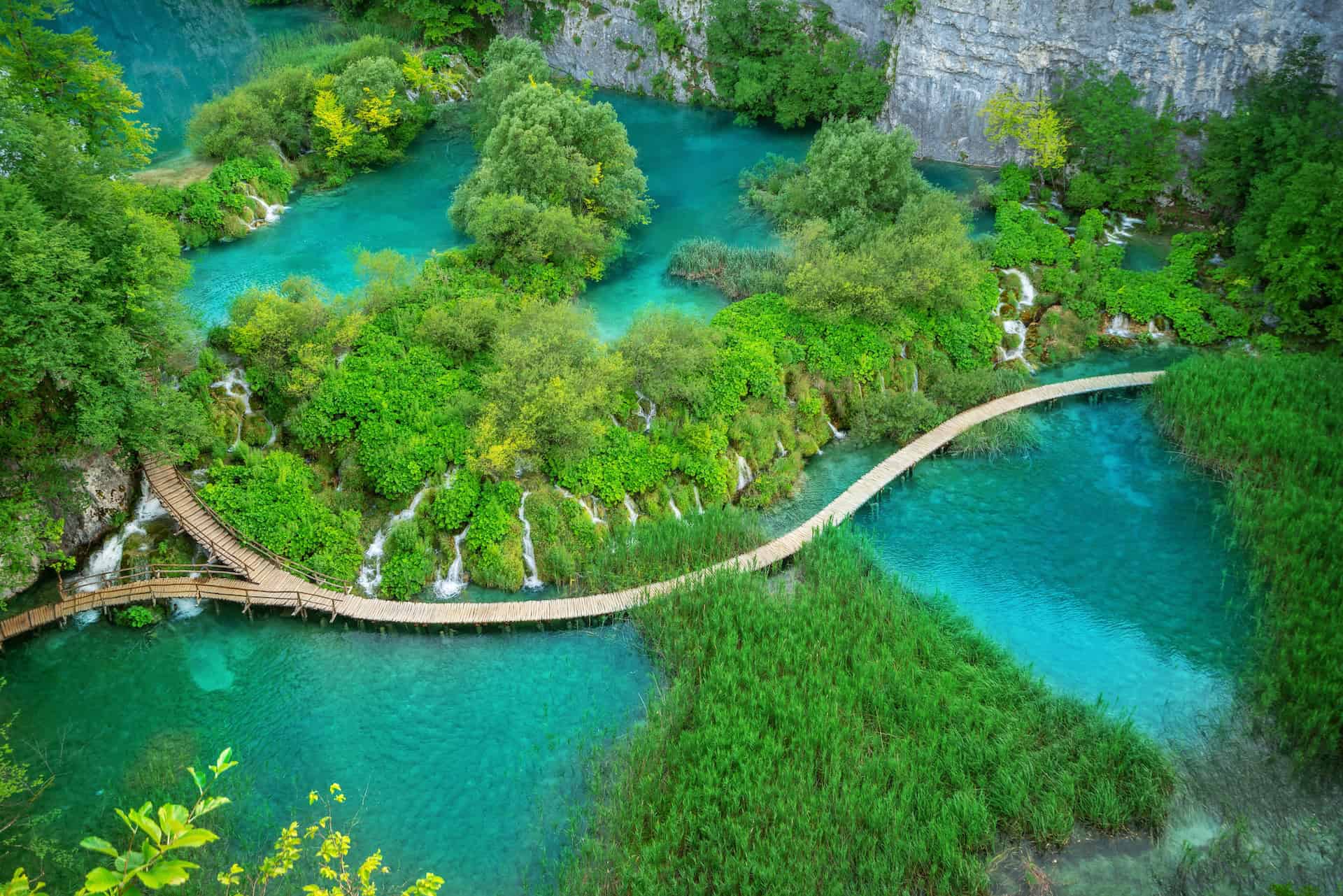
He'll video his attempt to complete the bet and post it to the blog.

In exchange, you the reader, offer up a donation via PayPal to make it worth his while.

I find that once I'm invested in a traveler's experience, I'll follow him or her for months, if not years. 

I have a feeling it'll be a lot of fun to watch Brock head off into the great unknown.

Be sure to check out Backpack with Brock, follow him on Twitter, or join his Facebook Fan Page today!

Pros & Cons for Backpacking Cuba

Cuba
Che Guevara's legend lives on in Cuba

After backpacking Cuba last month, I found the country to be unique in so many ways. 

Some good and some bad, so I thought I would lay out the pros and cons of traveling to Cuba independently.

Pros:

The Architecture

Some of the most stunning I have ever seen!  In the old town of Havana just walking the streets, soaking up the colonial architecture and rich colors, one could easily spend a week there doing nothing but that.

1950's-era Cars

It was like going to a car show every day.  Again, classic shots for anyone and was a joy to see them running up and down the road.

The Beaches

Beautiful beaches with crystal blue water and the purest white sand make it hard not to just sit around all day and drink rum.  I didn't do any scuba diving while there but I'm sure there are some gem spots to find.

Safety

I felt safe the whole time while there and never felt like I was going to be robbed or kidnapped just because I was a tourist.  Unlike other Latin countries, you won't find high gates around houses or broken glass on top of walls.

Cheap Cigars & Rum

I got a box of Cuban cigars for $15 that I could easily sell back in the US for a huge profit... if I could smuggle them in.

The Music

There is no such thing as a 3 or 4 man band there.  8 is the minimum, and more than likely you'll see 10-12 people in a band playing salsa music everywhere.

One thing about Cuba is that everyone has a CD, and I mean everyone.  If they play music, you can bet your arse they will try to sell you a CD afterward!  You've been warned!

The Clubs

Nothing better than a hot Havana night and you can find a ton of hot chica's in the clubs.  Just be careful though, because 1-2 are working (see below though for the rest).

Cons:

It's a Communist Country

If you're American, remember you have no embassy and technically you're not supposed to be there.

That being said, expect to get drilled when going in and out of immigration about what you did, how much money you spent, where you stayed, etc.

If you're a blogger, don't tell them that.  

They freaked out on me during the interrogation (basically that's what it was when leaving) because I said I had a website and I guess they thought that I was some kind of CIA spy journalist or something.
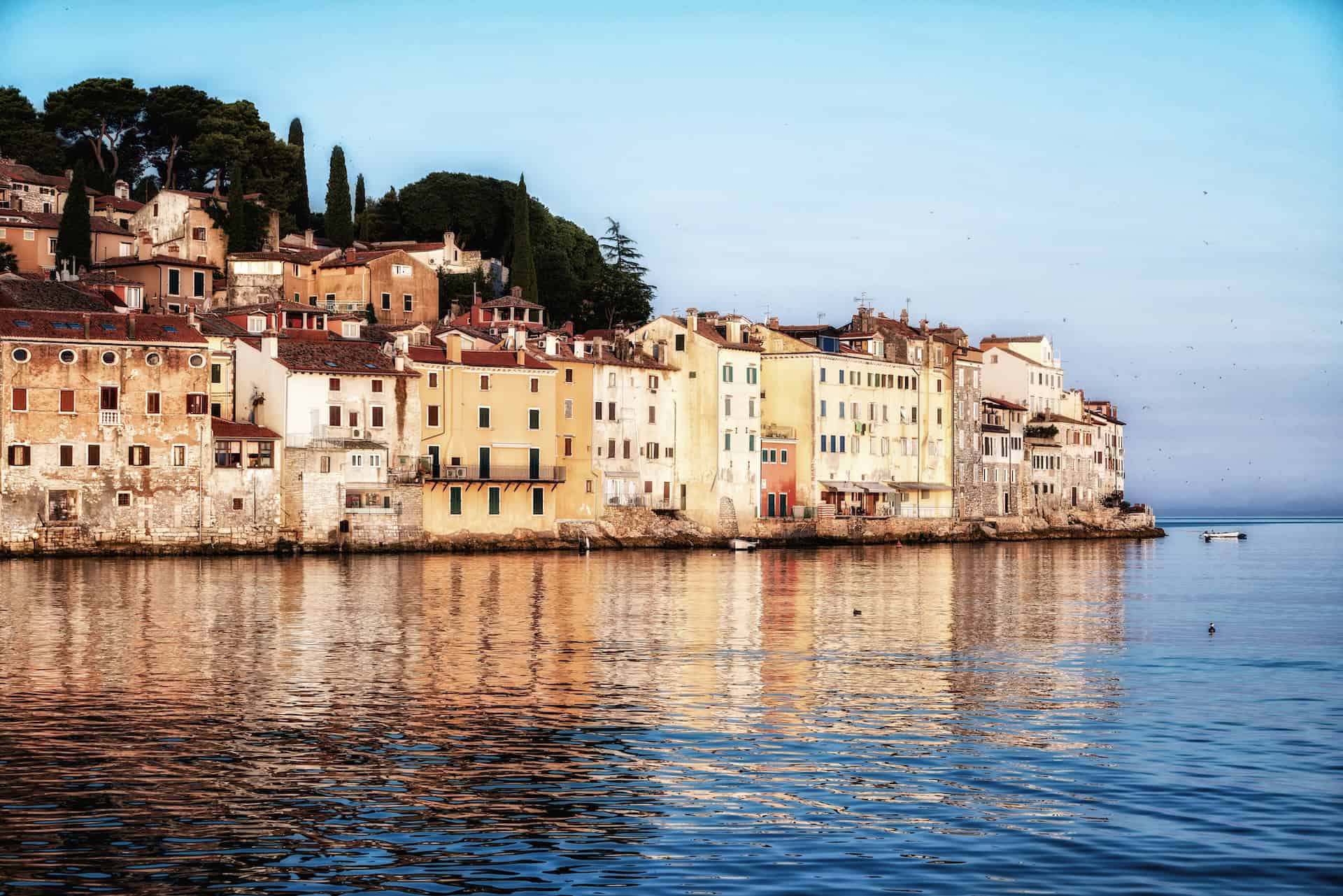
No Internet

The government controls everything and the internet is outlawed except for a few special circumstances. 

The only places that will have internet for tourists to use are the nice resorts.

It's big-time expensive, costing anywhere from $7-12 per hour and slow doesn't even describe it.

Forget about WiFi as I don't think they even know what that is... so bringing the laptop will be nothing but a paperweight.

Public Transportation

It's next to nothing.  The whole tourist industry is set-up for guided tours and not independent travel as most backpackers are used to.

One of the first things I noticed, once I got outside of Havana, was the line of people you would see standing along the highways trying to get picked-up.

The bus system is so horrible that it takes locals days to get from one side of the island to the other, sometimes even weeks.

Renting a car is possible but the costs are high. It's one country where it pays to be on a tour, but they still suck as you get fed the cookie-cutter guided package that we all hate and strive to avoid.

The Double Currencies

When in Asia, you have to deal with the double standards in costs, one for tourists and one for locals.  

In Cuba, they simplified it by making you use a separate currency guaranteed to cost you double on anything a local would buy.

There are two types of currencies:  Tourists use Cuban Convertibles (CUC) and locals use Cuban Pesos (CUP).
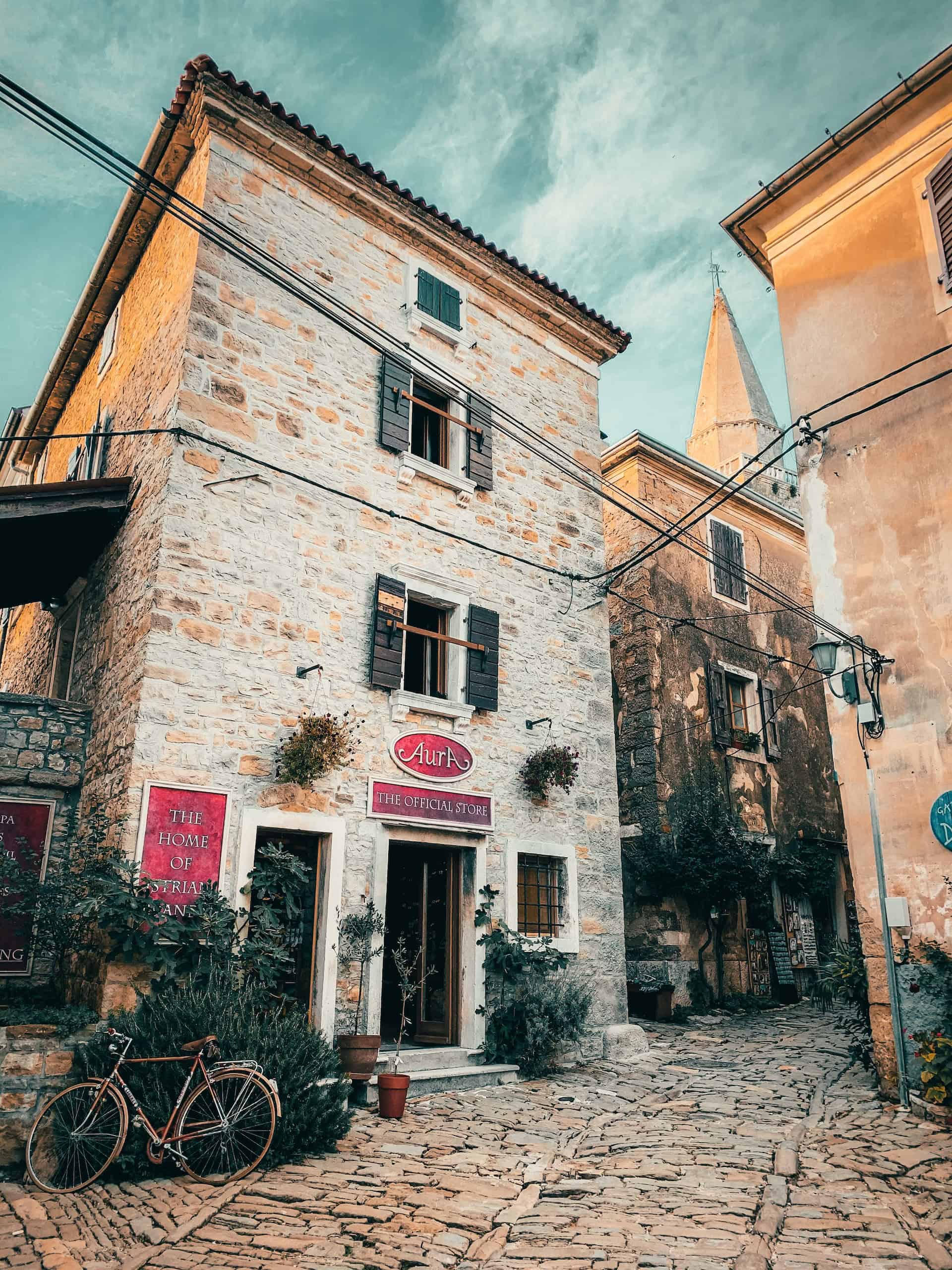
For example, we once went to get ice cream in a small town and paid 1 CUC per cone, but later found out if you're local you could get 1 cone for 1 CUP (Cuban Peso).

That ended out coming to 24 cones for a local, and 1 for a tourist, for the same price.  To convert CUC and CUP click here.

Don't bother with bringing US dollars either, as the government slaps a 10% tax for any transactions with them and all American credit cards won't work their either.

Hotels Only

If you're backpacking there and think you're going to stay at a cheap hostel to save money, good luck finding one.  

Just go to Hostelbookers.com and try to find a hostel for Cuba.  I'll give ya a hint, there aren't any!

All the major resorts and hotels are owned by the government, and it's pretty much illegal for locals to have their own.

I heard if you get lucky you can score some cheap accommodation by staying at a local's house, but these rooms rented out are illegal a lot of the time and you're on your own if caught.  It's doable but it takes some looking around.

Che Che Che

The communist propaganda is everywhere and you can't escape it.  After a few days of seeing Che everywhere, it just gets old.  It's history and I appreciate that, but it's overbearing at times.

It was cool to see his face on every billboard on the first day.  By the 2nd, it was ok.  The 3rd bearable, and by the 4th you were sick of seeing his face.

Everywhere you went, that was all there was: Che this, Che that, Che pissed here once.  

It would be like going to the USA and seeing nothing but Obama, Obama and Obama crap 24/7 (which we know doesn't happen).

The Clubs

Maybe I have been in South America too long, but paying more than a few dollars to get into a club is loco to me.  

All the hottest clubs that anyone told us to see while there charged a minimum $10 entrance fee.

I tried to ask where the locals went, as I didn't want to party with a bunch of Westerners, but they all said the same thing "Everyone cool is going to Club _____" (ie; $10 cover fee).

Maybe I just had bad luck but it seemed the norm to me the 3 nights I went out while there for a week.

I think the only way to see Cuba (unless you know someone there) is by an organized tour.

I won't lie though, the last 2 days I was so sick of the resort-style vacation (which I've never really been a fan of) but it seemed to me that's how almost all the tourists were traveling.

I didn't see many young backpackers doing their own thing and I was actually trying to find a few to ask them some questions.

If you're going to Cuba and staying in Havana for a week, then, by all means, it's backpacker-friendly (minus the internet and lack of hostels), but anything else outside of Havana is terribly difficult.

Friday Flashback - Visa Run to Burma & Koh Phayam

Welcome to Koh Phayam - Thailand

After visiting the popular islands of Koh Samui and Koh Phangan, I was anxious to go a little off the beaten track.  The recommendation I got from an expat was called Koh Phayam - a little island near the Thai-Burmese border.  Lonely Planet didn't say much, which was the perfect sign I thought.

Of course I didn't realize that the popular islands are busy year-round, while lesser known, lesser developed islands like Koh Phayam close up shop in the low season.

To read more, check out these posts:

  • The Road to Rangon
  • To Burma and Back
  • Koh Phayam: One Remote and Desolate Beach

Next week, we're heading to the large island of Phuket, where I pretend to be Leonardo DiCaprio in The Beach, and fall unexpectedly ill at the epicenter of the world's sex tourism industry.

Up In The Air: The Ultimate Travel Movie?

One of my family's Christmas traditions is to go see a movie together. 

This year, a consensus was formed around George Clooney's new one, Up In The Air. 

I rarely go to the theater to see movies anymore, however, I was curious to see this one as it was being mentioned a lot on Twitter (and 99% of the people I follow on Twitter live and breathe all things "travel").

The movie revolves around Clooney's character, who spends 300+ days a year crisscrossing the United States by plane in order to lay people off at corporations. 

I'm sure business travelers and frequent fliers will get a kick out of the meticulous approach the character has developed toward efficiently moving in, around, and out of airports. 

While I still prefer a backpack to rolling luggage, I could appreciate his appreciation for being able to travel with only one carry on bag. 

It's liberating, though increasingly difficult as airport security rules continue to change.

And his goal for accumulating frequent flier miles is hard for this flier to imagine, yet apparently people have reached the figure in real life.

The monologue in the trailer above caught my attention when it was recited early in the movie because you don't normally associate backpacks with business travelers. 

Yet the message being delivered was right up my alley, "moving is living" and material possessions have a way of weighing you down. 

Meanwhile, the approach to the trailer itself seems to seriously underplay the role of relationships in the movie.

Clooney's character has two worth noting. The first is a petite young woman who is told to shadow him as he goes about the business of firing people, one by one. 

The second is a liaison he develops with another business traveler, a woman that purports to be the female version of him (meaning comfortable with no-strings-attached sex). 

As the movie unfolds, Clooney's character and unique approach toward lifestyle design is challenged by both of these new ladies in his life.

There were many poignant moments in the movie. Two stand out the most to me. 

First, while Clooney is trying to help a newly fired guy see the bright side of his situation, he talks about how the situation is an opportunity for the guy to revisit his love of cooking, versus finding another soulless office job. 

I could relate to this, not that my last job was soulless, but it wasn't my life's passion. 

The dialogue in this scene reminded me of Gary Vaynerchuk's book, Crush It!

In a later scene, Clooney is talking to his sister's fiance who experiences last-minute cold feet about the wedding. 

Despite all the traveling Clooney does, his rootless existence, the perceived lack of long term relationships, and his distant family connections, he still finds it in himself to say that experiences are better when shared. 

This was the #1 lesson I learned on my RTW trip. As much as I enjoy the feeling of independence when backpacking alone, I'm rarely alone. 

In fact, more often than not, I'm seeking out new friends and connections everywhere I go because I relish the companionship they offer, however brief at times.

Is Up In The Air the ultimate travel movie?

No, I don't think so.  And it's not the happiest movie either.  However, I thought it was worth the price of admission for the story, the cast, including George Clooney, Jason Batemen, Vera Farmiga, and Anna Kendrick, and the soundtrack.

Buying a Tibetan Prayer Wheel

While waiting for Pommes Frites to open in New York's East Village, I happened across Himalayan Vision. 

Knowing Tibetan shops are always warm and welcoming, I stepped inside to browse the same items I'd seen so many times in Nepal and Eastern and Northern India.

Tibetan Prayer Wheel

I asked the store owner where he was from, and he indicated Shimla in northern India. 

I had stopped short of Shimla during my journey, though I relayed the areas I did have a chance to visit, including McLeod Ganj. There was an instant connection, or so I felt.

I picked up a copy of a Buddhist chanting CD I'd heard almost daily in Nepal. 

The owner indicated it was popular, but I had already bought it before leaving the country. He started to play another CD for me instead.

One item I wanted to buy in the Himalayan region, but didn't want to carry around, was a prayer wheel. 

I'd spun them countless times - small ones, big ones, and seriously massive ones (see video below).  And always in a clockwise rotation according to custom.

Giant Prayer Wheel in Tibetan Monastery (Bodhgaya, India)

While traveling Asia in 2008, I asked all my questions about symbolism and materials. 

The bright blue stone is turquoise, and the red rock is coral. And my favorite, the rich dark blue stone, is lapis lazuli. 

The artists of the Italian Renaissance used to grind down lapis lazuli and paint with it. I always found it to be a striking color.

The inscribed mantra (prayer) on Tibetan crafts is always the same, whether you're buying a necklace, prayer wheel, or t-shirt: Om Mani Padme Hum.

The standard English translation is "Behold! The Jewel in the Lotus."

I'd recited the mantra countless times since learning about and practicing the principles of Tibetan Buddhism in my mid-twenties.

Inside the prayer wheels are scrolls of paper with Om Mani Padme Hum written on them. 

The bigger the prayer wheel, the more iterations of the mantra rest inside and are released with each rotation. 

I imagine that for Tibetans, having a physical object, such as a prayer wheel, made it easier to remember and recite their daily mantras and generate good karma. 

I always thought that if I bought a prayer wheel, I too could do the same once I returned home to the routines of life in the States.

And so when I happened across Himalayan Vision, it felt like the time was right to buy my prayer wheel. 

I can be a picky shopper. However, the quality of the one that caught my attention was high, and the price was surprisingly low, at around $40. 

I asked the owner about the low rates, and he indicated that he had to reduce them due to the economic downturn. He was also going to be closing down his second shop in Massachusetts.

Several weeks later, I'm happy to report that I spin my Tibetan prayer wheel at least once a day, releasing dozens, if not hundreds, of Om Mani Padme Hums in the process.

Go Backpacking's Top 10 Posts of 2009

4x4 in Cambodia
Dave on a 4x4 tour in Cambodia

As we approach the end of 2009, I wanted to share the top 10 most popular posts on Go Backpacking, based on page views.

Interestingly, most of these posts pre-date my actual travel around the world and instead detail the various stages of planning involved in such a venture.  I'm glad they continue to serve as a resource for future travelers.

Cost of a Trip Around the World - an overview of my expenses for traveling to 22 countries over 15 months.  Once I settled into Medellin, I stopped keeping track.

My Decision to Backpack Around the World - the "why" behind quitting my job to see the world.

Choosing a Malaria Medication -  getting shots was easy while figuring out a strategy for Malaria was not.

Budgeting for a Trip Around the World - from May 2007, this was my pre-trip approach to figuring out how much money I needed.

Packing List - the initial contents of my backpack before leaving home.

5 Techniques to Save Big Money - my best strategies for saving lots of money!

Tibetan Acupuncture and Massage - this post received a lot of search engine traffic because of the photo I included of a big spider.

Establishing Travel and Financial Goals - the title says it all.

Nepal-India Border Crossing - I flew Yeti Airlines to Nepal's eastern border and that was just the beginning of the adventurous trip to Darjeeling.

The Importance of Hooking Up Abroad - a guest post by Emily Callaghan on the cultural benefits of intimate relations abroad.

The Mexican Tradition of Nochebuena

Homemade tamales
Homemade tamales

Unlike America's Independence Day which passed by all but unnoticed while I was in Cuenca, Ecuador in July 0f 2008, or the Dieciocho celebration that I did not know existed until I spent a September in Santiago, Chile (I quickly learned that Chilean independence was exciting enough to deserve a month of parties), many religious holidays are recognized in major cities all over the world.

This year, however, I had no special expat plans to make for I spent Christmas in the USA.

Nevertheless, the first of my own family's traditions are rather out of the American ordinary. On Christmas Eve, my dad's family, or six of his nine brothers and sisters and their families including mine, get together to celebrate Nochebuena.

In Mexico, this is the last night of the posada. Although I myself have never experienced them, the Posadas take place on the nine days preceding Christmas and are processions of the reenactment of Mary and Joseph's search for shelter in Bethlehem. Each night, groups of the town's residents are led to a different house for the culmination of the posada, not surprisingly, a fiesta. On the last night, Christmas Eve or Nochebuena the focus is now on the family which means one last posada, a scrumptiously large meal, mass (or Misa de Gallo), and an exchange of presents.

My father has lived in the United States since he was 18 years old and yet bits and pieces of these traditions have never been lost. We usually meet around eight at night to have dinner together. Wine and spirits (usually tequila) flow amongst the adults, as appetizers of ceviche (a salad made of raw shrimp in lime juice combined with tomatoes, onions, spices, and chiles) and tostadas (hard tortillas) are followed by tamales, the once 'food-on-the-go' for the warriors of pre-Columbian Mesoamerica. My aunts spend all day making the tamales which are made from the corn-based masa dough, filled with pork, vegetables, and spinces and wrapped in a corn husk to be steamed until hot.

Pozole - a common Mexican comfort food

Then, for the main course, young and old enjoy the quintessential Mexican comfort food, pozole. This is a stew native to my father's Jalisco that is made up of a hearty pork broth, laced with chili and augmented with hominy, a derivative of corn. It is then garnished with a homemade hot sauce (beyond any Tabasco most Americans have ever enjoyed), cabbage, radishes, and more of the fresh-squeezed juice of a lime.

Dessert varies from flan (a caramel custard) to classic brownies or chocolate-chip cookies. And then we wait, and wait, and wait. My cousins and siblings pass the time watching holiday films and playing games while the adults sit at the table and chat. Finally, when the clock strikes twelve we exchange affectionate "Feliz Navidad's" and gifts.

At this point, the Mexican celebration ends and the festivities that follow: sleeping for a short time, waking up to more presents from Santa ;), going to Christmas mass, and spending the day with family and friends take place similarly to those of most of those Americans who celebrate Christmas, but each year I always appreciate my family's unique cultural twists more and more.

And I'm sure I'm not the only one. Which international traditions have joyously wiggled their way into your American celebrations?

Destination Asia: Pruning Your Itinerary

A rough first draft
Drafting a travel itinerary

A side effect of having a thirst for travel is that it will always be unquenchable.

You will never be able to see everything, experience everything; there will always be so much you miss. 

That is why your itinerary is so important and yet so difficult to set.

If you read my article on how to research for a trip you'll know that I go through a great number of resources and have a lot of travel content coming to me on a daily basis. 

As a result, my visit list for any given locale is longer than most from the outset. This is both good and bad. 

On one hand, I have a great start for my itinerary, yet when it comes time for cuts to be made it makes it that much harder to skip over destinations you've dreamt about for months, maybe even years. 

Such is the life of a budget backpacker.

Create a Map

The first step is always to add my destinations to Google Maps so you get a map similar to mine. 

There is one main advantage of this exercise; you can see very easily what a suitable route would be. 

Look for where to start, where to end, how to eliminate backtracking and find any destinations that aren't reachable from your other destinations.

There is something to be said for travelers without a strict itinerary, but you still need to have a general idea of how you are going to travel the region. 

You do not want to end up like a backpacker friend of mine whose route after 6 months in Europe looked similar to several Stars of David. 

He wasted a lot of time crisscrossing the continent several times.

You should try to choose a route that flows and doesn't require retracing your steps. If you decide on a round trip plane ticket, a circle of some sort is often ideal.

Use Paper

I always start by writing my newly created itinerary down on paper.

Using paper makes it much easier to brainstorm and adjust the first iteration of your plan. Above you can see what my first draft looked like.

Pretty? Not in the least, but it's functional and allowed me to plan freely.

Use a guidebook to look at the activities and sights for each destination, and make an educated guess on how many nights you will spend there. 

A good tip is to plan by the number of nights you will stay rather than days, as they can get confusing if you move around a lot or go on day trips.

For my Southeast Asia trip, I was trying to stuff a little too much into my time frame, though this was exaggerated as I have a full week of unbudgeted time built into my proposed 120-day schedule. 

This was one of the biggest problems with my trip to Europe, I was tightly budgeted and although it was an excellent itinerary, not too fast or too slow, it afforded me no flexibility, and I wasn't able to stay long in the German Alps as I wanted.

Ask for Feedback

Slimming down your route is full of hard choices but you can make it easier on yourself. 

You're not alone; if you're going there, then someone else has already been there.  Now is the time to bounce your itinerary off as many other travelers as possible. 

The BootsnAll forums, as well as other location-specific travel forums, are a great start; any feedback will help you grasp the situation.

One of my biggest problems was that I couldn't get a handle on how much time I should be spending in the major cities of the region, unlike Europe where a 4-5 day rule is fairly universal.  

I was lost so I turned to my fellow travelers on BootsnAll, and they responded in spades, with more detail then I would have expected.

Just like reading an essay out loud will help you find typos, explaining an itinerary in detail to a travel partner or friend will help you bring holes and unnecessary destinations to light. 

This is what I did when I bounced my proposed itinerary off my buddy Richard who will be joining me for some of the time I'm in South-East Asia.

Prioritize

If you're looking to make cuts, then focus on destinations that you don't immediately gush about.

If you're not excited at home, what are the chances that it'll be any better on the ground? 

This is exactly what I did with Railay Bay, a beautiful destination known as a rock climbing mecca. 

I and heights aren't always on speaking terms, so that was an easy decision.

Any place that only has one reason for you to go may need reconsideration; if it's not a major reason then it's probably not worth your time. 

Phuket got cut down to one night because of this.

The only real reason for going is to witness the spectacle of the sex tourism industry; the entire stop is basically an exercise in laughing at sex tourists. 

Even one night, I'm still considering just axing the whole island.

Relax

It is important to remember through the whole process that even if you must cut some destinations, you will return with nothing but good memories, and any disappointment will fade quickly when you remember what you did experience.

Though mostly set, my itinerary is still in flux, and will likely stay that way until I leave.

Once I'm on the ground it will change drastically: travel mishaps happen, my usually ironclad stomach may fail me, a civil war could escalate, or the proposed elections in Burma could throw the country into turmoil. 

The flexibility I have built into my plan should allow me to bounce back from setbacks, and with any luck, I'll finish my stint in Hanoi with time to visit another tiny Southeast Asian country.

Internet vs. Newspaper: Good Writing Is Good Writing

Dubrovnik, Croatia
To fully experience travel, you frequently have to trust in strangers. This barber seemed to be in a bad mood, however, so I decided not to discuss Balkan politics with him.

Jerry V. Haines is a travel writer from northern Virginia.

We met back in 2007 when I took his one-day travel writing workshop. 

I was curious to see how the landscape of travel writing is changing from his perspective, so I invited him to answer a few questions on the subject.

***

Go Backpacking: In which publication was your travel writing first published, and what was the story about?

Jerry Haines: The Washington Post, in the Wednesday Style section "Escapes" column in 1996.  

It was a piece, submitted "on spec," describing a quiet afternoon in St. Georges, Granada.  

But the narrative began with our being directed to the wrong church that morning, leading to one of those glorious people-to-people experiences that I've tried to feature in subsequent writings, whenever we've been fortunate to have such happy accidents.

GB: Since then, where has your work appeared?

JH: I have been blessed to have had wonderful relationships with the editorial staffs of several newspaper travel sections: The Washington Post, The Los Angeles Times, The Newark Star-Ledger, The Dallas Morning News, and The St. Petersburg Times, among others.  

They ran my stuff, paid me on time and didn't mess (too much) with my copy.  

I found some good friends there and remain in touch with many of them, even though they're no longer in a position to buy anything from me.

I also ran a few things in Catholic Digest. I'm just now dipping my toe into internet waters and have done some things for World Hum, Intelligent Travel and Travel Beat.

I haven't started my own blog, but occasionally I think about it.  

(On this subject, I may be slow on the pickup, but not as bad as my edition of MS Word, which just flagged "blog" as a misspelling.)

GB: In the last 5 years, how has travel writing in traditional media changed?

JH: Well, one obvious answer is that newspaper travel sections "assuming they even exist anymore" are not buying much freelance.  

Editors have taken buyouts as their sections shrank or got folded into other sections of the paper.

Those that remain often use syndicated material or pieces written by full-time staff of other sections of their papers.

Many still do buy an occasional article but restrict their purchases to stories about travel within their respective reading areas "trips on a tankful," etc.

And the internet hasn't taken up the slack.  But I'm optimistic that eventually, it will.

GB: How does writing for newspapers and magazines differ from writing for online publications and blogs?

JH: In one sense, good writing is good writing. But the internet reader has to be courted much more aggressively than his print counterpart.  

You have to show your goodies early, or he'll quickly click away.  

(But wasn't that also the case before?  If you were pitching to a newspaper editor, you had to make your "sale" in the lede.)

You have to make some concessions to the medium.

Stories, paragraphs, and sentences are shorter because a screen just isn't as readable as a paper page.  

And you have to make concessions to our ever-shortening attention spans, a phenomenon that predates the internet.  

Personally, I blame television and vid Oh, look! A squirrel!

In the new world, you also have less editorial backup.  You can't just assume somebody will catch your misspellings and factual errors and fix them for you.  

(But really, now. You never should have made such assumptions in the old world, either.)

The good part is that there are fewer people looking over your shoulder, second-guessing your word choices and imposing their own style.

We're also all learning that some of the most important readers are not human, they're search engines.  

And, if we want hits, we have to learn to think like them, I guess, filling our NAKED paragraphs NAKED with NAKED words NAKED they're likely to NAKED seek. TOTALLY NUDE!

One other thought:  I love to write travel essays, but, except for the Washington Post, very few newspaper travel editors published essays, dismissing the whole genre as self-indulgent and ego-driven.  

But what could be a better medium for essays than the internet, the epitome of self-indulgence?

The future of the printed word, whether in newspapers, magazines or books, seems in question these days.

Ebooks are growing in popularity, as are the specific devices on which to read them such as Amazon's Kindle.

How does this trend benefit writers, and are there any hidden downsides?

I am absolutely the worst person to comment on that, as I love the traditional, ink on paper book.  

As my wife will confirm, I hardly ever get rid of books, even ones I hated. They sit on my shelf (actually, "shelves," dozens of them) as their own monuments to the labor, and celebrations of the thrills, of reading them.  

I admire the inventiveness that produced the Kindle, and I suspect it will benefit all writers by making writing more accessible to more people, but I probably will never own one.  

Unless someone wants give me one. Actually, I'd rather have a sweater. (I'm an XL.)

GB: What is your #1 piece of advice for readers interested in pursuing freelance travel writing opportunities, whether in print or online?

JH: Be persistent. I was rejected by 30 different newspapers before I thought of trying the Post (it was sort of a personal Hail Mary play, based only on the fact that it was the paper I knew best).

Don't be discouraged by rejection; there are lots of reasons why someone might not choose to publish your writing, and most of them have nothing to do with the quality of your work or your value as a human being.

There's no reason to get derailed by it, particularly now that we no longer have to shlep printed manuscripts to the post office, accompanied by a self-addressed, stamped envelope.  

(How I hated those things. Newspapers used them only for rejections; if they liked your article they'd call you. The SASE always meant bad news.)

Today, if you get rejected, just send out another email.

GB: And finally, if you could wake up anywhere in the world tomorrow morning, where would it be?

JH: I'm often asked that (or variations on it) and I usually respond with wherever I've been most recently (which currently is Charleston, SC).  But ultimately, it has to be Italy.  

I particularly like the smaller, lesser-known cities like Bologna, Bassano del Grappa, Cagliari, Sorrento, Padua.  (Shall I go on?)

__

Photo Credit:  Janice Haines

Encounter With The Magnificent Mountain Gorilla - Berengei Berengei

Charles, a silverback

This is a guest post by Rebecca Tom. If you want to guest post on Go Backpacking, please read more here.

Trekking to see the mountain gorillas of Rwanda is one of the most magical things you can do. It is an amazing wildlife encounter with Earth's largest living primates.

The German explorer Oscar von Beringe was the first non-African to encounter them in 1902. There are now estimated to be less than 750 in the world (all living in eastern central Africa).

Wars, poaching, and human encroachment on their habitat have all played a part in drastically reducing their numbers. They are critically endangered and so it is even more special to be able to see them up close in the wild.

I was lucky enough to do this and I will never forget it.

There are seven habituated gorilla groups in Rwanda that tourists are allowed to visit. There are other habituated groups too but these are off limits. A maximum of eight permits are issued per gorilla group per day.

Before encountering the animals there's a few things to bear in mind. There is a code of conduct for visiting the gorillas: the encounter will be no more than one hour from first sighting (to reduce the risk of them catching human diseases), the minimum distance you can get from them is 7m, no-one can eat near them or go to the loo near them, no flash photography and absolutely no litter should be left there. Also, permits are required which cost $500 and need to be bought in advance.

Those unfortunate enough to develop a cold or infectious disease before the encounter will not be allowed to see the gorillas.

My encounter started with arrival at the meeting point at 7am. Everyone gets put into small groups and a briefing takes place. The park wardens choose which people visit which gorilla family. We were off to meet the Umabano (meaning neighbourliness), a group of nine individuals led by one silverback, Charles.

Luckily I'd been told to bring gardening gloves and tough trousers as the forest is likely to spike and sting you. Good walking shoes are necessary as the terrain is tough and the paths are narrow. Waterproofs are a good idea too as it is a rainforest (although I didn't need them). A bottle of water is essential, as is a hearty breakfast to make up for all the energy that will be expended with the climb.

Ruhengeri is the nearest village to the start of the trail and is where the jeeps from the base take us, the roads are very bumpy and the guides joke that it is an "˜African massage'.

Parc des Volcans, Rwanda

The guides cut walking sticks to help us with our climb and we enter the primary Rwandan Parc des Volcans rainforest.

Our guides are in frequent walkie-talkie contact with the trackers who are up ahead searching for the gorillas. The trackers search for dung and trampled vegetation that mark a gorilla trail.  The guides make frequent stops for us to rest and they use their machetes to slash some of the undergrowth from the tangled jungle at the edge of the path.

After about an hour and a half of trekking, we were told to leave all food and our sticks behind for the final push to the gorilla group. The sticks needed to be left behind because the gorillas apparently may associate them with poachers and become alarmed.

A bit more walking for us and then they were there in front of us, fellow primates. They were difficult to spot at first but the movement in the trees gave the game away. An awesome sight, my first wild gorilla in the tree only a few metres away.

Mountain Gorilla
Mountain Gorilla

And then there were more - little ones swinging playfully on branches and juveniles crashing about in the undergrowth. The female seemed more intent on sleeping than anything else but a baby clambered about near her, ensuring she didn't manage a decent amount of sleep!

We were by now venturing off the paths and teetering precariously on the hillside. It was difficult to see where there was hard surface under foot so a few falls were inevitable.

We tried keeping our distance but a juvenile came along a path and there was nowhere for me to move to. It passed just inches away, as if I wasn't even there. An amazing experience!

Charles the silverback was a sight to behold. He was massive and majestic and no threat at all if you were respectful.

The animals carried out their daily life in front of us, eating, sleeping and playing.

The trackers constantly communicated with the gorillas in low grunts. The gorillas are used to the trackers as they are followed daily.

All too soon the hour was up and we had to go. We were escorted out by one of the juvenile male gorillas who apparently sometimes likes to do this.

Sadly it was time to head back, tired but exhilarated but every penny and every step was worth it.

________

By Rebecca Tom.  If you liked this post you may also be interested, like me, in cultural walking tours or walking and wildlife in Namibia.

Photo Credit:  All photos courtesy of Rebecca Tom.

Recap: The 2nd DC Travel Tweetup

The spartan Midtown LOFT in Washington, DC

December 16, 2009

Wrapped in warm yak wool, and sporting my red, white, and grey Darjeeling knit cap, I braved the cold East Coast winds of winter to make a reverse, rush-hour commute from northern Virginia into the heart of Washington, DC. 

There could be only one reason to risk chapped lips and awkward stares on the long metro ride into the city.

The 2nd DC Travel Tweetup, my friends!

I arrived a few minutes early at the venue, Midtown LOFT, which required scaling a few flights of stairs, and was the choice of my effervescent co-host, Stephanie from Twenty-Something Travel. 

It looked as though we were going to have the bar to ourselves - it was practically empty.

I settled into a corner near the front windows overlooking 18th Street and Connecticut.

I monitored Twitter, and donned one of the custom Twitter name tags so graciously provided by Teresa and Melanie at Sisarina (@sisarina).

Steven from Travelojos (@travelojos) was the first to arrive. 

I first became aware of his blog about travel in Latin America after he put up a few posts about Colombia. 

I believe Stephanie (@20stravel) rolled in next. She swore the bar is hoppin' on a Friday night. 

All I know is on that Wednesday night, the bartender looked bored enough to jump out the 3rd story window.

It was great to meet Marilyn (@Marilyn_Res), the Chief Researcher for National Geographic Traveler and Janelle (@Janelle_IT_Blog), the Special Projects Editor at National Geographic Traveler, and Editor of the Intelligent Travel blog.

I also got to talk with Dan (@8hourlayover) from The Eight Hour Layover who, like me, had attended the Art of Non-Conformity meetup a few months ago (small world). 

Unlike me, he'd been keeping up with Chris for years!

Christine (@ichristine), a cupcake aficionado and lover of martinis, took a break from work to join us, and we met the one and only Curls McGhee (@travelwithcurls) of the upstart Travel With Curls blog.

And lastly, William (@bushwil) joined us. He doesn't have a blog, to my knowledge, but he did have a great story about attending a wedding in Nigeria. He hopes to travel more in the future.

We all do.

Stephanie and I would like to thank everyone who made it out, and we look forward to hosting the next DC Travel Tweetup in January 2010.

The Heavenly La Maison du Chocolat

Divine Creations at La Maison du Chocolat

My chocolate habit spiraled out of control on my trip around the world.  Once I landed in New Zealand and saw convenience store racks loaded with giant bricks of Cadbury chocolate, it was over.  I traveled around the country with a pound of the stuff constantly in my pack, telling myself it's an important supply of energy for all the hiking and physical activity I was doing (yea right).

In Sydney, my Couchsurfing host took me to the Lindt chocolate cafe where we ordered the most decadent hot chocolate known to mankind, and on top of that, picked out a few extra truffles for good measure.

In the Laotian capital, I had a 3-course meal which ended with chocolate oozing out of a warm cake.

And taking quick jaunts through Belgium and Switzerland last winter was no accident either.  I'd heard the best chocolates came from those two countries, and I was determined to put such assertions to the test.  I sampled chocolates from several shops in each country.  They were certainly delicious, but...

Nothing in my 33 years on this planet we call Earth can compare to the 5 delicate, decadent chocolates I hand-picked from the Parisian boutique known as La Maison du Chocolat at Rockefeller Center in New York City.

At $1.95 apiece, these small delights were not cheap, but they were beyond worth it.  I wish I had written down the flavors I purchased so I could riddle them off for you, gushing about how amazing each of them was.  While they managed to last an hour or two of sightseeing, once I returned to my brother's apartment downtown, I opened the unassuming plastic bag and ate the first one.

Any food item which has the power to send chills up your spine, and make the hair on your arms stand on end, deserves extra attention.  I proceeded to enjoy the remaining 4 chocolates in timed intervals.  30 minutes later, they were gone.

And that's an achievement for this chocoholic.

______________

La Maison du Chocolat - 30 Rockefeller Center, New York City.  Plus, they offer mailorder!

Friday Flashback - The Best Beach on Koh Phangan

Thai longboat on Thong Nai Pan Noi

After a week of serious partying on Haad Rin, including a Full Moon Party, I headed to a small, quiet beach on the northeastern edge of Koh Phangan. 

Thong Nai Pan Noi was a tropical paradise defined.

The beach was small, and quiet at night, which made it perfect for late swims, with or without clothes. 

There were budget bungalows and space for luxury ones being constructed (boo!). 

A few restaurants offered dining and drinks on the beach, and the vibe was super casual.

In the "town" which was more a collection of small stores, restaurants, bars, and massage shops, life seemed to move at a snail's pace. 

It was the perfect base camp to enjoy beach life and recovery from the party lifestyle on the island's southern end.

For more stories and photos, check out these posts:

  • Thong Nai Pan Noi Beach
  • The Bungalow Bounce
  • Dare #13 - Completed - Muay Thai Boxing
  • Half Moon Party
  • Crunch! Another One Bites the Dust

Next week, we're heading across Thailand for a Visa run, and then on to more tropical islands.

Last Minute Giving: Kiva Gift Certificates

Earlier this week, I joined Kiva, a non-profit organization which facilitates micro-lending around the world.

Starting at $25, Kiva gift certificates allow the recipient to make their own loans to entrepreneurs around the world and help alleviate poverty. Your recipient chooses the loans, receives repayments, and can choose to lend again and again! It is a one-of-a-kind gift that keeps on giving.

In January 2010, I will begin to share my first-hand experiences.  Until then, if you forgot to get a gift for someone, make a $25 investment on their behalf by sending a Kiva gift certificate.  You have the option of either printing it out, or sending it immediately as an e-mail.  It's the perfect solution for those last minute gifts.

They take just seconds to create, but the experience lasts a lifetime!
__________
PS - if you are already a member of Kiva, please join Go Backpacking's lending team!

ESL Teaching: Getting Personal

Quiet street in Prague

I never took a business class in college, and I've never held a traditional office position.  However, I'm relatively sure that one of the first lessons of either experience would have been: keep your personal life separate from your work life.

Some people call it work/life balance.  Some simply warn against co-worker happy hours.  Some point their finger at office romances.  During my ESL days, I had to wonder: did any of this actually apply?

There seemed to be two approaches among the English-teaching crowd, and I flip-flopped on which method was ideal.  While teaching ESL is not in the running for the most professional position most of us will ever hold, it is still a job.  And though a couple frigid January days may have propelled me to dress rather unprofessionally in jeans and furry boots, I did try to approach most lessons with the mindset of the workplace.

My first roommate abroad shared that philosophy.  More of a private person, she could quite easily recount details of her students' lives, from the names of third cousins to preferences amongst the varieties of Czech beers.  But the relationship was not reciprocal.  She might have spent Saturday evenings gallivanting until the hour that the night tram reopened, or she might have been tucked into bed an hour after dinner.  That remained a mystery, because her teaching style probed her students to do the talking, while she took the listener's chair.

My second apartment-mate, however, was quite the opposite.  More of the cliche post-collegiate instructor, she arrived with a single suitcase and an extroverted nature.  When it came to swapping stories with her students, she spoke freely, without a single hold barred.  On the mornings she arrived at her lessons squinting at the daylight, her students knew the reason.

So the question remained: which method was best?  I suppose the argument can go both ways.  If you're teaching adults, then no superior checks up on you, and very often, you teach away from your school's actual premises.  My students trusted in these facts, as they unabashedly revealed to me everything from financial woes to bedroom secrets.  I could have easily done the same.

Then again, I had to ask myself whether I strived to cultivate a friendship or a student-teacher relationship.  For me, the answer was the latter, and in the end, I'm glad to have had the practice of maintaining at least a bit of professionalism.

Still, my more candid colleagues left with something I did not: some students became their closest friends.  Gossiping for an hour under the guise of teaching a lesson does sound more appealing than some of the one-on-one courses I taught.  As the people we meet so often influence our experience of the places we go, this is certainly food for thought.

Are You Calling Me Fat?

The finished product
Ramesh, Clinton, and I painting as school children look on

This is a guest post by Janelle K. Eagle. If you want to guest post on Go Backpacking, please read more here.

The answer is yes. The school Principal was speaking about us, and he had called me fat.

I came across "Mr. Rude Principal man" while I was teaching English and Theater to a group of underprivileged girls in Bhaktapur, Nepal.

One of my fellow travelers, Clinton Bopp, was painting at Shree Sharada School nearby as part of The Unatti Foundation's "Child to Child" project.

This innovative work connects children in California with children in this small village and others around the world.

At the time of the name-calling incident, Clinton, a talented painter living in Los Angeles, was transforming the front of the four-room school from an old wall full of political graffiti into one of the most beautiful buildings in the village.

I was filming him for my forthcoming documentary and also assisting with painting some of the smaller details on his massive mural.

Ramesh, the man who runs the orphanage where we were staying and who is the Nepalese leader of the Unatti Foundation was overseeing the painting project as he was a graduate of this small school some 25 years earlier.

Ramesh's family has lived in Bhaktapur for seven generations, so he knows his way around and is well-connected.

Clinton and I took advantage of Ramesh's established relationships in the area and knew it was no big deal when we ran out of a particular pink paint color that day.

Ramesh offered to visit with a local paint store owner who would cut us a deal and asked that my friend Patty and I accompany him on his motorcycle so that we could carry the paint cans back while he maneuvered the bike down Bhaktapur's small alleyways.

Ramesh's motorcycle carried himself, Patty, and I the very short distance to the paint store.

When Patty and I returned to the school site with fresh paint, the school Principal came outside to greet us and struck up a conversation with Ramesh.

Suddenly they burst into laughter. We are so fat; this man could not believe the bike had managed to carry all three of us. He was very impressed.

I am very impressed I didn't punch him in the face once Ramesh translated why they were laughing so hard.

Children from the Shree Sharada School

This seemingly unbearable mental abuse is, of course, a great cause for reflection.

In Nepal, Patty and I are considered fat. Nepali people, especially in the small village of Bhaktapur, are often malnourished.

Children regularly appear at least two years younger in size than their actual age, simply because they don't have the resources to grow healthy bodies.

Considering the fact that the school we are painting is a public school for the most impoverished children in the village, it should not offend us that comparatively speaking, we are HUGE.

What's hilarious about the timing of this Principal's comment is that Patty and I lost a lot of weight while we were in Nepal.

We had grown accustomed to obsessing over our thighs and flabby arms and enjoyed being out of America where indulgence is stuffed in our face just as often as images of too-thin models.

But in Nepal, without a car to sit in, unnecessarily large meals served to us at restaurants or unhealthy food, in general, we both slimmed down at a rapid pace. We dubbed this change, "The Nepal Diet."

After being called "fat," the weight loss suddenly seemed like less of an accomplishment. To the people of Bhaktapur, being fat meant we looked healthy.

Every day that we "fat girls" showed up with Clinton to the disheveled school to paint, the skinny children of Bhaktapur gawked at us, practiced their English, and sought positive reinforcement.

It was easy to swallow our proverbial Western Thinness Pride when we looked at these children in the face every day.

This fat chick was and still is comfortable with the name-calling. Instead of feeling like I should skip a meal, I focused on painting a school for skinny kids who deserve it.

________

Janelle is a documentary filmmaker with an insatiable desire to get out there, see it, and share it. A strong believer that change happens over good home-cooked meals, Janelle has dined with locals all around the world. She hopes she's helped create change along the journey. She shares her writing, photography, and videos on www.journeywithjanelle.com.

To the people of Bhaktapur, being fat meant we looked healthy.

It's Chile in Manhattan

I'm sure all of the city folk appreciated the pun. The entire Northeast got hit pretty hard last night by a snowstorm.

Anyway, the good news is that despite the chill, locals and visitors alike can enjoy the warmth of an authentic Chilean meal at Pomaire.

It is so nice to be able to say the above statement and be sure of it.

I spent half a semester in the South American country during the year studying abroad, eating and documenting my way through 3 meals on each day of the five months that I was there.

When my parents visited, my father, a native to Mexico, was not so impressed with Chilean cuisine; it is not very spicy, not very complicated, and nothing like Mexican or even Peruvian food of which the most people may be familiar with.

Yet traditional Chilean food, although simple, has a medley of flavors, influenced by the vast diversity of plant foods and products that are naturally available.

And this is all thanks to its varying landscape and the cultures of the native Chileans, most prominently, the Mapuches.

Quite impressively, Pomaire, a small restaurant in the Theatre District of New York City seems to have chosen the most delicious of plates served across the nearly 3,000-mile country from north to south.

And with the Pacific Ocean to the west, the Andes Mountains to the east, each one will be unlike anything you've ever had before.

When I visited last year, my boyfriend and I chose a delightful bottle of wine from the Concha y Toro vineyards as our poison, but I'd recommend their Pisco Sours as well.

A Pisco Sour is a mixed drink made of pisco (a brandy made from Muscat grapes grown in designated areas across the country), lemon juice, sugar, and the occasional egg white.

I can assure you it's deliciously refreshing, and if you happen to get your hands on a bottle of Capel or another brand of Chilean pisco, I'd highly recommend making it for yourself.

Soon after we were served a basket of pan amasado (a fresh-baked Chilean bread) and pebre (a Chilean condiment, somewhat similar to salsa, but as you will see in this recipe, unique as well).

For our appetizers, we ordered a spectacular Empanada de Pino (baked in a wood-burning oven and classically filled with seasoned minced (not ground) meat, onions, a single, hard-boiled egg, olives, and raisins) and Camerones a Pil-Pil (spicy shrimp).

The latter was my personal favorite because it was made with the Mapuche spice of Merquen which has the most wonderful smoky yet ubiquitous flavor.

At the attentive waiter's suggestion (Pomaire has great service), I had the Chilean Humita (a bundle of fresh, sweet corn ground and cooked in the husk) as my entree while my boyfriend enjoyed the Chilean Corvino Sea Bass with roasted vegetables and rice.

We had an amazing experience (and I caught it all on camera if you'd like to see more pictures.)

The entire atmosphere of this small, dark, yet undeniably cozy restaurant is most definitely inviting to say the last, and each piece of decor, beautiful.

Wall decorations and table embellishments were hand-chosen by the owner, Denic, to reflect his own childhood home in Chile.

I invite you to enjoy the culinary comforts of his home, and my once-adopted one.

___________

Pomaire - 371 West 46th Street, New York City

The Christmas Tree at Rockefeller Center (is small)

Holiday fountain display

I met Jen from Approach Guides outside her office building in midtown Manhattan, a few blocks south of Grand Central Station. 

We walked to a nearby cafe she knew, where we lucked out and managed to acquire seating.

I hadn't done my homework. I'd seen Jen's tweets, however, I'd only given the website a cursory overview. On the other hand, I didn't feel too guilty. 

I'm finding it's much more fun to learn about a person's blog or project while you're sitting in front of them, and can feel their excitement. 

In addition, to getting the background on how Approach Guides came to be, we talked about travel, social media, and the new project I've been working on (stay tuned in 2010!).

Jen - thanks again for the coffee and cookie!

As we parted, she also offered me a complimentary guide from their collection, which I look forward to reading and writing about in the near future.

Radio City Music Hall

On my own again, I made it my mission to check out the Christmas tree at Rockefeller Center. 

I took the scenic route, walking through Grand Central Station and Time Square, where I came across Sam Ash, the popular music store chain.

Back when I use to play the guitar in my teens, I'd look through their catalogs and dream of getting a Gibson Les Paul (like Slash) or a sunburst Fender Strat (like Stevie Ray Vaughn). 

To appease my inner child, I walked into the store which occupied the former space of another famous store, Manny's (featured in the Guns 'n Roses video for "Paradise City") and browsed the massive collection of guitars they have on the first floor.

After getting my fill of beautiful, expensive electric guitars, I hit the streets again, walking past Radio City Music Hall. 

When I was an even younger kid, and my family still lived in the suburbs of the New York City, we'd go to Radio City to see the Rockettes perform around this same time.

The Christmas Tree at Rockefeller Center

And with a little help from Google Maps on my BlackBerry Curve, I reached 30 Rock. 

My first view of the tree and ice skating rink resulted in a thought along the lines of "damn, that's way smaller than I thought." 

I always knew the camera angles played a big part in making the Rockefeller Center Christmas tree look big, but my imagination over the last 33 years had turned the tree into one of Redwood-sized proportions.

The reality didn't match up to my imagination, which seems silly. 

After all, it was a lovely tree, and I thought it was cute that so many people were ice skating around, as you always see on television. 

Plus, there were hordes of tourists taking photos and Salvation Army volunteers ringing bells to add to the atmosphere.

Top of the Rock, looking north toward Central Park

As I walked away from the Christmas tree, I came across the entrance to buy tickets for access to the roof of Rockefeller Center, aptly referred to as "top of the rock." 

Again, as a kid, I'd been to the top of the Empire State Building, and even the World Trade Center, however 30 Rock would be a new one.

I ducked inside, and coughed up the New York City price of $21 to ride a faster-than-normal elevator. 

As you ride up, there are blue lights that make it feel like you're Luke Skywalker about to blow up the Death Star. 

My ears popped several times during the fast ascent (and later descent).

Once you arrive on the top, you want to continue to take another escalator or two to wind your way all the way up, past the lower level with glass barriers, to reach unobstructed views of the city. 

The sun was starting to set, and I was only equipped with my BlackBerry for photos, so I did my best to capture the view of Central Park.

Pommes Frites - Belgian Fries in NYC

Pommes Frites - Belgian Fries

My first visit to Pommes Frites dates back almost 10 years.  During a typical long weekend in the city, a friend took me there to experience the authentic Belgian fries, which are served in a paper cone along with your choice of sauces from a long and unhealthy (but oh so tasty) list.

The frite shoppe itself is tiny, with two back-to-back booths and a few stools.  The reputation, on the other hand, is far larger.  As you can see in the photo above, as tourists pose for a photo, it has become a popular destination for foodies the world over.

On my most recent visit to New York City, I made it a point to return, seeing as how it is only a short walk from my brother's East Village apartment.  Jodi, the Legal Nomad, had brought to my attention the fact that this Belgian frite shop also offered a popular Canadian dish called poutine.

Take fries, slather them in chicken gravy, throw in some chunks of Canadian cured cheddar cheese, and voila - POUTINE!

Poutine: fries, gravy, and cheese curd

My curiosity was piqued, so on a cold Winter's morning, I walked over to Pommes Frites and ordered a heaping, hot cup of poutine before the clock had even struck noon.  Fries with gravy I'd eaten before, but the cheese curd sounded like an odd addition to the mix, at least for this American.

The whole combination turned out to be quite tasty, and very filling.  It was my lunch that day, and I didn't even finish the small serving I ordered.  It's the perfect comfort food, and at only $5, a great (artery-clogging) alternative to the typical NYC hot dogs and pizza.
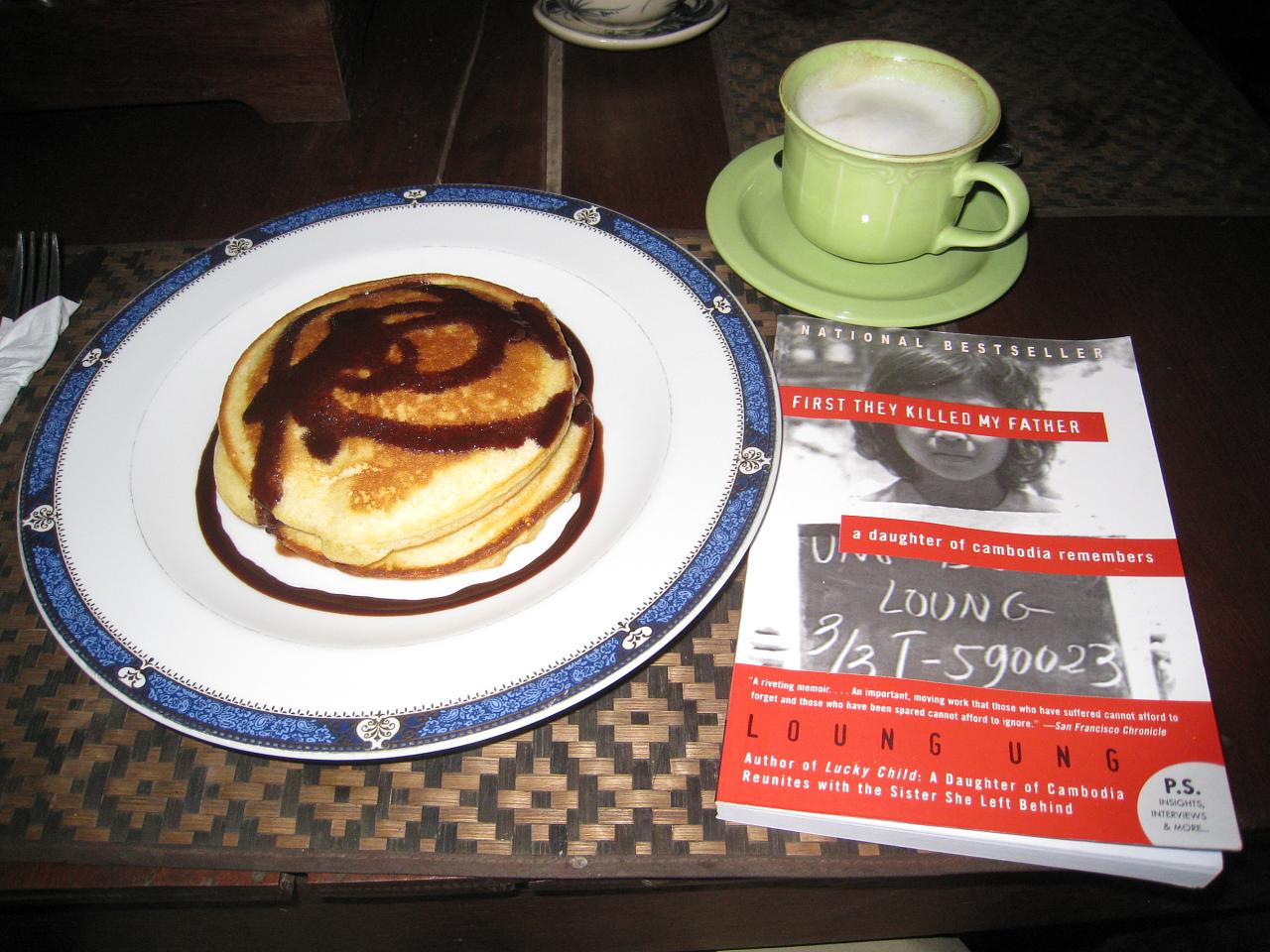
_____________

Pommes Frites - 123 2nd Avenue, New York City

Travel Blogging & Coffee @ Mudspot

Entrance at Mudspot
Entrance at Mudspot

Mudspot, the cafe tied to New York City's popular orange Mudtruck, was a few blocks from my brother's apartment in the East Village.  While I was waiting near the entrance for Amy to arrive, I watched an endless stream of people duck in from the cold to grab their pre-work cup of coffee.  I forget the exact music that was playing, though I recall how it set off signals in my mind that this was my kind of cafe.

When Amy arrived, we took a table between the counter near the entrance, and the semi-outdoor garden area.  I ordered a chai tea, which arrived in a giant mug.  It was a far cry from the jello shot sized dixie cups I came to know and appreciate on the Indian trains.  Over an hour later, I still couldn't finish it!

Chai tea, super-sized

Amy had found me through Twitter, and suggested we get together to talk about travel blogging.  Luckily for her, it's my favorite subject!  She and her husband are leaving on a year long trip around the world in early 2010, and she was trying to figure out how much time to spend creating and maintaining a travel blog.  She had a lot of other priorities competing for her attention, so I did my best to share my experience.  I'll be curious to see what she decides to do.

Running a successful travel blog isn't easy.  It requires sacrificing some of your travel time to write, post photos, upload videos, and nowadays, stay connected via social media.  On the other hand, there are wonderful rewards you can experience by sharing your stories so publicly.  Inspiring others to travel, keeping them motivated to save while they're back at home working, engaging with your readers, and possibly earning a few bucks from advertising are all within reach for most people.

As in Amy's case, it's a matter of priorities, however travelers shouldn't underestimate how keeping a blog can quickly become a priority in and of itself.

__________

Mudspot - 307 East 9th Street, New York City

Friday Flashback - Partying on Koh Phangan

httpvh://www.youtube.com/watch?v=7yIAtdX_61k

I arrived on Koh Phangan's infamous full moon party beach a week early to secure a bungalow.  Mission accomplished, however nobody warned me that every night on the beach is party night. And by party night, I mean massive bar sound systems booming psychedelic trance until the sun comes up each morning.

My party skills were tested like never before, and I met the challenge head-on!

Island Hop - Koh Samui to Koh Phangan

Fun With Fire On Haad Rin

Beach Party 2 - Electric Boogaloo

Three's Company

Surprise: A Quiet Night

The Night Before Full Moon Mayhem

Thailand's Full Moon Party - July 2008

The Aftermath

« Previous Page
Next Page »
Dave at Ahu Ko Te Riku on Rapa Nui (Easter Island), Chile.

Hi, I'm Dave

Editor in Chief

I've been writing about adventure travel on Go Backpacking since 2007. I've visited 68 countries.

Read more about Dave.

Footer

back to top

About

  • About
  • Archive
  • Privacy Policy
  • Cookie Policy

Follow Us

Contact

  • Contact
  • Work With Us
  • Submissions

Copyright © 2025 Go Backpacking