Go Backpacking

  • About
  • Travel Tips
    • Accommodations
    • Budgeting & Money
    • Adventure Travel
    • Food & Drink
    • Gear & Gadgets
    • Packing Tips
    • Travel Blogging
    • Travel Insurance
    • Trip Planning
    • UNESCO Sites
  • Destinations
    • Africa
      • Botswana
      • Egypt
      • Ethiopia
      • Morocco
      • Rwanda
      • South Africa
      • Tanzania
    • Asia
      • Cambodia
      • China
      • Hong Kong
      • India
      • Indonesia
      • Japan
      • Laos
      • Malaysia
      • Nepal
      • Philippines
      • Thailand
      • United Arab Emirates
      • Vietnam
    • Europe
      • England
      • France
      • Germany
      • Greece
      • Iceland
      • Ireland
      • Italy
      • Portugal
      • Spain
      • Switzerland
      • Turkey
    • North America
      • Canada
      • Costa Rica
      • Cuba
      • Guatemala
      • Mexico
      • Nicaragua
      • Panama
      • United States
    • Oceania
      • Australia
      • French Polynesia
      • New Zealand
    • South America
      • Argentina
      • Bolivia
      • Brazil
      • Chile
      • Colombia
      • Ecuador
      • Peru
  • Advertise
menu icon
go to homepage
  • About
  • Travel Tips
    • Accommodations
    • Budgeting & Money
    • Adventure Travel
    • Food & Drink
    • Gear & Gadgets
    • Packing Tips
    • Travel Blogging
    • Travel Insurance
    • Trip Planning
    • UNESCO Sites
  • Destinations
    • Africa
      • Botswana
      • Egypt
      • Ethiopia
      • Morocco
      • Rwanda
      • South Africa
      • Tanzania
    • Asia
      • Cambodia
      • China
      • Hong Kong
      • India
      • Indonesia
      • Japan
      • Laos
      • Malaysia
      • Nepal
      • Philippines
      • Thailand
      • United Arab Emirates
      • Vietnam
    • Europe
      • England
      • France
      • Germany
      • Greece
      • Iceland
      • Ireland
      • Italy
      • Portugal
      • Spain
      • Switzerland
      • Turkey
    • North America
      • Canada
      • Costa Rica
      • Cuba
      • Guatemala
      • Mexico
      • Nicaragua
      • Panama
      • United States
    • Oceania
      • Australia
      • French Polynesia
      • New Zealand
    • South America
      • Argentina
      • Bolivia
      • Brazil
      • Chile
      • Colombia
      • Ecuador
      • Peru
  • Advertise
search icon
Homepage link
  • About
  • Travel Tips
    • Accommodations
    • Budgeting & Money
    • Adventure Travel
    • Food & Drink
    • Gear & Gadgets
    • Packing Tips
    • Travel Blogging
    • Travel Insurance
    • Trip Planning
    • UNESCO Sites
  • Destinations
    • Africa
      • Botswana
      • Egypt
      • Ethiopia
      • Morocco
      • Rwanda
      • South Africa
      • Tanzania
    • Asia
      • Cambodia
      • China
      • Hong Kong
      • India
      • Indonesia
      • Japan
      • Laos
      • Malaysia
      • Nepal
      • Philippines
      • Thailand
      • United Arab Emirates
      • Vietnam
    • Europe
      • England
      • France
      • Germany
      • Greece
      • Iceland
      • Ireland
      • Italy
      • Portugal
      • Spain
      • Switzerland
      • Turkey
    • North America
      • Canada
      • Costa Rica
      • Cuba
      • Guatemala
      • Mexico
      • Nicaragua
      • Panama
      • United States
    • Oceania
      • Australia
      • French Polynesia
      • New Zealand
    • South America
      • Argentina
      • Bolivia
      • Brazil
      • Chile
      • Colombia
      • Ecuador
      • Peru
  • Advertise
×
Home

Mountain Gorilla Trekking in Volcanoes National Park

Sabyinyo (3,634 meters)

Awaking before dawn, I was amongst the first from our group to sit down at 6 AM for a hearty American-style breakfast of hot porridge, eggs, fruit, and coffee. 

Considering a trek to see Rwanda's endangered mountain gorillas can take anywhere from 2-12 hours, I wanted to ensure my batteries were fully charged. 

Excitement soon began to outweigh our sleepiness at the table.

Less than a week earlier, I was in suburban Virginia watching Gorillas in the Mist. 

Now, I was in the heart of Africa, about to visit these critically endangered primates in person.

As we were about to get in our SUV's for the ride over to Volcanoes National Park, Kristin Luna arrived from Kigali. 

The last member of our group had joined us just in time to take part in the country's number one tourist draw.  

The early morning drive had us approaching the towering volcanoes that gave the park its name. 

The locals were commuting by foot along the roadsides, as is commonplace throughout the country; kids welcomed us with enthusiastic waves.

Despite our best efforts, we still managed to arrive late. 

Around the grounds of the visitor center, 6 other groups of 8 tourists each were receiving their briefings about the gorilla group they were assigned to see that day. 

Each foreign tourist had paid $500 for their trekking permit, with the vast majority of that money used to fund the further protection of the gorillas.

The members of Kwitonda

We quickly learned that Kwitonda, the group we were assigned to visit, which crossed into Rwanda from the Democratic Republic of Congo about 5 years ago, was hanging out at the edge of the forest. 

Our adventure would be over before lunch.  While a protracted, bushwhacking endeavor might make for a few extra anecdotes over dinner, we weren't complaining.

During the 15-minute briefing, we learned a few things about mountain gorillas, but what stuck with me most was how they can be uniquely identified by their noseprints, similar to how humans have distinct fingerprints.

And then, long after all the other tour groups had departed, we were back in the SUV's, bouncing up and down rocky roads on the way to our entry point into the forest. 

Upon exiting the vehicles, we were greeted with hand-carved wooden walking sticks, and our group's guard, who was equipped with an AK-47. 

The firepower was needed not for the gorillas, but in case we ran into any other large beasts, such as buffalo, we were told.

Kristin and Ben at the start of the trek

The trek begins, as they so often do, by gingerly walking through farmland. 

I checked the altitude at the line where the fields met the forest.  At 2,350 meters, it was high enough to feel your breathing become a little labored, especially if you ran ahead to capture a photo looking back.

Our young female guide stopped us for a moment, before we climbed over a rock wall, to review the protocol around our approach and observance of the gorillas. 

The tracker would alert us about 200 meters from the group, and at that point, we'd leave everything but our cameras behind. 

Easier said than done for Eric and Peter, who both hired porters to carry all their gear.

Before the trip, I had picked up a long sleeve, breathable undershirt from REI, along with a synthetic short sleeve shirt from Mountain Hardwear. 

The combination, along with my trusty, lightweight North Face pants, and Merrell shoes were the perfect outfit for the environment. 

Soft, comfy Smartwool hiking socks completed the ensemble. I also carried a waterproof jacket in case it rained.

Trekking in the forest of Volcanoes National Park

Finally, we donned our waterskiing gloves, on loan to us from the park to protect against stinging nettles, and entered the forest. 

The foliage was not as dense as I imagined, however, it still required one's attention to negotiate. 

Whether you take gardening gloves from home or borrow ones from the park, their protection is worthwhile as it allows you to move through the forest with greater ease. 

If you want to take photos en route, it's best to stop for a moment, as it is easy to trip over fallen logs and tangled roots hidden beneath the brush.

About 45 minutes into the trek, our guide said we were close; she could smell the gorillas. 

I sniffed the air and noticed nothing unusual. And then Peter saw one. 

We know this because he went to photograph it and was called back by the guide. So much for the 200-meter warning.

We left our packs with the porters. I stuffed my camera, Flip video camera, and Blackberry into a small nylon dry bag, in case it rained during the one hour we were allowed to spend with Kwitonda.

I took the lead position, right behind our male guide. We passed through a thick section of foliage and emerged into a small clearing. 

He waved us through; ahead, no more than 10 meters, was a silverback gorilla munching on plants. 

He didn't seem to care that we were there. Nonetheless, after a few minutes, he trotted out of sight once again.

A silverback gorilla rests upon a tree while feeding

We followed the guide further and found the silverback resting against a tree, still contently munching on plants.

It was really amazing, and of course, we were all taking photographs like crazy. 

After another minute or two, we continued onward into a clearing where there were several more gorillas hanging out in the trees, and on the forest floor.

Mom and baby gorilla

The real treat was seeing a mama gorilla pass by us with her baby on board. 

As with panda bears, and all forms of cuddly wildlife, it's hard not to oooh and ahhh in such moments.

Family portrait - male silverback, mama, and baby gorillas

The mama gorilla spent a few minutes sitting by one of the two silverbacks in the group, which gave us a sense of the size difference between the male, female, and baby.

Chow time
Chow time

During our hour with the gorillas, the silverbacks ate, talked (our guide often interpreted for us), pounded their chest a few times (which is a way to keep warm, as well as communicate), and farted (though I didn't catch wind of that personally).

To our great amusement, two or three of the adolescents were playing the whole time. 

Activities involved chasing one another around a thin tree trunk, knocking each other off a fallen tree, and swinging on vines.

In the company of a silverback gorilla

Before leaving for Rwanda, I'd seen a few photos of travelers who'd captured the gorillas in the background, so it was a shot I knew I wanted. 

Luckily, Ben came through with a photo that bears a striking resemblance to the infamous Crasher (aka Banff) Squirrel.

Photo-frenzy in the forest

Despite our small group size, we were tripping over each other to get the best angles. 

The official rule was to stay 7 meters from the gorillas but to be frank, we all managed to break it during the excitement, and were probably closer to 3-5 meters away at any given time.

As our time wound down, and we were being ushered away from Kwitonda, a young adolescent came traipsing down the thin path we were standing along. 

The guides signaled for us to move away, but without knowing where to go, a few of us got a squeeze on the leg from the rambunctious teenager.

An adolescent gorilla

On an intellectual level, I knew it wasn't appropriate for the contact to have occurred, however in the moment that it rushed by, grabbing the cargo pocket on my left leg, I instantly knew how Dian Fossey could become so enamored with these gorillas. 

On an emotional, instinctual level, it felt remarkable to have experienced physical contact with such a rare animal in its natural habitat.

Meanwhile, in what became known as "the moment" of the trip, Stefanie (aka Adventure Girl), having been touched by the gorilla as well, burst out that it had taken her BlackBerry. 

Because gorillas, despite their furry exterior, and preference for living in the remote regions of central Africa, still enjoy mobile technology just as much as the rest of us primates.

___________

While numbers are slowly increasing, there are only about 700 mountain gorillas in existence. 

They can be found in northwestern Rwanda's Volcanoes National Park, southwestern Uganda's Bwindi Impenetrable Forest, and along the eastern edge of the Democratic Republic of Congo in Virunga National Park, where they remain under the greatest threat from poachers.

Bond's Best Travel Moments

While mingling at a party a few weeks ago, a group of us started chatting about gender differences.

A friend loudly proclaimed, "Ha, you're more like a guy than not." Me? Possibly - this explains my taste in movies.

James Bond amply fills a checklist for male idealism.

  1. Swanky, good-looking
  2. Operates, and continually crashes a multitude of transport vehicles
  3. Kill a man with his bare hands
  4. Beds gorgeous ladies with funny-sounding names
  5. A man of few words, but oodles of action

So, why have I watched every single Bond movie to date? He's a traveler, simple as that.

Every Spectre agent he hounds, woman he charms, and gadget sprung on his opponent is set in an exotic, scintillating locale.

As a gal who covets adventure, watching Bond makes it easy to slip myself into his shoes. Well, except the bedding ladies part. There would have to be a switcheroo.

Bond's adventures have taken him to over 60 countries, introducing him to 50 women, the guy has a solid track record.

With Bond 23 arriving at theaters in 2011, more espionage travel is on the way to reinvigorate the imagination.

Best Fight, Diamonds Are Forever, Vegas

Imagine Vegas winding down its heyday of the Rat Pack era.

The Vietnam War rages on, the disillusionment of youth culture continues, and women's liberation begins to take shape.

How fitting for Sean Connery's last turn as Bond to confront two able-bodied women.

On the hunt for his arch-nemesis Blofeld, Bond attempts to infiltrate a diamond smuggling ring, which is only a piece in Blofeld's plot to construct a giant laser satellite.

All clues lead to the Whyte House, a happening casino.

While attempting to rescue a kidnap victim, Bond encounters Bambi and Thumper, lethal bodyguards of Blofeld.

His usual effect on women falters, as both ladies double-team him with lithe acrobatics and martial arts.

Naturally, he subdues them, but not without a little sweat on the brow.

Best Chase Scene, Moonraker, Venice

M sends Bond to sniff out Hugo Drax, a wealthy industrialist suspected of stealing a space shuttle.

Drax's dastardly plan involves infecting the human race with a virus extracted from a rare South American plant and shooting the next master race into space to repopulate earth later.

With that in mind, Bond's detective skills take him to Venice.

While sizing up an attractive scientist (Dr. Holly Goodhead), he's chased through the canals of Venice by Drax's goonies.

In pure flabbergasting form, his gondola morphs into a hovercraft, allowing him to escape, giving tourists something to gawk at as he glides across the Piazza San Marco.

I could create a complicated algebra equation based on the numerous times the canals of Venice were used as a romantic setting for films or a Madonna video.

Still, Bond re-imagines a different Venice, one full of action and fantasy.

Best Foreign Girl, Quantum of Solace, Bolivia

Gone is the cheeky Bond, as Daniel Craig turns into one mean mutha.

Bolivia's landscape invokes feelings of isolation, an unsettling wave of rugged terrain.

In other words, be ready to struggle and fight. Revenge is on everyone's lips in this film, and Bond's female counterpart, Camille Montes, is no different.

In a quest to avenge Vesper Lynd's death, Bond unearths a phony environmentalist (Greene) and a corrupt Bolivian general (Medrano).

In a parallel side story, Camille also seeks revenge, but for the murder of her family at the hands of Medrano. She is the new wave of Bond girls, a woman who doesn't quit, even when circumstances seem dismal.

A hellcat able to clock a man with force. A gentle soul containing a world of pain. And you got to admit, she does it all looking damn fine.

My favorite scene is when she finally confronts Medrano alone.

A bit of trivia, she's the only Bond girl who doesn't meet him between the sheets, receiving an adrenaline-charged kiss at the end.

Best Villain, Goldeneye, St. Petersburg

After Bond's six-year hiatus, I was curious about how the creative team would reshape his character in the Post Cold War era.

Most of all, what kind of villain could add to the previous repertoire?

Pierce Brosnan's first try at Bond brings him to St. Petersburg, a city built by Peter the Great but animated by the aesthetic notes of Catherine the Great.

Crowned the "Slavic Venice" by travel aficionados, the baroque styling, majestic cathedrals, broad boulevards, and canals serve as the backdrop for Russia in the 1990s.

And that Russia has mostly reverted to the Wild West, swimming in unstable currency and gun-toting Russian Mafia enforcing cutthroat methods to build a black market empire.

A stark contrast of a breathtaking city against a criminal underbelly, but that's the tone of this film, nothing is as it seems, which is why Alec Trevelyan embodies this new stage of Bond.

A villain without the flash of sleek white cats or prosthetic hands that crush metal, what Alec exudes is cunning, sealing the betrayal of Bond when he fakes his death as 006.

Add revenge and greed to the mix, and we've got a recipe for unchecked evil. Best Alec line, "Why can't you just be a good boy and die!?"

Best Mode of Transportation - The Spy Who Loved Me, Sardinia

As Bond trots the globe, he's continuously handed vehicles or stealing one in an attempt to evade enemies.

You'll be surprised to know my favorite isn't the BMW or Aston Martin, although remarkable cars.

What turns my crank is the Lotus Esprit S1. Q personally delivers the Lotus to Bond at the Mediterranean soaked island of Sardinia, as he pursues Stromberg, a megalomaniac focused on destroying life above water to establish a colony undersea.

Jaws doggedly chases Bond and sexy Russian agent Anya Amasova in a helicopter stockpiled with weapons and a blinding hatred for 007.

The spectacular chase culminates when the Lotus dives off the shore. Come on! A car that doubles as a submarine?! Utter genius.

Could be my mermaid obsession or that time I wanted Aquaman to be my boyfriend, either way, that's the spirit of James Bond.

He symbolizes a zeal for life, openness to sensory detail, and a thirst for travel.

My name? Mark. Jeannie Mark.

__________

About the Author: Jeannie Mark is going MIA on her cubicle tour-of-duty to travel the world in 2010.  Catch her adventures at Nomadic Chick or follow her on twitter: @nomadicchick.

Friday Flashback - Couchsurfing Adventures in Cape Town

Sunset
Sunset

After a few nights at The Backpack (hostel), I switched over to staying with Hannes, who agreed to host me via Couchsurfing.  I was lucky enough to not only hang out with him a few nights, but to also have the chance to spend a few extra nights with the woman I sat next to on my Doha to Cape Town flight.

In the photo above, we're taking a sunset walk along a promenade; clouds just barely cover the top of Lion's Head mountain in the distance, which we would eventually climb together during sunrise one morning.

  • Couchsurfing with Hannes
  • Photos from Around Cape Town
  • Capetonian Adventures
  • Sunrise on Lion's Head and Table Mountain
  • Security Concerns - I almost got my pocket picked in broad daylight on a busy sidewalk.

Iby'Iwacu Cultural Village: Showcasing a Traditional Rwandan Way of Life

In the shadow of Volcanoes National Park, home to the endangered mountain gorillas of Rwanda sits Iby'Iwacu Cultural Village.

Here, reformed poachers have come together to showcase the traditional Rwandan way of life.

Visitors can gain entrance for $20 and are treated to song and dance performances (which can go on for 30 minutes at a time), a tour of the village, including the King's spacious abode, and various demonstrations from archery to grinding millet.  

There is even an option to spend the night.

Tribal dancer
Tribal dancer
View of Muhabura volcano (4,127 meters)
Ominous clouds gather over Volcanoes National Park
Peter captures the moment, while the locals look on
Medicine doctor
Medicine doctor
The dancers prepare for another performance
Theatrics played a role in the dance, but the storyline was lost on me
The little guy in leopard print imitates a gorilla, given away by the fact that he stuffs grass in his mouth and starts scratching himself.

To learn more about the Iby'Iwacu Cultural Village, check out this story by Rwanda Eco-Tours.

First Impressions On the Drive to Ruhengeri

Rwanda: The Land of a Thousand Hills

The Kigali International Airport was so small that, even had I checked my backpack, it would've been no more than a few minutes before it appeared on the carousel for collection.

On the other side of the airport, blue skies and white puffy clouds floated over the capital city.

I was greeted by William, a representative of the Rwanda Development Board, who would be accompanying our group for the week. 

He had a bright smile, which made for a lasting first impression. 

We headed over to the LAICO Umubano Kigali Hotel to meet up with the rest of the group.

We walked straight through the hotel lobby, and onto the back patio overlooking the pool.

And thus began the introductions:

  • Ben - our British PR contact from Racepoint Group
  • Stef  - Travel Expert with 1.5 million followers on Twitter / @adventuregirl / www.adventuregirl.com
  • Eric Lafforgue - Professional Photographer / @ericlafforgue / www.ericlafforgue.com
  • Peter Stuckings - Freelance Photographer / @peterstuckings / www.peterstuckings.com / www.indochinaimages.com
  • Amanda - Assistant Editor, Lonely Planet Magazine / @lonelyplanetmag / www.lonelyplanet.com/magazine

With little sense of shame (I swear it was the jetlag), I remember introducing myself to Peter by way of my intestinal challenges.  I'm so glad he turned out to be a cool guy.

Teens put on a show for the kids in town

It wasn't long before our SUV caravan of two was heading northwest toward the city of Ruhengeri, our jumping-off point for the gorilla trek the following day. 

I was in the back seat of a Suzuki SUV with Stef; our driver, Robert, was kept company by Ben in the front seat.

Everyone else was in a larger, more spacious Land Cruiser.

Rwanda is known as the "land of a thousand hills" and throughout our tour of the country, we would be following roads up, down, and around them.

Singing for a captive audience

Even though it's only about a two-hour drive from Kigali to Ruhengeri, we stopped for a bathroom break at a small town. 

A crowd was gathered, but I had to take care of business before I could investigate.

When I emerged from the depths of the restaurant's less than pleasant facilities, I saw the rest of our group watching a song and dance performance being put on by some young men. 

Their main audience was a group of 100 or more children who stood almost motionless.

Along the sides and back of the courtyard were older kids and adults looking on as well. 

While we were there, four different guys performed. 

For all the planned activities on our tour of the country, it was the serendipitous moments such as this one which would often make the day's highlight reel.

Curious kids swarmed us as we stopped to photograph a soccer game

The afternoon was quickly passing us by, so we jumped in the SUV's and headed off yet again. 

It wasn't long before we came upon a soccer game in a wide green field. 

Eric, Peter, and Amanda's SUV had already pulled over to take photos, and they were all swarmed by kids.

We stopped as well, and I jumped out to get some photos of the soccer game, only to find myself instantly surrounded by a circle 2-3 kids deep. 

Before I could figure out what was happening, an older man, possibly in his early 40's, was standing before me, his hand extended for mine. 

I shook it, and then he began to ask me questions in broken English.

I patiently tried to answer his questions, all the while feeling slightly off by the close proximity of so many children. 

Clearly, they meant no harm, yet I'd never been in such a situation and I found it a little overwhelming that my ability to move freely was so limited.

Later, I referred to it as my first Michael Jackson moment.

Chicken, veggies, greens and rice
Chicken, veggies, greens, and rice

By dusk, we'd arrived at the Hotel Gorillas Volcanoes in Musanze. 

After enjoying a brief respite in my room, which was on the first floor, overlooking the pool, I joined the others in the restaurant. 

Dinner consisted of surprisingly tasty vegetable soup, chicken, veggies, greens, and rice, with an array of fresh fruit for dessert.

A trek to see endangered mountain gorillas, by far Rwanda's number one tourist attraction, awaited us at the crack of dawn.

Mammoth Lakes is Not Just For Skiing!

The view of Mammoth Lakes basin from atop Mammoth Mountain

Mammoth Lakes, a small ski resort community tucked inside Central California's Eastern Sierra Nevada mountains, is not just for skiing.

While snow sports are the #1 tourist attraction, I'd like to introduce you to the other travel opportunities that Mammoth has to offer.

At an altitude of 8,000' (2,440 meters,) Mammoth Lakes is home to five pristine lakes where you can fish, camp, hike, and kayak.

With many more lakes less than a 30-minute drive away, you won't need to fight the crowds.

If you like to golf, Mammoth has beautiful greens, including a gorgeous backdrop with sharp-edged granite mountains.

Mono Lake
Mono Lake

The famous Yosemite National Park is just a 45-minute drive North, and Tuolumne Meadows is not to be missed.

Driving to the end of highway 203 through Mammoth will land you at Devil's Postpile National Monument, a busy summer destination for tourists, fishers, and backcountry hikers.

Further sight-seeing opportunities include Mono Lake, California's largest natural lake with its dramatic tufa towers, and Bodie, a historic ghost town with a rich gold-mining history.

Top summer activities include hiking, mountain biking, fishing, & climbing.

As Mammoth lies in one of the largest calderas on Earth, it is geothermally active, and therefore, many natural hot springs abound.

Mammoth sees many international travelers year-round. As a resident of Mammoth Lakes, I have met many visitors from Europe, Canada, Australia, & Japan.

I've even met travelers from Brazil & India. If you love mountains, fresh air, and the outdoors, you'll love Mammoth Lakes.

Just one note of caution. Take it easy your first day or two at altitude.

We see many visitors with varying degrees of altitude sickness. Drink plenty of fluids & give yourself time to adjust to the lower oxygen levels.

_________

About the Author: Lorraine Aubert is the travel blogger behind iTraveldame and can be found on Twitter @lorraineya. All photos by Lorraine Aubert  ©2010.

The 3-Day Journey to Rwanda on Ethiopian Airlines

Coca Cola in Amharic

Fish or steak?

My midnight dinner options at the Pacific Hotel were a far cry from the country's traditional cuisine I'd enjoyed in Washington, DC.  I chose the steak, already having suspected one of the two servings of fish on my flights for being the cause of digestive disruptions.  (It had taken every ounce of willpower for me to withstand the long immigration line, customs line, wait for a taxi, and ensuing ride to the hotel.)

Two large, thin, well done pieces of meat arrived with french fries; washed down by a bottle of Coca-Cola which had me burping as well.  It was all too clear that my unplanned night in this exotic country would yield little in the way of new experiences.  Adding insult to intestinal agony, any faint hope of a good night's sleep was scratched when I retired to my room and heard the chorus of stray dogs barking outside the hotel.

It was 1 AM in Addis Ababa, Ethiopia.

Fish, it's what's for dinner

Two days earlier, I received a text message moments before getting into a taxi to Dulles International Airport for my 10:30 AM flight.  There was a 10-hour delay and I was suddenly leaving at 9 PM instead.   Excitement about the start of my Rwandan adventure immediately gave way to anxiety about my late arrival.  After confirming with the airline that mechanical problems with the aircraft in Rome were at fault, I returned to bed.  Text messages continued to arrive; each one bumping my flight later and later, and my anxiety higher and higher.

At 7 PM, after driving the taxi dispatcher crazy all afternoon, I hopped in a cab and sped off to the airport.  Eight months earlier, almost to the day, I had arrived at the same airport having completed a 20-month trip around the world.

Dulles was eerily quiet; only one man was ahead of me at the Ethiopian Airlines counter for check in.  For a reason still unbeknown to me, I was unable to check my main backpack.  I knew this would lead to a reckoning at the security checkpoint.  As expected, my backpack was flagged by the x-ray screener for a hand search.  The end result was the confiscation of my Swiss Army knife, which I took on a whim for no particular reason, and a full bottle of my favorite spray sunscreen.

To pass the time, I took a table at Moe's Grill and Bar in Terminal D, near Gate 23.  I ate a quickly prepared order of chicken tenders, and in an uncharacteristic move, drank two cups of coffee.  The caffeine, mixed with adrenaline, made me feel far too hyper for that time of night.

Around 11: 30 PM, my flight finally departed for the 8 ½ hour trans-Atlantic journey to Rome.  Seated directly over the right wing, and seemingly the last to receive dinner, I was relegated to eating fish.  On the plus side, the in-flight movie was "Up In the Air" which I enjoyed for the second time.  Sleep happened in one hour bursts.

Sunset over Sudan
Sunset over Sudan

After refueling in Rome, we took to the air for another 5 ½ hours en route to Addis Ababa.  It wasn't until we were about to land that I fully accepted the fact that there would be no connecting flight to Uganda that night.  The staff of Ethiopian Airlines greeted each passenger as they disembarked with a rose; a small consolation for an enormous schedule disruption.

In the corridor leading to the transit lounge, I received a revised boarding pass for the morning's flight, and a voucher for a free night's hotel stay.  To the airline's credit, I didn't have to pay a dime for the inconvenience.

Waiting for my flight to Entebbe, Uganda

The next morning, I was back at the Addis airport having benefited from a briefing on Rwanda over breakfast by Stuart, a Yale grad spending a gap year volunteering in the country.

The 1 ½ hour flight to Uganda went according to plan, as did the shorter 30-minute one past Lake Victoria to Kigali.

Jetlagged and incontinent, with a full day ahead, my adventures in Rwanda had just begun.

The diminutive Kigali International Airport

Friday Flashback - 5 Fun Activities in Cape Town

Cape Town and Table Mountain as viewed from Robben Island

I flew from Bangkok to Cape Town by way of Doha, on Air Qatar. 

It was a long flight, and I have vivid memories of how boring it was to have a long layover at Doha airport.  Not much going on there at night, I assure you.

After swinging through Johannesburg's airport as well, I finally touched down in Cape Town, and almost wasn't allowed into South Africa.  Luckily, it was nothing a bit of money couldn't resolve, and then I was on my way.

Cape Town and the surrounding area is packed with fun opportunities to get out and experience the unique geography, stunning vistas, varied wildlife, and unique cultural heritage of South Africa. 

Looking back, I packed a lot into my first few days, starting with a deliciously intoxicating wine tour.

  • The Air Qatar Flights
  • My South Africa Snafu - aka the time when Immigration wouldn't let me into the country!
  • The Western Cape Winelands
  • Daytripping the Cape Peninsula
  • District Six and The Townships
  • Touring Robben Island

Views of Cape Town

A big part of Cape Town's exotic appeal rests in the natural geography upon which the city developed.

Situated along the southwestern tip of the African continent, it has ocean views, beaches, and stunning mountains which can be climbed in dozens of different ways.

Downtown Cape Town as seen from the water

Real estate along the coast is very expensive

From left: Lion's Head, Table Mountain, and the 12 Apostles

Cape Town as seen from Robben Island

Table Mountain as seen from the V&A Waterfront

Looking down on Lion's Head from atop the taller Table Mountain

Camp's Bay and the 12 Apostles (mountains)

Construction of a new soccer stadium for the 2010 World Cup

Downtown Cape Town at sunset

Picture perfect
Picture perfect

Daily Life in Ng'iresi Village, Tanzania

A cacophony inundates the streets of Arusha, Tanzania, and two uninvited teenage boys leech onto Harriet and me. They are now our "unofficial" tour guides.

Emmanuelle
Emmanuelle

They trail us from place to place, through the food market to the airplane ticket office, and even wait outside a restaurant while we eat. They are persistent in showing us their artwork and want us to give them money, as after all, they are our tour guides.

The aggression is overwhelming, and with our annoyance levels blood red, we seek solace at the Tanzania Tourist Board.

Mahogany tree on the hike to Ng'iresi

Electing for a half-day tour to Ng'iresi village, a lanky, soft-spoken man introduces himself as Emmanuelle. His gentle voice is music to our ears.

We happily endure the bumpy ride on dusty mud roads to his village, 7 km out of town. It is scattered along the steep, lush slopes of Mt. Meru and includes a 3km precipitous hike up the mountain.

The Wa-arusha, an offshoot of the Maasai, has shifted from semi-nomadic to stable agriculture. Eating only what they grow and using all parts of the plants, they use every living thing.

Instead of using animals as meat, cows are used for milk, and chickens for eggs. People barter for sugar, salt, rice, and meat, which is eaten only on special occasions.

Families still live in traditional bombas, and all homes are similarly constructed. The roof is thatched from banana trees, and a concoction of plaster, cow dung, and ashes forms the walls.

The smoky kitchen is in the middle of the small round hut. The black fumes replace the air, making breathing difficult.

Cows occupy the right side, as traditionally they sleep in the hut. The women sleep on the left, and the boys sleep up front so they can protect the family.

Stool
Stool

Our hosts have no personal possessions except for some bowls and plates, a few clothes, and some shoes. Harriet remarks, "We took more on our three-week trip than these people own."

It's incredibly true. It's amazing how much stuff we own and don't need. And this simple life exists just down the road from the bustling, dangerous, and consumer-driven town of Arusha. Our society is based on now, and more; theirs is based on basics and essentials.

The roofs need replacing before every rainy season, and the walls need re-plastering every six months. The village pitches in to help build houses, plant crops, and care for the animals. Emmanuelle notes, "If someone is sick, the people in the village carry him down the mountain's steep slopes."

With this dynamic sense of community, the village is one family, and traditions hold integrity. We have lost so much since the industrial age: culture, tradition, a tight community, and the idea of helping your neighbor without ulterior motives.

Emptiness in our lives is filled with stuff instead of loving and caring human relationships. We have lost this connection with the past, while they struggle to keep it alive.

____________

About the Author: Lauren Becker is a filmmaker turned travel writer lucky enough to travel the world for work and fun. She enjoys sharing her experiences through the written word, the still photograph, and the moving image.  Read more at her website, laurenbecker.net, or follow her on Twitter @filmlb.

Friday Flashback - Cooking, Tigers, & Trekking in Chiang Mai

Yours truly with a nice header

As I was running low on time before my flight to South Africa, I opted to fly from Luang Prabang to Chiang Mai, rather than take the slow (and noisy) river boat.

Chiang Mai felt like Bangkok transplanted in the north. 

All the tourist-oriented businesses were present: tourist agents ready to book every activity in the region, internet cafes, hostels, and lots of cooking schools.

Plus, I was back in the land of 7-11's.

I spent a week in Chiang Mai, and that included a 3-day, 2-night hill tribe trek which was a mixed bag. 

For me, hanging out with tigers, learning to cook authentic Thai food, and shooting a machine gun were more fun. 

I now recommend that people go on a hill tribe trek in northern Laos for a more authentic, less developed experience.

  • Landing in Chiang Mai
  • Thai Cookery School
  • Dare #15 - Completed - The Art of Muay Thai Boxing
  • Befriending Tigers
  • Soldier of Fortune - shooting my first machine gun
  • Day 1 - Hill Tribe Trek
  • Day 2 - Elephant Rides
  • Day 3 - Whitewater Rafting
  • Thailand - It's a Wrap

Next week, we leave Asia behind for South Africa!

Gorillas In the Mist: The Story of Dian Fossey

A chance to see endangered mountain gorillas in the wild is the primary reason I'm heading to Rwanda this weekend. And it's probably the primary reason most other travelers would put the tiny, central African nation on their itinerary as well. To prepare for this once-in-a-lifetime experience, I watched the 1988 film "Gorillas in the Mist."

The movie, featuring Sigourney Weaver, recounts the story of American zoologist Dian Fossey, who traveled to the Congo in 1966 to take a census of the gorillas. The Congolese soon kicked her out, and she went to Rwanda, where she began her work anew.

It was fascinating to watch how she learned to mirror the gorillas' body language, behavior, and sounds. By doing so, she was able to interact with them in a close and personal way. 

Her attachment to them sometimes resembled an obsession, and even her love interest, a National Geographic photographer named Bob Campbell, described her as "weird and wonderful."

The man who kills the animals today is the man who kills the people who get in his way tomorrow.  -- Dian Fossey

Watching footage of the mountain gorillas was equally fascinating. It was easy to see how Fossey became so enamored with them. 

The knowledge that I will soon be crouched in the jungle, observing mountain gorilla behavior just as she had done, is still hard to believe.

Ironically, Fossey was opposed to tourism and the region being turned into a "zoo," fearing that humans would spread disease to the gorillas and disrupt their natural habitat. 

As human populations increase, however, it seems that we must take those risks; otherwise, there is no economic incentive for local people to protect indigenous wildlife populations.

The depiction of poaching in the movie was saddening, as these majestic gorillas would have their heads, hands, and feet chopped off for a pittance in US dollars. 

Fossey's demise was equally violent and remains a mystery to this day. She was buried in the same cemetery where she laid gorillas to rest.

Dian Fossey dedicated 18 years of her life to the protection of mountain gorillas in Rwanda, and she is credited with helping to save them from the edge of extinction.

My Favorite Cups of Coffee from Around the World

At home, I tend to enjoy a cappuccino when being social or after a delicious meal.

On the road, I drink coffee regularly, often as a way to stake my claim to a table in a cafe or restaurant so I can take a break, people watch, read, and write in my journal.

And once I hit Colombia, where I felt the necessity to enjoy top export regularly, I went so far as to make a cup of coffee for myself each morning for several months.

Capuccino in Christchurch, New Zealand

Gourmet donuts and a McCafe - Singapore

Cutest presentation - Hervey Bay, Australia

Bungalow restaurant - Thong Nai Pan Noi (beach), Koh Phangan, Thailand

Cafe gelado and banana muffin - Cape Town, South Africa
Cafe gelado and a banana muffin - Cape Town, South Africa

Breakfast - Siem Reap, Cambodia

Thick, dark Turkish coffee - Cairo, Egypt

Staying with a friend - Tilburg, Holland

Nescafe on the train from Bordeaux to Barcelona

The first of many - Bogota, Colombia

The First Pan American Couchsurfing Collective

A group of Couchsurfers gathered to watch the sunrise over Copacabana Beach on New Year's day.

Many people incorrectly assume that Couchsurfing is solely about opening up your couch to strangers, or in turn sleeping on a stranger's couch.  This could not be further from the truth and a perfect example of one of the many ways Couchsurfing can be used to better your life and your travels was an experience that I recently had in Rio de Janeiro, Brazil.

I booked my trip to Brazil before discovering that there was going to be the first ever Pan American Collective held during the exact time I would be there.  Normally when I travel solo, if I am not Couchsurfing to begin with, I make sure to meet up with local Couchsurfers in order to 1) get a insider's perspective on the city that I am in, and 2) to have some company.

The Pan American Collective was a week of events, ranging from parties to sightseeing to sports activities, all centered around the main event, which was New Year's Eve.  When the organizers of the Collective began this project I do not believe they realized just how many people would be interested in participating.  It ended up drawing around 1,000 Couchsurfers from all over the world, and while it was more people than they had originally planned for, the Collective was nothing short of a success.

Since I already had friends in Brazil that I had promised to spend time with, I was unable to attend all of the events.  I did attend several though, and of course I attended the New Year's Eve celebration on Copacabana Beach.

Me with some new friends from Europe and South America.

It was such an extraordinary feeling to be surrounded by hundreds of people who shared my same passion for exploration in such a gorgeous location.  I made so many new life-long friends that night!

Since the Collective was well-received, there are more in the works now.  I highly recommended attending one if the opportunity presents itself.

As previously mentioned, this is just one example of how to utilize Couchsurfing.  In several weeks, I will be traveling to India and I will report back with more examples.

A Praying Statue, Not Buddha

This is a guest post by Michael Lynch. If you want to guest post on Go Backpacking, please read more here.

Okinawa's biggest praying statue

The weather not being especially great for landscape photography the past few months convinced my shooting partner, Doc and I that we ought to drive around and find some interesting things to take pictures of indoors. I'm an outdoors type person and not really thrilled about going to museums or shopping centers to use my camera. I'd rather be using my digital film on the beach or in the jungles.

We live on the island of Okinawa, in Japan. Sunday is the day, once a week we get a chance to pack up all our camera gear and drive to remote locations, get pictures of wildlife, castles, or scenery and get off the beaten path. Most importantly, we get to speak our native language, English with someone who understands every word we say. I guess the talking without teaching is just as important as the time spent with the camera. Our wives are Japanese and so is everyone else we see all week long.

So, Doc shows up at my house one morning in December (He lives 40 miles north of me) and asks, " Where should we go today?"? My usual response is " Anywhere, just follow the sun."? But, as it turned out, there was no sun; it was a windy, cloudy day.

Doc asked me if I'd ever seen the biggest Buddha statue on the island; it's indoors. So, I said, " Sounds like a plan to me. Let's go."?

Located about half an hour's drive south of Naha International Airport, is Peace Memorial Park. Located on Mabuni hill and cliffs are several stone monuments and shrines dedicated to peace. Many people, during the Battle of Okinawa, during World War II were either killed or committed suicide during the war in and around this location, civilians and military alike.

On previous visits, I had seen all the stone monuments and the black walls inscribed with over 200,000 names of those who died during the battle. I didn't want to see them again. The visit and chance to photograph the humongous statue of Buddha, indoors, was what I came to do. Doc had been there before on a guided tour. This time, however, he was going to get a chance to use his camera skills he'd developed over the past 10 years and get some professional photos.

The statue is located inside what looks like a white tower. It reminds me of a New England Lighthouse, only as you get close to it, you see it's not round. It has seven columns. They represent the seven seas of the world.

Inside, at the entrance, you pay 450 yen (about $5.00) and are handed a pamphlet which describes what you are about to see. This was quickly stuffed in my camera bag while I started setting up equipment to compose my photos. The place was nearly deserted and I wanted to use my tripod before a busload of tourists arrived.

An alternate view

Over 36 feet tall and 24 feet in diameter, the statue appears to be bronze and it is illuminated by spotlights from above. As I tried to move around composing the picture and focusing on the face, something dawned on me. This didn't look like any Buddha I'd ever seen before.

That's when I decided I'd better check the literature they gave me at the door. It wasn't Buddha. The artist who created this statue was a man named Shinzan Yamada. During the war, he lost two sons in the battle. He wanted to create a statue dedicated to peace, world peace.

The materials used in creating this monument, were imported from China, three and a half tons of lacquer ware. The artist was 72 years old when he started the project. He worked by himself. Twice, during the construction of his masterpiece, he fell from the scaffolding, injuring himself. The project took 18 years; Shinzan was 90 years old when he put the final touches on it.

The Peace Prayer Statue is simply a symbol of an Okinawan man praying for world peace. A single photo of it from one angle cannot do justice to this work of art, nor can my words accurately describe it. It radiates the artist's determination and hopes for a better world to live in. Not just for the people of this Pacific island. It's for everyone around the world. It'd be worth your while to come and see.

__________

About the Author: Michael Lynch is a wildlife photographer and travel writer living in Okinawa, Japan.  He has been published in several online magazines and writes Camera Talk for In The Know Traveler.

More of his work may be seen at http://www.mikesryukyugalley.com

Climbing Mt. Kilimanjaro: Conquering the Summit and Myself

"It's not a hike at all; it's a personal journey," Brennan says as we sit clutching hot cocoa in our mess tent with two pairs of gloves on, teeth still chattering. It's 11 p.m. and -4 degrees Fahrenheit outside the tent, and we're on the verge of climbing Mt. Kilimanjaro.

We wear everything we own, five layers of pants, six layers of shirts and jackets, to the "Last Supper" before beginning the summit push at midnight.

Mt. Mawenzi
Mt. Mawenzi

Twelve of us had come this far, hiking four days to 15,500 feet to Kibu Hut. Now, it was time to summit Mt. Kilimanjaro, and at 19,330 feet, not all of us would make it.
Tonight. Tonight is where you feel the mountain. Tonight, it is you against the mountain. Everyone wants to reach the top for personal reasons, having their odyssey.

Climbing Mt. Kilimanjaro has been a trek to self-awareness, climaxing tonight, the push to the summit. You versus the mountain, and who is going to win?

It was only yesterday that I sat on the edge of the Earth, on top of brownish-red volcanic rocks, staring at the jagged peaks that form Mawenzi Peak (16,890 feet), one of Kilimanjaro's three dormant pinnacles.

The saw tooth crests, which started so far away as a tiny apex just three days ago in the distance, are now upon me, and I have walked to see them up close and personal.

A few people have tried to summit Mawenzi Peak, but they have all failed or died trying, as the volcanic rocks crumble easily.

Ocean of Clouds
Ocean of Clouds

Turning around and dangling my legs over the rocks, I look down onto the endless ocean of white fluffy clouds and watch the ever-changing, endless cloud formations under my feet.

The Buddhists say, "Clouds are like thoughts." I see the truth in this; some thoughts are thick and heavy, some are light and fluffy, some are quick to form and ever-changing.

They are real and imaginary all at the same time, and both are fields of energy. From here, it looks like you could float on top of the billows, as they seem to have matter to them, substance, and depth.

But they don't, just like thoughts. Heaven must look like a barren valley landscape with clouds drifting to infinity, and these are the gates to paradise.

Looking around from the vast white sea with sparse vegetation, the dry landscape should be covered with snow this high up at 13,800 feet, but man's actions have deprived the peaks of moisture.

Soon, Kilimanjaro will not have snow on it, and the glaciers will have all melted. This is a clear representation of global warming and our direct effect on this planet.

Mt. Kilimanjaro is the most accessible of the seven summits for tourists to climb, offering several different routes, accommodations, and trip lengths.

I chose to do the Rongai Route, a 6-day hike, on the easier end of the spectrum, with camping in tents.

Although it's the highest, most walkable mountain in the world, with its gently sloping topography until the last day, where the trek to Gillman's Point is a steep climb to a plateau of Kibu Summit, fitness is critical, and walking 6-8 hours a day is not uncommon.

My guide company, Africa Travel Resource, subcontracts out to The African Walking Company, which is highly regarded for its skillful guides, excellent service, and high success rate of clients reaching the summit.

AWC led the Red Nose Climb, a trip of British celebrities that climbed Mt. Kilimanjaro for charity. Matthew, a 22-year-old Brit in our group, even slept in Cheryl Cole's sleeping bag!

Climbing Mt. Kilimanjaro in Tanzania
Hiking above the clouds

To reach this magical place above the ocean of white, we scrambled upwards for three hours and watched the landscape reshape before our eyes from vegetation to volcanic rocks, flowers, and birds to nothing except the everlasting flower.

True to its name, the everlasting flower can withstand all conditions. Hiking Mt. Kilimanjaro is unique because it involves passing through four different microclimates: rainforest, savannah, glacial, and high desert.

Samuel, our 55-year-old guide, who has been leading treks (and consequently smokes cigarettes during breaks as we are panting and struggling for breath) for over 20 years, sets the pace.

The local mantra is "pole pole," which means "slowly, slowly." Altitude acclimatization is essential. However, it is too pole-pole for me as one of the strongest in the group, along with Henry, a professional trekker and medical student.

We converse with the guide to see if we can proceed just a little bit so we won't trip over the rest of the group, and he obliges.

I understand the purpose of going slow and know I must stay with the group, but frustration can get the best of me. However, "pole-pole" is a good life lesson.

Not everything in this world needs to happen now or quickly. Everything happens in its own due time, and I must respect that.

As Americans, we are accustomed to our fast-paced society, and everything is now, now, now, but the rest of the world does not work on our schedule.

It's good to slow down and look left and right as I'm hiking. Since I am going so slowly, I can appreciate the views, breathe everything in, lift my head to see the world around me, feel what's in the air, and see the horizon.

Camp - Day 5 on Mt. Kilimanjaro
Camp - Day 5

It's midnight, and we all queue up, frost hanging on every visible breath, headlights spotted to emulate a small circle in front of us, walking sticks in hand, as we start the six-hour pilgrimage to the top.

With the sky bearing down on us, the darkness surrounding us, and the stars illuminating the sky, our group trudges upward, scree underneath our feet.

There was utter silence except for the guides singing melodious African songs, which kept us focused and aligned with them and the universe.

Following the stars, I think about being one with nature and observing the natural forces of things. I also realize that events are not random and situations shouldn't be judged as good or bad.

On that mountain, nothing else matters except putting one foot in front of the other. If nothing else matters, then I should concentrate on living in the present, in what is happening right now, opening myself up to feeling every experience rather than just having it.

The star-filled night was cold, and my feet and fingers tingled from numbness, but I had on too many layers and began feeling warm.

The altitude sickness hit, and the weight of the mountain was revealed. I felt dizzy, couldn't walk straight, was very lightheaded, and my mind started to lose focus.

I was hot and didn't like the Balaclava (a ski mask-like item of clothing). My legs turned to jelly and mush. But I could view the immense beauty creating the night and began concentrating on the stars.

I followed the outline of the Kibu Summit against the glow of the backdrop of the universe, and as I continued upwards, the outline and the curvature of the Earth would change. I knew time was passing, and I was gaining altitude.

The magnificence of the night sky engulfed us along the mountain. Some people in the group didn't even notice the stars or the sky; all they did was look down at their feet, counting steps.

I don't want to live that way anymore. I don't want to look down all the time and not see anything happening around me.

I want to open my eyes, look around, and see the outline of mountains in the darkness, the brightness of the stars, and the tiny pebbles slogging underneath my feet.

The mental game in climbing Mt. Kilimanjaro begins, trudging along for hours uphill in silence.

Can I zig-zag up a mountain, not even on a path, just sludging through loose gravel for six hours in the middle of the night at -4 degrees Fahrenheit, with the altitude affecting me in many different ways?

It was a mental game against myself, and I was sometimes losing. I envisioned turning around, as Martin and Fiona had, feeling so sick and wanting to vomit anytime I ate anything, but I had to keep up the energy. Failure was not an option.

About two hours into the hike, I couldn't imagine doing this for another four hours, but after three hours, I thought, " Well, I can't go back, as it's just as far to go back as it is to finish it up. "

Sunrise from the summit of Mt. Kilimanjaro

And so I dragged on, this lunar landscape, scree underneath my feet. Suddenly, Henry halted in front of me, pointing to the night sky: "Look, a shooting star!"

A big white ball of illumination flew across the heavens. I knew then that the universe was taking care of me, giving me the strength to carry on.

Finally, less than two hours were left, and I knew I would reach the top. Around 5:30 a.m., the sky was getting a bit brighter, and the first light was close.

My energy shifted, adrenaline kicked in, and I had a second wind, with actual spring to my step as we scrambled over thick boulders.

Paulo Coelho best sums it up in The Valkeries: "I died, and I was reborn again."

The mountain kicks your ass, drags you down, beats you and sucks every ounce of life and energy out of you, and leaves you for dead, and then the light comes and revitalizes your heart, mind, and soul.

Out of the darkness, the sun started to rise about 20-25 minutes before we reached the pinnacle, the orange and red peaking out of the black to outline the Mawenzi Peak.

As Brennan said the day before, "I better see God up there," and I believe we did. Looking towards Mawenzi Peak, lit in golden light and peering down onto infinite white clouds, tears flowed out of me like a faucet.

After overcoming such obstacles and conquering the mountain, I stood on the top and looked around. I had reached the roof of Africa.

See also: Climbing Mount Meru in Tanzania

David, Harriet, and Lauren (the author) at summit, after climbing Mt. Kilimanjaro
David, Harriet, and Lauren (the author) at the summit

Climbing Mt. Kilimanjaro is a very humbling experience. It essentially strips the roles in which we identify: husband, wife, mother, father, profession, class, social status, the city you live in, etc.

It peels away your ego and forces you to look inside yourself, see what you are made of, and find out who you are. All that's left is YOU and the mountain.

As Hassan, the psychotherapist on the trip, said, "You climb the mountain from the outside and the inside."

____________

About the Author: Lauren Becker is a filmmaker turned travel writer who is lucky enough to travel the world for work and fun. She enjoys sharing her experiences through the written word, still photographs, and moving images. Watch her videos on Vimeo or follow her on X @filmlb.

Friday Flashback: Vang Vieng & Luang Prabang

Monks in Luang Prabang

Tubing in Vang Vieng was the driving force behind my visit to Laos.  It turned out to be as good a reason as any, and I was glad to make it to the little backpacker haven for my 32nd birthday as well.  I celebrated with rock climbing by day, and Korean BBQ and beers by night.

Then it was on to Luang Prabang, and a little culture (ie. more temples), before I jetted over the border to northern Thailand.

  • The Birthday Rock Climb
  • Tubing in Vang Vieng
  • Photogenic Luang Prabang
  • Mountain Biking and Elephants
  • Final Thoughts: Laos

An iPhone App for Travel Health

Travel Health iPhone app

There is a new addition to iTunes' line-up of travel apps. The app, called Travel Health, is based on the book "Travelling Well" by Dr. Deborah Mills, a travel medicine specialist in Australia.

While the medical information in the app is accurate, easy to read, and understand, there is much room for improvement in three key areas.

1. Design

I would like to see the categories organized alphabetically or in a "head to toe" fashion. Searching to find the desired topic would be easier this way.

When some of the categories are opened, a pop-up STOP window opens and alerts the reader of potential emergencies. I found this to be irritating.

The information is important, but I'd rather see it highlighted at the beginning of the description. I also didn't care for the arrows to open/close the topics of the category.

2. Search function

This is lacking, and many symptoms cannot be found using search.

For instance, CPR (Cardiopulmonary Resuscitation) cannot be found in the search box, but it is listed under Collapse in the Emergencies category. Searching "yeast" will also not appear, but yeast infections are covered under the topic of "Thrush."

Being an international application, I think it's important to include additional names for problems to find them using search. It would also be nice to be able to search for drugs using the search function.

3. Important missing symptoms

Under Chest Problems, there is no mention whatsoever of chest pain or heart palpitations, an important oversight.

Since 16.7 million people globally die of cardiac disease, it is vital to include its signs and symptoms.

What I Liked

The feature I really like is the drug reference table. Its design is easy to use, and it gives pertinent relevant information.

The layperson can easily look up a drug name and view other names for the drug, which is helpful for the international traveler.

The dosing information is convenient also. The information on Altitude Sickness is excellent, and I also like the bookmark function to save favorite topics.

As an emergency department registered nurse, I believe this app has a good start.

The developers need to work on the design issues a bit, especially the search function, and it is imperative to add cardiac symptoms to its Chest Problems category.

The app is currently on sale for $2.99 with a regular price of $7.99. I rated the app a 3 out of 5 stars.

Signs of South Africa

The signs of South Africa reflect two realities coexisting within the country hosting 2010's World Cup: the diversity of wildlife, and the high crime rate.

Food options at The Backpack (hostel) - Cape Town

Cape Point
Cape Point

Subway Warning - Cape Town

Caution: Western Leopard Toads - near Cape Town

The Great White Shark Festival - Hermanus

Riding of Ostriches at Own Risk - Outdshorn

Slippery Boardwalk - Storms River

Super Tubes - Jeffrey's Bay
Super Tubes (popular wave in surfing) - Jeffrey's Bay

Mugging Beyond this Point - Jeffrey's Bay

Dung Beetles Have Right of Way - Addo National Elephant Park

Dazu: An Under-Visited Treasure of Sichuan

Dazu carving
Dazu rock carving

Most people who come to Sichuan either do so because they are about to head to Tibet on a trek, or to visit Chengdu and its surrounding tourist attractions, especially the pandas and Lei Shan and Emei Shan, two large standing Buddhas. Few ever go see Dazu Rock Carvings, which is convenient from both Chengdu and Chongqing.

To be honest, I wouldn't have ever gone to Dazu if it weren't for my art historian father. But still, at his imploring and the advice of a guidebook, I figured why not? Plus, I usually figure things were named UNESCO World Heritage sites for a reason. That's been a good rule of thumb for me in the past.

In this case, my rule held true- Dazu is absolutely worth a visit. It's a beautiful site with carvings dating back to the 7th century, though the vast majority of them were made from the 9th to 12th centuries.  Dazu rock carvings are actually at five separate sites, but Baoding shan (or Mount Baoding) is the most famous one, and the one you are most likely to go to, especially on a tour.

Dazu rock carving
Dazu rock carving

While the vast majority of the carvings are typical Buddhist scenes, such as Buddha entering nirvana, what's particularly neat about Dazu is the scenes where Confucianism and Buddhism seem to mix. For example, the stories of Buddha offering his eye to his father, when his father needed nutrition, and other such tales are very influenced by Chinese filial piety. There were also many " Boschian"? images of gruesome tortures in hell. There are even special kinds of hell like knife-stabbing hell. Yeah, that'll teach you.

So, if you do decide to go (and you should), you can do so easily from either Chongqing or Chengdu. I went from Chongqing, opting for a day package trip rather than personally arranging the public bus, though either is possible and guidebooks or Wiki can tell you more. Any of the multitude of travel agencies in Chongqing that offer river cruises will also have a trip to Dazu, usually starting at about 300 RMB but you should be able to get them down to 150 RMB or so.

Dazu is one of the best places in Sichuan you've never heard of. Look into it.

#Rwanda Trip: Vaccinations & Preventing Malaria

Map of Central Africa

For such an exotic, far-flung trip to central Africa, there isn't a whole lot I need to do in terms of preparing for my Rwandan adventure.

After backpacking for 15 straight months, and always being on the go, the process has become like second nature to me.  I know what I will pack, and how I will pack it.  I know there are a few toiletries and miscellaneous items I'll want to pick up, but there's no rush, and none of it is critical.  I could be asked to leave tomorrow morning and I'd chuck my stuff in the 'ole backpack and know I'd have a great time of it.

After buying the cheapest plane ticket I could find, ensuring my immunizations were up-to-date for that region was the next most important thing I could come up with.  I Google'd "CDC Rwanda" and the first result was the recommendations by the US Centers for Disease Control and Prevention.

Recommended Immunizations

  • Routine (includes Measles, Mumps, & Rubella, Diptheria, Pertussis & Tetanus, Polio)
  • Yellow Fever
  • Hepatitis A & B
  • Typhoid
  • Rabies

As a result of all the shots I got before my 'round the world trip back in Fall 2007, I only needed to re-up my Typhoid.  The oral vaccine lasts 5 years, and I had gotten it the first time for my trip to Costa Rica in 2005.

The Rabies vaccine is expensive, and even if you're bitten by a rabid animal, you still need to get shots.  Instead, I intend to keep a safe distance from all primates, bats, and miscellaneous mammals I come across.

Malaria Prevention

According to the CDC:

All of the following antimalarial drugs are equal options for preventing malaria in Rwanda: Atovaquone/proguanil, doxycycline, or mefloquine.

Thankfully, my drug of choice, doxycycline, is an option for Rwanda.  No side effects to-date, and since I don't have prescription drug coverage, the inexpensive cost is also a factor for me.

The Appointment

I made an appointment with a county-run travel clinic, and when I met the nurse who took my info, and said I was going to Rwanda, she responded "where is that?"  I got up and pointed to what seemed like the tiniest country in Africa on the same National Geographic map that I use to have hanging on my apartment wall for years.  Her response was something along the lines of that being a region of the world where all the diseases come from.

Her chat about food and water safety was all a formality, nothing I wasn't already aware of, though I suppose it's good to have a reminder from time to time - keep oneself in check and all.

Then the doctor came in and gave me the little box of live Typhoid vaccine, which requires refrigeration, and a doxy prescription.

Cost

  • Office visit = $42
  • Typhoid (oral) = $60
  • Malaria (40 pills) = $30

Total = $132

Lunch at Blue Ribbon Sushi (Manhattan)

In April 2007, I wrote about one of the best late-night dining experiences of my life, courtesy of Blue Ribbon Manhattan. Ever since I've wanted to go back.

When I won a Sosauce postcard contest recently and a $50 gift certificate to the New York City restaurant of my choice, I felt like the time was right to try Blue Ribbon Sushi.

I invited Michaela from Briefcase to Backpack to lunch, and as the snow was starting to accumulate on the city streets, we met outside the signless entrance to a little culinary slice of Japan.

Sashimi: O toro (blue fin tunabelly), jellyfish, and blue crab
Sashimi: O toro (bluefin tuna belly), jellyfish, and blue crab

The intimate restaurant featured a sushi bar, a few small tables, and 6 booths (where we were seated). 

Further back beyond the booths was a narrow hallway leading to restrooms, a table in an alcove perfect for giving a small dinner party that exclusive feel, and then extra tables in the far back.

I was excited to push my sushi boundaries and try some new things. 

My first course included a single o toro, the highest quality piece of tuna you can get, jellyfish, which I'd never tried before, and some blue crab for good measure.

The $15 piece of tuna melted in my mouth, however, it wasn't an Earth-shattering experience, and now that I've tasted the tender belly of a tuna, I'll be happy to return to the more moderately priced regions. 

The jellyfish was dipped in something, possibly soy sauce, to give it color and flavor, as I don't think it has much of either on its own. 

I liked it because it had the consistency and shape of gummy worms. 

Trust me, nothing to be afraid of with jellyfish (at least not the kind I ate). And the crab was crab. 

I enjoyed having it nicely presented to me, sans claws and shell.

Rolls: California, tuna, and mackerel

Of course, three pieces of sashimi are hardly enough to fill one's stomach, so Michaela was kind enough to share her California and tuna rolls with me as we talked about the business of blogging. 

Meanwhile, I ordered a few more items and drank about a dozen cups of green tea (they were very on-point about refilling my cup, which was a nice way to keep warm given the snow and cold weather outside).

Salmon tartare with quail egg

My next dish was an appetizer of salmon tartare with a quail egg, scallions, and soy sauce. 

I mixed it all with the chopsticks, and it turned out to be quite a lot more than it seemed at first. 

I was starting to feel full, but there was still room for more.

Smoked salmon and shiso

I believe I ordered the tuna with avocado, but when smoked salmon and shiso (a green leafy herb) arrived, I didn't feel the need to send it back. 

The shiso was nicely tucked inside the rice, and it provided a freshness in each bite, kind of like eating a breath mint.

Blue Ribbon Sushi bar

Our lunch easily lasted two hours, and I never felt rushed, which earns the restaurant bonus points in my book. 

The quality of food was excellent, the service was solid, and the atmosphere was perfect.

Blue Ribbon restaurants are two for two in my book.

____________

Blue Ribbon Sushi - 119 Sullivan Street (between Prince and Spring Streets), New York City

#Rwanda Trip: The 6-Day Itinerary

Downtown Kigali
Downtown Kigali

In less than two weeks, I'll be exploring the Rwandan countryside in the heart of Africa. 

Yeah, I still can't get over that, and probably won't until I'm actually there, and then I'll still feel like I'm in a surreal dream.

I'm a big believer in dropping oneself in another country with a guidebook and without a plan, but when time is limited, and countries are on the less developed side of the spectrum, an organized tour can be a welcome thing. 

I learned that first hand when I took package trips to Kruger Park in South Africa, the Okavango Delta in Botswana, and on a cruise ship down the Nile River in Egypt.

Here's what my schedule looks like, minus all the airplane rides.

Day 1 - March 20th

  • Arrival in Kigali

Day 2 - March 21st (Kigali - Ruhengeri)

  • Kigali City tour (4-hour tour around historical sites of Kigali, view latest developments, visit the Kigali Genocide memoriam)

Day 3 - March 22nd (Ruhengeri - Gisenyi)

  • Trek to see Mountain Gorillas
  • Afternoon visit to Iby'Iwacu Village

Day 3 - March 23rd

  • Tour of Gisenyi (L.Kivu, Paradis Malahide, Akeza Island, Bralirwa, Amashyuza)

Day 4 - March 24th

  • Boat Ride to Nyungwe stopping at Cyangugu
  • Visit Interpretation Center/ Trek to see Colobus monkeys

Day 5 - March 25th (Nyungwe)

  • At 4am - Track Chimpanzees at Cyamudongo Forest
  • Canopy Walk, Visit Dubai World Hotel /waterfalls

Day 6 - March 26th

  • Drive to Kigali, Visit National Museum

I have a 7th day and night in Kigali to do whatever I want before I head home.

Rwanda is a small country, however I still have a feeling the days will be long, especially when we're waking up early to track gorillas and chimps in the forests.

Is there any aspect of the trip you'd like to see covered more than another? 

Food, wildlife, local people, safety situation, genocide, political climate, etc?

Dogs & Beers: DC Travel Happy Hour #4

The Big Hunt - Dupont Circle

DC Travel happy hours are starting to gain traction in the best way possible. 

A mix of regulars and newbies show up at each one, and whether the people have been around the world, or just around a city block, makes no difference.

March's venue, as chosen by Stephanie of Twenty-Something Travel, was The Big Hunt, a perennial favorite in Dupont Circle.

I arrived early and met up with Carolyn, who I was initially e-introduced to by Sherry Ott. 

Carolyn started a non-profit called Dog Meets World, which aims to bring people together through photography. 

The idea is for travelers to carry a little stuffed dog, and a portable photo printer, wherever they go.

Then, when they inevitably want to take a local's photograph, they can share the dog, take the photo, and print a copy for them on the spot.

I liked the idea the moment I heard about it, and I am planning to try it for myself in Rwanda later this month.

Steven (@travelojos) was the next to arrive. He's currently planning a trip to Guatemala.

Diana from The Adventures of D rolled up soon after.  She recently quit her PR job to travel through Europe and northern Africa....starting today!

Chelsey (@chelseydc), a relatively recent transplant from Iowa, joined us, as did my friend Todd.

And then I lost track of the order, as usual.  I swear it wasn't the hearty porter I was drinking.

Molly (@travelwithcurls), one of our regulars, congratulated me on the launch of Travel Blog Success last month and confirmed her intent to sign up soon.

Sonia (@pulpologist) and her husband Mark arrived as well, though Marilyn from National Geographic couldn't make it (so the saga of their inability to meet in person goes on)

Lauren had previously contacted me through Medellin Living as she was interested in moving to Colombia to teach English in the city of the eternal Spring.

On a random note, our waiter was cool, gave Diana a free beer at the end of the night, and mentioned he'd done a Peace Corps stint in Malawi. 

There were a few people I didn't get the chance to meet, and a few whose company were missed altogether.

Thankfully, warmer weather and longer days are just around the corner, as is April's DC Travel Happy Hour!

_______

Special thanks to Melanie at Sisarina for the Twitter name tags, and Kelsey for photographing the event. All of the photos in this post are hers, except the exterior shot of the bar, which I took.

Friday Flashback: Splurging in Vientiane

Backpack and Buddha in the InterCity Hotel lobby

I stopped in Vientiane for 4 nights of boutique hotel bliss and top notch French food.  I found there was actually quite a bit to do in and around the capital city of Laos.

  • Pakse Pitstop
  • A Deluxe Apartment in the Sky - photos from the only boutique hotel of my trip.
  • My 3-Course Lunch at Le Central - a fine French dining experience for foodies.
  • MAG, COPE, Wat, and Wrap - learning about the challenges of unexploded ordinances and amputees.

East Village Comfort Food: Sarita's Mac and Cheese

Masala Macaroni and Cheese

It's a good thing I don't live with my brother, because I'd have a hard time staying away from Sarita's Mac and Cheese now that I've sampled the goods.

Sarita's Mac and Cheese

I first caught a glimpse of this East Village eatery's orange exterior a few months earlier while exploring the neighborhood.  I made a mental note to try it out, though in NYC, one's head can quickly fill up with such mental notes.

Last week, with snow in the forecast, the craving for rich, oh-so-bad-for-you, comfort food struck, and I picked up the phone to place an order.

I've grown up with mac 'n cheese, and tasted a wide range from the frozen, low-fat Lean Cuisine version, to my own go at a Quattro Formaggio recipe featured in Gourmet magazine.  I was being presented with a menu of options, and I had to think outside of the box to take advantage of the opportunity.

Masala macaroni and cheese piqued my curiosity.  Indian spices mixed with cheesy goodness.  How could you go wrong?

I phoned my order, and opted for the dinner portion (aka "major munch"), which turned out to be a pie-size platter large enough to give an elephant high cholesterol.

On the website, it appeared as though the establishment was a sit down restaurant, but when I went to pick up my order, all I saw inside was a small kitchen set up for take out and delivery.  Did they forget to update their website, downsize, or was I missing something?

The "Major Munch" serving is enough to last a few days

I returned to my brother's apartment, and served up several hot spoonfuls of the pasta.  The Indian spices gave it a kick, which turned out to be an enjoyable new take on a classic American dish.

_________

Sarita's Mac and Cheese - 345 East 12th Street, New York City

Winter Street Scenes in Bern, Switzerland

The Swiss capital of Bern was my first stop in the country, and I had the chance to stay with a friend I made in Nepal for two of my three nights.

I found the relatively small city full of curiosities, like the numerous water fountains, some of which are hundreds of years old.

The River Aare runs through Bern

One of the many city fountains, some of which date back to the 16th century

View from atop the cathedral

Will this sign really stop mischievous kids?

The city's town clock in action

A distant view of the city clock

Saint Bernard
Saint Bernard

Flea market under a graffiti'd bridge

A sign of Switzerland's medieval past

The building housing the Einstein Museum

The New York Times Travel Show

Panel (left to right): Don George, Susan Orlean, Tony Perrottet , and David Farley
Panel (from left): Don George, Susan Orlean, Tony Perrottet , David Farley

Last Saturday, I returned to the Jacob Javitz Center for The New York Times Travel Show.  The day before, I had picked up a free ticket from the guys and gals at the GAP Adventures store, however I conveniently forgot it at my brother's apartment.  I politely turned down the cabbie's offer to take me back across town to pick it up, which would've doubled his fare in the process.  If there is one constant in this world, it is that taxi (tuk-tuk, rickshaw...) drivers trying to get as much money from their customers as possible.

Upon entering the convention center, I immediately noticed to my right that Arthur and Pauline Frommer were signing books.  I seized the opportunity, and introduced myself to both of them.  Pauline recognized me from Twitter as "rtwdave" which had me wondering if I should bite the bullet and simply introduce myself by my nickname going forward.

I continued walking through that area, as it was for African countries.  Botswana was in the house, but no Rwanda.  Ethiopian Airlines was present, and offering a contest for roundtrip airfare to Addis Ababa.  I threw my name in the basket, and then canvassed the rest of the show for other contests worth entering.  I cast my line for free trips to Costa Rica, Croatia, Puerto Rico, and a few others.

As 1pm approached, I ducked downstairs for the seminar called "Travel Through the Eyes of Travel Writers" which included former Lonely Planet Editor (and new Gadling contributor) Don George, author Susan Orlean (who claimed not to be a travel writer, but a writer who travels for work), and author Tony Perrottet.  The discussion was moderated by another book author, David Farley.

I enjoyed hearing their travel tips, and could easily relate to much of what they said.  For example, George was big on aimlessly wandering around a new town, while Orlean professed to not know much about a destination until she arrives and can explore it for herself.  I never realized my cultural ignorance included such wonderful company.

After the panel concluded, I bumped into Michaela and her husband from Briefcase to Backpack, and together we wandered back upstairs.  We stopped by the authors' table, and I introduced myself to Farley while Michaela picked up a copy of his new book, An Irreverent Curiosity: In Search of the Church's Strangest Relic in Italy's Oddest Town.  More aimless wandering, and I saw them both off.

Me and Gina at the German bar

And then I descended to the first floor again for Julia Dimon's talk, "Beyond the Tourist Zone."  Before she got started, I met up with Gina of Warm October, who had also been at the Matador-Sosauce BBQ in Brooklyn last Summer, though we didn't manage to meet that night.

Of all the professional travel writers and gurus I've been listening to and meeting lately, Julia seemed like the one I could identify with the most.  Young, well traveled, and incredibly attractive - that's us!  Which is exactly why it sucked that I only had 15 seconds of her time after the talk to say "hello" while getting our photo taken by a random man with a giant SLR camera.

Gina and I walked around a little more, before catching the end of the "Travel Writing 201" panel (where Max Hartshorne of GoNOMAD.com said a bunch of things about the lack of potential for individuals' travel blogs to make money from advertising that I wholeheartedly disagreed with).

Chris was German in a former life

Next, it was on to meet good friends at a German bar to get the night started.  This is where my recollection of events starts to grow fuzzy.  I do remember my dinner consisted of deliciously greasy potato pancakes.

In addition to getting to know Gina better, I also got to spend time with my friend Naveen (from my Jersey days) for the first time in about 12 years.  Joined by my brother Jon, and good friends Kai and Chris, we soon hit another bar, and another, and well, you get the point.

Potato Pancakes
Potato Pancakes

Does Nightlife Exist in Rural China? Kind of...

An ordinary night at a KTV place in Jincheng, Sichuan

There are three foreigners in this town, total. Residents estimate that the town is 60,000, and while that may be true, it doesn't always feel that way since the town is basically only four streets, so you're not going to find much in the way of nightlife. Actually, you're not going to find much in the way of anything except hair salons, phone stores, corner/variety stores, pharmacies, and Sichuanese restaurants. Truly.

So, if your idea of a good night is getting your hair washed (which does come with a 20 minute head massage) then you're in luck, but otherwise, you have roughly three options.

You can go to KTV. KTV is the Chinese karaoke (sometimes actually said as ka li OK). You go into a private room with your friends, select your music, and sing songs until your time there runs out. It also usually features quite a bit of drinking, sunflower seeds, and a fruit platter with interestingly carved items and cherry tomatoes. While KTV's private rooms eliminates the fun of watching your friends humiliate themselves in public at a bar, it does allow you the chance to sing as much as you want"”or until you run out of English songs. If you do come to China, brush up on the Titanic song, Hero by Mariah Carey, and Edelweiss-- the three songs I have been asked to sing each time we've gone to KTV.

You can also go to a tea house. Tea houses are nice because they are heated, which is not actually that common for places in this town. You sit in comfortable chairs and drink your 5RMB (less than US$1) glass of tea and generally either converse, or gamble. There are three major gambling games that I've come across. Ma jiang (mahjong), dou zi zhu (beat the landlord), and xiang qi (elephant chess or Chinese chess, depending on the translation). Of those, my favorite is dou di zhu, as it's basically a modified version of the game most college students know called As*hole. Or, as I called it for my ten-year-old campers, President.

Your third option is to play pool. Most pool houses here actually have snooker, not 8-ball, but some have both. No pool hall I've been to yet has had anything to drink or eat and they're not really leisurely-- it's business time when you play pool in China. This can be a fun and cheap way to entertain yourself, but let's be honest- there are only so many games of pool you can play in a week.

And, last but not least, you have the drinking option. There are no bars in this town. There's nothing that even resembles a bar. Most people just drink in restaurants and then pour themselves into bed at an early hour because baijiu, their liquor, is incredibly strong. If you want to drink after a meal (novel concept!) one restaurant is decked out as if it were a jungle-- ambiance fail? They're open into the wee hours of the night compared to everyone else-- e.g. after 11 PM. You can always go sit in a private room there (private rooms are big here) and drink beer while admiring the fake ivy clinging to every surface.

So, the lessons from this are:

  1. Perfect your Chinese gambling games.
  2. Get used to tea.
  3. Readjust your sleep schedule, as party o'clock does not exist in rural China.

Driving Cross-Country

The mysteries of my own backyard.

I have been to 18 countries in my lifetime, I've lived in four international cities in the past two years, and yet I'd say that I've only familiarized myself with a small handful of states in my home country of the U. S. of A.

For this, my globetrotting friend and I have decided against a backpacking trip in exchange for a driving one.

With my new Garmin and a world of possibility ahead of us, we intend to spend some graduation money on a cross-country road trip: from New York to San Francisco, and back again.

My Open Road

We plan on couchsurfing as well as crashing on our college friends' couches.

Also, I assume an excursion of this magnitude will take a month, maybe longer, and we've already factored in the fact that we must take two different routes to include the South and the North of all that is still (personally) considered to be the vague Midwest.

My inspiration, I'll admit, was not that born from an original idea, however. I attempted to read Doreen Orion's Queen of the Road over my winter vacation.

It is the story of a "princess of the Island of Long" who quite literally takes the ride of her life with her psychiatrist husband and three pets across 47 states.

Queen of the Road

It certainly sounded entertaining, and yet I could not get over the voice.

Doreen is a psychiatrist, like her husband, but unlike his seemingly laid-back and dedicated demeanor, she comes across as the woman she makes herself out to be: pampered, grouchy, and lazy.

Perhaps it is just me, but I found this fact, amongst other blatant complaints about their marvelous adventures, quite honestly, annoying.

Although, to be fair, I do understand how others would find her hilarious.

And, as I got further into Queen of the Road, I too found the odd couple's misadventures and the lessons they learned from them (both practically and philosophically) to be inspirational.

I suppose I should work on having more patience; maybe then, I'd be able to finish possibly the most unique travel memoir I have ever gotten my hands on. 

Until then however, I've decided to put all my free time efforts into planning my own cross-country trip.

You wouldn't happen to have any must-stops in mind, would you?

Rwanda Trip: Finding Cheap Airfare with Kayak

Flying over Ethiopia en route to Cape Town

As I announced February 12th, I'm going to Rwanda for the first time in late March. 

On my trip around the world, I spent a few months in southern Africa, and a few weeks in Egypt, but I purposefully chose to leave the adventures of the countries in between for a future adventure.

For the record, all of the in-country expenses will be paid for by the country's tourism bureau, including accommodation, food, transport, tours, and permits. 

In exchange, while they have no expectations of me regarding coverage, I intend to do what I do best - write about my experiences on this blog and spread the word via social media. 

While I'll be responsible for incidentals like alcohol and souvenirs, the big expense on my end is the roundtrip airfare.

Before I could accept the trip, I searched online to ensure I could cover the flight myself. 

Since Jen from Kayak had recently introduced herself to me on Twitter, I decided to give them a try. 

In the past, I've used Orbitz to search for and book airfare and Air Ninja to scout out routes flown by discount airlines.

On Kayak, I did a quick search from Dulles, Virginia to Kigali, Rwanda, and found the cheapest option to be about $1,500 on Ethiopian Airlines. 

The next cheapest listing was a whole $500 higher, so I jumped over to Ethiopian Airlines' site and played around with the dates. 

$1,477.00 was the going rate, and it was just about as much as I was willing to spend. 

It is by far the most expensive flight I've ever booked.

Seriously, I don't hand over that much money to anyone but my dentist and even that is begrudging.

But I already knew from the occasional glimpses at adventure tour company catalogs that such a trip as I was taking would normally cost three times as much. 

The permit to see the endangered mountain gorillas alone is $500.

I booked the flight, which initially appeared to have one stopover in Addis Ababa, Ethiopia, which made sense, only to find that there are actually three stopovers!

Dulles, Virginia ---> Rome, Italy ---> Addis Ababa, Ethiopia ---> Entebbe, Uganda ---> Kigali, Rwanda

...and then the exact reverse for the return flight.

I also made sure to Google Ethiopian Airlines to get a feel for their safety record.  Remember that plane that went down off the coast of Lebanon January 25, 2010?

Yes, that was Ethiopian Airlines.

Suddenly, I felt like I was going to be taking a ride on the Lunatic Express a lot sooner than I expected.

Friday Flashback: Southern Laos & The Mekong River

School kids cross the old train bridge to Don Det (island)

Aside from river tubing in Vang Vieng, I didn't know what Laos would hold for me.  Crossing over from Cambodia, I quickly found myself on Don Det, one of the better "developed" islands situated in the midst of the Mekong River in southern Laos.  Life was slow, very slow.  Sip a beer, talk with other travelers, watch the muddy water wash by, and maybe go for a walk.

When it came time to move onward with my new Parisian friends, we headed further north to check out an old temple complex, Wat Phu.

  • The Journey to 4,000 Islands
  • Slow Down, You Move to Fast
  • Ferry Funny
  • Bicycling to Wat Phu

Mountain Bike Tour in Northern Laos

There are a lot of activities you can book from Luang Prabang in northern Laos. 

As I planned to do a multi-day hill tribe trek across the border in Thailand, I decided to opt for a mountain biking excursion, which included my first elephant ride.

By the time my guide and I reached the waterfalls and ate lunch, it had started to rain. 

Needless to say, the rest of the way back to town, which included 10 km on the mountain bike, was less than pleasant.

Mountain biking in northern Laos

Leaving the bikes behind, we take a boat upriver

Ominous clouds foreshadow future rains

Here comes the next elephant

My boat wasn't the safest looking vessel, but at least I didn't have to bail water out!

Welcome to TAD SAE Waterfall

Elephants are bathed at the waterfalls

A rickety bridge across the falls

A giant spider hangs around in its web

Soaking wet and saddle sore back in Luang Prabang

The Smartest Ethnic Group in China

The Santa stuffed animal given to me by a friendly high school student who didn't quite understand why Santa doesn't visit the Jews...

I'm not usually one to broadcast my religion as I travel, but around Christmas time, as people continuously asked me how I celebrate the holiday, I began to tell them I was Jewish.

To date, every single person to whom I have told I am Jewish has responded with the same thing: " You're so smart!"? Um, thanks? You've probably never met a Jew before, where is that stereotype coming from?

Well, it turns out that in this town, it's coming from the geography class where the students are taught that Ashkenazi Jews have the highest IQs of any minzu, or ethnic group. While that doesn't explain where the stereotype comes from in other cities, I have to assume it's similar.

Sometimes reactions have also involved follow-ups. Most of the time, it's simply that we're really good at business. Ok, that stereotype is worldwide, I get where that came from. Others have been less founded in reality, or more hilarious.

A coworker, for example, once petted my arm for awhile and asked me to teach her. She didn't specify what I should teach her, but seemed to hope that any teaching coming from my minzu would be particularly awesome.

One person, upon hearing that I was Jewish, paused, squinted at me, and then said, " Well, why aren't you black?"? The person next to her then told her she was an idiot, Jews aren't black, so that probably isn't a commonly held misconception, but it does highlight that these stereotypes are based not on actually having met any Jews.

And, perhaps my favorite moment came when I actually asked why people think Jews are so smart. We were near computers, so this friend typed into BaiDu, the most popular search Engine in China, " Which ethnic group is smartest?"?-- top hit? Jews. Nice. If the internet confirms it, it must be true.

As I mentioned, this came up most around Christmas, as people really couldn't figure out why I don't celebrate the holiday. People usually looked perplexed and then asked, " Why don't you have a New Year?"?-- turns out there's a common misconception that because Christmas is the biggest holiday in the US, that it's also our New Year, similar to the Chinese New Year. It took me awhile, but I finally figured out the confusion.

At least in this town, not a single person knew that Christmas was related to the birth of Christ. Old Man Christmas (the literal translation for Santa Clause in Chinese) was known, presents were known, and many in this town even " celebrated"? Christmas (giving gifts and eating a lot), but no one knew about the religious aspects. It's funny what we export, eh?

Once I set some folks straight, I told them my own Christmas tradition involved eating Chinese food. Now that was well-received, and many joined in my festivities.

Social Media and the Travel Industry Roundtable

Mike Richard of Vagabondish

I boarded the Megabus to New York City yesterday to attend a roundtable discussion about how social media has impacted the travel industry.

The panelists included:

  • Stacy Small- President of Elite Travel International, @elitetravelgal
  • Brian Simpson- Director of Social Hospitality at Roger Smith Hotel, @RSHotel
  • Kim Mance- Editor of GoGalavanting.com and TBEX 2010 Host, @KimMance
  • Meg Nesterov- Account Executive at Hawkins International PR, @thenotoriousmeg

To be honest, I enjoyed meeting people at the event more than the actual discussion (search #NYSMRT on Twitter), though I did find it interesting how Meg approaches social media from a professional PR standpoint, and Stacy was leveraging Twitter to gain business for her travel agency. 

I had already become familiar with the social media success of the Roger Smith Hotel at the last roundtable I attended in Tribeca.

Before the event, I bumped into Mike from Vagabondish, who was just as funny in person as he was when I interviewed him for Travel Blog Success. 

I also met Robert Reid from Lonely Planet (and Reid on Travel), Pete Meyers from EuroCheapo, Anna from Frill Seeker Diary (and moderator for the night), and a few others. 

I confirmed with Sean and Alisha from Sosauce that their office had fully recovered from the New Year's Eve fire.

Buffalo burger with cheddar cheese

After the post-discussion mingling settled down, a bunch of us headed to Tavern on Jane for beers and late-night buffalo burgers. 

Our motley crew included Robert, Kim, Mike, Michaela from Briefcase to Backpack and her husband, Erick from Adventure Insider, and myself.

The banter was off the charts, and I teared up more than once from the laughter.  If last night was any indication of what the Travel Blog Exchange conference will be like in June, we're all in for A LOT of fun that weekend.

The Smell of Genocide

This is a guest post by Emily Baughman. If you want to guest post on Go Backpacking, please read more here.

Tuol Sleng Genocide Museum (formerly S-21 prison) - Phnom Penh, Cambodia

The Smell of Genocide

I once burned (accidentally) three strands of my hair
heavy putrid wafts swallowed the room
and all adjoining enclaves down the hall.
Does my nose dare imagine
a head of blonde disappearing to black ash?
What is the smell of genocide?

Is it gardenias that grow in Rwanda?
flourishing in blood-rich soil
the fragrance of spring, this fanciful Venetian mask
like rose water enshrouding a cheap whore
forevermore the musk of atrocity
What is the smell of genocide?

Or the crows in Poland savaging for
worms squirming their way among human skulls.
the defecation of the living
the sweet smelling mockery of lesser forms
What is the smell of genocide?

Perhaps, the sharp cloud of cadaverine
when the upper arm becomes a humerus
When the last drops of marrow
seeped from the bleached bones of Cambodia.
What is the smell of genocide?

Abandoned shoes of old rotting leather.
The warden's sandalwood cologne.
The garlic breath of the executioner.
What is the smell of genocide?

What is the smell of genocide?

_____

About the Author: Emily Baughman has a big appetite for unconventional adventures.  She also enjoys sticky rice.  Contact her at emilyabaughman(at)gmail.com

Photos:  David Lee

Friday Flashback: What's in Northeastern Cambodia?

Boat ride in northeastern Cambodia

In an effort to go off the beaten track in Cambodia, I decided to explore the rural, northeast province.  Aside from my minivan breaking down both on the way there, and on the way out, I had the chance to visit ethnic villages and swim in my first volcano crater lake.

  • Welcome to My Nightmare
  • Swimming in a Volcano's Crater Lake
  • 4x4 Action in the Name of Culture
  • Breakdown
  • Final Thoughts: Cambodia

Next week, we head into southern Laos along the Mekong River.

Holiday Extras Travel Insurance

Holiday Extras Travel Insurance

No traveler can leave their home country without travel health insurance; being injured abroad is an event that no traveler wants to face. 

Facing a severe injury abroad without the support net of travel insurance makes an already bad situation worse.

Holiday Extras is a UK-based company that has been serving the travel community for over 25 years.

They arrange travel insurance, airport parking, and other related services for over 5 million travelers annually.

They offer complete coverage for single trips as well as annual policies for frequent travelers.

For example, a one week holiday in the Caribbean, including full health insurance, cancellation insurance, and protection against lost or stolen luggage,  is only £33.

On average, Holiday Extras offers more comprehensive coverage than its leading competitors. 

For instance, in the above example, Holiday Extras is both cheaper and offers more coverage than World Nomads.

Also, Holiday Extras offers £5,000,000 in emergency medical insurance, while World Nomads only offers £3,000,000.

Holidays Extras exceeded my expectations when it came to understanding their policies; not only do they provide a standard legal document detailing your policy, but they also provide a document describing the key points of your policy so you don't have to sift through complicated legalese.

Policies are available for all ages under 86, though children and senior citizens may be subject to reduced coverage. 

Holiday Extras does not cover any claim relating to excessive alcohol intake, and as a result, they may not be the best choice for wild backpackers; however, they are an excellent choice for families traveling abroad as those under 18 are covered free of charge.

One part of Holiday Extras' policies that I do find troubling is the exemption from cancellation insurance. 

If a relative who is not on the trip becomes ill, you are not covered if they required treatment or prescribed medicine in the 90 days before departure.

Many, if not most of us, have relatives who would fall into this category. 

Depending on your situation, this may be a point of concern.

Coverage is only available to those whose primary residence is within the UK. Still, for those eligible, Holiday Extras is an excellent option for not just holiday insurance, but cancellation and theft insurance as well. 

In particular, families should seriously consider their policies as the potential cost savings are considerable.

_____

This story was brought to you in partnership with Holiday Extras. 

Daily Life at Boudhanath Stupa

After my Annapurna trek, I returned to Kathmandu for my last week in Nepal. 

I could only handle a few nights in rockin' Thamel (the tourist district) after having experienced the tranquility of Pokhara, so I sought refuge in nearby Boudha, home to one of the valley's seven World Heritage Sites.

My new base camp was much quieter at night, and by spending my last few days in Nepal there, I was able to photograph Boudhanath Stupa at all times of day, from sunrise to sunset.

I observed the daily life of the Tibetans who lived there.

I watched them walk around the stupa, spinning prayer wheels, and counting their prayers on malas (beaded necklaces). I walked around spinning prayer wheels too.

And I bought a few wonderful souvenirs from the shops that enveloped the stupa.

Tibetan Buddhism is alive and well in Boudha, and it quickly became one of my favorite places in the world.

Sign at entrance to Boudhanath Stupa

The first view most people experience

Colorful prayer flags flutter in the wind

The big picture
The big picture

Map of monasteries
Map of monasteries

Minor stupa along the perimeter

Wedding procession
Wedding procession

5 of the 108 prayer wheels surrounding the stupa

Tibetans walk clockwise around the stupa at sunset (note the malas they hold in their hands)

The top of the stupa glows golden at sunset

Sunrise prostrations by a Westerner (note the plane and bird in upper left corner!)

Stupa
Stupa

The Bristol International Balloon Fiesta

The sky is filled with flickering lights and shapes, and the crowd marvel at the spectacle above them. The annual Bristol International Balloon Fiesta is famous for the Night Glows, the most popular part of the four-day festival.

The pilots create various dazzling effects from "burn', "flicker' and "flash' which are set to music.

The array of sequences is impressive and expertly choreographed, and the dramatic finale is a colorful firework display that leaves even the most mature feeling like young children again. It's a night to remember!

Bristol International Balloon Fiesta (photo: 4atom)

The Fiesta began in September 1978 after Don Cameron of Cameron Balloons (the world's largest balloon manufacturer) decided to create an event for ballooning enthusiasts.

Local firms sponsored balloons and were allowed to help crew them.

A small gathering of balloonists from England, Ireland, Germany, and Luxembourg came together at Ashton Court (less than 2 miles from the city center) to celebrate what was to become the first-ever Bristol International Balloon Fiesta.

Spectators witnessed a mass ascent of 27 balloons and marveled at the weekend's 117 flights. A great success for Don, he decided to make the event an annual fixture.

Bristol is now a world center for ballooning, and the International Balloon Fiesta is Europe's largest balloon event, with over 100 balloons attending and crowds coming in their hundreds of thousands.

Seeing the Fiesta for yourself is well worth it, but good vantage points are at a premium, so get there early!

The event is held in August over a long weekend (Thursday to Sunday). Ashton Court opens on Thursday, and you can check out the various stalls and a free pop concert.

The first Night Glow is one of the Fiesta's most significant attractions as thousands of people flock to the official opening ceremony to catch sight of the breathtaking spectacle of some 30 tethered balloons illuminating the night sky.

There is another Night Glow on Saturday.

Related: Cappadocia Hot Air Balloon Ride

Dragon hot air balloon (photo: Emma)

The unique shaped balloons are also launched on Thursday at about 6 pm. You can see all sorts of wacky shapes, from cathedrals to lighthouses!

If mass ascents are more your thing, they happen between 6 am and 6 pm on Friday, Saturday, and Sunday.

Over 100 balloons take off in less than half an hour from a small patch of ground.

Many take part in a "hunt' across the sky for the "hare' (a balloon that takes off ahead of the rest).

You can see large clusters of balloons in hot pursuit. The pilot from the 'hounds' who manages to land nearest the 'hare' wins.

The festival's success relies on the weather as balloons need calm and clear skies to fly, the unique shapes even more so.

No need to worry because throughout the Fiesta, there are sideshows such as stunt bikes, parachute displays, and, if you are lucky, even the Red Arrows demonstrate their daredevil skills.

To see events from a higher perspective, take a ride in the basket of a balloon. It's a fantastic feeling drifting with the wind.

The journey is silent, apart from the firing of the burner to gain height. Sounds on the ground can be heard as you drift through the skies.

The landing will not necessarily be a smooth experience, though. You are sitting back in the basket in a brace position; you hit the ground with a thud.

The basket will not always stay upright either, as the balloon can drag it over the land. That said, the experience is fantastic, and if anything, the landing adds to the adventure.

________

About the Author:  Rebecca Tom lives in England and loves to travel.  You can catch up with her on Twitter @travelsoon1.

Destination Asia: Vaccines and Prescriptions

Vaccines are just one of those things that every traveler needs, but nobody wants to get or pay for it. 

The farther afield you venture, the more vaccinations you will need. 

Southeast Asia may be a common backpacking destination, but that does not preclude the necessity for preventive vaccinations.

Canada's universal health care system is truly great for most health issues, and for the most part, I wouldn't change it.
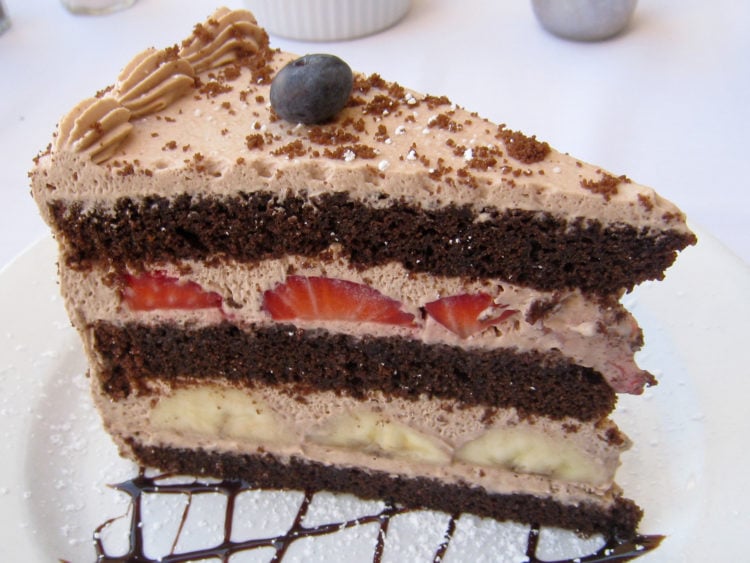
But one thing that is not covered is what Manitoba Health considers travel medicine. 

This means that any visits to a doctor for vaccinations, prescriptions or consultations are not covered.

My trip to a local travel medicine clinic marked the first time in my life I have ever paid to visit a doctor, though it is still hard to argue with a $45 charge for the first visit and $20 for each follow-up.

Through my own research, I had concluded that I would need to be covered for Hepatitis A & B, Typhoid, Polio, Rabies, and Japanese Encephalitis. 

In addition, I took the opportunity to be vaccinated against H1N1 and the seasonal flu late last year.

Prior to my visit to the travel clinic, I did talk to a walk-in clinic doctor and was not impressed by his lack of knowledge.

He also wasn't able to prescribe the Japanese Encephalitis vaccine.

This is where a travel clinic really becomes useful; not only are they knowledgeable and travel-trained, but they have all the vaccines on hand so there is no need for a trip to the pharmacist.

My goal going in was to be covered against only what I needed, with the ultimate goal of keeping costs down. I received the Twinrix vaccination for both Hepatitis A & B.

Though it does appear expensive at first, it does cover me for almost a quarter of my life and is much more cost-effective than separate shots for A and B.

I had two options for Typhoid, a shot that would cover me for 3 years, or a few pills that would cover me for 7 years.  At only $5 more, the pills were a bargain.

Perhaps the biggest advantage of using the travel clinic was that I was advised against some vaccines, allowing me to keep costs down.

The Rabies vaccine is not only expensive at $800, but not necessary unless I were planning for close contact with wild animals. 

I was also advised against the Japanese Encephalitis vaccine, as it shouldn't affect me, and the vaccine itself may be largely ineffective.

I had overlooked the need for other types of preventative medicine, but the staff at Skylark Medical Clinic made sure that I was aware of the risks for Malaria and traveler's diarrhea. 

They suggested a daily pill for Malaria prevention, but I refused in order to keep costs down.

As a result, I did get very frank advice on what to do if I develop a fever. 

Without this advice, I would have likely just stuck out any illness I contracted rather than seek help; a potentially life-saving nugget of information. 

If I do start to run a fever in Asia, I will seek medical help within 24 hours, in accordance with her advice.

In the likely event that I am hit with a bout of traveler's diarrhea, I received a double prescription of Zithromax.

Ciprofloxacin is the standard prescription but is less effective in Cambodia. I hope I never need to use it, but at least I'm covered.

All told, my vaccinations and medicine only cost me about $250, which is much less than I had expected.

Much more valuable then even the vaccines was the advice I received.

The staff knew what I needed and were familiar with the region I was visiting. 

They made sure that I was educated and had the right information. 

I can't recommend the services of a travel clinic enough to anyone planning a trip abroad.

Below is a chart of the vaccinations I received and several online resources for vaccinations.

Vaccines

Links

  • Center for Disease Control
  • Vaccinations for an around the world trip

Notes

This post does not constitute medical advice. Be sure to consult a medical expert when deciding which vaccinations and/or prescriptions you should get for your trip. All prices in this article are in Canadian Dollars.

Let's Go Backpacking in Rwanda

Welcome to Rwanda
Welcome to Rwanda

A few weeks ago, I entered a contest for travel bloggers and writers sponsored by Rwanda Tourism for a free, 6-day VIP tour of the tiny central-African country. 

Entry was simple, I tweeted their message just once. It was so simple, in fact, that after looking over the Facebook page with the contest rules, I didn't think anything of it.

Then, a few days ago, I saw that Kristin Luna announced on her blog, Camels and Chocolate, that she and Katie Hammel (new Editor at BootsnAll) won. 

I was happy for them, and buried my nose back in my laptop. And then, a few days ago, I received a tweet from Ben, who is representing Rwanda for the trip. 
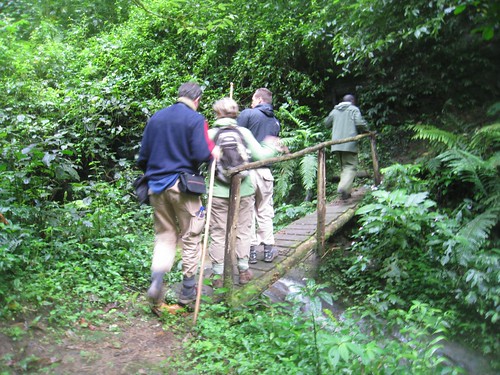
Turns out they had an opening (Katie couldn't make it after all), and it was being offered to yours truly!

I am bouncing-off-the-walls excited to announce that I've accepted the 6-day tour of Rwanda!

That's right, there is no way I could pass up the chance to see endangered mountain gorillas in the wild, track chimpanzees, and learn about the tragic genocide that occurred there all too recently.

More specifically, the tour will include:

1. Rwanda's Volcanoes National Park and Nyungwe National Park
2. The cities of Kigali (capital) and Gisenyi
3. Gorilla trekking and bird watching
4. Rwanda 's newly launched boat on Lake Kivu
5. The canopy walk in Nyungwe and the Congo-Nile trail

The organized tour with myself, Kristin, and 3 other journalists will occur from March 20-26, 2007, however I intend to allow myself a few extra days in the capital city of Kigali to hopefully enjoy a homestay with the locals, and decompress before and after my flights on Ethiopian Airlines (via Addis Ababa).

« Previous Page
Next Page »
Dave at Ahu Ko Te Riku on Rapa Nui (Easter Island), Chile.

Hi, I'm Dave

Editor in Chief

I've been writing about adventure travel on Go Backpacking since 2007. I've visited 68 countries.

Read more about Dave.

Footer

back to top

About

  • About
  • Archive
  • Privacy Policy
  • Cookie Policy

Follow Us

Contact

  • Contact
  • Work With Us
  • Submissions

Copyright © 2025 Go Backpacking