Go Backpacking

  • About
  • Travel Tips
    • Accommodations
    • Budgeting & Money
    • Adventure Travel
    • Food & Drink
    • Gear & Gadgets
    • Packing Tips
    • Travel Blogging
    • Travel Insurance
    • Trip Planning
    • UNESCO Sites
  • Destinations
    • Africa
      • Botswana
      • Egypt
      • Ethiopia
      • Morocco
      • Rwanda
      • South Africa
      • Tanzania
    • Asia
      • Cambodia
      • China
      • Hong Kong
      • India
      • Indonesia
      • Japan
      • Laos
      • Malaysia
      • Nepal
      • Philippines
      • Thailand
      • United Arab Emirates
      • Vietnam
    • Europe
      • England
      • France
      • Germany
      • Greece
      • Iceland
      • Ireland
      • Italy
      • Portugal
      • Spain
      • Switzerland
      • Turkey
    • North America
      • Canada
      • Costa Rica
      • Cuba
      • Guatemala
      • Mexico
      • Nicaragua
      • Panama
      • United States
    • Oceania
      • Australia
      • French Polynesia
      • New Zealand
    • South America
      • Argentina
      • Bolivia
      • Brazil
      • Chile
      • Colombia
      • Ecuador
      • Peru
  • Advertise
menu icon
go to homepage
  • About
  • Travel Tips
    • Accommodations
    • Budgeting & Money
    • Adventure Travel
    • Food & Drink
    • Gear & Gadgets
    • Packing Tips
    • Travel Blogging
    • Travel Insurance
    • Trip Planning
    • UNESCO Sites
  • Destinations
    • Africa
      • Botswana
      • Egypt
      • Ethiopia
      • Morocco
      • Rwanda
      • South Africa
      • Tanzania
    • Asia
      • Cambodia
      • China
      • Hong Kong
      • India
      • Indonesia
      • Japan
      • Laos
      • Malaysia
      • Nepal
      • Philippines
      • Thailand
      • United Arab Emirates
      • Vietnam
    • Europe
      • England
      • France
      • Germany
      • Greece
      • Iceland
      • Ireland
      • Italy
      • Portugal
      • Spain
      • Switzerland
      • Turkey
    • North America
      • Canada
      • Costa Rica
      • Cuba
      • Guatemala
      • Mexico
      • Nicaragua
      • Panama
      • United States
    • Oceania
      • Australia
      • French Polynesia
      • New Zealand
    • South America
      • Argentina
      • Bolivia
      • Brazil
      • Chile
      • Colombia
      • Ecuador
      • Peru
  • Advertise
search icon
Homepage link
  • About
  • Travel Tips
    • Accommodations
    • Budgeting & Money
    • Adventure Travel
    • Food & Drink
    • Gear & Gadgets
    • Packing Tips
    • Travel Blogging
    • Travel Insurance
    • Trip Planning
    • UNESCO Sites
  • Destinations
    • Africa
      • Botswana
      • Egypt
      • Ethiopia
      • Morocco
      • Rwanda
      • South Africa
      • Tanzania
    • Asia
      • Cambodia
      • China
      • Hong Kong
      • India
      • Indonesia
      • Japan
      • Laos
      • Malaysia
      • Nepal
      • Philippines
      • Thailand
      • United Arab Emirates
      • Vietnam
    • Europe
      • England
      • France
      • Germany
      • Greece
      • Iceland
      • Ireland
      • Italy
      • Portugal
      • Spain
      • Switzerland
      • Turkey
    • North America
      • Canada
      • Costa Rica
      • Cuba
      • Guatemala
      • Mexico
      • Nicaragua
      • Panama
      • United States
    • Oceania
      • Australia
      • French Polynesia
      • New Zealand
    • South America
      • Argentina
      • Bolivia
      • Brazil
      • Chile
      • Colombia
      • Ecuador
      • Peru
  • Advertise
×
Home

Lunch in Beverly Hills (with The Governator)

Rodeo Drive
Rodeo Drive

On the third day of my Los Angeles trip, Steph and I descended on Beverly Hills. 

She had warned me in advance that Rodeo Drive was only a few blocks long, and sure enough, it all seemed less grandiose in person than what I'd conjured up in my mind over a lifetime of watching it depicted on TV and in the movies.

Posing on Rodeo Drive in Beverly Hills
Posing on Rodeo Drive

We parked the car and walked along the palm-lined streets; however, there's little to do if you're not there to go shopping. 

And in terms of shopping, the streets were lined with luxury brand boutiques.

One funny moment occurred when one of LA's garish, red double-decker tourist bus came roaring down the street, interrupting the otherwise peaceful, low-key neighborhood.

The Grill on the Alley

We ate lunch at the Grill on the Alley, which is known as the entertainment industry's restaurant of choice for power lunches. 

The entrance faces into an alley, albeit a clean one as we are in Beverly Hills, after all. We got there early; however, there were no stars to be seen. 

In an attempt to make up for my early-in-the-trip indulgences, I ordered a $20 Caesar salad with chicken. The portion size was obscene (i.e. gigantic), and I only managed to finish half of it.

As we went to exit the restaurant, in walks Bill Rancic, the first winner of The Apprentice. 

I recognized him immediately but wasn't starstruck enough to stop him from using the restroom. 

Besides, as in New York City, you're not supposed to care when you see a celebrity walking around.

Barney Greengrass mosaic

To give ourselves another shot at spotting a significant celebrity, we walked through Barney's New York and made our way to the rooftop restaurant, Barney Greengrass.

Upon walking up to the host's desk, I looked to my left and immediately noticed The Governator, Arnold Schwarzenegger, sitting at a corner table, facing out over the entire restaurant. He had a dark tan and a commanding presence. 

View from Barney Greengrass

We decided to wait for a table on the outdoor terrace, so Steph used the free time to introduce one of the Governor's security guards to Foursquare. 

Meanwhile, I continued to casually peer at him from across the room.

When our table was ready outside, we got a sweet corner spot in the shade, which allowed me to stargaze a little longer through the window. 

Strawberry banana creme chocolate cake

I ordered a glass of white wine, which seemed apropos for the environment, and a giant slice of "strawberry banana cream chocolate cake" that didn't quite live up to my expectations.

As with Grill on the Alley, I was surprised by the reasonable prices at the restaurant, given the location and stargazing potential. 

The fish options are a popular main course, and they only ran about $20. My slice of cake was $7.50.

Another Paese


Paese Wine
Paese Wine

Local cuisine is a perk for any traveler. Whether it was Ceviche in Ecuador, Dolma in Turkey, or Pizza in Italy, pure authenticity made each of my meal experiences that much more enjoyable, and, of course, delicious. When traveling more locally, however, these kinds of dishes are harder to come by.

North of Mexico, most areas have created their own foodie specialties from a medley of European, African, South American, and/or Asian influences.

In the United States, it is sometimes done right, like in New England Clam Chowder or Cajun Shrimp Gumbo, and other times, very wrong, as in most Tex-Mex cooking (please excuse my bias, I just know true Mexican food too well). 

Thankfully, there is also a wealth of global and fusion cuisines across both the U.S. and Canada. I discovered a certain Ontarian gem, for example, on my last visit to Toronto.

Upon entering Paese, my friend and I were treated to two exquisite glasses of wine. Although we did not know it at the time, each bottle had been chosen by their staff sommelier.

Before long, we were generously offered a taste of one of their not-yet-on-the-bar-menu appetizers, it was both familiar yet innovative, and then served a spectacular pizza.

I can say from experience that it is the lightest, and thus best, I've had outside of the Italian border.

And finally, as a thank you to our excellent hosts, my friend and I ordered a chocolate torta and were, once again, blown away by its delectability. (Read more about my serendipitous experience here.)

Of course, I must also comment on the atmosphere, which is as sophisticated and inviting as the food itself.

The main dining room and bar are modernly accented with whites and blacks. These monochromatic colors look especially beautiful against the natural wood tones of the floors and furniture.

Another interior aspect is the walls which are made up of gorgeous yet bare exposed brick that is playfully decorated with warm lights.

Paese Interiors
Paese Interiors

And finally, perhaps the most pleasant surprise of all is the Paese staff.

All were so genuinely good-intentioned and talented. During my visit, I was lucky enough to meet both the owner, Tony Loschiavo, and executive chef, Christopher Palik, along with various others, who were eager to share their creative origins, "Inspired by Italy, Made in Canada," and culinary values: whole, quality ingredients and fresh, sumptuous meals.

Paese executive chef

What is Toronto's specialty? I probably still could not tell you. What I can tell you, on the other hand, is this: if you are ever in the Toronto-area and looking for that special "kitchen away from home," Paese is most definitely, it. Enjoy.

Paese Ristorante
333 King Street West
Toronto, ON
416.599.6585

Friday Flashback: Elephants & Camping in Botswana

After two months of traveling in South Africa, from Cape Town to Kruger Park, I still wasn't ready to leave the region. South Africa is the most developed country on the continent, but it is not the best representation of it.

Ice cream truck in Maun.

Before heading to Egypt, I booked a week-long Okavango Delta safari in Botswana. It required a lot of driving, but it was worth it once we glided through the Delta waters in our mokoros and went on game walks looking for wildlife.

  • Day 1 - Botswana or Bust
  • Day 2 - Reaching Maun
  • Day 3 - Mokoro Rides, A Sunset Game Walk, And Delta Camping
  • Day 4 - The Okavango Delta From Sunrise to Sunset
  • Day 5 - Departing the Delta and My Scenic Flight
  • Day 6 - Elephant Encounters at Elephant Sands

Should I Gamble on Spirit Airlines?

Now that I've shared the big news that I'm heading back to Colombia at the end of June, it's time to book the airfare.

I looked around on individual carriers' sites, and again, found Kayak delivered reliable results.

For a 1-way ticket from New York City to Cartagena, it costs (tax included):

  • $235 on Spirit Airlines (if I want to depart at 6:40 am)
  • $267 on Spirit Airlines (if I want to depart in the evening, and spend a night in Fort Lauderdale airport)
  • $472 on Delta Airlines (if I want to leave at 8 am)

As you can see, the difference between Spirit Air and Delta is $200+.  The choice would seem obvious, even with the $30 international checked baggage fee I'd pay with Spirit Airlines, right?

But there's a twist.

There is a contract dispute happening right now with the Spirit Air pilots, and if it's not resolved by June 12, they're going on strike, which would leave me in limbo (camped out on my brother's couch, to be specific). The news clips indicate the airline hopes to resolve the dispute before June 12, but of course they'd say that so as not to affect ticket sales.

So this is where you, dear readers, enter the picture.

[poll id="56"]

Mokoro Rides in the Okavango Delta

Botswana's Okavango Delta is the world's largest inland delta. 

Traditional wooden canoes, called mokoros, are used as a means to travel from the mainland to the various islands within the Delta. 

They can hold 3-4 people apiece. And unless you want to go for a swim, it's best not to move around much while you're on the water.

During my 3-day camping trip in the Delta, I had the chance to play around with one. 

Pushing the mokoros by pole, and steering them through narrow, weed-free paths is not an easy task. 

Luckily, we had local guides to help, allowing us to sit back, relax, and enjoy the scenery.

Entering the Okavango Delta by mokoro (traditional canoe).

To avoid prolonged exposure to the intense sun, some visitors use umbrellas.

Wooden mokoros "docked" near our campsite.

Shuttling to another island in the pre-dawn light.

Enjoying the quiet tranquility of the Delta.

Mokoros are pushed through the shallow water using long poles.

Steering mokoros through thick weeds isn't always an easy affair.

Hoping to spot hippos from our mokoros as the sun sets over the Delta.

The Home of Former President Habyarimana

Wreckage from the President's plane can be seen on the other side of the wall.

On the morning of my last day in Rwanda, I visited the old home of former President Juvenal Hayarimana.  When his plane was shot down over the compound in 1994, killing him and the president of Burundi, it was the spark needed to usher in the genocide.

It was both eery and interesting to walk through a former president's home, especially one who had been assassinated so recently. Photos were not allowed.

While the walls were bare, there were still quite a few large pieces of furniture, including the master bedroom set.  When I walked into the master bathroom, it was spacious with a large jacuzzi tub in one corner, and a toilet on an elevated platform.  Because it was elevated, the toilet had the aire of a throne.  Naturally, I assumed it belonged to the president, however the guide said the space was actually for the first lady, and that the narrow, closet-sized space which adjoined it was for the President.  I'm not kidding, it was just wide enough to fit a toilet on one end and a standard shower/bath on the other, with a sink in the middle!
After touring the interior of the home, we walked out back through the gardens, which included an empty pool, and a tennis court.  I'd heard it was possible to see actual wreckage from the plane, and while again I could not take photos, I was able to see it in person from a small guard tower situated atop one of the compound's walls.

The tour cost no more than a few dollars, and I'd highly recommend it if you have a few hours to spare in Kigali.

The Road to Halabja Part VI - Should I Stay or Should I Go?

This is the next guest post in a series by Kevin Post. If you want to guest post on Go Backpacking, please read more here.

I went back to what I called the “compound” incredibly stressed about my situation: I couldn’t leave or stay in Iraq.

I was so incredibly hungry, but I wanted to prove to my gracious hosts that I was independent and low-maintenance.

Whenever they asked me if I needed anything, I said to them rather embarrassingly, as if I were hiding something dear to them, that I was fine. The last thing I wanted to do was be an inconvenience to my hosts.

I walked into the living room and watched Al-Jazeera with a group of engineers whom had disgusted looks on their faces because of the horrific incident that took place in Austria.

At first I didn’t understand the Arabic, but the images spoke clearer than words as the pictures explained that a father kept his daughter as a prisoner in the basement, raped, and raised six of her incest children.

I don’t need to go into detail because I believe that all of us remember where we were that day when we heard that disturbing story.

Within a few minutes the topic changed from disturbing news to politics because of the opportunity to speak with the American in the room.

We discussed Sunni-Shi’a tensions, Arab-Kurdish tensions, U.S.-Iraqi tensions, why the U.S. supports Zionism and so on.

This is the first time I have ever had a political discussion with Turks, Kurds, and Iraqi-Arabs all in the same room and it was rather passionate to say the least.

I learned more in that 30-minute conversation than I ever learned inside of a classroom back home. I should have written a thesis.

An Arab civil engineer who participated with the political discussions seemed impressed by my points of view and invited me to his home in Baghdad, which was so tempting that to this day I ask myself if I made the right decision by not going with him.

Traveling to Baghdad by invitation would have been significant but I painfully declined.

He traveled back and forth from Arbil to Baghdad only once a week, and I only had a 10-day visa.

Even if I extended the visa, Baghdad was extremely dangerous for me considering I didn’t have permission to be there, no one back home would have known I was there, and my travel insurance wouldn’t have covered me if something happened.

Out of all the reasons not to go, the primary reason for not venturing into a hot zone was my fear of encountering my country’s military; to be completely honest, it is what I feared the most.

I had recurring thoughts of interrogation and weeks being detained without the ability to communicate with my parents.

Besides all of the reasons above, what could I have done while in Baghdad?

Spend the entire week indoors because of the dangers presented outside?

The man who most interested me was Mahmed, not only because he owned the engineering firm, had interesting political viewpoints and spoke fluent Arabic, Kurdish, Turkish and English, but because he was incredibly kind to me and seemed to know exactly how I felt just by looking at me.

He asked me if I wasokay, as if he knew something was bothering me, so I decided to be honest with him.

I paraphrased everything that the Turkish employee had told me about Iraqi-Kurdistan and told him that I hadn’t eaten very well in several days.

Everyone in the room laughed enthusiastically. ” Why would you listen to a crazy old man like Faruk!?”

They said as the laughs grew in volume. "He’s paranoid! Why didn’t you tell us you haven’t eaten?”
In an instant I felt my stress evaporate. I still didn’t have a penny on me, but I knew that the universe was going to help me achieve what I came to achieve in this part of the world.

TO BE CONTINUED...

Series: The Road to Halabja

  • Part I - Border Crossing
  • Part II - No Turning Back
  • Part III - Arbil Awaits
  • Part IV - A Bad Time to Arrive
  • Part V - Penniless in Iraq
  • Part VI - Should I Stay or Should I Go
  • Part VII - A True Muslim
  • Part VIII - Iraqi Road Trip
  • Part IX - Iraqi Hitchhikers & A Life of Prayers
  • Part X - Kurdish Farewell
  • Part XI - Smuggler's & Turkey's Loving Embrace

Glimpses of Hollywood, Santa Monica, & Malibu

Sunset Boulevard
Sunset Boulevard

My first full day in Los Angeles began with a ride down Sunset Boulevard. 

I didn't have a burning desire to walk on the Hollywood Walk of Fame before getting to LA, but it was a beautiful day and as good a reason as any to get out of the car and enjoy it.

Stef and I exited an underground parking garage via an escalator, leading us right past an entrance to the Kodak Theatre, where the Academy Awards are held each year. 

Our first view upon walking out of the building was that of Jimmy Kimmel's studio.

Goofing around with Charlie Chaplin and Nacho Libre

Street performers were dressed up as a variety of famous movie and comic characters, and Stef insisted on a photo. I tipped Chaplin and Libre a buck each for their efforts. 

At the time, I resisted having my photo taken like an embarrassed kid with his parents, but now that I'm back on the East Coast, it serves as the perfect reminder of Hollyweird.

Tom Hanks
Tom Hanks on the Hollywood Walk of Fame

Under a bright warm sun, we walked around Grauman's Chinese Theater, looking at the various foot and handprints of the stars on the sidewalk.

My hand was a perfect match with Tom Hanks.

A half-block away was the historic Hollywood Roosevelt Hotel, which we took a quick walk through before grabbing coffee in their small bar, 25 Degrees.

Hollywood Hills as seen from Mulholland Drive

Back in the car, we cruised up to Mulholland Drive, which I'll always associate with the David Lynch movie by the same name, though I've never managed to watch the whole thing. 

A small parking area associated with a scenic outlook was packed with tour vans.

We walked up a few stairs, and then down along a dirt trail on the ridge. 

To the right, downtown LA, and the left, my first view of the Hollywood sign. 

That simple white sign on a green hill symbolized not only LA and California but the entire entertainment industry. 

I imagine the sign has served as inspiration for countless struggling actors, models, musicians, and comics who come to LA to make it big.

A lot of the places we visited in the Los Angeles area seemed smaller in person than I'd made them out to be in my mind after a lifetime of television and movie consumption. 

The Hollywood sign was the exception.

See also: Reliving Swingers at The Dresden

Santa Monica Pier
The colorful Santa Monica Pier

Despite the sunshine, when we drove down to Santa Monica in the afternoon, it was downright chilly due to the wind. 

The beaches were bare, save for a few runners. 

The amusement park rides on the Santa Monica pier were closed due to the weather, and any hot lifeguards must have been off duty as well.

Barcelona, Arcachon Bay in France, and now Santa Monica -- I've developed a real knack for visiting famous beaches when they're too cold to be fully appreciated.

After getting our fortunes told by Zoltan on the pier, we sought shelter in the luxurious Casa del Mar hotel lounge. 

Large windows allowed us to continue enjoying the beach views in comfort, and we were soon joined by Maja, who does PR for Swiss Tourism.

Taverna Tony in Malibu

In the early evening, the three of us motored up the Pacific Coast Highway to meet up with Kristin Luna and Steph's husband for a Greek dinner at Taverna Tony in Malibu. 

We sat outside on a vine and flower-covered patio, but despite being situated near the entrance, no celebs were hanging out that night.

But that was fine because back in Hollywood, I'd experienced my first West Coast celebrity sighting -- the beautiful Jessica Biel.

Why I'm Moving Back to Medellin

Medellin, Colombia
Medellin, Colombia

In a clear sign the American economy is improving, my parents found a buyer for their house. 

It is a moment I've been contemplating since before I'd left for my trip around the world in late 2007.

What would I do if the option of living with them was suddenly off the table?

As much as they wanted to see me get another office job, I stubbornly stuck to a very narrow set of criteria (editorial work for travel websites, based in NYC or Washington, DC). 

After five and a half years of planning my great escape from the corporate world, and another 20 months of traveling and living abroad, the prospect of going back to cubicles, three weeks of vacation per year, office politics, and waking up before 9 am seems ludicrous.

If you're thinking "just grow up and get a job," I understand. 

I've been living an unconventional life for several years, and it'd be natural to suggest it's just a phase or needs to come to a tidy conclusion. 

But, this is where my stubbornness (or naivete) comes into play.

I believe I've reached the tipping point where I can support myself through a personal passion -- travel blogging. 

The only caveat is that I'm not yet able to do so while living in a major US city such as NYC or DC. 

And maybe that's a good thing, as it gives me the perfect opportunity to return to Colombia for the remainder of 2010.

The change in scenery will be bittersweet.

As much as I didn't want to leave Medellin behind last year, I've since settled into daily routines, developed a yoga practice, made new friends, caught up with old ones, and been able to go on dates without an English-Spanish dictionary. 

I will especially miss going out every weekend to my favorite club, The Salsa Room.

After the TBEX (travel blogger) conference from June 26-27 in New York City, I'll board a flight to Cartagena. 

For the first few weeks of July, I'll be soaking up the sun on the tropical beaches of Colombia's Caribbean coast. 

Then, I'll head back to the mountains of Medellin to further grow Go Backpacking, Medellin Living, and Travel Blog Success.

____________

Medellin Travel GuideMy 138-page, all-original Medellín Travel Guide is now available for Kindle and PDF.


.

Friday Flashback - Kruger Park Safari

Young male lions
Young male lions

After spending some time in the mountains, I finally made it to Johannesburg, where I promptly booked a tour to Kruger Park for early the next morning.

Once we got in the swing of going on game drives every day, I was having so much fun I extended my trip by an extra day for something silly like an extra $60.

  • How to Spend Less Than 24 Hours In Johannesburg
  • Day 1 - The Long Way to Timbavati Safari Lodge
  • Day 2 - Game Drives in Kruger Park (lots of Lion shots and a Hippo yawning)
  • Day 3 - More Animals and a Night Drive (Chameleon and injured Buffalo)
  • Day 4 - Searching for Lions, Rhinos, and Leopards (my only glimpse of a Black Rhino)
  • Day 5 - Close Encounters of the Buffalo Kind (facing off on foot with an unpredictable bachelor Cape Buffalo)

DCTravel Happy Hour Meets GAP Adventures

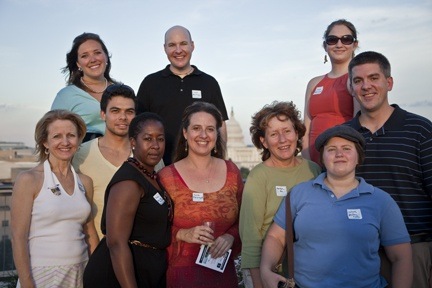
Clockwise from bottom left: Carolyn, Bruce, Dave, Stephanie, and Sebastien

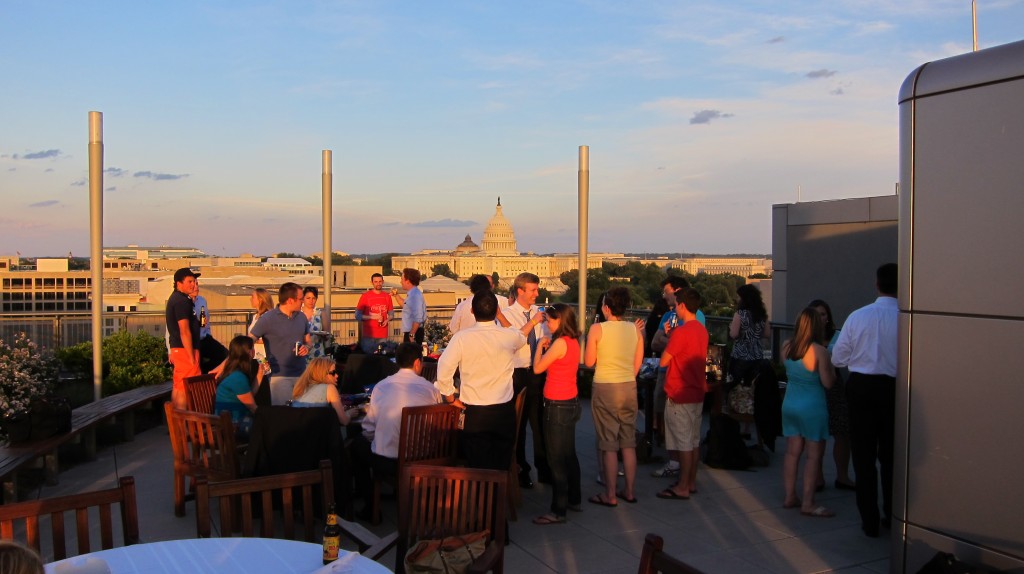
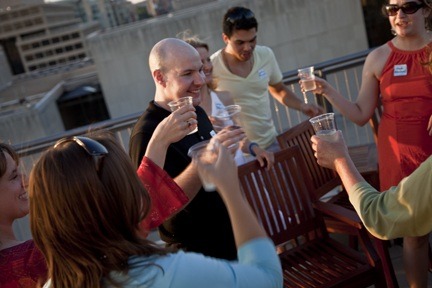
May 10, 2010 marked the 6-month anniversary of the DCtravel happy hours which continue to bring together dozens of travelers, bloggers, tweeters, and curious Washington, DC-area residents.

This past Monday's event was held once again at The Big Hunt in Dupont Circle. 

We camped out on the rooftop deck, enjoying a few beers.  As usual, conversation revolved around travel, blogging, and social media.

I speak for everyone when I saw we were excited to have Bruce Poon Tip, founder of GAP Adventures, join us this time. 

As Carolyn later said, he was very generous with his time. 

And, I'd like to add very down to Earth and sincere, which is exactly the impression he gives us on Twitter every day.

Attendees

  • Dave - @rtwdave -- https://gobackpacking.com
  • Stephanie 
  • Bruce Poon Tip - @brucepoontip -- https://www.gadventures.com
  • Carolyn - @dogmeetsworld -- http://www.dogmeetsworld.org
  • Sebastien - @traveladdict 
  • Hunter - @McIntoshTBC -- http://www.theboatcompany.com
  • Matt - @landlopers -- http://www.landlopers.com
  • Daphra 

And once again a special thanks to Melanie @sisarina for the Twitter name tags we continue to enjoy.

Welcome to Hotel Rwanda

In 1994, during the 3-month campaign of genocide in Rwanda, tens of thousands of people sought refuge in churches and hotels around the country.  In the capital city of Kigali, up to a thousand of those people were at the Hotel Des Mille Collines.

The story of the hotel, and the manager at that time, Paul Rusesabagina, formed the basis for the popular movie "Hotel Rwanda" starring Don Cheadle.

Hotel Des Mille Collines (Hotel of a Thousand Hills)

The hotel lobby.
The hotel lobby.

Inside one of the guest rooms.

The poolside dining area. Kristin Luna and William, our driver, are sitting to the left.

Avocados are a popular starter (appetizer) in Rwanda.

Post-lunch tweeting on my BlackBerry Curve.

The Rwandan Franc features images of the endangered mountain gorilla.

The outdoor bar is a popular happy hour spot for tourists and expats in Kigali.

Katsuya: Los Angeles Sushi To Remember

The infamous crispy rice with spicy tuna.

Before traveling to Los Angeles, I hit up Twitter for recommendations of what to see, do, and eat. 

I received a variety of responses, including several mentions of the crispy rice with spicy tuna. 

In particular, Abby Tegnelia (aka The Jungle Princess) was emphatic that this sushi dish was best enjoyed at Katsuya.

With a 6:20 pm arrival at LAX, I was in the perfect position to make the trendy sushi restaurant my first stop in town.

Creamy rock shrimp
Creamy rock shrimp

Stefanie (aka Adventure Girl) and I rolled up to the Brentwood location around 8 pm. 

While we waited a moment for the hostess to seat us, a Bentley pulled up to the valet. 

I couldn't help but notice there was already one Bentley parked at the curb.  Clearly, we weren't in Virginia anymore.

We were seated at a counter that wrapped around a cooking station in the middle of the restaurant. 

Normally, I wouldn't hesitate to take a photo of the interior, at least on the way out, however, the place was packed and I was suddenly feeling image-conscious. 

I could barely take photos of the food knowing the two women nearest to us smirked at one point. 

Luckily, Stef wasn't one to be embarrassed by my foodie flash photography.

The colorful rainbow roll.

We ordered a bottle of hot sake and crispy rice and spicy tuna, of course. 

The rice had been packed together and then fried until golden brown on the exterior. 

The cool minced tuna sat atop the warm crispy rice, topped with a slice of jalapeno. 

I'd never had sushi quite like it, though one sumptuous bite was enough for me to understand why it'd become so popular in southern California.

Next, Stef ordered the creamy rock shrimp. There's nothing not to like about shrimp doused in seasoned cream.

Our third dish was the rainbow roll, which included pieces of tuna, salmon, shrimp and some kind of white fish. 

Again, it was delicious.  Beyond being beautifully presented, it simply tasted a cut above similar rolls I've had before.

Salmon sashimi with caviar, served on a cucumber crisp.

We continued to order each plate one by one, which allowed for ample time to catch up since our adventures in Rwanda the month before.

Already having gone over the sushi deep end, I went a step further and ordered the salmon sashimi with caviar.  

It was a challenge to pick up the cucumber slices along with the salmon, so it became a two-part process for each piece. 

And once you've gobbled up the good part, the cucumber slice seemed unnecessary.  But they did make for a nice presentation.

Hot chocolate cake with vanilla ice cream.

When it comes to the final course at Asian restaurants, I don't expect much, so it was a surprise to hear the waiter mention hot chocolate cake.

Of all the dishes, this is the one I'm glad we shared the most. 

The molten center makes this dessert a chocolate lover's dream.  You've been warned.

_____________

Katsuya has locations in Brentwood, Glendale, Hollywood, and downtown Los Angeles.  To save a few bucks, check out their happy hour specials.

The Road to Halabja Part V - Penniless in Iraq

This is the next guest post in a series by Kevin Post. If you want to guest post on Go Backpacking, please read more here.

I ran out of money and hadn’t eaten regularly the past few days, and when I did eat, it was very little in 24 hour intervals.

Due to the excitement of traveling to a very foreign destination, I didn’t feel hungry, but I did feel that my body lacked proteins, sugars, carbohydrates, and electrolytes, and it goes without saying that I didn’t have a lot of energy or relief from occasional headaches.

Sometimes when I get excited I completely forget about ‘what-ifs’. In Southeastern Turkey I was having such a phenomenal experience and spent very little money; therefore it didn’t occur to me that I should have withdrawn money before crossing the boarder into Iraq.

I was in the house alone with a Turkish engineer while I used the computer to send some e-mails to my friends back in Turkey. According to the Turkish engineer, it was too dangerous for me to leave the house so I spent the entire day in the house hungry and uneventfully wasting time on Couchsurfing and sending e-mails.

The following morning I was incredibly hungry and decided that Iraq wasn’t a safe place for me to be.

I gave the Turk my Colombian poncho as a gift though I’m not sure why, and excused myself to take a shower. I took my time in the shower because there is noting better than a nice cold shower in a hot, arid climate.

When I got out of the shower I was greeted by several of the Turk’s co-workers, all of whom were Kurds.

They seemed happy to meet me and excited to see an American visiting their homeland. A Kurd that I particularly got along with was Ahmed, who I later found out was the owner of the engineering firm.

I asked them if there was an ATM nearby, and they looked at me as if I were crazy for asking such a question.

Ahmed was nice enough to have his chauffeur take me to the nearest ATM.

None of the ATMs worked, but I enjoyed seeing the majority of the city with my own private driver. I was in Iraq with no money, at a very frightening time with full-on war just kilometers away.

I had to somehow get to the Turkish boarder without a single penny in my pocket.

TO BE CONTINUED...

Series: The Road to Halabja

  • Part I - Border Crossing
  • Part II - No Turning Back
  • Part III - Arbil Awaits
  • Part IV - A Bad Time to Arrive
  • Part V - Penniless in Iraq
  • Part VI - Should I Stay or Should I Go
  • Part VII - A True Muslim
  • Part VIII - Iraqi Road Trip
  • Part IX - Iraqi Hitchhikers & A Life of Prayers
  • Part X - Kurdish Farewell
  • Part XI - Smuggler's & Turkey's Loving Embrace

My Inaugural Flight on Virgin America

The dim purple and blue cabin lights are easy on the eyes.

On the recommendation of my friend Stefanie, and as the result of a nice sale, I took my inaugural flight on Virgin America. 

For $280, taxes included, I flew round trip from Dulles, VA to Los Angeles, CA.

Purchasing the ticket and picking my seats online was a breeze. 

I signed up for e-mail and text alerts in case there were any delays, and even handled the check-in over the internet the morning of my flights. 

Being able to print out my boarding pass from home meant that I could save time (and one potential line) at the airport by heading straight to security.  It worked like a charm in both directions.

Animated safety presentation.

My last series of flights was on Ethiopian Airlines, and it was often disorganized when it came time to board the planes. 

There was no such problem with Virgin America -- I cannot recall a more orderly boarding process. 

As an aside, apparently Stevie Wonder walked off the plane I boarded in Dulles, but I missed him despite sitting very close to the walkway.

Upon boarding the plane, my eyes were treated to a cabin dimly lit with purple and blue lights. 

It was a refreshing change from the harsh fluorescent lights that are standard on most carriers. 

I took my window seat near the front left of the plane and started playing around with the touch screen display in front of me. 

It was much easier to use than the (typical) remote in the armrest.

As we taxied to the runway, a humorous animated video reminded us of the safety information.

The $9 tapas plate includes avocado hummus, chips, and an assortment of cheeses, fruits, and veggies.

It wasn't until I started flipping through the flight's service brochure that I remembered you don't get free food on domestic flights. 

If you can believe it, I hadn't flown a domestic route within the USA in about 5 years! 

I had become so accustomed to free meals on planes, it didn't occur to me that I should be bringing snacks on board the 5 ½ hour flight.

I used my hunger as an opportunity to try out the food ordering process, which involves picking your meal via the touch screen display and paying right there at your seat by swiping a credit card. 

It worked perfectly, and it didn't take long for my tapas plate to arrive. 

I'm not normally one to order fruits and veggies over a nice sandwich, however, the selection of cheeses and avocado hummus sounded delicious at the time.  And it was.

Track your flight's progress in real time with Google Maps.

I had a lot of fun tracking our flights' progress with the touch screen.  I also made a playlist from the wide selection of music that's available and listened to that instead of my MP3 player. 

Sidenote to Richard Branson -- be sure and add the Red Hot Chili Peppers to your library.

I also caught up with a few episodes of Bravo's Top Chef thanks to the free satellite TV service. 

Premium movies were $8 which was tempting, but too steep for a medium length flight.  Foreign flicks were $5 each.

On my flight home, with the two seats next to me empty, I splurged on Wi-Fi ($12.95 for 3+ hour flight). 

The connection was fast, though the cost was again higher than I would pay on an ongoing basis.  If I had work to do, or the flight was longer, I might consider paying for it again. 

The Wi-Fi is available through Gogo Inflight Internet, which offers a monthly rate as well.

The American flag on the Virgin wingtip is a nice touch.

And last, but not least, the service from the actual humans still involved in the experience was wonderful. 

The self-service approach to ordering food on the flight meant that the aisles were clear most of the time, and it was easy to visit the bathrooms (which were clean and smelled pleasant...I think there was even music playing back there).

Overall, Virgin America feels like a more contemporary airline than any other I've flown. 

I'm already looking forward to my next chance to fly with them.

Portugal's Peneda-Geres National Park

More than 400 miles north of the sun-drenched beaches of Portugal's Algarve region stands one of the world's few temperate rainforests and Portugal's only national park: the darkly beautiful Peneda-Geres.

The park, part of Portugal's Minho region, curls around a large section of the border with Spain. Its peaks and valleys are drowned in thick woods and slashed by the icy violence of white water rivers.

A bridge in Peneda-Geres National Park in Portugal.
A bridge in the Peneda-Geres

Humankind has made only shallow forays into this wild and extreme landscape, though there's no shortage of aorta-bursting, pants-wetting roads.

Peneda-Geres extracts a physical toll from those who seek its wonders. And it hates cars with a passion.

Last June, my wife Sarah and I spent three weeks traveling Portugal from tip to tail.

I remember our time in the Peneda-Geres National Park as sparkling moments: ragged shreds of clouds drifting past our hilltop pousada...drizzle rolling off leaves into engorged streamlets-the view of Albufeira da Canicada's calm waters from the precariously perched patio.

Scenic view
Scenic view

You get the feeling that Portuguese civil engineers looked at this vast wilderness and sheepishly declared it'd make a great green space.

Nevertheless, there are roads, and you'd be doing yourself a disservice if you didn't make at least a cursory tour.

The joy I felt upon surviving the near-vertical ascents and winding switchbacks is truly indescribable.

We felt joy and sweat, expecting the sound of a shorn driveshaft or the shrieking of tortured engine belts.

And yet, the wind at the crest of each hill and peak always greeted our shaken selves, and the beauty of verdant vistas falling away through clouds proceeded to surprise us a little more.

The park harbors countless viewpoints like the Miradouro Velho (altitude 824m) with its ledge that juts into space.

Here, the car was a godsend for us, though many people prefer to make the hike.

The infrastructure within the park is pleasantly minimalist; in many places, I was a spartan handrail away from plunging off the slick rocks of miradouros to an ignominious death far below.

This seemingly half-finished handiwork increased the sense of our trespassing upon nature.

We spent one wet day driving through the park to Portela do Homen, a little outpost on the Portugal-Spain border, so we could briefly set foot in Galicia.

The empty guard station at the border looked threatening, but it didn't interfere with our border-hopping. The drive was gorgeous despite the weather.

The road runs beneath a canopy of old-growth tree boughs, crosses gushing streams, and skirts the edges of cliffs hundreds of feet high.

Our maps, hiding their filthy lying selves, showed this as a straight shot from the main town of Caldas do Geres.

The road was, in reality, positively intestinal. Friends, if you're prone to motion or car sickness, take a side order of Dramamine with your breakfast.

It seemed that time, like man, struggled to penetrate this wilderness as we passed through the antiquated towns of Ermina and Fafio.

We parked the car and continued on foot to Pedra Bela, which gifted us with expansive views of the mountains in Peneda-Geres National Park.

Nearby, a rutted dirt road led us to the Arado Falls, where, after a short hike, we were assaulted by a deafening roar. Boulders lay strewn along the hillside like the ragged edges of some massive earthen wound.

The author
The author

On the way back to the car, we saw a daub of red paint that denoted one of the many trails crisscrossing the park like the lattice-work topping of some giant pie.

Campsites punctuate the trails, and with sufficient planning, you could spend days hiking around the park's 400 square miles.

After a brief stay, we headed south to Port country, away from Portugal's beguiling temperate rainforest.

Days earlier, the proprietor of our guest house in Porto gushed excitedly when I told her our plans to visit the park.

Too many visitors skip it, but it's where many Portuguese go to get away from it all.

Peneda-Geres will test your resolve and reward your perseverance: wild tranquility captured as an ember in the clouds of your memory.

_____

About the Author: You can follow Keith at Traveling Savage as he writes his way out of the office and around the world. Soon, Keith will split time between experiential travel and his wife and home in Wisconsin.

Friday Flashback - Drakensberg Mountains & Kingdom of Lesotho

Hiking in the Drakensberg Mountains

Leaving the Wild Coast, I spent a few nights in Durban to catch up on my blogging before heading onward to a lodge in the southern Drakensberg Mountains.

From there I did a day hike to see some old San rock art, and a morning hike in Lesotho, which was dampened by clouds and rain before we could reach the peak we'd set out for.

  • Durban Unseen
  • San Rock Art in the Southern Drakensberg Mountains
  • Ascending Sani Pass to the Kingdom of Lesotho

Quintessential Barcelona

Words that come to mind when I think of Barcelona:  football (soccer), the beach, tapas, wine, Picasso, partying, Gaudi, skateboarding, warm weather, and backpackers.

Tapas and wine at Quimet and Quimet.

La Sagrada Familia
La Sagrada Familia

Spanish street performer.

Sailboats in the marina.

Sculpture by Roy Lichtenstein.

A beautiful day for a photo shoot.

Winter surfing
Winter surfing

Casa Mila by Antoni Gaudi

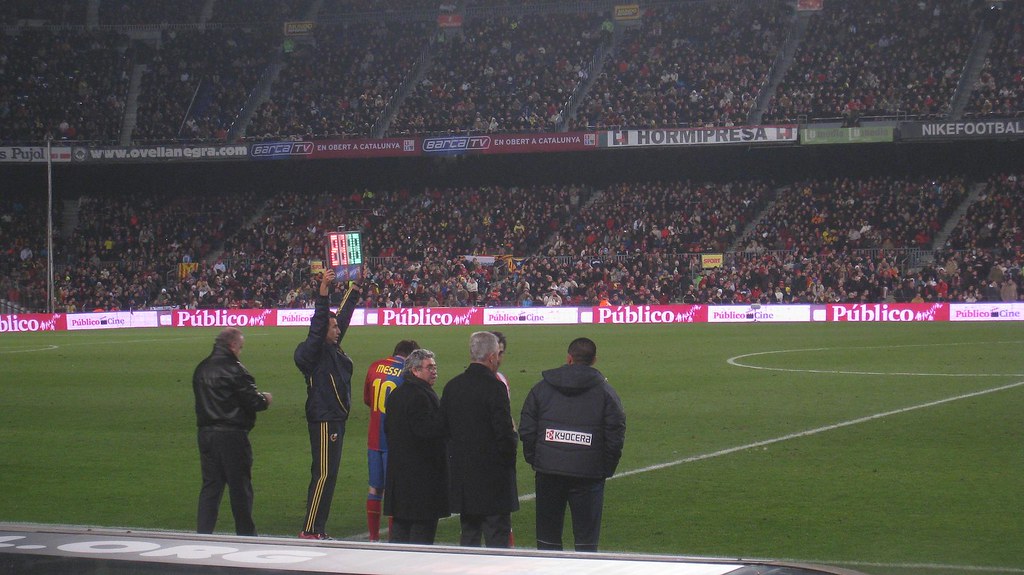
Lionel Messi prepares to enter the match for FC Barcelona.

Meat for sale at Boqueria Market on La Rambla

SteriPEN: Ultraviolet Water Purification

Way back in 1998, when I took my first backpacking trip to Europe during the peak of summer, I quickly developed a love affair with the large 1.5-liter bottles of water.

One or two of them per day was sufficient to keep me hydrated while getting lost in Rome or Paris.

And because the tap water was by and large safe to consume, I was also able to refill them.

Fast forward 10 years, and I'm visiting one of the poorest countries on the planet, Nepal, and feeling guilty within the first few hours of arriving due to the amount of crumpled plastic bottles piling up in my hotel room.

Recycling efforts cost money and remain the domain of more industrialized countries.

The alternatives, as I knew them, were steady ingestion of iodine to purify the definitely-not-fit-to-consume tap water, or filtration systems that looked too confusing to bother with.

Recently, however, I learned about another option.

A local stream
A local stream

SteriPEN is a portable water purification device that uses shortwave germicidal UV light to disinfect water. Sounds cool, right?

This type of light disrupts the DNA of microbes in water within seconds, ensuring they cannot reproduce, which saves you the hassle of getting ill.

Collecting water to purify.
Collecting water to purify

To try the device, I walked to a small stream near my home and filled a 0.5-liter bottle (16 fluid ounces) with water to zap. 

The maximum amount of water that can be treated at once using the SteriPEN Traveler, which is the model I was testing, is 1 liter (32 fluid ounces). 

The instructions indicate that the device should only be used with clear water. 

If the water is brown coming out of the faucet (as I've sometimes encountered abroad) or muddy, then it needs to be pre-filtered using a more traditional method (like a coffee filter or t-shirt) first.

The SteriPEN Traveler is about the length of a toothbrush.
The SteriPEN Traveler is about the length of a toothbrush

Once I got the water sample home, I loaded up the SteriPEN with four AA alkaline Duracell batteries. 

It's worth noting that the instructions strongly emphasize the use of Lithium or NiMH batteries, as they last longer, and can yield up to 200 one-half liter treatments.

I pressed the button on the handle once, and a red light started flashing. 

The batteries I'd put in weren't giving the device enough juice.  I switched them out for newer Duracell batteries and clicked the button again. 

This time it flashed green, which was the "go" signal to insert the device in water.

The SteriPEN at work on a ½ liter of water.
The SteriPEN at work on a ½ liter of water

I plunged the SteriPEN Traveler into the bottle of stream water and the UV lamp turned on almost immediately after the metal water sensing pins made contact. 

Next, I swirled the lamp around in the water bottle in a clockwise motion so as to ensure the water gets mixed up and is equally treated.

This step is in accordance with the instructions. 

After about 30 seconds, the lamp turned off and the LED indicator light on the handle turned green. 

This indicated the treatment was complete.

I removed the SteriPEN, dried off the lamp, and put its plastic cover back on. I took a sip of the treated water.

It tasted of soil, but that was to be expected.

You might be wondering how I know the water is safe to drink. 

At the end of the day, I know it's safe because of the science behind it, which is the same way I know dropping iodine in my water bottle while trekking in the Himalaya is safe.

If that's not enough for you, then take heart in the testing and certification the product has undergone:

SteriPEN products have been tested by the Water Quality Association (WQA) against the US EPA Microbiological Water Purifier Standard. SteriPEN has received the WQA's Gold Seal, certifying that SteriPEN purifies water safely and effectively.

Still doubtful? 

How about a long list of testimonials from people not just drinking stream water from their neighborhood, but from taking SteriPEN on expeditions to Mt. Everest and thru-hikes of the Appalachian Trail.

In the dark, the UV light glows brightly as it destroys the DNA of illness-causing microbes.
In the dark, the UV light glows brightly as it destroys the DNA of illness-causing microbes

There are 13 different ways the LED indicator light on the handle can blink, each of which signifies something different, such as battery and lamp warnings, so it may be necessary to carry the instructions with you. 

It's worth noting that battery performance may be adversely affected at temperatures below 32F/0C. 

A back-up solution (such as iodine tablets) if you are hiking or camping for extended periods of time, or in especially cold weather, would also be a good idea.

The device itself is lightweight, but the addition of four batteries does give it some heft. 

If I were to take one on an extended trip, I would choose the Traveler mini which only takes two batteries, and purifies up to 100 liters of water.

Overall, I found the SteriPEN extremely easy to use, and I look forward to taking it on my next trip abroad where I can put it to greater use. 

In the process, I'll be saving money, and reducing the amount of plastic waste I leave behind.

_____________

SteriPEN is a current sponsor of Go Backpacking, and I received a complimentary device for the purpose of writing this review.  The opinions are mine.

The Road to Halabja Part IV - A Bad Time to Arrive

This is the next guest post in a series by Kevin Post.  If you want to guest post on Go Backpacking, please read more here.

Downtown Irbil (Hawler)
Downtown Arbil (Hawler)

Upon arriving in Arbil, the dust cleared and gave way to an incredibly strong sun.

It must have been roughly 42ºC (107ºF) that Spring morning in Arbil, but it felt hotter due to the power of the sun beaming down on my black long-sleeved shirt.

I called my host from the driver’s cell phone and he seemed happy that I had arrived.

I hugged my driver goodbye, thanked him for the conversation and began walking.  It was a mere five or six blocks from were the driver dropped me off to my host’s house in the north of Arbil

After walking a few blocks, my host’s brother accompanied me to the house.

He didn’t speak a word of English, knew no Turkish and spoke a dialect of Kurdish I wasn’t familiar with called Soranî. “All of that Kurmancî Kurdish for nothing,” I thought slightly joking.

As we arrived to the front door the brother gave me the international ” I don’t have the keys” gesture.

Waiting by the front door with my host’s brother was the best Soranî Kurdish lesson I could ask for. I learned a lot about the alphabet, basic Soranî phrases and how to read the numbers.

After spending nearly a half hour in blazing midday heat practicing Soranî Kurdish, my host finally arrived.

It was strange meeting my host because on the phone he seemed happy that I arrived but meeting him in person he was expressionless as he shook my hand, as if I were causing him a great inconvenience. He let us in the house and offered me some water and left because he had to work outside of town. I greatly appreciated receiving shelter.

The house was three stories and had at least six bedrooms. It turns out that it was a house for an engineering company where they housed their workers.

I unpacked what little I had, and spoke with a Turkish engineer who lived there six months each year.

He greeted me with the friendliness that Turks are famous for, and came off as a very nice older gentleman.

However, he was about to significantly change the way I viewed the Kurdish region of Iraq for the worse.

You see, I arrived in Iraq at a bad time, as Turkey had recently invaded Northern Iraq to attack PKK (Kurdistan Workers’ Party) guerrillas fighting for an autonomous region in Turkey.

This created an atmosphere of fear throughout the region as Turkish special forces bombarded the Quandil Mountains near the boarders of Iran and Turkey.

I spent about an hour listening to him explain how horrible and dangerous Arbil and the rest of Iraqi-Kurdistan was.

He even told me that taking photos of the city could get me jailed. Foolishly, I took his advice, and as a result, I have very few photos to show of my trip to Arbil.

Just like the Turkish soldiers on the Turkish side of the border, he told me that I have a high risk of being killed.

The way he spoke, and the stories he told me, made me fear venturing further into Northeastern Iraq. Shortly afterward, things seemed to go from bad to worse.

TO BE CONTINUED...

Series: The Road to Halabja

  • Part I - Border Crossing
  • Part II - No Turning Back
  • Part III - Arbil Awaits
  • Part IV - A Bad Time to Arrive
  • Part V - Penniless in Iraq
  • Part VI - Should I Stay or Should I Go
  • Part VII - A True Muslim
  • Part VIII - Iraqi Road Trip
  • Part IX - Iraqi Hitchhikers & A Life of Prayers
  • Part X - Kurdish Farewell
  • Part XI - Smuggler's & Turkey's Loving Embrace

Eating Cobra in Vietnam, Bourdain Style

Check out this video to see Brock (from Backpack With Brock) slurp a beating cobra heart and then proceed to eat other delicious bits and pieces of the snake (including penis wine--I kid you not).

I had bet him $50 to do this while in Vietnam to make up for missing the experience myself. 

I got the idea after seeing Anthony Bourdain do it on his old Food Network TV show and book, A Cook's Tour.

The only question is.....whether Brock can get through the whole meal without losing his lunch!

Tracking the Elusive Chimpanzees of Nyungwe

Starting point for our hike in Nyungwe Forest

A few years ago, during my visit to the temples of Tikal in eastern Guatemala, a Brit with whom I was sharing a room convinced me to wake up before daybreak to catch the sunrise from atop Temple IV.  Earlier that day, it had been cloudy, and there was no reason to believe the sky would clear up on account of us.

Despite my preference for sleep, I woke up around four in the morning, and hiked in the darkness with a small group of backpackers.  We ascended the old, rickety wooden staircase and took a seat on a stone platform facing East.  We talked travel to pass the time, and as the jungle slowly awoke with the sounds of tropical birds and howler monkeys, the sky lightened to reveal a blanket of grey cloud cover .

Any small hope of a spectacular sunrise that morning was dashed, but that's not why I'd agreed to join them.  I'd woken up early to share a unique experience with my fellow travelers.  Whether we saw the sun rise up from the Guatemalan jungle as the ancient Mayans would've seen it mattered not.

William poses with his walking stick, while Eric (left) and Ben (right) chat.

So when we were up before dawn, and hiking through Rwanda's Nyungwe Forest at an elevation high enough to have our hearts pounding, without a chimpanzee in sight, I didn't mind.  We did a fairly good job of sticking to the scheduled departure time, and we hit the trail with enthusiasm.  It just so happened, after 30 minutes, that when our tracker went ahead to scout for them, they were deep in the jungle, off the well maintained, if slippery, trail.

Crossing a little wooden bridge.

We pressed on, socks pulled over our pants to protect against the legions of red (fire) ants patrolling the jungle floor.

Orchid
Orchid

Instead of focusing on what I wasn't going to see (the chimps), I began to appreciate our surroundings for what they could offer: orchids, waterfalls, butterflies, a well-camouflaged frog, and steep inclines that ensured I was working off all the desserts I'd been eating.

A frog, unfortunately, was the closest thing we saw to a chimpanzee!
A frog, unfortunately, was the closest thing we saw to a chimpanzee

Chimpanzees, unlike other primates, are always on the move.  This was in stark contrast to the mountain gorilla group we visited, which was chilling on the forest floor and in low-lying limbs for the full hour we were in their presence.  No, it turns out chimps keep moving, which necessitates the "tracking" and early-morning start.

While we didn't see any chimps, we did learn that they are feisty buggers.  Working in small teams, it's common for one to run up a tree containing peaceful monkeys, and shake them off.  When the monkeys fall to the ground, the remainder of team chimpanzee is lying in wait to attack and eat them.

On second thought, maybe it's better we didn't find the chimps.

Friday Flashback - South Africa's Wild Coast

Bulungula
Bulungula

I spent an uneventful night in Port Elizabeth, and was off the next morning to Buccaneers, a hostel on the western edge of the Wild Coast.  The wine volleyball game that greeted me that first afternoon quickly ensured the hostel would become one of my favorites to-date.

While Buccaneers was good for a party, my next stop was an eco-lodge/hostel called Bulungula.  Also set on the coast, and within a Xhosa village, it was well worth the effort it took to get there (and then back out again).

  • Welcome to Buccaneers
  • Rainy Daze
  • A Long, Bumpy Travel Day
  • Beautiful Bulungula
  • Xhosa Village Tour
  • Making My Way to Coffee Bay
  • A Night of Song and Dance, Xhosa Style

Fine Dining At Nyungwe Forest Lodge

While staying at my first 5-star accommodation, the Nyungwe Forest Lodge in southwestern Rwanda, I was treated to wonderful cooking.  The chef hailed from Rwanda, which made the experience all the better.

A refreshing (non-alcoholic) caipirinha awaited each of us upon arrival.

Warm tomato soup was a welcome treat on a cool and cloudy afternoon.

A cheese plate completed our first lunch.

Nile Perch topped with tomato, onion, & fresh herbs, served with fragrant rice, seasonal vegetables, and Beurre Blanc sauce

The malva pudding was decadent.

A little finger food before dinner.

Smoked salmon & avocado salad, with a balsamic vinaigrette.

Beef fillet with a red wine gravy and sweet potato mash.

A rich, yet light chocolate mousse that received the thumbs-up from Eric (France).

Our last breakfast: scrambled eggs on bread with salmon, tomato, and potatoes.

The Road to Halabja Part III - Arbil Awaits

This is the next guest post in a series by Kevin Post. If you want to guest post on Go Backpacking, please read more here.

The conversation between the driver and me on the way to Arbil was mainly in Turkish because my Kurdish at the time was very minimal.

We talked about the beautiful scenery and how much this man liked “Mr. George W. Bush”.

I highly disagreed with the man regarding the former president of the United States and expressed that freely in what little Turkish and Kurdish I knew.

But as a Kurd, he saw Bush’s invasion of Iraq as emancipation for the Kurds of the north.

The most exciting part of the drive was being stopped every 20 minutes or so at checkpoints while being questioned.

You have to keep in mind that I was in Iraq without the ability to speak the language adequately and no one back home knew I was there; the adrenalin rush felt so good as I embraced the uncertainty.

At the first checkpoint, the soldier asked me where my gun was as if I were a soldier. My response in English, with my intention to sound Kurdish was, “Turrist.” The soldier looked confused but let me on my way.

A few minutes later we stopped in Dohuk to fill up on gas and I regret not spending some time there.

It is a beautiful town situated on the foothills of the Zagros mountain range, with stunning views in every direction. I greatly look forward to exploring this town the next time I visit.

The geography changed rapidly from mountains to plains, stunning and eerily different than anything I had seen before as we left Dohuk.

To add to the eeriness, the dust had blocked most of the sun. Experiencing a dust storm was far different than I had expected.

Being from Florida, I expected the dust to feel like sand, but it felt like a light soft powder, and managed to get into everything.

Having my scarf on hand was absolutely necessary throughout the trip to cover the mouth and eyes when dust came my way.

After seeing nothing for almost an hour, we saw a truck stop in the middle of nowhere just outside of the city of Mosul and decided to grab a bite to eat, which was very welcomed considering I hadn’t eaten in almost 24 hours.

I wouldn’t say that I felt hunger because the journey to Iraq occupied every aspect of my mind and there are very few moments like these when I truly put all of my attention in the present.

The food consisted of flat bread, sugary tea and soup that had flavors I have tasted before, but still to this day I have no idea what was in it; the food wasn’t that memorable to be honest.

I really wanted to stop by Mosul, Iraq’s second largest city, but due to security reasons at the time I couldn’t visit.

Besides, there was a strong U.S. military presence in the city and at the time of this writing, it was Iraq’s most dangerous city.

I was more afraid of being stopped by the U.S. military than anything else.

I could just imagine the red flags that would have been flown finding a redheaded American boy traveling in Mosul by himself.

Mosul is a city that, when it is more stable and safer to travel to, shouldn’t be missed for its history and mixture of Arab and Kurdish culture.

The best and most intimidating checkpoint was near the outskirts of Arbil. The dust blocking the sun, and tall heavily armed Kurdish soldiers with checkered scarves covering their faces to block the dust was quite intimidating; what I would have done for a picture.

The soldier asked for our identifications with a serious tone, and after glancing over my passport, he and another soldier asked me to step out of the vehicle, which made me nervous.

Roughly seven soldiers stared at me without the slightest grins for what felt like several seconds, and I could hear my heart beat rapidly as the wind blew violently into my ears.

Delightedly, the soldier who asked me to step out of the car, gave me the international signal for ” welcome brother!” (something like, "eyyyyyyyy!”? with a smile). Three of the soldiers hugged me and said in a thick Kurdish accent, "Amerika! Welcome Kurdistan!”?

I laughed as I gave these soldiers bro-hugs while repeating “zorspas” (thank you very much). The one thing the Kurdish soldiers had in common is that they were all confused as to why I was in their country. Surely an American would travel by plane.

TO BE CONTINUED...

Series: The Road to Halabja

  • Part I - Border Crossing
  • Part II - No Turning Back
  • Part III - Arbil Awaits
  • Part IV - A Bad Time to Arrive
  • Part V - Penniless in Iraq
  • Part VI - Should I Stay or Should I Go
  • Part VII - A True Muslim
  • Part VIII - Iraqi Road Trip
  • Part IX - Iraqi Hitchhikers & A Life of Prayers
  • Part X - Kurdish Farewell
  • Part XI - Smuggler's & Turkey's Loving Embrace

Nyungwe Forest Lodge: 5-Star Luxury In Rwanda

Amanda takes in a view of the villas, and the misty Nyungwe Forest
Amanda takes in a view of the villas and the misty Nyungwe Forest

After a long day crossing the length of Lake Kivu by speed boat, we reunited with our drivers and headed for Rwanda's newest 5-star luxury accommodation. 

Upon arrival, we were immediately greeted with hot towels to clean our hands, and cold, non-alcoholic caipirinhas to refresh ourselves.

Set amidst a working tea plantation, on the edge of Nyungwe National Park, the Nyungwe Forest Lodge had just opened for business (in March 2010), and we had the privilege of being its first overnight guests.

The complex boasts 24 luxury rooms, each of which includes a private balcony overlooking the forest. 

Monkey sightings are frequent, as the park is home to 13 different species of primates, including Black and White Colobus monkeys, and the feisty Chimpanzee.

This building houses 2 of the 24 villas on the property.

My room featured twin beds, while 15 others, and both suites, have king size beds. 

The fresh bedding itself, including sheets, comforter, and pillows, were as comfy and cozy as a traveler could require. 

The interior design, including a wood-burning fireplace, felt befitting of a central African forest lodge. The room was immaculate.

Drawing a hot bath.
Drawing a hot bath.

My favorite part of the villa was the bathroom, which featured a modern design, and a large bathtub overlooking the room.

On my second day, after an unsuccessful attempt at chimpanzee tracking, I filled the tub with hot water, dimmed the lights, turned on some quiet music, and sunk into the hot water with a towel over my eyes. 

I wondered why it'd been years since I'd last taken a bath, but then again, I rarely encounter a bathroom that begs to be enjoyed so much.

The bathroom vanity
The bathroom vanity

I also tried the shower, which included a small window that could be opened to let a little fresh air filter in. 

A bidet accompanied the toilet, and there were two large stone sinks atop the vanity counter.

The main lodge with restaurant, and lots of cozy fireplaces.

All of the buildings were low in profile and designed to compliment the natural environment.

The gang unwinds around a fire after a long day.

We spent most of our time together by one of several fireplaces in the main lodge. 

It was the perfect setting to enjoy a pre-dinner cocktail and catch up on the day's activities. 

I will share the food offerings in a future post. 

In the meantime, you can see additional photos from the property in the slideshow below.

__________

A luxury room at Nyungwe Forest Lodge will run you $400 per person. A suite costs $500 per person, and there is a single supplement of $200. Prices include breakfast, dinner with select beverages, and taxes.

A Backpacker's Mission: The Thailand-Laos Border Crossing

This is a guest post by Josh Boorman. If you want to guest post on Go Backpacking, please read more here.


Crossing the Mekong River

I awoke from my slumber with a slight headache from the bottle of Chiang I drank the night before, however, I got packing immediately to get ready to leave Chiang Rai - it was going to be a long day.

I ate an all " American Breakfast" from the guesthouse kitchen, bacon, sausages, eggs, toast with jam and butter, fruit and orange juice--all for 120BHT.

I felt so much better after eating a proper healthy meal. I was re-energized to take on the trip to Luang Prabang, Laos.

The bus trip to Chiang Khong took much longer than the expected 4 hours. 

When I arrived, I had approximately 15 minutes to get my way across the muddy yet fabulous Mekong River over to the mainland of Laos and its border check-in at Huay Xai.

Luckily, I just made it through the border crossing of Thailand, as I was intent on getting into Laos before the sun went down.

I got off the bus with a few other backpackers and I grabbed the closest tuk-tuk to take me only about 1km down the road to the actual border checkpoint.

The other backpackers didn't think that we would make the checkpoint in time so they gave in and decided to look for somewhere to spend the night in Chiang Khong - the Thai border town.

I, however, was on a mission. I wanted to sleep in Laos that night. It was all very exciting and stressful at the same time.

After getting to the checkpoint which was situated on the banks of the Mighty Mekong River, it was a delight to look only a short distance across the river to the mainland of Laos.

I got to the checkpoint as the last person to be processed, and they told me to hurry down to the banks of the river.

It appeared as though the last boat was leaving for the day to transport people over to the Laos border town of Huay Xai.

The border checkpoint and processing office were basic and undeveloped. 

The boat to transport me over the Mekong River to the Laotian checkpoint was a rickety, old, skinny long boat.

I was the only foreigner amongst a group of locals who were transporting fruit, rice, and other local commodities.

Thai border sign
Thai border sign

I was the only backpacker who decided to cross over to Laos that night. 

I guess it was just too hard and too much of a gamble for the others, but I had nothing to lose.

I got onto the boat which looked a little shaky, and as if it may struggle with me and my backpack. 

Needless to say, the thought of the boat sinking halfway across the river, and me having to swim the rest of the way was an ever-present thought on my mind.

The boat did not sink, however, and I was stepping onto the shores of Laos within 5 to 10 minutes of leaving Thailand.

I then had to be processed through the Laotian border checkpoint where I was also able to exchange some of my Baht into Kip.

Mission complete, now to get on an overnight bus to Luang Prabang.

However, a major barrier appeared before me as the locals at Huay Xai kept telling me that only 2 buses left from Huay Xai each day.

Since it was about 5:30 pm, I took my Lonely Planet guide out to view its accommodation recommendations, especially since I had not planned on staying in Huay Xai for the night.

Arimid guesthouse sounded ok to me for a cool 80,000 Kip (approximately $8USD).

It's about 10,000 Kip to $1 USD, so I was walking around with millions of Kip in my pocket.

WOW, I'm finally a millionaire and I am a backpacker. 

The two usually just don't go hand in hand very well, hold on, no wait, a Kip Millionaire is not quite as prosperous, unfortunately.

The Arimid guesthouse was very clean and was full of individual wooden huts just like the traditional Laotion huts that the locals live in out in the villages.

It was located about 400 meters along the main road north of the border checkpoint.

I had a wooden hut to myself with a basic bathroom, fan and double size bed however there was no electricity. 

All the same, I was very content with my accommodation in the highly undeveloped town.

I settled in and left the lodge as soon as possible to search for my first Beer Lao.

I'd heard so much about the beer and my brother some years ago had even given me a Beer Lao t-shirt, a cult piece of clothing for the seasoned backpacker.

Beer Lao was not a bad drop, especially when it's 35 degrees Celsius and humid as hell.

Being in Laos, and Huay Xai in particular, I got the feeling that I was finally out of the " system."

The system in which many people back home are controlled by and the system which prevents people from venturing outside of their comfort zone, I was feeling that I was very far from home and that if something went wrong, then I could only rely on myself -- no back-ups or provisions in place to protect me.

I was definitely out of my comfort zone to have these waves of sensations and feelings coming over me.

For the first time, I was experiencing a true sense of independence, I had finally achieved exactly what I'd set out to achieve, "true freedom.'

This was one of the main reasons for taking my backpacking trip around Southeast Asia, so I definitely felt a sense of accomplishment as well.

Welcome to Laos
Welcome to Laos

Next priority I guess I had better eat, I was really unsure of what to think about Huay Xai especially considering it was a tiny town and electricity appeared to be quite limited to only shops and eateries.

I wanted to find a place to eat that was quite busy so that I didn't get sick for off food.

I should have probably been more worried about whether it was chicken or cat that I was about to consume.

I found a restaurant, and immediately ordered another Beer Lao--a tall one this time, and a dish of fried chicken and noodles (one of my favorite Asian dishes).

It was delicious and whilst eating and drinking, I studied my travel guide for more ideas to fill my time in the cities and towns I intended to visit in the coming days, weeks and months.

The walk from the restaurant to the Arimid guesthouse was about 300 meters and it was quite daunting as there was little to no light due to lack of electricity. 

I kept walking pasts houses, well shanties actually, with feral dogs out front that were barking like crazy and tended to stalk, not follow, me about 30 meters down the road until I was past their territory.

This continued on for ages, and after a number of K9 stalkings, I was pretty glad to get back to the guest house.

All I could think about was getting bitten by one of these angry dogs and contracting RABIES. With the lack of hospitals or medical supplies around, this was more cause for concern, so I quickly scurried my way to the guesthouse and retired to bed.

I guess the best memory that I can take away from Huay Xai is the sense of true freedom that I gained from crossing the border from Thailand into the highly undeveloped country of Laos.

I was excited for my journey ahead through Laos.

About the Author: Josh Boorman hails from Australia's sunny Gold Coast.  You can catch up with more of his adventures abroad at his blog, Backpacking Addictz, or on Twitter @backpackaddictz.

Friday Flashback - Addo National Elephant Park

Baby elephant in Addo

After soaking up the surf in Jeffrey's Bay, I joined two European girls for a guided overnight trip to Addo National Elephant Park.  We spent a full day in the park, where we saw tons of elephants, buffalo, warthogs, turtles, and assorted game, but no lions.

  • Day 1 - Road Trippin'
  • Day 2 -Morning Game Drive in Addo (go here for lots of elephants!)
  • Day 2 - Lunch and the Search for Lions

Batwa Village in Rwanda

After crossing Lake Kivu, and ending up in the southwestern corner of Rwanda, we visited a Batwa village.

The Batwas, also known as Pygmies, have been indigenous to the Great Lakes region of Eastern Africa for hundreds of years.  They are a minority group in Rwanda, often impoverished, and known for the clay pots they produce.

All of the villagers were welcoming, and curious about our presence.  The children were more than happy to pose for our cameras.

Batwa boy in blue.
Batwa boy in blue.

Homes are made primarily of mud.

The village
The village

A woman works on several clay pots in front of her home.

The village we visited had 24 adults, and 125 children.

The women take a lot of care in creating the rounded shape by hand.

Finished product: small handmade clay pots available for purchase. ($3-5 each)
Finished product: small handmade pots available for purchase. ($3-5 each)

It is not uncommon for young children to be seen carrying babies.

To learn more about their current situation, read The Batwa: Rwanda's Forgotten Minority.

The Road to Halabja Part II - No Turning Back

The author at the Turkish-Iraqi border

This is the latest guest post in a series by Kevin Post.

[U]pon entering Iraq, I was searched by boarder officer who had no idea how to open my backpack and had me try on my Colombian poncho to see what it was used for; it was awkward for both of us.

A few minutes later I was dropped off by the taxi driver outside of a currency exchange office.

While I waited outside, I was greeted by three Kurdish soldiers which was both friendly and uncomfortable.

While trying to have a conversation in broken Kurdish and English, one of the soldiers held up his cell phone playing ” My Heart Will Go On”? by Celine Dion softly in the background.

Seeing a tough, Kurdish soldier armed to the teeth listening to this song was strange enough for me, but he continued to say something along the lines of, ” Listen! Titanic! Don’t let go!” as if James Cameron’s ” Titanic” had just come out in theaters a few days prior to my arrival.

I understand that he was trying to relate to United States mainstream culture but all I could think was, ”You know that movie came out when I was like 10 years old right?”

After a few minutes expressing the friendship the Kurds and Americans share, I said my khwa lagal (goodbye) to the soldier and went into the currency exchange office.

There were roughly ten men chatting and laughing that hot afternoon while sipping sugary tea in the exchange office, and as I make my presence clear, all attention was on me.

I changed every cent I had from Turkish Liras (YTL) to Iraqi dinars.

Everyone laughed as I checked for counterfeit bills, because I’m sure that they knew that I had never seen Iraqi currency in my life.

After being offered incredibly sweet tea, I left with nothing but Iraqi dinars, my backpack, a notepad with important Kurdish words and phrases, and illiteracy of the modified Persian alphabet.

The road from Zakho to Dohuk

The graffiti on the walls was unreadable to me as I walked towards the town of Zakho, and for the first time in my life I truly felt illiterate.

I wanted to take pictures, but there were military instillations everywhere and I didn’t want to take my chances.

I was a little nervous walking into Zakho because I had no idea what to expect.

I had no contacts or the linguistic capability to communicate effectively with the local population.

It was getting late, and I hadn’t a place to sleep, but luckily I met several taxi drivers who spoke English and they recommended a hotel to me.

It wasn’t bad for $10 US a night, and the receptionist seemed incredibly excited to have an American who wasn’t a soldier in his hotel.

After a long day of traveling in 46ºC (114 ºF) degree heat from Turkey into Iraq and being overwhelmed just thinking that I was Iraq without telling my friends and family, I was exhausted and ready for bed before the sunset.

Before calling it a day, I took some time to people watch outside my window, as well as watch Kurdish television.

While surfing the channels I stumbled upon an Arab porn channel which was something I wasn’t expecting to find in my hotel room.

After listening to some Kurdish music and staying informed about happenings in the world via Al jazeera, I fell into a deep sleep, and slept incredibly well that night.

I woke up around 5am to catch a ride from Zakho to the Kurdish capital of Arbil (also known as Hawler). I hugged the receptionist goodbye, not only because it’s common to hug here, but because it was my way as an American to spread good vibes.

It was a four hour drive, with a stop over in Dohuk, and a short lunch break near Mosul.

Dohuk is a beautiful city that I believe will have a lot of potential for backpackers due to its mountainous terrain and cultural interests.

I didn’t have the time or the money to spend more than a few minutes there; I had to get to Arbil quickly because my host that a friend of mine in Istanbul connected me with was expecting me.

TO BE CONTINUED...

Series: The Road to Halabja

  • Part I - Border Crossing
  • Part II - No Turning Back
  • Part III - Arbil Awaits
  • Part IV - A Bad Time to Arrive
  • Part V - Penniless in Iraq
  • Part VI - Should I Stay or Should I Go
  • Part VII - A True Muslim
  • Part VIII - Iraqi Road Trip
  • Part IX - Iraqi Hitchhikers & A Life of Prayers
  • Part X - Kurdish Farewell
  • Part XI - Smuggler's & Turkey's Loving Embrace

Treasures of Stockholm: Vasa Museum and Absolut Icebar

Why on earth did I visit Stockholm in January? When I stepped off the plane at 4 pm, it was as dark as midnight and -17C (1º F).

The answer: I had frequent flyer miles about to expire, and this destination was a special, low-mile rate.

Vasa warship
Vasa warship

However, Sweden's freezing temperatures led me to something I often overlook: visiting museums and cultural exhibitions instead of wandering a city's streets and hiking the nearby mountains.

By far, my favorite place in Stockholm was the Vasa Museum. The Vasa is a 17th-century warship that sank in the harbor a mile into her maiden voyage due to poor design.

Because of the conditions in the harbor, the wood-eating shipworms found in most of the oceans cannot survive, and the Vasa was preserved remarkably well.

Here's a 1/10 scale model of the ship:

Vasa scale model
Vasa scale model (photo: Dave Lee)

And the current view, after being underwater for 333 years:

Vasa Museum
Vasa Museum (photo: Dave Lee)

I spent over an hour taking pictures of the ship from different angles. Besides housing this marvelous vessel, the museum details what life was like for ship-going Swedes of that period.

Much of that knowledge was gleaned from artifacts (and skeletons!) found on the recovered Vasa herself.

After a sub-zero day spent walking between museums in beautiful Stockholm, I needed a drink. It was so cold there that frost "grew" overnight, over a centimeter of frost!

So, where did I go for a refreshing beverage? Perhaps a cafe serving the local mulled wine?

No, as a New Englander, I hitched 'em up and strolled into the Absolut Icebar in the Nordic Sea Hotel. Inside the Icebar, it was- 5C, a full 10C warmer than outside.

For the rather expensive 18 euro entry fee, I received a drink coupon and a wooly parka. Check out the stylin' bar made entirely of ice!

The Absolute Icebar in Stockholm

There's nothing quite like drinking a tasty vodka martini from a glass made of ice (resting on a bar of ice) while sitting on an ice stool.

Whether it's the right experience for your next vacation or round-the-world stop, that's up to you to decide.

If you're in Stockholm with a few good friends in the summer, I'd recommend it as a cool place to get a few drinks!

A glass made of ice
A glass made of ice

Stockholm has much more to see: I enjoyed the Nationalmuseum, a moose burger, my hostel (a ship floating in the harbor), and a cool bar called Garlic & Shots.

Let me warn you. The garlic beer is simply a light beer with two cloves of raw garlic crushed and floating on top.

Whether you go to learn about the culture, museums, original bars, or friendly residents of Stockholm, I guarantee it will be a great experience you won't soon forget.

Sweden is somewhere I plan to return to. Next time, in the summer!

__________

About the Author: David Douglas is a fantasy author and blogger about to embark on a 3-month trip around the world. You can read more of his travel tales at http://traveldave.com or find him on Facebook.

Fire & Ice: Visiting An Erupting Volcano in Iceland

On March 20, 2010, a volcano erupted in Iceland near the Eyjafjallajokull glacier after nearly 200 years of lying dormant.

On April 7, 2010, I got to see this magnificent force of nature from right up close.

Table of Contents

  • The Mission
  • The Obstacles
  • Tour Details
  • The Super Jeep Tour
  • Sunset Helicopter Ride Over Volcano
  • The Super Jeep Tour (Continued)
  • Final Words
  • Helicopter Tour
  • Land Tour

The Mission

Reach the Volcano, by air and/or by land.

The Obstacles

1) Extreme weather conditions made visiting the Volcano impossible for several days during my stay in Iceland.

My flight to London was scheduled the morning of April 7, 2010.

The night of April 6, 2010 tours announced that conditions would enable people to reach the Volcano on April 7, 2010.

I pushed back my flight by a day and booked a tour to the Volcano.

2) Find a minimum amount of people for the tour.

3) Combine an air and land tour for a cheaper price than offered.

Tour Details

At the fabulous Reykjavik Downtown Hostel, with the assistance of the receptionist Swantje, I booked a super jeep tour with Iceland Total.

Iceland Total (which offers a large variety of tours in Iceland) contracted Amazingtours.is to take us on this tour. Our driver/guide was Jon Ingi Dardi.

Tour Rating: 5 out of 5.

Tour Guide Rating: 5 out of 5.

I couldn't have imagined a better tour or tour guide.

Cost: The cost for the super jeep tour was 235 Euros which was 41,000 Krona at the time.

Other tours were offering a combined helicopter and super jeep tour for 99,000 Krona, but we worked out an arrangement with our tour to separately combine it with a helicopter ride.

Helicopter.is offers helicopter rides from the Skogafoss waterfalls, for 43,000 Krona (normally the helicopter flights are flights to and from the pad and do not drop you off near the Volcano rim, but because we had previously requested a combination of a helicopter and jeep tour we were luckily dropped off near the rim!).

Therefore, we managed to combine a Volcano land and air tour for the cheaper price of 84,000 Krona total (currently $657).

Note that a minimum fee payment for two people is needed for the super jeep ride and minimum payment for four people is needed for the helicopter ride.

The Super Jeep Tour

At 2 pm our super jeep picked us up from our Hostel.  I was with my new Canadian friend Michael, and my new friend from Holland, Kim.

In total, we were 7 tourists, plus the driver in the super jeep (maximum capacity of 8 people).

Sunset Helicopter Ride Over Volcano

The helicopter seats six people. I sat with the pilot in the front, while Kim, Mike, and two other tourists sat at the back.

The helicopter ride takes about 20 minutes total and circles the Volcano from all directions (ours was less than 20 minutes as we were dropped off on location).

The helicopter set us down near the Volcano rim.

The Super Jeep Tour (Continued)

We had called our driver Jon just before take off to tell him we would be arriving in the next helicopter.

Therefore, upon landing, our driver came to get us and drove us even closer to the Volcano rim.

After "hanging out" at the Volcano rim (as close as we could get) and taking in the magnificence of it all, we drove in the jeep to another vantage point (which was further away, but also wondrous).

We had not spent too long a time at the Volcano rim (due to the fumes), but enough to feel fulfilled and exhilarated!

It took us more than an hour to drive off the glacier. The main route up the glacier was closed and Jon, our driver, said we had to make almost a full circle to get off it.

On route down the glacier, we also assisted a jeep that had gotten stuck by roping it to ours. On the drive back to Reykjavik we even got to see the Northern Lights!

We were back at the hostel by 2:30 am.

Final Words

MIND-BLOWING, ONCE IN A LIFETIME! I would definitely choose the land/air combination for the ultimate experience.

If you have to choose between a helicopter ride and the super jeep tour, consider the pros and cons of each.

Helicopter Tour

Pros

Get a bird's eye view from above (see more than one can see from land); circle the volcano (get to see the Volcano from different directions).

Cons

The experience is very limited in time (20 minutes at most); your experience depends on where you are sitting.

I sat near the pilot and had an unobstructed view and could easily take photos/video; one of my friends sat in the back of the helicopter in the middle and found it difficult to take photos and did not enjoy the experience as much as I did.

Land Tour

Pros

You get as close as one can to the lava. You feel the lava stones under your feet (I picked one up and it was still hot!).

When I was there I could feel the heat of the Volcanic eruption. The land tour definitely arouses more of one's senses.

However, note that you might not be able to get as close as I did to the Volcano as conditions at the site vary from day to day.

Also, the experience lasts much longer than the helicopter ride (but you may not want to spend the time going to/from the glacier).

Cons

Your view of the Volcano is limited to a land view and you see less of the Volcanic movement than you can see from above;

The Glacier itself is very cold (generally between -10 to -20 degrees), but warmer once you approach the Volcano and experience some of its heat.

But you can overcome the cold with warm attire (I was wearing thermal pants, pants, three thermal shirts, down jacket, wind jacket with inner fleece, scarf, and hat and did not feel cold at all).

Special thanks to Swantje from the Reykjavik Downtown Hostel who did above and beyond her duty to help coordinate this combination tour.

_______

About the Author: Debbie Gavish departed New York City earlier this month on a 5 ½ month, 17-country 'round the world trip.  You can catch up with all of her adventures at Girls Travel Blog.

All Aboard The Lunatic Express

The Lunatic Express by Carl HoffmanI cracked open The Lunatic Express the same night it arrived in the mail.  The premise of "discovering the world...via its most dangerous buses, boats, trains, and planes" was right up this traveler's alley.

It'd been over a year since I'd first set foot in the streets of Medellin, Colombia - once the world's most dangerous city.

I desperately missed the rush of discovering a new country first hand, of wondering whether I was at the proper train platform in India, and devising Plan B's should my Thai or Indonesian ferry fail to reach its destination.

Carl Hoffman's new book, The Lunatic Express, satiated that thirst for gritty adventures that I'd been missing since my return home.

His 5-month around-the-world journey begins in Washington, DC, when Hoffman takes the Chinatown bus to New York City.  Immediately, I felt as though I was along for the ride, having taken that same bus a dozen times before.

It doesn't take long for him to inform us that his vision for the trip was not mere survival, but to see the world from the same perspectives as those (often poor) people who have no other options for getting around.  Despite this disclaimer,  there is a healthy dose of morbid fascination with the deathtraps he seeks out.  Each chapter, in fact, begins with a news clip citing mass deaths associated with a plane crash or a ferry sinking in the region he visits.

As much as I enjoyed reading about someone other than myself riding for long hours in cramped African trains, and filthy Asian ferries, there was another level to the book I appreciated even more.  From time to time, Hoffman reflects on the motivations behind his personal drive to explore the world, and the resulting stress it places on his relationship with family members.

In what struck me as an odd gambit to spend time with his daughter, Lily, he invites her to spend five days riding the nauseating buses of Peru with him.  After putting her on a plane back home, he "missed her and felt guilty for not being more normal, for pursuing a life that took me so far away, for needing to experience the intensity of loneliness and danger and discomfort."

Later in the book, Hoffman hits on another lesson I'd learned on my own 'round the world trip:

All those people I'd met on the road had made me think deeply about travel and human connection and escape.  I had always prided myself on the connections I made while traveling, from the nutty Swiss guy in Mombasa to Fardus in Bangladesh to Moolchand in New Delhi.  But all those interactions were fleeting, shallow--I couldn't kid myself that they had been otherwise.

This reflection reminds me of the way George Clooney's character in "Up In The Air" quietly goes about falling for the lead female character after a lifetime of casual relationships.  It also reminds me of my own realization about the inevitable shallowness of (most) "connections" on the road after my first few months of continuous travel.

I was initially drawn to read The Lunatic Express because it offered me an escape--the chance to play armchair traveler until my next trip, however it surprised me by offering much more.

Carl Hoffman hits upon many of the universal feelings one experiences when traveling for long periods of time, and in that respect, I connected with the book on a deeper level than I expected.  Whether you're planning your next adventure abroad, looking to reconnect with trips past, or simply curious about how the majority of the world's population travels every day, I highly recommend going for a ride on The Lunatic Express.

Watch the Trailer:

_____

I received a free, advanced copy of The Lunatic Express for the purpose of writing this review.

Friday Flashback: The Eastern Cape

Horseback riding in Storms River

As I headed further east along South Africa's coastline, I couldn't stop myself from spending at least a night or two in several popular resort towns, including Kysna, Plettenberg Bay, and Jeffrey's Bay.  Like my experience in Australia, South Africa was starting to seem like one long beach town.

  • Enjoying the Island Vibe in Knysna
  • My Time With the Rastas (my homestay with a Rastafarian)
  • Plettenberg Bay
  • A Day In Storms River (horseback riding)
  • Sandboarding
  • The Island Vibe, Supertubes, and Surf Shops (hanging out in Jeffrey's Bay, a mecca for world class surfing)

The Lakeside Town of Gisenyi

After a full day of mountain gorilla trekking and photographing the Iby'lwacu Cultural Village, we drove to the city of Gisenyi, on the northern shores of Lake Kivu.  The lake, Africa's sixth largest, forms Rwanda's natural western border with the Democratic Republic of Congo.  We spent two nights at the wonderful Lake Kivu Serena Hotel, situated behind a small section of sandy beach.

One of only a handful of sandy beaches on Lake Kivu

Homes mix amongst the banana trees on the hills of Gisenyi.

A man carries sheet metal on his head.

A guy atop a well helps others collect water.

Hand-painted signs are common throughout Africa.

Slap an Obama tag on just about anything and we were told it'd sell well in the market.

Inside a women's collective.

Bralirwa, the only brewery in Rwanda, manufactures local beers including Primus and Mutzig, plus a variety of Coca-Cola products.

A child reaches for ropes hanging from a traditional fishing boat.

Photoshoot with shool kids (from left): Ben, Peter, Stefanie, Amanda, and Krista
Photoshoot with school kids (from left): Ben, Peter, Stefanie, Amanda, and Krista

The Road to Halabja Part I - Border Crossing

View from my Couchsurfing host's apartment in Batman, Turkey

The Road to Halabjah is a guest post series by Kevin Post. If you want to guest post on Go Backpacking, please read more here.

It is silly how and why we travel sometimes; it could be after seeing a dance that captivates us, a rock climbing video with breathtaking rock outcroppings or a beautiful young lady we were once infatuated with that encourages us to visit a random region of the world.

My idea of traveling the Kurdish regions of the Middle East came to mind while I was in my empty apartment in Quito, Ecuador reading ” Crescent and Star: Turkey Between Two Worlds“? by Stephen Kinzer and several chapters were dedicated to the Kurdish struggle for autonomy within Turkey’s boarders.

While reading, I became incredibly intrigued by the Kurdish people and their struggle as the largest race of people whom never had a homeland of their own.

If it weren’t for this book I had randomly found in an English book store in the Mariscal neighborhood of Quito, I probably wouldn’t have known about the Kurdish people.

Years later, I finally had the opportunity to realize my dream to visit the Kurdish regions of the Middle East with the exception of Iran. I had put countless, obsessive hours preparing for this trip to learn about the Kurdish language and culture.

I will never forget how I felt when I made the decision to visit the Kurdish Regional Government of Iraq (also known as Iraq-KRG or simply Kurdistan by the Kurds); I felt excited, exhilarated, nervous, anxious as well as a little doubtful for going to a region of the world I have been told was one of the most dangerous places on earth. Nevertheless, I thrived on all of the sentiments I had felt. After speaking to countless Kurds in Turkey I was ready with confidence.

I was on the road to Iraqi-Kurdistan.

The Turkish/Iraqi-Kurdistan border

There weren’t any buses from Batman to Silopi, so I had to catch a ride with one of my host’s friends from Hasankeyf to Cizre (along the Turkish-Syrian border), and from there I took what seemed to have been an incredibly long taxi ride to the Turkish-Iraq boarder town of Silopi.

After plenty of searches and questioning by the Turkish military with my Turkish dictionary in hand, I made it to the border only to receive more questioning by the Turkish military: ”Are you crazy? It is so dangerous.

You will be killed!” was the theme of the conversations we had.

I felt quite confident until Turkish soldiers expressing so much pessimism made me think that maybe it was a stupid idea for me to venture into a country famous for its spontaneous violence; nevertheless, a voice continued to remind me that there is “no turning back.”

I simply told the Turkish military that I was visiting an American university in As Sulaymaniyah to deter suspicion.

There wasn’t much else they could say to me, so they let me pass.

The Iraqi side of the boarder crossing on the other hand was a breeze, the boarder guards saying proudly with their thick Kurdish accents, ” Welcome to Kurdistan!” which gave me chills.

I couldn’t believe as a United States citizen that I made it to Iraq as a civilian.

...TO BE CONTINUED.

Series: The Road to Halabja

  • Part I - Border Crossing
  • Part II - No Turning Back
  • Part III - Arbil Awaits
  • Part IV - A Bad Time to Arrive
  • Part V - Penniless in Iraq
  • Part VI - Should I Stay or Should I Go
  • Part VII - A True Muslim
  • Part VIII - Iraqi Road Trip
  • Part IX - Iraqi Hitchhikers & A Life of Prayers
  • Part X - Kurdish Farewell
  • Part XI - Smuggler's & Turkey's Loving Embrace

Cruising Lake Kivu by Speedboat

The active Nyiragongo Volcano In Goma, Congo

After a few nights in Gisenyi, we boarded a sleek, new speed boat to cross the length of Lake Kivu. 

We donned comfortable life jackets, which were a more fashion friendly black (vs. the traditional fluorescent orange), and took off. 

As we got some distance between us and land, an imposing, prehistoric-looking volcano came into view.

Mount Nyiragongo is an active volcano just across the Rwandan border, near the city of Goma in the Democratic Republic of Congo. 

Our guide informed us that in the evening, you can see red lava on it.

(Go here for a wicked video of the lava lake from people who trekked to the crater's edge.)

The gang (from left): Amanda, Peter, Stef, Kristin, Ben, and Eric

As the volcano faded into the distance, we passed a natural gas structure that marks the future of Rwanda's energy needs. 

According to a BBC News article from 2004, "the lake is holding enough unexploited energy to meet Rwanda's needs for 200 years" though we were told they will also be exporting the gas to other African nations.

Tracking our position on Lake Kivu by using the GPS on my BlackBerry.
Tracking our position on Lake Kivu by using the GPS on my BlackBerry

During the boat ride, I tracked our progress across the lake using Google Maps on my BlackBerry Curve. 

It was incredibly accurate, and practically speaking, kept me from asking "how much longer?"

The scenery passing us by consisted of green hills, speckled with homes, and the occasional coffee plantation. 

After an hour or two, we came ashore for a bathroom break at a hotel and ended up taking a light second breakfast of eggs, bread, orange juice, and locally grown coffee.

Our speed boat stops at a village on one of the lake's larger islands.
Our speed boat stops at a village on one of the lake's larger islands

The boat was fast. Very fast. Yet it felt incredibly safe. 

Peter pointed out the rubber segments on each side, which when inflated, would provide the stability we were all appreciating. 

Peter also used his iPhone's GPS app to clock us at 100 kph. That sounded about right.

The villagers put on a song and dance show for us.
The villagers put on a song and a dance show for us

My favorite experience from the boat ride was the village we stopped at near the end. 

It required calling ahead, and it wasn't free, however, they put on a song and dance performance for us which we all enjoyed.

Kids pose in a group photo for the Dog Meets World photodiplomacy project.
Kids pose in a group photo for the Dog Meets World photo diplomacy project

I used the opportunity to take and print a few photos for the children (Dog Meets World). 

After printing the first one, I soon found myself overwhelmed by kids to the point where it was getting difficult to manage.

Ben suggested we get a group photo, and then I can make multiple prints on the boat.

That approach was less stressful, though it also put me on the boat rather than interacting with the kids during our short stay. 

In the end, I was glad I could leave them with a few images.

The villagers seeing us off.
The villagers seeing us off

When the boat set off, we looked back and saw what seemed to be the whole village gathered at the lake's edge to see us off. 

And as we neared the southern edge of Lake Kivu, the overcast skies finally began to give way to blue skies and sunshine. 

A little too late for our photographic needs, however, a pleasant way to end the trip all the same.

Disembarking the speed boat for our next adventure.
Disembarking the speed boat for our next adventure

The Underground Guide to International Volunteering

The Underground Guide to International Volunteering

As I wrap up my senior year of college, the question, "What are you planning on doing after school?" has come up a lot.

Every one seems to be wondering about my plan, from my professors to my parents friends, even the occasional nosy classmate every now and again.

And the best part? I hardly have any idea.

What I do know is that I want to do something that will positively affect the world.

I'm not alone. According to the USA's Corporation for National and Community Service, over 441,000 more young adults volunteered in 2008 than 2007, equating 8.2 million volunteers that were all younger than 24. That same year, they found that 26.4% of the adult population contributed 8 billion hours of volunteer service. Keep in mind, that these numbers only measure volunteering within the United States, so you can only imagine how much people can give!

For the travel-minded, becoming a global volunteer is a common consideration for all ages. The tough part then, is figuring how to volunteer abroad. With all of the gimmicks and contradicting advice articles, I wouldn't begin to know where to start, and living in a foreign country making very little, if any, money is not something I would go into blind-sighted. If only there were to be an expert...

There is. Meet Kirsty, as quintessential of a travel and volunteer expert as there could be. Beginning in her home country of Canada, Kirsty has been traveling since 2002 and helping a cause while doing it. Last month she completed her 63-page ebook, The Underground Guide to International Volunteering.

It is both thorough and concise, the pages filled with information about motivations, challenges, volunteer types, volunteering opportunities, economic logistics, and legal practicalities. In her own words, the "ebook is aimed at introducing travellers to the wonders of volunteering abroad and to help them break away from the usual backpacker trail, get involved with local communities around the world and make a difference in people's lives in a variety of ways."

I, personally, could not get enough of her honest opinions and kind cultural appreciation. Beyond that, she includes other blogging travel volunteers as resources with consideration and options for poor post-grads, retired do-gooders, unemployed humanitarians, and optimistic gap-year students.

Laughter in the slums of Buenos Aires

No matter how committed you are to global volunteering, I suggest you take a glance at The Underground Guide to International Volunteering.

I may not know what I'm doing after school, but some day I will travel, volunteer, and make a difference. Hopefully more than once.

Remembering the 1994 Tutsi Genocide

Flowers left on a mass grave at the Kigali Genocide Memorial Centre

On the evening of April 6, 1994, President Juvenal Habyarimana's plane was shot down on approach to Kigali's airport.  Wreckage and bodies from the craft rained down on the presidential compound.  That evening, extremist Hutus began to implement their "final solution" to rid Rwanda of its Tutsi population.  First, they murdered the moderate Hutus of the government, to ensure they could usurp power without political debate.  Lists of Tutsis nationwide had been prepared well in advance, and on April 7, 1994, the brutal massacres began in full force.

Even sadder than the fact that this situation was about to unfold, was the fact that a trustworthy informant tipped off the head of the United Nations peacekeeping mission already on the ground in Rwanda with details about what was to come.

Lieutenant General Romeo Dallaire (of Canada) wrote about his subsequent attempts to inform the powers that be at the UN headquarters in New York City, however they brushed the warnings aside, and reminded him to stick with his existing mandate.  His hands were tied, despite his assessment that 5,000 troops would've been sufficient to prevent the genocide from occurring.

Reading Shaking Hands With the Devil, Dallaire's detailed account of living through this frustrating period of political ineptitude and unspeakable violence, before my trip to Rwanda, gave me a solid historical context for the 1994 genocide.  It also filled my mind with the horrific scenes that he and his troops encountered on a daily basis during the 3 months it took for the Rwandese Patriotic Front (RPF), lead by now President Paul Kagame, to liberate the country.

Traveling to Rwanda, I felt unsure about how I would see the capital.  Would I see it through the eyes of Dallaire, as it descended into lawlessness and chaos, the bodies of murdered Tutsis piled up at the numerous roadside checkpoints?  Or would I see it through the eyes of those who had been more recently, and spoke of their love for the country and the cleanliness of the capital.

I'd like to say that upon my first glance outside the doors of the Kigali airport terminal, I'd forgotten everything I'd read about the genocide, but that would be disingenuous.  On the other hand, while I did continue to reflect on what happened throughout the city, and the country, 16 years earlier, it was quickly overshadowed by my present moment experiences.  And the present moment included rolling green hills set amidst beautiful blue skies, friendly people, and waving children.

Mass graves on the grounds of the Kigali Memorial Centre

The Kigali Genocide Memorial Centre opened in 2004, on the 10-year anniversary of the genocide.  The main level of the centre is dedicated to the Rwandan genocide, which resulted in the immediate deaths of 800,000 people, and over the following months of many hundreds of thousands more.  It provides a timeline of events in Kinyarwanda, French, and English, along with a few graphic images, however I found Dallaire's book to be far more comprehensive.  The second floor of the Centre features short recaps of other genocides of the 20th century.

At the time I visited, the second floor also featured a photo exhibit of Rwandan kids who were murdered.  Under each large portrait was a short description of the child, including what they liked, and the manner in which they were killed.  I felt more emotionally affected by this exhibit then the whole downstairs level.  To read about once vibrant, innocent children being "hacked by machete" or being blown up by a grenade while hiding in their home's shower, is deeply saddening.

On April 7, 2010, I attended The 16th Commemoration of the 1994 Tutsi Genocide at the AED Globe Theater in Washington, DC.  Among the speakers were James Kimonyo, the Rwandan Ambassador to the United States, and Miss Valentina Iribagiza, a genocide survivor who was the subject of a PBS Frontline documentary in 1997 ("The Rwandan Girl Who Refused To Die").

Before Valentina spoke, we watched an opening clip from the documentary, which showed her at the age of 13, several weeks after having survived a church massacre.  Hearing her softly speak, first hand, about the nightmarish events she witnessed was an experience I'll never forget.

Friday Flashback: Great Whites, Whales, Ostriches, and Cheetahs

Petting cheetahs in Outdshorn

Africa, more so than any other continent I've visited, offers endless opportunities to commune with nature.

In the span of a few days on South Africa's Western Cape, I spent time whale watching from land, came face to face with a Great White Shark, rode an ostrich, and petted cheetahs.

  • Whale Watching in Hermanus
  • The Waiting is the Hardest Part (1st attempt at shark cage diving)
  • Dare #16 - Completed - Cage Diving with Great White Sharks (adrenaline-infused underwater adventure)
  • Welcome to Outdshorn
  • Spelunking in the Cango Caves
  • It's All About the Ostriches (includes rare video of me riding an ostrich)
  • Mountain Biking and Cool Cats
  • Petting the Cheetahs (you gotta see this!)

The Mountain Gorillas of Rwanda

With only about 700 mountain gorillas left in the wild, the chance to spend an hour with these gentle creatures was a real once-in-a-lifetime experience.

Despite juggling my digital camera, Flip HD video camera, and BlackBerry to capture the experience, I still managed to take a few minutes to simply watch and enjoy.

A mama gorilla passes by us with a baby on her back.

Our guide ensures we keep our distance from this gorilla family gathering.

The silverbacks seemed to have an insatiable appetite.

These two little gorillas spent the whole hour we were there playing with each other.

Testing the strength of a vine before going for a swing.

Hanging out in the forest.

A little one bares his teeth during a wrestling match on the forest floor.

These three gorillas were quietly hanging out behind us.

As imposing as these big males appear in photos, they went about their normal business while we were around.

The gorilla walking sticks offered to us on the trek. I bought the one with the ribbed handle for $10.

Where To Go Backpacking in Croatia

From April to late October, the sun settles over the Adriatic Sea. During the summer months, the days are long and warm and best enjoyed in flip-flops with a glass of something cold. This is the best time to go backpacking in Croatia in Central Europe, and if you do, here's my ultimate guide to the ten best places.

Table of Contents

  • Where To Go In Croatia
    • 1. Zagreb
    • 2. Plitvice Lakes National Park
    • 3. Rovinj
    • 4. Motovun
    • 5. Groznjan
    • 6. Split and Trogir
    • 7. Hvar
    • 8. Vis
    • 9. Korchula
    • 10. Dubrovnik

Where To Go In Croatia

1. Zagreb

Beautiful Zagreb Cathedral in Croatia (Getty Photo Licensed under the Unsplash+ License)
Zagreb Cathedral

The largest city in Croatia, Zagreb, is also the capital. It's a compact city with lots of landmarks, a city center, Lower Town, and the historic quarters of Gornji Grad (Old Town) and Kaptol all clustered around each other.

Once you've seen the capital city's major attractions, it's a good idea to imitate the locals by finding a cafe and spending the day people-watching.

2. Plitvice Lakes National Park

Plitvice Lakes National Park is one of the best places to go backpacking in Croatia (Getty Photo Licensed under the Unsplash+ License)
Plitvice Lakes National Park

The Plitvice Lakes National Park, a short day trip from Zagreb, is a set of 16 lakes formed on a regenerative karstic basin. As stone and water interact, they create a visual spectacle: cascades and waterfalls, natural limestone barriers, pools, underground streams, and caves.

Plitvice National Park, a UNESCO World Heritage Site, is spread across two mountain ranges. It's connected by walkways and stairs, allowing nature lovers to explore one of Croatia's top national parks comfortably.

3. Rovinj

Waterfront buildings in Rovinj (Getty Photo Licensed under the Unsplash+ License)
Waterfront buildings in Rovinj

Rovinj is a sun-tanned pastel town on the Istrian peninsula. Once ruled by the Venetians, it has a definite Italian vibe with a Croatian twist. After spending some time around town, above town (in the church bell tower), and in the sea, find a summer fiesta to experience local traditions, Croatian food, and the local spirit.

4. Motovun

Motovun sits pretty on a hill above the Mirna Valley. This fairytale setting ensures the town's 12th-century walls see many activities, especially during the summer.

During the high season in August, there's the Motovun International Film Festival. Screens are set up along the town square as movie buffs gather by the thousands. Come October, foodies appear out of the woodwork to participate in the "Day of Truffles," celebrated across the valley.

5. Groznjan

Croatian store (photo: Aldeen Li)

Groznjan is an artists' colony a short distance from Motovun. This was a ghost town in decay when a group of artists moved in during the mid-sixties and transformed it.

Today, Groznjan is a center for art and culture known for its eclectic artists, studios, galleries, workshops, music schools, and concerts. It also has a fair share of wine bars and restaurants serving local delicacies.

Related: Croatia's Best Festivals

6. Split and Trogir

Split, Croatia (photo: Spencer Davis)
Aerial view of Split (photo: Spencer Davis)

Split is Croatia's second city and an important commercial hub. It is also home to one of the country's most significant historical sites: the 3rd-century Diocletian's Palace complex.

This historical theme extends to the museum town of Trogir, a few kilometers from Split. Trogir is packed with landmarks, many encased within the medieval town wall.

7. Hvar

Boats in Hvar (Getty Photo Licensed under the Unsplash+ License)
Boats

Hvar is known locally as "the sunny island" for the many hours of sunshine year-round. We have the Mediterranean climate to thank. It's also called the island of good living, where million-dollar yachts and celebrity sightings are common, especially near Hvar Away Villas, which offer luxury accommodations and stunning sea views.

This high-profile energy also makes Hvar Island the perfect place to party, from high-end clubs to cruises and beach parties; be sure to pack your dressy shoes.

Once you've experienced the fun this island is known for and want to explore the other Croatian islands, you can book a yacht for hassle-free travel. It's also an excellent way to experience sailing in Croatia. 

8. Vis

Waters of Vis (photo: Jared Lisack)

Vis is the furthest island on Croatia's Dalmatian coast. Until the mid-nineties, it was off-limits to foreigners as a Yugoslav army base. Even in recent years, it has remained free of the summer rush typical of the rest of Croatia.

There's a decent party along the marina now and then, but if you want a quiet break, think of ripening vineyards, serene beaches, and secluded bays-Vis is worth a visit.

9. Korchula

The beautiful island of Korchula has always been a popular tourist destination, which is fitting considering a legend that claims Marco Polo was born here.

Its biggest town (and tourist attraction) is the fortified 15th-century Korchula town known as "Little Dubrovnik." But the Croatian island is more than just one town; there isn't a minute to spare between vineyards, olive groves, fishing villages, and sandy beaches.

10. Dubrovnik

The seaside city of Dubrovnik, Croatia  (Getty Photo Licensed under the Unsplash+ License)
The coastal city of Dubrovnik

Dubrovnik is Croatia's most famous destination, and for good reason. This 7th-century town is counted among the world's most impressive fortified cities. Within the city walls, many worlds thrive.

Ancient towers, defense posts, historic churches, museums, and modern homes stand tall along the same white-stoned streets. Beyond the walls, the blue sea beckons. Take the cable car for a birds-eye view of the Old Town and the sparkling Adriatic Sea.

While this list is limited to my picks for the ten best places to go backpacking in Croatia, there are many more beautiful islands and coastal towns to see. Wherever you decide to travel along Croatia's Adriatic Coast or interior, I hope you have a great time!

« Previous Page
Next Page »
Dave at Ahu Ko Te Riku on Rapa Nui (Easter Island), Chile.

Hi, I'm Dave

Editor in Chief

I've been writing about adventure travel on Go Backpacking since 2007. I've visited 68 countries.

Read more about Dave.

Footer

back to top

About

  • About
  • Archive
  • Privacy Policy
  • Cookie Policy

Follow Us

Contact

  • Contact
  • Work With Us
  • Submissions

Copyright © 2025 Go Backpacking