Go Backpacking

  • About
  • Travel Tips
    • Accommodations
    • Budgeting & Money
    • Adventure Travel
    • Food & Drink
    • Gear & Gadgets
    • Packing Tips
    • Travel Blogging
    • Travel Insurance
    • Trip Planning
    • UNESCO Sites
  • Destinations
    • Africa
      • Botswana
      • Egypt
      • Ethiopia
      • Morocco
      • Rwanda
      • South Africa
      • Tanzania
    • Asia
      • Cambodia
      • China
      • Hong Kong
      • India
      • Indonesia
      • Japan
      • Laos
      • Malaysia
      • Nepal
      • Philippines
      • Thailand
      • United Arab Emirates
      • Vietnam
    • Europe
      • England
      • France
      • Germany
      • Greece
      • Iceland
      • Ireland
      • Italy
      • Portugal
      • Spain
      • Switzerland
      • Turkey
    • North America
      • Canada
      • Costa Rica
      • Cuba
      • Guatemala
      • Mexico
      • Nicaragua
      • Panama
      • United States
    • Oceania
      • Australia
      • French Polynesia
      • New Zealand
    • South America
      • Argentina
      • Bolivia
      • Brazil
      • Chile
      • Colombia
      • Ecuador
      • Peru
  • Advertise
menu icon
go to homepage
  • About
  • Travel Tips
    • Accommodations
    • Budgeting & Money
    • Adventure Travel
    • Food & Drink
    • Gear & Gadgets
    • Packing Tips
    • Travel Blogging
    • Travel Insurance
    • Trip Planning
    • UNESCO Sites
  • Destinations
    • Africa
      • Botswana
      • Egypt
      • Ethiopia
      • Morocco
      • Rwanda
      • South Africa
      • Tanzania
    • Asia
      • Cambodia
      • China
      • Hong Kong
      • India
      • Indonesia
      • Japan
      • Laos
      • Malaysia
      • Nepal
      • Philippines
      • Thailand
      • United Arab Emirates
      • Vietnam
    • Europe
      • England
      • France
      • Germany
      • Greece
      • Iceland
      • Ireland
      • Italy
      • Portugal
      • Spain
      • Switzerland
      • Turkey
    • North America
      • Canada
      • Costa Rica
      • Cuba
      • Guatemala
      • Mexico
      • Nicaragua
      • Panama
      • United States
    • Oceania
      • Australia
      • French Polynesia
      • New Zealand
    • South America
      • Argentina
      • Bolivia
      • Brazil
      • Chile
      • Colombia
      • Ecuador
      • Peru
  • Advertise
search icon
Homepage link
  • About
  • Travel Tips
    • Accommodations
    • Budgeting & Money
    • Adventure Travel
    • Food & Drink
    • Gear & Gadgets
    • Packing Tips
    • Travel Blogging
    • Travel Insurance
    • Trip Planning
    • UNESCO Sites
  • Destinations
    • Africa
      • Botswana
      • Egypt
      • Ethiopia
      • Morocco
      • Rwanda
      • South Africa
      • Tanzania
    • Asia
      • Cambodia
      • China
      • Hong Kong
      • India
      • Indonesia
      • Japan
      • Laos
      • Malaysia
      • Nepal
      • Philippines
      • Thailand
      • United Arab Emirates
      • Vietnam
    • Europe
      • England
      • France
      • Germany
      • Greece
      • Iceland
      • Ireland
      • Italy
      • Portugal
      • Spain
      • Switzerland
      • Turkey
    • North America
      • Canada
      • Costa Rica
      • Cuba
      • Guatemala
      • Mexico
      • Nicaragua
      • Panama
      • United States
    • Oceania
      • Australia
      • French Polynesia
      • New Zealand
    • South America
      • Argentina
      • Bolivia
      • Brazil
      • Chile
      • Colombia
      • Ecuador
      • Peru
  • Advertise
×
Home

Welcome To Buccaneers

Lunch with a view

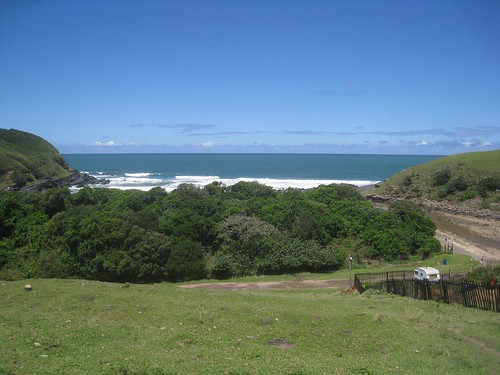
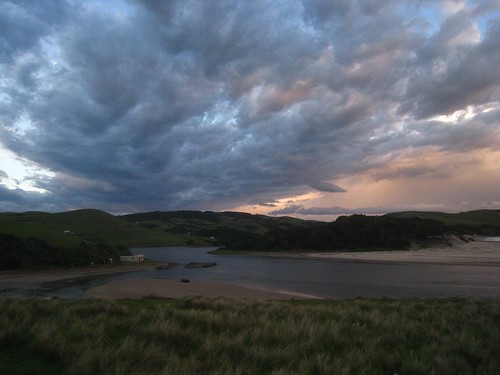
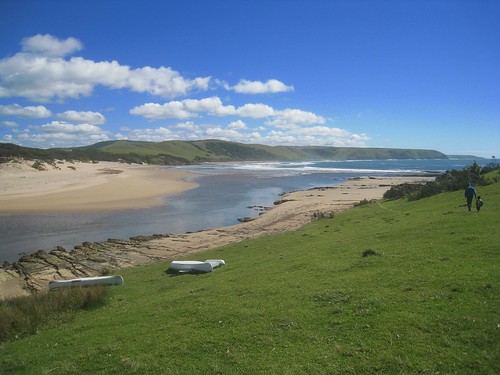
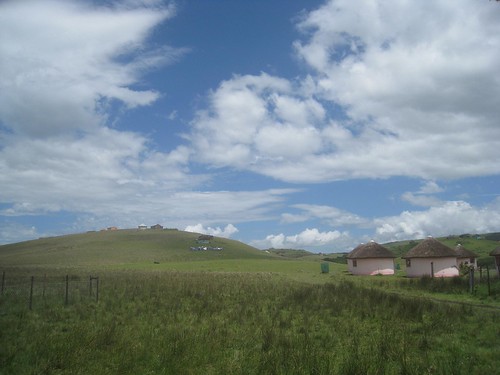
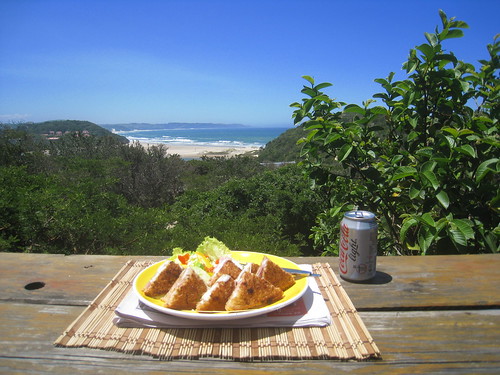
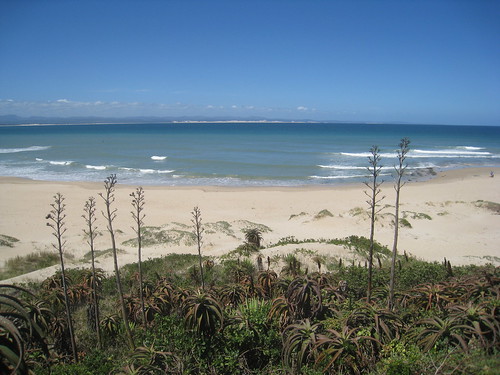
The moment I stepped out of the Baz bus at Buccaneers, I knew why it was so popular. Situated on its own undeveloped coastal hill, the views of the beach and ocean were stunning! The constant sound of waves crashing could be heard from the porch of the Blue Dorm where I took a bed. It was a beautiful day, the sun was shining, and Bob Marley was blasting from the bar. I ordered a ham and cheese toastie and soaked up the view before walking 5-10 minutes down to the beach. It was barren, unlike any other I'd experienced. Chiantsa was my first stop on The Wild Coast, so named for its lack of development.

Wine + vollebyall = wineball

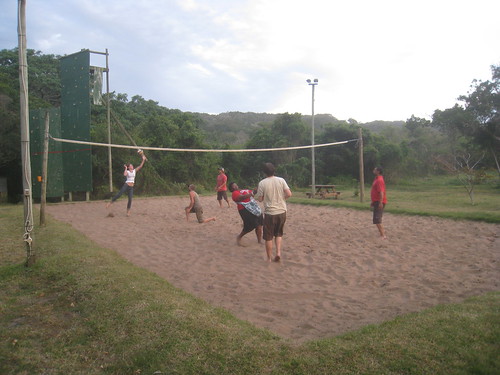
Buccaneers offers a free daily activity, and Wineball was on the docket for my first day. Using free boxed wine, backpackers are enticed to partake in beach volleyball by the pool. It turned out to be a great icebreaker with lots of people participating, and the rest drinking and chatting on the side. The ball was very hard, so almost everyone vocalized their pain from hitting it at one time or another. Many of us were left with bruised thumbs or wrists the next day.  The energy level and trash-talking were raised even higher when Johnny, one of the Baz bus drivers, joined the fray.  Most of the jokes came at the expense of Mbali, one of the many friendly staff who worked at the backpackers.  

Dinner

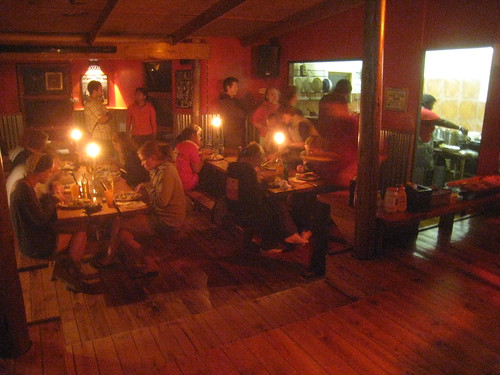
The communal dinner of bangers and mash was a big draw, filling up the bar in the early evening.

The party in full swing

After food, events began to blur. Pool was played, drinks were drunken, and dancing and merriment ensued. At one point, long after the bar had closed, a group of us were on the deck sitting around singing songs (quite poorly I imagine). The next morning, I found out the people camping could hear us loud and clear, while a couple was so upset by the noise, they refused to pay for their night's accommodation.

Day 2, Lunch And The Search For Lions

 In the upper right corner, you'll see the yellow Weaver that pooped on poor John

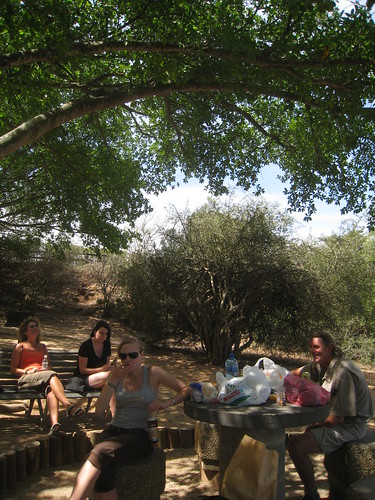
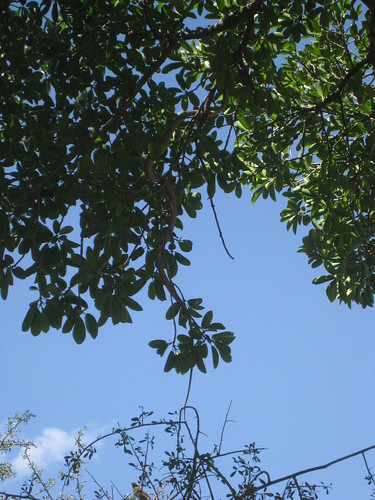
Around 12:30pm, we headed to the park's picnic grounds which overlooked yet another watering hole with lots of elephants.  Food was eaten, a green snake was seen slithering from a scrubby bush to the limbs of a tree above us, and a Weaver bird pooped on John's shoulder to our amusement. 

 A well camouflaged green snake

After lunch, we set off on a mission to find African Lions.  Along with the White Rhinos, lions were only introduced to the park in 2007.  Earlier in the morning, John had spotted lion tracks in the sand along one of the roads we took, estimating them to be about one day old.  Despite hours and hours of intense searching down every trail through the brush we drove past (we're talking hundreds), the lions were nowhere to be found.  Still, the possibility of spotting them around every bush, at any time, was enough to keep me alert for almost the entire day in the park (all 11.5 hours). 

 Tracking the not-so-elusive Leopard Tortoise

While the lions were laying low, the Leopard Tortoises were everywhere.  They were so pervasive, John said he'd never seen so many in a single day.  Warthogs also seemed to be out in numbers. 

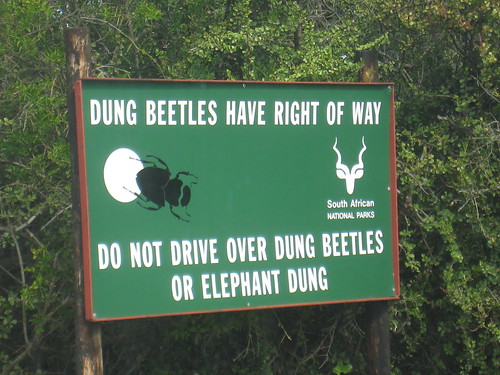
 Typical signage

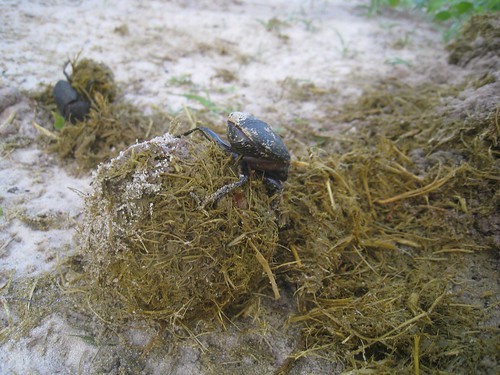
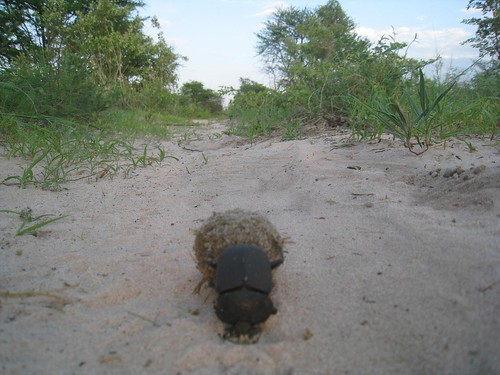
Addo is home to the rare flightless dung beetle, and signs around the park caution drivers not to run over elephant dung on the roads as this is where they lay eggs.  We didn't spend any time scouring dung though, so I never saw one though Karin said she did.

 This selfish elephant won't let the zebras get a sip of water!

At 3:30pm, we rolled up to a watering hole where a single elephant was hogging it for himself.  We saw our first Burchells Zebra of the day, trying their hardest to get a sip of water, only to be chased away by the elephant.  As we enjoyed the unfolding scene, a pair of girls in a little Chico car pulled directly in front of our line of sight, thereby positioning themselves as close to the hole as possible.  While I'm sure they didn't intent to obstruct our view, John was forced to reposition our SUV and took the opportunity to mock them frequently for the remainder of the afternoon.

An elephant amongst the zebra 

As the sun began to dip, we made our way back to the watering hole where we saw the Cape Buffalo earlier in the day.  Along the way, I spotted a Yellow Mongoose in a field.  Once at the watering hole, there was a lone female elephant in the water.  She was soon approached by a large male, clearly eager to mate under the beautiful African sunset. 

 Elephants at sunset

Elephants are a touchy-feely animal, but he didn't seem to give the female much time to get warmed up, and as a result (at least in my expert opinion), she rebuffed him.  He hung around by her side as we all hoped they'd make a love connection.  Unfortunately, we had to begin making our way out of the park by 5:45pm, and didn't get to see how it played out.

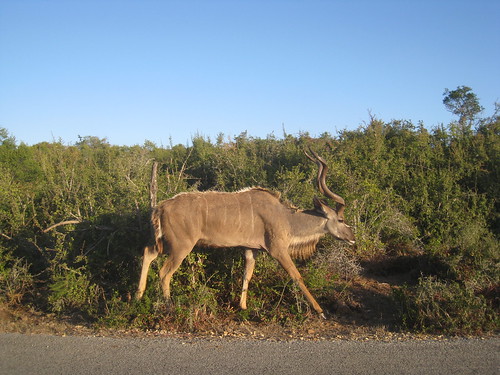
Male Kudu

An hour later, I was dropped off at my backpackers in Port Elizabeth where I was forced to take a double en suite as the there were no dorm beds.  The privacy was a nice change from the dorm beds and couchsurfs of the last few weeks so I was happy all the same. 

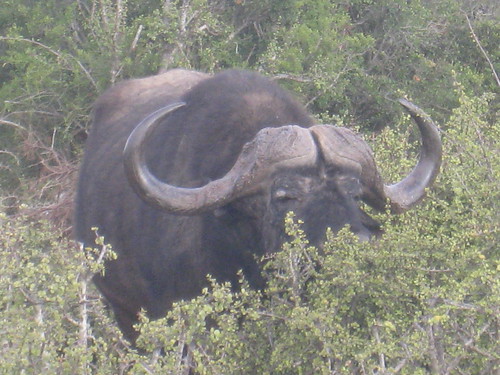
 Close encounters of the Cape Buffalo kind

Day 2, Morning Game Drive In Addo

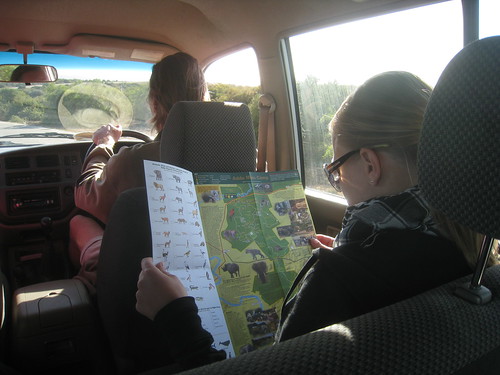
Karin reviews the park's wildlife

After a nice self-catered breakfast on the backpacker's patio, we motored to the gate and collected our maps of the park, complete with a checklist of the animals we hoped to see.No more than a few minutes passed before we started to spot the wildlife.

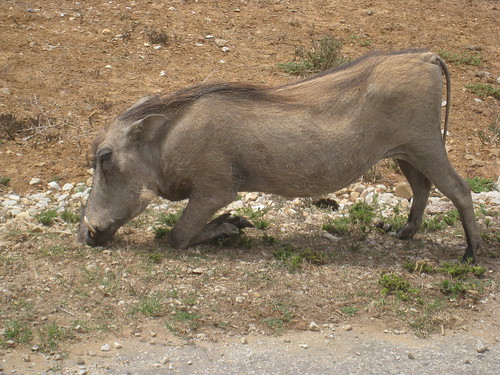
The funny-looking Warthog

Tons of Warthogs were munching on vegetation, while a Black-backed Jackal was simply chilling out. My old friend, the Ostrich, was soon seen, as were the pretty yellow Weaver birds when we stopped at the first watering hole. John was very adept at identifying each animal or bird and sharing a quick fact about them.

Living on the edge

When you're in a park with wild Lions, Leopards, Black Rhinos, Cape Buffalo, and hundreds of African Elephants (The Big 5), it makes sense that you don't get out of your car except for a few signposted occasions. The skeletal remains of male Kudus (antelope-type animal with long twisted horns) below us near the watering hole were a good reminder of why exiting your car is also at your own risk!

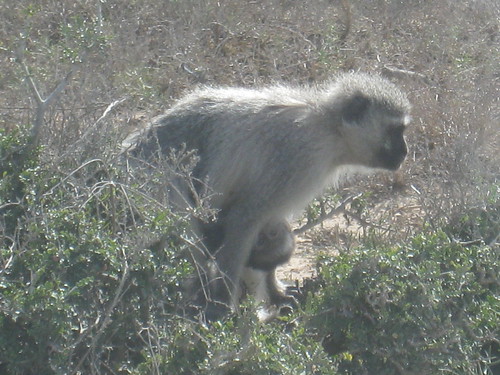
Vervet Monkey w/baby

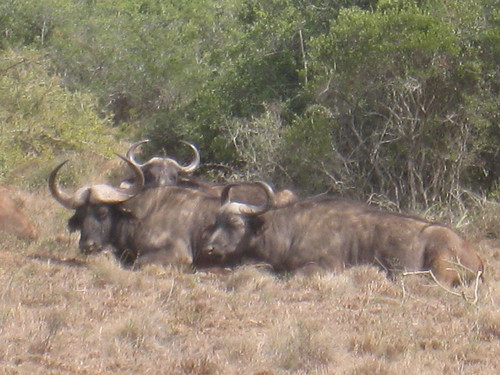
As we continued onward, John navigating his way through the loops and criss-crossing paved and dirt roads of the park's northern territory, we spotted Jackal Buzzards perched atop bushes and Vervet Monkeys running around on the ground.A little after 8am, we spotted a bunch of Cape Buffalo, our first of the big five animals.

Cape Buffalo

We also began to see lots of similar animals to the Kudu, including Red Hartebeests, Bushbucks, and Elands.Same same, but different.By late morning, we were getting anxious to see some elephants, although any one of us would have passed on the pachyderms for the chance to see lions or leopards.

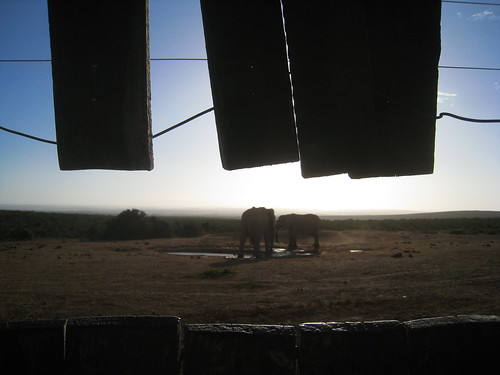
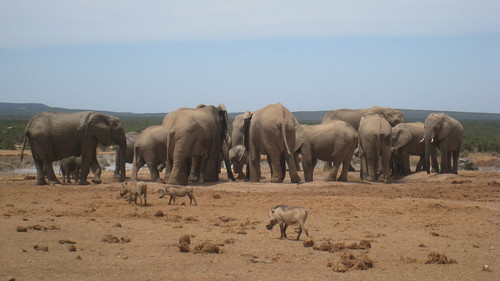
Elephants at a watering hole

Yvonne spotted the first elephant of the day, off on a distant hill.To the naked eye, it appeared as a grey outline against the green and dark browns of the landscape.Using the binoculars I picked up in Hermanus, you could see more detail, including the tusks.We were all excited to have seen a wild elephant, our second of the big five animals.And John assured us they start to pop up everywhere once you see one.

Young males challenge each other

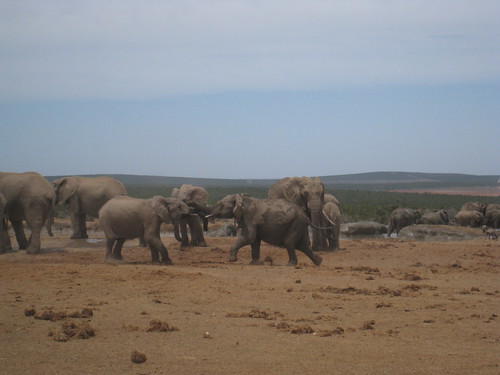
Sure enough, we drove a little further to another watering hole and saw tons of elephants, and what appeared to be a small parking lot of cars and safari trucks quite close to the action.Now we were REALLY excited!John maneuvered us into a good spot and turned off the engine.We sat and watched the behavior for about 15 minutes.

Nursing baby elephant

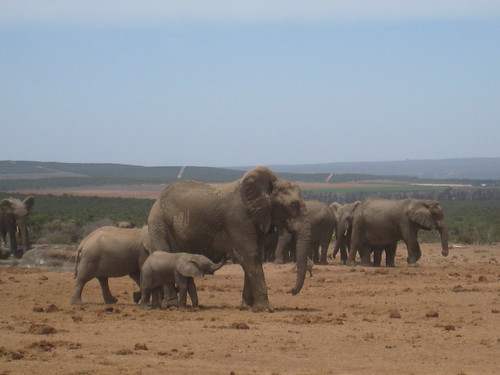
Males tested males, little ones chased away the warthogs in the area, babies nursed from moms, they rolled around in the mud to cool off, and had noticeable trouble lifting themselves up and out of the muddy embankments.About 3 of the 6 families were at the watering hole.The park has about 450 elephants, and with some of the older males off on their own, it meant each family must've held about 50-60 elephants.

African Elephant

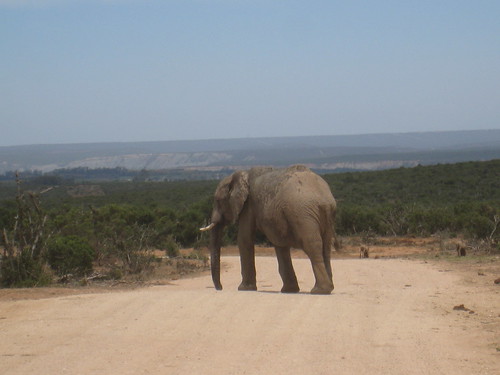
We started to follow the ones wandering away from the watering hole, watching them cross the road just a few meters from our truck.After they get muddy, they spray themselves with dry dirt which helps to clean the parasites off of them.We stopped at another watering hole where an area protected by electrified fence allows you to get out of your vehicle and walk to a viewing point behind a wooden fence.

Cape Buffalo

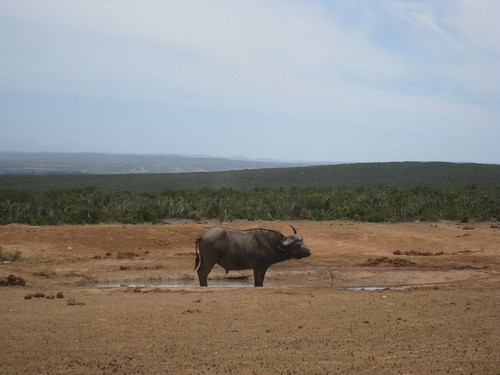
After the toilets were used, we returned to find a lone Cape Buffalo hanging out in the water. And then it was back to the most active watering hole where we watched a new family of elephants arrive from over a nearby hill. Watching them in the wild, marching along in a group, is fascinating. It made me glad I didn't decide to skip the park (thinking elephants were boring). I was learning to appreciate the whole experience, and all the animals, not just the carnivorous cats we hoped to see.

Day 1 - Road Trippin'

Goodbye J-bay

John recruited me for an overnight trip to Addo Elephant National Park for a few reasons. First, he offered to drop me off in Port Elizabeth afterwards, meaning I could take a break from using the Baz bus. Second, he promised a good experience by getting to the park early, when the gates opened. Third, he had worked as a guide in Kruger Park, and I could tell from the way he spoke enthusiastically about the trip, he'd be a good guide. And fourth, of least importance to a guy like me, was the fact that the three others who had signed up were girls.

I met Yvonne from Switzerland at dinner my first night, so we had already gotten to know each other a bit. She was volunteering at a local school. I met Karin and Stefanie (also Swiss-German) briefly beforehand as well. They were both in the English language school run by Island Vibe.

We left Jeffrey's Bay with braai supplies and plenty of wine. It was the most beautiful day of my time there. Low winds, bright blue skies, and lots of sunshine. The water looked as picturesque as any I'd seen in Thailand (ok, almost any view because Koh Tao had some amazing beaches). The drive to Orange Backpackers, situated 8km outside the park, was a pleasantly short two hours. Along the way, I got to know Karin and Stefanie a little better.

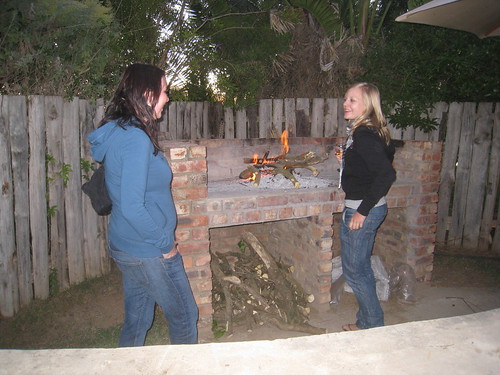
Stefanie (left) and Karin (right) by the braai fire

Once we settled into our basic 4-bed dorm for the night, opposite a paintball field, we uncorked the fine South African wines and hung out while the locals watched rugby in the bar. As the sun dropped, so too did the temperatures and we huddled around the fire burning for our braai. It took awhile, but John soon had heaps of sausage and pork chops coming off the grill. We retired around 10pm, knowing John would come knocking at 6am.

The Island Vibe, Supertubes, And Surf Shops

Jeffrey's Bay as seen from Island Vibe

The Island Vibe backpackers in Jeffrey's Bay is located atop a sand dune, just a few minutes walk to a popular wave called Kitchen's Window, the Billabong factory shop, and the downtown area.  The decor and atmosphere revolves around surfing, with the dedicated waking up as early as 5am to check the weather and hit the water.  The motivation of some was all the more surprising as the bar was busy every night.  My participation did little to help me get over a developing cough and cold.

 Pointing the way to Supertubes

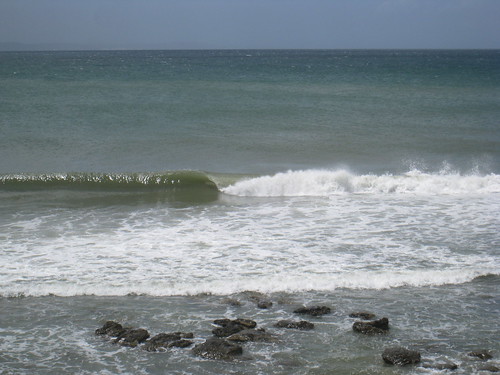
For two weeks each July, the world's best surfers descend upon Jeffrey's Bay for a Billabong contest held at Supertubes, the big wave in town.  I took a taxi up there to catch a glimpse of it, even though the wind was keeping the surfers away.  Hearing surfers talk, I'm sure there is a proper way to describe it, but you're stuck with the words of a layman.

 THE supertube

Aside from a few wooden observation benches, there is nothing special on or around the narrow strip of beach.  In fact, there is a rocky outcropping between the beach and the wave, which looked unforgiving.  The waves are much bigger in winter (the northern hemisphere's summer), yet I could clearly see and capture the tubular nature of them (dude).

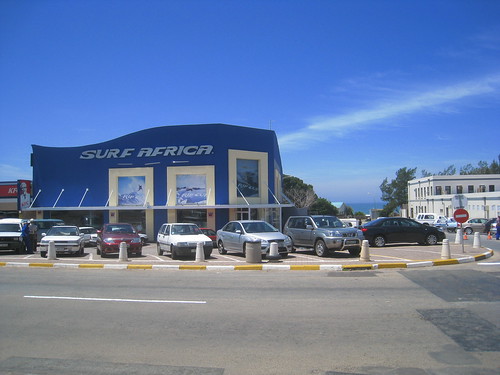
 Surf shop in J-bay

For the non-surfing visitors, Jeffrey's Bay offers great shopping opportunities.  Prices for name-brand clothes were so cheap, I completed another wardrobe overhaul at the expense of my Kho San Road threads.  Aside from the regular surf shops, Quicksilver and Billabong have factory shops where you can sort through tons of clothes.  For example, I bought a black Billabong hoodie for $20.  It was a " sample"? meaning it didn't go into full production, and is therefore something of a limited edition (I like to think), and on sale for 25% off!  T-shirts were as low as $7. 

The Island Vibe bar being restocked after a busy Friday night

I couldn't resist a pair of Volcom board shorts at a surf shop for half the price they would cost in the USA.  To the potential disappoint of a former coworker, I'm officially retiring the Def Leppard'esque brown and orange Andy Irons shorts I bought on sale in Byron Bay, Australia back in January. 

Sandboarding

A beach view from Island Vibe

I arrived at Island Vibe in Jeffrey's Bay after dark, the sounds of crashing waves all around me. The scene was lively, and the setup much bigger than the sister backpackers in Knysna. I felt a bit out of place, ordering food from a local pizza place since I missed the communal dinner (and am not bothering to self-cater as many do).

My first morning brought plenty of sunshine, and wind. Sandboarding was on offer at several places since Cape Town, however I was holding off until J-Bay since I didn't intend to surf. John, the guy who handled guided excursions and shuttles for Island Vibe, transported me a short distance down the rode to the few large sand dunes yet to be developed into vacation homes. I picked up a sandboard and walked over to the first dune, referred to by the instructor as the Volkswagen.

Sandboarding is similar to snowboarding so the learning curve is far shorter if you've done the latter, though it's not required to have a good time. Before you can climb the dune for a ride, the board is waxed by using your hand to smother its base with floor polish. Then, you rub sand against it, leaving a surprisingly smooth surface. This process has to be repeated every 2-3 rides, making for a messier experience than I expected. As a result of the wax-on, wax-off cycle, and high winds, I only managed to take photos of the dune, and the water, before retiring my camera.

The Ferrari of sand dunes at Jeffrey's Bay

Speed is a much bigger factor in being able to turn on sand than snow, so the Volkswagen run was only good for going straight, which was not my natural tendency. I gave it a few tries, and then me and two German guys headed over to the dune our instructor dubbed Ferrari, mostly on account of the steep top third. Perhaps a lack of snowboarding in recent years gave me the energy to fit in as many runs as possible, given every quick trip down required a sandy climb up. I started to get the feel for it and found my favorite starting spot near the bushes at the upper end of the dune where the winds whipped up a steady supply of sand in my face.

The view from atop the big dune, before descending, was gorgeous. The water appeared as several shades of blue, and it felt like a world away from the development of town nearby.

A Day In Storms River

View of the bungy jump office from Bloukrans Bridge

The bus ride to Storms River, a small village within the Tsitsikamma National Park, lead us over the Bloukrans Bridge that is home to the world's highest bungee jump (from a bridge, 216 meters).

We zipped over it, so I was only able to get a quick glimpse of the gorge, not enough to fully appreciate the height.

Still crediting myself with two Canyon Swings (from 107 meters) in Queenstown last December, I had already decided to pass on the bungee jump.

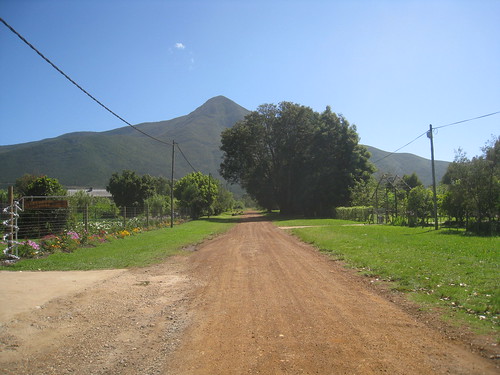
View of Tsitsikamma Mountain from Storms River

Within Storms River, the views are dominated by Tsitsikamma Mountain, which I'd guess to be around 1,000 meters high.

I settled into the fairly empty Tube 'n Axe backpackers and booked a horseback riding trip in the forest for the following day.

The bungy jump was the dominant activity of the area, so I heard several fresh accounts, reinforcing my decision not to face a ridiculously scary experience again just for the fun of it.

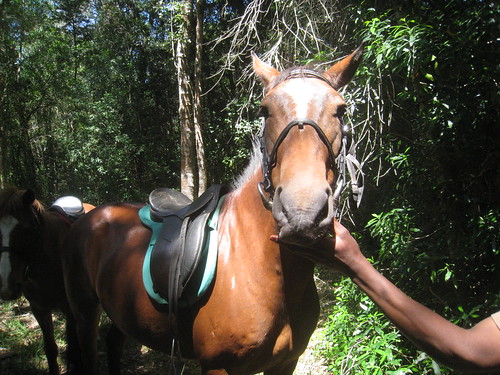
The lovely Gracie

My horses name was Gracie. She took good care of me, following the lead horse (Bullet) ridden by the guide, Morpheus.

The owner of all the horses was riding Rambo right behind us. It took an hour for me to feel some sense of comfort as I hadn't ridden in 20 years.

We did some trotting which is a real ball-buster of an experience as you bounce up and down. When I was younger, I remember the one time I got up to canter, and how it felt smoother (and certainly faster) than trotting.

Horseback riding is a popular activity all along the South African coast, so I made a mental note to try it on the beach where even beginners can get up to a gallop.

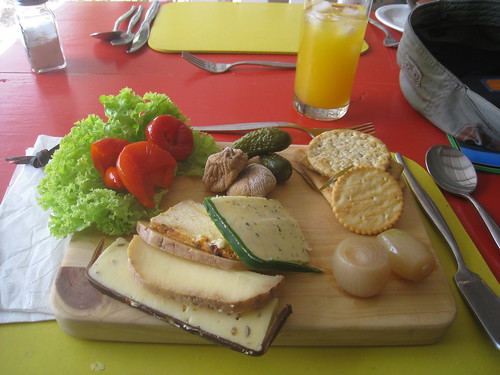
Say cheese....cheese

After the ride, I hired a mountain bike for the short trip to an 800-year old Yellowwood Tree (the national tree of South Africa).

Sure enough, it was a big tree. Not too exciting.

Before I returned the bike, I stopped at a B&B for a selection of local cheeses and a hot stone massage.

I had to make up for the nightmarish experience the last time I tried one in Luang Prabang, Laos.

The day was wrapped up with a one and a half hour sunset Baz bus ride to a world-renowned surfing mecca, Jeffrey's Bay.

Plett Stop

View of Plettenberg Bay from a swanky restaurant terrace

The night after my stay with Brother Paul, I was in nearby Plettenberg Bay. Upon arrival in the early evening, the sky was grey and overcast, and the main street of this popular resort town was empty. After a quick walk around, I settled into a nice pasta dinner at Europa, a block from my backpackers (hostel). When I only expect to spend one day or night in a location, I don't tend to invest much energy in meeting new people. I went to sleep early, hoping for better weather to make my stay worthwhile.

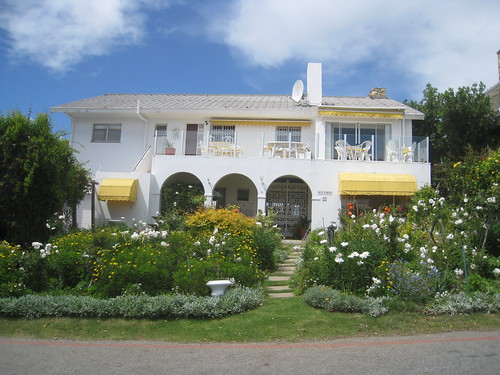
Bed and breakfast

In the morning, I awoke to partly cloudy skies with enough sunshine to showcase the natural beauty of the coastline. Checkout was at 10am, though the bus wouldn't arrive until 6pm, so I had the day to spend in town. I started with a walk past idyllic B&B's to a scenic viewpoint. There were a few surfers out, and more on the way, all donning full body wetsuits to stay warm.

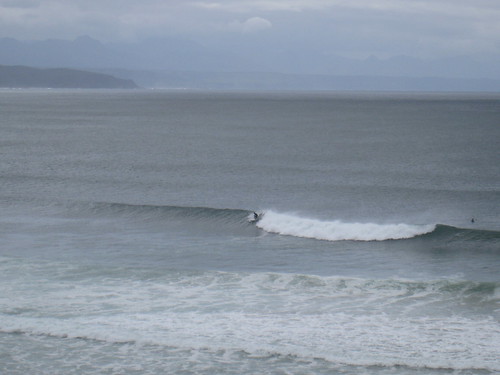
Surfer

The town was bustling with people and cars. I spent the rest of my time wandering around, eating two lunches out of boredom. The downside of the Baz bus is that if you want to see a place firsthand, even or just an hour or two, you have to commit to a full night's stay.

The Plan

Now that I know I can get a refund minus $100 for my impromptu British Airways purchase upon arrival in South Africa, or change the dates for $50, I need to quickly decide how much time to spend in the region (can you believe I've already been here almost a month?). 

If I were at the start of my RTW trip, I would be booking a long overland tour from Vic Falls to Nairobi but with less money in the bank, I want to be more conservative. 

Here are the options I'm giving myself....please help me decide!

[poll=35]


________________________

PS - due to internet bandwith limitations (or should I say price structures by ISP's), I am at a standstill for uploading photographs.  Please let me know if you want me to continue posting daily without pictures, or post less frequently (every 2-3 days) with a picture or two (I'll sneak them up)!

My Time With The Rastas

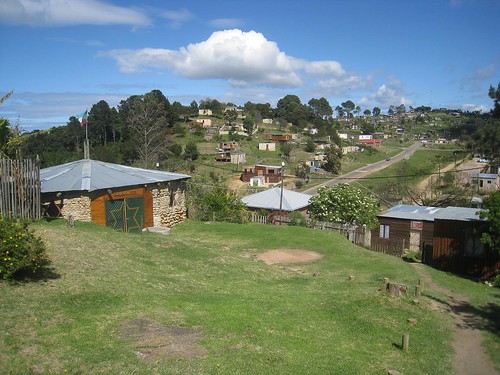
A view of the township from Brother Paul's garden

Brother Paul did me a huge favor when he agreed to host me for the night. Sister Carrie, an older, white Australian woman who has lived in South Africa for 27 years, runs the Bed & Breakfast in the community. Brother Paul had worked as a tour guide with Orin in the past, and opened his home up so I could learn a little bit about the Rastafarian way of life (beyond the fact that they smoke a lot of marijuana and love Bob Marley).

Brother Paul collected me at Island Vibe. In the car was Malcolm, our driver, and Jonathan. Paul was up front about the costs, and told me I'd need to bring my own food. The overall cost would be a little higher than had I stayed at the B&B ($20) but it was still low in my book. Along the way, we stopped at a convenience store and I picked up a few supplies.


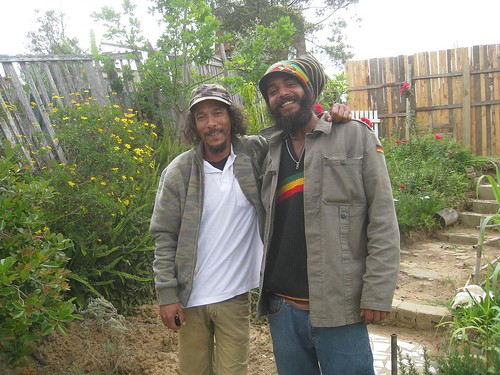
Brother Paul (left) and his nephew

And then we were off to the community, which was situated within a township on the ridge overlooking Knysna and the harbor. As we turned off the main highway (N2) and into the township, I suddenly felt very white. A few people smiled and waved at the others in the car, and I'm sure they were noticing me in tow as well. We pulled up to the dead end off which Paul's home was situated, and said goodbye to the others. The Rasta community has about 25 families, and 120 some people, though there are others living in the surrounding township.

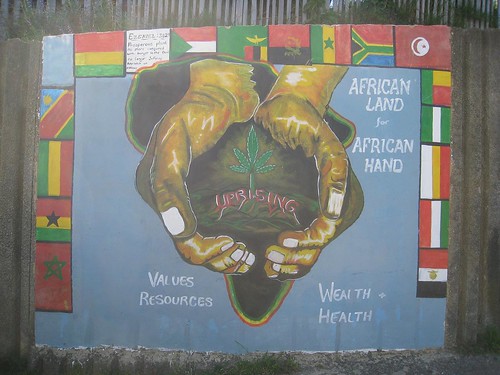
Community artwork

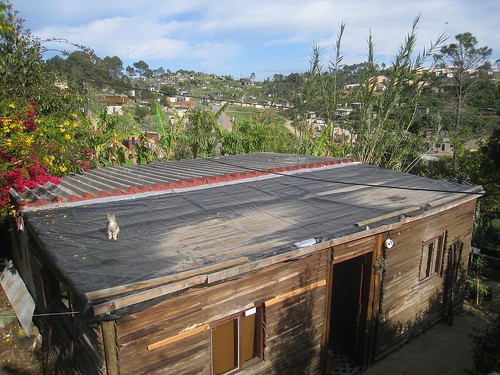
Paul gave me the grand tour of his home, beginning with a walk down through his garden (the home was situated on a hill) which was filled with colorful flowers and various fruit trees. His home was a composite of the old and the new in Knysna township home design. The old half was built from local timber, with a half-wood, half-dirt floor. The new was built from concrete and included a small bathroom (cold water only), bedroom, and kitchen. The roof on the newer section was metal, while the old was tarp-covered wood. He explained his plans to further increase the size of his home so his two children and wife could live there as well. They were living separately in a colored township (note: In South Africa, races are broken apart as white, colored (mixed), and black (African)).

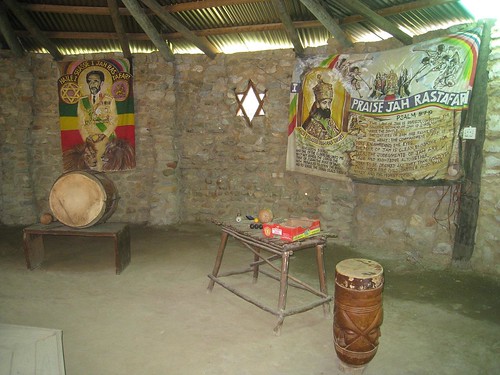
Once I was settled, I tried to relax. Not only was I in someone else's home, I was in the middle of a township and didn't know what to expect. Paul's nephew was visiting as well, so it took some of the pressure off to keep the conversation going. I asked plenty of questions about the Rastafaria, and learned its origins lead back past Bob to an Ethiopian emperor often referred to as the Lion of Zion. It was the image of this Ethiopian who graced Paul's walls, not Bob Marley, though his influence was undisputed.

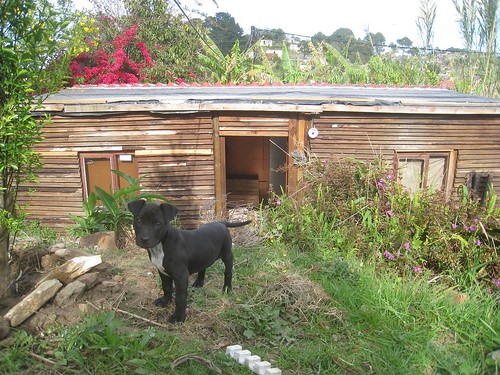
Guard puppy

Paul cooked lentils for dinner, as he and his nephew were vegetarian. He offered me some, which tasted better than my ham and cheese sandwich I'd brought. I spent some time reading and writing at a table in the garden, which overlooked Paul's home and offered a great view of township homes on the surrounding hills. Pitbulls seem to be the Rasta pet of choice, as there were many in the neighborhood. Thankfully, Paul's was just a 3-month pup, still in the playful teething stage. We retired by 9pm, with me taking Paul's bed while he and his nephew slept in a tent within the wooden section of the house.

View of the surrounding township with the Rasta tabernacle to the left

I slept well, though the cold morning provided a rude awakening. There was no insulation in the home, and if it felt cold now, it would've been downright frosty in the winter. Paul took me on a morning tour of the community. We stepped inside the tabernacle where he described the activities that take place there. He proudly pointed to little marijuana plants sprouting from the ground. As most, if not all, of the Rastas grow weed, I was curious to know what the local police thought. He said they tend to show leniency, and try to ensure the plants aren't growing too big, or in too clear a view of the surrounding homes (as this could lead to a double standard for how the police handled others growing herb).

Inside the tabernacle

Paul was also proud to point out the positive effect the Rasta community had over their neighbors. He said crime was lower within their immediate vicinity, and they had started a daycare program which handled 30 local kids from the township.

Malcolm was nowhere to be found when it was time for me to leave, so we hopped in a share taxi. Sure enough, three ladies joined us to use up the remaining seats. A large mama hopped in the seat to my left, immediately squishing me. " It's all part of the experience,"? Paul joked, as we left the township.

Enjoying The Island Vibe In Knysna

View toward the harbor from the deck at Island Vibe

I could only bite my tongue so long before I broke into a conversation on the Baz bus between two guys at the start of their round-the-world trips, a young German and Thomas (England). I suggested to Thomas that if he's going to New Zealand, he not miss the South Island. They played rock/paper/scissors at the next stop and because the German guy lost, he decided to stay the night in Wilderness while Thomas and I continued on to Knysna.

Thomas from England

We both got off at Island Vibe Backpackers and checked into the dorm. Offering a mere 30 beds, it was considered a small hostel. Loren, one of the staff, gave us a tour which included the kitchen, balcony with a view toward the harbor, tiny pool, bar, TV room, and the dorm. I liked Thomas right off the bat. Maybe because he seemed genuine, or admitted his fear after being ejected a few times from a raft while navigating the mighty Zambezi River (near Victoria Falls). It was one of many stories he had from a recent 6-week overland journey from Nairobi, Kenya to Cape Town.

At any rate, we met a few Irish and Kiwi girls who were also staying at Island Vibe, and after Thomas and I devoured some quality Indian food on the Main Road, we joined them for a few beers at the little hostel bar. I never knew Jenga could be so fun. Unfortunately, Thomas was on a tight schedule, traveling from Cape Town to Jo'Burg in just 7 days, so he left on the bus later the next day.

View of the coastline from my hike

I was hopeful to find two other people interested in going to the shooting range. From a poster on the wall in the TV room, I made a call and talked to one of the owners. He had an arsenal of 600 weapons including all sorts of machine guns, pistols, and rifles, of which I could choose 8 to fire, at a cost of 1,000 Rand, or about $100. Given the same amount bought far less in Thailand, let alone Australia, I felt compelled to make it happen. It didn't work out in the end, but he did name drop Dave Mathews, saying they were friends from school in Jo'burg and that when he comes to visit, he takes him to the range. I responded that Dave Mathews didn't seem like the gun type, and he confirmed he was a wuss, but did it anyways. And then he told me a story about how his wold champion marksman of a partner was just getting out of a 6-week jail term in Egypt because his guns were seized as he traveled to Israel for a two million Rand bodyguarding contract.

There were plenty of other activities in the area to take my mind off the shooting range. I opted for a peaceful guided hike through the local forest. It was lead by a guy named Orin who managed to make an otherwise routine hike around a valley by the coast interesting. I am now adept at identifying the local sage plants!

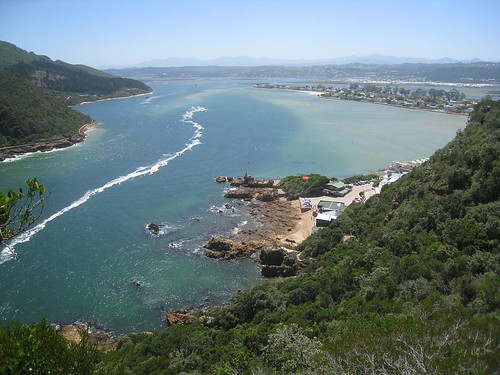
View of Knysna from atop the Heads (cliffs)

After the pleasant two hour hike, he drove me up to the Knysna Heads, a pair of opposing cliffs which mark the natural entrance to the harbor. Knysna is a popular vacation destination for South Africans as a result of this unusual coastline geography.

Orin later assisted me in setting up a homestay with Brother Paul, a member of South Africa's largest Rastafarian community.

The Country Quiz

After 12 months of travel, I've made it to 12 countries.  I was able to name another 68 in Jetpunk.com's timed quiz.

I dare you to beat 80!  :)

_______

This post was brought to you by Jetpunk.

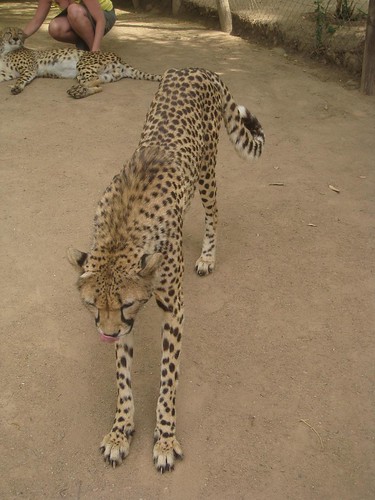
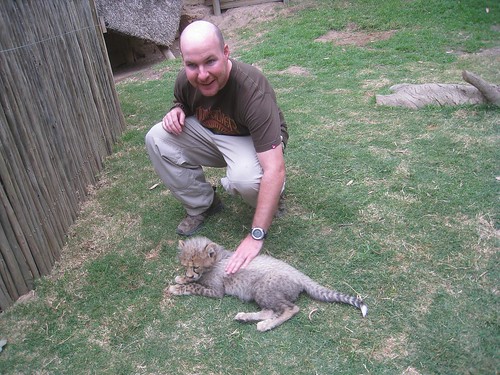
Petting The Cheetahs

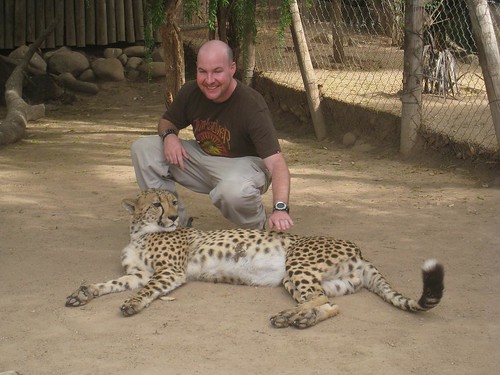
Petting the male cheetah

The thrilling Thai Tiger Kingdom experience fresh in my mind, I splurged on time with both the cheetah cubs and adults. They were much smaller than the adolescent tigers. In the adult's cage, I was struck by how slender a profile they present from above. Tall and narrow, they are built for speed, a feline counterpart to greyhounds.

Time for a stretch

Due to their flexible spines, they have the unique ability to keep their head propped up and alert while laying down. One of the handlers said they can even sleep in this position. The thickness of the black hairs making up the spots varies from the golden hairs which assists with heat distribution.

Soooo cute

Unlike the tigers, I could feel the cheetahs purring when I petted them. I was slightly unnerved by the male, and soon switched to the smaller female. Neither cat could be bothered to sit up for me as they did with a few of the other tourists.

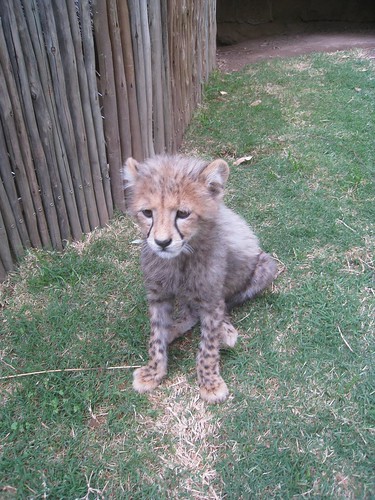
3-month old cheetah cub

The three month old cubs were a bundle of energy, running around the enclosure chasing after each other. My time with them was rushed as a queue had formed.

A cub sits still for a moment

Back at Backpacker's Paradise, I celebrated the ostrich once more, this time with Carla, a German-American, and an older (50's or 60's) Swedish couple who generously shared their wine with us. Afterwards, Carla and I shot some pool, a common offering in the bar area of the hostels.

Mountain Biking And Cool Cats

Local kids walking home from school

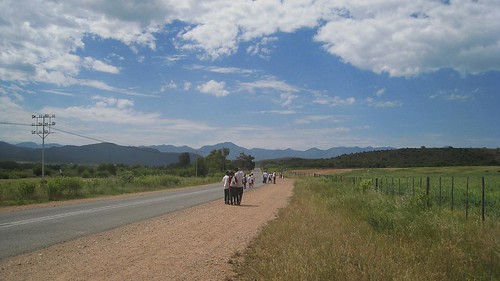
The ostrich riding worked up my appetite so I crossed the rode on my bike and devoured a ham and cheese toasted sandwich in a pretty tea garden. I hit the road under the mid-day sun, taking in the beautiful surroundings at a relaxed pace. Since my bike ride in southern Laos to the old Khmer ruins, I've come to appreciate how bicycles allow you to experience an environment in a slower manner.

I was able to stop and take photos of whatever I wanted. I could smell the flowers, feel the sun's intense heat, and curse the gradual inclines you don't feel when driving in a car. I was able to say " hi"? to locals in passing, and when I came upon children walking home from school, they held out their left hand for me to slap while riding by (at the risk of losing my balance, being thrown from the bike and breaking my collarbone).

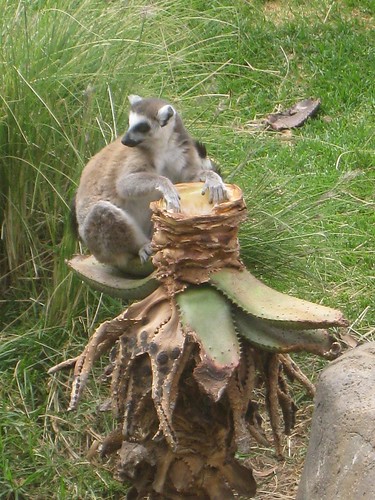
ring-tailed lemur

Initially, I was drawn to the wilderness park because of its cheetah conservancy, but once there, I was treated to an array of wildlife including monitor lizards, white vultures, ring-tailed lemurs, Nile crocodiles, and pygmy hippos.

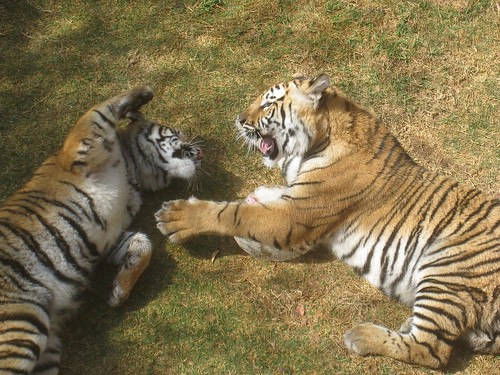
The big cats were the main highlight, a pair of playful Bengal tigers...

Bengal tigers

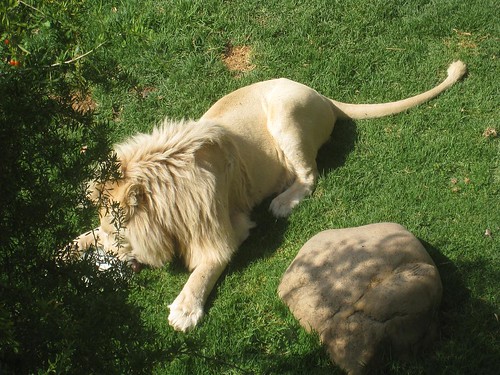
rare white lions...

A male white lion

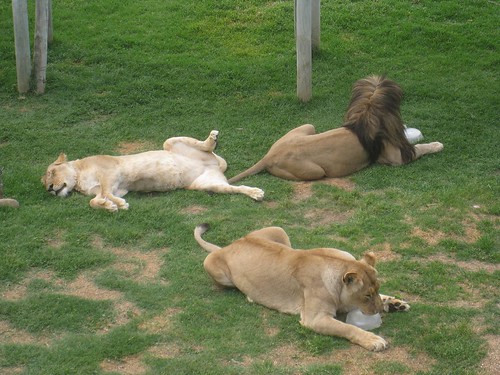
3 beautiful African lions...

African lions

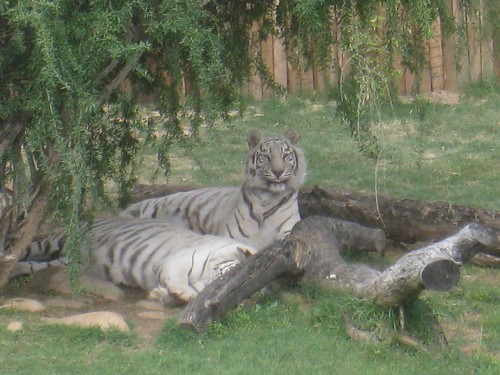
and white tigers.

White tigers

It's All About The Ostriches

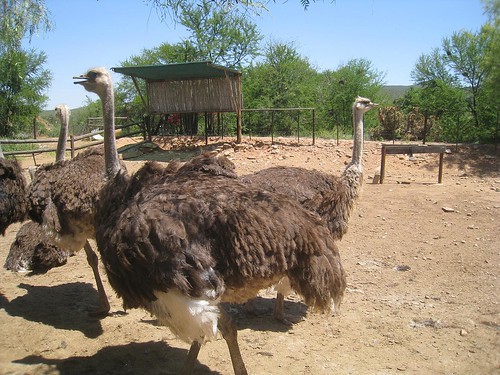
Ostriches

The caves were a nice warm-up to the main event, ostriches.

Outdshorn is the self-proclaimed ostrich capital of the world, and they are a popular draw.

Already having consumed ostrich steaks and sausage for dinner, and their scrambled egg for breakfast, I was excited to learn more about the largest bird on the planet.

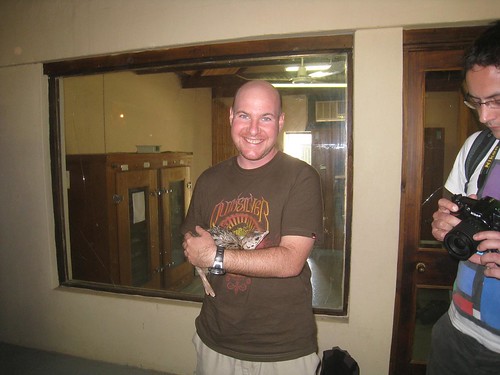
Holding a 1-day old ostrich

Our guide started off with a short lecture. He looked dressed to lead us on a full-blown safari and was quick to make jokes, picking on a straight-faced English guy in particular (dubbed Mr. Bean).

After the lecture, we had the chance to see hatching babies in an incubator and hold a one-day-old bird.

Then, we headed outside where several of us, including yours truly, stuck a bit of feed in their lips and allowed the ostrich to pluck it out.

In effect, an ostrich kiss. Yuck! We got to feed the ostriches and see a male flap its feathers in a typical" I'm ready to mate with the next attractive bird to walk by" manner.

Riders...to your ostrich!

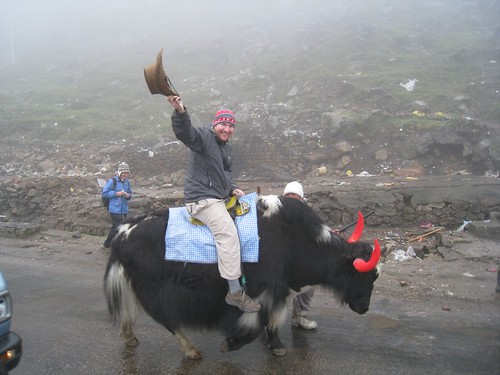
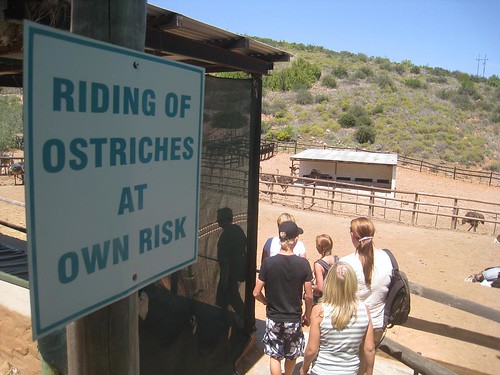
The odd desire to ride a yak lead me to the high-altitude Tsomgo Lake (12,400 feet) in Sikkim, India, so if you think I'd turn down the opportunity to ride an ostrich, you're sadly mistaken.

Four girls rode first, so I had a preview of this unique experience.

To my surprise, I was the only guy in our tour group to saddle up. I think the others were scared, because who wouldn't want to ride a big funny bird!

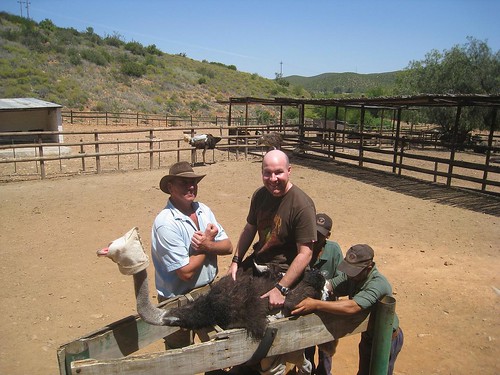
The process involved one of the real jockeys (yes, there is such a job) rounding up an ostrich in the pen, putting a bag over its head and leading it to the V-shaped mounting area in front of the stands.

I climbed aboard, gripping each wing near the front, and wrapping my legs around its front chest. The bag was then pulled off....

The final preparations

...and away we went! The bird ran around like a chicken with its head cut off, moving in a counter-clockwise direction around the pen.

Two jockeys ran behind it (and probably steering it to some degree), ready to catch me by my arms when I lost my balance.

I already knew how funny the scene appeared from watching the ladies, however, the perspective from atop the bird is truly hilarious.

You're hanging onto its wings for dear life while it bounces around, its neck swaying from side to side in front of you.

Spelunking In The Cango Caves

I booked tour "C" through the hostel, which consisted of transport to the Cango Caves and an ostrich show farm, leaving me with a mountain bike ride of 12 kilometers back to town, along the way passing a wilderness park where I would get up close and personal with a few cheetahs.  

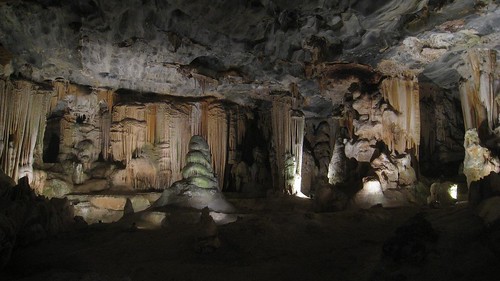
Cave

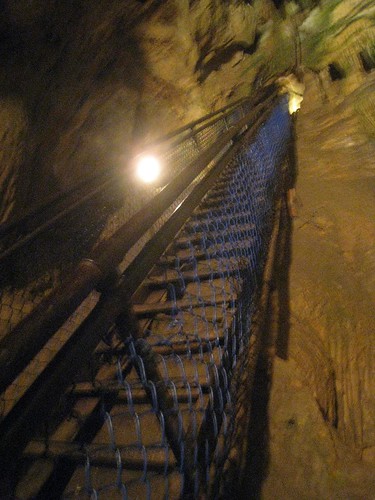
Lonely Planet describes the caves as commercialized, and I saw what they meant once the tour began.  We were not given headlamps or helmets, and all the pathways were smoothed by concrete and lit by ankle-level lights. 

Still, my four companions (two Irish lasses and two Dutch girls) and I hoped for a little extra excitement by choosing the longer "adventure" tour. 

As we got deeper into the caves, the spaces started to narrow. The most difficult maneuvers were so tight that we had left our cameras behind. 

The Devil's Chimney was a 3.6-meter upward crawl in a chimney-like feature with an average diameter of 90 centimeters. In other words, it was damn tight. 

The ladder to the tighter sections

All the ladies went first, and I sighed in relief each time our guide-in-training, Shane, confirmed another got through OK. 

It was the tightest and longest space I'd navigated in my sparse experience as a spelunker. 

I slithered on my stomach at a quick pace, hoping the speed would ensure I did not get stuck. The surface against my stomach was smooth, so I didn't hit any snags. 

Once through, the four of us were in a small chamber, with the only exit being the Letterbox, a 5-meter crawl with a 60-centimeter roof-to-floor clearance. 

Again, I was on my stomach, hoping not to get stuck. The girls all made it through first, and I made haste to catch up to them all. 

It was a short-lived adventure, yet it did register a bit on the adrenaline meter for those few seconds you are encased in tons of rock!

Welcome To Outdshorn

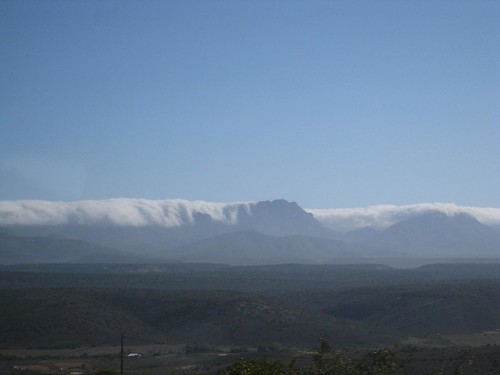
Clouds float over the mountains near Outshorn

The bus and shuttle rides from Hermanus to Outdshorn, ostrich capital of the world, ended up taking an entire day. Along the way, people hopped on and off at various stops and we watched a pirated copy of " Taken."? I felt guilty at times, being engrossed in a movie while the countryside passed us by. As in New Zealand, the geography and weather can change quickly in South Africa.

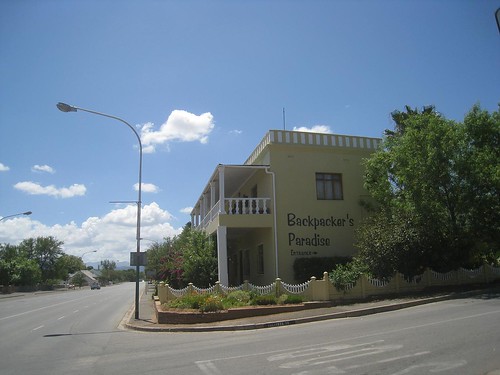
Backpacker's Paradise

Off the Baz bus, and on the one hour hostel shuttle to Outdshorn, we passed up and over a 1,000-meter mountain pass. The weather was cloudy so we had limited views, however once we came down the other side into a valley, the sun was shining and the skies were blue. Looking back at the mountains, you could clearly see a carpet of white clouds drifting over the tops and descending down the slopes (a la Table Mountain).

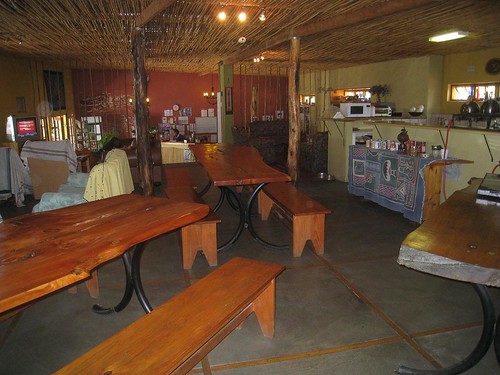
Reception, living and dining rooms, kitchen area

As we drove out of the green valley and passed through what I can best describe as scrub land (or dare I say African bush), purple flowers colored swaths of the otherwise drab terrain. I thought to myself, THIS is Africa!

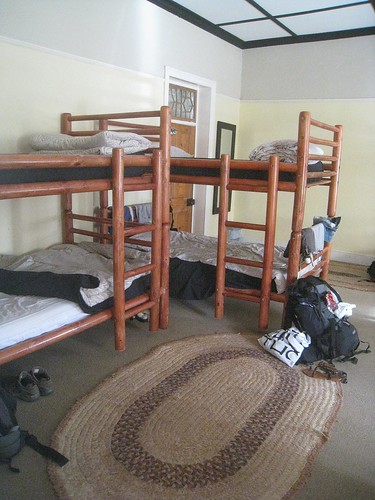
We arrived at Backpacker's Paradise on the main street toward the western edge of town. After dropping my bag in the large, yet comfortable, 10-bed dorm room, I signed up for the nightly ostrich braai and unwound.

Comfy dorm beds

The compound was well worth the $8 per night. There were no keys for the dorm room, and you signed up for breakfast, dinner, tours, and shuttles via chalkboards. True to Lonely Planet's word, the overall quality of the hostel accommodations are the best I've experienced so far.

Dare #16 - Completed - Cage Diving With Great White Sharks

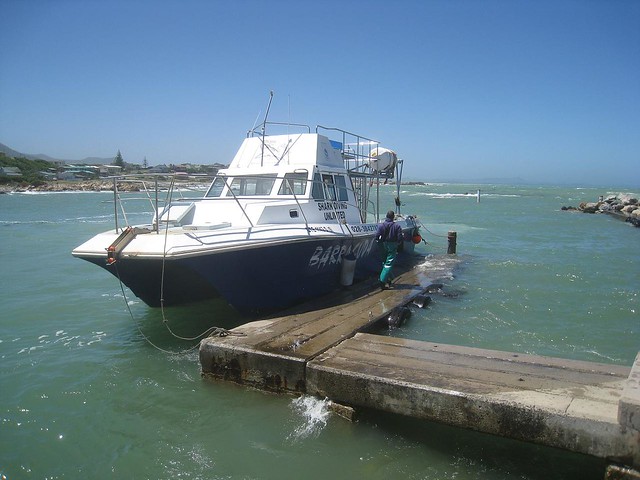
Barracuda is the biggest shark boat in the harbor (and it's not so big!)

[B]oarding the Barracuda, I was acutely aware of the potential for seasickness.

At the time, I was more concerned about an upset stomach than getting in the cage.

A clearly stated rule of the trip was " no vomiting" in the toilet on board, and a red sign on the small door to the restroom reinforced this message.

The skipper gunned it out of the unassuming harbor and we were quickly bouncing up and down as we crossed the Atlantic.

Dyer Island, off the coast, is home to an abundant staple of the sharks' diet, Cape Fur seals, however the waters were still too rough for us to venture there.

Instead, we made our way along the coast toward calmer, shallower waters where the sharks feed on fish.

One of my first, and best, shots

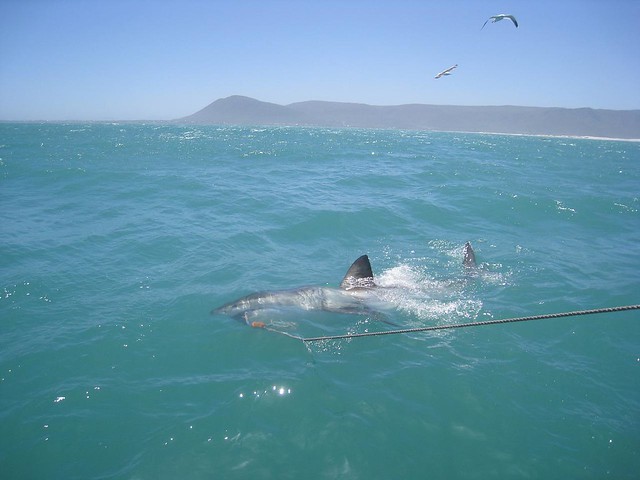
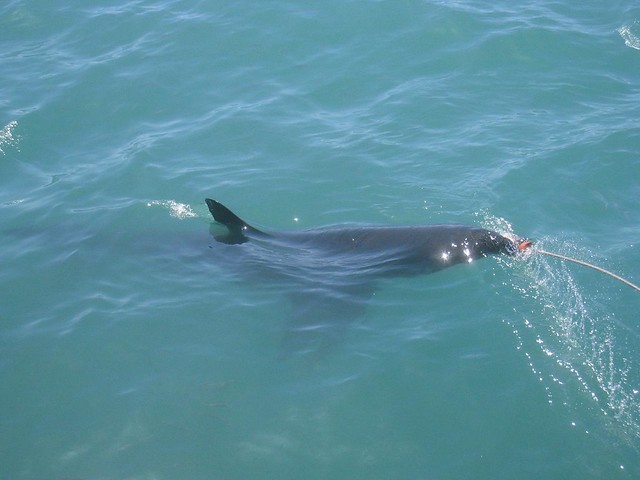
Immediately upon arrival at the anchored cage (left in place after the morning trip), we spotted a large grey profile in the water.

There was no mistaking the sharks in these waters, they were all Great Whites.

Everyone jostled for good positions to take photos, and before I knew it, people were dressed in full body wet suits (boots to hood) and grabbing masks to get in the water.

To my surprise, we didn't use snorkels. We would have to hold our breath!!

The crew was clear about setting our expectations.

The visibility was practically zero, so we could get in the cage for the experience but should not expect to see anything.

I don't think anyone skipped gearing up in a wet suit for the opportunity, no matter how small, to see the sharks at eye level.

Changing into the suits on a crowded, rocking boat while sharks angle for fish heads a few meters away is not an easy task.

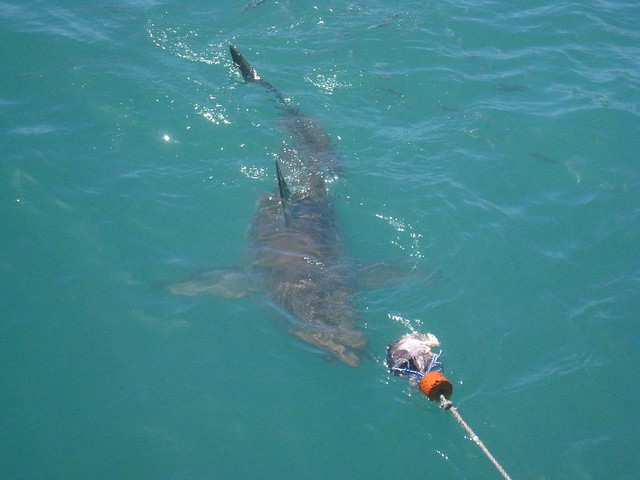
A Great White chases the bait

The first group in the water reported, for the record, no visibility.

As expected, surface viewing offered the best chance to see the sharks, yet I knew I had to brave the waters to win the dare (and satisfy my sense of adventure).

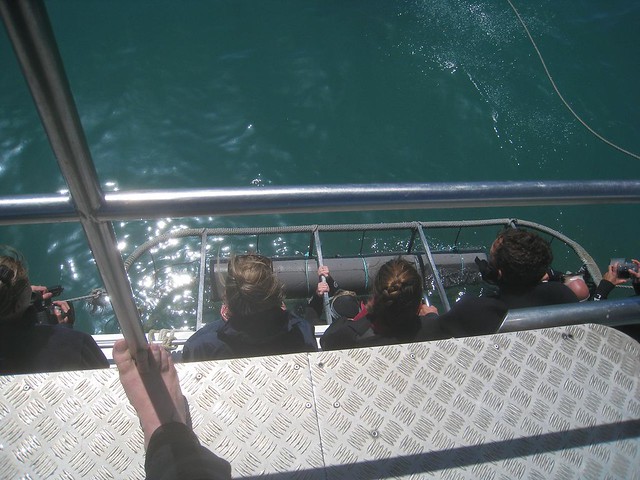
Getting in and out of the cage is as haphazard as it might seem.

The boat is constantly rocking with a constant lean toward the cage side. Five other people are already squeezed in there. And of course there are giant sharks circling us at all times!

A view of the cage from above

Cage Diving Procedure

  1. Crew throws out fish head on a line as bait, while pouring chum (fish guts and blood) in the water.
  2. Cage diver puts knees on a low horizontal bar under the water's surface, and holds onto bars above their head whilst his/her back is leaned against the boat-side of the cage.
  3. When a shark is seen coming toward the bait, it is pulled away leading the shark toward the cage.
  4. The crew yell " get down."?
  5. Divers take a deep breath, let go of the overhead bars, sink down into the cage (courtesy of weight belts), and grab the bar where their knees previously rested.

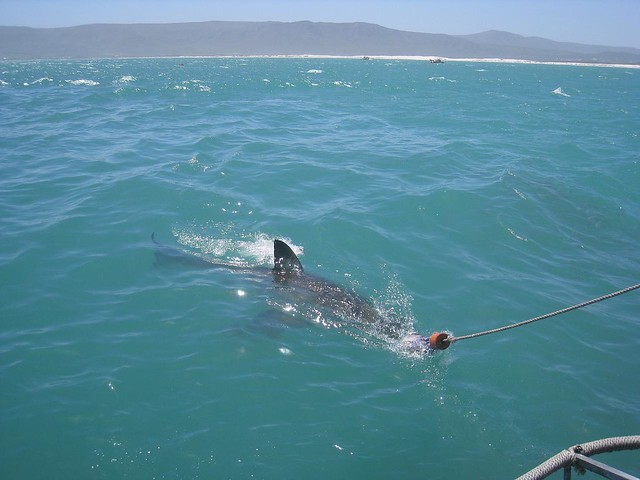
A Great White Shark takes the bait

Between people's excitement, confusion, and varying degrees of comfort, it was a more chaotic experience than I expected. It took a few cycles of " get down" for me to get into the rhythm.

Going underwater was important lest you risk being knocked unconscious by a flailing shark tail.

One French man preferred to watch from above water....and he was eventually moved to my right, meaning I was the second person in from the left end of the cage.

A shark nears the right side of the cage

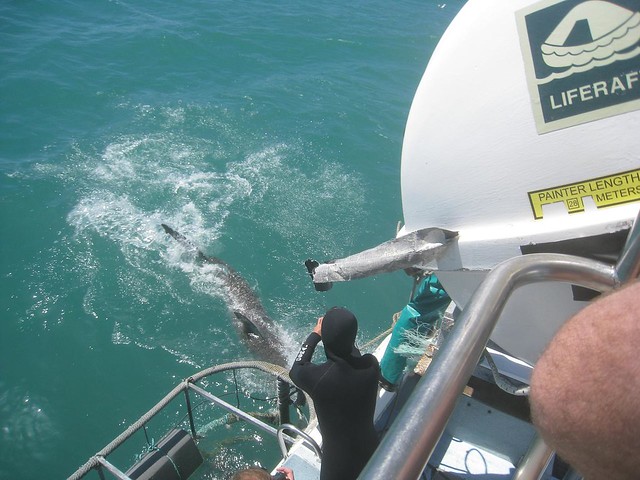
I was in the cage about 15 minutes when it happened. The crew yelled "get down" and I went under to see Jaws ram straight into the cage, inches from my fingers and face.

All I can remember was a mouth full of teeth grinding on the metal cage.

Because the bars that make up the cage are far wider than I'd prefer, it would not be an exaggeration to say the shark's mouth was within the cage.

Taken completely aback by this sudden, close-up confrontation, I glided a few inches to my right so my fingers were in less danger of being (albeit inadvertently on the shark's part) sliced off.

A few seconds later, it let go and quickly disappeared.

One of the smaller sharks that day

I burst out of the water for air, put my knees back on the bar, and feeling I just got five times my money's worth, exited the cage in the least graceful manner.

The videographer harnessed the trip's most exciting moment to reinforce the need to put your hands in the right place " because you can see what happens."

It wasn't until later, watching the video footage back at the office, that I would see the same view as everyone on the boat.

Unlike all the other sharks on our trip, the one I met face to face didn't turn away from the cage at the last minute.

The Waiting Is The Hardest Part

Office of Shark Diving Unlimited

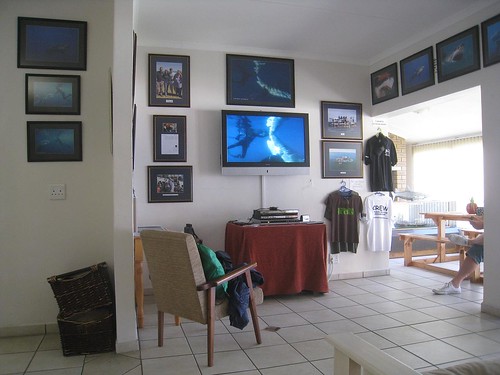
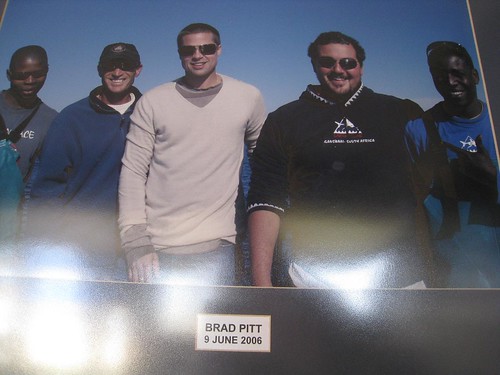
The Shark Diving Unlimited shuttle picked me up at the crisp hour of 6:40am from Moby's. An older couple was already on board, and we quickly left Hermanus for the Great White shark capital of Gansbaii. A buffet breakfast of eggs, toast, muffins, cereal, yogurt and drinks greeted us at the office overlooking the harbor from which we would launch. The walls were filled with framed photos of Great Whites, and even a few shot of the crew with celebrities such as Brad Pitt (3-time visitor), Leonardo DiCaprio, and Prince Harry.

On Brad Pitt's last visit, he brought his parents!

A DVD started up on the big plasma TV. It was a documentary about the company's founder trying to induce a sleep-like state known as " tonic"? on the Great Whites. The boat on the show was the same boat we'd be taking, the Barracuda. As we ate, and watched the documentary, payments were made and another two or three people arrived. It seemed odd that we were making it through the whole documentary instead of leaving once all the clients arrived for the trip.

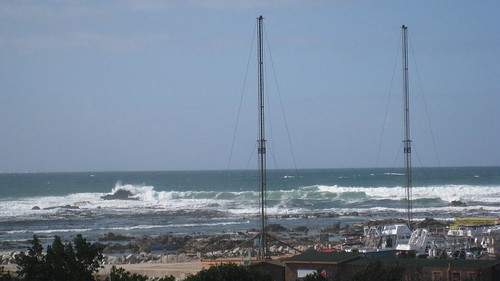
Large swells smash into the rocks around Gansbaii harbor

And then we were informed the 5-meter swells crashing into the rocks around the small harbor were too dangerous, and they were only getting bigger. The boat could handle them, but we were assured the clients could not. After refunds were issued, the shuttle returned us to Hermanus. I was told to have Moby's call the company at 5pm for an update on trips the next day. At 5pm, the company told us they'd have to wait for the weather report the next morning.
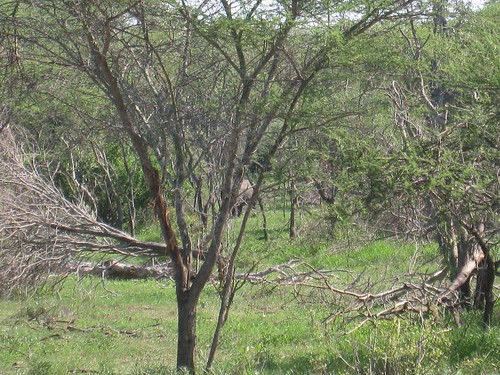
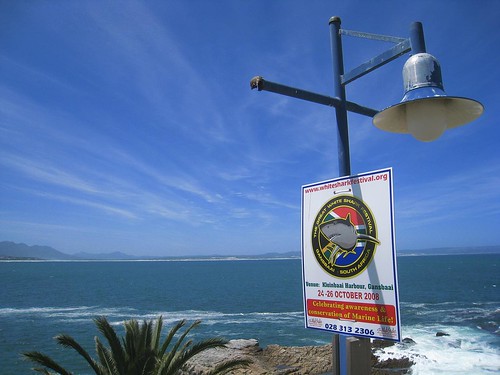
My trips to Gansbaii coincided with the annual Great White shark festival (view is from Hermanus)

I awoke at 7am to the tune of winds whistling outside the window. From the third floor, I could see whitecaps on the water, and was resigned to the news which soon came that there would be no trips for the second day straight. Unlike others with limited time, I was not leaving town until I got in the water with the sharks. Weather reports looked good for the following day, and I was given a later pick-up time of 9:40am.

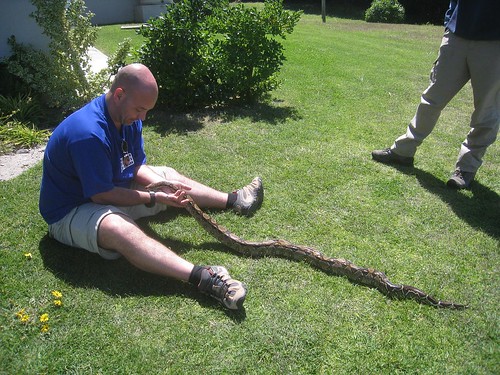
A French guy kills time with the office python

On the third morning, the sun was shining, the wind was light and the waters were calm. I was picked up by a packed shuttle. In all, sixteen clients were being taken out in the afternoon trip, a big difference from my first day (the boat has a capacity of 19 clients with 4 crew). Going through the motions, we ate, paid, and watched the documentary. And again, we made it through the whole DVD while impatience grew. The morning trip wasn't seeing sharks. They were apparently skittish after the stormy weather of the past few days, and weren't coming around the boat. I think the only thing worse than getting up early and to the office only to have a trip canceled is making it to the point of throwing bait out and not seeing sharks!

Around 11am we received good news - the sharks had finally arrived and our turn to dive with them was within sight.

Whale Watching in Hermanus, South Africa

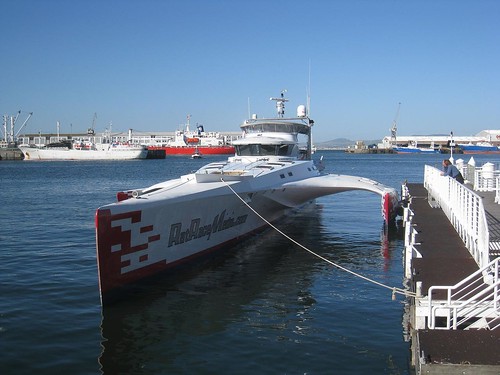
My last hoorah in Cape Town was a two-and-a-half-hour cruise from the V&A Waterfront to Robben Island and past the beaches of Clifton (another affluent district) on the boat that set the most recent speed record for encircling the globe (74 days). The waves were high, making for a more adventurous experience. We spotted a few seals and a small whale on our way back to the harbor.

Around the world in 74 days!

The following day, I was on my first (of many) Bazbus rides. The company offers a hop-on, hop-off service that runs two routes between Cape Town and Johannesburg. The service is similar to what I experienced in New Zealand with Stray, though half the price and with minivans and trailers in tow instead of larger buses.

Whale watching in Hermanus

My first destination, Hermanus, is a famous whale-watching town, so it seemed fitting that I stay in Moby's Traveler Lodge. Southern right whales are the most frequent visitors to the Hermanus coastline, though humpbacks and one other species are also in the waters. Upon check-in, I immediately booked a shark cage dive for the following day.

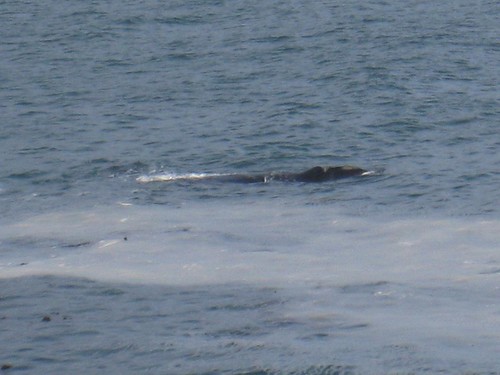
Southern right whale!

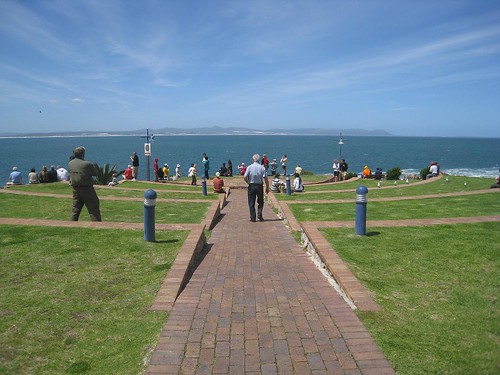
The social epicenter of Hermanus is a little grass-terraced area overlooking the ocean. Behind it, a cluster of restaurants with patios and balconies offers clear views of the water. The whales are so close to shore that you can easily spot them with the naked eye. You can see their flukes (tails), heads, backs, and water sprays from their blowhole.

After a quick lunch, I bought a pair of binoculars and found the whale watching much more fun. It took the guesswork out of whether the black area you spotted was whales or rocks exposed at low tide. Plus, I'd need them down the road for safaris!

Security Concerns


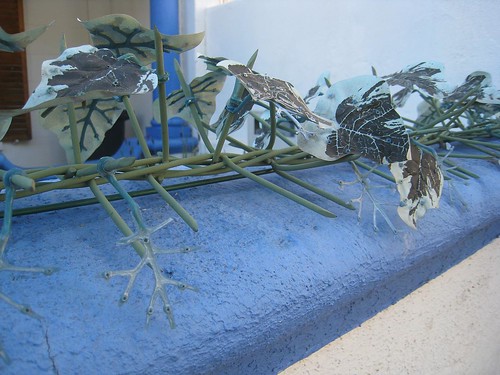
 Plastic leaves are used in an attempt to soften the look of barbed wire outside a business

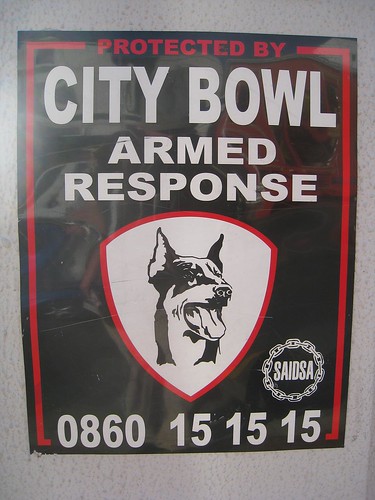
Barbed or electrified wire line most of the walls enclosing homes and businesses in and around Cape Town. Prison style bars block window access while metal gates are common outside doors. Security company signs broadcast armed response to intrusion. Long Street and the train stations have their own security patrol of unarmed men and women during the day (in fluorescent-striped vests and hats). Most of the time they seem bored, though I did walk past one of them separating two arguing men on Long Street.

I received a lot of mixed messages about what is and isn't safe. One local who helped me find the train station for the first time said the train is safer than taxis, while another person said the opposite. And neither are safe after dark. Walking alone after dark has been the occasional reality during my trip, though I learned enough from my Bali encounter to stay out of alleys. In Cape Town, I was uneasy walking down Long Street before the sun even went down. It was noticeably devoid of people despite being a popular district, day and night.

Security sign

Even though I was ending my days before the sun went down, I found it hard to give up the freedom of movement I took for granted elsewhere. It felt as if I had a curfew. In my mind, if I didn't get back before dark, there was a high probability I would be robbed.

My first threatening encounter since Bali didn't come at night. Just the opposite, it was in broad daylight on a crowded sidewalk. I walked out of the train station and found the bus stop where you can catch a 35-cent ride to the waterfront (and vice versa). The bus being boarded was for a different location, so I stood there looking around, considering whether to ask someone about the bus I wanted.

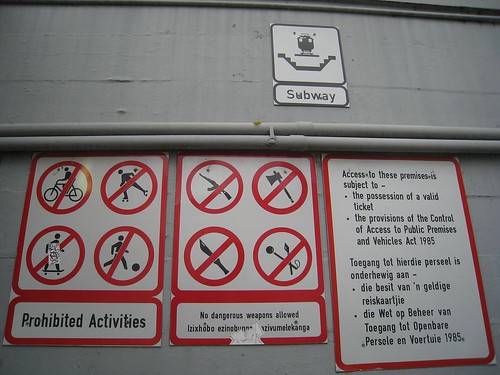
A reminder to leave your AK-47's and axes at home

I wasn't there more than a minute when a young man tightly grabbed my right arm, pulling himself closer to me. Whatever he was trying to sell me, I declined with a straightforward " no."? When he didn't let go, I took a few steps toward two older men sitting on some stairs outside an office. The aggressor maintained his grip, pleading in (a phony) desperation not to pass judgment on him. I looked at the two men and without words they could tell I needed help. One of them said something in Afrikaans (one of the 11 official languages) which resulted in the aggressor releasing my arm and walking away quietly.

The man who helped me then proclaimed the guy was about to rob me. I stood within the office for a minute, still processing what had happened, before the helpful man ushered me to a taxi driven by his friend. I agreed to the $4 fare for a ride to the waterfront, while the cab driver who was told about what had just happened tried to assure me Cape Town is a good place, and that I was just in the wrong place at the wrong time. If I hadn't been enjoying the city for so long already, I might not have agreed.

One thing everyone agrees upon, Johannesburg, South Africa and the continent's financial center, is dangerous.

Sunrise On Lion's Head And Table Mountain


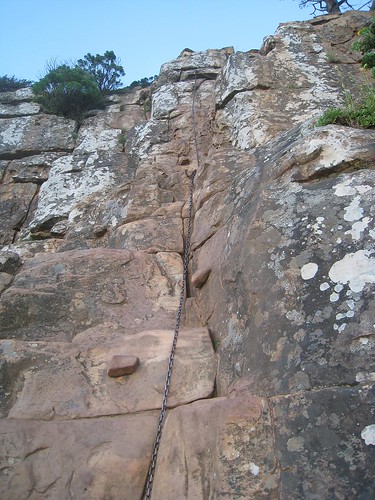
The chain section on Lion's Head

I was spending too much time debating how to get up Table Mountain. The first rule on every advice list I read was not to hike alone, yet the advice from locals was to bring a phone, water, food, hat, sunscreen and I'd be fine going the 2 hours up Platteklip Gorge. Still, I'd been in Cape Town long enough to see how clouds can develop or disappear over the mountain quite quickly. I considered hiring a guide for $35 though it hardly seemed worth it considering we'd be taking the cable car down. I could always take the cable car up...and down, but I was more interested in the physical challenge then the view from the top.

Christel atop Lion's Head with Table Mountain in the background

Thankfully, I found a middle ground. Corne and Christel invited me on an early-morning hike up Lion's Head, a smaller (640 meter) peak nearby. We awoke at the awfully early hour of 5 am, and had parked the car at the base of the trail by 6 am. While the Table Mountain hikes tend to be straight up one face or gorge, the trail up Lion's Head circled around the peak. We were able to take in 360-degree views of Cape Town as we climbed. The most difficult section consisted of two 3-meter sections of chain which we had to grab as we walked our way up some sheer vertical rock. There were a few purposefully placed stone footholds, yet it still felt like a move best left to Batman (think the old TV show with Adam West).


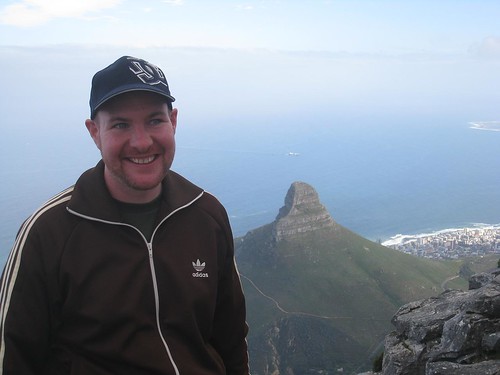
Atop Table Mountain with Lion's Head in the background

Fifty minutes after we began, the top was reached. We enjoyed a few oranges while taking in views of the Atlantic. Climbing Lion's Head (so named because it has the profile of a male lion) is a popular morning ritual for active Capetonians, especially as a precursor to work. Corne said she use to do it four to five times a week. Once down, we went for coffee before I was dropped off at Table Mountain's cable car.

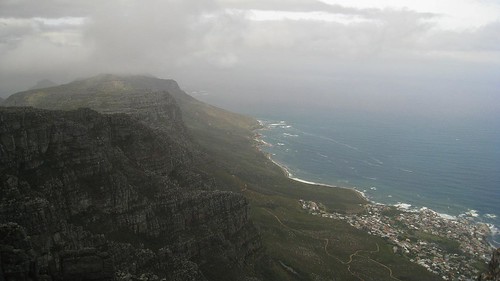
View of the mountains along the coast

Finally atop Table Mountain, I spent an hour walking around one of the trails, taking in the views. The weather was mostly cloudy. I even caught a glimpse of the stone stairs leading up Platteklip Gorge. I know it was well within my physical abilities. It was my anxious mind which would have kept me from really enjoying it.

Fynbos vegetation atop Table Mountain

Before descending, I played the role of tour guide by taking photos of a friendly Iranian tour group with 10 different cameras. The man who spoke with me was pulling for Barack Obama to get elected president in the hope it would lead to improved relations between our countries.

Capetonian Adventures


 On the farm

I met Christel on the flight from Doha to Jo'burg. I had the window seat and she sat to my right. Once I confirmed she was from South Africa, I bombarded her with questions. She took it all in stride, and even offered me a place to stay. We exchanged information, and after three nights of couchsurfing with Hannes, I was picked up and transferred to her home in Rosenbach, a student town (University of Cape Town) a shorter 15-minute train ride from downtown.

We dropped off my bags in a spare bedroom, I met her roommate Corne, and all three of us sped toward Seaside, an affluent residential area overlooking the coast. I had accepted a last minute invitation to a dinner party being thrown by one of Corne's friends. We were 30 minutes late, and therefore handed shots of vodka and glasses of wine to catch up. Besides the hosting couple and us, there was one other woman and two dogs. Dinner was served almost immediately. One of the hosts did catering work, so the food was appropriately delicious. There was chicken pie, couscous, salad, and vegetables. Dessert was a tasty, traditional malva, cake doused with liquor, cream, and covered with strawberries. Conversation and coffee/tea completed the night.

The next morning I was up at 6:30am to check the weather before a possible hike up Table Mountain. The wind was howling which likely meant cloud cover over the mountain so I accepted Christel's invite to Stellenbosch for scones and brunch at a friend's (leased) farm. Along the way, we picked up their friend Huey in suburbia. Our first attempt at breakfast was deterred by a " no dog"? policy at a winery. Our second attempt was at the botanical gardens of Stellenbosch University, which also had a " no dog"? policy. A decision was made to secure Choppy, Corne's dog, in the car so we could get breakfast.

Fairview winery

After coffee and a bite to eat, we drove around the university which Corne had once attended. It was beautiful, and one of the better schools in the country. Then it was off to the grocery store to pick up some food for a braai (bbq) and Fairview (winery) to pick up some tasty wine, cheese, and bread. I was happy to see the goats again.

Lots of people were gathered at the picturesque farm for the afternoon, including Eric. Before we arrived, I was told he was an up-and-coming South African actor who broke his neck in a diving accident in 2007, leaving him paralyzed and wheelchair bound. Among the other guests were a South African in town for a wedding though returning to law school at Columbia in New York City, an English woman who recited a few personal poems, and a Dutch couple who had to return early from a self-drive safari in Namibia due to sandstorms.

 Promenade

To cap off the day, we took a short walk along the promenade back in Cape Town.

Photos From Around Cape Town

Table Mountain as seen from the waterfront

Table Mountain and Devil's Peak (left) as seen from the waterfront.

A mega-yacht holds 2 helicopters, a speedboat, and a sailboat

A boat so big it carries two other smaller boats and two helicopters!

View of Camps Bay (celebrity/wealthy part of town)

Camp's Bay is the hangout of the rich and famous.

A colorful building on Long Street

Long Street is home to many popular bars and clubs.

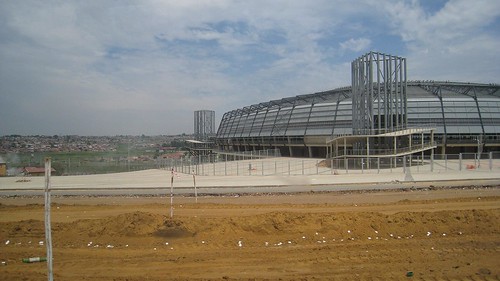
Soccer stadium under construction for 2010 World Cup

Preparations for the 2010 World Cup.

The promenade at sunset

The cold Atlantic brushes up against the city's promenade.

Couchsurfing With Hannes

Hannes considers upgrading to an Aston Martin

A benefit of spending so much time in Asia was the affordable accommodations. Single rooms with baths were the norm, and even if there were scorpions crawling around some of them (McLeod Ganj, India), the privacy was wonderful.

V&A Waterfront at night

Dorms are the norm at the hostels in South Africa, and they're not cheap. In fact, the prices are comparable to New Zealand, so I hit up Couchsurfing.com to try and find a place to stay for a few nights.

I received two positive responses. One from a DJ/music producer, and the other from Hannes, a doctor working for a health insurance company. I went with Hannes and it turned out to be a great experience. My first night, he cooked a traditional South African curry with chicken which we enjoyed with some local white wine.

Ostrich fillet

Another night, we went down to the V&A waterfront for dinner. I picked a restaurant which had opened in the past two weeks, and while the food was great, the service needed a little fine tuning. A German group next to us got upset about the improper size of a steak, and I overheard the floor manager telling my waitress to provide a steak knife for my ostrich fillet.

Noordhoek

One afternoon, we took a quick trip to Noordhoek beach, which is very wide at low tide and a great spot for the locals to take their dogs out for a run.  Horseback riding is also popular.  The water was freezing and the currents strong, so it is not ideal for swimming. One surfer was catching waves despite the chill.

Noordhoek beach

Touring Robben Island

Nelson Mandel's prison cell on Robben Island

Lucinda (Australia) and I ate lunch at the V&A waterfront before boarding the ferry to Robben Island. We both opted to organize the trip as part of our township tour given the waiting list for boat tickets can be several days. The prison tour was guided by an ex-political prisoner who was once held on the island along with Nelson Mandela and many others. Surprisingly, he and most of the island's employees live there today.

The ex-political prisoner who lead our tour

Our 3pm boat was split into two, creating a tour group size larger than I expected. Made up of families, couples, and a few younger backpackers, we walked through the prison which had recently undergone a makeover. Unlike the eerie feelings I felt in Cambodia's S-21, this prison's new interior paint job did little to give a dreary view of life there.

View of Cape Town and Table Mountain from Robben Island

In addition to the walking tour, we took a bus ride around the island, passing through the current residents' village, along the coast for great views of Cape Town, and past World War II embattlments and the limestone quarry where prisoners would work. Amazingly, the island is host to 148 different species of birds.

The island is overrun with bunnies

And up to 10,000 bunny rabbits. It has been in the news that the island will be closed for the first two weeks of November to cull the furry critters. Apparently a non-indigenous cat was removed, leading to an explosion of the non-indigenous bunnies. They've been destroying the island's vegetation so it's time for them to go.

Sunset over the new soccer stadium being build for the 2010 World Cup

During the 6pm ferry back to Cape Town, the sun was setting and I had my first view of the new stadium being build for the 2010 World Cup.

District Six And The Townships

Township restaurant

You don't need to hang around Cape Town too long to see its affluent side. Tour buses regularly cruise through Camps Bay, the exclusive playground of the rich and famous. I spotted an Aston Martin in passing and the streets are filled with Mercedes, Audi, and BMW. Toward the popular waterfront, you'll find Lamborghini in a showroom and multi-million dollar mega-yachts. It would be very easy to live in a tourist bubble and completely overlook the townships (poor communities) and informal settlements (shantytowns) which contain the majority of Cape Town's population.

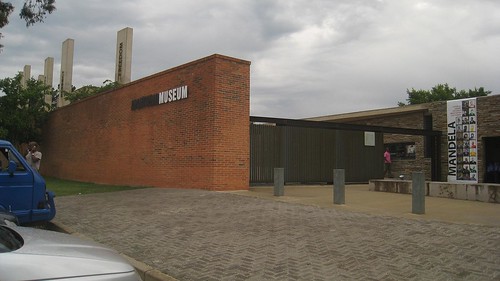
District Six Museum

Wine tastings and nature trails under my belt, I set off on a more somber cultural tour to the city's poorest neighborhoods. The morning began at the District Six Museum housed in an old church. District Six is a region of the city between the port and Table Mountain. In 1966, under the cloud of apartheid and more specifically, the Group Areas Act of 1950, District Six was declared a white group area. By 1982, over 60,000 people had been forcibly removed and relocated to an outlying area known as Cape Flats, while homes and businesses were bulldozed.

Today, District Six is mostly overgrown weeds and grass as the land was never fully developed after it had been cleared. A few new homes are going up in an effort to provide restitution to the displaced people or their living relatives.

A local takes a swig from the beer bucket

Next, we headed to the first township where we were lead down an alley to a small shack, the local men's club. It was only 10:30am, yet the local beer tasting was about to begin. Everyone took turns sipping the rather awful tasting brew from a giant can. Cultural norms are different in the townships, as was apparent when we were told a woman's place was still seen in the home (so you won't find them drinking beers with the guys). After us tourists had our fill, the locals began to pass around the can taking noticeably bigger gulps. Unemployment is 52%.

Old public housing units

Lead by an unemployed resident (training to be a guide), we were shown the older, more cramped and dilapidated public housing where up to 16 people live in an apartment with 4 small rooms off a main kitchen area. Our guide said that up to 50 people share the same toilet facilities.

Next, we walked over to the more costly ($28/month) renovated buildings. We saw an apartment which looked to be in much better condition, and probably on par with some efficiencies in Western cities.

Traditional healer

A brief stop was made at the " office"? of a traditional African healer. It looked exactly like you'd expect, hooves, bones, and all kinds of animal parts hanging from wires strewn across the room. The guide made sure to point out a few condoms hanging from one of the wires as well, in recognition of the population's (hopefully increasing) HIV/AIDS awareness. As of 2006, about 5 million people were infected, and up to 30% of deaths could be attributed to the disease.

Pre-school kids at play

Our final stop was a peek inside an NGO-run pre-school and the Philani Centre, a Women's Project in Khayelitsha (a township with over 1 million people). The kids sang us a song, while Philani offered a chance to watch some women create textiles (which could be purchased, of course).

Clearly, South Africa is a land of contrasts. I find it hard to reconcile the ostentatious lifestyles of the wealthy with the abject poverty across the highway. As someone said to me, everyone has the same view of the mountain.

Daytripping The Cape Peninsula

Seal Island

The Daytrippers van picked me up around 8:30am and we drove south along the Atlantic coast. The weather was perfect, cool with a warm heat radiating down from the sun. Our first stop was Hout Bay from which we took a ferry to Duiker Island to see the colony of Cape fur seals. They did what seals do.....lay around sunning themselves, with the occasional one splashing around in the frigid waters.

Whale-spotting

Back on shore, we continued the drive, with the new instruction to keep an eye out for whales!  Southern right whales and humpbacks migrate close to the coast from June to November and they can be seen clearly from land, as we soon found out.  We stopped a few times when there was confirmation of a whale in the water.  I saw tails sticking out, a head pop up now and then, and plenty of water being sprayed upward from their blow holes.  It was fun to try and spot them amongst the wind-whipped whitecaps.  The people with homes overlooking that area of the coast must see quite a show every year. 

African penguins

Boulders Beach hosts the African penguin, formerly known as the Jackass penguin due to the funny way it walks.  They were chilling out, and molting up a storm, all along the wooden walkway.

 Cape of Good Hope

We ate lunch further down the road at the visitor center for The Cape of Good Hope Nature Reserve.  As lunch was being set up, I spotted my first wild ostrich.  The break allowed me to chat with a young English couple temporarily living in Cape Town, and another Brit.  Food in our stomachs, we jumped on the mountain bikes we'd been towing all along.  A unique feature of the Daytrippers' tour is the bicycling to The Cape of Good Hope instead of driving the bus right down to the water's edge.  It was one of those " stop and smell the roses"? moments as we careened along the road taking photos and battling the constant (and strong) winds blowing off the Atlantic. 

 Cape of Good Hope

Thirty minutes later, we arrived at the Cape of Good Hope, the most south-western point on the African continent.  The most southern point is Cape Agulhas, a few hours further east, but claiming the most south-western point sure makes for a good photo. 

Hanging out with the dassies

As we began to hike up along the cliffs, we passed a few dassies (aka rock hydrox) taking in the view.  Why these furry little creatures are the closest living relative to elephants, I do not know.  The entire Cape Peninsula is covered with a combination of flora (plants and flowers) known as fynbos unique to the western cape.  Thirty plus minutes later, we reached the parking lot of the Cape Point lighthouse where we took a funicular called The Flying Dutchman (think cable trolley) up the hill to save our legs the further effort. 

 Beach along the cliff walk

The one common animal absent from the day was the baboon.  The guide said they don't like to hang out by the roads and paths when it's windy. 

Cape Point

The Western Cape Winelands

Wine country

I awoke early to a beautiful day in South Africa. Normally it is not my style to book an activity for the day after my arrival in a country, however the girl who checked me in said there were a bunch of people already signed up for a wine tasting tour so it should be fun.

Sure enough, our van included 3 Norwegian nursing students fresh off two months of work in Namibia, 2 Indian army guys on vacation from the war-torn Democratic Republic of Congo, 2 Kiwi sisters, Dominque from San Francisco, Milena from New York City, an Israeli, and me. Our wine tasting guide for the day was Bruce, a charismatic and fun South African whose prior work included safari guide, bomb disarmament, and clown.

The Fairview Goat Tower

As we began to drive north toward the Stellenbosch region, everyone on the van began to socialize. The views of vineyards leading up to mountains and blue sky were wonderful. Our first winery was Fairview. In front of the main building was a goat tower, and sure enough a goat was hanging out atop it! Once inside, it became clear the goat was a mascot as it had wines named after it and t-shirts bearing its image.

Bruce gave us the run down on the proper way to taste wine. I was under the impression you're suppose to spit out the wine, however he said that's only something you do if you're tasting a lot (say 50 types). We tasted our first white wine together and were then released to the bar to choose 5 more on our own. In between refills, we shuffled back and forth to the cheese counter where I discovered goat cheese dipped in balsamic glaze is heavenly.

Wine and cheese at Fairview

In a valiant effort to keep a schedule, Bruce rounded us up and we barreled onward to Beyerskloof for a great presentation by one of the winery staff. We tried a few reds and whites, and then we were taught the proper way to taste and drink brandy. Like wine, the process involves all of your senses except touch, and I could appreciate the flavor for the first time when shown the steps, which include the proper way to hold the glass in your hand so as to warm up the brandy and soften the bite.

The wine tasting room at Fairview

I lost track of the third winery's name (big surprise, right?). We tasted a few more wines at the bar and enjoyed a delicious lunch on the porch overlooking vineyards. Most people (including me) ordered a big cheeseburger infused with Pinotage (a South African grape/wine) and smothered in caramelized onions which Bruce had recommended. Completely stuffed and pleasantly inebriated, it was off to our fourth and final winery, but not before a convenience store stop for ice cream!

Low on time, we toured the cellar at Villiera, and then took our seats at a table on the outdoor stone patio. Bruce kicked off the next session by using a sword to uncork a bottle of bubbly. He then continued to pour us a slew of wines, sparkling, red, white, port, fortified. By then, I was completely over wine. Hours earlier, I had lost the ability or will to compare each one with the prior, yet like the rest, I tried to finish strong. It was here that one of the owners meandered out to chat with us, a nice experience to end the tour.

Bruce keeps on pouring at Villarea (owner standing to the right)

Back at The Backpacker, I was pleasantly surprised by the quality of food provided for the Braai (BBQ). The appetizer was tasty bacon-wrapped figs, with the buffet consisting of chicken kebabs, snoek (a local white fish), potatoes, corn on the cob, salad and bread. There were so many people, the outdoor patio and indoor bar area were packed.

My South Africa Snafu

My first view of a cloud-shrouded Table Mountain

My proud place at the front of the immigration line only meant I received the news sooner rather than later, and by a none too pleased woman.

The last time I booked a flight in advance to ensure I had proof of onward travel was Singapore to Hong Kong back in February.

Officials from China, Nepal, India, and SE Asia didn't seem overly concerned that I would take up residence in their countries, so why would South Africa be different, I thought.

The entire plane had to pass through immigration before I was lead to an internet connection in an office upon my request.

A young woman was to stay by my side the whole time, and eventually, a man joined us in the office too. I was glad they were both friendly.

I was kicking myself for not having Warren's cell phone number on paper as I knew he was waiting for me.

My hope to have some semblance of control over a costly decision under a cloud of fatigue and stress was dashed when the internet connection gave out after ten minutes.

Not even enough time to get one quote.

It was suggested I could go to the airline counters to buy direct, though it appeared to be in violation of airport protocol.

The man lead the way in a quiet and covert manner as we passed customs and a security guard.

I passed by Warren and was able to quickly tell him why I was delayed. The only counter open was British Airways.

The bar at The Backpacker (hostel)

I once again admitted to arriving on the continent without proper documentation.

The woman who was helping me tried to say that every country in the world requires a return ticket for you to enter.

I briefly considered a foray into my last 8 months of travel, though bit my tongue instead.

To aid me in the decision, a map of the world was unfolded on the counter.

The woman handler had left by this point, while the man stood patiently to my right.

Dealing with British Airways put a big limit on my options.

I could fly from Jo'burg to Victoria Falls for $200, however by that time I might be low on money and didn't want to find myself in central Africa without the funds to extricate myself.

Alternatively, I could fly from Jo'burg to Cairo for $593 on Air Egypt, the catch being a requirement that I include a British Airways flight since they would be booking the whole ticket for me.

Under increasing pressure from the airport handler, the British Airways woman, and myself knowing that Warren had been waiting for me almost 2 hours, I bought the Cairo flight.I could always change the dates later for a $50 fee.

Relieved to have a ticket in hand, the man walked me back through a staff security point and found the surly woman who held my entrance into the country in her stamp book.

$15 gets you a 4-bed dorm in a boutique hostel

Passport updated, I grabbed my backpack and greeted Warren properly, feeling horrible that I'd kept him waiting so long when he was going out of his way to pick me up at the airport.

Easily saving me $18+ in cab fare, he dropped me off at the award-winning Backpack (hostel, though they're called backpackers in South Africa).

It was dark, chilly, and I was exhausted.

Excited to begin my African adventures, I impetuously signed up for a (hopefully) relaxing full-day tour of the Winelands, to be followed by the hostel's Tuesday night Braai (traditional South African barbecue).

The Air Qatar Flights

Bye Bye Bangkok

6:17 pm, Bangkok Airport


I was shopping till the bitter end! Impulsive. Wasteful? Not necessarily. Got a lot done today. Feeling a bit tired, but almost ready to go through security to the gate. The bus had broken down so I shared a taxi with a German woman from Stuttgart and a free-spirited French woman from Chamonix. The driver had us pay the highway toll to avoid traffic, and then drove like a bat out of hell.


Air Qatar earns points for a great dinner


Based on Air Qatar's commercials claiming 5-star service, I expected a great (though long) trio of flights. I got a window seat the whole way, just in case you can spot a herd of antelope from 40,000 feet.


Bangkok, Thailand to Doha, Qatar = 3,304 miles / 6 hours 40 minutes


Air Qatar features a video


11:56 pm, Doha Airport


Here I am at the Qatar airport. It's bright, busy, and my laptop can't be charged as I forgot my AC adapter!


The flight service was great. Video on demand and good food. I caught Indiana Jones IV and Meet Bill. I even got a wink or two of sleep. The empty seat next to me didn't hurt either. 6 hours lay ahead. I can read, I can listen to music, I can nod off. I can use a credit card to buy food thus avoiding the need to obtain local currency.


Sunrise over Doha airport


6:00 am, Doha Airport


Fifteen minutes from Gate 6 opening and taking a shuttle bus to the airplane. The last 6-7 hours have been dreary. I managed 1-2 hours of sleep in a contorted position around the arm rests on the seats. Checked my email a few times. My brother sent me a belated birthday present (thanks Jon!) and my friend Kai's friend emailed me back regarding a side trip to visit him in Botswana. Hopefully it will be affordable to make my way up there.


I'm hungry again, and looking forward to saying Jo'burg (short for Johannesburg) with some authority. And so grateful Warren is picking me up at the Cape Town airport.


Flying south over Ethiopia


The flight from Doha to Jo'burg goes over a ton of countries: Saudi Arabia, Djibouti, Ethiopia, Kenya, Tanzania, Mozambique, Malawi and Zimbabwe.


Doha, Qatar to Jo'burg, South Africa = 4,156 miles / 8 hours


Banking over Jo'burg


12:25 pm (South African time)


Knees hurt. Full belly after decent chicken lunch (with yummy tiramisu dessert). Cold, tired, a bit unwell. It'd be best for me to get a good night's rest.


Jo'burg to Cape Town = 807 miles / 2 hours


Approaching Cape Town


5:50 pm, Cape Town Airport


Major snafu for me. I don't have any proof of onward travel, so no entry. I was just told I need to buy a ticket out of the country tonight. I guess this was bound to happen at some point, I was being too relaxed!


Thailand - It's A Wrap

 South Africa TV ad

As I cleaned up after the trek, I spotted a television ad for South Africa on CNN International or BBC World.  My anticipation continued to grow.  I must find out first hand whether Leonardo DiCaprio did the South African accent justice in Blood Diamond!

I spent a quiet night uploading photos at a cute cafe next door to my guest house before departing the following afternoon for Bangkok via train.  It turned out to be a longer trip by a few hours, and more expensive, than if I had taken the bus, however I wanted to try something different.  The 2AC sleeper train cars were narrower than in India, yet the staff made your bed and I took advantage of the dinner and breakfast service.  I also appreciated the purple curtains which offered a sense of privacy.  The scenery during the first few hours was green and hilly.

Back in Bangkok for the third time, I took a room at the same place I stayed before with Josi and Catharine, The Rambutri Village.  I ran lots of little errands like buying more mp3's, looked for scorpions at night (I found a bug cart, but they guy told me to come back in a week), overhauled my wardrobe with the finest threads Th Kho San Road has to offer, and enjoyed a few last meals (banana pancakes w/honey, spicy mossaman curry with chicken and rice, coconut shake, etc.).

Day 3 - Whitewater Rafting

Bamboo rafts

I slept better the second night, and we ate a solid scrambled eggs, toast, and watermelon breakfast. Our time spent walking in the forest the final day was all of 15 minutes. I kid you not! It may well have been the most relaxing trek ever. I think it would be better characterized as a cultural hike. The term "trek" can then be reserved for longer distances and time walking per day.

9 Argentinians, 2 Spanish, 1 Chilean, 1 Israeli, and me

The benefit of less walking was the incorporation of the elephant rides on day 2, and rafting on day 3. Monse and I were nauseated by the truck ride upriver, but we were treated to exciting sections of whitewater. The rubber rafting lasted about 30 minutes, of which a solid 20 were in rapids.

When I asked our Thai river guide about the class of the final rapid, he didn't understand me, only characterizing it as the "big" one. Left to my own judgment, I'd say we hit a few Class III's and maybe a Class IV. The cool part was there was barely any work involved. We were just along for the ride, and when the rapids ended, we switched to a traditional bamboo raft for a 20 minute ride along a calmer section.

A local jumps off a cliff at a waterfall near Chiang Mai

Once we were out of the river, pad thai lunches were consumed and we drove an hour and a half to a waterfall near Chiang Mai. A few of the other guys slid on their butts down the waterfall in the center of the photo above, though only the local did the cliff jump. I didn't feel comfortable doing either at this particular waterfall and sat them out.

Day 3 concluded with drop-offs back in Chiang Mai. I took a room at a nicer hotel (sorry Kent) to catch up on rest as I had a night train booked to Bangkok the following day.

Day 2 - Elephant Rides

Trekking

Sleeping in the authentic way of the villagers was not particularly restful. I tossed and turned all night. In the morning, chickens were running around under the platform we slept on. Tea and coffee were available, while breakfast consisted of toast and a hard-boiled egg.

Our group and the other trekked together for the 1.5 hours to the elephant camp. Once at the camp, we split up with half the people riding elephants on the opposite side of the river, and half on the restaurant side (which was adjacent a paved road).

Elephant camp

Unfortunately, I was amongst the group on the road side. Myself and an Israeli guy climbed aboard a monstrous elephant while the trainer sat on its head. Unlike the ride in Laos, this experience included the elephant feeding on two or three occasions while we moved along. The sheer power of their trunks to pull apart foliage (heck trees) and carry them along while munching away was a sight to behold.

Monse and Xavier's elephant goes for a high branch

Much of the walk was along the pavement with cars and tuktuks driving past us. It was a bit of a letdown for me and the Spanish couple. After about 30 minutes, the guides parked the elephants off the road and dismounted them for a smoke break. When I motioned to them to ask about why we were just sitting there, they said "5 more minutes."

Either they didn't explain that this was an opportunity for us to get use to the elephants without the trainers on their heads (which was the way they would walk us back), or they were really taking a selfish smoke break at the expense of the tourists' experience. I felt completely unsafe on our massive pachyderm, though he stayed practically still unlike Monse and Xavier's.

Did I mention there was no rope or safety bar to hold us on the seating platform?

I'm still a bit elephant-shy

Once we arrived safely back at the docking station, the Israeli fed our boy some bananas, while I tried my hardest to reach out and pet his trunk. As you can see in the photo, I'm still developing a sense of comfort around these funny looking animals.

Painting during the elephant show

The elephant show was a sad sight. I took photos, and clapped on queue, but felt bad for these mighty creatures which were reduced to playing the harmonica or throwing lawn darts at balloons with their trunks.

The Japanese girls departed, and my group adopted the Israeli from the first night. We then merged with a group of 9 Argentinians and a Chilean for the 1.5 hour walk to the second village. Some of them spoke better English then others, though Spanish was now the common language leaving the Israeli and I by the wayside.

Campfire song and dance with some of the villagers

We arrived in mid-afternoon at the second camp. There was absolutely nothing to do. After reflecting on this fact, some people talked while others napped. Dinner came around and it was thankfully better than the previous night. The South Americans' guide was a happy-go-lucky guy who all but shouted his passing commentary and jokes. He was the social leader for the night.

To start us off, some villagers arrived in traditional dress and sang some songs as quite a few of us (but not me) danced in a ring around the fire. Then, the guide had us playing campfire games with the loser having to sing or dance. It was silly and embarrassing, especially when I couldn't come up with a song to sing on my own after losing one of the games.

Monse lead us later in a few others, including one I had played on my Nepal rafting trip. The entertainment was much better this second night, and we all retired around 10pm.

Day 1 - Hill Tribe Trek

The hills are alive....with the sound of music

Chiang Mai is plastered with advertisements for treks in the surrounding area, especially north and west of the city. Like tubing in Vang Vieng, and visiting the Killing Fields in Cambodia, trekking in northern Thailand is on most backpackers' itinerary for Southeast Asia.

Expecting the quality and prices of all the 3-day treks to be similar, I booked my trip through one of the first travel agents I came across a few days earlier. In another case of spending money unnecessarily, I bought a pair of knock-off Teva sandals at the Sunday market thinking I could then leave my sneakers and flip flops behind. To save you the suspense, they only served to quickly cut my two littlest toes as they weren't properly broken in.

I was picked up in a pick-up that already held a Spanish (technically Catalonian I would learn) couple, Xavier and Monse (pronounced "moan-say"). We also added two Japanese women to the mix, however their English was very limited and they had only signed up for the 2-day trek.

Our only snake sighting of the trip....and it was dead

We stopped (like everyone else starting their trek that morning) at a butterfly/orchid garden outside of town. And then it was off to the countryside where before we even began walking, it was time to sit down and eat a lunch of fried rice with chicken. Our guide reclined restfully, which would become a trend.

Lunch devoured, we strapped on our daypacks and headed off. I spotted our one and only snake while we were still in view of the lunch spot. Unfortunately, it had been squashed dead by a motorbike.  We passed all sorts of locally grown crops such as bananas, coffee, and avocados.

Xavier and I toast at a tea break

We walked a total of 3 hours to reach the Karen tribe village, however we had 1.5 hours worth of breaks along the way. Xavier, Monse, and I all began to get frustrated with the slow pace. The Spanish couple were also on a trip around the world, already having trekked to Machu Picchu in Peru, climbed a 6,000 meter peak in Bolivia, and most recently done a short village trek in Burma. More on them later!

Monse tries out the Karen tribe neck ring

Once we reached the village, I was surprised at how small it was. It was Xavier, not our guide, who pointed out that the Karen people are persecuted in Burma, and thus seek refugee status in Thailand. They are allowed to own livestock and earn money from tourism, though not grow crops. The women are known for their long necks.

Header (ouch!)

It was also Xavier who pointed out the net game akin to volleyball though played without hands is popular in Burma, though I'd seen it being played all over Southeast Asia. We all took turns knocking the ball around with the guide and a few of the guys in the village.

In one instance, I kicked my left leg up and out (muay thai style), only to have my right foot slip completely out from under me. I was horizontal for a brief moment before I came crashing down on my right forearm and hip. It might have been less embarrassing if it hadn't just been me and the guide playing with everyone else watching!

Our beds

Our accommodations in the village were basic (which is the point, of course). We were surprised to find a few cold water showers existed, while the toilets were squat style. Another group of trekkers arrived and set up in a bigger structure. Dinner was served by candlelight, and once I started to find bits of chicken bone in the curry, I lost my desire to eat in the relative dark. After the meal, most people sat around the campfire talking for a period of time, though in anticlimactic fashion, everyone was in bed by the early hour of 9pm.

Soldier Of Fortune

Me and a modified M-16

After the tigers got my adrenaline pumping, I took the tuktuk driver up on a suggested stop at the local shooting range. He mentioned they have machine guns, and I couldn't resist. I know Cambodia is (or use to be) the popular place to fire a few rounds from an AK-47, but I wasn't in the mood to fire automatic weapons during my time there.

Thailand, on the other hand, is all about having fun.

One target + 25 rounds = swiss cheese

I walked into the small office and checked out the weaponry on hand. Pistols, a rifle, and a few shotguns. I held the pump-action shotgun, but I didn't think I was ready for it yet. I walked out since they didn't seem to have what I wanted.

A minute or two later, a plump 12-year old Thai kid (whose role at the range was anyone's guess) came to the door with a modified M-16 and asked if it interested me. Now we're talking, I thought. He also showed me a modified 9mm with a longer barrel and laser scope. Holding the pistol and pointing the little red laser, I was reminded of how cool Arnold was in the original Terminator.

Shooting Range in Chiang Mai

Ultimately, it was the machine gun I wanted to experience, so I bought 25 rounds and fired them off in two separate spurts. The instructor told me the ammo was just a tad smaller in caliber than an M-16 round (.22 vs .223 caliber), and with a smaller shell casing. I did not ask why the rifle had been modified, though I suspected it had to do with the cost of ammunition (any gun aficionados out there care to chime in?).

Pow, pow, pow. The gun felt easier to fire than the 9mm I tried back on Phuket, and with less kickback. Unfortunately, I ran out of rounds before I got to try the automatic setting.

Befriending Tigers

Author's Note: I know that tiger tourism is a concern of many people around the world, myself included. In 2018, I considered removing this article, however, before doing so I came across an article entitled "The Truth About Tiger Kingdom" which clearly highlights the difference between Tiger Kingdom where I went in Chiang Mai in 2008, and the Tiger Temple, a separate park that has been exposed for abusive practices. 

Clearly these 10-month old tigers are *not* drugged

Wow! What a morning. I woke up sore from the Muay Thai but got washed and breakfast at The Corner Restaurant.

I wanted to go to the Tiger Kingdom when it opened, and my plan paid off.

I was one of the first people in the cages. I decided to go all out and pay for 15 minutes with the big tigers, small, and cubs, plus a photographer for the big ones.

I couldn't resist a belly rub

The big ones were BIG! No safety speech was given, just walked into the cage and told to pet them from behind - tail, body, or rear feet. No flash photography.

And because it's clearly not obvious to some people, no putting body parts in the tigers' mouths.

I've never felt so physically vulnerable to an animal

The Tiger Kingdom has been open six years, and once the tigers reach about 16 months, they're turned over to a Thai zoo because they're deemed too big and strong for photo ops with tourists (and to control in general).

The older ones were about 10-11 months old, weighing around 160-180 pounds. I remember one was named pancake. Big paws.

The staff had me lying down with them all. I felt incredibly vulnerable.

Somehow sitting up, I felt slightly better positioned to fend off a wayward paw, though either way I sensed the tigers could knock my head off in seconds.

Two 10-month old tigers

While getting my last photo with two big ones, I started to smell a foul odor, only to realize the one nearest me had farted.

I took that as my queue to exit their regal presence, while the staff member nearby laughed and said they like to do that a lot.

Petting one of the 5-month old (sleepy) tigers

The smaller 5-month old tigers were just as docile, though more malleable in their deep sleep, according to the staff.

Charming a tiger cub into submission

The 1-month old tiger cubs were cute and playful.

One even started nibbling on me, biting the inside of my right arm (ouch!), leaving a noticeable bruise as a reminder of our time together.

What a cutie!

There were 4-5 other tourists in the cage while I basically had the first two to myself.

Eventually, they left and I had a few minutes alone with the cubs (aside from the handlers).

Resting with a tiger cub

Visiting the Tiger Kingdom was one of the coolest experiences of my life, and I highly recommend it if you're planning to visit northern Thailand.

Spending time up close and personal with the cats was incredibly intimidating, as even the cubs proved to have a strong (albeit playful) bite.

The enclosures where we saw the tigers seemed small, though they were immaculately clean.

Playtime with the tiger cubs

I didn't think to ask if there was additional land in the surrounding area for them to stretch their legs.

All of the tigers looked healthy, and while big cats are known for their sleepy tendencies, I didn't in any way sense that they had been drugged (as has been rumored at another tiger facility for tourists in Thailand).

Dare #15 - Completed - Mastering The Art Of Muay Thai Boxing

Thailand's newest Muay Thai boxer

#15 - From Jay:

I dare you to take a Walk In Muay Thai class for one day. It will be the best workout of your life, and it is fairly cheap! Since you are in Phuket, may I suggest Rawai Muay Thai, or Tiger Muay Thai? They are the most Americanized. I'll buy ya a beer.

Reward: A beer

Status: Completed

Training corner

Jay's dare provided me with yet another experience I wouldn't have sought out on my own, especially given a complete lack of martial arts experience in life and an aversion for fighting in general. I first heard about muay thai boxing in the context of The Travel Channel's "5 Takes" show which sends 5 lucky travelers to a region of the world equipped with laptops and video cameras. The sporty guy on the show went through a 2-hour training, and now it was my turn.

A few blocks from Kent's Guest House was one of Chiang Mai's boxing stadiums (think boxing ring inside a large bar). Fresh from 6 hours of cooking and eating Thai food, I took on the dare knowing I'd have to work for that beer.

Training in the ring

Mr. K, the 1987 muay thai champion of Thailand, was my trainer. A couple of other real Thai fighters were also hanging around, with one in particular helping me out. He went out to buy me some tape to wrap my wrists (an additional cost for any other novices out there) and took all of the photos while I punched and kicked with all my muay thai might. A young Texan guy also joined the training session, trying to work off the weight gained from being on the road for 6 months. I could relate all too well, having recently confirmed a weight gain of 20 pounds (9 kg) since leaving home 11 months ago.

Before Mr. K showed me a single move, he had me spend 10 minutes bouncing left and right around a tire. A few minutes later, my calves were burning and I lost any sense of shyness, removing my already sweat-soaked shirt. The boxing shorts were on loan, after a quick smell from Mr. K, deemed they were wearable by a customer.

Right kick by one of the better fighters in the region

Mr. K taught me the basic moves - right/left jab, kick, knee (to opponent's face), and arm/leg blocks. We started without the gloves in the corner training area, then with gloves on the heavy bags, and finally Mr. K donned the training pads and we got into the ring. He gave commands, and I did my best to follow, forgetting to keep my arms up to protect my face after each move.  He was incessant about reminding me to keep my hands up.  If I were in a real fight, I'd have been KO'd within seconds of the opening bell. The thought scared me. The thought of the Thai fighters kicking and kneeing the hell out of each other on a regular basis also didn't sit well with me.
The Texan and I swapped time with Mr. K, and then a fighter set to headline a 100,000 Baht ($2,900) fight in a few days did a demo. He even took a few minutes to help me with my technique. The personal attention made for a great experience.

The next day, I had a sore right shin from my more forceful right kicks, and a set of ridiculous photos. Hopefully I lost a pound in the process too.

Thai Cookery School

Thai market

I purposefully skipped the numerous opportunities to take a Thai cooking class in the islands so I could take one in Chiang Mai, and there were no shortage to choose from. Some were located on organic farms a short drive outside the city, while others were easily within walking distance of the main tourist area in the old city. Prices were all the same, so the only other variables were slight differences in the dishes you could choose to cook and the image presented by the brochures.

Our lovely teacher

I opted for an old city school housed in a 100-year old teak building. All of the classes convene at the same market for a brief introduction to the most common vegetables, curry pastes and tofu used in Thai cooking. Spotting the chef of another popular school, I noticed he had a bigger group than mine, a good indicator he's listed in Lonely Planet!
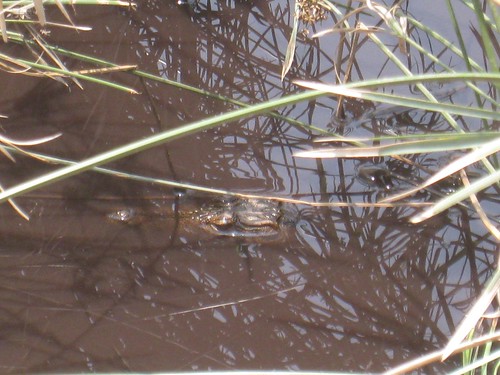
After the market tour, we walked back to the cooking school with a few baskets of fresh ingredients, and hung out for a bit. I was happy to spend the day with a young American couple from Texas (currently living/studying in China), a very tall (and characteristically friendly) Canadian man, and a French couple.
Ingredients for hot and sour prawn soup

We each prepared 6 dishes from a total of 18 options. The class had a slow and relaxed pace which marked a pleasant departure from the faster-paced classes I'd taken at home with Sur La Table. We would prep the ingredients (except the chicken), cook them, and then take the finished product to the dining room. All of the locations were open air so we had plenty of room to play the role of Swedish chef.

Spring rolls

First up was the classic hot and sour prawn soup which I ate far too little of in my first two months in Thailand, followed by spring rolls.

Spicy papaya salad

Papaya salad is another classic dish from the region, and it's the spiciest salad I've ever eaten (though the chili peppers are optional).

Making panang curry paste

Panang curry with chicken was a dish I first tried at a Thai restaurant I'd frequent with a coworker on lunch breaks, however tasting it on Chaweng Beach in Koh Samui, I knew I had to learn to make a better version for myself.

Delicious panang curry with chicken *drool*

It turned out delicious, though I'm not sure how easy it will be to find tamarind sauce and palm sugar back at home. I remember looking for tamarind paste for a Thai recipe one time and not having much luck. My attempt at making the paste from the whole pods was dreadful.

Let's make some pad thai!

Pad thai with chicken is another dish I previously made at home, though I took a shortcut by using a Harris Teeter (grocery store) package of glass noodles and sauce. I may return to it someday, however not before ensuring I can make a mean sauce from scratch first.

Sweet sticky rice with mangoes

And for those who saved room for dessert, sweet sticky rice and fresh mango finished us off for good!

Landing in Chiang Mai

Luang Prabang airport

In the interest of time and energy, I decided to take the one hour flight from Luang Prabang to Chiang Mai via Lao Airlines. The popular alternative for crossing the western border is to take a slow boat (literally) for two days along the Mekong River. By taking to the air, I was also making the final decision to skip a unique experience I first heard about from an American couple back in Indonesia. The Gibbon Experience allows you to live in 100-foot treehouses for two days. They're joined together by ziplines, and you spend your days looking for gibbons in the trees and/or trekking on the jungle floor. As it is not explicitly referenced in Lonely Planet (out of respect for the operator, it is written), I wanted to share it here since I know a few people will be heading to Laos in the near future. :)

Goodbye Luang Prabang and Mekong River!

The flight went like clockwork, and I was surprised they even had time to serve a decent lunch given the one hour duration. Jetstar's Asian contingent could learn a thing or two. Yes, I'm still bitter about the lack of complimentary water on that four hour Singapore to Hong Kong flight!

A large rainbow

As the plane ascended and headed west, there were beautiful views of Laos' northern mountains. While you can't see graphic indications of borders from the air as though you were flying over a Google satellite image, the distinction between development (or lack thereof) in Laos and Thailand was clearly visible.

Reading material - Chiang Mai brochures and LP SA

Once we landed, I grabbed a taxi to the backpacker part of town which was chock full of inexpensive guest houses and travel shops. I took a basic room in Kent's Guest House, the first one I stumbled across. As Kent showed me to the room, he talked with a bird on his shoulder (which talked back, of course). Once in the room, I told him I'd take it if everything worked (fan, toilet, etc.). Kent assured me everything in the room worked fine, it was just him that didn't. Despite the flock of pigeons in the courtyard, I felt overdue for an eccentric experience and took the room.

It was great to be back in Thailand, where you can get so much done in such a small amount of time. After a quick rest, I tracked down a Lonely Planet South Africa, paid under $20 for a routine dental visit (using the recommendation of the book shop sales woman), and picked up a pile of brochures from which to choose my Chiang Mai activities. There were so many appealing activities, and so little time. I was forced to prioritize.

First up, the low impact, highly caloric, full day Thai cooking class.

Final Thoughts: Laos

A monk in Luang Prabang

Before arriving in Laos, I had mentioned it as part of my itinerary to a fellow traveler. He asked me what was there, and I said I didn't know, but was about to find out. I traced the Mekong River from 4,000 Islands near the southern border to the mountainous north. Along the way, I grew to appreciate the slow pace of life. If you see a driver swinging in a hammock fastened under the roof of a tuk-tuk passenger cabin, you know you're in Laos!

Highlights -

  • crossing the southern border with Cambodia
  • meeting Nicholas, Caroline, and Celene
  • walking across Don Det and Don Khon
  • meeting Noy
  • taking the Frankenferry to/from Champasak
  • bicycling to Wat Phu
  • my room at The Inter City Hotel in Vientiane
  • fine French dining at Le Central, Le Silapa, Le Cote D'Azur, and L'Elephant
  • visiting MAG and COPE to learn about the effects of UXO (unexploded ordinance)

4,000 Islands

  • my room overlooking the Nam Song (river) and limestone mountains in Vang Vieng
  • rock climbing
  • meeting Sandrine
  • tubing down the Nam Song
  • celebrating my birthday with a few Beerlao
  • walking around Luang Prabang
  • mountain biking
  • my first elephant ride
  • slipping into the very relaxed way of life
  • Lao massage at Aroma Spa

Hammock time in Vang Vieng

Lowlights -

Getting stung by a hornet after eating my last dinner in Vang Vieng.  It was black so I didn't identify it as a stinging insect.  It felt like a hot syringe was jabbed into the middle of my left shoulder and left there for a few hours.  As a consolation, the waiter applied some Tiger Balm and gave me Paracetamol.

Laap lao chicken

Eating -

Laap lao chicken, sticky rice, Beerlao, fresh fruits (banana, mango, dragon fruit, papaya), papaya salad, fried rice, cheeseburgers, filet mignon, foie gras stuffed ravioli, white fish with orange and tamarind sauce (not together!), chocolate mousses and cakes, croissants, Lao-style coffee (with condensed milk), cappuccinos.

Lobby at the Inter City Hotel in Vientiane

# of Days Couchsurfing -

0

Nicholas takes a turn cooking the bananas

Average Cost Per Day -

$61 (this would be about $10-15 lower if I didn't splurge on a hotel in Vientiane and a handful of fine French meals!)

Mountain Biking And Elephants

Mountain biking east of Luang Prabang

8:45 am - Began mountain biking to river - 1.5 hours (16 km) on dirt/rock road - bumpy enough to justify quality bikes. Sun came out. Hot hot. Seat was hard, didn't have easy access to all 18 gears.

Northern Laos

10:15 am - Arrived at a village, rest break, took five minute boat ride across river. Short walk to elephant camp.

A thumb's up after my first elephant ride

45 minutes - My first elephant ride. I got to sit on her neck for a bit like the Mahout (trainers). Mine was 48 years old. Fed her some bananas afterwards. Elephant tongues are big and funny looking. She was sweet though.
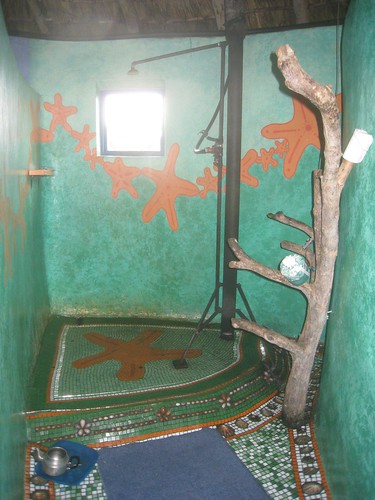
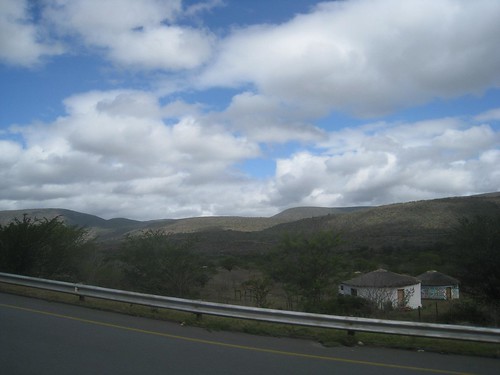
Happy elephant

There were a total of 6 elephants in the camp, and it was recognized as one that treats the animals humanely.

The passenger is bailing water to keep the boat afloat

10 minutes - Boat ride to waterfall, lunch of chicken fried rice, began to rain steadily. Got soaked on boat back. Another rest break in village.

A BIG spider makes for a little more interesting waterfall shot

1:15 pm - Mountain biked back to Luang Prabang for 2 hours (18 km) on dirt/mud roads and pavement, all the while soaked by rain showers.

« Previous Page
Next Page »
Dave at Ahu Ko Te Riku on Rapa Nui (Easter Island), Chile.

Hi, I'm Dave

Editor in Chief

I've been writing about adventure travel on Go Backpacking since 2007. I've visited 68 countries.

Read more about Dave.

Footer

back to top

About

  • About
  • Archive
  • Privacy Policy
  • Cookie Policy

Follow Us

Contact

  • Contact
  • Work With Us
  • Submissions

Copyright © 2026 Go Backpacking