Go Backpacking

  • About
  • Travel Tips
    • Accommodations
    • Budgeting & Money
    • Adventure Travel
    • Food & Drink
    • Gear & Gadgets
    • Packing Tips
    • Travel Blogging
    • Travel Insurance
    • Trip Planning
    • UNESCO Sites
  • Destinations
    • Africa
      • Botswana
      • Egypt
      • Ethiopia
      • Morocco
      • Rwanda
      • South Africa
      • Tanzania
    • Asia
      • Cambodia
      • China
      • Hong Kong
      • India
      • Indonesia
      • Japan
      • Laos
      • Malaysia
      • Nepal
      • Philippines
      • Thailand
      • United Arab Emirates
      • Vietnam
    • Europe
      • England
      • France
      • Germany
      • Greece
      • Iceland
      • Ireland
      • Italy
      • Portugal
      • Spain
      • Switzerland
      • Turkey
    • North America
      • Canada
      • Costa Rica
      • Cuba
      • Guatemala
      • Mexico
      • Nicaragua
      • Panama
      • United States
    • Oceania
      • Australia
      • French Polynesia
      • New Zealand
    • South America
      • Argentina
      • Bolivia
      • Brazil
      • Chile
      • Colombia
      • Ecuador
      • Peru
  • Advertise
menu icon
go to homepage
  • About
  • Travel Tips
    • Accommodations
    • Budgeting & Money
    • Adventure Travel
    • Food & Drink
    • Gear & Gadgets
    • Packing Tips
    • Travel Blogging
    • Travel Insurance
    • Trip Planning
    • UNESCO Sites
  • Destinations
    • Africa
      • Botswana
      • Egypt
      • Ethiopia
      • Morocco
      • Rwanda
      • South Africa
      • Tanzania
    • Asia
      • Cambodia
      • China
      • Hong Kong
      • India
      • Indonesia
      • Japan
      • Laos
      • Malaysia
      • Nepal
      • Philippines
      • Thailand
      • United Arab Emirates
      • Vietnam
    • Europe
      • England
      • France
      • Germany
      • Greece
      • Iceland
      • Ireland
      • Italy
      • Portugal
      • Spain
      • Switzerland
      • Turkey
    • North America
      • Canada
      • Costa Rica
      • Cuba
      • Guatemala
      • Mexico
      • Nicaragua
      • Panama
      • United States
    • Oceania
      • Australia
      • French Polynesia
      • New Zealand
    • South America
      • Argentina
      • Bolivia
      • Brazil
      • Chile
      • Colombia
      • Ecuador
      • Peru
  • Advertise
search icon
Homepage link
  • About
  • Travel Tips
    • Accommodations
    • Budgeting & Money
    • Adventure Travel
    • Food & Drink
    • Gear & Gadgets
    • Packing Tips
    • Travel Blogging
    • Travel Insurance
    • Trip Planning
    • UNESCO Sites
  • Destinations
    • Africa
      • Botswana
      • Egypt
      • Ethiopia
      • Morocco
      • Rwanda
      • South Africa
      • Tanzania
    • Asia
      • Cambodia
      • China
      • Hong Kong
      • India
      • Indonesia
      • Japan
      • Laos
      • Malaysia
      • Nepal
      • Philippines
      • Thailand
      • United Arab Emirates
      • Vietnam
    • Europe
      • England
      • France
      • Germany
      • Greece
      • Iceland
      • Ireland
      • Italy
      • Portugal
      • Spain
      • Switzerland
      • Turkey
    • North America
      • Canada
      • Costa Rica
      • Cuba
      • Guatemala
      • Mexico
      • Nicaragua
      • Panama
      • United States
    • Oceania
      • Australia
      • French Polynesia
      • New Zealand
    • South America
      • Argentina
      • Bolivia
      • Brazil
      • Chile
      • Colombia
      • Ecuador
      • Peru
  • Advertise
×
Home

Touchdown In Bangkok

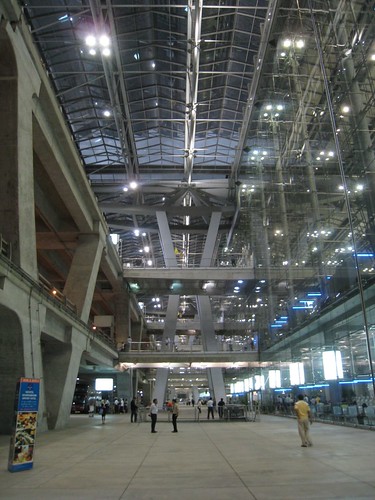
Outside new Thai airport

The plane set down early at the brand new Suvarnabhumi Airport, 30km east of the capital city. Walking through the cavernous, empty halls on my way to immigration, it was easy to tell the country was on top of their game with regard to meeting present and future transportation needs.

Because everyone and their mother seemed to have been to Thailand before me, I expected the infrastructure for tourists, travelers, backpackers, and desperate old men would make life infinitely easier than my past few months. The THAI flight, the new airport, and the luxurious express bus to Bangkok helped confirm that elementary hunch.

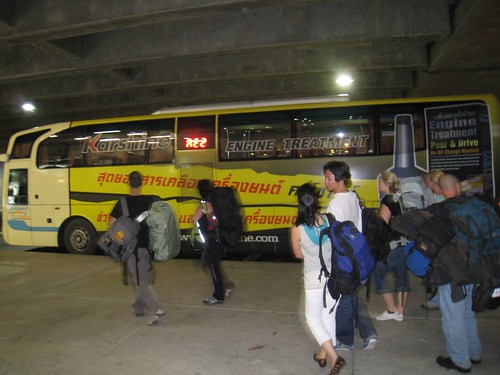
Express bus to/from airport

In the early evening, as traffic turned a 35-minute sprint into a 2-hour marathon bus ride (but a comfortable, air-conditioned one), light rain began to fall. I'd left the monsoon weather of India for the monsoon weather of Southeast Asia, however a few hours or days of rain at a time was a small deterrent to spending weeks at a time on the legendary, tropical islands of Thailand.
Practically the entire bus of backpackers disembarked at Th Khao San Road stop. The street I saw did not strike me as the epicenter of backpacking in SE Asia, if not the world. I ducked into a travel agency to help get my bearings. A few paces past the agency, a right turn around a corner, and I was at the western end of Khao San. The road was closed to automotive traffic save for a few taxis and tuk-tuks, which was good because a lot of people would get run over otherwise.

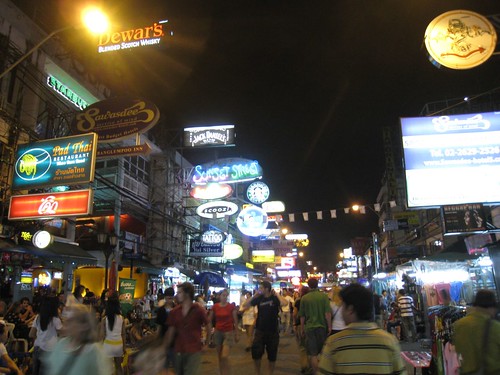
The hustle and bustle of Khao San road at night

I began to walk through the gauntlet of cheap souvenir stalls, mini-bars, neon lights, and party people dining al fresco. It was early evening so the atmosphere was relaxed as Western women in short shorts shopped, deadlocked dudes listened to Bob Marley, and people wandered around feeding their faces with pad thai bought from street vendors. Everyone seemed to be having a good time.

After making a habit of arriving in new cities, countries, cultures, and environments for the past 7 months, I felt confident walking the distance of the road alone. Still, while trying to take in the sights, smells, and sounds, I didn't want to have that " fresh off the plane"? look. I don't know why. If there was ever a place to care less about having a 20-pound backpack strapped to your back with your eyes wide open, it was Khao San, where backpacking virgins and veterans have been arriving " fresh off the plane"? daily for decades.

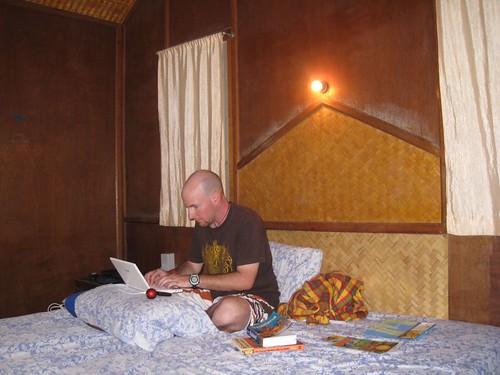
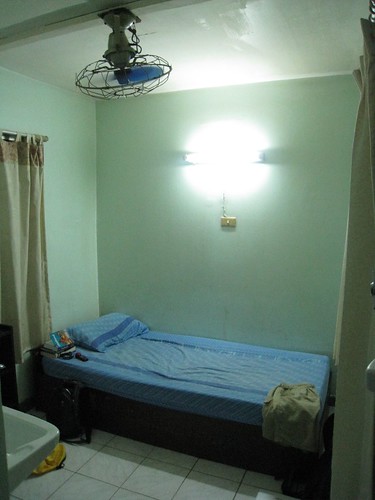
My room in Bangkok

My first choice of lodgings was full, which is typical when a place is listed in The Lonely Planet, though they referred me to a bigger hotel down a nearby soi (street) which suited me fine. I had a small, well-lit, quiet, fan room with an immaculately clean toilet/shower just off backpacker central in a capital city for $6/night.

The last few weeks in India, I had been daydreaming about spending my first night in Bangkok at a giant, modern dance club with loud house music and plenty of bars. Instead, I grabbed a cheeseburger and fries at the restaurant below my hotel and reasoned that I was too tired, and it was too rainy, for such endeavors.

Superstar Service On THAI Airways

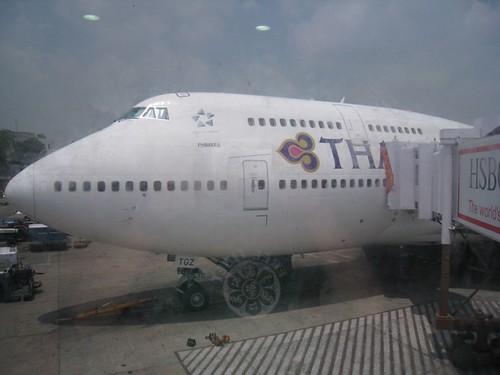
THAI 747 jumbo jet

My flight from Delhi to Bangkok was my 11th in 7 months so it seems fitting that I received the best service to-date after paying my dues to the air gods.

The plane was my biggest of the trip, a Boeing 747 jumbo jet. I always loved the second level afforded to passengers on these planes, not that I'd ever spent time up there. Walking back to my requested window seat, which sat in the middle of the plane's gigantic wing (and thus affording little in the way of a view), my eyes lit up at all the space in cabin, especially the width of the seats and legroom.

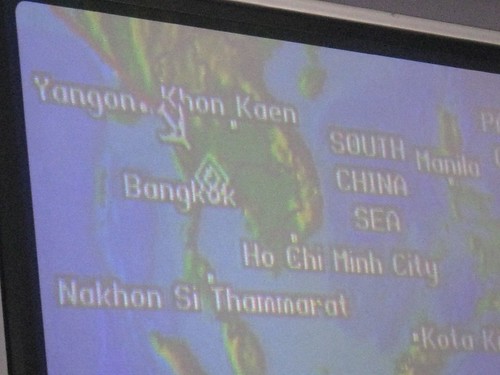
Flight route

I settled into my seat, thankful to yet again have no one sitting directly adjacent to me I began leafing through the airline's in-flight magazine, Sawasdee. In celebration of their 48th year in operation, a feature article was dedicated to listing the " 48 most beautiful destinations across the globe."? Curious to see how I stacked up to the editors' list, I started checking off destinations I'd seen in life. Thanks to a family vacation (Grand Canyon), a post-collegiate summer in Europe (Sistine Chapel, Prague) and this trip (Taj Mahal, Fraser Island, The Remarkables, Golden Temple, Himalaya, Kathmandu Valley, Great Barrier Reef), I'd managed to see 35% of their list (with the hope of upping it to 58% by year's end). Of course it dawned on me that many of these places likely lie on a THAI Airways route, however it was still a fun exercise for my ego.

When I realized my earphones were broken while waiting at the Delhi airport, I felt annoyed at having to buy a third pair in less than two months, let alone spending the flight without my favorite tunes. THAI Airways solved the problem in the form of free ear bud headphones. Like the previous two cheap pairs I bought in India, they were far from the best, but I wasn't about to look a gift horse in the mouth.

Setting the mood

Our 747 was airborne before I knew it, and complimentary drinks were being offered. I decided to take advantage of this arcane concept by imbibing two screwdrivers with my tasty chicken and rice lunch. Feeling on top of the world, and being there physically at 40,000 feet, I made productive use of the travel time (and lack of view) by writing about my final days in India.

Welcome To Thailand

 Off to Thailand

It was around 7am when I settled on Ung's Magical Jungle Safari as my first activity of substance on Thailand's third largest island, Ko Samui.  The glossy flier spoke of the same crocodile dens, waterfalls, genitalia-shaped rocks, and mummified monk as the others, yet it was the portrayal of carefree Western backpackers riding the roofs of jeeps through the jungle that won me over.  I had gathered the pamphlets upon arrival at the popular and gorgeous Chaweng beach the day before.

I then surprised myself, sleeping for 15 straight hours without the aid of a single sip of alcohol.  In retrospect, I needed to make up for more than just the 3 hours of sleep on the overnight bus ride from Bangkok to Surat Thani.  I needed to make up for the lack of sleep my first 5 nights in Thailand. 
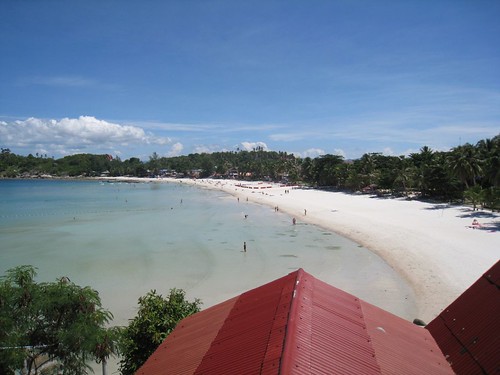
Before the trials of India, the trek in Nepal, the modern Asian metropolises and even before the Kuta clubs on Bali, I'd been fantasizing about my travels to Thailand.  I wanted to hit Bangkok with a bang! Maybe not the first night, but I imagined late nights in large dance clubs, drinking in the streets, meeting girls left and right, and getting my first taste of authentic pad thai.
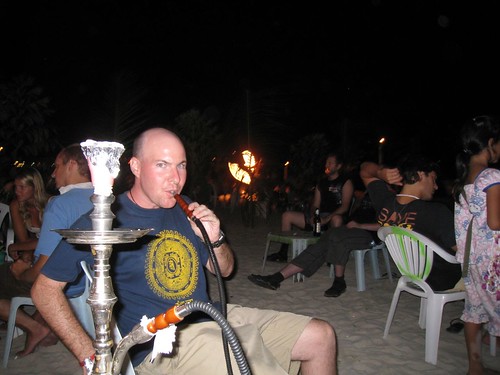
Then reality slapped me in the face, but not before I enjoyed that first pad thai. 

So lets rewind and review those first few days in Bangkok before heading off on Mr. Ung's undoubtedly adventurous jungle safari. 

Final Thoughts, Incredible India

Touring Sikkim
Sikkim

I had to see India for myself, and I am glad I did, but it was a challenge.

There were moments of awe like seeing the Taj Mahal for the first time, and moments of being utterly fed up with the incessant honking of car/jeep horns from Darjeeling to McLeod Ganj.

Why take on the heat, unsanitary conditions, noise, and unscrupulous hustlers?

To savor authentic Indian curries, enjoy the friendly offers of chai, see more of the Himalaya, and the spot where the Buddha became enlightened.

And while it might not be my next destination after this trip, the draw of exploring Goa, Bombay, Pushkar, Udaipur, the deserts of Rajhastan, and the high-altitude plateau of Buddhist Ladakh (to say the least) will remain with me.

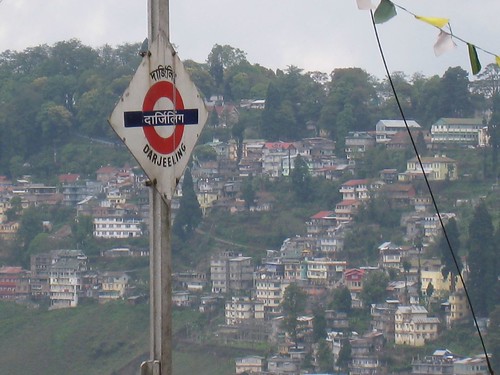
Darjeeling
Darjeeling

Highlights -

  • the views on the share jeep ride to Darjeeling
  • drinking Darjeeling tea in Darjeeling
  • views of Mt. Kanchenjunga
  • riding the Himalayan Toy Train
  • seeing a snow leopard
  • hanging out with Natalie, Cameron and Sarah
  • share jeep ride to Gangtok, Sikkim
  • visiting Tsomgo Lake and riding a yak
  • 3-day tour of north Sikkim
  • first overnight train ride in India
  • sitting under the Bodhi Tree in Bodhgaya
  • staying at the Tibetan Monastery
  • visiting Sarnath, where the Buddha gave his first teaching
  • walking along Varanasi's ghats at sunset
  • seeing and walking around the Taj Mahal
  • touring Agra Fort with Laura and Dan
  • watching kites being flown from the rooftops in Agra at sunset
  • arriving in McLeod Ganj
Hot, hot Varanasi
Varanasi
  • listening to a teaching by H.H. the Dalai Lama and seeing his eyes, smile, and wave up close and personal
  • reuniting with Steve and Marie
  • meeting Anastasia, Olga, Ron, Fred, and Ian
  • Tibetan cooking classes
  • 4-day camping trek to 4,320-meter IndraharPass
  • trying Tibetan massage and acupuncture
  • open mic nights at Khana Nirvana
  • attending the public audience with the 17th Karmapa
  • getting my first shave with a straight razor at a barbershop
  • celebrating Steve's 27th birthday at Carpe Diem
  • walking around Amritsar's Golden Temple
  • witnessing the India-Pakistan border ceremony
  • early morning auto-rickshaw rides to the train station (Bodhgaya, Amritsar)
  • visiting Jama Masjid (mosque), Gandhi Memorial, and War Memorial in Delhi
  • metered rickshaws 
  • meeting Neil and his family
  • watching the live Euro 2008 final at Regent's Blues
  • dining at world-renowned Bukhara
  • the air-conditioning at Delhi's airport
  • the sunsets
Fun at Agra Fort
Agra Fort

Lowlights -

  • overpaying for the majority of rickshaw and taxi rides
  • the constant need to ignore touts and hustlers (less of an issue in the Buddhist/mountain regions)
  • the crazy (scary) 20km jeep ride on the second night of the North Sikkim tour
  • coming face to face with the poor beggars, especially the children, disabled, and women carrying babies
  • the heat, especially in Bodhgaya and Varanasi
  • the necessary bed rest for the few days after my trek
  • my first failure to complete a dare (rooftop train ride)
Spices for sale
Spices

Eating -

CHAI, chai, chai!!!!, Darjeeling/ginger/mint teas, paneer butter masala, malai kofta, butter naan, rice, momo's, eggs, scrambled/omelets/hard-boiled and toast, banana porridge

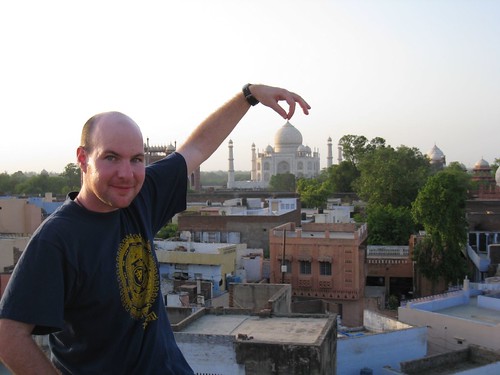
Playing with perspective in Agra
Taj Mahal

# of Nights Couchsurfing -

0

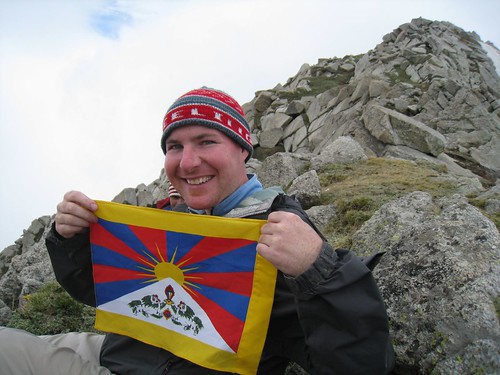
Displaying the Tibetan flag atop Indrahar Pass
Tibetan flag atop Indrahar Pass

Average Cost Per Day -

$43 (the lowest for me in any country so far)

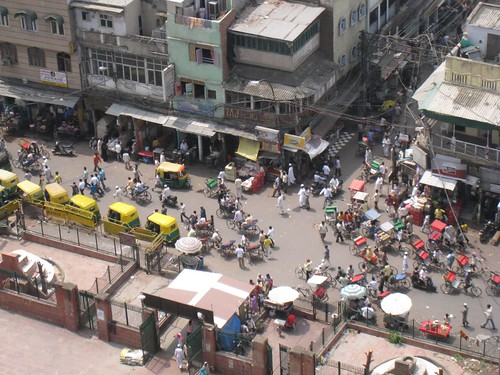
Bird's eye view of a Delhi intersection
Delhi

Dare #11 - Failed - Ride The Roof Of An Indian Train

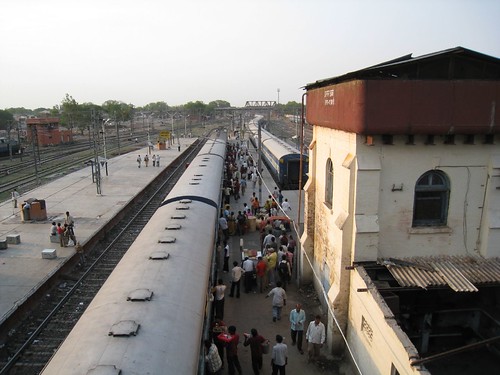
Indian train station

#11 - From Stefan:

Here's a new dare for $20take a ride on the roof of a train in India.

Reward: $20

Status: Failed

__________________________________

I must admit defeat with regard to this dare. I don't have a choice....the beaches of Thailand are calling.

I only saw people on a train rooftop once, and never saw the opportunity arise for anyone at the stations I visited. Maybe it's more common in the south, on local routes, or in more remote regions of the country.

India's War Memorial And Humayun's Tomb

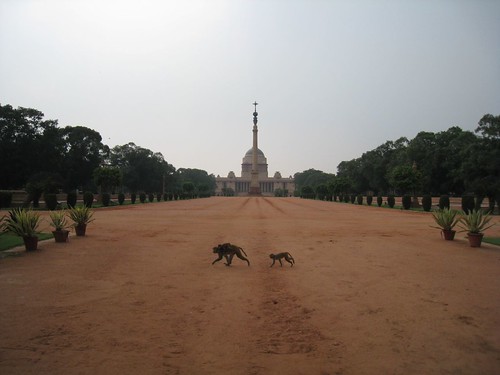
Monkeys cross the path to the President's home

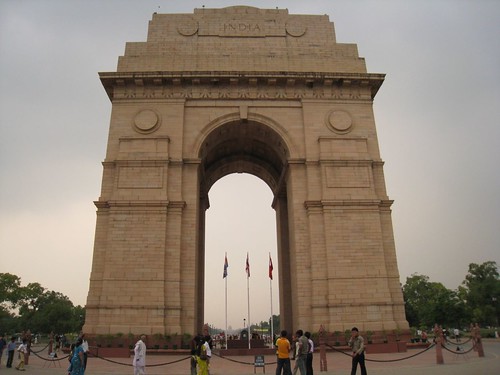
Feeling on top of the world after my Bukhara experience, I forced myself to walk out of the luxurious Maurya Sheraton. I deferred to my taxi driver at this point, and he drove me around the President's house and government buildings. We then drove east toward India's War Memorial, a large arch in line with the President's home in much the same the White House and other memorials are laid out in Washington, DC.

The imposing India War Memorial

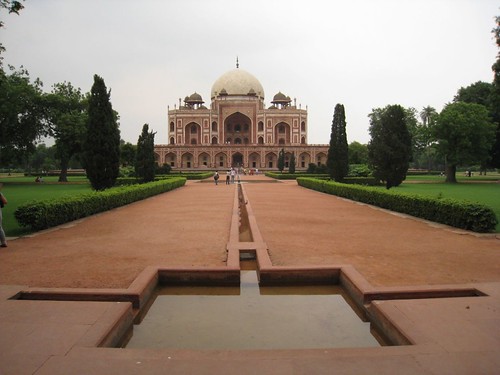
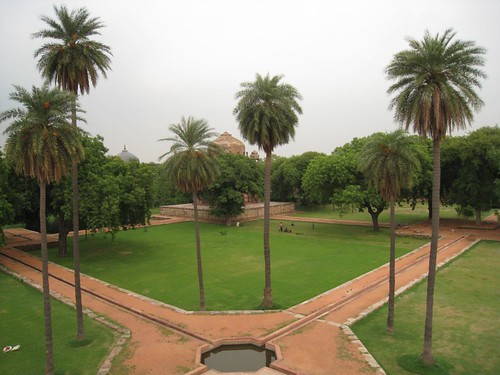
My time running low, we headed to Humayun's Tomb, the precursor to the Taj Mahal. The complex on which it was situated necessitated an hour's time to wander around. In particular, I appreciated the recent restoration work of the gardens and water channels surrounding the main tomb as I found the vivid green setting beautiful, and pleasantly peaceful.

Humayun's Tomb

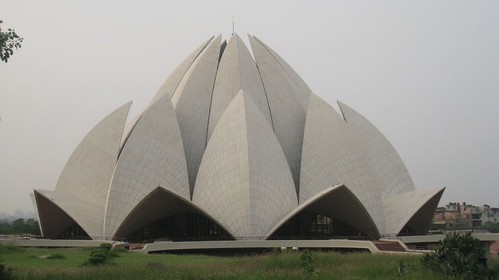
After touring the tomb, we drove past the Lotus Temple, which was unfortunately closed on Mondays. I asked to be dropped off at Nehru Place, a large shopping area within walking distance of Neil's house, and which seemed to be focused on computers and electronics. It was a bit rougher around the edges than the similar centers I'd visited in Hong Kong and Chengdu.

Gardens at Humayun's Tomb

As I've seen all over the areas I've traveled in India, the poor seem to be able to sleep out in the open amidst the grime and crowds. When I was taking that early-morning rickshaw ride to the Amritsar train station a few days ago, I was surprised to see a lot of people simply sleeping on the concrete road medians.

Lotus Temple

I walked to Neil's house, though traffic delayed his arrival by more than an hour.  Keen to complete a recently received dare (#12) to eat vindaloo in India, we set off in search of the intensely spicy Goan dish on my last night in the country.

I'll report on the results soon.

Bukhara, Delhi's Best Restaurant

Making friends at The Maurya

For my last full day in Delhi and India, I spent an hour walking around Connaught Place. 

The park in the middle of the big traffic/shopping circle is closed on Mondays, as were many other attractions. 

I returned to the guest house where I splurged, hiring an air-conditioned car for the afternoon.

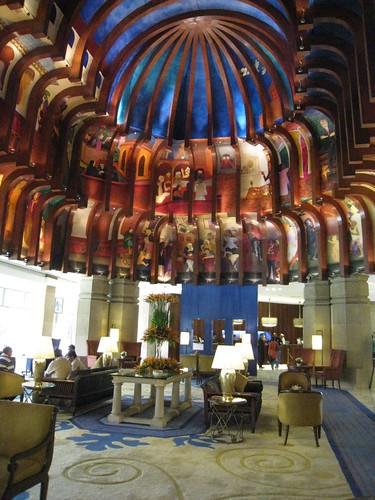
Hotel lobby

The first stop was lunch at Bukhara in the ITC Maurya Sheraton, a 5-star hotel amidst the Diplomatic Enclave. 

Upon arrival in Delhi, I had Google'd "best restaurant in Delhi," and all links pointed to Bukhara. 

A European food magazine listed it as one of the world's top 50 restaurants, and the best in Asia, in 2007. 

The likes of Bill Clinton and Vladimir Putin dined there, and it was also listed in the book, "1,000 Places To See Before You Die." 

Such a pedigree meant it was ripe for my visitation!

Bukhara's kitchen

I was greeted outside the hotel by a traditionally dressed, well-mustached Indian man. 

Upon entering the lobby, I noticed the beautiful ceiling mural, cool temperature, and amazing smell in the seating area. 

As I was ushered to the restaurant, I could see a big pool and well-manicured garden. 

The restaurant itself was immaculate, with a glass-enclosed kitchen so you could see the chefs at work. 

There were a few other customers, though it felt like I had the place to myself. 

Yum

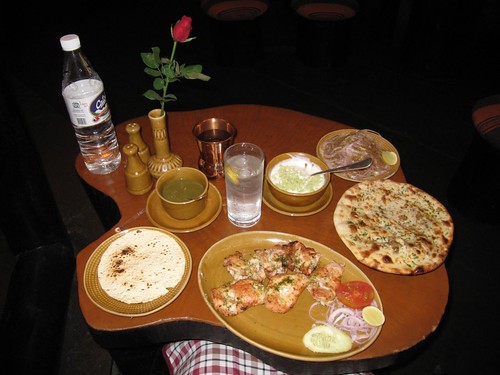
Chapati with a green sauce and spiced onions were delivered as complimentary appetizers, along with my mineral water. 

The copper water cups were cool.  I ordered:

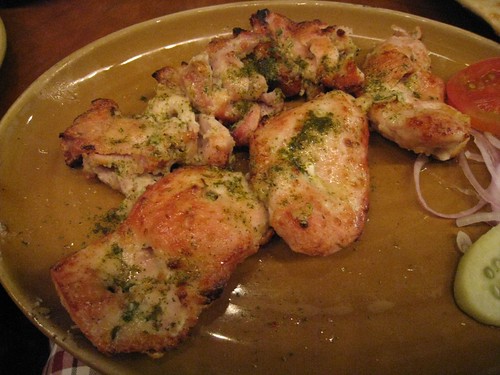
  • Murgh Malai Kabab, a creamy kabab of boneless chicken blended with cream cheese, malt vinegar, green chili, and coriander, grilled in the Tandoor oven
  • Mixed Raita (yogurt) with cucumber
  • Onion Kulcha, spicy cooked onion sandwiched between two pieces of naan-like bread
  • Bombay Sapphire gin and tonic, my favorite cocktail
Cheers!

 All of the food was delicious. The chicken was the best I've had in months. I could barely finish it all.

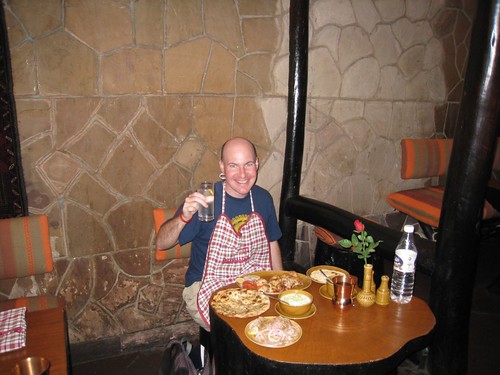
The cloth napkins were mini-aprons, giving plenty of surface area for wiping my hands, given that the eating was done by hand. 

The service was fantastic, and the ambiance was serene. 

Damn fine chicken kababs

 Going into the experience, I knew the price range, and there was no disappointment in this respect. 

My lunch cost about $60, excluding the tip.

The funny thing was I was no more satiated after the meal than lots of other Indian dishes I enjoyed over the preceding seven weeks. 

It reminded me I could be as delighted with a $2 malai kofta (potato/cheese dumpling in gravy) on the rooftop of humble Carpe Diem in McLeod Ganj as a fancy restaurant in a 5-star hotel. 

Family Night

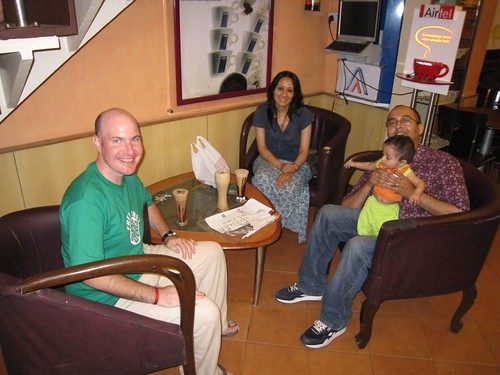
 Neil, wife Shruti, and son Shivain

Neil, a lifelong Delhi resident, is the nephew of a woman who works at my parent's local bank branch.  I met his Aunt while I was giving my mom permission to access my bank account.  Apparently she'd taken an interest in my trip because she suggested I meet up with Neil while in Delhi. 

He picked me up at Sunny's a few hours after my tour of Old Delhi.  The car's air-conditioning was in full effect, and I immediately knew I was in for a rare hassle-free evening.  Neil suggested a good head massage would help to relax me, so we headed toward the salon he and his wife frequent.  We got to know each other during the ride, and I was thankful to be seeing more of the city given my limited time. 

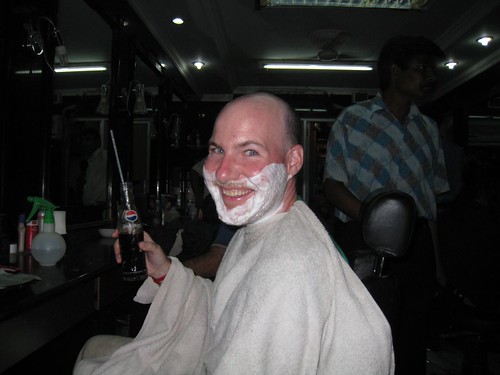
 Nothing like a fresh shave and a cool Pepsi

I was due for a shave, and after 20 minutes and one painful application of after shave later, my face felt as soft as a baby's bottom.  The head massage with olive oil came next.  At one point, the guy strapped a massage machine to his hand which caused his fingers, and in turn my scalp, to vibrate like crazy.  Despite my lack of hair, I didn't protest Neil's suggestion for a shampoo given all the oil rubbed into my skull.  To my surprise, my head was left feeling just as soft as my face.

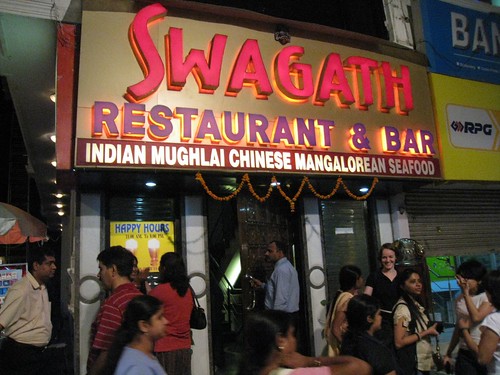
 Busy Swagath

We drove back to Neil's home where I was introduced to Shivain, his new 6-month old son, and Shruti, his wife.  They had a beautiful home, and I felt lucky to be given such a warm welcome.  After more conversation, and a baby feeding, we went to dinner at Swagath, voted Delhi's best coastal restaurant by The Indian Times (newspaper) in 2007. 

Neil and I shared a "moderately" spicy Mangalorean fish dish (Mangalore is a city on the southwest coast of India).  His wife, being vegetarian, ordered a spicier mushroom dish which I barely tried as my tongue was lit on fire by the fish sauce.  I was easily able to drink a liter of water in addition to my Heineken.  Dessert in the form of decadent cold coffees with ice cream next door at Lavazza followed before I was dropped off back at Sunny's. 

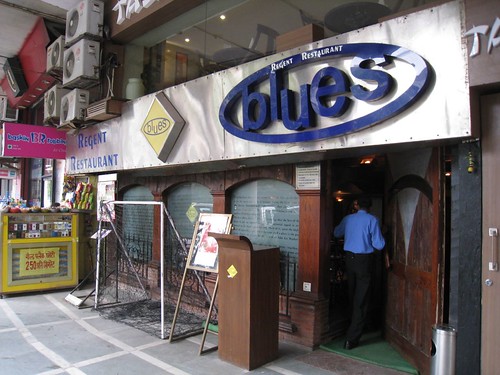
 Regent's Blues in Connaught Circle

I capped off the night with a live viewing of the Euro 2008 final from 12-2am at Regent's Blues.  The bar was filled with young Indians imbibing their share of alcohol and rooting for Spain. 

Exploring Old Delhi, Jama Masjid And The Red Fort

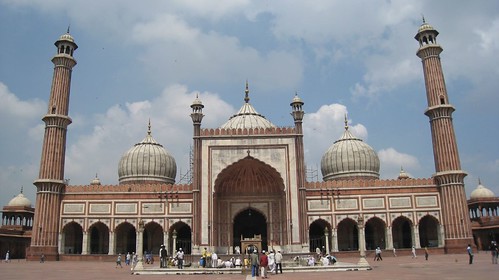
 Jama Masjid

After a halfway decent first night's sleep at Sunny's, I had a quick breakfast and grabbed an auto rickshaw to Jama Masjid, India's biggest mosque.  I negotiated a rate of 80 rupees ($2), only to realize a few minutes into the ride that there was a perfectly functioning meter tracking the appropriate cost based on distance and waiting time.  My trip would've cost 25 rupees (60 cents).  I had to laugh at my own folly in this instance, and I joked with the driver as I handed him the amount we'd agreed upon. 

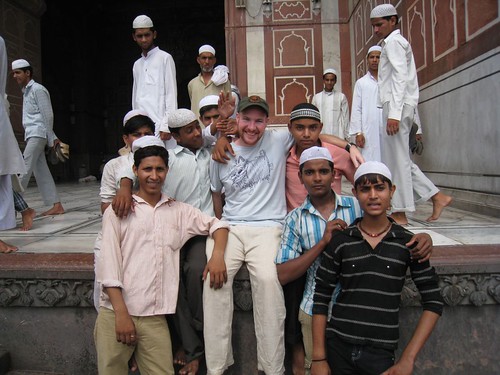
 Making friends

I walked around the perimeter of the interior courtyard and climbed the minaret for a wonderful 360-degree view of Delhi.  At one point, a group of young guys asked me to take a photo of them.  Afterwards, I asked them to take a photo with me.  They followed up the photo with rapid fire comments and questions.  The attention was nice, and such occasions help to counter the negative experiences I've had in India. 

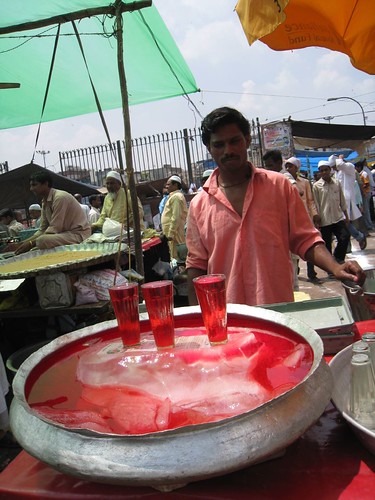
 Refreshing rosewater

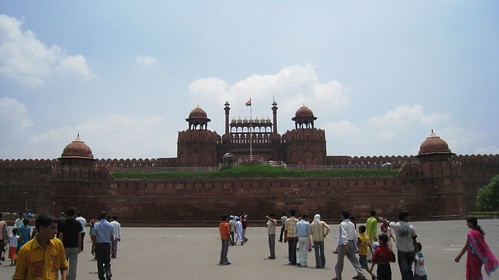
Upon exiting the mosque, I walked through a gauntlet of Muslim stalls, most of the people clad in white from top to bottom.  If it weren't for the heat, I would've taken more time to satiate my curiosity about what I was seeing.  It took about 20 minutes to reach the Red Fort's main entrance, Lahore Gate.  The Fort looked similar to the one in Agra, just bigger, so I cut my time there short. 

 Lahore Gate, entrance to the Red Fort

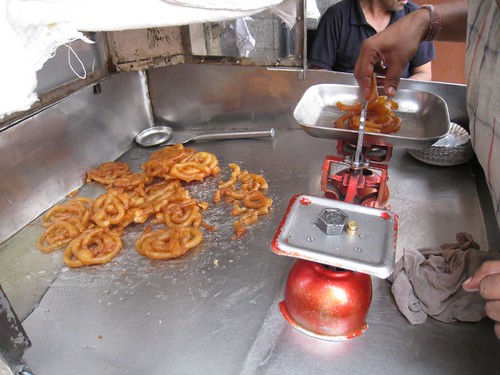
I tracked down Jalebiwala, a famous purveyor of jalebis.  These sweet, deep-fried, orange dough swirls were over-the-top greasy.  It felt and tasted like I was eating, nay drinking, the ghee (clarified butter) used to make them.  I cleansed my palate with a sumptuous, spicy potato samosa...

 jalebis

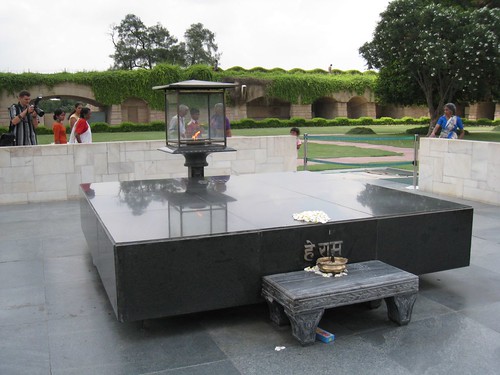
...and finished my sightseeing with a rickshaw to Raj Ghat, where Mahatma Gandhi was cremated following his assassination in 1948. 

Site of Gandhi's cremation

Doing The Delhi Hustle

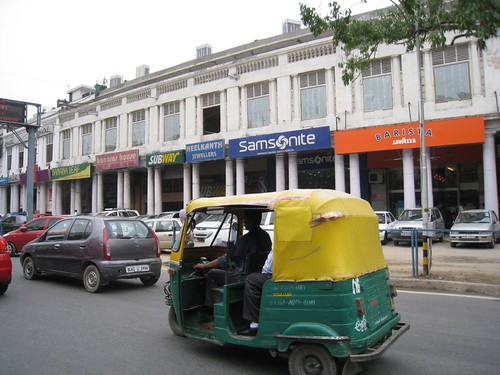
Rickshaw in Connaught Place

First Half

I was confident from perusing my guidebook that a fair rate for an auto rickshaw to my first and second choice guest houses would be about 40 rupees ($1). Before I reached the rickshaws, I was picked out by a gaggle of taxi drivers. The first one quoted a rate of 550 rupees ($13.75) which resulted in a hearty laugh from yours truly. Eventually I negotiated a rate of 200 rupees ($5) from another driver which was still much more than I had intended to pay.

The guy arranging the ride kept suggesting I visit the official Indian Tourism office before going to the guest house. I had read about fake tourism offices in the guidebook, but more importantly, just wanted to settle into a room so I could get some much needed rest. I firmly told the handler I wanted to go straight to the guest house, and I relaxed after hearing him relay instructions in Hindi to the driver. A mystery man jumped in the passenger seat, and we soon melded into the big-city traffic.


Sunny's Guest House

If you've been reading about my adventures in India, then you can guess what happened next. The taxi stopped at the " official"? tourist office. I sat there wondering what the hell I needed to say to be any clearer with these guys. Unsure of my proximity to the guest house, I entered the office armed with a bad attitude. I sat in front of a desk covered in Indian postcards highlighting the country's most popular attractions. I was short with the guy who greeted me, and to his credit, effectively calmed me down with a bit of patience, chai and cookies until the booking agent arrived. I quickly cut off all of his attempts to raise the prospect of sightseeing...anywhere.

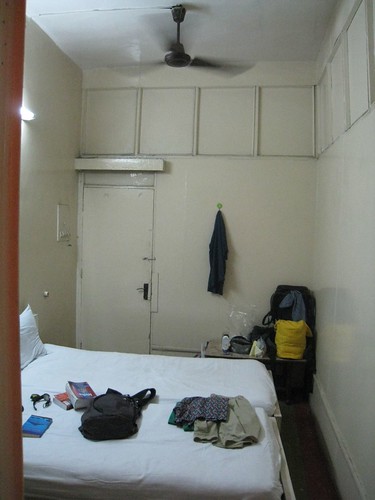
After some chit-chat, I told the booking agent I wanted to see Sunny's Guest House and he had the mystery guy from the taxi show me the way. Before I left, I asked about the cost of a room with a private bath in the area, and he said 2,000 rupees ($50) minimum. Sunny's was only a few meters away. They showed me a series of rooms, starting with the cheapest shoe box, and working up until we reached the costliest option, a double with private bath for 400 rupees ($10) a night.

Dave, 1 point, Hustlers - 0

My double w/bath at Sunny's

Second Half

After a few hours under the ceiling fan, curiosity lead me out the door. I ate a delicious, spicy Indian chicken dish at a nearby bar and restaurant, Regent Blues. Satiated, I continued to explore the area. A young guy in a green camouflage t-shirt struck up a conversation with me. Despite my attempts to get rid of him, he walked along with me stating he just wanted to practice his English and didn't want money.

I knew the "practicing English" line comes from hustlers. I thought I could use him to get some local info though. At my request, he showed me the way to the nearby cinema, though it was only showing Hindi movies. I asked about a place to buy/sell used guidebooks, and he wanted to take me to a bazaar but it sounded too far away for my taste so I declined. I asked him if there was a restaurant around where I could order vindaloo (a spicy Goan dish). He said he knew a place, but first he wanted to take me to a souvenir emporium to earn a commission. I appreciated his honesty, and agreed to spend a few minutes in the place to help him out. In retrospect, I think the good hustlers say they're being honest because they know it is more likely to elicit sympathy and support from tourists.

I recognized the name of the emporium as one listed in my guidebook, which was somewhat reassuring. The salesman was fairly low pressure, and polite, though I left empty-handed as planned. As we walked further away from Connaught Place, presumably toward the restaurant, he brought me to a second shop. I initially declined, but then gave in. This time I left the shop with a small gift for a friend at home.

I expected the guy would continue the circular route back toward my hotel with me as he implied earlier. Instead, he pointed toward the supposed location of a restaurant serving vindaloo, and the way back to my guest house. When I addressed the fact that I expected him to walk me back, he pointed to his feet, saying he was tired and would only go with me if I paid for a 20-rupee rickshaw. Annoyed at having been hustled, I set off on my own.

As I walked along the busy roads, I saw only a retail shop where he said I'd find the restaurant with vindaloo. Angry, sweaty, and tired, I pressed onward using the digital compass on my watch to get my bearings. I was sure the direction I was heading wasn't correct, so I asked a gentleman on the sidewalk for help. He said I was walking away from the center circle, which meant I was going the long way back. I did an about face, retracing my way back while fuming at the fact that I'd gone out for a leisurely stroll and been taken for a ride at the expense of my good mood and already aching feet.

Dave, 1 point, Delhi Hustlers, 1 point

My Last Indian Train Ride

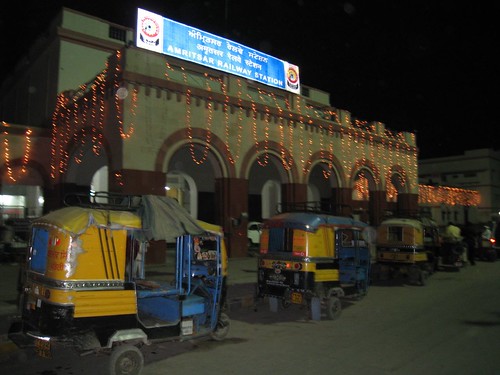
 Amritsar train station

My 4am wake-up call came a generous 15 minutes early.  Already packed, I laid in bed under the twirling fan trying not to fall asleep again.  At half past four, I stepped quietly past the hotel employee who had returned to his bed, the lobby bench, for a few more hours rest.  I picked up an auto rickshaw to the train station, savoring the rare experience of riding through the dark and empty streets. 

 I love the taste of chai at 4:30 in the morning

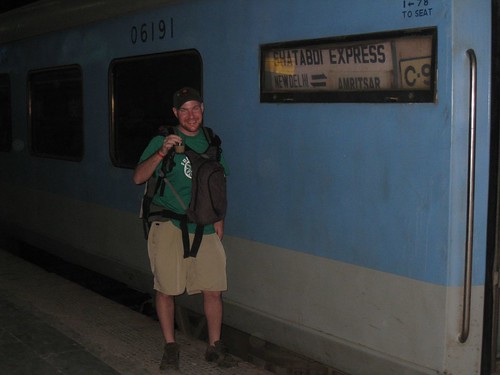
My express train to Delhi was sitting idle on the first platform, the air-conditioning already  turning the coaches into rolling refrigerators.  After a requisite chai, I found my seat and settled in for the 6-hour ride to India's capital city of 12 million people.  Interestingly enough, it was my first train ride in a non-sleeper carriage.  As the express train is more expensive than the regular ones on the same route, it is also more comfortable.

 Express train to Delhi

We left the station on time, speeding out of Amritsar at a noticeably faster rate than I'd experienced previously on Indian trains.  After a few stops, the two seats adjacent to mine filled up.  The service was excellent, including the complimentary food:  a liter-sized bottle of water, tea and biscuits, breakfast (non-veg: omelet and toast), and a juice box.  The constant attention the first few hours made it hard to drift off to sleep for too long.

 Rice paddies, a familiar site on my train rides

After browsing photos on my camera, the well-to-do Indian gentleman next to me struck up a conversation by showing off his Sony 3.5-inch, touch screen camera.  Working in construction, he's been living in Dubai for the past 20 years and was talking up the city, suggesting I visit.  I had written off Dubai as too expensive, however he countered my thought by telling me there were budget accommodations as well as luxury. 

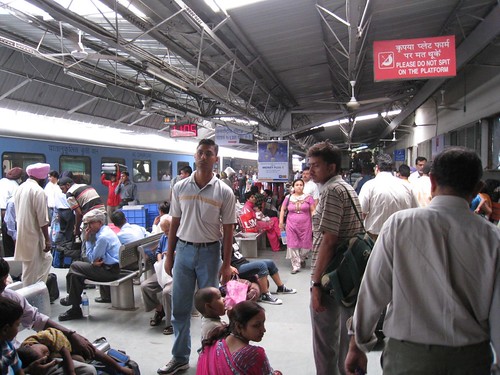
 Exiting the train platform in Delhi

We arrived at the New Delhi train station around 11am as scheduled, a short distance from Connaught Place, the giant traffic circle at the city's center where I hoped to base myself for a reasonable rate.  

The Surreal India-Pakistan Border Ceremony

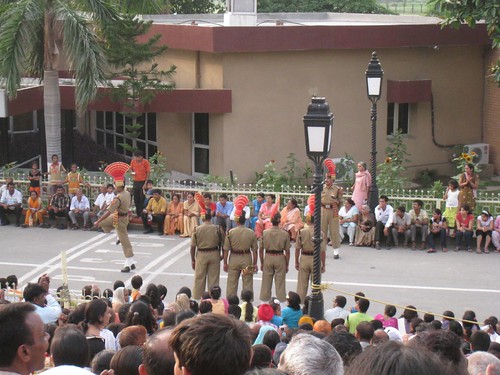
The ceremony begins
The ceremony begins

Like the appeal of riding a yak in Sikkim, witnessing the daily India-Pakistan ceremony in Attari captured my imagination the moment I learned about it.

In the case of the ceremony, I first saw it on a television show.

If I'm not mistaken, it was part of Michael Palin's "Himalaya," which was based on his book by the same name (or vice versa).

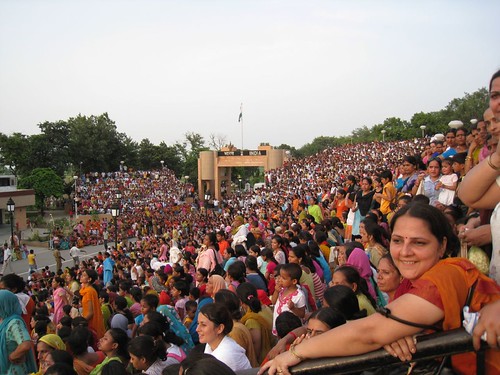
Indians show up to represent their country

A couple and a single Indian guy joined me in the taxi, and we drove the hour west to the town of Attari, on the edge of the border.

We walked a few hundred meters further to the west and came across large bleachers filled with Indians separated by sex.

The exception to this rule was the VIP area reserved for foreigners.

Unfortunately, we reached the seats at 5 pm, a full one and a half hours before the ceremony was set to start.

Why is this unfortunate?

Because the sun sets in the west, giving it a direct line to the left side of my body.

Slowly, any energy reserves sweltered away.

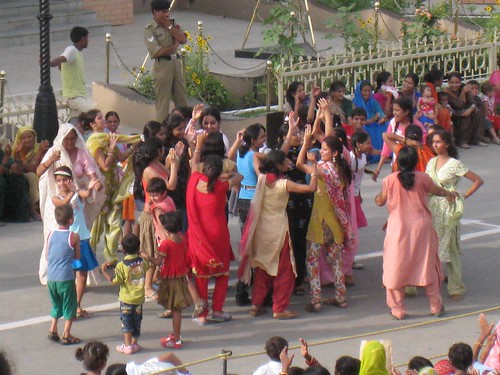
Pre-ceremony dancing in the streets

As more and more Indian women began to dance to music in the street below the bleachers, Pakistanis slowly took the stands on their side of the border.

They were also separated by sex.

The women's section was more visible, and their colorful dress made it a pretty sight from afar.

Every few minutes, an Indian MC would incite the crowd to cheer.

By comparison, the Pakistani side could've used a lesson in school spirit.

The women's stand in Pakistan

Sitting next to me was an American mother-daughter pair, and an American girl and Costa Rican guy from Denver, CO.

The latter two were on a short trip to India, having spent the first half of the journey on an impromptu trek in Kashmir.

I was a tad jealous that they got to see Pakistan's K2, the world's second-highest mountain.

They said the trek was hard, entailing about 10 hours of walking per day.

Since they didn't intend to trek, they lacked proper clothing.

I can't imagine having to wear sports sandals in the snow at altitude!

Idle chit-chat before the ceremony

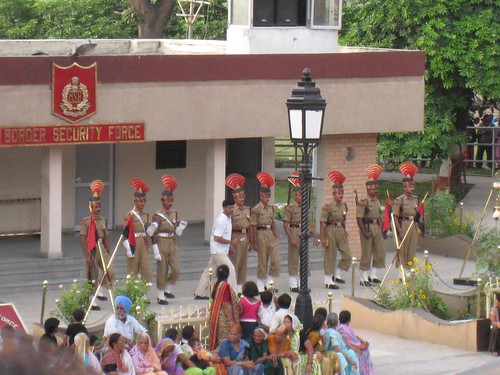
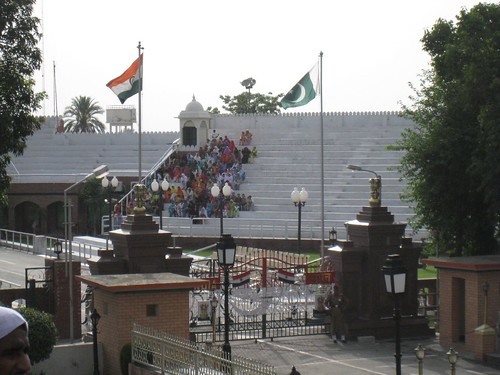
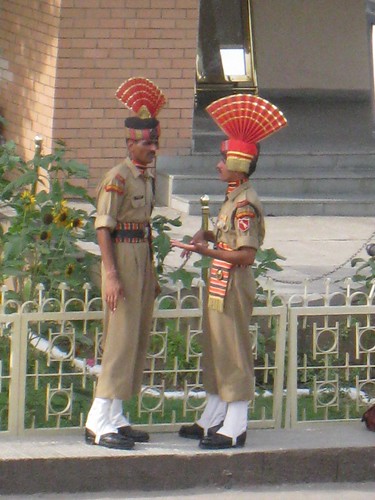
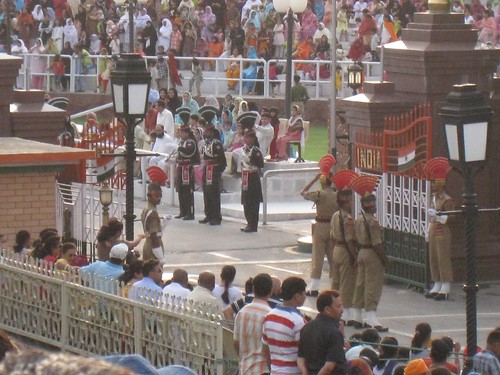
Finally, 6:30 pm rolled around, and the ceremony began. Indian guards walked in formation to the middle of the street, then one by one walked toward the gate.

Eventually, the gate was opened, allowing us a better vantage point into the Pakistani territory.

I had no clue what was happening, but the whole experience was surreal.

I commented to the Costa Rican guy that seeing the ceremony in person was one of the coolest things I'd done in India, if not my whole trip.

Between the cheering, music, and crowds, it felt like a big sporting event with the Indian fans immensely proud of their side.

I had no idea what was happening

We got a head start back to our respective rides, assuming we wouldn't miss much by ducking away a few minutes early.

While I found our taxi driver with ease, the couple who started with us never showed up.

As we waited around for over an hour, watching thousands of Indians file out of town, I tried out some of the local snacks (which took all of 30 seconds).

Then, between the long day and heat, I grew angry and annoyed.

Finally, the other Indian passenger convinced him the driver it was time to go. At least I had the back seat to myself.

Pakistani and Indian border guards at the gate

Sikhism's Golden Temple In Amritsar

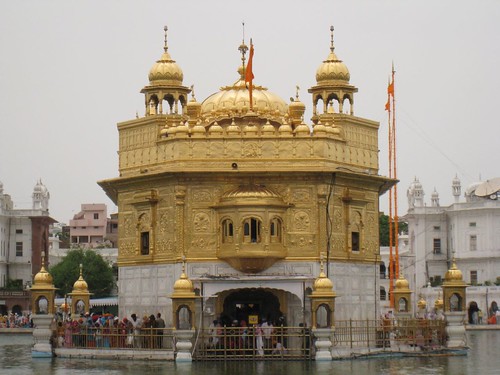
The Golden Temple

The reason I made the torturous move to wake up at 4am to catch the direct bus to Amritsar was so I could see Sikhism's holiest temple AND the India-Pakistan border ceremony in one day. Really, it was the latter event which captivated my curiosity, though once I saw the Golden Temple, I realized it was worth the trip on its own.

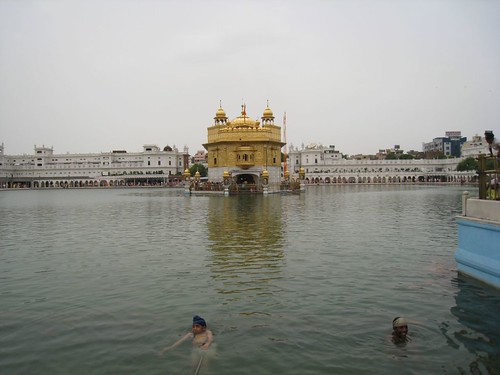
The Golden Temple with bathers in foreground

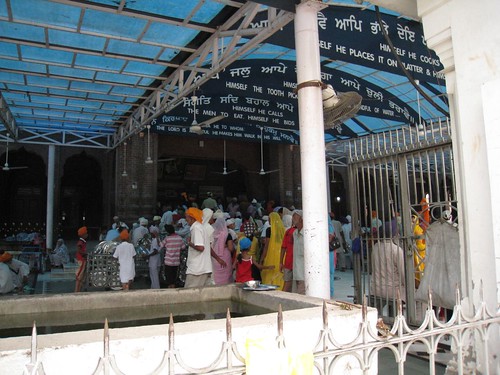
After finding a well-located hotel for the night, I made the short walk over to The Golden Temple. Everyone was required to remove their shoes, walk through water to clean their feet, and wear something over their head before entering the complex. The area and buildings around the temple were much bigger, and the temple itself smaller, than I expected. Photos can be great motivators, yet they often do little justice to giving you a sense of scale.

Sikh security guard

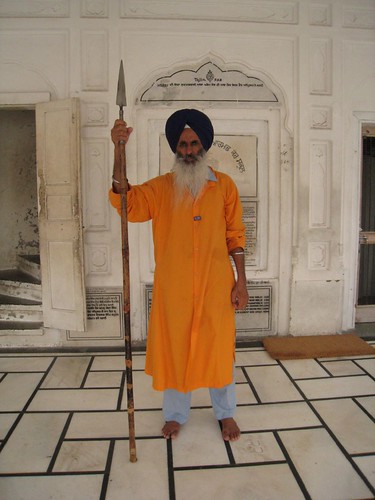
Purple-turbaned men with spears walked around the perimeter, making for the coolest security guards I'd ever seen. The sun and heat were intense, yet the white marble floors were not overbearing. I walked in a few surrounding buildings which housed important religious items. The line to actually enter the temple was far too long for this tourist to bear.

Entrance to communal dining hall

A common feature of Sikh temples is a communal dining area where free meals are served to guests, regardless of their religious persuasion. Given the Golden Temple attracts pilgrims from around the world, their dining hall was quite busy. Thousands of metal thali platters being cleaned and carted around made for a rather distinct background noise. Again, I didn't have the energy to brave the crowd and heat for a meal I wouldn't really enjoy.

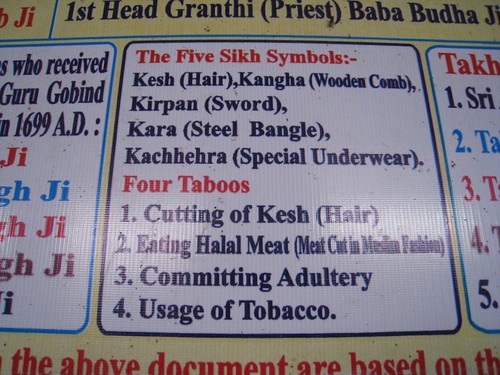
Do's and dont's of Sikhism

Instead, I devoured paneer butter masala (cottage cheese in gravy) and butter naan at a restaurant near my hotel after arranging an air-conditioned share taxi to the border ceremony a few hours later.

Steve's Birthday, My Departure

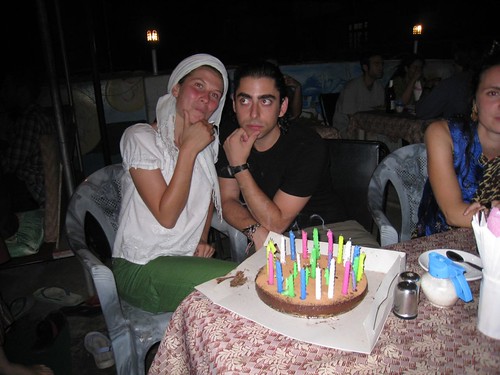
(front, l to r) Fred, Ron (rear) Ian, Steve, Me

I was tempted to leave McLeod Ganj a day or two before Steve's 27th birthday, but it seemed silly to not stick around to help him celebrate it.  When my 32nd birthday rolls around in September, I hope to have a few travel buddies with whom to hang out.

The popular rooftop seating at Carpe Diem

We ordered dinner and a few Kingfisher beers while chilling on the roof of Carpe Diem.  The whole gang was there, or at least the gang of people I came to know during my time in town.  Mostly though, I saw it as my last night with Steve and Marie, though Steve was planning to head to Thailand just a few weeks after me.

Sisters Anastasia and Olga (aka Ollie)

Anastasia had amazing taste in cake-selection, picking out an entire chocolate mousse from a great Italian restaurant where I ate previously ate twice (getting sinful chocolate desserts both times).

Marie and Steve pose in front of a delicious chocolate mousse cake

My plan was to stay up all night so I could ensure I caught the 5am direct (local) bus to Amritsar.  Based on my all-nighters in Christchurch and China before leaving those countries, I felt confident in this plan.  Unfortunately, I realized such a strategy doesn't work as well when taking a 6-hour bus in India.  The Russia-Spain Euro 2008 semifinal match at 12am did less to keep me up then I expected.  I drifted in and out of sleep until 4am when I received a wake-up call.

I walked through the quiet streets, passing cows and dogs in the shadows, until I found a drowsy taxi driver to take me 30-minutes downhill to the bus stand in Dharamsala.  The bus left on time, winding it's way down to an elevation of just a few hundred meters.  It began to rain, resulting in all the windows being closed.  Lacking a flow of fresh air, I felt increasingly nauseous, wondering whether I made a mistake in trying to leave so early.  Luckily, despite a full bus at times, no one seemed to want the damp window seat next to me.

Arriving in Amritsar

Around Pathankot, the halfway point of our journey, the road straightened out and I began to feel better, even excited to be on the move again.  The times when I'm in transit are when I feel the greatest sense of freedom.  Recollections of the recent past mix with excitement for  what lays ahead.

Marie Arrives

Marie at Khana Nirvana cafe

It felt great to meet up with Steve again after having first hung out together in Pokhara, Nepal back in April. Since then, I'd also kept in regular contact with Marie. As a reminder, we all took the same 3-day meditation course. Since I had control over my schedule, I decided to give myself a few days extra in McLeod Ganj after she arrived to enjoy her company.

Dara's solo concert at Khana Nirvana

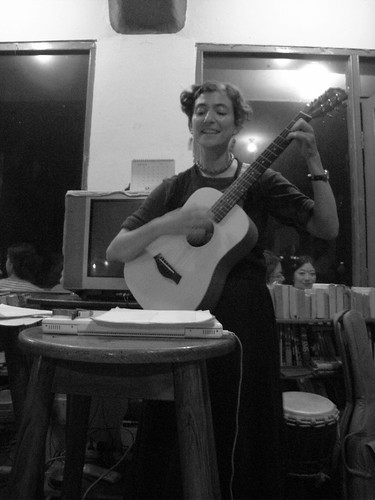
On her first night in town, Steve and I introduced her to Khana Nirvana, which was holding its weekly open mic night. A few nights later we returned to Khana Nirvana for a beat-the-monsoon blues benefit concert. Dara, one of the owners, gave a solo performance. She had played a few songs at the open mic nights I'd attended so I knew she had a knack for writing good, fun lyrics.

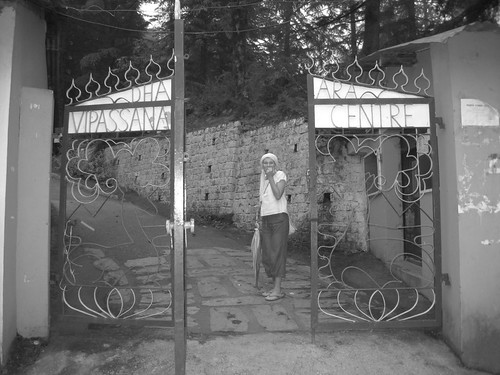
Quietly approaching the Vipassana Center

On my last day before leaving McLeod Ganj, Marie and I met up for lunch, made some travel arrangements, and went for a walk (the long way) through the pine forest to sacred Dal Lake and The Tibetan Children's Village (where I previously saw HH the Dalai Lama). We then snaked our way back toward town, stopping for tea and a bathroom break inside the Vipassana Center.

While I had decided to put myself on a plane to Bangkok July 1, Marie would be starting an intensive 10-day Vipassana retreat which entailed around 8-10 hours of meditation per day, complete silence, two vegetarian meals/day, and even a rule which disallowed eye contact with the other participants. She was a bit apprehensive, but I envied anyone's ability to commit to such an experience of their own free will.

And yes, you heard me right.  I finally decided it was time to leave spiritual India for the full moon parties and beaches of Thailand!

My Daily Life In McLeod Ganj

Chicken chili style tofu

Eating

Food...delicious food. McLeod Ganj is filled with great restaurants offering predominantly Tibetan, Indian, and Italian food. I became a regular at popular Carpe Diem after trying a few of their Indian dishes. The service was friendly and they had a great rooftop seating area with views of upper McLeod Ganj, and the Dhauadhar Range (though less so once the rains began). The Green Hotel made the tastiest cheese and tofu momo's, while western-styled Moonpeak Expresso offered the best cappuccino I'd tasted in months.

Events at Khana Nirvana community cafe

Khana Nirvana

Khana Nirvana is a non-profit community cafe run by several American and silent Indian partners. In business for 11 years, it employs Tibetan refugees who take home any profits. The cafe runs nightly events and I greatly enjoyed the open mic nights when travelers would sing, play the guitar, recite poetry, do spoken word, or play the digiridoo (my personal favorite). One American guy was actually able to play the digiridoo while drumming on one song, and playing the guitar on another. The menu was vegetarian and very bohemian, with the restaurant using organic ingredients.

Olga and Steve

Ex-Political Prisoner Talk

One evening, I joined Anastasia, Olga, Ron, and Fred for a talk sponsored by an Israeli group. The event was in Bagsu, a town 2km away from McLeod Ganj. The event was packed, and lead off by a Tibetan who worked with the International Campaign for Tibet. While not a historical expert on Tibet, he had been asked to give a brief history of the country during the 20th century.

He was followed by the ex-prisoner whose story was translated into English. To sum it up, he was jailed for 7 years (in the 90's) after being a part of a small protest in Tibet. He spoke of regular beatings, being hung from the ceiling, and placed in solitary confinement where he would only receive one dumpling and a small cup of water per day. He said it was hard to make logical sense of what activity would result in the beatings. Ten years after his release, and now residing in India, he is still suffering the effects of repeated trauma to his head. Sadly, from what I've read, his story is not unusual, and highlights China's poor record when it comes to human rights in Tibet.

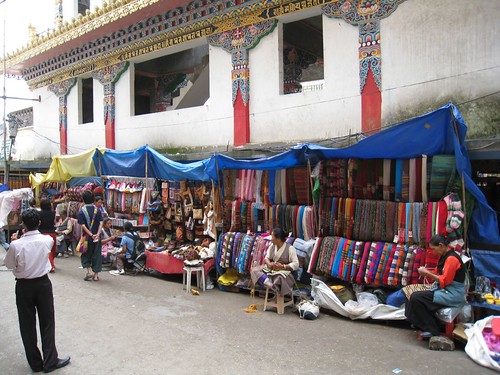
Tibetan women knit beside their street stalls

Public Audience With The 17th Karmapa

It's not every day you can attend a public audience with the spiritual leader of a Tibetan sect of Buddhism (of which there are four). Given the 17th Karmapa resided in Dharamsala, I convinced Steve to join me for a visit. Public audiences are held at the monastery where he resides twice a week. We took a taxi, bought katas (silk scarves) to offer, and queued up outside the gompa. Steve made it a point to be first in (the men's) line, which enabled us to sit front and center.

Eventually, a voice came over the speaker system, and I realized it was the Karmapa speaking. We were a bit disappointed that he wasn't speaking from the solitary seat in front of us. After 20 minutes of talking, a group of monks entered the gompa, followed by the young Karmapa. Everyone lined up, holding the katas in front of them as they approached a monk. Giving the kata to the monk as an offering, he then returns it by placing it around the giver's neck. In effect, he has then blessed it by this interaction. We weren't sure who the monk was, but he certainly wasn't the Karmapa. The Karmapa would then hand each person a red string. People placed the strings around their necks or wrists. I did the latter, hoping it'd bring me a little good luck in the near future.

In the future I intend to read the story of the 17th Karmapa, as he escaped from Tibet over the Himalaya in what is suppose to be quite an amazing adventure. Currently, his status as the leader of the sect is up for debate because there is another monk in Delhi who is also said to be the 17th Karmapa. Neither is allowed to assume their rightful seat at the Rumtek Monastery in Sikkim for fears it will further aggravate China.

Kevin Arnold in the Wonder Years

Euro 2008

Once I was feeling myself again, I downgraded my room at Hotel Mount View. I lost the soft mattress and balcony, keeping cable TV access so I could continue to watch the Euro 2008 tournament. After the first week, all the matches were at the late local hour of 12am. It wasn't until the quarterfinals that I realized it was saner to simply watch the replays at 9am. McLeod Ganj didn't offer much in the way of public viewing options. The town all but shuts down by 10pm each night.

Watching the matches offered a nice opportunity to indulge my historical love for television, however it also acted as a gateway to other programming, such as The Wonder Years, CNN/BBC news, and movies like The Father Of The Bride (great one) and Blood Diamond. Sometimes I felt guilty for being tucked away in my room, and other times it felt like an overdue experience. The early arrival of the rainy season made it all the easier to stay indoors.

Tibetan Acupuncture And Massage

Big furry spider with egg sack in my bathroom

The morning after returning from my Indrahar Pass trek, I awoke with a giant, furry spider in my bathroom, aching right shoulder, stabbing pain in the area of my right ribs, and mild soreness in my legs.

The soreness in my right shoulder felt as though I was carrying a heavy bag, even when I was lying down.

The sharp pain in my side was only a problem when I coughed, sneezed or laughed, but it caused me to keel over in agony without fail.

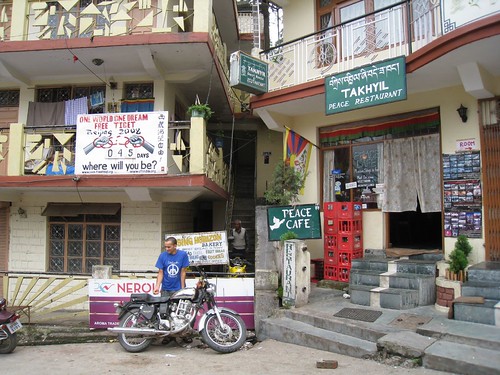
A Royal Enfield motorcycle parked outside The Peace Cafe

I was in sad shape when Steve stopped by for lunch.

I wanted to tell him about the trek and share my photos so we went to the nearby Peace Cafe.

Steve is a funny guy, so I had to explicitly tell him not to make me laugh.

While I wasn't complaining much, it didn't take long for my body language to give away the discomfort I felt.

We cut lunch short and he picked up some Paracetamol (aspirin-like drug) from a pharmacy and met me back at my room where I was already back in bed.

I was in enough pain to wonder whether I should see a doctor.

He recommended rest, and given he had trekked to Everest Base Camp without a porter back in April, I trusted his advice.

The Paracetamol took the edge off the pain, but it was hard to be comfortable, especially at night.

I felt as though my arm should be in a sling to relieve the aching, and I had to sleep on my left side.

I was so glad I made the effort to find a new room with a soft mattress.


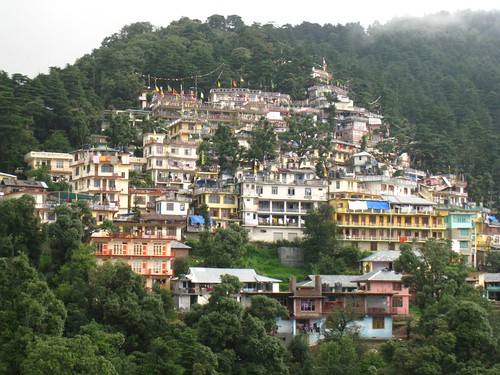
Upper McLeod Ganj as seen from my hotel balcony

After two days, I felt as though I could handle a Tibetan massage.

I'd been meaning to try acupuncture, so I combined the two and visited a Tibetan doctor whose office was in the building adjacent to my hotel.

She recommended three sessions given my injury was new. I was doubtful the pain could be alleviated in just three days.

The first session was limited to 25 minutes of acupuncture.

Three needles were poked into my shoulder, with a fourth and fifth in each elbow.

Unsure whether to credit the acupuncture, I found myself able to spend a few hours on the internet before feeling a lot of pain again by bedtime.

The second session began with a 25-minute back and shoulder massage, followed by acupuncture.

Again, I felt better after the session, though it was even more noticeable the next day.

To my surprise, I felt 100% again after the third session.

Unfortunately, I have no way to know whether the pain would've dissipated as fast on its own, or whether the massage helped more than the acupuncture (or vice versa).

Day 4 - A Return To Civilization

Misty mountains

On our fourth and final morning of the trek, I awoke with surprisingly little soreness in my legs and body.  And my headache was gone, again.  Harold and I packed up our stuff, ate breakfast, and we were all on our way back to McLeod Ganj.  A dog we had fed leftovers to the prior night followed us for the hour's walk back to Triund.  While he probably belonged to a local shepherd, he made for nice company, often barking at the other dogs we'd encounter (though having to back down due to being outnumbered 2-1).

Mountain dog

Ashok had indicated it would be about a 13km walk from our second camp to town.   We made good time, and I had many recollections from our way up as we passed old rest spots.  One nice aspect of going back the way you came is the lesser desire to take photographs.  The trail also looked far less steep and challenging given what we had to climb the day before.

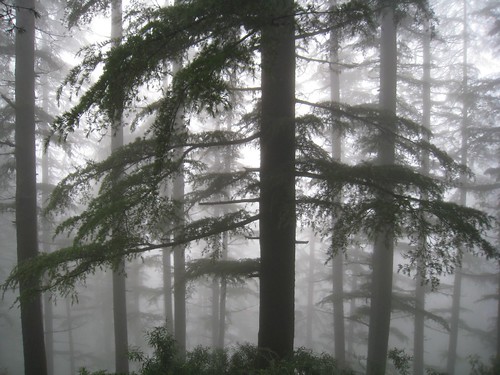
 Walking through the misty pine forest above McLeod Ganj

We stopped for lunch at the cottage where we first met Ashok.  Harold and I took showers and relaxed. Normally, we would have taken a taxi the remainder of the way however the heavy rains from the night before (at lower elevations) had washed out roads.  Later, we would hear firsthand reports of the 5-hour deluge which ushered in a week's worth of rain.  Thankfully, we had spent the night above the storm (literally in the clouds), only experiencing flashes of lightning through our tent.

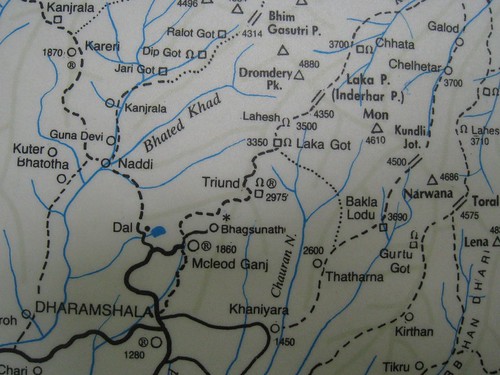
 Trekking map of Himachal Pradesh

As we walked through the misty pine forests above McLeod Ganj, we began to see monkeys, and signs of modern civilization.  These lead to the ever-nearing blare of car horns, and before we knew it, we were spit out at the bus stand (main intersection) in central McLeod Ganj.  It took just a few seconds for me to become fed up with the noise and crowds, making me appreciate the time we had just spent communing with nature (and goat poo).

After the goodbyes, I was overcome by a wave of energy which had me hotel-hunting for a room with a soft bed.  After visiting a few places, I settled on Hotel Mount View.  I emailed Steve so I could tell him about the trek the next day, and let my parents know I was alive.  I tried hard to stay awake for the Euro2008 soccer match that night (as I also had a TV in my room), however it was hopeless and I soon drifted off to sleep.

Day 3 (cont.) - Dangerous Descent

Relaxing atop Indrahar Pass

When the photos were taken, the Tibetan freedom video shot, and the food consumed, we began our descent into the now cloud-shrouded valley. I was glad to have finished one of my two bottles of water so I could use both of my hands to steady myself on the way down.

The first stretch of snow we needed to cross was also the steepest. Despite my recently gained experience on the way up, I was still reticent. Ashok picked up on my anxiety and offered his hand until I was safely across. I could tell the snow had softened up since we last passed through. Harold managed it on his own, though I sometimes worried about his safety when I would watch him.

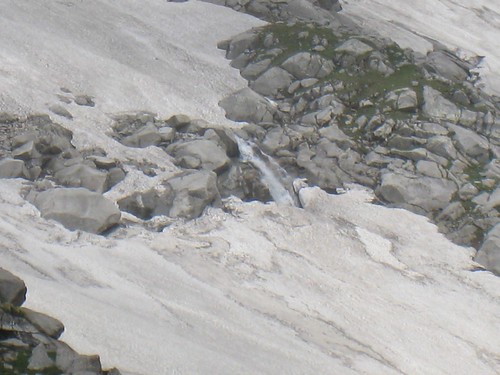
A waterfall formed by glacial melt

We continued to head down at a faster pace then we ascended, and I felt comfortable enough on the remaining sections of snow to walk them independently. Ashok showed me how I could poke holes into the snow using my hand to create a third point of contact. The first time I tried this technique, my hands grew wet and cold very fast. Thereafter, I began to wrap my bandanna around my fingers before driving them through the layer of goat poo into the soft, wet snow. In any other circumstance, I would've found the process disgusting. Harold joked that I wouldn't be using the bandanna to moisturize anymore (a reference to my use of it as a cold compress for my sunburn the first two nights).

Patches of blue sky appear as we descend to camp

Harold was the first to slip and fall. He fell forward and caught himself against a medium-sized rock. It looked jarring, though he managed to escape with only a scraped knee (to my knowledge). He vocalized his frustrations about the safety of the trail, namely the wetness from the rain and goat poo, and the snow. Ashok tried to refocus his mind and energy on taking secure steps, as there would be ample time to air concerns once we safely reached camp (and later town).

I slipped second, my feet sliding forward from under me. I landed lightly on my bum. I tried to sharpen my focus on footsteps, finding it a great challenge given my body's natural momentum to move downhill. My headache was moderate by this point, and I knew Harold's was worse. The best thing for the both of us was to reach camp as soon as possible.

Our tent amongst the rocks and grass

Harold's next fall was the result of an unstable rock. Without hesitation, Ashok dove on top of him as he landed on his right side. The moment was over in an instant, yet Harold later acknowledged that our guide's quick reaction probably saved his life. He said he recognized he was in trouble, and knew he'd have to try and grab onto a rock or something to keep from falling over the edge of a drop off, yet there were no guarantees he could've arrested his fall on his own. I redoubled my efforts to continue cautiously thereafter, though I slipped and landed on my behind lightly one more time.

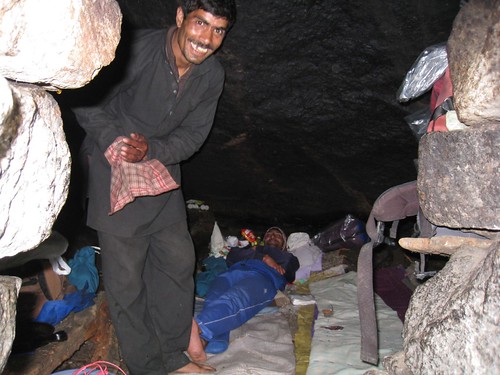
We stopped in a large cave on the way down for one of our breaks. Ashok said it was mainly used by trekkers coming from the opposite direction, that it was cold, and could sleep around 30 people. It had a low stone ceiling and a hay-covered floor. There was a large flat rock which acted as a balcony. The view was beautiful as the sun had emerged. While Harold and Ashok soaked up the rays, I spent the ten minutes in the shade of the rock, under my jacket trying to shield myself from the most intense sunlight I'd ever felt.

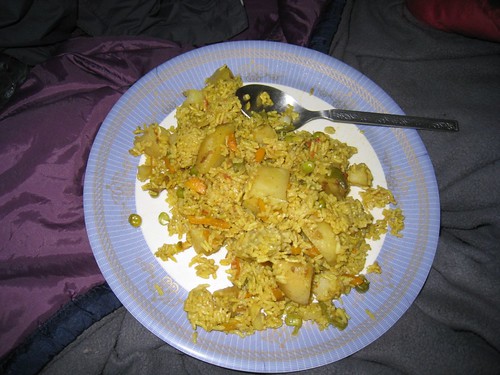
Potatoes and rice for lunch

As our 3.5 hour descent drew to a close, my legs were like jelly and my fear of falling on the glacier were clear. Ashok waited for me to reach him in the middle, and again offered me his hand so I could be guided across in a more timely fashion. Harold slipped and landed on his butt once while walking ahead of us.

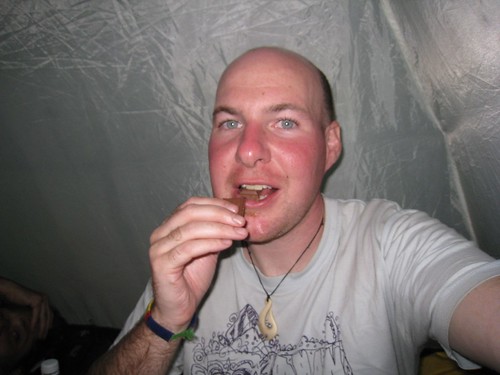
The author savors the last of his chocolate


Arriving back at our humble camp, I felt a great sense of satisfaction. Our porter brought a delicious rice and potato dish to our tent, followed by French fries and tea. He refilled our water bottles. I savored my last two squares of Cadbury chocolate which I had saved for consumption back in the tent. Harold and I rested, hoping our headaches would quickly disappear. We ate dinner in the rock shelter kitchen, though neither Harold nor I were especially hungry by that point. We both slept well that night.


Free Tibet!

Video Dedication Of My Climb

The world's attention is on the Chinese government in light of the upcoming 2008 Summer Olympics.

To find out more about the Tibetan cause and how you can help, see the International Campaign for Tibet's website.

Day 3 - Redemption At 4,320 Meters

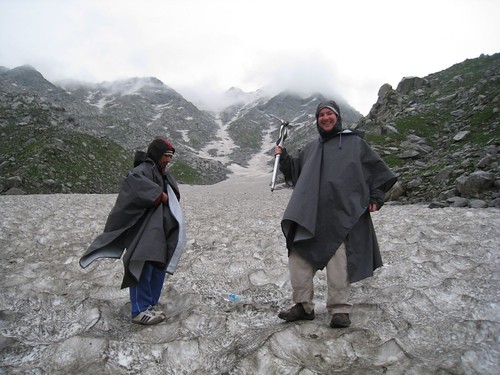
In high spirits at the start, we cross the Laka Got glacier on our way up to the pass

We initially planned to wake at 5am, and head up to the pass at 6am, however there was a rain delay of an hour. I was again thankful to awake with no headache. A light breakfast of cornflakes, hard boiled eggs, and tea was served. Around 7:15am, Ashok lead Harold and I across the glacier, while the porter watched over our camp.

The glacier looked like a frozen ocean, upon which you could walk on the waves like steps. The drizzle let up soon after our departure, allowing us to strip off the ponchos. Harold carried his backpack, Ashok his sleeping bag's bag with our lunch and one of my two bottles of water, and I carried one bottle of water and a small nylon dry bag with my camera and an assortment of pills.

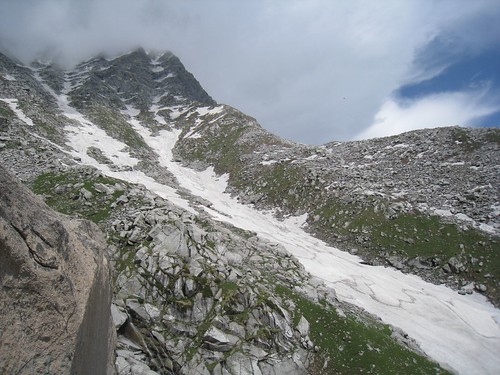
Clear weather allowed us to see Indrahar Pass the whole way up

I felt lucky to have clear views of the pass and mountain ridge the whole morning. I wanted to see where we were going, and somehow found the view energizing instead of daunting (ok....a little daunting!).

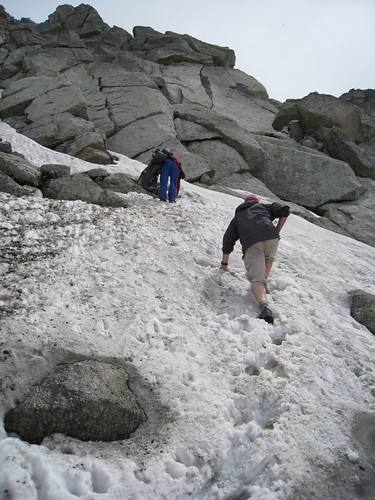
The terrain was very rough. The rocky path was in no way as stable and well defined as the Nepalese trails around the Annapurna region. It was developed by shepherds who still use it to bring their goats from one valley to the other. As a result, the path is covered in goat poo, making it especially slippery. Dark brown strips of the poo can be seen wherever the goats cross snow as well.

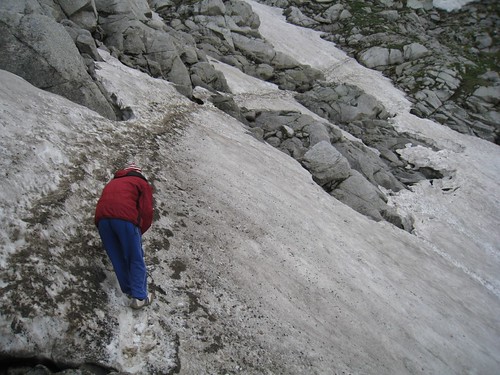
Ashok digs out footholds on the steeply pitched snow

The steeper we climbed, the more I tried to focus on ensuring the stability of every step. I was the only one who could be held 100% responsible for my footsteps. There would be no one else to blame if I slipped and careened down the mountainside.

As I was getting a little more comfortable in my rugged environment, Harold and I were presented with a new challenge, crossing soft snow on steep pitches without the use of ropes or ice axes. When I saw the first section we had to cross, I snapped a photo stating "this will go in my holy sh*t file." I was at once petrified of slipping to my death hundreds of feet below, and surprisingly calm and collected. Ashok cut out fresh footholds in the snow, and we followed behind.

Putting our first snow crossing in a bigger perspective!

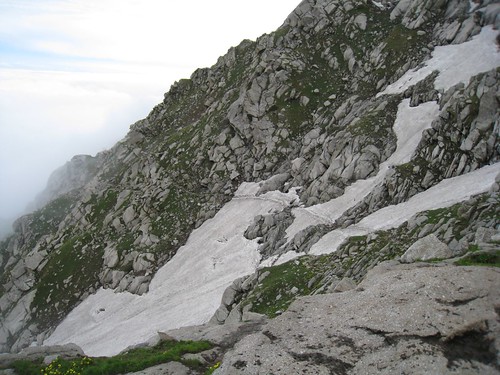
I knew going uphill in the snow was easier than what we faced on our descent later. We continued to cross 4-5 sections of snow on our way to the top, with the final one being the steepest.

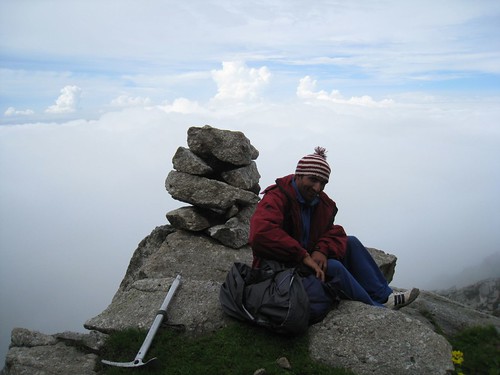
Ashok rests by a pile of stones placed by shepherds to mark the path

Ashok lead us up the mountain at a slow and steady pace. The higher altitudes and rugged, slippery terrain forced us to walk slow just the same. My heart would pound heavily during the first hour or two. I either got use to it, or it quieted down a bit the higher we rose.

The author follows Ashok across more snow around 4,000 meters

About thirty minutes from the top, Harold developed a headache, appeared more lethargic, and signaled a feeling of uneasiness. I gave him a ½ pill of Diamox which I carried as a precaution.

For better or worse, the place where Harold decided to lay against a rock was not a resting spot according to Ashok, who ushered him to the top just ten minutes away. As for me, I was feeling energetic and hungry.

Photo op minutes before reaching the top

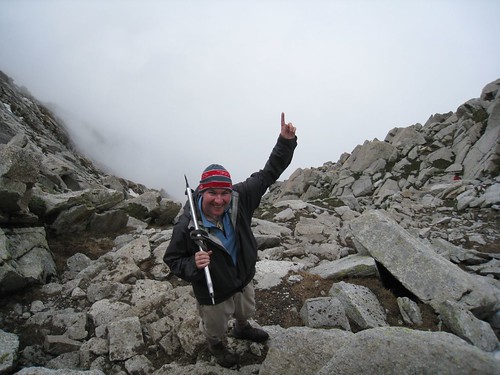
It was exhilarating to reach the top of 4,320m (14,256ft) Indrahar Pass after four hours of climbing about 1,100m in altitude. I was completely surprised by the view of the snow-covered valley on the other side of the ridge. A dark brown path of goat poo showed the way down the other side. Clouds remained in the distance while we enjoyed lunch and views for thirty plus minutes. Speaking of food, I was the only one who'd been buying chocolate, so I devoured a beloved Snickers, along with a mango, trail mix, biscuits, and fruit juice.

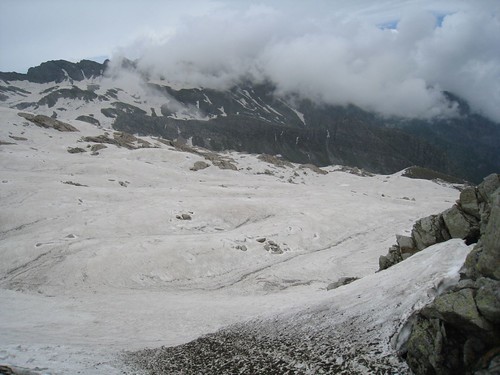
First view of the Chamba Valley from atop Indrahar Pass

Once you're seated, it's easy to lose sight of the fact that you're in a very precarious position. The high altitude is affecting your body's chemistry, and it is not an uncommon side effect to feel a sense of euphoria (or intoxication).

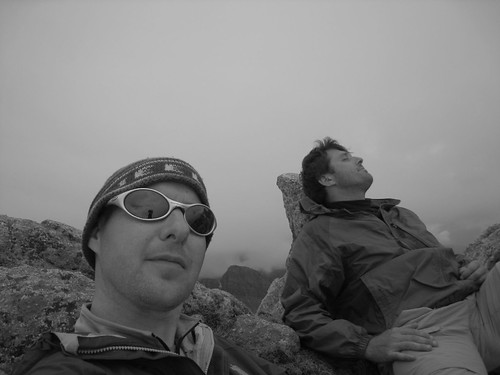
View of 4,600-meter Mon Peak with Harold in foreground

Besides the aforementioned euphoria, I felt an amazing sense of redemption. Despite efforts to accept my trek in Nepal as "complete" just as I experienced it, there was never a climax. I knew it then, and I couldn't let go of my desire to successfully climb something high. I had told Cameron I wanted to know what it felt like to be at the top of a mountain.

I now had that feeling, in addition to a headache, and the sobering knowledge that climbing a mountain means little if you can't get back down alive and well.

Day 2, Crossing The Snowline

Trail from Triund to snowline

I was glad my headache had disappeared after 5-6 hours of solid sleep. Our second day was to be an easy one (2 hours walking, 300m gain) which would allow us to further acclimatize before the big climb on day three. Ashok cooked up some amazing banana porridge, omelettes, and toast which were served with tea for breakfast. Our plastic bottles were refilled with boiled water, the modus operandi for the next few days.

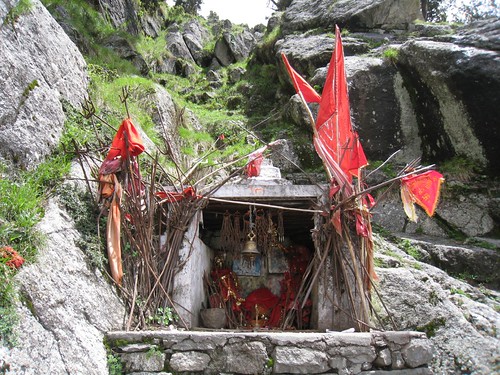
A Hindu Temple on the trail


Around 10:30am, we started trekking.There were noticeable changes in the terrain at this point.The green grass seemed to give way to more and more rocks, some quite large.

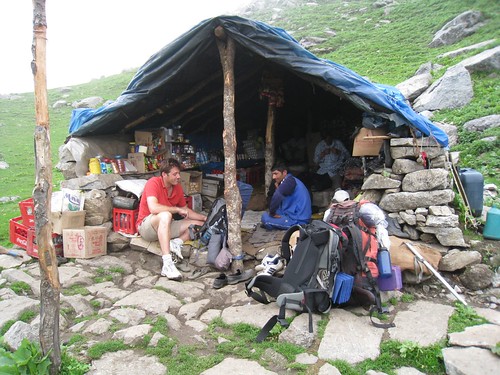
Snowline Cafe

We stopped for an hour or so at the Snowline Cafe, the last place to buy a meal, snacks, smokes, or water before continuing on to the glacier and pass. We enjoyed some chai and chilled out before walking the remaining thirty minutes to our second campsite (elevation 3,200m), set amongst the rocky terrain adjacent the glacier, at the foot of the valley we would ascend the next day.

Clouds shroud the mountain and ridge. Rock shelter is in foreground.


Once the kitchen was set up in a small rock shelter, Ashok fixed us heaps of Ramen noodles, a salad, biscuits, tea, and deep-fried potatoes and onions (my personal favorite). He said we were to eat a lot on this day. His ability to cook for hours in such small confines over just one gas burner would continue to amaze me.

Our porter smiles as Ashok (guide) rests in the rock shelter/kitchen

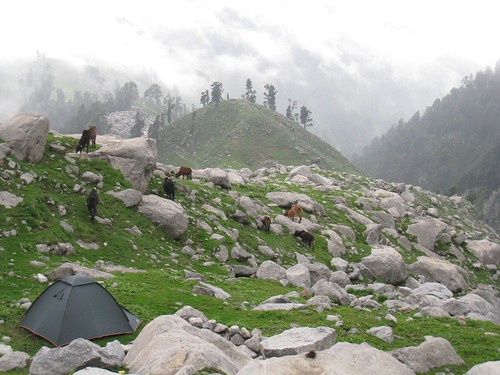
After lunch, Harold and I hung out in the tent, him reading, and me listening to music with a wet bandanna over my head to ease my sunburn. I developed another headache, though still thought it might be partly the result of the sun exposure. Either way, I decided to see how I felt in the morning before making any decisions.


Looking down the valley from our campsite

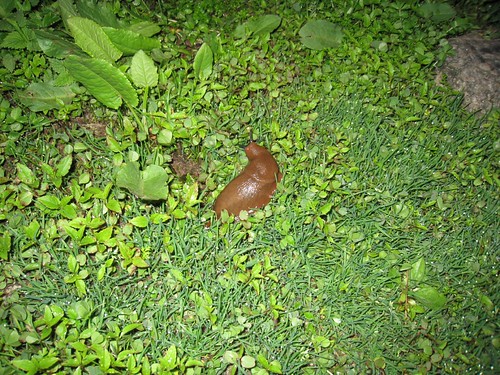
Before committing to sleep, I stepped out of the tent to use the same facilities as the cows and goats who grazed in the area. I caught a glimpse of one of the gigantic slugs common to this area. Around midnight, I awoke to Harold's vain attempts to scare away a bunch of cows around our tent. We knew they weren't the local black bears because of the ringing bells around their necks. Ashok had told us leopards were indigenous as well.

Mountain slugs - ewww

Day 1 - Heading Into The Mountains

One big, black, badass scorpion greets me in the morning

If I were as auspicious as Tibetans, I might have taken the giant black scorpion which appeared in my room the morning my trek was to begin as a bad sign. Instead, I wondered how to get rid of it. As the little beast scuttled toward the protection of my bed, I grabbed two pieces of paper and shuffled it across the floor toward the door. It put up a fight with it's stinger raised, and claws grasping at the paper, yet I was to prevail in my first such encounter. Later, I was told the increasing rains tend to bring them more out into the open.

The trail

Hiring a porter to carry my personal belongings and sleeping bag was an inexpensive option, however after meeting so many people who carried their own bags in Nepal, I felt the need to give it a try myself. I was very glad to be putting my Gregory Chaos to proper use in the mountains versus hostels and hotels.

Our tent is the green one

Harold and I met at the trekking office as the morning rains continued. We ended up waiting about an hour until it stopped, taking a taxi with our porter up to a cottage above the pine forest. This unforeseen ride saved us an hour's walk up about 300m in elevation. Ashok, our young guide, met us there. We received packed lunches, our sleeping mats, and me my sleeping bag. Once all the bags were packed, we set off.

Dogs play in Triund

Climbing uphill along a dirt and rock path, amongst the clouds, it took about four hours at a comfortable pace to climb 800m and reach Triund (elev. 2,900m/9,570ft). Toward the end, I was motivated by one basic need, finding a big boulder behind which I could use a virtual toilet. At one point, I took a few quick steps and was immediately out of breath, a poignant reminder of how high up we were already.

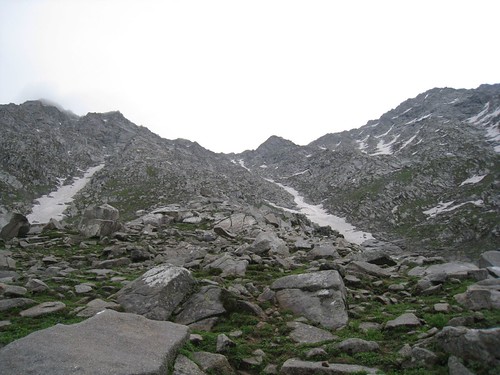
Indrahar Pass is the lowest point on the ridge to the left of the main peak

Little more than a campground set in grazing pastures for goats and horses, Triund spanned a pretty green ridge which gave us views of the pass we were to ultimately ascend in one direction, and the towns of McLeod Ganj, Dharamsala, and Kangra in the other. I felt a headache develop, and was unsure whether to attribute it to the altitude or the massive sunburn I unknowingly received on the top of my head and face.

A close-up view of Indrahar Pass (the lowest point along the ridge)

We were served a snack of tomato soup and spicy popcorn, followed by a hearty Indian thali (rice, lentils, veggies, chapati). As I did all day, I continued to drink as much water as humanely possible. It had been Cameron's number one piece of advice about traveling at high altitudes.


Arranging A Trek To Indrahar Pass

Mon Peak tops this view of the Dhauhladar Range

I stopped into Eagle's Height Trekkers one afternoon to gather some information about local trekking opportunities. The owner went over the details of the two options of most interest to me, a two day trek to the snowline (Laka Got glacier) and a four day trek to the top of 4,300-meter Indrahar Pass of the Dhauladhar Range. I also asked about trekking to Hamta Pass near Manali, which was of a similar altitude. A few English girls stopped in as I was getting ready to leave. They said the trek was difficult and the food was great. I left my name at the office, hoping to link up with another person or two with whom to share the cost and experience.

A day or two later, I heard a knock upon my door. Harold, a tall French man, was also traveling on his own and interested in the trek. I quickly got the sense that he'd make a good trekking partner for me, though it wasn't until later that I'd find out he had quite a bit of experience. We went back to the trekking office to confirm our interest. A different pair of English girls who had just returned from the snowline trek had positive things to say as well, especially about the amount and quality of food.

A Tibetan flag proudly flies above McLeod Ganj

The next day, Harold and I confirmed our arrangements, and paid in full for a 4-day camping trek set to begin in less than 24 hours. I was excited to put all I had learned from Nepal and other trekkers into action. First off, I took advantage of the authentic North Face sleeping bag on offer from the agency. Next, I scoffed at a salesman's claim that knock-off North Face socks were authentic. I threw caution to the wind and bought a $1.25 pair of cotton knock-off Adidas socks instead (to supplement my trusty Smart Wool hiking socks). And perhaps of most importance, I truly believed from the outset that I could complete the trek.

Class Schedule: Thangka Painting And Tibetan Cooking

Lobsang makes corrections on my Buddha drawing

There is so much going on in McLeod Ganj, it can make your head spin. I decided to start off nice and easy by joining Anastasia and Olga for their thangka painting class. The first few sessions are dedicated to drawing Buddha's face and body according to standard measurements. The class is held in the Tibetan teacher's, Lobsang's, living room. He charges $5 per 3-hour session, of which there are two per day, and all materials are included. I lasted two sessions before bailing on my career as a thangka artist.

Lhamo at work in his kitchen

Cooking classes, on the other hand, were more my style. For $12.50, I would get to attend three classes in Lhamo's kitchen. The first class was dedicated to breads, of which we learned to make three varieties. Lhamo did all the prep work, so there was little opportunity for us to participate beyond kneading dough. Still, the breads were quite tasty!

The Aussie couple in my momo class

The second session was the main event, momos. Momos are the Tibetan version of ravioli. We made the dough from scratch, and learned three different styles for forming the momos (which there is little chance I'll remember in six months). One set was filled with spinach and cheese, another veggie (mostly cabbage), and the sweet ones with a sesame seed and sugar mix. Lhamo steamed them, and then allowed us to dig in, offering soy and tomato sauces as accompaniments. The best part about making your own momos is you can stuff them with anything you want. So far, the tofu and cheese momos I had at the Green Hotel's restaurant are my favorite.

3 types of momos ready for a steambath

I've yet to attend the third class...soups. I can't imagine it'd beat momo-making so I'm in no rush.

A Teaching By His Holiness The Dalai Lama

The shortcut to a Tibetan school

My first priority upon settling in McLeod Ganj was to reconnect with my friend from Nepal, Steve. He had arrived a few days before me, and attended the first of two teachings being given by His Holiness the Dalai Lama at a local Tibetan school, Attendance for everyone but the kids meant sitting outside the auditorium and either watching a video feed under a tent or simply listening to the English-translation broadcast on a designated FM station.

The view across the activity field toward distant mountains

As Steve wasn't feeling well enough to attend the second teaching, I met up with two of his friends, sisters Anastasia and Olga (Germany) at the bus stand around 8am. I noticed people lining up and realized it was because we were standing along the road to the school. A minute later, the caravan drove through with His Holiness in the second SUV. He was on the opposite side from me though. Anastasia and Olga lead me on the short walk through a pine forest to the schoolyard. We sat up on a grass and stone bleacher/retaining wall, and tuned into the broadcast.

A crowd of tourists, locals and monks watch the video feed

I spent the following few hours people-watching, observing the clouds roll past the surrounding forest, and gazing out at the distant mountains. I can't claim to have taken anything tangible away from the teaching, but I felt lucky just to be in the right place at the right time.

A smile and a wave from His Holiness the Dalai Lama

As the question and answer period wrapped up around 11:30am, a motley crew of tourists, local Tibetans, and monks gathered outside the auditorium's exit to catch a glimpse of HH the Dalai Lama. Our patience was rewarded when he eventually emerged to the tourist paparazzi. I had wanted to shoot on " continuous"? mode, however it didn't seem to be working with zoom, so I was fumbling around with my camera instead of paying full attention!

Walking back to town through the pine forest

I finally got my act together to catch his warm smile and wave as the SUV drove by. It was as if he had rainbows and sunbeams sprouting from his eyes.

Making My Way To McLeod Ganj

Small kids hanging out on the train tracks

I missed my overnight train from Agra to Pathankot, the jumping off point for a bus to Dharamsala (which, in turn, is the jumping off point for a taxi to McLeod Ganj, home of His Holiness the Dalai Lama and the Tibetan government-in-exile). I was not a happy camper by that point. I had paid 75% of my room cost so I could hang out in it after the normal check-out time, and then I had spent another few hours at the hot, crowded train station.

Another Indian sunset as seen from an overnight train

I was on the right platform, however they must have announced the train arriving on a different one. A guy started to help me out, and I accepted his support knowing he was benefiting financially in some way. I got a 50% refund on my train ticket, and accepted the cost of a commission from a travel agent to get a new overnight ticket situated for the next day.

A passing train at the Jalandhar Junction station

As I had the whole next day to kill, I ended up being taken for a ride (literally) by a friend of the guy who first helped me. Bottom line, I paid to hire an air-conditioned car for a half day to be taken to a series of commission-paying souvenir shops. The guys are good here in India...very good. Sometimes you don't even know what hit you, and you just get tired of saying "no" so you go with the flow (at your own expense!).

A sword-bearing Sikh walks past a chai stand at Jalandhar Junction train station in Punjab

Thankfully, I made the overnight train the second time around, though my seat was unconfirmed (in effect, I boarded while still on the waiting list). I sat impatiently in the appropriate carriage, wondering if I'd be kicked off the train in Delhi. To my delight, an Indian passenger informed me I had been assigned a berth based on a recent printout that had been placed on the carriage a few hours into our journey. I put my sheets and blanket down and drifted off to sleep.

Going nowhere fast on my overpriced bicycle rickshaw

I arrived at the Jalandhar Junction train station a few minutes too late in the morning. My connecting train to Chakki Bank had already passed through, leaving me with a few hours to kill on the fly filled train platform. At least it was early in the morning so it wasn't too hot. As I began to look around, I noticed more turbins on heads, and a few guys walking around in orange and purple flowing outfits with swords swinging from their hips. I consulted my Lonely Planet which always has an answer for such cultural quandries. Turns out Punjab is home to a minority religion in India known as Sikhism, and its followers carry swords, considered to be one of the five articles of faith.

The Dhauladar mountain range above McLeod Ganj

My train dropped me off at Chakki Bank, a town with a heavy military presence. I took a bicycle rickshaw to the stand where I could catch a bus to Dharamsala. I could've sworn the driver quoted me 15 rupees, which is why I went with him, however upon paying him a generous 23 rupees, he looked at me with disappointment, and said the cost was 50 rupees. I knew this to be way too high, as my 3-hour bus ride was only going to be about 70 rupees, however having accepted the ride with him, I gave him the 50 rupees, plus 10 as a tip. Once on the bus, a nicely dressed, well-spoken gentleman with whom I was squeezed against in the back seat informed me that the local rate was 10 rupees. He was tempted to step into the situation, but didn't see it as his place. I was just happy to know there are people out there who don't want to see us tourists being ripped off.

Sunset over McLeod Ganj

After the local bus ride which had me literally launched into the air after some large bumps in the road, I picked up the short bus to Dharamsala (which was nicer, and slower). Finally, I paid a taxi to take me from Dharamsala to the Green Hotel in McLeod Ganj. I had made it to my #1 destination in India after 24 continuous hours on the move, and 10 days coming across from northeastern India. I ate dinner on a restaurant rooftop, catching a great sunset against the nearby Dhauladhar range. It was worth it.

Agra Fort And Kites At Sunset

Entrance to Agra Fort

After touring the Taj Mahal, and grabbing some lunch, Laura, Dan and I hired a rickshaw for the return ride to Agra Fort. It is a large, sprawling complex, with much of the space still dedicated to India's military.

Inside Agra Fort

It is situated along the same river as the Taj Mahal and each can be seen from the other.

Dan negotiates with the autorickshaw driver as Laura and I look on

Before heading back to the hotel, we agreed to visit some tourist shops as part of our deal with the rickshaw driver. I learned that the drivers can not only earn commissions off what is sold at some places, they can also be given a liter of petrol for simply bringing in new customers. Our first stop was a big store, and we were offered free Pepsi's to enjoy while doing our best to resist the pressure to buy something.

Laura (white dress) gets caught in traffic

The weather remained clear, and we hung out at the hotel's rooftop restaurant for the evening. As we enjoyed a few Kingfishers, and the beautiful sun slowly set, I was surprised to find kites filling the air all around us. Adults and kids alike were flying them from their rooftops, and it seemed to be a very popular activity. A call to prayer rang out from a local mosque's loudspeaker. I couldn't have asked for a better evening.

A kite flies high as the sun sets over Agra

The Taj Mahal

THE tourist photo op

I rolled out of bed at 5:30am to see the Taj at sunrise, though from the hotel roof, it didn't look too different from the night before. I met Laura and Dan at the eastern entrance, and we proceeded to tour the site along with everyone else trying to get an early jump on the crowds. While there was plenty of blue sky to create a great backdrop for photos, the reflecting pools were drained for cleaning.

Detailed stonework at Taj Mahal

Up close, the beauty of the building in my eyes lay in the intricate, inlayed carvings. Precious stones sourced from around the world were used, and it is a big part of why the building took 30+ years to complete.

Taj Mahal


Arriving In Agra

Another pretty sunset from an Indian train

My overnight train from Varanasi departed at 5pm so I spent the morning in my air-con room, and the afternoon twiddling my thumbs beneath the fans of the Hotel Buddha restaurant. Once on the train, I chatted briefly with Laura (France) who mistook me for someone she had met in SE Asia.

Taj Mahal from hotel rooftop restaurant

I didn't sleep as well this second time, so it was a nice surprise to receive what seemed to be a reasonable quote for a rickshaw ride to Taj Ganj, the tourist area directly south of the Taj Mahal. The first view of India's iconic mausoleum resulted in another "wow" moment for me. After checking out a few hotels, I settled on a room in the same place as Laura and Dan (England). Strong winds whipped up sand, and rain soon followed, thus postponing our plans for a rooftop dinner overlooking the Taj at sunset.

A Korean girl fires on a nearby monkey

The paint was peeling off the ceiling in my hotel room. At first I saw it as a charming detail, however after waking up the next day in a bed covered with flaking paint, I found it less appealing. I also learned that a vent in the wall does not constitute air-conditioning.

A Sunset Stroll Along The Ghats

Varanasi's ghats at sunset

Benares (Varanasi) is older than history, older than tradition, older even than legend, and looks twice as old as all of them put together. -- Mark Twain

People and livestock bath in the holy Ganges River

After 6 hours of intentional confinement to my air-conditioned hotel room, I felt it was time to see Varanasi's main draw, the ghats which run along the Ganges River. In my mind, I had pictured the dirtiest, darkest, smelliest, smokiest hell on Earth type of atmosphere. After all, according to The Lonely Planet, " the water is septic, no dissolved oxygen exists"?, and " the water has 1.5 million fecal coliform bacteria per 100mL of water"? whereas safe bathing water should be less than 500.

The view north from Assi Ghat

In reality, as I walked out of an alley onto Assi Ghat, the furthest south of the main ghats, I was surprised by the serenity of my surroundings. Boats were floating along the river and people were simply hanging out. I began to walk north, declining boat ride offers with politeness. A young kid struck up a conversation with me, and invited me for a chai. As I sat there burning my tongue on the hot tea, I must admit I was wondering if it had been somehow spiked with a drug, and I was about to keel over and be robbed. Such are the worries of the single traveler who stays open to the kind offerings of strangers. Shortly after taking tea, the kid waved goodbye to me which was the sign that his company had been genuine.

One of many cricket games (note the drying dung patties in left foreground)

I continued to make my way north past kids playing cricket, water buffalo bathing, people of all ages swimming. I sat by one of the smaller burning ghats for a short explanation of the cremation process from another local. When he turned to the topic of touring nearby silk factories, I made my retreat.

A boat awaits its next customer

As I neared Dasawamedh Ghat, home to most of the boats and a nightly ceremony, a young kid struck up a conversation with me. I clearly told him he could walk with me but I would not pay him anything. He proceeded to walk me down to Manikarnika Ghat, the biggest cremation ghat. He showed me up to a balcony overlooking the site, meant specifically for tourists (as the family occupies the space at ground level). After a few minutes of watching multiple pyres burn, we headed back toward Dasawamedh for the nightly puja. For 5 rupees (12 cents), I bought a candle with flowers and set it adrift on the Ganges (earning me some good karma in the process). A crowd of mainly Indian, with a sprinkling of Western, tourists had gathered.

A pair of goats admire the Ganges

The ceremony and music seemed interesting enough, however by 7:30pm, I was sapped of energy, and tired of wiping the sweat from my brow. My young tour guide was keen to show me his silk shop, however I continued to decline in favor of an autorickshaw back to the hotel (and a cold shower). I gave the kid a generous tip in the end. Despite his efforts to get me in a silk shop, he was quite helpful.

A crowd of mostly Indian, and a few Western, tourists watch the nightly puja

I agreed on 100 rupees for my rickshaw ride back to the hotel, which I knew to be too much but seemed to be par for the course in Varanasi (for this tourist anyways). When we got going, I noticed the driver was someone other than who I negotiated the price. I didn't think anything of it until we were outside my hotel and he was demanding 150 rupees. I scoffed, and stood my ground. He asked for 120 and I paid it to be done with the situation. While fifty cents means more to him than me, I'm not immune from getting pissed off about the principle and dishonesty in such situations. It is no wonder Varanasi (and India as a whole) has a reputation for tourist ripoffs.

An Early Morning Visit To Sarnath

Mulgandha Kuti Vihar

I awoke at 4:45am to the now familiar series of beeps from my Casio Pathfinder watch. I set my alarms the night before, figuring I could always go back to sleep if I didn't feel like making my way down to the Ganges River for a sunrise boat ride along the ghats. I went back to sleep.

Two hours later, I stepped out of Hotel Buddha to the almost serene streets of Varanasi. I hailed an autorickshaw to take me the 10km to Sarnath, the location where Buddha gave his first sermons in a deer park. It is one of four primary pilgrimage sites on the Buddhist circuit. I had skipped Lumbini (his birthplace in southern Nepal) because it was a few days out of my way, and didn't intend to visit Kushinagar, India (where he died) for the same reason.

English translation of Buddha's first sermon, under descendent of original Bodhi Tree

The rickshaw let me off at the entrance of Mulgandha Kuti Vihar, a temple built in 1931 to house sacred relics from Sakyamuni Buddha. Next to the temple was a bodhi tree, around which were giant stone plaques bearing the engravings of Buddha's first sermon in a variety of languages. I was given a kata (scarf) to tie around the bodhi tree in exchange for a little baksheesh (a tip or bribe depending on your perspective and the situation).

Dhamekh Stupa

Next, I headed to the prominent 34-meter high Dhamekh Stupa which marks the spot where Buddha's first sermons were given. The stone carvings around the stupa are thought to date back to the 5th century AD. It was only 8:30am, yet the sun was fierce and I could feel my energy waning. I continued to walk through the excavated ruins in the complex, occasionally shooing away the touts trying to sell me cheap Buddha statues (both kids and adults). There persistence and presence can test even the most patient people.

Temple at Sarnath

As I gulped some water near the entrance of the site, I saw a young girl begging through the metal fence. Clearly I was her target as there was barely a tourist around so early, let alone a stick-out-like-a-sore-thumb white person. I began to walk toward the rickshaw stand and she followed me on my left. She barely rose to my waist, yet she was carrying a small baby, muttering the same two words over and over again in a quiet, sad tone. " Please sir, please sir."? At least that's what I think she was saying. I apologized to her, I bowed in respect to her, I said " no"? many times to her. I walked on for a block or two under the increasingly hot sun. " Please sir, please sir."? At one point I heard her voice fade, and I had hoped she had given up, however when I turned around I saw that she had only stopped to pick up the cloth which had been over her head. " Please sir, please sir."? The refrain began again once she had caught up.

Stone carvings on stupa

Knowing you're not suppose to give money to begging children, I gave money to her (3 rupees...7 cents) when I passed upon a man who could render small change. I didn't give her the money out of compassion (either a true or false sense). I gave her the money so she would leave me alone. So I wouldn't hear her voice continue to repeat those words over and over as though I was being haunted.

Hot, Hot Varanasi

Gaya train station at 5am

I was beyond pleased to see my autorickshaw driver awaiting me at 4:20am outside the Karma Temple's gate. I shook his hand, he started the motor, and we were off in the dim pre-dawn light. I realized my decision to take the early train to Varanasi meant a peaceful, cool ride back to Gaya which was in stark contrast to the " like a bat out of hell"? rickshaw ride to Bodhgaya two days earlier.

The 5:15am train arrived on time, and I boarded my 3AC carriage to find most people asleep. I heaved my pack onto the upper berth, grabbed a pillow, turned on my mp3 player, and began to enjoy the air-conditioning.

After a few hours, I descended from my perch to a friendly Indian family occupying the other berths in my section. I asked one of the guys to help me ensure I got off at Varanasi, which he did. Otherwise, I watched the farmland fly by, and the mom playing with her little daughter on the seat opposite me. At one stop, a young child missing his left forearm (below the elbow) entered the carriage and approached me for money. I nodded " no"? and averted my eyes. He took care to point at the scars with his right hand. An older Indian guy next to me said something to him, yet the child just kept repeating " money"? and holding his scarred arm in front of me. I didn't relent, and the mother eventually gave him a one rupee coin. Satisfied, he left.

Typical white taxi in India

We passed over the Ganges River as Varanasi approached. The guy who was helping me warned that it was " terribly hot"? outside as the locals could be seen with their faces and heads covered with long scarves.

We pulled into the station and I stepped into the steamy sauna that was Varanasi. I made my way out, stopping for a map and hotel recommendation at the tourist office (really just a guy at a desk). I grabbed one of the old white taxis to Hotel Buddha. The driver suggested it was about 42 degrees Celsius (~108 degrees Fahrenheit). I had already decided to splurge and budget around $20/night for a nice room with air-conditioning and other appreciated amenities (private bath, cable TV, lots of light, balcony, generator for power outages). Hotel Buddha wasn't in the old city along the ghats, but I only expected to spend two nights in Varanasi so paying for local transportation didn't bother me.

Room at Hotel Buddha

I showered, ordered room service (tasty chicken chili w/naan), finished Khaled Hosseini's " A Thousand Splendid Suns"? which had only been given to me a few days earlier (amazing and sad story based in Afghanistan), and waited for the sun to set. My first mission was to secure my train ticket out of Varanasi, so I walked back to the train station along a dirt road under construction. A young Indian man helped me out when he saw another guy couldn't understand my question about directions. The young man walked his bike alongside me, surprised I wasn't in a rickshaw. He said I had a " good heart."? He was headed to the train station too, and as we prepared to cross the two busy intersections, motioned me to stand behind him (basically, as a way to protect me). While he eventually disclosed he was a driver, and was probably trying to secure my business the whole time, he also helped me survive the 15-minute walk to the station, and for that I gave him a sincere thank you.

Varanasi train station at sunset

The foreigner's ticket office was hot and filled with people. It is exactly what you would imagine if you closed your eyes at home and pictured a ticket office in an Indian railway station. I was thankful to buy my next 3AC overnight train ticket (to Agra, home of the Taj Mahal) on the day I wanted. I took a bicycle rickshaw back to the hotel, which was almost as crazy and vulnerable an experience as walking.

Bicycle rickshaw ride in Varanasi

Meditating Under The Bodhi Tree

Monks under the Bodhi Tree

The next morning I slept through the 6am puja held at my monastery's temple. I deserved the extra rest. I also deserved to sit under the Bodhi Tree, alone, for a few minutes of quiet meditation! I made my way to the temple complex around 7am, sat on a stone bench under the tree behind the temple, closed my eyes, and did a short breathing meditation.

Killing time indoors

After breakfast, I kept myself occupied with reading, writing and music under the ceiling fan in my room.

I mine as well have walked across hot coals...

Around 2pm, I decided to walk the two blocks to see the 25m-high Great Buddha Statue unveiled by His Holiness the Dalai Lama in 1989. As you get closer to it, you have to remove your shoes. I slipped off my flip-flops to the painful realization that the stone (perhaps marble) path was VERY hot. As I approached the statue, I thought about the walk as mind over matter. Once in the statue's shade, I took a few photos, and headed back. This time, my feet felt like they were on fire, especially on the last few steps over a black section of the path. Hoping for relief, I put on my flip-flops, though in those few minutes, they too had become painfully hot. I was left with no alternative but to douse my feet with mineral water to cool them off.

Another Bollywood hit in the making

A few hours later, I headed back to the Mahabodi Temple for one last visit. Near the entrance, I ran into Ramesh, and then a Bollywood movie shoot in full swing. A well-quaffed actor was on a motorcycle while a pretty Indian actress in orange was to be riding in a bicycle rickshaw. The production assistants wielded field hockey sticks to help with crowd control.

Stupas and flowers around Mahabodhi Temple

After a quick walk through the temple grounds, I invited Ramesh to dinner with me. While I found his presence overbearing at times, he clearly seemed interested in hanging out and helping me, without anything in return (except maybe a new watch or camera if I were to return some day).

Ramesh

Monasteries And Mahabodhi Temple

Mahabodhi Temple at sunrise

I took an hour to unwind, shower, and get my bearings before heading out to sightsee. Due to the intense sun during much of the day, I knew I had to take advantage of the early mornings and late afternoons.

Thai Monastery

Bodhgaya is peppered with monasteries built by different Buddhist countries, each with their own unique architecture and style. After peeking into a few, I made my way to Bodhgaya's ace attraction, the Mahaodhi Temple. It was originally constructed in the 6th century AD, next to the spot where Buddha attained enlightenment. All visitors are required to remove their shoes when entering the complex. It's free to visit, yet you pay a small fee to take photos or video.

Monks meditate under the Bodhi Tree

I had barely set eyes on the temple when a local, Ramesh, latched onto me and wouldn't let go (figuratively speaking). As usual, I clearly told him I wouldn't pay any money for a tour. He said he wasn't interested in money, and proceeded to guide me around the site. I took a seat under the Bodhi tree (a descendant of the original which was destroyed) and tried to soak in the experience.

Really, really old Buddhas at Mahabodhi Temple

I continued to walk through the gardens and around the stupas, at times getting frustrated with the amount of talking done by Ramesh. Despite his kind nature, there are times when I simply want to experience a place alone, quietly! And I told him as much. We parted ways and I grabbed dinner at a nearby restaurant before retiring for the night. Walking past the main gate to the Karma Temple, and into the open concrete courtyard under a sky full of stars was a wonderful experience. As I went back to my room, I could see and hear young monks talking enthusiastically (perhaps even playing) in a grassy area. Later, around 8 or 9pm, I could hear their evening puja.

Pilgrimage To Bodhgaya

3AC train carriage

34 hours....1 taxi....1 share jeep....1 overnight train....1 bus ride....3 autorickshaws....1 bicycle rickshaw....

Chai tea - a staple offering on the trains

I awoke around 6am to ensure I was on one of the first share jeeps south to Siliguri. I paid for the two front seats so I could have a little extra space on the four and a half hour drive. As we left Sikkim and dropped in altitude, the cool air gave way to heat and humidity. Thankfully, we arrived an hour early. I hired a rickshaw to take me to the train station, where I had four hours to kill.

Indian guys in my section

The 3AC carriage was nicer than I expected. Once the air conditioning ramped up, my sweat-soaked clothes began to dry off and I felt more relaxed. As we began to roll along, I couldn't believe I was watching a giant yellow sun set over India. An hour or two later, a few Indian men joined me in my section. I'm sure they made a few jokes at my expense in Hindi, however they also made me feel welcome in their country by buying me a cup of chai and sharing their peanuts (also purchased aboard the train). I got a solid 5-6 hours of sleep and felt well rested in the morning.

Catching some zzz's with my pack as pillow

I'll never forget walking into the Patna train offices to try and get a rail ticket to nearby Gaya. People were lying all over the dirty floor, sometimes on blankets which were just as dirty. It wasn't a far stretch to wonder if some of them were still alive. I walked upstairs past a series of beggars with different physical ailments to find there were no train tickets available to Gaya. It was only mid-morning yet the sun was beaming down on me as I exited the ticket building.

Clearly, I'm not amused

I didn't get far before being picked up by a young kid who lead me to a nearby travel office where I bought a bus ticket to Gaya. The kid also accompanied me on a rickshaw to the bus stand (a muddy field) where he made sure I boarded the right bus (in exchange for a tip, of course). I was sweating profusely, guzzling water by the liter at this point. The 45 minute wait in the bus (nay...oven) felt like an eternity. I let go of my dignity and took a needed piss behind the bus before we got going. People pee everywhere in India (and to a similar extent in Nepal), and if you don't adapt, you risk making uncomfortable bus rides far worse. Eventually, the bus filled up and we left at 10:30am, only to get stuck in traffic on our way out.

Trash in the streets...a common scene

We drove along trash-strewn streets, kids defecating a few meters from the roadside, and lots of farmland. The Indian man in the seat next to me finished his paper, and proceeded to fall asleep against my sweaty shoulder. The bus arrived in Gaya an hour late. I only saw a few sections of street in the city, however their condition bordered on the repulsive. We passed a young woman in a bright, flowing silk sari talking to a man and my mind couldn't reconcile how such a beautiful woman could coexist with the filthy streets.

Rickshaw ride to Bodhgaya

I had a rickshaw the moment I exited the bus, though I asked him to hold on while I took yet another pee. The ride to Bodhgaya lasted 30 minutes, the first half of which entailed exiting Gaya. The driver was insane, playing chicken with the oncoming traffic. As we approached Bodhgaya, the ride quieted down, the traffic lessened, and the scenery became more rural.

Not a bad temple to come home to!

Dropped off in the center of the little town, I hired a bicycle rickshaw to take me to the Bhutanese Monastery where I had hoped to spend my two nights. It was full, so we proceeded to the Tibetan Monastery (Karma Temple), where after a short wait, I was shown to my basic room.

Different Directions

 Mt Kanchenjunga from Gangtok

The day after our jeep tour of the north, Cameron and Natalie set about organizing a six day trek to a 5,000 meter pass with close views of Mt. Kanchenjunga. As I got to know Cameron, it slowly became evident he not only liked to trek, it was his passion. In 2007, he walked from Mexico to Canada over four months along the Pacific Crest Trail. I told him he was the kind of guy doing the things I read about in National Geographic Adventure. When I asked him how high he had been, his response was the second or third base camp on the Tibetan side of Mt. Everest at around 6,300 meters.

Natalie and Cameron

I, on the other hand, was due for entry into the " real"? India. Ironically, despite my plan to leave Buddhist Sikkim, my first destination would be Bodhgaya, the location where Buddha attained enlightenment under the bodhi tree. It seemed fitting that it would require a lot of effort to make it there from Gangtok. Due to all the Indians traveling this time of year on holiday, I'd heard some people were having difficulty getting westbound trains. It must've been my lucky day because for merely double the price, I reserved an " emergency"? 3AC (air-conditioned) sleeper for the 17-hour overnight ride to Patna, capital of Bihar (state).

Day 3 - Yumthang - Valley Of The Flowers

A few of the peaks visible at 5am

I couldn't sleep well the second night, so at 4:45am I got out of bed to check for mountain peaks like a kid checks for presents on Christmas morning. My insomnia was rewarded with views of snow-covered mountains in almost all directions. Perhaps not as much snow as I had hoped, however beggars can't be choosers.

Raging river

A few massive waterfalls seemed to start at the top of one mountain ridge, while the loud sound of rushing water I could hear was a nearby river we had crossed the previous night.

Yumthang Valley

Once everyone was up and about, we learned our guide had arranged for the hotel owner's son to drive us to Yumthang Valley in a nice, comfortable, private SUV. Riding in an SUV with a considerate driver made up for the death-defying experience the night before. Meanwhile, our original driver was awaiting the spare part needed to fix the jeep we'd take back to Gangtok after lunch.

Dave and Dave upon a boulder

Passing through a rhododendron forest, we came upon Yumthang Valley, along with a horde of Indian tourists. The altitude was around 3,800 meters, and cloud cover would again mask the peaks of the mountains around us. Our guide said we would've seen new snow falling if we had arrived a day earlier!

Flags, a river, and a glimpse of snow

The Lonely Planet describes the sight as follows: " ...weather permitting, you should have 360-degree views of an utterly magnificent Alpine scene: glaciers, spiky peaks and a veritable candelabra of jagged mountains rising toward Tibet."? It is amazing how much time and energy a traveler can invest in an experience so dependent on mother nature.

A yak grazes by a field of white prayer flags

The ride back to Gangtok was tortuously long. Even though I hadn't been feeling motion sickness on all the jeep rides, I was fed up and feeling worn out by the time we were done. The decision to condense a 4-day trip into 3 days, late starts, and breakdowns left us all feeling as though we spent too much time in the jeep.

Border Roads Organization (BRO) at work

Typical hairpin turn

Day 2 - The Tsopta Valley And Jeep Drama

I think I can handle these roads...

The next morning, we could see patches of snow on some of the mountains around us, however the cloud cover was low enough to temper my excitement about the potential for clear views higher up the valley.

We all use the Army toilet at 4,000 meters

Our day's highlight came early when we arrived at an Indian army base in Tsopta Valley, elevation 4,100 meters (about 13,500 feet).

The sensitive border situation with Tibet/China and a plethora of military installations are the cause for all the permits required to travel anywhere of interest in Sikkim.

Thankfully, most of the permits are free and arranged via tour operators.

Tsopta Valley

Guide close at hand, we walked a little further up the road which lead north through the valley to Tibet.

Large military vehicles were constantly rumbling by us, along with the occasional jeep of Indian tourists who were allowed to visit a lake 30km to the northwest. I was ecstatic to be so high up.

There was a distinct change in the terrain at that altitude, and to our west we could catch glimpses of Sikkim's Himalayan peaks.

The southern border of Tibet was a mere 20km north of us.

Sikkim's Himalaya

After enjoying ourselves, breakfast was consumed and we were back in the jeep, backtracking a few hours before heading north again toward another valley to the east.

Our driver made a stop for gas, and as he began to pull back onto the road, ran over a large rock which had probably been used as a brake behind the tire of the last jeep to stop there.

The jeep was now stuck in first gear due to a broken clutch.

We puttered our way back to nearby Chungthang where several hours were spent trying to fix the problem.

Contemplation pose

As darkness approached, our guide who was clearly stressed out, found a jeep to take us the relatively short 20km to Lachung (elevation 2,900 meters).

Unfortunately, the only jeep we were able to get was a piece of crap. The hood was raised so it could be started, and the right side mirror was non-existent.

The young guy driving was the owner of the jeep, and I felt he was going too fast, and not paying enough attention.

At one point, after dark, he was changing the music on his cell phone while we careening along the precipitous edges of cliffs.

I had a distraught and tense look on my face the whole time.

Playing with rocks while the broken jeep is evaluated

Once settled into our rooms, I let off some steam about how angry I was at the situation I had allowed myself to be put in.

I didn't feel safe, and even our guide said at that point that there was a moment when he was scared.
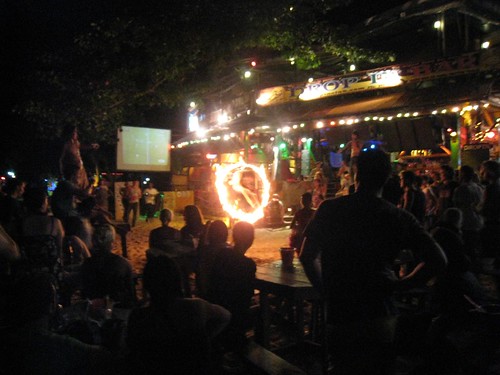
Natalie and Cameron mentioned that there were fumes from the engine coming through the dashboard.
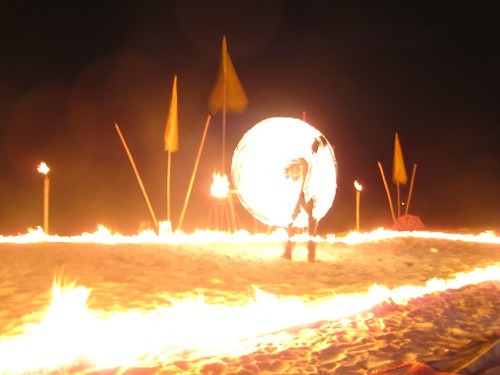
Eventually, I regained my composure with the help of a beer.

Day 1, Big Waterfalls, Long Drive

Valley view

There was a delay in getting the necessary permits for the jeep tour north so we ended up leaving an hour late.Then, a little ways outside of Gangtok, we stopped at a scenic outlook for 30 minutes though clouds hid the mountains of interest.We left a stop at Phodong Monastery for the ride back so as not to lose further daylight.None of us were interested in riding around on the steep, rough, and sometimes wet mountain roads at night.

Bridge to North Sikkim

Along the way, we crossed bridges strewn with colorful prayer flags, rows of bamboo poles bearing vertical white prayer flags (planted when someone dies), gigantic waterfalls, and a zillion BRO signs. My favorite reads " Ever wondered who defied death to build these roads? BRO that leads the way."? Many of them rhyme, and they all bear swastikas. In fact, Project Swastik is the name associated with a road construction plan. By the time I left Sikkim, I felt the road workers deserved as much credit and attention as all the signs provided.
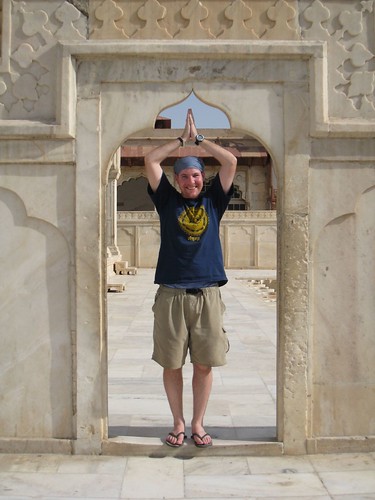
Seven Sisters waterfall

In addition to a sense of pride in road building efforts, Sikkim's government clearly wants visitors to know it is dedicated to the environment. " Protect forests for survival of mankind"? is the state's green mission. Another sign said " forests have made us a beautiful people."? It is worth noting that Sikkim was an independent country until 1975.
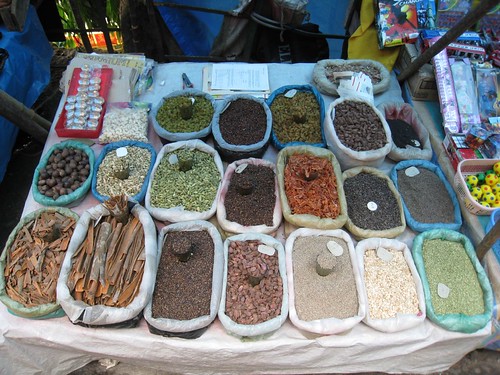
Rolling past another landslide

As we continued our driving after lunch, we passed schoolchildren walking along the sides of the road. I couldn't imagine having to make such walks every day, especially in the rainy season when roads are often closed due to landslides.

Water from streams and falls often ran over the roads

We drove for 30-45 minutes in the dark before arriving in Lachen (elevation 2,775 meters) for the night. I had occupied the front seat for 5 of the 7 hours we were on the road, and had felt increasingly confident in our driver. Still, it was a relief to exit the jeep as it had been a long day. After a delicious dinner, we all hit the hay.

Cliffhanger

Yak Rides At Tsomgo Lake


Beautiful Sikkim

The jeep ride to Tsomgo Lake took a little less than two hours thanks to our fast driver who thought nothing of overtaking other jeeps along the precipitous mountain roads. As we gained altitude, we began to literally drive through clouds. The air temperature became noticeably colder.

Passing landslides and clouds as we head up to Tsomgo Lake

We passed landslide zones, stopped at a big waterfall (where I bought a cowboy hat for the yak ride), and soon arrived at the holy high-altitude Tsomgo Lake.

Yee-haw, I'm riding a yak!

My first order of business was a yak ride. I had gone on about it so much in the preceding days, I think Cameron was going to get a bigger kick out of watching me on one then seeing the lake itself. Natalie joined me for the 10-minute plod along the barely visible lake's shore. I found the ride to be quite comfortable. It helped that there was a saddle I'm sure. Every now and then the handler would whack the yak with a wooden stick, which seemed unnecessary.

Dave and Natalie pose while Cameron is farther up

After the yak rides, our guide let us hike up a steep, muddy hill opposite the lake. The fog had begun to clear, exposing the little lake (1km in length) and snow along the opposite bank. When it began to rain steadily, we headed down to a small restaurant where Tibetan momos (dumplings), instant noodles, and small cups of chai (tea) were consumed. I used some of the freshly made green chili sauce and felt a burn on my tongue equivalent to anything I felt in Sichuan (except the hot pot).

Tsomgo Lake - Elev. 12,400 feet

Before I knew it, we were heading back down to Gangtok. Halfway down, and once the rain was behind us, we took a rest break so the driver could pour water on the tires and brakes to cool them down. We dined at a popular Indian restaurant along the pedestrian mall before packing up for our multi-day tour of two northern valleys.

Bonus Video


Good Time Gangtok

Procession

After breakfast, Natalie and I stepped outside of our hotel's restaurant to a procession of monks and lay people descending Tibet Road in celebration of Buddha's birthday. We made our way to Mahatma Gandhi Marg, the pedestrian-only road which marks the center of city life (at least as far as tourists are concerned). The quiet road was a much-appreciated oasis after the incessant honking jeeps of Darjeeling.

Getting a haircut...Indian style!

Clouds began to approach in the early afternoon so we took shelter in Bakers Cafe, which had all the hallmarks of a western-styled cafe (including a tasty cappuccino, my first in months). We used the time to get to know each other a little better. I admired Natalie's willingness to take on long term travel in India (and unexpectedly, Nepal) as a single woman.

Natalie takes a photo of an Indian family in front of a statue of Gandhi

When the rain let up, we made our way back to the hotel restaurant where Cameron was hanging out (we had planned to meet him there sometime that afternoon). We began to discuss the sightseeing options along with Dave (Australian) whom Natalie and I had met earlier. I wanted to see Tsomgo Lake which sat at an altitude of 3,800 meters. I was sold by two factors, reaching a new high in terms of altitude and the chance to go for a yak ride. Natalie was eager to seen snow-capped mountains and thus wanted to do a multi-day jeep tour of the north.

Dave (left), Cameron (right), Natalie discuss our options

We found a tour agency on the pedestrian road that afternoon which managed to obtain our permits for the lake trip on short notice, thus allowing us to head there the next day. We also shared our intention to book a 3-day/2-night jeep tour of the north through them for the day after. Our plans settled, we enjoyed a cozy dinner at Tangerine, overlooking the Himalaya at sunset.

« Previous Page
Next Page »
Dave at Ahu Ko Te Riku on Rapa Nui (Easter Island), Chile.

Hi, I'm Dave

Editor in Chief

I've been writing about adventure travel on Go Backpacking since 2007. I've visited 68 countries.

Read more about Dave.

Footer

back to top

About

  • About
  • Archive
  • Privacy Policy
  • Cookie Policy

Follow Us

Contact

  • Contact
  • Work With Us
  • Submissions

Copyright © 2026 Go Backpacking