Go Backpacking

  • About
  • Travel Tips
    • Accommodations
    • Budgeting & Money
    • Adventure Travel
    • Food & Drink
    • Gear & Gadgets
    • Packing Tips
    • Travel Blogging
    • Travel Insurance
    • Trip Planning
    • UNESCO Sites
  • Destinations
    • Africa
      • Botswana
      • Egypt
      • Ethiopia
      • Morocco
      • Rwanda
      • South Africa
      • Tanzania
    • Asia
      • Cambodia
      • China
      • Hong Kong
      • India
      • Indonesia
      • Japan
      • Laos
      • Malaysia
      • Nepal
      • Philippines
      • Thailand
      • United Arab Emirates
      • Vietnam
    • Europe
      • England
      • France
      • Germany
      • Greece
      • Iceland
      • Ireland
      • Italy
      • Portugal
      • Spain
      • Switzerland
      • Turkey
    • North America
      • Canada
      • Costa Rica
      • Cuba
      • Guatemala
      • Mexico
      • Nicaragua
      • Panama
      • United States
    • Oceania
      • Australia
      • French Polynesia
      • New Zealand
    • South America
      • Argentina
      • Bolivia
      • Brazil
      • Chile
      • Colombia
      • Ecuador
      • Peru
  • Advertise
menu icon
go to homepage
  • About
  • Travel Tips
    • Accommodations
    • Budgeting & Money
    • Adventure Travel
    • Food & Drink
    • Gear & Gadgets
    • Packing Tips
    • Travel Blogging
    • Travel Insurance
    • Trip Planning
    • UNESCO Sites
  • Destinations
    • Africa
      • Botswana
      • Egypt
      • Ethiopia
      • Morocco
      • Rwanda
      • South Africa
      • Tanzania
    • Asia
      • Cambodia
      • China
      • Hong Kong
      • India
      • Indonesia
      • Japan
      • Laos
      • Malaysia
      • Nepal
      • Philippines
      • Thailand
      • United Arab Emirates
      • Vietnam
    • Europe
      • England
      • France
      • Germany
      • Greece
      • Iceland
      • Ireland
      • Italy
      • Portugal
      • Spain
      • Switzerland
      • Turkey
    • North America
      • Canada
      • Costa Rica
      • Cuba
      • Guatemala
      • Mexico
      • Nicaragua
      • Panama
      • United States
    • Oceania
      • Australia
      • French Polynesia
      • New Zealand
    • South America
      • Argentina
      • Bolivia
      • Brazil
      • Chile
      • Colombia
      • Ecuador
      • Peru
  • Advertise
search icon
Homepage link
  • About
  • Travel Tips
    • Accommodations
    • Budgeting & Money
    • Adventure Travel
    • Food & Drink
    • Gear & Gadgets
    • Packing Tips
    • Travel Blogging
    • Travel Insurance
    • Trip Planning
    • UNESCO Sites
  • Destinations
    • Africa
      • Botswana
      • Egypt
      • Ethiopia
      • Morocco
      • Rwanda
      • South Africa
      • Tanzania
    • Asia
      • Cambodia
      • China
      • Hong Kong
      • India
      • Indonesia
      • Japan
      • Laos
      • Malaysia
      • Nepal
      • Philippines
      • Thailand
      • United Arab Emirates
      • Vietnam
    • Europe
      • England
      • France
      • Germany
      • Greece
      • Iceland
      • Ireland
      • Italy
      • Portugal
      • Spain
      • Switzerland
      • Turkey
    • North America
      • Canada
      • Costa Rica
      • Cuba
      • Guatemala
      • Mexico
      • Nicaragua
      • Panama
      • United States
    • Oceania
      • Australia
      • French Polynesia
      • New Zealand
    • South America
      • Argentina
      • Bolivia
      • Brazil
      • Chile
      • Colombia
      • Ecuador
      • Peru
  • Advertise
×
Home

4 Tips for Surviving the Holidays as an Expat

Countries of the world. (photo by iamagenious)

[I]t's that surreal time of year again - the one where the sun starts shining hotter and hotter in Australia while my Facebook feed is filled with photos of fuzzy sweaters, fall colors, and winter holidays.

As an expat, I would say the hardest time to be abroad would be from the months of October to January when it's a string of some of my favorites: Halloween, Thanksgiving, Christmas and New Years.

From what I've deduced, others in my situation find the holiday season abroad to be equally difficult to manage, whether that be because they miss their family and friends back home, or because they miss the ways in which their favorites are actually celebrated.

I wouldn't say I'm the best at coping with this time of year abroad, but I manage. Here are some tips that might help you, too.

1. Invite Family to Visit

If it is family you miss most, invite them over to visit during the holidays in your new home country.

As much as I'm sure they would be happy for you to come home for the holidays, seeing family will hopefully be a two-way street.

Plus, it will help to bring that at-home holiday spirit to your new place of residence, which could carry over into following years.

2. Plan Ahead

If you're the type that gets extremely homesick at this time of year, plan ahead and book a flight home well in advance.

I had a friend that booked a flight from Sydney to the US at the spur of the moment (she felt very homesick) for the Christmas season and ended up spending over $3k roundtrip.

Planning ahead and shopping for flights well in advance could have saved her anywhere up to $1,000. Plus, she had a bit of trouble paying her upcoming rent because of such a huge unexpected expenditure hitting her bank account.

3. Incorporate Your Traditions

If you're celebrating abroad with new friends and loved ones, chances are they will be celebrating the holidays in their traditional way.

As nice and interesting as that may be, if it is not the same as you grew up with, you will most likely start missing how you think it should be... if not the first year, perhaps the next.

Trust me. Christmas has not felt like Christmas in Australia, with all of its hot weather and hit-the-beach activity.

For that reason, it is important to incorporate a bit of your own traditions into the mix. My boyfriend, for example, has never really celebrated Halloween in Australia, but I miss that fun immensely. This year, I forced him to watch heaps of scary movies, including the classics, and indulge in a pumpkin beer or two with me.

It's the little things!

4. Celebrate With Other Expats

The biggest method of support while being abroad for the holidays has been to find other expats in similar situations... and then to celebrate with them!

My experience in Sydney for American Independence Day has been nothing but enjoyable; several establishments offer American-focused food and décor for this day.

And even when it's not the holidays, my group of local American friends just know what I'm going through and can always be counted on to get me through the tough times of being an expat in general.

A few good places for meeting other expats include:

  • Meetups: There are expat meetup groups in 250 cities around the world.
  • Twitter: I've met my best expat friends through Twitter.
  • Expat forums and Facebook groups: Plenty of sites have forums to connect and ask questions, and Facebook groups offer the same.

How do you cope with being an expat during the holidays? I'd love to hear your tips in the comments.

The Most Exciting Sporting Events on the Canary Islands

Tenerife
Tenerife (photo: Ian Palmer)

The year-round great weather with which the Canary Islands are blessed makes them a great location for a number of sporting events, many of which are as popular with tourists as with the locals themselves.

Whether you're a sports fan or just want to witness a unique event whilst visiting the Canary Islands on cheap flights with airlines like Jet2.com, here's our pick of the best sports events in Lanzarote, Tenerife, and Gran Canaria.

Las Galletas Half Marathon, Tenerife, April 7th, 2013

The annual Las Galletas Half Marathon will be in its 17th year in 2013, marking almost two decades of the tough yet picturesque dash around one of Tenerife's loveliest fishing villages.

There are trophies and cash prizes up for grabs in a number of categories and participants age from 18 to 65, so there's no reason not to make your holiday in Tenerife a little more interesting!

If you don't fancy lacing up your running shoes, you can cheer on the runners from the sides of the course and take in the stunning views of the surrounding village in the shadow of Mount Tiede. It is a holiday, after all.

Ironman cyclists compete on Lanzarote
Ironman cyclists compete on Lanzarote (photo: Ian Hughes)

Ironman, Lanzarote, May 18th, 2013

One of the most grueling endurance races in the world is Ironman, held each year on Lanzarote and attracting only the toughest entrants from dozens of countries.

Strength, character, and excellence of both the mind and body are what's needed for a chance to complete this race, which entails a 3.8km swim followed by a 180km bike course and finishes with an unbelievable full marathon of 42.2km.

With a total prize fund of $25,000 up for grabs, it's as exciting to watch as it is to participate, but we think we'd rather be watching with a cool drink in hand than putting ourselves through the challenge!

Rally Islas Canarias
Rally Islas Canarias (photo: Pamela Heywood)

Rally Islas Canarias, Gran Canaria, May 2013 (Date TBD)

The normally peaceful island of Gran Canaria goes full-throttle once a year for the well-established Rally Islas Canarias, in which some of the world's most skilled rally car drivers pit against one another in a crucial round of the Intercontinental Rally Challenge.

Based around the island's capital of Las Palmas, the rally is an exciting slice of Gran Canarian life and thousands of people head over each year to witness the action, so if you're planning to join them, book your flights early!

________

This post was written by Steven, and brought to you by Jet2.com.

Gudeg Yu Djum: Famous Yogyakarta Restaurant

Walking into the kitchen of Gudeg Yu Djum, a famous restaurant in Yogyakarta, was a walk back in time. The heat from the flames was almost unbearable, the lack of air circulation stifling.

A surprisingly tall, young, shirtless man in flip-flops entered the room. Male or female, it was hard not to notice his abs, covered in sweat and seemingly carved from stone.

A woman folding banana leaves

He deposited a shovel full of red-hot coals underneath one of the many large cooking pots without a word and left the room again.

Known for producing gudeg, a local delicacy of young jack fruit mixed with coconut milk, palm sugar, and spices, Gudeg Yu Djum had established itself as one of the top restaurants in Yogyakarta for the dish.

Gudeg, produced 24 hours a day, seven days a week in the location we were visiting, is then shipped to additional restaurants throughout Yogyakarta.

Cooking up coconut milk
Cooking coconut milk
Sauce
Arek is a mixture of salt, brown sugar, and coconut milk combined with jackfruit.

When I signed up for a food tour, I expected we'd visit a local market, photograph some vegetables, and maybe stop by a few shops.

Standing amid a working Indonesian kitchen, wearing flip-flops myself, as hot coals were being shoveled and large cuts of wood were used to keep the fires going, wasn't even within my realm of previous experience.

Taking apart the chickens
Chicken heads
A pot full of chicken heads

The whole scene, unfolding before me, was raw and fascinating. In the largest room, various pots and cauldrons were used to boil and prepare the coconut milk and spices.

Meanwhile, in a smaller side room, no less than six people sat in front of plastic buckets, dismembering chickens with casual efficiency.

The air was thick and heavy, and there was little spare room to stand and observe.

A pot of jackfruit cooks for 24 hours
A pot of jackfruit, the main ingredient in guleg, cooks for 24 hours.
Rays of sunshine
Rays of sunshine cut through the smokey kitchen.

On the other side of the chicken room was a rectangular room with beams of sunlight streaming through. This room captivated me even more so than the others.

As I repositioned myself to take photos, I could feel the heat from the open flames against my back.

I tried to picture myself in the position of those working in the kitchen daily, producing the best gudeg in Yogyakarta, if not all of Indonesia.

Surely, they felt a sense of pride working there, but you wouldn't know it just from watching.

The finished product: Nasi Gudeg Telur (rice, jackfruit, and egg)
The finished product: Nasi Gudeg Telur (rice, jackfruit, and egg). The golden yellow bits are krecek, made of beef skin.

The rectangular room was incredibly smokey and seemed to be the central kitchen, where most of the cooking was done.

When I noticed the others in my group were no longer around me and I was the only one still taking photos, I retreated to the front dining room.

On the table, there was a green banana leaf with a fresh serving of gudeg, along with the regular accompaniments of white rice (nasi) and a hard-boiled egg (telur). Also, there were golden bits of beef skin (krecek).

After watching the hard work that goes into the production of this local favorite, I was anxious to try it for myself. It was sweeter than I expected, with lots of flavor. Instantly, I understood its popularity.

What You Need to Know

  • How Much: 8,000 Rupiah ($0.83) buys you a serving of Nasi Gudeg Telur
  • Address: Jl. Wijilan 31 | Kraton and Jalan Kaliurang km 4.5, Karangasem CT III/22, Yogyakarta, Indonesia
  • Hours: 6 AM to 10 PM daily

_____

Note: My visit to Indonesia was in conjunction with a blog trip hosted by the Ministry of Tourism and Creative Economy.

Batu Caves: The Most Sacred Hindu Temple in Malaysia

The Batu Caves complex is one of Malaysia's most cherished historical religious attractions.

Even though the caves are located just 15 kilometers from the high-rise district of central Kuala Lumpur, the beautiful natural atmosphere and the site's cultural significance make it seem far from any skyscrapers or highways.

Entrance to the Batu Caves in Malaysia
Entrance to the Batu Caves

Dedicated to Lord Murugan, the Batu Caves are Malaysia's most sacred Hindu shrine and one of the most revered Hindu pilgrimage locations outside of India.

Climbing the steps to the top

Though the steep climb to the top looks quite challenging from the ground, it wasn't all that difficult.

The 272 steps went pretty quickly, especially since I was peering up to the top with my eyes on the goal of reaching the summit the entire time.

I think it took me just 5 minutes, and though I was sweating, I was greeted by a cool breeze coming from the mouth of the cave.

Along the hike, you'll encounter some not-so-friendly monkeys that are cute to look at but have hearts of mischief. Bust out some food on the steps; you'll have to share!

Temple Cave
Temple Cave

The first cave you encounter is Temple Cave, a massive cathedral-looking open area with a ceiling over 100 meters in height.

The main path leads straight through this cave, passing several shrines on either side and reaching the next shorter flight of steps.

Batu Caves
Lord Murugan temple

After walking through Temple Cave and ascending the final flight of steps, you'll get to the Lord Murugan temple. This temple is minimal in design but intricately painted and decorated with bright colors.

See also: Natural Bridge Caverns in San Antonio

Hindu statues at the Batu Caves

A big hole in the rock at the top of the cave allows natural light to illuminate the area.

Though most of the Batu Caves complex is dedicated to Hindu religious shrines, certain areas have recently been developed for sports, leisure, and tourism.

The Dark Cave, located below the main Temple Cave, is set aside for caving tours. Several unique animal species live within the cave, including rare spiders and fruit bats.

The dramatic limestone cliffs also make the Batu Caves a wonderful place to rock climb.

Away from the shrines, you'll find beautiful climbing routes along the cliff walls. Some routes are accessible with simple handholds, while others can be technical and include overhangs.

Along with rock climbing, a cliff in the area is also used as an official BASE jumping (free jumping with nothing but a parachute) launch pad.

Rewarding meal at the Batu Caves

At the base of the caves are a series of pure-vegetarian Indian restaurants. As soon as I arrived, I debated whether I should eat before climbing the steps or after.

Luckily, I chose the latter option to reward myself with a delicious Malaysian food meal after descending.

Served on a banana leaf, this Southern Indian-style meal consisted of rice, daal (lentils), a potato curry, some vegetables, and an awesome-tasting bitter gourd curry.

The great thing about these restaurants is that they will replenish your rice and curries until you're stuffed and satisfied. After two large helpings, I had happily replaced all my lost calories from the climb.

The Batu Caves, with their natural beauty and religious significance, shouldn't be missed when you visit Kuala Lumpur.

Borobudur Temple: The World's Largest Buddhist Monument

Dawn atop Borobudur Temple
Dawn atop Borobudur Temple. 72 Buddha statues are ensconced in the stupas around the top level.

Approaching the stone steps of Borobudur Temple in the pre-dawn hours, the sky slowly began to lighten, revealing a blanket of grey clouds.

Getting up at 4 AM was no longer about seeing a multi-colored sky, but experiencing one of Indonesia's most celebrated cultural landmarks with as few people as possible.

Borobudur Temple is the world's largest Buddhist monument, its construction dating back to the 8th and 9th centuries (300 years before Cambodia's Angkor Wat).


The stone structure, built atop a hill, measures 123 square meters and features more than 2,600 carved reliefs and 500 Buddha statues.

The monument is dedicated to Buddha, while the reliefs depict his life and teachings.

The precision required to construct such a perfectly symmetrical building, 1,000 years before modern construction equipment was developed, boggles the mind.

In 1991, it was listed as a UNESCO World Heritage Site and has since become one of Indonesia's top tourist attractions, thanks in part to its easy access from the nearby city of Yogyakarta in Central Java.

Restoration work
Restoration work

Freezes etched in stone surround the temple's many levels

Entrance to the Borobudur monument before sunrise is gained through the nearby Manohara hotel.

A sarong is required for men and women, and available for free to visitors (as well as a flashlight).

The climb to the top of the monument is steep, but short, and can be done in as little as five minutes.

Upon reaching the top-level, visitors are offered a 360-degree view of the lush landscape covering the surrounding Kedu Valley.

In the mornings, light fog drifts through the valley, adding to the mystical nature of the sacred location, which remains first and foremost, a site of Buddhist pilgrimage.

Borobudur Temple
Borobudur Temple

A guided tour will help you get the most out of a visit to Borobudur Temple. 

There's too much symbolism and Buddhist iconography for a layperson to decode on his or her own.

It wasn't until I began preparing for this trip to Indonesia that I became aware of Borobudur.

Given my long-standing fascination with Buddhist culture, I found the monument to be a welcome surprise in the world's biggest Muslim nation.

Borobudur Temple, along with the orangutans in Borneo, is another example of how much this country has to offer beyond Bali.

________

Note: My visit to Indonesia was in conjunction with a blog trip hosted by the Ministry of Tourism and Creative Economy.

Before a Working Holiday in Oz: Top Concerns with Advice

Kangaroos in Australia
Kangaroos in Australia (photo by chrissamuel)

Something must be in the air around the world because the amount of questions I've been getting lately via email about working holidays in Oz have been booming.

Or, maybe everyone is just fearing the fast approaching winter and craving the sunshine painting most days in Australia instead.

Potential working holiday makers often look to me for advice because I myself have partaken in a working holiday down under, and they come with some key concerns.

To answer these frequently asked questions, I'm going to share the key concerns below, as well as my personal advice for each.

What sort of job can I get?

It is of extreme importance to not have unreal expectations of the type of work you will be offered while in Australia.

Since you are on a working holiday, restrictions are applied to your working rights – namely the fact that you can't work at the same job for more than 6 months.

With that in mind, many employers in more professional roles are not willing to hire someone who is essentially temporary.

For that reason, the types of jobs that working holidaymakers usually get are those in the service industry: barista, waitress, fruit picker, and shop assistant.

That said, there are plenty of cases where individuals arrived in Australia on a working holiday visa and ended up getting sponsored.

If you have a good skill set, using the time on a working holiday visa to network and target potential roles is not a bad idea.

You will have more luck locking down a job if you are there in person.

Another tip: Research the rules and regulations surrounding your working holiday visa. Some companies might not know the rules, and that could keep them from being interested in hiring you, or even just taking another look at your application.

Australian money
Australian money (photo by martinhoward)

How much money will I need?

A question of this nature is not easy to answer as everyone's travel style will vary.

Not only that, it depends on how long it takes for you to get a job after you arrive, where you plan to live, and whether or not you want to spend time traveling.

Australia is not by any means a budget travel destination.

Cost of living comes in at one of the highest in the world, so when you're spending twice as much on groceries and three times as much on housing, don't be surprised.

A good base for budgeting your non-working life in Australia is to look up hostel bed rates, and then double that to find a cheap food and accommodation rate for when you don't have an apartment or job.

For budgeting, a good rule of thumb is to figure out what you think you should bring, and then take double.

However, I recommend taking no less than 2 months worth of living expenses since 1) unexpected expenses always surface, and 2) it may take a while before you get your first paycheck.

Read more about traveling Australia on a budget.

Fruit picking
Fruit picking is a seasonal job in Australia (photo by stephanridgway)

What time of year is best to arrive?

I'm sure you know this, but for the sake of this article, the Australian seasons are backward to those in the Northern Hemisphere.

That means that the best weather occurs around the Christmas holiday season, and while it's a perfect time to travel around Australia, it might not be the best to start off a working holiday.

If your primary goal is to start the job and apartment hunt immediately, arriving around holiday season would be a poor idea.

Most of Australia goes on holiday for several weeks between Christmas and New Years.

People with flats to rent have most likely tied those loose ends before the holidays so they could also take a break.

And since everyone is off work, getting hired seems virtually impossible.

Consider your job prospects before choosing your travel dates.

A common job for backpackers in Australia is fruit picking (mostly because it helps fulfill rural working requirements for those able to apply for a 2nd-year visa), and this type of work is seasonal.

Learn about the fruit picking seasons in order to time your visit to Australia just right.

Enjoy an endless summer by traveling north in the winter months (May – July), and then back south during the official summer when it becomes extremely hot and humid in places like Queensland.

Melbourne
Melbourne, Sydney, or a smaller beach town. So many potential places to live in Australia on a working holiday. (photo by Herr_Bert)

Should I base myself in Sydney?

Normally this question comes up because the interested party wants to know where the best place to find work would be in Australia.

Obviously, in the larger cities like Sydney and Melbourne, job opportunities are more plentiful.

That said, Sydney costs more money, and its expansive size is difficult to navigate at times. Perhaps the small beach town vibe would suit you better.

If so, numerous beach towns line the coast from Sydney to Cairns to choose from, but do remember that job prospects may become limited.

Thai Vegetarian Festival 2012: White Clothes, Flaming Torches, and Delicious Snacks

Thailand Vegetarian Festival 2012

[I] previously wrote about the history and beginnings of the vegetarian festival in Thailand, but for this article I'll be focusing more on the experience, the sights and tastes.

Last year, while living in Bangkok, I somehow persuaded myself to eat a strict vegetarian diet for the entire nine-day festival.

This year, I didn't make that commitment as I simply had too many things going on, but I was still able to take advantage of a few vegetarian meals and activities that revolved around the festival.

The annual event, which happens to be one of the most anticipated festivals in the county, took place this year from October 15th to the 23rd.

For nine days straight, plus a few days on either end, Bangkok was a frenzy of street hawkers and restaurants scrambling to prepare pure vegetarian food to cater to probably 50% of the population that attempted to switch from a pork diet to a veggie filled diet.

Some accomplished the task for the full nine days while others slacked a bit and made it through just three days or even one.

With roots in Chinese Doaist beliefs, Bangkok's Chinatown is the epicenter of the events in the city. One day during the festival I headed down to Chinatown to see what I could discover.

No white clothes, no entrance

In order to get into the local temples and also to fit in more to the festival, it's mandatory to dress in all white from head to toe.

This mainly signifies purity, a fresh beginning, and an overall cleanse of the body.

Luckily, I had borrowed some white clothes from my girlfriend so I had access to the main temples.

Fan Jao Jo Sur Kong Chinese temple

Fan Jao Jo Sur Kong Chinese temple is where many of the rituals take place during the festival in Bangkok. The area is kind of like an outdoor open air gym.

There's an indoor shrine section on one side of the temple and the Chao Phraya River on the opposite side.

One of the main religious practices for Thai Chinese during the festival is to purchase either a huge candle, a massive incense torch, or a lantern - all of which will eventually be burned.

As soon as someone purchased an item, the crew of staff would quickly erect the torch or candle into an upright position, and then light it on fire to burn until fully turning to ash.

Likewise, if the commissioner chose a lantern, the staff would proceed to hang it high on a rafter of the roof to be burned at a later point.

Observing the clouds of smoke rising to the roof from the smoldering cluster of incense torches and candles was a very interesting sight.

Vegetarian Meal in Chinatown Bangkok

The highlight for myself, was of course, was the fabulous selection of vegetarian Thai food and snacks that surrounded the temple and which were available around the entire city.

When I arrived to Chinatown I was hungry, and after a little exploration I discovered a restaurant tucked into the back streets that was serving a mind-blowing selection of pure vegetarian food.

As a side note, during the festival all vegetarian food is marked by yellow flags and streamers, indicating that it is meatless.

It was a tough choice to choose which dishes I wanted to devour, but eventually I settled upon some stewed tofu and bean curd, a piece of tender cabbage, and a plate of fried yellow noodles. Though all vegetarian, I'd have to say I was pleasantly surprised at how good it all tasted.

Just outside the gates of the temple was a famous stall serving deep-fried dumplings.

The wrappers were not crusty old ordinary casings, they were intensely crunchy on the outside and gooey on the inside-outer layer. Packed with a combination of cabbage, carrots, and mushrooms, they were delicious.

It's pretty interesting to watch them make this candy!

Another one of my favorite snacks during the festival was Khanom Dub Dab, a hand pounded sweet peanut brittle candy.

Two guys, each armed with a wooden hammer, alternated taking hits until the peanuts were fully crushed into the sugary candy (you can see the pounding process in this video - it's really cool).

The candy is extremely sweet, tastes very similar to a Butterfinger candy bar, and I think it goes particularly well with a cup of black coffee (though I cheated, because coffee is actually not permitted if you are really participating in the cleanse).

Though I was only able to participate in the Thai vegetarian festival for a single day in 2012, I had an enjoyable time observing the festivities in the temple and tasting some delicious snacks.

The vegetarian festival in Thailand takes places annually in either September or October.

Camp Leakey, An Effort to Save Borneo's Endangered Orangutans

A mama orangutan and her baby
A mama orangutan lets out a consistent vocal warning every 30-60 seconds, warning us not to get any closer

This is the third installment of a three-part series. Check out part one and part two as well.

Following the epic photoshoot with the delightful Sweet Hope, we devoured a breakfast of toast, fruit, and fried rice aboard the klotoks, and then disembarked.

By then, two dozen other tourists had arrived to watch the morning's orangutan feeding.

We walked a few minutes along another raised boardwalk until we reached the ranger station.

Behind one of the buildings, a mother orangutan was hanging from a tree trunk, along with her adorable baby.

The mother was making a distinct noise every thirty seconds, her way of warning us not to come closer, but as one guide mentioned, a sign of impatience as she awaited the morning feeding as well.

Female orangutans raise their young for 7-8 years before parting ways. This timeframe is the longest of any mammal, besides humans.

Remember, orangutans and humans share 97% of the same genetic code.

The long period mothers devote to raising their young is another example of how easy it is to relate to the behavior of orangutans.

It's easy to think they are similar to us, but in reality, it is we humans that are similar to them.


Got Milk? Tom, an alpha male orangutan, slurps up vitamin-enriched milk at a park feeding.

Feeding #2: An Alpha Male in Action

A few minutes before 9 AM, we proceeded further into the jungle to a raised wooden platform.

Bundles of bananas, along with a yellow plastic bucket of vitamin-fortified milk, were placed out.

In the distance, a large nest of leaves and branches could be seen perched high up a tree.

There was a rustling, and then the profile of a significant figure slowly descending the tree trunk.

Tom, an alpha male orangutan, was making his way to the food. None of the other orangutans in the region would approach the platform while he was on it.

Tom dives head first into the bucket of milk
Tom dives headfirst into the bucket of milk

As a dominant orangutan, Tom gets to eat first, unless another domineering, or up-and-coming male orangutan chooses to challenge him.

Dominant males, like Tom, can be distinguished by their large cheek pads, which can appear in as little as six months.

Not all male orangutans will grow them, and it's believed that certain males are genetically predisposed to be dominant.

Disturbing but true is the fact that Tom's preferred mating partner is his mother.

An orangutan takes his bananas up the tree

Once Tom had consumed his fill of milk and bananas, he departed the platform.

Within a few minutes, the mother and baby descended a tree to collect bananas, as did other medium-sized orangutans.

Most of the orangutans chose to grab the bananas and return to the treetops to consume them.

Orangutans spend most of their time in the tree canopy, where they're less likely to run into danger.

A pair of crab-eating macaques (also known as long-tailed macaques)

After observing the second feeding, we headed back to the klotoks, and a boat ride further upriver to Camp Leakey, where the observation and preservation of wild orangutans in Borneo first began, decades earlier.

Tanjung Puting National Park features several species of primates, in addition to orangutans.

Crab-eating macaques (aka long-tailed macaques) are easily distinguished due to their grey color and long tails, which often hang perpendicular to tree branches.

Proboscis monkeys are also common, especially at dusk in the trees along the river.

They are identified from a distance by their orange color hair, though they also feature huge noses (and thus the name).

According to our guides, the male monkeys are known for always being ready to mate.

Specifically, they always have an erection, which makes it hard to motor past them without a good laugh.

In addition to these two species, and the orangutans, you can also spot the occasion gibbon in the park, as we would soon find out.

Other exciting animals include sun bears, clouded leopards, red leaf-eating monkeys, and crocodiles (one of which is known to have attacked and killed a tourist on the river's edge near Camp Leakey).

The river's dark waters around Camp Leakey
A klotok's image is reflected in the dark (but clean) waters around Camp Leakey

By the time we reached Camp Leakey, the water had turned dark black.

Contrary to what you might think, the black water is cleaner than the brown water we'd seen downriver.

Unfortunately, there's a mining industry that sends a steady stream of pollutants downstream. The black water is the natural color of the unpolluted water.

Feeding #3: The Main Event at Camp Leakey

Camp Leakey was established in 1971 by Dr. Birute Galdikas and Rod Brindamour.

Galdikas was encouraged in her dream of studying wild orangutans in the forests of Southeast Asia by the late paleoanthropologist Dr. Louis Leakey who also mentored Jane Goodall and the late Dian Fossey in their respective studies of chimpanzees and mountain gorillas.

Camp Leakey is the site of the longest continuous study by one principal investigator of any wild non-human animal in the history of science.

Dr. Galdikas and her associates have logged over 100,000 hours of observation on focal wild orangutans in the 50 km (squared) study area associated with the camp. -- sign at the entrance of Camp Leakey

A Gibbon crashes the feeding
A Gibbon (grey) crashes the orangutan feeding

At Camp Leakey, we first toured an information center filled with photos of the local orangutans, and information gained from the tens of thousands of hours of study that have happened there.

Today, the biggest threat to the already endangered orangutans is deforestation.

As jungle is cleared to plant palm oil plantations or mine for precious minerals, the orangutans are losing their habitat.

Without the trees, they lose their source of food, as well as their home.

While they are protected within Tanjung Puting National Park, it occupies an obscenely small portion of Indonesian Borneo and the island of Borneo altogether.

Orangutan Foundation International (OFI), which was set up by Dr. Birute Galdikas in 1986 to help protect the orangutans, is actively making an effort to buy additional land, as well as educate the local landowners and workers.

Sadly, many Indonesian workers come from other islands and having no experience with these large yet gentle primates, kill them out of fear alone.

We heard one such story from Freddie Galdikas, son of Dr. Galdikas. He told us about how an orangutan, in search of food, was in a tree on a plantation.

The orangutan wouldn't come down, and the workers, unsure of what to do, lit a fire at the base of the tree, which eventually lead to the orangutan's death.

Another threat comes from poaching. As the mothers take care of the young until 7 or 8 years of age, the poacher's must kill the mother to kidnap and sell the baby.

Baby orangutans are sold for $1,000 in Jakarta, and more in Thailand, where they are kept as pets.

These stories are heartbreaking to hear, and after hearing them direct from Freddie, who grew up around the orangutans at Camp Leakey, I had to get involved.

Tom's mom, and her baby
Tom's mom and her baby

Orangutan Foundation International offers a host of ways to protect and save these beautiful creatures.

There are a variety of products that can be purchased online, and for as little as $100, you can foster an orphan orangutan, or sponsor an acre of land in the Rawa Kuno Legacy Forest.

OFI is trying to raise $640,000 to purchase 6,400 acres of critical forest habitat.

Every $100 donated allows you to sponsor one acre of forest. This was the option I chose.

Whether you choose to help by sharing this article via social media, and thereby helping to educate others about the plight of orangutans, or by donating yourself, I ask that you please do something.

The Orangutans of Borneo may be endangered, but together, we can still work to protect and save them.

This is the third installment of a three-part series. Check out part one and part two as well.

________

Note: My visit to Indonesia was in conjunction with a blog trip hosted by the Ministry of Tourism and Creative Economy.

Witnessing the Northern Lights in Iceland

At 11:45 PM, standing in the pitch black outside Reykjavik, the bitter cold was almost too much to bear. But standing in the dark, freezing your butt off is the price you pay to catch one of the natural world's most magical shows: the northern lights in Iceland.

The Northern Lights in Iceland
The northern lights in Iceland

The aurora borealis, also known as the northern lights, appeared over Iceland early this year. Luck was on my side, as I'd scheduled my 10-day trip during the shoulder season, just as winter snowstorms began to close the ring road along the northern coast.

A few nights a year, the Lights are strong enough to be seen through the light pollution of Reykjavik, but your odds of seeing them are much better on any given night if you take a ride outside the capital city. The clearer the sky at sundown, the better your odds.

I paid $37 to hop on a large bus with a few dozen tourists from around the world. The excitement on the ride out of the city was palpable. If you want comfort and luxury, renting a premium 4x4 campervan from a good company such as Cozy Campers will be your best bet.

Along the way, our guide rattled off scientific facts about what causes the sky to turn various colors on cold Arctic nights.

In actuality, the northern lights in Iceland are present throughout the year, but the summer sunshine stretches too long into the evenings for them to be visible then.

Further out, our guide mentions the lights are most active around a quarter to midnight, and that's when the real show begins.

It's only 10:45 PM when they first appear, faintly, out of the left side of the bus. We're still driving toward the dark and desolate parking lot where we'll disembark the bus to wait, fingers crossed, for a show worth writing home about.

On the bus, though, we see enough to get our adrenaline flowing. The green lights aren't moving, but they're definitely unlike anything else I'd seen before.

Upon arrival at the parking lot, we're informed that the bus door will be left open in case we want to warm up while we wait. I initially shrug off the idea and begin snapping photos of the lights in the distance.

Several tourists are well prepared for the event, setting up their DSLRs on tripods to ensure clear photos in the near-total darkness.

My fingers quickly begin to feel the cold. The static green lights in the distance start to fade. I wait, hopping up and down to try and generate warmth. It doesn't work, and after ten minutes of waiting and hoping, I retreat to the warmth of the bus.

Inside the coach, I wait along with a dozen other people who could no longer bear the freezing temperatures.

True to the guide's word, around 11:45 PM, he entered the bus to inform us of the main event. I exit the rear of the bus and look up once again to the horizon, where the green lights of the aurora borealis dance across the sky.

Unlike before, when they appeared in horizontal strips, they were now vertical towers. Undulating up and down, they appear faint to my eye, but a darker shade of green in my camera's images.

Surprisingly, my handheld Canon S100 can capture a few decent photos of the spectacle. Later, I would have camera envy after seeing the crystal-clear clarity of photos taken with a DSLR and a tripod.

The green lights put on a superb performance for us that night, lasting a solid 20 minutes. The experience was well worth the cold and cash.

In a way, though, the whole experience was anti-climactic. No polar bears were drinking Coca-Cola, no soundtrack playing to multi-colored lights whose movements were sped up through time-lapse video.

Witnessing one of nature's remarkable phenomena, while raw and fascinating, may not meet everyone's expectations. But you'd be silly to miss the chance to decide for yourself.

What You Need To Know

How Much: $37 for the bus tour

Season: September to April. The tour company may cancel the same day if the sky isn't clear enough. If you go and don't see the lights, most companies will offer you the chance to stay additional nights until you do.

Where to Book: Any hostel or hotel, and most travel companies. Pick up from your accommodation is around 9:30 PM, and you can expect to get back around 1 AM.

What to Bring: Warm clothes, a tripod, and your patience.

The Many Faces of Sweet Hope

Meet Sweet Hope, she's sexy and she knows it

This is the second installment of a three-part series. Read part one here.

Upon waking up around 6 AM on the morning of our second day in Indonesia's Tanjung Puting National Park, I surveyed the scene.

We were tied up to the same dock where we'd eaten dinner the night before. A few crew members were up and about, while most of the other bloggers were still asleep.

In the trees to the right of the boardwalk, I spotted an orangutan. Her name was Sweet Hope, and for the next 40 minutes, she entertained us like no other orangutan we saw.

She played and posed, and approached us with curiosity and comfort. When it was all over, I looked back at the photos, amazed at the wide range of expressions and poses she gave us in such a short time.

Without a doubt, she knew she had our undivided attention, and she was going to have fun with it.

I felt strangely emotional putting these photos together as if we formed a bond during our time together early that morning.

Our group would observe two more feedings, but none of those experiences would hold a candle to my time with Sweet Hope.


Sweet Hope cautiously approaches the dock from the trees above. Can you spot her?
Sweet Hope cautiously approaches the dock from the trees above. Can you see her?

Showing off her pearly whites
Showing off her pearly whites.

Sweet Hope
Sweet Hope is only a few years old, so she's still growing. How cute are her little ears?!

Orangutan laugh
Sweet Hope laughs up a storm. Why? We'll never know.

Feeling more confident, Sweet Hope approaches the bench
Feeling more confident, Sweet Hope approaches the bench...

Apparently she's ready to start her morning yoga routine
...to prepare for her morning yoga class.

Vogue
Vogue

You talkin' to me?
You talkin' to me?

Sweet Hope settles down for a brief moment, before departing down the boardwalk into the forest

This is the second installment of a three-part series. Read part one here, and check back tomorrow for part three.

________

Note: My visit to Indonesia was in conjunction with a blog trip hosted by the Ministry of Tourism and Creative Economy.

Orangutans in Borneo: Discovering Tanjung Puting National Park

Looking deep into their eyes, knowing you, as a homo sapien, share 97% of the same genetic code, it's hard not to feel a kinship with orangutans.

The endangered orangutans in Borneo first entered my consciousness when I met Gela, my Dutch trekking partner in Nepal.

The silhouette of an orangutan, swinging from tree to tree
The silhouette of an orangutan swinging from tree to tree in Tanjung Puting National Park

I remember seeing a photo of her sitting next to one of the large, orange-haired primates and knowing then that I wanted to see them too.

Borneo, the commonly known name of the Asian island shared by both Indonesia and Malaysia, has always sounded extraordinarily remote to me.

My mind conjures up challenging travel conditions, thick jungles, machetes, and remote wilderness. In short, I'd built up a trip to Borneo to be a chore and an expensive one to boot.

But so many of my preconceived notions about travel to Borneo, specifically to see the wild orangutans in Tanjung Puting National Park, were smashed during my three-day.

Commercial tourism has arrived in Borneo, and while it requires an adventurous spirit, it's a surprisingly easy experience for travelers of all ages and budgets.

This is not something I can say about visiting the mountain gorillas in Rwanda, which requires $1,500 for the trekking permit alone.

Disembarking our Kalstar flight
Disembarking our Kalstar flight upon arrival in Borneo

Flying From Jakarta to Central Kalimantan, Borneo

My journey began in Jakarta, where seven other international travel bloggers and I met with representatives from the Ministry of Tourism and the Creative Economy of Indonesia.

Visiting the orangutans in Borneo was our first stop on a two-week tour of the country.

We departed Jakarta's International airport for Pangkalan Bun on Kal Star Aviation, an Indonesian airline in operation since 2007. 

The flight was just one hour, and they even provided us with a snack.

The proliferation of flights offered by regional and discount airlines in Indonesia is helping to improve accessibility to the country's more remote islands.

We landed at Pangkalan Bun's little airport and exited the plane directly onto the tarmac (a process I always associate with landing in remote areas).

Inside the terminal, I saw the world's smallest baggage carousel - it wasn't a full circle but a straight, 15-meter conveyor belt extending from a hole in the wall.

Despite the regular flights, it was good to see the growth in tourism had yet to necessitate a more extensive baggage delivery system.

One of our klotoks
One of our klotoks, a traditional wooden boat used for transport along the rivers

Adapting to Life on a Klotok

Upon exiting the airport, we jumped into air-conditioned SUVs for the 20 to 30-minute drive to the river dock where we'd be boarding our klotok.

Klotoks are the traditional wooden boats used to navigate the local rivers.

Due to narrow sections and areas of shallow water, the maximum width of a klotok is 4 meters (12 feet).

The standard klotok is two levels. The lower level features the bathroom (with a Western-style toilet), crew quarters, and a "kitchen" where the food is prepped and cooked.

One of our klotoks, a traditional wooden boat used for transport along the rivers
Profile view of a klotok

Some larger klotoks also feature showers and air-conditioning, though the generator required to keep guests cool creates noise pollution, thereby drowning out the sounds of nature in the evenings.

If given a choice, skip any attempts at air-conditioning, which will probably increase the cost and the noise.

The upper level is for the guests, where the meals are taken, and sleeping mattresses (with mosquito nets) are laid out at night.

We quickly adapted to life on our klotoks. Our group was large enough to require two, as they could carry four guests each.

There were other klotoks and tourists on the river. Most were occupied by couples, though there were families and what appeared to be the occasional group of backpackers too.

Our first lunch on the klotok included fresh crab, fish, salads, rice, and watermelon
Our first lunch on the klotok included fresh crab, fish, salads, rice, and watermelon.

A group of women on one of our klotoks was responsible for preparing the food during our two-day trip.

Given the working conditions, we were impressed with the consistently excellent meals.

It reminded me of the time I went trekking in northern India and experienced some of the best food in the country, all prepared in a rock cave barely big enough to fit four people.

Our first lunch set the stage: fresh crab and fish, vegetable salads, soybean cakes, and fresh watermelon.

In addition to the meals, every time we came back to the klotok from observing the orangutans, there'd be a snack, such as fried bananas, waiting for us.

Cold beverages were also a treat, with Coke, Sprite, and bottled water on offer. Due to religious reasons, beer is not available on the Indonesian side of Borneo.

Adult orangutan in Tanjung Puting National Park
An adult orangutan scopes out the scene upon arrival at the feeding

Feeding #1

After a few hours of riding upriver in our klotoks and enjoying a fresh seafood lunch, we crossed back onto land to observe the first of three orangutan feedings.

Park rangers established these feedings for the local orangutans to ensure the population remains strong and healthy.

If no orangutans show up, it's a positive sign because it means they can find enough food on their own.

They gobble up a plentiful supply of bananas and vitamin-fortified milk if they do appear.

Of course, tourists don't appreciate it if none appear, but as long as you avoid the first few months of the year, there's a high probability you'll see them every time as we did.

An orangutan grabs bananas provided by the park rangers

Being close to them as they did their daily business was a fascinating experience.

We were the last tourists to arrive at that particular camp, so a few dozen other people, who'd already taken their photos, were still around.

A few of these people were especially loud, so I asked them to keep it down. The disbelief on their faces was unforgettable, but I didn't care.

I was annoyed that they were carrying on as though they were drinking cappuccinos at a Starbucks.

Ultimately, it's up to the guides to ensure their customers respect the environment, orangutans, and other visitors around them.

Chicken satay by candlelight

Overnight on the Klotok

Dinner was taken back on the klotok after we motored further upriver, past the other boats, to the dock of the second camp we'd visit the following morning.

The tables and chairs were moved to the old wooden structure, and we ate by candlelight.

The chicken satay was popular with everyone and among the best of our two weeks in Indonesia.

The guests sleep on mattresses on the top deck, while the crew is down below
The guests sleep on mattresses on the top deck while the crew is down below.

As we ate, the crew set up our beds and mosquito nets for the night.

It may not look like much in the photo above, but I and most of the others slept surprisingly well.

The nets kept the bugs out, and the tarps blocked the three kinds of poisonous snakes, and crocodiles, from boarding our vessel.

The orangutans spend their nights sleeping in nests built in the trees. 

They build a new nest every day, a process which can take 20 to 30 minutes (which sounded fast to me, but if you're doing it every night, you must get good at it).

In the morning, I would awaken to a sweet surprise.

________

Note: My visit to Indonesia was in conjunction with a blog trip hosted by the Ministry of Tourism and Creative Economy.

Flying Business Class on Qatar Airways (Berlin to Jakarta)

When Indonesia's Ministry of Tourism gave me the opportunity to choose my own flights from Berlin to Jakarta for a press trip, I jumped on Skyscanner and searched. Qatar Airways was one of the first airlines to appear for that route, so I knew my search was over, but little did I know I'd be flying Business Class.

Drinking a glass of pre-flight champagne in business class on Qatar Airways
Drinking a glass of pre-flight champagne in Business Class on Qatar Airways

I'd flown Qatar on another long, two-day route from Bangkok to South Africa. The service, and especially the food, impressed me so much that I wrote about it at the time. Fast-forward four years, and I'm standing first in line at the Qatar Airways check-in desk at Berlin's Tegel Airport. I'd arrived three hours early, only to learn check-in didn't start until two hours before the scheduled flight.

Table of Contents

  • The Upgrade
  • Flight #1: Berlin to Doha
    • Amenities
    • The Food: Dinner #1
  • Layover in Doha
  • Flight #2: Doha to Jakarta
    • The Food: Dinner #2

The Upgrade

When the counter opened, I approached as usual, but this time, I was given the surprise of my adult flying life-a free upgrade to Business Class! Thomas Stetz, an Airport Services Manager for Qatar Airways, delivered the good news while I stood there in disbelief.

I don't mess around with loyalty programs and collecting frequent flyer miles, so "Business Class" and "airport lounges" are not part of my flying experience. After completing the check-in process, I was given directions to the airport lounge.

The quiet, comfortable atmosphere was a refreshing change from the rest of Tegel airport, which I didn't particularly care for (and which will close in 2013 due to the opening of Berlin's newer, larger airport).

Flight #1: Berlin to Doha

Later, upon passing security and boarding the flight, I took my window seat, 1A, at the front of the plane. To my right was a German businessman sipping a glass of champagne. When the stewardess offered me a pre-flight drink, I pointed at his drink and said, "I'll have what he's having."

Amenities

Then came the amenities. My favorite was the noise-canceling headphones. Now I understand why people walk around cities wearing these oversized headphones; they make a big difference. I don't know how I can go back to using my Apple earbuds after hearing how well the noise-canceling headphones block out the constant roar of plane engines.

Noise canceling headphones
Noise-canceling headphones
Socks and eye mask
Socks and eye mask

Another bonus was the designer toiletries by Salvatore Ferragamo, offered both for him and her. The accompanying nylon bag was nice enough to keep, thus replacing the Hefty Ziploc bag I'd been using recently.

Toiletry bag by Salvatore Ferragamo

After takeoff, we were served mixed nuts and more drinks. I powered up the Oryx in-flight entertainment system, which featured many movies, TV shows, and music. The selection is the same for all passengers, which is an excellent aspect of flying Qatar Airways, whether in Business Class or Economy.

In-flight entertainment system
About to watch "Rock of Ages" on the in-flight entertainment system

The Business Class bathrooms had extra amenities, including toothbrushes (precisely what I want after a long flight) and disposable razors. It also smelled nice. Because there were fewer passengers per bathroom, there was little to no wait time whenever you needed the facilities.

Amenities in the business class bathroom
Amenities in the Business Class bathroom include toothbrushes and toothpaste.

The Food: Dinner #1

Along with the entertainment system, I remembered the food best from my 2008 flights. I appreciated the food in Economy back then; Business Class blew my mind. The menus were akin to a restaurant on the ground, featuring the creations of celebrity chefs who'd designed them while considering the effects of eating in a dry cabin at 35,000 feet.

Classic arabic mezze
For an appetizer, I chose the classic Arabic mezze

Every meal began with the setting of a white tablecloth. It added an elegant touch to the otherwise mundane atmosphere. A large, white cloth napkin was also provided, along with enough utensils to last a 7-course meal.

What impressed me most about the food in Business Class was that it tasted good, and so much attention was given to detail and presentation. I don't know how the chefs, stewards, and stewardesses pull it off, but they deserve to be commended.

Chicken breast with arabic style mixed vegetables and saffron rice
I selected the chicken breast with Arabic-style mixed vegetables and saffron rice for my main course.
Opera cake for dessert, along with another glass of champagne

I couldn't resist another few glasses of champagne during the flight. It was a novel experience, and who knows if I'll ever have the chance again. After dessert was served, we were presented with a box of two Godiva chocolate truffles. Even I have my limits. I tucked the box away in my backpack to enjoy the following day.

Layover in Doha

Arriving in Doha
Arriving in Doha late at night

I didn't get any sleep on the flight from Berlin to Doha and was in a semi-conscious state when I was deposited in the main transfer terminal. Qatar Airways operates a separate terminal specifically for premium members, but due to my last-minute upgrade, I couldn't use it.

In 2013, Doha will be opening a new airport twice the size of the current one. I imagine the services for premium members at the new airport will be outstanding. The regular Doha transfer terminal was just as I remembered it. This time, I could access a lounge with free food and drinks.

Flight #2: Doha to Jakarta

Business class on the Qatar Airways flight from Doha to Jakarta
Business Class seating on the Boeing 777 flight from Doha to Jakarta. The TVs were larger, and the seats fully reclined to a near-horizontal position

Two and a half hours later, I boarded the Boeing 777 from Doha to Jakarta. This nine-hour flight necessitated a larger plane, allowing for a larger Business Class cabin. The seat positions were controlled by buttons on the armrest, and massage options were available. The TVs on the 777 were larger, though I thought the resolution was better on the smaller screens used on the previous flight.

We received the same amenities as before, including the noise-canceling headphones. Additionally, we were given Qatar Airways pajamas. They consist of a long-sleeve shirt and thin, sweatshirt-like pants. I didn't see anyone using them, but it was nice to have the option.

The Food: Dinner #2

I enjoyed another pre-flight glass of bubbly and perused the dinner service menu. I was still full from dinner on the first flight but wanted to continue sampling the Business-Class food, so I chose a few light options.

Black cod with lemon
My starter on the second flight: black cod with lemon
Pea and mint soup
Pea and mint soup

Ok, maybe chocolate mousse isn't "light" per se, but it was easily the best dessert I've eaten at 35,000 feet. Once the final morsels were consumed, I turned off the entertainment system, fully reclined my seat and slept for a few hours.

The chocolate mousse cake in Business Class on my Qatar Airways flight to Jakarta.
Chocolate mousse cake with white and dark chocolate sauce and clotted cream

When I woke up, breakfast was being served. Still full from my two in-flight dinners, I chose the continental breakfast, which included a croissant, bread, and a fruity marmalade in a glass jar. Before I knew it, we landed on the tarmac in Jakarta, and my Indonesian adventure was about to begin.

Whether flying Business Class like a rock star or economy class (which I flew on my return flights), Qatar Airways continues to impress me with its friendly, attentive service and commitment to high-quality food.

________

The Ministry of Tourism and Creative Economy of Indonesia arranged my Berlin to Jakarta flights in conjunction with a two-week trip to the country. Thank you again to Qatar Airways for the surprise upgrade to Business Class.

Go Goa: Experience a Cultural Christmas Like No Other

Goan Coast
Goan Coast

[I]f you’re tired of yet another dreary December, consider asking Santa for a summer sea change this year. If you’re looking for those picture-perfect beaches (minus the luxury resort price tag), then the tiny state of Goa should go straight to the top of your Christmas wish list.

So, what’s so special about Goa, I hear you ask? Situated on the west coast of India, this bubbling hotspot boasts not only 70km of sun, sand and sea, but also a diverse cultural Christmas hub thanks to its rich Portuguese heritage.

December marks the city’s peak holiday season, and as the 25th creeps up the calendar, Goa gets right into the festive spirit with beaches and bars overflowing with Christmas cheer.

A former Portuguese colony, Goa is the only Christian state in India – meaning Christmas is one of the most important festivals of the year. Whether you’re looking for a budget-friendly getaway or simply some fun in the sun, Christmas in Goa is a definite must-see event.

A heady combination of tropical paradise and the Western world, it’s definitely not what you might expect to find in India (unless you’re accustomed to seeing candy canes line up along the beachside shacks and Santa surf a few waves before packing his sleigh).

So if you want to catch all the Christmas action, head to Goa at least a week before the 25th.

Church of St Cajetan, Old Goa, India

From mid-December onwards, local families take Christmas trimmings to a whole new level – colourful paper and poinsettias transform boring brick homes into rainbows of festive shades, while Christmas trees take pride of place around the town, decorated from tip to trunk with everything from cotton flakes and sparkling stars to cakes and even socks.

Churches play host to detailed nativity scenes, while the town buildings are all lit up with sparkly tinsel and bright fairy lights.

As you start to count down the sleeps until Santa comes your way, make sure to get involved in one of the many street parties – check out local notice boards for small, celebratory get-togethers in clubs, bars and local organisations.

The Goans love their whiskey, so grab a bottle and come ready to eat, drink and be merry until the early hours of the morning.

Three Kings Celebration, Reis Magos Church Coco Beach, North Goa

Save some festive spirit for the all-important Christmas Eve. On the 24th, follow the crowds of Catholics and head down to the traditional midnight mass, Missa de Galo.

You’ll need to save room in your pack for some good clothes – you’ll find yourself surrounded by suits and sequins so respect the customs and dress up as much as possible.

As Christmas Day dawns, head down to the beaches for more partying. Old-fashioned Goans will celebrate with their families, but the bars and clubs are still open for plentiful business, with drinks at the ready and the music pumping.

Dubbed the ‘sunburn festival’, make sure you’re prepared with the SPF for one sizzling hot Christmas season. And the best part is, Boxing Day is all about recovery. Spend the next day relaxing in a palm-covered hammock – you are on holiday after all.

Now doesn’t that sound better than huddling around the fireplace and overdosing on plum pudding?

_________

About the Author: This post was written by Kimberlee Oo, writing on behalf of Cosmos holidays, and letting you in on why you need to get going on your Goa holiday to have yourself one very merry little Christmas.

The Salvador Dalí Museum in Figueres

The Salvador Dalí Museum in Figueres
Exterior view of the The Salvador Dalí Museum in Figueres. Large, white eggs line the roof, while golden pieces of bread are represented across the red walls.

[L]ocated in his home town of Figueres, the Salvador Dalí Museum hosts an immense collection of the artist's paintings, sculptures, and jewels.

Everything from the building facade, to the layout of the interior courtyard, reflects the Spanish artist's perspective on the world.

The day before the TBEX conference kicked off, I had the chance to visit along with a group of fellow bloggers.

While our guided tour of the museum showcased the highlights, it deserves a good 3-4 hours if you want to take it all in.

I'd recommend a guided tour for the information, plus additional time to wander and explore on your own.

Entrance to the Salvador Dalí Museum in Figueres
The entrance to the Teatro Museo Dalí features dead people, and knight's armor balancing bread on their heads. Golden, Oscar-like statues appear with their arms held high along the roof.

Picasso by Salvador Dalí

The open-air inner courtyard features a suspended sailboat

Down below, a Cadillac draws visitor's attention in the inner courtyard

Two images are present in this painting. From a distance, one sees a portrait of Abraham Lincoln, while standing closer reveals a nude image of Dalí's wife, Gala Dalí.

A massive ceiling fresco depicts Salvador Dalí (blue) and his wife, Gala Dalí, ascending toward heaven.

Salvador Dalí's tomb
The final resting place of Salvador Dalí, who preferred to be buried alongside his wife, but for political reasons (money, perhaps?), ended up at his museum in Figueres.

A gold ring in the shape of a corset, designed by Dalí

The Royal Heart
The Royal Heart is mechanically designed to pulse, in imitation of a real heartbeat. Far and away, this is my favorite piece of artwork by Salvador Dalí.


_______

What You Need to Know

How Much: $15.50 (includes entrance to the jewel exhibition)

Address: Gala-Salvador Dalí Square, 5, E-17600 Figueres, Spain

How to Get There: Figueres can be reached by bus or train, most easily as a day trip from Girona. For serious fans, it's also possible to do it as a long day trip from Barcelona.

Time Required: 3-4 hours

___________

My visit to the Salvador Dalí Museum was as a guest of the Costa Brava Tourism Board.

Review: The Longest Way Home by Andrew McCarthy

Andrew McCarthy, one of the famous actors from the 1980's-era "Brat Pack," recently released his first book, The Longest Way Home: One Man's Quest for the Courage to Settle Down.

The Longest Way Home by Andrew McCarthy

I'd noticed Andrew's name popping up in the travel-sphere the last year or two, and like many others, no doubt found it curious that a well-known actor would turn his efforts toward the realm of professional travel writing.

He certainly didn't do it to gain fame nor fortune, so what drove him to court a dubious Keith Bellows, Editor in Chief of National Geographic Traveler, for a writing gig with the preeminent travel mag?

I'm still not sure I know the answer to that after reading The Longest Way Home, but I was surprised to gain access to his deeply introspective thoughts and fears about who he is as a man, son, husband, father, and traveler.

And it's that last role, as a world traveler, where I found myself identifying with one of the 1980s's hottest actors.

The book starts in New Jersey, where the author retraces his early years. He wasn't a good student, but he did show an early talent for acting, which led him to his eventual role as an 80s teen heartthrob.

By chance, he buys a copy of a book detailing a walk along the Camino de Santiago in Spain. Several months pass before he reads it, but soon after he does, we're along for the journey as he attempts to walk it himself.

It's here that the drudgery of the walking, day in and day out, takes its toll on him.

"I was miserable, lonely, and anxious."

Despite the challenging emotions and fear he experiences, he labors on, and a few weeks later, experiences an epiphany.

"And suddenly I was smiling. It was the first time I remembered smiling since I left New York. And then I knew what was missing, what I hadn't carried with me that morning. Fear."

By the time he reaches Santiago, he notes:

"I needed no validation, no outside approval--I was myself, fully alive and satisfied in simply being."

Reading these words reminded me that I'm not alone in experiencing the fears of solo travel and the redemption one can experience by completing a trip.

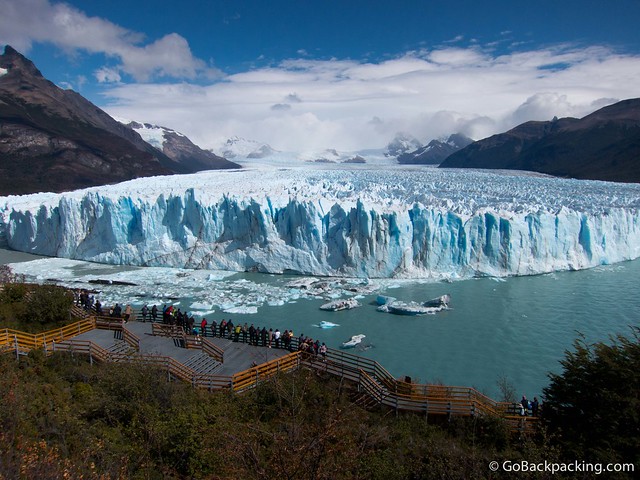
Perito Moreno Glacier in Argentina.
Perito Moreno Glacier (photo: David Lee)

McCarthy's subsequent travels, on assignment for various print publications, take him to remote destinations, including Patagonia, the Osa Peninsula in Costa Rica, the Peruvian Amazon (outside Iquitos), and the peak of Tanzania's Mt. Kilimanjaro.

The more I read of The Longest Way Home, the more I realized how many of these places I, too, had visited. Earlier this year, I stood in awe at Argentina's Perito Moreno Glacier.

While I hadn't made it to Osa, I did spend a few weeks in Costa Rica eight years ago. Peruvian Amazon? I had the chance to visit Tambopata in the south this past June.

But it wasn't only these distant locales where I could relate to his experiences; it was in the seemingly mundane, such as the Baltimore Harbor and Fells Point, where I bought green Manic Panic hair dye for the first time (age 18).

Heck, I'm writing this review from a hostel in Vienna, a city that plays a prominent role in his decision to ultimately commit to marrying his wife (referred to only as "D").

Their struggles as a couple are woven throughout his tales of travel. Again, anyone who has devoted their life to travel or a job that requires a lot of travel will be able to relate to the stresses such a life can place on relationships.

Somehow, seeing his struggle play out and ultimately end with marriage in Dublin gives me hope that I, too, can have them both--the adventures abroad and the family.

Andrew McCarthy's book, The Longest Way Home, is now available on Kindle.

Travel as Contact Sport

Northeast Cambodia
Off the beaten path in northeast Cambodia (photo: David Lee)

Editor's Note: This is a guest post by Mark Manson, a traveler, and blogger I met earlier this year in Medellin. Mark has been to almost 50 countries. 

There are two ways to travel: to get away from your life or to change your life. Although there’s not necessarily anything wrong with the former, I’m interested in the latter, and I hope you are too.

If you read a lot about travel, you’re no doubt familiar with the terms such as “authentic local experience” or “getting off the beaten path.” They’re ubiquitous, but unfortunately usually just marketing.

Authentic travel experiences are like the stock market: if you’re reading about it from someone else, then you’re too late.

The deserted beach in Brazil, the untouched cave in the hills of Turkey, the private roof parties in Copenhagen – these experiences can’t be found in a guidebook or on a website, because if they were, then they would cease to be authentic experiences.

The so-called authentic travel experience is not read about or followed, but instead created. It’s something you must invent yourself.

Here’s how:

1. Ditch the guidebook

Not that guidebooks are useless or that they don’t show you cool things to do, but they can only go so far. As long as you’re following the path of a guidebook or website, you’re still on the beaten path.

So get your tourist fix, do the pub crawl or bar-hopping thing for a night or two, and then prep yourself for something new and different.

Also, once you’ve tossed the guidebook, pick up a phrasebook instead. Knowing a few basic phrases, questions or even sentences in the local language is going to get you a LOT further than the guidebook, as we’ll see.

2. Start talking to locals

Talk to locals and talk to them everywhere. Talk to the waitress, the bus driver, the guy selling candy on the street corner. Avoid the brochures in your hostel and go straight to the girl working at the front desk instead.

Become annoying with your questions, personal questions. Ask them: What do they do for fun? Where do they go? What’s something cool to do that they’ve never seen a foreigner do before? What are their friends doing that weekend?

Yes, it’s a bit pushy and presumptuous, and sure, you will get some blank stares occasionally. But you will be surprised by the opportunities this simple habit will open up to you.

3. Just say “Yes” (within reason)

Unless someone is giving you the creeps, when in doubt, go with “yes.”

Forget about you 8 AM city tour the next day. Who cares if you aren’t sure how to call a taxi back home yet. The more you talk to people, the more you’re going to find unique opportunities in front of you.

4. Get introduced and stay in touch

Once you’ve managed to attach yourself to some local activity, no matter how drab or boring, make a point to introduce yourself to their friends and family. Also, keep in touch.

When I’m abroad, I always spend the extra money to buy a cheap throwaway phone. Facebook still works as well.

To employ this strategy of travel, you have to be willing to step outside of your little bubble, and you definitely cannot be shy.

If you do feel shy or nervous approaching random strangers in another country, start simply by asking for directions and then start asking them further questions. You’ll be amazed by how friendly and approachable most people in the world are.

Just a few examples of the type of shenanigans this has gotten me into:

Colombia

After befriending the front desk girl at my hostel in Colombia, she and a couple of her friends were taking a road trip to a small town in the mountains to visit her family. She invited me along.

Once there, I met her friends and family and found myself drinking a locally brewed liquor in a high school gymnasium with her father, while her friends made futile and hilarious attempts to show me how to salsa dance.

There was a beauty pageant, and I was introduced to the girl who won. I then embarrassed myself trying to dance with a Colombian beauty queen. Not many people can say that.

I had no idea where I was or what I was doing or what the event was (much less the music), but it was one of the highlights of my entire time in the country.

Brazil

In Brazil, at a Couchsurfing meeting, I managed to talk my way into becoming a Brazilian guy’s roommate for the next month (forgoing my other so-called “plans” in the country).

I started playing football (soccer) with him and his friends, where one day I met a beautiful Brazilian girl. She offered to take me to a secluded beach a few hours outside of town that she knew of. Nope, that wasn’t in the guidebook.

Cambodia

In Cambodia, I talked to some locals who ran the internet café across the street from my hostel. They invited me out to play snooker (a mutation of billiards, I came to find out) with them. We drank $1 beers all night.

I was tired from touring Angkor Wat all day, but they told me about a local orphanage that some westerners were teaching and working at. The next day they took me down there.

Despite having never seen an orphan in my life, much less a Cambodian one; and despite initially having no interest in Siem Reap beyond visiting the temples, I spent much of the next two days playing with the little rugrats and helping them with basic English words. It was more enjoyable than the temples.

I often describe travel as a “contact sport.” It’s best experienced when you’re bumping into others. It’s not always pleasant. And at times it can be painful. But it’s the most gratifying and fulfilling.

Because I’ve come to find that the greatest memories and moments occur when you’re out of your comfort zone, when you’re out exploring beyond your borders, personal and otherwise.

_______

About the Author:  Mark Manson is a writer and entrepreneur. He blogs at MarkManson.net. He is the author of Escape Plan: Ditch the Rat Race, Discover the World, and Live Better with Less.

Escape Plan

Win A Free Trip to Komodo National Park (Airfare Included)

Komodo Dragon
A large male Komodo Dragon

One of the highlights from my recent trip to Indonesia was a chance to see endangered Komodo Dragons in the wild.

We visited them on two of the only four islands in the world where they exist: Rinca and Komodo.

Now, I'm happy to share that Indonesia Travel is giving away a free trip to Komodo National Park, so 5 lucky winners will have a chance at the same amazing adventure!

To enter and be eligible to win, participants must:

1. Fill out a complete profile via the quiz page.

2. “Like” the Indonesia.Travel page on Facebook.

3. Follow the official tourism account, @indtravel on Twitter.

4. Then, answer the quiz questions (using the available hints). Each correct answer gets you 5 points. You can answer a maximum of 5 questions per day, earning you up to 25 points.

To earn additional points, and increase your odds of winning one of the 5 free trips, you can invite others to participate by using the Facebook “share” button, or your unique promotional link. You'll earn 1 extra point for each person that logs in to take the quiz.

The goal is to earn as many points as possible in the 30-day qualifying period, which runs from October 18 until November 18, 2012.

The quiz winners will be announced on November 23, 2012, at Indonesia.travel, Indonesia's Facebook page, and via the @indtravel account on Twitter.

Terms and Conditions

Indonesians, related parties, and quiz organizers are not allowed to participate.

The 5 people with the highest point total will win a free, 3-day/2-night trip to Komodo National Park, including international airfare (economy class), domestic flights in Indonesia (economy), accommodation, and meals.

Winners will be contacted via email. Winners who are not eligible will be replaced by the participants with the next highest point total.

The cost of traveling outside the trip period will not be covered. For example, if you win, you may choose to stay in Indonesia for 8 additional nights, however, all of the costs associated with the extra time are the sole responsibility of the winner.

* Note: I've paraphrased a few of the most important terms here, but please read them all on the Indonesia.travel website before participating.

If you have any questions regarding the contest, quiz, or terms, email quiz(at)indonesia.travel

I would love to see one of Go Backpacking's readers win this trip.

Good luck!

Top 5 Things to Do in Reykjavik

Reykjavik, Iceland
View of Reykjavik from atop Hallgrímskirkja, the largest church in Iceland

[I]celand's capital city, Reykjavik, is the perfect base camp for exploring the island nation.

The sheer number of activities on offer by the tour companies can leave your head spinning, but most can be done as half or full day trips from the city.

The ability to rest your head on the same pillow every night can be a welcome relief for the travelers constantly on the go.

Renting an apartment can be a great alternative to hostels or hotels. In the past, I've used companies such as Wimdu to find short term apartment rentals.

I took this approach during my recent, 10-day visit. On the days when I didn't have an activity booked, I walked around Reykjavik, getting to know Iceland's quaint capital.

Read on for 5 of my favorite things to do in the city.

Harpa concert hall
Day or night, a walk inside the new Harpa concert hall is a fascinating experience

Table of Contents

  • 5. Pretend You're In An MC Escher Drawing at Harpa Reykjavík
  • 4. Visit the (World's Only?) Phallological Museum
  • 3. Take in the Scenic View from Hallgrímskirkja
  • 2. Eat Iceland's Most Famous Hot Dogs at Bæjarins Beztu Pylsur
  • 1. Drink the Night Away on an Icelandic Bar Crawl

5. Pretend You're In An MC Escher Drawing at Harpa Reykjavík

Address: Austurbakki 2 (along the harbor)

Opened in May 2011, the Harpa concert hall is a modern, steel and glass structure situated along the city harbor.

Harpa is home to the Iceland Symphony Orchestra and Icelandic Opera, but you don't need to attend a performance from either to enjoy the architecture.

Step inside the building, and you'll be transported into one of those MC Escher drawings where the stairs (in this case escalators) seem to go off in all directions. Take the elevator to the top floor for a different perspective.

Don't be afraid to linger. There's a small cafe on the ground floor offering drinks and desserts, thereby allowing you to soak in the atmosphere of this unique space.

Icelandic Phallological Museum
Whale penises dominate inside the Icelandic Phallological Museum

4. Visit the (World's Only?) Phallological Museum

Address: Laugavegi 116

Yes, "phallological" is the scientific way to say you're visiting a "penis" museum.

But once you get over any residual embarrassment  you'll find you're not alone in feeding your curiosity about the size of a male humpback whale's reproductive organ.

Speaking of whale penises, they dominate, not only in size but in quantity. Perhaps that's because they are the key attraction.

More interesting to me were the ones belonging to mythical creatures, like a "merman" and from the elves that are believed to live in the hills of Iceland.

Hallgrímskirkja
Hallgrímskirkja, the largest church in Iceland

3. Take in the Scenic View from Hallgrímskirkja

Address: Top of Skolavordustigur Street (or just look up from anywhere in the city)

Perched on a hill in downtown Reykjavik, Hallgrímskirkja is Iceland's largest church.

For a few Euro you can take an elevator to the top of the 73-meter high spire for 360-degree views of the city and coastline.

The interior of the church itself is rather sparse, but worth a look if only for the massive pipe organ situated over the entrance.

Hot dogs from Bæjarins Beztu Pylsur
Iceland's #1 place for hot dogs is Bæjarins Beztu Pylsur

2. Eat Iceland's Most Famous Hot Dogs at Bæjarins Beztu Pylsur

Address: Tryggvagotu 1

Icelanders are very proud of their hot dogs, which are often referred to as the national food. The best place in Reykjavik to grab one or two is Bæjarins Beztu, which operates a small stand downtown, near the harbor.

Seriously, this hot dog stand is so small I walked straight by it the first time I tried to find it.

The hot dogs, which have been eaten by former President Bill Clinton, and Metallica's James Hetfield, are also amongst the cheapest food you'll find in the city, and Iceland for that matter.

The cost is 300 Krona, or about $2.40 per dog.

Toppings include: ketchup, sweet mustard, raw onion, fried onion, and a mayonnaise-based sauce with sweet relish. Order "the works" to get everything (as pictured above).

B5 on a Saturday night
Inside B5, one of Reykjavik's most popular clubs, on a typical Saturday night

1. Drink the Night Away on an Icelandic Bar Crawl

Address: The B5 club is located at Bankastraeti 5

Reykjavik's downtown area, where all the tourists stay, is also the most popular nightlife district in the city. It's low key Sunday through Wednesday, with the partying reaching an epic climax every Saturday night.

On this night, Icelanders dress up regardless of the cold and hit a series of bars and clubs. Because the city is so small, it's easy to from one venue to the next, even if it's cold, or in the Winter, snowy.

At B5, a popular club which is more like a big bar, the patrons dress up. It's the first time I've seen men wearing suits, and even tuxedos, at a club. And the young women live up to their reputation of being quite stunning.

Icelanders love to stay out late, and speaking from experience, get completely smashed in the process. I didn't arrive back at my hostel until 6 or 7 AM Sunday morning. You've been warned!

What's your favorite thing to do in Reykjavik?

________

This post was written by Dave, and brought to you by Wimdu.

The Golden Circle: Þingvellir Park, Gullfoss Waterfall, and the Geysers

The Continental Divide in Iceland

[T]he Golden Circle in Iceland comprises three noteworthy stops, all of which are related to the local geology: Þingvellir Park and the Continental Divide, Gullfoss Waterfall, and the Geysers.

In terms of popularity, driving the Golden Circle, whether on your own or as part of a group bus tour, is up there with the Blue Lagoon. One way or another, everyone does it.

Meeting point of the American and Eurasian tectonic plates
A pedestrian path splits the divide between the American and Eurasian tectonic plates

Þingvellir Park and the Continental Divide

The first stop outside of Reykjavik is Þingvellir Park, a UNESCO World Heritage Site, which offers one of the world's best spots to view the collision of tectonic plates. Specifically, you'll see where the American and Eurasian plates meet.

Every year, these plates pull apart a few centimeters. Over time, this has resulted in a noticeable rift, with the western, American plate rising up higher than the eastern, Eurasian plate. A paved pedestrian pathway allows visitors to easily walk between the two plates.

Nearby, one can snorkel or dive the Silfra canyon, which lies between the two continental plates as well. This is typically done as a separate trip, though it can be paired up with The Golden Circle, making for a full day excursion.

The best part about this experience is the underwater visibility. The water is extremely clear, and pure, having taken 20 years to filter through the surrounding lava fields from a nearby glacier.

Visibility can stretch up to 80 meters, and while there aren't a lot of fish, you will see some algae underwater. Thick wetsuits are provided by the tour companies, but it can still be a chilly experience.

Gullfoss (Golden Falls) waterfall

Gullfoss Waterfall

The next stop on the Golden Circle tour is Gullfoss waterfall, which is found along the Hvítá River, and fed by Langjökull glacier.

Iceland's largest waterfall features two sections. The upper section is a series of small steps, which then feed into a huge, 32-meter tall crevice below.

Gullfoss waterfall
Even if it's not raining, you should expect to get a little wet when visiting Gullfoss

The force of the water falling over the second section is so strong that it kicks up a thick mist, ensuring the visitors who choose to walk down the path get wet.

Bring a water-resistant jacket, even if it's sunny out.

Geysir
Geysir

The Geysers

The third major stop on the Golden Circle is a geothermal area featuring a group of geysers.

The Strokkur geyser launches a spray of water up to 30 meters in the air every ten minutes or so, ensuring most visitors have a chance to enjoy the show.

Having visited an even larger area of geysers in northern Chile (outside San Pedro de Atacama) earlier this year, I found this to be the least interesting stop on the tour.

An older, female tourist who didn't even leave the bus remarked that unless it's bigger than Yellowstone's Old Faithful, she wasn't going to check them out.

Geysir spraying water
The Strokkur geyser sprays a column of water in the air every 10 minutes

Overall, I found the Golden Circle tour worth the time and money, if only because it offers one of the most accessible places on Earth to see a continental divide.

_______

What You Need to Know

How Much:  $72 for the half day trip (6 hours)

Where to Book:  Any hostel or hotel, and most travel companies. Half day trips to the Golden Circle can be combined with other activities, like the Blue Lagoon. If you’re renting a car, you can go on your own.

What to Bring:  Rain jacket

Why a Holiday Cottage Beats a Hotel Every Time

English cottage

[W]hen holidaying in Britain, I will always choose to stay in a holiday cottage over anything else.

British city-centre hotels offer you a mundane, standardised snapshot of this great region. A chain hotel-room in Glasgow will offer you the exact same experience as a room in Southampton.

To really get the feel of what makes Britain special, the only option is to stay in a holiday cottage.

A hotel in the centre of Leeds will charge you extortionate amounts to raid the mini-bar for a bottle of Evian or a Kit Kat.

Arrive at a rented cottage in North Yorkshire and you more than likely be presented with a hamper showcasing the very best local produce to help you get settled in and become connected with your new surroundings. At least that is what happened to me on my most recent cottage stay.

Luckily for you, more and more people are choosing to erect a ‘to let’ sign outside of their cottages, so your choice is better now than ever before. A company in Suffolk are now offering 200 properties alone to holiday-goers, whilst many companies are being set up all over the country to help owners let their holiday homes quickly and easily.

I firmly believe that the British countryside is up there with the best in the world, and it is what sets us apart from the majority of our European neighbours.

Whilst all essentially countryside breaks, a stay in the Brecon Beacons, North Yorkshire Moors or Norfolk Broads would all present you with completely different holiday experiences and memories.

If I holiday abroad, I do not want some sanitised, tourist-friendly experience. I want to experience the true essence of the country, see what really makes it tick.

Cities are densely populated areas where convenience and familiarity rule. Hence the proliferation of Tesco, Greggs and WH Smiths on every single British high street. I love the escape from this that the countryside offers.

On a recent stay near Ludlow in Herefordshire, we had a choice of not one but four high-quality farm shops within a 20-minute walk of our cottage.

Each showcased different local delicacies from the award-winning Little Hereford farmhouse cheese to the renowned Ludlow Food Centre’s homemade sauces and chutneys. Each shop was clearly a labour of love for the owners and staff, which in turn leads to a rewarding and memorable experience for the customer.

A countryside break may also be easier on the wallet than a city-based equivalent. Although the initial outlay of a cottage may be higher than a hotel, the bonus is you are provided with a fully working kitchen so you are not pressured into eating out every night.

On the Ludlow trip above for example, we only ate out once as we bought so much reasonably priced, delicious produce during the day, we didn’t need to eat out!

I admit I used to be skeptical about a holiday spent in a cottage in the countryside, thinking I would miss the hustle-and-bustle of the city. I am happy to admit I am a convert, and such a holiday is now the first thing that springs to mind when booking a break.

_________

This post was written by Jordan, and brought to you by Rentmycottage.com.

Marching Powder Book Review: Inside San Pedro Prison in Bolivia

With less than 24 hours to experience La Paz, the capital of Bolivia, I took to Facebook to see what my friends thought I should see and do in the city. Several were adamant I pay a visit to San Pedro Prison.

Asking follow-up questions led to ambiguous responses, though it was clear I'd have to bribe security guards to get in.

View toward the main entrance of San Pedro prison from the plaza across the street
View toward the main entrance of San Pedro Prison.

San Pedro Prison

The name rang a bell, as I'd heard it in the context of a book called Marching Powder, which had something to do with cocaine and a notorious South American jail.

But I didn't have time to read a book, and I didn't even bother to Google the prison before my plane touched down on one of the world's highest tarmacs (4,000 meters above sea level).

After checking into my hostel for the night, I located San Pedro Plaza on a map and grabbed a taxi. First, we drove up to a scenic viewpoint for a few photos, and then, I directed the driver to take me to San Pedro.

The afternoon was slipping away, and a drizzle was starting to fall from the grey clouds above the city.

I was nervous. I trusted these two friends, as both had visited San Pedro alone. Jason managed to sneak in as a visitor, while I believe Brendan paid a little money.

I was carrying about $20 in Bolivianos, which I thought would be sufficient for your average Bolivian correctional officer. I was also carrying my iPhone and camera, which, in retrospect, was not the brightest idea.

Not having read Marching Powder nor having any experience bribing my way into Latin American prisons, I stood in the plaza wondering what to do next.

The plaza across the street from the prison, by the way, is entirely typical. Aside from four empty guard towers at the corners of the prison, there was nothing immediately obvious to give it away.

San Pedro Prison
San Pedro Prison

A short line of Bolivian visitors were standing outside what appeared to be the main entrance. I didn't have the gall to stand in line with them, so I walked the prison's perimeter, biding my time.

The walls were several stories high, but they looked made of mud. The front facade featured a nice paint job, while the other three sides were unfinished.

By the time I rounded the final corner, nobody had approached me about a tour, so I became more proactive, using my Spanish to ask a guard directly.

Initially, he brushed me off, saying I should return the next day. I responded that I was leaving La Paz in the morning, and this was my only chance.

The guard said something to another one nearby. For a moment, I thought I could pull this off. But the second guard responded that no visitors were allowed after 4 PM.

If he was telling the truth, I was 30 minutes too late. I'd be boarding a bus the following morning for Lima, and I had no idea when I'd return to La Paz.

As I walked away from the prison, I noticed the street running by the front entrance had been closed to traffic. A large garbage truck had backed up to the door.

Marching Powder Book

Marching Powder book cover

A month later, I finally bought Marching Powder: A True Story of Friendship, Cocaine, and South America's Strangest Jail for Kindle. Once I began reading it, I couldn't stop.

The story starts a little slow, as Thomas McFadden, a convicted cocaine trafficker from the UK, tells of how he operated and was ultimately set up by a Bolivian official who took his money and helped ensure he was sent to jail.

And Bolivian jail is where Thomas almost died of starvation and exposure (to cold) within the first few weeks.

Related: World's Most Famous Prisons

He was then transferred to San Pedro Prison, a world unto itself. A world run by the inmates, where the purest cocaine in Bolivia was produced, and the wives and children of inmates often lived as well.

Readers follow along as McFadden learns the rules of prison life under the wings of an inmate who takes a liking to him early on.

The stories aren't too graphic, except the one in chapter 20, which details a mob of inmates killing three convicted rapists. I don't recommend anyone read that chapter.

Witnessing the event seemed to leave McFadden with a case of post-traumatic stress disorder, and because he recounts it in detail, it left me with feelings of unease for several days.
Bribery was the name of the game, and McFadden soon had the Governor of the prison, guards, and many influential people inside on his payroll. Yet, as much money as he spent lining the pockets of officials, it would take him years to get a proper court hearing.

During an outing, where he got to leave the prison under the accompaniment of a guard, he made his way to a nightclub, where he befriended an Israeli girl. Without the option to invite her to a hotel, he asked her back to his prison cell for the night.

It takes a brave girl to spend the night inside a Bolivian prison by choice, but she was soon staying there for days at a time. A romance developed between the two, and months later, she spread the news of life inside San Pedro to other backpackers.

The stories circulated by word of mouth along the South American backpacker circuit. What started with a few of her friends visiting for an informal prison tour eventually led to strangers showing up.

McFadden used the opportunity to build a prison tour business to the envy of rival inmates. As he describes it, the social companionship offered by the backpackers meant much more to him than the money it generated.

His remarkable story was captured and told in the Marching Powder book by a backpacker named Rusty Young, who learned of the prison tours McFadden was offering through a mention in his Lonely Planet guidebook.

The tours had been running long enough to be mentioned in printed guidebooks. McFadden was proud that none of his visitors were ever robbed (which, he explains, would've been the end of his business).

Thanks, in part, to bribing his judges, McFadden was eventually released on December 28, 2000. He returned to England, and the most recent information I found was that he has since been living and working in Tanzania.

Though it's a hit-or-miss proposition, tours of San Pedro are still available. With some planning and a few days of free time, you can probably get in for a visit.

But since my attempt, I've heard of at least one group of tourists who were not allowed to leave before being robbed of their possessions. In other words, bring a little cash and leave the camera and phone at the hostel.

The book Marching Powder offers a fascinating look at life inside a third-world prison, as told by McFadden over his four years and eight months there.

Oktoberfest Guide: How to Crash the World's Largest Party

Over 6 million people visit Munich, Germany, annually for Oktoberfest. This celebration of Bavarian beer and culture has been dubbed the world's largest party based on attendance alone. If you're planning to attend, this Oktoberfest guide will help you make the most of your experience.

Drinking beer at Oktoberfest

Held annually since 1810, the event is known locally as "Wiesen" after the fairgrounds where it is held. When I decided to attend the blogging conference in Costa Brava, Spain, this past September, it was a no-brainer to add a trip to Munich afterward. I began asking questions the week before I arrived. This post is a culmination of the advice I received and my observations.

Table of Contents

  • Oktoberfest Tips
    • Accommodation: Planning vs. Just Showing Up
    • How To Dress, Bavarian Style
    • Outside the Beer Tents: Park and Rides
    • Inside the Beer Tents
    • Oktoberfest Beer
  • How To Crash Oktoberfest in 10 Simple Steps

Oktoberfest Tips

Accommodation: Planning vs. Just Showing Up

There are two distinct approaches to attending Oktoberfest. You can plan everything months to a year in advance or show up and see what happens at the last minute. Both strategies have advantages and disadvantages.

Reserving accommodation at a hotel or hostel and buying tickets to the beer tents months in advance ensures you have more control over your experience. However, it also locks you into those plans because you start making financial and vacation commitments early on.

On the flip side, playing it by ear allows you greater flexibility to change your plans at the last minute should you decide to alter your visit dates or bail out altogether. Whichever approach you prefer will lead you to the same park in Munich with tens of thousands of other partygoers on any given day.

My Experience

I connected with one of my first friends from Medellin, a German couchsurfer, with whom I shared an apartment for three months in 2009. While he was still traveling, his younger brother was living in Munich. Score!

I contacted Maxi, who welcomed me to stay with him for the Oktoberfest. With free accommodation secured, I confirmed my plans and bought a $170 flight from Barcelona on Vueling.

To save money on accommodation, try to find a place to stay through Couchsurfing, or use my approach above to find a host through your network of friends. Alternatively, if you can't find a room within your budget, you can stay outside Munich and commute to the party by train.

How To Dress, Bavarian Style

Lederhosen and dirndls for sale at a Munich train station

To help set the mood, many Germans dress up in traditional Bavarian clothes. The men wear lederhosen, those green or tan deerskin shorts you see the Von Trapp kids wearing in The Sound of Music. Button-down shirts are either white or have a colorful checkered pattern. Brown shoes or boots are worn, along with thick wool socks.

Women wear dirndls, a cute outfit of peasant origins with a bodice, blouse, skirt, and apron. Typically worn with stockings and flat shoes, some ladies dress them by wearing high heels. An adequately fitted dirndl emphasizes a woman's waist and bust. I also heard women can get special bras to accentuate their cleavage further.

Cheap, single-use lederhosen or dirndls will cost at least $130 (100 euros), while better-quality, custom-tailored outfits can cost $500 or more.

It's common for these outfits to be passed down through the generations. I met one guy in the beer tent whose lederhosen was 70 years old, passed down to him from his grandfather. The higher quality lederhosen of yesteryear is thicker than the modern versions.

My Experience

Girls in drindls
Me and a few Bavarian women wearing dirndls

I was advised early on to invest in lederhosen lest I be the only guy dressed in civilian clothes. But upon arriving in Munich, I was too tired to bother and didn't want to spend the money on an outfit I'd only wear for a few hours.

During my first walk through Oktoberfest, I noticed many people, both men and women, German and foreign, in regular clothes. Of course, there were many people in lederhosen and dirndls, too, but if you wear regular clothes, you'll by no means be the only one.

Maxi lent me one of his white shirts the second time I went, which made me feel a little more Bavarian for the night. My advice? Invest in a dirndl or lederhosen if you want fun photos as a souvenir or a future Halloween costume.

Outside the Beer Tents: Park and Rides

Amusement park rides are a popular draw, all day and night
Amusement park rides are popular day and night.

Oktoberfest is held at Theresienwiese, a gigantic fairground 15 minutes away from the city center (Marienplatz) and easily accessible via several subway stops.

The grounds are mostly a giant amusement park, with several roller coasters, a huge Ferris wheel, and enough rides that spin you around to make anyone dizzy just from watching. You pay for the rides individually, with some costing as much as a liter of beer in the tents ($10 to $12).

Many German food shops also serve pastries, pretzels, and traditional sweets. Among the rides and chaos are 14 large beer tents, each a party unto itself.

If the weather is clear, being outside can be more fun. However, if it's overcast or raining, it can be a miserable experience unless you're sitting in one of the beer tents. Ideally, you'll stay in Munich for several days to skip the days with bad weather.

My Experience

During my first walk through the grounds on a Saturday afternoon, the crowds were thick, and walking at an average pace wasn't always possible. Then, it began to rain, and I retreated to the subway.

I wasn't interested in the rides but hoped to take more photos and enjoy the atmosphere a bit longer. To give you an idea of the food costs, five chocolate-covered strawberries cost me $5.

Inside the Beer Tents

The Hofbräu-Festzelt tent is the largest at Oktoberfest

The tents, and I use that term loosely because they're very stable, solid structures and are sponsored by various beer companies in Munich.

You don't need a reservation to enter a tent, just as you don't need a ticket to enter the fairgrounds; however, it can be challenging to find a seat during peak days and hours (evenings and weekends).

If you want to plan ahead, you can reserve tickets through the individual tents' websites. As a bonus, reserving tickets in advance may earn you discount coupons for beer and food.

I was happy to find the tents are smoke-free, allowing everyone to breathe easily and leave without smelling like an ashtray at night's end.

A half chicken costs about $12

The rotisserie chicken came highly recommended, and when I got my paws on it, I found out why. It's lives up to the hype!

Of course, each tent has its own menu and beers. However, based on its interior decor, live band, and the type of people it attracts, each tent also has its own personality.

For example, the Käfer's Wiesn-Schänke tent attracts a wealthy and famous clientele, while Hofbräu-Festzelt, the largest tent, draws many Americans.

Fun Fact: The Hofbräu-Festzelt can hold about 10,000 people and serves 550,000 liters of beer and 70,000 half-chickens during the 16-day Oktoberfest.

Atmosphere inside the Hofbräu-Festzelt tent on a Sunday evening
The atmosphere inside the Hofbräu-Festzelt tent on a Sunday evening

My Experience

Speaking of Hofbräu-Festzelt, this is the tent where Maxi and I met members of his orchestra, who had reserved a few tables for the night. We walked right in around 6 PM on a Sunday and found them in a numbered room almost immediately.

Squeezing into the middle of a table, I was soon amongst a large group of musically talented Bavarians. I could chat a bit with Maxi and the conductor, who also spoke a little English.

Because getting in and out of the tables required climbing on the benches, I made it a point not to use the bathroom until we returned to his apartment. Maxi later told me the restrooms were on the exact opposite end of the tent from us. Thankfully, I didn't have to bother trekking there.

The servers were friendly. However, they may not return to serve you if you don't tip them. Tips are usually about a dollar, and the beers are rounded to the nearest euro.

Fun Fact: According to Maxi, a waitress in a good location can earn $25,800 (or 20,000 euros) during the festival. They make money from tips and beer sales.

I noticed other working women in dirndls walking the aisles, selling giant pretzels and even roses (there's always someone selling roses, isn't there?).

The live band switched from playing traditional Bavarian tunes to rock, pop, and Top 40 songs as the evening wore on. I distinctly recall "YMCA" by the Village People going over well with the crowd. The rock and pop music, in English, for the most part, got the crowd standing up on their benches dancing.

Oktoberfest Beer

Oktoberfest beer
Beer is served in 1-liter glass mugs.

Oktoberfest is all about beer, and not just any beer can carry the Oktoberfest label. Bavarians take this topic seriously. Only the large breweries based in Munich that brew beer during the Oktoberfest season can call it Oktoberfest beer.

At around 6% alcohol, it's twice as potent as the average American beer. And because it's served in 1-liter glass mugs, you're getting about 33 ounces per serving (or close to three times the volume of a typical 12-ounce American beer). Do the math, and you'll see it's no surprise why the beer has a reputation for being exceptionally strong.

That said, the Bavarians grow up drinking beer from a young age. The minimum age for beer and wine is just 16 in Germany (and 18 for liquor). While festive, the whole scene inside the tent was not nearly as messy as your typical college frat party. Prost (cheers in German) to that!

My Experience

Another tip I received before arriving in Munich was to drink the beer slowly. I followed this one, consuming just two mugs of Oktoberfest beer over about five hours. Each beer cost 9.35 euros, or about $12, which we rounded to 10 euros with tip (or close to $13).

The last call was around 10 PM, as the band played its last songs for the night. The staff began cleaning up by 10:30 PM. I felt good as we exited the tent, but it wasn't until we got back to Maxi's apartment and I lay down that I realized how much of an effect the beer was having on me.

The Löwenbräu tent
The Löwenbräu tent

How To Crash Oktoberfest in 10 Simple Steps

1. Decide you want to go.

2. Book a hotel or hostel months in advance, or ask your friends and extended network for a person you can stay with in Munich.

3. Book your flight(s).

4. As the date draws near, begin putting the word out via social media of your attendance. See who responds, and refine your plans accordingly.

5. Arrive in Munich and settle into your accommodation.

6. (Optional) Buy your traditional Bavarian outfit: lederhosen for men and dirndls for women.

7. Withdraw cash from the ATM per your appetite for beer, chicken, and roller coasters (not necessarily in that order).

8. Take the subway to one of the stops near Theresienwiese or walk from Marienplatz if you stay downtown.

9. Ride the rides and eat the food. Try not to puke on anyone.

10. Bust into a tent, with or without a reservation, and DRINK THE BEER!

For more information, check out the official Oktoberfest website, which offers information in English. 

Coming Soon: The Indonesia Trip

Bali Hotel

On October 4, I'm boarding an Air Qatar flight from Berlin to Jakarta.

The flight, which takes me halfway around the world, marks the beginning of a two-week blogger trip  sponsored by the Ministry of Tourism and Creative Economy of the Republic of Indonesia.

The goal of our trip is simple: highlight the amazing experiences available to visitors of this island nation.

I first visited Indonesia in 2008, during my trip around the world.

At the time, I focused on Bali, because so many people painted it as the picture of paradise.

But Bali features a predominantly Hindu population and culture, which is not at all indicative of the world's largest Muslim nation.

I always knew there was more to Indonesia then Bali, and this will be my chance to discover it.


Our itinerary focuses on 5 of the country's top attractions (in this order):

1. Tanjung Puting National Park - An ecotourism destination in Borneo, with orangutans!

2. Yogyakarta and Borobudur - Yogyakarta is the center of Javanese fine art and culture, and Borobudur is the world's largest Buddhist temple.

3. Mount Bromo - This 2,300 meter tall volcano is one of the most popular destinations in the country. We'll be leaving the hotel at the painfully early hour of 3 AM to catch the sunrise.

4. Komodo Island - I turned down a friend's invitation to join him on the trip from Gili Trawangan to Komodo Island to see the endangered dragons in 2008, so I'm looking forward to getting there this time. I did see a few at the Bali Zoo, but it's not the same as seeing them in the wild.

5. Bali - Our trip wraps up with a few days in Bali, where I hope to squeeze in a little rest and relaxation, or at least a one hour aromatherapy massage, before flying back to Berlin.

Throughout the trip, I'll be providing live updates via social media. I hope you'll follow along, whichever way you choose!

  • Facebook
  • Twitter (follow us at #Travel2Indonesia)
  • Pinterest
  • Instagram 

I'll also be shooting video, which will be edited into two short movies and put out in November, along with the regular array of written stories and photos.

We've got an exciting group of international bloggers coming together for this trip. Amazingly, I already met five of them at the TBEX conference in Costa Brava last month.

The Blue Lagoon in Iceland

Entrance to The Blue Lagoon

If ever there were a symbol of tourism, it's The Blue Lagoon in Iceland.

When I asked people for sightseeing recommendations in advance of my trip, The Blue Lagoon was always mentioned.

A visit is all but compulsory for every tourist to step off the plane, and I had no plan to be the exception.

The tourism industry in Iceland is so efficient, they've even made it possible to visit the lagoon en route to/from the airport.

This allows you to save money on transportation, though you'll also have to wheel your luggage around (large lockers are available for storage).

Watch the promo video above, and you might get the impression The Blue Lagoon is a relaxing, almost mythical place, with beautiful bikini-clad women drifting through the misty waters.

In reality, the experience is far from a swim in the grotto of the Playboy Mansion.

Upon paying a 35 Euro ($45) entrance fee, you're given a towel and plastic bracelet, which is used to control the lockers and track your food and drink tab.

The men's locker room was clean and well-designed.

There were shower stalls both with and without doors, depending on your tolerance for nudity.

Everyone must wash before entering the lagoon. Soap and shampoo are provided.

According to Adventurous Kate, none of the women's showers have doors (sorry ladies).

Once you leave the locker room, you pass through a small cafe before stepping outside to the lagoon.

The lagoon features a swim up bar (right) serving beers and smoothies
The lagoon features a swim-up bar (right) serving beers and smoothies

My visit occurred on an early September afternoon. The first thing I noticed was the people; there were tons of them.

It was a diverse crowd, too, with people of all ages, races, and sexual orientations.

There were visitors on their own like me, romantic couples, and tour groups as well.

The second thing I noticed was the water, which is a milky blue, and unlike anything I've seen before.

I hung up my towel on the number coinciding with my locker and stepped into the water.

The temperatures vary, with some areas being hotter than others.

Overall, I found it comfortable, especially given the cooler Autumn air, and lack of sun.

I waded around the lagoon, eventually smearing my face with the silica mud, available from buckets placed around the perimeter. The mud is supposed to act as a natural exfoliant.

It's wet when you first put it on, but after a few minutes, it dries. A few minutes after that, you wash it off with the lagoon water.

The water is heated by excess energy from the nearby geothermal power plant

One section of the lagoon (pictured above) is dedicated to in-water massages, which take place on foam rafts or wooden benches.

I don't see how that could be any more relaxing than a massage table in a private room, but there were plenty of people getting them done.

Before going to the lagoon, I'd read that the water is heated not from the ground, but the excess energy from a nearby geothermal power plant.

Judging by the number of people there, nobody cares, but the looming plant does remove any pretense that you're in a naturally occurring, hot water lagoon.

The Blue Lagoon in Iceland
The Blue Lagoon

After 20 to 30 minutes in the water, I was feeling a little woozy, so I grabbed a bite to eat in the cafe, along with a free cup of cold Icelandic spring water.

Checking out was as easy as approaching the cashier's counter, and paying my tab.

Before leaving, I highly recommend visiting the observation decks on the second and third floors of the main building.

Doing so gives you the best view of the lagoon and surrounding scenery.

If you want to learn more about hot springs in Iceland, check out this guide by Hekla.com.

_______

What You Need to Know

How Much:  $45 to enter

Website:  http://www.bluelagoon.com

Where to Book:  Any hostel or hotel, and most travel companies. Half-day trips to the Blue Lagoon can be combined with other activities, like the Golden Circle. If you're renting a car, you can go on your own. Otherwise, roundtrip transport on a bus costs about $18.

What to Bring:  A bathing suit, sunglasses, flip-flops. Bring waterproof sunscreen if it's sunny, and you plan to spend an extended time in the lagoon.

Review: TBEX in Costa Brava

Girona

Two weeks ago, travel bloggers from around the world began to congregate in Girona, Spain for the 2012 European TBEX conference.

Here's my review of TBEX in Costa Brava, for those who couldn't make it, and are debating whether to attend in the future.

Table of Contents

  • Location, Location, Location
  • Opening Night Party
  • Keynote #1 - Peter Shankman
  • The Food and Facilities
  • Keynote #2 - Amy Porterfield
  • The Nights:  Hanging Out with Friends
  • The Partying
  • Keynote #3 - Chris Guillebeau
  • Cannonfire, and the Closing Travel Massive Party
  • Final Thoughts

Location, Location, Location

Girona turned out to be the perfect backdrop for a travel blogging conference.

Everyone seemed to agree on at least that much after spending a few days there.

A city of just 100,000, it offered a much more relaxed atmosphere than if the conference were to have been held in nearby Barcelona.

You were also more likely to bump into other bloggers on the street because the historic downtown area is so small.

I hope Blogworld, the new owners of TBEX, take this approach for future conferences as well.

Castle
This castle was the setting for the opening night party, sponsored by Costa Brava tourism

Opening Night Party

The opening night party was held in an f'ing castle! And it was as cool a setting as it sounds.

It didn't hurt that the event was catered by the #2 ranked restaurant in the world. 

I only wish I'd circulated a bit more to try the food. I completely missed the ham room, and the desserts, both of which received rave reviews.

Without trying, I began meeting PR people randomly, including reps for Austria, Germany, and Stockholm.

Only one of these destinations had a speed dating table (Austria, which was a TBEX sponsor), showing me early on that one had to constantly be networking, and not rely on the organized speed dating alone.

Peter Shankman giving his keynote on Friday morning

Keynote #1 - Peter Shankman

I've been following Peter Shankman for a few years on Twitter, having previously used the HARO service he started.

CEO, angel investor, skydiver, and adventurer, his speech was heavy on the American pop-culture references, but it also included some practical advice I could relate to on my entrepreneurial journey.

Whether you liked his talk or not, it was clear Blogworld's involvement in TBEX meant higher profile speakers were involved then past conferences.

The last conference I attended was the 2010 TBEX in New York, where the speaking highlight for me was Gary Arndt of Everything Everywhere.

It was a nice change of pace to have speakers outside the travel blogging niche to share their perspectives and lessons learned.

Lunch on the outdoor terrace

The Food and Facilities

The catered lunches, each provided by a different restaurant, offered a taste of the local Catalonian cuisine.

Tables were organized around sponsors, and offered the chance to chat with people in smaller groups.

For my first lunch, I sat at the WordPress table and got to be a geek by professing my love for WordPress to some of the mobile app developers.

The conference facilities were spacious and modern.

All the sound equipment worked fine, and there was working Wi-Fi throughout.

The large auditorium was a comfortable venue for the keynote speeches.

There were clear, easy to follow signs throughout the building, making it was easy to find the various panel discussions as well.

The second evening's party was hosted by Expedia, at a restaurant by the beach. Because we arrived after nightfall (via bus), I couldn't see the beach, nor the water.

We mine as well have saved the commuting time, and stayed around Girona.

Amy Porterfield
Amy Porterfield presenting on how to use Facebook

Keynote #2 - Amy Porterfield

The second keynote, on Friday afternoon, was delivered by Amy Porterfield.

She presented a ton of practical tips on how to better leverage Facebook to build a brand and audience.

All of the tips may not have been groundbreaking, but I think everyone who attended learned at least one new way to use Facebook.

Plus, she was an excellent speaker, and clearly comfortable on the big stage.

Hanging out with Kim Mance (left) and Jodi Ettenberg (right)
Hanging out with Kim Mance (left) and Jodi Ettenberg (right) at the River Cafe

The Nights:  Hanging Out with Friends

My main takeaway from attending TBEX in New York City was the ability to connect with people I'd been following online.

This time around, I had a more balanced experience overall, however, I still had a blast hanging out with old friends, and getting to know a new generation of travel bloggers.

I even met several members of Travel Blog Success who said that community was the reason they were attending TBEX! Meeting people is still my #1 reason for attending TBEX.

I think Colm from Hostelworld put it best. To paraphrase, he commented that attending the conference is like hanging out with your mates (friends).

Relationship-building happens a lot faster, and is a lot more fun, in person. I missed these times the last few years I've been in South America.

Bloggers on the prowl

The Partying

Another takeaway from TBEX in New York was the bloggers' appetite for booze and partying.

Girona, nor the attendees, didn't disappoint in 2012.

Every evening after dinner, bloggers would congregate at The River Cafe for drinks.

Around midnight to 1 AM, whoever was still awake would roll down the cobblestoned streets to a club for more drinks and dancing.

I only made it to a club one of three nights. It was good fun being out with friends and peers until the wee hours.

Chris Guillebeau talking at TBEX in Costa Brava

Keynote #3 - Chris Guillebeau

The third and final keynote was given by Chris Guillebeau of Art of Non-Conformity late Saturday afternoon.

More of an inspirational talk than the others, I enjoyed hearing him speak for the first time.

He also gave us hardcover copies of his new New York Times Bestseller, The $100 Startup.

I just finished reading it, and it's a good mix of practical business advice and inspirational case studies.

I use the term "studies" loosely, as he doesn't drill down into the nuts and bolts of each story, but rather uses them to highlight his key points.

The re-enactment
Approaching the heart of the re-enactment

Cannonfire, and the Closing Travel Massive Party

Because Chris's keynote unexpectedly happened at the end of Saturday instead of the start, the whole conference ran a little late.

As we dispersed, walking toward the city cathedral for a final ham and beer party thrown by Travel Massive, we ran into a Spanish-French war re-enactment.

This was partly planned, but most of us had no idea what we were in for.

Guns and cannons were going off right next to us, and it was deafening at times.

I heard so many explosions, I was starting to shake. In retrospect, I wish I'd distanced myself from the commotion a lot sooner.

The confusion around this time, as bloggers mixed with the locals there for the show, meant a lot of people didn't make it to the farewell party.

I, for one, ended up at a dinner with about a dozen other bloggers, including Dave and Deb from The Planet D, Matt Long of Landlopers (who now works for TBEX), and Peter Shankman.

Final Thoughts

My 2012 TBEX experience was a vast departure from the party and gossip atmosphere that consumed my 2010 TBEX experience.

It was a more balanced mix of networking opportunities, learning, and hanging out with friends.

The entire conference was well organized, with the minor exception of running us through the re-enactment gauntlet to try and reach the closing party.

I'm excited about Blogworld's committment to TBEX going forward, especially after speaking with the co-founders, Rick and Dave, one on one.

They are super-friendly guys who are clearly committed to growing the pre-eminent conference for travel bloggers.

To my blogging friends, we're in good hands, and I'll see you in Toronto next June!

Play Agent-UK for the Chance to Win A Trip to London

To celebrate the opening of the latest Bond movie, Skyfall, Britain is launching a new online game called Agent-UK.

Click "play" on the video above to help set the mood (the music alone is awesome).

In the game, you're an international spy given 4 missions across Britain. Each mission includes 4 tasks.

To be eligible for the Grand Prize, you must complete all 4 missions (all 16 tasks).

The Grand Prize really is the trip of a lifetime, including:

  • Roundtrip airfare for two people on British Airways
  • 3 nights accommodation at a luxury hotel in London
  • An Aston Martin for the weekend (I'd enter for the chance to win this alone!)
  • Upscale Globe-Trotter luggage
  • Tickets to several sights in London

The game and contest run from October 5, 2012, until 5 PM (GMT) November 2, 2012. The winner will be notified by email within 14 days of the contest's final day.

As always, read the Terms and Conditions, which can be found on the registration form. For example, you must be at least 25 to be eligible to drive the Aston Martin, though the minimum age to enter the contest is just 18.

Registration is quick and easy. Have you got what it takes?

______________

This article was written by Dave and brought to you by Visit Britain.

Returning to Great Britain


Tower Bridge London
Tower Bridge London (photo: Håkan Dahlström)

In less than five weeks, my travels will take me back to Great Britain for the first time in 14 years.

It feels like yesterday that I first approached the white Cliffs of Dover on a hovercraft from Calais, France.

(I may have been a clueless backpacker back then, but at least I knew you don't get to ride a hovercraft very often.)

The next day I took the train to London, where something possessed me to try and see as many musicals as possible in a 4-day span.

Buying restricted view seats, I saved a ton of money and doubled up with matinee showings of Rent and Oklahoma, and evening shows of Les Miserable and Chicago. In between, I hung out in Leicester Square.

On the way back from Ireland, I also took the time to visit Canterbury, which no doubt would've made one of my college English Literature professors quite happy.

Five years earlier, I'd visited Britain for the first time.

It was a two-week family trip that led me there, and along with visits to Bath, Oxford, and Stonehenge, we'd done the touristy things in London. Maybe that's why I felt no pressure to sightsee my second time around.

Returning to London for my third time, I once again have a new set of goals.

On the business end, I will be attending the annual World Travel Market, hosted in London, the first week of November.

On the personal end, I'm excited to catch up with some of my favorite British and Colombian friends I've met traveling the last five years.

And with a little luck, I'll manage to squeeze in another musical for old time's sake.

______________

This article was brought to you by Visit Britain.

Sagada: An Unbelivable Place in the Philippines

Beautiful Sagada
Beautiful Sagada

[W]hen I got to Sagada, I just couldn't believe I was still in the Philippines.

To get there I took a public jeep, and since I had arrived to the bus station as one of the last few customers, I had to take a seat on the top roof rack. The air and view from the top of the jeep was impressive, but the hard bars on my butt weren't so comfortable.

The jeep wound its way up the steep mountain road that was virtually empty of traffic.

Every now and then we'd pull over on the side of the road to drop someone off, pick up a new customer (who would then join myself and another five or so other guys on the top), and we'd zoom off again.

The higher in elevation we got, the cooler and fresher the air became. Trees changed from tropical low elevation shrubs to pine trees and evergreens sprouting from the side of the steep rocky mountains.

The Big Falls
The Big Falls

Nestled in a small basin surrounded by mountains and beautiful greenery was the gorgeous town of Sagada.

Just from the drive up, I already knew it was going to be one of the most enjoyable places I had ever been.

Even the homes and guest houses were so much different from the rest of the Philippines - built to handle cold weather and each home was stocked with fire wood. I checked into a nice family guest house that was built of wood and gave me that homely feeling of a log cabin.

I still couldn’t believe where I was, the atmosphere was about as opposite of Manila as possible. I felt like I was in the middle of the mountains of North America, but instead I was in the middle of a Pacific island.

One day I hiked to what’s known as the Big Falls. The trail led through a number of beautiful rice farms (similar, but much cooler than Batad), up and down small hills, and through rock passages until the valley opened up and I could feel the spray of the water.

Despite the cold water, there was no way to miss out on a refreshing swim.

Inside the Cave
Inside the Cave

Sagada's cave system is another attractive reason to visit.

Unlike some caves that are specifically set up for tourists with neatly organized walking platforms and permanent lighting fixtures, Sagada's caves were the real deal.

You hire a guide who proceeds to fire up a lantern, and off you go into the breathtaking cave. The gushing water over the sandpaper textured rocks was an unbelievable sight.

Hanging Coffins
Hanging Coffins

Yet another interesting part of visiting Sagada was witnessing the traditional way of dealing with the deceased, in coffins which are hung on the walls of the rocks.

I don't begin to know all the burial customs and practices, but I did notice that many of the coffins were tiny - possibly 4 - 5 feet in length - some even smaller.

My cave guide mentioned that limbs were either bent or broken in order to fit a body in the coffin.

Lemon Meringue Pie
Lemon Meringue Pie

Even the food was completely different in Sagada.

There were cafés that served fresh hot coffee and famous lemon meringue pie. Things I had never imagined eating in the Philippines like blueberry pancakes were also available, and pretty good too.

But perhaps the best thing about Sagada is that is was extremely quiet. There were literally only a handful of other visitors when I was there (maybe it’s become more popular now).

It was the ultimate place to take a breath of fresh air, take quiet walks around town, and read my book with a piece of pie and a cup of coffee in hand.

8 Reasons to Ride the Trans-Siberian Railway

Train from Tomsk to Moscow

The idea of traveling to Russia is sweeping across more travelers' itineraries these days, and it seems they either make their major destinations St. Petersburg and Moscow, or they traverse the entire country by riding on the Trans-Siberian or Trans-Mongolian railway.

On my recent Russian adventures, my group took the latter as their trip of choice, and we couldn't have been happier about that decision.

I actually would recommend a train trip of this nature to just about anyone, and here are my reasons why:

Table of Contents

  • 1. Russia is one big expanse of land
  • 2. Trains are comfortable forms of transport
  • 3. The train itself is an experience
  • 4. Purchasing tickets can help the visa process
  • 5. Take the road less traveled
  • 6. Be forced to practice your Russian
  • 7. Bypass the Soviet airplane system
  • 8. The journey is customizable

1. Russia is one big expanse of land

I thought that taking the Indian Pacific across Australia was a long ride, but the Trans-Siberian has that trip doubled.

The Trans-Siberian, from Moscow to Vladivostok, lasts for around six days, and if you choose to go the Trans-Mongolian, you're looking at seven days.
To get around the country and to some of the cities along the way, the train makes it easier and maybe even cheaper.

Pat relaxing on his train bed.
Pat relaxing on his train bed

2. Trains are comfortable forms of transport

As opposed to bus and plane, you are easily able to walk around on trains, have a flat-bed on trains, and even be ready to pop off for fresh air from time to time.

You can read books, watch movies on your laptop, listen to music, socialize, and, best of all: you don't have to deal with checking bags or going through airport security. Win!

3. The train itself is an experience

You've all heard the expression that the journey is half the adventure. For train travel, nothing speaks truer.

On the Trans-Siberian, it's a place where you can ride in former Soviet surroundings, sleep for hours to the soft sounds of Russian conversations, or meet the locals.

Every train is a new adventure story composed of the whole of the characters that occupy your carriage.

From the smell of dried fish to a lingering waft of vodka and cigarettes, Russian trains never bore the foreign tourist.

Watching the scenery pass, either through white birch forests or small and rustic villages, isn't bad either.

train scenery
Watching the train scenery go by

4. Purchasing tickets can help the visa process

One of the daunting obstacles to making the Russian train experience reality is the Russian visa process.

No, it's not the cheapest visa on the market, and it doesn't help that you need to have an itinerary and letter of invitation beforehand.

But, going through a reservation company for the train tickets in advance can secure you a place on the train, and it can get you the information you need to speed along the visa process.

We went through Real Russia for our tickets (disclosure: they provided a discount), and they provided us with free letters of invitation to boot. Easy.

5. Take the road less traveled

The interest in traveling through Russia has indeed increased, but it is still not like a simple trip to Western Europe.

By riding the rails through Russia and beyond, you take the road less traveled, and that is exciting news worth writing home about.

Practice Russian with your cabin mates.
Practice Russian with your cabin mates

6. Be forced to practice your Russian

It all depends on the train you ride, and whether or not you get on and off at different destinations, but the chances are high that you will encounter a few parts of the ride where you can't communicate in English.

This issue became apparent for us when our carriage attendants didn't speak English, and also when the cook in the food carriage didn't speak English.

In these cases, you get the fun challenge of communicating in Russian!

On the bright side, it's like free practice - something that would cost you several dollars per hour in a classroom environment.

7. Bypass the Soviet airplane system

I'm sure statistics are a bit better these days, but it is no lie that the Russian air transport system was riddled with bad experiences some years ago.

Though this may not be the case today, I'm still glad that we were able to go across the country overland instead of by air!

Irkutsk Station through the train window.
Irkutsk Station through the train window

8. The journey is customizable

Many travelers think that a trip on the Trans-Siberian, Trans-Mongolian or the like must be taken in one go.

The idea of 5 to 7 days just sitting on a train is not exactly everyone's version of a holiday, but it doesn't have to be that way.

We used our train ticket booking service to plan a 3-week adventure from Beijing up to St. Petersburg with several stops along the way (like to Olkhon Island) and in various classes of service.

Our group took a very hands-on approach to book these tickets, but it is also possible to hire a company to plan a more luxury adventure with every step thoroughly planned out for you.

The choice and trip are yours to make!

Hiking and Ice Climbing Sólheimajökull Glacier

Arctic Adventures van

[W]alking on crampons, across crackling glacial ice, mine as well be walking on the Moon or Mars.

You may not be weightless, but the scenery is other-worldly.

Ten percent of Iceland is covered by glaciers, with Sólheimajökull Glacier being one of the most frequently visited as a day trip from Reykjavik.

During my recent visit to Iceland, I teamed up with Arctic Adventures for their Blue Ice tour, which promised three solid hours on the glacier.

Glacier parking lot
View of the glacier from the area where we parked

Weather-wise, I'd lucked out with my visits to Franz Joseph Glacier in New Zealand, and Perito Moreno earlier this year, but Iceland decided to present a challenge.

Grey skies were hovering over Reykjavik when Oskar, our glacier guide, picked me up from Kex hostel at 8:30 AM.

Along with a British woman, and a Qatari student living in London, we commenced the two and a half hour drive to the edge of Sólheimajökull Glacier.

Halfway there, we stopped to grab some snacks at a gas station. A packed lunch was provided as part of the tour.

We also made a quick stop at a viewpoint for Eyjafjallajökull volcano, which erupted in 2010, forcing airlines to cancel their flights due to the resulting ash cloud. 

Due to the low visibility, we couldn't see the volcano beyond the farm that stands between it and the road.

A light rain was falling much of the time, and as you can see in the photo above, the views were a bit misty upon our arrival. In the shelter of the van, I donned water-resistant pants and boots that I rented for the day (at the cost of $13 each).

I knew my jacket was good, but the alpaca gloves from Peru weren't going to last long if the rain kept up. 

In Patagonia, I'd paid $50 for waterproof gloves I wore no more than twice, so I decided I could suffer a little on this occasion.

Glacial stream
A stream of water rushes down the glacier

Once we were suited up, Oskar handed out crampons and ice axes, and we began walking across the rocky moraine. 

In 2000, just twelve years earlier, the glacier reached as far as the parking lot. It'd retreated a few hundred meters in that time.

As we stepped onto the glacier, the sound of rushing water could be heard. This wasn't a trickling stream; it was a raging torrent.

And all that water, in liquid form, was a constant reminder of how the ice underneath us was in a continual state of flux.

Volcanic ash darkens Sólheimajökull Glacier

Sólheimajökull Glacier is covered in black volcanic ash, which collects in little black pools across the pockmarked surface. 

Looking down at the ice, it's as though one is walking across a landscape of inkwells.

When I first saw pictures of the glacier, I wrote it off on account of how dirty it looked.

Most glaciers are marketed for their pristine white landscapes. Therefore that's the image tourists have in mind when they finally have the opportunity to visit one in person.

The wall on the left is where we did the ice climbing

But the more time I spent on Sólheimajökull, the more I began to appreciate its unique landscape.

The ash was a constant reminder of the geologic forces that created our planet, and continue to shape it to this day.

During the Winter, fresh snow covers much of it.

Oskar informed us that the coarser, pebble-sized ash was due to an eruption in the early 20th century, while the finer, silt-like ash was due to the more recent, 2010 explosion of Eyjafjallajökull.

Ice climbing
One of the girls takes to the wall

An hour into our glacier hike, Oskar led us to an icy wall where we'd each have the opportunity to rope up and try our hand at ice climbing. 

I was excited by the prospect of holding ice axes again, which is part of why I chose the Blue Ice tour.

Being the only one with prior ice climbing experience, I volunteered to go first.

I began plunging the curved, technical ice axes into the wall, stepping up one leg at a time.

It didn't take long to reach the carabiner at the top, and signal Oskar that I was ready to come back down.

The others then took their turns, including a British man who joined our tour once we'd reached the glacier parking area.

Misty view from the glacier

On the way down the glacier, which was a more precarious affair than going up it, we had semi-clear views of the meltwater lagoon.

The rain had let up a little during our ice climbing, but it wasn't long before it was raining harder than when we arrived.

My gloves were so wet and heavy. I had to stop wearing them if I wanted to keep taking photos.

We were all happy to reach the van again, where layers were stripped off, and we could sit back and eat our boxed lunches.

Skógafoss watefall
Skógafoss waterfall

On the return trip to Reykjavik, we stopped at Skógafoss waterfall.

There was a pathway leading to the top of it, which I would've walked if I weren't so waterlogged by that point.

The weather is unpredictable in Iceland, and despite the rain, I had a wonderful time on the glacier.

I'd encourage anyone visiting Iceland to book a glacier hike.

Alternative options include snowmobile trips and super jeep rides if hiking and ice climbing aren't your thing.

__________

Disclosure: My Blue Ice tour was in partnership with Arctic Adventures.

Escaping to Sri Lanka and Meet, Plan, Go

Swimming with Dolphins
Swimming with Dolphins (photo: Dave Rudie)

[I] didn’t plan on going to Sri Lanka.

We’d escaped the chill of our home in the rain forests of Juneau, Alaska and got as far as London before realizing it was nearly as cold and wet there in February.

A friend had suggested checking out ‘bucket shops’, the discount airline ticket agencies in the back pages of Time Out magazine.

At the agency we selected all matter of seats were available over the next two days. We wanted a warm tropical setting and to help us acclimate to this start of 6 months of back-packing, an English-speaking land. The spice islands of Madagascar were rumbling with a revolution so Sri Lanka it was.
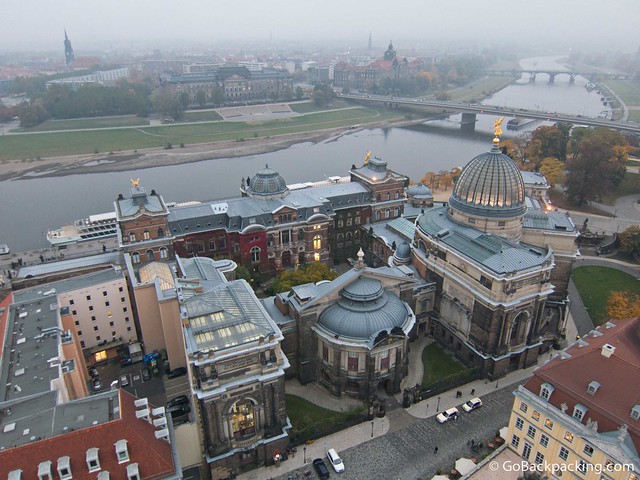
At the time flying across the world on a Russian airline seemed thrilling. Dealing with the 24 hour journey was less so. We’d left our winter woolens with friends in London to lighten our packs.

The author (Elaine) boarding a small airplane

It didn’t seem like such a good idea when we had to deplane in St. Petersburg via a frozen stairway to a tarmac shuttle and wait in the concourse for hours.

Had we known about Meet, Plan, Go all this would’ve been so much easier.

Being a bit impulsive is fine most of the time, but with more preparation we’d have saved ourselves a lot of angst, expense and perhaps met a few fellow travelers to share their experiences with jet lag and budgeting for a long trip.

That community didn’t exist until Meet, Plan, Go was founded about 5 years ago.

Sherry Ott, one of the co-founders of MPG, was a dissatisfied cubicle dweller when she hatched the plan to escape New York City and explore the world.

During her first year on the road she realized there was no place like home and she didn’t want to be there.

The lure of living on the go was inspiring and she discovered many like-minded nomads but few Americans.

In the intervening six years she’s set up her blog, Otts World and then co-created Meet, Plan, Go in an effort to get more North Americans to take career breaks and enjoy long-term travel.

Today there are over ten cities sharing that mission, all planning a big event on October 16th. Each city is featuring travel experts, authors, bloggers and photographers – all experienced long-term travelers.

There’s inspiration for everyone with panel discussions, opportunities to dig deeper at round table dialogues and other resources.

Several companies are sponsoring gifts and free trips. Hosteling International, Intrepid Travel and TEFL, the ESL academy, will be there. It’s going to be a one-stop shop to help travel dreams come true.

Last year’s attendees have shown that they’re more likely to actually take a big trip once they have the MPG guidelines and community spurring them on.

On my big journey, I could’ve learned about our wintry, Russian layover if I’d asked the right questions, but not about the unscheduled stop in Karachi, Pakistan where I surreptitiously shot pictures of machine gunners cruising the tarmac.

We might have discovered how much easier, cleaner and cheaper it was to stay in guest houses than hotels outside the capital of Colombo. Once we’d found the heat and realized how our blood, thickened from years in chilly climes, would make us comatose in the tropical villages, we ventured up into the mountains and temples of Kandy to acclimate.

With a bit more preparation that transition would’ve been so much easier. There’s no way you can prepare for every eventuality when you travel and I wouldn’t want to try. If the road beckons, you can go, you can make it happen or turn back to the everyday routine.

It’s one of the reasons I’ve taken on hosting the big Meet, Plan, Go night on October 16th in San Diego.

If I can’t be traveling, I love trading stories with adventurers. America needs its lay ambassadors to counter the world’s assumptions based on TV network models, media headlines and to temper our global, military entanglements.

Perhaps your boss will see it that way if you lay it out for them. Meet, Plan, Go can help you with that dialogue too.

_________

Elaine at Seward Glacier, Alaska

About the Author:  Elaine J. Masters is a travel writer, speaker, scuba diver, yoga teacher and the award-winning author of Drivetime Yoga and Flytime Yoga.

She also brings travelers together with three meetups in San Diego: Travel-Well, Meet-Plan-Go-San-Diego, and Travel-Massive-SD.

Blog: http://www.TripWellness.com

Podcast: The Gathering Road on WRN

Au Pair Abroad: 4 Stories of Travel and Cultural Immersion

Live-in nanny
An au pair is a live-in nanny. (photo by Ed Yourdon)

A while ago, I wrote an article that listed 7 alternative travel methods. On that list, I could have also included the idea of working abroad as an Au Pair, which means working as a live-in nanny.

I figured now would be an excellent time to investigate the job prospect a bit more.

In doing so, I have reached out to a couple of traveling ladies that have spent time working in this field to interview them on their experiences relating to their job, cultural immersion, and travel opportunities.

Undoubtedly, working as an Au Pair provides a cultural immersion of sorts, but how does it fare compared to working in other fields abroad, and does it allow for travel opportunities while overseas?

The four ladies who responded to my questions provided more information than I could have imagined, so I chose to feature essential bits below.

Stacey Kuyf
Stacey Kuyf

Stacey Kuyf

Chicago and San Diego, USA - two years

Find Stacey on Twitter and Facebook.

Stacey's Au Pair job, besides looking after two children (boy and girl age 4 and 5), seems pretty laid-back.

Her duties included dropping the children off at school, having daytime hours off, picking the children up at 2:30 pm, and working until 6:30 pm.

In the middle of that, she had to clean, provide snacks, and do laundry a few times a week, but she never really had to work weekends.

Stacey felt very lucky when it came to travel, especially since the rules entail that Au Pairs only need one entire weekend off every month.

Her freedom on the weekends meant she could road trip to new places and even take advantage of US public holidays for long weekend breaks.

Over her two years working in the US, she was able to visit 16 states, take a day trip to Mexico, and spend ten days in Florida in the middle of winter.

Stacey added, "My focus was on travel though, and a lot of Au Pairs will spend all their money on clothes and clubbing and only have seen the city they live in when they leave."

In terms of cultural immersion, Stacey explained:

"I definitely feel that I gained a far deeper insight into the United States by living with Americans as well as working there.

My host dad's a hard core Republican from New York, and I'm very liberal and from New Zealand, so we would have political debates that opened my eyes, and taught me more about the issues that everyday Americans face.

I'm also very thankful that I got to experience Halloween, Thanksgiving and the 4th of July twice while I was there, in two different cities.

These are such "American" holidays, and I'm so lucky to have had the opportunity to celebrate them in the United States."

Jessica Walters
Jessica Walters

Jessica Walters

Aerdenhout, the Netherlands - eight months

You can find Jessica on her Au Pair Cooking Channel.

Jessica Walters currently works about 20 minutes outside of Amsterdam, in a town called Aerdenhout, where she has been working for the past eight months.

Here she cares for a 12-year-old girl, taking care of all the ironing, cooking for four days a week, cleaning the kitchen daily, and taking the girl to her various activities and lessons.

Jessica adds, "She is a dream though, and it's like having a younger sister. . ."

Jessica is also lucky in that she gets to travel a lot. That doesn't happen easily on an Au Pair's salary, but the time is plentiful for her.

"I save all my money (well, most of it) from each month and take a weekend trip, or if it's a holiday from school, then a week-long [trip] somewhere once a month every month."

In terms of cultural immersion, Jessica explains:

"It's the best way because you are living with the people you work with so you have the culture and language around you 24/7. I have worked in Bulgaria as a housekeeper before, and I didn't live with the couple I worked for.

It was a wonderful country but a completely different experience because all I did was work and on my time off I walked around and did more tourist things. . . it got lonely sometimes."

Amanda Slavinsky
Amanda Slavinsky

Amanda Slavinsky

Rome, Italy - four months

Find Amanda on Twitter.

Amanda Slavinsky lived the typical Italian life while working as an Au Pair in Rome for four months. Her duties involved caring for two girls (age 8 and 10) that started with breakfast and getting them to school.

Her daytime hours were free, and she resumed work duties when picking up the girls from school, helping them with homework, and taking them to their afterschool activities.

Dinner was eaten every day as a family around 8 pm in true Italian supper fashion.

Amanda did find travel a bit challenging given her work schedule but did manage to take either day or weekend trips around Italy by train. Exploring other countries was much more difficult.

In terms of cultural immersion, Amanda explained:

"I celebrated birthdays with my family (complete with a sheet of tiramisu in lieu of a birthday cake), watched a lot of Italian television that I would've never been exposed to without them, celebrated my host mom's feast day, ate home cooked Italian meals every night, and learned about how things are dealt with on a familial level in Italy.

I've worked in Korea for 18 months and can say without a doubt that working as an au pair provides valuable insight into another culture, much more than just teaching English."

Jessica Barney
Jessica Barney

Jessica Barney

Paris, France - two weeks

Jessica Barney had a different experience while working for two weeks in a suburb of Paris.

She cared for two children (a boy and girl, ages 7 and 10), but their communication was the big issue.

In terms of travel, Jessica said she could sometimes travel into Paris city, but she worked long hours during the week and had little time for herself.

However, she only stayed for two weeks, so perhaps she could have achieved more travel if the situation had been different.

In terms of cultural immersion, Jessica added:

"I feel like I would have gained a better insight at another job. Interacting with one family, it may create a stereotype."

As you can see, the Au Pair experience can vary significantly given the family, country, and expectations presented.

For the most part, the girls above had good experiences with plenty of travel (if they made it a priority) and a great deal of cultural immersion.

The Exquisite Kota Kinabalu Night Market

Visiting markets, especially local food markets, is one of the most insightful activities one can do when traveling. You can do it while staying at one of the cheap Kota Kinabalu hotels. It reveals the local side of a culture, the way people eat, and the many flavors and cooking styles.

Kota Kinabalu Night Market

Markets are the lifeblood of a city. While clothing markets are interesting, too, the necessity of eating as an everyday event makes food markets busier and more important.

Fresh fish in Kota Kinabalu

The city of Kota Kinabalu is located on the majestic island of Borneo in the state of Sabah, Malaysia. After traveling Southeast Asia for years, I still think Borneo is one of the world's most fertile and naturally blessed places. Everything looks fresher, bigger, and more luscious there.

Bananas are plump, vegetables are powerfully colorful, the fruit is intensely sweet, and the seafood is on the next level of beauty. Walking through the markets filled with fresh ingredients (nothing even cooked) made my mouth water.

Kota Kinabalu
Kota Kinabalu

The night market in Kota Kinabalu, which opens around 5 p.m. or so in the evening adjacent to the Filipino Market, is easily one of the best markets I've ever visited. It's similar to the Zanzibar night market but more extensive and offers even more food. It was such a fantastic place that I would wait around in my guest house all day, doing little but waiting for the late afternoon to arrive.

The atmosphere was incredible, and though the market was buzzing with activity, it was island-style action-not the aggressive kind of market action you experience in big cities.

Speed boats would zoom to the edge of the market, dropping off a boat full of people while energetic kids would strip down to their undies to take a dip. The sunsets over the calm ocean of Kota Kinabalu were breathtaking.

Fried bananas and sweet pancakes

Though I had visited Kota Kinabalu as an access city to climb Mount Kinabalu, I had a memorable time there, mainly due to the exquisite night market.

Starting in the late afternoon, an abundance of snacks began to emerge. Fried bananas, sweet donuts, and pancakes filled with nutty peanut butter (bottom left) were among the tasty tidbits. Chicken wings (pictured top) were also a popular late-afternoon snack.

After arriving at the market each evening at about 5 p.m., I would purchase snacks, watch the sunset, and observe the market until dark.

A beautiful mess of grilled seafood

When the sun had dispersed, I would browse and contemplate my dinner options. There's a wide range of Southeast Asian foods available at the Kota Kinabalu night market.

Malaysian food, Filipino and Indonesian-inspired dishes, local Bornean cuisine, and an irresistible selection of fresh grilled seafood filled the market. Rather than handle the near-impossible task of choosing just one thing, I ate several meals each night.

An extremely tasty fish
A delicious fish

This fish was the definition of delicious, so good that I ate the same fish from the same smiling lady three nights in a row. Marinated in a tangy sauce and grilled to perfection, the white flesh was flaky, moist, and flavorful.

The accompanying sauce was a communal bucket on the table packed full of red onions, chopped chilies, and squeezed calamansi juice (a cross between a lime and an orange).

Malaysian ABC
Malaysian ABC

Dessert was also a must in such a food paradise. Though the photo doesn't do this bowl of sweet, soupy shaved ice justice, I can assure you that it was refreshing and soothing.

"Ais kacang" (ABC for short) is an oddly wonderful combination of shaved ice, coconut milk, and random toppings. This particular bowl included sweet corn and macaroni!

With friendly vendors, a perfect atmosphere, and a variety of great food, the Kota Kinabalu night market is one of Asia's most incredible eating destinations.

How To Have a Relaxing Weekend in Madrid

Madrid is well-known for its party credentials. You'll find no end of bars, neighborhoods, and streets that come alive after dark and stay open beyond sunrise. But sometimes, sampling the nightlife and going wild for a weekend isn't on the agenda. Occasionally, you might just be looking for a few days in a place where you can relax and unwind. So here are some suggestions if you're looking for a chilled-out time in Madrid.

Lounge In the Park

Parque del Retiro in Madrid.
Parque del Retiro (photo: David Lee)

Another thing that Madrid has in droves - aside from the bars - is a fair amount of open space. On one side of the city, in particular, you've got the Parque del Retiro. You'll find 320 acres of space here, encompassing a boating lake and monuments such as the imposing Alfonso XII Monument and the regal Palacio de Cristal.

However, these well-known areas can get busy, so head away from the crowds, entertainers, and fake sunglasses and explore the wooded paths and rose gardens dotted around the periphery. Wandering around the park's outskirts, you'll also find benches, shady spots, and even some outdoor exercise equipment to help you wind down should the mood take you.

Stay In a Quiet Part of Town

While the party animals tend to congregate around the lively streets of Gran Via, Malasaña, and Chueca, those of you seeking a quieter night might find solace in the Salamanca and Retiro neighborhoods. If you're staying near the latter, you'll find Calle Ibiza full of small tapas bars and restaurants where you can have a quiet bite to eat alongside the locals.

Another option is La Latina, situated in the old city, parts of which are quieter than the main streets but still close enough to the Rastro flea market and numerous tapas bars to get a taste of the evening atmosphere.

Stroll Around the Museums

Museo del Prado
Museo del Prado (photo: David Lee)

During the day, Madrid's temperature can soar - and that's where the city's many museums come into their own. While you won't want to miss the Golden Triangle of Art, home to three top-class art museums: the Prado, the Reina Sofia, and the Museo Thyssen-Bornemisza, there are other museums worth a shout, too.

For example, there's the art academy where Pablo Picasso and Salvador Dali once studied-the Real Academia de Bellas Artes de San Fernando. This grand building houses a museum and gallery collection of fine art from the 15th to the 20th century.

Sightseeing from up high

One way to see all the main tourist spots without battling the crowds is from the air. Madrid is lucky enough to have El Teleférico, a cable car that scoops you up from its base near La Rosaleda Park and takes you above the parkland to Casa de Campo.

You can see the Royal Palace of Madrid and La Almudena Cathedral in the distance. Still, and best of all, you can enjoy five minutes of peace and take in the city from above before strolling around the parkland at the other end or having a cheeky glass of Sangria in the restaurant before hopping back on again.

48 Hours in Miami, Capital of Latin Culture

After discovering and immersing myself in Colombia's Latin culture, I began thinking more about Miami. Spending just 48 hours in Miami can offer a taste of that culture. Some say it's the capital of Latin America, and if I decide to settle back in the United States, living in Miami would make a lot of sense.

A three-hour flight takes you to most of Central America, the Caribbean, and the northern countries of South America, which are a confluence of Latin and Caribbean cultures.

Art deco buildings on South Beach
Art Deco buildings on South Beach

Like New York City, Miami draws many people, from wealthy transplants to immigrants seeking a better life. Its cultural scene and diverse food options, including everything from street food to healthy meals, make it even more appealing to newcomers.

I incorporated a quick visit between my time in South America and Europe. Here's a recap of my first 48 hours in Miami.

Table of Contents

    • 1:30 pm, Thursday - Couchsurfing and Lincoln Road
    • Ocean Drive
    • South Beach
    • South Pointe Park
    • Beers at Abbey Brewery
    • 1 pm, Friday - Puerto Rican Food at Jimmy'z Kitchen
  • Dessert at Serendipity 3
  • Viernes Culturales in Little Havana
  • Cuban Food at Versailles Restaurant

1:30 pm, Thursday - Couchsurfing and Lincoln Road

Lincoln Road
Lincoln Road is a pedestrian walkway lined with shops and restaurants

Like many tourists, I decided to base myself in South Beach. It's the East Coast's Beverly Hills. There's so much money walking around; you can smell it.

If you're planning a similar trip and want a bit more space than a hotel, there are plenty of options for luxury rentals in Miami, especially around South Beach and Brickell, where you can stay close to the action while still having room to spread out.

I took a $2 bus from Aventura to Lincoln Road, the epicenter of South Beach, after staying with Danny and Jillian from I Should Log Off further north. Along the way, I spotted my first (of two) orange Lamborghini.

I got off the bus at Lincoln Road, an 8-block outdoor mall between Alton Road and Washington Avenue, with dozens of shops, bars, and restaurants. I could tell right away this was my kind of neighborhood.

As I rolled my new luggage down the pedestrian walkway, I noticed plenty of pretty people and a lot of skin-much more than I used to see in South American cities, even in the summer. Reverse culture shock strikes again.

While exploring Lincoln Road, I couldn't help but notice how busy the area was. It's no wonder so many people seek restaurant jobs in Miami to be a part of the thriving culinary scene.

I was psyched to find that Briana's (my Couchsurfing host's) apartment was a block off Lincoln Road. It was a cute studio, which reminded me of my old apartment in Virginia. After getting to know each other, she headed to work, and I explored Miami Beach.

Lunch at Sushi Samba. Roll in the foreground: bigeye tuna, tempura flake, aji panca. Roll in back: king crab, avocado, Asian pear, soy paper, wasabi-avocado crema
Lunch at Sushi Samba

First, I had to replace my MacBook's AC adapter, which was easy enough, as there was an Apple store on Lincoln Road.

Next, it was time for a late lunch. The heat and humidity were oppressive in mid-afternoon, yet I still decided to grab a table outside Sushi Samba for a bit of people-watching.

I ordered two rolls, each containing six to eight small pieces. The quality was excellent, but the quantity for the money left me in disbelief.

Briana had warned me about the high prices on Lincoln Road before I stepped out. I made a mental note not to spend $35 on another meal in Miami unless I knew it'd fill me up.

Ocean Drive

Ocean Drive
Ocean Drive runs north/south, parallel to South Beach

Lunch was over quickly, so I began walking south along Ocean Drive, which practically intersects with Lincoln Road. The right side of the street was lined with restaurants and bars, one after the other, for a good ten blocks.

All of them had outdoor seating along the sidewalk, where people kicked off happy hour with giant margaritas. These cocktails were so big that they often had one or two inverted Corona bottles sticking out of them.

Seafood was a popular choice, and after seeing so many King Crab legs being served, I began to crave them myself.

South Beach

The turquoise waters along South Beach
The turquoise waters (and seaweed) along South Beach

Eventually, I hooked a left and walked along South Beach. The water was warm, and for a Thursday afternoon, there were plenty of people enjoying it.

Before arriving in South Beach, I thought it was an exclusive area. But, as it turns out, it's more like Venice Beach, California, or the Atlantic City boardwalk, attracting an eclectic mix of vacationers and locals.

South Pointe Park

South Pointe Park
The trail at South Pointe Park

South Pointe Park is at the south end of Miami Beach, which is actually an island connected to the mainland by several causeways.

Several luxury high-rises are built here; however, when I walked through the area, it was dead. After the restaurants on Ocean Drive come to an end around 5th Street, it's a ghost town.

Like much of the expensive real estate in southern Florida, it's possible that many property owners aren't living in these buildings, but just using the space as a way to store their wealth and lower their tax liabilities.

South Pointe Park, however, was filled with joggers and people walking their dogs. After walking 18 blocks to South Pointe, I turned around and made it all of one block back toward the north before waving the white flag of exhaustion and hailing a taxi.
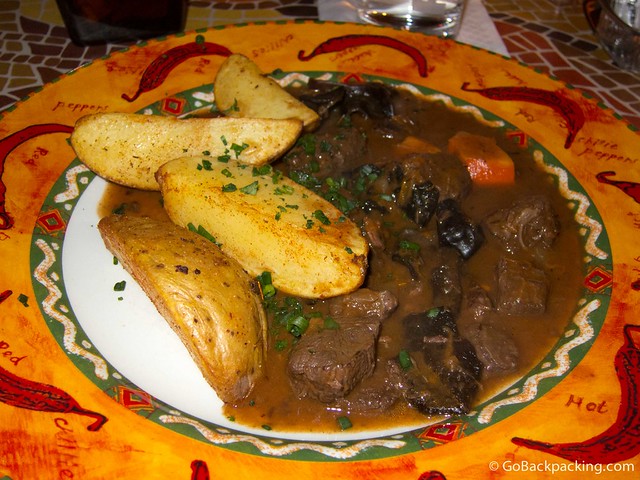
Beers at Abbey Brewery

To make up for my pricey lunch, I grabbed a sandwich from 7-11 and returned to the apartment, where I met Briana's boyfriend, Tim. We talked for a while, and then he offered me a beer. We walked a few blocks to Abbey Brewery, where I had the chance to sample the house beers.

Abbey Brewery was a dive bar as you'd find in NYC. I liked it immediately, even though Miami had not yet banned smoking in bars and restaurants.

1 pm, Friday - Puerto Rican Food at Jimmy'z Kitchen

Mofongo at Jimmy'z Kitchen
Mofongo

I checked my email Friday morning and then TripAdvisor to see if there were any exciting restaurants nearby. Jimmy'z Kitchen caught my attention with rave reviews about the mofongo, a Puerto Rican dish. It was only a few blocks from the apartment, so I went to investigate.

As I approached the address, I was surprised to find it resembled a typical strip-mall restaurant. Inside, there were only about six tables, and all were full. It was a tiny place, but I decided to wait for a table and eat there for the complete experience.

Mofongo: Mashed fried green plantains, garlic, olive oil, and crunchy pork rinds, soaked in a rich tomato sauce with a kick.

-- Jimmy'z Kitchen

I got lucky-mofongo is only available on Fridays and Saturdays. I ordered it with chicken; honestly, it was unlike anything I've ever tasted.

The tomato sauce was rich and slightly spicy, and the mashed plantains were more than enough to fill me up. If I were to order the dish again, I'd skip the chicken. And best of all, it was only about a third of the cost of my sushi lunch the day before.

Dessert at Serendipity 3

Frozen hot chocolate
Frozen hot chocolate at Serendipity 3

During my first pass through Lincoln Road, I'd noticed Serendipity 3. I'd wanted to try the original Serendipity in New York City since I saw the movie by the same name (with John Cusack and Kate Beckinsale).

Despite being full of mofongo, I walked into Serendipity 3 and promptly ordered their famous frozen hot chocolate.

Made from the grounds of 17 different types of cacao, it's simply a cold chocolate drink. What I didn't expect was the mountain of whipped cream they added. Because it's made with ice instead of ice cream, it's not as heavy as a milkshake, though the cacao ensures it's just as rich.

Hopped up on sugar, I picked up a new pair of Oakleys at The Sunglass Hut. I'd bought my last pair almost four years earlier in Cape Town.

Viernes Culturales in Little Havana

REAL Cuban music in Little Havana
REAL Cuban music performed in a cigar shop during the monthly "Viernes Culturales" in Little Havana

Along with South Beach, Little Havana was on my shortlist of must-see places in Miami. Luckily, my visit coincided with the monthly Viernes Culturales (Cultural Fridays) block party in Little Havana.

While my host, Briana, couldn't join me, a Couchsurfing meetup was happening for the event, with no fewer than two dozen couchsurfers in attendance.

The block party was light on people, which might be due to the low season, as this event seemed to draw primarily tourists. I was expecting streets to be closed off, as you might see in Medellin. Instead, we dodged traffic as we crossed back and forth across Calle Ocho.

People followed the live entertainment as it moved from one venue to the next: a restaurant and a Cuban cigar shop. Still, standing in a smoke-filled cigar shop with a $5 mojito in hand, listening to real Cuban music was just the experience I was looking for in Little Havana.

See also: Affordable Things To Do in Miami

Cuban Food at Versailles Restaurant

Classic Cuban food at Versailles: white rice, black beans,
Classic Cuban food at Versailles

While hanging out in Little Havana, chatting with couchsurfers, I remembered Versailles restaurant. I'd already paid $30 for a taxi to Little Havana, so what's a little more for a chance to eat at the best Cuban restaurant in Miami (or anywhere outside of Cuba, for that matter).

A short, $10 taxi ride later, I'm sitting in a packed restaurant. It's midnight on a Friday, and I knew there was a reason I hadn't eaten dinner yet.

I ordered a Cuban espresso (which turned out to be way too strong for me) and the Classic platter, which included twice as much food as I could eat. Aside from a few Cuban sandwiches in NYC, I'd not been exposed to Cuban food.

This was my introduction, and it was tasty. I was especially fond of the roast pork, "picadillo" ground beef, and ham croquette. Afterward, I caught a taxi back to South Beach for about $37. Unlike NYC, if I do move to Miami one day, I'll have to get a car.

Driving in Miami? Stay Alert. 

Miami moves fast. One moment you're soaking up sunshine on South Beach, and the next you're sprinting for cover from a surprise downpour. Summer storms can make the roads slick, and winter brings a surge of visitors that slows everything to a crawl. If you do find yourself in a fender bender, Miami car accident lawyers can help you navigate the insurance side of things so you're not stuck sorting it out alone.

In the meantime, take it easy on I-95 and the Dolphin Expressway, keep an eye out for impatient drivers, and don't trust your GPS unquestioningly when traffic gets messy. Stay safe out there and enjoy the ride.

Hostel Living 101

Dorm bed in a Reykjavik hostel
Big, fluffy duvets are a nice touch at this hostel in Reykjavik, Iceland

[F]ourteen years after I spent my first night sleeping in a youth hostel in Amsterdam, I continue to spend a good portion of my year staying in them.

I've experienced hostel living as a bright-eyed, bushy-tailed college grad, and a persnickety 35-year old with lower back pain.

As normal as living out of a backpack, and sharing dorm rooms has become for me, I'm regularly reminded of the younger kids who are just getting started with a life of travel. This article is for them.

When To Make A Reservation

By and large, you can walk into most hostels of the world, at any time of year, and get a bed to rest your head.

Rarely does a backpacker need to sleep on a park bench because there's no space at the local hostel. There are a few exceptions to this rule of thumb, of course.

These are the times I consider making an advance reservation at a hostel:

  • To ensure a stay at a hostel that got rave reviews from my friends, or someone I trust.
  • During a popular holiday, sports event, or festival, such as Christmas, the World Cup, or Oktoberfest.
  • In expensive destinations, such as Iceland, when I want to lock in a cheaper bed rate for a larger dorm.
The rest of the time, I pick out a first choice hostel, and one or two back-ups, and just show up.

Save Money With a Membership Card

If you're planning to go backpacking for an extended time, such as a month or more, than it often makes sense to pick up a hostel membership card, like those offered by Youth Hostel Association.

You can usually make your money back within 3-5 stays at a participating youth hostel, and we all know backpackers appreciate a bargain.

I've personally used discount cards in Europe, and more recently, South America.

Exercise Good Etiquette

Living in a communal situation necessitates good etiquette.

The hostels I've enjoyed staying at the most manage to create a fun atmosphere, while ensuring guests remain respectful of one another.

Here are my three biggest tips to keep it copacetic:

  • Stay tidy and organized. Ensure your stuff is on, around, or under your bed, for example. You're less likely to lose things, and others are less likely to trample over your clothes when the lights are off.
  • If you want to drink heavily, and stay out until the early morning, stay at a party hostel. Most hostels have a communal area or bar for hanging out, and sharing a beer at the end of a long day. But if you want to drink heavily, and stay up all night partying, do us a favor and stay at a known party hostel where you're less likely to piss other people off.
  • Don't have sex when other people are in the room. This is a common pet peeve by anyone whose had the experience. It's just awkward for those around you, no matter how quiet you think you're being. Use a communal bathroom in the hall, pay for a private room, or find an hourly hotel instead.
What's one piece of hostel advice you'd offer future backpackers of the world?

__________

This post was written by Dave, and brought to you by Youth Hostel Association (YHA).

5 Fun Ways To Explore Sydney

When compared to some of Australia's more naturally spectacular and scenic locations, Sydney has a tough time keeping the attention of time-strapped travelers. To many, it's just another big city.

Sydney Opera House
Sydney Opera House as seen from the harbor (photo by xiquinho)

Even though I might be a bit biased - I do call Sydney home - I can attest to the city's random and interesting nature. You have to know where to look.

And when you find those quirky and fun bits, you'll be swept away and wondering why you'd ever want to leave. Here are some of the more fun ways to explore Sydney.

Table of Contents

  • Sydney Activities
    • 1. Take a Gourmet Safari
    • 2. Arribaa Local Tours
    • 3. Harley Trike Tours
    • 4. Take the Ferry
    • 5. Explore Sydney at Night

Sydney Activities

1. Take a Gourmet Safari

Gourmet safari
Presentation at a South American deli on our Gourmet Safari

Locals in Sydney are familiar with the SBS TV show Food Safari, hosted by Maeve O'Meara. Maeve started showing family and friends around to some of her favorite authentic restaurants across many Sydney suburbs.

This evolved into a food tour company called Gourmet Safari, and boy, are they a lot of fun! My boyfriend and I were given a voucher for a Gourmet Safari for Christmas and booked in for a long Saturday of food from around the world.

The best part? We were introduced to several small shops from lesser-visited suburbs, serving some spectacular cuisine inspired by the cultures of their home countries.

These were places I would never have known without the tour! It's also just a great way to see Sydney and learn more about the different cultures that populate the suburbs.

2. Arribaa Local Tours

Go on a local's tour of Newtown
Go on a local's tour of Newtown (photo by LWY)

Arribaa is a new online venture that was introduced to me through Sydney Travel Massive. The premise of the site is to allow locals to offer tours on whatever they specialize in.

So, if a local girl in Newtown knows a lot about the best coffee shops and cafes, and also likes to knit, you could pay a fee to go on her "tour", creating a scarf along the way. One thing Arribaa is good for - getting a proper local's perspective on their neighborhoods.

3. Harley Trike Tours

Harley trike
Looking cool on the back of a Harley trike.

If you have a "need for speed," a love of leather, and an affinity for feeling the breeze in your hair (or in your helmet), then I suggest signing up for a Harley-Davidson Trike tour.

I know, it sounds silly, and it is, but I had fun on mine. You arrive at the tour booth, and the leather-clad guide will help you into your bad-to-the-bone jacket and top it off with a protective helmet.

Two people can fit on the back of the trike, so bring a friend and prepare for the watching eyes of everyone around you. They're completely jealous.

There are different tour lengths. An hour-long tour might take you around Sydney's Rocks district and across the bridge to North Sydney parklands. A several-hour ride might buy you a trip to the Sea Cliff Bridge just south of the Royal National Park, and a lunch.

4. Take the Ferry

Sydney ferry
A Sydney ferry (photo by dicktay2000)

Being a harbor city, Sydney's ferries are a viable form of public transportation to get you from place to place amongst its sprawling suburbs. Instead of forking out for an actual Sydney Harbor cruise, why not just enjoy the ferry?

You can take a 30-minute ferry ride to Manly in the Northern Beaches - great on a sunny summer day, or you can take a short ferry across the harbor to Mosman and the home of the Taronga Zoo (also home to some of the best city views).

And please, whenever you are on the beach or outdoors, be mindful of the harsh Australian sun. Always put on plenty of sunscreen. Sunsuit is a good alternative to sunscreen for children.

Cockatoo Island, right in the middle of Sydney Harbor and host to the Island Bar, is just asking for a ferry ride. There, you can kick back a Fat Yak or two with perfect city views.

5. Explore Sydney at Night

Explore sydney at night
Sydney at night (photo by kyletaylor)

Sydney loves its nightlife, and you can easily head out for a night on the town at Oxford Street or, if you're brave, Kings Cross. What once looks mild in daylight comes alive at dusk.

Other ways to get into exploring Sydney outside of hitting up a pub crawl at night include:

  • Climbing the Sydney Harbor Bridge at dusk.
  • Going on a Rocks Ghost Tour.
  • Taking a Twilight Discovery tour with Understand Down Under.
  • Taking a Manly 2.5-hour Q-Station Ghost Tour.

As you can see, Sydney may not have mountains or rainforests, but it certainly knows how to showcase itself.

Hwaseong Fortress in South Korea

Hwaseong Fortress, Suwon, South Korea

[W]hen I was visiting Seoul, I decided to take a day trip to the city of Suwon to visit the Hwaseong Fortress.

Built in the late 1700's by King Jeongjo, the fortress is now a UNESCO World Heritage site and attracts a stream of tourists, students, and many local residents as well.

Inside the palace of the Hwaseong Fortress

The palace itself, located on the ground level within the walls of the fortress, is a beautifully preserved complex.

The neatly laid out design showed all the components of the king's living quarters.

Top view of the palace

Climbing up the hill, I got a nice aerial view of the palace compound.

Hiking the wall
Hiking the wall

Surrounded by thick fortress walls and a few hills on the side, makes Hwaseong an ideal place to get a little exercise.

The climb to the highest point took me about 15 minutes and I was huffing and puffing the entire way.

View of Suwon
View of Suwon

The view of Suwan city from the top of the wall was beautiful, a real contrast between the modern buildings of the city and the ancient stone walls of the fortress.

A pagoda at the top of the fortress walls

The pagoda at the top offered the perfect place to take seat, enjoy the breeze, and catch my breath from the hike up.

Top lookout post
Top lookout post

With great stone walls, look-out towers, and castle-like gates, some call the Hwaseong Fortress South Korea's mini version of the Great China Wall.

Hwaseong Fortress
Hwaseong Fortress

Though set up as a tourist attraction (with an entrance fee, nicely maintained, signs explaining the history of everything, etc.), I was delighted that local Suwon residents still use the fortress a gathering area - a place where old men sat and drank tea and played cards and others walked and jogged for exercise.

Just like an ancient Chinese village, times and technology are rapidly changing, but hopefully the Hwaseong Fortress will remain a place that's preserved, yet still utilized by its residents.

One of the main gates

The Hwaseong Fortress includes four main gates which were formerly heavily guarded.

Now at each of the gates you can walk around, explore, or just sit on a stone bench to relax and enjoy it all.

Canon at Hwaseong Fortress

Just outside the cannons and walls is a bustling modern city of electronics, restaurants and businesses, but inside the fortress is a peaceful escape from the thrills of modern South Korea.

Suwon's Hwaseong Fortress makes a wonderful day trip!

5 Alternatives to the Parillas in Palermo

Caesar salad with chicken at bBlue
Caesar salad with chicken, and fresh fruit juice at bBlue

By all accounts, Buenos Aires is one of the best cities in the world to grab a steak, but a man (or woman) cannot live on steak alone.

At least not this man.

During the month I spent in the upscale Palermo Soho neighborhood, I sought out alternative dining options to enjoy between my visits to the best parrillas in Buenos Aires.

Below are five of my favorite restaurants, if you're ever looking for alternatives to the parillas in Palermo.

Table of Contents

  • 1. bBlue (Deli & Natural Bar)
  • 2. La Salamandra (Dulce de Leche & Mozzarella Bar)
  • 3. Phuket (Thai)
  • 4. Little Rose (Sushi)
  • 5. Sarkis (Armenian)

1. bBlue (Deli & Natural Bar)

I happened across bBlue soon after I moved into my Palermo apartment.

It was a lovely Saturday afternoon, and the locals were out in force to shop, eat, and enjoy the weather.

bBlue was busy, but after waiting for a few minutes, a two-person table opened up inside.

I was immediately given complimentary carrots, with a purple (radish?) dip.

The first thing that caught my attention on the menu was the array of fresh fruit shakes they offered.

I went with a mango, ginger, and orange juice shake ($5.39).

For lunch, I chose to go light, with a chicken wrap.

It wasn't until it arrived that I realized just how light a portion size it was. At least there were some boiled potatoes on the side.

When I returned to bBlue for another healthy lunch, I opted for the Caesar salad with chicken, and another mango shake.

Despite the small portions, I enjoyed the overall atmosphere and healthy-eating mission of bBlue.

bBlue Deli & Natural Bar

Address:  Armenia 1692, Buenos Aires

Caprese salad at La Salamandra
An $8 Caprese salad with fresh mozzarella, tomato, and basil at La Salamandra

2. La Salamandra (Dulce de Leche & Mozzarella Bar)

Once again, I was walking around Palermo with no particular destination in mind when I discovered La Salamandra.

The sidewalk tables looked too inviting to pass up, and I grabbed a seat under the awning.

Like bBlue, the menu inspired me to eat healthily. I ordered a Caprese salad, which was wonderfully presented.

All the ingredients were fresh. I can't remember the last time I'd eaten fresh mozzarella. It was a treat.

The salad was made up of a variety of leafy greens, which I prefer over the standard lettuce.

During my second visit, I sat inside, and a friendly guy next to me struck up a conversation.

That time, I also made sure to try their freshly baked dulce de leche alfajores.

La Salamandra

Address: El Salvador 4761, Buenos Aires

Spicy panang curry with chicken
Spicy Panang curry with chicken

3. Phuket (Thai)

Phuket was located around the corner from my apartment, but because it didn't open until 9 pm each night, it took me a while to get there.

Eating dinner late is a cultural norm in Argentina, and not one I was easily able to get used to.

I resisted, though if I were ever to live there, I'd have to try to adapt.

I decided to check out Phuket on a weeknight, and I'm glad I did.

Authentic Thai food is not easy to come by in South America, and though I know it exists in Lima, I hadn't bothered to seek it out.

All the classic dishes were on the menu and even written in Thai, as well as Spanish. The spiciness was indicated with between one to three Thai chiles.

I ordered my favorite, spicy Panang curry with chicken and rice. At $13.60, it wasn't cheap, but it also turned out to be the spiciest dish I'd eaten in South America until that point (a good thing).

Phuket

Address: Honduras 4169, Buenos Aires

Sushi, plus salmon nigiri and sashimi

4. Little Rose (Sushi)

The Little Rose was a sushi recommendation I received via Twitter.

Located in the heart of Palermo Soho, it's easy to find thanks to an awning with the restaurant's name.

Walk up a flight of stairs, and you'll find yourself in what appears to be a former residence. The restaurant's decor is intimate and comfortable.

I stopped by for lunch one afternoon and ordered one of their set menus, which included a soup, and sushi/nigiri/sashimi combo, heavy on the salmon.

During the time I was in Buenos Aires, I'd heard rumors of a salmon shortage.

Chile supplies Argentina with its salmon, and for whatever reason, it was in short supply.

It was so bad some Japanese restaurants weren't even serving salmon, which is hard to swallow given tuna isn't on a lot of menus as it is.

Thankfully, the Little Rose came through, and I got my salmon nigiri fix. The fish was fresh and nicely presented. The price was $14.65.

Little Rose

Address: Armenia 1672, Buenos Aires

Fresh hummus
Fresh hummus

5. Sarkis (Armenian)

Sarkis may very well have been the first time I've eaten Armenian food. 

The restaurant was a recommendation of Amy, an expat blogger, and editor living in Buenos Aires.

We met one afternoon for lunch, and I let her take the lead on ordering. The servings were family-style.

Our first entrée was chicken on pita bread, which was then smothered with yogurt.

The second was a platter of meatballs in a rich and flavorful tomato sauce.

By the time we were ready to go, I could barely move.

Sarkis

Address: 11oo Thames, Buenos Aires

Partnering with Eurail.com

Eurail Global Pass
Eurail Global Pass

Today I'm excited to share a new partnership with Eurail.com, a website specializing in the sales of Eurail train passes for travel through Europe.

Fourteen years ago, in 1998, I went backpacking around Europe for the first time.

Paris / Amsterdam / Prague / Venice / Florence / Como / Rome / The French Riviera / Ireland

My 10-day Eurail Youth Flexipass gave me the freedom and flexibility to move around the continent on a whim.

And it was that first experience traveling on my own that would later inspire me to think bigger, and take a 20-month trip around the world.

This September marks my return to Europe for the first time since the end of my RTW trip, and I'll once again be riding the rails.

This time, with a Eurail Global Pass.

High speed train in Paris

The Global Pass is good in 23 countries, and my goal is to visit as many new ones as possible while I'm in the region.

I don't have a concrete itinerary in mind, which is exactly why a rail pass suits travelers like me so well.

I'm still trying to decide between heading north to Scandinavia, or heading south through Eastern Europe toward Greece.

The pass is valid for 15 days within a two-month period, and because I'm now well over the age of 26, I'll be riding in 1st Class.

The 1st class compartments are more spacious and comfortable, and I'll still have access to the 2nd class compartments if I want to relive my youth.

The trains in Europe are a backpacker's best friend

For those unfamiliar with Eurail passes, the first step toward obtaining one is to decide which type of pass best fits your trip.

Eurail.com offers four categories of passes:

  • Global Pass
  • Select Pass
  • Regional Pass
  • One Country Pass

The Global Pass is ideal for the travelers who don't want a set itinerary. It gives you access to 23 countries, and there are a variety of passes to choose from based on your age, and the length of your trip.

The Select Pass offer access to three to five neighboring countries of your choice, while the Regional Pass is even more specific, offering access to one or two neighboring countries.

One of the best parts about using a Eurail pass is the ease with which you can travel.

Unless you're taking a high speed or overnight train, you usually don't have to reserve a seat in advance.

You just show up and board the train of your choice, and write the day and month in one of the spaces provided on the pass. Then, when the conductor comes by, he/she will stamp that date.

The Global Pass allows you to travel as much as you want on a single day, so I could make a trip that requires several transfers, but as long as they all occur on the same day, I'm only using up one of my 15 days.

My 10-day Eurail Youth Flexipass from 1998

My goal during the two-month travel period is to showcase the ease with which you can get around Europe by rail, and the savings foreigners can experience by buying a pass in advance, versus individual tickets as you go.

At the end of my trip, I'll compare costs, and share the results here.

___________

Disclosure:  Eurail.com provided me with a complimentary rail pass. As always, any opinions expressed are my own.

5 of the Best Countries for Vegetarians

Vegetarian in Thailand? Look for the yellow signs and flags

[L]ast month I wrote about some of the best countries in the world if you're a meat lover.

So it's only right to follow-up the previous carnivorous article with a post about some countries where eating non-meat meals is especially enjoyable.

Though I'm not vegetarian, as much as I love meat, I love fruits and vegetables equally.

Table of Contents

  • 1. India
  • 2. Thailand
  • 3. Egypt
  • 4. Lebanon
  • 5. United States

1. India

As a country with the world's largest amount of vegetarians, India has developed some seriously tasty recipes for pure-veg cuisine. It is estimated that over 30% of the population doesn't eat meat, and with a population the size of India, that's a massive statistic.

Beans, lentils, chickpeas, and paneer cottage cheese, are just a few of the wonderful ingredients that can make a vegetarian meal in India so delicious. But it's the abundance of spices that really add excitement and vibrancy to Indian vegetarian cuisine.

I've personally never traveled to India, but I have had quite a few Indian vegetarian meals at restaurants in other countries that were superb. If I needed to become a vegetarian, I would be quick to move to India!

2. Thailand

Thailand is a country that has it all when it comes to cuisine - everything from meat packed dishes to fresh herbaceous vegetable dishes.

If you are a strict vegetarian though, be careful as sometimes the so-called Thai vegetarian food uses fish sauce and meat broth (depends on your strictness). That being said, there are many designated vegetarian restaurants catering mainly to those that eat vegetarian for religious and cultural purposes.

Thailand is also a country that produces a glorious array of fresh fruits and vegetables. Sliced tropical fruit is available year round and pieces of pineapple, watermelon, mangoes, and papaya can all be purchased pre-sliced from street vendors throughout the country.

The annual Thai vegetarian festival is a paradise on earth for vegetarian eaters. Though the main festival takes place in Phuket, just about every city in Thailand has a crowd that cooks and eats vegetarian during this period. Vegetarian friendly stalls are marked by yellow flags.

Egyptian sandwiches
Egyptian sandwiches

3. Egypt

Some of the most famous dishes in Egypt are vegetarian. While I was traveling in Egypt, in order to eat cheap and local, I ended up eating vegetarian by default quite frequently.

Ful medames, a fava bean mash that's similar to Mexican refried beans, is one of the staples of an Egyptian diet. Not only does it taste good, it's filling and nutritious.

Everyday I would stop by a local Egyptian sandwich stall and grab a bag full of pita wrapped sandwiches filled with ful, falafel, or  fried eggplant, and garnished with pickled vegetables. They were delicious!

Lebanese food
Lebanese food

4. Lebanon

Cuisines form around the Mediterranean have been perfecting a variety of vegetarian dishes for centuries.

Okra, cauliflower, lentils, all sorts of beans, tomatoes, and many types of pickled vegetables and olives are important in a Lebanese diet. Hummus, which is a staple in many Middle Eastern cuisines, is one of the world's finest dips - a smooth blend of mashed chickpeas, lemon juice, olive oil and varying garnishes.

Eggplant, which happens to be one of my all-time favorite vegetables on the planet, is a major component in a number of wonderful Lebanese dishes as well.

5. United States

As a country that includes a growing percentage of health conscious individuals and is composed of cultures from around the world, the United States has an ever-expanding supply of vegetarian restaurants.

When I went back for a visit in the US, I noticed plenty of restaurants ranging from pure-vegetarian Indian eateries to trendy looking fusion vegetarian restaurants.

Along with places to eat, there's a rising number of supermarkets and farmers' markets that supply a great selection of ingredients to cater to a healthy vegetarian kitchen.

So while it's possible by making the effort to eat vegetarian or mostly vegetarian in whatever country you travel to, these countries make vegetarian food into meals to look forward to!

Top Attractions in Canakkale, Turkey

A quiet street in Canakkale.

Chances are you may never have heard of the city in Turkey named Canakkale. Nope.

Before I traveled to Turkey, I didn't know much about the country either, but when I started scoping out some major attractions, I learned that I had to travel to one place to do a few of them.

Say it with me.... Canakkale.

Canakkale became our base for a couple of days to explore these important attractions while taking in the vibe of a smaller sea-side city in Turkey.

Anzac tour statues
One of the battle memorials on our Anzac tour.

Gallipoli and ANZAC Cove

Before moving to Australia, I had no idea about ANZAC Day or even the battle that took so many lives in such a short time.

Quickly I learned, and I learned what the Aussies told me about this important day, especially that it marks the landing of the ANZAC troops to a part of Turkey known as Gallipoli.

Since my boyfriend is Australian, we had to go.

We ventured to Canakkale and signed up for a half-day tour with TJ's Tours that took us across the strait on a ferry and further on a van tour of the entire peninsula.

Scenery around Gallipoli
Scenery around Gallipoli -- so beautiful that it was hard to associate with such a gruesome past.

Our tour involved visiting several memorial cemeteries in one of the most beautiful locations, making it that much more tragic for those soldiers stuck in battles for months on end.

Although a popular attraction on actual ANZAC Day (April 25th), I wouldn't recommend going at this time unless the place is of significant importance to you or your family.

We went a week beforehand and were happy to have a relatively easy time getting around, which is not the case when thousands of people flock to the tiny area.

trojan horse in Troy
The Trojan Horse at Ancient Troy Site

The Ancient City of Troy

History buffs and Classics nerds (like myself) will jump at the chance to visit the ancient city of Troy - the site of the Trojan War and the focus of many great epics, such as the Iliad and the Aeneid.

The ruins of this once mythical location were uncovered and, after many studies, researchers concluded this was the site that Homer used as his inspiration for stories.

In fact, the excavation of the ruins shows several layers of cities, which would coincide with the idea of Troy being demolished and rebuilt over the course of hundreds of years.

To explore Troy, located a 45-minute drive away from Canakkale, we again signed up for a half-day tour with TJ's Tours, who provided the transport there and back, along with a guide at the site.

troy scenery
The beautiful Turkish landscape around Troy.

I was thrilled that we had the guide as, even for a history lover like myself, I would not have had a clue what I was looking at otherwise.

Troy was little more than a pile of rubble and rocks under the ground to the untrained eye, and our guide helped to bring it to life.

The real treasure -- what was left -- has been stowed away at the Çanakkale Archaeology Museum in Canakkale city.

Trojan Horse in Canakkale
Trojan Horse in Canakkale from the movie, Troy (photo by QuartierLatin1968)

The Movie-Famous Trojan Horse

One of the biggest attractions to the actual site of Troy is the ability to take a photo with the Trojan Horse. Now, you don't even have to go that far.

After the filming of the movie Troy, the one with Brad Pitt, the wooden horse used as a prop, was donated to the city of Canakkale.

It sits right in the heart of the city, along the boardwalk, and you can easily grab a shot or two with it.

The funny part is how different this Trojan Horse looks from the one at Troy's actual site.

canakkale archaeology museum
Ruins outside the Canakkale Archaeology Museum

Canakkale Archaeology Museum

The Canakkale Archaeology Museum might be small, but the contents combined with a meager 5 lire entrance fees make it a worthwhile stop.

Most of the artifacts inside - amphora, statues, and small tools - come from nearby excavations, such as Troy and Assos.

I also really enjoyed the museum's outdoor garden, which was littered with big bits and pieces of ruins, such as broken marble columns and giant amphorae.

« Previous Page
Next Page »
Dave at Ahu Ko Te Riku on Rapa Nui (Easter Island), Chile.

Hi, I'm Dave

Editor in Chief

I've been writing about adventure travel on Go Backpacking since 2007. I've visited 68 countries.

Read more about Dave.
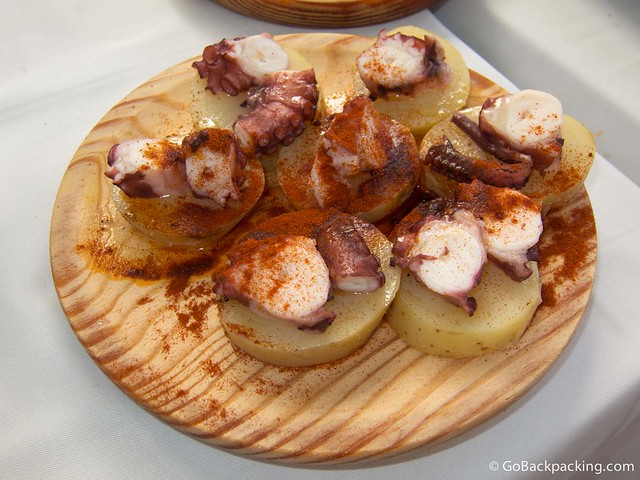
Footer

back to top

About

  • About
  • Archive
  • Privacy Policy
  • Cookie Policy

Follow Us

Contact

  • Contact
  • Work With Us
  • Submissions

Copyright © 2025 Go Backpacking