I'm super excited to be a part of this documentary. Christine and Drew are in the final stretch of editing and releasing it, but they need our support.
I've already made my pledge. Now it's your turn!

I'm super excited to be a part of this documentary. Christine and Drew are in the final stretch of editing and releasing it, but they need our support.
I've already made my pledge. Now it's your turn!
Anyone interested in fun and fascinating museums should look no further than Bruges. The city is jam-packed with some of the world's finest and most unusual museums, from contemporary art to chocolate.
Visit Hotels4U for a range of accommodations in Bruges that allows visitors to wander around some of the top museums in the city. Here are some of the most exciting museums in Bruges that you must visit.
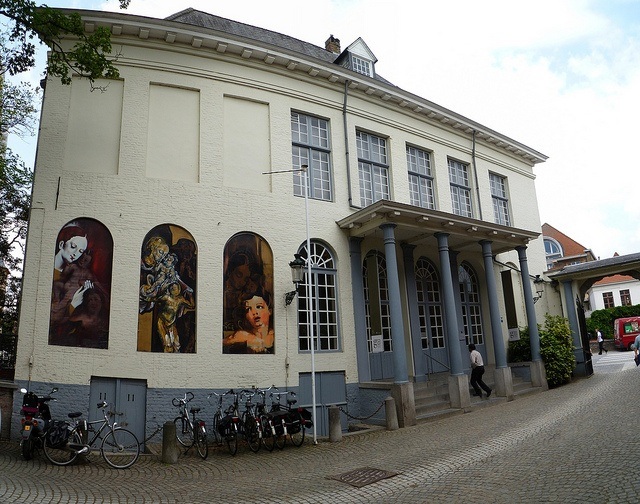
With paintings from the 15th and 19th centuries, the Groeninge Museum is a place for art lovers. It covers works by Belgian and Flemish artists, including Jan van Eyck and Marcel Broodthaers.
Works cover a variety of art eras, such as the Renaissance, neo-classical, and realist periods.
One particular highlight is Jan van Eyck's "The Madonna with Canon Joris van der Paele" from the early 15th century, which should not be missed.
Related: Best Things to Do in Ghent

It's not all about art museums and galleries in Bruges, though. Although it does contain various paintings, the Gruuthuse Museum is home to a range of silverware, textiles, ceramics, and much more.
The museum was once an impressive mansion that belonged to a wealthy family in the city and can be found behind the Church of Our Lady.
Click here for affordable hotels in the area, which make the perfect base for visiting the Gruuthuse Museum.
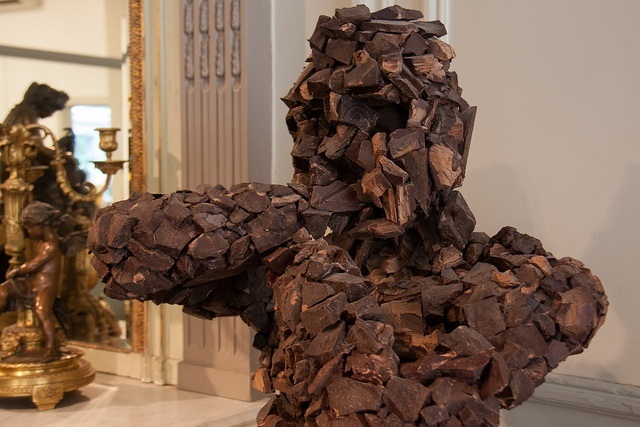
No visit to Belgium is complete without sampling some of the country's delicious chocolate.
It may be a bit of a stereotype, but chocolate is one of Belgium's finest exports, and the Choco-Story Museum in Bruges celebrates this.
Visitors can follow the story and development of their favorite treat, including its properties, processes, and chocolate-making equipment, as well as facts about Belgian chocolate. It must contain at least 35% pure cocoa to be called chocolate!
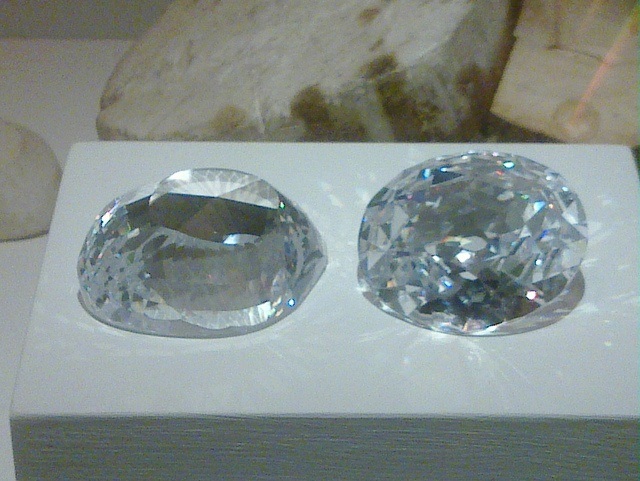
As one of the only five-diamond museums globally, this fantastic museum celebrates the art of diamond polishing, invented in the city during the 15th century.
The museum boasts many rare objects, including a replica of the crown of Margaret of York, which was handmade in Bruges.
The best thing about the diamond museum (diamondmuseum.be) is the thousands of genuine diamonds dotted around (behind locked cabinets, obviously) and the polishing demonstration that takes place every day at around midday.

As well as chocolate, Bruges celebrates all the food we love most, as it also has its Chip Museum!
As the famous chip is said to have originated in Belgium, the Friet Museum is the only museum in the world dedicated to our favorite fast food snack.
A portion of chips and mayo is also included in the entrance fee, making this unusual museum a great place to cheer you up when the chips are down.
___________
This post was written and brought to you by Hotels4U.
 Adventure Capitalist is the story of Jim Rogers, a Wall Street investor who made a gazillion dollars, retired at 37, and then proceeded to spend three years driving around the world with his soon-to-be wife.
It wasn't his first long term trip.
That one came in the early 90's when he rode a motorcycle around the world, a journey documented in his first book, Investment Biker: Around the World with Jim Rogers.
Getting back to Adventure Capitalist, I first heard about the book a few months ago, when my day trading friend, Marcello, passed through Lima.
My curiosity piqued, I bought a Kindle copy, and dug in.
Jim kicks off his tale with some brief biographical info, as well as the story of how he met his wife, Paige, and invited her along on his upcoming trip.
He also details, in great length, why he wanted to drive a Mercedes, and how he was gifted a custom model by the company.
I didn't think much of the car, until I saw some of the photos later in the book, at which point it looked silly. It was a hardtop convertible on a monster truck's suspension.
But it was clearly a hit with the locals wherever he went, and it managed to get them through blizzards in Iceland, as well as the desert sands of Africa.
The trip begins with a circumnavigation of Iceland (where I'll be heading in September), and continues on through Europe.
It gets more interesting as he crosses into Africa, and proceeds down the west coast, through the south, and then up the east coast. Their time in Africa reminded me of one of my favorite books, Dark Star Safari, by Paul Theroux.
After Africa, they drove into the Middle East, having managed against all odds to get a visa for Saudi Arabia, among other countries.
From there, it's through central Asia and China, and down to Australia. The journey ends with a classic drive across the USA.
Throughout Adventure Capitalist, which covers more than 100 countries, Jim shares his perspectives and observations on each destination as both a tourist, and a potential investor.
The book cover has a tagline that states "profitable lessons from a record-setting drive around the world" but I think that's more marketing than reality.
He offered high level observations, and a few pieces of practical advice from time to time, but this is hardly a practical guide to foreign investment.
I'm not much of a finance guy, so I was glad he didn't go into too much detail in that regard. The only part of the book where I found the financial talk overbearing was at the end, once he'd arrived back in the USA, and felt the need to provide a history lesson.
Adventure Capitalist offers readers the chance to join Jim and Paige on an epic journey, through some of the most dangerous, worn-torn parts of the world. Whether you're an armchair traveler, or a serious investor, it's an entertaining read.
Adventure Capitalist is available in Kindle and paperback on Amazon.com.
Hanoi, the capital city of Vietnam, is an ancient city that surges with energy, and there are more than enough attractions to warrant a day-long tour.
Local tradition is a big part of the culture, yet the rise of modernization and the boom of industrialization has transformed Hanoi into a city that never seems to slow down or take a break.
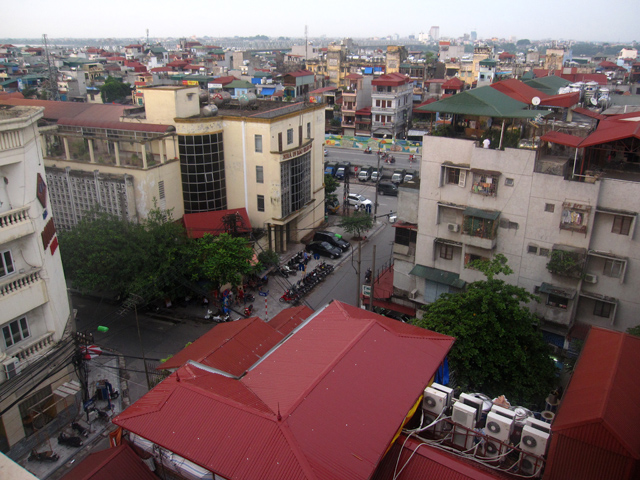
The historical attractions, the continuous markets, and the stunning array of cuisine make Hanoi a perfect place to let yourself loose and explore.
Mornings, or even afternoons and evenings, should always begin with a few cups of Vietnamese coffee.
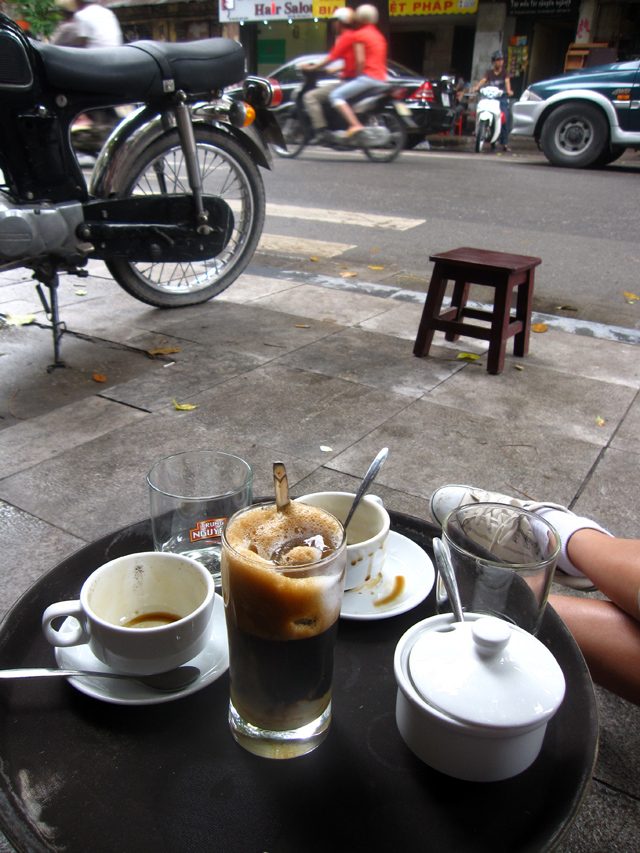
Introduced by the French during colonization, Vietnam became addicted to dark roasts and strong brews.
While I usually enjoy hot, plain black, unsweetened coffee, Vietnamese iced "ca phe sua da," which includes a ton of sweetened condensed milk, hits the spot on a warm day.
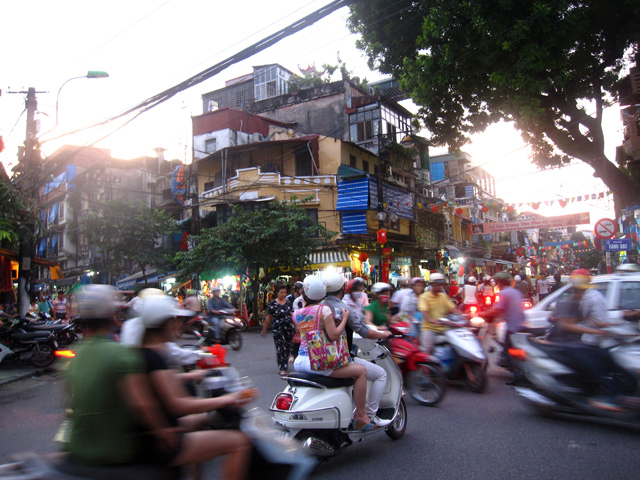
The Old Quarter of Hanoi is one of the town's original and most congested sections. Motorbikes zoom through the narrow roads and lanes while stores and restaurants line the streets and sprawl onto the road.
Each building in the Old Quarter is unique, and I was amazed at the architecture and construction. Delicious restaurants, stores selling everything imaginable, hotels, and bars are all ubiquitous throughout the Old Quarter.
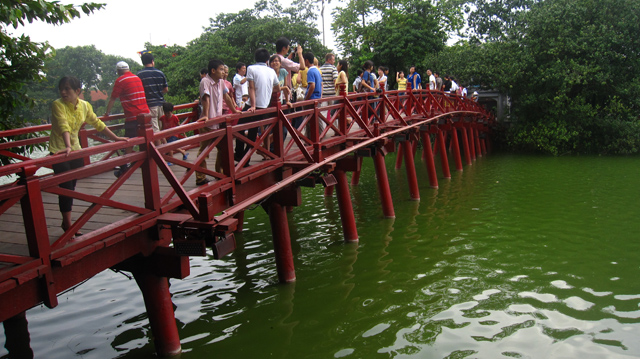
Located adjacent to the Old Quarter is Hoan Kiem Lake, a landmark and popular gathering place in Hanoi for tourists and locals alike. The water is famous for its deep green color.
The Ngoc Son Temple, located on a small island within the lake, is reached by crossing the red-painted Huc Bridge. The distinguishable bridge is a favorite place to stop and take photos.
Hoan Kiem Lake is a place that invites anyone on a tour of Hanoi to eat an ice cream cone while taking a meandering stroll that strictly focuses on relaxation.
Travel Tip: Search and book bus, ferry, train, and private transfers in Hanoi and throughout Vietnam with Bookaway.
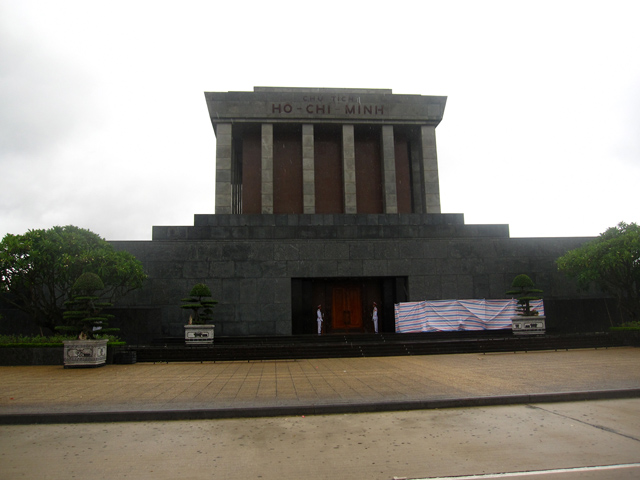
Ho Chi Minh was a revolutionary leader and one of Vietnam's most influential founding fathers. Often referred to as Uncle Ho, he remains embalmed and displayed at his mausoleum in Hanoi.
Every day, the mausoleum is open to visitors from 9 a.m. to 12 p.m., and thousands come to show their honor and respect. If you go, adhere to the strict dress code and visiting guidelines.
As one of the most important Buddhist temples in Hanoi, I wasn't all that impressed just by the outward appearance of the One Pillar Pagoda.
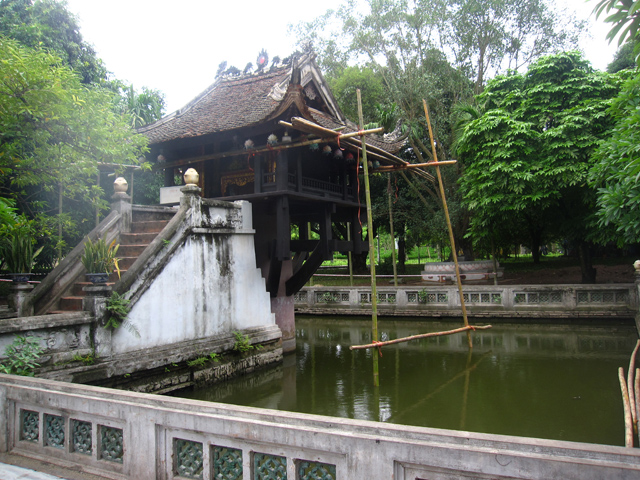
I developed an appreciation of the temple after reading about its historical significance and what it represents.
The emperor in the 11th century had no offspring, and one night, he had a dream where a Bodhisattva presented him with a child sitting on a lotus plant. He built the one-pillar pagoda to honor this vision, and its legend lives on.
The Temple of Literature, devoted to Confucius, is one of the most famous attractions in Hanoi.
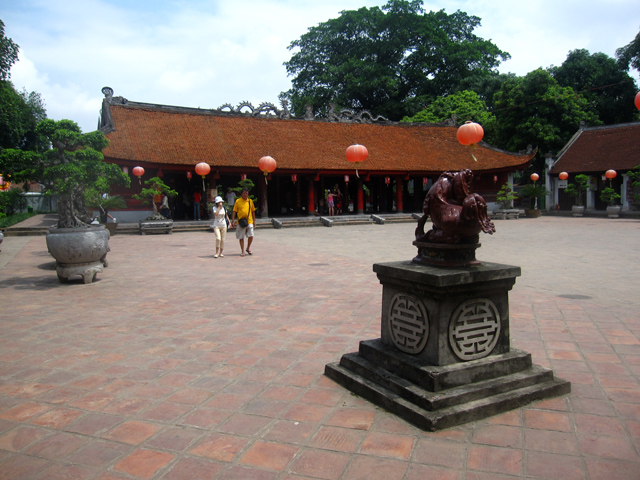
The ancient temple was home to Vietnam's first national university and houses art, stelae, statues, engravings, and shrines.
Observing the layout and surrounding courtyards is also a highlight of visiting the temple, which was constructed in a similar design to the place where Confucius was born.
Vietnamese food is tasty, fresh, and often supplemented by many vibrant herbs. Throughout the day and night, people take to the streets for some of the city's most satisfying meals.
Though pho (chicken or beef noodle soup) is the most iconic dish of Vietnam, it was something known as bun cha that satisfied my taste buds.
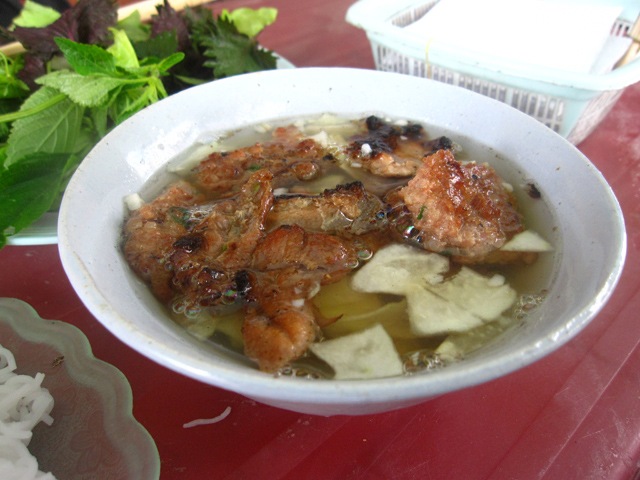
The combination of chopped grilled pork tossed into a sweet and sour soup, accompanied by rice noodles and herbs, and garnished with chilies and minced garlic is a flavor I'll cherish forever.
The greatest thing about Hanoi is that you can never know precisely what you'll discover. Each day is new and allows you to see, eat, or experience something you've never done before.
Exciting, fascinating, and always entertaining characterizes a tour of Hanoi.
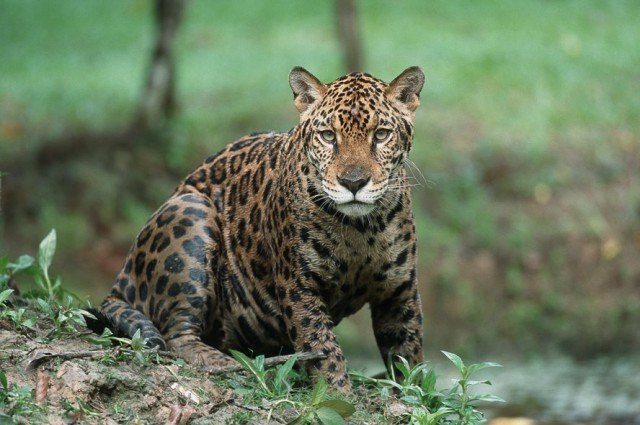
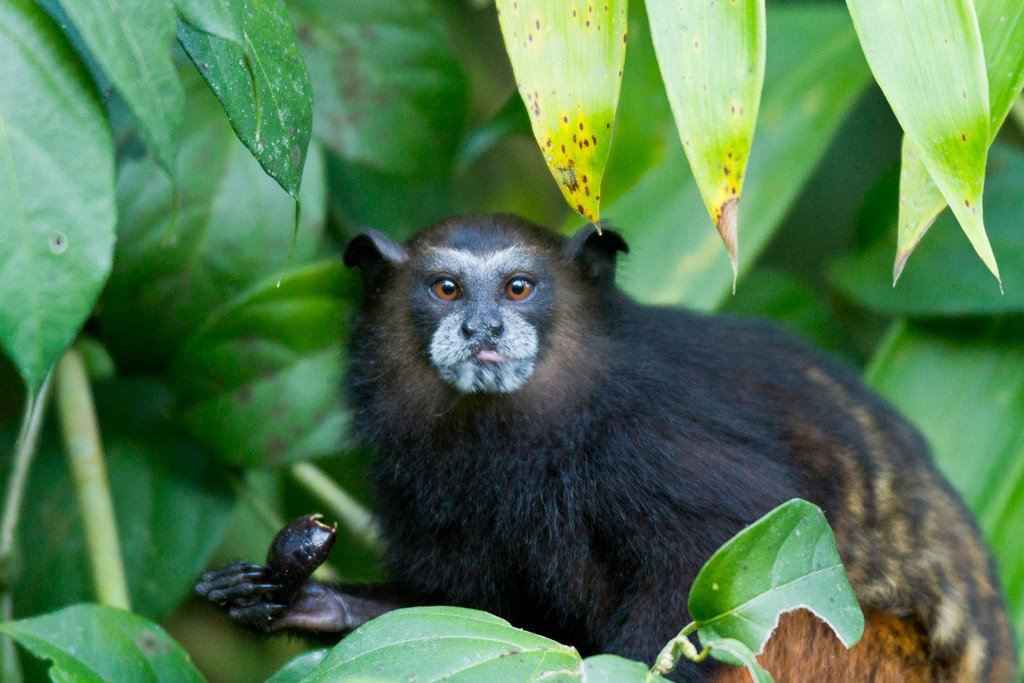
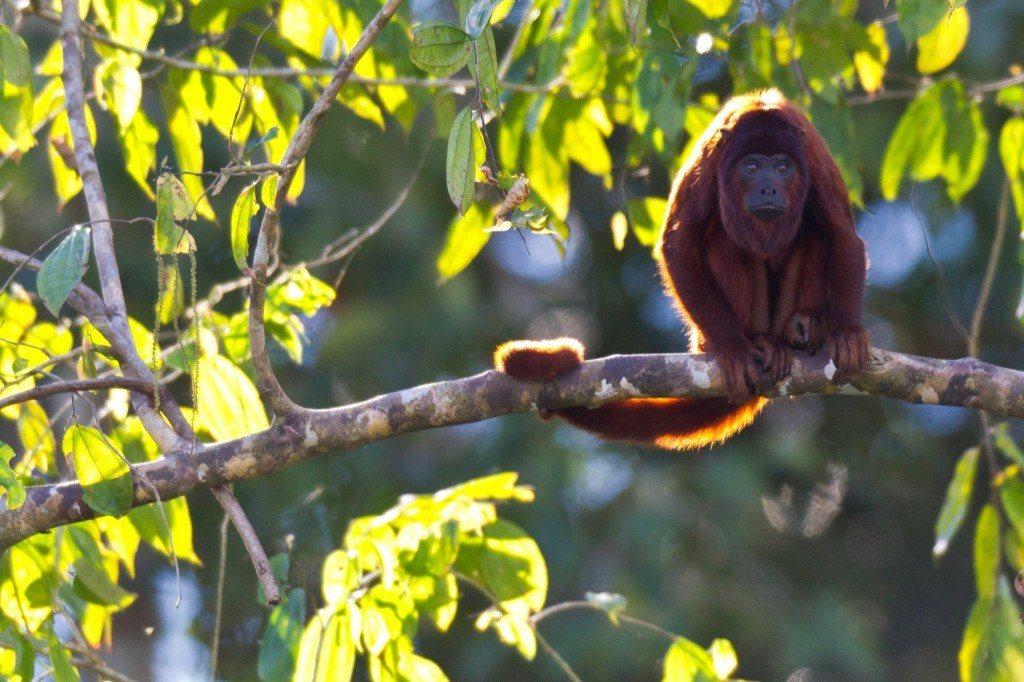
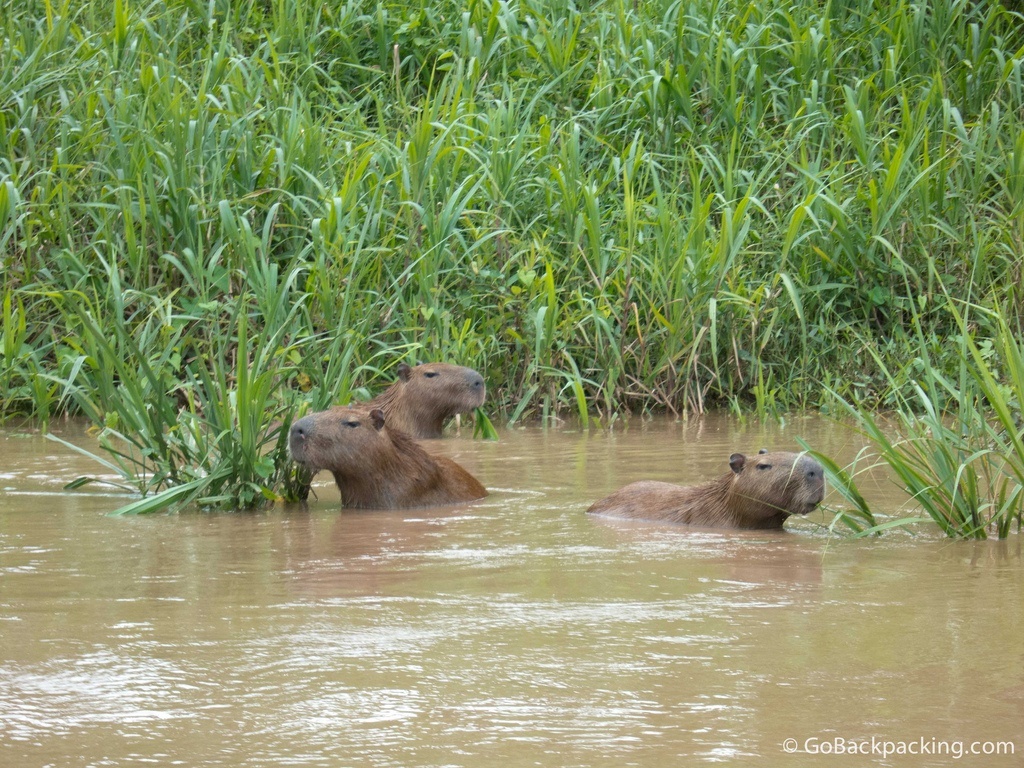
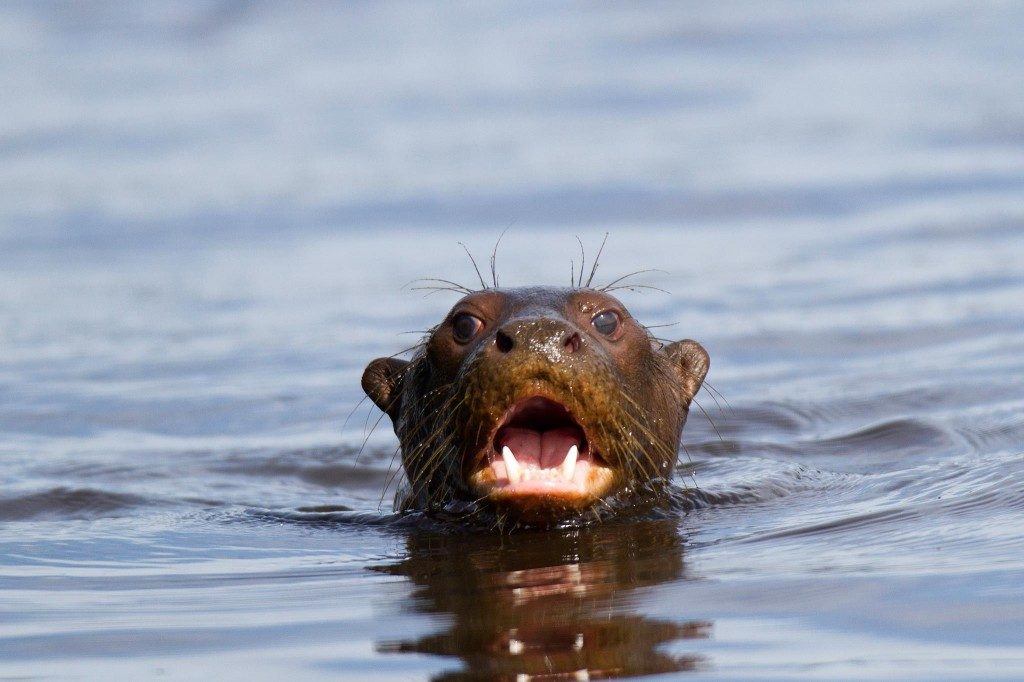
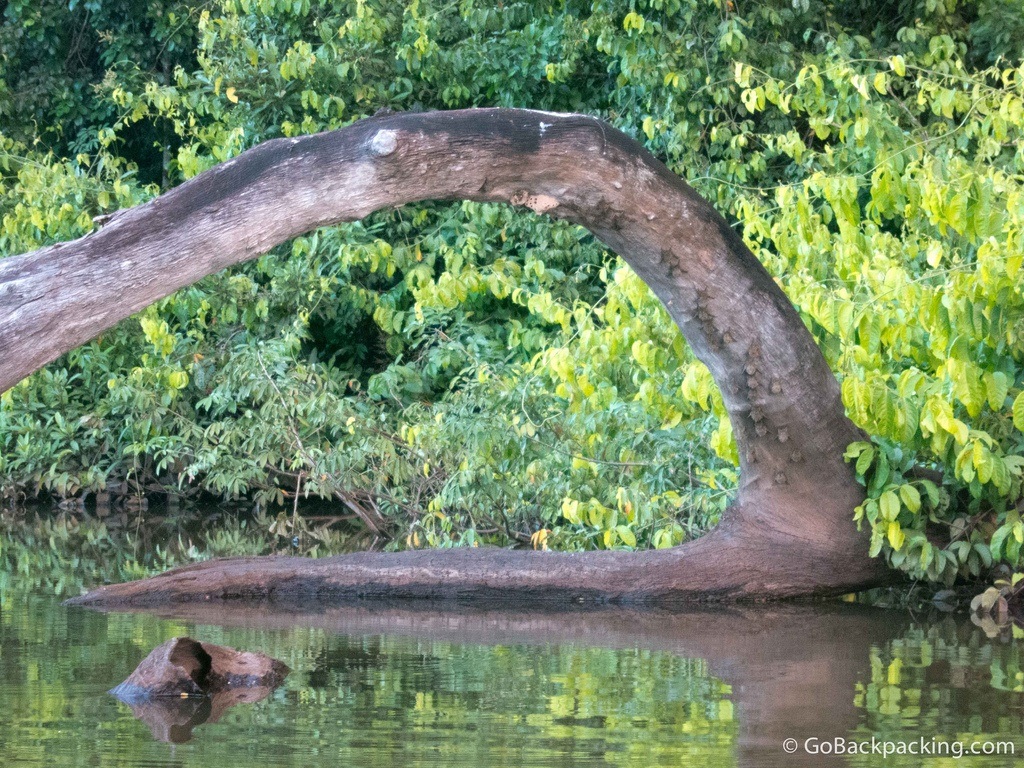
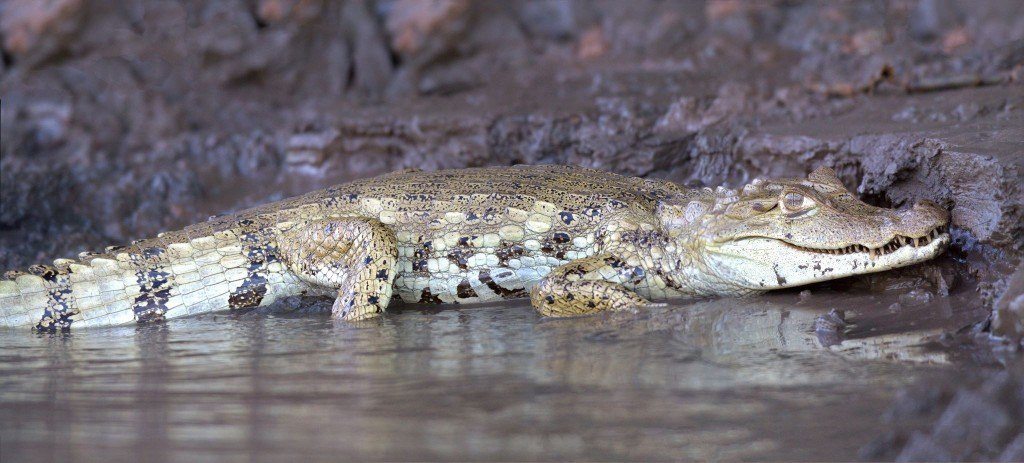
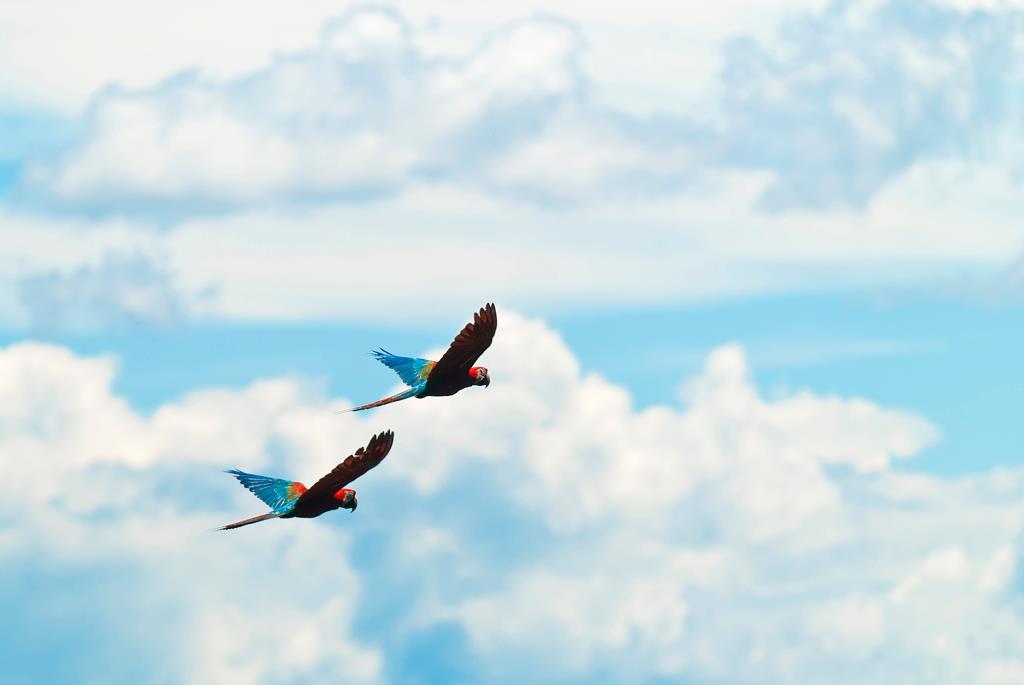
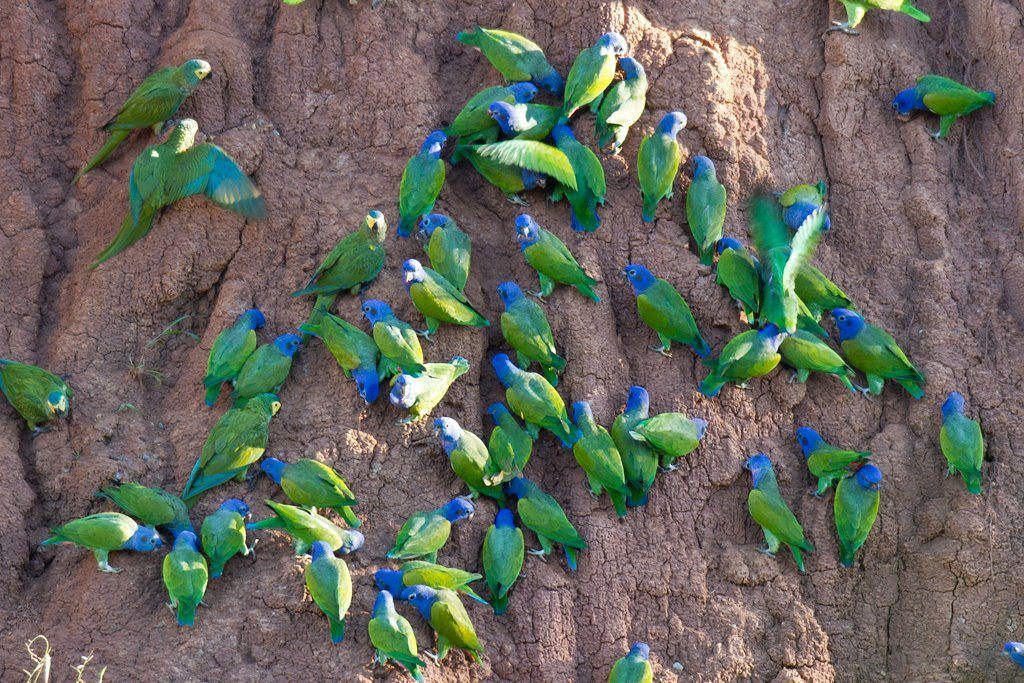
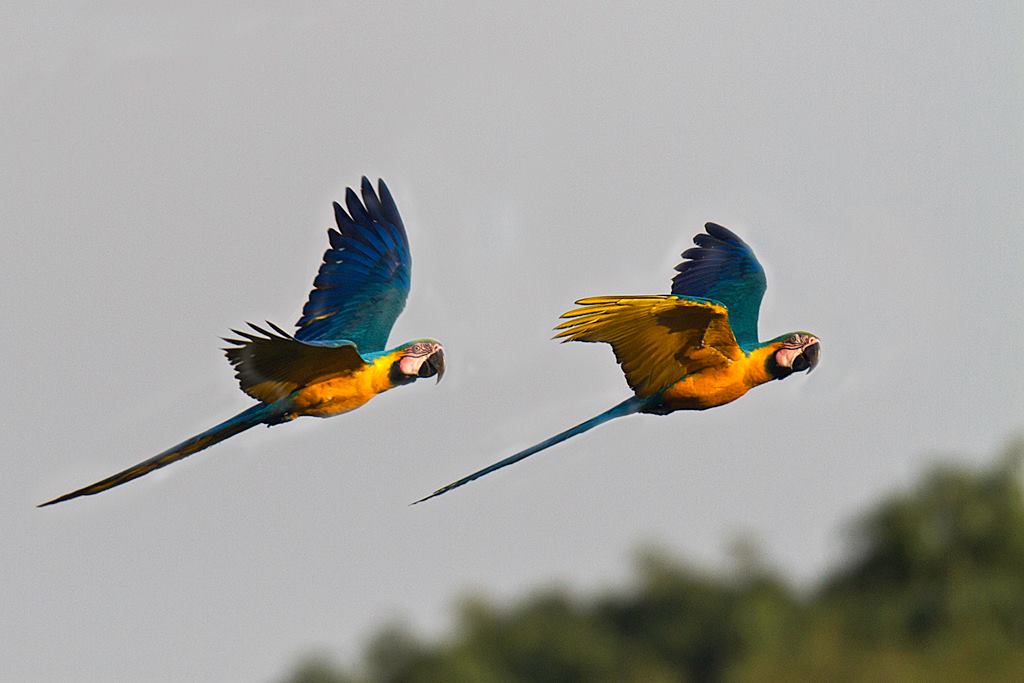
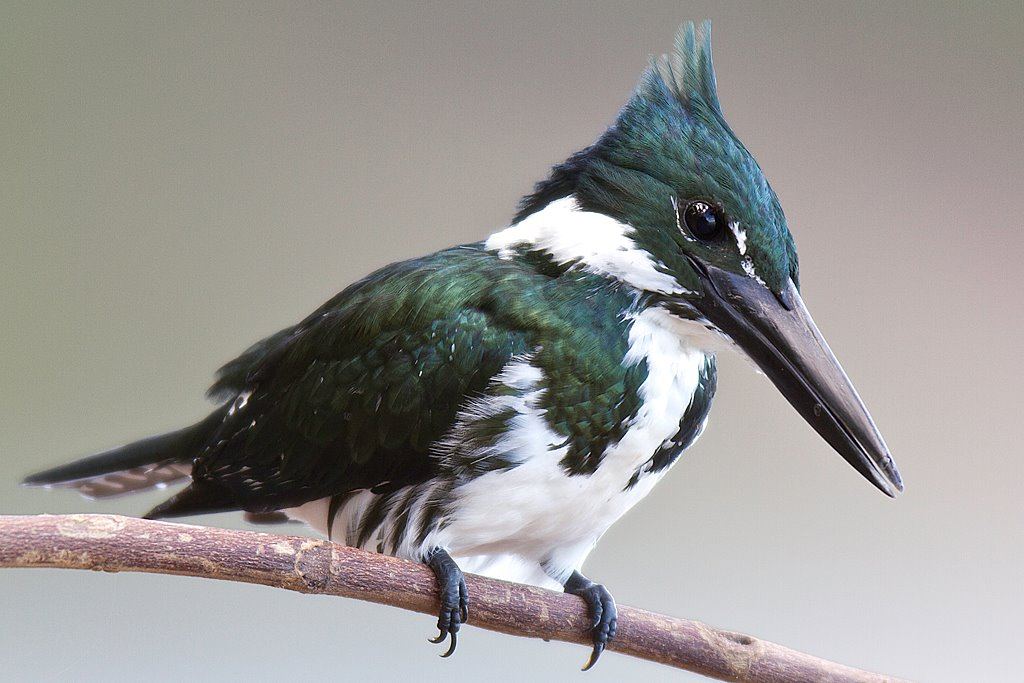
This photo essay features the beautiful and varied wildlife of the Tambopata National Reserve in southeastern Peru.
During my week in the Amazon, the shortcomings of my compact Canon S100 became abundantly clear.
This post includes a few of my photos but is predominantly the work of Jeff Cremer, who runs photography tours and workshops through Rainforest Expeditions.
I saw everything in these photos, and much more. The one exception is the Giant River Otter, which was too cute to leave out on such a minor technicality.




Disclosure: This tour was in partnership with Rainforest Expeditions. As always, any opinions expressed are entirely my own.
____________
 Dave's 160-page, all-original Lima Travel Guide is available for Kindle.
I moved to Australia in March of 2009. As hard as it is to believe, I've been here for about 3.5 years, and guess what - I'm still alive!
With all the hype on Australia having one of the harshest climates and being home to the world's deadliest creatures, you know... not very many people have actually died from them.
Still, it is one of the first things I hear about from family and friends back home.
"Oh, I couldn't go there! They have so many snakes and spiders that can kill you!"
True. There are plenty of things that could kill you (and it's probably a good idea to have comprehensive travel insurance), but the facts point to driving and even horseback riding to being deadlier in nature.
Here are the facts about Australia's deadly animals!

In the past 3.5 years, I've been face-to-face with several arachnids - most of them being simple orb spiders or the ugly, ugly huntsman.
Those, luckily, are not dangerous to humans in the least.
On the dangerous end of the scale, I've heard of a friend finding a Sydney funnel-web in his basement (not too far from my home) and my flatmates finding a Redback Spider out on our front porch.
Yes, both of these spiders are considered to be some of the deadliest in the world because of their potential, but the fact is they rarely kill.
The Redback Spider, a relation to the black widow, bite actually only affects about 10% of people who have an adverse reaction to the venom.
You'll be happy to know that no person has died from a spider-related bite since 1979, as antivenom is now available for all native species.
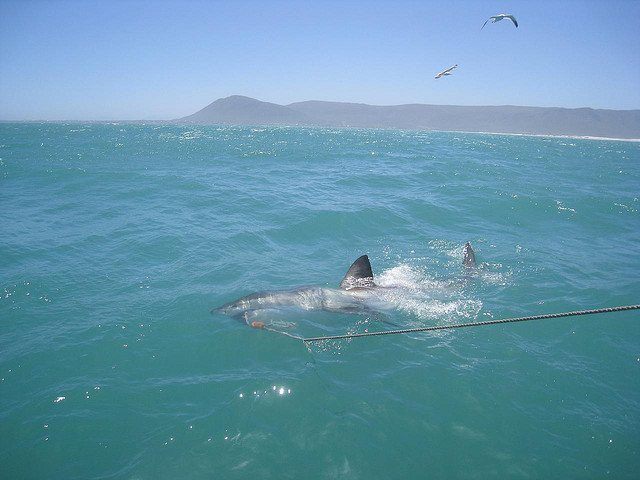
Australia is an island country, with close to 60,000 kilometers of coastline and deep ocean in its surrounds.
These oceans are home to Great White sharks, Tiger sharks, and Bull sharks.
Okay, so it's been a bad year for shark attacks, especially off the coast of Western Australia, but hear me out.
According to an article from Australian Geographic, of the 877 shark attacks in Australia since 1791, that's over 221 years, only 216 have been fatal.
That works out to be about one fatality per year.
Since 2000, the number has been a little more at just two fatalities per year.

The world's deadliest land snake, the taipan, calls Western Australia home.
Besides that, you can find the brown snake, the death adder, and the tiger snake - all of which are considered the world's deadliest.
Sure, snakes are a scary business in Australia, but how scary?
It turns out that up to 3000 Australians get bit by snakes each year, but just an average of two a year are fatal.
Of those, the majority are caused by the brown snake.
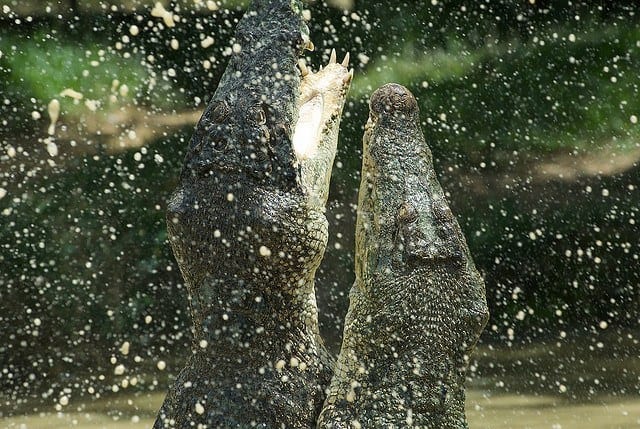
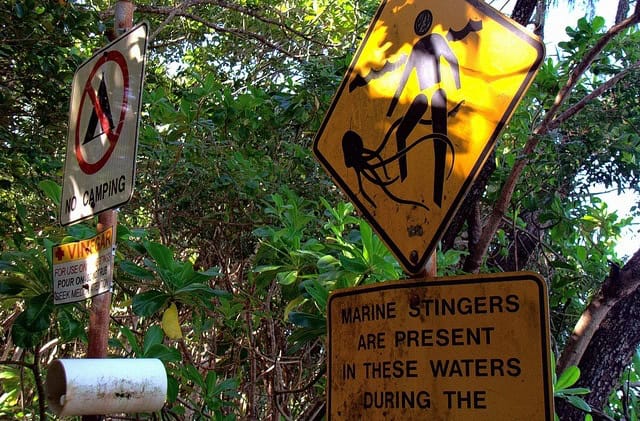
I must admit, it is a little off-putting when you reach the most spectacular and gorgeous beach in the tropical north of Australia just to be met with a sign that reminds you that there may be crocodiles in the vicinity.
Recent studies that point to the crocs being able to travel long distances by "catching waves" are also a little disturbing.
The last thing you want to see while catching some rays is a crocodile rocking up on the beach next to a surfer!
Still, those pesky crocs actually cause fewer than two fatalities per year in Australia.
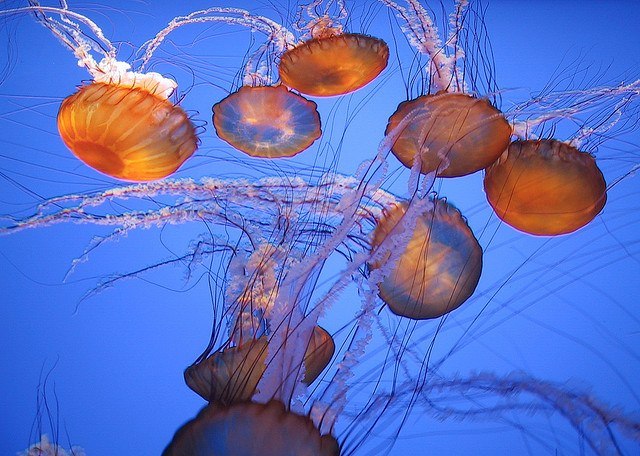
The Box Jellyfish is tiny but deadly.
I remember seeing one on display in a jar at a caravan park in the tropical north of Queensland to warn visitors, and to think that little thing - almost clear in color - could be so ruthless was shocking.
With the box jellyfish, a person can go into cardiac arrest within minutes.
This depends on the amount of tentacle that touches the body.
To deactivate the tentacles' stinging cells, vinegar has to be poured over them for at least 30 seconds.
Luckily, these jellyfish only populate the tropical north's waters from October through April.
Another plus is that these little jellyfish don't cause more than 1 death per year on average.

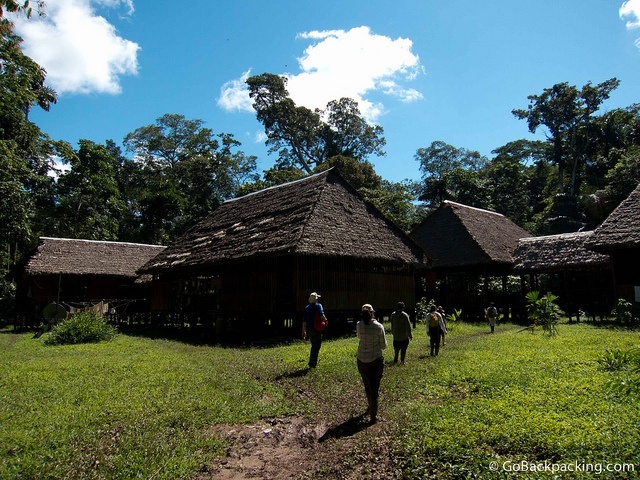
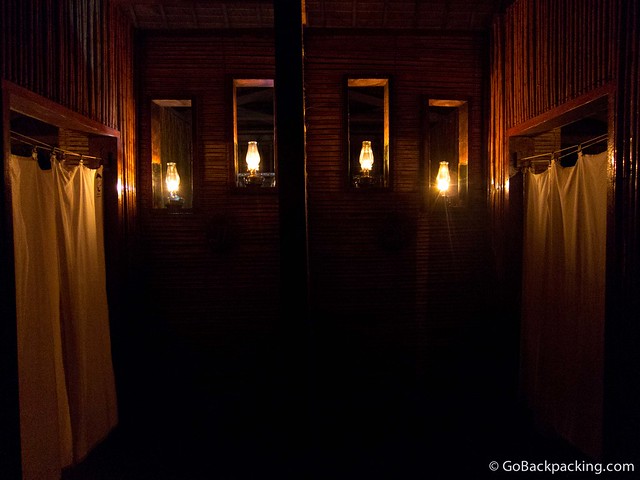
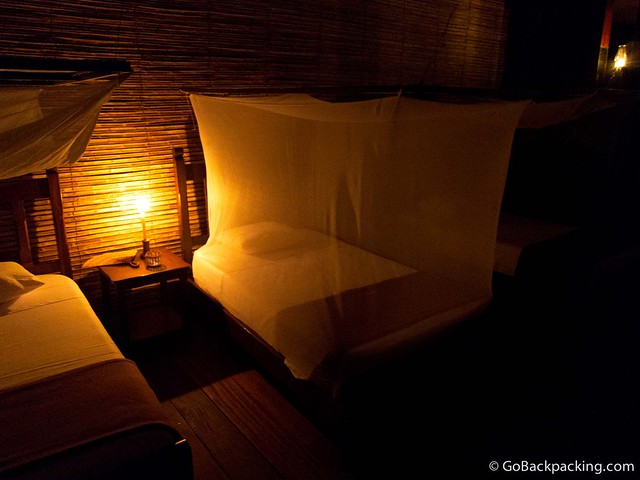
[A]s excited as I am to share the wildlife we saw in the Peruvian Amazon, including jaguars and monkeys, I also want to show you what it was like to stay in the eco-lodges.
Refugio Amazonas is the largest of the three lodges operated by Rainforest Expeditions, and it's where I spent the first and last night of the trip.
Here, you can book extra activities like mountain biking, kayaking, or massages. I opted to conclude my adventure with a 40-minute jungle massage (highly recommended).
The Tambopata Research Center (TRC) is nestled deeper in the Tambopata National Reserve. The design is very similar, and the bedrooms are equally comfortable, though guests have shared bathrooms as opposed to the private ones at Refugio Amazonas.
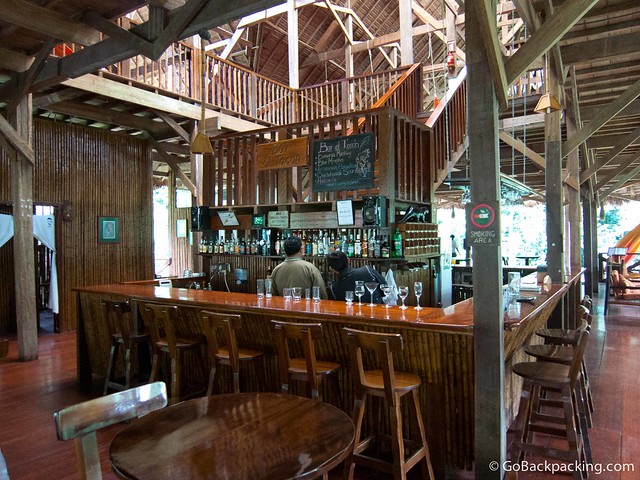
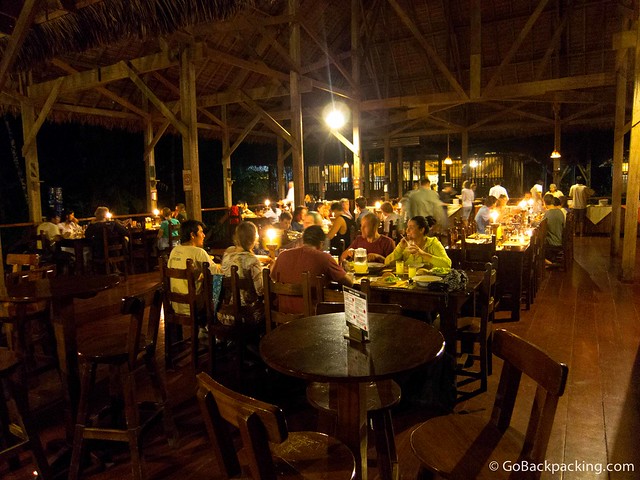
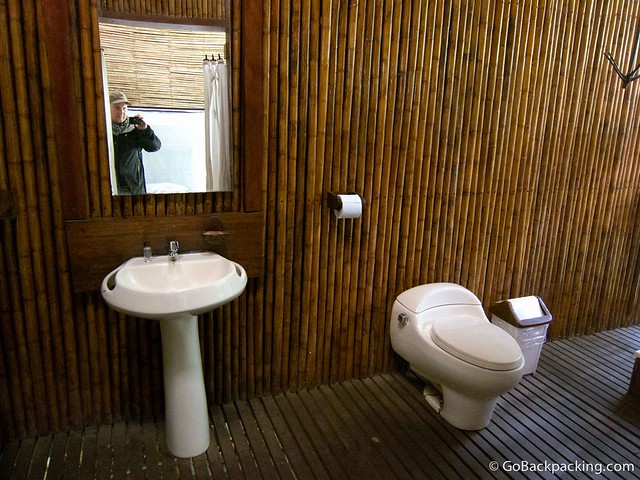
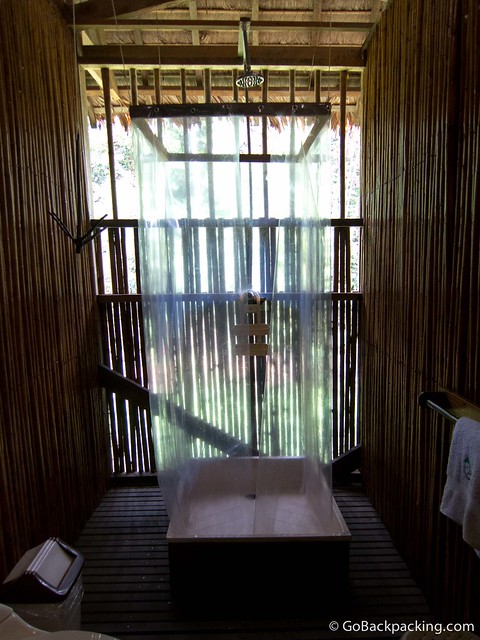

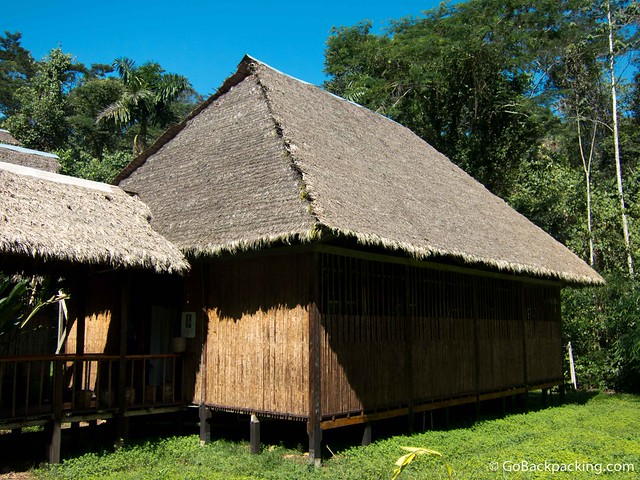
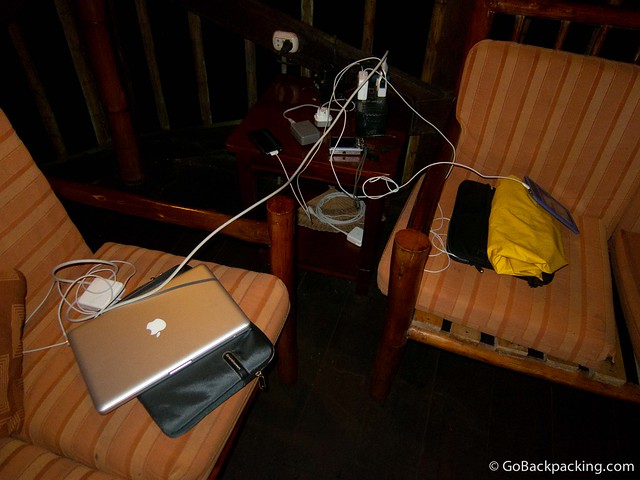
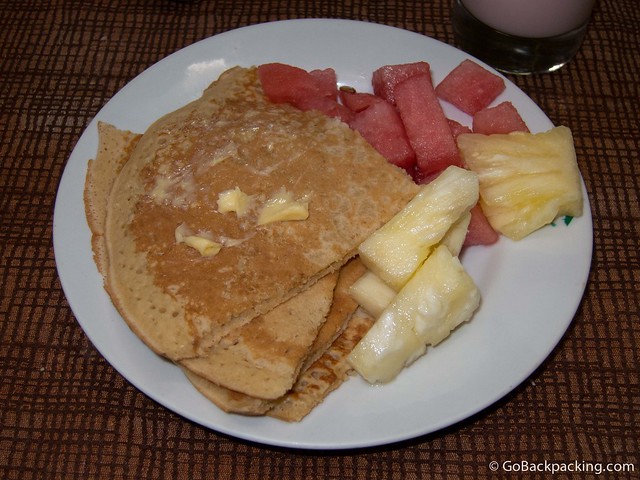
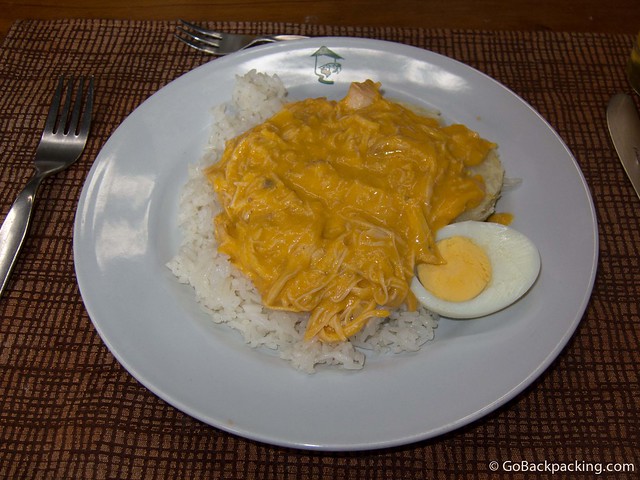
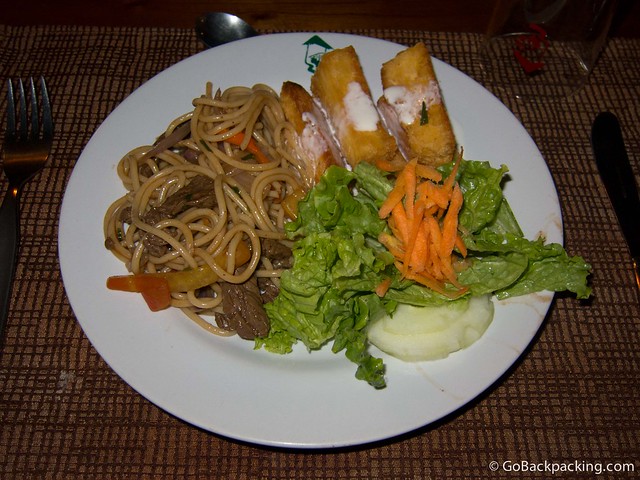
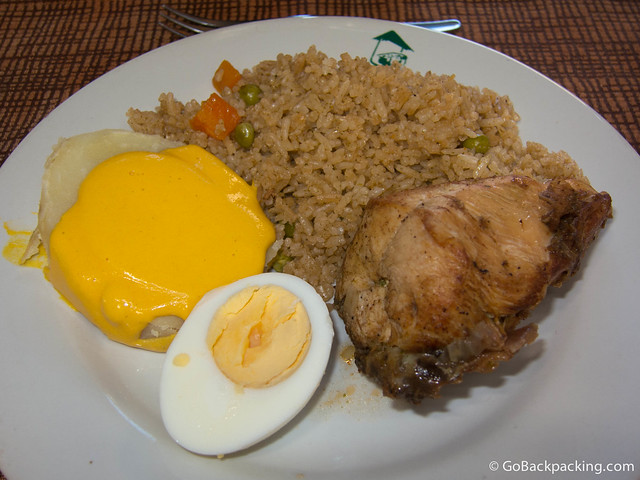
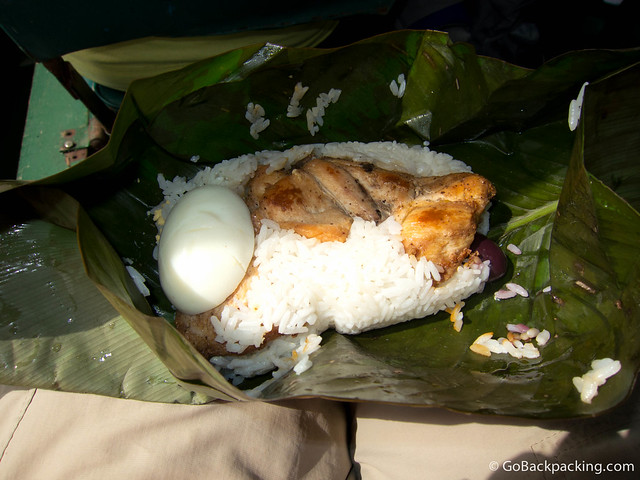
The food on this trip was way beyond my expectations. I routinely went up for seconds, and there was always enough for many others to do the same.
____________
Disclosure: This tour is in partnership with Rainforest Expeditions. As always, any opinions expressed are entirely my own.
Dave's 160-page, all-original Lima Travel Guide is now available for Kindle and PDF.
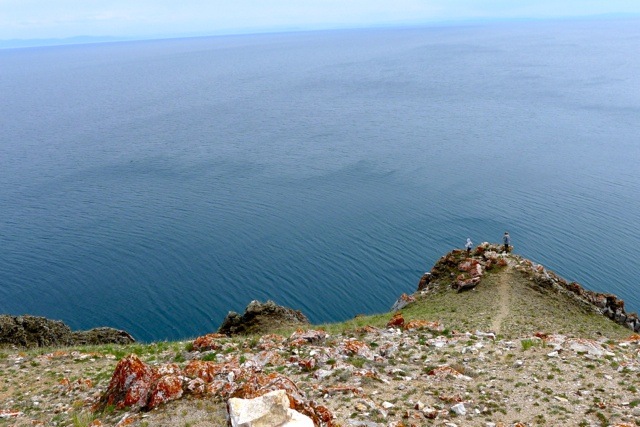
Stopping at Lake Baikal is on the top of most travelers' lists when planning a trek across Russia by rail.
The Trans-Siberian train line passes just on the southern border of the lake, making it enticing not only because of the convenience factor but also because Lake Baikal is just such a strange and unique lake in general.
When I was planning my recent trip on the Trans-Mongolian railway, Lake Baikal was an absolute must – hands down.
This post is going to outline that recent adventure, including what makes Lake Baikal so interesting and where to stay on Olkhon Island – an island right out in the middle.
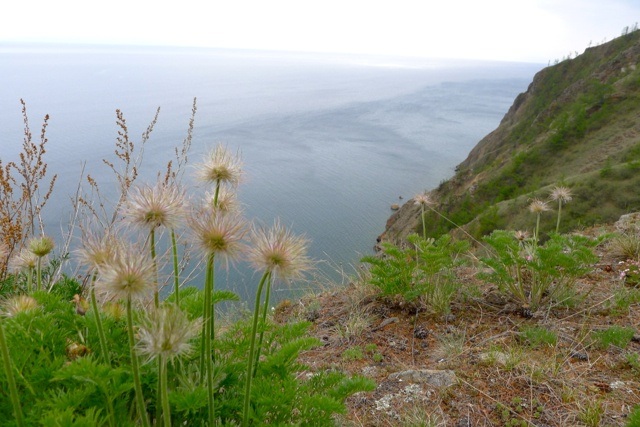
Did you know that Lake Baikal is the deepest lake in the world?
Fact. This lake reaches depths of around 1,632 meters.
Other interesting facts include:
In the summertime, the area around the lake is an excellent place for hiking, camping, and biking, and in wintertime, you can try your hand at dog sledding.
We couldn't help but be shocked by how much it felt like we were at sea instead of at a lake, and so it only makes sense that fishing is another great potential activity for visitors to Baikal.
I was drawn into visiting Lake Baikal because of its strange facts and unique wildlife claims; my boyfriend was pulled because of the potential for fishing.
But, at our train stop just before Lake Baikal, we still really had no idea where we wanted to base our Baikal adventures: Slyudyanka, Listvyanka, or Severobaikalsk on the shores.
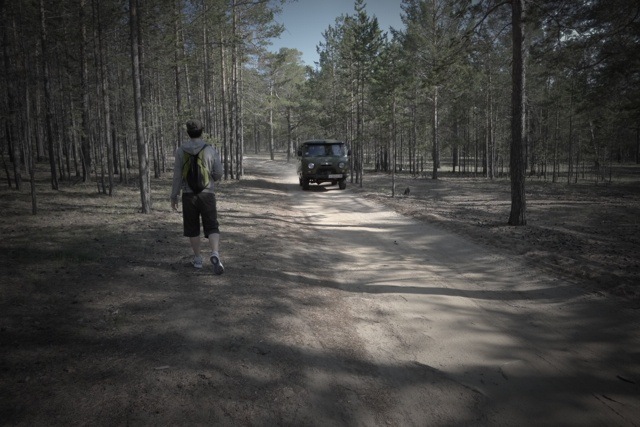
Since our time on our stop at Baikal was limited, we had to pick and choose our lake activities carefully.
At a hostel in Ulaan Bator, our stop before Lake Baikal, we heard countless people recount their stories and longing for Nikita's Homestead – a hostel community of sorts on Olkhon Island.
At the time, we hadn't even considered going to the islands, but when word of mouth is so strong, it's hard to convince yourself to go elsewhere.
As mentioned before, Olkhon Island is the largest of the 26 islands at Lake Baikal, and to get there, one must take a ferry from Sakhyurta.
Even then, you will need transport when you arrive on the other side, as Nikita's (if Khuzhir is your destination village) is still a drive away. It is best to organize a transfer with Nikita's in advance.
I remember feeling miles away from anything at that moment, much like in Mongolia from a couple of days before.
If you enjoy the feel of nature and being away from the hustle and bustle, then island life is probably a good option for you, too.
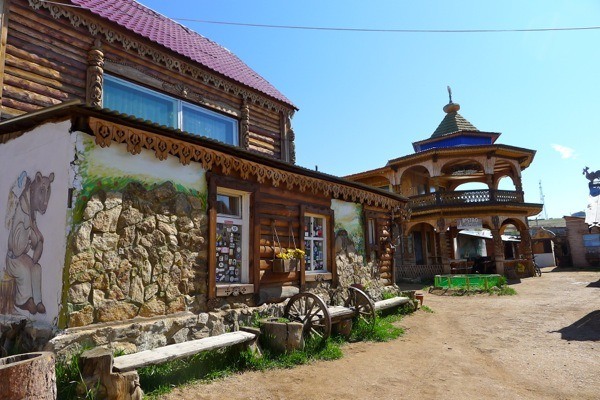
The number one reason we loved Olkhon Island so much and decided to stay for three nights instead of two is Nikita's Homestead.
This little community – a collection of several charming Russian wood-carved buildings – served the tourist perfectly.
Three sufficient and sufficiently Russian meals every day are included in the price!
It was straightforward to book a day tour of the island through Nikita's, bicycle rentals, transport to our next destination, and all without ever needing to worry about planning our next meal.
Where not much else exists, Nikita's has filled a significant gap and provided the island with even more tourism.
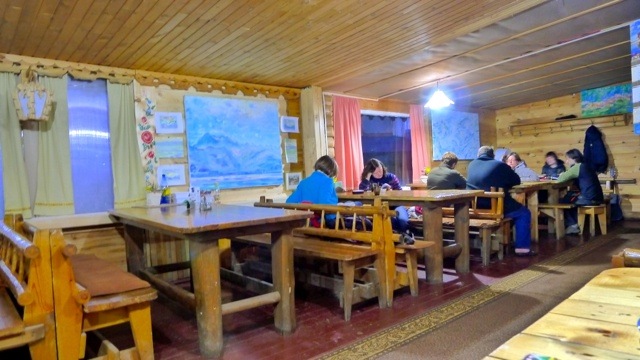
The one bad part about visiting Olkhon Island is the fact that it takes a good chunk of time (and money) if you want to backtrack and visit a shore village, like Listvyanka, afterward.
On our limited schedule, we decided to stay an extra night in Olkhon Island and then head straight to Irkutsk for a night before hopping back on the train.
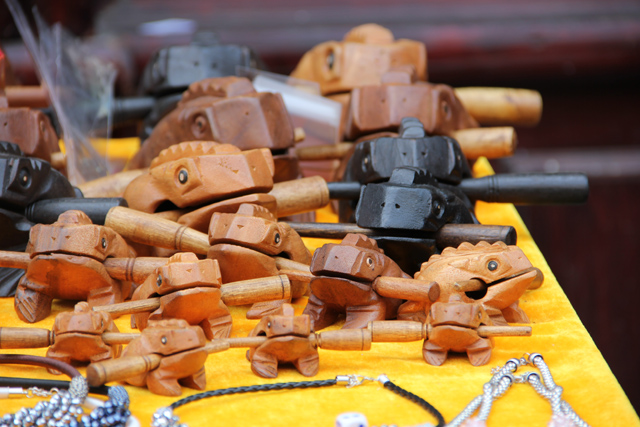
[B]argaining is the task of getting the best price for an item that doesn’t have a fixed price tag.
Some love taking on the challenge while others hate the hassle. Whatever your preference, sometimes throughout your travels, bargaining will be a necessary and even expected task.
So here are 6 tips for bargaining and saving some money when you shop.
Before you ever go shopping, or before you ever purchase anything, it’s your responsibility to know a ballpark figure of how much something should cost. In other words, it’s wise to know what average prices are for what you want to buy in the country you’re in.
Guidebooks, blog articles, and even Wikitravel, are all good places to do a little shopping research to see about how much a silk shirt should cost in Thailand or to see the going price is for a carpet at the Kashgar bazaar.
If you have no intention of actually making a purchase, it’s not worth it, or even fair to the vendor if you act interested (unless you really do want to buy, but the offering price is ridiculously high).
There are times when someone will walk up to you with a product that you really don’t need or want, and they will push to try to make a sale. If you're not really interested just smile and say, “thank you, but I really don’t need it.”
This is not always possible, but if there happens to be someone who purchases something ahead of you or if you just observe someone purchasing something at another stall (roughly the same thing), pay attention to how much they pay.
This not only goes for souvenirs, but also for food and non-negotiable items as well, especially when there's no written price anywhere.
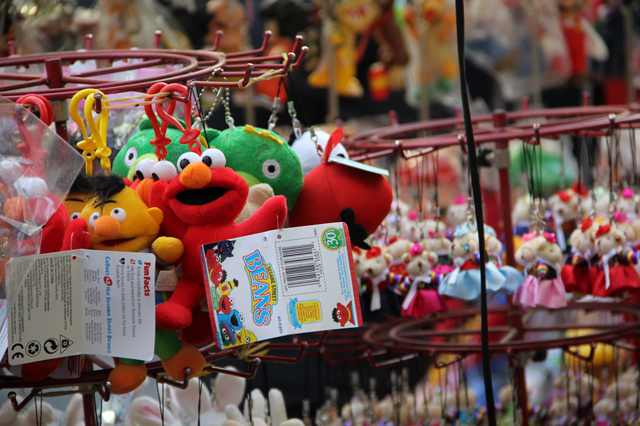
In general, vendors around the world, though sometimes pushy or aggressive, underneath it all are friendly, talkative, and kind (after all, their lives may depend on making a few sales a day - and unfriendly owners don’t normally sell too well).
Always approach bargaining with a smile on your face and a positive attitude. Not only will you be more respectful to the vendor, but in my experience you’re likely to get a better deal too!
I’ve seen plenty of people get annoyed when haggling with a vendor, and that simply doesn’t make the price lower nor does it help either side in coming to a price agreement.
In your head, come up with a price that you would be willing to pay, and then state about 40 - 60 percent (can vary by country) of that as your initial offer. The seller will counter with their offer, then you’ll have to raise your offer, then the seller will slightly lower their offer again, and so on.
If you reach the price you had in your head, that’s great, buy it!
If the vendor won’t go that low, you either have to determine if the vendor honestly looks as though they won’t be able to make enough profit (in which case you may have to change your initial price thought), or if they’re trying a sales technique.
One thing I discourage is bargaining until it really looks like the vendor is not receiving any profit - it's their business and means of income so they really do need to make profit.
If the vendor doesn’t agree to sell, you can either bump up the amount you’re willing to pay, or you can express thanks and continue walking.
In this case the vendor will either wait a few seconds and then call you back to take your money, or if not, you can probably assume your price was just too low.
In the end when we bargain we have to remember the most important thing: Is what I’m paying worth it for me? Is that shirt worth $5 to me (even if someone else may have paid $4 for it)?
Is haggling over a minuscule discount going to hurt you more, or the vendor?
Armed with a little bit of local purchasing knowledge and a positive mentality, bargaining can be a fun way to score great deals and maybe even build some relationships while you travel and shop.
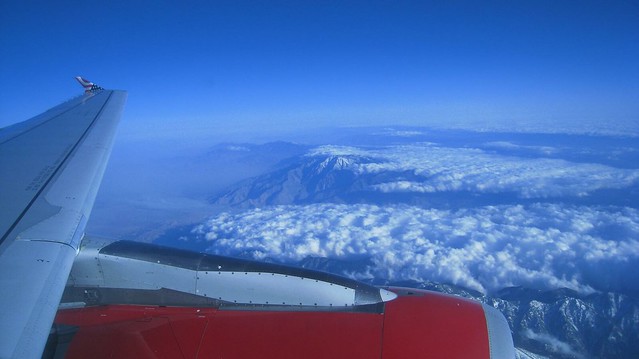
Today I'm excited to announce the biggest contest in Go Backpacking history!
We've partnered with Skyscanner, the leading European-based flight search website, to offer one lucky reader a $600 USD (387 GBP) credit toward the flight(s) of his/her choice, OR a new iPad 3 (16 GB).
Where would you go if you had an extra $600 (387 GBP) in your pocket?
Take Dad to New York City to catch a Yankees game for his birthday. Send your brother to Las Vegas.
Always wanted to see the Eiffel Tower in Paris? Want to check out the brand-spanking-new Olympic Village in London?
The possibilities are endless.
Skyscanner officially launched in 2001 and offers users the unique option of being able to enter the departure city, while leaving the destination blank. This feature is perfect for those people who know they want to take a trip but can't decide where to go.
In addition to their easy-to-use website, Skyscanner has also created free travel apps for both iPhones and iPads.
These little apps allow you to search millions of flights, across 1,000 airlines, right from your iPad or iPhone.
Combined, they've got four million downloads and counting.
If you're not already familiar with Skyscanner, entering this contest will be a terrific introduction.
And we made it as easy as possible. Seriously, if you have 5 minutes to spare, enter this contest right now!
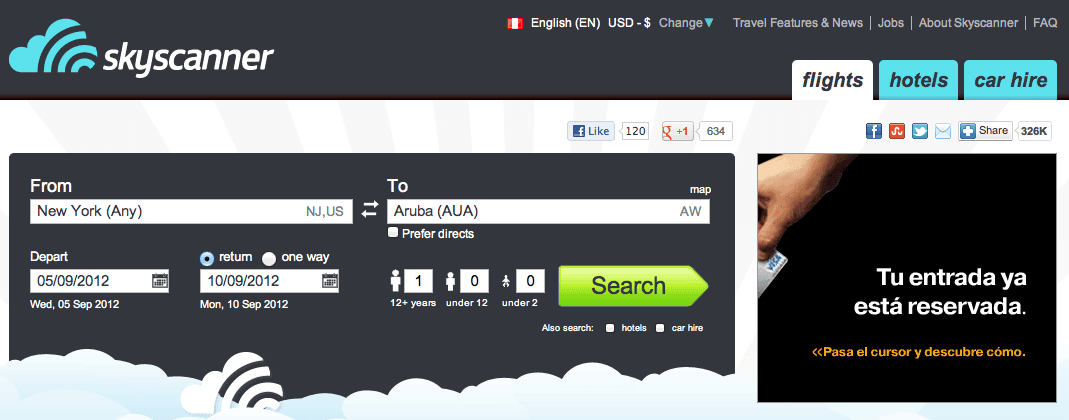
1. In a separate browser tab or window, go to Skyscanner.
2. Pretend you have $600 (387 GBP) to spend. Search for the flight(s) to a destination you'd most like to visit, or a flight you'd like to give as a gift to a family member or friend.
Tip: You can change the default language and currency atop the Skyscanner page.
Tip: Remember, with Skyscanner, you do not need to select a specific destination.
Simply enter "everywhere" or leave the destination field blank to get a list of cheap flights departing from your local airport.
Tip: By choosing cheaper flights and destinations, you'll be able to afford a ticket for a partner, family member, or friend too! Mention who you want to take in your comment/entry.
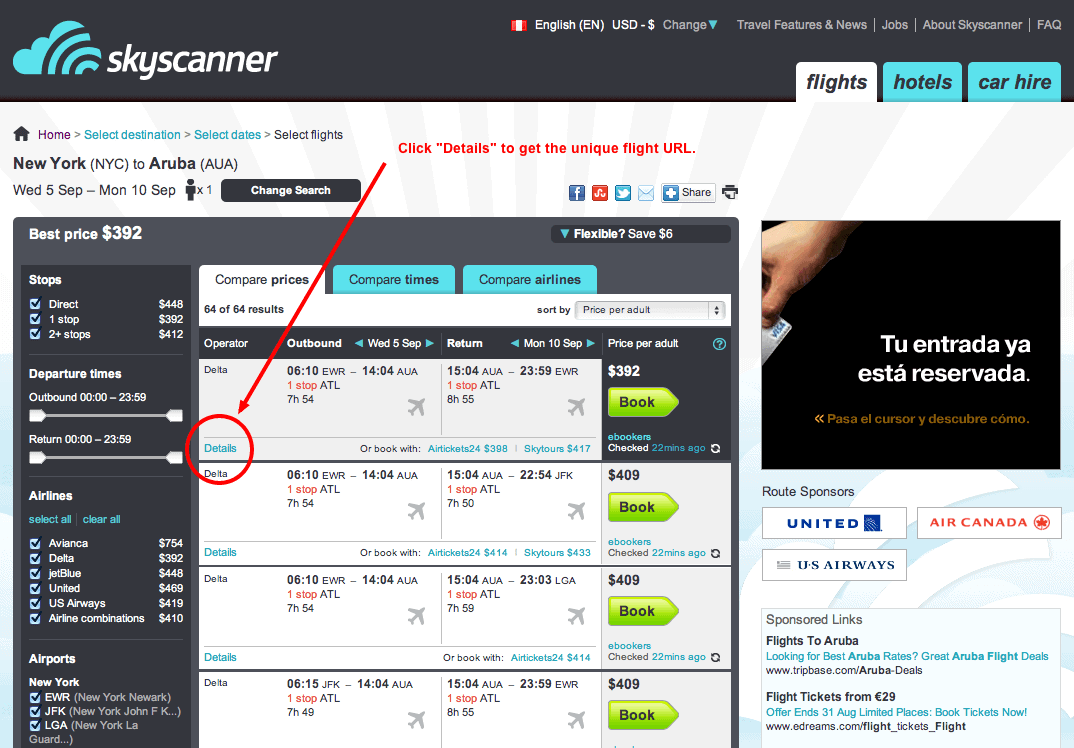
3. When the results are given, click the "Details" link of your preferred flight. A pop-up box will appear.
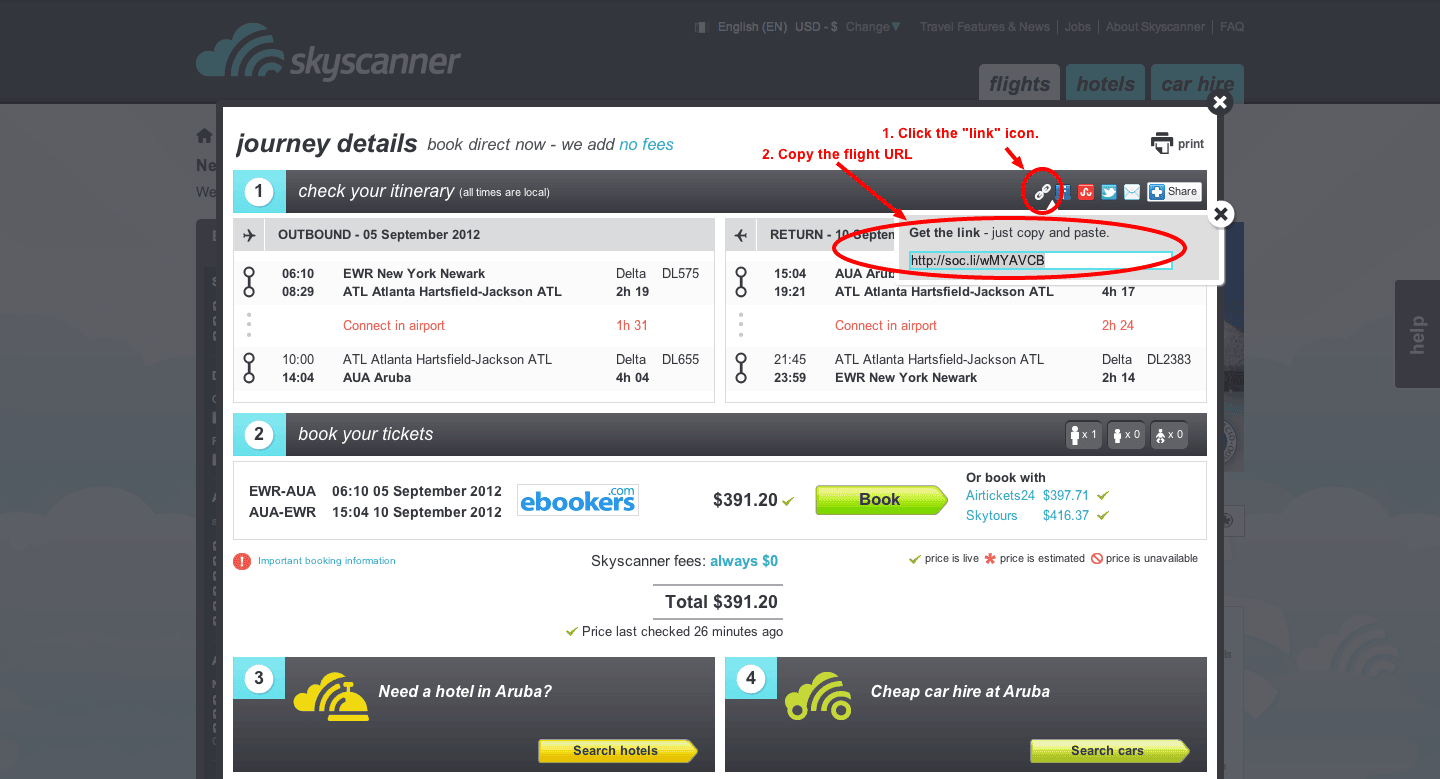
4. Click the "link" icon in the upper right corner of the pop-up box, and copy the unique URL for that flight.
5. Using your real name, leave a comment on this blog post with:
Any comments using keywords for a name will be immediately disqualified and deleted. Please use your real name.
Contest Begins: 8:00 am (EST), Monday, August 6, 2012
Contest Ends: 8:00 pm (EST), Friday, August 17, 2012
The winner will be chosen at random over the weekend and announced on Go Backpacking's Facebook Page Monday, August 20, 2012. His/her email address will be shared with Skyscanner.
Once the winner is announced, he/she can then choose either the flight(s) mentioned in the comment OR the iPad 3.
I'm excited to see all the places $600 can get you. Good luck!
Are you thinking of hitting the beach as part of your journey around Southeast Asia? Of course you are! You're probably thinking about heading to Thailand's beautiful beaches-Koh Phi Phi, made famous by the movie "The Beach," and Koh Phangan, infamous for its full moon parties. While Thailand's beaches are lovely, you'd be mistaken for thinking this was the region's best spot for sun, snorkeling, and sea.
Hands down, the nicest beaches I've been to in Southeast Asia are on the Perhentian Islands in Malaysia. If you haven't been, you're missing out on something exceptional. Make an effort to travel further off the backpacker circuit, and you will be greatly rewarded.
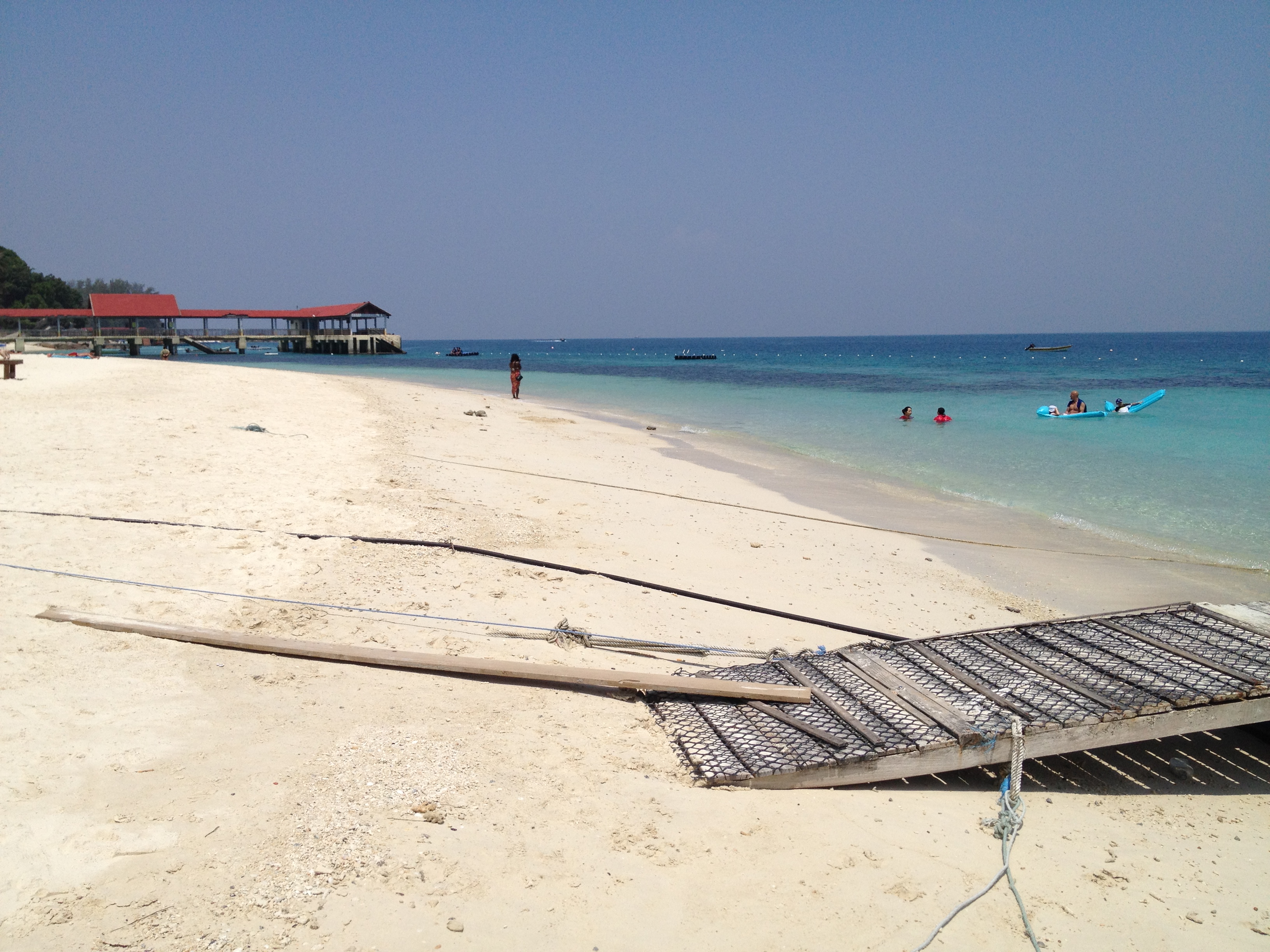
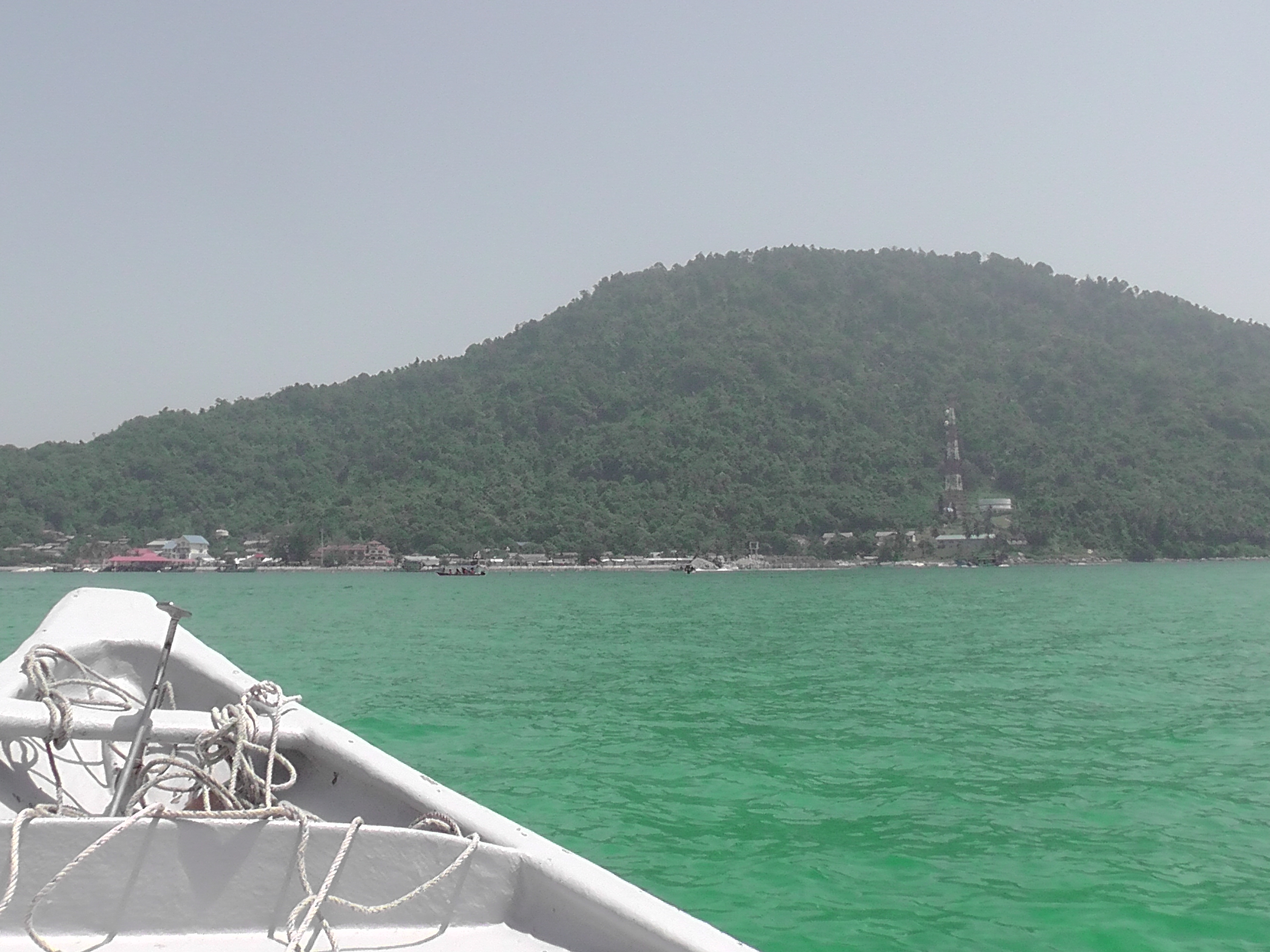
The Perhentians are a chain of two large islands (Besar and Kecil) about an hour off the East Coast of Malaysia. They're reasonably far north, close to the border with Thailand. The nearest major town on the mainland is Kota Bharu.
Boats to the islands leave from the pier in the small village of Kuala Besut, about 45 minutes south of Kota Bharu. Forget about ferries; these are just small speed boats.
Each big resort has a boat to travel to and from the islands. Tuna Bay Resort has the biggest and safest boat. Lifejackets are compulsory-they even have lifejackets for children. The boat trip will cost you 70 RM roundtrip.
A taxi from Kota Bharu to the pier at Kuala Besut costs around 40 RM, or you can book a transfer through your hotel for around 30 RM per person.
Take a cheap Air Asia flight into Kota Bharu from Kuala Lumpur-this fare is under $15 on promotion. Alternatively, catch the jungle line train to Wakaf Bharu and taxi to Kota Bharu, or go straight to the pier at Kuala Besut.
From Penang, there is a short propeller flight on Firefly into Kota Bharu, which is six hours by bus. Buses leave Penang at 9 pm and 9 am, which means either waiting around in Kota Bharu in the wee hours of the morning or missing the last ferry onto the island and overnighting in Kota Bharu.
From Thailand, you can catch the train (or bus) from Hat Yai to the border at Sungai Kolok, which takes around four hours. Once you cross the border into Malaysia, it's about 30 minutes to Kota Bharu. A taxi should cost less than 20 RM, and the bus will cost 5 RM.
Heading to Malaysia? Book all your hostels here!

The best months for visiting the Perhentians are June, July, and August.
You can only visit the Perhentians between March and October. Outside of this, monsoon season takes hold, making the seas choppy and causing resorts and restaurants to close their shops.
Wherever you stay, plan your accommodation. Walking from beach to beach, searching for the best bungalow is difficult.
The season for the Perhentians is short, so by April, many places are booked solidly for stays in June, July, and August. If your heart is set in a particular place, you must lock it in early. That said, most places can accommodate you if you're on an extended trip and want to arrive a few days earlier than scheduled.
The accommodation across the Perhentians is expensive, and the standards are low. Frankly, you only get a little for your money. You'll pay roughly twice what you would for an equivalent bungalow on one of Thailand's islands.
The expense is worth it because it does keep the islands relatively quiet. Make sure you factor this spike into your long-term budget. There's not much to do on the islands, so your other costs will be low.
Backpackers will want to head for Perhentian Kecil.
Accommodation is cheaper here and attracts a younger crowd. The local village is on Kecil, which means access to shops and a row of inexpensive food stalls.
There are a few bars in Long Beach, though alcohol is expensive. All the budget accommodation is in Long Beach. You'll find most of them are simple, wooden chalets without AC. Some have 24-hour electricity, and others don't.
Matahari Chalets and Panorama Chalets get good reviews from backpackers looking for a more lively environment. Head back off the beach to Bintang Chalets for quieter but still cheap accommodation.
Flashpackers, mid-range travelers, or families should seek accommodation on Perhentian Besar.
Abdul's Chalet, a simple A-frame beachfront chalet with AC, and Coco-Huts, AC chalets on the rocks, are both widely recommended. However, the best choice by far is Tuna Bay Resort, which has rows of adjoining bungalows on the beach and in the garden.
Regarding eating, the best options are Coco-Huts or Coral View Resort. The food at Abdul's is cheap but notoriously bad, and Tuna Bay is pretty pricey, although their Western options are good.
Snorkel and dive.
One of the best things about the Perhentians is the ability to snorkel right off the beach. Reefs wrap around the island, close to the shore, and teem with fish. You may even get lucky and see turtles.
Resorts will rent you a snorkel and mask for 5 RM a day. Fins aren't allowed because of the coral. You can also do a half-day snorkeling trip to Rawa Island or a full day to Redang. All the larger resorts offer dive courses, including night dives.
Explore the island.
Use the taxi boats parked on every beach to visit different beaches and resorts. Fares are per person, not per boat, so it's a good option even if you're alone. Concrete stairs and tracks connect some beaches. The jungle is thick, so stick to the paths and wear mosquito repellent.
Rest, relax, and recharge your batteries.
There is little else to tempt you on these islands, so take the opportunity to chill out with a book or iPod and work on your tan.
When you book your boat ticket in Kuala Besut, you'll pay a 5 RM National Park fee before reaching the islands. This fee contributes to preserving the area's natural beauty and biodiversity, ensuring that future visitors can continue to enjoy the pristine environment.
As you prepare for your island adventure, it's also important to consider other aspects of your trip, particularly your health, and safety. Securing international health insurance before your journey is a wise decision, as it provides coverage in case of unexpected medical issues while you explore the remote islands.
The peace of mind that comes with knowing you're protected allows you to fully immerse yourself in the experience without worrying about potential health-related costs. Whether snorkeling in crystal-clear waters or trekking through lush jungles, being prepared with proper insurance ensures your adventure remains safe and enjoyable.
Wi-Fi can be slow and patchy on the islands. This is a blessing. Plan for a few technology-free days and make the most of your surroundings.
Bring supplies from the mainland. Drinks, snacks, and toiletries are sold in small shops on the beach and in the local village on Kecil, but prices are high, and selection is limited.
Most of the locals on the islands are Muslim. You'll only find alcohol for sale at selected resorts. Bring your own from the mainland or, even better, bring it across the border from Thailand.
Beware of sea lice bites! These microscopic jellyfish larvae can be present in the water if you're on the islands in the shoulder season. They feel like little stings or electric shocks while you're in the water and can leave a nasty rash. Take some antihistamines (oral and topical), and be sure to wash and dry your swimsuit if you get bitten.
Listen out for the Islamic call to prayer. It's broadcast from the mosque in the village of Kecil but can be heard on both islands. It adds a certain exoticness to your Perhentian Islands experience!
Check out my stories on Flashpacker Family for more tips on traveling to the Perhentians, especially if you're traveling with children.
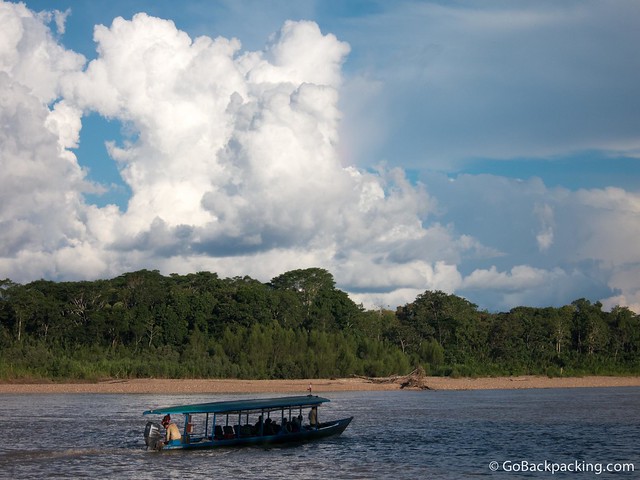
My first day in Peru's Tambopata National Reserve turned out to be a bigger adventure than I bargained for.
In the days that followed, I went on nature walks morning, noon, and night. A
s I learned on safari in South Africa, the more time you're out there looking for wildlife, the more likely you are to see a wide variety of critters and creatures.
What follows are my top five wildlife moments from a visit into Peru's Amazon Basin.

I have a fear of spiders, so coming face to face with a hairy tarantula the size of my hand was both fascinating and mortifying.
This particular tarantula was nicknamed after chickens because of the way it's young follow behind the mother in a little line.
Imagine not just one hairy, 8-legged creature, but a whole family of them!
The Chicken Tarantula is not poisonous to humans, however, if you get bitten by one, the nasty bacteria from its fangs can leave you with an infection that will require a trip to the doctor.
This carnivorous spider eats insects and small rodents.
Our guide referred to it as a primitive, given it hunts on the ground, rather than spinning elaborate webs to catch its prey.

On my last afternoon at the Tambopata Research Center, I went for a walk with one of the guides and Lainie and Miro.
We took a boat to a nearby island on the river, from which we began scouting for birds back on the mainland.
It was just before dusk, and we noticed a small Caiman slip into the water, and begin to slowly cruise upriver.
And then it began fishing by jumping out of the water and diving back down.
The form this reptile took was akin to a dolphin jumping in and out of the water. It was not at all what I'd expected a Caiman to do.
Because he was so far away, my photos didn't come out well, nor video.
The best I can offer you with my travel camera is the above shot taken through a high-powered scope.
Twenty years ago, the Tambopata Research Center was set up to study and protect the local Macaw population.
These are the kinds of large, colorful birds I'd only ever seen in zoos, so it was a treat to be around so many in Tambopata.
One morning, we woke up before dawn and took a boat ride to the island from which I'd seen the caiman above.
We watched the jungle come to life around the Amazon's largest clay lick.
As we learned in the Macaw lecture the night before, these birds eat clay to help with their digestion. Strange, but true.
Unfortunately, while they are intelligent birds, they are also highly sensitive. If their scouts sense a threat, the rest of them won't come down from the trees to eat.
And that morning, a Roadside Hawk had camped out with a terrific view of the section of clay lick most visible to us.
There were other sections that were hidden behind trees and foliage, where our guides said they were probably feeding.
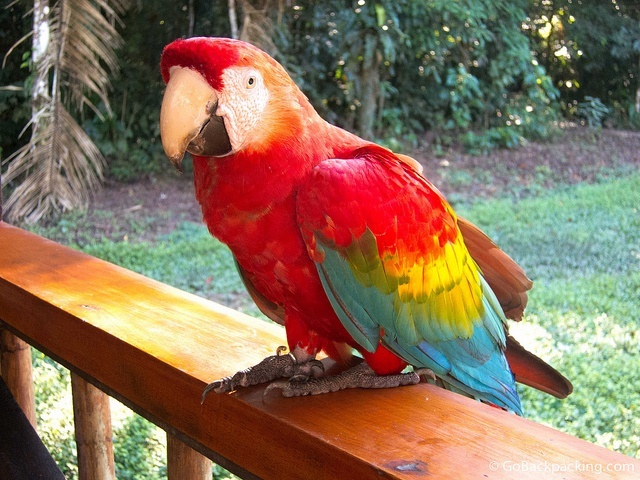
The irony was that our best views of the Scarlet Macaws were not during nature walks, but when the "Chicos" or human-raised macaws would visit the dining area at the Research Center every morning, looking for handouts after breakfast.
These particular macaws don't fear humans, which is evident when they are lured onto visitors' shoulders with a piece of bread.
As a result of this non-natural behavior, Macaws are no longer hand-raised.
Instead, the researchers climb the trees and study them in their nests.
This activity increases greatly around the breeding season, toward the end of each year.
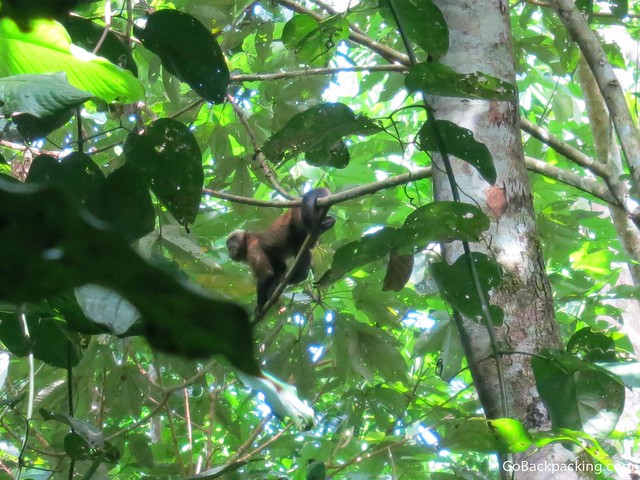
As much as I've learned to appreciate birding over the years, I'm more of a monkey man.
And on one morning nature walk, in less than an hour, we spotted three different species of monkeys, including:
After lunch, we spotted spider monkeys on a walk. It was the fourth species that day.
The following day, I'd see my fifth (and the one with the funniest name), Dusky Titi Monkeys.
If you love monkeys, go to the Tambopata Research Center, they're everywhere!

Without a shadow of a doubt, the Jaguar spotting which occurred one hour into our first boat ride on the Tambopata River was the wildlife highlight of my time in Peru's Amazon Basin.
Because this particular big cat is so rare, with approximately 99 in the park, everyone on the boat, our guides included, got excited.
People go on multi-day jaguar tracking treks throughout the jungles of Latin America, and many will never see more than a paw print.
The next day, during one of the walks around the Research Center, we came across one such Jaguar paw print in the mud.
Later that afternoon, another group came back to the lodge, having seen a jaguar on the ground, just 10 minutes from where we were standing.
So if you love jaguars, go to the Tambopata Research Center!
___________
Disclosure: This tour is in partnership with Rainforest Expeditions. As always, any opinions expressed are entirely my own.
Dave's 160-page, all-original Lima Travel Guide is now available for Kindle.
Home to several thousand students, two UNESCO World Heritage Sites, numerous cultural events, and seven beautiful beaches, Edinburgh is one city worth visiting no matter what the time of year.
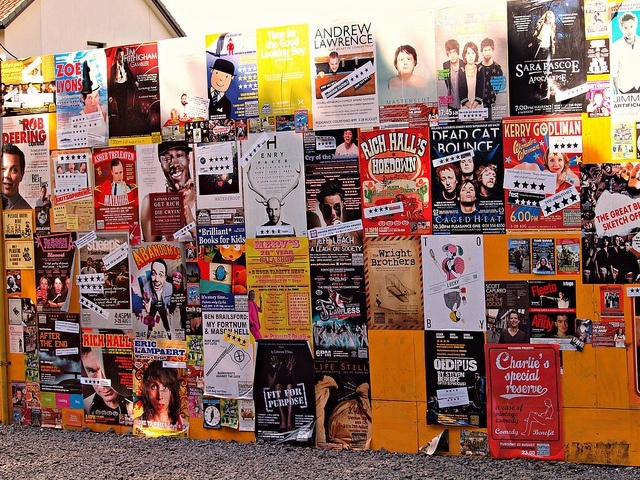
Its busiest months are in the summer, when the city comes alive with festivals, but even visiting then doesn't have to make for an expensive trip.
With world-renowned events, large open spaces, and more history than you can shake a stick at, here are five things to do in Edinburgh on a budget.
The world's largest arts festival has been held in Edinburgh for 50 years and runs from August 3 to 27, 2012.
Although accommodation is more expensive than at other times, it shouldn't put you off visiting. Hotels4U has cheap hotels available during the Edinburgh festival, and getting around is easy, as the city's compact size means most venues are within walking distance of each other. All-day bus tickets are just £3.50.
Even if your budget doesn't stretch to the big-name acts, then fear not: the "Half-Price Hut" sells cheap tickets for a variety of performances, while there is no shortage of free shows and street performers for those seeking a freebie.
Located on the city's south side, just 10 minutes from the city center, the Meadows is one of Edinburgh's largest open spaces and a true favorite with locals and students who live nearby.
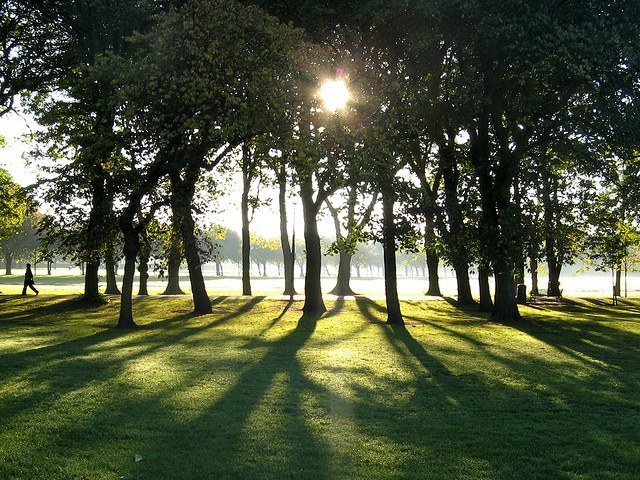
During the summer, the park plays host to some of the Fringe shows as well as the Edinburgh Taste Festival, and on sunny days, the grassy expanse buzzes with groups of friends eating and drinking their way through picnics.
Sporty types can find respite here too, with tennis courts, paths to jog along, and plenty of space to throw a Frisbee.
Impossible to miss, this extinct volcano looms above Edinburgh from its base in Holyrood Park and offers a fantastic (and free) view of the city and surrounding areas.
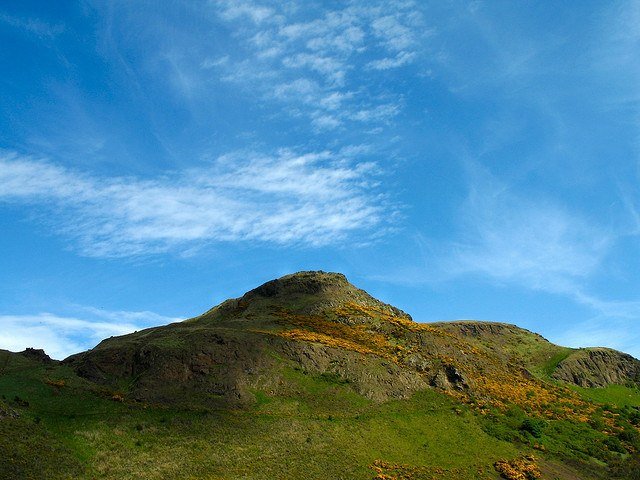
For a knowledgeable commentary on the landscape, wildlife, and history of Arthur's Seat, Historic Scotland currently offers free guided walks to the peak.
However, those who would rather tackle the hill on their own can still find a quiet route and take in the ruins and scenery along the way.
On a clear day, the vista stretches as far as Fife - but the climb can be hard work. Take the Piper's Hill path for a challenge, but hiking boots, waterproofs, and a camera are recommended no matter which route you take.
For days when the weather isn't so good (hey, this is Scotland - it happens), the National Museum is the place to go.
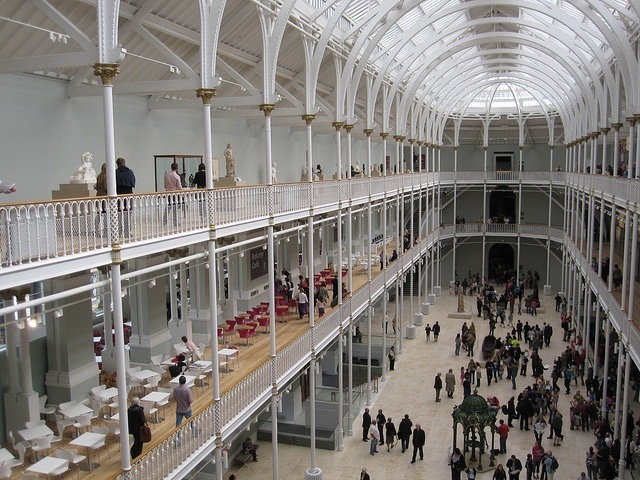
Centrally located in Edinburgh's Old Town, admission is free, and the collections include objects from the country's wartime past to items brought back by Scottish explorers over the years.
The focus isn't just on Scotland, though; there's live music in the Grand Gallery at lunchtime most days throughout the Fringe Festival, and summer activities for children focused on arts, crafts, and science.
There's more than enough to fill a day here, and there's a great view of Edinburgh city from the outdoor terrace.
For those who fancy a bit of wildlife spotting, taking a stroll, or just lying about on the sand, there are seven beaches dotted along the East Lothian coastline within easy reach of Edinburgh.
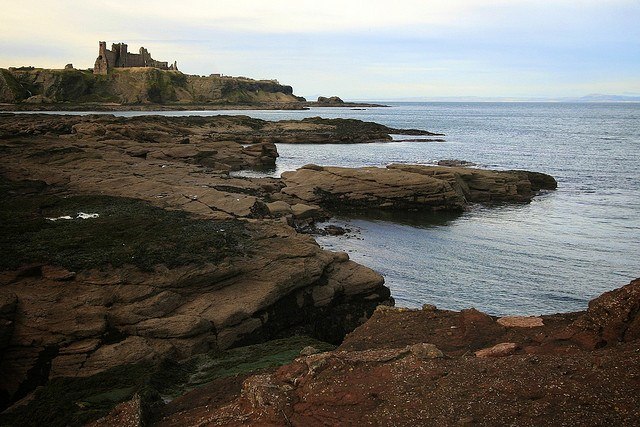
While Belhaven is the best spot for surfing, the quiet and more secluded Seacliffe is home to the smallest harbor in the UK, with the remains of Tantallon Castle forming part of the area's beautiful scenery.
Portobello beach is just a short bus ride from the city center, making it the most popular choice for city-dwellers on a sunny day, while the amusement arcades and cafes dotted along the Victorian promenade give the area a distinctly traditional feel.
If Edinburgh leaves you wanting to see more of Scotland, consider venturing beyond the cities. The North Coast 500 road trip showcases rugged coastlines, historic castles, fishing villages, and some of the country's most spectacular scenery.
Jo Harris-Cooksley wrote this post on behalf of Hotels4U.com.
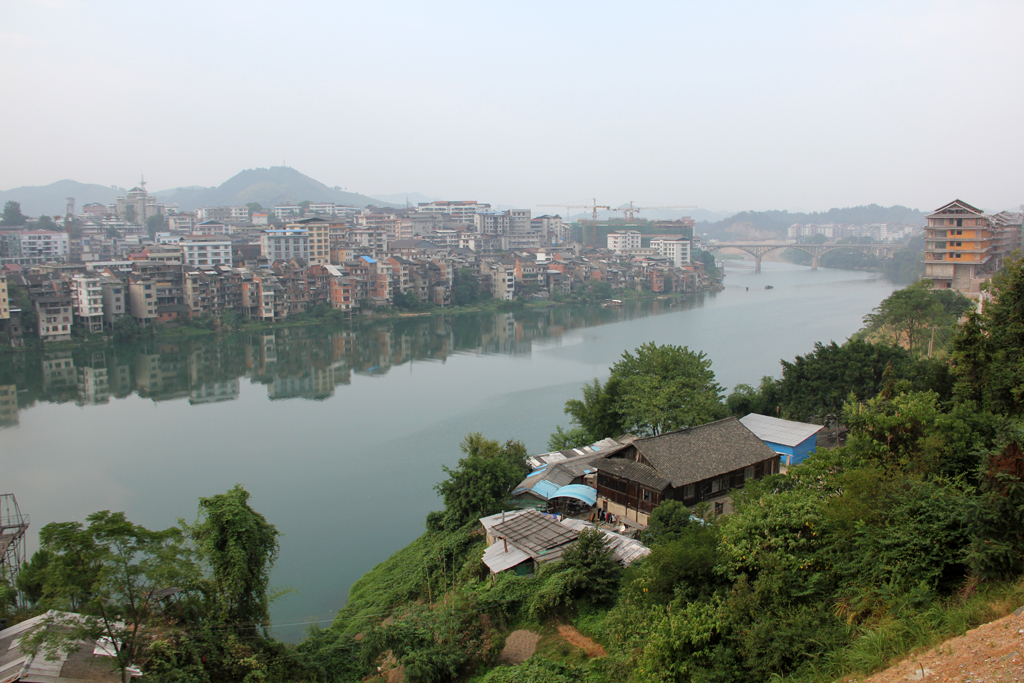
[L]ocated in the northern part of Guangxi Province, China, Sanjiang is far from the beaten tourist path.
Yet because of its famous historical bridges, the Chinese government is aiming to transform it into a stop on the Chinese tourist route for the future.
Sanjiang is rather interesting, a contrasting mixture of city meeting ancient Chinese village and modern combining with traditional.
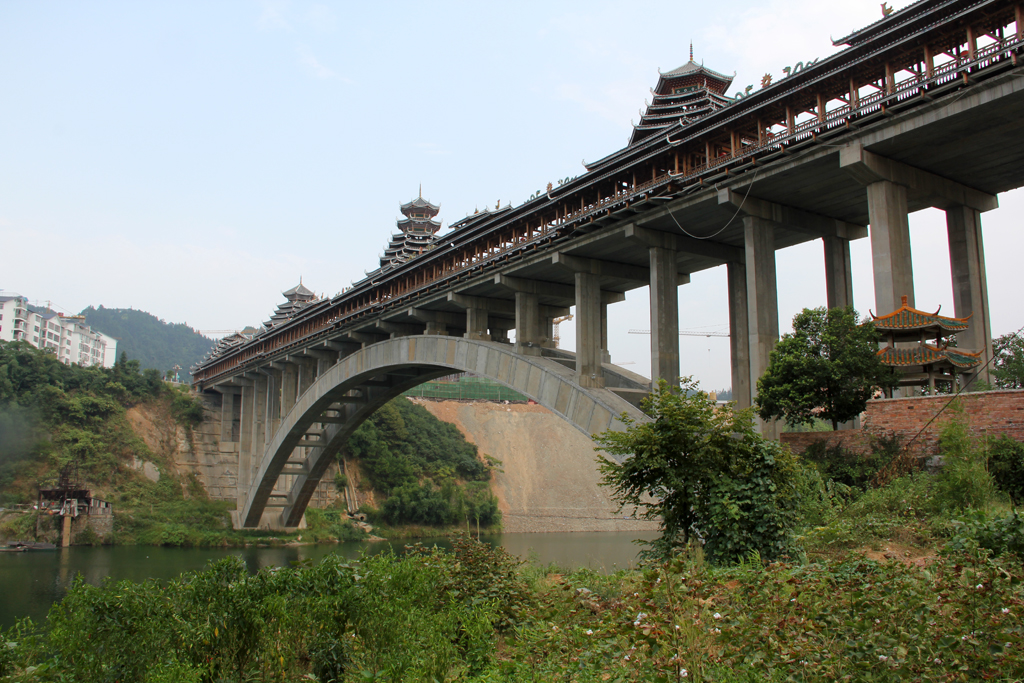
Sanjiang and the surrounding countryside are famous for their bridges, and although the one pictured above is quite new, its design is based on the historical "Wind and Rain Bridge" in a nearby village.
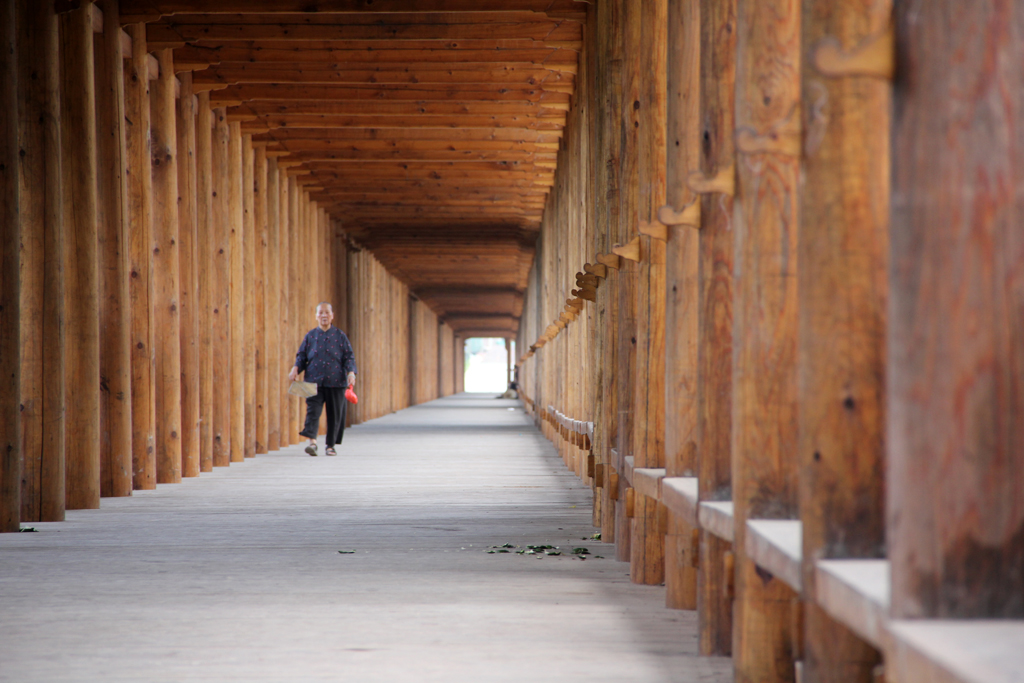
The interior of the bridge was peaceful, built with wooden benches in-between the pillars, and blessed by a constant breeze which made it a perfect spot to take an afternoon siesta.
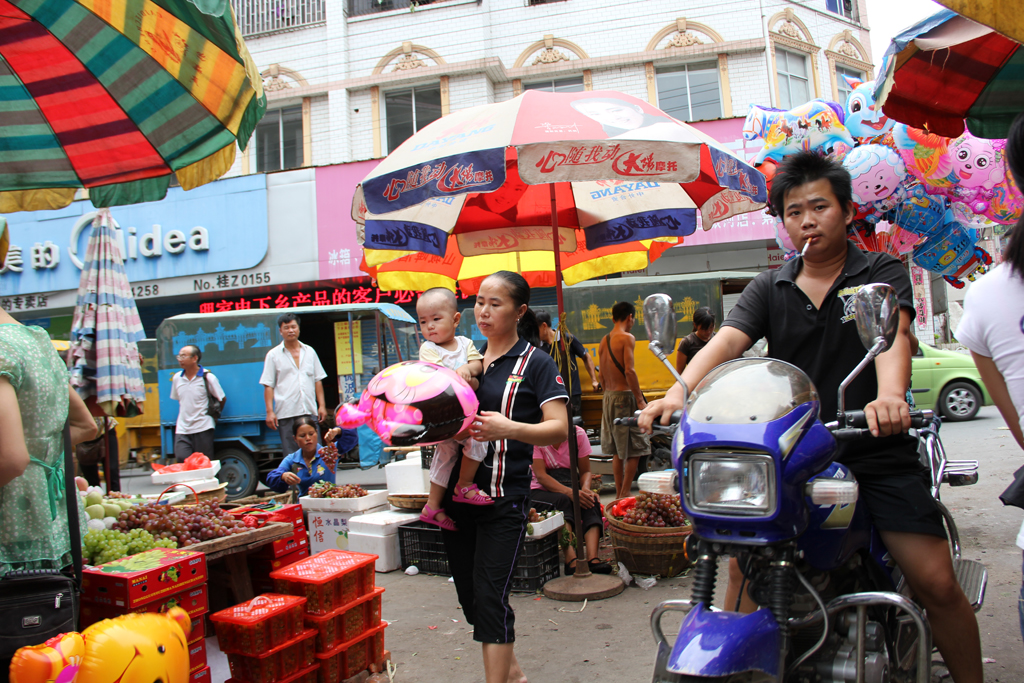
My personal favorite thing to do while I was in Sanjiang was to walk around town and browse the local market which was packed with produce directly from the farm.
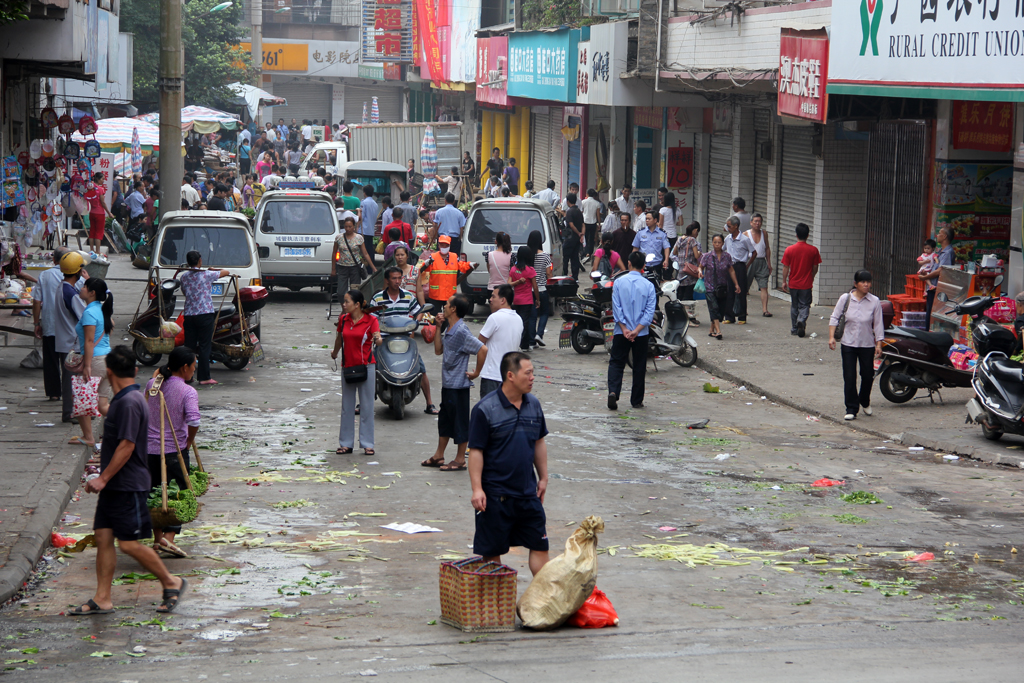
After the morning market rush, vendors would disperse and cleaners would sweep up the mess.
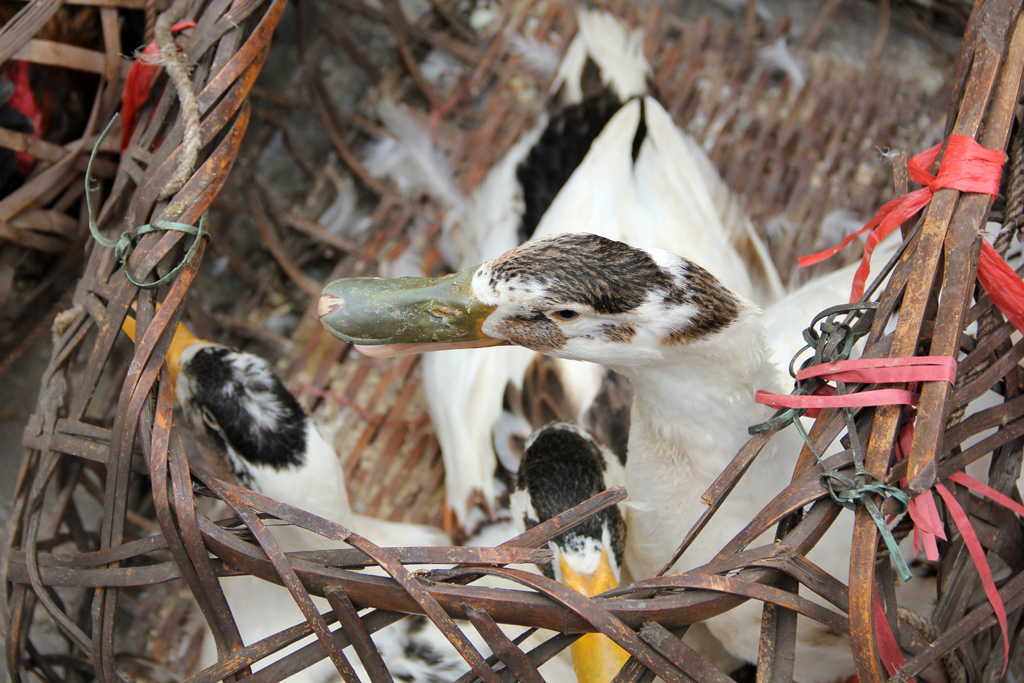
Duck is one of the most widely consumed proteins in this part of China and people don't want to purchase pre-butchered ducks (that could be fresh or not), they want them alive!
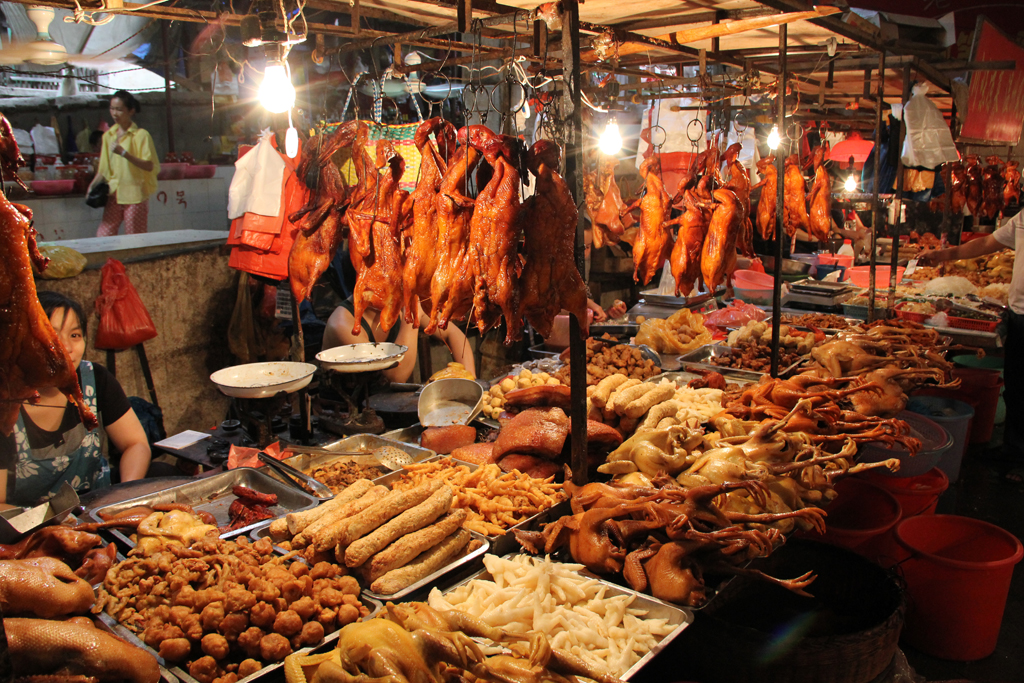
But if purchasing a live duck, butchering it, and then preparing it is just too long to wait, you can always go to the bottom level of the market and buy a beautiful variety of already roasted or fried goodness.
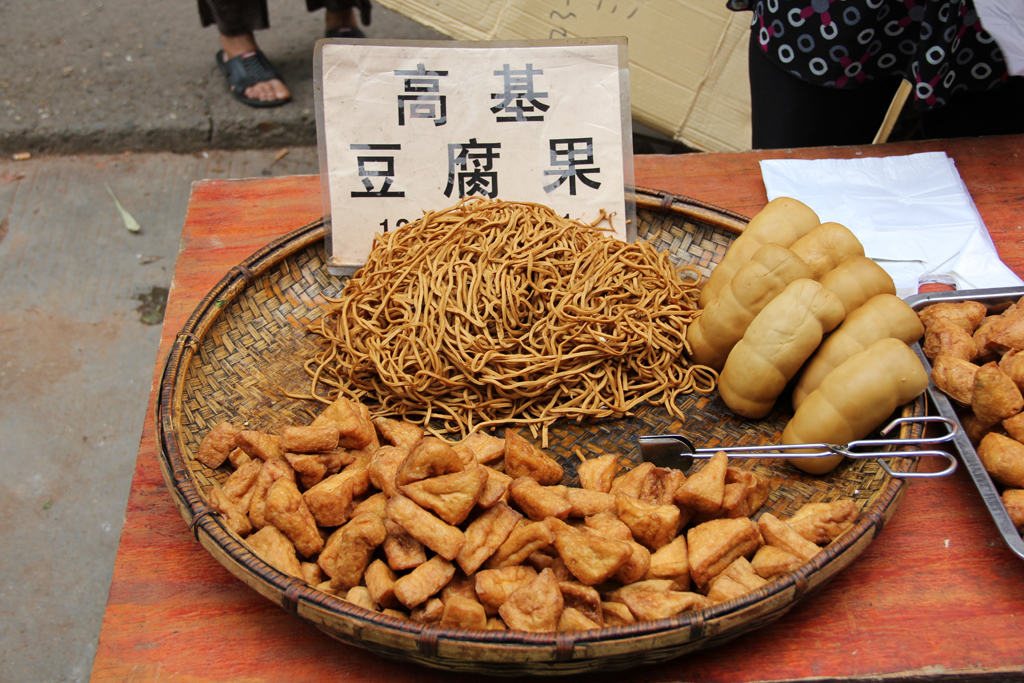
At first I thought it was a basket full of noodles, some sausages, and little pieces of deep-fried bread, but someone informed me that everything in this basket was actually tofu in different forms.
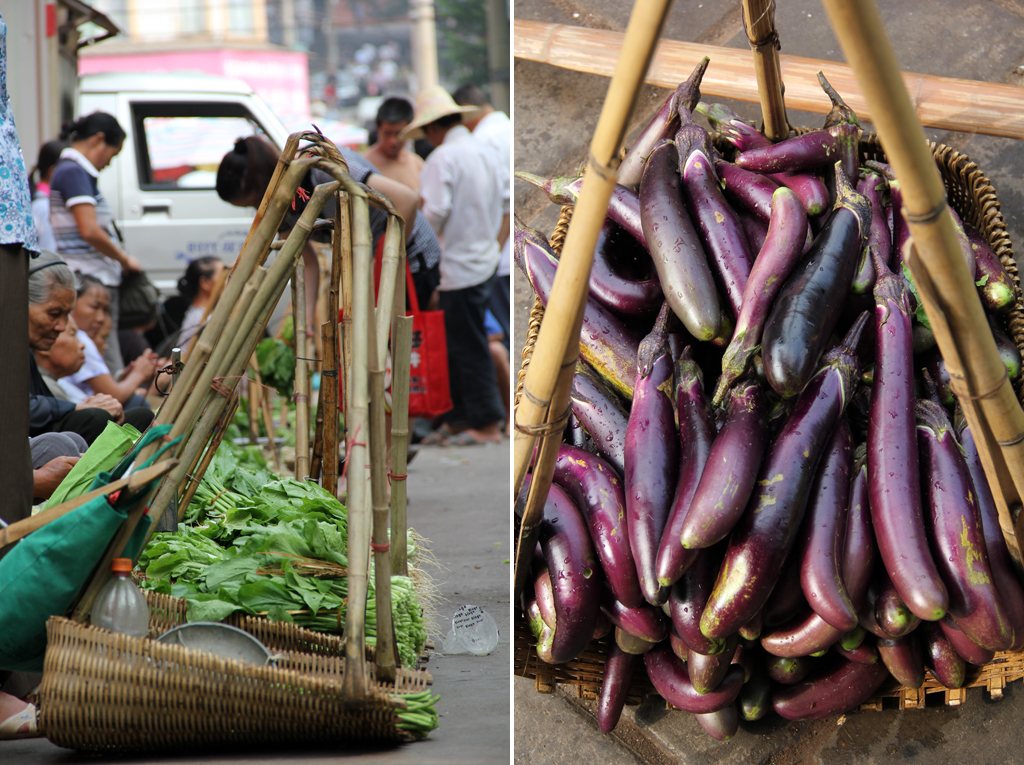
To be honest Sanjiang is not really a touristy town, and for pretty good reason, there's not really much to do there. However, it's sometimes a joy to visit a city where the highlights are wandering around and taking lazy afternoon naps on a bridge.
There are numerous stunning holiday destinations around the world. Still, there's nothing quite like the stress-free, laid-back atmosphere of reclining on a warm beach surrounded by turquoise water and lush tropical greenery. The islands in the South Pacific Ocean are among the most picturesque in the world. Though there are thousands of them, here are just five that represent a slice of South Pacific paradise.
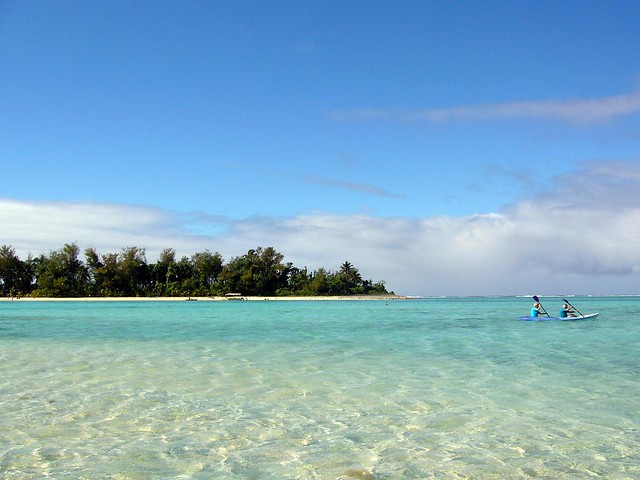
Though its population is well under 20,000, Rarotonga is the most populous island in the Cook Islands archipelago. White sandy beaches and beautiful lagoons surround much of the island, contributing to its reputation as a beach lover's paradise.
Like nearly all of the islands in the South Pacific, Rarotonga is formed by a volcano. It is composed of jagged mountain peaks covered in lush green forest.
There are several hiking opportunities, including one route that traverses the island, offering stunning views of the beaches and waters below.
Fiji has long been a leader in South Pacific island tourism. The tiny set of islands referred to as the Yasawa Group is not as famous as Viti Levu, Nadi, or Denarau, but it's the peace and lack of development that make the islands so appealing.
With a teeming reef life, snorkeling and diving are two of the most sought-after activities in the waters of the Yasawas. Catching a glimpse of the graceful (yet dangerous) manta rays swimming between rock passageways is a highlight.
Since the islands are relatively small and positioned close together, the terrain lends itself to pleasant hikes that offer stunning views of the surrounding hilly islands. Don't miss an early morning hike to the top of one of the peaks to admire a breathtaking sunrise.
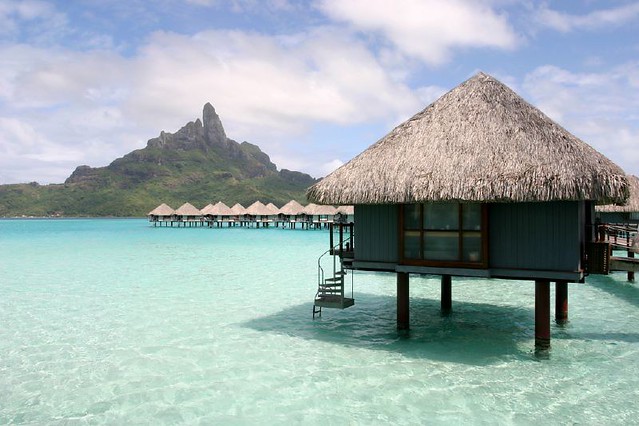
To many, the sweet sound of Bora Bora is a synonym for paradise, an island of jaw-dropping beauty. Lazily swinging in a comfy hammock suspended over crystal clear water while being shaded by a luxurious grass thatch bungalow is what the island is renowned for.
The jungle-covered Mount Otemanu offers a stunning backdrop to the island's sandy beaches.
Bora Bora is entirely dependent on tourism, and although it's far from a budget destination, the scenery is as stunning as it looks in the photos. Like many of the paradise islands in the South Pacific, a tour company like Flight Centre can be convenient for putting together an all-inclusive holiday package.
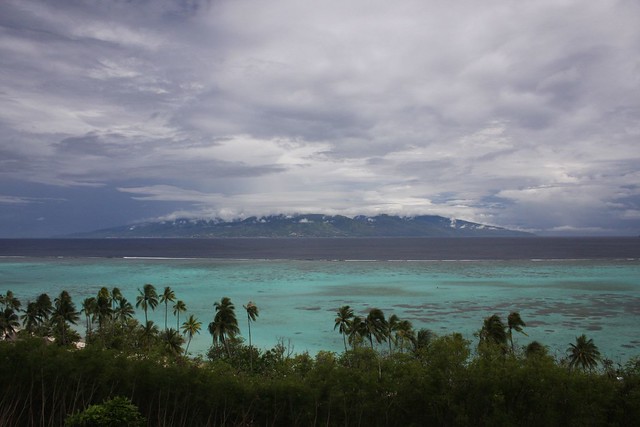
Accessible from Tahiti is the quiet heart-shaped island known as Mo'orea. Snorkeling, pearl diving, hiking, and horseback riding are just a few of the adventurous things to do on a visit.
Another fantastic option is to spend the day relaxing in the turquoise waters and basking under the swaying palms.
By South Pacific island standards, Mo'orea is less of a luxury resort-filled island and more of a less expensive way to have an island experience. There are even several spots to pitch a tent and camp right on the beach.
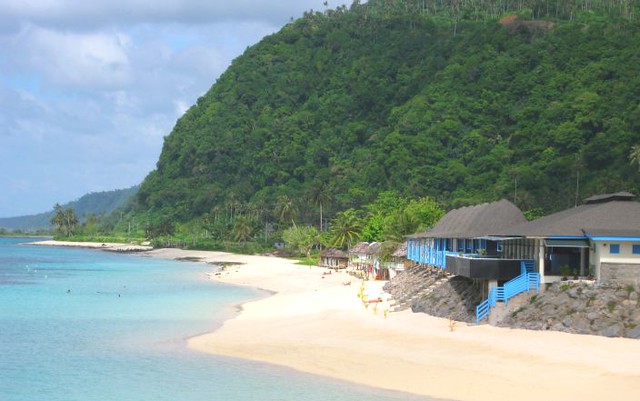
The island of Upolu, located in Samoa, is the most populous in the nation and includes the capital city of Apia. Along with numerous swimming beaches surrounding the island, Upolu is also renowned for its surfing and fishing.
On land, Upolu has designated several national parks to preserve its diverse ecosystem. From trekking through thick jungle to gazing at plunging waterfalls, there's always something fun to explore on the island.
The easygoing lifestyle and breathtaking scenery make the South Pacific Ocean islands truly magical. Whether you use your physical energy to surf, dive, snorkel, or sip cocktails from a horizontal position, you'll experience the beauty of the South Pacific!
________
This post was written by Mark and brought to you by Flight Centre.
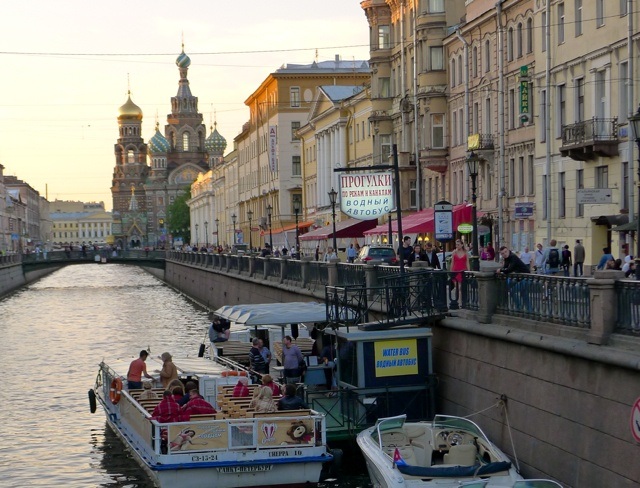
[A] funny thing happened when we arrived in St. Petersburg, Russia.
Our train from Moscow, one of those fast trains that takes you up to 250 km per hour, arrived at near midnight... and yet, the sky was still bright as day.
We hustled around from taxi to taxi, and walked around in search of our hostel's entry door (always a struggle when staying in apartment hostels in Russia), all in the light of day.
Obviously, our sleep schedule was about to be thrown out of whack, and furthermore our minds – but that's what happens during the season of White Nights in St. Petersburg.
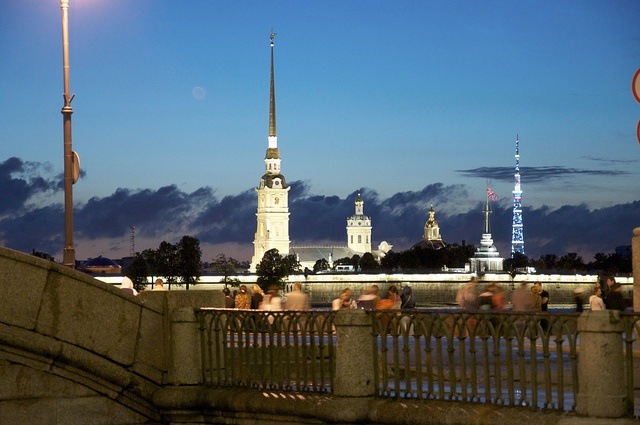
White Nights, or midnight sun, is a phenomenon that happens each year from around June 11th to July 2nd.
For regions near the Arctic Circle, the sun can remain in the sky for almost an entire 24 hours, but in St. Petersburg, it seemed that the sun was setting around midnight and rising again at 4 am.
Quite the spectacle nonetheless!
For this reason, I highly suggest making sure your hostel or hotel room windows have thick curtains if you hope to get a reasonable amount of sleep.
Prime tourist season occurs during the White Nights of St. Petersburg, as well as celebrations from locals alike who told me they often get very little sleep during these weeks of the year.
The White Nights season is the perfect time to be a tourist in St. Petersburg as it means you literally have more hours in the day (of sunlight that is) to do your sightseeing.
Not only that, but shops and restaurants tend to stay open late, so you are always able to keep yourself busy – and you don't have that blanket of darkness that causes a sense of uneasiness in a foreign city to hold you back.
In addition to the longer sightseeing hours, the following makes it a great time for a tourist:
This international arts festival fills the city with top opera singers, ballet dancers and musicians putting on performances in the "Stars of the White Nights Festival".
The "Scarlet Sails" celebrations happen during the White Nights Festival and involved a huge public event with fireworks that also mark the end of the school year in June. Tons of boats full of pirates take sail on the Neva River, while millions of people watch the event.
Several carnivals present themselves to the public during the White Nights Festival, with the most popular one being in the Peterhof suburb.
A popular tour company, Peter's Walking Tours, offers this ride during the White Nights season for a different perspective of the nightlife vibe – with stops of course at the Neva River, Palace Square and more.
By taking a tour at this time of day, you get to experience the vibe of the city at "night", as the sun finally sets and the bridges and buildings take light.
Since my hostel window was open directly to one of these canals, I can attest to just how lively the night becomes in St. Petersburg, especially with many small boats bringing quite the party.
The White Nights of St. Petersburg can be a disorienting time for your body, but if you're a traveler wanting to see as much of the city as possible, I highly suggest a visit during this short time of year.
Madrid is one of Europe's liveliest cities, well known for its nightlife, art, and historic landmarks. If exploring its winding streets and cultural squares gives you one thing, it's an appetite. And luckily, Madrid has plenty to offer those with rumbling bellies, too.
From tapas to specialty meats, there are dishes you've got to sample in the Spanish capital, so here are a few places to get your foodie fix.
Travelers who want a more hands-on introduction to Spanish cuisine can also take a Madrid cooking class before exploring the capital's markets and traditional restaurants.
If you'd rather make a Spanish dish than taste one, a Madrid cooking class offers a hands-on introduction to local food.
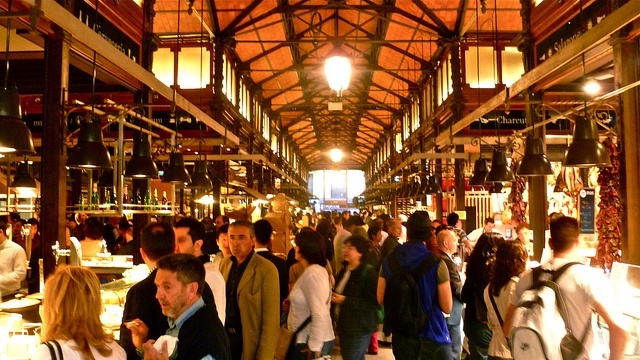
Located seconds from Madrid's grand Plaza Mayor, this indoor market first opened its doors in 1916. One of the city's oldest markets, the building fell into disrepair until it was refurbished in 2009, when it became one of the city's most popular foodie hot spots.
Packed with stalls serving everything from oysters and wine to fish, bread, fruit, and cheese, tourists and locals flock here to soak up the buzzy atmosphere and devour plates of food, which you can eat at tables or on the floor in the middle of the marketplace.
Hailed as the world's oldest restaurant, Sobrino de Botín has been serving up grub since 1725. With mentions in both Guinness World Records and Ernest Hemingway's novel The Sun Also Rises, you'll probably need to book ahead to secure a table at this historic haunt.
Whether you're led up the original wooden staircases to the dining rooms or down below to the cave for your meal, try ordering the specialty suckling pig, or "cochinillo", prepared in the traditional wood-fired oven as has been the practice there since the 18th Century.
One of Spain's best-known dishes, Cocido madrileño is served throughout Madrid, but a couple of places do it extremely well. While in the past, the est. 1870 Taberna La Bola has been a winner with tourists, but locals have an alternative worth trying.
Taberna de la Daniela is near the Goya Metro station and is one of the best places to sample this traditional stew of chickpeas, meat, and vegetables; the ingredients are served separately as a starter (the soup broth) and main course (everything else).
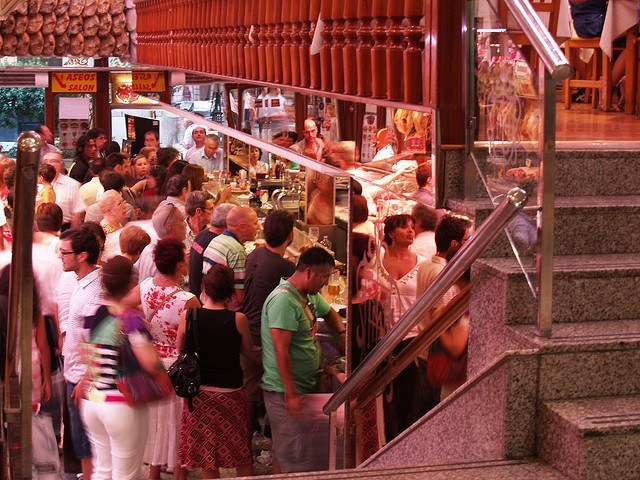
With branches throughout the city from Gran Via to Atocha, the Museo del Jamón (or Museum of Ham) isn't so much a museum as a restaurant and deli that serves cured ham cuts in sandwiches (bocadillos), croissants, and as main meals.
It's usually bustling with tourists on tapas tours and locals grabbing a quick snack, and the interior is decorated with ham legs hanging over the counters where you're served, so you can eat your Iberico or Serrano with a cheap beer. The Museo del Jamón is a great place to grab a bargain meal before heading out to explore the rest of the city.
This article was originally published in partnership with Hotels4U and has since been updated.
Captivating traditions, the mixture of ancient and ultra-modern, limitless shopping opportunities, and a tantalizing culinary smorgasbord are just a handful of the many aspects that make exploring Asia such a memorable experience.
Many of Asia's most significant cities are also maritime ports, making a cruise a fantastic way to see the continent. Here are six cities that shouldn't be missed on an Asian cruise.
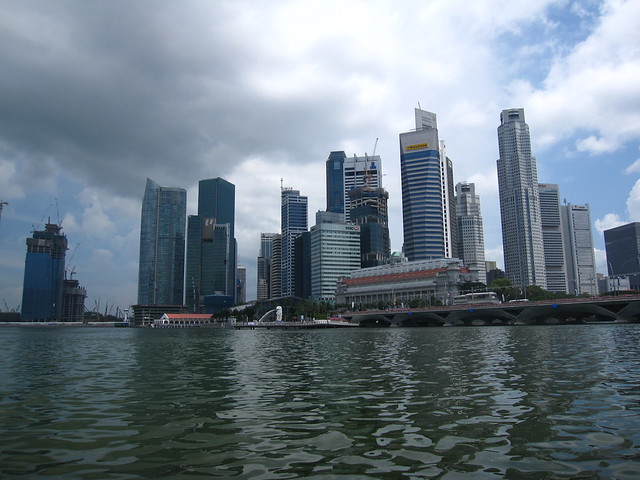
Positioned in a strategic location at the southern tip of the Malay peninsula and along the shortest water route from the South China Sea to the Indian Ocean, Singapore is the world's busiest shipping port. The small yet prosperous city-state of 4.5 million inhabitants is also a standard stop on most Asian cruises.
Singapore is one of the world's most diverse cities, with nearly every country represented. Chinatown is a great place to observe the strong traditional influences of China in Singapore, and a visit to Little India offers the opportunity to purchase spices and dine on delicious Indian food. From neatly manicured tropical gardens to sprawling shopping centers, Singapore makes an entertaining stop.
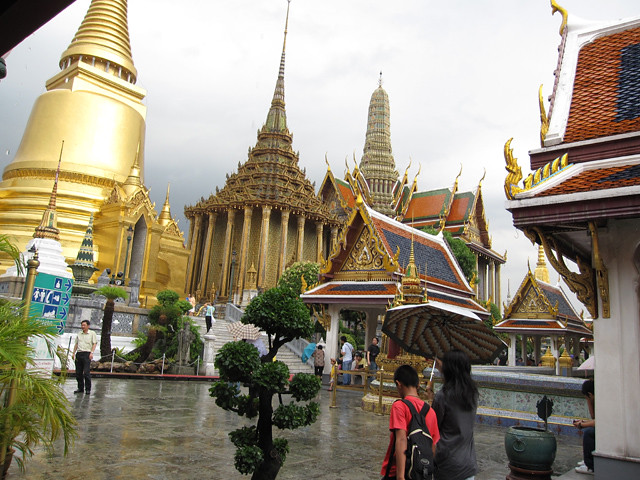
Bangkok is a diverse city that offers a little of just about everything. Ancient palaces and Buddhist temples coexist with modern skyscrapers, and bicycle rickshaws share the road with luxury sports cars. Air-conditioned mega shopping malls abound, yet street stalls and night markets fill the alleys.
One of the most sought-after activities during a visit to Bangkok is sampling delicious Thai food. There is so much to eat that you'll beg for more stomach space. Since there is so much to see and do around Bangkok, it's a great idea to organize an itinerary with a specialist like cruiseabout.com.au so you can design a cruise package that suits your interests.
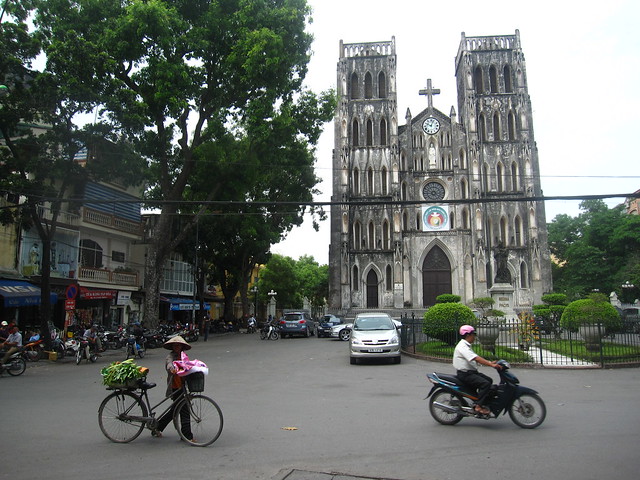
Haiphong, with its deepwater port, has been a strategic commercial and trade center for hundreds of years in northern Vietnam. With a mixture of Chinese culture and French colonial influence, Haiphong is a fascinating city filled with Buddhist temples, Catholic cathedrals, pagodas, and villas.
Not far from Haiphong is the more famous city of Hanoi, Vietnam's capital and second largest city. Established over 1,000 years ago, Hanoi is layered with history and ancient landmarks.

Crammed onto a small island surrounded by lush hills and within a perfect natural harbor, Hong Kong is a mind-blowing jungle of skyscrapers. Many consider the view of the skyline alone to be the best in the world, and with a nightly light show, it becomes even more impressive.
Head to the top of Victoria's Peak (by hiking or taking the tram) for a jaw-dropping bird' s-eye view of the city. Hong Kong is perhaps the most famous shopping destination in the world, and there is no shortage of great deals on clothes, electronics, and souvenirs. Enjoy Hong Kong's famous dim sum and roast pork if you're after food.
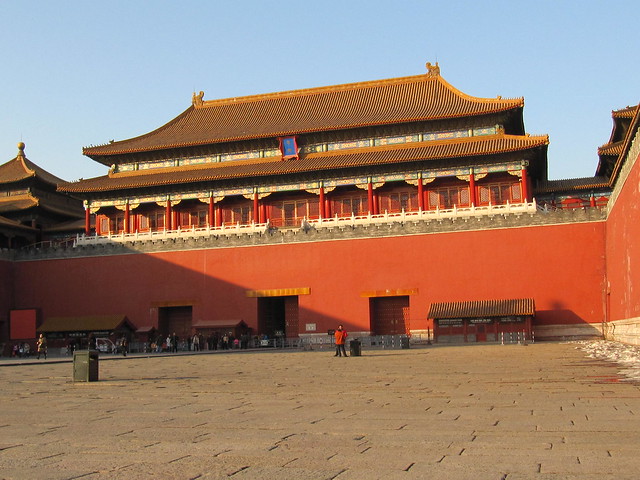
In northern China, Beijing is the country's cultural and political headquarters. With a long, fascinating history and a modernization boom, it offers incredible things to see and do.
In the center of town is Tian'anmen Square, one of the most significant sites in Beijing. The Forbidden City, once the palace of the emperors of China, is now preserved as a UNESCO World Heritage site. Lastly, a visit to Beijing wouldn't be complete without a trip to the famous Great Wall of China.
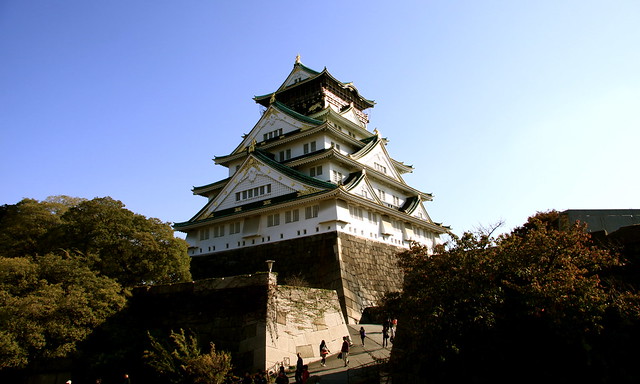
Osaka, Japan's third-most populous city, is one of the major northerly port docks on an Asian cruise route. It is also one of the nation's most important commercial, economic, and trade hubs.
Known throughout Japan for its delicious restaurants, Osaka is a paradise for those looking to indulge in some of the finest Japanese cuisine. Osaka sushi, okonomiyaki, and takoyaki are just a few of the delicacies famous in the city.
Osaka Castle, covering an area of over 60,000 square meters, is a major attraction in the city. The castle offers thirteen main towers, many gates, stone walls, and beautiful gardens. In addition to historical sites and fabulous dining, Osaka is home to Universal Studios Japan, an exciting theme park.
Asia is a perfect destination for a holiday cruise because of its diversity of cultures, preservation of history and architecture, and abundance of shopping and dining.
________
This post was written by Mark and brought to you by Cruiseabout.com.au.
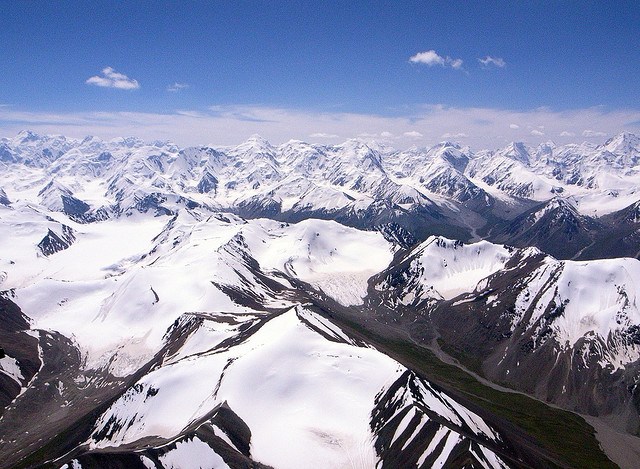
When people ask me what there is to do in Kyrgyzstan, besides talking about the unique cultural aspect, I often mention adventure activities, which are made possible by the mountainous landscape.
Did you know that Kyrgyzstan is comprised of nearly 94% mountains? Yeah, that's a lot of mountains.
These mountains are why the country has become known as the "Switzerland of Central Asia" and why many trekking-related companies have been popping up in Bishkek, such as the Trekking Union.
Fancy yourself an expert climber, or at least a strong enthusiast? Because of the mountains, Kyrgyzstan is a prime location for mountain climbing with several coveted peaks.
Choose from the likes of Lenin Peak (7,134 m) or the Khan-Tengri Peak (6,995 m) in Kyrgyzstan, or try peaks that reach across to neighboring countries like Mustag Ata Peak (7,546 m), which involves crossing into China.
The Kyrgyz Alpine Club has an extensive amount of information for visitors interested in climbing these areas.
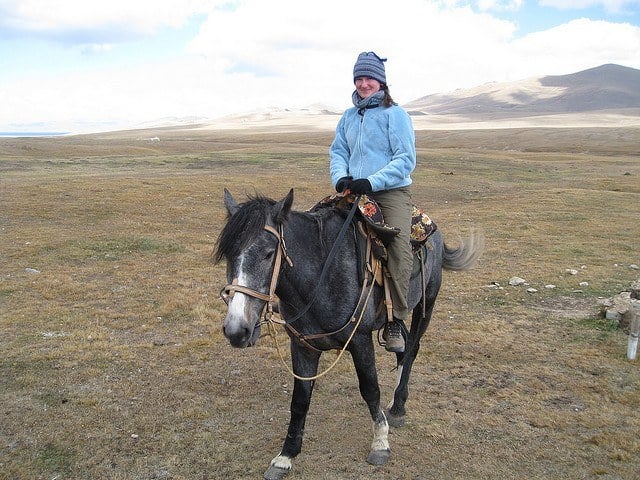
Just step inside a CBT office for a few minutes, and you'll be met with countless horseback riding opportunities across the country.
There is a special love for the horse in the countryside of Kyrgyzstan.
Not only do they provide the Kyrgyz national drink - Kumyz (fermented horse milk) - they also are a primary mode of transport in the nomadic areas and used for herding animals.
And because of the landscape, if you want to get access to some of the country's most gorgeous hot spots, sometimes it can only be reached by an animal (or foot).

Trekking is probably the most popular adventure activity for visitors behind horseback riding. The most likely regions for trekking are Karakol, Naryn, Kochkor, and Arslanbob.
With the help of groups like the Trekking Union of Kyrgyzstan, guides and supplies can be rented, and mountain huts can be used.
Although trekking permits are generally unnecessary, there will be certain regions where they may be required: the Khan Tengri, Karavshin, and Inylchek glacier area.
Related: What to Expect When Backpacking Kyrgyzstan
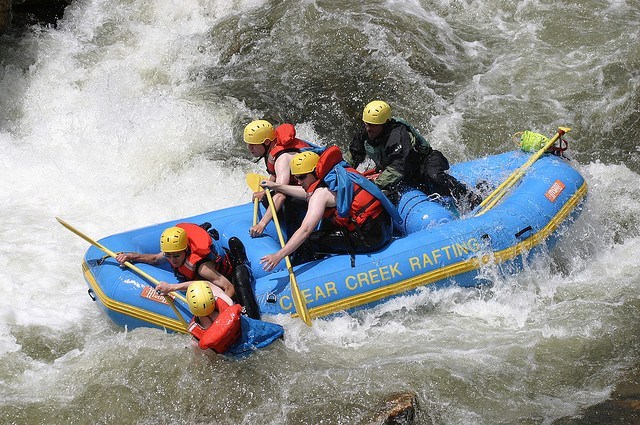
Several river locations across Kyrgyzstan are ripe for rafting during a few summer months of the year.
According to the Silk Road Water Center, the Chu River (Grades II to IV), Chong Kemin (Grades II to IV), Kekemeren River (Grades II to IV), and Naryn River (Grades II to IV) are optimal locations to take the plunge.
Only, don't forget the wetsuit as the water, often coming from mountains and glacial melt can be freezing.
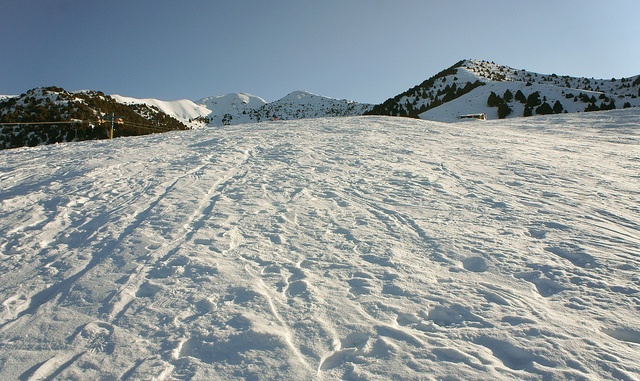
Skiing may not be the industry that it could be in a mountainous country, but a few locations near both Bishkek and Karakol would suffice for enthusiasts.
However, more adventurous souls can opt to take a helicopter up to 5,000m peaks and get dropped off for Heliskiing and Heliboarding tours.
The peaks in question can be from 1 to 5 kilometers in length with fresh, powdery snow. If interested in this sort of adventure, then check out Heli Ski Tours in Kyrgyzstan.
Though meeting and connecting with others is one of the major fears of traveling, it is also one of the most important things about being a traveler.
Here are 7 ways to make meeting and connecting with others an easier task.
I used to hate being the one to initiate a conversation. I would have often preferred to endure a time of awkwardness instead of being the first person to speak up.
Not that I was rude or didn't want to talk, I just didn't know if the other person wanted to talk, and that fear kept me to myself.
Throughout my travels, I have however forced myself to meet and greet others in the right circumstances, and guess what I’ve found?
The majority of other random people (both travelers and locals) are friendly, eager, and willing to chat.

If you’re staying in a mixed person dorm room it’s pretty easy to meet and connect with the person sharing your bunk.
It merely takes a friendly “hello,” and you’re already well on your way.
If you’re staying in a private room, you definitely won’t meet anyone locked in your room all day and night.
Hang out in the communal areas reading, watching TV or using your laptop and eventually you’re bound to stumble into another person and strike up a conversation.
See someone who needs some help with directions or needs assistance doing anything else?
If you know the answer, or can be of service, step in and try to help them.
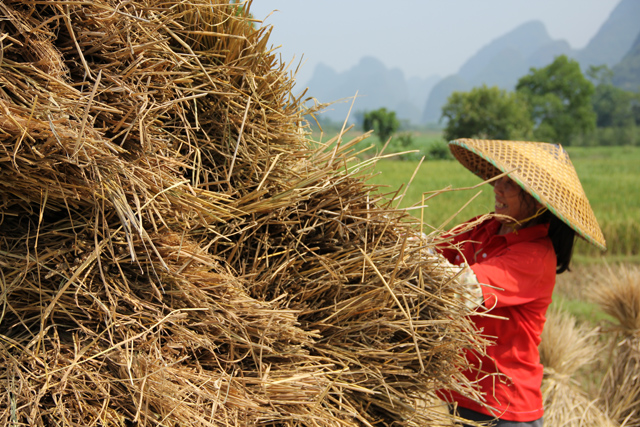
I was in China when I spotted a smiling lady pulling an absurdly large cart packed with harvested rice stalks.
The cart toppled over and the rice stalks slid off the pushcart into a pile on the side of the road (photo top).
Seeing that she needed some help, I helped her reload the cart which took just a few minutes.
She then invited me over to her home for an experience I'll never forget.
Helping others is the perfect chance to meet and connect.
A common bond is often the foundation of a relationship.
This, by all means, doesn't mean that you should instantly connect with the person who happens to be from your same country (though it could), but rather means that any common factor or activity can be the basis of a connection.
I was in Uruguay with a buddy of mine a few years ago.
At that time we were addicted to drinking yerba mate, a local herbal beverage.
A few Argentinian travelers saw us, drinking mate, were delighted and joined us.
We ended up all traveling together for a few days after meeting them over some simple bonding mate.
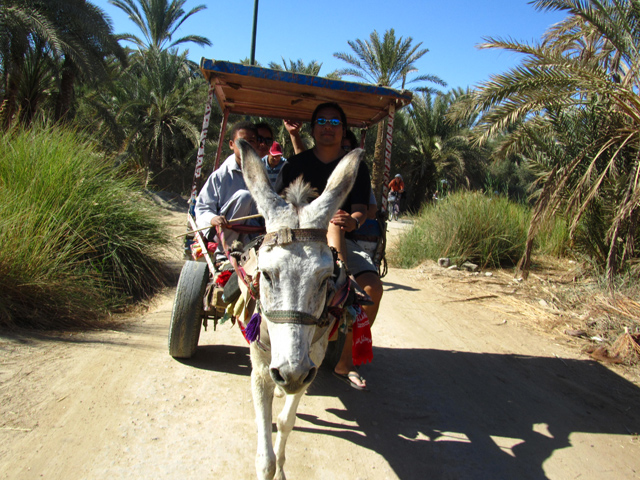
Couchsurfing isn’t just a website to find a couch to crash on, there are so many other ways to benefit from the community.
For instance, if you’re heading to a particular city, get online and browse a group specifically for that place.
Depending on the size of the city, you’ll probably find an active community of both locals and travelers sharing advice and organizing meet-ups or events.
Though I really enjoy couchsurfing itself, I’ve also had some really rewarding experiences joining couchsurfing trips and met some incredible people from around the world.
The internet has revolutionized just about everything we do, travel included.
One of the most simple and yet powerful ways of connecting with others when you travel is to use social media to get connected.
Read some blogs, send some tweets, browse some hashtags and with just a bit of effort you could be connected and meeting up with some like-minded individuals for an adventure.
A tour doesn't need to be a week-long overland trip, it can be as simple as a day tour or even just a few hours.
Whether you take a tour to see a Boca Juniors game in Buenos Aires or to hike through the rainforest searching for orangutans in Sumatra, you’re just about guaranteed to meet someone you can connect with.
In the Philippines, I, along with a group of others, visited the famous Batad rice terraces.
Though the group had to return to Manila, I decided to stay on and do some more hiking.
Through the group, I was able to arrange a local guide (just a normal guy) to lead me from village to village in the mountains of the Philippines.
No matter if you’re traveling solo or with a group of friends, meeting and interacting with others is a crucial part of traveling.
When we accumulate some experience and know a few tricks, connecting with others can be effortless but so rewarding.
An age-old rivalry exists in England, dividing its inhabitants into the Southerners and the Northerners.
The Midlands is a grey area (perhaps they have dual citizenship?).
Insults have been thrown from both sides, but these tribes now live primarily in harmony together on the island.
Being a Southerner myself, I headed to university in the North with a feeling of trepidation and excitement. But I loved it.
Yorkshire is one of England's most beautiful counties, and a road trip around its countryside, seaside towns, and cities is a great way to take it all in.
Cheap car rentals allow you to travel in the UK on a budget and stop off wherever takes your fancy.
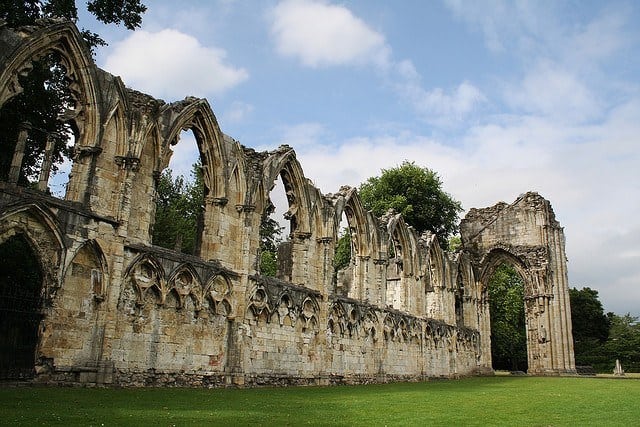
The historic city of York is an excellent place to start. Despite its relatively small size, there's plenty to do during a short stay.
You can walk around its ancient walls, admire the Minster's stained glass, and drop into the Evil Eye bar for one of the best cocktails around.
The city's Jorvik Centre has been set up where archaeologists found evidence of Viking houses and workshops.
An underground ride takes you around a reconstruction of a Viking settlement, with authentic smells and everything.
My friend and I turned out to be the only adults on it at the time, but I think we were still the most excited.
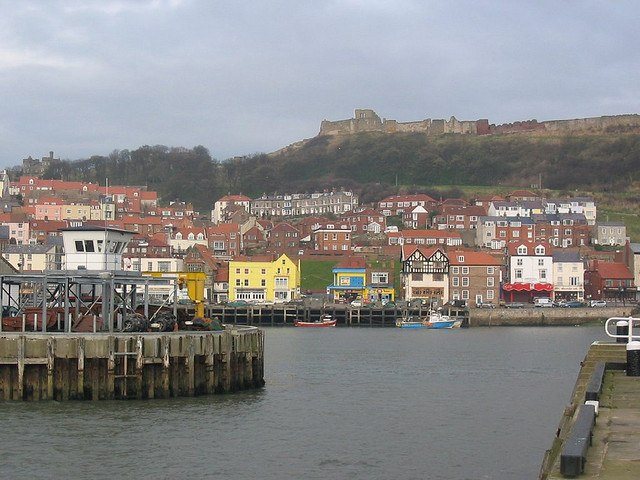
You can drive from York to the seaside town of Scarborough in just over an hour.
Scarborough is a quintessentially British holiday resort, and its beaches have some of the cleanest water in Europe.
The famous Scarborough Fair, which attracted merchants from all over the world in the Middle Ages, is celebrated in September with typically English pastimes, including morris dancing and jousting competitions (must dust off my lance).
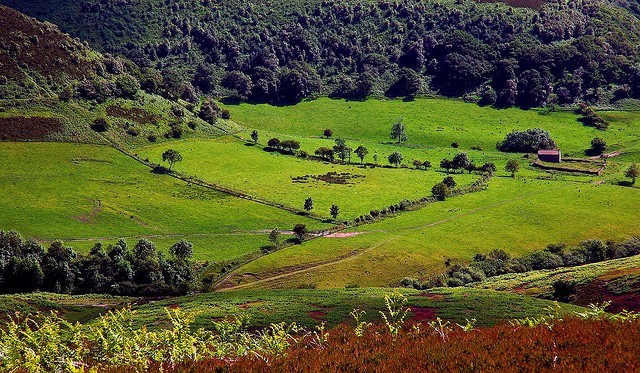
One of the best drives in Yorkshire and Britain is through the North York Moors.
The area is a national park and an excellent place for walking and cycling - there are over 1,400 miles of paths to choose from, and you can stay in one of the picturesque local villages or towns.
Drive up the Moors from Scarborough towards Whitby, and take a few detours on the way to enjoy the scenery.
One highlight is the "Hole of Horcum," a deep section of the valley that legend holds was created by a giant scooping out the earth. It also rates highly on Britain's rude place names.
Related: Must-See Destinations for Backpackers in Europe
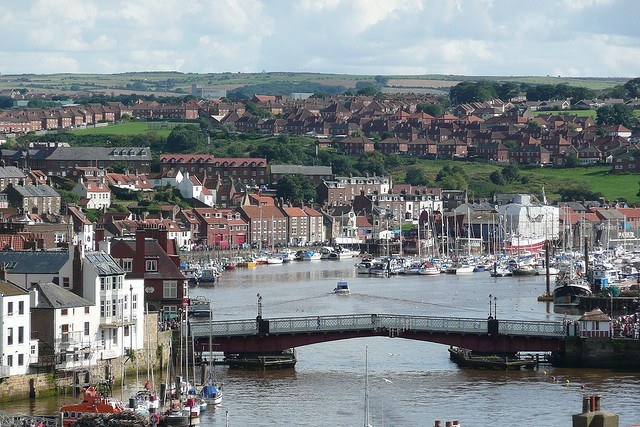
Whitby is located on the dramatic North Sea coast and inspired Bram Stoker's Dracula.
I remember visiting on a particularly wet and windy autumn day and being practically blown around the ancient abbey, whose ruins stand on top of a hill and loom over the rest of the town.
However, no day in England is too wet to enjoy fish and chips, and there are plenty of good seaside restaurants there to choose from.
If the weather's on your side, take it out to watch the sunset over the horizon, which is excellent competition for any sunset in the South.
_______
About the Author: Katherine likes to get a feel for the history of the places she visits and seeks out the bits which reveal something about the culture in different areas of the globe. She has traveled on four different continents and is looking forward to exploring the rest.

There was no choice but to wait the storm out. Night came quick on the Tambopata River, aided by the dark grey clouds producing the torrential rains pouring down on us.
Branches, logs, and entire trees could be seen floating atop the water's surface, the result of flooding and erosion further upstream.
Flashes of lightning illuminated the world around us, a foreign world of thick jungle, jaguars, howler monkeys, and chicken tarantulas the size of a human hand.
My first boat ride into the Peruvian Amazon had thus far been anything but routine. That we were tethered to a tree, in the pitch black, with no idea where we were, was par for the course.
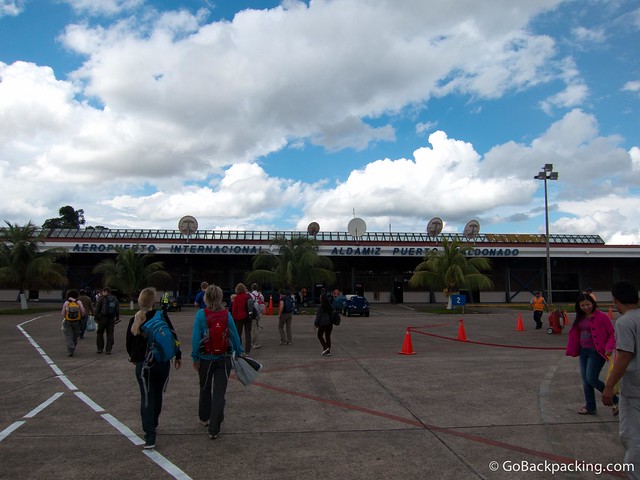
The adventure began earlier that morning, when I boarded a spectacularly scenic Star Peru flight from Lima to Puerto Maldonado, via Cusco.
Though short in duration, the flight cuts directly across Peru, from the urban sprawl of Lima and the drab desert surrounding it, to the snow-capped mountains and glacial lakes of the Andes Mountains, and ultimately, the thick green jungle of the Amazon Basin.
To disembark in Puerto Maldonado, is to feel as though one is stepping directly into a sauna. The humidity ensures you immediately begin sweating.
Inside the terminal, while waiting for the bags to arrive, a representative from Rainforest Expeditions found me, as well as several families who'd arrived on the same flight. I was introduced to Pedro, my guide.
Tours to the Tambopata Research Center benefit from a 6:1 ratio of visitors to guides. The small groups allow more interaction, as well as improving the odds of spotting wildlife during the walks.
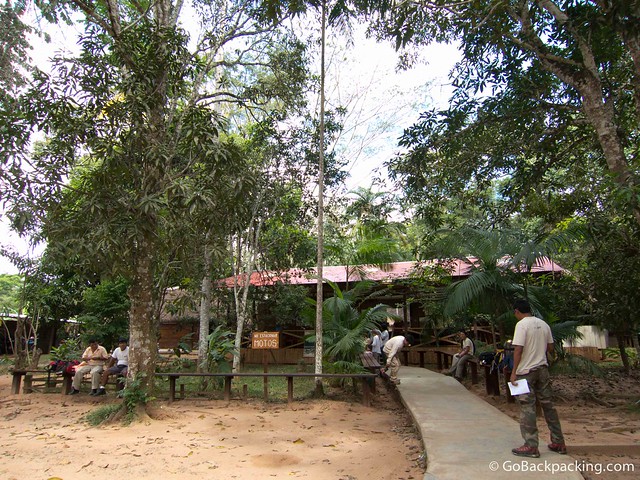
We boarded a comfortable shuttle bus, which drove us the ten minutes to the company's nearby headquarters.
We were greeted with a glass of juice, and informed of another flight which had guests, and was running late.
An hour later, a third family arrived, and we re-boarded the shuttle bus again for the one hour ride to the Tambopata River.
There were three families, including seven small children, and one pair of grandparents.
I was surprised to learn these Amazon trips are popular with families, especially ones with little children.

The bus ride to the Tambopata River is along a dirt road, with several unfinished bridges.
The large, orange-painted steel beams appeared to be a big improvement over the tree trunks we were using to cross streams.
Along the way, we nibbled on snacks provided by the company, including bananas, banana chips, and Brazil nuts, which are harvested locally.

Once we reached the river's edge, there was the opportunity to use the restroom, as it was going to be at least a two and a half hour ride upriver to reach Refugio Amazonas, where we would be spending the night.
It was about 3 PM, and the skies were decidedly overcast.
If the rainforest is anything like the mountains, the later in the day it gets, the more likely you'll have rain. I could tell from looking at the clouds, it wouldn't be long before they let loose.
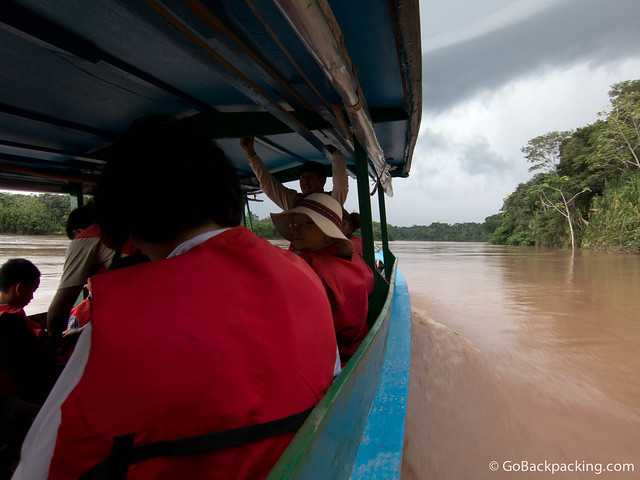
Within 15 minutes of boarding the narrow, blue wooden boat, we cruised right into a thunderstorm.
Semi-clear plastic tarps were dropped down from the sides of the boat.
The driver prefers not to use these as it severely limits his vision, however if the rain and wind are strong enough, they're used to ensure guests and their luggage don't get soaked.
A lunch of fried rice with chicken, wrapped in a banana leaf, was handed out, along with bottled water.
The rice was excellent, and a positive indication of how well they'd feed us at the two lodges.
The rain began to let up after twenty minutes, and the tarps were rolled up so the driver could see better, and we could look for wildlife in the jungle.
Kurt, one of the co-founders of the Tambopata Research Center, previously told me the best chance to spot a jaguar was on the boat rides. And the more time you spent on the river, the better your odds.
I was so preoccupied with trying to process everything that was happening, I hadn't thought to keep an eye out along the river banks.
The Tambopata National Reserve is filled with wildlife, from a dizzying number of birds, to five kinds of primates, caiman, and piranha.
But the jaguar is one of the most elusive, in part because the density of vegetation limits visibility, and cats are nocturnal.
An apex predator, it stands proudly atop the local food chain. And I wanted nothing more than to see one in the wild during my 6-day trip.
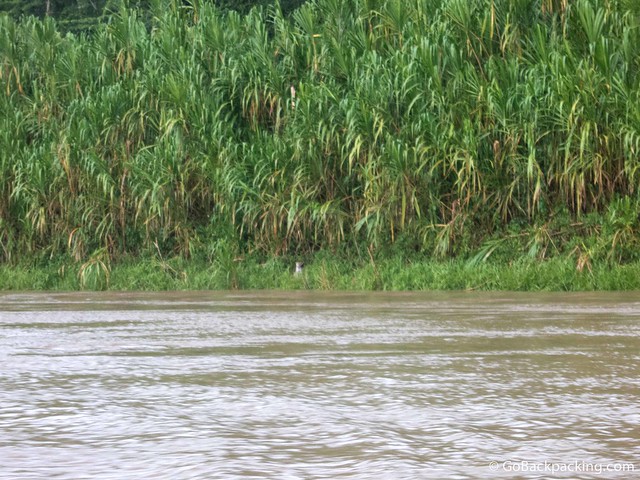
One hour into our boat ride, as we were cruising along the left bank of the Tambopata River, we came right upon a jaguar, sitting and watching the world go by.
Several kids were looking out that side of the boat as we passed it, and a cacophony of shouts soon broke out.
Despite the commotion, the jaguar remained seated. We were no more than 20 meters from the shore, and the mental picture I snapped at that moment, of this beautiful, spotted creature, will be one I never forget.
The boat driver immediately swung us toward the center of the river, so we could reposition ourselves for another look.
As this was happening, the jaguar slowly repositioned itself as well.
By the time we were close to the shore again, the jaguar was barely visible.
One of the guides indicated it was still close to the shore, only a few meters within the vegetation ensured it was practically invisible.
I found it interesting how calmly the cat acted. It didn't immediately run away when everyone on our boat began yelling "jaguar" and pointing, nor did it leave the scene entirely when we returned for a second look.
Instead, perhaps because it was curious, or ready to protect its territory, it laid in wait, watching and waiting.
When it was clear the leopard wasn't coming out, we continued on our way upriver.
Barely an hour into the tour, and I'd already experienced what I knew to be my #1 highlight.
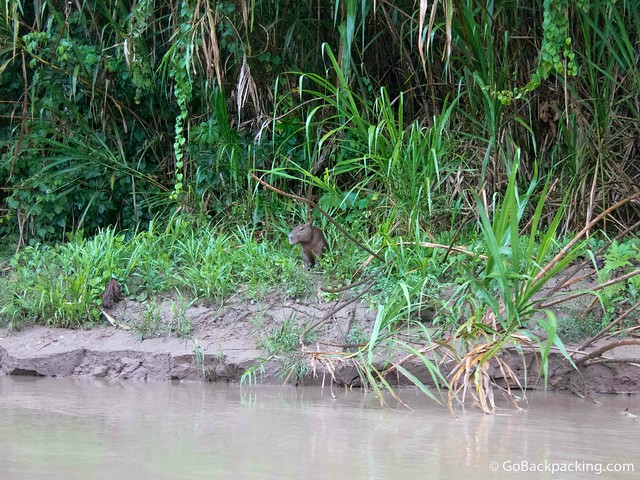
Further along, we came across capybara feeding on vegetation at the river's edge.
The capybara is the world's largest rodent, with adults weighing 77 to 150 lbs (35 to 66 kg). They are found throughout much of South America.
Being that I already saw a jaguar, it was now my hope to see a jaguar hunt and kill a capybara.
On safari in Africa, I quickly learned that seeing large cats hunt and kill prey was a much more sought after experience than simply watching them lounge under a shade tree.
Thirty minutes from reaching the Amazonas Lodge, around 5:30 PM, another thunderstorm erupted.
This time, there was little daylight left to aid the boat driver in navigating the river.
We witnessed entire trees floating downstream. Combined with the wind from the storm, the conditions had become dangerous.
A decision was made to tie the boat up along the riverside, and wait out the storm.
Several of the guides made this happen, and we soon found ourselves sitting in the dark, on a boat, in the Amazon.
Thunder cracked all around us, and lightning gave us momentary glimpses of the river and jungle around us.
Surprisingly, most of the kids seemed perfectly fine with the situation, as did their parents.
I began listening to music on my MP3 player and hoped the storm would let up sooner rather than later.
Our delay amounted to forty-five minutes. Once we untied from the tree and began motoring up the river again, it was at a much slower pace.
Pedro was standing at the front of the boat, holding a searchlight up to help the boat driver avoid the debris which continued to float along the water's surface.
To the driver's credit, we arrived safely, as the rain was letting up.
By the time we walked the ten minutes up to the lodge, our way lit by headlamps and flashlights, dinner was being served.
Our bags were brought up to the lodge for us, and we were then shown to our rooms.
A mosquito net had already been pulled down for me in the room where I spent the night.
Light is provided by candles on the nightstands and kerosene lamps in the hallways.
The amenities were all more comfortable than I'd expected.
After grabbing dinner, and catching up with Lainie and Miro, who'd arrived a day before me, I was ready to retire.
The next day, we'd be back on the boat, heading even deeper into the Amazon.
___________
Disclosure: This tour is in partnership with Rainforest Expeditions. As always, any opinions expressed are entirely my own.
Dave's 160-page, all-original Lima Travel Guide is now available for Kindle and PDF.
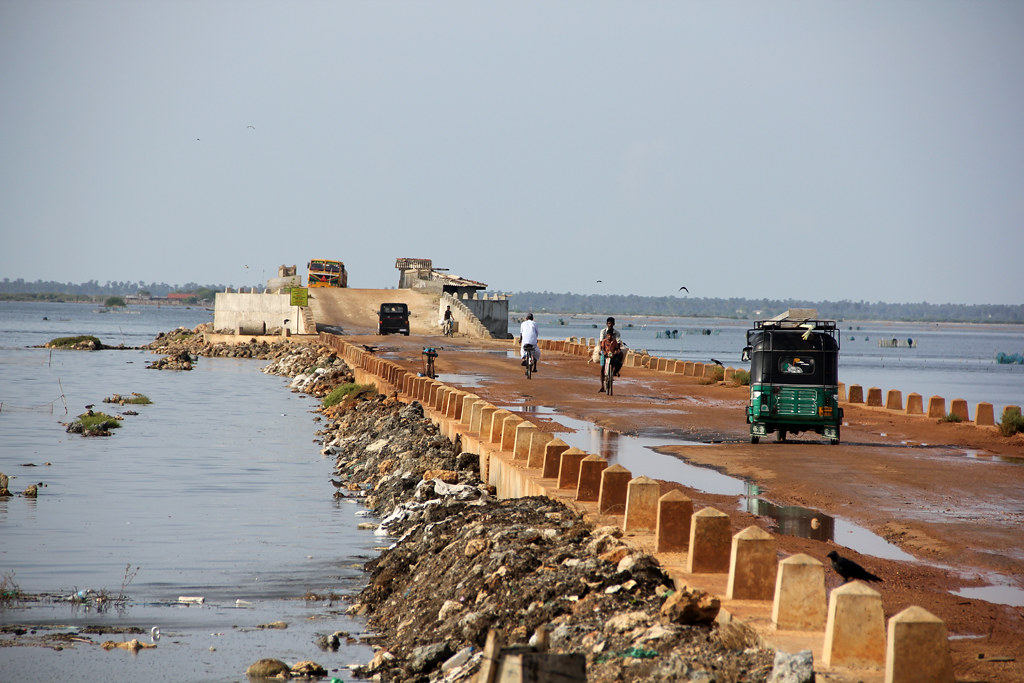
[W]hen I was traveling in Sri Lanka, I had the privilege of taking a journey to the very northern part of the country. Ravaged by war just a few years ago, the islands of the north are now quiet, heavily guarded by military troops, and sparsely populated.
Visiting was an eye opening experience.
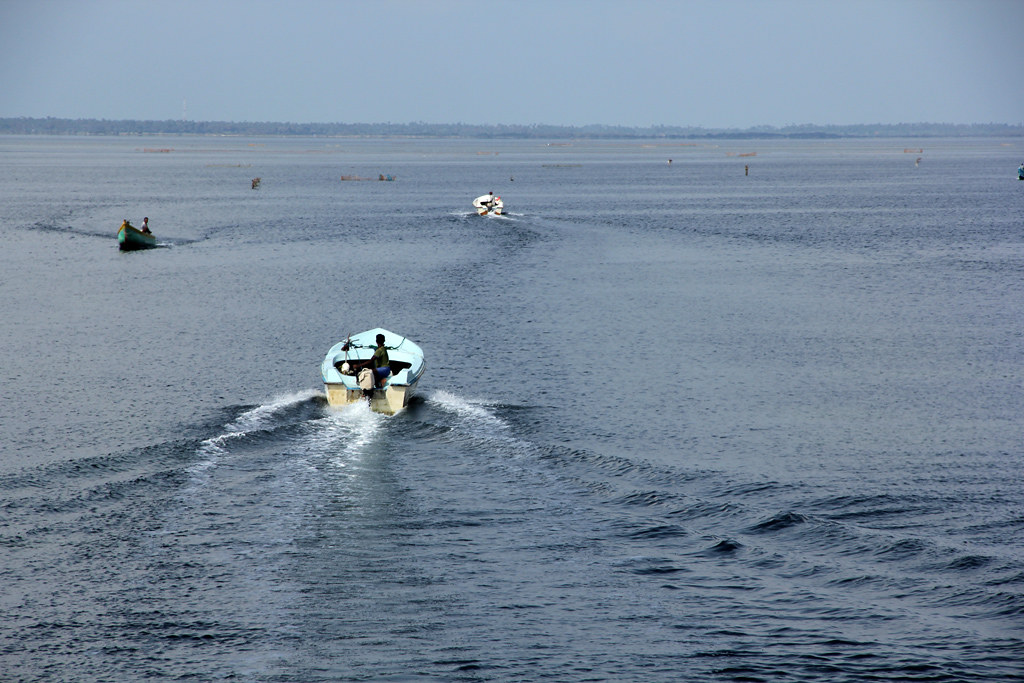
Jaffna is the largest city in northern Sri Lanka, and from there it's easy to catch a local public bus to further islands. The ocean is calm and shallow, cradled by the majority of Sri Lanka to the south and India to the north and west.
Some of the islands are connected by causeway, making them accessible by roads, other islands can only be reached by ferry or boat.
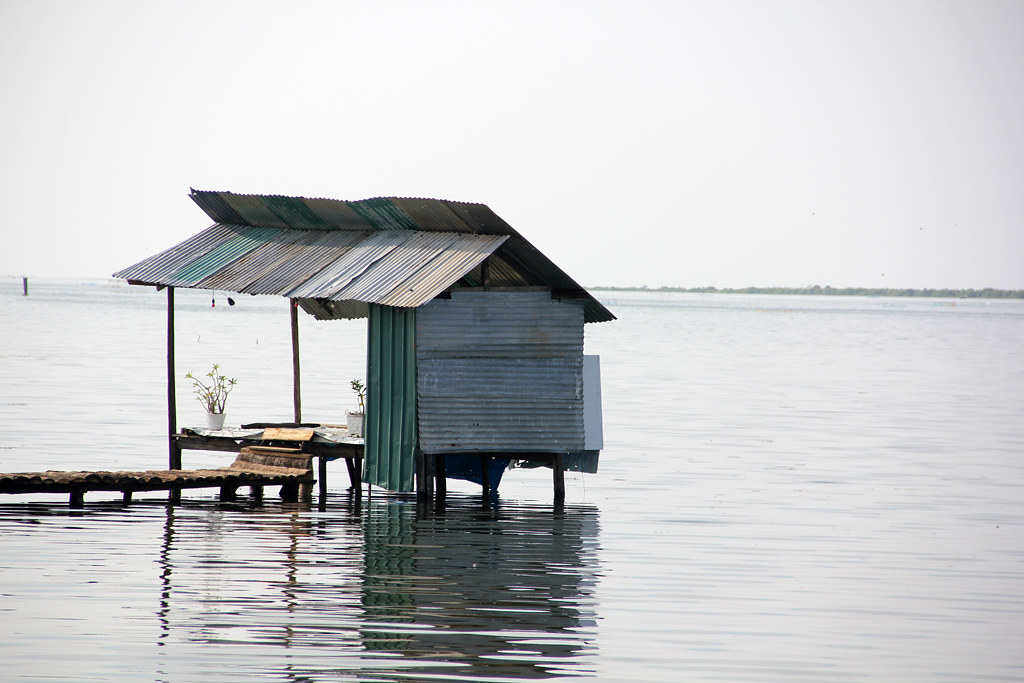
How about a lazy day in a tin shack?
This was a little makeshift soldier outpost, and despite its appearance of being a relaxing paradise, the heat was so stifling I think one would actually start to cook sitting in this tin shack.
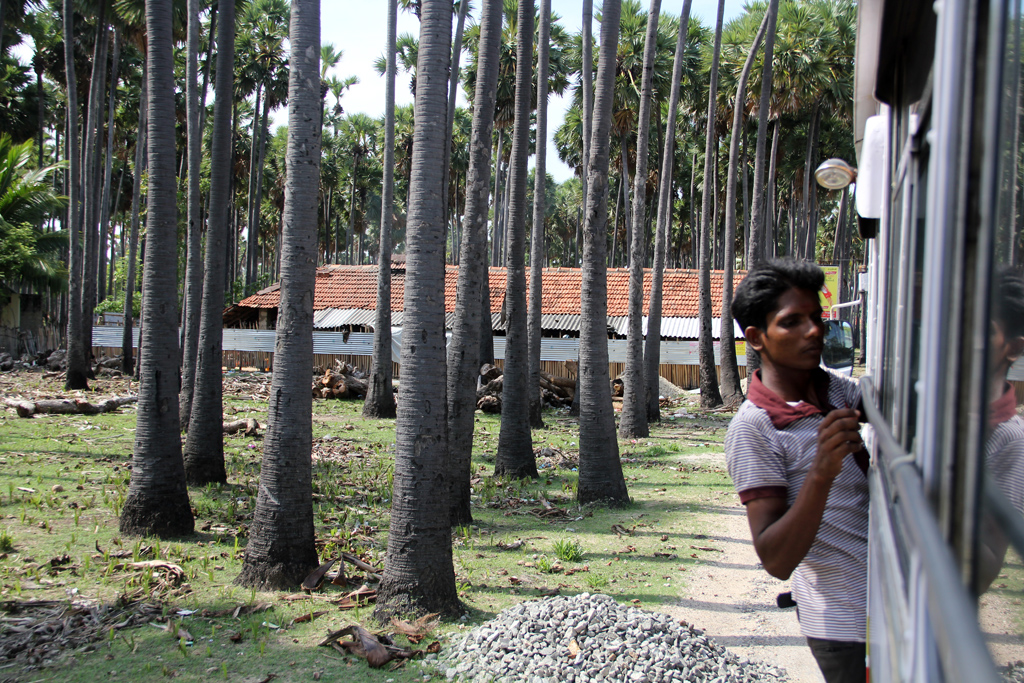
The local bus drove much faster than it ever needed to, swerving down the unmaintained island road and screeching to a halt every time someone waved it down.
Tamil music was blasting as we cruised past bombed-out ruins, small villages and countless military checkpoints. Entranced by the music and scenery, the entire bus ride seemed to whizz past in a blur.
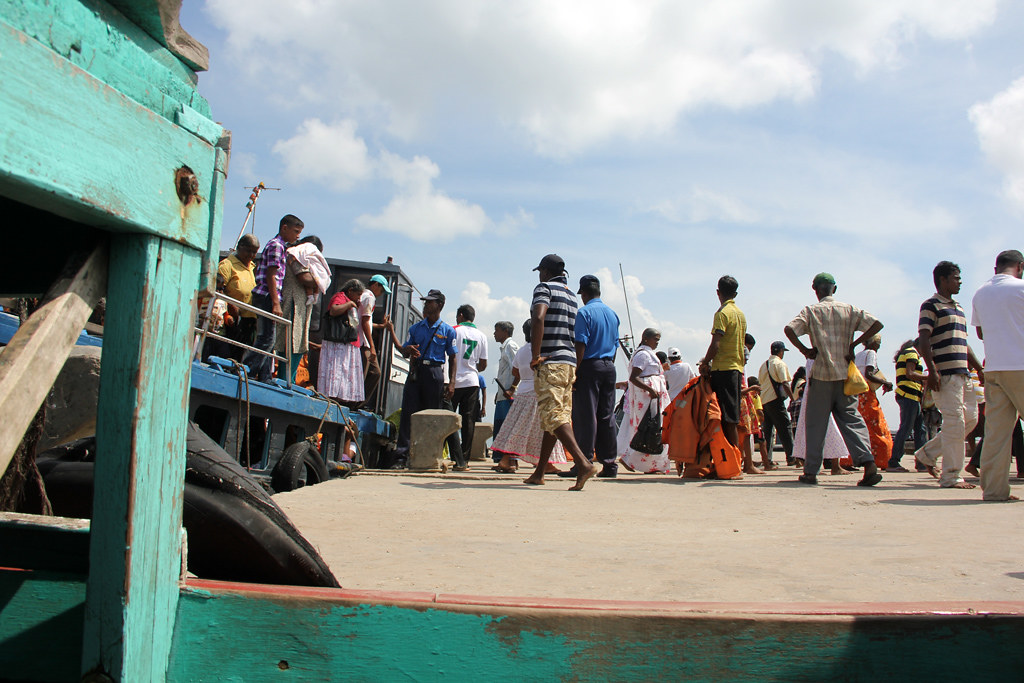
Getting off the bus, we boarded a fairy to Nainativu Island. Crammed into the bottom of a boat inhaling engine fumes doesn't make for the most pleasant of rides, but fortunately it only lasted about 15 minutes.
Little did I know until the ferry arrived, Nainativu Island is both a Buddhist and Hindu pilgrimage island, a place where Buddha himself visited during an important full moon festival (many many years ago).
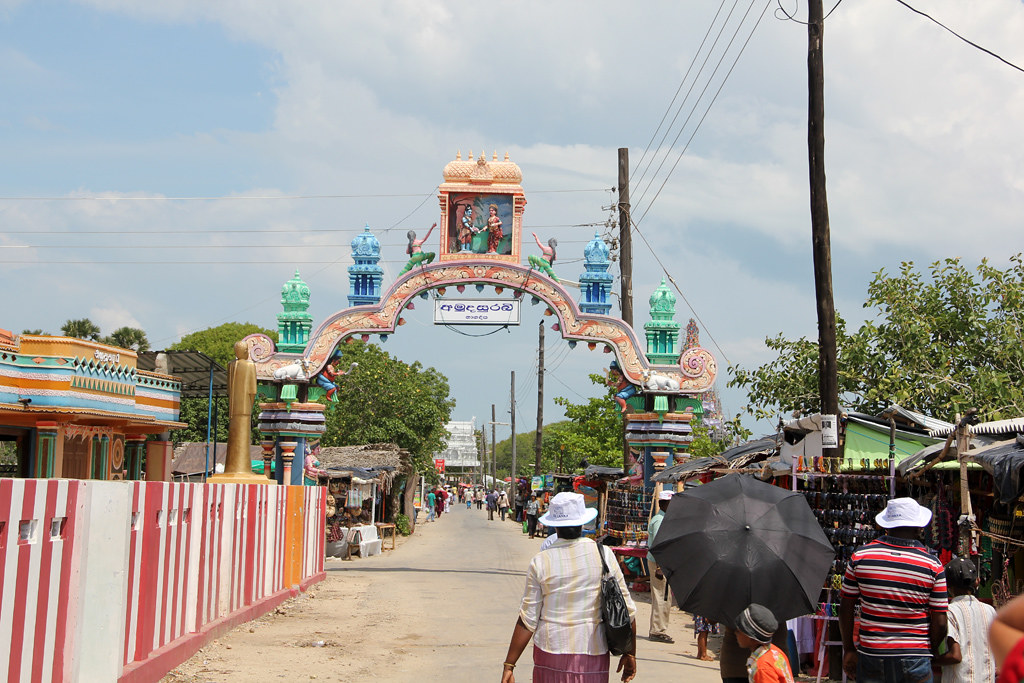
The island was tiny, just a few important temples and a series of local stalls selling souvenirs, snacks and religious relics.
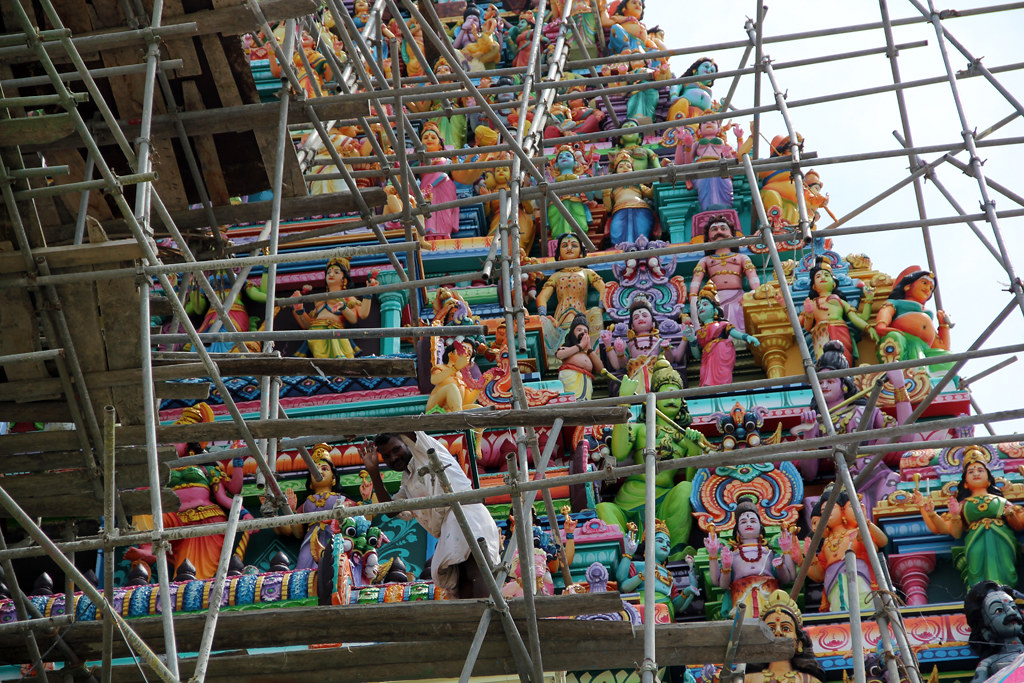
Due to the war in Sri Lanka, Nainativu Island was deserted for nearly 20 years, but just recently it has opened up again.
Hoping for more future pilgrims to visit the island, artists were hard at work sculpting and painting additions to the temple.
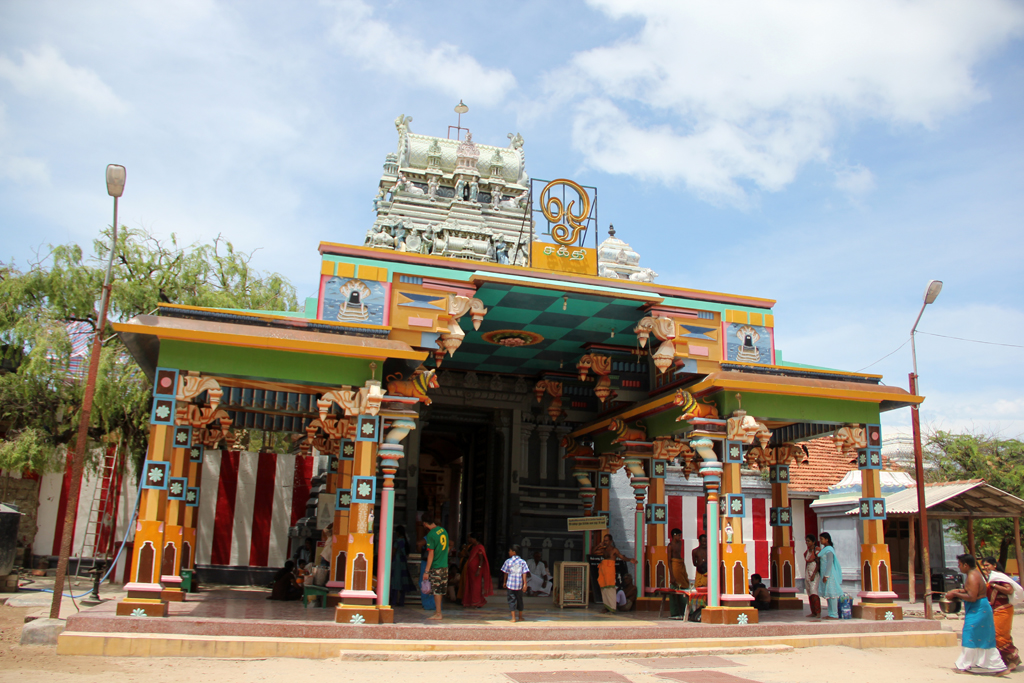
Sri Naga Pooshani Amman Kovil temple is one of the main attractions on the island.
Unfortunately, I wasn't able to take any photos of the interior of the temple, but there were stunning paintings on the walls inside.
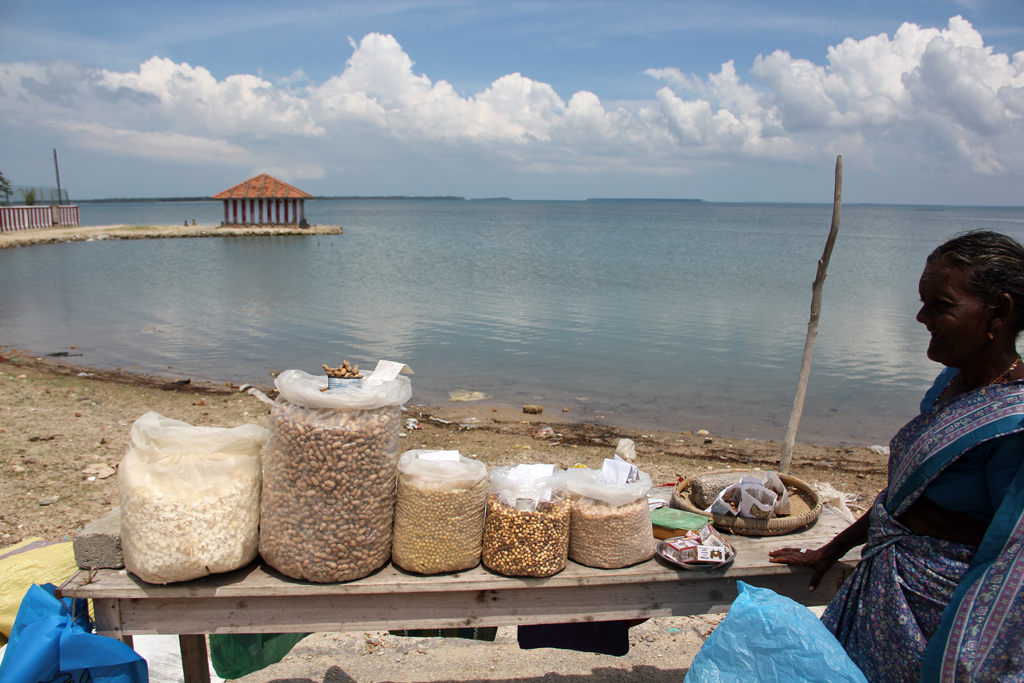
This little old lady sold me a few cans of roasted peanuts which were the perfect snack for the trek back to Jaffna.
Visiting the northern islands of Sri Lanka was a fascinating trip I'll never forget.
Nearly three months into my big trip with my boyfriend, I gained insights into couples travel. Sure, we may have met traveling and gone on a few week-long trips here and there, but three months is travel and closeness on a different level.
Above all, communicating with your partner is the most obvious and important lesson that can be reiterated. On a trip where you rely on each other every day, you need to be extra sure the other knows what you feel and want. Don't go thinking the other is a mind reader!
Besides that important lesson, here are my top five that perhaps other soon-to-be traveling couples will find helpful.
I love travel because it's full of new experiences: new restaurants, environments, and sights. However, after a while, it gets tiring to run around from place to place and try to take it all in.
I recommend keeping a date night where you go out like normal, doing something familiar without the need to "see" or "do" in a travel sense. Get dressed nicely for a splurge dinner, or go to the movies (hopefully in English).
The night my boyfriend and I decided to head to an American-style steakhouse in Russia for a splurge dinner on our own felt like the ultimate treat. We didn't take any food photos or worry about budgets; no menu decoding was necessary. We just relaxed and felt comfortable.
Since my other half works long hours in his everyday Sydney life, I took care of most of the pre-trip prep. When that involves 3.5 months, seven countries, multiple visa applications, and a 3-week train trip through Russia coordinated with other travelers, it can get to the point where you're sitting at the computer, balling your eyes out because of the stress.
While he couldn't help much in the pre-travel days, the on-the-road delegation saved us. With my continued writing responsibilities and multiple stops over 3.5 months, we've each researched hostels, transport, and tours in a manner that made it so one person isn't getting burned out more than the other. I also recommend sharing translation/language duties if possible.
The time and effort I spent playing Russian translator in Kyrgyzstan were exhausting, so I was more than happy to hand over the duties of Mandarin in China to my boyfriend, who was willing to go the extra mile to learn.
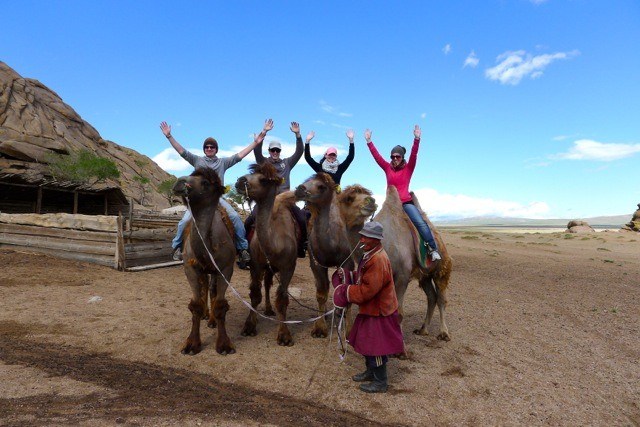
The joy of traveling with a loved one is spending quality time together, especially since you don't have to worry about leaving for work every day. And, even though taking advantage of every minute together is fun, don't forget to reach out and make friends with others along the way.
Some of our best moments have been befriending other travelers when out and about, and those connections help us put our travels into perspective and our time together.
When it comes to travel, you never know how things will pan out until you get somewhere. If you're the type of person who wants to cram an itinerary full, keeping it busy from the time the plane lands and leaves, chances are there is just more chance of things going wrong.
It is one thing to have plans foiled when you're alone, but being with a partner and dealing with unmet expectations can cause stress, often leading to bickering.
Another consideration is that people get tired, sick, or prefer to participate in different activities that might pop up while on a trip. When I got pretty ill back at the end of April, which I'm sure resulted from too much hectic travel up until then, I couldn't do anything for a good week.
We were lucky to have a flexible schedule for the following few weeks, which allowed us to relax while I recovered without too much drama or the feeling that one partner was missing out on something amazing because of the inconvenience.
You don't have to travel to different cities for a few nights. The distance can be as simple as one person staying at the hostel while the other goes clothes shopping.
Our distance of choice on our trip has been my boyfriend heading off to the shops to pick up travel supplies and beer; it's always an adventure for him, and he always comes back with some great stories to share that are just his.
Other ideas involve zoning out with headphones, getting lost in books, or going alone for a walk or morning exercise. We all need breaks from time to time.
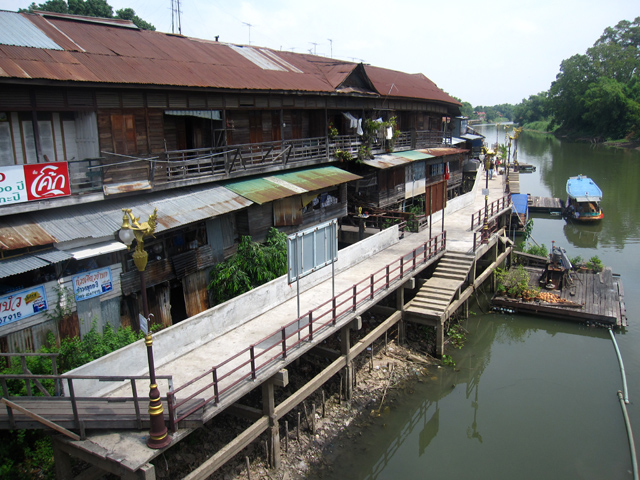
[T]hailand is famous for its markets.
Fresh markets, flower markets, night markets, wholesale markets, floating markets... the list goes on and on. Some of the marketplaces in Thailand are used on a daily basis for business while other markets are only open on the weekends for recreational leisure.
A couple hours drive from central Bangkok is a tranquil market located in the middle of nowhere that happens to attract a flood of Thai tourists each weekend.
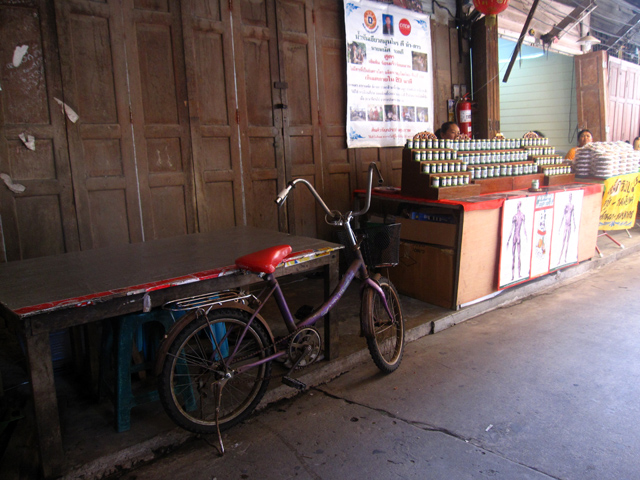
Known also as the "100 year old market," Sam Chuk is an old Thai village that has been well preserved. The wooden homes next to the Tha Jeen river make for a picturesque setting. While some stores sell antiques, at Sam Chuk the entire market is an antique.
Each weekend Sam Chuk turns into a place for Bangkok residents to escape the bustle of the city for a leisure day of walking, eating, and taking photos.
If you live at the market, you have two choices, a) open your doors and sell something or serve something or, b) leave your doors shut and miss out on the surge of traffic each weekend.
Fortunately, nearly everyone who owns a home at Sam Chuk chooses the former option.
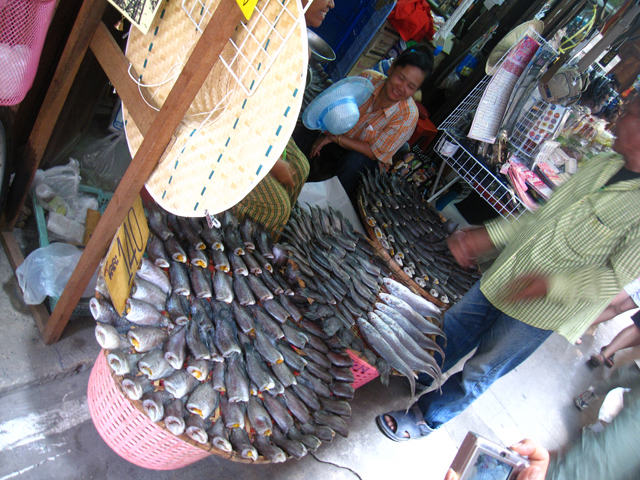
There were all sorts of things to buy and browse at Sam Chuk.
This particular lady had maneuvered her way in between stores to display her dried salted fish and attempt to grab a piece of the action.
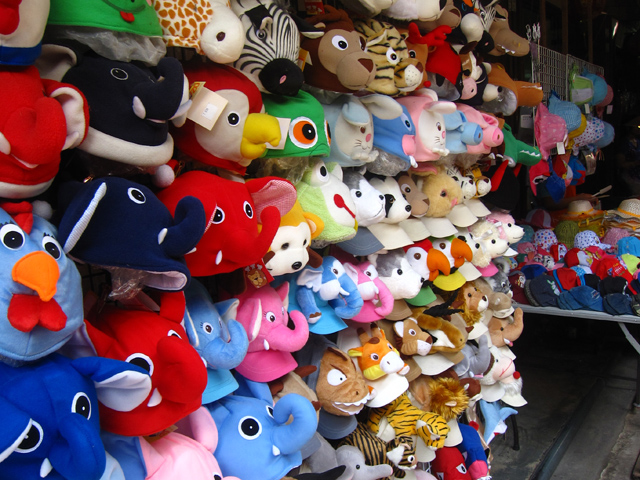
While many of the stores at the market sold traditional foods and speciality items, others choose to sell things like stuffed animal hats.
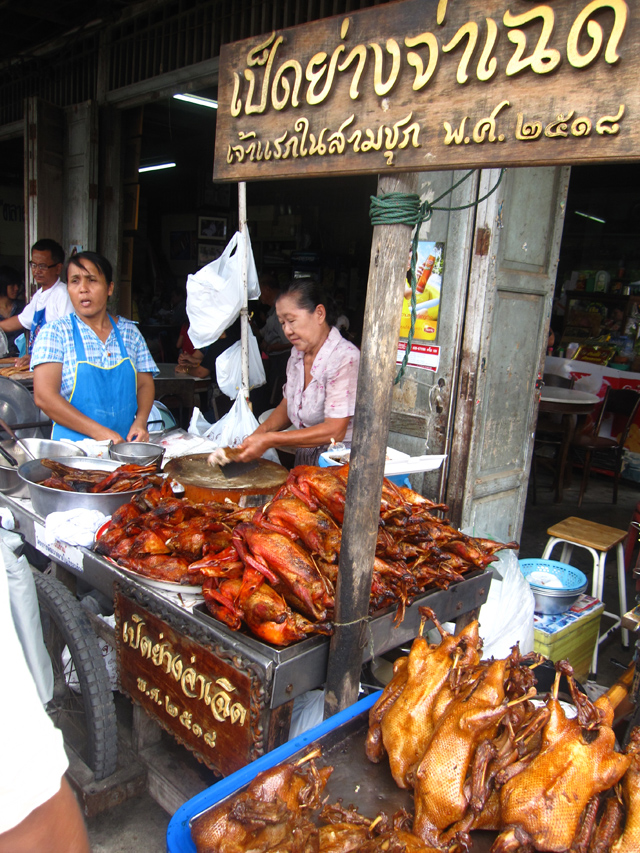
Though as I mentioned before, there are lots of different types of markets in Thailand, there's one thing you can always count on: food.
At the entrance of Sam Chuk were a few street carts piled high with tempting roasted and soy sauce boiled duck. As soon as a customer would purchase a bird, the vendor would slice and dice it up and have it piled into a styrofoam container in a matter of seconds.
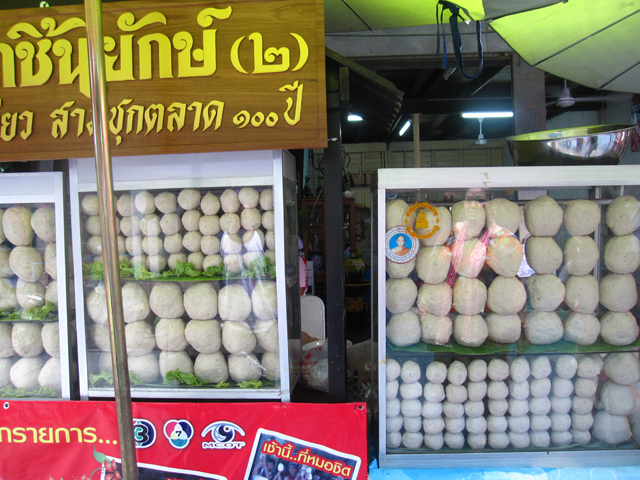
Pork balls are basically pig trimmings and pieces of fat that are all ground up, formed into a ball, steamed, and served with a spicy dipping sauce.
Most of the time pork balls in Thailand are no larger than a standard pingpong ball, but at Sam Chuk they've taken things to the next level.
I'm not joking, these pork balls were literally the size of a softball. I saw a kid biting into one and it was easily half the size of his face.
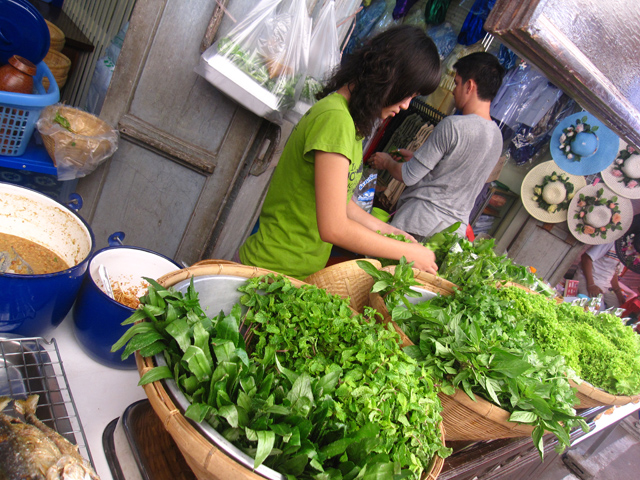
For lunch we stopped at a relaxing restaurant to eat a Thai dish known as miang pla too.
The dish included a selection of fresh vegetables, a fried fish, soft rice noodles and a to-die-for spicy peanut sauce. It was wonderful.
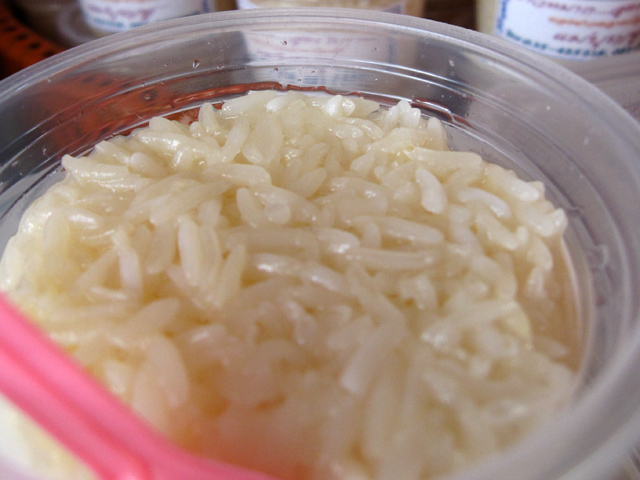
Khao Mak is made from normal rice that is slightly fermented to give it a nice zippy alcoholic tinge but not anything overpowering like a shot of rice wine.
It's kind of like an alcoholic rice pudding, but instead of being smooth, it's textured with grains of rice. Let me tell you, khao mak is not only delicious, it's addictive too.
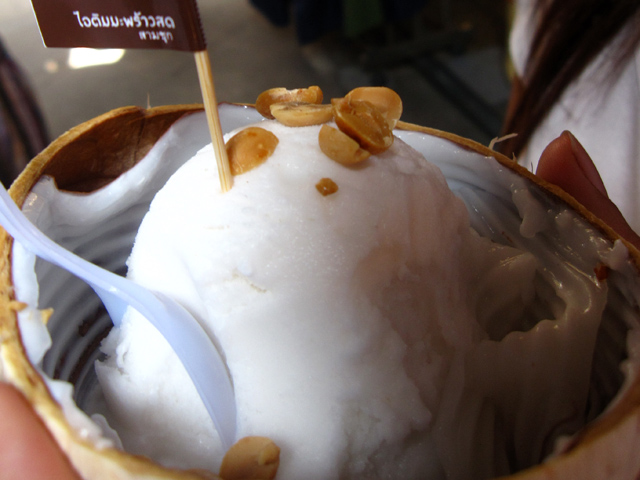
A visit to Sam Chuk market wouldn't be complete without a bowl of homemade Thai style coconut ice cream. It was creamy, not overly sweet, and purely coconut. Served in a half coconut shell and sprinkled with roasted peanuts, the ice cream was extremely enjoyable.
Rich history, a friendly environment, and delicious food is a winning combination. Sam Chuk market is yet another great place to spend a leisurely day in Thailand taking life at a slow soothing pace.
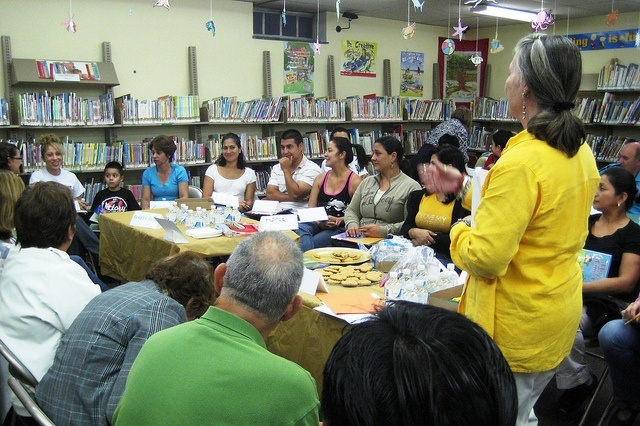
[O]ne of the easiest answers to anyone (that speaks English) who is looking for ways to long term travel these days is to teach English abroad.
I'm guilty of tossing this one out there, too, to all the readers looking for more information on how I did this in the past.
Truth is, however, that teaching English abroad is not the job for everyone.
So, before packing up your life and moving over to random country X that liked your smile and ability to form a sentence in your native tongue, you might want to consider some of these thoughts to see if this opportunity is actually the best option for you.
I know, seems pretty obvious, right? If you've taught before in any capacity, then this one is easy, but others might need to think about the parts that are involved with teaching.
More specifically:
Imagine yourself running into a person on the streets who is in your country as a tourist and speaks very little English. His need for help requires you to search for other ways to communicate your answer, whether it be drawing pictures, using gestures, or using very basic language.
When that person finally understands you, did you get joy from the assistance and challenge? If so, you could enjoy yourself as a teacher!
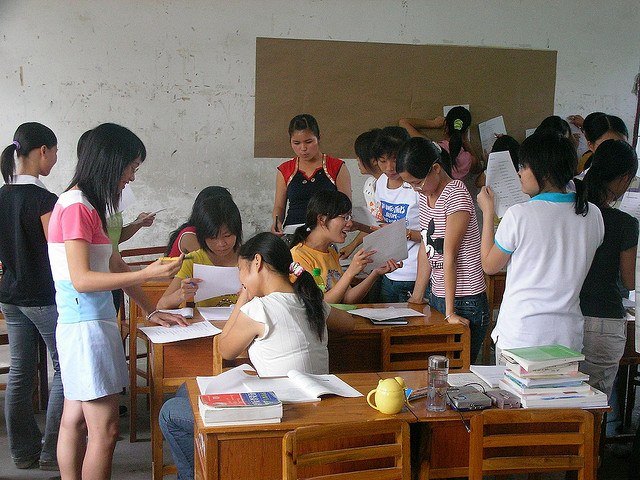
Take it back to age 18, possibly when you moved away to college. Now that was a completely new and crazy living situation, was it not?!
How did you feel then? Did you go through some down moments where you just wanted to have your own space and old life back?
Well, multiply that feeling by 10 because living in a foreign country (depending on where you go) can be extremely stressful.
If you don't speak the language, or if you don't enjoy the local food, home can scream for your return louder than you thought possible – ultimately causing you to break your teaching contract early.
Some travelers choose the option of teaching English abroad because they are low on cash and want to make some money. Unfortunately, it is just not wise to pick up your life and move overseas if you still don't have some money in the bank.
Several situations can occur that require additional funds:
My personal preference, if anything, is to have at least enough money put away for a plane ticket home – just in case.
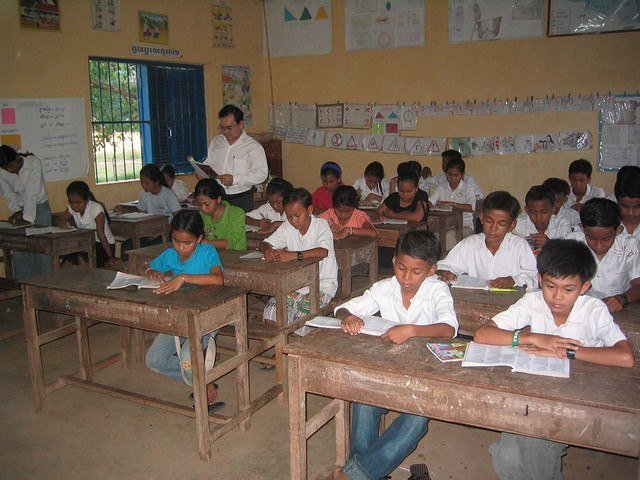
Teaching contracts come in all shapes and sizes with the majority of schools hoping for the longer term employee.
There is a big difference between 4 months and 2 years when it comes to living abroad, so it is important to think long-term to whether or not this move might be right for you.
Not only does breaking a contract cause issues for a school that has spent time training you and getting you set up, but it can also cause you to lose out on benefits, like a return flight home or bonus pay, or to get a bad wrap when applying to future schools.
Do not accept -- I repeat – do not accept a job until you've done your research. This includes researching the local customs and culture, the school you're working at, and hopefully interviewing past teachers at the same location.
It is also good to find out the teaching style at your school of choice in advance. Some schools may require you to prepare your own lessons on your own time, which can mean you are working for less money per hour than you initially thought.
Even if the situation or the school might not be the best, at least knowing about possible struggles in advance can lessen the stress while abroad.
And less stress often means a teacher is happier and more likely to stick around longer.
Good preparation and research is key to having a successful time as an ESL teacher abroad. Do you have any additional questions to add to this list?
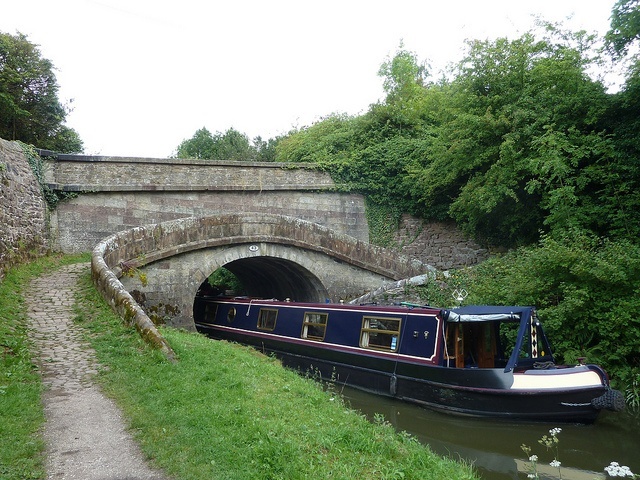
There's no denying that the UK has a bit of everything with its selections of classic old buildings, ruins and museums, mountains and valleys, lakes and rivers, national parks and a hell of a lot of coastlines.
So what are the best ways to travel around and see as much of it as you possibly can for the least amount of outlay?
Train travel around the UK can be a thing of glory, for instance, the stretch of track that runs alongside the beaches of Dawlish in Devon, where trains are sprayed with the breakers when seas are rough.
How about a train ride from London to Scotland?
That takes in most of what the British mainland has to offer and if you book far enough in advance and plan sufficiently well it needn't be too expensive either.
The Victorians had a lot of great ideas, one of them was the railway system, but another was the wonderful interlocking network of canals that runs through much of England.
A truly unique way to see the backwaters of the country, and perfect for a group of friends to share, hiring a canal boat is reasonably cheap and not only gets you to as many country pubs as you could wish for, but also takes you into the heartlands of great cities such as Manchester, Birmingham and of course London.
Caravans and their close cousins 'mobile homes' can be a really fun, modern way to traveling around different places whilst staying in the comfort of your own 'home'.
Obviously, for either option, you need at least one trustworthy driver, preferably two, and a good plan of campsites to stay at.
There are websites that can help you with this and offer a comprehensive list of great campsites and caravan parks.
Traveler reviews can also be found within their website, giving you access to honest, accurate opinions.
As always, there are plenty of things which you need to obtain in preparation for a trip by caravan.
If you intend to two your own mobile home then make sure you invest in the necessary caravan insurance (like Caravan Club’s Touring Caravan Insurance Package) and consider taking someone who can share the driving.
The UK has a great coach system and is perfect for those looking for a relaxing way to explore the country.
Prices are usually fairly cheap but you may have to put up with a slightly more cramped environment than you are used to.
Of course, this is often seen as part of the fun of the adventure and is unlikely to deter those who are looking for a charming and affordable way to explore their home country.
Motorbikes are the ultimate in 'road trip' cool and although going up the M6 doesn't quite have the same ring to it as traversing Route 66, the sense of freedom you get from two wheels is paradoxically much greater than from four.
There are several specialized companies that hire out motorbikes but again you obviously need a driving license and the necessary protective gear to make this option viable.
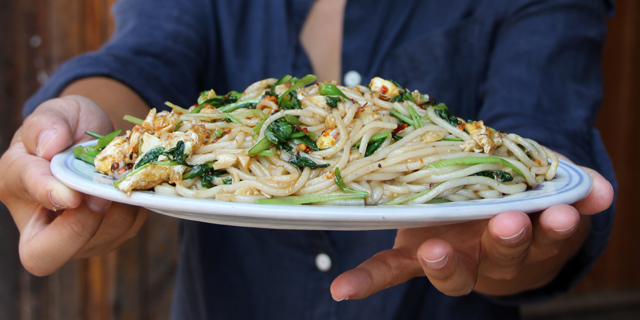
It's still a touchy subject. Which country invented noodles?
Italians, Arabs, and Chinese all have their versions and make their own culinary claims about their contributions to the noodles of this world.
I'll remain neutral on the subject of who can claim noodle fame and just focus on the facts (the delicious facts) about some of the finest noodles I've ever eaten in China.
I've had all sorts of dry pasta, spaghetti noodles, an unhealthy amount of instant ramen noodles (mostly during university), and lots of other noodle dishes.
But it wasn't until I had an opportunity to visit Yangshuo, China, that I truly realized the potential of noodles and just how delicious they can be.
Noodles have been around for a very long time in China, over 4000 years to be more specific, and it's estimated that they have been a staple Chinese food for at least 2000 - 3000 years.
After traveling and eating through China, I can say my perspective on noodles has been elevated to new levels. Instant ramen will no longer do.
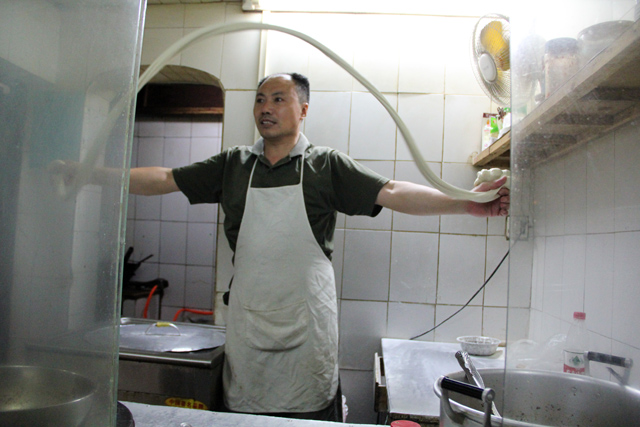
There are countless different kinds of noodles in China, and I know that I wasn't even able to eat a fraction of the noodle dishes in my brief visit, but what I did eat was spectacular.
Lamian is one of the most famous and most beloved types of noodles in China.
It is most commonly made of wheat flour that's kneaded into a smooth dough. The fascinating part of lamian is the process of turning the blob of dough into intricate noodles.
The chef works the dough by hand, pulling and stretching it out to create a strand. At first, the process starts slowly, but as the noodle thins out and grows in length, the chef has to slap the dough back and forth like a jump rope.
He continually folds it over in his hands and then repeats the process as the noodle gets longer and thinner. Done correctly, the chef ends up with just a single string of noodles as thin or even thinner than a standard spaghetti noodle.
The lamian is then bathed in boiling water, and the noodles proceed to be added to soup, stir fried, or served as the base of a dish.

One of my favorite lamian dishes in China was the simple combination of freshly boiled noodles topped with egg and tomato.
The subtle flavor of stir fried egg and tomato didn't overpower the noodles, so they remained the highlighting taste of the dish.
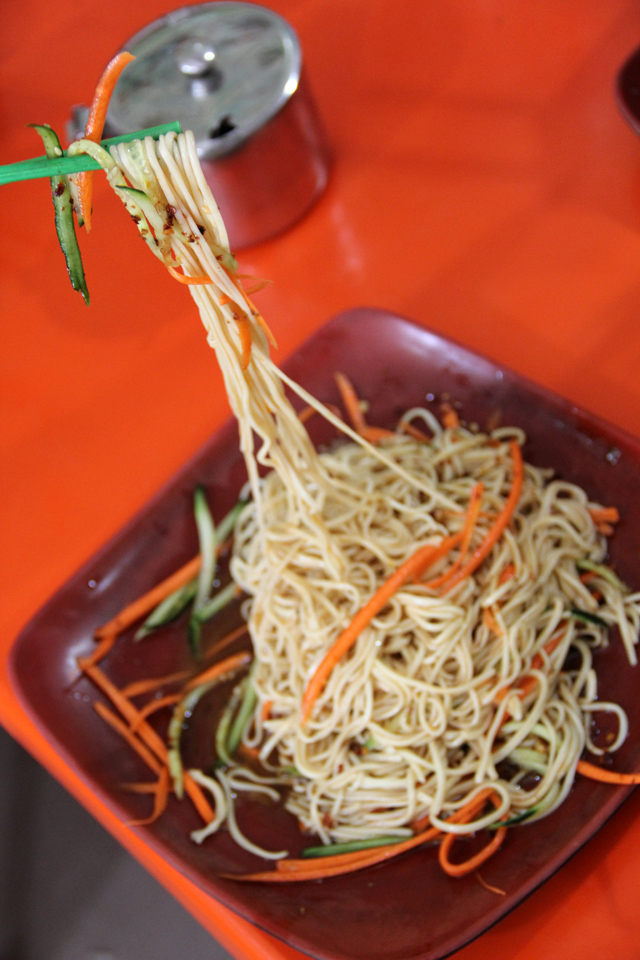
Another lamian classic that I couldn't get enough of was the cold hand-pulled noodles. After the noodles were boiled, they were dunked in room temperature water, flash cooled, and topped with cucumber slices, carrots, and beef.
Finally, the noodles were doused in a sesame-infused vinegary dressing to give them ultimate flavor.
A spoon of dry chili flakes mixed in, and I could slurp these down all day.
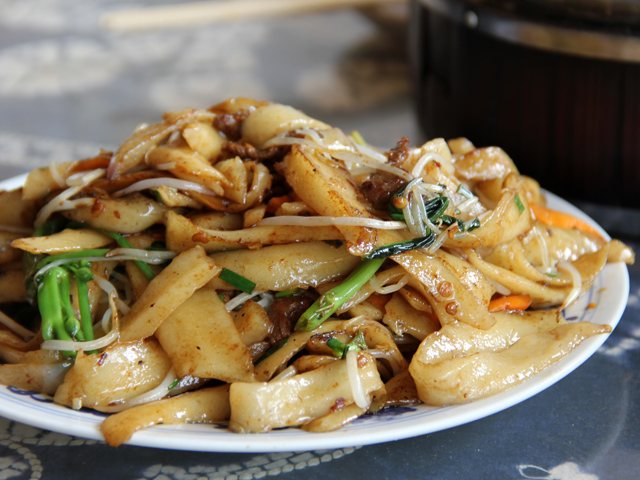
Taking the same blob of wheat dough (used to make lamian) is another noodle that I refer to as the "knife chipped noodle."
Instead of hand stretching these, the chef grabs an acutely sharp knife and slices off bite-sized pieces of dough right into a boiling cauldron of water.
With incredible precision, chefs can accumulate enough noodles for an entire plate in just a few seconds of slicing.
This kind of noodle is best-enjoyed stir fried with soy sauce along with a few vegetables and pieces of beef or pork.
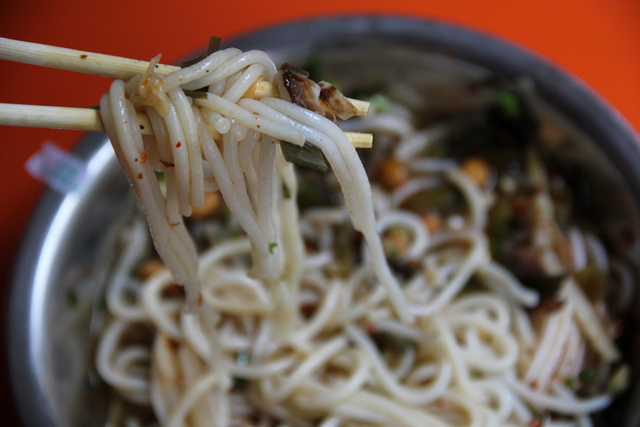
Fresh rice noodles are also prevalent in China, though they aren't as spectacular to watch being made (I think the texture of rice noodles wouldn't cooperate the way wheat does).
Rice noodles in China are delicious in both soups and stir-fries, spicy soup being my preferred version.
No matter who is credited with influencing the world with noodles, one thing is sure - noodles are a carbohydrate gem contribution to global cuisine.
When you visit China, be sure to take full advantage of the delicious hand-made noodles.
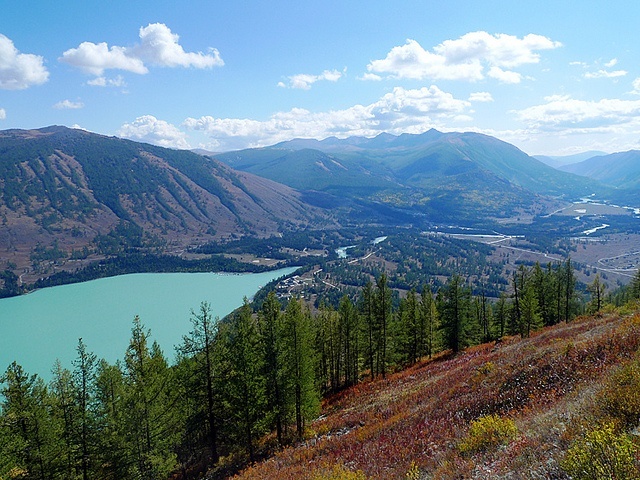
Western China, namely the Xinjiang region, is quite far off many travelers' radars.
Being on the farthest western area of the country, the region is often bypassed in favor of exploring the dense east coast.
However, if you are looking to experience a truly "different China" and explore some of the more foreign and lesser-known cultures -- make sure you spend some time visiting the amazing Xinjiang Uyghur Autonomous Region.
Unknown to many Western travelers, China is home to over 50 ethnic groups. Western China, being so close to many other countries, draws in people from Mongolia, Tajikistan, Kyrgyzstan, Pakistan, Afghanistan, and even India.
This region, about a sixth of the size of China, is home to some of the most authentic towns and interesting places to see the cultural diversity and historic spots along the ancient Silk Road trading route.
But, given its expansive size, the following list of destinations in the region should help a would-be traveler make better plans:
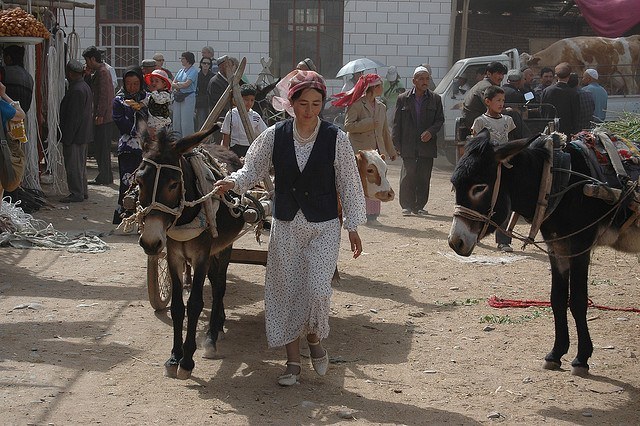
The people are amicable in Xinjiang, despite a fairly significant language barrier.
English is not that common in towns like Kashgar, besides a small handful of operators in the hospitality industry, some shopkeepers, and, of course, expats.
From the number of young children looking and saying "hello" to the strange foreigners (us) on the street, it seems likely that there may be a little more English spoken in the years to come.
Unlike most of China, Mandarin is barely spoken in Kashgar and some of the smaller towns.
The Han Chinese population is tiny in Kashgar, so even if you speak Mandarin, it is probably best to learn a few Uyghur phrases.

Turpan is an ancient city, which was one of the most significant stops along the Silk Road.
The town now thrives on tourism, with several key attractions located in or near the town.
Jiaohe is an ancient city, whose ruins have been preserved a short distance outside of town.
There are also some caves, the Bezeklik Thousand Buddha Caves, which are located about 45 kilometers to the east, and more than 40 of them contain murals.
This area is known for grapes, especially those turned to raisins, and it is possible to reach a place called Grape Gully just a short 10 kilometers from the city.
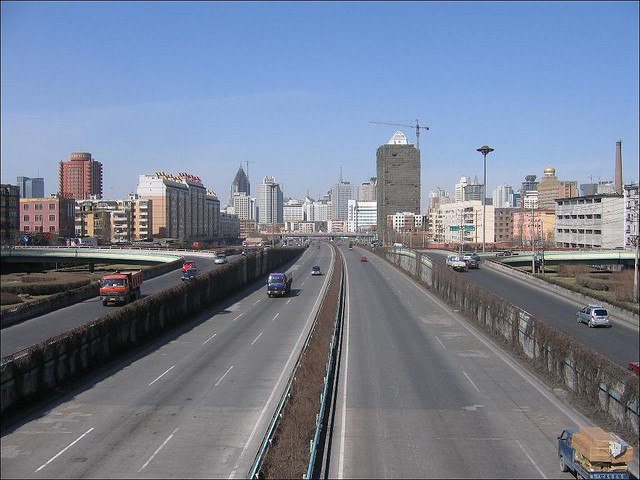
Urumqi is the largest city and capital of Xinjiang – with a population of around 2.7 million people and a lot more signs of Western and Chinese development than other areas in Western China.
Urumqi is the most easily accessible entry point for most tourists looking to experience Western China.
Most towns in the Uyghur Autonomous Region are accessed by smaller planes, trains, or buses that go through Urumqi.
While it is a large city, it is still unique in the blend of people and cultures.
After visiting Kashgar, it is easy to spot street food vendors making flatbreads, grilling kebabs, and meeting a taxi driver who speaks Uyghur instead of Mandarin.
In Urumqi, there are many sights to see, such as the Xinjiang Geological and Mineral Museum – which has an extensive collection of interesting rock and crystal formations, particularly those with modern significance as geology is key to the region's economy.
When we went, the museum had free entry, although unfortunately a lot of the information was not available in English.
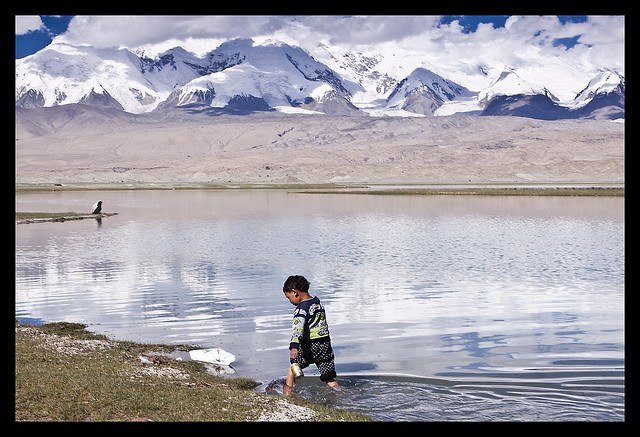
The Karakul lake is famous for being surrounded by snow-capped mountains and is sometimes called the "black lake" or "mountain lake" by locals – at least when they tried conversing with us in English.
The area is renowned for its natural beauty and can be experienced with more than just a day trip if you arrange to either camp or stay in the small town nearby.
You are also likely to see the traditional yurts or gers in close proximity to the lake, which local people still use today.
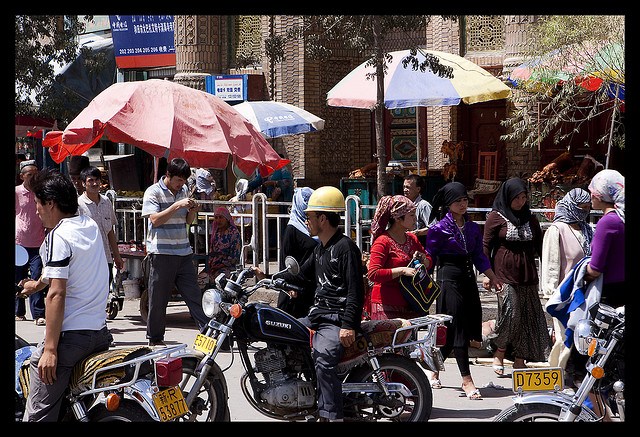
Also commonly known as "Khotan", Hotan is a famous town situated right next to the Taklamakan Desert.
The people of Hotan are primarily Uyghur and adapted to the harsh climate of extreme heat in the summer and freezing temperatures in the winter.
It is well-known for the mummies which have been discovered there, including some which are now displayed in the Xinjiang Uyghur Autonomous Region Museum in Urumqi (great free museum by the way).
While in Khotan, you can see some of the sites, the Sunday markets and the Hotan Cultural Museum, which is a bit smaller, but also has a couple of mummified bodies and relics from centuries ago.
These are not simple economic times; many of us have had to make sacrifices and find ways to do more with less. For many, a vacation is an apparent sacrifice, but we're here to show you that you can travel and have a great time even on a tight budget.
These types of opportunities exist in every state and province in North America, but this article will focus on Virginia. The following list presents five awesome Virginia travel activities that will not break your budget.
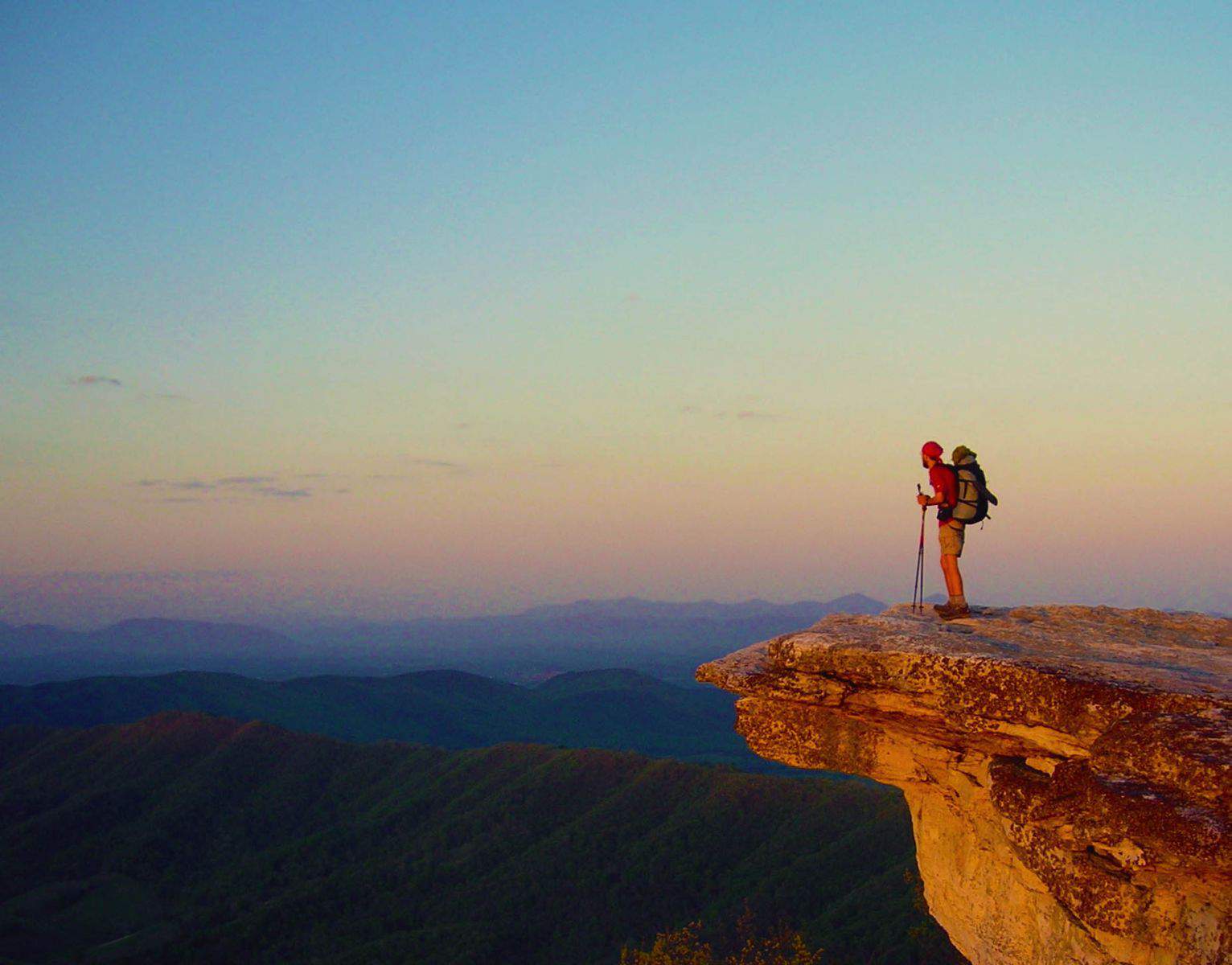
The Appalachian National Scenic Trail is a marked hiking trail that runs for approximately 2,184 miles from Mount Katahdin in Maine to Springer Mountain in Georgia. More than a quarter of the trail is in Virginia. Visitors can hike and bike the trail, and get access to secluded wilderness areas, national parks, formal campgrounds, and areas to fish.
Some of the parks and campgrounds charge fees, but most of the Appalachian Trail is free. You can easily create a family adventure that costs nothing other than food, supplies, and transportation to and from the trail.
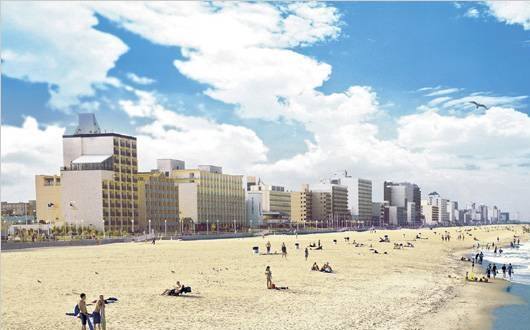
Virginia offers a wide selection of beaches for tourists to enjoy. The most famous and popular is Virginia Beach. All public beaches in Virginia are free. They generally require a parking fee, but visitors can even avoid that if they're willing to walk a few blocks.
There are restaurants and vendors, especially near the boardwalks, but beachgoers can also bring their food and non-alcoholic beverages. Lifeguards are on duty from 9:30 a.m. to 6 p.m. Surfing and rollerblading on the boardwalk are allowed, and areas have been assigned for dogs.
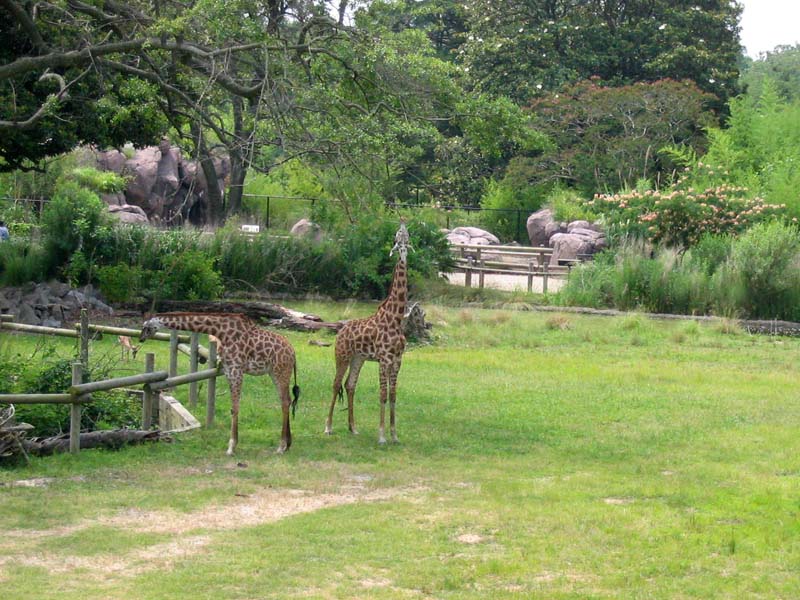
The Virginia Zoo is an excellent budget option. Kids from ages 2 to 11 get in for $9. Younger children get in free, adults for $11, and senior citizens for $10. The zoo is open from 10 a.m. to 5 p.m., and a ticket gives you all-day access.
The zoo is immense, and there is so much to do that you likely can't do it all in a single day. Almost all of the zoo's activities are free, but the train, which is one of the most popular, costs an additional $2 per head.
The zoo offers many dining opportunities, but families can pack their own lunches and dinners. There are also picnic areas where you can relax and eat.
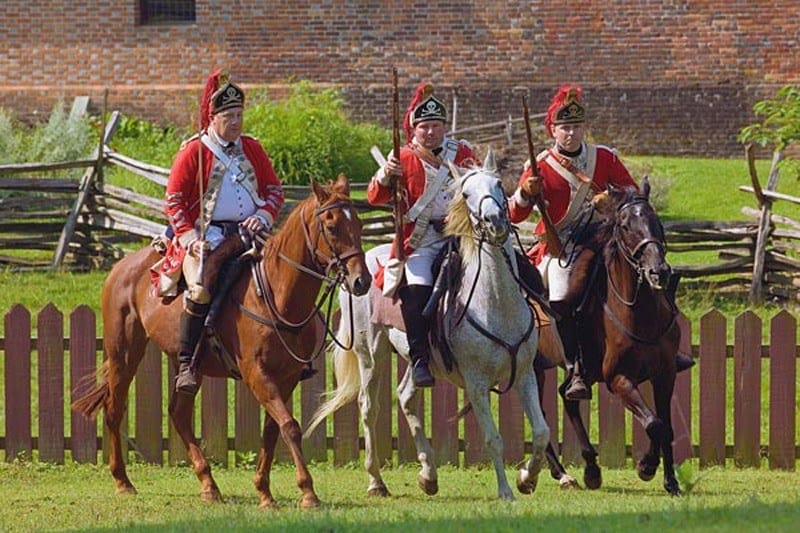
Colonial Williamsburg is a wonderfully diverse area with a lot to do. Outside of the immediate area, there are numerous battlefields and historic sites.
The majority of these places are completely free to visit. Even places within Colonial Williamsburg that charge usually only charge a few dollars or so.
The most significant costs associated with the area are food and lodging. Bringing your own food can limit food costs, and staying at a motel just outside of Colonial Williamsburg can save you a lot.
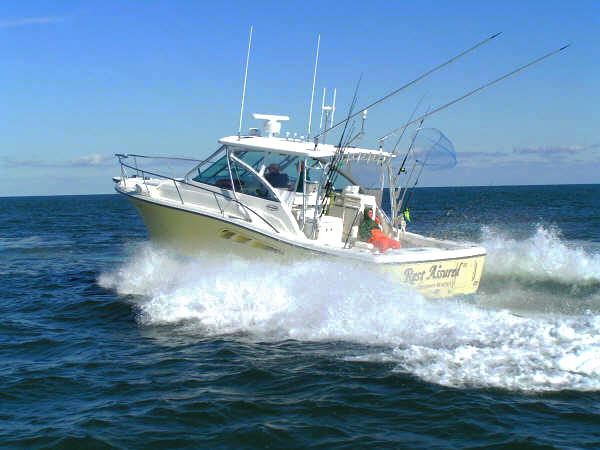
Virginia provides numerous opportunities for boating and fishing, and it is certainly possible to have a good time on a limited budget.
If you plan to captain a motorized boat, the state does require you to pass a Virginia boater safety course, but it also accepts the equivalent from another state or province. Also, Virginia does have freshwater fishing licenses, but they are only used in specific areas.
There are numerous lakes and rivers in the state where you can camp and fish without paying anything at all. So grab your backpack and head for a fun-filled adventure in Virginia!

[D]escribed by many travel writers as a ‘magical place’ Sri Lanka lives up to expectations and often surpasses them.
The Sri Lankan climate is a major factor to consider when you are making your plans to visit this island, the country boasts not one but two monsoon seasons, though having taken this into account, be prepared to explore and enjoy.
The driest times of the year to embark on your Sri Lanka holidays are between April and September especially if you plan to take in the awe-inspiring historical wonders of the ‘Cultural Triangle or the stunning east coast beaches, including the amazing Trincomalee beach, famous for its whales, or the surfer’s paradise at Arugam Bay.
Alternatively, escape the cold and the damp of the Northern Hemisphere from December to March and take advantage of Sri Lanka’s other dry season and head for the sun and sea on the island’s West coast.
The hippies of the 1960's/70's first brought this part of the island to fame and if you head off from the capital Colombo moving down the west coast to the port of Galle you’ll be able to take in the esoteric charms of this former Dutch colonial city.
The Hill Country is also dry between December and March but a mellower climate can produce a greater influx of other travellers and tourists, you have been warned.
The Sri Lankan Hill country tends to have a more temperate climate in general than the rest of the island but even this area isn’t spared the odd torrential downpour or ten.
The colonial masters of yore built their tea plantations here and there are trains that can transport you from one plantation to another while enjoying the stunning mountainous landscaping and sipping a refreshing cup of tea.

If you want to take your breath away, why not visit World’s End where a flat plateau suddenly makes way for a sheer drop of 880 metres.
Alternatively you could always go to the beginning of the bible and visit ‘Adam’s Peak,’ known locally as ‘Sri Pada’ where you can see the footprint of the Buddha on the mountain summit, this famous sight has now become a multi-religious shrine.
Be prepared for an energetic 2,243 metre climb and consult local guides about the weather at the top of the mountain on the day of your visit.
Having a limited budget does not mean missing out on any of the eight UNESCO World Heritage sites, admiring the ruined ancient temples of Anuradhpura in the Cultural triangle or trekking through the Sinharaja National Park.
Many of these areas run schemes whereby you can sample authentic Sri Lankan life by staying with a local family through the ‘Home Stay Accommodation’ scheme.
The South and Western regions offer a wide selection of hostels but make sure that your bed is provided with a mosquito net.
95% of Sri Lankan youth is said to travel by backpacking so, when in doubt ask a local traveller.
_______
Disclosure: This post was written by Celina Bledowska, a journalist and author who is familiar with traveling on a shoestring both overseas and in the UK, and brought to you by SelectiveAsia.com.
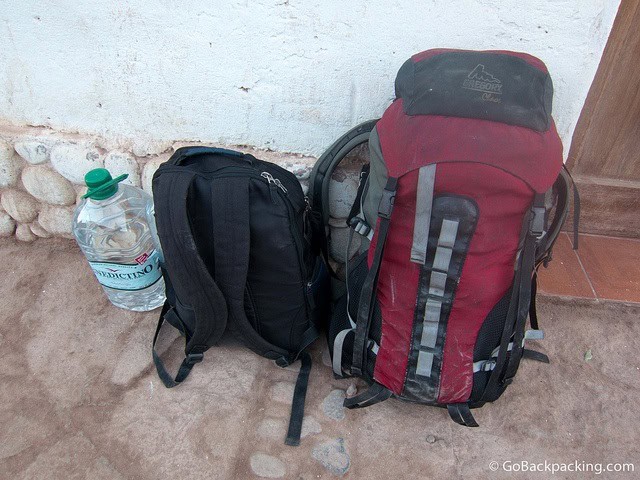
Tomorrow, I fly from Lima to Puerto Maldonado in Southeastern Peru for my first foray into the Amazon.
While the Amazon is a new jungle for me, I have spent some time in the rainforests of Costa Rica and Belize.
In the latter, I stayed at an adventure lodge with no electricity.
I am expecting this experience will be similar, especially if the Howler Monkeys have anything to say about it.
This packing list for the Amazon jungle takes into account advice from Rainforest Expeditions, as well as the following:
According to the trip notes, luggage* will be hand-carried at various stages en route to/from the lodges, and it's recommended that the weight per piece not exceed 15 kg (32 lbs).
My regular pack weighs in at just 10 kg, and I plan to reduce this weight even further by leaving behind some non-essentials at the company's Puerto Maldonado HQ before we board our first boat.
*It should go without saying that it's easier to carry a backpack than a wheeled suitcase for a trip like this.
___________
Disclosure: This tour is in partnership with Rainforest Expeditions. As always, any opinions expressed are entirely my own.
Dave's 160-page, all-original Lima Travel Guide is now available for Kindle.
Located just off the coast of Spain, Majorca is the largest island in the Balearic Islands archipelago. Sandy beaches, rocky coastlines, turquoise waters, and the warm climate all add to the popularity of the island as a holiday destination.
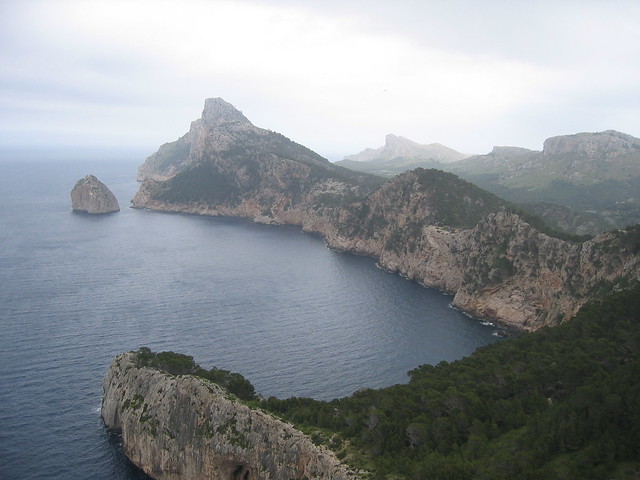
The island's Mediterranean location and great accommodation make it a breeze to organize an escape to Majorca.
While many choose to recline in the warm sunshine, sipping cocktails for the majority of their visit, the island is also a wonderful place to explore the outdoors and take part in adventurous activities.
The formation of Majorca created a diverse landscape filled with rocky coves, sandy beaches, caves, canyons, and dramatic cliffs. This combination of terrain makes the island a perfect place for those looking to satisfy an adrenaline craving.
Here are seven fun activities that are sure to get your adventure blood pumping!
The vast network of limestone caves in Majorca is one of the many adventure draws to the island. While you can visit one of the touristy caves, the best way to see what's underground is by taking a caving excursion.
Discover incredible rock formations and the unique "diamond room," a cave where the rocks shimmer like gems. Caving, though not for the claustrophobic, isn't always about having to squeeze through tiny holes.
While some tours cater to more serious cavers, there are also plenty that don't require much physical fitness and where you won't have to wriggle through impossible slots. Choose the caving expedition that you'll be most comfortable with.
Being an island, Majorca is a paradise for those looking to SCUBA dive and see the wonders of the underwater world.
The crystal-clear waters of the Mediterranean Sea, paired with an ideal climate, make diving around the island a great activity. From reefs to caves and even a few shipwrecks, there are many fascinating dive sites to explore.
There's nothing more relaxing and adventurous at the same time as boarding a kayak and paddling yourself through gorgeous scenery. The rocky coastline of Majorca and sandy beach inlets make kayaking all the more enjoyable.
There's also the opportunity to paddle through water-filled caves, see blowholes, and glide through the turquoise waters. Guided sea kayaking is a fun activity for the entire family on your holidays in Majorca.
For those wanting to experience the coastline from a different perspective beyond kayaking, you can even charter a boat in Mallorca and discover hidden coves and secluded beaches only accessible by sea.
Looking for one of the ultimate ways to get an adrenaline rush? Cliff jumping might be the activity for you!

Once again, it's the incredibly rocky terrain and coastline of Majorca that creates the perfect environment for cliff jumping. There are countless places to take a plunge from a cliff into the sparkling water below.
While jumping from any cliff is highly dangerous, several tour companies on the island specialize in cliff jumping and also offer tips on safe jumping methods and secret cliff jumping spots.
Coasteering, an activity that can be explained as a natural obstacle course, is a relatively new addition to the list of adventurous things to do in Majorca.
It involves a little bit of everything: hiking, rock climbing, swimming, cliff jumping, and even rappelling. Grab a helmet, a life vest, and some protective gear, and you'll be ready for an ultimate trek by foot along the rocky coastline of Majorca.
Paragliding is the perfect adventure for anyone wishing to see Majorca from the sky. The mountainous terrain and the perfect wind conditions make paragliding so ideal.
While some of the other activities on this list require the use of physical strength, tandem paragliding with an expert instructor really only requires you to have a little guts and a great sense of adventure.
Whether you are a beginner or an expert, Majorca is a fantastic place to hop on a mountain bike and take the ride of your lifetime.
The island offers a trail for just about anything, from a soothing, slow-paced ride along the coastline to an exciting downhill mountain cruise. The panoramic views you'll experience on a mountain bike excursion in Majorca will be nothing short of stunning!
While relaxation should be a major part of any visit to Majorca, a holiday to the island wouldn't be complete without doing a few adventurous activities as well.
Whether you aim to take on the island's most adrenaline-rushing activity or to take your entire family on an adventure they'll never forget, Majorca has so many opportunities waiting to be discovered.
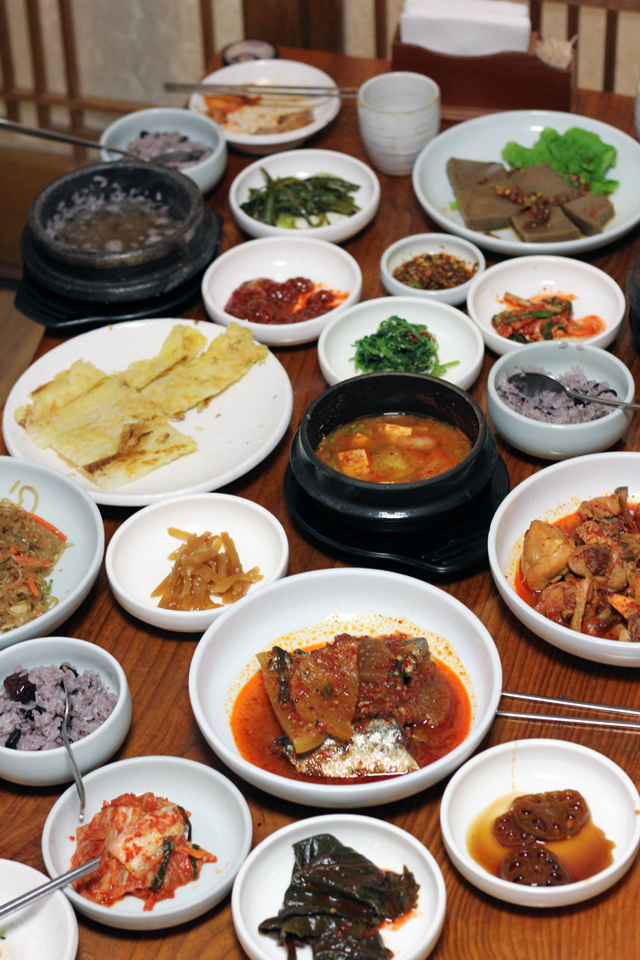
Believe it or not, when we sat down, it was an empty table. Experiencing a traditional Korean feast truly showcases why South Korea is a country that takes extraordinary pride in its cuisine, and rightfully so, because most of the dishes are absolutely scrumptious.
On top of that, within Korean cuisine, many dishes have been prepared and eaten virtually the same way for hundreds, if not thousands, of years. Korean food is wholly intertwined with its history and culture.
Before we get started, let me explain one of the most essential parts of any Korean meal: banchan. In English, it means side dishes, and each Korean feast is served with a wide variety of banchan.
The relationship between a Korean main dish and banchan is similar to that of a hamburger and French fries, yet it's even tighter.
The most common banchan is Korea's omnipresent chili-pickled napa cabbage, known as kimchi, but there are also hundreds of other items.
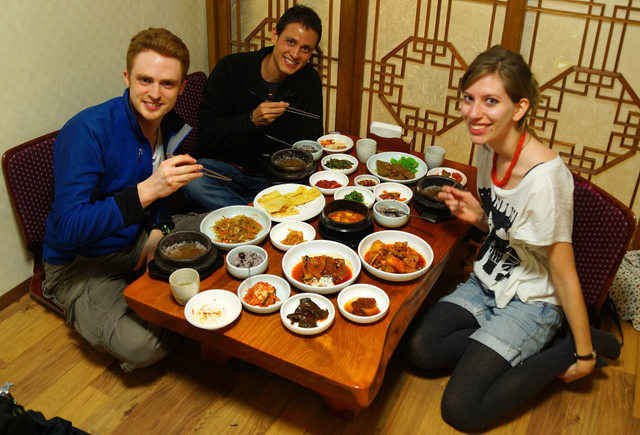
On a lovely Saturday, fellow bloggers Nomadic Samuel, That Backpacker, and I met up in central Seoul for an epic Korean feast.
We hunted through the narrow alleyways of Insadong (not far from Bukchon Hanok village) before finally settling on a homey-looking restaurant tucked away from the main walking street.
Our goal was to find a Korean "set menu lunch" which can be described as nothing less than a surprise meal that includes probably the same dishes the restaurant owner's family is eating.
It's really a meal that's composed of whatever happens to be on hand - a home-cooked feast at a restaurant.
Taking off our shoes and leaving them at the doorway, we entered and took seats at a traditional table about a foot off the ground.
The first thing that arrived at the table was a fantastic Korean-style pancake filled with veggies and fried to a crisp. Dipped in a soy vinegar sauce and paired with a bite of kimchi, it was an extraordinary way to begin the meal.
These gelatinous squares tasted almost like earthy jello. They were served cool, and had it not been for the outstanding chili garlic sauce they were doused in, they would have actually been quite plain.
Luckily, the combination was spectacular and oddly addictive (must have been that sauce).
Japchae is a very typical South Korean dish made from stir fried translucent sweet potato noodles. The noodles were combined with a variety of ingredients, including carrots, mushrooms, and green onions.
Slightly chewy and wonderfully fragrant with sesame oil, japchae made a great addition to the feast.

When we thought there was no possible way to add more food to the table, the smiling waitress came with yet another few dishes to serve.
This dish was a chicken-and-potato stew that almost reminded me of a Thai curry, minus the coconut milk. Tender chicken, soft potatoes, and a hint of sweet kimchi were the notable aspects of this comfort food.
I'm a serious rice eater, sure, I love dishes of any kind solo as well, but no matter what cuisine I'm eating, everything tastes better to me with rice. Making a mistake, I asked for rice, only to find out it was still on its way!
It was no ordinary plain steamed rice; instead, it was medium-grain Korean rice mixed with beans and Chinese plums, served to our table in sizzling earthenware pots.
After mixing the rice and transferring it to a fresh bowl, hot water was poured into the earthenware pot (which included crunchy pieces of scorched rice) to create a soothing soup.
Though we ate at a mainstream restaurant, it honestly felt more like we were the guests of honor at a local Korean's home. Our traditional Korean feast was exceptional. The diversity of flavors was exciting, and the satisfaction of the entire meal was invaluable.
You don't have to be a minimalist to pack lighter when you travel. It's not about scaling everything down to the point where you claim you own just "five" things. Instead, packing light is about being flexible, making transportation easier to manage, and saving your back from strain throughout your journey.
You may have already seen my packing list; here are five ways I lower the overall weight and size of my backpack.
This might be an obvious way to scale back on the things you bring with you, but seriously speaking, we'll probably fill it up no matter what size our bag is.
Have you ever seen a backpacker walking about with a half-empty backpack? No, most of the time, I see backpacks maxed out and overflowing with extra things hanging from strings and carabiners.
One of the easiest ways to pack lighter is to use a smaller bag; that way, when your bag is full, it won't be too big.
Clothing is one of those things that I see nearly everyone brings too much of. Yes, you need the basics, and you may need a few extras, but do you need seven shirts and seven pairs of underwear?
I travel with no more than three sets of clothes, sometimes with just two. Now, of course, you have to consider the weather conditions where you'll be traveling, but think about how many clothes you need.
Remember, you can wash your clothes in a sink each day or even buy new clothes wherever you are.

I've honestly seen travelers with toiletry kits that are nearly the size of my entire backpack! Stuffed inside are full bottles of shampoo, whole boxes of band-aids, facial creams, and who knows what else.
Depending on your own physical needs and comforts, you can probably still cut back on some of the unnecessary toiletries. Also, remember again that just about everything toiletry-wise will be available in the nearest store in whatever city you'll be in.
Shoes are incredibly bulky and often quite heavy, but they are indeed important, depending on where you're going or the activities you'll be doing.
The way I travel, I bring one all-purpose pair of shoes that I use for walking, hiking, or jogging, and I carry a pair of flip-flops that I prefer to wear most of the time.
These two footwear options are likely all you'll need for a typical backpacking trip, and any additional footwear will only add weight to your bag with minimal use.
I don't mean less reading material (I think reading is a great thing to do when you travel), but I do mean fewer physical reams of paper that are outrageously heavy.
I know it is nice to have a physical book to read while traveling (maybe one or two), but a whole stack of books may not be worth their weight. You can often find used books when you need them or trade with other travelers.
Additionally, consider an e-book reader, which allows you to store hundreds of books on a compact device.
When it comes to guidebooks, either don't bother and rely solely on the information you find online, or I've seen people tear out only the valuable pages from guides and discard the useless portions.
I'm an advocate for traveling in a way that makes you feel most comfortable, and we each have our unique wants and needs. However, I firmly believe that lightening the load is directly correlated with getting the most out of your trip.
These are just five suggestions, but there are countless other ways to cut weight from your bag, allowing you to travel with ease and give your back a break.
Auschwitz - Be a Witness from Ricky Thind
"Auschwitz - Be a Witness is a video I did for Hampshire College.
The 'Be a Witness' short had a main aim; to bring across the tragic reality of war on civil liberties; its consequence's on its survivors and to help them understand more about the psychology of humans during genocide.
Trying to inspire young people to do anything is hard enough but getting them to visit Poland maybe needed something like this. You can tell history was a favourite of mine in high school.
Editor's note: Video contains graphic and archival content. Video for educational purposes only.
Music: Jack Peñate - No One Lied"
See also: Majdanek Muzeum: Walking Among Ghosts at a Concentration Camp

Seoul is a huge, sprawling mega-city, and though it seemed intimidating at first, after spending a few days there I soon realized that the majority of the central part of the city revolves around the Seoul N Tower on top of Namsan mountain (pictured straight ahead).

The Gyeongbukgung Palace is one of Seoul's most iconic landmarks.
Originally built in the 14th century, the palace has experienced an up and down history of being destroyed and rebuilt.
Now the compound is open to thousands of locals and tourists that leisurely browse and relax on the palace grounds.

Seoul just wouldn't be the same without bustling markets. The Namdaemun Market in central Seoul is one of the oldest and largest in the city.
You can buy all sorts of locally made Korean products, clothes, and there's even an indoor section that's full of imported foods from around the world.
If you're looking for fresh seafood you've got to check out the Noryangjin fish market.
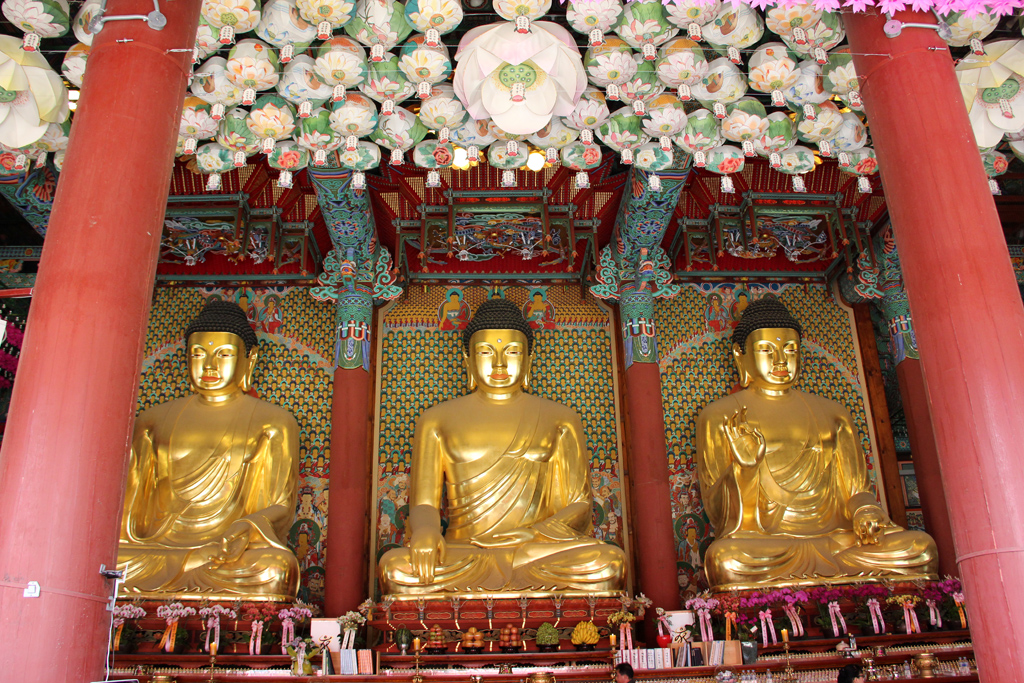
Directly in the center of skyrise buildings is the traditional Korean Jogyesa Buddhist Temple.
On the outside of the temple there is an ancient tree that is strung with impressively bright pink, green and blue paper lanterns.
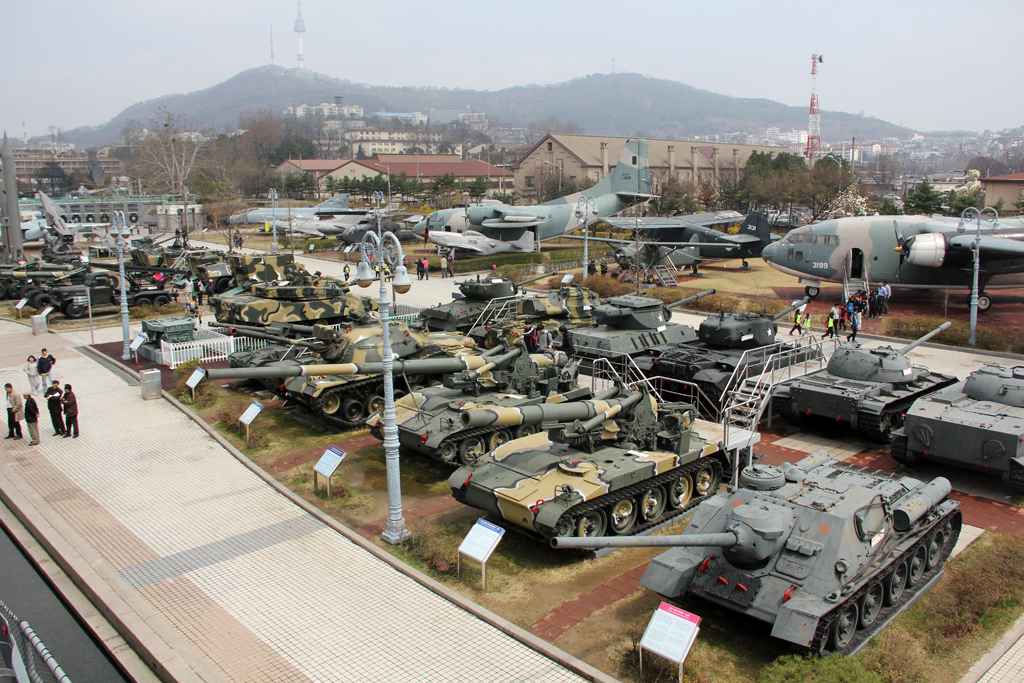
To be honest, when I first showed up at the Korean War Memorial and Museum I wasn't all that thrilled.
However after walking around and exploring the selection of real tanks and interactive military vehicles I was impressed.
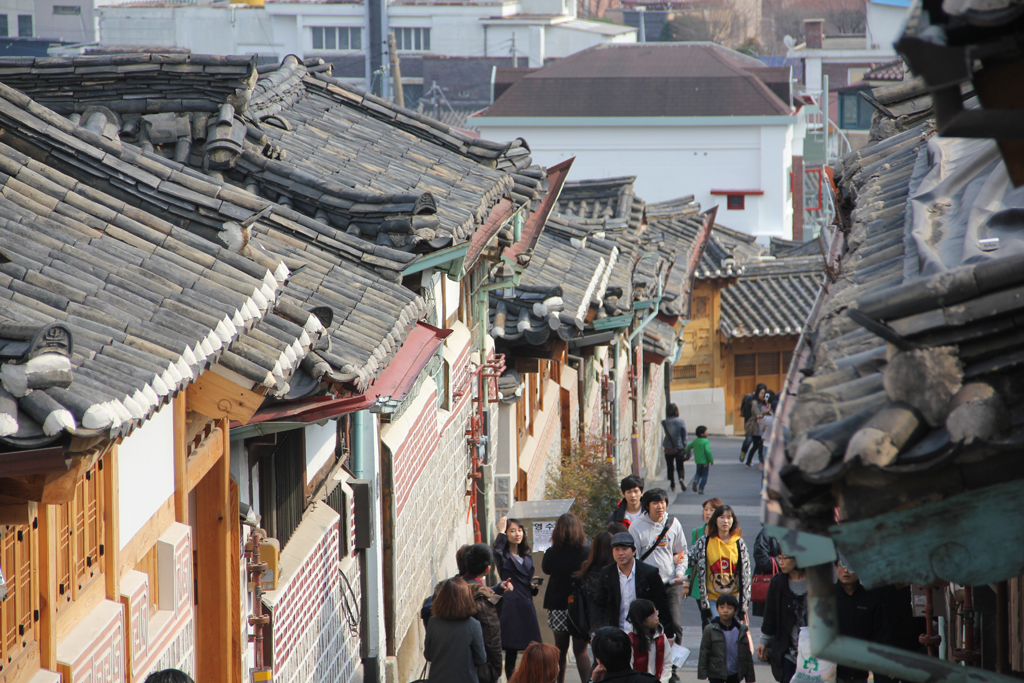
The Bukchon Hanok village is one of the best places to take a stroll in Seoul.
The traditional style of village offers a chance to catch a glimpse of historical Seoul.
On one street there's also a good selection of tempting street snacks!
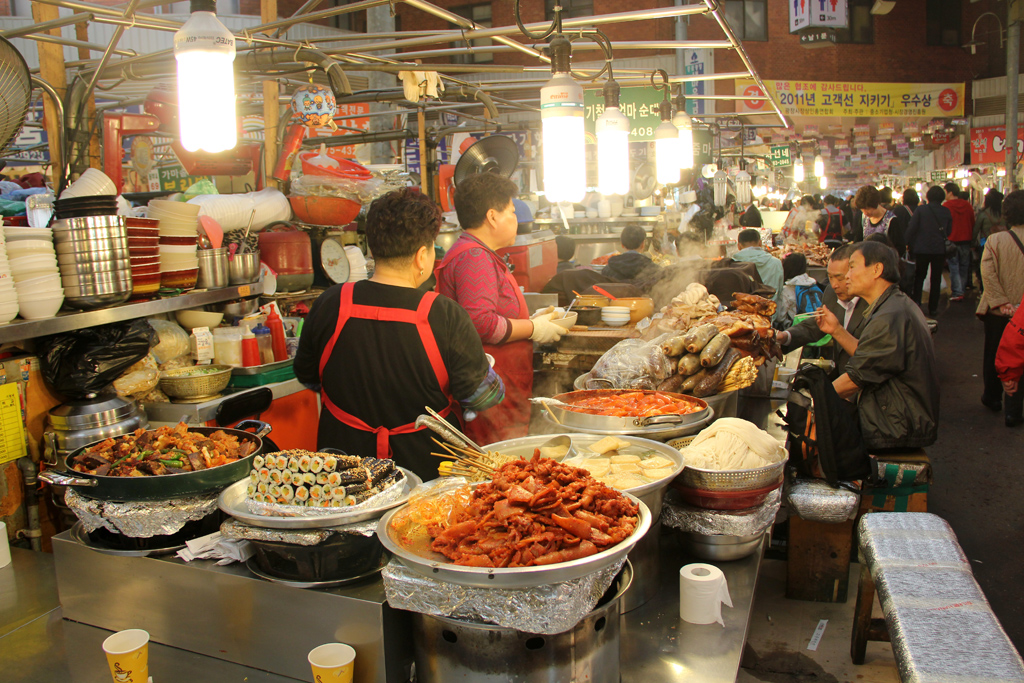
What would Seoul be without delicious food? It would certainly be a lot less entertaining, but we don't have to worry, because I can assure you there's absolutely no shortage of food in Seoul.
When I was there, my absolute favorite place for Korean food was at the Gwangjang Market.
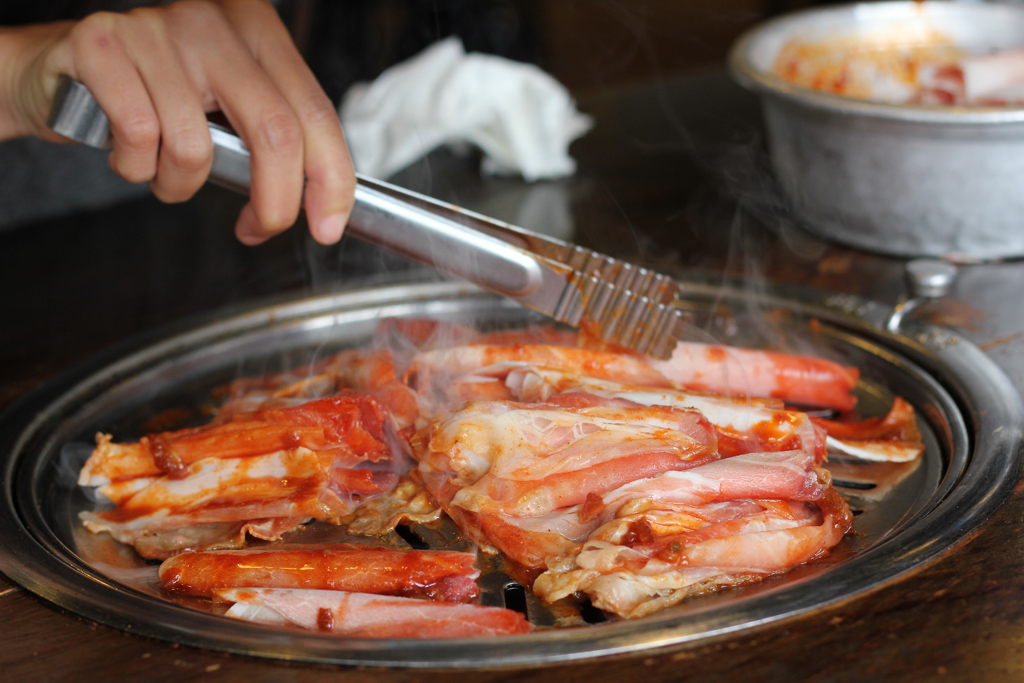
For a nicer sit-down meal, nothing beats a Korean barbecue.
Sitting at a table and cooking raw meat on a grill right before your nose is simply one of the joys of being in South Korea!

People from around the world visit Seoul with a mission to go shopping. Myeongdong is probably the most famous and most popular shopping streets in the city.
Each day countless people come to purchase cosmetics, bright colored tennis shoes, and cheaper street clothing.
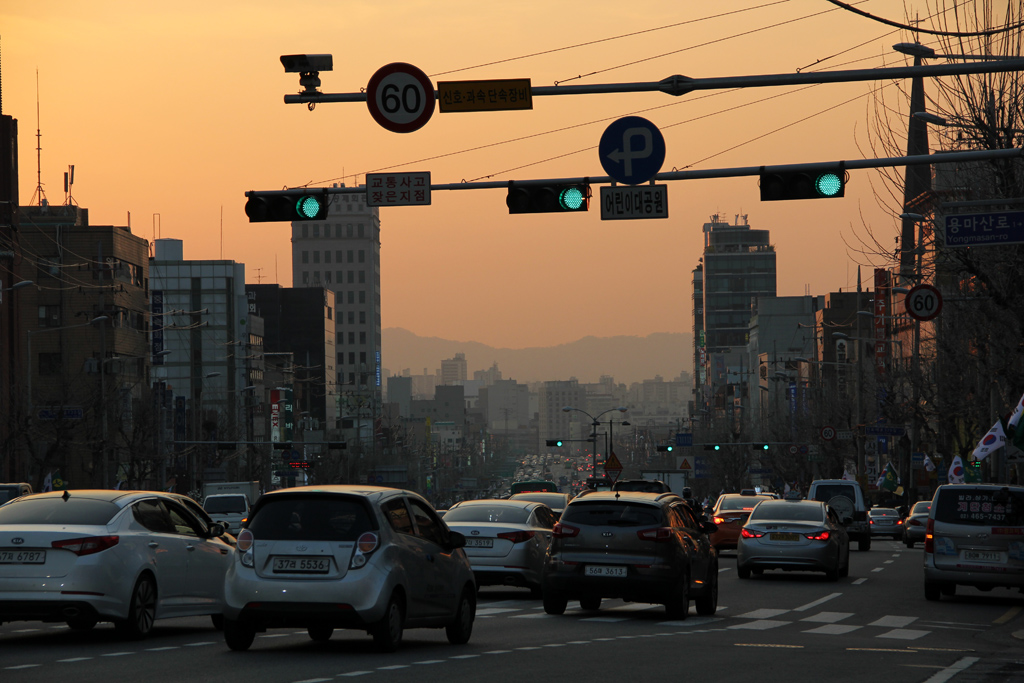
When the sun dies down, Seoul stays alive.
The endless shopping, the scrumptious food and the friendly spirit of Seoul make it a wonderful city with so much to offer!
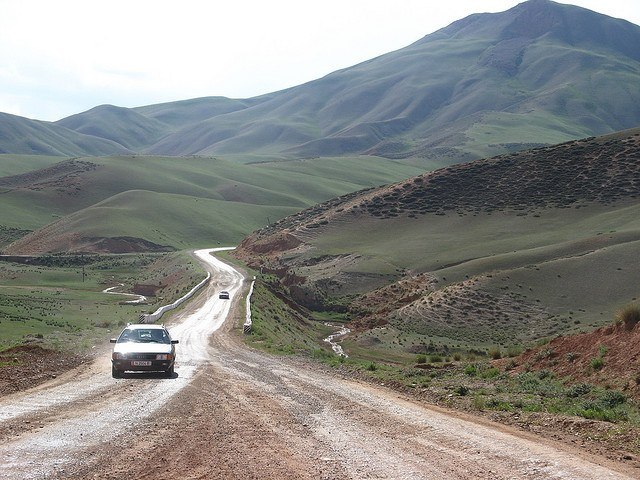
It seems that a few of my Kyrgyzstan-based articles, both here and on my blog, have been inspiring quite a few people to want to travel to Kyrgyzstan.
However, there are still questions, like how to get around the country, popping in my inbox.
Well, I can say that getting around the country of Kyrgyzstan can be an adventure in itself.
Several options are available, from shared taxis to marshrutkas (the minivans) and even long-distance buses.
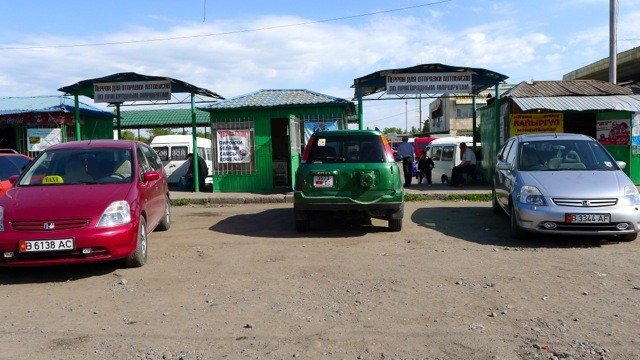
For a foreigner, I find the shared taxis from one city to another to be the most comfortable... and I use the word "comfortable" lightly.
Typically, you will be in a car of 4 to 6 people (depending on the model), and you pay per seat.
In Bishkek, shared taxis congregate at the West Bus Station, or the New Bus Station as it is also known.
If you need to head anywhere, arrive in the morning hours, and the taxi owners or "taxi pimps" will pretty much find you.
Just say the city where you're heading, and someone will point you in the direction of a taxi.
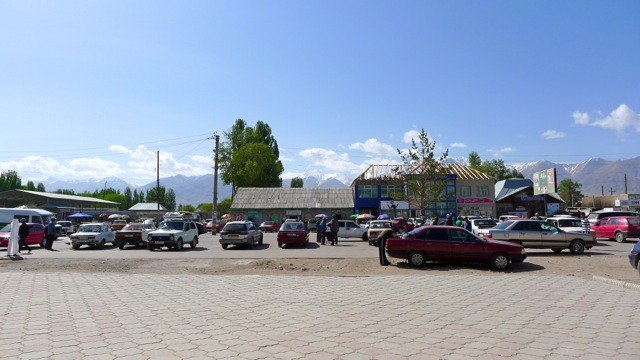
The price for a 3-hour journey to Kochkor or the edge of Lake Issyk-Kul will typically run 300 to 350 som per person.
You do have the ability to buy out an entire car if you would feel more comfortable, which is still relatively affordable in Western terms ($25-$30).
A few things to be aware of when taking a shared taxi.
Sometimes the driver is not the one finding the cab for you. Someone might see you, take you to a car, and get a cut of your pay from the driver.
Cars can be very cramped. If going in a four-person car, try to find one that is a bit larger. Kyrgyz people tend to do whatever they can to save a couple of bucks, which can mean sitting next to two women holding toddlers on their laps.
Cars tend to break down. Many of the shared taxis are older vehicles, and the roads in Kyrgyzstan can be unforgiving.
Our last rides down to Naryn and on to the Torugart Pass were horribly bumpy, so prepare yourself (aka use the toilet before going)!
Don't be afraid to shop around if the price doesn't sound right.
People are generally reasonable, but there will be times when they shoot off an excessive amount, hoping to take advantage of Westerners.
Related: What to Expect When Backpacking Kyrgyzstan

Marshrutkas are minivans that act as public transport. In Bishkek, they can be crowded, over-run and stifling - but they are also super cheap (10 cents for a ride!).
In the same way, long-distance marshrutkas are cost-effective, but they might take a bit longer than a shared taxi (at least they only sell by the seat on long-distance rides).
The rides might still be a bit stifling given that no, or few, interior windows tend to open.
Luckily, many of the rides appeared to be newer machines, meaning AC will hopefully be in your cards on those hot summer days.
In Bishkek, catching a long-distance marshrutka can be done at the West Bus Station, just like a shared taxi.
However, more local, regional stops like Tokmok and Korday have marshrutkas that run from the older East Bus Station.
Besides being slower, it might also take you longer to get on the road in the first place since the driver has to wait for the van to fill up with more people.

The slowest of all the travel options in Kyrgyzstan would be the long-distance bus as those have many stops to complete en route.
These buses also typically leave in Bishkek from the New Bus Station (West Bus Station), but routes still appear pretty limited.
Marshrutkas and shared taxis are generally the more flexible and better ways to go if possible.
I have opted for the other two popular modes of transport to get around Kyrgyzstan overland. Tickets are more affordable, however.
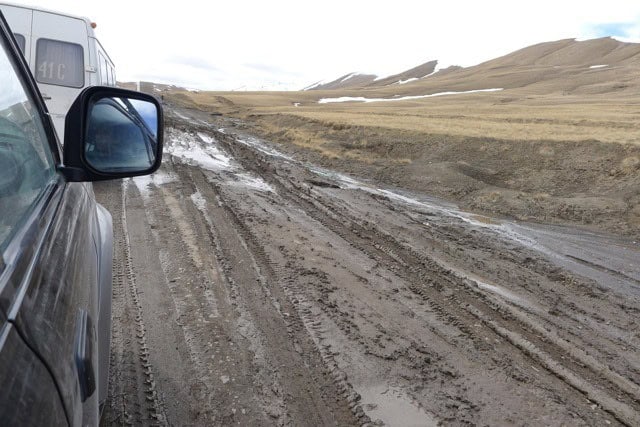
Try to learn at least a few words or phrases in either Russian or Kyrgyz.
It will help when you need to ask how much the ride costs, where you're going, whether or not you need to ask to use a toilet, etc.
Ask a local before heading to the taxi, marshrutka, or bus how much a typical ride should cost. Use this as a guide when negotiating a price.
Wear comfortable clothing and be prepared for heat or cold while traveling.
Plan to be cramped. Kyrgyz people will cram in anything and everything where there is a free space.
Head out in the morning. You will have more luck in finding a ride and just be safer that way.
As always, I highly recommend Community Based Tourism as a resource. They will help you with transport, and local guesthouses or yurt stays throughout the country.
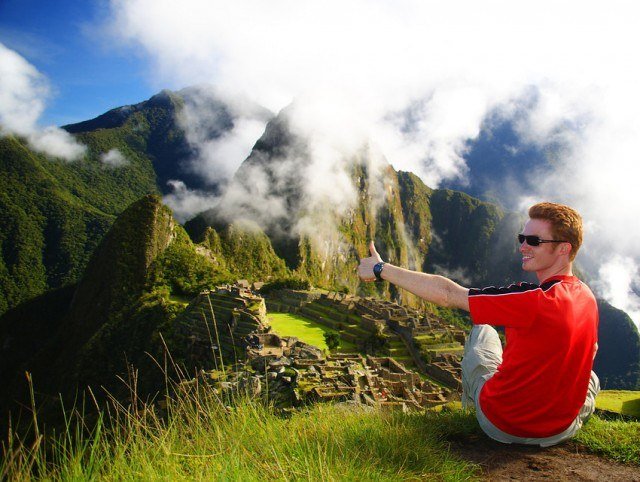
It's been over two years since my last interview with a member of Travel Blog Success. In that time, 200 new travelers have joined the community. Last year, Nomadic Samuel was one of them.
I knew he'd succeed in reaching his goals because the bloggers who ask the most questions often do. They have an insatiable desire to learn, and that's important.
TBS: Why did you decide to join Travel Blog Success (TBS)?
Samuel: When I decided to launch my travel site Nomadic Samuel I had built up a lot of resources that I could potentially share with others in terms of travel photos, videos and stories; however, I completely lacked any technical knowledge regarding running a website or monetizing my online business.
At the time, I hoped that by joining this course it would help me achieve success in these areas where I had limited to no experience.
Overall, the investment has more than paid off and joining the course as a Premium member was one of the best decisions I’ve made towards advancing my travel blog.
TBS: When did you join TBS? How much were you earning per month from your blog at the time?
Samuel: I joined TBS almost immediately after launching my travel blog, so I was earning literally nothing at the time.
I knew I was going to be serious about my site from the initial stages, and it was great to build a foundation of knowledge related to the business aspects before I even had advertisers contacting me.
TBS: In the beginning, how much money did you initially hope to earn per month? And how much money did you make last month (May 2012)?
Samuel: Having launched my blog on July 1st, 2011, I had set a goal that by the end of my first year of blogging I would make $1,000 in the final month leading up to that anniversary.
My goal was to slowly increase my monthly earnings and eventually achieve over $1,000 by the end of the year. Looking back in hindsight, I realize I had set the bar far too low.
I’m thrilled to announce that I earned well over $6,000 for May spread across several different sites and a few external projects.
I would never have expected to be earning this much money in my first year, but I’m certainly pleased with the results.
TBS: What are the ways you're currently earning money?
Samuel: Currently, the bulk of my earnings come from text link sales on my sidebar and sponsored posts. I think one of the best decisions I ever made was to create several other sites last Winter when I was in between regular jobs.
Although many of my projects have not yet been completed, I’m earning money now on several different sites, such as Smiling Faces Travel Photos, in addition to my flagship site.
Moreover, I’ve just started to monetize my YouTube travel channel, and I’ve been earning money sporadically from private sales with my travel photos for print magazines.
Affiliate sales and Google Adsense make up another small percentage of the money I pull in each month.
I’m planning on setting up a stock photography profile on several different sites as another method to earn more passive income.
In the future, I’d like to monetize more of my travel sites and create several of my own ebook products to sell.
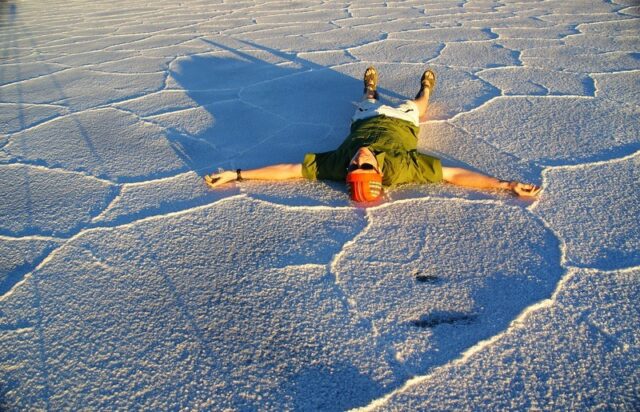
TBS: Which TBS resources have you found most useful, and why?
Samuel: Overall, I’ve found many components related to the TBS very useful.
The course (written lessons) itself is full of quality information that really provides a blueprint for how to go about successfully building your site up to the point where it can eventually make money.
The audio interviews from experts in different fields provided additional insight.
Finally, the Facebook group has been my favorite part of the program. It’s a community full of like-minded individuals who are supportive and helpful towards one another.
I can’t count the number of times I’ve used the message board to seek advice on a variety of subjects related to my site, monetization, or strategy techniques.
TBS: Were there any moments where thought about quitting, or at least cutting back drastically on the amount of time and energy you were putting into your blog(s)? If yes, what inspired you to continue?
Samuel: Absolutely. I’ve faced several significant challenges related to blogging over the first year of my sites.
Last Fall, I lost a position at work due to the fact I was earning money outside of my job with my blog.
Although this amount was quite insignificant at the time, it was enough for my eventual dismissal.
I had already found it challenging to work and blog at the same time, and this black mark had me questioning whether I was making the right decision to carry on with things.
In the New Year, I made a tough decision to dismantle my YouTube channel and remove all of my travel videos.
At the time, I was achieving nearly 3,000 views per day on average, and almost overnight, I had obliterated all of that.
Since that time I’ve slowly been building the channel back up again doing things properly with royalty-free music.
Overall, the challenges were difficult situations at the time, but in hindsight, I feel they were important tests/hurdles that needed to be overcome to see whether or not I was serious with my blog.
TBS: Who do you think can benefit the most from joining TBS?
Samuel: I think anyone serious about growing their blog and eventually monetizing it can benefit from joining TBS. I would highly recommend it to anyone.
TBS: Parting words. What's your #1 piece of advice to travel bloggers who are just getting started?
Samuel: My number one suggestion for travel bloggers just starting is to try and be consistent as possible with your efforts.
It’s easy to get frustrated, and it is easy to potentially to want to give up after putting in weeks/months of hard work and at times seeing little reward for those efforts.
It’s been well noted by other senior bloggers that it takes time to build your site up to the point where it can earn significant money.
My advice is to be consistent across the board with your efforts until you reach that point.
Any travel blog that has achieved success in any given area is consistently churning out great content, utilizing social media to expand its audience and building links to make stronger page rank/SEO Moz indicators.
I don’t know of a single travel blogger who has not been frustrated or hit rock bottom and wanted to give up at some point. Not packing it in is half the battle towards eventually achieving success in all areas.
Special thanks to Samuel for taking the time to share his experience building a new travel blog.
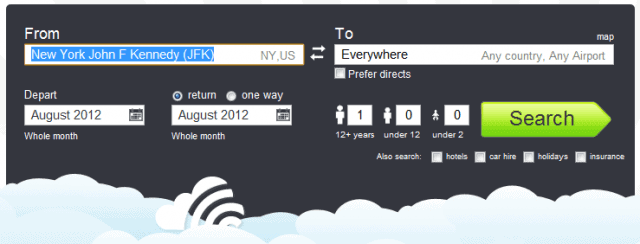
[B]ackpacking is a pretty cheap way to travel. The biggest cost you’re going to encounter is booking flights to your destination, then after that it’s all about the street food and hostels.
Although travelling long distance can be eye wateringly expensive, flying really doesn’t need to break the bank either. With a little bit of savvy it’s easy to find cheap flights; just follow these tips and you can’t go wrong.
Flight comparison sites are really useful at this point. Not only do they tell you which airlines and times are cheapest to fly, they can also show you which airports it’s cheaper to fly from, which destinations it’s cheaper to fly to, and what time of year you should travel.
If you’re just starting to plan your escape, you may not be set on your destination. Do you want to channel Leo DiCaprio in Thailand, or trek through the rainforests of South America?
If tossing a coin isn’t working, toss the destinations into a flight search engine instead. Whichever one has the cheapest flights, wins.
Setting your destination to ‘everywhere’ on Skyscanner allows you to see where’s cheapest to fly to say in August.
But you might have your heart set on a trip to India, and nothing’s going to change your mind: not even cheap flights.
In this case it’s still possible to be flexible: simply look at the departing airport instead. Sometimes flights from your local airport will be more expensive than a larger airport in a different part of the country.
When you’re booking your flights, compare the difference in cost. If it would be cheaper to travel to the other airport and fly, then go for it.
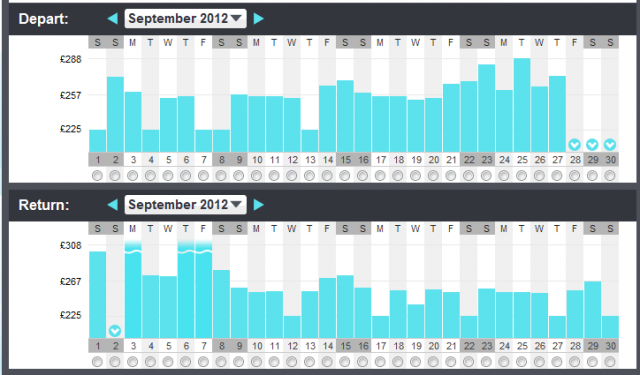
Off peak tickets isn’t a term that only applies to trains. Using an online comparison tool it’s possible to search for the same flight over the course of a week, month or year and see how it fluctuates.
Weekend flights are generally more expensive than weekday flights due to higher demand, and you’re likely to find that flights during the school summer and Easter holidays are a lot pricier for the same reason.
Just play around a little: arriving a day earlier or later could save you hundreds.
Skyscanner’s month view makes it easy to see when the cheapest days to fly are. See the example below for a comparison of flights to Toronto Pearson in Canada from Heathrow in September.
Direct flights are almost always more expensive than flights with a stopover, another thing to look out for when you’re using a comparison tool. Before booking your flight, make sure that you really are getting the best value for money.
The flight with a two-day stop in Dubai may be a little cheaper than the flight stopping in Bangkok, but weigh up how much your accommodation and food is going to cost. Dubai is the more expensive country, so you may find that you quickly spend the money that you’ve saved by stopping there.
________
Disclosure: This article was brought to you by James from Skyscanner.net, a flight comparison website based in Edinburgh.
There are plenty of famous things to do in Hawaii like surfing, snorkeling, eating, and just being lazy on the beach.
One of the more overlooked attractions is the beautiful hiking opportunities that all the Hawaiian islands present.
The Hawaiian archipelago is a chain of islands in the middle of the Pacific Ocean created by volcanoes.
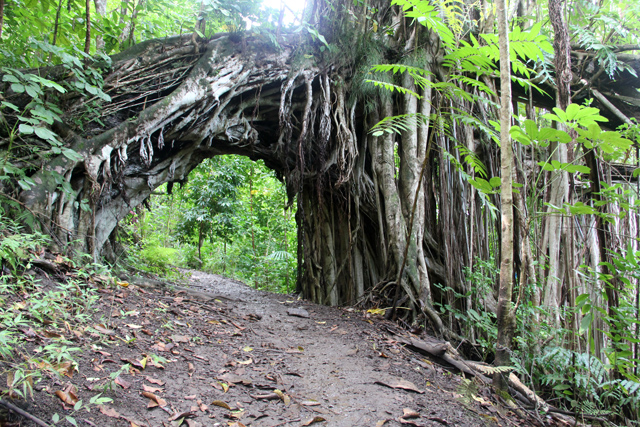
Jagged mountains, dramatic cliffs, beaches, rocky coastlines, and gorgeous tropical flora and fauna are a few of the aspects that add to the beauty of Hawaii.
On the island of Oahu, the leeward side is the drier side that receives far less rain than the windward side, which seems almost constantly to be drizzling.
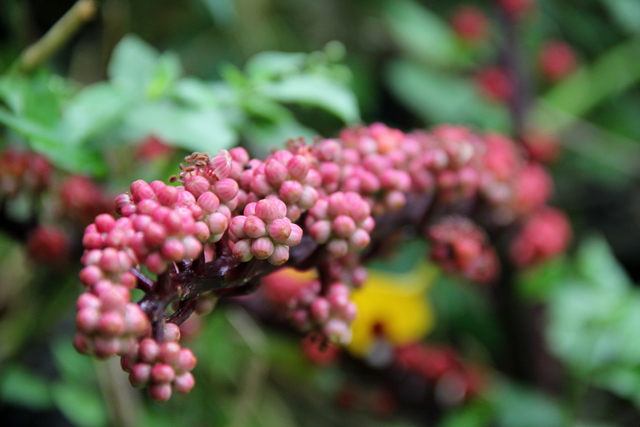
The two differentiating climates of the island make it possible to take a hike in almost desert conditions or mountains surrounded by misty tropical rainforest.
While Oahu, The Big Island, Maui, and Kaua'i all have great hiking routes and national parks, most of my hiking experience is right on the most populous island of Oahu.
Here are a few hikes I was able to enjoy on my last trip to Oahu.
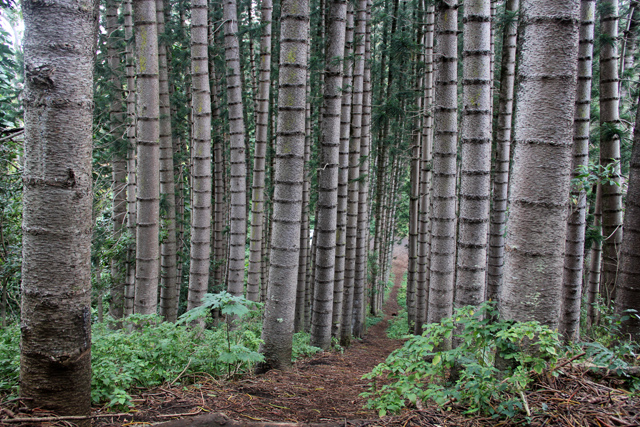
Just moments from central Honolulu, Tantalus is a convenient place to hike and offers the perfect green escape from city life.
While many tourists and locals choose to drive to the top for the picture-perfect view of the city of Honolulu, not so many choose to hike to the top.
The tree and plant-filled trail is quiet and relaxing; it's easy to forget you're still so close to a city of a million.
As soon as you emerge at the top of Tantalus, you'll' remember how close you are to the city and be grateful to be taking such a fantastic hike.
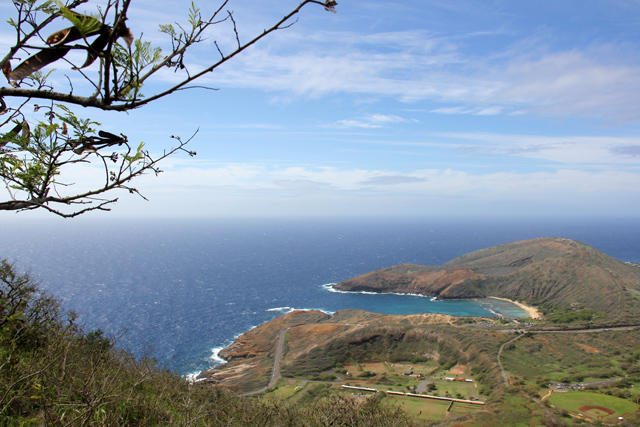
For a hardcore dose of exercise, Koko Head Crater makes the heart race.
Formerly a military bunker and lookout, the trail follows a railroad supply track straight up the side of the cone-shaped crater.
In good shape, it's possible to scale the beast in around 20 minutes, but feeling the effects of eating all the Hawaiian food, it may take up to 45 minutes.
At the top, the views of Honolulu, the mountains, and the zigzagging coastline, are remarkable to see and justify every single step to the top.
Koko Head Crater is on the leeward side of Oahu, making it a dry but wonderful hike!
Related: Oahu Scenic Drive - A One-Day Itinerary
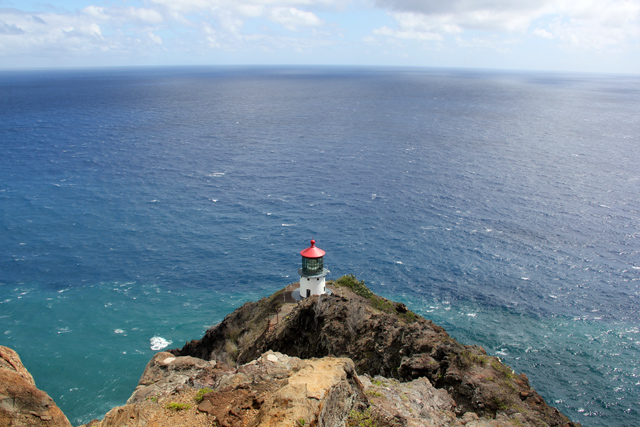
The trip to the breathtaking Makapu'u Lighthouse is not a hike but more of a leisurely walk that winds its way up the side of a small hill on the very southeastern part of the island.
One of the highlights of Makapu'u point is the whale watching opportunities.
The last time I went, it was luckily a very clear day, and we were able to see two humpback whales breaching not so far away from the coast. It was incredible to watch.
Though the trail doesn't' exactly provide any opportunities for being alone (due to lots of other hikers), the scenery makes it worthwhile.
There are many more hiking routes located throughout all the islands of Hawaii and Oahu, but these are just the few I was able to do on my last visit.
When you visit Hawaii, be sure to enjoy relaxing on the beach, but also take a day to do some hiking and see the incredible beauty the islands have to offer.
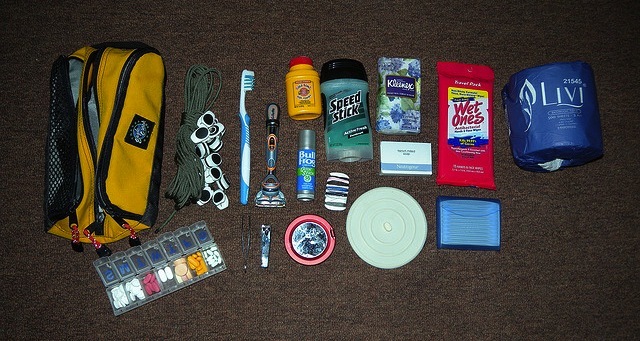
I am currently in the middle of a three and a half month trip through some pretty rustic countries, and there have been things in my toiletry and medical kit that have been sent from the Heavens, and others that I acquired and was happy that I did.
So, I'm going to share with you, ladies, the items that are extra important for females that are traveling through lands of squat toilets, rare showers, and long days of transport.
Men, this is not for you, so you've been warned!
It seems that I never have to take antibiotics until I'm traveling.
This time around I was extremely worried because I didn't pack any probiotics, and as a woman, taking antibiotics always has the possibility of leading to another female issue – thrush.
Luckily, I was able to ask for some at the local Kyrgyz pharmacy, which I started on as soon as I finished my course of antibiotics.
The probiotics help replace the good bacteria in your gut that some antibiotics might kill off, specifically the bacteria that keep the yeast also in your body at bay.
Probiotics – the kind that you don't have to refrigerate do exist – are also said to help keep your gut regular when you travel, and even lessen the effects of traveler's diarrhea (the minor kind).
It definitely is something that I've packed preemptively in the past, but didn't for this trip.
Traveling in rough conditions, with few showers, getting extremely ill, taking antibiotics, or just sweating in India's unforgiving climate can all lead to thrush.
It might not be something that ever happens to you on the road, but if it does, it is so much better to be prepared. Nothing quite like being in the middle of nowhere and being in agony, right?!
Before traveling, I like to stop off at the doctor to see about getting some extra medical supplies, such as a course of antibiotics and a thrush treatment in tablet form.
I know in the United States that tablet is called Diflucan, and a single tablet can take the place of those messy creams.
Besides those face wipes that act as my “bath in a bag” after long flights or on days when I can't get to a shower, I also pack a travel sized packet of toilet wipes.
If I'm feeling particularly scuzzy, have just sweated heaps, am on my period, or am having tummy troubles – these wet wipes for your private parts are worth their weight in gold.
Plus, getting clean when you can helps to minimize the risk of more female issues, like bacterial or thrush infections.

I'm sure most everyone packs a pain relief medicine for travels – for headaches, backaches, etc. – but a tablet that's targeted to period pain is another important one for females.
Midol is a popular brand in the US, and it not only helps with the cramps, but it also helps with the bloating and irritability that come with a visit from Aunt Flo.
If you're someone that suffers from strong periods, then adding this to your packing list is a no-brainer.
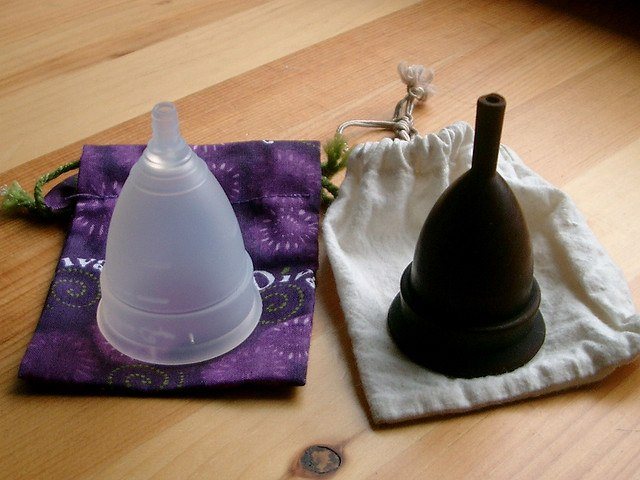
If you follow along on my Her Packing List, you will know I am a huge supporter of the Diva Cup – a reusable menstrual cup that is great for travel.
I know it might not be for everyone, but as a female traveler, the Diva Cup gives me peace of mind. Its suction seal prevents leakage, even on long travel days when you might not be able to make it to a proper toilet.
Travel styles do vary, though, and ladies that are into active hiking/trekking might find regular tampons to be a more hygienic option.
Cranberry pills hold the acidic benefits that help to prevent UTIs (urinary tract infections) in women.
If you are prone to getting UTIs, then you should consider packing some cranberry pills, especially when traveling to destinations where cranberry juice might not even be an option.
The acidity of the cranberries helps to flush out the urinary tract, helping to keep harmful bacteria (like e. coli) from hanging around and causing an infection.
And the last thing that I suggest to female travelers to have in their toiletry/medical kits would be condoms.
Even if you are on the pill, your birth control can be rendered useless if you have to take some antibiotics.
Sure enough, Amoxicillin, like what I took for my chest infection recently, interferes with birth control.
If you don't want babies at this moment in your life, do yourself a favor and pack a few!
Did I miss any big ones, ladies? Feel free to share your tips below!