Go Backpacking

  • About
  • Travel Tips
    • Accommodations
    • Budgeting & Money
    • Adventure Travel
    • Food & Drink
    • Gear & Gadgets
    • Packing Tips
    • Travel Blogging
    • Travel Insurance
    • Trip Planning
    • UNESCO Sites
  • Destinations
    • Africa
      • Botswana
      • Egypt
      • Ethiopia
      • Morocco
      • Rwanda
      • South Africa
      • Tanzania
    • Asia
      • Cambodia
      • China
      • Hong Kong
      • India
      • Indonesia
      • Japan
      • Laos
      • Malaysia
      • Nepal
      • Philippines
      • Thailand
      • United Arab Emirates
      • Vietnam
    • Europe
      • England
      • France
      • Germany
      • Greece
      • Iceland
      • Ireland
      • Italy
      • Portugal
      • Spain
      • Switzerland
      • Turkey
    • North America
      • Canada
      • Costa Rica
      • Cuba
      • Guatemala
      • Mexico
      • Nicaragua
      • Panama
      • United States
    • Oceania
      • Australia
      • French Polynesia
      • New Zealand
    • South America
      • Argentina
      • Bolivia
      • Brazil
      • Chile
      • Colombia
      • Ecuador
      • Peru
  • Advertise
menu icon
go to homepage
  • About
  • Travel Tips
    • Accommodations
    • Budgeting & Money
    • Adventure Travel
    • Food & Drink
    • Gear & Gadgets
    • Packing Tips
    • Travel Blogging
    • Travel Insurance
    • Trip Planning
    • UNESCO Sites
  • Destinations
    • Africa
      • Botswana
      • Egypt
      • Ethiopia
      • Morocco
      • Rwanda
      • South Africa
      • Tanzania
    • Asia
      • Cambodia
      • China
      • Hong Kong
      • India
      • Indonesia
      • Japan
      • Laos
      • Malaysia
      • Nepal
      • Philippines
      • Thailand
      • United Arab Emirates
      • Vietnam
    • Europe
      • England
      • France
      • Germany
      • Greece
      • Iceland
      • Ireland
      • Italy
      • Portugal
      • Spain
      • Switzerland
      • Turkey
    • North America
      • Canada
      • Costa Rica
      • Cuba
      • Guatemala
      • Mexico
      • Nicaragua
      • Panama
      • United States
    • Oceania
      • Australia
      • French Polynesia
      • New Zealand
    • South America
      • Argentina
      • Bolivia
      • Brazil
      • Chile
      • Colombia
      • Ecuador
      • Peru
  • Advertise
search icon
Homepage link
  • About
  • Travel Tips
    • Accommodations
    • Budgeting & Money
    • Adventure Travel
    • Food & Drink
    • Gear & Gadgets
    • Packing Tips
    • Travel Blogging
    • Travel Insurance
    • Trip Planning
    • UNESCO Sites
  • Destinations
    • Africa
      • Botswana
      • Egypt
      • Ethiopia
      • Morocco
      • Rwanda
      • South Africa
      • Tanzania
    • Asia
      • Cambodia
      • China
      • Hong Kong
      • India
      • Indonesia
      • Japan
      • Laos
      • Malaysia
      • Nepal
      • Philippines
      • Thailand
      • United Arab Emirates
      • Vietnam
    • Europe
      • England
      • France
      • Germany
      • Greece
      • Iceland
      • Ireland
      • Italy
      • Portugal
      • Spain
      • Switzerland
      • Turkey
    • North America
      • Canada
      • Costa Rica
      • Cuba
      • Guatemala
      • Mexico
      • Nicaragua
      • Panama
      • United States
    • Oceania
      • Australia
      • French Polynesia
      • New Zealand
    • South America
      • Argentina
      • Bolivia
      • Brazil
      • Chile
      • Colombia
      • Ecuador
      • Peru
  • Advertise
×
Home

Scoot Over: Foreign Danger on Thailand's Roads

The following is a guest post by Jade Scully. If you'd like to guest post on Go Backpacking, please read our submission guidelines.

Earlier this year, my boyfriend and I spent two and a half weeks backpacking through Thailand. It was a short trip, but just long enough to open my heart and eyes to the idea of seeing the world.

Scooters are used to get around everywhere in Thailand.

As soon as we landed in Bangkok, I was in awe of the amount of Thai people getting around on scooters; it seemed there were more of them on the road than cars and buses put together! What was even more shocking was that none of them wore helmets even when a whole family of five (including a baby of a few months and a little child) was squeezed onto the back, holding onto one another tightly so as not to slip off.  It was a scene we'd have to get used to, and when I stopped to think about it the entire transport system the cars, scooters, and tuk-tuks they moved smoothly within the chaos. There were very few actual traffic jams, and even less hooting and screaming at each other.

In fact, it was only the overwhelming number of foreigners on scooters that created any kind of on-the-road friction, especially those found on the islands.

It's so cheap and easy to rent a scooter (assuming one doesn't mind parting with his or her passport for the duration of the rental; this is their insurance policy), and it may honestly be the best way to explore the islands. But, combine the reckless abandon of young travelers with equally as cheap and easily-accessible alcohol, and then add the freedom to drink and drive, and there are bound to be some clashes. I know from personal experience.

During our time on the first of the islands we visited Koh Phangan we met up with a group of burly, ready-to-party guys from New Zealand and an even crazier Scotsman. Since we were all staying next to one another, we decided to head to Haad Rin (the venue of the Full Moon Party madness) together. The roads there were curvy and steep, and even on the back of the open taxi we'd all chipped in together to hire, I felt uneasy. We got there safely though and ended up partying until sunrise.

The next night the boys decided to head back to the drunken craziness on their scooters. My boyfriend and I, on the other hand, had had a relaxed evening in and were in bed by the time they arrived back. It wasn't until the next morning that we heard the news: Tim (one of the New Zealanders) had been driving back completely drunk, hit something on the road, and flown headfirst over the handlebars. He barely missed going over the edge. When we checked up on him he had bandages on his legs and arms, and cuts everywhere else.

But that didn't stop the boys heading out for another drunken night adventure on their scooters. Sure enough, two of them crashed on their way backs as well.

It was only when we were on Koh Tao and heard about the recent death of young traveler in a scooter accident that I really stopped to think about it. Although the Thai people may not ride their scooters in the safest of ways, they knew the roads and weather conditions like the back of their hands. They'd probably even been living this sort of lifestyle since they were born. Visitors to the islands, however, are just there to have a good time which generally involves drinking way more than a few drinks, dancing the night away, and coming " home" to their bungalows early the next morning by whatever means they saw fit. In most of their home countries, they probably would never consider drinking and driving as an option, but for whatever reason such rules as well as most common sense washes away with each swig of an ice cold Chang Beer.

My advice to anyone planning a trip to Thailand go, have fun, drink you little hearts away if you must, but please, please don't think you're invincible enough to have too many beers and drive you little scooter home. Many have tried and failed before. The majority of them ended up in physical pain with the financial wounds of having to pay back the expense of the damage done, but some, including the one unfortunate traveler that I know of, are no longer with us as a result.

The author and her boyfriend riding safely on their scooter.


Enjoy the buckets and then pay that extra 300Baht for a taxi or tuk-tuk home. It's worth it.

___________

About the Author: Jade Scully is a copywriter, blogger and online marketing enthusiast who has published her work on a series of online publications and websites including the Africa Adventure blog.

Compare Travel Deals at icelolly.com

Since I began traveling abroad over 12 years ago, I've met more people from the United Kingdom (England & Ireland to be specific) than just about any other region.  

I chalk it up to their consistently strong currency and desire to escape the often cool and rainy weather.

If you live in either country, then you should get to know Icelolly.com, a comparison tool for booking cheap holidays around the world.

The premise behind the site couldn't be simpler.  

Gather together a wide range of holiday travel offers to popular destinations around the world, and offer visitors the ability to easily compare prices.  

This is a UK based service, so trips are quoted in British Pounds, and include airfare to/from UK airports and accommodation.  

Prices are per person, based on two people traveling together.

There are three holiday categories to choose from when conducting a search.

1. Ski holidays are predominantly focused on European destinations, including resorts in the Swiss, French, and Italian Alps.  For those interested in leaving the European continent on their trip, there are also resorts in Canada such as Whistler (British Colombia), and the USA (both the Rockies, and Vermont).

2. City break holidays, good for shopping, taking in the arts, and dining well include places such as Hong Kong, Paris, Marrakesh, Bangkok, Istanbul, and New York City.

3. Sun holidays include the widest range of locations, from nearby destinations like the Canary Islands and Greece to the distant such as the Caribbean, Vietnam, India, and Kenya.

icelolly.com is solely a search engine for vacation packages and is therefore not involved in the actual booking process.

Each search result includes the name of the associated travel agency, as well as a contact phone number should you have questions or want to book the trip.

Complimenting the search results are high-level profiles of each location.  

The overviews include popular activities, a taste of what you'll encounter eating out, and most importantly, average temperatures throughout the year along with a recommendation for the best time to visit.

As far as I can tell, inclusion on the Icelolly.com site is dependent on companies willing to advertise their travel deals there.  

As a result, the comprehensiveness of what's on offer may be limited, however, it's worth referencing as yet another tool in your arsenal for booking cheap holidays from the UK.

______

This story was written in partnership with Icelolly.com. 

Gumbo Tales: Finding My Place at the New Orleans Table

Gumbo Tales book

Of all the places I visited on my road trip across the United States, it wasn't until New Orleans, Louisiana that I truly felt alone.

The city is tragically beautiful and unique and without any real clue as to where I was or where I should be going, I was overwhelmed.

Thankfully, as I was wandering through the French Quarter, I met Sara Roahen in the Librarie Book Shop. And by met, I mean that I stumbled across her book.

Within it, Roahan takes her readers on a journey through the notoriously delectable Crescent City cuisine as she attempts to trace the origins and explore the variations of signature dishes such as rice and beans, poisson meuniere amandine and ya-ka-mein.

But there's more to Gumbo Tales: Finding My Place at the New Orleans Table; it is as much a foodie's delight as it is that of a cultural historian.

Roahan does not limit herself to recipes or restaurant recommendations, although they are quite a few.

She includes anecdotes of her personal experiences with discovering the essence and soul of a city transformed by diversity and sustained through natural disasters.

She introduces the reader to many faces of the people who have shaped the culture of New Orleans and her immersion into it. 

It is clear that as a midwesterner, she approached the urban culinary exploration with as much a craving for authenticity as an open heart.

Others have criticized how the book is broken up by signature dishes without any true fluidity between chapters but was one of the characteristics I appreciated most.

It allowed me to begin reading at Po-Boys (99 pages in) and continue hip-hopping throughout the book as I needed a reference or desired more background information.

And above all, Gumbo Tales made for an exquisite traveling companion.

Koppie Foam Grasshopper in South Africa

Koppie Foam Grasshopper (Dictyophorus spumans) - South Africa
During a day hike to see Sani art (cave paintings) in the Drakensberg Mountains, we stopped to admire one of South Africa's large and colorful grasshoppers.

Update

Thanks to the comments on Reddit, this was identified as a Koppie Foam Grasshopper (Dictyophorus spumans). 

The red coloration is a warning sign that it's indeed poisonous, the result of consuming a steady diet of milkweed.

"The grasshoppers ingest these toxins which they exude in a foam from their thoracic joints for their own protection when threatened. Human and animal fatalities are known to have occurred from ingesting these grasshoppers." -- Kruger Park News

Sunglasses for Everywhere

Sunglasses

The box reads, "For wherever the road takes you." Perfect, I thought, as I opened it, put on the new Serengeti Siena glasses, and hopped into my packed car.

For those of you that were unaware, I just returned from a solo 6-week cross-country road trip. I drove through 32 states, stopped in 25 cities, and not surprisingly, had an absolutely phenomenal time. But those stories are for another day.

Today, it's all about the shades. Right before I left, I received the sunglasses I described above along with a pair of Bolle Dash sunglasses for review.

Both are lightweight, durable, and quite attractive. I wore the Serengeti Sienas while driving and was blown away by the quality.

As their catalog describes, all of the sunglasses in their new Sergenti line boast photochromatic, Spectral Control, and polarization technology which makes driving in direct sunlight a breeze.

Not to mention that with this line's particular flex metal design, I often forgot I was wearing anything at all.

Next, I tried the sportier Bolle Dashes, of which I'd reserved for the many hikes I took throughout the beautiful American terrain.

With a sleek and modern design, this model is certainly made for the stylish adventure-seeker.

Technologically, they offer moisture-absorbing Thermogrip temple tips and nose pads, b20.3 polycarbonate lenses for "category-leading visual clarity", and a Carbo Glass industrial strength coating to protect against scratches.

If they sound amazing, they truly are. My only complaint is the lens size although I'm convinced that has to do with the generational trend of Hollywood mega-shades.

Bolle Dash sunglasses

All in all, I think that these sunglasses are a good investment for the everyday traveler.

They're very comfortable, appropriately priced for their high quality, and stylish (a forgotten detail common amongst the most lightweight packers).

The Siena sunglasses retail for between $200 and $260, depending on the style and can be purchased online at Serengeti Eyewear.

The Dash sunglasses retail for $110 and are available at Bolle.com. Drive on.

A Taste of Life in Romania

The lack of space in the small Bucharest apartments certainly did not impede the preparation of an absolutely amazing homemade meal given to me on my first night in Bucharest.  

Here are a few of my observations of life in Romania.

The Food

Romanians adore fresh fruit and vegetables, and non-processed foods.  

Almost everything is prepared by hand and does not come from a box or out of the freezer.  

The vegetables, such as tomatoes, cucumbers, and onions are the freshest and amazing vegetables I have ever had.  

It seems that many fruits and vegetables in the US are imported, processed, or genetically modified to make them big and shiny, yet the natural taste has been diluted out of them.

My first meal consisted of a tomato, cucumber, and onion salad with red wine vinegar, a freshly made yellow bean soup, red peppers stuffed with a mixture of rice, sausage, and spices along with a freshly made crusty artisan bread.

The Transportation

After a good night's sleep I was off to explore Bucharest.  

There are four ways to get around Bucharest. You can either walk, take a taxi, take a bus, or take a subway. I partook in all four methods.

Obviously, walking close distances is the easiest and cheapest means.

There were plenty of sidewalks and the city felt very safe and comfortable. Never did I feel endangered.  

Judging by how thin the Romanian people are, I would guess they also do a lot of walking.

The next cheapest means is the bus. A bus ride to anywhere along its route costs $0.30 US.  

You purchase a ticket at ticket dispensers throughout the city and hop on a bus.

The buses were all very modern and clean, however, most did lack air conditioning, so on a hot August day in a crowded bus, it could get pretty steamy in there.

The subway system in Bucharest is extensive and modern and can take you from one side of the city to the other.  

The subways also seemed very safe and I didn't observe any shady characters loitering in the subway areas.  

One trip on the subway cost about $0.50.

And the final way is taxi.  These are prevalent in most areas and are easily accessible.  

The taxi drivers seemed to have limited English speaking abilities but that also varied widely.  

A word of caution, the price per kilometer is clearly posted on the door of every yellow cab, and this can vary from $0.50/km to $1.50/km.    

Always look for the taxis that charge 1.4 Leu/km (~$0.50/km).

People

Before I discuss the details of my trip, I would like to talk about the people of Romania.  

I found the people of Romania to be generally thin and attractive.  

The Romanian people seem to be taller than the world average and predominantly brunette.

But more importantly, it was the kindness and extreme generosity of every single person I met on my two-week adventure. 

People who never met me before would take me into their homes and welcome me as a member of their own family.  

Since I spoke no Romanian, and many Romanians have at least some English ability, they would attempt to speak English whenever possible to make me feel more comfortable.

And finally, the Romanians are extremely proud people. 

They are proud of their country, proud of their history, proud of their place in the world and everything they have achieved.  

I really enjoyed meeting new people and creating new friends in a faraway land.

________

About the Author: Karl is a physicist and avid photographer who only recently decided to set out and explore the world with his camera. Catch more of his adventures at https://facebook.com/kbarth

Weekend in Tirana: Seeing Albania Through an Expat's Eyes

Like all canny backpackers, I'm sure you know the benefits of cultivating friends living in foreign countries. Leaving aside the cynicism for a moment, though, catching up with people you worked with, went to college with, or met on the road who are now living the expat life in places like Albania is an excellent opportunity to see places from an insider's perspective (and, of course, get a free bed for a couple of nights and a chance to do your laundry).

Recently, as part of a backpacking holiday in Albania and Greece, we spent a long weekend in Tirana. It was a chance to catch up with an old friend from Wellington who had relocated there via Krakow, Warsaw, and Varna and to see Tirana across a weekend of day-tripping, eating, watching ballet, and the Mother Teresa half-marathon.

When I'd told friends in the UK I was off to Albania, eyebrows were raised. Even the well-traveled told me to watch my back. I didn't know anyone who had been to the country before, so I was surprised when my Friday night British Airways flight from Gatwick was full - of Albanians!

A quick Skyscanner check revealed plenty of flights via Italy, and one of the pleasant surprises of our Tirana visit was the brilliant Italian food and coffee. Italy has a large Albanian population, and the Italians have obviously reciprocated, so be prepared for many macchiatos, pizzas, and seafood pasta dishes.

Steve and his family live a classic expat lifestyle. Their children attend an international school, through which they've met most of their friends, primarily other English-speaking families living away from their own countries. They enjoy a European lifestyle in a country with third- or maybe second-world prices and infrastructure.

Steve collected us from the airport and drove us back to his rented home in the dark. We talked till late (lots to catch up with) and then headed out of town the following day to visit a nearby mountain village.

Albania is blessed with three UNESCO World Heritage Sites, and Berat is one of them. It's a pretty enough spot with a hilltop castle, but lunch at the Mangalemi was a highlight. The waiting staff skilfully upsold us to byrek (local spinach and cheese pie), plates of grilled meat (the Albanians like to eat sheep), salad, french fries and bread. And the recommended local Birra Tirana.

Could the Brigada Logjistike help with finding half marathon race numbers?
Could the Brigada Logjistike help with finding half-marathon race numbers?

Food was a theme for our weekend. We ate out often and well-and usually Italian. This was handy for carbo-loading the blokes running the half-marathon on Sunday morning.

Steve had managed to register (or rather, get someone from his office to register him and Max). However, on Sunday morning, Mother Teresa Square was still a reassuringly chaotic scene as people milled about wondering where to collect their race numbers.

The event started 20 minutes late (all athletes reading this will be horrified) and comprised seven loops of cobblestone, hill, and broken pavement (again, not what the runners ordered).

Dhermi beach featured bunkers, ominous reminders of Hoxha's paranoid regime.
Dhermi Beach featured bunkers, which are ominous reminders of Hoxha's regime.

But loops this short made for easy spectating, so we settled on the side of the road to watch a couple of hundred hardy souls hurtle past again and again. I haven't mentioned the weather, but it was to be a feature the whole time we were in Albania: a pattern of torrential rain followed by bright sunshine and rising temperatures.

After our run, we had lunch outside in another excellent Italian restaurant in the Taiwan complex. Then, we drove to the beach at Durres for a paddle to soothe tight calf muscles. We dashed back to Tirana in time to catch the first rainstorm of the evening en route to the Opera House and a ballet performance.

It was all very lovely, and the low price of tickets (300 lek each, around $3) was an insight into how important and accessible cultural activities are in this part of the world. The theatre was full - of families, groups of young people, and those expats again, all enjoying a classy performance at a budget price.

Ballet and music from Chopin at Tirana's opera house, an accessible cultural experience for expats in Albania.
Ballet and music from Chopin at Tirana's opera house.

Our last dinner in Tirana was at the lovely Vila Logoreci, where we feasted on seafood, salad, and good house wine. Local expats guided us to great restaurants and advised us on what to order once we were there.

The value of this advice was revealed when, after only a couple of days of taking care of ourselves, I became ill. I'm not sure where or why, but I'd say the local food had something to do with it.

We had a different experience in Tirana when we stayed with friends. It was enlightening to talk with them and their friends about the realities of living and working in Albania and the problems with healthcare and schooling options for their children.

We also got limited insight into the local political situation, especially concerning Kosovo. The woman winner of the half-marathon was a Kosovar, and she took to the stage to collect her prize from the Vatican representative (the event was, after all, in honor of Mother Teresa), proudly wearing a Kosovo T-shirt.

However, one side effect of staying with expats is a certain distance from the locals. As we traveled south through Albania, we got more opportunities to chat with local people, often in a disjointed way, as English is not widely spoken, and neither our Albanian nor Italian (the number 2 language) are up to much.

They were all curious about why we were visiting and where we were from. Sadly, many of them were looking for a future beyond Albanian shores. The country has had a rough ride since the isolationist regime of Envers Hoxha ended with his death in 1985 and the subsequent collapse of the Eastern Bloc, and it is still visibly poverty-stricken.

Traditional Albanian hill village at Berat, a couple of hours drive from Tirana.

The population is in decline thanks to both legal and illicit migration to Western Europe, and this made me wonder how smooth our border crossing into Greece would be, accompanied by a busload of Albanians. No problem, as it turned out. It took about an hour to process us out of Albania and into rural Greece's comparative wealth and order.

_____

About the Author: Deborah O'Kane has 25 years of backpacking experience under her (money) belt. Her longest stint on the road was six months in Africa, the first step in her mid-life relocation from New Zealand to the UK. She now lives in London and visits Europe frequently. Follow her on Twitter @debokane.

Eating and Drinking on a Budget in Thailand

Penang Curry with Chicken

As well as the wonderful weather, beautiful beaches, friendly people and delicious food, traveling in Thailand is a backpacker's dream because it can be incredibly cheap.

Of course, like most countries used to the tourist dollar, there are international restaurants and five-star hotels that charge international money, especially in tourist hot spots such as Bangkok and Phuket.

However, it is still easy to eat and drink on backpacker funds, you just need to know where to go, what to look out for and a few simple tips that will ingratiate yourself with the locals.

Eating

Thai food is one of the most delicious cuisines in the world. Just thinking about steaming pots of fiery tom yam goong (spicy sweet and sour prawn soup flavored with chili and lemongrass), plates of pad thai with fat prawns nestling amongst noodles glistening with sticky sauce and accompanied by tiny mounds of roasted peanuts, shredded chili and wedges of fresh lime, bowls of rich green chicken curry and fragrant jasmine rice, and sweet, juicy slices of mango with creamy sticky rice is making me salivate.

Gorging on Thai food is perhaps one of the best reasons to visit the country, food is certainly important to the Thais, a religion coming only second to Buddhism in importance.

Their appetites are insatiable and they're always thinking about their next meal or snack.

Because of this, street food vendors line every street, from rural areas to cities, and the food they dish up is utterly divine.

The capital, especially, is choked with street vendors so venture out of your Bangkok hotel and hit the streets.

You can get pretty much everything from these masterful chef-vendors, who cook it all up in a wok in front of you.

Anything from chicken satays, to fried noodles, to ice cream sandwiches can be bought, from as little as 5 or 10 baht (under $1).

If eating in a restaurant, remember that Thai food is meant to be shared and as such the portions can be large, get together with a group of fellow backpackers, order fewer dishes than there are people and eat a feast whilst spending less.

Singha beer
Singha beer

Drinking

Local beer is cheap and plentiful and is surprisingly good. Singha, Leo, and Chang are the local beers and Beer Laos (which is, unsurprisingly, from Laos) is also cheap.

Buy an imported beer and, with Thailand's heavy import duties, you could pay up to double the price of a local beer. Besides, you can drink Corona or Budweiser anywhere.

You're in Thailand, be adventurous and drink Thai beer, they have been created to wash down spicy food so you may find you actually prefer them.

Expect also to pay top dollar for wine and cocktails made with imported spirits. If you're after something a little stronger than beer, drink like a local and order a SamSong (local whiskey) and cola.

Traveling is all about experiencing new things so step out of your accommodation in Phuket, Bangkok or Chiang Mai and savor new tastes.

There's a lot you can learn about a country and its people through its food, especially somewhere as food-obsessed as Thailand.

Eat like a local and pay like a local. The Thais are a happy bunch so give them a winning smile and you might just get a further discount!

Halloween in Medellin

I've chalked up a collective 10 months of living in South America so far.  I've attended the annual Carnival in Colombia, and the week long Flower Festival in Medellin.

But Halloween in Medellin, my friends, may be my favorite party event of the year.  The Colombians go all out with their costumes, and many of the clubs stage elaborate decorations to set the mood.

Here are a few of my favorite photos from 3 nights out at 4 different clubs.

This Mad Hatter was the best costume at B-Lounge, a popular spot on Wednesday nights in Medellin.

A chainsaw massacre greeted partygoers entering Mango's Discoteca.

The club dancers and staff at Mango's were dressed up as psycho clowns and devils.

Ghoulish shots on display at Mango's bar. My table stuck with the classics, rum and tequila.

The DJ at Mango's Discoteca kept the party going well into the early morning hours.

The naughty cop appears to be paying more attention to the dancing cowgirl than the escaped convict right beside her.

Combine beautiful women with devil midgets and you're sure to get a few laughs! Mango's Discoteca.

And the winner for most massive prop goes to this executioner who was wielding a giant hammer/axe. El Cuervo Discoteca.

Hey, it's Bender from Futurama! Babylon Discoteca.

Crazy-eyed alien was about to take off his giant mask to get a breath of fresh air when I raised my camera. Without asking, he put the mask back on so I could take this photo. Babylon Discoteca.

First Impressions of Bucharest, Romania

Bucharest, Romania
Bucharest, Romania (photo: Dave Lee)

I had the unique opportunity to travel to Romania with a native Romanian as my tour guide.  

I was able to see a far more significant portion of the country than a typical tourist would be able to.  

Below are my first impressions of Bucharest, Romania, which make up the first of ten weekly installments from my adventure.

I left Newark's Liberty Airport on a British Airways Boeing 777 bound for London's Heathrow airport.  

This was the most comfortable flight I have ever taken.  

The seats had more room than most domestic flights in the USA, plus drinks and meals were included in the ticket price, as well as your choice of several movies.

The flight flew by!

I was not impressed with Heathrow airport. After getting off the plane, there were many security screenings and checkpoints to get back into the airport.  

There were only a few eating/drinking establishments mixed in with several shops to wait out your layover.  

From there it was off to a smaller jet for the 3 hour trip from London to Bucharest, Romania!

I landed at the International Airport in Bucharest, Romania, on August 7th, 2010.  

Immigration and customs were swift and smooth.  

I just got a smile and heavily accented, " Welcome to Romania."  

Upon landing, I made two quick observations.  

One, it was HOT.  

The temperature there was mid to upper 90's with high humidity.  

Second, most of the Romanian people were in very good shape and very attractive.  

I have never seen such a large population of thin, gorgeous women. I liked Romania immediately.

As we drove through the streets of Bucharest, I was immediately struck by the stark contrast in architectural styles present in the many buildings of the city.  

Many of the buildings were reminiscent of the Ceausescu era of Romanian communism. 

The buildings were gray and drab with very plain and minimalistic looking lines.

However, sparsely intermixed within these lackluster buildings were some incredible, vibrant, and intoxicatingly ornate buildings that were spared the destruction of communism.

We then proceeded to an apartment complex where we would be spending the evening.    

This was a large apartment complex consisting of approximately 15 buildings that all looked identical in the plain architectural stylings.  

All the buildings were approximately five floors high, and each apartment contained a small balcony.    

As with any big city, space is at a premium, and every square inch is fully utilized.  

The apartments were approximately 800 square feet and contained a small kitchen, a living room, bathroom, and one to two bedrooms.

You certainly learn to appreciate the amount of space one has in the suburbs of the US when you see a family of four able to live and function in a one-bedroom 800 square foot apartment.  

However, this confined space does not diminish the spirit of the friendly, courteous, and generous Romanian people as they learn to cherish other things in life than material possessions.

________

About the Author: Karl is a physicist and avid photographer who only recently decided to set out and explore the world with his camera. Catch more of his adventures at https://facebook.com/kbarth

Independent vs. Overland - What's Best in Africa?

The following is a guest post by Deborah O'Kane. 

Having read Viv McCarthy's post on the benefits of overland tours versus independent backpacking in Africa, I am inspired to add my two kwacha's worth to the debate.

I appreciate there's no simple answer to the question of what's "best", and in my experience, there's a place for both options, though personally, I'd err heavily on the side of independent traveling.

But only if you're resourceful, adaptable and have a few dollars at your disposal for the inevitable dramas you'll encounter.

If you do, I guarantee you life-enhancing, deeply moving and unforgettable experiences and encounters.

My husband and I quit our jobs in early 2007 and flew to Johannesburg.

We visited Durban, Swaziland and then Baz-bussed around the coast.

Our travels started in earnest with a 12-hour bus trip from Cape Town to Keetmanshoop in Namibia.

Carrying a tent, sleeping bag and cooking kit in our backpacks we spent the next couple of months wandering in a haphazard way towards Nairobi, and our date with a Nomad trip to Rwanda and the mountain gorillas.

Mountain gorillas in Parc National des Volcans, Rwanda.

Between times we had many campsite encounters with overland travelers.

Seeing them often coincided with that sinking feeling as a dozen or more 20-somethings arrived in an enormous truck, music blaring, generally taking over the campsite and destroying any sense of intimacy with the local landscape, animals or the people.

We'd read en route of people who'd abandoned their pre-paid trip after a few weeks, desperate to get away from irritating fellow passengers and the booze-driven itineraries or wanting a slower and more genuine "Africa" experience.

We chatted with a few of these young overlanders, most of whom expressed amazement or even disbelief at our own plans.

They were generally pleasant young people, often bold on the surface but actually completely freaked out at the idea of being left to their own devices in this most mysterious continent.

Having done their obligatory six weeks volunteering in some orphanage or school, they were now using their parents' credit cards to nip around a few African highlights to add to their brag card when they eventually returned to England, Germany, Australia or the US to pick up university studies.

Unloading tomatoes from the Ilala, Lake Malawi's 60-year-old ferry

Naturally, these encounters made us nervous about what our own overland experience would be like.

We'd booked an organized tour for this portion of our six-month Africa sojourn for a few reasons.

While I love my husband to bits, after three months in a tent with each other we figured we could probably both do with some other company for a bit; getting permits to visit the mountain gorillas seemed like a hit and miss business and this way we'd be assured of getting to see them; it would feel like a "holiday" within the trip - a couple of weeks when we wouldn't have to make lots of decisions but could just sit back and enjoy the ride.

And so it was. We were fortunate that our eight companions were like-minded souls, or like-minded enough anyway.

We had a lot of fun, saw parts of Uganda and Rwanda that we probably wouldn't have otherwise visited, and yes, got to see the wonderful gorillas.

Our leaders were local Kenyans, kindly and caring, and the truck was a comfortable way to travel through challenging mountain and jungle roads.

We couldn't help but notice how much trickier borders become with a truckful of foreigners to get across.

We were used to walking freely from one country to another.

But, whatever happened, it wasn't our problem and we learned to take a back seat, leaving anxious frontier discussions and decisions on routes to others.

Waiting for the bus with the locals, north of Nairobi.

However, these two weeks were a mere blip on the months of unfettered travel we otherwise enjoyed.

How to put a price on arriving at a Botswana campsite after 12 hours of traveling from the Caprivi Strip - via ferry, taxi, the back of a ute and finally a bus - and to be upgraded from a tent site to a bungalow by the friendly owner who obviously took pity on our disheveled state?

Or the time an elegant African man politely wished us goodbye after sharing our bus for eight hours in self-contained silence, before returning to show off his twin babies to us through the bus windows.

Or spending a couple of hours near the Eritrean border amusing local Ethiopian boys with my digital camera, waiting for Max to emerge from the men-only monastery of Debre Damo.

Or sleeping alone under the stars (and the sand!) at the pyramids of Meroe in Sudan, before hitching back to Khartoum with a local truck driver.

Everyone dresses in their best white robes for Sunday church services in Ethiopia.

Our own unique experiences of Africa were deeper, more meaningful and memorable because they were ours, and ours alone.

No-one else could write the story of our trip.

Working out a route, negotiating rides, waiting for hours at the side of the road with the locals for a bus that never comes, and then moving to Plan B as night falls doesn't just make for a good yarn.

It grows you in a way that being driven to a campsite just won't.

Use the tours if you want, just make sure it's on your own terms.

___________

About the Author: Deborah O'Kane has 25 years of backpacking under her (money) belt. Six months in Africa has been her longest stint on the road and was the first step in a mid-life relocation from New Zealand to the UK. She now lives in London from where she visits Europe frequently and runs a blog BasedinLondon. Follow her on Twitter @debokane.

Getting Started With Lightroom

A year ago, when I opened Go Backpacking up to contributors, I got an email from Troy Floyd, an American traveler/photographer/blogger who wanted to share some of his ideas and images.

The instant I saw his photography, I knew I wanted to work with him.

Over the next several months, I began to feature portrait photos from the "Faces" series at his blog, FOGGOdyssey.com.

I admired the way he got up close to people, capturing the details in their faces, and how he used editing software to enhance the original photos, making them more vibrant and colorful.

My first exposure to Adobe Photoshop Lightroom was during my Rwanda trip this past April.

As it was a social media press trip, my group included Eric Lafforgue, a BBC photographer on assignment for Lonely Planet, and Peter Stuckings, a freelancer based in Vietnam.

By merely being in their presence, I improved as a photographer. However, I still figured editing photos was over my head.

To further grow as a photographer this year, I bought a Canon S90 before leaving for Colombia in June.

Not only was it recommended by Jodi at Legal Nomads (and I knew she did her homework before buying one), it allowed me the opportunity to shoot in RAW. This meant I would have more leeway to edit my photos versus shooting in JPG, should the desire arise down the road.

And arise it did, after returning to Medellin and hanging around Troy for 3 ½ months.

It was like hanging around Eric and Peter, but for a prolonged period.

Not only would I be with Troy when he was taking photos, but I'd also see what they looked like after he edited them.

Before he left Colombia a few days ago, we sat down together, and he gave me a tutorial on Lightroom and file management (which becomes essential when you're amassing tens of thousands of photos).

Below are some of my early attempts to take old travel photos and spruce them up through the magic of Lightroom.

As I found my style and voice through writing here every day for close to four years, I know I will eventually develop my photo-editing abilities too.

Here are a few before/after examples from my experience getting started with Lightroom.

And be sure to tell me what you think! If you have any specific feedback (positive or constructive) on specific "after" photos, please share in the comments section below.

Before: At the beach on Moorea, French PolynesiaAfter: At the beach on Moorea, French Polynesia

This was supposed to be my "making you jealous from a beach in the South Pacific" photo, but overcast skies and a Canon Powershot 6MP camera (on a low-quality setting) left me with a dull result.

Together with Troy, we highlighted the turquoise waters, warmed up the sand with yellows, and gave the clouds some definition.

We also brightened up my face to help draw the viewer's focus.

Before: Luxury bungalows on Moorea, French PolynesiaAfter: Luxury bungalows on Moorea, French Polynesia

On a snorkel trip around Moorea, we passed by these luxury bungalows.

With the lush green mountain backdrop and the dolphin swimming to the right, I thought this photo would reflect the paradise I was visiting.

But again, overcast skies and a low-quality photo left it looking bland.

I used a Lightroom preset called "General - Punch" to pump some life back into the shot.

I then tweaked the brightness, exposure, and contrast to show some definition in the clouds.

Before: Les Roulettes (food trucks) in Papeete, TahitiAfter: Les Roulettes (food trucks) in Papeete, Tahiti

Back on Tahiti, I ate the pork being cooked in this photo as my last supper before heading on to New Zealand in the morning.

Again, overcast skies, combined with a setting sun, diminished the available light.

I used another Lightroom preset to give me a quick 1-click improvement and then adjusted individual settings for both practice, and to ensure the photo looked the way I wanted.

I was specifically focused on brightening the flowers painted on the truck and warming up the fire.

Before: Sky Tower in Auckland, New ZealandAfter: Sky Tower in Auckland, New Zealand

Often, looking back at the photos from my 'round the world trip, I remember a much more vibrant scene than was captured on camera.

When I took this night photo of the Sky Tower in Auckland, the picture on the right is closer to what I saw then how it came out originally on the left.

In Lightroom, I did a little crop to focus attention on the Sky Tower, removed dust spots, and brightened the greens and reds.

Before: Contemplation in Cathedral Cove, New ZealandAfter: Contemplation in Cathedral Cove, New Zealand

As my Lightroom tutorial with Troy wound down, I started editing this photo from New Zealand, which is one of my all-time favorites.

It was too stormy at Cathedral Cove for us to go sea kayaking, so we hung out for a bit, looking at the rough waters.

One of the backpackers on our bus hopped up on the rock, his boots dangling from his hand.

The silhouette of him against the sea says "contemplation" to me. Troy helped tweak it a little further.

Before: Signs of danger at Lake Taupo, New ZealandAfter: Signs of danger at Lake Taupo, New Zealand

As I get started editing photos, I'm sure I will be over-editing many of them.

Adding too much saturation, too much color, and turning natural landscapes and people's skin tones into what I think looks good. But it might end up unappealing to everyone else.

As Troy suggested, I'm going to chalk it up to the learning process.

In the case of this photo on Lake Taupo, I took a more subtle approach, and I think it shows how a few small improvements can make a big difference.

Before: Barrio San Antonio, Cali, ColombiaAfter: Barrio San Antonio, Cali, Colombia

While visiting the historic San Antonio neighborhood of Cali, Colombia, Troy took a few photos of me against a variety of painted buildings.

In this photo, he was drawn by the textures, so in Lightroom, I darkened it up a bit, which brought out the texture of the blue area of the wall.

I brightened my face and tried to add a little to the orange without going overboard.

The photo didn't need to be cropped; it's precisely how Troy framed the shot with my camera.

Sea to Summit TravellingLight Gear Review

Sea to Summit was founded by several mountain climbing enthusiasts who loved to travel light with as little as possible.

They provide innovative gear for every traveler, from the urban day-tripper to the backpacker taking a gap year across the Americas.

Their latest designs feature their Ultra-Sil fabric that is exceptionally lightweight and durable, the perfect combo for demanding travelers.

TravellingLight Sling Bag

The TravellingLight series of products makes it possible to bring what you want without having to worry about your luggage and gear adding extra weight.

TravellingLight Sling Bag

The biggest surprise of the Sea To Summit Travelling Light gear offered up for review on Go Backpacking was the Ultra-Sil Sling Bag.

It came packed down to the size of a cell phone and weighed only 64 grams.

Then it was like opening a gift. Suddenly, the ball turned into a large bag complete with a shoulder sling and zipper.

I was skeptical at first because nothing that lightweight is ever strong, and I highly doubted it would go back to its original tiny form.

The Sling Bag proved me wrong on both accounts. I loaded it up at the farmer's market and then easily put it back in the tiny ball-like form once I got home.

The shoulder strap was very comfortable, and although I'm not a massive supporter of man purses or "murses," I felt the bag looked good hanging across my body (yes, the shoulder strap is that long).

You can carry this thing anywhere you go, even attached to your key chain or easily stuffed in your backpack.

The bag doesn't require more packing space and doesn't add any significant weight to your trip.

I may feel a little more like a soccer mom carrying it around. Still, this is my favorite item from the TravellingLight product line when it comes to practicality and usability.

Best Uses: Traveling, grocery shopping, school books, laptop bag, seashell searching (say that three times fast), etc.

Pros: Packability, Ultra-Sil strength and bar-tacked stitching, lightweight, comfortable with a heavy load, long shoulder strap, zipper, stylish

Cons: None

Manufacturer's Website

TravellingLight Toiletry Cell

TravellingLight Toiletry Cell

It might be time to ditch those Ziploc freezer bags and convert them to an actual toiletry bag.

The TravellingLight Toiletry Cell can hold enough supplies for even the most hygienic folks.

It has space to fit 7 liters of your bathroom essentials and gives you three zippered pockets on the inside to keep organized.

I haven't been able to test this idea just yet, but I imagine the main benefit of the Ultra-Sil fabric on the toiletry cell is that it will keep fluids both out and IN!

Everyone has a bottle of shampoo explode at least once in their travels, and keeping it off of your clothes and backpack is a priority.

The bag has a padded, stand-up design and can open up all the way, giving you easy access to your supplies.

Since my bathroom kit is minimal, I was happy that the Toiletry Cell was easy to fold/roll to fit into tight spots in my luggage while remaining organized.

The Ziploc's will be missed, but there is no going back after trying this bag out a few times.

Best Uses: Loading up all the bathroom supplies you can imagine, short and long trips, lightweight travel, tight packing trips

Pros: Ultra-Sil is water-resistant, keeping any spills on the inside, padded walls protect bag's contents, stand-up design, durable YKK zipper, easy to pack

Cons: One more lengthwise divider through the middle would make organizing even easier

Manufacturer's Website

TravellingLight Travel Wallet

TravellingLight Travel Wallet

Every traveler has multiple IDs, credit cards, insurance cards, confirmation letters, emergency contact lists, and a slew of other documents to keep track of while on the road.

That is why every traveler also has a good travel wallet.

There are hundreds of wallets on the market, but not many can compare to the standards Sea to Summit has set with their TravellingLight Travel Wallet.

With more than enough organization options on the interior, you can quickly access all of your essential documents.

The external sleeve is excellent for your boarding pass or any document you need to frequently access, such as a local map when you're lost and asking for directions.

Most importantly, Sea to Summit built a travel wallet with the durable and lightweight Ultra-Sil fabric that keeps water from ruining your documents.

To put the cherry on top of all the great features, they added a pen holder and a nifty little zippered coin pouch on the inside of the wallet.

My old travel wallet is being given away as a gift because the TravellingLight wallet is perfect for my unorganized, rough, and clumsy travel personality.

Best Uses: Important document storage, all types of travel

Pros: Water-resistant, ultra-lightweight, durability, eight card slots, multiple organizing sleeves, fits in jacket or pants pocket

Cons: None

Manufacturer's Website

TravellingLight See Pouch

TravellingLight See Pouch

Weighing in at only 37 grams, the medium (2 liters) See Pouch is perfect for organizing smaller items that can easily get lost in your big bags.

On my last international backpacking trip, there were numerous times where I had to dig to the bottom of a stuffed backpack to find a cell phone charger, Leatherman tool, headlamp, etc.

The thought of organizing all my small gadgets into one easily accessible pouch never even occurred to me before my trip.

Now that I have the See Pouch, the benefits are noticeable on short weekend trips and even around the house.

For longer trips where you need to pack light and concise, do not leave without the medium See Pouch to save you time and sanity.

Best Uses: Long backpacking trips, short weekend vacations, keeping organized at home

Pros: Extremely lightweight, easy to pack, stand up design when full, water-resistant, and durable Ultra-Sil fabric.

Cons: New version with mesh fabric is not as see-through as I would have liked

Manufacturers Website

When Are You Too Old To Backpack?

Backpacking in Thailand
Backpacking in Thailand (photo: David Lee)

I used to backpack because the only other options - i.e. organized tours - I couldn't afford. Also because I wanted to spend months overseas - not weeks (or days). My only option was independent travel - the stuff that backpackers do.

But now, as I get ready to hit the road again - I consider - why don't I just organize a river cruise in Europe, a nice resort in southern Thailand and have done with it?

Because I don't have to. You see I'm not too old to backpack. I'm not too old to carry a small pack (I could in fact carry a large one - but I'm too lazy).

I am old enough to know that this gives me the freedom to hop on and off buses, boats, tuk-tuk's, motorbikes and airplanes without needing porters or luggage trolleys.

I don't want to miss out on the randomness of arriving at a Thai Island and then figuring out where to stay.

I know I may hate the place that others loved and find the beach that I looked forward too washed away by last week's storm.

Or I may fall in love with the cut-price cocktails late at night and the breakfast bakery and fail to make the 10 am boat (every day, for a week). But that's OK cause I don't have any reservations to miss.

I can still get travel insurance - well for most of my body anyway (they haven't covered the knees since the Himalayan incident ).

I don't need oxygen or an extra bag to carry my medications. If I get too hot, too cold, bitten by insects and even bounced off the back of a motorbike - it won't kill me.

I know how to recognize a scam from several paces, and I know never to leave my pack several paces away from my body. I know my new found friend wants to sell me something - but sometimes its fun to find out what.

I can afford to backpack - because I don't have to. I can afford the comfortable 4-star hotel for a few nights stop-over when I will be jet-lagged and on the way home.

If I get sick I will check into a nice place with large beds, functioning air con and room service.

I know if the taxi driver won't bargain with me I can walk away. I know how not to get myself stranded in a remote location with a taxi driver who wants to up the price.

I know that I will have a better time traveling in a random manner. Choosing when to go and when to stay.

I know I won't miss the Louvre because on the day the tour group was organized to go there I had to replace a stolen passport.

I know that if I get sick I can stop and get well. I know that getting ill hardly ever lasts for more than a day or two and then I can just pick up my itinerary where I left off with it.

I know that a backpacker, or as they are called now, flashpackers, has the ultimate freedom. We can choose to tour or not tour, to stay or go, to spend more money or less.

I know that I can travel for several months for the same price that most people my age would spend on 3 weeks travel. And have a better time. And see more than they will ever see.

So when are we too old to backpack?

When we can't handle uncertainty, change, different food, and unusual hotels. When we need to know what the day will bring, and when we will have lunch.

When we are worried about mixing with people who don't look like us, don't speak English and will probably stare at our odd, pale skin.

I have friends who were too old to backpack at 20, and one who was still traveling independently in her 80s. Backpacking is a state of mind - and has nothing at all to do with age.

___________

About the Author: This is a guest post by Lis Sowerbutts who is suddenly closer to 50 than 20 but still hasn't figured out what she's going to do when she grows up. Lis writes about independent travel at her site for the older backpacker: midlifetravel.com. Lis has been traveling independently for the last 25 years.

Is Overlanding Still A Backpacking Faux Pas?

The following is a guest post by Viv McCarthy of Acacia Africa.  If you'd like to guest post on Go Backpacking, please read our submission guidelines.

Lion Walk Antelope Park (Rediscover Zimbabwe small group safari)

Do overlanders and backpackers have anything in common?

Unfortunately, there's no straight answer to the question, and the majority of independent travelers could be forgiven for thinking that tour based " adventurism" is just way too contrived. After all, it's the spontaneity of solo wandering that really does it for the singleton heading off on the road alone.  Then again, when you have Africa at your feet, that " on a whim" notion becomes part and parcel of the whole travel experience, however you decide to dig it. And most people, whether tour leaders or tour buddies have learnt to deal with (and enjoyed) the well, unexpected!

But more to the point, why should you hop on a truck with 24 other continent curious safari goers, especially if you're a one of a kind nomad?  Before you draw a line through the idea completely, here are some bona fide reasons for biting the bullet and overlanding in Africa.

Friendships

Want to hook up out on the road?  Alex Garland's novel might have faded into the ether over the years, but we've all happened upon those unfortunate urban-travel myths. Switch your guard off over a few Tusker beers in Nairobi, and your seemingly rational choice of travel companion could be a thorn in your side only a few days into your backpacking mission. Of course, if you're in need of a hasty escape route you can always throw the odd white lie into the equation. Feigning illness, visa irregularities or a death in the family have always been popular options, but why bother when trucking across the continent could make the whole post solo journey much less painless?

On an organized trip you'll be interacting with a range of adventurers (and more importantly " travel buddy" watching).  Put simply, there's just no comparison between overlanding and those brief hostel compatibility checks, and after two weeks or more, you'll know if you're going to be compadres on the continent or just plain destined for disaster after the expedition is out.

Cause for celebration - reaching the Tropic of Capricorn in Namibia

Logistical Support

Africa Virgins!, Whether it's down to safety or general awareness, breaching out into the unknown with little more than a guidebook and a confident " I've done this before" mentality, is not an assurance that all will be alright on the trip. We travel because we want to step into the undiscovered, and not because we feel comfortable having crossed a few destinations off our list.

Africa has the ability to leave even the most cultured of travelers fumbling at the first location, and while a five to eight week overland itinerary might sound suffocating to the established backpacker, there are some handy bite-size jaunts on offer. Short and sweet options of fewer than two weeks won't be too invasive when it comes to your personal travel time, and you'll have more common sense when it comes to going it alone.

Career gapper envy? As your departure date nears, your rat race friends will no doubt be salivating over your adventurous plans. But sadly, there are two sides to every story, and that once in a lifetime solo jaunt can take its toll on even the most ardent of explorers. Yes, for every burn out career victim there's likely to be a nomad in similar dire straits, so if you're in it for the long haul, an overlanding break is a great opportunity to sit back and enjoy the ride sans the logistics!

Go Off the Beaten Track

Trailblazers Unite!  Some parts of Africa are still relatively undiscovered, and Zimbabwe is certainly one of the hot spots for the David Livingstone-esque junkie.  For obvious reasons, it's not on everyone's hit list, but if you're a modern day explorer, now is the time to hit the trail.  Those crowd free game drives in the Hwange National Park won't be on offer for long, and there's just something about traveling through a country that hasn't hit the mainstream.
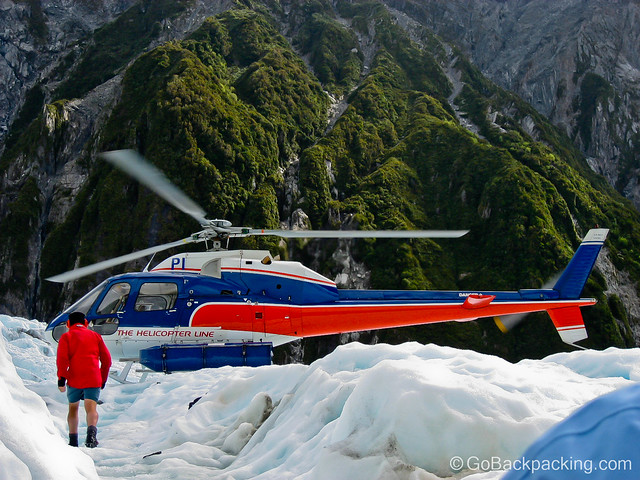
Of course, jumping in all gung-ho isn't a no-no, but a registered tour operator will be constantly monitoring the situation on the ground, peace of mind for anyone choosing to wander through more avant-garde Africa.

According to the blogging community, voluntourism has retained its status, as the major buzzword in travel.  Trawl the net and you'll find a never-ending list of non-profit organizations willing you to pitch in, closely followed by a multitude of principled adventurers with an even longer list of reasons to give back.  Not wanting to burst your ethical bubble, but no one individual is the same, and it might be better to get your feet wet on a short stint before going the whole hog. A brief voluntour experience on an overland expedition could give you some welcome insight on what to expect when signing up to similar projects, and a well-rounded appreciation of what's required before making a more serious commitment.

So backpackers, don't throw the towel in when it comes to booking a tour, as an organized itinerary could expand your " travel-psyche" in more ways than one!
____________

About the Author: Vivian McCarthy is the General Manager of Acacia Africa, a company that specializes in offering overland and small group safaris, adventure holidays, voluntours, city and beach breaks & tented lodge safaris.  He visits Africa once or twice a year and has a particular soft spot for Kenya, Tanzania and Uganda, because, he says, " these places are less simply less predictable, and that's part of the joy of traveling."  Follow Acacia Africa on Twitter @AcaciaAfrica.

Photo Credit:  All photos courtesy of Acacia Africa.

Photo Essay: Nightlife in Cali, Colombia

Cali is Colombia's 3rd largest city and regarded as the country's capital for salsa dancing.

Amongst backpackers traveling through the country, Cali has a reputation for being a party destination.

After a year and a half of working on my salsa skills, I felt it was finally time to put them to the test. 

Along with Troy and another friend, I flew the 30 minutes from Medellin via Avianca for a 5-day weekend focused on sampling the nightlife in Cali, Colombia myself.

Zaperoco salsa bar
Red neon glows throughout Zaperoco, a popular salsa bar in the city's popular nightlife district, La Sexta.

A live salsa band in Zaperoco.
A live salsa band entertains the Thursday night crowd at Zaperoco.

The large neon sign of Las Cascadas Discoteca on La Sexta advertises 7 large video screens and 4 dance floors.

The Latin Palace on La Sexta reflects a typical club design: multiple=

On the 2nd floor of the Latin Palace, early on a Saturday night, the dance floor is still warming up.

Chivas are a dance party on wheels. Buy a ticket, hop on, and you can start drinking and dancing as the bus rolls throughout Cali's most happening nightlife districts.

Salsa dancers
With the wealth of talented salsa dancers in Cali, it's common to see professional level performances in the local bars.

Discotecas in Menga
Menga, a neighborhood in northern Cali, is filled with late night discotecas.

Bottle service in a Menga discoteca
Unlike the USA, bottle service is the norm at Colombian bars and clubs. Get a group of friends together, order a bottle of rum or aguardiente, and you're set for a fun night.

Inside one of Menga's giant discotecs
Inside one of Menga's giant discotecs, sometime around 3am on a Saturday night.

Destination: Tokyo

I have a secret I've been keeping for close to eight months now. And no, I'm not about to become a father!

This past February, I attended the New York Times Travel Show and won a drawing for a free trip to Tokyo, Japan.

Tokyo Tower from Mori
Tokyo Tower from Mori. (Photo: Agustin Rafael Reyes)

The prize, courtesy of Japan's tourism office, included round-trip airfare on Continental Airlines, a two-night hotel stay, a $150 train voucher, and, oddly, a small (cheap) sculpture of a "lucky cat," which was mailed to my home.

I gave little consideration to visiting Japan on my trip around the world, writing it off as too expensive. And while I enjoyed sushi and learning about Buddhism at the time, I have a deeper appreciation for both due to the last few years.

Also, in talking to other travelers who have either been to Japan or speak of it as a dream destination with a sparkle in their eye, I've become a little more curious about what the country and culture have to offer.

Mt. Fuji is a short train ride from Tokyo.
Mt. Fuji is a short train ride from Tokyo; however, I won't have the opportunity to climb it as I will be visiting in Winter. (Photo: Emram Kassim)

Earlier this year, I considered taking the trip in late August or early September, so I would be in a position (weather-wise) to climb Mt. Fuji, the highest peak in the country. When my parent's sold their house, my priority was a return to Colombia.

The hotel stay, only two nights, expired after six months, as did the train voucher. The real prize, in the form of the round trip airfare, is valid for 12 months. 

As my second stint in Colombia closes in mid-December, I'm preparing to book my flights.

After celebrating New Year's Eve in various foreign cities, such as Christchurch and Paris, I can't resist the idea of celebrating in Tokyo.

Once the NYE partying dies down, I'd look forward to:

  • Exploring the food (sushi) and tea culture
  • Riding a bullet train
  • Visiting Mt. Fuji
  • Playing arcade games I don't understand
  • Using a toilet equipped with a heated seat and remote control
  • Buying some futuristic technology not yet available in the USA
  • ...and whatever else I can fit into two weeks

Have you been to Tokyo or that region of Japan?

If yes, please share a few suggestions on what I should do there. I'm giving myself about two weeks, excluding the transit, days to/from Washington, DC.

This is the biggest prize I've ever won, so the next time you're at a travel show, be sure to enter those drawings because people win them!

Dream 2.0 - Location Independence

Medellin, Colombia
Medellin (photo: Dave Lee)

The funny thing about dreams is that once you achieve one, you become a heck of a lot more self-assured about what you can do in life.

I'm hardly an impetuous person, so it took me five and a half years to embark on my dream trip around the world. 

And as those travels became fully realized, it was only natural to take stock of the new me, and come up with a new dream to pursue.

Last year, my experiences traveling and blogging coalesced into one succinct desire:

Location Independence!
I want to make enough money from blogging to live and work anywhere in the world.

Four months ago, my parents sold their house in Virginia, and I knew it was my opportunity to take a leap of faith and see if Dream 2.0 was feasible. 

I moved back to Medellin, Colombia, to continue building a location independent business from a foreign city I already knew and loved.

While I've been tracking my monthly online income for four years now, I had no way to predict what would happen going forward.

Would building websites continue to pay off, affording me the lifestyle I sought in Colombia and beyond, or...

...would I have to return home in a few months, tail between my legs, with my meager savings, once again depleted?

Thankfully, I can report that my income has risen to new heights since leaving home.

To paraphrase Paul Coehlo from The Alchemist, when you really want something, the universe conspires to help you achieve it.

And the lifestyle I imagined for myself those 11 months living and working in my parent's spare bedroom, including location independence, is now my day-to-day reality in Medellin.

I've settled into a new, 20th-floor apartment with mountain views. 

Wilson, one of my Colombian roommates, enjoys cooking. Therefore, I'm treated to homemade Colombian meals regularly. 

He has a genial old Labrador named Tobias who lays around all day, ensuring my blood pressure never gets too high. 

My other roommate, Jorge, is a friendly medical student though hardly ever around.

It's a 10-minute walk to the gym, which I try and hit three times a week. 

And it's a 10-minute walk in the opposite direction to the dance studio where I take private salsa lessons. 

I've made a few good friends since returning, developed an appreciation for babies, and had more than a few fun dates.

I've continued to explore Colombia, visiting big cities such as Cali, and small pueblos like Guatape. 

My Spanish is better than ever, and if I dedicated time to studying it every day, fluency wouldn't be far off.

However, in spite of all the positives that come with this new lifestyle of mine, I've had a nagging feeling that I could be managing my time better. 

I have a half dozen different projects I want to pursue, yet I've not started down the path to developing any of them since leaving home.

While I'm making enough to keep the same course in Colombia, or any number of other countries such as Thailand or Argentina, I need to work a little harder if I want to continue to see more of this world, and live in places which light up my imagination: Rio de Janeiro, Venice, Paris, New York City.

The Eco-Friendly Bulungula Lodge

Bulungula Lodge is situated amidst the rugged landscape of South Africa's Wild Coast.

It was built adjacent a Xhosa village, with the villagers owning a 40% stake in the Lodge.  Guest accommodations are in the form of traditional African rondavels.  And a variety of eco-friendly facilities are employed to ensure minimal impact on the surrounding land and culture.

A short list of the these features highlight the owners' considerations:

  • Electricity used sparingly, sourced from solar panels
  • Light is primarily from candles in the evening
  • Composting toilets
  • Paraffin wax "rocket" showers
  • Rainwater collection

Bulungula Lodge isn't easy to get to, but if you have the time, it's worth a few nights in your South African itinerary to experience this one of a kind backpacker lodge.

Driving through villages along South Africa's Wild Coast
As you get closer to Bulungula Lodge, paved roads turn to rock and mud, and eventually plain grass.


Bulungula Lodge is built with a low profile, and the guest accommodations are in the form of rondavels, the traditional Xhosa style 1-room homes.

The rondavels are made of mud blocks and thatched roofs. The interiors are brightly painted, and without electricity, candles are the only source of light at night.

Composting toilets require you pee in the front section of the toilet bow, while depositing the rest down the back side. After your done with #2, drop a few cups of the composting soil on top of your deposit.

In order to provide hot water showers, despite the lack of electricity, Bulungula Lodge provides paraffin wax "rocket" showers. Pour some of the melted wax in the teapot into the base of the black shower pipe, stick a few sheets of toilet paper into the wax, and then light it like a candle wick. Once the wax catches on fire, turn on the water, and the steam will heat it up.

A fire pit outside the lodge is the perfect place for a nighttime drum circle.

Inside Bulungula Lodge are comfortable common areas for hanging out and eating the communal meals, a library, bar, and kitchen.


Breakfast at Bulungula includes Xhosa-style bread made using solar power, eggs, and hearty slices of bacon.

Sunset view from Bulungula, taken after returning from an afternoon tour of the local Xhoxa village a short walk away.

Don't be surprised if you find a bunch of cows lounging around outside your rondavel. Just be sure to watch your step the next morning, as the cows may leave a few gifts behind.

If you don't have your own 4x4 transportation, it's best to arrange a pick-up and drop-off schedule with the Lodge. Expect a bumpy ride in the back of their 4x4.

Read more about my experiences traveling to Bulungula, experiencing the lodge, and going on the Xhosa village tour.

To learn more about the Lodge itself, check out their website.

Find Cheap Flights with Fly.com

No matter how many budget travel tips or tricks we use, traveling can get expensive. And it's frequently the flight's fault.

In the past year, the AP reported that the average cost of a domestic U.S. flight was $328.

When we consider the additional costs such as taxes and baggage fees, that number, of course, rises.

Flying en route to Mexico City (photo: Dave Lee)
En route to Mexico City (photo: Dave Lee)

As for the total cost of an international one? Oh my! Cheap flights have become a completely foreign concept.
So, when I heard the New York Times say, "it was fly.com that found the best bargain," I was intrigued.

Upon first glance, the site didn't stand out from other discounted flight search engines.

I reconfirmed the age-old adage that first impressions are not everything upon further investigation.

The layout on fly.com is as simple as the process. Type in the city you are traveling from; a list will automate with the airports in the metropolitan area, and choose one.

Then, type in the city you are traveling to, and repeat the same specifying routine. Simple yet ridiculously satisfying.

Large international airports are available for departure and arrival alongside local ones, and there is even the option to search both by checking the "include nearby airports" option.

Afterward, determine the dates, number of travelers and decide whether or not you'd prefer a nonstop flight.

Your cheap flights, allocated from the hundreds of travel sites, are served within a couple of minutes.

The cheap flights are listed in price order by pounds in the British version.

There's also an American and a German version ready for use, in addition to ten different currencies to accommodate a global bank account.

But that's only the beginning. You can designate a desired flight time, airline carrier, cabin types, airports, price, trip duration, and even layover duration from your list.

Yes, all of it, because I suppose one never really knows how particular of a mood one will be in when planning their next trips. 

The details are conveniently located on the left sidebar with sliders for accurate guesstimation.

Not to mention that a table of pricing (by stops and airlines), a distinction by class, and a calendar with daily fares is available at the screen's top center by tabs.

Once you've made up your mind (and don't worry, you have time to step away, the site will display your findings in the recent search list when you return), book your flight.

However, in the words of the site itself, please note that "we are not a booking engine. We help you decide which flights are right for you and show you where to book. When you find the right flight, simply click on the "book now" link to be taken directly to the supplier's website."

Fly.com is the property of Travelzoo, so it's no surprise that they seem to have figured out how to satisfy even the pickiest of poor travelers looking to find cheap flights.

As the site describes, Travelzoo has been "publishing the best travel deals for millions of subscribers for over ten years."

And at this rate, they will probably continue to do so for many years to come.

_____

This story is brought to you in partnership with Fly.com.

Traffic Insanity in Dhaka, Bangladesh

Dhaka ranks as the second dirtiest city in the world according to a study by Forbes Magazine, which I was unaware of while staying with a good friend in his hometown, the capital of Bangladesh.

It was virtually impossible to escape the city's grasp. I noted my own informal observations of its condition, accompanied by anecdotal tales from my Bengali friend.

Even more so than Bangladesh's number one attraction, its people, I was in awe of Dhaka traffic. The Forbes study attributes lead-poisoned air from traffic congestion as the key factor, which continues to worsen with vehicles emitting fatal amounts of air pollutants daily.

Dhaka Traffic

It's a long-running competition among travelers to debate which city in the world has the worst drivers. Aggressive Italians? Older American women? Bangkok's fearless tuk-tuk drivers? I'll confidently cast my vote for Dhaka, Bangladesh.

[youtube https://youtube.com/watch?v=Z5p_8_nUg44&version=3&hl=en_US]

Although chaotic, it's organized chaos on the barely paved, potholed Dhaka roads, with unofficial rules most drivers choose to ignore, but later accept the hard way. ErrrRRR...crash!

Buses speeding past a lone horse and buggy.
Buses are speeding past a lone horse and buggy.

It's common knowledge that buses and trucks always have the right of way. They will utterly destroy anything else on the road that tries to challenge their destined path.

However, this rule becomes complicated because the bus exteriors are assembled from soldered scrap metal. Therefore, the driver cares less about minor crashes that would damage his vehicle.

The general population's behavior balances this arrogance. Hundreds of Bengalis will focus their rage against the bus driver after an accident, even if the bus driver is not at fault.

Hence, the bus drivers fear for their lives because ordinary Bengali pedestrians, car drivers, and rickshaw drivers adopt the mob mentality, eager to each throw a punch at a driver until death.

If given the opportunity, the bus drivers avoid a beating by abandoning the vehicle, escaping on foot, or speeding away.

Riding in a C.M.G opposite a private car.
Riding in a CNG opposite a private car.

Next are the cars driven by a few middle-class people and wealthy private citizens. These drivers act like they own the road, absolutely despising pedestrians, CNG, and rickshaws blocking their way.

While riding in my friend's car, we mistakenly, though gently, hit a female pedestrian who had the right-of-way. My friend honked, screamed his favorite obscenities, and continued driving while the woman stood expressionless. Private cars will also cut off rickshaws and CNGs whenever possible.

Family exiting a C.N.G.
Family exiting a CNG

CNGs are actually motorcycles with attached cages built of the same scrap metal also used for bus exteriors. They are small enough to maneuver through busy streets and are common because they are the cheapest form of motorized taxi, as low as $2 for a 45-minute ride through traffic.

Fun fact: The CNG cages were only installed in the past five years due to thieves mugging passengers.

Rickshaws are a daily part of traffic in Dhaka.
Rickshaws are powering through the streets.

Finally, we have the rickshaws, which are bicycles with carts attached. They are ideal for short distances and even cheaper than the CNGs, at 25 cents for a 10-minute journey. Keep in mind that CNGs charge a minimum price that is far greater than a rickshaw's.

Except for pedestrians, the rickshaws are the turds of the road. They drive the slowest and are smaller than most everything else on the road. They stick to one side, except during traffic when they drive like a person with a mental health condition in a straitjacket.

Highway Driving in Dhaka

I should also mention that there are other vehicles, such as motorcycles. Riding one of these in Dhaka traffic is suicide.

The first time I saw one riding through traffic, I mentally noted how dangerous it looked. Ten minutes later, we passed the same motorcycle lying on the road, blocking traffic after a major crash!

Horse and buggies still exist in Dhaka traffic.
Horse and buggies still exist.

The only times I saw horses and buggies on the road were when they had children driving them. It seems like good practice before graduating to a rickshaw!

Even lower of the totem pole are bicycles.
Even lower on the totem pole are bicycles.

It's a slow day at work for this street vendor. After his shift, he rides his bicycle with the goods attached to the back, trying to survive the endless number of other bicyclists and drivers doing the same.

    Dhaka's busy port
Dhaka's busy port

Oh no, it's not over yet. Many Bengalis travel by water through the city to transport products or avoid the never-ending traffic.

An advertisement under a bridge.

Some people even live under the bridges. Even without a motorboat, it appeared that one of these paddle boats could arrive at a destination in less time than it would take with road transportation, given the lack of traffic.

For others the river offered respite or a fun swim.
For others, the river offered respite or a fun swim.

People are everywhere. The Buringanga River is used by small paddle boats, as well as some bigger ferries and ships. The river is Dhaka's main outlet for sewage waste, and up to 80% of Dhaka's sewage is untreated.

In addition to sewage, several industries spew chemical waste into the river. A paddle boat down the river may be Dhaka's most dangerous form of transportation.

_________

About the Author: Jason Batansky is a location-independent traveler running two full-time businesses. His blog, Locationless Living, combines writing about his sustainable travel and business. His latest site is Flashpacker Guy.

El Penol: Antioquia's Picturesque Monolith

El Penol - at one point, there was an effort to paint "Guatape" across the face of the monolith.

During my weekend getaway to Guatape, a small lakeside pueblo a few hours east of Medellin, Colombia, I also visited a popular landmark called El Penol.

Pitstop to refuel the tuk-tuk we took from Guatape to El Penol.

We hired a tuk-tuk, which zipped as quickly as it could from one pueblo to the next, however knowing how Colombian buses are driven, I felt a little uneasy every time we entered a sharp turn.

A winding staircase leads up the rock face.

The 220-meter tall monolith begs to be tackled by visitors young and old.  While we were there, climbers were taking the adventurous route up the rock face, while myself, Troy, and the regular parade of Colombian and international tourists climbed the 600+ stairs which were ensconced in a large crack.

Stunning 360-degree views of the surrounding lakes and hills reward those who climb the monolith.
360-degree views of the surrounding lakes and hills reward those who climb the monolith.

Once I reached the top of the rock, I knew why so many Colombians had recommended I make the day trip from Medellin to visit.  The landscape of rolling green hills, surrounded by the blue waters of the artificial lake, were picture-perfect.

Atop El Penol are several small tiendas where visitors can rest and enjoy the views with a drink or ice cream.

____________

Medellin Travel GuideMy 138-page, all-original Medellín Travel Guide is now available for Kindle and PDF.


.

Why You Should Be Using Couchsurfing Groups

I am three months into a West African journey of indefinite length, and I have been couchsurfing for the entire time. If you are unfamiliar with Couchsurfing, I recommend checking out some of Andi Perullo's earlier GoBackpacking.com articles here.

Couchsurfing

I have become something of a CS evangelist, and if you have done some amount of surfing or hosting, there's a good chance you've become one as well.

Today, I'm going to discuss CS groups specifically and explain why they are one of the most valuable aspects of the Couchsurfing website. Groups are essentially message boards based on a specific topic. They are a great place to meet people, ask questions, and find valuable information.

In this article, I will be highlighting some of the benefits of CS groups, using my own experience in Côte d'Ivoire as a case study.

Couchsurfing Groups are an Extraordinary Resource

While I was still in Ghana, I joined the Côte d'Ivoire group and began searching through previous posts.

Most guidebooks on Côte d'Ivoire are worthless. They are filled with outdated and unreliable information. Some have not been updated since the country was at war.

After twenty minutes of browsing through the CI group, I have a better understanding of what to expect when traveling overland, including where to listen to reggae in Abidjan and whether it's safe in the northern part of the country.

I posted a question of my own about overland travel from Abidjan to Bamako and received some great advice.

Many people participate in CS groups because they enjoy sharing their knowledge and helping others. Join a few groups and watch how much you learn about your destination.

Couchsurfing with great hosts in Abidjan, Côte d'Ivoire.
Couchsurfing with great hosts in Abidjan, Côte d'Ivoire

Couchsurfing Groups Can be Used to Scope Out Potential Hosts

Within the Côte d'Ivoire group, I noticed several members were particularly active. Their profiles provided a lot of information about them, but what they said in the group was more revealing.

First, I got a sense of who was proficient in English. I was hoping to unearth my French after several years of neglect, but I liked the idea of staying with someone who spoke English when I first arrived.

Secondly, I noticed several group members were exceptionally knowledgeable and eager to share what they loved about Côte d'Ivoire.

One particular member, who spoke both English and French, had posted some humorous, enthusiastic, and informative messages. I contacted her, and she became my first host in Côte d'Ivoire.

As I write this, I've been staying with her and her boyfriend for almost three weeks. I now consider them great friends as well as incredible hosts.

Use Couchsurfing Groups to Find Great Parties and Events

If you're looking for something to do, check out CS groups for cities and, if possible, neighborhoods. Depending on the location, you can find CS parties in people's homes, events at bars and restaurants, concerts, and organized activities such as dance classes and city tours.

In Côte d'Ivoire, I got in on a meetup for reggae lovers at a bar called Parker Place. Missing my weekly dose of Patty Boom Boom, my favorite reggae spot in DC, Parker Place has been an excellent stand-in, allowing me to meet some awesome Ivorians who share the same musical tastes as I do.

Post an Event, Meetup, or Introduce Yourself

CS groups are democratic, and anyone can post a new topic. If you arrive somewhere and find it challenging to meet people, or if you want to organize an event or activity, consider posting about it in a relevant group.

I haven't done much of this myself, but I have joined groups and introduced myself, explaining why I was traveling to a particular country or city. You'd be surprised how often this starts a discussion, and in Ghana, I ended up meeting people in real life through one of the threads I started in a group.

I have watched as others have posted threads about events and activities, and within days, many people have expressed interest in participating. These reasons are primarily aimed at those who are traveling, but groups are also beneficial for hosts.

Couchsurfing is about meeting people more than anything else. Groups provide one more way to do that. Even if you are not traveling or hosting, try participating in a group and see what happens.

You may learn something new about your city or the one you are visiting, and you may end up meeting some great new friends.

___________

About the Author: Phil Paoletta is taking a break from teaching middle school in Washington, DC. He is currently traveling in West Africa indefinitely, collecting and making music along the way. You can follow along with him at http://philintheblank.net.

Loans That Change Lives: An Introduction to Kiva

This is a guest post by Paul Duan. If you'd like to guest post on Go Backpacking, please read the guidelines.

I've found that the more I travel, the more I realize how fortunate I have it. Even in our modern world, many places still lack running water and electricity. There are still places where you'll find kids without shoes playing in garbage lined streets; see dozens of people living in cramped, dark tin shacks; and encounter mothers begging for food. It's a humbling and sobering reminder that there is still a lot of poverty in our world.

But there are ways to help. One of my favorites is Kiva. If you haven't heard of it by now, Kiva is a non-profit microfinance site that connects lenders (you) with entrepreneurs in developing countries. What follows is an introduction to Kiva.

How it Works

Kiva partners with local field partners who have lists of qualified entrepreneurs. As the lender, you choose from these lists and lend to either a person or a group. The field partner disburses the money to the entrepreneur and your loan backfills the field partner. Your money is then paid back over the next several months which can then be re-loaned to other people.

While not exactly peer-to-peer because the loans are pre-disbursed (the money has already been given to the person even before you decide to lend), you still have a choice of where your money is going.

Here are a few things I like about Kiva:

Anyone can do it - By definition, microfinance involves small sums of money. This makes it accessible to pretty much anyone. Most of the loan requests are below $1,000 and are aggregated through many members, resulting in a minimum loan amount of only $25. So for the cost of a nice dinner, you could be changing someone's life.

There's a personal touch to it - Although loans are pre-disbursed, you still get a choice of who to loan to. Kiva has several filters which include gender, sector, country and group vs. individual. Each entry also has a picture and a story which describes who the person is, what they are planning on using the money for and miscellaneous other details. All of this really adds a personal connection. I've found that most of my loans have been to countries where I've visited.

Ease of use, proven track record and low risk - The user interface is very intuitive and funding is through PayPal or credit card. As the largest and most well known microfinance site around, Kiva has a proven track record. Field partners all have ratings for delinquency, default and foreign exchange loss rates; with the majority having little or no losses. You can pretty much expect to get all you've loaned out back.

It costs you nothing - With the tough economy and what not, donations can be difficult. But Kiva is a loan, not a donation. Really, the only thing you'll be losing is some interest. If you do decide to take your money out, there's an option to cash out via PayPal.

You're helping the builders of the world - This is the best thing I like about Kiva. Unlike giving money to a beggar on the street, your money is going towards building businesses and promoting economic growth in countries that need it the most. I think the proverb, "Give a man a fish and you feed him for a day. Teach a man to fish and you feed him for a lifetime." sums it up the best.

There you have it. You've got nothing to lose and you'll be helping someone across the world. So go sign up, make a difference and give the gift that keeps on giving.

Editor's Note:  Once you register for Kiva, be sure to join the Go Backpacking lending team.  Together, our members have made loans totaling $825 this year.

_________

About the Author: UC Berkeley alumni and based in San Francisco, Paul Duan is a cube monkey by day, and aspiring travel writer by night. Life in a Sack was started back in April 2010 as a personal creative outlet and has since grown to become a written record of past backpacking trips and a source for useful backpacking information.  Twitter: https://twitter.com/LifeinaSack

Vacation Homes of Pablo Escobar

Visitors to Guatape, the lakeside pueblo two hours east of Medellin, Colombia, will find there are two main ways to cruise around the lake by boat.

First, you can opt for a large, slow boat with a bar and upper deck for dancing as you motor along.  This is your typical party boat, and it's very cheap to get on board, though you do have to pay for drinks thereafter.

The second, more exciting option, is to hire a small motorboat to cruise at high speeds around the lake, taking in the views, wind in your hair.  This option is much more expensive, but you can bring your own beer.

Walking around the lakeside area of town, you'll get the same "lake tour" pitch and price from all the guides.  Approximately 80,000 pesos, or $44 for a one hour tour with a bunch of sites that you've never heard of....and Pablo Escobar's farm.  Needless to say, Troy and I were chomping at the bit to see the former head of the Medellin cartel's vacation home, but we wanted more time on the water.  Eventually, we negotiated with a guide for a 1.5-hour tour for 90,000 pesos, or $50.

Our little boat comfortably held four people, and we took off sporting colorful orange life jackets.  As it turned out, the emphasis of the tour seemed to land squarely on the vacation homes of Pablo Escobar, his family, and his main drug cartel rival.

This is the lakeside home Pablo Escobar bought for his mother.

View of El Penol from the lake.

The home atop this hill belonged to the head of the Cali Cartel, one of Pablo Escobar's archenemies. The billboard below advertises a new high-end real estate development being built there.

This lakeside bar was on Pablo Escobar's property. He survived an assassination attempt by the Cali Cartel by escaping through an underground tunnel that exited a hundred plus meters away.

Pablo Escobar's old lake home is now destroyed. We wanted to get off our small motorboat to walk around and take more photos, however the guide said it was private government property and we needed permission. Or, we needed to get there at 7am when nobody was around to see us!

The view from behind of Pablo Escobar's house on Lake Penol (right), and that of his bodyguards (left).

Just left of center in the hillside, you can see the exit of the tunnel Escobar used to escape at least one attack.

This house belonged to one of Pablo Escobar's brothers, however as it is now government property, he can no longer make use of it.

In order to create the lake in El Penol and Guatape, and provide fresh water to Medellin, it was necessary to build a dam and submerge a town. The metal cross of a submerged church acts as a constant reminder.

Guatape: My First Colombian Pueblo

The colorfully painted panels of Guatape.
The colorfully painted panels of Guatape

Colombia's big-city dwellers from Bogota, Medellin, and Cali love to get away from their noisy urban landscapes whenever possible. 

Weekends, holidays, and school breaks are all cause for them to head to nearby pueblos usually no more than an hour or two away by car or bus. 

Vacation homes or apartments in these pueblos are called fincas, and if you're lucky enough to be invited to stay in one -- go!

In August, Troy and I accepted such an invitation to Guatape, a popular weekend destination for Medellin residents.

Carrying the basics in a daypack, we paid no more than $10 for a one-way bus ticket. 

We left on Friday afternoon, the trip is about 2 hours. 

My seatmate was a real estate broker in Medellin who offered me a 10% finder's fee for anyone I could refer to her. 

She said she made the trip to Guatape every weekend. 

I tracked our progress in real-time using GPS and Google Maps on my BlackBerry.

Rolling hills surrounded by lakes create picturesque views.

As we neared Guatape, the landscape turned into rolling hills, with small lakes surrounding them. 

Geographically, I hadn't seen anything like it before.

The bus dropped us off in Guatape's central plaza, which was bustling with the usual mix of people, motorbikes, cars, and buses.  Unlike big cities, there were also tuk tuks. 

I immediately had flashbacks to Southeast Asia and India, though my first ride in one was actually in another Latin American country, Guatemala.

Guatape's tuk tuks await their next passengers in the main plaza.
Guatape's tuk-tuks await their next passengers in the central plaza.

We dropped off our bags and grabbed a few beers and arepas con queso in the central plaza. 

People continued to arrive via bus as it got dark, including another friend joining us for the weekend.

In the evening, the four of us went out dancing at a small bar. 

It was crowded. However, we managed to get a table in a back corner, where a speaker was in the perfect position to blast us with popular salsa, merengue, and reggaeton songs. 

Around 11 pm, police walked into the bar, and an announcement was made, followed suddenly by a mass exodus of people. 

The message was that kids under 18 needed to leave! 

There must be a local ordinance or curfew, because the following night at the town's larger lakeside club, the same thing happened. 

Whatever the reason, it left more room for the rest of us.

Testing my strength against Guatape's viscious alligator garbage can!
I am testing my strength against Guatape's vicious alligator garbage can

On Saturday, we awoke to beautiful blue skies.  While walking along the lake, we were approached by several guides hawking boat tours. 

At the mention of Escobar's farm, I knew we'd be getting on one of those boats to visit the vacation homes of Pablo Escobar.

Other lakeside activities include a reasonably long zipline and renting jet skis.

A tuk-tuk parked outside Guatape's main church.
A tuk-tuk parked outside Guatape's main church

The rest of Saturday afternoon was spent walking around Guatape -- it's not large; however, it's very idyllic, and as such, lends itself well to lingering around without purpose. 

There were a lot of little observations to be made.

The popular gambling game in a tent across the street from the church.

The teenage kids are walking around with gallon bottles of Aguardiente or cheap wine, again, across the street from the church.

The variety of panel art on the facades of homes and businesses, each depicting unique aspects of the regional geography, culture, and lifestyle.

A gambling game in Guatape's main plaza.
Across the street from Guatape's main church, in the central plaza, was a tent with a gambling game that always drew a crowd. The premise was simple, bet on the color that the rolling ball will come to rest upon

Saturday night, we found ourselves in a larger club more reminiscent of what you'd find in Medellin. 

It's safe to say a lot of the kids in there drinking and dancing that night were from Medellin.

Bandeja con Pollo is a traditional Antioquian dish.
Bandeja con Pollo is a traditional Antioquian dish, including chicken, beans, rice, egg, salad, arepa, and plantains.

Sunday afternoon was spent visiting El Penol, a monolith in a nearby town by the same name.

Check back tomorrow for more about our visit to this giant rock, which is also a popular day-trip destination from Medellin.

____________

Medellin Travel GuideMy 138-page, all-original Medellín Travel Guide is available for Kindle and PDF.


.

Friday Flashback: Press Trip to Rwanda

A song and dance performance for children in a Rwandan town.

It's been about 6 months since my press trip to Rwanda.  Looking back, I still feel incredibly lucky to have had the opportunity to hop aboard Ethiopian Airlines and jet off to eastern Africa for a week.

The jetlag was rough, and we had a tiring itinerary, but the sense of adventure was high, and I shared the journey with friendly, talented writers and photographers.

Below is a selection of my favorite posts and photos from the trip:

  • The 3-Day Journey to Rwanda on Ethiopian Airlines
  • Mountain Gorilla Trekking in Volcanoes National Park
  • Photo Essay: The Mountain Gorillas of Rwanda
  • Remembering the 1994 Tutsi Genocide
  • Cruising Lake Kivu by Speedboat
  • Photo Essay: Batwa Village in Rwanda

For more, see the full listing of the posts associated with my adventures in Rwanda.

_________

Scheduling Update

When I introduced Friday Flashbacks a year and a half ago, my goal was to give new readers easy access to my previous travel experiences.  As I've been traveling less frequently since then, I'm all caught up!

The weekly videos will be now be published on Fridays instead of Saturdays.

3 Travel Bloggers and a Baby: The Adventures

The Medellin crew (from left): me, Cole, Christine, Troy, and Drew

In addition to interviewing Troy and me for their video documentary about location independent professionals, Christine, and Drew wanted to capture moments from our daily lives, as well as scenes from around Medellin.

Early on in her visit, before the events of the Feria de Las Flores got underway, I recall Christine mentioning that the city was overwhelming. 

Clearly, she was still trying to get her bearings after having become familiar with Bogota.

Two big benefits of working for yourself are the ability to set your own priorities and create your own schedule. 

Assisting with the filming of a documentary in which I had the chance to be featured was priority #1 at the time. 

Well, in addition to enjoying my first Feria de las Flores!

Luckily, the two priorities overlapped often, and what follows are the adventures of 3 travel bloggers and a baby.

Colombian men sing traditional songs and play their guitars in Parque Berrio.

Medellin is a wonderful city, however, it lacks a singular icon to represent it, such as the Empire State Building in New York City, Opera House in Sydney, or Big Ben in London. 

My best recommendation was Botero Plaza, which features a large collection of statues from Colombia's (and Medellin's) most famous artist, Fernando Botero.

Christine and Cole pose in front of a Fernando Botero sculpture.

One afternoon, after wrapping up an interview with Troy, we headed to the downtown area known as Centro to get photos and footage of the plaza. 

The commercial hub of the city can be very crowded, and usually, I put myself on high alert for pickpockets and other unsavory characters when I go down there.

Troy gets some baby Cole time inside The Museum of Antioquia.

Drew was clearly anxious about taking the expensive video camera out, and I couldn't blame him. 

The three of us walking around with a baby and giant video camera with furry boom mic was anything but incognito. 

People are robbed for a lot less every day.

Fortunately, Christine got the shots she wanted and we didn't run into any trouble.

Troy (left) and Drew (right) gained access to a bridge above the parade route for La Feria de las Flores.

Trying to film the Feria de las Flores was another challenge. 

I met up with Christine and Drew for the antique car parade on a sunny Saturday afternoon, however, crowds had gathered along the parade route long before we arrived. 

I'm sure Drew would be off scrambling for a good angle, while I kept Christine and the baby company in the shade, sipping a Pilsen beer and trying to snap my own photos without getting my pocket picked again.

The next day at the flower parade, it was even more crowded, and we had an even more difficult time finding a vantage point from which to get clear shots of the procession. 

When we had all but given up, Troy noticed a television camera crew on an unfinished bridge over the parade route. 

The next thing I knew, we were waving thousands of dollars in photography and video gear in front of a young soldier in an effort to convince him that we should be allowed on the bridge as well.

If the soldier wasn't fully convinced, the Colombians around him were, and he relented. 

The result was an opportunity for Drew to get clear shots of Medellin's biggest annual parade, and festival, as it came to a conclusion.

Drew takes off on his first paragliding flight.

Our last great adventure together was a paragliding trip in the mountains north of the city. 

It was Christine's idea to have Drew run off the side of a mountain, and given the inexpensive cost of 25-minute tandem flights (80,000 pesos, or $45), Troy and I were happy to go along for the ride.

We met on a weekday morning at the northern bus terminal and took a short but steep ride up out of the valley. 

The weather looked perfect, and Troy connected us with our pilots for the day -- two Colombian brothers with 10+ years of experience, and thousands of flights under their belts. 

Given the last time I went paragliding in Medellin the thermal energy wasn't very strong and I didn't get too high, I was hoping for a better outcome this time around. And I got it.

Christine captures the paragliders in action.

Drew suggested I could go first, so Troy and I took off with the two brothers. 

Unlike the last time I went paragliding there, I didn't almost fall off the mountainside due to a lousy takeoff. 

This time, I only needed to walk a few steps and I could feel the canopy pull us up off the ground.

Then, it was as simple as sitting back in the fabric seat and letting the pilot take control.

Of the three times I've been paragliding, this flight was by far the best. 

I wasn't wearing my watch with altimeter, however, I was high enough off the ground to be fully satisfied with the flight. 

Toward the end, we did have a little trouble gaining altitude to hit the landing zone, however, I eventually landed gently...on my butt.

Mr. Blue Eyes
Mr. Blue Eyes

Other memorable experiences include devouring massive amounts of sushi for dinner, a lackadaisical afternoon lunch at Brasarepa (an Envigado restaurant featured on No Reservations), and having long, opinionated conversations about all that was going on in the world of travel blogging.

____________

Medellin Travel GuideMy 138-page, all-original Medellín Travel Guide is now available for Kindle and PDF.


.

3 Travel Bloggers and a Baby: The Interviews

Christine interviews me on the balcony of my Medellin apartment.

When Christine Gilbert of Almost Fearless contacted me over the Summer about being interviewed for her video documentary about the digital nomad lifestyle, I had to set aside my camera shyness once again and seize the opportunity. 

Frankly, I was flattered she thought of me, seeing as how I spend much of my non-travel days watching and interacting with an ever-growing number of savvy, talented bloggers via social media.

After TBEX wrapped up in New York City this past June, I flew to Cartagena for some R&R, while Christine, her husband Drew, and baby Cole went to Bogota to do their first pair of interviews with Jeff of Career Break Secrets and Jason and Aracely of Two Backpackers. 

I watched her tweets as they began to discover Colombia for the first time. 

I imagine they were also learning a lot about shooting a documentary, seeing as how this was their first.

And then it was my turn to welcome the Gilbert family to Medellin proudly. 

We all arrived at a high point of the year for city events as Colombiamoda, the country's annual fashion week, was leading right into the 10-day Feria de las Flores festival.

Christine and Drew set up the video camera, while baby Cole hangs out.

At the time, I was temporarily living in an apartment in the Belen, Malibu neighborhood. 

The 4-story building is on a quiet side street. However, it is frequented by city buses which can be unbelievably loud.  On top of that, we were situated at the north end of the domestic airport. 

During the day, planes are regularly taking off and landing, and the noise is enough to require a pause in even a normal conversation, let alone a recorded one.

I had suggested we do my interview at the apartment because of the 360-degree mountain views from the rooftop. However, I failed to consider the utter unpredictability of the weather in this city. 

On my interview day, the sky was overcast, and the air was hazy. Plus, Christine thought the mountainous background would be too similar to Jeff's interview in Bogota.

Instead, my interview took place on the 3rd-floor apartment balcony. It was a tight fit. However, Christine was pleased with the backdrop of green palm fronds behind me, and that's all that mattered.  I put on a mic, and they tested the sound. 

It was good, though once we got started, the noise from buses and planes required us to stop and start many, many times.

To my surprise, I wasn't at all nervous during the interview. 

I think it was partly due to the nature of the questions -- all about my life of travel the last few years, and how I make a living as a blogger, versus say, global politics. 

Christine was also very good at making me feel comfortable (i.e., letting me know that I looked and sounded good on camera). As a result, instead of feeling anxious, I felt excited!

I held the video camera for Troy's interview, recorded on a balcony in the mock Antioquian village of Pueblito Paisa.
I held the video camera for Troy's interview, recorded on a balcony in the mock Antioquia village of Pueblito Paisa.

I wasn't the only one being interviewed in Medellin.

Troy Floyd, amateur photographer and regular contributor here at Go Backpacking, was also interviewed for the documentary as he makes his money trading stocks online.

He wanted to be interviewed next to a small pond in Medellin's botanical gardens, however by the time we got there one weekday afternoon, Christine set up her camera and began asking questions, the sunlight had faded.

Troy picked an alternate location, Pueblito Paisa, for a follow-up interview. 

Drew had to hang back at the hostel to do work for his day job, so I played the part of cameraman. 

Their Canon video camera may look small; however, when you're trying to hold it still for thirty minutes, it quickly starts to weigh heavy in your hands.

Drew bounces Cole around on location in Medellin's botanical gardens.

I assumed, wrongly as it turned out, that Christine and Drew would be in and out of Medellin rather quickly. 

Instead, they spent three weeks, which allowed Troy and I plenty of time to show them around. 

In the process, we shared a lot of laughs, a few adventures, and built great friendships.

In particular, I found myself increasingly enamored with Cole.  Never before in my 33 years had I spent so much time around a baby. 

It might sound hard to believe. However, I come from a small family, and many of my best friends didn't start getting married until their early 30's, let alone procreate.

At five months, baby Cole was a drooling machine, with the occasional spit-up to keep his mom on her toes. 

I watched with constant amazement at the amount of saliva the little guy produced.

There were only a few occasions when he cried for long periods, like when I met Christine and Drew for our first dinner in Medellin. 

Otherwise, he was a real trooper during the interviews, restaurant meals, and other activities around town.

And everywhere we went, Colombians of all ages, male and female, would comment on how beautiful a baby he was. 

The older women (clearly moms or grandmothers themselves) would walk up and play with him, often asking if they could hold him.

Their faces consistently lit up at the sight of Cole's big blue gringo eyes beaming back at them.

Tomorrow, I'll share a little more about our adventures in Medellin.

And yes, that means more baby photos!

____________

Medellin Travel GuideMy 138-page, all-original Medellín Travel Guide is now available for Kindle and PDF.


.

Blog & Life Update From Medellin

It's hard for me to believe that almost three months have passed since I left the USA to begin living in Medellin, Colombia, again. 

This also means I'm just three months away from flying back for Christmas.

I used to love backpacking because it always felt as though time slowed down when traveling through new countries; however, the more time I spend in Medellin, the more normal it feels.

Time is marching forward, and I'll be celebrating my 34th birthday this Saturday, September 25th. 

I'm looking forward to a fun night of salsa dancing.

Medellin Living blog
Redesign of Medellin Living blog

Medellin Living

The last few weeks have been quiet here at Go Backpacking as I've been focusing on updating the design of my other blog, Medellin Living, as well as sharing my recent experiences in the City of the Eternal Spring.

If you haven't been over there yet, here are a few posts to get you started:

  • Vacationing on the Colombian Island of San Andres
  • La Cabalgata (Horse Parade)
  • Book and Culture Festival
  • Brasarepa Restaurant in Envigado (as featured on Anthony Bourdain's No Reservations)

I try to ensure a fun mix of content, including the nightlife, culture, local festivals, music, finding accommodations for more extended stays, tips for finding work as an English teacher, and other highlights from around the country.

Cali Trip

For a mere $72, I've booked a 1-way flight on Avianca to Cali, Colombia, for September 29th.

Now that I'm settled in Medellin, it's time to explore some new territory, and Cali is the salsa dancing capital of the country. 

I'll be spending a long weekend there with GB contributor Troy and Todd, the co-owner of a new residence called The Art House in Envigado.

Instead of flying back to Medellin with them, I'll be taking a few short bus rides through the coffee region, which I've only heard good things about. 

I imagine it will be a relaxing way to unwind after all the partying and late nights that are bound to occur in Cali.

Blogging Projects

Earlier this year, I launched a new site, Travel Blog Success, to help travelers build high-quality blogs.

The feedback from members has been overwhelmingly positive, which reinforced my decision last Fall to dedicate four months to the project. 

Before the end of the year, I intend to revisit and update (as needed) the 12 original lessons and add new content related to social media, press trips, and making money.

In association with this new content, as well as hitting the 100-member mark (which should happen very soon), I intend to increase the price of admission, so if you've been on the fence, now is a great time to join!

Building a membership site from scratch was a tremendous learning experience.

Before I left the USA a few months ago, I was throwing around the idea of creating another one on a travel-related topic other than blogging.

Earlier this year, I did some private consulting work for a fellow travel blogger. 

It worked out well for both of us, and in the next month or two, I intend to make myself more widely available.

I also have some domain names I bought last year and have yet to develop into websites. 

I've been thinking more and more about working on them since returning to Colombia.

Most of my online income currently comes from text link sales, and I think it'd be a new challenge to build informative, static sites based on outsourcing the content creation  (and maybe SEO too).

And last year, a friend suggested I write an eBook guide to Medellin. 

Given I often get the same questions asked of me via my Medellin blog, Twitter, and email, this idea continues to linger in my mind as well.

A Quick Word About My Online Income

I began blogging in January 2007, and each year, I was able to double my online income.

As of August 2010, I'm tripling my monthly earnings over the same time last year and can, therefore, afford to live comfortably in a large South American city of my choice (sweet!). 

If you're curious about how much I earn month to month, I publish regular breakdowns over at Blog to Travel.

***

My 138-page, all-original Medellín Travel Guide is now available for Kindle and PDF.

Friday Flashback: Travel Events in Washington, DC

Bruce, founder of GAP Adventures, stops by a DC Travel happy hour.

In addition to spending a lot of time networking in New York City, I also looked for opportunities to meet people closer to home.

Aside from attending events at National Geographic headquarters, and happy hours hosted by other bloggers, I began to co-host my own series of happy hours.

It was a fun, relaxed way to bring together local travel writers, bloggers, and enthusiasts.

Along the way, I became especially good friends with my co-organizer (and future RTW'er), Stephanie from Twenty-Something Travel.

Here are some of my favorite 2009 travel events in Washington, DC:

  • A National Geographic Evening with Simon Winchester
  • World Hum & Art of Non-Conformity Happy Hours
  • The First DC Travel Tweetup (Nov 2009)
  • Recap: The 2nd DC Travel Tweetup (Dec 09)
  • Dogs & Beers: DC Travel Happy Hour #4 (March 09)
  • DC Travel Happy Hour Meets GAP Adventuers (May 09)
  • #DCTravel 8: Rooftop Party Edition (June 09)

Friday Flashback: Networking in New York City

Sunday street market outside the Chelsea Hotel.

After the conclusion of my 'round the world trip, I landed back in northern Virginia.  I used the next 11 months to meet as many people in the online travel community as possible.  This effort entailed networking in New York City over the course of 4 separate trips, which coincidentally coincided with all four seasons (Summer, Autumn, Winter, Spring).

I easily met dozens (and hundreds after TBEX) of travel aficionados, bloggers, writers, and entrepreneurs I'd previously only known from blogs, Facebook and Twitter.  These short-term social whirlwinds acted as a needed counterbalance to the time I was spending alone, writing and blogging from my parent's house.

  • Sosauce / Matador BBQ in Brooklyn
  • The Best American Travel Writing 2009
  • Navigating the Adventures in Travel Expo
  • Travel Gets Social at 92YTribeca
  • #Twitaoke: Travel Blogger's Rock NYC's Koreatown
  • Recap: Social Media and the Travel Industry Roundtable
  • My Thoughts on #TBEX 2010

How To Be Lost Without Looking Lost

This is a guest post by Jasmine. If you'd like to guest post on Go Backpacking, please read more here.

This sign probably won't help you find your way (Port of Spain, Trinidad).

You've ventured out to explore your new city, and you have no clue where you are. You also happen to be in a region in which you stick out like a store thumb, and the stares you're getting seem to intensify the situation.

Your map is in your bag - but do you really want to pull it out on that busy street corner or that dodgy neighborhood?

No, you don't.

Here's how to be lost without looking lost.

Don't Look Up

While you're lost, you begin to read the names of every single street and every single sign that you pass. A lot of these indicators will be above your line of sight, so your head resembles something like a pinball that has been shot furiously by the right flipper. Do you see the locals looking up, or looking around wildly? No. They are well aware of how tall their buildings are - looking up is a dead giveaway that you're not from around here.

Ask. Rinse. Repeat.

It's okay to ask for directions. The best way to do this covertly is to duck into a corner store, buy a pack of gum or a snack, and ask the cashier for help. If you confuse yourself again, do it again in another store. So you're six packs of Trident richer - at least you made it back to your hostel! And your breath will be minty fresh. It's a win/win.

My 8th cafe mocha of the day (Christchurch, New Zealand).

Hesitate And Perish

Have you ever sat in an outdoor cafe in a new city and watched its inhabitants walk by? Generally speaking, large city dwellers (that's dwellers of large cities, not overweight city dwellers) tend to walk quickly and confidently. Even in smaller towns and coastal destinations, the people walk with a definitive purpose. They are going somewhere.

I, on the other hand, am rarely going somewhere. I like to wander, hence the name of my blog. One thing I don't do, though, when I'm trying not to look lost, is hesitate. Your mind goes, "Wait, was it that street or the next one?" and your body makes this complete, dramatic, obvious stop. Next thing you know, all eyes are on you. Keep it moving until you figure out where the hell you're at. Reducing your pace gives you some more time; just make sure it's in line with the rhythm of the other people around you.


A great opportunity to hide a map (Sihanoukville, Cambodia).

The Clandestine Map Glance

You're itching to have a look at the map in your bag, sure that you could find your present location on it. What I normally do is fold the map up in my purse so that only the part I need is showing. That way, I can easily open up my purse, acting as if I'm digging around for something else, when really I'm looking at my map. If the map is too big for that, I take a seat in a park or on a bench and try to hide the map from view by placing it in my notebook or another book I might be carrying. (Note: not a guidebook. Duh. Another dead giveaway).

No Backtracking

Strolling down the street in a general state of confusion, you reach the corner, and all of a sudden you realize this is not where you were trying to go. You do an abrupt about-face and retrace your steps. Now you've gotten the attention of everyone on the street: the two guys leaning against the wall talking, the woman chatting with a neighbor, and the motorcyclist parking his bike. To avoid this one, have a walk around the block. You'll end up back where you started, and no one will be the wiser.

It's okay to be lost. It's an unavoidable part of travel. However, there are ways to be cool about it, and there are ways to look like a traveling freak show.

May all your wrong turns be stealthy!

___________

About the Author: Jasmine is a 20-something female traveling around the world solo. She is currently falling in love with Colombia, eating arepas, drinking tinto, and saying "chimba." Catch up with her adventures at Jasmine Wanders Travel Blog and follow her on Twitter @jasminewanders.

Friday Flashback: Going Home

My JetBlue flight from Bogota to Washington, DC

All good things must come to an end, and I'd already extended my 15-month trip around the world by an extra 5 months in Medellin, Colombia.  In July 2009, I packed up my backpack one last time and made the journey back to northern Virginia.

Posts about going home:

  • Making My Way Back Home
  • Unpacking My Souvenirs
  • How to Survive Reverse Culture Shock
  • 6 Reasons I Appreciate Being Home

Tea Tasting in China

As a fan of green and white tea before my trip around the world, I was excited to reach China where tea drinking is the norm.  I spent a lot of time tea tasting in China (mostly black and green), and people watching in the parks.

Large thermuses of hot water are given to customers who order tea in the People's Park of Chengdu, China.

Snow on Green Lake Jasmine tea

All of the accutrements are on display for a typical Chinese tea tasting ritual.

The more expensive teas are sold in discs or blocks.

Adam, from England, gave me his copy of The Beach before we went our separate ways in China. The photo was taken while I was reading and enjoying a glass of hot, herbal tea in a Chengdu park.

A pitcher of thick, salty Tibetan butter tea was way more than I could handle.

When you go to a tea shop in China for a tasting, they'll serve you as many refills of the little cups as you can handle.

Loose green tea for sale at a shop in Chengdu, China.

10 Travel Blogs Looking for Guest Posts

Writing from the road (Koh Phangan, Thailand).

I'm trying to grow my blog and I'm guessing because you are reading this, that you are too.

Like me, you have probably been told that guest posting is a great way to showcase your writing, get the word out about your website, and improve search engine rankings.

As a backpacker, I recognize that every single item I buy will not only subtract from my travel budget but will also add to the weight of the pack I'm toting around on my back.

The same logic can be applied to the hours spent researching good places to offer up our writing.

Every hour spent in research is an hour lost posting to our own blogs so when I found 12 travel blogs looking for guest posts I shared them with my readers and freed up the night for something else.

Later I realized I had still missed a trick. I should have guest posted the article about guest posting.

This time I have not made the same mistake with the following ten blogs that would be interested in your guest writing.

In the Know Traveler

ITKT promotes original stories, blogs, and features written by seasoned pros and articulate novices alike.

Substantial submission guidelines and a checklist for writers are readily available and for some articles and blog posts a small payment is made.

Past guest posts:

  • Haji Ali Masjid in the Mumbai Monsoon
  • Malta, the Cart Ruts Mystery

Indie Travel Podcast

Traveling full time, Craig and Linda have built ITP into an excellent multimedia travel site attracting around 20,000 unique visitors a month.

Past guest posts:

  • Andes Mountains Adventure Train

foXnoMad

Anil promises to read and consider every submission he receives to his large repository of ways and gadgets vagabonds can use to save money, stay in touch, and make the most of their travels.

Past guest posts:

  • Remedy for Post Travel Blues: 7 Ways to Bring Your Trip Back Home
  • Photo Essay: Ecuador's Crazy New Year's Celebration

The World is my Jungle Gym

Brendan van Son's site is meant to allow the reader to close their eyes and see the sights, smell the scents, and feel the emotion as if they were there alongside the writer.

Guest posts are accepted if not necessarily encouraged.

Past guest posts:

  • The Photo Vulture: 5 Steps to Avoid Becoming a Bird of Prey
  • San Andres, Lost in the Caribbean

Wild Junket

Nellie Huang is a fairly prolific guest blogger herself and her own blog welcomes the writings of others for the Your Wildest Adventure series.

Past guest posts:

  • Your Wildest Adventure: Escaping Robbers Cave
  • Your Wildest Adventure: Lost in the Lava Fields

__________

About the Author: Shane Donovan writes about working and traveling around the world in The Working Traveller. He also edits the Jobs Abroad Bulletin.

Photos by David Lee.

How to Choose the Best Seat on a Bus

Traveling across a country via bus can be a lot of fun and can also be very painful. Choosing the best seat can make or break a 12-hour bus ride. Everyone has their preferences, but I will break down several factors to consider when boarding your next long-distance bus ride.

These insider tips on how to choose the best seat on a bus are geared towards bus rides over three hours in length in Mexico but can easily be applied to other countries.

There's strategy in learning how to choose the best seat on a bus in Mexico.
Buses in Mexico (photo: Dave Lee)

Trying to figure out where to go next? Check out the available deals at Travelocity.com.

Things to consider before selecting a seat

  • Do the windows open and close?
  • Are there blinds?
  • Do the seats recline?
  • Is there a bathroom onboard?
  • Are there movie screens, and where are they located?
  • Are there assigned seats?
  • Is there air conditioning?

See also: Safety Tips for Riding Buses in Ecuador

Know in advance what you want to get the best seat on a bus.
A bus station in Mexico (photo: Dave Lee)

How to choose your seat on the bus

Aisle or Window Seat

Some people love the view, gazing out the window on a scenic mountain drive. Unfortunately, if someone sits down in the aisle seat next to you, you will need to have them move every time you need to get up. The window seat also has limited legroom. In the aisle seat, you have the space but not the view.

Access to the bathroom is easy, but you also get bumped by every person walking by. If you can stay seated for extended periods and don't mind limited space, the window seat is for you. For me, it's the aisle.

View of Movie Screen

If you know there are TVs onboard, pick a seat with a direct view. Killing time has never been easier than watching three movies straight in a different language.

Distance to Restroom

You never want to be directly next to the restroom because of the foul smell, but being somewhat close can be helpful.

If you know you'll need to use it a few times during the ride, a front-row seat isn't great because you bump into people every time you need to run to the toilet. About five to six rows from the back will work fine, reducing the smell but keeping you within a moment's reach.

Electronic Seat Selection

If you can choose your seat ahead of time, the best bet is to select an aisle seat in an empty row. No one wants to have to squeeze past a stranger to get to the window seat, leaving you with a good chance of having two places to yourself. If the bus is packed, your aisle seat may be helpful if the person beside you is larger than average.

Time of Day

After making this mistake a few times, I finally learned an important tip: Know where the sun will be during your journey! Sitting in the sun will only worsen things if you're already feeling hot.

For a more comfortable trip, sit on the left side of the bus if you're heading north in the morning, and on the right side if you're heading south. Just remember, the sun rises in the east and sets in the west.

Last-Minute Adjustments

Once the boarding begins, does it look like the bus will fill up? If not, jump over to an empty row before someone else takes advantage of it. The worst that can happen is that the person whose seat you stole jumps on board at the last minute, and you head back to your place.

If I were boarding an 8-10 hour bus in the morning heading south that had TVs, AC, seat selection, and a bathroom, I would sit five to six rows from the back in a right-hand aisle seat, praying no one sat next to me.

When the mom with the crying baby or sumo wrestler plop down next to you, at least you have the movies to stare at, right?

Friday Flashback: Celebrating Carnaval in Colombia

Parade float
Parade float

In early 2009, I knew I wanted to live in Medellin, but before I could settle down, I had to head for the coast to experience Colombia's largest Carnaval celebration.

Having never been to New Orleans for Mardi Gras or Brazil for Carnaval, I went on a mission to experience similar festivities in Shakira's home town of Barranquilla.

I quickly met up with a motley crew of Europeans and Australians, and we hit the parades and street parties for two days straight.

Celebrating Carnaval in Colombia:

  • Overnight Bus to Barranquilla
  • Hotel Olimpico vs Couchsurfing
  • Carnaval in Colombia
  • Carnaval - Day 2 - Dancing in the Streets

Book Review: What Boundaries, Live Your Dream

As a reader of travel books and memoirs, I think it's safe to say that I am passionate about other people's journeys. 

Keep in mind, however, that these journeys I speak of are hardly ever the physical ones.

Each globetrotter, nomad, and wander-luster explores the world for his or her own unique reasons, experiences it in his or her special way, and grows from it in a defining manner that can only be applied on an individual basis.

Take Lisa Chavis and Cheryl MacDonald, for instance: Two forty-something, house-owning, well-established women who left everything behind to embark on a 12-European-country backpacking excursion that transformed them from naive tourists to experienced globe travelers.

In January of 2010, they published the beginning of their story with What Boundaries, Live Your Dream.

It was not their Irish horror stories of food poisoning that kept me interested.

Not even their recounts of heavenly gelato in Tuscany nor of the beauties of the French coastline kept me hooked. I read for their honesty.

I sympathized as they spent possibly too money purchasing the best of the best backpacker's backpack and ended up regretting the heavy investment.

I understood the feeling as the two ladies bickered from transportation exhaustion.

I laughed as they became stained in red at Spain's La Tomatina Festival or nearly got trampled by wild horses in Austria (don't worry, they were laughing too).

I felt as if I were there because often I had been, and even if I hadn't there was enough dialogue to feel like I was in the middle of their international conversations.

As we rode the bus back to the boat that afternoon, she [Cheryl] explained, "This trip. This time. This place. All these are very meaningful to me. I feel like I was meant to take this journey to find them. And a part of me that was lost."

I [Lisa] understood perfectly.

No matter what your level of travel "expertise" (whatever that is) I doubt that you'd be able to relate either.

Since Europe, the dynamic duo has traveled to 4 continents, 30 countries and over 200 cities.

You are more than welcome to be inspired by part one of their world travels in, What Boundaries, Live Your Dream, and then continue following their adventures on their blog.

And after that? Well, if you want to go backpacking through Europe, or do just about anything else, just do it.

Or rather, in the words of Lisa and Cheryl: Live your dream!

The 6,000 Horses of La Cabalgata

A woman keeping cool control of her horse. I was surprised to find a lot more women riding than I expected. Many of them were young, and stylishly dressed. This is Medellin after all.
A woman keeping cool control of her horse. I was surprised to find a lot more women riding than I expected. Many of them were young and stylishly dressed. This is Medellin after all.

The day after fireworks kicked off the 2010 Feria de las Flores (Flower Festival) in Medellin, I met up with Lily, a Colombian friend, for La Cabalgata (horse parade).

Imagine 6,000 horses trotting through your city, the streets lined with onlookers drinking, eating, and cheering them on.

Don't imagine the smell of all that horse crap after a few hours; it stinks, to say the least, and there's a good chance you'll be walking over it at some point, so if you are lucky enough to attend, do not wear sandals.

Despite multiple advanced warnings by Lily, I was so busy taking photos that I missed the pickpocket swiping my BlackBerry Curve 8900 from my front jean pocket.

It was an expensive lesson to learn and put a damper on the end of my first Cabalgata experience.

On the bright side, I still had my camera.

Riders, both men and women, passed around bottles of liquor to drink during the parade. Police on horseback were in the mix to keep the event under control.
Riders, both men, and women, passed around bottles of liquor to drink during the parade. Police on horseback were in the mix to keep the event under control.

The parade route was congested with a mix of horses, people, and trucks.

A woman holds up a bottle of Aguardiente (the local firewater), while a donkey carries custom speakers blasting vallenato music.

The mariachi band rolling along on a converted pick-up truck was a crowd favorite.

A pickpocketer's paradise. Industrious Colombians and regular street vendors sold everything from coffee, ice cream, beer, and liquor to packs of gum.

Traditional hats such as these are more commonly seen in the countryside (vs. the large cities). To celebrate La Feria de las Flores, many more people were wearing them then normal.
Traditional hats such as these are more commonly seen in the countryside (vs. the large cities). To celebrate La Feria de las Flores, many more people were wearing them than normal.

Typical Colombian street food: chicken, chorizo, potatoes, and (possibly) crispy pig ears to the right.

Tents were set up by families and friends along the parade route. Food was grilled, alcohol was consumed, and there were even a few tents with DJ's and people dancing.

The parade winds down at sunset.

Feria de las Flores: Medellin's Biggest Street Party

Friday night fireworks kick off the start of the 2010 La Feria de las Flores.
Friday night fireworks kick off the start of the 2010 La Feria de las Flores

A little after 9 pm on the last Friday night of July, multi-colored fireworks began exploding over downtown Medellin. 

The streets below, closed to vehicular traffic, were packed with partying Paisas ready to enjoy the first weekend of the city's 2010 Feria de las Flores (Festival of Flowers).

Troy, a long-time contributor here at Go Backpacking, and I were in the thick of this first of many street parties and parades scheduled to celebrate Antioquean culture.

According to Wikipedia, the first Festival of Flowers took place on May 1, 1957.

Since that first flower parade, the festival has expanded into a week-long series of events so numerous they can quickly leave a visitor's head spinning.

One of the many women riding horses in La Cabalgata.
One of the many women riding horses in La Cabalgata

The following day (after a late night out, and a lot of rum), I met up with Lily, a Colombian friend, and some others to attend La Cabalgata. 

Even though we only caught the tail end of the 6,000-horse parade, it was still my favorite event of the entire 10-day festival.

I'd heard anyone could rent a horse and thereby participate. 

Given the amount of alcohol being consumed, and general rowdiness of the crowds and riders, you'd better know how to control a horse before you pay the pesos to hop on the saddle.

Speaking of alcohol, I was also informed that there was supposed to be a ban on drinking while riding the horses this year, given the trouble it can cause. 

Despite plenty of police on horseback, there was no evidence of riders being restricted from openly passing bottles of rum and Aguardiente around.

Alongside the parade route, families, friends, and vendors had set up tents from which to enjoy the action, and make a few extra bucks. 

The scope of the event was far bigger than I imagined, and I quietly vowed to be around in 2011 to experience La Cabalgata more fully.

During the week, there were plenty of open-air concerts and activities occurring throughout the city. However, I preferred to focus on the more prominent events the following weekend.

The one exception was the orchid exhibition that was held in Medellin's botanical gardens.

I was there with Christine of Almost Fearless, and husband Drew, as they garnered additional footage for their documentary, plus Troy and Ana (a new contributor for Medellin Living). 

A producer for a regional television channel noticed Drew's video camera, and a discussion ensued.

The result? We were interviewed on live television within minutes, with Ana helping to translate for us!

Pilsen, a local beer company, issued "Paisa" branded beer cans to celebrate La Feria de las Flores. Colombians originally from the Antioquia region (including Medellin) are called "paisas."

On the second Saturday of the Flower Festival, I attended the antique car parade. 

A grease monkey I am not, however, who can argue with enjoying a few cold beers under a warm, early-afternoon sun?

This parade was much more family-friendly in comparison to La Cabalgata, and there were plenty of kids hoisted on their parent's shoulders to get a good view.

An antique car rolls down Avenida Las Vegas in El Poblado.

The cars and trucks were driven, mostly by their proud owners, in roughly the order from newest to oldest. 

P in the cars dressed up in the style of the period from which it was manufactured.

In addition to regular vehicles, there was also a range of others, such as old police cars, fire trucks, and army vehicles. 

Sixties muscle cars were well-represented, such as Mustangs, as were the antique cars.

The people carrying the flower displays (silletas) are called silleteros.
The people carrying the flower displays (silletas) are called silleteros

La Feria de las Flores ended with none other than the flower parade on a partly sunny Sunday afternoon.

The fresh flower displays are all handmade in Santa Elena, a small pueblo outside Medellin, the day before the parade. 

Corporations can even buy advertising, in the form of a flower display, to be carried in the parade. 

All of the flowers, which are mounted on wooden frames, are carried on the backs of men and women from around Santa Elena.

The ideal way to view and photograph the parade would be from the bleachers set up along the route, however, where's the fun in making life easy?

Instead, Troy, Drew, and I ended up ducking under a makeshift fence and walking fast and furiously along the parade route to try and find an opening in the crowd of onlookers. 

This approach didn't fare too well, and judging by the people perched in trees, more aggressive tactics were required.

The silletas for the parade are handmade in the nearby town of Santa Elena.
The silletas for the parade are handmade in the nearby town of Santa Elena

As we continued to move down a street that paralleled the parade, we bumped into Robert Rose (of Raw Travel), another American recording parade footage for a video project.

He joined our roving gang in search of a clear vantage point.

Even the dogs got into the act, pulling little wheeled carts with miniature silettas.
Even the dogs got into the act, pulling little wheeled carts with miniature silettas

Eventually, after nearing the end of the parade route, and backtracking to reunite with Christine and baby, someone noticed a TV crew taping the parade from above an unfinished bridge extension. 

The liberal use of a popular media outlet's name later, and we too had access to the bridge.

Perched above the street and crowds, we had unfettered views of the parade's final 30 minutes, with the red brick apartment buildings and green mountains of Medellin providing a picturesque backdrop.

Towards the end of the parade, the Colombian army was represented.
Towards the end of the parade, the Colombian army was represented

In 2009, I traveled to Barranquilla to attend Colombia's biggest Carnaval celebration. 

While it's fun to spray strangers with specially formulated shaving cream, the street party is limited to one weekend.

I was pleasantly surprised to find the annual Feria de las Flores in Medellin offers the same festive (and highly intoxicating) atmosphere over 10 days as you'd get in Barranquilla over 3-4 days, plus the variety of parades keeps it interesting.

________

Note:  If you plan to attend Medellin's annual Feria de las Flores, book your accommodation early, and expect to pay especially high (possibly double the normal) rates. Also, beware of pickpockets as they operate best in large crowds such as those that gather for the parades.

____________

Medellin Travel GuideMy 138-page, all-original Medellín Travel Guide is now available for Kindle and PDF.


.

Top 10: Where To Find The Cheapest Deals In The World When Traveling

International currencies

Thinking about traveling or moving to a new country but not sure what to expect on prices for food, hotels, and taxis?

Have you ever wanted to know what a beer costs in your city compared to what it will cost on your next vacation destination? 

Want a simple program that will do it all for you and show you these numbers?  Well then check out Numbeo.com!

Numbeo is a collection of Web pages containing numerical data, designed to enable anyone to contribute or modify content. Numbeo provides statistical analysis of collected data, calculates various indexes using aggregate data and periodically publishes analysis of collected data.  As of 18-Aug-2010 Numbeo database contains information for 774 cities from 3111 different contributors.

Numbeo is a free/user supported website that allows you to compare city costs from around the world in a fast and efficient way.  When I first glanced at this site I wasn't impressed until I started playing around with it.  

[Note: one can easily waste away a whole day looking things up on here!]

If your going to a new country and want to know how much a liter of gas is or what a Pepsi costs, then give it a try.  

The side-by-side comparison of cities is a great visual way to know how much to save before your trip, and what the average costs will be when you go there.  

I played around with it on a few countries that I know pretty well and the results were what I expected. 

Although I found a few things that I disagreed on, overall it was pretty accurate.

If your city is not listed, you can submit information to start a listing for it.

Remember, the more people who update it,  the more accurate it will be.

Table of Contents

  • Want to know some facts according to the site?
    • Cheapest Place to Backpack in the World
    • Where to Find the Most Expensive McDonald's Big Mac Meal
    • Can Cigarettes Really Cost That Much in Australia?
    • Best Place in The World For a Cheap Taxi
    • Where to Get the Best Price For a Coca-Cola!
    • Cheapest Place in The World For an Apartment
    • World's Most Expensive Fuel Costs
    • Cheapest Place to Get a Movie Ticket
    • Best Deal on a Loaf of Bread
    • Where to Get The Most Bang For Your US Dollar

Want to know some facts according to the site?

(all prices are listed in USD)

Cheapest Place to Backpack in the World

Where is the cheapest place to backpack in the world?

None other than Ahmedabad, India for as little as $17.00 per day!  

You might want to stay only a few days in Stavanger, Norway though because at $181.55 per-day you're going to be broke in a month!

[Prices take into account: the minimum price of 1 star and 2-star hotels, 1 meal in McDonald's or similar, 1 meal in inexpensive restaurants, 1 Coke or Pepsi, 1 water, 1 domestic beer and 4 one-way tickets in public transport.]

Where to Find the Most Expensive McDonald's Big Mac Meal

Did you know that the cheapest average Combo Meal at McDonald's or Similar is in Kharkiv, Ukraine at only $2.00 but the highest is in Lausanne, Switzerland for $16.16!  

Who knew a Big Mac was worth so much?

Can Cigarettes Really Cost That Much in Australia?

Sydney, Australia has the highest priced Pack of Cigarettes (Marlboro) in the world at $18.50 but they only cost $0.50 in Karachi, Pakistan.  

So no bumming a smoke from amigos in Oz my friends, because at almost a dollar a pop, it's no "mi casa es su casa."

Best Place in The World For a Cheap Taxi

Taxis (5km within the center) in Esfahan, Iran costs as little as $0.30, while the same ride in Gotheborg, Sweden averages around $40.45.

Translation: fuel is cheaper then water in Iran!

Where to Get the Best Price For a Coca-Cola!

Thirsty?  A Coke/Pepsi (0.33 liter bottle) in Manila, Philippines costs only pennies ($0.30) compared to the same drink in Copenhagen, Denmark which will set you back $4.31.  

Note to self: when visiting Denmark, load up on Coca-Cola before departure and sell on the Black Market upon arrival.

Cheapest Place in The World For an Apartment

Thinking about retiring somewhere?  

Try an Apartment (1 bedroom) in City Center of Vadodara, India for an average months rent of $30.01.  

If you want to know where not to retire on a budget, then heads-up on the same size apartment in Monaco because at $2,564.00 per month average for rent... you're not going to be retired for very long, as you'll need to pick up a new job to cover costs!

World's Most Expensive Fuel Costs

Who needs fuel? For $0.04 you can get one liter of petrol in Caracas, Venezuela but in Istanbul, Turkey it will run you as high as $2.41 per liter.  

So on a side note: you can take a dip in a bathtub full of gasoline for a mere $5 in Caracas because when it's that cheap, why not!

Cheapest Place to Get a Movie Ticket

Ever see a movie in Tehran, Iran before because the cost for a Cinema, International Release, 1 Seat will set you back only $1.70 while in Vienna, Austria it can be as high as $25.64!  

And they wonder why all the piracy websites are in Austria... people can't afford the original stuff!

Best Deal on a Loaf of Bread

In Algiers, Algeria the average costs of a loaf of fresh bread is only $0.13.  

Want something a little more gourmet? Then go to Pescara, Italy where a loaf of bread will break your wallet at $4.49.  

There had better be some spaghetti in that bread for that much!

Where to Get The Most Bang For Your US Dollar

If you go to Chennai, India you can get 89.05% more for your dollar then if you lived in New York City. That's a lot of extra curry dishes you could eat!  

Click here to see Local Purchasing Power.

Likewise though, if you go to Geneva, Switzerland you will take a 38.75% hit compared to what you could have gotten in New York City.  

So buy the Swiss Army Knife back home my friend and you will save.

Cost of Living Index (current: 18Aug10)

 
Disclaimer: This is not a sponsored post.  All numbers were pulled from Numbeo.com and listed by the author.  Photo credits were linked back to original Flicker.com page or owners website-homepage.
« Previous Page
Next Page »
Dave at Ahu Ko Te Riku on Rapa Nui (Easter Island), Chile.

Hi, I'm Dave

Editor in Chief

I've been writing about adventure travel on Go Backpacking since 2007. I've visited 68 countries.

Read more about Dave.

Footer

back to top

About

  • About
  • Archive
  • Privacy Policy
  • Cookie Policy

Follow Us

Contact

  • Contact
  • Work With Us
  • Submissions

Copyright © 2025 Go Backpacking