Go Backpacking

  • About
  • Travel Tips
    • Accommodations
    • Budgeting & Money
    • Adventure Travel
    • Food & Drink
    • Gear & Gadgets
    • Packing Tips
    • Travel Blogging
    • Travel Insurance
    • Trip Planning
    • UNESCO Sites
  • Destinations
    • Africa
      • Botswana
      • Egypt
      • Ethiopia
      • Morocco
      • Rwanda
      • South Africa
      • Tanzania
    • Asia
      • Cambodia
      • China
      • Hong Kong
      • India
      • Indonesia
      • Japan
      • Laos
      • Malaysia
      • Nepal
      • Philippines
      • Thailand
      • United Arab Emirates
      • Vietnam
    • Europe
      • England
      • France
      • Germany
      • Greece
      • Iceland
      • Ireland
      • Italy
      • Portugal
      • Spain
      • Switzerland
      • Turkey
    • North America
      • Canada
      • Costa Rica
      • Cuba
      • Guatemala
      • Mexico
      • Nicaragua
      • Panama
      • United States
    • Oceania
      • Australia
      • French Polynesia
      • New Zealand
    • South America
      • Argentina
      • Bolivia
      • Brazil
      • Chile
      • Colombia
      • Ecuador
      • Peru
  • Advertise
menu icon
go to homepage
  • About
  • Travel Tips
    • Accommodations
    • Budgeting & Money
    • Adventure Travel
    • Food & Drink
    • Gear & Gadgets
    • Packing Tips
    • Travel Blogging
    • Travel Insurance
    • Trip Planning
    • UNESCO Sites
  • Destinations
    • Africa
      • Botswana
      • Egypt
      • Ethiopia
      • Morocco
      • Rwanda
      • South Africa
      • Tanzania
    • Asia
      • Cambodia
      • China
      • Hong Kong
      • India
      • Indonesia
      • Japan
      • Laos
      • Malaysia
      • Nepal
      • Philippines
      • Thailand
      • United Arab Emirates
      • Vietnam
    • Europe
      • England
      • France
      • Germany
      • Greece
      • Iceland
      • Ireland
      • Italy
      • Portugal
      • Spain
      • Switzerland
      • Turkey
    • North America
      • Canada
      • Costa Rica
      • Cuba
      • Guatemala
      • Mexico
      • Nicaragua
      • Panama
      • United States
    • Oceania
      • Australia
      • French Polynesia
      • New Zealand
    • South America
      • Argentina
      • Bolivia
      • Brazil
      • Chile
      • Colombia
      • Ecuador
      • Peru
  • Advertise
search icon
Homepage link
  • About
  • Travel Tips
    • Accommodations
    • Budgeting & Money
    • Adventure Travel
    • Food & Drink
    • Gear & Gadgets
    • Packing Tips
    • Travel Blogging
    • Travel Insurance
    • Trip Planning
    • UNESCO Sites
  • Destinations
    • Africa
      • Botswana
      • Egypt
      • Ethiopia
      • Morocco
      • Rwanda
      • South Africa
      • Tanzania
    • Asia
      • Cambodia
      • China
      • Hong Kong
      • India
      • Indonesia
      • Japan
      • Laos
      • Malaysia
      • Nepal
      • Philippines
      • Thailand
      • United Arab Emirates
      • Vietnam
    • Europe
      • England
      • France
      • Germany
      • Greece
      • Iceland
      • Ireland
      • Italy
      • Portugal
      • Spain
      • Switzerland
      • Turkey
    • North America
      • Canada
      • Costa Rica
      • Cuba
      • Guatemala
      • Mexico
      • Nicaragua
      • Panama
      • United States
    • Oceania
      • Australia
      • French Polynesia
      • New Zealand
    • South America
      • Argentina
      • Bolivia
      • Brazil
      • Chile
      • Colombia
      • Ecuador
      • Peru
  • Advertise
×
Home

Top 9 Ways to Avoid Looking Like a Gringo in Latin America

There are many reasons not to stand out as an obvious tourist in Latin America, including safety (criminals are far more likely to target an obvious tourist), social acceptance, not feeling foolish, or merely wanting to blend in by dressing in the local fashion.

Still, the best reason is none of those. It requires some explaining, but it delves right into Latin America's culture and concerns poverty.

Plaza Bolivar in Bogota, Colombia is one place you want to avoid looking like a gringo in Latin America
Plaza Bolivar in Bogota, Colombia (photo: Dave Lee)

Ordinary people dress more formally in Latin America than elsewhere. This is because a greater proportion of the population is relatively poor than in wealthier developed nations like the U.S., Canada, and Western Europe.

Consequently, it isn't, and never has been, considered fashionable to dress down or like you're poorer than you are. No one wants to be mistaken for the lowest lower class (Latin America is also a much more class-centered society).

Are you planning a trip to Latin America? Check out flight deals on Travelocity.com.

No one wears intentionally torn jeans (if your jeans are torn, it must be because you're too poor to afford new ones). Nobody wears baggy clothes that don't fit (if they don't fit, it must be because you can't afford proper clothes that fit correctly). And no one dresses informally because it looks "cool" (because it doesn't there), etc.

Latin America is a highly class-conscious society. The A-number-one way people communicate to everyone else that they're respectable, not a criminal, and not a violent delinquent is by dressing as smartly and nicely as they can afford.

Even poor people will still do this. They'll own just one nice pair of dress pants that they wear daily and wash and iron every night if they have to.

Only the worst of the worst don't-- they're not snobs. This isn't our culture. It's not the same as if you were to do this here.

When you dress shabbily (by their standards, typical by ours), you immediately associate yourself with some very "undesirable" people that no one else wants to be associated with.

People will avoid being seen with you, and any friends you might make will not want to be caught out with you, but will be too polite to tell you that your dressing habits make you look like a homeless person.

Before you start ranting at me in the comments, please understand that I'm not saying you can't wear what you want.

I'm not telling you how to dress; I'm just saying people will judge you for it, and you cannot hold that against them (you're in their culture, right?), and you're the one being weird. I'm just telling you what's socially acceptable and what's not, and why.

Just as an example of how this can cause problems, having had this same experience related to me by several backpackers who have had this happen in several different Latin American countries: you will get turned away at the door of clubs and even some bars if you're wearing sneakers or shorts, or a t-shirt (without a nice button-up shirt on top of it), and frequently even jeans. God help you if you're wearing three or four of those.

Gringo Giveaways

The following list contains what I've found to be the most common things that gringos do that you would never see a local doing, thereby being the things that are most commonly known by the locals to indicate that someone isn't from around there.

Most of these tend to be associated with the stereotypical white American/Canadian/European tourist.

Follow these tips to avoid looking like a gringo in Latin America.

1. People don't usually wear just a t-shirt when they go out.

This is an article of clothing that would be worn around the house after work or perhaps while working out or doing some gardening or landscaping at home (though people wear them underneath a nice button-up shirt, so that's fine).

2. They don't wear sneakers unless they're going running or doing (or on their way to) some physical or athletic activity that requires them.

Even then, many people would wear their regular clothes on the way over while bringing their running/sports clothes, which they'd change into when they get there.

Also, white socks are only worn with sneakers, never the regular dress shoes people wear daily.

3. They would never wear a tracksuit, exercise shorts, or exercise pants unless they were exercising.

Even going to and from the gym, they'd wear something nicer, bring their workout clothes back and forth with them, and change at the gym (which would almost certainly involve a shower post-workout before changing back into their nice clothes).

4. Fanny packs.

No. Never. Not ever. This makes you a walking target as far as muggers are concerned.

There are plenty of other less obtrusive options, such as money belts, backpacks (student-style backpacks, that is: students are poor, they have no money, don't bother robbing them, you know?), briefcases/man-purses, etc. There isn't a good reason to have one.

5. Generally dressing like a hippy.

You already know if this applies to you: looking like you just rolled out of Woodstock is acceptable in most places in the U.S., and okay with me, by the way (I have a bit of a soft spot for hippie chicks, I think they're cute especially when they have dreadlocks).

I have nothing against them, but the problem with it is that Latin Americans will perceive you as dirty, in a person with a heroin addiction who might just stab you sort of way.

I'm sorry, but you'll get significantly better treatment and service if you notice that the locals frequently wear nice trousers or skirts and a starched button-up shirt, even in sweltering heat, and do what you can to blend in.

6. Very skimpy clothing.

The women will certainly go to great lengths to show off their "assets" sometimes, especially if they're going out clubbing or something.

And plenty of them are frequently sporting a very respectable amount of cleavage (I'm looking at you, Medellín), but what you won't ever see is revealing stuff like shorts that are so small your ass is practically hanging out, a top so tiny that it's essentially a bra, itty-bitty mini-skirts, etc.

This is primarily a no-no in a church, and this is one complaint I've heard from locals where the reaction goes from "oh that's slutty," which is how they would typically see it, to "that's f*ing offensive, someone should throw her out."

Be careful about what you wear to churches. If you don't usually bother, please just this once make an effort to wear something nice. It's a big deal (this isn't a religion thing-I'm agnostic-it's a respect thing because it's their culture you're in).

7. Cargo pants.

Nope, they don't do them. They never caught on down there; consequently, no one wears them. It'll immediately peg you as a gringo (whether that's good or bad or irrelevant is entirely up to you, by the way).

8. Flip-flops and sandals.

I'm sorry, ladies. Flip-flops are never worn beyond the beach or swimming pool and are considered too casual for everyday wear (like walking around in bedroom slippers). For guys, this includes sandals, with socks or without; it doesn't matter.

9. I've saved the worst offender for last: the men do not wear shorts. Ever.

This is the stereotypical gringo thing to do; it's the one that everyone jokes about. Exceptions: working out, the beach, walking around the house, swimming pool. That's it.

I honestly hope this helps you. Please keep in mind that the above list is not some strict "don't do this unless you're a jerk" type of thing. It's just meant to be informative so you can use it to help you decide what to wear and when.

This is meant to be only for those concerned about this in the first place. If you're not worried about blending in, then don't worry about it.

I don't think there's anything wrong with that, and even then, this should still help you understand part of the culture you'll be interacting in. There's no judgment here. I'm just trying to inform you, that's all.

________

About the Author: Andrew runs a blog on how to learn Spanish and has been learning Spanish on his own for nearly four years. He posts information on his site explicitly aimed at people who want to teach themselves Spanish on their own, from home. This includes things like using popular media to learn Spanish, as in his recent series about Shakira's music videos.

Lake Toba: Sumatra's Volcanic Island Paradise

Nestled in the palms of a supervolcano lies the immaculate volcanic Lake Toba (Danau Toba). Once an explosive volcanic catastrophe zone, it's now a picturesque scene so peaceful and gorgeous that any initial impression is that of laziness and relaxation.

Everything from the Indigenous Batak people to the glassy top of the lake induces a slow-paced attitude and a license to clear the mind by doing as little as possible.

Homes along the lake.
Homes along the lake

Getting There

From the northern Sumatran capital city of Medan, the journey to Lake Toba takes five to six hours. Our driver attempted to maximize the velocity of our van, overtaking freight trucks at frightening speeds and gaining air over the potholes.

Driving through the forest, we eventually reached the outskirts of the main volcano and wound our way around the lake edge before arriving in the town of Parapat.

The nerve-rattling ride contrasted with the peaceful tranquility we would experience on Samosir Island, located within Lake Toba.

Ferry at Parapat.
Ferry at Parapat

From Parapat, we took the local ferry, which dropped us off at our chosen guest house on Samosir Island. The ferry was so lenient that it allowed anybody to get dropped off anywhere around the lake they requested. 

We dropped several people off at hotels, some locals at their homes, a few at a small water village, and finally the ferry stopped at our guest house. It was like handing me a plate with a slice of heaven.

Lake Toba, Sumatra.
Lake Toba paradise

Where To Stay

Guest houses on the banks of Lake Toba are cheap and comfortable. Some offer traditional Batak-style accommodation in huts that overlook the water.

Our room at the Reggae Guest House had at least four beds and was located so close to the lake that we could jump right off our balcony into the calm, warm water.

I was delighted when the reception informed us that the grand total for our noiseless Shangri-La pad was a mere $3 per night, split by two (and there were four beds in the room!).

I couldn't help but daydream about spending the rest of my life in that very spot on the side of Lake Toba, relaxing my life away.

It'd be worth seeing my bank account deplete, but here, it's a micro drop in the bucket each month. My dreams were shattered when I remembered my Indonesian visa was about to expire, leaving me with only a few days left.

Related: Relaxing Destinations in Southeast Asia

Sunrise over Lake Toba in Sumatra, Indonesia.
Sunrise over Lake Toba

Hanging Out

I truly appreciated the area's relaxed, tranquil nature during the few days I spent on Lake Toba. I would awaken at dawn to observe the sunrise that slowly rose above the volcanic ledges and ricocheted off the mirror lake.

A few lone fishermen would cast their nets without making even the slightest sound, paddling their boats with silent strokes. The faint, pleasing sound of birds chirping could be heard, but it was almost impossible to pinpoint as the sounds carried across the landscape.

For exercise, we followed the trail to the mountaintop of Samosir Island, hacking our way through thick brush and being rewarded with jaw-dropping views of the lake. Along the trail, we met a few Batak farmers, excited to see us and happy we had made the ascent.

Submerged by the peaceful atmosphere (just like on Mount Taal), it's sobering to think that Lake Toba is the product of a violent blast from a supervolcano. Today, it remains the world's largest volcanic lake, over 62 miles (100 kilometers) long.

Getting to central Sumatra and finally arriving at Lake Toba can be challenging to arrange, but the relaxing reward is unparalleled. Lake Toba remains one of my all-time favorite destinations in the world!

5 Epic Adventures in New Zealand

Throughout my twenties, I heard so many positive things about New Zealand that I was excited to schedule it as the second stop on my trip around the world.

There were so many adventurous activities available along the route I took through the North and South Islands that I had to pick and choose.

Here are five of my adventures in New Zealand from a month of traveling across both islands.

Table of Contents

  • New Zealand Adventures
    • 1. Heli-Hiking Franz Josef Glacier
    • 2. Canyoning
    • 3. Tramping the Tongariro Crossing
    • 4. Racing Go-Karts
    • 5. Queenstown Canyon Swing

New Zealand Adventures

1. Heli-Hiking Franz Josef Glacier

Franz Josef Glacier helipad. Heli-hiking is one of the top adventures in New Zealand.
Franz Josef Glacier helipad

As if walking around on my first glacier wasn't cool enough, I threw my first helicopter ride into the mix. And I had the front seat on the way up and back down, which was awesome.  

Both the helicopter and the glacier. Walking around on crampons isn't easy, and at least one person in my group took a slide down an ice cave, but it was well worth the cost.

Franz Josef Glacier and Fox Glacier nearby account for two of the world's three sub-tropical glaciers. The low elevation explains why you see all the green foliage in the photo above.

Check out my original post about heli-hiking Franz Josef Glacier for more photos.

2. Canyoning

Abseiling down a waterfall
Abseiling aside a waterfall

Canyoning is an activity I've wanted to try since I first read about it in a Lonely Planet Costa Rica guide. When I saw trips run from Auckland, where I first arrived in the country, I immediately booked a spot.

Our guide was a pretty Chilean woman, and after suiting up in thick wetsuits and helmets, we spent 5 hours sliding down rock chutes, jumping off cliffs, and abseiling over waterfalls. It was unbelievable.

For more, check out Canyoning - Abseils, Jumps and Chutes.

3. Tramping the Tongariro Crossing

Hiking the Tongariro Crossing is one of the best adventures in New Zealand.
We are approaching The Devil's Staircase section of the Tongariro Crossing. Mt Doom is to the right.

Tramping in New Zealand (or hiking, as the rest of us call the activity) is hugely popular due to the varying geography and beautiful scenery.

I didn't schedule any multi-day hikes, but I did make time to tramp the Tongariro Crossing, a ridge between two volcanoes on the North Island (one of those being the infamous Mt. Doom from Lord of the Rings).

The weather was cloudy and visibility low; however, it was a fun physical challenge and my first serious hike.

Renting a car in New Zealand is the perfect way to explore the country's stunning landscapes and hiking trails.

Whether you're looking to go hiking or venture into remote wilderness, renting a car will provide you the freedom to go wherever you want, whenever you want. Look into hiring a car with Enterprise Car Rentals here.

4. Racing Go-Karts

Go Kart racing above Queenstown

Racing go-karts in the mountains above Queenstown may not be as death-defying an activity as you can find, but it's entertaining, and the views are breathtaking.

If the weather is decent, you can watch paragliders drifting around.

I had the pleasure of racing my bus driver, but he kicked my butt as I imagine he's been racing those go-karts for years.

I celebrated Christmas in Queenstown, and though I didn't write much about it, you can read a few of my thoughts from the city in Scenic Views of Queenstown.

5. Queenstown Canyon Swing

Sure, I'll jump off a 360-foot (109-meter) platform into the abyss of Shotover Canyon...twice!  

So watch the video above, and hear me scream like a girl. If massive swings aren't your style, plenty of bungy jumping options and tandem skydives are on offer.

Read Fear Factor: Riding the World's Highest Swing to see videos of both my jumps.

As I said at the top, New Zealand is a unique, beautiful, kick-ass kind of country, and I feel lucky to have had so many adventures there.

All About Apple Vacations

Apple Vacations

For all the traveling I've done in the last three years, I can still remember my first international trip like it was yesterday.

I was no more than 10 or 11 years old, and my parents took my brother and me on a package trip to Ixtapa, Mexico.

I remember the intense sun, pretty beaches, giant resort pool, and managing to find respite from the heat in an air-conditioned computer room where kids gathered to play games.  

When I was invited to check out the Apple Vacations website recently, it brought back those childhood memories.

Founded in 1969, Apple Vacations is an American company specializing in all-inclusive vacation packages to some of the hottest (literally and figuratively) tropical destinations, including the Caribbean, Mexico, Bahamas, Hawaii, and Costa Rica.

Voted Best Tour Operator to Mexico for six straight years by the readers of Travel Weekly, Apple Vacations has built a business out of giving consumers exactly what they desire in a hassle-free travel experience.

By 1997, they were celebrating their one-millionth passenger arrival in Cancun.  

They've also built a reputation for trips to Punta Cana on the Dominican Republic's east coast.

One of their website's interesting features is the Apple rating system, which relies solely on customer feedback to create hotel ratings.

The more red apples you see, the better the accommodation.

To give you an idea of the bargains to be had, I put myself in the shoes of many a weary New Yorker and checked the options for a package trip from New York City to Oahu, Hawaii.

Including roundtrip airfare and a 6-night stay at the Hilton Waikiki Beach, the cost is $979.

If you don't want to deal with the jetlag, sticking to a similar time zone makes sense, especially for shorter weekend getaways.  

By looking for last minute vacations, you can get even cheaper deals. Head for Cancun's Riviera Maya for three nights accommodation with food and drinks, plus roundtrip airfare for $470.

While a lot is happening on the Apple website, I found the trip search features easy to use and the requisite fine print easy to find and understand.

In addition to the tropical destinations, you can also browse ski packages to Colorado, Utah, and Wyoming and a wide range of trips to popular European cities such as London, Paris, and Barcelona.

If you're overdue for a spontaneous vacation, the kind that requires no planning on your part, check out the deals at Apple Vacations.

________

This story was brought to you in partnership with Apple Vacations.

The Story Behind The Hiking Life Website

Hanging with Cameron above 4,000 meters, on an Indian military base in northern Sikkim, India
Hanging with Cameron above 4,000 meters on an Indian military base in northern Sikkim, India

In the far reaches of northeastern India, amidst the tall mountains of Sikkim, our 4 x 4 jeep had broken down, leaving us stranded in the town of Chungthang while we awaited alternative transport to continue our tour of the once-independent Buddhist state.

The date was May 22, 2008, and Cameron's curiosity was piqued when I mentioned I made money from my travel blog.

It was a common reaction, so I shared how blogging about my travel experiences translated into dollars in my pocket.

I first met Cameron in Kathmandu, through Natalie and Sarah, who'd been on my 3-day rafting trip the week before.  

I looked up to him for many reasons, and not just because he was taller than me.

Cameron had left Australia some 16 years earlier and set up an export business in Mexico with his sister.

He traveled all of Latin America, and at some point along the way, became a yoga instructor.

His true passion, however, was hiking. And we're not talking about day trips in the Adirondacks.

Cameron's the kind of guy who'd already spent a few months solo hiking the entire Pacific Crest Trail from Canada to Mexico.

Camping adjacent a glacier in Pakistan (Photo: Cameron Honan)

When I met him, he was working his way through the hikes in the Lonely Planet Himalaya guide.

In Nepal, he'd completed the Annapurna Circuit and Annapurna Sanctuary hikes.

After Nepal and India, he hiked in Pakistan, Iran and the Atlas Mountains of Morocco.  

A year or so later, he traveled overland from London to the Bearing Sea (Russia's east coast).

I knew enough about Cameron on May 22, 2008, to know he could put together an awesome, authoritative blog on the topic of hiking.

Over the years, we stayed in touch, and he'd ask web-related questions via email between his epic journeys.

On January 25, 2011, he wrote me the following:

All is good in this part of the world. As of a few days ago, my website finally became officially operational!

Over the past year I have spent more time in front of a computer than I ever imagined I would. It has been a steep learning curve. It feels good to have finished. The project turned out to be much bigger than I originally expected................the "War and Peace" of outdoors websites!

I just wanted to say thank you for your encouragement and advice. I still remember that initial "website" conversation by the roadside in Sikkim.

I immediately checked out his new site, The Hiking Life, and sent my congratulations.

I was excited that he saw his vision through to fruition. And if he weren't traveling off-the-grid for months at a time, I'm sure he would've created a blog instead of a normal website.

Regardless of the format, the site details a lifetime of hikes around the world, including his photos from each, and offers advice on everything from gear to safety.

Outdoor enthusiasts and hikers can now benefit from his knowledge and first-hand experience, plus I'm positive he could sell advertising or obtain sponsors if he so desired.

Traveling and living abroad the last three years, I've met a lot of interesting and inspiring people.

Far too few have blogs to share their unique perspective on the world.

I continue to believe with every ounce of my blogger being that once travelers realize the possibilities and opportunities that can arise from sharing their knowledge and experience with the world, more people will take the time to create their own independent sites.

Photo Favorite: Daily Errands

I've taken hundreds, if not thousands, of blurry photos from moving vehicles.  Buses, taxis, boats and planes.  I always try my luck because sometimes you'll capture a moment worth saving.

I took this photo on the road to Pokhara, Nepal. I like it because the girl helps to show the scale of the large mountains in the background, and you can see some details back there too, such as the terraced farmland and winding road.

Nepali girl
This snapshot of a girl going about her daily business in Nepal is one of my favorite photos taken from a moving vehicle.

How to Get Ready for a High Altitude Mountain Climb

The following is a guest post by Suzanne K Nance, the first American woman to complete the Adventurer Grand Slam. If you’d like to guest post on Go Backpacking, please read our submission guidelines.

View of the Lhotse face
Lhotse, which is connected to Mt. Everest, is the 4th highest mountain on Earth (8,516m).

This week as I was trying to catch up on Facebook, I noticed a climber friend of mine reached out for advice on what to pack on an expedition to Everest. 

Of course, I had to put in my two cents and then followed along as others added more advice.  This dialogue caused me to reflect upon my own experience on the mountain.

I found myself asking, “What is really needed for Everest?”

Any high altitude mountain climb is an endeavor that is both physically and mentally demanding. 

It requires top physical fitness, mental fortitude, and patience, with both a strong sense of teamwork and independence.

Climbing is indiscriminate of gender. Both success and failure happen no matter who you are.

It’s more imperative to know how to use the tools of the “trade”, and know how to get by with the bare essentials than it is so much a matter of what you have tossed into your bag. 

Don’t get me wrong, what you pack is important, but what you have within yourself is really the key. 

The question you really need to ask is, “Are you prepared?”

Here are 5 tips for the making of a fantastic expedition:

Table of Contents

  • 1.  Be Physically Prepared
  • 2.  Be Mentally Prepared
  • 3.  Have a Good Sense of Humor
  • 4.  Know Your Strengths
  • 5.  Practice, Practice, Practice

1.  Be Physically Prepared

Regardless of your height, weight, or gender, you will be required to carry the same load and face the same obstacles as all other members of your team. 

Contrary to what you may think, pack weight is not determined by your height and weight. Rather, it is in discriminatory. 

You must take this into consideration when preparing for your climb.

Not only do you need to train with enough weight in your backpack to account for your personal gear, you need to add an extra 10-15 lbs of ‘lee weight.’ 

It is good practice to add more weight to what you consider to be your top load: being physically at your best is the only factor of the climb within your control.

The mountain is going to do what the mountain is going to do. 

There may be bad weather, hot weather, avalanches, or difficult terrain and the climber must account for all of these factors in training. 

If you are at your peak physical condition, there will be no question of preparedness should an adverse situation arise.

Mountain climbing gear
Gear required for a high altitude climb

2.  Be Mentally Prepared

Just suck it up! It’s going to be hard, and no one likes a whiner. 

You just have to remember it’s okay that it’s hard and you’re going to have to deal with it. 

I like to remind myself of the first time I was in the Himalayas attempting to climb Cho-Oyu. 

My team was making the ascent to Camp II around 23,000 feet and it was the hardest thing I had ever done in my life, to date.

I had to climb the face of a section of the mountain with a frozen ascender (jumar).

The teeth of the jumar were iced up and would not grip the rope; therefore, it was useless to me. 

Consequently, I had to climb the face by wrapping the rope around my arm several times, painfully, pulling myself upward, while slamming my climbing boots and crampons into the wall to hold me in place. 

Over 8 hours later, I finally reached home sweet home for the night, a tent at Camp II. 

Thankfully, after a bad night’s sleep at high altitude, my team retreated back down to ABC (advanced base camp), still sitting at over 18,000 feet.

Later that day, I made a call home to my family in the States, giving them an update and progress report. 

I recanted my success thus far, however, when I finally got to speak with my daughter, I broke down into tears.

I told her how difficult the climb had been and how tough the expedition was. 

She was so sweet and supportive. She said. “Mommy, you can come home. You know we love you even if you don’t make the summit.”

I was shocked.  I instantly reported back to her. “Come home? I don’t want to come home. I’m just telling you how hard it was.”

3.  Have a Good Sense of Humor

Be able to laugh at yourself and at the present situation. It’s not about you, so just take you out of it. It’s all about the experience and the fun you’re having. 

I have been snowed in, buried in, frozen in, and guarded in, yet I have never lost my sense of humor. 

On the contrary, it’s what keeps the whole expedition enjoyable for me.

On Antarctica, we were triumphant, the first expedition of the season, unfortunately, that only equated into unpredictable temperatures with unstable weather.

It so happened a late-season weather system came through the middle of our expedition, exposing my team and me to -40 F in our tents. 

The extreme temperature caught me off guard and it resulted in a frostbit nose, not to mention shivering constantly for two days.

The first morning after the temperatures dipped, I woke up in my sleeping bag, screaming in pain. 

The tip of my nose was out of the sleeping bag while I slept and therefore got frostbit.  Instead of reaching for my medical kit, I reached for my camera and instantly started taking pictures of my tent mate and friend.

Her night sleep caused condensation to form into long icicles right above her face. 

They dangled just above her nose forming exquisite crystal formations, not to mention, that the site was hysterically funny. 

I shot away, only thinking of the story it would tell later on after the expedition, and completely forgot about my own pain and injury.

4.  Know Your Strengths

I can carry and pull anything, so I like to think of myself as a small powerhouse.  

A close friend of mine, who is also a guide, likes to think of himself as a mule.  It’s important to use whatever it takes to visualize your strengths.

On the other side of the coin, I know I am not very speedy at climbing steep inclines when I have an extremely heavy pack. 

Perhaps it’s because my legs aren’t as long as my teammates, or maybe it’s due to the weight ratio of my pack to my body weight that plays a key role, and literally weighs me down.  

I really haven’t analyzed it in great detail. All I know is that I lose distance with regard to my teammates when I am climbing a steep incline while carrying a heavy pack.

However, being able to recognize my weakness is a strength. 

I know I need to make up the time and distance on other portions of the climb and I know I’m a beast when it comes to descending.

Loose hips and knees, the effect of gravity, or maybe just because it’s fun usually creates an advantage for me when compared to other climbers. I can usually make up lost distance on the downhill portion.

All packed up and ready to go!

5.  Practice, Practice, Practice

Climbing big mountains isn’t child’s play; therefore you had better bring along confidence, experience, and skill. 

If you happen to be a woman, you need to practice a few things (tasks) in which specialized equipment is required. 

When roped up to a climbing harness on the side of a mountain to a team of two to three other climbers, going to the bathroom seems like a horrific proposition.

It’s a much wiser idea to practice these skills while in the privacy of one’s own home than to try to figure things out while out on a rope. 

(Personally, I don’t know any woman climber who has not had a least one casualty while perfecting this technique, no matter how seasoned she may be.  I think it must be a right of passage.)

Climbing ropes, climbing harnesses, and extra clothing are extremely burdensome. 

For that reason, mastering the use of all equipment is essential for a climb. 

While artfully managing a climbing rope is a learned skill, personalizing a climbing harness lends itself to efficiency and security.

Exposing yourself to extreme weather conditions prior to your climb not only introduces you to the elements you will encounter but gives you a sense of spatial orientation and proprioception in all those layers of clothing.

Preparing yourself by practicing before an expedition for as many possible conditions that you may encounter will only increase your statistics for success.

When compiling a packing list, toothbrush and deodorant are immaterial.

What is most important is the mental, physical and spiritual training that you have done prior to your departure. 

These are the essential items you must bring.

Taking to the Streets in Hanoi

If there's any place that lives life on the street, it's Hanoi, Vietnam. People around the city seem to inch everything closer and closer to the side of the street. 

Through business, food, and social life, Vietnam presents a much more acute definition of what it means to live on the street. Throughout the Western world, sitting roadside is shunned, maybe even illegal in some places.

Street Vending Hanoi
Edging further into the street

In Vietnam, it's a way of life.

I've determined that in a city characterized by an everlasting flow of motorbike traffic, catching someone's attention by displaying things as close to the street as possible (or even on it) is the necessary micro-advantage for generating that sale. Edging closer and closer to where the people are could be a pivotal move in the competition.

Note: For travelers considering joining that flow of traffic, Go Backpacking recently published a guide to buying a motorbike in Hanoi without getting ripped off.

In the Old Quarter of Hanoi, businesses spread their goods out onto the front or outdoor sidewalk of their stores, using the inside as more of a storage space than a sales floor. 

The overflow of products does not particularly cater to the passing pedestrian, though it tends to be quite an effective sales strategy.

When someone is walking down the street and encounters a rack of shoes blocking the middle of the sidewalk, there are 3 possible reactions: to get angry and frustrated, to enjoy that this is life in Vietnam, or to think, "I might actually need that!" The genius of Hanoi's street marketers banks on the latter option.

Along with businesses and products, food is the quintessential example of taking to the streets in Hanoi.

Vegetables Hanoi
Vegetables on the Sidewalk in Hanoi

Produce markets and vendors line the edge of the street side, accurately accounting for mere centimeters of distance between their vegetables and the roaring tires of motorbikes.

Hanoi Bread
This lady put her stock of bread in the street!

Take-away food hawkers compete to see who can get the closest to the side of the road (even in the road), presuming more motorcycles whizzing past will halt to purchase their products. 

Bread sellers plop their baked goods in the street for maximum exposure, forcing traffic to weave around them.

Food in Hanoi
Dining in Hanoi

Participating in the always-amazing street-food dining scene is no different. It seems that at some of the more popular street restaurants, customers will sacrifice themselves to get that tasty dish, even at the mercy of the road.

In this case, I can completely understand that some foods are just worth the risk! The more the merrier, and customers are never turned down, just relegated to another plastic stool, maybe in a more vulnerable position.

Drinking coffee plays a large role as a social and leisure activity in Vietnam. There is an abundance of street coffee shops throughout Hanoi.

Sitting indoors is like locking yourself up in a jail cell. Why not take in the bustling scenery and listen to the screaming traffic by stepping to the side of the street to enjoy your beverage?

Meat in Vietnam
Portable street butchery at a coffee shop

Sitting on the street, relaxing on the street, eating on the street, napping on the street, shopping on the street, fixing your bike in the middle of the street, or a selection of anything else you can imagine on the street, is what makes Hanoi such a joyous and continually entertaining city.

Sit for long enough, and you might find yourself shopping while relaxing and drinking, all at the same time!

Flimsy plastic stools are stocked at nearly all restaurants and coffee shops in Hanoi, making it convenient to pop a squat and socialize or marvel at the turbo-speed of everything that goes past.

Grab a coffee or a beer, situate yourself on a plastic stool, and take to the streets of Hanoi as you watch everyone else conduct their lives on the side of the street!

Kyoto Nightlife: Sushi, Sake, and Salsa

Nigiri (from left): prawn, salmon, tuna, fatty tuna, salmon belly

I had the best sushi of my life in Kyoto.

The hostel had given me a map with a variety of restaurants, and when I couldn't find the cheap sushi place my first night, I randomly wandered into Sushi Masa.

The restaurant's first floor had a narrow rectangular layout, with a long wooden sushi bar running its length. A few locals were at the far end, next to a fish tank that acted as a wall between the dining area and the kitchen.

I pulled up a seat in the center of the sushi bar, right in front of the chef's workstation.

The menu felt limited, however I soon found out that didn't matter.  The quality of seafood on offer mattered more than the variety.

Live tiger prawn and salmon belly

I ordered a bottle of hot sake, and a few familiar friends, including prawn, salmon, salmon belly, tuna, and tuna belly.

The chef went to work in front of me, and he wasn't shy about his use of wasabi to bind the fish with the rice.

The prawn was fine, as was the salmon and tuna. I don't tend to enjoy fatty tuna as much as normal tuna, though I continue to order it because it's suppose to be better.  But on this night, the salmon belly was the nigiri to win my belly over.

Decadent would be an understatement.  It melted blissfully in my mouth.

I ordered more, along with live tiger prawn. I had a feeling I knew what that "live" moniker meant, and sure enough, the chef fished a living tiger prawn out of the tank at the end of the bar, and promptly chopped its head off, cleaned it, and dropped it on the plate in front of me atop a ball of rice.

Yum.

Thinly sliced cuttlefish

I branched out, ordering a piece of cuttlefish, but the texture was tough, and I prefer soft and silky.

A few other Kyoto locals shuffled into the restaurant and took up residence to my right.  They ordered a lot of food, and kept the chef busy, which I appreciated since it slowed down my consumption of more salmon belly.

The sake was starting to kick in, though I didn't realize it at the time.  I continued to watch the chef meticuously prepare plates of sashimi for the new arrivals.

Salmon belly and sea urchin

I could've kept eating, but it was my first night in town, and I knew many more amazing meals awaited me and my wallet. The total bill was no more than $50, and well worth it for the best sushi I've had to date.

I'd return a second time, and try the sea urchin, which I normally wouldn't order.  It was another melt-in-my-mouth experience.  It was also the most expensive item on the menu at 630 Yen per piece ($7.60).

Ponto-Cho Street
Ponto-Cho Street is a narrow alley lined with restaurants that runs parallel to the Kamo River.

I stepped into Winter's cold grip outside, and immediately heard salsa music playing from a speaker 10 meters to my left.  Following the music, I descended into El Coyote, a basement-level Latin bar, to continue my foray into the Kyoto nightlife scene.

I ordered a beer, stunned to be back in the familiar environment of a salsa bar, yet halfway around the world in Kyoto, Japan.

Serendipity strikes again.

Flyer for salsa dancing in Kyoto
Flyer for salsa dancing in El Coyote bar in Kyoto.

Smoking was allowed in the bar, which quickly got on my nerves, but not before I found out the bartender was a salsa instructor, and had been dancing for 8 years. I introduced myself to a Cuban guy, who was also an instructor, and had been living in Japan for 10 years.

There were other foreign guys in the bar, dancing occasionally with the Japanese women they were with.  I chose to wait for the opportunity to dance with the bartender, which was fun.  One good dance under my belt, I quit while I was ahead and walked back to the hostel.

As far as first nights in new cities go, I couldn't have been happier to be in Kyoto.

Rio and Traveling Self-Indulgences

The following is a guest post by Ana Freitas. If you’d like to guest post on Go Backpacking, please read our submission guidelines.

Skateboarding bowl in Rio de Janeiro, Brazil.

The first thing a Paulista - you know, a Brazilian who was born in the state of São Paulo - notices when he or she goes to Rio for the first times is that the Cariocas, unlike us, live their lives properly. They actually enjoy it. And I’m not talking about parties (São Paulo’s nightlife is among the best in the world) or Carnival (we have ours, too).

It’s about life quality, about being able to wake up and run along the shore before going to work. It’s about working out and taking care of your body, and because of that, being proud of showing it off. About keeping it simple: in Rio, you can walk into a café or a snack bar at 2 in the morning, in your pajamas or in your bikinis, and no one will give a damn. And you’ll get natural juice, fresh baked snacks and a smile from the guy behind the counter for a reasonable price, considering Brazilian standards.

São Paulo has it’s beauties (and its beasts, surely) too, but cannot be compared to Rio in that matter - neither regarding natural beauties or people being so much more relaxed and fun about life itself. And apart from Rio’s reputation of being a violent city in Brazil, the second thing I noticed about it is, I rarely feel as safe in SP as I felt there.

Most of us - me and four other Paulista friends - had never been to Rio before, despite everybody’s advice, and we faced São Paulo’s traditionally heavy traffic in Via Dutra, before actually being able to hit the road. It felt like an adventure: I know it’s going to sound surprising, but Brazilians don’t usually travel inside their own country.

Among youngsters, there is no such thing as "travel culture." Most of the time, it’s cheaper to visit Buenos Aires. And besides, when you turn 17, you’re expected to pick a career and try to get into university. Traveling to get to know far away lands is not affordable for the lower classes and considered, between higher classes, something you do once a year, when you have a vacation from your solid, good job, or from college. The exceptions, Brazilian backpackers inside their own country, are considered irresponsible, hippies or just plain crazy.

Well, we took the risk. After driving for six hours in the Via Dutra and getting lost in the Avenida Brasil, one of the most dangerous places in Rio, we finally arrived at our hostel, located inside a small, gated village in Ipanema. We parked the car and didn’t even take the bags out of the trunk before we decided we should, first of all, take a walk around to have a snack and get to know Rio on a Friday night.

We shouldn’t have, but we checked out the Copacabana area. It’s one of the most touristy places, and also, it’s full of prostitutes, drug dealers and "pivetes," the young boys infamous for pickpocketing tourists. It’s the perfect symbiosis - the excentric mix, along with the beautiful beach, the prostitutes and the numerous hotels attracts the foreign visitors, while Copacabana’s native species, such as the poor boys and the drug dealers, feed from the tourists.

But it was 4 in the morning and, wherever the bad guys or the tourists were, it was not in Copacabana. It was the very emptiness of the deserted street that gave us the dimension of the beauty of Rio, even at night, and how the beach landscape and the buildings, all together, looked astonishingly beautiful.

Tired, we headed back to the hostel, that offered a very suffocating room for a not-so-cheap price. But it would have to do, since it was supposed to be a budget holiday; besides, the other hostels around had no availability. There was nothing we could do, and later we realized, we were lucky to stay there. Yeah, the rooms and the bathroom weren’t that great, but the staff were really helpful, not to mention the atmosphere of the place: something close to experiencing a UN youth congress right in the middle of Rio de Janeiro.

In other words: we barely heard a word in Portuguese during those four days. We were surrounded by young, open-minded people from every place in the world, from Europe to Bermudas, USA to Australia. We practiced Spanish, English, Italian, French, Dutch, Dannish, Russian and every language you can imagine, without leaving an area of about 200 square meters.

On our first day in Rio, the idea was to go to the beach in the morning and, later, walk from Ipanema to Copacabana and see the sunset from Arpoador, a tourist highlight in the city. We left early - at least for a sunset in Rio, at 3pm. And instead of Arpoador, we stopped by another mountain, that seemed to lead to a natural park with a square by its side.

View of Rio from the skateboard bowl
View of Rio from the skateboard bowl.

Turns out it was the Garota de Ipanema park, sided by the Praça do Arpoador, right at the end of Vieira Souto. There was a path to go up, and so we did and ended up finding a huge, very nicely graffitied skate bowl. And, lucky us, one of my friends had a skateboard. Truth is I had mine too, but it was a longboard, and I didn’t feel safe to drop a deep skate bowl with a huge longboard.

From up there, the view was awesome even for those who can barely do an ollie. You can just sit around and watch while the skaters fly surrounded by the beach and the sun in the horizon. That said, we weren’t the only people to think we found the most amazing, cozy open air skate park in Rio: a few boys apparently were already familiar with the area.

They were local young kids, about ten of them, from 6 to 16 years old, and they were messing around and having fun like only kids can do. The boys from Arpoador, as we later came to call them, were all black, tanned, and clearly residents of the suburban area. Dressed in underwear or swimsuits, with sand all over their bodies, they were using the bowls to play Capoeira, running inside it and throwing little dry fruits they picked from the trees to each other. And we watched, amazed, sharing their fun, seated by the edge of the bowls.

But everybody could feel something heavy in the air. Maybe it was just me, but fact the was, I was a little bit scared. They were the stereotype of the young kids who might rob tourists in Rio. Of course they were just playing around and speaking loudly, but in that context that could be interpreted not only as the natural need the teenagers have to draw attention, but as a desire to mark their territory.

We had our expensive, middle-class cameras, and everything about us seemed to scream WE ARE PAULISTAS. It was obvious, although we were speaking Portuguese, that we weren’t locals. But again, everybody seemed to agree silenciously that we couldn’t just walk away, for we were witnessing something fun and spontaneous.

Most important, that situation seemed to challenge us: were we gonna be the spoiled tourists who will take give in to their preconceptions about their destinations or the brave travelers that take the risk and whatever good or bad consequences it might bring?

Also, watching the kids amazed us because it’s something that would never happen in São Paulo - kids enjoying themselves at the beach, living like kids should do. In São Paulo, these days, children are raised in front of the television or the computer, whether because of the heavy, dangerous traffic, or because of the unsafe neighbourhoods. And we don’t have open, free leisure areas like the beaches in Rio.

Boys from Arpoador
The boys from Arpoador.

So I took the risk and started taking pictures. I knew it would be the final showdown, and my move would allow them the next one, whether it was talk to us in a friendly matter or rob us. And although they talked, their intentions were not yet clear. A 13 years old girl looked at me and yelled “Wow, fancy cam, mam.”

I just smiled, though I wasn’t still sure if by that she meant she wanted a) some kind of friendly approach b) the camera itself. The black piano in the compact camera indeed made it look fancy. I answered, “Yeah, it’s a beautiful camera, you wanna see the pics?” And that was the signal for them to gather around me and the camera, not to steal it, but to actually check on the pictures I took of them.

Both sides defenses lowered, the same girl - a bit too bossy and cheeky, yeah, but as you later learn in Brazil, that’s just how the kids that live in poor areas are, most of times - asked to borrow my friend’s skate, which he promptly offered, and showed impressive skills on the board. We asked them their ages, where they lived and took pictures of the (somewhat nice) tricks they were impressively able to perform on the skate.

The boys showed us a few crazy Capoeira moves and we stayed there, after the sunset, when the young ones had to leave because their  mothers were waiting for them. After a little bit more of chitchat, one by one, the older kids said goodbye and left the bowl. We did the same, just after them.

I know it might sound silly, but it was the nicest afternoon I had during my trip. Of course, later, I felt bad about being so suspicious, but you can’t blame me if you’re not Brazilian: that’s just how we are raised to be in the middle class. And I realized that sometimes you need to allow yourself some self indulgences, like doing stuff no travel guide would ever recommend. Maybe letting yourself go of some preconceptions and be around young, poor kids in Rio de Janeiro.

Lowering your guards and see what happens, you know? Even though it could be dangerous, sometimes every travelers should afford time to doing that. Your common-sense should always be with you, for sure, but so often, people travel in a paranoid mode, especially in Brazil, considering what the travel guides says about the country being unsafe, and cease to try what could end up being a pleasant afternoon.

Also, it made me realize that, unfortunately, São Paulo is not REALLY Brazil. Brazil is in the spirit of free kids in Rio, in the energy of the street Carnival in Pernambuco and Bahia. São Paulo, somehow, is the most important economics in the country, but so modern and developed that most of what makes it Brazil is lost in translation.

It doesn’t mean that you should not go to São Paulo. There’s a lot to see here too. But it’s probably the only place you’re not going to see what Brazil actually is, so please: never come only to São Paulo.

_________

About the Author: Ana Freitas is a 22 years old Brazilian journalist who loves São Paulo, but the city has let her down so many times that she has decided to dump it and go look for a new one. She is now preparing to move to Holland for a year to work and travel.

Mount Taal, The World’s Smallest Active Volcano

Conveniently located 31 miles south of metro Manila, the capital of the Philippines, Taal Lake is a haven of calm and greenery. It's also home to Mount Taal, the world's smallest active volcano. Escaping Manila's congestion for a quick trip to Taal in the Province of Batangas is a refreshing experience and a thrilling volcanic adventure.

Depending on the traffic conditions, it can take one to three hours to get from central Manila to the sleepy town of Tagaytay, where your adventure into Taal Volcano National Park begins. We created this story to help you visit Mount Taal from either Tagaytay or Manila.

Pro Tip: Need a flight to the Philippines? Search Travelocity for the best deals!

Mount Taal Volcano island
Mount Taal Volcano island (photo: Mark Koester)

Table of Contents

  • Mount Taal Travel Info
    • Safety Check
    • Where To Stay
    • When To Go
    • What You'll Spend
    • Where Is Mount Taal?
    • Mark's Experience at Mount Taal
    • Where To Stay in Tagaytay
    • Budget Hotel with Pool
    • Funky & Affordable Hotel
    • Where to Stay in Manila
    • Z Hostel
    • Bahay Kubo
    • Our Melting Pot
    • Additional Tips

Mount Taal Travel Info

Safety Check

Before planning your visit, visit the Philippine Institute of Volcanology website for the latest reports of volcanic earthquakes and eruptions at Mount Taal (and throughout the country).

Check the current alert level for volcanic activity, review seismic activity maps, and read about past explosive eruptions. As recently as July 2021, Taal has experienced phreatomagmatic bursts, a lesser event than a phreatomagmatic eruption (which last occurred in August 1967).

Where To Stay

Tagaytay village is the closest place in the surrounding area with a range of accommodations and is, therefore, an excellent place to stay when visiting Mount Taal. Tagaytay has several well-rated hostels and a full range of hotels and holiday apartments, many of which offer great value if you feel like splurging.

We've listed hotels here on Booking.com because they offer the best deals compared to Agoda, which is also very popular in Asia. Check out Booking.com coupons to see if they can save you even more money.

Alternatively, you can stay in Manila, the Philippine capital, and visit independently or as part of a full-day trip from Manila to Mount Taal. The journey takes one to three hours, depending on the day and traffic.

When To Go

If you visit from Manila, you must take a bus to Tagaytay, preferably early, to avoid traffic and heat. Once you have the correct instructions, it's not hard to do. You can take a tricycle or jeepney from Tagaytay to Talisay Bay and hire a boat to take you to the island.

Alternatively, you can take an 8-hour round-trip tour from Manila for about $150. Depending on your energy levels or time, this could be a good option, as it includes several other sights.

What You'll Spend

All prices are subject to change, but the following should give you a general idea of what it will cost to visit Mount Taal.

  • Buses from Manila to Tagaytay: 80 to 120 pesos
  • Jeepney/Tricycle from Tagaytay to Talisay Bay: 100 to 1,000 pesos, depending on your haggling skills
  • Boat from Talisay to Taal Island: 700 to 3,000 pesos, depending on your haggling skills
  • Tourist Entry Fee: 50 pesos
  • Optional Pony/Donkey Ride to the Top: 700 to 2,000 pesos, depending on your haggling skills

Total Cost: 930 to 6,170 ($18 to $121)

(If you're a good negotiator or can share the costs with others, it's cheaper to DIY the trip. If you don't like negotiating, it might be worth splurging on the round-trip organized tour from Manila.)

Filipino boat with volcano island in the distance (photo: Shankar S)

Where Is Mount Taal?

It's a complicated situation, so I'll do my best to explain. Luzon is an island in the Pacific Ocean, the most populous island in the Philippines archipelago.

Tagaytay is located on the island of Luzon, nestled on a ridge of Taal Volcano and overlooking the vast Taal Lake. Within Taal Lake is Taal Volcano Island.

Within Taal Volcano Island is yet another crater lake, Taal Volcano Main Crater Lake. Finally, within the Main Crater Lake is Vulcan Point, a volcano outcropping.

If that didn't make sense, here is the simplified version, starting from the outside layer and proceeding to the inside:

  • Pacific Ocean
  • Luzon Island
  • Taal Volcano
  • Taal Lake
  • Volcano Island
  • Main Crater Lake
  • Vulcan Point Island

It's called a volcano complex for a reason!

Related: Mount Bromo: Hiking a Volcano in Indonesia

Horse on Mount Taal (photo: albertrcai)

Mark's Experience at Mount Taal

Most people climb Mount Taal by climbing the Volcano Island part of this volcanic system. One must take a boat across Lake Taal to reach the island and the world's smallest active volcano.

The enjoyable boat ride took about 30 minutes and provided spectacular views of the lake and its rough-cut ridges. The boat dropped us off at the base of Volcano Island, a foundation of muddy ash and volcanic sand.

As soon as the light breeze from the ride ended, the hot, humid air penetrated; it was the type of thick, drenching mugginess you could feel before your body even started to sweat.

The small village on the island seemed like a throwback in time. Wooden stilt houses hovered over the water, and there was an old, weather-worn basketball court and an old horse pen. It was quiet, with no motorized vehicles and residents resting under trees to escape the day's heat.

Mount Taal Volcano crater lake (photo: Mark Koester)
Mount Taal crater lake (photo: Mark Koester)

There was a small park entrance fee and a choice to hike or hire a horse to navigate the well-defined trail to the volcano's summit. I chose to exercise, though the horse looked like an enjoyable option.

The trail to the top was a muddy mess, stirred up by the horses' hooves and the manure they defecated on when they pleased. I was glad I had traded in my flip-flops for my tennis shoes for the first time in the Philippines.

The scenery was gorgeous: a natural tropical mixture of bright green shrubs and the occasional palm or papaya tree sprouted out of nowhere. With every step, the spectacular view became increasingly impressive, a panorama of the surrounding Taal Lake and its outer volcanic rim.

The hike to the top took about 45 minutes. As the trail gained in elevation, the wind started to pick up, offering a blessed relief to the dripping sweat. The trail became quite steep at the last section of the ascent, but overall, it was an easy climb.

See also: Sumatra's Volcanic Island Paradise

The tiny green island in the crater lake is Vulcan Point, the world's smallest volcano (photo: Shankar S.)

Do you see the tiny green island in the middle of that lake?

That is an island in a lake, on an island in a lake, on an island in the Pacific Ocean. The view was a magical panorama of the entire volcanic region. The edge of the interior crater lake was smoldering with sulfur, and one of the inner sides was leaking a murky fluid. Though it's highly active, it's different from Iceland's fire and ice volcanic eruptions.

A guard at the top allowed me to sign a Filipino-style consent and release form (a crumpled piece of blank paper) before I hiked to the shore of the interior Crater Lake. Short on time, I didn't make it to the bottom.

The Taal Volcano's layers of complexity and depths of surrounding beauty more than justify its status as the smallest active volcano in the world.

Where To Stay in Tagaytay

Falling under the "cheap and cheerful" category, past guests seem to appreciate this hostel's friendly staff and welcoming atmosphere, combined with an excellent location for exploring Mount Taal.

Room options include six-bed mixed dorms, three-bed family rooms/shared bathrooms, doubles with shared or private bathrooms, and twin privates with shared bathrooms.

Some reviews mention that the shared bathrooms need more attention, but this place offers good value for money overall! Check pricing and availability at Hostelworld.

Budget Hotel with Pool

ZEN Rooms Buho Amadeo - If you're willing to up the budget, Zen Rooms offers some well-rated rooms in town, with ZEN Rooms Buho Amadeo topping the list. This property has an on-site restaurant, TVs in the rooms, and an outdoor pool. At the time of writing, rooms were available for $27, around what you'd pay in either of the hostels in town. Check pricing and availability on Booking.com.

Funky & Affordable Hotel

Tagaytay Garden Budgetel-City Center-This cheerful, bright, nicely decorated hotel is right in the center. It looks attractive if you're willing to pay $36 for a room. Traveling as friends who don't mind sharing a bed or as a couple is probably the best option. Past guests highlight the beautiful views, lovely garden, friendly staff, and comfortable beds. Check pricing and availability on Booking.com.

Where to Stay in Manila

Z Hostel

A large hostel with a rooftop bar offers fantastic city views. The facility has a 'designer boutique' feel. It is clean and well located with a cafe next door, a 24-hour mini-market nearby, many bars and restaurants, and the uber-modern Century City Mall just down the street.

The beds are large and comfortable, with reading lights and power outlets. Even the lockers have power outlets to charge your camera or phone while safely locked up. There are four-, six-, and eight-bed mixed dorms and six-bed female-only dorms, all with ensuites. Private twin rooms with private baths are also available. Check pricing and availability at Hostelworld.

Bahay Kubo

Tropical-themed hostel in a mid-20th-century heritage home. Charming but basic accommodation with a good vibe and easy-to-meet people. A past guest commented that the Wi-Fi wasn't the best, but the Wi-Fi at a café nearby was fantastic.

The rooms have basic beds and pillows, A/C, and lockers. It doesn't look like there are reading lights or power outlets in the bunks, but reviewers seemed to like the overall vibe and the friendly owner.

It's a place to chill and hang out with fellow travelers. It is a short walk to a vast shopping mall, a metro stop, and many cafes, bars, and restaurants. Mixed six, ten, and fourteen-bed dorm rooms and twin and double rooms with shared bathrooms are available. Check pricing and availability on Hostelworld.

Our Melting Pot

It is a nice little hostel on a quiet street above a Korean grocery store. Past guests commented on the comfortable beds with privacy curtains, reading lights, and electrical outlets. Lockers are available, but bring a lock. The hostel has a no-shoe policy, so it's pretty clean. It is near the modern Century City Mall and many small bars and restaurants.

There are four-, six-, seven-, and nine-bed dorms, one double private room with a shared bathroom, and one double private room with a private bathroom. Check pricing and availability on Hostelworld.

Additional Tips

What Kind of Shoes Should You Wear to Climb Mount Taal?

If you've been traveling in Southeast Asia, you probably prefer wearing flip-flops or thong sandals. These are not the best choices for this trip! If you plan on visiting or climbing Mount Taal, wear sneakers or hiking boots with a good grip on the bottom and accept that they may get muddy.

What Should You Pack to Climb Mount Taal?

As noted above, expect hot and humid weather, and plan accordingly, especially if you plan to do the 45-minute hike up. Bring water, sunblock, and a hat to cover your head and eyes from direct sunlight. It's probably wise to carry a basic first-aid kit, as well.

Suntory Whisky at the Park Hyatt

Suntory Hibiki whisky, 17 years
Suntory Hibiki whisky, 17 years.

I used the long flight to Tokyo as an opportunity to re-watch a fantastic travel movie by the name of Lost in Translation (2003).

I'd seen the indie classic once before, and enjoyed it more the second time (probably because I was on the verge of experiencing the same culture shock as Bill Murray's character).

On my first night in the city, it was Kenya, my Japanese couchsurfing host, that mentioned the Park Hyatt Tokyo was where the bar scenes from the movie were filmed.  He had been there himself, saying it was a special place, and you had to take two elevators to get there. He also warned that there was a 2,000 yen cover charge ($24).

I have a tendency to go out of my way to see where movies have been shot abroad. My prior credits include:

  • Maya Bay (Thailand) from The Beach
  • James Bond Island (Thailand) from The Man With the Golden Gun
  • Schilthorn (Switzerland) from On Her Majesty's Secret Service
  • The Dresden (Los Angeles) from Swingers

My mission was clear: drink a whisky at the Park Hyatt Tokyo, and pick up Scarlett Johansson in the process.

After a long first day of sightseeing, I found myself in the bustling business district of of Shinjuku as evening arrived. Minutes before it closed, I picked up a local map from a tourism office and set off to find the hotel.

The Park Hyatt Tokyo is part of the Shinjuku Park Tower complex, and it took some time to figure out where I had to go; the delayed gratification only added to the adventure.  I was a tired, jetlagged man in need of a quality Japanese whisky.

View of Shinjuku from New York Grill and Bar
View of Shinjuku from New York Grill and Bar.

Kenya was right, of course.  To reach the New York Grill and Bar on the 52nd floor of the building required two elevators. While making the walk from one elevator to the next, I passed by two other hotel restaurants. I felt grubby passing through the corridors of a 5-star hotel wearing jeans and a hoodie, however Kenya had assured me that as long as I wasn't wearing shorts or sandals, I'd be fine.

I stepped out of the elevator on the 52nd floor at about 7 PM, and was immediately greeted by a hostess in the darkly lit entrance to the bar and restaurant.  I was also immediately greeted by a sweeping view of the city.  When I told the hostess I preferred the bar, she mentioned the cover charge of 2,000 yen for the live jazz music, but it was only levied after 8.  Serendipity strikes again.

The hostess walked me over to the bar area, with its piano set against the backdrop of large glass windows, and the long table where Bill Murray's character sat and sipped his Suntory whiskies.

It was a Thursday night, and aside from a few others in the bar, I had the place to myself. I picked a table next to the window, in the center of the room, with the piano to my left, and a direct view of the city below. It was a commanding view, and I savored the moment.  It was the third time that day I'd been to the top of a tall building to view the city, and it was by far the best.

Soft shell crab roll, with spicy cocktail sauce, avocado, and daikon sprouts.

The waiter dropped off the drink and a la carte menus, and I got my first taste of Japanese fine dining.  There were at least a dozen or so brands of whisky on the menu, so I was happy he also pointed out the one used in the movie.

Suntory Hibiki whisky was the brand Bill Murray's character consumed, and thus it would be the one I would drink as well. There were three ages, with prices that conveniently matched each.  I opted for 17 years for 1,700 yen ($20).  Starving, I also ordered a soft shell crab roll.  The lobster mac 'n cheese was a close second.

Consuming liquor straight isn't my style, however when the whisky arrived in a tumbler, chilled by one giant cube of ice, it looked as sophisticated as the bar I was sitting in. I took a sip, and found the it surprisingly smooth. I savored the drink, enjoying the flavor, and ensuring at $20 a pour, it lasted as long as I did.

New York Grill and Bar
The long table in the New York Bar where Bill Murray's character sat in the movie.

Scarlett never did show up, however my bill for the experience certainly did.

Drinking fine Japanese whisky, and snacking on softshell crab in the bar of a 5-star hotel with stellar views of Tokyo was worth the $59 price tag.

But we all have our limits, and I made sure to pay and get the heck out a few minutes before 8 PM, just as the jazz band was warming up.

7 Simple Tips to Raise Funds for Your Round the World Travel

The following is a guest post by Ben Manning. If you’d like to guest post on Go Backpacking, please read our submission guidelines.

Raft houses at Ratchaprapa Dam Khao Sok, Thailand

However you look at it, money is the principle enabler of your travel. Even travelling on the tightest of shoestrings requires money (food, shelter and water at the very least; see Maslow's hierarchy of needs) – the absolutely key thing is to manage it proactively and control it...and not bury your head in the sand (as you lay on the beach with another beer).

Some basic practices can save you a lot of money and can even supplement your funds to make your travel go on as long as possible - the principle of preserve and supplement. Here are 7 simple tips to help you raise funds for your round the world travel!

Table of Contents

  • 1. Saving
  • 2. Sell your stuff
  • 3. Interest free credit cards
  • 4. Cashback credit cards
  • 5. Cashback on online purchases
  • 6. Website monetization
  • 7. Organisation and preparation

1. Saving

Before you go, the key aim from the first brain wave to go, is to save your cash. This is key: preserve. Identify where you spend the most money and remove everything you can live without. Do this methodically and comprehensively (i.e. go through every item on your bank statement and determine if you really needed to spend that money). For instance, I was able to remove hundreds per month by removing: gym membership (and running outside instead), taking taxis, eating out, drinking in bars, DVD purchases, closing magazine subscriptions, etc.

Aligned to eliminating spending is the measured cut down of activities you deem impossible to cut out: make an effort to reduce these. For instance, burning less petrol by using the car less, reducing home bills, buying cheaper lunches, drinking less alcohol...

2. Sell your stuff

Force yourself to sort through your belongings and ask yourself the question: will I be disappointed if this item isn’t here when I return in 12 months? It’s surprising: all the things you thought were your essential items really aren’t...and this is an opportunity to finance your trip by selling your excess belongings.

One-off larger items can be sold via Ebay or a local listings website....smaller collections of things can be sold via car boot sales and the like. An added benefit is you won’t need to store all that junk now you’ve cleared it away and raise cash in the process.

3. Interest free credit cards

There are many tempting offers available on new credit cards – depending on how you intend to finance your travel (i.e. with existing debt facilities) taking out a new credit card where 0% interest is on offer can save you significantly.

For instance, I took out a new card with 6 month interest free instead of using an existing facility, which I have subsequently used to purchase the travel tickets and travel insurance – meaning over the 6 months it costs me nothing but saves hundreds.

Note: after 6 months you need to remember to pay off the card to avoid high interest rates.

4. Cashback credit cards

Coupled with interest free offers, gaining cashback on spending you know you have to make (for tickets, travel insurance, travel equipment etc) is a great way to gain cash for things you were definitely going to purchase anyway.

On my travel I generated over £100 ($162) of cashback from purchases that I was making anyway: it wasn’t extra cost to me, just a nice kick-back for the spend I made.

Fruit market in Thong Sala Koh Phangan, Thailand

5. Cashback on online purchases

Cashback from credit cards is good, depending on the amount you spend and any enticing starting offers you get (such as 5% cashback up to £2000/$3,242) but the cashback you can gain from dedicated websites will usually supersede what the credit cards can offer.

(Of course, use both together for optimal benefit: use a cashback credit card to purchase goods via a cashback website and you will gain from both systems as they aren’t connected and so you can’t get penalised: the credit card provider is paying for their cashback while the cashback website is paid for by the actual retailer you purchase from.)

So when you go travelling you know you’ll need a rucksack, insurance, towel, MP3 player etc --- buy it online and get it cheaper than the High Street....plus gain significant cashback of hundreds and hundreds....for kit you needed anyway.

6. Website monetization

Running a travel blog is a nice way to keep in touch with folks at home with photos, videos and more. It can also help to raise you significant money if monetised effectively. There are many approaches required to effectively achieve significant earnings....but these are the basics: produce compelling content that many people are interested in, understand the basics of traffic procurement via SEO and social media and understand how to ‘commercialise’ your site.

Harnessing this combination will earn much, much more than you think. Indeed many people are able to finance their travel through this single income stream. There is much written about how to do this, including Dave's Travel Blog Success course.

7. Organisation and preparation

This is one of the easiest to do...and one of the easiest to get wrong. When you go travelling you need to tie off your loose ends, close down subscriptions, time your account terminations to ensure you save the very most and get as much rebate and refund as possible.

For instance, some of things I had to time carefully before my trip were: car insurance, car tax, home insurance, mobile phone contract, gym membership, Spotify, and magazine subscriptions.

Being smart and proactive with your planning really can add up to save you a lot of cash. It also gives you peace of mind that you're organised and prepared (which is worth a lot in itself). Of course, once you're on the road it's a whole new world of money management, but that's for another article!

__________

About the Author: Ben is currently on a round the world trip through Asia and Australasia.  Read more travel advice and Ben's travel experiences at roundtheworldtraveler.com.

Street Food in Bangkok: How to Take Full Advantage of the Endless Supply

street-bangkok
Street Food Stall in Bangkok

Burger King's marketing team may have obtained inspiration for their slogan in Bangkok because with Thai food you can always "Have it your way!"

The underlying highlight of any visit to Bangkok is the provision of street food that seems to sprawl indefinitely. It's sometimes hard to imagine that the demand can even profit from the seemingly endless supply.

Stall after stall, all abundant with wonderful food and spewing heavenly aromas into the street can be an intoxicating experience for the senses.

On the streets of Bangkok there's such a food fury of delight, that it's easy to slip into confusion, wanting to eat everything, but hesitant to dive in and choose anything.

In the peak food rush hours, stall owners might notice you are a foreigner, and make a conclusion as to what dish you want to eat (the dish that every foreigner wants...right?...WRONG).

In order to take full advantage of Bangkok's exuberant array of street food, there are a few things to keep in mind.

If a street stall or restaurant is packed with business elsewhere in the world, there are three possible reasons: lovely ambiance, cheap food, or delicious food.

In Bangkok, there's only one reason, delicious food. Price can help, but in the end, Thai people are willing to dish out for what is most delicious.

Table of Contents

  • Look to the Locals
  • Go on Food Adventures
  • Sample a Wide Range of Dishes and Complimenting Flavors
  • Save Room For Dessert
  • Eat Lots of Fruit and Vegetables
  • Get in Touch with Local Bloggers and Tweeting Foodies

Look to the Locals

Local people know what to eat and where to eat it.

A great method of determining what new dish to try is to simply walk around and see what people are ordering and what looks good.

Don't hesitate to converse with the street chef to inquire about what that person just ordered.

It's beneficial to even point to a dish he has cooked up and ask him to make the same thing for you.

Go on Food Adventures

An adventure with a determination to strictly focus on eating will always bring rewarding effects.

Lots of street stalls specialize in only a few dishes, so don't be ashamed to eat a few small portions and then head to the next stall to sample the next specialty.

kai-yang-9
Well-Rounded Thai Meal!

Sample a Wide Range of Dishes and Complimenting Flavors

Thai's love to mix and match a meal order until it is balanced to perfection. In order to take full advantage of Thai food, it's a necessity to order a wide range of dishes that will make full use of the taste buds that are embedded within your mouth.

A red chicken curry (panang gai), stir fried pork with basil (pad ga pao moo), stir fried morning glory (pad pak bung), and lastly, a palette cleansing sour spicy soup (tom yum), is an example of a well rounded Thai style meal.

khao-niew-moon
Sticky Rice and Mango

Save Room For Dessert

Thai sweets are not usually the airy fluffy type.

Popular dessert options are more in the form of sweet snacks or dessert meals, characterized by sweet sticky rice, super-ripe fruit, and sugary creams.

Exploring the world of Thai desserts is exciting and needs to be fully taken advantage of.

sai-bua
Sai Bua Vegetable

Eat Lots of Fruit and Vegetables

Thailand, like all of South East Asia, produces a dazzling array of tropical fresh fruits and vegetables.

Some of these naturally grown delicacies are specific only to the region.

To take full advantage of the supply, balance the porky goodness with some freshly cut fruit and odd-looking vegetation.

Get in Touch with Local Bloggers and Tweeting Foodies

Bangkok is full of local and expat Bloggers and Twitter fanatics that are obsessed with eating Thai food.

There's a community of eaters that frequent the latest street food stalls and aim to devour all forms of Thai food.

Use social media searches to take advantage of locating Thai food, and browse user food finds.

Though street food is rampant throughout all of Bangkok, there are a few streets that offer mind-blowing arrays of glorious food.

For a few suggestions on where to get Bangkok street food head to the Victory Monument area, Chinatown Yaowarat, Ratchawat Market, or Sukhumvit Soi 38.

kuay-teow-gai
Thai Curry Noodles

Luckily, developing a habit for eating Thai street food is not an expensive addiction.

Even with a low Thai food budget, there are endless street opportunities to indulge in deluxe meals for just a few dollars!

It can take years to fully explore the range of street food in Bangkok, but if you can leverage your advantage and sample a wide range of Thai foods, you will at least take part in that everlasting supply of Bangkok street food!

12 Natural Wonders of Southeast Asia

The perfect tropical climate, island chains of volcanoes, and sparkling waters are just a few of the things that make Southeast Asia such a prime destination for captivating natural landscapes. Here are 12 natural wonders of Southeast Asia that are sure to impress!

Railay Bay is a natural wonder of Southeast Asia (photo: Chamaiporn Kitina)
Railay Bay (photo: Chamaiporn Kitina)

Table of Contents

  • SE Asia Natural Wonders
    • 1. Krabi Province - Thailand
    • 2. Sangkhlaburi - Thailand
    • 3. Mount Kinabalu - Sabah, Malaysia
    • 4. Taman Negara - Malaysia
    • 5. Lake Toba - Sumatra, Indonesia
    • 6. Mount Bromo - Java, Indonesia
    • 7. Palawan - Philippines
    • 8. Chocolate Hills - Bohol, Philippines
    • 9. Mount Pinatubo - Philippines
    • 10. Batad Rice Terrace - Philippines
    • 11. Ha Long Bay - Vietnam
    • 12. Mekong River - Laos

SE Asia Natural Wonders

1. Krabi Province - Thailand

Jagged limestone cliffs and clear Andaman seas make Krabi an inspiring destination in the south of Thailand. 

A few adventurous opportunities include climbing on the rock formations, adventure trekking, island hopping, or just relaxing and admiring the wondrous natural beauty.

Krabi is a great place to learn how to dive amid coral reefs and see an entirely new dimension of environmental beauty on a memorable vacation.

Sunrise in Sangkhlaburi, Thailand
Sunrise at Sangkhlaburi, Thailand

2. Sangkhlaburi - Thailand

Located on the Thai Burmese border, Sankgkhlaburi represents pure relaxation and natural charm. 

The simple town surrounding the lake's emerald-green waters is friendly, easy to manage, and laid back.

The best way to see it is during the cool climate of early sunrise. A thick layer of fog hovers above the lake, slowly dispersed with every second of gaining light. 

The morning sunshine in Sangklhaburi is so soft; it feels healing.

Mount Kinabalu is one of the natural wonders of Southeast Asia.
Mount Kinabalu, Sabah, Malaysia

3. Mount Kinabalu - Sabah, Malaysia

Borneo is an island blessed with abundant natural forests and hundreds of square miles of magnificent landscape.

The island is divided into three countries: Malaysia, Indonesia, and Brunei. In the Malaysian part of Sabah lies the unmissable Mount Kinabalu.

Ascending the peak takes determination and lots of energy, but the plant life and views of the island make it worth every step.

4. Taman Negara - Malaysia

Taman Negara National Park, a tentative UNESCO World Heritage Site with a dense ecosystem of plant life, is considered the world's oldest rainforest. You can even see komodo dragons.

The beautiful attractions are trekking through the old-growth forests, walking through the top layer of the trees on the world's most extensive canopy, and spotting wildlife.

This natural wonder of Southeast Asia is the ideal vacation destination if you want to see unique flora.

Lake Toba, Sumatra, Indonesia

5. Lake Toba - Sumatra, Indonesia

Located in the center of the massive Indonesian island of Sumatra, Lake Toba defines the ideal tropical paradise.

A break in the lush forest makes way for one of the world's deepest volcanic lakes. 

The lake is so calm and pure that it's possible to stare into the water and see the volcano's depth.

Mount Bromo is another of Southeast Asia's natural wonders (photo: Dave Lee)
Mount Bromo at sunrise (photo: Dave Lee)

6. Mount Bromo - Java, Indonesia

Indonesia is an island nation that is formed on the foundation of volcanoes.

This area consists of two prominent volcanic peaks, Mount Bromo and the continually active Mount Semeru.

The view from the top ledge surrounding the Bromo basin is moon-like, a truly surreal landscape.

The famous sunrise over the volcanoes creates vibrant colors of light.

Coron Island, Palawan, Philippines

7. Palawan - Philippines

The Philippines is home to some of Southeast Asia's most concealed and gorgeous beaches. 

From Coron to El Nido, the island of Palawan is a treasure trove of crystal clear waters, private beaches, and underwater springs and caves, with an expansive underground lake.

8. Chocolate Hills - Bohol, Philippines

The perfectly rounded cone-shaped hills on the island of Bohol, Philippines, appear to be evenly spaced throughout an area of 50 square kilometers. 

These symmetrical mounds of earth transform to a chocolate brown color during the dry season, resembling a field full of giant Hershey's Kisses!

9. Mount Pinatubo - Philippines

The volatile nature of volcanoes gives them the power to destroy and create some of the most dramatic natural scenes of beauty available.

Mount Pinatubo erupted in 1991, creating a caldera from the excess lava flow. 

The basin began to fill with water, resulting in a turquoise volcanic lake surrounded by the hands of Pinatubo.

The Banaue Rice Terraces are a natural wonder of Southeast Asia.
Banaue Rice Terraces, Philippines

10. Batad Rice Terrace - Philippines

Rounding the final corner of the hike and facing the amphitheater of the rice terraces of Batad is nothing short of breathtaking.

The rugged mountain scenery of this fantastic place cradles the irrigated rice fields, or rice paddies, on terraces built directly into the side of the highest mountain in complete natural harmony.

Hiking and swimming in waterfalls is another incredible thing to do here in this verdant destination.

The stunning terraced hills of this hilly region make it one of the Philippines' most popular tourist spots.

Ha Long Bay in Vietnam
Ha Long Bay, Vietnam

11. Ha Long Bay - Vietnam

In Northern Vietnam, there's a vast mystical bay with thousands of limestone islands proudly sticking out of the water. Welcome to Halong Bay, a UNESCO World Heritage Site since 1994.

Travelers can explore limestone island caves and paddle sea kayaks through the dreamlike landscape. Magnificent photos are a given in such a naturally beautiful area.

The Mekong River flows through Southeast Asia.
Mekong River, Laos

12. Mekong River - Laos

The wide Mekong River is a vital part of life in Laos. 

The expanse of the brown-colored river weaves its way through green jetting mountains, nurturing natural ecosystems and the farms of local communities and indigenous people along the way.

A boat ride on the river gives one a glimpse of its power and the environment that so crucially relies on the waterway.

The natural wonders of Asia are a stunning display of mountain peaks, glassy lakes, turquoise seas, and chocolate hills!

Visiting any or all of them would provide nature lovers with a truly memorable vacation.

Couchsurfing Tokyo

Jam session (from left to right): Kenya, Alexis, and James

A few nights before my flight to Japan departed, I logged onto Couchsurfing, pulled up the hosts in Tokyo, and sent out a handful of requests.  

For a large city, the community was smaller than I expected, however by successfully couchsurfing such far-flung places as Tahiti, I knew it was worth a try.

Alexis, a Frenchman living with two Japanese roommates, responded less than five hours later.  

In an instant, I had a local connection, a place to sleep for four nights, and an extra $160+ in my pocket from not having to pay for a hostel.

I would be couchsurfing Tokyo, and it would be my first stay as a guest in two years, the last one being a week I spent with a Colombian college student in Bogota.

Normally I wouldn't email an expat, however, the profile indicated his Japanese roommates both spoke English and would be around to talk if they had free time.  

I always try to stay with a resident of the country I'm visiting first, as my primary interest is a cultural exchange, followed by the chance to save money.

I arrived at Narita airport after roughly 20 hours of travel from Washington, DC, I was able to quickly get through immigration and customs. I was packing light so I didn't have to wait for checked baggage.

I grabbed some money, ensuring my ATM card worked and went to rent a SIM card at one of the many telecom company desks set up outside the Arrivals area.  

It was around 7 PM, and I was already running about two hours late due to the de-icing delay in Newark.

My futon for 4 nights
My futon for 4 nights in Tokyo.

We couldn't get a connection with my Blackberry using the rented SIM card, even though I knew my phone was GSM compatible.  

Too tired to figure it out, I rented a cell phone, and tried to call Alexis to let him know I was late, but still on my way.

The number didn't work. I was walking around the Arrivals area like a chicken with its head cut off, worried I'd have to spend the night somewhere random instead of in the company of friendly couchsurfers.

Narita Airport, like much of Japan, doesn't offer free wi-fi access, so I paid for Internet access, verified I had been dialing Alexis' phone number correctly, and emailed him about the confusion.

I bought a ticket on the Narita Express train and figured I'd head toward his apartment.

I checked my rental phone again on the train platform, and Alexis had already called me back. I called the number, and he confirmed there was a misplaced digit in the number he gave me.

He also offered to meet me outside Ikebukuro station, one of Tokyo's biggest, and the one from which we'd walk back to his place about 10-15 minutes away.

I was waiting outside Ikebukuro for no more than a few minutes when I spotted him, and we greeted each other.  

My favorite part about Couchsurfing, whether you're the host or guest, is that initial meeting.  

It's almost always a high-energy conversation as if you're trying to get to know the person's entire outlook on life and travel within the first hour or two of knowing them.

Back at the apartment, I met Kenya, his male Japanese roommate. Later, I met his Rika, his female Japanese roommate as well.  

I had the chance to talk with both of them each night and used the opportunity to clarify observations I'd made during the day about Japanese people, customs, and society.

Between the jetlag, and spending my days crisscrossing Tokyo, I had little energy to be social in the evenings.  

I was asleep by 10 PM.  On my second morning, Alexis and Kenya woke up with me at 5 AM to go see the Tsukiji Fish Market.

I don't know if I would've done it on my own -- and if I did, it wouldn't have been as fun.

When I arrived back at the apartment after a day trip to Nagano on my third day, James, an Australian traveling the country for three months, was settling in for a few nights stay as well.  

He was traveling with a guitar, and I managed to shoot a few photos of all the guys playing together before I collapsed in sleep once again.

Ironically, Alexis told me that his first Couchsurfing experience was with a Japanese girl in an apartment above us.

He met his roommates while Kenya was living in the same hostel, and Rika was working there. The three decided to get an apartment together and immediately began hosting people.

I was their second guest, and Alexis said he was getting 8-9 requests a day. Considering it was Winter, I imagine that number could easily triple by Spring.

Surrender & Serendipity in Japan

Map of JR Railway Lines in Tokyo
Map of JR Railway Lines in Tokyo, just one of dozens of companies operating there.

If you've ever been on a plane that needed to be de-iced, I'm sure you'll agree it's an unsettling process.

Once I seated myself on Continental's Boeing 777 bound for Japan, I looked out the window to see a centimeter thick sheet of ice caked across the left wing.

Ice is bad for planes. Per Wikipedia, it can "cause critical control surfaces to be rough and uneven disrupting smooth air flow and greatly degrading the ability of the wing to generate lift."  This can result in a crash.

Thus the 30 to 45-minute de-icing ritual, whereby your plane is surrounded by special trucks, and people who spray a non-toxic, colored goop across the whole thing. This was my first experience with the process, and I couldn't shake the image of my flight ending up on the evening news.

Of course there was nothing I cold do but sit, and hope, and remind myself that if ice does cause the plane to crash, at least I died in the midst of doing something I love.  In those anxious moments, I was forced to surrender.

I let go of my life.

As the plane accelerated down the runway, I watched with fascination as the green de-icing solution rippled in waves across the broad expanse of the wing.  In the process, it wiped away any remaining ice particles.  By the time we lifted off, the wing was as smooth and clean as if it were a dry Summer's day.

I relaxed.  I reclaimed my excitement for the adventures that lay ahead of me in Japan, after what would be the longest non-stop flight of my life (14 hours).  My mind was flush with all the things I still wanted to do and experience.

I was reborn.

Buddhists believe life as we know it is a neverending cycle of birth, death, and rebirth (unless you reach enlightenment). We go through this experience, whether conscious of it or not, in every day moments and extraordinary ones.

The practice of surrendering to the present moment is part of why I enjoy traveling, and it was a recurring theme during my time in Japan.

Take one look at a Tokyo metro map and you're forced to surrender.  The system is a complex network of city subways and trains, run by dozens of different companies.  Yet once I accepted that I'd get lost or I'd go out the wrong exit, and that was OK, I slowly got the hang of how to navigate the city's subterranean maze.

Sumptuous salmon belly nigiri
Sumptuous salmon belly nigiri in Kyoto's Sushi Masa restaurant.

During my first night in Kyoto, I was referred to an inexpensive sushi restaurant, but couldn't find it even though I had a map. Instead, I walked into a random one, sat down, and was soon watching the chef prepare the the best sushi of my life. A perfect example of surrender and serendipity in Japan.

I'd heard a guy in my Kyoto dorm room talk with his girlfriend over Skype about the Geisha he saw that afternoon. I spent 5 days in Kyoto, not seeking one out, but secretly hoping to see one all the same.  I'd given up on the idea, as I made my way to catch a train back to Tokyo.

It was only after I walked up the stairs of my train's platform, minutes before departing the city, that I saw a Geisha sitting in a waiting area.  She was wearing as much white make-up as the guys from Kiss, her hair in perfect form. Posture statuesque.  I took a seat in the same room, stealing glimpses of her before she got up to leave a few minutes later.

Learning to surrender isn't as easy as it sounds.  All too often, the ego gets in our way. Constant awareness is required, the kind you can count on when traveling abroad.

Can you recall a time when something wonderful happened, only after you surrendered?

Top 10 Travel Revolutionaries

There are people who travel and then there are people who re-define what it means to travel.

A rare breed of travelers, they are are the ones who discover new lands, break records and rules, and risk their lives to see how far they can go.

They inspire, awaken, and remind us how to live for the moment.

They are travel revolutionaries.

Everyone on this list has either changed the way we look at travel or used travel as a way to change the world.

And as one person's Cook is another's Drake, feel free to add anyone who has inspired your travels in the comments section.

Amelia Earhart travelin' in style

1. Amelia Earhart: Sure, she's known for her ability to fly a plane. But besides her record-breaking career in aviation, Amelia was the first woman to gain worldwide celebrity status for her travels.

Not only was she one of the most famous people of her time, but she also leveraged her fame into lucrative endorsement deals, hawking everything from Lucky Strike to her own clothing line.

Her disappearance during her flight across the Pacific remains one of the greatest unsolved mysteries.

2. Ferdinand Magellan: A seasoned explorer of the seas, Ferdinand set out in 1519 to attempt the first circumnavigation of the globe.

His crew successfully arrived back in Spain after 3 years of sailing. Unfortunately, Magellan didn't live long enough to see his voyage come...wait for it... full circle.

He died midway through the trip, during a battle with the natives on an island in the Philippines.

Even though the route he took was terribly inconvenient and never to be used again, it is considered the single greatest act on the seas, and effectively altered man's understanding of the world.

Bonus: We can thank Magellan for our cool photo along the international dateline.

3. Jack Kerouac: His book On the Road made him the poster boy for bohemian living.

Based on his own travels, On the Road was written in a mere three weeks on a single scroll of paper.

A book that defined American culture in the '50's, it continues to influence travelers today.

The characters Sal and Dean are immortalized on the Kerouac Scroll Tour, where travelers, free spirits, and those who yearn for a simpler life can pay homage to the original manuscript.

4. Che Guevara: A powerful example of how traveling can change a man's life, Che's early travels through South America were the catalyst for his a lifelong mission to eradicate poverty and unite Latin America.

A complex and polarizing man, Che traveled extensively hoping to bring awareness to what he considered were the unjust ways of the world.

One out of every four backpackers owns a Che Guevara t-shirt. Okay, there's no data to support that statement, but man, is his face everywhere or what?

5. Alexandra David-Neel: In the late 1800s, she traveled to India by herself, boldly seeking out the truths of spirituality.

That trip was remarkable enough for a woman of that time but she didn't stop there.

She continued traveling for enlightenment and found it in a cave in Sikkim, where she lived for two years.

Later, she managed to sneak/trespass into Tibet and stay in Lhasa for two months by dressing as a pilgrim.

Her writings on spiritual philosophy have influenced many, including Jack Kerouac and Allen Ginsberg.

6.  Harriet Tubman: The honorable Ms. Tubman risked her life for hundreds of slaves by traveling with them through a secret network of safe houses and checkpoints known as the Underground Railroad.

She took slaves as far north as Canada in order to guarantee their freedom.

Despite a huge reward for her capture, she never wavered in her belief of freedom as a right for all people.

The fearlessness in her travels shifted the political and social consciousness of America for the better.

Sir Richard Branson
Sir Richard Branson, the original Space Cowboy

7.  Richard Branson: Cross Atlantic via hot air balloon: check. Create a wildly successful airline: check. Become billionaire: check. Buy an island: check. Pave way for outer space tourism: Check. Colonize a new planet: To do.

8.  Marco Polo: Chances are you first heard the name Marco Polo in a swimming pool. However, MP's legacy reaches far beyond a super fun children's game.

During an epic 24 year journey, Marco traveled to the Far East, determined to go farther into China than any other Westerner before him.

He succeeded and his book, The Travels of Marco Polo, was a widely read account of his time in the Middle East, Central Asia, the Far East, and Africa.

His collection of treasures brought back from the Silk Road ignited Europe's interest in trading with China.

Wonder if during his travels he ever felt like a fish out of water. Har-Har. Get it?

9.  Richard Halliburton: There's travel writing before Richard Halliburton and then there's travel after Richard Halliburton.

A charming daredevil who wrote several best selling books on his adventures around the world, his desire to be known as the most traveled man that ever lived won him as much fame and notoriety as Earhart and Lindbergh.

A few of his exploits include: riding an elephant across the Alps, swimming the length of the Panama Canal, and a visit to Timbuktu.

As is the case with several on this list, he traveled to his death. An attempt to sail the Pacific failed when he ignored warnings of bad weather.

His last words were, "Southerly gales, squalls, lee rail under water, wet bunks, hardtack, bully beef. Having a wonderful time. Wish you were here, instead of me."

10.  Gertrude Bell: This is a lady who got things done. She knew many languages (French, German, Italian, English, Persian and Arabic), had a history degree from Oxford, was an experienced mountaineer, and traveled frequently through the Middle East.

Because of her experience in the region, Winston Churchill invited her to help construct a new country after the fall Ottoman Empire.

Considered the “Mother of Iraq”, she defined the current borders of the country and advised the new king on government matters.

Her letters of her time in the Middle East are still studied today by the Pentagon to better understand the conflict of the region.

_________

About the Author: Sarah Walker is a writer, actress, and international superstar. She is also the President/CEO of the Sarah Walker Fan Club. Some of her favorite travel adventures have taken place in Edinburgh, Barcelona, and the Peruvian Jungle. Connect with her on Twitter @sarahwalkur and check out her blog at http://www.sarahwalkerfanclub.com.

Backpacking Is An Attitude, Not a Budget

Cost of travel
Snapshot of my travel costs. (Click image to see full size spreadsheet.)

About two years ago, I published the Cost of a Trip Around the World based on my experience traveling for 15 months through over 20 countries.

I kept meticulous records of my expenses not because I was trying to stick to a budget, but out of a curiosity for what I was actually spending.  I was also intent on sharing the results with readers as I traveled, so they could have an idea of how much money to save if they were planning to visit similar places.

This summary of my expenses continues to be Go Backpacking's most popular post in terms of raw traffic month to month, so I know plenty of people are looking at it.  And I still receive the occasional comments, which have echoed a common theme -- that my spending was surprisingly high.

@adventurerob said "I'm surprised you clocked up such a cost in Thailand though, I found it a lot cheaper then $55 a day."

Friedel of Travelingtwo.com wrote "this strikes me as so expensive"

Mic asked "u think u could spare some extra money. because i think for ex. 45 € for india per day is a loooot. dont u think?"

Magda wondered "I would love to know what Dave did do go through $51 a day in India"

Roeyurboat commented "Between $35,000 and $40,000 for 15 months of travel is hardly even close to a "backpacker's budget" $54/day in Nepal? $51/day in India and similar rates for Thailand and Indonesia. Dave must have been enjoying some very high end accomodations to average those rates in those countries."

Txrizzle recently shared "My opinion is that the spending listed above is much to excessive. One could take that same $30,000 and spend 3 years traveling the world. $50+ in Thailand? That's intense."

And last week Andyl added "I agree with many here, I don't know how you managed to spend $63 a day in cambodia but that's nowhere near "between backpacker/flashpacker" That's living 30 times costlier than the average citizen..."

Instead of continuing to respond on a comment by comment basis, I'd prefer to address this line of questioning as a whole.

First, this post was a summary of my daily averages per country, and if they seem extravagant for places such as Thailand or India, I believe it's due to my accounting method, not my actual standard of living.

Approaching Koh Phi Phi, Thailand

The most I spent on a night's accommodation?  $40 for a private room at a boutique hotel in the capital of Laos, and that was after 8 months of staying in hostel droms, cheap guest houses, and bungalows.  In fact, for anyone who took the time to look at my detailed spreadsheet which I link to at the bottom of the post, they'd see I spent an average of $9 per night in accommodation over 253 days in Asia.

My average daily spending numbers are inflated because of the "miscellaneous" category which was a catchall for stuff like souvenirs, cost to ship souvenirs home, new clothes, guidebooks, and internet cafes (which I used for 2+ hours per day uploading photos and managing this blog).  Those costs are too subjective, too different for every backpacker, and thus skewed the non-negotiable categories that matter most -- visas, food, shelter, and sightseeing.

When I share my expenses for the recent Japan trip next month, I'll aim to present a more accurate cost of daily travel.

Backpacking is an attitude toward travel, not about one's age or spending habits.  If you travel with a backpack, you're a backpacker.  I don't care if you drop your head at night on a fluffly down pillow and fresh linens at a 5-star forest lodge in Rwanda, eat at a restaurant frequented by heads of state in Delhi, or try and swallow undercooked intestines in a Colombian pueblo.

A backpack symbolizes two things to me, wanderlust and independence.  Sure, you can have both with the wheeled-suitcases, but try jumping off a Thai longboat on a beach carrying one of those suckers.  Or gliding between the aisles of gift shops as you do a little last minute shopping on your way out of a country.  The ability to do both remains the reason I continue to travel with a backpack.

In Japan earlier this month, food quickly became my primary focus given the cold Winter temperatures and lack of flowers in the gardens.  What I saved on accommodations, I spent on food (and then some).

My approach toward travel continues to evolve with age.  At 34, I can still sleep stacked like a sardine in a 10-bed Kyoto dorm, however I also want to know what it's like to eat in a Michelin-starred restaurant.

And as long as I'm carrying that backpack, I'm going to share my experiences on this blog.

Your turn. What does being a backpacker mean to you?

5 Essential Travel Photography Tips

Have you ever been to a truly incredible place or captured a perfect moment? If you had a camera in hand, you probably snapped a photo. After taking that photo, you probably thought, "This will be great. Maybe even an award winner."

When you get to a computer and look at the photo, it's nothing like you expected-and not in a good way. Don't worry; you're not alone.

I've experienced this countless times while traveling. Over the years, I've developed a few tricks and techniques to ensure my photos turn out the way I want them to.

Many of these suggestions may seem pretty simplistic and basic. However, if I have one word of advice, it's to stick to the basics.

Often, when traveling, you look past the basics in photography. So many things are going on around you that you forget.

But if you keep the basics in mind, your photos should turn out just how you like. So without further ado, here are five essential travel photography tips.

Table of Contents

  • Photography Tips
    • 1. Direction of Sunlight
    • 2. Polarizing Lens
    • 3. Use a Tripod
    • 4. Be Creative
    • 5. Have Fun

Photography Tips

1. Direction of Sunlight

Again, this may seem rudimentary, but how the sun is positioned in the sky significantly affects your photos.

Preferably, you want the sun to be at your back to illuminate your photo's subject. However, sometimes you don't have the luxury of waiting until the sun is in a perfect position. That's when you have to get creative.

You can try to block the sun with one hand while taking the photo with the other, or use something in the natural environment to shade you. This could be a house, a tree, a rock-just anything to keep the sun's glare off your lens.

You could also invest in a lens hood that blocks the sun unless you're pointed directly at it.

Often, when traveling, I forget to consider the sun's position. I snap photos and assume they will turn out great. Well, I was wrong. The sun either washed out many photos or created a lens flare, which is not desirable in award-winning images.

So keep aware of that big bright thing in the sky, and you'll be much happier with your photos.

2. Polarizing Lens

Going hand in hand with the sun is a polarization lens. A polarizing lens is probably the best investment I've ever made for my camera.

So, what does a polarizing lens do? It blocks the sun's glare, just like polarizing sunglasses. And by blocking the sun's glare, you get crisper and less washed-out photos.

This lens will allow you to see through the water instead of getting the annoying glare off the surface.

It's perfect for shots at the beach, lake, or river and for making clouds "pop" in your photos. Clouds often blend in with the sky, but a polarizing lens creates a distinct contrast.

In reality, it makes your greens greener and your blues bluer because you eliminate the sun's washing-out effects. And it only costs $50, and that's a worthy investment, if you ask me.

3. Use a Tripod

I know. Carrying a tripod around is probably the last thing you want to do when traveling. However, it's essential if you're serious about photography, especially at night.

A camera must gather light to take a picture, so the shutter needs to stay open longer at night. If your camera is not on a tripod, it tends to move even the tiniest amount, which causes blurring.

There's no way around it. Even if you use a railing or rock to steady your camera, you still get some shake. Sometimes you may get lucky and hold it steady enough to get a good night shot, but most of the time, you don't.

Trust me, I know from experience. And it's not only applicable to night shots. During the day, a tripod is the best way to capture time-lapse shots and achieve the highest clarity.

So if you're serious about your photos, bring a tripod along. You won't regret it.

4. Be Creative

Try the same shot from different angles. Play with the settings on your camera. Just try to take a picture that everyone and their mother hasn't done before.

Of course, there is a limit to this. But for a second, put yourself in the shoes of the people viewing your photos.

What do you think will grab their attention? And what's the best way of doing that? Sometimes you may get it right, occasionally dead wrong. But you can't succeed unless you try.

Typically, looking for scenes with high contrast gets a positive reaction. Sunsets are incredible because there is a sharp contrast between a lit-up sky and a darker foreground.

Also, dark objects against a cloudy sky or a landscape with the sun on your back tend to get positive reactions.

In the end, it's all about you. But if you can think of new ways to make your photos more attractive to the audience, you will have great success.

5. Have Fun

This may seem obvious and unneeded, but it's true. The best photos I've ever taken are when I'm having a good time and relaxed, not when I'm worried about how the image will turn out.

If you stress about how your photos will turn out, it's probably not helping you or your photography. Let things happen naturally. If it's meant to be, it will happen, and you'll get that perfect moment to snap a shot. If not, there's always another day.

Trust me. The more fun you have, the better the photos. Always! So kick back and enjoy it because life's too short not to have fun.

_________

About the Author: Ryan has been backpacking around the world since 2005 and has recently launched FollowMeEverywhere.com to combine his love of travel with work. If you like his stuff, subscribe and follow him on Twitter: @RyanMartin07.

Wish You Were Here

I was in a relationship for the full 9 months of my first real travel experience.

I spent nearly a year learning foreign languages, galavanting through South American and European countries, and missing a guy at home. My friends abroad called me crazy. How could I possibly have a full experience when romantic ties where holding me back? I wasn’t sure, but I believed I was having one anyway.

Whether or not there had been a special someone, I would’ve continued to take classes, spend time with my host families, travel on the weekends with friends, and stay out late dancing and drinking beverages before it was legal in my home country to do so. I was having the time of my life, or so I thought.

A couple in Mexico (Photo: Tapato)

My last two extended trips have been taken as a single woman. And boy have they been liberating! I didn’t have to worry about not being able to Skype for a week’s time. I didn’t feel the need to send anyone a daily email; I knew for as much as my best buds also cared, they were busy enough as it was.

I met new people, made new friends, and even kissed a boy or two that I’ll probably never see again. It’s been amazing, and yet, I still can’t say that I ever made a mistake the first time around.

Having no one to miss sure is easier, yes, but on that same token, a girl/boyfriend, in the truest form of the title, can enhance a travel experience with support, encouragement, and comfort when you need it.

The real challenge is finding someone that is willing to let you be free. When it comes down to it, it’s the person at home that has it the hardest. Globetrotting is a fabulous distraction from the pains of a long-distance relationship. With that said, however, deciding to have one is a decision that should be made with much thought and consideration for it’s always a challenge.

Short visits make it easier for both parties, as do scheduled return dates. Then, of course, there's the traveling together option too. I haven't done it myself, but I've heard many success stories.

Perhaps it’s just me, but for as much as I love to be in love, I forever remain an independent person. I do not believe that our worldly dreams should be restricted or put on hold for someone else. And on that same token, I understand that sometimes relationships are worth keeping, no matter where in the world you’re headed.

Working In An Italian Vineyard

A view over the Tuscany Vineyards
A view over the Tuscany Vineyards (photo: Mike Zarro)

There are a lot of beautiful and unique places in the world, but if you haven't seen the Tuscany hills or taken a sip from the Tuscany wines at wine tastings, you've missed something "meraviglioso".

Apart from being the cradle of the Renaissance, Tuscany offers a fertile land for growing juicy grapes, amazing food, and people ready to host you even if they don't know your language.

In Tuscany, most of the wine is made in small family vineyards according to ancestral traditions.

Not only the wine respects rigorous traditions, but the people as well, and even the time obeys a different kind of rules, the "unspoken rules" of the land.

Although for us - the habitants of the noisy cities, the rural parts of Tuscany may seem too quiet and too simple, life in Tuscany has a certain charm which some of you may recognize in the movies of Benigni.

With a rich history, splendid sceneries and plenty of quality wine, Tuscany can be the perfect place for a unique holiday. From organic farms to a local olive grove, there's so much to see and taste.

Whether you're grape picking for the winery harvest, doing other vineyard work in Italy's large wine industry, or just enjoying the harvest season in Tuscany, is a wonderful way to experience life in its purest form: sun, bread, olive oil and a glass of Chianti.

This is what the Italians call "La dolce vita!"

A city in Tuscany dressed for "Feste"
A city in Tuscany dressed for "Feste" (photo: Simona83)

If you want to spend your holidays working in an Italian vineyard, in a job such as a grape picker, first of all, you need to know that in Italy the harvest season starts from late summer and lasts until September/October.

You may not receive money in exchange for your work, but the Italian families will do their best to provide you with comfortable lodging, delicious local food, and plenty of fun.

Also, you may not need a work permit, because such an activity is part of the agricultural tourism and you'll be regarded as a tourist.

Picking grapes can be quite a challenging activity, not to mention that the weather in Tuscany can be rather difficult to stand.

Most of the grape pickers start work early in the morning and take a break during lunchtime when the sun is scorching.

All the sweat and hard work are forgotten when you enjoy a glass of red wine from the wine you've helped make. It's a fantastic sensation!

The really fun part starts when the picking activity is over, and the entire community takes part in the making of the wine.

Making wine is a fantastic experience, which can be both fun and rewarding, and which for certain will enrich you from so many points of view, bringing benefits that will last your entire life.

Developing skills in volunteer vineyard jobs during the wine region grape harvest is not just a great experience or a great way to sample local cultures and fine wine.

It can also open doors to permanent jobs where you can build up years of experience, as well as giving you access world wide opportunities.

So, if you're planning your first visit, you've picked one of the best places to learn about wine culture and the wine business, and it's waiting to welcome you with open arms.

Pin for Later

work in an italian vineyard

___________

About the Author: Oana is a gadget lover with a vivid interest for traveling and good food. Although until now she has visited mostly Europe she plans to travel to Turkey - the Asian part and Morocco, and she would return every time to Italy.

The Alternative Arts of Brazil

The following is a guest post by Tammerin Du Preez. If you’d like to guest post on Go Backpacking, please read our submission guidelines.

Capoeira
Capoeira (Photo: Bruno Rossete)

Brazil is well known for having some of the greatest celebrations in the world. New Years and Carnival are the biggest of those celebrations and Brazil’s largest tourist attractions. However Brazil has a very distinct culture of its own that it is now sharing with the world, it is the home of two very distinct and yet vastly different martial arts, Brazilian jiu-jitsu and Capoeira.

I would suggest if you are a bit of a Martial Arts enthusiast and a traveler that you try your hand at discovering the alternative arts in Brazil. You will never get any closer to the roots and philosophy of an art then you will by being in the place of its creation.

Brazilian jiu-jitsu

Brazilian jiu-jitsu is a hard ground fighting form often seen being used in fight arena’s such as the UFC. It is considered a modern day modified version of the combination of judo and Japanese jujutsu. I will not go in depth into the history; however as most know the art has been made world renowned by the Gracie Family who have proved its effectiveness in many ultimate fighting championships.

When travelling to Brazil I suggest trying your hand at this Martial art in one of the schools located in Rio de Janeiro such as Gracie Barra Rio de Janeiro-RJ or check there official website for a school, www.graciebarra.com.

Capoeira

Capoeira on the other hand is a Martial Art that began in Brazil by African slaves during the colonial period. I guess it could almost be considered a “forbidden” art that has become rather popular in modern times despite its past oppression by the Brazilian Authorities.

It was created by the sad oppressed slaves as a fight-dance. These fight-dances would take place in a circle or roda and the participants would play music, sing and perform sparring in pairs in the center of the circle. Those performing Capoeira became known as Capoeiristas and music became an important part of this art, often performed in wide open spaces to make for easy escape from the authorities.

Capoeira was outlawed in Brazil in 1890, and severe punishment awaited anyone who was caught. After slavery was abolished however slaves not being able to find jobs joined gangs, became involved in crime and police believed that Capoeira played a role in these activities and tried to stop them, however this only pushed the Martial art further underground…

Capoeira is a Martial Art full of history that is showcased in many of its techniques, if you are willing to take a chance and get out of your comfort zone into a high energy, beat driven and entertaining martial art I suggest you try Capoeira in its birth place, no better way to experience such a beautiful art than to learn it from the masters.

Capoeira also forms part of many night shows taking place every night in Rio de Janeiro, so even if you don’t try your hand at it I advise you at least go and watch it being played, you will not regret seeing such an amazing display of athleticism. If however you are brave enough to try your hand at Capoeira there are a list of schools available on the following website www.gringo-rio.com

Believe me you will not regret trying these amazing Martial Arts while you are travelling, they will make a magnificent story to tell and it will be an experience of a life time to learn these arts in the country of their birth!

______

About the Author: Tammerin Du Preez is a martial arts enthusiast living in South Africa. She loves to travel any chance she gets and enjoys trying her hand at any extreme sport at least once. You can catch up with her via Facebook.

A Surefire Way to Cure Homesickness

Airplane wing
En route to Mexico City (photo: Dave Lee)

Nearly every backpacker suffers the effects of homesickness at some point in their travels.

There are only a lucky few among us who are immune and you are likely to find them drinking in a Thai bar, bragging about the fact that they haven’t been home in a decade.

For the rest of us, the important thing is to quickly shake off the homesickness blues so we can continue exploring and having great adventures on the road.

Instead of buying a plane ticket home the next time you’re suffering a major case of homesickness, consider another less conventional, but more fun option.

It might sound less than enjoyable, but getting a job and staying in one place for a while is a great way to cure homesickness.

Have a home base

A requirement of nearly every job you encounter will be that you stay in one place.

Having a bed of your own, a place to hang up your pictures, a place to throw your dirty laundry without upsetting the other backpackers in a packed dorm… these are all great benefits that will help you feel more at home and less of a visitor in a strange, far off land.

As a bonus, try finding a job that provides free housing.

I have saved untold amounts of money by offering to work reception at a hostel and signing up to live and work on a sailboat.

Feel like a local again

Remember that special hole-in-the-wall restaurant you and your friends flocked to back home?

You probably felt a little superior knowledge about the place while the camera-happy tourists didn’t even have a clue it existed.

When you get a job and settle down in a place you start picking up local knowledge.

You suddenly find the city's awesome hidden secrets and you start to feel like you belong.

Make some long-term friends

As backpackers, we know how making friends can go.

You meet some of the most incredible people in the world when you are traveling. Suddenly they are your best friends who you would literally die for.

Fast forward a week or two and its time to say goodbye with false promises of meeting up again someday. Rinse and Repeat.

This is probably the most serious cause of homesickness.

Missing your friends – the ones you can call at any time, the ones who know you, really know you – this can be a killer for the long-term traveler.

When you sign up for a job abroad not only are your meeting great new coworkers and other locals but you can finally relax because you know these friends will be around for quite a while.

Most of the benefits above can be easily gained just by deciding to stay in a place a little longer. Who needs a job when you can just hang around for a while?

Getting a job adds a necessary element needed to truly cure your homesickness – responsibility.

Back home you had a routine, you have a schedule, you had commitments and hopefully a work-personal life balance.

When you travel, every day becomes a Saturday, and in reality, this can easily become more tiring than a 9-5 job.

Homesickness is often the end result of backpacker burnout.

Instead of turning into a lazy expat, to really fix the homesick blues, give yourself some responsibility and get a fun, interesting job.

Realize why you went traveling in the first place

You might be reading this and thinking, “why the hell would I go and get a job when I’m out traveling the world?!”

Exactly!

When homesickness strikes you have a few options.

You can suffer through the pain and end up bitter and unhappy even though you are experiencing the best that the world has to offer.

You can fly home to a welcoming reception of friends and family only to watch the enthusiasm fade as people get back to the same-old-same-old of your home town.

Or you can get a job! You’ll get a lot of the benefits of being at home but in the end, you are still sitting on a beach halfway around the world.

Plus, work is work wherever you go and you will probably soon remember why you went traveling in the first place.

So sign up for that bartending gig, save some money, and get ready for the oh-so-much-more-enjoyable disease of travel fever.

___________

About the Author: Chelsea is currently living in beautiful Cartagena, Colombia, staying close to the beach and out of the wintry US.  She is a total foodie and loves to collect all the crazy stories of her fellow travelers. While traveling she has had gigs working in hostels, as crew for a sailboat in the Caribbean, and currently supports her travels through freelance writing.

You can follow her adventures on her Twitter @ChelseaRaePS or on her personal website – ChelseaRaeSchmidt.com

Panda Bears in Chengdu, China

During my visit to China I made sure to spend a morning with the panda bears in Chengdu, at the Panda Breeding and Research Base.

I don't care who you are, when you walk up to all the panda bears eating, playing, and scratching themselves without a care in the world, you'll be "ooooh'ing" and "aaaah'ing" with the rest of us.

Panda bear
A panda bear takes a break from eating to pose for the cameras.

A pair of panda bears
The panda bear on the left was totally hogging this piece of bamboo...pulling it away from his friend to the right.

Feeding time
Feeding time at the Chengdu Panda Breading and Research Center in Chengdu, China.

Panda bear
This panda bear is taking a break from devouring bamboo to digest. I'm sure it wasn't long before he started gnawing on another piece.

Pair of pandas
To see the pandas in action, it's best to visit the research base in the morning during feeding time.

Red pandas
Red pandas are native to Nepal, Bhutan, and northeastern India.

Close up of a red panda
For about $25, I was able to hold a red panda like this one for a minute or two. I can still remember how it felt to feel his little heart beating rapidly.

Panda cubs
The panda cubs were more playful than their adult counterparts, however they still enjoyed lounging around too.

Bird's eye view of a giant panda
Bird's eye view of a giant panda.

Panda bear eating bamboo
Crunch! A giant panda bear cracks a piece of bamboo with his strong jaws.

Luck Be A Driver Tonight

The following is a guest post by Sara Loca. If you’d like to guest post on Go Backpacking, please read our submission guidelines.

Soaked and clueless. Waiting for the train in Genova.

Wine, beautiful clothes, good food, these are all of things you are told to expect in Italy.

But, woah, hold on now “Letters to Juliet” intellectuals, let’s also talk about how my package arrived a month late or how I passed last Saturday night. When out and about around the world it’s important to take the good with the bad, the wine with the late/never delivered mail.

Oh Saturday. “Italy is wonderful if you come to see the Uffizi.” I have heard this sentiment millions of times from my parents. However, now it was my fellow train passenger repeating it, at 12:30 a.m., on Saturday night, whilst stranded in Alessandria.

My friends and I had gone from Torino to Genova for the day to see the aquarium, we had no clue we would also be seeing Trenitalia at its finest.

9:50 p.m. - Soaked from walking in sleet, we arrive at Genova Principe Station.

9:55 p.m. -  Our train is missing from the main board.

10:00 p.m. - *#@#%. Swear words in South African, English and U.S. English.

10:07 p.m. - Find our train on TV screens. Leap for joy.

10:32 p.m. - Train arrives. Happy “Cupid Shuffle” on-board.

11:00 p.m. - 20 minute delay due to snow. Pretty snow, took pictures.

11:50 p.m. - Stopped in Alessandria. Our train is out of service due to a strike.

12:00 a.m. - Myself and other passengers huddle around the train conductor who used the word maybe, or as I called it, The-Word-That-Must-Not-Be-Named, in every piece of news he communicated. A bus MAY come at 1 a.m. to take us to Torino.

12:15 a.m. - The strike will last until 9 p.m. Sunday night. None of us have much cash. More swearing.

12: 30 a.m. - Ask policeman about places to stay overnight in the city. He seems pretty clueless. He points out a hotel that someone then mentioned is out of business. Then shows us another hotel by pointing into the fog and sleet, we decide to risk it and wait for the bus.

1:00 a.m. – No bus.

1:05 a.m. – They The-Word-That-Must-Not-Be-Named found another driver.

1: 10 a.m. – A bottle of rum could turn this situation into a party.

1:15 a.m. – Shivering. No seriously, a bottle of rum.

2:30 a.m. – Driver arrives without rum. Train finally leaves the station. Zzzzzzzzzzzz.

TV Screen, there's our train!

I later discovered that two tiny train driver unions went on strike at 9 p.m. Saturday night and didn’t tell anyone. Our driver just happened to be a member and didn’t know he was supposed to be on strike. When he found out, he decided he couldn’t drive the train to Torino and jumped ship in Alessandria. Unenthusiastic yay…

Tips to avoid shivering in an Italian train station, without rum.

Take a gander online. Here is a site that lists all scheduled strikes. It’s in Italian but easy for English speakers to understand. It’s also important to note that even though a union may have scheduled a strike, it may not actually strike. Yay…

Check BOTH boards. Check both the main boards and the TV screens. Why they don’t always match, I don’t know, but you just don’t ask questions like that here. The main board should also display a notice (in Italian) when there are strikes.

Use your mouth. No, no, for all of you with dirty minds, that’s not what I mean. If you are catching your train when the clerks are working, ask about strikes that day. Usually strikes are regional, so they may only be aware of strikes in their region, but try.

Dorothy you aren’t in the U.S. anymore. Tips for once you realize you can’t avoid it or as the train conductor put it, “That’s just part of Italy’s charm, the chaos.”

“Guaranteed” Trains. Here is a list of trains that SHOULD still run even if there is a strike. In Italian, but easy to understand. Just click on desired region.

B.S. Learn to mentally repeat B.S.; don’t put complete trust in what the “authorities” say. When stuck, keep your options open; make friends, find hotels, calculate taxi costs, ask about a replacement buses, and see if they are finding another driver/worker.

Don’t F*** the Police. Call 112 and speak to a police officer. Again, don’t automatically hop to whatever they suggest, be proactive, ask questions and trust your instincts.

Main board, no train for Torino.

Paroline. Handy vocab.

Forse: Maybe

Sciopero: Strike

Fermato: Stopped

In Ritardo: Delay in

Autobus/Pullman: Bus

Autista: Driver

Fino Domani: Until Tomorrow

Snicker. It’s funny and quite an adventure. Yes, if you are reading this while stranded you hate me, but it’s true. You will just have to wait, might as well giggle!

A man helping us that night said, “You are really lucky they found another driver.” I didn’t believe in luck until I came to Italy. I may just pick up a rabbit’s foot while I’m here to get to where I need to go and get my mail somewhat on time. I have been on Italian trains plenty of times and this was the first time I had a problem, however from what the Italians tell me, I’ve just been lucky.

__________

About the Author: Sara Emily Loca was born in Milan and lived most of her life Minnesota. She has returned to Italy to travel, understand Italian culture, reconnect with her family and eat. Connect with her on Twitter@SaraELoca or LinkedIn.

Learning to Dive in Southeast Asia

The following is a guest post by Monica Stott. If you’d like to guest post on Go Backpacking, please read our submission guidelines.

Anemonefish protecting their home

Learning to scuba dive is often one of the highlights during a backpacker’s trip abroad. Discovering a new country from above the surface of the sea is fantastic, but discovering the world that lies beneath us is a whole different experience.

SE Asia continues to be one of the most popular places for budget travellers to learn to dive. You can take your pick from a multitude of white, sandy beaches with clear, warm water. There is a fantastic array of accommodation to suit all budgets and a bustling night life that can be as action packed as you please.
And if that isn’t enough, the underwater world in SE Asia has some of the richest reefs on earth and is home to 76% of the worlds coral species and 6,000 species of fish.

USAT Liberty shipwreck, Bali

PADI Courses

Most people learn to dive with a 4-day Open Water course from a PADI certified dive school. PADI are world renowned due to their high standards and safety is their first priority.

You will begin in the classroom, learning the necessary theory before you’re taught about your equipment. Your first experiences in the water will be in ‘confined water’ which is usually a swimming pool but can also be done in shallow, calm sea. Breathing underwater for the first time is a fantastic feeling and while you adjust to the strange sensation you will also practice basic skills such as clearing water from your mask without re-surfacing, sharing air with a buddy diver and controlling your buoyancy under the water.

After 5 confined water dives you will be feeling confident and ready to move into ‘open water’. You will finally have the chance to explore what the sea has to offer and also practice the skills that you learnt in the pool. Within 4 dives in the ocean you will be a qualified Open Water Scuba Diver!

Top 10 Tips for Learning to Dive in Southeast Asia

So you’re ready to explore the expansive underwater playground that SE Asia has to offer? Check out these tips for learning to dive in Southeast Asia to ensure you find the right school and get the most out of your diving experience:

  1. When considering where to learn to dive, check the weather. The weather varies considerably throughout SE Asia and certain dive areas may be closed for a few months during the monsoon season.
  2. Some great places to learn to dive in SE Asia are Ko Tao, Phuket, Bali and The Gili Islands but while you're learning, somewhere with calm water and decent instructors are your main priorities and virtually all dive centres offer PADI courses.
  3. Become a confident snorkeler. If you are nervous about diving, spend a day snorkelling. Once you are confident swimming with fins, swimming in currents, diving below the surface and clearing you mask of seawater and fog, learning to dive is an easier and calmer experience.
  4. Before paying for your course, take a Discover Diving introduction course. Diving isn't for everyone so this short experience will allow you to make up your mind before committing to an expensive course.
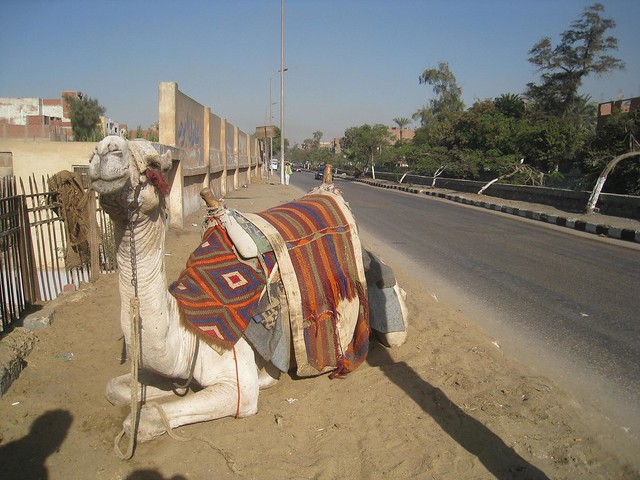
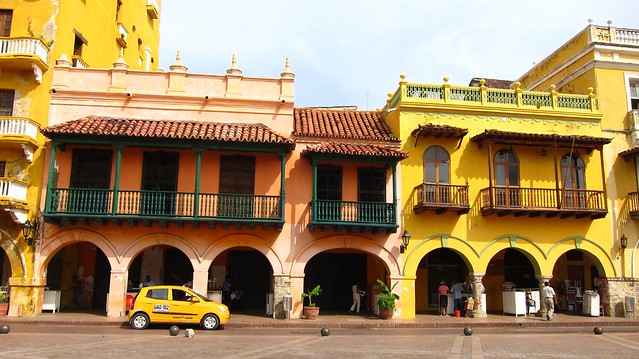
  5. When choosing your school, find the right balance between popular and overcrowded. Legally, 8 is the maximum number of students in an Open Water PADI course but the fewer the better, particularly if you are a nervous diver. Too few would leave me dubious about the quality and reputation of a company but you will generally know if you feel comfortable with a dive instructor as soon as you meet them. So shop around, talk to the instructors and fellow divers in the area.
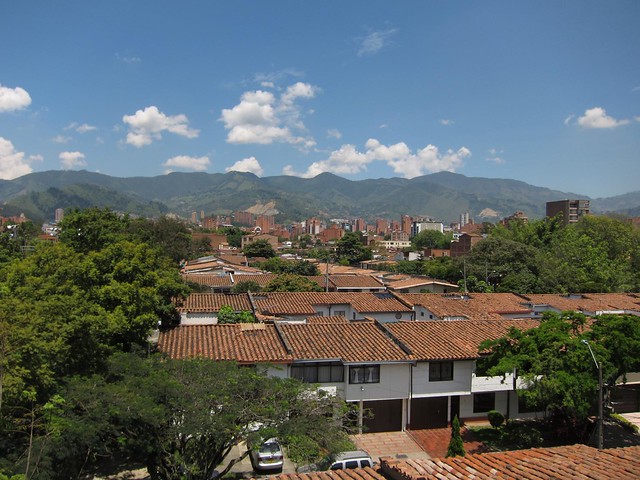
  6. Don't choose a school based on price. Prices rarely fluctuate dramatically as dive shops usually agree on a standard price. Beware if one school is considerably cheaper than another.
  7. Ensure you are comfortable with your equipment. Most equipment comes in a wide variety of sizes and some dive shops even have different brands available, so don't be afraid to swap and change until you find the right fit as it makes your diving experience more enjoyable.
  8. Learn at your own pace. All instructors are remarkably calm and patient and will encourage you to go as slow as you need to. You need to feel confident and comfortable before you move onto the next step.
  9. You need to be relatively fit and healthy to dive. If you are concerned about your health, arrange for a dive medical with a doctor. This is also necessary for anyone planning on taking their diving qualifications further than Open Water such as an Advanced PADI course.
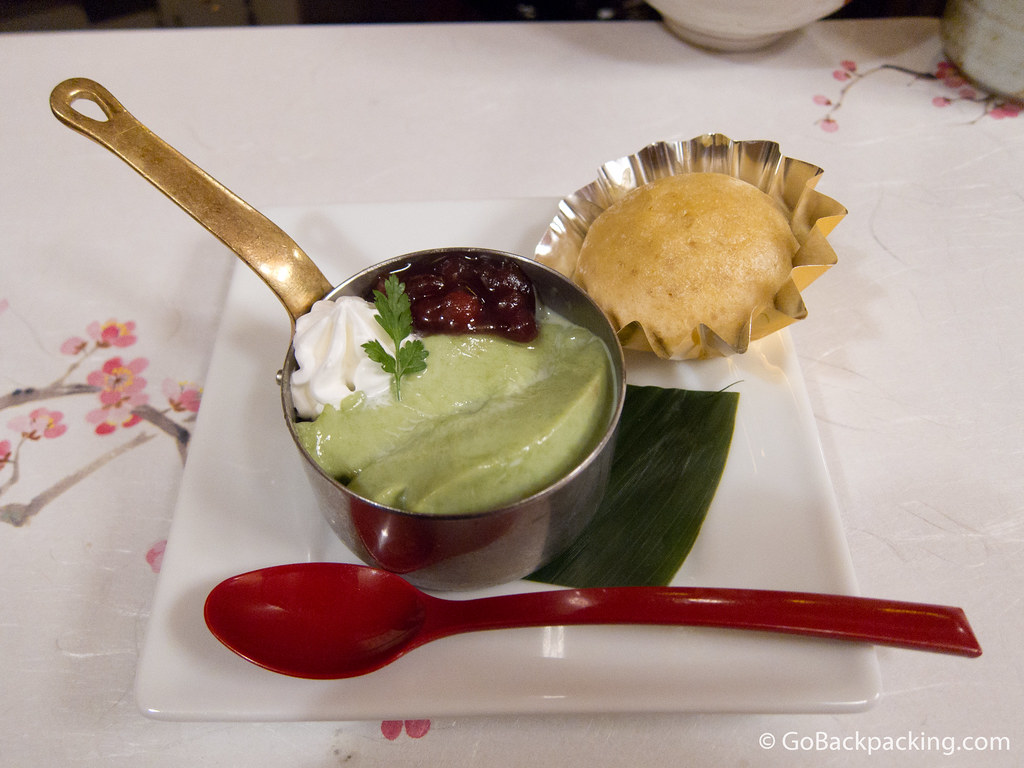
  10. Don't drink too much the night before you dive. It's common to go for drinks with your new dive buddies after a dive but there's nothing worse than diving with a hangover so stay away from the whiskey buckets!
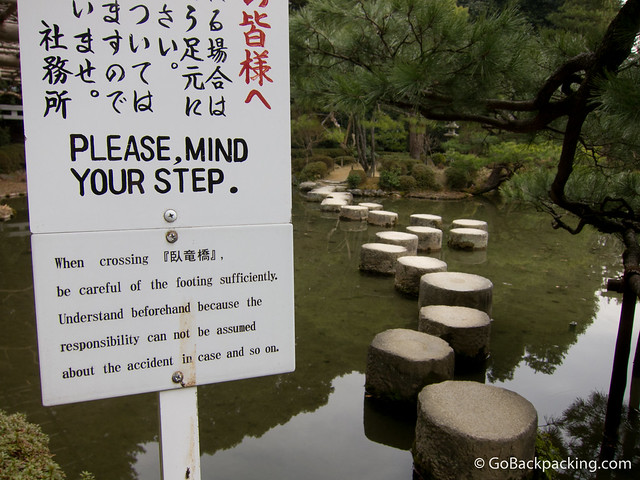
___________

About the Author: Monica Stott caught the travel bug when she was just 10 years old and is currently on a 2 year trip around the world. You can read her tales at: TotalTravelBug.com or on Twitter @TotalTravelBug.
Top 10 Travel Safety Items for Women

Let's face it: Women have to be more cautious than men while on the road. It hurts to admit it, but we are inherently more physically vulnerable than our male counterparts.

These ten travel safety items for women will help give you peace of mind and protect you as you explore the world.

Doorstop alarm and phrasebook

1. Door stop alarm

Some female travelers feel vulnerable staying in a hotel room alone, especially if they get stuck in a room on the first floor.

A good idea when staying in private rooms is to buy a portable door alarm and push the bottom of it under your door from the inside.

If anyone tries to open the door while you're in the room, a loud alarm will sound.

The wedge-shaped stopper will also jam the door, preventing the intruder from opening it.

2. Personal alarm or whistle

Walking in a dark alley or street alone at night isn't wise, but sometimes it's inevitable.

It's easy to get lost if you're on a solo trip in a new place for the first time (although we recommend you make extensive use of Google maps).

Carry a personal safety alarm that goes around your neck, in a hidden pocket or on a keychain. You could also wear a small whistle under your shirt.

In case of an emergency, this is the best way to easily and quickly make a loud noise and indicate that you need help should someone unsavory approach you or try to hurt you.

Even if you're just in an unfamiliar place and have niggling safety concerns about unwanted attention, an emergency alert device (and perhaps a back-up can of pepper spray) can be your best friend.

And remember, if you find yourself in a dangerous situation as a female solo traveler, make sure you have details of the local emergency services to hand.

3. Small flashlight

Carrying a small flashlight is also a must when walking alone at night.

Besides helping light your way, it should also make criminals less inclined to take advantage of you. There are many bright flashlights that can attach to your keychain or bag.

A few manufacturers make a personal alarm/flashlight combo.

4. Portable hotel door & drawer travel lock 

A portable door lock allows you to add extra protection to your hotel room door at night.

You can also use it to lock a drawer inside the hotel room for your valuables when you're staying somewhere without a safe.

We all like to think that our belongings are safe in our hotel rooms, but I've heard countless stories from friends about money, jewelry, cameras, and other belongings being taken from suitcases.

Lock it up and take the key with you while you go out.

5. Fake wedding ring

If you have a nice wedding or engagement ring, leave it at home when you travel so it doesn't risk getting lost or stolen.

But whether you're married or not, you should travel with a plain fake wedding band.

It's said that women are less likely to be harassed if it appears that they're married, as it usually implies that there is a man nearby.

It also allows you to easily make the excuse (if you know the local language) that you need to leave somewhere because your husband is waiting or around the corner.

Stop by a Target or Claire's Jewelers to get a cheap fashion ring that could look like a wedding band.

6. Bra stash (example)

A money belt can be easily spotted on women who wear form-fitting clothing.

Wear a bra stash instead, which is a small pouch that goes in the middle of your bra between the ladies.

It allows you to unassumingly carry extra money, credit cards, a hotel room key, and any other small valuables.

Other important things to stash are details of emergency contacts, such as those of a family member or close friends.

Keep a back-up SIM card stashed too so that you can make a phone call even if your cell phone is stolen.

7. Travel dictionary

It's very important (and also just common sense) that you should have the ability to communicate with locals who can help you in an emergency.

While it's vital to memorize key phrases such as "help me" and "leave me alone," it's also a smart move to keep a foreign dictionary in your travel bag for easy reference for more complex important phrases.

8. Pacsafe Backpack & Bag Protector

It's frightening how easily someone can snatch a bag from you while on public transportation, or even for someone to pickpocket you from your backpack.

The Pacsafe bag is covered in a mesh cage that makes it impossible for someone to get into any of the bag's pockets.

It also has cables that allow you to securely lock it to a pole, perfect for if you're on a train alone and want to doze off--it prevents someone from running off with it.

9. First aid kit

This one's a no-brainer, but every woman should have a small first-aid kit in her backpack.

Tote along some Neosporin, bandages, anti-histamine, aspirin, antiseptic, etc.

You can buy small pre-assembled kits or put together your own.

10. An anti-theft messenger bag 

Purses are easy pickpocket targets; their straps are easy to cut quickly, and we often carry them in a way that someone could reach in from behind to grab something.

Backpacks are even easier to get into if someone is walking behind you-they can just unzip a pocket.

Invest in a travel messenger bag that's front-facing and has cut-proof straps for while you're out and about during the day.

Some travel messenger bags also have locking zippers.

If you don't have travel insurance, this precaution is even more important.

Pin for Later

travel safety items for women

How to Eat Your Way Through Singapore

The following is a guest post by Kelsi George. If you’d like to guest post on Go Backpacking, please read our submission guidelines.

For me, the first thing that comes to mind in a place as cosmopolitan as Singapore is, "I bet the food is great!"

Noting the diversity and potential for eating bliss, my friend and I set out on a Snack Crawl, the goal of which was to eat at as many places as possible in the 24 hours we had in Singapore. Herein lies a guide for how to eat your way through Singapore.

After checking in at our hostel on Bugis, we bee-lined over to Little India for lunch (we have our priorities).

Enjoying the food in Little India.

Little India

The colored buildings and shiny fabrics distracted us for a moment from our journey to gluttony, however the clouds began to pour down their rain and redirected us to our true calling: food! We stopped by the first place that showed promise, Sakunthala, and ordered vegetarian biryani, chicken masala and chappati. After lunch we paused the satisfied stupor of out post dining stroll to sample some coconut burfi and sone papdi from Komalas Vilas Sweets and Savouries.

7/11

What can I say? We'd been living in Thailand for a year at this point and 7/11 had become the sustenance to the snacking needs of our soul. Mostly, we would just walk around the marts, foaming at the mouth, saying things like "They sell Ben and Jerry's here? and "Look at all the chocolate!" This time around we bought some wine in the name of prudence (we were running low on funds!), to bring back to the hostel for our own Happy Hour on the rooftop.

Arab Street

Around dinner time we set out to Arab Street and stopped at Sufi Corner Turkish Restaurant for a mezze platter and hookah. I stopped by this same restaurant on a different trip to Singapore and had a doner kebab, which was also very tasty.

Back to Little India

Yes, back to Little India because we had been truly enchanted and the backpacker bar scene looked promising. We stopped by Zsofi bar on Dunlop St. for Jenga and tapas where as destiny would have it, the tapas come free with drinks. We loved the mushroom bruschetta and spanish potato omelet, which we washed down with Tiger beer - a must-try on any Singapore Snack Crawl list. The pizza we sampled off of other peoples plates (apparently we have no shame) was not too shabby either.

The night was quiet so we hailed a cab over to Crazy Elephant for some live music, before resting our weary heads and full bellies for the night.

Hawker Center

No snack crawl in Singapore is complete without a stop at a hawker center, the near ubiquitous food courts around town that are central to the Singapore eating experience and at times seem to be the only place for cheap eats. We tried out some coffee at Queen Street Coffee Stand to complement the lovely breakfast of toast with jam we had at our hostel.

Chinatown

No, Chinatown, we promise we did not forget you. Being the recovering vegetarians that we are, with a tendency to relapse, we stopped for lunch at Organic Veg, where we sampled a variety plate.

After lunch we perused the stalls in Chinatown for snacks and souvenirs and bought some blended juice and key chains. Then we stopped for coffee round two at Nanyang Old Coffee, which showcases a Singapore Coffee Museum in the back. Here we decided to finally withdraw more money from the ATM and go to the Asian Civilizations Museum (completely worth it by the way) before catching our flight back to Thailand.

More Food Lovin'

If those digs aren't enough for you, here's a compilation of websites about restaurants in Singapore to help you plan your own Snack Crawl. Or you can do what we did and use your gut. Get it? Use your gut. ;)

  • http://yum.sg/
  • http://www.singaporerestaurant.com/
  • http://www.streetdirectory.com/
  • http://www-singapore.com/food-dining/
  • http://sg.openrice.com

Bon Appétit!

___________

About the Author: Kelsi is currently finishing up her service as a Peace Corps volunteer in Thailand and enjoys plotting travel adventures, reading books and eating delicious food.  Read more on her blog, Some Sojourns, and follow her on Facebook and Twitter @SomeSojourns.

Planning for Hawaii on a Budget: Oahu

Very rarely do you look at the itinerary of a budget traveler or backpacker and see a tropical Pacific island listed there.

Why? It probably has to do with the cost of getting to the island and staying there. If the phrase "paradise" shows up, most likely so will the dollar signs. But that doesn't mean a budget traveler cannot afford the experience.

Ko Olina lagoon on Oahu (photo: Michelle Maria, Pixabay)
Ko Olina lagoon on Oahu (photo: Michelle Maria)

Even famous (and pricey) destinations like Hawaii can be done on a budget if you do your homework and plan.

I've been preparing for a week-long trip to Oahu and have a solid plan on how to stick to my budget while still experiencing as much of Hawaii as possible.

Here's what I've learned about planning a budget-friendly trip to Hawaii, specifically Oahu.

Table of Contents

  • Get a Deal on Airfare
  • Have a Home Base
  • Don't Rent a Car
  • Stay in Hostels
    • Where to Stay in Honolulu - Waikiki
  • Get Some Sun
  • Free and Cheap Things to Do
    • First Friday in Honolulu
    • Free Lessons
    • Pearl Harbor
    • Hiking Diamond Head
    • The Dole Plantation
    • Iolani Palace
    • Whale Watching

Get a Deal on Airfare

If you're like me and heading to Hawaii from the East Coast, airfare will cost a big chunk of change.

Even flying from the West Coast isn't cheap. The key here is to keep an eye on flights across various airlines and booking sites early on.

Waikiki Beach (photo: skeeze, Pixabay)
Waikiki Beach

Using a site like Skyscanner with a 'check whole month' feature is helpful because it shows when the cheapest day to travel is.

I kept an eye on Skyscanner for weeks before I booked my flight and eventually bought a round-trip ticket from Pittsburgh to Honolulu for $650, including tax and flight insurance.

The trade-off was extra layovers, but that's a compromise I was willing to make.

Use the Skyscanner search box to find the best flight deal; you might be surprised at what you see! Also, be sure to download the Skyscanner app.

Related: How To Find Cheap Flights

Have a Home Base

While island-hopping in Hawaii probably sounds appealing, it makes much more sense financially to pick one island and stick to it.

Waikiki Beach is a good place to stay when planning for Hawaii on a budget (photo: yestoforever, Pixabay)
Waikiki Beach - Honolulu, Oahu (photo: yestoforever)

Airfares from one island to another aren't cheap -- for example, going from Oahu to Kona on the Big Island can set you back $150.

Exploring only one island means you can devote more time to it and travel more slowly. If you decide to go this one-island-only route, I suggest Oahu, home to Honolulu's state capital.

Yes, Honolulu is probably the most touristy city in Hawaii. But it is also the largest city in the state, meaning there's the most opportunity to find ways to save money.

Related: Island Hop the South Pacific on a Budget

Don't Rent a Car

Oahu, and Honolulu especially, has what I'm told is a pretty reliable transportation system called The Bus. You can go anywhere by bus for $2.50 one-way.

Road to Hana (photo: nlang06, Pixabay)
Road to Hana (photo: nlang06)

Or, if you're planning to stick around for a few days, purchase a 4-day pass for $25, which gets you unlimited rides on any regular and express buses.

This, I think, is the way to go. It will save you money on rental car fees and gas (which is expensive in Hawaii), and you'll even help the environment.

Stay in Hostels

Yes, Oahu DOES have hostels! Many Honolulu hostels are around Waikiki Beach, which means they are close to restaurants, nightlife, transportation, and inviting Pacific waters.

Diamond Head mountain and Waikiki beach (photo: alemus, Pixabay)
Diamond Head mountain and Waikiki beach (photo: alemus)

If you're willing to sacrifice room service and book a dorm bed, you can get the same views in a hostel for a fraction of what you'd pay at Waikiki hotels.

Where to Stay in Honolulu - Waikiki

Polynesian Hostel Beach Club - Beds start at $26 in the 6-person dorms; semi-private and private rooms are also available, with a studio costing $75.

Perks include free Wi-Fi; complimentary snorkels, masks, and beach gear; and surfboard and bike rentals for an extra charge.

Check Price & Availability at Hostelworld.com

Waikiki Beachside Hostel - standard rates average $34 per bed in the dorms. Semi-private rooms are also available. Perks include free Wi-Fi, surfboard and moped rental (extra charge), and discounted tours.

Check Price & Availability at Hostelworld.com

Hostelling International Honolulu - Beds start at $25 per night for members ($28 for non-members); private rooms are available for $58 for members ($64 for non-members). Perks include proximity to the beach and free boogie boards and sports equipment.

Check Price & Availability at Hostelworld.com

We also recommend checking out Hotels Combined, a meta-aggregator that searches across popular booking sites and compares the best deals.

It's worth a look, as any time you can score a sweet hotel deal for what you'd be paying at a hostel or close to it!

Click here to search on Hotels Combined.

Staying in a hostel will save you a lot of money (even the private rooms are less than half what you'd pay at a hotel), and you'll also have the opportunity to meet travelers from around the world.

Get Some Sun

Sitting on the beach, soaking up some sun, and people-watching won't cost anything.

Many hostels even provide free beach equipment like beach mats, boogie boards, and snorkeling gear that you can take advantage of.

Waikiki Beach, Honolulu (photo: skeeze, Pixabay)
Waikiki Beach, Honolulu

On the weekend, check out sunset on the beach at Waikiki, where a free movie is shown on a giant 30-foot screen, and local bands perform before the sun goes down.

And, if the crowds at Waikiki aren't to your liking, hop a bus and head off to any of Oahu's other beautiful beaches.

Head to Hanauma Bay for some of the best snorkeling in Hawaii, or check out Sunset Beach, Waimea Bay, and Banzai Pipeline on Oahu's North Shore for some of the best surfing in the world.

If you're on Oahu during the late fall/early winter months, you could probably spend days just watching surfers tackle 30-foot swells at the North Shore.

Related: The Beauty of Oahu

Free and Cheap Things to Do

You can pay $80 to attend a kitschy luau or take a bus tour around the island.

But there are plenty of other things across Oahu that you can do for free or for little cost. For example, consider the following. Everything below is things to do in Oahu with kids, too.

First Friday in Honolulu

On the first Friday of every month, crowds gather in Chinatown for free art exhibits, entertainment, and restaurant specials.

Free Lessons

If you want to see some hula or learn some moves, consider checking out the Royal Hawaiian shopping center in downtown Honolulu.

They offer free hula lessons, lei-making classes, and even weekday ukulele lessons. At 6 p.m. every weeknight, there's a free hula show.

Pearl Harbor

It's hard for me to imagine visiting Honolulu without making the trip to Pearl Harbor, where the Japanese attacked the U.S. on December 7, 1941.

Consider a visit to the USS Arizona Memorial at Pearl Harbor when planning for Hawaii on a budget (photo: drewga, Pixabay)
USS Arizona Memorial at Pearl Harbor (photo: drewga)

It's easy to get to by bus, and there's a lot worth seeing. The USS Arizona Memorial and Museum are free, as are the Bowfin Park Outdoor Exhibits and Submarine Memorial.

Touring the USS Bowfin Submarine costs $10, and visiting the USS Missouri Battleship costs $20. You can tack on a visit to the Pacific Aviation Museum for another $20.

Don't bother paying for a guided tour, however. You can go it yourself or rent audio tours for a few dollars.

Hiking Diamond Head

If you're the outdoors type, hiking up this extinct volcanic crater should probably end up on your list. You can take a bus to Diamond Head and pay $1 for the hike.

It's a moderately strenuous hike, but you'll be rewarded at the top with panoramic views of Honolulu.

Related: Popular Hikes on Oahu

The Dole Plantation

Ever wondered what a pineapple plantation looks like? Well, you can visit one in Wahiawa.

Admission to the grounds is free, but the Pineapple Garden Maze is one of the main attractions. Try your luck in it for $6.

Iolani Palace

Built in 1882, this palace in downtown Honolulu was once the official residence of Hawaii's monarchy. Take a self-led audio tour for $12.

Whale Watching

During the winter months, whales are aplenty in Hawaii's waters. And while some operations charge $100+ for a sightseeing/whale watching tour, you can go for as low as $30 on the Star of Honolulu, a 4-story cruise ship, if you book an early-morning excursion.

There are, of course, many other ways to save money in Hawaii. Eating at local restaurants, cooking meals, ignoring kitschy souvenirs, or finding a friend to stay with can also help you keep expenses down.

But the moral of the story here is that anyone can afford Hawaii if they plan for it - even budget travelers.

10 Things You Didn’t Know About Russia

Russia
The Red Square with the view on the Kremlin

Contrary to popular belief, Russia does not consist of just two parts, the first being the Kremlin with the Red Square and the second one being the vast and untamable  Siberia much publicized by Hollywood films.

In this post, we'll shed light on some characteristics of the country. Here are ten things you didn't know about Russia.

1. Let's start with the simple truth. Bears do not walk down the streets in Russia. It's a difficult reality to come to terms with, but sometimes the truth hurts.

The same goes for kangaroos in Australia and moose in Sweden.

2. It's not always cold in Russia and certainly not everywhere. The South of Russia is warmer than most European countries; there are also palms growing in some areas near the Black Sea (which means the climate there is subtropical).

In the summer, the South of Russia (Krasnodar region, for instance) has an average temperature of 32-35C, reaching 40-43C from time to time; in the winter, the temperature is rarely below zero and snowfalls are extraordinary.

Also for public transportation as a transport collapse usually follows each snowfall.

Russia
The Black Sea coast, 37C in the shadow

3. It has woods, steppe, taiga, tundra, but less known is the fact that Russia has a desert as well, namely the Caspian lowland desert (besides the Caspian Sea that is actually a lake) that looks exactly like the Sahara desert.

4. Oh, the Transsiberian! The Transsiberian Railway trip is on many a traveler's to-do list; however, some don't do their research correctly, and once on the train, they realize there are no showers on the trains that serve the Transsiberian.

Well, there are showers on the luxurious train specifically tailored for foreigners who can afford to pay for it, but it's not a real experience anyway!

You're going to have to think of ways of how to take an improvised shower with the help of a sink and make use of a lot of wet wipes, but chances are you're still going to stink once you're at your destination.

Still part of the charm, though, right?

5. This one is a personal favorite. Not all Russians drink vodka. And in a broader sense, not all Russians are alcoholics.

In fact, the Irish and the Germans and the French and perhaps a dozen other nations consume much more alcohol per capita than Russians.

Sure, in some remote villages almost cut off from civilization with a high unemployment rate, people drink more than in big cities, but really, not in the amounts portrayed by the media.

And while I'm on the subject, Russians don't say "Na Zdorov'ye!" before drinking.

It's either a short toast proposing to drink for the meeting/evening/long-standing friendship/somebody's birthday or a long(ish) toast at a wedding or anniversary highlighting all positive characteristics of the toasted person or persons.

Also, keep in mind that as of several years ago, drinking is not allowed in public places. If you violate this law, be prepared to cash out either officially or unofficially.

6. Continuing the topic of vices, cigarettes are quite cheap in Russia. A pack of Marlboro will cost you $1.37 (1 euro); therefore, it's not unpopular to stock up on cigarettes here.

However, don't forget that one person is not allowed to have more than 200 cigarettes (10 packs) on them at the time of crossing the border.

But you guessed it. It's not uncommon to purchase more than that and then ask your fellow passengers to help you out with a couple of hundreds of cigarettes for the duration of your flight/ride.

7. What do Russians eat? Well, of course, borsch, pelmeni, bliny, and caviar, what else?

In reality, of course, the food selection is a bit more diverse than that. However, borsch remains a favorite dish of many a Russian.

But did you know, for instance, that borsch can be green?

Yes, the standard version includes cabbage, root-beet, carrots, potatoes, and sometimes meat; however, the green borsch is made from sorrel, parsley, potato, and egg and is deemed the summer version, better served cold.

Not to be missed on a hot summer day.

8. Russian hospitality is either overrated or a myth altogether.

The truth is, Russia was cut off from the entire planet for so long that in some federal subjects (and there are 83 of them) when people see a foreigner, they can hardly contain their excitement and want to get to know this person, find out if they're real or not and if the grass is greener on the other side.

Thus the invitations, the openness, the chats, and all that is referred to as Russian hospitality.

This is not to say that homo homini lupus est and every man is for himself, but it's just that this hospitality exists thanks to the Iron Curtain.

9. The Soviet Union ceased existing almost 20 years ago and yet some of the leftovers of that time are still ever-present.

For example, queues are a Russian reality. Want to send a postcard to your family from the post office? Or maybe buy a ticket for the subway?

Well, be prepared to wait in a line of rushed and unhappy people who seem to want to push you or throw a demeaning look at you all the time.

The one advice is: breathe! And don't let those cunning people with "I just have a small question to ask" squeeze ahead of you, otherwise standing in queues will be your full-time job.

10. Most Russians approve of the government and the tandem in charge.

But that's because the media is under full control of the government, and most people only know what they are told and they are told what somebody wants them to know.

Therefore, they are convinced that they have a democracy and that they are well taken care of.

In any case, a political discussion is not recommended, at least not with people you just met.

___________

About the Author: Irina Sazonova is Russian by place of birth and passport, but prefers to think of herself and other fellow bloggers as citizens of the world. Currently based in Europe, Irina documents her travels in her blog Online Hiatus, http://onlinehiatus.blogspot.com. Follow her on Twitter @onlinehiatus.

Ultralight Packing List for Japan

What's in my backpack - Japan trip
All the stuff going in my backpack (does not include clothes I'll be wearing, phone, watch, and camera).

For my first big adventure of 2011, I'm taking a 12-day Winter trip to Japan. I have two personal goals in mind, packing light and sticking to a budget.

First and foremost, I want to travel light. Really light. My packing list is almost finalized, and it's by far the smallest amount of stuff I've taken on an international trip.  

I've always thought of myself as being on the lighter side of the packing spectrum.

However, I've been noticing the minimalist travel bloggers around the interwebs, which has inspired me to challenge myself, at least for this trip.

To recap a few advantages to the "less is more" philosophy as it relates to international travel:

  • No need to check your backpack on flights.
  • Less physical stress from carrying the backpack.
  • Your backpack takes up less space on trains and buses.
  • If Couchsurfing, your stuff won't unintentionally take over your host's home (especially important in Japan where apartments are small).
  • It's easier to account for your belongings.

Here's a breakdown of my ultralight packing list for Japan:

  • 20-year old LL Bean backpack
  • HP laptop w/AC cord
  • 500 GB external hard drive (photo storage)
  • Blackberry Curve cell phone
  • Canon S90 camera w/soft case and battery charger
  • 16 GB SanDisk SD card
  • 2 GB SD card (back up)
  • Flip UltraHD video camera
  • Amazon Kindle w/leather case
  • Creative Style 8 GB mp3 player w/earphones
  • Casio Pathfinder watch
  • Petzl Zipka LED headlamp
  • 2 different types of USB cords
  • GoLite jacket
  • GoLite hoody
  • Black cardigan sweater
  • Mountain Hardwear short sleeve shirt
  • REI long sleeve shirt
  • Zombie Fest t-shirt
  • Volcom board shorts
  • 2 pairs of boxers (testing out a pair from Exofficio)
  • 2 pairs of SmartWool socks
  • Merrell sneakers
  • Beanie hat
  • Oakley sunglasses
  • Custom earplugs
  • Money belt w/passport, Japan Railpass, cash, business cards
  • 2 Sea to Summit dry sacks
  • MSR Packtowl
  • 2000 Lonely Planet Japan (borrowed from a friend), and pen for scribbling
  • Trial size toiletries in a 1-liter Ziploc bag (not pictured)

Originally the board shorts were for the spas, but I was recently told the guys go "au natural." I'm going to bring them anyway as they're lightweight.  

Even though it's Winter, I'm counting on several layers to keep me warm versus a heavy jacket.  I hope I don't regret that once I land in Tokyo!

As much as I'd like to leave the giant paperback guidebook at home, flipping pages still seem faster and easier than navigating an ebook.

How to Be a Local in Kenya

"Habari gani" is the most common greeting in Kenya, and it doesn't mean "hello."

The direct translation is more along the lines of "what's the news of the day," or in other words, "how's it going?"

It's a friendly invitation to say a little more, explain something personal or just express what happens to be on your mind.

Being friendly and halting a busy schedule in order to hang out with friends is the first step in how to be a local in Kenya! Master the first step and the other steps will fall into place!

Table of Contents

  • Don't Worry About Time
  • Learn to Carry Things on Your Head
  • Start Speaking Sheng (Kenyan Slang)
  • Drink Your Beverages Warm
  • Ride Matatus
  • Nyama Choma Fat!
  • Greet Everyone With a Handshake
  • Don't Ever Throw Anything Away (It Can and Will Be Fixed)
  • Drink Chai Sweet
  • Walk Around With a Radio

Don't Worry About Time

In Kenya, there's absolutely no need to worry about or even know the time.

As in much of Africa, things just fall in to place at the right moment, and there's no need to rush the process.

Learn to Carry Things on Your Head

It's not a joke, most people in Kenya (and all of Africa) are experts at carrying things on their heads.

It doesn't matter if it's a bucket full of water, a simple notebook or a takeaway lunch, it's much more convenient and resourceful to carry it on your head.

Think about all the relief it gives your hands!

Start Speaking Sheng (Kenyan Slang)

Sheng is a mixed combination of Swahili, English and tribal African languages that developed and currently evolves on the streets of Nairobi.

There are a host of “wazup,” style greeting like sema, sasa, walapa, and instead of saying “How are you?” the correct lingo is “Is how you guy?”

Many words are shortened or spoken lazily, as with most slang around the world.

Drink Your Beverages Warm

It doesn't matter if it's beer, soda or water, refrigeration or the electricity to power it, are not Kenya's most reliable amenities.

This poses no problem for Kenyans because beer is much more appealing in its room temperature state.

To be Kenyan means learning to drink and crave a warm, refreshing beer!

Ride Matatus

The public minibusses that prowl the streets of Nairobi, known as Matatu's, are rowdy, chaotic, and usually entertaining.

In addition to the roller coaster ride provided, many are hooked up with the latest jua kali (fix anything) sound systems and speakers that you can feel!

Nyama Choma Fat!

There's nothing more Kenyan than eating chunks of pure enriching glutinous animal fat!

Eating roasted meat, known as nyama choma, is a popular past time in Kenya and something everyone enjoys.

After waiting for the meat to finish grilling, the waiter comes to the table and slices up the meat on a chopping board.

The man of respect has the initial honor to indulge in the transparent pieces of fat!

Greet Everyone With a Handshake

Greetings are a crucial part of Kenyan culture, and handshakes always accompany a “habari.”

Kenyan handshakes are not the firm Western style shakes that hurt your hand, but just a soft squeeze of acknowledgment.

For utmost respect, shake with the right hand and support your elbow with your left hand.

Don't Ever Throw Anything Away (It Can and Will Be Fixed)

Those flip flops that broke at the toe, your ancient lawn mower, or even your busted radiator, can and will be fixed by a jua kali method.

Jua kali, which means “hot/fierce sun,” is used to describe fix-it men that use their creativity and inspiration to repair anything and everything.

Their innovative strategies which often involve welding and banging, are not always the best quality, but they have a high rate of short term success!

Drink Chai Sweet

Dessert is not a big part of the Kenyan diet, so when it's time to drink Kenyan style tea, make sure it is super sweet.

Add about three tablespoons to make a proper cup of Kenyan chai.

Walk Around With a Radio

Kenyans love music, but they're not always listening to Kenyan music, many love Lingala music from Congo.

It's a common practice to walk around, battery fed radio in hand, and groove or sing along to the high pitched Congolese guitars.

Despite these cultural ways to blend into the Kenyan culture, it's nice to know that the most essential way to become a local in Kenya is to enjoy the company of others, be friendly and always love a good laugh.

Learning a few of these cultural practices may never make you an authentic Kenyan, but you can be assured that locals will smile, be accepting, and laugh with you!

Souvenir Saturday: Dragon Tea Cup

Dragon Tea Cup
Dragon Tea Cup

During my time in Chengdu, China I drank a lot of tea.  Once I realized the tea shop people love to have tourists do a tea tasting with them, I ducked into those shops left and right.  When I was getting ready to leave the city, I figured a tea cup would be the perfect reminder of my time there.

The more expensive cups and pots are made of clay, and look fairly dull and plan.  I learned that they can absorb the flavor of the tea you use with them.  For that reason, it's recommended you only drink a specific tea out of the cup, such as black, or green.

Because I couldn't see myself committing to just one tea, I bought the cup above.  I was born in the year of the dragon, and my favorite color is blue, so it was meant to be.

Weekend Getaway to the Greek Island of Rhodes

Winter holidays to the Greek island of Rhodes are becoming a standard fixture for many holidaymakers looking for sun, sea, and sand during harsh winters. 

Rhodes is a beautiful Mediterranean island that boasts spectacular sandy beaches and crystal clear waters. 

The beaches on the Greek island of Rhodes
The beaches of Rhodes Town, Greece

With numerous attractions and architecture dating from 200 BC, Rhodes' historical and religious sites make it a city that must be explored!

Rhodes' Old Town provides its visitors with an abundance of historical attractions. 

With traditional street lamps and a medieval street look to complement its traditional shops and stalls, there is something for everybody, from traditional local jewelry to pottery. 

Known for having the best shopping, Rhodes' Old Town also provides a range of modern and classic antique goods.

Outlets selling wine and traditional Greek olive oil and gift shops selling cheap souvenirs are also available in the Old Town.

Located not too far from the Old Town is the stunning beach of Faliraki. 

With sunbeds, umbrellas, restaurants, sports facilities, and beach bars, Faliraki beach is perfect for holidaymakers looking to soak up the endless rays of sunshine and partake in adventurous watersports.

Lindos temple ruins on Rhodes in Greece
Lindos temple ruins

Watersports such as scuba diving and surfing are key activities that make this Mediterranean island a top holiday choice for families, singles, and couples. 

Top attractions include the ancient Hellenic acropolis of Rhodes, which sits on a hill in the western part of Rhodes. 

Once consisting of prominent temples, public buildings, and underground vaults, this famous attraction dates back to the 2nd century BC and continues attracting numerous tourists to its ruins.

As one of the liveliest islands in Greece, Rhodes provides a varied nightlife with dance clubs, bars, and bouzouki clubs. 

Additionally, there are several dance theatres for those looking for different entertainment.

The town of Rhodes is picturesque, with many wonders, archaeological sites, and natural beauty spots.   The best beaches are located on the east coast between Faliraki and Lindos. 

Holidays to Rhodes are increasing in popularity. As winter gets colder, many holidaymakers flock to the Greek islands, and Rhodes remains a top holiday choice.

Gili Trawangan: Indonesia's #1 Island Paradise

Welcome to my Indonesia island paradise -- Gili Trawangan off the coast of Lombok.

Small enough to walk around in an hour and a half, it attracts a wide range of travelers seeking a little slice of heaven.

The island is packed with dive shops and has become a popular spot to get PADI certified.

Snorkeling is also an option, as is renting a bicycle, however, if you decide to simply spend your days lounging around, you'll be in good company.

Gili Trawangan
It only takes 1 hour to ride around the entire island of Gili Trawangan by bicycle.

Fresh seafood
This display of fresh seafood is what catches everyone's attention as they walk past The Beachhouse restaurant. Check out those lobsters!

The Beachhouse restaurant
On my first night, my friend and I met a bunch of people at The Beachhouse restaurant, and we returned several times during our stay.

Shrimp in garlic butter sauce
Shrimp doused in garlic butter sauce with rice.

A band of locals
A band made up of local island musicians entertain the patrons of Sama Sama bar.

Traditional wooden boats
Traditional wooden boats, with the nearby sister island of Gili Meno in the background.

Horse-drawn cart
For about $5, visitors can go for rides on horse-drawn carts, known as a cidomos. There are no cars or motorbikes on the island.

Internet shop
Despite the advertising, the internet speeds at this shop were not lightning fast, however, it's good enough to check e-mail.

Watch your favorite movie in a hut
These huts have a few mats, and little television and DVD players in the yellow boxes. Order a crepe or ice cream, and you can sit back, relax, and enjoy a movie. This is where I watched Superbad for the first time.

Chai tea and a croissant at Scallywags
Friends referred me to Scallywags restaurant for the best chai tea on the island.

Hut on a deserted beach - Gili Trawangan
I took this photo after enjoying a cup of tea with two British girls. It felt as though we had the whole side of the island to ourselves.

Job Opening: Feature Blogger

Drakensberg Mountains, South Africa

In Fall 2009, I began accepting contributions on Go Backpacking, and since then, I've had the chance to feature dozens of bloggers, and work with quite a few on a regular basis, including Danielle who has been helping from an editorial standpoint for almost a year.

It has been a rewarding experience for me, the blog, and hopefully everyone who has shared their writing and photography.

In 2011, I'd like to bring on a Feature Blogger.  This is a paid position, and can be done from anywhere in the world.

Table of Contents

  • What I'm Looking For
  • The Benefits
  • Skills Required
  • Compensation
  • To Apply
    • Stage 1
    • Stage 2

What I'm Looking For

I'd like to build a long term relationship with a travel blogger to help grow Go Backpacking's audience and reach. I'm looking for someone who can commit to at least 6 months if they're accepted for the role.

The blogger would be responsible for one post per week, which will be published on the busier traffic days (Mon/Tues/Wed) for maximum exposure. Topics will be brainstormed together, and will be a mix of ideas from both the blogger and the editor-in-chief (me).  Please review the submission guidelines and Archive to get a feel for the format and types of posts being published on the blog.

In addition, it's expected that the Feature Blogger will actively participate in promoting his/her posts via social media (esp. Facebook, Twitter, StumbleUpon) and respond to comments left not only on his/her posts, but also participate in the comments of all posts that appear on Go Backpacking. (not literally every single post...the idea is to help foster comments across the blog, not just his/her contributions.)

The Benefits

  • Competitive payment on a per post basis.
  • Complimentary membership to Travel Blog Success.
  • Regular exposure to Go Backpacking's audience (Jan 2011: 100k+ page views & 5,000 subscribers).
  • Allowed to use contextual links to their own blog if/when appropriate (Go Backpacking is PR 5).
  • Author Bio box under each post, including links to personal blog and social media.
  • Listed on About page as Feature Blogger.

Skills Required

  • Knack for recognizing "social media friendly" topics.
  • Understand the basics of Search Engine Optimization.
  • "Blogger's level" understanding of WordPress - enough to navigate your way around the WP admin panel, upload photos, etc.
  • Ability to research and source your own content - you will review new topics with the editor-in-chief (me) each week before drafting the post, or month if you prefer to submit a month's worth of posts at once.
  • Ability to source your own photos - preferably using your own whenever possible.  If you are familiar with photo editing, Lightroom, or other software, please mention this when applying.
  • Timeliness - you must be able to consistently meet your deadline each week, without exception.

Compensation

Payment will be competitive, and paid via PayPal on the last day of each month.

To Apply

Stage 1

Email [email protected] with:

  • Your travel experience (countries where you visited and/or lived).
  • Subject areas of interest/expertise.
  • 3 examples of your best/most popular posts from 2010, either on your blog or another (URL's only).
  • 3 suggested "social media friendly" article topics.
  • Preferred pay
  • Availability
  • And a few sentences about yourself and why you're a perfect fit for this job.

The deadline to apply is 10 pm EST, Sunday, January 30, 2011.

Stage 2

If after Stage 1 it looks like you would be a good fit, then I will ask you to write a post based on one of your suggested articles. This post will be published on Go Backpacking as a trial run (think of it as an audition).

Only the person who is ultimately hired for the position will receive compensation for the trial post.

If you have any questions, please leave them in the Comments below, or contact me privately.

10 Unforgettable Destinations for 2011

Iraqi Kurdistan
A view from within Iraqi Kurdistan

With the holidays behind us and resolutions long forgotten, it's time to turn our attention to the year ahead.

To provide a bit of inspiration, we've chosen ten unforgettable destinations along with thoughts from experienced travel bloggers to let you know what you can expect.

Despite being locations all over the world, they have one thing in common. You'll have a fantastic story to share when you return home.

Table of Contents

  • 1. Iraq
  • 2. Croatia
  • 3. Syria
  • 4. Nicaragua
  • 5. China
  • 6. Ethiopia
  • 7. Cuba
  • 8. Venezuela
  • 9. Czech Republic
  • 10. Antarctica

1. Iraq

Northern Iraq is an area that travelers are slowly starting to enter as stability increases in the region.

While it isn't for the novice, it is considered a safe area to visit.

Anil Polat of foXnoMad has recently visited and written extensively on the safety and his experience in the region.

As one of my followers on Twitter said, northern Iraq isn't as dangerous as you've heard but not as safe as you'd like. So many of the things I read about the place were inaccurate and just about everything I had preconceived was wrong too -  if that isn't a good reason to travel and see things firsthand, I don't know what is.

Check out foXnoMad's post What's it like to travel in Northern Iraq

2. Croatia

With a sprawling coastline and castle-dotted hillsides, Croatia is quickly becoming a favorite destination among budget travelers.

While in the heart of the Balkans, the country has all the charm of Italy to the East.

Caroline of Caroline in the City fell in love with the familiarity this European destination:

I love Croatia because it has all the things you love about Italy- winding cobblestone streets, breathtaking ocean views, delicious food- without the hefty price tag.

Check out Caroline in the City's post: I left my heart in split

Crusader castle at Krak des Chevalier in Syria

3. Syria

One of the larger states in the Middle East, Syria, receives mixed reactions due to its conflict with the United States.

However, those who choose to see past political conflict find a country rich with history.

Jonathan from Retrospective Traveller was taken with one of many historical sites in Syria:

Syria is like a pop-up book of history with it's ancient ruins, castles, medieval souqs, beautiful mosques, and of course, Damascus - one of the oldest cities in the world. It was the Roman ruins at Resafa, Bosra, and Palmyra that attracted me to Syria, but it was the mighty Crusader castle at Krak des Chevalier that blew me away...

Check out Retrospective Traveller's post: Up at the KraK of dawn… Krak des Chevaliers that is!

4. Nicaragua

The days of Nicaragua's violent and revolutionary past are long gone, making way for a new era of peaceful politics.

Wedged in between popular Guatemala and Costa Rica, Nicaragua provides a beautiful landscape for a budget traveler's dream price.

Michael from Go See Write visited the area and was pressed to find any faults:

Nicaragua has some of the friendliest people in Latin America, photogenic cities, a good variety of activites, and although some of the roads are horrible, the magnificent sunsets make up for any negatives.

Check out Go See Write's post: Trip to San Juan del Sur

5. China

With the world's largest population and the diversity to match, traveling in China can be intimidating for even the experienced traveler.

Organized tours throughout the country are becoming more popular, and independent travelers are finding it easier as the country grows its tourism industry.

Due to its large size and population, Monica of A Pair of Panties and Boxers found the country appropriately complex and summed up the essence of traveling there:

Traveling through China is like being in two places at once - the past & the present.

6. Ethiopia

Ethiopia is a country often misunderstood, evoking images of barren landscapes and food drops.

But Ethiopia is a land of extremes, and there is so much more to see.  

However, it is not for the faint-hearted; traveling can be stressful but also rewarding for those seeking adventure.

Dave and Deb from The Planet D shared their thoughts on the misconceptions of Ethiopia:

When people think of Ethiopia, they still envision famine and drought. But go there and it will surprise you.  The Great Rift Valley and the Blue Nile River runs through the country filling it with rich vegetation and abundant wildlife.  A mountainous land, Ethiopia offers remarkable scenery accentuated by its landscape like the Blue Nile Gorge seen here.

Check out The Planet D's post: What it's like to Cycle in Ethiopia on the Tour d'Afrique

Cuba
Che Guevara's legend lives on in Cuba.

7. Cuba

Many are flocking to see this forbidden island before the US embargo is lifted.

Whether you travel to a resort or make your way independently, the people will surely leave a lasting impression.

Andi from My Beautiful Adventures comments on the undeniable energy in Cuba:

Surrounded by tropical heat, the beat of salsa music, dilapidated architecture, and the constant presence of political unease; in Cuba I had the constant feeling that something was just about to occur, because in a place so full of uncertainty the only thing that was for sure was that something inevitably would happen.

Check out My Beautiful Adventures' post: Cuba Day 4, Part 2

The Andes in Venezuela
Amongst the Andes Mountains in Venezuela.

8. Venezuela

One of the more controversial destinations, particularly for Americans, travelers continue to visit Venezuela.

Although the country is in ruins, with its infrastructure falling into disrepair, the vast amounts of oil that the country is blessed with continue to keep the country together.

Marcello from Wandering Trader was born in Venezuela and has lived around the world. He warns that due to the collapsing economy, the dangers of the country, and most importantly, its capital, are very real.

If visiting Venezuela extra precautions should be taken including not wearing jewelry or fancy shoes, traveling in groups, and very rarely going out at night unless you are in a big group. The desperation in Venezuela is dire but if you are willing to arise to the challenge some of the highlights include Margarita Island, the Angel Falls, and the cozy city of Merida.

Check out Wandering Trader's post: Top 5 Venezuela Attractions

9. Czech Republic

If the Czech Republic were a person, it wouldn't be old enough to drink in the United States legally.

Somehow this young country, particularly its capital of Prague, quickly became a darling of European travel. 

Tourists spend days wandering from cathedral to castle basking in one of the world's most beautiful cities.

Chris from The Aussie Nomad recently visited Prague noted its popularity:

Prague is cheap, fun and amazingly beautiful. By day you can explore Prague Castle, Charles Bridge and wander the streets getting lost in the city. Then by night, enjoy the various pub crawls and night life that so many backpackers are fast discovering. Nearby you will also find the ghoulish Bone Chapel in Kutna Hora, a day trip worth your time of day.

Check out The Aussie Nomad's post: Kutna Hora and the Bone Chapel

Glaciers in Antarctica
Antarctica's landscape is filled with towering glaciers of blue ice.

10. Antarctica

Antarctica is a land of legend, folklore, and extreme. It's a dream destination for many who count passport stamps and want to push their next adventure.

But unlike the early explorers, getting to Antarctica is much easier if you have a bit of extra cash to spend.

Brendan from Brendan's Adventures recent trip lived up to his expectations:

Some people come to Antarctica for penguins, others come so that they can tell others that they've been to all 7 continents, but no matter what their reasons for coming may have been, it is the sheer beauty of the experience that will have them talking about it for years.

______

About the Author: Ayngelina left a great job, boyfriend, apartment, and friends to find inspiration in Latin America. Read about her adventures at Bacon is Magic and connect with her on Facebook and Twitter.

All photos are courtesy of the respective bloggers.

The Palace of the Snow Queen (Book Review)

The Palace of the Snow Queen

If it wasn't food, I didn't buy it. That was my rule for my solo cross-country road trip, and I could not afford exceptions.

I did, however, succumb to the allure of a new book.

After wandering around Boulder that morning and Colorado's capital all afternoon, I was almost relieved when it started to rain since it gave me a reason to seek refuge in the second-hand bookstore I'd heard so much about, the Tattered Cover.

The original building holds a seemingly endless number of books within the walls of its five floors.

I worked my way up to the third, where the travel section was, and sat down with the first book that caught my eye, The Palace of the Snow Queen.

Within 10 seconds, I was hooked; within 10 minutes, I also had to own.

Appealing to lovers of travel, history, and culture, Barbara Sjoholm explores all that Scandinavia offers-light, darkness, cold, ice, snow, and people.

Within three winters, she visits the Ice Hotel (Jukkasjarvi, Sweden), Kiruna (Sweden), Santa's Post Office (Finland), and many Sami homes in and around the cities of focus.

She exposes the reader to the beauty of Lapland and the tensions among culture, politics, language, environment, tourism, and economics.

It is genuinely fascinating yet not once overwhelming with information or detail.

Sjoholm writes in a vivid and lively way that makes the fictional Palace of the Snow Queen as real as the frigid and snowy landscapes of northern Norway and Finland.

She teaches, analyzes, and explores the region with such finesse that I'd be lying if I told you that amid my recent Central American experience, I somewhat long for the chill of Scandinavia.

She creates a real yet magical landscape that is both intriguing and satisfying.

What better time than now-the snowiest of winters in the States-than to curl up with a hot cup of tea and discover the honest beauty in The Palace of the Snow Queen.

How to Buy a Tibetan Thangka in Nepal

Wheel of Life thangka
The Wheel of Life is shown in this Tibetan Thangka

I've bought a lot of cheap trinkets in my travels, like the infamous Thai Beer Can Tuk-Tuk, but there is one souvenir that makes up for all my episodes of bad judgment -- a Tibetan thangka I bought in Kathmandu, Nepal.

While it's the most beautiful piece of art I own, it's also by far the most expensive souvenir I've ever purchased.

Thangkas are traditional Tibetan cloth paintings, framed with embroidered silk.  

The paintings typically depict the Buddha, other Deities, mandalas, the Wheel of Life (as you see in the photos here) or other important scenes from Tibetan Buddhism.  

Full of symbolism, they are hung around monasteries and homes to illustrate Buddha's teachings, as well as for decoration.

Before leaving home, I had encountered thangkas at a Washington, DC Buddhist center and at a DC shop that sold crafts from the Himalaya.  

In that shop, there was a limited choice of thangkas, and the prices were around $500 apiece.

I wanted one badly. However, I knew I could get one for less if I went to the source -- Tibet.

My Tibetan thangka hanging today

As it turned out, I never made it to Tibet.  

I was in Chengdu, China, when riots broke out in Lhasa, and the border was closed to foreigners three days before I was to depart by train.  

I had already visited Little Tibet in Chengdu, a street filled with Tibetan shops and monks.  

Unfortunately, the majority of "thangkas" were just cheap prints, so I had to wait a little longer to see the real thing.

Once I landed in Kathmandu and settled in a guest house in the tourist ghetto known as Thamel, I began to explore.

The Nepalese people were friendly, and it wasn't long before I had shopkeepers inviting me into their stores to sit down for a cup of milk tea and look at whatever they were selling.  

Ironically, Nepal probably has more Tibetan thangka artists and schools than Tibet now, given China's religious oppression has driven artists into exile.

In the beginning, I had a trek to focus on, so my thangka shopping had to be put on the backburner, but when I returned to Kathmandu toward the end of my stay in Nepal, I dedicated an entire day to shopping for the best thangka I could find.

I'm confident I found it, and for those who would like to shop for one as well, I have a few tips on how to buy a Tibetan thangka in Nepal.

     >>> Planning a trip to Nepal? Check hotel deals on Travelocity.

Just the Tibetan thangka painting, minus the cloth frame
Just the painting, minus the cloth frame

Table of Contents

  • 6 Steps to Buying a Tibetan Thangka
    • 1. Set a budget
    • 2. Select a subject
    • 3. Decide on the size
    • 4. Allow yourself a few hours
    • 5. Determine quality by looking closely at the lines
    • 6. Negotiate before you buy

6 Steps to Buying a Tibetan Thangka

1. Set a budget

And then be willing to break it. I paid three times what I initially thought I'd spend, but it was worth it.

Factors affecting the cost of a thangka include quality of painting, the skill of painter, size, and your ability to negotiate.

2. Select a subject

Select a subject in advance, or as early as possible in the shopping process.  

Thangkas are hanging from shops all over Kathmandu and Pokhara, if not the rest of Nepal. 

The sooner you can narrow down the subject you want to be depicted, the easier it will be to compare quality between shops.

3. Decide on the size

Think about the size of the thangka you want, inclusive of the embroidered frame.  

Most of the paintings you'll browse will not be framed with the silk embroidery yet.  

While you can frame a thangka like an ordinary painting, their traditional silk frames will distinguish them from other artwork you might have in your home.

The paintings are available in all sizes, and you can usually customize the width of the frame.

Note: It might take a day or two for the frame to be stitched together with the painting.

4. Allow yourself a few hours

Give yourself time to visit shops and thangka schools.  

Talk with the shopkeepers. Ask questions about the stories and scenes depicted in the paintings.  

Expect offers of tea to keep you in their shops. Accept the proposals as a courtesy. Enjoy the tea, but if they pressure you to buy, head for another shop.

5. Determine quality by looking closely at the lines

There are three general skill levels of thangka painters:

  • students
  • professionals
  • masters

You can discern the skill of the artist by looking closely at the lines, such as those used to make waves, clouds, and the faces of people, deities, and animals.  

The finer and more precise the lines, the higher the skill involved.  

A thangka painted by a master will cost more than one painted by a professional.  

The student painted thangkas are the lowest quality, and therefore, the cheapest. 

To start recognizing the minor differences between professional and master quality yourself (versus taking the salesman's word for it) look at a dozen or more thangkas of the same subject.

6. Negotiate before you buy

Once you've found the thangka you want, negotiate for it!  

Nepalis expect this, and if you've already been to several shops, then by the time you pick the painting you want to buy, you will already have a good idea of the going rate for the same size and quality elsewhere.

Gold paint is used for the flames. When viewed at an angle, you can see the paint shimmer as it reflects light.
Gold paint used for flames; when viewed at an angle, the paint shimmers

A close-up view of the hell realm reflects attention to detail and fine lines. These are both qualities to look for when determining the quality of thangkas.

If you plan to continue traveling for an extended time, you will want to ship your thangka home.

To ensure delivery, I recommend using a courier service such as FedEx or DHL.

The thangka I bought was painted by a master, on the larger side, and included the two wooden rods for the frame, with metal tips.  

I paid $75 to have it shipped via FedEx from Kathmandu to Virginia in the United States.  

It arrived safe and sound, packaged in a cardboard tube thick enough that I could stand on it without it giving way.

My Tibetan thangka still hangs in my home today, and I always get joy out of seeing it all these years later.

How To See Argentina in 30 Days

Argentina is blessed with everything a country could ask for. The vast country has waterfalls and rainforests to the north, desert and mountains to the west, a seashore and animals to the east, and glaciers and mountains to the south. If you have the time, you could see all of Argentina in one whole month, 30-34 days, to be exact. 

This itinerary doesn't include the off-the-beaten-track cities of Cordoba and Rosario, but with careful planning, you could see all the cities in 30-35 days (including travel time). What follows are my tips for visiting Argentina in 30 days.

Table of Contents

  • Buenos Aires: 5 days
  • Iguazu Falls: 3-4 days
  • Salta: 6-7 days
  • Cordoba: 2 -3 days (optional)
  • Rosario: 1.5 days (optional)
  • Mar de Plata: 3 days
  • Puerto Madryn: 4 days
  • Ushuaia: 4 days
  • El Calafate: 3 days
  • Bariloche:  4 days
  • Mendoza: 3 - 4 days

Buenos Aires: 5 days

The presidential palace, Casa Rosada, in Buenos Aires (photo: Simon Mayer).
The presidential palace, Casa Rosada (photo: Simon Mayer)

This cosmopolitan city has everything you could ask for, from culture and the arts to a bustling nightlife and enough European charm to steal the heart of a Frenchman.

The itinerary below balances everything there is to do in Buenos Aires. If you prefer to experience the culture or even party your vacation away, you can do just that.

  • One day: Lo Boca, San Telmo, Puerto Madero
  • One day: architecture viewing/shopping - Ave 5 De Mayo & Ave Alvear
  • One day: Recoleta & Palermo - museums and shopping
  • One day: El Tigre
  • One day: nightlife and recovery

See also: Things to Do in Uruguay

Iguazu Falls: 3-4 days

Iguazu waterfalls in Argentina (photo: anyaivanova, iStock license).
Iguazu Falls (photo: anyaivanova)

One of the world's natural wonders, the Iguazu Falls is an absolute must when traveling through South America, much less Argentina. It could easily be considered one of the top Argentine tourist attractions.

While most people visit the Argentine side of the falls, the Brazilian side is just as beautiful. Getting a Brazilian visa is not as complicated as you would think, and most travelers only spend time on the Argentina side.

If you choose not to get a visa, cut the trip to three days. You only need one full day to see the Argentine side. That could be a combination of two half days or one full day-plan for 1-2 days of travel in and out of Iguazu City. 

The helicopter ride from the Brazilian side is awe-inspiring and highly recommended.

  • One day: Argentina's side
  • One day: Brazil's side
  • One to two days: travel time

Salta: 6-7 days

This is Argentina's version of the American Southwest. If there were ever a place to experience culture shock, it's here. You can travel to small towns where the Inca Empire once existed and get a completely different view of Argentina.

  • One to two days: travel in and out of the city and view the city
  • Two days (north):  Tilcara, Humahuaca, salt flats, the rock of 7 colors (add one day for Jujuy)
  • One day (south): Cachi
  • One day (south): Cafayate

Cordoba: 2 -3 days (optional)

The second-largest city in Argentina is home to various things to see. Near the city is a German town that hosts the second-largest Oktoberfest outside of Germany, and a museum is dedicated to Che Guevara.

Who wouldn't love to get to know one of the most controversial men of the twentieth century?

  • One day: Cordoba city
  • One day: German village/Che Guevara
  • One day: Travel in and out of the city

Rosario: 1.5 days (optional)

The third-largest city in Argentina boasts a unique river cruise that allows visitors to see parts of the country that are not shown online or in guidebooks. It is excellent for walking around and learning about the country's history with the flag monument.

  • One day: river cruise, city sightseeing
  • Half to one day: travel in and out of the city

Mar de Plata: 3 days

This is where locals go for vacation -- it is one of the top tourist destinations for Argentines. It's a great beach town to wind down and relax while you recharge your batteries.

  • One day: travel in and out
  • One to two days:  exploring the city (recharge)

Puerto Madryn: 4 days

The animal lovers' paradise, interact with Penguins, dive with sea lions and whales, and even get inches from Elephant Seals.

  • One day: Punta Tombo & Punta Ninfas - penguins & elephant seals
  • One day: Peninsula Valdez - sea lions, penguins, coast sightseeing, bird watching
  • One day: Punta Piramides, Puerto Madryn sightseeing, diving with sea lions
  • One day: Trelew Dinosaur Museum, and in and out of the city

Ushuaia: 4 days

Ushuaia is the self-proclaimed southernmost city in the world. It is picturesque, laid-back, and full of tourist attractions. It is also the gateway to Antarctica, where you can take the trip of a lifetime.

  • One day: a tour of the bay, museums, and the city
  • One day: glacier climbing & Tierra del Fuego National Park
  • One day: Lake Country tour & end of the world train - not recommended
  • One day: travel time

El Calafate: 3 days

Home to Perito Moreno Glacier, one of the only growing glaciers in the world, many tourists can even see chunks of icebergs break off into the water. This unique event should be added to everyone's bucket list.

  • One day: cruise to the glacier and the city
  • One day: hiking and outdoor time
  • One day: travel time

Bariloche:  4 days

Lake Nahuel Huapi, Bariloche (photo: Maximoangel).
Lake Nahuel Huapi, Bariloche (photo: Maximoangel)

The Argentine version of Switzerland: snow-capped mountains, delicious chocolates, and great adventures for the whole family.

  • One day: a lake cruise and town
  • One day: Tronador Glacier
  • One day: misc sites, surrounding areas, and museums
  • One day: traveling in and out

Mendoza: 3 - 4 days

The Napa and Sonoma Valleys of Argentina provide excellent opportunities to taste some of the best wines of South America amongst endless fields of grapes.  

The Andes Mountains' highest peak also provides excellent climbing and hiking opportunities.

  • One day: wine tour
  • One day: town & museums
  • One day: hiking and outdoor Activities
  • One day: travel in and out

Depending on your travel plans and preferences, you can see the entire country in less time. You can also save time and money by taking overnight buses to some cities that are 7-12 hours away from each other.

Also, be aware that hostel prices are incredibly high compared to other cities when traveling to Patagonia. 

Don't forget to get information about traveling to Antarctica in Ushuaia, as this is the gateway to the vast continent.

Souvenir Saturday: Woven Bowl from Rwanda

Kigali Souvenir Shop
A new Kigali souvenir shop showcases art and handicrafts from around Rwanda.

After touring Rwanda for a week last April, my group returned to the capital city of Kigali to prepare for departure.

We stopped by a souvenir shop on opening night.  Run by a women's collective, the shop sold traditional Rwandan crafts that were made by women all across the little East African nation.  Items for sale included paintings, beaded jewelery, and woven bowls and placemats.

The idea was that by pooling their products in a central, well-trafficked location such as a shop in the capital, they'd be able to make more money than if they relied on foreigners to drive through their part of the country.

Woven bowl from Rwanda

I was especially struck by the crafsmanship and colors of the woven bowls.  To support a good cause, and pick up a reminder of my time in their friendly country, I bought a red and blue bowl.

Pretty enough to stand alone as decoration on a coffee table or wall, I also imagine it'd be perfect for holding fruit in a kitchen one day down the road.

As for the cost, I believe the large bowl pictured here was about $12.  I bought a second, smaller one for a little less as a gift.

Detail of woven bowl

« Previous Page
Next Page »
Dave at Ahu Ko Te Riku on Rapa Nui (Easter Island), Chile.

Hi, I'm Dave

Editor in Chief

I've been writing about adventure travel on Go Backpacking since 2007. I've visited 68 countries.

Read more about Dave.

Footer

back to top

About

  • About
  • Archive
  • Privacy Policy
  • Cookie Policy

Follow Us

Contact

  • Contact
  • Work With Us
  • Submissions

Copyright © 2025 Go Backpacking