Go Backpacking

  • About
  • Travel Tips
    • Accommodations
    • Budgeting & Money
    • Adventure Travel
    • Food & Drink
    • Gear & Gadgets
    • Packing Tips
    • Travel Blogging
    • Travel Insurance
    • Trip Planning
    • UNESCO Sites
  • Destinations
    • Africa
      • Botswana
      • Egypt
      • Ethiopia
      • Morocco
      • Rwanda
      • South Africa
      • Tanzania
    • Asia
      • Cambodia
      • China
      • Hong Kong
      • India
      • Indonesia
      • Japan
      • Laos
      • Malaysia
      • Nepal
      • Philippines
      • Thailand
      • United Arab Emirates
      • Vietnam
    • Europe
      • England
      • France
      • Germany
      • Greece
      • Iceland
      • Ireland
      • Italy
      • Portugal
      • Spain
      • Switzerland
      • Turkey
    • North America
      • Canada
      • Costa Rica
      • Cuba
      • Guatemala
      • Mexico
      • Nicaragua
      • Panama
      • United States
    • Oceania
      • Australia
      • French Polynesia
      • New Zealand
    • South America
      • Argentina
      • Bolivia
      • Brazil
      • Chile
      • Colombia
      • Ecuador
      • Peru
  • Advertise
menu icon
go to homepage
  • About
  • Travel Tips
    • Accommodations
    • Budgeting & Money
    • Adventure Travel
    • Food & Drink
    • Gear & Gadgets
    • Packing Tips
    • Travel Blogging
    • Travel Insurance
    • Trip Planning
    • UNESCO Sites
  • Destinations
    • Africa
      • Botswana
      • Egypt
      • Ethiopia
      • Morocco
      • Rwanda
      • South Africa
      • Tanzania
    • Asia
      • Cambodia
      • China
      • Hong Kong
      • India
      • Indonesia
      • Japan
      • Laos
      • Malaysia
      • Nepal
      • Philippines
      • Thailand
      • United Arab Emirates
      • Vietnam
    • Europe
      • England
      • France
      • Germany
      • Greece
      • Iceland
      • Ireland
      • Italy
      • Portugal
      • Spain
      • Switzerland
      • Turkey
    • North America
      • Canada
      • Costa Rica
      • Cuba
      • Guatemala
      • Mexico
      • Nicaragua
      • Panama
      • United States
    • Oceania
      • Australia
      • French Polynesia
      • New Zealand
    • South America
      • Argentina
      • Bolivia
      • Brazil
      • Chile
      • Colombia
      • Ecuador
      • Peru
  • Advertise
search icon
Homepage link
  • About
  • Travel Tips
    • Accommodations
    • Budgeting & Money
    • Adventure Travel
    • Food & Drink
    • Gear & Gadgets
    • Packing Tips
    • Travel Blogging
    • Travel Insurance
    • Trip Planning
    • UNESCO Sites
  • Destinations
    • Africa
      • Botswana
      • Egypt
      • Ethiopia
      • Morocco
      • Rwanda
      • South Africa
      • Tanzania
    • Asia
      • Cambodia
      • China
      • Hong Kong
      • India
      • Indonesia
      • Japan
      • Laos
      • Malaysia
      • Nepal
      • Philippines
      • Thailand
      • United Arab Emirates
      • Vietnam
    • Europe
      • England
      • France
      • Germany
      • Greece
      • Iceland
      • Ireland
      • Italy
      • Portugal
      • Spain
      • Switzerland
      • Turkey
    • North America
      • Canada
      • Costa Rica
      • Cuba
      • Guatemala
      • Mexico
      • Nicaragua
      • Panama
      • United States
    • Oceania
      • Australia
      • French Polynesia
      • New Zealand
    • South America
      • Argentina
      • Bolivia
      • Brazil
      • Chile
      • Colombia
      • Ecuador
      • Peru
  • Advertise
×
Home

Paddleboarding in London: 7 Best Places to Paddle in the City

London is a treasure trove of fascinating sights, from the historic Tower Bridge to the modern Shard, from the majestic Buckingham Palace to the spectacular London Eye. But have you ever wondered what these landmarks look like while paddleboarding in London?

Imagine standing on a paddleboard, floating on the River Thames, with an unparalleled view of London's spectacular skyline.

As a seasoned paddleboarder who lives on the beautiful south coast of Sussex, I believe London offers an exciting new outdoor adventure waiting to be discovered. It's very different from the quiet waterways and coastal waters I'm used to.

Woman paddleboarding in London (photo courtesy of Active 360)
Woman paddleboarding (photo: Active 360)

Table of Contents

  • What is Paddleboarding?
  • Best Places to Paddleboard in London
    • 1. Paddington Basin
    • 2. Brentford Lock
    • 3. St Katharine Docks
    • 4. Kew Bridge
    • 5. Walton-on-Thames
    • 6. Camden Town
    • 7. Richmond Bridge
  • Essential Tips for Paddleboarding in London

What is Paddleboarding?

Paddleboarding is a water-based sport where you stand or kneel on a large board and paddle through the water. It is an incredibly accessible activity suitable for almost any age and fitness level. It offers an excellent full-body workout, targeting your core, legs, and upper body.

It's also a great way to connect with nature. Even within the confines of Central London, it offers a tranquil yet exhilarating experience on the water.

Best Places to Paddleboard in London

With its serene waters, complemented by an abundance of welcoming clubs and SUP rental locations offering board hire, London is one of the best places in the UK to learn the basics of paddleboarding.

The city is also an intriguing locale for experienced paddleboarders. Miles of canals, an extensive network of basins, reservoirs, and the iconic Thames River present a diversity of water landscapes to explore. These features genuinely make London a paddleboarder's paradise.

Here are my top picks for paddleboarding in London, including some of the most popular spots.

1. Paddington Basin

SUP in Paddington Basin (photo courtesy of Active 360)
Paddington Basin is a great spot (photo: Active 360)

This modern area offers placid waters for paddleboarding in London. Whether new to the sport or a seasoned paddler, it's a great place to start. Its flat waters in the city's heart provide a calm starting point for novices and a gateway to exploring Regent's Canal for experienced enthusiasts.

On the north shore of Paddington Basin, Active 360 offers a variety of lessons and group sessions. With its friendly team, flat water, and affordability, Active 360 at Paddington Basin promises an unforgettable paddleboarding experience.

Post-paddle, local bars offer an ideal spot for relaxation. Or, walk south to explore London's Hyde Park and Kensington Gardens.

Getting there: If traveling by train, head to either Paddington or Edgware Road stations for quick and easy access to Paddington Basin. If traveling by car, be warned parking is often difficult to find in this area.

2. Brentford Lock

Paddleboarding Brentford Lock (photo: Active 360)

Located a stone's throw from the junction of the River Brent and Grand Union Canal, Brentford Lock is a calm paddleboarding location. It's particularly suitable for families and beginners.

Brentford Lock's tranquil setting offers a peaceful contrast to the usual city hustle, making it a popular choice among groups of varying skill levels, including those with children.

Active360 enhances the experience by offering coaching lessons and group sessions. In addition to paddleboarding, sit-on-top kayaks add a different dimension to the water adventures here.

With plenty of delightful cafes nearby for post-session refreshments, Brentford Lock promises a well-rounded, relaxed watersport experience.

Getting there: The water is accessible at Brentford Lock in West London, just a short walk from Brentford Station. Alternatively, there is a multi-story parking garage nearby.

3. St Katharine Docks

St Katharine Docks (photo courtesy of Paddleboarding London)
St Katharine Docks (photo: Paddleboarding London)

For those who yearn to witness London's grandeur up close, paddleboarding at St Katharine Docks offers a unique vantage point. This captivating corner of East London immerses you in the city's luxurious side, with a dazzling marina and an array of upscale restaurants contributing to the overall charm.

Paddleboarding at St Katharine Docks offers an escape from the hustle and bustle of city life. It places you amidst calm waters and transports you into a tranquil world.

Paddleboarding London provides a diverse range of activities at St Katharine Dock. These include private classes, group sessions, and even paddleboard yoga. SUP yoga will add a new twist to your London paddleboarding experience.

Getting there: Located near Tower Bridge, St Katharine's Dock is a destination that can be conveniently reached from any part of London. A mere ten-minute stroll will take you there from Tower Gateway Station.

4. Kew Bridge

Paddleboarder at Kew Bridge (photo courtesy of Active 360)
The perfect place for paddling (photo: Active 360)

Kew Bridge, nestled in the heart of West London, is a prized hotspot for paddleboarders. Depending on the tide's whims, you can embark on SUP tours that lead to the bustling urban landscape of Hammersmith or the charming historic beauty of Richmond. Each direction provides unique, stunning city views that can't be experienced elsewhere.

The popularity of Kew Bridge among the paddleboarding community makes it an excellent spot to meet other paddling enthusiasts. Exploring this stunning section of the River Thames, which flows through West London, is a great starting point.

Active360 can be found in all the top spots around London, and Kew Bridge is no exception. They offer a range of sessions, from beginner taster options to lessons for the more experienced paddlers.

Getting there: Get the train to Kew Bridge Station, then walk South for a few minutes until you reach the River Thames.

5. Walton-on-Thames

Couple paddleboarding (photo: Getty Images Signature via Canva Pro)
Couple paddleboarding (photo: Getty Images Signature)

A stone's throw south of the city's bustle, Walton-On-Thames stands out as a go-to destination, ideal for a serene paddleboarding escapade. This charming location, boasting quaint homes, delicate architecture, and cozy coffee shops, offers an enchanting backdrop to your water sports adventure.

Diverse in offerings, Walton-On-Thames is suitable for both beginners and seasoned paddlers. Visit the renowned Blue Chip SUP School. Accredited by the Academy of Surfing Instructors, their expert trainers offer group sessions designed for novice and advanced boarders and private coaching options. This idyllic spot caters to everyone's paddleboarding needs.

Getting there: Hop on a South Western train for 30 minutes from Waterloo Station to Walton-on-Thames.

6. Camden Town

Camden Town (photo courtesy of Paddleboarding London)
Camden Town (photo: Paddleboarding London)

Famed for its vibrant vibe, Camden Town remains a firm favorite for Londoners and tourists alike. Thanks to its ever-evolving collection of hip eateries and music venues that dot its streets, the area hums with energy.

Yet, there's a distinctive charm in discovering Camden from the vantage point of its waterways. This different perspective adds a unique layer to your exploration of the surrounding area, offering insights beyond what you might gain from the usual trodden paths.

This blend of urban hustle and serene waterway exploration forms an enthralling juxtaposition. It truly redefines what it means to explore London's heart. Taking the adventure further, Paddleboarding London offers more than just a chance to explore the Camden waters.

Tailored private lessons and social tours ensure that your paddleboarding experience is as immersive and engaging as possible, allowing you to embrace this popular London neighborhood's unique charm fully.

Getting there: Walk North from Camden Town Station until you reach Regent's Canal.

7. Richmond Bridge

SUP (photo courtesy of Paddle Richmond)
SUP (photo: Paddle Richmond)

Renowned for its natural beauty, Richmond has recently blossomed as a premier hub for paddleboarding. The area around Richmond Bridge, abundant in natural beauty, is distinct from the urban feel of the city center.

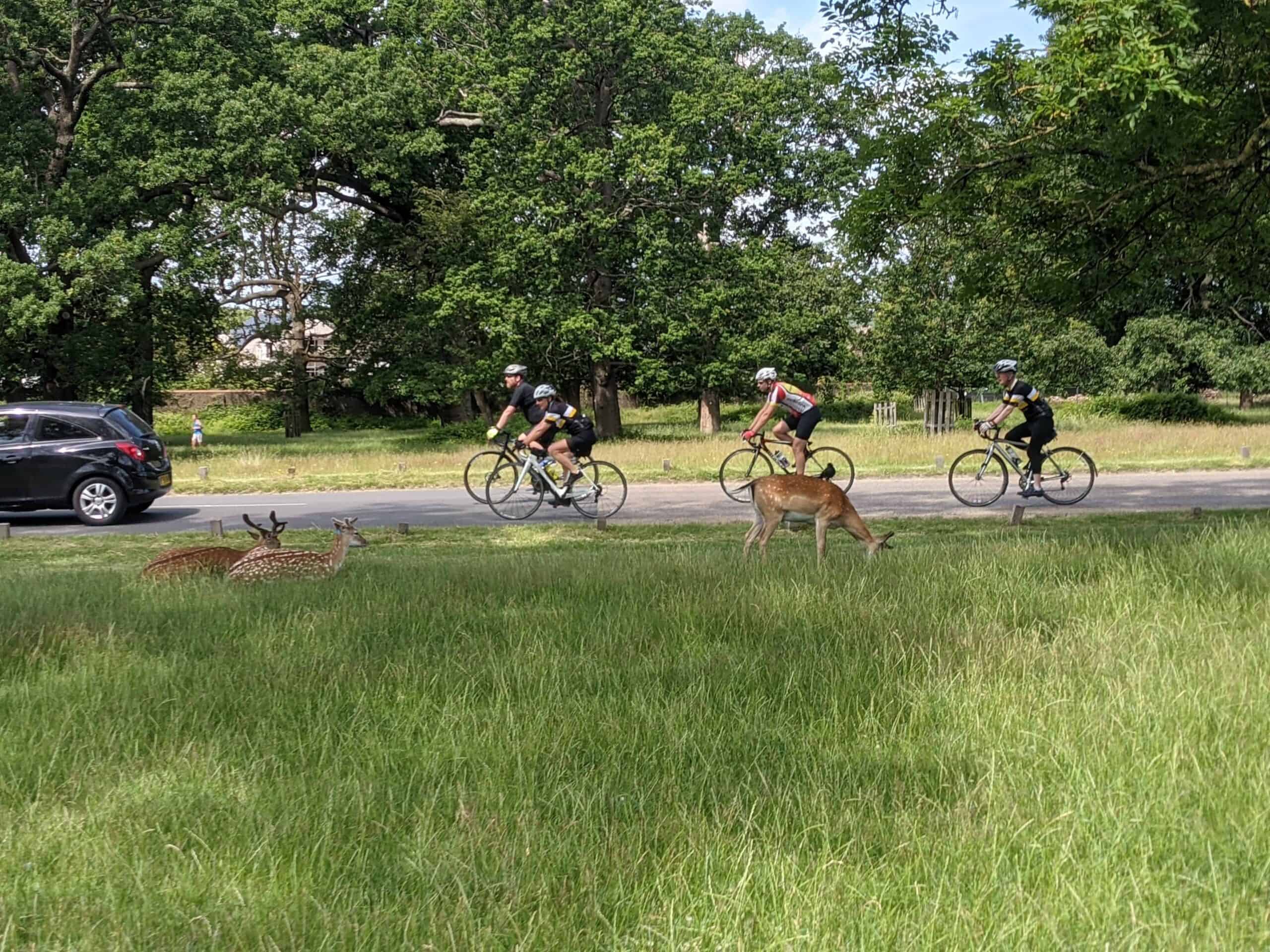
You can paddle upstream towards the scenic Eel Pie Island and Teddington or meander downstream towards Isleworth, Kew Gardens, and Chiswick. After your SUP session, head to Richmond Park to see the herds of deer roaming the park. It's an incredible sight!

Paddle Richmond offers an array of paddleboard and kayak experiences, including lessons, trips, expeditions, and adventures, all conveniently based at Richmond Bridge.

Getting there: Richmond Bridge is easily accessible from Richmond Underground Station. London's extensive network of buses crisscrossing the city also services this area.

Essential Tips for Paddleboarding in London

  • Equipment Check-Ensure you have the right gear, including a suitable SUP board, paddle, and leash.
  • Wear a Life Jacket-No matter your swimming ability, always secure a life jacket when paddleboarding London waters - it's your first line of defense in an emergency.
  • Weather and Timing-When stand-up paddleboarding on tidal waters, be mindful of the weather conditions and the time of high and low tides.
  • Waterways Licence-Obtain your waterways license before you embark - it's a vital compliance measure for paddleboarding on the River Thames and some canals.

As our list of the top spots for stand-up paddleboarding in London concludes, it's clear that London, with its unique blend of historic landmarks, stunning waterways, and serene sites, offers something special for everyone, from beginners to seasoned enthusiasts. Paddleboarding is a lot of fun and also a great workout. Happy paddling!

Living as a Digital Nomad in Eastern Europe

With the rise of remote work and the increasing popularity of the digital nomad lifestyle, more individuals seek affordable and culturally rich destinations to live and work in Europe. Eastern Europe, in particular, has emerged as a promising region for digital nomads due to its lower cost of living than Western European cities.

According to a recent study, the average monthly expenses of a digital nomad in Eastern Europe can be up to 50% lower than in Western European cities.

This significant cost advantage, combined with the region's history, diverse cultures, and thriving startup scenes, makes Eastern Europe an attractive destination for digital nomads seeking a high quality of life at a lower cost; they also use health insurance worldwide to get the actual benefit.

In this article, we will explore some of the top cities in Eastern Europe, such as Budapest, Prague, Krakow, Bucharest, Sofia, and Tallinn, that offer affordable living, reliable internet connectivity, and a welcoming environment for digital nomads.

Table of Contents

  • Eastern European Hotspots
    • Budapest, Hungary
    • Prague, Czech Republic
    • Krakow, Poland
    • Bucharest, Romania
    • Sofia, Bulgaria
    • Tallinn, Estonia
  • Conclusion

Eastern European Hotspots

Budapest, Hungary

The Szechenyi Baths in Budapest (photo: Linda Gerbec)
Szechenyi Baths, Budapest (photo: Linda Gerbec)

Budapest, Hungary, emerges as a captivating destination for digital nomads seeking cost-effective living options in Eastern Europe. This vibrant city offers affordable living and a wealth of cultural experiences.

With its stunning architecture, picturesque views, and rich history, Budapest provides an enchanting backdrop for those looking to immerse themselves in a new culture. 

Budapest boasts a thriving art scene, with numerous galleries and museums to explore. Additionally, Budapest is renowned for its thermal baths, which provide a unique opportunity for relaxation and rejuvenation.

The cost of living in Budapest is considerably lower than in Western European cities, making it an attractive choice for digital nomads on a budget.

Prague, Czech Republic

Prague, Czech Republic, is renowned for its charming atmosphere and affordable accommodation options, making it an ideal destination for digital nomads on a budget.

The city's historical sites and museums offer many opportunities for exploration and learning, allowing visitors to immerse themselves in the Czech Republic's cultural heritage.

Additionally, Prague boasts a thriving art and music scene, with numerous galleries, theaters, and music venues that cater to all tastes and preferences, ensuring that there is always something to enjoy for every art and music enthusiast.

Charming Atmosphere and Affordable Accommodation

With its enchanting atmosphere and budget-friendly lodging options, Eastern Europe offers digital nomads a unique opportunity to immerse themselves in a captivating cultural experience without breaking the bank.

Eastern European cities like Prague have plenty to offer in terms of affordable accommodation. From cozy guesthouses to stylish hostels, a wide range of options suits every budget. 

In addition, the cost of living in Eastern Europe is generally lower compared to Western Europe, making it easier for digital nomads to stretch their budgets.

Along with affordable accommodation, Eastern Europe also boasts budget-friendly food options. From hearty local dishes to street food markets, there are plenty of delicious and inexpensive options to enjoy. 

Furthermore, local transportation options, such as trams and buses, are convenient and inexpensive, allowing digital nomads to explore the city's historical sites and museums without spending a fortune.

Explore the City's Historic Sites and Museums

Astronomical Clock in Prague (photo: Jack Hunter)
Astronomical Clock (photo: Jack Hunter)

Exploring Prague's numerous historical sites and museums can help visitors uncover a wealth of historical knowledge. Prague offers many budget-friendly attractions, allowing digital nomads to experience the city's history and culture without breaking the bank. 

The city is home to the iconic Prague Castle, which dates back to the 9th century and offers breathtaking views of the city. The Old Town Square, with its Gothic buildings and the Astronomical Clock, is a must-visit for history enthusiasts. 

Prague's museums, such as the National Museum and the Jewish Museum, provide a deeper understanding of the city's past. To evoke an emotional response, consider the following table:

Historical SitesMuseums
Prague CastleNational Museum
Old Town SquareJewish Museum

Digital nomads can fully immerse themselves in Prague's rich cultural heritage by exploring these historical sites and museums. 

Enjoy the Thriving Art and Music Scene

Prague's art and music scene is thriving, with over 200 music venues and galleries scattered throughout the city. To fully immerse yourself in this cultural atmosphere, here are four reasons to explore Prague's thriving art and music scene:

Nightlife: Prague offers diverse nightlife experiences, from underground clubs to rooftop bars. The city comes alive after dark, with live music performances and DJ sets catering to every taste.

Local Festivals: Prague hosts annual festivals celebrating various art forms and music genres. From the Prague Spring International Music Festival to the Signal Festival of Light, something is always happening to engage and inspire.

Galleries: Prague boasts many art galleries showcasing local talent and international exhibitions. You can find it all here whether you prefer contemporary or classical art.

Music Venues: Prague has a rich classical music history and is home to renowned concert halls and theaters. Here, you can experience world-class music in breathtaking settings, from symphony orchestras to opera performances.

Krakow, Poland

Photo by Yolk CoWorking in Krakow
(Photo: Yolk CoWorking)

Krakow, Poland, offers an affordable and culturally rich environment for digital nomads seeking to live and work in Eastern Europe. With its historical appeal, Krakow provides a unique experience for those looking to immerse themselves in the local culture.

The city boasts a range of affordable living options, from budget-friendly apartments to co-living spaces, making it an ideal destination for digital nomads on a budget.

Additionally, Krakow is home to numerous cultural attractions, including the stunning medieval architecture of the Old Town, the historic Wawel Castle, and the dynamic Kazimierz district, known for its lively nightlife and thriving art scene.

With its blend of affordability and cultural richness, Krakow offers digital nomads an exceptional opportunity to thrive in Eastern Europe.

Bucharest, Romania

A woman working in Bucharest, Romania, an Eastern European city that has become popular with digital nomads (photo: Sherise Van Dyk)
A woman working in Bucharest (photo: Sherise Van Dyk)

Bucharest, Romania, offers an excellent environment for individuals seeking an affordable, culturally rich destination to live and work remotely. The city is home to many digital nomad communities, providing ample opportunities for networking and collaboration.

Additionally, Bucharest's cost of living is lower than that of many other European capitals, making it an attractive option for budget-conscious digital nomads. Accommodation, dining, and transportation costs are significantly lower, allowing individuals to stretch their money further and experience more of the city's offerings.

Furthermore, Bucharest's history and arts scene provide ample opportunities for cultural exploration and personal growth. With its affordable lifestyle and thriving digital nomad community, Bucharest is an ideal destination.

Sofia, Bulgaria

Friends toast in Sofia, a digital nomad hotspot in Eastern Europe (photo: Fred Moon)
Friends toast in Sofia (photo: Fred Moon)

Located in the heart of the Balkans, Sofia, Bulgaria, presents a captivating blend of ancient history and modern charm with its architecture and cultural scene.

As a digital nomad, Sofia offers an affordable living option compared to other European cities. The cost of accommodation, food, and transportation is considerably lower, allowing individuals to stretch their budget further.

Additionally, Sofia provides a wealth of cultural experiences. The city boasts archaeological sites, museums, and churches. Moreover, Sofia hosts various festivals, concerts, and art exhibitions throughout the year, providing ample opportunities to immerse oneself in the local culture.

Tallinn, Estonia

Old Town Tallinn (photo: Karson)

Tallinn, Estonia, combines medieval charm with technological innovation, making it an intriguing destination for individuals seeking a well-preserved historical city with a modern twist.

Despite being a capital city, Tallinn has a relatively low cost of living compared to other European cities. Accommodation, transportation, and dining expenses are generally affordable, making it an attractive option for digital nomads looking to stretch their budgets.

Additionally, Tallinn offers a range of job opportunities, particularly in the tech sector. The city has a thriving startup scene and is home to many international companies, providing ample employment prospects for those with programming, IT, and digital marketing skills.

Conclusion

Eastern Europe offers an attractive destination for digital nomads seeking an affordable and enriching experience. Cities like Budapest, Prague, Krakow, Bucharest, Sofia, and Tallinn offer a wide range of options.

These cities have a lower cost of living than their Western European counterparts, but they offer a vibrant cultural scene, historic landmarks, and a strong sense of community. 

Interestingly, according to a recent survey, the average monthly cost of living in Eastern Europe is around $1,500, significantly lower than in Western Europe. 

This statistic highlights the financial advantage of choosing Eastern Europe as a digital nomad destination, allowing individuals to stretch their budgets and enjoy a higher quality of life.

Whether exploring Prague's streets or indulging in Krakow's history, Eastern Europe offers much for those seeking an affordable and rewarding digital nomad lifestyle.

_____

This story is brought to you in partnership with Expatriate Group.

What To Look For When Buying Travel Insurance

Travel insurance is an essential element of trip planning that can protect you from unexpected events before or during your trip. These can range from trip cancellations and delays to medical emergencies. However, not all travel insurance policies are created equal, and important factors must be considered to ensure you're adequately protected.

Table of Contents

  • Travel Insurance Tips
    • Provider Trustworthiness and Policy Coverage
    • Check the Limits and Excess
    • Pre-existing Conditions and Age Limit
    • Read the Fine Print
    • Multi-Trip vs. Single-Trip Policies
    • Safeguard Your Travel

Travel Insurance Tips

A woman swinging in Bali (photo: Artem Beliaikin)

Provider Trustworthiness and Policy Coverage

First, it's essential to choose a reliable insurance provider. Companies like United Healthcare travel insurance have established reputations and provide various coverage options to suit different needs.

Look for a provider with a strong history in the insurance industry and positive reviews from customers. When assessing policy coverage, you should ensure it includes at least medical expenses, trip cancellation or interruption, and baggage loss or delay.

Additional coverage may be necessary based on your specific travel needs. For instance, if you plan on skiing or bungee jumping, you may need coverage for extreme sports.

Check the Limits and Excess

Policy limits and excess are two critical factors when purchasing travel insurance. The policy limit is the maximum amount the insurer will pay for a claim, and the excess is the amount you'll need to contribute towards a claim.

Ensure that the policy limits are adequate for your needs, especially for medical coverage, as overseas healthcare can be extremely expensive.

Pre-existing Conditions and Age Limit

Travel insurance is a good investment if you plan to do activities like whitewater rafting in New River Gorge, West Virginia (photo: Jackalope West)
Rafting New River Gorge, West Virginia (photo: Jackalope West)

If you have pre-existing medical conditions, it's crucial to ensure your travel insurance covers them. Many insurance providers exclude pre-existing conditions or may charge an additional premium to cover them.

Age is another factor that can affect your insurance coverage. Some providers have an upper age limit for their policies or mIt'sharge higher premiums for older travelers.

Read the Fine Print

Lastly, always read the fine print of your travel insurance policy. It's a common misconception that travel insurance covers everything, so look for exclusions and conditions that could affect your coverage. If anything is unclear, don't hesitate to contact the insurance provider for clarification.

Multi-Trip vs. Single-Trip Policies

Paragliding in Queenstown, NZ (photo: Tomas Sobek)

One factor often overlooked when purchasing travel insurance is the distinction between multi-trip and single-trip policies.

If you're a frequent traveler, you might want to consider investing in a multi-trip or annual travel insurance policy. These policies cover all the trips you take within a year, provided each trip doesn't exceed a certain number of days (usually around 30 to 45).

On the other hand, single-trip policies cover you for one specific trip and can be tailored more specifically to the details It'shat trip. If you only travel once or twice a year, this policy might be more cost-effective.

Safeguard Your Travel

Travel insurance is an essential part of planning a trip. It safeguards you from the financial impact of unforeseen events and ensures peace of mind during your travels.

Understanding what to look out for when buying travel insurance can ensure you're adequately protected, no matter what your journey may bring.

_____

This story is brought to you in partnership with United Healthcare Global.

15 Things To Do in Olympic National Park, Washington

Olympic National Park is an enormous natural paradise in the Pacific Northwest, located on the Olympic Peninsula of Washington State. Its awe-inspiring vistas, unique ecosystems, and unmatched tranquility create an exceptional experience. The Olympic National Park Service estimates that 366,000 acres of old-growth forest cover 572 square miles of the park, which offers a variety of activities and sights.

Olympic National Park (photo: Jachan DeVol)

It's also one of the most visited locations in the United States. In 2022, about  2.43 million people visited the Olympic National Park. Along the coast and in valleys, the annual rainfall ranges from 100 to 170 inches. 

The park has a lush ecology with more than 62 species of mammals, 250 species of birds, and countless unique plant species. It's divided into four sections: the Pacific Coast, alpine areas, temperate rainforest on the west side, and forests on the dry east side, with three distinct ecosystems.

Are you a hiking enthusiast? Enjoy an extensive network of trails through enchanted forests, abundant waterfalls, and towering peaks. If you plan to take a road trip between November and January, prepare for driving in the next rainstorm, as this is the wettest time in the region.

The Hoh Rain Forest, a UNESCO World Heritage Site, is renowned for its emerald-green vegetation. The rugged coastline is perfect for beach getaways. It features popular spots like Rialto Beach and Ruby Beach, which offer picturesque sandy beaches and dramatic sea stacks.

We will see more than 15 things to do in this beautiful park. Come with us as we explore Olympic National Park's mysteries and spectacular experiences.

Table of Contents

  • Outdoor Activities
    • 1. Hiking and Nature Trails
    • 2. Scenic Drive
    • 3. Beaches and Coastal Areas
    • 4. Camping and Picnicking
    • 5. Wildlife Viewing
    • 6. Water Activities
    • 7. Visitor Centers and Museums
    • 8. Mountaineering and Climbing
    • 9. Hot Springs
    • 10. Winter Activities
    • 11. Ranger-Led Programs and Events
    • 12. Photography Opportunities
    • 13. Wilderness Areas
    • 14. Explore the Quinault Rainforest
    • 15. Discover Lake Crescent
  • Other Things to Do in Olympic National Park
  • Conclusion

Outdoor Activities

Deer on Hurricane Ridge (photo: Anurag Jain)

1. Hiking and Nature Trails

Olympic National Park offers many hiking trails for all skill levels and interests. Here are some popular routes worth exploring.

Hurricane Hill Trail

This trail is famous for its panoramic views of the surrounding mountains and the Strait of Juan de Fuca. Embark on a captivating hike along this scenic trail, where every step reveals breathtaking vistas that proudly display the park's unparalleled beauty.

Hoh River Trail

The Hoh River Trail is an enchanting route that takes you deep into the heart of the Hoh Rainforest. Along the way, you'll encounter towering trees and lush greenery. 

Sol Duc Falls Trail

The Sol Duc Falls Trail leads to the stunning Sol Duc Falls, where cascading water plunges into a picturesque canyon. This trail offers a tranquil and captivating journey through old-growth forests.

Key attractions along these trails include:

  • Spectacular viewpoints 
  • Waterfalls and rivers 
  • Diverse flora and fauna
Sol Duc Falls (photo: Shakti Rajpurohit)

2. Scenic Drive

Anyone interested in seeing Olympic National Park's natural splendor can take a scenic drive. Some notable road options are available.

Hurricane Ridge Road

Hurricane Ridge Road leads to the Visitor Center and offers Olympic Mountains vistas, breathtaking landscapes, and wildlife spotting opportunities.

Lake Crescent Highway

This Highway offers access to stunning Lake Crescent, surrounded by lush forests and peaks. Enjoy crystal-clear waters and a picturesque hike at Marymere Falls.

Hoh Rain Forest Drive

The drive leads you into the enchanting Hoh Rainforest, a UNESCO World Heritage Site. Immerse yourself in the ancient, moss-draped trees. The serene ambiance will captivate you.

Notable features along these drives include:

  • Hurricane Ridge Visitor Center. 
  • Marymere Falls 
  • Hoh Rain Forest Visitor Center

3. Beaches and Coastal Areas

Rialto Beach at sunset (photo: Zetong Li)

This park is home to stunning coastal areas that offer a distinct and mesmerizing experience. The following are three notable beaches to visit.

Rialto Beach

Rialto Beach is known for its rugged beauty. It features rocky shores and dramatic sea stacks rising from the Pacific Ocean. Stroll along the shoreline and marvel at the power of the ocean waves crashing against the rugged coastline.

Ruby Beach

This beach is renowned for its impressive sea stacks and intriguing rock formations. Visit the tidal pools to learn more about the unique marine life there. Don't forget to take photos of the mesmerizing sunsets that light up Ruby Beach.

Kalaloch Beach

Kalaloch Beach offers a perfect blend of serenity and natural beauty. Take a peaceful walk along the sandy shoreline, breathe in the fresh ocean air, and enjoy the stunning views of the Pacific Ocean.

Activities and sights at the beaches include:

  • Tidepooling and beach combing 
  • Wildlife watching
  • Beach hiking and picnicking

4. Camping and Picnicking

Camp or enjoy a picnic in its picturesque settings. Here are some camping options.

Campgrounds

  • Heart O' the Hills Campground is near Hurricane Ridge. It offers stunning mountain views, basic amenities, and tent and RV camping options.
  • Kalaloch Campground is by the coast. It allows you to camp just steps from the beach, offering a peaceful and serene atmosphere for a memorable camping experience.
  • Lush forests surround Sol Duc Campground, conveniently close to the Sol Duc Falls Trail. It offers tent and RV camping sites.

Picnic areas and facilities

  • Staircase Picnic Area
  • Ozette Picnic Area 

5. Wildlife Viewing

Bald eagle in Olympic National Park (photo: Meg Jerrard)
Bald eagle (photo: Meg Jerrard)

The fauna of the Olympic National Park is quite diverse. Explore the park's vast expanses and witness majestic creatures in their natural habitat. Observe the following remarkable species.

Roosevelt elk - Keep an eye out for these majestic creatures. They can often be seen grazing in meadows or crossing rivers.

Bald eagles - Look to the skies for the iconic bald eagles soaring overhead. They can be spotted near bodies of water, such as Lake Quinault and the park's coastal areas.

Black bears - Although elusive, black bears inhabit various parts of the park. If you're lucky enough to spot one, keep a safe distance and respect its presence.

Best locations for wildlife viewing include:

  • Elwha Valley
  • Quinault Rain Forest 
  • Lake Quinault 

6. Water Activities

Olympic National Park offers various water-based activities, allowing visitors to enjoy the park's lakes, rivers, and shoreline. Here are some opportunities for water recreation.

Kayaking and canoeing

Grab a kayak or canoe and explore the tranquil waters of Lake Crescent. Enjoy the calm environment while paddling at your leisure.

Fishing 

You'll find ample fishing opportunities in Olympic National Park if you're an angler. Get general fishing information and permits, and enjoy casting your line into the pristine lakes and rivers.

The fishing brochure can help you get information regarding fishing regulations. You can catch species such as trout or salmon depending on the season.

Boating on Lake Crescent

Rent a boat or bring your own and cruise along Lake Crescent's crystal-clear waters. Enjoy the surrounding mountain views and a relaxing day on the lake.

Be aware of park rules and get permission before boating and fishing activities. The Washington State Parks Boating Programs provide detailed instructions for boating operations.

Olympic National Park prohibits personal watercraft like jet skis and motorized vessels from the Hoh River to the Makah Indian Reservation. Lake Crescent and Ozette allow motorized boat towing and water skiing.

7. Visitor Centers and Museums

There are many visitor centers and museums inside the Olympic National Park. They offer insightful information about the park's ecological and cultural history. These are the park's three most prominent informational facilities.

Olympic National Park Visitor Center

This Olympic Park visitor center offers exhibits and resources to help you plan your visit. Before embarking on your adventure, learn about the park's history, geology, and wildlife.

Hurricane Ridge Visitor Center

This center is at the top of Hurricane Ridge. It offers stunning panoramic views of the surrounding mountains. Explore the exhibits that highlight the unique ecosystems and wildlife found in the area.

Hoh Rain Forest Visitor Center 

This center gathers information about The Hoh Rainforest, a major temperate rainforest in the United States, on the Olympic Peninsula in western Washington. It stretches over 15 miles (24 kilometers) along the Hoh River, created thousands of years ago by glaciers.

Wilderness Information Center

Here, all wilderness users can find information and trip preparation recommendations. It includes the most recent trail reports, safety guidance, weather forecasts, and Leave No Trace guidelines.

Exhibits and Educational Programs 

These centers, with interactive displays and informative presentations, offer a deeper understanding of the park's natural and cultural significance and provide engaging experiences for visitors of all ages.

8. Mountaineering and Climbing

For experienced climbers seeking a thrilling adventure, Olympic National Park offers opportunities to conquer majestic peaks. Here are some popular spots for climbing in the park.

Mount Olympus

Mount Olympus is the highest peak in Olympic National Park. It presents a challenging climb for experienced mountaineers, requiring technical skills and proper equipment to tackle its icy slopes.

The Brothers 

This prominent twin-peaked mountain offers exhilarating climbing routes. The adventure in The Brothers requires experience and knowledge of mountaineering techniques.

Mount Constance

Mount Constance is another popular destination for climbers. Its rugged terrain and steep slopes provide an exciting challenge for those seeking an alpine adventure. Obtaining climbing permits and adhering to safety guidelines when attempting these climbs is essential. Mountaineering in Olympic National Park requires advanced skills and preparation.

9. Hot Springs

The Park is home to natural hot springs, which allow relaxation amidst the wilderness. Here are some notable hot springs in the park.

Sol Duc Hot Springs

This is in the heart of the park and features mineral-rich waters perfect for soaking. Enjoy the soothing warmth while surrounded by the lush forest.

Olympic Hot Springs

The Olympic Hot Springs is accessible via a scenic trail. They offer a tranquil setting for a rejuvenating soak. Indulge in the therapeutic qualities of the natural mineral waters.

Soaking options and facilities at the hot springs include:

  • Soaking in hot pools
  • Pools of varying temperatures
  • Changing rooms 

10. Winter Activities

During the colder months, Olympic National Park transforms into a winter paradise and offers a variety of activities for outdoor lovers. You may engage in the following wintertime activities at Olympic National Park.

Snowshoeing and cross-country skiing 

Explore the park's winter trails on snowshoes or cross-country skis. The serene, snowy landscapes provide a unique perspective and a peaceful natural experience.

Winter wildlife viewing 

Winter is a great time to observe wildlife in the park. Watch for animals such as elk and deer as they navigate through the snow-covered terrain.

Winter camping and accommodations

Camping is available in designated areas for those seeking a genuinely immersive winter experience. Nearby lodges and cabins provide cozy accommodations. Here, you can enjoy the park's winter beauty.

11. Ranger-Led Programs and Events

Participating in ranger-led programs and events is a fantastic way to enhance your experience in the Park. Here are some popular ranger-led activities.

Guided hikes and nature walks 

Join an experienced ranger on a guided hike or nature walk. Learn about the park's flora, fauna, and geological features from there. Gain insights into the park's ecology and history while exploring its trails.

Campfire programs 

Gather around a campfire with a ranger for entertaining and educational programs. Learn about the park's natural and cultural heritage. Engage in storytelling, music, and interactive activities.

Astronomy programs

Attend astronomy programs to experience the park's night skies. Discover the wonders of the universe and learn about celestial objects and constellations.

Why are the programs important?

Participating in these ranger-led programs provides a deeper understanding of the park's natural wonders, helps you learn about its cultural significance, and allows you to connect with experts and fellow park visitors while gaining valuable insights.

12. Photography Opportunities

Olympic National Park's spectacular scenery makes it a photographer's dream. Here are some notable sites for beautiful photography.

Crescent Lake 

This lake's picturesque, crystal-clear waters and surrounding mountains provide a stunning backdrop for landscape photography. Capture the reflections of the surrounding trees and mountains in the calm waters. 

Sol Duc Falls

The magnificent Sol Duc Falls are nestled in the woods. It is an excellent photographic subject. Capture the flowing water as it travels through the rich flora, creating a lovely setting.

Tips for capturing the best shots

  • Golden hour: Take advantage of the soft, warm light during the golden hour, which occurs in the early morning or late afternoon. This lighting enhances the park's natural beauty.
  • Composition: Pay attention to composition by using leading lines, framing elements, and the rule of thirds to create visually appealing photographs.
  • Experiment with angles: Try different perspectives and angles. This gives your images more depth and visual intrigue. Get low to the ground or find elevated positions for unique viewpoints.
  • Capture the intricate details of the park's flora, fauna, and textures. Macro photography can reveal a whole new world of beauty.

13. Wilderness Areas

Olympic National Park includes several important wilderness areas that provide a real backcountry experience.

Mount Skokomish Wilderness 

Mt. Skokomish Wilderness, located in Mason County, covers 13,291 acres in the Olympic National Forest and features steep terrain from Lake Cushman to Mt. Stone's summit.

Buckhorn Wilderness 

Situated northeast of Hurricane Ridge. It is a remote and rugged area known for its towering peaks and pristine alpine lakes. It provides opportunities for challenging hikes and backpacking expeditions amidst stunning natural beauty. 

Colonel Bob Wilderness

Colonel Bob Wilderness is in the southwestern part of Olympic National Park. It offers a diversified terrain with old-growth woods, picturesque rivers, and panoramic vistas. It's a popular backpacking and adventure site.

14. Explore the Quinault Rainforest

The Quinault Rainforest is a magical and enchanting part of Olympic National Park, with its lush greenery, moss-draped trees, picturesque waterfalls, and tranquil lakes.

It offers a serene escape into nature's embrace. Here are some key features of the Quinault Rainforest.

Moss-draped trees 

Wander through ancient forests adorned with moss hanging from the branches, which creates an otherworldly atmosphere. The towering trees and vibrant greenery provide a captivating backdrop for exploration.

Picturesque waterfalls

Discover hidden waterfalls cascading down moss-covered rocks. Popular waterfalls in the area include Merriman Falls, Bunch Falls, and Falls Creek Falls. Capture their beauty and listen to the soothing sounds of rushing water.

Tranquil lakes 

Explore the calm and reflective lakes nestled within the rainforest. Lake Quinault and Irely Lake are two such peaceful bodies of water. They offer a serene setting for relaxation and contemplation.

15. Discover Lake Crescent

Olympic National Park is home to the magnificent glacier-carved lake known as Lake Crescent. Its pristine blue waters and surrounding mountains create a captivating landscape. Here are some key attractions and activities to enjoy at Lake Crescent.

Swimming

During the summer, take a refreshing dip in Lake Crescent's crystal-clear waters. Enjoy the cool water and embrace the picturesque surroundings.

Kayaking 

Rent a kayak and explore the tranquil waters of Lake Crescent. Paddle along the shoreline and marvel at the surrounding mountains.

Canoeing 

Glide across the calm surface of the lake in a canoe. Experience the tranquility of the surroundings and take in the breathtaking water views.

Other Things to Do in Olympic National Park

Besides the activities mentioned above. Olympic National Park offers a plethora of other interesting things to do.

Here are a few suggestions:

  • Birdwatching: Many birds live in the park. Grab a pair of binoculars and explore the various habitats to spot bald eagles, owls, hummingbirds, and more.
  • Stargazing: Because of its isolation and little light pollution. Olympic National Park provides excellent stargazing opportunities. On a clear night, marvel at the twinkling stars and constellations adorning the dark sky.
  • Attend ranger talks: Attend informative ranger talks and presentations to learn more about the park's environmental and cultural history. These engaging sessions provide fascinating insights into the park's ecosystems, wildlife, geology, and conservation efforts.
  • Backpacking and overnight camping: For those seeking a multi-day adventure, backpacking through the park's backcountry is an exhilarating experience. Set up camp in designated wilderness areas and wake up to the sounds of nature surrounding you.
  • Nature observation and meditation: Take a moment to connect with the natural world. Engage in mindful observation or meditation. Find a peaceful spot, and let the sights, sounds, and scents of the park envelop you. You'll enjoy a sense of tranquility and inner calm.
  • Learn about Native American culture: Olympic National Park is rich in Native American history and culture. Learn about the Indigenous peoples who have inhabited these lands for thousands of years by visiting cultural heritage sites and learning about their myths and customs.

Online travel resources can be tremendously helpful when organizing a vacation. They provide many services and information to help you make well-informed decisions about your travel plans. 

Conclusion

Olympic National Park in Washington provides various activities and attractions for nature enthusiasts, adventurers, and those seeking tranquility. It offers diverse trails, breathtaking vistas, wildlife encounters, and natural wonders. The park's stunning landscapes, ancient forests, pristine lakes, and rugged coastline create a magical experience for nature lovers.

Visitors can discover and connect with nature by visiting the park, escaping daily life, and finding solace in the wilderness. Pack your hiking boots, bring a camera, and embark on an unforgettable adventure in Olympic National Park, making lifelong memories.

The Best Affordable Convertible Cars to Rent in Dubai

With its year-round sunlight and breathtaking scenery, Dubai is the ideal destination for experiencing the excitement of driving a convertible. Renting a convertible in Dubai adds a touch of luxury and excitement to your trip experience, whether riding along the scenic coastline roads or touring the city's famed monuments.

In this article, we'll look at the top inexpensive convertibles, with a particular emphasis on finding the best convertible car rental in Dubai. We'll also provide helpful hints and examples to help you get the most out of your car rental experience, such as information on the best rental alternatives and the advantages of selecting monthly rentals.

Table of Contents

  • Convertibles To Consider
    • Ford Mustang Convertible
    • Mazda MX-5 Miata
    • Mini Cooper Convertible
  • Tips for Renting an Affordable Convertible
  • Conclusion

Convertibles To Consider

Mazda Miata convertible, an affordable car rental choice in Dubai  (photo: Teddy Charti)
Mazda Miata (photo: Teddy Charti)

Ford Mustang Convertible

The iconic Ford Mustang convertible combines beauty, power, and affordability. With its classic design and powerful performance, it offers an unforgettable driving experience in Dubai.

Renty offers Dubai's best convertible rentals, including the Ford Mustang. Thanks to its powerful engine and eye-catching aesthetics, the Mustang is a beautiful option for anybody searching for a blend of elegance and performance without breaking the bank.

Mazda MX-5 Miata

The Mazda MX-5 Miata is an excellent choice for budget-conscious tourists who wish to experience the flexibility of a convertible. It is known for its nimble handling and sporty look and provides a thrilling driving experience at a cheap price.

Renty vehicle service recognizes the need for low-cost convertible rentals and has included the Mazda MX-5 Miata in its portfolio. This elegant, small convertible is ideal for visiting Dubai's lively streets and picturesque roads.

Mini Cooper Convertible

The Mini Cooper Convertible is popular with people seeking an attractive, small car. With its classic look and agile performance, it is a fun and cheap option when visiting Dubai.

According to Renty, the Mini Cooper is one of Dubai's best convertibles to rent. With this stylish car, you can enjoy the open-air experience while navigating Dubai's crowded streets in style.

Tips for Renting an Affordable Convertible

Plan ahead of time: Book your convertible car rental in Dubai ahead of time to get the best rates and availability. Renty vehicle service has competitive costs, so booking ahead of time might help you locate the most economical possibilities.

Consider the length of time: If you want to use the convertible for a lengthy period, consider a monthly car rental in Dubai. Monthly auto rentals in Dubai are sometimes less expensive than daily or weekly rentals.

Price comparison: Investigate several car rental businesses and compare their convertible rental costs. Look for promos or discounts that can help you find the best value.

Check for any extra charges: Before making your reservation, inquire about any additional fees, like insurance, mileage limitations, or late return charges. Understanding the terms and conditions can help you avoid any unanticipated expenditures.

Maintain the vehicle: Take special care of the convertible during the duration of your rental. To avoid damage, follow traffic regulations, minimize reckless driving, and park the automobile in secure areas. This will help you avoid further fees upon return.

Conclusion

Renting a cheap convertible in Dubai helps you appreciate the city's gorgeous surroundings and affluent lifestyle. Renty car service provides Dubai's best convertible car rentals, with vehicles such as the Ford Mustang, Mazda MX-5 Miata, and Mini Cooper Convertible.

Following these guidelines, you can pick the ideal convertible for your budget and enhance your Dubai experience. So buckle up and prepare for an incredible trip in your preferred convertible!

_____

This story is brought to you in partnership with Renty.

Why You Should Experience the Opera in Verona, Italy

When you're trekking across the European continent, each city greets you with its unique charm and attractions. The options are seemingly endless, from the enchanting Eiffel Tower in Paris to the grand Colosseum in Rome. Europe is, after all, full of history, art, and unforgettable culinary delights. 

Ponte Pietra in Verona, Italy (photo: Alessandro Carrarini)
Verona, Italy (photo: Alessandro Carrarini)

However, the secret to a memorable backpacking trip is not ticking off as many tourist spots as possible. Instead, it's about diving deep and choosing the right experiences to resonate with you long after the journey. One such unforgettable experience is the world-renowned opera in the romantic Italian city of Verona.

It might seem surprising when someone advises you to visit the Verona Opera amid your wild backpacking adventure. It may not have the adrenaline-pumping thrill of bungee jumping in Switzerland or the rustic charm of cycling through the Tuscan countryside. But believe us when we say the Opera in Verona is a jewel not to be missed.

Verona, famously known as the backdrop for Shakespeare's Romeo and Juliet, is a city soaked in love, drama, and art.

Juliet's balcony (photo: Maksym Harbar)

The Verona Opera embodies these elements, showcasing performances nothing short of magic. These are not just shows; they're a moving, emotional experience that touches your heart and stirs your soul.

Imagine being under the starlit Italian sky in the ancient Arena di Verona as the powerful voices of talented artists echo off the walls. The scene is set, the music starts, and in that moment, you're transported back in time.

The beauty of opera is in its universality. You don't need to be a connoisseur or speak the language to understand and appreciate the drama, the passion, and the underlying human emotions.

The performances at the Verona Opera are so masterfully executed that they surpass language barriers, making the experience accessible and enjoyable for everyone.

Exterior wall of Verona Arena (photo: Maksym Harbar)
The exterior wall of Verona Arena (photo: Maksym Harbar)

When you visit Verona, you're not just in another Italian city. You're stepping into a land steeped in history. Every stone and every street in Verona has a story to tell. Experiencing an opera here is akin to living a piece of that history and absorbing the culture that makes Verona unique.

The city offers an exquisite blend of old-world charm and modern comforts, from the quaint local trattorias to the bustling wine bars.

Let's face it. When you're backpacking, you want stories to tell and unique memories to cherish. Experiencing the Verona Opera offers just that and more. It's a chance to immerse yourself in a traditional Italian experience that goes beyond mere sightseeing.

Inside Verona Arena (photo: Tao Qi)
Inside Arena di Verona (photo: Tao Qi)

It's about feeling the passion, romance, heartbreak, and triumphs intricately woven into every performance. So, if you're planning your European backpacking adventure and considering which experiences to choose, don't hesitate to add the Verona Opera to your itinerary.

It's not just about seeing another show; it's about allowing yourself to be moved, transformed, and experience the world in a way you never thought possible. After all, isn't that what traveling is all about?

So, put on your most comfortable shoes, pack your adventurous spirit, and get ready to explore the richness of Europe.

And remember, amid the breathtaking vistas, the delectable food, and the busy cities, make a stop in Verona and let the city's melodious symphony fill your heart with joy. See you at the opera!

_____

This story is brought to you in partnership with Opera Tickets Italy.

Dubai Tourism: Top Art & Culture Districts in Dubai

Dubai is a unique and vibrant city home to many art districts, making it an excellent tourist destination. From bustling downtowns to historic neighborhoods, Dubai has something for everyone.

Additionally, the city is known for its low cost of living and lively nightlife, making it an attractive destination for those looking for an unforgettable experience.

Dubai (photo: ZQ Lee)

Dubai, the glittering jewel of the United Arab Emirates, has long been known for its real estate marvels that manifest in futuristic skyscrapers, luxurious villas, and sprawling resorts, as well as some investment off-plan projects in Dubai are also going on.

However, whether you are traveling solo, with family, or on business, an often-underappreciated aspect of Dubai's real estate ecosystem is its dynamic art districts, which are gradually becoming pivotal in shaping real estate prices.

Table of Contents

  • Places to Explore in Dubai
    • Influence of Art Districts
    • Downtown Dubai
    • Art District Effect on Real Estate
    • Additional Art Districts
  • Top Attractions in Dubai
  • Future of Art Districts and Real Estate in Dubai
  • Conclusion

Places to Explore in Dubai

Influence of Art Districts

Art districts are neighborhoods where art galleries, studios, museums, and design spaces cluster. These cultural hubs have long been recognized for their role in fostering creativity, promoting local talent, and enriching the fabric of a city. However, in recent years, the influence of art districts has begun to expand beyond culture into real estate economics.

Downtown Dubai

Dubai's downtown area is home to various art districts, including the Dubai Design District, Al Quoz, and Alserkal Avenue.

Dubai Design District is a creative community with art galleries, cafes, and restaurants. The area has many fashion stores and boutiques, making it an excellent destination for unique and stylish clothing.

Dubai Design District cafe (photo: Waqas Saeed)

Art District Effect on Real Estate

Art districts often profoundly transform their surrounding neighborhoods. Their establishment sparks an influx of tourists and artists, enhancing the local economy and fostering community engagement.

They attract businesses such as cafes, restaurants, and boutiques, increasing the neighborhood's appeal. This elevated interest eventually leads to rising real estate prices, a phenomenon observed in numerous cities globally and gradually manifesting in Dubai.

Take Alserkal Avenue, for instance. Since its transformation into an art hub, the surrounding areas have experienced a surge in property value.

Core, a leading UAE real estate advisory firm, reported that rental prices in Al Quoz increased by 5 to 10% following Alserkal Avenue's establishment.

Additional Art Districts

Al Quoz is a historic district in the heart of Dubai, home to art galleries and studios. The area is also known for its bustling markets and bazaars, where visitors can find traditional souvenirs and handmade goods.

Additionally, the area is home to restaurants, cafes, and bars, making it an excellent destination for those looking for a fantastic nightlife experience.

Alserkal Avenue is a spirited art district located in the heart of Dubai. The area is home to art galleries, studios, workshops, restaurants, cafes, and bars. Like Al Quos, there are markets and bazaars for shopping.

Restaurant on Alserkal Avenue in Dubai (Photo: Big Dodzy)
Restaurant on Alserkal Avenue (Photo: Big Dodzy)

Top Attractions in Dubai

Dubai, the glittering epitome of modern architecture and luxury, attracts tourists from around the globe with its top-rated attractions.

A city where tradition meets modernity and skyscrapers stand alongside traditional Arabic houses, Dubai offers diverse experiences catering to every tourist's preference.

A journey to Dubai isn't complete without marveling at the engineering marvel of the Burj Khalifa. Soaring over 2,723 feet (830 meters), the world's tallest structure provides heavenly panoramic views of the Dubai skyline from its viewing deck on the 124th floor.

Adjacent to Burj Khalifa, located in the heart of Dubai, is the Dubai Mall, one of the world's largest and most visited shopping centers. Apart from hosting many stores, the mall also houses attractions such as the Dubai Aquarium and Underwater Zoo, which are sure to leave kids and adults alike in awe.

Yet, tradition thrives even in a city known for its contemporary structures. This is evident in the Bastakiya Quarter, also known as Old Dubai. The narrow lanes and ancient buildings transport you back to a simpler time, offering a sharp but intriguing contrast to the city's skyscrapers.

While not traditionally an attraction, the souks of Dubai are as enchanting as any. Whether searching for spices, perfumes, textiles, or gold, wandering through these bustling marketplaces is like stepping into a radiant mosaic of Arabic culture.

Souk Madinat Jumeirah (photo: Zosia Korcz)

One can't mention Dubai without mentioning the exhilarating desert safaris, which offer dune bashing, camel riding, sandboarding, and traditional barbecues under the open sky. These trips blend adventure and culture, leaving every tourist with unforgettable memories.

Dubai's coastline complements the desert landscape, embellished by the artificial Palm Jumeirah Island. Shaped like a palm tree, it hosts luxurious hotels like Atlantis and The Palm and is a marvel of modern engineering.

For art enthusiasts, the Alserkal Art District is an evolving cultural hub home to contemporary art galleries, non-profit organizations, and homegrown businesses. The district offers enriching experiences that extend to design, media, and community-centric initiatives.

For thrill-seekers, there's no beating the adrenaline rush at Dubai's theme parks. IMG Worlds of Adventure, the largest indoor theme park globally, presents an exciting mix of rides, movies, dining, and shopping experiences.

No one can resist the allure of Dubai Parks and Resorts, which houses Motiongate Dubai, Bollywood Parks Dubai, and LEGOLAND Dubai.

This summer, LEGOLAND Dubai offers free theme park entry to every child accompanying a paid adult visitor at either the Theme Park or the Water Park! The Legoland Dubai Resort is a fantastic family destination adjacent to the Legoland Water Park.

This extraordinary amusement park is open from 10 a.m. to 6 p.m., Monday through Friday, and from 10 a.m. to 7 p.m., Saturday and Sunday, at Dubai Parks and Resorts. It is the ideal location for families with children between two and twelve. 

Lastly, Dubai forges an emotional connection with tourists at Dubai Creek, where one can take a traditional dhow cruise and soak in the city's skyline view.

This array of top-rated attractions underlies Dubai's charm. It will captivate you with its ultramodern architecture and seduce you with its traditional Arabic charm at the turn of a corner.

The city's rapid transformation from a desert outpost into one of the world's most architecturally innovative cities is miraculous. It's no surprise that Dubai's fusion of modernity and tradition makes it one of the world's top tourist destinations.

Future of Art Districts and Real Estate in Dubai

Museum of the Future (photo: 67 Media)

Dubai's commitment to fostering its cultural landscape is evident in its continued investment in art and creative districts. With Dubai's art scene projected to flourish, the impact on surrounding real estate markets is anticipated to follow a similar growth trajectory.

In line with the UAE's Vision 2021, Dubai is set to establish itself as a global hub for arts and culture. Ambitious initiatives like the Dubai Culture Plan 2025 aim to strengthen the cultural and creative sectors and contribute to the city's socioeconomic development.

These plans are expected to catalyze the creation of new art districts, potentially leading to new real estate hotspots. Moreover, with Expo 2020 Dubai rescheduled to 2023, the international spotlight on the emirate's art and culture scene has intensified.

The global event has given a platform to Dubai's vibrant art scene, further boosting its cultural footprint and indirectly influencing the real estate market. As the art scene continues to gain momentum, we can expect a more significant effect on real estate prices around art districts.

Art districts have changed Dubai's urban fabric and added an extra layer of consideration for real estate investors and enthusiasts. The once-overlooked industrial and financial areas are now bustling art districts, influencing the lifestyle and property values in their vicinity.

Conclusion

Art districts have undeniably added a new dimension to Dubai's real estate landscape. As places of cultural exchange and economic activity, they have proven to be a key driver in real estate valuation.

Understanding the impact of these cultural hubs can be invaluable for potential investors in making informed investment decisions. For more information to guide your decision, visit https://emirates.estate.

Dubai is a great destination for tourists and property investors due to its unique art districts and vibrant nightlife. From bustling downtowns to historic districts, the city has something for everyone.

Additionally, the city is known for its low cost of living and lively nightlife, making it an attractive destination for those looking for an exceptional experience. 

As Dubai continues to foster its art scene and build more art districts, we can expect the correlation between art districts and real estate prices to strengthen further.

In a city renowned for its extraordinary architectural feats, art districts and their influence on property prices add another fascinating layer to the tapestry of Dubai's dynamic real estate market.

_____

This story is brought to you in partnership with Emirates.Estate.

12 Essential Things To Do in Central Vietnam

Take a break from the big cities and soak up the beauty and charm of Central Vietnam in Southeast Asia. There are plenty of ancient sites to explore, beaches to enjoy, and delectable food to savor. We've collected a dozen essential things to do in Central Vietnam that you won't want to miss.

Table of Contents

  • Central Vietnam Attractions
    • 1. Savor Vietnamese Coffee
    • 2. Wander Buddhist Caves at the Marble Mountains
    • 3. Snap Photos on the Iconic Golden Bridge
    • 4. Ride a Motorbike Through the Countryside
    • 5. Lounge On the Beach
    • 6. Taste the Local Cuisine on a Food Tour
    • 7. Watch the Dragon Bridge Breathe Fire and Water
    • 8. Admire Lady Buddha in Da Nang
    • 9. Buy a Custom-Tailored Dress or Suit
    • 10. Stroll the Ancient City of Hoi An
    • 11. Trek Back in Time at My Son Sanctuary
    • 12. Explore the Imperial City of Hue

Central Vietnam Attractions

1. Savor Vietnamese Coffee

Vietnamese egg coffee (photo by Dave Lee)
Vietnamese egg coffee (photo: Dave Lee)

Vietnam is a caffeine dream and one of the best places in the world for coffee lovers. The country is the second-largest exporter of coffee, only surpassed by Brazil. It's also trendy inside the country, with coffee shops everywhere.

Vietnam's famous Robusta beans are substantially stronger than Americans are used to, making for a bolder buzz. The intense, richer flavor means almost twice as much caffeine and the likelihood of something sweet mixed in to counterbalance.

The French introduced coffee to Vietnam in 1857, but the Vietnamese added their own twists. Ca phe sua, coffee with milk, is the traditional coffee choice with a healthy dose of sweetened condensed milk. 

The thick, sweet liquid transforms the bold, savory coffee into a dark, roasted, buttery flavor. We loved the abundance of condensed milk in Vietnam, delighting in dipping hot, buttery croissants into the gooey decadence.

There are plenty of types of Vietnamese coffee drinks to sip. It's worth trying drip coffee to get the total effect of Vietnamese black coffee without the sweet stuff.

We also recommend salt coffee, which sounds strange but is truly enjoyable. With warm temperatures year-round, cold brews are a standard option. Blended with coconut milk, coconut coffee is a smoothie with a kick.

Yogurt coffee starts with yogurt in the glass, and black coffee is poured over it. 

Egg coffee, created in Hanoi (Northern Vietnam) during the 1940s, is a popular choice. The frothy, dessert-like drink is served hot or cold, but we preferred the hot version. For non-coffee drinkers, egg cocoa is a lovely way to experience the creamy drink.

2. Wander Buddhist Caves at the Marble Mountains

Tang Chon Cave in the Marble Mountains of Central Vietnam
Buddhist temple in Tang Chon Cave

Walk one of Vietnam's most sacred holy sites at Thuy Son Mountain, part of a cluster of five limestone and marble hills known as the Marble Mountains. The mountains feature caves and tunnels, though tourists can visit only the largest, Mount Thuy.

The mountains are a spiritual place, first used by the Cham people who lived in Vietnam from the 2nd to the 17th century. Later, Buddhist followers built shrines and temples among the caves, pagodas, and stone gates above ground. Beautifully carved statues adorn the mountain and the caves. 

But first, you have to reach them. Guests can trek the 156-step staircase or take the glass elevator for a shorter climbing journey.

The grounds are gorgeous, with luscious greenery, elaborate stone gates, intricate statues, and contemplative pagodas. Thanks to the alluring surroundings, the sacred site has a luminous tranquility inside and outside the mountain. 

The caves are easily walkable, although the steps can be slippery. The six caverns have statues, shrines, and altars for visitors to appreciate and pay their respects. They're fascinating to walk through, especially with natural light streaming in. 

Viewpoints at the top provide grand vistas of the coastline, Da Nang City, and the other Marble Mountains.

The mountains are named after the elements of life:

  • Kim Son (Mount Metal)
  • Moc Son (Mount Plant)
  • Thuy Son (Mount Water)
  • Hoa Son (Mount Fire)
  • Tho Son (Mount Soil)

An active Buddhist site, the mountain is brimming with monks and people on pilgrimages. Tourists can observe, but should be respectful. Admission to the mountain is 40,000 VND, about $2.

3. Snap Photos on the Iconic Golden Bridge

Golden Bridge, Vietnam (photo by Kelly Lemons)
Golden Bridge, Vietnam

One of the hottest tourist spots in Vietnam is the Golden Bridge in Ba Na Hills. The giant, weathered hands holding a gleaming golden walkway make for quite an Instagram-worthy post. 

Perched at the top of a mountain, the bridge offers spectacular views of the surrounding landscape. On clear days, visitors can see the East Vietnam Sea. On foggy days, the bridge takes on a mysterious aura with the misty mountain air drifting in and out.

But the bridge is the real draw. The massive hands grasping the golden rails create a stunning bridge that doesn't disappoint. Millions have visited the Golden Bridge since it opened in 2018. (Yup, that ancient ruin look isn't natural, but it sure is impressive anyway.)

Located in Sun World Ba Na Hills, an easy day trip from Da Nang or Hoi An, visitors must purchase a ticket to the theme park to walk the bridge.

The bridge draws massive foot traffic, so early morning is the best time to go. Enjoy the Ba Na Cable Car ride up the mountain and admire the bridge; it's the best thing there. Skip the amusement park attractions.

4. Ride a Motorbike Through the Countryside

Riding a motorbike across the Hai Van Pass from Hoi An to Hue is a popular thing to do in Central Vietnam. (photo: Jordan Opel)
Riding across the Hai Van Pass (photo: Jordan Opel)

Vietnam is known for its luscious landscapes. Travel through the countryside by renting or buying a motorbike, the preferred mode of transportation. 

One popular route is to drive from Hue to Hoi An or Da Nang, soaking up the countryside and coastline. Admire the hills, rice fields, and villages along the way. Stop and take pictures of the many beautiful places you'll see, including lakes and beaches.

Cross the Hai Van Pass, a winding mountain stretch known for the military bunkers at the pass and its stunning panoramic views of the ocean. Get Your Guide offers one-day motorbike tours from Hue to Hoi An and adventures through the Hai Van Pass.

There are also one-day rides from Dalat, with twisting mountain roads and gorgeous waterfalls, and Sa Pa, where you'll experience local life in two small villages. A motorbike trek is the perfect way to take in the quieter aspects of Vietnam. 

5. Lounge On the Beach

My Khe Beach (photo: Phuc Le)

Take a break from the motorbike traffic and enjoy the soothing sounds of waves rolling in. In a country with more than 1,800 miles of sandy shoreline, there are plenty of places to relax, especially in Central Vietnam.

Da Nang is one of those perfect spots, with more than 17 miles of beachfront to stretch out on. My Khe is a stunning beach in Da Nang, with powdery white sand, clear and warm water, and plenty of coconut palms.  

Near Hoi An, Cua Dai Beach and An Bang Beach are peaceful coastal spots. Cua Dai has a gently sloping beach, while An Bang has a long stretch of sandy shoreline.

Both tropical locations feature white, soft sand, clear, blue water, and thatched-hut shade. They also offer gentle waves and views of the Cham Islands in the distance. 

Note that you are expected to order a cocktail if you lounge in a deckchair. But it's worth it to sink your toes into the silky sand and soak up the stunning views.

6. Taste the Local Cuisine on a Food Tour

Our friend Laura enjoying the street food tour we did in Da Nang.
Street food tour in Da Nang

From banh mi to bun cha, Vietnamese cuisine is cheap and delicious. A food tour can introduce you to a variety of dishes, especially those you might not have tried otherwise. 

It's also an opportunity to appreciate the local community, putting tourist dollars back in the hands of mom-and-pop shops. Be prepared to sit on a low plastic stool (standard at street food stalls) and savor the flavorful cuisine. 

We enjoyed a walking food tour in Saigon (southern Vietnam) and a motorbike tour in Da Nang city center. Walking tours allow you to soak up Vietnamese life and visit the local markets, while motorbike tours allow you to visit more districts and sightsee along the way.

Tours usually last three to four hours, including several stops for savory food and delicious drinks. English-speaking guides provide commentary on the food and restaurants, providing insight into traditional Vietnamese cuisine.

A food tour in Central Vietnam can be an incredible cultural experience, providing insights into the local food scene. It's one culinary adventure you won't regret. 

7. Watch the Dragon Bridge Breathe Fire and Water

Head of the Dragon Bridge, a popular attraction in Da Nang, Vietnam
Head of the Dragon Bridge

Every weekend, the Dragon Bridge in Da Nang comes to life. Stretching across the Han River, the bridge features a striking bit of architecture-a 9,000-ton steel fire-breathing dragon. 

Construction began in 2009 and took four years. The bridge opened in 2013, providing the fastest gateway between the international airport and the beautiful beaches.

The 2,185-foot-long bridge sports six lanes and a massive metal dragon in the median, a spectacular sight on and off the bridge. The snake-like dragon features heart-shaped eyes and a blooming lotus flower tail. The yellow color symbolizes power, prosperity, and the future.

At night, the bridge is lit by more than 2,500 LED lights that alternate colors. On Saturday and Sunday nights at 9 p.m., the dragon dramatically breathes fire and spouts water. 

Related: Things To Do in Ho Chi Minh City

The Dragon Bridge in Da Nang breathing fire on a Sunday night.
Dragon Bridge

The bridge shuts down for the shows, so it's essential not to be late. We arrived seconds after the bridge closed and had to watch from the opposite (tail-end) riverbank. 

On-time viewers can walk on the bridge below the dragon's head. But beware, you might get showered with water. The dragon spouts H20 between bursts of fire.

Another optimal spot to watch is from along Tran Hung Dao Street, a road underneath the dragon's head. You can also watch the show from the Han River by taking a nighttime river cruise or culinary tour.

If you want a more panoramic view, try a nearby rooftop bar. You can take in the whole bridge and admire the bright lights from the city and river boats.

8. Admire Lady Buddha in Da Nang

Lady Buddha (photo: Kon Zografos)

An imposing figure graces the Da Nang landscape. Lady Buddha Da Nang stands at 220 feet and commands your attention. The largest Buddha statue in Vietnam, she stands on the grounds of Linh Ung Pagoda, facing out to sea.

The feminine marble statue sits atop a lotus-style temple on high terrain. Additional carved statues and topiaries adorn the outsides of the massive Lady Buddha.

The gleaming white statue has 17 floors, each with altars and different Buddhas. The climb is worth it for the incredible city views, mountains, and sea. Her headdress features one final Buddha, six and a half feet tall.

While the right hand expresses the Prithvi mudra, the other holds a bottle of water, "sprinkling the peace to the offshore fishermen," according to the statue's website.

Lady Buddha is so giant you can easily see her from anywhere in the city, including from the sandy beaches, where she's perched high on the mountain overlooking the water. The statue and pagoda were built from 2004 to 2010. Admission is free; donations are accepted.

9. Buy a Custom-Tailored Dress or Suit

Green women's clothing at a Hoi An tailor shop
Hoi An tailor shop

Come home with a custom dress or suit, thanks to the impeccable tailoring skills in Vietnam. Fabric and tailor shops can be found on most streets and in marketplaces. Choose your fabric, get measured, and relish that your new outfit will take only a day or two to produce. 

You can have almost anything made, from shirts and pants to dresses and suits. The hand-made clothes will be high quality and cost a fraction of what they would cost in the U.S. or Europe. 

Central Vietnam is known for its exceptional textiles, but Hoi An is the cream of the crop for tailor-made designs. The ancient city boasts hundreds of tailors and a 500-year-old reputation for immaculate clothes.

It's helpful to do some research before you go to get a feel for what you want (e.g., a double-breasted suit or a floral maxi dress) and bring pictures with you. Barter or pay full price, but no matter what, know you're getting an incredible deal. 

10. Stroll the Ancient City of Hoi An

Cyclists in Hoi An
Cyclists in Hoi An

It wouldn't be a trip to Central Vietnam without a visit to the ancient city of Hoi An. The old town is popular with tourists for its ancient landmarks, sacred temples, thriving marketplace, and picturesque river. 

The city's historic district, Hoi An Ancient Town, is a UNESCO World Heritage Site. A popular trading port from the 15th to the 19th centuries, the town features remarkably well-preserved buildings with a mix of local and global influences.

The Thu Bon River, yellowed buildings, and lantern-filled streets set the scene for a lovely step back in time.

Restaurants, coffee shops, and bars are abundant, as are street vendors with Vietnamese cuisine. Several buildings have second-story balconies and rooftop bars to capture more of the charming town from a bird 's-eye view. 

As you wander the ancient city, admire the Japanese Covered Bridge. It's an engineering marvel made entirely of wood and has endured for more than 400 years. It even has a tiny shrine. Walk the ornate bridge, capturing several pictures on and off the ancient structure. 

In the marketplace, hundreds of vendors line the streets, providing tourists with plenty of quality goods and opportunities to barter. If you see an outfit you like, buy it immediately. Due to the winding streets, finding a tailor shop you previously visited can take forever.

Thankfully, motorbikes are banned most of the day, although bicycles and cyclos are permitted. The tourist traffic sometimes makes the old city quite congested, but wandering the energetic marketplace without vehicle noise or exhaust is still lovely.

At dusk, the city transforms into an even more magical place. Dappled with paper lanterns, the town is illuminated by pops of bright colors. Along the river, the golden hour sets up the most photogenic moments yet.

As the sky turns shades of orange, red, and purple, boats glide casually down the captivating river, offering sunset cruises to tourists. The warm sunset hues and colorful lanterns are reflected in the water, a shimmering, living version of an Impressionist painting. 

11. Trek Back in Time at My Son Sanctuary

Temple at My Son Sanctuary (photo: Queena Deng)
Temple at My Son (photo: Queena Deng)

Take a walk back in time at My Son Sanctuary, a Hindu complex of temples and towers dating back to the 4th century. 

The grounds were named a UNESCO World Heritage Site in 1999. Built over 1,000 years, they were the religious, political, and architectural center of the Kingdom of Champa. The temples were dedicated to Hindu deities, especially Shiva. 

There are 71 brick monuments, mostly in ruins due to damage during World War II and the Vietnam War. However, 20 structures are recognizable, thanks to conservation work to preserve the remaining tower temples.

Located about 30 miles west of Hoi An in Central Vietnam, the site is next to the Thu Bon River and surrounded by jungle and mountains.

Traveling by river cruise is one of the easiest and most scenic ways to reach the magnificent site. Arriving early is a smart way to avoid crowds and capture good-looking pictures in the golden morning light.

Admission to the archeological and religious site is 150,000 VND, about $6.50. Travelers who want a sunrise ticket, transportation to the site, or a bundle with a tour package will pay more. 

Related: Cruising Ha Long Bay

12. Explore the Imperial City of Hue

Colorful gate at the Imperial City of Hue in Central Vietnam (Photo: Dang Vu Nugyen)
Gate at the Imperial City of Hue (Photo: Dang Vu Nguyen)

Once Vietnam's political, cultural, and religious center, Hue is a fascinating historical city to explore. Serving as the capital of Vietnam from 1802 to 1945, the town was home to the Nguyen Dynasty, the last royal monarchy.

Along the Huong River, also known as the Perfume River, a square fortress housed the Imperial City of Hue. The Imperial City is part of a complex of Hue monuments that was designated as a UNESCO World Heritage site in 1993.

Thirteen emperors lived within the walled citadel during the dynasty's reign. Few would have access to the royal grounds then, but now visitors can walk there, observing the opulent architecture and natural beauty.

The heritage site is characterized by its square shape, with walls more than 6,500 feet long and a moat surrounding the complex. The stone walls contain the royal family's palaces, government buildings, temples, pavilions, gardens, and statues. 

Much of the city was damaged after the end of the Nguyen Dynasty and during the Vietnam War. Restoration efforts have helped rebuild some of the citadel and preserved the remaining buildings.

The massive Ngo Mon Gate greets visitors on their arrival, a striking symbol of the Imperial City. What was once used only by royalty now sees more than two million tourists annually.

There are ten elaborate gates, including one on each side of the four walls. The East Bastion, an intricate yellow gate, is another stunning piece of ancient architecture. Admission to the Imperial City is 200,000 VND, about $8.50. 

We hope you've enjoyed our rundown of essential things to do in Central Vietnam. This region has much to offer, whether you're looking to explore historical sites, relax at some of the region's best beaches, or delve into the local food.

Top Outdoor Adventures in Texas for the Whole Family

Do you like to have thrilling outdoor adventures with your family? If yes, Texas's diverse and gorgeous landscapes are all you need this vacation season. From stunning national parks to sparkling lakes and scenic trails, Texas offers many exciting outdoor adventures to boost excitement, exploration, and bonding opportunities.

Canoeing the Rio Grande through Santa Elena Canyon in Big Bend National Park is a true outdoor adventure in Texas (photo: Mick Haupt)
Canoeing the Rio Grande in Big Bend (photo: Mick Haupt)

Whether your family prefers adrenaline-pumping activities, serene nature retreats, or a little of both, Texas has something in store for kids and grown-ups alike. Continue reading to learn more about top outdoor adventures for the whole family in Texas.

Table of Contents

  • 8 Adventure Spots in Texas
    • 1. Big Bend National Park
    • 2. East Beach on Galveston Island
    • 3. Padre Island National Seashore
    • 4. Natural Bridge Caverns
    • 5. Texas Hill Country
    • 6. Six Flags Over Texas
    • 7. Schlitterbahn Waterpark
    • 8. San Antonio Zoo
  • Conclusion

8 Adventure Spots in Texas

1. Big Bend National Park

Located in the southwest corner of Texas, Big Bend National Park is a great place to escape the hustle and bustle of everyday life and experience the beauty of the American Southwest.

The whole family can go camping in the Chisos Mountains or along the Rio Grande and hike the Lost Mine Trail, which leads to stunning views. The Chihuahuan Desert is also perfect for stargazing.

The park is home to mountains, deserts, and canyons and is rich in wildlife, including black bears, mountain lions, coyotes, rattlesnakes, and hawks.

2. East Beach on Galveston Island

Sunrise on Galveston Island (photo: Vashti Collins)

Make sure you don't miss visiting the East Beach of Galveston when in Texas for a captivating outdoor adventure with family. This lovely shoreline on Galveston Island offers a range of activities for all ages, including swimming, sunbathing, and building glorious sandcastles with the kids while experiencing the soft sand and gentle waves.

The beach has picnic spots and barbecue pits, where you can enjoy a delightful lunch with the family while admiring the breathtaking views of the Gulf of Mexico. East Beach regularly hosts concerts and festivals and offers exhilarating water sports like jet skiing and parasailing.

Related: Free Things To Do in Galveston

3. Padre Island National Seashore

Brown pelicans on Padre Island National Seashore (photo: Joshua J. Cotten)
Brown pelicans (photo: Joshua J. Cotten)

A 130-mile-long barrier island off the coast of Texas, the Padre Island National Seashore is loaded with beautiful beaches, dunes, and wildlife. Sunbathing, swimming, and birdwatching are more relaxing outdoor experiences you can enjoy with your family.

It's the perfect spot if you're fond of unspoiled nature and animals such as shorebirds, sea turtles, and dolphins. You can go surfing, camping on the beach, or visit the Malaquite Visitor Center.

4. Natural Bridge Caverns

The Natural Bridge Caverns, near San Antonio, Texas, is an excellent place for an underground adventure. These are the largest commercial caves in Texas, with magnificent limestone, stalactite, stalagmite, and flowstone formations.

On a guided trip that descends 180 feet below the surface, you can explore the caverns and learn how they were created. Additional activities above ground include mazes, ascending convoluted trails, and gem mining. You'll be in awe of this family-friendly destination's beauty and mystique.

5. Texas Hill Country

Stars over Enchanted Rock (photo: Jake Fagan)

The Hill Country is a region of Central Texas near San Antonio and Austin, famous for its charming towns and beautiful landscapes. It features approximately 50 wineries, making it one of the most popular destinations in the Lone Star State for wine lovers. 

Adventure activities that await your family include horseback riding through the countryside and climbing Enchanted Rock, a pink granite dome rising from the ground. Evidence has shown humans have camped around Enchanted Rock for 12,000 years.

Wimberley, Kerrville, and Fredericksburg are some of the many towns in the Texas Hill Country that make it worth exploring.

6. Six Flags Over Texas

Outdoor adventures abound at Six Flags Over Texas, a 212-acre theme park in Dallas known for its thrilling rides, family-friendly attractions, live entertainment, dining options, and much more.

The park has over 45 rides and attractions, including soaring rollercoasters and enchanting children's rides for families with young ones. The park also offers acclaimed holiday shows and special events, such as the Oktoberfest Food Festival, Fright Fest (for Halloween), and Holiday in the Park.

7. Schlitterbahn Waterpark

As the name suggests, Schlitterbahn Waterpark is all about water sports and activities. This famous Texas park has locations in New Braunfels, south of Austin, and Galveston, east of Houston.

Each waterpark offers river rides, pools, swim-up bars, and waterslides from mild to wild. It's a great place to cool off during the hot summer months.

Schlitterbahn in New Braunfels is one of the best waterparks in the United States. It has four distinct sections covering 70 acres of fun.

The Schlitterbahn in Galveston offers a 26-acre oasis of thrilling waterpark adventures, with three individual parks and more than 31 attractions. Stay at the resort for early access to some rides.

8. San Antonio Zoo

Sleeping tiger at the San Antonio Zoo, a great spot for an outdoor adventure in Texas (photo: Rafael Hoyos Weht)
Sleeping tiger (photo: Rafael Hoyos Weht)

The San Antonio Zoo is home to more than 3,500 animals from around the world, making it a popular destination for kids. The zoo features ten areas with unique geographic themes, including Asia, Africa, and the Americas. It's the perfect place to spend a day exploring the natural world.

The zoo organizes exhibits like The African Savanna, the Texas Wetlands, and the Tiger Trek. You'll also love the train ride, which offers views of elephants, giraffes, lions, and more! The zoo is open year-round and has different ticket options, ranging from single-day admissions to season passes.

Conclusion

Texas offers a range of outdoor adventures for the whole family. You can visit wildlife sanctuaries, tour science and nature museums, or swim in lakes.  Alternatively, you may have a fun-filled day at an amusement park or go on a thrilling hike amid the mountains while the kids spend time in nature.

With so many adventurous places to visit, it may seem a little challenging to plan the perfect vacation, but looking into what each of the above offers will help you plan the ideal family trip.

_____

This story is brought to you in partnership with Stay Galveston.

Visit Vis: One of the Most Beautiful Islands in the Adriatic

Vis is one of the most popular destinations in the Croatian archipelago because of its unique natural beauty, fantastic beaches, and broad offering of summer activities. Out of all inhabited Croatian islands, this one is the farthest from the shore, so you'll get an authentic island experience.

Sailboats in Vis, Croatia (photo: Jared Lisack)
Sailboats in Vis (photo: Jared Lisack)

Because of its location, it has a rich history, traces of which remain as historical and cultural monuments.

You can't go wrong when visiting Vis in Croatia, but some guidelines from Yacht In will help you make the best of your vacation. This is a true example of a Mediterranean island with a tradition of winemaking, fishing, and delicious food.

Table of Contents

  • What Makes Vis Special
    • Unique Beaches
    • Blue Cave Phenomenon
    • Magical Neighbouring Islands
  • Things To Do on the Island of Vis
    • Discover the Winemaking and Gastronomic Tradition
    • Explore the Town of Komiža
    • Discover the Military History
    • Visit the Town of Vis

What Makes Vis Special

This question has many answers, but let's focus on the two most important.

Unique Beaches

Vis is home to the fabulous Stiniva Beach. It's hidden in Stiniva Bay, surrounded by two cliffs that form a narrow entrance by the sea.

This is one of the most unique beaches you'll ever visit. The beach itself is pebbled and great for any activity. However, getting to Stiniva requires a hike down a narrow path, so come prepared.

Renting a boat is an excellent idea if you'd like easier access. In general, it's a good idea to rent a yacht when visiting Croatian islands and even try island hopping.

There are many more beautiful beaches in Vis, but Stiniva is simply the most interesting. The sea around Vis is crystal-clear, and because it's far from the coast, you'll sail smoothly.

Secluded beach on Vis island in Croatia (photo: Slobodan Špijunovi?)
Beach on Vis (photo: Slobodan Špijunovi?)

Blue Cave Phenomenon

Stiniva isn't the only peculiarity near the island of Vis. Biševo is a small island near Vis, home to the Blue Cave, a natural phenomenon that enchants many tourists each year.

Because of its structure, the light that comes into the cave makes it glow blue, so it seems like the sea is shining. You can only enter by a small boat and organized tours.

Magical Neighbouring Islands

Biševo isn't the only island near Vis; many more will leave you enchanted by their natural beauty. Some are of volcanic origin, such as Brusnik or Jabuka, while Palagruža is unique because of its endemic flora and fauna. Take a one-day trip by boat to any of these incredible islands and explore their untouched nature.

Things To Do on the Island of Vis

There is more to Vis than sunbathing on fabulous beaches.

Discover the Winemaking and Gastronomic Tradition

Vis has a long history of winemaking or viticulture and is home to some authentic Croatian wines, such as the Plavac Mali.

There are wine-tasting tours and numerous taverns ("konoba") all over Vis, especially in the town of Komiža, where you can taste Croatian wines. For the best experience, pair them with fishmeal or octopus cooked in "peka."

Town of Komiža (photo: Håkon Grimstad)

Aside from these meals, Vis is famous for its gastronomy, so try some local restaurants and get a taste of "viška poga?a" or "komiška poga?a" (baked bread pies). Most indigenous dishes originate from ancient times, so you'll get to time travel through history.

Explore the Town of Komiža

Komiža is a must if you're visiting Vis. It's a fishing town lying in the foothill of the Hum mountain (perfect for hikers). Discover its history through many monuments or enjoy the nightlife; the options are endless on this beautiful island in the Adriatic Sea.

Discover the Military History

While Vis is a popular Croatian destination because of its beautiful beaches and crystal-clear sea, it has many other peculiarities that make it worth visiting.

There is a system of military caves, tunnels, and bunkers all over the island. Tito's Cave stands out among them, and you can get to it by a short hike to Mount Hum. Concerning military bunkers, you can opt for a guided tour or self-exploring; just be careful not to get lost in the tunnel maze.

Visit the Town of Vis

Komiža isn't the only town worth visiting on Vis. The small town of Vis is one of the oldest inhabited places in the Adriatic. People have recognized its beauty since prehistoric times.

Today, it's a charming town with stone houses, ancient Greek monuments, and palaces. The Archaeological Museum, which houses exhibits from 400 BC, is worth visiting.

In this museum, you'll learn more about the history of Vis, its winemaking, and fishing traditions. You're bound to fall in love with Vis just by walking through it.

However, Vis isn't only full of sights; just like Komiža, it's got some terrific food. In it, you can find the cult classic pizzeria Karijola.

Although it started in Vis, Karijola has become the most popular pizzeria in Zagreb, Croatia's capital. It never ceases to amaze diners with its fresh ingredients and dough. The main benefit of Karijola on Vis is that you can enjoy the sea view while eating.

As you can see, there are many things to see and do in Vis, and you can't go wrong no matter what!

_____

This story is brought to you in partnership with Yacht In.

Summer Travel Tips for Mallorca, Spain

As we head into summer, more people than ever are looking to book a vacation and escape the hustle and bustle of home. Here, we've compiled top tips for making the most of your summer vacation when traveling to Mallorca.

Beach in Mallorca (photo: Miquel Rossello Calafell)

A vacation offers a chance to relax and unwind in the sun, far away from the stresses of work, cleaning, and cooking. We don't get the opportunity to escape all that often, so you must make the most of every second.

Mallorca Travel Tips

Book a car so you can explore the area.

When you go away, it's a good idea to hire a car so you can explore the area. You can use many companies, including ROIG car rental at Mallorca airport, which is ideal for taking in the sights and getting around the island.

The island is small but still too big to explore just by bike or on foot, so a car means you can see its stunning coves, villages, and all the areas waiting to be discovered. You can choose to have one designated driver or share it with you on your trip.

Think about the sort of accommodation you want.

When you travel abroad, there are many kinds of accommodations to choose from, so try to ensure you pick the best one for the occasion. If you're traveling as a family and want privacy, renting an Airbnb or a villa can be a good idea. This way, you will have your own space and won't be interrupted by anyone else.

You can cook on a barbecue grill and have more room. You could choose an all-inclusive hotel where you get all your food and drinks included, or you could do a small boutique hotel. Consider who is going and what will work best for your plans when you are away.

Women floating on the water while traveling in Mallorca, Spain (photo: Jo Kassis).
Women floating on the Mediterranean (photo: Jo Kassis)

Plan excursions ahead of time.

Mallorca is packed with things to do, and you don't want to miss them. To ensure you don't lose out, book excursions ahead of time. From boat trips to seeing the sights, it's always a good idea to be prepared; this way, you can budget and know you've got the best price.

You'll also benefit from knowing it's open and running instead of turning up on the day and perhaps finding the times don't work or that it is sold out and you can't go. 

These are just a few tips for making the most of your summer holiday and ensuring you have a trip to remember. Whether you are going with friends or family or even on a solo trip, it's sure to tick all the boxes.

By planning and doing different things each day (and making time to relax), you can enjoy your trip to the max and get the most out of the destination you're visiting.

______

This story is brought to you in partnership with ROIG.

9 Best Things To Do in Hoi An, Vietnam

An ancient town thrives near the South China Sea in Central Vietnam. An international trading port for centuries, Hoi An disappeared from prominence in the late 18th century. More than 200 years later, the Vietnamese city has seen a resurgence, transforming into a bustling tourist destination.

Strings of colorful lanterns illuminate the landscape. Pagodas and temples make a grand statement with their majestic architecture. Yellow houses once used by merchants line the narrow, winding streets. 

Pagoda and fountain (photo by Dave Lee)

Now, they're brimming with tourists, sipping coffee, sampling Vietnamese cuisine, bartering for cheap goods, and coveting tailor-made suits and dresses. Sampans and cruise boats drift lazily down the Thu Bon River, setting one of Vietnam's most iconic scenes.

Hoi An's old town oozes charm. Nestled in the Quang Nam province of Central Vietnam, the UNESCO World Heritage Site is a delightful convergence of French, Vietnamese, Japanese, and Chinese architecture.

Mix in the regional cuisine, the shimmering river, and the sacred shrines, and it's hard not to fall in love with Hoi An.

Many backpackers arrive in Hoi An after riding south from Hanoi, often after first buying a motorbike in Hanoi.

Japanese Covered Bridge (photo by Dave Lee)

The lack of vehicles allowed in the old town makes it even more beguiling. Restricted for most of the day, visitors meander the thriving marketplace without worrying about motorbike exhaust or noise.

Bicycles and cyclos make already cramped roads denser, but also add to the town's charm. It's a lovely trip back in time, one with historical, cultural, and spiritual significance. And that's before dusk, when Hoi An becomes a magical lantern city.

There's no other place in Vietnam quite like it. Here are some of the best things to do in this enchanting city, whether you have a few hours or days.

Table of Contents

  • Top Things To Do in Hoi An
    • 1. Walk the Temple Bridge
    • 2. Sample the Cafes
    • 3. Barter for a Great Deal
    • 4. Get a Custom-Made Garment
    • 5. Learn About Silk Weaving
    • 6. Pay Your Respect at a Local Temple
    • 7. Indulge your taste buds with culinary delights
    • 8. Take a Sunset Boat Ride on the Thu Bon River
    • 9. Watch the City Turn Luminous
  • Getting There
    • From Da Nang
    • From Hue

Top Things To Do in Hoi An

1. Walk the Temple Bridge

Crossing the Japanese Covered Bridge is one of the best things to do in Hoi An, Vietnam
Japanese Bridge and 20,000-dong bill

The Chua Cau, also known as the Temple Bridge or the Japanese Covered Bridge, is a must-see. More than 400 years old, this beautiful relic represents the physical connection between the Chinese and Japanese sides of town. 

The ornate bridge boasts intricately carved columns, a curved roof, and a tiny temple. Even more impressive, it's built entirely of wood. You might also recognize the bridge from your Vietnamese money. It's displayed on the 20,000 VND note.

2. Sample the Cafes

Dave and his friend Laura at the Reaching Out Teahouse in Hoi An
Dave and his friend Laura

We enjoyed the beauty of silence at Reaching Out Teahouse, a tranquil teahouse run by Deaf and Hard-of-Hearing people. One of our friends, who has a cochlear implant, enthusiastically signed with our waitress.

The teahouse offers an assortment of Vietnamese coffees and teas. Their tasting sets are a fabulous option for the indecisive. Tea and coffee flights include three offerings and handmade cookies. For those with a sweet tooth, a sampler platter also features handmade cookies, cakes, and candy.

We were also delighted to discover Phin, a foliage-covered cafe off the beaten path.

Related: The Perfect Coffee in Vietnam

Vietnamese coffee and drinks at Phin cafe in Hoi An (photo by Dave Lee)
Vietnamese coffee and drinks (photo by Dave Lee)

Wandering down narrow streets and away from the hubbub of the busy marketplace, we found the coffee house named for the metal tool used to brew traditional Vietnamese coffee. 

You don't want to miss an opportunity to sip on bold coffee from the region's famous Robusta beans. The cafe also serves refreshing iced teas, American-style salads, and sandwiches.

3. Barter for a Great Deal

One of the most popular things to do in Hoi An is go shopping!
Shops in Hoi An

Back in the local market, shophouses line the streets. You'll find stall after stall with lanterns, ceramics, trinkets, and, most of all, clothes and shoes.

There are plenty of opportunities to find handmade silk and leather goods at affordable prices. Shopkeepers will barter with you, but don't go overboard with your lower offer.

Most items are already reasonably priced, especially compared to U.S. and European prices. Many other shops have similar wares if you're unhappy with a deal. Move on. 

4. Get a Custom-Made Garment

Women's green shorts, shirt, and jacket at a tailor shop
Tailor shop

Hoi An is renowned for its skilled tailors, making the city one of the best places to order a handmade dress or suit. Fabric and tailor shops are available throughout the ancient city, with mannequins displaying the stylish shorts, pants, dresses, and suits that could be yours.

There are plenty of fabric options; take advantage of the abundance of silk to create an exceptional custom-made garment. You'll find quality material and prices substantially less than you'd pay in the U.S. or Europe. Bringing a picture can help the tailors better match your vision. 

Most tailors can whip out an outfit in a day or two, which is ideal for visitors. A suit can take longer, so be prepared to stop by a tailor when you arrive in Hoi An. You can also cut some legwork by doing pre-trip research on the best tailors and gathering design ideas.

5. Learn About Silk Weaving

Silkworms
Silkworms

Go behind the scenes to see how all those gorgeous silk garments are made. The Hoi An Silk Village is a great place to get a guided tour and learn about traditional silk weaving.

You'll observe the silkworms, watch how the thread is woven into the fabric, and have the opportunity to purchase a beautiful silk souvenir.

The village offers several half-day tours, including a visit to the Quang Nam silk weaving house and one with a silk lantern-making component. 

If you want a quicker excursion, stop by Thang Loi, a fine arts handicraft company with more than 400 employees.

A woman weaving silk (photo by Dave Lee)

On our visit, we saw the silkworms up close, watched the weaving process, and observed embroiders creating handmade artwork. The shop also has artisans who make sleeping mats, lanterns, and wooden carvings.

An elaborate showroom enticed us with an assortment of silk dresses, suits, scarves, and ties. A friend chose a few colorful ties for her husband at a fraction of what she would have paid stateside. Upstairs, the tailor shop is known for creating custom garments in less than a day.

6. Pay Your Respect at a Local Temple

Fujian Assembly Hall (photo by Dave Lee)

The ancient city is a sacred place with many temples and pagodas. Dozens of spiritual sites, most centuries old, are present. Visitors can appreciate the peaceful tranquility of these houses of worship and get a firsthand look at the city's historical and religious soul. 

The largest place of worship is Phuc Kien Assembly Hall, also known as Fujian Assembly Hall. It was constructed in the 1690s. The extensive grounds feature elaborate Tam-style architecture with a stunning gate, two halls, a courtyard, and a backyard.

Another striking landmark is the Ba Mu Temple. Even older than the Fujian Assembly Hall, the ancient temple is distinctive because of the small pond in front of the entrance gate and the gate itself.

The gate, restored in recent years, features three entrances and a circular window. While most pagodas are free to visit, some temples in the old town (including Fujian Assembly Hall) require an entrance ticket.

Tourists should dress respectfully, covering their shoulders and avoiding extremely casual attire. Guests are welcome to purchase incense and pray for blessings at the shrines.

7. Indulge your taste buds with culinary delights

Shrimp cakes (photo by Dave Lee)

Hoi An is a delight for your eyes and a feast for your taste buds. You definitely won't go hungry in this town.

Street vendors and food stalls sell all types of cheap and delicious Vietnamese cuisine. Grab something as you wander around, or snag a low stool for a quick lunch. 

Banh mi is a street food staple. It can be found everywhere in Vietnam, but Banh Mi Phuong in Hoi An ancient town is considered the quintessential place to grab the famous sandwich.

The Hoi An Central Market features fresh meat, fruits, vegetables, and spices. But it also has numerous food stalls where foodies can try dumplings, noodle bowls, and sizzling pancakes. 

A local food tour is a delicious way to try multiple dishes, especially Hoi An specialties.

Shrimp donut with sugar

Cao lau is the most famous local cuisine, a flavorful noodle dish with pork and greens. White rose dumplings and Quang noodles are two other culinary delights distinctive to the ancient seaport town.

There are plenty of cafes and coffee shops for those looking for a lighter experience. The riverside restaurants are also a picturesque choice for dinner.

A cooking class is another way to explore Vietnamese culture and cuisine. In it, you'll learn traditional methods for preparing and cooking authentic dishes.

Several classes include opportunities to meet local families and chefs and experience more of the Vietnamese countryside and lifestyle.

8. Take a Sunset Boat Ride on the Thu Bon River

Sunset boat rides on the Thu Bon River in Hoi An, Vietnam
Sunset boat rides

One of the magical aspects of Hoi An is the sunset along the river. As the sky lights up with warm colors, boats sail lazily along the Thu Bon River.

Paper lanterns line the riverbank, adjacent roads, and shops, adding to the splendor. The boats also carry paper lanterns. Small sampans hold up to four passengers, and covered cruise boats fit more than double that. 

Lotus flower candles also float along the river. Tourists purchase them, light one, and place it in a paper lantern. The idea is that the person makes a wish, and the river carries it on. 

Paper lanterns
Sunset in Hoi An

The lanterns, city lights, and sunset combine to create stunning, shimmering reflections in the water. It's a spectacular sight, whether on or off a boat. The river snakes through several villages, offering a unique way to experience village life and witness skilled artisans creating pottery and silk.

Another option is to take a half-day cruise from My Son with a local guide to see the Hindu ruins and conclude with the sunset cruise into Hoi An. 

9. Watch the City Turn Luminous

The best part of visiting Hoi An is the lanterns at dusk. The city lights up under the colorful paper lanterns, setting a delightful ambiance you don't want to miss. Thousands of lanterns stretch above the streets, connecting the yellow market houses from one historic building to the next.

Paper lanterns line the streets of Hoi An
Paper lanterns line the streets.

More lanterns light the riverbanks and boats, creating the lantern city of our Instagram dreams. There's an aura to it that pictures don't do justice to.

As it grows darker, the lights on the boats and shoreline create a neon effect on the water. Onshore, the night market is also lit up, offering another opportunity to explore the city.

Vendor stalls are chock full of lanterns, pottery, jewelry, clothing, and other souvenirs. There are also plenty of vendors selling street food and beverages. Strolling the riverbank and streets of Hoi An at night is one of the most popular activities, and for good reason.

Getting There

If possible, Hoi An is the perfect place to stay for two or three nights, allowing you to capture all aspects of this magical city.

If budget or time constraints make several full days impossible, visit the old town of Hoi An for a half-day. The best time to arrive is in the afternoon so that you can enjoy the evening ambiance.

Tourists hang out at cafes by the river (photo by Dave Lee)
Tourists hang out at coffee houses by the river (photo by Dave Lee)

Visitors who have more time should take advantage of the stellar beaches along Hoi An's coastline, especially An Bang and Cua Dai. They may also want to arrange a tour of the Cham Islands, a peaceful and worthy detour.

From Da Nang

Hoi An is about 20 miles from Da Nang, a popular beach town with a regional airport and multiple daily flights to Ho Chi Minh City (Saigon) and Hanoi.

The bus ride from Da Nang airport to Hoi An's central bus station takes about an hour. The old city center is about a 15-minute walk. You can also hire a private driver (Grab is the Vietnamese version of Uber) or rent a motorbike.

Remember, motorbikes are not allowed in Hoi An ancient town for most of the day. If you only plan to spend a day in the city, a tour group shuttle bus may be the best way to get there. 

From Hue

Hue is farther north than Da Nang, so the trip to Hoi An will be longer. A bus trip takes about 3.5 hours, while a hired car trip takes about 2.5 hours. A longer route over the Hai Van Pass takes about four hours but offers stunning mountain and coastal scenery.

A Hue train route also showcases spectacular scenery, including mountains, beaches, rice fields, and lagoons. Be aware that the train stops at a station in Da Nang, not Hoi An, so you'll still need to utilize a public bus, car, or motorbike for the final leg.

Whether you stay in Hoi An or Da Nang, the Marble Mountains and Golden Bridge at Sun World Ba Na Hills will be within easy reach.

Explore the Marble Mountains in Da Nang, Vietnam

Five marble and limestone mountains disrupt the flat landscape on the coastal plain near Da Nang. The Marble Mountains are not the most majestic or the largest in Vietnam, but they do have an ethereal air.

For one, they're a strange sight-five tree-covered rocky hills rising in juxtaposition to the flat countryside and nearby South China Sea. They've also been a spiritual haven for centuries, a holy place to wander and appreciate.

Thuy Son, one of the Marble Mountains near Da Nang, Vietnam (photo by Dave Lee)
Thuy Son Mountain (photo by Dave Lee)

Table of Contents

  • Spiritual History
  • Thuy Son Mountain
    • Carved Beauty
    • Tang Chon Cave
    • Van Thong Cave
    • Huyen Khong Cave
    • Am Ph Cave
    • The Oldest Pagoda
    • The Views
  • Additional Notes
  • How To See Marble Mountains

Spiritual History

The Marble Mountains are steeped in spiritual and mystical legend. The Cham people, who lived in central and Southern Vietnam from the 2nd to the 17th century, believed the limestone and marble hills were sacred sites, especially the caves and tunnels running through the porous limestone.

According to Cham legend, a giant dragon gave birth to the mountains. From the sea, the great creature flew over the land, laying her eggs. They hatched into the enchanting mountains we see today. Another version of the tale says the mountains emerged from the eggshell fragments.

Whether you believe they are a gift from Mother Nature or a mythical dragon, the Marble Mountains have always held spiritual significance in Vietnam. 

The Cham worshipped there for centuries, converting many caves into Hindu sanctuaries. After the fall of the Cham empire, the Buddhists took over, adding the temples and pagodas we see today. Some are more than 400 years old.

Buddhist shrine at Ling Ung Pagoda
Buddha statues

The mountains were named in 1825 by Minh Mang, the second emperor of the Nguyen Dynasty.

Named Ngu Hanh Son, the Five Elements Mountains, each peak refers to one of the five essential elements of Eastern philosophy:

  1. Kim (metal) - Metal Mountain
  2. Moc (wood) - Wood Mountain
  3. Hoa (fire) - Fire Mountain
  4. Tho (earth) - Earth Mountain
  5. Thuy (water) - Water Mountain

However, it was during the French Colonial period that French geologists, after learning of their composition, dubbed the peaks the "Marble Mountains."

Red, white, and green marble was once quarried from the mountains, but all mining has ceased to maintain structural integrity. Now, the area is a massive tourist draw. While all the mountains have caves and tunnels, Mount Thuy is the only one open to visitors.

Thuy Son Mountain

Kel and Dave take a selfie in front of the giant seated Buddha statue at Marble Mountains in Vietnam.
Kel and Dave at Water Mountain

Mount Thuy, also called Thuy Son Mountain or the Water Mountain, is a spectacular and surreal place to visit. Buddhist statues and shrines line the inside of the caves; pagodas, gates, and towers stand above ground. 

Breathtaking, sweeping views await at the top of the mountain, and you'll undoubtedly be out of breath to get there. Visitors must endure the 156 stone steps unless they opt for the glass elevator that cuts out about two-thirds of the climbing. 

Elevator and Xa Loi Tower at Water Mountain
Elevator and Xa Loi Tower

Part of our group initially chose the elevator at the base of the mountain but quickly changed their mind after observing the long line. There's also an additional elevator fee, so know what your entrance ticket includes. 

Be prepared to get your Stairmaster workout in. There are several other stairs at other points on the mountain, some in the open areas, others in the depth of the caves. The grotto stairs, which can be slippery, show their wear from the centuries of people trekking over them.

Carved Beauty

Carved, multi-headed marble dragon
Marble dragons

Climbing the steep, winding stairs, we encountered an intricately carved, multi-headed marble dragon near the top. It was the first hint of the elaborate carvings and rich details in the pagodas and caves of the Marble Mountains in Vietnam.

Linh Ung Pagoda (photo by Dave Lee)

Above Linh Ung Pagoda, built in 1825, a giant seated Buddha statue anchors a small fish pond, surrounded by more carvings and a beautiful garden.

Nearby, the Lady Buddha pavilion, the seven-story Xa Loi Tower, and the main hall have dragons carved on the roofs, which makes for engaging photos.

Tang Chon Cave

Past the pagoda is the first cave, Tang Chon. Wide expanses of open ceilings and smaller holes send shafts of light through the Tang Chon Cave, creating a natural ambiance unlike any I've experienced.

A woman prays at one of several Buddhist temples in the Marble Mountains, Vietnam.
One of several Buddhist sanctuaries

It's a stunning, ethereal experience, especially at the stone shrine built into a massive alcove, which took on a gauzy, dreamy feel. Various tunnels lead to other nooks with statues and marble sculptures of all sizes. We looked in reverence at one altar, which had a giant carved Buddha statue towering over us.

Standing Buddha in Tang Chon Cave (photo by Dave Lee)
Standing Buddha (photo by Dave Lee)

Natural light casts down on a delightful scene in another grotto: stone sculptures of two seated men playing chess.

Marble sculptures of two men playing chess (photo by Dave Lee)

We continued exploring, climbing the worn steps leading us up and around the mountain. In open plateaus, visitors pass through openings in the rock to travel farther on the path. 

Along the way, we observed the steep and massive rocky edifices surrounding us, greenery and tree roots draped over the edges and down the rocks. It was reminiscent of the upside-down floating mountains in Avatar. 

Van Thong Cave

Five other caves are also worth exploring, including Van Thong Cave, which has a tempting but challenging tunnel behind the main cave with its standing Buddha statue. A few of us scurried up the steep steps to find a small grotto with streaming light filtering down to the rocky floor. 

Van Thong Cave entrance at Marble Mountains in Central Vietnam
Van Thong Cave entrance
Kel carefully exits Van Thong Cave
Kel exiting Van Thong Cave

At the back of this cave, a narrow, rugged path takes you to the top. Outside, a rocky path leads to one of the mountain's peaks and sweeping views.

Van Thong is called the Heaven Cave, and this high, challenging climb takes you to the "heaven gate" with a view of Da Nang's beaches and mountains in the distance.

Huyen Khong Cave

Huyen Khong Cave is Mount Thuy's largest and most magnificent cavern. It has several small temples and ample space for walking around. A seated Buddha looks out over the cave from an elevated crevice. Sunlight streams through several openings, creating gorgeous shafts of light.

Am Ph Cave

Am Ph Cave (photo by Dave Lee)

Known as the hell cave, Am Ph is accessible from the foot of the mountain, near the elevator. Animal statues guard the entrance to this massive cavern, flanked out front by matching python sculptures. Inside are several statues alluding to the Last Judgement, a religious reference to a soul's journey after death. 

The Oldest Pagoda

Entrance to Tam Thai Pagoda (photo by Dave Lee)

On the way to the other pagodas, there are several gates to walk through. They offer more examples of stunning ancient architecture among the tropical canopies.

The shade from the banyan trees provides a nice respite from the heat. Thankfully, several vendors have set up along the pathway in the relaxation area, selling water, fresh coconuts, and cold treats. 

Tam Thai Pagoda is the oldest holy site on the mountain, built in the 17th century. Although rebuilt and restored many times, the 400-year-old pagoda retains a majestic feel.

Tam Thai Pagoda (photo by Dave Lee)

Like Linh Ung Pagoda, it has a tile roof and marble creatures. A seated, laughing Buddha sculpture greets visitors in the courtyard. The stone gate into the pagoda is a three-door structure, weathered by centuries. It's quite the stately entrance into the sacred landmark. 

The Views

Several spots offer panoramic views of the landscape. To the right of the relaxation area is Dinh Thuong Thai, the highest peak on the mountain.

It'll take some climbing to get there, but you'll have spectacular views of Da Nang's beaches, such as Non Nuoc Beach to the south and the other Marble Mountains in Vietnam.

View of Marble Mountains from Dai Vong Giang on Water Mountain
The other Marble Mountains are visible from atop Thuy Son.

Another viewpoint is Dai Vong Giang, near Tam Thai Pagoda. We climbed the steps to a small gazebo for a closer, better view of the Marble Mountains. Each is a different shape, the rocky limestone covered with trees, jutting up from the flat coastal plains.

Additional Notes

Thuy Son Mountain is a spiritual destination and home for Buddhist monks. Part of the magic of wandering the site is observing the monks pass by, saying prayers, and performing rituals in the Buddhist temples. 

It's also a place of pilgrimage for other visitors. Tourists should remain respectful and not disturb those on spiritual journeys. As a religious site, visitors should dress conservatively. Also, with the number of steps and walking, athletic shoes are the best footwear option.

Kel at  Dai Vong Giang viewpoint (photo by Dave Lee)
Kel at Dai Vong Giang viewpoint (photo by Dave Lee)

The best time to visit is early morning to avoid the largest crowds and afternoon heat. If possible, avoid the rainy season from August to December.

At the foot of the mountain is Non Nuoc village, which has been a fine arts village for more than 300 years and has plenty of marble craftsman shops.

Although the stone is no longer sourced from the Marble Mountains, most of the statues and carvings are from quarries in Vietnam. 

There are also several local people selling hats, purses, and other textiles. We walked past the crowded marketplace to reach the mountain entrance and stumbled onto several more shops on our exit.

Vendors can be a bit pushy, but there are great opportunities for inexpensive (but quality) souvenirs. 

How To See Marble Mountains

Map of Water Mountain

Mount Thuy is minutes from the center of Da Nang City along the main beach highway, Vo Nguyen Giap. Taxis and Grab (Vietnam's Uber) are easy to hail from the coastal city. You can also opt for bus or motorbike transportation, although you'll have to pay to park a scooter.

Group day trips and private tours are a way to avoid transportation planning and combine a day trip to the Marble Mountains with other destinations in Central Vietnam.

You could spend all day on the mountain, but we recommend a half-day so you can visit other popular tourist destinations, such as the Golden Bridge, My Son Sanctuary, and the ancient town of Hoi An.

The mountain's entrance fee is 40,000 VND, or about $2 (USD). The elevator is an additional cost, and Am Phu Cave can be purchased separately.

Sailing Aboard the Schooner Olad in Camden, Maine

The Schooner Olad, a magnificent vessel sailing out of Camden, Maine, embodies the region's rich maritime heritage. With nearly a century of history, the Schooner Olad invites passengers to experience the thrill of a bygone era where wind-powered sailing reigned supreme.

Schooner Olad in Camden Harbor, Maine
Schooner Olad

Stepping aboard this classic schooner, visitors are transported to a time when tall ships dominated the seas. Meticulously restored and lovingly maintained by Captain Aaron Lincoln and crew, the Schooner Olad offers exhilarating excursions in Penobscot Bay.

As the sails unfurl and catch the ocean breeze, passengers are treated to panoramic views, salty air, and the sensation of being part of maritime history.

Following my cycling tour of Acadia National Park, including the Schoodic Peninsula, I had the opportunity to go for a two-hour day sail aboard the Schooner Olad, its first passenger cruise of the 2023 season.

About Schooner Olad

The Schooner Olad's origin story began back in 1926, the year it was designed by Horace Manley Sr. for Alexander Smith of New York City and Great Island, W. Yarmouth, Massachusetts.

She was built in the winter of 1927 and launched in 1928 from Osterville, MA. The sale price was $21,727, equating to $386,000 today.

Schooner Olad in Camden Harbor

The original owner sailed it often between NYC and Massachusetts before selling it during the Great Depression. In the 1940s, Charles H. Mason III bought it and renamed her the Schooner Olad.

After the Masons' ownership ended, the Schooner Olad sailed south to the Caribbean and was available for custom charters. Walter Cronkite is one notable guest during this time.

In the 1960s, she returned to the waters of Massachusettes and, in 1985, was acquired by John Nugent, who brought her to Camden, Maine, where she's resided ever since.

During the 1990s, she was almost wholly rebuilt, returning the Schooner Olad to her former glory. In 2000, Captain Aaron Lincoln, a local Mainer, was hired to manage and sail Schooner Olad. Five years later, he bought the ship and has continued to offer sailing cruises ever since.

Captain Aaron Lincoln
Capt. Aaron Lincoln

Captain Aaron has sailed more than 100,000 miles in Penobscot Bay alone, not to mention his time sailing around Cape Cod, the Florida Keys, and the Caribbean.

Sailing Experience

My experience with Schooner Olad began in Camden Harbor, where I gobbled down a tasty crab roll sandwich from the Camden Deli for lunch so I wouldn't have to worry about eating it on the boat.

At 12:30 p.m., other people attending the Adventure Travel Trade Association's AdventureELEVATE conference in Portland, and I boarded the boat. Schooner Olad has a capacity of 22 passengers, two deckhands, and the Captain.

Camden Harbor, Maine

My only previous sailing experience was a three-day tour of the Whitsunday Islands in Australia aboard the Apollo, an 80-foot retired racing yacht. The overall length of the Schooner Olad was 57 feet.

Captain Aaron gave us a brief safety chat and introduced his crew (Wilson and Tristan) before we slowly motored out of Camden Harbor and into the bay. About 15 minutes later, the crew began to raise the first sail with the help of Kevin, who volunteered to assist.

Dave smiling on the Schooner Olad
All smiles

A few minutes later, I volunteered to pull up the smaller sails, which felt more manageable than I had witnessed with Kevin. Schooner Olad has two masts and four sails in total.

We cruised at a steady clip once the wind caught the sails. I was sitting with my butt firmly planted on the wooden deck.

I used my feet to brace myself as the sailboat leaned heavily toward the starboard. At that moment, I thought, "Don't fall off the boat, and hold onto your phone!"

Bracing myself on the starboard side

Within a few minutes of the sails being raised, we could see a giant bald eagle's nest in some trees along the Maine coast.

As it was early May, most trees were still without leaves, making them easier for us to spot. Binoculars would've come in handy on my trip to Maine. Bald eagles, seals, and porpoises live in the area, though we didn't see any of the latter on our cruise.

The weather was terrific, and we had a steady wind. The best sailing breezes occur from 12 p.m. to 4 p.m., a fact worth remembering when scheduling your cruise.

The Schooner Olad's full sailing schedule, including which times are best for wildlife and wind, can be found on its website at MaineSchooners.com.

Sailing in Maine
Sailing in Maine

As I began to get my sea legs, I walked around to the port (left) side of Schooner Olad and asked one of the crew to take my photo.

There are many moving parts on a boat like this, and you're always in motion with the wind and water, so it's hard to let your guard down too much.

Sailing pose
Look! Off in the distance!

The safest and most comfortable place to sit on the deck of Schooner Olad is around the helm (steering wheel). I spent about five minutes of the two hours there.

The steering wheel position interested me, as you can't stand directly behind it. You stand to the right or left, perhaps allowing for a better perspective.

Captain Aaron Lincoln at the helm of Schooner Olad
Capt. Aaron Lincoln at the helm

We approached the Curtis Island Lighthouse about 90 minutes into our two-hour sailing trip. This Maine lighthouse was built in 1836 and, according to Lighthousefriends.com, "used eight oil lamps with fourteen-inch reflectors, which cost $650, to produce a fixed white light."

Curtis Island Lighthouse

In addition to the lighthouse protecting ships along Maine's rocky coast, the island also helps protect Camden Harbor from rough seas.

Once we'd adequately seen the island and its lighthouse, the crew lowered the sails as we motored about 15 to 20 minutes back to the harbor.

Sailing is a quintessential Maine adventure, and I am so grateful for the opportunity to climb aboard the Schooner Olad for a few hours on the waters of Penobscot Bay.

Related: Things To Do in Bar Harbor

Sailboats in Camden Harbor

Plan Your Cruise

The Schooner Olad offers two-hour cruises for $57 per person. Children are $47 (ages one to 11). It's also available for half-day and full-day custom sailing charters.

These can be used for an office outing, team-building experience, family reunion, or even a wedding at sea. Their website has the full sailing season schedule and rates.

The smaller sailing vessel Owl is also available for two or three-hour sailing trips and private sailing charters. It can hold a maximum of six passengers.

Food and beverages are not provided; however, you can bring your own, including alcoholic beverages. I didn't want to be weighed down by food or worry about trash flying out of my hands once we were sailing, so I ate before boarding.

Related: Maine Windjammer Cruises

Guests and crew on the Schooner Olad

As for what to wear, a long-sleeve shirt and light jacket are recommended, regardless of the time of year, as it can be cooler on the water once you're sailing.

Rubber-soled shoes are best for gripping the wood deck. I also highly recommend sunglasses such as the fun ones at Goodr, sunscreen, and a hat. Bring binoculars for a better chance of seeing the resident bald eagles.

Schooner Olad and Cutter Owl
29 Main St., Camden, Maine, United States
maineschooners.com

______

The Adventure Travel Trade Association and Maine Office of Tourism organized my sailing cruise on the Schooner Olad as part of my attendance at AdventureELEVATE North America.

Visit Vietnam's Golden Bridge in the Ba Na Hills

Nestled in the hills west of Da Nang City, a walk with giants awaits. Rising out of the lush greenery, massive stone hands cradle a gleaming curved walkway, making the Golden Bridge one of Vietnam's most spectacular destinations. 

Visitors walk across the Golden Bridge in Central Vietnam.
Golden Bridge, Vietnam

This remarkable pedestrian bridge is only accessible by cable car and is perched on a mountaintop in the Sun World Ba Na Hills amusement park.

The impressive structure sits among the clouds at 4,639 feet above sea level, with stunning views of the surrounding forest and mountains. On a clear day, you can see the East Sea.

Table of Contents

  • About the Golden Bridge
    • Unique Design
    • Photography
  • The Cable Car
  • Mercure French Village
    • Wine Cellar and Gardens
    • Additional Attractions
  • How To Get There
    • Getting to Sun World
    • Cable Car Directions
    • Park Hours

About the Golden Bridge

The weathered hands give the bridge an aged, ancient feel.

The most striking aspect of the Golden Bridge is the pair of giant stone hands. Their weathered, mossy appearance suggests age.

But the Cau Vang, which translates to "Gold Bridge," is not an ancient ruin. It was built in 2018 as a $2 billion effort to lure more tourists to Central Vietnam.

The investment paid off as the bridge is now one of the most popular destinations in Central Vietnam, with thousands walking across it every day.

The sheer size of the fingers is part of the fascinating draw of the bridge.

In 2017, before the bridge was built, more than 2.7 million people visited the Ba Na Hills resort complex. By 2019, traffic had skyrocketed to five million visitors, and it's easy to see why.

With the verdant mountains as a backdrop, the colossal hands grasping golden railings make for swoon-worthy Instagram images.  

The giant hands supporting the bridge have an ethereal feel, and the careful pose evokes a godlike feeling. The mountain mist that pours through the site adds to the divine, mystical aura.

Unique Design

The lead architect, Vu Viet Anh of TA Landscape Architecture, said the bridge's design was intended to "invoke the sensation of walking along a thread stretching through the hands of God."

The curved pathway, with its gold-plated rails, emulates the shape of a golden silk strip cradled in the hands of a giant.

The gold-plated rails are actually stainless steel, giving a shimmery look to the structure in bright daylight.
The gold-plated rails are stainless steel, giving a shimmery look to the structure in bright daylight.

At nearly 500 feet long, visitors can walk up and down the unique structure, admiring the gleaming curves, massive stone appendages, and breathtaking views.

The bridge provides miles of beautiful vistas on a sunny day with clear skies. (Look on Instagram for incredible sunset pictures.)

Our morning visit was plagued with cloudy weather and fog, which turned out to be a plus. Shrouded in mist, the bridge took on a mysterious feel.

It was fascinating to watch the fog roll in and see elements of the structure disappear. Just as quickly, the fog would lift, and we could see the bridge again in all its architectural glory.

Photography

Kel on the Golden Bridge, Vietnam (photo by Dave Lee)
Kel on the bridge (photo by Dave Lee)

The bridge's popularity makes it challenging to capture photos without other tourists. The best option for avoiding the crowds is to take the first cable car of the day.

Pro Tip: Hotel guests can visit Vietnam's Golden Bridge one hour earlier than anyone else, which is the only way to capture those empty, the-bridge-all-to-ourselves images. It'll make early morning photos easier if you're willing to spend a night on top of Ba Na Hills.

Dave with the majestic stone hands of the Golden Bridge
Dave with the majestic stone hands

A little patience helped us snag photos of our party without strangers. Walking to the far end of the bridge first is also a smart approach. Start with pictures of the second hand instead of getting trapped behind tourists capturing the hand nearest the bridge entrance.

Our friends Laura and Bryan enjoy the beautiful scenery from the Golden Bridge in Vietnam.
Our friends Laura and Bryan enjoy the beautiful scenery.

Two additional platforms off the bridge provide great photo opportunities with the bridge in the background. One is near the far end of the bridge, and the other is the last opportunity to capture the bridge before heading into Marseille Station.

The Cable Car

Prepare for an epic cable car ride to reach the Golden Bridge. At 19,032 feet, it holds the Guinness World Record for the world's longest nonstop, single-track cable car.

The Doppelmayr cable car ride takes about 20 minutes and provides breathtaking views as you climb higher and higher. 

Each car seats up to eight people and provides a smooth ride up the mountain. Our group was amazed by the excellent views and the increasing elevation.

The rail cars provide stunning views of the forestry below and the mountains surrounding the park.

While I'm not a big fan of heights, I enjoyed the ride, taking in the mountain scenery and the cars sailing past us. Sun World boasts six cable car routes, with new ones under construction. The cable car system can move 10,000 guests per hour.

Gliding upwards, you can surveil the surrounding topography and observe the other rail lines and the continuing construction. The amusement park and resort continue to expand as they look to draw in more tourists. 

As you draw near the top, you capture your first sightings of the Golden Bridge, a profile shot that hints at what's to come. 

Mercure French Village

Du DoMe Square in the Mercure French Village
Du DoMe Square in the French Village

The Golden Bridge in Vietnam was built to attract more visitors to Sun World. It's a fantastic site, worth your time. What's strange is its placement in an amusement park. It's challenging to explain the site well, but it struck us as a faux Disneyland resort.

The central feature is a French village with cobblestone streets and buildings, including a cathedral, aged to look like old French architecture.

A love letter to the French is strange, considering 100 years of colonial rule. The village appears to be a big hit with the locals; many of Sun World's visitors are Vietnamese nationals. 

Several hotels, squares, and more than 20 restaurants are mixed into this imitation European setting. But why would a quaint French village have Japanese and Thai food? They are, of course, catering to a theme park crowd.

In addition to the French village, there's also an indoor amusement park and outdoor roller coasters. (We highly recommend avoiding the indoor amusements; they were loud and obnoxious.)

Wine Cellar and Gardens

One of nine gardens.

The Debay wine cellar is a redeeming venture on the way to the village. Built in 1923, it speaks to the age of the Ba Na Hills site and takes visitors underground to see where the wine was stored. Note that the wine cellar is not included on all entrance tickets.

While the village is unnecessary, the Le Jardin D'Amour Gardens was a pleasant surprise. Its nine flower gardens feature an assortment of beautiful blossoms and giant floral statues. We admired the cultivated grounds and a fun, oversized Peacock statue. 

The park's spiritual aspect, with pagodas, temples, and Japanese gardens, was also a welcome sight. A massive Buddha statue was a lovely delight and a peaceful way to end our time at the top of the mountain.

Seated Buddha statue
Seated Buddha

Additional Attractions

Sun World also offers several other tourist attractions we didn't visit, including a wax museum, waterfall, funicular, Fantasy Park, and the Lunar Castle, which are accessible by the other rail stations. Additional facilities, shopping, dining, theater, and hotels are planned for future years.

How To Get There

Getting to Sun World

Kel at the entrance to Sun World in Ba Na Hills, Vietnam (photo by Dave Lee)
Entrance to Sun World (photo by Dave Lee)

Whether you're coming from Ho Chi Minh City (Saigon) in South Vietnam or Hanoi in North Vietnam, the average direct flight to Da Nang is about 1 hour and 15 minutes.

Once you've reached Da Nang or nearby Hoi An, travelers can hire a driver, rent a motorbike, or schedule transportation via shuttle bus or group tour. A trip from either city will take 40 minutes to one hour.

Using the Grab app (Vietnam's version of Uber) or renting a motorbike can cost between 500,000 and 900,000 VND (about $21-38).

For us, a Golden Bridge tour was the most convenient option (and comparable in price). Get Your Guide offers numerous travel options, including transfers to the park and half-day or full-day tours. Most offer hotel pick-off and drop-off, and the tours include the park entrance fee.

We recommend spending a half-day at the Golden Bridge in Vietnam, focusing solely on the giant hand bridge. Spending time at Marble Mountain or visiting Da Nang and Hoi An is a better use of your time than walking the faux French village. 

Cable Car Directions

Hoi An cable car station (photo by Dave Lee)

Once you arrive at Sun World, walk through the Time Gate and head for Hoi An Station. You'll walk through architecture and grounds reminiscent of Hue Imperial Palace and the ancient city of Hoi An, including a memory garden.

The cable car from this station will take you to Marseille Station, where the Golden Bridge is located. Visitors wishing to see the French village can take a second cable car from the nearby Bordeaux Station to the Louvre Station.

Park Hours

Sun World and the Golden Bridge are open seven days a week, from 7:30 a.m. to 9:30 p.m. The best time to arrive is when the park gates open.

Getting an early start is especially important during the peak tourist season, which coincides with the dry season from February to July. These are the best months to visit.

During the rainy season in Central Vietnam, which runs from September to December, fewer people may be at the Golden Bridge than in the peak season, but you're more likely to get wet.

Tickets start at 750,000 VND for children and 900,000 VND for adults (about $32 and $38 in 2023).

10 Best Breckenridge Summer Activities

Breckenridge is known as a world-class ski resort, but when the snow melts and the skis are put away, the mountains become an incredible host of summer activities.

The slopes shift from snowy ribbons to wildflower-filled meadows, and temperatures rarely get above 80 degrees. The sun shines bright and warm, and there's an endless amount of fun to be had in the Breckenridge area.

Whether you want to time your visit with one of Breckenridge's many festivals or just to show up and have a blast, here's everything you should do while you're there.

So, what exactly should you do when visiting in the summertime? Here's a list of our ten favorite Breckenridge summer activities, ranked in no particular order.

Table of Contents

  • Summer Activities in Breckenridge
    • 1. Go Hiking
    • 2. Drive Boreas Pass
    • 3. Time Your Visit with a Festival
    • 4. Take a Walk Through Time
    • 5. Discover Something Epic
    • 6. Shop 'Til You Drop
    • 7. Get Wet on Lake Dillon (Or a River)
    • 8. Explore Summit County
    • 9. Rent Bikes
    • 10. Go Tasting
  • For Rainy Days
  • Final Thoughts

Summer Activities in Breckenridge

1. Go Hiking

The author getting ready to hike Mohawk Lakes Trail on his first backpacking trip.
I'm getting ready to hike the Mohawk Lakes Trail.

First and foremost, hiking is easily one of the best things to do in Breckenridge. The mountains have countless miles of hiking trails just waiting to be explored.

They feature wildflowers, pine forests, alpine lakes, aspens, rivers, and streams. Their difficulty ranges from easy walks in the woods to strenuous treks that summit mountains and everything in between.

Here are our favorite Breckenridge hiking trails:

  • For a short walk for the whole family, see the Breckenridge troll, Isak Heartstone, a 15-foot wooden sculpture nestled among pine trees.
  • For something a little longer, visit Blue Lakes north of town, and explore the two alpine lakes connected by a beautiful waterfall.
  • If you're in good shape and want to challenge yourself, seek new heights by summiting Black Powder Pass or trekking to Mohawk Lakes. 
  • If you want a once-in-a-lifetime experience, train to summit a 14er and climb to the top of Quandary Peak, Breckenridge's local 14,000-foot peak.

2. Drive Boreas Pass

Hiking Black Powder Pass (the trailhead is atop Boreas Pass Road), a top summer activity in Breckenridge
Hiking Black Powder Pass (the trailhead is atop Boreas Pass Road).

The best scenic drive near Breckenridge is Boreas Pass, a dirt and gravel road that leads to the historic town of Boreas, which was thriving in the late 1800s and early 1900s.

The road is very rich in history, and you'll see evidence of its past as a Gold Rush trail, then a railroad, and now as a scenic drive.

Starting in Breckenridge, it's about nine miles one way to the summit of the pass, which is also part of the Great Continental Divide. You can either turn around at that point or continue into the town of Como, then take the highway back to Breckenridge. 

We recommend stopping at any overlooks that catch your attention along the way. Several offer incredible views of the surrounding mountains and valleys.

If hiking is one of the summer activities in Breckenridge you'd enjoy, some of our favorite hikes start from this road. Once you reach the summit, the old town has many signs about its history, and it's worth exploring.

3. Time Your Visit with a Festival

Breckenridge is a bustling and exciting mountain town home to several yearly festivals. We love attending their summer festivals, which are eclectic and include everything from monthly art festivals to wine and food events.

Some examples include the Food & Wine Festival, the Breckenridge Bourbon & Bacon Festival, the Summer Beer Festival, and the nearby Blue Grass & Beer in Keystone.

Even if you don't time your visit with one of these events, you should check the calendar and see what's going on that week or weekend. There's always something happening in downtown Breckenridge or the surrounding area of Summit County.

4. Take a Walk Through Time

If you enjoy history, especially the Gold Rush and gold mining, the Breckenridge Heritage Alliance offers several engaging and informative walking tours and museums.

Our favorite tour is their Walk Through History Tour, which covers downtown Breckenridge. We also highly recommend visiting the High Line Railroad Park and Barney Ford Museum.

For more information, visit their website at BreckHistory.org or see them in person at the Breckenridge Welcome Center in Blue River Plaza (downtown Breckenridge). If you want a spooky and unique experience, take a ghost tour!

5. Discover Something Epic

Breckenridge Ski Resort at Peak 8 as seen from the Colorado Superchair.

During the peak summer months, Breckenridge Ski Resort transforms into Epic Discovery, home to some of the area's best outdoor activities.

Start by taking the gondola from town to the base of Peak 8, then visit a ticket window to purchase tickets (or purchase ahead of time online). 

You'll find mini golf, bungee trampolines, and restaurants in the base area. You can speed down the mountain on the GoldRunner Coaster, which can be accessed by taking a ski lift.

One of our favorite things to do is the scenic ride on the Colorado Superchair up to 11,000 feet. Up there are even more activities, like a climbing wall for rock climbing, gemstone panning, a ropes course, and several hiking trails. 

If you're into mountain biking, there are many bike-specific trails here. Rent a mountain bike from the gear shop at the base, then take the lift up. There's no pedaling uphill, so you can focus on having fun flying down the ski slopes.

This could easily be an all-day activity, but save it for a day with perfect weather. Otherwise, some activities may be closed. Get there early to beat the crowds!

6. Shop 'Til You Drop

The historic Main Street in Breckenridge is beautiful and picturesque, and each colorful building on the street is just waiting to be explored. There are countless small boutique shops, jewelry stores, rock shops, an olive oil store, and several outdoor gear brands.

Most buildings are historic, so you'll hear floorboards creak at each store you enter. If shopping is one of your favorite summer activities, make time for it in Breckenridge.

7. Get Wet on Lake Dillon (Or a River)

Dillon Reservoir as seen from the bike path near Dillon.

Just ten minutes outside Breckenridge is Dillon Reservoir, a beautiful lake surrounded by mountain peaks. The Dillon Marina is the world's highest deep-water marina and offers lakeside dining and sailing tours, pontoon boats, SUP, and kayak rentals.

There's a beach that's a great place for launching small watercraft, but know that the water is too cold for swimming, and you're only allowed to wade in shallow water. Stop at nearby Sapphire Point Overlook and hike the 1-mile loop for an incredible view of the lake from above.

Another great way to get in the water is to book a whitewater rafting trip with a local outfitter. Colorado's rivers offer some of the best places to raft in the country, and there's something for all skill levels.

Adventures are available on the Colorado River, the Arkansas River, Browns Canyon, and more.

8. Explore Summit County

Breckenridge is located in an amazing region of the Rocky Mountains. Several towns are within a short drive of each other, and each has its fun activities.

Use Breckenridge as a base camp and take the time to explore the other small towns, such as Keystone, Copper Mountain, Vail, Frisco, Dillon, and Silverthorne.

If you don't have a vehicle, you could still get around Breckenridge and the surrounding area by taking the Free Ride or Summit Stage bus.

If you go over Hoosier Pass south of town, you can access even more outdoor recreation, such as fly fishing, horseback riding trail rides, ATVing, and more.

Vail Pass bike ride path on a sunny summer day.

9. Rent Bikes

Several outfitters in Breckenridge and Frisco offer bike rentals for regular pedal and e-bikes. This has become one of our favorite summer activities in Breckenridge because of all the paved bike trails around Dillon Reservoir and the surrounding towns.

One of our favorite bike routes is booking a Vail Pass bike ride with an outfitter like Rebel Sports in Frisco. They will shuttle you and your bike to the top of Vail Pass, and then you get to ride 14 miles downhill back into town.

If you want to rent e-bikes, you can ride that route yourself, but we prefer taking them around Lake Dillon, which is an 18-mile loop; it's the best way to see the lake without getting in the water.

10. Go Tasting

No matter which type of food or alcohol you enjoy, there's sure to be something for you. This could be a great indoor activity for a rainy day, but most places also have outdoor patios perfect for ideal weather. 

For wine tasting, visit Carboy Winery, Continental Divide Winery, and Ridge Street Wine. For spirits, the Breckenridge Distillery has a tasting room downtown or a fantastic restaurant outside town.

If you enjoy beer, our favorite places are Breckenridge Brewery, Broken Compass, and the Breckenridge Tap House. 

If food is more your style, there are several high-class dining options that will make your taste buds go wild. Our favorite restaurants are Rootstalk, Briar Rose, the Breckenridge Distillery restaurant, and Aurum.

If you're on Main Street, we highly recommend grabbing a crepe at the Crepe Cart. However, the line gets super long, so go early in the day to beat the crowd.

For Rainy Days

Breckenridge Main Street with a rainbow after a summer storm pushed through.

It rains almost every day in the summer, but that's what makes the mountains so green and full of life. When the weather keeps you indoors, there's still lots to do!

The Stephen C. West Ice Arena offers public ice skating and disco skating on select Friday nights. This is the home of the Breckenridge Vipers, a semi-professional hockey team. If they're playing during your visit, it's a must-see! 

The Breckenridge Recreation Center has a fun indoor water park that's an excellent spot for the entire family. It includes a water slide, hot tubs, and a lap pool.

Your day pass would include access to the other facilities, where you can work out, swim laps, take a group class, play racquetball, and more.

Some other activities include axe throwing, an escape room, a treasure hunt at Country Boy Mine, live music at a bar in the evenings, and seeing a movie at the local Eclipse Theater.

Final Thoughts

Hiking Mohawk Lakes is one of the best Breckenridge summer activities
Hiking Mohawk Lakes

The best time to visit Breckenridge for summer activities is mid-June through August. For incredible fall colors, go in late September and early October. It's the perfect place to get outside, with natural beauty everywhere.

We hope this has convinced you to visit Breckenridge. It's one of the best places in the country for a summer vacation, and there's so much to do and see.

You will love it! So what are you waiting for? Get online and book your summer vacation to Breckenridge.

Check out a local vacation rental or hotel and book your flight to Denver. If you're already booked for a visit, start planning your days using this guide above. We hope to see you there soon!

Bar Harbor Bucket List: Scenic Trails, Fresh Lobster, and Coastal Adventures

Welcome to Bar Harbor, Maine's coastal paradise. The best things to do in Bar Harbor include enjoying the local seafood, such as fresh lobster rolls, and hiking rugged trails for mountaintop vistas.

Immerse yourself in the history of downtown Bar Harbor and Acadia National Park on Mount Desert Island, where the natural scenery is spectacular.

Whether you're seeking to hike the highest peak on the East Coast (Cadillac Mountain) or yearn for tranquility amid quaint gift shops and cozy cafes, Bar Harbor is the ultimate summer destination.

Bar Harbor souvenir lobster

This list of the best things to do in Bar Harbor, Maine, begins with what you'll find in town. Then, I'll share top tours and day trips, including the best places in nearby Acadia National Park. And we'll wrap up with a few of Bar Harbor's best bites.

Before we begin, I'd like to acknowledge that the land on which Bar Harbor and Acadia were founded is the traditional territory of the Wabanaki, including the Penobscot, Passamaquoddy, Maliseet, and Micmac Nations.

Let's recognize and honor the Indigenous peoples who have stewarded this land for thousands of years before European settlers arrived.

Table of Contents

  • Bar Harbor Activities
    • 1. West Street Historic District
    • 2. Bar Island
    • 3. Agamont Park
    • 4. Shore Path
    • 5. Abbe Museum
    • 6. George B. Dorr Museum of Natural History
    • 7. The 1932 Criterion Theater
  • Tours and Day Trips
    • 8. Acadia National Park
    • 9. Oli's Trolley
    • 10. Lulu Lobster Boat Ride
    • 11. Whale Watching
  • Food and Drink
    • 12. Happy Hour at Ivy Manor Inn
    • 13. Eat Lobster
    • 14. Blueberry Pie

Bar Harbor Activities

1. West Street Historic District

Historic Bar Harbor cottage
Historic cottage

The West Street Historic District is a well-preserved area that exudes affluence and charm. Located along the north coast of downtown Bar Harbor, from Eden Avenue to Billings Avenue, this district showcases a collection of 17 historic buildings, including Late Victorian mansions and stylish inns.

The district's tree-lined streets and meticulously manicured gardens create a tranquil atmosphere, inviting visitors to take strolls and admire the architectural beauty. All the buildings were initially used as summer cottages by wealthy families during the late 19th and early 20th centuries.

Of particular note is "La Rochelle," a 41-room red brick mansion built in the style of a French Chateau and belonging to an heir to the Campbell Soup Company fortune. As of 2019, it's home to the Bar Harbor Historical Society and opens to the public seasonally.

2. Bar Island

The waterfront buildings of the West Street Historic District face north toward Bar Island, the only one of the nearby islands accessible on foot. Low tide and a sandbar named Bar Island Land Bridge make this possible.

Warning signs remind visitors that the best time to cross is within 90 minutes of low tide (either before or after). Otherwise, the water will be too high, or one risks being trapped on the island as high tide rolls in. Visiting Bar Island offers a good vantage point for taking photos of the town from across the water.

3. Agamont Park

Picnicking in Agamont Park is one of the best things to do in Bar Harbor, Maine
View from Agamont Park

Speaking of water, Agamont Park offers a great place to see Frenchman Bay. The green space occupies a small hill in the downtown area of Bar Harbor, overlooking the water and the town pier. Agamont Park is dog and family-friendly, making it the perfect place for picnics during the summer months.

On the water, you'll see everything from small schooners to historic windjammers, yachts, and cruise ships. The park regularly hosts live events.

4. Shore Path

Shore Path in Bar Harbor

Shore Path at low tide

For over 100 years, the short walk along Shore Path has been one of the top things to do in Bar Harbor, Maine. Easy access to the gravel trail begins at the town pier near Agamont Park. And it extends for half a mile along the town's east coast. Signs are posted along the way, sharing stories from the town's past.

The first building you'll walk by on your right is the historic Bar Harbor Inn, a luxury hotel that has been hosting guests since 1887. Next to it is Grant Park, a beautiful green space with water views.

Grant Park in Bar Harbor, ME
Grant Park

Adjacent to the park is Balance Rock Inn, another luxury hotel with oceanfront views. It takes its name from a large boulder on the shoreline, a remnant of the last Ice Age over 10,000 years ago. The Bar Harbor Shore Path sign indicates that a glacier picked it up about 40 miles from where it now rests.

Balance Rock
Balance Rock

The remainder of Shore Path will take you past some of the elegant summer homes, though most are hard to see behind their landscaped yards. At the end of Shore Path, you can either turn right and walk back to Main Street in town or return the way you came.

5. Abbe Museum

The Abbe Museum in Bar Harbor is a cultural institution dedicated to preserving and promoting the history and culture of the Wabanaki, the Indigenous people of Maine.

It offers visitors a unique opportunity to learn about the rich heritage of the Wabanaki people and their enduring presence in the region. The museum is located one block from the Village Green.

6. George B. Dorr Museum of Natural History

Another noteworthy museum in Bar Harbor is the George B. Dorr Museum of Natural History at the College of the Atlantic (COA). Located in Acadia National Park's original headquarters, this museum educates visitors on Maine's wildlife. The students of COA design all of the exhibits.

7. The 1932 Criterion Theater

Criterion Theater in downtown Bar Harbor
1932 Criterion Theater

The arts are celebrated in Bar Harbor at the wonderfully preserved 1932 Criterion Theater on Cottage Street. A floating balcony is one of the auditorium's original features. This Art Deco theater offers a curated schedule of movies plus live acts, including plays, musicals, concerts, and stand-up comedians.

Tours and Day Trips

Now that we've covered the best things to do in Bar Harbor, let's look at some of the Maine adventures that await in the surrounding area.

8. Acadia National Park

Hikers on the rocks in Acadia National Park
Hikers on the rocky shores of Acadia

Acadia National Park is the biggest attraction near Bar Harbor. You can get there by car, bicycle, or even on foot. Acadia is the only United States National Park in New England. With approximately 4 million visitors annually, it's the country's fifth most popular national park.

Encompassing over 49,000 acres, this forest park is renowned for its attractive coastal landscapes, pristine forests, and granite mountain peaks. Visitors can explore an extensive network of hiking trails, bike along picturesque carriage roads, or embark on a scenic drive via Park Loop Road.

Park Loop Road

Cycling Park Loop Road in Acadia National Park
Cycling Park Loop Road

The 27-mile Park Loop Road offers visitors to Acadia National Park an easy way to get around. The loop is fully paved, and there are plenty of signs and parking areas at scenic overlooks and trailheads. Cars can also park on the side of the road in designated places.

The main attractions in Acadia National Park include:

  • Sand Beach - A sandy beach that attracts visitors in the summer months. However, when I saw the beach in May, it was covered in seaweed.
  • Thunder Hole - If you visit at high tide and the conditions are right, waves hit this rocky area and can create a big splash and booming sound.
  • Cadillac Mountain - Hike or drive up to the tallest mountain on the eastern seaboard for the best views of the Atlantic Ocean. The summit is 1,530 feet (466 meters).

Ferry to Schoodic Peninsula

Acadia National Park also has some territory on the Schoodic Peninsula, which I cycled on my first day in Bar Harbor. This peninsula across Frenchman Bay from Bar Harbor is accessible by car or ferry.

9. Oli's Trolley

Oli's Trolley in Acadia National Park
Oli's Trolley in Acadia

If you'd prefer a guided tour of the attractions in Acadia National Park, ride Oli's Trolley. There are two options: a 2.5-hour tour for $58 and a 4-hour tour for $85.

During the Acadia tours, you'll learn about the region's rich history and see the same incredible forest and ocean scenery as if you were to drive yourself.

Tours include the 3.5-mile road to Cadillac Mountain's summit, the Jordan Pond House, Thunder Hole, Sand Beach, and the Otter Cliffs overlook.

10. Lulu Lobster Boat Ride

Going for a 2-hour tour on the Lulu lobster boat is one of the top things to do in Bar Harbor, Maine
Lulu lobster boat

If you'd rather be on the water, I highly recommend a Lulu lobster boat tour. These two-hour guided tours depart from the Harborside Hotel & Marina throughout the day.

During your time at sea, you'll have the chance to see:

  • The Porcupine Islands around Frenchman Bay.
  • Historic summer cottages along the coast of Maine.
  • Egg Rock Lighthouse and the protected wildlife on this small island.
  • Harbor porpoises
  • Harbor and gray seals
  • Bald eagles
  • Lobsters
  • Crabs

One of the things I learned on the tour was that the lobster population in Maine's waters is stable and healthy. If they face a threat, it's not overfishing but habitat loss due to ocean warming caused by climate change.

If learning about the lobster industry before your next lobster dinner sounds like a good use of time, then take advantage of this fascinating tour.

11. Whale Watching

Once you've learned about Maine lobsters, consider upping the ante with a whale-watching tour.

The Bar Harbor Whale Watch Company provides a variety of tours, including:

  • Whale watching cruise
  • Puffin lighthouse cruise
  • Historical lighthouse cruise

From late May to early October, you can leave Bar Harbor for the Gulf of Maine in search of humpback, finback, and minke whales.

Along the way, you may also see other forms of marine life, including porpoises, dolphins, seals, and sharks. Great white sharks are known to visit these waters.

Food and Drink

12. Happy Hour at Ivy Manor Inn

Ivy Manor Inn
Ivy Manor Inn

The town of Bar Harbor may be small, but it offers no shortage of places to enjoy a delicious drink at the end of the day. One of my favorites is the front lawn of the Ivy Manor Inn.

The afternoon my Summer Feet Cycling tour group arrived, we walked past the Ivy Manor Inn on our way to dinner, and a Kentucky Derby watch party was happening. The following day, I returned to buy a beverage and relax after my lobster boat ride.

13. Eat Lobster

Lobster roll at West Street Cafe in Bar Harbor
Lobster roll

Fresh seafood is on most menus at the restaurants in Bar Harbor. After a morning spent cycling in Acadia National Park, I indulged in a cold lobster roll at West Street Cafe.

If you prefer your lobster whole, they're also easy to find. My friend Jules ordered the one below during our dinner at Galyn's.

Going for a lobster dinner at Galyn's is one of the best things to do in Bar Harbor
Whole lobster

Many Bar Harbor restaurants also offer the option of getting "lazy lobster," which means the meat is removed from the shell before it's served. This makes enjoying it that much easier. Just dip the lobster meat in the melted butter and enjoy!

For a free sample of lobster ice cream, head to Ben & Bill's Chocolate Emporium.

14. Blueberry Pie

Dave with warm blueberry pie a la mode from West Street Cafe
Blueberry pie à la mode

One of the best ways to end any meal in Bar Harbor is with a warm slice of blueberry pie à la mode. After the lobster for lunch at West Street Cafe, that was my dessert choice.

The most delicious and freshly baked pie was delivered to the table. It was oozing with Maine blueberries, and I savored every bite.

Bar Harbor restaurants
Seafood restaurants

Exploring the many things to do in Bar Harbor, Maine, and the surrounding area was great fun. We were blessed with gorgeous weather and sunshine for our outdoor activities. I wish the same for you!

_____

The Adventure Travel Trade Association and the Maine Office of Tourism organized my stay at Sand Bar Cottage and tour with Summer Feet Cycling as part of my attendance at AdventureELEVATE North America.

Cycling Acadia: My Scenic Ride Along Park Loop Road

The 27-mile Park Loop Road offers visitors to Acadia National Park on Mount Desert Island a chance to immerse themselves in Maine's rugged beauty.

This scenic paved road goes through the eastern half of Mt. Desert Island, offering views of the coastline, forests, and Cadillac Mountain. At 1,527 feet, it's the highest point on the United States East Coast.

Cycling Acadia National Park
Cycling break

The day after cycling Schoodic Peninsula, my tour with Summer Feet Cycling continued with a morning ride along Acadia's Park Loop Road.

We began our day at the Sand Bar Cottage, a charming B&B in the town of Bar Harbor, and rode south along Great Meadow Drive. We were turning left (east) onto Park Loop Road within minutes. If this entry point south of Bar Harbor were "12" on a clock, our turn to the left would take us in a clockwise direction.

We planned to ride along the coast and soak up the Atlantic views before following Park Loop Road inland to our endpoint at Jordan Pond. In a little over two hours, we covered half the 27-mile road, the remainder of which we drove in Summer Feet Cycling's van.

Entrance to Acadia National Park

We didn't complete the entire Park Loop Road because of our scheduling. We needed to return to Bar Harbor for lunch and a lobster boat tour in the afternoon.

Our guide, Norman, also said we'd be cycling the more scenic section of the road, and that the remainder was primarily uphill. As it turned out, 13 miles on an e-bike was plenty of time for me to enjoy the surrounding nature. Here are the highlights from our second day of cycling in Acadia.

Table of Contents

  • Where To Stop on Park Loop Road
    • Sieur de Monts Nature Center
    • Egg Rock Overlook
    • Precipice Trailhead
    • Sand Beach
    • Thunder Hole
    • Otter Point Overlook
    • Otter Cove Bridge & Causeway
    • Hunters Beach Overlook
    • Jordan Pond House Restaurant
    • Carriage Roads
    • Cadillac Mountain
  • Conclusion
  • Map of Park Loop Road

Where To Stop on Park Loop Road

Dave with bicycle helmet at Egg Rock Overlook
Dave at Egg Rock Overlook

Our first few minutes cycling Park Loop Road were pretty flat. It was still early spring in Maine, and many trees lacked full-sized leaves for the year. This allowed us to see further into the dense forest than we might've experienced otherwise.

More importantly, the sun was out, and the temperatures were cool. There were fewer visitors, and the roads weren't too busy since it wasn't peak season (July and August).

Park Loop Road lacks dedicated bike lanes, and cars are allowed to park on the side of the road in addition to designated parking areas, which can be a hazard to cyclists. Fewer cars meant our ride was safer and more enjoyable.

The posted speed limit for everyone is between 25 and 35 miles per hour. The fastest I went on my Trek e-bike was about 33 mph on a downhill section.

Sieur de Monts Nature Center

The first point of interest we passed was Sieur de Monts Nature Center, which includes exhibits on Acadia National Park and its history.

The Wild Gardens of Acadia offers a chance to learn about native trees and wildlife on easy walking trails like Jesup Path.

Founded in 1926, the Abbe Museum at Sieur de Monts showcases a collection of Native American artifacts found in the area and throughout Maine. Admission is $10, as it is not part of the national parks system.

Egg Rock Overlook

Egg Rock Overlook
Egg Rock Overlook

We continued eastward and up a steep incline to Egg Rock Overlook, the first place we pulled over for a break. I took photos of Frenchman Bay, now visible beyond the budding trees. In the distance, we could see Egg Rock Lighthouse on a small island (Egg Rock) popular with nesting seabirds.

These include the double-crested cormorants, common eiders, and herring gulls. Harbor seals also like to hang out on the rocks here. Egg Rock Island is a part of the Maine Coastal Islands National Wildlife Refuge and is, therefore, protected territory.

Precipice Trailhead

Precipice Trailhead in Acadia
Precipice Trail parking area

We continued cycling uphill to the parking lot for the Precipice Trail, which offers a direct but steep and rocky climb to Champlain Mountain Summit (elevation 1,058 feet). If you're lucky, peregrine falcons can be spotted along the way.

Beyond the Precipice Trail parking lot is a turnoff to the east for Schooner Head Overlook, which offers similar views of Egg Rock Island as the previous overlook.

Sand Beach

Just south of the Schooner Head Overlook is the Sand Beach Entrance Station. Here, visitors arriving by bike, foot, or car must show their Acadia entrance pass to the park rangers. The price is $20 per person with no vehicle (cyclist, hiker, pedestrian) and is valid for seven days.

A park entrance pass can be purchased online via the National Park Service website or in person at Hulls Cove Visitor Center, located off Route 3 in Bar Harbor. Private vehicles are $35.

Related: Windjamming Cruises in Maine

Acadia National Park sign
Acadia National Park

Beyond the entrance station, there's a sign for some of Park Loop Road's main attractions:

  • Sand Beach
  • Jordan Pond
  • Cadillac Mountain

We exited Park Loop Road and turned left into the Sand Beach parking lot. Facilities here include bathrooms and changing rooms for when the weather is warm enough to sunbathe and, possibly, swim (July and August).

Sand Beach in Acadia National Park, Maine
Seaweed on Sand Beach and a view toward Great Head

It was still much too chilly for that, so the curious among us were content to walk down to the beach and look out at Newport Cove. What we found was a lot of seaweed!

At the far end of Sand Beach is the Great Head Trail. This hike takes you around a small peninsula, offering views of the beach from above and more of Acadia's interior woodlands.

Sand Beach parking lot and a view of Beehive Trail on the mountain in the back.
View of Beehive Trail atop cliffs from Sand Beach parking lot

Behind the beach is Beehive Lagoon and access to the Beehive Trail, a 1.4-mile loop that ascends a 450-foot cliff face. Iron rungs and granite staircases help hikers climb this trail. The reward for their effort is sweeping ocean views. From the Sand Beach parking lot, I could see tiny figures climbing along the tops of the cliffs.

Thunder Hole

Thunder Hole
Thunder Hole

Another of the park's most popular attractions is Thunder Hole, which is located soon after the stop for Sand Beach. You can park your bike or car in the lot with the gift shop and walk the short Thunder Hole Path to the water's edge.

According to the sign, the best time to hear the thunderous water smashing against the glacier-carved granite is two hours before high tide. Being there during a storm probably helps.

When I pulled over and parked my e-bike on the shoulder of Park Loop Road, the Atlantic waters along Acadia were calm. And I believe it was still low tide, and all I heard and saw was some light splashing against the rocks.

Otter Point Overlook

E-bike on the Park Loop Road

Continuing south of Thunder Hole, you'll pass Monument Cove and Boulder Beach on the left-hand side. Then the road splits at Otter Cliffs. If you're in a car or want to pull over safely, there's a small parking lot accessible from the right lane. The left lane is for those who don't want to stop.

The Ocean Path hiking trail is accessible from here and leads to the Otter Cliff Rock Climbing Area. The hiking trail follows the curve of the peninsula to its southern point at Otter Point Overlook.

Otter Cove Bridge & Causeway

View from Otter Cove Bridge

Once you head north up the peninsula's west side, you'll pass Otter Cove Overlook on your left and cross Otter Cove Bridge. This is a pretty area where you can stop and enjoy the scenery.

Hunters Beach Overlook

Hunters Beach Overlook

The Park Loop Road continues along the southeast coast of Mt. Desert Island. The Hunters Beach Overlook lies between Little Hunters Beach to the east and Hunters Beach to the west.

From the overlook, you can see across the water to someone's well-placed mansion. There's a lot of old money on the island, and large homes dot the rough coastline, ensuring ocean views. After this point, Acadia's Park Loop Road heads north and inland, away from the coastal views.

Jordan Pond House Restaurant

Cycling under a stone bridge on Park Loop Road in Acadia
Stone bridge

It's about a 3.5-mile ride through forests to reach the Jordan Pond area, which is a good place for park visitors to stop and explore. There's a large parking lot, a restaurant, restrooms, and access to the Jordan Pond Trailhead. There are also entry points to the gravel carriage roads built by John D. Rockefeller.

Unfortunately, the Jordan Pond Path, which encircles the large pond, was closed to hikers while we were there. I believe this part of Maine had received a lot of rain in prior weeks, and it was probably to prevent damage to the trail.

Carriage Roads

The carriage roads are accessible from Park Loop Road via gates like this one.
Carriage Road gate

The carriage roads of Acadia National Park were also closed, at least to cyclists. John D. Rockefeller financed this network of dirt roads between 1915 and 1940. Rockefeller enjoyed vacationing in this part of Maine and invested heavily in providing forest trails, many of which are still in use today.

Our itinerary originally included cycling on the carriage roads. However, as the region was still experiencing its annual "spring thaw," they were only open to pedestrians.

Related: Sailing in Camden, Maine

Carriage roads sign in Acadia National Park
Signpost

As a result, we had to settle for a brief walk in the woods. I want to return to this part of Acadia National Park one day, and walking the carriage trails tops my to-do list.

Cadillac Mountain

Access to the summit of Cadillac Mountain is available via hiking trails and Cadillac Summit Road. However, while we were there, the road was closed due to construction.

The gap between the winter months, when the weather won't allow for road work, and the summer months, when Acadia is flooded with tourists, is small. Visit during shoulder season, and you may run into road closures.

Conclusion

E-bike Park Loop Road Acadia
Trek E-bike

After more than two hours cycling the Park Loop Road in Acadia, we returned to Bar Harbor by van. I was excited by what we'd seen in the morning and looking forward to a tasty lunch before learning about Maine's lobster industry.

Map of Park Loop Road

_____

My tour with Summer Feet Cycling was arranged in partnership with the Adventure Travel Trade Association, Maine Office of Tourism, and Sand Bar Cottage as part of my attendance at the 2023 AdventureELEVATE North America conference.

Quick Tips for Planning an Unforgettable Honeymoon

Your honeymoon is one of the most exciting trips you will ever take. It's an adventure you'll remember forever as you begin your journey of marital bliss. When booking your honeymoon, careful planning can ensure it's even more memorable.

This unique trip offers a chance to let your hair down after many months (or years) of wedding planning and enjoy some quality time as newlyweds. Couples can take many types of honeymoons, and a one-size-fits-all approach doesn't always work.

Consider booking a honeymoon in Mexico, at a resort like La Valise Tulum (photo: Roberto Nickson)
Couple in Tulum (photo: Roberto Nickson)

When booking your honeymoon, remember that you should choose something you will both love. Think about what you'll enjoy, the budget you have to spend, and where you want to go. Planning and booking a honeymoon can be a daunting task, so we've compiled some tips and questions to help.

Honeymoon Planning

Decide what sort of trip you want to take.

There are so many different types of trips out there that you must decide what works for you. Are you a couple that loves to sit by the beach or pool and make the most of an all-inclusive resort? Or do you want to go out exploring your surroundings every day?

Are hiking and outdoor activities more your thing? Or do you want a mix of romance and adventure? Take the time to think about your style of travel as a couple and what you want most from your trip so you can organize something suitable.

Think about your budget.

Budgeting is an essential consideration for most couples regarding the honeymoon. And many factors are at play. The further away you go, the more distant your destination-for example, there are some beautiful hotels in Riviera Maya or luxury resorts in the Caribbean-and the more costly the trip becomes.

To reach them, you might need to be stricter about budgeting. Consider whether you want to go all-inclusive or have to purchase food and drinks, and whether you want a hotel or an apartment.

Figure out the duration of your dream honeymoon.

Honeymooners hiking in Indonesia (photo: Wayan Parmana)

The amount of time you go for is also an essential factor. Do you want to go to one destination for a set amount of time or travel to multiple places? Are you going during the school holidays when it's more pricey?

Would you prefer to travel longer but book more budget-friendly hotels? Or go for less time but find somewhere that's a bit more bougie? And how much time can you take from work? These are all critical questions to consider.

We've covered many tips that can help you plan your dream honeymoon. When you go, take plenty of photos and make time for just the two of you to enjoy each other's company and relax as much as possible.

Have you recently been on a honeymoon, or are you going on one soon? If so, what are some of your top tips? Let us know in the comments below; we'd love to hear from you.

______

This story is published in partnership with Iberostar Hotels & Resorts.

Biking the Schoodic Peninsula: A Calmer Path Through Acadia

Cycling the Schoodic Peninsula, a part of Acadia National Park, offers visitors a peaceful introduction to Maine's most popular recreation area. In 2021 and 2022, approximately 4 million visitors entered Acadia National Park, located midway up the coast of Maine.

The park is nearly 50,000 acres and includes half of Mount Desert Island, the southern part of the Schoodic Peninsula, and some outlying islands. Most visitors spend their time on Mt. Desert Island's roads and hiking trails.

Dave with a Trek e-bike at the entrance sign to the Schoodic District in Acadia National Park, Maine
Dave enters Acadia National Park.

On the other hand, the Schoodic Peninsula is part of the U.S. mainland. It's a bit further north of Mt. Desert Island and is easily accessible via car or ferry from Bar Harbor.

It offers a more serene setting with rugged cliffs, dramatic granite shorelines, and pristine forests. With its diverse ecosystems and abundant wildlife, the peninsula is a haven for nature enthusiasts and outdoor adventurers.

Visitors can cycle the six-mile Schoodic Loop Road, explore scenic hiking trails, observe seabirds and marine life, and immerse themselves in the tranquility of the natural environment.

Table of Contents

  • Cycling Tour
  • Schoodic Peninsula Attractions
    • Frazer Point
    • Winter Harbor Lighthouse
    • Schoodic Institute
    • Schoodic Point
    • Blueberry Hill
    • Schoodic Head
    • Birch Harbor
    • Winter Harbor
  • Map of Schoodic Peninsula

Cycling Tour

Mackenzie, one of Summer Feet Cycling's guides, in front of a map of Schoodic Peninsula
Mackenzie, one of our cycling guides

As a part of my attendance at Adventure ELEVATE North America, a conference organized by the Adventure Travel Trade Association, I had the chance to go on a three-day cycling tour of Maine.

On our first day with Summer Feet Cycling, we departed the Old Port in Portland for the three-hour scenic drive to Acadia National Park. Along the way, we stopped in Belfast for coffee and at Chase's Restaurant in Winter Harbor for lunch.

Norman Patry, owner of Summer Feet Cycling, and Mackenzie were the guides for our Maine bike tour. They were both knowledgeable and good-natured, which made for an enjoyable experience.

Each day, we cycled in Acadia National Park; one cycled with us while the other drove a support van full of snacks and drinking water. Every participant in our group had a choice of bikes: hybrid, gravel, or e-bike. I chose the Trek e-bike, which was easy to use and a lot of fun.

Summer Feet provided helmets and either flat or clip-in pedals. All bikes were equipped with trunk packs for carrying items while cycling. I used the storage bag for my iPhone, which I didn't want to slip out of my pocket.

Schoodic Peninsula Attractions

We began our cycling tour of Schoodic Peninsula from the parking lot of Chase's Restaurant in Winter Harbor. We rode east on Main Street for only a few minutes before turning right (south) onto Schoodic Loop Road.

A few minutes later, we passed the National Park Service sign marking the Schoodic District of Acadia National Park entrance.

About 1.5 miles into our ride, we rode past the Schoodic Woods Ranger Station on our left. Just beyond the ranger station is the Schoodic Woods Campground, the newest campground in Acadia National Park.

Frazer Point

Frazer Point Park on the Schoodic Peninsula
Frazer Point Park

A few minutes south of the ranger station is the beautiful Frazer Point Park and Picnic Area. The park overlooks a confluence of waters.

Mosquito Harbor to the northeast and Mt. Desert Narrows to the north and west. Both are part of the larger Frenchman Bay, which extends from Mt. Desert Island to the Schoodic Peninsula.

It was a spectacularly clear day when we were there, and it couldn't have looked prettier. Across the water in the distance, we could see Cadillac Mountain. At 1,527 feet above sea level, it's the highest point on the United States East Coast.

We walked out along the public dock; it was low tide, exposing tide pools and seaweed amid the rocky shore. The difference between low and high tides ranges from eight to 12 feet.

The Frazer Point picnic area features picnic tables, grills, and fire pits for those who want to cook here. After Frazer Point Park, the Schoodic Loop Road becomes one-way, making an already reasonably easy road for cycling even safer and more accessible.

Winter Harbor Lighthouse

We continued cycling south toward Schoodic Point at the peninsula's southern tip. Along the way, I saw the Winter Harbor Lighthouse on Ned Island. There are more than 60 lighthouses along the coast of Maine, and seeing how many you can spot makes for a fun game.

Schoodic Institute

We passed the Schoodic Institute on our right just before we arrived at the parking lot for Schoodic Point. The Schoodic Institute is a non-profit organization that "inspires science, learning, and community for a changing world." The campus includes classrooms, laboratories, and an auditorium.

The research center is partnered with the National Parks Service and Acadia National Park to conduct scientific research and provide educational opportunities.

For example, the Schoodic Education Adventure (SEA) program is a multi-day, residential outdoor program giving middle school students hands-on experience in the field.

The Schoodic Institute is open to the public, and the Acadia National Park Welcome Center is in the historic Rockefeller Hall.

John D. Rockefeller helped popularize this region of Maine as a vacation destination. From 1915 to 1940, he financed and oversaw the construction of the historic carriage roads in Acadia National Park.

Schoodic Point

Walking on the rocky coastline of Schoodic Point in Acadia National Park, ME
Glacier-carved granite rocks

Schoodic Point marks the southern tip of the Schoodic Peninsula. From here, you can enjoy the views of the Atlantic Ocean.

For thousands of years, this land was used by the Wabanaki, a term that includes Maine's four Native American populations:

  • Maliseet
  • Micmac
  • Passamaquoddy
  • Penobscot

By the 1890s, it had been acquired by John Moore, a wealthy businessman from Maine. In 1929, he donated it to Acadia National Park to benefit everyone visiting.

Glaciers carved the craggy coast of Maine and the seafloor of the Gulf of Maine about two million years ago. Today, the Atlantic Coast is full of life, including waterfowl, harbor porpoises, and many lobsters, crabs, and scallops.

Blueberry Hill

Summer Feet Cycling support van

After cycling past the Schoodic Institute again, we turned right on Schoodic Loop Road to continue east and north. A hair past Little Moose Island is the Blueberry Hill parking lot. Maine is known for its blueberries; however, we were there too early in the season to see any in the wild.

Schoodic Head

If you're driving and can find a spot in Blueberry Hill's small parking area, it's an excellent spot to begin hiking to Schoodic Head, the peninsula's high point.

There are two approaches: the Alder Trail to Schoodic Head Trail or the more direct Anvil Trail. You can find maps and trail information on the National Park Planner.

If hiking doesn't fit your plans, you can cycle or drive up Mountain Road and get close to the top before walking.

Birch Harbor

We didn't have time for hiking and continued northward on Schoodic Loop Road. Midway up the east side of the peninsula, the one-way loop road switched back to two-lane traffic. After that, it wasn't long before we reached the parking lot of The Pickled Wrinkle restaurant in Birch Harbor.

Here, a few of my fellow cyclists chose to end their day on bikes by hopping in the Summer Feet Cycling van. If we had more time, I would've liked to cycle the two miles northeast to the Prospect Harbor Lighthouse.

Related: Sailing in Maine

Winter Harbor

Winter Harbor is a good place to begin and end your cycling trip to the Schoodic Peninsula. Pictured from left: Jules, Jennifer, and Mackenzie.
Returning to Winter Harbor (from left: Jules, Jennifer, and Mackenzie)

Mackenzie and a few of us on the e-bikes continued the additional 2.5 miles along Route 186, the main road between Birch Harbor and Winter Harbor. And we arrived back where we began.

The circle around Schoodic Peninsula was about 13.5 miles and took about two hours and fifteen minutes. However, much of that time was spent taking photos and exploring on foot.

According to my watch, I only actively cycled for about 75 minutes. My top speed was 26 miles per hour. The road was relatively flat, with only minor elevation gains and losses (about 100-200 feet).

Map of Schoodic Peninsula

_____

My tour with Summer Feet Cycling was arranged in partnership with the Adventure Travel Trade Association, Maine Office of Tourism, and Sand Bar Cottage as part of my attendance at the 2023 Adventure ELEVATE North America conference.

9 Best Festivals in Orange County: The Ultimate Guide

Explore the vibrant festival scene in Orange County, Southern California-a true wonderland of events. Whether you're into art, music, food, or cultural celebrations, there's a festival here for everyone.

Orange County's sunny skies, sandy beaches, and diverse cultural experiences make it a traveler's paradise. But what's the icing on the cake, you might ask? Well, that's the vibrant festival scene.

Table of Contents

  • Art and Food Festivals
    • 1. Pageant of the Masters
    • 2. Taste of Orange County
    • 3. Orange International Street Fair
  • Music Festivals
    • 5. Ohana Festival
    • 6. Pacific Symphony Summerfest
  • Film and Theatre Festivals
    • 7. Newport Beach Film Festival
    • 8. Shakespeare by the Sea
  • Cultural Festivals in Orange County
    • 9. Lunar New Year Celebrations
    • 10. Día de los Muertos
  • FAQs
  • Conclusion

Art and Food Festivals

Every year, Laguna Beach plays host to the Pageant of the Masters, one of the best festivals in Orange County, California (photo: Joshua Sukoff)
Laguna Beach (photo: Joshua Sukoff)

1. Pageant of the Masters

Presented in an outdoor amphitheater in the artistic Laguna Beach, the Pageant of the Masters is a visual and musical spectacle where art leaps off the canvas and onto the stage.

The annual festival is known for its grand tableaux vivants or "living pictures." It showcases real people painted and costumed to replicate classic and contemporary artwork.

You'll be scratching your head, wondering if you're looking at the original masterpiece or a living replica. But don't wait too long to book your tickets-this event, which runs from July to August, sells out quickly.

2. Taste of Orange County

I am calling all gourmands! Get your taste buds ready for the Taste of Orange County. This culinary festival spans an entire weekend and offers gastronomes the opportunity to sample a wide variety of dishes.

From local eateries offering traditional Californian cuisine to international delicacies, there's something to satiate every palate. What's more? Pair your dishes with local wines and craft beers for the ultimate culinary experience.

3. Orange International Street Fair

The Orange International Street Fair, celebrated every Labor Day weekend, transforms the city's downtown into a vibrant global village. Over the years, this food festival has become an Orange County staple. It boasts 15 ethnic "streets" and over 42 food and alcohol booths.

The fair also offers a variety of handcrafted artisan products and provides a stage for local bands to perform, making it a cultural potpourri and a must-visit.

Music Festivals

Dana Point, California (photo: Ariel Blanco)

5. Ohana Festival

Imagine the soothing ocean breeze, a picturesque beachfront setting, and the melodies of world-renowned musicians - this is the Ohana Festival in Dana Point.

Coordinated by Pearl Jam's Eddie Vedder, this three-day music festival is a spectacular convergence of great music, surf culture, and ecological awareness. With a star-studded lineup across various genres, it's a music lover's paradise.

6. Pacific Symphony Summerfest

Picture this - a pleasant summer evening, a picnic basket of delicious food, and the soul-stirring sounds of a live orchestra under the starry sky. This is the Pacific Symphony Summerfest held at the Pacific Amphitheatre.

This popular event promises a unique and unforgettable experience for music enthusiasts, from classical symphonies to movie soundtrack performances.

Film and Theatre Festivals

Newport Beach (photo: Gustavo Zambelli)

7. Newport Beach Film Festival

Film buffs, mark your calendars for the Newport Beach Film Festival, an eight-day spectacle showcasing a diverse collection of over 350 films from around the world.

This festival provides a platform for independent filmmakers to display their craft. Attend premieres, engage in thoughtful discussions, and meet the creators behind the magic of cinema.

8. Shakespeare by the Sea

Shakespeare by the Sea is a treat for literature and drama enthusiasts. Experience the timeless works of the Bard in beautiful outdoor settings across Orange County.

The best part? These free, open-air performances make culture and classic literature accessible to all.

Cultural Festivals in Orange County

9. Lunar New Year Celebrations

Orange County hosts the largest Lunar New Year celebrations in the United States, predominantly in the area known as Little Saigon. Witness traditional lion dances, firecracker displays, and elaborate parades. Indulge in delicious Asian cuisine and partake in the rich traditions associated with this event.

10. Día de los Muertos

Día de los Muertos, or Day of the Dead, is a traditional Mexican festival passionately celebrated in Orange County.

This poignant celebration of life and death features altars decorated with marigold flowers, sugar skulls, and the departed's favorite foods. Its color, music, and traditional Mexican cuisine make it a beautiful and heartfelt experience.

Faces painted for Day of the Dead (photo: Daniel Lloyd Blunk-Fernández)

FAQs

Q: What is the best time to visit Orange County for festivals?
A: Orange County's festival scene is vibrant all year round. However, summer hosts some of the most significant annual events.

Q: Are these festivals family-friendly?
A: Yes, most festivals in Orange County are suitable for the whole family, with plenty of activities for all ages.

Q: How can I stay updated about upcoming festivals in Orange County?
A: Most festivals have websites and social media pages where they post updates. The Orange County tourism website is also a good source of information.

Q: Are there any free festivals in Orange County?
A: Yes, you can find more than one free event. Several festivals, like Shakespeare by the Sea and the Orange International Street Fair, have free admission.

Q: What are some must-try foods at the Taste of Orange County?
A: While personal preferences may vary, some crowd favorites include lobster rolls, grilled cheese, and anything from the dessert section.

Q: Is the Pageant of the Masters suitable for people with no art background?
A: Absolutely! The Pageant of the Masters is a unique experience that anyone can enjoy, regardless of their knowledge of art.

Orange County, California hosts a variety of annual festivals covering art, music, and culture. (photo: Spencer DeMera)
Orange County (photo: Spencer DeMera)

Conclusion

After this whirlwind tour through the spectacular variety of festivals in Orange County, you're all set to pack your bags, mark your calendars, and immerse yourself in the unique cultural experiences that await.

From the flavors of the Taste of Orange County to the visual spectacle of the Pageant of the Masters, from the melodic strains of the Pacific Symphony Summerfest to the rhythmic beats of the Ohana Festival, Orange County truly has something for everyone.

But here's a little secret: the real beauty of Orange County's festivals lies not just in the events themselves but in the people you meet, the stories you hear, and the memories you create.

These experiences weave a vibrant tapestry that reflects the true spirit of Orange County - a place where tradition and innovation, local charm, and global diversity come together in perfect harmony.

What if you fall so much in love with the Orange County vibe that you decide to make it your home? Or perhaps you're a local looking to move closer to the festival action?

Either way, you'll want to make your move as smooth as possible. That's where the best movers in Orange County come into play. As seasoned professionals with a deep understanding of the region, they ensure your transition is as seamless and stress-free as your festival experiences.

Because when it comes to moving, you should expect nothing less than a performance worthy of an ovation.

So, are you ready to dive into the unforgettable festival scene of Orange County? Let the music play, the lights shimmer, and the adventure begin.

_____

This story is brought to you in partnership with Best Fit Movers.

From Jazz to Jambalaya: Explore New Orleans with City Tours

New Orleans is a city that hits all the senses-where jazz drifts through the streets, and the scent of something delicious is always just around the corner. From storied neighborhoods and buzzing music joints to unforgettable meals, there's no shortage of ways to dive into the city's one-of-a-kind charm.

Join us as we guide you through the top New Orleans tours and attractions, ensuring you make the most of your visit to this lively city. So, let's dive into the rhythm of jazz, indulge in delicious jambalaya, and embark on an unforgettable journey through the energetic streets of New Orleans. 

Table of Contents

  • New Orleans Tours
    • Walking Tours
    • Ghosts & Spirits Tours
    • French Quarter Tours
    • Culinary Tours
    • City History & Heritage Tours
    • Plantation Tours
    • New Orleans Hop-on Hop-off Tours
    • Swamp & Bayou Tours
  • Conclusion 

New Orleans Tours

Walking Tours

Street musician in New Orleans French Quarter (photo: William Recinos)
Street musician (photo: William Recinos)

Walking tours are an excellent way to explore a city at a relaxed pace while soaking up the local culture. In New Orleans, several tours offer a unique glimpse into the city's history and traditions.

The walking tours explore the historic buildings, architecture, and landmarks that define this iconic Southern city. Visitors will also learn about the Big Easy's role in the American Revolution and the Civil War.

Step into the mysterious world of New Orleans' above-ground cemeteries, where you'll uncover the haunting stories and legends woven into the city's past.

Ghosts & Spirits Tours

The Saint Louis Cathedral and Jackson Square are stops on many New Orleans city tours (photo: f11photo)
Saint Louis Cathedral and Jackson Square (photo: f11photo)

Uncover the eerie side of New Orleans with nighttime Ghosts and Spirits tours that take you through the dark alleys and narrow streets leading to the haunted houses around the French Quarter.

As you wander through its streets, you'll encounter haunted locations and hear captivating tales about the enigmatic priest Pere Dagobert and the infamous 'Bloody' O'Reilly, adding a layer of mystery to this historic district. Be prepared to get shivers down your spine upon sighting supernatural beings. 

French Quarter Tours

The French Quarter (photo: João Francisco)

Renowned for its lively music scene, historic architecture, and delectable cuisine, the French Quarter stands as one of the most iconic neighborhoods in New Orleans. The French Quarter Tour is a great way to explore this iconic neighborhood and uncover its unique history and culture.

Led by experienced guides, the French Quarter Tour takes visitors through the heart of the neighborhood, exploring historical landmarks such as Jackson Square, St. Louis Cathedral, and the Bourbon Street nightlife.

Visitors will also learn about the city's impressive architecture, including the famous cast-iron balconies and Creole cottages.

Culinary Tours

Beignets from Cafe Du Monde, a popular stop on New Orleans city tours with a focus on food. (photo: Dave Lee)
Beignets from Cafe Du Monde (photo: Dave Lee)

Indulging in delectable cuisine is an essential part of the New Orleans adventure. With so many renowned restaurants in New Orleans, the culinary journey is never-ending.

To make the most of your time and savor a wide array of flavors, consider joining one of the delectable culinary tours available. These tours offer a convenient way to sample various dishes quickly.

Typically, the prices cover everything except the guide's gratuity; some tours even provide opportunities to sample cocktails and wines. Prepare to tantalize your taste buds with some of the best local delights and classic cocktails. 

City History & Heritage Tours

Lafitte's Blacksmith Shop Bar (photo: William A. Morgan)

New Orleans blends diverse historical influences and a fusion of cultures, including Native American, African, Cuban, French, Spanish, Sicilian, Irish, and more.

Multiculturalism is evident in the city's remarkable architecture, intriguing anecdotes, and mouthwatering cuisine. Exploring the streets of New Orleans unveils many architectural gems, each with its own narrative.

You might stumble upon a bar that was once a notorious pirate's hideout or a site where the historic Louisiana Purchase was signed. Every corner of the city holds a story waiting to be discovered.

Plantation Tours

Oak Alley Plantation (photo: Dirk Spijkers)

For those interested in New Orleans' history, a plantation tour is a must. These tours take visitors outside the city limits and into the countryside, exploring the historic plantations that once fueled the New Orleans economy.

One of the most popular options is the Oak Alley Plantation tour. Located just outside New Orleans, Oak Alley Plantation is known for its antebellum mansion, gardens, and 300-year-old oak trees.

Visitors can explore the plantation house and gardens, learn about the lives of the enslaved workers who lived and labored on the plantation, and have a traditional Southern-style lunch.

Other popular plantation tours include the Laura Plantation tour, which focuses on the lives of the enslaved workers, and the Whitney Plantation tour, which focuses on the history of slavery in Louisiana.

New Orleans Hop-on Hop-off Tours

New Orleans city tours are easy with the Hop-on Hop-off bus (photo: Dr. Victor Wong)
New Orleans Hop-on Hop-off bus (photo: Dr. Victor Wong)

The New Orleans Hop-on Hop-off bus tour is an excellent option for those who prefer to explore the city at their own pace. This tour allows visitors to hop on and off the bus at their leisure, exploring the city's top attractions at their own pace.

The tour includes stops at popular attractions such as the French Quarter, the Garden District, and the National World War II Museum.

Additionally, visitors can delve into the city's music scene and indulge in delectable culinary delights and beverages. The Hop-on Hop-off bus tour is a great way to get a feel for the city's layout and explore at your own pace.

Swamp & Bayou Tours

Swamp (photo: Jayne Chapman)
Louisiana swamp (photo: Jayne Chapman)

Venture into the Louisiana swamps and marshes on a swamp tour. Discover the local wildlife, including alligators, turtles, and various bird species, while learning about the rich ecosystem and the region's Cajun heritage.

Prepare to be captivated by the fascinating sights and sounds that unfold before your eyes as you traverse the labyrinthine waterways that wind through this living testament to nature's wonders. 

Learn about the secrets of this thriving ecosystem as knowledgeable guides entertain you with fascinating tales of life in the swamp.

Conclusion 

New Orleans encapsulates the essence of vibrant culture, rich history, and unforgettable experiences. From the soul-stirring melodies of jazz music to the tantalizing flavors of jambalaya, this city offers a variety of delights waiting to be explored.

Through comprehensive city tours, you can immerse yourself in the charm and attractions that define New Orleans. Each stop, from the enchanting French Quarter to the elegant Garden District, from the awe-inspiring St. Louis Cathedral to the lively streets of Magazine Street, will reveal new facets of this impressive city.

______

This story is brought to you in partnership with isango!

Belfast’s Connection to the Titanic

The fate of the Titanic has fascinated people since the tragedy occurred on April 14th, 1912. In 1997, James Cameron's film smashed box office records and later won 11 Oscars.

The tragedy continues to pique people's interest and drive them to learn more about the awful collision, which killed over 1,500 passengers and crew.

As the city where the Titanic was built, Belfast has strong links to the ship, and the Northern Irish capital draws tourists keen to experience the birthplace of the legendary boat.

Bow of Titanic (photo by NOAA)
Bow of the Titanic (photo by NOAA)

Why Visit Belfast's Titanic Quarter?

The Titanic Quarter celebrates the magnificence of the historic ship. It encompasses all the city's main sites associated with the boat, including the drawing office where the initial plans for the ship were drawn up and the dry dock where the build was completed.

You can step aboard the HMS Caroline, which has interactive exhibits and an outdoor play area that will appeal to youngsters ready to run off steam!

As well as being rich in history, why not pause for afternoon tea at the luxurious Titanic Hotel? It's located in the building that formerly housed Harland and Wolff, the builders of the Titanic. 

If you're lucky, your trip may coincide with one of the special events held in the Titanic Quarter, such as the AVA Festival or the Women's 10k run.

Titanic Belfast museum (photo: K. Mitch Hodge)

Titanic Walking Tour

Since its opening in 2009, the Titanic Walking Tour has become an essential part of any visit to the city.

The Titanic Walking Tour, which aims to provide a "memorable and one-of-a-kind experience for all Titanic enthusiasts and guests," has broad appeal. It's conducted by knowledgeable specialist staff, who are fondly referred to as "Titanoraks."

These dedicated guides will gladly answer any questions you have that are not covered on the tour. To avoid disappointment, it's recommended that you book your tour in advance at titanictourbelfast.com.

More Attractions in Belfast

Belfast is by far the largest city in Northern Ireland and boasts many attractions that appeal to every interest. The Ulster Museum is a must-see. It houses artifacts from the Spanish Armada and a collection of paintings, archaeological treasures, and much more.

If you are interested in gardening, don't miss the Botanic Garden's impressive palm house. Obel Tower, Ireland's tallest building, is also well worth a visit, as are the university buildings and the surrounding area.

Belfast mural for Peace Day (photo: K. Mitch Hodge)

Suppose you're interested in the history of the country's political troubles. The famous Belfast murals are within walking distance of the city center-some of the most well-known artworks are along Falls Road and Shankhill Road. 

Many travelers also visit the spectacular natural beauty of Giant's Causeway, around an hour's car journey away. If visiting by train, stop in Coleraine and catch the connecting bus service. 

Belfast is a fantastic place to visit and has a fascinating history. Happy traveling!

_____

This story is brought to you in partnership with Titanic Walking Tours.

What Is a GHIC Card?

You might have heard of the GHIC card (Global Health Insurance Card) if you're a UK resident. This new card has replaced the old EHIC (European Health Insurance Card). This blog post will explain the GHIC card, what it covers, and how to apply for one.

Hiking the Laugavegur trail in Iceland. UK residents should consider getting the GHIC card before traveling to Iceland. (photo: Romain Verkindt)
Hiking Laugavegur trail in Iceland (photo: Romain Verkindt)

Table of Contents

  • FAQ
    • What Is the GHIC Card?
    • What Does the Global Health Insurance Card Cover?
    • How Do You Apply for a Card?
    • When Should You Apply for a GHIC Card?

FAQ

What Is the GHIC Card?

The GHIC card is a new card that UK residents can use when they travel within the European Union (EU) and other countries like Norway, Iceland, Liechtenstein, and Switzerland.

The card represents an agreement between the UK government and the countries in the EU and other associated countries that provide free or reduced-cost healthcare for visitors.

The Global Health Insurance Card is a simple way for UK residents to access medical care while traveling or living abroad.

What Does the Global Health Insurance Card Cover?

The card covers most necessary medical treatments and procedures while visiting a country within the EU. This includes treatment for pre-existing medical conditions, emergency, maternity, and routine medical care.

It's important to note that the GHIC card does not cover private medical care, so if you're traveling for a medical procedure or an issue requiring private care, you will need to purchase private insurance.

The Global Health Insurance Card also doesn't cover repatriation costs, meaning that if you become too ill or injured to continue your trip, you must pay for your own transportation home.

Additionally, if you're traveling to a country for medical care, the card may not cover the cost of your treatment.

How Do You Apply for a Card?

Applying for a GHIC card is simple. You can apply online through the NHS website. You'll need to provide basic information, like your name, address, date of birth, and NHS number.

You'll also need to upload a photograph of yourself and provide additional documentation to prove your identity. Once your application is processed, your card will be sent to you via mail. The Global Health Insurance Card is free to UK residents. 

When Should You Apply for a GHIC Card?

It's recommended that you apply for a GHIC card at least two weeks before you plan to travel. This will give you plenty of time to receive your card in the mail and ensure you're covered while traveling.

EHIC cards ceased production in 2021 and were only valid for two years, which means if you have one, it will now be out of date. Therefore, it is essential to apply ahead of time for your holiday. 

The GHIC card is essential for UK residents who travel to countries within the EU or other associated countries. It provides free or reduced-cost healthcare for necessary medical treatments and procedures. Applying for a GHIC card is simple and can be done online. It's free for UK residents.

Remember to apply for your GHIC card at least two weeks before you travel to ensure you're covered while abroad.

_____

This story is published in partnership with the GHIC Application UK.

Best Places To Visit While Backpacking in the UK

The United Kingdom's varied landscapes, rich history, and diverse cultural experiences make it an ideal backpacking destination. For the intrepid explorer, the UK offers many unique places and experiences. This guide will introduce some of the best places to visit when backpacking across the UK.

Table of Contents

  • Top UK Destinations
    • Discover the Magic of London
    • Explore the University Towns of Oxford and Cambridge
    • Dive into History in Bath and York
    • Marvel at the Natural Beauty of the Lake District
    • Experience Scottish Culture in Edinburgh
    • Visit the Coastal Towns of Cornwall

Top UK Destinations

Discover the Magic of London

Tower of London, one of the top tourist spots to see while backpacking in the UK (photo: Gavin Allanwood)
Tower of London (photo: Gavin Allanwood)

London, the capital city, is a must-visit. This cosmopolitan metropolis is home to famous landmarks like the Tower of London, Buckingham Palace, and the British Museum. Art enthusiasts should head to the Tate Modern for contemporary art.

Literature lovers can embark on a nice tour of the top Harry Potter locations in London, like King's Cross Station and Leadenhall Market, which doubled as Diagon Alley in the films.

Don't miss out on London's vibrant food scene. Borough Market offers a myriad of international foods, while traditional pubs serve classic British cuisine, such as fish and chips.

Explore the University Towns of Oxford and Cambridge

A woman poses on a charming street in Oxford, England (photo: Lucia Hatalova)
Street in Oxford, England (photo: Lucia Hatalova)

No backpacking trip in the UK would be complete without a stop in Oxford and Cambridge, the homes of the oldest universities in the English-speaking world.

Wander around their ancient college buildings, admire the beautiful architecture, and soak up the scholarly atmosphere. In Cambridge, a punt down the River Cam is a quintessential experience.

Dive into History in Bath and York

Bath and York are famed for their historical significance and well-preserved architecture. In Bath, the Roman Baths and the Royal Crescent offer glimpses into the city's Roman and Georgian past. With its stunning Minster, the Shambles, and the city walls, York provides a rich medieval experience.

Marvel at the Natural Beauty of the Lake District

The Lake District National Park offers stunning landscapes for outdoor lovers with plenty of peaks, valleys, and lakes. It's an excellent place for hiking, boating, and soaking up some of England's most breathtaking scenery.

Experience Scottish Culture in Edinburgh

Edinburgh Castle (photo: Jörg Angeli)

Edinburgh, the Scottish capital, combines ancient and modern in a uniquely Scottish atmosphere. From the historic Edinburgh Castle to the lively festivals, including the famous Edinburgh Festival Fringe, there's something to suit every traveler.

Visit the Coastal Towns of Cornwall

Cornwall, in the southwest of the UK, is renowned for its picturesque seaside towns, beautiful beaches, and delicious pasties. Visit Penzance, St Ives, or the Eden Project eco-haven near St Austell.

Backpacking across the UK allows you to experience a diverse mix of vibrant cities, historical towns, and stunning natural landscapes. From the bustling streets of London to the tranquil beauty of the Lake District and the ancient charm of Edinburgh, the UK offers a wealth of experiences for the adventurous backpacker. 

Remember, this list is not exhaustive. One of the joys of backpacking is stumbling upon hidden gems and creating your unique journey.

So pack your bags, lace up your boots, and embark on an unforgettable adventure. With a spirit of discovery and an open heart, your UK backpacking experience will surely be filled with countless cherished memories.

______

This story is brought to you in partnership with Hellotickets.

Sports Travel and the Thrill of Athletics Abroad

International sports events bring together the finest athletes from around the globe, offering a rare opportunity to witness exceptional skill, talent, and athleticism. Sports travel enthusiasts see these occasions as unique opportunities to get in on the action.

Whether it's a European football tournament (soccer, for my U.S. readers), the Olympic Games, the Monaco Grand Prix, or the Tour de France, these events showcase the peak of sports performance and provide unforgettable moments that can inspire and captivate spectators.

Camp Nou, a top football stadium in Barcelona that attracts sports fans from around the world. (photo: Shai Pal)
Camp Nou in Barcelona (photo: Shai Pal)

A through line of my backpacking trip around the world was attending elite sporting events wherever possible. These included an Australian Open Final in Melbourne (Djokovic's first win at a major), Lionel Messi playing for FC Barcelona, and a World Cup qualifying match between Colombia and Peru.

Whether you stumble upon events like I did or book packages with hotel accommodations through GO Sport Travel, attending international competitions can be a unique thrill. Here are a few more reasons to add them to your itinerary.

Table of Contents

  • Why Travel for Sports?
    • Host Cities
    • Cultural Exchange
    • Uniting Nations
    • Unforgettable Atmosphere
    • Iconic Venues
    • Unpredictable Drama

Why Travel for Sports?

Host Cities

Top sporting events often take place in vibrant cities and countries that use these occasions to showcase their culture, heritage, and hospitality.

While there for the contest, you can explore the host city's landmarks, museums, and attractions, enhancing your overall travel experience. Sports become a gateway to discovering new destinations.

This is currently appealing to me as it relates to Formula 1 racing, a sport I only got into after moving to Austin, Texas (home to the United States Grand Prix).

Formula 1 holds races in various destinations, including Europe, the Middle East, Asia, Australia, the U.S., and Latin America.

After attending several U.S. races, I traveled to Montreal for my first Canadian Grand Prix. The event was the catalyst for the trip. However, as these races occur over a weekend, I had plenty of time to explore Montreal.

Sebastian Vettel leads the Canadian Grand Prix in Montreal for Ferrari
Canadian Grand Prix in Montreal (photo: Dave Lee)

Next, I'm interested in the Mexico Grand Prix, which is held every fall in Mexico City, a two-hour flight from Texas.

Cultural Exchange

Traveling for sports allows you to immerse yourself in different cultures and experience the distinctive atmosphere that only these events can offer.

You'll meet people from diverse backgrounds who share a common passion for the sport you're attending, fostering cross-cultural connections and potential friendships.

Exposing yourself to new languages, traditions, and cuisines can broaden your horizons and deepen your understanding of the world. The personal growth I've experienced through this process has helped make me who I am today.

Uniting Nations

Sports have a unique ability to bring people together, transcending national boundaries and fostering a sense of unity. International sports events create an environment where nations compete peacefully, promoting goodwill and understanding.

Witnessing the camaraderie and sportsmanship on display can remind us of the common bonds that connect us all, regardless of nationality or background.

Knowing an international sport like football (soccer) can make it easier to strike up conversations abroad. Most major cities have at least one English or Irish pub where games are shown.

Unforgettable Atmosphere

The crowd at a 2014 World Cup watch party Medellin, Colombia (photo: Dave Lee)
World Cup watch party in Colombia (photo: Dave Lee)

The energy and excitement surrounding the World Cup and the Olympics are unparalleled. The crowd's roar, the buzz of anticipation, and the collective celebration create an electric and infectious atmosphere.

Being part of a passionate crowd, cheering for your favorite team or athlete, and sharing the emotional highs and lows with fellow fans is an experience that can create memories to last a lifetime.

I'm reminded of my first backpacking trip to Europe when my college friends and I landed in Paris on the day of the 1998 World Cup Final between Brazil and France, the host nation.

We roamed around Paris with our backpacks in the mid-summer sun, unsure why finding accommodation was so hard. We finally did, by a train station, and then wondered why nobody was in the streets.

Our confusion turned to amazement when those empty streets were flooded with Parisians after the match, celebrating the home country's win over Brazil.

By luck, we were there to see the French singing and marching through the streets; it was only the sixth time that a host nation also won the tournament.

Iconic Venues

Many international sports events take place in historic venues with their own stories. From the Maracanã Stadium in Rio de Janeiro, Brazil, to Wimbledon's Centre Court in London, these venues have seen legendary performances and become symbols of sporting greatness.

Sports travel enthusiasts flock to Wimbledon for competitive tennis matches every summer. (photo: Carlo Bazzo)
Wimbledon tennis court (photo: Carlo Bazzo)

The Beijing National Stadium, the Bird's Nest, was built for the 2008 Summer Olympics. Its innovative design and architectural features made it a symbol of the games.

Camp Nou in Barcelona, where I saw Lionel Messi play, is the largest stadium in Europe, with a capacity of over 99,000 fans. It has featured some of the most memorable football matches in history.

The Stade de France is France's national stadium and has hosted significant football matches, including the finals of the 1998 FIFA World Cup and the UEFA Champions League final.

Yankee Stadium is the home of the New York Yankees, one of the most successful baseball teams in history. Growing up nearby, I fondly remember family outings and seeing them play there. For travelers visiting the Big Apple, catching a home game is the quintessential New York experience.

Unpredictable Drama

International sports events are renowned for their drama, upsets, and unexpected outcomes. They provide edge-of-your-seat excitement and unpredictability, from underdog victories to record-breaking performances.

With all its twists and turns, catching history in the making can be an exhilarating experience. Imagine being there in person if you've watched an event on TV at home and found it enthralling!

Buying sports travel packages can help with the costs, but I also recommend planning as far in advance as possible. Hotel rooms can be booked months, possibly even years, in advance.

In conclusion, sports travel offers opportunities to see the world's greatest athletes, immerse yourself in a new culture, and experience the rush of competition at the highest levels.

______

This story is brought to you in partnership with GO Sport Travel.

European Music: Best Places to Enjoy Musical Performances

There's something undeniably special about the experience of live European music. The crowd's energy, the musicians' raw talent, and the sheer power of the sound can all come together to create a truly unforgettable sensation. And when it comes to experiencing this feeling, very few places in the world can compare to Europe.

Europe is a continent that takes its music seriously. Whether we're talking about the grandeur of Vienna's classical music scene or the edgy vibes of Berlin's underground techno clubs, Europe's musical performances are unmatched.

If you'd like to experience Europe's musical finesse, we have curated a list of the best places to indulge you. Check them out.

Table of Contents

  • Where To Go for Live Music in Europe
    • Vienna, Austria
    • Salzburg, Austria
    • Berlin, Germany
    • Seville, Spain
    • London, United Kingdom
    • Paris, France

Where To Go for Live Music in Europe

Vienna, Austria

The Vienna Operahouse is an excellent venue for live European music (photo: Bells Mayer)
Vienna Operahouse (photo: Bells Mayer)

First up is Vienna, the capital of Austria. Take a train from Prague to Vienna, and all roads lead to the home of legendary composers like Mozart, Beethoven, and Strauss.

Vienna is truly a city that exudes European music from every corner. A visit to Vienna without a concert or opera performance at the Musikverein or the Vienna State Opera wouldn't qualify as an adventure.

With its stunning neo-classical architecture, the Musikverein is home to the world-famous Vienna Philharmonic Orchestra.

Philharmonic Orchestra (photo: Tatyana Kazakova)

On the other hand, the Vienna State Opera is a true gem of the city. Founded in 1869 and with over 300 performances yearly, the opera house has seen some of the most incredible performances in history and continues to attract the world's top performers.

Salzburg, Austria

While still in Austria, you should check out Salzburg, too. Every summer, the famous Salzburg Festival, a celebration of music and theater, takes place here.

You can also catch performances at the stunningly beautiful Salzburg Cathedral and the Mozarteum, a music academy established in Mozart's honor. 

Berlin, Germany

Of course, this list is as good as nothing without the mention of the legendary city of Berlin. In addition to the thriving techno scene, the city is known for its edgy and alternative music, jazz, rock, pop, and classical.

Germany's capital also hosts various music festivals throughout the year, such as the Jazzfest Berlin and the Lollapalooza Festival. You can also check out the Berliner Philharmoniker, one of the world's leading orchestras.

And for those who want to dance the night away, the legendary techno clubs such as Berghain and Tresor are the places for you. 

If you are interested in exploring Berlin's music scene further, many tours of Germany focus on the city's musical history and culture. 

Seville, Spain

Flamenco dancing in Spain (photo: JamesHose)
Flamenco dancing (photo: JamesHose)

Up next is Spain. For the state of Spain's vibrant music culture, head to Seville to experience the traditional flamenco music in all its glory. You can easily witness passionate performances by local musicians and dancers in numerous flamenco clubs and bars.

And if you're more of a contemporary European music person, Madrid is your place to be. So many venues there showcase live music, from indie rock to hip hop and everything in between. 

London, United Kingdom

O2 Arena in London is a top venue for European music performances (photo:Claus Grünstäudl)
O2 Arena (photo: Claus Grünstäudl))

Next, head to London, one of the world's most vibrant and diverse music cities. You can enjoy terrific live music experiences at venues like the Royal Albert Hall, which hosts some of the world's best classical musicians, or the O2 Arena, which attracts leading pop and rock acts.

Of course, the numerous smaller venues across the city aren't any less impressive. They focus on showcasing up-and-coming artists in a more intimate setting.

Bruno Mars concert at O2 Arena (photo: Marketa (Machova) Klimesova)
Bruno Mars (photo: Marketa Klimesova)

London's music scene is not limited to concerts; the city also hosts some of the biggest music festivals, such as the iconic Glastonbury Festival, Wireless Festival, and the Notting Hill Carnival. Attending one or some of these should be on any music lover's bucket list. 

Paris, France

Last but not least on our list of recommendations is Paris, the City of Light, the City of Love. Paris has profoundly influenced Western music's development from the Baroque era.

It has always been a hub of artistic and cultural activity. Many of the world's most famous record labels have their roots in the city, and today, Paris remains a hub for the European music industry. 

If you want to see the best of Paris as far as music is concerned, the Olympia and the Théâtre des Champs-Élysées are the places to be.

In addition to these two, the Opéra Bastille, Salle Pleyel, and the Philharmonie de Paris host impressive performances. All these venues have hosted concerts by some of the biggest names in music.

Paris is also famous for its street performers, who entertain locals and tourists alike in many of the city's public spaces.

Of course, Europe's music scene is not limited to just these well-known destinations. There are countless opportunities to experience live music in all its forms across the continent. But the above-listed ones are an excellent place to start. 

______

This story is published in partnership with Rail Ninja.

Family Holidays in New Zealand: A Travel Guide

New Zealand is a beautiful country, perfect for family holidays. Blessed with some of the most captivating landscapes and friendliest people, it's a destination to immerse yourself in fully.

One of the best ways to do this is by hiring a car from a company like Go Rentals. But where do you go when you've procured one?

From snow-capped mountains and charming country towns to world-class cities and the rugged coastline, here's our travel guide to the best family-friendly destinations in New Zealand you can drive to.

Table of Contents

  • Where To Go in New Zealand
    • Auckland
    • Wellington
    • Rotorua
    • Queenstown
    • Christchurch
    • Milford Sound
    • Dunedin

Where To Go in New Zealand

Auckland

The Sky Tower in Auckland, a great city to start family holidays in New Zealand (photo: Partha Narasimhan)
Sky Tower (photo: Partha Narasimhan)

Auckland, the largest city in New Zealand, is a great place to start your adventure. Surrounded by water, it's known as the "City of Sails" and is a hotspot for boating, kayaking, and stand-up paddleboarding. Parents looking for a wet and wild adventure can book a canyoning tour.

Families with a car can explore the many beaches and islands within easy reach of the city.

Some well-known beaches include:

  • Takapuna Beach
  • Mission Bay
  • Piha Beach

Many islands are a short ferry ride away. Waiheke Island is known for its vineyards, beaches, and spectacular scenery. 

One of the must-see attractions in Auckland is the Sky Tower, which offers sensational views of the city and beyond. Families can ride up to the top and enjoy a meal at the revolving restaurant, which offers 360-degree views.

Another popular attraction young kids will love is the Auckland Zoo, home to many unusual animal species from around the world.

Wellington

Cable car in Wellington (photo: Jil Beckmann)

As the nation's capital city, Wellington should figure on any itinerary for a family-friendly New Zealand holiday. The city offers plenty to see and do, boasting a lovely harbor, vibrant culture, and pretty views.

One of its top attractions is the Te Papa Museum, which presents a fascinating, unique, interactive way to learn about New Zealand's history, culture, and natural environment.

Families can also ride on the iconic Wellington Cable Car and enjoy city views as they do so. The city has many parks and playgrounds, such as the Botanic Garden and the Zealandia Ecosanctuary, which offer kids a fun and educational experience.

It's also known for its dynamic food scene, with plenty of family-friendly restaurants and cafes catering to all tastes and dietary requirements.

Rotorua

Rotorua is a terrific destination in the central North Island. Known for its geothermal activity, families can explore the city's geysers, hot springs, and mud pools. Rotorua also has many cultural experiences, such as visiting a Maori village and experiencing a traditional hangi feast. 

One of the must-see attractions in Rotorua is the Wai-O-Tapu Thermal Wonderland, which houses a wide range of geothermal features. Families can walk through the park and see the geysers, hot pools, and bubbling mud pools.

It's also worth driving to the Redwoods Treewalk, which offers a unique perspective of the surrounding forest from high up in the trees.

Queenstown

Queenstown, New Zealand (photo: Sébastien Goldberg)
Queenstown, NZ (photo: Sébastien Goldberg)

Located on the South Island, Queenstown is known for its breathtaking scenery and adventure activities. Families can enjoy skiing and snowboarding in the winter or hiking, mountain biking, and bungee jumping in the summer.

The Shotover Jet is a popular attraction for families with kids. It takes families on a thrilling ride through the rampaging Shotover River Canyons. Similarly, the Skyline Gondola offers sweeping views of the mountains and lake from an imperiously lofty position. 

For those who love animals, it's also worth driving to the Kiwi Birdlife Park, home to many native bird species.

Christchurch

Christchurch is one of New Zealand's most diverse and captivating cities and a must for any family holiday.

Located on the South Island, it's known for its gorgeous gardens, parks, and historical buildings. Families can explore the city's many parks and gardens, such as the Botanic Gardens, Hagley Park, and Mona Vale.

Christchurch also offers many cultural experiences, including the Canterbury Museum, which tells the story of the region's history, and the International Antarctic Centre, which offers a unique perspective of the frozen continent.

Here, families can experience what it's like to live and work in Antarctica and see penguins up close. Elsewhere, the Christchurch Gondola will take your family to the top of the Port Hills for views of the city and beyond.

Related: How to Plan a Family Vacation on a Budget

Milford Sound

Waterfall in Millford Sound, NZ (photo: Evgeniy Alyoshin)
Waterfall (photo: Evgeniy Alyoshin)

If you love stunning scenery, you'll want to visit Milford Sound along the southwest coast of the South Island. Known for its incredible fjords and waterfalls, the area is accessible by boat. Families can see the towering cliffs, waterfalls, and wildlife.

You and the kids can tackle many hiking trails while there, including the Milford Track, one of the most famous multi-day hikes in New Zealand. 

Mitre Peak in Milford Sound is a 5,560-foot-high mountain you should also plan to visit. Families can take a boat tour of the waterway and see this towering peak up close.

Similarly, check out the Milford Discovery Centre and Underwater Observatory, which offer a unique perspective of the underwater world.

Dunedin

Dunedin is a lively city on the eastern coast of New Zealand's South Island that offers plenty of family-friendly activities and attractions. One of the main draws is the Otago Peninsula, which houses a fantastic range of wildlife, including penguins, seals, and sea lions.

Families can take a scenic drive along the peninsula and stop at various lookout points to see these animals in their natural habitat. The Royal Albatross Centre on the peninsula also offers guided tours to see the world's only mainland breeding colony of royal albatross. 

For a unique cultural experience, families can visit the Dunedin Railway Station, which is considered one of the most attractive railway stations in the world. Kids will love the interactive displays and train-themed exhibits. 

Families can also take a walking tour of the city and explore its historic Victorian and Edwardian-era buildings and landmarks, such as the Dunedin Public Art Gallery and the Dunedin Town Hall.

We hope this list has helped give you ideas for your family holiday in New Zealand. There's so much to see; you may find it takes more than one!

______

This story is brought to you in partnership with GO Rentals NZ.

5 Places To Visit in British Columbia

British Columbia is known for its stunning natural scenery, including rugged coastlines, majestic mountains, and ancient rainforests. It brings many people together to enjoy nature by camping, hiking, trekking, or even attending music festivals.

British Columbia is a Canadian province with numerous national parks, protected areas, and popular tourist destinations for breathtaking views and abundant wildlife.

British Columbia is also known for its cities, such as Vancouver and Victoria, which offer a unique blend of urban culture and natural beauty. When planning a trip to British Columbia, consider the following five places to visit.

Table of Contents

  • Where To Go in British Columbia
    • 1. Vancouver 
    • 2. Tofino
    • 3. Whistler 
    • 4. Squamish
    • 5. Garibaldi Provincial Lake 

Where To Go in British Columbia

1. Vancouver 

Vancouver, BC (photo: Lee Robinson)
Aerial view of Vancouver (photo: Lee Robinson)

Vancouver is one of Canada's most diverse cities, with a large population of immigrants from around the world. It is named after British navigator George Vancouver, who explored the region in the late 18th century. 

Indigenous Peoples originally inhabited Vancouver for thousands of years before the arrival of European explorers. For that reason, Indigenous culture is an integral part of Vancouver's history and present-day identity, and several Indigenous cultural centers and events are located throughout the city.

Vancouver is known for its seafood, particularly salmon, crab, and oysters, which are caught locally and served in many restaurants. The city's diverse food scene reflects its population, with influences from Asia, Europe, Latin America, Africa, and all parts of the world.

A classic restaurant to dine at is Joe Fortes, located in the heart of Vancouver. Since 1985, it has been known for its exquisite seafood and chop house cuisine. The restaurant features a cozy and elegant atmosphere with dark wood paneling, dim lighting, and white tablecloths. 

Joe's is known as the best oyster bar in Vancouver. I recommend using OpenTable to book a table, as it can be complicated to get seated just by showing up. 

2. Tofino

Surfer in Tofino (photo: Micah McKerlich)

Tofino is a small town on the west coast of Vancouver Island. One of its main draws is surfing. The town is situated on the edge of the Pacific Ocean, and its beaches offer some of the best surfing opportunities in Canada. Surfing lessons and equipment rentals are available for beginners and experienced surfers alike.

Tofino is also known for its whale-watching tours, during which you can see gray whales, humpback whales, orcas, and other marine mammals up close. You can also go kayaking, hiking, fishing, or relaxing. 

To get to Tofino from Vancouver, take a scenic drive along the Pacific Rim Highway, which takes approximately five to six hours. Another option is to take a ferry from Vancouver to Nanaimo on Vancouver Island and then drive to Tofino, which takes approximately three or four hours.

If you don't have much time, take a seaplane or helicopter from Vancouver directly to Tofino, which takes less than two hours and offers breathtaking coastline views.

3. Whistler 

Callaghan Lake Provincial Park in Whistler, one of the prettiest places to visit in British Columbia (photo: Vlad D)
Callaghan Lake Provincial Park, Whistler (photo: Vlad D)

Whistler is a world-renowned resort town approximately a two-hour drive north of Vancouver; beyond Vancouver, it's one of the best-known places to visit in British Columbia.

It is known as a winter sports destination and offers some of North America's best skiing and snowboarding opportunities. It's home to two world-class ski spots, Whistler Blackcomb and Whistler Mountain. 

During the summer, Whistler transforms into a hub for outdoor recreation, with endless hiking, mountain biking, golfing, and fishing opportunities.

You can explore the town's beautiful alpine trails, lakes, and rivers, or participate in adrenaline-pumping activities such as ziplining, bungee jumping, and whitewater rafting.

4. Squamish

View from Stawamus Chief (photo: Spencer Watson)

Approximately an hour's drive north of Vancouver, you can reach Squamish, a tiny town worth visiting for a day hike in the Stawamus Chief. This towering granite monolith rises over 2,296 feet (700 meters) above the surrounding landscape.

The Stawamus Chief is a world-renowned destination for rock climbers. It offers some of North America's most challenging and rewarding climbs. The Chief boasts over 280 climbing routes, ranging from beginner-friendly to expert-level.

The park's most popular hike is the Stawamus Chief Trail, a challenging 6.8-mile (11-kilometer) round trip that takes you to the summit of the Chief, offering panoramic views of the Howe Sound and surrounding mountains.

5. Garibaldi Provincial Lake 

Tents in Garibaldi Provincial Park (photo: Olga Iacovlenco)
Camping in Garibaldi Provincial Park (photo: Olga Iacovlenco)

A stunning wilderness area located between the towns of Squamish and Whistler, named after Mount Garibaldi, a prominent peak located within the park.

Garibaldi Provincial Park is known for its rugged alpine landscapes, pristine lakes, and ancient glaciers, making it a must-visit destination for nature enthusiasts and outdoor adventurers.

The park boasts over 55 miles (90 kilometers) of trails, ranging from easy day hikes to multi-day backpacking adventures, offering endless opportunities for exploration and adventure.

One of the most popular hiking trails in the park is the Garibaldi Lake Trail, an 11-mile (18-kilometer) round trip that takes you through stunning old-growth forests and past turquoise-colored lakes, culminating in the breathtaking view of Garibaldi Lake. 

Other popular hikes include the Black Tusk Trail, the Panorama Ridge Trail, and the Cheakamus Lake Trail, each offering unique vistas and experiences.

As you can see, there's no shortage of spectacular places to visit in British Columbia. And this list is just the tip of the iceberg for Canada's Pacific province.

_____

This story is brought to you in partnership with Open Table.

6 Tips for an Electric Vehicle Road Trip

Going on a road trip with your loved ones is a great experience, and it can become more exciting if you have an electric vehicle (EV).

EVs have taken the vehicle industry by storm. They can make your trip more environmentally friendly, whether you're after a California adventure or a scenic drive in Hawaii. However, there are six tips you should consider when taking an electric vehicle road trip. Let's find out!

Charging an electric vehicle in the UK  (photo: Andrew Roberts)
Electric vehicle charging (photo: Andrew Roberts)

Table of Contents

  • Electric Vehicle Road Trip Advice
    • 1. Insure Your Vehicle
    • 2. Be Aware Of Your Range 
    • 3. Download Helpful EV Apps To Plan Your Journey 
    • 4. Pick Hotels With EV Charging Points
    • 5. Pack Fast-Charging Chargers
    • 6. Have A Plan B
  • Final Words

Electric Vehicle Road Trip Advice

1. Insure Your Vehicle

It's essential to have the proper insurance coverage on your EV in case of any emergency, accident, or theft during your trip. Different states may require different levels of vehicle insurance, so be sure you are adequately insured for your travel.
Insurance is vital if traveling to an area with substandard road infrastructure or a high car theft rate. In this case, consider a comprehensive coverage policy from a reliable provider like ROLLiN' Insurance.

2. Be Aware Of Your Range 

Remember that electric vehicles run on batteries and have a limited travel range. This is why it's essential to understand your EV's range beforehand so you don't run out of charge while driving. 

On average, electric vehicles have a range of 150 to 300 miles. But certain factors may affect your EV range, such as: 

  • Cold or chilling weather 
  • High speed
  • Running the EV heater or air conditioner for a long time

So, don't forget to consider the distance you'll be traveling, the terrain, and the weather conditions when planning your trip. In addition, you should also consider any side trips you may want to take during your trip. 

You can easily estimate your EV range using range estimator software like:

  • LegacyEV
  • HomeChargingStations
  • SenaorsOne
  • CarWow.co

3. Download Helpful EV Apps To Plan Your Journey 

Many useful EV apps allow you to plan your journey. Here are two you might want to consider installing:

  • Power Trip: Power Trip helps you find charging stations for your electric vehicle, plan your journey, optimize charging time, and reduce overall charging costs. You can also predict charging requirements and schedule stops accordingly.
  • PlugShare: This app provides a map of charging stations worldwide, including information on the station's type, availability, and pricing. You can also filter the charging stations based on your preferences, such as charging speed, network, and payment method. 

4. Pick Hotels With EV Charging Points

If you plan to stay at hotels during your trip, choose those that offer EV charging points. For instance, if you are traveling to Los Angeles, California, you can stay at the Holiday Inn Express Hotel, which provides EV charging points. 

5. Pack Fast-Charging Chargers

You should ensure you have a fast charger to charge your EV as quickly as possible.

Here are the three types of chargers that people generally use for charging EVs:

  • Level 1: This is the slowest charging option; it uses a standard 120-volt AC outlet. Level 1 chargers resemble your typical home wiring and take hours or a day to fully charge an EV. It can be a good option if you've planned overnight stays during your trip.
  • Level 2: These chargers use a 240-volt AC outlet and charge your vehicle in four to ten hours. You can use them if you plan to visit a nearby tourist attraction while your car is charged.
  • Level 3: The fastest charging option is using a high-powered DC charging station. With a Level 3 charger, you can expect 80% charging in an hour. This is the best option for charging your EV quickly during a road trip. 

6. Have A Plan B

Although EVs are quickly taking over the world, finding a charging spot can still be difficult in some places.

Even if you find one, it might not be functional or have a long waiting line. So, it's best to:

  • Plan your trip around places where plenty of EV charging spots are available.
  • Carry an emergency charging kit containing a power bank and EV charger to give your vehicle the power it needs to reach a charging spot.

Final Words

An EV road trip is not only super fun but also environmentally friendly. But since the world is still adapting to EVs, it's best to be cautious when taking one.

Remember to understand your car's range, download EV route planning applications, choose hotels with a charging station, and always carry an emergency charging kit to avoid getting stranded in the middle of nowhere. 

We hope you found these tips helpful. If you have any more suggestions you want people to know, don't hesitate to share them in the comments!

______

This story was published in partnership with ROLLiN.

The Best West End Shows To See in London

Calling purveyors of all things theatrical, London West End shows are once again filling seats across various theatres for the 2023 calendar. With a mesmeric amalgamation of hundreds of plays, musicals, and more coming to stages in the fabled corner of London, you'll be stuck on what to choose. But don't worry, that's why we're here. 

There's something genuinely magical about witnessing a live production - the immediacy of the performance, the roaring voices of singers so close, and the unrivaled sense of escapism.

There's nowhere else in the UK like the West End when experiencing all three in tandem. In this post, we'll be sharing what we think are the top five London theatre shows that you absolutely must see this year.

We've got you covered, from beloved classics to creative reimaginings of films to award-winning newcomers.

So, find the outfit that makes you feel fancy, find someone to look after the kids, and get yourselves down to one of these incredible West End shows at some point his year; there's nothing you'll regret seeing.

Well, there might be if you start singing when told not to, but you won't do that. No one wants to end up in the tabloids, now do they?

Table of Contents

  • Top West End Shows
    • Back To The Future: The Musical 
    • Frozen: The Musical
    • A Strange Loop
    • Tina - The Tina Turner Musical
    • A Midsummer Night's Dream

Top West End Shows

Back To The Future: The Musical 

Back to the Future - The Musical is one of the best West End shows for 2023

Where: Adelphi Theatre in London

Hold on to your flux capacitors because "Back to the Future: The Musical" has arrived on the West End to take you on a wild ride through time.

With tickets disappearing faster than a DeLorean at 88 mph, this stage adaptation of the beloved family film will have you singing and dancing in your seat, transporting you to a place where you won't need roads!

This show is the perfect way to relive Marty McFly and Doc Brown's time-traveling shenanigans while enjoying some toe-tapping tunes and theatrical special effects for the ages.

Whether you're a fan of the original film or just looking for a fun night, this production will have you hooked from the first "Great Scott!"

So grab your hoverboard and head to the theatre - this London West End show is a blast from the past that's perfect for audiences of all ages. Take advantage of the fun; get your tickets now.

Frozen: The Musical

Frozen - The West End Musical

Where: Theatre Royal Drury Lane in London

Are you ready to let it go and fall in love all over again with the icy tale of Frozen? Get your tickets now because this smash-hit musical is taking over London's Theatre Royal Drury Lane.

You'll see spellbinding special effects, breathtaking costumes, and jaw-dropping scenery as Elsa and Anna's journey is brought to life on stage like never before. 

Get ready to be transported to Arendelle the moment the curtain rises. Let the all-star cast, including Samantha Barks, who stole our hearts in Les Misérables (the movie) as Elsa, and Emily Lane, who charmed audiences in The Sound of Music as Anna, take you on an enchanting sub-zero journey.

Just don't wait too long. This icy adventure is only booked until October 15, 2023. So, hurry and grab your tickets before they melt away!

A Strange Loop

A Strange Loop musical

Where: Barbican Centre in London

Experience the ground-breaking and critically acclaimed Broadway sensation, "A Strange Loop," live on stage at the Barbican this June.

Winner of every "Best Musical" award and the Pulitzer Prize, this limited-season production, running through the summer, is not to be missed by theatre enthusiasts. 

Michael R. Jackson's heart-wrenching and humorous masterpiece follows a young black artist as he navigates his desires, identity, and conflicting instincts. Through a hilarious ensemble cast, the thoughts in his head come to life on stage, exposing the challenges of breaking free from his self-perceptions.

 "A Strange Loop" promises to take you on an emotional journey while keeping you entertained with its witty humor. Don't miss out on this thought-provoking and boundary-pushing production, one of London's best West End shows of the year.

Tina - The Tina Turner Musical

The Tina Turner Musical is one of the most anticipated West End shows for 2023.

Where: Aldwych Theatre in London

From her Nutbush, Tennessee roots to reigning as the global Queen of Rock' n' Roll, Tina Turner didn't just dance to the beat of her own drum; she shook things up and rewrote the whole song.

This year, the Aldwych Theatre is proud to present a stunning tribute to the legendary singer's life and career. The show features her greatest hits and captures her electrifying spirit-and it's simply the best!

Kristina Love will have you rolling on the river with her mesmerizing performance as Tina. She belts out tunes with a powerful voice and captures her iconic stage presence.

Written by Olivier Award and Pulitzer Prize-winning playwright Katori Hall and directed by the internationally acclaimed Phyllida Lloyd, this musical is sure to be a tribute not only to Tina's talent but also to her resilience and strength as a woman. You won't want to miss it.

So grab your tickets now and get ready to be thunderstruck by the sheer power of this show. It's guaranteed to leave you feeling like a Proud Mary and thinking that we don't need another hero - Tina Turner is all the inspiration we need.

A Midsummer Night's Dream

A Midsummer Night's Dream

Where: Shakespeare's Globe Theatre in London

Prepare for some classic reimaginings as Shakespeare's A Midsummer Night's Dream comes to the West End this summer. This deliciously disruptive and intoxicating comedy promises to enchant and amuse all who attend, with Mother Nature lending a hand to create a truly magical atmosphere.

Directed by Pentabus Theatre's Artistic Director, Elle While, who has previously wowed audiences with her direction in The Merry Wives of Windsor (2019), As You Like It, and Hamlet (2018), this production is not to be missed.

And let's not forget the mischievous Puck, brought to life by Michelle Terry, the Artistic Director of Shakespeare's Globe herself. So what are you waiting for? Join the revelers this summer and immerse yourself in a world of love, mischief, and enchantment.

A Midsummer Night's Dream is booking from April 27 to August 12, 2023, at the iconic Shakespeare's Globe Theatre in London. Don't miss the opportunity to experience this theatrical masterpiece in all its glory!

______

This story is brought to you in partnership with Skittle Ltd.

The Story of Ybor City, Tampa’s Cigar-Fueled Neighborhood

Ybor City is a historic neighborhood in northeast Tampa, Florida, once known as "The Cigar Capital of the World." A walking tour of Ybor City will tell you how it earned that distinction.

As a part of my recent collaboration with Visit Tampa Bay, I took a historical walking tour of Ybor City with Max Herman, owner of Tampa Bay Tours.

From the moment we met after I got off the free TECO Line Streetcar from downtown Tampa, I could tell I was in for an informative and entertaining experience.

Meet Vincente Martinez-Ybor

Statue of Vicente Martinez-Ybor

Max began our walking tour at the statue of Vincente Martinez-Ybor, a successful Spanish entrepreneur and cigar manufacturer.

Vincente established his first cigar factory in Cuba in 1852 and, by all accounts, was doing well there. However, his support of Cuban independence from Spain led to tensions and his ultimate departure in 1869.

He didn't go far, though. He set up a new cigar manufacturing operation in Key West, Florida, about 106 miles north of Cuba. The weather was similar; the humidity and year-round warmth are good for cigarmaking.

It wasn't long before Vincente had outgrown Key West. He scoured the U.S. for another place to grow his empire, eventually buying 40 acres of swampland northeast of downtown Tampa in 1885.

Ybor City is Born

The building that housed Vicente Martinez-Ybor's American Cigar Factory is now owned by the Church of Scientology
Vicente Martinez-Ybor's American Cigar Factory

By 1886, Vincente Martinez-Ybor had built Ybor City's first cigar factory, a beautiful red-brick building that still stands tall today. [Note: In 2010, the Church of Scientology bought and restored it.]

One of the world's largest cigar factories is useless without workers, so Vincente did everything he could to attract people to work in his factory.

This included building houses for the primarily immigrant populations that began flocking to Ybor City from Cuba, Spain, and Italy toward the end of the 19th century in search of new opportunities.

Historic Ybor City houses
Historic houses

Since the immigrants arrived in the U.S. with few resources, Vincente allowed them to stay in the houses in exchange for withholding a small portion of their pay. It was a win-win scenario. Only three of these wooden shotgun-style homes still exist.

Soon, other cigar makers built factories in Ybor City, attracting more immigrants. Over the next 40 years, Ybor City ultimately attracted tens of thousands of immigrants to the Tampa area, impacting the local culture in a lasting way.

Related: Outdoor Activities in Tampa Bay

Immigrant Statue in Ybor City
Immigrant Statue at Centennial Park

Cuban sandwiches, for example, are the result of Columbia Restaurant (the oldest restaurant in Florida) catering to the tastes of factory workers looking for a quick bite. And Casa Santa Stefano is a modern Italian restaurant celebrating Sicilians' contributions to the city.

Social Clubs

The factory workers were well-paid and joined social clubs, such as The Italian Club of Tampa (founded in 1918) and The Cuba Club (founded in 1917). These clubs functioned as mutual aid societies.

Two key landmarks in Ybor City's rich history are still standing, and a tour guide like Max can take you inside.

Italian Club of Tampa as seen on a historic walking tour of Ybor City
Italian Club of Tampa

On the morning of my tour, the Italian Club was hosting an event, so I didn't have the chance to go inside. However, Max had the keys to the Cuban Club (below).

Exterior of The Cuban Club, one of the oldest buildings in Ybor City
The Cuban Club
Bar and theater in The Cuban Club, which is rumored to be haunted.
Bar and theater in The Cuban Club

The four-story building features a bar, theater, and space for meetings, community events, and weddings. It's also rumored to be haunted. You can learn about those stories on one of Max's Ybor City ghost tours.

José Martí

Jose Marti park in Ybor City
José Martí Park

My walking tour of Ybor City concluded Joséarque José Marti, a 0.14-acre green space and statue dedicated to the Cuban poet, philosopher, and revolutionary.

José Martí was a leading voice in Cuba's fight for independence from Spain in the late 19th century. He often traveled around Florida, the United States, and Latin America to drum up support and donations.

His visibility brought its dangers, including an attempted murder by Spanish agents using poison during a visit to Tampa on December 16, 1892.

Statue of Jose Marti
Statue of José Martí

Cubans recognize him as a national hero for his efforts and life, which he gave on the battlefield against Spanish troops on May 19, 1895. Three years later, in 1898, Spain was defeated. The U.S. formally recognized the Republic of Cuba on May 19, 1902.

The small park in Ybor City was donated to the Republic of Cuba in 1956 and was the only Cuban-owned land in the U.S. until the Cuban Embassy opened in Washington, DC, in 2015.

The park features soil from each of Cuba's provinces, so you'll feel like you're standing on Cuban ground. And no passport is required!

Max, owner of Tampa Bay Tours, and my guide in Ybor City
Max, owner of Tampa Bay Tours

I learned a lot from my walking tour of Ybor City with Max. If you're a history buff, cigar aficionado, or into Latin culture, I highly recommend taking one to appreciate this National Historic Landmark District, one of only three in Florida.

Tampa Bay Tours
Reservations and more info: Call (813) 406-2180, or send an email to [email protected]

_____

I received a complimentary tour on my press trip with Visit Tampa Bay.

16 Fun Outdoor Activities in Tampa Bay, Florida

Along Florida's Gulf Coast lies Tampa Bay, an attractive destination for outdoor activities and adventures. From the bay's clear waters to the nature trails in state parks, Tampa Bay offers many outdoor experiences for visitors of all ages.

Whether you're looking for an active vacation on the water or a leisurely one with long walks and lots of time by the pool, the opportunities for outdoor activity in Tampa are almost endless.

The Tampa, Florida skyline
Tampa, Florida

I've been visiting the Tampa Bay area annually since 2012, allowing me lots of time to get to know the region. This list of fun things to do in Tampa, Florida, is based on my experiences over the years.

It's focused on outdoor activities in Hillsborough County, which includes the city of Tampa and spots along the north and east coasts of the bay. It does not include Clearwater Beach or St. Petersburg.

Table of Contents

  • Active Things To Do in Tampa
    • Riverwalk
    • Mini-Powerboat Rides
    • Kayaking
    • Stand-Up Paddleboarding (SUP)
    • Ybor City Walking Tour
    • Walk Bayshore Boulevard
    • Lettuce Lake Park
    • Ziplining
    • Fishing
    • Busch Gardens Tampa Bay
  • Relaxing Outdoor Activities
    • Outdoor Dining and Rooftop Bars
    • City Parks
    • ZooTampa at Lowry Park
    • Visit the Manatees (TECO Viewing Center)
    • NY Yankees Spring Training
    • Pool Time

Active Things To Do in Tampa

Riverwalk

Walking, jogging, or biking the Riverwalk is one of the most popular outdoor activities in Tampa
View north along the Tampa Riverwalk

The Riverwalk in downtown Tampa is a great place to begin any visit. This 2.6-mile pedestrian trail runs from the Florida Aquarium in the Channelside District to Armature Works in Tampa Heights.

Walk, jog, or cycle the trail; it's a safe and easy way to get some physical activity into your day while spending time by the water. You'll pass through several city parks and see world-class museums, including the Tampa Museum of Art, Glazer Children's Museum, and Tampa Bay History Center.

Mini-Powerboat Rides

Dave takes a selfie on a motorboat in Tampa, Florida
Selfie in Tampa Bay

A great way to see Tampa from a new perspective is to rent a mini-powerboat and take it to the water as the captain of your vessel. The Riverwalk Boating Company rents two and four-person motorboats from a dock at the Tampa Convention Center Marina in downtown Tampa.

A one-hour private boat rental for up to two people is $79. If you've got three or four people, rent one of their colorful retro boats built between 1958 and 1964 for $129.

After a quick instructional briefing, you can head off in any direction. During my one hour at the wheel, I saw some of Davis Island, the Hillsborough River, and the Garrison Channel.

Kayaking

If you'd prefer a quieter experience on the water, kayak rentals are available in many places around Tampa Bay. Urban Kai, an outdoor sports store near Armature Works along the Hillsborough River, is popular.

Shop here for a fun pair of sunglasses you won't mind losing if, by chance, you drop them in the water.

Stand-Up Paddleboarding (SUP)

The tranquil waters of the Hillsborough River are also ideal for stand-up paddleboarding. Urban Kai rents stand-up paddleboards by the hour as well.

Or, take a short drive west to Empower Adventures in Oldsmar, Florida, for a 1.5-to 2-hour stand-up paddleboarding lesson and local wildlife tour among the mangrove trails of Upper Tampa Bay.

Ybor City Walking Tour

El Pasaje, Cherokee Club in Ybor City
El Pasaje, Cherokee Club

Back on land, head northeast of downtown Tampa to Ybor City, one of only three National Historic Districts in Florida. The best way to learn about Ybor City's history and cultural significance is with a walking tour, such as the ones offered by Tampa Bay Tours.

On my most recent stay in Tampa, I met Max Herman, the owner, who is as charismatic a tour guide as he is knowledgeable. Most notably, Ybor City was once the cigar-making capital of the world.

You'll learn about the city's founder, Vincente Martinez-Ybor, the growth of cigar manufacturing, and the influence of Cuban, Spanish, and Italian immigrants on the community.

Walk Bayshore Boulevard

For scenic views, head to Bayshore Boulevard on the west side of the Hillsborough River (accessible from the Tampa Riverwalk via the Platt Street Bridge). The road has a 4.5-mile sidewalk with waterfront views, long enough to qualify as a Guinness World Record for "longest walkway."

As you walk south, looking to your left (east), you'll see the waters of Hillsborough Bay with Davis Island in the distance. To your right (west), beautiful homes line the boulevard.

Lettuce Lake Park

Nature lovers should consider the drive to Lettuce Lake Park, which features a 1.25-mile paved trail, a 3,500-foot boardwalk, and an observation tower for bird's-eye views. Park tours are given on the weekends, and canoes and kayaks are available for rent.

Ziplining

Alex, a zipline guide at Empower Adventures, one of the best places to go for outdoor activities in Tampa
Alex, a zipline guide

Empower Adventures Tampa Bay offers a zipline and aerial obstacle course for an adrenaline rush. In this safe and kid-friendly activity, you'll zip over the peaceful Mobbly Bayou Wilderness Preserve, home to ospreys, alligators, white-tailed deer, and wild turkeys.

An obstacle course and a 200-foot suspension bridge present additional challenges to completing the course. It's the perfect place to go if you want to escape the city for a few hours.

Fishing

Tampa offers various fishing options for anglers of all skill levels and interests. Given the many lakes and rivers around Tampa Bay, inshore fishing (within a few miles of the shoreline) for species such as redfish, snook, tarpon, and trout is popular. Fly fishing and fishing from a kayak are two common approaches.

Offshore fishing tours are more costly and target grouper, snapper, tuna, and mahi-mahi, while deep-sea fishing expeditions aim to catch sailfish, marlin, and swordfish.

Busch Gardens Tampa Bay

Busch Gardens is a 335-acre theme park about 10 miles north of downtown Tampa that offers a unique combination of exciting rides (including roller coasters), animal encounters, and special events, such as live music and food festivals.

The park is home to over 12,000 animals and 200 species, including endangered mountain gorillas, orangutans, tigers, rhinos, and elephants. It's one of the largest zoos in North America.

Adventure Island is a nearby water park run by Busch Gardens in the same area. Bring your bathing suit if you want to hit the water slides!

Relaxing Outdoor Activities

When you're ready to shift into relaxation mode, consider some easy-going outdoor activities in Tampa.

Outdoor Dining and Rooftop Bars

Edison's Swigamajig sells seafood out of a repurposed shipping container at Sparkman Wharf in Tampa
A food vendor sells out of a repurposed shipping container

With about 246 days of sunshine annually, enjoying drinks and dining outdoors is easy. Sparkman Wharf and Armature Works are two of the best places to get delicious food.

Sparkman Wharf is a waterfront area in downtown Tampa that features colorfully painted and repurposed shipping containers, which are now home to local food vendors.

Seafood, tacos, Asian street food, and more are available. A spacious beer garden offers plenty of picnic tables and umbrellas. The complex also has sit-down restaurants, including one with a bowling alley.

Further north along the Hillsborough River, there's Armature Works, a mixed-use development with an indoor food hall (Public Heights Market), Michelin-recommended restaurants, and a patio with river views. Stop by for sunset, and you'll catch the sky's colors as you look west across the water.

Rooftop bars, like Rox at The CURRENT Hotel, Autograph Collection, offer panoramic views of Tampa Bay.

City Parks

Adult kickball games are one of many fun outdoor activities in Tampa, Florida
Kickball game at Curtis Hixon Waterfront Park

Downtown Tampa has plenty of green space to enjoy a book, plan a picnic, do some yoga, or sit and people-watch. Cotanchobee Fort Brooke Park faces the Garrison Channel near Sparkman Wharf with Amelia Arena, home to the Tampa Bay Lightning, as its backdrop.

The Curtis Hixon Waterfront Park is a larger green space with a dog park adjacent to the Tampa Museum of Art. When I visited via the Tampa Riverwalk, an adult kickball game was in full swing.

Plant Park is a green space on the west side of the Hillsborough River, behind the Henry B. Plant Museum, a former 19th-century hotel turned museum.

Further north up the Hillsborough River, on the west side, is the 25-acre Julian B Lane Riverfront Park. In addition to a large lawn and splash pad for kids, you've got access to the Tampa River Center (boathouse).

The Water Works Park is back on the east side of the river, near Armature Works, which offers a splash pad for kids, picnic areas, and a playground.

ZooTampa at Lowry Park

Watching orangutans at ZooTampa at Lowry Park is one of the more relaxing outdoor activities in Tampa, FL
Orangutans at ZooTampa

Upon entering ZooTampa at Lowry Park, about six miles north of downtown, a manatee splash pad is the first thing you'll see. This 65-acre non-profit zoo has a long history of conservation efforts and currently cares for threatened species, including Florida manatees and panthers.

My favorite animals were the Bornean orangutans, including an adorable baby doing its best to play with the adults.

Visit the Manatees (TECO Viewing Center)

Entrance to the TECO Viewing Center where you can see wild manatees
Entrance to the manatee viewing center

You can spot manatees in the wild at the TECO Viewing Center near Apollo Beach. The observation deck was built by Tampa Electric, a local power utility, because the manatees like the warm water released by their power station.

NY Yankees Spring Training

New York Yankees spring training game at George Steinbrenner Field in Tampa, Florida
Yankees game

I grew up in New York, attending Yankee games in the Bronx. When my parents retired to the Tampa area, going to Yankee spring training games at George Steinbrenner Field became our new tradition.

Every February and March, the Yankees warm up by playing opponents in Tampa. The weather is reliably fantastic. And you're closer to the action since the baseball stadium is much smaller than Yankee Stadium.

Pool Time

Dave relaxing at The CURRENT Hotel's pool, one of the more relaxing outdoor activities in Tampa
Pool and bay views

Lounging by the pool is one of the most relaxing outdoor activities in Tampa, and if you pick a hotel with a good one, you may not want to leave! At least, that's how I felt staying at The CURRENT Hotel, which has a lovely pool deck and beautiful views of Tampa Bay.

The best things to do in Tampa are outdoors, taking advantage of the extensive waterfront and fantastic year-round weather. Whether you're looking for an adrenaline rush at one of Tampa's theme parks or water parks or simply a fun spot to grab a drink and watch the sunset, the city has you covered.

_____

Some of the experiences in this story resulted from a press trip organized by Visit Tampa Bay.

Ziplining at Empower Adventures Tampa Bay

Ziplining is like riding a bike, I told myself nervously as my Uber dropped me off at Empower Adventures Tampa Bay, an adventure park in Oldsmar, Florida.

I'd gone ziplining once before at the Monteverde Cloud Forest Preserve while backpacking through Costa Rica. It was an unforgettable experience, although I often couldn't see the ends of the zip lines as they disappeared into the mist.

But that was nearly 20 years ago, and I could feel my mind weighing my fear of heights with the confidence that comes from having ziplined before.

Table of Contents

  • About Empower Adventures
  • Zip Line Adventure: My Experience
    • First Two Ziplines
    • Obstacle Course
    • Ziplining to the Bridge
  • Plan Your Visit

About Empower Adventures

Harnesses and helmets for ziplining
Harnesses and helmets

Empower Adventures was founded by Joe Dering, a U.S. military veteran, and two partners who strongly believe in building individual and team confidence through physical challenges.

It's a mission I wholeheartedly agree with as I've tried to face fears head-on, whether it's a tandem skydive in Virginia, a canyon swing in Queenstown, or scuba diving in Australia.

There's something primal about putting yourself in challenging situations and taking a leap of faith, knowing trained guides and high-quality safety equipment support you.

The Empower Adventures zipline course was built in the peaceful Mobbly Bayou Wilderness Preserve at the north end of Old Tampa Bay. It's about 16 miles and a 30-minute drive northwest of downtown Tampa and about the same distance east of Clearwater Beach.

Zip Line Adventure: My Experience

60-foot-tall start tower

I arrived 30 minutes early for my 11 a.m. Zip Line Adventure, and I watched the group before me zip off the 60-foot-high tower marking the beginning and end of the course.

The harnesses and helmets for my group were laid out neatly on the covered concrete patio where we would greet our instructors. First, I had to sign a waiver (standard operating procedure!).

At 11 a.m., our guides, Alex and Ethan, joined us and helped us put on the safety gear. Over by the starting tower, they also gave a brief overview of the adventure course and what we could expect.

The four other people on my tour included a young man who bought the adventure for his wife's birthday and a small girl (no more than 10 or 12 years old) with her mom.

First Two Ziplines

After the briefing, we were clipped into a safety wire and climbed up the 60-foot spiral staircase to the top of the wooden platform.

When Alex asked who wanted to go first, I noticed the others hesitating and raised my hand. I knew I'd feel less anxiety if I went first rather than waiting for the others to go before me.

Dave ziplining at Empower Adventures Tampa Bay, Florida
Zip on with Empower Adventures Tampa Bay

Alex then zipped over to the second platform to receive each of us as we took turns. Ethan attached my harness to the zipline, including a safety clip (used as a backup in case the primary connection fails).

Once he'd radioed Alex to confirm he was ready, I was given the green light to "zip on!" At that point, I had to leap off the platform enthusiastically and zoom over the park.

The braking system at the other end gives you a bit of a jolt, but it's the easiest way for beginners to navigate the course. Our guides controlled their braking themselves and didn't need it.

Everyone in our group managed the first and shortest zipline without trouble. The second was more manageable as we gained confidence-that was until we hit the obstacle course!

Obstacle Course

Ropes course
Ropes course

After the first few ziplines, you'll probably be feeling a sense of relief and exhilaration. You're ziplining! It's fun, more straightforward than you might've expected, and quite beautiful on a clear day like ours.

However, the Empower Adventures Tampa Bay course creators don't want you resting on your laurels. And so they built an obstacle course in the air.

There are four challenges to conquer before you can resume ziplining:

  • Rope bridge
  • Swinging log
  • Hanging ropes
  • Cable traverse

The first two are lower to the ground to help build your confidence. The third and fourth are more challenging and twice as high. Since I had volunteered to go first on the ziplines, I was also the first to do each obstacle, beginning with the rope bridge.

Dave crossing a rope bridge (photo by Empower Adventures Tampa Bay)
Crossing a rope bridge

The guides clipped my harness to a wire, and I had to walk the uneven bridge, which reminded me of scenes from Indiana Jones movies. This was the easiest obstacle, and I made it across with a smile.

Next was the swinging log bridge, which swayed enough to keep me on guard the entire way across.

Related: Outdoor Activities in Tampa

Walking gingerly down a wobbly log
Walking on a wobbly log

I was reminded of the "slick shoes" scene from The Goonies, one of my all-time favorite movies.

To their credit, the young couple and the mother-daughter duo made it through both obstacles without falling. The mom impressed me, as it was her daughter's idea to go ziplining.

The third obstacle was a Tarzan-like cable traverse about 50 feet off the ground. The ropes of varying lengths hung down from a wire. I held them tightly as I gingerly walked across the steel cable below my feet.

This was the most difficult obstacle of the day.
This was the most challenging obstacle of the day.

Once across, there was only one obstacle left until sweet freedom. This fourth and final challenge consisted of a steel cable we had to cross and a rope we had to lean against to do so.

Unless you're a professional tightrope walker, you won't get more than five steps across without the rope. Surprisingly, this was easier than it looked, though it still required my full attention.

Dave on a wire
Dave on a wire

Ziplining to the Bridge

Upon completing the Empower Adventures Tampa Bay obstacle course, I felt that the most challenging part of the tour had passed.

Our third zipline took us 600 feet across the water to Flight of the Osprey, a 200-foot suspension bridge. Due to the length, we went faster on this one than the previous zips, which was fine with me. By this point, I was having a great time.

200-foot suspension bridge

Once we'd all made it to the bridge, Ethan gave a short talk about the local wildlife, which included:

  • Ospreys - seafood-loving raptors found throughout the world.
  • Water moccasins, Florida's only venomous snake.
  • American alligators can grow up to 14 feet long and weigh 1,000 pounds.
  • White-tailed deer
  • Wild turkey

He mentioned an alligator that's been seen under the bridge, and I'm still not sure whether he was serious!

We were clipped into the safety wire that ran the length of the suspension bridge one by one, and we walked up it. The incline may look gentle in the photo below, but the wobbly bridge was giving my legs a workout.

Empower Adventures zipline instructor
One of our tour guides, Ethan, was on the bridge.

At the other end, one by one, we were clipped into Empower Adventures Tampa Bay's last zipline of the two-hour tour. This final zipline was the longest, at 650 feet, and it took us back to the 60-foot-high platform where we began.

Dave attempting to pose for a photo while zipling over water
Attempting to pose for a photo

One last fear to overcome before you complete the tour: jumping off the platform in a fun rappel. It's a genuine little leap of faith, but nothing you won't be able to handle by that point.
After all, you've come a long way, ziplining through a park, navigating an obstacle course, and avoiding hungry alligators below a rope bridge!

Plan Your Visit

Empower Adventures Tampa Bay
423 Lafayette Blvd.
Oldsmar, FL 34677, United States
zipontampabay.com

Ziplining is a great activity for adventure seekers of all ages, from kids to adults, and older people, too! When I talked to Alex, he mentioned that Spring Break in March is a popular time for them, as groups of high school and college friends sign up for zipline tours together.

Below are the tours available, with the price per adult:

  • Zip Line Adventure (my tour) - $84
  • Sunset Zip Line Adventure - $79
  • Moonlight Zip Tour - $89
  • Leap of Faith - $20
  • Stand-Up Paddleboarding (including lesson) - $79

The Leap of Faith add-on involves climbing a pole, standing on top, and then jumping off to hit one of two objects suspended by ropes.

You are in a safety harness, which arrests your fall, but it still sounds intense. The woman whose birthday it was on my tour went to do this at her husband's urging after our experience ended.

The guides take photos during the experiences, so you can preview and purchase anything you like afterward. Camera rental and digital video footage are also available for $30.

_____

I received a complimentary zip line tour at Empower Adventures during a press trip organized by Visit Tampa Bay. The Empower Adventures Tampa Bay staff took all the photos of Dave used here.

Top Russian River Valley Wineries You Need to Try

As you venture into the beautiful Russian River Valley wine region, you'll find yourself surrounded by stunning vineyards and picturesque landscapes that will leave you in awe. But what sets this region apart is the world-class wineries that call it home.

As someone who has personally explored the Russian River Valley and its wineries, I can tell you that the experience is unforgettable. From tasting some of the best Pinot Noirs and Chardonnays in the world to learning about the rich history of winemaking in the area, you're sure to have a fantastic time.

Wine tasting in the Russian River Valley (photo: Sean Freese)

Table of Contents

  • Where Is the Russian River Valley?
  • Russian River Valley Top-Rated Wineries
    • Emeritus Vineyards
    • Iron Horse
    • Merriam Vineyards
    • Russian River Vineyards
    • Bacigalupi Vineyards
  • What Makes Russian River Valley Wineries So Special?

Where Is the Russian River Valley?

The Russian River Valley AVA is a world-renowned wine region in Sonoma County, California, USA. This region is known for its exceptional Pinot Noir, Chardonnay, Sauvignon Blanc, and Zinfandel grapes, which are highly sought after by winemakers and wine enthusiasts alike.

The Russian River Valley's unique combination of a cool climate, diverse soils, and a long growing season makes it ideal for producing high-quality grapes.

The region's cool climate is influenced by the Pacific Ocean and the Russian River, which bring in cool fog from the Sonoma coast to moderate the temperatures.

The diverse soils in the region range from sandy loam to volcanic ash and provide a unique terroir for grapes. The long growing season in the Russian River Valley, with warm days and cool nights, allows the grapes to develop rich flavors and complex aromas.

Russian River Valley Top-Rated Wineries

So, let's explore some of the best Russian River Valley wineries I've had the pleasure of visiting and give you a taste of what makes each so impressive.

Emeritus Vineyards

Emeritus Vineyards wine tasting (photo: Sarah Stierch)

The Russian River Valley is home to some of the finest wineries in California, and Emeritus Vineyards stands out as a true gem in the region. This small winery is renowned for its exquisite Pinot Noir wines, crafted using sustainable farming practices and the latest winemaking techniques.

When I visited Emeritus Vineyards, the first thing that struck me was the beautiful landscape. The winery's estate vineyards are on the hillsides above the valley floor, surrounded by majestic oak trees and vibrant wildflowers.

The rows of grapevines stretch out as far as the eye can see, creating a peaceful and serene atmosphere perfect for a relaxing day of wine tasting.

The wine tasting itself was an experience like no other. The staff took the time to explain the winery's history and the unique characteristics of its wines.

I was particularly impressed that they served us slightly chilled Pinot Noir, which tasted much better than at room temperature. I could taste the passion and dedication that went into every bottle of wine, from carefully selecting grapes to meticulous aging.

Iron Horse

Iron Horse Vineyard in the Russian River Valley AVA, Sonoma County, CA (photo: Naotake Murayama)
Iron Horse Vineyard (photo: Naotake Murayama)

As a wine enthusiast, I was eager to visit Iron Horse Winery in Sonoma County, California, and I was not disappointed. The scenic drive up to the winery was breathtaking, and the views from the top were even more spectacular.

Iron Horse Winery is famous for its sparkling wines, crafted using the traditional method, also known as méthode champenoise. As I sipped on their delicious sparkling rosé, I couldn't help but feel like I was on top of the world, surrounded by scenic vineyards and rolling hills.

But what stood out to me about Iron Horse Winery was its commitment to sustainability. They have implemented numerous eco-friendly practices, such as solar power and natural pest control, to minimize their environmental impact. The Iron Horse Winery team takes its responsibility to the planet seriously.

Merriam Vineyards

Merriam Vineyards is a beautiful winery nestled in the heart of the Russian River Valley. This family-owned winery is dedicated to producing exceptional wines that reflect the region's unique terroir.

The tasting room was cozy and inviting, with large windows that provided incredible views of the vineyards and surrounding hills.

One of Merriam Vineyards' standout wines is Sauvignon Blanc. This crisp and refreshing wine, with tropical fruit and citrus notes, is perfect for sipping on a warm summer day.

Their Chardonnay is also noteworthy. It has green apple and pear flavors and a hint of vanilla from the oak barrel aging. But Merriam Vineyards' red wines are the real star of the show.

Their Pinot Noir is elegant and complex, with aromas of cherry, vanilla, and spice. The Bordeaux varietals, including Cabernet Sauvignon and Merlot, are full-bodied and rich, with black fruit and chocolate flavors.

Russian River Vineyards

Russian River Vineyards has a long history in the region, with the property dating back to the early 1900s.

Today, the winery is owned by Giovanni Balistreri, who is dedicated to preserving the history and legacy of the property while also producing exceptional wines that reflect the unique character of the Russian River Valley.

The winery produces a range of varietals, including Chardonnay, Pinot Noir, and Cabernet Sauvignon.

They also produce a popular Rosé and sparkling wine. All of their wines are made with a focus on quality and terroir expression, with minimal intervention in the winemaking process.

Visitors to Russian River Vineyards can enjoy tastings in the winery's historic tasting room or on the beautiful patio overlooking acres of vineyards. The winery also offers a variety of events throughout the year, including live music and food pairings.

Bacigalupi Vineyards

Located in the heart of the Russian River Valley, Bacigalupi Vineyards is a beautiful and peaceful winery that offers a unique wine-tasting experience.

Bacigalupi Vineyards gained fame in 1976 when their Chardonnay grapes were used to produce the winning wine in the "Judgment of Paris" blind-tasting competition.

As you approach the winery, you'll see rows of grapevines stretching out as far as the eye can see, with the rolling hills of Sonoma County in the background.

Upon arrival, you'll be greeted by friendly staff who will guide you through a range of tasting experiences. One of the highlights is the vineyard tour, during which you'll walk among the vines and learn about the history and techniques of winemaking.

You'll also taste their unique Chardonnay and Pinot Noir and experience the terroir that makes Bacigalupi Vineyards' wines special.
What Makes Russian River Valley Wineries So Special?

Russian River Valley wine grapes (photo: Naotake Murayama)
Wine grapes (photo: Naotake Murayama)

The morning fog and cool climate make the perfect environment to grow some of the best Pinot Noir and Chardonnay grapes.
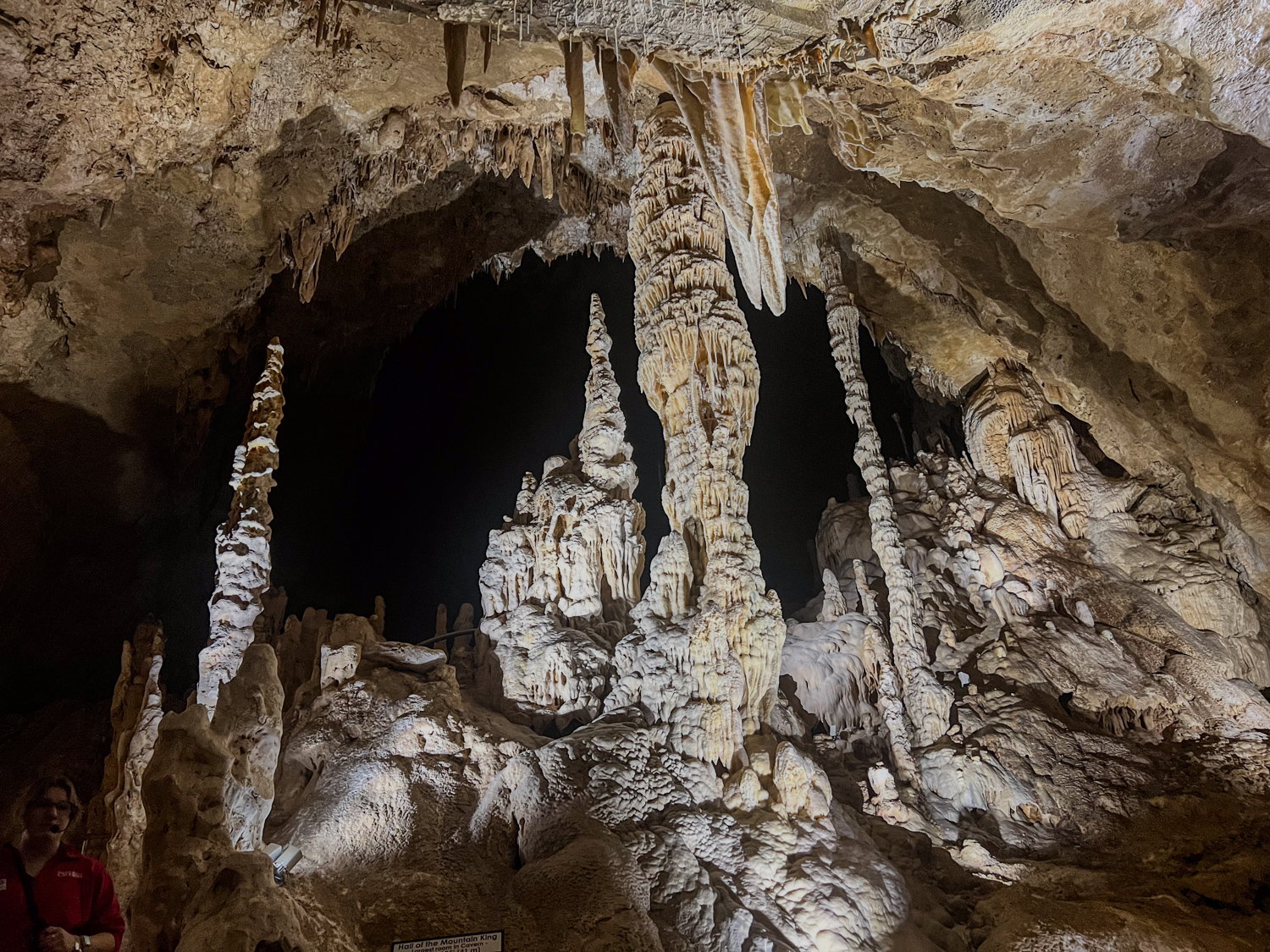
These wineries are even more remarkable because many are family-owned and run. When you visit, you can feel the personal touch and care that goes into every bottle.

The winemakers have a true passion for their craft, which shows in their wines' exceptional quality. But it's not just the wine growers that make these wineries unique; it's also the soil.

The sand, loam, and clay mix provides the perfect drainage for the vines to grow deep roots and produce exceptional wine grapes.

You must visit the Russian River Valley in Northern California if you're a wine lover like me. The lovely views, warm hospitality, and delicious wines can make for an unforgettable experience that will stay with you long after you've left. Trust me. This is one wine country destination you don't want to miss!

13 Fun Stops Along Tampa's Scenic Riverwalk

One of the best ways to see and experience downtown Tampa is to explore the Riverwalk, a 2.6-mile waterfront pedestrian walkway.

The Tampa Riverwalk extends west along the waterfront from The Florida Aquarium near the port and cruise terminals and north up the Hillsborough River to Armature Works, a food hall and event space. Along the way, there are more than a dozen points of interest to complement the pretty views.

The Tampa Riverwalk
Tampa Riverwalk

Whether you walk, bicycle, or hop on/off the Pirate Water Taxi, leave yourself plenty of time to see what the city of Tampa offers. Visiting every museum along the waterfront trail would require at least a full day. If you pick and choose, as I did, then a half-day should suffice.

The Tampa Riverwalk Attraction Pass, available as a one-day or three-day pass, can help you save up to 50% on museums and water taxis.

https://youtu.be/25q9Ve4wnzc

[Disclosure: I received one at no cost as part of my collaboration with Visit Tampa Bay.]

Table of Contents

  • Attractions on Tampa's Riverwalk
    • 1. The Florida Aquarium
    • 2. American Victory Ship & Museum
    • 3. Sparkman Wharf
    • 4. Tampa Bay History Center
    • 5. Cotanchobee Fort Brooke Park
    • 6. Tampa Convention Center Marina
    • 7. MacDill Park
    • 8. Curtis Hixon Waterfront Park
    • 9. Tampa Museum of Art
    • 10. Glazer Children's Museum
    • 11. Straz Center for the Performing Arts
    • 12. Water Works Park and Ulele
    • 13. Armature Works

Attractions on Tampa's Riverwalk

The following attractions and outdoor activities are listed in the order I experienced them on the trail.

1. The Florida Aquarium

The Florida Aquarium
Entrance to the aquarium

The Florida Aquarium in Tampa is a leading non-profit organization that aims to conserve and protect marine life and habitats through its educational and research programs.

The aquarium features diverse exhibits showcasing over 14,000 aquatic animals, including playful otters, colorful corals, sea turtles, and sharks. I was surprised to find they also have adorable ring-tailed lemurs!

Visitors can enjoy interactive experiences, including touching stingrays, snorkeling with fish, and diving with sharks. The aquarium also offers outdoor activities, including eco-tours.

With its commitment to sustainability and conservation, The Florida Aquarium is an excellent destination for those looking to learn more about marine life and the importance of protecting our oceans.

2. American Victory Ship & Museum

American Victory Ship & Museum

Exiting the aquarium, I turned to the right and walked behind it to visit The American Victory Ship & Museum, a national historic landmark.

The American Victory Ship is a floating museum that honors the legacy of the United States Merchant Marine and its contributions to the country's wartime efforts.

The museum is housed in the SS American Victory, a fully operational World War II-era cargo ship that served in the Pacific theater.

Visitors can explore the ship's various decks and compartments, including the engine room, bridge, and cargo holds. The museum also features exhibits showcasing the Merchant Marine's role in World War II, as well as the history of the ship and its crew.

While I didn't find this historic ship quite as exciting as other naval museums such as the USS Midway aircraft carrier (San Diego) and the USS Missouri battleship (Pearl Harbor), I enjoyed the unique vantage points from the top deck.

3. Sparkman Wharf

Repurposed shipping containers at Sparkman Wharf, an outdoor food market along the Tampa Riverwalk
Repurposed shipping containers

After viewing the ship, I walked a block west on Channelside Drive to grab lunch at Sparkman Wharf, an outdoor food and event space on the waterfront.

At one of the best places to eat in Tampa, vendors sell Asian, Mexican, and American foods from colorfully painted and repurposed shipping containers.

LightHaus anchors the development at the far end and looks over a spacious beer garden with picnic tables and umbrellas.

Restaurants with indoor seating are also available and include:

  • JOTORO Kitchen & Tequila Bar (Mexican)
  • Splitsville Southern + Social (American food and a bowling alley)
  • Battery (bourbon bar, steaks, and seafood)

If tequila and bourbon aren't your speed, check out Shortwave Coffee, a craft coffee shop and roaster with creative specialty lattes like cardamom, strawberry basil, and vanilla sage.

4. Tampa Bay History Center

Tampa Bay History Center

Once you've grabbed a drink or bite to eat at Sparkman Wharf, walk a block west along the Tampa Riverwalk to reach the Tampa Bay History Center (TBHC).

The Tampa Bay History Center showcases the region's history and culture. The museum features interactive exhibits, artifacts, and multimedia displays that take visitors through the region's past, from the earliest native inhabitants to the modern era.

Highlights include a replica of a 1920s cigar store, a 60-foot timeline of Tampa Bay history, and a hands-on children's exhibit.

Columbia Cafe at the TBHC is an extension of Columbia Restaurant in nearby Ybor City. Florida's oldest continuously operating restaurant offers waterfront dining on a covered patio.

5. Cotanchobee Fort Brooke Park

Amalie Arena

The history museum is adjacent to the 4.5-acre Cotanchobee Fort Brooke Park, which runs about one block along the Garrison Channel waterfront.

Towering over the park to the north is Amalie Arena, home of the three-time Stanley Cup Champion Tampa Bay Lightning ice hockey team (2004, 2021, 2022). The arena also hosts concerts by A-list performers such as Taylor Swift, Madonna, and Blink-182.

The park's west end borders Tampa Marriott Water Street, the city's largest hotel. The hotel's Anchor & Brine restaurant has a lovely outdoor bar and patio overlooking the Tampa Riverwalk and the water. It's a great place to enjoy a frosty beverage or a casual bite to eat.

6. Tampa Convention Center Marina

Dave is ready to go motor-boating around Tampa Bay
Captain Dave

Further west, after the bridge to Harbour Island, is the Tampa Convention Center Marina. Rent a mini-motorboat from Riverwalk Boating Company, and cruise around Davis Island in Hillsborough Bay, or go north up the Hillsborough River; no experience is necessary.

The marina is also a stop for the Pirate Water Taxi, which you can pay for. It's also included with the Riverwalk Attraction Pass.

Kayaks, stand-up paddleboards, and Kraken CycleBoats are also available for rent if you want to exercise on the water. Bike rentals are available here as well.

7. MacDill Park

Looking north up the Hillsborough River, MacDill Park can be seen in the lower center right.
MacDill Park is visible to the center-right

If you continue on the Tampa Riverwalk past the immense convention center, you'll start heading north along the banks of the Hillsborough River.

Several parks are connected by boardwalks along this stretch, including MacDill Park, a small memorial to MacDill Air Force Base's contributions to the community. MacDill Air Force Base is an active military base in South Tampa and home to the United States Central Command (USCENTCOM).

8. Curtis Hixon Waterfront Park

Adults kickball game at Curtis Hixon Waterfront Park on the Tampa Riverwalk
Adults playing kickball

Continue walking north past the cylindrical Rivergate Tower to reach the Curtis Hixon Waterfront Park. An adult kickball game was in full swing when I came upon it on a Thursday afternoon.

Events held here bring more than one million people to the park annually. The Curtis Hixon Dog Park is a spot for pets to play.

On the west side of the Hillsborough River, you can glimpse the silver minarets of the Henry B. Plant Museum on the University of Tampa campus. The museum is in the former Tampa Bay Hotel, which operated from 1891 to 1932.

Henry B Plant Museum on the Hillsborough River in Tampa, Florida
Henry B Plant Museum

The Tampa Museum of Art and Glazer Children's Museum are along the park's north end.

9. Tampa Museum of Art

Tampa Museum of Art
Tampa Museum of Art

High on my Tampa Riverwalk to-do list was a visit to the Tampa Museum of Art. Founded in 1920, this impressive and recently renovated museum features contemporary art and Greek and Roman antiquities.

The building's form and aesthetics are fascinating. California architect Stanley Saitowitz designed it to appear as though a giant metal box is floating atop a glass base.

And according to the museum website, a "14,000 square-foot LED installation of Leo Villareal's Sky (Tampa) illuminating the south facade" turns the building itself into a work of art (though I wasn't there at night to see it).

Inside, I enjoyed the two floors of galleries, including works by fashion designer Naeem Khan, a neon piece by Hank Willis Thomas, and a sculpture by Cuban artist Esterio Seguro.

10. Glazer Children's Museum

Glazer Children's Museum

Next door to the Tampa Museum of Art is the Glazer Children's Museum, a vibrant and interactive museum designed to engage, educate, and inspire children of all ages.

The museum features various exhibits, programs, and events focused on science, technology, engineering, art, and math (STEAM) concepts.

Children can explore, play, and learn in a safe and welcoming environment. The museum's exhibits are hands-on and interactive, encouraging children to use their creativity and imagination.

11. Straz Center for the Performing Arts

A few minutes walk north of these two museums is The Straz Center for the Performing Arts, which showcases world-class performances in theater, music, and dance.
The center includes five state-of-the-art theaters, such as the 2,610-seat Carol Morsani Hall, which regularly hosts major Broadway productions like "Hamilton." Additional features include an outdoor performance space, a visual arts gallery, and three dining options (Maestro's Restaurant, Maestro's Cafe, and SteamHeat Cafe).

12. Water Works Park and Ulele

Ulele sculpture
Ulele sculpture

Continue north on the Tampa Riverwalk for another ten minutes to reach the Water Works Park. Here you'll find an open green space, the Ulele Springs, a dog park, and a playground and splash pad for kids.

Across a tiny bridge is Ulele, a Michelin-recommended restaurant and craft brewery inspired by and named after an Indian princess. On their patio, there's a sculpture of her, as well as refurbished Disney characters rescued from the Tampa Zoo at Lowery Park.

If you have the chance to dine here, do it. It's one of the best restaurants in Tampa right now, and if you time your meal with sunset, you'll have a nice view of it over the river, too.

13. Armature Works

Armature Works
Armature Works

The Tampa Riverwalk ends at Armature Works, a former streetcar warehouse in the Tampa Heights neighborhood that was repurposed into a thriving food hall (Heights Public Market) and event space.

The interior is full of history, metal cranes, and exposed brick. Old machine parts have been turned into tables, and the space is abuzz with people enjoying the food and drink offerings. Armature Works is also home to Steelbach and Oak & Ola, two Michelin-recommended restaurants.

Bar inside the Public Heights Market at Armature Works
Bar inside the Public Heights Market

Overall, the Tampa Riverwalk offers a great way to experience downtown Tampa. If you're on a tight budget, walk the trail and get some exercise, enjoying what's visible outside. If one or two museums appeal to you, it's probably cheaper to pay as you go.

To visit all five museums, plus the Florida Aquarium, and have access to the Pirate Water Taxi, you'll save money with the Tampa Riverwalk Attraction Pass.

_____

I received a complimentary Riverwalk Attractions Pass during my stay in the city, organized by Visit Tampa Bay.

Electric Car Rentals: A Green Alternative for Travel

As the world becomes increasingly aware of the environmental impact of carbon emissions, many people are looking for ways to reduce their carbon footprint. One option that is gaining popularity is electric car rentals.

This article will explore the benefits of renting an electric car and review the Volvo C40, a popular electric vehicle. We will also discuss car lease deals that can make renting an electric car more affordable.

Charging an electric car (photo: Ernest Ojeh)

Table of Contents

  • Why Rent an Electric Car?
    • Eco-Friendly
    • Cost-Effective
    • Convenient
  • Volvo C40 Review
    • Range and Performance
    • Stylish Design
    • Safety Features
  • Car Lease Deals for Electric Cars
  • Conclusion

Why Rent an Electric Car?

Renting an electric car is a great way to reduce your carbon footprint while still enjoying the freedom and convenience of a personal vehicle. Here are some of the benefits of renting an electric car.

Eco-Friendly

Electric cars produce zero emissions, making them an environmentally friendly alternative to traditional gasoline-powered vehicles. By renting an electric car, you can help reduce air pollution and combat climate change.

Cost-Effective

Electric cars are generally less expensive to operate than traditional gasoline-powered cars. Because electric vehicles run on electricity rather than gasoline, they have lower fuel costs. Additionally, electric vehicles require less maintenance than gasoline-powered cars, saving you money in the long run.

Convenient

Electric car charging stations are becoming more common, making it easier to charge your rental car on the go. With a growing network of charging stations, you can confidently rent an electric vehicle, knowing you can quickly charge it wherever you go.

Volvo C40 Review

In this Volvo C40 review, we will examine the features of this compact electric SUV, which offers a stylish and eco-friendly option for renters.

Range and Performance

The Volvo C40 has an estimated range of 208 miles on a single charge, which is more than enough for most daily commutes. Its top speed is 112 mph, and it can go from 0 to 60 mph in just 4.7 seconds.

Stylish Design

The Volvo C40 features a sleek, modern design with clean lines and a sporty silhouette. The interior is also well-designed, with comfortable seating and a user-friendly infotainment system.

Safety Features

Volvo is known for its commitment to safety, and the C40 is no exception. It features various safety features, including blind-spot monitoring, lane departure warning, and automatic emergency braking.

Car Lease Deals for Electric Cars

While renting an electric car can be cost-effective, car lease deals can make it even more affordable. Here are some car lease deals you can take advantage of if you want to rent an electric car.

Kia Niro EV Lease Deal

The Kia Niro EV is a compact SUV that offers a range of up to 239 miles on a single charge. Currently, Kia is offering a lease deal for the Niro EV that starts at $199 per month for 36 months, with $3,499 due at signing.

Hyundai Kona Electric Lease Deal

The Hyundai Kona Electric is a small SUV that can travel up to 258 miles on a single charge. Hyundai is offering a lease deal for the Kona Electric that starts at $259 monthly for 36 months, with $2,899 due at signing.

Nissan Leaf Lease Deal

The Nissan Leaf is a compact car that can travel up to 150 miles on a single charge. Nissan is offering a lease deal for the Leaf that starts at $219 per month for 36 months, with $3,979 due at signing.

Conclusion

Renting an electric car is a great way to reduce your carbon footprint while still enjoying the freedom and convenience of a personal vehicle. The Volvo C40 is a stylish and eco-friendly option for renters. It offers an impressive range and performance, a stylish design, and safety features.

Electric car lease deals can also make renting an electric vehicle more affordable, with options like the Kia Niro EV, Hyundai Kona Electric, and Nissan Leaf. By renting an electric car, you can contribute to a cleaner and more sustainable future while enjoying the benefits of personal transportation.

_____

This story is brought to you in partnership with AutoTrader.

10 Essential Safety Tips for Hikers

Take a hike! No, really, immerse yourself in nature and take a hike. Trekking through the great outdoors can be an incredibly calming experience and a great way to stay fit.

But as lovely as a hike may sound, the activity involves some real risks. Regardless of how experienced you may be, hikers should follow these safety tips from wilderness safety expert Gavin Dawson to ensure a fun and comfortable adventure.

Table of Contents

  • Hiking Safety Tips
    • 1. Map Out Your Hike and Consult with a Ranger
    • 2. Take a Buddy
    • 3. Prepare for the Weather
    • 4. Dress Appropriately
    • 5. Establish an Emergency Plan
    • 6. Pack the 10 Essentials
    • 7. Pack a Proper First-Aid Kit
    • 8. Stay on the Trail
    • 9. Use Extra Caution During the Second Half
    • 10. Listen to Your Body

Hiking Safety Tips

Hiking in Scotland (photo: Krisjanis Mezulis)

1. Map Out Your Hike and Consult with a Ranger

Before embarking on your hiking excursion, it is important to plan your trip. This includes selecting the right trail based on your skill level and experience, estimating the time it will take to complete, and checking the weather forecast.

When deciding where to take your hike, it's best to stick to state or national parks with rangers on staff who can offer a wealth of knowledge on the terrain and what to expect.

It is essential to be aware of what you may encounter on the trail, such as poisonous flora and fauna, wildlife, and changes in terrain.

2. Take a Buddy

When in doubt, bring a buddy and eliminate the possibility of ending up alone in a dire situation. In case of injury, having someone who can locate help could save a life.

If you're an experienced hiker planning a solo hike, share your itinerary and trailhead location with a friend or family member. This is another safety precaution that could save a life should you not complete the trail within the timeframe reported on your itinerary.

Safety tips for hikers include traveling with a buddy, such as this pair of backpackers in the Tatra Mountains in Europe (photo: Hennadii Hryshyn)
A couple hiking in the Tatra Mountains (photo: Hennadii Hryshyn)

3. Prepare for the Weather

This safety tip for hikers goes beyond simply checking the forecast. Consult with the park rangers to determine what weather precautions should be considered during the specific time of year and what they recommend should you encounter any extreme cases.

Even the slightest change in weather, such as light rainfall, could make the terrain slippery or prone to shifting. Light snow can cover trails, making staying on or finding your way out harder.

4. Dress Appropriately

Dressing appropriately and bringing the proper gear are crucial for a safe and comfortable hiking experience. Wear comfortable, moisture-wicking clothing and sturdy hiking boots with good ankle support and surface traction.

Bring a hat to block out the sun from the face, and consider additional layers such as jackets and gloves depending on the weather, as temperatures can drop quickly in the mountains.

Hikers in Yosemite Valley, California (photo: Nina Luong)
Hikers in Yosemite Valley, CA (photo: Nina Luong)

5. Establish an Emergency Plan

In the unlikely event that something should happen, it is critical to have a plan ready. Bring a fully charged phone and portable charger. If a cellular phone is not an option, items like a personal locator beacon or a satellite messaging device can send messages.

If you are hiking with a partner or group, someone should be elected to get help if you cannot transmit a message.

6. Pack the 10 Essentials

According to the National Parks Service, the 10 Essentials are basic items that should be with you on every hike so that you are prepared for minor injuries, emergencies, weather changes, or unexpected delays.

  1. Navigation - maps, compass, GPS
  2. Sun protection - sunglasses, hat, sunscreen
  3. Illumination - Lanterns, headlight, flashlight
  4. First-aid kit - more on this below
  5. Insulation - jacket, gloves, additional layers
  6. Nutrition - enough sustenance plus extra just in case
  7. Hydration - water and water treatment supplies, should you collect water that requires purification
  8. Emergency shelter - tent, space blanket, tarp
  9. Repair kit - multifunctional tools, duct tape
  10. Fire - matches, lighters, fire starters

Depending on your hike and the circumstances, this essential and non-exhaustive list should be added. If you hike abroad, you should also consider purchasing travel insurance to ensure you're covered in case you have an injury or accident. 

Using a compass in Yosemite National Park (photo: Jamie Street)

7. Pack a Proper First-Aid Kit

This is a must-have item for any outdoor adventure. It can help treat minor injuries and illnesses and prevent them from becoming more severe.

A basic first-aid kit should always include the following:

  • Adhesive bandages of varying sizes
  • Gauze pads and adhesive tape
  • Pain relievers such as ibuprofen or acetaminophen 
  • Antiseptic wipes or solution
  • Tweezers and scissors
  • Blister treatment
  • Insect repellent and sunscreen

These first-aid kits can be bought pre-made or collected and packed at home, but be sure to familiarize yourself with each item and ensure they are up to date before each trip.

8. Stay on the Trail

Remaining on the designated hiking trail is paramount for your safety and the preservation of natural resources. Going off-trail can cause something called "social trails," an unofficial carving into the wilderness that disrupts natural vegetation and animals and can cause land erosion.

This can also be exceptionally dangerous for other hikers who may mistake this social trail as the official trail and wind up trekking in the wrong direction. Staying on the trail also keeps you safe if you need help or require assistance.

Hikers pass a Pacific Crest Trail sign (photo: Sebastien Goldberg)
Pacific Crest Trail sign (photo: Sebastien Goldberg)

9. Use Extra Caution During the Second Half

Accidents are more likely to happen in the second half of the hike due to muscle fatigue, exhaustion, and lack of focus. It is crucial to pay close attention to your footing and surroundings and take your time making your way back down the trail.

10. Listen to Your Body

As prepared as you may be for this hike, your body may say otherwise during the trek. Never push yourself or any member of the group past your limits. Take breaks when necessary, and be ready to turn back if required.

Your safety is the top priority; never let your pride or hyper-focus on finishing get in the way of your well-being. 

Remember that hikes are meant to be enjoyed; it is often a marathon, not a race. So keep these safety tips for hikers in mind, take your time, respect your natural surroundings, and have fun!

_____

This story is brought to you in partnership with Global Emergency Medics.

5 Things To Know Before Visiting Nepal

Nepal is a small but mighty nation with natural beauty, friendly people, and unique cultural experiences. From the Himalayas to the jungle lowlands, this nation offers something for everyone.

Before planning your trip to Nepal, it's best to learn a few things about the country: its geography and climate, its culture and customs, its language and currency, Nepal tourist visas, and the best time to visit.

This article shares five key facts you should know before visiting Nepal. But first, here is a quick word about visas.

Hikers at a viewpoint in Namche Bazaar, Nepal (photo: Sebastian Pena Lambarri)
Hikers at a viewpoint in Namche Bazaar (photo: Sebastian Pena Lambarri)

Table of Contents

  • Getting a Nepal Tour Visa
  • What To Know About Nepal
    • 1. Climate and Weather 
    • 2. Trekking Needs Permit in Nepal 
    • 3. Still Recovering From the Earthquake
    • 4. Nepal Is Much More Than Mountains 
    • 5. Go Beyond Everest and Annapurna
  • Conclusion 

Getting a Nepal Tour Visa

If you plan a vacation to Nepal, you must apply for a tourist visa. Applying for a Nepal tourist visa can be straightforward if you know what to expect. One helpful resource is Visagov, which provides detailed information and guidance on obtaining a Nepal tourist visa.

To begin the application process, you must gather the necessary documents, including your passport with at least six months of validity remaining, a recent passport-sized photo, and proof of onward travel, such as flight tickets or an itinerary.

You can then visit the official website of the Department of Immigration Nepal, where you will complete an online application form and pay the required fee using a credit card or PayPal account. Once your application has been submitted, processing typically takes 3-5 business days. 

What To Know About Nepal

Boudhanath Stupa in Kathmandu (photo: Meghraj Neupane)

Nepal is a beautiful country known for its snow-capped mountains and fascinating culture. However, before visiting Nepal, you should know some things to ensure your trip is enjoyable and stress-free.

1. Climate and Weather 

Nepal has a complex and diverse climate and weather that can be difficult to predict. The temperature and environmental conditions vary significantly between different parts of Nepal, from humid tropical weather on the plains of the Terai to cold alpine conditions in the higher altitudes.

With a better understanding of what to expect, visitors can plan accordingly and ensure they have everything they need when arriving in Nepal. By researching ahead of time, travelers can enjoy an unforgettable trip that exceeds their expectations.

2. Trekking Needs Permit in Nepal 

Tibetan Buddhist stupa - Dingboche, Everest region in Nepal (photo: Kerensa Pickett)
Tibetan Buddhist stupa (photo: Kerensa Pickett)

Nepal offers breathtaking views of the Himalayas and has become a popular destination for trekking enthusiasts. However, it is essential to note that trekkers require permits to undertake these activities. Without permits, trekking in Nepal can become an illegal activity with severe consequences.

The Nepalese government introduced the permit system to protect its natural resources and guarantee safety for all trekkers. The permits allow authorities to monitor visitors and ensure they are not lost or stranded in the mountains.

Additionally, these permits support local communities by generating revenue through tourism. Trekkers planning to visit Nepal's stunning landscapes must obtain the appropriate permissions before embarking on their journey. 

3. Still Recovering From the Earthquake

Nepal is a beautiful country to visit. While it's still recovering from a magnitude 4.6 earthquake on April 1, 2015, it offers much to see and experience.

Nepal's diverse culture, beautiful landscapes, and friendly people make it an excellent destination for those looking for something off the beaten path. However, tourists should be mindful of the situation in Nepal and respect local customs and beliefs when traveling.

Furthermore, tourists can play an integral role in helping Nepal recover by supporting businesses and organizations dedicated to preserving its culture and rebuilding infrastructure.

4. Nepal Is Much More Than Mountains 

A Nepali man who runs a tea shop near the Langtang Valley (photo: Samrat Khadka)

Nepal is a destination like no other. It has something for everyone, whether you are a thrill seeker, a nature lover, or want to experience a different culture.

The people of Nepal are some of the most genuine and welcoming you will ever meet. With its unique mix of landscapes, traditions, and religions, this country will leave you with memories to last a lifetime.

5. Go Beyond Everest and Annapurna

Nepal has much to offer those seeking an exciting and unique mountaineering experience. From the majestic peaks of Everest and Annapurna to the lesser-known Himalayan ranges, adventurers have countless opportunities to explore.

Whether you're a beginner or a skilled climber, Nepal offers something for everyone. With its unparalleled beauty and abundance of outdoor activities, Nepal will surely make your next mountaineering excursion unforgettable.

Conclusion 

Nepal is known for its unique geography, culture, and natural beauty. From the towering Himalayas to the beautiful temples and ancient fortresses, there is so much to explore in Nepal.

Before you travel to Nepal, you must be aware of the language barrier, religion and customs, currency exchange rates, and local food options. With some preparation, you can make your visit safe and enjoyable.

______

This story is brought to you in partnership with Visagov.com.

10 Best Things To Do in Cartagena, Colombia

Cartagena is an attractive coastal city in Colombia famous for its colorful colonial buildings, rich history, and vibrant culture. The best things to do in Cartagena range from walking the Old Town to boarding a boat to visiting beautiful beaches.

I had the opportunity to visit Cartagena many times during my expat years of living in Medellín, and every trip was memorable.

The city is perfect for planning a long weekend in South America, whether traveling solo, with friends, or seeking a romantic getaway. Here are ten fun things to do in Cartagena, Colombia.

Table of Contents

  • Cartagena's Attractions
    • 1. Explore the Old Town
    • 2. Visit the Castillo de San Felipe de Barajas
    • 3. Take a boat tour
    • 4. Walk along the walls of Cartagena
    • 5. Relax on the beaches
    • 6. Visit the Museo del Oro
    • 7. Explore the Getsemani neighborhood
    • 8. Visit the Convento de Santa Cruz de la Popa
    • 9. Attend a live music performance
    • 10. Try the local cuisine

Cartagena's Attractions

1. Explore the Old Town

Walking the colorful streets in the Old Town is one of the top things to do in Cartagena, Colombia
Cartagena's colorful streets

The Old Town of Cartagena is a UNESCO World Heritage Site known for its beautiful architecture, narrow streets, and plazas.

Stroll through the historic center and explore its many shops, restaurants, and museums. Later in the day, street performers often play music, creating a lively atmosphere.

Due to the ever-present heat and humidity on Colombia's Caribbean coast, save your longer walks for the early morning and late afternoon or evening.

My favorite time to walk the walled city of Cartagena is in the evening when the temperatures are more manageable. Everyone is out in dressier but comfortable clothing (white cotton and linen), and horse-drawn carriages ply the cobblestone streets.

2. Visit the Castillo de San Felipe de Barajas

Castle San Felipe de Barajas
The castle walls

The Castillo de San Felipe de Barajas is a historic fort and one of Cartagena's most popular attractions. It was built in 1536 by African slave labor under Spanish supervision while the Spaniards still occupied present-day Colombia. From atop the fort, you'll be treated to views of the surrounding city and the Caribbean Sea.

3. Take a boat tour

Stopping for a swim on a boat tour from Cartagena
Stopping for a swim on a boat tour

Several boat tours depart from Cartagena's port and take visitors on day trips to nearby islands and beaches. Some of the most popular tours include visits from Cartagena to Isla Grande, the Rosario Islands, and the Baru Peninsula.

They're available as half or full-day trips, and I recommend the latter to get the most out of your time at sea. Either way, they're typically inexpensive by U.S. or European standards.

4. Walk along the walls of Cartagena

Walking the old city walls is one of the best things to do in Cartagena, Colombia
View of the Caribbean Sea from a city wall

Back on the mainland, you'll want to check out the well-preserved city walls, an iconic Cartagena landmark offering breathtaking views of the Caribbean waters. They're best explored in the early morning or late afternoon when the temperatures are cooler.

Cafe del Mar is a bar atop the wall on the west side of Cartagena's Old Town. It's one of the best places to enjoy a tropical cocktail and watch the sunset.

5. Relax on the beaches

The turquoise waters off Playa Blanca, which we visited on a boat tour from Cartagena
Turquoise waters off Playa Blanca

Cartagena has some easily accessible beaches where you can spend a day soaking up the sun, swimming, and enjoying the Caribbean vibe. The beaches on the mainland, in Bocagrande, have dark sand and water. But they're the closest to the Old City, a quick ride away.

A word of caution, though. Hawkers selling everything from fresh little crab legs to massages can sometimes be very forward. If you're not interested, say "no" or ignore them entirely, and they'll move on.

For picture-perfect white sand beaches and crystal-clear waters, you'll need to hop on a boat and head to places like Playa Blanca on the nearby islands.

6. Visit the Museo del Oro

This museum showcases the rich history of gold in Colombia and features a stunning collection of pre-Columbian artifacts. Although it does not have as big a collection as the Gold Museum in Bogota, it's still worth a visit.

7. Explore the Getsemani neighborhood

Outside an art gallery in Getsemani, Cartagena
Outside an art gallery in Getsemani

Getsemani is a fantastic neighborhood in Cartagena known for its street art, lively nightlife, and excellent food. It also tends to be less expensive than the Old Town, whether that's the accommodation, restaurants, or bars. Therefore, I stayed in Getsemani for three of my four visits to Cartagena.

8. Visit the Convento de Santa Cruz de la Popa

Convento de Santa Cruz de la Popa (top left building on the hill)
Convento de la Popa atop Cartagena's highest point

This historic convent is located on the highest hill in Cartagena and offers panoramic city views. The buildings date back to 1607. For safety reasons, I recommend you only visit this place with a knowledgeable local guide or group. It's a little removed from the rest of the city, and thieves have been known to operate in the area.

9. Attend a live music performance

Havana Cafe is a popular salsa spot in Getsemani
Havana Cafe is a popular salsa spot in Getsemani.

Cartagena is known for its active music scene, and there are many live music venues throughout the city. Check out a salsa club or a traditional Colombian music performance.

One of my favorite bars in Cartagena, Cafe Havana, is in Getsemani. Drop by in the evening if you want to add live salsa music, dancing, and mojitos to your night.

10. Try the local cuisine

Entree at La Cevicheria, a restaurant featured on one of Anthony Bourdain's TV shows
Entree at La Cevicheria

Cartagena has a rich culinary tradition, with many delicious local dishes. Street food is sold by vendors throughout the city, and there's a seemingly endless supply of fresh fruit (mango, watermelon, papaya).

Additionally, try the ceviche, whole fried snapper ("pargo" in Spanish), coconut rice (arroz con coco), arepas, and empanadas, among other specialties. I always drop by La Cevicheria, a restaurant featured on one of Anthony Bourdain's TV shows.

As the name suggests, they specialize in ceviche; however, if you're not a fan, there are plenty of other seafood and fresh fish options on the menu.

I hope this list of the best things to do in Cartagena, Colombia, helps you plan a fun itinerary. Despite my multiple visits, I still daydream about going back again and walking amid the colonial architecture of the Old Town. It never fails to capture my imagination of what it would've been like to live there centuries ago.

______

This story is brought to you in partnership with 12Go.

Top 10 Beaches in Hawaii for Surfing

Picture yourself standing at the edge of a sun-kissed beach, the warm sand between your toes, and the gentle sound of the waves washing over you. And suddenly, you see the perfect wave forming in the distance, and you know it's time to catch it. This is the magic of surf beaches in Hawaii. 

If you're looking for that type of beach, you should consider Hawaii, the ultimate surfer's paradise, which is also home to some of the best beaches in the world for riding the waves.

From the legendary Waikiki Beach to hidden surf spots, Hawaii offers an abundance of options for surfers of all levels. But with so many beaches, finding the best place to catch some waves can be overwhelming.

The good thing is we've got your back, because in this article we've compiled a list of the top 10 beaches in Hawaiifor surfing. Whether you're a seasoned pro or a beginner, these beaches have something to offer!

So, grab your board, wax it up, and get ready to ride some waves as we take you on a journey through Hawaii's best surfing beaches.

Table of Contents

  • Surf Beaches in Hawaii
    • 1. Pipeline, Oahu
    • 2. Waimea Bay, Oahu
    • 3. Sunset Beach, Oahu
    • 4. Haleiwa Beach Park, Oahu
    • 5. Honolua Bay, Maui
    • 6. Hookipa Beach Park, Maui
    • 7. Jaws, Maui
    • 8. Hanalei Bay, Kauai
    • 9. Poipu Beach, Kauai
    • 10. Ke Iki Beach, Oahu

Surf Beaches in Hawaii

1. Pipeline, Oahu

Surfer riding the Pipeline on Oahu's North Shore, one of the best surfing beaches in Hawaii (photo: Katie Rodriguez)
Surfer riding the Banzai Pipeline (photo: Katie Rodriguez)

Pipeline Beach is one of Hawaii's best and most challenging surfing destinations. The beach is known for its monstrous waves that can reach up to 30 feet in height, making it a must-visit spot for thrill-seeking surfers. Not only that, but the reef at the bottom of the beach creates a barrel that attracts some of the world's best surfers. 

When it comes to professional surfing, the Pipeline is also the site of the annual Pipeline Masters competition, which attracts experienced surfers from around the world.

The competition is held every December, during Hawaii's winter season, when the waves are at their biggest and most challenging. It's a spectacle that draws crowds of surf enthusiasts to witness the world's best surfers tackle Pipeline's massive waves.

In addition to its challenging waves, Pipeline Beach also offers stunning scenery. The crystal-clear water and palm trees create a beautiful backdrop for surfers and beachgoers alike.

Even if you're not a surfer, Pipeline is worth a visit to watch the impressive waves and the skilled surfers riding them. Please remember that this beach is not for beginners and that navigating the waves safely requires skill and experience.

2. Waimea Bay, Oahu

Waimea Bay, Oahu (photo: Michael Olsen)
Bird's-eye view of Waimea Bay (photo: Michael Olsen)

Waimea Bay is one of the most iconic surfing destinations and one of the best beaches in Hawaii. Its reputation as a big-wave surfing spot has attracted some of the world's best surfers to its shores. The bay's location at the mouth of the Waimea River has created a unique beach with a sandbar that creates excellent surfing conditions. 

The bay's popularity as a surfing destination dates back to the 1950s, when surfers like Greg Noll and Eddie Aikau started exploring the big waves at Waimea. Eddie Aikau, in particular, became known as one of the best big-wave surfers in the world, and his legacy still lives on at Waimea Bay today.

For more than 30 years (1984-2016), Quiksilver sponsored an annual competition, the In Memory of Eddie Aikau big wave invitational at Waimea Bay, in honor of him and his passion for big wave surfing.

Apart from its reputation as a big wave surfing spot, Waimea Bay is known for its beautiful setting. The bay is surrounded by lush greenery, and the beach is made of fine white sand. During the summer, the waves at Waimea Bay are smaller and calmer, making it an excellent spot for swimming and snorkeling.

In addition, the bay is home to various marine life, including turtles, dolphins, and tropical fish, making it a popular spot for wildlife enthusiasts.

3. Sunset Beach, Oahu

A woman surfing on the North Shore, near Sunset Beach (photo: Daniel Ramirez)
Surfing on the North Shore, near Sunset Beach (photo: Daniel Ramirez)

Sunset Beach is mainly known for its consistent big waves and is a popular spot for experienced surfers. This beach is one of the world's most iconic surf spots and hosts numerous competitions throughout the year, including the prestigious Vans Triple Crown of Surfing.

The waves at Sunset Beach are known for their size and power, often reaching heights of up to 30 feet. These waves are caused by the beach's geography and the Pacific's winter swells.

Because of these conditions, Sunset Beach is best suited for experienced surfers with the skills to handle large, fast-moving waves.

Aside from the waves, Sunset Beach also offers stunning scenery, with its long stretch of golden sand and pretty sunsets. The beach is surrounded by lush vegetation and has a relaxed atmosphere, making it a popular spot for beachgoers and surf enthusiasts.

So if you're planning a trip to Hawaii and looking for a challenging surf spot, Sunset Beach is worth checking out.

Just ensure you have the skills and experience to handle the waves, as they can be very powerful and dangerous. And even if you're not a surfer, its beauty makes this one of the best beaches in Hawaii.

4. Haleiwa Beach Park, Oahu

Female surfer in the water at Haleiwa, a top beach in Hawaii (photo: Chris Osmond)
Female surfer at Haleiwa (photo: Chris Osmond)

The Haleiwa Beach Park, located on the North Shore of Oahu, is a popular spot for surfers of all levels. Its beach is known for its consistent waves, making it an ideal place for surfers looking to catch a few waves without competing with large crowds. The best time to surf at Haleiwa Beach Park is during the winter months when the surf is at its peak.

One thing that makes Haleiwa Beach Park unique is that it's also an excellent spot for beginners. There are a variety of waves to choose from, including gentle ones. The park also offers a designated surf area, which provides a safe space for beginner surfers to learn and practice.

In addition to surfing, Haleiwa Beach Park is known for other water activities, such as swimming, snorkeling, and stand-up paddleboarding.

The beach has a calm, shallow area near the shore, perfect for families with young children. In short, Haleiwa Beach Park is a fantastic spot for surfers of all levels, offering consistent waves and a safe space for beginners to learn and practice. 

5. Honolua Bay, Maui

Honolua Bay, Maui (photo: Andrew Bain)
Scenic Honolua Bay (photo: Andrew Bain)

Honolua Bay, located on the northwest coast of Maui, is another popular surfing destination in Hawaii. It is considered to have some of the best waves in the country. 

The bay is home to a legendary surf break, considered one of the best in the world. The wave is a strong, hollow right-hand point break that can reach up to 20 feet and provides an exhilarating ride for experienced surfers.

In addition, the bay is surrounded by picturesque scenery, making it a terrific place to surf and relax. The water is crystal clear, and the reef is home to diverse marine life, making it ideal for snorkeling and scuba diving.

If you plan to visit Honolua Bay, remember that it is a challenging surf spot suitable for experienced surfers. However, it can also be a good place for beginners to watch and learn from the pros.

The best time to surf at Honolua Bay is during winter when the swell is at its largest and most consistent. The area can get crowded during peak season, so it's best to arrive early or go during the off-season to avoid crowds.

In addition to surfing and snorkeling, Honolua Bay is also a wonderful place to have a picnic or a BBQ with family and friends. Several picnic tables, grills, restrooms, and showers are available for public use. 

6. Hookipa Beach Park, Maui

Hookipa Beach Park  (photo: Shauna Altman)
Hookipa Beach Park, Maui (photo: Shauna Altman)

Located on the North Shore of Maui, Hookipa Beach Park is a world-renowned destination for windsurfing and kiteboarding. The strong trade winds and consistent swells make it an ideal spot for intermediate and advanced surfers. However, beginners can also enjoy the smaller waves on the inside.

The beach is popular among locals and visitors and hosts several international competitions throughout the year.

The water is crystal clear, and the reef bottom adds to the spot's beauty. The best time to surf at Hookipa is from November to March, when the North Pacific swells hit the coast, and the winds are strongest.

But surfing is not the only thing that Hookipa is known for. It's also a superb spot for whale watching during the winter months when humpback whales migrate to Hawaii.

Visitors can witness these gentle giants breaching and playing in the water, adding to the breathtaking scenery. In addition to surfing and whale watching, Hookipa is also a suitable spot for picnics, barbecues, and family outings.

The park has plenty of facilities, including restrooms, showers, and parking. It's an incredible location to relax and take in the beauty of Maui while watching some of the world's best surfers ride the waves.

7. Jaws, Maui

Jeep parked at Jaws on Maui, one of the best surf beaches in Hawaii (photo: Justin Aikin).
Jeep parked at Jaws on Maui (photo: Justin Aikin)

Jaws, not the movie one, is a beach notorious for its massive waves, making it a favorite among big-wave surfers worldwide. The waves at this beach are known for reaching up to 60 feet in height, and only experienced surfers should attempt to ride them.

Jaws is not for the faint of heart. The beach is located in a remote area, and the conditions can be extremely challenging.

Its waves are fast and powerful, and the ocean floor is rocky and shallow. To ensure their safety, surfers who want to ride these waves must be skilled at paddling, positioning, and reading the water.

Jaws is also known for its swells, generated by the intense winter storms that pass through the North Pacific. The waves here are best during winter, typically from November to March. During this time, the swell can be so strong that it can be felt miles away.

Despite the danger and the challenging conditions, surfers flock to Jaws from around the world to ride some of the biggest waves on the planet. The beach has even hosted major surfing competitions, such as the Maui Pro, which attracts some of the best surfers in the world. 

So, if you are an experienced surfer looking for a challenge, Jaws should be on your list of must-visit surfing destinations. And if you're looking for a place near Jaws with a beach view, you might want to consider Hawaiian beach rentals. 

8. Hanalei Bay, Kauai

Hanalei Bay on Kauai offers one of the top beaches in Hawaii for surfing  (photo: Jason Weingardt)
Beautiful Hanalei Bay (photo: Jason Weingardt)

Hanalei Bay, located on the North Shore of Kauai, is widely recognized as one of the most beautiful beaches in Hawaii. The beach stretches for over two miles and is surrounded by verdant mountains, making it a fantastic setting for surfing.

Hanalei Bay is also one of Hawaii's most consistent surf spots, offering a range of waves that cater to surfers of all levels. The beach is best known for its winter waves, which can reach up to 30 feet.

However, even during the summer months, Hanalei Bay offers a variety of waves suitable for beginners and intermediate surfers. The waves break left and right, making it a great spot for regular and goofy-footed surfers.

One of the great things about Hanalei Bay is the sense of community among the surfers who frequent the beach. Unlike some other surf spots in Hawaii, the locals here are friendly and welcoming to visitors. Many local surf shops offer lessons and equipment rentals to help visitors get started with surfing.

9. Poipu Beach, Kauai

Poipu Beach, Kauai (photo: Ryan Miller)
The idyllic Poipu Beach (photo: Ryan Miller)

Poipu Beach on the southern shore of Kauai is considered one of the best beaches in Hawaii for surfing. Its consistent surf breaks, crystal-clear waters, and stunning surroundings make it a must-visit for surfers of all levels.

The beach is divided into two sections - the more popular Poipu Beach Park and the quieter Brennecke's Beach. Poipu Beach Park is ideal for beginners, offering a gentle swell and smaller waves that are terrific for learning to surf.

On the other hand, Brennecke's Beach is a more challenging spot with bigger waves and a stronger current, perfect for experienced surfers looking for a challenge.

The beach's unique location also provides a variety of waves that break differently depending on the swell direction and tide, providing a diverse surfing experience.

When the waves are at their peak, surfers can enjoy rides that last up to 300 yards. Apart from the world-class waves, Poipu Beach also offers amenities like showers, restrooms, picnic tables, and lifeguards, making it a safe and comfortable place to surf.

The beach's location on Kauai's southern shore is usually sunny and warm, providing an exceptional tropical surfing experience.

10. Ke Iki Beach, Oahu

Ke Iki Beach on Oahu is one of the best beaches in Hawaii
Ke Iki Beach on Oahu

The last one on our list is Ke Iki Beach, located on the North Shore of Oahu. It is a popular destination for surfers seeking strong waves. With a long stretch of sand and a reef break, this beach is known for its consistent surf conditions and strong currents.

Experienced surfers can enjoy the mighty waves, while beginners can find calmer waters to practice on the inside.

What makes Ke Iki Beach unique is the powerful, hollow waves that break over the shallow reef. These waves can reach up to 20 feet and offer a thrilling experience for advanced surfers.

However, it's important to note that these waves can also be dangerous and require skill and experience to ride.

Aside from the fantastic surf conditions, Ke Iki Beach is known for its stunning natural beauty. Its turquoise waters provide a tremendous backdrop for surfing or simply relaxing.

Plus, with plenty of nearby amenities, including food trucks, restrooms, and showers, Ke Iki Beach is a convenient and enjoyable destination for surfers and beachgoers.

Now that you know some of the best beaches in Hawaii for surfing, it's time to grab your board and hit the waves.

Whether you're a seasoned pro or a beginner, Hawaii has something for everyone. So what are you waiting for? Book your trip or Hawaii vacation rentals and prepare for an unforgettable surfing experience.

______

This story is brought to you in partnership with Hawaiian Beach Rentals.

Europe's National Parks: The Continent's Most Stunning Areas

Europe is home to some of the most stunning natural areas in the world, and the continent's national parks are a testament to its beauty. From Norway's dramatic fjords to Portugal's rugged coastline, Europe's national parks offer visitors a chance to experience breathtaking landscapes, diverse wildlife, and a deep connection to nature.

If you're planning a vacation to Europe, add some of these national parks to your itinerary. And if you plan to visit Paris, don't worry. Many parks are easily accessible from the city.

Table of Contents

  • European Parks
    • Norwegian Fjords National Park
    • Plitvice Lakes National Park
    • Black Forest National Park
    • Picos de Europa National Park
    • Cinque Terre National Park
    • Peneda-Geres National Park
  • Final Thoughts

European Parks

Norwegian Fjords National Park

Norwegian village in a fjord (photo: op23)

Norway's fjords are world-famous for their dramatic beauty, and the Norwegian Fjords National Park is no exception. It has some of the country's most spectacular fjords, towering mountains, cascading waterfalls, and deep-blue lakes. Nature lovers can explore the park's many trails, take a boat tour of the fjords, or even go kayaking or fishing. 

Getting there from Paris: Fly from Paris to Bergen, Norway, and then take a train or bus to the park.

Plitvice Lakes National Park

Boardwalk and waterfall in Plitvice Lakes National Park, one of Europe's top national parks (photo: llse)
Boardwalk and waterfall in Plitvice Lakes National Park, Croatia (photo: llse)

Located in Croatia, Plitvice Lakes National Park is known for its cascading waterfalls and crystal-clear lakes. A diverse array of wildlife, including bears, wolves, and lynxes, can be found here.

If you are interested in hiking, you can walk the park's many trails. There are also opportunities to take boat rides across the lakes and swim in the park's designated areas. 

Getting there from Paris: Fly from Paris to Zagreb, Croatia, and then take a bus or rent a car to the park.

Black Forest National Park

The Black Forest in Germany (photo: Rach Sam)
Black Forest (photo: Rach Sam)

Located in southwestern Germany, the Black Forest National Park is a vast wilderness area home to some of the country's most incredible landscapes.

Dense forests, rolling hills, and sparkling lakes are on full display and waiting to be experienced. You can explore the park's many trails, go mountain biking, or take a scenic drive.

Getting there from Paris: Take a train from Paris to Baden-Baden, Germany, and then take a bus or rent a car to the park.

Picos de Europa National Park

A path leading to the distant mountains of Picos de Europa, a European national park (photo: Bruno Alves)
Mountains of Picos de Europa (photo: Bruno Alves)

Located in northern Spain, the Picos de Europa National Park is known for its rugged peaks, deep valleys, and transparent lakes. Its diverse wildlife includes wolves, bears, and eagles.

Picos de Europa National Park offers an extensive trail system, a cable car to the summit of the park's highest peak, and an extensive cave system.

Getting there from Paris: Fly from Paris to Santander, Spain, and then take a bus or rent a car to the park.

Cinque Terre National Park

A seaside village in Cinque Terre, Italy  (photo: Mika Korhonen)
A seaside village in Cinque Terre (photo: Mika Korhonen)

Located on the Italian coast, the Cinque Terre National Park is known for its rugged coastline, colorful villages, and terraced vineyards.

Visitors can plan their time exploring the park's many trails, swimming in the park's designated swimming areas, or even taking a boat ride along the coast.

Getting there from Paris: Take a train from Paris to La Spezia, Italy, and then take a train or bus to the park.

Peneda-Geres National Park

Waterfall in Peneda-Geres National Park, Portugal (photo: Micael Rodrigues)
Waterfall (photo: Micael Rodrigues)

Located in northern Portugal, the Peneda-Geres National Park is a vast wilderness area home to some of the country's most stunning landscapes.

The terms that best describe the park are rugged mountains, cascading waterfalls, and deep valleys. Adventurers can explore the park's many trails, go mountain biking, or take a dip in its many natural pools.

Getting there from Paris: Fly from Paris to Porto, Portugal, and then take a bus or rent a car to the park.

Final Thoughts

Europe's national parks offer various landscapes, from the dramatic fjords of Norway to the rugged mountains of Spain. These parks provide a chance to experience nature at its finest and are easily accessible from major cities like Paris. Whether you're a nature lover, an adventure seeker, or simply looking for a peaceful retreat, Europe's national parks have something for everyone.

When planning your European vacation, add at least one national park to your itinerary. These parks offer a unique opportunity to connect with nature and explore stunning landscapes.

And if you're planning to visit Paris, don't miss the chance to take a day trip or overnight excursion to one of these fantastic national parks. You won't be disappointed by the natural beauty that awaits you.

______

This story is brought to you in partnership with Guide to Europe.

« Previous Page
Next Page »
Dave at Ahu Ko Te Riku on Rapa Nui (Easter Island), Chile.

Hi, I'm Dave

Editor in Chief

I've been writing about adventure travel on Go Backpacking since 2007. I've visited 68 countries.

Read more about Dave.

Footer

back to top

About

  • About
  • Archive
  • Privacy Policy
  • Cookie Policy

Follow Us

Contact

  • Contact
  • Work With Us
  • Submissions

Copyright © 2025 Go Backpacking