Go Backpacking

  • About
  • Travel Tips
    • Accommodations
    • Budgeting & Money
    • Adventure Travel
    • Food & Drink
    • Gear & Gadgets
    • Packing Tips
    • Travel Blogging
    • Travel Insurance
    • Trip Planning
    • UNESCO Sites
  • Destinations
    • Africa
      • Botswana
      • Egypt
      • Ethiopia
      • Morocco
      • Rwanda
      • South Africa
      • Tanzania
    • Asia
      • Cambodia
      • China
      • Hong Kong
      • India
      • Indonesia
      • Japan
      • Laos
      • Malaysia
      • Nepal
      • Philippines
      • Thailand
      • United Arab Emirates
      • Vietnam
    • Europe
      • England
      • France
      • Germany
      • Greece
      • Iceland
      • Ireland
      • Italy
      • Portugal
      • Spain
      • Switzerland
      • Turkey
    • North America
      • Canada
      • Costa Rica
      • Cuba
      • Guatemala
      • Mexico
      • Nicaragua
      • Panama
      • United States
    • Oceania
      • Australia
      • French Polynesia
      • New Zealand
    • South America
      • Argentina
      • Bolivia
      • Brazil
      • Chile
      • Colombia
      • Ecuador
      • Peru
  • Advertise
menu icon
go to homepage
  • About
  • Travel Tips
    • Accommodations
    • Budgeting & Money
    • Adventure Travel
    • Food & Drink
    • Gear & Gadgets
    • Packing Tips
    • Travel Blogging
    • Travel Insurance
    • Trip Planning
    • UNESCO Sites
  • Destinations
    • Africa
      • Botswana
      • Egypt
      • Ethiopia
      • Morocco
      • Rwanda
      • South Africa
      • Tanzania
    • Asia
      • Cambodia
      • China
      • Hong Kong
      • India
      • Indonesia
      • Japan
      • Laos
      • Malaysia
      • Nepal
      • Philippines
      • Thailand
      • United Arab Emirates
      • Vietnam
    • Europe
      • England
      • France
      • Germany
      • Greece
      • Iceland
      • Ireland
      • Italy
      • Portugal
      • Spain
      • Switzerland
      • Turkey
    • North America
      • Canada
      • Costa Rica
      • Cuba
      • Guatemala
      • Mexico
      • Nicaragua
      • Panama
      • United States
    • Oceania
      • Australia
      • French Polynesia
      • New Zealand
    • South America
      • Argentina
      • Bolivia
      • Brazil
      • Chile
      • Colombia
      • Ecuador
      • Peru
  • Advertise
search icon
Homepage link
  • About
  • Travel Tips
    • Accommodations
    • Budgeting & Money
    • Adventure Travel
    • Food & Drink
    • Gear & Gadgets
    • Packing Tips
    • Travel Blogging
    • Travel Insurance
    • Trip Planning
    • UNESCO Sites
  • Destinations
    • Africa
      • Botswana
      • Egypt
      • Ethiopia
      • Morocco
      • Rwanda
      • South Africa
      • Tanzania
    • Asia
      • Cambodia
      • China
      • Hong Kong
      • India
      • Indonesia
      • Japan
      • Laos
      • Malaysia
      • Nepal
      • Philippines
      • Thailand
      • United Arab Emirates
      • Vietnam
    • Europe
      • England
      • France
      • Germany
      • Greece
      • Iceland
      • Ireland
      • Italy
      • Portugal
      • Spain
      • Switzerland
      • Turkey
    • North America
      • Canada
      • Costa Rica
      • Cuba
      • Guatemala
      • Mexico
      • Nicaragua
      • Panama
      • United States
    • Oceania
      • Australia
      • French Polynesia
      • New Zealand
    • South America
      • Argentina
      • Bolivia
      • Brazil
      • Chile
      • Colombia
      • Ecuador
      • Peru
  • Advertise
×
Home

The European Islands That British Holidaymakers Love The Most

The weather is beginning to deteriorate at home as summer ends. But - good news! The autumn months are some of the best times to book a sunny getaway! Consistently warm temperatures combined with off-season prices and far fewer tourists, what's not to love?

Tenerife (photo: Andreas M via Unsplash)
Beach sunset in Tenerife (photo: Andreas M)

And where better to experience it than on an island? Without having to travel far to the Caribbean or Asia, there are plenty of breathtaking islands only a few hours away by plane right here in Europe. 

Holidu, the holiday rental portal, has dug into data to uncover which European islands are most frequently searched for by internet users in the UK. In cases where islands have the same search popularity, the number of Instagram hashtags was used to sort the results. 

View the complete top 20 rankings here: https://www.holidu.co.uk/magazine/most-popular-islands

Table of Contents

  • Top European Islands
    • 1. Tenerife, Spain
    • 2. Lanzarote, Spain
    • 3. Majorca, Spain
    • 4. Santorini, Greece
    • 5. Madeira, Portugal
    • 6. Fuerteventura, Spain
    • 7. Gran Canaria, Spain
    • 8. Ibiza, Spain
    • 9. Corfu, Greece
    • 10. Rhodes, Greece
  • Methodology

Top European Islands

The most popular European islands for UK tourists.

1. Tenerife, Spain

Avg. 165,000 searches per month

Beach in Tenerife (photo: Maxim Berg via Unsplash)
Coast of Tenerife (photo: Maxim Berg)

It's official - Tenerife is the most popular European island among British people! Tenerife is the largest island in the Canary Islands and lies off the coast of West Africa.

Scenically, it is dominated by the dormant volcano Teide, Spain's highest mountain. Two airports ensure easy access, so the sun-drenched island welcomes millions of holidaymakers annually. It's no wonder Brits flock to the island year after year to enjoy the sun all year round and its incredible beaches.

2. Lanzarote, Spain

Avg. 135,000 searches per month

Lanzarote (photo: Thibault Mokuenko via Unsplash)
Lanzarote beach (photo: Thibault Mokuenko)

In second place is another of the fantastic Canary Islands. Lanzarote offers opportunities for activities such as surfing, diving, hiking, and cycling, making it a playground for adventure enthusiasts.

Lanzarote's black sandy beaches, formed by volcanic activity, offer a distinctive coastal experience. Like Tenerife, Lanzarote's pleasant climate, with year-round sunshine, appeals to British travelers seeking respite from the colder months back home. 

3. Majorca, Spain

Avg. 134,500 searches per month

A pretty beach in Majorca, one of the most popular European islands for British holidaymakers (photo: Fa from Pixabay)
Beautiful Majorca (photo: Fa)

Majorca (or Mallorca in Spanish) secures its sport as the third favorite island for British tourists to travel to. With a diverse landscape, fantastic beaches, numerous outdoor activities, and good accessibility, Brits search for Majorca on the web around 134,500 times a month, and we can't blame them! The island is treated to an average temperature of 80.6 F (27 C) in September, making it the ideal autumn sun destination.

4. Santorini, Greece

Avg. 110,000 searches per month

Santorini (photo: Pat via Pixabay)
Santorini (photo: Pat)

The Greek island of Santorini steals fourth place thanks to its 110,000 monthly searches and over seven million Instagram hashtags. Santorini is renowned for its breathtaking sunsets, picturesque white-washed buildings, and iconic blue-domed churches, making it a photogenic paradise.

Visitors can explore historical sites like Akrotiri and ancient ruins, adding a cultural dimension to their stay. The local Greek cuisine, especially fresh seafood and Mediterranean flavors, adds to the overall experience. The island's exclusivity and reputation for luxury travel attract those seeking a lavish escape. 

5. Madeira, Portugal

Avg. 110,000 searches per month

Madeira (photo: Matthias Groeneveld from Pixabay)
Cliffs of Madeira (photo: Matthias Groeneveld)

The Portuguese Atlantic island of Madeira is becoming increasingly popular as a travel destination. Nature lovers and active holidaymakers appreciate the exceptional climate, which has earned the year-round green island the nickname "Island of Eternal Spring."

April to October is considered the best time to travel to Madeira, so you're not too late to enjoy the island at its best! The temperatures are pleasant because the humidity is low, and the days are wonderfully sunny. 

6. Fuerteventura, Spain

Avg. 110,000 searches per month

Fuerteventura (photo: Jessy Hoffmann via Unsplash)
Colorful sky in Fuerteventura (photo: Jessy Hoffmann)

Fuerteventura follows in sixth place with an average of 110,000 monthly searches and more than three million Instagram views. This puts Canary Island on par with Santorini and Madeira regarding searches, but the corresponding hashtag was used less frequently on Instagram.

Fuerteventura is a good destination because of its breathtaking beaches, pleasant climate, and diverse opportunities for water sports activities. The average temperature in September is still an impressive 77 F (25 C).

7. Gran Canaria, Spain

Avg. 90,500 searches per month

Gran Canaria (photo: Joel Rohland via Unsplash)
Gran Canaria (photo: Joel Rohland)

Another Spanish island with 90,500 searches per month on Google and over five million mentions on Instagram is Gran Canaria, which lands in seventh place. With an area of 969 square miles (1,560 square kilometers), Gran Canaria is the third largest of the Canary Islands after Tenerife and Fuerteventura and is virtually circular. Travelers encounter stark contrasts here: Within a day, they can enjoy beautiful beaches with extensive dunes and then hike high peaks.

8. Ibiza, Spain

Avg. 90,500 searches per month

Ibiza beach scenes like these are why it's one of the busiest European islands every summer. (photo: Ferran Feixas via Unsplash)
Ibiza beach (photo: Ferran Feixas)

British tourists are drawn to Ibiza for various reasons. The island offers a mix of vibrant nightlife, stunning beaches, and beautiful landscapes. Ibiza's reputation as a party destination, with its world-famous clubs and DJ performances, has made it a magnet for young Brits seeking an exciting nightlife experience.

Additionally, Ibiza's historic Old Town and picturesque beaches provide opportunities for relaxation and exploration. Despite recent shifts in tourism trends and preferences, Ibiza remains a sought-after destination for British travelers seeking a perfect mix of entertainment and relaxation.

9. Corfu, Greece

Avg. 90,500 searches per month

Beach in Corfu (photo: Corfu Diary via Unsplash)
Corfu (photo: Corfu Diary)

Corfu offers stunning landscapes, greenery, and beaches, making it ideal for relaxation and exploration. The Old Town, a UNESCO World Heritage site, features Venetian architecture, fortresses, and a rich history. From scuba diving to epic viewpoints, there are various things to do on the island, catering to different interests.

Cruises and connections to nearby islands provide opportunities for exploration. Corfu's culinary scene offers a blend of Greek and Mediterranean flavors.

10. Rhodes, Greece

Avg. 75,600 searches per month

Turquoise waters of Rhodes, one of the most popular European islands for UK tourists (photo: Antonio Magri on Unsplash)
Turquoise waters of Rhodes (photo: Antonio Magri)

Last but not least, Rhodes is the 10th most popular European island, with an average of 75,600 monthly searches. The island's crystal-clear water surrounds it in the Aegean Sea. Although Rhodes, with temperatures of more than 86 F (30 C) in summer, is mainly suitable for a beach holiday, relaxing days by the sea can be combined with excursions. For example, the old town of Rhodes, a UNESCO World Heritage Site, is worth visiting.

View the complete top 20 rankings here: https://www.holidu.co.uk/magazine/most-popular-islands

Methodology

Holidu, the holiday rental portal, created the ranking. To make the ranking, the average monthly Google search queries by users in the UK were gathered for the 1,946 islands in Europe. The list of islands was taken from Wikipedia, an online encyclopedia. In the case of islands having the same number of searches, the number of posts under the respective hashtag (e.g., #tenerife) on Instagram was used to prioritize. The data was collected in August 2023.

_____

This story is provided in collaboration with Holidu.

Exploring Anakeesta's Treetop Skywalk in Gatlinburg: Tips & Tricks

Imagine strolling on suspended bridges high above the ground, surrounded by a lush canopy-it's like stepping into a whole new world. Nestled amidst the stunning landscapes of the Great Smoky Mountains, Gatlinburg, Tennessee, is a magnet for adventurers from all corners of the United States. Within this scenic haven, one spot stands out: Anakeesta's Treetop Skywalk.

Treetop Skywalk (photo courtesy of Anakeesta.com)

This isn't your ordinary walk in the park. It's more like an elevated journey through the heart of Mother Nature herself. Now, let's take a closer look at North America's longest treetop skywalk and dish out some juicy insider tips to ensure you're ready for your Anakeesta adventure.

Table of Contents

  • Anakeesta: A Gateway To Adventure
  • Treetop Skywalk at Anakeesta
  • Why You Shouldn't Miss The Treetop Skywalk?
    • Nature Buff's Paradise
    • Views That'll Steal Your Breath
    • Snapper's Heaven
    • Fun for All Ages
  • How To Make The Most Of Your Gatlinburg Vacay
    • Early Birds Catch the Best Views
    • Dress to Impress (Comfortably)
    • Tickets, Please!
    • Day & Night Adventures
    • Capture the Moments
    • Stay Energized
    • Respect Nature
    • Take Your Time
  • Wrapping Up Your Gatlinburg Getaway

Anakeesta: A Gateway To Adventure

Anakeesta takes Gatlinburg's charm to new heights, quite literally. Perched on a mountain ridge, this adventure theme park offers a gateway to the sky.

The journey to Anakeesta begins with a scenic ride on the Chondola-an open-air chairlift that provides panoramic views of the surrounding mountains. As you ascend, anticipation builds for the adventures that await.

The Chondola Experience: A Chondola ride is an adventure, with opportunities to spot wildlife and enjoy the fresh mountain air.

Firefly Village: Anakeesta's Firefly Village is a hub of dining and quaint shopping options, making it an ideal place to start or end your adventure.

Treetop Skywalk at Anakeesta

Perched in The Great Smoky Mountains, the Gatlinburg Treetop Skywalk isn't your typical tourist trap. It's designed to thrill and chill in one go.

Stretching a jaw-dropping 880 feet, it's a treetop highway with 16 bridges where you can live your jungle fantasies. Hanging 50-60 feet above ground, you'll be in the VIP zone for breathtaking nature views. Trust me, this is the closest you'll get to being Tarzan or Jane.

Why You Shouldn't Miss The Treetop Skywalk?

Black bear cub in a tree (photo courtesy of Anakeesta.com)
Black bear cub (photo courtesy of Anakeesta.com)

Nature Buff's Paradise

The biggie here is getting up close and personal with nature, and I'm not talking about a potted plant on your windowsill. This is the real deal. Walking amid the trees, with the forest floor below you, is a true immersion in the natural world.

Views That'll Steal Your Breath

Picture this: panoramic vistas of the Great Smoky Mountains National Park and the charming Gatlinburg. It's like having a front-row seat to nature's most epic showdown.

Snapper's Heaven

If you're even slightly into photography, this place is a goldmine. From the grandeur of the forest canopy to the bridges hanging against the mountain backdrop, your camera will love it.

Fun for All Ages

Whether you're rolling with the whole family or your buddies or flying solo, Anakeesta's Treetop Skywalk has something for everyone. The gentle, well-maintained paths and bridges make it accessible for guests of all ages, from young children to older people. Now, enough teasing. Let's get down to business with some tips and tricks to ensure you have the best time.

How To Make The Most Of Your Gatlinburg Vacay

Couple on Skywalk (photo courtesy of Anakeesta.com)
Treetop Skywalk (photo courtesy of Anakeesta.com)

Early Birds Catch the Best Views

If you want to skip the hustle and bustle, be an early bird. Gatlinburg gets busy, especially when the tourists roll in, so the early worm gets the best shots.

Dress to Impress (Comfortably)

Gatlinburg weather can be more dramatic than a reality show contestant. So, don your comfy kicks for the uneven terrain and layer up. This way, you can adapt to changing temperatures throughout the day. Check the weather forecast beforehand, and don't forget to check for seasonal considerations.

Tickets, Please!

Don't waste time in line - snag those general admission tickets online in advance. Anakeesta often bundles 'em up with other mountain attractions, so keep your eyes peeled for sweet deals. Check out the best travel deals, including the Gatlinburg Treetop Skywalk, so you don't have to worry about buying tickets and checking availability.

Day & Night Adventures

Seriously, you've got to see this place at both ends of the day.

Daytime Allure

During the daytime, the vibrant colors of the forest canopy come alive under the natural sunlight, casting playful shadows and creating a magical atmosphere. As you walk along the Skywalk, you'll have the chance to spot local wildlife and appreciate the intricate beauty of the forest from a unique vantage point.

Twinkling Nights

It's like stepping into a fairy tale at night, with twinkling lights turning the forest into pure magic. The Anakeesta tree canopy walk provides an unobstructed view of the night sky, allowing you to witness the celestial wonders above the Smoky Mountains.

Capture the Moments

Cameras at the ready, folks! You'll regret not capturing this enchantment. Charge up your devices and bring some spares because you won't want to miss a thing.

Stay Energized

A trek like this can be a real workout, so stash some snacks and a refillable water bottle. Sure, you can find grub in Anakeesta Village, but having a granola bar or some trail mix can save the day.

Respect Nature

While you're in the wild, play nice with Mother Nature. Stick to the paths, follow the rules, and keep the place tidy. Don't disturb the wild animals or leave your trash behind - let's keep this wonderland pristine.

Take Your Time

Slow down, buddy. After all, it's all about experiencing the beauty of nature - so don't rush through it. This is your date with nature - no need to rush. Listen to those leaves rustling, the birds serenading, and the streams babbling below. Savor the moments like the forest is your private symphony.

Wrapping Up Your Gatlinburg Getaway

Your Gatlinburg adventure isn't complete without exploring the Tennesse Treetop Skywalk at Anakeesta. This immersive adventure will leave you with tons of memories and a deep appreciation for the natural beauty of Smokies.

So, whether you're a nature lover, an adrenaline junkie, or a vacation enthusiast, don't miss out. Step onto those suspended bridges, feel the forest beneath your feet, and let the adventure take you to new heights.

Your Anakeesta Treetop Skywalk experience in Gatlinburg is waiting - and it's bound to be a memory you'll cherish for a lifetime. Enjoy your adventure in the Great Smoky Mountains!

_____

This story is brought to you in partnership with Addicted to Vacation.

15 Best Maine Lighthouses To Visit by Land and Sea

Maine, often called the "Lighthouse State," is home to 65 lighthouses, each with its unique history and stunning views. Whether you're a maritime enthusiast or love coastal views, the best Maine lighthouses featured here are must-see attractions.

Portland Head Light is the most photographed of Maine's lighthouses
Portland Head Light

The lighthouses still standing today are spread out over 5,000 miles of Maine's coast and nearby islands.

My girlfriend Kel and I collaborated on this article together, based on her visits to Maine and two of my own in 2023.

I've grouped our Maine lighthouse recommendations according to geographic location, beginning with the most photographed lighthouse in Portland and working outward from there.

In a few instances, we timed our visits to take advantage of nearby lobster shacks. I'll mention those, too. Now, let's dive in and discover some of the best lighthouses in Maine!

Table of Contents

  • Most Scenic Lighthouses
    • 1. Portland Head Light
    • 2. Bug Light
    • 3. Spring Point Ledge Lighthouse
    • 4. Cape Elizabeth Light East Tower
    • 5. Pemaquid Point Lighthouse
    • 6. Egg Rock Lighthouse
    • 7. Bass Harbor Head Light Station
    • 8. Rockland Breakwater Lighthouse
    • 9. Owl's Head Lighthouse
    • 10. Nubble Lighthouse
    • 11. West Quoddy Head Lighthouse
    • 12. Doubling Point Lighthouse
    • 13. Marshall Point Lighthouse
    • 14. Burnt Island Light House
    • 15. Goat Island Light
  • Conclusion

Most Scenic Lighthouses

1. Portland Head Light

Portland Head Light
The historic Portland Head Lighthouse

Portland Head Light is an iconic lighthouse that is a must-see if you're exploring the coast of Maine.

Situated in Cape Elizabeth, a 15-minute drive south of downtown Portland, it was first lit in 1791, making it the oldest lighthouse in the state.

Commissioned by President George Washington, it has stood as a beacon for mariners navigating the dangerous waters of the Atlantic Ocean for more than 230 years.

The lighthouse has undergone several modifications, including adding a Victorian keeper's house in 1891, which now serves as a museum.

During both World Wars, Portland Head Light played a crucial role in coastal defense. Its powerful light and foghorn have guided countless ships safely to shore, and it remains an active aid to navigation today.

The surrounding Fort Williams Park offers spectacular views and is a popular spot for picnics, hiking, and photography.

I recommend timing your visit with the operating hours of Bite Into Maine, a food truck offering some of the best lobster rolls in the state.

With its rich history and breathtaking scenery, Portland Head Light isn't just a lighthouse; it's a symbol of Maine's maritime heritage.

2. Bug Light

Bug Light (photo by Kelly Lemons)

The Portland Breakwater Lighthouse, also known as Bug Light, is another scenic spot.

Located in South Portland, it overlooks Portland Harbor and was initially built in 1855. The current structure, completed in 1875, was inspired by an ancient Greek monument.

It's one of the smaller lighthouses you'll find in Maine, which is how it got its nickname.

Historically, Bug Light played a vital role during World War II as a navigational guide for ships involved in shipbuilding and troop transport.

The lighthouse marked the entrance to a shipyard where Liberty Ships were assembled. These ships were essential for transporting goods and troops overseas.

Approximately 30,000 people worked at the shipyard where Bug Light Park exists today.

The 8-acre park offers a peaceful setting for visitors to enjoy panoramic views of Portland Harbor and the city skyline. A Liberty Ship Memorial commemorates the work of the WWII shipbuilders.

We passed Bug Light on a sunset lobster boat cruise to Peaks Island. I want to visit the park the next time I'm in Portland.

3. Spring Point Ledge Lighthouse

Spring Point Ledge Lighthouse (photo by Kelly Lemons)
People visiting Spring Point Ledge Lighthouse (photo by Kelly Lemons)

Spring Point Ledge Lighthouse is a National Historic Landmark in South Portland, just east of Bug Light. It's known for its design, which mimics the shape of a spark plug.

This lighthouse was completed in 1897 to warn sailors about the dangerous underwater obstruction known as Spring Point Ledge, which posed a significant hazard to ships entering Portland Harbor.

What makes this lighthouse particularly unique is the 950-foot granite breakwater added in 1951, connecting it to Fort Preble on the mainland. More than 50,000 tons of granite were used.

The breakwater allows visitors to walk right up to the lighthouse, a rarity among offshore lights.

4. Cape Elizabeth Light East Tower

Cape Elizabeth Light East Tower (photo by Kelly Lemons)
East Tower (photo by Kelly Lemons)

Cape Elizabeth Light East Tower, also known simply as Cape Elizabeth Light, is one of two twin lighthouses in Cape Elizabeth, Maine.

The 67-foot-tall East Tower was constructed in 1874 to replace earlier structures. While its twin, the West Tower, was deactivated in 1924, the East Tower continues to shine light over Casco Bay.

The Cape Elizabeth lights were critical for guiding seafarers through the treacherous waters around Portland, Maine's largest city and busiest port.

Dave standing on the rocky coast of Cape Elizabeth (photo by Kelly Lemons)
The rocky coast of Cape Elizabeth (photo by Kelly Lemons)

The East Tower's light could be seen for up to 15 nautical miles, a vital navigational aid for commercial and recreational vessels.

Over the years, it has undergone various upgrades, including installing a more modern optic, but its historical significance as a guardian of Maine's rocky coast remains unchanged.

Today, the East Tower is a popular spot for photography and offers pretty views of the Atlantic Ocean.

The Lobster Shack at Two Lights features a large outdoor patio with picnic tables to enjoy the view when the weather is agreeable and a cozy space inside when it's not.

During our visit, Kel and I indulged in a warm lobster roll and a slice of homemade rhubarb pie.

5. Pemaquid Point Lighthouse

Pemaquid Point Lighthouse as seen from below along the rocky coastline of Maine.
Looking up at Pemaquid Point Lighthouse

Pemaquid Point Lighthouse symbolizes Maine's maritime history. It's located in the MidCoast town of Bristol, halfway between Portland and Bar Harbor.

Commissioned by John Quincy Adams, this lighthouse was created in 1827 and has been guiding ships safely along the rocky coast for nearly 200 years.

Its light can be seen up to 14 nautical miles away, making it a critical navigational aid for mariners traversing the Gulf of Maine.

The lighthouse sits atop dramatic, striated rock formations shaped by millennia of ocean waves, making it a popular spot for photographers and nature lovers.

Pemaquid Point is one of the few lighthouses in Maine that allow visitors to climb the steep spiral stairs to the top.

Pemaquid's fresnel lens (photo by Kelly Lemons)

While it can get hot and stuffy up there in the summer, and there's little room to move due to the original and delicate Fresnel lens, it's an experience not to be missed.

Pemaquid Point's cultural significance resulted in its image being chosen for the tail side of Maine's state quarter in 2003. It's the first lighthouse to grace a form of currency in the United States.

The ground floor of the Keeper's House has been converted into the Fisherman's Museum, offering visitors a glimpse into the life of a 19th-century lighthouse keeper. And the second-story apartment is available for weekly rentals.

With its blend of natural beauty and historical importance, Pemaquid Point Lighthouse is a must-see landmark for anyone visiting the Maine coast.

Plan to visit during breakfast or lunchtime and take advantage of the sensational views from the adjacent SeaGull Restaurant.

6. Egg Rock Lighthouse

Egg Rock Lighthouse
Marine birds and seals are protected on Egg Rock.

Egg Rock Lighthouse, perched on a small island in Frenchman Bay near Bar Harbor, Maine, has a history that's as intriguing as its unique name.

Built in 1875, the lighthouse was designed to guide sailors safely through the bay and into the bustling ports of Bar Harbor and Winter Harbor.

Its location was significant for guiding fishermen and the increasing number of pleasure boats that frequented the area during Bar Harbor's heyday as a Gilded Age resort town.

The lighthouse is a 40-foot tall, cylindrical brick tower, accompanied by a keeper's house and other outbuildings. It was automated by the U.S. Coast Guard in 1976.

Today, the lighthouse is best viewed from a boat or the scenic vistas along Acadia National Park's Park Loop Road on Mount Desert Island.

I saw it from both land and sea and recommend the latter. I got a close-up view of Egg Rock during a Lulu Lobster Boat tour, and we saw tons of harbor and gray seals on the rocks and in the water.

7. Bass Harbor Head Light Station

Sunset at Bass Harbor Head Light (photo by Kelly Lemons)

Bass Harbor Head Light is a quintessential Maine lighthouse in Acadia National Park.

Completed in 1858, this lighthouse has been a necessary navigational aid, guiding ships through the entrance of Bass Harbor and Blue Hill Bay.

Its strategic location at the southwest tip of Mount Desert Island made it particularly meaningful for the fishing and shipbuilding industries that have been the region's lifeblood.

The lighthouse features a 33-foot tall brick tower with a distinctive fourth-order Fresnel lens, which can cast its light up to 13 nautical miles. The keeper's house is a classic example of New England architecture.

Drawing 180,000 visitors annually, Bass Harbor Head Light is one of the most photographed lighthouses in the U.S.

8. Rockland Breakwater Lighthouse

Rockland Breakwater Lighthouse

The Rockland Breakwater Lighthouse has a unique claim to fame: it sits at the end of a nearly mile-long breakwater in Rockland Harbor, Maine.

The breakwater was built between 1881 and 1899 to protect the harbor from rough seas, making it a safer haven for the booming lime and fishing industries.

The lighthouse was completed in 1902 and has guided vessels safely into the harbor ever since. The 25-foot tall lighthouse is relatively modest in size but mighty in its role.

It serves as a critical navigational aid, especially given the busy nature of Rockland Harbor, which continues to be a hub for commercial fishing, shipping, and recreational boating.

Visitors today can take a scenic walk along the breakwater to reach the lighthouse, offering a unique experience that combines maritime history with ocean views.

For safety's sake, time your walk with low tide and skip it if there's low visibility (fog), rain, or ice.

Due to thick fog, I missed an opportunity to walk out to Rockland Breakwater Lighthouse. But I later saw it from my windjammer cruise aboard Schooner J & E Riggin.

9. Owl's Head Lighthouse

Owls Head Lighthouse

Perched on a bluff overlooking Penobscot Bay, Owls Head Lighthouse has been a guiding light for navigators since 1825.

Its strategic location at the entrance to Rockland Harbor made it essential for the area's bustling lime, timber, and fishing industries.

The 30-foot tall white brick tower features a fourth-order Fresnel lens that casts a light visible for up to 16 nautical miles. It was automated in 1989.

Owls Head Lighthouse is accessible on foot through the Owls Head State Park, about a six-mile, 15-minute drive east of downtown Rockland. I saw it from the water during my windjammer cruise.

10. Nubble Lighthouse

Dave at Nubble, one of the most popular Maine lighthouses (photo by Kelly Lemons)
Dave at Nubble (photo by Kelly Lemons)

Officially known as Cape Neddick Light, Nubble Light is one of Maine's most iconic lighthouses.

Commissioned by President Rutherford B. Hayes in 1874 and completed in 1879, Nubble Light is perched on a rocky island off the coast of York in southern Maine.

The 41-foot light tower is a classic New England-style lighthouse with a charming keeper's house.

Nubble Light gained widespread fame through its annual "Lighting of the Nubble" Christmas event, drawing crowds from near and far.

11. West Quoddy Head Lighthouse

West Quoddy Head Lighthouse (photo by Kelly Lemons)

Situated in Lubec, Maine, near the Canadian border, West Quoddy Head Lighthouse is the easternmost point in the United States, making it the first place in the country to see the sunrise.

Completed in 1858 to replace an earlier structure, the lighthouse is instantly recognizable for its red-and-white candy-striped tower.

West Quoddy Head has been vital for guiding mariners through the Quoddy Narrows, a strait between Canada and the U.S.

The lighthouse's third-order Fresnel lens can project its light up to 18 nautical miles.

It serves as a necessary navigational aid for both commercial and recreational vessels navigating the foggy, treacherous waters of the Bay of Fundy.

Today, the lighthouse is a popular tourist attraction with a visitor center and museum.

12. Doubling Point Lighthouse

A long wooden walkway is a unique feature of Doubling Point Lighthouse.
A wooden walkway is a unique feature of Doubling Point Lighthouse.

Doubling Point Lighthouse, located on the Kennebec River in Arrowsic, Maine, has been a vital aid since its construction in 1899.

The picturesque lighthouse guides ships through a challenging bend in the river, which has been a crucial waterway for Maine's shipbuilding and lumber industries.

The 24-foot tall wooden tower is unique for its architectural details, including a Victorian keeper's house (now a private residence).

Related: Hiking to Makapu'u Lighthouse on Oahu

Kel at Doubling Point Lighthouse
Kel at Doubling Point

Its website states, "Entry into the lighthouse tower occurs once annually during the American Lighthouse Foundation and Coast Guard-sponsored Maine Open Lighthouse Day in September."

If you plan to visit Doubling Point Lighthouse, I recommend taking an additional 60-90 minutes to see the Maine Maritime Museum on the other side of the river in Bath.

13. Marshall Point Lighthouse

Marshall Point Lighthouse, located in Port Clyde, Maine, gained some Hollywood fame when it appeared in the movie "Forrest Gump."

Built in 1832 and rebuilt in 1857, this lighthouse has long guided fishermen and boaters in navigating the tricky waters around the St. George Peninsula.

Its distinctive wooden walkway and white clapboard 1880's Keeper's House add to its allure. The house has a small museum and gift shop.

14. Burnt Island Light House

Burnt Island Light, located in Boothbay Harbor, Maine, has been a beacon for mariners since 1821.

It's one of the oldest surviving lighthouses in Maine and has been crucial for guiding fishing boats, cargo ships, and recreational sailboats through the busy waters of Boothbay.

The 30-foot tower is accompanied by a beautifully restored keeper's house, now a living history museum.

Accessible by boat, the island offers a unique educational experience, transporting visitors back to the 1950s to learn about the life of a lighthouse keeper.

15. Goat Island Light

Goat Island Light in Cape Porpoise Harbor has been a guiding light for mariners in Maine since 1833.

The lighthouse marks the entrance to the harbor and has been instrumental in supporting the local fishing community.

The 25-foot tall tower underwent several renovations, the most significant being in 1859 when it was fitted with a fourth-order Fresnel lens.

Goat Island Light is unique for its keeper's house, which is still intact and serves as a summer residence for the lighthouse caretaker. The lighthouse can be seen from the Cape Porpoise Pier.

Conclusion

Whether you're a history buff, a photography enthusiast, or someone who loves the sea, Maine's beautiful lighthouses are a treasure trove of stories, vistas, and cultural significance.

Each historic lighthouse offers a unique window into Maine's maritime past and present, from the iconic Portland Head Light to the lovely Goat Island Light.

So, the next time you find yourself in the Pine Tree State, don't miss the chance to explore them.

With their rich histories and breathtaking settings, they're not just waypoints for sailors but landmarks that capture the essence of Maine.

Grab your camera, pack a picnic, and embark on an unforgettable lighthouse adventure!

How To Plan and Prepare for a Family Vacation

Family vacations are a time of adventure, relaxation, and (often) a touch of chaos amidst all the excitement. It's that coveted break everyone looks forward to, away from the humdrum of daily routine. But what makes a family vacation truly unforgettable?

Backpackers on a family vacation (photo: Getty Images via Unsplash+ license)
Backpackers (photo: Getty Images)

The joyous, sometimes candid, moments captured in photos tell tales of shared experiences, spontaneous adventures, and the serene beauty of spending time with loved ones. When you flip through the photo album years later, each picture will transport you back to those precious days of exploration and camaraderie.

Family Travel Tips

Choosing the Right Destination

Figuring out the perfect spot for a family vacation is a big deal. The first significant decision sets the ball rolling. When weighing the options, it's all about considering what tickles everyone's fancy in the family.

A winning choice would be a spot with something for both the kiddos and the grown-ups. It's a clever move to huddle with the whole clan and toss ideas around.

Your kids might dream of sand castles and waves, while the adults might eye a quaint museum or a peaceful nature park. The trick is scouting a place where you can hop between both easily.

And hey, let's not forget about safety. It's crucial to choose somewhere everyone can roam around worry-free. So, pick a secure and friendly spot. It's also good to read about different places and learn if they are safe for families. Look for areas with low crime rates and good healthcare in case someone gets sick.

Think about the weather. Some people don't like hot weather, and some don't enjoy cold weather. Choose a place where the weather is nice for everyone. Also, check if it's a good season for travel; avoid lousy weather like heavy rain or storms.

Cost is another factor to consider. Some places are expensive, and others are not. Look at your budget and see how much money you can spend. Pick a place that you can afford and still have fun.

Lastly, consider how easy it is to reach the destination. Is it far away or close? Can you drive, or do you need to fly? If it's hard to get to, it may make the trip less fun.

Packing Smartly

Packing smartly for a family vacation requires some thoughtful planning. It is beneficial to start by creating a list of all the items that will be needed.

This list can help you remember crucial items like medicines, chargers, or baby essentials. It's a good practice to have a checklist so nothing important is left behind.

Regarding clothing, it's wise to check the destination's weather and pack accordingly. Packing clothes that can be mixed and matched to create different outfits can save space and provide more outfit options.

It is also a good idea to pack at least one set of clothes for unexpected weather, such as chilly evenings or sudden downpours.

Organizing luggage can save time and prevent frustration during the trip. Packing cubes and resealable plastic bags can be very helpful in keeping clothes and other items organized. This makes finding and accessing things quicker and more manageable.

It's also crucial to consider the luggage restrictions when flying to your vacation destination. Ensure that the luggage is within the airline's weight limit and size restrictions to prevent extra charges and hassle at the airport.

Lastly, packing essential medicines, snacks, and entertainment for kids can be a lifesaver, especially during long journeys. It's always better to have some basic items to tackle minor health issues or hunger pangs.

Getting the House Ready

Don't get lost in the vacation thoughts just yet. Before you head out, you must ensure the house is ready and safe. 

First, let's do a quick round and jiggle those door and window handles. Locked? Great! If a lock seems wobbly or has seen better days, now's a good time to get it fixed or replaced.

If you have a neighbor with whom you'd swap your secret cookie recipe, it's time to call in a favor. Having them pick up the mail, water the droopy plants, and be the on-ground eyes brings some extra peace of mind.

Here's a little hack: Unplug things you don't need. Toasters, TVs, or that lava lamp in the corner. This will save electricity and keep things safe. 

Before you head out and lock the door, take a little walk around your home one more time. Ensure all your windows are shut and locked, the lights are adjusted as you want them, and you haven't left behind anything important, like your meds or travel papers.

_____

This story is published in partnership with Photobox.

15 Best Things To Do in Portland, Maine

If you're craving a coastal escape brimming with history, art, and lobster, pack your bags and set your GPS for Portland, Maine. The best things to do in Portland can keep you busy for days.

Get ready to stroll through the cobblestone streets of the Old Port District, where you'll find an eclectic mix of shops and eateries. Morning walks along the Eastern Promenade Trail provide scenic views of Casco Bay, as does the historic Portland Observatory on a clear day.

Portland, Maine
Portland, Maine

But wait, there's more! From the vintage charm of the Maine Narrow Gauge Railroad to the architectural elegance of the West End and Victoria Mansion, Portland is a feast for the eyes.

Art lovers will appreciate the Portland Museum of Art, while literature fans can step back in time at the Wadsworth-Longfellow House. Foodies, we've got you covered, too. Embark on a walking food tour to sample the city's culinary delights, and don't miss out on a traditional lobster bake. It's Maine, after all!

And let's not forget the lighthouses. Whether it's the iconic Portland Head Light or the lesser-known Bug Light and Spring Point Ledge Lighthouse, these beacons offer picture-perfect backdrops.

So, whether you're an adventurer, a history nerd, or a food and art lover, Portland, Maine, has something for you. Let's take a closer look at all of the fun things to do in Portland, the largest city in Maine.

Table of Contents

  • Downtown Portland
    • 1. Old Port District and Waterfront
    • 2. Portland Observatory
    • 3. Eastern Promenade Trail
    • 4. Maine Narrow Gauge Railroad
    • 5. West End
    • 6. Victoria Mansion
    • 7. Portland Museum of Art
    • 8. Wadsworth-Longfellow House
    • 9. Walking Food Tour
  • Islands
    • 10. Lobster Bake
    • 11. Fort Gorges
  • Lighthouses
    • 12. Portland Head Light
    • 13. Cape Elizabeth Light East Tower
    • 14. Bug Light
    • 15. Spring Point Ledge Lighthouse
  • Conclusion

Downtown Portland

1. Old Port District and Waterfront

Old Port District
Old Port District

The Old Port District in Portland, Maine, is steeped in history. Originally a busy seaport in the 19th century, the area was Portland's economic engine, facilitating trade and fishing.

The district's historic significance is evident in its well-preserved architecture, featuring red-brick facades along cobblestone streets. However, the Old Port hasn't always been the trendy spot it is today. It declined during the mid-20th century, with many of its historic buildings facing demolition.

Thankfully, revitalization efforts in the '70s breathed new life into the district. Today, those same buildings house clothing boutiques, art galleries, and some of Portland's best restaurants, including Central Provisions and Fore Street Restaurant.

Wharf
Old wharf

The two-block pedestrian alleyway known as Wharf Street is lined with bars, bringing young people to the Old Port on the weekends to drink and party. Commercial Street forms the eastern border of the Old Port District. Across the street, the Waterfront is lined with piers and wharves, some of which boast restaurants.

Here, you can depart on picturesque boat tours or catch the ferry from the Maine State Pier to Casco Bay islands. The Old Port and Waterfront districts are a testament to Portland's resilience and evolution.

2. Portland Observatory

Portland Observatory

If you want a unique experience in Portland, Maine, visit the Portland Observatory. Built in 1807, this maritime signal tower is the last of its kind in the United States. It's 86 feet tall and provides panoramic views of Portland Harbor and the city skyline.

Initially constructed by Captain Lemuel Moody to serve as a communication hub for incoming ships, the Observatory played a crucial role in Portland's maritime history. A flag system signaled to merchants in the city, letting them know what goods were arriving.

Today, the Observatory is a National Historic Landmark with guided tours that delve into its fascinating past. Whether you're a history buff or just looking for views, visiting the Portland Observatory is one of the best things to do in the city.

Pro Tip: If possible, time your visit to the Observatory during the opening hours of Belleville, a great place to grab fresh pastries across the street.

3. Eastern Promenade Trail

Eastern Promenade
Eastern Promenade

The Eastern Promenade is a 68-acre public park designed in the late 19th century by the Olmsted Brothers, disciples of Frederick Law Olmsted (the genius behind Central Park).

It's a blend of natural beauty and historical significance. Overlooking Casco Bay, the "Eastern Prom," as locals call it, served as a strategic point during World War II, with remnants of fortifications still visible.

The Eastern Promenade Trail, part of the East Coast Greenway, offers stunning ocean views for cycling, jogging, or strolling. The Eastern Prom Food Truck Park provides affordable dining options in a central parking lot. And East End Beach is the perfect place to relax during the warmer months.

Another notable element is Fort Allen Park, which is on the grounds of a former Revolutionary War Fort built in 1775.

The 10-acre park commemorates those who fought for the United States with multiple memorials:

  • USS Portland Memorial
  • USS Maine Memorial Cannon
  • 9/11 Memorial
  • Arctic Memorial

The Eastern Prom is also home to the historic Narrow Gauge Railroad, where you can hop on for a nostalgic ride along the waterfront.

From live music in the summer months to winter sledding, the Eastern Promenade is a year-round destination, embodying Portland's rich past and love for the great outdoors. The Eastern Prom is easy to pair with a trip to the Portland Observatory. It's a five-block walk north along Congress Street.

4. Maine Narrow Gauge Railroad

Maine Narrow Gauge Railroad

This railroad is a throwback to the late 19th and early 20th centuries when narrow-gauge lines were essential to Maine's transportation network.

Initially, these smaller tracks (just two feet wide) were built to navigate the state's rugged terrain, connecting remote communities and industries like logging and mining to larger cities.

Today, the Maine Narrow Gauge Railroad Co. & Museum is a unique experience that transports you back in time. Operating along a 1.5-mile stretch beside Casco Bay, the railroad uses actual historic cars and locomotives, some dating back to the 1800s.

The museum adjacent to the railroad adds context, showcasing artifacts and sharing stories about the impact of these railroads on Maine's development. While I didn't have time to ride on Maine's Narrow Gauge Railroad, it reminded me of when I took a ride on another, the Darjeeling Himalayan Railway in India.

5. West End

Gothic House
Gothic House

The West End in Portland, Maine, exudes wealth and elegance. Developed primarily in the late 19th and early 20th centuries, it is a showcase for architecture in the Queen Anne and Italianate styles. Once home to Portland's elite, including sea captains and business magnates, the West End has always had a touch of grandeur.

To fully appreciate this part of Portland, take the history and architecture walking tour by Maine Day Ventures. A knowledgeable local guide will help you learn far more about the city and its buildings.

Today, the West End remains one of Portland's most desirable neighborhoods. It's also home to the Western Promenade, a public park providing sunset views.

6. Victoria Mansion

Victoria Mansion
Victoria Mansion

The Victoria Mansion, also known as the Morse-Libby House, is one of the West End's most notable buildings. Built between 1858 and 1860, this National Historic Landmark gives a glimpse into the opulent lifestyle of the period.

I highly recommend the guided tour to see the richly appointed interior, which is undergoing a complete room-by-room restoration, the first since the estate was built.

7. Portland Museum of Art

Portland Museum of Art sculpture garden
Sculpture garden

The Portland Museum of Art (PMA) is in the heart of the Portland Arts District. It is the state's oldest and largest public art institution, founded in 1882. The PMA boasts an impressive collection that spans three centuries of American, European, and contemporary art.

The museum's architecture is a work of art, blending the historic McLellan House and the modern Charles Shipman Payson Building. There's also a lovely sculpture garden accessible (for free) from the sidewalk during the museum's opening hours.

Canoe
Canoe

You'll find over 18,000 artworks, including pieces by iconic artists like Winslow Homer, Andrew Wyeth, and Edgar Degas. The Portland Museum of Art also hosts rotating exhibitions, so there's always something new.

8. Wadsworth-Longfellow House

Wadsworth-Longfellow House

This historic home is where Henry Wadsworth Longfellow, one of America's most celebrated poets, spent his formative years. Constructed in 1785 by his grandfather, General Peleg Wadsworth, the house is "the oldest standing brick structure on the Portland peninsula."

Walking through the home feels like stepping back in time, thanks to its well-preserved interiors and period-appropriate furnishings. The house is filled with family heirlooms and artifacts, offering an intimate look into the poet's life and his family.

A tour of the house provides fascinating insights into Longfellow's works, many of which were inspired by his New England upbringing. Operated by the Maine Historical Society, the Wadsworth-Longfellow House is a piece of American literary history. Whether you're a fan of Longfellow's poetry or love historical homes, this spot deserves a place on your Portland itinerary.

9. Walking Food Tour

Maine Day Ventures tour guide
Tour guide

The Old Port Culinary Walking Tour by Maine Day Ventures is a foodie's dream come true. Kick off your 3-hour gastronomic adventure at Andy's Old Port Pub, where you'll sip on a Maine craft beer and munch on a fresh fish taco. Sustainability is the name of the game here, with seafood sourced directly from the Gulf of Maine.

Next, head to Luke's Lobster on Portland Pier. Enjoy a cup of New England clam chowder and a refreshing iced tea, all while soaking in the waterfront views. You're steps away from where they catch their lobsters-talk about fresh!

Related: Best Things To Do in Bar Harbor

Lobster roll
Lobster roll at Rigby Yard

The tour doesn't stop there. Make your way to Rigby Yard, an industrial-chic bar, for a Maine Brewing Co.'s Lunch IPA and a delectable lobster roll. Finally, satisfy your sweet tooth at Dean's Sweets with hand-dipped chocolate truffles made from locally sourced ingredients. Guided by entertaining local experts like Timothy Goldkin, you'll feast on delicious food and learn about the Old Port's history and culture.

Islands

10. Lobster Bake

Lobster bake
Lobster bake

If you're in Portland, Maine, and you've got "eat a whole lobster" on your bucket list, hop on a Lucky Catch cruise for a sunset lobster bake on Peaks Island.

Trust me, this is not just a meal; it's a full-on Maine experience you won't forget. The outdoor adventure starts when you board the St. Croix, a 40-foot Maine-built lobster boat, and sail across Casco Bay.

You'll pass several lighthouses, including Bug Light and Spring Point Ledge Lighthouse, and learn about lobster fishing. Once you arrive at Peaks Island, you'll head to Island Lobster Company, run by a local lobstering family.

Here, you'll be treated to a traditional Maine lobster bake that includes not just the show's star-lobster-but also New England clam chowder, clams, corn on the cob, and potatoes. And if you're nervous about dismantling that lobster, don't worry; you'll get step-by-step instructions.

So, whether you're a seafood lover or a lobster newbie, this cruise and lobster bake combo is a must-do. It's a delicious, educational, and downright fun way to immerse yourself in Maine's coastal culture during the summer season.

11. Fort Gorges

Fort Gorges
Fort Gorges

If you're looking for an adventure in Portland, add Fort Gorges to your list. Situated on Hog Island Ledge in Casco Bay, this Civil War-era fort is only accessible by boat. Built in the 1860s, the fort was deemed obsolete by the time it was completed, thanks to advancements in artillery technology.

Once you arrive, you can explore the fort's labyrinthine passageways, dark chambers, and parapets while enjoying panoramic views of the bay and Portland's skyline. Wear sturdy shoes and bring a flashlight-the fort is largely unrestored. Whether you kayak there at low tide or take a guided boat tour, visiting Fort Gorges offers a new perspective on Portland.

Lighthouses

12. Portland Head Light

Portland Head Light
Portland Head Light

No trip to Maine would be complete without a visit to the iconic Portland Head Light, which dates back to 1791. Situated in Fort Williams Park, this historic lighthouse is the oldest in Maine and one of the most photographed in the United States.

The lighthouse still functions today, guiding ships safely through the entrance of Portland Harbor. But it's not just the lighthouse that draws visitors; the surrounding park offers activities, too.

Explore the cliffside walking trails for views of the Atlantic Ocean, check out the remnants of Fort Williams, or have a picnic while watching the sailboats. The on-site museum, located in the former Keeper's Quarters, provides fascinating insights into the lighthouse's past and the lives of its keepers.

13. Cape Elizabeth Light East Tower

Cape Elizabeth Light East Tower


A short drive south of Portland Head Light is the Cape Elizabeth Light East Tower, another must-see lighthouse. Also known as Two Lights, this lighthouse is one of a pair, though only the East Tower is active today.

Perched on dramatic cliffs, the lighthouse provides a perfect backdrop for photos. While the tower is not open to the public, you can explore the surrounding area, which offers panoramic views of the Atlantic Ocean.

Remember to visit the nearby Two Lights State Park for hiking or a seaside picnic. At 41 acres, it's a small, serene spot that encapsulates Maine's coastal appeal.

14. Bug Light

Bug Light
Bug Light

For a lighthouse experience that's a bit off the beaten path, check out Bug Light in South Portland. Officially known as the Portland Breakwater Lighthouse, this charming, petite structure was built in 1875, and inspired by an ancient Greek monument.

The park surrounding Bug Light is perfect for picnics, kite flying, or simply soaking in the views of Portland Harbor and the city skyline. It's also a popular spot for fishing and boating.

15. Spring Point Ledge Lighthouse

Spring Point Ledge Lighthouse (photo: Linda Gillotti)

This caisson-style lighthouse in South Portland has guided vessels since 1897. One of Spring Point Ledge Lighthouse's unique features is the 900-foot granite breakwater connecting it to the mainland.

This rare opportunity allows visitors to walk right up to a lighthouse. The journey along the breakwater is an adventure, providing terrific views of Casco Bay and Portland Harbor.

Conclusion

Portland, Maine, combines maritime history, culinary innovation, and natural beauty into a destination that captivates one traveler after another. From the cobblestone alleys of the Old Port District to the picturesque lighthouses that dot its coastline, Portland offers many fun things to see and do.

Whether you're a foodie eager to dive into a traditional lobster bake, a history lover fascinated by forts and observatories, or an art lover drawn to the city's galleries and museums, you'll find something to love in this coastal community.

_____

This story is based on my experiences during two trips to Portland, Maine. The first visit was as a media attendee of the ATTA AdventureELEVATE North America conference at the Holiday Inn Portland by the Bay. During my second visit, I was provided accommodation at Aloft Portland in collaboration with Visit Portland. I received complimentary food and architecture tours courtesy of Maine Day Ventures.

Discover San Francisco: Essential Tips for a Memorable Trip

Ah, San Francisco! This fantastic city has everything-from the distinctive hills and lively downtown streets to the gorgeous bay vistas and multicolored Victorian mansions. San Francisco has something for everyone, whether you're a first-time visitor or showing friends and family around.

Golden Gate Bridge (photo: Varun Yadav)

To guide you, we'll give you some San Francisco recommendations to make your visit unforgettable. Read on to experience the city's sights, sounds, and tastes. 

Table of Contents

  • SF Travel Tips
    • Explore the Iconic Landmarks
    • Consider Renting an RV for a Unique Stay
    • Savour the Local Cuisine
    • Embrace the Culture
    • Take a Stroll through Golden Gate Park
    • Shop at Unique Local Boutiques
    • Discover the Neighbourhoods 
  • Conclusion

SF Travel Tips

The following are some of our best suggestions for seeing San Francisco.

Explore the Iconic Landmarks

San Francisco has iconic landmarks that define its character, from the instantly recognizable Golden Gate Bridge to Lombard Street, nicknamed "the Crookedest Street in the World."

The visitors' must-sees include Alcatraz Island, Fisherman's Wharf, and Coit Tower. Book a city tour with a knowledgeable guide who can take you to the most famous locations and share insights about its past for a unique experience. 

To get an incredible view of the Bay, consider visiting Twin Peaks or Mount Davidson - both are popular locations for filming movies and TV shows.

Birdseye view of Lombard Street (photo: Brandon Nelson)
Lombard Street (photo: Brandon Nelson)

Consider Renting an RV for a Unique Stay

Looking for a unique adventure? Renting an RV is an excellent way to explore San Francisco and the surrounding areas. With nearby campgrounds offering essential amenities like water and electrical hookups, you can experience the beauty of Muir Woods National Monument or Mount Shasta while taking your home on wheels. 

There's also room for family and friends to enjoy the festivities. Ready to travel? This will be a guide to renting an RV for your next adventure. With the right RV, you'll have no worries on your trip. 

Savour the Local Cuisine

Artisinal bread at The Mill in San Francisco (photo: Dan Gold)
Artisanal bread (photo: Dan Gold)

Foodies rejoice! San Francisco has fantastic foodie-centric spots serving traditional and gourmet cuisine. Try an all-vegan lunch at Herbivore or eat at the Ferry Building Marketplace, which has over forty specialty sellers. Whatever your preferences, San Francisco's food industry has something for everyone.

Take an Off the Grid food truck tour for a local experience. Enjoy the city's most incredible street cuisine and Golden Gate Bridge views from numerous locations. 

Embrace the Culture

San Francisco reflects global influences, from Latin America to Asia, influencing every aspect of life here, from music to art. Enjoy various cultural activities in Golden Gate Park, including outdoor concerts and museum exhibits. For more conventional options, you might also go to Fisherman's Wharf, which has live music venues and street entertainers. 

Take a Mission District walking tour to learn more about San Francisco's culture. One of the city's oldest districts, it's a terrific place to learn about the city's past and present. 

Take a Stroll through Golden Gate Park

Golden Gate Park (photo: Jeffrey Eisen)

A trip to San Francisco is incomplete without seeing Golden Gate Park. Everyone may enjoy the lush flowers and beautiful pathways in this well-known park. 

Walk the grounds, which include the Strybing Arboretum and Botanical Garden. A leisurely bike ride or a horseback ride are other options for exploring. 

The De Young Museum houses some of the city's most extraordinary international artwork. It's also a great place to learn more about the art scene in San Francisco. 

Shop at Unique Local Boutiques

San Francisco is renowned for its independent shops and boutiques. Whether you're looking for vintage finds or hip designer pieces, there's something to suit all tastes. 

Explore the Mission District, where you can find highly curated apparel selections. From eclectic fashion stores to pop-up galleries, this area has it all. 

Take a stroll down Valencia Street, known for its rows of brightly colored shops. Here, you can browse hand-crafted jewelry and unique home decor items. 

Discover the Neighbourhoods 

Mission Dolores Park in San Francisco (photo: Richard James)
Mission Dolores Park (photo: Richard James)

San Francisco has many unique neighborhoods, each with its flavor and history. Walk through the Haight Ashbury district to experience some of the city's hippest spots. 

Ride on one of San Francisco's famed cable cars as you explore Chinatown and Little Italy. Visit intriguing sites like Alcatraz Island and the Golden Gate Bridge. 

Take time to travel off the usual route and discover what each area offers. The city is full of undiscovered gems. From beautiful art galleries to cozy coffee shops and restaurants, you'll find something special no matter where you go. 

Conclusion

San Francisco is a city that captivates the heart and sparks the imagination. Its vibrant culture, iconic landmarks, and stunning landscapes offer unique experiences that make every visit unforgettable. 

So pack your bags, remember these essential tips, and get ready to discover the charm and mystery of this beautiful city. Safe travels, and enjoy your San Francisco adventure!

_____

This story is brought to you in partnership with Travellers Autobarn.

What To Look For in a Good Camping Knife

Out of hundreds of bushcraft blades, how do you decide, "Yes, that's the one I want?" What makes a good camping knife? What are the benefits of a camping knife? We've teamed up with knife specialist Heinnie Haynes to create an expert guide on what to look for when it comes to camping knives.

You want to be happy with your purchase of a good bushcraft knife and confident that you've made a good choice. It's an essential for camping and survival kit collectors. But with such a range of bushcraft knives available and many features to think about, which one might you go for? 

A good camping knife is essential for many bushcraft tasks, including hunting, field dressing, clearing bushes, building a bushcraft shelter, cutting kindling, opening tin cans, and preparing and cooking dinner. Heinnie Haynes stocks a wide range of fixed-blade knives from high-quality brands.

In an outdoor survival situation, a fixed-blade knife is a reliable and long-lasting tool. The chances of a fixed blade breaking from pressure are slim as it's a solid piece of metal. Here are some recommendations from Heinnie Haynes. [Prices are correct at the time of publishing.]

Camping Knives

Fallkniven F1 VG10 Wolf 

First up is the Fallkniven F1 VG10 Wolf (priced from £145.95 - £164.95). This knife is perhaps the best outdoor knife the world has ever seen. Its full-tang stainless steel blade has higher tungsten levels than ever before, elevating this incarnation of the classic Fallkniven F1 to a new level.

Fallkniven F1 VG10 Wolf

A staple of bushcraft gear, this light, strong, and versatile knife easily tackles bushcraft tasks. If you're looking for a first-time blade to carry on your bushcraft journey or a replacement blade, consider this modern, updated classic knife every time. 

This beautiful tool has a satin-finished blade, a convex grind, an overall length of 21cm, and a weight of 150g. It's available with elegant leather or a newly upgraded, practical, and washable zytel sheath.

Reviewers recommend this highly effective knife as a "stunning example of a great, reliable tool with upgraded steel-without breaking the bank." The Fallkniven F1 VG10 Wolf is frequently bought with the Fallkniven DC3 and Fallkniven DC4 whetstones. 

Real Steel 

We've raved about the Fallkniven F1, but you also can't beat the Real Steel Bushcraft knives. Quality, well-made, razor-sharp, and easy to clean, these range from £74.95 to £101.95 - representing real value for money.

Staying with blades with a convex grind and full tang, let's look first at the Real Steel Bushcraft Plus Fixed Blade, priced at £84.95. A convex grind enhances a knife's cutting prowess and assures longevity, making it another staple for the survival kit collector.

Real Steel Bushcraft Plus knife
Real Steel Bushcraft Plus

This no-frills, no-fluff, no-nonsense knife is the ultimate survival companion. Our experts are always impressed with its strength, durability, and reliability.

Here are some of its key features: 

  • G10 handle 
  • Overall length 24cm 
  • Satin-finished blade 
  • BESS sharpness 123 
  • Weighs 190g

How about the Real Steel Bushcraft III Convex for a similar but more economical alternative? At £74.95, the Bushcraft III Convex, with a thick D2 carbon steel blade, G10 handle, full tang, and leather sheath, represents excellent quality and value. "A real steal!" according to a reviewer. 

The convex grind is sharp and well-ground. This one's modest and straight design also stands out, making it particularly suitable for the survival kit collector. 

Real Steel Bushcraft Zenith

Now, next up is the Zenith at £101.95. You can choose between the Real Steel Bushcraft Zenith Flat Grind and the Real Steel Bushcraft Zenith Scandi Grind.

Real Steel Bushcraft Zenith

Similar to but in many ways different from the Real Steel Bushcraft Plus, the powerful Zenith is a modern reimagining of the classic bushcraft knife. It has a sleek contoured G10 handle, large flat head screws, full tang and a hidden lanyard.

Designed by Ostap Hel, this very tough tool pushes the boundaries of outdoor survival knife design. It also comes with a Kydex belt sheath. Get the Zenith in your kit bag! 

Are you looking for a small survival knife? For finer things like chopping fruits, cutting cooked meat, or foraging for mushrooms, the small fixed-blade knives by Mora or Hultafors are ideal. Also, a smaller survival knife is generally lighter and easier to carry.

Mora and Hultafors are just two of the great producers of fixed-blade knives that we stock at Heinnie Haynes. At their price points, it makes sense to grab a couple, one for your pack and one for home. 

Heinnie Haynes is a premium source for the hardest kit on the planet and is the UK's most trusted supplier of fixed-blade knives. If you have any questions, their expert team is happy to help on 033 0300 0400 or [email protected]. 

Frequently Asked Questions 

What are the benefits of a stainless steel blade? 

Stainless steel is rust-resistant, so a knife with a stainless steel blade is a wise choice. This is particularly true if you plan on traveling for a long time or find yourself in the rain. 

What is a tang? 

The 'tang' describes how far the blade extends into the knife's handle. A full tang can strengthen the knife's handle and balance it out, making it easier to carry.

_____

This story is brought to you in partnership with Heinnie Haynes.

Medjugorje: A Transformative Pilgrimage Destination

Are you seeking a profound spiritual journey that combines faith, history, and breathtaking landscapes? Then, you must visit Medjugorje, a small town in Bosnia and Herzegovina that has become a renowned religious pilgrimage site.

St. James Church in Medjugorje (photo: Michael Kleinsasser)

The village of Medjugorje has become quite popular and, as a result, is increasingly touristy. It has reached the capacity to host tens of thousands of visitors at any moment. The once-dead main street has now turned into a souvenir shop bazaar. 

Shops sell crosses, rosaries, statues, and souvenirs every few meters. It is wiser to bring your own Our Lady of Medjugorje statue to avoid overpaying on the spot. 

Table of Contents

  • About Medjugorje
    • History
    • A Journey of Faith and Reflection
    • Cultural Immersion and Natural Beauty
    • Personal Transformation and Renewal
    • Best Time to Visit
    • Difficulty Level
  • Conclusion

About Medjugorje

History

The history of Medjugorje is deeply intertwined with the reported apparitions of the Virgin Mary to a group of young visionaries since 1981. This spiritual phenomenon has transformed Medjugorje into a sacred destination, attracting countless pilgrims seeking solace, healing, and a connection to the divine. 

Over the years, Medjugorje has evolved into a place of deep devotion, where history and faith converge in a powerful and meaningful way.

A Journey of Faith and Reflection

The Medjugorje Pilgrimage is carefully crafted to provide a balanced blend of spiritual activities and cultural experiences. You can attend daily Mass, pray the Rosary, and engage in moments of private meditation. 

If you book a professional guided tour, you'll explore the town's sacred sites, including Apparition Hill and Cross Mountain, where you can partake in the Stations of the Cross.

Cultural Immersion and Natural Beauty

Beyond its spiritual significance, Medjugorje boasts stunning natural landscapes and a rich cultural heritage. The pilgrimage includes visits to nearby towns and historical sites, which allow visitors to gain insight into the region's past and culture. 

You'll also have the chance to interact with the locals, savor traditional cuisine, and explore the charming surroundings.

Personal Transformation and Renewal

A pilgrimage to Medjugorje is more than just a travel experience; it's an opportunity for personal growth and spiritual renewal.

Medjugorje's serene atmosphere can inspire profound transformations, whether you're seeking solace, healing, or a deeper connection with your faith. Many pilgrims have reported experiencing peace, clarity, and a strengthened connection to their spirituality.

Best Time to Visit

The pilgrimages to Medjugorje are not limited to specific holidays; they are typically offered year-round, allowing pilgrims to visit and participate in spiritual activities according to their schedules and preferences. 

This flexibility ensures that individuals from diverse backgrounds and locations can participate in the transformative experience of a Medjugorje pilgrimage at a time that suits them best.

While pilgrim activity may increase during certain religious holidays or significant dates associated with the reported apparitions, such as the anniversary of the first apparition on June 25th, pilgrimage programs organized by reputable tour companies often run throughout the year.

Difficulty Level

Hiking in Medjugorje (photo: Toth Laszlo)

Exploring Medjugorje is a journey accessible to individuals of varying fitness levels. Many sacred sites, such as Apparition Hill and Cross Mountain, involve moderate hikes that most visitors can comfortably complete. 

The pilgrimage trails are well-maintained and offer a sense of accomplishment, making them suitable for both experienced hikers and those seeking a more contemplative stroll.

Conclusion

Medjugorje holds a profound meaning for pilgrims. Beyond the breathtaking landscapes and historical significance, this town offers a space for introspection, renewal, and connection. 

Many pilgrims report experiencing a sense of peace, inspiration, and a deeper connection to their faith as they traverse the trails and engage in spiritual activities.

_____

This story is brought to you in partnership with Holyart.com.

Best Hiking in Portugal: The 10 Most Spectacular Trails

Portugal is celebrated for its captivating landscapes, history, and warm hospitality. It offers countless hiking opportunities, from rugged coastal trails to verdant forests and towering mountains. Hiking in Portugal promises an unforgettable outdoor adventure.

Beyond its breathtaking trails, Portugal has also become a favorite among those looking for a fresh start abroad. Despite recent changes to its Golden Visa-tightening some investment conditions-the country continues to draw newcomers who appreciate its mild climate, friendly communities, and captivating scenery.

This comprehensive guide will examine ten of Portugal's best hikes. Whether you're a skilled hiker or a novice, there's a hiking trail here for everyone.

Table of Contents

  • Portugal Hiking Trails
    • 1. Rota Vicentina 
    • 2. Sintra-Cascais Natural Park
    • 3. Peneda-Gerês National Park
    • 4. The Azores
    • 5. Arrábida Natural Park
    • 6. Madeira Island
    • 7. Serra da Estrela
    • 8. Historical Villages of Portugal
    • 9. Rota do Côa
    • 10. The Douro Valley
  • Wrap Up

Portugal Hiking Trails

1. Rota Vicentina 

View while hiking in Portugal along the Costa Vicentina (photo: Meriel Poolman)
Sandy beaches along Costa Vicentina (photo: Meriel Poolman)

Our starting point for this grand adventure is the enchanting Rota Vicentina, a coastal hiking trail in Southern Portugal that invites you to discover the beauty of the Alentejo and Algarve region.

This makes it a prime destination for hiking in Portugal. The exceptional trail offers a blend of dramatic rocky cliffs, beautiful beaches, and charming fishing villages.

Perhaps you're an avid hiker seeking a challenging hike or a casual walker looking to unwind. The Rota Vicentina caters to a diverse range of outdoor enthusiasts, ensuring that hiking in Portugal is an experience everyone can enjoy.

The Rota Vicentina, stretching a remarkable 280 miles (450 kilometers), is a long-distance hike divided into two distinct but enticing routes.

The Historical Way is a multi-day hike that meanders through rural landscapes and delightful villages. It provides a unique opportunity to immerse yourself in the tranquility of rural Portugal. This path's rolling hills and rustic charm offer a serene contrast to the rough coastline.

The Fishermen's Trail (Luz-Lagos) is a compelling coastal adventure. Hikers are treated to dunes and awe-inspiring panoramas of the Atlantic Ocean. Exploring long-distance trails in Portugal awakens a profound sense of wonder.

2. Sintra-Cascais Natural Park

Sintra-Cascais Natural Park in Portugal (photo: Bruna Afonso)
Sintra-Cascais Natural Park (photo: Bruna Afonso)

The Sintra-Cascais Natural Park is a stone's throw away from Lisbon. This area blends natural wonders with historical sites, making it an absolute must-visit for hiking enthusiasts exploring Portugal.

As you venture along the park's winding trails, you'll immerse yourself in mystical forests. They appear to whisper secrets from centuries past.

Hidden palaces are concealed within this lush area. They are silent witnesses to a time when Portugal's cultural heritage was blooming. The coastal vistas that greet you along the way are spectacular. They serve as a testament to the enduring allure of hiking in Portugal.

Exploring the network of trails within this natural park is a remarkable journey through Portugal's history, from the romantic charm of Sintra's palaces, which have captured poets and artists for generations, to the untamed beauty of Cabo da Roca.

Every step at the westernmost point of continental Europe is a brushstroke on the canvas of Portugal's rich heritage. It's a place where "hiking in Portugal" becomes a journey not only through landscapes but also through time itself.

If you're curious to experience the region but aren't sure about traveling there alone, consider one of the many Portugal group tours available today.

3. Peneda-Gerês National Park

Waterfall emptying into a green-colored pool in Peneda-Gerês National Park (photo: Micael Rodrigues)
Waterfall (photo: Micael Rodrigues)

For those brave souls seeking a true adventure, look no further than Peneda-Gerês National Park in Northern Portugal. This national park is one of Portugal's most ancient and awe-inspiring. Hiking in Portugal takes on a whole new dimension within this pristine wilderness.

Peneda-Gerês National Park boasts a terrain that's marked by dense forests. Here, the sunlight filters through a canopy of ancient trees, casting dappled shadows on the ground below.

Cascading waterfalls flow through the landscape with their soothing sounds. Then, the remote mountain villages appear as if they've been plucked from a bygone era, preserving the essence of rural Portuguese life.

What sets Peneda-Gerês apart from other national parks in Europe is the sheer size of the adventure it offers. With an extensive network of trails crisscrossing the park, there's no shortage of opportunities to explore.

For seasoned hikers, the challenge of conquering Pico da Nevosa, the park's highest peak, awaits. Its panoramic views stretch as far as the eye can see, a fitting testament to the beauty of hiking in Portugal.

4. The Azores

Hiking trail in the Azores (photo: Mr Xerty)
Hiking trail, Azores (photo: Mr Xerty)

Tucked away in a remote and untouched part of Portugal is the Azores archipelago, a true haven for hiking enthusiasts. This stunning region, shaped by volcanic forces, has unreal landscapes. On a hiking trip to the Azores, you'll see crater lakes, geysers casting plumes into the sky, and an endless expanse of greenery.

The Azores offer diverse trails catering to hikers of all experience levels. You can even descend to the shores of mesmerizing blue lagoons, where the water's clarity is nothing short of stunning.

Each trail in the Azores offers a unique and immersive encounter with nature. It's a chance to cultivate a deep bond with the natural world, inhale the clean, wild air, and allow the world's splendor to envelop you.

5. Arrábida Natural Park

Portinho da Arrábida (photo: Francisco Barrento)

Located south of Lisbon, Arrábida Natural Park is a hidden gem where the Mediterranean climate melds with the Atlantic coastline. Hiking in Portugal's Arrábida is an immersion in beauty. Here, the scent of pine trees blends with the salty sea breeze, and coastal cliffs plunge into turquoise waters.

What sets Arrábida apart is its remarkable diversity, making it a destination suitable for hikers of all stripes. Walking along its trails, you'll stumble upon secluded coves where the aquamarine waters lap gently at the shore.

You'll also discover ancient ruins that whisper tales of bygone eras and be treated to beautiful vistas of the Sado River estuary. In Arrábida, the allure of the natural world converges seamlessly with the charm of Portuguese heritage, such as the Convento da Arrábida.

Hiking in Arrábida is an experience that invites you to witness the dramatic cliffs plunging into the azure waters, all while relishing the deep-rooted heritage of this attractive region.

6. Madeira Island

Levada / irrigation canal on the island of Madeira in Portugal(photo: Reinaldo Photography)
Levada / irrigation canal (photo: Reinaldo Photography)

The island of Madeira, an autonomous region of Portugal, is an undisputed hiking paradise. Here, hiking in Portugal reaches its zenith, where every step unveils a new facet of natural beauty and adventure.

Stroll along the levadas, where historic irrigation channels crisscross the island. And if you crave the challenge of hiking through rugged mountain terrain, Madeira welcomes you with open arms.

The island's diverse topography is a marvel; you'll see laurel forests and impressive peaks. Madeira's best trails cater to every hiker's desire, from the tranquil to the audacious.

Madeira proudly boasts a meticulously maintained network of trails, each offering a unique and unforgettable experience. The famous Levada do Caldeirão Verde is a serene path that guides you through lush greenery to a secluded waterfall. More adventurous hikers can conquer challenging routes like the ascent of Pico Ruivo, the island's highest point.

Hiking in Madeira transcends a simple outdoor pursuit; it's a sensory feast. Every great hike forms a deep connection with the island's landscapes.

7. Serra da Estrela

Hiker in Serra da Estrela (photo: Francisco T Santos)

Serra da Estrela, mainland Portugal's loftiest mountain range, extends an enticing invitation to those searching for alpine adventures. As the seasons change, this remarkable region transforms itself. It offers an array of outdoor activities.

In winter, it becomes a hub for skiing and other snow-related sports. When the warmer months roll in, it's popular for hiking. Ascending the Torre, the highest peak in Portugal, is an achievement that will impart a sense of accomplishment.

Starry night at Lagoa Comprida (photo: Ricardo Rocha)

The panorama observed from Torre is nothing less than awe-inspiring. It reveals extensive stretches of undulating hills and crystal-clear lakes extending as far as the eye can see. Serra da Estrela boasts many hiking trails designed to accommodate various skill levels, guaranteeing that hiking in Portugal is an experience open to all.

8. Historical Villages of Portugal

Hiking in Portugal transcends the appreciation of natural beauty; it's an immersive journey back in time. The Historical Villages of Portugal are perched like sentinels on attractive hilltops, framed by pretty landscapes.

These venerable hamlets include Monsanto and Belmonte. They unlock the door to Portugal's storied past, where every stone and every tradition has a tale to tell.

Monsanto (photo: Maksym Pozniak-Haraburda)

Each village resembles a living museum, preserving architectural marvels and age-old customs that have gracefully endured for centuries. The shadows of medieval castles loom majestically.

And what would a visit to these charming villages be without savoring the flavors of traditional Portuguese cuisine? Delight your senses with dishes that have been perfected over generations, indulging in culinary traditions that continue to captivate today.

9. Rota do Côa

Rota do Côa warmly invites you to explore the picturesque Côa Valley, renowned for its remarkable prehistoric rock art. This valley serves as an open-air art gallery, proudly exhibiting thousands of carvings and paintings with origins dating back thousands of years.

As you hike along the banks of the Côa River, you'll encounter panels adorned with Paleolithic art. Each panel offers a glimpse into the creativity and spirituality of those who once called this rugged terrain home.

10. The Douro Valley

Douro Valley vineyard (photo: Maksym Kaharlytskyi)

The Douro Valley is a proudly designated UNESCO World Heritage site. It is a beacon of enchantment with its iconic terraced vineyards and postcard-perfect landscapes. Hiking in Portugal's Douro Valley transcends the ordinary.

When you explore the vineyard-draped slopes, you'll find yourself enveloped by the earthy scent of grapevines, the gentle rustle of leaves, and the serenity of the countryside.

There are Panoramic vistas of the Douro River, where ancient Quintas (wine estates) dot the landscape. It offers a glimpse into the rich winemaking traditions that have thrived here for centuries.

Among the trails that crisscross this fertile valley, the PR2 Sabrosa is a good option. As you hike its paths, you'll gain insights into the winemaking practices. They have not only sustained but also defined this region for generations. It's an opportunity to connect with Portugal's winemaking heritage.

Wrap Up

Hiking in Portugal is a voyage of discovery through inspiring landscapes and histories that captivate. So, pack your hiking boots and immerse yourself in the wonders of this remarkable place, where every trail tells a story of nature. With a thorough exploration of the best hiking trails, we hope you're now even more inspired to experience the magic of Portugal.

Can a Beginner Climb Kilimanjaro?

Setting the summit of 19,340-foot (5,895-meter) Mt Kilimanjaro as a goal awakens within the adventurous spirit a powerful desire to test one's will against nature's might. This might seem a staggering challenge, even daunting to a beginner climber. But it can, and has, been accomplished by countless aspirants and novice expeditioners, armed solely with the right equipment and determined attitude.

Yes, beginners can climb Kilimanjaro. Here, a local guide, leads some up Africa's tallest peak.
Hikers on Kilimanjaro

Table of Contents

  • Preparing for the Challenge: Essentials for a Beginner Kilimanjaro Climb
    • Physical Training: Building Your Strength
    • Mental Fortitude: Mustering Your Resolve
    • Acclimatization: Getting Used to the Environmental Changes
    • Equipment and Packing List: Know What You Need
    • Best Time to Climb Kilimanjaro
    • Kilimanjaro Routes
    • Conclusion: A Beginner Kilimanjaro Climb Is Possible

Preparing for the Challenge: Essentials for a Beginner Kilimanjaro Climb

Whether it's the high altitudes that attract you to Kilimanjaro or the thrill of finally standing on the highest peak in Africa, building a sense of preparedness is the first step. Consistent physical and mental training, acclimatization, and the right equipment and packing list are all equally important to assuring success.

Physical Training: Building Your Strength

Simply put, climbing Kilimanjaro is a physical challenge. To reach the summit, you must be in good physical condition. And while there is no single recipe for success, a steady cardiovascular and strength training routine is recommended.

Mental Fortitude: Mustering Your Resolve

The mental aspect of a Kilimanjaro climb is just as important as the physical. With an altitude-gaining rate of up to 3,280 feet (1,000 meters) daily, altitude sickness is always possible. That's why it's essential to have the willpower and mental fortitude for a successful experience-to push yourself further when the going gets tough.

Acclimatization: Getting Used to the Environmental Changes

Allowing yourself time to acclimate is essential when climbing such a significant mountain. Proper acclimatization starts with understanding low-and high-altitude sickness, forbidden zones, and symptoms that may signal trouble in the air.

Equipment and Packing List: Know What You Need

No matter your climbing route, having the right equipment is a surefire way to stay safe and have maximum fun. Such items include proper mountain clothing, sturdy hiking boots, and a pair of poles for balance.

A good, Kilimanjaro reputable operator will help ensure the climb's success. They will provide a complete packing list of all the items and preparation information needed for success.

Best Time to Climb Kilimanjaro

The weather on Kilimanjaro can be unpredictable, so planning your trip well in advance is essential. The dry season is generally the best for climbing, as it offers the least precipitation and a more comfortable temperature range. 

You will have the most pleasant experience as you make your ascent from December to mid-March and mid-June to the end of October. Near the summit, however, the temperature can drop well below freezing. 

Kilimanjaro Routes

Different routes offer various difficulty levels, and depending on your ability, some may be more harrowing than others.

  • Marangu Route: This is the easiest and most crowded route and the only one with a hut system.
  • Machame Route: Popular and scenic, and considered the best overall route. 
  • Umbwe Route: This difficult and direct route is not as popular but is the quickest way to the summit. 
  • Rongai Route: This slightly easier, scenic route takes six days to reach the summit from a different side of the mountain. 
  • Lemosho Route: Relatively low-trafficked route with excellent wildlife viewing. 
  • Shira Route: This route is mainly hiked with the Lemosho Route; it starts at a higher altitude than other routes. 
  • Northern Circuit Route: This is the longest route around the mountain and provides different perspectives of the summit.

Conclusion: A Beginner Kilimanjaro Climb Is Possible

Reaching the summit of Kilimanjaro is a formidable feat, and it won't be a walk in the park for novice climbers. However, a beginner can reach the peak with proper preparation and attitude.

So, if you find yourself ready to realize such an achievement, go forth and climb cautiously, and reward yourself with an African Safari afterward.

_____

This story is brought to you in partnership with Climbing Kilimanjaro.

15 Best Things To Do in Rockland, Maine

Nestled along the shores of Penobscot Bay in MidCoast, Maine, the city of Rockland is waiting to be explored. In this article, I'll cover the best things to do in Rockland from my recent visit. This beautiful coastal town is known for its vibrant arts scene, historic lighthouses, and mouthwatering seafood.

Rockland brick buildings
Downtown Rockland

Whether strolling down Main Street, indulging in a fresh lobster roll, or setting sail on a scenic windjammer cruise, Rockland promises a memorable experience for travelers of all tastes. So grab your camera and your appetite, and let's explore the top things to do in Rockland, Maine.

Table of Contents

  • Lighthouses
    • 1. Rockland Breakwater Lighthouse
    • 2. Owls Head Lighthouse
  • Museums
    • 3. Farnsworth Art Museum
    • 4. Center for Maine Contemporary Art
    • 5. Maine Lighthouse Museum
    • 6. Owls Head Transportation Museum
    • 7. Coastal Children's Museum
  • Additional Activities
    • 8. Rockland Harbor Trail
    • 9. Project Puffin Visitor Center
    • 10. Maine Coastal Islands National Wildlife Refuge Visitor Center
    • 11. Primo Restaurant
  • Sailing
    • 12. Windjammer Cruises
    • 13. Sailing Day Trips
  • Festivals
    • 14. North Atlantic Blues Festival
    • 15. Maine Lobster Festival
  • Wrapping Up

Lighthouses

Maine's historic lighthouses are a popular draw along its rugged coast, and Rockland is a great place to check two off the list.

1. Rockland Breakwater Lighthouse

Rockland Breakwater Lighthouse

Several storms battered Rockland Harbor in the mid-1800s. From 1890 to 1889, the United States Army Corps of Engineers built a massive 4,000-foot-long granite breakwater to protect the town, using more than 768,000 tons of rock.

In 1902, the Rockland Breakwater Lighthouse was added to warn sailors of the stone barrier and entrance to the harbor. The lighthouse was automated in 1964.

Visitors can walk the nearly mile-long breakwater for a closer look at the lighthouse. It's best to time your walk at low tide and only go out in clear, dry conditions.

During my brief stay in town, there was thick fog and low visibility, so I decided against making the walk to this historic lighthouse by myself. The lighthouse's parking lot is about 2.3 miles from downtown Rockland, so it's best to drive, get a taxi, or take a bike.

Travel Tip: Rideshare apps don't operate in Rockland. There are two local taxi companies (but only one accepts rides on weekends without a reservation).

2. Owls Head Lighthouse

Owls Head Lighthouse

The second active lighthouse in Rockland is the 30-foot Owls Head Lighthouse in Owls Head State Park, about 5.8 miles south of the city. It was built in 1825 atop a nearly 80-foot bluff and can be visited on foot through the park or viewed from the water, as I did aboard the Schooner J & E Riggin.

Museums

There's more to Maine's art scene than what you'll find in Portland. Museums, art galleries, and public art are all easily accessible on foot in downtown Rockland.

3. Farnsworth Art Museum

Farnsworth Art Museum

The Farnsworth Art Museum in Rockland is a must-visit for art lovers. Celebrating Maine's role in American art, it houses a remarkable collection of over 15,000 works, focusing on pieces by Andrew Wyeth and his family.

Visitors can explore galleries filled with American art from the 18th century to the present, including paintings, sculptures, and decorative arts.

The works of art I enjoyed most included Emilie Stark-Menneg's colorful 2021 painting, Strawberry Moon, and Daniel Minter's mixed-media work, A Distant Holla, Deep Inside Us.

The museum's serene sculpture garden, through which I exited, and historic homestead add to the charm.

4. Center for Maine Contemporary Art

Center for Maine Contemporary Art
A colorful sculpture is outside the museum entrance.

The Center for Maine Contemporary Art (CMCA) in Rockland showcases the vibrant and evolving world of Maine's contemporary art scene. Housed in a strikingly modern building, the CMCA features exhibitions from emerging and established artists, reflecting diverse mediums and perspectives.

5. Maine Lighthouse Museum

Maine Lighthouse Museum
Lighthouse lenses

The Maine Lighthouse Museum in Rockland is a beacon for maritime history enthusiasts. Home to the nation's most extensive collection of lighthouse artifacts, the museum pays tribute to the legacy of lighthouses and their keepers.

Visitors can explore fascinating exhibits featuring lenses, models, photographs, and more. This unique museum highlights the role of lighthouses in Maine's coastal heritage.

6. Owls Head Transportation Museum

A 3.5-mile drive south of Rockland brings you to the Owls Head Transportation Museum, a treasure trove for transportation enthusiasts. The museum's collection spans decades, from horse-drawn carriages to vintage aircraft.

7. Coastal Children's Museum

The Coastal Children's Museum in Rockland offers interactive exhibits focusing on the natural and cultural world of coastal Maine. From touching sea creatures to imaginative arts and crafts, the museum fosters curiosity and creativity.

Additional Activities

8. Rockland Harbor Trail

Boardwalk on the Rockland Harbor Trail
Boardwalk

The Rockland Harbor Trail is a 3.5-mile path connecting downtown Rockland with the city's working waterfront. Walking the trail is a great way to get some exercise and get a feel for the town.

Since the morning I had available was chilly and overcast, I walked a short segment from Harbor Park, host of the city's Blues Festival, to Sandy Beach. Despite the gloomy weather and low tide, pretty wildflowers along the boardwalk provided splashes of color.

Unfortunately, it was too early to eat at Archer's on the Pier, a seafood restaurant with harbor views known for its lobster club sandwich.

9. Project Puffin Visitor Center

Stuffed puffins
Puffins on display

The Project Puffin Visitor Center is a gateway to understanding the charismatic puffin and other Maine seabirds. This small educational center features interactive exhibits, videos, and live events. Visitors can learn about the conservation efforts that have helped restore Atlantic puffin populations.

Fun Fact: Baby puffins are called "pufflings." So cute.

10. Maine Coastal Islands National Wildlife Refuge Visitor Center

This wildlife visitor center is an informative gateway to the region's diverse coastal habitats. Explore exhibits on seabirds, migratory birds, and marine life, and learn about conservation efforts.

With interactive displays and educational programs, it's a starting point for nature enthusiasts looking to discover the beauty and ecological importance of Maine's coastal islands and waters.

11. Primo Restaurant

Rhubarb grows on Primo Restaurant's organic farm in Rockland, Maine
Organic farm

Primo, one of the best restaurants in Maine, is a mere mile south of downtown Rockland. This farm-to-table fine dining establishment features seasonal Italian cuisine with many ingredients grown on the property. I splurged on a tasty three-course dinner, which was worth every penny.

Guests are encouraged to walk the grounds after their meal, which includes a duck pond, greenhouses, an organic farm, a pig pen, and a barn used as a wedding and special events venue.

Sailing

12. Windjammer Cruises

Windjammer Wharf
Windjammer Wharf

Rockland is home to Maine's largest windjammer fleet, totaling six larger schooners.

The following sailboats operate multi-day cruises out of Rockland Harbor:

  • Schooner American Eagle
  • Schooner Grace Bailey
  • Schooner Heritage
  • Schooner J & E Riggin
  • Schooner Ladona
  • Schooner Stephen Taber

I visited Rockland to embark on a windjammer cruise aboard the J & E Riggin. We lived aboard the 120-foot schooner (a National Historic Landmark) for four days and nights.

We sailed to nearby islands, drank local beer at a brewery in North Haven, enjoyed a lobster bake on a small beach, spotted fin whales around Penobscot Bay, and dined on delicious food.

The windjamming season runs from May to October, and all the schooners offer specialty cruises on everything from knitting to stargazing and fall foliage.

13. Sailing Day Trips

If an overnight windjammer cruise doesn't fit your itinerary or budget, you can still enjoy a few hours on the water with a day sailing experience out of Rockland.

Captain Tyler Waterson takes guests sailing on Morning in Maine, a 55-foot coastal ketch. Two-hour day trips along Maine's coast are available for as little as $50 per person.

Bufflehead Sailing Charters is another company offering sailing experiences. Captain Daniel Bennett has a lifetime of experience at sea and enjoys taking one to six guests out for day sails.

Festivals

14. North Atlantic Blues Festival

Harbor Park
Harbor Park

The North Atlantic Blues Festival is a rhythm-filled celebration that draws blues enthusiasts from near and far. Held every July in Harbor Park by the waterfront, it showcases a lineup of acclaimed national blues performers.

15. Maine Lobster Festival

The annual Maine Lobster Festival is a five-day event in August that pays tribute to Maine's iconic crustacean with lobster dinners, cooking competitions, and maritime displays. Add lively entertainment, local crafts, and a parade; you've got a festival as rich in flavor as tradition.

Wrapping Up

From the rhythmic blues of a waterfront festival to the delicate flavors of freshly caught lobster, Rockland, Maine, is a destination that sings with coastal charm and cultural richness.

Whether exploring its world-class museums, savoring local cuisine, or simply soaking in the stunning seaside views, Rockland offers diverse experiences that cater to all tastes. Consider this list of the best things to do in Rockland when planning your next trip to Maine.

______

Thank you to the Maine Windjammer Association and J & E Riggin for inviting me to experience one of their cruises at no cost. My night at the LimeRock Inn in Rockland was organized in partnership with the Maine Office of Tourism.

Kind Tourists Are Staying Away From Camel Rides in Egypt

Egypt is a bucket-list destination for many travelers, with numerous must-see sites. However, one thing no adventure-seeker has on their itinerary is cruelty to animals. 

Throngs of tourists have contacted PETA to say that their trips were ruined when they witnessed appalling abuse of the camels and horses who are forced to give rides at some of Egypt's top destinations.

Tourists are discouraged from taking camel rides in Egypt (photo by Nada Habashy)
The Sphinx and the Great Pyramids

Many others have posted reviews warning fellow travelers to steer clear of ride vendors.

Their comments include the following: 

  • "I travel all over the world and have witnessed animal abuse, but what I saw at the pyramids is by far the worst. If you are planning to go first, read up on this. I wish I had done so before. The horses and camels work in deplorable conditions in the heat, no water, no rest, beaten." 
  • "Injured camels, forced to work without proper hydration. Not impressed. We brought this to their attention, and the staff ignored us." 
  • "Very bad animal welfare on the camels and horses underneath the blankets; they are walking skeletons. Do not ride these poor animals. It is animal abuse." 
  • "These poor horses and camels are beat for any reason." 
  • "We didn't ride any camels or horses as after seeing the way they treat them, we didn't want to contribute to the abuse. The poor animals are worked into the ground, and it's heartbreaking to see."

PETA Asia has conducted multiple undercover investigations of operations offering animal rides at Egypt's most popular stops-including Luxor, Saqqara, and the pyramids of Giza-and has documented pervasive neglect and abuse at every one. 

In 2019, eyewitness footage taken at Luxor, Saqqara, and the pyramids of Giza showed horses and camels being forced to haul visitors on their backs or in heavy carriages through choking dust and blistering heat with no shade, food, water, or rest.

When horses collapsed, they were viciously beaten and whipped until they got back up. They suffered from gaping, festering wounds, which were often hidden with saddles or blankets or otherwise disguised.

Camel grooming (photo courtesy of PETA)

Most of the camels had been purchased from the Birqash Camel Market, where investigators documented that sellers kept heavy wooden rods in their hands and frequently beat the animals. Camels had blood pouring from their faces and noses, and flies swarming their wounds.

Eyewitnesses learned that once the animals' bodies were worn out from the hard labor, lack of veterinary care, and beatings, they'd be taken back to the market and slaughtered. 

After PETA Asia released the findings, nearly 500,000 compassionate travelers wrote to Egypt's Ministry of Tourism and Antiquities, and a PETA representative met with government officials to urge authorities to ban animal rides at these sites.

Officials announced plans to do so and to introduce electric cars and buses, as PETA Asia had recommended.

Additionally, three camel traders were arrested, and the governor of Giza promised to install surveillance cameras, inform traders about proper animal care, and place a veterinary unit in the market to care for sick animals. But little has changed.

Some electric vehicles are now used at Giza-but only for VIPs-and two subsequent PETA Asia investigations revealed that horrific animal abuse is still widespread. 

Investigative footage shows starving, dehydrated horses scavenging in dumpsters for any sustenance they can find. (Eating trash can lead to painful and often deadly colic.)

Horses had open, bloody wounds and severe, untreated injuries-including broken legs-but they were still forced to haul tourists. If they fell or faltered, they were whipped. 

At the Birqash market, camels' legs were tied together, forcing them to walk on their knees. The animals screamed as they were beaten. Many had blood-streaked faces. Eyewitnesses filmed one camel tied to the back of a truck and dragged as the animal cried out.

PETA Asia provided government officials with additional evidence of immense and widespread cruelty, but they refused to act.

But major travel companies did take action. Many, including Scott Dunn, TCS World Travel, Wilderness Travel, Travel Leaders Group, Tauck, Abercrombie & Kent USA, Grand Circle Corporation, and Artisans of Leisure, agreed not to promote or sell tickets for exploitative animal rides at the pyramids of Giza, and the list is growing.

Tourists hold the power to end these animals' suffering and to force vendors and governments to change. When you book a trip to Egypt, ask your tour company and hotel if they promote animal rides. If they do, explain why they should stop doing so.

Never ride an animal or participate in animal encounters, no matter where you vacation, including in the United States. Experiences that are fun-filled, exciting, and cruelty-free can await you wherever you go.

Hiking and Fishing the Appalachian Trail in Pennsylvania

Few hikes are more scenic and exciting than the 200+ miles of the Appalachian Trail (AT) through the rolling hills of Pennsylvania in the United States. The Pennsylvania portion of the trail offers diverse landscapes, including rocky ridges, rolling farmland, dense forests, and picturesque lakes.

One of the things that stood out to me most on my first-ever hike through the trail was the sheer amount of great fishing opportunities that most people overlook: Boiling Springs, Lehigh, Delaware Water Gap, Pine Grove Furnace, and more. 

How can someone like me, who grew up nearly 10 miles away from an Appalachian Trail access point, never step foot on this trail until his early 20s? I repeatedly asked this question with the crunch of each piece of gravel beneath my boot. 

Table of Contents

  • The Beauty of Fishing and Hiking
  • Top Fishing Spots on the Appalachian Trail
    • Boiling Springs Lake 
    • Lehigh River Gap
    • Delaware Water Gap
    • Yellow Breeches Creek
    • Pine Grove Furnace State Park
    • Glen Onoko Falls 
    • Penn's Creek
  • Tips to Take With You

The Beauty of Fishing and Hiking

Hiking and fishing, seemingly disparate pursuits, converge harmoniously along the Appalachian Trail in Pennsylvania. The trail, known for its breathtaking vistas and diverse ecosystems, provides a canvas for the perfect blend of adventure and serenity. The marriage of hiking and fishing in this region creates an experience that combines the thrill of discovery with the soothing rhythm of nature.

The author at a waterfall on the Appalachian Trail in Pennsylvania
The author at a waterfall

Nestled within the picturesque Cumberland Valley, Boiling Springs is a gateway to the Appalachian Trail's aquatic wonders. As dawn breaks, illuminating the landscape with the soft hues of early morning, hikers and anglers alike find themselves drawn to the shores of Boiling Springs Lake. Here, the dance of mist on the water's surface creates an ethereal ambiance, setting the stage for a day of exploration.

As someone who always considered himself an angler first, the potential to hook a trophy-sized bass or a gorgeous rainbow trout in the still waters had my mouth watering. With Senko worm, 10lb monofilament, and ultralight spinning reel in hand, I did what I do best. I threw a beautiful lure out beneath the branches of low-hanging longleaf pine.

Within seconds I hooked what I believed at the time to be a walleye. It was slightly chilly in early spring, so I believe this contributed to the change in expected species. 

After about four minutes of battling back and forth, I finally met my match. My line snapped, I lost my lure, and I never saw that fish again. The story's moral is that it's not always about the catch but the journey to the catch. 

Top Fishing Spots on the Appalachian Trail

As you read my story, I hope you feel inspired to check out some of these amazing destinations. The Appalachian Trail in Pennsylvania isn't typically a bucket list item for anglers. Still, it didn't take long to realize that there is a ton of unspoiled opportunity along this dusty path. 

The author fishing along the Appalachian Trail in Pennsylvania.
Fishing on the AT

Boiling Springs Lake 

Located near the small town of Boiling Springs in Cumberland County, west of the Susquehanna River, this serene lake offers a tranquil escape for both hikers and anglers. The calm waters are perfect for fishing, reflecting the surrounding greenery and creating a soothing atmosphere.

Boiling Springs Lake is renowned for its trout fishing, particularly stocked rainbow and brown trout. The peaceful ambiance and easy access from the Appalachian Trail make it an excellent spot for a leisurely afternoon of fishing.

Lehigh River Gap

The Lehigh River flows through the dramatic Lehigh Gap, an area the AT crosses. The river offers diverse fishing opportunities, including trout and smallmouth bass.

The Lehigh Gap's rugged landscape adds an element of adventure to the fishing experience. Anglers can expect to catch trout, bass, and other fish species amidst the stunning backdrop of the gap's rocky terrain.

Delaware Water Gap

Situated along the border between Pennsylvania and New Jersey, the Delaware Water Gap is a picturesque destination for fishing enthusiasts. The Delaware River is home to various fish species, making it a versatile spot for angling. Trout, bass, walleye, and catfish are found in the river's waters.

The convergence of beautiful scenery and abundant fishing opportunities makes this area a must-visit for hikers and anglers alike.

Yellow Breeches Creek

Near Boiling Springs, Yellow Breeches Creek is a renowned trout fishery. Its cold, clear waters provide an ideal habitat for trout, and the creek is regularly stocked to maintain healthy populations.

Fly fishing is especially popular here, and the creek's accessible location and vibrant trout population make it an attractive option for anglers looking for a rewarding catch.

Pine Grove Furnace State Park

This state park has two lakes, Laurel Lake and Fuller Lake. Laurel Lake is often stocked with trout, creating a prime fishing destination for those seeking a serene angling experience.

Both lakes provide opportunities for shore fishing and canoeing. The picturesque surroundings and well-maintained facilities enhance the overall fishing experience.

Glen Onoko Falls 

As the trail passes by Glen Onoko Falls, anglers can explore fishing opportunities in the Lehigh River's rapids and pools. This is a personal favorite of mine because the dynamic environment offers a unique angling experience.

The rushing waters and shaded pools provide habitats for various fish species. It's a spot where the thrill of fishing combines with the excitement of navigating the river's features.

Penn's Creek

While not directly on the Appalachian Trail, Penn's Creek is a renowned fly-fishing destination in Pennsylvania. Known for its excellent insect hatches and robust trout populations, this creek draws anglers seeking a more specialized and technical fishing experience. Its waters are home to wild brown trout and other species, making it a challenging yet rewarding spot for skilled fly fishers.

Tips to Take With You

Pennsylvania fall foliage and creek (photo: Tommy Kwak)
Pennsylvania fall foliage (photo: Tommy Kwak)

As the butterflies in your stomach settle, I want to provide some actionable tips to help you. 

Leave No Trace: The Appalachian Trail is a cherished natural resource, so following Leave No Trace principles is crucial. Please pack out all trash, including fishing lines and packaging, to help preserve the environment for future generations.

Know The Rules: Before you start fishing, familiarize yourself with the fishing regulations of the specific areas along the AT. The Appalachian Trail Conservancy and National Park Service websites are great resources.

Regulations can vary based on the body of water, your target species, and the time of year. Ensure you have the appropriate fishing licenses and adhere to catch limits and size restrictions.

Adapt to Conditions: Weather and water conditions can change rapidly. Be prepared for varying conditions, and adjust your fishing tactics accordingly. For example, if the water is murky, consider using lures with bright colors or rattling features to attract fish.

Practice Catch and Release: If you're not keeping your catch, practice proper catch and release techniques. To minimize injury, handle the fish gently, avoid removing them from the water for extended periods, and use barbless hooks.

If I could leave you with one takeaway, it would be to share this time with family and friends. The Appalachian Trail is a strenuous hike, but through the north and northeastern portion of Pennsylvania, it's not as bad as you would think. It lives up to its expectations, and the abundance of fishing opportunities might surprise you. Good luck and enjoy! 

Top 5 Mountains To Climb in Snowdonia, Wales

Snowdonia National Park is more than just a destination; it's an experience. Its majestic landscapes and towering peaks beckon adventure enthusiasts and nature lovers.

Every time I visit Snowdonia, I feel like I have entered my happy place surrounded by big mountains and peaceful lakes. Every trip shows me something new, and that's why I keep going back. It's like a new adventure every time!

The view from halfway up Tryfan (photo: Steve Cleverdon)

Table of Contents

  • A Brief About Snowdonia National Park
    • Why Snowdonia for Mountain Climbing?
  • The Best Mountains to Climb in Snowdonia
    • Snowdon (1085 m)
    • Cader Idris (893 m)
    • Tryfan (917 m)
    • Glyder Fawr (1001 m)
    • Crib Goch (923m)
  • Final Thoughts

A Brief About Snowdonia National Park

Nestled in North Wales, Snowdonia National Park is not just another park; it's truly one of the UK's best National Parks. Covering a staggering 827 square miles, this haven is a mesmerizing blend of history, beauty, and adventure.

At every twist and turn, there's a story waiting to be told, from its ancient Celtic ruins to the whispering winds that have seen eons pass. The park's landscape is a patchwork of rugged mountain peaks that challenge the sky, serene lakes that reflect the heavens, and verdant valleys that cradle life.

If the idea of pristine waterfalls, age-old forests, and picturesque villages doesn't tempt you, I don't know what will! Fancy a trip yet? You should!

Why Snowdonia for Mountain Climbing?

Crossing a stream on the way down from Tryfan's mountain peak in Snowdonia. (photo: Steve Cleverdon)
I was crossing a stream on the way down from Tryfan's Peak. (photo: Steve Cleverdon)

Besides the intoxicating allure of its landscapes, Snowdonia offers a diverse array of mountains and routes awaiting your exploration. From the towering allure of the highest mountain in Wales to the promise of a satisfying ridge walk, this national park checks every box.

For those just stepping into the world of climbing, pathways like the Llanberis Path or the Miners Track provide the best route for a gentle introduction. They offer a more direct route to the summit, letting climbers bask in the beauty of the Welsh mountains without the daunting challenges.

Meanwhile, daredevils might find their heart's desire with Crib Goch and its treacherous rocky ridge or perhaps with Pen yr Ole Wen near the scenic Ogwen Valley, known for its challenging route.

Whether it's the famed Snowdon Massif or the hidden treasures of South Snowdonia, there's a peak for every climber. And when the day's climb is over, what could be more rewarding than setting up your tent for wild camping beneath a canopy of stars? Each ascent in Snowdonia is not just about reaching new heights but embarking on a memorable journey.

The Best Mountains to Climb in Snowdonia

Without further ado and ensuring you've packed all your essential hiking gear, let's delve into the breathtaking beauty of North Wales as we explore the five best mountains to climb in Snowdonia.

Snowdon (1085 m)

Looking down across the Miners Trail (photo: Josh Kirk)

Snowdon, or Yr Wyddfa as it's known in the Welsh tongue, stands proud as the highest mountain in Wales and, indeed, the tallest peak in the entirety of the British Isles outside of Scotland. Nestled in the heart of Snowdonia National Park, this majestic mountain reaches an impressive elevation of 1,085 meters.

For climbers and walkers alike, Snowdon presents a diverse tapestry of routes, each echoing its own tale of challenge and beauty. With six routes to choose from, this popular mountain also caters to every level of adventurer.

The Llanberis Path, with its gentle ascent, is often favored by families and those new to mountain hiking. The Pyg Track dazzles with its sweeping vistas, while the Miners Track tells tales of Snowdon's rich history as it winds alongside old mining routes.

The Watkin Path, Rhyd Ddu, and Snowdon Rangers Path each offer unique landscapes and tests of stamina, ensuring that everyone, from intermediate hikers to seasoned mountaineers, finds their perfect trail.

But if a trek up Wales' highest peak sounds daunting or time is a constraint, there's a more leisurely option. The Snowdon Mountain Railway from Llanberis provides a scenic journey to the summit, allowing visitors to witness the breathtaking views without the climb.

Whichever route or mode you choose, the reward remains the same: a 360-degree view of North Wales. From verdant valleys and neighboring peaks of the Snowdon Massif to the glinting waters of the coastline, the panorama is nothing short of spectacular.

Cader Idris (893 m)

View of Cader Idris, a mountain in Snowdonia, Wales (photo: Jacob Capener)
View of Cader Idris (photo: Jacob Capener)

Resting in the southern part of the National Park, Cadair Idris, or "Chair of Idris," stands as a testament to Wales's diverse and dramatic landscape. Legends have it that Idris was a giant who once resided in the region. This peak was his favored chair, where he would sit to gaze at the stars.

However, what captivates most visitors today is the enchanting sight of the Mawddach Estuary stretching out below, a panorama where the land seamlessly meets the sea, painting a picture of serene beauty.

Embarking on the journey up Cadair Idris is an adventure that marries unpredictability with sheer exhilaration. This mountain's diverse trails, from the rugged terrains of the Pony Path to the gentle ascents of the Minffordd Path, provide both novices and experienced climbers with varying degrees of challenges.

The unpredictable weather patterns and shifting terrains demand alertness and determination, ensuring every climb is a unique experience. Upon conquering the final summit, climbers are rewarded with a panorama that is both humbling and inspiring.

The vastness of the vistas, from neighboring peaks to the deep valleys and the distant coastline, solidifies Cadair Idris's reputation as one of the must-visit peaks in Snowdonia.

Tryfan (917 m)

A frosty morning view of Tryfan from Ogwen Valley. (photo: Nicola Nuttall)

Situated in the rugged embrace of the Ogwen Valley, Tryfan rises with an aura of raw grandeur, distinctive for its sharp ridges and craggy façade. This iconic Welsh peak, piercing the skies at 917 meters, is distinct amongst the great mountains in Snowdonia, not just for its elevation but also for the sheer spirit of adventure it invokes.

The North Ridge, for instance, is a favorite among mountaineers. It offers a technical challenge interspersed with moments of pure awe. The South Ridge, on the other hand, provides a slightly more forgiving ascent but without compromising on the scenic rewards. Every twist, turn, and scramble on Tryfan's trails provides a new perspective on the wild Welsh landscape.

Standing between Adam and Eve on the summit of Tryfan. (photo: Steve Cleverdon)
I'm standing between Adam and Eve on the summit of Tryfan. (photo: Steve Cleverdon)

Reaching its summit, known as the Adam and Eve rocks, a daring leap between these twin stones becomes an age-old rite of passage for many climbers. And once on top, you are greeted by a sweeping panorama that takes in the neighboring Glyderau range, the shimmering waters of Llyn Ogwen, and on clear days, even the distant outlines of Snowdon and Cadair Idris.

Indeed, Tryfan stands as a beacon for adventurers. It is a mountain that offers more than just a challenging climb; it offers an experience that stays etched in memory, calling one back to its slopes time after time.

Glyder Fawr (1001 m)

The snowcapped summit of Glyder Fawr. (photo: Neil Murphy)

In the shadow of its more renowned neighbor, Snowdon, Glyder Fawr emerges with quiet majesty, staking its claim as one of Snowdonia's defining giants. Ascending to an altitude of 1,001 meters, Glyder Fawr combines rocky terrain with panoramic vistas.

As climbers begin their ascent, the varied paths of Glyder Fawr promise a journey as diverse as the landscape. Routes such as the Devil's Kitchen present a sterner test, weaving through steep crags and boulder fields, while the approach from Ogwen Valley provides a more gradual climb.

Each trail, with its unique contours and challenges, ensures that every adventurer, from the casual hiker to the veteran mountaineer, finds their place amidst its heights. One of the mountain's most iconic features is its summit plateau, a surreal landscape dotted with jagged rock formations reminiscent of a moonscape.

The Cantilever Stone stands out. It is a natural wonder that defies gravity and has become a favored photo spot for those who reach the top. From the summit, the vast expanse of Snowdonia stretches out, with peaks like Tryfan and Snowdon punctuating the horizon.

Glyder Fawr, with its impressive views and unique blend of challenges, cements its reputation as a must-climb for anyone visiting Snowdonia.

Crib Goch (923m)

The infamous ridge between Crib Goch and Snowden in the mountains of Snowdonia. (photo: Joseph Andrews)
The infamous ridge between Crib Goch and Snowden. (photo: Joseph Andrews)

Dominating the eastern skyline of Snowdonia National Park, Crib Goch rises with a fierce yet captivating beauty. Boasting an elevation of 923 meters, this ridge is one of Wales's most iconic peaks and one of the most challenging.

Its name, which translates to "Red Ridge" in Welsh, hints at the ruggedness ahead for those who dare tread its path. Crib Goch presents a thrilling test of nerves and skill to avid mountaineers and hikers. Renowned for its knife-edge arête, this route to Snowdon's summit is not for the faint-hearted.

With sheer drops on either side and often buffeted by strong winds, a journey along this ridge demands mental fortitude and physical prowess. While it's a challenging scramble, those who venture along its spine are rewarded with unparalleled views and an adrenaline rush unmatched elsewhere in the British Isles.

Gazing out, one is treated to an expansive view of the surrounding valleys, neighboring peaks like Snowdon and Garnedd Ugain, and the distant shimmer of the Irish Sea on clear days.

Final Thoughts

As we reflect on Snowdonia's landscapes, it's hard not to be in awe. From the towering prominence of its highest mountain to the adrenaline-pumping thrill of a ridge walk, there's no shortage of experiences to captivate our adventurous spirit. 

For many, the allure of Snowdonia lies not just in conquering its peaks but also in the countless mountain walks that unravel its beauty. Whether you're an avid mountaineer or just dipping your toes into the hiking world, Snowdonia's mountains promise memories that last a lifetime.

5 Ways To Prepare For Your Wilderness Adventure

Getting out into the wild holds a fascination that can't be ignored. The Great Outdoors offers endless possibilities for a wilderness adventure. This is true whether it is a day-long hiking trip or a multi-day backpacking adventure.

The popularity of hiking has recently surged. Perhaps the lockdowns and restrictions that Covid brought have something to do with it.

Point Reyes National Seashore (photo: Kitera Dent)

Whatever the reasons are, hiking and backpacking have become one of the most popular outdoor activities. In 2021, 58.7 million people went hiking in the United States, and 10.3 million went backpacking. However, to fully embrace the wild safely, preparation must take place.

Table of Contents

  • Plan Your Wilderness Adventure
  • How To Prepare
    • 1. Research the Environment and Your Route
    • 2. Pack the Proper Equipment
    • 3. Share Your Itinerary and Keep People Updated
    • 4. Take a First Aid Course
    • 5. Hydration and Food
  • Summary

Plan Your Wilderness Adventure

One of the significant risks of heading into the Great Outdoors is a lack of preparation. Many people aren't prepared for the wild. Consider your comfort levels and your fitness, too. Are you prepared physically to tackle the environment you are planning to explore?

Cardio and strength training will make a backpacking trip less arduous and far more enjoyable. You will be able to tackle rougher terrain and travel further. Wilderness trips can be demanding, so it is best to be prepared.

You must also plan your itinerary thoroughly and decide what equipment to take. Travel equipment suppliers such as Valley & Peak recommend full preparation before embarking on a wilderness adventure. Safety and comfort always come first in the wild.

How To Prepare

Crossing a snow-covered Morgan Pass in California, a true wilderness adventure (photo: Andrew Stickelman)
Morgan Pass (photo: Andrew Stickelman)

Stumbling off into the outdoors alone with no plan and inadequate gear is equivalent to looking for disaster. Weather can change swiftly, injuries happen, and hikers get lost.

Following the simple steps below and preparing thoroughly will help keep you safe on your trip. With the right equipment, you will enjoy your time far more.

1. Research the Environment and Your Route

Check out the areas you are heading to. And research the environment. Understanding the terrain will help you assess whether it meets your comfort zone and skill levels.

Understanding the environment will let you plan more effectively. Look into weather patterns, potential hazards, and wildlife. At this point, you can start mapping and preparing an itinerary.

Map your route and create an itinerary.

Mapping your route is essential for planning the duration of your trip. Look at the difficulty levels of hiking from different points on your course and the distances involved.

Mark landmarks, waterways, and campsites. Research places for dispersed camping if you wish to stay more independent. However, marking water sources and campsites near your route will help if you encounter difficulty.

Obtain permits and licenses.

Many of the areas that entice backpackers will have specific guidelines. As a keen outdoor person, you understand the importance of leaving no trace and responsible camping. So, check whether you need any permits or licenses for your chosen route.

2. Pack the Proper Equipment

Rock climber in Moab, Utah (photo: Mar Bocatcat)

This article isn't long enough to discuss all the necessary equipment for a wilderness adventure. Your trip length and personal goals will also affect what equipment you carry. However, a comfortable, strong backpack, as well as proper footwear and clothing, is essential.

Appropriate clothing is essential. Too many people go off on day trips only to get caught out by extreme weather changes. Not only will you be deeply uncomfortable in wet clothes, but you will also risk hypothermia. Waterproof clothing and dressing in layers is the way to go.

Make a thorough checklist of all the equipment you need. If necessary, seek advice from a more experienced hiker or backpacker. Taking quality gear is essential, but you must be aware of avoiding theft while backpacking.

And not just from humans either. Animals will be happy to rummage through your food supplies, so keep your belongings out of sight.

3. Share Your Itinerary and Keep People Updated

You may have made your itinerary and planned your route, but have you informed anyone? This isn't just important. It is a crucial part of your preparation.

Every year, 2,000 people get lost while hiking in the U.S., and the number is even higher in Australia. Hikers usually get lost because they are ill-equipped and inexperienced.

Notifying people of your itinerary will increase your chances of being found safely. Your gear should include a GPS and a smartphone suitable for rugged conditions. Update family or friends as you progress along your course.

Getting lost while hiking might not just be distressing; it could also be costly. Search and rescue costs money, and you might have to foot the bill if you lose your bearings.

4. Take a First Aid Course

A wilderness adventure in Big Bend Ranch State Park, Southwest Texas (photo: Faith D)
Hiking Big Bend Ranch State Park, TX (photo: Faith D)

Packing a first aid kit and basic medical supplies is essential for preparing to go into the wild. While hiking, sprains, cuts, and stings can quickly happen, but for most people, nothing worse will happen.

Maybe you will take a tumble and get some scratches. Or, you might react to insect bites. But, by and large, most people get through their wilderness trips safely.

However, it doesn't hurt to know some first aid. The essential safety tips of backpacking include taking a first aid kit. An introductory first aid course will ensure you can deal with minor injuries.

5. Hydration and Food

The length of your wilderness adventure will determine what supplies you need, but nutrition and hydration are essential. Adequate water supplies are vital, although you can also utilize natural water sources. Consider water filters and purification tablets as part of your basic camping gear.

Take non-perishable food items. Ideally, these should be high-energy food, such as energy bars, dried fruits, and dehydrated meals.

The meals you take should be easy to prepare. Go for convenience and calories. Your survival skills can also be helpful here. For example, you can protect your supplies if you know how to build a bear-proof food cache.

Survival skills will also help you locate water and identify which wild plants are edible and which to avoid. Even if you are only going on a hike, it is worth preparing for other eventualities.

Day trippers are often the most vulnerable to problems as they are inadequately prepared for more than a straightforward hike. Casual hikers may not have the food, proper clothing, or the means to create a shelter.

Summary

Backpacking in Tuolumne Meadows, California (photo: Aaron Thomas)
Tuolumne Meadows, California (photo: Aaron Thomas)

It's essential to traverse the Great Outdoors responsibly. Leave-no-trace practices are necessary to minimize the impact backpacking has on the environment. However, proper planning before you embark on your wilderness adventure is as essential as your behavior.

Plan a manageable route that matches your fitness and skill levels. Work out more and learn a few survival skills to make the trip smoother. And tell someone where you are going. Checking in regularly may save your life in the event of an accident.

Make a checklist for equipment and work toward safety and comfort. Staying warm and dry is key to a comfortable experience. And don't forget nutrition and hydration.

_____

This story is brought to you in partnership with Valley and Peak.

Windjammer Cruises in Maine: Sailing the Schooner J & E Riggin

There's no better way to take in the breathtaking beauty of coastal Maine than on windjammer cruises. A trip aboard a historic Maine windjammer is to cast aside set itineraries and travel where the wind takes you. You'll cruise by uninhabited islands, lighthouses, and small towns only accessible by boat. Recently, I embarked on a thrilling Maine sailing vacation aboard the Schooner J & E Riggin out of Rockland.

The Schooner J & E Riggin offers windjammer cruises in Maine.
Schooner J & E Riggin

From the moment I stepped aboard the J & E Riggin, with its two tall masts and crisp sails, I was in another world. The language and customs of sailing ruled, and I had much to learn.

My windjammer cruise in Penobscot Bay, Maine, was more than just a pleasure ride-it was a chance to connect with nature, history, wildlife, and a community of like-minded travelers. From the thrill of hoisting the sails to the serenity of anchoring in secluded coves, I'll take you through life's daily joys on a nearly 100-year-old sailboat.

You'll discover the unique charm of a schooner like the J & E Riggin (a National Historic Landmark), the crew's camaraderie, and the culinary delights prepared in the ship's galley. So grab your sea legs and come aboard as we sail on a windjammer cruise in Maine that will inspire your next adventure!

Table of Contents

  • Intro to Windjamming
    • Maine Windjammer Association
  • Arriving in Rockland
  • Maine Sip & Sail Cruise
    • Day 1: Boarding the J & E Riggin
    • Day 2: Sailing to New Haven
    • Day 3: Sailing to Waterman Point
    • Day 4: Sailing to Vinalhaven
    • Sunset Sail
    • Day 5: Return to Rockland
  • Wrapping Up

Intro to Windjamming

Windjammer Wharf sign in Rockland
Windjammer cruises in Rockland, Maine

But wait, what's windjamming? I was wondering the same thing when I received the generous invitation from the Maine Windjammer Association.

Windjammers are sailboats designed for leisure travelers to take multi-day cruises. Some are older vessels initially built for other uses. For example, the J & E Riggin is a two-masted schooner built in 1927 to function as an oyster dredger. It was named after its first Captain, Charles Riggin, and his two sons, Jacob and Edward.

As sailing gave way to more efficient means of powering cargo vessels, the J & E Riggin was rebuilt to accommodate overnight guests. However, the 120-foot-long, 61-ton J & E Riggin still has no inboard engine and continues to rely on wind power, as originally intended.

When there's no wind, a 16-foot yawl boat with a diesel-powered engine pushes and navigates the schooner in and out of harbors. This small but mighty motorboat transports guests to and from land as needed.

Maine Windjammer Association

Five Maine windjammer cruises operate out of Rockland Harbor.
Windjammer Wharf

The Maine Windjammer Association represents "the largest fleet of traditional tall ships in the Americas." While each ship is "independently owned and operated," all owners work together to promote windjamming in Maine.

The fleet features nine windjammers operating cruises out of two home ports (Rockland Harbor and Camden Harbor) in Midcoast Maine:

  • Schooner American Eagle (Rockland)
  • Schooner Grace Bailey (Rockland)
  • Schooner Heritage (Rockland)
  • Schooner J & E Riggin (Rockland)
  • Schooner Ladona (Rockland)
  • Schooner Stephen Taber (Rockland)
  • Windjammer Angelique (Camden)
  • Schooner Lewis R. French (Camden)
  • Schooner Mary Day (Camden)

A 10th, the three-masted Victory Chimes, was decommissioned in 2022 and sold at auction in 2023. Two brothers in New York City acquired it. They have built a business of turning old boats into floating restaurants.

Arriving in Rockland

LimeRock Inn, a historic B&B in Rockland, Maine
LimeRock Inn

Thanks to the Maine Office of Tourism, I was afforded a comfortable night's stay at the LimeRock Inn, a lovely B&B within walking distance of the town center.

Cruise passengers are asked to arrive at the J & E Riggin, docked at Windjammer Wharf, between 5 and 6 p.m. on the first day. The night before we left, I had a fantastic farm-to-table dinner at Primo.

On the day of departure, I used my free time to explore Rockland's museums and harbor. I also picked up last-minute items at Maine Sport Outfitters, including binoculars and rain gear.

Downtown Rockland is walkable, which is helpful because rideshare services don't operate there. However, two local taxi companies are available if you need help.

Maine Sip & Sail Cruise

Most windjammer cruises in Maine offer themed tours. I'd join the J & E Riggin for their first Sip & Sail Cruise, which features Maine craft beers. Throughout the cruise, we'd sample craft beers and ciders made in the state and stop at two local breweries.

Day 1: Boarding the J & E Riggin

J & E Riggin docked at Windjammer Wharf in Rockland
J & E Riggin

A few minutes before 5 p.m., I rolled my luggage from the B&B to Windjammer Wharf. Given the small cabins, a duffel bag or backpack is the preferred choice for sailing. But I had to pack for a wedding in Boston, so they weren't an option. Having a carry-on size piece of luggage was manageable, but I'd avoid it.

Soon after I arrived, Captain Justin Schaefer pulled into the parking lot. We'd met a few months earlier in Portland at AdventureELEVATE, a travel conference I attended.

Captain Justin Schaefer talks with guests during the Maine Sip & Sail Cruise
Captain Justin (left) with guests

He introduced me to Captain Jocelyn Schmidt, his wife, and the J & E Riggin co-owner. They each have a 100-ton captain's license. However, Jocelyn's primary role now is the chef. Captain Justin carried my luggage down the dock, and I boarded my first windjammer cruise in Maine.

My Cabin

I was shown to cabin #3 in the front third of the boat. I had to step backward down a near-vertical ladder to get to the cabins. Luggage is best passed down from one person to another.

Inside my cabin, typical of windjammer cruises in Maine, there were two single beds with mattresses, clean sheets, blankets, quilts, and towels. There was one ceiling fixture for light, and a small window could be opened a few inches.

Two single beds and a sink in cabin #3 on the J & E Riggin
Cabin #3

Every cabin has a sink with fresh water. The cabins in the front of the boat have plumbing that requires guests to tap on a plastic pedal on the floor to drain water.

It's a bit laborious, though it encouraged me to use the clean water efficiently to brush my teeth and wash my face. A shelf provides space for toiletries, and there's a little mirror on the wall.

Each bunk has a reading light and a shelf for storage. Since Kel couldn't join me for the cruise, I used the extra bed to lay out my clothes. Two USB ports are available to charge electronic devices like cell phones, and a 12V outlet is helpful for CPAP machines (for guests with sleep apnea).

View from my bed on a Maine windjammer cruise
View from my bed.

If you're a CPAP user like me, you must buy a 12V adapter to work with the outlet. I paid $40 for one on Amazon.com, and it worked fine. Additional items provided in each cabin include a small LED flashlight and a padded, stadium-style seat for use on the main deck.

The tight quarters are a part of the windjamming experience. The schooner is anchored in the evenings, so you're not trying to sleep while on the move. Now that you've seen where I slept for four nights, you might wonder about the bathroom situation on windjammer cruises in Maine.

Bathrooms

One of two toilets on the top deck.
A typical toilet on a Maine windjammer

The J & E Riggin has two toilets or "heads" in sailing speak. Both heads are on the main deck, adjacent to each other. These small bathrooms feature toilets that require little manual labor.

First, you do your business. Then close the lid and pump the lever 10-12 times until it hisses. Lift the top, and if everything is gone, your work is done. If not, you have to repeat the process.

If, after multiple tries, it's still not clear, you're encouraged to notify a crew member, who, much to their credit, will take care of it. Additionally, the heads are cleaned three times a day.

The toilet paper is thin since these sailboat toilets are a bit sensitive. To reduce the odds of clogging, you're asked to use only 6-8 squares. One of the heads also features a handheld shower.

Showers can only be taken while the boat is anchored, which is to say after breakfast but before setting sail or after it's anchored (up until 10 p.m.). Crew members made hot water available for those wanting a shower.

I didn't bother, choosing to wash my face regularly and double up on deodorant instead. Chalk it up to this unique travel experience. You won't be alone, and nobody on windjammer cruises in Maine will judge you for it.

Dinette and Galley

The dinette on a Maine windjammer cruise
The dinette

Weather permitting, most meals are served on the main deck. But there's also a galley and dining area below deck. Thankfully, we only had one meal in this room (lunch on the first day, as it was drizzling). It was a tight squeeze, and you immediately missed the views and breeze.

Old photos of the J & E Riggin and recent plaques from friendly races with the other Maine windjammers decorate the space. Some books about sailing and Maine are available as well.

The wood-burning stove in the galley of Schooner J & E Riggin
Wood stove

Anchoring the kitchen is a large, black wood-burning stove named Lucy. It looks formidable, and I was surprised to learn there's always a fire burning, even while sailing and sometimes overnight.

For safety reasons, a crew member is always awake on the boat, including in the wee hours of the morning. As you'll soon see, the galley crew can create some epic meals here.

Captain's Call

After all the guests loaded their luggage on the schooner, there was a captain's call at 6 p.m.

He introduced himself, Jocelyn, and their experienced crew, which included:

  • Alex, the First Mate (a supervisory role)
  • Elias, the Deckhand (who does what Alex asks)
  • Keegan, the Galley Hand (who assists Jocelyn with the cooking)
  • Nancy, an Apprentice (who was a passenger the previous year)
  • Jenny, the Social Media Manager (and who helps with other tasks as needed)

We learned how to use the heads and when we could shower. Guests were asked to keep noise levels down from 10 p.m. to 7 a.m. Then, Justin set us free to grab dinner in Rockland. We'd return afterward and spend our first night aboard the J & E Riggin at Windjammer Wharf.

Day 2: Sailing to New Haven

Breakfast

Buttermilk pancakes, bacon, and fruit aboard J & E Riggin
Pancake breakfast

The next day, I was up at 6:30 a.m. The coffee, hot water for tea, and hot chocolate were set out for guests on the main deck. It was 63 F and chilly, with light rain and heavy fog blanketing the harbor. At 8:15 a.m., a bell on the main deck rang, indicating that breakfast was ready.

Buttermilk pancakes with Maine maple syrup, blueberry syrup, whipped cream, lemon curd, and fruit toppings were available, as were bacon, homemade granola, Greek yogurt, and fresh fruits.

As this first breakfast would attest, we wouldn't go hungry on this windjammer cruise. There would always be delicious meals, and usually, enough for guests to get seconds.

After breakfast, guests made last-minute purchases in town. Then, those with cars paid $20 each for parking passes. The First Mate, Alex, gave a safety presentation at 10:45 a.m., where she pointed out where to find life preservers, life rings for anyone who falls overboard, and fire extinguishers.

Leaving Rockland Harbor

A yawl boat pushes the Schooner Grace Bailey out of Rockland Harbor.
A yawl boat pushes Grace Bailey

Windjammer cruises in Rockland, Maine, depart the harbor as they're ready. Captains communicate when they're heading out, but there are no specific times for each ship to leave. They slipped away from the dock one by one: first, the Stephen Taber, then Grace Bailey. She was followed by the white-hulled Ladona, which had a motor.

Around 11 a.m., the J & E Riggin departed, too. Our yawl boat was used like a mini-tugboat to pull the traditional schooner away from the dock, turn it around, and then push it out of Rockland Harbor.

Given the low visibility, I was amazed at our Captain's ability to steer the 61-ton schooner out of the harbor. Dozens of anchored sailboats were barely visible amid the thick haze.

When we passed the Rockland Breakwater Lighthouse, we could scarcely see it. The mile-long breakwater built to connect it with land disappeared in the mist.

Raising the Sails

Guests and crew prepare to raise the mainsail during a Maine windjammer cruise aboard the J & E Riggin.
Preparing to raise the mainsail

When we passed the lighthouse at 11:30 a.m., volunteers were called to help raise the mainsail. Guests of all ages lined up on the schooner's port (left side) and starboard (right side). The crew members called commands as each side pulled the rope to raise the 1.5-ton (3,000-pound) mainsail and top beam.

The number of people helping and the built-in mechanical advantages make it doable. Helping out is voluntary, but often, guests enjoy this aspect of their windjammer cruises in Maine. I did.

J & E Riggin's mainsail

Once the mainsail was raised, the crew and guests raised the three other sails, each requiring fewer people and less effort than the one before it. Despite playing a small part in raising those sails, I felt proud every time I looked at them.

As we began sailing, I asked the Captain about the gear he used to navigate. He walked me through it all, pointing out the radar and radios. One device I found interesting notifies him of the closest vessel and how long it would take for the J & E Riggin to intersect with it if both boats remained at the same speed and heading.

Radios, radar, and a nautical map
Radios, radar, and a map

Lunch

Not long after the sails were raised, we went below deck to the dinette for our first lunch together. Jocelyn and her Galley Hand, Keegan, had prepared New England clam chowder and strawberry and goat cheese salads.

Fresh-baked biscuits were served with salted butter and honey from Jocelyn's apiary (bee hives). And delicious candied ginger shortbread was served for dessert.

Given the theme of our windjammer cruise was Maine craft beers, everyone could try two beers with every lunch and dinner for the entire trip. On a few occasions, a cider was offered instead of a beer.

For our first tasting, we tried Salad Days, a pale, dry lager by Bunker Brewing Company, and a darker Bar Harbor Real Ale by Atlantic Brewing Company. Between the two, I preferred the latter.

The Windjammer Angelique is distinguished by its red sails.
Windjammer Angelique

Once lunch wrapped up, I returned to the main deck, where I caught a glimpse of the dark red sails of the Windjammer Angelique off the port side. By 2:30 p.m., we were passing along the north coast of Vinalhaven Island, where we could see Browns Head Light Station and lobster boats at work.

Fifteen minutes later, the crew dropped the iron anchor off the port side. We were told the one on the starboard side was a "storm anchor" and is not routinely used.

North Haven Brewing Co.

Captain Justin transports guests from the Schooner J & E Riggin to North Haven island using their yawl boat.
Guests arrive at North Haven.

Captain Justin began ferrying us to North Haven Island using the yawl boat. It was only a minute's walk from the dock to Calderwood Hall, a community center home to North Haven Brewing Co.

The Maine microbrewery opened in 2017 after friends Ben Lovell and Jesse Davisson took their homebrewing hobby to the next level. Ben's sister, Elizabeth, is a co-owner. Ben and Jesse are fishermen, and their interest in beermaking developed during their downtime every winter during the off-season.

Beer flight at North Haven Brewing Co.
Beer flight

As part of our Sips and Sails-themed cruise, each guest on the J & E Riggin was entitled to a beer flight. The brewers invited us to pick three of the four beers we wanted to sample, with the fourth being their signature Keeper IPA.

I liked the Keeper and Swell beers. The Spark Plug had strong coffee and chocolate flavors, and the Barrel Stove was my least favorite.

North Haven Brewing Co.'s beers are only available at the brewery, which they said provides enough demand to keep them busy. A ferry from Rockland offers regular service to the island.

Dinner

Iced oysters with assorted toppings kicks off dinner on our Maine windjammer cruise
Iced oysters with assorted toppings

Back on the J & E Riggin, we were welcomed with iced oysters from Johns River. Four salt options were provided: a mignonette, a sliced French baguette from Atlantic Baking Company (Rockland), and three kinds of compound butter.

Dinner followed an hour later, at 6:30 p.m. Lemon and white wine poached Atlantic salmon was served with lemon risotto, butternut squash, tomatoes, and roasted garlic scapes. The fish was excellent. But wait, there's more!

For dessert, homemade strawberry rhubarb pie with hand-whipped cream was delivered. What's a little rain and fog when you're fed like royalty?

Day 3: Sailing to Waterman Point

I awoke several times on my second night aboard the J & E Riggin. However, I was always able to drift off quickly again. At 7:30 a.m., it was time to rise and shine. I got dressed and climbed up to the main deck.

I made hot chocolate and indulged in a second serving of strawberry rhubarb pie. Jocelyn told me guests are more likely to eat the leftover dessert when placed out the following day. And she was right!

For breakfast, a North African tomato-based dish called shakshuka was served with avocados, olives, capers, and Greek yogurt. A tasty rosemary focaccia and lemon poppy seed muffins were also available.

Raising the Anchor

Seven guests and crew work together to raise the iron anchor.
Raising the anchor

At 9 a.m., the crew began removing the tarp over the main deck. A guest pointed out a harbor seal swimming through the calm waters. Soon, the fog would clear, and visibility would increase.

We raised the mainsail and the second one as well. Then, the crew, with the help of some volunteers, worked together to pull up the 500-pound iron anchor, a strenuous task. For example, one person's job was to organize the heavy iron chain back in the storage box.

Once the anchor was up, the J & E Riggin glided forward as the crew secured the anchor to the boat's port side and raised the smaller sails.

Sailing

Dave is all smiles on a sunny day sailing Penobscot Bay off the coast of Maine.
Dave is enjoying his sailing trip.

We saw blue skies for the first time since boarding the J & E Riggin, and everyone was appreciative. My priorities changed from staying warm and dry to wearing enough sunblock.

Since we sailed out of the channel separating North Haven and Vinalhaven islands the same way we'd entered the day before, we got a better look at the scenery.

This included Browns Head Light Station, many beautiful vacation homes, and Fiddler's Ledge, a pillar marking the end of an underwater ledge that juts out from North Haven Island.

Here, sailing at a leisurely 3 knots, we could hear the ringing of a red buoy that marks the entrance to New Haven harbor.

When I asked Captain Justin about top speeds, he said the Riggin hit 10 knots (11.5 miles per hour) during the Great Schooner Race the week before. He said they begin to take the sails down at 12 knots (13.8 miles per hour).

Owls Head Lighthouse as seen on a Maine windjammer cruise
Owls Head Lighthouse

As we cruised west across West Penobscot Bay toward a brewery on the mainland, the wind died, and we began using the yawl boat to push the mighty schooner. Without the help, we wouldn't move.

Around noon, we passed Owls Head Lighthouse and began cruising south down the Eastern Seaboard. This 30-foot lighthouse, built in 1825, can be visited on foot via Owls Head State Park.

Pulled pork sandwich on a Maine windjammer cruise
Pulled pork sandwich

Lunch was pulled pork shoulder cooked overnight on scratch-made brioche buns with housemade BBQ sauce. Gouda and cheddar cheese were available as toppings. The sandwiches were served with sides of sweet potato hash and coleslaw. For dessert, carrot cake cupcakes. Yum!

The Tumbledown Red, an Irish Red Ale by Tumbledown Brewing, was one of my favorites from the windjammer cruise in Maine. I also enjoyed a taste of Freedom's Edge Cider with lunch.

Waterman's Beach Brewery

Drinking beer with an ocean view
I'm drinking beer with J & E Riggin in the background.

At 2:30 p.m., the crew dropped anchor off Waterman Point, and the Captain began ferrying us to shore for our second brewery visit. Waterman's Beach Brewery is a true Maine original. Before the building housed brewing equipment, it was a family-owned lobster shack for 30 years.

In 2001, Waterman's Beach Lobster Shack won the America's Classic Award from the James Beard Foundation. By 2016, the owners were ready to retire.

That's when Heath Curtis, a scallop fisherman, came up with the idea to turn his mom's lobster shack into a craft brewery. Three years later, with the help of Brad Frost, co-owner and head brewer, and Brad's wife Anna, the brewery opened.

Beer tasting at  Waterman's Beach Brewery in Central Maine
Beer flight

Everyone had the chance to try four beers, so I chose:

  • Crown to Coast Kolsch Style Ale
  • Loowit Session Ale
  • Sonic Temple Pale Ale
  • Polka Party (a smoky beer)

My favorite was Sonic Temple, followed by Crown to Coast. Captain Justin announced we could order not one but two pints of our favorite beer.

As my fellow passengers and I sampled the beers and enjoyed the beautiful ocean view, the J & E Riggin's crew prepared a lobster bake on the beach. I'm not a huge beer drinker, but it wasn't hard to keep up, given the weather and scenery.

Lobster Bake

Maine lobster bake at Waterman's Beach during a windjammer cruise in Maine
Beach lobster bake

First, they set a fire and began grilling corn on the cob. Potatoes were wrapped in aluminum foil before being placed near the fire. Then, the live Maine lobsters are added to a metal bucket with one inch of salt water.

They're covered with kelp found along the beach and steamed for about 20 minutes. As if that wasn't enough, they also grilled two steaks! We were in for an authentic surf 'n turf dinner.

Maine lobster dinner with potatoes and corn on the cob
Lobster dinner

I experienced my first lobster bake in Portland the week before. However, this one was much more intimate. The brewery opened on their day off for us and gave their permission to have the lobster bake in their front yard.

It demonstrated a sense of community among Mainers. To cap off our fantastic sunset dinner at an oceanside brewery, the Captain and crew made ooey-gooey s'mores tacos over the campfire.

Schooner J & E Riggin at sunset
J & E Riggin at sunset

Once everything had been packed up, we left the beach and brewery as we'd found it. Justin shuttled us back to the J & E Riggin, its mainsail glowing in the fading sun. It would be hard to beat our third day of the windjammer cruise in Maine, but Mother Nature had a few surprises in store for us.

Day 4: Sailing to Vinalhaven

After a few days at sea, I became accustomed to the schooner's schedule and routines. Morning coffee, delicious breakfast, raising the anchor, raising the sails-all felt more comfortable.

Before we set sail from Waterman's Point, the crew set up the ship's chandlery, aka the gift shop. Since several couples on the windjammer cruise had sailed with the Riggin before, they could attest to the quality of the clothing.

Souvenir hat
Souvenir hat

Impressed by the pricing, I bought a magenta hat for $22 and a green embroidered T-shirt for $25. I began wearing the cap immediately.

Raising the Anchor

At 9:50 a.m., after packing the shop and cleaning the breakfast dishes, I helped Nancy and Keegan pull up the anchor. Using the proper technique and throwing your body weight into the movements makes a huge difference.

I learned that you don't have to be super muscular to do this stuff. Proper technique, teamwork, and the mechanical advantages of the riggings go a long way.

Gloves aren't worn as they can get caught in the ropes. You also don't want to rely on putting gloves on in an emergency. I was told using your bare hands and building calluses is better.

Cruising South

The Captain outlines our route on a nautical map of Penobscot Bay
The Captain outlines our route.

Ten minutes later, we cruised with a cool breeze, looking for lighthouses and marine life. The Captain planned to sail south along the rugged Maine coast and east toward Matinicus Island. We'd then head north to anchor in a secluded cove on Vinalhaven Island.

First, we passed Sprucehead Island and some large and attractive waterfront homes. I helped raise the mainsail as we passed Whitehead Island Lighthouse. A harbor seal was spotted popping its head up.

Whitehead Island Lighthouse

Further south, we could see Tenants Harbor Lighthouse and Jamie Wyeth's home on Southern Island. The island is private property, and Jamie Wyeth, an artist like his renowned father, the painter Andrew Wyeth, lives there full time.

Minutes later, I spotted a porpoise coming up for air off the starboard side. And an hour later, three porpoises were seen off the port side. A group of porpoises is known as a pod.

Lunch on this lovely day consisted of lobster bisque made with leftover lobster from the previous night, rolls, salad, and luscious lemon bars. I drank a Decadent Decapod by Belleflower Brewing Co. in Portland. And I enjoyed an unfiltered Downeast Cider enough to pour a second glass.

Whale Watching

During lunch, as we cruised east past Little Green Island, we spotted the first of several fin whales, the second-largest whale species on Earth.

The dorsal fin of a fin whale seen during a Maine windjammer cruise
Fin whale

Their small dorsal fin belies their massive size. Fin whales can weigh between 40 and 80 tons (80,000 and 160,000 pounds) and grow to 85 feet in length. To put that in perspective, an average 60-ton fin whale would weigh as much as Schooner J & E Riggin.

The fin whale population suffered greatly during mid-19th-century whale hunting. Today, they are endangered. Their average lifespan is 80 to 90 years.

The spotting excited everyone on board the J & E Riggin, including Justin, Jocelyn, and the crew. The Captain immediately called the team to make adjustments and slow us down.

I had asked Justin about the potential for us to see whales before we got underway on Day 1. My expectations were low after hearing whale sightings were possible but not routine. Luke, a passenger with 30 years of experience on windjammer cruises in Maine, said he'd only seen whales three times.

The fine whale(s) we watched surfaced a dozen times before we continued east past Large Green Island. For about 45 minutes, we seemed to see all the wildlife at once. A seal was spotted, and enough fin whales that we were getting used to their presence.

A baby shark near the schooner led to crew members breaking out in song and dance. And porpoises and a pair of puffins were also seen-my investment in binoculars paid off.

As we approached Matinicus Island, one of Maine's most remote inhabited islands, we turned north toward Vinalhaven. We cruised past Heron Neck Lighthouse at the southern tip of Greens Island and through Hurricane Sound until we arrived at a quiet cove. The Captain said we'd sailed 30 nautical miles during the day.

Sunset Sail

Sunset sail on the Savannah, a nice excursion during a windjammer cruise in Maine.
Sunset sail on the Savannah

The crew dropped anchor and began prepping the Savannah, a cat ketch rig carried by the J & E Riggin. The cove was empty when we arrived, except for a larger sailboat already anchored there. Within an hour, though, the Schooner Stephen Taber joined us.

As appetizers were brought to the main deck, the Captain took a few passengers out on the Savannah for a sunset sail. I enjoyed the perspective it gave us of the schooner, and that it was a quieter ride than the yawl we'd used to visit the breweries.

Looking at the bows of Stephen Taber (right) and J & E Riggins (left) near Vinalhaven Island, ME
Looking at the bows of Stephen Taber (right) and J & E Riggins (left)

At 6 p.m., a passenger spotted a bald eagle in a tree top on Turnip Island. The eagle was close enough to see clearly with binoculars, which was exciting. It was the first adult bald eagle I'd seen in the wild.

Tender beef brisket with polenta and Brussels sprouts was served on the main deck 20 minutes later. As it was our last night, we got to choose what to drink. I picked the Bar Harbor Blueberry Ale by Atlantic Brewing Company. Dessert was an excellent cheesecake with salted caramel drizzle, which we ate while watching the colorful sunset.

Cheesecake with salted caramel drizzle
Cheesecake
Sunset as seen from a Maine windjammer cruise
Maine sunset

Captain Justin left the mainsail up overnight, so we'd have less work to do on our last morning.

Day 5: Return to Rockland

On the fifth and final day of our windjammer cruise off the coast of Maine, the water was so still that it created a near-flawless reflection of the Stephen Taber.

Schooner Stephen Taber reflected in the calm water
Reflection of Stephen Taber

I felt grateful to have such a beautiful setting to myself, if only for a few minutes. The morning dew coated the seating areas, so I stayed on my feet, gingerly walking around the main deck and shooting photos.

At 5:45 a.m., Keegan brought the coffee and tea out. Jocelyn and Justin were also already at work. A few people were also awake on our neighbor, Schooner Stephen Taber. Jenny's grandparents previously owned the Stephen Taber, and her uncle now owns it.

Around 6:30 p.m., a tray of coffee cake was placed on the deck. Soon after, a bald eagle was spotted in front of us in a tree on Hall Island. Using binoculars, I also saw the eagle's nest.

Hints of sunrise over Vinalhaven Island at 5:10 a.m.
Sunrise over Vinalhaven Island

Breakfast was homemade NY-style bagels with lox (smoked salmon) and other toppings. Scrambled eggs, cantaloupe, and kiwi were also provided.

Our Final Sail

The Stephen Taber sailed off before us. I didn't mind, as it gave me a sense of what the J & E Riggin looked like when cruising. By 8:30 a.m., we were sailing too.

The Schooner Stephen Taber sailing back to Rockland
Schooner Stephen Taber

It was a short and bittersweet ride back to Windjammer Wharf in Rockland Harbor. I'd spent my first Maine cruise making new friends, learning sailing vocabulary, and being fed like a King.

I'd gotten the hang of spending days and nights at sea and been spoiled by the appearances of fin whales, porpoises, seals, puffins, and bald eagles.

Taking my first (of hopefully many) windjammer cruises in Maine was the adventure at sea that I didn't know I needed. As we entered Rockland Harbor, the Rockland Breakwater Lighthouse, shrouded in fog at the start of our trip, was visible.

Rockland Breakwater Lighthouse

The Captain switched to using the yawl boat to guide the J & E Riggin back to its safe harbor. On our first day, we glided past dozens of barely visible sailboats. As we slid along the dock, the crew threw ropes to secure the schooner.

The disembarkation happened quickly, signaling the end of the trip. People, including me, had planes to catch. The crew also had their work cut out for them, as they needed to turn over the sailboat in 24 hours.

J & E Riggin at Windjammer Wharf
J & E Riggin

The following day, at 5 p.m., the J & E Riggin was due to depart on a 3-night Kids & Family Cruise. Guests were provided envelopes in their cabins for tips, and a 5% to 10% gratuity is recommended.

One hundred percent of the tips go to the working crew (everyone besides the owners, Justin and Jocelyn). From everything I saw during my 4-night windjammer cruise, they deserved it.

Wrapping Up

My experience aboard the J & E Riggin showed me firsthand why these historic ships have many repeat customers. The windjammer cruises in Maine are a unique opportunity to sail tall ships amid stunning scenery.

Throw in friendly and approachable owners like Captains Justin and Jocelyn, an earnest and experienced crew, and lots of good food, and you have the makings of a beautiful vacation. Check out this year's sailing dates aboard the J & E Riggin, or plan for next year.

______

Thank you to the Maine Windjammer Association and J & E Riggin for inviting me to experience one of their cruises at no cost. My night at the LimeRock Inn was organized in partnership with the Maine Office of Tourism.

West Highland Way: Scotland's Most Popular Hiking Trail

The West Highland Way is a 93-mile (150 km) long hiking trail that takes you through the country's historical heritage and into the heart of the Scottish Highlands.

When embarking on the journey, you should be prepared that the path goes through abandoned ancient roads, tracks, and military trails.

Walking West Highland Way (photo: Krisjanis Mezulis)
West Highland Way (photo: Krisjanis Mezulis)

The West Highland Way walking trail starts in Milngavie town. It can be reached in 25 minutes by train from Glasgow.

Part of the route passes through Loch Lomond and the Trossachs National Park, where you can camp, go boating or fishing, water skiing, or rent a canoe.

The final point of the route will be at the foot of the country's highest point, Mount Ben Nevis.

From the first steps, tourists can enjoy picturesque views of unspoiled nature. A vacation in the mountains of Scotland brings truly inexpressible feelings.

During the trip, you can see Craigellian Loch and Loch Lomond and climb Cone Hill (1,184 feet or 361 meters in height).

Also, tourists will meet steep cliffs, forests, mountain streams, and waterfalls on the way. Many of Scotland's major attractions can be seen.

Table of Contents

  • 7 Stages of West Highland Way
    • 1. Milngavie to Drymen (about 11.8 miles, 19 km)
    • 2. Drymen to Rowardennan (about 14.3 miles, 23 km)
    • 3. Rowardennan to Inverarnan (about 13.7 miles, 22 km)
    • 4. Inverarnan to Tyndrum (about 13 miles, 21 km)
    • 5. Tyndrum to Kingshouse (about 19 miles, 31 km)
    • 6. Kingshouse to Kinlochleven (about 8.7 miles, 14 km)
    • 7. Kinlochleven to Fort William (about 14.9 miles, 24 km)
  • Features of the West Highland Way
  • Conclusion

7 Stages of West Highland Way

Ben Lomond mountain (photo: Benjamin Roscher)

Usually, the route is divided into seven stages, starting from Milngavie. This route is relatively flat, allowing you to enter the mountains easily.

Besides, there is a distillery, Glengoyne, in the first section, where you can pour whisky from a barrel on the road.

You can also start at Drymen and use the day to climb Ben Lomond (3,195 feet or 974 meters). It's well worth it.

So, a West Highland Way tour consists of seven stages:

1. Milngavie to Drymen (about 11.8 miles, 19 km)

This stage starts in the town of Milngavie, on Glasgow's northern fringes. The route passes through parks and beautiful scenery, including Loch Lubnaig.

The first stage is pretty easy and provides an opportunity to get used to long walks.

2. Drymen to Rowardennan (about 14.3 miles, 23 km)

The famous Lomond Lake starts from this stage. The path leads through the forests of Gargunnock and offers magnificent lake views.

At the end point of the stage is the village of Rowardennan, where you can refreshments and enjoy the views of Lomond.

3. Rowardennan to Inverarnan (about 13.7 miles, 22 km)

This stage of the West Highland Way starts on the south shore of Lake Lomond and passes through mountains and forests.

Particularly impressive is the crossing of the Drymen Moor, which offers spectacular panoramic views.

4. Inverarnan to Tyndrum (about 13 miles, 21 km)

The route goes through valleys, rivers, and hilly terrain. Perhaps one of the most memorable moments of this stage is crossing the Wirtle-Laoich Bridge, which offers spectacular views.

Lake in Kinlochleven (photo: Oliver Klamt)

5. Tyndrum to Kingshouse (about 19 miles, 31 km)

This stage takes you through the Scottish Western Highlands, which means you'll take in some unique mountain scenery.

This is one of the longer stages of the route, but the panoramic views will surely reward you.

6. Kingshouse to Kinlochleven (about 8.7 miles, 14 km)

Here you will cross the famous "Devil's Step," a high mountain pass that requires some effort to overcome.

This stage also includes a crossing to the village of Kinlochleven, which makes it easier.

7. Kinlochleven to Fort William (about 14.9 miles, 24 km)

The last leg of the route passes through the Lochy Linnhee Valley and ends in the town of Fort William, located at the foot of Mount Ben Nevis. This is the final stage of your journey.

Each stage of the West Highland Way offers a unique atmosphere and natural beauty, making it one of the most popular long-distance routes in the world.

Features of the West Highland Way

A backpacker walking the  West Highland Way in Scotland (photo: Krisjanis Mezulis)
Walking to Fort Williams (photo: Krisjanis Mezulis)

The route is not technically challenging. Most of the way is on a good road, and only the section along Loch Lomond is quite technical. There is even a ladder.

Otherwise, you can also go mountain biking, as many people do. The main difficulty is the distance. If you want to pass in 5-7 days, you must walk 12-19 miles (20-30 km) daily on stony roads.

The route passes through settlements and campsites at almost every section. You can stop at a store or eat in a restaurant, so you do not need to carry a stock of food.

Overnight stays can be in hotels (when available along the route) B&Bs, campgrounds, or wilderness sites.

If you like wild nature, you can stay in a tent, where it's allowed. There are plenty of campgrounds just where you need them.

These places are the wettest in Britain. It rains there 280 days a year. More than 2.5 meters of rain falls, four times more than in Edinburgh.

From the unpleasant moments, we can mention the presence of midges (in the evening), gadflies, and ticks.

There are many of them, especially along the lake, where the path is narrow and overgrown vegetation.

Therefore, it is obligatory to have a mosquito net on your head and a means of protection against ticks and devices for their removal.

Conclusion

Snowcapped mountains in Scotland (photo: Krisjanis Mezulis)
Snowcapped mountains (photo: Krisjanis Mezulis)

In the heart of Scotland's majestic landscapes, the West Highland Way is a testament to the enduring allure of nature's beauty and the human spirit's yearning for adventure.

As you traverse the 93-mile (150-kilometer) trail, you'll find yourself journeying through miles of untamed terrain, the annals of history, and the Scottish Highlands' rich heritage.

The trail's origins are evident from the outset, leading us along abandoned ancient roads, tracks, and military pathways.

Beginning in the quaint Milngavie town, a mere train ride from Glasgow, the West Highland Way beckons with promises of rugged grandeur and breathtaking vistas.

The journey through the Loch Lomond & The Trossachs National Park is a symphony of outdoor activities - camping by tranquil waters, casting lines for fishing, gliding on boats, or even the simple joy of canoeing.

While the West Highland Way demands physical prowess, it generously offers the comfort of well-placed settlements and campgrounds.

The rhythm of civilization pulses beneath the wild exterior, offering sustenance, respite, and a connection to modern comforts.

Yet, amidst the damp embrace of the Scottish climate, we also encounter nature's trials - the steadfast rain, the twilight hum of midges, and the persistent presence of gadflies and ticks.

Yet, these challenges only heighten our connection to the land, reminding us that every experience is a part of the journey.

_____

This story is brought to you in partnership with Bookatrekking BV.

Experience the Magic of Disney: Insider Tips for a Seamless Visit

If you're looking for a vacation idea that combines childhood memories with plenty of fun, a trip to Walt Disney World Resort in Florida (or one of Disney's other resorts worldwide) must be considered. For this article, we'll focus on Disney World in Florida. However, many of the tips below will also apply to other Disney parks and resorts worldwide. 

Walt Disney World (photo: Kaleb Tapp)

Walt Disney World Resort offers something for all the family to enjoy, making it a must-visit site for travelers with a broad range of tastes. But how can you make the most of your visit and ensure you have the best time? Well, we are here to help. 

Read on to discover the essential tips and tricks for planning your visit so that you can enjoy every moment of your Florida villa holidays in 2025 (or whenever you happen to travel). 

Table of Contents

  • Disney World Tips
    • 1. Plan Ahead
    • 2. Bring Snacks
    • 3. Arrive Early
    • 4. Don't Try and Do Everything
  • Have Fun at Disney World 

Disney World Tips

1. Plan Ahead

Heading to Disney is a significant adventure but can also be a mammoth task. With a vast array of theme parks, restaurants, experiences, and opportunities, it is good to do your homework ahead of time to ensure you tick everything off your list.

If you are planning to visit a specific park at Walt Disney World Resort, you should research it ahead of your trip. Look at some of the main attractions and events, and consider everything you want to experience. 

It can also be helpful to look at a local area map. This can help you plan a logical itinerary that maximizes the effective use of your time. 

Planning ahead can also help you secure great discounts and deals! So, be sure to check whether you can book anything before you get there. If there is, you may be able to beat the queues and save some cash.

2. Bring Snacks

Magic Mountain roller coaster (photo: Renato Mitra)

While it is worth saving some space in the budget to enjoy a few of the restaurants throughout your trip, eating out at Disney can get pricey pretty quickly. Plus, the long queues can be frustrating in the middle of a busy day. 

Fortunately, you can avoid this by packing your bag with your favorite snacks and drinks, especially plenty of water. This will enable you to remain fuelled and hydrated throughout your trip without breaking the bank every time a member of your traveling party gets peckish. It can also be a lifesaver in longer queues!

3. Arrive Early

We would also advise you to head to the parks earlier rather than later in the day. Not only will this give you more time to explore and have fun, but it can also be a great way to beat the queues and avoid the intense heat of the Florida sun. You can enjoy a well-earned break in the shade when everyone else is queueing in the heat.

4. Don't Try and Do Everything

X-Wing fighter at Disney World in Florida (photo: Brian McGowan)
X-Wing fighter (photo: Brian McGowan)

When you are in the midst of "Disney fever," it can be tempting to go a little wild and try to pack everything into a short space of time. But our advice here is to slow down and avoid overdoing it (as easy as that can be). 

While it is important to make the most of your time at Disney World, you should also avoid the temptation to overbook yourself. After all, this will result in frustration and overtiredness. 

Instead, opt for a few "must-see" experiences, and focus on those. If you have extra time later, you can always go back and try certain additional activities that you hadn't initially expected you would be able to do.

Have Fun at Disney World 

One of the best things you can do to help ensure your enjoyment of a Disney park or resort is simply throwing yourself into it without necessarily fretting over the specifics too much. 

A Disney resort is the perfect place for almost anyone of any age to kick back, let their hair down, and make fantastic memories. If you'd like to read more advice on how to get the most out of your upcoming Disney World trip, this feature from Good Housekeeping might also interest you.

_____

This story is brought to you in partnership with Ocean Florida.

The Best Compact Drone for Backpackers

Are you a passionate traveler seeking the ultimate companion for your adventures? Look no further than the Ruko F11GIM2 Camera Drone! Let me share with you why backpackers like yourself will love this drone. If you're short on time, feel free to skip to the conclusion at the end of this article.

The Ruko F11GIM2, a compact drone great for backpackers.
Ruko F11GIM2 drone

One of the standout features that sets the Ruko F11GIM2 apart is its incredible stability. It maintains excellent balance and control even in challenging conditions, ensuring a smooth and stable flight experience throughout your journey. But what truly amazed me was its exceptional image quality.

Equipped with advanced technology and materials, it captures stunningly clear and vivid shots. Every detail comes to life with remarkable clarity, as if you were reliving those moments again.

Portability is always a key consideration when choosing equipment for travelers like us. The Ruko F11GIM2 ticks all the boxes for convenience and ease of use. Its clever folding design allows it to fit snugly into my backpack or luggage without taking up much space.

What impressed me further was how user-friendly this drone is for beginners. The intuitive design, coupled with its powerful yet accessible application, made flying effortless from day one.

For anyone on a budget, expect to be surprised by its affordability and performance. At a competitive price compared to other options on the market, I found it hard to resist Ruko F11GIM2's outstanding value proposition.

Moreover, its intelligent obstacle avoidance system ensures safe navigation through various terrains by detecting potential obstacles in real-time and automatically adjusting flight paths accordingly. This provides peace of mind when exploring unfamiliar locations or densely populated areas.

Table of Contents

  • Highlights
    • Camera Quality
    • Gimbal Stabilization System
    • Intelligent Flight Modes
    • Battery Life
    • Remote Controller and App Integration
  • Closing Thoughts

Highlights

Camera Quality

The built-in 4K drone camera delivers breathtaking aerial imagery with vivid colors and sharp details. The Ruko F11GIM2 consistently produces professional-grade footage, ensuring that your travel memories are preserved in exceptional quality.

Gimbal Stabilization System

The reliable gimbal stabilization system minimizes unwanted vibrations or shakes while capturing steady shots from different angles, greatly enhancing the overall visual quality of your footage.

Intelligent Flight Modes

The Ruko F11GIM2 offers an array of intelligent flight modes designed to enhance user experience and creativity. These modes, including Follow Me Mode, Waypoint Mode, and Gesture Control, provide versatility and open up endless possibilities for easily creating unique aerial content.

Battery Life

With an impressive battery life, the Ruko F11GIM2 provides extended flying time before requiring recharging. You can soar through the skies and capture stunning aerial footage without worrying about running out of power too soon. Whether exploring breathtaking landscapes or documenting your adventures from above, this drone ensures ample time to capture every moment.

Moreover, for those who embark on longer trips where every minute counts, the Ruko F11GIM2 comes with a convenient battery charging hub. This innovative feature allows you to charge multiple batteries simultaneously, saving time and ensuring that you always have fully charged batteries ready for your next flight.

No more waiting for individual batteries to charge one by one. Connect them all to the charging hub and let it do its magic while you focus on planning your next incredible shot. The ability to charge multiple batteries at once is not only a practical convenience but also a game-changer when maximizing your flying experience.

Imagine being able to swap out depleted batteries with freshly charged ones in no time, extending your adventure in the sky without interruptions or delays. The Ruko F11GIM2 empowers backpackers and travel enthusiasts by providing an efficient solution that optimizes their exploration capabilities. This is absolutely what I love about this drone the most! I also found it perfect for weekend getaways.

Remote Controller and App Integration

The included remote controller provides intuitive controls for effectively piloting the drone. The Ruko app seamlessly integrates with the drone and provides a user-friendly interface for monitoring flight parameters, adjusting camera settings, and accessing various intelligent flight modes. The app also allows you to review and edit the footage you capture on your mobile device.

Preparing to fly a compact camera drone
Preparing to fly the drone

Closing Thoughts

In conclusion, the Ruko F11GIM2 is undoubtedly one of the best compact drones available for backpackers seeking to capture stunning aerial footage. Its portability, advanced features like an obstacle avoidance system, exceptional camera performance, and intelligent flight modes make it a must-have gadget for documenting your travels in an immersive way.

Whether you're a professional photographer or simply looking to enhance your travel memories through captivating visuals, this drone will exceed expectations regarding quality and ease of use. Its lightweight design and impressive battery life empower backpackers to explore new heights without compromising convenience or sacrificing breathtaking shots.

Investing in the Ruko F11GIM2 will elevate your photography game and add an exciting dimension to your outdoor adventures. So pack up this compact powerhouse into your backpack and get ready to unleash your creativity from above! 

Join countless backpackers and travel enthusiasts who have made the Ruko F11GIM2 their go-to companion. Click here to discover more about Ruko drone shop's remarkable camera drone.

_____

This story is published in partnership with Ruko.

7 Multi-Day Hikes in South Africa To Discover

The country of South Africa is blessed with a wide variety of terrains and some of the best hiking trails in the world, offering year-round opportunities to get back into nature. Whether you tackle the stunning mountains of the Drakensberg or hope to escape into the rich underbelly of sprawling forests, there is plenty to choose from for beginners and experts alike. 

Drakensberg Mountains (photo: Dannii Coughlan)

If you are a foreign visitor traveling from overseas, be sure to buy foreign currency from S Money before you leave home to ensure you have no money-related issues once you enter the Rainbow Nation. 

Table of Contents

  • Hiking in South Africa
    • 1. Pondo Trail
    • 2. Otter Trail
    • 3. Amatola Trail
    • 4. Giant's Cup Trail
    • 5. Central Cederberg Circuit
    • 6. Leopard Trail
    • 7. Hluhluwe-iMfolozi Primitive Wilderness Trail

Hiking in South Africa

1. Pondo Trail

A hidden secret in the wilderness of South Africa, the Pondo Trail is located in the wildest part of the Wild Coast. From Mtentu to Manteku, rivers meet the coastline every 1.25 miles (two kilometers), and this spectacular trail offers something new every day. 

Hikers will experience the perfect mix of grasslands, ravines, sweeping cliffs, and glorious beaches. But the show-stealer of the entire trail is Waterfall Bluff. A rare phenomenon of waterfalls tumbling straight into the ocean, you will find it difficult to move on. 

The hike is fully catered, with local seafood, cold drinks, and plenty of other delicious food waiting for you at the end of the day. 

2. Otter Trail

The Otter Trail is one of the best hikes in South Africa (photo: Bertsz)
The Otter Trail on South Africa's coast (photo: Bertsz)

The Otter Trail is considered by many as one of the best hiking trails in South Africa and the world. Also known as the "The Prince of Trails," this 28-mile (45-kilometer) coastal walk from Storms River to Nature's Valley will leave you speechless. Enchanting rockpools, secluded huts, and a breathtaking coastline will stop you in your tracks for the ultimate view. 

The trail route does offer some challenges along the way, including steep climbs, secret waterfalls, and a midnight river crossing to keep things fun. But once you have secured your permit, which sadly sells out a year in advance, you will not regret a single second you spend in this fantastic environment. 

3. Amatola Trail

If you are a seasoned hiker looking for a challenge, the Amatola Trail will become your new favorite location. Often called the most demanding hiking trail in South Africa, this forest footpath is lined with tiny luminescent ferns, towering moss-covered trees, and an endless canopy of leaves enclosing the cavern. 

It is a six-day hike, with ten daily hours of climbing and descent through lush valleys, flower-filled grasslands, and the imposing peaks of the Amatola Range. It is a self-guided, challenging hike suited only to experienced and fully equipped travelers, as civilization is far away.

4. Giant's Cup Trail

Hiking in Drakensberg Mountains (photo: Dannii Coughlan)

While plenty of hiking opportunities exist in the Drakensberg Mountain range, the Giant's Cup Trail is the only fully hutted experience. It's the ideal way for backpackers to experience the wonders of the lower Berg, serving up spectacular panoramic views, lush plains, and winding valleys filled with streams and ponds.

The trail is well laid out, offering varied terrain perfect for first-time visitors. Additionally, it will help you better understand your surroundings, making it the perfect stepping stone for future hikes in this region of South Africa.

5. Central Cederberg Circuit

Milky Way - Cederberg, South Africa (photo: Kyle Goetsch

For first-time visitors, the Cederberg can be tricky to navigate. Understanding where it starts and ends and, more importantly, the best places to hike can feel daunting.

The Central Cederberg Circuit's five-day route is an excellent place to start. This incredible trail will take you past the Crystal Pools, Welbedacht Cave, the Wolfberg Arch and Cracks, the Maltese Cross, and Sneeuberg. For many experienced hiking experts, it is one of the best five-day hikes they have embarked on. 

6. Leopard Trail

A visit to the magnificent Baviaanskloof Nature Reserve, a UNESCO World Heritage Site, will allow you to hike the Leopard Trail. Since opening in 2016, it has quickly grown in popularity. Its narrow valley is filled with pristine nature, gorges, streams, steep mountain passes, and vast stretches of grassland plains. 

At just under 125 miles (200 kilometers), the Leopard Trail is circular in shape and a catered hike. Furthermore, it is located at a lower altitude, meaning trekkers will enjoy the lush landscape with various flora and fauna. 

7. Hluhluwe-iMfolozi Primitive Wilderness Trail

White rhinos in Hluhluwe-iMfolozi reserve (photo: Matthias Mullie)

If you are looking for a South Africa hike like no other, a wilderness trail will tick all the boxes for you. The Hluhluwe-iMfolozi Primitive Wilderness Trail allows you to travel by foot through the wilderness, which is home to the historic Big 5 and other animals. 

These trails were first introduced over 60 years ago by Ian Player, the man behind Operation Rhino. He intended to introduce people from around the world and from all walks of life to the life-changing experience of walking through nature and experiencing its beauty firsthand. 

The Ezemvelo KZN wildlife offers a range of trails from which to choose, each offering the raw bush experience filled with sleeping under the stars and plenty of opportunities to view the incredible wild animals that call this location home.

_____

This story is brought to you in partnership with S Money.

Trendy Car Rentals in Dubai for 2023: Embracing Performance

Discover the exhilaration of high-end car rentals in Dubai, where rates can be more affordable than in the United States or Europe. Here are five popular options to get you going.

Consider a yellow Lamborghini Huracan when looking at car rentals in Dubai (photo: Ram Kumar)
Lamborghini Huracan (photo: Ram Kumar)

Table of Contents

    • McLaren Artura: A Hybrid Supercar Marvel
    • Porsche Cayenne Turbo Mansory: Ultimate Customization and Power
    • Lamborghini Huracan EVO Spyder: Unbridled Exhilaration
    • Audi RS6 P730 Mansory: The Perfect Fusion of Power and Elegance
    • Mercedes G500 (63 AMG kit): Iconic Style and Off-Road Prowess
  • Conclusion

McLaren Artura: A Hybrid Supercar Marvel

In 2023, the McLaren Artura emerged as a prominent trend in Dubai's luxury car rental scene.

This cutting-edge hybrid supercar combines a twin-turbocharged V6 engine with an electric motor, producing astonishing performance while maintaining environmental consciousness.

With its futuristic design and lightning-fast acceleration, the McLaren Artura offers an unforgettable driving experience that captivates car enthusiasts and thrill-seekers alike.

Porsche Cayenne Turbo Mansory: Ultimate Customization and Power

For those seeking the perfect blend of luxury and off-road capability, the Porsche Cayenne Turbo Mansory has become a sought-after choice in the car rental market.

This high-performance SUV features bespoke design elements courtesy of Mansory, the renowned customization expert.

The Cayenne Turbo Mansory boasts a refined interior, jaw-dropping aesthetics, and an upgraded engine, making it an ideal option for travelers looking to make a bold statement on Dubai's roads.

Lamborghini Huracan EVO Spyder: Unbridled Exhilaration

No trendy car rental list in Dubai is complete without a Lamborghini, and the Huracan EVO Spyder fits the bill perfectly.

With its striking design, top-down convertible experience, and roaring V10 engine, this Italian supercar captures attention wherever it goes.

The Lamborghini Huracan EVO Spyder offers an adrenaline-pumping driving experience, allowing renters to revel in the pure joy of speed and performance amidst the city's dazzling landscape.

Lamborghini in Dubai (photo: Felipe Simo)

Audi RS6 P730 Mansory: The Perfect Fusion of Power and Elegance

The Audi RS6 P730 Mansory represents style and performance in the luxury car rental market.

With its aggressive stance, luxurious interior, and a 4.0-liter V8 engine tuned by Mansory to deliver a staggering 730 horsepower, the RS6 P730 accelerates like a sports car while providing the comfort and practicality of a spacious estate.

This model appeals to travelers who appreciate both speed and sophistication during their stay in Dubai.

Mercedes G500 (63 AMG kit): Iconic Style and Off-Road Prowess

Red Mercedes G Wagon with black rims in the dunes of Dubai (photo: Dan)
Mercedes G Wagon (photo: Dan)

In 2023, the Mercedes G500 with the 63 AMG kit became a popular luxury SUV rental choice. Renowned for its timeless design and remarkable off-road capabilities, the G500 offers luxury and adventure in equal measure.

The powerful V8 engine ensures a thrilling drive, while the lavish interior and advanced technology cater to discerning travelers seeking a touch of class and elegance.

Conclusion

In 2023, Dubai's car rental market is abuzz with the latest trends in luxury and performance vehicles. Travelers seeking the thrill of speed, the allure of iconic designs, and the comfort of luxury can find their dream car among the curated selections.

To experience the epitome of luxury and convenience, TRINITY Rental Car Boutique stands out as the go-to choice. Specializing in premium-class vehicles, TRINITY offers brand-new cars with minimal mileage, ensuring top-tier performance and style.

With a dedicated manager, complimentary fuel, and prompt delivery services to any location, TRINITY ensures that every aspect of the car rental experience is seamless and memorable.

Whether you're looking for the McLaren Artura's hybrid marvel or the Mercedes G500's off-road prowess, TRINITY Rental Car Boutique has everything you need to make your stay in Dubai exceptional.

_____

This story is brought to you in partnership with TRINITY.

Wander Freely: Embrace Free VPNs in Globetrotting Escapades

In the labyrinth of today's digital age, behold the universal presence of free VPNs for travel, offering pathways to connectivity for wanderers on the move. Cafes, airports, hotels, shopping malls - all come alive with the promise of public Wi-Fi networks, knitting the world together. Yet, amid this enticing connectivity lies the risk of cyber threats.

Man with laptop at an airport, where he should consider using a free VPN for travel (photo: Anete Lusina)
Man with a laptop (photo: Anete Lusina)

Fear not, for the remedy lies within your grasp - a free VPN download, your shield against lurking dangers, and a guardian for your online activity.

Table of Contents

  • The Case for Using VPNs
    • Securing Your Digital Odyssey
    • Embrace Anonymity, Embrace Freedom
    • A Pocket of Safety: Public Wi-Fi and Free VPNs
    • Wander Beyond Borders: Unlocking Geo-Restricted Content
    • The Art of Choosing the Perfect Travel VPN
    • Conclusion

The Case for Using VPNs

Securing Your Digital Odyssey

Travelers seek new vistas and hidden wonders. But amidst the siren calls of adventure, cybercriminals wait, ready to pounce on unsuspecting users of public Wi-Fi networks.

Step into the realm of free VPNs, where encryption protocols weave an impenetrable wall around your digital footprints. A dance of encryption occurs, rendering your data indecipherable to hackers.

Embrace Anonymity, Embrace Freedom

As you traverse foreign lands, the essence of your online identity hangs in a delicate balance. Discover the cloak of invisibility that free VPNs cast upon your IP address, veiling your geographical presence from prying eyes.

Glide through virtual realms, an ethereal wanderer, leaving nary a trace. Say goodbye to digital boundaries and censorship, as free VPNs provide greater online freedom.

A Pocket of Safety: Public Wi-Fi and Free VPNs

Life's wanderings often lead us to serendipitous encounters. Sipping coffee at a whimsical cafe or waiting for flights in transit, the allure of public Wi-Fi beckons. But beware, threats lie beneath the surface.

Arm yourself with a free VPN download, transforming these enticing hotspots into sanctuaries of security. Peer behind the curtain and discover the powers of free VPNs, protecting your digital tracks.

Paddling a boat around Siargao Island in the Philippines (photo: Rolands Varsbergs)
Siargao Island, Philippines (photo: Rolands Varsbergs)

Wander Beyond Borders: Unlocking Geo-Restricted Content

The digital tapestry transcends borders, yet some treasures lie hidden behind virtual gates. Venture forth into the world of geo-restricted content, where free VPNs hold the key to unlock your digital passport.

Cross distant lands through virtual servers to access content once out of reach. The shackles of digital frontiers break, leading you to the doorstep of a global digital bazaar.

The Art of Choosing the Perfect Travel VPN

The bazaar of free VPNs teems with tempting choices, but determining the gems amid the clutter requires a seasoned eye. Venture forth as a savvy traveler, unraveling the secrets to selecting the perfect travel VPN.

From data limits to server locations, peer into the heart of user reviews and security policies. Gather the pearls of knowledge to pave a path of secure travel.
Conclusion

As wanderlust takes hold, embrace the nomad within and embark on your journey empowered by free VPNs. Roam the world, connected, secure, and unrestricted, as the wonders of the globe intertwine with the marvels of the digital realm. With your free VPN as a trusted companion, travel these realms with peace of mind, your digital safety safeguarded. So, wander freely.

_____

This story was published in partnership with Planet VPN.

Paddleboarding in London: 7 Best Places to Paddle in the City

London is a treasure trove of fascinating sights, from the historic Tower Bridge to the modern Shard, from the majestic Buckingham Palace to the spectacular London Eye. But have you ever wondered what these landmarks look like while paddleboarding in London?

Imagine standing on a paddleboard, floating on the River Thames, with an unparalleled view of London's spectacular skyline.

As a seasoned paddleboarder who lives on the beautiful south coast of Sussex, I believe London offers an exciting new outdoor adventure waiting to be discovered. It's very different from the quiet waterways and coastal waters I'm used to.

Woman paddleboarding in London (photo courtesy of Active 360)
Woman paddleboarding (photo: Active 360)

Table of Contents

  • What is Paddleboarding?
  • Best Places to Paddleboard in London
    • 1. Paddington Basin
    • 2. Brentford Lock
    • 3. St Katharine Docks
    • 4. Kew Bridge
    • 5. Walton-on-Thames
    • 6. Camden Town
    • 7. Richmond Bridge
  • Essential Tips for Paddleboarding in London

What is Paddleboarding?

Paddleboarding is a water-based sport where you stand or kneel on a large board and paddle through the water. It is an incredibly accessible activity suitable for almost any age and fitness level. It offers an excellent full-body workout, targeting your core, legs, and upper body.

It's also a great way to connect with nature. Even within the confines of Central London, it offers a tranquil yet exhilarating experience on the water.

Best Places to Paddleboard in London

With its serene waters, complemented by an abundance of welcoming clubs and SUP rental locations offering board hire, London is one of the best places in the UK to learn the basics of paddleboarding.

The city is also an intriguing locale for experienced paddleboarders. Miles of canals, an extensive network of basins, reservoirs, and the iconic Thames River present a diversity of water landscapes to explore. These features genuinely make London a paddleboarder's paradise.

Here are my top picks for paddleboarding in London, including some of the most popular spots.

1. Paddington Basin

SUP in Paddington Basin (photo courtesy of Active 360)
Paddington Basin is a great spot (photo: Active 360)

This modern area offers placid waters for paddleboarding in London. Whether new to the sport or a seasoned paddler, it's a great place to start. Its flat waters in the city's heart provide a calm starting point for novices and a gateway to exploring Regent's Canal for experienced enthusiasts.

On the north shore of Paddington Basin, Active 360 offers a variety of lessons and group sessions. With its friendly team, flat water, and affordability, Active 360 at Paddington Basin promises an unforgettable paddleboarding experience.

Post-paddle, local bars offer an ideal spot for relaxation. Or, walk south to explore London's Hyde Park and Kensington Gardens.

Getting there: If traveling by train, head to either Paddington or Edgware Road stations for quick and easy access to Paddington Basin. If traveling by car, be warned parking is often difficult to find in this area.

2. Brentford Lock

Paddleboarding Brentford Lock (photo: Active 360)

Located a stone's throw from the junction of the River Brent and Grand Union Canal, Brentford Lock is a calm paddleboarding location. It's particularly suitable for families and beginners.

Brentford Lock's tranquil setting offers a peaceful contrast to the usual city hustle, making it a popular choice among groups of varying skill levels, including those with children.

Active360 enhances the experience by offering coaching lessons and group sessions. In addition to paddleboarding, sit-on-top kayaks add a different dimension to the water adventures here.

With plenty of delightful cafes nearby for post-session refreshments, Brentford Lock promises a well-rounded, relaxed watersport experience.

Getting there: The water is accessible at Brentford Lock in West London, just a short walk from Brentford Station. Alternatively, there is a multi-story parking garage nearby.

3. St Katharine Docks

St Katharine Docks (photo courtesy of Paddleboarding London)
St Katharine Docks (photo: Paddleboarding London)

For those who yearn to witness London's grandeur up close, paddleboarding at St Katharine Docks offers a unique vantage point. This captivating corner of East London immerses you in the city's luxurious side, with a dazzling marina and an array of upscale restaurants contributing to the overall charm.

Paddleboarding at St Katharine Docks offers an escape from the hustle and bustle of city life. It places you amidst calm waters and transports you into a tranquil world.

Paddleboarding London provides a diverse range of activities at St Katharine Dock. These include private classes, group sessions, and even paddleboard yoga. SUP yoga will add a new twist to your London paddleboarding experience.

Getting there: Located near Tower Bridge, St Katharine's Dock is a destination that can be conveniently reached from any part of London. A mere ten-minute stroll will take you there from Tower Gateway Station.

4. Kew Bridge

Paddleboarder at Kew Bridge (photo courtesy of Active 360)
The perfect place for paddling (photo: Active 360)

Kew Bridge, nestled in the heart of West London, is a prized hotspot for paddleboarders. Depending on the tide's whims, you can embark on SUP tours that lead to the bustling urban landscape of Hammersmith or the charming historic beauty of Richmond. Each direction provides unique, stunning city views that can't be experienced elsewhere.

The popularity of Kew Bridge among the paddleboarding community makes it an excellent spot to meet other paddling enthusiasts. Exploring this stunning section of the River Thames, which flows through West London, is a great starting point.

Active360 can be found in all the top spots around London, and Kew Bridge is no exception. They offer a range of sessions, from beginner taster options to lessons for the more experienced paddlers.

Getting there: Get the train to Kew Bridge Station, then walk South for a few minutes until you reach the River Thames.

5. Walton-on-Thames

Couple paddleboarding (photo: Getty Images Signature via Canva Pro)
Couple paddleboarding (photo: Getty Images Signature)

A stone's throw south of the city's bustle, Walton-On-Thames stands out as a go-to destination, ideal for a serene paddleboarding escapade. This charming location, boasting quaint homes, delicate architecture, and cozy coffee shops, offers an enchanting backdrop to your water sports adventure.

Diverse in offerings, Walton-On-Thames is suitable for both beginners and seasoned paddlers. Visit the renowned Blue Chip SUP School. Accredited by the Academy of Surfing Instructors, their expert trainers offer group sessions designed for novice and advanced boarders and private coaching options. This idyllic spot caters to everyone's paddleboarding needs.

Getting there: Hop on a South Western train for 30 minutes from Waterloo Station to Walton-on-Thames.

6. Camden Town

Camden Town (photo courtesy of Paddleboarding London)
Camden Town (photo: Paddleboarding London)

Famed for its vibrant vibe, Camden Town remains a firm favorite for Londoners and tourists alike. Thanks to its ever-evolving collection of hip eateries and music venues that dot its streets, the area hums with energy.

Yet, there's a distinctive charm in discovering Camden from the vantage point of its waterways. This different perspective adds a unique layer to your exploration of the surrounding area, offering insights beyond what you might gain from the usual trodden paths.

This blend of urban hustle and serene waterway exploration forms an enthralling juxtaposition. It truly redefines what it means to explore London's heart. Taking the adventure further, Paddleboarding London offers more than just a chance to explore the Camden waters.

Tailored private lessons and social tours ensure that your paddleboarding experience is as immersive and engaging as possible, allowing you to embrace this popular London neighborhood's unique charm fully.

Getting there: Walk North from Camden Town Station until you reach Regent's Canal.

7. Richmond Bridge

SUP (photo courtesy of Paddle Richmond)
SUP (photo: Paddle Richmond)

Renowned for its natural beauty, Richmond has recently blossomed as a premier hub for paddleboarding. The area around Richmond Bridge, abundant in natural beauty, is distinct from the urban feel of the city center.

You can paddle upstream towards the scenic Eel Pie Island and Teddington or meander downstream towards Isleworth, Kew Gardens, and Chiswick. After your SUP session, head to Richmond Park to see the herds of deer roaming the park. It's an incredible sight!

Paddle Richmond offers an array of paddleboard and kayak experiences, including lessons, trips, expeditions, and adventures, all conveniently based at Richmond Bridge.

Getting there: Richmond Bridge is easily accessible from Richmond Underground Station. London's extensive network of buses crisscrossing the city also services this area.

Essential Tips for Paddleboarding in London

  • Equipment Check-Ensure you have the right gear, including a suitable SUP board, paddle, and leash.
  • Wear a Life Jacket-No matter your swimming ability, always secure a life jacket when paddleboarding London waters - it's your first line of defense in an emergency.
  • Weather and Timing-When stand-up paddleboarding on tidal waters, be mindful of the weather conditions and the time of high and low tides.
  • Waterways Licence-Obtain your waterways license before you embark - it's a vital compliance measure for paddleboarding on the River Thames and some canals.

As our list of the top spots for stand-up paddleboarding in London concludes, it's clear that London, with its unique blend of historic landmarks, stunning waterways, and serene sites, offers something special for everyone, from beginners to seasoned enthusiasts. Paddleboarding is a lot of fun and also a great workout. Happy paddling!

Living as a Digital Nomad in Eastern Europe

With the rise of remote work and the increasing popularity of the digital nomad lifestyle, more individuals seek affordable and culturally rich destinations to live and work in Europe. Eastern Europe, in particular, has emerged as a promising region for digital nomads due to its lower cost of living than Western European cities.

According to a recent study, the average monthly expenses of a digital nomad in Eastern Europe can be up to 50% lower than in Western European cities.

This significant cost advantage, combined with the region's history, diverse cultures, and thriving startup scenes, makes Eastern Europe an attractive destination for digital nomads seeking a high quality of life at a lower cost; they also use health insurance worldwide to get the actual benefit.

In this article, we will explore some of the top cities in Eastern Europe, such as Budapest, Prague, Krakow, Bucharest, Sofia, and Tallinn, that offer affordable living, reliable internet connectivity, and a welcoming environment for digital nomads.

Table of Contents

  • Eastern European Hotspots
    • Budapest, Hungary
    • Prague, Czech Republic
    • Krakow, Poland
    • Bucharest, Romania
    • Sofia, Bulgaria
    • Tallinn, Estonia
  • Conclusion

Eastern European Hotspots

Budapest, Hungary

The Szechenyi Baths in Budapest (photo: Linda Gerbec)
Szechenyi Baths, Budapest (photo: Linda Gerbec)

Budapest, Hungary, emerges as a captivating destination for digital nomads seeking cost-effective living options in Eastern Europe. This vibrant city offers affordable living and a wealth of cultural experiences.

With its stunning architecture, picturesque views, and rich history, Budapest provides an enchanting backdrop for those looking to immerse themselves in a new culture. 

Budapest boasts a thriving art scene, with numerous galleries and museums to explore. Additionally, Budapest is renowned for its thermal baths, which provide a unique opportunity for relaxation and rejuvenation.

The cost of living in Budapest is considerably lower than in Western European cities, making it an attractive choice for digital nomads on a budget.

Prague, Czech Republic

Prague, Czech Republic, is renowned for its charming atmosphere and affordable accommodation options, making it an ideal destination for digital nomads on a budget.

The city's historical sites and museums offer many opportunities for exploration and learning, allowing visitors to immerse themselves in the Czech Republic's cultural heritage.

Additionally, Prague boasts a thriving art and music scene, with numerous galleries, theaters, and music venues that cater to all tastes and preferences, ensuring that there is always something to enjoy for every art and music enthusiast.

Charming Atmosphere and Affordable Accommodation

With its enchanting atmosphere and budget-friendly lodging options, Eastern Europe offers digital nomads a unique opportunity to immerse themselves in a captivating cultural experience without breaking the bank.

Eastern European cities like Prague have plenty to offer in terms of affordable accommodation. From cozy guesthouses to stylish hostels, a wide range of options suits every budget. 

In addition, the cost of living in Eastern Europe is generally lower compared to Western Europe, making it easier for digital nomads to stretch their budgets.

Along with affordable accommodation, Eastern Europe also boasts budget-friendly food options. From hearty local dishes to street food markets, there are plenty of delicious and inexpensive options to enjoy. 

Furthermore, local transportation options, such as trams and buses, are convenient and inexpensive, allowing digital nomads to explore the city's historical sites and museums without spending a fortune.

Explore the City's Historic Sites and Museums

Astronomical Clock in Prague (photo: Jack Hunter)
Astronomical Clock (photo: Jack Hunter)

Exploring Prague's numerous historical sites and museums can help visitors uncover a wealth of historical knowledge. Prague offers many budget-friendly attractions, allowing digital nomads to experience the city's history and culture without breaking the bank. 

The city is home to the iconic Prague Castle, which dates back to the 9th century and offers breathtaking views of the city. The Old Town Square, with its Gothic buildings and the Astronomical Clock, is a must-visit for history enthusiasts. 

Prague's museums, such as the National Museum and the Jewish Museum, provide a deeper understanding of the city's past. To evoke an emotional response, consider the following table:

Historical SitesMuseums
Prague CastleNational Museum
Old Town SquareJewish Museum

Digital nomads can fully immerse themselves in Prague's rich cultural heritage by exploring these historical sites and museums. 

Enjoy the Thriving Art and Music Scene

Prague's art and music scene is thriving, with over 200 music venues and galleries scattered throughout the city. To fully immerse yourself in this cultural atmosphere, here are four reasons to explore Prague's thriving art and music scene:

Nightlife: Prague offers diverse nightlife experiences, from underground clubs to rooftop bars. The city comes alive after dark, with live music performances and DJ sets catering to every taste.

Local Festivals: Prague hosts annual festivals celebrating various art forms and music genres. From the Prague Spring International Music Festival to the Signal Festival of Light, something is always happening to engage and inspire.

Galleries: Prague boasts many art galleries showcasing local talent and international exhibitions. You can find it all here whether you prefer contemporary or classical art.

Music Venues: Prague has a rich classical music history and is home to renowned concert halls and theaters. Here, you can experience world-class music in breathtaking settings, from symphony orchestras to opera performances.

Krakow, Poland

Photo by Yolk CoWorking in Krakow
(Photo: Yolk CoWorking)

Krakow, Poland, offers an affordable and culturally rich environment for digital nomads seeking to live and work in Eastern Europe. With its historical appeal, Krakow provides a unique experience for those looking to immerse themselves in the local culture.

The city boasts a range of affordable living options, from budget-friendly apartments to co-living spaces, making it an ideal destination for digital nomads on a budget.

Additionally, Krakow is home to numerous cultural attractions, including the stunning medieval architecture of the Old Town, the historic Wawel Castle, and the dynamic Kazimierz district, known for its lively nightlife and thriving art scene.

With its blend of affordability and cultural richness, Krakow offers digital nomads an exceptional opportunity to thrive in Eastern Europe.

Bucharest, Romania

A woman working in Bucharest, Romania, an Eastern European city that has become popular with digital nomads (photo: Sherise Van Dyk)
A woman working in Bucharest (photo: Sherise Van Dyk)

Bucharest, Romania, offers an excellent environment for individuals seeking an affordable, culturally rich destination to live and work remotely. The city is home to many digital nomad communities, providing ample opportunities for networking and collaboration.

Additionally, Bucharest's cost of living is lower than that of many other European capitals, making it an attractive option for budget-conscious digital nomads. Accommodation, dining, and transportation costs are significantly lower, allowing individuals to stretch their money further and experience more of the city's offerings.

Furthermore, Bucharest's history and arts scene provide ample opportunities for cultural exploration and personal growth. With its affordable lifestyle and thriving digital nomad community, Bucharest is an ideal destination.

Sofia, Bulgaria

Friends toast in Sofia, a digital nomad hotspot in Eastern Europe (photo: Fred Moon)
Friends toast in Sofia (photo: Fred Moon)

Located in the heart of the Balkans, Sofia, Bulgaria, presents a captivating blend of ancient history and modern charm with its architecture and cultural scene.

As a digital nomad, Sofia offers an affordable living option compared to other European cities. The cost of accommodation, food, and transportation is considerably lower, allowing individuals to stretch their budget further.

Additionally, Sofia provides a wealth of cultural experiences. The city boasts archaeological sites, museums, and churches. Moreover, Sofia hosts various festivals, concerts, and art exhibitions throughout the year, providing ample opportunities to immerse oneself in the local culture.

Tallinn, Estonia

Old Town Tallinn (photo: Karson)

Tallinn, Estonia, combines medieval charm with technological innovation, making it an intriguing destination for individuals seeking a well-preserved historical city with a modern twist.

Despite being a capital city, Tallinn has a relatively low cost of living compared to other European cities. Accommodation, transportation, and dining expenses are generally affordable, making it an attractive option for digital nomads looking to stretch their budgets.

Additionally, Tallinn offers a range of job opportunities, particularly in the tech sector. The city has a thriving startup scene and is home to many international companies, providing ample employment prospects for those with programming, IT, and digital marketing skills.

Conclusion

Eastern Europe offers an attractive destination for digital nomads seeking an affordable and enriching experience. Cities like Budapest, Prague, Krakow, Bucharest, Sofia, and Tallinn offer a wide range of options.

These cities have a lower cost of living than their Western European counterparts, but they offer a vibrant cultural scene, historic landmarks, and a strong sense of community. 

Interestingly, according to a recent survey, the average monthly cost of living in Eastern Europe is around $1,500, significantly lower than in Western Europe. 

This statistic highlights the financial advantage of choosing Eastern Europe as a digital nomad destination, allowing individuals to stretch their budgets and enjoy a higher quality of life.

Whether exploring Prague's streets or indulging in Krakow's history, Eastern Europe offers much for those seeking an affordable and rewarding digital nomad lifestyle.

_____

This story is brought to you in partnership with Expatriate Group.

What To Look For When Buying Travel Insurance

Travel insurance is an essential element of trip planning that can protect you from unexpected events before or during your trip. These can range from trip cancellations and delays to medical emergencies. However, not all travel insurance policies are created equal, and important factors must be considered to ensure you're adequately protected.

Table of Contents

  • Travel Insurance Tips
    • Provider Trustworthiness and Policy Coverage
    • Check the Limits and Excess
    • Pre-existing Conditions and Age Limit
    • Read the Fine Print
    • Multi-Trip vs. Single-Trip Policies
    • Safeguard Your Travel

Travel Insurance Tips

A woman swinging in Bali (photo: Artem Beliaikin)

Provider Trustworthiness and Policy Coverage

First, it's essential to choose a reliable insurance provider. Companies like United Healthcare travel insurance have established reputations and provide various coverage options to suit different needs.

Look for a provider with a strong history in the insurance industry and positive reviews from customers. When assessing policy coverage, you should ensure it includes at least medical expenses, trip cancellation or interruption, and baggage loss or delay.

Additional coverage may be necessary based on your specific travel needs. For instance, if you plan on skiing or bungee jumping, you may need coverage for extreme sports.

Check the Limits and Excess

Policy limits and excess are two critical factors when purchasing travel insurance. The policy limit is the maximum amount the insurer will pay for a claim, and the excess is the amount you'll need to contribute towards a claim.

Ensure that the policy limits are adequate for your needs, especially for medical coverage, as overseas healthcare can be extremely expensive.

Pre-existing Conditions and Age Limit

Travel insurance is a good investment if you plan to do activities like whitewater rafting in New River Gorge, West Virginia (photo: Jackalope West)
Rafting New River Gorge, West Virginia (photo: Jackalope West)

If you have pre-existing medical conditions, it's crucial to ensure your travel insurance covers them. Many insurance providers exclude pre-existing conditions or may charge an additional premium to cover them.

Age is another factor that can affect your insurance coverage. Some providers have an upper age limit for their policies or mIt'sharge higher premiums for older travelers.

Read the Fine Print

Lastly, always read the fine print of your travel insurance policy. It's a common misconception that travel insurance covers everything, so look for exclusions and conditions that could affect your coverage. If anything is unclear, don't hesitate to contact the insurance provider for clarification.

Multi-Trip vs. Single-Trip Policies

Paragliding in Queenstown, NZ (photo: Tomas Sobek)

One factor often overlooked when purchasing travel insurance is the distinction between multi-trip and single-trip policies.

If you're a frequent traveler, you might want to consider investing in a multi-trip or annual travel insurance policy. These policies cover all the trips you take within a year, provided each trip doesn't exceed a certain number of days (usually around 30 to 45).

On the other hand, single-trip policies cover you for one specific trip and can be tailored more specifically to the details It'shat trip. If you only travel once or twice a year, this policy might be more cost-effective.

Safeguard Your Travel

Travel insurance is an essential part of planning a trip. It safeguards you from the financial impact of unforeseen events and ensures peace of mind during your travels.

Understanding what to look out for when buying travel insurance can ensure you're adequately protected, no matter what your journey may bring.

_____

This story is brought to you in partnership with United Healthcare Global.

15 Things To Do in Olympic National Park, Washington

Olympic National Park is an enormous natural paradise in the Pacific Northwest, located on the Olympic Peninsula of Washington State. Its awe-inspiring vistas, unique ecosystems, and unmatched tranquility create an exceptional experience. The Olympic National Park Service estimates that 366,000 acres of old-growth forest cover 572 square miles of the park, which offers a variety of activities and sights.

Olympic National Park (photo: Jachan DeVol)

It's also one of the most visited locations in the United States. In 2022, about  2.43 million people visited the Olympic National Park. Along the coast and in valleys, the annual rainfall ranges from 100 to 170 inches. 

The park has a lush ecology with more than 62 species of mammals, 250 species of birds, and countless unique plant species. It's divided into four sections: the Pacific Coast, alpine areas, temperate rainforest on the west side, and forests on the dry east side, with three distinct ecosystems.

Are you a hiking enthusiast? Enjoy an extensive network of trails through enchanted forests, abundant waterfalls, and towering peaks. If you plan to take a road trip between November and January, prepare for driving in the next rainstorm, as this is the wettest time in the region.

The Hoh Rain Forest, a UNESCO World Heritage Site, is renowned for its emerald-green vegetation. The rugged coastline is perfect for beach getaways. It features popular spots like Rialto Beach and Ruby Beach, which offer picturesque sandy beaches and dramatic sea stacks.

We will see more than 15 things to do in this beautiful park. Come with us as we explore Olympic National Park's mysteries and spectacular experiences.

Table of Contents

  • Outdoor Activities
    • 1. Hiking and Nature Trails
    • 2. Scenic Drive
    • 3. Beaches and Coastal Areas
    • 4. Camping and Picnicking
    • 5. Wildlife Viewing
    • 6. Water Activities
    • 7. Visitor Centers and Museums
    • 8. Mountaineering and Climbing
    • 9. Hot Springs
    • 10. Winter Activities
    • 11. Ranger-Led Programs and Events
    • 12. Photography Opportunities
    • 13. Wilderness Areas
    • 14. Explore the Quinault Rainforest
    • 15. Discover Lake Crescent
  • Other Things to Do in Olympic National Park
  • Conclusion

Outdoor Activities

Deer on Hurricane Ridge (photo: Anurag Jain)

1. Hiking and Nature Trails

Olympic National Park offers many hiking trails for all skill levels and interests. Here are some popular routes worth exploring.

Hurricane Hill Trail

This trail is famous for its panoramic views of the surrounding mountains and the Strait of Juan de Fuca. Embark on a captivating hike along this scenic trail, where every step reveals breathtaking vistas that proudly display the park's unparalleled beauty.

Hoh River Trail

The Hoh River Trail is an enchanting route that takes you deep into the heart of the Hoh Rainforest. Along the way, you'll encounter towering trees and lush greenery. 

Sol Duc Falls Trail

The Sol Duc Falls Trail leads to the stunning Sol Duc Falls, where cascading water plunges into a picturesque canyon. This trail offers a tranquil and captivating journey through old-growth forests.

Key attractions along these trails include:

  • Spectacular viewpoints 
  • Waterfalls and rivers 
  • Diverse flora and fauna
Sol Duc Falls (photo: Shakti Rajpurohit)

2. Scenic Drive

Anyone interested in seeing Olympic National Park's natural splendor can take a scenic drive. Some notable road options are available.

Hurricane Ridge Road

Hurricane Ridge Road leads to the Visitor Center and offers Olympic Mountains vistas, breathtaking landscapes, and wildlife spotting opportunities.

Lake Crescent Highway

This Highway offers access to stunning Lake Crescent, surrounded by lush forests and peaks. Enjoy crystal-clear waters and a picturesque hike at Marymere Falls.

Hoh Rain Forest Drive

The drive leads you into the enchanting Hoh Rainforest, a UNESCO World Heritage Site. Immerse yourself in the ancient, moss-draped trees. The serene ambiance will captivate you.

Notable features along these drives include:

  • Hurricane Ridge Visitor Center. 
  • Marymere Falls 
  • Hoh Rain Forest Visitor Center

3. Beaches and Coastal Areas

Rialto Beach at sunset (photo: Zetong Li)

This park is home to stunning coastal areas that offer a distinct and mesmerizing experience. The following are three notable beaches to visit.

Rialto Beach

Rialto Beach is known for its rugged beauty. It features rocky shores and dramatic sea stacks rising from the Pacific Ocean. Stroll along the shoreline and marvel at the power of the ocean waves crashing against the rugged coastline.

Ruby Beach

This beach is renowned for its impressive sea stacks and intriguing rock formations. Visit the tidal pools to learn more about the unique marine life there. Don't forget to take photos of the mesmerizing sunsets that light up Ruby Beach.

Kalaloch Beach

Kalaloch Beach offers a perfect blend of serenity and natural beauty. Take a peaceful walk along the sandy shoreline, breathe in the fresh ocean air, and enjoy the stunning views of the Pacific Ocean.

Activities and sights at the beaches include:

  • Tidepooling and beach combing 
  • Wildlife watching
  • Beach hiking and picnicking

4. Camping and Picnicking

Camp or enjoy a picnic in its picturesque settings. Here are some camping options.

Campgrounds

  • Heart O' the Hills Campground is near Hurricane Ridge. It offers stunning mountain views, basic amenities, and tent and RV camping options.
  • Kalaloch Campground is by the coast. It allows you to camp just steps from the beach, offering a peaceful and serene atmosphere for a memorable camping experience.
  • Lush forests surround Sol Duc Campground, conveniently close to the Sol Duc Falls Trail. It offers tent and RV camping sites.

Picnic areas and facilities

  • Staircase Picnic Area
  • Ozette Picnic Area 

5. Wildlife Viewing

Bald eagle in Olympic National Park (photo: Meg Jerrard)
Bald eagle (photo: Meg Jerrard)

The fauna of the Olympic National Park is quite diverse. Explore the park's vast expanses and witness majestic creatures in their natural habitat. Observe the following remarkable species.

Roosevelt elk - Keep an eye out for these majestic creatures. They can often be seen grazing in meadows or crossing rivers.

Bald eagles - Look to the skies for the iconic bald eagles soaring overhead. They can be spotted near bodies of water, such as Lake Quinault and the park's coastal areas.

Black bears - Although elusive, black bears inhabit various parts of the park. If you're lucky enough to spot one, keep a safe distance and respect its presence.

Best locations for wildlife viewing include:

  • Elwha Valley
  • Quinault Rain Forest 
  • Lake Quinault 

6. Water Activities

Olympic National Park offers various water-based activities, allowing visitors to enjoy the park's lakes, rivers, and shoreline. Here are some opportunities for water recreation.

Kayaking and canoeing

Grab a kayak or canoe and explore the tranquil waters of Lake Crescent. Enjoy the calm environment while paddling at your leisure.

Fishing 

You'll find ample fishing opportunities in Olympic National Park if you're an angler. Get general fishing information and permits, and enjoy casting your line into the pristine lakes and rivers.

The fishing brochure can help you get information regarding fishing regulations. You can catch species such as trout or salmon depending on the season.

Boating on Lake Crescent

Rent a boat or bring your own and cruise along Lake Crescent's crystal-clear waters. Enjoy the surrounding mountain views and a relaxing day on the lake.

Be aware of park rules and get permission before boating and fishing activities. The Washington State Parks Boating Programs provide detailed instructions for boating operations.

Olympic National Park prohibits personal watercraft like jet skis and motorized vessels from the Hoh River to the Makah Indian Reservation. Lake Crescent and Ozette allow motorized boat towing and water skiing.

7. Visitor Centers and Museums

There are many visitor centers and museums inside the Olympic National Park. They offer insightful information about the park's ecological and cultural history. These are the park's three most prominent informational facilities.

Olympic National Park Visitor Center

This Olympic Park visitor center offers exhibits and resources to help you plan your visit. Before embarking on your adventure, learn about the park's history, geology, and wildlife.

Hurricane Ridge Visitor Center

This center is at the top of Hurricane Ridge. It offers stunning panoramic views of the surrounding mountains. Explore the exhibits that highlight the unique ecosystems and wildlife found in the area.

Hoh Rain Forest Visitor Center 

This center gathers information about The Hoh Rainforest, a major temperate rainforest in the United States, on the Olympic Peninsula in western Washington. It stretches over 15 miles (24 kilometers) along the Hoh River, created thousands of years ago by glaciers.

Wilderness Information Center

Here, all wilderness users can find information and trip preparation recommendations. It includes the most recent trail reports, safety guidance, weather forecasts, and Leave No Trace guidelines.

Exhibits and Educational Programs 

These centers, with interactive displays and informative presentations, offer a deeper understanding of the park's natural and cultural significance and provide engaging experiences for visitors of all ages.

8. Mountaineering and Climbing

For experienced climbers seeking a thrilling adventure, Olympic National Park offers opportunities to conquer majestic peaks. Here are some popular spots for climbing in the park.

Mount Olympus

Mount Olympus is the highest peak in Olympic National Park. It presents a challenging climb for experienced mountaineers, requiring technical skills and proper equipment to tackle its icy slopes.

The Brothers 

This prominent twin-peaked mountain offers exhilarating climbing routes. The adventure in The Brothers requires experience and knowledge of mountaineering techniques.

Mount Constance

Mount Constance is another popular destination for climbers. Its rugged terrain and steep slopes provide an exciting challenge for those seeking an alpine adventure. Obtaining climbing permits and adhering to safety guidelines when attempting these climbs is essential. Mountaineering in Olympic National Park requires advanced skills and preparation.

9. Hot Springs

The Park is home to natural hot springs, which allow relaxation amidst the wilderness. Here are some notable hot springs in the park.

Sol Duc Hot Springs

This is in the heart of the park and features mineral-rich waters perfect for soaking. Enjoy the soothing warmth while surrounded by the lush forest.

Olympic Hot Springs

The Olympic Hot Springs is accessible via a scenic trail. They offer a tranquil setting for a rejuvenating soak. Indulge in the therapeutic qualities of the natural mineral waters.

Soaking options and facilities at the hot springs include:

  • Soaking in hot pools
  • Pools of varying temperatures
  • Changing rooms 

10. Winter Activities

During the colder months, Olympic National Park transforms into a winter paradise and offers a variety of activities for outdoor lovers. You may engage in the following wintertime activities at Olympic National Park.

Snowshoeing and cross-country skiing 

Explore the park's winter trails on snowshoes or cross-country skis. The serene, snowy landscapes provide a unique perspective and a peaceful natural experience.

Winter wildlife viewing 

Winter is a great time to observe wildlife in the park. Watch for animals such as elk and deer as they navigate through the snow-covered terrain.

Winter camping and accommodations

Camping is available in designated areas for those seeking a genuinely immersive winter experience. Nearby lodges and cabins provide cozy accommodations. Here, you can enjoy the park's winter beauty.

11. Ranger-Led Programs and Events

Participating in ranger-led programs and events is a fantastic way to enhance your experience in the Park. Here are some popular ranger-led activities.

Guided hikes and nature walks 

Join an experienced ranger on a guided hike or nature walk. Learn about the park's flora, fauna, and geological features from there. Gain insights into the park's ecology and history while exploring its trails.

Campfire programs 

Gather around a campfire with a ranger for entertaining and educational programs. Learn about the park's natural and cultural heritage. Engage in storytelling, music, and interactive activities.

Astronomy programs

Attend astronomy programs to experience the park's night skies. Discover the wonders of the universe and learn about celestial objects and constellations.

Why are the programs important?

Participating in these ranger-led programs provides a deeper understanding of the park's natural wonders, helps you learn about its cultural significance, and allows you to connect with experts and fellow park visitors while gaining valuable insights.

12. Photography Opportunities

Olympic National Park's spectacular scenery makes it a photographer's dream. Here are some notable sites for beautiful photography.

Crescent Lake 

This lake's picturesque, crystal-clear waters and surrounding mountains provide a stunning backdrop for landscape photography. Capture the reflections of the surrounding trees and mountains in the calm waters. 

Sol Duc Falls

The magnificent Sol Duc Falls are nestled in the woods. It is an excellent photographic subject. Capture the flowing water as it travels through the rich flora, creating a lovely setting.

Tips for capturing the best shots

  • Golden hour: Take advantage of the soft, warm light during the golden hour, which occurs in the early morning or late afternoon. This lighting enhances the park's natural beauty.
  • Composition: Pay attention to composition by using leading lines, framing elements, and the rule of thirds to create visually appealing photographs.
  • Experiment with angles: Try different perspectives and angles. This gives your images more depth and visual intrigue. Get low to the ground or find elevated positions for unique viewpoints.
  • Capture the intricate details of the park's flora, fauna, and textures. Macro photography can reveal a whole new world of beauty.

13. Wilderness Areas

Olympic National Park includes several important wilderness areas that provide a real backcountry experience.

Mount Skokomish Wilderness 

Mt. Skokomish Wilderness, located in Mason County, covers 13,291 acres in the Olympic National Forest and features steep terrain from Lake Cushman to Mt. Stone's summit.

Buckhorn Wilderness 

Situated northeast of Hurricane Ridge. It is a remote and rugged area known for its towering peaks and pristine alpine lakes. It provides opportunities for challenging hikes and backpacking expeditions amidst stunning natural beauty. 

Colonel Bob Wilderness

Colonel Bob Wilderness is in the southwestern part of Olympic National Park. It offers a diversified terrain with old-growth woods, picturesque rivers, and panoramic vistas. It's a popular backpacking and adventure site.

14. Explore the Quinault Rainforest

The Quinault Rainforest is a magical and enchanting part of Olympic National Park, with its lush greenery, moss-draped trees, picturesque waterfalls, and tranquil lakes.

It offers a serene escape into nature's embrace. Here are some key features of the Quinault Rainforest.

Moss-draped trees 

Wander through ancient forests adorned with moss hanging from the branches, which creates an otherworldly atmosphere. The towering trees and vibrant greenery provide a captivating backdrop for exploration.

Picturesque waterfalls

Discover hidden waterfalls cascading down moss-covered rocks. Popular waterfalls in the area include Merriman Falls, Bunch Falls, and Falls Creek Falls. Capture their beauty and listen to the soothing sounds of rushing water.

Tranquil lakes 

Explore the calm and reflective lakes nestled within the rainforest. Lake Quinault and Irely Lake are two such peaceful bodies of water. They offer a serene setting for relaxation and contemplation.

15. Discover Lake Crescent

Olympic National Park is home to the magnificent glacier-carved lake known as Lake Crescent. Its pristine blue waters and surrounding mountains create a captivating landscape. Here are some key attractions and activities to enjoy at Lake Crescent.

Swimming

During the summer, take a refreshing dip in Lake Crescent's crystal-clear waters. Enjoy the cool water and embrace the picturesque surroundings.

Kayaking 

Rent a kayak and explore the tranquil waters of Lake Crescent. Paddle along the shoreline and marvel at the surrounding mountains.

Canoeing 

Glide across the calm surface of the lake in a canoe. Experience the tranquility of the surroundings and take in the breathtaking water views.

Other Things to Do in Olympic National Park

Besides the activities mentioned above. Olympic National Park offers a plethora of other interesting things to do.

Here are a few suggestions:

  • Birdwatching: Many birds live in the park. Grab a pair of binoculars and explore the various habitats to spot bald eagles, owls, hummingbirds, and more.
  • Stargazing: Because of its isolation and little light pollution. Olympic National Park provides excellent stargazing opportunities. On a clear night, marvel at the twinkling stars and constellations adorning the dark sky.
  • Attend ranger talks: Attend informative ranger talks and presentations to learn more about the park's environmental and cultural history. These engaging sessions provide fascinating insights into the park's ecosystems, wildlife, geology, and conservation efforts.
  • Backpacking and overnight camping: For those seeking a multi-day adventure, backpacking through the park's backcountry is an exhilarating experience. Set up camp in designated wilderness areas and wake up to the sounds of nature surrounding you.
  • Nature observation and meditation: Take a moment to connect with the natural world. Engage in mindful observation or meditation. Find a peaceful spot, and let the sights, sounds, and scents of the park envelop you. You'll enjoy a sense of tranquility and inner calm.
  • Learn about Native American culture: Olympic National Park is rich in Native American history and culture. Learn about the Indigenous peoples who have inhabited these lands for thousands of years by visiting cultural heritage sites and learning about their myths and customs.

Online travel resources can be tremendously helpful when organizing a vacation. They provide many services and information to help you make well-informed decisions about your travel plans. 

Conclusion

Olympic National Park in Washington provides various activities and attractions for nature enthusiasts, adventurers, and those seeking tranquility. It offers diverse trails, breathtaking vistas, wildlife encounters, and natural wonders. The park's stunning landscapes, ancient forests, pristine lakes, and rugged coastline create a magical experience for nature lovers.

Visitors can discover and connect with nature by visiting the park, escaping daily life, and finding solace in the wilderness. Pack your hiking boots, bring a camera, and embark on an unforgettable adventure in Olympic National Park, making lifelong memories.

The Best Affordable Convertible Cars to Rent in Dubai

With its year-round sunlight and breathtaking scenery, Dubai is the ideal destination for experiencing the excitement of driving a convertible. Renting a convertible in Dubai adds a touch of luxury and excitement to your trip experience, whether riding along the scenic coastline roads or touring the city's famed monuments.

In this article, we'll look at the top inexpensive convertibles, with a particular emphasis on finding the best convertible car rental in Dubai. We'll also provide helpful hints and examples to help you get the most out of your car rental experience, such as information on the best rental alternatives and the advantages of selecting monthly rentals.

Table of Contents

  • Convertibles To Consider
    • Ford Mustang Convertible
    • Mazda MX-5 Miata
    • Mini Cooper Convertible
  • Tips for Renting an Affordable Convertible
  • Conclusion

Convertibles To Consider

Mazda Miata convertible, an affordable car rental choice in Dubai  (photo: Teddy Charti)
Mazda Miata (photo: Teddy Charti)

Ford Mustang Convertible

The iconic Ford Mustang convertible combines beauty, power, and affordability. With its classic design and powerful performance, it offers an unforgettable driving experience in Dubai.

Renty offers Dubai's best convertible rentals, including the Ford Mustang. Thanks to its powerful engine and eye-catching aesthetics, the Mustang is a beautiful option for anybody searching for a blend of elegance and performance without breaking the bank.

Mazda MX-5 Miata

The Mazda MX-5 Miata is an excellent choice for budget-conscious tourists who wish to experience the flexibility of a convertible. It is known for its nimble handling and sporty look and provides a thrilling driving experience at a cheap price.

Renty vehicle service recognizes the need for low-cost convertible rentals and has included the Mazda MX-5 Miata in its portfolio. This elegant, small convertible is ideal for visiting Dubai's lively streets and picturesque roads.

Mini Cooper Convertible

The Mini Cooper Convertible is popular with people seeking an attractive, small car. With its classic look and agile performance, it is a fun and cheap option when visiting Dubai.

According to Renty, the Mini Cooper is one of Dubai's best convertibles to rent. With this stylish car, you can enjoy the open-air experience while navigating Dubai's crowded streets in style.

Tips for Renting an Affordable Convertible

Plan ahead of time: Book your convertible car rental in Dubai ahead of time to get the best rates and availability. Renty vehicle service has competitive costs, so booking ahead of time might help you locate the most economical possibilities.

Consider the length of time: If you want to use the convertible for a lengthy period, consider a monthly car rental in Dubai. Monthly auto rentals in Dubai are sometimes less expensive than daily or weekly rentals.

Price comparison: Investigate several car rental businesses and compare their convertible rental costs. Look for promos or discounts that can help you find the best value.

Check for any extra charges: Before making your reservation, inquire about any additional fees, like insurance, mileage limitations, or late return charges. Understanding the terms and conditions can help you avoid any unanticipated expenditures.

Maintain the vehicle: Take special care of the convertible during the duration of your rental. To avoid damage, follow traffic regulations, minimize reckless driving, and park the automobile in secure areas. This will help you avoid further fees upon return.

Conclusion

Renting a cheap convertible in Dubai helps you appreciate the city's gorgeous surroundings and affluent lifestyle. Renty car service provides Dubai's best convertible car rentals, with vehicles such as the Ford Mustang, Mazda MX-5 Miata, and Mini Cooper Convertible.

Following these guidelines, you can pick the ideal convertible for your budget and enhance your Dubai experience. So buckle up and prepare for an incredible trip in your preferred convertible!

_____

This story is brought to you in partnership with Renty.

Why You Should Experience the Opera in Verona, Italy

When you're trekking across the European continent, each city greets you with its unique charm and attractions. The options are seemingly endless, from the enchanting Eiffel Tower in Paris to the grand Colosseum in Rome. Europe is, after all, full of history, art, and unforgettable culinary delights. 

Ponte Pietra in Verona, Italy (photo: Alessandro Carrarini)
Verona, Italy (photo: Alessandro Carrarini)

However, the secret to a memorable backpacking trip is not ticking off as many tourist spots as possible. Instead, it's about diving deep and choosing the right experiences to resonate with you long after the journey. One such unforgettable experience is the world-renowned opera in the romantic Italian city of Verona.

It might seem surprising when someone advises you to visit the Verona Opera amid your wild backpacking adventure. It may not have the adrenaline-pumping thrill of bungee jumping in Switzerland or the rustic charm of cycling through the Tuscan countryside. But believe us when we say the Opera in Verona is a jewel not to be missed.

Verona, famously known as the backdrop for Shakespeare's Romeo and Juliet, is a city soaked in love, drama, and art.

Juliet's balcony (photo: Maksym Harbar)

The Verona Opera embodies these elements, showcasing performances nothing short of magic. These are not just shows; they're a moving, emotional experience that touches your heart and stirs your soul.

Imagine being under the starlit Italian sky in the ancient Arena di Verona as the powerful voices of talented artists echo off the walls. The scene is set, the music starts, and in that moment, you're transported back in time.

The beauty of opera is in its universality. You don't need to be a connoisseur or speak the language to understand and appreciate the drama, the passion, and the underlying human emotions.

The performances at the Verona Opera are so masterfully executed that they surpass language barriers, making the experience accessible and enjoyable for everyone.

Exterior wall of Verona Arena (photo: Maksym Harbar)
The exterior wall of Verona Arena (photo: Maksym Harbar)

When you visit Verona, you're not just in another Italian city. You're stepping into a land steeped in history. Every stone and every street in Verona has a story to tell. Experiencing an opera here is akin to living a piece of that history and absorbing the culture that makes Verona unique.

The city offers an exquisite blend of old-world charm and modern comforts, from the quaint local trattorias to the bustling wine bars.

Let's face it. When you're backpacking, you want stories to tell and unique memories to cherish. Experiencing the Verona Opera offers just that and more. It's a chance to immerse yourself in a traditional Italian experience that goes beyond mere sightseeing.

Inside Verona Arena (photo: Tao Qi)
Inside Arena di Verona (photo: Tao Qi)

It's about feeling the passion, romance, heartbreak, and triumphs intricately woven into every performance. So, if you're planning your European backpacking adventure and considering which experiences to choose, don't hesitate to add the Verona Opera to your itinerary.

It's not just about seeing another show; it's about allowing yourself to be moved, transformed, and experience the world in a way you never thought possible. After all, isn't that what traveling is all about?

So, put on your most comfortable shoes, pack your adventurous spirit, and get ready to explore the richness of Europe.

And remember, amid the breathtaking vistas, the delectable food, and the busy cities, make a stop in Verona and let the city's melodious symphony fill your heart with joy. See you at the opera!

_____

This story is brought to you in partnership with Opera Tickets Italy.

Dubai Tourism: Top Art & Culture Districts in Dubai

Dubai is a unique and vibrant city home to many art districts, making it an excellent tourist destination. From bustling downtowns to historic neighborhoods, Dubai has something for everyone.

Additionally, the city is known for its low cost of living and lively nightlife, making it an attractive destination for those looking for an unforgettable experience.

Dubai (photo: ZQ Lee)

Dubai, the glittering jewel of the United Arab Emirates, has long been known for its real estate marvels that manifest in futuristic skyscrapers, luxurious villas, and sprawling resorts, as well as some investment off-plan projects in Dubai are also going on.

However, whether you are traveling solo, with family, or on business, an often-underappreciated aspect of Dubai's real estate ecosystem is its dynamic art districts, which are gradually becoming pivotal in shaping real estate prices.

Table of Contents

  • Places to Explore in Dubai
    • Influence of Art Districts
    • Downtown Dubai
    • Art District Effect on Real Estate
    • Additional Art Districts
  • Top Attractions in Dubai
  • Future of Art Districts and Real Estate in Dubai
  • Conclusion

Places to Explore in Dubai

Influence of Art Districts

Art districts are neighborhoods where art galleries, studios, museums, and design spaces cluster. These cultural hubs have long been recognized for their role in fostering creativity, promoting local talent, and enriching the fabric of a city. However, in recent years, the influence of art districts has begun to expand beyond culture into real estate economics.

Downtown Dubai

Dubai's downtown area is home to various art districts, including the Dubai Design District, Al Quoz, and Alserkal Avenue.

Dubai Design District is a creative community with art galleries, cafes, and restaurants. The area has many fashion stores and boutiques, making it an excellent destination for unique and stylish clothing.

Dubai Design District cafe (photo: Waqas Saeed)

Art District Effect on Real Estate

Art districts often profoundly transform their surrounding neighborhoods. Their establishment sparks an influx of tourists and artists, enhancing the local economy and fostering community engagement.

They attract businesses such as cafes, restaurants, and boutiques, increasing the neighborhood's appeal. This elevated interest eventually leads to rising real estate prices, a phenomenon observed in numerous cities globally and gradually manifesting in Dubai.

Take Alserkal Avenue, for instance. Since its transformation into an art hub, the surrounding areas have experienced a surge in property value.

Core, a leading UAE real estate advisory firm, reported that rental prices in Al Quoz increased by 5 to 10% following Alserkal Avenue's establishment.

Additional Art Districts

Al Quoz is a historic district in the heart of Dubai, home to art galleries and studios. The area is also known for its bustling markets and bazaars, where visitors can find traditional souvenirs and handmade goods.

Additionally, the area is home to restaurants, cafes, and bars, making it an excellent destination for those looking for a fantastic nightlife experience.

Alserkal Avenue is a spirited art district located in the heart of Dubai. The area is home to art galleries, studios, workshops, restaurants, cafes, and bars. Like Al Quos, there are markets and bazaars for shopping.

Restaurant on Alserkal Avenue in Dubai (Photo: Big Dodzy)
Restaurant on Alserkal Avenue (Photo: Big Dodzy)

Top Attractions in Dubai

Dubai, the glittering epitome of modern architecture and luxury, attracts tourists from around the globe with its top-rated attractions.

A city where tradition meets modernity and skyscrapers stand alongside traditional Arabic houses, Dubai offers diverse experiences catering to every tourist's preference.

A journey to Dubai isn't complete without marveling at the engineering marvel of the Burj Khalifa. Soaring over 2,723 feet (830 meters), the world's tallest structure provides heavenly panoramic views of the Dubai skyline from its viewing deck on the 124th floor.

Adjacent to Burj Khalifa, located in the heart of Dubai, is the Dubai Mall, one of the world's largest and most visited shopping centers. Apart from hosting many stores, the mall also houses attractions such as the Dubai Aquarium and Underwater Zoo, which are sure to leave kids and adults alike in awe.

Yet, tradition thrives even in a city known for its contemporary structures. This is evident in the Bastakiya Quarter, also known as Old Dubai. The narrow lanes and ancient buildings transport you back to a simpler time, offering a sharp but intriguing contrast to the city's skyscrapers.

While not traditionally an attraction, the souks of Dubai are as enchanting as any. Whether searching for spices, perfumes, textiles, or gold, wandering through these bustling marketplaces is like stepping into a radiant mosaic of Arabic culture.

Souk Madinat Jumeirah (photo: Zosia Korcz)

One can't mention Dubai without mentioning the exhilarating desert safaris, which offer dune bashing, camel riding, sandboarding, and traditional barbecues under the open sky. These trips blend adventure and culture, leaving every tourist with unforgettable memories.

Dubai's coastline complements the desert landscape, embellished by the artificial Palm Jumeirah Island. Shaped like a palm tree, it hosts luxurious hotels like Atlantis and The Palm and is a marvel of modern engineering.

For art enthusiasts, the Alserkal Art District is an evolving cultural hub home to contemporary art galleries, non-profit organizations, and homegrown businesses. The district offers enriching experiences that extend to design, media, and community-centric initiatives.

For thrill-seekers, there's no beating the adrenaline rush at Dubai's theme parks. IMG Worlds of Adventure, the largest indoor theme park globally, presents an exciting mix of rides, movies, dining, and shopping experiences.

No one can resist the allure of Dubai Parks and Resorts, which houses Motiongate Dubai, Bollywood Parks Dubai, and LEGOLAND Dubai.

This summer, LEGOLAND Dubai offers free theme park entry to every child accompanying a paid adult visitor at either the Theme Park or the Water Park! The Legoland Dubai Resort is a fantastic family destination adjacent to the Legoland Water Park.

This extraordinary amusement park is open from 10 a.m. to 6 p.m., Monday through Friday, and from 10 a.m. to 7 p.m., Saturday and Sunday, at Dubai Parks and Resorts. It is the ideal location for families with children between two and twelve. 

Lastly, Dubai forges an emotional connection with tourists at Dubai Creek, where one can take a traditional dhow cruise and soak in the city's skyline view.

This array of top-rated attractions underlies Dubai's charm. It will captivate you with its ultramodern architecture and seduce you with its traditional Arabic charm at the turn of a corner.

The city's rapid transformation from a desert outpost into one of the world's most architecturally innovative cities is miraculous. It's no surprise that Dubai's fusion of modernity and tradition makes it one of the world's top tourist destinations.

Future of Art Districts and Real Estate in Dubai

Museum of the Future (photo: 67 Media)

Dubai's commitment to fostering its cultural landscape is evident in its continued investment in art and creative districts. With Dubai's art scene projected to flourish, the impact on surrounding real estate markets is anticipated to follow a similar growth trajectory.

In line with the UAE's Vision 2021, Dubai is set to establish itself as a global hub for arts and culture. Ambitious initiatives like the Dubai Culture Plan 2025 aim to strengthen the cultural and creative sectors and contribute to the city's socioeconomic development.

These plans are expected to catalyze the creation of new art districts, potentially leading to new real estate hotspots. Moreover, with Expo 2020 Dubai rescheduled to 2023, the international spotlight on the emirate's art and culture scene has intensified.

The global event has given a platform to Dubai's vibrant art scene, further boosting its cultural footprint and indirectly influencing the real estate market. As the art scene continues to gain momentum, we can expect a more significant effect on real estate prices around art districts.

Art districts have changed Dubai's urban fabric and added an extra layer of consideration for real estate investors and enthusiasts. The once-overlooked industrial and financial areas are now bustling art districts, influencing the lifestyle and property values in their vicinity.

Conclusion

Art districts have undeniably added a new dimension to Dubai's real estate landscape. As places of cultural exchange and economic activity, they have proven to be a key driver in real estate valuation.

Understanding the impact of these cultural hubs can be invaluable for potential investors in making informed investment decisions. For more information to guide your decision, visit https://emirates.estate.

Dubai is a great destination for tourists and property investors due to its unique art districts and vibrant nightlife. From bustling downtowns to historic districts, the city has something for everyone.

Additionally, the city is known for its low cost of living and lively nightlife, making it an attractive destination for those looking for an exceptional experience. 

As Dubai continues to foster its art scene and build more art districts, we can expect the correlation between art districts and real estate prices to strengthen further.

In a city renowned for its extraordinary architectural feats, art districts and their influence on property prices add another fascinating layer to the tapestry of Dubai's dynamic real estate market.

_____

This story is brought to you in partnership with Emirates.Estate.

12 Essential Things To Do in Central Vietnam

Take a break from the big cities and soak up the beauty and charm of Central Vietnam in Southeast Asia. There are plenty of ancient sites to explore, beaches to enjoy, and delectable food to savor. We've collected a dozen essential things to do in Central Vietnam that you won't want to miss.

Table of Contents

  • Central Vietnam Attractions
    • 1. Savor Vietnamese Coffee
    • 2. Wander Buddhist Caves at the Marble Mountains
    • 3. Snap Photos on the Iconic Golden Bridge
    • 4. Ride a Motorbike Through the Countryside
    • 5. Lounge On the Beach
    • 6. Taste the Local Cuisine on a Food Tour
    • 7. Watch the Dragon Bridge Breathe Fire and Water
    • 8. Admire Lady Buddha in Da Nang
    • 9. Buy a Custom-Tailored Dress or Suit
    • 10. Stroll the Ancient City of Hoi An
    • 11. Trek Back in Time at My Son Sanctuary
    • 12. Explore the Imperial City of Hue

Central Vietnam Attractions

1. Savor Vietnamese Coffee

Vietnamese egg coffee (photo by Dave Lee)
Vietnamese egg coffee (photo: Dave Lee)

Vietnam is a caffeine dream and one of the best places in the world for coffee lovers. The country is the second-largest exporter of coffee, only surpassed by Brazil. It's also trendy inside the country, with coffee shops everywhere.

Vietnam's famous Robusta beans are substantially stronger than Americans are used to, making for a bolder buzz. The intense, richer flavor means almost twice as much caffeine and the likelihood of something sweet mixed in to counterbalance.

The French introduced coffee to Vietnam in 1857, but the Vietnamese added their own twists. Ca phe sua, coffee with milk, is the traditional coffee choice with a healthy dose of sweetened condensed milk. 

The thick, sweet liquid transforms the bold, savory coffee into a dark, roasted, buttery flavor. We loved the abundance of condensed milk in Vietnam, delighting in dipping hot, buttery croissants into the gooey decadence.

There are plenty of types of Vietnamese coffee drinks to sip. It's worth trying drip coffee to get the total effect of Vietnamese black coffee without the sweet stuff.

We also recommend salt coffee, which sounds strange but is truly enjoyable. With warm temperatures year-round, cold brews are a standard option. Blended with coconut milk, coconut coffee is a smoothie with a kick.

Yogurt coffee starts with yogurt in the glass, and black coffee is poured over it. 

Egg coffee, created in Hanoi (Northern Vietnam) during the 1940s, is a popular choice. The frothy, dessert-like drink is served hot or cold, but we preferred the hot version. For non-coffee drinkers, egg cocoa is a lovely way to experience the creamy drink.

2. Wander Buddhist Caves at the Marble Mountains

Tang Chon Cave in the Marble Mountains of Central Vietnam
Buddhist temple in Tang Chon Cave

Walk one of Vietnam's most sacred holy sites at Thuy Son Mountain, part of a cluster of five limestone and marble hills known as the Marble Mountains. The mountains feature caves and tunnels, though tourists can visit only the largest, Mount Thuy.

The mountains are a spiritual place, first used by the Cham people who lived in Vietnam from the 2nd to the 17th century. Later, Buddhist followers built shrines and temples among the caves, pagodas, and stone gates above ground. Beautifully carved statues adorn the mountain and the caves. 

But first, you have to reach them. Guests can trek the 156-step staircase or take the glass elevator for a shorter climbing journey.

The grounds are gorgeous, with luscious greenery, elaborate stone gates, intricate statues, and contemplative pagodas. Thanks to the alluring surroundings, the sacred site has a luminous tranquility inside and outside the mountain. 

The caves are easily walkable, although the steps can be slippery. The six caverns have statues, shrines, and altars for visitors to appreciate and pay their respects. They're fascinating to walk through, especially with natural light streaming in. 

Viewpoints at the top provide grand vistas of the coastline, Da Nang City, and the other Marble Mountains.

The mountains are named after the elements of life:

  • Kim Son (Mount Metal)
  • Moc Son (Mount Plant)
  • Thuy Son (Mount Water)
  • Hoa Son (Mount Fire)
  • Tho Son (Mount Soil)

An active Buddhist site, the mountain is brimming with monks and people on pilgrimages. Tourists can observe, but should be respectful. Admission to the mountain is 40,000 VND, about $2.

3. Snap Photos on the Iconic Golden Bridge

Golden Bridge, Vietnam (photo by Kelly Lemons)
Golden Bridge, Vietnam

One of the hottest tourist spots in Vietnam is the Golden Bridge in Ba Na Hills. The giant, weathered hands holding a gleaming golden walkway make for quite an Instagram-worthy post. 

Perched at the top of a mountain, the bridge offers spectacular views of the surrounding landscape. On clear days, visitors can see the East Vietnam Sea. On foggy days, the bridge takes on a mysterious aura with the misty mountain air drifting in and out.

But the bridge is the real draw. The massive hands grasping the golden rails create a stunning bridge that doesn't disappoint. Millions have visited the Golden Bridge since it opened in 2018. (Yup, that ancient ruin look isn't natural, but it sure is impressive anyway.)

Located in Sun World Ba Na Hills, an easy day trip from Da Nang or Hoi An, visitors must purchase a ticket to the theme park to walk the bridge.

The bridge draws massive foot traffic, so early morning is the best time to go. Enjoy the Ba Na Cable Car ride up the mountain and admire the bridge; it's the best thing there. Skip the amusement park attractions.

4. Ride a Motorbike Through the Countryside

Riding a motorbike across the Hai Van Pass from Hoi An to Hue is a popular thing to do in Central Vietnam. (photo: Jordan Opel)
Riding across the Hai Van Pass (photo: Jordan Opel)

Vietnam is known for its luscious landscapes. Travel through the countryside by renting or buying a motorbike, the preferred mode of transportation. 

One popular route is to drive from Hue to Hoi An or Da Nang, soaking up the countryside and coastline. Admire the hills, rice fields, and villages along the way. Stop and take pictures of the many beautiful places you'll see, including lakes and beaches.

Cross the Hai Van Pass, a winding mountain stretch known for the military bunkers at the pass and its stunning panoramic views of the ocean. Get Your Guide offers one-day motorbike tours from Hue to Hoi An and adventures through the Hai Van Pass.

There are also one-day rides from Dalat, with twisting mountain roads and gorgeous waterfalls, and Sa Pa, where you'll experience local life in two small villages. A motorbike trek is the perfect way to take in the quieter aspects of Vietnam. 

5. Lounge On the Beach

My Khe Beach (photo: Phuc Le)

Take a break from the motorbike traffic and enjoy the soothing sounds of waves rolling in. In a country with more than 1,800 miles of sandy shoreline, there are plenty of places to relax, especially in Central Vietnam.

Da Nang is one of those perfect spots, with more than 17 miles of beachfront to stretch out on. My Khe is a stunning beach in Da Nang, with powdery white sand, clear and warm water, and plenty of coconut palms.  

Near Hoi An, Cua Dai Beach and An Bang Beach are peaceful coastal spots. Cua Dai has a gently sloping beach, while An Bang has a long stretch of sandy shoreline.

Both tropical locations feature white, soft sand, clear, blue water, and thatched-hut shade. They also offer gentle waves and views of the Cham Islands in the distance. 

Note that you are expected to order a cocktail if you lounge in a deckchair. But it's worth it to sink your toes into the silky sand and soak up the stunning views.

6. Taste the Local Cuisine on a Food Tour

Our friend Laura enjoying the street food tour we did in Da Nang.
Street food tour in Da Nang

From banh mi to bun cha, Vietnamese cuisine is cheap and delicious. A food tour can introduce you to a variety of dishes, especially those you might not have tried otherwise. 

It's also an opportunity to appreciate the local community, putting tourist dollars back in the hands of mom-and-pop shops. Be prepared to sit on a low plastic stool (standard at street food stalls) and savor the flavorful cuisine. 

We enjoyed a walking food tour in Saigon (southern Vietnam) and a motorbike tour in Da Nang city center. Walking tours allow you to soak up Vietnamese life and visit the local markets, while motorbike tours allow you to visit more districts and sightsee along the way.

Tours usually last three to four hours, including several stops for savory food and delicious drinks. English-speaking guides provide commentary on the food and restaurants, providing insight into traditional Vietnamese cuisine.

A food tour in Central Vietnam can be an incredible cultural experience, providing insights into the local food scene. It's one culinary adventure you won't regret. 

7. Watch the Dragon Bridge Breathe Fire and Water

Head of the Dragon Bridge, a popular attraction in Da Nang, Vietnam
Head of the Dragon Bridge

Every weekend, the Dragon Bridge in Da Nang comes to life. Stretching across the Han River, the bridge features a striking bit of architecture-a 9,000-ton steel fire-breathing dragon. 

Construction began in 2009 and took four years. The bridge opened in 2013, providing the fastest gateway between the international airport and the beautiful beaches.

The 2,185-foot-long bridge sports six lanes and a massive metal dragon in the median, a spectacular sight on and off the bridge. The snake-like dragon features heart-shaped eyes and a blooming lotus flower tail. The yellow color symbolizes power, prosperity, and the future.

At night, the bridge is lit by more than 2,500 LED lights that alternate colors. On Saturday and Sunday nights at 9 p.m., the dragon dramatically breathes fire and spouts water. 

Related: Things To Do in Ho Chi Minh City

The Dragon Bridge in Da Nang breathing fire on a Sunday night.
Dragon Bridge

The bridge shuts down for the shows, so it's essential not to be late. We arrived seconds after the bridge closed and had to watch from the opposite (tail-end) riverbank. 

On-time viewers can walk on the bridge below the dragon's head. But beware, you might get showered with water. The dragon spouts H20 between bursts of fire.

Another optimal spot to watch is from along Tran Hung Dao Street, a road underneath the dragon's head. You can also watch the show from the Han River by taking a nighttime river cruise or culinary tour.

If you want a more panoramic view, try a nearby rooftop bar. You can take in the whole bridge and admire the bright lights from the city and river boats.

8. Admire Lady Buddha in Da Nang

Lady Buddha (photo: Kon Zografos)

An imposing figure graces the Da Nang landscape. Lady Buddha Da Nang stands at 220 feet and commands your attention. The largest Buddha statue in Vietnam, she stands on the grounds of Linh Ung Pagoda, facing out to sea.

The feminine marble statue sits atop a lotus-style temple on high terrain. Additional carved statues and topiaries adorn the outsides of the massive Lady Buddha.

The gleaming white statue has 17 floors, each with altars and different Buddhas. The climb is worth it for the incredible city views, mountains, and sea. Her headdress features one final Buddha, six and a half feet tall.

While the right hand expresses the Prithvi mudra, the other holds a bottle of water, "sprinkling the peace to the offshore fishermen," according to the statue's website.

Lady Buddha is so giant you can easily see her from anywhere in the city, including from the sandy beaches, where she's perched high on the mountain overlooking the water. The statue and pagoda were built from 2004 to 2010. Admission is free; donations are accepted.

9. Buy a Custom-Tailored Dress or Suit

Green women's clothing at a Hoi An tailor shop
Hoi An tailor shop

Come home with a custom dress or suit, thanks to the impeccable tailoring skills in Vietnam. Fabric and tailor shops can be found on most streets and in marketplaces. Choose your fabric, get measured, and relish that your new outfit will take only a day or two to produce. 

You can have almost anything made, from shirts and pants to dresses and suits. The hand-made clothes will be high quality and cost a fraction of what they would cost in the U.S. or Europe. 

Central Vietnam is known for its exceptional textiles, but Hoi An is the cream of the crop for tailor-made designs. The ancient city boasts hundreds of tailors and a 500-year-old reputation for immaculate clothes.

It's helpful to do some research before you go to get a feel for what you want (e.g., a double-breasted suit or a floral maxi dress) and bring pictures with you. Barter or pay full price, but no matter what, know you're getting an incredible deal. 

10. Stroll the Ancient City of Hoi An

Cyclists in Hoi An
Cyclists in Hoi An

It wouldn't be a trip to Central Vietnam without a visit to the ancient city of Hoi An. The old town is popular with tourists for its ancient landmarks, sacred temples, thriving marketplace, and picturesque river. 

The city's historic district, Hoi An Ancient Town, is a UNESCO World Heritage Site. A popular trading port from the 15th to the 19th centuries, the town features remarkably well-preserved buildings with a mix of local and global influences.

The Thu Bon River, yellowed buildings, and lantern-filled streets set the scene for a lovely step back in time.

Restaurants, coffee shops, and bars are abundant, as are street vendors with Vietnamese cuisine. Several buildings have second-story balconies and rooftop bars to capture more of the charming town from a bird 's-eye view. 

As you wander the ancient city, admire the Japanese Covered Bridge. It's an engineering marvel made entirely of wood and has endured for more than 400 years. It even has a tiny shrine. Walk the ornate bridge, capturing several pictures on and off the ancient structure. 

In the marketplace, hundreds of vendors line the streets, providing tourists with plenty of quality goods and opportunities to barter. If you see an outfit you like, buy it immediately. Due to the winding streets, finding a tailor shop you previously visited can take forever.

Thankfully, motorbikes are banned most of the day, although bicycles and cyclos are permitted. The tourist traffic sometimes makes the old city quite congested, but wandering the energetic marketplace without vehicle noise or exhaust is still lovely.

At dusk, the city transforms into an even more magical place. Dappled with paper lanterns, the town is illuminated by pops of bright colors. Along the river, the golden hour sets up the most photogenic moments yet.

As the sky turns shades of orange, red, and purple, boats glide casually down the captivating river, offering sunset cruises to tourists. The warm sunset hues and colorful lanterns are reflected in the water, a shimmering, living version of an Impressionist painting. 

11. Trek Back in Time at My Son Sanctuary

Temple at My Son Sanctuary (photo: Queena Deng)
Temple at My Son (photo: Queena Deng)

Take a walk back in time at My Son Sanctuary, a Hindu complex of temples and towers dating back to the 4th century. 

The grounds were named a UNESCO World Heritage Site in 1999. Built over 1,000 years, they were the religious, political, and architectural center of the Kingdom of Champa. The temples were dedicated to Hindu deities, especially Shiva. 

There are 71 brick monuments, mostly in ruins due to damage during World War II and the Vietnam War. However, 20 structures are recognizable, thanks to conservation work to preserve the remaining tower temples.

Located about 30 miles west of Hoi An in Central Vietnam, the site is next to the Thu Bon River and surrounded by jungle and mountains.

Traveling by river cruise is one of the easiest and most scenic ways to reach the magnificent site. Arriving early is a smart way to avoid crowds and capture good-looking pictures in the golden morning light.

Admission to the archeological and religious site is 150,000 VND, about $6.50. Travelers who want a sunrise ticket, transportation to the site, or a bundle with a tour package will pay more. 

Related: Cruising Ha Long Bay

12. Explore the Imperial City of Hue

Colorful gate at the Imperial City of Hue in Central Vietnam (Photo: Dang Vu Nugyen)
Gate at the Imperial City of Hue (Photo: Dang Vu Nguyen)

Once Vietnam's political, cultural, and religious center, Hue is a fascinating historical city to explore. Serving as the capital of Vietnam from 1802 to 1945, the town was home to the Nguyen Dynasty, the last royal monarchy.

Along the Huong River, also known as the Perfume River, a square fortress housed the Imperial City of Hue. The Imperial City is part of a complex of Hue monuments that was designated as a UNESCO World Heritage site in 1993.

Thirteen emperors lived within the walled citadel during the dynasty's reign. Few would have access to the royal grounds then, but now visitors can walk there, observing the opulent architecture and natural beauty.

The heritage site is characterized by its square shape, with walls more than 6,500 feet long and a moat surrounding the complex. The stone walls contain the royal family's palaces, government buildings, temples, pavilions, gardens, and statues. 

Much of the city was damaged after the end of the Nguyen Dynasty and during the Vietnam War. Restoration efforts have helped rebuild some of the citadel and preserved the remaining buildings.

The massive Ngo Mon Gate greets visitors on their arrival, a striking symbol of the Imperial City. What was once used only by royalty now sees more than two million tourists annually.

There are ten elaborate gates, including one on each side of the four walls. The East Bastion, an intricate yellow gate, is another stunning piece of ancient architecture. Admission to the Imperial City is 200,000 VND, about $8.50. 

We hope you've enjoyed our rundown of essential things to do in Central Vietnam. This region has much to offer, whether you're looking to explore historical sites, relax at some of the region's best beaches, or delve into the local food.

Top Outdoor Adventures in Texas for the Whole Family

Do you like to have thrilling outdoor adventures with your family? If yes, Texas's diverse and gorgeous landscapes are all you need this vacation season. From stunning national parks to sparkling lakes and scenic trails, Texas offers many exciting outdoor adventures to boost excitement, exploration, and bonding opportunities.

Canoeing the Rio Grande through Santa Elena Canyon in Big Bend National Park is a true outdoor adventure in Texas (photo: Mick Haupt)
Canoeing the Rio Grande in Big Bend (photo: Mick Haupt)

Whether your family prefers adrenaline-pumping activities, serene nature retreats, or a little of both, Texas has something in store for kids and grown-ups alike. Continue reading to learn more about top outdoor adventures for the whole family in Texas.

Table of Contents

  • 8 Adventure Spots in Texas
    • 1. Big Bend National Park
    • 2. East Beach on Galveston Island
    • 3. Padre Island National Seashore
    • 4. Natural Bridge Caverns
    • 5. Texas Hill Country
    • 6. Six Flags Over Texas
    • 7. Schlitterbahn Waterpark
    • 8. San Antonio Zoo
  • Conclusion

8 Adventure Spots in Texas

1. Big Bend National Park

Located in the southwest corner of Texas, Big Bend National Park is a great place to escape the hustle and bustle of everyday life and experience the beauty of the American Southwest.

The whole family can go camping in the Chisos Mountains or along the Rio Grande and hike the Lost Mine Trail, which leads to stunning views. The Chihuahuan Desert is also perfect for stargazing.

The park is home to mountains, deserts, and canyons and is rich in wildlife, including black bears, mountain lions, coyotes, rattlesnakes, and hawks.

2. East Beach on Galveston Island

Sunrise on Galveston Island (photo: Vashti Collins)

Make sure you don't miss visiting the East Beach of Galveston when in Texas for a captivating outdoor adventure with family. This lovely shoreline on Galveston Island offers a range of activities for all ages, including swimming, sunbathing, and building glorious sandcastles with the kids while experiencing the soft sand and gentle waves.

The beach has picnic spots and barbecue pits, where you can enjoy a delightful lunch with the family while admiring the breathtaking views of the Gulf of Mexico. East Beach regularly hosts concerts and festivals and offers exhilarating water sports like jet skiing and parasailing.

Related: Free Things To Do in Galveston

3. Padre Island National Seashore

Brown pelicans on Padre Island National Seashore (photo: Joshua J. Cotten)
Brown pelicans (photo: Joshua J. Cotten)

A 130-mile-long barrier island off the coast of Texas, the Padre Island National Seashore is loaded with beautiful beaches, dunes, and wildlife. Sunbathing, swimming, and birdwatching are more relaxing outdoor experiences you can enjoy with your family.

It's the perfect spot if you're fond of unspoiled nature and animals such as shorebirds, sea turtles, and dolphins. You can go surfing, camping on the beach, or visit the Malaquite Visitor Center.

4. Natural Bridge Caverns

The Natural Bridge Caverns, near San Antonio, Texas, is an excellent place for an underground adventure. These are the largest commercial caves in Texas, with magnificent limestone, stalactite, stalagmite, and flowstone formations.

On a guided trip that descends 180 feet below the surface, you can explore the caverns and learn how they were created. Additional activities above ground include mazes, ascending convoluted trails, and gem mining. You'll be in awe of this family-friendly destination's beauty and mystique.

5. Texas Hill Country

Stars over Enchanted Rock (photo: Jake Fagan)

The Hill Country is a region of Central Texas near San Antonio and Austin, famous for its charming towns and beautiful landscapes. It features approximately 50 wineries, making it one of the most popular destinations in the Lone Star State for wine lovers. 

Adventure activities that await your family include horseback riding through the countryside and climbing Enchanted Rock, a pink granite dome rising from the ground. Evidence has shown humans have camped around Enchanted Rock for 12,000 years.

Wimberley, Kerrville, and Fredericksburg are some of the many towns in the Texas Hill Country that make it worth exploring.

6. Six Flags Over Texas

Outdoor adventures abound at Six Flags Over Texas, a 212-acre theme park in Dallas known for its thrilling rides, family-friendly attractions, live entertainment, dining options, and much more.

The park has over 45 rides and attractions, including soaring rollercoasters and enchanting children's rides for families with young ones. The park also offers acclaimed holiday shows and special events, such as the Oktoberfest Food Festival, Fright Fest (for Halloween), and Holiday in the Park.

7. Schlitterbahn Waterpark

As the name suggests, Schlitterbahn Waterpark is all about water sports and activities. This famous Texas park has locations in New Braunfels, south of Austin, and Galveston, east of Houston.

Each waterpark offers river rides, pools, swim-up bars, and waterslides from mild to wild. It's a great place to cool off during the hot summer months.

Schlitterbahn in New Braunfels is one of the best waterparks in the United States. It has four distinct sections covering 70 acres of fun.

The Schlitterbahn in Galveston offers a 26-acre oasis of thrilling waterpark adventures, with three individual parks and more than 31 attractions. Stay at the resort for early access to some rides.

8. San Antonio Zoo

Sleeping tiger at the San Antonio Zoo, a great spot for an outdoor adventure in Texas (photo: Rafael Hoyos Weht)
Sleeping tiger (photo: Rafael Hoyos Weht)

The San Antonio Zoo is home to more than 3,500 animals from around the world, making it a popular destination for kids. The zoo features ten areas with unique geographic themes, including Asia, Africa, and the Americas. It's the perfect place to spend a day exploring the natural world.

The zoo organizes exhibits like The African Savanna, the Texas Wetlands, and the Tiger Trek. You'll also love the train ride, which offers views of elephants, giraffes, lions, and more! The zoo is open year-round and has different ticket options, ranging from single-day admissions to season passes.

Conclusion

Texas offers a range of outdoor adventures for the whole family. You can visit wildlife sanctuaries, tour science and nature museums, or swim in lakes.  Alternatively, you may have a fun-filled day at an amusement park or go on a thrilling hike amid the mountains while the kids spend time in nature.

With so many adventurous places to visit, it may seem a little challenging to plan the perfect vacation, but looking into what each of the above offers will help you plan the ideal family trip.

_____

This story is brought to you in partnership with Stay Galveston.

Visit Vis: One of the Most Beautiful Islands in the Adriatic

Vis is one of the most popular destinations in the Croatian archipelago because of its unique natural beauty, fantastic beaches, and broad offering of summer activities. Out of all inhabited Croatian islands, this one is the farthest from the shore, so you'll get an authentic island experience.

Sailboats in Vis, Croatia (photo: Jared Lisack)
Sailboats in Vis (photo: Jared Lisack)

Because of its location, it has a rich history, traces of which remain as historical and cultural monuments.

You can't go wrong when visiting Vis in Croatia, but some guidelines from Yacht In will help you make the best of your vacation. This is a true example of a Mediterranean island with a tradition of winemaking, fishing, and delicious food.

Table of Contents

  • What Makes Vis Special
    • Unique Beaches
    • Blue Cave Phenomenon
    • Magical Neighbouring Islands
  • Things To Do on the Island of Vis
    • Discover the Winemaking and Gastronomic Tradition
    • Explore the Town of Komiža
    • Discover the Military History
    • Visit the Town of Vis

What Makes Vis Special

This question has many answers, but let's focus on the two most important.

Unique Beaches

Vis is home to the fabulous Stiniva Beach. It's hidden in Stiniva Bay, surrounded by two cliffs that form a narrow entrance by the sea.

This is one of the most unique beaches you'll ever visit. The beach itself is pebbled and great for any activity. However, getting to Stiniva requires a hike down a narrow path, so come prepared.

Renting a boat is an excellent idea if you'd like easier access. In general, it's a good idea to rent a yacht when visiting Croatian islands and even try island hopping.

There are many more beautiful beaches in Vis, but Stiniva is simply the most interesting. The sea around Vis is crystal-clear, and because it's far from the coast, you'll sail smoothly.

Secluded beach on Vis island in Croatia (photo: Slobodan Špijunovi?)
Beach on Vis (photo: Slobodan Špijunovi?)

Blue Cave Phenomenon

Stiniva isn't the only peculiarity near the island of Vis. Biševo is a small island near Vis, home to the Blue Cave, a natural phenomenon that enchants many tourists each year.

Because of its structure, the light that comes into the cave makes it glow blue, so it seems like the sea is shining. You can only enter by a small boat and organized tours.

Magical Neighbouring Islands

Biševo isn't the only island near Vis; many more will leave you enchanted by their natural beauty. Some are of volcanic origin, such as Brusnik or Jabuka, while Palagruža is unique because of its endemic flora and fauna. Take a one-day trip by boat to any of these incredible islands and explore their untouched nature.

Things To Do on the Island of Vis

There is more to Vis than sunbathing on fabulous beaches.

Discover the Winemaking and Gastronomic Tradition

Vis has a long history of winemaking or viticulture and is home to some authentic Croatian wines, such as the Plavac Mali.

There are wine-tasting tours and numerous taverns ("konoba") all over Vis, especially in the town of Komiža, where you can taste Croatian wines. For the best experience, pair them with fishmeal or octopus cooked in "peka."

Town of Komiža (photo: Håkon Grimstad)

Aside from these meals, Vis is famous for its gastronomy, so try some local restaurants and get a taste of "viška poga?a" or "komiška poga?a" (baked bread pies). Most indigenous dishes originate from ancient times, so you'll get to time travel through history.

Explore the Town of Komiža

Komiža is a must if you're visiting Vis. It's a fishing town lying in the foothill of the Hum mountain (perfect for hikers). Discover its history through many monuments or enjoy the nightlife; the options are endless on this beautiful island in the Adriatic Sea.

Discover the Military History

While Vis is a popular Croatian destination because of its beautiful beaches and crystal-clear sea, it has many other peculiarities that make it worth visiting.

There is a system of military caves, tunnels, and bunkers all over the island. Tito's Cave stands out among them, and you can get to it by a short hike to Mount Hum. Concerning military bunkers, you can opt for a guided tour or self-exploring; just be careful not to get lost in the tunnel maze.

Visit the Town of Vis

Komiža isn't the only town worth visiting on Vis. The small town of Vis is one of the oldest inhabited places in the Adriatic. People have recognized its beauty since prehistoric times.

Today, it's a charming town with stone houses, ancient Greek monuments, and palaces. The Archaeological Museum, which houses exhibits from 400 BC, is worth visiting.

In this museum, you'll learn more about the history of Vis, its winemaking, and fishing traditions. You're bound to fall in love with Vis just by walking through it.

However, Vis isn't only full of sights; just like Komiža, it's got some terrific food. In it, you can find the cult classic pizzeria Karijola.

Although it started in Vis, Karijola has become the most popular pizzeria in Zagreb, Croatia's capital. It never ceases to amaze diners with its fresh ingredients and dough. The main benefit of Karijola on Vis is that you can enjoy the sea view while eating.

As you can see, there are many things to see and do in Vis, and you can't go wrong no matter what!

_____

This story is brought to you in partnership with Yacht In.

Summer Travel Tips for Mallorca, Spain

As we head into summer, more people than ever are looking to book a vacation and escape the hustle and bustle of home. Here, we've compiled top tips for making the most of your summer vacation when traveling to Mallorca.

Beach in Mallorca (photo: Miquel Rossello Calafell)

A vacation offers a chance to relax and unwind in the sun, far away from the stresses of work, cleaning, and cooking. We don't get the opportunity to escape all that often, so you must make the most of every second.

Mallorca Travel Tips

Book a car so you can explore the area.

When you go away, it's a good idea to hire a car so you can explore the area. You can use many companies, including ROIG car rental at Mallorca airport, which is ideal for taking in the sights and getting around the island.

The island is small but still too big to explore just by bike or on foot, so a car means you can see its stunning coves, villages, and all the areas waiting to be discovered. You can choose to have one designated driver or share it with you on your trip.

Think about the sort of accommodation you want.

When you travel abroad, there are many kinds of accommodations to choose from, so try to ensure you pick the best one for the occasion. If you're traveling as a family and want privacy, renting an Airbnb or a villa can be a good idea. This way, you will have your own space and won't be interrupted by anyone else.

You can cook on a barbecue grill and have more room. You could choose an all-inclusive hotel where you get all your food and drinks included, or you could do a small boutique hotel. Consider who is going and what will work best for your plans when you are away.

Women floating on the water while traveling in Mallorca, Spain (photo: Jo Kassis).
Women floating on the Mediterranean (photo: Jo Kassis)

Plan excursions ahead of time.

Mallorca is packed with things to do, and you don't want to miss them. To ensure you don't lose out, book excursions ahead of time. From boat trips to seeing the sights, it's always a good idea to be prepared; this way, you can budget and know you've got the best price.

You'll also benefit from knowing it's open and running instead of turning up on the day and perhaps finding the times don't work or that it is sold out and you can't go. 

These are just a few tips for making the most of your summer holiday and ensuring you have a trip to remember. Whether you are going with friends or family or even on a solo trip, it's sure to tick all the boxes.

By planning and doing different things each day (and making time to relax), you can enjoy your trip to the max and get the most out of the destination you're visiting.

______

This story is brought to you in partnership with ROIG.

9 Best Things To Do in Hoi An, Vietnam

An ancient town thrives near the South China Sea in Central Vietnam. An international trading port for centuries, Hoi An disappeared from prominence in the late 18th century. More than 200 years later, the Vietnamese city has seen a resurgence, transforming into a bustling tourist destination.

Strings of colorful lanterns illuminate the landscape. Pagodas and temples make a grand statement with their majestic architecture. Yellow houses once used by merchants line the narrow, winding streets. 

Pagoda and fountain (photo by Dave Lee)

Now, they're brimming with tourists, sipping coffee, sampling Vietnamese cuisine, bartering for cheap goods, and coveting tailor-made suits and dresses. Sampans and cruise boats drift lazily down the Thu Bon River, setting one of Vietnam's most iconic scenes.

Hoi An's old town oozes charm. Nestled in the Quang Nam province of Central Vietnam, the UNESCO World Heritage Site is a delightful convergence of French, Vietnamese, Japanese, and Chinese architecture.

Mix in the regional cuisine, the shimmering river, and the sacred shrines, and it's hard not to fall in love with Hoi An.

Many backpackers arrive in Hoi An after riding south from Hanoi, often after first buying a motorbike in Hanoi.

Japanese Covered Bridge (photo by Dave Lee)

The lack of vehicles allowed in the old town makes it even more beguiling. Restricted for most of the day, visitors meander the thriving marketplace without worrying about motorbike exhaust or noise.

Bicycles and cyclos make already cramped roads denser, but also add to the town's charm. It's a lovely trip back in time, one with historical, cultural, and spiritual significance. And that's before dusk, when Hoi An becomes a magical lantern city.

There's no other place in Vietnam quite like it. Here are some of the best things to do in this enchanting city, whether you have a few hours or days.

Table of Contents

  • Top Things To Do in Hoi An
    • 1. Walk the Temple Bridge
    • 2. Sample the Cafes
    • 3. Barter for a Great Deal
    • 4. Get a Custom-Made Garment
    • 5. Learn About Silk Weaving
    • 6. Pay Your Respect at a Local Temple
    • 7. Indulge your taste buds with culinary delights
    • 8. Take a Sunset Boat Ride on the Thu Bon River
    • 9. Watch the City Turn Luminous
  • Getting There
    • From Da Nang
    • From Hue

Top Things To Do in Hoi An

1. Walk the Temple Bridge

Crossing the Japanese Covered Bridge is one of the best things to do in Hoi An, Vietnam
Japanese Bridge and 20,000-dong bill

The Chua Cau, also known as the Temple Bridge or the Japanese Covered Bridge, is a must-see. More than 400 years old, this beautiful relic represents the physical connection between the Chinese and Japanese sides of town. 

The ornate bridge boasts intricately carved columns, a curved roof, and a tiny temple. Even more impressive, it's built entirely of wood. You might also recognize the bridge from your Vietnamese money. It's displayed on the 20,000 VND note.

2. Sample the Cafes

Dave and his friend Laura at the Reaching Out Teahouse in Hoi An
Dave and his friend Laura

We enjoyed the beauty of silence at Reaching Out Teahouse, a tranquil teahouse run by Deaf and Hard-of-Hearing people. One of our friends, who has a cochlear implant, enthusiastically signed with our waitress.

The teahouse offers an assortment of Vietnamese coffees and teas. Their tasting sets are a fabulous option for the indecisive. Tea and coffee flights include three offerings and handmade cookies. For those with a sweet tooth, a sampler platter also features handmade cookies, cakes, and candy.

We were also delighted to discover Phin, a foliage-covered cafe off the beaten path.

Related: The Perfect Coffee in Vietnam

Vietnamese coffee and drinks at Phin cafe in Hoi An (photo by Dave Lee)
Vietnamese coffee and drinks (photo by Dave Lee)

Wandering down narrow streets and away from the hubbub of the busy marketplace, we found the coffee house named for the metal tool used to brew traditional Vietnamese coffee. 

You don't want to miss an opportunity to sip on bold coffee from the region's famous Robusta beans. The cafe also serves refreshing iced teas, American-style salads, and sandwiches.

3. Barter for a Great Deal

One of the most popular things to do in Hoi An is go shopping!
Shops in Hoi An

Back in the local market, shophouses line the streets. You'll find stall after stall with lanterns, ceramics, trinkets, and, most of all, clothes and shoes.

There are plenty of opportunities to find handmade silk and leather goods at affordable prices. Shopkeepers will barter with you, but don't go overboard with your lower offer.

Most items are already reasonably priced, especially compared to U.S. and European prices. Many other shops have similar wares if you're unhappy with a deal. Move on. 

4. Get a Custom-Made Garment

Women's green shorts, shirt, and jacket at a tailor shop
Tailor shop

Hoi An is renowned for its skilled tailors, making the city one of the best places to order a handmade dress or suit. Fabric and tailor shops are available throughout the ancient city, with mannequins displaying the stylish shorts, pants, dresses, and suits that could be yours.

There are plenty of fabric options; take advantage of the abundance of silk to create an exceptional custom-made garment. You'll find quality material and prices substantially less than you'd pay in the U.S. or Europe. Bringing a picture can help the tailors better match your vision. 

Most tailors can whip out an outfit in a day or two, which is ideal for visitors. A suit can take longer, so be prepared to stop by a tailor when you arrive in Hoi An. You can also cut some legwork by doing pre-trip research on the best tailors and gathering design ideas.

5. Learn About Silk Weaving

Silkworms
Silkworms

Go behind the scenes to see how all those gorgeous silk garments are made. The Hoi An Silk Village is a great place to get a guided tour and learn about traditional silk weaving.

You'll observe the silkworms, watch how the thread is woven into the fabric, and have the opportunity to purchase a beautiful silk souvenir.

The village offers several half-day tours, including a visit to the Quang Nam silk weaving house and one with a silk lantern-making component. 

If you want a quicker excursion, stop by Thang Loi, a fine arts handicraft company with more than 400 employees.

A woman weaving silk (photo by Dave Lee)

On our visit, we saw the silkworms up close, watched the weaving process, and observed embroiders creating handmade artwork. The shop also has artisans who make sleeping mats, lanterns, and wooden carvings.

An elaborate showroom enticed us with an assortment of silk dresses, suits, scarves, and ties. A friend chose a few colorful ties for her husband at a fraction of what she would have paid stateside. Upstairs, the tailor shop is known for creating custom garments in less than a day.

6. Pay Your Respect at a Local Temple

Fujian Assembly Hall (photo by Dave Lee)

The ancient city is a sacred place with many temples and pagodas. Dozens of spiritual sites, most centuries old, are present. Visitors can appreciate the peaceful tranquility of these houses of worship and get a firsthand look at the city's historical and religious soul. 

The largest place of worship is Phuc Kien Assembly Hall, also known as Fujian Assembly Hall. It was constructed in the 1690s. The extensive grounds feature elaborate Tam-style architecture with a stunning gate, two halls, a courtyard, and a backyard.

Another striking landmark is the Ba Mu Temple. Even older than the Fujian Assembly Hall, the ancient temple is distinctive because of the small pond in front of the entrance gate and the gate itself.

The gate, restored in recent years, features three entrances and a circular window. While most pagodas are free to visit, some temples in the old town (including Fujian Assembly Hall) require an entrance ticket.

Tourists should dress respectfully, covering their shoulders and avoiding extremely casual attire. Guests are welcome to purchase incense and pray for blessings at the shrines.

7. Indulge your taste buds with culinary delights

Shrimp cakes (photo by Dave Lee)

Hoi An is a delight for your eyes and a feast for your taste buds. You definitely won't go hungry in this town.

Street vendors and food stalls sell all types of cheap and delicious Vietnamese cuisine. Grab something as you wander around, or snag a low stool for a quick lunch. 

Banh mi is a street food staple. It can be found everywhere in Vietnam, but Banh Mi Phuong in Hoi An ancient town is considered the quintessential place to grab the famous sandwich.

The Hoi An Central Market features fresh meat, fruits, vegetables, and spices. But it also has numerous food stalls where foodies can try dumplings, noodle bowls, and sizzling pancakes. 

A local food tour is a delicious way to try multiple dishes, especially Hoi An specialties.

Shrimp donut with sugar

Cao lau is the most famous local cuisine, a flavorful noodle dish with pork and greens. White rose dumplings and Quang noodles are two other culinary delights distinctive to the ancient seaport town.

There are plenty of cafes and coffee shops for those looking for a lighter experience. The riverside restaurants are also a picturesque choice for dinner.

A cooking class is another way to explore Vietnamese culture and cuisine. In it, you'll learn traditional methods for preparing and cooking authentic dishes.

Several classes include opportunities to meet local families and chefs and experience more of the Vietnamese countryside and lifestyle.

8. Take a Sunset Boat Ride on the Thu Bon River

Sunset boat rides on the Thu Bon River in Hoi An, Vietnam
Sunset boat rides

One of the magical aspects of Hoi An is the sunset along the river. As the sky lights up with warm colors, boats sail lazily along the Thu Bon River.

Paper lanterns line the riverbank, adjacent roads, and shops, adding to the splendor. The boats also carry paper lanterns. Small sampans hold up to four passengers, and covered cruise boats fit more than double that. 

Lotus flower candles also float along the river. Tourists purchase them, light one, and place it in a paper lantern. The idea is that the person makes a wish, and the river carries it on. 

Paper lanterns
Sunset in Hoi An

The lanterns, city lights, and sunset combine to create stunning, shimmering reflections in the water. It's a spectacular sight, whether on or off a boat. The river snakes through several villages, offering a unique way to experience village life and witness skilled artisans creating pottery and silk.

Another option is to take a half-day cruise from My Son with a local guide to see the Hindu ruins and conclude with the sunset cruise into Hoi An. 

9. Watch the City Turn Luminous

The best part of visiting Hoi An is the lanterns at dusk. The city lights up under the colorful paper lanterns, setting a delightful ambiance you don't want to miss. Thousands of lanterns stretch above the streets, connecting the yellow market houses from one historic building to the next.

Paper lanterns line the streets of Hoi An
Paper lanterns line the streets.

More lanterns light the riverbanks and boats, creating the lantern city of our Instagram dreams. There's an aura to it that pictures don't do justice to.

As it grows darker, the lights on the boats and shoreline create a neon effect on the water. Onshore, the night market is also lit up, offering another opportunity to explore the city.

Vendor stalls are chock full of lanterns, pottery, jewelry, clothing, and other souvenirs. There are also plenty of vendors selling street food and beverages. Strolling the riverbank and streets of Hoi An at night is one of the most popular activities, and for good reason.

Getting There

If possible, Hoi An is the perfect place to stay for two or three nights, allowing you to capture all aspects of this magical city.

If budget or time constraints make several full days impossible, visit the old town of Hoi An for a half-day. The best time to arrive is in the afternoon so that you can enjoy the evening ambiance.

Tourists hang out at cafes by the river (photo by Dave Lee)
Tourists hang out at coffee houses by the river (photo by Dave Lee)

Visitors who have more time should take advantage of the stellar beaches along Hoi An's coastline, especially An Bang and Cua Dai. They may also want to arrange a tour of the Cham Islands, a peaceful and worthy detour.

From Da Nang

Hoi An is about 20 miles from Da Nang, a popular beach town with a regional airport and multiple daily flights to Ho Chi Minh City (Saigon) and Hanoi.

The bus ride from Da Nang airport to Hoi An's central bus station takes about an hour. The old city center is about a 15-minute walk. You can also hire a private driver (Grab is the Vietnamese version of Uber) or rent a motorbike.

Remember, motorbikes are not allowed in Hoi An ancient town for most of the day. If you only plan to spend a day in the city, a tour group shuttle bus may be the best way to get there. 

From Hue

Hue is farther north than Da Nang, so the trip to Hoi An will be longer. A bus trip takes about 3.5 hours, while a hired car trip takes about 2.5 hours. A longer route over the Hai Van Pass takes about four hours but offers stunning mountain and coastal scenery.

A Hue train route also showcases spectacular scenery, including mountains, beaches, rice fields, and lagoons. Be aware that the train stops at a station in Da Nang, not Hoi An, so you'll still need to utilize a public bus, car, or motorbike for the final leg.

Whether you stay in Hoi An or Da Nang, the Marble Mountains and Golden Bridge at Sun World Ba Na Hills will be within easy reach.

Explore the Marble Mountains in Da Nang, Vietnam

Five marble and limestone mountains disrupt the flat landscape on the coastal plain near Da Nang. The Marble Mountains are not the most majestic or the largest in Vietnam, but they do have an ethereal air.

For one, they're a strange sight-five tree-covered rocky hills rising in juxtaposition to the flat countryside and nearby South China Sea. They've also been a spiritual haven for centuries, a holy place to wander and appreciate.

Thuy Son, one of the Marble Mountains near Da Nang, Vietnam (photo by Dave Lee)
Thuy Son Mountain (photo by Dave Lee)

Table of Contents

  • Spiritual History
  • Thuy Son Mountain
    • Carved Beauty
    • Tang Chon Cave
    • Van Thong Cave
    • Huyen Khong Cave
    • Am Ph Cave
    • The Oldest Pagoda
    • The Views
  • Additional Notes
  • How To See Marble Mountains

Spiritual History

The Marble Mountains are steeped in spiritual and mystical legend. The Cham people, who lived in central and Southern Vietnam from the 2nd to the 17th century, believed the limestone and marble hills were sacred sites, especially the caves and tunnels running through the porous limestone.

According to Cham legend, a giant dragon gave birth to the mountains. From the sea, the great creature flew over the land, laying her eggs. They hatched into the enchanting mountains we see today. Another version of the tale says the mountains emerged from the eggshell fragments.

Whether you believe they are a gift from Mother Nature or a mythical dragon, the Marble Mountains have always held spiritual significance in Vietnam. 

The Cham worshipped there for centuries, converting many caves into Hindu sanctuaries. After the fall of the Cham empire, the Buddhists took over, adding the temples and pagodas we see today. Some are more than 400 years old.

Buddhist shrine at Ling Ung Pagoda
Buddha statues

The mountains were named in 1825 by Minh Mang, the second emperor of the Nguyen Dynasty.

Named Ngu Hanh Son, the Five Elements Mountains, each peak refers to one of the five essential elements of Eastern philosophy:

  1. Kim (metal) - Metal Mountain
  2. Moc (wood) - Wood Mountain
  3. Hoa (fire) - Fire Mountain
  4. Tho (earth) - Earth Mountain
  5. Thuy (water) - Water Mountain

However, it was during the French Colonial period that French geologists, after learning of their composition, dubbed the peaks the "Marble Mountains."

Red, white, and green marble was once quarried from the mountains, but all mining has ceased to maintain structural integrity. Now, the area is a massive tourist draw. While all the mountains have caves and tunnels, Mount Thuy is the only one open to visitors.

Thuy Son Mountain

Kel and Dave take a selfie in front of the giant seated Buddha statue at Marble Mountains in Vietnam.
Kel and Dave at Water Mountain

Mount Thuy, also called Thuy Son Mountain or the Water Mountain, is a spectacular and surreal place to visit. Buddhist statues and shrines line the inside of the caves; pagodas, gates, and towers stand above ground. 

Breathtaking, sweeping views await at the top of the mountain, and you'll undoubtedly be out of breath to get there. Visitors must endure the 156 stone steps unless they opt for the glass elevator that cuts out about two-thirds of the climbing. 

Elevator and Xa Loi Tower at Water Mountain
Elevator and Xa Loi Tower

Part of our group initially chose the elevator at the base of the mountain but quickly changed their mind after observing the long line. There's also an additional elevator fee, so know what your entrance ticket includes. 

Be prepared to get your Stairmaster workout in. There are several other stairs at other points on the mountain, some in the open areas, others in the depth of the caves. The grotto stairs, which can be slippery, show their wear from the centuries of people trekking over them.

Carved Beauty

Carved, multi-headed marble dragon
Marble dragons

Climbing the steep, winding stairs, we encountered an intricately carved, multi-headed marble dragon near the top. It was the first hint of the elaborate carvings and rich details in the pagodas and caves of the Marble Mountains in Vietnam.

Linh Ung Pagoda (photo by Dave Lee)

Above Linh Ung Pagoda, built in 1825, a giant seated Buddha statue anchors a small fish pond, surrounded by more carvings and a beautiful garden.

Nearby, the Lady Buddha pavilion, the seven-story Xa Loi Tower, and the main hall have dragons carved on the roofs, which makes for engaging photos.

Tang Chon Cave

Past the pagoda is the first cave, Tang Chon. Wide expanses of open ceilings and smaller holes send shafts of light through the Tang Chon Cave, creating a natural ambiance unlike any I've experienced.

A woman prays at one of several Buddhist temples in the Marble Mountains, Vietnam.
One of several Buddhist sanctuaries

It's a stunning, ethereal experience, especially at the stone shrine built into a massive alcove, which took on a gauzy, dreamy feel. Various tunnels lead to other nooks with statues and marble sculptures of all sizes. We looked in reverence at one altar, which had a giant carved Buddha statue towering over us.
Standing Buddha in Tang Chon Cave (photo by Dave Lee)
Standing Buddha (photo by Dave Lee)

Natural light casts down on a delightful scene in another grotto: stone sculptures of two seated men playing chess.

Marble sculptures of two men playing chess (photo by Dave Lee)

We continued exploring, climbing the worn steps leading us up and around the mountain. In open plateaus, visitors pass through openings in the rock to travel farther on the path. 

Along the way, we observed the steep and massive rocky edifices surrounding us, greenery and tree roots draped over the edges and down the rocks. It was reminiscent of the upside-down floating mountains in Avatar. 

Van Thong Cave

Five other caves are also worth exploring, including Van Thong Cave, which has a tempting but challenging tunnel behind the main cave with its standing Buddha statue. A few of us scurried up the steep steps to find a small grotto with streaming light filtering down to the rocky floor. 

Van Thong Cave entrance at Marble Mountains in Central Vietnam
Van Thong Cave entrance
Kel carefully exits Van Thong Cave
Kel exiting Van Thong Cave

At the back of this cave, a narrow, rugged path takes you to the top. Outside, a rocky path leads to one of the mountain's peaks and sweeping views.

Van Thong is called the Heaven Cave, and this high, challenging climb takes you to the "heaven gate" with a view of Da Nang's beaches and mountains in the distance.

Huyen Khong Cave

Huyen Khong Cave is Mount Thuy's largest and most magnificent cavern. It has several small temples and ample space for walking around. A seated Buddha looks out over the cave from an elevated crevice. Sunlight streams through several openings, creating gorgeous shafts of light.

Am Ph Cave

Am Ph Cave (photo by Dave Lee)

Known as the hell cave, Am Ph is accessible from the foot of the mountain, near the elevator. Animal statues guard the entrance to this massive cavern, flanked out front by matching python sculptures. Inside are several statues alluding to the Last Judgement, a religious reference to a soul's journey after death. 

The Oldest Pagoda

Entrance to Tam Thai Pagoda (photo by Dave Lee)

On the way to the other pagodas, there are several gates to walk through. They offer more examples of stunning ancient architecture among the tropical canopies.

The shade from the banyan trees provides a nice respite from the heat. Thankfully, several vendors have set up along the pathway in the relaxation area, selling water, fresh coconuts, and cold treats. 

Tam Thai Pagoda is the oldest holy site on the mountain, built in the 17th century. Although rebuilt and restored many times, the 400-year-old pagoda retains a majestic feel.
Tam Thai Pagoda (photo by Dave Lee)

Like Linh Ung Pagoda, it has a tile roof and marble creatures. A seated, laughing Buddha sculpture greets visitors in the courtyard. The stone gate into the pagoda is a three-door structure, weathered by centuries. It's quite the stately entrance into the sacred landmark. 
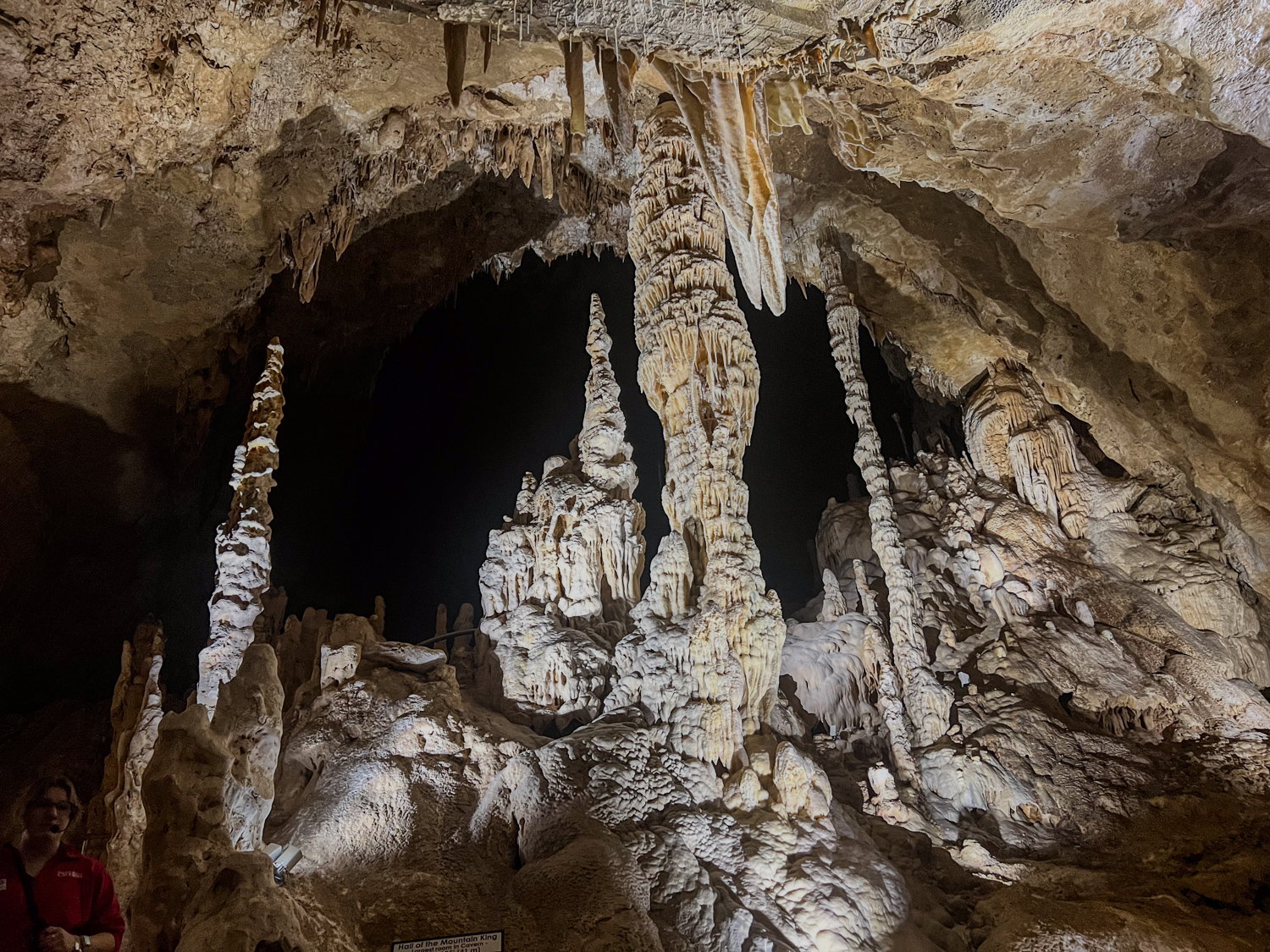
The Views

Several spots offer panoramic views of the landscape. To the right of the relaxation area is Dinh Thuong Thai, the highest peak on the mountain.

It'll take some climbing to get there, but you'll have spectacular views of Da Nang's beaches, such as Non Nuoc Beach to the south and the other Marble Mountains in Vietnam.

View of Marble Mountains from Dai Vong Giang on Water Mountain
The other Marble Mountains are visible from atop Thuy Son.

Another viewpoint is Dai Vong Giang, near Tam Thai Pagoda. We climbed the steps to a small gazebo for a closer, better view of the Marble Mountains. Each is a different shape, the rocky limestone covered with trees, jutting up from the flat coastal plains.

Additional Notes

Thuy Son Mountain is a spiritual destination and home for Buddhist monks. Part of the magic of wandering the site is observing the monks pass by, saying prayers, and performing rituals in the Buddhist temples. 

It's also a place of pilgrimage for other visitors. Tourists should remain respectful and not disturb those on spiritual journeys. As a religious site, visitors should dress conservatively. Also, with the number of steps and walking, athletic shoes are the best footwear option.

Kel at  Dai Vong Giang viewpoint (photo by Dave Lee)
Kel at Dai Vong Giang viewpoint (photo by Dave Lee)

The best time to visit is early morning to avoid the largest crowds and afternoon heat. If possible, avoid the rainy season from August to December.

At the foot of the mountain is Non Nuoc village, which has been a fine arts village for more than 300 years and has plenty of marble craftsman shops.

Although the stone is no longer sourced from the Marble Mountains, most of the statues and carvings are from quarries in Vietnam. 

There are also several local people selling hats, purses, and other textiles. We walked past the crowded marketplace to reach the mountain entrance and stumbled onto several more shops on our exit.

Vendors can be a bit pushy, but there are great opportunities for inexpensive (but quality) souvenirs. 

How To See Marble Mountains

Map of Water Mountain

Mount Thuy is minutes from the center of Da Nang City along the main beach highway, Vo Nguyen Giap. Taxis and Grab (Vietnam's Uber) are easy to hail from the coastal city. You can also opt for bus or motorbike transportation, although you'll have to pay to park a scooter.

Group day trips and private tours are a way to avoid transportation planning and combine a day trip to the Marble Mountains with other destinations in Central Vietnam.

You could spend all day on the mountain, but we recommend a half-day so you can visit other popular tourist destinations, such as the Golden Bridge, My Son Sanctuary, and the ancient town of Hoi An.

The mountain's entrance fee is 40,000 VND, or about $2 (USD). The elevator is an additional cost, and Am Phu Cave can be purchased separately.

Sailing Aboard the Schooner Olad in Camden, Maine

The Schooner Olad, a magnificent vessel sailing out of Camden, Maine, embodies the region's rich maritime heritage. With nearly a century of history, the Schooner Olad invites passengers to experience the thrill of a bygone era where wind-powered sailing reigned supreme.

Schooner Olad in Camden Harbor, Maine
Schooner Olad

Stepping aboard this classic schooner, visitors are transported to a time when tall ships dominated the seas. Meticulously restored and lovingly maintained by Captain Aaron Lincoln and crew, the Schooner Olad offers exhilarating excursions in Penobscot Bay.

As the sails unfurl and catch the ocean breeze, passengers are treated to panoramic views, salty air, and the sensation of being part of maritime history.

Following my cycling tour of Acadia National Park, including the Schoodic Peninsula, I had the opportunity to go for a two-hour day sail aboard the Schooner Olad, its first passenger cruise of the 2023 season.

About Schooner Olad

The Schooner Olad's origin story began back in 1926, the year it was designed by Horace Manley Sr. for Alexander Smith of New York City and Great Island, W. Yarmouth, Massachusetts.

She was built in the winter of 1927 and launched in 1928 from Osterville, MA. The sale price was $21,727, equating to $386,000 today.

Schooner Olad in Camden Harbor

The original owner sailed it often between NYC and Massachusetts before selling it during the Great Depression. In the 1940s, Charles H. Mason III bought it and renamed her the Schooner Olad.

After the Masons' ownership ended, the Schooner Olad sailed south to the Caribbean and was available for custom charters. Walter Cronkite is one notable guest during this time.

In the 1960s, she returned to the waters of Massachusettes and, in 1985, was acquired by John Nugent, who brought her to Camden, Maine, where she's resided ever since.

During the 1990s, she was almost wholly rebuilt, returning the Schooner Olad to her former glory. In 2000, Captain Aaron Lincoln, a local Mainer, was hired to manage and sail Schooner Olad. Five years later, he bought the ship and has continued to offer sailing cruises ever since.

Captain Aaron Lincoln
Capt. Aaron Lincoln

Captain Aaron has sailed more than 100,000 miles in Penobscot Bay alone, not to mention his time sailing around Cape Cod, the Florida Keys, and the Caribbean.

Sailing Experience

My experience with Schooner Olad began in Camden Harbor, where I gobbled down a tasty crab roll sandwich from the Camden Deli for lunch so I wouldn't have to worry about eating it on the boat.

At 12:30 p.m., other people attending the Adventure Travel Trade Association's AdventureELEVATE conference in Portland, and I boarded the boat. Schooner Olad has a capacity of 22 passengers, two deckhands, and the Captain.

Camden Harbor, Maine

My only previous sailing experience was a three-day tour of the Whitsunday Islands in Australia aboard the Apollo, an 80-foot retired racing yacht. The overall length of the Schooner Olad was 57 feet.

Captain Aaron gave us a brief safety chat and introduced his crew (Wilson and Tristan) before we slowly motored out of Camden Harbor and into the bay. About 15 minutes later, the crew began to raise the first sail with the help of Kevin, who volunteered to assist.

Dave smiling on the Schooner Olad
All smiles

A few minutes later, I volunteered to pull up the smaller sails, which felt more manageable than I had witnessed with Kevin. Schooner Olad has two masts and four sails in total.

We cruised at a steady clip once the wind caught the sails. I was sitting with my butt firmly planted on the wooden deck.

I used my feet to brace myself as the sailboat leaned heavily toward the starboard. At that moment, I thought, "Don't fall off the boat, and hold onto your phone!"

Bracing myself on the starboard side

Within a few minutes of the sails being raised, we could see a giant bald eagle's nest in some trees along the Maine coast.

As it was early May, most trees were still without leaves, making them easier for us to spot. Binoculars would've come in handy on my trip to Maine. Bald eagles, seals, and porpoises live in the area, though we didn't see any of the latter on our cruise.

The weather was terrific, and we had a steady wind. The best sailing breezes occur from 12 p.m. to 4 p.m., a fact worth remembering when scheduling your cruise.

The Schooner Olad's full sailing schedule, including which times are best for wildlife and wind, can be found on its website at MaineSchooners.com.

Sailing in Maine
Sailing in Maine

As I began to get my sea legs, I walked around to the port (left) side of Schooner Olad and asked one of the crew to take my photo.

There are many moving parts on a boat like this, and you're always in motion with the wind and water, so it's hard to let your guard down too much.

Sailing pose
Look! Off in the distance!

The safest and most comfortable place to sit on the deck of Schooner Olad is around the helm (steering wheel). I spent about five minutes of the two hours there.

The steering wheel position interested me, as you can't stand directly behind it. You stand to the right or left, perhaps allowing for a better perspective.

Captain Aaron Lincoln at the helm of Schooner Olad
Capt. Aaron Lincoln at the helm

We approached the Curtis Island Lighthouse about 90 minutes into our two-hour sailing trip. This Maine lighthouse was built in 1836 and, according to Lighthousefriends.com, "used eight oil lamps with fourteen-inch reflectors, which cost $650, to produce a fixed white light."

Curtis Island Lighthouse

In addition to the lighthouse protecting ships along Maine's rocky coast, the island also helps protect Camden Harbor from rough seas.

Once we'd adequately seen the island and its lighthouse, the crew lowered the sails as we motored about 15 to 20 minutes back to the harbor.

Sailing is a quintessential Maine adventure, and I am so grateful for the opportunity to climb aboard the Schooner Olad for a few hours on the waters of Penobscot Bay.

Related: Things To Do in Bar Harbor

Sailboats in Camden Harbor

Plan Your Cruise

The Schooner Olad offers two-hour cruises for $57 per person. Children are $47 (ages one to 11). It's also available for half-day and full-day custom sailing charters.

These can be used for an office outing, team-building experience, family reunion, or even a wedding at sea. Their website has the full sailing season schedule and rates.

The smaller sailing vessel Owl is also available for two or three-hour sailing trips and private sailing charters. It can hold a maximum of six passengers.

Food and beverages are not provided; however, you can bring your own, including alcoholic beverages. I didn't want to be weighed down by food or worry about trash flying out of my hands once we were sailing, so I ate before boarding.

Related: Maine Windjammer Cruises

Guests and crew on the Schooner Olad

As for what to wear, a long-sleeve shirt and light jacket are recommended, regardless of the time of year, as it can be cooler on the water once you're sailing.

Rubber-soled shoes are best for gripping the wood deck. I also highly recommend sunglasses such as the fun ones at Goodr, sunscreen, and a hat. Bring binoculars for a better chance of seeing the resident bald eagles.

Schooner Olad and Cutter Owl
29 Main St., Camden, Maine, United States
maineschooners.com

______

The Adventure Travel Trade Association and Maine Office of Tourism organized my sailing cruise on the Schooner Olad as part of my attendance at AdventureELEVATE North America.

Visit Vietnam's Golden Bridge in the Ba Na Hills

Nestled in the hills west of Da Nang City, a walk with giants awaits. Rising out of the lush greenery, massive stone hands cradle a gleaming curved walkway, making the Golden Bridge one of Vietnam's most spectacular destinations. 

Visitors walk across the Golden Bridge in Central Vietnam.
Golden Bridge, Vietnam

This remarkable pedestrian bridge is only accessible by cable car and is perched on a mountaintop in the Sun World Ba Na Hills amusement park.

The impressive structure sits among the clouds at 4,639 feet above sea level, with stunning views of the surrounding forest and mountains. On a clear day, you can see the East Sea.

Table of Contents

  • About the Golden Bridge
    • Unique Design
    • Photography
  • The Cable Car
  • Mercure French Village
    • Wine Cellar and Gardens
    • Additional Attractions
  • How To Get There
    • Getting to Sun World
    • Cable Car Directions
    • Park Hours

About the Golden Bridge

The weathered hands give the bridge an aged, ancient feel.

The most striking aspect of the Golden Bridge is the pair of giant stone hands. Their weathered, mossy appearance suggests age.

But the Cau Vang, which translates to "Gold Bridge," is not an ancient ruin. It was built in 2018 as a $2 billion effort to lure more tourists to Central Vietnam.

The investment paid off as the bridge is now one of the most popular destinations in Central Vietnam, with thousands walking across it every day.

The sheer size of the fingers is part of the fascinating draw of the bridge.

In 2017, before the bridge was built, more than 2.7 million people visited the Ba Na Hills resort complex. By 2019, traffic had skyrocketed to five million visitors, and it's easy to see why.

With the verdant mountains as a backdrop, the colossal hands grasping golden railings make for swoon-worthy Instagram images.  

The giant hands supporting the bridge have an ethereal feel, and the careful pose evokes a godlike feeling. The mountain mist that pours through the site adds to the divine, mystical aura.

Unique Design

The lead architect, Vu Viet Anh of TA Landscape Architecture, said the bridge's design was intended to "invoke the sensation of walking along a thread stretching through the hands of God."

The curved pathway, with its gold-plated rails, emulates the shape of a golden silk strip cradled in the hands of a giant.

The gold-plated rails are actually stainless steel, giving a shimmery look to the structure in bright daylight.
The gold-plated rails are stainless steel, giving a shimmery look to the structure in bright daylight.

At nearly 500 feet long, visitors can walk up and down the unique structure, admiring the gleaming curves, massive stone appendages, and breathtaking views.

The bridge provides miles of beautiful vistas on a sunny day with clear skies. (Look on Instagram for incredible sunset pictures.)

Our morning visit was plagued with cloudy weather and fog, which turned out to be a plus. Shrouded in mist, the bridge took on a mysterious feel.

It was fascinating to watch the fog roll in and see elements of the structure disappear. Just as quickly, the fog would lift, and we could see the bridge again in all its architectural glory.

Photography

Kel on the Golden Bridge, Vietnam (photo by Dave Lee)
Kel on the bridge (photo by Dave Lee)

The bridge's popularity makes it challenging to capture photos without other tourists. The best option for avoiding the crowds is to take the first cable car of the day.

Pro Tip: Hotel guests can visit Vietnam's Golden Bridge one hour earlier than anyone else, which is the only way to capture those empty, the-bridge-all-to-ourselves images. It'll make early morning photos easier if you're willing to spend a night on top of Ba Na Hills.

Dave with the majestic stone hands of the Golden Bridge
Dave with the majestic stone hands

A little patience helped us snag photos of our party without strangers. Walking to the far end of the bridge first is also a smart approach. Start with pictures of the second hand instead of getting trapped behind tourists capturing the hand nearest the bridge entrance.

Our friends Laura and Bryan enjoy the beautiful scenery from the Golden Bridge in Vietnam.
Our friends Laura and Bryan enjoy the beautiful scenery.

Two additional platforms off the bridge provide great photo opportunities with the bridge in the background. One is near the far end of the bridge, and the other is the last opportunity to capture the bridge before heading into Marseille Station.

The Cable Car

Prepare for an epic cable car ride to reach the Golden Bridge. At 19,032 feet, it holds the Guinness World Record for the world's longest nonstop, single-track cable car.

The Doppelmayr cable car ride takes about 20 minutes and provides breathtaking views as you climb higher and higher. 

Each car seats up to eight people and provides a smooth ride up the mountain. Our group was amazed by the excellent views and the increasing elevation.

The rail cars provide stunning views of the forestry below and the mountains surrounding the park.

While I'm not a big fan of heights, I enjoyed the ride, taking in the mountain scenery and the cars sailing past us. Sun World boasts six cable car routes, with new ones under construction. The cable car system can move 10,000 guests per hour.

Gliding upwards, you can surveil the surrounding topography and observe the other rail lines and the continuing construction. The amusement park and resort continue to expand as they look to draw in more tourists. 

As you draw near the top, you capture your first sightings of the Golden Bridge, a profile shot that hints at what's to come. 

Mercure French Village

Du DoMe Square in the Mercure French Village
Du DoMe Square in the French Village

The Golden Bridge in Vietnam was built to attract more visitors to Sun World. It's a fantastic site, worth your time. What's strange is its placement in an amusement park. It's challenging to explain the site well, but it struck us as a faux Disneyland resort.

The central feature is a French village with cobblestone streets and buildings, including a cathedral, aged to look like old French architecture.

A love letter to the French is strange, considering 100 years of colonial rule. The village appears to be a big hit with the locals; many of Sun World's visitors are Vietnamese nationals. 

Several hotels, squares, and more than 20 restaurants are mixed into this imitation European setting. But why would a quaint French village have Japanese and Thai food? They are, of course, catering to a theme park crowd.

In addition to the French village, there's also an indoor amusement park and outdoor roller coasters. (We highly recommend avoiding the indoor amusements; they were loud and obnoxious.)

Wine Cellar and Gardens

One of nine gardens.

The Debay wine cellar is a redeeming venture on the way to the village. Built in 1923, it speaks to the age of the Ba Na Hills site and takes visitors underground to see where the wine was stored. Note that the wine cellar is not included on all entrance tickets.

While the village is unnecessary, the Le Jardin D'Amour Gardens was a pleasant surprise. Its nine flower gardens feature an assortment of beautiful blossoms and giant floral statues. We admired the cultivated grounds and a fun, oversized Peacock statue. 

The park's spiritual aspect, with pagodas, temples, and Japanese gardens, was also a welcome sight. A massive Buddha statue was a lovely delight and a peaceful way to end our time at the top of the mountain.

Seated Buddha statue
Seated Buddha

Additional Attractions

Sun World also offers several other tourist attractions we didn't visit, including a wax museum, waterfall, funicular, Fantasy Park, and the Lunar Castle, which are accessible by the other rail stations. Additional facilities, shopping, dining, theater, and hotels are planned for future years.

How To Get There

Getting to Sun World

Kel at the entrance to Sun World in Ba Na Hills, Vietnam (photo by Dave Lee)
Entrance to Sun World (photo by Dave Lee)

Whether you're coming from Ho Chi Minh City (Saigon) in South Vietnam or Hanoi in North Vietnam, the average direct flight to Da Nang is about 1 hour and 15 minutes.

Once you've reached Da Nang or nearby Hoi An, travelers can hire a driver, rent a motorbike, or schedule transportation via shuttle bus or group tour. A trip from either city will take 40 minutes to one hour.

Using the Grab app (Vietnam's version of Uber) or renting a motorbike can cost between 500,000 and 900,000 VND (about $21-38).

For us, a Golden Bridge tour was the most convenient option (and comparable in price). Get Your Guide offers numerous travel options, including transfers to the park and half-day or full-day tours. Most offer hotel pick-off and drop-off, and the tours include the park entrance fee.

We recommend spending a half-day at the Golden Bridge in Vietnam, focusing solely on the giant hand bridge. Spending time at Marble Mountain or visiting Da Nang and Hoi An is a better use of your time than walking the faux French village. 

Cable Car Directions

Hoi An cable car station (photo by Dave Lee)

Once you arrive at Sun World, walk through the Time Gate and head for Hoi An Station. You'll walk through architecture and grounds reminiscent of Hue Imperial Palace and the ancient city of Hoi An, including a memory garden.

The cable car from this station will take you to Marseille Station, where the Golden Bridge is located. Visitors wishing to see the French village can take a second cable car from the nearby Bordeaux Station to the Louvre Station.

Park Hours

Sun World and the Golden Bridge are open seven days a week, from 7:30 a.m. to 9:30 p.m. The best time to arrive is when the park gates open.

Getting an early start is especially important during the peak tourist season, which coincides with the dry season from February to July. These are the best months to visit.

During the rainy season in Central Vietnam, which runs from September to December, fewer people may be at the Golden Bridge than in the peak season, but you're more likely to get wet.

Tickets start at 750,000 VND for children and 900,000 VND for adults (about $32 and $38 in 2023).

10 Best Breckenridge Summer Activities

Breckenridge is known as a world-class ski resort, but when the snow melts and the skis are put away, the mountains become an incredible host of summer activities.

The slopes shift from snowy ribbons to wildflower-filled meadows, and temperatures rarely get above 80 degrees. The sun shines bright and warm, and there's an endless amount of fun to be had in the Breckenridge area.

Whether you want to time your visit with one of Breckenridge's many festivals or just to show up and have a blast, here's everything you should do while you're there.

So, what exactly should you do when visiting in the summertime? Here's a list of our ten favorite Breckenridge summer activities, ranked in no particular order.

Table of Contents

  • Summer Activities in Breckenridge
    • 1. Go Hiking
    • 2. Drive Boreas Pass
    • 3. Time Your Visit with a Festival
    • 4. Take a Walk Through Time
    • 5. Discover Something Epic
    • 6. Shop 'Til You Drop
    • 7. Get Wet on Lake Dillon (Or a River)
    • 8. Explore Summit County
    • 9. Rent Bikes
    • 10. Go Tasting
  • For Rainy Days
  • Final Thoughts

Summer Activities in Breckenridge

1. Go Hiking

The author getting ready to hike Mohawk Lakes Trail on his first backpacking trip.
I'm getting ready to hike the Mohawk Lakes Trail.

First and foremost, hiking is easily one of the best things to do in Breckenridge. The mountains have countless miles of hiking trails just waiting to be explored.

They feature wildflowers, pine forests, alpine lakes, aspens, rivers, and streams. Their difficulty ranges from easy walks in the woods to strenuous treks that summit mountains and everything in between.

Here are our favorite Breckenridge hiking trails:

  • For a short walk for the whole family, see the Breckenridge troll, Isak Heartstone, a 15-foot wooden sculpture nestled among pine trees.
  • For something a little longer, visit Blue Lakes north of town, and explore the two alpine lakes connected by a beautiful waterfall.
  • If you're in good shape and want to challenge yourself, seek new heights by summiting Black Powder Pass or trekking to Mohawk Lakes. 
  • If you want a once-in-a-lifetime experience, train to summit a 14er and climb to the top of Quandary Peak, Breckenridge's local 14,000-foot peak.

2. Drive Boreas Pass

Hiking Black Powder Pass (the trailhead is atop Boreas Pass Road), a top summer activity in Breckenridge
Hiking Black Powder Pass (the trailhead is atop Boreas Pass Road).

The best scenic drive near Breckenridge is Boreas Pass, a dirt and gravel road that leads to the historic town of Boreas, which was thriving in the late 1800s and early 1900s.

The road is very rich in history, and you'll see evidence of its past as a Gold Rush trail, then a railroad, and now as a scenic drive.

Starting in Breckenridge, it's about nine miles one way to the summit of the pass, which is also part of the Great Continental Divide. You can either turn around at that point or continue into the town of Como, then take the highway back to Breckenridge. 

We recommend stopping at any overlooks that catch your attention along the way. Several offer incredible views of the surrounding mountains and valleys.

If hiking is one of the summer activities in Breckenridge you'd enjoy, some of our favorite hikes start from this road. Once you reach the summit, the old town has many signs about its history, and it's worth exploring.

3. Time Your Visit with a Festival

Breckenridge is a bustling and exciting mountain town home to several yearly festivals. We love attending their summer festivals, which are eclectic and include everything from monthly art festivals to wine and food events.

Some examples include the Food & Wine Festival, the Breckenridge Bourbon & Bacon Festival, the Summer Beer Festival, and the nearby Blue Grass & Beer in Keystone.

Even if you don't time your visit with one of these events, you should check the calendar and see what's going on that week or weekend. There's always something happening in downtown Breckenridge or the surrounding area of Summit County.

4. Take a Walk Through Time

If you enjoy history, especially the Gold Rush and gold mining, the Breckenridge Heritage Alliance offers several engaging and informative walking tours and museums.

Our favorite tour is their Walk Through History Tour, which covers downtown Breckenridge. We also highly recommend visiting the High Line Railroad Park and Barney Ford Museum.

For more information, visit their website at BreckHistory.org or see them in person at the Breckenridge Welcome Center in Blue River Plaza (downtown Breckenridge). If you want a spooky and unique experience, take a ghost tour!

5. Discover Something Epic

Breckenridge Ski Resort at Peak 8 as seen from the Colorado Superchair.

During the peak summer months, Breckenridge Ski Resort transforms into Epic Discovery, home to some of the area's best outdoor activities.

Start by taking the gondola from town to the base of Peak 8, then visit a ticket window to purchase tickets (or purchase ahead of time online). 

You'll find mini golf, bungee trampolines, and restaurants in the base area. You can speed down the mountain on the GoldRunner Coaster, which can be accessed by taking a ski lift.

One of our favorite things to do is the scenic ride on the Colorado Superchair up to 11,000 feet. Up there are even more activities, like a climbing wall for rock climbing, gemstone panning, a ropes course, and several hiking trails. 

If you're into mountain biking, there are many bike-specific trails here. Rent a mountain bike from the gear shop at the base, then take the lift up. There's no pedaling uphill, so you can focus on having fun flying down the ski slopes.

This could easily be an all-day activity, but save it for a day with perfect weather. Otherwise, some activities may be closed. Get there early to beat the crowds!

6. Shop 'Til You Drop

The historic Main Street in Breckenridge is beautiful and picturesque, and each colorful building on the street is just waiting to be explored. There are countless small boutique shops, jewelry stores, rock shops, an olive oil store, and several outdoor gear brands.

Most buildings are historic, so you'll hear floorboards creak at each store you enter. If shopping is one of your favorite summer activities, make time for it in Breckenridge.

7. Get Wet on Lake Dillon (Or a River)

Dillon Reservoir as seen from the bike path near Dillon.

Just ten minutes outside Breckenridge is Dillon Reservoir, a beautiful lake surrounded by mountain peaks. The Dillon Marina is the world's highest deep-water marina and offers lakeside dining and sailing tours, pontoon boats, SUP, and kayak rentals.

There's a beach that's a great place for launching small watercraft, but know that the water is too cold for swimming, and you're only allowed to wade in shallow water. Stop at nearby Sapphire Point Overlook and hike the 1-mile loop for an incredible view of the lake from above.

Another great way to get in the water is to book a whitewater rafting trip with a local outfitter. Colorado's rivers offer some of the best places to raft in the country, and there's something for all skill levels.

Adventures are available on the Colorado River, the Arkansas River, Browns Canyon, and more.

8. Explore Summit County

Breckenridge is located in an amazing region of the Rocky Mountains. Several towns are within a short drive of each other, and each has its fun activities.

Use Breckenridge as a base camp and take the time to explore the other small towns, such as Keystone, Copper Mountain, Vail, Frisco, Dillon, and Silverthorne.

If you don't have a vehicle, you could still get around Breckenridge and the surrounding area by taking the Free Ride or Summit Stage bus.

If you go over Hoosier Pass south of town, you can access even more outdoor recreation, such as fly fishing, horseback riding trail rides, ATVing, and more.

Vail Pass bike ride path on a sunny summer day.

9. Rent Bikes

Several outfitters in Breckenridge and Frisco offer bike rentals for regular pedal and e-bikes. This has become one of our favorite summer activities in Breckenridge because of all the paved bike trails around Dillon Reservoir and the surrounding towns.

One of our favorite bike routes is booking a Vail Pass bike ride with an outfitter like Rebel Sports in Frisco. They will shuttle you and your bike to the top of Vail Pass, and then you get to ride 14 miles downhill back into town.

If you want to rent e-bikes, you can ride that route yourself, but we prefer taking them around Lake Dillon, which is an 18-mile loop; it's the best way to see the lake without getting in the water.

10. Go Tasting

No matter which type of food or alcohol you enjoy, there's sure to be something for you. This could be a great indoor activity for a rainy day, but most places also have outdoor patios perfect for ideal weather. 

For wine tasting, visit Carboy Winery, Continental Divide Winery, and Ridge Street Wine. For spirits, the Breckenridge Distillery has a tasting room downtown or a fantastic restaurant outside town.

If you enjoy beer, our favorite places are Breckenridge Brewery, Broken Compass, and the Breckenridge Tap House. 

If food is more your style, there are several high-class dining options that will make your taste buds go wild. Our favorite restaurants are Rootstalk, Briar Rose, the Breckenridge Distillery restaurant, and Aurum.

If you're on Main Street, we highly recommend grabbing a crepe at the Crepe Cart. However, the line gets super long, so go early in the day to beat the crowd.

For Rainy Days

Breckenridge Main Street with a rainbow after a summer storm pushed through.

It rains almost every day in the summer, but that's what makes the mountains so green and full of life. When the weather keeps you indoors, there's still lots to do!

The Stephen C. West Ice Arena offers public ice skating and disco skating on select Friday nights. This is the home of the Breckenridge Vipers, a semi-professional hockey team. If they're playing during your visit, it's a must-see! 

The Breckenridge Recreation Center has a fun indoor water park that's an excellent spot for the entire family. It includes a water slide, hot tubs, and a lap pool.

Your day pass would include access to the other facilities, where you can work out, swim laps, take a group class, play racquetball, and more.

Some other activities include axe throwing, an escape room, a treasure hunt at Country Boy Mine, live music at a bar in the evenings, and seeing a movie at the local Eclipse Theater.

Final Thoughts

Hiking Mohawk Lakes is one of the best Breckenridge summer activities
Hiking Mohawk Lakes

The best time to visit Breckenridge for summer activities is mid-June through August. For incredible fall colors, go in late September and early October. It's the perfect place to get outside, with natural beauty everywhere.

We hope this has convinced you to visit Breckenridge. It's one of the best places in the country for a summer vacation, and there's so much to do and see.

You will love it! So what are you waiting for? Get online and book your summer vacation to Breckenridge.

Check out a local vacation rental or hotel and book your flight to Denver. If you're already booked for a visit, start planning your days using this guide above. We hope to see you there soon!

Bar Harbor Bucket List: Scenic Trails, Fresh Lobster, and Coastal Adventures

Welcome to Bar Harbor, Maine's coastal paradise. The best things to do in Bar Harbor include enjoying the local seafood, such as fresh lobster rolls, and hiking rugged trails for mountaintop vistas.

Immerse yourself in the history of downtown Bar Harbor and Acadia National Park on Mount Desert Island, where the natural scenery is spectacular.

Whether you're seeking to hike the highest peak on the East Coast (Cadillac Mountain) or yearn for tranquility amid quaint gift shops and cozy cafes, Bar Harbor is the ultimate summer destination.

Bar Harbor souvenir lobster

This list of the best things to do in Bar Harbor, Maine, begins with what you'll find in town. Then, I'll share top tours and day trips, including the best places in nearby Acadia National Park. And we'll wrap up with a few of Bar Harbor's best bites.

Before we begin, I'd like to acknowledge that the land on which Bar Harbor and Acadia were founded is the traditional territory of the Wabanaki, including the Penobscot, Passamaquoddy, Maliseet, and Micmac Nations.

Let's recognize and honor the Indigenous peoples who have stewarded this land for thousands of years before European settlers arrived.

Table of Contents

  • Bar Harbor Activities
    • 1. West Street Historic District
    • 2. Bar Island
    • 3. Agamont Park
    • 4. Shore Path
    • 5. Abbe Museum
    • 6. George B. Dorr Museum of Natural History
    • 7. The 1932 Criterion Theater
  • Tours and Day Trips
    • 8. Acadia National Park
    • 9. Oli's Trolley
    • 10. Lulu Lobster Boat Ride
    • 11. Whale Watching
  • Food and Drink
    • 12. Happy Hour at Ivy Manor Inn
    • 13. Eat Lobster
    • 14. Blueberry Pie

Bar Harbor Activities

1. West Street Historic District

Historic Bar Harbor cottage
Historic cottage

The West Street Historic District is a well-preserved area that exudes affluence and charm. Located along the north coast of downtown Bar Harbor, from Eden Avenue to Billings Avenue, this district showcases a collection of 17 historic buildings, including Late Victorian mansions and stylish inns.

The district's tree-lined streets and meticulously manicured gardens create a tranquil atmosphere, inviting visitors to take strolls and admire the architectural beauty. All the buildings were initially used as summer cottages by wealthy families during the late 19th and early 20th centuries.

Of particular note is "La Rochelle," a 41-room red brick mansion built in the style of a French Chateau and belonging to an heir to the Campbell Soup Company fortune. As of 2019, it's home to the Bar Harbor Historical Society and opens to the public seasonally.

2. Bar Island

The waterfront buildings of the West Street Historic District face north toward Bar Island, the only one of the nearby islands accessible on foot. Low tide and a sandbar named Bar Island Land Bridge make this possible.

Warning signs remind visitors that the best time to cross is within 90 minutes of low tide (either before or after). Otherwise, the water will be too high, or one risks being trapped on the island as high tide rolls in. Visiting Bar Island offers a good vantage point for taking photos of the town from across the water.

3. Agamont Park

Picnicking in Agamont Park is one of the best things to do in Bar Harbor, Maine
View from Agamont Park

Speaking of water, Agamont Park offers a great place to see Frenchman Bay. The green space occupies a small hill in the downtown area of Bar Harbor, overlooking the water and the town pier. Agamont Park is dog and family-friendly, making it the perfect place for picnics during the summer months.

On the water, you'll see everything from small schooners to historic windjammers, yachts, and cruise ships. The park regularly hosts live events.

4. Shore Path

Shore Path in Bar Harbor

Shore Path at low tide

For over 100 years, the short walk along Shore Path has been one of the top things to do in Bar Harbor, Maine. Easy access to the gravel trail begins at the town pier near Agamont Park. And it extends for half a mile along the town's east coast. Signs are posted along the way, sharing stories from the town's past.

The first building you'll walk by on your right is the historic Bar Harbor Inn, a luxury hotel that has been hosting guests since 1887. Next to it is Grant Park, a beautiful green space with water views.

Grant Park in Bar Harbor, ME
Grant Park

Adjacent to the park is Balance Rock Inn, another luxury hotel with oceanfront views. It takes its name from a large boulder on the shoreline, a remnant of the last Ice Age over 10,000 years ago. The Bar Harbor Shore Path sign indicates that a glacier picked it up about 40 miles from where it now rests.

Balance Rock
Balance Rock

The remainder of Shore Path will take you past some of the elegant summer homes, though most are hard to see behind their landscaped yards. At the end of Shore Path, you can either turn right and walk back to Main Street in town or return the way you came.

5. Abbe Museum

The Abbe Museum in Bar Harbor is a cultural institution dedicated to preserving and promoting the history and culture of the Wabanaki, the Indigenous people of Maine.

It offers visitors a unique opportunity to learn about the rich heritage of the Wabanaki people and their enduring presence in the region. The museum is located one block from the Village Green.

6. George B. Dorr Museum of Natural History

Another noteworthy museum in Bar Harbor is the George B. Dorr Museum of Natural History at the College of the Atlantic (COA). Located in Acadia National Park's original headquarters, this museum educates visitors on Maine's wildlife. The students of COA design all of the exhibits.

7. The 1932 Criterion Theater

Criterion Theater in downtown Bar Harbor
1932 Criterion Theater

The arts are celebrated in Bar Harbor at the wonderfully preserved 1932 Criterion Theater on Cottage Street. A floating balcony is one of the auditorium's original features. This Art Deco theater offers a curated schedule of movies plus live acts, including plays, musicals, concerts, and stand-up comedians.

Tours and Day Trips

Now that we've covered the best things to do in Bar Harbor, let's look at some of the Maine adventures that await in the surrounding area.

8. Acadia National Park

Hikers on the rocks in Acadia National Park
Hikers on the rocky shores of Acadia

Acadia National Park is the biggest attraction near Bar Harbor. You can get there by car, bicycle, or even on foot. Acadia is the only United States National Park in New England. With approximately 4 million visitors annually, it's the country's fifth most popular national park.

Encompassing over 49,000 acres, this forest park is renowned for its attractive coastal landscapes, pristine forests, and granite mountain peaks. Visitors can explore an extensive network of hiking trails, bike along picturesque carriage roads, or embark on a scenic drive via Park Loop Road.

Park Loop Road

Cycling Park Loop Road in Acadia National Park
Cycling Park Loop Road

The 27-mile Park Loop Road offers visitors to Acadia National Park an easy way to get around. The loop is fully paved, and there are plenty of signs and parking areas at scenic overlooks and trailheads. Cars can also park on the side of the road in designated places.

The main attractions in Acadia National Park include:

  • Sand Beach - A sandy beach that attracts visitors in the summer months. However, when I saw the beach in May, it was covered in seaweed.
  • Thunder Hole - If you visit at high tide and the conditions are right, waves hit this rocky area and can create a big splash and booming sound.
  • Cadillac Mountain - Hike or drive up to the tallest mountain on the eastern seaboard for the best views of the Atlantic Ocean. The summit is 1,530 feet (466 meters).

Ferry to Schoodic Peninsula

Acadia National Park also has some territory on the Schoodic Peninsula, which I cycled on my first day in Bar Harbor. This peninsula across Frenchman Bay from Bar Harbor is accessible by car or ferry.

9. Oli's Trolley

Oli's Trolley in Acadia National Park
Oli's Trolley in Acadia

If you'd prefer a guided tour of the attractions in Acadia National Park, ride Oli's Trolley. There are two options: a 2.5-hour tour for $58 and a 4-hour tour for $85.

During the Acadia tours, you'll learn about the region's rich history and see the same incredible forest and ocean scenery as if you were to drive yourself.

Tours include the 3.5-mile road to Cadillac Mountain's summit, the Jordan Pond House, Thunder Hole, Sand Beach, and the Otter Cliffs overlook.

10. Lulu Lobster Boat Ride

Going for a 2-hour tour on the Lulu lobster boat is one of the top things to do in Bar Harbor, Maine
Lulu lobster boat

If you'd rather be on the water, I highly recommend a Lulu lobster boat tour. These two-hour guided tours depart from the Harborside Hotel & Marina throughout the day.

During your time at sea, you'll have the chance to see:

  • The Porcupine Islands around Frenchman Bay.
  • Historic summer cottages along the coast of Maine.
  • Egg Rock Lighthouse and the protected wildlife on this small island.
  • Harbor porpoises
  • Harbor and gray seals
  • Bald eagles
  • Lobsters
  • Crabs

One of the things I learned on the tour was that the lobster population in Maine's waters is stable and healthy. If they face a threat, it's not overfishing but habitat loss due to ocean warming caused by climate change.

If learning about the lobster industry before your next lobster dinner sounds like a good use of time, then take advantage of this fascinating tour.

11. Whale Watching

Once you've learned about Maine lobsters, consider upping the ante with a whale-watching tour.

The Bar Harbor Whale Watch Company provides a variety of tours, including:

  • Whale watching cruise
  • Puffin lighthouse cruise
  • Historical lighthouse cruise

From late May to early October, you can leave Bar Harbor for the Gulf of Maine in search of humpback, finback, and minke whales.

Along the way, you may also see other forms of marine life, including porpoises, dolphins, seals, and sharks. Great white sharks are known to visit these waters.

Food and Drink

12. Happy Hour at Ivy Manor Inn

Ivy Manor Inn
Ivy Manor Inn

The town of Bar Harbor may be small, but it offers no shortage of places to enjoy a delicious drink at the end of the day. One of my favorites is the front lawn of the Ivy Manor Inn.

The afternoon my Summer Feet Cycling tour group arrived, we walked past the Ivy Manor Inn on our way to dinner, and a Kentucky Derby watch party was happening. The following day, I returned to buy a beverage and relax after my lobster boat ride.

13. Eat Lobster

Lobster roll at West Street Cafe in Bar Harbor
Lobster roll

Fresh seafood is on most menus at the restaurants in Bar Harbor. After a morning spent cycling in Acadia National Park, I indulged in a cold lobster roll at West Street Cafe.

If you prefer your lobster whole, they're also easy to find. My friend Jules ordered the one below during our dinner at Galyn's.

Going for a lobster dinner at Galyn's is one of the best things to do in Bar Harbor
Whole lobster

Many Bar Harbor restaurants also offer the option of getting "lazy lobster," which means the meat is removed from the shell before it's served. This makes enjoying it that much easier. Just dip the lobster meat in the melted butter and enjoy!

For a free sample of lobster ice cream, head to Ben & Bill's Chocolate Emporium.

14. Blueberry Pie

Dave with warm blueberry pie a la mode from West Street Cafe
Blueberry pie à la mode

One of the best ways to end any meal in Bar Harbor is with a warm slice of blueberry pie à la mode. After the lobster for lunch at West Street Cafe, that was my dessert choice.

The most delicious and freshly baked pie was delivered to the table. It was oozing with Maine blueberries, and I savored every bite.

Bar Harbor restaurants
Seafood restaurants

Exploring the many things to do in Bar Harbor, Maine, and the surrounding area was great fun. We were blessed with gorgeous weather and sunshine for our outdoor activities. I wish the same for you!

_____

The Adventure Travel Trade Association and the Maine Office of Tourism organized my stay at Sand Bar Cottage and tour with Summer Feet Cycling as part of my attendance at AdventureELEVATE North America.

Cycling Acadia: My Scenic Ride Along Park Loop Road

The 27-mile Park Loop Road offers visitors to Acadia National Park on Mount Desert Island a chance to immerse themselves in Maine's rugged beauty.

This scenic paved road goes through the eastern half of Mt. Desert Island, offering views of the coastline, forests, and Cadillac Mountain. At 1,527 feet, it's the highest point on the United States East Coast.

Cycling Acadia National Park
Cycling break

The day after cycling Schoodic Peninsula, my tour with Summer Feet Cycling continued with a morning ride along Acadia's Park Loop Road.

We began our day at the Sand Bar Cottage, a charming B&B in the town of Bar Harbor, and rode south along Great Meadow Drive. We were turning left (east) onto Park Loop Road within minutes. If this entry point south of Bar Harbor were "12" on a clock, our turn to the left would take us in a clockwise direction.

We planned to ride along the coast and soak up the Atlantic views before following Park Loop Road inland to our endpoint at Jordan Pond. In a little over two hours, we covered half the 27-mile road, the remainder of which we drove in Summer Feet Cycling's van.

Entrance to Acadia National Park

We didn't complete the entire Park Loop Road because of our scheduling. We needed to return to Bar Harbor for lunch and a lobster boat tour in the afternoon.

Our guide, Norman, also said we'd be cycling the more scenic section of the road, and that the remainder was primarily uphill. As it turned out, 13 miles on an e-bike was plenty of time for me to enjoy the surrounding nature. Here are the highlights from our second day of cycling in Acadia.

Table of Contents

  • Where To Stop on Park Loop Road
    • Sieur de Monts Nature Center
    • Egg Rock Overlook
    • Precipice Trailhead
    • Sand Beach
    • Thunder Hole
    • Otter Point Overlook
    • Otter Cove Bridge & Causeway
    • Hunters Beach Overlook
    • Jordan Pond House Restaurant
    • Carriage Roads
    • Cadillac Mountain
  • Conclusion
  • Map of Park Loop Road

Where To Stop on Park Loop Road

Dave with bicycle helmet at Egg Rock Overlook
Dave at Egg Rock Overlook

Our first few minutes cycling Park Loop Road were pretty flat. It was still early spring in Maine, and many trees lacked full-sized leaves for the year. This allowed us to see further into the dense forest than we might've experienced otherwise.

More importantly, the sun was out, and the temperatures were cool. There were fewer visitors, and the roads weren't too busy since it wasn't peak season (July and August).

Park Loop Road lacks dedicated bike lanes, and cars are allowed to park on the side of the road in addition to designated parking areas, which can be a hazard to cyclists. Fewer cars meant our ride was safer and more enjoyable.

The posted speed limit for everyone is between 25 and 35 miles per hour. The fastest I went on my Trek e-bike was about 33 mph on a downhill section.

Sieur de Monts Nature Center

The first point of interest we passed was Sieur de Monts Nature Center, which includes exhibits on Acadia National Park and its history.

The Wild Gardens of Acadia offers a chance to learn about native trees and wildlife on easy walking trails like Jesup Path.

Founded in 1926, the Abbe Museum at Sieur de Monts showcases a collection of Native American artifacts found in the area and throughout Maine. Admission is $10, as it is not part of the national parks system.

Egg Rock Overlook

Egg Rock Overlook
Egg Rock Overlook

We continued eastward and up a steep incline to Egg Rock Overlook, the first place we pulled over for a break. I took photos of Frenchman Bay, now visible beyond the budding trees. In the distance, we could see Egg Rock Lighthouse on a small island (Egg Rock) popular with nesting seabirds.

These include the double-crested cormorants, common eiders, and herring gulls. Harbor seals also like to hang out on the rocks here. Egg Rock Island is a part of the Maine Coastal Islands National Wildlife Refuge and is, therefore, protected territory.

Precipice Trailhead

Precipice Trailhead in Acadia
Precipice Trail parking area

We continued cycling uphill to the parking lot for the Precipice Trail, which offers a direct but steep and rocky climb to Champlain Mountain Summit (elevation 1,058 feet). If you're lucky, peregrine falcons can be spotted along the way.

Beyond the Precipice Trail parking lot is a turnoff to the east for Schooner Head Overlook, which offers similar views of Egg Rock Island as the previous overlook.

Sand Beach

Just south of the Schooner Head Overlook is the Sand Beach Entrance Station. Here, visitors arriving by bike, foot, or car must show their Acadia entrance pass to the park rangers. The price is $20 per person with no vehicle (cyclist, hiker, pedestrian) and is valid for seven days.

A park entrance pass can be purchased online via the National Park Service website or in person at Hulls Cove Visitor Center, located off Route 3 in Bar Harbor. Private vehicles are $35.

Related: Windjamming Cruises in Maine

Acadia National Park sign
Acadia National Park

Beyond the entrance station, there's a sign for some of Park Loop Road's main attractions:

  • Sand Beach
  • Jordan Pond
  • Cadillac Mountain

We exited Park Loop Road and turned left into the Sand Beach parking lot. Facilities here include bathrooms and changing rooms for when the weather is warm enough to sunbathe and, possibly, swim (July and August).

Sand Beach in Acadia National Park, Maine
Seaweed on Sand Beach and a view toward Great Head

It was still much too chilly for that, so the curious among us were content to walk down to the beach and look out at Newport Cove. What we found was a lot of seaweed!

At the far end of Sand Beach is the Great Head Trail. This hike takes you around a small peninsula, offering views of the beach from above and more of Acadia's interior woodlands.

Sand Beach parking lot and a view of Beehive Trail on the mountain in the back.
View of Beehive Trail atop cliffs from Sand Beach parking lot

Behind the beach is Beehive Lagoon and access to the Beehive Trail, a 1.4-mile loop that ascends a 450-foot cliff face. Iron rungs and granite staircases help hikers climb this trail. The reward for their effort is sweeping ocean views. From the Sand Beach parking lot, I could see tiny figures climbing along the tops of the cliffs.

Thunder Hole

Thunder Hole
Thunder Hole

Another of the park's most popular attractions is Thunder Hole, which is located soon after the stop for Sand Beach. You can park your bike or car in the lot with the gift shop and walk the short Thunder Hole Path to the water's edge.

According to the sign, the best time to hear the thunderous water smashing against the glacier-carved granite is two hours before high tide. Being there during a storm probably helps.

When I pulled over and parked my e-bike on the shoulder of Park Loop Road, the Atlantic waters along Acadia were calm. And I believe it was still low tide, and all I heard and saw was some light splashing against the rocks.

Otter Point Overlook

E-bike on the Park Loop Road

Continuing south of Thunder Hole, you'll pass Monument Cove and Boulder Beach on the left-hand side. Then the road splits at Otter Cliffs. If you're in a car or want to pull over safely, there's a small parking lot accessible from the right lane. The left lane is for those who don't want to stop.

The Ocean Path hiking trail is accessible from here and leads to the Otter Cliff Rock Climbing Area. The hiking trail follows the curve of the peninsula to its southern point at Otter Point Overlook.

Otter Cove Bridge & Causeway

View from Otter Cove Bridge

Once you head north up the peninsula's west side, you'll pass Otter Cove Overlook on your left and cross Otter Cove Bridge. This is a pretty area where you can stop and enjoy the scenery.

Hunters Beach Overlook

Hunters Beach Overlook

The Park Loop Road continues along the southeast coast of Mt. Desert Island. The Hunters Beach Overlook lies between Little Hunters Beach to the east and Hunters Beach to the west.

From the overlook, you can see across the water to someone's well-placed mansion. There's a lot of old money on the island, and large homes dot the rough coastline, ensuring ocean views. After this point, Acadia's Park Loop Road heads north and inland, away from the coastal views.

Jordan Pond House Restaurant

Cycling under a stone bridge on Park Loop Road in Acadia
Stone bridge

It's about a 3.5-mile ride through forests to reach the Jordan Pond area, which is a good place for park visitors to stop and explore. There's a large parking lot, a restaurant, restrooms, and access to the Jordan Pond Trailhead. There are also entry points to the gravel carriage roads built by John D. Rockefeller.

Unfortunately, the Jordan Pond Path, which encircles the large pond, was closed to hikers while we were there. I believe this part of Maine had received a lot of rain in prior weeks, and it was probably to prevent damage to the trail.

Carriage Roads

The carriage roads are accessible from Park Loop Road via gates like this one.
Carriage Road gate

The carriage roads of Acadia National Park were also closed, at least to cyclists. John D. Rockefeller financed this network of dirt roads between 1915 and 1940. Rockefeller enjoyed vacationing in this part of Maine and invested heavily in providing forest trails, many of which are still in use today.

Our itinerary originally included cycling on the carriage roads. However, as the region was still experiencing its annual "spring thaw," they were only open to pedestrians.

Related: Sailing in Camden, Maine

Carriage roads sign in Acadia National Park
Signpost

As a result, we had to settle for a brief walk in the woods. I want to return to this part of Acadia National Park one day, and walking the carriage trails tops my to-do list.

Cadillac Mountain

Access to the summit of Cadillac Mountain is available via hiking trails and Cadillac Summit Road. However, while we were there, the road was closed due to construction.

The gap between the winter months, when the weather won't allow for road work, and the summer months, when Acadia is flooded with tourists, is small. Visit during shoulder season, and you may run into road closures.

Conclusion

E-bike Park Loop Road Acadia
Trek E-bike

After more than two hours cycling the Park Loop Road in Acadia, we returned to Bar Harbor by van. I was excited by what we'd seen in the morning and looking forward to a tasty lunch before learning about Maine's lobster industry.

Map of Park Loop Road

_____

My tour with Summer Feet Cycling was arranged in partnership with the Adventure Travel Trade Association, Maine Office of Tourism, and Sand Bar Cottage as part of my attendance at the 2023 AdventureELEVATE North America conference.

Quick Tips for Planning an Unforgettable Honeymoon

Your honeymoon is one of the most exciting trips you will ever take. It's an adventure you'll remember forever as you begin your journey of marital bliss. When booking your honeymoon, careful planning can ensure it's even more memorable.

This unique trip offers a chance to let your hair down after many months (or years) of wedding planning and enjoy some quality time as newlyweds. Couples can take many types of honeymoons, and a one-size-fits-all approach doesn't always work.

Consider booking a honeymoon in Mexico, at a resort like La Valise Tulum (photo: Roberto Nickson)
Couple in Tulum (photo: Roberto Nickson)

When booking your honeymoon, remember that you should choose something you will both love. Think about what you'll enjoy, the budget you have to spend, and where you want to go. Planning and booking a honeymoon can be a daunting task, so we've compiled some tips and questions to help.

Honeymoon Planning

Decide what sort of trip you want to take.

There are so many different types of trips out there that you must decide what works for you. Are you a couple that loves to sit by the beach or pool and make the most of an all-inclusive resort? Or do you want to go out exploring your surroundings every day?

Are hiking and outdoor activities more your thing? Or do you want a mix of romance and adventure? Take the time to think about your style of travel as a couple and what you want most from your trip so you can organize something suitable.

Think about your budget.

Budgeting is an essential consideration for most couples regarding the honeymoon. And many factors are at play. The further away you go, the more distant your destination-for example, there are some beautiful hotels in Riviera Maya or luxury resorts in the Caribbean-and the more costly the trip becomes.

To reach them, you might need to be stricter about budgeting. Consider whether you want to go all-inclusive or have to purchase food and drinks, and whether you want a hotel or an apartment.

Figure out the duration of your dream honeymoon.

Honeymooners hiking in Indonesia (photo: Wayan Parmana)

The amount of time you go for is also an essential factor. Do you want to go to one destination for a set amount of time or travel to multiple places? Are you going during the school holidays when it's more pricey?

Would you prefer to travel longer but book more budget-friendly hotels? Or go for less time but find somewhere that's a bit more bougie? And how much time can you take from work? These are all critical questions to consider.

We've covered many tips that can help you plan your dream honeymoon. When you go, take plenty of photos and make time for just the two of you to enjoy each other's company and relax as much as possible.

Have you recently been on a honeymoon, or are you going on one soon? If so, what are some of your top tips? Let us know in the comments below; we'd love to hear from you.

______

This story is published in partnership with Iberostar Hotels & Resorts.

Biking the Schoodic Peninsula: A Calmer Path Through Acadia

Cycling the Schoodic Peninsula, a part of Acadia National Park, offers visitors a peaceful introduction to Maine's most popular recreation area. In 2021 and 2022, approximately 4 million visitors entered Acadia National Park, located midway up the coast of Maine.

The park is nearly 50,000 acres and includes half of Mount Desert Island, the southern part of the Schoodic Peninsula, and some outlying islands. Most visitors spend their time on Mt. Desert Island's roads and hiking trails.

Dave with a Trek e-bike at the entrance sign to the Schoodic District in Acadia National Park, Maine
Dave enters Acadia National Park.

On the other hand, the Schoodic Peninsula is part of the U.S. mainland. It's a bit further north of Mt. Desert Island and is easily accessible via car or ferry from Bar Harbor.

It offers a more serene setting with rugged cliffs, dramatic granite shorelines, and pristine forests. With its diverse ecosystems and abundant wildlife, the peninsula is a haven for nature enthusiasts and outdoor adventurers.

Visitors can cycle the six-mile Schoodic Loop Road, explore scenic hiking trails, observe seabirds and marine life, and immerse themselves in the tranquility of the natural environment.

Table of Contents

  • Cycling Tour
  • Schoodic Peninsula Attractions
    • Frazer Point
    • Winter Harbor Lighthouse
    • Schoodic Institute
    • Schoodic Point
    • Blueberry Hill
    • Schoodic Head
    • Birch Harbor
    • Winter Harbor
  • Map of Schoodic Peninsula

Cycling Tour

Mackenzie, one of Summer Feet Cycling's guides, in front of a map of Schoodic Peninsula
Mackenzie, one of our cycling guides

As a part of my attendance at Adventure ELEVATE North America, a conference organized by the Adventure Travel Trade Association, I had the chance to go on a three-day cycling tour of Maine.

On our first day with Summer Feet Cycling, we departed the Old Port in Portland for the three-hour scenic drive to Acadia National Park. Along the way, we stopped in Belfast for coffee and at Chase's Restaurant in Winter Harbor for lunch.

Norman Patry, owner of Summer Feet Cycling, and Mackenzie were the guides for our Maine bike tour. They were both knowledgeable and good-natured, which made for an enjoyable experience.

Each day, we cycled in Acadia National Park; one cycled with us while the other drove a support van full of snacks and drinking water. Every participant in our group had a choice of bikes: hybrid, gravel, or e-bike. I chose the Trek e-bike, which was easy to use and a lot of fun.

Summer Feet provided helmets and either flat or clip-in pedals. All bikes were equipped with trunk packs for carrying items while cycling. I used the storage bag for my iPhone, which I didn't want to slip out of my pocket.

Schoodic Peninsula Attractions

We began our cycling tour of Schoodic Peninsula from the parking lot of Chase's Restaurant in Winter Harbor. We rode east on Main Street for only a few minutes before turning right (south) onto Schoodic Loop Road.

A few minutes later, we passed the National Park Service sign marking the Schoodic District of Acadia National Park entrance.

About 1.5 miles into our ride, we rode past the Schoodic Woods Ranger Station on our left. Just beyond the ranger station is the Schoodic Woods Campground, the newest campground in Acadia National Park.

Frazer Point

Frazer Point Park on the Schoodic Peninsula
Frazer Point Park

A few minutes south of the ranger station is the beautiful Frazer Point Park and Picnic Area. The park overlooks a confluence of waters.

Mosquito Harbor to the northeast and Mt. Desert Narrows to the north and west. Both are part of the larger Frenchman Bay, which extends from Mt. Desert Island to the Schoodic Peninsula.

It was a spectacularly clear day when we were there, and it couldn't have looked prettier. Across the water in the distance, we could see Cadillac Mountain. At 1,527 feet above sea level, it's the highest point on the United States East Coast.

We walked out along the public dock; it was low tide, exposing tide pools and seaweed amid the rocky shore. The difference between low and high tides ranges from eight to 12 feet.

The Frazer Point picnic area features picnic tables, grills, and fire pits for those who want to cook here. After Frazer Point Park, the Schoodic Loop Road becomes one-way, making an already reasonably easy road for cycling even safer and more accessible.

Winter Harbor Lighthouse

We continued cycling south toward Schoodic Point at the peninsula's southern tip. Along the way, I saw the Winter Harbor Lighthouse on Ned Island. There are more than 60 lighthouses along the coast of Maine, and seeing how many you can spot makes for a fun game.

Schoodic Institute

We passed the Schoodic Institute on our right just before we arrived at the parking lot for Schoodic Point. The Schoodic Institute is a non-profit organization that "inspires science, learning, and community for a changing world." The campus includes classrooms, laboratories, and an auditorium.

The research center is partnered with the National Parks Service and Acadia National Park to conduct scientific research and provide educational opportunities.

For example, the Schoodic Education Adventure (SEA) program is a multi-day, residential outdoor program giving middle school students hands-on experience in the field.

The Schoodic Institute is open to the public, and the Acadia National Park Welcome Center is in the historic Rockefeller Hall.

John D. Rockefeller helped popularize this region of Maine as a vacation destination. From 1915 to 1940, he financed and oversaw the construction of the historic carriage roads in Acadia National Park.

Schoodic Point

Walking on the rocky coastline of Schoodic Point in Acadia National Park, ME
Glacier-carved granite rocks

Schoodic Point marks the southern tip of the Schoodic Peninsula. From here, you can enjoy the views of the Atlantic Ocean.

For thousands of years, this land was used by the Wabanaki, a term that includes Maine's four Native American populations:

  • Maliseet
  • Micmac
  • Passamaquoddy
  • Penobscot

By the 1890s, it had been acquired by John Moore, a wealthy businessman from Maine. In 1929, he donated it to Acadia National Park to benefit everyone visiting.

Glaciers carved the craggy coast of Maine and the seafloor of the Gulf of Maine about two million years ago. Today, the Atlantic Coast is full of life, including waterfowl, harbor porpoises, and many lobsters, crabs, and scallops.

Blueberry Hill

Summer Feet Cycling support van

After cycling past the Schoodic Institute again, we turned right on Schoodic Loop Road to continue east and north. A hair past Little Moose Island is the Blueberry Hill parking lot. Maine is known for its blueberries; however, we were there too early in the season to see any in the wild.

Schoodic Head

If you're driving and can find a spot in Blueberry Hill's small parking area, it's an excellent spot to begin hiking to Schoodic Head, the peninsula's high point.

There are two approaches: the Alder Trail to Schoodic Head Trail or the more direct Anvil Trail. You can find maps and trail information on the National Park Planner.

If hiking doesn't fit your plans, you can cycle or drive up Mountain Road and get close to the top before walking.

Birch Harbor

We didn't have time for hiking and continued northward on Schoodic Loop Road. Midway up the east side of the peninsula, the one-way loop road switched back to two-lane traffic. After that, it wasn't long before we reached the parking lot of The Pickled Wrinkle restaurant in Birch Harbor.

Here, a few of my fellow cyclists chose to end their day on bikes by hopping in the Summer Feet Cycling van. If we had more time, I would've liked to cycle the two miles northeast to the Prospect Harbor Lighthouse.

Related: Sailing in Maine

Winter Harbor

Winter Harbor is a good place to begin and end your cycling trip to the Schoodic Peninsula. Pictured from left: Jules, Jennifer, and Mackenzie.
Returning to Winter Harbor (from left: Jules, Jennifer, and Mackenzie)

Mackenzie and a few of us on the e-bikes continued the additional 2.5 miles along Route 186, the main road between Birch Harbor and Winter Harbor. And we arrived back where we began.

The circle around Schoodic Peninsula was about 13.5 miles and took about two hours and fifteen minutes. However, much of that time was spent taking photos and exploring on foot.

According to my watch, I only actively cycled for about 75 minutes. My top speed was 26 miles per hour. The road was relatively flat, with only minor elevation gains and losses (about 100-200 feet).

Map of Schoodic Peninsula

_____

My tour with Summer Feet Cycling was arranged in partnership with the Adventure Travel Trade Association, Maine Office of Tourism, and Sand Bar Cottage as part of my attendance at the 2023 Adventure ELEVATE North America conference.

« Previous Page
Next Page »
Dave at Ahu Ko Te Riku on Rapa Nui (Easter Island), Chile.

Hi, I'm Dave

Editor in Chief

I've been writing about adventure travel on Go Backpacking since 2007. I've visited 68 countries.

Read more about Dave.

Footer

back to top

About

  • About
  • Archive
  • Privacy Policy
  • Cookie Policy

Follow Us

Contact

  • Contact
  • Work With Us
  • Submissions

Copyright © 2025 Go Backpacking