Go Backpacking

  • About
  • Travel Tips
    • Accommodations
    • Budgeting & Money
    • Adventure Travel
    • Food & Drink
    • Gear & Gadgets
    • Packing Tips
    • Travel Blogging
    • Travel Insurance
    • Trip Planning
    • UNESCO Sites
  • Destinations
    • Africa
      • Botswana
      • Egypt
      • Ethiopia
      • Morocco
      • Rwanda
      • South Africa
      • Tanzania
    • Asia
      • Cambodia
      • China
      • Hong Kong
      • India
      • Indonesia
      • Japan
      • Laos
      • Malaysia
      • Nepal
      • Philippines
      • Thailand
      • United Arab Emirates
      • Vietnam
    • Europe
      • England
      • France
      • Germany
      • Greece
      • Iceland
      • Ireland
      • Italy
      • Portugal
      • Spain
      • Switzerland
      • Turkey
    • North America
      • Canada
      • Costa Rica
      • Cuba
      • Guatemala
      • Mexico
      • Nicaragua
      • Panama
      • United States
    • Oceania
      • Australia
      • French Polynesia
      • New Zealand
    • South America
      • Argentina
      • Bolivia
      • Brazil
      • Chile
      • Colombia
      • Ecuador
      • Peru
  • Advertise
menu icon
go to homepage
  • About
  • Travel Tips
    • Accommodations
    • Budgeting & Money
    • Adventure Travel
    • Food & Drink
    • Gear & Gadgets
    • Packing Tips
    • Travel Blogging
    • Travel Insurance
    • Trip Planning
    • UNESCO Sites
  • Destinations
    • Africa
      • Botswana
      • Egypt
      • Ethiopia
      • Morocco
      • Rwanda
      • South Africa
      • Tanzania
    • Asia
      • Cambodia
      • China
      • Hong Kong
      • India
      • Indonesia
      • Japan
      • Laos
      • Malaysia
      • Nepal
      • Philippines
      • Thailand
      • United Arab Emirates
      • Vietnam
    • Europe
      • England
      • France
      • Germany
      • Greece
      • Iceland
      • Ireland
      • Italy
      • Portugal
      • Spain
      • Switzerland
      • Turkey
    • North America
      • Canada
      • Costa Rica
      • Cuba
      • Guatemala
      • Mexico
      • Nicaragua
      • Panama
      • United States
    • Oceania
      • Australia
      • French Polynesia
      • New Zealand
    • South America
      • Argentina
      • Bolivia
      • Brazil
      • Chile
      • Colombia
      • Ecuador
      • Peru
  • Advertise
search icon
Homepage link
  • About
  • Travel Tips
    • Accommodations
    • Budgeting & Money
    • Adventure Travel
    • Food & Drink
    • Gear & Gadgets
    • Packing Tips
    • Travel Blogging
    • Travel Insurance
    • Trip Planning
    • UNESCO Sites
  • Destinations
    • Africa
      • Botswana
      • Egypt
      • Ethiopia
      • Morocco
      • Rwanda
      • South Africa
      • Tanzania
    • Asia
      • Cambodia
      • China
      • Hong Kong
      • India
      • Indonesia
      • Japan
      • Laos
      • Malaysia
      • Nepal
      • Philippines
      • Thailand
      • United Arab Emirates
      • Vietnam
    • Europe
      • England
      • France
      • Germany
      • Greece
      • Iceland
      • Ireland
      • Italy
      • Portugal
      • Spain
      • Switzerland
      • Turkey
    • North America
      • Canada
      • Costa Rica
      • Cuba
      • Guatemala
      • Mexico
      • Nicaragua
      • Panama
      • United States
    • Oceania
      • Australia
      • French Polynesia
      • New Zealand
    • South America
      • Argentina
      • Bolivia
      • Brazil
      • Chile
      • Colombia
      • Ecuador
      • Peru
  • Advertise
×
Home

Love With a Chance of Drowning (Review)

Love with a Chance of Drowning

[I] first learned of Torre DeRoche's Love with a Chance of Drowning more than a year ago.

My friend Christine from Almost Fearless had read it, and believed it was an amazing book.

She was helping Torre promote her new memoir about life and love on the high seas.

A few weeks after it went on sale, it was taken off the market, before I had a chance to buy it.

Not only had Torre sold the publishing rights in the UK, Australia, and the USA, she'd also sold the movie rights to a Hollywood producer!

The book was revamped, and earlier this year, on May 14, 2013, it was re-released to the world.

This time, I didn't wait around to buy it.

The story, as the trailer above so succinctly puts it, starts with Torre leaving Australia to spend a year working abroad in San Francisco.

She promises everyone at home she'll only be gone a year.

It sounds like a promise made to be broken, and when she encounters a handsome Argentinian man in a bar one night, her life is blown off course in a direction she never imagined.

Amazing Grace at Sea

Ivan and his family had immigrated to the United States from Argentina when he was 17.

He worked his way through college, took some sailing lessons at UCLA, crewed a boat across the Atlantic, and by the time he was 30, had his own ocean-ready boat named Amazing Grace, and plans to sail it around the world.

Torre and Ivan
Torre and Ivan

When it becomes clear they have more than casual feelings for one another, Ivan invites Torre to join him on a crossing of the South Pacific.

The problem is she's deathly afraid of the ocean, and all the sharks and critters that live within it.

I mean REALLY afraid.

And that's not including concerns about seasickness, storms, and all the other things that can go wrong sailing.

In New Zealand, I met a young woman who sailed across the Pacific with her Dad. At one point, they had to stop for repairs because lightning struck their mast (that important pole that holds up the sails)!

Clearly by the photos I'm sharing, Torre decides love trumps fear, and agrees to join Ivan on his Pacific crossing, which includes an initial 26-day stretch in the open ocean.

And by that I mean no land in sight. For 26 days. Straight.

The idea alone had my stomach doing somersaults and I was only laying in bed reading about it.

Torre does exactly what I'd do if I had the guts to stand in her shoes, overcompensate for her fear by trying to prepare and plan as best as possible.

Starting from zero sailing knowledge, she begins picking up things quickly, especially once they're both living on the boat, and preparing it to set sail.

Toau Tuamotu Atoll
Toau Tuamotu Atoll

Once they sailing adventure gets underway, things go wrong, but Torre seems at times more adept than Ivan at fixing them.

In fact, Ivan takes on something of a role as comic relief for all the trouble he gets himself into during the journey.

For personal reasons, I was excited to read about their experience approaching French Polynesia, including Tahiti and Moorea.

Those are the only two islands I've visited in the South Pacific, and it was at the start of my trip around the world. I wish I'd given myself more than 5 nights between the two.

It was also interesting to learn about the sailing culture as it relates to island hopping, accessing areas where regular tourists don't go, and seeing how sailors often befriend and even live with locals for days and weeks at a time.

I read Love with a Chance of Drowning in a matter of days.

It would've been less, but when I'm enjoying a book, I purposefully try to slow my reading down so I can allow the story to extend a little longer than it would otherwise.

The Little Gracie dinghy in Tahuata
The Little Gracie dinghy in Tahuata. It was used to help them travel between the sailboat and shore.

The more I read, the more I imagined how perfect this book would be on the big screen.

Would it be adapted as a romantic comedy, or a serious drama? Who would play Torre? Ivan?

I've got my fingers crossed it'll be made into a movie, and seen by a wider audience.

Until then, if you're looking for an escape from everyday life...to venture off into the Pacific on a little sailboat, with a comical couple, check out Love with a Chance of Drowning.

_______

All photos courtesy of Torre DeRoche.

Camping in the Snowy Mountains, Australia

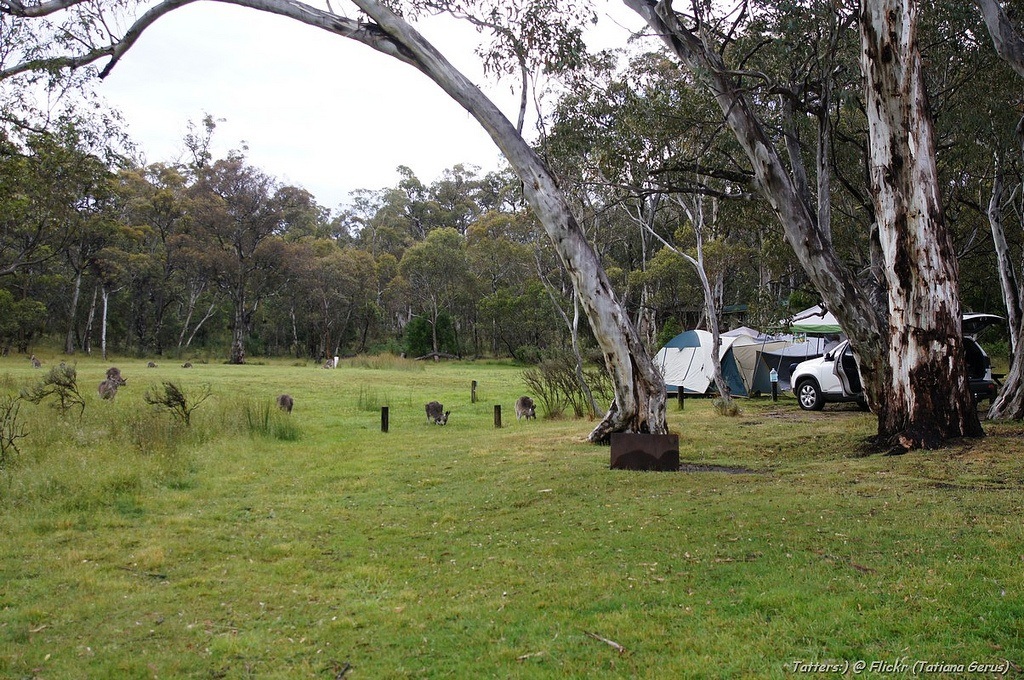
Camping Among Gum-Trees & Kangaroos (photo: Tatiana Gerus)

Although the Snowy Mountains are in New South Wales, it's about as far as you can get from anywhere else in the state - 460km from Sydney, to be precise.

Here are some tips and recommendations to best enjoy your camping holiday in the Snowy Mountains.

What to Do

With the country's largest national park, Kosciuszko National Park, and the country's highest peak, the Snowy Mountains can keep active travelers busy for weeks.

You'll have plenty of options as far as keeping yourself busy, such as:

  • Mountain Biking: bike hire is available, or bring your own.
  • Wine and Spirits Tasting: the region is home to a craft distillery and wineries.
  • Caving: the Yarrangobilly Caves are considered one of the top must-dos of the region.
  • Take a Hike.

Whether you choose to go on one of the Segway Eco Tours, the "Discovery Tours" that highlight attractions throughout the park, or plan your own half-day, full-day, or multiple days walk, there are miles of trails to explore in the area.

The Snowy Mountains are also home to two spa treatment centers, and most villages host several local art galleries. Both are good ways to further connect with this rural destination's local culture.

Getting Around

You'll most likely want a car while camping in the Snowy Mountains because the distances between attractions are quite far. While there is public transport, it isn't necessarily the most integrated.

There are flights into Canberra, one of the closest airports with regular service, and then you can hire a car there to drive the final stretch.

Bus service operates into Cooma and Tumut, where you can catch onward connections on local operators and tour guides or pick up a hire car.

A few official "routes" take you past some of the region's best offerings, such as the Kosciuszko Alpine Way or the Snowy Mountains Drive - maps of these routes are available at most visitor information booths or national parks offices throughout the area.

Please note there is a daily fee for park usage: $16/vehicle in summer, $27/vehicle in winter, and some roads may be impassable for cars without chained tires in winter months.

Where to Setup Camp

You have a handful of choices on where you want to set up your base camp.

Two trendy choices:

Kosciuszko Mountain Retreat near Jindabyne offers one of the best setups, including self-contained alpine cabins, as well as tent sites. It is situated for walking access to both the town for amenities and several walks in the area. It gets top recommendations from travelers.

If you have pets, you'll like the Alpine Tourist Park in Adaminaby, which has cabins and tent sites as well. It's a very tranquil place, in a wonderful location that affords you easy access to the town shops, skiing, kayaking, and boating on the lake, as well as numerous hikes.

For more tips and advice, visit the official Snowy Mountains tourism website, which features seasonal travel advice and downloadable directories of businesses and camping providers.

________

This post was written and brought to you by Mighty Campers Australia. Take a look at our range of cheap campervans and experience Australia when and where you want.

The Road to Halabja Part VIII - Iraqi Road Trip

Halabja statue
Halabja statue

This is the next guest post in a series by Kevin Post. Read the previous installment here.

[B]efore dawn had the chance to blanket the landscape I heard a knock at the door that woke me up from a very light sleep.

No alarm had been set and I was already dressed for a day to a border town along the Iranian frontier. I was after all going to complete one of my main objectives in Iraq: Halabja.

I chose to visit for the purpose of showing respect to the Kurds who've taken great care of me throughout the Middle East. Halabja means a lot to the largest ethnic group without a homeland of their own.

Halabja mosque
Halabja mosque

Halabja is a town roughly 10 miles (16 km) from the Iranian border and is infamous for the death of thousands of Kurds in a rain of chemical and biological weapons from the Baath Party’s arsenal on March 16th, 1988.

More than 5,000 Kurds were killed in a matter of minutes and as many as 30,000 were severely injured. An estimated 52% of the population was exposed to the toxic gases.

The Kurds are the largest civilian population ever exposed to chemical and biological weapons according to Mike Amitay, director of the Washington Kurdish Institute.

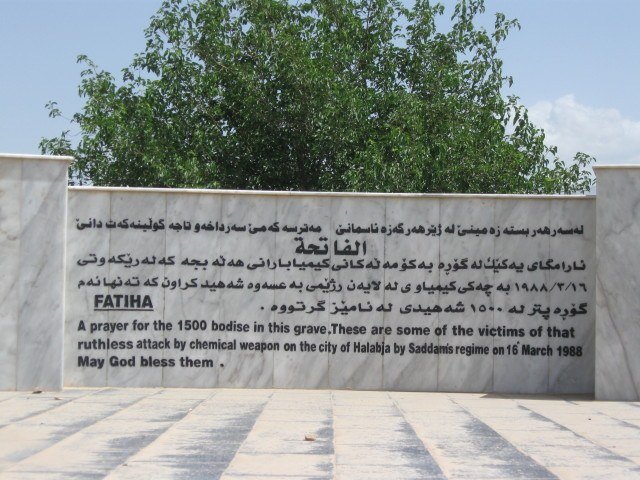
Monument outside of Halabja honoring those who were killed by Saddam.

I had the honor of spending time with a Kurdish Pêshmerge (in Kurdish, the word for soldier is literally translated as “those who face death”) hired by Mahmed to be my own personal driver, bodyguard and time saver regarding checkpoints.We did not share a common language but created a bond in a single day.

He spoke Arabic and Soranî, two languages I wasn’t familiar enough with to have a basic conversation so I relied on my Turkish and English with hopes that the Soranî or Arabic equivalent would have been similar.

We played a game as old as Homo sapiens have been around: I’ll point to something and say it in my language and you say it in mine.

A dog crosses the road, I say “köpek” the Turkish word for dog and he follows by saying, "saa".

Arbil Iraq
Stopping for a bathroom break on the way to Eastern Iraq

The sun was so bright that morning much of the drive I spent squinting.

The closer we came  to As Sulaymaniyah (Second largest Kurdish city in Iraq) the more lush the landscape became but alas, the powerful Spring sun created a glare on the windshield which didn’t allow for me to take descent photos.

After exhausting the extent of our tangible linguistic abilities Mohammad put in cassette tape of Daddy Yankee's "Barrio Fino."

As a religious man, I am happy that Mohammad didn’t understand Daddy Yankee's lyrical content. I wanted to giggle but refrained from doing so.

The checkpoints became more common the further we drove but with Mohammad's wave of his left hand hours had been saved.

We arrive in Halabja, a town situated in a lush valley with a tragic past.

Halabja, once know for a being an agricultural hub and one of the largest producer of fruit in Iraq is now forever a reminder of genocide and one cannot escape this fact while in the town.

The mountains separating Iraq from Iran

Monument after monument forcing us to never forget the tragedy that occurred.

I met with Spanish journalists filming a documentary on the tragedy of Halabja and how exemplary the Kurdish region was for the rest of Iraq.

It was a relief to speak a language I knew well even though I was slipping in Turkish words out of habit from the past few weeks.

I wonder if I, being American, was mentioned in the Spanish documentary regarding the safety of Iraqi-Kurdistan; "If an American can come here safely anyone can!" I imagined they'd write in their article.

Long list of those who've died in the chemical attacks

Constant reminder
Constant reminder

Upon entering a cemetery in Halabja

Halabja grave
Halabja grave

It was a solemn place and the mood never rose above depressing.

Mohammed, the man who took me to Halabja, had never been, and I saw a man tough as they come wipe tears from his eyes.

We left after a quick prayer in the mosque. I could have spent several more days exploring the lovely scenery around Halabja but tourism visa was running out quicker than expected.

After a melancholy day in Halabja, the road trip back to Arbil and then to Zakho lifted my spirits greatly on my way back to Turkey.

TO BE CONTINUED...

Series: The Road to Halabja

  • Part I - Border Crossing
  • Part II - No Turning Back
  • Part III - Arbil Awaits
  • Part IV - A Bad Time to Arrive
  • Part V - Penniless in Iraq
  • Part VI - Should I Stay or Should I Go
  • Part VII - A True Muslim
  • Part VIII - Iraqi Road Trip
  • Part IX - Iraqi Hitchhikers & A Life of Prayers
  • Part X - Kurdish Farewell
  • Part XI - Smuggler's & Turkey's Loving Embrace

Top 5 Places To Go Skiing in New Zealand

While New Zealand is more traditionally considered a hiking destination than a ski destination, skiing in New Zealand offers excellent value for your money when you choose a ski trip here.

New Zealanders are fanatics about outdoor sports, and skiing is no exception. Because of the local demand, visitors can enjoy fantastic amenities and well-groomed runs.

New Zealand's ski season runs from June until October, and most of the commercial ski runs are on the South Island, with one notable exception on the North Island. So, grab your ski goggles. Here are the top five places to go skiing in New Zealand.

Where To Ski

1. Queenstown

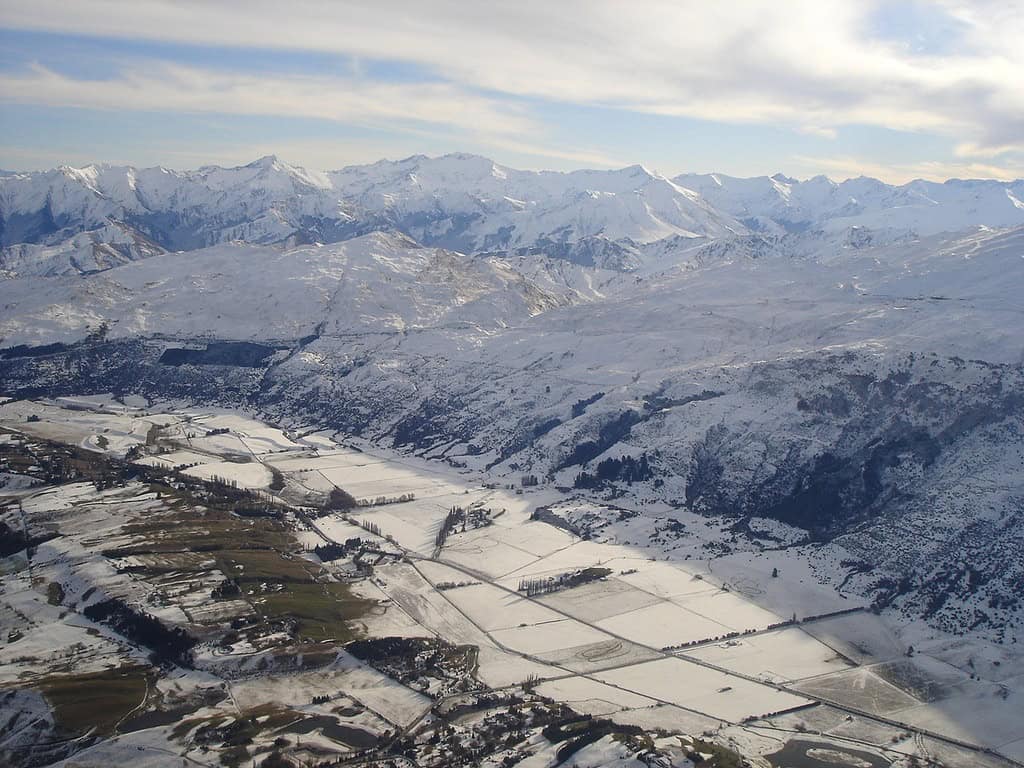
Flying into Queenstown in Winter (photo: Kiwi Discovery Queenstown)
Flying into Queenstown in winter (photo: Kiwi Discovery Queenstown)

The adventure capital of New Zealand (and perhaps the world) never rests on its laurels, making ski fun a priority during the winter season.

The two ski fields closest to Queenstown are The Remarkables, a thrilling and family-friendly resort, and the Coronet Peak Ski Area, which some say is one of the best ski resorts in the southern hemisphere. Both are less than 45 minutes from town and feature a good balance of challenging runs with easier terrain.

2. Mt Ruapehu

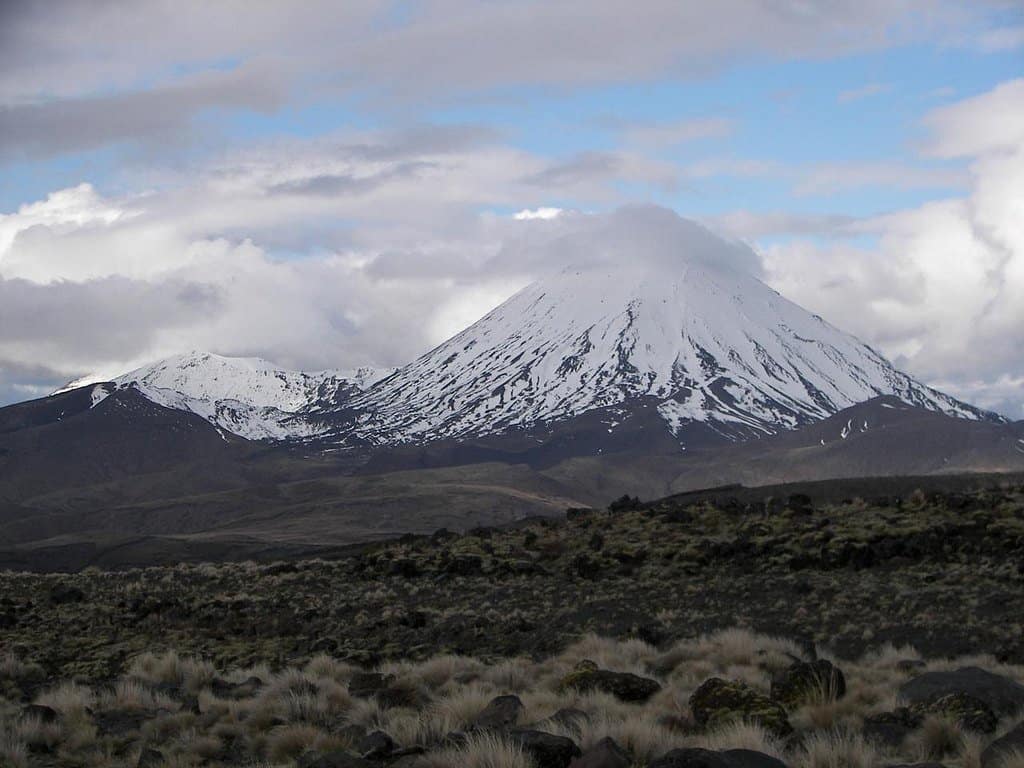
Mt Ruapehu Ski Fields (photo: Ian Armstrong)
Mt Ruapehu ski fields (photo: Ian Armstrong)

New Zealand is one of the few places in the world, apart from Iceland and the United States, where you can ski on an active volcano.

The Whakapapa Ski Area and Turoa Ski Area are two ski runs on Mt Ruapehu, the only commercial ski area on New Zealand's North Island. Mt Ruapehu is the only place on the North Island with glaciers, making it an exceptional spot.

Don't worry about that volcano-it is technically one of the world's most active, but visitors always have plenty of warning before an eruption; the last eruption was in 2007.

3. Wanaka

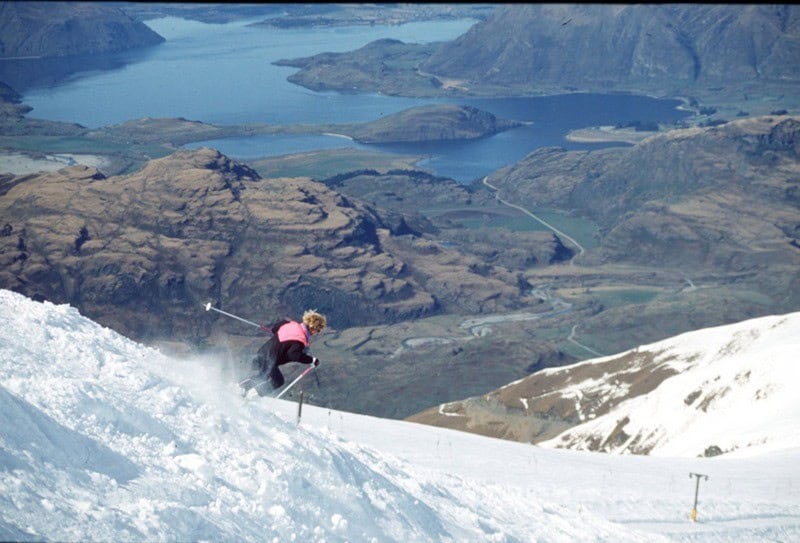
Treble Cone Ski Field (photo: Gregor Ronald)
Treble Cone ski field (photo: Gregor Ronald)

Perhaps second only to Queenstown is the lovely ski resort town of Wanaka. It is near several great ski runs; closest to Wanaka is the Treble Cone ski field, the largest ski area in New Zealand. It's famous for some of the region's longest runs and fantastic off-piste opportunities.

While in Wanaka, consider the Cardrona ski field, which is about halfway to Queenstown. This field features a broader variety of medium and challenging runs, all on wide-open trails, allowing you to have some fun.

4. Methven

Skiing in New Zealand (photo: Steve Jurvetson)
Skiinng at Porters (photo: Steve Jurvetson)

A short drive from Christchurch will bring you to Methven, a gateway village to two fantastic ski fields: Porters and Mt. Hutt.

Mt Hutt features several more difficult runs for the more experienced skier, whereas Porters has a well-rounded ski base. Both are family-focused and have strong community ties, including numerous local ski instructors who offer group and private classes.

5. Lake Tekapo

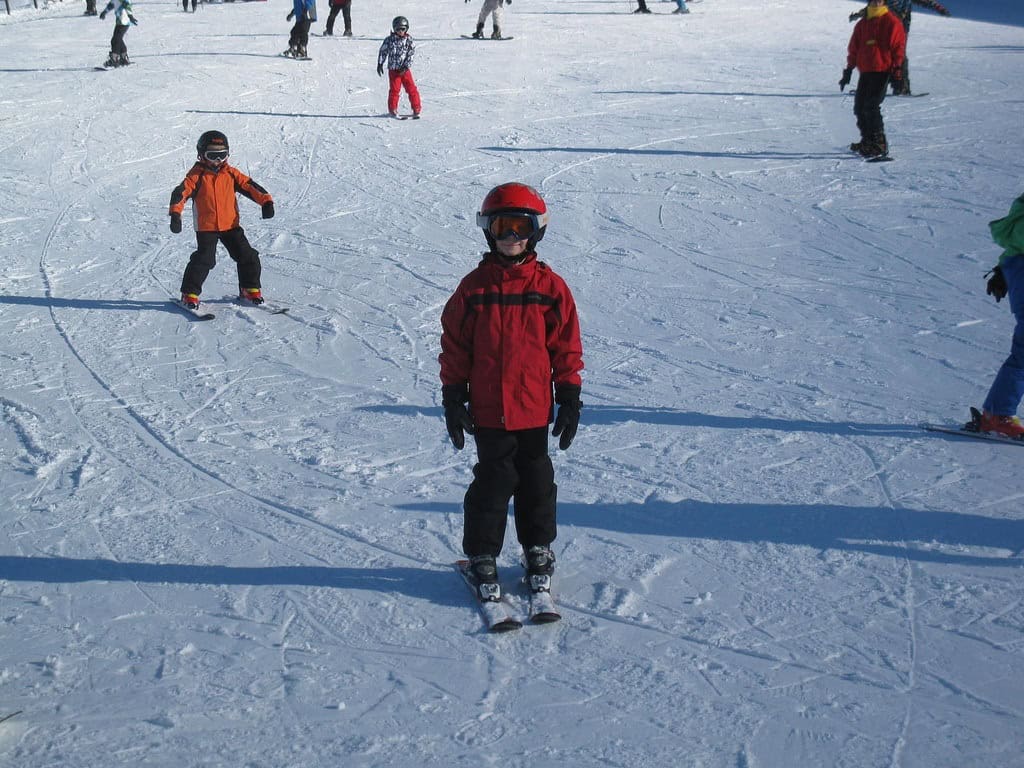
Learning to ski (photo: Merav Benaia)

Last but certainly not least is the picturesque hues of Lake Tekapo in the foreground as you ski one of the South Island's finest ski runs, Round Hill.

This Mackenzie County background field has beginner trains and classes, the world's longest and tallest rope tow, and the most significant vertical drop of any trail in Australasia. The resort has all the amenities to make this a memorable ski holiday.

_________

This post was written and brought to you by MightyCampers.co.nz, a campervan hire provider in New Zealand. Take a look at our blog for some great adventure stories and special offers.

Backpacking Solo – Where to Go and How to Prepare

If you're seeking adventure and travel to distant destinations without the need to stick to an itinerary, nothing beats the freedom and independence of solo backpacking.

This was the kind of holiday that, until relatively recently, was very male-dominated - but now there are more women than ever packing their rucksack, strapping it to their back, and disappearing on a trip of wonder and discovery.

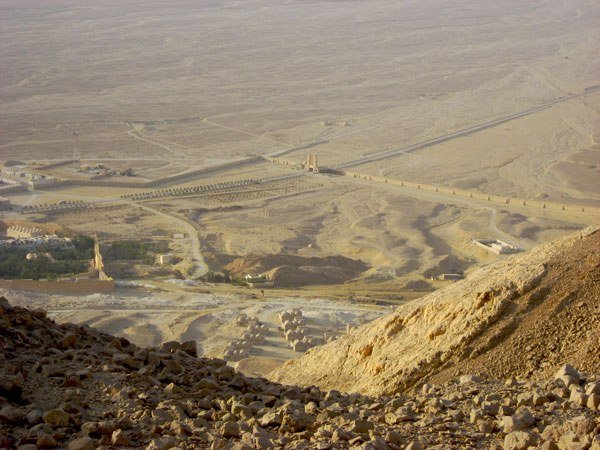
St. Antony's Monastery in Egypt
St. Antony's Monastery in Egypt (photo: Darla Hueske)

There are no hard and fast rules for women when it comes to solo backpacking, apart from being sensible when it comes to safety. It would be true to say that, every year, thousands of women are backpacking solo around Europe and indeed the rest of the world, without coming to any harm.

This is primarily thanks to homework, planning, and sticking to basic guidelines about where to go and what to bring. It is also worth bearing in mind that bad news makes the news, whereas the hordes of people traveling safely go unreported.

Lighter is Better

Backpacking has one straightforward rule: as small and as light as possible. You want a bag big enough to carry the essentials, but not so big that it gets in the way when you're on trains or buses, and you may not realize how often you'll have that bag on your back.

So be sensible and don't rush out to find the biggest pack you can, as it simply won't be practical. An ultrasonic portable washing machine can be invaluable in such circumstances. It is a space-efficient and affordable option, ideal for living in an apartment or traveling frequently around the globe.

Dress for Every Occasion

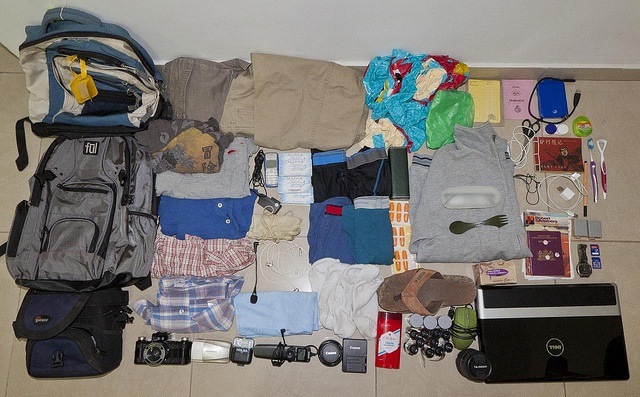
A solo backpacker's gear (photo: Nestor Lacle).
Packing list (photo: Nestor Lacle)

Depending on where you intend to go, taking clothes and shoes to suit every eventuality is a must. Keep in mind that some countries experience significant temperature fluctuations between daylight hours and nighttime.

During your pre-planning, you will also need to research any dress codes you must adhere to, such as those in Muslim countries.

Shoes should be suitable for the terrain you plan to visit. If your destinations are mainly towns and cities, then you don't need a pair of heavy hiking boots.

Go for multi-purpose footwear that is strong and comfortable, rather than weighing yourself down with a variety of shoes and boots.

Stay in Touch

If you intend to venture out into the unknown as a solo traveler, you might want to consider a Smartphone with a GPS navigation app, and an international SIM card may well get you out of trouble.

Let people know where you are regularly. Oh, and don't forget the charger and international power adapter!

The Financials

You would be wise to keep a record of your credit card details, as well as the contact information of your bank and card issuer, in a secure location.

Try to avoid carrying large amounts of cash, but use ATMs whenever possible. There will usually be fees involved for cash withdrawals, but it's better than losing a large amount of money.

A wise investment would be that of travel insurance at an appropriate level for the trip you are planning.

Rather than risking inadequate coverage with a one-size-fits-all policy, consider approaching a company like Columbus Direct, whose motto is "If you are happy to go there, we are happy to insure you."

Accommodation Concerns

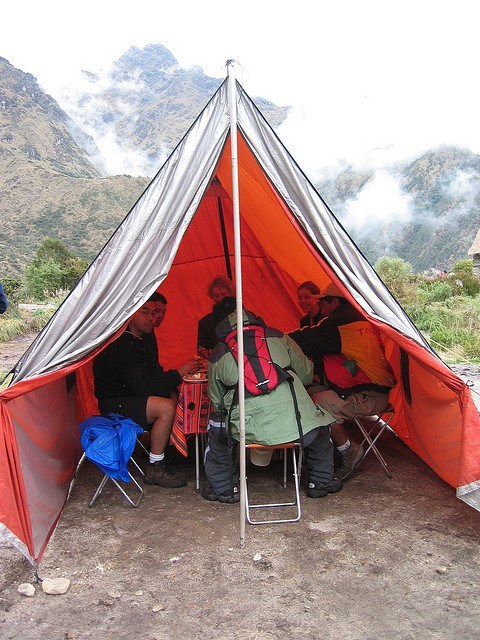
Camping on the Inca Trail in Peru (photo: fortherock)

Regardless of your gender, if you're backpacking solo, consider ruling out camping as an option. It's for safety reasons, especially in countries you don't know.

Also, avoid the extremely cheap hostels, as you may find yourself sharing a dorm with homeless individuals who have found a bed for the night or long-term residents who are unable to fend for themselves.

When searching for hostels, look for amenities such as a communal kitchen and laundry facilities, including a washing machine.

Read the hostel reviews on independent sites, as some will be a haven for party-loving backpackers, and if that is not your scene, you will have a miserable time as well as a complete lack of sleep.

A good tip to remember is that even if the dorm is empty when you go out for the day, it will likely be occupied when you return, so make sure your bag is in a locker and that you have left nothing valuable lying around.

Where To Go

The only regions considered no-go areas for single female travelers are the Middle East and North Africa, including Syria, Tunisia, and Egypt. The current political unrest makes these places somewhat off-limits to backpackers seeking to escape the main tourist areas.

It is pure common sense not to wander around strange places on your own at night, and steer clear of dark alleyways, deserted areas, and anywhere else that could represent a possible danger. Once again, there is a wealth of information available online from other solo backpackers and their experiences in various countries.

Western Europe is considered one of the safest regions for female backpackers. Travelers have also reported traveling solo to Thailand and Mexico without any trouble and are keen to return. The vast distances between inhabited areas mean the US requires advanced planning.

Solo backpackers heading across the Atlantic are advised to stick to urban areas and avoid trying to save money by hitchhiking, a practice that should not be undertaken by a single traveling woman anywhere.

Getting from A to B

While you may want to go with the flow when moving between countries, it is advisable to have a prepared understanding of the available transport links and a rough guide to times and pricing.

Print-offs weigh nothing, so when planning your route, albeit roughly, check timetables for trains, buses, and ferries you might need to use and print them off.

Also, bear in mind that the further east you travel in Europe, the less chance you have of clerks at railway or bus stations speaking English. Make a note of the train or bus you want to take, and count the stops between where you get on and where you want to get off.

Most place names are now signed in Latin and Cyrillic, but you may come across the occasional one that isn't.

If you are traveling on trains at night, avoid an empty carriage, as tempting as it may seem. Aim for one that has fellow travelers in it, or sit as near the front of the train as possible, so if something does occur, you have the best chance of attracting the driver's attention.

Final Thoughts

Casting yourself adrift on the sea of fate with a backpack on your back can be an exhilarating and rewarding experience. With the right amount of forethought and a bit of planning, you can also vastly increase the chances of it being a safe experience.

_______

This post was brought to you by Columbus Direct.

The Road to Halabja Part VII - A True Muslim

Kurdish Flag
Kurdish Flag

This is the next guest post in a series by Kevin Post. Read the previous installment here.

I slept incredibly well the night before with a full belly and peace of mind that things were going to work out after being rest assured that Iraq wasn’t as bad as other people made it out to be.

I’m not sure if Mahmed took time off of work or happen to have the day off but he managed to spend every second of the day making sure that my time in Arbil was full of learning opportunities.

We visited several beautifully decorated mosques for my introduction to Islam. Mahmed was a devote Muslim and as a believer it was his duty to share with non-Muslims Islamic values and teachings; something I had always wanted to learn more about.

The entire day consisted of me learning to wash before prayer, what to say during prayer, the history of Islam, poetry, love and numerous stories of westerners who’ve left their religion for Islam.

It was an incredible learning experience and experiences like these are primary reasons why I travel. I have to admit, I was tired and a little overwhelmed at times.

The pace changed as we went to Southern Arbil to meet with a group of young Turkish engineers.

After a 7 hour condensed Islam lesson I needed a break and the Turks offered me just what I needed: an afternoon free of politics and religion with impeccable English.

We watched a soccer match instead and talked about food. When the call to prayer blared from the nearby mosque one of the engineers shrugged and said with a smirk, “we’re not particularly religious.”

Walking down the streets of Arbil at night with my new Turkish friends seemed so normal that I completely forgot where I was.

I could have been in Turkey or Latin America for that matter if it weren’t for Arabic and Kurdish advertisements above us.

The supermarkets were filled with Turkish goods, a strange familiarity for me, which goes to show how intertwined Turkish and Kurdish communities really are.

They are brothers but often don’t seem to want to admit it.

I was embarrassed that everyone around me was treating me to food, transportation and entertainment. It was time for me, an appreciative guest, to start paying my share of things.

I met up with Mahmed once again and asked if he could take me to an ATM that would take my debit card. Everywhere we went it didn’t work.

“I have to leave tomorrow Mahmed,” I said embarrassingly.

“Why?” he replied with a hint of insult.

I explained that I had no money and had to return to Turkey where my debit card actually worked.

“No…” he replied followed by a pause, “You must see my country!”

He had me wait in the living room as he went upstairs to later hand me two crisp $100 bills. This man who I just met offered to help me continue my journey to Halabja near the Iranian border. I felt tears of joy welling up.

“Is there a Western Union in Zakho?” I asked. With a nod from Mahmed I assured him that I would pay him the money he lent me within two months. Mahmed shrugged unconvinced followed with a thick accented “okay”.

With my positive change in plans and without an alarm, I slept on the couch by the front door waiting for an early morning knock arranged by Mahmed.

I was heading towards Halabja.

TO BE CONTINUED...

Series: The Road to Halabja

  • Part I - Border Crossing
  • Part II - No Turning Back
  • Part III - Arbil Awaits
  • Part IV - A Bad Time to Arrive
  • Part V - Penniless in Iraq
  • Part VI - Should I Stay or Should I Go
  • Part VII - A True Muslim
  • Part VIII - Iraqi Road Trip
  • Part IX - Iraqi Hitchhikers & A Life of Prayers
  • Part X - Kurdish Farewell
  • Part XI - Smuggler's & Turkey's Loving Embrace

Sandboarding San Pedro de Atacama

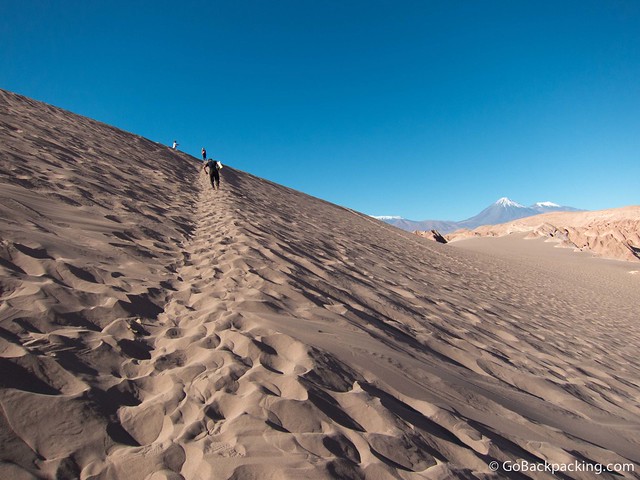
It's a slow, hot slog up the sand dune

[P]eering up the 40 percent incline of the monumental sand dune in Valle del la Muerte, I told myself the views would be worth the climb.

I didn't know much about northern Chile before my arrival, but I knew I wanted to go sandboarding in the Atacama Desert.

I grabbed a snowboard, and began the slow slog up as Guns 'n Roses blasted from the tour van's stereo system.

Climbing sand dunes at the beach is hard enough, let alone 2,400 meters above sea level in the middle of the dryest desert on the planet.

But climb I did, along with a dozen other travelers, each of whom paid $20 for the experience.

One step at a time, slowly but surely, we made our way up the dune with our snowboards.

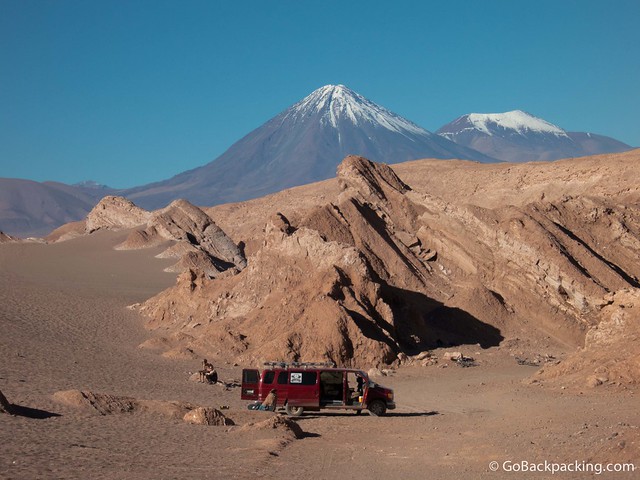
Our van at the bottom of Valle de la Muerte (Death Valley)

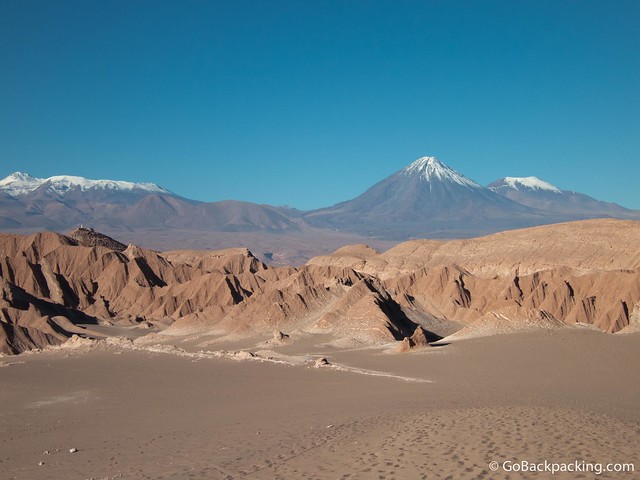
From the top, we had incredible 360-degree views of the Martian landscape.

Rising thousands of feet into the air, the two snow-capped volcanoes were the most striking feature on the horizon.

I'd first seen them the day before from the streets of San Pedro de Atacama, but the added height of the sand dune, gave me a new appreciation for their grandeur.

Valle de la Muerte (Death Valley)

Running along the opposite side of the valley from our sand dune were striated rocks.

Our guide handed out wax, and we began rubbing it on the base of our boards, the same way you would if you were going snowboarding or surfing.

The wax smooths out the surface, which decreases the friction between the board and the sand.

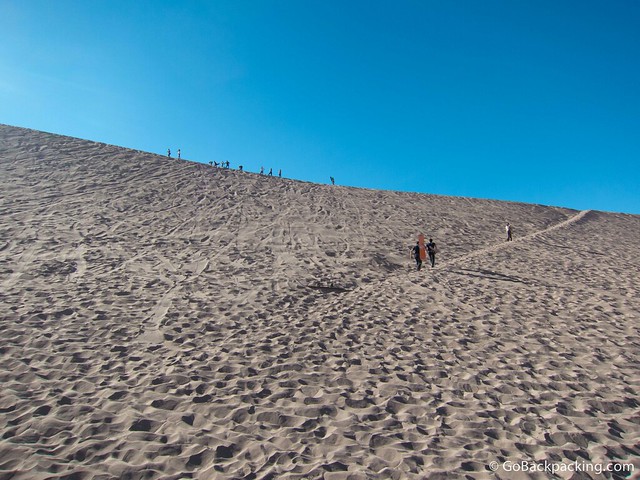
The badass dune we had to climb

In sandboarding, unlike the other sports, you have to wax your board before every run, or you'll barely move.

The combination of intense sun, sand, and wax reminded me of my first experience sandboarding in Jeffrey's Bay, South Africa.

I was alone on that occasion, on a much smaller dune, though it was just as hot.

Sandboarding in the Atacama Desert

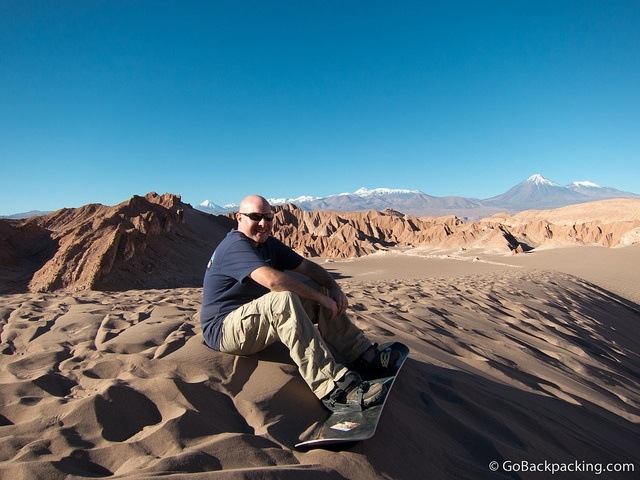
Once the board was waxed, I strapped myself in, and made sure someone got a photo of me this time.

Modified bindings allowed us to use our own close-toed footwear.

My Merrill sneakers worked fine, though you do feel a little less stable without boots that support your ankles.

Epic view of snow-capped volcanoes and mountains in the Atacama Desert

The next step is to point your board straight down the 150-meter long dune, and lean forward.

In theory, it sounds simple, but when you're up there looking down a 40-degree slope, the thought of going straight is a little more anxiety-provoking.

All the same, I'd done it before, and had snowboarded for many years before, so I dropped in and made a few turns before my first fall.

Poof!

A cloud of red sand erupts around me. Sand I knew I'd be washing out of my ears, nose, skin and clothes for days to come.

To be completely honest, the payoff for climbing the dune isn't the few seconds riding down, but the views you get up there. It's the atmosphere of watching others give it a try, and the punk rock music filling the valley below.

It was so exhausting, I only took two runs, and climbed a third time with just my camera to get photos.

Sanboard San Pedro offers morning, afternoon, and even night trips. I recommend the afternoon trip, which starts around 1pm, because you'll be able to catch the sunset from the nearby Valle de la Luna (Valley of the Moon).

Have you been sandboarding? Share the location in the Comments below! 

Lucha Libre: Monday Night Mexican Wrestling in Puebla

Bodies were flying out of the ring left and right. Every time a masked wrestler hit the ground, the crowd cheered louder. Even though the entire match was choreographed for maximum entertainment value, these wrestlers had skills. The average person couldn't walk away from such aerial acrobatics.

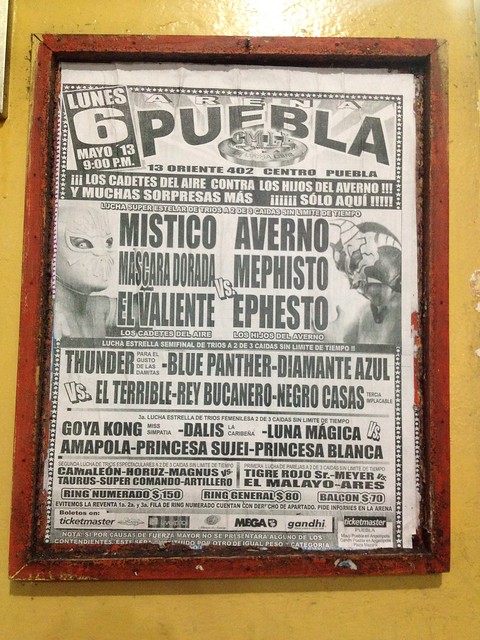
Lucha Libre poster with the night's match-ups

Afterward, Gaby joked that the trick to appreciating Lucha Libre was having a few drinks beforehand. She'd been leading trips for G Adventures for several years and attended the Monday wrestling matches in Puebla a dozen times or more. But she said she enjoyed the experience the most with our group. The difference was in the drinks.

Instead of getting there at the official start time of 9 p.m., when the lesser-known wrestlers were in the ring, we were busy drinking and playing Cards Against Humanity at the hotel.

It was everyone but Gaby's first time playing the game, so it was new to us all. I can't remember the last time I laughed so hard for so long. In addition to lubricating our sense of humor for the evening, it was also the night we began bonding as a tour group.

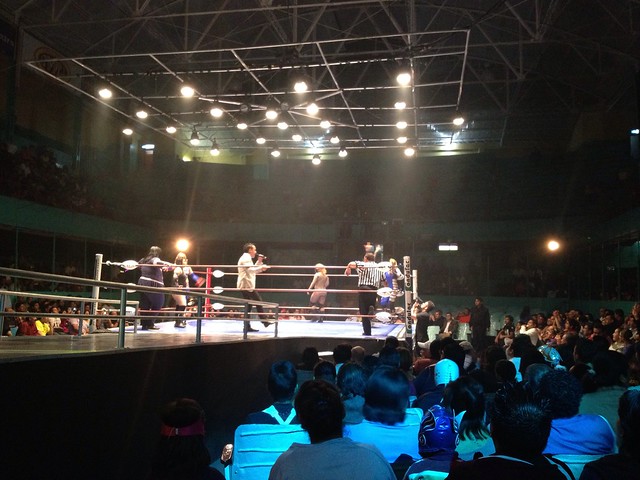
The female wrestlers are in the ring
The female wrestlers are in the ring.

From the hotel, we walked for 10 minutes to the Puebla Arena (13 Oriente 402 in the historic city center), where the Monday night fights are held. Our tickets cost 85 Mexican pesos, or about $6.60.

Because we arrived late, we were initially seated in a second-tier bleacher section, which is what correlated with the cost of our tickets. However, we were soon moved to floor seating behind the ring.

A match of lesser wrestlers was going on as we got situated and waved down the beer guy. A little more lubrication was only going to enhance the experience.

The atmosphere inside the arena was energetic and loud. Mexicans of all ages attended, from kids wearing the masks of their favorite luchadors (wrestlers) to their parents and other adults who seemed equally invested.

This was as authentic a Mexican cultural event as you could hope for. Several models walked down the catwalk to the ring, signaling the new matches. Although unfamiliar with the wrestlers, cheering for the models walking by was an easy way to get engaged.

And our group was VERY engaged, hooting and hollering with every wrestler that smacked down hard against the ring's floor or went airborne over the ropes. In contrast, I occasionally glanced at another group of Western tourists to see them sitting in their section, stone-cold sober.

They probably thought this was a ridiculous, fake show, and "why am I here?" That would've been my reaction without the rum 'n cokes beforehand.

It was hard to focus on the match at times, with the sexy models walking up and down the catwalk
Models and wrestlers in action.

The first full match we watched was between the female wrestlers. It was three-on-three, with Goya Kong and Luna Magica facing Amapola and Princesa Blanca. In the following two matches, the female wrestlers were more comical and exaggerated than the men.

Throughout the event, I noticed better wrestlers were more nuanced and performed more complicated and harrowing acrobatics. Occasionally, one of the female wrestlers was thrown out of the ring, but it was nothing compared to what we'd see in the main event.

Showboating at the Puebla arena

It was time for the main event after the lady's match and another group of men. The headliners were Mistico, Mascara Dorada, and El Valiente versus Averno, Mephisto, and Ephesto. These guys were unbelievable. My back hurt just watching them get flung back and forth against the ropes, being thrown up in the air only to smack back down onto the floor.

Overall, the event was a lot of fun. The key to enjoying Lucha Libre is not taking it seriously. It's entertainment and a terrific opportunity to experience a unique slice of Mexican life.

_______

UNESCO

The Historic Center of Puebla became a World Heritage Site in 1987.

Click here for the complete list of UNESCO sites Dave has visited during his travels.


___

My Mexico Ancient Civilizations tour is in partnership with G Adventures; any opinions expressed are entirely my own.

Introduction to San Pedro de Atacama

Inside Blanco Restaurant

[I]t was dark when I arrived in San Pedro de Atacama, a small pueblo in the middle of northern Chile's Atacama Desert.

My series of flights from Santiago were uneventful, aside from the fact that it looked like we were landing on the surface of Mars.

The minivan dropped me off in the middle of the dimly lit town.

It was colder than I'd expected, and after gaining my bearings, I checked into Hostal Rural, which I chose for its central location, and $20 dorm beds, a bargain by San Pedro standards.

The reception desk was located in an open courtyard, under the night's sky. A ping-pong table featured prominently, and there were a few hammocks slung around the space.

I checked in, dropped my bags in a cramped 6-bed dorm, and stepped out for dinner.

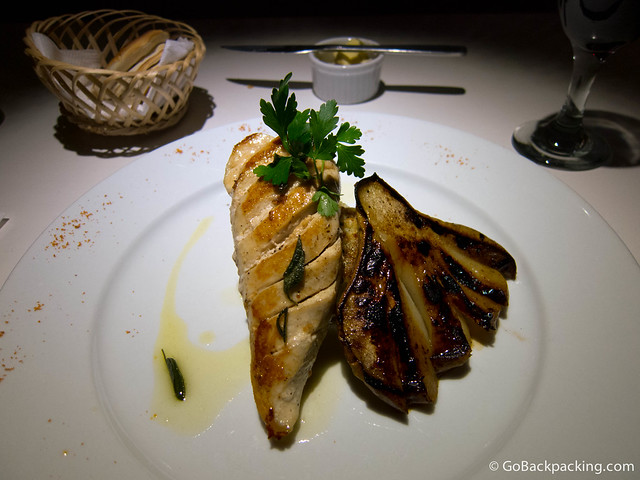
Chicken with a sage butter sauce, and roasted potatoes

I didn't have to go far. On a nearby corner, I found Blanco Restaurant advertising a set dinner menu for 7,000 Chilean pesos ($14).

Entering the restaurant, I found a rustic, Earthen atmosphere. True to its name, everything from the walls to the tables and chairs were white.

A wood burning stove was alight near the entrance, drawing me in further with its warm orange glow.

I took a booth, and unsure about the quality of salmon now that I was in the desert, opted for the chicken with sage butter sauce, and roasted potatoes.

I was more confident about the Chilean wine, ordering a glass of red to accompany my entree.

The presentation was on par with my expectations for a Santiago-based restaurant. It was a welcome surprise to see such attention to detail in the middle of nowhere.

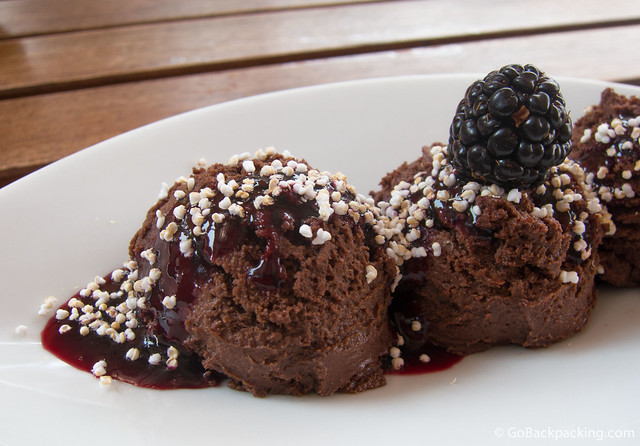
Creamy chocolate mousse

Dessert was chocolate mousse. Creamy, rich and delicious.

Mousse can be a real hit or miss dessert in Latin America, but they got it right at Blanco, to my taste buds' delight.

Oh, and there was Wi-Fi. At this restaurant. In the middle of the desert.

I hadn't been in San Pedro long, but I was quickly discovering this little town offered more in terms of comfort and convenience than I'd expected.

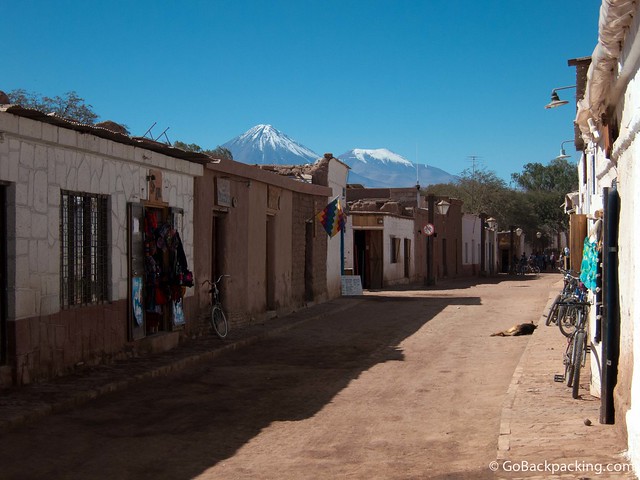
View of snow-capped volcanoes from the main tourist street in San Pedro de Atacama

The next morning, I awoke to bright blue skies. Not a cloud in sight.

In the light of day, I could see snow-capped volcanoes in the distance, lending more credence to the idea that I had, in fact, landed on another planet the day before.

The main tourist street in San Pedro is nothing more than a dusty dirt road, lined with restaurants, souvenir shops, and tour agencies.

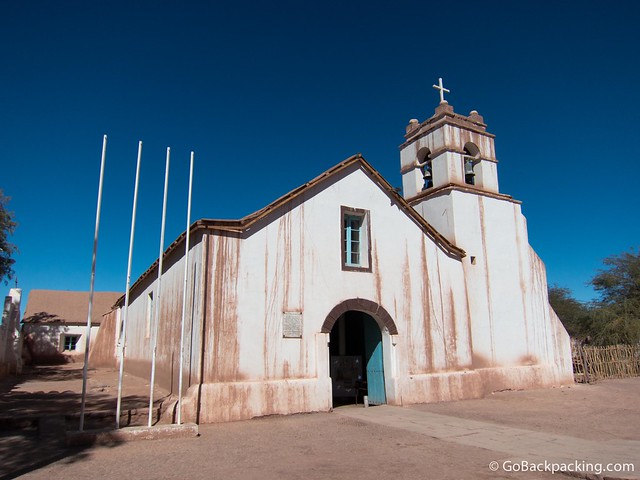
Church of San Pedro de Atacama

There's not a whole lot to see in San Pedro itself, aside from the 19th century church built on the same location where the original, 16th century one was once erected.

But you don't go to San Pedro de Atacama for the "San Pedro" part, it's the "de Atacama" (of Atacama) that inspires tourism to the region.

San Pedro is base camp for exploring the high-altitude, desert landscapes around you.

The remoteness of San Pedro de Atacama also means little to no light pollution, making it one of the best places in the world to practice astronomy.

It should then come as no surprise, the first tour I signed up for was a tour of the night's sky with SPACE (San Pedro de Atacama Celestial Explorations, $35).

If there's one tour you shouldn't hesitate to take, it's the astronomy one, both because it'll be awesome, and they don't run in the days immediately before/after the full moon each month.

It's also weather dependent, so don't put it off if your time is limited.

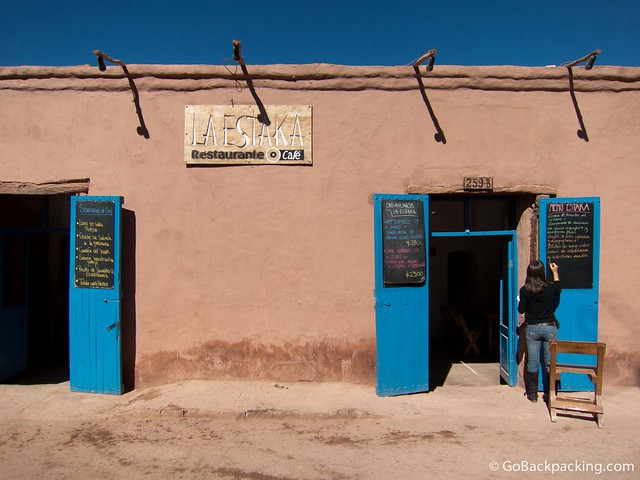
La Estaka Restaurant and Cafe

Dressed in as many layers of clothes as I could manage, I wandered over to the meeting point near the SPACE shop later that night.

Along with a dozen others, we were driven to Solor, south of town. It's here that Alain, an astronomer, and his wife Alejandra, built their home and telescopes.

Today, they operate the largest public observatory in Chile, and also use their facilities to conduct private research on Near Earth Asteroids and Comets.

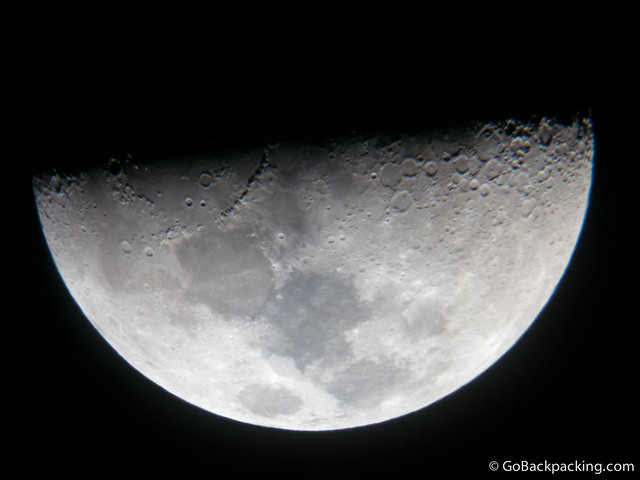
The moon through a telescope, taken during my astronomy tour

But the first part of the two and a half hour tour is learning about the night's sky with the naked eye.

And the sky above the Atacama Desert is one of the most spectacular I've ever seen.

Our guide, an astronomer, pointed out the Milky Way, which was visible as a swath of bright stars across the sky. It was the first time I'd seen our galaxy with my own eyes.

He also pointed out numerous constellations, several of which I'd never seen before, including Orion.

He used a green laser pointer which seemed to stretch millions of light years into the distance.

As fascinating as it was to be there, it was also hard to ignore the bitter cold. Everyone was feeling it, but we endured without complaint because you don't often see stars and planets so brightly in your life.

The second half of the tour included the use of a dozen or so telescopes of varying sizes and magnifications.

Through one, he helped us take pictures of the Moon's cratered surface. Through another, we saw the rings of Saturn.

Wrapping up, we entered the house for a warm beverage, and question and answer time. Then, we made the drive back to San Pedro.

I was excited for my next activity, sandboarding in Death Valley.

How to Stay Safe While Backpacking the World

Travel Books
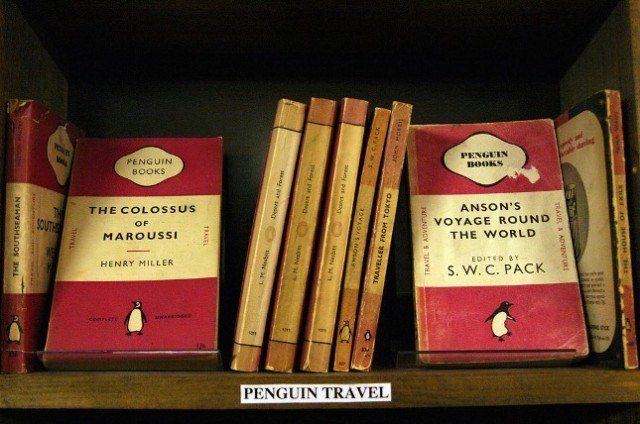
Travel Books (Photo: Martin Burns)

[W]hether you’re a first time backpacker on your gap year from university, or you’re a seasoned traveller hitting the road one more time, it’s always good to check up on the latest ways to stay safe, save money and find tips and tricks to enjoy backpacking as much as possible.

Backpacking is one of the best ways to see lots of sights, experience other countries in a different way and really get stuck into the local culture without spending thousands of pounds.

But you need to make sure you stay safe.

After all, you’re launching yourself on a country where you’re unlikely to know the language, understand local customs and where you’re generally a fish out of water.

And, of course, you don’t have a handy tour rep on hand to show you the way.

This is, of course, part of the attraction for the intrepid traveller - most backpackers want to throw themselves into the experience without a guide - it’s about surviving, enjoying and really becoming part of the city or country you’re visiting.

It’s still wise to get some information together and get a few things sorted before you jump on that plane.

Plan Before You Go

There are plenty of resources online to really get an insight into your intended destination - check out one of the many traveller forums online and consult Lonely Planet and TripAdvisor for advice on where to stay and how to find cheap accommodation that is safe.

Lonely Planet and Rough Guide are particularly useful for giving you the heads up on stuff you need to be aware of to stay safe.

For example, if you’re really going off the beaten path and outside of the normal destinations frequented by tourists, then you need to be aware if there are any social or political circumstances that would preclude Western tourists from being welcome.

This doesn’t mean you can’t take the risk and still go, but it’s best to equip yourself with all the information before you leave.

Check Visas and Entry Information

The Foreign Office website is an invaluable resource - not only will it tell you if there is anything to be on the alert for in your destination countries, it will advise you on whether to go at all and will list the documentation and Visa information you might need to get into the countries.

Make sure you have plenty of time left on your passport - some countries won’t let you in if you only have a few months to go.

Plan Your Itinerary

Your family will be glad of it - it’s good to give friends and family at home an idea of where you will be going and when.

If you change your plans on the way, make sure you tell people as well, as this can be invaluable should you run into trouble along the way.

Get Your Communication Sorted

You may be intending to blog about your travels or at the very least share a lot of your adventures on social media.

Be aware of how very expensive this can be if you’re using your normal SIM card - even going online using roaming for a few minutes can result in ‘bill shock’ when you get home.

One of the best ways to make sure this will never happen and to get sorted before you go is to buy a local SIM card for your destination countries before you go.

Ritesim.com sell local online SIM cards which will give you a local phone number for your destination country, along with local customer service and local rates on calls, texting and data usage.

This means that people from home can call you without being charged and international call rates are slashed.

You can order the SIM cards before you leave home and have them ready to go as soon as you arrive - all you need is a cheap unlocked phone (it’s best to leave your fancy smartphone and tablet at home anyway, as you run the constant risk of it being nicked).

Go with Other People

No matter how prepared you are, it’s definitely more risky to go travelling alone - being in a group or with just one other person makes you much less vulnerable.

Be Vigilant

Passport, visa, cash, valuables - you have to be constantly alert to the risk of getting these stolen, particularly if you’re crashing in public hostels.

Keep your documents and cash on your person at all times, preferably under your clothes.

Don’t let your rucksack out of your sight and lock it up whenever you can. Dress in a way that helps you blend into the crowd and not stand out - basically try to not look like a tourist if at all possible.

And beware touts outside of stations and airports offering services that will most likely turn out to be a rip off.

Most of all, have a great time!

______

This post was written and brought to you by Kaye Batten from ritesim.com.

Teotihuacan: The Ancient Pyramids of a Lost Civilization

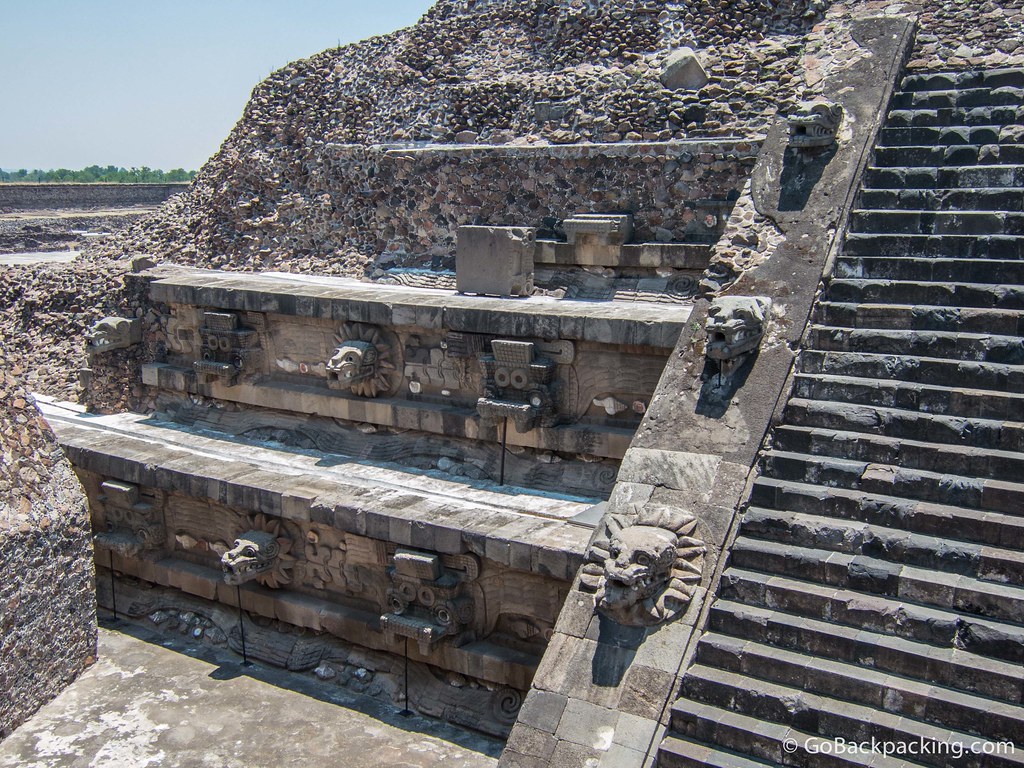
The Temple of Quetzalcoatl (Feathered Serpent)
The Temple of Quetzalcoatl (Feathered Serpent).

[T]he Pre-Hispanic city of Teotihuacan is a UNESCO World Heritage Site located 30 miles outside of Mexico City.

Dating back 2,000 years, the city was once thought to support 125,000 people, making it one of the largest urban centers in the world at that time.

Despite its grandeur, little is known about the civilization that built the pyramids at Teotihuacan.

By the time the Aztecs discovered the city, it had already been abandoned for hundreds of years.

Today, modern technology including radar and robots are slowly lifting the veil on the mysterious history of a lost civilization.

Temple of the Feathered Serpent
In the late 1980's, a burial pit containing the remains of 200 sacrificed warriors was discovered at the core of the Temple of the Feathered Serpent. As recently as 2011, a robot was used to discover ancient burial chambers, which have been sealed off for as many as 1,800 years. Source

The Pyramid of the Sun
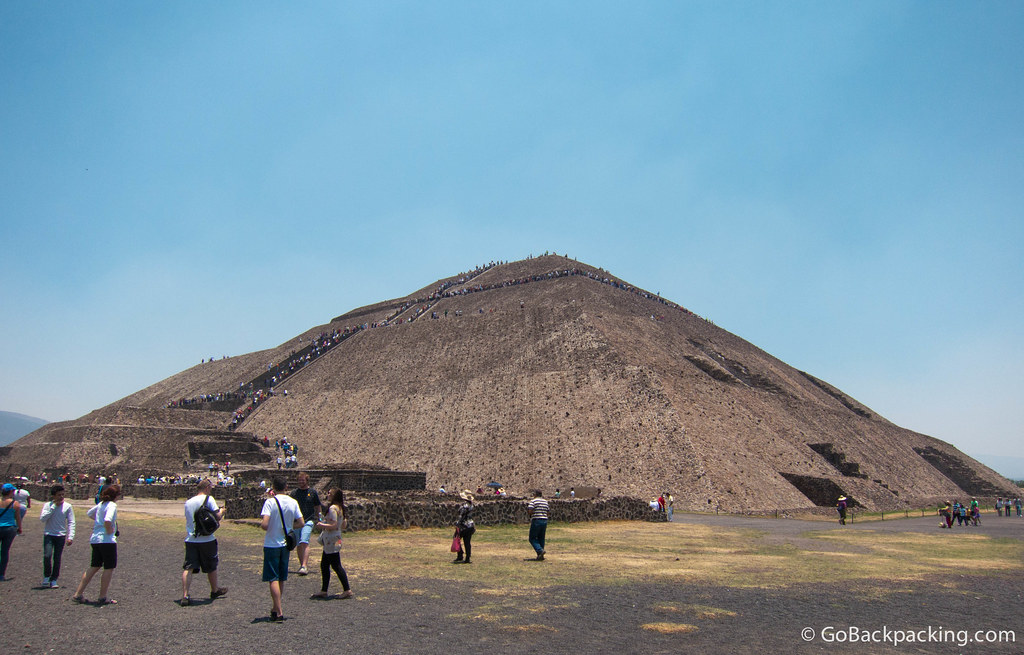
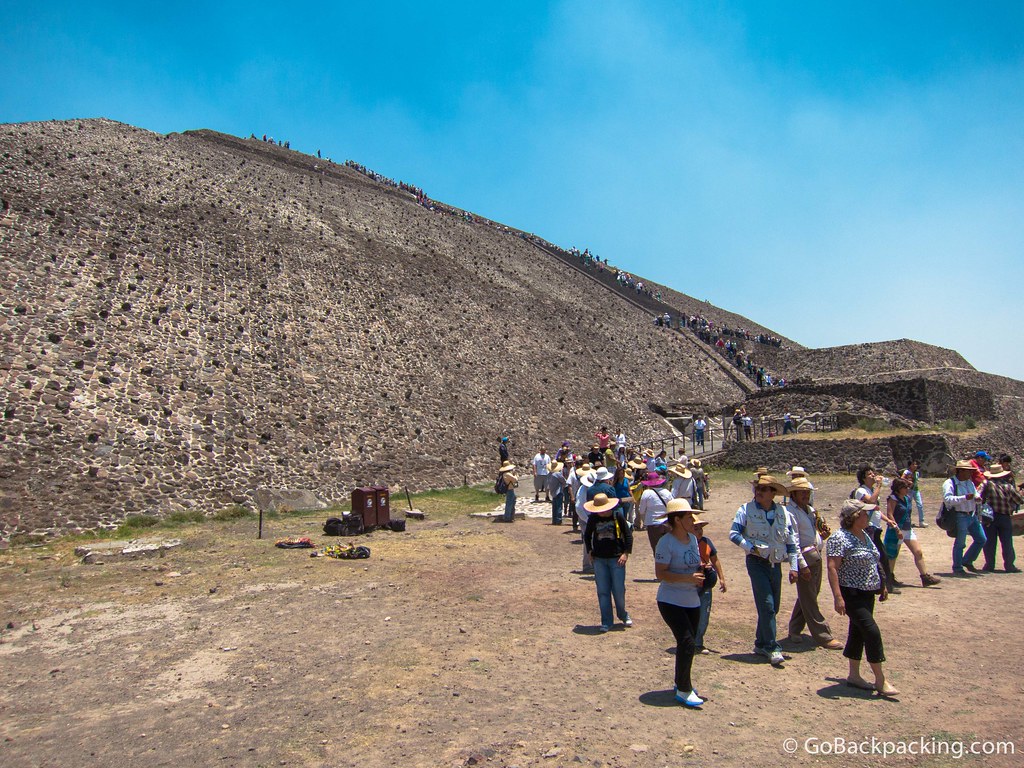
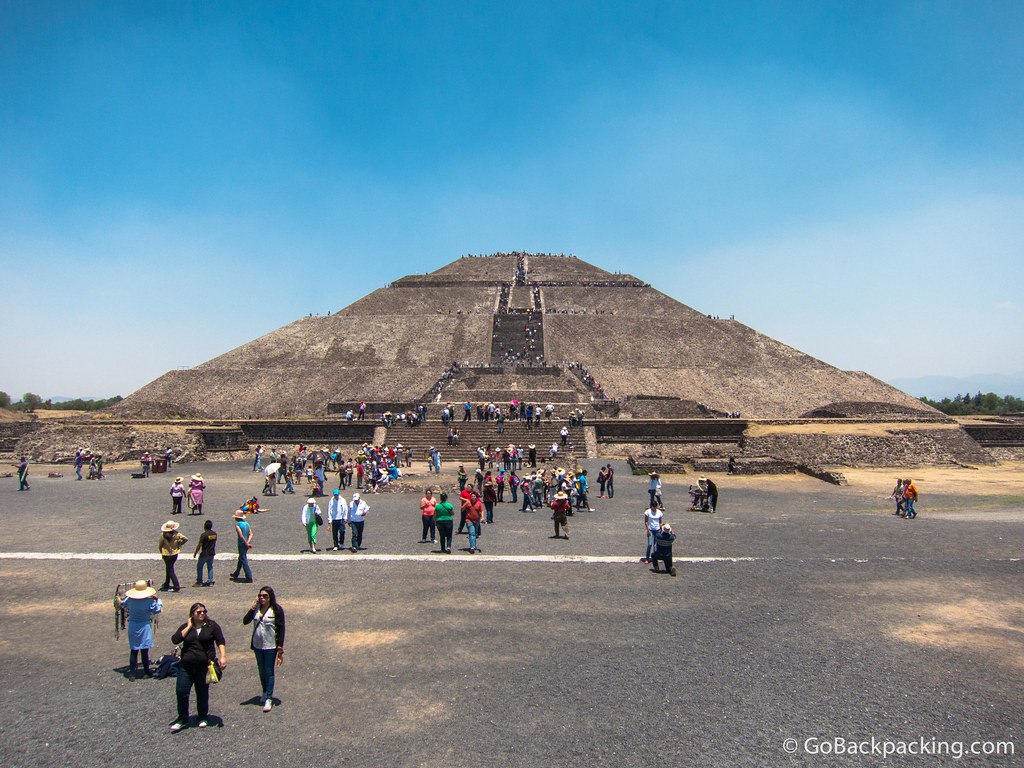
Completed around 200 AD, the Pyramid of the Sun is 63 meters tall, with a base 225 meters long on each of the four sides. It is the largest structure in Teotihuacan, and one of the largest of its kind in the Western Hemisphere.

The steep climb up the Pyramid of the Sun
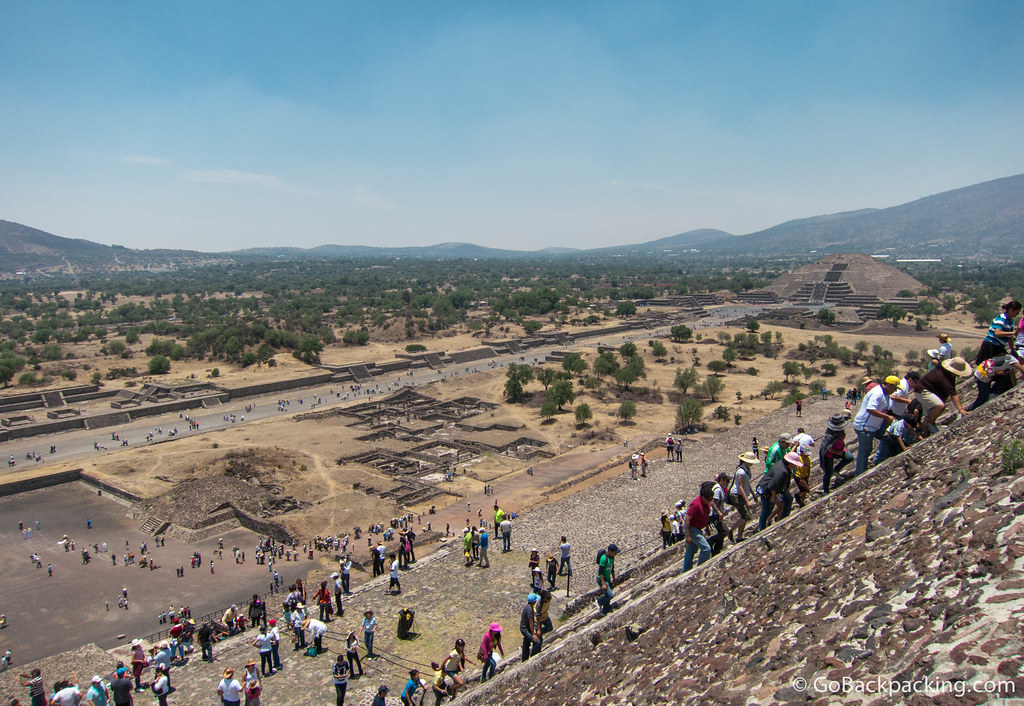
The steep climb up the Pyramid of the Sun rewards visitors with sweeping views of Teotihuacan, including the Pyramid of the Moon (seen in the upper right).

A straight view toward the Avenue of the Dead, which runs the length of Teotihuacan, from atop the Temple of the Sun.
A straight view toward the Avenue of the Dead, which runs the length of Teotihuacan, from atop the Pyramid of the Sun.

Pyramid of the Sun
People of all ages were climbing the Pyramid of the Sun, from toddlers to older folks. Like me, I believe most felt a lot more comfortable once they were back down again.

The Pyramid of the Sun as viewed from the Avenue of the Dead
The Pyramid of the Sun as viewed from the Avenue of the Dead.

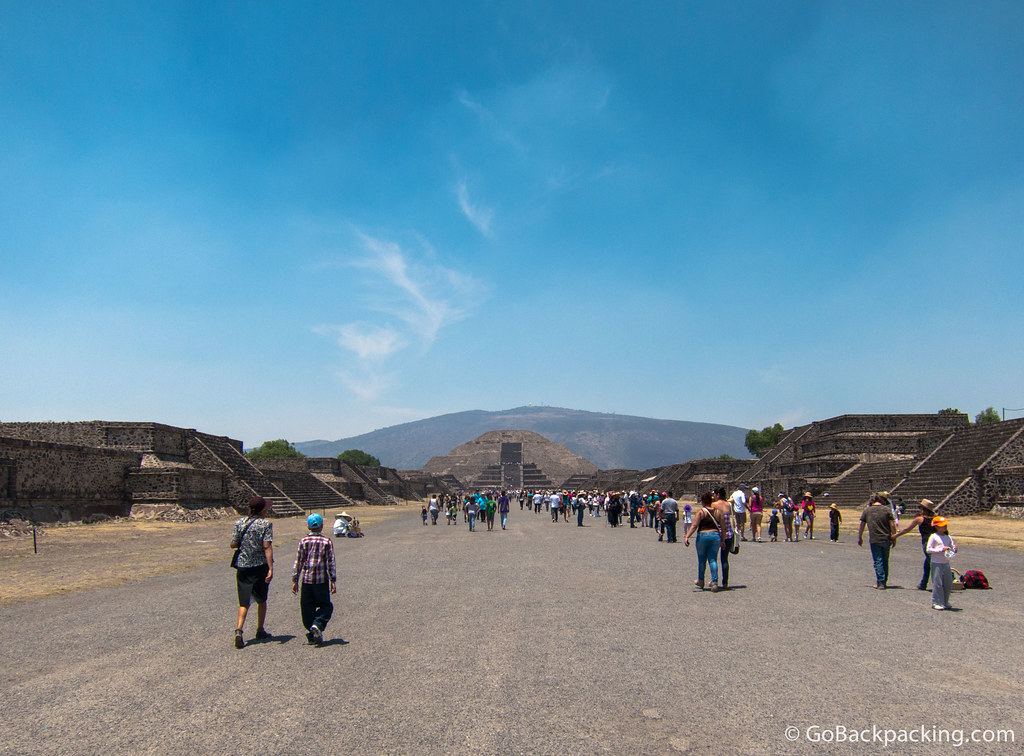
Walking down the Avenue of the Dead, toward the Pyramid of the Moon. This main street through Teotihuacan runs north/south for approximately two miles.

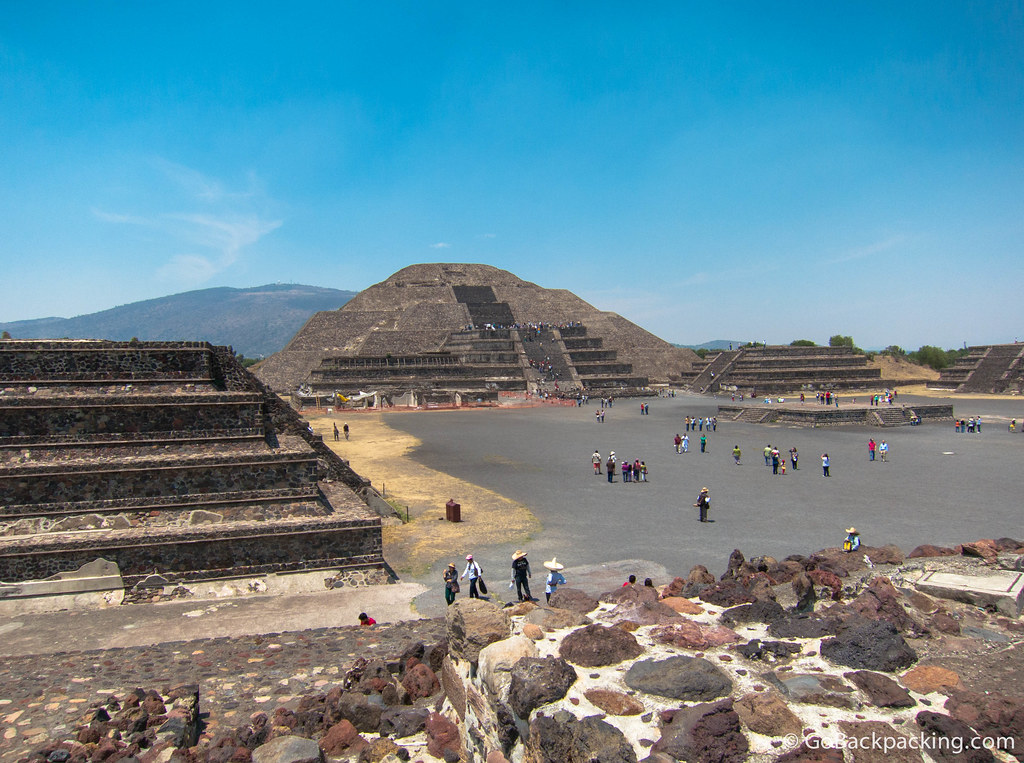
The 46-meter Pyramid of the Moon also contains evidence of human and animal sacrifices
The 46-meter Pyramid of the Moon also contains evidence of human and animal sacrifices.

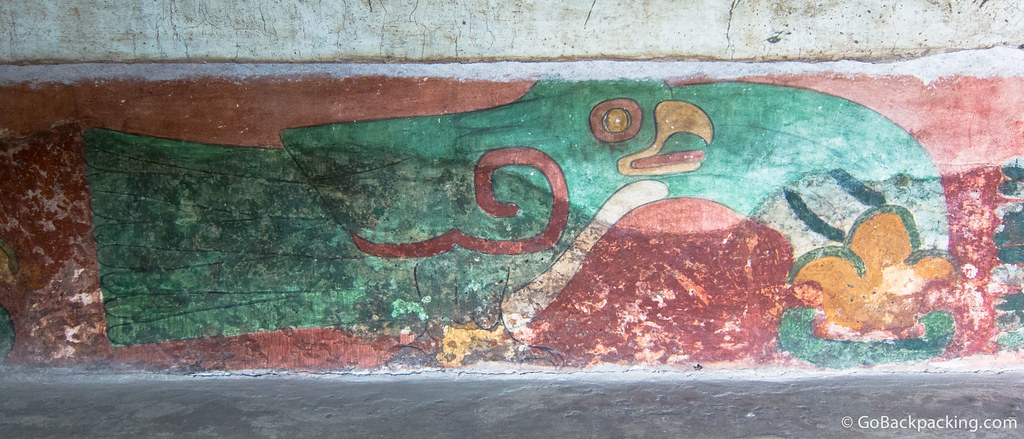
Green bird painted in the Templo de los Caracoles Emplumados (Green Bird Procession).

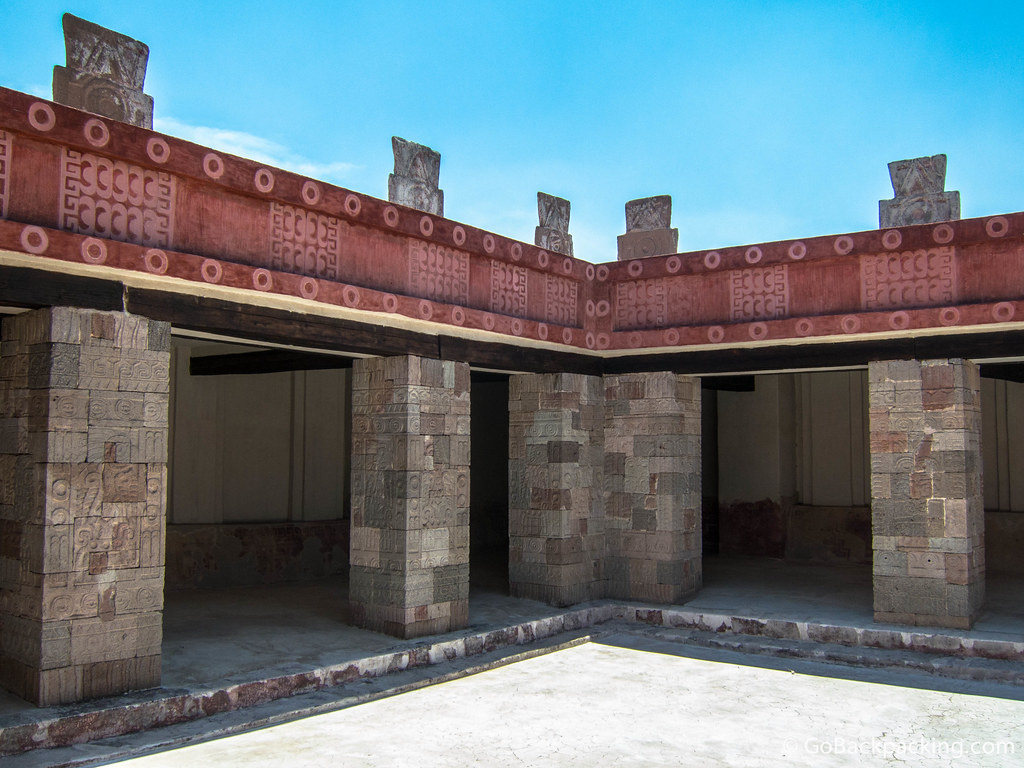
Patio de los Pilares (Patio of Pillars) located in the Quetzalpapalotl Palace
Patio de los Pilares (Patio of Pillars) located in the Quetzalpapalotl Palace, near the Pyramid of the Moon.

_______

UNESCO

The Pre-Hispanic City of Teotihuacan became a World Heritage Site in 1987.

Click here for the full list of UNESCO sites Dave has visited during his travels.


___

My Mexico Ancient Civilizations tour is in partnership with G Adventures. Any opinions expressed are entirely my own.

The Dubai Art Scene

It's a familiar story in cities worldwide: artists move into rundown areas for the cheap rents, which begins a process of regeneration and-to use a dirtier word-gentrification.

Dubai doesn't need any help with either of those things. I mean, why would it need artists to help regenerate areas of the city when it can simply build the living daylights out of anything that isn't already spectacular?

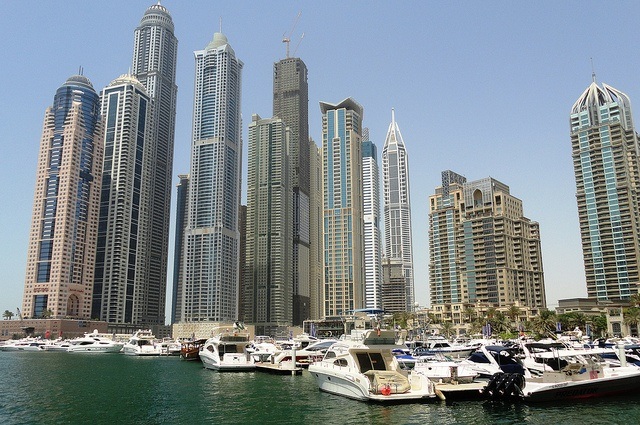
Dubai Marina
Dubai (photo: Fabio Achilli)

But anyone who loves art and its effect on a place ought to be pleased by Dubai's art scene. Like in other cities, it's a grass-roots movement rather than an installation from above.

Dubai's Al Quoz district started blossoming as an artistic haven around the same time as East London and Brooklyn, New York City. Like those hubs of creativity, Al Quoz is a formerly rundown area that still looks like an industrial no-man's land.

Old factories and warehouses, which have barely changed on the outside, are now home to art galleries and studios - the backbone of the Middle East's groovy new arts scene.

Traveling down its streets, there are vantages where you could confuse Al Quoz for the industrial zones of London and Brooklyn, where young artists have migrated in search of cheap rent and studio space. It looks, feels, and mostly is a world away from the glitz and hubris of central Dubai.

The nucleus of the Middle East's avant-garde is the Third Line gallery, an ultra-modernist white cube where the UAE meets the West Coast of the USA.

From the outside, you could be staring at a piece of California pop art-a scene from Ruscha, Hopper, or early Hockney. However, inside, a Western template is given over to support mostly up-and-coming and established artists from the Middle East.

Step into the Third Line on any given day, and you could be treated to an exhibition or a talk by one of the region's many accomplished artists and a bookshop supporting its growing body of fantastic contemporary art.

Make no mistake, Dubai isn't a pale imitation of a Western gallery. It holds its own on the international stage, as do the many other relatively new galleries in Al Quoz. Middle Eastern artists are increasingly breaking into the global art scene, and the world appears to be taking notice.

Attend one of the private views or exhibition openings in Al Quoz. You won't just find Arabian art dealers scouting for pieces from the local talent. You'll hear art connoisseurs from London, New York, and Paris come to see what Dubai has to offer. And, like me, they're usually very impressed.

_______

This post was brought to you by Letsgo2.com.

The Old Wailuku Inn: Maui's Historic B&B

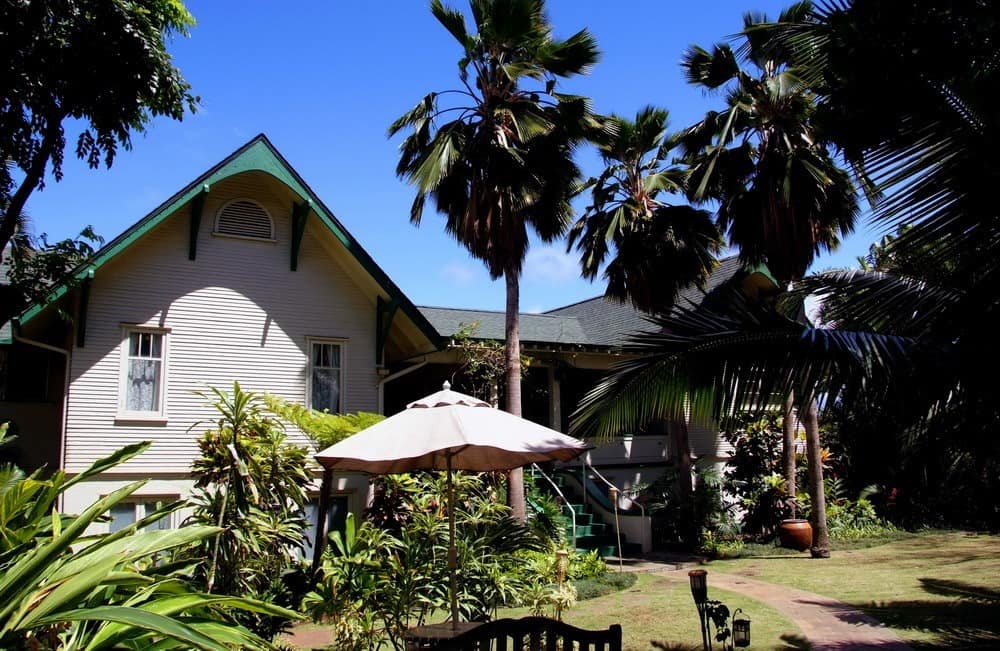
The Old Wailuku Inn
The Old Wailuku Inn exterior (photo: Bruce Wheeler)

Anyone who visits Hawaii knows that the tiny island of Maui is a land dedicated to the blend of traditions and history with the new and modern.

Any luau you go to or trail you hike is reminiscent of the customs and concepts of the Hawaiian past but designed to accommodate today's travelers.

As budget travelers, often with more time to travel than the average vacationers, we like to find a place's real cultural attractions.

After enough time on the road, the hotels, natural attractions, and food tend to blend together.

That's why I sought out a Hawaiian-themed Bed & Breakfast to base myself as I traveled around Maui.

Adventure in Maui
Adventure in Maui

Even Hawaiian architecture is indicative of the time it was made, crossing European stylings with adjustments made for the natural light and warmth offered up by the beautiful islands.

If you're looking for a place to stay in Hawaii and want to see the blend of old and new for yourself when you wake up every morning, then The Old Wailuku Inn at Ulupono is the ideal spot.

Initially built in 1924 by banking industry pioneer Charles Dexter Lufkin as a wedding present for his son and daughter-in-law, The Old Wailuku Inn is known as the "Queen of Old Wailuku" homes.

It has been registered and recognized by the Hawaii Historic Preservation Division as a noteworthy building. It's easy to see why.

Lufkin adapted his building plan to the natural resources available on what was then called High Street, the most desirable piece of property on the island.

An H-shaped floor plan allowed the valley's cooling trade winds to serve as nature's air conditioner, and the many double-hung windows let plenty of bright light in.

For readers without architecture degrees, it means that The Old Wailuku Inn is just as comfortable as it is beautiful.

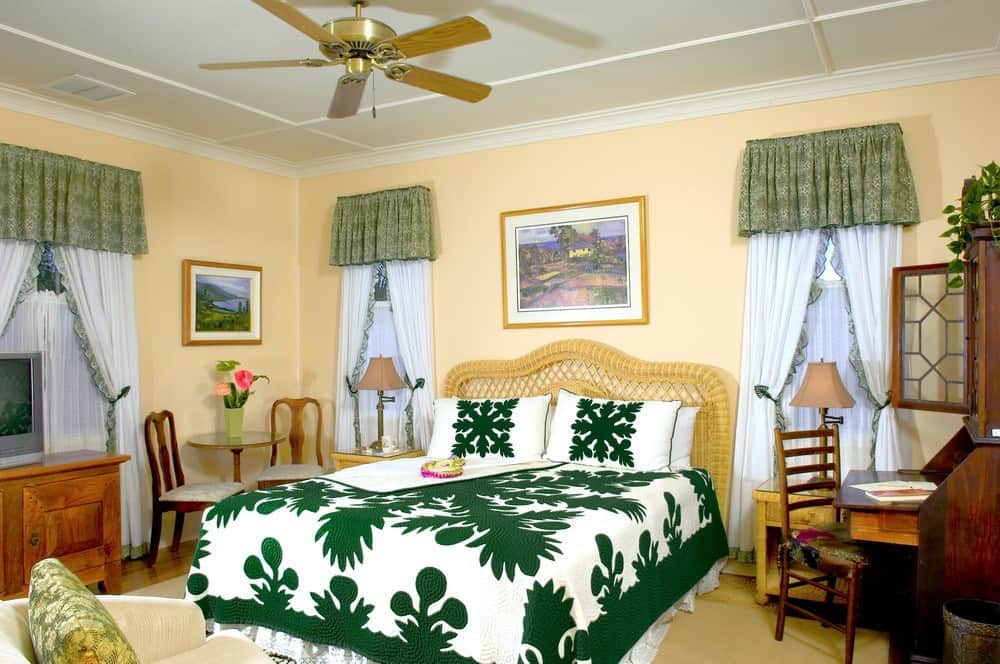
Ulu Room at The Old Wailuk
Ulu Room at The Old Wailuk (photo: Tony Novak-Clifford)

However, like all beautiful things, the building eventually lost much of its luster. It fell into disuse and disrepair until it was purchased by hospitality specialists Tom and Janice Fairbanks in 1995.

I bet it was the ideal place for urban exploration in Maui.

Tom and Janice spent the next two years restoring and renovating the building with the help of some of the top architecture firms in Maui.

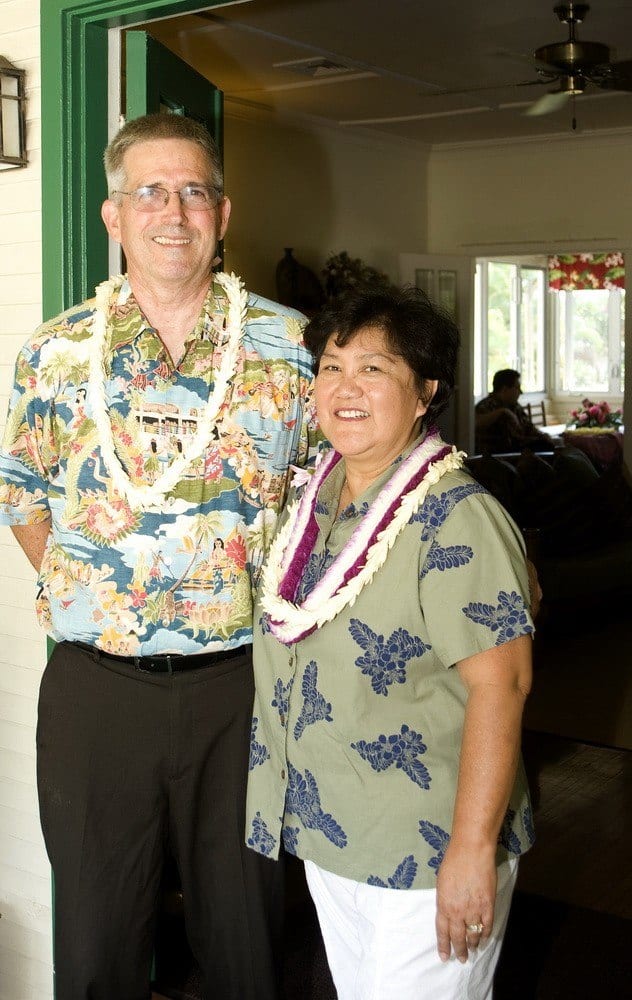
Tom and Janice Fairbanks at The Old Wailuku Inn
Tom and Janice Fairbanks at The Old Wailuku Inn (photo: Tony Novak-Clifford)

I should also mention that a B&B is only as good as the owners.

Tom and Janice are the type of personable Innkeepers who will greet you when you arrive, chat with you at breakfast, and make sure you find your way to the off-the-beaten-track restaurants, natural wonders, and events.

The Old Wailuku Inn Lanai
The Old Wailuku Inn Lanai (photo: Ric Noyle)

They add the personal Hawaii touch to the property because both were born and raised in Hawaii, unlike most hospitality workers who migrate from mainland U.S.A.

And they are just as passionate about living in Maui as those who chose to move to Hawaii of their own free will.

In 1997, they opened the doors to The Old Wailuku Inn, originally a seven-room bed and breakfast sought out by travelers worldwide.

But in 2002, three additional rooms were opened in the separate building where I stayed, known as Vagabond's House. Is it a coincidence they placed me there?

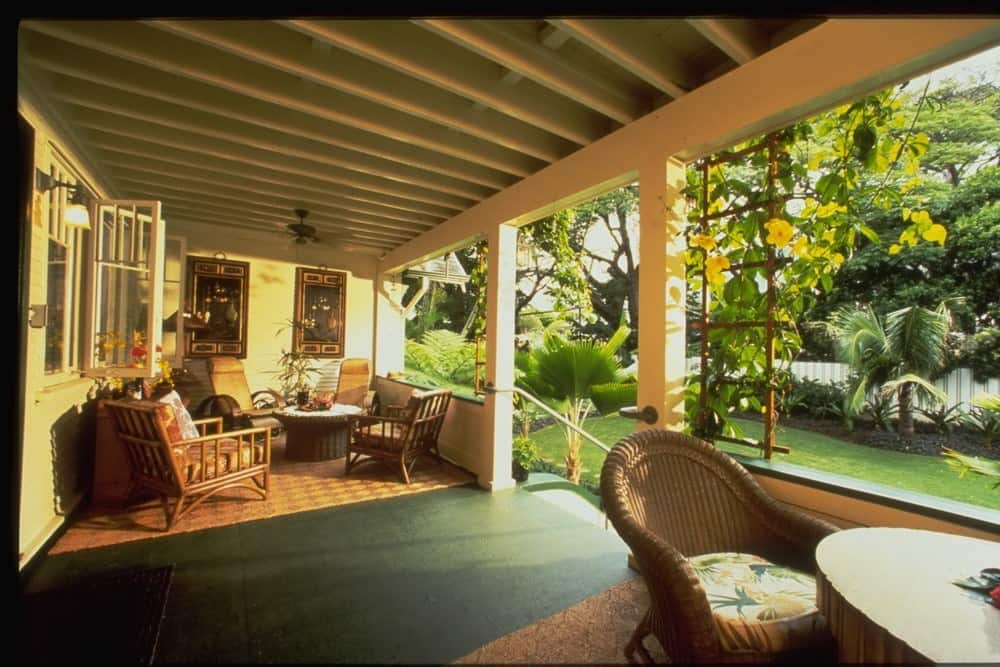
A shared porch, dining area, and artifact-filled living room make The Old Wailuku Inn perfectly suitable for guests to meet each other, share stories, and form friendships on their travels, including the older German woman I swapped stories with at breakfast one morning.

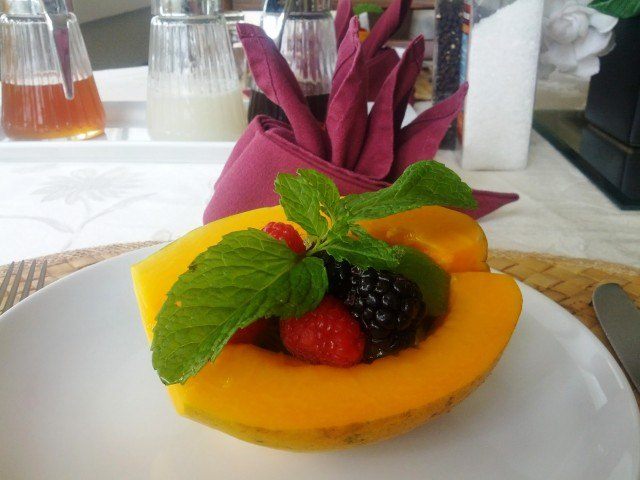
Besides the beautiful and spacious rooms, the highlight of any visit is the gourmet breakfast, filled with intricately cut fresh fruits and soft pastries like homemade cinnamon buns.

Maui fruits
Maui fruits

The Old Wailuku Inn is located a short walk away from many stores and attractions downtown, but you may just spend the day talking with other travelers.

Meeting classical charm and modern stylings, The Old Wailuku Inn is the best rest in Maui.

________

My trip to Maui was provided in collaboration with Maui, the Magic Isle. The opinions expressed above are my own.

Flying from Santiago to San Pedro de Atacama

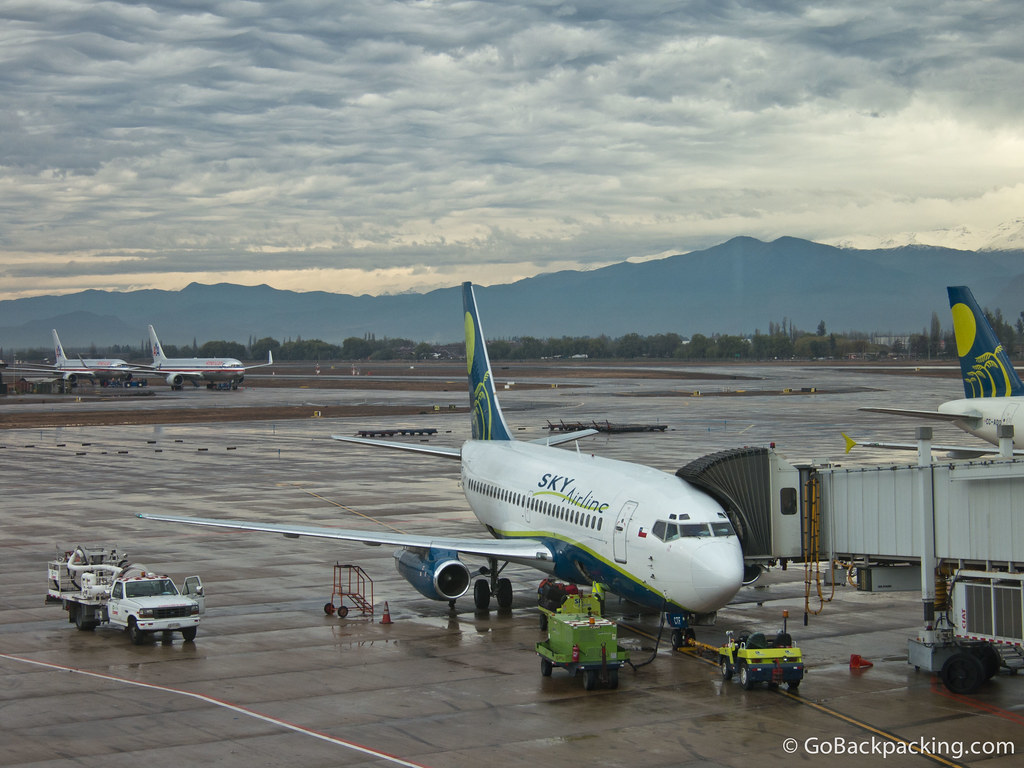
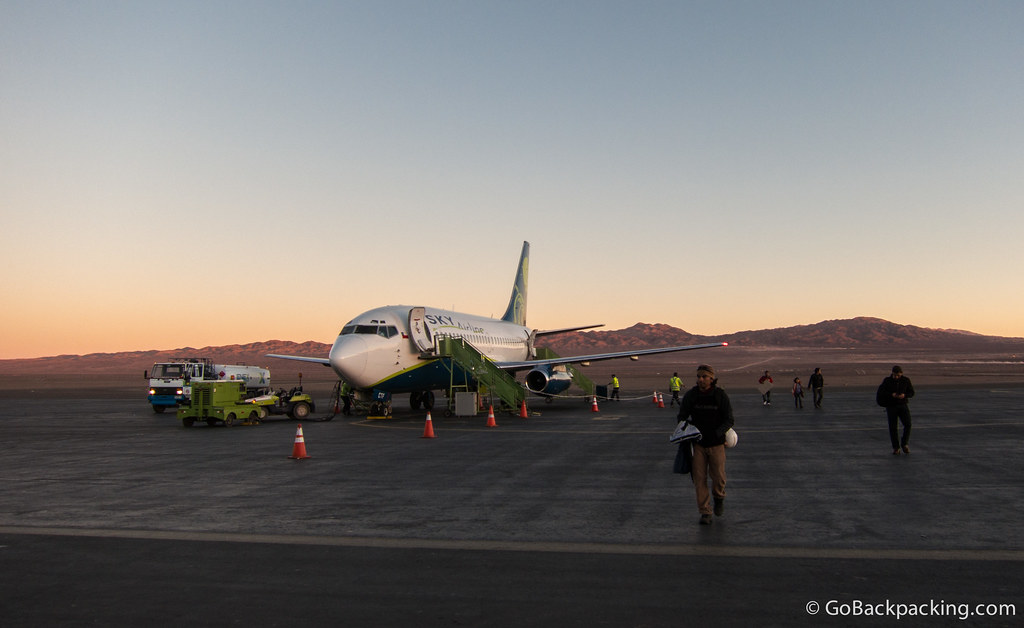
My Sky Airlines plane at Santiago's International Airport

Last May, I boarded a Sky Airline flight from Santiago to Calama, in northern Chile.

Calama is the nearest airport to San Pedro de Atacama, a small pueblo in the middle of the Atacama Desert.

The first flight took an hour and twenty minutes to go from Santiago to Copiapo. After a brief layover, we then flew another hour further north to Calama.

My flights delivered me from Santiago to Calama in two and a half hours, whereas the bus, though cheaper, takes 24 hours.

And from what I've heard, it's tedious and boring (you're driving through the desert after all), so do yourself a favor and spend the extra money to fly.

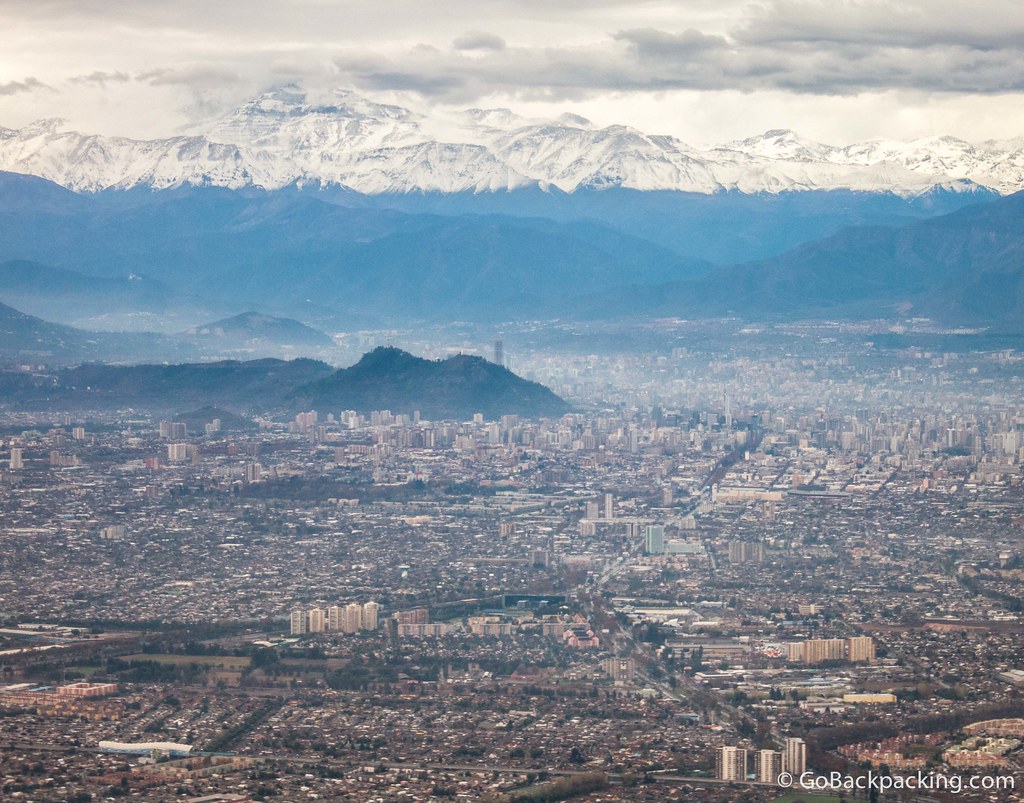
View of Santiago during take off
Taking off from Santiago was the only time in five days that I had this good a view of the snow-capped mountains surrounding the Chilean capital

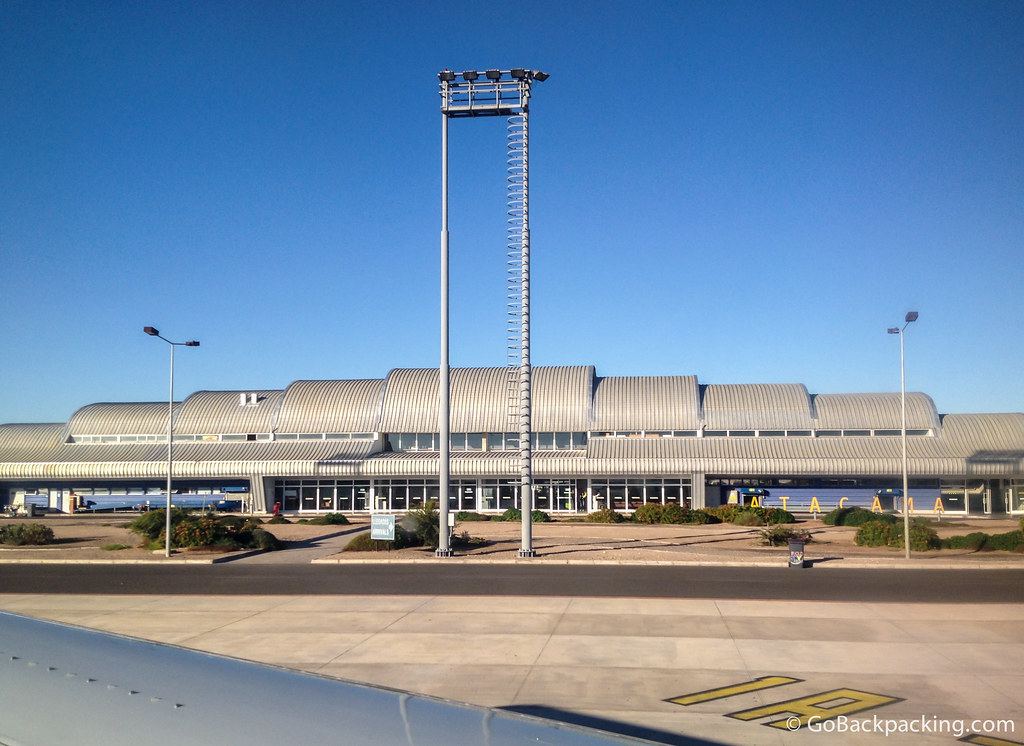
Chamonate Airport outside Copiapo
My first flight landed halfway between Santiago and Calama, at the Chamonate Airport which services the city of Copiapo

Airport terminal
The airport terminal's roof is shaped like waves, or perhaps they're meant to mimic sand dunes, as we were clearly in the desert by this point. A yellow sign toward the right spells "Atacama."

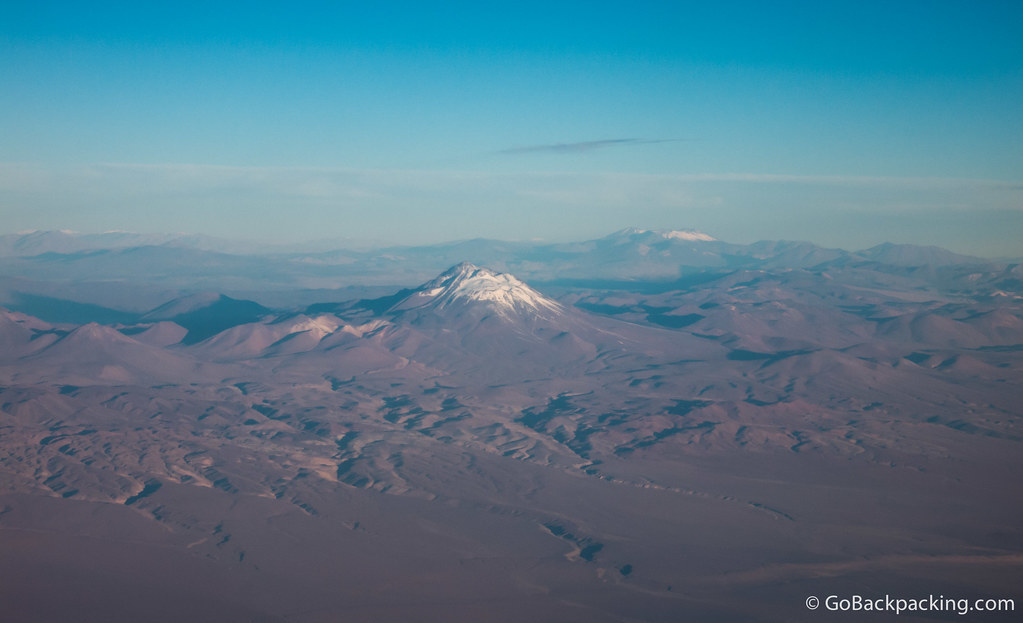
Snow-capped volcano
Passing a snow-capped volcano as we near Calama in northern Chile

Descending toward the Martian landscape
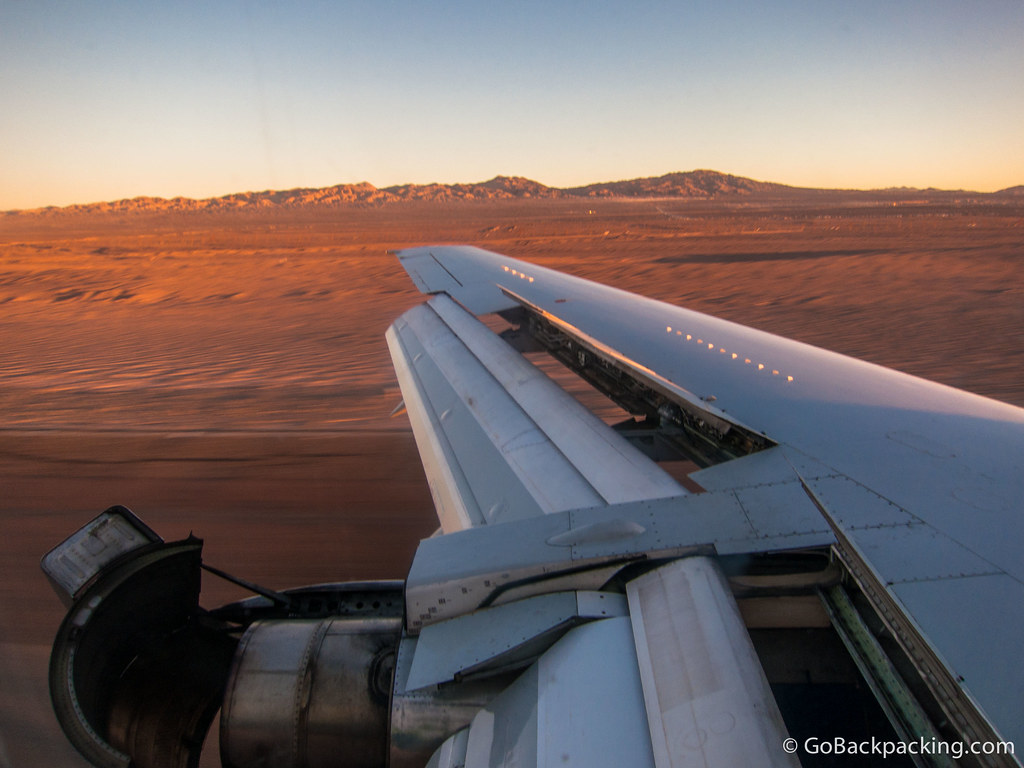
As our plane descended, along with the sun, the ground glowed a brilliant orange-red. It felt as though we were about to land on Mars.

The otherworldly Atacama desert landscape

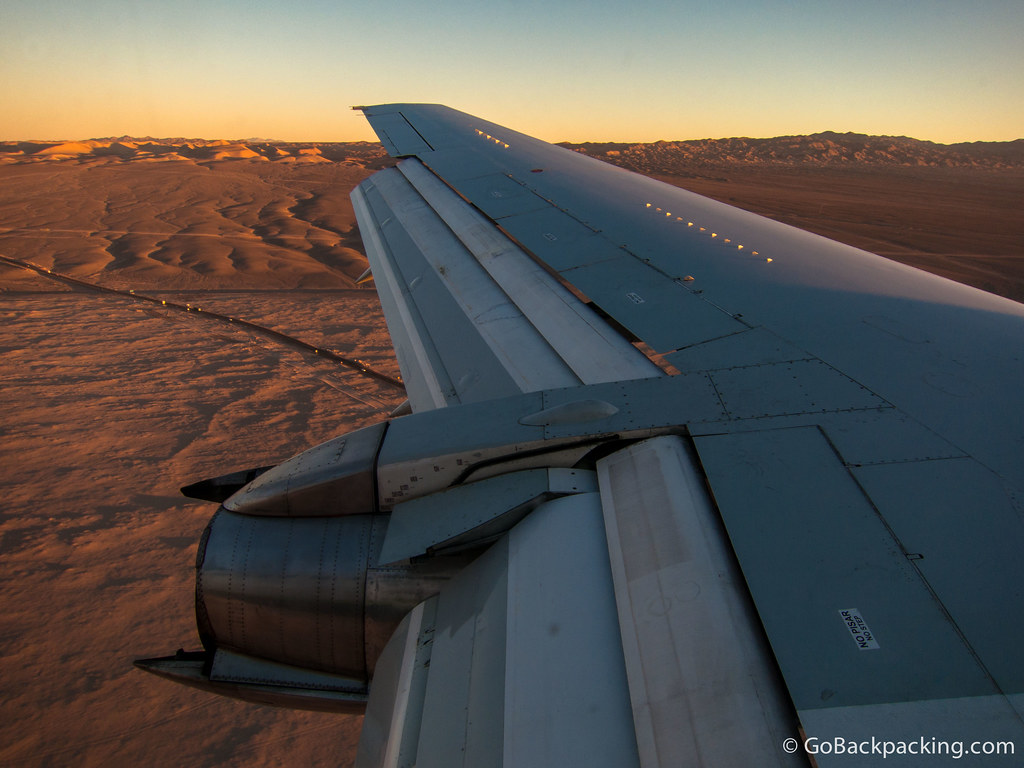
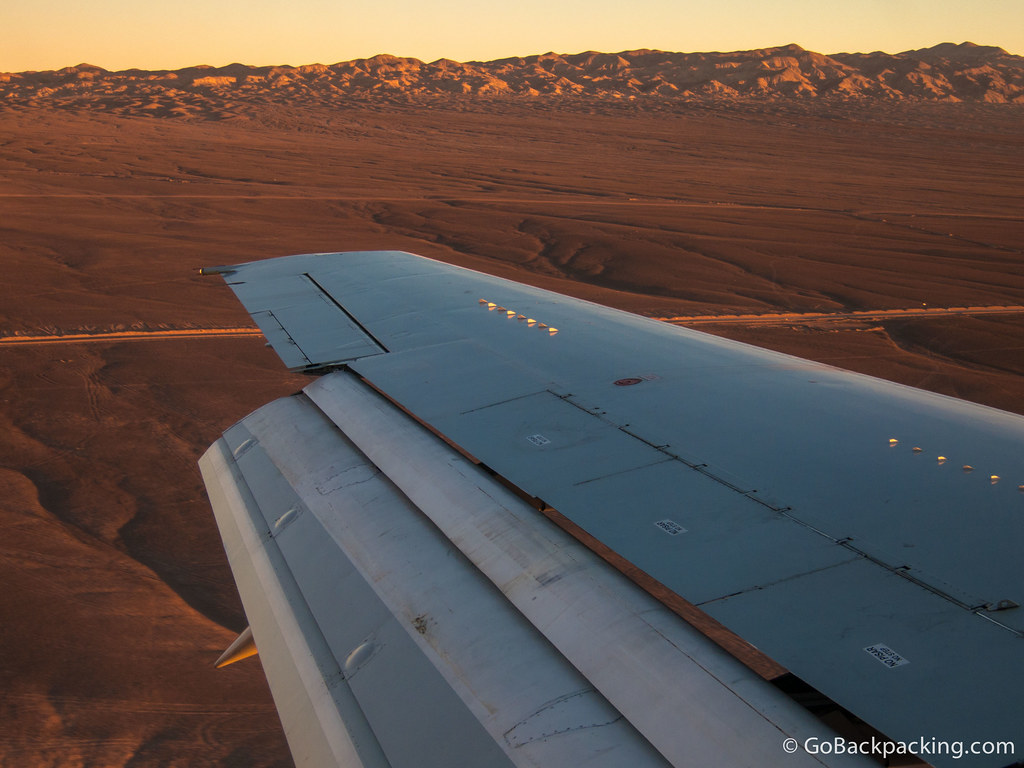
Wing transformation
As we approached the runway at Calama's El Loa Airport, the wings and engines transformed in a way I'd never seen before

Passengers walk off the Sky Airlines plane on the tarmac at El Loa Airport at sunset

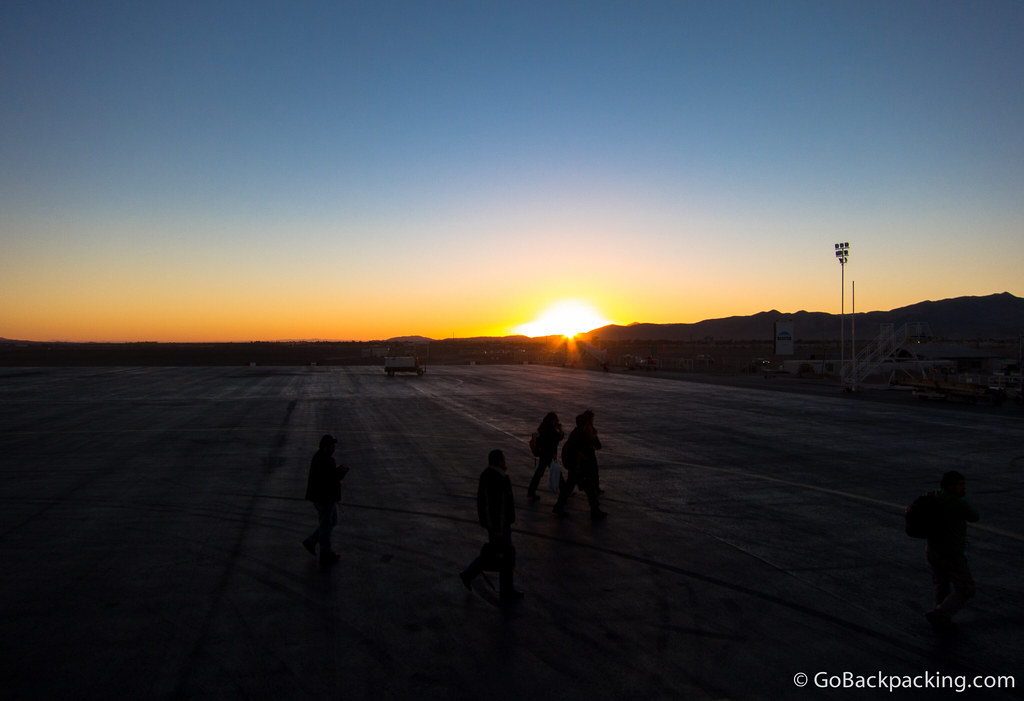
My first sunset over the Atacama Desert, as seen from the tarmac at El Loa Airport in Calama

Chilling With George Kahumoku Jr and the Slack Key Show

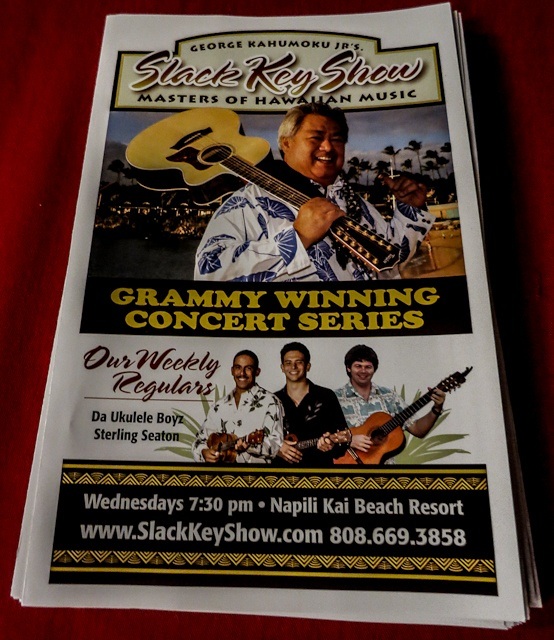
Slack Key Guitar Show
George Kahumoku Jr and Da Ukulele Boyz

[L]ike all cultures, music is vital to Hawaiian expression and identity.

Most mainlanders associate the ukulele as the chosen instrument of the islands, but for over 150 years, Hawaiians have been playing a guitar of their own.

These musicians created a new method commonly referred to as "Slack Key" that's unique and relaxed, just like the Hawaiian spirit.

In the early 19th century, Mexican cowboys introduced Islanders to the guitar, and the native Hawaiians invented a new style known as ki ho‘alu, which literally means "Loosen the [tuning] key".

"Slack Key" guitar consists of taking normal guitar tuning and loosening the strings until they form a completely new, gentler, more soothing chord when strummed openly.

Of course, this new style means a completely new way of playing, and fortunately the Napili Kai Beach Resort has been the home to George Kahumoku Jr, one of the world's masters of slack-key playing, for the past few years.

They call it the Slack Key Show - Masters of Hawaiian Music.

You enter the Aloha pavilion at the Napili Kai Beach Resort in Lahaina, with a tropical theme and the palm tree-lined beach a short distance below.

Napili Kai Beach Resort
Napili Kai Beach Resort by day

George Kahumoku, Jr. is the original star and clearly a mentor to the other slack key guitar musicians.

From the moment George takes the stage, on thing is clear: This is the house of George. It's his home, and you will never see anyone more at ease on stage.

George Kahumoku, Jr has won multiple Grammy awards and contributed to multiple film and documentary soundtracks.

True to his roots, he constantly gives back to the island community, teaching music and art at local community colleges and high schools.

He's also well-known on the island for bringing fresh produce from his farm everywhere he goes to share with his friends and neighbors. The people in the audience may know this, or they may not.

The just know that George Kahumoku, Jr is one of the most chill human beings.

His music relaxes and calms the nerves better than any massage, and in between songs, he tells jokes and stories about growing up on the islands.

He's probably told these same tales every single night for years, but tonight he is just as wide-eyed and refreshed as if this was the first time, like these stories had just happened.

Of course, the show isn't entire about George Kahumoku. He serves as the emcee, introducing a constantly rotating lineup of performers and luau dancers, most of which collaborate with George during his Grammy-winning albums.

These  guest artists include fellow slack key players, Ukulele masters, Vocalists, and Steel Guitarists. Each of these people has their own following, and they're all just as talented and interesting as George.

Peter deAquino of Da Ukulele Boyz is hilarious, but my personal favorite is Sean Na’auao with his distinct tribal forearm tattoos and stand out voice. I suggest you listen to him while I continue wondering what the tattoos mean.

As you sip on Mai Tais, you will experience that feeling known only as Hawaiian Hospitality, realizing that this is more than just a show, not just your average weekday entertainment: George Kahumoku is opening his home to you, inviting you in, and making you his honored guest.

So stay a while. Dude's got some great stories.

How to Attend:

  • Tickets: http://www.slackkeyshow.com/calendar/
  • Price: $37.99
  • Time: 7:30 PM - 9:45 PM
  • Where: Napili Kai Beach Resort Aloha Pavilion, 5900 Lower Honoapiilani Road, Lahaina, HI

    Slack Key Guitar Show
    First venue ever dedicated to presenting Hawaiian Slack Key Guitar

_________

My trip to Maui was provided in collaboration with Maui, the Magic Isle. Opinions expressed above are my own.

Intramuros: The Colonial Historical Area of Manila

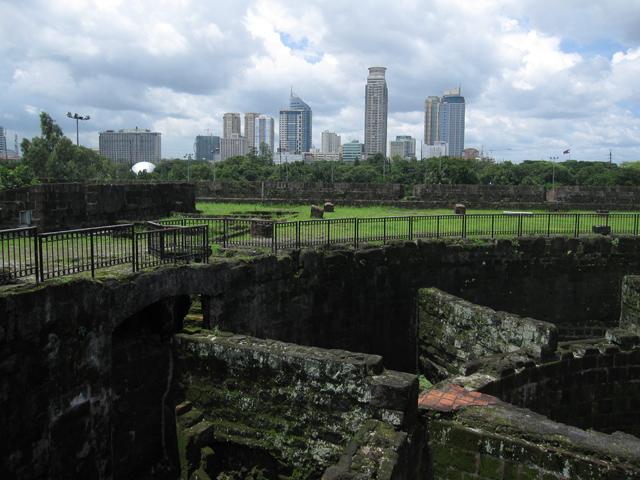
View of modern Manila from Intramuros
View of modern Manila from Intramuros - Fort Santiago

Manila is the capital and largest city in the Philippines.

It's a mega Asian city full of energy and action that never stops day and night.

The traffic is horrendous, full of vehicles, trucks, and the iconic public jeepney's that prowl the streets.

But when you visit Intramuros, things are on hold; the city seems to come to a halt as life slows down.

Intramuros is the colonial historic district of Manila, a walled-in area where the Spanish built their colony and where the Spanish government was formed in the Philippines.

The walls, which were built in the 16th century, are still in place and contain some real gems for those that enjoy history.

When I was volunteering in the Philippines, I had a chance to explore quite a bit of Manila, and I enjoyed walking around Intramuros.

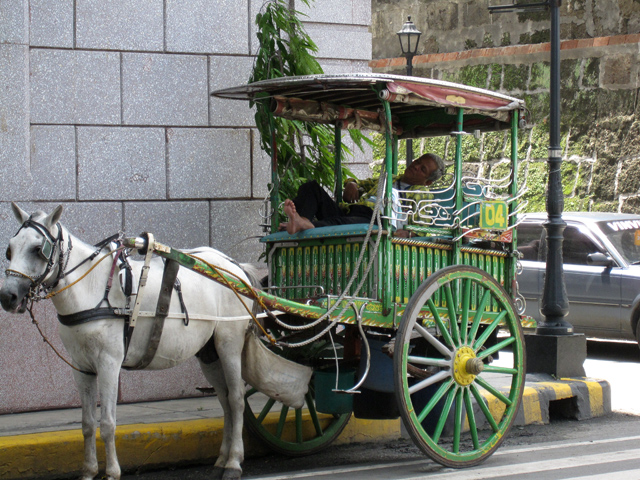
Waiting for customers in Intramuros

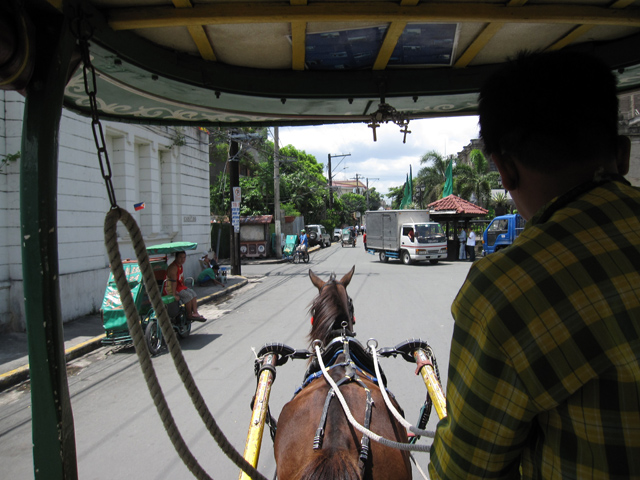
There are two main ways to get around Intramuros, walking, or taking a horse-drawn wagon.

I walked most of the time, but since a driver offered me a good deal, I also decided to jump in the back of a horse cart for the experience.

Though both methods of transportation are nice, I'd have to say I preferred to walk and be able to take photos and browse as I pleased.

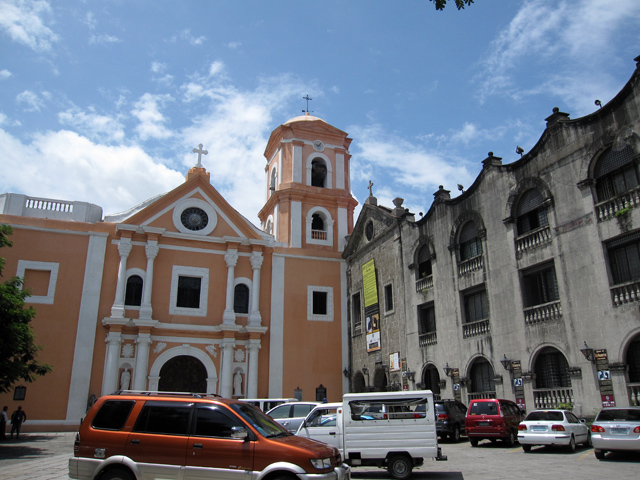
San Agustin Church in Manila, Philippines

Though there were formerly eight different cathedrals within the walls of Intramuros, there are now just two left.

San Agustin Church has a lengthy history, and it was the first church built by the Spanish in Intramuros.

It's now been rebuilt and renovated numerous times, but it was initially constructed from local bamboo and palm branches.

Fires, earthquakes, and a variety of conflicts and invasions, yet San Agustin Church still stands.

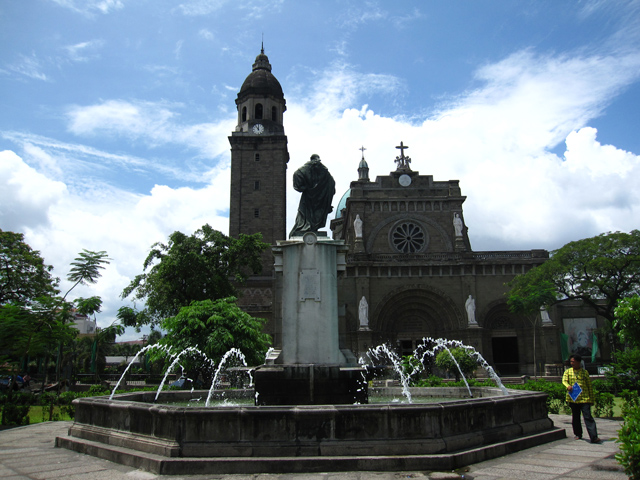
Manila Cathedral
Manila Cathedral

Another church that has a similar history and is perhaps more visually pleasing is the Manila Cathedral.

This Roman Catholic cathedral was first constructed in 1571, and it's also gone through several devastating disasters, with a final renovation completed in 1958.

The Manila Cathedral is a great meeting point, a place to find a horse carriage if you're interested, and an excellent place to begin your exploration of Intramuros.

As for museums, Casa Manila is one of the most famous in Intramuros. It's a representation of an old Spanish colonial home, and there's even a restaurant, coffee shop, and hotel inside.

Cruising around Intramuros

Fort Santiago, which is connected to the outer wall, is another landmark of importance in Intramuros. It was used as a stronghold for defense within the city.

The fort is also particularly famous for being where José Rizal, one of the founding fathers of the modern Philippines, was detained.

On the ground, you'll also find Rizal's footprints where you can follow the national hero from his prison cell to the place where he was finally executed.

Also within Intramuros nowadays you'll find schools, a few cafes, and some restaurants. Luckily it remains quiet and peaceful, unlike the rowdy traffic that roars just on the other side of the walls.

Of all the things to do in Manila, exploring Intramuros is one of the best ways to learn about the city's history and see the mixture of cultural heritage in the Philippines.

For a self sightseeing tour around Intramuros district, give yourself about 2 - 3 hours, make sure you wear sunscreen and drink plenty of water!

Mt. Everest Time Lapse

Everest -A time lapse short film from Elia Saikaly.

Experience the beauty of Mt. Everest at night in time-lapse. While most climbers slept, I attempted to capture some of the magic that the Himalayan skies have to offer while climbing to the top of the world.

Here's a bit of what I endured at the end to make this possible: http://www.eliasaikaly.com/2013/05/into-the-death-zone/

One of the most rewarding parts of the journey was being able to share it with thousands of students on www.epals.com/everest

This time lapse video is comprised of thousands of photographs, processed and assembled on Mt. Everest.

5 Adrenaline-Filled Adventures in Maui

Napili Kai Beach Resort

When most people think of Hawaii, they picture themselves lazily sipping Mai Tai cocktails at beachside bars, laying in a hammock, and reading a book.

That's perfectly fine, but for the more extreme travelers, there are the adventure activities that can only be found on the island of Maui.

At only 727 square miles, Maui packs a ton of excitement into a small space, filled to the beaches with biking, hiking, kite surfing, scuba and ziplining opportunities galore, as well as some sports and ideas you might not even know existed.

In my travels to Maui, I visited some old favorite happenings and tried some adventure activities I had never heard of, but couldn't live without afterward.

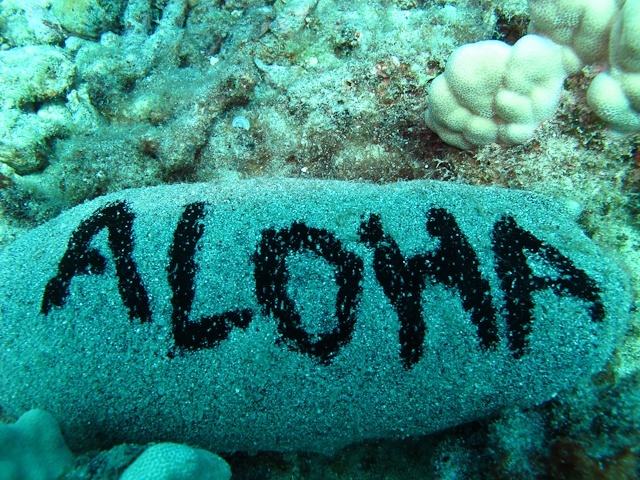
"Aloha" rock
Is this rock saying "Hello" or "Goodbye?" You don't know.

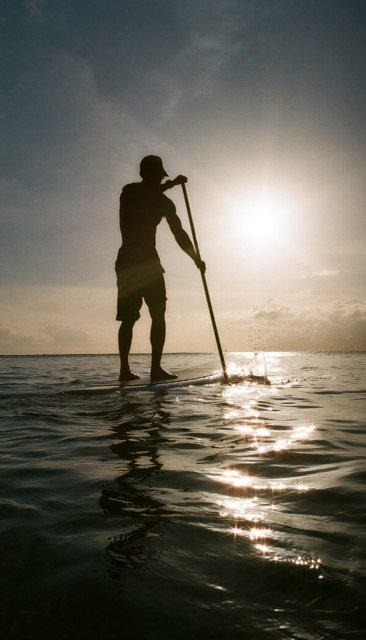
1. Stand-Up Paddleboarding

The first of many new adventure activities I tried isn't new at all, but rather an ancient travel method that has been used by native Hawaiians to travel across the islands for centuries.

Stand-Up Paddleboarding, or SUP, is a relaxing activity that doubles as an intense workout.

Thirty minutes of SUP is equal to six miles of running, but it certainly doesn't feel that way while you're doing it.

SUP places you on what looks like a long, skinny surfboard and gives you an oar with which to propel yourself, essentially turning you into a one person kayaking team.

Many places in Hawaii hold lessons and races, but the best place to do it in Maui is at Tiki Man Stand Up Paddle.

Tiki Man SUP sunset vertical

My guide at Tiki Man, Nate Cloud, who doubles as a fashion designer by night with his Spread The Like clothing brand took us into the crescent-shaped harbor with quiet, gentle waters, making it just right for beginners.

With good sarcastic humor, he began teaching us basic techniques to move across the water.

Like yoga, SUP can be a hard-core workout, only if you want it to be.

But I found it incredibly relaxing, to the point where I was so content to bob up and down on the soft current that I laid down for a nap.

Unfortunately, it's not called "Lay-down Paddle Boarding," so Nate blew his whistle at me to check if I was okay.

He also explained that sometimes he straps a cooler filled with beers to the back of the board out in the ocean with him, something I'm positive that dude has done more than once.

In addition to regular SUP lessons, Tiki Man Stand Up Paddle also offers SUP yoga and SUP boot camp lessons, for those who want a more intense core workout.

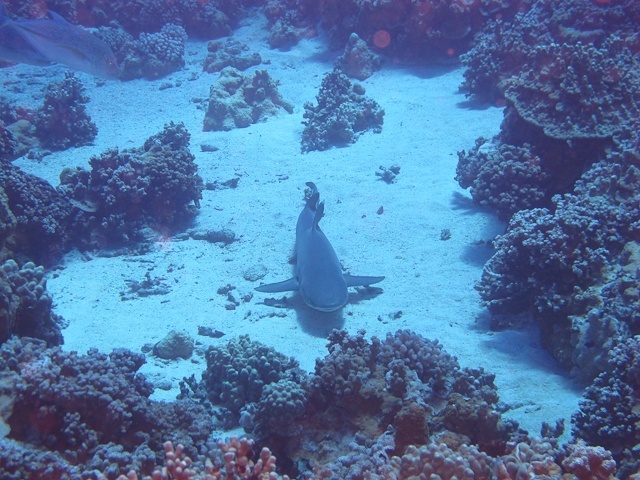
Shark
Not that I know from experience or anything.

2. Snorkeling with Sharks

One of the more common adventure activities in Hawaii is snorkeling.

It's easy to make fun of snorkeling as something that only middle-aged tourists do until you find yourself staring face-to-face with a shark, then you realize quickly that it is pretty intense.

Ali‘i Nui Snorkel Sail took me out on a boat with a group of about forty people of all ages to Molokini marine reserve, early in the morning when the air is just the right temperature.

Many people were sunbathing on the roof, but I chose to stay in and socialize, and take advantage of their continental breakfast and lunch.

Scrambled eggs, bacon, sliced fresh island fruits, croissants, bagels, and muffins kept me occupied.

I'll try not to brag about lunch, but I did eat guava-smoked pulled pork, marinated Teriyaki chicken thighs, and homemade macadamia nut cookies.

Unafraid of swimming too soon after eating, I was first in line to dive under when we reached our coral destination.

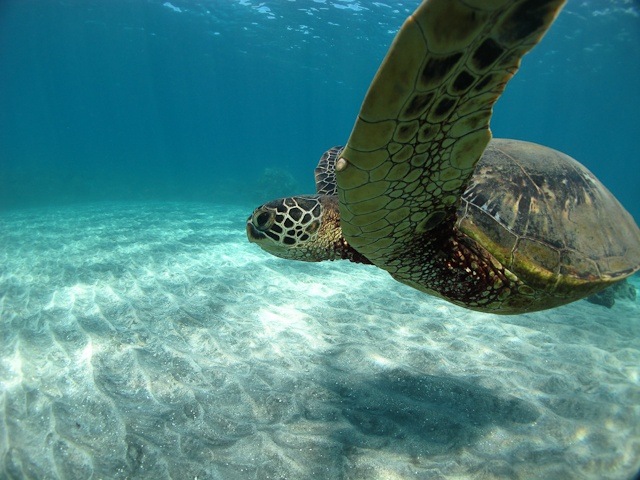
Sea turtle
This sea turtle even struck a pose.

Sea turtles, brightly colored fish, and the shark mentioned above came by to visit while I was there, none of which seemed to care that a bunch of weird bipedal creatures just dropped into their existence from above.

For them, it was something that happened all the time.

They were just content to dart in about the beautiful coral reef and let me take pictures of them.

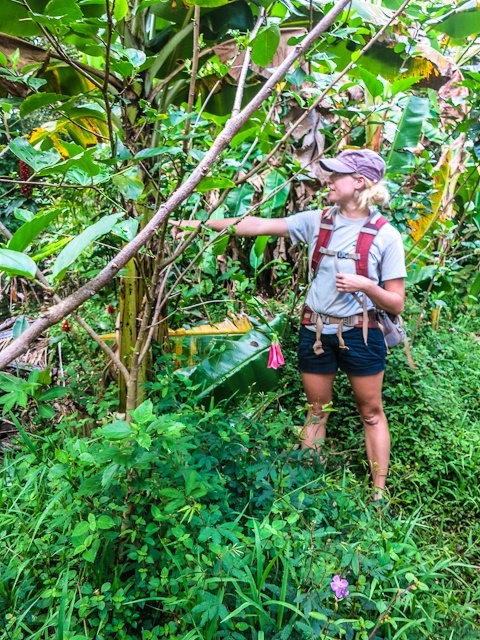
Our guide, Kate
Our organic farmer turned hiking guide, Kate

3. Hiking on Volcanic Landscapes

Hiking is another one of those adventure activities that Maui puts its spin on, that spin happens to be that you are walking along an active volcano.

At Haleakala National Park, you can walk around miles of volcanic landscape and encounter species of plants and animals that aren't found anywhere else in the world.

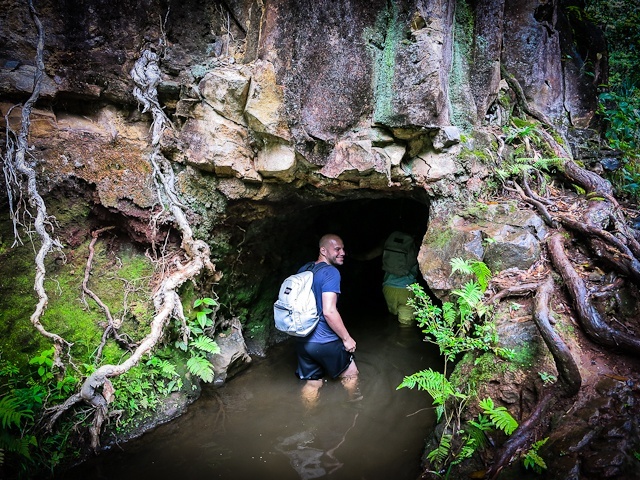
I also went on a guided hike with Hike Maui that involved traversing through a secluded jungle, trying different edible plants, and taking some quick jumps through refreshing waterfalls.

Just off the road to Hana, we stopped at a private farm that is made open to the public.

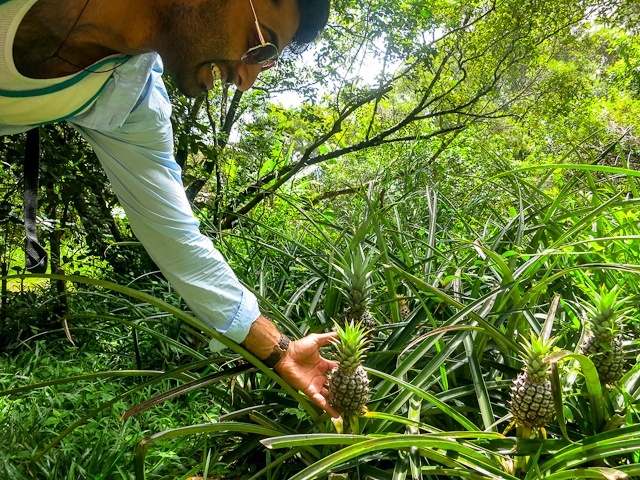
Mini pineapples
Mini pineapples

Our guide, Kate, introduced us to many of the plants and led us through the tropical rainforest down rocks, under trees, and off cliffs into waterfalls. 

Her story is particularly impressive.

She gave everything up to work on an organic farm while living in a tent in Maui. Since then, she switched careers and now leads hikes around Maui.

Kate first introduced us to cute mini pineapples. We all just wanted to stuff them into our backpacks and take them home with us.

Here we go venturing into the unknown.

I wasn't lying when I said the hike included some wild exploration through water-filled tunnels hidden in the rainforest.

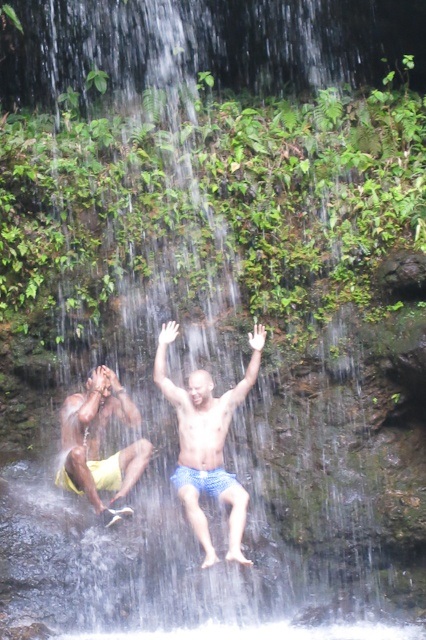
The main highlight of the hike was visiting three different waterfalls, two of which we could jump off.

Waterfall
Posing like models under a waterfall

All three of them allowed for model poses you can look back at fifty years from now to prove to your grandchildren that you, in fact, took part in a Maui model photo shoot.

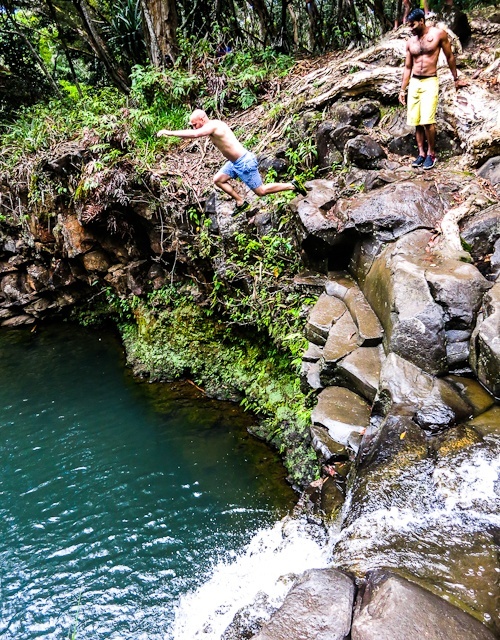
If you are brave like the eight-year-old children, their parents and us twenty-somethings you can leap into the deep, chilly pools like us.

Cliff jump
Cliff jumping into cold water

They do not seem so high from below, but while standing above before jumping, I can guarantee your feet will tremble.

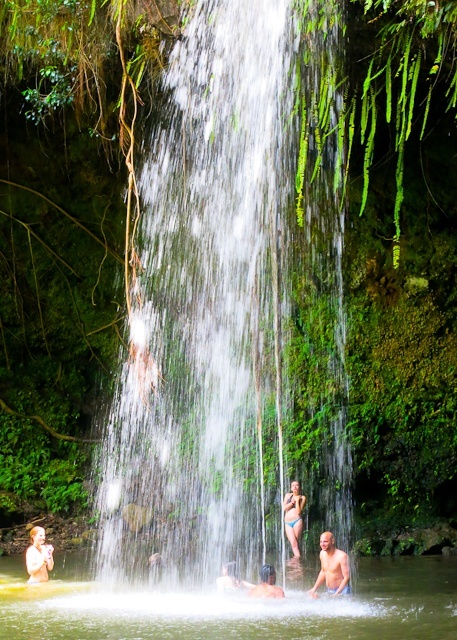
Hanging out under the falls

Finally, if you happen to stumble upon a few cute girls your age just hanging out under a waterfall, you may have found the best place in Maui. We did.

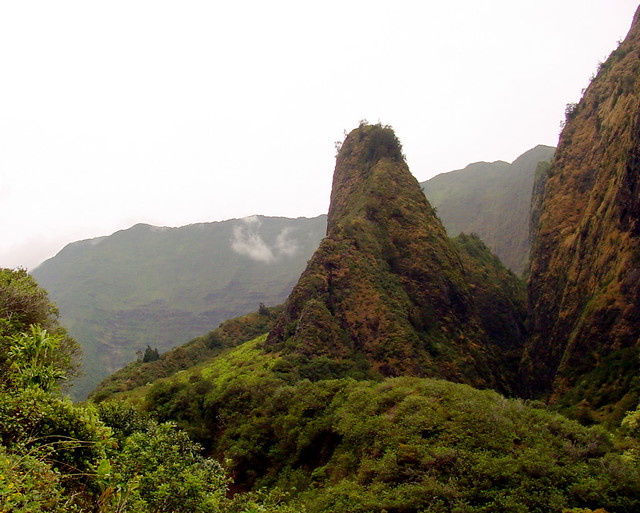
The Needle in Iao Valley State Park
The Needle in Iao Valley State Park (photo: Traveling Otter)

Then there's the Iao Valley, where travelers can hike up to the Iao Needle, a 365-meter rock outcropping that overlooks a beautiful stream.

The needle was used as a lookout point in many significant Hawaiian conflicts, but now it is a popular destination for hikers.

4. Ziplining

If you'd rather fly than walk, Piiholo Ranch Zipline in the town of Makawao offers three levels of tours across their two different zip line courses, including a whopping 2,800-footer of a line.

You can zoom above the Hawaiian canopies and climb their massive zip line towers for one of the most unforgettable adventure activities in Hawaii.

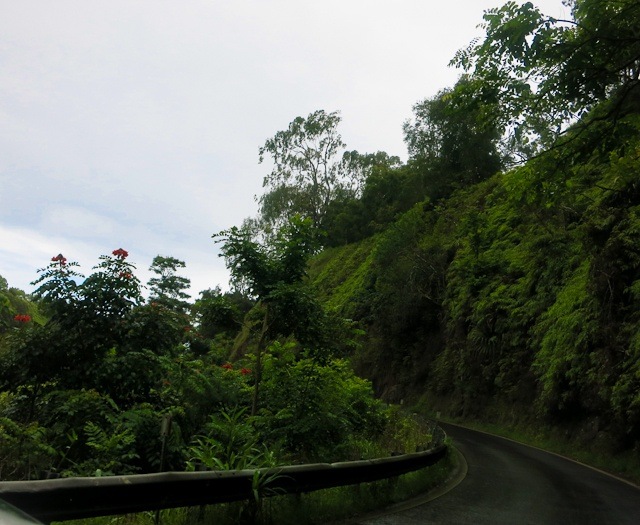
On the Hana Highway, the whole drive looks like this. Seriously.
On the Hana Highway, the entire drive looks like this. Seriously.

5. Driving the Hana Highway

The famous drive from Paia to Hana, also known as the "Hana highway" is one of the most exciting and picturesque trips on earth.

With dozens of stops to see and check out across the three-hour drive, I wished I could stay on that winding road forever.

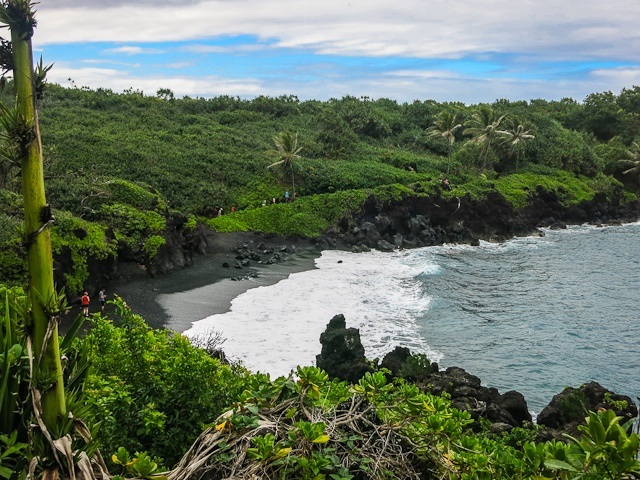
I was grateful that I didn't, however, once I reached the red-and-black sand beaches of Hana Bay.

The black sand beaches of Hana Bay

While red sand beach involves a rather sneaky and challenging climb down through private property to reach the famous nude beach, the black sand beach offers incredible adventure through mysterious caves leading to the ocean.

20130606-IMG_4966

Of all the possible adventure activities Maui has to offer, I never thought my favorite would be driving from one town to the next, but I soon learned that there are reasons this road is so well-known.

I should also mention I have an irrational fear of driving.

The road to Hana was so enticing that I grabbed the wheel from my buddy and drove us the entire way there.

During one point of the journey, he grew tired of my constant stomping on the brakes.

When I left the car to pee, he nearly left me behind to find my way home.

Handstand at sunset
Handstand at sunset

As you can see, the island of Maui is the perfect destination for the adventure-minded traveler.

In my time of one week, I couldn't cover half of the adventure activities that are packed into this place, and there are many, many more categories of fun still to be found.

Maui is an island for everyone, and that reason is plain and simple.

It offers unique, exciting, and fun adventure activities that you can not replicate almost anywhere else when it comes to the natural wonders and small-town island culture.

Will I find you there soon?

_________

My trip to Maui was provided in collaboration with Maui, the Magic Isle. Opinions expressed above are my own.

Impressions of Hong Kong

Coming into Hong Kong on a bus

Many people jump straight on the airport express train to get to the center of Hong Kong, but the last time I visited I decided to take the bus.

Rolling into Hong Kong, even on a cloudy day, I got some great views of the city.

Chungking Mansions
Chungking Mansions

While there are some affordable attractions in Hong Kong, compared to Southeast Asia, it's quite an expensive destination.

For budget accommodation and a true adventure head to Hong Kong's notorious Chungking Mansions or the next door Mirador Mansion.

Dim sum for breakfast

Dim sum, a breakfast meal of many small dishes, is one of the most famous things to eat when in Hong Kong.

Dishes are often quite greasy but full of flavor.

View of Hong Kong
View of Hong Kong

One of the best things about Hong Kong is the view of the mega city from Victoria Peak.

You can either choose to ride a cable car to the top or take a hike.

Sign and ads galore
Sign and ads galore

When walking around Hong Kong you're bombarded with advertising plastered on every wall and sign throughout the city.

The bright signs are a sight on their own.

Fixing a sign in central Hong Kong

Despite the city being extremely modern, I still love how they use traditional bamboo scaffolding for construction.

Nothing man-made can beat natural bamboo!

Fresh market in the middle of Hong Kong
A fresh market in the middle of Hong Kong

Another thing I love about Hong Kong is within the maze of congested sky-rise buildings, there are fresh wet markets that fill the lanes and alleys.

Roast duck and chicken

But nothing in Hong Kong compares to the food. Any trip to Hong Kong would be incomplete without spending plenty of time admiring and then devouring the wide range of cuisine.

Glutinous rice and Chinese sausages

Even the simple on-the-go snacks like glutinous rice and Chinese sausages are wonderful.

View of Hong Kong
View of Hong Kong

Rated as having one of the world's most impressive skylines, it's not hard to see why.

The view of Hong Kong from the Kowloon side is always sure to impress during the day or at night.

At night there's also a light show that dances across the buildings.

Hong Kong is one of the world's great entertaining and always thrilling cities to explore.

Niagara Falls From Every Angle

Birdseye view of Niagara Falls

[A]t 165 vertical feet, they aren't the world's tallest, but the three waterfalls which make up Niagara Falls have the highest flow rate in the world.

In the high water season, we're talking more than 6 million cubic feet of water flowing over the edge, per minute.

After wrapping up this year's North American TBEX conference in Toronto, I took a day trip to Niagara Falls.

The tour is extremely efficient, and includes:

  • Roundtrip bus transport with guide
  • Wine tasting on the ride out of Toronto
  • Optional helicopter rides ($104 extra, highly recommended)
  • Lunch overlooking the Falls
  • A ride on a Maid of the Mist boat
  • Visit to a scenic outlook point
  • Stop at Niagara-on-the-Lake, a cute town with awesome ice cream

Overall, I felt like I saw Niagara Falls from every possible angle.

One of the safe and comfortable Bell 407 helicopters used for the 10-minute scenic flights over Niagara Falls

Approaching Niagara Falls by helicopter
During the scenic flight, an audio recording cites information about the Falls, but I was too busy taking photos to hear a word that was said

As we flew clockwise over the Falls, a rainbow appeared

If you look left of center, under the rainbow, you can see one of the
If you look left of center, under the rainbow, you can see one of the "Maids of the Mist" tourist boats

The American Falls as viewed from a park across the river

Horseshoe Falls
You haven't been to Niagara Falls until you've taken a ride on the Maid of the Mist boat which travels past all three waterfalls. In this photo, we're getting wet under the Horseshoe Falls.

At the edge of Horseshoe Falls
By foot, you can get extremely close to the edge of the Horseshoe Falls. It's hard to believe anyone could survive a drop over the falls, but many people have lived to tell the tale.

Horseshoe Falls as seen from the Canadian side
Horseshoe Falls lookout point on the Canadian side. This scene reminds me of the scene in Superman II where the boy falls over the edge.

Full rainbows make regular appearances at the Falls

A double rainbow
A double rainbow. I like how the bridge in the background arches in the same way as the two rainbows.

_________

This tour was provided in partnership with Viator (minus the helicopter ride).

Tell It On The Mountain Giveaway

The new documentary film, Tell it on the Mountain - Tales from the Pacific Crest Trail, follows half a dozen of the 300 or so hikers who attempt the Pacific Crest Trail every year.

While much of the film was shot by professionals, the producers gave cameras to individual hikers, which help provide an intimate look into their experience.

You'll find some of the Pacific Crest Trail's heavyweights featured in the film, including Scott Williamson (multiple PCT record holder) and Billygoat (John Muir look-alike and trail fixture), as well as first timers.

Shaun Carrigan, the Executive Producer, recently offered me a chance to preview the full 2-hour film, and I thought it was wonderfully done.

Even if you've never considered a multi-month trek, the storytelling and scenery from these remote parts of the western United States are captivating.

Enter the Giveaway

To help get the word out, we're giving away 1 DVD ($25 value, US only) and 1 digital download (anywhere on the planet).

Simply fill out the form here (it takes 10 seconds), and you'll be entered to win.

Rules and Stuff

Entries are being accepted from June 17 through June 28. Winners will be notified via email a few days later.

You do not need to subscribe to the newsletters to qualify to win. It's optional.

To read reviews of the film, check it out on Amazon, and for more information, visit the official website.

Casa Azul: The Former Home and Studio of Frida Kahlo

Museo Frida Kahlo
Entrance to Museo Frida Kahlo

One of the most popular things to do in Mexico City is the Museo Frida Kahlo, housed in Casa Azul, the artist's former home and studio.

Fully satiated after a gourmet lunch at Pujol, I took a taxi straight from the restaurant to the museum, hoping to squeeze in a visit before closing time.

A short line extended from the entrance, under a tarp, but it was moving quickly.

The cost of entry, including the ability to take photos, is $11.60.

The first scene upon entering the house is a wide-open courtyard.

The interior of the walls is painted the same rich blue as the exterior.

Self portrait of Frida Kahlo experiencing a miscarriage
Self-portrait of Frida Kahlo experiencing a miscarriage

The first room is a gallery featuring a selection of Frida Kahlo's paintings.

I was hoping to see my favorite, The Two Fridas, but it turns out that one is located at Mexico City's Museum of Modern Art.

Next time!

The paintings on display did do a good job of representing her style, and themes.

For those unfamiliar with Frida Kahlo, one of Mexico's best-known artists, she led a rather tragic life, as depicted in the 2002 movie Frida, starring Selma Hayek.

As a teenager, she was involved in a traffic accident that left her dealing with related injuries her entire life.

It was after the accident that she began to paint. Her painting drew heavily on her own life, including lots of self-portraits, and depictions of miscarriages.

She desperately wanted to have children, but she never carried a baby to term.

The colorful dining room

In 1929, she married fellow painter Diego Rivera, but it was a tumultuous union. Kahlo was bisexual and had affairs with both men and women.

Rivera was known to have affairs with women as well.

In 1953, Frida needed to have her right foot amputated. She died shortly thereafter on July 13, 1954, at the age of 47.

Diego Rivera donated the home, upon his death in 1957, in order to create a museum in recognition of Frida's life and work.

The artist's studio
The artist's studio

Frida's ashes are stored in the toad-shaped vase to the left, which sits on a dresser in her bedroom

Leaving the rooms with her paintings, we enter the other parts of the house, including the dining room, kitchen, and her bedroom, where one can see the pre-Colombian urn which houses her ashes.

From her bedroom, one exits down a staircase back into the courtyard.

Frida lived in Casa Azul her entire life, including her 25 years of marriage with Diego Rivera

Museo Frida Kahlo

Address: Londres 247, Del Carmen Coyoacán, 04100 (Mexico City)

Hours: Tuesday 10 AM - 5:45 PM, Wednesday 11 AM - 5:45 PM, and Thursday to Sunday 10 AM - 5:45 PM

Visiting Hanoi’s Temple of Literature

Hanoi is the capital, and one of the most popular cities to visit in Vietnam. The Temple of Literature, an ancient complex that is both a temple and an academy, is one of Hanoi's most famous attractions and places of history.

Entering the Temple of Literature

It's a temple dedicated to Confucius, where scholars and students formerly lived and studied. Beginning in 1076, the imperial academy opened and started to enroll students.

Beautiful gardens and huge trees
Beautiful gardens and giant trees

The Temple of Literature is neatly organized in a series of courtyards, each courtyard leading further into the temple and finally to an area that housed shrines and many statues, including one of Confucius himself (see below).

The construction is based on the temple in China where Confucius was born. The temple grounds are lush and green with big, beautiful trees and gardens.

Turtle stelae at Hanoi's Temple of Literature
Turtle stelae

You can browse around all the courtyards at your own pace. I enjoyed looking at the stone steles lined up under an awning when you enter the complex.

Known as the Stelae of Doctors, 82 (though there were formerly 116) of these stone engravings have a turtle as a foundation.

The steles were created as a way to encourage students to pursue knowledge and to continue learning.

The Chinese writings on these stones steles have been a significant source of information into Vietnam's past lives and culture nearly 1,000 years ago.

These steles also include information about students and those who graduated from the academy.

In the 4th courtyard

The fourth of five courtyards is where the main temple is located. On either side of the main shrine, two halls were used to honor some of the most faithful Confucian followers.

At the front of the courtyard, surrounded by statues and burning incense, was the elaborate statue of Confucius himself.

Statue of Confucius
Statue of Confucius

As a Confucian temple, Confucius was studied and worshipped here. Just outside the main shrine were some cabinet displays of old clothes, pens, notebooks, and a few small personal belongings from students who had attended the imperial academy.

Dragons on the roof of a building at the Temple of Literature in Hanoi, Vietnam
Dragons on the roof

Like any historical site I visit, while I enjoy the overall attraction, I like to pay attention to the small details. The little things can make a place stand out and be worth visiting.

The Temple of Literature is packed with symbols and details that are easy to miss, but if you look in the right places, they can make the experience more rewarding.

The dragons on top of the roof carved from stone are in place according to Feng shui and give the building protection, not so much from human enemies, but from natural things like fires and other devastating disasters.

Chicken pho
Chicken pho

After spending a few hours walking around the Temple of Literature, we were hungry.

Luckily, after just a few minutes of searching, I found a local restaurant serving Vietnamese noodles. It wasn't long before I was seated in front of a piping hot bowl of chicken pho and ready to dig in!

Be sure to include the Temple of Literature on your tour of Hanoi.

Swimming with Dolphins in Cancun

Dreams come in all shapes and sizes, and in the case of swimming with dolphins in Cancun, they can include wet kisses and belly rubs too.

My desire to swim with dolphins goes back to 2007 when I was on a snorkeling trip off the island of Moorea in French Polynesia.

Our small boat puttered past luxury bungalows built over water. Outside the bungalows, in a fenced area of water, were guests swimming and playing with a dolphin.

View of Dolphin Discovery on Isla Mujeres, upon arrival by ferry from Cancun
The facilities at Dolphin Discovery on Isla Mujeres

Since then, I've always associated the activity with luxury travel, but it's surprisingly affordable, as I found out in Cancun.

Based on my dolphin encounter at Isla Mujeres, swimming with dolphins may be one of the most popular activities in Riviera Maya.

My Experience

Departing the Mainland

Booking a 10:30 a.m. swim, the earliest of three each day, meant arriving at the Playa Tortuga ferry terminal in the area with Hotels in Cancun at 8:30 a.m.

You present your voucher and get a bracelet with your particular tour.

There are many options and prices to choose from when it comes to swimming with dolphins in Cancun, and the bracelets ensure the boatloads of customers match up with the tours they purchased.

One of the many dolphin trainers

Dolphin Discovery, located on Isla Mujeres, operates a ferry. With a bracelet on my wrist, I left on the 9 AM ferry with excited tourists from around the world.

There were lots of families with young kids and couples and groups of friends.

The 45-minute ferry ride brought us to the southern end of Isla Mujeres, where the water is colder and more suitable for the dolphins.

Isla Mujeres

To my surprise, we pulled right up to the dock from which we'd later get in the water with the dolphins. Other customers and trainers were already in the water playing with them.

After depositing our clothes and valuables in the free lockers, we were given life vests. Everyone got in groups based on bracelets.

We were reminded no cameras, even waterproof ones, were allowed into the water. Each group would have a dedicated photographer taking photos, which were available later for purchase.

There were about 39 people in my group, and it was then split up into four sub-groups, with ten people per trainer. I was assigned to a group of eight Brazilians.

The dolphin trainer, at a minimum, was trilingual, speaking Spanish, Portuguese, and English.

We walked around the dock and removed our flip-flops in front of a metal staircase descending into the water.

In the Water

At the bottom of the staircase was an underwater platform made of rubber-coated fencing. A similar material stood vertically under the docks, creating a secure enclosure for the dolphins.

The trainer immediately introduced us to our dolphin friend by having him glide by us as we held out our hands to rub his belly.

I later learned that it was smooth and silky because dolphins lose and regenerate their skin once every two hours.

Next, the trainer demonstrated how we would each take turns kissing the dolphin.

Man's best friend...in the water
Man's best friend, in the water

This was followed by a trick where we each took turns holding our arm out parallel to the water, with the dolphin standing upright to touch its nose to our hands.

Everything was happening so fast that I didn't have time to appreciate what was happening, but I enjoyed every minute.

Around this time, grey clouds began to descend on the island, and the winds picked up.

Our trainer continued, unaffected. Trick number three had each of us swimming about 30 feet with a boogie board and then waiting for the dolphin to come from behind and push us by our feet.

The trainer used what appeared to be a dog whistle and hand motions to call out the commands.

By the time we cycled through all nine people in our group, the winds had kicked up the waves, and some struggled to hold the correct position.

Life jackets ensured even novice swimmers were in no immediate danger. On several occasions, I saw a red-shirted lifeguard dive into the water to assist people in other groups.

The next big trick has us swimming out 30 feet into the pool's center again. This time, we held one arm out perpendicular to our body.

When the dolphin came around underneath us, we were instructed to grab ahold of his right flipper with our right hand and then his left with our left hand, and he'd pull us back to the platform.

The tricks with the dolphin pushing and pulling us weren't what I anticipated, and they caught me by surprise.

I was happy to be in the water with these fantastic creatures, but I felt a little strange participating in the tricks that required such attention and energy from the dolphins.

I would pay again to spend an hour rubbing his belly, but I know many more people want the big tricks.

A baby dolphin born in captivity swims next to her mother

The rain began to fall on our experience swimming with dolphins in Cancun, but our trainer intended to ensure everyone had a chance to do all the tricks.

I was looking forward to getting out, as the wind-kicked waves required one's attention.

One of the last tricks involved us swimming out 30 feet as a group, donning snorkeling masks (provided), and watching underwater as the dolphin swam by us.

When all the tricks were completed, we climbed back up the staircase. My flip-flops had been plunged between the boars in the dock to ensure they didn't blow away.

The rain began falling harder, and we hurried back to the lockers, where we were provided towels.

I dried off quickly, skipping the shower, and before I could reach the gift shop, I realized I didn't get to ask our dolphin trainer any questions.

Talking to a Dolphin Trainer

I asked another trainer in passing if he had some time, and he replied that he did. We walked over to the railing overlooking the dolphin pools, and I began asking him questions.

I kicked the impromptu interview off with questions about reproduction.

Dolphin Discovery has a mating program, and the baby dolphins stay with their mothers for two years.

In the wild, it's typically three, but there are also fewer threats to them in captivity.

Male Bottlenose Dolphins reach sexual maturity after ten years, and females between 5-10 years.

The average dolphin in the wild can live 25-30 years, with an additional 5-10 years possible when held in captivity.

All the dolphins receive regular medical care, including daily check-ups before the customers arrive for their swims.

He explained that each dolphin has a unique personality, and their moods are continuously monitored.

If a trainer determines a dolphin is having an off-day, they aren't paired with customers.

I was also curious about the trainers. While most have a marine biology or psychology background, the trainer I talked to got his start at the bottom.

He began by separating the fish the dolphin would eat, removing the low-quality ones missing eyes, and stuff.

Ten minutes later, I thanked the trainer for his time and headed for the gift shop.

Buying Photos

The rates were $25 for one photo or $50 for everything, but I didn't want most of them. When I told the girl helping me, she met me in the middle: three photos for $35.

It's still expensive, no doubt, but you have little choice when you're not allowed to take photos. The images were burned to a CD, including stock pictures of the dolphins.

Lunch Buffet

At noon, the buffet lunch was served. A mix of familiar Mexican and Western favorites, including pasta, ensured something for everyone.

The first ferry back to Cancun didn't leave until 3 PM, so I returned to the beautiful Playa Norte, where we stopped for lunch on my whale shark adventure the week before.

________

I was provided with a complimentary dolphin swim in partnership with Get Your Guide.

Exotic Rides Cancun: Racing a Ferrari F430

The 483-horsepower Ferrari F430

Coming out of the final turn, I slam the gas pedal until it's flush against the floor.

The 483-horsepower Ferrari F430 responds immediately, and I savor the smooth acceleration of a car designed to go from 0-60 MPH in 4.0 seconds.

But the first turn comes up fast, a yellow cone warning me to slow down before we enter a series of twists and turns on the back side of the track.

My confidence is high as I navigate the curves, thrilled to be at Exotic Rides Cancun a year after they first invited me to visit.

Entrance to Exotic Rides Cancun

I'd arrived at the facility a half hour earlier, at the scheduled time of 12 PM, and was quickly greeted by cool air conditioning, and friendly staff.

The main reception area was bright and spacious, with plenty of seating. Floor-to-ceiling windows offered a direct view to the track.

As I was filling out paperwork, my contact, Fernando, greeted me with a smile and introduction. He tells me we'll catch up after my driving experience.

I join a 50+ year old Canadian woman, and a couple, in a small room with the driving instructor.

We watch a short safety video specific to drivers of the Ferrari F430, and then walk out to the track.

Behind the wheel
Behind the wheel

There's an outdoor bar set up with umbrellas, allowing spectators to watch their friends and loved ones.

First, we all take turns going around the track twice as passengers in a black Camaro SS.

These "discovery" laps help ensure we have at least a hint of how the track is laid out before we get behind the wheel.

Along the way, our instructor points out all the color-coded cones, which signal where to aim the car, and where to start braking before entering the turns.

These points of reference help ensure we navigate the track in the fastest, most efficient way possible.

Another driver takes laps around the race track

The driving instructor asks for the first person, and I don't hesitate to step forward. One of the staff hands me a helmet.

I'm not totally unfamiliar with this car, having driven the convertible version, the Ferrari F430 Spider, in the French Riviera last year.

But driving on public roads ensured my anxiety levels were high, and I had to constantly use the paddle shifting to change gears.

At the track, we were going to drive the F430 in automatic, no shifting required.

The ease of driving these exotic cars in automatic ensures everyone from teens to senior citizens can get behind the wheel, and have a blast.

Drivers hit the gas coming out of this turn, as it leads into the track's longest straightaway

Driving on the track is a very different experience from regular roads. I have nothing to worry about except trying to go as fast as possible on the straightaway.

Despite the lack of traffic, I drive cautiously my first lap.

Realizing I only have two laps left, and thus two chances to hit the gas hard, I floor it coming around the last turn, which leads into the straightaway.

It feels like we're going fast, but the instructor explicitly told us not to look at the speedometer, so I can't say for sure.

I resist the urge to ask him how fast I'm going, remembering that all three laps were being recorded on video.

After an exhilarating three and a half minutes (about one minute and thirty seconds per lap), I pull off the track, and exit the car.

The male customer puts on his helmet, and pauses for a photo by his girlfriend or spouse, before getting in the car. He's bought five laps, and makes full use of them.

The third and final customer is the older woman from Toronto, Canada. The track day in the Ferrari is a birthday gift from her husband.

Her excitement had been tangible from the moment we met, and now it was her turn to don the helmet, and drive one of the world's finest cars.

I watched her take her laps. The roar of the engine gives no clues to the woman old enough to be my mother inside.

The 563-horsepower Lamborghini Murcielago LP640

Once everyone's done, I go inside to check out the video footage. It shows not only the driver's view from the car, but the lap times and car speed.

I patiently await my top speed. 80 MPH. I was hoping to break 100, but it's a short straightaway, and I probably wasn't hitting the gas earlier enough to take full advantage of it.

I buy a single print (the one of me in the driver's seat) for $25, but skip the video.

Fernando returns, and I share my experience on the track. He then offers to take me through their garage to see the other cars which give Exotic Cars Cancun its name.

Tops on the list is a black Lamborghini Murcielago, which can go from 0-60 MPH in 3.3 seconds.

It's a beautiful car, and I walk around it, fantasizing about a drive one day.

A yellow Lamborghini Gallardo

The yellow 500-horsepower Lamborghini Gallardo with black rims is a beauty too.

This Ferrari 458 Italia is the latest arrival in the Exotic Rides fleet. It's the latest model, replacing the F430.

On the other side of it is the newest addition to the garage, a Ferrari 458 Italia, which had just arrived, and was still being readied for customers, and the track.

Fernando explained the maintenance required for these kinds of cars. Every month, mechanics fly in from Mexico City or the USA to service them.

I linger, enjoying their company.

In addition to driving the cars on the track, it's also possible for customers to go on road trips to Playa del Carmen, Tulum, and even as far as the ruins of Chichen Itza, a 6-7 hour drive round trip.

The road trip option, if you get a few cars, is an excellent bachelor party style adventure.

During the high season, Fernando tells me they can have over 100 customers a day at the track.

When I ask him about the typical customer, he says it's mostly normal people.

Occasionally, billionaires will stop by for a drive, like the son of Carlos Slim, a Mexican businessman who's currently the wealthiest person in the world.

Sir Richard Branson visited too, choosing to race the Go Karts instead of the cars.

The Pit Stop restaurant overlooks the race track

Inside Pit Stop, the on site restaurant, pictures hang on the wall of other notable patrons, including world-famous Spanish chef Ferran Adria.

The restaurant overlooks the outdoor bar, and offers an opportunity for drivers to extend their time at the track, soaking up the atmosphere.

The menu features a mix of traditional Mexican food, and Western favorites.

In fact, I decide I'm not ready to leave, and sit down for a juicy cheeseburger, a brownie sundae, and a view of the next driver preparing to take his laps in the F430.

________

My driving experience was compliments of Exotic Rides Cancun.

Backpacking in the Snowy Mountains

Lake Albinia in the Snowy Mountains
Lake Albinia in the Snowy Mountains (photo: Tim Keegan)

[I]f you are looking to hike or ski in Australia, then you are in for a real treat at the Snowy Mountains.

It’s one of the largest ski areas in the country, but also a phenomenal area with national parks and walking trails available to enjoy every month of the year.

Getting Here

Although it’s still in New South Wales, getting to the Snowy Mountains is a bit of a drive – approximately 460km from Sydney.

Most activities around the Snowy Mountains are quite spread apart. You will need to either, arrange a bus trip or travel by car.

If you’re driving in a campervan, you may want to use public transport to take you to the opposite end of your hiking trail and then walk back to your campsite, especially if you plan on hitting higher elevations with narrow roads.

Things to Do

Kosciuszko National Park is at the heart of the Snowy Mountains, and you could spend weeks exploring its peaks and valleys. In winter, you’ll ski, and in summer, you’ll cross endless fields of wildflowers and spectacular views for kilometres.

The best known track in the area is the Australian Alps Walking Track – that’s perhaps because it is 655km long!

If you wanted to walk its entirety, most experts say to plan on 10 weeks.

If you don’t have quite that much holiday time, try one of the smaller sections: Bogong plains, Jagungal wilderness, or the Baw Baw plateau. Another long but beloved track is the Hume and Hovell Walking Track.

Don’t feel like walking all day? Check out the famous Yarrangobilly Caves for a shorter, but very interesting, walk -- or how about an afternoon of abseiling?

Your sports activities don’t have to be quite so adventurous: you can go fly fishing, swimming, hot air ballooning, or horse riding.

Food and Drink

You need a little something to keep you going, and the Snowy Mountains deliver.

Glenburnie Vineyard and Mannus Wines, both in Tumbarumba, offer locally made wine in their charming tasting rooms to try.

Prefer hops?

Near Jindabyne, there's the Snowy Vineyard and Microbrewery.

If that’s still not enough, try the Wildbrumby Schnapps Distillery, which is sure to put a perk in your step – just no overdoing it.

If you don’t like your fruit distilled, there’s always the Wilgro Orchards, where you can sample what an apple tastes like fresh from the tree – there’s nothing like it.

Where to Stay

Given the size of the area, it’s obviously best to plan to base yourself near the cities and activities where you’ll be spending the majority of your time.

A few popular sites:

Cooma Snowy Mountains Tourist Park

An easy walk from Cooma, this well-maintained park has a variety of cabins and caravan parking options for guests.

Tumbarumba Creek Caravan Park

A great spot to park your caravan if you want to be close to the wineries and distilleries in this neighbourhood. The park is pet-friendly as well, and despite being close to town, it is a peaceful spot, with a trout stream right outside your door.

Kosciuszko Mountain Retreat

This mountain retreat is a site in the heart of the national park and is also close to Jindabyne. This excellent facility offers great hiking access and clean camping grounds that feel very much like an alpine resort.

_______

This post was written and brought to you by Mighty Campers Australia. Rent a cheap campervan at our Melbourne or Sydney depot for your trip to the Snowy Mountains.

The 2013 Garuda Indonesia World Photo Contest

Sweet Hope
Sweet Hope

[O]ne of the highlights of my travels last year was the chance to revisit Indonesia, and go beyond the tourism hotspot of Bali.

Four years had passed since my first visit, and I was viewing the country through a more curious eye, and a higher quality camera.

My first stop was the island of Borneo, much of which belongs to Indonesia. Borneo is one of the few places in the world where it's possible to view wild orangutans in their natural habitat.

As a result, there's now a steady flow of tourists making their way through the rivers and forests on wooden boats, called klotoks, to view these amazing creatures.

After viewing an organized feeding by park rangers our first afternoon, and spending the night sleeping aboard the klotok, I awoke early the next morning to a sweet surprise.

A young female orangutan was watching our boats from a tree near the dock. Her name was Sweet Hope, and she cautiously began to make her way toward us.

For thirty minutes in the gentle light of dawn, I revelled in Sweet Hope's company, as she climbed around the dock, drinking water from the river below, and posing for my camera.

It was as if she could sense a performance was required, and was up to the task. I took photos of a dozen or more orangutans during my time in Borneo, but Sweet Hope's were far and away my favorites.

The 2013 Garuda Indonesia World Photo Contest is now underway, and I'd like to invite you to participate.

The theme of this year's photography contest is “My Enchanting Town” and contestants are asked to submit photos representing their home town or country from three different perspectives, including: nature, culture, and people.

The winner of Best Overall photo, as judged by a panel of professional photographers, will receive a cash prize of approximately $4,000 in addition to roundtrip airfare on Garuda Indonesia airline.

Additional categories and prizes are also available. The contest runs through July 28, 2013, and is open to participants from around the world, regardless of age.

For more information, visit the official contest page. Submissions are already being received and posted to the Gallery, so don't delay!

If you've got questions or comments about the 2013 Garuda Indonesia World Photo Contest, share them below and I'd be happy to answer them.


_____

This post was written by Dave and brought to you by Garuda Indonesia.

Transport Options to Queenstown

While Queenstown is one of the most popular spots on the South Island of New Zealand, its remote location makes it tricky to reach. The city does have an airport with quite a few flights, not just to domestic destinations, like Auckland or Christchurch.

Road To Queenstown (photo: Peter Harrison)

You can also fly internationally to Melbourne or Sydney from Queenstown. Unfortunately, these options are often quite expensive. Traveling overland is often the best option; here are some suggestions to help you decide.

Tour Bus Options

The Kiwi Experience is one of the best travel options if you want to travel to Queenstown, because of the variety of passes they offer; for example, you can start in Christchurch, Auckland, or Wellington and visit other attractions and sights along the way before arriving in Queenstown (or to visit after you have enjoyed Queenstown).

There are two primary benefits of travelling by a tour bus as opposed to other transportation options.

Tour Guide

Bus drivers provide commentary on sights and can answer any questions, help you make other tour or hotel bookings, or even give you directions if you're looking for a memorable hike or view.

Additional Discounts

Tour bus providers often have free or discounted access to attractions along their route. They also have agreements with other providers to offer extra discounts even when you are off the bus - anything from a meal deal to bungy jumping.

Tour buses are not as quick as driving yourself or taking a flight, since you're stopping along the way - but as they say, getting there is part of the adventure.

Local Bus Transport

New Zealand doesn't have a national bus line, per se, but Intercity services offer what one would expect. They have various routes connecting all South Island cities, but there is typically only one scheduled departure per day.

Direct connections to Queenstown include Te Anau, Invercargill, Dunedin, Fox Glacier, Franz Josef, and Christchurch. Book ahead as many popular routes (especially Christchurch) sell out in advance.

Queenstown Transport Tips

Travelling by tour bus in New Zealand isn't that much different than elsewhere, but some good rules to follow:

1. In most - if not all - cases, bus schedules only have one or two departures per day, and because of the potential for delays travelling long distances, buses leave their origin promptly.

It's always good to be at least 15-30 minutes early, even if your bus leaves very early in the morning. Your provider will likely issue a suggested arrival time for you, so pay attention to the departure point, as sometimes there is no formal bus depot.

2. Print out your confirmation emails for check-in; some buses just need your name, but others require a confirmation number. Make sure to note down the phone number, so you can call if you have a problem finding the bus (or if you are late - but don't be, as they will likely leave without you).

3. Pack snacks and water to bring with you, just in case; stops can be quite far between.

_______

This post was written and brought to you by Kiwi Experience. Look at our bus tickets and plan a Kiwi bus tour today.

Pujol Restaurant Review: The Best Mexican Food on the Planet

Round slices of avocado sandwich a seed-covered mole in the middle
Appetizers: Round slices of avocado sandwich a chia seed-covered mole in the middle

"It's subjective," Chef Enrique Olvera said, shrugging off my mention of Pujol's recent ranking as the 17th best restaurant in the world.

That may be true, but after a stunning display of service and 11 delicious courses showing off Mexican cuisine, it was hard for me to imagine a more exceptional restaurant experience.

A week earlier, while still in Puerto Vallarta, I'd first learned of Pujol's reputation and made a 2 PM lunch reservation for my sole Saturday in the capital.

I spent the morning walking Mexico City's historic center and then took a $10 taxi west to the Polanco neighborhood.

The restaurant's exterior was unpretentious and unassuming. A doorman greeted me on the sidewalk.

I commented about arriving a few minutes early, but he didn't hesitate to walk me inside, where several tables were already being serviced.

Crispy beef empanada
Appetizers: Crispy beef empanada

The restaurant was small, just 13 tables, which was a number chosen for its luck.

As it happens, 13 was the lucky number associated with my college, and thus became my lucky number as well.

The intimate atmosphere is a departure from the much larger Astrid & Gaston in Lima, the only other restaurant I've been to from the list of the world's 50 best restaurants.

I sat down at a table for two, offering me a full view of the restaurant.

The wait staff worked harmoniously together throughout the two-hour lunch, and most (if not all) were bilingual.

Appetizers: This baby corn on a skewer was presented in a large gourd, which was brought to the table

The drink and wine menu was extensive, but I kept it simple, ordering a mojito. It was familiar, and I knew they'd make me a good one.

In retrospect, I wish I'd ordered a signature cocktail, something a little more unique to the experience.

I'd already scoped out the tasting menu online and didn't hesitate to order it at 890 pesos ($69).

The mojito arrived, followed by quelites aromatica, an aromatic tea that tasted more like soup broth.

Filled with turnip and cabbage, this bite-sized appetizer melted in my mouth
Appetizers: Filled with turnip and cabbage, this bite-sized appetizer melted in my mouth

I was also served a variety of bite-sized appetizers.

I quickly realized my attempt to document the detailed descriptions of every dish would only serve to slow everyone down.

Service was so efficient. I barely had time to type a few words into my iPhone before each new dish arrived.

At this point in my Pujol restaurant review, I'm going to let the photos do the talking.

See also: Best Restaurants in Latin America

Course #3: Roasted beef tartar with alfalfa and serrano chile, topped with a tortilla (which I broke before taking the picture)
Course #2: Roasted beef tartar with alfalfa and serrano chile oil, topped with a tortilla (which I broke before taking the picture)
Red and green salsas are brought to the table, both of which I forget to use
Course #3: Fish ceviche taco with crispy fish skin and beans
Course #5: Purslane noodles, grilled onions, peppermint, and chile-covered balls of sheep cheese
Course #4: Purslane noodles, grilled onions, peppermint, and chile-covered balls of sheep cheese
Course #5: Organic chicken, red onion, and epazote (a Mexican herb also known as wormseed)
Course #6: Pork confit, a rich mole, drop of sweet tamarind sauce, and white cabbage
Course #6: Pork confit, a rich mole, drop of sweet tamarind sauce, and white cabbage. This was my favorite dish of the lunch!
Course #7: Mole Madre. At first I thought it was a palm-sized circle of mole, but there's a thin taco under there, which you eat as well.
Course #7: Mole Madre. At first, I thought it was a palm-sized circle of mole, but there's a thin taco under there, which you eat as well. It had a strong, slightly spicy flavor.
Course #8: Dominican banana, macadamia zest, chamomile flower, cocoa, and sour cream
Course #9: Guayaba sorbet, mezcal and chile salt
Course #10: Thyme glazed biscuit, lemon gelatin, ice cream, cookie soup, and white chocolate
Course 11: Chocolate mousse with mezcal and orange, served warm. It was divine!
Course #11: Chocolate mousse with mezcal and orange, served warm. It was divine!
A few of Pujol's 13 tables

The total bill for my lunch came to $106, including tax and tip. A real steal for a restaurant regarded as the best in Mexico, and one of the best in Latin America.

To ensure seating, book ahead by phone or through their website. The dress is casual, especially during lunch. I wore my usual jeans and a t-shirt.

Restaurante Pujol

Address: Francisco Petrarca 254, Polanco, Mexico City

Tel: +52 (55) 5545 - 4111

Hours: Monday to Saturday 2 PM - 4 PM, 6:30 PM - 11:30 PM. Closed Sundays.

Walking Tour of Mexico City's Historic Center

Diego Rivera's "Dream of a Sunday Afternoon in Alameda Park"

My second attempt at exploring Mexico City's Historic Center was much more fruitful than the first.

Well-rested and ready for another big day in the capital, I worked my way from east to west across the Centro Historico, a UNESCO World Heritage Site.

1. Museo Mural Diego Rivera

Most of the museums in the historic center open at 10 AM, and I began small with the Museo Mural Diego Rivera, located on Plaza Solaridad, near Alameda Park.

The main draw is Diego Rivera's mural entitled "Dream of a Sunday Afternoon in Alameda Park" which features an eclectic cast of characters including the artist himself, his wife and fellow artist Frida Kahlo, and a depiction of death itself (the skeleton wearing a dress in the middle).

Maps describing all of the characters in both English and Spanish can be found at the opposite end of the room. 

It's a fun exercise going through them all to decode what you're seeing.

Alameda Park
Alameda Park

2. Parque Alameda

Leaving the Diego Rivera museum, I walked east through Alameda Park.

Given how overwhelmingly large Mexico City can feel, it's a pleasant surprise to find an oasis of green in the middle of all the action.

There are plenty of water fountains and park benches, and few vendors, though a market is set up on weekends.

Palacio de Bellas Artes

3. Palacio de Bellas Artes

At the east end of the park is Palacio de Bellas Artes (The Palace of Fine Arts). The grand building houses a theater where the Mexican ballet performs.

The second and third floors feature more Diego Rivera murals, as well as works by other artists. Plus, there's additional gallery space for smaller installations.

Even if you choose to forgo paying the museum entrance to see the murals, step inside and take a gander at the impressive lobby.

The modern lines of Torre Latinoamericana contrast sharply with a nearby church
The juxtaposition of new and old

4. Torre Latinoamericana

Visible from the Palacio de Bellas Artes is the 182-meter tall Torre Latinoamericana, one of Latin America's iconic skyscrapers.

For those visitors who want a view from the top, admission is 60 pesos, or about $4.65. The lookout is open 365 days a year.

The Cathedral Metropolitana is the largest church in the Americas

5. Catedral Metropolitina

I continued east, walking seven blocks along the pedestrian-only Avenida Francisco I. Madero.

This passageway is filled with shops, restaurants, and old churches.

At the eastern end, it spills out into the Zócalo, or main plaza, which is the epicenter of the historic district.

Here, one's eyes are immediately drawn to Catedral Metropolitana, the largest church in North and South America. 

Inside, you'll find a monumental golden altarpiece close to the front door for what I believe to be small services.

During both my visits, I was not allowed to walk the length of the nave, and to my knowledge, it's not possible to climb the spires.

The Zócalo is also ground zero for tourism in Mexico City.

North Americans, especially, take advantage of cheap holiday packages. 

Bringing together the value of backpacking with the comfort of an organized holiday, these trips can provide a great introduction to those who are new to travel abroad.

The Cathedral as seen from across Templo Mayor

6. Templo Mayor and Museum

Adjacent the Cathedral is Templo Mayor, an important temple belonging to the ancient Aztecs.

The earliest construction dates back to the 14th century, and it was later destroyed by the Spanish in 1521.

Its discovery and full-scale excavation did not occur until the late 20th century.

Not knowing of Templo Mayor before my walking tour, it was a fascinating experience to stumble upon an archaeological site of this significance in the city center.

A modern museum housing related artifacts was built on site, and admission is included with the 57-peso ($4.40) entrance to Templo Mayor.

Austere facade of Mexico's National Palace

7. Palacio Virreinal

Exiting Templo Mayor, I walked over to the National Palace, across the street, and occupying the eastern side of the Zócalo.

The highlight of the palace visit is a viewing of Diego Rivera's "The Epic of the Mexican People" depicting Mexico's history.

There was an event going on when I stopped by, and thus I lost my last opportunity to visit before leaving the city.

Next time, Palacio Virreinal will be tops on my "to do" list.

I'd allotted the first half of my day to see the city center, and after three to four hours, I'd seen a lot.

I hailed a taxi and headed for my 2 PM lunch at Pujol.

_______

UNESCO

The Historic City Center of Mexico City became a World Heritage Site in 1988.

Click here for the full list of UNESCO sites Dave has visited during his travels.

The Time I was Ripped Off By a Taxi in Mexico City

Cathedral in Mexico City

[O]n my first full day in Mexico City, I challenged myself to visit three UNESCO World Heritage Sites in a single day.

I began at the Central Campus of UNAM, and followed it up with a guided tour of Casa Luis Barragan.

At dusk, I completed the trifecta with a visit to Mexico City's Historic Center, which was both hurried and overwhelming.

The heat, air pollution, crowds, and grandeur of the neighborhood was enough to manage in itself, let alone trying to appreciate the points of interest.

I took a few pictures of the Cathedral, and hopped in a cab for the short ride back to my nearby hostel, thus saving me a twenty-minute walk.

As the drive began, I realized the meter was off, so I asked the driver about it.

He shrugged me off, saying it wasn't needed, which instantly set off alarm bells that this guy was positioning himself to overcharge me.

I tried to regain some control, asking for an estimate of the fare, but he shrugged me off again.

Too tired, or perhaps too complacent to push harder, I allowed the ride to come to its conclusion at my hostel, where he finally declared a value, 100 pesos ($7.80).

I responded angrily, knowing this was well above the actual rate.

He refused to budge.

In the heat of the moment, I lacked the confidence to argue any further, and handed him a 100-peso note (conveniently, he asked for a value that can be paid with a single bill), and entered the hostel.

Flustered from the exchange, I peppered the young receptionist with questions about the incident, to which she responded the ride should've been about 35 pesos ($2.75), or three times less than what I was asked to pay.

Expletives spewed out of my mouth as I trudged upstairs to my empty dorm room, where I continued to fume for another hour at the gall of the driver.

I opened up Go Backpacking's Facebook page and let off a rant involving cheating taxi drivers, and karma, which generated quite a few responses, including one girl telling me to "get over it" because it's just a few dollars.

She was right, of course, but it wasn't the money that bothered me, it was the driver's ability to lie to my face, and ultimately rip me off without hesitation.

I've taken hundreds of (metered) taxis in Medellin without a problem, and dozens more in Lima (unmetered) without being so blatantly overcharged.

The following day, I would take several, longer taxis covering large distances, and they barely tipped over the 100-peso mark, which hit home how obvious it was that the driver the day before had ripped me off.

But by then, I'd truly gotten over it.

What would you have done? Paid the asking price knowing it's too much? Given less, and left the car without apology?

Leave your thoughts in the Comments section below.

Snorkeling with Whale Sharks in Cancun

"Go now," the guide shouts as a large black dorsal fin glides past our boat, bobbing in the open sea.

I hit the water feet first, followed quickly by the rest of my body. My head dips below the water's surface from the momentum, and a life jacket ensures I immediately bounce back up.

Adjusting my snorkel mask, I face down just in time to see the white-speckled body of a whale shark, the world's largest fish, pass before my eyes.

One of our group's two boats
One of our group's two boats departing the marina

Remembering the guide's instructions, I begin swimming next to it, against the current, before it passes effortlessly into the distance.

My first attempt at snorkeling beside these graceful creatures on my whale shark adventure was over in minutes.

The guide in the water signals me to return to the boat and wait for my next turn.

Our boat has nine passengers and two guides. Each guide takes turns snorkeling in the water with two customers at a time.

The small ratio of guides to passengers eased my concerns about snorkeling in the open sea, forty-five minutes to an hour off the coast of Cancun.

Whale sharks can be spotted in the open sea thanks to their black fins

It'd been a bumpy ride out to sea, with the boat's hull smacking up and down against the five to six-foot waves.

I took some comfort in the assurance that the seas were calmer on this day than earlier in the week, but maybe the guides tell everyone this to help ease their anxieties.

Whale shark season in Cancun runs from mid-May through September, with the whales passing by Mexico's Yucatan Peninsula in their migratory search for food.

Despite their ominous name, teeth, and size (up to 40 feet in length, weighing an average of 20 tons), whale sharks feed on mostly plankton and small fish.

They open their giant mouths, which span the width of their heads, and filter the nutrients out of the water. They have poor eyesight, as is the case with most sharks.

Earlier, we'd been instructed to stay put if we saw a whale shark coming directly toward us in the water because they'd sense us (not see us) and either turn or dive.

A whale shark skims the surface as it feeds

To my surprise, the whale sharks feed near the water's surface, making snorkeling with them so easy.

I'd anticipated we'd be looking down on them, but that wasn't the case. We could see them from the boat, but we also had to turn our heads upward in the water to see them cruising around.

I could tell that most of the other passengers on my boat were divers. And it wasn't just the underwater cameras and GoPros strapped to people's heads.

Those who didn't bring their wetsuits and snorkel gear rented wetsuits from the tour company at the marina before we left.

Wearing a wetsuit ensures sun protection and allows you to do your snorkeling without a life vest (as the suits provide buoyancy).

I skipped the wetsuit to save money ($12) but had a bad sunburn by the end of the day.

As I waited my turn, seasickness crept into my conscience. I wasn't the only one, either. A German diver on our boat also began feeling ill.

Another woman on board was kind enough to offer me a motion sickness tablet, which I readily consumed, and a bottle of water (included on the tour).

Underwater view of a whale shark, similar to what I saw while snorkeling (photo: Marcel Ekkel)

The guide recommended I get back in the water because I'd feel better, but I resisted initially and allowed others to go in my place.

But time was running out, and I couldn't ignore how excited the others were every time they exited the water after snorkeling with the whale sharks.

I took a deep breath and proclaimed across the boat, "One last time!"

Familiar with the process now, I readied myself on the side of the boat and waited for the guide's signal.

My second time in the water, I got a clearer view of the massive whale shark swimming before me. It was so beautiful; I forgot to swim.

I was content to tread water and watch it pass before my eyes as if in a trance. The sunlight reflected off the white dots across its body.

The guide snapped me out of the moment with instructions to swim, but it was too late. The whale shark had gotten too far ahead of me, and because they swim against the current, it's not easy to catch up.

Later, the guide laughed at my expense, joking that I was supposed to SWIM with them.

The crystal clear waters of Playa Norte on Isla Mujeres

My nausea began to decrease once the boat was moving again. Our destination was Playa Norte, off the northern coast of Isla Mujeres, where we'd stop for lunch.

A bumpy 45-minute ride later, we eased our way into the gorgeous, shallow waters off the palm tree-lined Playa Norte.

The stunning scenery was a surprise, the calm waters a welcome respite from the open sea waves.

I sprayed on a new layer of sunscreen and gently hopped off the boat, my feet sinking into the soft white sand. Boats from other companies were anchored around us, but the beach was empty.

Wading through the warm waters, I imagined the scene during Christmas break in December or Spring Break in March; I preferred to have the beach to myself.

Related: Riviera Maya's Best Beaches

Our group goes for a swim, before returning to the boat for a ceviche lunch
Our group goes for a swim before returning to the boat for a ceviche lunch.

Our crew began preparing fresh shrimp ceviche for lunch on board the boat. It was tangy and delicious, the perfect end to our whale shark adventure in Cancun.

Tips to Enjoy Your Whale Shark Snorkeling Adventure

Get Your Guide's whale shark tour in Cancun offers hotel pick-up from Cancun, Playa del Carmen, and Tulum. The further you are from Cancun, the earlier you need to wake up, and the later you return.

Bring sunscreen, sunglasses, a hat, and a waterproof camera. I regretted not buying a disposable camera for $20, as the water is clear, and you're close enough to the whale sharks to get decent photos.

Rent a wetsuit for further sun protection, don't depend on the life jacket, as it doesn't provide full coverage.

Take motion sickness pills even if you don't usually get motion sick. You don't want nausea to ruin your experience.

Plenty of bottled water and lunch are included, but bringing extra water and snacks is not a bad idea. It's better to eat something than depart on an empty stomach.

________

I was provided with a complimentary tour in partnership with GetYourGuide.

Jalan Alor - Marmite Frog and Crab in Kuala Lumpur

Jalan Alor at night
Jalan Alor at night

Bukit Bintang is one of the main shopping and trendy districts of Kuala Lumpur.

With a wide selection of hotels, endless shopping opportunities, and markets, the area attracts many locals and quite a few tourists as well.

Parallel to Jalan Bukit Bintang, the street that houses many fancy shopping malls and designers boutiques, is Jalan Alor.

This street, which is almost a world of difference from the next street over, is one of the most famous streets in the city for Chinese Malaysian food.

During the day the street can be a little quiet, and while even though some of the restaurants are open, there's not much outside seating.

However, at night is when the street comes alive and round tables are wheeled onto the road accompanied by those all familiar plastic chairs.

Both sit down restaurants and small street stalls line the road.

Most of the culinary options are of the Chinese Malaysian variety; you'll find Chinese food, satays, fresh durian, and those famous Jalan Alor chicken wings.

Famous chicken wings

The last time I went to Kuala Lumpur, I consulted my Facebook friends on where to eat, and I was recommended to eat at Wong Ah Wah restaurant along Jalan Alor.

While some of the restaurants along Jalan Alor have seemingly started to cater more towards Western tourists, Wong Ah Wah is still a famous local restaurant.

It is well known that Wong Ah Wah is where many Malaysian chefs that cook at nearby luxury hotels come to eat, drink, and relax after their night shifts - so it's that kind of a restaurant - good comforting food with a simple relaxing environment.

We started our meal with the chicken wings, a dish no one who eats there misses; their chicken wings are famous!

There's an entire specialized chicken wing roaster outside the restaurant and you can smell the wings along the entire street.

They were really good, sort of a sweet honey soy sauce barbecue glaze on them. I do wish the chicken skin had been a little crispier though.

Wong Ah Wah menu
Wong Ah Wah menu

Seeing Marmite frog on the menu, I just couldn't resist the temptation to sample something so unique.

At that time I didn't know Marmite was such a popular ingredient used in sauces at Chinese Malaysian restaurants, but I soon found it elsewhere as well.

Marmite frog
Marmite frog

This was the real deal, a superb dish that was salty, sweet, and the frog legs were succulent and juicy.

I had had Marmite a number of times on bread, but somehow the sauce, which was also mixed with soy sauce and other ingredients, created the perfect salty glaze for the legs.

Black pepper crab
Black pepper crab

While the Marmite frog was a wonderful and unique dish, nothing compared to the crab.

This beauty was cooked and stir fried in a sweet chili soy sauce along with a generous amount of freshly ground black pepper.

The claws were packed with sweet buttery flesh and the preparation was outstanding.

When you're in Kuala Lumpur be sure to stop at Jalan Alor and eat a delicious meal at Wong Ah Wah.

Also, just a few kilometers down the road is another legendary food street known as Pudu Wai Sek Kai. On both streets you're sure to find something tasty!

Architect Luis Barragán's House and Studio

Entrance to Casa Luis Barragan

I left the UNAM campus for my second UNESCO site of the day, Casa Luis Barragán.

To make things easy, I took a cab to Barranca del Muerto station on Line 7 and then took the metro up to Constituyentes.

From there, it's a 5-minute walk to the Barragán House and Studio.

I arrived just as the house was closing for lunch. A guided tour is required, and the next one in English would be at 3 PM.

To kill time, I walked to another house he designed as a private residence, but the woman living there charges 200 pesos ($16) for a short tour, which is the same cost as the architect's own house.

By the time I had a bite to eat and walked back, it was almost 3 PM.

I paid the 200 peso admission but skipped paying for the rights to take photos of the interior, which was more than double the cost (500 pesos, $40).

The very private rooftop terrace, where Luis Barragan liked to entertain guests

I always enjoy visiting the former homes of artists like Barragán, Frida Kahlo, or Chile's Pablo Neruda, because you gain greater insight into what it would've been like for them to live and work there.

It's a chance to see the decor and art they chose to surround themselves with (though all the originals from Barragán's house are in storage) on a daily basis.

In the case of an architect, you can learn a lot about their use of natural light, space, color, and perspective.

Barragán was born in Guadalajara in 1902.

He began designing this house in Mexico City for someone else in 1948 but then decided to keep it for himself.

...the House and Studio of architect Luis Barragán in the suburbs of Mexico City represents an outstanding example of the architect's creative work in the post-Second World War period.

The concrete building, totalling 1,161 m2, consists of a ground floor and two upper storeys, as well as a small private garden.

Barragán's work integrated modern and traditional artistic and vernacular currents and elements into a new synthesis, which has been greatly influential, especially in the contemporary design of gardens, plazas and landscapes. -- UNESCO

He never married but was fond of entertaining. Interestingly, as our guide pointed out, the guest room reserved for his female friends was the only room without religious art.

Barragán, it turns out, was a real playboy. And he lived in the same house for 40 years, until he died in 1988.

At the time, the house was valued at 10 million dollars, and bought by a foundation dedicated to preserving it as a museum highlighting his life and contributions as an architect.

See also: Mexico City's Best Restaurants

A Barragan-designed home 10 minutes away from his residence
A Barragan-designed home a 10 minute walk away from his residence

_______

UNESCO

Luis Barragan's House and Studio became a World Heritage Site in 2004.

Click here for the full list of UNESCO sites Dave has visited during his travels.

Central Campus at Universidad Nacional Autónoma de México (UNAM)

Sculpture outside the Contemporary Art Museum

A few days before my Ancient Civilizations tour with G Adventures was set to begin, I arrived in Mexico City from Guadalajara by plane.

To see and do as much as possible, I prioritized my activities, choosing to see a few off-the-beaten-track sites before the historic city center.

After a good night's sleep in a hostel dorm I had to myself, I began my first day with a subway ride to the Central University City Campus of the Universidad Nacional Autónoma de México (UNAM).

I know, it's a mouthful.

Why spend my first morning in Mexico City visiting a university campus?

Here's how UNESCO summarizes the importance of the architecture at UNAM:

The ensemble of buildings, sports facilities and open spaces of the Central University City Campus of the Universidad Nacional Autónoma de México (UNAM), was built from 1949 to 1952 by more than 60 architects, engineers and artists who were involved in the project.

As a result, the campus constitutes a unique example of 20th-century modernism integrating urbanism, architecture, engineering, landscape design and fine arts with references to local traditions, especially to Mexico's pre-Hispanic past.

The ensemble embodies social and cultural values of universal significance and is one of the most significant icons of modernity in Latin America.

Looking at the campus on Google Maps, I was intimidated. It looked like a city within a city. I decided to figure it out once I got there.

A colorful, hanging sculpture reflects sunlight in the main hall of the Contemporary Art Museum
A colorful, hanging sculpture reflects sunlight in the main hall of the Contemporary Art Museum.

I took Line 3 of the metro heading south to the aptly named Universidad station at the southeast end of campus.

Alternatively, the northeast area of campus is accessible from the Copilco station.

Still unsure of what the heck I was doing, I exited the station along with crowds of students and walked through a small maze of Mexican stands selling food and drinks.

It felt like unchartered territory, if only because I was still utterly clueless about where I was going.

I saw a bus stop and a map with concentric rings of bus routes.

It didn't look very easy. I decided to walk, but I didn't make it far before remembering this wasn't like my small college campus in New York.

I hailed a taxi and asked him to take me to the Museo Universitario Arte Contemporaneo (Contemporary Art Museum), or MUAC for short. It was as good a starting point as any.

He dropped me off in front of a large, near-empty plaza, with the museum to my left. The sun was already bearing down, and it was only mid-morning.

I bought a ticket for $3.30 but found the architecture of the building more fascinating than the art within it.

The basement-level museum restaurant

Before leaving, my eyes drew me down to the basement level, where the museum restaurant, Nube Siete, is located.

I ate a quick brunch of huevos rancheros over a glass floor covering volcanic rocks.

In the separate smoking section, the rocks were exposed and overflowing into the space.

Sophisticated and unique setting aside, the restaurant was also reasonably priced, and I'd recommend visitors grab at least a coffee.

Campus building near the Contemporary Art Museum

After brunch, I poked around the campus buildings in the immediate vicinity before hopping on one of the free shuttle buses to the sculpture park around the corner.

It was a much shorter distance than I expected, and I could've walked in five to ten minutes, but at least I learned the campus buses were free for everyone.

Sculpture park
Situated within an ecological reserve on campus, the sculpture park features numerous installations. Here, large concrete blocks form a ring around a circle of volcanic rock.

The sculpture park is located within an ecological reserve. Remember, this is all still well within the university's campus.

The road bisects the park. The direction I went first led me to a monumental sculpture installation.

Large concrete blocks were situated around an open circle of exposed volcanic rock.

Of course, I did what anyone would do upon seeing such a sight. I ran up one of the blocks to get a better view.

Look for the students sitting on top of the blocks in the photo above to get a sense of scale.

A mask-shaped sculpture acts as a portal through which people can pass

Going up was easy, but looking back down at the ground from what appeared to be a 45-degree angle was another story.

I hurried down the top section like a crab and then stood up and hit the ground running.

On the other side of the road were smaller sculptures and a bunch of academic buildings.

The facades of Biblioteca Central (Central Library) are mosacis of thousands of colored tiles.
The facades of Biblioteca Central (Central Library) are mosaics of thousands of colored tiles.

I hailed another taxi north to the Biblioteca Central (Central Library) for my third and final stop.

With over 400,000 books, it's one of the largest libraries in the country. It's also the most popular building for curious tourists.

Detail of the library's front facade

One look at the scale of the mosaics designed by Juan O'Gorman adorning all four sides, and it's easy to see why.

Each wall depicts a different period in Mexican history.

_______

UNESCO

The Central University City Campus of the Universidad Nacional Autónoma de México (UNAM) became a World Heritage Site in 2007.

Click here for the complete list of UNESCO sites Dave has visited during his travels.

Dal Bhat: What You'll Be Eating in Nepal

Sitting down for dal bhat in Nepal

[W]hen you're in Nepal, it's likely that you'll be eating dal bhat each and every day, so it's a great thing that dal baht makes a wonderful well-rounded meal.

What is Dal Bhat?

Dal, which is similar to the Indian staple, is normally a lentil soup.

In Nepal it's often thin, more of a soupy consistency than a curry. Bhat refers to a type of starch, which normally means rice, but can mean another form of starch if no rice happens to be available.

Together the combination of dal and bhat forms the most basic and widely eaten staple meal in Nepal. Locals will often eat two or even three meals of dal bhat per day.

Items like fried bread are sometimes eaten for a Nepali breakfast, but later on in the day, dal bhat is most common.

A delicious lunch
A delicious lunch

Though just rice and lentil soup is the most basic form, most of the time you'll also be served whatever vegetable is on hand, a dish referred to as tarkari.

Sometimes I was served fresh stir fried green vegetables, other times it was potatoes and onions, or cauliflower curry.

It's really up to the vendor and the season what kind of vegetable is served.

You don't really request a certain vegetable, but just ask for tarkari and see what shows up on your plate - and luckily whatever it is, it will be good.

Achar sauce, a simple freshly ground chili sauce, is also a standardly served item along with any dal bhat meal.

I had many different varieties while eating in Nepal, so I think it's just up to the particular vendor to decide which version and what ingredients to use.

Some of the chili paste sauces were tomato based and red in color while others seemed to be full of herbs and green. All of them added extra wonderful flavor to my rice and vegetables.

Along with the achar, a few raw vegetables like tomatoes, red onions, and cucumber slices are commonly served as a garnish.

Dal bhat with fried chicken on the side

If you're in need of extra protein, you can normally order a side dish of meat curry or fried chicken.

I especially enjoyed a vegetarian dal bhat accompanied by a plate of a dish known as chilly chicken - deep fried pieces of chicken coated in marvelous tangy sauce and garnished with onions and herbs.

A dal bhat meal in Nepal is often served on a heavy metal plate, and the soup is placed in a metal cup.

I was surprised that even at some real budget street restaurants, I was still served this on top of a nice, high quality plate. I loved the presentation.

Traditionally, meals are eaten with your fingers, but if you ask for a spoon and fork, they'll probably find one for you.

I, however, think that eating dal baht with your fingers adds to the delicious experience. You can easily mix and match bits of food with your fingers before taking a perfect bite.

Step into many hole in the wall restaurants in Nepal and you'll be greeted by smiling faces and have an opportunity to ask for a plate of dal bhat. The vendor will be happy to serve you and reward you with a piping hot and satisfying meal.

Yet another great thing about eating dal bhat is that the vendor will normally serve you as many helpings of extra rice and vegetarian dishes as you can handle.

In Nepal you'll eat plenty of dal bhat, so it's a good thing it's such a delicious and nutritious staple meal!

Tequila Tour: Agave Landscape and the Industrial Facilities of Tequila

Tres Mujeres organic tequila distillery

[I] dedicated my one full day in Guadalajara to a tequila tour through the agave landscape of Jalisco, which is designated as a UNESCO World Heritage Site.

I'd already seen fields of blue agave plants on the bus ride from Puerto Vallarta, but it was worth the time to learn more about the process of how agave is turned into tequila.

I don't like tequila, at all, but I wanted to seize this unique opportunity.

The small tour group was a mix of Mexicans and foreigners. Our first stop was Tres Mujeres, an organic distillery one hour west of Guadalajara.

There, we received a full tour and tasting, which was the highlight of the day.

Taking turns chopping off the leaves of the blue agave plant with a traditional tool

New agave is planted every May, before the start of the rainy season. It then takes seven to eight years before the plants are mature enough to be harvested.

Unlike planting the new agave, the harvesting can be done at any time of year.

Workers are paid a mere 70 pesos ($5.50) per ton (2,000 lbs) of agave harvested. The younger men can harvest up to five tons per day, which is the maximum allowed, thus earning 350 pesos ($28) for their work.

The older man who demonstrated the proper technique for cutting off the leaves of the "pineapple," or core of the plant for us, had been working the agave fields for decades.

Due to age, he was now working at a slower pace, and was only able to harvest about three tons per day, which still sounds incredible given the heat.

If I heard correctly, a single pineapple can weigh upwards of 200 pounds.

Every 15 pounds of agave produces one liter of tequila.

The "pineapples" are placed in the ovens for 2-3 days
The "pineapples" are placed in the ovens for two days

Once harvested, the pineapples are placed in ovens for up to two days, and then given an extra day to cool.

At Tres Mujeres, they don't use any machinery. All of the work is done by hand.

From here, the distillation process is reminiscent of wineries.

The pineapples are squeezed of their juices, which then goes into fermentation tanks for four to nine days. They rely on the natural, organic process of sugar converting to alcohol.

A second distillation occurs to separate and remove poisonous methanol, while leftover fiber from the plants is used for fertilizer, or repurposed.

Tequila is typically 34% to 50% alcohol. The Tres Mujeres brands are 38%. They are especially popular with the Russians and Japanese, as both their countries import tequila from the distillery.

We also saw the cellar, where French oak barrels are used to rest the tequila for between three to six years. The barrels are replaced every 10 years.

Organic tequilas by Tres Mujeres

Of course it wouldn't be a proper tour without a tasting, and Tres Mujeres was very generous in this respect. Everyone was poured a shot of four different tequilas, all 100% agave.

Before we began, I learned you lick the salt first to make you salivate, which is supposed to make the tequila taste better.

I sampled the first two, before realizing organic tequila tastes as bad to me as the regular stuff.

I skipped the third nicest (green bottle), and tried one last time with their higher end tequila (red bottle).

Nope, even with the salt and lime, I squinted as the liquor hit my taste buds.

Church in the pueblo of Tequila
Church of Tequila

We left Tres Mujeres for the pueblo of Tequila.

Yes, there's actually a historic little town called Tequila, which bears the UNESCO emblem in a small plaza adjacent the church.

From the UNESCO website:

"The 34,658 ha site, between the foothills of the Tequila Volcano and the deep valley of the Rio Grande River, is part of an expansive landscape of blue agave, shaped by the culture of the plant used since the 16th century to produce tequila spirit and for at least 2,000 years to make fermented drinks and cloth.

Within the landscape are working distilleries reflecting the growth in the international consumption of tequila in the 19th and 20th centuries.

Today, the agave culture is seen as part of national identity. The area encloses a living, working landscape of blue agave fields and the urban settlements of Tequila, Arenal, and Amatitan with large distilleries where the agave 'pineapple' is fermented and distilled.

The property is also a testimony to the Teuchitlan cultures which shaped the Tequila area from AD 200-900, notably through the creation of terraces for agriculture, housing, temples, ceremonial mounds and ball courts."

Jose Cuervo distillery

Tequila is also the location of La Rojeña distillery, the oldest factory in Mexico (at least according to them).

It is here in 1795 that Jose Antonio Cuervo became the world's first producer of tequila.

Today, Jose Cuervo is the largest tequila brand in the world, accounting for 19% of the global market.

Jose Cuervo
Jose Cuervo

Even if you're like me, and not a fan of tequila, it's worth wandering through the public areas of the distillery as the architecture and courtyards are wonderful.

There's also a bar, of course, which was offering two margaritas for 50 pesos ($4). I doubt you'll find a better made margarita anywhere else in the world.

Pueblo fans would do well to spend a night in Tequila, as it's too hot to truly enjoy during the day, and our tour only allowed us an hour to explore.

Tequila is one of several "magic" pueblos throughout Mexico. This appears to be a tourism campaign to highlight the country's prettiest pueblos.

It's a strategy which would serve Colombia well.

Tequila Volcano, and fields of blue agave

The tour finished with lunch at a typical restaurant, Mariscos El Mar II, overlooking Tequila Volcano and the surrounding plantations of blue agave.

The cost of lunch was not included in the tour, but the prices were average.

Whether or not you like the taste of tequila, I recommend taking a day to do a tequila tour when passing through Guadalajara.

Salud!
_______

UNESCO

The Agave Landscape and Ancient Industrial Facilities of Tequila became a World Heritage Site in 2006.

Click here for the full list of UNESCO sites Dave has visited during his travels.

Hospicio Cabañas, and the Murals of José Clemente Orozco

Chapel at Hospicio Cabañas

[L]ocated in Guadalajara's historic city center, a short 15-minute walk from the Cathedral, is Hospicio Cabañas, a UNESCO World Heritage Site.

The Hospicio Cabañas was built at the beginning of the 19th century to provide care and shelter for the disadvantaged - orphans, old people, the handicapped and chronic invalids.

This remarkable complex, which incorporates several unusual features designed specifically to meet the needs of its occupants, was unique for its time. It is also notable for the harmonious relationship between the open and built spaces, the simplicity of its design, and its size.

In the early 20th century, the chapel was decorated with a superb series of murals, now considered some of the masterpieces of Mexican art. They are the work of José Clemente Orozco, one of the greatest Mexican muralists of the period. -- UNESCO

As part of my new effort to visit more World Heritage Sites, I stopped into Hospicio Cabañas on my last day in Guadalajara.

Mural by José Clemente Orozco in the Chapel's dome
The Chapel's dome features the "Man on Fire" mural by José Clemente Orozco

Admission is 70 pesos ($5.50), plus an additional 30 pesos ($2.40) if you want to take photos.

The complex is an immense network of interconnected buildings, spaced apart by 23 courtyards.

The main attraction is the chapel decorated with murals by José Clemente Orozco.

According to UNESCO, "Orozco's murals in the chapel represent in part the most symbolic and characteristic elements of the indigenous culture of Mexico (gods, sacrifices, temples) and for the rest those of Spanish culture (kings, monks, churches).

The central feature represents the submission of humans to machines, culminating in the masterpiece Man of Fire ."

Additional ceiling murals in the chapel by José Clemente Orozco

The English brochure for the site includes very little information about the murals, so unless you're with a guide, or reading you'll have no idea what you're looking at.

Still, I found his style aesthetically appealing, even if I didn't understand the themes.

Inside the Chapel at Hospicio Cabañas

There's not much else to see here, aside from a few small galleries in the adjacent buildings.

_______

UNESCO

Hospicio Cabañas became a World Heritage Site in 1997.

Click here for the full list of UNESCO sites Dave has visited during his travels.

Scenes from Guadalajara's Historic City Center

My favorite view of Guadalajara Cathedral is from Plaza de la Liberación to the east

[I] waved goodbye to Christine, Drew and family at the Puerto Vallarta bus terminal, and was soon speeding east toward Guadalajara.

Not knowing much of Mexico, I always thought Guadalajara was a pueblo.

Turns out it's the capital of the central state of Jalisco, and the second biggest city in the country after Mexico City (which we all know to be one of the largest cities in the world).

Five hours later, we pulled into the new bus terminal on the western outskirts of the city.

From there, I took a taxi to my hostel in the historic city center.

Downtown Guadalajara is awash in historic buildings, and despite its size, it's still more relaxed and manageable than Mexico City.

Front facade of Guadalajara Cathedral, which was built in the late 16th century. The area in front of the cathedral is known as Plaza Guadalajara.

A French bandstand in the middle of the Plaza de Armas, east of the Cathedral. The Palacio de Gobierno (Governor's Palace) can be seen in the back left.

Huge ceiling mural painted by José Clemente Orozco in the Palacio de Gobierno
Huge ceiling mural painted by José Clemente Orozco in the Palacio de Gobierno. You can see more of Orozco's murals at the Instituto Cultutal Cabañas.

The Rotonda de los Jalicienses Ilustres
The Rotonda de los Jalicienses Ilustres (Rotunda of the Illustrious People of Jalisco) is north of the Cathedral. Statues of notable figures from the state surround the park.

The Teatro Degollado (Opera House) faces the Plaza de la Liberación east of the Cathedral

Inside Teatro Degollado

Behind the Teatro is a fountain and sculpture, which marks the site where Guadalajara was founded in February 1542
Behind the Teatro is a fountain and sculpture, which marks the site where Guadalajara was founded in February 1542. In the late afternoon, this becomes a popular space for street performers.

One of the many churches in downtown Guadalajara

Main building at Instituto Cultural Cabañas, a former orphanage and current UNESCO World Heritage Site

The Varied Architecture of Malta

Kappella tas-Sagrament, Qawra, Malta
Kappella tas-Sagrament, Qawra, Malta (photo: Shepard4711)

[A]s a country it is one of the smallest states. Yet its strategic position has made it a popular place for empires over the centuries, the most recent of which was the British Empire.

The country gained independence in 1964 and joined the European Union in 2004. Yet, its landscape is a constant reminder of influences of the past.

This has given rise to an eclectic tapestry of buildings.

Co-op Travel have some excellent holiday deals to Malta to allow tourists the chance to experience some of this architecture.

Kappella tas-Sagrament

Kappella tas-Sagrament in Qawra on Malta is a church and one very different to many others on the island.

It’s design has distinct Arab influences and it stands out from the many white buildings that are prominent in the area.

Qawra
Castle in Qawra (photo: Voyageur du Monde)

Seaside Castle

In stark contrast to the previous image, in the same town of Qawra is a small castle with a design that screams of Knights of St John design.

This much is evident from its square design, a feature of their castles and buildings.

Balconies
Balconies (photo: matthew_dp)

Spanish Influences

French and Habsburg Spain influences can often be found in the densely populated towns. Iron-gate fenced balconies and boxed windows are a common sight.

Limestone building
Limestone building (photo: GuidesNet)

Use of Limestone

Limestone architecture is another prominent feature on the island; many official buildings are made in this style.

Modern Malta
Modern Malta (photo: albireo2006)

Modern Designs

Despite the numerous examples of ancient architecture on the island, there is also more modern looking buildings to be found.

______

This post was brought to you by Co-op Travel.

Making the Most of a Rainy Weekend in Valparaiso, Chile

In travel, one can rarely account for the weather. I left Santiago by bus to spend the weekend in the historic port city of Valparaiso, a UNESCO World Heritage Site.

Valparaíso is an exceptional testimony to the early phase of globalisation in the late 19th century, when it became the leading merchant port on the sea routes of the Pacific coast of South America. -- UNESCO

Valparaiso
Valparaiso

I also hoped to visit the beach in nearby Viña del Mar, but the rain, which hung over the city my entire stay, washed away those plans.

Despite the wet weather, the colorful buildings still managed to brighten up the city. Perhaps that's why they paint them.

One of the many colorful houses in the historic district
The orange house is a small hotel and restaurant.

I took a bed in a hostel dorm, with its creaky wooden floorboards and old metal bed frames. I felt like I was in The Goonies, a movie set in the U.S. Pacific Northwest.

During my two-day stay, I made a point of visiting La Sebastiana, one of Pablo Neruda's three former homes turned museums. I'd taken a guided tour of his primary residence, La Chascona, during my time in Santiago and enjoyed it.

La Sebastiana, the former home of Chilean Pulitzer Prize winning poet Pablo Neruda
La Sebastiana, the former home of Chilean Pulitzer Prize-winning poet Pablo Neruda

His taste in decor and artwork is fascinating. No photos are allowed inside, so you'll have to visit for yourself to see what I mean. Admission to La Sebastiana is 4,000 Chilean pesos ($8), which includes an audio guide.

Graffiti in cerro Bellavista, an artistic neighborhood near Neruda's house
Graffiti in Cerro Bellavista, an artistic neighborhood near Neruda's house

I could not flag down a taxi from Neruda's house, so I began walking downhill toward the town center and my hostel. Along the way, I passed through the Bellavista neighborhood, artfully adorned with graffiti. I imagine it'd be a lot prettier when the sun is shining.

The architecture of Valparaiso is one of the best reasons to visit

The architecture alone made the city worth a visit, and if I hadn't been on a mission to return to Peru for my Amazon trip, I would've stayed a few extra days to wait for the weather to clear. I did, however, ensure I was eating well. I had two fantastic dinners.

The first dinner was at Restaurant La Concepcion. I was seated in a small dining room before a wood fire. I ordered a glass of wine and pumpkin soup, followed by a crabmeat casserole baked in a traditional clay bowl.

Apertif
Aperitif

Dessert was a decadent flourless cake with chocolate glaze and ice cream. The waiter then brought me a complimentary glass of a local aperitif, which tasted terrible, but I tried to swallow a few sips out of politeness.

The second dinner at Sabor Color was good but not as impressive as the first. I ordered the grilled tuna with mushroom risotto and chocolate ice cream for dessert.

Grilled tuna medallion on quinoa and wild mushroom risotto at Sabor Color restaurant

The Historic Quarter of the Seaport City of Valparaíso became a World Heritage Site in 2003. Click here for the complete list of UNESCO sites I've visited.

San Pancho Beach (aka San Francisco Beach)

San Francisco beach
San Francisco beach

[F]ifteen minutes north of Sayulita is San Pancho, which is also known as San Francisco, an even smaller beach town popular with hippies.

Seriously, it's on the scale of Ecuador's hippie beach town of Montanita, with a population of just a few hundred residents.

Only San Francisco doesn't offer good conditions for stand up paddle boarding, or swimming, due to a strong current.

Instead, expats like my friend Shannon are content to meet every evening on the beach to watch the sunset (an advantage to living on the Pacific coast vs. the Caribbean).

Organic Huevos Rancheros

Speaking of Shannon, she just wrapped up three months of living and working in San Pancho.

The day after our visit to Sayulita, Christine, Drew, the kids and I met her there for brunch at the all-organic Bistro Organico in the Hotel Cielo Rojo.

The restaurant was situated on a patio on the ground floor, with a small water fountain and pool, which one adult customer actually used to take a full-on dip.

Christine took lots of photos, and posted them over on her blog, Almost Fearless.

After finishing my organic huevos rancheros, I asked the waiter about the "chocolate avocado pudding" advertised on a board in the restaurant.

Unfortunately, the chefs on duty didn't know how to make the dessert. The combination intrigued Christine.

View to the left on San Francisco beach

View to the right
View to the right

After a very satisfying lunch, we hit the beach.

Unlike Sayulita, San Pancho beach isn't good for surfing, and the strong current means swimming isn't recommended either.

But it is less crowded, and prettier than Sayulita.

And as I understand it, a recent storm caused heavy erosion, which is why there is a steep drop-off in the level of the beach as you approach the water.

View from a restaurant. It appears the lack of surfing means fewer visitors to San Francisco, versus Sayulita.

The start of low season seemed to have a bigger effect on San Pancho, which was practically deserted on the Sunday we visited, compared to Sayulita the day before.

I left the beach in an effort to find some cold medicine at a pharmacy.

Despite its diminutive size, San Pancho does feature a hospital, which was part of a former President's project in the town. Apparently, he also built a house for his mistress there.

Colorful cafe in San Francisco

I liked the look of San Pancho, with its colorful cafes, and opportunities to practice yoga, but the town would be too small for me to live in for a few months.

Sayulita is more my size, and I'd always have the option to visit San Pancho.

Shannon felt the opposite, preferring to live in San Pancho, and occasionally visit Sayulita.

After spending a few hours in San Pancho, we once again packed up the car and kids for the return drive to Bucerias.

Christine's homemade chocolate avocado pudding, with whipped cream

Later that afternoon, Drew picked up supplies for chocolate avocado pudding, which Christine, bless her heart, decided to whip up that night.

The mixture was so rich and creamy, I was unable to finish the cup she served me above. I saved the second half for the following day. Delicious!

For more info, check out San Pancho or San Pancho Life.

« Previous Page
Next Page »
Dave at Ahu Ko Te Riku on Rapa Nui (Easter Island), Chile.

Hi, I'm Dave

Editor in Chief

I've been writing about adventure travel on Go Backpacking since 2007. I've visited 68 countries.

Read more about Dave.

Footer

back to top

About

  • About
  • Archive
  • Privacy Policy
  • Cookie Policy

Follow Us

Contact

  • Contact
  • Work With Us
  • Submissions

Copyright © 2026 Go Backpacking