Go Backpacking

  • About
  • Travel Tips
    • Accommodations
    • Budgeting & Money
    • Adventure Travel
    • Food & Drink
    • Gear & Gadgets
    • Packing Tips
    • Travel Blogging
    • Travel Insurance
    • Trip Planning
    • UNESCO Sites
  • Destinations
    • Africa
      • Botswana
      • Egypt
      • Ethiopia
      • Morocco
      • Rwanda
      • South Africa
      • Tanzania
    • Asia
      • Cambodia
      • China
      • Hong Kong
      • India
      • Indonesia
      • Japan
      • Laos
      • Malaysia
      • Nepal
      • Philippines
      • Thailand
      • United Arab Emirates
      • Vietnam
    • Europe
      • England
      • France
      • Germany
      • Greece
      • Iceland
      • Ireland
      • Italy
      • Portugal
      • Spain
      • Switzerland
      • Turkey
    • North America
      • Canada
      • Costa Rica
      • Cuba
      • Guatemala
      • Mexico
      • Nicaragua
      • Panama
      • United States
    • Oceania
      • Australia
      • French Polynesia
      • New Zealand
    • South America
      • Argentina
      • Bolivia
      • Brazil
      • Chile
      • Colombia
      • Ecuador
      • Peru
  • Advertise
menu icon
go to homepage
  • About
  • Travel Tips
    • Accommodations
    • Budgeting & Money
    • Adventure Travel
    • Food & Drink
    • Gear & Gadgets
    • Packing Tips
    • Travel Blogging
    • Travel Insurance
    • Trip Planning
    • UNESCO Sites
  • Destinations
    • Africa
      • Botswana
      • Egypt
      • Ethiopia
      • Morocco
      • Rwanda
      • South Africa
      • Tanzania
    • Asia
      • Cambodia
      • China
      • Hong Kong
      • India
      • Indonesia
      • Japan
      • Laos
      • Malaysia
      • Nepal
      • Philippines
      • Thailand
      • United Arab Emirates
      • Vietnam
    • Europe
      • England
      • France
      • Germany
      • Greece
      • Iceland
      • Ireland
      • Italy
      • Portugal
      • Spain
      • Switzerland
      • Turkey
    • North America
      • Canada
      • Costa Rica
      • Cuba
      • Guatemala
      • Mexico
      • Nicaragua
      • Panama
      • United States
    • Oceania
      • Australia
      • French Polynesia
      • New Zealand
    • South America
      • Argentina
      • Bolivia
      • Brazil
      • Chile
      • Colombia
      • Ecuador
      • Peru
  • Advertise
search icon
Homepage link
  • About
  • Travel Tips
    • Accommodations
    • Budgeting & Money
    • Adventure Travel
    • Food & Drink
    • Gear & Gadgets
    • Packing Tips
    • Travel Blogging
    • Travel Insurance
    • Trip Planning
    • UNESCO Sites
  • Destinations
    • Africa
      • Botswana
      • Egypt
      • Ethiopia
      • Morocco
      • Rwanda
      • South Africa
      • Tanzania
    • Asia
      • Cambodia
      • China
      • Hong Kong
      • India
      • Indonesia
      • Japan
      • Laos
      • Malaysia
      • Nepal
      • Philippines
      • Thailand
      • United Arab Emirates
      • Vietnam
    • Europe
      • England
      • France
      • Germany
      • Greece
      • Iceland
      • Ireland
      • Italy
      • Portugal
      • Spain
      • Switzerland
      • Turkey
    • North America
      • Canada
      • Costa Rica
      • Cuba
      • Guatemala
      • Mexico
      • Nicaragua
      • Panama
      • United States
    • Oceania
      • Australia
      • French Polynesia
      • New Zealand
    • South America
      • Argentina
      • Bolivia
      • Brazil
      • Chile
      • Colombia
      • Ecuador
      • Peru
  • Advertise
×
Home

Renting Short Term Apartments with Wimdu

This is part one of a two-part, review of Wimdu.com. I was provided with a voucher for the purpose of reviewing their services during my stay in Lima, Peru. All opinions are my own. Click here to read part two.

After traveling around the world for 15 months, I was certifiably burnt out on hostels.

The lack of privacy, the noise, the revolving door of new personalities.

The final straw was a Colombian girl who tried to rob me blind while I was at staying at a Medellin hostel.

After that, I immediately found a room to rent through a friend and spent five relaxing months with an apartment I could call home.

Now that I've turned traveling the world into a full-time job, I'm looking for ways to balance the need to keep moving, with the desire for creature comforts, privacy, and the security of my belongings.

What's Wimdu?

Wimdu is a new, short term apartment rental site that connects property owners around the world with holiday and business travelers.

They invited me to try their services earlier in the year, however, I wanted to wait until I was traveling again.

Today I'm leaving the mountains of Huaraz for the beaches of Lima, where I thought it'd be fun to give Wimdu a try.

This is the first time I've used an apartment rental site, so I'm curious to see how this turns out.

I've been Couchsurfing for five years, but as much as I love that community, I'm increasingly interested in having a private place to call my own, whether that's for one week, or one year.

The Search Process

Earlier this week, I began scouring Wimdu's listings for apartments in Lima.

Getting started is as easy as entering your destination, preferred check-in and check-out dates, and the number of guests in the search box on the home page.

A simple way to search, and a clean design, made the process of reviewing apartments a pleasure.

The results are displayed according to recommendations, however, you can also sort them by price and distance (from the location you entered).

I sorted by price and then used additional filters in the left column to further refine results.

For Room Type I selected "Entire Home/Apartment", for Neighborhood I picked the trendy "Miraflores" and under Amenities, I checked "Wireless Internet".

The results update accordingly, and there's a little Google map in the upper left corner with numbered markers that correspond to the available properties.

From this view, I began checking out the individual properties. As always, titles play an important role, and I found myself gravitating toward an apartment entitled "Jacuzzi with ocean view". Sweet!

Apartment Listings

As you can see in the screenshot above, you get all the vital info nicely laid out for each listing.

Tabbed horizontal navigation lets you see an overview of the apartment, made up of photos.

By the way, is that a rooftop infinity pool I see in the bottom right?

The Calendar tab is a visual display of the apartment's availability.

The Map shows where in the city it's located, and the Amenities tab is self-explanatory.

Along the right side, you've got the price, and some basic info about the property, and renters' policies.

Below the property details is a Host box which indicates the owner's response rate and a field where you can type your questions to him/her.  

If the owner puts together a good listing, you probably won't have many questions.

Further down, there's more space for additional information about the apartment.

 For this property, the owner mentions a tax is not included in the cost, the need for the renter to inspect the apartment upon arrival (for damages), and the amount of the required security deposit ($150).

The Booking Process

After reviewing a bunch of similar apartments, I ultimately settled on the apartment in downtown Lima with the rooftop jacuzzi.

When I clicked the "Book It" button, a pop-up appeared with a default inquiry written to the host inquiring about the availability.

I think this is optional, as I didn't get the pop-up on at least one other property for which I clicked the booking button.

I sent the message and heard back from the host via a message in the Wimdu system confirming the apartment's availability for my preferred dates.

Wimdu's messaging system doesn't allow you to include contact information in the messages until the apartment has been booked and paid for. I'm guessing this is a security feature.

With the green light from the host, I was then able to book the apartment. I was happy to see PayPal as a payment option, in addition to major credit cards like Visa.

Again, the easier a site or service can make my life (in this instance, the payment process), the more likely I am to continue using them.

Once the payment was made, I received another message from the host.

We each had a few questions for one another, and we set up a time to meet at the building where I'll provide the security deposit in exchange for the keys to my one-week bachelor pad in Lima's most popular neighborhood.

So far, I've found Wimdu's site and service easy to use. The next test will be when I go to meet the host, get the keys, and check out the property in person.

Will it live up to the photos in the listing? And just how nice is that ocean view from the rooftop jacuzzi? Stay tuned to find out.

Decadent Dining at Tiesto's Restaurant

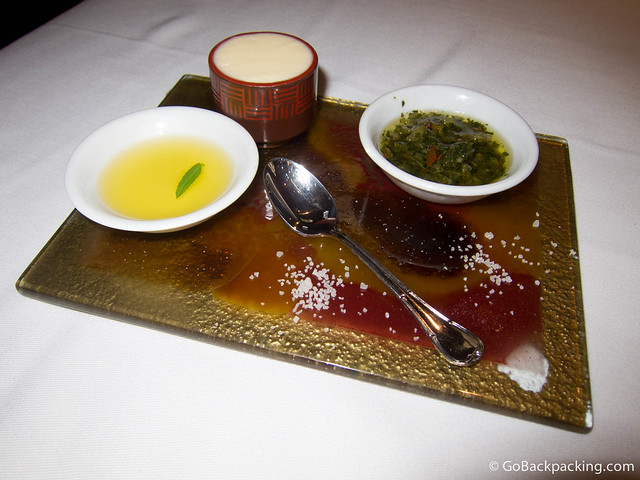
4 of the 8 homemade salsas that accompany the complimentary bread
Four of eight homemade salsas that accompany the bread

My time in Ecuador was running out, and I'd yet to eat a meal that blew me away.

I looked up the best restaurants in Cuenca on Trip Advisor, and Tiesto's Restaurant was ranked number one, complete with glowing reviews.

It was a Saturday afternoon, and I walked over from my hostel without delay. Despite having read a few reviews, I had no expectations.

The business hours hung from the front door. I managed just to catch the end of the lunch service.

The restaurant was packed with a mix of Ecuadorian and foreign diners.

I made my way back to the hostess' desk, where I was asked to wait a moment while a small table was cleared.

There are two small rooms near the front of the restaurant, and a large one in the back, which includes the kitchen.

I was seated in one of the small front rooms.

Locro de papa is a cheesy potato soup
Locro de papa is a traditional Ecuadorian potato soup, garnished with avocado

My waiter quickly gave me a menu, and when chef/owner Juan noticed me taking photos of it, he brought one over without the laminated pages.

Chef Juan, I quickly noticed, was a man about the house. While the kitchen was visible from the dining area, that wasn't enough.

He took time to visit every table in the restaurant, including mine.

Half the menu was dedicated to dishes served family-style (for two to four people), and there were a few vegetarian options as well.

I ordered the Locro de Papa ($4) as a starter, followed by Pollo al Curry con Macadamia ($11.50).

Only later, as I was trying to enjoy every ounce of curry, did I realize how ambitious it was of me to order a thick, dense soup on top of the main course.

Pollo al curry con Macadamia
Pollo al curry con Macadamia (chicken curry with macadamia nuts)

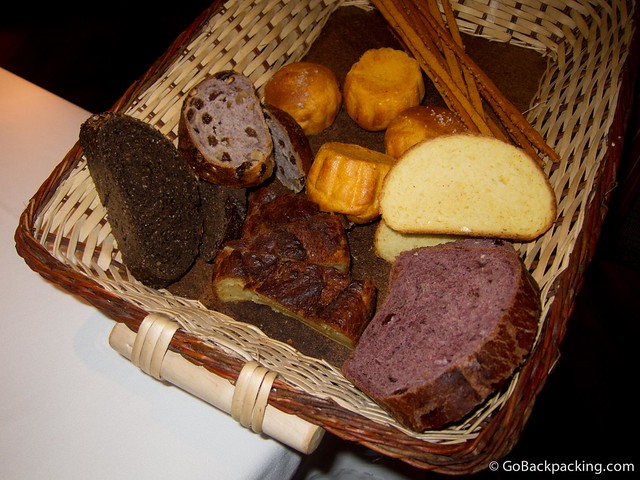
But before I could even get my hands on the soup, the waiter had brought out eight unique salsas and toppings for the complimentary bread.

I was immediately overwhelmed! What were they all? Even if he told me at the time, there were too many to remember.

I experimented: the pink sauce was spicy, the green was chimichurri.

I'd first tried Locra de Papa, the traditional Ecuadorian potato, cheese, and avocado soup after my hike in El Cajas National Park.

I'd had it another time since, but Tiesto's version was by far the best, both in terms of presentation and amount of avocado offered.

The chicken curry?

Culinary nirvana.

Orgasmic.

Heaven on a plate.

Juan, the chef/owner of Tiesto's, at work in the open kitchen

Stuffed is an understatement after eating lunch at Tiesto's Restaurant that Saturday afternoon.

By the time I was finished, the only thing on my mind was getting back to my hostel to lay down.

That's usually a feeling reserved for Thanksgiving and Christmas dinners.

As I was leaving, I passed Chef Juan, who was enjoying lunch himself now that the restaurant had closed.

We exchanged business cards, and I told him his food was the best I'd had in my two months traveling Ecuador.

Later that night, I was walking by the restaurant with Ryan when I looked across the street and saw Juan in the doorway.

He called out, inviting me back for langostinos.

I replied that I was leaving the city on Monday.

He suggested a Sunday lunch.

How could I refuse?

6 giant langostinos drenched in butter sauce
Six giant langostinos drenched in butter sauce

I slept late Sunday morning, on account of a late-night out in Cuenca's clubs, but the personal invitation from Chef Juan, and the thought of buttery langostinos were too good to pass up.

Once again, I arrived at the restaurant in the early afternoon, as lunch was in full swing.

I didn't know what to expect; it's not every day a chef invites me to lunch.

Upon entering the main dining room, I was seated at a reserved table right in front of the kitchen, generally referred to as the "chef's table."

So this is what it feels like to be Anthony Bourdain, I thought.

Langostino's for two
Langostino's for two (even though I was there alone)

The waiter handed me a menu, but Chef Juan plucked it out of my hands and put in the order for Langostinos for two, even though I'd arrived alone, yet again.

(The girl I was seeing was unavailable that day, and I couldn't call Ryan because I was out of minutes on my phone.)

The table was adjacent to the serving station for all those homemade salsas, so they were in front of me in no time.

Langostinos at Tiesto's Restaurant

Not much later, a plate of 6 langostinos, bathed in bubbling hot butter, was placed before me.

Sides of potatoes, rice, couscous, and a cucumber salad were also presented.

I didn't stand a chance.

But I gave it my best shot anyway.

As I was beheading the langostinos, one by one, Chef Juan stopped for a moment to show me a tasty bit I'd been missing (near the abdomen, where the little legs connect).

I managed to down five of the six langostinos before tapping out as if I was moments away from being KO'd by butter.

Family dining
Sunday lunch at Tiesto's

If I didn't pick up on the family atmosphere during my first visit, it was clearly on display Sunday.

Several families were there, kids and all, sharing a variety of the family-style dishes.

My two meals at Tiesto's Restaurant were amongst the best this year, ranking up there with delicious sushi in Kyoto and the molecular gastronomy at El Cielo in Medellin.

But it wasn't just the terrifically decadent food that made it a memorable experience.

The element that makes Tiesto's unique is Chef Juan, and his willingness to step out of the kitchen, and talk with his customers.

Tiesto's restaurant
Tiesto's restaurant

Tiesto's Restaurant - Juan Jaramillo 7-34 y Antonio Borreo, Cuenca, Ecuador. Phone: (593) (7) 283 - 5310. Hours: Tuesday to Saturday 12:30 - 15:00 / 18:30 - 22:00, and Sunday 12:30 - 15:00.

Note: My second lunch was compliments of Chef Juan and Tiesto's.

Hiking El Cajas National Park in Ecuador

Me in El Cajas National Park

I first drove through El Cajas National Park (Parque Nacional Cajas) on the bus from Guayaquil to Cuenca, but I couldn't see a thing because it was in the early evening.

All I could tell, judging from the sharply colder air coming through my window, and the altimeter on my Casio watch, was that we were driving over a mountain pass 4,100 meters high.

Once I'd settled into Cuenca (elevation: 2,500 meters), I booked a day trip to go hiking in El Cajas National Park. I was joined by an older German couple.

Llamas in a glacier-carved valley

Our day began with a walk through a beautiful, glacial valley (3,100 meters).

This part of the park is a cloud forest and home to a wide array of birds; however, there were few birds to be seen because it was a sunny day.  

According to our guide, the native birds are more active when it's cloudy.

As pretty as the valley was, it wasn't unlike other glacial valleys I'd seen. It did, however, help serve to get us acclimatizing.

View of El Cajas National Park from 4,100 meters

We drove along the same highway my bus from Guayaquil had taken until we were at the pass, marked by a giant park sign (4,167 meters).

Our guide pointed across the highway at a mountain and said it was exactly along the Continental Divide.

The Continental Divide indicates to which ocean the rivers in the region will flow. Rivers on the Western side flow to the Pacific, while those on the Eastern side flow toward the Atlantic.

It seems hard to believe small rivers would flow from Southern Ecuador all the way to the Atlantic, but they go the long way, down and out through Brazil and the Amazon.

Llamas near the park entrance

At the lodge near the entrance of the hiking trails, I ran into Sebastian, my bunkmate from the Galapagos cruise.

We'd exchanged Facebook info, but we hadn't been talking. It was completely random to run into him there.

Along with some friends, he was hiking the park independently, which is an easy way to save some money.

Flowers and plants get smaller in size the higher your elevation

As my group walked ever so slowly, hearts pounding, our guide pointed out different types of flora.

I'm always fascinated by the little flowers that manage to grow at such high altitudes.

The park is home to a wide range of animals, including pumas and wolves (we saw some fresh tracks).

Walking toward a forest, something you rarely see at 4,000 meters
Hiking to a forest

Forests are rare at elevations as high as 4,000 meters. However, El Cajas National Park is home to quinua forests, which as also known as "paper tree" forests because of the type of tree that grows there.

The bark is literally paper-thin. It's so thin, in fact, that it can be peeled off and used to roll tobacco, for example.

The twisting paper trees and moss-covered rocks gave it a fairytale-like feeling.

The quinua "paper tree" forest had a mystical Lord of the Rings feel to it

It was certainly unlike any other forest I'd ever walked through. I imagine in winter when it's coated with fresh, white snow, it's even more amazing.

Hearts still pounding, we made our way back to the car and drove short ways for a late lunch at a nice mountain lodge.

It was here that I discovered one of my favorite Ecuadorian dishes -- Locro de Papa.

It's a creamy potato soup with a slice of avocado thrown in, and optionally, a chunk of cheese. The main course was fried trucha (trout).

Whether you go hiking in El Cajas National Park as part of a tour or with friends, the unique scenery and flora are not to be missed.

Falling for Cuenca in Southern Ecuador

La Catedral in Cuenca, Ecuador
View of the three blue domes atop La Catedral

I spent two weeks in Cuenca, but it could've just as easily been two months.

The center of Ecuador's third-largest city, a UNESCO World Heritage Site, feels small and safe like a pueblo yet offers a much wider variety of dining and nightlife options.

Architecturally, it looks like Cartagena was transplanted into the mountains. I'd also liken it to an old European city, complete with narrow, one-way cobblestone streets.

To be blunt, it blows the historic city center of Quito out of the water.

Cuenca also acts as a convenient base for exploring the region, including archaeological sites and nearby El Cajas National Park.

Monumental front facade of La Catedral
The monumental front facade of La Catedral

On my second day, I met a local woman, and we proceeded to spend quite a bit of time together (one of many reasons it pays to learn Spanish).

Our regular meeting point was in front of the massive Cathedral. We'd go for food, drinks, or salsa dancing. On the best nights, all three.

Maybe it's my fondness for architecture, but I found it incredibly romantic to be meeting my date in front of a cathedral as grand as the one in Cuenca.

Walking around, arm in arm, I'd notice just how many other couples were doing the same.

There was a sense of tradition in the city and its people, which I found endearing.

Langostinos bathed in garlic butter at Tiesto's Restaurant

As I travel around the rest of South America, I'm keeping an eye out for places where I could see myself living for an extended time.

To fit the bill and compete with the likes of Medellin, the city has to have fun nightlife.

Eating and dancing are my hobbies beyond travel and blogging, and I was excited to find Cuenca delivered on both fronts.

Over my two-week stay, I discovered new Ecuadorian dishes, gave cuy a second try, got my sushi fix with Ant and Elise of Positive World Travel, lunched at an authentic Indian restaurant, and overdosed on langostinos at Tiesto's, the #1 rated restaurant on Trip Advisor.

Salsa dancing at Zoe on a Saturday night

On the first Thursday night in town, I went dancing at Cafe Verde, Pinton y Maduro.

The small discoteca had just enough people to create a fun atmosphere without an overcrowded dance floor.

As I got to know my date's dance style, I was also taking note of the other dancers. In particular, one bald guy (in the picture above) was an excellent salsa dancer.

A few nights later, we were walking around Cuenca's Zona Rosa when I heard salsa music coming out of a place called Zoe.

A poster indicated it was salsa night, so naturally, I wanted to check it out.

The quality of the dancing was very high in there. The majority of dancers were Ecuadorian, but a handful of foreign women were also sporting their dancing shoes.

After a few songs in the crowded main level, my date and I sought seats and space on the second floor. Small tables lined the balcony.

However, there was no room to dance around them, so we took over the empty bar up there instead.

We danced for a solid three hours until I could dance no more-the usual suspects.

As much fun as I was having in the nights, I also enjoyed my days.

I'd sit in the garden of hostel Macondo, writing and working on the new design for Go Backpacking.

The hostel was akin to a Bed & Breakfast, featuring the most comfortable bed I'd have in Ecuador, delicious fresh bread for breakfast, and dependable Wi-Fi.

The white church I walked by every day in Cuenca

As easy as it is to meet new people traveling, sitting still in one city works best if you want to meet other travel bloggers.

In addition to meeting up with Ant and Elise (Positive World Travel), I hung out with Ryan (Ryan Goes Abroad), who I'd first met in Medellin, and Priyank (Final Transit), a long time reader.

After two weeks, I forced myself to leave Cuenca. The longer I stayed, the harder it would be to move on. I promised myself I could always return. 

How to Enjoy the Fall Foliage in the USA

Windmill
Windmill amongst the changing leaves

Editor's Note: I'm excited to welcome back Suzanne Nance as a regular contributor. She previously wrote a guest post on preparation tips for climbing at high altitudes based on her experience climbing the tallest mountains on each of the 7 continents.

Get Out Doors. Now! Fall is in full bloom.

Cold nights, warm days, and summer rains have produced the perfect fall foliage in many parts of the United States.

Great swaths of the country are awash with color. Trees and bushes are currently in their full regalia.

A painter's palette of colors, scarlet, yellow, amber, orange, and purple, tied together with a splatter of brown and defiant green, should not be missed.

It sounds like a perfect time for a road trip!

Grab your binoculars, wind jacket, a pair of hiking boots, and your posses. This adventure should be shared.

I know there are many spectacular places in our country to see the change of season.

However, I'm a bit partial to the Great Lake States, as it's where I grew up.

I invite everyone to explore my childhood stomping ground. The Great Lakes states are a showcase of color at the moment, but don't wait!

Leaves are like roses, they only last two weeks, and strong winds can shorten that.

For great fall foliage viewing, I suggest picking one of the Great Lakes Circle Drives. Just pick any Great Lake and go for it!

You can find detailed information online or head out with a map in hand.

I suggest a roadmap and not a Goggle Map app just in case you have any desire to wander off course.

There are two disadvantages to using a phone app.

Yes, it's easy to go from one location to another by plugging in a city's name and then the next point of destination.

However, that will not allow for any change of venue.

Say you want to go in a different direction, maybe east or west? The app will only connect two dots.

Two: cell phone reception wanes the further north you go.

You might not get enough signal strength to use your phone; therefore, an app may be useless.

You can hop on the circle tours at any point. It's not like a board game that has a "Start" and a "Finish."

I start my tour in Chicago.

I can head on the Michigan Lake Great Circle Tour in either direction, north through Wisconsin or south around the Lake to Michigan.

Either way, the lake-hugging route in and around Chicago requires that you get on US 41 and/or Illinois Route 137.

The problem is, it's traffic-congested and just plan, slow going.

This path is great for gawking at ridiculously large, mansion-style homes or viewing Chicago from Lakeshore Drive, but not much for leaf-peeping.

I like to head north to WI, and, because I like to get out of Illinois as quickly as possible, I prefer taking the toll road up to the WI border.

It's a great alternative to the smaller Lake hugger route and allows quicker access to wide-open scenic vistas.

After all, my main objective is to get outdoors, not just sit in the car as the scenery streams by.

Once past Milwaukee, things really open up.

The topography of eastern Wisconsin consists of gently rolling hills, dotted with dairy farms, the kind that still permits their cows to munch grass outdoors.

Every farm has its own stand of trees, windows, or windbreaks; some planted for the demarcation of fields.

The state is littered with relatively close-spaced towns and cities.

Though the cities now provide the majority of support, in the way of big, box chain stores, restaurants, and amusement, the little towns still accommodate everyday life.

Many still have a post office, a local bank, churches, a tavern, and consolidated school systems.

Side note: if you ever need help with trees on your property, check out The Local Tree Experts.

Fall foliage
Autumn colors

As I drive along US 43, the red maples, burning bushes, and chrysanthemum planted by the inhabitants lend a look of a fireworks display.

The colors of the native trees and foliage, the non-native vegetation, and the planted crops' remnants add to the spectacular horizon as one drives along.

The contrast in color continues to impress as I drive through Green Bay, Sturgeon Bay, Marionette, and Menominee, each a portal to the Great North Woods.

Usually, once I'm over the Michigan border, I can' stand it any longer. I have to get outside.

I pull over to one of many roadside parks dotting Lake Michigan shoreline.

There I walk to the water's edge, gazing up and down the coast, usually a stiff wind in my face and cold sand at my feet. It looks magnificent.

Bluish gray, water, a low hung sun, yellow-topped trees, seagulls screaming, and lakeshore cottages dotting the shore. This is what I've come for.

Once in Michigan, the possibilities are endless.

There are the Porcupine Mountains, the Painted Rocks Shoreline near Munising, Upper and Lower Tahquamenon Falls, Presque Isle at Marquette, Copper River north of Houghten, even AuTrain Beach Recreation Area shoreline park.

These are just a few personal favorites where hiking, camping, and fall leaf viewing are a treat.

One has to decide where to go.

To continue on the Lake Michigan Circle Tour, I need to follow M 43 along the Lake to Escanaba.

Shallow bays, picturesque north-woods scenery, big tree forests, water birds, and shore hugging homes welcome the traveler northward.

Once in Escanaba, the road merges into M 41.

Michigan boasts of its convenient campgrounds and family-run motels.

National forests claim a great percentage of forested lands, where accommodations can be had for a park pass price. Many parks can be spotted along this route.

It's easy to find a place to pitch a tent, pull out a sleeping bag, then lie back and try to catch a glimpse of the Aurora Borealis.

At the very least, it's possible to observe the Milky Way as it's never been seen before.

Family-run motels are a fraction of the price of a big chain hotel. They are warm, cozy, and friendly.

Oftentimes, there is still a stand-alone cabin that has a bed, bath, and is complete with a desk and lamp.

Often, they dot the highways just outside of little towns and cities or are nestled randomly into the woods with beach access. It's an experience not to be missed.

Not only are day hikes and accommodations easily accessible, but the food is also inexpensive and plentiful.

Friday Fish Fry's are a must! Lake trout, White Fish, or Perch, all locally caught, are prepared to your liking.

For a hardy local flare, I love to pick up a pastie.

An old Cornish staple for miners. Pasties are a mainstay; a complete meal that miner's wives could send off with their man as they headed out for a hard days labor in the copper mines.

Family-owned restaurants serve homemade lunches and sweet treats. Ice cream cones are both cheap and bountiful, often rippled with Mackinaw Fudge.

It's easy to head on around the Lake to lower Michigan.

I could stay on Highway 41 until Rapid River. There I would take US 2 out of town.

It briefly heads in a northerly direction, then slowly bends around the Lake, making its way eastward. From there, the road leads to the Bridge.

When heading in this direction, I don't need a reason to get out of the car. It's a requirement.

Raw, rocky, windy shores facing south toward Door County and onward to Chicago.

Standing on this primitive, still pristine shoreline gives a completely different experience than I could glean from standing on Lake Michigan's southern shores in and around Chicago.

Just a days drive north; it's nearly incomprehensible that such a place can still exist on Lake Michigan. Isolated, raw, and uninhabited. Who knew?!

I chose another direction on this trip. I'm taking my own circle drive. Instead of heading toward St. Ignace and the Mackinaw Bridge, I take US 41 north.

Fall in the USA
The North Woods

I cut across the heart of upper Michigan, heading toward Lake Superior.

Dark woods seem to envelop the road on either side. As I reach the tiny town of Trenary, I must make a right onto M 67.

As I pass through an almost forgotten farming town, I smell, then see a small bakery. I stop for a snack.

Inside, I am welcomed by the alluring smells of warm baked goods and a core reaching warmth.

Asking for their specialty, the bakers produce a bag of toast, Trenary Toast. It resembles an Italian loaf, cut into an inch & ½ to 2-inch slices.

Surprisingly, the slice is hard. It's coated on both sides with a mixture of cinnamon and sugar.

I learn that it is an old Finnish favorite; cinnamon toast (korpu).

I'm told it's best dunked in a beverage, hot coffee or tea, just enough to soak up a bit of liquid, but told not to let it melt in the brew. The shelf life of this stuff is five months.

Ideal for camping! I buy a 10 oz brown bag and another traditional Finnish baked good, rye bread (limpu).

As I get back on my route, I head out of the 4-cornered town. Back on the road, I can see Sand Hill Cranes flying high in the sky.

Migrating south. The countryside is mostly wood of pine, maple, and ancient apple trees. The farms are old and mostly unproductive.

There is a crispness and purity in the air. Perhaps it's the onslaught of winter, the end of a season.

Whatever it is that makes the air seem so ethereal, I cannot say. I hope I just don't OD on this stuff.

I come to another crossroads, Chatham Corners.

I must make a right to get to Munising, on highway M 94. For fall foliage viewing, this is a spectacular drive.

The highway runs through the Hiawatha National Forest. Great stands of third-generation trees spread endlessly.

The colors are breathtaking, and the topography is unexpected.

Rolling hills, with heights near 1000 ft, dropping hundreds of feet dramatically, yielding to great, green swamps and gigantic reeds with enormous, brown cattails.

On the way, I pass by an old dam with iron colored water on the edge of the community of Forest Lake, a couple of old buildings with tar paper and shingles, circa the years of construction.

Once into Munising, I must take M 28. This will take me along another Great Lake, Lake Superior.

The topography here matches the extremes of highway M 94. Once on top of 1000 ft hills, the view is incredible.

Steel-blue water of Lake Superior, outlined by sandy beaches, yellow leaves, green conifers, and multi-hued hardwoods.

The vista is simply eye candy. The highway winds its way along the coast, finally meeting up, once again with M 41.

Circle complete.

For a weekend getaway, a couple of day road trip, or an extended vacation, this is a must for leaf-peeping. Just don't delay. Get out now.

The leaves won't wait, and the experience won't either.

Enjoying Montanita: Ecuador's Surf and Hippie Hangout

Kativa & I on Avenida de los Cocteles
Kativa & I take over Poeta's bar on Avenida de los Cocteles

I arrived in Montanita on a Saturday afternoon, the busiest day of the week, in the little surf and hippie hangout on Ecuador's Pacific coast.

The streets were filled with a mix of vacationing Ecuadorians, dreadlocked South American hippies, and surfers from around the world.

My friend Kevin likened Montanita to a "backpacker vortex" because it sucks travelers into its laid-back, daily rhythm of life.

After spending two weeks, and three weekends there, I wholeheartedly agree. Montanita quickly grew to become one of my favorite places in the world.

And much like my visits to Indonesia's Gili Trawangan and Belize's Caye Caulker, my time in Montanita was defined not by a single amazing experience but rather by all the little ones that collectively made up the whole.

Table of Contents

  • Making Friends
  • The Beach
  • A Room with a View
  • Sunday Night Concerts
  • Sampling the Street Food
  • Feliz Cumpleanos a Mi

Making Friends

I met Kativa and Whitney that first Saturday night at Hola Ola, a Western-owned bar known for its weekly Ladies Night every Thursday and Saturday's "all-you-can-drink-for-$6" night.

(Note: both open bars are only about two hours, and the drinks they peddle are a heavily liquored vodka-juice combination that's intended to get you drunk before you realize how terrible it tastes.)

Montanita is a short two-and-a-half-hour bus ride from Guayaquil, so it's common for the town to swell with partying Guayaquilenos on the weekends.

Kativa's outgoing personality (and cute looks) immediately caught my attention.

We ended up spending the following week together: drinking, dancing, speaking in Spanish, and walking in countless circles around town.

She had lived there for a few months previously and seemed to know everyone. And if she didn't know someone, she would change that quickly.

The beach in Montanita, Ecuador
The beach in Montanita

The Beach

Montanita was originally a surf destination. If you talk to the local expats, it won't take long to meet some who talk of the days when they first visited years ago, before the paved roads and Wi-Fi-enabled hostels were constructed today.

I've already tried my hand at surfing around the world, so I spent my time taking reflective walks down the beach to The Point (a rocky outcropping at the North end) and back.

On one occasion, I walked with Kativa to The Point in the late morning at low tide.

We continued beyond the "danger" sign, walking past tidal pools until we had turned the corner of the cliff.

We were suddenly alone, with only the sound of the crashing surf against the jagged rocks. We were rewarded for our valor with a view of the neighboring pueblo further up the coast.

Other popular beach activities included soccer and volleyball, eating ceviche, and the typical tanning and people-watching.

Ocean view at Mochica Sumpa hostal

A Room with a View

Arriving late on a Saturday afternoon, I walked into the first oceanside hostel I saw and ponied up for a private room.

The next day as I shopped around, I quickly found I was paying three times the typical rate.

I moved to Hostal Papaya in the center of town, where I proceeded to lose any ability to sleep due to the constant noise, a mix of cement mixers and construction on the hotel across the street, and music blaring until 3 AM from the local bars and discotecas.

If I was going to stay in Montanita another week until my birthday, I had to find a quieter room.

I gave up Wi-Fi access in favor of a room with an ocean view at Mochica Sumpa. I offered to pay a week upfront, and they slashed the room rate in half (to $10/night).

Despite the presence of a big discoteca 50 meters away, the loud music was softened by the sounds of the waves crashing on the rock retaining wall at high tide.

The ocean was so loud, I wondered at first if it would keep me awake as well, but I quickly got used to the new soundtrack playing outside my room.

Sunday Night Concerts

Every Sunday night, after the weekend party crowd goes home, Montanita becomes super-chill again.

Sunday nights were my favorite for this reason, as well as the concerts and performances held outside the Mochica Sumpa Hostal.

Around 10 PM, a singer from Guayaquil would perform a set with a group of local musicians. He sang slow enough that I was able to understand some of the songs in Spanish.

After the Guayaquileno sang, others would perform. And it wasn't just musicians.

Some very talented local jugglers would do their thing, and on my 2nd Sunday, there was a full-fledged visiting circus -- clowns and all!

On my third and final Sunday in town, before the Guayaquileno singer performed, I introduced myself as a new fan.

I then recorded his entire 40-minute set that night, as I knew it would always be a way for me to return to those Sunday nights in Montanita.

Pizza for sale
Pizza for sale on the streets of Montanita

Sampling the Street Food

While there are plenty of restaurants in Montanita, none featured food that really stood out to me. Instead, I became a fan of street food.

There are the regular vendors, mostly Ecuadorian though I met some Colombians from Cali selling Colombian-style empanadas.

And then there are the hippies walking the streets with platters of homemade pizza, empanadas, and sweet pastries.

The hippie food was my favorite. Most portions cost one US dollar, and you knew the money was helping them live their hippy lives.

"Happy" brownies (aka pot brownies) were also openly for sale on the weekends. Weed was certainly the most benign drug available for partiers in Montanita.

The police don't strictly enforce the drug laws there, which might explain all the hippies!

Nativa Bambu discoteca

Feliz Cumpleanos a Mi

I enjoyed Montanita so much, I stayed a third weekend to celebrate my 35th birthday.

My friend Jodi of Legal Nomads likes to celebrate her birthdays by climbing mountains around the world.

I prefer to spend it dancing the night away in Latin clubs. Preferably salsa dancing.

To kick the night off, I had a mojito mixed by an Ecuadorian friend, Fatima, who I'd met through Kativa the week before.

Fatima had just moved Montanita from Guayaquil and was working for one of the cocktail vendors.

I don't think her new boss was too happy she took off work early on a Saturday night to help me celebrate, but I certainly appreciated it.

We went to my discoteca of choice, Nativa Bambu, which overlooks the ocean and features the biggest dance floor in town.

While there was a dire lack of salsa played that night, I still had a lot of fun dancing to the merengue and reggaeton.

As with my 34th birthday in Medellin, I couldn't have been happier to be celebrating my 35th in the friendly surfer/hippie enclave of Montanita, Ecuador.

Eating Cuy Asado (Guinea Pig) in Ecuador

Eating cuy asado was high on my to-do list in Ecuador, despite having a guinea pig named Patches as a pet when I was a kid. After all, having dogs as pets didn't stop me from trying that meal in Cambodia.

On the main street in Banos, two cuy restaurants are adjacent to the Mercado (market). 

These are small, dark, smoky restaurants frequented by vacationing Ecuadorians and the occasional tourist who tries the local delicacy.

Cuy restaurants in Banos

Despite hearing Cuenca was known for cuy, I couldn't wait any longer. One afternoon, I walked into one of the cuy restaurants and took a table in the back.

There was little light, which may have been a good thing. The cuy prices were hanging on the wall: $19 for the whole animal, $9 for half, or about $4 for a quarter.

I ordered half a cuy, which turned out to be rather ambitious, and a Coke to wash it down.

Outside the restaurants in Banos, you can see the cuy asado being cooked over hot coals. Three at a time are impaled on a large, pronged stick, then rotated slowly over the fire.

I watched my cuy being hacked with a cleaver. I was presented with the head, tail section, two front quarters, and some white rice and potatoes.

Cuy (guinea pig) in Ecuador
Cuy asado (roasted guinea pig) with rice and potatoes.

Initial attempts to try and eat the greasy little monster with a knife and fork quickly failed. I commented to the waitress about my difficulties, and she said it's easier to use my hands.

I began picking at the front quarters. The crisp and crunchy skin reminded me of the pork skin I'd eaten in Ubud, Bali.

Underneath it was a slimy, greasy layer of fat and a razor-thin section of meat, which tasted like chicken.

Further down, all you'd get were bones and organs. While I was honored to receive the head, complete with brain intact, I'd already been down that road with skop in South Africa.

I ate the rice and potatoes to give the impression I'd eaten more of my lunch than I had. I wasn't fooling anyone and felt as though I didn't do the little piggies life justice.

Cuy in Cuenca
Cuy in Cuenca

A few weeks later, I took an Ecuadorian date in Cuenca, a UNESCO World Heritage Site, to dinner at a much nicer cuy restaurant.

I wanted to try it again, convinced I was missing the joy of eating this little animal. Despite the more comfortable surroundings, and company who enjoyed the food, a cuy is a cuy, claws and all.

10 National Dishes from Southeast Asia

I'm going to introduce you to some of the most incredible national dishes from Southeast Asia.

This region of the world is so diverse when it comes to cuisines. It's a real treat being able to live and eat here. Prepare to become hungry. Let's dig in!

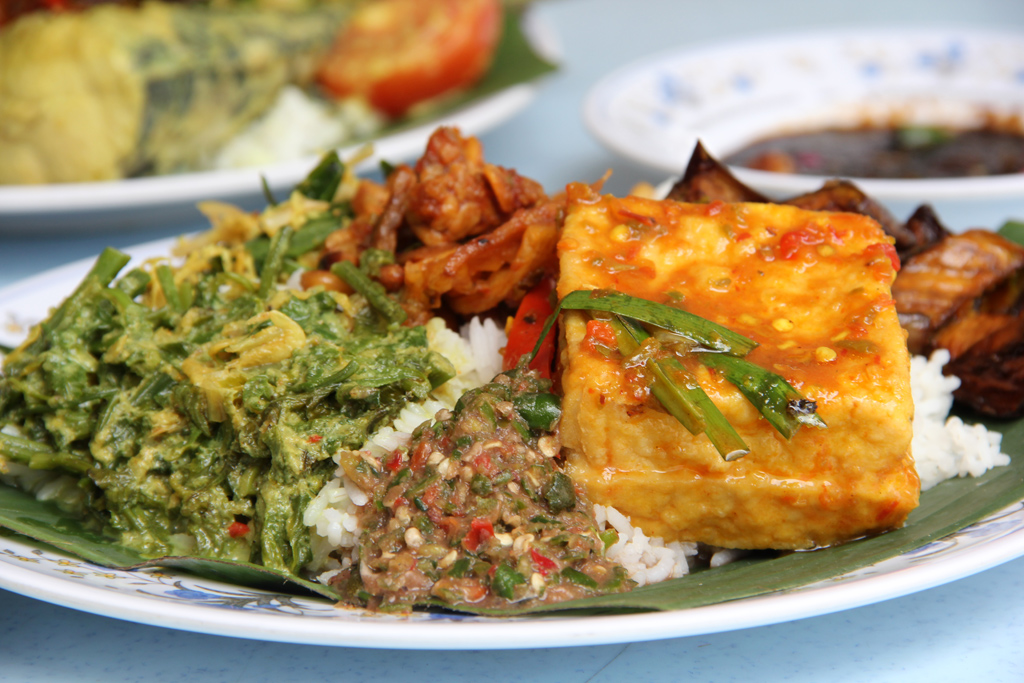
Indonesia - Nasi Padang

Table of Contents

  • The Countries
    • 1. Indonesia - Nasi Padang
    • 2. The Philippines - Adobo
    • 3. Brunei - Ambuyat
    • 4. Singapore - Chicken Rice
    • 5. Malaysia - Nasi Lemak
    • 6. Thailand - Pad Ga Pao
    • 7. Cambodia - Amok Fish
    • 8. Laos - Somtam, Sticky Rice
    • 9. Vietnam - Pho
    • 10. Burma - Mohinga

The Countries

1. Indonesia - Nasi Padang

Due to the vast spread out archipelago of Indonesia, it's almost impossible to label a real national dish for the entire country.

I've just gone ahead and mentioned a normal everyday meal of Nasi Padang that consists of a plate of rice topped with a choice of dishes.

When I was in Indonesia, I would often get fish curry, some kind of green vegetables, a little bit of soybean cake (tempeh), and a big scoop of sambal chili sauce!

Adobo - Philippines
Adobo - Philippines

2. The Philippines - Adobo

Among the many comforting Filipino dishes like sizzling pig's face or sour sinigang soup, adobo still remains one of the most widely available and popular dishes.

Normally pork or chicken are cooked with a combination of soy sauce, oil, vinegar, garlic, and ginger to create a rich salty and slightly sour sauce.

A bowl of pork adobo goes exceptionally well with a hot plate of steamed rice!

     Planning a trip to Southeast Asia? Search Travelocity for flight deals. 

Ambuyat, Brunei
Ambuyat, Brunei

3. Brunei - Ambuyat

When it comes to Brunei's national dish, sticky is an understatement.

When I traveled to Brunei just for a single day, it was my mission to devour some of the local dishes, and ambuyat was what I came across.

The dish is made with sago palm starch that is cooked into a glue-like substance and eaten along with sour fermented sauce and an arrangement of vegetables and soup.

Singapore - Chicken Rice

4. Singapore - Chicken Rice

Singapore, though a small nation (and city), is very proud of its vibrant cuisine.

People are passionate about eating, and their mix of cultures has created a pretty awesome food culture.

Simple boiled chicken, sliced and placed over rice is a ubiquitous meal in Singapore.

The key to the chicken and rice lies within the red chili sauce served alongside.

Malaysia - Nasi Lemak

5. Malaysia - Nasi Lemak

Nasi Lemak is messy, saucy, fatty (nasi lemak actually translates to "fatty rice" in Malay) and ultimately delicious.

As a country that is passionate about their Malaysian food, you better believe nasi lemak is a hit!

The dish consists of coconut rice and a mix of other ingredients served in a banana leaf.

The one pictured above was served with a piece of fried chicken, a half-cooked fried egg, and a crazy amount of some of the best-tasting red sauce I've ever had in my life!

Related: Top 9 Malaysian Foods to Die For

Thailand - Pad Ga Pao

6. Thailand - Pad Ga Pao

It's hard to choose a national dish of Thailand as the culinary culture is so incredibly rich and diverse.

There is however a Thai food that almost all Thais revert to when all else fails, or they don't know what else to order: pad gra pao moo kai dao.

A choice of meat is stir fried up with garlic, chilies, and holy basil. It's then placed over rice, and a fried egg is added on top.

Cambodian Street Food

7. Cambodia - Amok Fish

Amok, which is a coconut-infused steamed fish cake, is one of the national treasure dishes that Cambodia is well known for.

The standard procedure is to wrap the fish, spices, and coconut cream in a banana leaf and steam it to perfection. It's best eaten with rice and chili sauce.

Laos - Somtam, Sticky Rice

8. Laos - Somtam, Sticky Rice

Green papaya salad (somtam) and sticky rice are a combination that is genuinely Laotian.

Som tam is made with shredded green papaya that is tossed in a couple of different versions, some containing fermented fish sauce, while other variations are just dressed with lemon juice.

The typical procedure is to dip a ball of sticky rice into the dressing for flavor.

Vietnam - Pho
Vietnam - Pho

9. Vietnam - Pho

Vietnamese food, in general, is well known for its freshness and heavy use of herbs.

One of the national dishes from Southeast Asia I want to introduce you to is Vietnamese rice noodles in a bowl of broth made from either chicken or beef. 

The noodles are normally lightly seasoned with a few herb sprigs and a scoop of chili paste. Pho is found all over the streets of Vietnam.

Burma - Mohinga
Burma - Mohinga

10. Burma - Mohinga

One of the most popular dishes in Burmese cuisine is a bowl of rice noodles known as mohinga.

Instead of thin clear soup, mohinga is more of a thick creamy fish stew that is filled with rice noodles and topped with deep fried fritters and sprinkled with a squirt of lime juice. 

Guinness, My Goodness

Guinness St James Gate Brewery, Dublin
Guinness St James Gate Brewery, Dublin (1998)

In Dublin's fair city, where the girls are so pretty, I first learned to appreciate stout beers. Guinness, to be exact.

I've never been particularly adept at distinguishing the nuances and flavors of different beers, which might explain why I can so easily appreciate Guinness. A thick, dark stout, with a creamy head.

It's incredibly easy to tell a Guinness from any other beer. A proper pint is like a meal unto itself. And in Ireland, I was all too happy to get my fill.

My introduction to Guinness began at the source, St. James Gate Brewery.

The date was August 18, 1998, and the cost of a self-guided tour with student discount was just $4.50.

The brewery tour included a pint at the end, which made it worth the admission.

The actual tour itself? Not so interesting, but the gift shops were filled with those wonderful, old advertisements which continue to adorn traditional Irish pubs around the world.

Later that night, I paid a visit to Temple Bar, the epicenter of Dublin's nightlife, at least back then.

There were two main pub crawls to choose from - a literary one, and a musical one. As much as I enjoyed James Joyce in high school, I opted for the musical pub crawl.

The crawl was lead by Anthony, who played the guitar and bodhran, and Nell, a pretty young lass who played the fiddle. 

Together, our merry band visited three pubs. In each new venue, we drank pints of Guinness and tried our best to sing along to the traditional Irish songs.

By the end, I was sufficiently intoxicated to drop $15 on a signed CD.

As touristy as the pub crawl might sound, it was a highlight of my two-week jaunt through Ireland.

During the rest of my stay in the country, I looked for every opportunity to hang out in pubs, drink Guinness (and later Kilkenny), and listen to the trad music.

Ireland was the last country I visited on my first backpacking trip to Europe, and I toted home a can of Guinness and Jameson whiskey from Dublin as a reminder of the experience.

I declared to my parents, upon my arrival back in the States, a desire to have been born Irish.

Like Italy, I always imagined I'd have gotten back to Ireland again a lot sooner. It was costly then, and it's only become more expensive in recent years.

Top 5 Ways to Get Wet & Wild in Banos

Cascada de la Virgen in Banos Ecuador
The hot springs at the base of Cascada de la Virgen

Banos is the undisputed adventure capital of Ecuador. This tiny pueblo sits at the base of the looming Tungurahua Volcano, along a river, and amidst gorgeous green mountains.

Visitors to Banos will quickly find a wealth of outdoor activities at budget-friendly prices.

The hardest decision you'll have to make is which activity to do first. And to help in that department, here are five ways to get wet and wild in Banos.

Cold water pool
The cold water pool may have been more inviting on a sunny day

Table of Contents

  • 5. Bathe in the Hot Springs
  • 4. Stand Under Pailon del Diablo
  • 3. Visit in the Rainy Season
  • 2. Go Whitewater Rafting
  • 1.  Abseil a Series of Waterfalls (Canyoning)

5. Bathe in the Hot Springs

Banos gets its name from the naturally-occurring thermal waters.

Many believe the mineral-rich water to have healing properties, however, during my visit to the pools at the base of Cascada de la Virgen, it felt more like a public pool in Summer.

On a weekday afternoon, I paid the $2 entrance fee and $1 towel rental for the privilege of being surrounded by dozens of Ecuadorian kids, couples, and families excited to be on vacation.  

While hard for me to believe, it's supposed to be even more crowded in the evenings, especially Friday and Saturday nights.

Local Tip: El Salado is a newer hot spring complex located along a mountain stream a short taxi ride from the city center. Locals suggest you visit at 5 AM to enjoy the warm waters without the crowds.

Visitors standing in front of Pailon del Diablo
Expect to get drenched if you stand in front of Pailon del Diablo

Standing under Pailon del Diablo

4. Stand Under Pailon del Diablo

Traveling the Ruta de las Cascadas (Route of Waterfalls) is the most popular activity in Banos.

There are many ways to make the trip, including by bicycle, ATV, go-kart, and this author's preferred method -- double-decker bus ($6).

The most impressive waterfall on the route is Pailon del Diablo (Devil's Cauldron). It's about a 20-minute hike along a forest trail to reach the viewing platform of the waterfall.

If you want your picture taken directly in front of the falls, you're going to get drenched. Apparently quite a few Ecuadorians knew this because they were wearing bathing suits for their photos.

I wanted to get close, but not soaked, so I climbed up a slippery rock path that goes behind the falls. Thankfully I had a rain jacket, but I still got really wet.

It was worth it to stand behind such a powerful torrent of water thundering down from above.

The main street in Banos, Ecuador
The main street running through central Banos

3. Visit in the Rainy Season

File this entry under the "wet" side of this story.

I arrived in Banos at the start of the rainy season and had to make do with a day and a half of sunshine and blue skies out of nine days in town.

Luckily, most of the activities in the region go on rain or shine, as chances are you'd get wet from a river or waterfall anyways!

The river running through Banos Ecuador
The river running through Banos

2. Go Whitewater Rafting

Banos is a great place to go whitewater rafting, especially for beginners. The close proximity to the Pastaza River means rafting trips can be done as half days.

Rapids vary from Class II-IV, depending on the amount of rainfall and water levels.

Ant and Elise from Positive World Travel arrived in Banos soon after I had left, and they said they had a great time rafting there. It was Elise's first time too.

1.  Abseil a Series of Waterfalls (Canyoning)

I first went canyoning in New Zealand over three years ago at the start of my round the world trip, and it was a blast.  I'd been looking for an opportune time to go again ever since.

When I learned there was canyoning in Banos through Jack and Jill's travel blog, I knew it'd be atop my to-do list.

However, I put off canyoning until the end of my stay, and then I made the mistake of leaving my name with just one tour office (Geotours), instead of checking around. I almost missed the chance to go as they required a minimum of two people.

Luckily, Henry from Hostel Erupcion arranged for me to go with another company's guide. In effect, I was getting a private trip, but it'd be sans photos from the guide and bag lunch.

I didn't care.

The entrance to Rio Blanco's waterfalls is a short 15-minute drive out of Banos, followed by a 20-minute hike to the first cascade.

Waterfall #1 was 5 meters. 

A good warm-up for the bigger ones to come. As I was standing on slippery rocks, waiting for my guide to hook up the ropes, I wondered what the hell I'd gotten myself into.

Once roped in, he gave me guidance for how best to navigate the first cascade, which was short, but a little bit more technical in nature.

And over the edge, I went.

Slowly.

Very...slowly.

And then I was down, carabiner unlatched and watching the guide scuttle down the slippery rocks to the left of the waterfall.

I looked at my dominant right hand, the one used to feed the rope and control my abseil, and noticed blood.

I asked the guide if he had any gloves...

Nope.

He responded to my befuddled look by suggesting I had "sensitive hands."

I ignored the pain, too excited to be playing Bear Grylls in the mountains of Ecuador.

Waterfall #2 was a solid 12 meters.

More than twice as tall as the first, but easier because the water was falling to the left, and the rock face was almost vertical.

I made it down faster, but I now had rope burns on three of my fingers, and the stinging pain was more acute.

I rinsed my hand in the cool water while I waited for the guide to set up the ropes again.

Waterfall #3 was a towering 35 meters (over 100 feet).

I could no longer fully grip the rope with my right hand, so I abseiled the third and largest waterfall by also using my left hand to feed the rope through the harness.

It was a jerkier descent, but I didn't have a choice.

Despite the pain, the third waterfall was my favorite, as it was a sheer drop, and therefore the easiest to get down.

After we exited the river, we were treated to some home cooking from the woman whose home was located near the pick-up point for our ride back to Banos.

Warm rice and veggies cooked on an open, wood fire beats a bagged lunch any day. 

7 Safety Tips for Riding the Buses in Ecuador

Before I stepped onto my first bus in Ecuador, I'd already heard a handful of stories about people being robbed, backpacks being slashed, and valuables being stolen.

I could play defense in the capital city of Quito by limiting my time there and not going out at night.

If I wanted to visit the rest of Ecuador on a budget, it would mean exposing myself to potential thieves on the main bus routes.

Bus station in Quito
A bus station in Quito

In preparation for the three-hour trip from Quito to Banos, I did some Googling and found no shortage of other anecdotes.

They revealed the typical tactics of thieves and safety tips for riding the buses in Ecuador (learned the hard way).

During my time in Ecuador, I've applied them all and am convinced they helped protect me against at least one potential thief.

Table of Contents

  • Staying Safe on the Buses in Ecuador
    • 1. Travel During the Day
    • 2.  Pay Extra for Direct Buses
    • 3. Turn Down All Offers for Assistance
    • 4. Sit in the First Row
    • 5. Keep Valuables In  Your Lap
    • 6. Assess Your Surroundings
    • 7. Stay Alert

Staying Safe on the Buses in Ecuador

1. Travel During the Day

Thanks to the socialist policies of the current President, the main highways throughout Ecuador are in excellent condition.

However, visibility will always be better during the day than at night, and landslides can occur without warning.

Plus, you'll be less likely to fall asleep during the day, thereby ensuring you're more alert to your surroundings.

You'll also be able to see more of the country.

2.  Pay Extra for Direct Buses

Whenever possible, pay the extra few dollars to take direct (express) buses between cities.

They don't stop as often (if at all), thereby lessening the chances that a thief will get on or your main bag will disappear from underneath the bus.

CLP operates direct buses between Guayaquil and Montanita for $6 per ride, and another company operates direct buses between Guayaquil and Cuenca for $8.25.

3. Turn Down All Offers for Assistance

One common scam involves thieves boarding buses with regular passengers at the departure points and acting as if they work for the company.

They'll ask for your ticket to help show you to your seat, and then they'll offer to help place your daypack in the rack above your seat.

Once separated from your bag, they'll be in a good position to steal it and walk off the bus just as it begins to depart.

Aside from the driver or conductor helping to place your large backpack under the bus, if someone offers to handle your baggage, respond with a firm, polite "no gracias."

This is precisely what I said to the young guy who wanted first to show me to my seat and then help me with my daypack on the bus from Montanita to Guayaquil.

4. Sit in the First Row

I'm convinced the safest place on the bus is seat #1, in the first row, against the left window, right behind the driver's seat.

In this seat, you have nobody in front of you or to your left. You only need to be concerned about the person sitting to your right and those immediately behind you.

Aisle seats are a terrible idea because buses can fill up as they travel from one destination to the next, to the point where it's standing room only in the aisle.

If you're not paying attention to all the people coming and going, one of them can quickly grab your bag or surgically slash it open and remove your valuables.

To get seat #1, or any seat in the first row, ask for it when you're buying your ticket.

In Spanish, say "asiento en frente del bus, por favor," which translates as "seat in front of the bus, please."

If your Spanish fails you, or you forget, do your best to mime it, and they'll get the picture.

Related: How to Choose the Best Seat on the Bus

5. Keep Valuables In  Your Lap

If there is one tip in this list you cannot ignore, keep your valuables/daypack/purse in your lap.

Do not think that keeping it securely between your legs is sufficient, let alone placing it above you in an overhead rack.

Most bus theft stories online, such as this one on a bus from Quito to Cuenca, are due to travelers having their bags slashed while they rest between their legs.

For this reason, it's also a good idea to wear a money belt (if you have one) when in transit -- there's no safer place for your passport, credit cards, and cash.

6. Assess Your Surroundings

While there's no one-size-fits-all stereotype for thieves, a mother holding a baby in the seat next to you is much less of a threat than a male teenager.

Unfortunately, little kids are not always as innocent as we'd like to believe.

Their small size makes them uniquely capable of squeezing under your seat to slash your bag (if it's placed on the floor, not in your lap where it belongs).

Along the same lines, save your Spanish practice with the locals for another time. Treat any overly friendly conversation with a dose of skepticism.

Thieves rely on distracting their victims, and one way to do that is to build some rapport and comfort, so the victims drop their guards.

It's also common for thieves to work in teams. One person may distract you with a conversation while the other is busy sliding a razor through your backpack and emptying its contents.

On my three-hour bus from Quito to Banos, I had a half dozen different people, from young school kids to older adults, sit next to me. I didn't speak a word.

7. Stay Alert

Speaking of distraction, don't let yourself get too engrossed in that Steven Segal action flick playing on the TV, the book you're reading, or music you might be listening to on your smartphone.

Be extra alert whenever the bus stops and someone new gets on board, whether a passenger or a vendor selling food.

If you follow all of these safety tips for riding the buses in Ecuador, you'll make yourself a more challenging target.

And thieves, especially the ones not looking for a confrontation, prefer easy targets.

What's In Your Backpack? Migrationology Edition

REI Lookout 40
My Travel Backpack

I guess many would consider my packing style to be minimal, though I don't really think of it that way myself because I carry all the things that I need.

Table of Contents

  • Packing Style
  • Backpack
  • Clothes
  • Toiletries
  • Electronics
  • Other Stuff
  • Note on Packing
  • Final Thought

Packing Style

When I travel, I like to pack with the mindset that I want to be able to carry all my stuff anywhere without it being a burden.

In other words, if I land in a new city and I need to walk 20 kilometers across a city, I want to be able to do it with everything I own.

So when I pack I keep this in mind and only carry an amount of stuff that won't hold me down.

I'm not a real minimalist.

Sure I've seen videos about those extreme, minimalist travelers that claim they own just 10 items but fail to mention that when they arrive anywhere, they must purchase a bar of soap or a new tube of toothpaste.

While I like to go light, I am also frugal with my things. If I happen to have a free bar of soap from a guest house, I will carry it along with me and use it until it's all gone.

Packing light, not buying many things along the way, and not wasting things is an effective strategy for saving money to travel.

My New Camera Bag
My New Camera Bag

Backpack

Right now, I'm using a midsize REI Lookout 40 backpack. Though the description claims it to be a daypack, I think it's just about perfect as a long term pack.

It's not too big, yet it's just slightly bigger than a normal school backpack. It allows me to slip in my computer, and fill the rest of the bag up with clothes and toiletries.

I also carry a Lowepro Passport Sling bag for my camera.

I really like this bag because it fits my DSLR nicely and there's also space for things like a bottle of water for a day out.

Another reason I really like it is that it is plain, and doesn't look too much like a traditional camera bag.

A few of my clothes
A few of my clothes

Clothes

I really don't like shopping and I try to avoid buying clothes as much as possible, so luckily I'm not one of those people who accumulates a giant wardrobe when traveling.

I normally won't buy a new shirt until my previous one is about to fall apart.

Here are the clothes I carry:

  • 4 shirts
  • 2 shorts (1 cargo shorts, 1 sports shorts)
  • 1 pair of pants
  • 3 pairs of underwear
  • 2 pairs of socks (though I try to avoid wearing shoes as much as possible)
  • 1 rain jacket

Of course, depending on weather conditions, this can always change. In order to carry just a small amount of clothes, I wash them quite frequently in the sink of wherever I'm staying.

If it's warm, I exclusively wear sandals (flip flops) though I do have a pair of Salomon XT Wings for hiking and other outdoor adventures.

My toiletries kit
My toiletries kit

Toiletries

I tend to live and travel rather maintenance free. I carry virtually nothing apart from a toothbrush, toothpaste, nail clippers, sun lotion, and a few normal toiletry odds and ends (like Tylenol). I also carry a small microfiber towel.

All my toiletries fit into a small, 2" x 6" little bag.

Canon 550D
DSLR Camera

Electronics

Being a travel blogger, writer, and attempting to survive by means of the internet, there are a few gadgets that I carry around with me when I travel.

MacBook Pro

About 1.5 years ago I made the upgrade from a small netbook computer to a 13-inch MacBook Pro.

As I spend a lot of time on the computer writing, editing photos and cutting videos, it was a really beneficial upgrade.

Though I find the computer to be a little heavy, it's worth the lugging around! When buying a travel laptop you need to think about what you'll be using it for and how much you'll be using it.

Canon 550D

For a while, I traveled with only a small point and shoot camera, and for most purposes it was perfect.

However, my lust for photography and attempting to share higher quality photos justified my purchase of a DSLR Canon 550D full-size camera.

It's much heavier and bulkier than a point and shoot, but the photo quality can't be beat. It also shoots great HD videos.

Small Unlocked Phone

I don't have any sort of fancy phone, just a cheap unlocked phone strictly for making calls, not for doing e-mail or tweeting.

Other Stuff

There are also a number of things I carry that I don't get attached to and I try to recycle them in an ongoing cycle.
 
This includes things like books, plastic bags, water bottles, etc.

Note on Packing

What a lot of travelers don't realize is that almost everything one could possibly need (as long as it's not too personal or specialized) can be purchased in other countries around the world.

If the exact same thing can't be bought, there's often a substitute that may even work better, or cost less than buying it at home (we are all humans around the world and we all have some of the same wants/needs).

For instance, when I was in Egypt, I needed eye drops and when I went into the pharmacy, a bottle cost me about $0.50. That's much cheaper than they'd be in the United States.

Final Thought

Everyone packs differently, and all of us have our own unique comforts when we travel.

When you pack for a trip, make sure you have enough to be comfortable with, but don't overdo it so your things hold you back or tie you down.

When you start worrying about your stuff, it's time to analyze and scale down!

Losing My Travel Training Wheels in Florence

Euro-Traveler Award
One of my friends gave me this handwritten note before we split up

It was in Florence, Italy that my travel training wheels came off for the first time.

I'd left the U.S. for a Summer in Europe with four friends after college, and less than a week into the trip, there were already hints that several would be going home early. As in five to six weeks early.

And me, the anxious, over-planner who'd never set foot outside of the U.S. aside from family trips growing up?

I was having the time of my life after we arrived in Paris the night of the 1998 World Cup Final, museum-hopped in Amsterdam, partied in Prague and walked the backstreets of Venice.

Looking back, the signs of our inevitable split were glaringly apparent from the moment we touched down in France.

I wanted to visit every major medieval cathedral I'd studied in art and architecture classes, while several of my friends were too content to read books they brought with them. 

The consensus was to leave Venice after a few nights, while I could've spent the rest of the summer there.

In one of a handful of decisions I've made in life where my choice was crystal clear, I opted to finish my European backpacking adventure on my own.

I said goodbye to my best friends as they walked out of our Florence hostel one afternoon.

And then I was alone...

...for all of five minutes.

Another backpacker had come into my dorm room, and we began talking about punk music.

We liked some of the same bands, and the instant rapport with this total stranger was reassuring at that moment. As though I knew I'd be OK traveling on my own from that point forward.

Without the insulating effect of traveling with good friends, I immediately realized how easy it was to meet other travelers in hostels.

The rest of my trip wasn't without its lonely moments. And even today, with instant access to friends around the world via Twitter and Facebook, I still feel pangs of loneliness while traveling.

But as I learned in Florence, if you accept those feelings as normal, that they come with the territory of exploring our world, you can learn to take them in stride.

Thirteen years later, I'm more inclined to rent an Airbnb in the city than stay in a hostel. It's the expat life I seek now more than the hostel life.

Because after staying in countless hostels over the years, I've realized they too are a form of training wheels I'm ready to lose.

VisaHQ: Online Travel Visa & Passport Services

Flying over the South Pacific on Air Tahiti Nui

Fact: In 2011, a paltry 30% of Americans have passports. By comparison, that's half the percentage of our friendly neighbor to the North, Canada.

If I can inspire one person without a passport to at least apply for one, with a vision of traveling overseas within the next 10 years, then I'd consider the last 5 years of blogging on Go Backpacking a success.

To make the process as easy as possible for you, Go Backpacking has partnered with VisaHQ*, a leading Washington, DC-based company offering online passport and travel visa services to Americans.

While I happened to live in a DC suburb, and could visit any number of Foreign Embassies in person to apply for visas before my 'round the world trip, most Americans don't have that luxury.

And that's where VisaHQ enters the picture.

At its most basic, the process involves:

  1. Filling out an online application
  2. Mailing your supporting documents
  3. Receiving your passport and visa(s) back in the mail

Online Passport Services

  • Applying for a new passport
  • Renewing a passport
  • Adding extra pages
  • Getting a 2nd passport
  • Replacing a lost/stolen passport
  • Name changes

Travel Visas

If you've already got your passport, then you may want to check out the travel visa services.

This is especially important for travelers planning to visit multiple countries during the same trip, or countries which have strict entry requirements.

VisaHQ provides clear, concise information about entry requirements for countries around the world. And they offer this visa support for Americans, as well as Canadians, and UK citizens.

I've already begun using them as my primary resource for countries here in South America.

To see how easy it is, go to the Travel Guides section on Go Backpacking, and look down and to the right for the VisaHQ widget.

Enter your Citizenship and Destination Country, then click "Check Requirements" to see whether a Tourist Visa is required. If no visa is required, you'll see the button turn green. If a travel visa is required, as is the case for me with Bolivia, you'll see the button turn red.

Click the red button, and you'll be transferred to a page outlining the country's requirements (for example, go here to see Bolivia's entry requirements).

In addition to the visa requirements, you'll also see the type of visa offered (single entry, multiple entry), maximum validity, processing time, and cost.

Benefits of Using VisaHQ

  • Save time and money - let VisaHQ facilitate the processes. For new passports, pay $44.95 + regular government fees, and you'll receive your new passort in 8-14 business days.
  • Easy access to customer service - contact VisaHQ with questions or concerns via their online chat option, toll-free number, or email address.

To kick off our new partnership, you can save 10% off any passport services by using the code "GoPassportHQ" during the application / order process now through October 22, 2011.

If you have any questions, please leave a comment below and I'll get you the answer(s) as soon as possible.
___________

*As an affiliate of VisaHQ, Go Backpacking will receive a small commission for any passport or visa services purchased through our site. 

Packing List for the Galapagos Islands

Cabin in Estrella del Mar
My cabin in the Estrella del Mar

Lauren, one of my 20-something cruisemates in the Galapagos, mentioned she had trouble finding a packing list online before the trip. While I found quite a few through Google, I wanted to add my own 2-cents.

For backpackers, the packing list for the Galapagos Islands will vary little from what you typically carry. And whether you plan to do land-based trips, or live on a yacht for a week, the items you'll carry are the same.

For those travelers who are not used to packing light, a cruise-based trip is a good time to start. Pictured above is my double cabin on the Estrella del Mar, a typical 1st Class motor yacht.

To the right you can catch a faint glimpse of the storage space for two people. Beyond these small closets, there's little space aside from your bed to place belongings. If you're aboard a Deluxe or Luxury yacht, of course you can expect to have a little more space.

Recommended Clothing

  • Bathing suit(s) / board shorts
  • Long (convertible) lightweight pants
  • Several t-shirts, or tank tops for the ladies
  • Long sleeve shirt for sun protection, and evenings
  • Hoody, sweatshirt, or sweater for evenings (it can be especially chilly at night if you're above deck and the boat is moving)
  • Underwear (I recommend Ex Officio)
  • Socks (I recommend SmartWool)
  • Hat, scarf, bandanna, or any other form of sun protection
  • Windbreaker

I wore almost the same clothes every day of my 8-day cruise.

During the day, it was board shorts and one of two t-shirts. At night, I changed into lightweight cargo pants, a cleaner (nights only) t-shirt, and my lightweight, Go Lite hoody.

Recommended Footwear

Regarding footwear, there are two types of landings you'll make when visiting the islands from a boat: dry landings, and wet landings.

Dry landings are exactly that -- you can expect to step off the panga (dingy) onto dry land, usually in the form of concrete steps, or a dock.

Wet landings occur when you disembark directly on a beach, and have to get your feet wet (no higher than your knees).

  • Teva-style sandals (easiest all-around option), or
  • Flip flops
  • Sneakers, or hiking shoes with a thick sole (for walking on volcanic rocks)

If you're a Teva kinda guy or gal, you can get by on a typical week long cruise with nothing else. Many people chose this approach on my cruise.

For those who prefer a little sun protection for their feet, or support on hikes (which are often no more than an hour or two at a time), bring sneakers or hiking shoes.

Miscellaneous

  • Daypack for carrying stuff on visits to the various beaches and islands
  • Full bottle of sunblock (strong SPF)
  • Sunglasses
  • Motion sickness pills (don't depend on the boat to have them, although some carry a small supply)
  • Camera, and related equipment (ex: memory cards, bag, lenses, tripod)
  • LED headlamp (for walking through an underground lava tube)
Regarding the motion sickness pills, take some even if you don't think you'll need them.
I ended up taking them to help me sleep, not because I was getting nauseous, but because the yacht's engine was so loud, I had trouble falling asleep on my own.

Optional

  • Personal snorkel equipment
  • Personal diving equipment
  • Underwater camera and/or casing
  • Binoculars
  • MP3 Player
  • Kindle, or paperback book(s) for downtime
  • Water bottle (boats will supply passengers with a single 500ml plastic bottle which can be refilled on board)

If you're particular about your snorkel equipment (either mask or fins), bring your own, otherwise most boats will supply them (sometimes at an extra cost) and they're easy enough to rent from shops on the islands.

All the boats will supply passengers with towels, both for showers on board, as well as for the beach and snorkeling.

If you're primary reason for visiting Ecuador is a trip to the Galapagos, and you'll be in Quito for a night on the way in or out, remember to pack cold weather clothing (jeans, fleece) as the 2,800-meter altitude ensures chilly nights.

An Overview of Thailand's Vegetarian Festival

Thai Vegetarian Festival

It was about 150 years ago when a group of Chinese opera performers headed south and eventually found themselves in Thailand.

Upon performing their art on the island of Phuket, an epidemic stream of illness swept across the group.

They eventually came to the realization that they had become sick because they had not worshipped or shown respect to the nine emperor gods from the Chinese Daoist belief.

In order to make up for their blunder, they decided to not only eat vegetarian but to attempt to remain pure for the first nine days of the ninth lunar month.

They vowed to not kill anything, not hurt anyone, refrain from lying or cheating, and eat strictly vegetarian food.

To this day, after the water throwing Songkran festival, the vegetarian festival in Thailand which is known as Tesagan Gin Jay (or just the Jay Festival) is one of Thailand's largest events.

The most concentrated festival takes place in Phuket where there is a high concentration of Chinese, though there are also plenty of other celebrations throughout the country.

In Bangkok, the vegetarian festival can be experienced and observed throughout the city, but the main events take place in Yaowarat (Chinatown).

Not everyone participates in a vow to remain pure for the nine days, but quite a few Thais make the decision to eat vegetarian for the duration of the festival.

Climbing a Knife Blade Step Ladder - Krabi, Thailand

Symbolic Mutilations

A select few people known as Mah Song choose to participate in rituals of self flagellation during the vegetarian festival.

The people who practice these actions must be pure without being married.

They are put into a spirit induced trance at a Chinese temple by conducting a series of procedures and chants.

Eventually the person begins to shake his head from side to side and his eyes roll about almost to an unconscious state.

The Mah Song then perform body mutilating rituals like walking on fire, sitting on chairs full of nails, climbing knife blade ladders (pictured above), piercing their cheeks with giant objects, and slicing their tongues with axes and double bladed saws.

The extremely graphic procedures are dictated by the spirits that are said to possess those who participate.

If you can stomach it, watching some of the gore in person is really something interesting to see.

Again, the largest parade of humans slicing themselves up is in Phuket, but you can also catch a glimpse of it in other cities and some places around Bangkok.

Deep Fried Vegetarian Food

Eating Vegetarian Food

While the majority of people do not participate in the flagellations, many Thai Chinese do choose to refrain from eating meat.

Travelers that happen to be in Thailand during the vegetarian festival will be blessed with an interesting event to observe, and an entire new array of vegetarian Thai food to sample.

Yellow Flags - Safe from Meat!

Food and restaurants throughout Thailand are marked with yellow flags and banners indicating that they are "safe from meat."

Many street vendors change their entire menu to accommodate to the those who Gin Jay (eat the Jay festival).

Vegetarian Festival Thailand
Fake Meat and Vegetables

You may be thinking, vegetarian food? It sounds pretty lame.

Ok, while I don't think it's as good as its meat filled counterparts, they do come up with some really good things to eat.

Various kinds of fake meat (protein or flour dumplings) are actually molded into the shapes of real meat and colored to make it look authentic.

What started off as a cleansing festival has morphed into an all out vegetarian smorgasbord that includes all kinds of unhealthy snacks and deep fried goodies!

This years festival took place from the 26th of September until the 6th of October 2011.

The vegetarian festival in Thailand takes place annually sometime around September or October.

If you happen to be traveling in Thailand, make sure to check out some of the events and eat some vegetarian food.

Travel Deeper with Tourist 2 Townie

Check out this inspiring video from Argentina by my friend Gareth of Tourist2Townie.com.

We met earlier this year in Medellin, where his enthusiasm for travel and blogging were obvious.

Gareth is a man with a vision, and you'll see that come out in the video. He prefers to see the world at a much slower pace than your average backpacker, thus his motto to "travel deeper."

In return for visiting fewer places per year, he's rewarded with getting to know the countries and cultures he does experience on a more intimate level.

He's going to arrive in Ecuador just as I'm leaving, but I'm hopeful we'll run into each other in South American again sometime soon.

Experiencing Paris, Then and Now

Outside the Pompidou Museum in Paris
My 4 friends and I take a break at the fountain outside the Pompidou Museum.

I've been reflecting a lot lately on how my style and approach to travel has evolved and matured since my first backpacking trip to Europe in 1998.

Last month I turned 35 while traveling here in Ecuador, and I think the decisions I make are a reflection of my age.

Don't get me wrong, I still feel a spritely 21 at heart, but my priorities, travel knowledge, life experience, and packing list have come a long way.

To show you what I mean, let's compare my 1st visit to Paris on the 1st day of my 1st backpacking trip abroad, with the 2nd trip to Paris, 10 years later.

July 1998

I arrived in Paris the day of the 1998 World Cup Final in which France was taking on mighty Brazil.

Summer in Europe wasn't even my idea, it was my friends, and I couldn't let them have all the fun.

We spent the whole first afternoon cluelessly walking around downtown Paris, with our large backpacks, sweating buckets in the Summer heat.

We walked through parks, and past the Pompidou, trying to find a hostel. As you can imagine, it wasn't easy given the country was host to the World Cup.

Eventually, we found our way to a mouse and roach-infested budget hotel near a northern train station. 

The group decision had already been made to leave Paris for Amsterdam the following day.

In the evening, we continued walking the streets, looking for a bite to eat. They were empty.

Everyone was watching the game, but since neither I nor my friends cared for soccer at the time, we were simply concerned with filling our stomachs.

I was wearing a totally new outfit, purchased for the trip, including:

  • Plain blue soccer-style jersey
  • Khacki North Face cargo pants
  • Comfortable New Balance cross trainers
  • Money belt strapped around my waist, below the pants, containing: my passport, credit card, traveler's checks (remember those?) and cash
In my backpack back at the hotel, was a cassette player with 3 mixtapes of my favorite music at the time (punk/alternative), a 35mm camera, 8 rolls of film, and a small spiral notebook and pen for writing my deep thoughts during the trip.
 
I was blind as a bat, wore glasses, and had a receding hairline I hadn't fully picked up on yet. Picture the enthusiastic (but nerdy) guy in the Eurotrip movie -- that was me!

After France won, everyone poured into the streets to celebrate. Large crowds were walking towards the Arc de Triumph.

Firecrackers were being thrown around indiscriminately, scaring the hell out of me as they went off nearby.

We marched with the Parisian masses before ducking into the metro and heading back to our hotel around 2  AM.

The next day, my and my friends left the most popular city in the world without really seeing a single site.

As our flights home were all out of Paris, the idea was to leave the sightseeing for the end of our trip.

Hanging out with pretty French girls on New Year's Eve

December 2008

Fast forward 10 years, and I'm 13 months into a solo trip around the world.

I'd started in Tahiti, and worked my way West through New Zealand, Australia, Asia, India, Africa, and had spent my 2nd Christmas away from home pouring back Belgian beers and absinthe with new friends in Brussels.

Afterward, I visited my Dutch friend Gela in Holland. We'd met through the Travbuddy.com site for a 10-day trek in the Himalaya earlier in the year.

In Paris, I was greeted at a metro station by Laura, a 20-something French medical student I'd met on the train from Varanasi to Agra, India.  

She would be my host for the several nights I spent in Paris during my 2nd visit.

We visited Montmarte, hung out with her friends, ate great food, stopped for a photo-op at the Eiffel Tower, and walked down the Champs d'Elysees, which was beautifully decorated with blue lights at night for the holidays.

In addition to opening her home up to me, the random American she hung out with for a few days in the middle of India, she'd also invited me to ring in the New Year with loads of champagne and cheese at her friend's house party in a Paris suburb.

It was the French Grey's Anatomy.

I was still wearing the same North Face pants (I've since destroyed in favor of jeans), but I'd had LASIK surgery, resulting in 20/20 vision, and embraced the shaved-head look.

I was using the same 30L Gregory backpack I had 10 years earlier, however, the contents had changed.

I listened to music on an 8 GB Creative mp3 player as light as a feather, took thousands of photos with a Canon digital camera, and drafted blog posts on a small (1st generation) ASUS netbook.

Cheeseburger
Mmm.... Parisian Cheeseburger

The Future

Looking back, I can see how far I've come as a traveler. Looking ahead, I have a good sense of how my personal travel style will continue to develop.

Running a business on the road means privacy, comfort, and Wi-Fi are more important to me than ever before.

Luckily, a whole new slew of Internet-based services are available to help home and property owners rent out apartments to travelers, be they on the move for leisure or business.

I can already imagine my 3rd trip to the world's most romantic city. I'd rent one of the many Paris apartments for the holidays.

Maybe I'd reconnect with Laura, or other Parisians I've met in the meantime.

And I'd finally make it a point to visit some outstanding sites of interest, like Jim Morrison's grave and the Catacombs, while spending the rest of my time in restaurants and bars enjoying the rich foods and wines France is known for.

5 Lesser Known Museums in London

The following is a guest post by Meredith Franco Meyers.

Wellcome Collection
Wellcome Collection (photo: ell brown)

Whoever said, “It's not a free show,” wasn't touring London!

Sure, many savvy budget travelers know that London's major museums, like the British Museum and the National Gallery, are free most any day of the week.

But during the time we've spent hunting down London's budget hotels, we've also picked out a few out-of-the-ordinary museums that aren't always on backpackers' radars. So, read on and then plan to browse with the best of 'em while holding on to those extra pounds.

Table of Contents

  • 1. Museum of London
  • 2. Wellcome Collection
  • 3. Sir John Soane's Museum
  • 4. Ragged School Museum
  • 5. Museum of Childhood

1. Museum of London

  • Address: London Wall, EC2Y 5HN
  • Tel: 020 7001 9844
  • http://www.museumoflondon.org.uk

Ever wonder what London looked like during Roman times?

In nine permanent—and entirely free—galleries at the Museum of London, visitors get the skinny on life pre- and post-Kate-and-Wills and much more. From prehistory to Elton John and a recent special exhibit on Dickensian London, this place is a must-see. Talk about great expectations!

Bonus: When you've finished touring the place, take a look in the gift shop. Or, visit one of the on-site restaurants. The London Wall Bar & Kitchen has a great outdoor terrace that's a solid pick during warmer months.

2. Wellcome Collection

  • Address: 183 Euston Road, NW1 2BE
  • Tel: 020 7611 2222
  • Hours: Closed every Monday (open on Bank and public holidays), open Tuesday through Sunday (hours varied)
  • http://www.wellcomecollection.org/

What do Napoleon's toothbrush, George III's hair and the Virgin Mary all have in common? (No, this is not the beginning of a joke.)

They are all items in the unique Wellcome Collection in central London. Sir Henry S. Wellcome, an American-born aristocrat who made his way to London and later became a British knight, was an aficionado of the arts and sciences. As such, he amassed plenty of interesting objects and curiosities, now on display to the public.

There's lots to write home about here and many free daily guided tours. Current exhibits include, “Medicine Man.” It's a giant room filled with Wellcome's artifacts related to pharmacy, medicine and scientific advancement (and where you'll see George III's hair and Napoleon's toothbrush).

3. Sir John Soane's Museum

  • Address: 13 Lincoln's Inn Fields, WC2A 3BP
  • Tel: 020 7405 2107
  • Hours: Tuesday to Saturday 10 a.m. to 5 p.m.
  • http://www.soane.org

Sir John Soane (b. 1753-1857) was a professor of architecture at the Royal Academy and the man responsible for designing the Bank of England.

Housed in his former residence, a noble brick townhouse in central London, Soane's fascinating collection of artifacts and personal effects were gathered from the 1780s to the 1830s and are now on display for free! The permanent collection ranges from architectural plans for the Bank of England and the Royal Hospital Chelsea.

A recent exhibit also showcases miniature plaster versions of iconic buildings. Did somebody say “little pantheon”?

4. Ragged School Museum

  • Address: 46-50 Copperfield Road, E3 4RR
  • Tel: 020 8980 6405
  • Hours: Wednesday and Thursday 10 a.m. to 5 p.m., first Sunday of the month 2 p.m. to 5 p.m.
  • http://www.raggedschoolmuseum.org.uk

Visit Dr. Barnardo’s former Ragged School in Mile End and discover how he managed to educate and feed multitudes of poor East End children.

Through a series of canal-side rooms, visitors get a glimpse of Victorian living. Top-floor rooms witness everyday scenes of life under Queen Victoria's reign while ground level spaces give a detailed and absorbing history of the East End in general.

Best of all are the interactive sessions in the first-floor classroom, where “pupils” of all ages sit at old-fashioned wooden desks—complete with chalk and slate—while a stern teacher, dressed in period garb, puts them through the paces.

5. Museum of Childhood

  • Address: Cambridge Heath Road, E2 9PA
  • Tel: 020 8983 5200
  • Hours: Monday through Sunday from 10 a.m. To 5:45 p.m.
  • http://www.vam.ac.uk/moc/

Encompassing a variety of small exhibits (no pun intended) on the histories of children from various civilizations, the Victoria and Albert's younger sibling museum is situated in a series of houses in London's Bethnal Green neighborhood.

The name of the institution speaks for itself and throughout a series of free exhibits you can learn about childcare, toys, child labor through the ages and lots more.

Want to know the history of the Rubik's Cube? Ready to check out a baby potty seat from 1820? Then, you're in the right place.

_________

About the Author: Meredith Franco Meyers writes and edits for EuroCheapo.com, a leading budget travel site. She has written for American Baby, SELF, Ladies' Home Journal and more. She is on the faculty at the Gotham Writers' Workshop in New York City.

The Mixed Scene of a Tour to Halong Bay

It all began in the chaos of the Old Quarter of Hanoi, Vietnam. It was a struggle to walk around to various tour companies, searching for the best rate and attempting to make sense of all the different classes of boats offered for a tour to Halong Bay.

Halong Bay, Vietnam (photo: Suyeon Kim, Pixabay)
Halong Bay, Vietnam (photo: Suyeon Kim)

The usual procedure is to book an all-inclusive single or double night aboard a Chinese style junk to enjoy the beauty fully.

The tour usually includes the pickup and van ride from your guesthouse in Hanoi and everything else until you are dropped off back in Hanoi.

After asking around and getting frustrated and confused due to all the crafty Vietnamese salespeople trying to pitch their tours, we decided it would be best to drink a few cups of Vietnamese coffee and think about it.

There seemed to be so many random options: the party boat, the 2nd class boat, 1st class, the Dragon fancy boat, the VIP boat, the extreme honeymooner's boat. The list went on forever, and they were all priced slightly differently.

Each tour company had old photographs of each class that were impossible to see, offering little help in deciding.

Tip: It's also possible to book Halong Bay luxury cruises online so you can ensure you know which boat you're getting.

Getting on the boat at Halong Bay

So, in the end, I just went with my gut feeling and booked the 1st class boat for the price of about $30 from a woman who I thought looked the most honest.

Everything went according to plan. The van picked us up and zoomed us along with the masses of other tourists to the gorgeous Halong Bay.

The scene morphed into a dramatic landscape of limestone pillar mountains jetting vertically up from the water below. We got dropped at the standard boat loading dock along with the hordes of others.

Everyone was eager to board their boat while at the same time getting frustrated by the long lines and the harsh rays of the mid-day sunshine. Everything was confusing and disorganized.

Tour guides scrambled in every direction, leading their pack of sheep through the mess of humanity.

After waiting for about one hour, our guide said, "The boat is broken; you will be upgraded to the VIP boat." I wasn't convinced if he spoke truthfully or was looking for a tip.

Nevertheless, we were ushered to a different boat, supposedly a VIP boat (whatever that means in Vietnam).

Top Deck of the Chinese Junk

We boarded the Chinese-style junk and started slowly cruising around the surreal landscape.

Once on the boat, things were opposite; I couldn't hear the piercing sounds of honking motorbikes, the clammer of large amounts of humans, or the annoying shrieks of the tour guides. Life was good once again!

See also: How to Book a Last Minute Cruise to the Galapagos

Sunset view over Halong Bay

Relaxing on the boat's top deck at sunset was unbelievable - this was the picture of Halong Bay that I wanted to see.

The sunshine became softer and softer as it wrapped its rays around each limestone pillar, bouncing off the calm water. It was peaceful and supremely gorgeous.

Viewpoint on the tour to Halong Bay
Viewpoint - Halong Bay

The next day, we floated back to the harbor point, back into the scurry of everyone else, and back into the racing van. We were dropped off as promised back at our guesthouse, all safe and sound.

Though the lack of organization and the dishonesty of so many tour companies made things a bit frustrating to arrange, the escape onto the top deck of the peaceful boat floating in the middle of Halong Bay was a priceless experience!

Giant Land Tortoise

Giant Land Tortoise
Giant Land Tortoise

During our second visit to Santa Cruz Island in the Galapagos, we had the chance to see Giant Land Tortoises in the wild on Rancho Primicias.

These guys can weigh over 800 pounds each, and live over 100 years.

It was estimated that there were once 250,000 on the islands, but due to hunting by man, those numbers have declined drastically.

Breeding programs are in full effect to help save these amazing creatures, and they now number about 19,000 (Wikipedia).

Galapagos Penguins & White Tip Reef Sharks at Las Tintoreras

Las Tintoreras off the coast of Isabela Island wasn't on our original cruise itinerary with the Eden Yacht, but after we switched ships, we inherited the stop.

Galapagos Penguins are the only kind of penguin that live along the Equator, so it was a nice treat to see a few.

Even cooler were the dozens of White Tip Reef Sharks hanging out in shallow waters, making them easily viewable from above.

Galapagos Penguins
Galapagos Penguins are well camouflaged between the black volcanic rock, and massive amounts of white bird guaro. How many can you spot?

Galapagos Penguins
After our hike along the volcanic rocks to see the sharks, we returned to the same spot and found many more penguins.

Birds of the Galapagos Islands
Penguin on the left, pelican in the middle, and Blue Footed Boobie to the right. This diversity is what the Galapagos are all about!

Marine Iguanas
There were tons of Marine Iguanas sunning themselves on the volcanic rocks, while the water below was filled with sleepy sharks.

White Tip Reef Sharks
During the day, dozens of White Tip Reef Sharks hang out in this shallow channel. At night, they leave to go hunting nearby. Red Sally Lightfoot Crabs are on the far rocks.

White Tip Reef Sharks in the Galapagos Islands
White Tip Reef Sharks

White Tip Reef Shark
I was secretly hoping a Marine Iguana would slip and fall in the water so we could watch the sharks eat 'em, but it never happened.

The New GoBackpacking.com

I'm excited to announce the complete redesign of Go Backpacking is now live!

Sunset in the Galapagos Islands

After almost four years of using free and premium designs I customized myself, it was finally time I hired a professional.

Based on the recommendation of blogger Karol Gadja, I enlisted Charlie Pabst of Charfish Design to spearhead a unique theme built on the Thesis framework.

The project turned out to be a bit bigger than either of us initially realized; however, with the coding support of the talented Shivanand Sharma of Binary Turf, the foundation is now in place for a faster, easier-to-use Go Backpacking.

The Design

I've always been a fan of minimalist web designs.

My primary goal for Go Backpacking's new layout is to emphasize the high-quality stories, photography, and videos being published.

I aimed for a clean look, with plenty of white space to give words and photos room to breathe.

Logo

Troy Floyd of Foggodyssey.com provided the concept for the new logo, which features a white arrow in the "Go" to symbolize movement, and the silhouette of a backpacker in place of the "i" in "Backpacking" to represent us travelers.

Navigation

The main navigation running along the top of the blog has been simplified, focusing solely on pages instead of blog posts (except for the Planning category).

You can still find high-level blog post categories (listed as Topics) in the right sidebar if you prefer to search that way, and Category and Tag links beneath every post.

Also, within a few days, there will be a tabbed box with lists of the most popular posts in the last 30 days, all time, and based on the number of comments received.

Style

The new font style is easier on the eyes, and the larger size should make reading posts a quicker, more enjoyable experience.

Social Media

Along the lines of creating a focus on content, the social media sharing options are now in a vertical scrolling bar along the left margin.

The buttons will follow you as you scroll down the page, making them easily accessible while keeping them separate from the articles.

If you like a post or page, please share it via your preferred method, whether giving it a Retweet, a Like on Facebook, +1 on Google, or a Stumble.

Comments

After using the Disqus commenting system for the last few years, I'm reverting to the default WordPress system for reader comments.

I've received ongoing feedback that Disqus can be hard to use, thereby preventing readers from leaving comments, which sucks to hear. I also suspect it was slowing down the site.

Help me test it out by sharing your feedback below!

Land Iguana - Galapagos Islands

Photography

In a continued effort to make Go Backpacking a visual feast for the eyes, the dimensions of the standard photo on the home page feature slider, and in blog posts, is a larger 640 x 480. 

The size of the thumbnail photos throughout the site is also larger.

The overall margins have been widened to accommodate gigantic 1024 x 768 photos for the Photo Favorite and Photo Essay posts.

Shadows have also been added to the images (another tip from Troy, to help make the photos pop off the screen).

Advertising

If it weren't for the advertisements you see on Go Backpacking, I wouldn't be able to support my full-time travels, nor pay for the excellent contributions from Mark Wiens and others.

To better organize the banners, widgets, and links, I've moved the "Featured Sites" from the sidebar to a particular area near the bottom of each page.

By clicking on the ads and links that interest you most, you're helping to support Go Backpacking.

Site Speed

A primary reason I'm switching to the Thesis framework after several happy years with Woo Themes is in the hopes of significantly improving the time it takes to load pages on Go Backpacking.

Ideally, I'd like to see the home page loading in under 5 seconds, which is less than half the time it did under the old design.

Introducing Go Backpacking Travel Guides

Earlier this year, I took a weekend to re-think my vision and goals for Go Backpacking. The new Travel Guides section is the result.

I want Go Backpacking to be a trusted source of fresh, practical travel advice.

Blog posts are a terrific way to publicize the site; however, even the most popular stories are quickly buried in the Archives as new ones are published.

Travel guides written by myself and other expats and travelers with extensive experience in a country will be continuously developed for destinations around the world going forward.

Full guides are currently available for Colombia, Costa Rica, Thailand, and Kenya.

All guides include:

  • Sightseeing highlights
  • Introduction to the local cuisine
  • Cost of travel
  • Insider tips on how to enjoy the nightlife and date the locals (for both men and women)

And every country guide will also feature at least one, if not several, city guides which include:

  • Transportation info
  • Safety tips
  • Recommended places to sleep, eat, sightsee, and party

The Future

While the new design is now out for the world to see, I've already got a growing list of things I want to fix, tweak, or improve.

In the coming days and weeks, we're going to continue fine-tuning the design.

In the coming months and years, the focus will be on making Go Backpacking your trusted guide for budget travel around the world.

Seafood in Barcelona: Top Restaurants

Situated on a spectacular coastline that stretches over 4 kilometers, it's no surprise that you are more than spoilt for choice when it comes to finding seafood in Barcelona!

As one of the biggest and busiest ports in Europe, each morning, Barcelona welcomes countless fishing boats to its sandy shores, all bringing in the day's freshest catch.

This is a rough guide to helping you discover some of Barcelona's finest seafood haunts.

Dine with the Locals

A couple of Barcelona's most visited seafood restaurants are Mariscco1 and La Paradeta2. Both are popular with locals who enjoy the laid-back, informal atmosphere.

Seafood at La Paradeta (photo: Bevis Chin)

Ordering food is quick and straightforward; there is an extensive selection of fish, from crab, squid, and octopus to clams, mussels, and cuttlefish, laid out behind the counter.

All you have to do is make the difficult decision of what to order, and your dinner is prepared in a flash!

It's truly a unique experience at very reasonable prices; this is every backpacker's dream!

If you are planning on backpacking through Barcelona, another suggestion is to book a hostel to avoid disappointment.

Seafood by the Seaside

There's nothing like sea air to work up an appetite after a relaxing day at the beach, and what better than to head straight out for a seafood dinner!

El Rey de la Gamba (photo: H. Hurtado)

A well-known area for finding superb fish dishes is, without a doubt, Ciutadella/Porto Olimpica.

Just a hop, skip, and a jump away from the beach, you only need to take a quick stroll down Moll de Gregal and Moll de Mestral to see the vast array of welcoming seaside restaurants, all boasting freshly caught fish on their menus.

One to look out for in particular is El Rey de la Gamba3. This cozy, friendly restaurant should not be missed; the menu features grilled and fried fish, as well as many other delicious seafood dishes!
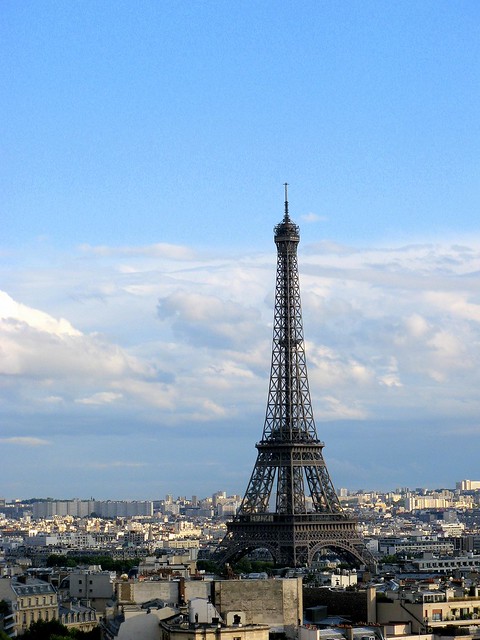
Why not be adventurous and try a traditional Catalan fish stew known as Sarsuela?

Quirky and Contemporary

One restaurant that stands out from the crowd is Imprevist4 which quite suitably translates to "the unexpected" and is best described as an adventure for the senses.

The seafood dishes are exquisite, complemented by a subtle blend of herbs and spices, and topped off with vegetables freshly picked from their gardens.

The presentation of every dish is perfect, ensuring your plate is a feast for your eyes as well as your taste buds.

This restaurant-turned-art gallery radiates creativity in more than just its menu; diners are encouraged to relax and enjoy the restaurant's modern design, and even have the opportunity to purchase the impressive artwork on display.

Paella

Is there a better way to combine seafood with traditional Spanish cuisine than a tasty paella? It's impossible to count the number of paella restaurants in the city, but for seafood, you'll find Roij Robí5 is most definitely a top contender.

Paella (photo: Benjie Ordonez)

Recently renovated, this paella haven has been serving for over 25 years and has earned a reputation as the king of seafood paella.

The Restaurant has a fresh supply of fish twice a day, ensuring your dinner is always top-notch.

For a cultural meal out, Les 7 Portes6 is one of the oldest Paella restaurants in Barcelona. Open since 1836, the 175 years of experience have most certainly not gone to waste.

Even famous figures such as Picasso and Federico Garcia Lorca have been known to enjoy paella at Les 7 Portes- And the best news of all? Even today, Les 7 Portes offers delicious food at mouth-watering prices!
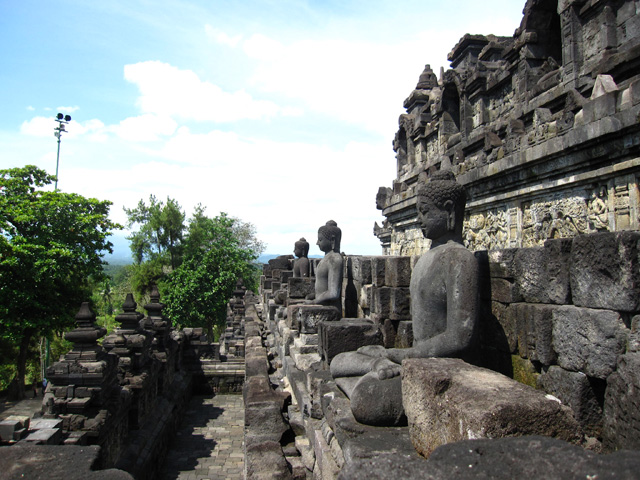
Now you know where to find the best seafood restaurants in Barcelona. All that's left to do is find your accommodation in the city to ensure you don't miss out on the fabulous seafood on offer.

Restaurant Addresses

  1. Carrer Còrsega, 272 08008 Barcelona
  2. C/ Comercial, 7, 08009 Barcelona
  3. Passeig de Joan de Borbó, 53, 08003 Barcelona
  4. C/ Ferlandina, 34, 08001 Barcelon
  5. Seneca, 20, 08006 Barcelona
  6. Passeig d'Isabel II, 14, 08003 Barcelona

Surfing Safari: Hawaii, Costa Rica, & Australia

Skateboarding and snowboarding are two of my favorite sports. Surfing?

Not so much, though not for lack of trying to have a good time riding waves in popular surf spots around the world.

Most recently, I've spent the last few weeks hanging out in the small surf town of Montanita, Ecuador.

In a beach community where surfing is the primary draw, I received the inevitable inquiries about whether I was planning to surf or learn to surf. "No," I'd respond, "I've already been there, done that."

Surfing Kealakekua Bay
Surfing in Kealakekua Bay (Credit: Mike)

My First Surfing Experience

Age: 13

Location: Waikiki Beach, Oahu, Hawaii

My favorite family vacation was the two-week trip to Hawaii we took when I was 13.

We stayed in one of the many Waikiki Hotels on Oahu, and it was on Waikiki Beach that I had my first surf lesson.

More than 20 years later, I remember the scene and experience like it was yesterday.

Beautiful, sunny day. Long white sand beach lined with hotels, and at the end, Diamond Head Crater.

As with most surf beaches, there was no shortage of local instructors happy to offer one-hour lessons.

I was up and standing on the board by my second or third try, riding a wave toward shore and hoping I didn't fall and cut myself on what seemed like very shallow water over a coral reef.

These moments were my best on a surfboard, and any attempt to replicate them as an adult has not ended well. But all was not perfect with the experience.

Unfortunately, I thought a white t-shirt was sufficient sun protection and paid the price with a severely burned back -- the pain of which I remember just as vividly as the surfing.

If you can manage it, I think Hawaii vacations offer the ideal atmosphere for learning to surf, whatever your age.

See also: Top Surf Spots in Hawaii

Playa Santa Teresa, Costa Rica
Playa Santa Teresa, Costa Rica (photo: scolussi)

Breaking a Board with My Head

Age:  29

Location: Playa Santa Theresa, Costa Rica

Fast forward 16 years, and I'm backpacking in Costa Rica.

The country's Pacific Coast had long been on the surf map, while the rest of the country had become a popular destination for its cloud forests, zip lines, and volcanoes.

After traveling along the Caribbean coast and then through La Fortuna and Monteverde, I swung over to the Pacific coast, landing on Playa Santa Teresa.

I got a cheap beachfront room. Next door, surfers were camped out in tents.

Some of them looked as if they'd been there for weeks or more. I remember one guy was from a landlocked European country. Switzerland maybe?

I signed up for a morning lesson from one of the many surf camps, and the next day proceeded to have a class that went pretty well.

I got up on my giant, beginner-size board and managed not to get too sunburned (despite making the same mistake of thinking a t-shirt would somehow protect my back).

The morning lesson went well, so I decided to rent a board and go out on my own in the afternoon.

Unfortunately, enthusiasm doesn't trump knowledge of the tides, and I found myself unable to get up on the board in the afternoon.

Waves were breaking close to shore, which should've probably set off alarm bells, but I was too focused on trying to catch a wave.  

After getting battered a few times, I tried to catch a wave, only to find my body being flipped over.

Underwater, my eyes opened as I saw my head hit the front of the board, thereby snapping off the triangular front tip.

After being flipped over, I stood up in shock, holding the board in one hand and the piece that broke off in the other.

Inside, I was cursing up a storm along the lines of "F- surfing."

As I headed up the beach, broken board in hand, an Aussie surfer asked me what had happened.

After I explained, he suggested the board had already been broken in the same place before, and repaired, which is why it broke again so easily.

He said boards don't usually break in the front like that and that I shouldn't pay for it to be repaired.

Back at the surf camp, I presented the broken board, at which point my instructor from the morning lesson apologized...he didn't realize I was going out (at the wrong time of day) when he rented me the board earlier.

They said I'd need to pay for the repair, which I did. I was over surfing and didn't have the energy or confidence to argue.

I was lucky I didn't break my neck, and the experience left me with little desire to try surfing again.

Surf lesson in Agnes Waters, Australia
Surf lesson in Agnes Waters, Australia (photo: Tim Green)

One Last Shot

Age:  32

Location:  Agnes Waters, Australia

But then I got to Australia, where life's a beach, and a Miami-style city is named "Surfer's Paradise."

I held off as long as I could while traveling the East coast from Byron Bay north toward Cairns before hearing that the small town of Agnes Waters was the northernmost surf break and, therefore, the cheapest place to take a lesson.

Excellent. I could squeeze in a lesson so I could claim to have gone surfing in Australia.

When I got to Agnes Waters, it was clear I wasn't alone in the desire to save a buck while learning to surf.

My group lesson was no less than 15 people.

There literally weren't enough boards for everyone in the group, so a few people had to sit on the beach at any given time and watch.

The lesson was held at midday when the sun was strongest from about 11 AM to 1 PM.

I imagine this had to do with the tides, but the intense sun didn't make the experience any easier.

The waves....for the first time, I couldn't get myself up on the board. Not once.

I spent all my energy paddling out, ducking under waves, and then being unable to get up on the board. Repeat x10, and I was exhausted.

The group size meant a complete lack of personal attention. It'd be the last time I saw any point in taking a surf lesson because I'm visiting a popular surf beach.

And I've visited quite a few surf spots after that:

  • Kuta Beach, Bali
  • Jeffrey's Bay, South Africa
  • Montanita, Ecuador

My attempts at surfing taught me one thing, respect for the ocean.

I'm sure it's a fantastic sport once you get the hang of it if it's anything like snowboarding, but until I'm living on a beach and can spend weeks, if not months, learning, I'm more than happy to sit back, relax, and watch from shore.

Thoughts of Italy in 2012

Church of San Giorgio Maggiore - Venice, Italy
Church of San Giorgio Maggiore, my favorite in Venice, circa 1998

Before Colombia there was Italy. And before Medellin, there was Venice.

I'll never forget the first time I walked out of the train station, right onto the Grand Canal. It was love at first sight.

It was July 1998, the height of the summer tourist season, and I was on my first backpacking trip.

Part of my enamor for Venice was academic, the result of studying Italian Renaissance art and architecture for several years before in college.

The rest was the thrill of discovery that drives every traveler.

Gondolas bobbed in the water, while larger motorized boats ferried passengers for a more budget-friendly fare.

Actually, I didn't even pay for these water buses at first, nor was anybody on board checking.

My friends seemed less interested in this romantic, one-of-a-kind city, and after a few days, I continued on with them to Lake Como, and eventually Florence.

It was in Florence that we parted ways, and I was on my own for the first time.

Almost immediately, I took the train back to Venice and spent several more days exploring the city on my own.

In the Guggenheim Museum, I ran into an art student from my college on a study abroad program.

After meeting her, and picturing what it'd be like to live in Venice myself, I called my mom from a payphone to share my excitement, as well as the desire to live there!

That experience never materialized, and while I don't necessarily want to live in Venice now, I do feel an increasing desire to go back and see the city again.

And Rome as well, which I visited after Venice. Italy's grand capital completely overwhelmed me at the time.

I made it to the Colosseum and St. Peter's in the Vatican City, but neither the Spanish Steps nor the Trevi Fountain.

So after I wrap up my current journey through South America in the first half of 2012, I'm thinking of heading for Eastern Europe, and since I'd be in the region, Italy.

I could pick a base, maybe set up camp in one of the many rental apartments in Rome, and further explore the central and southern areas of the country, before heading north to Venice, and east around the Adriatic Sea to Croatia and beyond.

Rome, Naples, Pompeii, Sicily, Venice.

How can I go wrong?

Floreana Island: Snorkeling Devil's Crown & Post Office Bay

Sally Lightfoot Crab
The colorful Sally Lightfoot Crabs are a common sight throughout the Galapagos

Floreana Island lies about a 5-hour cruise west of Espanola Island, where we'd gone swimming with sea lions the day before.

After taking a typical breakfast of eggs, bread, fruit, coffee, and juice at 7 AM, we took the pangas ashore to Green Beach. From there, we went for a short walk to Flour Beach, where we saw some fresh Sea Turtle tracks in the sand.

Sea Turtle tracks
The flipper tracks of a Sea Turtle who came ashore to lay her eggs

The turtles come ashore at night to lay their eggs on the sand dunes. They can lay about 100 at a time, which is necessary given the high mortality rate of the little guys.

If they're not eaten before they hatch, then they face flying predators picking them off on the way to the water. If they make it that far, there are plenty of sea creatures ready to eat them too.

Of the 100 eggs laid, one or two turtles may be lucky enough to reach adulthood, and lay their own to continue the cycle.

Walking along the water's edge, we also saw some small stingrays.

Devil's Crown
Devil's Crown is a popular snorkeling spot off Floreana Island

We took the pangas back to the yacht where we donned our wetsuits, picked up our snorkels, and then set off for the nearby volcanic outcropping known as Devil's Crown.

The current was especially strong here, so once we jumped in the water, all you had to do was relax, and let it sweep you around the rocks.

The coolest thing I saw on this snorkel was a Blue Footed Boobie dive-bombing the water.

I was looking underwater when I saw something dive down straight in front of me. It was like a spear entering the water, and it wasn't until the bird was on its way back to the surface that I realized what was happening.

International Post Office on Floreana Island
Visitors to Floreana Island leave postcards and letters in these boxes, hoping other travelers will carry them to their ultimate destination

Back on the yacht, we had lunch and cruised over to another popular spot on Floreana Island called Post Office Bay.

There's an old tradition of travelers leaving postcards and letters in the mailboxes here.

When you visit, you can either leave a letter or take one addressed to your next destination (or home country) for delivery.

Supposedly, there's no postage charged but I'd be surprised if any actually make it to their final destination for free.

We also climbed down into a lava tunnel for a short walk, which required the use of headlamps.

Baby Sea Turtle
This Baby Sea Turtle likely died from the strong sun before making it from the nest to the ocean

Hanging out on the beach of Post Office Bay after the lava tunnel, a few people went snorkeling.

It was the one time I decided to skip a snorkel, and everyone who'd gone into the water ended up seeing numerous Sea Turtles.

I was kicking myself then, and wouldn't see any turtles underwater for the remainder of the trip.

The lesson here is to do every snorkel, because you may not get a second chance to see certain animals.

On land, someone noticed a few baby Sea Turtles in the sand.

According to our guides, they had died on their way from the next where they hatched to the water.

Apparently the sunlight can be strong enough to kill them (via dehydration).

After the snorkelers returned to shore, we boarded the pangas back to the Estrella del Mar, cleaned up for dinner, talked about what we saw on Floreana Island, and looked ahead to the following day's encounter with the iconic Giant Land Tortoises.

6 Quick Travel Tips for a Smooth Holiday in Berlin

Berlin, Germany

If you're planning a trip to Berlin, well done, you've made a fantastic choice.

Germany's capital is a wonderful city, and there aren't enough words that suffice to describe it.

It offers a unique mix of old and new; it has a fascinating history, it's hip and stylish, and the nightlife is absolutely rocking, to say the least.

So, as you're looking ahead to your imminent holiday to the city, here are a few general pointers to keep in mind that will maximize your traveling experience, no matter what you've got planned during your stay.

Table of Contents

  • Language Basics
  • Weather
  • Safety
  • Tipping
  • Smoking
  • Save Money

Language Basics

You'll be relieved to know that most Berliners speak English at least to some degree (although I must say when I went, it seemed like everyone was fluent!) so you shouldn't encounter too many communication problems. 

However, if you find yourself in the odd stuttering moment, the following basic words and phrases may come in handy.

Besides, it's always nice to learn a few pleasantries, and even if you get them wrong, the locals will still appreciate you having a go:

  • Hello - Hallo (Hal-loh)
  • How are you? - Wie geht es Ihnen/dir? (Vee git-ess-eenen/ deer)
  • Good, and you? - Gut, und Ihnen/dir? (Goot, oont een-nen/ deer?)
  • What's your name? - Wie heißen Sie?/Wie heißt du? (Vee heiss-sen zee? / Vee heist doo)
  • My name is - Ich heiße (Ish heiss-seh)
  • Nice to meet you! - Freut mich, Sie/dich kennenzulernen! (Froyt mish, zee/dish ken-nun-zoo-ler-nen)
  • Goodbye - Auf Wiedersehen/Tschüss (Owf-Vee-der-sayn/ Chooss)
  • Yes - Ja (Ya)
  • No - Nein (Nine)
  • Please - Bitte (Bi-tah)
  • Thank you - Dankeschön (Dan-ke-shun)
  • You're welcome- Gerngeschehen (gairn-gesheh-hen)
  • Excuse me - Entschuldigung (Ent-shul-di-gong)
  • I don't understand- Ich verstehe nicht (Ish versh-teer nisht)
Berlin, Germany

Weather

The weather in Berlin is very temperamental, which is something you may wish to plan your holiday around.

You'll be pleased to know that Berlin is warm during the summer months and enjoys a lot of sun.

Temperatures may rise to 86 degrees Fahrenheit (30 C).

In stark contrast, it packs a nasty bite in the winter, when cold and snow take over the city.

So if you're planning a trip around Christmas time, make sure to wrap up well!

Safety

On the whole, Berlin doesn't pose many safety concerns.

However, as is the case with many big European cities these days, be vigilant of pickpockets around the busier areas (such as metro stations).

As long as you use your common sense and keep your belongings close to you, you should be trouble-free.

Having said that, it's probably a good idea not to walk around the eastern suburbs of the city at night, especially as an easily-spotted tourist.

Although Berlin is largely safe, your German health insurance policy will always be to your advantage if some unexpected medical/travel emergency does occur.

So, before heading towards beautiful Berlin, grab your health insurance policy, and you will be safe from enormous expenses, either related to medical emergencies or lost/stolen belongings.

Tipping

It is certainly common courtesy to tip in Berlin, yet to such a degree you may typically expect in the UK or the United States. 

As a general rule, round up the fare you pay for your taxi, but drivers expect nothing more.

Furthermore, the service charge is already included in many restaurants; thus, no tip is needed.

If you feel service was particularly outstanding, round up the bill.

Again, nothing more is expected, and your waiter/waitress would, in fact, be pleasantly surprised.

Smoking

Rules over smoking in Germany are still a bit sketchy and confusing.

The majority of offices and modes of public transport are now non-smoking zones.

Although locals tend to be relatively indifferent towards smoking, it is best to check first before deciding to light up in a pub or restaurant.

Save Money

If you want to truly make the most of your trip, you'll need more than just a few days to experience the city.

A great way to save money on longer visits is by choosing to stay in one of many rental apartments in Berlin.

This way, you won't have to splash out on a hotel and, as you will have more freedom, general living costs will lower (e.g., you can cater for yourself food-wise and you will not have to pay for laundry services).

________

This story was written by and brought to you in partnership with Thomas Lukjaniec.

The Love Lives of Blue Footed Boobies

Blue Footed Boobie on Espanola Island, Galapagos
The bright blue feet of a Blue Footed Boobie.

Blue Footed Boobies are an icon of the Galapagos Islands, and during an afternoon on Espanola Island, we began to learn more about these unique birds.

What's With the Funny Name?

The name is derived from the Spanish word "bobo" which means stupid.

Aside from their colorful, webbed feet used for swimming and keeping eggs warm, they simply look silly in general.

Because Blue Footed Boobies are marine birds, they're better adapted for life on the water, and therefore were easy for early settlers to capture and kill on land.

A nesting Blue Footed Boobie
A Blue Footed Boobie protecting her egg(s).

When Boobies Fall in Love

As with most cool things in nature, the bright blue feet serve a specific purpose in the mating process.

When the males are ready to start attracting females, they dance in front of them to attract attention, showing off their blue feet in the process. The brighter the blue, the more attractive the male Boobie will appear to the female.

Males make a whistling sound, while the females make more of a honking noise. Females also have larger pupils than the males.

But the mating process doesn't stop with the dancing and whistling. As the courtship continues, the male will pick up a stick in its beak and present it to the female as a symbol of his desire to mate and build a nest with her. On another island, we actually saw this happen, and it was as cute as it sounds.

Baby Blue Footed Booby
One of this Blue Footed Boobies two eggs have hatched, revealing a Boobie chick no more than a few days old.

After the Boobies consumate their relationship, the female lays 1 to 3 eggs, which take about 40 days to hatch. Both parents take turns caring for the eggs and chicks.

If the female is keeping them warm in the nest, then the male is either keeping watch or fishing for food. Blue Footed Boobies can hit the water at speeds of up to 60 mph, and dive as deep as 25 meters, to catch fish.

Throughout the day, they turn in a circle to ensure they're consistently facing the sun. As a result, the perimeter of their nest is marked by a circle of white guaro (excrement).

Adolescent Blue Footed Boobie
A young Blue Footed Boobie has all white feathers, and the blue coloration of his/her feet develops later.

While much more common with Red Footed Boobies, occasionally the first born (and therefore stronger) chick will kill the second or third born to ensure more food, and therefore, increase his/her chances of survival.

If food is scarce, the parents may choose to feed the strongest chick, therefore ensuring the premature death of the others, however greatly improving the odds at least one chick will survive.

As we clearly saw, the Boobies aren't born with their namesake blue feet, nor beak or brown feathers. The coloration only begins to develop as they mature.

Observing the mating, nesting and feeding habits of Blue Footed Boobies in the wild was one of my highlights from the Galapagos Islands, along with swimming with sea lions.

Adult Blue Footed Boobie
A full grown Blue Footed Boobie.

Swimming with Sea Lions in Gardner Bay

Sea Lions on the beach at Gardner Bay
Sunbathing sea lions in Gardner Bay, Espanola Island.

Aside from reading Darwin's Origin of Species 15 to 20 years ago, I had little knowledge of the Galapagos Islands, so it was a wonderful surprise to learn that we'd have the chance to go swimming with sea lions in Gardner Bay on Day 3.

Located on Espanola Island, in the Southeast corner of the Galapagos marine park, spending time in Gardner Bay erased any lingering thoughts of the Eden Yacht debacle.

We arrived in the tranquil waters almost exactly 9 hours after we'd set off from Santa Cruz Island the night before.

This was my first night sleeping aboard a small yacht motoring across the open sea, and it was quite an experience.

I lay awake in my bunk for about 3 hours after dinner, watching the room sway back and forth.

I wasn't getting nauseous; I think it was a combination of excitement, nerves, and the loud noise of the motors that kept me awake that long.

By midnight, the motion sickness pill knocked me out and I slept well until morning.

Sleepy sea lion
Sleepy sea lion

We had breakfast at 7 AM, and then boarded the pangas for the ride to shore. We were the first visitors to the beach that morning, beating the other boats by 10 - 15 minutes.

The park tightly monitors cruise itineraries to ensure a dozen boats don't arrive in the same locations at the same time.  

As a result, even though there were another 50 - 60 people on the beach besides our group, it still felt fairly empty.

A sea lion checking out the tourists
A sea lion checking out the tourists.

There were sea lions everywhere. Sunning themselves on the beach, rolling around in the surf, and swimming offshore.

They talked to each other by making a gutteral noise that sounded like they were vomiting, but I found everything about them endearing.

We spent some time walking the length of the beach, observing their behavior and taking photos.

Lots of photos.

The more serious photographers, like the other David on our cruise, carried tripods and camera bags with telephoto lenses.

Gardner Bay on Espanola Island

And then most of us donned our wetsuits, fins and snorkels, and hit the water for a trip around a rocky outcropping that was about 50 - 75 meters off the beach.

Felipe had enticed us with the chance to see Galapagos Sharks, in addition to the sea lions.

I've done some snorkeling before, but not often enough to consider myself skillful at it.

Once I'm in the water, it usually takes me awhile to become comfortable with the whole breathing through a tube while looking for sharks concept.

Snorkeling area
Our 1st snorkel was around the rocky outrcopping off the beach.

Thankfully, the water was calm enough that morning, and the currents slow enough, that I made it around the rock without too much effort.

We approached it from the left hand side (when looking at photo above), and went counterclockwise. Along that left side, someone was pointing into the water at a certain spot.

I swam over, looked below, and saw a stationary Galapagos Shark hanging out under a rock.

We learned sharks like to rest during the day, and surprisingly, they are able to rest in one spot (contrary to popular belief that they always have to be swimming to stay alive).

Sea lion
Sea lions have ears, seals do not.

Heart beating faster, I continued around the back side of the rocks, and out of nowhere, a sea lion swims up from below, directly in front of me, and does a rotation a few inches away.

The sun was shining bright that morning, and beneath the surface, it illuminated his/her golden brown chest.

Graceful is the best word to describe how these marine mammals move underwater.

I immediately associated the experience of swimming with sea lions with watching mountain gorillas in Rwanda.

Both are awe-inspiring wildlife encounters.

The best in my life.

Sea lions on Espanola Island
Sea lions on Espanola Island.

We returned to the beach, and boarded the pangas for another snorkel.

This time, we headed to a small island in the opposite direction of Gardner Bay, and would snorkel off of the pangas (as there was no beach).

Sticking close to the rocks, we traced the outline of the island, and within 10 minutes, were befriended by several sea lions. At one point, I counted four swimming around below the surface.

We all were excited to be in their company, watching them play beneath the surface, and do the occasional swim-by out of curiosity.

Sea lion in the Galapagos
If I'd moved a little to the left, I could've gotten this sea lion balancing a catamaran on his nose.

I could've snorkeled there a lot longer than the 30 or so minutes we stayed. I couldn't get enough.

Spoiler Alert: swimming with sea lions in Gardner Bay would be the underwater wildlife highlight of my 8-day Galapagos cruise.

And by the time we climbed back aboard the Estrella del Mar for hot chocolate, and lunch, our day on Espanola Island was only half over.

In the afternoon, we were headed to Punta Suarez, where I'd rediscover my appreciation for birds, big and small.

Sea lions playing in the surf
Sea lions playing in the surf.


11 Delicious Thai Dishes You Might Not Know About

Miang Pla Too
Miang Pla Too

The dishes on this list are not rare in Thailand, though they are not nearly as common as some of the other well known and famous dishes.

Likewise, many of these Thai dishes are not so popular on the international scene of Thai restaurants but are well worth searching out.

So here are 11 Thai dishes that you may have never heard of, but that are some of my personal favorites. It's important to take full advantage of the never-ending supply of Thai food!

Table of Contents

  • 1. Miang Pla Too
  • 1. Kuay Teow Reua (boat noodles)
  • 3. Yam Tua Plu
  • 4. Kua Kling
  • 5. Som Tam Ponlamai
  • 6. Gaeng Aom
  • 7. Pad Pak Gachet
  • 8. Khao Yam
  • 9. Khao Kluk Kaphi
  • 10. Kai Yat Sai
  • 11. Larb Pla Duk

1. Miang Pla Too

If I'm in the mood to eat something light, I almost always grab a bag of takeaway Miang Pla Too.

In the market, it looks like a big bag of herbs and lettuce with a little mackerel fish on the side.

It sort of works like tacos, you take a piece of lettuce or cabbage, add a few rice noodles, a piece of the fried fish, some herbs and then drown it in the chili sauce.

Take that entire creation and stuff it into your mouth for a sensational jolt of deliciousness!
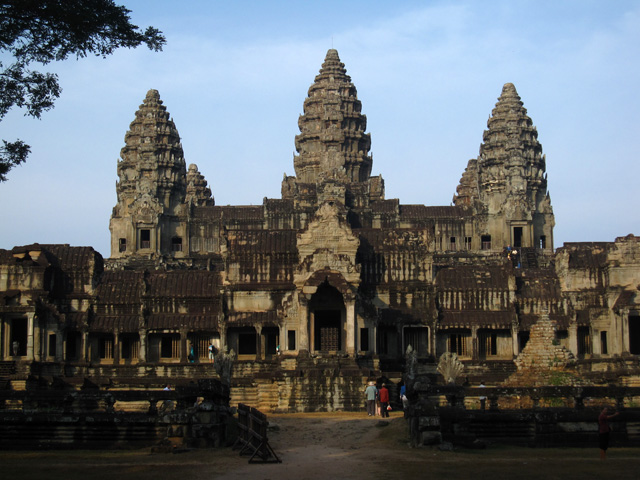
Kuay Teow Reua
Kuay Teow Reua - Thai Boat Noodles

1. Kuay Teow Reua (boat noodles)

Bowls of noodles are common as Thai food meals and snacks.

Kuay Teow Reua translates to "boat noodles," because they were originally served right out of boats floating in the canals.

Nowadays most of the boat noodle restaurants are served from stabilized restaurants.

It's the rich soup made from pig's blood that makes boat noodles so tasty!
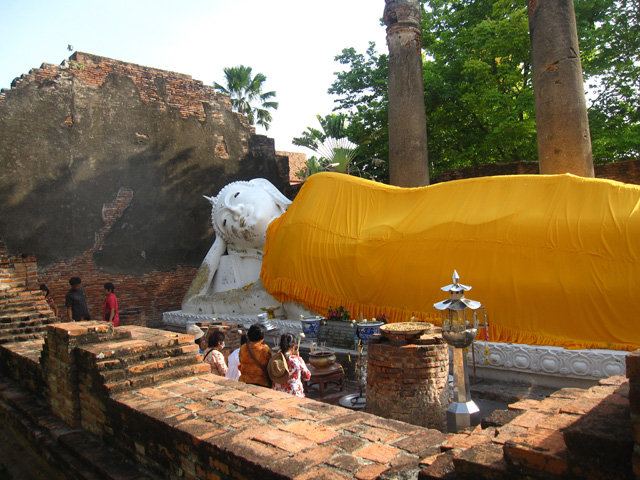
Yam Tua Plu
Yam Tua Plu - Winged Bean Salad

3. Yam Tua Plu

In English, Tua Plu is called winged bean.

Yam Tua Plu is a fresh salad made from chopped up winged beans, a few prawns or slices of squid, peanuts and cashews, dried coconut, and all dressed in a tangy spicy sauce.

The result is a scrumptious salad combination.

Kua Kling
Kua Kling - Dry Curry

4. Kua Kling

One of my all-time favorite southern Thai dishes is meat made into a dry curry known as Kua Kling.

All the meat soaks up the curry sauce and spices and makes it into something heavenly.

Kua Kling is often made spicy and served with a few chopped leaves of fragrant kaffir lime.

Som Tam Ponlamai
Som Tam Ponlamai - Thai Fruit Salad

5. Som Tam Ponlamai

One of Thailand's most famous dishes is Som Tam or green papaya salad. Foreigners and Thais alike love the multi-variation of this crispy fresh salad.

Som Tam Ponlamai is made with the same dressing but instead of green papaya, a mix of chopped tropical fruit like guava, dragonfruit, rose apples, and pineapple are used.

It makes for a truly unique mix of sweet, salty and spicy.

Gaeng Aom
Gaeng Aom - Herbal Curry

6. Gaeng Aom

One of the most herb induced dishes I've ever tasted is Gaeng Aom.

It's a cross between a curry and a thick soup that is filled with vegetables, pork, and then loaded down with a variety of herbs.

Lemongrass, kaffir lime leaves, an assortment of parsleys, and dill leaves are the flavors that really stand out.

Pad Pak Gachet
Pad Pak Gachet - Water Mimosa

7. Pad Pak Gachet

With my first bite of Pak Gachet, I knew that it was one of the best vegetables I'd ever eaten.

In English it is known as a form of water mimosa, though I had never seen it outside of SE Asia.

In Thailand the vegetable is normally stir fried up with fermented bean sauce or oyster sauce along with chilies and garlic.

It has an incredible tough chewiness to it - which I think really makes it special.

Khao Yam
Khao Yam - Rice Salad

8. Khao Yam

Another southern Thai dish of glory is Khao Yam, or mixed rice.

Cooked rice is tossed with toasted coconut, dried shrimp flakes, sliced kaffir lime leaves, lemongrass, green beans, bean sprouts, sometimes pomelo, and a sweet soy sauce dressing.

The rice is served room temperature and it tastes so earthy and fresh.

Khao Kluk Kaphi
Khao Kluk Kaphi - Mixed Rice

9. Khao Kluk Kaphi

Khao Kluk Kaphi is rice coated in fragrant shrimp paste and joined with sliced green beans, green mango slivers, onions, egg, Chinese sausage and a little bit of marinated pork.

As is common with Thai food, it's the diversity of flavors that really makes it exciting!

Kai Yat Sai
Kai Yat Sai - Stuffed Egg

10. Kai Yat Sai

Not just an ordinary omelet, Kai Yat Sai is an egg pocket stuffed with minced pork, tiny pieces of carrots and a zesty tomato sauce.

Over a bed of freshly cooked rice, this glorified Thai style omelet creates a true comfort warming effect.

Larb Pla Duk
Larb Pla Duk - Catfish Salad

11. Larb Pla Duk

Larb Moo, which is fresh minced pork salad, is one of the most common Thai street food dishes.

However, I much prefer the same blend of herbs and spices made with roasted catfish instead of pork.

The smoky flavored catfish is deboned and merged with toasted rice flakes, chili flakes, galangal, lemongrass, kaffir lime leaves, lime juice, fish sauce, and maybe a few sprigs of mint. I simply can't get enough of this!

There you have it, 11 awesome Thai dishes that are not nearly as well known as Pad Thai or Green Curry!

Tortuga Bay: Killing Time in the Galapagos

Day 2 briefing for Santa Cruz Island
Day 2 briefing for Santa Cruz Island.

Monday morning began at 7 AM with the metallic sound of a ringing bell aboard the Eden. I'd slept well, given the yacht had been anchored in a quiet harbor.

On our modified agenda for Day 2 was a visit to Tortuga Bay on Santa Cruz Island.

Felipe assured us it offered was one of the most beautiful beaches in the Galapagos Islands, and who were we to argue.

However, in the back of my mind, I couldn't let go of the fact that we were simply killing time until our new yacht, Estrella del Mar, had been prepared.

A Marine Iguana in Tortuga Bay
A Marine Iguana suns itself on the rocks in Tortuga Bay.

At 8 AM, we took the pangas ashore and boarded a 45-minute bus across Santa Cruz Island until we arrived in Punta Ayora, the largest city in the Galapagos.

From our brief drive through town, it wasn't much to look at. It's a short walk to the trail entrance from town, so we saw several other land-based foreigners visiting as well.

Along the way to the beach, which was a 30 to 45-minute walk along a stone trail, Felipe told us about the local fauna, including cacti that can grow to be hundreds of years old, and incense trees.

Small Lava Lizards ran all along trail in front of us.

The walk also introduced us to small but common birds we'd start to see regularly on all the islands, including brown Cactus "Darwin" Finches, yellow Galapagos Flycatchers, and the singing Galapagos Mockingbirds.

Originality didn't seem to be too important when naming species on the volcanic island chain.

A running joke was you could add "lava" or "Galapagos" in front of anything and be almost assured that was the actual name.

Marine Iguanas on Santa Cruz Island
Let's take a closer look at those pre-historic looking Marine Iguanas.

The sound of crashing waves greeted us as the trees and cactuses gave way to Tortuga Bay, and its white sand beaches.

We continued walking the length of the bay, its surf too rough for swimming or snorkeling.

The sun was strong, even in the morning. Not only were we at the beach, we were at a beach along the Equatorial line where the sun shines strongest.

I was determined to avoid any severe sunburns, and applied copious amounts of sunscreen throughout the week, in addition to wearing a hat, sunglasses, and long sleeves whenever I could bear it.

Beach in Tortuga Bay
Protected by a reef, this beach in Tortuga Bay offers calm waters for snorkeling.

Felipe led us to a beach protected by a reef. It was as pretty a beach as I'd ever scene, and everyone immediately got out their snorkel gear to go for a dip in the turquoise waters.

I went in without my wetsuit to test the waters, literally. It was chilly, but the sun warmed my back so it wasn't too bad.

We snorkeled along mangrove trees, however, the visibility was all but non-existent.

I couldn't see my hand in front of my face, yet I was excited at the opportunity to see some life underwater, including White Tip Reef Sharks that were known to be in the area.

Keeping an eye on the time, so as to avoid a massive Day 2 sunburn, I turned back toward the beach about 30 meters before some of the others, who were much closer to the reef.

Turned out I gave up too early on seeing anything worthwhile, as the group by the reef saw some sharks and an octopus.

I learned an early lesson.

Back on the beach, some people sunbathed, while others took photos of the birds, which were all too happy to surround us for a chance at the crumbs of our ham sandwiches.

Blue Footed Boobies at sunset
A flock of Blue Footed Boobies at sunset.

Clouds began to move in, and a light mist of rain began to fall as we collected our things and made the long walk back to the trail entrance.

The bus was waiting for us, and once we'd all boarded, Felipe informed us we'd be making a quick stop before heading back to the harbor.

That quick stop occurred on the patio of a picturesque hostel in Punto Ayora.

The Eden's Sales Manager gave us 1-page documents and asked that we sign them, thereby accepting the alternate cruise on Estrella del Mar given the Eden had been disabled by a freak mechanical accident.

The situation stoked the annoyances from the night before, however, the only alternative was to get a refund, and basically be left in Punta Ayora to try and book another cruise.

Given all but myself, Sebastien, and Maya were on vacation, that wasn't a feasible option.

We all signed the document. If I had wanted to book a cruise from Punta Ayora, I would've done that previously.

Plus, it's amazing how fast you begin to bond with people, and I was enjoying the company of my cruise mates.

The idea of having to start over with a whole new crew of people didn't appeal to me.

Meeting the crew of Estrella del Mar
Meeting the crew of Estrella del Mar.

Paperwork signed, we took the 45-minute bus back to the harbor, where we boarded the pangas to Estrella del Mar.

We were shown to our assigned rooms, and as expected, Sebastien and I were placed in a cabin below deck.

I knew the room-with-a-view placement of two solo male travelers on the Eden had been too good to be true.

Our new cabin was the same size, but the beds were wider, and the bathroom a little smaller.

Unlike the Eden, we had our own AC unit which we could fully control.

The interior design of the Estrella del Mar was more of a classic ship design. Less modern, and lots of wood trim.

A third level sundeck was a bonus for us all, and one of the only things I missed from the Eden was the wood decks.

Estrella del Mar had plastic mats which were fine, but not quite as elegant.

After a late lunch, we took the pangas to a nearby beach where we passed a flock of Blue Footed Boobies.

We had the beach to ourselves and stayed until the sun began to set.

Then it was back in the pangas, and back to our new yacht where we were introduced to the crew with (another) welcome cocktail and fed pasta for dinner (again).

Then, the Captain started up the engines, and we began the 9-hour, overnight cruise to Espanola Island.

Almost everyone on board popped a sea-sickness tablet in preparation for a bumpy night.

After all the anxiety created by our false start on Day 1, it finally felt as though our Galapagos cruise was underway.

Photo Essay: Faces of Malaysia

Malaysia is home to one of the most ethnically diverse populations in all of Asia.

Its distinct population includes significant groups claiming Malay, Chinese and Indian ancestry.

The story of Malaysia is a harmonious country that is a leading example of tolerance and cooperation when it comes to religion & other social factors.

I was fortunate enough to have the opportunity to visit several key destinations that included the capital city and two UNESCO heritage sites.

The following is a photo essay of the distinct faces of Malaysia from Penang, George Town, Melacca, Melaka, Kuala Lumpur & the Batu Caves:

Batu Caves, Malaysia
Child feeding pigeons outside the Batu Caves, Malaysia.

Kuala Lumpur, Malaysia
Ladies sharing a laugh at the crosswalk – Kuala Lumpur, Malaysia

Melaka, Malaysia
Newlyweds posing on Jonker Street – Melaka, Malaysia

Melacca, Malaysia
A characteristically decorated rickshaw found only in Melacca, Malaysia

George Town, Malaysia
A girl devouring cold noodles on a hot day – George Town, Malaysia

Penang, Malaysia
A man enjoying a conversation on his cell phone – Penang, Malaysia

Melacca, Malaysia
A proud guardian carrying a small infant – Melacca, Malaysia

Melaka, Malaysia
A distinct girl with wide eyes – Melaka, Malaysia

George Town, Malaysia
A rickshaw driver passed out during the midday sun – George Town, Malaysia

Kuala Lumpur, Malaysia
A man walking down the ever bustling Jalan Petaling – Kuala Lumpur, Malaysia

Kuala Lumpur, Malaysia
Children attending a live bird performance – Kuala Lumpur, Malaysia

Melacca, Malaysia
A cute girl looking back at her mother – Melacca, Malaysia

__________

About the Author: Samuel Jeffery is the wizard behind the curtain pulling the strings of NomadicSamuel.com, a travel blog that is miles away from ordinary...dripping with sarcasm. As a long term vagabond (6 consecutive years on the road) Samuel is sharing his photos, videos & quirky travel stories, along with photography tips, interviews, ESL tips, reviews and general travel advice as a way to vicariously experiences what it is like to backpack or to plan your own journey of a lifetime.

A False Start Aboard the Eden Yacht

Airport on Santa Cruz Island
Passengers walk the tarmac at the airport on Santa Cruz Island.

Touching down on the tarmac at Santa Cruz Island, it felt as though my Galapagos Islands adventure had finally begun.

The Eden yacht and its crew were awaiting me in a nearby harbor, but first, some paperwork had to be taken care of in the airport.

As I waited in line to show my passport and pay my $100 park entrance fee, additional planes arrived.

Sundays, it turns out, are the busiest days of the week, with up to a half dozen planes arriving in the morning.

Once the payment was made, my carry-on bag was searched, and I could collect my larger backpack.

Walking out the backside of the airport building, I saw a local holding a sign for The Eden yacht. It was Felipe who'd serve as our naturalist/guide for the whole 8-day journey.

Eden Yacht awaits its newest passengers in the harbor near the airport.

Boarding the Eden Yacht

But before we could get going, we had to wait for the rest of the boat's passengers to arrive. And that took another 45 minutes, as they were on the flight that arrived after mine.

By the time we left in the shuttle bus to the harbor, everyone else had already reached their boats.

A panga (or small dinghy) was dispatched from Eden to ferry us over. Pangas are used by all the cruise ships to take passengers back and forth between the boats and islands and for snorkeling.

Everyone was excited to reach the yacht, which would serve as our home for the next seven days and nights.

My first impressions were very positive as I explored the yacht's main deck.

The interior design was modern; there were tablecloths on the two dining room tables, a handsome bar, and even a flat-screen TV in the lounge area.

Once everyone and their luggage were aboard, we were shown to our rooms.

I wasn't surprised to learn I was bunking with Sebastian, a Canadian truck driver with a penchant for backpacking; however, neither of us expected to be given a room on the 2nd level.

Given Sebastien towered over me, I took the top bunk, which was a little narrow, but would suffice for a week.

The bathroom was small, clean, and better than I expected. In addition to a central AC system feeding the room, we had the ability to open our window and let a breeze in.

Next, we had a briefing by Felipe regarding the afternoon's itinerary. We'd have our first nature walk on nearby Bachas Beach, followed by snorkeling, but first, we'd have lunch.

For the passenger's comfort, I gather, all meals are served while the boat is stationary, so we ate while bobbing around in the now-empty harbor.

The family-style dining tables were a good icebreaker, and everyone began to get to know one another.

Related: How to Book a Last Minute Cruise to the Galapagos Islands

A heron walks along the beach at sunset
A heron walks along the beach at sunset. The red spots on the black lava rocks are Sally Lightfoot Crabs.

Bachas Beach on Santa Cruz Island

After lunch, we motored over to Bachas Beach. Several other yachts were already anchored offshore, and I began to wonder if we'd have time to snorkel.

It seemed like we'd been behind schedule since the airport, but I tried not to let it bother me.

We boarded the Eden Yacht's two pangas and sped toward shore.

As we got closer, a giant flock of Blue Footed Boobies could be seen. And people were snorkeling amongst them all in the clear blue waters.

By now, the sun was already fading toward the horizon, and I knew we were too short on time. I accepted that we would miss our first snorkel and reminded myself there'd be many more that week.

Felipe led us to two separate ponds where Chilean Flamingoes were busy feeding.

We quickly saw our first Marine Iguanas and red Sally Lightfoot Crabs, herons, and a few other types of birds.

After visiting the ponds, we arrived back at the main beach, which was now devoid of the Boobies and snorkelers who'd returned to their yachts already.

There was a sweet stillness to the beach at sunset. I was no longer in a hurry and could enjoy the moment.

A Marine Iguana on Bachas Beach
A Marine Iguana walks off into the sunset on Bachas Beach.

The Breakdown

As the light faded, the pangas were dispatched to pick us up, and we passed our first pelican on the way back to the Eden Yacht.

Once onboard, the captain started up the engines, but we didn't seem to go anywhere.

Then, we noticed some of the crew on the pangas next to the boat. It was already dark, so something clearly wasn't right.

The more time that passed without us moving, the more obvious it became there was a serious problem.

Felipe told us we'd eat dinner first and have our briefing for the following day afterward (normally, the briefings happen before dinner). We all knew that was a stall tactic.

Either the crew was still trying to diagnose or fix the problem, or they needed time to figure out what to do with 16 paying passengers whose yacht just broke down on the first day of a week-long cruise.

Sunset in the Galapagos Islands

We continued to bond over our spaghetti dinner, after which we reconvened for the briefing.

Felipe, who looked young for his position as Galapagos nature guide, broke the news as we all held "welcome" cocktails.

The boat suffered a mechanical failure. And it wasn't something that could be fixed immediately.

He informed us that other 1st Class yachts were being contacted to see if they could take us.

The first boat offered up space for three of us -- an older Italian couple, and Maya, an Israeli backpacker.

Only Maya would need to bunk with a man, which was not the normal protocol when pairing up single travelers on Galapagos cruises.

As they got their stuff together to be transferred, fear of the unknown set in with the rest of us.

Would they find another comparable yacht for us?

Would the new yacht have a similar, if not the same, itinerary as the Eden?

Many of us had chosen Eden specifically for its itinerary, which included far-flung Genovesa Island.

Time passed, and anxiety increased as we awaited Eden's Sales Manager, who was due to arrive on the yacht around 9 PM'ish to further address the situation with us.

Our cruise had barely begun, and we were already being forced to abandon ship.

I would've been more pissed off if it weren't for the others on the boat, many of whom maintained a steady stream of jokes to lighten the mood.

I gave them all credit for keeping their cool. Despite the high cost of a Galapagos cruise, not including the actual cost to reach Ecuador from the USA or Italy, everyone behaved maturely.

A little before 10 PM, Maya returned. Upon seeing the other boat, and her new room, complete with an older man sleeping in it, she refused to stay there and rejoined the rest of us.

Dining room on Eden Yacht
One of two family-style dining tables on the Eden Yacht.

A Solution

A little after 10 PM, the Sales Manager arrived on the Eden, looking very flustered. She recapped the situation; the boat suffered a mechanical accident that could not have been predicted.

It was not a reflection of poor maintenance (earlier in the year, the Eden underwent a three-month maintenance overhaul).

Somehow, the metal rod that connected one of the two motors to one of the two propellers had broken.

Of course, that was the bad news we already knew.

The good news was they'd come up with the best solution we all had been hoping for -- transferring all of us to a new 1st Class yacht, Estrella del Mar, the following day.

The Estrella del Mar was a dive boat, and it wasn't scheduled with a tour, so it was undergoing routine maintenance.

I imagine Eden had to pay a pretty penny for this solution, not that we cared. But, I give them credit.

For it to work, they found an available boat of a similar class and worked out the charter with the owner, who then had to get a captain and crew together, prepare the boat, and stock it with food within about 12 to 14 hours.

There was no way around it. We had to accept the itinerary of the new yacht. The park service requires eight days to consider itinerary changes, even given extenuating circumstances.

We were losing a full day of our original itinerary, thereby missing Genovesa Island and the world's largest colony of Red Footed Boobies.

But there was nothing we could do, so humor and patience prevailed once again, and we all retired for the night.

How to Book a Last Minute Cruise to the Galapagos Islands

I will share with you how to book a last-minute cruise to the Galapagos Islands based on my experience.

Here's a dirty little travel secret: you can show up at almost any popular tourist activity worldwide and save serious cash by taking advantage of last-minute deals to book your trip.

Whether hiring a Nepali guide and porter for a trek to Everest Base Camp or going on safari in Africa, rare will be the occasion you can't get started within a few days of arrival.

Blue Footed Boobies are a beloved symbol of the Galapagos Islands.
Blue-footed boobies are a beloved symbol of the Galapagos Islands.

Before I dive into how you can visit this UNESCO World Heritage Site, I'd like to offer a disclaimer.

Results will vary significantly due to variables, from the time of year to tourism trends and the degree of desperation boat owners demonstrate at any given time to fill remaining beds before a cruise departs.

Table of Contents

  • When to Go
    • Water Temperatures
    • Peak Tourism
    • Migratory Patterns
  • Where to Buy a Galapagos Island Tour
    • Quito
    • Puerto Ayora, Santa Cruz Island
    • Guayaquil
  • Length of Cruises
  • Types of Ships
    • Economy / Tourist Class - Least Expensive
    • 1st Class - Most Popular
    • Deluxe / Luxury Class
    • Cruise Ships
  • Itineraries
    • My Experience
  • Related Expenses
    • Required
    • Optional
  • How to Pay
  • Total Cost of My 8-Day Galapagos Cruise
    • Itemized List of ALL My Expenses

When to Go

Due to their proximity to the Equator, the weather on the Galapagos Islands remains relatively constant, making it a great year-round destination.

However, there are still a few factors to consider when deciding when to go.

Water Temperatures

While the air temperatures may remain relatively constant, there are hot and cold seasons based on ocean currents.

Warm Wet Season = Late December to June

Cold Dry Season = Late June to December

If you plan to go scuba diving or take advantage of snorkeling opportunities (as almost everyone does), the warm water season is the best time to book a cheap Galapagos cruise.

During the cold water season, you can still get in the water. However, you'll probably be more comfortable renting a wetsuit from your boat (or bringing your own).

Peak Tourism

The high season for tourism is June to August due to the summer holiday season in North America and Europe.

Expect cruise rates and, therefore, last-minute prices to be higher during this time, and you may need a little extra time to book your preferred boat.

Migratory Patterns

Some wildlife species are only present in and around the islands at certain times of the year due to their migrations.

If you have your heart set on seeing whales or a specific type of bird off the coast of Isabella Island, do your research in advance.

For example, the giant waved albatross is not typically seen from December to mid-March.

Where to Buy a Galapagos Island Tour

Backpackers in Puerto Ayora, The Galapagos
Backpackers crossing the main street in Puerto Ayora

There are three main cities where travelers are best off shopping around for and booking their last-minute cruise to the Galapagos Islands.

Quito

The Mariscal neighborhood around Plaza Foch in Quito has a high density of hostels, hotels, restaurants, bars, and tour agencies.

You can easily walk out of your hostel and spend a few hours collecting quotes and special offers from tour agencies, searching for the best price to make an informed decision.

While booking from Quito may be the easiest option, it will not necessarily offer you the best deals.

Puerto Ayora, Santa Cruz Island

If you're serious about saving a few hundred dollars off the price of a cruise, you can arrange your flight(s) to Puerto Ayora on Santa Cruz Island (home to giant tortoises) and then shop around for very last-minute cruises.

The longer you can wait before a cruise departs, the more likely you will get a bargain basement price.

Don't sit on a quote you like too long because someone else can put down a deposit at any time, and you'll either have to wait longer or go with an otherwise second or third choice.

For example, one Australian couple I know flew to Puerto Ayora and booked their 8-day cruise there. They learned everyone had paid a different rate on their boat, from $800 to $1,200.

Unfortunately, I don't know which boat class they used; however, based on the price, it was either Economy/Tourist Class or, more likely, a 1st Class motor yacht.

Puerto Ayora is a tiny town and not particularly picturesque; however, you can make many inexpensive day trips, such as visiting the Darwin Research Center or Tortuga Bay, to kill time before your cruise departs.

Be forewarned that these two popular spots may also appear on cruise itineraries.

There are several decent Internet cafes in town. Rooms can be had for $20/night, and if you avoid tourist restaurants and eat with the locals, you can get by on $5 per meal.

Guayaquil

Located on the coast, Guayaquil is Ecuador's largest city and is considered more dangerous than Quito.

There's no central tourist area to compare with Mariscal in Quito, so shopping at different agencies to compare last-minute Galapagos cruise deals isn't as easy.

While you may save $40 on your airfare to/from the islands by flying out of Guayaquil, it's the least attractive location to book your last-minute cruise, let alone kill time before flying there.

Length of Cruises

Most (non-diving) cruises are sold for five or eight days, and the last day of the cruise is short, so you're better off thinking of them as four- and 7-day cruises.

To go a step further, the first day is only a half-day, so choosing a 5-day cruise equates to 3 full days, while an 8-day cruise equates to 6 full days.

A cruise around the Galapagos Islands is a once-in-a-lifetime experience for most travelers, so I highly recommend the 8-day cruise to make the most of your visit.

The more walks you go on and the more snorkeling you do, the higher your chances of seeing all the fascinating wildlife.

Another option is to take the 5-day cruise and tack on some extra time, in the end, to explore independently or do some scuba diving through another company.

Types of Ships

Estrella del Mar - a typical 1st class motor yacht, which is a common choice for a last minute cruise to the Galapagos Islands.
Estrella del Mar - a typical 1st class motor yacht

The most significant variable in determining how much you pay for a last-minute cruise to the Galapagos Islands will be the class of boat you choose.

Finding out what others paid to their cruise operators is meaningless unless you also ask which boat they took.

In addition to the class of boat, which equates to the comfort level and quality of service, there are three main styles:

  • Sailboat
  • Motor yacht
  • Catamaran

Sailboats are primarily for show and are often powered by their motors more than the wind.

Motor yachts are the most common boat. And modern catamarans offer increased stability for those who are prone to seasickness.

The best options for budget travelers are the Economy and 1st Class motor yachts.

Economy / Tourist Class - Least Expensive

The economy class boats offer the Galapagos experience for those with the least money to spend.

Comfort, quality of food, and itineraries are all sacrificed to some degree when you choose these budget cruises.

Slower boats, such as the old sailboats, will not have itineraries as varied as the faster boats. These boats carry 12-16 passengers.

1st Class - Most Popular

Within the category of 1st Class are a wide variety of small yachts.

Therefore, some websites and tour operators break them out into the lower, middle, and higher levels to further delineate the quality of service and justify the pricing.

From a marketing standpoint, this makes sense -- getting on a "1st Class" boat sounds much better to customers than an "Economy" one!

The good news is even the lower-level 1st Class yachts are sufficient (if not entirely enjoyable) in terms of comfort, food, and quality of service by the crew.

For example, I experienced both Eden and Estrella del Mar and can say that while each had its pros and cons, they both met my expectations, if not exceeded them.

Common features included:

  • Nice interior design
  • Comfortable cabins and bathrooms
  • Good air-conditioning
  • Great and varied food
  • Friendly staff

These boats can carry a small group of 12-16 passengers.

Deluxe / Luxury Class

Queen Beatriz - a typical Deluxe catamaran
Queen Beatriz - a typical Deluxe catamaran (G Adventures charter this one)

Check out the Galapagos luxury cruises if you can afford to splash out on your adventure at sea.

These yachts and catamarans offer the highest quality service and the best-educated naturalists (who will also speak the best English).

And if you're looking for a jacuzzi on deck, these are the small ships for you.

Cruise Ships

National Geographic's Endeavour

Larger ships like the National Geographic Endeavour II offer luxury and stability that smaller boats can't compete with.

Larger boats also mean more passengers, which may be the preference of some visitors to the Islands.

I recommend getting quotes for all boats available when shopping around.

Don't be scared away by rates you see published online. Remember, you've got the advantage of booking at the last minute, at potentially significant savings!

You may get a great, last-minute deal on a Deluxe catamaran for the price of a typical 1st Class boat.

Itineraries

Itinerary for the visit to Espanola Island in the Galapagos.
Our Galapagos guide, Felipe, would brief us on the following day's itinerary every evening.

When I was getting quotes for my last-minute cruise to the Galapagos Islands, I found the faster, more expensive yachts often have plans focused on only encircling Isabella Island.

Isabella is the largest island on the western side of the Galapagos archipelago.

The coldest water passes along Isabella's western coast, which means it's suitable for whale watching, and there's also the chance to see dolphins, in addition to much of the same wildlife you can see on the smaller islands.

However, even some smaller, 1st Class boats have fabulous itineraries.

My Experience

I initially chose Eden, for example, because it was one of the few boats to visit the small, northern island of Genovesa on an 8-day cruise.

It's a very out-of-the-way island home to the world's largest colony of red-footed boobies, among many other birds.

Unfortunately, that yacht had a mechanical problem the first day, and we missed out on Genovesa as it wasn't on our new boat's, Estrella del Mar's, itinerary.

As a result of that experience, we learned that it takes a minimum of eight days for the park services to approve changes to cruise itineraries.

If something goes wrong, there's little chance your boat will be able to make up for it on another day.

All itineraries will ensure you have plenty of fantastic wildlife viewing opportunities. So, if you get dizzy looking at and comparing them all, don't worry too much about it.

The itinerary of any given boat is a more significant factor if you're dead set on seeing certain types of birds or wildlife, such as the whales, which are only around Isabella Island, and the red-footed boobies on Genovesa.

My Favorite Island

Of my 8-day itinerary, the best day was spent on Espanola Island, where we could snorkel with wild sea lions, see red and green "Christmas" marine iguanas, blue-footed boobies, Galapagos hawks, frigate birds, and the waved albatross.

Related Expenses

The airport runway on Santa Cruz Island

The boat cost may be the most significant single expense if you want to book a last-minute cruise to the Galapagos Islands; however, there are additional costs to budget. Luckily, these are all well-known and easy to account for.

Required

  • $430 - Roundtrip Airfare to/from Islands (this is slightly less in the Low Tourist season or if you fly out of Guayaquil vs. Quito). I was informed you could try to book the airfare yourself and note you're an Ecuadorian to get about a 50% lower rate. However, if they call you out on this at the airport, you'll be required to pay the difference on the spot.
  • $100 - Galapagos National Park entrance fee (paid on arrival at the airport)
  • $10 - Airport fee (paid at the airport from which you depart the mainland)

Optional

  • $100+ Tip for the guide and boat crew. The rule of thumb is to tip at least $10 per day, split between the guide and boat crew. At the end of your cruise, you'll receive two envelopes for divvying up the cash. Tip more if you had a great time!
  • $30 - Wetsuit rental for a week. Necessary during the cold water season and a good idea any time if you're prone to sunburn. The boats carry a range of full and half-length sizes to rent.
  • $30 - Snorkel rental for a week. On nicer boats, this fee is included in the overall cost of the cruise, so make sure you find out when you're getting quotes. Or bring your own.
  • Bar Tab - On lower level 1st Class yachts, the beers were $2.50, and cocktails $4-$5.
  • Souvenirs - You'll have a few souvenir shopping opportunities in towns like Puerto Ayora on Santa Cruz Island.

How to Pay

Ecuador is very much a cash-based economy, so unless you want to pay high fees to pay for your trip with a credit card, expect to make a few large withdrawals from the local ATMs. The good news is the official currency is the U.S. dollar.

I booked my trip through Sangay Tours, which was recommended to me by Uncornered Market, and I'm happy to recommend them as well.

When I booked, they charged a 10% fee for using credit cards and a 4% fee for using PayPal.  

If you have a debit card that charges a lesser foreign transaction fee, such as 1%, it'll make sense to take money out via ATM and pay in cash.

Depending on your daily withdrawal limit, this may require multiple trips to the ATM and travel office, which is another reason to book your trip in Quito or Puerto Ayora.

There should be no fee for paying the airline ticket via credit or debit card.

Related: Packing List for the Galapagos Islands

Preparing to board the Eden our 1st day
Preparing to board the Eden on our first day

Total Cost of My 8-Day Galapagos Cruise

As soon as I'd announced my pending cruise to the Galapagos Islands, I started getting questions about how much the trip cost me, both from those who were planning to go and those who'd been.

I confirmed my spot on the last-minute Galapagos cruise four days before it departed.

Itemized List of ALL My Expenses

  • $1,550 - an 8-day cruise on a (lower level) 1st Class motor yacht. The first night was spent on Eden, with the remaining six on Estrella del Mar. The rate includes transport between the airport and boat on the Galapagos, snorkel equipment, 7-night onboard accommodation, and three meals daily. Paid in cash.
  • $428.60 - Roundtrip airfare from Quito to Santa Cruz Island via TAME Airlines. Paid on a debit card.
  • $10 - Quito airport departure / park-related fee. Paid in cash.
  • $100 - Galapagos Park fee. Paid in cash.
  • $30 - Wetsuit rental for the week. I paid in cash on the first day on the boat.
  • $3 - Souvenir stone-carved sea turtle.
  • $21 - Drinks and ice cream in a few towns we visited.
  • $9 - Yacht bar tab (I was so tired from activities that I didn't drink much alcohol).
  • $110 - Tips for guide and yacht staff, paid in cash.

My Total Cost = $2,261.60

This was the most I've ever paid for a single tour; however, it was a unique experience. I enjoyed learning about the Islands' history, geology, and wildlife.

I hope this information proves helpful when planning your last-minute cruise to the Galapagos Islands.

Daily Life in Yangon Burma

Morning Market in Central Yangon

Naturally, awakening to the sunrise is a joy. The sounds of bird's chirping can still be heard before the roar of unmaintained trucks starts thundering through the bumpy roads. 

I spent about two weeks in the city of Yangon Burma, and here are just a few things that would happen on an unplanned, but always eventful day.

Table of Contents

  • Stroll Through The Morning Market
  • Mohinga for Breakfast
  • Betel Nut Mouth Chew
  • Chinese Tea
  • Thiri Mingalar Market
  • Shwedagon Pagoda
  • Drinking Cold Water
  • Giant Curry Feast of Dinner
  • Football or Movie - and Tea

Stroll Through The Morning Market

After waking up and putting on my clothes, it was time to take a stroll through the morning market.

The market was already bustling by the time I arrived.

It was filled with people selling fresh produce, recently butchered meats, ripe fruit, and a handful of already cooked delicious snacks and meals.

I stopped to grab a fantastic flatbread filled with boiled peas, combined with a few other spices.

It was reminiscent of a perfect bean burrito, but this was on the streets of Burma.

Mohinga for Breakfast

Mohinga for Breakfast

When real breakfast rolled around about an hour later, I went straight for a bowl of Mohinga.

Mohinga is one of the most popular dishes in Burmese cuisine, consisting of rice noodles in a thick fish soup.

It is often topped with crumbled up deep-fried chickpea fritters. The bowl of deliciously salty noodles makes a perfect breakfast!

Betel Nut Mouth Chew

Betel Nut Mouth Chew

In this part of the world, chewing various combinations of betel nut (also known as areca nut) is common.

Ancient looking wooden stands are set up all over town with men that roll herbs and tobacco into leaves and gnaw on them all day long.

I do enjoy the taste of betel nut, but the red spit that foams up your mouth and the mark it leaves on your gums makes it not so appealing.

Drinking Tea and Coffee

Chinese Tea

While walking aimlessly around town, I was hollered at by an older man sitting on a 6-inch stool drinking coffee and tea.

He was being served by an elderly woman who smiled at me and invited me to sit down as well.

With no plans on the agenda, I sat down and ordered up a cup of coffee and Chinese tea as well.

In Yangon, anywhere you sit, you will be served Chinese tea, and you can drink as much of it as you want.

Some of the people I talked with were willing to talk about the political and historical situation of their country.

Thiri Mingalar Market

Thiri Mingalar Market

After a few hours of drinking tea and sitting around and chatting, I decided to whiz off to the giant distribution fresh market known as Thiri Mingalar market.

It is located about 10 kilometers out of central town, so I jumped in the back of a public transportation truck to get there.

Soon the truck was overfilled with all sorts of people carrying all kinds of random things.

The market was buzzing with business activity and the ever-present hustling of vegetables and fruits.

Along with eating, visiting local markets are another one of my favorite ways to observe the culture.

Thiri Mingalar market was an incredible glimpse into the lives and city of Yangon, and the local vendors were extremely friendly and approachable.

Shwedagon Pagoda
Shwedagon Pagoda

Shwedagon Pagoda

The most iconic and most holy religious site in Burma is Yangon's Shwedagon Pagoda.

This giant pagoda is known for its authentic golden bell-shaped stupa that rises to a height of 99 meters.

The very top of the stupa is a little chandelier like an ornament that consists of 5,448 diamonds and around 2,317 various precious gemstones. At the very very top is said to be a real 76-carat diamond.

It was indeed a fantastic site, and it was easy to spend quite a lot of time walking around the complex and gazing at the vast amount of gold everywhere.

Drinking Cold Water
Drinking Cold Water

Drinking Cold Water

As the afternoon sun pelts down, it's essential to drink as much water as possible to remain hydrated.

Luckily, I wasn't the only person thinking like that: There are cold water stations set up all over town.

The picture above will do a lot better at explaining this, but basically, you pour a cup of water over the block of ice, catch it back into the cup, and you then have cold water to drink!

You leave a tiny bit of money in the money cup - on the honor system.

Giant Curry feast of Dinner

Giant Curry Feast of Dinner

Burmese curry is famous, and though at times it can be a bit greasy, I'll admit that with a plate of rice, it's quite delicious!

Curry is available at many restaurants around town, from sit down to tiny street-side eateries.

Many of the curries are pre-cooked, but it's also possible to order up some stir-fried vegetables as well.

Football or Movie - and Tea

The nightly entertainment in Yangon involves sitting on the side of the street while watching a football (soccer) match or a movie.

After the sun goes down, the air is pleasant, and things settle down fast.

Of course, while chatting with a few locals and thoroughly enjoying ourselves, we sipped on a few pots of Chinese tea!

And with that, it was time to rest for the night to wake up in the morning and repeat another day in Yangon Burma!

Riding the Quito Teleferico & Climbing Pichincha Volcano

The base of the Quito Teleferico

Riding the Quito Teleferico, one of the highest aerial lifts in the world, offers visitors the best views of the capital city.

If you're up for it, climbing Pichincha Volcano (4,784 meters) once you're up there is a physical challenge you can be proud to complete.

Heading to Quito? Book your hostel here

Opened in 2005, this gondola rises quickly from its base of 2,900 meters to 4,100 meters in about 10 minutes.

The cost for the roundtrip ride is $8.50, and experiencing the effects of high altitudes on your body won't get any easier than this.

Even after a few days of acclimatizing at 2,800 meters in Quito, I developed a headache within 30 minutes of walking around (at a reasonable pace) atop the Teleferico.

However, this is an entirely normal reaction for your body, and no reason not to take the trip up if you're in otherwise healthy condition.

View of Quito atop the Teleferico - 4,100 meters above sea level

Riding the Quito Teleferico

If you have the time and flexibility, it's best to wait for a relatively clear morning to make the trip up.

Weather conditions can change quickly in the mountains, and that's especially true once you reach altitudes above 4,000 meters, so go as early as possible. The Quito Teleferico operates from 9 AM to 7 PM daily.

Bring a rain jacket, as well as your camera.

The easiest way to reach the base of the Teleferico is to take a taxi.

Once you arrive, you can buy your ticket, and queue for the gondola.

When I went on a weekday afternoon, it was practically empty.

The ride is quick and smooth, and you'll be atop the mountain before you know it.

When you disembark, remember to take it slowly. Very slowly.

If you've never experienced such a high altitude, you may be surprised at how quickly your heart starts beating as you begin to walk around.

Take deep breathes, and again, go slow.

Most visitors will go for a short walk to take photos of Quito to the West, and Pichincha Volcano to the East.

There are several cafes, restaurants, and public bathrooms around the top of the Teleferico where you can rest and enjoy the city views.

If you start to get a headache, drink lots of water and get something to eat.

Chances are this won't have an immediate effect. However, it's a good idea anyways, especially if you're climbing Pichincha Volcano.

Our bodies use/lose water more quickly at high altitudes, so it's important to stay well hydrated.

As a rule of thumb, drink before you're thirsty, and eat before you're hungry.

The easiest way to alleviate a high altitude induced headache is to just take the Teleferico back down to the lower elevation.

Taking aspirin or Tylenol can also help reduce the severity.

Pichincha Volcano as seen from top of the Teleferico

Climbing Pichincha Volcano

If taking the Teleferico isn't enough, you can also try climbing Pichincha Volcano once you're up there.

A few tips to keep in mind:

  • Start early to ensure better views, as it's often more likely to get cloudy, foggy and rainy in the afternoons.
  • Allow an hour or two more time than you think you need. Trekking at high altitudes is a slower process than at sea level, especially if you haven't already acclimatized to Quito's 2,800-meter elevation.
  • Dress in layers, as temperatures can fluctuate quickly at altitude.
  • Bring a water-resistant jacket.
  • Bring a daypack with a few liters of water, and some high-energy snacks (ex: Snickers, protein bars, chocolate).
  • Hike with at least one other person, if not a group, to ensure your safety and deter potential thieves.
  • Remember that getting to the top is often the easy part. Don't push yourself beyond your limits, as you'll need your energy to get back down safely too.
  • Tell someone where you're going, and when you can be expected back.

I decided not to try and climb Pichincha for a few reasons.

First, I was still experiencing light headaches every afternoon since arriving in Quito, so I knew my body hadn't acclimatized to Quito's 2,800-meter elevation.

Second, being the sometimes-loner that I can be, I didn't have anyone to go with and didn't want to take any unnecessary risks (robbery, acute mountain sickness).

Trail map for hiking Pichincha Volcano, found at base of the Teleferico
Trail map for hiking Pichincha Volcano found at the base of the Teleferico

What You Need to Know

Hours:  9 AM to 7 PM daily

How Much: $8.50 - Quito Teleferico / Free - Climbing Pichincha Volcano

Difficulty:  Easy - Quito Teleferico / Moderate to Difficult - Climbing Pichincha Volcano

How to Get There: Schedule a taxi through your hostel for a fixed price (one way or return trip), or hail one on the street and negotiate a rate.

What to Bring: Several layers of clothes, including a rain jacket, camera. To climb the volcano, also bring a daypack with 1-2 liters of water, and several snacks (candy or protein bars, fruit, etc.).

Need more itinerary ideas? Get this complete Ecuador guidebook

Mountain Biking Cotapaxi Volcano

Mountain biking Cotopaxi Volcano was the most scenic, exciting bike ride of my life (and one of my favorite day trips ever). I first learned about this high-altitude adventure from Jack and Jill in a story they wrote about activities that did NOT kill them in Ecuador.

The parking lot at Cotopaxi Volcano - 4,500 meters above sea level

Excellent. But I had a few concerns before I'd be ready to sign up. First, can I find a tour company that uses quality bikes and keeps the brakes in good condition?

Yes. After googling around, I discovered several positive referrals for the Biking Dutchman, who has been running tours to Cotopaxi for an odd 25 years, before anyone else, I'm sure. And that's just one of many trips they run throughout the country (for more serious riders).

Second, how would I feel at our drop-off point, 4,500 meters above sea level, when I was already having light headaches while acclimating to Quito's 2,800-meter elevation?

Welcome to Cotopaxi Volcano, Ecuador's second tallest at 5,897 meters.

When I visited the Biking Dutchman's office, I was met by the daughter of the company's founder. Of course, she's taken the bike ride and assured me it was no big deal.

Unlike other bike tours, theirs was more focused on bike riding and did not include the (strenuous) 300-meter walk up to the base camp used for summit attempts (aka the refuge).

In other words, we'd be driven to the parking lot at 4,500 meters and almost immediately beginning our descent. So, I paid a $10 deposit on the $59 tour (which included lunch).

My trip left the next day, a Saturday morning, which made getting a good night's sleep in the hostel near impossible.

Related: Top Things To Do in Ecuador

The 4x4 and bikes we took.
The 4x4 we took to Cotopaxi

Table of Contents

  • How To Mountain Bike One of the World's Tallest Active Volcanoes 
    • Tips for Mountain Biking Cotopaxi Volcano
    • Lunch at Laguna Limpiopungo
    • Final Thoughts
    • What You Need to Know

How To Mountain Bike One of the World's Tallest Active Volcanoes 

At 7 or 8 AM, I grabbed a quick breakfast at one of the few open restaurants in Plaza Foch and met up with the guides and our group for the day outside the Biking Dutchman's office.

We piled into two 4x4 trucks, with the mountain bikes on top, and drove about two hours through southern Quito to Cotopaxi National Park, stopping for snacks once along the way.

During the drive, I got to know others in my truck. Most were Americans, and there were even two older couples, one in their 40s and one easily in their 50s. I admired their sense of adventure.

Once inside the park, we stopped at a rest area, where I had the chance to drink my first cup of coca leaf tea, which is supposed to help with the effects of high altitudes. For $3 per cup, it better!

Mountain bikes
Geared up and ready to go downhill mountain biking

This was also where we were fitted with helmets and given gloves, which are as much for warmth as protecting our hands from the day's riding and in the event we should bite the dust on the rocky roads.

And then we began the ascent up the volcano to the parking lot at 4,500 meters. The altitude was a new high for me, though it lacks the sense of accomplishment when you don't get there by trekking.

Our guide matched each person individually with a bike based on our heights. Once we had our bikes, he gave us a safety briefing, including tips for how to properly go mountain biking down Cotopaxi Volcano (or anywhere, for that matter).

Mountain biking Cotopaxi Volcano
Downhill mountain biking Cotopaxi Volcano. This photo was shot just below the parking lot.

Tips for Mountain Biking Cotopaxi Volcano

  • Use the back brake 70% and the front brake 30%.
  • Don't mix up the brakes; if you press the front only, you'll immediately fly over the handlebars.
  • Stand up with the pedals parallel to the ground, your right (dominant) foot forward, and your knees bent.
  • Lean your weight backward, especially on the steeper terrain.
  • It's better to allow the bike to gain some speed than to be riding the brakes hard the whole way (let the bike's front shock absorbers do their job, and you'll have a more comfortable ride).

And then we were off and riding down one of the world's tallest active volcanoes! At first, I was riding the brakes pretty hard, however as I began to trust the bike more and more, I loosened up and did better maintaining a constant speed. The road was rutted, and keeping to the inner or outer edges often helped reduce the bumps.
Downhill mountain biking Cotopaxi
Riding down Cotopaxi

Traffic continued to go up the road in the opposite direction, but it was slow enough that you always saw them coming and could adjust your position and speed accordingly.

The main downhill portion runs eight kilometers from the parking lot to relatively flat terrain, and it's over pretty quickly, even if you stop to take pictures along the way.

The sweeping views of the valley and nearby mountains were gorgeous, and according to our guide, the partly cloudy weather offered near-perfect conditions.

Dressing in layers is essential, as you'll want to be warm at the top, while a T-shirt or long-sleeved shirt is sufficient by the bottom. Sunglasses are an absolute requirement due to the elevation and reflection of the sun off the glacier. Sunscreen is also a good idea.

One of the 4x4s was always behind our group in case someone needed a break, which was the case with the oldest woman on the downhill section. Everyone else rode down without any trouble.

Cotopaxi Volcano summit
Cotopaxi Volcano, as seen from about 3,800 meters. The parking lot is a little below the yellow "refuge" tent. 

With the Biking Dutchman trips, you spend more time mountain biking Cotopaxi Volcano National Park after the downhill section, versus other trips, which spend that time hiking to the refuge and, if possible, further up to the snowline.

The valley's terrain may look flat and easy to ride, but pedaling at altitudes of 3,300-3,700 meters is still hard work. It pays to keep a slow but steady pace unless you want to be out of breath the whole time.

Lunch at Laguna Limpiopungo

We enjoyed a pasta lunch and spinach pastry overlooking Laguna Limpiopungo (3,830 meters). The chocolate brownies for dessert were the bomb. They are worth the price of the trip alone. Fresh ginger tea was served, a reminder of my time in Nepal.

Final Thoughts

Our mountain biking trip through Cotopaxi National Park concluded some 26-30 kilometers from where we started on the volcano. Toward the end, we passed wild horses grazing near the road. Some sections were more fun to ride than others.

At times, I was surprised at how fast I was moving over what appeared to be very rough terrain. Our guide was right about learning to trust our bikes-the more time I spent on them, the more relaxed I became, and the more bumps I enjoyed.

Storm clouds and lightning had begun to roll through the valley, and our guide wisely suggested we stop, whereas they usually allow riders to keep going for as long as they want.

I highly recommend mountain biking Cotopaxi Volcano to everyone, regardless of age, sex, or physical fitness. Though it helps to be in good condition, the spirit of adventure will serve you just as well.

Don't let the flat ground deceive you, it was still a lot of work to pedal as we were over 3,000 meters in elevation the whole day
Don't let the flat ground deceive you. It was still a lot of work to pedal as we were over 3,000 meters in elevation the whole day.

What You Need to Know

How Much:  $59 + tip

Difficulty:  Moderate

Where to Book:  Most hostels and travel shops in Quito. I recommend the Biking Dutchman (La Pinta E 731 and Reina Victoria). They use Trek mountain bikes and maintain them well. Nobody in my group complained of bad brakes.

What to Bring: A daypack, a supply of snacks and water (at least one liter, preferably two), sunglasses, sunscreen, several layers, including a light jacket in case it rains, extra cash for cocoa leaf tea ($3), and tipping the guide at the end.

Mitad del Mundo: Visiting the Equator in Quito

Mitad del Mundo monument

Visiting the Equator in Quito, marked by the Mitad del Mundo (Middle of the World) monument, is one of the top things to do in Ecuador's capital city.

To capitalize on this fact, a complex of gift shops, restaurants, and educational galleries (like the Insectarium) have been built around the monument.

But Type-A personalities and geoscience nerds beware, this 30-meter high monument was built in the wrong place back in 1982.

View from atop the Mitad del Mundo monument
View from atop the Mitad del Mundo monument.

Based on current GPS measurements, the actual Equator is about 240 meters north of the Mitad del Mundo monument.

Luckily, it's a short walk from one to the other, so you can get credit for straddling both the false 1982-era Equatorial line (seen in the photo above), as well as the true line which is marked within the Museo de Sitio Intinan.

For the record, I enjoyed the experience of visiting the Museo de Sitio Intinan more than the Mitad del Mundo.

And here's why.

True Equator
The True Equator at Museo de Sitio Intinan.

There's a series of experiments that are set up along the GPS-measured Equator line that help to demonstrate the effects of being exactly on the Equator, as well as differences between the Northern and Southern Hemispheres.

It's straight from an episode of Mr. Wizard. And I liked that educational aspect more than a simple photo-op in front of a dull monument.

Series of experiments on the true Equator
A series of experiments running along the true Equator.

For example, the Coriolis Effect is demonstrated using a tub of water and some green leaves.

When a bucket of water was poured into a tub on the Northern Hemisphere, it swirled in one direction (as indicated by the leaves floating in the water), whereas on the Southern Hemisphere side, the water swirled in the opposite direction. And the distance between the two was no more than 3-4 meters!
The most popular experiment is trying to balance a raw egg on the head of a nail. Apparently it's suppose to be easier to do along the Equator.

I saw them balanced there by others, but my attempts were in vain. Our guide said some mornings when he's feeling well balanced, he can do it easily, while other days, it's hard for him too.

In addition to the science experiments, the tour also takes you through some original, 100+ year old homes of the local indigenous people who use to live there.

Rome: From a Blind Person’s Perspective

The following is a guest post by Tony Giles, author of Seeing the World My Way. 

View across the Colosseum

Rome is the capital city of Italy.

Vatican City, the residence of the Pope, is a walled enclave within Rome.

Italy’s capital is an ancient area where the Roman Empire began 2,800 years ago. Notable archaeological buildings, such as the Colosseum, Pantheon and the Forum Romanum ruins bared witness to the vast civilization that existed centuries ago.

Vibrant modern day Rome is a reflection of its 14th-16th century Renaissance period, illustrated by the crowded Piazza Navona, Piazza Popolo, and Piazza di Spagna, plus the Piazza del Campidoglio, re-designed by Michelangelo.

The famous Trevi fountain, designed by Gian Lorenzo Bernini and created by Nicola Salvi (1732), is another famous site for both tourists and locals.

The 18th century Spanish Steps, by Italian architect Francisco de Sanctis, which lead to the lavishly designed French church Trinità dei Monti with magnificent views over Rome, is also another favorite meeting place.

The combination of stylish architectural extravagance, vast vociferous crowds, and an important church, conjure a vivid picture of Rome, both during the renaissance and today.

However, what is the significance to a blind person? Indeed, even to someone daring to travel with sight loss?

The answers only become apparent once people realize that blind people might wish to travel or, in my case, journey frequently.

I’ve spent the last thirteen years traveling solo around the world blind. This came from a desire to be independent and challenge myself.

My girlfriend Tatiana, who I met through my website, is from Greece and is also totally blind.

Since we both live in separate countries, we decided to meet in Rome for four days, as it is approximately half way between Greece and England.

In addition, Tatiana is studying Italian and strongly desired to visit Rome.

Arriving in Rome

On 18th July 2011, we met up in the arrivals area of Fiumicino (Leonardo da Vinci) airport. Rome has two international airports – the other is Ciampino.

Most disabled people receive assistance when flying and are usually met at their destination.

So, despite both Tatiana and I being blind, we found each other assisted by airport staff. They even helped us catch the airport train to Rome’s center.

A single ticket currently costs 14 Euros, and the journey takes forty minutes.

We discovered later that although the bus takes over an hour from the city to Fiumicino, a single ticket only cost 8 Euros.

I’d researched Rome’s attractions and hostel accommodations on the internet previously, with the help of a screen reading software called Jaws.

Therefore, I roughly knew the directions to our reserved accommodation.

We met an Australian couple on the train, and they kindly assisted us to our hostel, as it was getting late and dark and many homeless people and thieves were loitering outside Termini train station.

Once at the hostel, a second-floor apartment up three flights of stairs and through several heavy doors, we settled in and asked directions to a nearby restaurant to sample Italy’s delicious cuisine.

Tatiana and I both use long canes to negotiate streets, stairs, and all other obstacles.

We rely on the public, other travelers, and hostel staff to help with directions to places and attractions.

Traveling is a challenge, often difficult, but most rewarding when successful.

Why do we travel?

For the sounds, smells, food, music, historical interests we both share. But mainly to meet people and experience the culture.

The next morning we asked for directions to the nearest metro for the Colosseum, Rome’s most famous building.

We exited the hostel, turned left, and walked along the uneven pavement until we found the first street on our left.

We quickly discovered that Rome’s roads and pavements are uneven and many have cobbles, which caused problems for our canes.

We asked directions for the nearest metro in both English and Italian and were eventually guided there by a local.

Once inside, we stood still with our canes until someone asked us if we required a help “companion.”

We stated our destination and were taken to a staff member. Several escalators later, we’d descended into the bowels of the metro and were helped onto the correct train.

Rome currently only has two metro lines, A and B (although line C is under construction).

We both knew that the metro and buses would be busy and provided good opportunities for robbery, a common practice in Rome.

We kept our valuables close and suffered no incidence. Tatiana counted the stations and listened to the Italian announcements.

At our stop, we pushed our way through the people and alighted.

However, as I was stepping off, I slipped, and my left leg went between the metro and the platform – a scary moment for both of us.

It’s happened to me before, and I’m used to incidences occurring having traveled for many years.

But Tatiana is relatively new to the game, and it frightened her. However, metro staff rescued me, assisted us out the station and gave us directions to the nearby Colosseum.

Tatiana and Tony outside the Colosseum

The Colosseum

Although I’m blind, I like taking photographs.

So after refreshments at an adjacent café, we crossed the road by listening for the quiet of traffic and followed the sound of other pedestrians.

Once across the road, we discovered a large cobbled open space, which I took for Colosseum Square.

We were in direct sunlight, which meant we were away from the shadow of buildings.

I asked a tourist for directions to Constantine’s Arch built (315 A.D.) located on Colosseum square, and another tourist helped me take a picture.

We walked forward a few meters before turning right and followed the sound of more people.

We enquired about the line for the Colosseum and were told to continue passed the people, many who’d been standing in the blazing sun for over two hours to buy tickets.

Being blind enabled us to skip the line and enter the Colosseum.

I showed my disabled bus pass, and we were allowed free admittance and received a discount on the audio guide.

It’s a hand-held device containing a tactile keypad.

We were taken to the start of the self-guided tour, physically shown the direction to go and informed to complete the audio tour in approximately two hours.

We were left beside a stone column on its side near the entrance in a corridor like the area underneath the amphitheater.

We briefly listened to the audio guide before going in search of our first location.

With our audio guide and cane in one hand and our other linked together, we followed the corridor.

I tapped the right-hand wall with my cane until I found steps on my right. With confirmation from an American tourist, we ascended the flights of large steep steps, following them until they finished.

Once up, we listened to the first commentary about the Colosseum.

I took photos of the area, using the walls and pillars as a guide.

The audio guide was somewhat confusing, as it gave no directions to each place relating to the commentary.

Initially, I was unsure if we were on the correct level, and when we asked other tourists for the numbers relating to the audio guide, nobody understood our request.

Eventually, we met a tourist with a map corresponding to the guide, and the lady helped us to the next place.

The upper gallery gave views over the Colosseum’s arena where circus animal entertainment and gladiatorial contests occurred.

The animals and gladiators were held in cages and brought into the arena through trap doors in the floor. These doors and underground tunnels are now visible.

We continued following the audio guide and feeling the walls and ruins as we went.

I showed Tatiana a colossal column, and she measured its circumference by walking around it.

We located the panoramic terrace, which gave excellent views towards the Roman forum, Constantines Arch, and the ancient Temple of Venus and Roma.

We learned about the seat sectioning according to class with the carved names of important individuals still noticeable in the marble.

The Colosseum’s Construction began in 72 A.D. under Emperor Vespasian and was completed in 80 A.D. under Emperor Titus.

It’s considered one of the most magnificent structures of Roman architecture and engineering.

We enjoyed it for its size, rough textures of various building materials, such as stone, brick, and marble, and absorbed the information, gaining an impression of the Colosseum at the height of Roman imperialism.

We briefly explored the lower level, assisted by a couple of staff members before exiting into the hot blazing sun and returning to the only café in the near vicinity.

Tony and Tatiana at the Trevi Fountain

The Trevi Fountain

Later, we visited the Trevi Fountain, one of Rome’s most famous attractions, full of atmosphere, and people. We entered the Colosseo Metro and asked about a train to Trevi Fountain.

A staff member informed us we needed a bus and took us to one outside the metro entrance.

We told the bus driver our destination and hoped he’d remember as the bus was packed!
It was early evening, around 7.00 pm. Two People gave us their seats and another local told us when to alight.

However, we were dropped a few streets from the fountain in question. Tatiana asked in Italian, and eventually, we found someone who spoke both Italian and English.

The lady helped us cross several streets and told us to continue walking straight, the most common advice we received in Rome!

We finally arrived in a pedestrian street with many restaurants and continued asking for the Trevi Fountain.

We reached a dead end, the street being blocked by a large van. A local man took us around a barrier and up to Trevi Square.

Tatiana heard the fountain, and we walked towards the noise.

We pushed through the large crowd and moments later our canes hit a barrier, and we were beside the Trevi Fountain.

We followed the voices of several tourists, descended a slight slope, carefully climbed down three irregular shaped stone steps, and approached the large rectangular fountain.

Tatiana and I sat on the small wall and dipped our fingers into the cool water.

The fountain itself was in front of us and slightly to the right. I followed the small wall towards the fountain’s sound and asked a tourist to take our picture.

An American guy described the fountain with ‘the restive sea horse,’ a statue of Neptune in a seashell chariot being pulled by two sea horses, one calm and the other restless, representing the changing moods of the sea.

We sat on the small wall and relaxed in the company of the musical Trevi Fountain.

Later, we had dinner in the pedestrian street we had walked earlier.

We shared a pizza topped with cheese, tomatoes, mushrooms and Italian sausage, washed down with lemonade, followed by the exquisite ice cream gelato in a nearby parlor.

As we finished our meal, it began to rain – some people would have a wet dinner that night!

Restaurant tables are invariably outside and usually consist of wooden tables and chairs, the tables decorated with fine linen, candles, and a rose – the Italians appear both friendly and romantic. 

 It was sweltering both day and night during our stay, hence dining in the open.

We returned to our hostel by bus, locating the bus stop with help from a delightful Irish couple. They were on their honeymoon and exploring Italy.

This is a brief account of the activities of two blind people exploring Rome.

An interesting city, full of history, ruins, friendly and helpful Italians, good food and wonderful piazzas and fountains.

________

About the Author: Tony Giles is the 32-year old author of Seeing the World My Way. He's visited sixty countries, all 50 US States, 10 Canadian Provinces, and every continent. You can follow his adventures at www.tonythetraveller.com, or on Facebook.  

Tony lives in Teignmouth, Devon, UK and when he's not traveling, he enjoys walking by the sea, dining with Tatiana, listening to classic rock music and reading historical fiction.

Walking the Historic Center of Quito, Ecuador

Basilica del Voto Nacional

A walking tour of the historic center in Quito is a relaxing way to start your sightseeing in Ecuador's high-altitude capital city.

Listed as a UNESCO World Heritage Site, and considered to be one of the best preserved old towns in Latin America, the neighborhood is full of old churches, plazas, and museums.

I began my walk at the Basilica del Voto Nacional, which is the largest neo-Gothic cathedral in the Americas. A ticket to enter costs $3.

Elevators run up both towers in the front, but I declined them in favor of the stairs. After two flights, and a pounding heart, I remembered that I was 2,800 meters above sea level.

Stained glass inside Basilica del Voto Nacional

By the third or fourth floor, you can take a break and look out from a balcony down the cathedral's nave. Stained glass windows line the upper walls.

Go a few more flights up, and you'll be presented with a long, sketchy looking walkway that extends down the length of the nave, and ends with a near-vertical ladder.

Walk up the ladder, and then an even sketchier one to reach a spire in the rear of the cathedral. Just don't look down and you'll be fine.

View of Quito from atop the Basilica del Voto Nacional

The rewards of your death-defying cathedral climb are sweeping views of central Quito.

During my visit, I ran into a few other travelers in the spire. Upon asking one of the two 22-year old, blonde, blue-eyed girls to take my photo, we began chatting. One of the girls was from the USA, and the other from Norway.

As we were all starting our walk of the historic center of Quito with the Basilica del Voto Nacional, we joined forces for the remainder of the afternoon.

From the Basilica, we walked a few blocks to the Plaza de la Independencia, which was the true center of the historic center. We didn't linger too long, and there wasn't much to see.

I didn't find the central plaza to be particularly pretty, or any more well preserved than similar places I'd been in Colombian cities.

Front door of the Church of La Compañía de Jesús
The gold-painted front door of the Church of La Compañía de Jesús.

Next on my list was the 400-year old Jesuit Church of La Compania de Jesus a few blocks from the main plaza. Entrance is $2, which seems like a minor price to pay for what's deemed as one of Latin America's most beautiful churches, but the girls decided to skip it and wait for me outside.

No photography is allowed, however the front door (pictured above) is a good indication of what you'll see inside.

The entire interior of the church is painted in gold leaf. I've seen a lot of old European churches, but none like this one. It was well worth the cost of admission.

Plaza San Francisco
Plaza San Francisco

Lastly, I lead our group one block further to the Church of San Francisco, with its large plaza by the same name. By this time, we were still bearing the full strength of the sun from the West, while ominously dark storm clouds began to roll in from the South.

There are a bunch of museums in the old town as well, but I wasn't too interested in visiting them, nor were the girls. Instead we, caught a cab back to the Mariscal neighborhood where we were all staying just as the afternoon rains arrived.

AeroGal: Flying Aerolineas Galapagos

AeroGal plane at Guayaquil Airport

When I found a $400 flight from New York City to Quito (via Guayaquil) on Aerolineas Galapagos, or AeroGal for short, I couldn't bear to pass it up. 

That I did not know this Ecuadorian airline was a secondary concern to getting the lowest price possible.

Of course, once the payment was made, I then began wondering if AeroGal was a comfortable airline to fly, let alone a safe one.

After all, it's an entire airline geared around a tourist destination in Ecuador, albeit the country's biggest and one of the world's most popular.

I even tweeted my concern, upon which I received positive feedback from fellow travel bloggers who'd also flown AeroGal en route to the Galapagos Islands.

Based in Quito, AeroGal began service to the Galapagos in 1986 and currently has domestic routes within Ecuador and international service to Lima, Bogota, and New York City.

In October 2009, it merged with Colombia's Avianca, which now owns a majority stake, though AeroGal operates under its own brand.

Passing Cotopaxi on the way to Quito.
Passing Cotopaxi volcano on the approach to Quito!

We flew out of JFK International at 12:30 AM and were promptly served an unexpected, late-night dinner. I'd already eaten at an overpriced airport bar but ate once again as it was something to do.

As the food service wound down, the cabin lights were dimmed. I'd gotten a refill on my cup of water as I didn't have a bottle on me.

(Sidenote: Airport terminals should always have at least one drink vending machine available for late-night flights. Yea, I'm looking at you, JFK Terminal 5.)

I apparently fell asleep and then knocked over the cup because the next thing I knew, the water had spilled all over my lap -- I was soaking wet.

I immediately hit the stewardess button on my armrest, hoping to get some napkins, but nobody showed up.

I always get a window seat, so I was boxed in by a sleeping passenger. Being drowsy myself, I wasn't in the mood to rowse him to get to the bathroom.

In my semi-unconscious haze, I continued to look back down the aisle behind me for help, but none arrived despite my light remaining on for at least 30 minutes, if not all night.

It's ironic one of the rare times I use the stewardess button, nobody arrived.

Eventually, I gave up and caught a few hours of sleep.

Around 7 AM'ish, we landed in Guayaquil's new international airport.

I had to pass through immigration and customs, re-check my bag, and find the gate for my connecting AeroGal flight to Quito. In all, it took about an hour, which was a pleasant surprise.

I even had a little time to grab breakfast before the 35-minute flight to Quito. And what a scenic flight it was!

The weather was clear enough that we could see multiple volcanoes, including the giant 5,897-meter Cotopaxi (which I'd later mountain bike down).

Preparing to land in Quito, Ecaudor with Cotopaxi in the distance.
Preparing to land in Quito, Ecuador, with Cotopaxi in the distance.

Quito is perched at 2,800 meters above sea level amidst the Andes Mountains, and our approach to the airport involved more than a few special banks and maneuvers.

We landed safely for the second time, and I collected my bag and headed for the taxi stand within minutes.

Overall, I was satisfied with my first experience flying AeroGal, and I am happy to recommend them.

Just try not to spill anything on yourself at 2 AM!

« Previous Page
Next Page »
Dave at Ahu Ko Te Riku on Rapa Nui (Easter Island), Chile.

Hi, I'm Dave

Editor in Chief

I've been writing about adventure travel on Go Backpacking since 2007. I've visited 68 countries.

Read more about Dave.

Footer

back to top

About

  • About
  • Archive
  • Privacy Policy
  • Cookie Policy

Follow Us

Contact

  • Contact
  • Work With Us
  • Submissions

Copyright © 2025 Go Backpacking