Go Backpacking

  • About
  • Travel Tips
    • Accommodations
    • Budgeting & Money
    • Adventure Travel
    • Food & Drink
    • Gear & Gadgets
    • Packing Tips
    • Travel Blogging
    • Travel Insurance
    • Trip Planning
    • UNESCO Sites
  • Destinations
    • Africa
      • Botswana
      • Egypt
      • Ethiopia
      • Morocco
      • Rwanda
      • South Africa
      • Tanzania
    • Asia
      • Cambodia
      • China
      • Hong Kong
      • India
      • Indonesia
      • Japan
      • Laos
      • Malaysia
      • Nepal
      • Philippines
      • Thailand
      • United Arab Emirates
      • Vietnam
    • Europe
      • England
      • France
      • Germany
      • Greece
      • Iceland
      • Ireland
      • Italy
      • Portugal
      • Spain
      • Switzerland
      • Turkey
    • North America
      • Canada
      • Costa Rica
      • Cuba
      • Guatemala
      • Mexico
      • Nicaragua
      • Panama
      • United States
    • Oceania
      • Australia
      • French Polynesia
      • New Zealand
    • South America
      • Argentina
      • Bolivia
      • Brazil
      • Chile
      • Colombia
      • Ecuador
      • Peru
  • Advertise
menu icon
go to homepage
  • About
  • Travel Tips
    • Accommodations
    • Budgeting & Money
    • Adventure Travel
    • Food & Drink
    • Gear & Gadgets
    • Packing Tips
    • Travel Blogging
    • Travel Insurance
    • Trip Planning
    • UNESCO Sites
  • Destinations
    • Africa
      • Botswana
      • Egypt
      • Ethiopia
      • Morocco
      • Rwanda
      • South Africa
      • Tanzania
    • Asia
      • Cambodia
      • China
      • Hong Kong
      • India
      • Indonesia
      • Japan
      • Laos
      • Malaysia
      • Nepal
      • Philippines
      • Thailand
      • United Arab Emirates
      • Vietnam
    • Europe
      • England
      • France
      • Germany
      • Greece
      • Iceland
      • Ireland
      • Italy
      • Portugal
      • Spain
      • Switzerland
      • Turkey
    • North America
      • Canada
      • Costa Rica
      • Cuba
      • Guatemala
      • Mexico
      • Nicaragua
      • Panama
      • United States
    • Oceania
      • Australia
      • French Polynesia
      • New Zealand
    • South America
      • Argentina
      • Bolivia
      • Brazil
      • Chile
      • Colombia
      • Ecuador
      • Peru
  • Advertise
search icon
Homepage link
  • About
  • Travel Tips
    • Accommodations
    • Budgeting & Money
    • Adventure Travel
    • Food & Drink
    • Gear & Gadgets
    • Packing Tips
    • Travel Blogging
    • Travel Insurance
    • Trip Planning
    • UNESCO Sites
  • Destinations
    • Africa
      • Botswana
      • Egypt
      • Ethiopia
      • Morocco
      • Rwanda
      • South Africa
      • Tanzania
    • Asia
      • Cambodia
      • China
      • Hong Kong
      • India
      • Indonesia
      • Japan
      • Laos
      • Malaysia
      • Nepal
      • Philippines
      • Thailand
      • United Arab Emirates
      • Vietnam
    • Europe
      • England
      • France
      • Germany
      • Greece
      • Iceland
      • Ireland
      • Italy
      • Portugal
      • Spain
      • Switzerland
      • Turkey
    • North America
      • Canada
      • Costa Rica
      • Cuba
      • Guatemala
      • Mexico
      • Nicaragua
      • Panama
      • United States
    • Oceania
      • Australia
      • French Polynesia
      • New Zealand
    • South America
      • Argentina
      • Bolivia
      • Brazil
      • Chile
      • Colombia
      • Ecuador
      • Peru
  • Advertise
×
Home

Eating My Through London's Borough Market

Historical Borough Market in London

[F]or the past few weeks, I've been covering some of the things I did on my trip to London.

Broadway Market was great, but of all the places I visited on my short trip, the food was probably the most memorable at Borough Market.

The market is renowned throughout the city for its fantastic produce, artisan food makers, and also for being a historical landmark.

The history of Borough Market is traced back to the 11th century when food traders would gather at the London Bridge. In the 13th century, the market was moved a little ways away to what is present day Borough High Street.

Though it has gone through a number of changes and upgrades, it still thrives today, and is a popular place to visit when you're in London, and especially if you love food.

Borough Market
The center of Borough Market

There are over 100 individual stalls at Borough Market, so it's not overly huge, but it's big enough to have a good range of things to choose from and to browse around.

Fresh fish
Fresh fish

You'll find quite a few vendors selling fresh seafood and produce, as well as many vendors who sell pre-made food ready to be eaten.

Beautiful heirloom tomatoes

The fresh vegetables and fruit looked wonderful, and I wanted to buy some ingredients and cook them myself, but with no kitchen in my hotel room, I settled for the pre-cooked food.

Cheese and olive stick

As soon as you walk in the main entrance of the market, there's a stall that sells a variety of tempting baked goods.

The most prominent item on display was their pyramid stack of cheese and olive sticks, and since my mouth was already watering, I quickly bought one.

The bread stick was crispy on the outside, lightly oily, and embedded with salty cheese and bits of olive. It was very tasty.

Sausage on a stick
Sausage on a stick

The next thing I came across was a sausage on a stick, one of the great things in life.

I'm a huge fan of English mustard, which has a nice kick to it. After ordering my sausage on a stick, which came right off the grill, I proceeded to lather it in a thick layer of mustard. The sausage was salty and tender, and the extra mustard gave it the perfect touch.

Pastel de nata
Pastel de nata

If you enjoy sweets, you'll find plenty of things to snack on throughout Borough Market as well.

I'm not a huge sweets fan, but my wife is, and she enjoyed her Portuguese pastel de nata, a flaky pastry filled with sweet egg custard.

Chorizo sandwich
Chorizo sandwich

There are no shortage of things to eat at Borough Market, and if you're like me, your wallet will run out before you stomach space does.

In order to not empty my bank account, I had to choose wisely. I chose a chorizo sandwich from a famous Spanish foods shop on the corner of the market known as Brindisa.

The chorizo was flavorful, slightly spicy, and was accompanied by some fresh leaves of rocket, and a fragrant and sweet roasted red pepper.

Duck confit sandwich

Like I mentioned, I really wanted to try more food at Borough Market, like the fresh pasta dishes, and salt beef sandwich vendor, but finally I had to choose just one more thing, and I decided to go for the duck confit sandwich from Le Marché du Quartier.

The sizzling duck was piled into a buttered ciabatta roll, and I couldn't wait to start tearing into it. The duck was incredibly tender, and had a beautiful smokiness to it.

I would have liked it even more with a generous scoop of English mustard on top, but it was still good.

Borough Market
Borough Market

Though Borough Market may cater to many tourists these days, I think it's still a wonderful place to visit when you're in London, and a great place to eat delicious food.

A Walk Around London (Photos)

London is perhaps the most photographed city in the world, but that doesn't mean it's not still fun to walk around and take photos.

Big Ben clock tower
Big Ben clock tower

Big Ben Clock Tower, on the north side of the Westminster Parliament building, is one of London's most famous landmarks.

Buckingham Palace
Buckingham Palace

Buckingham Palace is the head residence of the monarchy, and at all times of the day, you'll find a crowd of people outside peering into the gates at the famous guards inside.

St. Paul's Cathedral

Built in the 17th century, yet on the same site where a previous church dates back to 604, St. Paul's Cathedral is another place you must see in London.

The architecture and construction of the church are an absolute wonder.

Hyde Park
Buildings across from Hyde Park

Despite all the famous buildings and structures scattered throughout London, many ordinary buildings are not well-known but are still landmarks with years of history.

One thing I enjoyed doing most was walking around London and admiring the old architecture.

Nice cars in London
Nice cars in London

Along with the many impressive buildings throughout London, there's also a fantastic amount of nice cars in the city. I could spend all day walking the streets, looking at nice cars.

London
Transportation in London

Getting around London using public transportation is quite convenient, though it can be expensive.

Using a combination of the underground, known as the tube, double-decker buses, and walking, we could get everywhere we went within the city.

Street art in London

Walk around the streets of London in certain parts, and you'll see lots of interesting graffiti and street art.

River Thames
Cruise boat on the River Thames

I didn't get to take a boat on the River Thames when I was in London, but I did walk across several bridges, like Tower Bridge and London Bridge, and enjoyed the view of the river from above.

If interested, you can take a sightseeing cruise on the river.

Broadway Market
Live music at Broadway Market

Stop by Broadway Market on Saturday if you are visiting London on a weekend. The market is excellent for finding delicious food, listening to pop-up musicians, walking around, and people-watching.

fish and chips
You can't miss fish and chips.

The most famous meal in London is a combination of fish and chips.

This plate, from Fish Central, included a mega-sized piece of battered and deep-fried fish with a side of thick-cut fries. I doctored it up with some malt vinegar, and it was marvelous.

London Eye
London Eye

I had passed through the airport in London many times previously, but this was my first time in the city, and it was great to walk around and enjoy the sights and sounds of London.

7 Tips On How To Crowdfund Your Travels

Crowdfunding helped Christopher Columbus sail the Pinta, Niña and the Santa Maria. (photo: Wiki Commons).
Crowdfunding helped Christopher Columbus sail the Pinta, Niña, and Santa Maria. (photo: Wiki Commons)

It sounds like an impossible dream: a bunch of people throwing money at you so that you can travel around the world. However, it's now easier than ever to travel the world.

It seemed that only rich people could travel the world throughout history, yet even they rarely went far.

That's because most people who are rich enough to travel around the world for months would rather sit on their ass in their cushy mansion.

Still, there were exceptions. For instance, I just read A Voyage Across the Americas about a wealthy dude who left Switzerland and explored the Americas in the 1850s.

And then there's the most famous self-funded traveler, Marco Polo.

However, my favorite is the Duke of the Abruzzi (1873-1933), who didn't just travel worldwide but was also a hardcore mountaineer.

He not only climbed North America's second-highest mountain (in Alaska), but he also found the easiest way up K2, the second tallest mountain in the world.

Although he never got to the summit, that popular route is now called the Abruzzi Spur.

But wait. Not all world travelers were filthy rich. Some were just filthy.

Crowdfunding Travels is an Old Practice

Crowdfunding your travels is old news. Many famous explorers of yesteryear crowdfunded their journeys:

Christopher Columbus: You probably were taught that the Queen of Spain bankrolled his three ships.

However, what you probably don't know is that she only provided half the money. The other half came through Columbus's crowdfunding efforts.

In fact, by the time Queen handed him the gold, he had already lined up a bunch of wealthy Italians who had committed to chip in if the Queen kicked in the other half of the money.

Mungo Park: In 1794, the private African Association paid for this Scottish man to explore the Niger River. Such associations were the crowd funders of their day.

Roald Amundsen: He received seed funding from his king and parliament, but his brother crowdfunded the rest. As a result, Amundsen was the first to reach the South Pole.

What's the source of a government's budget? Taxes, which are a type of forced crowdfunding. Pay your taxes or go to jail.

Thus, even government funding is a type of crowdfunding. Governments have funded the following legendary explorers:

  • David Livingstone: The British monarchy funded his pioneering expeditions across Africa.
  • Lewis & Clark: Thomas Jefferson used government funds to bankroll this team to explore the Pacific Northwest.
  • Neil Armstrong & Buzz Aldrin: Ah yes, the ultimate government-funded travel outing: walking on the moon!

OK, by now, you should no longer feel awkward asking for others to pay for your travels-it's an old practice.

The advantage of this century is that it's now easier than ever to crowdfund your voyages.

Tax dollars = Crowdfunding. Buzz on the Moon. (photo: Wiki Commons)
Tax dollars = Crowdfunding. Buzz on the Moon (photo: Wiki Commons)

How to Crowdfund Your Trip

Nowadays, a 25-year-old nobody can crowdfund his travels.

You no longer need to be a renowned explorer, be a rich Duke, or have Obama on your speed dial.

However, you still need to be well-connected and able to convince enough people to foot the bill.

Kickstarter is the Coca-Cola of the crowdfunding industry.

The problem with Kickstarter is that they prohibit "fund my life" projects, including funding your trip to Tahiti.

However, there's an easy way around that rule. You have to propose a creative project that requires you to spend time in Tahiti.

For example, you could say that you need to go to Tahiti to:

  • Write a novel about the region
  • Film a documentary on how global warming is affecting the island
  • Take photographs to make a gorgeous coffee-table book
  • Work with locals to grow, harvest, and export unique food products

You can do whatever you want on Kickstarter if you know how to exploit the loopholes.

For instance, The New York Times reported a couple who raised $16,000 to do a road trip.

A lady crowdfunded a plane ticket and travel expenses to write a guidebook about Oxford.

An even better example is this guy almost crowdfunded his way to a $25,000 airline ticket!

Filming a Moroccan landscape. I think the Air Mountains of Niger and Northern Chad may look like this.

Although Kickstarter is the Kleenex of crowdfunding, other sites have their advantages. 

For example, if your Tahiti project requests $10,000 in funding and you raise $9,500, you will get nothing if you use Kickstarter.

With Indiegogo, on the other hand, you would keep the $9,500 (though you will have to share an extra 5% of the money you raised as a penalty for not having made your goal).

There are several niche crowdfunding sites:

  • Go Fund Me: specializes in funding personal things, especially illnesses and disaster relief, and handles travel.
  • crowdfunder: Can give you exposure to A&E.
  • Crowd Rise: Creative projects, birthdays, run/walks, volunteer; they're all ways to justify your travel.
  • My Free Implants Yeah, crowdfunding for breast implants. See, I told you there's a niche crowdfunding site for everything!

However, until now, there hasn't been a niche site solely dedicated to funding travels. Now there is. 

Trevolta.com may sound like a site that will teach you how to disco dance, but it's a new site that does only one thing: crowdfund travels.

It's nice that now you no longer have to hide the true motivations behind a creative project.

You can say, "I don't want to write a book or do produce a documentary. I want to drink wine in Paris."

The problem is that if that's your Trevolta project, it's unlikely that you will get funded.

Therefore, you'll have to do basically what you have to do in Kickstarter: (1) propose an interesting project, and (2) provide valuable rewards. Otherwise, you'll stay in Omaha.

River crossing (photo: Francis Tapon)

7 Tips on Crowdfunding Your Travels

May 25 is Africa Day. To celebrate that day, I launched The Unseen Africa Kickstarter Project.

Although it's just getting started, I've already learned seven crucial lessons:

1. Research first.

Ask yourself: has someone done this before? Research to find out. How did they fare?

If they were successful, how much did they raise, and what rewards did they offer at what price points?

2. It's just as essential to study failures as it is to study successes. 

You might see some successful crowdfunding projects and think, "What? He got $30,000?

I'm better than he is, so I can do raise at least that much!" Then you try to raise only $3,000.

What's not always apparent in successful crowdfunded projects is that the creator is exceptional.

He may be a Hollywood producer or a famous artist. So he can get away with putting together an unimpressive crowdfunding proposal and still raise $80,000.

In contrast, a nobody puts together a slick proposal and can't even get his mom to pledge.

Examine failures to avoid errors and realize that there's more than meets the eye in successful projects.

3. Propose an original project. 

Be remarkable. After looking at many projects, you should know why your travel plan is better than the other ten you looked at.

Make sure it's at least as interesting as the ones that were successfully funded.

My idea is to travel to all 54 African countries over four years, spending one month per country, filming throughout. That's unique.

4. Pre-launch is more important than post-launch. 

Although we haven't raised the $20,000 yet, I'm confident that we will succeed because we've done a lot of upfront work.

Also, I showed the draft project page to strangers and friends to get their advice on how to improve it-that was quite useful.

If the project is exciting, word-of-mouth should give the project wings. Do the same for your project.

5. Get as close as you can to the final product.

Ideas are a dime a dozen, which is why you'll raise pennies if all you have is an idea. Try to simulate or prototype what you're trying to achieve.

If you want to be the first person to climb Colorado's 14ers in a wheelchair, then make a remarkable video of you climbing a few mountains in your wheelchair. (This guy who used a wheelchair successfully raised money to see 50 cities.)

Want to scuba dive in Borneo? Then take photos of you diving in Cuba.

I took plenty of photos and videos in Morocco, the country where my pilot TV episode will occur.

All this shows that you're serious and that this is not just a pipe dream.

6. Invest time and money.

You have to spend money to raise money. I've spent tens of thousands of dollars on camera equipment, a car, visas, and an editor to put together a pair of 3-minute videos.

You also have to devote significant time to make your project happen.

If you don't, then it will show, and you'll have wasted your time.

Most successful projects get 80% complete on their own dime and then use crowdfunding to cover the final 20%.

If you do just 5% and hope that crowd funders will cover the other 95%, then you will probably fail.

If you have little money to spare, then find a believer who will provide some seed money for you to get started and then make him a co-creator, so he shares the glory.

Francis in the Sahara

7. Pledge on another project. 

The best way to feel like a backer is to be a backer. I pledged on 25 Kickstarter projects before starting mine.

Therefore, pledge on a project on one or more crowdfunding sites.

Notice how the project's creator communicates-what does he do right and wrong?

By seeing life from a backer's perspective, you'll be a better creator.

Speaking of pledging, please spread the word about The Unseen Africa Project!

It's about turning my 4-year trip to all 54 African countries into a TV series.

Although my trip will happen whether my project is successful or not, I wanted a powerful medium to change people's perception of Africa, and TV's the way to do it.

Crowdfunding your travels is older than Columbus.

However, just like Columbus was remarkable, well-connected, and proposed a unique project, you need to do the same.

You may not discover a New World, but you can help the world see things in a new way.

_________

About the Author: Francis Tapon, the author of Hike Your Own Hike and The Hidden Europe, is creating a TV series and book called Unseen Africa, based on his four-year journey across all 54 African countries.

Pin for Later

Can You Get Travel Insurance With a Terminal Illness?

Getting traveler insurance when diagnosed with a terminal illness isn't easy, and it isn't cheap.

There's nothing quite like your own pending demise to make you want to take all those trips that you never got around to taking. Death is a natural part of life, and we all have to go some time.

Sunset in San Juan del Sur, Nicaragua
Sunset in San Juan del Sur, Nicaragua (photo: David Lee)

But what about getting traveler insurance for someone with a terminal illness?

What if you have been away from your birth country for a long time and want to see it again before you pass?

What about relatives you haven't seen in forever?

Can I get travel insurance if I have a terminal illness?

There's a good chance you can - if you can and are willing to pay (visit HBF to find out more). However, don't expect the endeavor to be a simple one.

Most insurance companies are not going to provide travel coverage to terminally ill people. It just doesn't work as a long-term sustainable business model. Let's take a closer look at why.

Insurance companies are for-profit organizations - and they make huge amounts of profit, more than just about any other business type.

Now, for an insurance company to make money on the premium payments they receive, they need to minimize the number of filed claims.

Minimizing claims depends on making safe bets about which policy candidates may, in fact, end up filing a claim.

Now, traveler insurance policies are all issued with certain common benefits in place.

You can have a policy customized to meet your needs and requirements concerning:

  • Medical care
  • Emergency evacuation coverage
  • Luggage recovery/replacement
  • Accidental death & dismemberment
  • Reservation cancellation protection
  • Coverage types

The two most potentially expensive types of claims possible on a travel insurance policy are medical care and emergency evacuation coverage - the same two that a terminally ill person may likely require.

If you require an emergency medical evacuation to your home country from a foreign land, the costs could easily be in the tens of thousands of dollars.

That kind of claim makes insurance actuaries sweat, shiver and shed painful tears of loss.

And that's the biggest reason you will have a tough time finding traveler insurance coverage if you have a terminal disease: high-risk betting.

Expensive traveler insurance for the terminally ill is available.

There are some insurance companies out there that specialize in higher-risk scenarios. They do provide travel coverage for chronic and terminal patients, but it's anything but cheap.

The insurance company is betting that you can make your trip and not encounter any need to file any claims.

You, as the policyholder, want to be covered if you find yourself in a serious health situation abroad and need to file a claim to avoid financial devastation.

__________

This post was brought to you by HBF.

Patty & Bun: For Burger Lovers in London

Patty & Bun
Patty & Bun

[W]hen it comes to finding a good burger in London, you'll surely come across Patty & Bun.

On my short visit to London, a friend on Facebook mentioned I should go to Patty & Bun for a burger, and I would not be disappointed.

I didn't actually make plans to go to the restaurant, but I wrote it down, along with my other list of restaurants, as a place to potentially eat.

We happen to be walking around Oxford Street one day, mostly doing some shopping and just browsing, and all of a sudden my map radar showed that we were down the road from Patty & Bun, and it happen to be 11:55 am on the dot (it opens daily at 12 noon).

In light of our circumstance, we decided to try the burger.

The menu
The menu

Having been in Tokyo the month previously, I was expecting a mile long line down the sidewalk, but luckily on this day we were only five minutes early, and were the first ones in the door as soon as they opened.

There's also a 5 Guys in London, that I walked past, which is always packed with a line out the door.

The menu at Patty & Bun, a simple piece of paper, was placed on the table in front of us.

There were just six simple burgers to choose from, and a number of different sides like salads, chips, and chicken wings.

Burger
Burger arrived

I decided to order their most basic burger (I'm a pretty traditional guy when it comes to burgers), which they call the "ARI GOLD cheeseburger."

The waitress kindly asked how cooked we wanted the meat, to which she recommended a medium rare, and I accepted.

Since we were first in the restaurant and first to order, our food came first (and by this time, 10 minutes after we arrived, they were pretty much full).

Though it's a sit down restaurant, the food was served fast food style; there were no plates, but the burger just came wrapped in a piece of paper and the sides came in paper bowls.

ARI GOLD cheeseburger

The "ARI GOLD cheeseburger" included a beef patty, cheese, lettuce, tomato, pickled onions, ketchup, smokey P&B mayo (secret recipe), all stuffed into a brioche bun.

You'll notice that the bun is not one of those pale white sesame seeded buns that pushes down like a sponge.

Instead at Patty & Bun they use a brioche style bun, which is a pastry like piece of bread that's buttery and egg-based. The bun had a nice buttery taste, and thick, but still with a fluffy texture.

Inside the burger
Inside the burger

I'm a huge fan of rare cooked juicy meats, and the first first thing I loved about the burger was that it was cooked perfectly - pink in the middle, seared on the outside, and incredibly juicy and flavorful. The blend of beef in the burger was fantastic.

They used just the right amount of cheese, and I enjoyed the crispness of the pink pickled onions, though I think some extra raw onions would have been good too.

Salad
Salad

I'm not a huge French fry (chips) lover, so instead I decided to go for a side salad and their famous chicken wings.

The side salad, dressed in a light herb vinaigrette, was alright, but nothing special.

Chicken wings
Chicken wings

Along with burgers, Patty & Bun is known in London for their chicken wings. I ordered the "Winger Winger Chicken Dinner," which were smoked confit chicken wings smothered in barbecue sauce.

I wasn't a big fan of the chicken wings, they were too soft for me, almost no texture to them, just softness and sweet barbecue sauce.

Overall, I enjoyed the burger the most at Patty & Bun. If you're looking for a good burger in London, go check them out.

Address: 54 James Street, London W1U 1HE, United Kingdom
Open hours: 12 noon - 11 pm

Ameyayokocho Market: Tokyo's Most Exciting Street Market

Ameyayokocho Market
Ameyayokocho Market

Tokyo teems with dozens of markets and shopping areas, and sometimes it feels like the entire city is a single mega shopping district.

While I was exploring Tokyo, I spent quite a lot of time in the Ameyayokocho Market, a series of walking shopping streets.

The name of the market translates to "candy shop alley," and while you will find some sweets vendors, it's now turned into an everything alley.

Entrance to Ameyayokocho Market
Entrance to Ameyayokocho Market, Tokyo, Japan

Located in the Ueno district of town, adjacent to the Ueno train station (a major rail transport hub in Tokyo), the market is made up of several streets that parallel the elevated railroad track.

The market is more of an afternoon and night market, so if you go in the morning, most things will be closed and the streets empty.

Go in the afternoon or evening, and it's an entirely different story.

Seafood vendor
Seafood vendor

One of the things I loved about the Ameyayokocho Market was the variety of what was available.

Next to a shop filled with nail polish, you'll find a fishmonger slicing up fresh sashimi.

There are cosmetic shops, clothing stores, shoe stores, military gear stores, casinos, comic book stores, anime character shops, snacks and street food vendors, and everything in-between.

Along with the variety of what was available at the market, I also enjoyed how international it was.

There appeared to be people from around the entire world walking through the market and enjoying the lively atmosphere. The action is always exciting to experience.

A market would not be complete without some street food snacks, and one of the most beloved Japanese savory treats is an octopus pancake cooked in the shape of a golf ball, known as takoyaki.

Takoyaki in Tokyo
Takoyaki in Tokyo

The takoyaki I had at the market was not the best version I've ever had, but it was one of the cheapest versions I had in all of Tokyo.

Plus, the self-service on toppings, like seaweed flakes and mayo, was a bonus.

Japanese taiyaki snack

For a sweet snack, you can try the fish-shaped taiyaki pancakes, filled with a choice of creamy custard or sweet red beans.

I'm more of a salty kind of snacker, but my wife loved the fish-shaped snacks.

Underneath the railroad track at the Ameyayokocho Market, especially in the late afternoon, when most people finish work, there are many Izakaya bars where you can sample delicious skewers of yakitori and chase them down with beer or sake.

In the evening, these places are packed out, and it can even be a challenge to find an empty table.

At noon, when the market is still quiet

After some people watching, shopping, drinking, and street food snacking, you'll probably want to sit down for a more fulfilling meal. The market has plenty of options for the hungry.

There are many mid-range dining options, some of which are located up a flight or two of stairs, where you can choose to eat just about any Japanese food you're craving.

The ground level is home to numerous fast-food type restaurants serving things like rice and Japanese curry, bowls of ramen, and conveyor belt sushi. It's safe to say, you won't go hungry.

Oyakodon
Oyakodon - chicken, and egg over rice

Since I was staying at a hotel just a short walk from the Ameyayokocho Market, I ate at numerous restaurants in the area, including Go!Go!Curry!, and a bunch of places that I couldn't read the names of.

There was even a cluster of fantastic looking shack-sized Chinese street food stalls within the market that looked good, but I never had a chance to eat at.

If you're unsure about going on your own, you can always join a Tokyo food tour in Ueno.

Ameyayokocho Market is one of the best markets to experience in Tokyo if you love shopping, food, and culture, in an action-filled environment.

Planning to explore more of Japan? Book budget-friendly train passes here!

Pin for Later

Santa Cruz de la Sierra, a Relaxing City in Bolivia

A week after my fingertips began to feel the effects of the high altitude on my trip through the Bolivian Altiplano, I finally touched down in semi-tropical Santa Cruz de la Sierra (Elev: 416 m or 1,365 ft).

My flight from Sucre arrived at the smaller, older El Trompillo Airport, closer to the city center where I would be staying.

Later, I would fly to La Paz from Bolivia's most modern airport, Viru Viru International Airport.

Santa Cruz de la Sierra as seen from a tower in the Cathedral
Santa Cruz de la Sierra, as seen from a tower in the Cathedral

The city of Santa Cruz de la Sierra (also known simply as Santa Cruz) is organized in concentric rings, with the historic center smack dab in the middle.

Plaza 24 de Septiembre is at the heart of the historic center and was named after the anniversary of an uprising that led to the city's independence from Spain.

Here, I spent five days relaxing at an altitude as close to sea level as you'll find in Bolivia.

The oxygen-rich air aided in the healing of my fingertips, which slowly began to return to normal (despite going through a waxy-feeling phase).

Plaza 24 de Septiembre quickly became one of my favorite plazas in Latin America, not only because of its size and tree cover but also because of the wonderfully restored buildings surrounding it.

I passed the days by soaking up the sunshine while going for walks and sampling traditional Bolivian snacks like cuñapé (delicious yuca and cheese bread).

If I hadn't been in a rush to return to Lima for my first trip to the Amazon, I would've stayed longer to explore two UNESCO World Heritage Sites in the region, the Jesuit Missions of the Chiquitos and Fuerte de Samaipata.

Related: Escape from Uyuni, Bolivia

The city's cathedral dominates the main plaza, known as Plaza 24 de Septiembre
The city's cathedral (Basilica Menor de San Lorenzo) dominates the central plaza, Plaza 24 de Septiembre.
Looking down the long nave of the Cathedral in Santa Cruz de la Sierra, Bolivia.
Looking down the long nave of the Cathedral.
Cathedral bell tower
Cathedral bell tower.
Side view of the Cathedral
Side view of the Cathedral.
Plaza 24 de Septiembre in Santa Cruz de la Sierra
Plaza 24 de Septiembre in Santa Cruz, Bolivia.
One of the streets bordering Plaza 24 de Septiembre, complete with beautifully restored buildings
One of the streets bordering Plaza 24 de Septiembre has beautifully restored buildings.
The Palace Theater (1920) now serves as a cinema
The Palace Theater (1920) now serves as a cinema in Santa Cruz de la Sierra.
Colorful graffiti on a wall behind the Cathedral
Colorful graffiti is on a wall behind the cathedral.
Churchgoers stream out of the Cathedral after a service one night. I was eating dinner on a nearby rooftop restaurant.
Churchgoers stream out of the Santa Cruz Cathedral after service. I was eating dinner at a nearby rooftop restaurant.

How to Use Your Smartphone in Europe, Without Going Broke!

Taking selfies in Italy

Summer has finally arrived in Europe! The days are getting longer, the bars are fully stocked, and the hostels are all getting booked up. 

The beauty of backpacking in Europe is the plethora of ways to travel and see the continent available to budget-conscious travelers.

However, it is not so easy to find a way of using your much-loved smartphone cheaply in every country of your trip. 

Did you know that a Megabyte of data for an American on AT&T costs $19.97 per MB, and calls are as much as $1.50 per minute?

This is why it is an excellent idea to get a European SIM card for your trip this summer so that you're not left with a horrendous surprise waiting on your doormat when you get back!

An excellent option for a European SIM card is LeFrenchMobile, a multi-lingual prepaid SIM designed especially for visitors coming to Europe on backpacking vacations. 

A LeFrenchMobile SIM will let you:

  • Make calls from any European Union (EU) country to another EU number from €0.19/min ($0.26/min)
  • Facebook, tweet and browse the web in any EU country from just €0.07/MB ($0.09/MB)
  • Get it delivered worldwide before you leave

Don't forget that to use a European SIM card. You will need to have an unlocked phone. If your phone is currently locked, you will need to ask your current provider to get it unlocked.

So to avoid stressing from high roaming fees - order yourself a European SIM card from LeFrenchMobile's website, and then you can sit back, relax and upload that Facebook selfie straight from the Eiffel Tower.

*AT&T's international calling and data rates can be found on http://www.att.com/att/global/#voice - the rate quoted is the "Pay-Per-Use Rate" and is correct as of the 17th April 2014.

________

This post was brought to you by LeFrenchMobile.

Sucre: Bolivia's Constitutional Capital in Photos

The constitutional capital of Bolivia is Sucre, though the power of government has since shifted to La Paz, which most people now think of as the country's capital.

The Supreme Court is still located in Sucre, and unlike La Paz, Sucre is a UNESCO World Heritage Site.

I wasted no time departing Potosí after my silver mine tour.

I and a few others from the hostel shared a private taxi for the journey, which lasted two to three hours.

A beautiful example of republican architecture, the Chuquisaca Governorship Palace was the initial Palace of Government when it was completed in 1896.
A beautiful example of republican architecture, the Chuquisaca Governorship Palace was the initial Palace of Government completed in 1896.

More so than any other city in South America to date, Sucre reminded me of Medellín, Colombia.

At an elevation of 2,810 meters, it's quite a bit higher, and with only 300,000 people, it's smaller, but the feeling of a city surrounded by the mountains was the same.

I was hoping the lower elevation would alleviate the problem in my fingertips, but I had to go lower still, so I only spent a few nights before hopping a flight to Santa Cruz de la Sierra.

The Metropolitan Cathedral, built from 1559 to 1712, is so large, it's hard to capture in a single photo
The Metropolitan Cathedral, built from 1559 to 1712, is so large, it's hard to capture in a single photo.
Statue of Mariscal Jose Antonio Sucre, the first president of Bolivia
Statue of Mariscal Jose Antonio Sucre, the first president of Bolivia, in Plaza 25 de Mayo. The park's name recognizes the date Bolivians began to declare their independence from Spain in 1809.
This building marks one of the corners of Plaza 25 de Mayo
This building marks one of the corners of Plaza 25 de Mayo.
Another well-preserved building (this one is not located in Plaza 25 de Mayo)
Another well-preserved building (this one is not located in Plaza 25 de Mayo).
Spicy chicken in red pepper sauce, with rice and potatoes
My first dinner in Sucre was at Pueblo Chico restaurant. I ordered the spicy chicken in red pepper sauce, with rice and potatoes.
La Recoleta Monastery
La Recoleta Monastery, founded in 1601. I was informed it was too dangerous to visit the top of the hill seen in the background.
Detailed view of the entrance to La Recoleta. There's a museum inside the monastery.
The view of Sucre from Mirador Cafe
The view of Sucre from Mirador Cafe.
My colorful lunch at the Mirador Cafe. I believe it's chicken smothered in cheese and surrounded by vegetables.
Dinosaur footprints
Dinosaur footprints can be seen running straight up this quarry wall at the Parque Creatico outside of Sucre.
Observation deck and air traffic control tower at Sucre's Lajas Tambo Airport
Observation deck and air traffic control tower at Sucre's Lajas Tambo Airport.
My Aerocon flight from Sucre to Santa Cruz de la Sierra
My Aerocon flight from Sucre to Santa Cruz de la Sierra.
A final look back at the Sucre airport
A final look back at the Sucre airport.

___

UNESCO

The Historic City of Sucre became a World Heritage Site in 1991.

Click here for the complete list of UNESCO sites Dave has visited during his travels.

London's Saturday Broadway Market

Broadway Market
Broadway Market, London

[L]ondon is full of great weekend markets, one of them being Broadway Market.

Like with nearly every market in the city, there's a history that goes with it. Beginning in the 1890's, people on Broadway Market street (before it had the name) started selling all sorts of things, mostly good quality food.

The market continued to develop and was a well-known spot in London for fresh fruits and vegetables, and a place where you could get tradition food, and socialize with the community.

But as time moved on and London modernized, Broadway Market started to fade. In the 1980's, with the economy not doing so well, the market pretty much came to an end.

The good news is, starting in 2004, there was a renaissance, and the market was relaunched, this time as a Saturday market each week.

Now, most vendors open from 9 am - 5 pm each Saturday.

Oranges
Great place to buy produce

When I was in London, we headed over one Saturday morning to walk around and sample some of the food available.

There were a number of fresh meat and vegetable vendors, many selling high quality organic produce.

I wanted to buy it all, but since I had no kitchen, I went directly for the prepared food, which makes up the majority of the market.

smoked salmon
I'm always a lover of smoked salmon

My first snack was a beautiful slice of smoked salmon from the Atlantic, on a slice of extremely crusty bread.

The salmon was stacked on top of the bread, topped with a spoon of sauce that tasted like a combination of cream cheese and mayonnaise, and finally a piece of fresh dill.

It was amazing!

Snacks for sweets lovers

There were all sorts of delicious English sweets and cakes, as well as quite a few international foods from around the world as well.

My first ever Scotch egg

The next food that really commanded my attention was a lady at the far end of the market who sold Scotch eggs.

A Scotch egg is basically an egg that's surrounded by sausage, covered in breadcrumbs, and deep-fried. This was my first time to ever try one, so I was thrilled - could there be anything better than eggs and sausage in ball form?

She had a number of different types, including one wrapped in chorizo, but I had to go with the haggis, a sausage made from sheep's pluck.

It was amazing, the egg was gooey and slightly runny, and the haggis surrounding it was meaty and delicious.

Live music at Broadway Market

Along with food, what I really loved about Broadway Market in London was the atmosphere.

The market has a real friendly and community feel to it. It's a place where friends in the area come to hang out on a Saturday, eat some delicious food, and spend good times with friends and family.

Throughout the market, there were a number of musicians and artists who livened up the mood!

Broadway Market
Broadway Market

What I really liked about Broadway Market was not only the delicious food to sample, but also the friendly neighborhood feel to it. In a city the size of London, it's just great to walk around a calm and peaceful market - and the delicious food is great too.

Along with many traditional foods to try, there are also quite a few international vendors as well. I didn't have stomach space this time, but next time I'll be trying the Ghanaian food!

If you are in London on a Saturday, and if you love to eat and hang out, you should make it a point to visit Broadway Market.

Potosí Silver Mine Tour at Bolivia's Cerro Rico

Thwaaaack! The force of my hard plastic helmet smacking against a wooden crossbeam in the dimly lit Potosí silver mine tunnel left me momentarily stunned.

Only seconds earlier, Julio, a former miner, and our tour guide had warned us to look up, not down, as we entered a working mine in Cerro de Potosí, better known as Cerro Rico ("Rich Hill").

Bolivia's Cerro Rico (mountain) glows red at sunset
Cerro Rico glows red at sunset.

GO, GO, GO!

I had no more than a few seconds to regain my composure and appreciate the fact that I wasn't gushing blood from my forehead before I was urged to continue jogging deeper into the mine.

One-ton steel carts full of rock and ore could come screaming down the rails running through the narrow tunnel at any moment.

Julio had warned us if you're not in a safe place when they do, you're in grave physical danger.

I continued jogging but quickly found myself out of breath.

At 4,090 meters (13,420 feet), Potosí is the world's highest major city.

The mine we were entering was even higher, at 4,200 meters (13,779 feet), with the peak of Cerro Rico reaching 4,824 meters (15,827 ft).

Having spent the previous three days crossing the Bolivian Altiplano and the five days before that acclimatizing in the Atacama Desert, I thought I'd be okay doing the tour after only one night's rest in Potosí.

I was wrong.

It didn't help that we were in a tiny, dark, and enclosed space.

An entirely alien environment to anything I'd ever experienced. Compressed air hissed from pipes bringing oxygen into the mine.

I wasn't aware of it at the time, but a giant sinkhole had developed near the peak in 2011, and geologists warned the whole mountain was at risk of collapse due to how much it has been hollowed out over the last 500 years.

Our guide warned us not to touch anything yet said there was no need for face masks because the mine we were entering was wet, keeping airborne particulate down.

What was I doing inside an active third-world mine so dangerous it had claimed millions of lives?

And more importantly, how long was I going to last?

Coca leaves are chewed religiously by Bolivian silver miners at Cerro Rico.
Coca leaves are chewed religiously by miners.

Table of Contents

  • Arriving in Potosí
  • Miner's Market
  • Suiting Up
  • Outside the Potosí Silver Mine
  • Inside the Mine
  • Exit Plan

Arriving in Potosí

Having missed my flight out of Uyuni, I traveled by bus to Sucre to catch a flight to Santa Cruz de la Sierra.

I was in a rush because my fingertips were still not feeling right, a symptom of altitude sickness.

I'd begun taking Diamox and vitamins the day before to ease my symptoms on a Bolivian doctor's advice. 

While I wasn't feeling immediately better, I wasn't feeling any worse.

Before heading for lower elevations, I decided to squeeze in a night in Potosí, along with a tour of what was once the world's largest silver mine.

The bus arrived in Potosí at 3:30 PM, and I made my way to the colorful Koala Den hostel, where I quickly met some travelers who'd heard good things about Greengo Tours.

Within an hour of my arrival, I went with several of them to book a tour for the following day.

I then spent the remaining hour of daylight walking around Potosí, a UNESCO World Heritage Site, and back in the 17th Century, one of the wealthiest cities in the Western Hemisphere.

Old churches showed signs of the Potosí's former grandeur.

Today, Potosí is the capital of the poorest department of South America's most impoverished country.

Our guide, Julio César Morales Zambrana, previously worked at the Potosí silver mine.
Our guide, Julio César Morales Zambrana, is a former miner

Miner's Market

The following day, I enjoyed a big breakfast courtesy of the hostel before heading out to the Greengo Tours office with several others at 9 AM.

There, we met our passionate Bolivian guide, Julio César Morales Zambrana, a former miner with the 10 de Noviembre miner's cooperative, operating in the Pampa Oruro mine.

In 1989, he began learning English and transitioned from working in the Potosí silver mine to working as a tour guide and translator.

We boarded a local bus to the Miner's Market, a place where miners can shop for their tools of the trade, as well as their vices.

They can buy everything from coca leaves and cigarettes to electric headlamps and dynamite.

We were all aware ahead of time that we'd need to chip in and buy the miner's "gifts" at the market.

Julio was a character, but it was clear he cared deeply about miners and their welfare.

Julio explained the importance of coca leaves, which the men chew religiously both inside and outside the mine.

The documented benefits of this Andean tradition are numerous, including help with high altitudes, appetite suppression, improved digestion, and boosts in energy.

I'd tried chewing coca leaves during the Salkantay trek to Machu Picchu but didn't care for it.

Sticking dynamite in my mouth.
Fun with dynamite

He also showed us the cheap cigarettes the guys like to smoke in the mine.

As if inhaling asbestos, arsenic, and other cancer-causing agents aren't harmful enough, many smoke tobacco.

Another favorite is plastic bottles filled with 96% alcohol. Yes, the miners drink almost pure alcohol during their breaks in the Potosí silver mine.

And that leads us to dynamite, the essential explosive for blasting new tunnels through the increasingly hollowed-out Cerro Rico.

In one of the shops, we learned dynamite in and of itself is neither delicate nor dangerous. To prove this point, I stuck a stick in my mouth for a cheeky photo.

I asked Julio about buying face masks, but he said the mine was low enough and wet enough to be necessary.

This sounded strange to me, but with nobody else worried about masks, I didn't go out of my way to buy one.

[Sidenote: Theoretically, it makes sense, but given the trouble I had breathing sans mask, if I'd bought one, I'd probably have taken it off once inside the mine.]

By the end of our trip through the market, we'd all chipped in to buy various gifts for the miners, which we had to carry ourselves.

I made the mistake of paying for a two-liter bottle of soda that Julio suggested. I was then responsible for carrying the heaviest possible object.

I recommend buying the coca leaves or dynamite instead for those who've yet to take the tour.

Leaving the market; Cerro Rico looms large in the distance.
Leaving the market, Cerro Rico looms in the distance

Suiting Up

From the miner's market, we walked to a small staging area inside a dilapidated building.

A room contained the protective gear we would need to wear before entering the mine.

Everyone in the group put on oversized pants, green jackets, rubber boots, and a plastic helmet attached with a battery-powered electric headlamp.

We were each given a bag to carry our gifts, plus bottled water and cameras.

Due to the dust in the bags and mines, you must bring a protective case or bag for your camera.

Alternatively, use a dust/shock/waterproof camera.

We also had the chance to use the bathroom here, which I recommend doing as you may be spending several hours in the mine without another opportunity.

Entrance to the Potosí silver mine we toured.
Entrance to the mine we visited

Outside the Potosí Silver Mine

At a quarter to noon, we arrived at the 27 de Marzo mining cooperative. If ever there was an entrance to Hell, this was it.

Old mining carts littered the grounds; garbage was everywhere. Brisk winds whipped up clouds of dirt.

Llama blood was splattered on the buildings and smeared thickly across a sign above the entrance, offerings by the miners to Pachamama ("Mother Earth").

The remains of those llamas, some bones and hair, could still be seen in metal buckets on the ground. Julio explained there'd been a sacrifice recently.

The primarily Catholic miners believe in God above ground.

On the other hand, Cerro Rico, known colloquially as "the mountain that eats men," is ruled by a demon called Tío.

In addition to consuming the coca leaves, cigarettes, and alcohol themselves, these items are also given as offerings to appease Tío inside the mountain.

It is believed that if you make Tío happy, he'll reward you with the discovery of a large mineral deposit (silver if you're lucky).

But if you do something to upset or anger him, Potosí silver miners are injured or killed in accidents such as cave-ins.

Wearing protective gear provided to us, including rubber boots and a battery-powered headlamp.

Cerro Rico was once the largest silver mine in the world.

The Spanish used slave labor to extract tens of thousands of tons of silver, with three to eight million people dying in the process.

Today, little silver is left, leaving the miners to risk their lives searching for less precious metals like tin, lead, zinc, and copper.

Those who survive accidents and cave-ins in the short term remain are at risk for Silicosis and other respiratory illnesses in the long term.

It's a well-known fact that everyone who works in the mine is trading an income two to three times the minimum wage for a reduced life expectancy.

Many career miners die by the age of 40.

Unfortunately, there are few other employment options for these hardworking and courageous men.

Before entering the mine, we briefly sat around, chewing some coca leaves with miners.

Like chewing tobacco, I find it a nasty habit, though given these men spent most of the day inside the mountain, I can't blame them for doing anything that helps take the edge off their work.

Julio gave us a final safety briefing before we entered the tunnel, warning us about the need to run when we first go in as there's nowhere for us to go if a mining cart comes flying down the tracks toward the exit.

Even the men "controlling" it would be unable to entirely stop such a heavy moving object before it was to hit any of us. 

We had to depend on Julio timing our entry correctly.

At the very least, it's possible to hear an early warning sound made by the vibrations of the cart against the rails.

Here that sound, and you need to find an alcove, lest you be run over immediately.

The entrance to the silver mine is covered in llama blood, offerings to the Pachamama.
The entrance is covered in llama blood, a routine offering to Pachamama.

Inside the Mine

Once Julio ushered us inside the Potosí silver mine, the race was on.

The sunlight faded quickly, and we were left with the light from our electric headlamps and some lights the miners were using.

Within meters of entering the mine, I ran straight into that crossbeam.

Had I been given a cheaper helmet, I'd have been knocked flat on my ass.

Thankfully, that wasn't the case, and I was able to continue jogging deeper into the mine, though now hunched down as low as possible.

Thirty seconds later, we were able to stop and catch our breath. I was breathing heavily.

I've never hyperventilated in my life, but I imagined it must've felt like what I was experiencing.

Before I was ready to continue, Julio urged us on.

There was a second guide who was following up on the rear for safety reasons.

I quickly fell behind as we made our way further into the mine.

In every nook where we stopped, Julio would explain a little more about the inner workings of the mine, but I couldn't take my mind off my breath.

Julio said that if any of us were having problems for our safety and that of the miners, let him know, and the other guide would lead us out.

He looked at me specifically, and I acknowledged his warning.

But what my mind wanted, my body did not, and after 30 minutes in the mine, I turned to the assistant guide and waved the white flag.

Until that point, to his credit, he had been very supportive and encouraging.

My fear of having a panic attack (exacerbated by the difficulty breathing due to the altitude) won out over delving deeper.

Looking toward the top of Cerro Rico in Potosí, Bolivia.
Looking up toward the top of Cerro Rico

Exit Plan

The assistant guide relayed the message to Julio, and I confirmed my wish to make an early exit.

The assistant led me out the way we came but left me on my own for the remaining 100 meters. It was 100 of the scariest meters I've ever walked.

The fear of a mining cart plowing me down from behind was present in my mind every second and every step of the way.

I felt alone, despite passing a few miners heading in the opposite direction.

I'd only been in the mine for 40 minutes, but seeing the cylinder of sunlight stream through the exit was exhilarating.

My time waiting outside the mine was longer than anticipated.

While the rest of my group was giving out gifts to the miners, listening to their stories, tasting 96% alcohol, and feeling the vibrations of dynamite being detonated, I was left to entertain myself on the outside.

I noticed that regardless of how filthy they were exiting the mine, the miners cleaned themselves up with great care before descending into town.

I spoke with a few miners in Spanish, took photos, and paced back and forth.

I asked to use a bathroom and then regretted having done so after seeing more than one pile of human feces on the floor next to the squat toilets.

Two hours passed, and I was starting to worry. Where was the group? Were they okay? Do Julio's tours usually spend so much time inside the Potosí silver mine?

Eventually, they did come out, much to my relief.

I was beyond bored by that point and wanted nothing more than to get off the wind-swept, trash-filled mountain.

On the bus ride back to central Potosí, Julio apologized for the length of time inside the mine.

He said he got carried away talking to the miners, his friends.

At that point, I didn't care and was almost thankful my time was limited to 40 minutes.

It was enough. I'd entered the mountain that eats men, a verifiable Hell on Earth, and come out to tell the tale.

Child labor is a present-day reality inside the Potosí silver mine at Cerro Rico -- another fact I was unaware of when I visited. 

The Devil's Miner is an award-winning documentary about these child workers.

The full version in Spanish is available on YouTube, and the DVD with English subtitles can be purchased on Amazon.

___

UNESCO

The City of Potosí became a World Heritage Site in 1987.

Click here for the complete list of UNESCO sites Dave has visited during his travels.

Phnom Penh Travel Guide: Eat, Drink and Party

Pyongyang II never fails to entertain

Whether you're traveling through or a seasoned expat, you'll always crave places that give your taste buds a workout, a place to unwind after work, or merely a good place to get your groove on.

Thankfully, Phnom Penh is full of all of those and more. Thai, Vietnamese, North Korean, Italian, French, Mexican, and Lebanese, each is an experience in itself.

Eating

There is no shortage of great places to eat on any budget, dollar plates of noodles in the Russian Market, and $50 boats of sushi next to Wat Bottom Park; you're in great hands.

Pyongyang II

A little further up from where Monivong and Mao Tse Toung connect, North Korea waits for you.  

Moral quandaries aside, you will not find an experience quite like this anywhere else in Phnom Penh.

Owned and operated by the government of North Korea, the immaculate presentation of their finest female exports is nothing to be sniffed at.

Not only are they waitresses, but entertainers also.

They answer any questions you may have about their homeland with grace (unsurprisingly, Pyongyang sounds like quite the paradise!), responding to my curiosities with "Oh yes, it's very beautiful" and beaming smiles where appropriate.

My suggestion is to arrive around 7 pm and order before half-past.  

Come 8 pm, and those ever-friendly waitresses don various costumes and outfits for the stunning renditions of traditional North Korean music and dance.  

To say they're proficient would be a criminal understatement.

Pirouettes that would leave me dizzy and sick on the floor; drum solos that could be from any of your classic rock bands; perfect synchronization between them all. It's certainly a sight to behold as you munch down on the dog and cold noodles you ordered for a laugh.

Barn Barn Singapore Fried Rice

The best budget eatery in Toul Tom Pung!

The chalkboard menu with mains for only $2, how can you go wrong? Each main comes with tea and soup.

  • Chicken rice (Hainan style)
  • Khmer paste with rice
  • Fried noodle
  • Fried rice
  • Rice noodle soup
  • Stir-fried vegetables and rice
  • Beef lok lak with tomato rice ($3)

Also up for grabs are homemade sweets, soy milk, ice lime tea, fried yam, mushrooms, fries, nuggets, and spring rolls, all for a dollar or less!

Just a couple of blocks down from the southeast corner of the Russian Market (P' sar Toul Tom Pung), a nice respite from shopping.

See also: Cost of Travel in Cambodia

$3 lok lak at Barn Barn, comes with soup and tea

Russian Market Best Ice Coffee

Head to the middle of the market, where all the little food stalls sell noodles, spring rolls, and assorted fried goodies.  

Then, you need to look out for the Best Iced Coffee In Phnom Penh sign, as well as one of those incredibly wide and welcoming smiles you'll get used to here.

The owner of this little cafe/stall hybrid will take great delight in serving up robust and sugary coffee - and when you think you've finished it, he'll give you another - all for the princely sum of 4,000 Riel ($1).

If you're sitting there getting coffee, there's a stall directly behind where you're sitting that does Vietnamese noodles with a bit of chili and fried spring rolls.

Next to that is a place with fried thick noodles with beef and egg for 5,000 Riel ($1.25).

Ngon Restaurant:

Vietnamese food done exceptionally well at reasonable prices.  

Mains from 10,000 Riel ($2.50), substantial outdoor seating area with lots of greenery, and views of the North Korean embassy.

Beirut Resto-Cafe:

The best Middle-Eastern food in the capital.

Not one thing I've tried has disappointed me; everything is fresh and authentic, right down to the quality of the tobacco!

Their mezze (side-dish) selection is ideal for sharing, and to top it all off, they have the ridiculously unhealthy - and utterly gorgeous - baklava (sweet pastry with chopped nuts and honey/syrup).

Wraps (beef, chicken, lamb, fish) for $3-$4 are just like the ones in Beirut itself. Free delivery with orders over $10 makes this a great lunch choice.

They also have a restaurant inside Golden Sorya Mall (next to Heart of Darkness, Pontoon, and the other bars and clubs on Street 51).

Beirut serves up the best of the Middle East

Comme a la Maison

Upmarket but reasonable French restaurant just around the corner from the bars on Street 278.

Great specials (around the $10 mark) and lovely ambiance, they have indoor and outdoor dining.

My recommendation (aside from the excellent espresso selection!) is the Médaillons d'Agneau Grillés.

Grilled lamb medallions in olive oil and rosemary, absolutely divine.

They also have a fantastic delicatessen, a must for foodies across the city, serving up fresh-baked French pastries and cakes, cooked meats and terrine, yogurt, and wine.

Luna Restaurant and Bar

Perhaps the best Italian choice in Phnom Penh, just ahead of Dolce Italia.

Indoor and outdoor (both are good choices), excellent wine selection, and utterly gorgeous pizzas.

The kinds of pasta aren't the best, but you can make them at home, pizza, on the other hand, it is not so easy!

Mosquito repellent is recommended if you're sitting in the outdoor garden area.

Warung Bali

Are you feeling that need for rich, sweet, and spicy Indonesian food? Look no further; Warung Bali will leave you satisfied every time.

My favorite dish here is the beef rendang, less than $3, incredibly juicy and mouth-watering. Service is quick, and the juices and shakes are tasty.

Their menu has something for everyone, vegetarians included.

Located just one block in from Riverside and the Royal Palace, great to top yourself up with energy for the day.

Origami

Sushi is almost as good as any I've had (and I've been to Japan), fresh and plentiful.

Set back from the main street, it's a quiet retreat from the city's bustle.

Boats of sushi, bowls of ramen, and plates of tempura, it's genuine to a tee, the chef included. Expect to pay $30+ per head.

Spring Vale

Curious Japanese lunch spot that's only open for four hours in the middle of the day, Monday to Friday.

Okonomiyaki, gyoza, tofu, Japanese curry, passion fruit shakes, and a few other options. Japanese lunch for $5 is always something I'm up for.

ARTillery

One of the quaintest streets in Phnom Penh (Street 240 ½), one that you'd never think to look down yet, has a couple of delights you should be sure to check out.

ARTillery Café is one of those - a regular fixture of mine for a leisurely Sunday lunch with a health-orientated menu including lots of smoothies, sandwiches, breakfasts, and raw foods you never thought possible.

The regular menu is full of exciting and delicious delights, my go-to choice being the Supreme Sandwich ($5.50) with sweet potato and taro crisps (chips): a pork sausage sandwich with mustard mayonnaise, gherkins, salad and (my favorite part) an onion reduction.

One of the many delicious plates they serve up at ARTillery. Chorizo and an onion reduction with salad

The Italia ($5, cured peppered pancetta ham with olives) is another I'd put my name to, along with the Pumpkin Soup ($3.50, made with whole-grain mustard, served with bread) and Fresh Pancakes ($4, with mango, banana and passion fruit) for breakfast. Also on the menu are lots of smoothies, shakes, and juices to suit any taste.

ARTillery's specials for the day on one of the cutest streets

Drinking

Much like the food and restaurant options, there is such a variety on offer.

Liquid

Cozy, with some of the comfiest couches in Phnom and the friendliest servers.

Decent food and drink menu, as well as a free pool table and lively music. A regular after-work fixture for me.

Cambodian Beer Gardens

Across Cambodia, there are many outdoor beer gardens, with jugs of beer for around 6,000 Riel ($1.50), towers of beer for 20,000 ($5), usually with a great selection of authentic Khmer food.

The most adventurous thing I managed was bull penis - once was enough.

Mekong River Bar

Perhaps the cheapest beer on Riverside, with $2.50 cocktails upstairs.

The balcony is great for people-watching, usually with synchronized groups of old ladies dancing around sunset.

Food isn't great, but there are plenty of other options around.

Score

By all definitions, this is the only place to be for the big games.

All popular sports covered, they have three bars, four pool tables, two projectors, a multitude of flat-screen televisions, and the atmosphere to match.

Drinks and food aren't cheap compared to most places, but the quality and choice are good.

They do a Sunday Roast for around $10 if you're hankering for a taste of home.

There are other places to watch the games depending on where you are in the city: Paddy Rice on Riverside, Gym Bar on 178, and many other local places that have the odd TV.

Huge projector screen, four pool tables and many TVs
Giant projector screen, four pool tables, and many TVs

Zeppelin Bar

The best rock 'n' roll bar in Phnom Penh.

I mean, when you're only competing against one other place, that's not so hard, but it's a great place to meet like-minded people, knock back some 50 cent drinks, and request some classic rock tracks.

The owner never smiles but has one of the most significant record collections I've ever seen. Read a little about him here.

Phnom Penh is host to hundreds of eateries and drinking establishments; these are just a few of the regular places that shape the area for me.

Going Out

There are a couple of western-style clubs in the center of Phnom Penh, as well as lots of cool spots for live music, art, and the like.

Pontoon

Regular house DJs, the music varies in quality but is typically an excellent place to laugh with friends.

As with all clubs, beer is on the pricey side ($3+ a bottle) compared to the beer gardens, but most eat and drink beforehand in the connecting Golden Sorya Mall (an open area with lots of bars and restaurants and seating on Street 51).

Entry fees are required after certain times. Understand that this isn't Europe or South America. The Cambodian girls there are generally 'working' and expect remuneration the morning after.

Heart of Darkness

One-minute walk from Pontoon, Heart has no entry fee and is generally a good laugh.

Renowned for being gay-friendly, Heart and Blue Chilli (on Street 178) are excellent choices for the LGBT crowd.

Heart is cozy, has a small but decent dance floor, a good seating area downstairs, and an upstairs bar and pool table, winner stays on.

DJ Club

Two minutes from Ponton and Heart of Darkness, DJ Club is a local club, usually only Cambodians.

Foreigners are more than welcome, but there are few women after midnight due to cultural reasons (unmarried people tend to live with their parents and are expected home).

Music is hit and miss, drinks are the usual affair, but Cambodian clubs have their charm, with the occasional dancing performance to break up the night.

Meta House

The German Cambodian cultural center has so much to offer. Music, film screenings (usually free), a gallery, DJs, German lessons, craft fairs, and more.

Check their website for listings to see what's going on. There'll be something you're interested in!

German lessons, art, music, drinks.. Meta House has it all

Equinox

On one of my favorite drinking streets (278), Equinox is a staple of the weekend crowd.

Live music is regular and good. Plenty of local and traveling artists make their way through their doors, as well as comedy and quiz nights.

Decent stock of drinks, a rooftop smoking area, and a (barely passable) pool table on the ground floor.

Keep an eye on their website or Facebook page for new announcements.

The best spot for live music in Phnom Penh

Among all these places, you'll come across so many others when discovering the place for the first time, some even on the same street.

Street 278, Riverside, Street 51, and the surrounding areas are favorite hangouts for expats and locals alike.

Just around the corner from Liquid and Equinox is Dosa Corner, for example, a small Indian restaurant serving up cheap dosas with various curries and bottles of beer.

Around the corner from there is the tallest sky bar.

There's so much to enjoy in my adopted home, music, drinking, dancing, eating, and go-karting. What more could anyone want?

Hanauma Bay Nature Preserve on Oahu

Hanauma Bay, located southeast of Honolulu, on Oahu, Hawaii, is one of the most popular attractions on the island.

Every day, thousands of tourists and locals from Hawaii show up at this beautiful natural bay carved into a crater and surrounded by green mountain walls.

Hanauma Bay
Hanauma Bay

Hanauma Bay is more than just a beach; it's a nature preserve and a sea life sanctuary known for its coral reef and abundance of marine life.

You can come to do some swimming and relax on the beach, but most people visit to enjoy the world-class snorkeling.

Snorkeling at Hanauma Bay is one of the best things to do in Oahu with kids.

Koko Head in the background

Hanauma Bay is a nature preserve operated by the state - so it's a protected area - and that's great because it also means that the natural environment is regulated and maintained.

You have a nice view of Koko Head Crater, another excellent place to visit, and the nearby Makapu'u Lighthouse trail from the parking lot.

Marine reserve
Marine reserve

The parking lot is at the top of the bay, so after parking, make sure you first get an overview look of the gorgeous bay below.

You can see the incredible coral reef formations and even spot some schools of fish in the crystal clear water below.

Also, if you visit at the right time of the year and have a bit of luck, you might be able to spot a humpback whale in the distance (just outside of the bay, there are intense blue waters, and it's a prime spot for whale watching).

Beach and snorkeling at Hanauma Bay

After paying the entrance fee, you are first required to go into the Marine Education Center and watch a short film about marine conservation, the do's and don'ts for taking care of the reef, and some brief information about Hanauma Bay.

Though it might be a bit boring, and you'll want the film to be over so you can get to the cool water below, it's an excellent way to make more people are aware of what it takes to preserve and care for the reef and bay.

Quiet beach, benefit of going early
Quiet beach, the benefit of going early

It takes about five minutes to walk to the beach below from the top parking lot.

Alternatively, there's a small trolley, and for a small fee, you can ride down or up if you need to.

The beach itself is stunning, with coarse brown sand, green mountain walls, and calm lapping water that's clear and refreshing.

It's best if you have your own mask and snorkel, but you can rent a set along the beach if you don't.

During your visit to Honolulu, taking a day trip to Hanauma Bay is a stunning beach to see and an opportunity to explore the many colorful and unique fish and marine life Hawaii has to offer

Entrance to Hanauma Bay

See the official park website to confirm Hanauma Bay's current hours and entry requirements.

Open hours: 6:45 am - 1:30 pm (closed on Mondays and Tuesdays)
Entrance fee: $7.50

13 Budget-Friendly Things to Do in Durban

Durban Skyline
Durban Skyline (photo: Mark Schoombee)

Durban is one of South Africa's most vibrant cities.

It has a great Africa feel to it, especially in the downtown area, and it is very colorful.

The city is steeped in history, and the architecture reflects this, from Georgian and Art Deco to Palladian and the less interesting 1970s styles.

The mix of cultures is also reflected in the city, and the large Indian population adds color and aromas to the streets of Durban, while their mosques and temples add an unusual and exotic flavor to this formerly English town.

Of course, the weather in Durban is the best there is, and the beach life is simply terrific, with the broad Golden Mile Promenade offering a great attraction.

Evenings in Durban are warm and balmy, with café life vibrant and exciting as the sounds and chatters flow from the coffee shops and music clubs.

For a great choice of Durban travel accommodation check AccommoDirect.com.

Spices in Victoria Street Market
Spices in Victoria Street Market (photo: jit bag)

Low or no cost activities in Durban are plentiful. There is the exotic Victoria Street Market with its aromas and colors of the East.

There is incense in the air; the spices are strong and alluring, the fish market is colorful, and there are many stalls with ceramics, baskets, brass trinkets, materials, and snacks.

Or, for an opposite experience, head to the tranquil and quiet Botanical Gardens with its excellent choice of palms, orchids, and cycads in a nice and natural setting.

The city center offers the interesting Francis Farewell Square, where the City Hall holds center stage. Take a seat on one of the benches and watch the color and charm of the people passing by.

Golden Mile Beach
Golden Mile Beachfront (photo: Joe Louthan)

Similarly, the Golden Miles beachfront, just a 10-minute walk away, is an exotic place to meander, with piers jutting out into the rolling waves of the Indian Ocean, giving you the chance to see surfers from a unique angle.

There are street hawkers along the promenade selling all sorts of African arts, and the colors are truly dazzling.

There is also a Japanese Garden that is well manicured and offers an oasis of calm and tranquillity along the northern side of the beachfront.

uShaka Marine World at the south end of the Golden Mile is a recent development and hosts the largest aquarium in the southern hemisphere.

While the entrance fee is stiff, you can still wander through the shopping and restaurant complex at no cost and amaze yourself at the man-made ship which holds the aquarium, or take a coffee at one of the restaurants that face out to the Indian Ocean and see the large cargo ships enter and leave the Port of Durban, which is the largest in Africa.

Morningside is an interesting residential and commercial area popular with artists, cafes, and live music venues. You can pop into the Artisan Contemporary Gallery, which hosts some interesting art, sculpture, cutlery, ceramics, and fabrics.

Hare Krishna Temple of Understanding
Hare Krishna Temple of Understanding (photo: Keith Marran)

For the spiritually orientated, there is the Hare Krishna Temple of Understanding, which is tranquil and serene, as well as the beautiful Mosque in Grey and West Streets.

There is also St. Thomas’s Church and St. Peter’s Church for quiet, meditative contemplation.

Durban is a great place to spend a few days if you are on a backpacking budget. There is a lot to see at little to no cost, while meals and drinks at restaurants are affordable and always tasty, offering excellent value for money.

If you’re looking to make a trip out to Durban and need a travel buddy, you can always find one on Gumtree.

_______

This post was brought to you by Gumtree South Africa.

Living and Teaching in Phnom Penh, Cambodia

The whole reason I went to University was that I knew I wanted to work and live abroad. Initially, the goal was Japan; however, that changed when I realized how much more there is out there. Eventually, I decided on Cambodia for many reasons!

The Royal Palace during the mourning of King Sihanouk

If you're looking at leaving your home country short or long-term, or you're simply searching for that next challenge, be sure to visit the Kingdom of Wonder.

Table of Contents

  • Making the Decision
  • Preparing for Emigration
  • Cambodia
  • Visas, Simplified
  • Finding a Place to Live
  • Internet in Phnom Penh
  • Getting Around
  • Applying for Work

Making the Decision

For many, teaching English is a stopgap before moving on to other ventures; for others, it's a way of traveling in a slightly different way.

I decided that I didn't want to return to England and that after a couple of years of being 'out there,' I had to make up my mind.

Cold winters and a weak job market in Europe gave me the impetus to find somewhere to settle down, somewhere more economical and without snow.

A family walks through Wat Bottom Park
A family walking through Wat Bottom Park

Preparing for Emigration

Many countries require that you have a degree (taught in English) to gain employment in the ESL (English as a Second Language) field.

On top of that, the teaching qualification you get will impact heavily on the schools you can apply to, as well as the wage you'll be offered.

Although it's not necessary to be a native speaker, it'll undoubtedly help you get into the best schools.

There are plenty of cheap online TEFL (Teaching English as a Foreign Language) courses you can do; however, they aren't excellent preparation for real-life classroom teaching.

I'd heartily recommend the CELTA or TESOL courses. Each takes four weeks (Mon-Fri) and should consist of 120 hours of contact.

This involves teaching, observing your peers, developing lesson plans, and participating in training sessions where you're taught how to teach.

I did the CELTA course at the British Council in Krakow. Their facilities are second-to-none. There are plenty of resources to help you, and interactive whiteboards and materials to assist in your lessons.

In total, you are graded on six hours of actual teaching time. It's an intensive course, but the sense of accomplishment at the end of the month makes it worth it.

Krakow's market square, Rynek G?ówny. (photo: Wikipedia)
Krakow's market square, Rynek Gówny. (photo: Wikipedia)

Cambodia

I'd never visited Cambodia before going there to teach. I went on the recommendation of a friend and found myself enamored with everything about it. The culture, nature, and atmosphere of the place are unlike anywhere else I'd been before.

A country of 15 million people, most of whom live in the countryside, has nothing but smiles and rolling green plains when you venture out.

Visas, Simplified

Easily the most significant benefit for those wanting to teach there is the ease with which you get the business/work visa (required for teaching and staying long-term).

Upon arrival at the airport (or the land border), you pay $25 for a business visa, which can be infinitely extended while in the country.

This is far easier than Myanmar (Burma) and Thailand, where you have to leave the country every month or two if you wish to work there.

Some schools will pay for your work visa extensions; some won't. Six months works out to around $145, a year just shy of $300.

Both of those visas are multiple entries (so you can leave the country and return). However, visa extensions for less than six months are not.

If you have to extend your visa, I recommend Lucky Lucky Motorbikes on Monivong Blvd (where it connects to Street 182) - it's the same price as doing it yourself, yet they take all the hassle away.

Monivong Boulevard which runs through the centre of Phnom Penh. Photo from Wikipedia
Monivong Boulevard, which runs through the center of Phnom Penh. Photo from Wikipedia

Finding a Place to Live

Initially, I stayed a couple of months in Lazy Gecko Cafe (& Guesthouse) back in 2011.

Then, the weekly rate was $42 for a double room with a fan and shower, split between a friend who worked out as $21 a week. Here are a few recommendations, though there are many more:

  • OKAY Guesthouse: Guess what? It's okay. It's fine. It's adequate. A simple place to sleep that offers no-frills
  • Lazy Gecko Cafe: basic, clean, and the staff are nice, similar in price to OKAY Guesthouse, and only a couple of doors down on Street 258
  • Eighty8 Backpackers: an upmarket hostel with a pool and excellent music, $7 dorms aren't even close to being the cheapest, but you get what you pay for
  • Velkommen Guesthouse: very central, affordable rooms

Apartment hunting can be a bit of a challenge, given the numerous places around the city of varying quality.  

Most likely, you'll go through an 'agency' (a couple of guys who take you to places and will be paid a commission by the landlord), who do all the legwork for you.

They know where the apartments for rent are and ideally will only take you to ones with your requirements. For me, it was two bedrooms, two bathrooms, and a balcony. I saw around ten places before finding the one I moved into.

The view from my balcony

Your friend in this situation is BongThom.com, a Craigslist for Cambodia.

You'll come across ridiculously priced places and reasonable ones - the idea is to get in touch with a few of the people advertising there to take you to these places. They'll all have motorbikes and may take you on the back.

The Phnom Penh Housing group on Facebook is also very active and helpful, generally with good photos. It's ideal to find a house share if you're also looking for friends, and to ask questions before venturing out.

Otherwise, I'd recommend your first investment be a bicycle - check BongThom.com, the Phnom Penh Classifieds Group on Facebook, and the bicycle shops near Orussey Market (just west on Street 182 from Movivong).

You should be able to pick up a Cambodian bicycle (a couple of gears, a basket, and a lock) for around $40 from a shop, a little less in the classifieds.

My first apartment was a two-bedroom unit with attached bathrooms, a decent-sized kitchen, and a living room with a balcony (1.75m x 5m) on the fourth floor, for a frame of reference.

Very clean and modern, and furnished with durable beds and mattresses, air-conditioners in the rooms, and wicker furniture in the living room.

My living room with balcony to the right
My living room with a balcony to the right

Friends had rented apartments from $250 (one bedroom) to $500 (western-style with a flatscreen TV, carpet, and very comfortable couches, a dining table, and chairs).

Expect to pay one month's rent as a deposit, with the contract written in both Khmer (Cambodian) and English.

Typically, landlords will charge you 1,000 Riel (25 cents) per kWh; however, the actual price is 720 Riel (18 cents). I wish you all the luck in the world trying to pay the actual price!

It's normal to pay $5 for TV/trash collection, though that figure may vary. There are no gas bills, as the stoves connect to gas canisters that you have to replace every three months or so.

My bedroom. Air-conditioners are highly recommended during the worst of the summer. Mosquito blinds are usually built in. Sheets are not usually provided
My bedroom. Air-conditioners are highly recommended during the worst of the summer. Mosquito blinds are usually built-in. Sheets are not traditionally provided

Tap water in Cambodia is clean and drinkable, but I still prefer the big 20L bottles with a tap on the bottom.

They cost $6 ($5 for the bottle, $1 for the water). When you run out, take it back to a shop and swap it for a full one for $1. If you can't carry it up your stairs, you can hire a moto or tuk-tuk driver to carry it up for a dollar.

Internet in Phnom Penh

There are a few providers in Phnom Penh, each of varying quality:

  • ONLINE: fast, cheap, excellent customer service, the recommended provider in Cambodia.
  • Ezecom: expensive and slower than other ISPs (Internet Service Providers), but reliable. Marketed as a business internet provider.
  • Digi: free initial connection, very cheap ($12 for their basic package), one month free, but many reports of bad customer service and network throttling (slowing the download speeds in peak hours).
  • Telecom Cambodia was my first ISP in Cambodia, offering reasonable prices and consistent service for the most part. However, setting up initially was a hassle because they didn't set up the internet the first time. It took a lot of arguing to get them to come out and fix the problems.

Don't expect high-speed internet, but it's more than usable. You will be provided a modem; however, if you want WiFi, you will need to buy your own router. Computer stores on Monivong and in Sorya Mall sell TP-Link ones for around $30-$35.

Getting Around

If you don't have a bicycle or motorbike (available for rent from $40/month), or you plan to go out, then there are hundreds of tuk-tuks (motorcycles with a carriage on the back) and motorbike taxis to take you wherever you like.

Prices are not set, so ask others what they pay. For example, from the airport to the center is around $5 by tuk-tuk (it takes about half an hour) or $3 by motodop (motorbike taxi).

Usually, a motodop ride will cost around one or two dollars. Tuk-tuks another dollar on top. If there are more people (you can generally get two people on the back of a motodop and anything up to six westerners in a tuk-tuk), then pay a bit more.

Agree on a price before you get in. There are metered taxi services in Phnom Penh, but you'll have to call if you want one, as most people use motodops, tuk-tuks, and even rickshaws to get around.

See also: Backpacking in Cambodia

A Cambodian tuk-tuk. A motorbike with carriage on the back - we used one to move house, total cost less than $5 to take everything we owned
A Cambodian tuk-tuk. A motorbike with a carriage on the back - we used one to move house, total cost less than $5 to take everything we owned

Applying for Work

Whether you're trying to earn a little travel money, freshly qualified from the various institutions worldwide, or an experienced teacher, there's a school for you.

Term times vary, so you may be waiting a few weeks or months before starting work, but there's plenty out there.

ACE (Australian Centre for Education)

One of the best options in Phnom Penh (and Siem Reap), they cover your visa renewals and offer a basic salary of $20 per hour of teaching time.

They have four terms throughout the year, taking an extended vacation over Christmas. A degree and CELTA/TESOL (NEAS-accredited only) are required.

If your teaching qualification is from LanguageCorps, for example, ACE will not hire you, so be careful with the course you choose to give you the best chance of employment.

PUC (Pannasastra University of Cambodia)

PUC has many campuses across Phnom Penh, pays average, and is a sound basis for gaining that all-important first year of experience of teaching

There are many more schools, but some come and go, change names, or aren't easy to find online. The Cambodian Yellow Pages provides many addresses and contact details.

Your best bet is to print off a stack of resumes and note down the addresses of all the institutes and schools you want to go to, and negotiate a price for a few hours with a motodop who will take you to all of them.

I'd recommend avoiding those with ridiculous names such as American Idol School, Disney School, and Angry Birds Foreign Language School (which looks like it's based out of a shed).

ACE Santhor Mok Campus
ACE Samdech Pan Campus

I spent over a year in Phnom Penh during my first visit, taking a term off to travel around Malaysia, Japan, and Taiwan. The whole experience set me on the path to living and working abroad.

Moving abroad doesn't have to be stressful or confusing, especially when you choose Cambodia! Fly in, get that work visa, and start applying for jobs.

The Shrimp Trucks on Oahu's North Shore

The Hawaii shrimp plate!

If you plan to drive around the island of Oahu when you visit (which is a great thing to do, by the way), you'll undoubtedly hear about the famous "Kahuku shrimp trucks."

Many of these shrimp truck restaurants, each with the same menu and similar prices, have unique secret recipes and sauces.

If you love shrimp, you'll want to make a strategic shrimp stop when you drive around the island.

Lining up at the shrimp truck restaurant

Kahuku is a tiny town located on the North Shore of Oahu, just a short drive from the famous Sunset Beach (also pretty close to Laie, where you'll find Hukilau Cafe).

Though there are some fantastic beaches to the east and west, the town is not known for its beaches.

Instead, when anyone from Hawaii hears the name Kahuku, an image of shrimp probably comes to mind.

The area around the sleepy town of Kahuku is famous on Oahu for being home to many freshwater shrimp farms.

Due to the high costs of land, shrimp farms haven't done as well as they did in the past, but the fame of shrimp in Kahuku remains.

Having little more to offer than a bunch of freshwater shrimp farms and the main highway (Kamehameha Highway), which leads along the coastline and goes straight through town, someone had the great idea to open a restaurant where shrimp lovers could stop on the side of the road to enjoy some of the wonderful fresh shrimp.

In 1993, Giovanni's opened as the first shrimp truck restaurant in Kahuku.

It didn't take long for the brilliant idea to catch on, and soon other shrimp trucks began to open as well.

Nowadays, there are many different shrimp trucks to choose from, and while Kahuku is still the most famous town, you'll find shrimp restaurants from Kahuku to Haleiwa, stretching the entire North Shore.

Decorations at Giovanni's

Most of the shrimp trucks in Hawaii are pretty similar in style.

You go up to the truck, place your order in the window, and within a few minutes, you'll have a scrumptious-looking plate of shrimp ready to be devoured.

All the cooking is done inside the truck, and there's usually a few or more benches and tables so you can eat right then and there.

The last time I was in Hawaii, I chose to eat at Giovanni's in Haleiwa, the second branch of the well-known original.

At the peak of lunch, many famous shrimp trucks can get extremely busy, with long lines of customers and all the tables packed.

I decided to go early to avoid the traffic, arriving just as they opened at 10 am.

Related: Planning for Oahu on a Budget

Shrimp scampi
Shrimp scampi

The menu at Giovanni's is quite simple. You have a choice of shrimp scampi, hot and spicy shrimp, or lemon butter shrimp.

There's also a garlic hot dog on their menu, but if you don't love shrimp, you shouldn't eat at a shrimp truck in the first place.

I decided to go for the shrimp scampi, a dozen shrimp sautéed in olive oil and garlic and seasoned with little more than a hint of salt and lemon juice.

My plate also came with two scoops of rice, and a side of hot sauce, which I requested.

The immediate aroma of garlic was incredible, and you could see the layer of minced garlic caked onto each shrimp.

The shrimp was incredibly garlicky and fried until cooked through but not rubbery. They were a little bit on the oily side, but still really good.

Giovanni's is just one of the numerous shrimp trucks on the North Shore of Oahu.

Each truck has its recipes and its own set of devout followers.

No matter which truck you choose, if you're a shrimp lover, you're in for a real treat on the North Shore.

Senso-ji: Tokyo's Oldest and Most Significant Temple

Senso-ji Temple
Senso-ji Temple

Tokyo's Senso-ji Temple is one of the most well-known religious sites and attractions in the city.

Thousands of both tourists and local Japanese who make the pilgrimage from throughout the country, visit every day to pay respect.

Senso-ji is a wonderful place to experience the ancient side of culture and religious practice in Tokyo, without having to break the budget.

Planning to explore more of Japan? Book budget-friendly train passes here!

Passing into the Main Hall

Senso-ji is the oldest and one of the most significant temples in Tokyo. The temple is located adjacent to the Sumida River, in an area of Tokyo known as Asakusa.

According to the official story, it was on a quiet morning in 628 when Hinokuma Hamanari and his brother Takenari were fishing, and all of a sudden they felt something heavy in their net.

They pulled in their net to find a statue of Bodhisattva Kannon, a Buddhist deity who is often depicted as a female and known for compassion and being responsive to people's needs and prayers.

The head of the village, Haji no Nakatomo, realized that this was a truly significant find and a blessing.

He therefore dedicated his life to the Bodhisattva Kannon, by first remodeling his personal home into a temple.

In 645, Shokai Shonin a traveling Buddhist priest, visited the small fishing town of Asakusa, and decided to build Kannondo Hall dedicated to the Bodhisattva Kannon.

The priest also made the decision, which he received in a dream, that the statue itself should not be seen by humans - which remains today.

In World War II, the Main Hall of the temple was destroyed, but it has since been rebuilt into what it is today.

The temple remains one of the most sacred sites in Japan, and a place that attracts over 30 million people per year.

Kaminarimon Gate
Kaminarimon Gate

One morning, during my visit to Tokyo, I decided to head over to Senso-ji to see this important site.

Walking in from the south, I first passed through the Kaminarimon Gate. The gate was built in 942 and includes a huge red lantern marking the entrance.

Incense cleansing
Incense cleansing

Before getting to the Main Hall, you'll first see a giant incense burner.

Many Buddhist and Shinto followers, before entering the Main Hall, will first purchase a bundle of incense, light it on fire, extinguish it by waving it (instead of blowing), and then place the incense in the main burner in front of the Main Hall.

They then take their hands and direct some of the incense smoke over their body's, a gesture that is believed to cleanse ones body and also symbolize healing.

Another purification process you'll notice at Senso-ji is the water cleansing.

To the right side of the Main Hall is a fountain of water where followers rinse their hands and mouth with the pure water to symbolize cleansing.

Inside the Main Hall of the temple, people toss a coin into the coin box, bow twice, clap twice, and then bow once more before saying a short prayer.

Outer shopping street at Senso-ji

Another part of Senso-ji that I enjoyed, was walking around the outskirts of the temple.

The entire neighborhood and the surrounding alleys are lined with stores selling all sorts of souvenirs and relics, as well as quite a few vendors selling Japanese snacks and goodies.

Japanese sweet bread

I decided to sample some traditional Japanese sweet bread at a shop right next to the temple that was continually busy with Japanese students.

The bread was extremely light and fluffy, and had just the right amount of sweetness to it. Make sure you taste a few snacks when walking around Senso-ji!

As one of the most popular destinations in Tokyo, as well as being one of the most significant religious sites in Japan, a visit to Senso-ji should be on your list of things to do when you're in Tokyo.

Last Minute Easter Camping Getaways

Britz Voyager Camper

The Easter weekend is creeping up quickly but that doesn't mean that it is too late to plan an exciting holiday over the four-day break.

While some people may take a quick trip to see friends and family, those after a larger adventure should look no further than an exciting campervan trip.

Hire company, Britz, offer campervans to suit all types of travelers. To illustrate, the Britz “Explorer” campervan is a great option for families or small groups.

It comfortably sleeps four people and has a built-in kitchen, including fridge/freezer, a 4-burner gas stove as well as full bathroom facilities.

With your mode of transport sorted, we’ve compiled the top four destinations for Easter 2014, giving you the freedom to tailor your holiday to your group.

Jervis Bay

Jervis Bay is one of the hidden gems of NSW’s South Coast.

Said to have the whitest sand in the world as well as crystal clear water, there is a lot to do here over the Easter break.

Jump on one of the expertly skippered chartered cruise tours to catch a glimpse of wild dolphins, seals or migrating humpback whales just off the coast, or hike to the ruins of the Cape St George Lighthouse in the Booderee National Park.

The town offers plenty of camping spots, allowing you to park your campervan within walking distance to the beaches.

For example, the Jervis Bay Caravan Park has powered sites starting from as low as $30AUD ($28 USD) a night.

Surfer's Paradise
Surfer's Paradise (photo: David Lee)

Surfers Paradise

Surfers Paradise is an iconic beach town in Queensland’s Gold Coast and from April 2 - 26, 2014, the city holds its annual ‘Surfers Paradise Festival’.

Focussing on the Easter weekend, you can catch all the action of the Australian Street Entertainment Championships, which is a four-day tournament featuring clowns, mimes, jugglers, and dancers.

The whole event makes for a wild and exciting carnival atmosphere.

If talent competitions are not your thing then why not check out some of Australia’s best theme parks?

Until June 30 you can pick up a 28-day unlimited entry pass from only $99AUD ($92 USD), which gives you access to Wet and Wild, Sea World, Movie World, and Dream World.

Each theme park offers thrilling rides and spectacular experiences for young and old.

Toowoomba

Beautiful Toowoomba is Australia’s largest inland city and has been a traditionally popular destination over the Easter long weekend.

The reason is the vibrant ‘Easterfest’, an annual three-day music festival that takes place in Queens Park.

A three-day pass will only set you back $140AUD ($130) and this year you can catch Aussie band, Evermore, headlining the stage and pushing their latest album, ‘Follow the Sun’.

Joining them are the Underoaths spinoff band, The Almost, as well as Young&Free and crowd favorite, New Empire.

There will also be Xtreme sports on show, including freestyle BMX and skateboarding.

Camping is available at the festival grounds but space is limited so make sure you book early.

Bendigo

If you would prefer to head south over the long weekend, then set the GPS for the Victorian town of Bendigo.

Over Easter, Bendigo puts on a show like no other, coming alive with activities and attractions for everyone.

The oldest running festival in Australia, the Bendigo Festival offers everything from magicians and performing arts shows.

Check out the workshops on African Drumming and SkateBeat, and don’t miss the famous Bendigo Easter Parade featuring Sun Loong, the giant Chinese dragon.

Camping in Bendigo is as easy as setting up shop at Big4 Bendigo Ascot Holiday Park.

Powered sites for the campervan begin at $40AUD ($37 USD) during peak seasons and the Park is located just four kilometers from the town center.

No matter where you choose to spend Easter, enjoying four full days of freedom is something to look forward to.

You can choose to be as relaxed or busy as you like, and choosing a campervan gives you the freedom to do what you want.

_________

This post was brought to you by Britz.

Online Taxman: The Budget-Friendly Expat Tax Service

The beginning of April signals the final push for most Americans filing their taxes.

A common misconception amongst Americans traveling extensively or living abroad is the idea that once you're beyond the borders of the United States, there's no need to file annual tax returns.

Out of sight, out of mind, right?

Online Taxman

Unfortunately, unless you renounce your US citizenship or make under $10,000 as a single filer or $20,000 married filing jointly, you're on the hook for filing a return. That's the bad news.

For Americans living abroad, there are good opportunities to take advantage of tax-saving strategies.

However, there are increased filing requirements for people with foreign bank accounts and foreign companies, making hiring a professional all the more worthwhile.

The good news is there are internet-based tax preparation services like Online Taxman, which cater specifically to expat tax situations.

Not only do they have a global reach (they've helped expats in over 100 countries), but by leveraging the internet, they're able to reduce the cost of doing business and pass along those savings to customers in the form of lower prices.

Founded by Vincenzo Villamena, a Certified Public Accountant (CPA) with "Big 4" audit and corporate accounting experience, Online Taxman is focused on providing support to American expats, residents, and non-residents with US interests.

I met Vincenzo earlier this year in Medellín, where he gave a free tax presentation to a group of expats and entrepreneurs at the Espacio coworking space.

Not only did I find the information in the helpful presentation, but I also took him up on his invitation for a free one-on-one consultation so I could ask questions specific to my situation.

Last year alone, I formed two US-based Limited Liability Corporations, the first being RTW Media LLC for my two blogs and books, and the second being Travel Blog Success LLC, a partnership.

Vincenzo Villamena
Vincenzo Villamena giving a tax presentation at the Espacio coworking space

The second time I met Vincenzo was in a popular café for my free consultation, where I peppered him with questions.

In years past, I've always relied on a mix of my research, my Dad's advice, and tips from friends and fellow bloggers who did their research or paid for professional help.

My Frankenstein approach toward tax planning has always left me feeling less than confident.

After all, I was basing where I spent my time each year on the Physical Presence Test for the Foreign Earned Income Exclusion. What if I didn't understand it correctly?

Figuring out what can and can't be claimed as businesses expenses as a travel blogger has been another constant challenge.

Our meeting at the café left me even more confident in Vincenzo's ability to save me time, energy, and hopefully money.

For the first time in my life, I hired a tax professional.

Working with Vincenzo to prepare both my business partnership return and my personal return has been straightforward.

I don't even know what we would've done without his help, as it's not possible to file a business partnership return online through Turbo Tax or H&R Block.

You need to download software, and it's only available for Windows PCs (I use a Mac).

My partner and I are currently based outside the USA, so it would've been a hassle in more ways than one. His help with that process alone has saved me countless hours.

In January, I'd used Turbo Tax to fill out much of my personal tax information for 2013.

I was able to get an idea of my liability very quickly, and it was higher than I expected, considering I earned less in 2013 than in 2012.

I let the information sit, as the return for my partnership had to be filed first.

Vincenzo completed the partnership return very quickly.

He then moved on to my personal return, where he calculated my liability as being roughly 30% higher than what I had come up with on my own in Turbo Tax.

This disparity alarmed me until he offered to review the data I entered in Turbo Tax.

Within 24 hours, he'd found multiple mistakes. Once those were corrected, the software reflected a similar amount owed as he'd calculated independently.

I realized Turbo Tax might seem easy to use, but there's still plenty of room for user error.

In addition to feeling confident that a tax professional was preparing my return, it also felt great to have someone I could count on for questions.

Some of those questions led to me calculating my business travel expenses (specifically lodging and meals) differently than in 2012.

This change alone will save me over $500, which is more than enough to make up for the cost of hiring professional help.

Through my experience working with Vincenzo at Online Taxman, not only have I've learned a lot and saved money, but I also feel more confident than ever that the return he's filing on my behalf is accurate and thus less likely to trigger an audit (a common fear amongst small business owners).

Additional Benefits to using Online Taxman:

  • Free, no-obligation consultation with a CPA
  • Free review of your tax returns for the last three years
  • Free IRS representation in the case of an audit
  • A commitment to answering your questions within 24 hours
  • 100% money back guarantee

If you're an American expat living abroad, a non-US citizen, or even an American living in the US who's simply looking for low-cost, high-quality tax help, I'm happy to recommend Vincenzo and his team of qualified CPAs at Online Taxman.

_________

I received a discounted rate in exchange for my honest review of Online Taxman's services.

5 Top Wine Regions of the World

I've always been fond of drinking wine, but it wasn't until my trip around the world that I had the chance to visit two of the world's top wine regions, Stellenbosch and Bordeaux. Both experiences were enjoyable.

Backsberg Wine Estate

It's hard to go wrong with an activity that involves being shuttled from one beautiful winery to the next, tasting several varieties at each stop, learning about wine production, and hopefully getting to nibble on fresh local cheeses too.

The following five wine regions are on five different continents and showcase the spread of wine culture beyond Europe to the rest of the world.

I've had the pleasure to visit the first three, and the last two are ones I hope to experience in the future.

Table of Contents

  • 1. Stellenbosch, South Africa
  • 2. Bordeaux, France
  • 3. Mendoza, Argentina
  • 4. Barossa Valley, Australia
  • 5. Napa Valley, California

1. Stellenbosch, South Africa

The wine probably isn't the first thing that pops into your mind when I say "South Africa," but the gorgeous region of Stellenbosch, located 30 miles (50 kilometers) outside Cape Town, is home to dozens of wineries.

The soil composition, hilly terrain, and Mediterranean climate make South Africa's second oldest European settlement a prime spot to grow grapes.

Upon arriving in South Africa, a wine tour of Stellenbosch was the first thing I did. Whether you're staying at a hostel or a hotel, they're easy to book and fun.

The first winery we visited, Fairview, featured a goat standing on a winding staircase encircling a stone tower. Random, but they know everyone loves goats!

After taking photos of the goat, we were treated to our first wine tasting, which included information about vintages, tips on how to hold the wine glasses properly, and evaluate and taste wine properly.

Afterward, they also offered a cheese tasting as well. It was heaven.

Our guide took us to another three or four wineries, one of which we ate lunch on an outdoor deck with lovely views of the surrounding vineyards.

Winter in St. Emilion, Bordeaux

2. Bordeaux, France

During my two months of overland travel through South Africa, I met a young French couple from Bordeaux.

We got along well, and they quickly invited me to visit them when I reached Europe. An invitation to stay with locals in one of the world's most famous wine cities?

I responded in the affirmative, and a few months later, they picked me up at the airport and whisked me away to my first big dinner in Bordeaux.

The next day, they introduced me to St. Emilion, a medieval town surrounded by vineyards.

Even though it was mid-December, there was snow on the ground and no grapes on the vine, we still had a wonderful time.

We stopped at a local winery for a brief tour and tasting, wandered the streets trying cheeses at the cute cheese shops, and had a delicious lunch with a roaring wood fire at a local restaurant.

Old barrels decorate the property of a winery
Old barrels decorate the property of a winery.

3. Mendoza, Argentina

After spending several months in Patagonia and Buenos Aires, I traveled west overland by bus through Rosario and Cordoba to Mendoza.

It was autumn, and the leaves on the trees and grapevines were all changing colors. I did two wine tours during my four-day stay.

The first was similar to my experience in Stellenbosch. I was picked up at the hostel in a minivan full of travelers and taken to the vineyards.

The second was a bicycle wine tour, and we visited three different wineries from the first one I did.

Mendoza is flat, so riding the bikes didn't require much effort, which is essential given the copious amounts of wine you may be drinking.

Both tours stopped at Cava de Cano for lunch, serving typical Argentine cuisine in a tapas (small dish) format.

I can't recommend it highly enough, but the all-you-can-eat (and drink) lunch is best attended on tour, as it's otherwise quite expensive.

A few days later, I visited Concha y Toro (makers of Casillero del Diablo) outside Santiago, Chile.

Barossa Valley
Barossa Valley (photo: Stephen Michael Barnett)

4. Barossa Valley, Australia

The Barossa Valley, 35 miles (56 kilometers) from Adelaide, was founded by German settlers and is one of Australia's oldest wine regions.

Primarily known for producing high-quality Shiraz, some of the vines planted there are 100 to 150 years old.

It's also home to Jacob's Creek, the first commercial vineyard (dating back to 1847) and one of my favorite brands before my round-the-world journey.

Unfortunately, due to time constraints, I only made it as far south as Melbourne. Otherwise, the Barossa Valley would've been the first significant wine region I visited.

Castello di Amorosa Winery
Castello di Amorosa Winery (photo: Jim G)

5. Napa Valley, California

Napa Valley is the premier wine-growing region in the United States. While winemaking records date back to the 19th century, the area didn't rise to prominence until the 1960s.

In addition to tasting, drinking, and buying excellent wines, Napa Valley is home to some of the country's best restaurants, including the famous French Laundry.

Today, there are over 450 wineries growing grapes, and the region receives four and a half million visitors a year.

_______

This post was brought to you by Cellarbrations.

Izakaya in Tokyo: The Basics of Drinking and Eating at Japanese Pubs

Izakaya in Tokyo, Japan

[I]f you love to drink and eat, there's hardly a place you'll love and feel more comfortable at than a Japanese izakaya.

There are hundreds, maybe even thousands of these wonderful Japanese pubs in Tokyo, all serving an array of refreshing alcoholic beverages and a menu of delicious snacks.

Planning to explore more of Japan? Book budget-friendly train passes here!

Japanese beer!
Japanese beer!

What is an Izakaya?

In the shortest explanation possible, an izakaya is a Japanese pub or bar that serves alcoholic beverages and food that tastes good with alcohol.

Drinks, tasty little plates of food, unwinding from a serious day at work, and good socializing with friends, is what going to an izakaya is all about.

When you're in Tokyo, finding an izakaya is not difficult, partly because there are so many of them, but also because they are normally marked by signature red paper lanterns (which read "izakaya" in Japanese) which dangle from the doorway and roof.

Izakaya under the railroad track at Yurakucho

A Japanese izakaya can be anything from a tiny little hole-in-the-wall that's dark and smokey with only a few bar seats, to a huge commercial establishment with many tables and chairs, plus everything in between.

Most Tokyo izakayas open their doors in the late afternoon, catering especially to office workers who get out of work, and head straight to an izakaya for a few drinks, pre-dinner snacks, and chance to laugh and chat with their colleagues.

In Tokyo you'll see many izakaya customers still wearing suits, and very business professional looking.

After you sit down at an izakaya, the first thing you'll want to do is get a drink. There's often the full range of beverages available, including sake and whiskey, and a variety of refreshing Japanese beers like Asahi, Kirin, and Sapporo.

Plate of yakitori in Tokyo

Drink in hand, you can then take your time to navigate through the menu to see what looks good.

Think of the food at a Japanese izakaya like the equivalent of Spanish tapas; small plates of tasty salty food that are meant to be shared with everyone at your table.

Eggplant with miso sauce

Some of the popular foods to eat at izakayas include sashimi, karaage - fried chicken, yakitori - skewers of grilled meat, okonomiyaki - savory pancakes, and gyoza - dumplings.

Some of the larger modern izakayas have an incredibly extensive range of food available, and other smaller izakayas might only have a few house specialities or only serve something like yakitori.

At most izakayas, you have to pay per dish or drink you order, but there are a number of well-known izakayas in Tokyo where you pay a flat fee, and for a designated amount of time (usually 2 hours or so), you can eat and drink as much as you please.

If you're really ready to drink and eat, and do it fast, this is a good option to check out.

While dining at restaurants in Tokyo is often a quiet peaceful experience where you shouldn't raise your voice too loud to respect other diners, izakayas are the complete opposite.

They are usually loud places, with each table talking and laughing and having fun.

If you love to drink and eat, you'll love a Japanese izakaya

In Tokyo, there are countless izakayas, but underneath the railroad tracks and slotted into small walking alleys, are where izakayas seem to cluster.

When you're in Tokyo, here are a few well-known izakaya areas to explore:

  • Yurakucho - Underneath the railroad tracks
  • Koenji - Near Shinjuku
  • Ueno - Within Ameya-Yokocho market

Experiencing an izakaya when you're in Tokyo, or elsewhere in Japan, is not only a great place to have a drink and some delicious food, but it's also a cultural glimpse into the drinking and social scene of Japanese culture.

---------

This post was brought to you by the Bottle-O.

Top 5 Essentials for Living Home Free

Arriving at a long-term rental apartment in a foreign country is a little like going on a blind date. You never know exactly what you're going to get.

Experience has taught my husband and me that tucking a few essentials into our luggage can keep a new short-term rental relationship from going south before it even gets started!

Lynne and Tim in Venice

We have lived for almost three years in short-term rentals in Europe, South America, Mexico, and the United States, enjoying what we call our "home free" life.

In 2011 we sold our house in central California, ditched most of our furniture, put our treasures in storage, and set out for countries where we wanted to live like locals for a month or more, moving from place to place according to the weather and our desire.

Being unencumbered by the pressures of homeownership set us free to enjoy a more exciting life in retirement.

We quickly learned that vacation rental living poses particular packing challenges, different from the ones that face tourists staying in hotels.

Locating places to live is just the start, and we have found that HomeAway.com and VRBO.com have given us great results.

Almost all of our temporary homes have been comfortable, true to the owners' listings, and well provisioned.

Still, there are certain essentials that we take along to help us adapt more quickly to new environments.

Table of Contents

  • 1. The Check-In List
  • 2. Knife Sharpener
  • 3. Miniature Spices
  • 4. Clotheslines and Sink Stoppers
  • 5. HDMI Cables and Speakers

1. The Check-In List

Since we usually arrive when we've been traveling, are tired, and are more forgetful than usual, the person who knows everything may have vanished before we have had a chance to get the answers we need.

Details like how the air conditioning or heating works, where the kitchen light switch is hidden, and trying out the internet and TV are essential!

This is why we created the Check-In List. We take the list along and never let the owner/manager leave us until he's ticked off all the boxes.

Readers tell us that it has been invaluable to them, and some have contributed important items that never even occurred to us.

The list, along with many entries about our Home Free life, can be found on my blog, www.homefreeadventures.com.

Lunch at a Paris Apartment

2. Knife Sharpener

Why you might ask, would a person pack a knife sharpener?

Because almost without exception, knives in rental units are dull.

It's a real problem for people who stay more than a few days and intend to cook meals often.

We discovered early on that bringing a small, lightweight knife sharpener is easier than having knives sharpened and certainly cheaper than buying them in every place we visit.

We found a good, lightweight, inexpensive one on Amazon called AccuSharp 001 Knife Sharpener.

3. Miniature Spices

Speaking of kitchens, setting up a pantry is one of the most expensive aspects of moving from country to country. Spices are pricey, and dragging bulky jars from country to country isn't practical.

We found a portable tin box containing twenty tiny round containers filled with small amounts of various spices at World Market, so we can add a little Chinese Five Spice or cumin when we want a change of palate.

A pinch of oregano can improve the dullest jarred spaghetti sauce!

4. Clotheslines and Sink Stoppers

Clothes dryers that work are rare in many European countries, so we have become accustomed to regularly festooning our living spaces with underwear, socks, and jeans.

Our plaited rubber clothesline is a treasured possession, which can hook on to just about anything and requires no clothespins.

Since many rental places are more loaded with charm than plumbing excellence, we also carry a flat rubber drain cover.

It stops up any sink for washing undies, and if we're lucky enough to have a bathtub, it's available to replace a missing tub stopper.

5. HDMI Cables and Speakers

Life on the road is exciting, but since we are permanently impermanent, we require a generous amount of downtime to refresh ourselves.

We love movies and enjoy many television shows, but watching in Turkey or France can pose a problem since we are English speakers.

Enter the HDMI cable! This essential piece of equipment makes it possible for us to download our favorite entertainment to our computers from iTunes or other providers, plug a cable into the TV, and enjoy "Downton Abbey" whether we're in Buenos Aires or Boston!

If the TV is too old to accept an HDMI cable (always a disappointment to discover), we're still not foiled because we watch on the computer and use our miniature speakers.

They plug into the computer and deliver high-quality sound in a lightweight package.

The speakers work beautifully with our iPod, too, so we can entertain ourselves with our favorite sounds no matter where we are.

________

Home Sweet Anywhere

About the Author: Lynne Martin is the author of Home Sweet Anywhere, which includes many more travel tips and stories of her home-free life on the road in nine countries. It is available for preorder at http://homesweetanywhere.com.

See You in Sochi This Summer

Athens, Greece, was recently named the host city for the 2014 European Travel Blog Exchange conference.

I've never been to Greece, so I immediately bought a ticket, thus committing myself to a trans-Atlantic trip this Fall.

As I did in 2012 when the conference was held in Costa Brava, I will make a more extensive trip out of it. 

The only question is where to go and when?

Sochi Mountains by Pawel Maryanov
Sochi Mountains (photo: Pawel Maryanov)

Given the impressive display Russia put on hosting the Winter Olympics earlier this year, combined with their ever-more-progressive views on LGBT issues and commitment to an independent Ukraine free to plot its course politically, I've decided to spend my tourist dollars in Sochi this Summer.

Last week's photo essay on Roads & Kingdoms showing the streets and boardwalk full of life has only excited me more about the prospect of spending a few months in Mother Russia.

Sochi Train
Sochi Train (photo: Denis Polyakov)

It even appears as though a few stray dogs survived the pre-Olympic cull!

But beyond the thrill of visiting the site of the most expensive and warmest Winter Olympics on record, it'll also be a chance for me to re-connect with my heritage.

My Mom's side of our family hails from Russia, and I've wanted to get a feel for where some of my genes came from for quite some time now.

Botanical Gardens in Sochi by Crazy_Crow
Botanical Gardens in Sochi (photo: Crazy_Crow)

What is there to do in a Russian resort town like Sochi in Summer?

This Travel Channel article highlights some attractive options, including:

  • Swimming in the warm waters of the Black Sea
  • Visiting the Botanical Gardens, founded in 1889
  • Climbing the 2,175-foot Mount Akhun
  • Touring a tea plantation and Russia's largest trout farm
  • Go spelunking in the Vorontsovskaya cave system

Add to that the hordes of crazy fun backpackers and Russian party people who will be vacationing there this Summer, and I imagine the nightlife will be incredible to boot!

Who knows, maybe I'll even bump into President Vladimir Putin himself.

Sochi Sunset by Pawel Maryanov
Sochi Sunset (photo: Pawel Maryanov)

______

If you're still reading, Happy April Fool's Day!

Traveling Iran: Persepolis, Simin Dasht and the Caspian Sea

Road trips are fundamental to Iranian culture and holidays - much more nature-based and exploratory than what I've been used to. Cave exploring, motorbike borrowing, goat farms, and night trains are part of how everyone experiences the old Persian Empire.

Persepolis
Persepolis - the monument to times long past

Going through such a tumultuous time of late, you'd be forgiven for thinking that the sanctions imposed on Iran have dented the hospitality of Persians towards their visitors.

Far from it - Iran is the most hospitable nation I've ever encountered, whether in their own country or their respective adopted lands.

I've been taken in by people at service stations on their way to Tehran, by a farming family in the middle of nowhere, and by countless CouchSurfing hosts who are the most eager to have you share their food, their homes, and their lives with you.

Friends met in Simin Dasht while traveling Iran
Friends old and new, overlooking beautiful vistas where the common language is hospitality
Shahazadeh and Omid
Shahazadeh and Omid, our impromptu friends and guides around Simin Dasht

There's a humbling feeling you repeatedly encounter, where you're treated as part of their family for the time you're with them. Any visit to a home typically involves the hosts offering a variety of treats, including fruit, vegetables, biscuits, sweets, tea, and more, as a matter of natural hospitality. You shan't go hungry in Iran.

Persepolis

The ancient empire of Persepolis has its remains less than a couple of hours from the nearest modern city, Shiraz. Two thousand five hundred years old, the mind boggles at what it must have been. Only a tiny fraction of the structure remains, along with the extinct language adorning some of the walls.

Persepolis
The remains give a good idea of how to envisage the former ceremonial capital.

You can organize tours from Shiraz or take a taxi to get there. Due to current exchange rates, you won't spend much on a day trip, and it's well worth it.

There are massive, towering pillars; views from the mountain that gave the inhabitants advance warning of any potential invaders; and tombs carved into the rock. They are such a sight to behold.

Persepolis
You can get some fascinating shots by blocking out the sun - the skies are always clear, and the sun can feel relentless. Bring lotion!

The enthusiasm with which my hosts spoke when they took me to Persepolis was nothing less than whole-hearted. This was combined with a very prideful sense of happiness that it was they who first showed me this monument to their country's history. I would learn to quickly appreciate this very Persian trait during my travels and how to reciprocate my gratitude.

Tombs at Persepolis
Tombs carved into the rock

Simin Dasht

The easiest way to travel to the smaller towns and villages of Iran is by car. Among the numerous people I befriended, I had a few friends who owned cars.

This led to invitations to travel to the capital city, Tehran, and the surrounding areas, as well as places as far as Esfahan for Persian New Year (Nowruz, the Equinox). Never turn these invitations down!

Indeed, if there's anything I took from Iran in my four months there, it's always to say yes. This attitude has taken me to places I never knew existed - who knew Iran is home to some of the most beautiful snow-capped mountains and rolling, green-hilled villages where the clouds seem to pass through you?

Simin Dasht
Unusual shapes carved into the rock by the weather

Aga, a Polish friend I met in England, came to visit me in Tehran with her fiancé, Quentin. We soon began planning our destination and found a suitable location among the mountains to the east of Tehran.

Our friend Atefe had a car and suggested that we go camping there for the night. Be aware, though, as with homes, an unmarried couple is not legally allowed to live together under the same roof. Be cautious. I never felt unsafe or at risk of anything, but it's always worth remembering in more populated areas.

Simin Dasht
Just one of many castle-like mountains you'll come across, naturally formed over thousands of years.

We soon found ourselves heading east to a small village called Simin Dasht. The road took us between clay-colored mountains, a railroad running alongside us as we delved further in. 

Gradually, the route we were taking degraded into red dirt until we felt we couldn't proceed further. A small farmhouse adjacent to the railroad drew us in just as the road ended. We set up camp just in front of the farm with two tents between us.

The tent my landlord had so willingly lent me popped up in two seconds flat, four rocks I gathered, keeping it pinned down - an essential future investment!

Camping in Simin Dasht
Our campsite for the night is by a river, not one minute away

Being in such a serene area was a welcome break from the bustling streets of Tehran. This came with the freedom to wander in any direction as if I'd been allowed to breathe again.

The odd animal wanders around with no care, impressive mountainous scenery in every direction, and a river in the middle of the valley provides irrigation for all farms. The night creeps in, and the old card games are remembered under a suspended torch in the tent.

Moonlight over Simin Dasht
The moon became our nightlight.

Atefe and I took the night to delve into the railroad tunnel carved into the mountain, a slightly risky idea, I thought!

Her protestation that there are only two passenger trains a night was accurate; however, there are far more cargo trains that would pass by our tent every hour. Thankfully, none of them came as we walked through the narrow tunnel.

Due to the clear skies, Iran offers photo opportunities at every turn, especially at dusk. I snapped a couple before retiring to bed.

Quentin, Aga, Atefe and I
Quentin, Aga, Atefe, and I, as we set off after breakfast

I awoke to find Quentin, but neither of the girls was there. Ten minutes of confusion later, we discover that they have befriended the farm owner and his family.

They invited us for breakfast and laid out a spread of tea, cheese, bread, fruit, and assorted delicious condiments. After we were suitably stuffed and shared photos of family and friends, an impromptu tour was suggested (and insisted upon).

The farm owner, Shahazadeh, and I exchanged Atefe's car for his motorbike, albeit temporarily. Visiting his family and friends along the way, we stopped off at their goat farm and were then taken up a hill in the middle of the valley-the views we were treated to were nothing short of spectacular.

Goats in Simin Dasht
Goats love these red flowers. Photo by Agnieszka Nanaszko
Simin Dasht
One of many climbable hills that gives you a great sense of the scale of the area
Kurds in Simin Dasht
Proudly Kurdish, with striking eyes that change color. Photo by Agnieszka Nanaszko

Shahazadeh and the four of us continued to search for his friend, Omid, in another small village. They took us an hour down the road, up into the mountains a little, and to the steepest hill I've ever tried to climb.

Omid rode the small motorbike straight up the hill with no fear of anything, with no care in the world. This peak and descent led to a cave hidden from the view of the road.

Cave in Simin Dasht
The ominous cave

Stalactites and crystals adorned the ceiling of the pitch-black cave as bats screeched around us. I could only ponder how chance had brought us all there. We finished the day off with Omid treating us to some of his very best motorbike wheelies before we had to set off back to Tehran.

Editor's Note: If you're interested in traveling to Iran, consider the travel services offered by Exotigo, a trusted Iranian online travel agency with a central office in Singapore. Through their web platform, you can find a large variety of Iranian hotels, domestic flights, tour packages and experiences, car rentals, and Iranian visas and travel insurance. They accept all major debit and credit cards, as well as PayPal.

Mud houses in Simin Dasht
Mud houses are ideal for the dry and hot seasons they go through, providing a cool respite from the day's work.
Roads in Simin Dasht
The guys led the way through the winding roads.
Wheelie in Simin Dasht
We clap and cheer as Omid salutes in the middle of his wheelie

Traveling North of Tehran

My second time in Iran focused on living in Tehran rather than backpacking around. When you live in a big city, you often need to escape and venture out to avoid getting cabin fever.

The one place I hadn't been to previously was north of the Caspian Sea. The name alone evokes a sense of magic for me. Surrounded by five countries, it is the largest lake (despite its name) in the world.

Atefe and I took ourselves through the mountains, finding the driving to be more than a little hair-raising at times. Sheer drops on the left side, solid rock to the right; the Iranian driving style was something I thought I was accustomed to.

It was pretty sedate for the most part until the rapid mountain turns started. People will overtake at any time, whether it's on a straight road or going around blind, mountainous corners. They will attempt anything and everything to pass a car, so you have to be alert.

I swerved out of the way just in time to save us from the possibility of a trip-ending accident and an encounter with the authorities that I'd rather not go through as a khareji (foreigner).

Javaherdeh
Up the mountains, you can find waterfalls and streams, a popular spot for Iranians to take family photos.

Further up into the mountains brought crisp, fresh air. It became cooler and cooler until clouds prevented anything more than 10 miles per hour. Driving up for a couple of hours, you ponder the effort it took to create these roads and put a mosque on top so many years ago. Descending toward the sea, the world opened up to swallow us as the landscape changed from winter to spring.

Caspian Sea in Javaherdeh
The view of the Caspian Sea from the cable car on the coast

However, our main destination lay ahead: Javaherdeh. We drove along the coast, taking a left turn that ascended steeply into the mountains. A road similar to the one in Simin Dasht took us up, but then it ended: the road came to a halt.

Taking this as a signal that this was our destination and we should probably eat, we settled at one of the few kebab restaurants along the street.

Javaherdeh
The sign on the barbecue advertises his specialty, chelo kebabs

The owner greeted us with a beaming smile and one of the best chelo & jujeh kebabs (lamb and chicken) I've ever had. We told him we were looking for a place to set up camp. He said not to worry, and he knew just the place.

After finishing dinner, he walked us through cobbled streets that could have been anywhere in Southern Europe, up a hill, and through the trees to the summit.

Javaherdeh
Javaherdeh

Waking up to Javaherdeh, which means "jewel," is beautiful. The clouds silently passed through us and layered the landscape in a way I'd never seen before.

This region is also famous for its jars of olives, fruits, and pickled foodstuffs, which you would struggle to find anywhere else. Two dollars for a huge jar of olives, less for stewed berries, and much to choose from.

Javaherdeh
Assorted jars of everything - these shops are up and down the road leading to Javaherdeh, popular gifts that people take back to Tehran for their families and friends.

Heading Home

As with all of my travels, long and short, there's a sense of contentment as you head home. All the richer for having discovered something full of history and life, with people happy to show you their part of the world.

Keep your eyes peeled for one of the many ice cream and juice bars so well-renowned in Iran. The saffron ice-cream (safran bastani in Farsi) is not to be missed!

Escape from Uyuni, Bolivia

Despite getting stuck in the mud for an hour and a half at the start of our day on the Bolivian salt flats, our driver made sure we arrived in Uyuni on schedule at 3 PM.

If the Immigration office was usually open on Sundays, it was closed by the time we arrived, so I had no choice but to spend the night in Uyuni and pay the $135 visa fee the following day.

Only then would the driver return my passport.

Clock tower in Uyuni, Bolivia
Clock tower

I had two goals for the afternoon, and both were related to the persistent pain that continued to afflict all 10 of my fingertips.

First, I needed to figure out the fastest way from Uyuni to Santa Cruz de la Sierra, Bolivia's largest city and one of its lowest at 416 meters.

I knew a significant reduction in elevation would alleviate the problem. And second, if possible, I wanted to see a doctor.

I found a cheap hotel room near the city center, dropped my backpack, and went for a walk.

Sunday fair
Sunday fair

There was a street fair in full swing, complete with a Ferris wheel for the kids.

Vendors were selling all sorts of street food, including chocolate-covered strawberries and candy apples.

One of the hotels I'd looked at while searching for a room had a TAM flight schedule posted at the reception desk.

Unfortunately, all the flights out of Uyuni to cities like Santa Cruz and Sucre weren't until Friday, and I had no intention of spending the week in Uyuni.

The only flight out of Uyuni on that airline was to La Paz (3,640m), which wasn't going to do me any good.

I ran across another airline that did offer a flight direct to Santa Cruz Monday morning, and I paid around $80 to buy a ticket and confirm my spot.

I figured it was better to be safe than sorry.

The alternative was traveling overland by bus, which would take days.

I also checked the bus schedule to be safe.

Here, there were a lot of options, including 9:30 AM and 10:30 AM buses direct to Potosi, the nearest big city and home to what was once the world's largest silver mine.

But at an elevation of 4,000m, it would be taking my body in the wrong direction before I could get to Sucre (2,810m) and later Santa Cruz.

Related: Booking My Trip to the Bolivian Salt Flats

Train car
Train car in Uyuni

Whether it was from walking around town on my own or I had asked some locals to point me toward a clinic, I soon found myself sitting in a waiting room.

The clinic was new and still in the process of being set up.

When the doctor was ready to see me, he took a brief history of my symptoms and attached a blood-oxygen monitor to one of my fingers.

At sea level, a normal blood-oxygen level is in the range of 95-100.

At higher elevations, it's expected to be a little lower because the air is thinner, and there's less oxygen in it.

I don't recall the exact figure, but it was lower than it should've been.

He advised me to get to a lower elevation and prescribed two kinds of vitamins and Diamox. 

I was already familiar with Diamox from the research I did before trekking in Nepal.

The drug helps the blood cells in your body carry more oxygen and thus allows you to adapt to higher altitudes more quickly.

I went to a pharmacy, and picked up all three recommendations, and began taking them immediately.

One of many cool sculptures around town
One of many fantastic sculptures around town

Early that evening, I went out to dinner at a restaurant popular with tourists. There wasn't much else open, given it was a Sunday.

There weren't any tables available, so another solo traveler invited me to sit at his table.

As we got to talking, it turned out he'd owned several skate shops in the northeast US, and that got us on a long conversation about skateboarding.

It was random but cool to run into someone so familiar with the business aspect of skating, as well as many of the pro skaters I grew up with.

My only night in Uyuni was not a good one.

I was cold in my room for much of the time, taking the blankets off the other bed to try to stay warm.

Related: Stunning Landscape Photos from Bolivia

The bus to Potosi
The bus from Uyuni to Potosi

I was up and awake early in the morning, hopeful that the Immigration office would open early enough that I'd be able to make my flight.

But, it opened late, and by the time I paid my fee and got my passport back from the driver, there was little hope I'd catch my flight.

I tried anyway, paying a taxi to take me to the tiny Uyuni airport, but it was empty. The flight had left, and I had no choice but to travel overland.

I paid 30 Bolivianos ($4.40) for the 10 AM bus to Potosi. The road out of Uyuni started unpaved, but we soon hit fresh asphalt.

If there was a silver lining in my day, it was the incredibly smooth highway that covered much of the distance between Uyuni and Potosi.

It took five to six hours to reach Potosi, and by then, it was 3 PM. I debated whether to push onward to Sucre.

The truth was if I had to go through Potosi, I wanted to go on one of the infamous mining tours.

I wasn't familiar with the details, other than I'd heard you could buy dynamite, and the tours involved going into real working mines.

The chances of me ever returning to Potosi were slim to none, so I decided to roll the dice, spend the night and do the mine tour in the morning.

Learning About Tokyo's History at the Edo-Tokyo Museum

Edo-Tokyo Museum
Edo-Tokyo Museum

[T]he Edo-Tokyo Museum is one of the most famous museums in Tokyo.

Edo is the old name for Tokyo, so the museum aims to preserve the history and culture of the city.

I have to admit, the museum sort of looks like a UFO when you're approaching it, but as I read more, I discovered the architecture was designed to looks like an old Tokyo warehouse raised on stilts. Anyway, it's pretty futuristic modern looking and has some character to it.

You first pay your entrance fee downstairs, and then take a long escalator to the museum entrance.

Planning to explore more of Japan? Book budget-friendly train passes here!

Nihonbashi Bridge
Nihonbashi Bridge

As soon as you get off the escalator, you're directed into an absolutely massive cavern like room. According to the official website, the total area of the museum covers 30,000 square meters, pretty huge.

You can choose to get a guide, which is complimentary along with your ticket purchase (volunteer guides) or you can use one of the personal audio guides while you're walking around.

The very first exhibition is a replica of the historical Nihonbashi Bridge, which you actually cross over to get to the main part of the museum. The bridge played an important part in conducting business and transportation in the early years of Tokyo.

Exhibitions at the museum

There are numerous extremely detailed models of buildings and parts of the city, all recreated and scaled down, showing the Edo-period of Japan, which lasted from the beginning of 1600 to the middle of 1800.

Details of the exhibitions

Many of the models are so detailed, you could spend quite a few minutes just looking at all the costumes the tiny models are wearing.

The museum even offers binoculars so you can get a closer look into some of the models that are hard to see.

A lot of artistic care and accuracy went into the thought of the displays.

Waterside scene of Tokyo

Another one of my favorite exhibitions showed a waterside scene from Edo-Tokyo, complete with the bridge, boats, and a waterside market area.

Life-size construction at the Edo-Tokyo Museum

Along with models and exhibits preserving important items from Tokyo's history, what I really liked about the Edo-Tokyo Museum was that there were plenty of hands-on exhibitions.

For a guy like me, who learns much better doing things hands-on, it was pretty cool.

For instance, there were life-sized displays of rebuilt homes and shops which you could actually peek inside to see how people in Tokyo formerly lived.

Model of a theater performance

The exhibition above showed the elaborate costumes and stage setting from the theatrical performance of a play called Sukeroku.

On the other side of the exhibition was a replica model scaled down, of a traditional Japanese theater.

An early automobile in Tokyo

Moving through the museum, the exhibits proceeded to more modern-day Tokyo with the rise of automobiles, and modern technology. Every display included a very detailed explanation in both English and Japanese.

There were also a few really recent exhibits, like one that focused on the recent devastating earthquake and tsunami that hit Japan in 2011.

Since the Edo-Tokyo Museum includes such good information about the history of Tokyo, and since it's such an impressive and spacious facility, it's a favorite field trip for local students.

The day I went, I shared the museum with countless busloads of school kids, which made the experience even more culturally enjoyable.

As far as museum go, the Edo-Tokyo Museum is definitely worth a visit if you're interested in learning about the history of Tokyo and how it grew to become one of the world's biggest and most influential cities.

Open: 9:30 am - 5:30 pm Tuesday - Saturday (Monday closed)
Admission fee: 600 JPY

Koh Samui: Remembering My First Week on a Thai Island

There are moments in every traveler's life that can never be repeated.

Spending my first week on a beautiful Thai island ranks up there with the best of them.

It was a week of firsts. My first time renting a bungalow. My first experience eating tasty Thai food on beautiful beaches.

Chaweng Beach on Koh Samui

The first time I lit a lantern to carry my wishes up into the night's sky.

To kick off what would become two-and-a-half months of island hopping, I chose Koh Samui's Chaweng Beach.

I'd paid $14 for a trip to Koh Samui in Bangkok, which involved an overnight bus ride and ferry ticket. The journey was tiring but effortless.

As usual, I didn't have a plan for when I arrived on Chaweng Beach or a list of my must-do activities on Koh Samui, but I was carrying a Lonely Planet Thailand, which pointed me toward bungalows lining a beach access road.

Writing in my bungalow on Koh Samui
Writing a new blog post from my bungalow on Koh Samui (2008)

I took a private one for $15/night and began settling into island life.

The first order of business was food. At the end of the access road was a beach restaurant.

I grabbed a table in the shade, perused the options, and ordered my first spicy Panang curry in Thailand.

To this day, it remains one of the best Thai meals I've ever eaten, and the Panang curry against which I measure all others.

Rotisserie pig
Rotisserie pig

I spent my days walking along the soft, white-sand beaches, people watching and reading "Do Travel Writers Go To Hell" by Thomas Kohnstamm, and later Anthony Kiedis' autobiography, "Scar Tissue." 

To escape the mid-day sun, I'd sit in my bungalow, my little ASUS netbook propped up on a pillow, and write drafts for future blog posts.

At sunset, I'd return to the beach and inevitably take a seat at whichever beach bar and restaurant looked most popular that night.
Sometimes I'd strike up conversations with those nearby and join them for the night. Other times, I'd be content to read and sip a Singha alone.

Later, I'd walk back to my bungalow through the streets, taking in the sights and smells of all the food on display.

Kayaking
Kayaking

A big part of my excitement about finally reaching Thailand on my trip around the world was the chance to see Alex Garland's inspiration for "The Beach," a book I'd read in China before arriving, though it was the movie that had inspired me first.

Sea kayaking in Ang Thong National Marine Park is a full-day experience and well worth the effort (and sunburn).

It was another first for me. I'd never been sea kayaking before I signed up for the day trip from Koh Samui.

Everything was included, from the boat transport to the park to our bodybuilder-of-an-Aussie kayak guide who took us around the rocky islands.

We had a buffet-style lunch and beers (ok, those weren't included) on the boat before spending the afternoon hanging out on a beautiful beach inside the park.

Koh Samui may have been an island of firsts for me, but I would go on to visit five more Thai islands before my visas ran out.

Each island, and often each unique beach within the islands, lead me to many more firsts. But I'll save those stories for another day.

The Landscape of Bolivia in Ten Stunning Photos

The world's largest salt flat may be the most famous landscape of Bolivia, but the entire Bolivian Altiplano features breathtaking scenery.

The region between the city of Uyuni and the Chilean border near San Pedro de Atacama is dotted with mineral-rich lagoons, snow-capped volcanoes, and barren deserts.

The photos from my three-day trip to Salar de Uyuni are some of the best I've taken; they'd make a wonderful travel photobook album.

These are ten of my favorite Bolivian landscape photos. I hope they inspire you too.

A perfect reflection at the aptly-named Laguna Verde, one of the many beautiful landscapes of Bolivia.
A perfect reflection at the aptly-named Laguna Verde ("Green Lake" / 4,400m).
Laguna Blanca (4,350m) owes its white hue to the mineral Borax.
Laguna Blanca ("White Lake" / 4,350m) owes its white hue to Borax.
Sol de Mañana Geothermal Field (4,850m), a unique landscape in Bolivia.
This mud boiled at the Sol de Mañana Geothermal Field ("Morning Sun" / 4,850m).
The blood-red Laguna Cordoba (4,278m) in Bolivia.
Laguna Cordoba ("Red Lake" / 4,278m).
Árbol de Piedra (
Árbol de Piedra ("Stone Tree")

Related: Day 2 in Bolivia - From the Stone Tree to a Salt Hotel

Desierto Siloli in Bolivia
Desierto Siloli
Laguna Cañapa, one of my favorite Bolivian landscapes.
Laguna Cañapa is a popular lunch spot for a good reason.
Steam rises from Volcán Ollagüe (5,868m)
Steam rises from Volcán Ollagüe (5,868m).
Scenery like this is the norm when crossing the Bolivian Altiplano
Scenery like this is the norm when crossing the Bolivian Altiplano.
Giant cactus on Isla Incahuasi
Giant cactus on Isla Incahuasi ("Home of the Incas"), a rocky island in an ocean of salt.

How to Experience Japan for Less

Welcome to Japan!
Welcome to Japan!

[J]apan has rightfully earned itself a reputation as one of the most expensive countries to visit in the world.

But even though you will need some money, there are ways that you can save, and experience Japan for less.

I recently spent two weeks in Tokyo with my wife, and Dave spent some time traveling in Japan a few years back. Here are a few of our savings tips.

Planning a trip to Japan? Book budget-friendly train passes here!

Accommodation in Japan

Accommodation

Paying for a place to stay is without doubt one of the biggest expenses when it comes to traveling in Japan.

A budget double room at a hotel will cost $60 - $80, and a hostel bed normally runs in the $20 - $50 range. You could also try a capsule hotel, but even that will cost you around $50 per night.

Since I traveled to Japan with my wife, we stayed in a budget double room in Tokyo for most of our trip, which cost $70 per night.

If you want to really save money, you can always search for a host on couchsurfing. Dave was able to save at least $80 by couchsurfing in Tokyo for his first four nights.

Another option is to visit during the offseason. Sure, it's a bit colder in Winter, but great deals can be found at hostels and hotels. Dave's hostel dorm room in Kyoto was 50% off, so he ended up paying $12 per night instead of $25.

Train station
Train station

Transportation

In Tokyo there are a number of different train lines run by different companies.

Transfer from one line to another line and you'll pay two fees. But the thing is, depending on where you're going, you can often walk the distance instead of paying another train line (keep your map handy).

For instance, going to Tsukiji fish market, I took the Ginza line to Ginza station, and while I could have paid more and transferred right to Tsukiji station, I walked from Ginza, which only took about 15 minutes and saved about 160 JPY ($1.57).

As for traveling around Japan and seeing other parts of the country, a Japan Rail Pass is one of the great ways to spend less.

When you purchase a JR Pass, it basically allows you to take any JP train, wherever you want to go in the country, and as many rides as you want in the time that your ticket is valid.

So if you plan to travel a route from Tokyo, Nagoya, Osaka, Kyoto, Hiroshima, or other cities in Japan, definitely do some research about how long you wish to travel and how many places you want to go.

A seven-day ordinary pass runs about $272. I personally stayed in Tokyo the entire time I had in Japan, but Dave was able to save hundreds of dollars by using a JR Pass instead of purchasing all of his tickets individually.

He even used it to do some long day trips, like visiting Nagano from Tokyo and Hiroshima from Kyoto.

Grilled saba fish with miso soup, rice and tofu

Food

Despite everyone telling you the food in Japan is going to be outrageously expensive, and expecting that all meals will cost a fortune, you can actually get some great deals on food.

Budget meals, like bowls of delicious ramen or rice topped with pork and a soft-boiled egg, are pretty tasty and you can find them at restaurants for around $5 a meal - not bad.

I frequently went to a restaurant in Tokyo that served a big piece of grilled saba fish, rice, and a side of miso soup and tofu, all for 590 JPY ($5.80).

When it comes to nicer sit down restaurants in Japan, making lunch your main meal is also a way to spend less.

During lunch in Japan, you'll find menu specials which are often two to three times cheaper than dinner prices. A nice plate of sushi might cost $15 at lunch, but at dinner you'd pay $40 for the same thing.

Hotels in Japan normally come furnished with a hot water boiler. I normally travel with a bag of oatmeal, and was able to make myself some oatmeal for breakfast most days. This saved a lot.

Sensoji Temple, Tokyo

Attractions

Public sites and attractions are reasonably priced in Japan. Many temples are free to enter, and there are many parks to explore for free as well. If you're in Tokyo, you can go to Mt. Takao to climb the main mountain in the city, which has no entrance fee either.

I found that Japan is also one of the best places in the world for walking. Sidewalks are spacious, and you can see so much by walking around on foot.

If you happen to be a student, you can often get discounts on admission fees using your student ID.

Also, for Tokyo specifically, if you pick up a free tourist guide pamphlet, there are some deal coupons in the back of the guide.

The Edo-Tokyo Museum entrance in Tokyo costs 600 JPY ($5.90), but when I showed them my coupon I got a 120 JPY discount, so we paid 480 JPY ($4.72) for entrance.

You can pick up the free Tokyo tourist guide at any official Japan Tourism Office.

My last word of advice for saving money on attractions in Japan, and this goes for anywhere you travel, is to only do the things you're most interested in, and also do only the things you have enough budget for - if you don't have enough money to go to the top of the Tokyo Skytree look for something else to do.

Use self-control to decide what you really want to do and see. You're in Japan after all, walking around and enjoying the place itself is one of the best attractions anywhere you go.

It wouldn't be the smartest travel plan to show up in Japan with an empty bank account, but there are some ways to spend less and still have an amazing time.

Yes, you're going to need a little savings, but if you can make the trip, Japan is an amazing country with so much to offer.

Been to Japan? Share your money-saving tips in the Comments below.

Clothing Arts Giveaway: Win a Free Pair of Pants and Travel Shirt

Dave wearing Clothing Arts pants in Guatemala
Dave wearing the Pick-Pocket Proof Convertible Pants near Lake Atitlan, Guatemala

Today I'm excited to announce one lucky reader will win a free pair of pants and a travel shirt of their choice from Clothing Arts by the end of this week.

After publishing my review of the Pick-Pocket Proof Pants earlier this month, I reached out to Adam, Founder of Clothing Arts, and asked if he'd be willing to share a pair with one of Go Backpacking's readers.

He didn't hesitate to say "yes" and generously offered a shirt and international shipping too!

It's a prize worth approximately $200, but beyond the cash value, these clothes are well constructed and will last for years.

About Clothing Arts

Clothing Arts was born in 2007 after its founders spent a year on the road.

During the trip, a pickpocketing incident in Xian, China, inspired the development of its trademark Pick-Pocket Proof Pants (P^cubed), which combines an urban look with the utility of travel cargo pants.

The same anti-theft design has been applied to their whole line, including adventure and business shorts, adventure and business pants, convertible pants, and women's pants.

P^cubed Pants are made in India or Bangladesh, and Cloth Heart Collection shirts are made in Turkey, with 20% of the proceeds from each shirt going to a charity in the country which inspired the shirt.

How to Enter

For this contest, we're using Rafflecopter to collect entries and pick a winner at random. There are several ways to earn entries. Complete them all to improve your odds.

Contest Begins:  8:00 am (EST), Monday, March 24, 2014

Contest Ends:  11:00 pm (EST), Friday, March 29, 2014

The winner will be chosen at random over the weekend and announced on Go Backpacking's Facebook Page Monday, March 31, 2014.

Their email address will be shared with Clothing Arts to facilitate the ordering process.

Nicaragua Travel Tips: Notes from the Road

The final destination of my Central America trip was Nicaragua.

After moving quickly through Guatemala, rushing El Salvador, and almost going broke on the island of Roatan in Honduras, I was left with three weeks to explore Nicaragua. It was the most time of any country on the trip.

Momotombo Volcano as viewed from Leon Viejo
Momotombo Volcano (1,258m) as viewed from Leon Viejo

I'd heard "Nicaragua is the next Costa Rica" for a while. Cheaper, with lots to do, excellent surfing, partying for those who want it, and less attention than its neighbor.

But I would've gone regardless for one reason - it's the only place in the world where you can go volcanoboarding.

Almost all of the hostels, restaurants, and cafes I used had Wi-Fi, but the download speeds were better for checking email and social media on a smartphone than getting work done on a laptop.

Nicaragua is great for traveling by truck or a small campervan, too. Well-paved highways connect the major cities.

Here are my Nicaragua travel tips, fresh from my three-week trip.

Managua airport
Managua airport

Table of Contents

  • Managua
  • Leon
    • Where to Sleep
    • Where to Eat and Drink
    • Things to Do
  • Granada
    • Where to Sleep
    • Where to Eat and Drink
    • Things to Do
  • Ometepe
    • Where to Sleep
    • Where to Eat and Drink
    • Things to Do
  • San Juan del Sur
    • Where to Sleep
    • Where to Eat and Drink
    • Things to Do

Managua

Nicaragua is considered one of the safer Central American countries to visit, except for Managua, the country's largest city and capital.

There's nothing significant for tourists to see, and since the potential for street crime targeting foreigners is high, it's best to limit your time here.

Unfortunately, it's a central transportation hub and home to its largest airport, Augusto C. Sandino International Airport.

The good news is that the airport is modern, with excellent air conditioning, Wi-Fi, and plenty of places to eat before and after security.

I wanted to fly from San Salvador directly to Leon, but it's not an option.

Travelers must fly into Managua and then take an express colectivo or private taxi.

If you arrive by plane, you'll see several private tax company booths once you enter the baggage claim area. What you pay will depend heavily on your ability to negotiate.

They'll start high, around $25, for taxis to the UCA bus station, where you can pick up the express colectivo to Leon.

I negotiated it down to $16. Hiring a taxi to take you from the airport to Leon costs about $80.

The UCA bus station is barely a station at all. Your taxi should drop you off before the colectivos heading to Leon.

The colectivo costs $2 and takes one and a half hours on straight, flat highways.

Make sure to secure and watch your belongings.

Granada, a base for travelers exploring Nicaragua, is less than an hour away.

A private taxi from the airport should cost around $25 to $30. Express colectivos depart from UCA bus station.

My taxi driver gave me a full briefing on staying safe in Nicaragua, including a warning not to hail taxis off the street or walk around Managua at night.
Read the Managua Wikitravel guide for more safety tips.

Leon Cathedral
Leon Cathedral

Leon

Leon doesn't receive as much tourism as Granada, but there's still lots to see and do. Namely, it's the place to go if you want to try volcanoboarding.

Where to Sleep

Latina Hostel - Small but super friendly hostel with a large courtyard and bar. A great alternative to the larger party hostels.

Via Via Hostel - This is more like a hotel, as there are only one or two very cramped dorm rooms, and they have no trouble filling them.

A bar attracts locals in the front, and a popular restaurant is in the interior courtyard.

Bigfoot Hostel - The original owner of this party hostel, an Australian, is credited with developing volcanoboarding as an activity. It is located across the street from Via Via.

Hotel Los Balcones - I needed a reliable Wi-Fi signal for work, so I switched to this hotel for my last night.
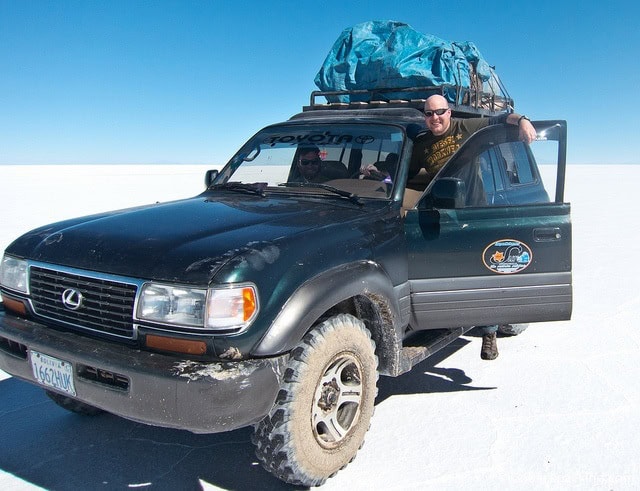
Even though I didn't have a balcony, I did have a direct view west toward the Leon Cathedral (and the sunset) from my second-floor room.

Where to Eat and Drink

Pan & Paz French Bakery - Popular with travelers and expats, offering excellent sandwiches and desserts. Wi-Fi-friendly and a fantastic spot to hang out if you need to get some work done. I ate here three times in five days.

El Sesteo - Located across the street from Leon Cathedral, it's an excellent spot to sample traditional Nicaraguan food.

Via Via - Offers a mix of typical Nicaraguan and Western dishes. The tables are located in an interior courtyard, and Wi-Fi is available.

Volcanoboarding at Cerro Negro
Volcano boarding at Cerro Negro

Things to Do

Volcano Boarding at Cerro Negro

The only place in the world where you can ride a wooden sled down an active volcano. It's easy to control your speed, so you can go as fast (70+ km/h) or as slow as you want. The cost is $25 for the tour plus a $4 park entrance fee.

Leon Cathedral

A UNESCO World Heritage Site. The roof is currently being renovated. You can still pay $2 to visit a cupola, but the view is limited.

Fundacion Ortiz-Gurdian

Art museum housed in neighboring 18th and 19th-century buildings. Walking through the beautiful interiors and inner courtyards is worth the price of admission alone.

Myths and Legends Museum

A former prison now houses displays depicting ancient Nicaraguan myths and legends. A free guided tour is included with admission ($2) and is necessary if you want to understand anything. This is one of the strangest museums I've ever seen.

Flor de Caña Factory Tour

Forty-five minutes north of Leon is the Flor de Caña rum distillery. Group tours can be booked from Leon but may require a minimum number of people. I wish I'd made a more considerable effort to go.

Rum Tasting

They are held regularly at Via Via Cafe. In addition to tasting a variety of rums, you'll also learn some Nicaraguan history.

Ruinas de Leon Viejo

The second of Nicaragua's two UNESCO World Heritage Sites is the ruins of Leon's original city, located near the shores of Lake Managua.

Visiting independently requires a few bus changes, but it's not too complicated. Admission is $2; give yourself six hours roundtrip if relying on public transport.

Telica Volcano

Join a night hike to the top of Telica Volcano to peer into the crater and see red lava.

When it's time to leave, it's possible to book tourist shuttles through the hostels to the airport ($12), Granada ($12), and San Juan del Sur, or you can take the local transport to save money.

Related: Climbing Volcanoes in Nicaragua - 4 Popular Hikes

Granada
Granada

Granada

Granada is to Nicaragua, as Antigua is to Guatemala. It's here on Lake Nicaragua's shores that most tourists base themselves on, and it's not hard to see why. 

Colorful buildings, a large central park, horse-drawn carriages, and old cobblestone streets evoke life in Spanish Colonial times.

Where to Sleep

Hostal El Momento - Recommended by many, but it was booked when I arrived. Make reservations in advance.

Hostal Entre Amigos - Small but friendly hostel where I stayed in Granada. $12/night for a private room. Dorm beds are available.

Where to Eat and Drink

The Garden Cafe - One of the most popular restaurants in the city. The tables are situated around a lush inner courtyard.

ChocoMuseo - Has a good "all you can eat" breakfast buffet. The melted chocolate used for the pancakes is excellent.

El Tercer Ojo - Great atmosphere at this open-air restaurant located along the main tourist street behind the cathedral.

Cafe de Los Sueños - Currently ranked the #1 restaurant on Tripadvisor.

Reilley's Tavern - an Irish pub with a good beer selection and typical bar food. I watched the Superbowl here.

Japanese Dining Bar Kanpai - Sushi restaurant run by a Japanese chef. I thought the quality was average at best, but given the lack of options, Granada is probably the best place to get your sushi fix.

Kathy's Waffle House - Killer chocolate waffles and an excellent spot to try traditional Nicaraguan breakfasts.

Lake Apoyo
Lake Apoyo

Things to Do

Granada Cathedral - The iconic yellow cathedral in the main square. Behind it is a pedestrian street with restaurants, cafes, bars, and hotels.

Iglesia de Merced - Climb to the bell tower for 360-degree views of the city.

Islets de Granada - Take a relaxing boat tour of the 100-plus islands upon which some of Nicaragua's wealthiest business owners have built vacation homes.

Mombacho Volcano - Go for a relatively easy day hike on this nearby volcano.

ChocoMuseo - Chocolate museum owned by the same folks as the one in Antigua. The chocolate tour is highly recommended.

Hotel Spa Granada - A relaxing way to escape the city. Pay for pool access; you can hang out all day, use the Wi-Fi, order drinks and food from the bar, and arrange spa services like massages, manicures, and pedicures.

Lake Apoyo - Visit as a day trip or book ahead to spend a night or two at this gorgeous and relaxing crater lake a half-hour from Granada.

I recommend Paradiso Nicaragua with its lovely gardens, excellent food, great little bar, free use of kayaks, and decent Wi-Fi.

They can also arrange transport to/from the airport and other places in Nicaragua.

Volcan Concepcion (1,610m)

When it's time to leave, booking tourist shuttles through the hostels to the airport, Leon, and San Juan del Sur is possible.

It might be possible for Ometepe too, but I'm not sure. I relied on public transport.

Ometepe

Lake Nicaragua is the largest lake in Central America and the 19th largest in the world.

Ometepe is the largest island in the lake, formed by two volcanoes, one of which is still active.

I don't suggest taking the ferry directly from Granada as it takes longer and deposits you on the north of the island, where you may need to spend the night at Altagracia before catching public transport in the morning.

Private taxis may be available at night but will be expensive.

Instead, take the bus/ferry approach:

  1. Take the chicken bus from Granada to Rivas ($1.15). If traveling with several people, it'll be cheaper and half the time (45 to 60 minutes) if you hire a private taxi to San Jorge.
  2. Take a taxi from Rivas bus terminal to San Jorge ($2).
  3. Small ferry from San Jorge to Moyogalpa on Ometepe ($1.35). The large boat is more comfortable, and on my return to San Jorge, it cost me $2.75.

All my accommodation and restaurant suggestions are in Moyogalpa unless otherwise noted.

Where to Sleep

Hostel Ibesa - Small, family-run hostel was recommended to me. They're friendly, but the private rooms ($10/night) don't have walls that go to the ceiling. I woke up at one point to the couple next door having sex, and the birds outside were extremely loud at sunrise.

The Landing Hostel - Located a block or two from the boat dock, I didn't stay here but wish I'd chosen it.

Hotel Ometepetl - I spent a night here after having trouble sleeping at the hostel. The room was much quieter, which was all I cared about.

Hacienda Merida - Located on the island's southeast side, near Maderas Volcano, this hostel was highly recommended by other travelers. It takes longer to get to as the roads are not fully paved.

El Zopilote - Another eco-hostel on the island's eastern side that's well recommended.

Hotel Villa Paraiso - The best hotel on Ometepe, situated along Santo Domingo Beach.

Where to Eat and Drink

Restaurante La Galeria - The power in the city went off while I was eating my lemon fish filet at this small, artsy restaurant. It is located on the main road.

Pizzeria Buen Appetito - Decent thin-crust pizza.

Hotel Villa Paraiso - The restaurant features beach views and terrific food. I had a charcoal-grilled whole fish caught from the lake. To save money, eat elsewhere, and grab a drink here.

Ojo de Agua
Ojo de Agua

Things to Do

Climb Concepcion Volcano (1,610m, more difficult)

Climb Maderas Volcano (1,394m, easier)

Island Tour - I hired a private taxi for $50 to visit the most popular tourist spots (listed below).

Be sure to confirm where you want to go ahead of time, as adding extra stops to the itinerary may result in a higher cost.

Punta de Jesus Maria - A sandy strip extends out into the lake. Not much to see here.

Charco Verde Ecological Reserve - A pleasant park with a one-hour self-guided walk. An excellent place to spot the Blue Jays, and admission is $1.50.

El Ojo de Agua - Sparkling natural springs under a canopy of trees. Get there as early as possible to avoid crowds (both Nicaraguan and foreign).

Beer and cocktails are available, and there's a large restaurant on site, a hundred meters from the pools. This was a highlight of Ometepe for me, and admission is $3.

Santo Domingo Beach - Nice views of Maderas Volcano and an excellent swimming place.

To get off the island, catch a ferry back to San Jorge. From here, taxis compete for your business. I negotiated a $16 ride to San Juan del Sur.

Related: The Corn Islands in Nicaragua

San Juan del Sur
San Juan del Sur

San Juan del Sur

An essential stop on the backpacker trail through Central America, San Juan del Sur has made a name for itself thanks to gorgeous sunsets, access to excellent surfing on nearby beaches, and a big party scene at some of the hostels.

Where to Sleep

Hotel Estrella - Located in the middle of town, this historic building still rents rooms cheaply. Stay here if you can get an ocean-view room with a balcony (like I did). The cost is $10/night per person, or $20 if you're alone but worth it.

Yajure Surf Hostel - Recommended for its relaxed vibe and lovely garden with a small pool. The downside is the location, which seems like it could be sketchy at night.
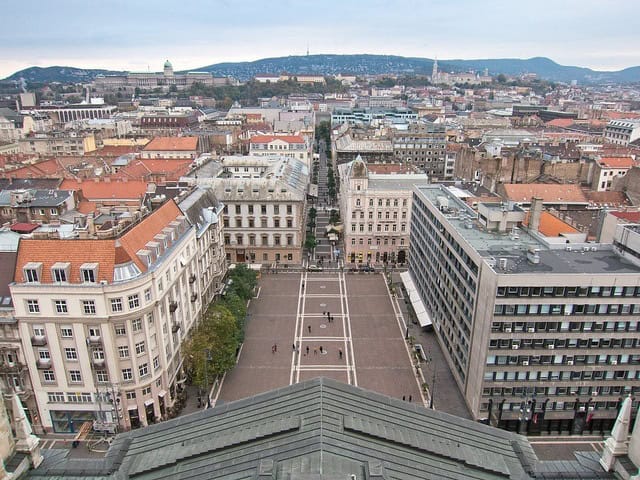
Naked Tiger Hostel - One of Central America's top party hostels. Known for its pool parties, don't stay here unless you are in a party mood and don't mind putting up with everyone else feeling the same way. It requires a shuttle to reach the town.

Casa de Olas - Located adjacent to the Naked Tiger, it's supposed to be a more relaxed vibe. It requires a shuttle to reach the town.

Where to Eat and Drink

Resturante El Timon - Foreigner favorite with good happy hour deals on drinks and snacks.

Nacho Libre - Expat-owned gourmet burger joint in the center of town. Wi-Fi is available.

El Gato Negro - Large cafe and bookstore with a very opinionated owner who adds many pages to the menu explaining the challenges of running a business in Nicaragua.

Simon Says - A tiny cafe with friendly service, a fun atmosphere, and good (vegetarian-friendly) food and smoothies.

Italian Gelato Shop - Located in the same building as Hotel Estrella.

Things to Do

  • Hang out, watch the sunsets
  • Swimming/sunbathing on the main beach
  • The scenic outlook from Cristo de la Misericordia
  • Visit nearby beaches via boat, shuttle, or taxi
  • Surf lessons
  • Spanish lessons
  • Yoga retreats

Salar de Uyuni: Driving on the World's Largest Salt Flat

Our driver uses his hands to begin digging out the SUV in Salar de Uyuni.
Our driver uses his hands to begin digging

Editor's Note: This is the third post in a three-part series from Dave's trip to Salar de Uyuni, the Bolivian Salt Flats. Read Part One and Part Two.

It was supposed to be a highlight of my travels in South America, but the excitement quickly gave way to a sinking feeling as we veered off the elevated dirt road, and onto Salar de Uyuni, the world's largest salt flat.

Within 60 seconds of our transition from dirt to salt, the Lexus SUV we'd used to cross southwestern Bolivia came to a complete stop. 

Our driver, Pedro, attempted to accelerate, but it was no use.

The salt crust ranges in thickness from a few centimeters to a few meters, and we drove directly into a shallow spot.

The weight of the fully-loaded SUV was too much, and we had quickly broken through the salt layer, only to sink in the mud beneath.

In an unforeseen instant, the entire day I'd been waiting years to enjoy was in jeopardy.

Not the best way to start your day on the Salt Flats

Table of Contents

  • Rise and Shine
  • The Big Dig
  • Bolivian Ingenuity
  • Breakfast
  • Isla Incahuasi
  • Trick Photography
  • Salt Mines
  • Lunch Break
  • Train Cemetery
  •  

Rise and Shine

We'd risen early, at roughly 5 AM, to pack our backpacks and get an early start on the day.

The goal was to have a tailgate breakfast on the salt flat while watching the sunrise.

Pedro was outside packing the SUV in the pitch black and bitter cold.

Unbeknownst to us, it was his birthday, and his friends had taken him out to celebrate while we'd been sleeping.

A few bottles littered the front passenger seat, leading to an uptick in my anxiety.

Despite my best attempt to secure a responsible and safe driver, I was now in the position of going with someone who at best seemed as though he didn't get much sleep, and at worst, was still a bit buzzed from the birthday celebrations.

Up until this point, I'd been 110% satisfied with his driving and vehicle.

It may seem hard to believe, but it doesn't even take a drunk driver for accidents to occur in one of the world's flattest places.

Lack of sleep, speeding, reckless driving, and unexpected changes in terrain have led to a series of fatal crashes involving several dozen tourists since 2008.

I don't share any of this to scare people, but it's important to recognize the inherent dangers of traveling in this remote region.

If you're paying $125 for a three-day trip, the average Bolivian driver is not going to have a satellite phone in case of emergency, first aid training, or even a first aid kit.

To travel with these higher safety standards, you have to pay more and book your trip through a Western-owned tour operator.

Related: Booking My Trip to the Bolivian Salt Flats

Making the most of a once-in-a-lifetime sunrise in the Salar de Uyuni.
Making the most of a once-in-a-lifetime sunrise

The Big Dig

The drive from the salt hotel to the elevated road that extends into Salar de Uyuni took about thirty minutes.

Once Pedro had surveyed the SUV, he got down on his knees and began to dig the mud out around the front left tire by hand.

I was surprised he didn't carry a shovel given we spent the first two days entirely off-road in very remote areas.

Without the sun, the temperature on the salt flats was still bitterly cold due to the 3,656m (11,995 ft) elevation.

I put on my alpaca gloves and began to dig around one of the rear tires.

He quickly waved me away, but not before I got a feel for how heavy, wet and cold the mud felt.

It was clear pride trumped expediency, so myself and the others were left to stand around and wait.

If there was a silver lining in getting stuck, it was that it happened 60 seconds off the elevated road.

We could clearly see other SUVs passing by, and they could clearly see us.

Within 10 minutes, an SUV had stopped, and a group of Bolivians had walked over to see how they could help.

At 7 AM, as the big dig continued, the sun finally broke over the horizon, momentarily taking my mind off our situation.

The sky quickly turned bright blue; the sun's warmth felt reassuring.

At one point, there were a dozen Bolivians trying to help us

Bolivian Ingenuity

Simply digging the mud out from around the tires, and throwing some chunks of salt in for traction wasn't enough. The SUV went nowhere.

By this time, another SUV had stopped, bringing our headcount to at least a dozen Bolivians.

One of the men had brought a shovel, which sped up the digging process, and spared Pedro's hands, which were by this time covered in a thick cake of mud, and dangling lifelessly at his side.

Several young women began quietly carrying stones from the elevated roadway in their shirts, while the men stood around strategizing.

Placing the rocks against the front and back of the tires didn't work either. The SUV was still having trouble gaining traction.

The strategy evolved one step further when the propane tank we were carrying for cooking was used as a base for the tire jack.

By placing the tank next to each tire, and then elevating them one by one using the jack, it was then possible to place rocks directly beneath them. This made all the difference.

Once there were rocks underneath all four tires, Pedro took the driver's seat, pressed the gas pedal, and the SUV rolled onto what was clearly a thicker crust of salt directly in front of us.

Though it felt like an eternity, the delay had only cost us an hour and twenty minutes in Salar de Uyuni.

But without the kind help of the other Bolivians, it would've been much longer.

Related: The Landscape of Bolivia in Photos

Playing with perspective

Breakfast

With the SUV back on solid salt, Pedro wiped the mud off his arms with a rag, flipped open the tailgate, and set out a giant round loaf of fresh bread, granola, cookies, yogurt, juice, and instant coffee.

It was only then, when we began eating, that he put his head down on his arms on the SUV's hood in what appeared to be a giant sigh of relief.

We asked if he was OK, and he nodded yes. We were back on track.

After breakfast, I climbed up on the SUV's roof rack to help secure everything.

Pedro was normally the only one to go up there, but it was clear he needed the help.

View from atop Isla Incahuasi in Salar de Uyuni, Bolivia.
View from atop Isla Incahuasi

Isla Incahuasi

A little after 9 AM, we arrived at Isla Incahuasi, "the top of the remains of an ancient volcano, which was submerged when the area was part of a giant prehistoric lake, roughly 40,000 years ago."

The rocky island which means "Inca House" or "Home of the Incas" covers just 61 acres out of the 10,582 square kilometers that is the Salar de Uyuni.

In addition to its use as a refuge for the ancient Incas who use to cross the inhospitable salt flat, it's home to birds, Vizcacha and Giant Cactus, one of which was 9m (27ft) tall, and 900 years old.

Climbing up the hill requires a little effort given the altitude, but the 360-degree panoramic view from up there makes it a worthy endeavor.

Entrance onto the island cost 30 Bolivianos ($4.35).

Crane Kick on a can of Pringles

Trick Photography

We spent a little over an hour at Isla Incahuasi before driving fifteen minutes out onto the salt flat again.

I don't know if it's a matter of routine, or he was feeling bad about us getting stuck earlier in the morning, but Pedro offered to let me drive the SUV.

He was proud of his Lexus (the only one I'd seen in three days), so it felt like a big deal for him to be handing over the wheel to me.

I purposefully drove much slower than him, given I wasn't familiar with the handling of the SUV when fully loaded, nor the terrain.

He offered the same opportunity to everyone else, but only two of the other five travelers accepted.

The larger-than-life Rough Guide to South America

After our joy rides on the Salar de Uyuni, at around 11:30 PM, Pedro stopped the SUV in an area we had to ourselves and said we had 30 minutes to take photos.

This was the moment I'd been looking forward to for years, but it was only then that I realized I was the odd man out.

The three British backpackers immediately went off to take funny photos of each other, and the French couple didn't even know about the trick photography that was possible here!

Levitating over Salar de Uyuni.
Levitating, there's an app for that

I did my best to explain, and then spent a lot of time running back and forth between the place where I had to pose and the props in the foreground where the Frenchman was also taking the pictures.

I realized I didn't know the best way to be capturing these photos.

I'd seen other people's images but had not done any research on the best way to take them.

I'd left it up to trial and error, and now I didn't even have as much time as I expected.

Taking calls on the world's largest salt flats -- Salar de Uyuni
Taking calls on the world's largest salt flats

Pedro was on a mission to deliver us to Uyuni on schedule at 3 PM, but due to us getting stuck earlier in the morning, he had an hour and a half to make up.

I felt rushed and annoyed. I continued trying to squeeze in more photos, buying myself an extra few minutes to Pedro's consternation. 

With everyone else seemingly happy to get back in the SUV after 30 minutes, I had no support to stay any longer.

After 40 minutes, we were on our way off the salt flat.

Salt, and lots of it at Salar de Uyuni.
Salt, and lots of it

Salt Mines

Before we arrived back on regular land again, we passed through the salt mines at the edge of the salt flat.

The world's largest salt flat contains about 10 billion tons of salt, of which 25,000 tons are extracted annually.

It's also estimated that beneath the salt surface lies 50 to 70 percent of the world's lithium reserves, or as much as 100 million tons.

Lunch stop
Lunch stop

Lunch Break

By 1 PM, we'd departed the salt flat, and entered a village.

Pedro parked the SUV outside a small complex of buildings and began to prepare lunch.

His car was completely covered in a thick film of white salt, which must be brutal on the paint if it's not washed off quickly.

Lunch consisted of chicken, pasta, potatoes, and a mix of carrots and string beans.

The train graveyard
The train graveyard

Train Cemetery

Our final stop of the day, and trip, was the Cementerio de Trenes ("Train Cemetery") located 3km outside of Uyuni.

The train lines were built by the British from 1888 to 1892 and were primarily used for mining purposes.

They were frequently sabotaged by indigenous people, and in the 1940s left to rust in the salty winds after the mining industry collapsed.

Today, the old rusted trains offer visitors the chance to be kids again, if only for a few moments, as they climb aboard and pose for photos.

On the drive to Uyuni, we passed acres of dry shrubs with thousands of plastic bags caught amongst them. 

The massive amount of litter was a shock after coming from the unspoiled landscapes of the last few days.

Pedro dropped us off outside the Immigration Office, which was closed. 

I was anxious to pay my $135 visa fee, get my passport back, and head to a lower altitude as my fingers still hurt, but it would all have to wait until morning.


Savage Harvest: A Tale of Cannibals, Colonialism, and Michael Rockefeller's Tragic Quest for Primitive Art

November 21, 1961 - Michael C. Rockefeller disappears off the coast of southwest New Guinea after his small catamaran capsized in rough waters.

Twenty-four hours later, he decides to leave the vessel and try and swim for shore.

His last words were, "I think I can make it."

He was never seen alive again.

Savage Harvest

The official cause of death was drowning, and that's the explanation the family accepted, but there were rumors he met a much more gruesome fate at the hands of local Asmat tribesmen.

Not only that they killed him, but they cut him up and ate him too.

The detailed account of how this would be done kicks off the Savage Harvest.

But is this really what happened?

Carl Hoffman, the bestselling author of The Lunatic Express, embarks on an incredible journey through Dutch archival records and visits to the same villages Michael Rockefeller visited in his search for primitive art.

Along the way, he unravels the Asmat's spiritual beliefs, learns Indonesian, and befriends critical witnesses.

It's a fascinating story of how colonialism and religious missionaries began to change an indigenous people's way of life, slowly steering them away from their own ancient beliefs and toward The Bible.

The author tells parallel stories, alternating chapters from the late 1950s and early 1960s for historical context, with his modern-day journey to New Guinea in 2012.

As taboo as headhunting and cannibalism may be to us, when Hoffman puts these activities into the context of the Asmat's spiritual world, a world driven by cyclical violence and the need to create balance, they begin to make sense.

I had the chance to read an advance copy for this review and couldn't put it down once I got started. Read the first page, and I guarantee you'll be hooked too.

Savage Harvest goes on sale today, March 18, and is available on Amazon.

An Australian Winter Holiday is Summer's Best Kept Secret

Uluru
Uluru (photo: Alex Healing)

With the hot summer seasons fast approaching those in the northern hemisphere, there is always a question of what exactly is the best way to spend your summer.

Have you ever thought about a trip to Australia – one of the most unique places in the world?

Climate and Temperatures

June, July and August are the best times to consider a budget trip because it's the winter season for the Aussies.

The prices for traveling and accommodation will be lower because it's not in the holiday season timeframe.

The weather during this season is very mild, considering they're the cooler months.

The temperatures generally range somewhere between 15 to 25 degrees Celsius (or 59 to 77 Fahrenheit) along with great sunshine on most days.

Recommended Destinations

Campervan rental suits the Aussie laid-back culture; it's relaxed, casual, and people are always willing to welcome a new face with a story to tell.

The Australian winter is less busy for the tourism industry, so at this time of year, a clued-in traveler can snap up the very best serviced sites without having to pay high seasonal rates.

If you've always wanted to visit Uluru – the iconic big red rock in Alice Springs, then winter is the time to go.

Better yet, it is a perfect destination for backpackers because of the beautiful surroundings and unique landscapes around it.

It averages a beautiful sunny daytime temperature 22°C (which is about 72 degrees Fahrenheit), which is perfect for traveling around without getting too hot or too cold.

July/August is the best time to visit the World Heritage-listed Uluru-Kata Tjuta National Park, and you'll be stunned by the iconic feature of Australia's most famous and photographed landmark.

There are also activities available like camel riding through the beautiful red dunes and learning about native Anangu culture at the visitor's center.

If you're a food lover, then we recommend taking the Sounds of Silence experience, which features superb dining under the desert stars.

If you're a fan of gourmet food and alcohol, then Margaret River, located in Western Australia, is another excellent place to v.

It is known as one of the best places for excellent food and wine destinations, and winter is the best time to dine on a budget.

For the budget traveler, we recommend renting out a campervan and doing some backpacking along the way to absorb the beauty of the region thoroughly.

There are also a lot of great caravan and camping parks around the area – with low rates around the Australian wintertime.

Just imagine waking up next to the pristine waves of the Indian Ocean right next to you – it doesn't get better than that.

There are some fantastic surfing opportunities along the beautiful Western Australia coastline with irresistible white sand beaches.

(Although a thick wet suit is probably needed for surfing in the cooler months of the year!)

If you're into arts and creative crafts, then you must check out the picturesque local villages surrounding the Margaret River area. They feature a lot of local arts and crafts and fresh local produce.

Margaret River has always been a massive draw for artists and creative people, so after you leave your campervan at your preferred site, you can wander around the galleries and experience the local talent and creativity.

At Margaret River, you very easily be inspired by their unique artwork and the region's natural attractions.

________

This post was brought to you by Travellers Autobarn.

Day Two in Bolivia: From Stone Tree to a Salt Hotel

Editor's Note: This is the second post in a three-part series from Dave's trip to the Bolivian Salt Flats. Read Part One here.

I woke up a little after midnight to a pitch-black room in the middle of the Bolivian Altiplano.

Elevation 4,280m (14,000ft).

My fingertips hurt-all 10 of them and all to an equal degree.

"This is new," I thought.

Of all the altitude sickness symptoms I'd read about over the years, painful fingertips were never mentioned.

"Early frostbite? Was I too cold?"

I mentally checked in with the rest of my body, from the tip of my toes to the top of my head.

"Nope, I don't feel cold."

Packing up the SUV to leave on our second morning

I spent the rest of the night pushing my thumbnails against alternating fingertips on each hand to make sure I still had sensation.

The pain itself wasn't too bad, but losing feeling altogether would be a bigger problem.

I barely got another hour of sleep and looked forward to the moment the sun began to bask us in its light and warmth again.

We sat down to breakfast around 7 AM and promptly shared notes on how everyone slept. Quite well, it turned out.

When I mentioned concern for the pain in my fingers, two of the young British backpackers brushed it off, saying it's normal and they'd experienced the same thing while climbing Mt. Kilimanjaro.

There was nothing for me to do but try to take comfort in their response. We weren't going to reach Uyuni any faster than the itinerary suggested.

Related: Booking a Trip to Bolivia's Salt Flats

Árbol de Piedra
Árbol de Piedra ("Stone Tree")

Table of Contents

  • Árbol de Piedra in Desierto Siloli
  • Laguna Honda and Laguna Hedionda
  • Laguna Cañapa
  • Mirador Volcán Ollagüe
  • Salt Hotel

Árbol de Piedra in Desierto Siloli

Leaving the lodge a few minutes after 8 AM, it took less than an hour to arrive at our first stop of the day.

The Siloli Desert, one of the driest places in the world, features a rocky outcropping with one formation, in particular, getting all the attention.

The Árbol de Piedra, or "Stone Tree," has the naturally sculpted qualities of a tree, which is fascinating given the location.

It's a testament to the power of high winds, sand, and water to erode solid rock if given enough time.

Our best "boy band" pose
Our best "boy band" pose.

Once we all took our photos of the Stone Tree, it was time to climb around on the other rocks in the area.

I had to hand it to the British backpackers; they had some funny poses in their repertoire.

I never thought to do a "boy band" pose, but the location turned out to be perfect. How did we do?

A Viscacha keeps watch
A Viscacha

A twenty-minute drive from the Stone Tree was another rocky outcropping.

Pedro, our driver, said it was an excellent place to spot Viscachas, small rodents related to chinchillas, with an appearance similar to rabbits.

Sure enough, when we rolled up alongside the rocks, he was able to spot one perched above us, peering out into the great expanse.

His fluffy orange and grey coat camouflaged him well and looked appropriate given the low temperatures of the Bolivian Altiplano every night.
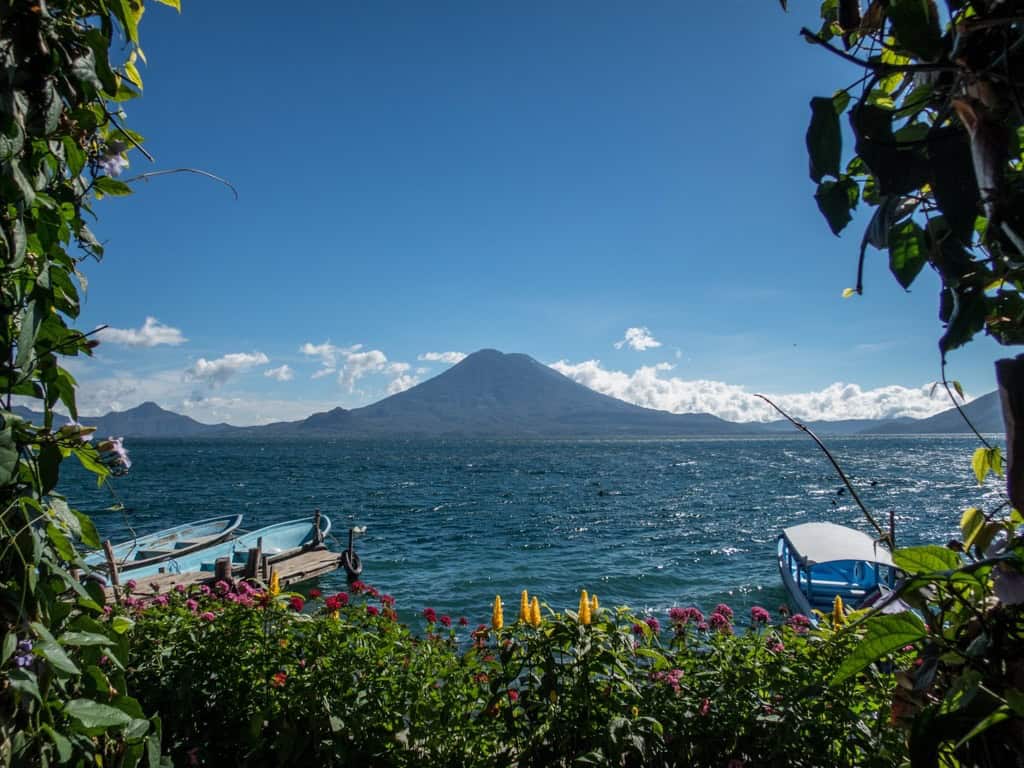
Pedro tossed him a piece of food, which he held in his front paws and nibbled.

I know it's not ideal to train local wildlife to anticipate food from humans, but I was glad I had the chance to see the little guy, and I suspect most other tourists are too.

Pink flamingos at Laguna Honda

Laguna Honda and Laguna Hedionda

Another hour of driving across the desert lead us to more flamingo-filled lagoons.

Located at an elevation of 4,121m (13,520ft), Hedionda Lake was dotted with hundreds of white and pink flamingos feeding on algae in the water.

Interestingly, according to Wikipedia, "Hunter-gatherers of the paleo-ceramic or Paleo-Indian period (8,000 BC) lived in the vicinity of the lake."

Related: Stunning Landscape Photos of Bolivia

Laguna Cañapa
Laguna Cañapa

Laguna Cañapa

More impressive to me was the crystal clear reflections in nearby Laguna Cañapa.

This is also where we stopped for lunch a little before Noon, with Pedro preparing a mix of canned tuna and potatoes, corn, rice, and fresh cucumber and tomato salad (with pieces of white cheese thrown on top).

The sunlight, food, and copious amounts of bottled water I'd been drinking had so far done little to reduce the pain in my fingertips.

I continued to press my thumbnails into them from time to time and tried to focus on the sublime scenery surrounding us.

Volcán Ollagüe
Volcán Ollagüe

Mirador Volcán Ollagüe

It was another hour's drive to reach the lookout point for Volcán Ollagüe. At 5,868m (19,252ft), the volcano towers over the surrounding area.

According to the Smithsonian Institution's Global Volcanism Program:

"Active sulfur mines on the upper western and southern flanks of Ollagüe are reached by a road that climbs to about 5,500m elevation.

No historical eruptions have been recorded from Ollagüe; activity has been restricted to periods of intense fumarolic activity, and a persistent steam plume emanates from a fumarole on the south side of the summit dome."

Suri are an Ostrich-like bird
Suri is an Ostrich-like bird

From the volcano, we drove another hour and a half to a small town where we had to stop for some reason (I can't remember why) before heading to our accommodation for the night.
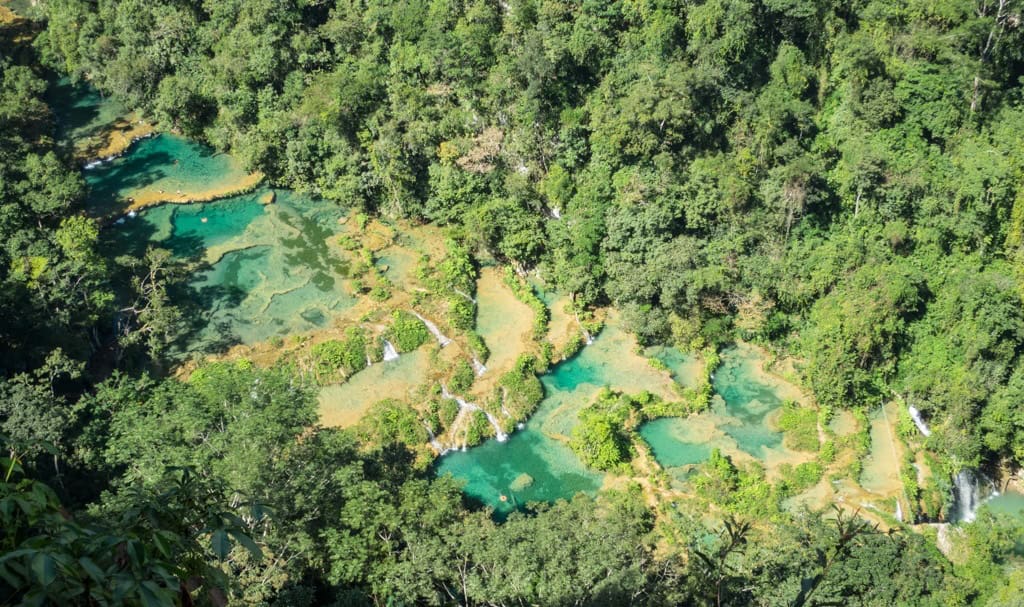
Detail of an archway constructed of salt blocks

Salt Hotel

At 4:30 PM, we arrived on schedule at The Hotel de Sal ("Salt Hotel") at the edge of the Salar de Uyuni, the world's largest salt flats.

Elevation 3,600m (11,811ft).

Pedro went inside while we all waited in the SUV. When he returned, it was to say there was no space available. Do they not make reservations at these places?

For a moment, I felt disappointed. Where else in the world would I have the chance to stay in a building made entirely of salt bricks?

Luckily for us, Pedro's mother owned her salt hotel, and it was no more than 100 meters away.

The salt hotel trend began in the mid-'90s after the first one was built on the salt flats. Now, it appeared, they were a dime a dozen.

The moon rising over the world's largest salt flats
The moon rising over the world's most extensive salt flats

Entering the hotel, there was no mistaking that it was made of salt. And lots of it. Even the floors in our bedroom were covered in it.

The six of us were offered two rooms. They were cramped but sufficient. We dropped our bags and began to unwind.

Chicken dinner our second night

Dinner consisted of vegetable soup with bread and a heaping pile of chicken.

There was electricity in the evening to recharge our batteries, but not much else to do besides play some cards and head to bed early.

My room for the second night

My fingertips still hurt, but they were no worse than when it began almost 24 hours earlier.

We were sleeping 900m lower in elevation than the first night, and I hoped that would help relieve whatever was going on with my body.

The following day would be an early one.

The plan was to pack up the SUV and leave the hotel at 5:30 AM to allow us enough time to drive onto the salt flats to watch the sunrise.

It sounded simple enough. Pedro has been leading these trips for nine years. We were staying at his mom's hotel.

The salt flats were his backyard. Our third and final day would be a slam dunk of awesomeness.

But this is Bolivia, and what happened next would test us all in more ways than one.

Bolivian Altiplano: Incredible Lagoons and Landscapes

Editor's Note: This is the first post in a three-part series from Dave's trip to the Bolivian Altiplano and Salt Flats.

I propped my backpack against the dusty exterior of Estrella del Sur's tour office and waited patiently in the early morning cold for my Bolivian adventure to begin.

It was 7:30 AM, and the main dirt road in San Pedro de Atacama was still cast in long, dark shadows.

The Bolivian border post at Hito Cajon

Within an hour, a French couple, three young British backpackers, and I had been whisked away in a blue and white shuttle bus to the Chilean immigration office.

Upon receiving our exit stamps, we returned to the bus and began the 45-kilometer drive to the Bolivian border.

Table of Contents

  • The Chile-Bolivia Border Crossing
  • Laguna Blanca
  • Laguna Verde
  • Desierto de Salvador Dalí
  • Termas de Polques Hot Springs
  • Sol de Mañana Geothermal Field
  • Laguna Colorada
  • Nightfall

The Chile-Bolivia Border Crossing

In the hour it took us to reach the Bolivian border at Hito Cajon (4,480m), we'd gradually gained 2,000 meters in elevation.

Welcome to the Bolivian Altiplano. At 9:30 AM in the middle of nowhere, we first met our driver for the trip. We'll call him Pedro.

Unlike most other drivers who used Toyota Land Cruisers, Pedro owned a dark green Lexus LX450.

It was a source of pride for him, and despite the rough terrain in which it operated daily, it was clean and well-kept.

We were told to take our passports to the small building sporting the red, yellow, and green Bolivian flag. It seemed out of place in the middle of such a barren landscape.

The line wasn't long, but apparently, I was the only American because I was asked to step aside and wait while they wrote down everyone else's information first.

Only then, after everyone else had been recorded, did they inform me that my driver would have to hold my passport until I paid the $135 visa and reciprocity fee in Uyuni.

I was annoyed at having to give up my passport as collateral to a driver I'd only met minutes earlier.

This is a detail the guy at the tour agency should've told me about in advance.

My passport was sealed in an envelope and given to Pedro, who had finished loading the SUV and wandered over to see what was taking me so long.

All the other SUVs heading into Bolivia that day had already packed up their clients and departed.

Laguna Blanca

Laguna Blanca on the Bolivian Altiplano.
Laguna Blanca

Upon entering Bolivia, you enter the Eduardo Avaroa Andean Fauna National Reserve and must pay a 150 Bolivianos ($22) park fee.

The reserve covers an area of just over 714,000 hectares (1.7 million acres) and is home to all of the lagoons we would see on our first day. Despite the extreme conditions, life exists at these altitudes.

Three of the world's six species of flamingos spend time here, as do 77 other species of birds, including the Andean condor.

Mammals include Puma, the Andean fox, Viscacha (similar to rabbits), and Vicuña (deer).

Less than a half-hour from the border crossing is Laguna Blanca (4,350m, "White Lake"), which owes its white hue to the mineral Borax.

Laguna Verde

Dave at Laguna Verde in Bolivia
Taking calls at the shore of Laguna Verde

The even more spectacular Laguna Verde (4,400m, "Green Lake") is a 30-minute drive from Laguna Blanca.

The turquoise-green color can be attributed to arsenic, lead, copper, and other minerals suspended in the water.

This unique chemical composition keeps the water from freezing due to the subzero temperatures.

Forming a perfect backdrop is the inactive, snow-capped Licancabur Volcano (5,868m). The volcano straddles the Chile-Bolivia border, with the summit and (frozen) crater lake entirely within Chile.

It's one of the highest lakes in the world, and archaeological evidence near the top suggests people were climbing it hundreds of years ago for what were surely spiritual reasons.

Desierto de Salvador Dalí

Dave in the Desierto Dali
The Desierto Dali was the least exciting stop of the day.

We arrived at Desierto de Salvador Dalí (Salvador Dalí Desert) a few minutes before noon, after a little under an hour's drive from Laguna Verde.

This region of the Bolivian Altiplano is named after the Spanish surrealist painter whose work is reminiscent of such scenery.

Termas de Polques Hot Springs

Taking a dip in the hot springs on the Bolivian Altiplano.
We were taking a dip in the hot springs.

At 12:30 PM, we arrived at Termas de Polques hot springs. Dipping in these mineral-rich waters is a backpacker right of passage for those traveling through South America.

The small adjacent building, which appeared to house changing rooms or bathrooms, was locked, so we each did our best to find an angle that allowed some semblance of privacy.

For those who prefer not to risk a flash of indecency, there's a shop across the road that charges three Bolivianos ($0.45) to use the restroom. You can also buy snacks like Pringles and bottled water.

We had the hot springs to ourselves for the first 10 to 15 minutes before additional SUVs arrived and unloaded.

Sol de Mañana Geothermal Field

Sol de Mañana Geothermal Field (4,850m)
Boiling mud

Thirty to forty minutes from the hot springs is the 10 square kilometers Sol de Mañana geothermal field (4,850m "Morning Sun").

These boiling mud pools present another unique and interesting facet of this otherworldly region. The stench of sulfur was so pungent in places. I had to cover my nose and mouth to breathe.

Tours that begin in Uyuni visit Sol de Mañana at sunrise on their third morning, but if you're coming from San Pedro de Atacama, you'll see them in the early afternoon.

This suited me fine as I'd already woken up too early to visit the Tatio Geysers in Chile.

Laguna Colorada

The blood-red Laguna Colorada

After another thirty to forty minutes of driving across the vast emptiness of the Bolivian Altiplano, we arrived at our humble accommodations for the night.
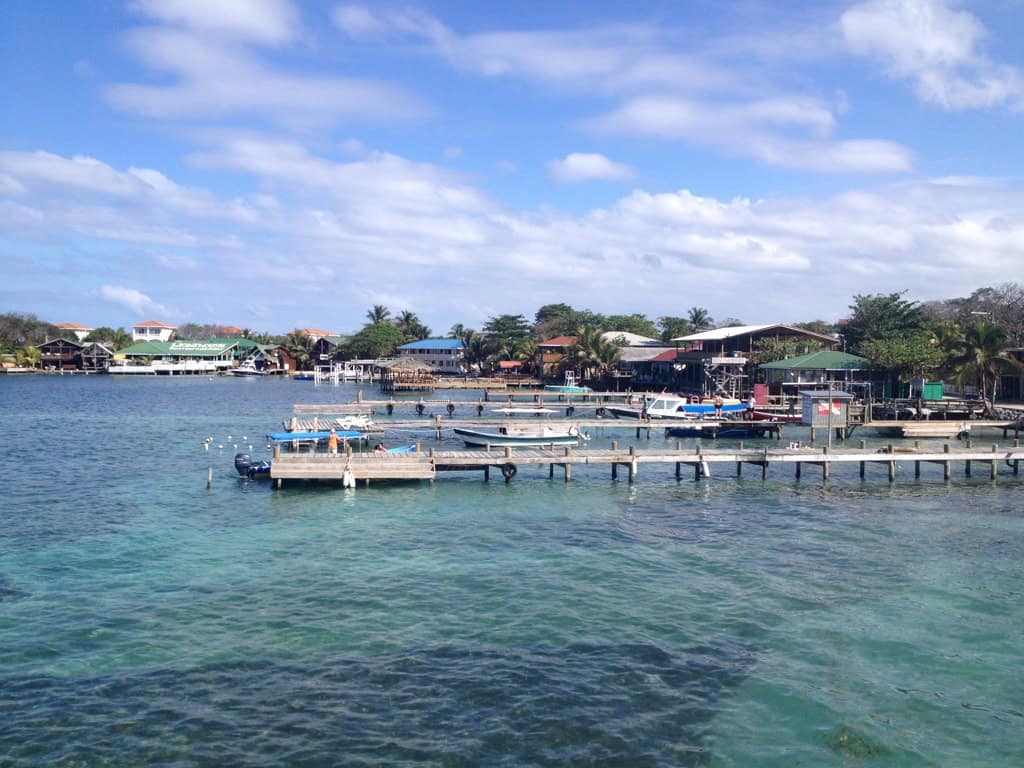
It was only 2:30 PM, but I'd already seen some of the most fantastic landscapes of my life, and we still had one more lake to visit before sundown.

But first, we sat down to a late lunch of hot dogs, mashed potatoes, salad, and bananas. It appeared to be an odd combination, but nobody cared.

There was always more than enough food at every meal, and the quality improved every day of the trip.

A little after 4 PM, we took a short drive to the Laguna Colorada (4,278m, "Red Lake").

The blood-red color is due to sediments and the pigmentation of algae that grows there. The reddish color provides a sharp contrast to the islands of white Borax.

Pink flamingos flock to lagoons in the Bolivian Altiplano.
Feeding flamingos

Despite its appearance, the lake is very shallow, with an average depth of only 35 centimeters (14 inches).

This is good news for the endangered James's Flamingos, which fly here to feed on the pink algae.

A herd of Vicuña
A herd of Vicuña

While walking around the lake, we also spotted another animal indigenous to the region, the Vicuña.

Vicuña is found throughout the Andes at altitudes between 3,200m to 4,800m. According to Wikipedia, the wild population was down to 6,000 animals before they were declared to be endangered in 1974.

Since then, they've recovered to a healthier population of 350,000. It amazed me that any animal, whether a bird or mammal, could sustain itself off so little vegetation in such a harsh environment.

Nightfall

Under the moonlight
Under the moonlight

Speaking of harsh environments, the temperatures at these altitudes on the Bolivian Altiplano plummet quickly once the sun goes down.

Back at the ranch, we sat down to an early dinner. Soup and spaghetti were served at 5:30 PM, with canned fruit for dessert.

All the food we ate on the trip was carried with us in the SUV, including the propane tank used to cook it.

This lodge had a generator they used for a few hours in the early evening to light the rooms. It also provided electricity for us to recharge our camera and phone batteries.

At 7:15 PM, I stepped outside our accommodation and peered skyward to look at the brightly glowing stars.

As my adrenaline from the day wore off, I began to feel the altitude's effects. Even walking a few meters left me short of breath.

My bed was surprisingly warm and comfortable
My bed was surprisingly warm and comfortable.

While I'd trekked as high as 4,500 meters on the way to Machu Picchu the year before, this would be the first time I slept above 4,000m.

The trekking rule of thumb for altitudes over 3,000m is to sleep no higher than 300m above where you slept the previous day.

Gradual ascents give your body time to acclimatize to the lower oxygen levels in the air.

In choosing to begin my tour of Bolivia's Salt Flats from San Pedro de Atacama, I went from 2,400m one night to 4,280m the next. I knew a change of 1,880m in a single day would challenge my body.

In addition to the potential for cold, I expected any or all of the classic Acute Mountain Sickness (AMS) symptoms to hit me that night: headache, nausea, lack of appetite, inability to sleep, and shortness of breath.

Not much later than 8 PM, I climbed into my rented sleeping bag fully clothed, closed the zipper, and pulled four blankets over me.

Putting on my alpaca wool hat completed my cocoon of warmth. But it wasn't the cold temperatures of the Bolivian Altiplano that would wake me up in the middle of the night.
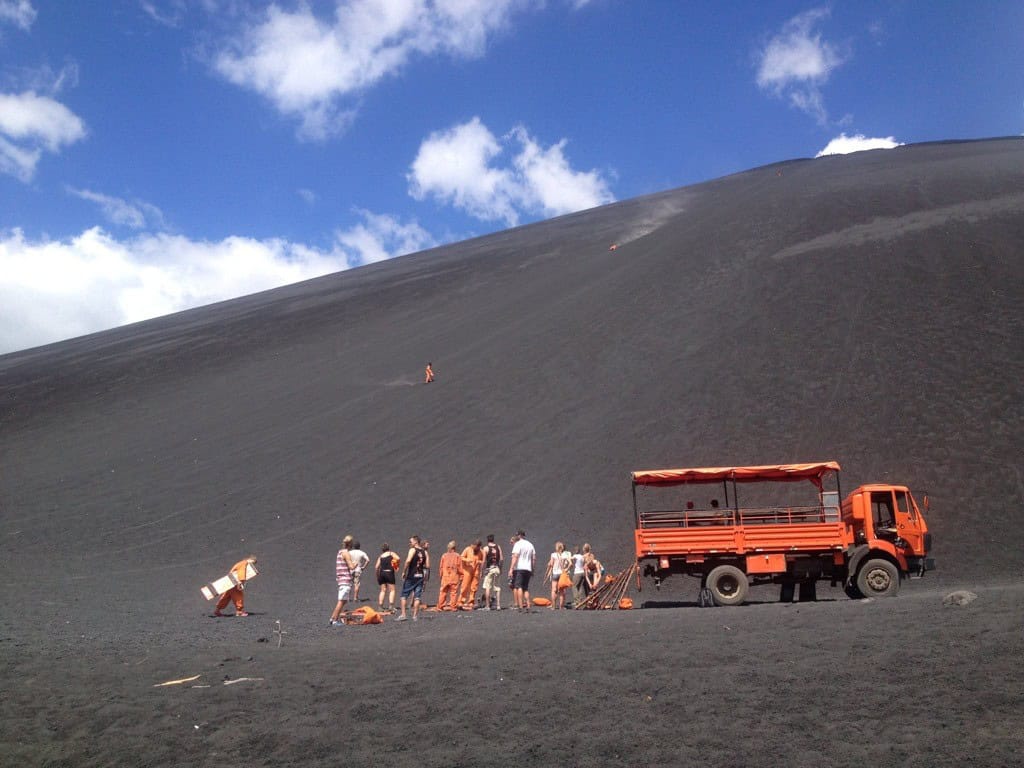
Continue reading part two here.

Ryogoku: Tokyo's Sumo Town

Mural on Tokyo's sumo stadium

[I] have to admit, I was pretty bummed when I found out there weren't any sumo fights taking place during my visit to Tokyo.

(Note: Sumo wresting in Tokyo normally takes place in January, May, and September. More info here)

Sumo wrestling is not only a part of Japanese traditional culture and famous worldwide, but I've always thought it was such an awesome sport.
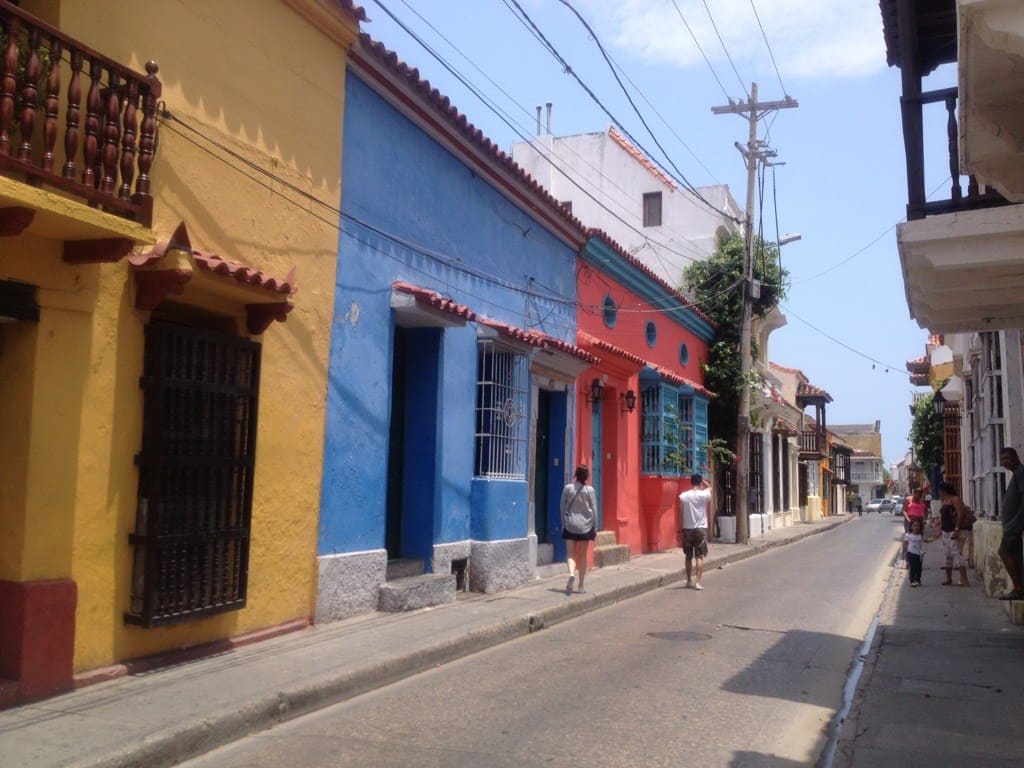
What could be better than eating as much as possible every single day and then taking to the ring to push your opponent out of bounds, and then going to eat some more!?

Actually, there's a lot more to sumo wresting than that, and when I was in Tokyo, though I didn't get to see any of the wrestling action, I did have a very fun time wandering around the Ryogoku area of Sumida in Tokyo, also known as sumo town.
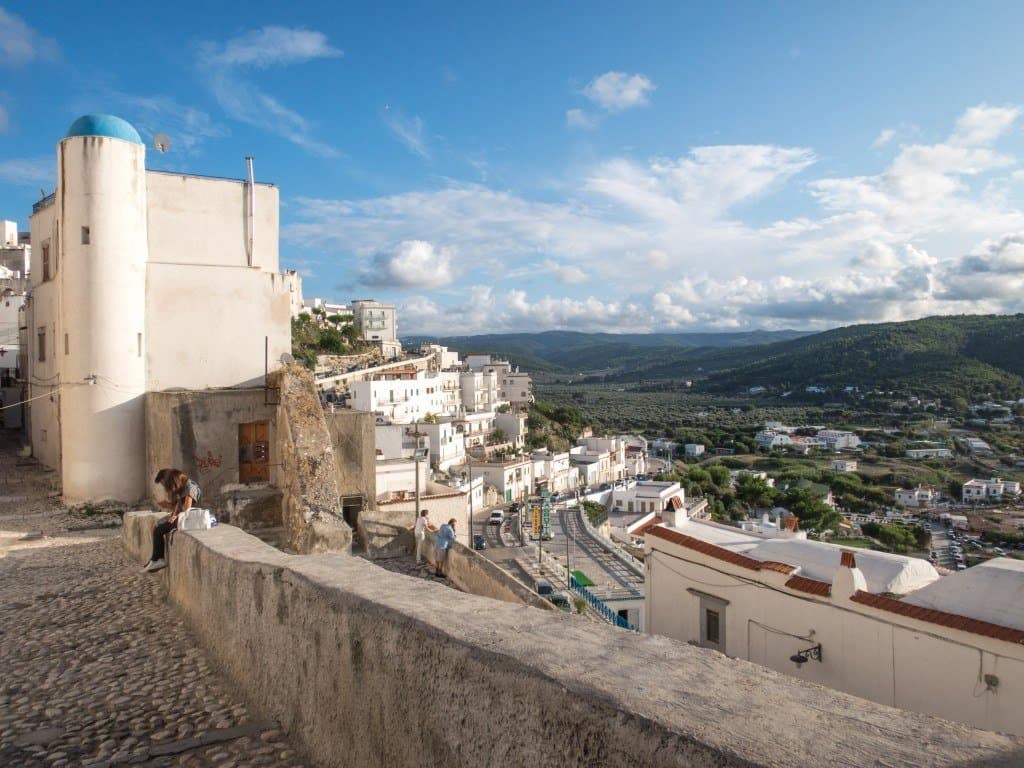
Planning to explore more of Japan? Book budget-friendly train passes here!

Sumo wrestling statue

Even when you exit the metro station at Ryogoku, you're greeted by statues of sumo wrestlers, and there was even a snack stall that was selling sumo wrestler snacks - must be high calorie snacks!

The entire neighborhood is dedicated to sumo wrestling.

Ryogoku Kokugikan Sumo Hall

The main place where sumo wrestling in Tokyo takes place is the Ryogoku Kokugikan Sumo Hall, the big sumo stadium.

Like I mentioned before, I unfortunately wasn't in Tokyo during a month of wrestling, but there's still a small sumo museum which is open year round.

My first stop on our sumo tour of Tokyo was the museum, which is free to enter.

The museum is located right at the base of the stadium and is filled with small wooden models of sumo wrestlers in fighting positions, demonstrating the different methods of winning a fight. I had no clue there were so many methods and strategies of beating an opponent.
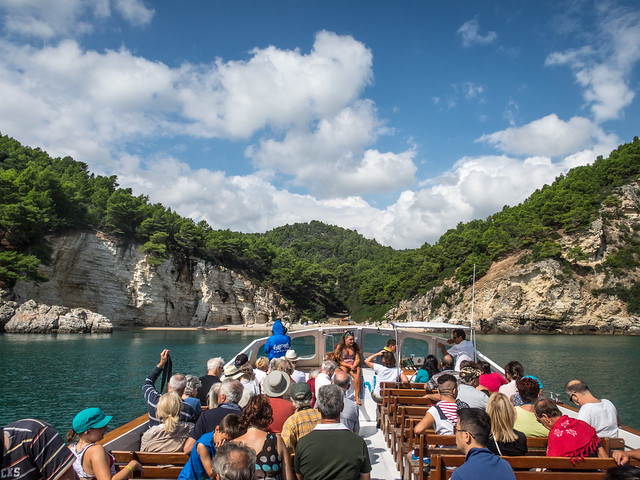
The museum is open on weekdays from 10 am - 4 pm daily (closed weekends and holidays). Entrance is free.

Sumo area map
Sumo area map

Another thing you'll find at the museum for free is a Ryogoku area map.

The map includes information about sumo wrestling and then goes through and lists some of the most famous restaurants in the area where you can eat a traditional sumo meal.

I didn't have plans to eat a sumo meal until I saw the map, and then a feast of a lunch became my immediate priority.

Chankonabe meal
Chankonabe meal

There were a bunch of different restaurants listed in the guide, so we just ended up choosing number 3 on the list. The outside was marked by sumo flags with big Japanese colorful letters written on them.

We stepped inside to be greeted by a kind lady and led upstairs to the dining room which was filled with people.

I ordered the chankonabe lunch special, a hotpot stew of vegetables and pork cooked in a rich pork and miso broth. The set also came with a big bowl of rice, a couple of different pickles, a side of sashimi, and some small deep fried fritters.

The stew, rich in calories, and known as a favorite among sumo wrestlers, was a pretty well rounded meal, and it was extremely delicious as well. The meat and vegetables were tender and the soup was seasoned with a light miso flavor and packed with pork broth.

It was an excellent satisfying meal.

Sumo shop
Sumo shop

After our delicious sumo sized lunch, we wandered around for another hour or so, browsing through various sumo shops in the area, and then headed back to our hotel.

There is so much Japanese tradition and rituals that surround the sport of sumo wrestling.

I hope that next time I'm in Tokyo, I'll be able to attend a tournament and maybe even tour one of the sumo stables.

Sumo wrestling in Tokyo

If you happen to be visiting Tokyo when a sumo wrestling tournament is taking place that would be awesome, but even if you visit when there are no tournaments, you can still have a great time wandering around Tokyo's sumo town.

How to Enjoy the World Cup in Rio de Janeiro

Now that the Winter Olympics in Russia is behind us, the world's attention is moving to Brazil, host of the 2014 World Cup.

While I haven't been to Brazil (yet), I did have the experience of landing in Paris the same day France beat Brazil in the 1998 World Cup Final.

Marching through the streets amongst so many ecstatic, singing, firecracker-throwing French people was an experience I'll never forget.

The Maracanã stadium in Rio will be the site of the 2014 World Cup Final (photo: Leandro Neumann Ciuffo)

For that moment, Paris was the center of the universe, and I was right there in the middle of it.

Will Brazilians have the same opportunity to celebrate a World Cup victory on their home turf in Rio on July 13?

For those heading to Brazil's #1 city to partake in the world's biggest sporting event this June and July, I have some advice to share, and it applies whether or not you plan to attend matches in person.

Gusto's favéla in Rio (photo: Daniel Julie)

Arrive Early

Soccer fanatics from around the world started planning their trips to Rio years ago, so if you're starting to think about it now, you're playing catch-up.

I recommend arriving in Rio as early as possible for numerous reasons.

First, you'll be in a better position to pin down decent accommodation at a reasonable rate.

If you're going months ahead of time, you can try to negotiate a good deal on an apartment and avoid the double, triple, and even quadruple mark-ups on hotels, hostels, and short-term apartment rentals.

My friend Gareth arrived in early January, giving him six months to experience the city and learn his way around before the rest of the world arrives.

Second, you'll have time to connect with a Rio tour guide who can help acquaint you with the city.

There's more to Rio than the famous beaches of Copacabana and Ipanema.

A good guide can tailor a tour to suit your interests and curiosities, and many are also multilingual (French readers may want to check out this Guide à Rio).

Third, it gives you a chance to make local friends, which will make watching the Brazilian matches a heck of a lot more fun than if you're in a bar full of gringos.

BRT Bus
BRT Bus (photo: World Resources Institute)

Be Patient, Be Flexible

Despite improvements, Rio's infrastructure will be under a lot of stress as people move around the city during the World Cup.

It may lighten up a little as the tournament continues and teams fail to advance, but with the Final happening there, it's likely to be crowded until the very end.

In Paris 16 years ago, there were a lot of drivers honking their horns during the day, and some stranger on the street threw a lit firecracker next to me.

When it exploded, my ears immediately began to ring, and I wanted to slug the guy.

After a long afternoon of searching for accommodation because we didn't reserve a room ahead of time, we finally settled for a relatively cheap, mouse-ridden hotel near a northern train station.

It was not our first or even fifth choice, but we were lucky to find anything with the hostels all booked.

Ipanema
Ipanema (photo: Luiz Ramos)

Have Fun

Attending a World Cup event requires a lot of planning and money unless you take the opposite approach and arrive last-minute, relying on friends or simply good luck like I did.

However, you arrive in Rio for the 2014 World Cup, make the most of your time there because it'll indeed be a once-in-a-lifetime experience.

And if we have any French soccer fans heading over to Rio to cheer on their country's team, be sure and check out Guide Rio for support.

_________

This post was brought to you by My Rio Travel Guide. 

Fishing in Wales: 4 Beautiful Places to Cast Your Reel

Llyn
Llyn, Wales [ThinkStock - iStock]
[W]ales has some stunning scenery, with lakes and rivers contributing to the beauty of the landscape.

If you are one for an activity while you are away that allows for quiet reflection at the same time as doing something practical, fishing could be for you.

Be sure to research the rules and permits necessary for the areas you intend to fish in so that you are not breaking any laws.

Once this is done your active holiday in the UK with your fishing rod can begin. Here are some of the places you may wish to visit.

1. Cwm Hedd Lakes

In the south of Wales, not far from Cardiff and Newport, you will find the picturesque Cwm Hedd Lakes. So pretty is this area of the countryside, you will be surprised that it sits so close to such major cities.

The English translation of Cwm Hedd is 'a haven of peace and tranquillity' - you really can't argue with that. The lakes are fed by a spring and stretches out for eight acres. On a clear day the sun glistens on the still water, creating a stunning effect.

Here you will find some of the best fly fishing in the country, with 40 platforms from which to dangle your rod. In the main lake you will find rainbow and blue trout, as well as brownies and tigers.

Alternatively, the smaller Lodge Pond is perfect for beginners as it is home to much more manageable rainbow trout. It has the added advantage of being accessible for those with mobility problems and is close to somewhere to get a brew on cold days.

2. Llyn Carnguwch

The Llyn Peninsula is a popular destination for tourists, but it is possible for those who like to fish to find their own little corner of the area. Head to the two and a half-acre Llyn Carnguwch at the foot of the Yr Eifl Mountains and take in the scenery.

All possible amenities are provided as the lake is found inside the five-star eco-friendly Organig Parc complex. The spring water-fed lake is full of rainbow trout and all conventional dry and wet flies are permitted for fishing.

3. Seven Springs Trout Farm

This pleasant fishing site in Flintshire gained new owners in 2008 and since then has undergone a large amount of restoration.

Firming up the banks and restocking the lakes mean that it is better than ever to fish at Seven Springs Trout Farm.

All four of the lakes are fed by springs and feature rainbow trout reared at the farm. Visitors can use both bait and fly fishing techniques at the location, which is an enjoyable place to pass a few hours.

4. Tyddyn Sargent Coarse Fishery

Right in the north of Wales sits the Isle of Anglesey, which offers plenty of attractions to keep you entertained on non-fishing days.

For those times dedicated to the sport, you won't find anywhere much better than the Tyddyn Sargent Coarse Fishery.

It has gained a reputation for the variety of coarse fish found in both of its lakes, but 2014 looks set to be a better year than ever.

400 pounds of roach, rudd, bream and perch were introduced to the lakes in 2013 and have proved popular with fishermen and women.

Tickets to fish in the lakes are issued by the half and full day, but those captivated by the beauty of the spot may wish to take advantage of the on site accommodation and do multiple days of fishing.

You can rest assured it is a difficult place to leave, surrounded by the natural Welsh countryside.

_________

This post was brought to you by Visit Wales.

The Best Cities in Northern Europe

Northern Europe's cultural currency is at an all-time high. On top of this, cities such as Copenhagen are perennial contenders in those 'best cities in the world' type lists.

We can't all move to the Nordic countries to test these theories, but we can certainly visit them - and with MSC Cruises, you get to see everything that these island nations have to offer and plenty more. 

Nyhavn in Copenhagen, Denmark
Nyhavn in Copenhagen, Denmark [ThinkStock - iStock]

Including the fjords, aurora borealis, and beautiful winter wildlife. Back to the cities, though. You'll find plenty of choices if you browse through the various Southampton cruise deals. 

But here are our favorite destinations for Baltic and fjord cruises around Northern Europe.

Copenhagen

In 2013, Copenhagen was selected as the world's most 'livable' city by Monocle Magazine, based on a range of criteria, and it's easy to see why.

Offering a middle ground between continental Europe and Scandinavia, this cosmopolitan city is famed worldwide for its creative output, which extends beyond the arts to the civic landscape - with several attractive green spaces highlighting the excellent use of space within the Danish capital.

If you're on a cruise, remember to visit one of the city's exquisite pavement cafes and enjoy a peaceful walk among the many parks dotted around.

You'll also find great shopping opportunities here if you're looking to pick up a souvenir from your Northern Europe sojourn.

As Monocle puts it: "World-conquering urban quality of life requires the trickiest balancing acts between progress and preservation, stimulation and security, global and local.

Perfection is unobtainable, but Copenhagen is striking one of the best deals right now."

Goteburg

Goteburg may not be Sweden's first city, but it is arguably its most exciting.

Ranked by Forbes Magazine as one of the most inventive cities in the world, it has many fantastic sights to behold, including the beautiful harbor and the Gotaplatsen public square.

Casting its gaze over Goteburg, the Svenska Massan - its exhibition and conference center - is an iconic point in the cityscape.

At the same time, Gamla Ullevi, the home stadium of Sweden's biggest football club IFK Goteburg, is also well worth a visit, especially if you can catch a game.

Oslo Opera House
Oslo Opera House, Norway [ThinkStock - Keith Levitt Photography]

Oslo

When cruising around the fjords, you really should take the time to visit Oslo.

The Norwegian capital, which is in the running to host the 2022 Winter Olympic Games, is a modernist's dream, with an incredible city skyline reflected along the edge of the river Akerselva and the stylish Oslo Opera House making a statement every bit as impressive as some of its more famous brethren.

Visiting by cruise ship, you cut out the more industrial part of the city that serves as a cold welcome to those who enter by plane.

Instead, you get to witness the city of Edvard Munch - painter of 'The Scream' - in all of its glory.

You can visit the very spot depicted in that picture, while Frogner Park is also worth your time, boasting as it does an array of 150 impressive sculptures.

________

This post was brought to you by MSC Cruises.

San Pedro to Uyuni: Booking a Trip to the Bolivian Salt Flats

It was one of the most memorable adventures of my life.

Traveling off-road in a 4x4 for three days from San Pedro de Atacama to Uyuni across the Bolivian salt flats.

It felt bittersweet to be leaving the Atacama Desert, but there was only one way forward, and I knew it too would involve high altitudes and spectacular landscapes.

Taking a turn behind the wheel on the Bolivian salt flats

Booking the Trip

As with most multi-day treks and tours I've taken around the world, it's easy to book your Bolivian salt flats trip once you arrive in San Pedro.

There's little to no difference in itineraries offered by the local tour companies, though the prices do vary from $20 to $30.

You can pay a little more than average in the hopes that the SUV and food are nicer, but there are no guarantees.

And the variance in the dozen or more SUVs that I saw was negligible. Most are Toyota Land Cruisers, and all appeared quite capable.

One piece of advice I did try to heed was the importance of booking a trip with a driver who owns his own SUV and is thus more likely to take good care of it and you.

Drunk driving amongst Bolivians is an ongoing issue in the region, not to scare anyone away, but serious traffic accidents have occurred on the salt flats.

It's a good idea to have comprehensive travel insurance before embarking on this kind of trip.

Lunch the second day included canned tuna, potatoes, rice, corn, salad, cheese and fresh fruit
Lunch on the second day included canned tuna, potatoes, corn, salad, cheese, and fresh fruit.

By Western standards, my tour was astoundingly cheap.

I paid just $135 for the three-day, two-night trip, and this was considered on the expensive side compared to some of the other agencies with tours priced around $120.

Included in the price were:

  • 4x4 transport from San Pedro to Uyuni
  • Two nights basic accommodation
  • Six meals, starting with lunch the first day and ending with breakfast on the last
  • Water and drinks during meals

The following were not included:

  • Bolivian entry fee ($135 for Americans, paid in cash in Uyuni)
  • National park fee ($27)
  • Sleeping bag rental ($3)
  • Drinks outside of those included at meals
  • Bottled water

The tour agency didn't tell me in advance that the driver would hold my passport as collateral until I paid for my Bolivian visa in Uyuni.

I learned that tidbit at the border crossing, where I was given no alternative but to hand over my passport to the driver I'd just met minutes earlier.

My backpack
My belongings

It is recommended you bring the following:

  • Snacks and water (I took 1.5-liter and 6-liter bottles)
  • Sunscreen
  • Sunglasses
  • Toilet paper
  • Warm clothes (dress in layers)
  • Bathing suit
  • Sleeping bag
  • Passport
  • Camera

Seven and a half liters of water may seem like a lot, but it turned out to be about right.
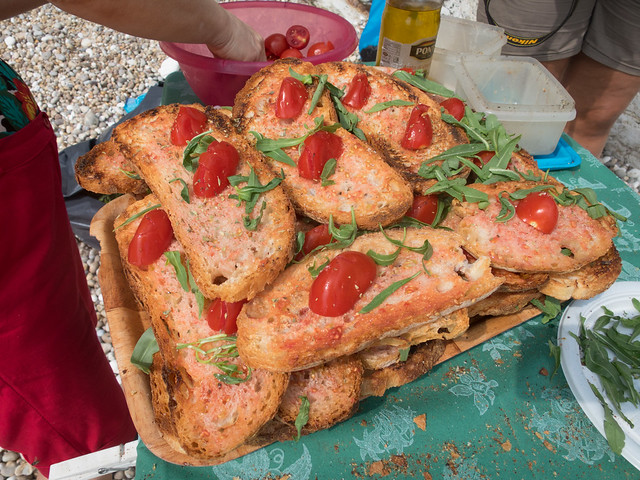
The rule of thumb is to drink one liter of water for every thousand meters of elevation.

I can't overstate how important it is to bring warm clothing. 

On arrival in San Pedro, I'd already bought an alpaca sweater, hat, and gloves in the local market as night-time temperatures plummet quickly in the desert.
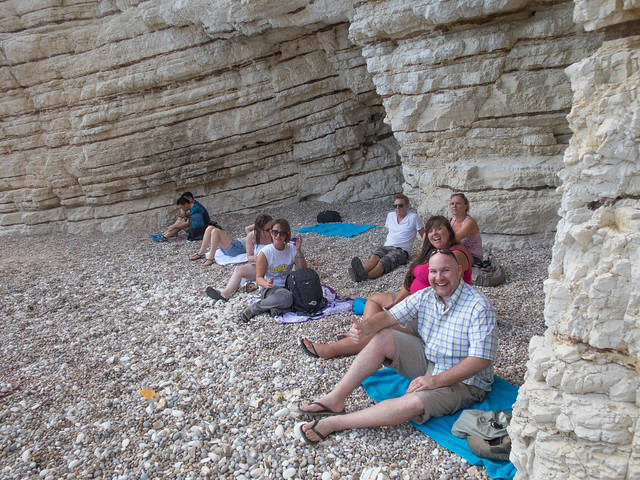
This is especially true at higher altitudes.
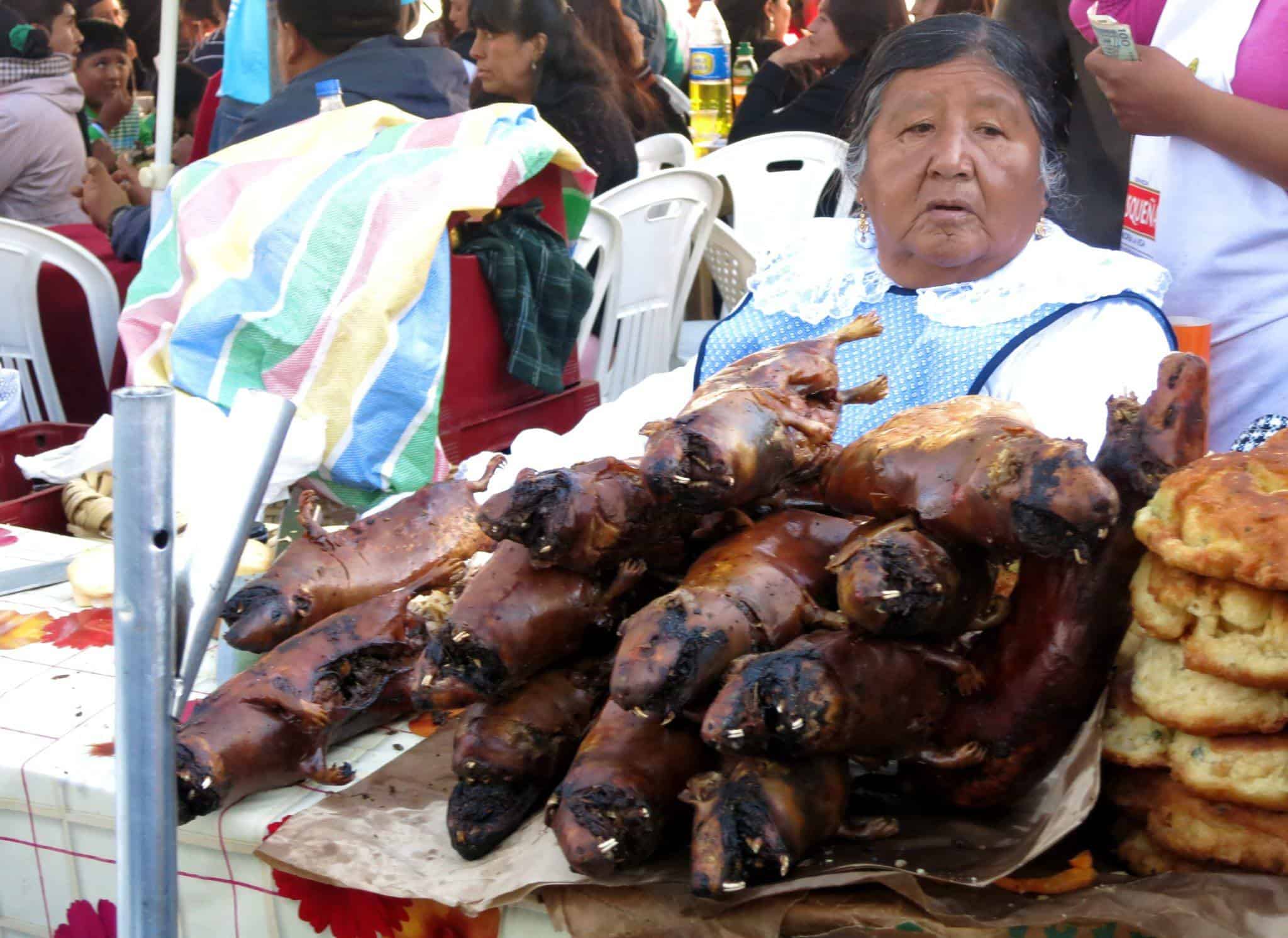
In the Western sense, you may view your driver as your guide.

Still, from the Bolivian perspective, I discovered my driver saw himself as a taxi driver who just happened to be transporting people in a place with no roads and exotic scenery.

The lodging where we spent our first night (4,200 meters)

Acclimatization

If you arrive in San Pedro from Santiago, whether by bus or plane, you'll want to allow as much time as possible to acclimatize to the higher elevation before leaving for Bolivia.

In San Pedro, you're sleeping at 2,400 meters, while your first night in Bolivia will be at 4,200 meters.

The second night will be a bit lower at 3,600 meters.

As a reference, in mountaineering, it's not advised to sleep higher than 300 meters above where you slept the previous night to allow your body to acclimatize.

Otherwise, you increase your risk of developing Altitude Sickness.

To help your body adapt, you should also take day trips from San Pedro to higher altitudes, such as the nearby Salar de Tara and Tatio Geysers.

This is the first in a series of posts from my wild ride through the Bolivian salt flats. Stay tuned.

_______

This post was brought to you by Southern Cross Travel Insurance.

Pick-Pocket Proof Pants by Clothing Arts (Review)

I glanced down at my left pants pocket and noticed the zipper was pulled up more than an inch. It rested against the button closure of my Pick-Pocket Proof Pants, unable to be pulled further unless the flap was first unbuttoned. Did I forget to close it all the way?

Wearing Pick-Pocket Proof Pants somewhere in Guatemala
Somewhere in Guatemala

Did the young Nicaraguan woman talking with her friend in the seat behind me while we waited for the colectivo to fill up attempt to pick my pocket?

She'd had ample time if that were the case. I was the only person on the colectivo when she and her friend took their seats directly behind me. We were there alone for at least ten minutes before more people got inside, and I recalled at least once feeling her skin against my left arm.

I hadn't noticed it initially, but now I couldn't believe what I saw. The space between my front-row seat and the left side of the van was wide enough for me to fit my entire upper arm. It would've been effortless to have slid her hand through the gap and toward my pocket.

With the zipper down, and the flap closed, any pickpocket would be unable to access your belongings without you noticing
Button closures on the cargo pants deter pickpockets.

My heart was beating faster as the questions swirled through my mind. I felt my pocket, confirming my iPhone was still there.

Then, I fully closed the zipper on my Pick-Pocket Proof Pants and wedged my left arm in the gaping space between my seat and the one behind me. It remained there for the hour-and-a-half drive from Managua to Leon.

While I'll never know for sure whether it was my mistake or I was nearly the victim of a third successful pickpocket (the first time was in Barcelona after a soccer match and the second at a horse parade in Medellin), I do know if it was the latter, the design of the pants prevented my phone from being stolen.

Table of Contents

  • Meeting Adam, Founder of Clothing Arts
  • Pick-Pocket Proof Pants on the Road
    • Medellin, Colombia
    • Cartagena, Colombia
    • Guatemala, Honduras, El Salvador, and Nicaragua
  • Final Thoughts

Meeting Adam, Founder of Clothing Arts

I first met Adam Rapp, the man behind the P^cubed Pick-Pocket Proof Pants and founder of Clothing Arts, at TBEX, a travel blogging conference.

He introduced me to high-tech clothing designed to prevent pickpockets and offered to send me a complimentary pair of pants in Colombia and a travel shirt.

I knew exactly how I planned to test them out. I would take them to the same parade where a pickpocket stole my cell phone from my front jean pocket in 2010.

Pick-Pocket Proof Pants on the Road

Medellin, Colombia

Crowds gather for a horse parade in Medellin.
Horse parade in Medellin

They arrived just in time for the 27th annual horse parade, which I attended with my girlfriend then. We walked much of the parade route over three to four hours.

I secured my wallet (with cash and credit cards) and phone in my left front pocket and used my right front pocket for my point-and-shoot camera whenever I wasn't taking photos. There are small hidden pockets in each of the side pockets; however, I didn't feel the need to use them.

In the beginning, there was plenty of space around us, but once we crossed a bridge to the side with more partygoers and tailgating, it was another story.

It was late afternoon, and the crowd had swelled with onlookers and drunken revelers. At one point, we tried to walk a certain way, but it was so crowded that we had to reverse course.

There were also some choke points that only one person could pass through at a time, and you were shoulder-to-shoulder with strangers for what seemed like an eternity. These tight spots can make you an easy target.

The great thing about the P^cubed pants is that once you close that button flap on a pocket, nobody will get in there without you at least noticing (and hopefully, that awareness alone scares them away). 

As a result, I felt secure moving through the crowded sections. After the parade, my Pick-Pocket Proof Pants quickly became a part of my regular wardrobe in Medellin.

Cartagena, Colombia

Wearing a white Pick-Pocket Proof Shirt to my birthday dinner at Don Juan in Cartagena
Wearing a travel shirt by Clothing Arts

A month later, I was in Cartagena for my birthday. The heat and humidity along Colombia's Caribbean coast can be unbearable.

During the day, I'd wear my P^cubed convertible pants as shorts, which is as simple as unzipping the legs. Adopting convertible travel pants took me a long time, but now I'm a huge fan.

On the night of my birthday, I paired the pants with the white button-down shirt they sent me.

We began with dinner at Don Juan, a restaurant favored by a previous Colombian President, and ended with a romantic carriage ride through the Old Town. The shirt was stylish and breathable, and to my surprise, I didn't feel stifled by wearing long sleeves.

Guatemala, Honduras, El Salvador, and Nicaragua

The following year, I spent six weeks backpacking in Central America, and the convertible Pick-Pocket Proof Pants were the only pants I had with me.

I wore them as pants throughout Guatemala due to the cold evening temperatures and as shorts in Nicaragua, even when I went volcanoboarding.

Atop Cerro Negro in Nicaragua, before I suited up to go volcanoboarding in my Pick-Pocket Proof Pants
Atop Cerro Negro in Nicaragua, before going volcanoboarding.

During my 23 hours of transit in various chicken buses and colectivos to/from Copan, Honduras, I'd zip up the pockets and close the button flaps to relax, knowing my wallet and phone were safe.

I'd never experienced such secure pockets on a pair of travel pants, and I enjoyed them. I also did this while taking photos in urban settings such as Antigua, San Salvador, Leon, and Granada.

Final Thoughts

While my review has focused on the security features of the two front pockets and the secret pockets inside them, there are also two back pockets. Each of the rear pockets has a zipper and button closures.

These adventure pants also have two cargo pockets with button closures, are stain-resistant, moisture-wicking, and fairly quick-drying.

Overall, I was and continue to be completely satisfied with these great pants. Consider a pair of Clothing Arts pants if you want an alternative to an uncomfortable money belt.

The travel clothing I've tried from Clothing Arts is high-quality products designed and made by a fellow traveler.

To learn more about Pick-Pocket Proof Pants, available in various designs, fabrics, and colors, as well as travel shirts and new product releases, check out the Clothing Arts website.

« Previous Page
Next Page »
Dave at Ahu Ko Te Riku on Rapa Nui (Easter Island), Chile.

Hi, I'm Dave

Editor in Chief

I've been writing about adventure travel on Go Backpacking since 2007. I've visited 68 countries.

Read more about Dave.

Footer

back to top

About

  • About
  • Archive
  • Privacy Policy
  • Cookie Policy

Follow Us

Contact

  • Contact
  • Work With Us
  • Submissions

Copyright © 2025 Go Backpacking