Go Backpacking

  • About
  • Travel Tips
    • Accommodations
    • Budgeting & Money
    • Adventure Travel
    • Food & Drink
    • Gear & Gadgets
    • Packing Tips
    • Travel Blogging
    • Travel Insurance
    • Trip Planning
    • UNESCO Sites
  • Destinations
    • Africa
      • Botswana
      • Egypt
      • Ethiopia
      • Morocco
      • Rwanda
      • South Africa
      • Tanzania
    • Asia
      • Cambodia
      • China
      • Hong Kong
      • India
      • Indonesia
      • Japan
      • Laos
      • Malaysia
      • Nepal
      • Philippines
      • Thailand
      • United Arab Emirates
      • Vietnam
    • Europe
      • England
      • France
      • Germany
      • Greece
      • Iceland
      • Ireland
      • Italy
      • Portugal
      • Spain
      • Switzerland
      • Turkey
    • North America
      • Canada
      • Costa Rica
      • Cuba
      • Guatemala
      • Mexico
      • Nicaragua
      • Panama
      • United States
    • Oceania
      • Australia
      • French Polynesia
      • New Zealand
    • South America
      • Argentina
      • Bolivia
      • Brazil
      • Chile
      • Colombia
      • Ecuador
      • Peru
  • Advertise
menu icon
go to homepage
  • About
  • Travel Tips
    • Accommodations
    • Budgeting & Money
    • Adventure Travel
    • Food & Drink
    • Gear & Gadgets
    • Packing Tips
    • Travel Blogging
    • Travel Insurance
    • Trip Planning
    • UNESCO Sites
  • Destinations
    • Africa
      • Botswana
      • Egypt
      • Ethiopia
      • Morocco
      • Rwanda
      • South Africa
      • Tanzania
    • Asia
      • Cambodia
      • China
      • Hong Kong
      • India
      • Indonesia
      • Japan
      • Laos
      • Malaysia
      • Nepal
      • Philippines
      • Thailand
      • United Arab Emirates
      • Vietnam
    • Europe
      • England
      • France
      • Germany
      • Greece
      • Iceland
      • Ireland
      • Italy
      • Portugal
      • Spain
      • Switzerland
      • Turkey
    • North America
      • Canada
      • Costa Rica
      • Cuba
      • Guatemala
      • Mexico
      • Nicaragua
      • Panama
      • United States
    • Oceania
      • Australia
      • French Polynesia
      • New Zealand
    • South America
      • Argentina
      • Bolivia
      • Brazil
      • Chile
      • Colombia
      • Ecuador
      • Peru
  • Advertise
search icon
Homepage link
  • About
  • Travel Tips
    • Accommodations
    • Budgeting & Money
    • Adventure Travel
    • Food & Drink
    • Gear & Gadgets
    • Packing Tips
    • Travel Blogging
    • Travel Insurance
    • Trip Planning
    • UNESCO Sites
  • Destinations
    • Africa
      • Botswana
      • Egypt
      • Ethiopia
      • Morocco
      • Rwanda
      • South Africa
      • Tanzania
    • Asia
      • Cambodia
      • China
      • Hong Kong
      • India
      • Indonesia
      • Japan
      • Laos
      • Malaysia
      • Nepal
      • Philippines
      • Thailand
      • United Arab Emirates
      • Vietnam
    • Europe
      • England
      • France
      • Germany
      • Greece
      • Iceland
      • Ireland
      • Italy
      • Portugal
      • Spain
      • Switzerland
      • Turkey
    • North America
      • Canada
      • Costa Rica
      • Cuba
      • Guatemala
      • Mexico
      • Nicaragua
      • Panama
      • United States
    • Oceania
      • Australia
      • French Polynesia
      • New Zealand
    • South America
      • Argentina
      • Bolivia
      • Brazil
      • Chile
      • Colombia
      • Ecuador
      • Peru
  • Advertise
×
Home

The Best Food in Latin America

Mexican food dominates the Latin American cuisine scene in the United States, which is not surprising because Mexico is our neighbor.

That leads to many misconceptions about the food in Latin America, mainly that it's all spicy, as my mom once believed.

The truth is, other than Mexico, only Peru is big on spicy food, and in most countries, the food is quite bland.

So, where do you find the best food in Latin America? I'm about to tell you.

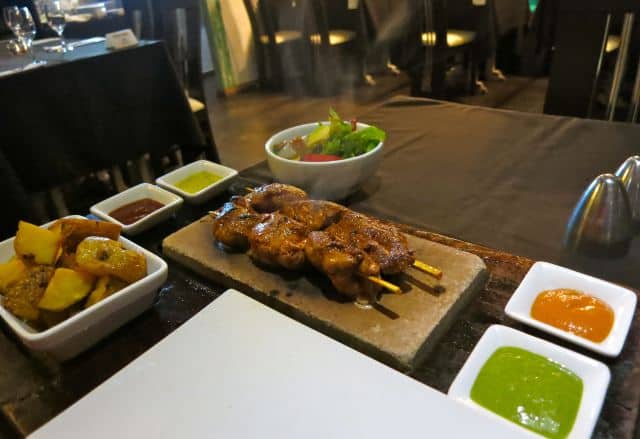
Alpaca is one of the best foods in Latin America, in my opinion.
Alpaca is my favorite Peruvian dish.

As much as I love Colombia, I can't say I love the food here. I love ajiaco, but I can't eat it all the time.

I find myself eating and even cooking food from other Latin American countries here in Colombia. I'm about to tell you which ones, so you know where you can find the best food in Latin America.

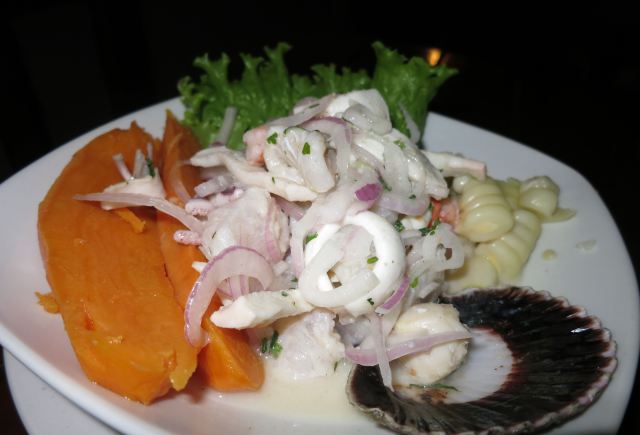
Ceviche
Ceviche

Peru

I finally made it to Peru last year, and the food was one of the best parts of the trip. I tried everything, and I even wrote a story about it.

The Peruvians often use chili pepper in their recipes, and I love the kick it gives dishes such as ceviche.

Even without the fiery flavor, you have other great options, including my favorite, alpaca, meat as tender and flavorful as lamb, probably more so when I think about it.

I like the food so much in Peru I learned how to cook a handful of dishes.

Ceviche is one, of course, but arroz con pollo, chupe de camarones, lomo saltado, papas de huancaína and trucha rellena are all plates I can make.

If I'm not making Peruvian food, the Latin American cuisine I cook most often comes from.

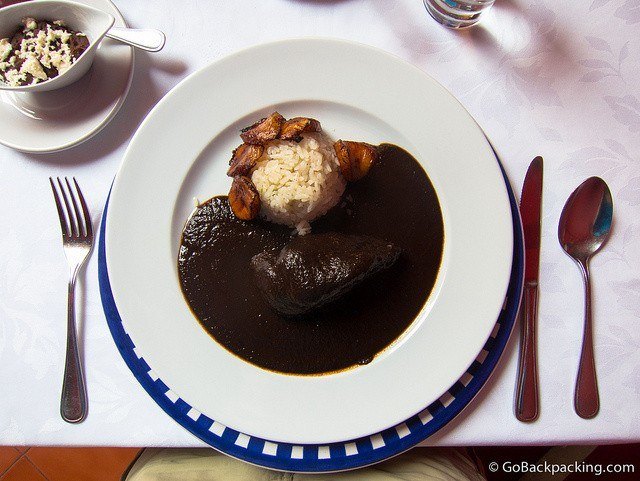
Mole with chicken in Oaxaca
A mole with chicken in Oaxaca

Mexico

The mix of flavors tickles my tongue.

I love the traditional sauce used in tacos and fajitas, a sauce made from tomatoes, cumin, paprika, garlic, and onion, and I love chipotle sauce too.

But a good mole is my all-time favorite. It's tinged with chocolate, but the other popular spices combine to make it a perfect sauce for shredded meat.

I have a friend from Mexico in Bogotá who had lunch for everyone and used his mom's recipes to make the food.

The chipotle and mole might be the best I've ever had, even better than anything I had on my trip to Chichen Itza 10 years ago.

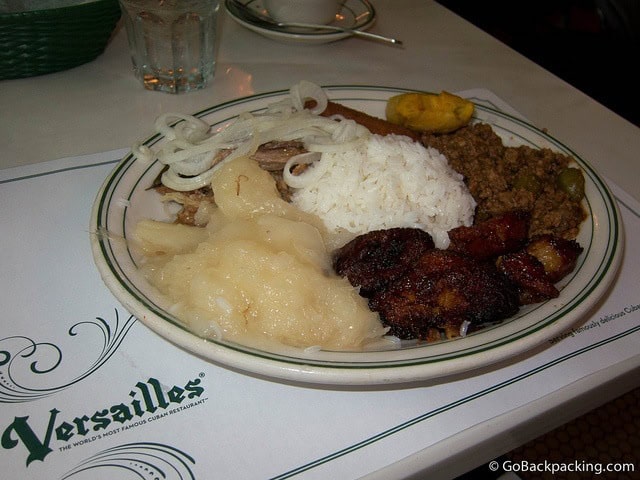
Classic Cuban sampler at Versailles

Miami

Sure, you can argue that Miami is not part of Latin America. Well, I can say it's part of America, and there's an enormous Latin influence there.

Go to Little Havana and tell me it doesn't feel like being in Latin America. That, along with the Cuban cuisine, is enough to put it on my list of the best food in Latin America.

I love the Cuban pork, the ropa vieja, the way they make their black beans, their fried plantains, about anything they make I like.

So why not Cuba? Well, I haven't been yet, but I've heard the food is often quite bland there, that's it's not as flavorful as the Cuban food found in Miami, partly a result of the communist regime on the island nation.

But that's changing slowly, and maybe someday Cuba will make this list.

Brazil

You can easily substitute Argentina or Uruguay, but of the South American countries most famous for beef and meat, I'm going with Brazil.

I recently went to the northeast and considered moving this up higher, but after thinking long and hard, I realized I would have just been a prisoner of the moment had I done that.

That's not to say I didn't enjoy the food. I spent a lot eating there, filling my plates to the point that I often was paying American prices.

That happens when you have a buffet in front of you, full of good eats.

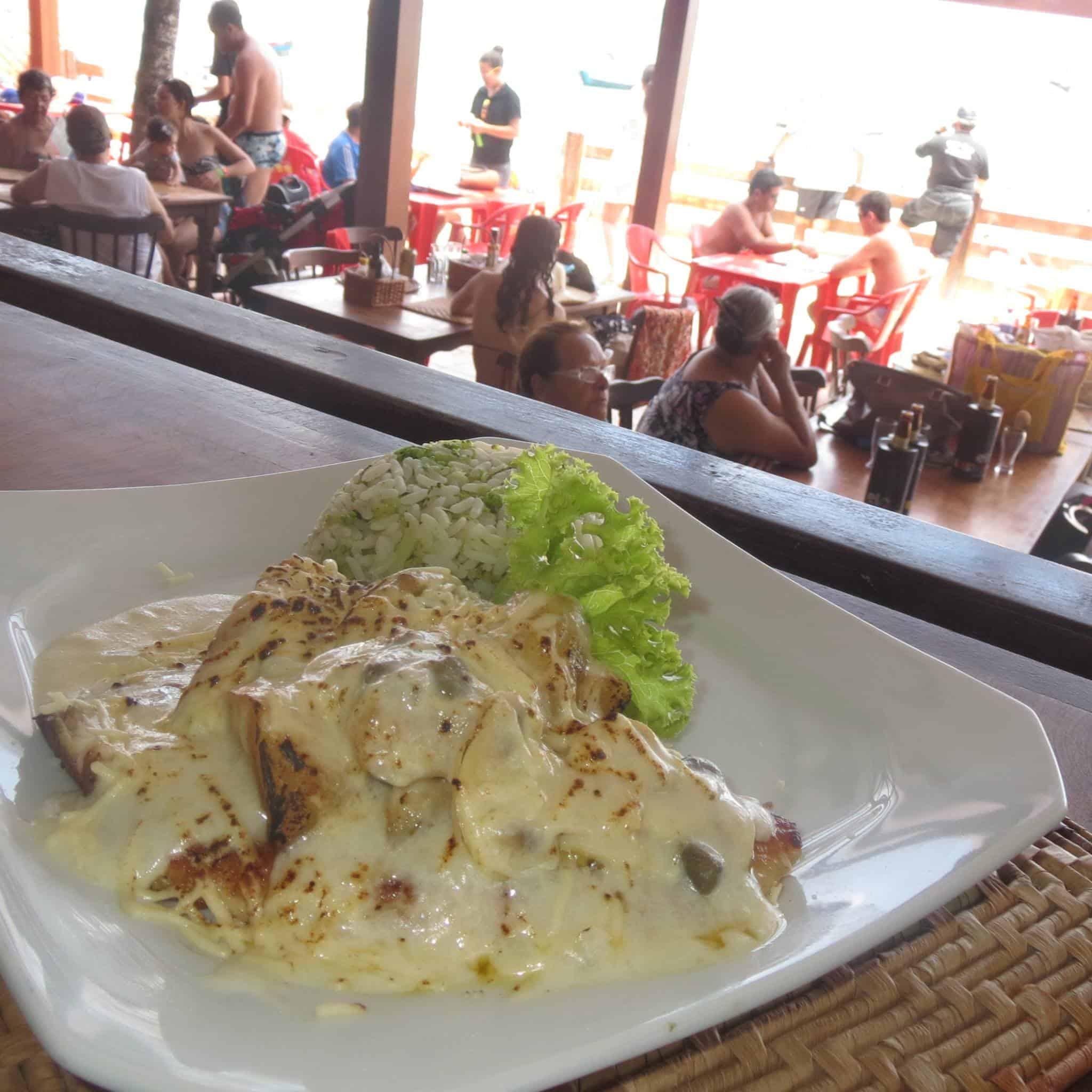
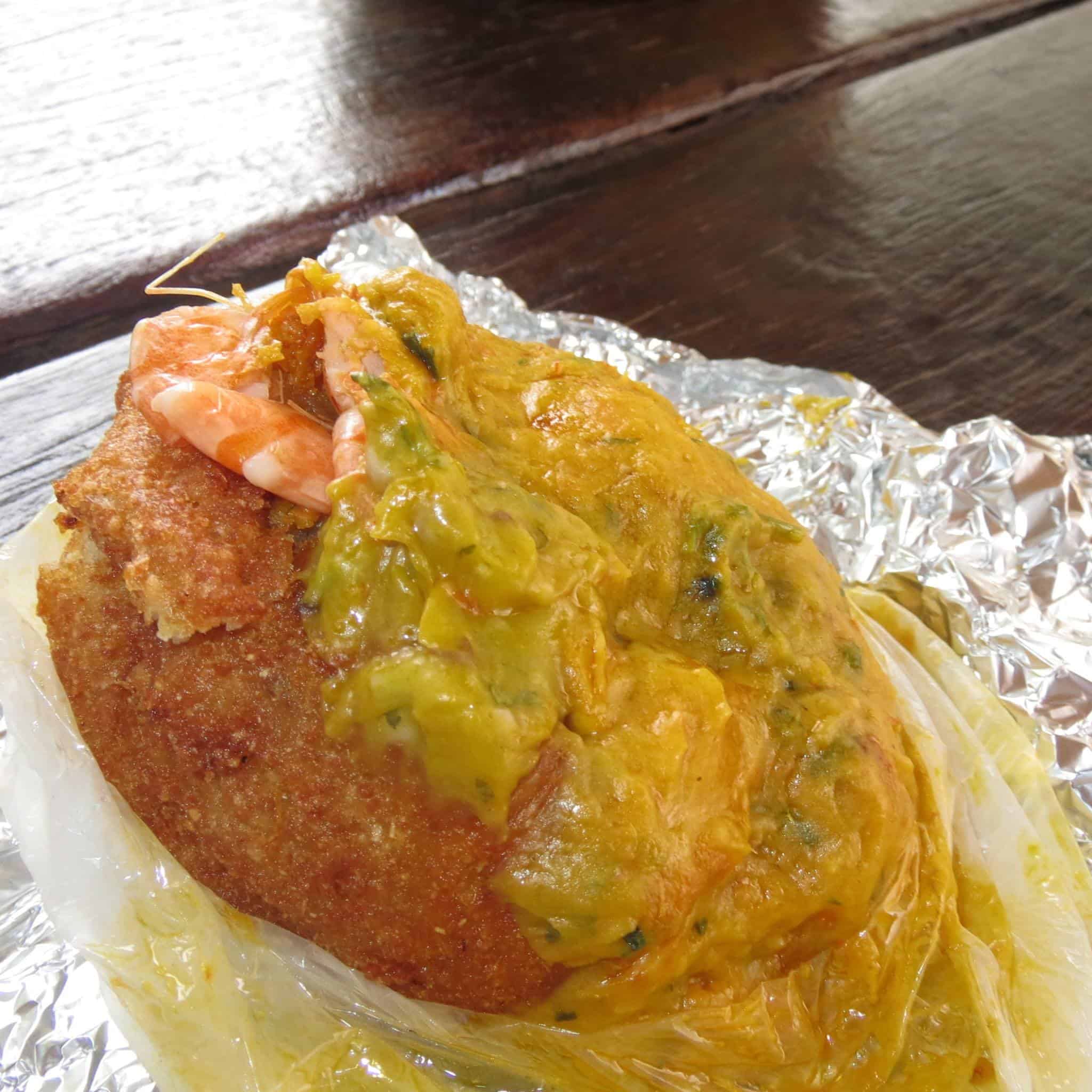
But my favorite dish was moqueca. I'll be learning to make it soon because I don't want to go to a restaurant whenever I want to eat the best food in Latin America.

DIY is the Way to Go

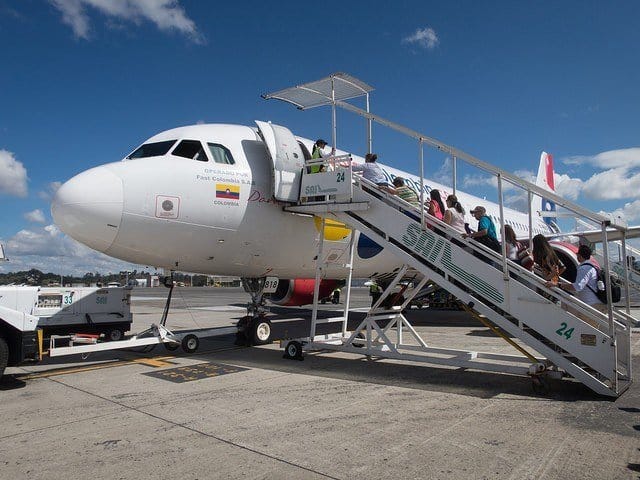
VivaColombia flight (photo: David Lee)

Booking a holiday can be a fraught process, full of questions and decisions. For instance, where do you go? How do you get there? How long do you stay? What board basis do you choose?

These are simple questions that need to be answered in order for your holiday to even get past the booking stage, and the way you book will shape the answers to these questions.

For instance, do you book online?

If you do, then you’re probably best placed to find deals, rather than heading to the High Street or looking through brochures.

I don’t tend to book package deals either because I find them a little restrictive, and for me they generally work out more expensive, so I do DIY booking instead.

DIY booking is when you book all parts of your holiday separately, creating your own bespoke holiday from various deals. The perk here is that you can find bargains for flight, accommodation, transfer, and lump them together to make your own package, which obviously brings the cost down.

You can tailor-make your travel plans to suit you and you alone, and when you combine them with other add-ons, such as airport parking, you can bring the cost down further. This is a service I always book, purely because for me the cost of public transport is becoming too high, and I also find it too stressful when trying to cram my suitcase onto a packed train carriage, or sitting on a coach for hours on end.

I regularly book Stansted parking instead, and I find the service second to none. If there are several of you traveling, you obviously pay once, and you split the cost between you, easily saving money.

Searching for your flight is obviously the first step when you’re embarking on a DIY booking adventure.

Skyscanner is the place I always head to first, because this site searches every option for you, including indirect flights, split bookings, and several different airlines, to find you the cheapest deal.

DIY booking gives you the freedom to fly from different airports, book your flights from different airlines for each leg of your journey, and make it all work for you. Once you’ve found your flight, it’s time to look for accommodation, and this is where the fun really starts!

Choose your board basis first, and that will filter down the endless results to a more manageable amount. Do some research online, heading to TripAdvisor perhaps, to find out which area you are best to base yourself in, and then narrow your search down further.

Check out reviews, but do remember to take them with a slight pinch of salt as people don’t always like to say good things, on the whole! Once you’ve got accommodation, transfers are next.

Shuttle transfers work out cheaper, although they do take longer for you to get to your hotel. If there are several of you it could work out cheaper to book a private transfer, but this does generally depend on the distance from the airport to your hotel, so work out the cheapest and quickest way with the information you have at hand.

Then, you’re done! Deals combined to make a bargain-busting holiday. DIY bookings aren’t difficult, and they really do keep cash in your pocket.

_______

This post was brought to you in partnership with Park BCP.

Why (and How) to Volunteer Overseas

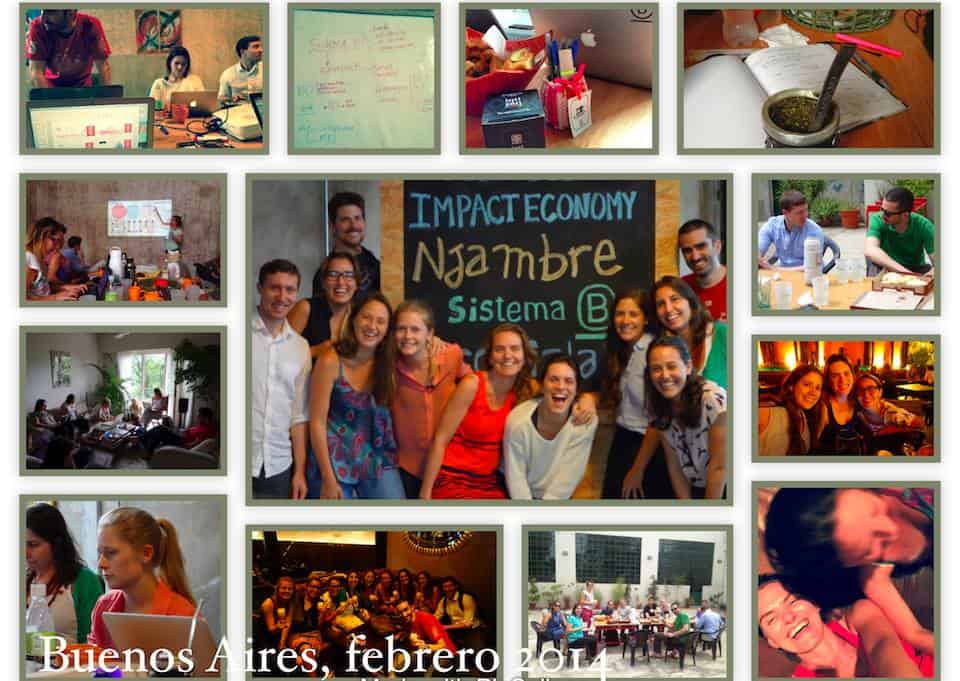
Experteering in Buenos Aires

Editor's note: This post is brought to you in partnership with MovingWorlds.org.

A truly immersive travel experience is like the search for the holy grail. We all want it, and yet it is so hard to find.

And, often to the dismay of travelers, it is something that can be advertised or bought. It just happens.

But as any good backpacker knows, the key to an authentic travel experience is not trying to buy your way into it, but rather to have "stumbled upon it" "y putting yourself out there, exposing yourself to chance, and getting the odds in your favor.

Volunteering overseas is perhaps the best way to set yourself up for a truly immersive experience.

Done correctly, it can also create real change and help you develop your skills in the process.

But there is a right, and wrong, way to volunteer your skills abroad. Here are four tips to help you volunteer overseas while backpacking.

Volunteering Your Skills is Good for You and Good for the World

According to the United Nations, volunteers are recognized as important contributors to the field of global development.

This is because a talent gap is hindering growth… meaning that small organizations working in the field are struggling to solve last-mile challenges and create jobs because they don't have the right skills to grow to make an impact. 

Since these organizations need skills, they can often provide homestays and other unique experiences in exchange for the right person.

As a result, people can trade their skills for immersive experiences without paying for them.

I find that these matches only happen when the motivations of both the organization and the volunteer are aligned.

Organizations

They are looking for support with projects that they lack the skills and resources to accomplish.

They want someone to establish a solution that they can then use independently. They are NOT looking for money.

Also, they realize that success is not just delivering a project but also learning new skills. 

Volunteers

Are you looking for more than a great Facebook photo?

They are looking to learn new cultures, they want to expand their skills, they want to create a social impact, and they approach the work with humility.

This is very different from the more common voluntourism trips, where you pay to volunteer or teach.  

Done incorrectly, it can cause more harm than good, as documented in the haunting story about the Cambodia Orphanage Business.

Stories like this have fueled the voluntourism debate.

Find a Partner, Not Just a Volunteer Project

Organizations are looking for help to tackle skill-related challenges. So a volunteering engagement shouldn't be based on a project; it should be about transferring knowledge and skills to the areas that need it most.

While this often takes the shape of a project, you need a partnership in place between you and the host organization to allow for productive engagement and the opportunity for skills and knowledge to transfer both ways. 

There are lots of options to find a partner. But before you look for one, check out these resources from LearningService.info, especially their short video about how to find a responsible placement.

I also recommend reviewing this post: 8 Factors to Consider When Choosing Your Volunteer Experience.

A few partners that can help you:

  1. VSO & Cuso International: Compensate you if you can volunteer for a year.
  2. MovingWorlds: Live for free while volunteering your skills for any length of time. Projects on MovingWorlds never charge you to volunteer, though MovingWorlds does charge a small membership fee to access opportunities and to provide you planning support.
  3. Omprakash: Very economical, pre-screened volunteering opportunities that relate to skills.

When Volunteering Abroad, Failing to Plan is Planning to Fail

We always say that the match is the easy part.

There are so many organizations that need skills to find a project in almost any country that aligns with your profile.

WhWhat'smportant is that you plan effectively to create a true partnership.

To do that, we recommend the following:

To do that, we recommend the following:

  1. Take an orientation/training. We developed free training for international volunteering.
  2. Plan out your work. We advise all volunteers to work with their partners in advance of their travel to plan out all elements of their work and trip.
  3. Document expectations. Use planning calls to document and align both your and your partner's expectations about the work you will be doing, and the outcomes expected.  You can use the MovingWorlds Experteering Planning guide as a template to help guide your conversations.

To Have a Great Experience, Focus on Being a Great Volunteer

To get the most out of your experience, make sure to focus on the organization's needs.

If you build a partnership and work on the things they need the most help with, you will set yourself up for success.

A few tips from our

A few tips from our guide includes:

  • Be Culturally Sensitive - Learn about differences and talk about them openly
  • Be Open and Humble - Approach the project and partnership with humility
  • Communicate Effectively - Work hard to set expectations and discuss progress clearly
  • Continue to Learn and Grow - Work on new skills and help them develop theirs
  • Focus on Impact - Do what is essential, not what's most interesting
  • Start Something That Lasts - Success will happen long after you leave

Other great resources to check out including this video from LearningService.info: Being a Valuable Volunteer; and this article, How to Make a Real Impact While Volunteering Overseas.

Volunteering overseas can be a truly transformative experience, mainly because it connects you to the local culture, helps you build strong partnerships, and can help you make a long-term impact.

As exciting as it is, great care should be taken to ensure that it is beneficial to you, your hosting organization, and the people you work with.

We hope these tips will help you, and if you have a good story, tip, or experience, tag #Experteering so Nafessa can help amplify your impact.

______

Nafessa K

About the Author: Nafessa Kassim is the Director of Global Engagements at MovingWorlds.org, where she is responsible for the quality and impact of all matches. She supports both individuals as well as our corporate programs. As part of her work, she has been published for her best practices in international skills-based volunteering and a StartingBloc mentor. Previously to MovingWorlds,

Previously to MovingWorlds, Nafessa worked in Indonesia and India on global development projects with Audi, Purpose, Columbia University, and the William J Clinton Fellowship. Nafessa holds a dual Master's Degree in Global Health and International Social Enterprise Administration.

Bogotá vs Medellín: Recreation, Safety and Transportation

Editor's note: This is Part 2 of a two-part series. Read Part 1 here.

We've already covered culture, dining, and the economy as part of the first six variables when comparing Colombia's two biggest cities.

That brings us here, to Bogota vs. Medellin: Recreation, Safety, and Transportation.

We'll touch on entertainment, green space and the pace of life as well, before giving you our conclusions on everything. Let's get to it.

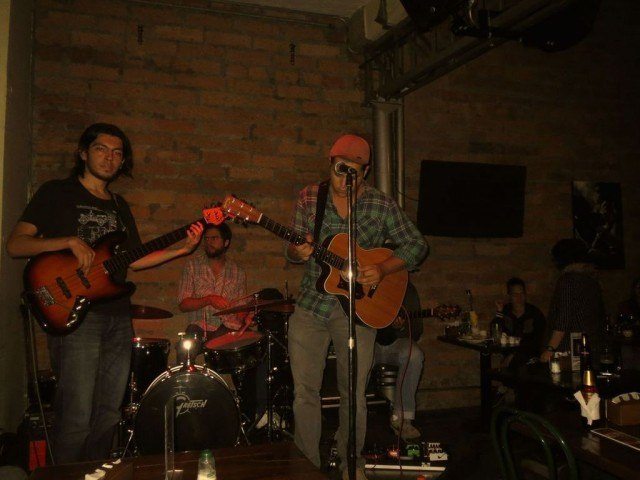
Live jazz at El Acontista in Medellín

7. Entertainment

Bogotá, being the capital and bigger city, has more concerts and festivals than Medellín. That's a fact.

As for weekly entertainment, they're about equal.

You can find a variety of live music, bars, and clubs in both cities.

Medellín leans heavier toward salsa and reggaeton, but you can find jazz, rock, and tango as well, just as you can in the capital.

8. Green Space

I hear so often how much greener Medellín is than Bogotá, and maybe this is true to some extent. Daily in Medellín, you see more parks and trees than you would in Bogotá.

Here's why that's misleading.

Medellín's best neighborhoods tend to be concentrated in the southern half of the city, where most foreigners spend their time. Therefore, they see the prettiest parts of the city more often than not.

In Bogotá, it's so big, and everything is so spread out, you can't help but pass some areas that are all concrete and no green.

For example, most of the hostels in Bogotá are in La Candelaria, in the south, but the nightlife is in the Zona T, in the north.

That means foreigners are forced to pass some ugly areas in between.

This kind of selective imagery, based mostly on geography, can alter one's views. So let's look closer.

Bogotá's biggest park is Parque Simón Bolívar at 988 acres. To give you an idea of how big that is, Central Park in New York is 843 acres.

Medellín's biggest park is Parque Natural Regional Metropolitano Cerro El Volador, at 262 acres.

That's about a third the size of Bogotá's second-biggest park, Parque Nacional Olaya Herrera, which covers about 700 acres.

Here's where Medellín has the advantage: the beautiful Parque Arví.

The city's Metrocable allows easy access to the park in the eastern hills, a green space of more than 4,350 acres!

But the park isn't actually in Medellín, and it will take you a while to get there, maybe an hour or so if you're in one of the more popular areas with foreigners, Laureles or Poblado.

9. Pace of life

I already alluded to this in the culture and economy sections, so I won't spend too much time on this. I'll keep it simple: things in Bogotá happen faster.

People drive faster, move faster, walk faster. About the only thing they do faster in Medellín is talk.

10. Recreation

Green space is a part of this, sure, but there are other amenities that recreation covers.

My favorite, and the big difference between the cities, is the Ciclovía. Both cities have them, but Bogotá opens so many more streets to cyclists, pedestrians, and skaters than the Medellín's Ciclovía.

Bogotá is in a wider valley and has that luxury.

Otherwise, both cities have interactive parks for kids and nearby outdoor activities such as hiking and zip-lining.

11. Safety

Bogotá surpassed Medellín in homicides, 1,283 to 924, according to the latest statistics I could find.

But on a per capita basis, Bogotá suffered 16 murders per 100,000 people, about half as much as the 31 murders per 100,000 people that Medellín endured during the same period.

Let's dig deeper, though, because the numbers don't tell the whole story.

A lot of those murders are drug-related and occur between people who know each other. In other words, if you don't go looking for trouble in either city and are aware of your surroundings, you should be okay.

12. Transportation

I just touched on this last week, when I ranked Bogotá's Transmilenio system higher than Medellín's Metro system.

They're both great systems, so good you don't need a car in either city, but Bogotá's system is more extensive -- my No. 1 concern; Medellín's system is a little less hectic and more innovative, something preferable to others.

It just depends on what you want, the entire point of this two-part series, which leads me to...

Final Recommendations

The cities are even in several key areas: dining, entertainment, green space, safety.

That means your decision should come down to other variables, and here's what I think:

If you're a hard-charging go-getter who puts work above all else, who looks at big crowds moving at warp speed as beautiful chaos, who likes to cover a lot of ground by bicycle when possible, who prefers a more international and atmosphere, who doesn't mind seeing dirtier streets and braving slightly frigid weather and, sometimes, people to match the climate, move to Bogotá.

If you're a laid-back person who is retiring or is looking for a place that puts social life ahead of work, who is more comfortable in a smaller city where you'll rarely feel overcrowded, and you'll usually see cleaner streets, who is more adaptable to a city with a warmer climate and friendlier people, who doesn't mind that these friendly people might not keep their word, move to Medellín.

Bogotá vs Medellín: Culture, Dining and the Economy

Bogotá at dusk
Bogotá at dusk

You hear people debate this all the time — Bogotá vs. Medellín — and on the surface, the answer seems easy.

Most foreigners and even more paisas, choose Medellín.

It makes sense. The warmer climate and slower pace of life tend to placate a majority of the people I talk to who live in or have visited Medellín, and anywhere I've gone those are qualities people tend to prefer, and I've been to 16 countries and 40 states in the United States.

I grew up in a small town in Hawaii but later lived in New York, not in the city but not far outside it and I spent a lot of time in the Big Apple, both during my time in the Empire State and every year that followed my departure, and if I had to choose between the two, I'd pick New York.

I love Hawaii, and Hilo will always be home, but the slow pace of life and flaky nature of many of the people gets to me, despite how friendly the people generally are.

Hilo and New York could be metaphors for what I'm about to write, but let's break down the variables that often determine the best place to live, starting with Part 1 of this two-part series, Bogotá vs Medellín: Culture, Dining and the Economy.

Before you continue, I have to warn you now: these posts will be complimentary and critical, equally for both cities, at least that's the goal and I'm not keeping score so if things lean a little more in one direction, that's by accident, not the intention.

The idea is to help you decide where to live — a big decision — based on the things you value, which is why at the end of each post I'll sum up what I've written with a recommendation.

Let's get started.

A view of downtown Medellín

1. Beauty

Bogotá, so big with more than 10 million people in the metropolitan area, is not nearly as manageable as Medellín, a metro area of almost 4 million.

You'll notice the difference along the principal streets. Medellín has less trash lining its primary thoroughfares (although I've seen a bit of discarded garbage along the Río Medellín in the hillside slums).

Medellín does not have as much graffiti either, but a lot of the spray art on Bogotá's walls is quite creative, much like Valparaíso, a coastal Chilean city famous for that very reason.

If you compare the best neighborhoods in each city, they're very similar.

These areas have modern buildings, a variety of architecture, a strong police presence, many shopping options, lots of parks and trees, many bars, cafes and restaurants, and easy access to public transportation.

In Bogotá, you'll find this in the Chapinero, Chicó, Usaquén, Zona G, Zona T, and several others. In Medellín, Laureles and Poblado top the list.

2. Climate

I prefer a slightly cooler climate. I mean, you can always put on more clothes, but you can take off only so many, at least without being arrested.

Most people don't see it that way.

They prefer La Ciudad de la Eterna Primavera, or the City of Eternal Spring, Medellín's nickname. I'd argue it's not eternal. Each year Medellín gets a little hotter.

That means Bogotá has gotten warmer as well, some days even a bit too warm for me.

3. Cost of Living

Overall, Bogotá is more expensive when it comes to three necessities: food, rent and taxis.

A set meal in Medellín that costs 6,000 pesos (about $2.50) will cost 8,000 pesos (about $3) in Bogotá. And expect your groceries to cost about 20 percent more.

A comfortable living situation in Medellín that costs 600,000 pesos (about $250) will often cost at least 800,000 pesos (about $300) in Bogotá.

And a taxi ride that costs 10,000 pesos (about $4) in Medellín will cost 14,000 pesos (about $6) in Bogotá.

One of the places you will save money in Bogotá is dry cleaning, at least 20 percent, probably because there are a lot more people wearing suits, thus the energy costs are passed on to a bigger pool of people.

4. Culture

People in Medellín have a reputation for being extremely friendly, and I'd say that's more or less correct.

They love to socialize and are happy to welcome you to their city, to give you advice and if time allows and it often does, to show you around.

With all of that comes a downside, however.

The advice they give you isn't always sound advice. For example, they'd rather give you directions they are unsure of, and they often end up being bad directions, instead of telling you they don't know, because they often have too much pride to admit they don't know something.

This also means they don't know how to say no, even if they have no plans of coming through for you, hence the reason you often find yourself the victim of capricious promises, waiting for something that will never come, be it a date, a job, a meeting, anything really.

Trying to talk to paisas about this can be very difficult as well. Many of them have not been outside their city or region and, therefore, are ignorant to the other ways of the world, and are reluctant to accept even constructive criticism about their culture.

Bogotá is the opposite.

It's a very international city, so the people are more progressive. They tend to be more direct, more likely to follow through on their promises.

This city, of course, has its downsides too.

People here are busy and will often ignore you if you ask them for directions. Many of them don't care if you like their city either, don't care what you think about their culture, and they won't befriend you very quickly.

That means if culture were described as climate, the forecast in Bogotá would be slightly chilly in every way but with a chance for meaningful relationships if you can stand the initial cold while Medellín would be warm up front with a chance of rain to ruin your parade.

5. Dining

Being a more international city, Bogotá has more options to try foods from around the world. But Medellín is making things close.

As more foreigners move there, more types of cuisine are featured.

I guess you can't go wrong in either city if you're going out to eat. You'll just have more to choose from in you're in the capital.

6. Economy/Education

As I said under the culture section, people in Bogotá are busy. It's a bustling center of commerce, full of cultures from around the globe.

You can find work in finance, health care, journalism, law, teaching, you name it.

Medellín has made strides as well, winning the 2012 City of the Year award from Citibank, the Urban Land Institute and the Wall Street Journal.

Some people feel Medellín is becoming another Silicon Valley with online entrepreneurs flocking there while job opportunities in the fields I mentioned above are growing as well.

Now, the bad that goes with the good.

In Bogotá, people are more impatient.

If you prefer to take your time, things can be tough here. You can get run over, figuratively and literally, if you don't work quickly.

Your boss and co-workers might not ask for something nicely all the time either, and they might even raise their voice, because work, and getting results, are the most important parts of daily life.

"People are not nice there," people often have told me, and I see their point.

In Medellín, it's the opposite.

The culture, so relaxed and always trying to please, causes problems as well, especially when it comes to the old adage, "No dé papaya," or, "Don't give papaya," a phrase they use to explain why you shouldn't show off or give people a reason to rob you, or they will.

They use it so liberally in Medellín, it's hard to find a business partner you can trust, something I and many others — foreigners and paisas — have learned the hard way.

Even that big City of the Year award Medellín won was largely a popularity contest, an achievement the city earned by convincing its people to vote in droves during the first phase of the competition, before a panel selected the city as the winner among three finalists.

Halfway Point Recommendation

If you're looking for a place that's a true big city, a place that feels like an international hub, somewhere in which people are more accountable and direct and take their work very seriously, even though they can be a little cold, like the climate, Bogotá is for you.

If you're looking for a place that's not so overwhelming, that's a little warmer, both with the climate and the people, even though you might find duplicity behind the initial friendly demeanor, Medellín is for you.

But don't make a final decision just yet. Part 2 is on the way.

Millévin: Avignon's Annual Wine Festival

Entrance to Avignon as viewed from the train station
Entrance to Avignon

"You've arrived at a good time," the manager of Pop' Hostel said to me as he checked me into a dorm room. "Tomorrow is Millévin, the tasting of new wines."

Indeed, the lack of excitement that led me to leave Luxembourg by train brought me to Avignon, France, the night before Millévin, an annual wine festival.

The event is held on the third Thursday of every November to celebrate the primeur wines (those sold the same year the grapes are harvested).

The manager then proceeded to highlight the following day's events:

  • 10 am to 1 pm - A preview of the Côtes du Rhône Primeurs at Les Halles, the city's food market.
  • 6:15 pm - The Défilé des Confréries, a parade of winemakers leading up the Rue de la République until they all arrive at the Place de l'Horloge.
  • 6 pm to 9 pm - The tasting event in the Place de l'Horloge (central plaza).

In addition, many of the local restaurants were offering special fixed menus to celebrate the new wines.

To make my life even easier, Pop' Hostel was located on the same avenue as the parade, just a few blocks from Place de l'Horloge.

After enjoying a glass of wine and tapas at Pop' Hostel's bar, one of the chicer I've seen in a hostel, I called it a night.

Settling into my bunk with the privacy curtain closed, I quickly fell into a slumber.

Experiencing Millévin

Wine tasting at Les Halles during Millévin in Avignon, France.
Wine tasting at Les Halles

Les Halles

The following day I rose with enthusiasm to see everything Avignon had to offer and celebrate Millévin.

The weather was cool, and the skies were a crisp, bright blue.

As any intelligent tourist would, I began with a meandering walk through the narrow streets to Les Halles.

An ivy-covered facade greeted me at the entrance, and sure enough, there were wine tasting tables set up inside.

Though the clock had yet to strike noon, I wasn't the only person checking out what was on offer.

After a few brief tastings and the requisite photos of produce and cheese counters (one of which advertised over 250 varieties), I exited the building in favor of Avignon's main attraction.

Le Palais des Papes
Le Palais des Papes is the world's largest Gothic facade

Le Palais des Papes

In the 14th century, corruption in Rome led the papacy to move to Avignon, where seven successive popes resided between 1309 to 1377.

This period is known as the Avignon Papacy.

The Palais des Papes, an austere-looking fortress lavishly decorated by Simone Martini and Matteo Giovanetti, dominates the city, the surrounding ramparts and the remains of a 12th-century bridge over the Rhone.

Beneath this outstanding example of Gothic architecture, the Petit Palais and the Romanesque Cathedral of Notre-Dame-des-Doms complete an exceptional group of monuments that testify to the leading role played by Avignon in 14th-century Christian Europe.  -- UNESCO

The facade of Le Palais des Papes (the Pope's Palace) is incredibly austere and imposing.

The interior, which can be viewed for 11 euros ($11.75), is devoid of any noteworthy art or artifacts. However, fans of Gothic architecture should still appreciate it.

I purchased a joint ticket for the Palace and St Bénezet Bridge for 13.50 euros ($14.40).

Le Pont Saint-Beneze
The unfinished Le Pont Saint-Beneze

Le Pont St Bénezet

Constructed in the 12th-century, before the arrival of the papacy, the St Bénezet Bridge, colloquially known as Pont d'Avignon on account of a 15th-century song written about it, only features four of its original 21 arches.

Quirky historic details like this bridge across the mighty Rhone River served to endear Avignon in my mind.

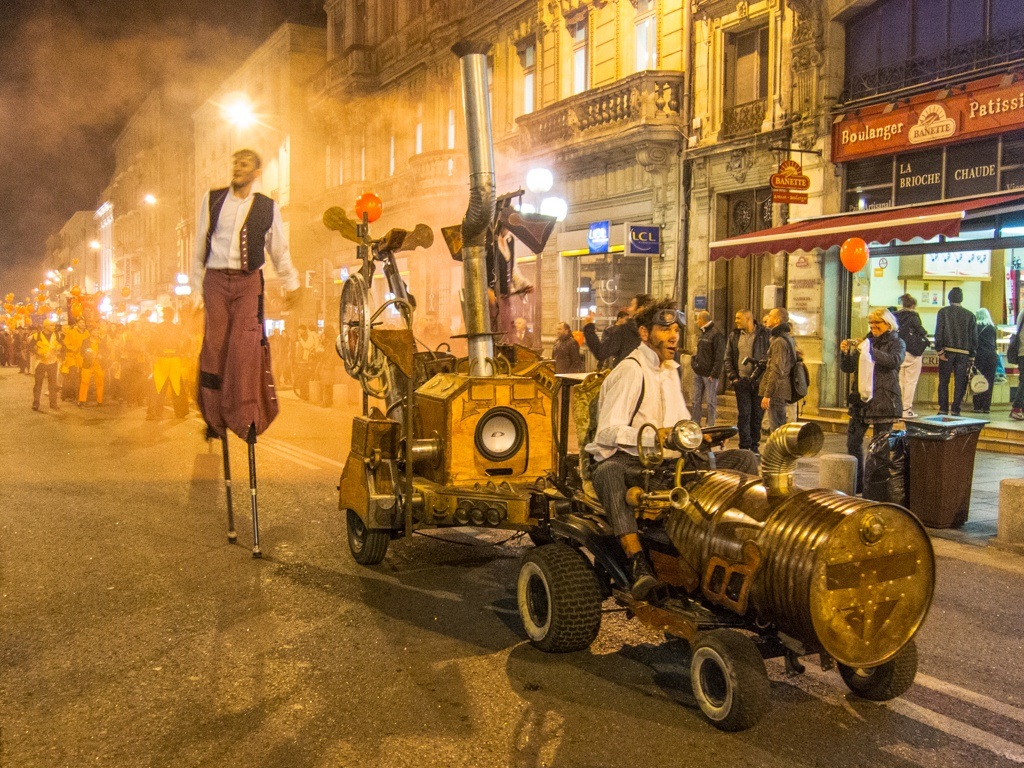
Steampunk in a Millévin parade.
Parade featuring a Steampunk

Défilé des Confréries

Due to the shorter days of Autumn, it was dusk by the time I began walking back to the hostel from Avignon Bridge.

I began chatting with a new guy in my dorm, and together we headed out to experience what Millévin and the night had to offer.

The hostel being on the Rue de la République meant we didn't have to do more than step outside the front door to be in the thick of the action.

The Défilé des Confréries was a raucous parade of winemakers led by a steampunk tractor. We watched briefly before heading further up the street to begin tasting wines.

Wine tasting at Place de l'Horloge for Millévin.
Place de l'Horloge

Place de l'Horloge

The Place de l'Horloge at the center of historic Avignon was beginning to attract a crowd.

And at 3.50 euro ($3.75) for a wine glass and all the wines you can taste in three hours (plus a disposable breathalyzer), it was no surprise why.

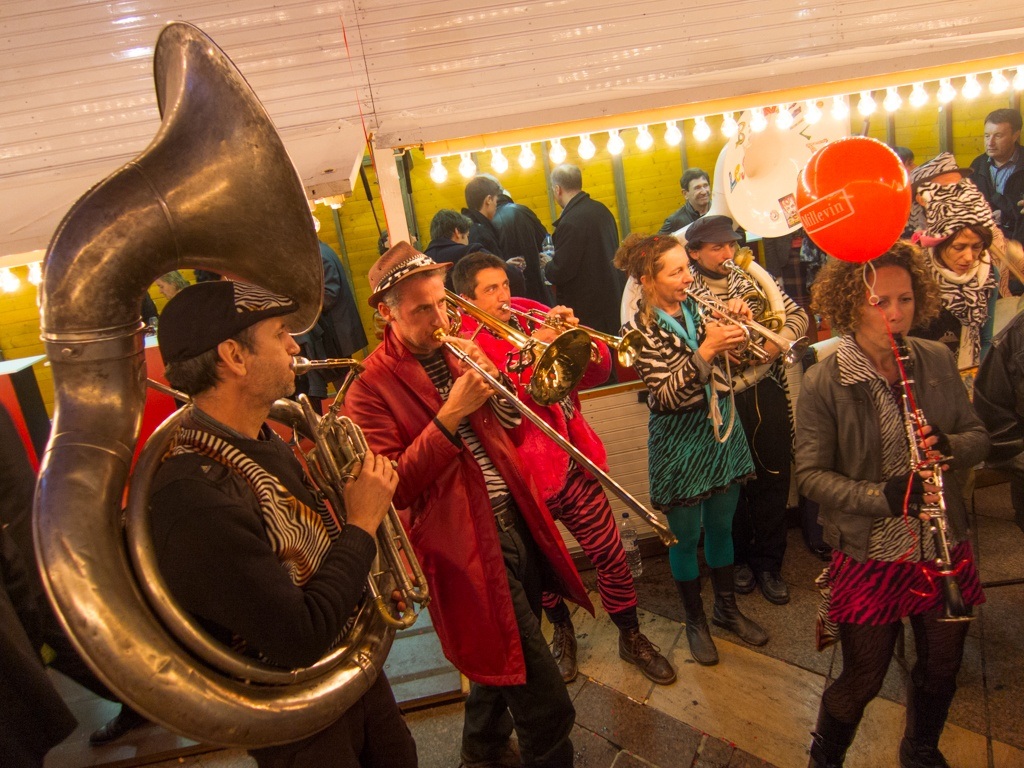
My new friend and I began sampling the various wines at the wooden chalets. Christmas lights hung from above, adding to the festive nature of the evening.

The crowds grew thick, making it hard to move around. Thankfully, everyone was in a celebratory mood.

Wine tasting crowd
People move from chalet to chalet, tasting various wines

Along the way, my new friend and I met a group of female French university students.

Avignon has 90,000 residents, only 12,000 of whom live in the historic walled center. By comparison, the University of Avignon has about 7,100 registered students.

We joined forces and continued to taste wines together though I can't say I was paying much attention to flavors.

I'd been swept up in the atmosphere of Millévin and was merely along for the ride.

Live music
Live music

And when the winemakers in the wooden chalets began to run out of wine and close up shop at 9 pm, the students invited us to continue the night with them.

We walked away from the Place de l'Horloge for a few blocks and found a convenience store where we bought a few more bottles of wine.

Taking to a bench, we sat and drank from our official glasses for several more hours.

Disposable breathalyzer given out at Millévin in Avignon.
Disposable breathalyzer

Avignon won me over in those first 24 hours. The history, medieval architecture, friendly students, and ample access to wine all conspire to draw me back in a warmer season.

I still wonder if I would feel the same about the medieval city in the heart of Provence had I not arrived the night before their annual wine festival, Millévin.

___

UNESCO

The Historic Centre of Avignon: Papal Palace, Episcopal Ensemble and Avignon Bridge became a World Heritage Site in 1995.

Click here for the complete list of UNESCO sites Dave has visited during his travels.

Climbing Volcanoes in Nicaragua: Guide to 4 Popular Hikes

Who says adventure can only be found in Costa Rica? Climbing volcanoes in Nicaragua might not be in many Central American itineraries, but they should be.

Not only is CR's neighbor cheaper, but it's also less crowded: two main ingredients for a successful backpacking trip.

Whether new to hiking or a seasoned trekker, there's a Nicaraguan volcano and trail for you.

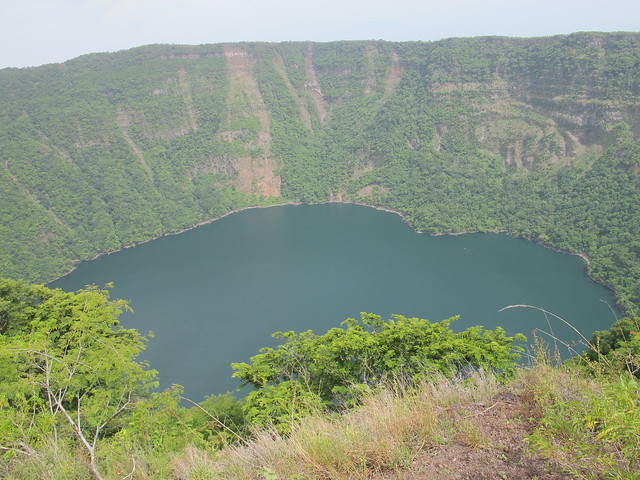
Cosigüina, volcano climbing in Nicaragua
Volcano Cosigüina crater lake: much more impressive in person

Cosigüina: Easy to Advanced Hike

A day trip to Volcano Cosigüina is an off-road and hiking adventure combo.

While you may opt to do the entire eight-hour excursion on foot, most tours cover the first half of the volcano crater trail using 4x4 transportation.

Cosigüina is usually an easy climb, as its slopes are not too steep. However, the terrain can be unpredictable, so that the usual one-and-a-half-hour hike can take longer.

The total time depends on road conditions and how far your vehicle can go.

Once at the top, you'll be graced by the sight of one of the most beautiful crater lakes in the region.

It's best to leave from the sleepy beach town of Jiquilillo, but if you are not staying there, a longer excursion from Leon is possible.

I made this trip from Monty's Beach Lodge, and while that hotel is one of the closest ones to Cosigüina, we still had to leave by 5 a.m.

Alternatively, you may overnight in Potosi, but there's not much to see there, so I chose to stay on the coast.

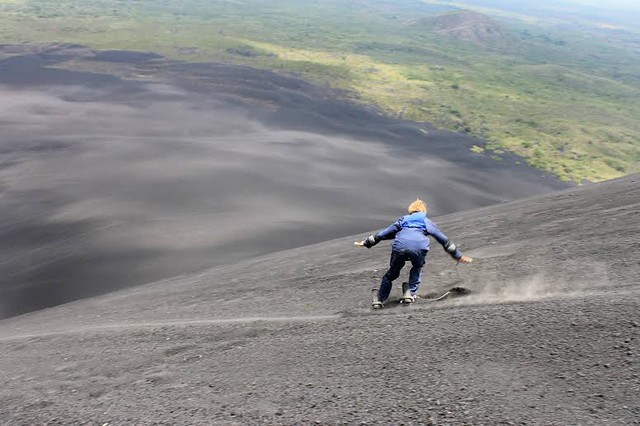
Cerro Negro, volcano climbing in Nicaragua
Cerro Negro volcano boarding (photo: by VaPues.com)

Cerro Negro: Intermediate Hike

An easy day trip from Leon, Cerro Negro is probably one of the shortest volcano climbs in Nicaragua.

Don't let its height fool you, however. It may only be 500 meters high, but the one-hour ascent is steep and hot when the sun is out.

Additionally, you are climbing an active volcano: making the hike more daring.

As Cerro Negro is frequented by thrill junkies, local operators came up with a brilliant idea: "sandboarding" down its slopes.

Known locally as volcanoboarding, you must wear what I call "an astronaut suit" before jumping on your sled.

Why you may ask? Well, in case of an accident, the volcanic terrain would surely leave some scrapes.

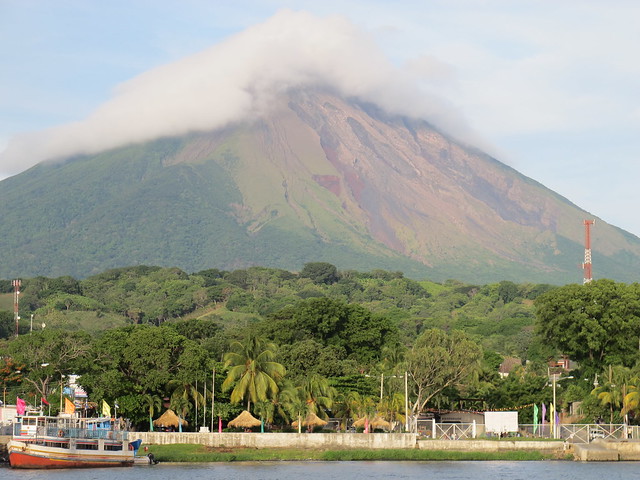
Concepcion, volcano climbing in Nicaragua
Volcano Concepcion from Ometepe's port

Concepcion: Advanced Hike

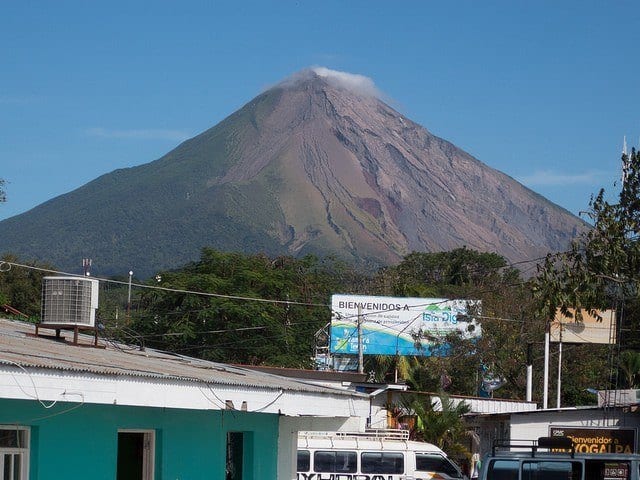
One of the most challenging hikes in Nicaragua is along the slopes of another active volcano: Concepcion.

The beautiful, near-perfect stratovolcano is on the island of Ometepe, a unique ecosystem in itself.

Concepcion's location within Lake Nicaragua, Central America's largest lake, makes the view from the top one of the most spectacular on this list.

Volcano Concepcion
Volcano Concepcion (photo: David Lee)

You will walk past plantain, bean, and coffee plantations along its steep, fertile slopes.

Pick between two major trails: the four-hour hike to the viewpoint or the entire outing to its crater (nine to ten hours).

I did the latter with Ometepe Secret Adventures and was so exhausted I couldn't fathom going to the top.

I had an excellent guide who was patient with my slow, sorry self and taught me a lot about flora and fauna in the process.

Still, I advise you to venture there only if you are very fit. Pickups are available at either Moyogalpa or Santo Domingo.

See also: Hike to Diamond Head Crater in Oahu

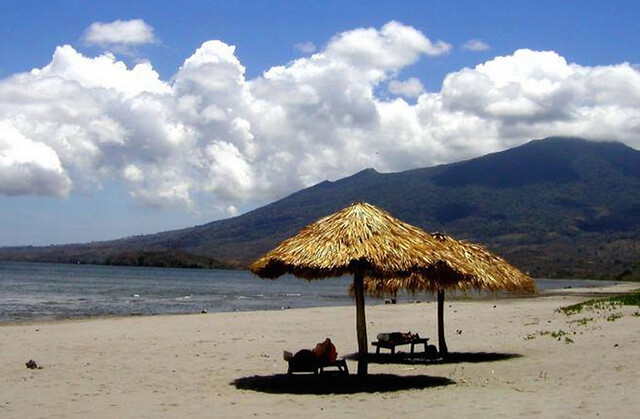
Maderas, volcano climbing in Nicaragua
Volcano Maderas from Playa Santa Domingo (photo: Ometepe Secret Adventures)

Maderas: Advanced Hike

Another top hiking attraction in Ometepe is climbing Volcano Maderas. It might be the smaller of the two volcanos on the island, but it's still a high 4,593 feet (1,400 meters).

What's most interesting about it is that its climate is different from Concepcion's; it possesses a cloud forest, which restricts the views and makes the hike quite humid.

You can choose from several trails, depending on which side of the volcano you wish to climb.

They start at Balgüe (north) and Merida (south), with operators offering Moyogalpa pickups. The side you climb will depend on your fitness level.

A shorter trail directs you to the viewpoint, which, weather permitting, affords spectacular views over Lake Nicaragua and Volcano Concepcion (four hours minimum).

Alternatively, if you decide to go for the top to see the mysterious, misty crater lagoon, expect the arduous hike to take a minimum of seven to eight hours-more if walking at a slower pace.

________

The author received a complimentary climb of the Concepción volcano by Ometepe Secret Adventures and a free tour around Granada by Va Pues. However, all tips and recommendations are her honest opinion and are based on her experiences.

Top 5 Public Transportation Systems in South America

This amenity is near the top of my list for ranking a city, an amenity found in the city I live in today, and the two before that.

I'm talking about good public transportation and urban mobility.

I've been surprised to learn how great it is in some South American countries' more modern cities because, well, even many U.S. cities that could use it don't have it.

This article on the Latin American transport sector ranks the 5 urban areas with best mass transit systems.

Along the way, it will give you the best tips about travel time and journey planning to help you prepare if it'll be your first time in the region.

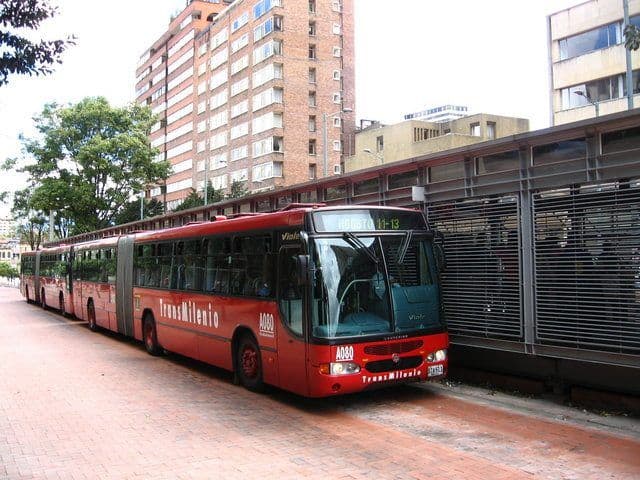
The Transmilenio in Bogotá

That's fine. Right now I'm happy in Bogotá, where I don't need a car.

But is Bogotá one of the top five public transportation systems in South America and Central America?

I have traveled extensively throughout the continent and feel I can make a fair hypothesis on the topic.

Here's what I need:

  • An extensive system: This is the most important factor, more so than anything else, because the point of public transportation is to get to as many places as possible, as quickly as possible, without a car. At least it is for me.
  • A modern system: Rapid transit buses are a minimum requirement. Ideally, there will be a metro/light rail/subway system, which helps to avoid traffic on the road network.

That's it. I don't care about cleanliness or crowding because I've dealt with crowding so often in New York and Washington, D.C., including a dirty Subway in the Big Apple.

I care about safety, but I've seen police so often at the public transportation systems on this list.

I don't think much about it, except protecting myself against pickpockets, something I do everywhere.

And the cost isn't a factor either, because it's almost the same at all of them, with cash payments usually somewhere around $1.25, give or take 50 to 75 cents. These similar systems and similar business models mean that prices are cheaper than the D.C. Metro or New York Subway and cheaper than a taxi in any of the cities these systems serve.

In the words of four-time Super Bowl-winning coach Bill Belichick, we're on to the list!

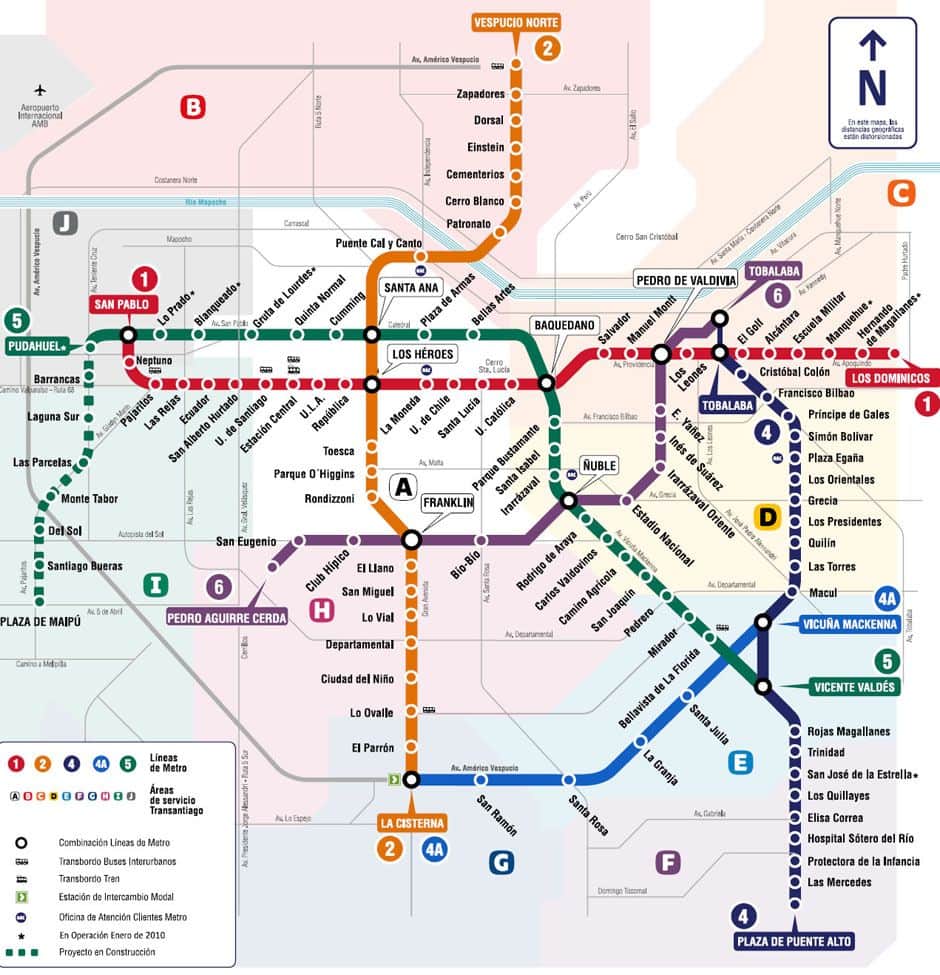
Santiago Subterraneo map

The Best Transportation Systems in South America

1. Santiago Subterraneo

Santiago, Chile

Santiago might be one of the dullest big cities I've ever visited, but it has no equals when it comes to public transportation.

The first Subterraneo line opened in 1975, and today the system is extensive and modern, a primarily underground maze of trains that serves more than 6 million people, and it works great.

I used it often when I was there.

As I said earlier, I don't care about cleanliness as a factor for these rankings, but I am impressed when I see it, and the Subterraneo in Santiago has it.

It's quite the contrast from what you see above ground, where a layer of smog gives the city a hazy carapace of pollution.

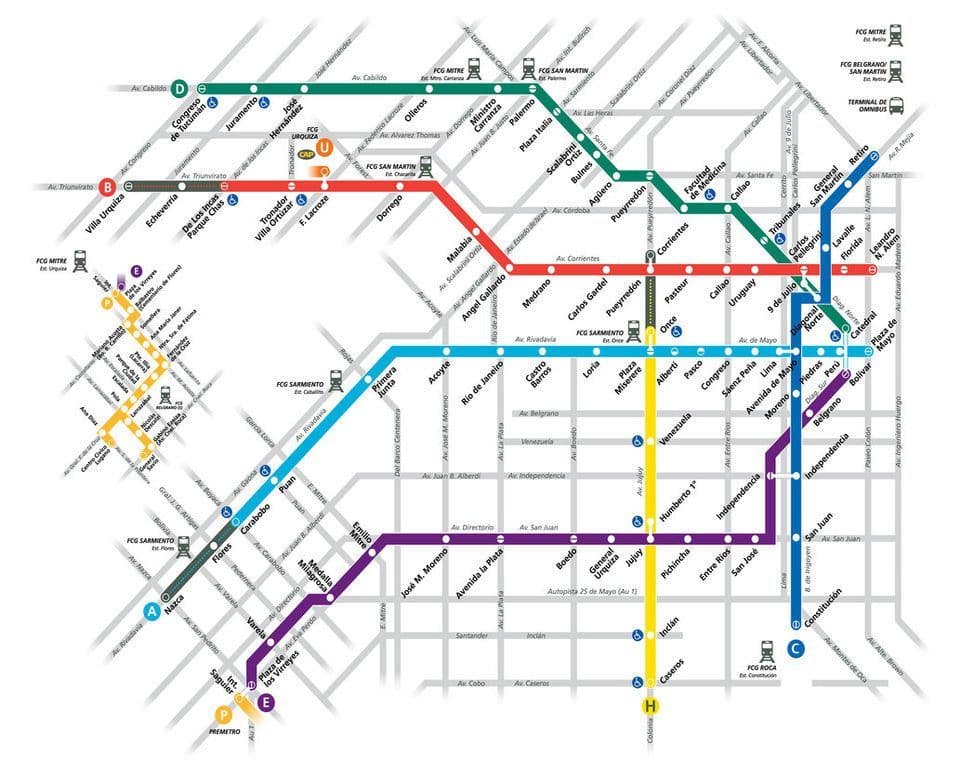
Buenos Aires Subterraneo map

2. Buenos Aires Subterraneo

Buenos Aires, Argentina

This is a close second.

The Subterraneo in Buenos Aires has everything Santiago does except modern train cars. But I still enjoyed using the system.

Its first section opened just over a hundred years ago, in 1913, and today it covers quite a bit of the Buenos Aires metropolitan areas, which is home to almost 13 million people.

Riding the Subte, as it is often called, felt like using the New York Subway: it's old, dirty and sometimes in poor condition, but it's a good option to get you where you need to go.

You need to learn the map. Using the Buenos Aires Subte was more manageable than crossing Avenida 9 de Julio, the 14-lane thoroughfare - 18, if you count the two-lane access roads flanking each side of the avenue - that is the widest in the world.

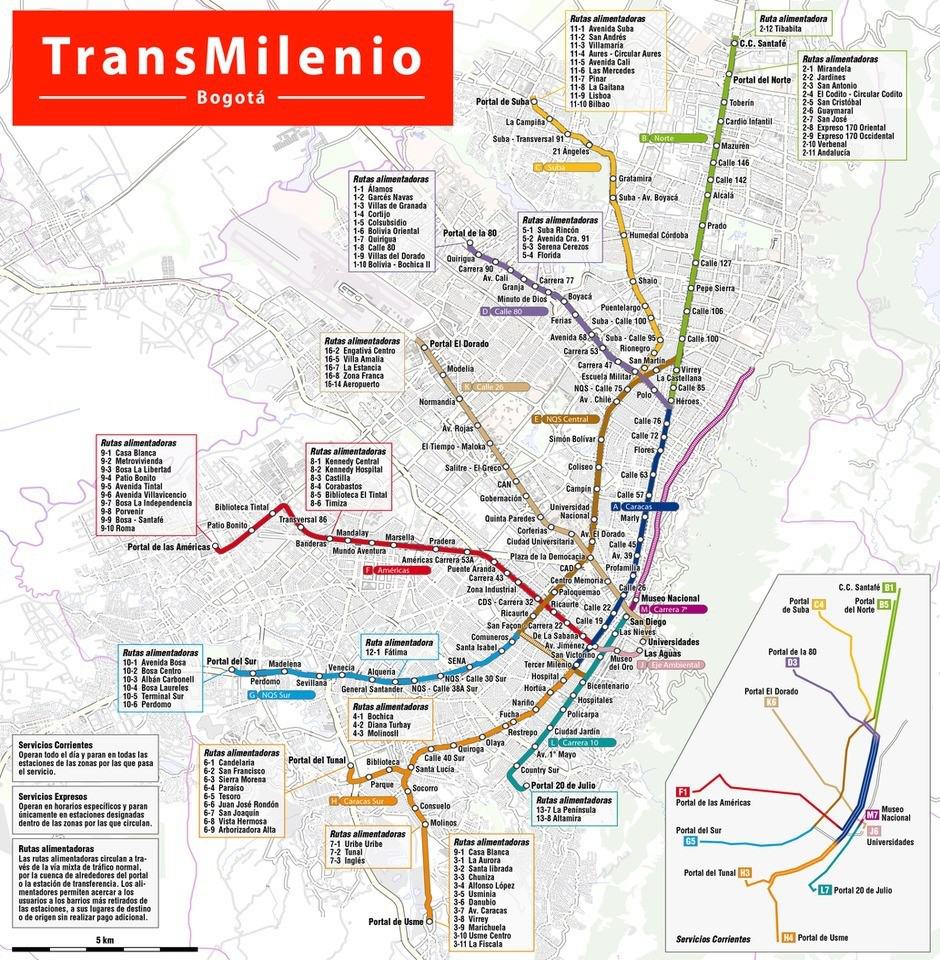
Bogotá Transmilenio map

3. Bogotá Transmilenio

Bogotá, Colombia

I'm going to catch hell for this from some readers when they get to No. 4. But I'll worry about defending it in the next section.

Here I'll tell you why I like the Transmilenio.

First of all, it's extensive. It covers a broad area of Bogotá, where a cacophony of car horns blare in the streets because this metro area of more than 10 million people tests everyone's patience.

Second, it's relatively modern.

The Transmilenio is a series of rapid transit buses, most of which have lanes, so they don't have to fight through the same traffic that provokes so many drivers to hit their steering wheels.

Only the Septima line runs with the other vehicles on the road, but that's fine. It's worth the sacrifice to ride to the Usaquen, Bogotá's prettiest neighborhood.

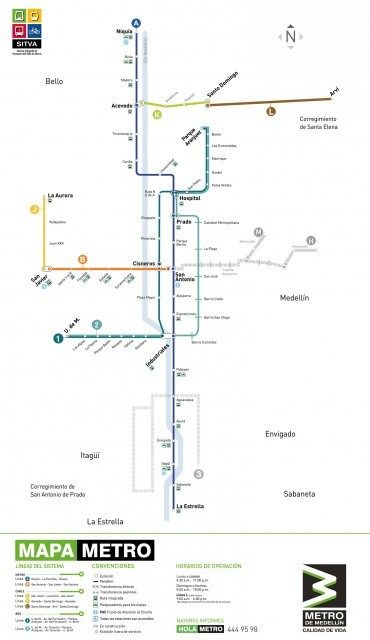
Medellín Metro map
Medellín Metro map

4. Medellin Metro

Medellín, Colombia

For the pro-Metro readers who are aghast now over its ranking below the Transmilenio, let me explain.

I'll start with the good stuff. I love how modern the system is, with its above-ground trains, rapid transit buses, cable cars, and soon, a tram east of downtown. All of that is great.

It's a lot cleaner than the Transmilenio as well. But remember, I don't care about cleanliness.

I need to get to as many places as possible without a car, and the Transmilenio covers a lot more ground than the Medellín Metro system.

Maybe someday, as Medellín grows and more additions are completed in the system, I can move this up.

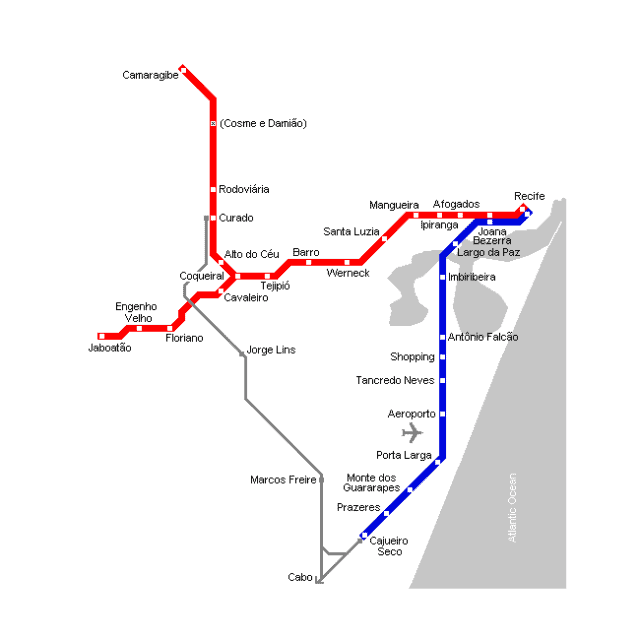
Recife Metro map
Recife Metro map

5. Recife Metro

Recife, Brazil

Yes, I'm taking Recife over Rio de Janeiro for the same reason I picked the Transmilenio over the Medellín Metro: extension.

The Recife system is nothing special, but it seems to serve more people than the system in Rio, where the system is one line - albeit a very long line - but I can't imagine one line is enough for a metropolitan area of more than 12.5 million people.

In Recife, there are three lines: one that runs north-south, two that run east-west, one that veers off to the intercity bus station.

I'll admit, I have yet to go to Rio, but I've talked to friends who are from there or who have been there, and they say that, although it's a great place, the system just doesn't serve as big an area as it should.

At least the folks in Rio can say one thing: they're better off than São Paulo.

Luxembourg City: Is the Little Country's Capital Worth Your Time?

I figured Luxembourg City, the capital of the landlocked country, better known to Americans as a tax haven for some of our country's largest companies, was worth a few nights.

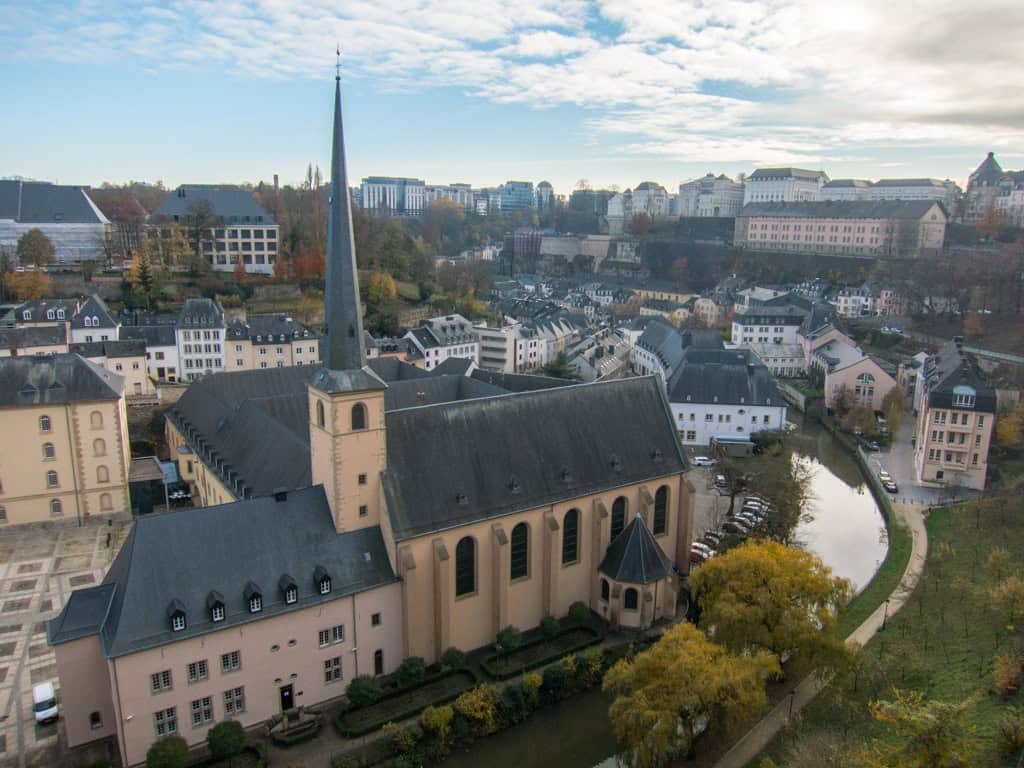
Neumünster Abbey
Neumünster Abbey in the foreground

I'd spent the earlier part of my day traveling through the Chunnel on a Eurostar train from London to Paris. The last time I'd crossed by means other than air was in 1998 when I took a hovercraft from Calais, France, to Dover, England.

The Eurostar was a smoother experience, lacking the sea spray and excitement. I transferred to a TGV in Paris and made it to Luxembourg City within two hours, just in time to enjoy dinner at the city youth hostel (currently $28/night for a dorm).

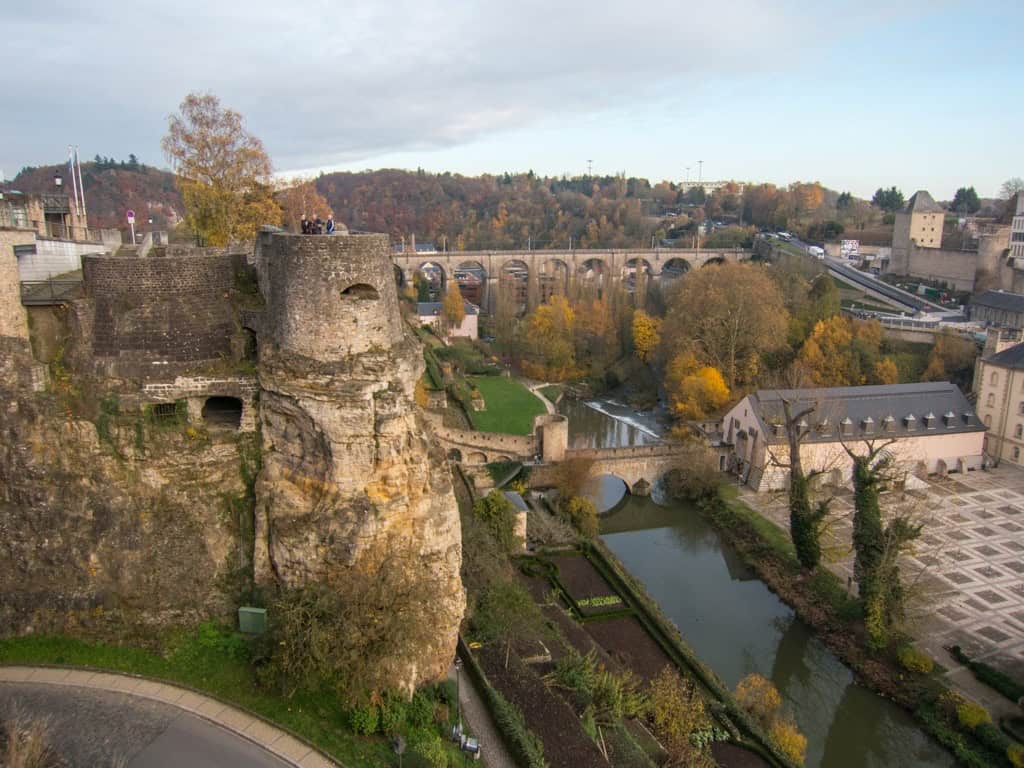
Viaduct
View of the Viaduct built between 1859 and 1861

The following day, I set out on foot to see what the city had to offer. It was late Autumn; the changing leaves were already past their peak. At a minimum, I knew Luxembourg's historic center and fortifications were a designated UNESCO World Heritage Site:

"Due to its exceptional strategic position, the City of Luxembourg was one of the largest fortresses of modern Europe which was constantly strengthened and reinforced as it passed successively into the hands of the great European powers."

I didn't learn until that day that the Casemates Bock, the underground network of fortifications built as early as 1644, had recently closed for the Winter.

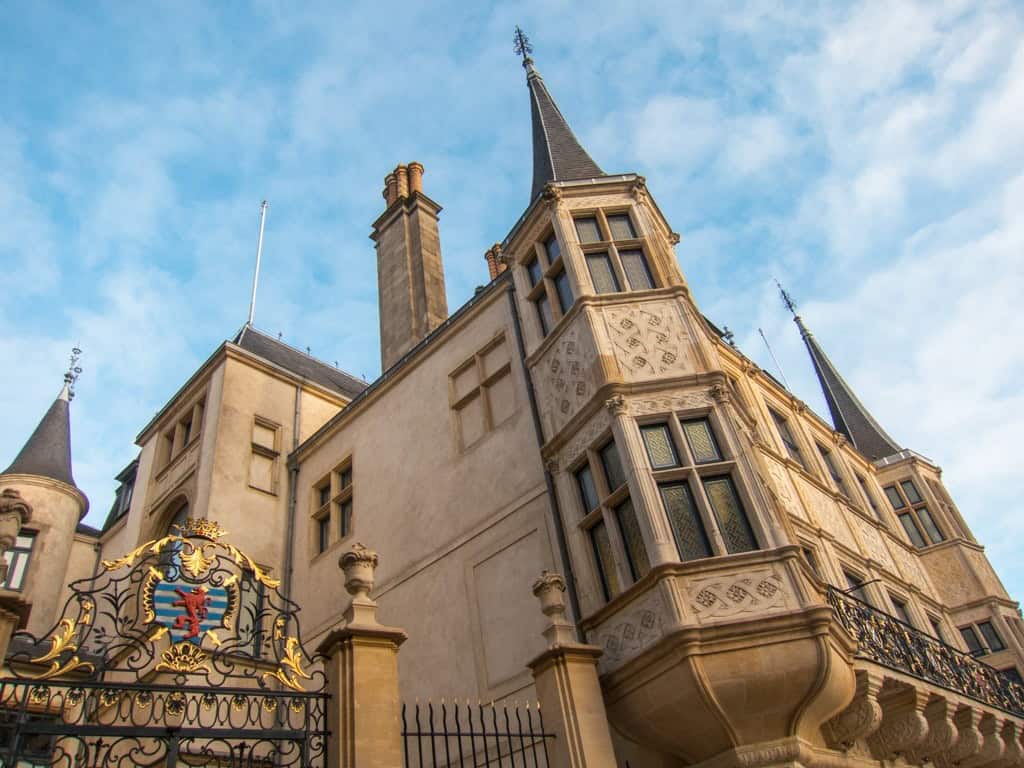
Palace of the Grand Dukes

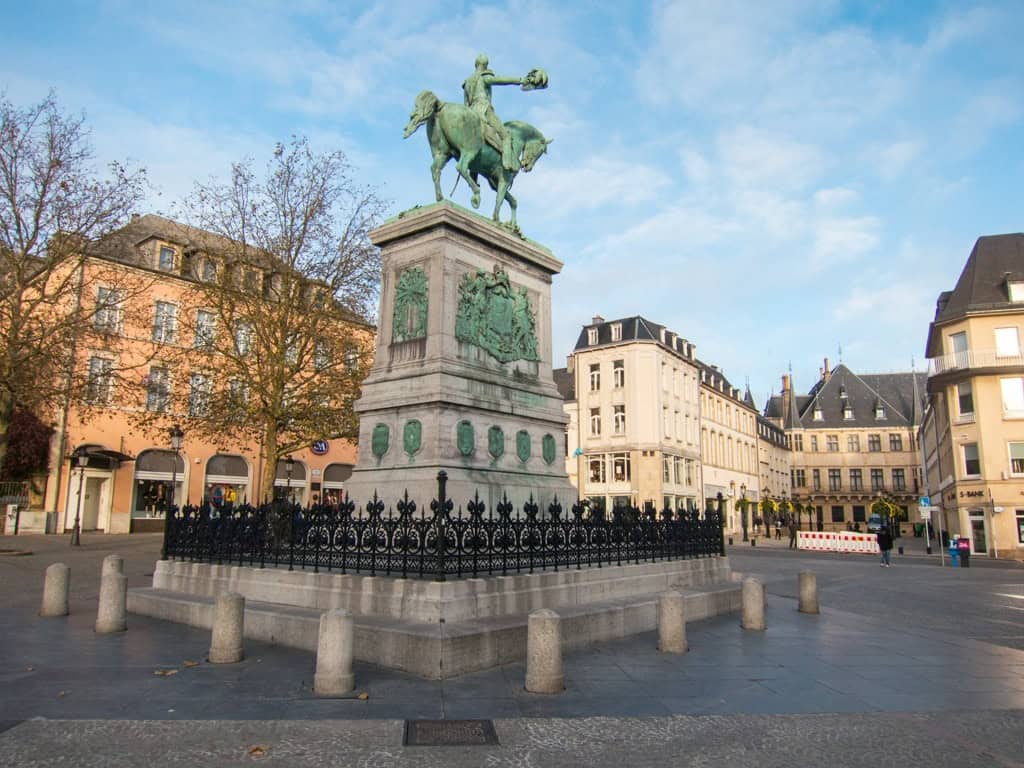
I continued my walk to the historic city center, where I encountered the regal Palace of the Grand Dukes, home to the country's Parliament.

A small group of people was marching and protesting in the street. Though I couldn't discern the reason from their signs, I recall finding it fitting that such a small country has equally tiny protests.

Luxembourg City

I continued wandering the historic center's quiet streets, taking photos of statues and churches until my legs wore out. Luxembourg City didn't instill a sense of excitement in me. If anything, it felt austere and expensive.

I have a hard time recommending it unless you're into European history, ready to indulge in a luxury shopping spree, or want to cross a country off your "to-do" list.

___

UNESCO

The City of Luxembourg's Old Quarter and Fortifications became a World Heritage Site in 1994.

Click here for the complete list of UNESCO sites Dave has visited during his travels.

Iguazú Falls: One of Argentina's Top Natural Attractions

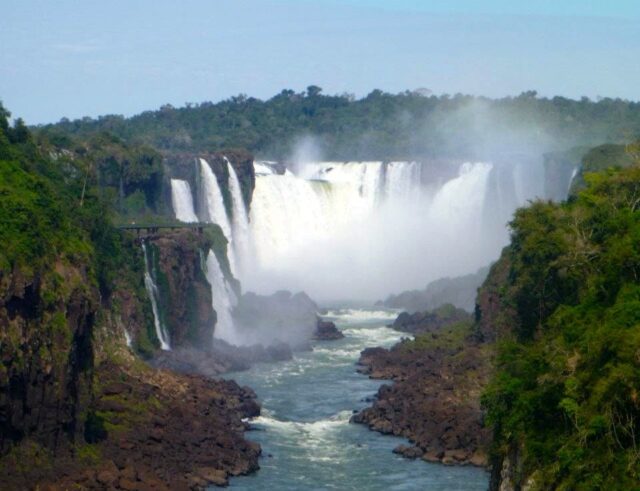
Devil's Throat, from a distance

The problem when you travel to Argentina is time. It is such a big country, with beauty in the north, south and everywhere in between.

A friend went recently and saw the northern half, and that reminded me of the trip I made a couple of years ago.

That meant a trip to Iguazú Falls. You can easily argue that it's the most beautiful natural attraction in the northern half of the country.

There are two sides to it, the other being in Brazil, a side I saw from a distance but never visited in person. I did not have a Visa then, something Americans need to enter Brazil.

A rainbow forms in front of one of the falls.

No matter. Everyone I met on my trip who went to both sides said the Argentine side is much more majestic. There's just more to see, they assured me, and I later read that they were right, that 80 percent of the falls are in Argentina.

I spent an entire day there. They said they needed only a half day to see the falls in Brazil.

I took a quick bus ride to get to the park, maybe 20 minutes. To enter I paid 160 Argentine pesos, which at the time was about $40 but today is only $18.40. I've read it now costs 215 pesos (about $25) for non-Argentines to enter. Americans traveling there this year can thank President Cristina Kirchner for that.

It's a heck of a big park, 212 square miles, or almost three times the area of the city of Buenos Aires.

As I traversed the trails of the park, I got to know a cool traveler from Canada during my day there, a guy named Raymond. You might remember the name. I referred to him when I explained how I decided to go to Salvador, something you might have read about in the second segment of this post.

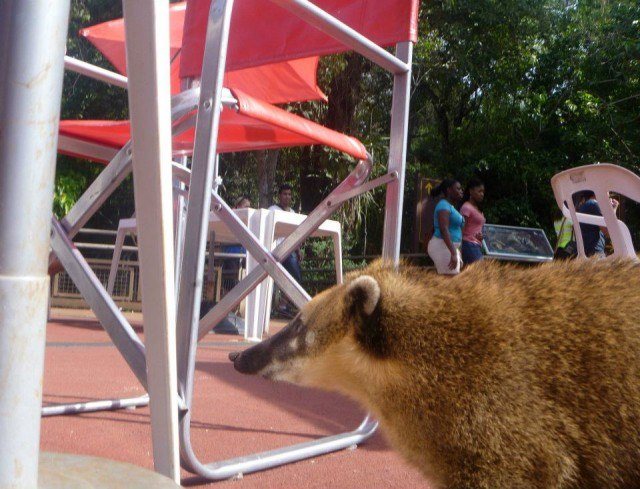
This coati tried to steal my empanada while I was taking its picture.

Before we even got to the falls, we stopped to get some food and noticed all the coatis near the snack bar. They're part of the raccoon family, something easy to surmise just by looking at them, and one of those furry bastards jumped up on the table and tried to steal my empanada.

We quickly scared it away.

A moment later, we looked toward the trail leading to the snack bar and saw a foreigner girl feeding them. Signs throughout the park tell you not to feed them. Or maybe the signs say not to pet them. Either way, we shook our heads and moved on.

We saw some lovely birds along the way, and while we appreciated them, we were getting antsy to see the water gush from the Paraná Plateau.

Eventually, maybe after 45 minutes when you factor the time we took to eat and fight off the coatis, we got there.

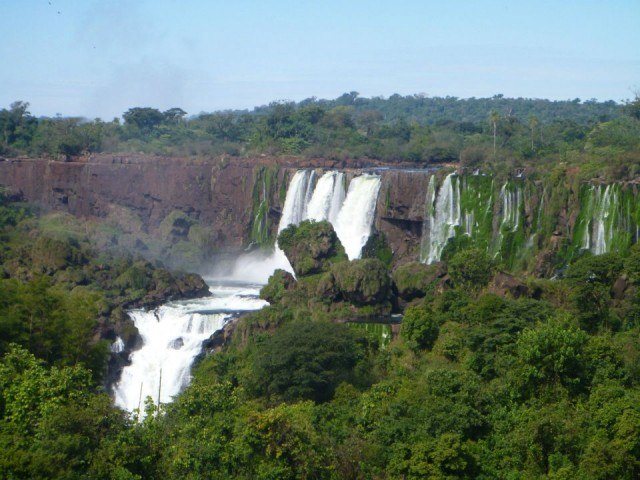
We knew we were getting closer once we saw this from a clearing in the trail.

We were in awe. I don't remember what Raymond told me exactly, but for me it was the biggest collection of falls I had ever seen.

We covered every part of the park and saw places where the water trickled down the green plant life coating the rocks, to places where the water rushed over the edges.

The jewel of it all is Devil's Throat, where the falls form the shape of a U and plummet toward the river below. You can take a train there or walk, and we chose to walk because we were in no hurry.

We took our time at Devil's Throat as well, partly because we had to, with all the tourists there, jockeying for space to take a picture.

Devil's Throat, up close

The rest of the time, we just stood and stared, and stared some more.

I read somewhere that a guide used to take people to the edge of the falls in a little boat, maybe close to a hundred years ago. One day lost his fight with the inertia of the water. The tour was discontinued after their deaths.

There is still a boat, this one with a motor, but it only runs in the water below the falls, and doesn't get too close. Close enough that the falls spray you with mist, but that's it.

Not sure it's worth it either. I've read the boat ride costs 150 Argentine pesos (about $17 today, about $40 in 2012). We skipped it, happy with what we had seen.

We got back to the park entrance around 4 p.m., and you could see the day waning, something I had gotten used to since it was May, almost winter in the southern hemisphere.

As I waited for the bus, I saw a toucan fly overhead. That beautiful bird probably doesn't realize how lucky he is to get an aerial view of the falls whenever he wants.

Volcán Villarrica: Climbing an Active Volcano in Chile

A view of Volcán Villarrica from Pucón

Editor's note: Volcán Villarrica erupted in the early morning of the day this story posted. The volcano's last major eruption was in 1985, according to Chile's Ministry of Mining, with a few smaller ones since then.  

A last-minute detour became the ultimate challenge.

It started almost three years ago in Mendoza, Argentina, when I took the quick bus ride south to the town of Maipú to rent a bicycle and do a wine tasting tour.

I met these American students on the bus, and they invited me to have some drinks that night. While we were out, they convinced me to go to Chile.

They were studying there, in Valparaíso, and they told me how beautiful it is, how I should go to Santiago and then take the one-hour bus ride to their city.

Two days later I took the scenic ride from Mendoza to Santiago.

I went to Valparaíso, including a stop in Viña del Mar as well, but I never saw them. It just didn't work out that way.

I ended up climbing an active volcano instead.

It's daunting, when this is what you see ahead of you.
It's daunting when this is what you see ahead of you.

At my hostel in Santiago, I met Monique, a Brazilian girl who told me about Pucón, a lakeside town about four hours south of the capital. She said she was going there to climb a volcano, Volcán Villarrica (2,860m or 9,380ft).

My eyes lit up. I want to climb an effing volcano!

Off we went to Pucón, our mission ahead of us, a challenge we both underestimated.

We went to the tour agency upon arrival, one of the many in town, although the name escapes me. I just know we paid a lot for the excursion. I don't remember exactly how much but a Google search showed me that today the trip costs 45,000 Chilean pesos (about $72 by today's exchange rates).

We had to wake up early the next morning, around 5 or so, and the van was at the hostel to pick us up at 6 sharp.

We headed to the tour agency office where we all got fitted for our winter wear and gear. It was already early June. There was snow up there, ice even, and there was no guarantee more would not fall from the skies as we made the climb.

We were ready climb, bright and early.
We were ready to climb, bright and early.

I didn't know, until we arrived at the base of the volcano, that it was active.

I was a little nervous as we made the first part of the climb when I saw the remnants of a ski resort, most of it burned by lava. Great, I thought. Villarrica might murder me.

I thought about quitting the climb, but I couldn't do it. I had to continue, had to find out if I could make it, if I still had enough endurance, at almost 33 years old, to make it to the summit. It would be almost like a dream come true to turn back the clock like that because no matter how athletic we are, eventually, time always wins.

There were 25 of us in our group, 27 counting the guides. We trekked uphill for about two hours then took a break, a chance to recharge because the climb was about to get a lot tougher. There would be no more dirt. Under our feet would be only snow from here on out.

The guides said we had about four hours to go.

I was already a little tired, some of the other climbers even more so, and I started to believe that we wouldn't all reach the top of the mountain.

We trudged through the slushy snow another hour, and some people began to give up. I started to think about it, to wonder how much longer I could do this. I felt like I was standing on a giant Slurpee, slipping here and there, like Happy Gilmore on ice skates.

I refused to quit. As my friend Pedro always tells me, "You're living the dream."

Another hour passed; more people left the group, including Monique. We were down to about a dozen, and I was down to the last of my energy.

We took almost a half dozen much-needed breaks during the climb.
We took almost a half-dozen much-needed breaks during the climb.

We must have been at 8,000 feet or so by then. The air was starting to get thinner, and the snow was getting icier.

The conditions got so much worse that by the time another hour passed, the group was down to four...

The guide.

A Swedish couple.

And me.

The incline was so steep by now; we could not climb in a straight line. We had to zig-zag, and even that was hard. By this time, I had forgotten that the volcano was active.
There was so much damn ice, and I began to wonder if I would just give up, like one of the characters in "The Grey," who just falls to the wild wolves below.

There were no rabid animals awaiting my demise, but the thought of tumbling down the mountain and hoping for the best began to cross my mind repeatedly. I even asked the guide if there was any way to turn back, and he got a bit angry.

"It's too late now!" he shouted.

"Screw it!" I thought. "I'm gonna make this mountain my bitch!"

I kept saying one thing in my head, over and over, to keep the dream alive:

Ricky Bobby, Ricky Bobby, Ricky Bobby, Ricky Bobby...

I was thinking about the dinner scene. Amazing how the most trivial things sometimes help us through tough times.

I felt like I was on top of the world.

About 20 minutes later, I was standing on flat land. I reached the summit.

I took a few minutes to catch my breath, and looked down into the crater, and saw the steam rising and knew lava was somewhere not too far away.

Then I looked down at the lake, at the water that looked like glass and the last of the day's sun glinting off the surface, a twinkle much like the one I'm sure I had in my eyes. I felt so much satisfaction and relief, but more relief, that sweet, sweet relief.

"Good job," the guide told me, then he took my picture.

Going downhill was much easier.

We each had a flat board as part of our gear, and we rode the snow like luge runners until we crashed and tumbled, then got on the board again until we made it to the bottom.

I had just enough energy to eat and shower when I got back to the hostel, and barely that.

As soon as my head hit the pillow I melted into a deep sleep. I did not dream about Villarrica that night, but sometimes I do.

Ljubljana: A Day in Slovenia's Capital

The grey skies of Autumn continued to follow me as I rode the rails south from Budapest to Ljubljana. I could only afford two nights in the capital of Slovenia, as the goal on this leg of my Eurail journey was Venice.

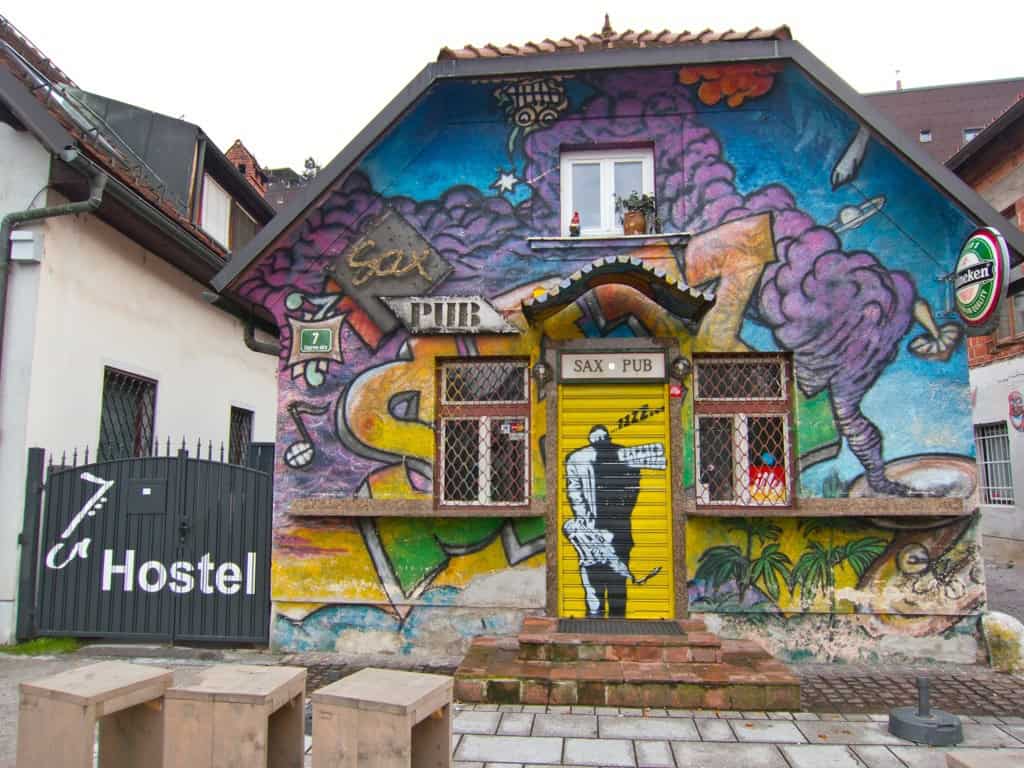
Sax Hostel in Ljubljana
Sax Hostel

It just so happened that my day of sightseeing fell on Halloween, though I saw no outward signs of celebration. The morning after my arrival, I set out on foot from the Sax Hostel to see as much of the historic center as possible.

Ljubljana Attractions

Triple Bridge

Triple Bridge (Tromostovje)
The Triple Bridge (Tromostovje)

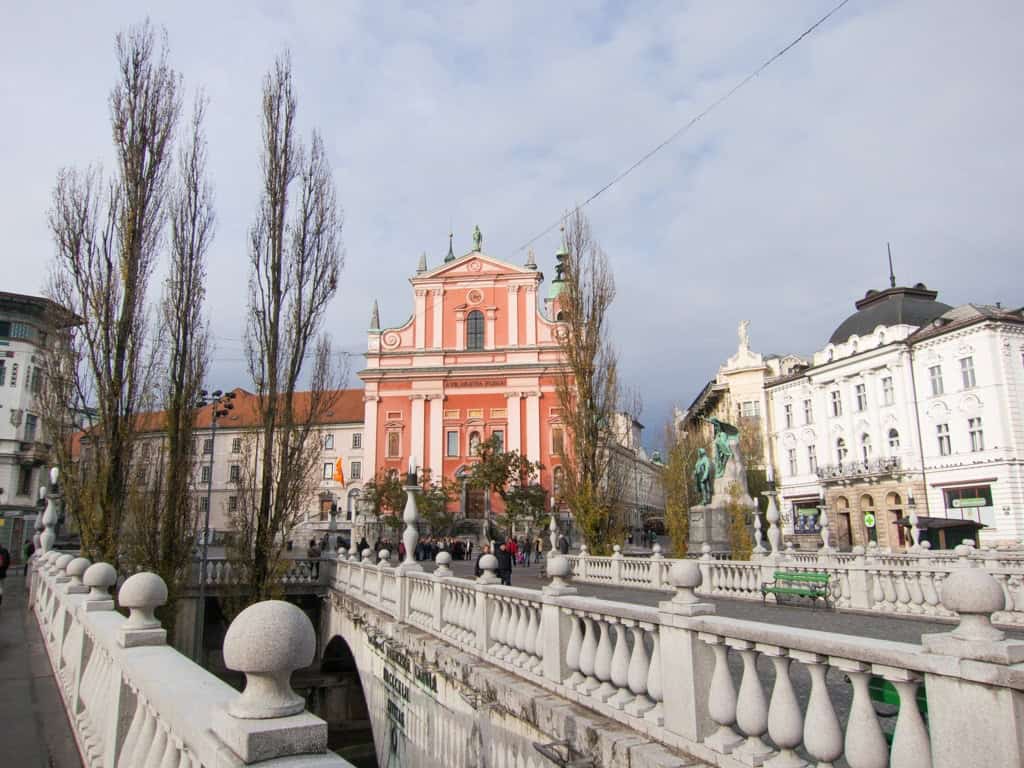
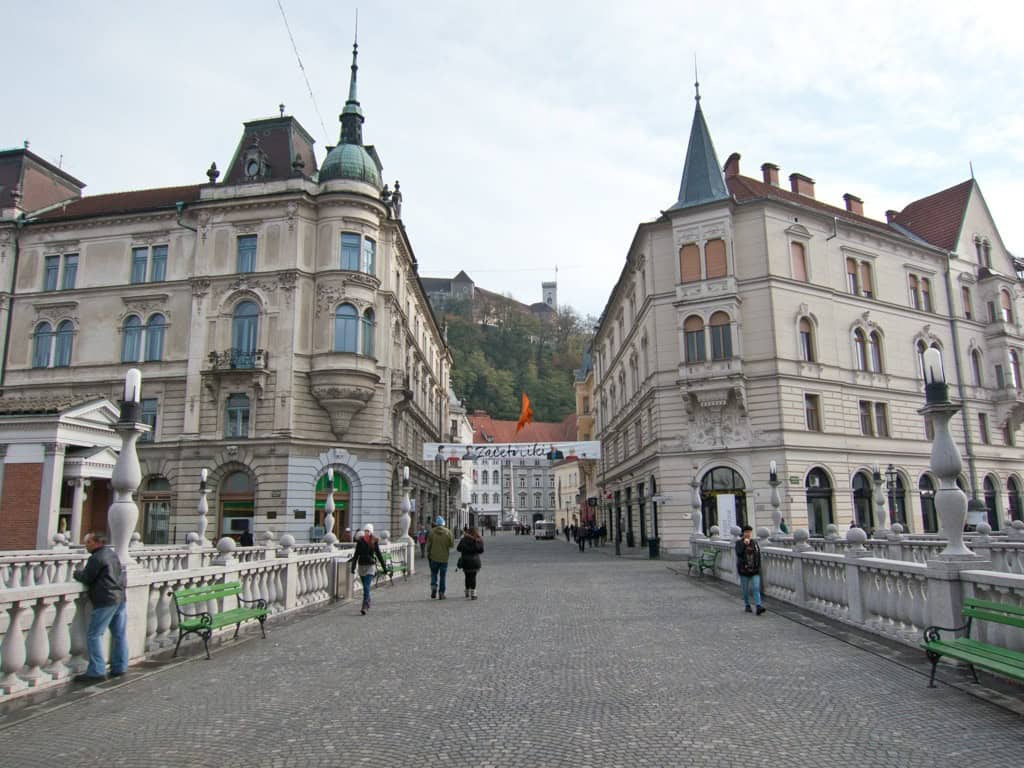
The first point of interest I found was the Triple Bridge. Ljubljana has many bridges, as the Ljubljanica River bisects it. However, the Triple Bridge feels more like an artistic statement than a necessity.

One bridge is expensive enough to build, let alone three immediately adjacent to each other. In the photo above, Prešeren Square, a standard meeting point, can be seen in the background.

The 17th-century Franciscan Church of the Annunciation stands tall, and there's also a statue of the Slovenian poet France Prešeren, after whom the square is named.

Ljubljana Castle

Ljubljana Castle
Ljubljana Castle, as seen from the Triple Bridge

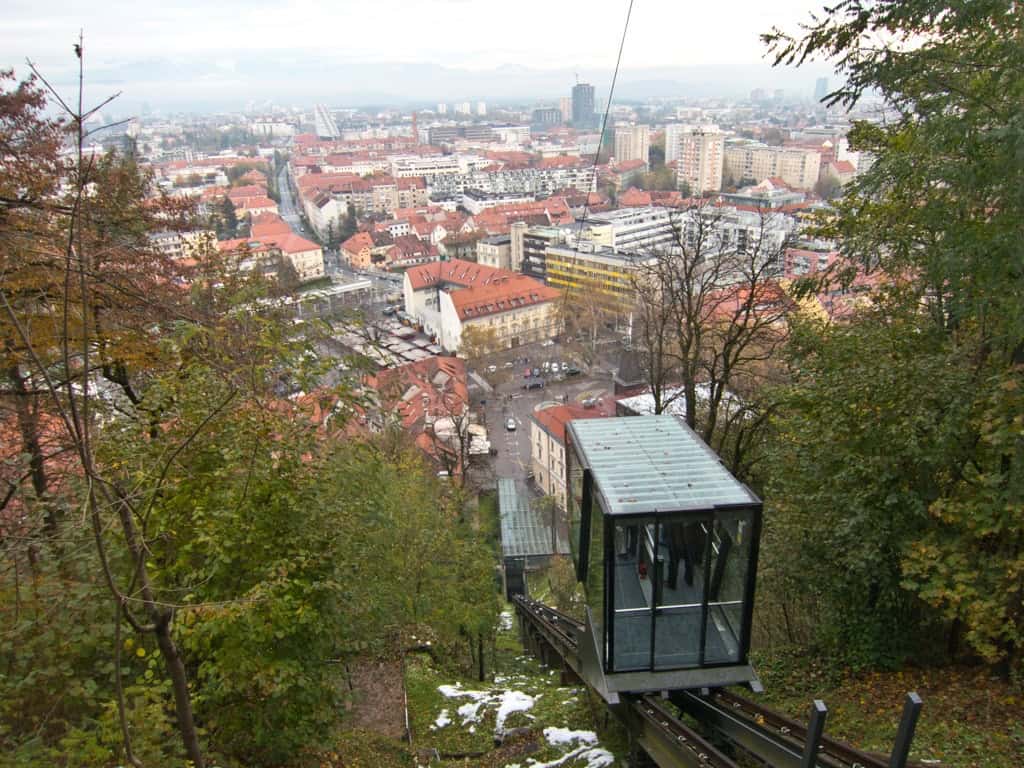
A few blocks south of the Triple Bridge, the 12th-century Ljubljana Castle is perched atop a 60-meter hill, offering commanding views of the city and countryside.

A modern glass funicular on the northeast side of the hill shuttles visitors up and down for a $5 return fare. If you prefer the exercise, it's a ten-minute walk.

Funicular
Funiculars are fun

A ticket for the castle will run you another $7.50. Once inside, you can wander the grounds, enjoy a slice of star anise and orange-flavored dark chocolate cake as I did in the café, and check out the view from the tower (added fee).

Despite the clouds, I saw a faint outline of the Kamnik Alps in the distance.

Dragon Bridge

Dragon Bridge (Zmajski Most)

Following the same street as the funicular north toward the river led me to Dragon Bridge, the highlight of my day in Ljubljana and one of the most remarkable bridges I've ever seen.

Completed in 1901, Dragon Bridge features four sculpted dragons taken from the city's coat of arms. It was the city's first reinforced concrete bridge and one of the largest in Europe at the time.

Ljubljana
The historic streets of Ljubljana

I spent the rest of my afternoon walking around the historic center, daydreaming about a return visit in Spring. Ljubljana, the little Slovenian capital nobody talks about, deserved more time than I had to give it. I made a mental note to find my way back.

Farewell to Brazil

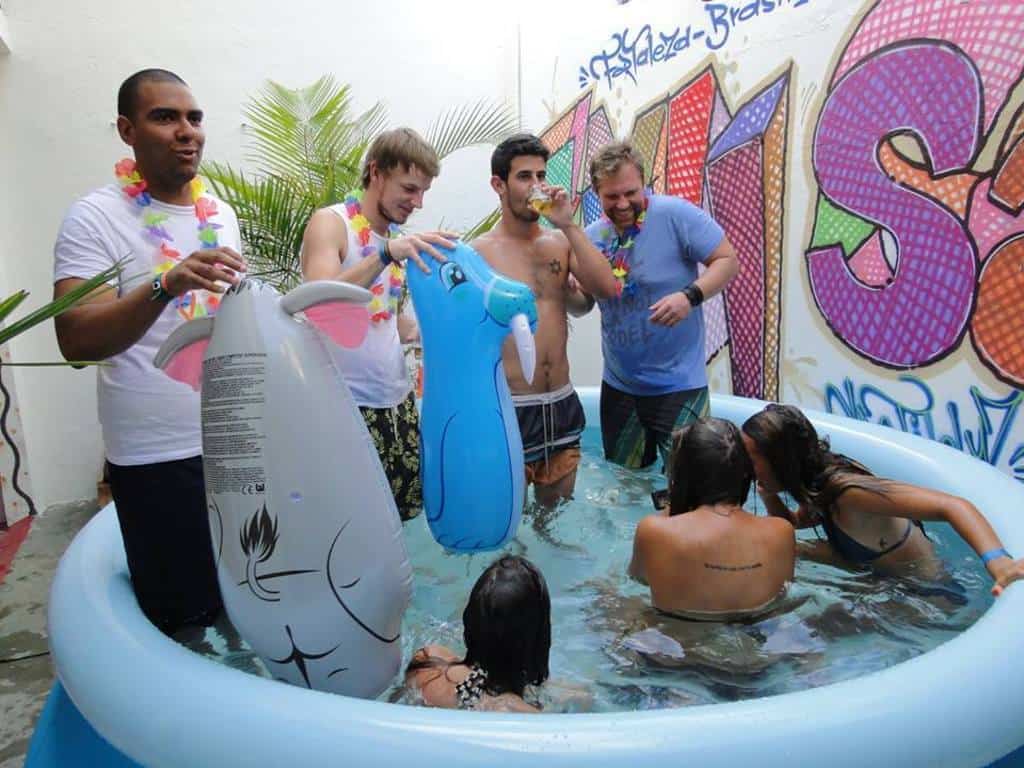
Daniel, one of the hostel guests, gets friendly with Wally the Walrus, while Alex, one of the hostel owners, does his best Ice Cube impression with that serious face.

Sunday, Jan. 18, Fortaleza

The folks at Full Sail Hostel were in full party mode the night before, and they "convinced" me to join them, the reason I was suffering so much on this last morning in northeast Brazil.

Maybe this was fitting, this farewell to Brazil.

I would return to Colombia ready to get back to work with no urge to go out at all, something I do rarely anyway, hence the reason I was hurting so bad.

It was fun getting to know Alex and Jamily, the hostel owners, and I gave them both hugs before I left.

I hope to see them in Bogotá someday.

On the boat ride back to Salvador from Itaparica, we saw the sunset over the island.

Tuesday, Dec. 30, Salvador

As I wondered how quickly my trip ended, I thought back to my first stop and activity.

Itaparica, the island 30 minutes from mainland Salvador, seemed like a good day trip, so Ana, Eva, and I met up with Rob and Franki, and we headed for the boat docks.

We waited in line for half an hour or so, but I didn't mind. I knew it would be something quite popular.

By the time we got to the island, carpooled in a van with another group, and got to the beach, it was about noon, still enough time for lots of fun.

This beach was not anything special, based on pure beauty, compared to the ones I visited later, but it was a fun day, thanks to the company.

I ate Moqueca for the first time, which became my favorite dish of the northeast, talked a lot with everyone about everything and nothing, and soaked up the sun at a real beach for the first time in just over two years.

If every beach day went this way, I knew it would be a good trip.

Friday, Jan. 16, Fortaleza

It seemed like everything was in place to work out the way it usually does in the movies.

I had just had a great day at Beach Park, and now it was time for my new first date.

When I got in the car, there was a warm embrace, the kind you give to someone you've been longing to see again.

There was that smile, the one that could make you melt and smile yourself, and I said, yes, here we are again, picking up where we left off, the sparks rekindled.

We held hands for part of the ride to the restaurant. We talked and laughed and talked some more, and it felt like 2012 all over again.

Marília drove to a touristy part of town, nice restaurants everywhere, bars too, of course, some of them a combination of both and all of them surely somewhat pricey, but none of that mattered.

We picked one with Brazilian food, and I told her to order, that I was in her city, I trust her judgment. We got the beef, and it came with the usual sides.

The night was going well until I tried to kiss her - and found out she had a boyfriend.

I was not hurt. I had prepared myself for the worst.

She asked if I was OK, and I smiled. She smiled too, we split the bill, and then she took me back to the hostel.

There would be no more beaches on this trip, no more Marília. I didn't see her again, didn't get any pictures of us together like I thought I would. She was busy.

All that was left was a couple of nights in a concrete jungle of 20 million people, where I enjoyed seeing my friend Felipe, who I met last year in Peru, and where I took a 45-minute bus ride to the international airport.

I didn't get any new pics of Marília, so all I have is this old one, from when we met 2 ½ years ago in Medellín.
I didn't get any new pics of Marília, so all I have is this old one from when we met 2 ½ years ago in Medellín.

Tuesday, Jan. 20, São Paulo

In about 20 minutes, it's time to take my last flight, the one that takes me home, and these are the times, these waning minutes in the airport, when I become reflective of the trip I just took.

I thought a lot, naturally, about Marília, but there was no longing, no feeling of wanting more.

Not saying it wouldn't be nice, only that I'm OK with whatever happens in the future because I'm not going to try to control something as fleeting and fluid as fate.

I guess that's why I like movies with open endings, movies like 500 Days of Summer, the ones that let you draw your own conclusion.

How ironic that it was on the plane ride home that I first watched 500 Days of Summer.

It is non-linear, like this story, although I decided to write my story this way before ever seeing the film, my inspiration coming from another movie, Memento.

The main characters in 500 Days of Summer, Tom, and Summer, played by Joseph Gordon Levitt and Zooey Deschanel, do not end up together, as it once seemed they might, but they still manage to say goodbye amicably.

Maybe it's a good analogy for my situation with Marília. Maybe not. Or maybe there's a better one.

During my trip, I talked via Facebook chat with my good friend Ximena about something that had nothing to do with Marília, at least not directly.

We talked about the small sacrifices we make in life to enjoy beautiful moments, without worrying about what will happen in the future, without wondering whether we wasted our time by just appreciating the moment before us.

Ximena probably summed it up best, using a contemporary method, something short and sweet.

"#worthit," she wrote.

Then we talked about putting it on some T-shirts.

The Beaches of Northeast Brazil

My first beach day, at Praixa Paripueira, was spent with new friends and perfect weather.
My first beach day in Maceió, at Praixa Paripueira, was spent with new friends and perfect weather.

Saturday, Jan. 3, Maceió, Alagoas

The beaches of northeast Brazil stretch for miles and miles, and I wondered if anyone had ever made it to all of them.

I doubt it. I bet most Brazilians haven't even done it.

My cousin's husband Gustavo, a Sao Paulo native, told me during my trip that he had yet to visit northeast Brazil and I'm not surprised because his country, in square miles, is bigger than the adjoined, continental 48 in the United States.

With limited time, I went to those that I was told I should not miss or others that just randomly became part of the journey.

That's how Praixa Paripueira ended up on my agenda.

I got to my Maceió hostel early, right around 7 a.m., the start of breakfast, and the Brazilian guests started to trickle into the kitchen area to begin another vacation day.

Two girls invited me to sit with them. Neither spoke English or Spanish, and I spoke very little Portuguese, but I could understand them, and the same for them with me when I used my Spanish.

After chatting over breakfast, one of them said, "We're going to a beach about a half-hour from here and I have a car. You want to come with us?"

How nice, I thought, and I nodded that, yes, I would love to go, that would be fun.

We picked up another girl they knew along the way, and later, the rest of the Brazilians from the hostel joined us, once they woke up.

Gregory, I would learn from sharing a dorm with him, likes to sleep in.

We eventually had a full group: Adriana and Suzy, the girls from Brasília who invited me; their friend Mariana from Salvador, who we picked up along the way to Paripueira; Gregory from Curitiba; Ricardo and Ricardo, both from Sao Paulo; and Lidice, from Cuiabá.

Gregory and one of the Ricardos spoke English and periodically would check in with me to find out if I understood what they were talking about, something I thought was very nice.

When I did listen to the conversation, I understood most of what they were saying, so I assured Gregory and Ricardo that I was fine, I was just taking it all in and thought about responding but I felt it was better to listen, to get to know everyone first and speak when spoken to instead of trying to interject, especially when I couldn't speak their language.

Gregory asked what I thought about the girls with us, and I told him they were very pretty and all seemed really smart too, both great qualities, but my mind was on an attractive attorney in Fortaleza, someone I would be seeing soon enough.

He smiled and said he was happy for me, and his smile was even bigger when I showed him her picture later that day at the hostel.

We spent the day at Paripueira, not returning to the hostel until well after dark, and then we all got ready and went out to eat.

Lidice somehow still had the energy to go out and she asked if I wanted to go to a party with her and Mariana. I went to get ice cream with Suzy and Ricardo instead, then went to bed.

I loved how part of Pipa included dusty cliffs overlooking aqua-blue water.

Tuesday, Jan. 13, Pipa, Rio Grande do Norte

While we were eating ice cream, Ricardo told me about Natal and Pipa, to recommend them. I remembered my Swedish friend Anders was there recently so I decided to talk to him as well.

"Natal is just a sleepy place, a lot of old people," Anders said. "Like Miami in the early '80s."

He told me I should stay in Pipa. I thought about it, but I knew the goal was to get to Fortaleza, to get to Marília, because we had beach plans too, and I didn't want to risk missing the bus in Natal if I had to take another one first.

That's the only reason I stayed in Natal.

I suppose you could make that comparison, Miami of the early '80s, but I think Sarasota of the early 2000s is more appropriate.

Lots of new high rises, many overlooking the coast and a pretty beach, and enough ethnic and fancy restaurants to please locals and visitors alike.

My one free day in Sarasota south, I went to Pipa. I like the backdrop of cliffs at the north end of the beach, and the random rocks that jutted from the shallow waters near the shore, the slightly bigger surf that drew a lot board-carrying natives and tourists.

I ate too much for lunch at a churrasco restaurant near the beach and spent too much as well, 44 reals (about $17), and then I relaxed on the beach and in the beautiful blue sea where the water was no deeper than a bathtub, and just sat and daydreamed and improved my tan.

My favorite beach in northeast Brazil was Porto de Galinhas.

Friday, Jan. 9, Porto de Galinhas, Pernambuco

I got a lot of rave reviews about this place while I was in Maceió, including from Meiri y Mércia, two sisters from Sao Paulo who later joined our happy group, and it turned out to be the best beach I would see on my trip.

Porto de Galinhas is where you can snorkel by the big coral reef, or walk on it if you so choose, and on days when the surf picks up, you can grab a board and ride the waves.

I opted for the latter.

It was my first time surfing since I was 16 when I lived in Hawaii, and I thought, "No problem, I've done this so many times before."

I rode maybe four waves, missed countless others, fell off the board enough times to make it more of a workout than recreation. But I loved it.

The waves were no bigger than a couple of feet but considering my performance, that was probably a blessing.

As my brother said, "It's not like riding a bike again."

I had that great meal at Peixe na Telha as well, the one I told you about in my favorite foods post.

It would have been nice to spend the day with my new friends I made in Maceió, I thought, but going it alone was still fine when I thought about everything I experienced.

I also knew that I already had plans for my last beach day, that I would probably have company, but first we had to finish that new first date.

4 Things You Need, From Salvador to Fortaleza

With Chikungunya becoming a big problem, it's wise to carry mosquito repellent in Brazil.

Every trip brings something unique. Sure, some will remind you of others, either through common needs, a second encounter with familiar people or a specific feature shared among different landscapes, something.

But as I thought about the four things you need, from Salvador to Fortaleza, the journey I just made, I kept coming back to what you will read about below.

1. Patience

Patience easily is No. 1.

This region of Brazil moves at a slower pace, and trying to hasten the lifestyle to move like New York is a Sisyphean task.

When you find yourself waiting longer than necessary, take a deep breath. You're on vacation after all.

If you miss your bus, as I did one day in Recife, just politely explain why to the friendly person at the ticket window of your bus company. They'll understand more than anyone. They live here.

They put me on the next bus to Natal, no extra charge necessary, and the bus was full so that probably meant someone in line with me was not allowed to buy a ticket.

As my friend David Binns said, "It's what makes the culture so beautiful and frustrating at the same time. But more beautiful."

2. Mosquito Repellent

What isn't beautiful is the number of mosquitos in some coastal cities, making bug repellent a must.

I brought this stuff I bought in Colombia, a small cream-colored cube that melts away with a bit of water, creating a cream you put on your skin. It's called Nopikex and I think I paid only 5,000 pesos (about $2.50) for it at a Colombian pharmacy. 

It was especially handy in Recife, probably because the city is split in two by a wide river that serves as a great breeding ground for mosquitos.

You'll need an electrical adapter in most parts of Brazil.

3. Electrical Adapter

Recife is also where I bought my electrical adapter.

In Salvador, I didn't need one because there were wall outlets that work for both 160 and 220-volt devices. It's a touristy city and is prepared for visitors.

That was not the case in Maceió, which is popular mainly with Brazilians, and my cell phone and laptop slowly began to lose battery power.

How would I keep in touch with Marília if I suddenly could not get on Facebook, either on my computer or my phone?

I was lucky that one of the Brazilians staying at the hostel had an extra adapter and let me borrow it, and that kept me digitally connected until Recife when I needed to make a trip to the mall.

I paid 5 reals ($2) for my adapter.

4. Sunscreen

That's cheaper than what I would have paid for sunblock. It's expensive in Latin America, about $9 for a small tube in Colombia, where I live, and about the same in Brazil, but you need it here if you're going to the beaches on the northeast coast.

The sun bears down on you, hard. I recommend, if your skin is of the fairer shade like me (thanks to my light-skinned mother), at least SPF 45. I brought SPF 30, put it on several times one day, and still got a little burnt.

On the bright side, all I needed was some skin moisturizer and rejuvenator and it turned that red to brown, the benefit of having a dark-skinned father.

Maybe I'll just stick with the SPF 30.

Starting the New Year in Historic Salvador

Front row seats to some good live music turned out to be the highlight of New Year's Eve in Salvador.

Wednesday, Dec. 31, Salvador

They wear white on New Year's Eve in Salvador. They believe it brings good fortune in the New Year and who the hell am I to argue, so I put on the whitest outfit I could find without looking like I was selling ice cream.

I wore a white tank top and my black and white surf shorts, and for some silly reason, my shoes as well.

The night took us to the beach, where the tide came in when I was not paying attention, drenching my shoes. Good job moron, I said to myself. Maybe next time you can bring sand to the beach as well.

I laughed it off and got back to having a great time but oh what a clusterf*#k it was earlier in the night.

Our group got bigger, and at the last-minute a couple - a guy from France and a girl from the south of Brazil - joined us. The girl got sick, held up the group, and when she finally felt better we later rushed to the beach, to see the fireworks.

The disorganization of it all led to the group splitting up. I was with Ana (Spain), Takashi (Japan), Veronica (Chile), Sebastian (Chile), their friend from home whose name I cannot remember, and that couple, who apparently used us to get a cheaper taxi fare because they left us shortly after we arrived at the beach.

We had lost Eva, as well as Rob and Franki, the British couple, along with their German friend, whose name escapes me at the moment. Takashi and I looked for them, missing most of the very brief fireworks show in the process, hence no pictures.

Keep that in mind if you're in Salvador for a special occasion: coordinating a handful of taxis for a big group of people is difficult.

Takashi and I didn't find anyone during our search. But we later reconvened with Ana and the Chilenos to go see some live music in the nightlife district of Rio Vermelho.

Veronica had met the drummer from the band a day or so earlier, and we sat right in front of the stage, although I think that coincidence and timing had more to do with it than her new friendship. The table was open when we got there.

There was a special, all-you-can-drink for 75 reals (about $30) per table, so we had some beer, danced, and then when the yawning started we headed back to the Pelourinho, to get a last drink or two there before calling it a night.

That's where we ran into Eva and we traded stories about the night, about how we were sad to lose her, but she was in good spirits after having a fun night with some friends, and we laughed about it in the end.

The only thing missing from my night was a New Years kiss but that wasn't possible, what with Marília in Fortaleza. I mean, it was possible, but I wanted the kiss to be with her.

The opportunity would arise 16 days later, in the big coastal city Marília calls home.

It's easy to understand why this slide at Beach Park was named, "Insano."
It's easy to understand why this slide at Beach Park was named, "Insano." (photo: Vine Communications)

Friday, Jan. 16, Beach Park, Aquiraz, Ceará

Alex, one of the owners at Full Sail Hostel, said this would be the day he finally goes to Beach Park, a place about 45 minutes outside Fortaleza, where you can ride some big slides and scare yourself senseless in the process, at least for a few moments.

The park claims to have the highest slide in the world, the Insano, 145 feet straight down. It was the first thing we rode.

The speakers attached to the stairway warn that pregnant women or people with heart conditions or high blood pressure should not ride this slide. I don't have the latter two, and last I checked I wasn't pregnant, so I was ready to go.

I started getting nervous as I waited for Alex to go first, as I watched him disappear over the edge, as I sat down to get ready to push off. Too late now, I thought. No turning back.

I crossed my legs at the ankles, as the park attendant told me, and my arms across my chest and before I knew it…

WOOOOOSSSSSHHHHH!!!!

Gravity separated me from the slide for what must have been at least 40 percent of the fall and I could feel my stomach climbing inside me, but it was over before I knew it, and we rode again immediately.

We hit several other slides too, all of them fun, although none as thrilling as Insano, so I ended my day at the park there, to scare myself one last time.

I was exhausted after that day but was happy I did that, happy I spent the 180 reals (about $80) to get in. When we got back, we went to the hostel bar for caipirinhas and I waited for Marília to come pick me up so we could go to dinner.

Brazilian Food: Traditional Dishes from the Northeast

One of the best parts of traveling is eating, trying the cuisine in a new place you're exploring. Thanks to a good stint living in South Florida, I had already tried some traditional Brazilian food.

I love churrasco, and enjoyed it several times on my trip, but because I had eaten it so many times in the United States, it just missed my Top 5.
I love churrasco, and enjoyed it several times on my trip.

That's why I won't include churrasco in this post (pictured above), even though I love it. I already had my fair share.

Here, I'm going to tell you about the dishes I tried for the first time. (Spoiler alert: the following list of my favorite foods from northeast Brazil will be heavy on seafood.)

I hear that's one of the significant differences in North and South Brazil's cuisines. The North leans more toward seafood, the South more toward meat. I plan to find out for myself someday, but I'll focus on what I know for now.

As I tried to decide which ones were best, I considered several factors. The first was taste-that should always be No. 1.

The second was the cost/taste ratio. I don't mind paying a lot for food I love, but I am annoyed when I eat something average for an exorbitant price.

The final factor was, if I were on a date with Marília, what kind of dish do I think she would like? I believed that we'd be eating together at some point, so I said to myself, "I gotta think about this, too." That led to this list.

Northeast Brazilian Food

1. Moqueca

Moqueca, a traditional Brazilian food (Photo: Peixe na Telho).
I love moqueca. (Photo: Peixe na Telha)

Moqueca, a coconut milk soup with lots of seafood, was my favorite traditional Brazilian food. Unfortunately, I had it only once, at Itaparica, an island in the bay by Salvador.

I thought about ordering it in Porto de Galinhas, but I chose another option, something you'll read about soon. 

Prices vary for moqueca. In Olinda, a two-person meal can cost as much as 75 reals ($30), while we paid only 45 reals (about $22) for the same meal in Itaparica.

I thought about eating it more often, but I held out because I still wanted to crave it when I returned to Colombia, so much so that I would learn to make it myself.

2. Peixe

The tilapia at Peixe na Telha in Porto de Galinhas was one of the best meals on my trip.

That's the Portuguese word for fish. This choice ties into what I said during my budget story about treating yourself. Find a place that makes this dish specially, and then devour it.

I did this in Porto de Galinhas, at a place called Peixe na Telha, where I ordered the tilapia topped with capers, mushrooms, and garlic cream sauce. On the side were four small pieces of potatoes and two small pieces of sweet banana, along with rice mixed with broccoli.

I paid 40 reals ($16) and sat at a table overlooking one of the most beautiful beaches I have ever seen.

The restaurant also offered lockers to store your stuff, and the staff was friendly enough to let me go to the special event room upstairs, so I could take a few photos of the aqua-blue water that looked smooth as glass from a distance.

Even without those courtesies and amenities, the dish was enough to make that a memorable dining experience.

3. Acarajé

If you're buying street food in northeast Brazil, acarajé is your best option.

This is the king of street food in northeast Brazil. The Brasileiros make dough from flour and black-eyed peas and deep-fry it until it's the size of a fist.

They cut it open and fill it with boiled baby prawns, onions, green tomatoes, two types of paste, and some decent hot sauce if you're so inclined. And, yes, ma'am, I am. Please put a lot in there.

The best part is that they sell it everywhere, and you can find it for as cheap as two reals, or around 80 cents. Eat two or three, and you'll be full. Consider it a good meal if you're budget-conscious or in a hurry.

4. Rodizio

I've had this in the United States before, but not with sushi, which is something else I touched on in the budget post.

I was in Recife and kept seeing signs while I was riding the bus: big posters promoting Rodizio Sushi and various restaurants. I settled on a place called Galetus, which seemed to offer a variety of things-nothing really great, but everything decent.

My sushi had too much vinegar in the rice but was otherwise enjoyable. I ate a plate of nigiri and sashimi, two hand rolls (one salmon skin, the other crab), and then two more pieces of nigiri, both with octopus, to finish the meal.

It cost me 40 reals ($16), the same as I would pay for all-you-can-eat sushi in the States on the rare occasion I can find that offer. I had a hard time walking afterward and took a nap when I returned to the hostel.

5. Feijoada

Eating the traditional Brazilian food feijoada is like eating Southern comfort dishes in the United States: good and filling.
Eating feijoada is like eating southern comfort food in the United States: good and filling.

The friendly Brazilians I met in Maceió talked about feijoada a few times, so I figured I had better try it. Luckily, in Recife, the restaurant next door to my hostel boasted that it was the best place in the city for this traditional Brazilian food.

I went by for lunch one day and was surprised by how big the meal was and how fast they prepared it. The cost was 20 reals (about $8). I asked them to deliver it next door, and they were there shortly after I got settled in a seat in the hostel dining area.

The meal consists of two bowls: one with collard greens, rice, and what appeared to be fried and breaded pork skin, and another with black beans mixed with pork, bacon, sausage, and beef.

It shows the African influence and reminds me of something I'd eat in the southern United States, where, as any American knows, African culture came over by way of the slave trade, no different from in South America.

I ate less than half of my feijoada, as I was not hungry, then mixed the leftovers in a pot to heat it up that night for dinner.

Love and Lost in Recife, Brazil

The small colonial town of Olinda and stunning views from its hilly neighborhoods.

Saturday, Jan. 9, Olinda, Pernambuco

You read that right. Love and Lost in Recife, not Love and Loss.

Because of that helpless feeling, I got when I was lost, I almost didn't make it to Olinda, the real jewel of this area.

It's 20 minutes from Recife and full of beautiful colonial architecture and a great view of the Atlantic ocean.

It's a sleepy town, so I was planning to go for only one night. I ended up staying two, to see the pre-Carnaval celebration that started over the weekend.

There are good restaurants here too, to cater to all the tourists. But I didn't try any. I was content to have street food and other cheap eats.

I wanted to save my money for two beach stops I would eventually make, both of which you'll read about later.

The big letters at Marco Zero, where the Portuguese landed, is a popular hang out for locals and tourists.
The big letters at Marco Zero, where the Portuguese landed, is a popular hangout for locals and tourists.

Monday, Jan. 5, Recife

It took me all of 10 minutes in the city to get lost.

I had no idea the last stop would be a bus terminal at a remote location outside the city.

I started to figure it out as the bus continued west, through some of Recife's rougher neighborhoods.

I was supposed to have gotten off the bus at the airport terminal. I later did, after taking another bus there.

Then it got interesting. I asked the information desk about how to arrive at 870 Camboim, the address of the hostel.

Five people proceeded to argue whether there was a hostel there, before even tackling the most important question: How, exactly, do I get to that address, hostel or not?

We settled on a taxi, and the driver wanted to argue whether there is a hostel there or not as well, and I was adamant there is, let's just go and deal with it later if the hostel has somehow vanished like David Blaine.
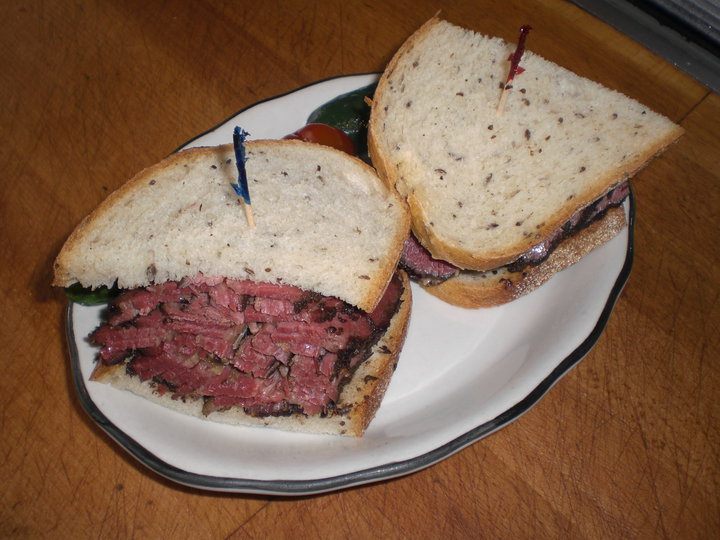
We found it. It took us all of 4 minutes to arrive.

Recife is a big city, easy to get lost in, a place with rows of high rises, new, old and upcoming, an industrial port city that has its rough areas around downtown before getting to the posh coastal areas in the north and south.

It has a Metro that reminds me of the L Train in Chicago, and buses that go everywhere, so public transportation is not lacking.

It's just hard to figure out which bus/Metro combo will get you where you want to go.

I thought hard about leaving, but then I thought, "Nah, that would be too easy. Sack up and see what happens."

As I said, I never would have made it to Olinda if I just packed up and left quickly.

I would not have seen the Marco Zero either, the place the Portuguese landed in 1537 when they got to what is now Recife.

I learned about the culture too, about how the people in the state of Pernambuco have an immense sense of pride, that they are industrious people and they have a clear rivalry with Salvador, another popular destination in the northeast.

I even met someone who works in the tourism industry, a young woman who explained that Recife is an up-and-coming tourist destination, partly because it's a jump-off point to Ilha Fernando de Noronha, one of Brazil's prettiest places, from what I've heard, and I hope to find out myself someday.

Arrecifes Hostel in Recife was one of the most comfortable places on my trip.

Thursday, Jan. 8, Arrecifes Hostel, Recife

The place felt comfortable as soon as I walked in Arrecifes Hostel.

Maybe it was because it was late at night, and I had just made a six-hour bus ride, plus another hour trying to find my way back to Boa Viagem after getting lost, but I came to find out that the first impression was on the money.

On this day, I just worked the whole time, getting caught up with my planning and writing, and I even took a dip in the pool after lunch, for relief.

The staff was helpful the whole time. Anything I needed, they assured me, they would help.

I didn't need much.

The hostel has a big plasma TV, usually with popular music playing, along with a small pool and a pool table.

There's great Wi-Fi and lots of space to relax, a big kitchen and a great breakfast in the morning, a spread with eggs, couscous, ham, cheese, several types of bread, fruits, coffee, chocolate and fresh-squeezed juice.

I especially liked the juice. They didn't load it with sugar so I could enjoy the fruits' natural flavors.

It was great to wake up to that for half a week, each night great sleep in comfortable dorms.

The private rooms looked nice too. Two are air-conditioned, along with two of the dorms, for those who can't stand the heat.

I eventually did need something: directions. I was trying to break this getting lost trend, and they looked up the bus routes I needed to get to the other side of the city, the north end, where friends of mine had gathered for a night of chatting and a few drinks.

This time I didn't get lost.

The Cost of Travel in Northeast Brazil

Expect to spend a fair amount of money in northeast Brazil. It's not cheap.

On occasion, it felt like being in Florida. That's what happens when you're spending so much money, an inevitability for the cost of travel in northeast Brazil.

I knew going on the trip would be a bit expensive. I already paid 416,000 Colombian pesos (about $208) for my Visa, a necessity for Americans.

At least the exchange rate has improved, 2.5 reals for every dollar, although you'll usually pay around 17 reals (about $6.50) every time you use the ATM in Brazil.

That was a surprise. But what surprised me more was part of the context of my expenses.

I'll go through what you should expect to spend when drafting your vacation budget for northeast Brazil, both the costs we all think about and the ones that snuck up on me, so you're better prepared.

Let's get started with the obvious.

Your primary costs are likely to be five things: buses, food, lodging, nightlife, recreation/tours.

The buses I'm talking about are the ones you take to get from one state to another, the longer trips, at least four hours or more.

I can't quite make sense of the interstate buses. Case in point, I paid 96 reals (about $39) for a bus from Natal to Fortaleza that was comfortable but nothing special. I paid 74 reals (about $30) for a bus from Recife to Natal that was much nicer.

Perhaps the difference came from the fact that the Fortaleza trip took one and a half hours longer. But I would think the difference in the quality of the buses would have made it a wash.

Again, it's like being in Florida.

High food costs, at least, typically can be avoided, depending on where and how much you eat.

You'll probably be eating out a lot so let's admit that to get it out-of-the-way. Most hostels don't offer the space or equipment to make a great meal, and you'll want to eat the Brazilian cuisine anyway. It's good.

Just take the time to check different restaurants before making a decision. You can often find a good meal for under 30 reals (less than $12), which is a good price in Brazil.

Remember, I said it's almost like being in Florida. That means you're spending a lot more money here than you would in Ecuador.

It can be exponentially more if you pick the nicest restaurant all the time, and that doesn't always mean the best food.

I'm not saying it won't be good, but a lot of these smaller, independent places make the original recipe for a good price, not some trussed-up version of it that allows them to add another 20 reals ($8) to the bill.

Here's where it gets tricky: eating at those churrasco-style restaurants, where you fill your plate then bring it to a scale.

You're picking among so many good offerings, rice and beans, maybe 10 veggie options, and sometimes up to a dozen different meats that will mean not only filling your plate, but making a mountain.

I avoided the mountain when I was in Pipa, but I still paid 44 reals (about $17). That's expensive.

The "Insano" at Beach Park is quite a rush.
The "Insano" at Beach Park is quite a rush. (Photo: Vine Communications)

To put it in perspective, I found a restaurant in Recife that does rodizio, but with sushi. That means you pay a set price, in this case 40 reals ($16), and you can eat all the sushi you want.

Another example to drive the point home: many of my favorite Latin restaurants in Florida during my seven years living there usually charged no more than $12 for a meal, and that includes Amazon Grill, a Brazilian place where I would weigh my plate before I ate as well.

Like food, lodging costs are necessary unless you have a friend you can stay with or you don't mind sleeping in the street.

I was in northeast Brazil during the high season, right around New Year's Eve, and hostels sometimes cost up to 150 reals ($60) a night. Out of high season, they are much more reasonable, 25 to 30 reals (about $10 to $12).

Nightlife always comes with a significant cost, but it depends how much you go out and how much you consume when you do go out.

I'm at the point where nightlife is not too important to me, where a good night ends at midnight after a few drinks and a nice meal, maybe some dancing afterward too.

That means I'm mainly spending money from my food budget and using this as a night to treat myself, or, "Treat yo self," as Donna and Tom would say.

So what were the costs that I wasn't expecting? There are three.

The first is refreshments. I'm not talking about beer or liquor, just water, juice and soda. If you're from a hot and humid place, this might not affect you much.

I live in Bogotá, the Colombian capital, 9,000 feet elevation and low humidity, and always a little frigid, about 14 degrees (57.2 degrees Fahrenheit) on average.

In Brazil I was fighting temperatures in the high 80s and humidity to match, sometimes both numbers in the low 90s. You could pull a bottled water from the freezer and watch it start to sweat shortly thereafter.

I easily spent around 30 reals (almost $12) a day just on cold drinks, to beat the heat. Over three weeks, that adds up to $264!

Taxis are worse. You really are paying U.S. prices when you take a taxi in Brazil. Maybe it's a little cheaper, and definitely cheaper than New York, but not much cheaper on average.

I would take taxis only when necessary, when I had all my things with me and I hadn't gotten familiar with a new city or it was already dark out and better to not take the risk, but I had to do this enough that I spent a fair amount of money.

A 10-minute taxi ride in northeast Brazil costs about 15 reals, or $6. My guess is, I probably spent more than $200 on taxis during my trip.

I saved about $200 too, by taking public transportation within cities when possible.

All the buses in the cities are less than 4 reals (under $1.75), compared to a taxi ride that can cost up to $20, depending on traffic, how far you're going, if it's a holiday, anything the taxi driver can use as an excuse to up your fare.

In Recife, they have a metro that cost less than 2 reals (80 cents or so). I used it a bit, including my last day there, to get to the bus terminal.

The Recife metro reminded me of the L in Chicago, although cheaper. According to the L website, a pass costs $1.10 on average.

This is a situation that did not feel like Florida, but only because public transportation is awful in the Sunshine State.

The last surprise was in my last major stop: Fortaleza. We went to a place called Beach Park, and the entrance alone was 180 reals (about $69), but you'll find out why I went in a later post.

Other than that, I spent very little on recreation, just basic charges like going to certain beaches, which I will explain later as well.

So, to sum up, I spent about $1,500 on my three-week trip, and I'd break it down this way:

1. Buses/transportation: $250

2. Food/refreshments: $600

3. Lodging: $300

4. Nightlife: $200

5. Recreation/tours: $150

Again, this is just me. You might spend more, maybe less, maybe different amounts for different parts of your trip.

The main thing is, you have fun.

Fortaleza and the Lovely Lawyer

Fun times at Full Sail Hostel

Friday, Jan. 16, Full Sail Hostel, Fortaleza, Ceará

She looked so elegant, in her business attire, a white-collared shirt, and black skirt, it almost seemed like she was walking in slow motion like I was watching a movie, a scene when they introduce the lead actress and they want to capture your attention.

Marília owned mine at this moment.

Here I was in Fortaleza, her hometown and my last stop on my three-week trip to northeast Brazil, a journey in which I will tell you about big cities, beautiful beaches, budget tips, things you need, favorite foods, and almost everything else you should know about this region of South America's biggest country.

Now back to Marília. I was seeing her again for the first time in 2.5 years. She was a student when we met. She's a lawyer now.

But our reunion was nothing like that.

That's just how I pictured it as I sat at Full Sail Hostel, open only four months now, where I made new friends, including the owners, Alex and Jamily, both such nice people and always so helpful.

Most of the time, I was chatting with them. When my mind wandered, I thought of Marília, that I imagined what she would look like when I saw her again.

She looked lovely when I opened the door to her car when she came to pick me up at the hostel, but she wasn't in business attire, just elegantly casual instead.

I know you're probably thinking at this point that this is some romantic journey in which someone tries to track down a lost love in another part of the world, and they live happily ever after. Hold on.

There are two bigger reasons I took this trip:

1. Colombian Visa law requires me to leave the country twice a year, based on my immigration status, which I won't get into here because this is not a story about Visa law either.

2. I have always wanted to visit Brazil.

Now, Marília skewed the geography of my trip, no doubt. It's a big country. I could have gone to Río de Janeiro, as one of my friends reminded me by inquiring several times about why I was not going.

This story should explain everything.

I should warn you that the story is not in chronological order, that there are eight parts, and it hops around more than a field rabbit and might seem like it's moving just as fast if you're not paying attention.

People will come and go, some will appear more often than others, and I'll include far more experiences without Marília than I will those with her.

Maybe there wasn't much to our reunion. You'll have to keep reading to find out.

One Salvador business has a tribute to Michael Jackson, whose music video, They Don't Care About Us, included scenes from the Pelourinho.
One business owner has a tribute to Michael Jackson, whose music video, They Don't Care About Us, included scenes from the Pelourinho neighborhood of Salvador, where the colonial architecture is spectacular.

Monday, Dec. 29, Salvador, Bahía

A Canadian traveler named Raymond raved about Salvador during a day at Iguazú Falls, where waterfalls collide to give visitors the kind of scenery seen on our favorite travel shows.

On that day in mid-2012 in Argentina, I decided that I would someday see Salvador for myself.

Two days before the eve of 2015, I made it happen.

I was lucky enough to meet Eva, a nice girl from São Paulo, at my hostel. She was born in Chile. Then her family moved to Brazil when she was just a baby.

She had lived in London for the past 15 years, spoke English, Spanish and Portuguese perfectly, and we became fast friends.

We walked around the city, ate acarajé, went to the beach, went out for drinks, and made New Year's Eve plans with other friends.

I was lucky not only to meet her but to have already formed a friendship with a British couple, two journalists on a round-the-world trip, people I met in Medellín.

The architecture of Salvador, that old colonial-style so prevalent in Europe, really gave Salvador's Pelourinho neighborhood a special flavor. It reminded me of Cartagena, Colombia, only on a grander scale.

Even Michael Jackson filmed parts of They Don't Care About Us in this neighborhood--something one business owner promotes from his place on the plaza. In one part of the video, the King of Pop stands on his balcony.

Salvador, it turns out, is one of the first places slaves touched ground in South America.

It is a fascinating history, and you see its origins today, in the dark skin of the many Brazilians there and the African flavors in the food they eat and the music they love.

I hear Carnaval in Salvador is the craziest one in Brazil, and that doesn't surprise me.

Locals asked if I planned to come back for it, but I told them, no, I can't, and they told me I would still have fun on New Year's Eve, something I looked forward to as we got ready to go out that night.

How to Travel the World on $50 a Day (Review and Giveaway)

A few weeks ago, the third edition of "Nomadic" Matt Kepnes' How to Travel the World on $50 a Day was released.

This latest edition features a more attractive cover, and more importantly, updated pricing info over the earlier 2013 edition.

Those who've followed Matt or this blog even longer know that he self-published the original version as an eBook in 2011, only to see it later picked up by a publishing house.

How to Travel the World for $50 a Day

It's been interesting to watch the book evolve over the last four years, and now that I've read the review copy he sent me, I can say it's without a doubt a more comprehensive book.

A few things caught my attention in the latest version, not all of which are entirely new.

Matt's gone to great lengths to add more information about the sharing economy, specifically, Couchsurfing and house sitting.

There's also info about WWOOF'ing for those who want to volunteer on an organic farm as they travel.

New sections on the cost of travel in India, China, and Japan are also welcome.

Having traveled to all three countries, I couldn't help but relate to how cheap travel can be in India and surprisingly affordable in Japan.

Given the challenges foreign women face when traveling in India and the recent concerns around personal safety, it was wise of Matt to include advice from a female traveler, Candace Rose Rardon, on how women can stay safe while traveling there.

I'm not a travel hacker; however, Matt's added more info on this topic, and I have to admit he makes a strong case for getting someone like me more involved.

I'm still not ready to leap just yet (I promised myself I'd pay off my credit card debt from my 'round the world trip that ended in 2009 before I sign up for any new cards), but boy, do the promises of tens of thousands of bonus miles sound tempting. And I know he walks the talk when it comes to earning free flights and upgrades.

Everything Matt recommends, from banks and credit cards to travel discount cards and insurance, is accompanied by his recommendations, including company names and website addresses.

A nice thing about the book is that it's an easy read. It has a conversational tone as if he's sharing tips over coffee with you.

I do have one suggestion as a carryover from previous editions.

Matt prefaces Part Three of the book, the detailed cost of travel info for various regions of the world, by saying the places were chosen based on where most travelers go.

I understand the need to draw a line in the sand. However, I would still like to see cost info for North America, east/south Africa, and the Middle East. I bet we'll see more data for those regions in a fourth edition.

Overall, the third edition of How to Travel the World on $50 a Day is a terrific blueprint for first-time backpackers and most travelers, for that matter, whether they're taking a one or two-week trip or a one or two-year journey around the world.

_________

P.S. - Matt's in the middle of a five-month book tour taking him across the United States. Along the way, he's showing us all that it's possible to travel for $50 a day, even in his home country. 

Plotting a Course for Travel in 2015

Visiting Havana
The Revolution Museum

Brazil, check. Peru too. That was 2014 for me, although technically 2015 as well, I suppose because my Brazil trip carried over into the new year.

Nah, Brazil started in 2014. It stays in 2014.

So, looking ahead to travel in 2015. I read a recent New York Times story about 52 places to go this year.

Maybe one for each week of the year? Yeah, that's realistic.

Pardon the sarcasm. Maybe it is for some folks, but those are the people who represent a part of the world above my station.

I have to pick my spots, and I'm happy to say a couple of the places that interest me and have for a long time are on that NYT list.

They are Nos. 1 and 2. The only change I might make - might - is switching their positions.

Cuba has been No. 1 on my list for a long time, a trip that's maybe the closest thing to time travel on the planet.

I suppose you could argue that North Korea has stood still even longer, but I'll leave it off my list for now and enjoy watching The Interview repeatedly.

The history of Cuba fascinates me, everything from Fidel's rise to power, to the Bay of Pigs, to President Obama making travel a little easier there.

I would enjoy seeing not only the colonial architecture, something I have enjoyed in so many places, but those classic cars will be fun to photograph as well.

Outside of Havana, I don't know where I will go. I have some ideas, nothing concrete.

I've thought about the Piñar del Río Province, where those famous cigars are made. A beautiful beach or two come to mind as well because it is the Caribbean, after all.

Maybe I'll go on a hunt to find out which city outside the capital has the best food.

I'll figure it out at some point.

I know it's easy to get there from Colombia, my current home.

If I wanted to be spontaneous and leave from Bogotá to Havana on Super Bowl Sunday, I'd pay about $500 on Copa Airlines. That's about right. I've seen it as low as $400 from Medellín to Havana.

Once you get there, I hear it's easy to get by on a budget. My friend Laz recently told me he had no problems finding Cuban pesos when he needed them, which meant cheaper food and drink.

Most of the time, you would use Cuban convertibles, the tourist money, and the places that accept this currency charge more, naturally.

Altogether, I'm probably looking at spending about $1,400 for a one-week trip, give or take $200.

I don't care about staying in the nicest places when I'm traveling, but I do like treating myself to some good food now and then, which raises costs.

Milan, No. 1 on the NYT list, might be a little more challenging.

I plan to be in the south of France at some point this summer, which would make it possible. I've read the train from Marseille to Milan is about seven hours, which would be covered by my Eurail pass (more on that later).

I worry a little about the cost. The 2015 World Expo runs from May through October, and I feel the summer months will be the busiest, a sure sign of high prices.

Perhaps arriving in the early morning, then leaving at night, on an overnight train will suffice. I'm not too fond of toe-touch datelines, but I have to be realistic. I'll be on a budget.

I'll be conscious of that if I head to London and Edinburgh, the two places that fascinate me the most in the United Kingdom.

I don't think I have to explain London. In Edinburgh, I'll see some pretty Scottish scenery.

Maybe, if I'm lucky, I can sneak in a trip to Barcelona as well, but time is a factor too, not just money, and my goal of the trip will be to learn French, at least enough to have a basic conversation.

Hence the reason my home base will be Paris.

A roundtrip plane ticket from Bogotá to Paris in mid-June costs $1,159, according to prices this month on Kayak.

While I'm there, I'd use a Eurail pass to get around. For a two-month Global pass, it's about $950, according to the Eurail site.

That fits perfectly with my timeline. That means I could do London and Edinburgh for a long weekend. I could probably do the same with Barcelona.

After researching all costs, two months in Europe, with a home base in Paris, plus travel to Barcelona, Edinburgh, and London, it can cost up to $6,000, maybe $5,000 if you're good at budgeting.

Or, if you're me, maybe less as a friend who has an apartment in Paris has offered to let me stay there, and another friend with a home in the south of France has offered to let me stay at his house as well. That could cut the cost of the average trip by 40 to 60 percent!

That means I might be able to get by spending $3,000 to $4,000, maybe less, but I want to eat well while I'm out there.
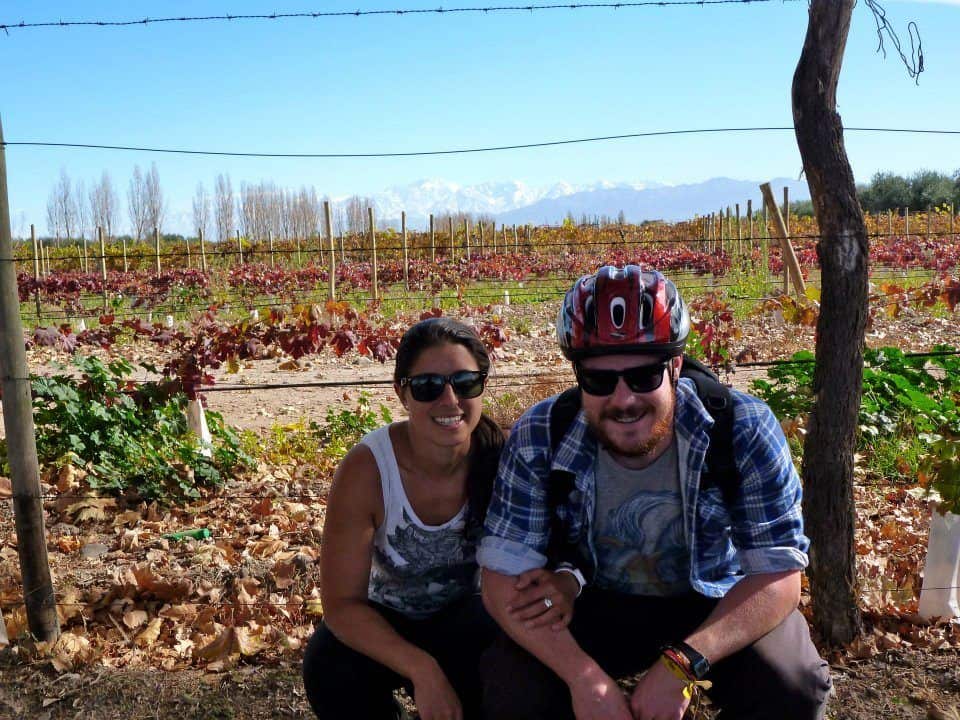
If I go to Italy, that changes everything. I'm looking at another $500 for my trip, maybe more.
Therein lies the challenge. But it's a challenge I'd like to have.

_______

Photo: Lisa Eldridge

Five Weeks in the Amazon (Review)

"Let me tell you about the trip that saved my life." I was hooked when I read that last line of the Introduction to Sean Michael Hayes' Five Weeks in the Amazon.

In his first book, the former pro-skater from Canada turned skate coach to the pro's details his experience traveling to Iquitos, Peru, to partake in a series of 10 ayahuasca ceremonies.

For those not familiar with ayahuasca (aka yagé), it's an Amazonian brew that includes the Banisteriopsis caapi vine and leaves of Chacruna, or other DMT-containing plant species.

Five Weeks in the Amazon

Ayahuasca means "vine of the soul," and it's been used for centuries by indigenous ethnic groups in the Peruvian Amazon to create a visionary state of mind.

Guided by shamans, those who ingest the drink can expect an altered state of mind for the next four to eight hours.

This is often preceded by a physical purging that involves vomiting and diarrhea.

The author's adventure begins in Lima, a city I've gotten to know well. Against this backdrop, we're introduced to his personality, perspectives, philosophies, and vices.

Things get more interesting once Hayes hops his flight to Iquitos, a city in the heart of Peru's northern Amazon that is only accessible via boat or plane.

I've yet to visit, so his vivid descriptions of the environment interested me in addition to his purpose for traveling there.

Speaking of purpose, he states early on, "I want to know what is true, so instead of putting my faith in another man's ideas of what's true, I'll search for the truth inside me."

Five Weeks in the Amazon is as much about an inner journey as it is an outer one. 

The book's strength is the author's willingness to share his thoughts and feelings in a raw and honest way.

It always catches me by surprise when someone has the guts to be so open, especially regarding mental health.

In Hayes' case, it's his struggles with depression. He also talks candidly about his failed marriage, loneliness, and drug use.

At times, these themes weigh heavily on him and us as readers.

It's this openness about his reasons for traveling to the Amazon and partaking in the ayahuasca ceremonies that kept me reading.

Would he discover the meaning of life during one of the ceremonies, as one of my roommates told me he did last year?

He asks some big, philosophical questions about himself, life, and his place in the universe. Would ayahuasca be the conduit to equally significant answers?

If you're at all curious about ayahuasca or enjoy thought-provoking travel memoirs, I highly recommend Five Weeks in the Amazon. It's available as a paperback, audiobook, and for Kindle.

Tremiti Islands: Italian Pearls of the Adriatic Sea

San Nicola Island, one of the Tremiti Islands in Italy.

Turquoise green waters greeted our morning ferry as we approached San Nicola, the most populated of the five Tremiti Islands, all of which belong to southern Italy's Gargano National Park.

Known as the Pearls of the Adriatic, they are Italy's only islands in this sea and have become a popular destination for vacationing Italians.

The lack of automobiles and the ability to cross San Domino, the largest island, on foot in a matter of 20 minutes only adds to their charm.

The imposing structure towering above us in the harbor was the Abbey of Santa Maria a Mare ("Holy Mary on the Sea").

Originally a fortress built by Charles of the Angevin in the 7th century, Benedictine monks converted the structure into a monastery in the 9th century. 

Evidence of inhabitants dates as far back as 2,000 BC.

Grotto
Approaching a grotto

Boat Tour of San Domino Island

Before walking the monastery grounds, we boarded another, smaller boat for a tour of San Domino Island, the largest of the Tremiti Islands and host to all the archipelago's hotels.

I took a seat in the rear right of the boat, which turned out to be a mistake as we circled the island in a counterclockwise fashion, thus exposing the right side to incoming waves.

The sea spray didn't last long as we were soon circling to the calmer, protected waters of the island's western side.

We even entered a cave similar to the one we entered on our boat tour the day before.

All along the coast, there was evidence of vacationers: sunbathers on lounge chairs set up on rocky outcroppings, cliff divers, rope ladders hanging down into the water providing access for swimmers and sea kayakers.

The second half of the tour involved another counterclockwise circle around San Nicola Island, offering views of the cliffside monastery and goats clinging to impossibly narrow ledges.

At the end of the tour, there was an opportunity to go swimming and snorkeling off the boat, which didn't seem appealing to me given the lack of space to disrobe and later dry off.

A dozen people per boat were taking part while the others watched and waited.

L'Architiello restaurant

San Nicola Island

Back in San Nicola, it was lunchtime. Our group took a table in the corner of L'Architiello, which offered stunning views of the surrounding waters.

Red and white table wines were brought out, as we'd become so accustomed to during our week in Gargano.

Every morning I'd say to myself, I'm going to skip wine at lunch today, and every lunch, I'd be unable to resist the casualness of which wine was being consumed. It's a habit best left for European vacations.

The first dishes presented, family-style, were tomato bruschetta and bruschetta with tuna and capers.

Pasta with clams in the Tremiti Islands.
Pasta with clams

Next, it was pasta with clams. Usually, I'm not a big fan of shellfish, but being presented with a plate full of fresh clams, I decided to give them a go and found they were tastier than expected.

There's something about the ritual of plucking the tender meat from the shell that makes eating them fun. And they're not as messy as crab or lobster.

Plates of tiny fried fish, shrimp, scallops, and calamari soon followed. I was already feeling too full to indulge in any more food but gave each option a squeeze of lemon and a taste.

Dessert was plates of juicy plums and grapes.

Related: Top Food Experiences in Emilia-Romagna, Italy

Tremiti Islands
Tremiti Islands

The Abbey of Santa Maria a Mare

After lunch, we posed for some photos by the water and walked up the cactus-lined stone path to the monastery.

The sun was beating down, and there was little shade to escape it.

San Nicola Island is the administrative center of the Tremiti Islands, on account of it being the only one home to permanent residents (approx 500).

The view of the water from atop the 75-meter hill was even more spectacular.

Entrance to the Abbey of Santa Maria a Mare

A hundred or so meters from the view of the harbor was the entrance to the monastery, which again had all the outward appearances of its original function as a fortress.

Inside, there was a church, the facade of which was undergoing renovations, and several spacious courtyards lined with covered arcades.

Chocolate and mint gelato

Between exposure to the sun and our lack of time before the return ferry, I had barely enough time to stop for a chocolate and mint gelato on the way back to the harbor.

I'd devoured an incredible chocolate gelato with Nutella during our visit to Peschici; however, mint gelato had until then eluded us. It was worth the wait.

Boarding the Picasso ferry in Vieste's harbor

On our way back from the Tremiti Islands, the buildings of Peschici reflected the day's remaining sunlight off their white facades, and kitesurfers could be seen zigzagging across the coastal waters.

By the time we arrived back in Vieste, the harbor was aglow in the warmth of our last sunset in Gargano.

________

My trip to Gargano, Italy, was in partnership with Gargano OK.

Air Travel Tips: From Start to Finish

Silver Airways

Whether planning a yearly vacation or deciding on your next place on a worldwide backpacking trip, air travel may be your best or only option.

While it is much quicker than a journey by land or sea, ensuring that your flight goes as smooth as possible helps set a relaxing tone for arrival at the destination.

There tends to be many more problems or challenges that can arise versus traveling by bus or train.

Step 1: Booking Your flight

Not all the passengers on the same flight pay the same price.

To put yourself on the lower end of the price curve, consider some helpful tips when booking flights and know which sites can offer you the best deals.

A recently published report (PDF) by Expedia, Inc. analyzes data powered by the Airlines Reporting Corporation (ARC), which uses data from other industry sources to evaluate data and report on trends for 2015.

Overall conclusions stated that:

  1. Buying flights two months in advance for domestic and six months in advance for international gives you the best chance of finding the cheapest flight
  2. Tuesday is the best day of the week to buy air tickets
  3. The gap between premium and economy seat pricing is decreasing
  4. For various reasons, there should be price drops on most North American and European destinations in 2015

Also important to consider is which search engine to use. There is no "best" one for all searches.

Sometimes, one may return less expensive flights for one search compared to another site, and the next time, it will be more costly for a different journey.

The best advice would be to use various search engines over a period of a week or two to find the best results.

Depending on your travel plans, there are also various search tools at your disposal, such as selecting "entire month" or "any destination" to find the lowest prices.

Here are some of the most popular search engines:

  • Kayak
  • Momondo
  • Skyscanner

Ever notice how you receive pop-ups or social media advertisements for the destination you have searched?

Sometimes websites will track your search history and raise prices next time you search for the same journey. To stop this, either browse in private mode or delete cookies.

Also, consider these factors when booking your flight:

  • How many bags are free to check, and how heavy can they be?
  • If you plan to bring a carry-on cabin bag, does everything need to fit into one bag? Are you also allowed a purse/laptop bag? What is the weight and size limit?
  • Which airports will you be departing from and arriving to? How far are they from your current location/destination?
  • Will it add a lot to the cost of the overall journey for a train/metro/bus/taxi?
  • Do you need a visa to enter the country?
Backpack

Step 2: Packing for Your Flight

Prepare by writing down all the items you need for your trip. What kind of activities will you be doing?

If you are planning to backpack for an extended amount of time and don't know exactly what to pack, consider researching packing lists of past travelers.

Also, consider these factors when packing for your flight:

Again, check the weight and size requirements of your carry-on and checked baggage to make sure you won't incur extra fees.

Ensure that your carry-on luggage doesn't have any prohibited items or liquid volumes over the limit.

Will it be an overnight flight?

Do you have in your carry-on all necessary items for overnight such as contact lens case, face wash, toothbrush, lotions, change of clothes, etc.?

Also, consider that if you are checking a bag, there is always a chance it could be delayed or lost.

For this reason always bring what you need such as chargers, and toiletries as well as enough clothes to last you a day or two in your carry-on.

Flight path

Step 3: Taking Your Flight

Time spent waiting for flights to board can seem to go on forever.

While airlines recommend that you arrive at least two hours ahead for your flights, you often end up getting through check-in and security in less than a half-hour.

Despite the usually quick process, there are times when it takes at least if not longer than the recommended time.

Therefore, arriving at the airport with plenty of time for unforeseen circumstances is your best bet for a stress-free journey.

Many airports have optimized to cater to the passenger. There are restaurants, shops, massages, charging points, etc., inside the terminals.

Unfortunately, the prices are typically higher inside the terminal, so packing for some wait-time will help cut the trip's costs.

Always pack a few snacks that you can have if you get hungry.

A reusable water bottle is also a great travel companion that you can refill at fountains once you have passed security.

If you plan on using your laptop or tablet, see if there is a free WiFi connection at the airport.

If not, consider loading some movies, music, or books into your devices to keep you occupied. Is there a chance you have to sleep at the airport?

Recently, the Telegraph released an article featuring Airports of the Future. Perhaps one of these will be part of your journey in a few years.

What happens if your flight is delayed or even canceled? According to a recent study, about "20% of flights were delayed worldwide in 2013".

If your flight is delayed and you have a connection at the other end, try to speak to an airline representative as soon as possible.

The staff at your connection location are probably already working hard to make sure you won't either miss your originally scheduled connecting departure, or you have a new flight that will get you to your final destination as soon as possible.

If you are not able to speak to a representative in person, call the airline yourself.

If your flight is canceled, there will probably be a rush of people heading to the customer service desk.

To avoid the long lines, call the airline right away once you learn there has been a cancellation instead of waiting in line with potentially hundreds of other angry passengers.

Also, consider that many times you are due compensation for a delayed or canceled flight.

Consider consulting Flightright to see if you are owed compensation quickly and easily.

Step 4: Arrival at Destination

Once you land after however many hours in one seat, getting to your destination may be the only thing on your mind.

However, depending on your arrival location, size of the airport, and final destination, being able to finally say "I made it" may still be a ways off.

Once you leave the plane, there is little to do besides following the rest of your fellow passengers through immigration and customs and to the baggage claim.

At this point, all that's left is to relax and enjoy the start of your travels!

__________

This post was written by Christine Tucker and brought to you by Flightright. Photos: David Lee

Inside the White House Summit on Study Abroad and Global Citizenship

It has been a little over a month since The White House hosted 100 of the most influential travel bloggers and digital media outlets in Washington, D.C., to discuss the importance of study abroad and global citizenship.

The experience was a whirlwind of networking, listening, and discussions while eating, drinking, and keeping my suit and shoes clean despite the winter rain.

White House badge
White House badge

Why would the White House host many bloggers when there are dictators, wars, and the threat of ISIS to manage? It's a fair question, and having taken the time to attend, I can say it's because they are thinking long-term.

The study, volunteer, and work abroad programs often introduce young people to traveling and living abroad. They're the gateway drugs of the travel world.

However, before we delve into the Summit itself, which high-level officials and renowned travel personalities attended, I would like to rewind so that I can take you through the entire experience. After all, it's not every day one gets invited to a summit at the White House.

Arriving in Washington, DC

Working at Starbucks
Pre-summit workout

I departed Medellín, Colombia, on Sunday, December 7, 2014, for Reagan National Airport, which I chose over Dulles for its proximity to the city. Flying past the waterfront of Alexandria, Virginia, where I used to work, brought back many memories from my pre-blogger life.

I quickly took a taxi for the short ride to Hostelling International's Washington, D.C. hostel, where a dorm bed was waiting for me. The hostel is located a ten-minute walk from the White House and has recently undergone renovations.

What I cared about most was the ability to get a warm and quiet night's sleep after spending the last 12 hours in transit. The following day was a buffer I had built in, in case of a flight delay. I spent my time working at the hostel and a nearby Starbucks.

I also stopped in the city's Tesla shop, conveniently located across the street from the hostel. The young salesman gave me a thorough rundown of this gorgeous and efficient electric car, which we all hope will help save us from global warming.

While we were both sitting inside, he asked me about my line of work, to which I said, "travel blogger." He responded that to travel for a living would be a dream. I couldn't agree more.

Travel Massive Meetup

That evening, many of the bloggers in town for the Summit attended a Travel Massive event at Poste. I finally had the chance to meet Australia's Caz and Craig, whom I've known since 2010, and met one of my favorite travel writers, Rolf Potts, author of the book "Vagabonding."

And I saw old friends, such as Marilyn Terrell of National Geographic Traveler and Michael Yessis of World Hum.

Breakfast at the W Hotel

Adventurous Kate
Adventurous Kate

The following day, I was up bright and early. I put on my new Colombian suit and recruited Nathaniel Boyle, one of my bunkmates, along with Matthew Karsten and Lillie Marshall, to help me tie a Windsor knot.

The weather was cold and wet, so we shared a taxi to the W Hotel for breakfast on the roof, which turned out to be an excellent way to warm up for what was to be a long and fast-moving day.

I ran into more friends, including Stefanie Michaels, who hosted me on my first visit to Los Angeles, and new acquaintances like Paula Froelich of Yahoo Travel. Here, we also received an official welcome from the fashionable Fran Holuba, summit organizer and the youngest member of the National Security Council.

White House Tour

The White House
The White House, as seen from the East Wing

Our next stop was a White House tour of the East Wing, decorated for the holidays. Thankfully, enough people had umbrellas to make up for those of us who forgot to bring or buy one (guilty as charged).

As you might expect, one can't simply walk into the home of the President; therefore, we had to navigate multiple security checks by the Secret Service before reaching our primary objective.

Dave inside the East Wing
Inside the East Wing

The tours are self-guided, with each room staffed by a member of the Secret Service who is also available to share historical info and take questions.

There were 14 decorated Christmas trees. While we were informed cameras were not allowed, apparently that's not the rule around the holidays, as there was a sign with a White House hashtag encouraging visitors to share photos.

Lunch at the National Press Club

Netanya Trimboli of Hostelling International

Once the walkthrough had been completed, it was time for lunch at the National Press Club, a few blocks away.

Lunch was even quicker than breakfast, although there was still enough time for Hostelling International to introduce their "Give Back, Stay Free" initiative for January and February 2015.

"Qualifying groups of 10 or more people are eligible to receive one free night's stay (up to five nights) at a HI USA hostel for each day its members spend volunteering at least two hours in the surrounding community.

The Summit

A little after 1 p.m., we walked from the Press Club to the Old Executive Office Building, where I spent a summer in the early 90s opening mail for President Clinton.

The schedule for the afternoon, the reason we were in Washington, was impressive. Fran highlighted that it's not often so many high-level officials participate in an event like ours.

The video above features the first three speakers (in this order):

  • Ben Rhodes, Deputy National Security Advisor for Strategic Communications and Speechwriting
  • Denis McDonough, Chief of Staff, White House
  • Evan Ryan, Assistant Secretary of State for Educational and Cultural Affairs

Listening to Ben Rhodes again reminds me of how well each of the speakers articulated the government's position while simultaneously infusing anecdotes from their own lives and travels into their comments.

Study abroad 2012/13
Where students go to study abroad (2012/13)

The two questions he posed to us at the start of the Summit were:

  • How can we increase American engagement abroad?
  • How do we ensure that we're considering the entire world, including emerging destinations, in addition to traditional countries? (The UK, Spain, and Italy account for 32 percent of study abroad experiences.)

Additional government speakers included:

  • Secretary Penny Pritzker, Secretary of Commerce
  • Tina Tchen, Chief of Staff to the First Lady
  • Carrie Hessler-Radelet, Director of the Peace Corps
  • Jonathan Greenblatt, Director of the Office of Social Innovation and Civic Participation

Most of the remarks were prepared and highlighted the government's case for promoting study abroad more aggressively. Namely, it gives American students a competitive advantage in the workplace after they graduate and better positions in the United States as a leader in global commerce.

And it's fun. Although I didn't study abroad during my four years at Colgate University, I made up for it by spending the summer after graduation traveling through Europe.

It was my first experience spending a significant amount of time outside my home country and gave me the space to see the United States, our culture, and our politics from a European perspective.

White House
View of the West Wing of the White House from the Old Executive Office Building

Between key government speakers, there were three-panel discussions, which allowed for Q&A from the audience.

  • Panel #1:  Studying, Volunteering, and Working Abroad as a Civic and Economic Imperative
  • Panel #2:  Pushing Greater Diversity of Travelers, Destinations, and Fields
  • Panel #3:  Cultural Exploration

These discussions highlighted some critical challenges to increasing the number of students studying abroad, specifically the problems of income inequality and the disproportionate number of white Americans studying abroad versus marginalized groups.

There are no easy answers to these questions, nor was the Summit meant to solve such deeply rooted problems in U.S. society, at least not overnight.

The Summit was meant to spark a conversation, a conversation I'm happy to be a part of if it helps inspire more college students to study abroad and more Americans to consider the option of working or volunteering in foreign countries.

Departing the Old Executive Office Building, we found ourselves facing the West Wing, a remarkable moment that I took the time to capture with a photo.

Reception at the Newseum

Group shot at Newseum
Group shot at the Newseum.

The evening's reception and dinner were held at the Newseum, a museum dedicated to journalism and sponsored by Turkish Airlines. It gave us all a chance to continue getting to know one another, take some photos, and at this point, enjoy a drink or two and the food of Wolfgang Puck Catering.

Fran spoke again during dinner, as did a representative from Turkish Airlines. It was a wonderfully put-together event, and I only wish I had more time to walk through the Newseum's exhibits.

All smiles with Travel Channel's Samantha Brown

_________

I received a complimentary stay at the HI Washington, DC. 

Exploring London’s Hidden Food Markets

Ropewalk
Ropewalk

It's easy to see why London is so popular with backpackers and foodies.

With a rich variety of street food stalls cropping up in every corner, visitors to the city are spoilt for choice.

Discerning travelers who want to go local should check out the city’s quieter food markets.

Save a small fortune on holiday and experience London’s food markets while avoiding all the tourists.

Maltby Street Market: Ropewalk

Business hours: Saturday 9 am-4 pm, Sunday 11 am-4 pm

Most new backpackers arriving in London won’t know anything about Ropewalk at Maltby Street Market.

Discreetly hidden in the back streets of South East London, the local food market trades underneath a railway arch in Bermondsey. 

Situated only a short walk from the nearby Jubilee Line and close to London’s most popular hostels.

The Ropewalk’s street food displays will do wonders for your Instagram collection.

Perfect for backpackers wanting to eat posh food without going over budget, Ropewalk serves everything from homemade ginger beer to oysters to Argentinian steak burgers.

Maltby Street Market is a refreshingly quiet food destination and unlike many of its mainstream rivals, it’s not overwhelmed by tourists.

Brixton Village Market

Brixton Village Market

Business hours: 8 am – 11.30 pm daily, except Monday, when they close at 6 pm

Brixton Village Market is an increasingly popular destination for backpackers looking for a hungry fix in South London.

Serving freshly cooked meals with a distinctive Caribbean flavor, the street food market is bustling with Afro-Caribbean street stalls.

If you’re looking for a spicy hot lunch simmering with fresh organic flavors, then jump on the Victoria Line and go to Brixton.

Offering travelers a charming and budget place to eat out in London. The former Victorian arcade is home to over 20 cafes, restaurants, and street stalls.

Opening late on Thursday and Friday nights, the market has live music and serves a global range of international cuisine in a warm, friendly atmosphere.

KERB
KERB

KERB and Street Feast

Business hours: 12 pm-2 pm, daily

Perfect for backpackers staying close to Kings Cross Station, the newly established KERB is a super trendy food market.

Serving locals and visitors freshly prepared street food, it’s a brilliant place to grab a bite to eat.

While KERB is a daytime affair, all good Londoners know that its sister brand Street Feast is the best place for late night eating.

Offering hungry travelers an evolving cast of mobile food traders, you can eat gorgeous pizzas, Korean American burgers and paella dishes for under $10.

________

This post was brought to you by Hostelsclub.

Photos: Ropewalk - David Goymer, Brixton - Visit London

4 Top Spots to Discover Before the Crowds Arrive

Shwezigon pagoda, Bagan
Shwezigon Pagoda, Bagan

If you've already visited a lot of the major tourist destinations across the globe, perhaps it's time to consider thinking outside the box.

Many countries around the world were once regarded as too dangerous for travelers, or that have not had much tourist infrastructure in place, that are just starting to come into their own.

Whether you're looking for picturesque scenery to admire, animal sightings to tick off your bucket list, or architecture and cultures to examine, there are plenty of unexplored destinations that you can visit now before the masses descend on them.

If you're keen to travel to a new nation in the coming year, read on for some of the top spots to consider.

1. Myanmar (Burma)

A fast-emerging destination that is sure to draw big crowds soon enough, Myanmar is finally back on track to lure tourists.

The country spent years oppressed by a brutal regime, and there was a tourism boycott in place for 15 years.

However, a few years ago, when pro-democracy leader Aung San Suu Kyi was released from house arrest, the boycott was lifted, and the country previously known as Burma moved from a military to a democratic government.

Tourism numbers have been on the up and up since, with around a million visitors heading to the country last year, and seven million international tourists forecast to visit in 2020.

This beautiful and culturally rich nation is fast becoming one of the most exciting spots to visit in Asia.

It provides an enticing mix of stunning scenery, fascinating temples, and cultural experiences for travelers to enjoy.

Due to many years of oppressive authoritarian rule, the country feels like it was stuck in a time warp.

Visitors can take in the slow pace of Yangon, and glittering golden stupas, as they explore this part of the world that feels like the Asia of old.

Volcano on Ometepe Island

2. Nicaragua

When many travelers think about the largest country in Central America, they picture the violence of the 1980s Contra Wars that tore the country apart.

However, Nicaragua is no longer a dangerous place to visit as it once was.

This very picturesque nation today has the feel of Costa Rica from three decades ago and is the perfect place to travel on a budget.

Although Nicaragua is one of the poorest countries in the Americas, the nation boasts decent infrastructure, with well-maintained highways, easy Internet access, and a good range of accommodation and restaurant options.

Journey to this "Land of Poets" to explore the natural beauty that will take your breath away.

Check out cloud-forest covered volcanoes, tropical rainforests, cobblestone streets, palm-tree covered islands, and rows of colonial relics.

Note that, while Nicaragua has a couple of international airports, it is generally more affordable to fly into nearby Costa Rica and then head north by bus.

Mountain Gorillas
Mountain Gorillas (photo: David Lee)

3. Rwanda

Many travelers book tickets to Rwanda to set out on an epic wildness adventure - that of tracking the awe-inspiring gorilla.

The "Land of a Thousand Hills" is home to one-third of the remaining mountain gorillas in the world, as well as the same percentage of Africa's bird species.

Due to the 1994 genocide, as well as reports of ongoing rebel activity in the regions of Rwanda that border the Democratic Republic of Congo, many tourists have been staying away from this beautiful part of Africa.

However, this nation is a land of vast beauty, epic wildlife watching, volcanoes, islands, tea plantations, and fascinating culture.

The country's government is investing heavily in tourism and infrastructure and expects visitor numbers to grow rapidly.

Indeed, the total revenue collected from the tourism sector in 2013 was $293 million, but this number is expected to reach $860 million by just 2017.

Glogosnica
Glogosnica near Jablanica with in the background the mountain Prenj, Bosnia and Herzegovina (photo: Michal Sleczek)

4. Bosnia and Herzegovina

Bosnia and Herzegovina were devastated by the brutal civil war of the 1990s, but this remarkably undiscovered region of Europe has since made significant progress in restoring peace and stability.

If you loved visiting Croatia but found the crowds too much, especially in summer, make sure you put Bosnia and Herzegovina on your list for your next holiday.

This European treasure is also full of fantastic scenery, fascinating history, and an interesting mix of people, but the country has not yet seen the same influx of tourists.

Visit Sarajevo to celebrate the city's revival from the war; hike through the rugged wilderness of Sutjeska National Park; and turn back the clock when you enter the Herzegovina region in the south.

Skiers can also enjoy excellent snow during the winter months in this part of the world.

_________

This post was brought to you by Flights.com. Photos: Bagan - Stefan Munder, Ometepe/Gorillas - David Lee, Glogosnica - Michel Sleczek

The Most Popular Posts of 2014

Taking a turn behind the wheel on the Bolivian salt flats

Go Backpacking continued to grow in 2014, surpassing 1 million visits and 2.6 million page views in a single year for the first time.

Below are the most popular posts published this year, in descending order. As you'll see, guest contributors continue to play an important role in our growth.

The 10 Most Popular Posts Published in 2014

1. 7 Tips on How to Crowdfund Your Travels (Francis Tapon)

2. How to Travel Norway on a Budget (Daniel Schjetne)

3. How to Backpack Cuba on a Budget (Marek Bron)

4. Pick-Pocket Proof Pants by Clothing Arts Review (David Lee)

5. 10 Things You'll Need to Pack to Get a House for Free While Traveling the World (Michael Wigge)

6. Guatemala Travel Tips (David Lee)

7. How to Experience Japan for Less (Mark Wiens)

8. San Pedro to Uyuni: Booking My Trip to the Bolivian Salt Flats (David Lee)

9. Nicaragua Travel Tips (David Lee)

10. Living and Teaching in Phnom Penh, Cambodia (Adam Halliwell)

Budapest
Budapest as seen from St. Stephen's Basilica

Editor's Choice

In addition, I want to highlight the following posts which reflect the wide range of topics and destinations covered on Go Backpacking this year.

Bolivia - Salar de Uyuni Salt Flats, Landscape Photo Essay, Cerro Rico and the Silver Mine Tours in Potosí (David Lee)

Ethiopia - Visiting the Rock Churches of Lalibela (Mark Wiens)

Hungary - Top 10 Things to Do in Budapest (David Lee)

Iran - Visiting Persepolis, Simin Dasht and the Caspian Sea (Adam Halliwell)

Latin America - Top 10 Destinations for 2015 (David Lee)

Japan - Ryogoku: Tokyo's Sumo Town (Mark Wiens)

Myanmar - What Not to Worry About When Planning Your Trip (Marek Bron)

The United States - The Shrimp Trucks on Oahu's North Shore (Mark Wiens)

From Central America to the White House: My 2014 Travel Highlights

We've got less than 36 hours left in 2014, and I'm only now catching my breath after a whirlwind finish to the year.

First and foremost, I want to thank everyone who visits Go Backpacking and reads one or more of the stories published here. We hope they inform and inspire you to get out and see the world, whether it's exploring your own country or traveling abroad.

View of a volcano and Lake Atitlan from La Iguana Perdida
Lake Atitlan, Guatemala

We topped 1 million visits and 2.6 million page views this year alone!

I'm grateful to everyone who contributed this year, especially Mark Wiens, who, after 164 stories and three years with Go Backpacking, ceased writing for us to focus on building his blog at Migrationology.

Guatemala

Semuc Champey
Semuc Champey

After a relatively light travel year in 2013, I decided to kick off 2014 with a 6-week trip through Central America. I began with Guatemala, which I'd visited briefly from Belize in 2006 to see the ruins at Tikal.

I spent two weeks walking the cobblestone streets of Antigua, admiring the views around Lake Atitlan, swimming in scenic Semuc Champey, soaking up the Caribbean vibe in Livingston, and checking out the Maya world's largest stone stelae at Quirigua.

Honduras and El Salvador

West End, Roatan
West End, Roatan

I traveled overland from Livingston, Guatemala, to Copan, Honduras, which required various modes of transport, including boat, bus, and taxi. It was tiring, and while the Copan ruins are nicely maintained, they weren't as impressive as Tikal or the ones I'd seen in Mexico the year before.

From Copan, I traveled another full day by land to San Salvador, El Salvador's capital. Exhausted from too many slow, uncomfortable chicken buses, I decided to limit my time in El Salvador to just two nights (long enough to visit the country's only UNESCO World Heritage Site) and fly to Roatan, Honduras.

Most backpackers go to the smaller island of Utila for cheap partying and diving, but if I wanted to fly, Roatan would have to be my destination. The whole week of my visit was overcast and rainy, save for one beautiful day of sunshine.
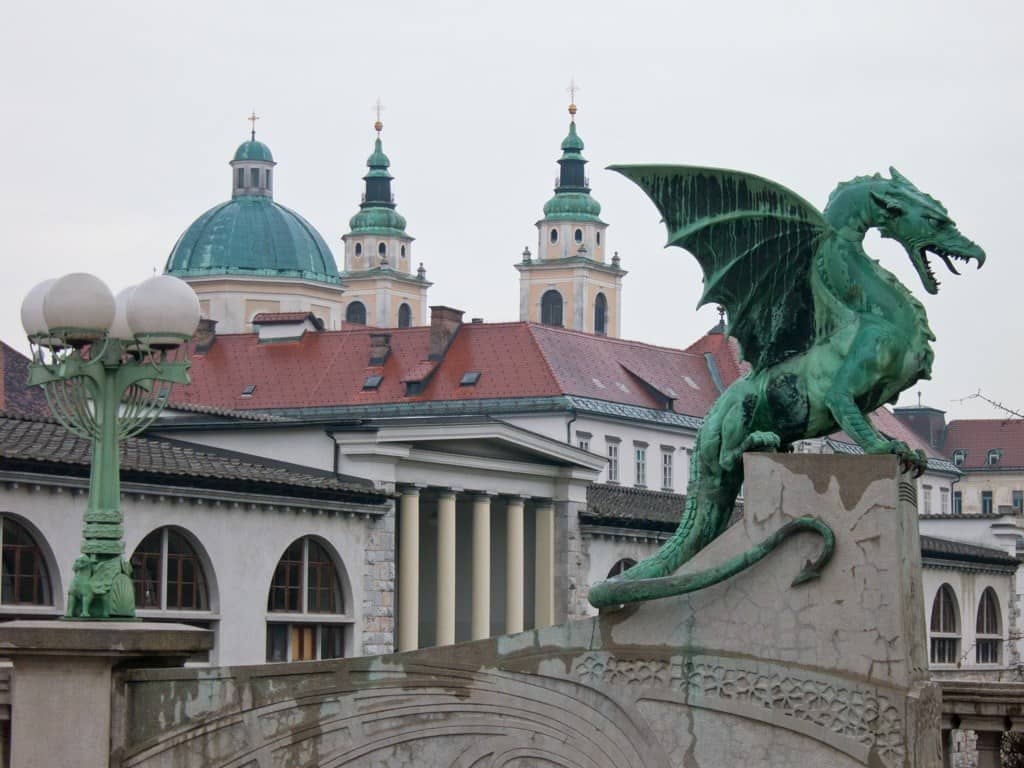
Nicaragua

Volcanoboarding
Volcanoboarding

Not keen to fly into the Honduran capital's airport, which is considered one of the most dangerous in the world, I paid a premium to fly to Managua, the capital of Nicaragua, instead. By nightfall, I'd left the capital for Leon, where I checked the ludicrous sport of volcanoboarding off my bucket list.

I also visited Granada, found a slice of paradise at Laguna Apoyo, watched the start of an adventure race on Ometepe, and chilled out in San Juan del Sur.

Medellín and Cartagena, Colombia

Colorful Cartagena
Colorful Cartagena

From Managua, I flew back to Medellín, where I spent the next six months focusing on work, including the Lima Travel Guide, Travel Blog Success, and Medellín Living.

Medellín Living organized and hosted 17 events in 2014, bringing together hundreds of readers.

Highlights included our sell-out Thanksgiving dinner at Humo, our first charity fundraiser (we raised $1,650 for Mahavir Kmina, a local organization providing free prosthetic legs to Colombians), and the December 16th launch of the Medellín Guide, my first iPhone app.

But it wasn't all work and no play. Watching the World Cup in Medellín was an absolute blast. I cheered on the USA and celebrated the Colombian wins, too.

My brother, best friend, and his girlfriend flew down to Cartagena from New York City for Memorial Day weekend. Together, we rented a spacious apartment with a rooftop deck in the heart of the Old City (thank you, Airbnb).

It was my fourth time in Cartagena, yet it was the first time I slept within the Old City, visited Playa Blanca (a beach), and dipped in the infamous mud volcano.

Florida and New York City

In mid-August, I left Colombia to visit family, first in Florida and then in New York. Despite living out of a carry-on size backpack and sleeping on my brother's sofa, I managed to assemble a suit and shoes appropriate for a 14-course dinner with wine pairing at NYC's Eleven Madison Park, which was rated the #1 restaurant in North America this year.

It was also my first time at a 3-star Michelin restaurant. And given those accolades, you shouldn't be surprised to hear it was far and away the most expensive meal I've ever eaten (a record I don't expect to be broken any time soon).

Gargano, Italy

The whitewashed city of Peschici

An invitation to visit and learn more about Gargano in southeastern Italy led me back to one of my favorite European countries for a week in early September.

We visited the UNESCO-listed Sanctuary of Monte Sant'Angelo, wandered the back streets of Vico del Gargano, ate gelato in Peschici, took an adventurous boat ride through caves, and visited the Tremiti Islands.

We were fed a never-ending supply of Italian food and wine throughout the week. It was glorious!

Cancun and Playa del Carmen, Mexico

Pool at Moon Palace Resort
The pool at Moon Palace Resort

From Gargano, reaching Cancun for the North American Travel Blog Exchange (TBEX) conference was a long, two-day journey.

In the past, I've attended as a blogger, but this year I participated in three distinct roles:

  • Media partner (Travel Blog Success)
  • Speaker (blogging in Latin America panel)
  • Blogger

For the first time, the conference was held at an all-inclusive resort, and as I was speaking, I could stay there at no cost. It made life a lot easier.

In the future, I will be more open to spending money on accommodation when attending business conferences (even if they aren't on the beach with an enormous pool complex).

Lima, Peru

Cactus milk with retama petals at Central

After TBEX and a week of doing nothing in Playa del Carmen, I returned to Medellín from mid-September to mid-November to continue working on the Medellín Guide iPhone app.

I had planned to return to Lima in 2013, after spending six months there in 2011-12, but that trip never materialized, so I made it happen in November.

I spent ten days on a foodie mission to try some of the best restaurants in Lima. The highlight was Central, which was ranked the #1 restaurant in Latin America this year, thus surpassing Astrid & Gastón.

It was half the cost of Eleven Madison Park (though I skipped the wine pairing this time), the lighting at lunch was perfect for photos, and I felt as though the 17-course tasting menu was a step above EMP in terms of presentation and creativity.

I had so much fun; I've already considered returning to Peru in early 2015. There are still many places in the south I've yet to see (Huacachina, Nazca, Colca Canyon, Arequipa, and Puno).

Me and Samantha Brown
Samantha Brown and I

Washington, DC

The year's biggest surprise was an invitation to attend the White House-organized Travel Bloggers Summit on Study Abroad and Global Citizenship.

I'll be writing about the whole experience in January, which included a tour of the East Wing decorated for the holidays and the summit itself, which featured top-level administration officials, plus some notable personalities like author Rolf Potts and The Travel Channel's Samantha Brown.

Annual Reviews from Prior Years

  • 2013
  • 2012 South America
  • 2012 Europe & Asia
  • 2011
  • 2010

Looking back at my review from last year, I noticed that my idea for a three-month Asian adventure had never materialized. It was certainly feasible, but I decided not to proceed in favor of focusing on growing Travel Blog Success and putting out the Medellín iPhone app before the end of the year.

Looking Ahead to 2015

At the moment, my plans for 2015 are wide open. I only know one place I'm going for sure: New York City on April 30th for the screening of The Wireless Generation, a documentary by my friends Christine and Drew in which I appear.

Places I Still Want To See in Peru

Those 3 ½ weeks were not enough. There are places I still want to see in Peru. It's such a big and beautiful country, so even though I hit the food scene in Lima, the ruins in Machu Picchu, the dunes of Huacachina, the natural beauty of Colca Canyon, and several other great sites, I missed out on a lot of things.

Iquitos, the island city on the Amazon River, offers great sunsets.
Iquitos, the island city on the Amazon River (Photo: David Young)

As I said, I didn't have enough time. I met other travelers who had a lot more time, one of them a guy from Scotland (pictured below) who became a friend and was kind enough to let us use some of his photos (hence his name, along with a Peruvian friend's, in the caption), which he took in places I happen to want to see. If I go back, these will be some good starting points.

Destinations in Peru

1. Iquitos

You can see a lot of great wildlife in Iquitos.
You can see a lot of incredible wildlife in Iquitos. (Photo: David Young)

Iquitos would qualify more for a story called Places I've Always Wanted to See in Peru instead of Places I Still Want to See in Peru.

I've always been intrigued by Iquitos, an island city that cannot be reached by land. It is a 10-hour boat ride from Leticia, Colombia's Amazonian capital.

I've seen great pics of beautiful blue-tinged toucans, various monkeys, and even some giant snakes, and I want to get up close with all of them.

I've seen other photos of the indigenous people, some still wearing traditional garb and seemingly happy to welcome visitors to their homes.

It would be nice to fish the Amazon River, too. I want to catch a piranha. It would be fun to eat a fish that could also eat me.

Maybe next year. I need to go to Leticia to write about it at some point, so I might as well take advantage of the fact that I'm already near Iquitos.

2. Lago Titicaca Islas Flotantes

I was so close to the floating islands, but I just couldn't get there. Next time, I will.
Floating islands (Photo: David Young)

The floating islands at Lake Titicaca, just outside Puno, were part of my itinerary for this last trip, but miscommunication between me and the tour operator ruined my plans.

From the pictures, these islands are made of mud, aquatic plants, and any other natural debris the people who live there can find.

At Lake Titicaca, these people are called the Uros, and their villages are quite the attraction. I'll pass through Puno again someday on my way to Bolivia.

3. Huaraz

I'd like to think of Huaraz as an underground tourist stop. It's not nearly as popular as Cusco and nearby Machu Picchu, but there's still a lot to see. Near the town are UNESCO-listed ruins (Chavin de Huantar), a glacier (Pastoruri), and lakes (Llanganuco).

I've read that the town itself is nothing special, just a bunch of drab concrete buildings built after an earthquake leveled almost everything about 35 years ago. But you don't go to places like that to stay in town. I imagine when I finally get there, the town will be just a place to eat, sleep, and shower.

4. Máncora

If you want to be by the beach, you should consider Máncora.
A seaside pool in Máncora (Photo: Jess Paucar)

When people find out I'm from Hawaii, they ask if I surf. If they've been to Máncora, they tell me I should go. It would be interesting to surf somewhere outside Hawaii. I've never done it before.

I hear there's kiteboarding as well, something I've never done anywhere. Other than beach activities, there doesn't seem to be much. That's ok. The beach is enough.

5. Parque Nacional del Manu

North of Cusco, there is a natural setting where you can find jaguars and pumas, a half-dozen types of monkeys, and the capybara, the world's largest rodent. This is Parque Nacional del Manu.

Most tours allow you to spend as little as three days or as many as seven. Just realize that the trip is not cheap. According to my research online, a three-day, all-inclusive package typically costs about $500.

I didn't have the time on this trip, hence the reason there are places I still want to see in Peru.

Holiday Travels: How To Best Keep Comfy!

Comfy Commuter Travel Pillow
The Comfy Commuter Travel Pillow

[C]omfy Commuter is an innovative travel product brand committed to offering the most comfortable travel accessories, most famous for their original Comfy Commuter Travel Pillow.

At first glance, this pillow looks like a standard U-shaped neck pillow, but it is much more with its cushioned wider and higher sides, which makes for very comfortable head and neck support.

The Comfy Commuter also has patented flat-back head support which allows your head to rest most comfortably, and does not force you into a forward leaning position.

Velcro straps allow it to wrap around the neck fully, so it supports the chin and doesn't slip around.

Comfy Commuter Travel Pillow

When stuffed into the carrying bag, which is sewn directly onto the back of the pillow, the Comfy Commuter creates a mini sleeping-bag-shaped ball that isn't tiny but still compact enough to carry-on.

Their slogan, "Travel products worth packing" truly applies.

Additionally, all Comfy Commuter products are proudly manufactured in the USA!

With this pillow, there’s no doubt that your hectic holiday travels will be much more peaceful!

$40, comfycommuter.com

_________

This post was brought to you by Comfy Commuter. 

Save up to 40% on Small Luxury Hotels of the World

Kandolhu Island
Kandolhu Island, The Maldives (photo: SLH)

Backpacking on the cheap is one of the best ways to see the world without a doubt.

You can stretch your dollars further and travel for much longer by traveling how the locals travel, eating where the locals eat, and staying in quirky little hostels all across the globe.

It's a great way to see the world, and I wouldn't trade it for a day back at my desk for anything.

But if we're going to be honest, the life of a long-term budget traveler isn't always glamorous.

Tiptoeing into the hostel dorm at night and then trying to sleep while your bunkmate's snoring shakes the bed.

After a bit of time on the road, I always feel it's important to treat myself and splurge on a fancy meal and a night or two in a beautiful place where I can relax and enjoy having my own space for a change of pace.

If you're on the road this Holiday season, maybe you should take time to spoil yourself a little and take a break from the backpacker lifestyle. You'll thank me later.

Small Luxury Hotels of the World is offering a great deal where you can save up to 40% at over 200 of their luxurious hotels all over the world this holiday season.

Las Alamandas Resort
Las Alamandas Resort in Mexico (photo: SLH)

More often than not, our culture celebrates the move toward bigger and more ostentatious.

But let's face it, staying in a megaresort with thousands of rooms is nothing like staying at a smaller and more private property--and that is where SLH shines.

SLH is a collection of small, independent hotels that have been handpicked to celebrate their quirks, individuality, and character, all while maintaining a high standard that will leave you confident knowing it will be a fantastic experience.

They began handpicking the best of the best and uncovering the hidden gems across the globe back in 1989 and have since amassed a collection of more than 500 small, independent hotels in over 80 countries from beachside villas in the Caribbean to stately mansions in the south of France.

Are you looking to stay on a private island?

SLH can help you with that. They've got private island resorts like Kandolhu Island in the Maldives, and Las Alamandas Resort in Costalegre, Mexico, among a handful of other properties stretching from the South Pacific to the Indian Ocean.

Grossarler Hof
Grossarler Hof, Austria (photo: SLH)

Are you looking to chase winter and get in some fantastic skiing?

They have a wide selection of hotels in the Alps from the chalet-style Grossarler Hof in Austria to the stunning Crystal Hotel in St. Moritz, Switzerland.

When winter starts to dry up in the Northern Hemisphere, it's time to start looking further south like the Los Cauquenes Resort in Ushuaia, Argentina, or to Blanket Bay in Queenstown, New Zealand.

SLH offers a tremendously varied collection of small, handpicked luxury properties that cater to the diverse interests of travelers that appreciate the finer things in life.

In turn, they were recently awarded the 'Best UK Hotel Brand' and the 'Best Worldwide Luxury Hotel Brand' at the British Travel Awards.

You can take advantage of these significant savings from SLH when you book and pay today.

Browse through their collection of hotels today and start dreaming about the next time you'll treat yourself to something a little bit more luxurious.

_________

This post was written in partnership with SLH.

Rio Cutural Secrets - Getting to Know Rio de Janeiro with a Private Tour

"Rio de Janeiro" by Mark Goble is licensed under CC BY 2.0
Rio de Janeiro (photo: Mark Goble)

[R]io de Janeiro, the bustling metropolis at the feet of the Christ the Redeemer Statue and along Guanabara Bay, is also known as the cidade maravilhosa (marvelous city) and for good reason.

Rio is one of the most visited cities in the southern hemisphere and is widely heralded for its spectacular natural surroundings, its glistening beaches, carnaval, rambunctious nightlife, and the friendly attitude of the local cariocas.

Rio has long been a popular tourist destination--indeed, the most popular in South America--but has further catapulted into the wider international imagination as the recent host of the World Cup as well as for the upcoming 2016 Summer Olympics.

Whether you're just passing through or settling in for a longer stay, one of the best ways to get to know a new city is to have a local show you around for the day.

Rio Cultural Secrets was founded in 2012 and has grown to become one of the top tour agencies in the city which specializes in private tours catered exclusively to you and your friends or family.

Rio Cultural Secrets offers private tours in Rio de Janeiro

They offer a variety of private tours in Rio de Janeiro with professional tour guides that are fluent in English, along with private transportation in comfortable vehicles.

All of the tours are meant to be fun and informative and will show you some of the hidden treasures of the Marvelous City.

Get to know the historic center of town with a private tour which will transport you through the history of this vibrant global city from the days of the Monarchy up until the Republic.

Rio Cultural Secrets' walking tour begins at the Metropolitan Cathedral of Rio de Janeiro and includes visits to the San Antonio Convent, the XV November Square, Cinelândia Square, the Opera House, and many more culturally important landmarks during this four-hour tour.

You'll even have time to swing by the famous Cafe Colombo for coffee and a sweet treat.

Rio Cultural Secrets walking tour of the historic center.

If you're looking to escape the hustle and bustle of the big city for a few hours, you should definitely consider a visit to the Tijuca Forest.

Rio Cultural Secrets offers a private tour along with transportation up to this hand-planted rainforest which is also the world's largest urban forest.

This four-hour tour includes a visit to the Taunay waterfall, spectacular vistas of the Marvelous City from the Chinese Overlook where you can see Corcovado Mountain with the Christ the Redeemer Statue as well as Sugarloaf Mountain, and it is capped off with a visit to the Botanical Garden.

Rio Cultural Secrets offers a handful of other engaging and informative tours in and around Rio including the favela Vidigal tour where you can learn about life in the shanty towns and how things are changing, or a visit to the Petropolis, the former summer residence of the Brazilian Emperors.

Indeed, Rio has so much to offer visitors that it can be difficult to find time to take it all in.

Going with a tour guide can truly help you maximize your time in a new city allowing you to see more and learn more than you otherwise would be able to do on your own.

There are a variety of tour operators that offer large group tours of the city and surrounding area, but if you're looking for the attention and dedication of a private tour guide that will cater to you and your questions be sure to reach out to Rio Cultural Secrets.

They would love to help you connect with the history, culture and amazing sights that Rio has to offer with their private tours in Rio de Janeiro.

________

This post was published in partnership with Rio Cultural Secrets.

White House Summit: Go Backpacking Goes to Washington, DC

The White House

Greetings from the frigid capital of Washington, DC. I'm thrilled to share that I'm in town to attend the White House Summit on Study Abroad and Global Citizenship on December 9, 2014.

I was invited as one of the top 100 most influential travel bloggers and digital media outlets and will be joined by others flying in from around the United States and the world.

To quote the press release, "The summit will highlight U.S. Government initiatives and discuss strategies for encouraging American students to study, volunteer, and work abroad."

This is a topic near and dear to my heart. Ironically, it's not because I studied abroad as a student, but because I did not pursue the opportunity when I had the chance.

I was content to stay on the lovely Colgate University campus in upstate New York, not realizing the potential for adventures abroad that I was passing up at the time.

Thankfully, I made up for it with a post-college summer in Europe, a trip that inspired me to create Go Backpacking in 1999 to inspire others to travel abroad and ultimately led to my new career as a travel blogger in my thirties.

I have to admit I'm tickled to be attending from the standpoint of a U.S. citizen as much as I am in my role as a travel blogger.

To look the part, I bought a Colombian suit and shoes before leaving Medellín yesterday.

December 9th is going to be a busy day, an absolute whirlwind. For security reasons, some of the details weren't even released until late last week.

My Summit Schedule

  1. Breakfast at the W Hotel
  2. White House tour
  3. Lunch at the National Press Club, hosted by Hostelling International
  4. Briefing at The White House (technically, the Eisenhower Executive Office Building next door)
  5. Reception at the Newseum, sponsored by Turkish Airlines

Featured Speakers

  • Penny Pritzker, Secretary of Commerce, Department of Commerce
  • Denis McDonough, Chief of Staff, The White House
  • Benjamin Rhodes, Assistant to the President and Deputy National Security Advisor for Strategic Communications and Speechwriting
  • Evan Ryan, Assistant Secretary of State for Educational and Cultural Affairs (ECA), Dept of State
  • Carrie Hessler-Radelet, Director, Peace Corps
  • Angel Cabrera, President, George Mason University
  • Samantha Brown, Host, Travel Channel
  • Don Wildman, Host, Travel Channel
  • Robert Reid, Digital Nomad, National Geographic

President Obama, who is here in Washington, DC right now, will not be involved in the summit, though I'm still secretly hoping he'll make an appearance.

I want to offer a special thanks to Hostelling International Washington, DC, for hosting several dozen summit attendees.

Despite the chill outside, I slept in a warm and toasty dorm room, was able to enjoy a hot shower, and fill up on a complimentary breakfast which included chocolate muffins.

How to Follow Along

Follow the #WHtravelbloggers hashtag on social media, including Twitter, Instagram, and Facebook, for updates throughout the summit.

Arequipa: Peru's Medellín

The Catedral and the Plaza de Armas had a nice tinge at sunset.
The Catedral and the Plaza de Armas had a nice tinge at sunset

[T]he primary reason to stop here was to eventually make the trip to Colca Canyon. But I had other reasons.

I had read that Arequipa is similar to Medellín, the Colombian city I call home, and I was even more convinced when a paisa (person from Medellín) I used to hang out with saw on Facebook that I was traveling in Peru, and that we needed to meet up in Arequipa, his new home.

The first thing I noticed was the climate, so pleasant, apparently another City of Eternal Spring, Medellín's nickname.

I later learned that the people from Arequipa are friendly but very proud of their heritage and often think they are superior to people in the capital, Lima. How similar, I thought, to paisas, who often complain about the people from Bogotá, Colombia's capital.

But that's where the similarities seemed to end.

Arequipa is a small colonial city, just under a million people, compared to the 2.8 million that live in Medellín (or 4 million, if you want to count Medellín's booming suburbs).

The lack of population lends a tranquility to the city, I felt, unlike the booming nightlife scene in Medellín.

Don't get me wrong. I'm not saying Arequipa is a sleepy city by any means. I noticed enough bars and clubs that I'm sure the people there know how to have a good time.

I just don't think it's quite the party Medellín is.

I loved seeing the Ministerio de
I loved seeing the Ministerio de Justicia

What Arequipa has is its colonial roots, the white stone most buildings are made of, hence its nickname as "The White City," and the beautiful churches shining throughout the city, especially at dusk and dawn. UNESCO proclaimed Arequipa a World Heritage city in 2000.

I just wish I knew how many churches there are. I tried to look it up, ask around, but never got a straight answer. I only know that several walking tours take you to eight of them.

The big one, of course, is the Catedral, at the Plaza de Armas. I watched the sunset there my first day in town, and later enjoyed another glimpse of it at lunch the next day from the balcony of a restaurant across the street.

I had the chupe de camarones, or shrimp stew, the dish for which the city is known, and it was easily one of the best meals I had in Peru.

The rocoto relleno, a red pepper stuffed with ground beef and cheese, is another popular and tasty local dish. The chicken tamale I had for breakfast, topped with the citrusy diced tomatoes and onions you expect to find in your ceviche, was pretty good too.

Maybe my favorite part of the city, though, was something I never expected to see.

I was walking to a place that sells hiking shoes, preparing for my canyon hike, when I passed what looked like a castle. It was the office of the Ministerio de Justicia, or the courthouse.

It would be strange, to prosecute someone in a castle, strange enough that it might feel medieval, or at least I imagine so, but when I'm traveling -- or at all times, I guess -- I tend to have silly thoughts every now and then.

Victorinox Swiss Army I.N.O.X. Watch: Made to Last

Victorinox Swiss Army I.N.O.X.

Travelers have a tendency to put their gear through the ringer.

We bring along a select few items, use them constantly, and often to the point of abuse.

When packing your bag it is supremely important to be mindful of what you bring--less is often more--and what little you do bring should be able to withstand the abuses of the road.

I myself have messed up a nice camera taking photos from the back of a motorcycle taxi while riding into a sandstorm along the Red Sea in Yemen.

I have cracked my laptop screen while backpacking through Colombia, among a number of other less expensive gear casualties of the road.

Some travelers overlook the convenience of having a simple wristwatch--instead opting for the all-in-one capabilities of a smartphone.
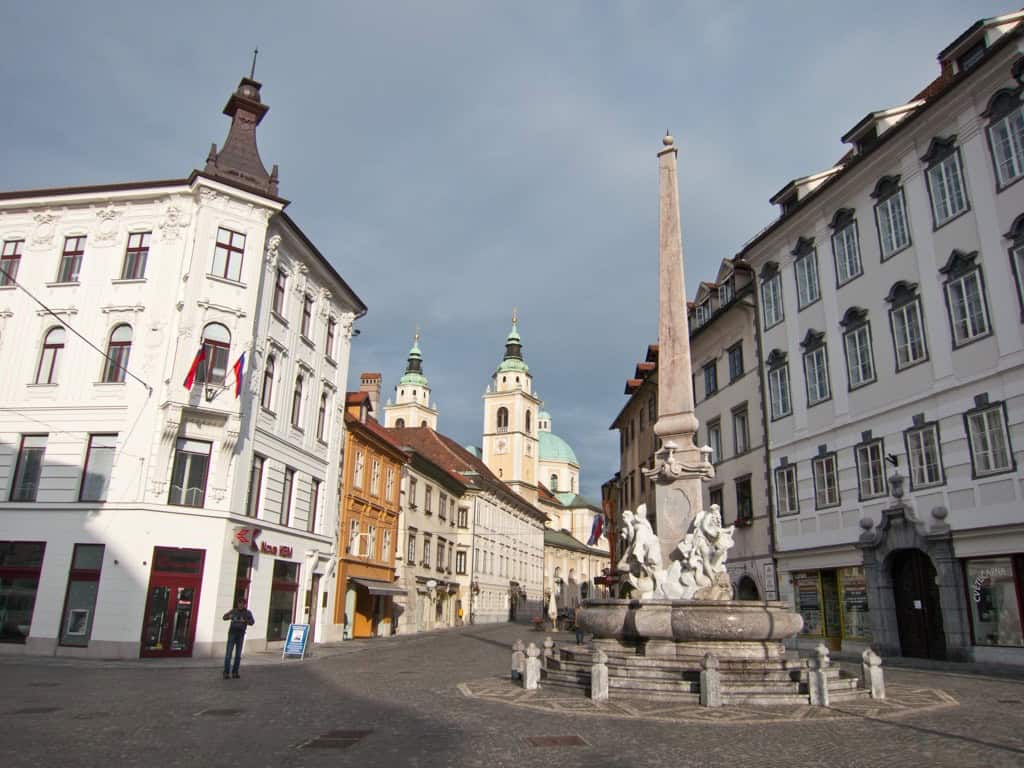
But when the battery has died, the weather has turned wild, or if you're just being street smart and you'd rather not whip the smartphone out to check the time, it's often nice having a discrete and dependable watch.

Victorinox, in honor of its 130th anniversary, has released the I.N.O.X. watch.

This stainless steel watch is an extremely rugged and durable piece of machinery while still maintaining a subtle appearance that won't garner unwanted attention while traveling.

Victorinox Swiss Army I.N.O.X.

For each of their 130 years of existence, the Victorinox Swiss Army decided to put this watch through the wringer with 130 different stress tests that would annihilate your typical watch.

They froze it, submerged it in boiling water, blasted it with sand, and even drove a 60-ton tank over it.

It has been built to withstand up to 12G forces in acceleration and deceleration as well as exposure to a variety of corrosive chemicals like gasoline, household cleaning products, and insecticides.

The watch has been tested to take falls from 10 meters onto concrete and be submerged in waters up to 200 meters deep.

Perhaps more applicable to most of us, it has also been tested to withstand two hours in the washing machine.
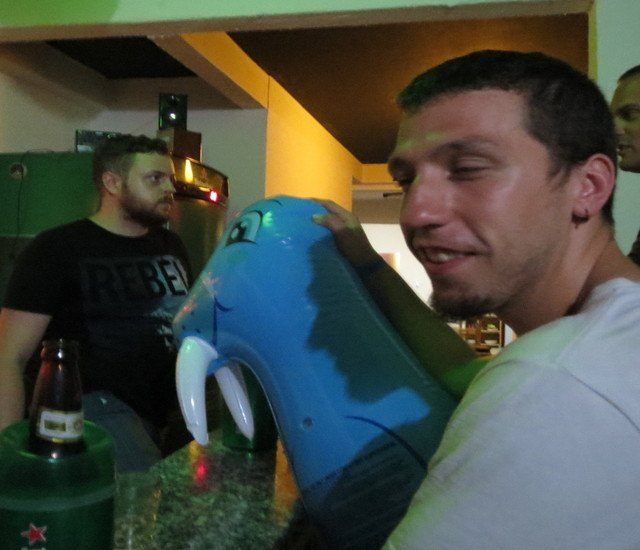
Victorinox Swiss Army I.N.O.X.
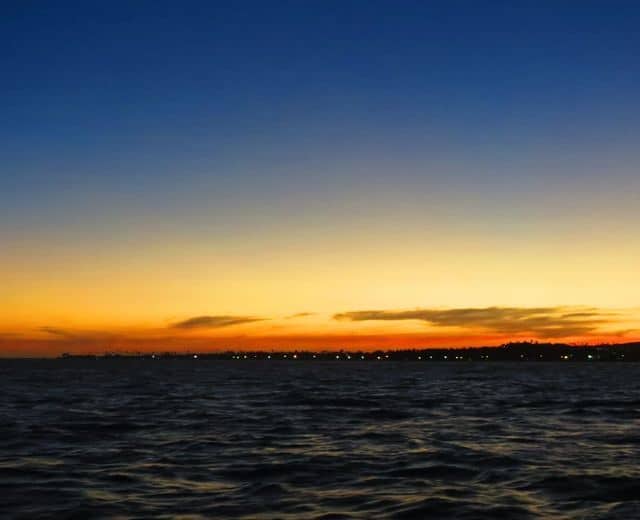
Have I mentioned that this thing robust?

It is meant to live up to Victorinox Swiss Army's slogan "Made to Last" for their new collection of 2014 sports watches, and to bring the dependability of the classic Swiss Army knife to the world of watches. It seems like this really lives up to that challenge.

If you're an adventure traveler that is looking for something you can rely on to last from the sweltering jungle of the Amazon, while deep water soloing in Thailand, through sand storms in the Sahara, and whatever other extreme adventures you've got in mind, you might want to take a look at the Victorinox Swiss Army I.N.O.X. before you head out.

The watch has a sleek, classic design, with a rugged metal body, and wrist band available in black, khaki green, or navy blue.

I think the watch is particularly suited to traveling because it is not bright and shiny and screaming "look at me, I'm expensive," which is not what you want while on the road.

Victorinox Swiss Army I.N.O.X.

The I.N.OX., named after the French word for stainless steel, also comes with a removable rubber bumper that fits over the watch face to protect it from further abuse, while not disturbing legibility, and also lending the watch its unique look.

If you need a subtle, rugged, and dependable watch, be sure to take a look at the Victorinox Swiss Army I.N.O.X.

It is available from select retailers now with a retail price of $525.

__________

This post was written in partnership with Victorinox.

How to Survive a Lost or Stolen Wallet on Holiday

Italy's Tremiti Islands
Italy's Tremiti Islands (photo: David Lee)

[T]here are some things you don't mind losing on holiday - your cares and inhibitions to name but two. But losing your wallet can be a serious drag.

When your pockets are empty, a foreign country that just a moment before seemed like a magical playground can suddenly become a place of fear and foreboding.

Thankfully, there are several ways of ensuring that your cash-strapped state doesn't last for too long.

Think Ahead

Should you run into problems, things will go a lot more smoothly if you've taken a few precautions beforehand.

Keep photocopies or scans of your various credit or debit cards and jot down contact numbers for your bank and the local embassy, then stow all this info away somewhere safe (i.e., not in the wallet that's just gone missing).

The modern option is to store these records in a secure, cloud-based account with a company like Dropbox.

With all these details at your fingertips, you'll be able to leap into action quickly should the disaster scenario occur.

Travelers Checks

Harking on the same theme, if you choose to use travelers checks, remember to hold onto the receipt and write down the checks' serial numbers.

On the receipt you'll find an emergency number which you can phone in the event that the checks somehow go walkabout. Once you've supplied all your info, you'll usually be issued with replacements within a day or so.

Credit Cards

Losing that vital bit of plastic can put a major dent in those holiday vibes.

But again, so long as you have your card issuer's emergency number to hand, it needn't be the end of the world, and they should be able to get a new card issued to you within one to three days.

Keep in mind, for security reasons, many card companies will only mail a replacement card to your mailing address on record. If you do not have someone collecting your mail, or who can forward it to you while you're away, you may be stuck without it until you return home.

For this reason, it's important to carry multiple cards, and keep at least one as a back-up in a location other than your wallet.

Having Money Sent From Home

If you've had your wallet stolen and you need a little cash to tide you over, in most cases it's easy for someone at home to deposit or transfer some money into your bank account which you can then withdraw.

Alternatively, if you've lost your debit card along with your wallet but you happen to be traveling with a trustworthy companion, then the money could be transferred into their account instead.

Then again, if, for some reason, no one can access their home bank accounts, you might want to arrange for some money to be sent abroad through an international transfer. Money transfer companies like Azimo specialize in transferring money online and offer this at reasonable rates.

Other options are transferring your money through online bank accounts or even through the Post Office.

There's no getting away from the fact that losing your wallet is a major downer, but as long as you've taken a few steps to be prepared for the worst, there's no reason why it should be a fatal blow to a fun holiday.

________

This post was published in partnership with Azimo.

4 Popular Types of Backpacks

InLuggage - Caribee Mallorca 70
Caribee Mallorca 70

[A]s certain as there are destinations for all kinds of travelers are backpacks as their ultimate travel companion.

Backpacks are great for travelers who just want to enjoy the scenery with their hands free while having everything they need on their shoulders.

Here's a roundup of backpacks that are perfect for certain kinds of travelers. Which kind of travel bug are you? Let's start!

1. For the Nature Adventurer

Usual Destinations: Mountains, forests, hiking spots

Being someone who walks a distant miles, the Nature Adventurer needs a backpack that is durable and will provide him back support to withstand carrying a heavy load while trekking and communing with Mother Nature.

Look for a backpack like Caribee Mallorca 70, which can be ordered through online retailers like In Luggage.

It is made of sturdy materials and zippers, has contoured back support and padded hips straps, which makes it perfect for the Nature Adventurer.

InLuggage - Caribee Trail Green2
Caribee Trail Green2

2. For the Culture Wanderer

Usual destinations: Cities, museums, temples, major tourist spots, food centers

The Culture Wanderer can be found walking on the streets, eating local food, shopping in floating markets, conversing with the locals, attending festivals or listening to a local museum tour guide.

The perfect backpack for this kind of traveller is something that is stylish and will allow him to keep his essentials organized through pockets and dividers.

Enough for a short trip, Caribee Trail is perfect for the Culture Wanderer, which will help him roam around the city with ease and style.

InLuggage - High Sierra Impact Back Pack
High Sierra Impact Back Pack

3. The Comfy Traveler

Usual destinations: Beach, hotels

Worry-free and just enjoying the scenery, the Comfy Traveler will most likely need a backpack that can contain all the things necessary for his escape: clothes, medicines, accessories, iPod, medicines, and the list goes on.

A simple backpack like the High Sierra Impact Back Pack is perfect for this kind of traveler who wants to grab a backpack and just unplug.

InLuggage - Caribee Flight Deck 40 Black
Caribee Flight Deck 40 Black

4. Business Traveler

Usual destination: Cities, hotels

Business trips could cut the pleasure of a Business Traveler's journey but it will not keep him from exploring.

This kind of traveller will most likely need a backpack that has a compartment for his laptop and will contain other things that he will need like extra corporate clothes, shoes, socks and maybe a couple of papers and books.

Like the Culture Wanderer, the Business Traveller also needs something that’s stylish and will keep his I-am-here-for-a-business look.

Nice for short business trips, Caribee Flight Deck 40 is the best travel companion for this traveller.

No matter what kind of traveller you are, always keep in mind to pack light and get the most of your travel by exploring and learning.

By having a backpack as your travel companion, you'll get to roam around and enjoy the experience with more mobility while having just everything you need with just a zip.

_______

This post was published in partnership with InLuggage.

How to Stay Put When You Have a Traveling Heart

Granada, Nicaragua
Granada, Nicaragua (photo: David Lee)

[I]t’s no mystery that a wandering heart constantly lusts for adventure. That’s why for some, traveling is not only a hobby but a lifestyle.

Perpetual travelers are not content without seeing the world with their own two eyes. But even the heart fueled with passion tires after a while.

Some take short breaks in between by settling down in a place for a while.

But if you’re bent on seeking for the thrill that only seeing the world can give, how can you make staying put a bit easier? Here are some tips!

Take the Place for a Spin

One of the most important factors in settling down is the location you choose. Before deciding, try to go for a drive or take a hike up the trails or stroll down the coast.

See if this is a place you can live with for a significant chunk of time. See if the neighbourhood is welcoming. Or make the place liveable in your own terms.

Fix Your Finances

Another important aspect in both traveling and settling down is finances. Money will decide if you’ll live comfortably or not.

If you’re a perpetual traveler, you probably have two sources of income – permanent and temporary gigs.

Be mindful of your savings as they can translate to another currency (especially if you’re moving to a third world country). Try to convert your savings into the location’s currency and calculate the cost of living.

This gets easier as you choose a place to settle down as you can take on a full-time job you will enjoy.

It doesn’t have to be a long-term gig, as you’ll probably pack up soon and continue your journey. Just something you’ll enjoy and would pay the bills.

Settle Light

As mentioned, you’ll probably wake up again one day and decide that it’s time to move on. So don’t get carried away when furnishing your home (for the next few months).

Try not to stock up on anything non-essential. You don’t need that big haul of an oven that will give you a pain when it’s time to pack up again. Maybe skip the humidifier. You get the picture.

But if you absolutely have to have that 40" screen TV, there are services out there that you can hire to settle your excess baggage. Go for trusted companies like World Baggage that actually offers online tracking for your peace of mind.

Make the Most Out of It

Settling in one place for a while will give you the opportunity to explore what the place has to offer.

Take advantage of everything while you’re still there. Learn about the culture, the food and soak in the sights!

_________

This post was brought to you in partnership with World Baggage.

Marmaris, Turkey: Don't Listen to the Bad Press

Marmaris, Turkey
Marmaris, Turkey (photo: Keraban Aga)

There are some places in the world that get a bad reputation through no fault of their own.

Usually, it's through the rather questionable actions of a minority of people who tars an entire nation and its holiday resorts. I think the same can be said about Turkey.

Now, I'm not here to bad-mouth the place, quite the opposite, because I love it, and I'm currently spending six months of my year living here.

It makes me angry, to say the least, when I read bad stories in tabloids, which in turn puts holidaymakers off visiting and experiencing everything this beautiful and mysterious country has to offer.

There are some fantastic deals for holidays to Turkey, both for the remainder of this summer and next year, and I would encourage anyone to book up and see the country for themselves.

Costs are low overall on booking and can be lowered even further if you're a little clever with the rest of your travel plans. For example, how do you get to the airport?

Driving yourself and parking will always work out cheaper than booking an entire family onto a train or coach, and this is a service I always use.

Airport parking with ParkBCP is on my favorites list when it comes to organizing my travel, and I regularly use terminal 5 parking at Heathrow, so I can certainly vouch for it.

I've used parking facilities nationwide, having said that, so wherever you're flying from, you're sure to find a good quality service.

Money saved at booking and on your travel extras means you have more to spend once you're in this wonderful place I call my second home, and that gives you more scope for exploration.

Kunefe
Kunefe (photo: Sudharsan Narayanan)

The countryside around Marmaris is beautiful, and a good way to see it is by booking a jeep safari.

This means you're traveling within the reliable confines of a trip, but you're also experiencing the countryside, nearby villages, and having a lot of fun too.

Boat trips are another great way to see the stunning coastline and a sure-fire way to get that fantastic tan you dream of.

Haggling on the markets is a fun way to spend your time, as well as grabbing several bargains along the way.

This is a colorful and fun experience, and once you get into the swing of haggling, you'll probably find yourself laughing at the sellers and their cheeky stories.

Nightlife is second to none, and the restaurants are plentiful and of great value.

I'd always recommend heading to a traditional Turkish restaurant and trying out some delicious local cuisine, such as kunefe, a delicious sweet.

The horror stories you hear about Turkish holiday resorts are mostly unfounded.

You find bad people the world over, regardless of which country you visit.

I've yet to experience anything that would put me off returning to this cultural, beautiful, and welcoming land.

_________

This post was published in partnership with ParkBCP.

Nicaraguan Food: Typical and Traditional Cuisine

Like in many Latin American countries, Nicaraguan food goes back to pre-Columbian times and has been transformed and influenced over time.

This is evident in the name of some of its dishes and the ingredients and spices used in them.

Most of the traditional Nicaragua menu is known as "criollo," which is how Indian-Spanish fusion cuisine is referred to throughout most of the Caribbean, Central, and South America.

Specially-seasoned Nicaraguan pork with tajadas (fried plantains), rice and beans, salad by the wonderful chefs at Monty's Beach Lodge
Nicaraguan pork

Overview

There is a significant difference between the Pacific, Atlantic/Caribbean, Northern, and Central Nicaraguan foods-particularly the type of vegetables and spices consumed.

Yet, there is one omnipresent base ingredient: corn.

Its extensive usage goes back to ancient indigenous cultures in the Americas, particularly Mexico, Honduras, El Salvador, Nicaragua, etc. Furthermore, this ingredient is not limited to food.

It's also used in various traditional drinks such as Pinole (pre-Columbian drink with cocoa, cinnamon, and toasted ground corn), Chicha (fermented corn beer), and other fruit-based nonalcoholic beverages.

Vigoron: cabbage salad known as curtido (chopped cabbage, tomatoes, onions, chili pepper marinated in vinegar and salt), boiled cassava and chicharrones (fried pork with skin or with meat) wrapped in banana leaf.
Vigoron: cabbage salad known as curtido, boiled cassava, and chicharrones wrapped in banana leaves.

Ingredients typically found in the tropics triumph here as well.

These include fruits such as mangoes, jocotes, papaya, plantains, avocado, and tamarind, in addition to starchy root vegetables such as cassava and quequisque (also known as Malanga or yautia).

Herbs and spices include garlic, onions, tomatoes, cilantro, oregano, achiote (annatto), cacao, and cinnamon.

They portray how well-seasoned, yet non-spicy, Nicaraguan cuisine is. Moreover, how the mixing of the sweet, savory, and sour is the norm-especially when it comes to seafood (to kill that "fishy" taste and smell).

Other unique features of Nicaraguan recipes are animal innards such as tails, stomachs, brains, testicles, skin (particularly of pigs), feet, and even blood (to make the traditional moronga).

Nacatamal: the Nicaraguan answer to tamales, popular all over the country. Made out of mashed corn and lard, stuffed with either chicken/pork seasoned with tomatoes, onions, garlic (photo: H.C.)
Nacatamal: the Nicaraguan answer to tamales (photo: H.C.)

Central and Pacific Cuisine

The inhabitants of the Central and Pacific regions of Nicaragua prefer simple gallo pinto (rice and black beans, cooked with oil in a frying pan) with either beef, chicken, pork, or (particularly on the coast) seafood-alongside fried snacks and dairy products.

Sample dishes include:

Indio Viejo

Indio Viejo is a thick chicken or beef stew made with cornflour "masa," garlic, onions, sweet peppers, tomatoes, and a squirt of sour orange.

Using achiote or annatto also gives the dish an attractive deep-orange color.

Quesillo

Quesillo is a thick corn tortilla with soft cheese, pickled onions, and sour cream.

Tajadas with fresh local cheese - NOM! Special thanks to Ometepe Secret Adventures for such a great introduction to Nicaraguan cuisine.
Tajadas with fresh local cheese (photo: ometepesecretadventures.com)

Tajadas con Queso

Tajadas con queso is fried plantains, sliced thin or thick, with salty local cheese & repollo (cabbage salad) as toppings.

Caballo bayo, already served (photo: Jorge Mejía Peralta, Flickr)
Caballo bayo (photo: Jorge Mejía Peralta)

Caballo Bayo

Caballo Bayo is the Nicaraguan twist on Mexican fajitas: many ingredients are typically served in clay pots, from which guests pick their favorites to make their tortillas.

Fillings and toppings include fried/shredded beef or chicken, mashed beans, creole chorizo, guacamole, pico de gallo, sour cream, moronga (pork blood sausage), chicharrón, green & red sauces.

Guapote, an Ometepe specialty, lightly breaded in delicious Spanish spices - topped with a sweet and salty mango tomato sauce. Thanks to Ometepe Secret Adventures for such introducing me to such a delicacy.
Guapote, an Ometepe specialty, lightly breaded in delicious Spanish spices - topped with a sweet and salty mango tomato sauce. Thanks to Ometepe Secret Adventures for introducing me to such a delicacy.

Local Fish with Tropical Fruit and Vegetables

Local fish dishes such as guapote are typically seasoned while cooking with savory ingredients such as garlic, black pepper, cilantro, and onions but topped upon serving with sweet tropical fruit sauces that may include, say, mango and tomatoes (as pictured above).

Nicaraguan seafood
Nicaraguan seafood

Atlantic and Caribbean Cuisine

On the other hand, Nicaraguan food on the Atlantic coast is heavily influenced by Afro-Caribbean spices and flavors, mainly coconuts, chiltoma (sweet peppers), and chilies accompanied by roots such as yuca (like cassava), and malanga.

Moreover, coconut oil is typically used for cooking instead of lard or cooking oil. These combinations give 'Nica-Caribbean' cuisine a distinct flavor.

The most popular seafood dishes include lobster, shrimp, and crab. You name it. When it comes to fish, it is eaten either dried, fried, or in soups.

Rondón

Rondón is a creamy coconut milk-based stew of turtle meat or fish with beef or pork, originally from the city of Bluefields.

It is seasoned with sweet peppers, chilies, onions, plantains, yuca, quequisque, and an herb named nargan.

We recommend you opt for the fish variety, though, as turtles are endangered.

Gallo pinto con Coco

Gallo pinto con coco is like the traditional Nicaraguan rice and black beans dish, but cooking oil is substituted by coconut oil when frying.

Pan de Coco

Likewise, pan de coco is bread whose flour includes ground coconut and is the perfect accompaniment to rondón.

Gaubul

Gaubul is a traditional Caribbean-Nicaraguan drink, little known even on the Pacific coast of its own country.

It is a mixture of cooked, mashed green plantains with fresh cow milk, coconut water, and sugar to taste.

« Previous Page
Next Page »
Dave at Ahu Ko Te Riku on Rapa Nui (Easter Island), Chile.

Hi, I'm Dave

Editor in Chief

I've been writing about adventure travel on Go Backpacking since 2007. I've visited 68 countries.

Read more about Dave.

Footer

back to top

About

  • About
  • Archive
  • Privacy Policy
  • Cookie Policy

Follow Us

Contact

  • Contact
  • Work With Us
  • Submissions

Copyright © 2026 Go Backpacking