Go Backpacking

  • About
  • Travel Tips
    • Accommodations
    • Budgeting & Money
    • Adventure Travel
    • Food & Drink
    • Gear & Gadgets
    • Packing Tips
    • Travel Blogging
    • Travel Insurance
    • Trip Planning
    • UNESCO Sites
  • Destinations
    • Africa
      • Botswana
      • Egypt
      • Ethiopia
      • Morocco
      • Rwanda
      • South Africa
      • Tanzania
    • Asia
      • Cambodia
      • China
      • Hong Kong
      • India
      • Indonesia
      • Japan
      • Laos
      • Malaysia
      • Nepal
      • Philippines
      • Thailand
      • United Arab Emirates
      • Vietnam
    • Europe
      • England
      • France
      • Germany
      • Greece
      • Iceland
      • Ireland
      • Italy
      • Portugal
      • Spain
      • Switzerland
      • Turkey
    • North America
      • Canada
      • Costa Rica
      • Cuba
      • Guatemala
      • Mexico
      • Nicaragua
      • Panama
      • United States
    • Oceania
      • Australia
      • French Polynesia
      • New Zealand
    • South America
      • Argentina
      • Bolivia
      • Brazil
      • Chile
      • Colombia
      • Ecuador
      • Peru
  • Advertise
menu icon
go to homepage
  • About
  • Travel Tips
    • Accommodations
    • Budgeting & Money
    • Adventure Travel
    • Food & Drink
    • Gear & Gadgets
    • Packing Tips
    • Travel Blogging
    • Travel Insurance
    • Trip Planning
    • UNESCO Sites
  • Destinations
    • Africa
      • Botswana
      • Egypt
      • Ethiopia
      • Morocco
      • Rwanda
      • South Africa
      • Tanzania
    • Asia
      • Cambodia
      • China
      • Hong Kong
      • India
      • Indonesia
      • Japan
      • Laos
      • Malaysia
      • Nepal
      • Philippines
      • Thailand
      • United Arab Emirates
      • Vietnam
    • Europe
      • England
      • France
      • Germany
      • Greece
      • Iceland
      • Ireland
      • Italy
      • Portugal
      • Spain
      • Switzerland
      • Turkey
    • North America
      • Canada
      • Costa Rica
      • Cuba
      • Guatemala
      • Mexico
      • Nicaragua
      • Panama
      • United States
    • Oceania
      • Australia
      • French Polynesia
      • New Zealand
    • South America
      • Argentina
      • Bolivia
      • Brazil
      • Chile
      • Colombia
      • Ecuador
      • Peru
  • Advertise
search icon
Homepage link
  • About
  • Travel Tips
    • Accommodations
    • Budgeting & Money
    • Adventure Travel
    • Food & Drink
    • Gear & Gadgets
    • Packing Tips
    • Travel Blogging
    • Travel Insurance
    • Trip Planning
    • UNESCO Sites
  • Destinations
    • Africa
      • Botswana
      • Egypt
      • Ethiopia
      • Morocco
      • Rwanda
      • South Africa
      • Tanzania
    • Asia
      • Cambodia
      • China
      • Hong Kong
      • India
      • Indonesia
      • Japan
      • Laos
      • Malaysia
      • Nepal
      • Philippines
      • Thailand
      • United Arab Emirates
      • Vietnam
    • Europe
      • England
      • France
      • Germany
      • Greece
      • Iceland
      • Ireland
      • Italy
      • Portugal
      • Spain
      • Switzerland
      • Turkey
    • North America
      • Canada
      • Costa Rica
      • Cuba
      • Guatemala
      • Mexico
      • Nicaragua
      • Panama
      • United States
    • Oceania
      • Australia
      • French Polynesia
      • New Zealand
    • South America
      • Argentina
      • Bolivia
      • Brazil
      • Chile
      • Colombia
      • Ecuador
      • Peru
  • Advertise
×
Home

Moving Overseas: The Downsides of Expat Life

Moving overseas is an adventure that I would recommend to anyone and everyone.

Since moving overseas, I've grown as a person and discovered more about the world than I could ever have anticipated.

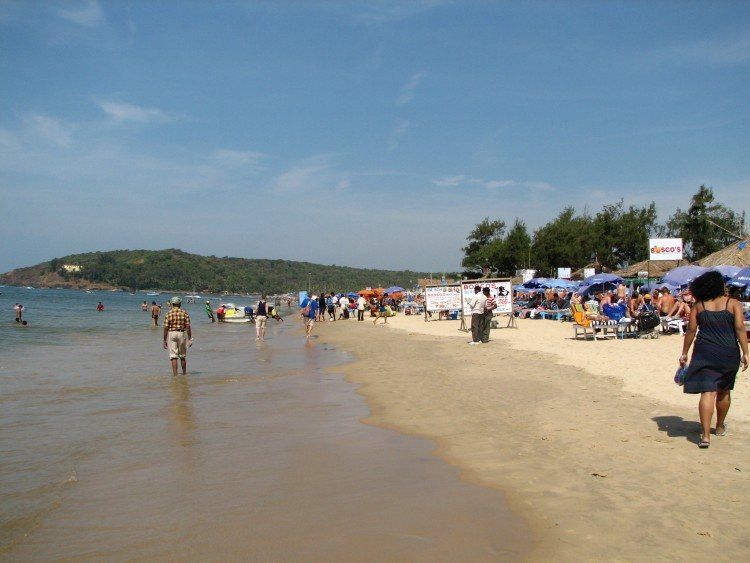
Gordon's Bay
Gordon's Bay in Sydney... I feel homesick when I think about this beach!

That said, it's also the hardest thing I've ever done. There are many downsides of expat life, which don't always get mentioned.

I'd equally recommend anyone considering spending a decent amount of time abroad to approach it with great trepidation for the following reasons.

Table of Contents

  • The Homesickness. Oh, the Homesickness
  • People Will Forget About You
  • You Won't Be Able to Avoid Culture Shock
  • You'll Miss Key Events, and it Will Bother You
  • Your Life Won't Magically Become Ten Times Better Overnight
  • You May Never Want to Return Home

The Homesickness. Oh, the Homesickness

Homesickness is funny, as it tends to hit you when you least expect it. I was terribly homesick when I first moved to the UK, and everything set me off.

The weather, seeing dogs in the street, pictures of my friends at the beach on Instagram... even hearing the famous Australian soap Home and Away theme song.

There's nothing you can do to combat it, either. Just try to keep busy and distract yourself. It gets easier over time, but it never truly goes away.

People Will Forget About You

It's all rainbows and puppy dogs when you first move overseas. People say they miss you. They email you. They send you letters. They call you.

However, over time, the contact becomes less and less. Emails go unanswered, and your phone can remain silent for days.

It's easy to forget that life in your native country will continue, with or without you. We're all wrapped up in our own lives, and for some, it's simply a case of "out of sight, out of mind."

It hurts; there's no doubt about that. However, it will teach you who your real friends are.

The people who take the time out of their days to email you, send you Christmas cards or birthday presents, set aside time to Skype, or even visit you are truly your forever friends - the ones you know will always be around, no matter what.

Cherish them, and make sure you do the same in return! These are the friendships that can indeed go the distance. When you reunite, it will be as if no time has passed.

Related: How to Cure Homesickness

Dog
(Wo)man's best friend - they can't Skype, but you'll know they miss you.

You Won't Be Able to Avoid Culture Shock

It can be pretty strange to live in countries with cultures similar to your own. An Australian in the United Kingdom. A Canadian in the States. An American in New Zealand.

Australian culture bears many similarities to that of the English.

We're skilled in self-deprecation, are equally as wild about cricket, and share a particular enthusiasm for excessively consuming alcoholic beverages.

So, I often get lulled into a false sense of security. England feels a lot like home in more ways than one.

Then, someone will do or say something that will completely spin me out. Or I'll unknowingly say something considered obnoxious and immediately alienate everyone in the room.

It's an immediate jolt back to reality and can sometimes act as a trigger point for our old friend, homesickness.

You'll Miss Key Events, and it Will Bother You

Since I've moved overseas, I've missed engagements, weddings, significant birthdays, and my baby brother's graduation.

If you're lucky, you may be able to time visits back home with some of these events. However, you won't be able to attend everything. You'll disappoint people and feel like you're missing out.

My advice? Stay off social media on the days you know something big is happening. You'll feel better for it.

Your Life Won't Magically Become Ten Times Better Overnight

There's a lot to be said about living in the moment. If you're not fully content in life, you're living in your own country... who is to say you're going to be any happier in another?

I spent many years in my hometown of Sydney, daydreaming about what my life would be like when I moved abroad. I had pretty high expectations when I finally made the move to London.

It was a much more complicated process than I had initially thought. I had to find a new job, a house, a gym, make new friends, and get my bearings in a new city.

These were things that I already had at home and had taken entirely for granted.

It can take anywhere between six months to a year to settle into life in a new country, and during that time, you're going to continually question why you ever left home. Stick it out. It's worth it, I can assure you of that.

Downsides of expat life
Another downside of expat life is being unable to see the stars from London!

You May Never Want to Return Home

You may not want to stay in your current city forever, but that doesn't necessarily mean you'll want to go home. Instead, you'll spend hours looking at maps and researching places online.

You'll be plagued by the same questions again and again. Where can you go next? Will you be able to find work there? Which part of the city will you live in?

The biggest problem with expat life is that it becomes addictive. You're continually doing new activities, meeting people, and traveling to the most exciting places.

Once you've tasted life overseas, you may never want to return home.

There are many downsides to expat life, but it's worth riding them out. Life is not constant - it is a series of peaks and troughs.

The better you weather the bad, the more rewarding the good times will be.

5 Simple Steps to Start Planning Your Next Journey

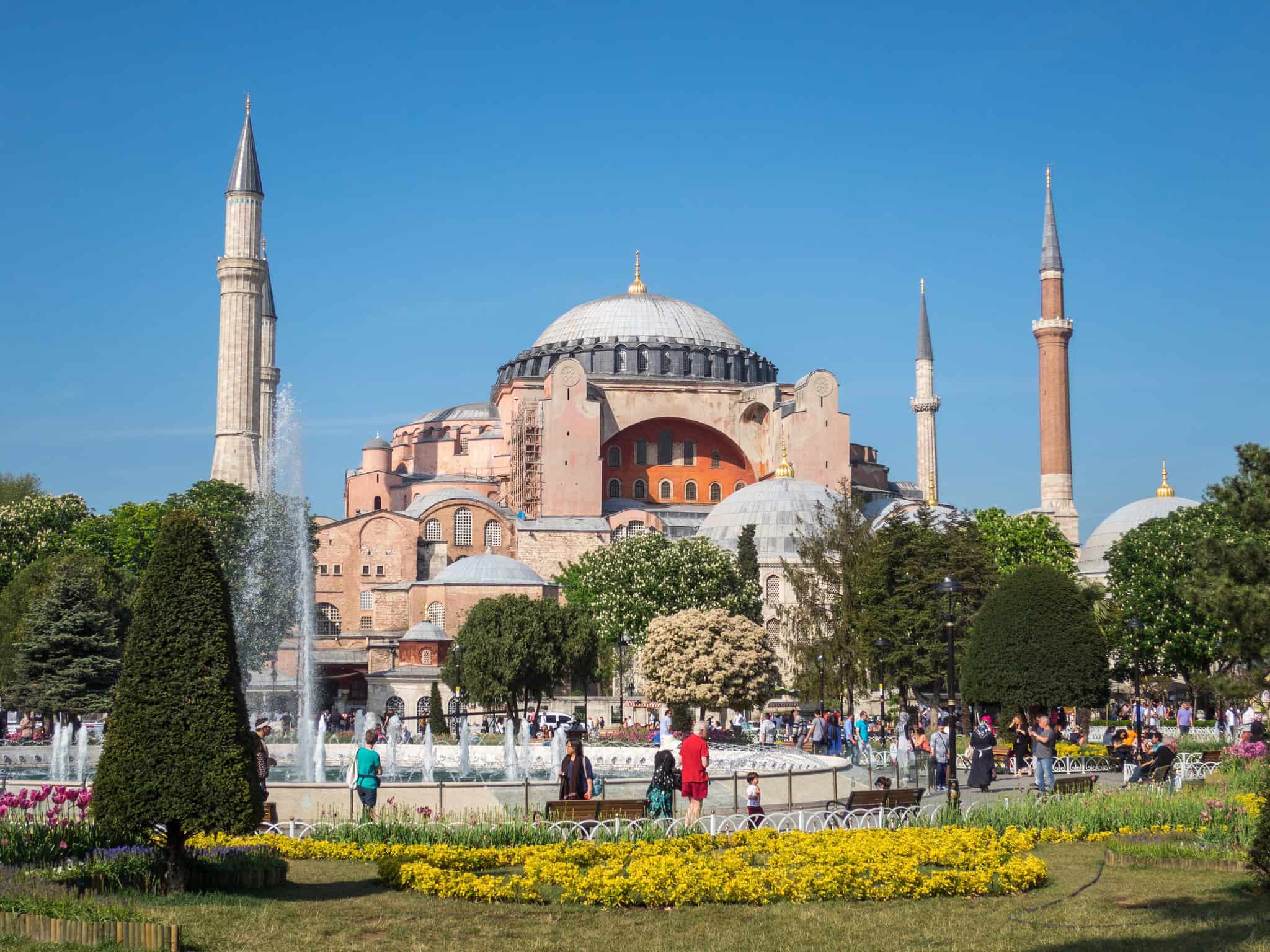
Haggia Sophia - Istanbul
Hagia Sophia - Istanbul (photo: David Lee)

As we prepare to head into the new year, thousands and likely tens of thousands of newly minted college graduates from around the world will head off on backpacking trips ranging from a few weeks to "forget it, I'm not going home!"

Like Dave of Go Backpacking, who found a new home in Medellín, Colombia toward the end of his 'round the world trip, it's possible you will too.

That's why it pays to plan ahead and leave your home country in tip-top shape, physically and financially. Here are a few basics every traveler should think about.

Table of Contents

  • 1. See Your Doctor(s)
  • 2. Travel Insurance
  • 3. Banking and Credit Cards
  • 4. Plan Your Journey
  • 5. Research Local Customs

1. See Your Doctor(s)

It’s a good idea to book an appointment with a doctor or health professional at least six months before you’re due to go on the trip of a lifetime.

You’ll not only need to arrange your travel vaccinations, but you should have a routine physical and vision test too.

It may sound strange, but getting your hearing tested is also important and by clicking here you’ll be able to arrange an appointment.

If you are going to certain countries you’ll need to have specialized vaccinations, but if you’re sticking to travel in the UK and Europe, you won’t need much advanced medical preparation.

2. Travel Insurance

The Travel Independent website gives some very important advice on the types of insurance that you take out.

There is not only health cover to think about, but also emergency evacuation, cancellation, and theft insurance.

The last thing you want is to lose your smartphone and have no means of communication.

You should arrange your cover as early as possible and try to read the small print.

There are lots of policies and the prices and coverage vary dramatically.

3. Banking and Credit Cards

One of the most important things to consider when going backpacking is how to gain access to your money. You can carry some cash, though it’s not advisable to carry too much at once.

The best strategy is to rely on plastic and taking money out of ATM machines, but sometimes accessing your account in a foreign country can command very high transaction fees, so check with your bank before you go.

You can always keep your money supply topped up by working temporary jobs or you could start a blog.

The HappyTime blog explains how you can set one up and how to earn money at the same time.

4. Plan Your Journey

You might have a rough idea about where you want to visit, but if you actually sit down with your laptop or even a map, you will be able to better plan your route.

You’re going to want to see some of the local culture and nightlife, but you don’t really want to be taken for a ride, literally.

If a travel agency or website is offering the bargain of a lifetime, be wary, they probably want your money and won’t give you anything in return.

5. Research Local Customs

Every country has its own customs and traditions and in some areas, you have to make sure that you follow the rules.

For example, if you're going to a Muslim country, read up on dress/undress protocols before you walk on to a beach, especially if you’re female.

If you're in Saudi Arabia, you’re not allowed to kiss in public, so take care. Just read up on the customs of every country you plan to visit before you set off and you'll minimize mistakes in etiquette and the attraction of unwanted attention.

World's Best Cities for Gay Clubbing

Some people travel to get in touch with nature, and some travel to learn more about cultures in far-flung lands. And some people travel to party! If you want to forget about the stresses of daily life by going wild on the dance floor, get to these best cities for gay clubbing.

One of the best things about the gay travel scene is that it caters to hedonism. The best places in these cities deliver for the gay community.

TLV nightclub in Tel Aviv, one of the world's best cities for gay clubbing. (photo: David Shankbone)
TLV nightclub in Tel Aviv (photo: David Shankbone)

Berlin

Okay, Berlin is a bit of an obvious choice for gay nightlife. But it's evident because it's such an epic place for parties that it cannot be ignored!

As one of the most prominent hipster destinations on the planet, it's also highly gay-friendly.

I might describe it more as gay-dominant and straight-friendly. So don't worry if you are a hetero who wants in on the action - you'll be welcome in the club too!

My lasting memory from visiting Berlin is dancing to Torn by Natalie Imbruglia in Club Schwuz in the early morning hours. I mean, how brilliantly weird is that?

And if you want something a little darker and more "clubby," you can't beat Berghain - an "after-hours" joint that has been described as the best club in the world more than once.

Related: Why Every Traveler Should Attend a Gay Pride Festival

Pride Parade in London, one of the best cities for gay clubbing (photo: Ian Taylor)
London Pride Parade (photo: Ian Taylor)

London

The truth is that London's gay scene is in decline. A handful of my favorite places from just a few years back have closed down, primarily because of the high rent prices in England's capital.

But even when it's in decline, London is a more happening city than most, and it still deserves a spot on our list of the best cities for gay clubbing.

If you go to one club night in London, it has to be Duckie at the Royal Vauxhall Tavern, which has held its own each Saturday night for over twenty years.

The crowd remains the most diverse of any gay club night in the capital.

You can expect to hear big pop tunes, but there is also live performance art every week for something different.

And if you want a gay megaclub, London has those too. G-A-Y at Heaven attracts the biggest pop talent to perform every Saturday night.

If you want to dance to thumping techno, you should head to Fire and take your shirt off with the Muscle Maries.

Related: Europe's Best Gay Beaches

Performance in a gay club, location unknown
Club (photo: ?)

Buenos Aires

Latin America has always been a place that has been friendly towards the LGBTQ community, with same-sex marriage legalized in many countries way before the United States or the United Kingdom.

And it's in the major cities of South America that you can find the most epic gay clubs and parties.

Buenos Aires is the place to be for those who love to party, not into the night but the early hours of the morning.

There are two neighborhoods for gay partying in Buenos Aires: San Telmo, which is the historical center and has a relaxed, vibrant feel, and Palermo, which is more upscale and swanky.

For a taste of the city's LGBT history, don't miss Contramano, the oldest gay club in the city, now over thirty years old.

That club tends to draw an older crowd, so if you want big beats and sexy guys, Amerika Disco is the place to visit, dance, be seen, and make new friends. There are three floors of music, and you'll have an unforgettable time.

Related: Challenges of Being a Gay Traveler

Drag queen with a disco ball (photo: Greta Hoffman)

New York City

The Big Apple is one of the world's most exciting cities for many reasons, not least because of its enduring appeal to the LGBT community.

New York City is split up into five boroughs (Manhattan, Brooklyn, Queens, the Bronx, and Staten Island), and the type of scene you're after will dictate where you hang out.

The Hell's Kitchen area of Manhattan is where you go for budget dining and hot gay clubbing.

You can catch a drag show at Industry Bar after work; things heat up if you take the party to XL Nightclub, officially NY's largest gay nightclub.

But if you want something a little more off the wall, you would be better off venturing to Brooklyn.

Okay, Brooklyn might be more of a lounge around, have a drink, and look at the hipsters kind of place, but there are still definitely big parties where you can shimmy.

Metropolitan has been a staple on the Williamsburg scene for a decade now, and Happyfun Hideaway is a new kid on the block that mixes fun dance tunes with an artistic vibe.

***

We hope you've enjoyed this quick rundown of the best cities for gay clubbing.

Of course, there are many more amazing cities for single gay travelers and same-sex couples to have a good time, including San Francisco, Los Angeles, and New Orleans. See you out there!

The Coolest Things to Do in London This Winter

Field Court, Gray's Inn
Field Court, Gray's Inn (photo: J D Mack)

My home city of London is a place that I love, but I try to be there in the summer months.

I enjoy the outdoor barbeques, drinking in the park, the lighter evenings, and the better spirits that the local people tend to be in.

But recently, I’ve also had a longing to be back in London for the winter.

Friends have messaged me about their epic Christmas and New Year's Eve plans, and how they are enjoying cozy Sundays in the pub eating a Sunday roast.

So, my advice to you is to get to London no matter what time of year, because it’s undoubtedly one of the coolest cities in the world.

And here are six of the coolest things that are happening in London Town this winter.

Table of Contents

  • Bump Rollerdisco @ The Southbank Centre
  • Jack and The Beanstalk @ Hackney Empire
  • Winterville @ Victoria Park
  • Skating @ Somerset House
  • Height of Winter at The Shard
  • wonder.land at National Theatre

Bump Rollerdisco @ The Southbank Centre

The Southbank Centre is one of the most celebrated cultural institutions in the capital, showcasing everything from spoken word nights to big orchestral performances.

This winter, part of the Southbank Centre is being transformed into a roller-disco so that you can bop along to pop songs, warm your hands in the indoors, and try out your best skating moves.

The fun lasts until January 17th, and it costs £10 to skate.

Jack and The Beanstalk @ Hackney Empire

Pantomimes are a strong Christmas tradition in the UK, and it just doesn’t feel like Christmas unless you have seen a production of Cinderella or Puss in Boots.

These camp performances feature men dressed up as women and lots of audience participation.

Kids typically have the most fun at these performance events, but the Hackney Empire’s annual production is always produced with both little ones and grown-ups in mind.

This year’s show is Jack and The Beanstalk, and it features two Olivier Award-winning performers – don’t miss it!

Image source.
"Twin Peaks/David Lynch themed dark cabaret" (photo: Martin SoulStealer)

Winterville @ Victoria Park

East London is where London’s hipsters come out to play, and this Christmas pop-up in the East End’s Victoria Park is 100% the hipster destination of the season.

The heart of all the action at Winterville is the Spiegeltent, which is playing host to a whole suite of fun and alternative Christmas events.

Beefy Tea is a gay bear cabaret event where all hairy and rotund gay men will be in heaven.

Christmas Massaoke is a karaoke event like you’ve never experienced before – karaoke with a live band but exclusively for Christmas tunes.

And then there is Ultimate Power – a club night dedicated to epic power ballads from the likes of Celine and Whitney. Winterville runs until December 23rd.

Skating @ Somerset House

One of the coolest things about the run-up to Christmas in London is that a tonne of makeshift ice rinks pop up all over the capital.

You can choose between ice rinks at the Natural History Museum, Spitalfields, and many other places – but my favorite is always at Somerset House.

Somerset House is a stunning London building that dates back to the 18th century, and it overlooks the River Thames.

Go ice skating and treat yourself to a steaming cup of mulled wine; you’ll feel totally immersed in British wintry bliss.

It costs from just £7.50 to skate, and the temporary rink is open until January 10th.

Height of Winter at The Shard

Even though the Shard only opened its doors a few years back, it is already one of the most iconic buildings in the capital and you can see it for miles around on the London skyline.

At the Level 72 Skydeck at The Shard, you can see to the far reaches of the city, and this winter a special festive experience is being hosted there.

The venue has teamed up with scientists so that every interaction, every flicker of lighting, and every sound evokes a romantic response.

Explore a huge snow globe, crystal-studded snow dunes and treat yourself to a decadent glass of mulled champagne. The experience lasts until January 31st.

The Shard on London's skyline. Image source.
The Shard on London's skyline (photo: Loco Steve)

wonder.land at National Theatre

Every now and then, a theatre event comes along that sparks the interest of regular theatergoers, hipsters, pop culture lovers, and tourists alike.

That event this season is wonder.land, a new musical based on the classic Alice in Wonderland story created by Blur frontman Damon Albarn.

In this version of the classic tale, the “other world” of the Looking Glass is the internet, and this production explores the real and the unreal in our online and offline lives.

The play incorporates stunning multimedia effects, and as you’d expect of a Damon Albarn production, the musical score is said to be incredible. Tickets cost from £15 and the show runs until March 2016.

Enjoy yourself in London this winter!

5 Homemade Toiletries That Will Save You Money

Toothbrush
A Bamboo toothbrush with homemade toothpaste

You’ve decided to take an extended backpacking trip abroad.

It makes sense that the next logical thing to do is to start monitoring your finances and dreaming up ways you can save yourself money in your day to day life.

There’s a whole manner of ways you can approach this. You can cut back on your movie dates or omit that morning cup of coffee from your life.

A less conventional option is to open the doors of your toiletries cupboard and take a look at what you’ve got sitting on the shelves there.

Many of the day to day items we use to keep our hygiene in order are probably, shock, horror - items we don’t need.

We’re often conned into buying vast amounts of unwanted products that we may use once or twice.

They then get thrown into the far corners of your bathroom cupboard, left for years to gather dust.

I have a particular vendetta against the “travel-size” toiletries items that you can purchase from chemists and pharmacies.

I found I’d end up re-buying them for any trip I made abroad, in most cases, forgetting that I would have a couple of small tubes of moisturizer laying around my bedroom from my last trip overseas.

I decided that it was time to start looking into making my own items to use around the house and while traveling.

They’re easy enough to package in small plastic jars, I know exactly what I’m putting on my skin for a change and as many of the ingredients are available to buy in bulk… I’m saving money in the long run.

Here are a few homemade toiletries that you can whip up in your kitchen, need very few ingredients and even less of your own spare time.

Table of Contents

  • 1. Toothpaste
  • 2. Toner
  • 3. Moisturizer
  • 4. Deodorant
  • 5. Make-Up Remover

1. Toothpaste

Toothpaste is an easy one to start with, as it contains only three key ingredients - baking soda and coconut oil, with peppermint oil for taste.

Make sure when buying peppermint oil that it is digestible, rather than essential oil.

  1. Grab a ½ cup of coconut oil and melt it slightly.
  2. Add 2-3 tablespoons of baking soda.
  3. Let around ten drops of peppermint oil trickle into the concoction.
  4. Mix, put it into a small jar and allow it to harden.

Use by scooping it onto the bristles of your toothbrush using the brush head or a teaspoon.

Rather than spending money on a plastic toothbrush that will spend an eternity sitting in a landfill somewhere, consider purchasing a toothbrush made out of bamboo instead.

They have the same lifespan as a regular toothbrush (up to three months). Every part of the toothbrush, apart from the bristles, is biodegradable.

Editor's Note: At home, consider trying a toothbrush sanitizer as it helps to kill bacteria and keep your brushes totally clean until the next use.

Apple Cider Vinegar
I consume Apple Cider Vinegar and use it on my face.

2. Toner

A simple recipe for the toner that I use is two parts filtered water, one part apple cider vinegar. Shake before applying it as you would any other toner… I.e., via a spray bottle or directly on your face.

For a better smelling option - try making your own rosewater toner, which can be done in under an hour.

Remember to patch test either concoction on your skin twenty-four hours before applying it directly to your face.


3. Moisturizer

If you’re like me, you’ll have skin that is continually crying out for moisturizer. I think I used to spend more money on this part of my beauty routine than any other.

Once again, the ingredients required are minimal - coconut oil, cocoa butter, shea butter, and almond oil.

Combine ingredients in a bowl and mix - you’ll be ready to rumble in no time.

I was equally as excited to stumble upon a recipe for homemade lotion bars.

Such a neat and compact item would make a welcomed addition to any backpacker’s bag of toiletries when on the road.

4. Deodorant

There are slim pickings for natural deodorants out there that work.

For a long time, I had to choose between offending anyone in my immediate vicinity with body odor or putting the aluminum in conventional deodorants directly on my skin.

Yet, you guessed it… you can make your own, using three ingredients - coconut oil, baking soda, and Shea butter, with arrowroot and essential oils as optional extras.

Reusable cotton wipes

5. Make-Up Remover

Jojoba oil. That’s it. Dab a bit on some reusable cotton rounds and use it as you would any other makeup remover.

Of course, you don’t have to go full hippy. Start slow - try making your toothpaste and see how you progress from there.

Swapping out even one store-bought item for a product you can make yourself will save you money and be much better in the long run for both your health and our wondrous planet.

Beating the Winter Blues: Simple Tips to Tackle Seasonal Affective Disorder

As the year draws to an end, the sun graces us less and less with its presence. The end of daylight savings tends to trigger seasonal affective disorder, otherwise known by the apt acronym of "SAD."

As the world darkens around us, SAD is a genuine threat that will affect scores of people across the Northern Hemisphere during the winter months in varying degrees of intensity.

Snow in downtown Reykjavik, Iceland.
Snow in downtown Reykjavik

For some, it leads to a debilitating depression that brings a need to seek professional help. For those unable to attend in-person sessions, online therapy with insurance coverage has become an accessible way to get professional help during these challenging months.

Others are affected in a much milder manner, left feeling listless, grumpy, and lacking energy. It's not nearly as bad, but it's upsetting nonetheless.

This disorder is triggered by a lack of sunlight in winter, which affects melatonin and serotonin levels in people's systems. These hormones control the part of our brain that presides over our appetite, mood, and sleep, otherwise known as our circadian rhythms.

Coming from a country that boasts around ten hours of daylight in the middle of winter, I was shocked by how much the lack of sunlight affected my system. I struggled to get out of bed every morning, didn't want to eat, and was generally quite down.

As this experience was new to me, I didn't know how to combat the symptoms of my "winter blues." Consequently, those few dark months were a struggle. However - we live, we learn. No winter blues for me this season. This is how I will fight it off.

Table of Contents

  • Tips for Managing Seasonal Affective Disorder
    • 1. Take Advantage of What Daylight You Do Have
    • 2. Exercise and Eat Well
    • 3. Write Down How You're Feeling
    • 4. Use a Dawn Simulating Alarm Clock
    • 5. Go on an Adventure
    • 6. Look for the Joy in the Winter Season

Tips for Managing Seasonal Affective Disorder

Journaling is one way to combat seasonal affective disorder (aka the winter blues).
Journalling is one way to combat subsyndromal SAD

1. Take Advantage of What Daylight You Do Have

One of the most obvious solutions could also be the most effective: get out in the daylight for a full 20 minutes. If you work throughout the day, take a break while it's still light and have lunch outside to help counter seasonal affective disorder.

Alternatively, go for a walk. Don't spend your days off mulling about the house - do all that is humanely possible to soak up as much Vitamin D as you can when you can.

2. Exercise and Eat Well

You would think that exercise is another no-brainer. Yet, I neglected to make it a priority last winter, and I know it had a massive impact on my general well-being.

Winter's the perfect time to execute an exercise plan as you hide your body in layers of clothes. Download an exercise app for home workouts or join a gym. If you time it right, you'll emerge from your cocoon of sweaters, coats, and scarves in six months as a beautiful, toned butterfly.

3. Write Down How You're Feeling

This has always worked well for me when I'm feeling down. If I can't verbalize my emotions, I write about them. I filled out a whole journal last winter, although I'm not entirely sure whether I should consider this an achievement! Regardless, it's cathartic, and I always feel much better after doing it.

4. Use a Dawn Simulating Alarm Clock

I haven't tried this, but I heard fantastic things from others. These alarm clocks wake you with a gradually brightening 30-minute "sunrise." It's supposed to regulate your sleep cycle, with you getting out of bed feeling refreshed. They feature a 30-minute "sunset" that works oppositely - lulling you to sleep.

Those with more severe SAD symptoms can use these on top of a lightbox, a clinically proven treatment for the disorder.

5. Go on an Adventure

Twelve Apostles
A winter trip to the Twelve Apostles in Australia

The prospect of travel always boosts my spirits. Ideally, you'd want to go somewhere warm. If this option isn't available, take a few days off to explore a nearby state, country, or even your backyard.

Is there something you've always wanted to see or do in your city? Now is the time to do it. Sling a backpack over your shoulder, get out there, and immerse yourself in the world.

See also: Reasons To Visit Australia in Winter

6. Look for the Joy in the Winter Season

Weather aside, there are a lot of positives to winter in the Northern Hemisphere. Cozy nights in with a good book, a thick blanket, and a steaming mug of hot chocolate. Glühwein (mulled wine) or hot cider in a pub or by an outdoor fire.

Winter clothes are so much preferable to any summer wardrobe. Imagine tromping around your house in big slippers (or Ugg boots, if you're an Aussie like me), flannelette pajamas, and the fluffiest dressing gowns.

Watching The Holiday and Bridget Jones's Diary on repeat. Snow, if you're lucky enough to live in an area where this happens. Christmas!

People tend to whine and moan about winter, but it's a special season. If winter truly isn't your thing - at the very least, it is only three months of the year. The days will get longer before you know it, daylight savings will return, and soon enough, another summer will be just around the corner.

Do I Really Need to Take Malaria Pills?

Do I need to take malaria pills? You're not alone. Every traveler asks this question along their journey. While I'm not a doctor (and you should always consult your doctor for medical advice), I hold a graduate degree in public health and often travel to malaria-infected countries.

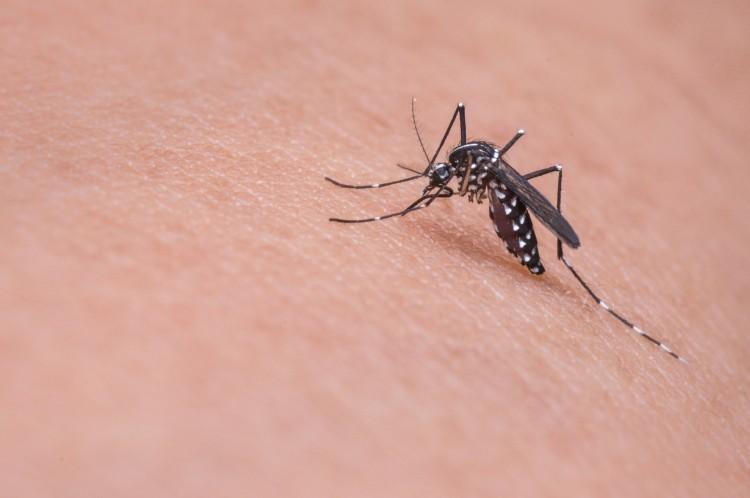
Mosquito
Mosquito

Naturally, I always err on the side of caution regarding my health. Benjamin Franklin once said, "An ounce of prevention is worth a pound of cure." Understanding the disease is essential before deciding whether you need malaria pills.

Table of Contents

  • What is malaria?
  • What are the symptoms of malaria?
  • Where can I get malaria?
  • How do I prevent malaria?
  • My doctor told me to take a malaria pill. What kinds are there?
    • Chloroquine
    • Malarone (Atovaquone/Proguanil)
    • Doxycycline (Vibramycin)
    • Mefloquine (Lariam)
    • Primaquine
  • Where do I get malaria medication?

What is malaria?

Malaria is a common mosquito-borne disease found in primarily tropical regions worldwide. It can be severe and possibly fatal. A parasite commonly infects mosquitoes that feed on human blood.

People who get malaria become sick with high fevers, shaking chills, and flu-like illness. The incubation time following a mosquito bite varies from seven to 30 days.

In typical malaria attacks, symptoms last six to ten hours and involve a cold stage (e.g., shivering, feeling cool), a hot stage (e.g., fever, vomiting), and a sweating stage (e.g., sweating, tiredness).

In rare cases of severe malaria, infections are complicated by serious organ failure or abnormalities in a person's blood or metabolism. If someone is experiencing signs of severe malaria, they should seek medical attention immediately.

What are the symptoms of malaria?

Most people experience the following symptoms, but it can vary per person:

  • Fever
  • Chills
  • Excessive sweating
  • Headaches
  • Nausea and vomiting
  • Body aches
  • Tiredness
Source
Map of malaria Prevalence in the World (Source)

Where can I get malaria?

Over 3.4 billion people live in regions at risk of malaria transmission. Most of the 106 countries and territories at risk are in Africa, India, and the tropical areas of Central and South America and Southeast Asia. Use the CDC Travelers' Health website to determine if you are traveling to a country at risk for malaria transmission.

How do I prevent malaria?

While you can't 100 percent prevent malaria, you can take precautions to reduce your chances through simple methods. Use insect repellent with DEET. The higher the DEET concentration, the longer the repellent will last.

Ninety-five percent DEET repellent will give 95 percent protection for up to 10 hours. Most people are fine with 10-30 percent, lasting between three to seven hours.

Use an insect net at night to keep the mosquitos and other bugs out. Wear long sleeves and pants in areas of high risk, like the deep jungle. Reduce your exposure at dawn and dusk when mosquitos are most active. Take a malaria pill.

My doctor told me to take a malaria pill. What kinds are there?

Pills
Pills

There are many types of antimalarial medications you can take. Your options will probably vary depending on where you live, but the list below contains the most commonly prescribed malaria pills.

Chloroquine

Chloroquine has been used for many years to help prevent malaria. It is taken the week before entering the risk area, weekly while there, and finally, four weeks after leaving the area. Chloroquine is often prescribed for travelers to rural parts of Mexico, Central America, Haiti, and the Dominican Republic.

Malarone (Atovaquone/Proguanil)

Malarone is the newest antimalarial pill on the market. It is a combination of two antimalarial drugs: atovaquone and proguanil. The pill is taken the day before you arrive in the risk area, daily while you're there, and for seven days after you leave. The drug is relatively side effect-free but can be pricey depending on your health insurance plan.

Doxycycline (Vibramycin)

Doxycycline is a popular antibiotic that treats chloroquine-resistant falciparum malaria. It is taken the day before you arrive in the risk area, daily while you're there, and daily for four weeks after you leave. Common side effects include stomach ache, diarrhea, and light sensitivity. It is also pretty cheap.

Mefloquine (Lariam)

Mefloquine is one of the oldest chloroquine-resistant falciparum malaria pills developed during the Vietnam War. It is taken weekly starting the week before you arrive in the risk area and for four weeks after you leave the area.

However, travel doctors do not often prescribe Mefloquine because of its side effects. Side effects include dizziness, vivid dreams, and possibly seizures and psychosis.

Primaquine

Primaquine is not routinely given to travelers as it is used primarily to treat P. vivax or P. ovale malaria after a diagnosis. To take this drug, you must take a G6PD blood test to determine if you have enough G6PD levels to digest the drug. Primaquine is most commonly prescribed in areas where P. vivax malaria is more prevalent than falciparum malaria.

The CDC has a great comparison guide for each drug, but you should always consult your doctor before choosing the best medication for your needs. Choosing a malaria pill also depends on what country you're traveling to, as each country has a different strain of malaria. It can even vary per region of a country.

For example, Panama has two malarial regions. While most of Central America is in the Chloroquine-sensitive area, the area southeast of the Panama Canal is Chloroquine-resistant, meaning that Chloroquine will not work.

Where do I get malaria medication?

You can get malaria medication from your doctor at home. Most health insurance plans will cover doxycycline as a common antibiotic, but coverage for the remaining drugs depends on your insurance plan.

If you can't get medications at home, don't worry. You can buy malaria medications on the road from local pharmacies or doctors.

While many travelers have a laissez-faire view of malaria medication, it is essential to weigh your options. I'd rather take a few pills than spend my vacation in a hospital because I got malaria.

The Best Travel Headphones for Under $100

No matter what corner of the world you visit you can always take music with you. There’s no better way of relaxing on an airplane than enjoying your favorite music in peace.

Just because you’re traveling, it doesn’t mean you can’t enjoy some good music on the go.

In fact, since you always want to maximize your money to spend it more on seeing the world, we’ve found the best travel headphones under $100, which should fit most budgets.

Below are the best value for money headphones that are perfect for traveling. Pick the right model for your needs, pack them in a pocket and go see the world.

Table of Contents

  • What To Look For In Travel Headphones?
    • Sound Isolation Or Noise Cancellation
    • Portability - Put Them In a Small Pocket
    • Convenience - Is It Worth Fitting Big, Bulky Headphones In Your Backpack?
    • Comfort - Headphones That Won't Irritate Your Ears After Long Hours
  • The Models Of Best Travel Headphones under $100
    • Audio Technica ATH-ANC7B
    • Shure SE215
    • Phiaton PS 210 BTNC
    • JBL E40BT Bluetooth
    • Koss PortaPro

What To Look For In Travel Headphones?

Apart from good sound quality, what other features come in handy for a world traveler?

Sound Isolation Or Noise Cancellation

When you’re stressed out and just want to enjoy some peace and quiet, good noise isolating or cancelling headphones come very useful.

To get rid of the annoying airplane engine buzz, get a pair of noise cancelling headphones, turn them on and almost “magically” all the buzzing noise will cease to exist.

Just keep in mind that ANC (active noise cancelling) headphones need a battery that you’ll have to keep charged.

This might be a deal breaker for some who travel without much electronics or in countries where charging such devices becomes a problem.

See the page with the best noise cancelling headphones reviewed, but note that most of them cost a small fortune.

On the other hand, noise isolating headphones make a great pair of traveling equipment. You don’t need a battery or special maintenance. Just put them on and enjoy your music without being bothered by noises around you.

Keep in mind, both types of headphones leak some noise in, so don’t expect perfect silence, especially if you are in an old, crowded bus.

Portability - Put Them In a Small Pocket

Size and the ability to pack them in a small pocket on your backpack are important for any headphones you intend to use in your travels.

Most headphones are simply too big and bulky to be comfortably used when you’re a global traveler. But thankfully you have other options.

One of them is to get small earbuds or in-ear headphones that are dramatically smaller in size while still give good sound quality. They tend to be cheaper and offer good noise isolation.

The only problem you might have with them is that they tend to become uncomfortable after long use. So if you intend to use them on a long plane flight, keep in mind you will probably need to make short breaks in between.

The other option is foldable headphones that you can make compact by folding the headband which will then fit into any decently sized pocket.

The big benefit of bigger ear cups is their comfort which is best of any type of headphones.

Convenience - Is It Worth Fitting Big, Bulky Headphones In Your Backpack?

If you intend to travel with minimal baggage and you will carry all your stuff around in one backpack, then probably big headphones don’t come into play for you.

Always think beforehand about the main use of your headphones. In case you just want something comfortable on your long plane flights and you’ll carry a lot of bags with you, you can easily get big headphones like Audio Technica ATH-ANC7B for maximum comfort.

Bluetooth headphones also need a charged battery. If you are traveling in more rural, underdeveloped countries, than Bluetooth headphones are a bad idea.

There won’t be a lot of chances to charge your headphones if you find yourself in the middle of rural sub-Saharan Africa. Empty Bluetooth headphones will just become useless deadweight.

Comfort - Headphones That Won't Irritate Your Ears After Long Hours

Comfort plays a big role. Since traveling means you will probably have to wait around a lot. If you are sitting on a bus driving across country to the new tourist attraction you need comfortable headphones.

If you tried traveling with bad headphones you probably already know how badly irritated ears feel like. Not fun at all.

Audio Technica ATH-ANC7B

The Models Of Best Travel Headphones under $100

Audio Technica ATH-ANC7B

For the best noise cancelling headphones under $100 Audio-Technica ATH-ANC7B are the absolute winners.

There are no headphones that offer similar value for the same price, sure you can get Bose QuietComfort 25, but those cost three times the price at $300.

The sound is balanced and clear which is great for every music genre as long as you’re not demanding strong bass. Because of rather flat response it’s easy to listen to them and because of their noise cancelling technology they’re perfect for all noisy environments, like airplanes, buses and the trains.

Noise cancelling requires one AAA battery which gives about 40 hours of playtime. This is very useful for travel, since you can get batteries in any convenience store and just buy them in bulk. No need to bother with charging.

The ear pads are quite big and nicely padded making the headphones very comfortable even for long transcontinental flights. Foldable design makes them easier to carry around and put in your backpack, though they are still quite big since they are on-ear headphones.

For all travelers who value quiet and want to enjoy their music in comfort, this noise cancelling model is a great choice.

Shure SE215
Shure SE215

Shure SE215

The popular Shure SE215 are one of the best earbuds on the market that you can get for under $100. With their great build quality and audiophile sound, they make for one of the best earbuds for travelers.

Sound quality is very high as is common with Shure models, all sound ranges are clear and detailed with bass being strong enough to make any song sound fun. If you enjoy rock, classical, dubstep or pop, these in-ears will sound great.

What makes Shure SE215 great for traveling is their small size and great durability. Because they are earbuds you can easily pack them in any small pocket so you can carry more of the other stuff you need on your adventures.

They have detachable cables that are easy to replace and together with strong, but lightweight plastics, make for one durable pair of earbuds. They come with a variety of ear tips to easily adjust to the size of your ears.

You can use these in literally all environments, they can even resist some humidity and sweat so you can take them to the hot Middle East or Asia without worrying about breaking them.

For the best all-rounder travel earbuds, these are the best choice you can make for less than $100.

Phiaton PS 210 BTNC
Phiaton PS 210 BTNC

Phiaton PS 210 BTNC

Phiaton is known for making great active noise cancelling headphones and the PS 210 BTNC model is one of them. If you’re looking for noise cancelling and Bluetooth earbuds, these are the best you can get for the price.

They offer good sound quality with effective noise cancellation and stable Bluetooth connection. All of this is hard to get in any other headphones for less than $100.

Noise cancelling might be a bit less effective than with Bose QuietComfort 20i, but they cost a lot less money.

Bluetooth connection works with any smartphone or Bluetooth MP3 and the battery gives up to 14 hours of playtime which is pretty decent.

As long as you have a place to charge them up these will be a great addition to your traveling equipment that you won’t go anywhere without.

In case you want to visit some of the remote and less developed countries where you might have a problem finding a power source, Bluetooth might not be the best choice.

All in all Phiaton PS 210 BTNC is one great piece of traveling equipment that’s compact enough to fit in the smallest backpack.

JBL E40BT Bluetooth
JBL E40BT Bluetooth

JBL E40BT Bluetooth

As Bluetooth, portable headphones JBL E40BT are one of the best choicest for travelers. With foldable on-ear design you can easily store them in a pocket without taking too much space.

The bass-heavy sound will be to the liking of all bassheads and if you enjoy music with strong bass these will perform amazingly well.

The good thing about these is their strong Bluetooth connection. You can easily put your smartphone on your pocket without the wireless connection breaking. This is a big problem with many other wireless headphones which is very frustrating for any regular user.

The battery is rechargeable and gives up to 16 hours of music, they aren’t noise cancelling or have particularly good noise isolation, but this is good for when you want to hear what is going on around you.

The on-ear design might not be as comfortable as over-ear, but still offers good comfort, just don’t expect to wear them for 10 hours without any irritation.

For great portable Bluetooth headphones with strong bass, don’t look any further than JBL E40BT unless you are willing to spend a small fortune.

Koss PortaPro
Koss PortaPro

Koss PortaPro

The last headphones on this list that are great for travelers are Koss PortaPro which offer unbeatable low price and great sound quality. Just by looking at them they don’t promise much, but once you put them on you will change your mind.

It’s true they look a bit outdated, but the sound and comfort more than make up for it.

PortaPro on-ear headphones are ultra-lightweight and because of that you barely feel them on your head. The ear cushions are very soft and offer great comfort even for long hours. You can easily enjoy them for the long bus rides or plane flights without getting your ears irritated.

Build quality isn’t top notch, but considering the price this is understandable. Their foldable design is very portable, perfect for packing them in a bag or carrying around in a bigger pocket.

The noise isolation isn’t particularly good and they also don’t feature any noise cancelling technology, but you can get them very loud with pretty much any music device. Take them hiking with you and enjoy clear and rich sound.

For less than $40 you will have a hard time finding better value for money headphones that are more suitable for traveling.

If you are looking for more information on headphones, visit Headphonesaddict.com where you can find reviews of models for all occasions.

________

This story was brought to you in partnership with Headphones Addict.

Best Places to Party in Mexico

People visit Mexico for a considerable number of reasons. It's an incredibly diverse country with landscapes ranging from oceans to mountains and everything in between.

You can feel a sense of history in Mexico's many ruins, and you can feel the buzz of the country's contemporary culture at the many modern art museums in Mexico City.

But Mexico is also a remarkable country for people who love to party.

If the highlight of your week is your Friday and Saturday night out, make sure you check out these best places to party in Mexico.

Partying people in Mexico
Party time (photo: Circuito Fora do Eixo)

Table of Contents

  • Guadalajara
  • Mexico City
  • Tijuana
  • Playa del Carmen
  • Puebla

Guadalajara

Guadalajara is the second-largest city in Mexico and often gets overlooked by tourists for more popular nearby places like Puerto Vallarta and Guanajuato.

But Guadalajara is a city that is well worth visiting, not least because of its epic party scene.

Guadalajara has earned its place on Mexico's party map because its student population loves to dance through the night and its substantial gay community.

When I first visited Guadalajara a couple of years back, I was blown away by the vibrancy of the gay scene there.

Head to Calle Prisciliano Sánchez, and you won't fail to notice the strip of gay bars and clubs along the road.

There is even a gay taco stand (!) called Tacos Gay for when you need after-club munchies.

Mexico City

In my opinion, Mexico City is one of the greatest capital cities in the world.

If you want incredible street food, you've got it. If you want countless museums, they are everywhere. And if you want to party non-stop, you can do that too.

Mexico City, or DF as it is known to the locals, is like a series of villages sitting next to each other, and each one has its own culture.

If you want fun pop music and cheap drinks on the gay scene, make your way to the Zona Rosa. If you fancy a sophisticated cocktail bar, you need to be in the swanky Condesa neighborhood.

And if you want to hang out with the hipsters of DF at trendy warehouse parties, make your way to the neighborhood of La Condesa and San Rafael.

See also: Best Restaurants in Mexico City

A tequila bar is always a good way to party in Mexico!
Tequila bar (photo: Henry Zbyszynski)

Tijuana

If you are based in the States and want to make a quick road trip to Mexico, Tijuana is the place for you as it's only a two-and-a-half-hour drive from Los Angeles.

Ten to fifteen years ago, TJ had a reputation as a dangerous city, but those days are pretty much behind this party city in the state of Baja, California.

If you want a feel for the real Tijuana, skip the tourist bars in the downtown area, where you'll be overcharged for your beers, and head to the local neighborhood of La Zona Norte.

This is where you will find the hole-in-the-wall dive bars, cheap tequila, and jukeboxes that only play Mexican classics. You'll have a night of drinks in Mexico you won't forget!

See also: Challenges of Being a Gay Traveler

Coco Bongo is a famous nightclub in Playa del Carmen and Cancun (photo: Dave Lee)
Outside the famous Coco Bongo nightclub (photo: Dave Lee)

Playa del Carmen

If there is a party place in Mexico that you've already heard about, it's probably Playa del Carmen in the south.

The Quintana Roo state plays host to Tulum, where people dive and snorkel, Cancun, where people stay on package holidays, and Playa del Carmen, where the party-lovers like you hang out!

Playa del Carmen is in many respects like a home away from home - except the weather is better and the beer is cheaper.

You will find lots of other travelers and tourists, and you will even be able to pay in American dollars in many places, including clubs and bars.

If you are staying in a hostel, take advantage of their nights out as they can save you a lot of money on cover charges, and they will often organize things like free shots to make sure you have a great night.

And if you are serious about partying, be sure to find yourself in Playa during Easter week as this is the city's busiest time of year; the clubs are full, and the parties spill out onto the beaches 24 hours a day.

Travel Tip: Book your ground transportation from Cancun to Tulum online before you arrive.

Puebla
Puebla (photo: Dave Lee)

Puebla

This extremely catholic city that lies two hours south of Mexico City might seem like an odd choice for a Mexican party destination, but look beyond the incredible number of churches in Puebla, and you'll find a party city that is full of life.

Puebla has become a fantastic place for nightlife in Mexico because of its large student population.

They tend to live in the trendy suburb of Cholula, which is where all the happening nightlife is too.

The word "nightlife" is a stretch because the students will often start drinking at 1 p.m. and carry on right throughout the day.

But it's not all clubbing until the early hours - you can also find jazz lounges, hole-in-the-wall cantinas, and late-night coffee bars here.

Enjoy your time in Mexico, and party hard!

Save Money on Travel With Dealspotr

Karma points for just signing up.

I like to think that I am a typical backpacker, always trying to find the best deal. After all, the more money I save, the longer I can stay on the road.

Even a $10 savings can be one night's accommodation somewhere as cheap as Thailand.

So when I was invited to review Dealspotr for Go Backpacking, I jumped at the chance to learn how to save more money.

Dealspotr is a new site that gives shoppers cashback in the form of Amazon gift cards just for sharing the great deals they find, including travel deals.

It claims it's the best community for finding and sharing deals, and unlike so many other cashback sites, no purchase is required.

It's built as a Twitter-like social media platform for bargain hunters, and you get compensated for participating in the community and sharing any deals that you find.

Signing Up

The home page is easy to use, and setting up an account is effortless.

You choose whether you want to sign in with your Facebook account or email.

For signing up, I received several hundred Karma points and two new badges for activating my account. Not bad for 30 seconds' work.

Each karma point earned is a step towards an Amazon gift card. For example, I needed 1,000 karma points to get my $5 gift card reward.

The right-hand box on the home page has suggestions for "a few things you can do to be awesome."

I really like the conversational tone as it sounds friendly and made me smile when reading it.

The "ways to be awesome" are incentives to earn more karma points such as:

  • Follow at least 20 stores.
  • Follow 10 people.
  • Post your first deal.
  • Upvote five good deals.
  • Comment on a deal.
  • Add a profile image & a bio.

Following a store means that the store will appear in your recommended daily feed so that you can keep up to date with any store discounts and deals, whether online or in-store.

Hot Deals allowed me to choose coupons that you can either use in-store or online. I chose coupons for online deals with travel and events.

Save money on top travel sites

Saving Money When You're Traveling

There was a wide choice of coupons from familiar sites such as Travelocity, Fandango, and TripAdvisor. 

Car hire coupons were available from Enterprise, Avis, and Budget; airline coupons from the likes of Emirates, Delta, and Southwest; and hotels including Hilton, Westin Hotels & Resorts, and Hotels.com - a meta-search engine.

Clicking on the blue "Follow" button allowed me to add a company to my list of organizations that I'm following.

When I clicked on Booking.com, it showed me a list of savings for that particular website from 20% off to save on Miami Beach hotels.

All I had to do was click on the green "Activate" button to be sent directly to the page and the deals.

I especially like this section, which is perfect for saving money when you're already on the road and traveling.

Before going on a trip, it's also a good way to save money on products such as shoes.

In the option for in-store, there was a deal for "Women's clearance items: up to 80% off at Nordstrom Rack."

I could then click directly on the website for Nordstrom Rack and check out the boots and clothing, which had significant savings, such as a fringe trim boot reduced from $79.00 to $31.60 - a 60% savings.

Just clicking on Hot Deals showed me dozens of offers to choose from.

There were discounts on books such as Paper Towns by John Green for $12.62 and 15% off a wireless mouse.

Grab a bargain at a high street store

Target appeared to have the best offers, especially the one for $10 off any purchase of $20 - great savings!

The site gives you promo codes, and free shipping offers too.

The "Verify and Earn" function helps the Dealspotr community by testing, verifying, and recommending each day's best deals.

You can earn bonus Karma points for spotting winning deals and also by flagging bad ones.

One way of earning extra karma points is to "Post a New Deal" by pressing the blue button on the right-hand side.

This is a way of adding a new deal if you see it in a store or on a store's website.

You can link directly to the deal and describe the discount so that others can also benefit from the deal.

This brings you even closer to an Amazon gift card.  

My Conclusion

I like the concept, and I think this is a great website if you are looking for things to buy before you travel and take with you, such as footwear, clothes, items from Target, etc.

It's also ideal when you're on the road for discounts on flights and hotels when planning the next stage of your journey.

It's easy to use, and I will certainly be staying logged in and claiming as many bargains as I can.

__________

This story was brought to you in partnership with Dealspotr; all opinions are of the author.

5 Reasons to Add Newcastle, Australia to Your Itinerary

Nobbys Lighthouse
The Lighthouse at Nobbys Beach

Two hours north of Sydney lies a smallish coastal city called Newcastle. In 2011, many people across the country and worldwide were surprised by its inclusion on Lonely Planet's top ten cities list.

All but the locals, of course.

So, what is it exactly that makes Newcastle, Australia stand out above any other smaller cities on the East Coast?

It has predominantly been used as a rest stop on the way to better-known places such as Byron Bay and Coffs Harbour.

However, you'd be doing yourself a disservice if you didn't allow a couple of days on your itinerary to properly explore this charming seaside city.

Table of Contents

  • 1. Soak up the Sun at the Local Beaches
  • 2. Ogle at the Biggest KFC in the Southern Hemisphere
  • 3. Immerse Yourself in a Thriving Art, Music and Food Scene
  • 4. Get a First-Hand Look at Australian Culture
  • 5. Learn a Little Something About Local History

1. Soak up the Sun at the Local Beaches

Australia boasts some of, if not the most beautiful beaches in the world in my opinion, which I'll admit is anything but humble.

There are six official beaches near the city, along with Stockton beach, which is accessible by ferry across Newcastle Harbour.

Two of the main beaches (Merewether and Newcastle Beach itself) feature ocean baths - where you can swim laps, or drift around to your heart's content.

The three local highlights are undoubtedly the Bogey Hole, Nobbys and Susan Gilmore Beach.

The Bogey Hole is a man-made pool that was cut out of ocean rocks by convicts in 1819, for the personal use of Lieutenant-Colonel James Thomas Morisset, the Commandant of Newcastle at the time.

It was named after the indigenous word "to bathe" and is frequented by locals all year round.

Susan Gilmore can only be accessed at low-tide by rounding the cliff face that borders the city and, as a result, draws smaller crowds than the other more popular beaches.

It has consequently developed a reputation as a nudist beach for liberal sunbathers.

As far as views go, you can't beat Nobbys Beach, which boasts both a lighthouse and a boardwalk that makes for a pleasant and popular place to take an afternoon stroll.

You may have already heard of Nobbys - it made international headlines in 2007. In a time when the area was suffering from horrific storms and flooding, a Japanese coal carrier known then as the Pasha Bulker was washed up onto the beach, to both the astonishment and consequent amusement of locals.

Pasha Bulker Sculpture
A relic of the Pasha Bulker - this sculpture is comprised of the carrier's rudder.

2. Ogle at the Biggest KFC in the Southern Hemisphere

There is a reason that this KFC is an attraction worth mentioning. This particular fast-food restaurant was built on the site of the Palais Royale.

Famous throughout the town, the Palais, which was built in the 1880s, went through many incarnations during its time - from a ballroom, then a dancehall and finally as a nightclub.

It was declared structurally unsound in 2007 after the storms mentioned above and was demolished the next year, to the disappointment of many locals.

More interestingly still, as the site was being prepared, archaeologists discovered 5,700 Aboriginal stone tools, which dated back some 6,500 years.

Unfortunately, a report detailing this area as one of "high to exceptional cultural and scientific significance" was not released until after construction of the KFC was completed.

So, revel in the chance to gaze upon and maybe even chow down a burger within an institution that sits on a little piece of Australian history, in more ways than one.

Boat
A boat pulling into the harbor

3. Immerse Yourself in a Thriving Art, Music and Food Scene

Newcastle is a town that is notorious for bouncing back.

It recovered from a damaging earthquake in 1989, an Australian-wide recession in the 1990s, the closure of the local steelworks (which was the primary source of Newcastle's economy) in 1999 and two rounds of devastating storms, in 2007 and 2015 respectively.

One of the more recent issues was the decline within the city CBD (Central Business District), after the opening of two massive shopping centers nearby. For some years, the city center stood empty. Businesses were closing up shop and buildings rotting away due to disuse and weather damage.

Then, in stepped an organization known as Renew Newcastle, whose purpose was to find short-term uses for empty buildings in the CBD.

Their aim was to source "artists, cultural projects and community groups to use and maintain these buildings until they become commercially viable or are redeveloped."

For a small amount of pay, small businesses and those seeking community spaces could rent out and repurpose these buildings that were otherwise standing empty.

As people began to once again populate the CBD, life was breathed back into the area.

All over town, there are new restaurants, cafes, clubs, speakeasy's, and music venues opening every week.

Newcastle CBD continues to grow in popularity, making it the hustling hub it once was and deserves to be.

4. Get a First-Hand Look at Australian Culture

Sydney and Melbourne are well worth a visit, but these are, after all, massive, sprawling, multicultural cities.

Although they are wonderful and, I would never hear or tolerate a bad word against them... it's hard to get a feel for the "real" side of Australia if you limit yourself solely to either or both of these cities.

There are many facets of Australian culture, as it is, of course, a rather large country with a diverse landscape.

You'll find cities and towns all over - from the coast to inland, the tropics, dead center and the most northern and southern regions of the continent.

The capital of Western Australia, Perth, has the fourth biggest population in the country, despite being the most remote city in the world.

We also absolutely cannot forget those living out their lives in the Indigenous communities in the outback.

However, the majority of the population is concentrated along the East Coast.

A visit to Newcastle will provide you with an example of how most ordinary, everyday Australians live, without having to venture too far from Sydney.

Anzac Memorial Walk
The Anzac Memorial Walk

5. Learn a Little Something About Local History

Few may know that Newcastle once had the largest tram network in Australia, rather than Melbourne.

The system was dismantled in 1950, yet Newcastle’s Famous Tram (on wheels) is still running around town, offering a one-hour guided tour of the city and its history to visitors.

On the 8th of June 1942, a Japanese submarine laid an attack upon Newcastle.

This was the only time the guns of the city's coastal defense base Fort Scratchley were fired.

The Fort was vacated by the Australian Army in the 1970s and is now a museum.

Visitors can take a paid guided tour or can explore the site above ground at no cost.

I recommend stretching your legs by journeying across the Anzac Memorial Walk, which was opened in 2015 to commemorate the 100 year anniversary of the landing at Gallipoli in Turkey during WWI.

It spans 450 meters and includes a 160-meter bridge.

At each end of the bridge are silhouettes of returned services personnel and the 3,859 family names of the men and women of the Hunter Region who served in the war.

Not to forget stunning views of nearby Bar Beach and the city to the west.

In summary, Newcastle is rad. If you have the opportunity to add it to your Australian itinerary... do it. You won't be disappointed.

5 Cheap and Healthy Meals You Can Cook Anywhere

Next to transportation and airfare, food and alcohol is most travelers' biggest budget item.

We all have to eat, and with so much fantastic food in the world, how can you not try everything?

Hostel kitchen
Hostel kitchen

In some regions, like Southeast Asia and Latin America, it is often cheaper to eat street food or at local restaurants.

In Australia and Western Europe eating every meal at a restaurant is a sure way to go broke.

While I always recommend trying the local fare in whatever country you're visiting, sometimes you must cook your meals to afford the bus ride to the next destination.

Many hostels, especially in more expensive countries, have kitchens to use during your stay.

Sometimes the kitchens aren't modern and lack the necessary tools to cook a gourmet meal, but you can do a lot with a few pots and pans.

Some of my favorite meals while traveling have been around the hostel dinner table with my fellow travelers.

Last November, I spent Thanksgiving in the Azores (Portugal).

On Thanksgiving eve, one of my roommates, who happened to be Canadian, decided to cook us all a delicious pasta dinner to celebrate the American holiday.

It was one of my favorite memories of the entire trip.

While cooking communal hostel meals is an excellent way to meet and connect with other travelers, it is also a perfect way to save money.

You don't have to be Julia Childs in the kitchen. You must know the basics, so you don't burn the hostel down.

Pasta is one of the easiest meals you can make in a hostel

Table of Contents

  • 1. Pasta
  • 2. Stir Fry
  • 3. Sandwiches
  • 4. Omelets
  • 5. Tacos

1. Pasta

Pasta is the main staple of any backpacker's diet. Not only is it cheap, but it is universally available.

It is also one of the easiest things to cook. You need to boil water and put the pasta in until it's thoroughly cooked. Just don't overcook angel hair pasta, as it turns into mush.

Throw the pasta in butter, cream sauce, or red sauce, and voilà - you have dinner! You can add some meat and vegetables if you want to get fancy.

Can't afford or find hamburger meat to make meatballs? Use pepperoni or sausage.

2. Stir Fry

Stir fry is another delicious backpacker staple that's slightly healthier than the rest.

Head to the local market to pick up some fresh local vegetables and your choice of meat (if you eat meat), and on your way home to the hostel, stop at the store and buy a bag of rice.

While boiling a big batch of rice on the stovetop, you can fry up your meat and vegetables in a frying pan.

Add some sauces or spices, and you'll have an excellent, well-rounded dinner in no time. Share with your friends or store it for tomorrow's dinner.

3. Sandwiches

Sandwiches are an old on-the-go lunch choice for extended days exploring a new city.

Sandwich ingredients are easy to find in most countries and can save you some dough in more expensive countries.

Just buy some bread, cheese, and cured meat, and you'll have a delicious and budget-friendly meal. Unfortunately, cheese can be hard to find in some Asian countries.

Staying in for the night? Grilling a Panini or toasting a sandwich makes a boring old cold sandwich something fun and delicious.

I also love good old fashion grilled cheese. Nothing says home like a bit of comfort food.

Omelets are not only healthy and delicious, but super easy to make
Omelets are not only healthy and delicious but super easy to make

4. Omelets

While omelets are a great breakfast food, they are delicious and filling any time of the day.

Eggs are easy to come by in most countries and are an excellent source of protein. Head to the closest market and buy some local vegetables to add flavor.

Omelets are super easy to make. Crack some eggs in a bowl, mix them up, and pour into a frying pan; add some cheese and chopped-up veggies, like onion, peppers, and tomatoes, and you've got yourself a simple healthy meal.

Add some finely chopped meat like ham or bacon if you're a carnivore.

If your omelet folding skills are subpar, don't worry. Just turn the eggs into scrambled eggs.

Beef tacos - Yum!
Beef tacos - Yum!

5. Tacos

Tacos are a staple of Latin American cuisine and are utterly delicious.

You can get tortillas throughout Central and South America and other parts of the world. If you can't find tortillas, you can make a taco salad. Trust me. It's just as yummy!

Tacos can be made with just about any meat or meat substitute you can find in your local market.

While ground beef is popular in North America, chicken, pork, and fish are authentic taco meats in Mexico.

Once you've chosen your meat, fry it in a pan with spices like chili powder and cumin.

Black or pinto beans are an excellent vegetarian alternative, or you can add the beans to the meat for a more flavorful bite.

Once everything is cooked, place it on the tortilla, top it off with some lettuce, tomatoes, salsa, and cheese, and you're good to go.

Cooking dinner at your hostel shouldn't be a scary experience. It's a great way to save money, make friends, and improve your culinary skills.

And who knows, maybe by the end of your stay, you'll be the next Julia Childs. Paris anyone?

As a bonus, many of these meals can also be cooked around the campfire if you have the proper equipment. Bon appetit!

The World's Best Places to Sing Karaoke

There is very little that I love more in life than heading to a bar on karaoke night.

The thing that I love about karaoke most of all is what a leveler it is.

We have so much pressure on us all the time to be "perfect" and "productive" - and there are very few times in life when we can celebrate our failures, like not being able to sing a note of a Whitney song in tune!

If you love karaoke just as much as I do, make sure you get yourself to these six cities - the best places for karaoke in the world.

Karaoke in Tokyo
Karaoke in Tokyo (photo: Stefan)

Table of Contents

  • Tokyo, Japan
  • Berlin, Germany
  • London, England
  • Los Angeles, United States
  • Bangkok, Thailand
  • Toronto, Canada

Tokyo, Japan

If you are serious about karaoke, you need to get yourself to the place where it all started - Japan.

There is some dispute over where exactly in Japan originates, but Tokyo is certainly an A* spot for all karaoke lovers.

On the weekends, groups of Japanese friends love to hire a karaoke booth and sing to their hearts' content - but choose your karaoke bar carefully because you could end up trying to work your way through a catalog of Japanese tracks!

Head to the Shibuya area and bars on the main streets should have the popular English tracks (hello Celine Dion!) that you know and love.

Singin' like she means it at Bearpit Karaoke. Image source.
Singin' like she means it at Bearpit Karaoke (photo: sfreimark)

Berlin, Germany

If you are feeling brave, you can sing in front of thousands of people in an outdoor pit in Berlin during the summer months.

This takes those karaoke nerves to a whole new level, but it's an experience that is hard to replicate anywhere else in the world. This is your chance to be a rock star for a day!

Bearpit Karaoke takes place every Sunday during the summer months, and it attracts all kinds of people - male, female, young, old, tuneful, and tuneless!

There is also a flea market in the park on a Sunday, so you can reward yourself with some retail therapy after you have sung your heart out in front of thousands.

London, England

My home city of London is an awesome place for karaoke too, and what I love about it most of all is that it's more centered on karaoke nights in pubs and bars than it is on hiring a booth and just singing in front of your friends.

If you are going to sing a Mariah song at the top of your lungs, you may as well test yourself by going balls to the wall and singing it in front of perfect strangers!

Bunga Bunga in Battersea hosts an awesome karaoke night on Wednesday evenings, and you should also test your rhyming abilities at The Social's extremely popular Hip Hop Karaoke night.

Los Angeles, United States

Los Angeles karaoke culture is on the opposite end of the spectrum to London's.

Yeh, you still get drunkards taking liberties with the melodies of Bon Jovi classics, but there are also a lot of good singers too.

This is a city that is full of aspiring showbiz types, so you might have to deal with people treating like their moment with the microphone like an audition for a gig.

My advice is to make it out to West Hollywood and visit the gay bars for their karaoke nights.

They are often hosted by drag queens, and are, therefore, ridiculous amounts of fun.

Fubar on a Tuesday night is recommended - cheap drinks to give you some Dutch courage!

Bangkok, Thailand

When I was traveling around Southeast Asia, I would notice karaoke bars everywhere, and I had more than a couple of tipsy nights belting out Spice Girls numbers.

One city that stood out for me as being particularly karaoke-loving was Thailand's capital, Bangkok.

Again, you need to be careful that you don't chance upon a bar that has an exclusively Thai catalog of songs, but if you stick to the expat neighborhoods such as Lad Prao and Sukhumvit you should be just fine.

WoodBall in the Sukhumvit area is a recommended place for getting up on stage and showing the crowd what you've got.

Karaoke night! Image source.
Karaoke night (photo: Connie Ma)

Toronto, Canada

Toronto is one of the greatest hipster cities in the world, but everyone lets go of any cool persona they have at the huge number of karaoke bars all over the city.

You can take all of your international friends you have made on the road to Twister Karaoke because they have tracks in nine different languages.

The whole of Koreatown in Toronto is worth perusing for its swatches of private karaoke booths too.

Let me know what your favorite Karaoke song is in the comments below!

Mexican Safari: A Close Encounter of the Jaguar Kind

Jaguar at Zoofari (photo: Jonathan Martínez-Ortega)

There is one adrenaline-pumping experience greater than jumping from a plane and just as serene as floating in a hot air balloon as the sun rises. That extraordinary high that comes from a close encounter with jaguars.

Jaguars are powerful and unpredictable animals. As Latin America's largest cats, they're built with broad heads, powerful chests, and short but strong legs.

Would it be realistic to expect these animals would act other than nature intended, no matter how well caretakers have looked after them?

I am well aware of the inherent controversy surrounding the exploitation of exotic animals with controversial examples like Seaworld and Thailand's Tiger Temple covered on blogs and in major media outlets.

However, Margarita Salgado Miranda and the Zoofari team carefully explained the entire caretaking process, and I feel comfortable with their explanations and methods.

Anyone on the fence about Zoofari or doubting their practices can direct their specific questions to Margarita Salgado Miranda.

Table of Contents

  • The Anticipation
  • Learning about the Jaguars
  • Why the Obsession?
  • My Experience with the Jaguars
  • How to Visit Zoofari
  • More Morelos Travel Ideas

The Anticipation

I have always kept the idea of hanging out with something like a tiger, lion, elephant, or jaguar in the back of my mind for sometime later in my life.

What possible scenario would I realistically expect to be given one-on-one time with a big jaguar?

I am an opportunistic adrenaline junkie.

I don't go out of my way to jump off bridges, trek through high altitude mountain ranges, or even raft through whitewater rapids.

These "bucket list" opportunities present themselves through the perks of my job and my usual travels.

Both my imagination and lack of real knowledge about animals led me to believe that my experience with a pair of rosette striped baby jaguar cubs and a couple of adults would be even more thrilling bungee jumping or skydiving.

Zoofari Jaguars
Rolling around with a couple of jaguars

Learning about the Jaguars

My guide for the afternoon at Zoofari, Margarita Salgado Miranda of Excursiones Margarita.com, explained that jaguars are hunters.

They use their extraordinary speed, stealth, and eyesight (six times better than humans at night) to launch a single bite into anything from alligators and fish to monkeys and deer.

Their jaws, tougher than any other cat species, give them another advantage as they can bite through bones, which are often part of a jaguar's diet in a zoo.

"Zoofari visitors can't believe that we can care for animals as aggressive as jaguars in a zoo-safari setting. But we understand and know that the jaguars and other animals we care for are dignified creatures that have become a part of our family.

That's why when staff or nature enthusiasts from Mexico and around the world visit us they all want to know the secrets of our caretaking and training methods.

The reality is that our success and wellbeing of the animals comes as a result of the patience and affection from our caregivers, because they have the joy of being able to communicate and interact with them in that special way.

Our park has become known as a role model for these reasons as we continue to promote environmental education through school visits, talks and overall awareness. "

-  Margarita Salgado Miranda of Zoofari and Excursiones Margarita

Although Margarita was just as excited to tell me about the other 129 species being cared for at Zoofari, I was far more interested in what I would consider the grand finale of this Mexican safari.

The precious time spent with the park's big cats; the jaguars.

Coincidently enough, I would be able to play around with the same menacing black jaguar shown in Mel Gibson's Apocalypto movie.

This jaguar has jet black fur because of a genetic mutation, while the other rosette spotted jaguars and cubs I played with could easily be mistaken for tigers.

Xochicalco
Ancient Xochicalco Mayan ruins

Why the Obsession?

The massive 250-pound jaguars are by far the largest cat in Latin America with their powerful and sleek movements that have earned them an important place in Mexican legends dating back to the pre-Columbian Aztec and Maya civilizations.

Earlier that day, I explored the less-visited UNESCO World Heritage Site of Mayan Xochicalco archaeological monuments with Rogelio of Tlacuache Adventures.

One of the monuments depicts a "snarling jaguar," according to historian Richard A. Diehl in his book, Mesoamerica After the Decline of Teotihuacan, A.D. 700-900, Parts 700-900. 

Why do the Mayans and others from Mesoamerica repeatedly depict the jaguar in their culture?

Maria del Carmen Valverde Valdes from the Mesoamerican Studies Department of the Autonomous University of Mexico (UNAM) explains that jaguars "are like the symbols that intertwine and relate the man with the earth, the underworld, fertility, and life.”

Jaguar cub
Jaguar cub

My Experience with the Jaguars

Armed with better knowledge of the significance of jaguars from pre-Columbian to present-day Mexico, I ended this unique safari up close with the live jaguars.

It was an extraordinary, adventurous sensation to have an enormously powerful cat's lethal jaws touching my neck and torso.

The spotted jaguar licking my leg felt like dripping wet sandpaper rubbing against my exposed skin.

The aftermath of this slobbering was a few battle scrapes.

That's just one of the special moments I experienced when the caretaker presented two full-grown jaguars.

But what do you do when you don't know what to do? I felt both shy and beyond excited to do something.

Hug the jaguar? Pet the jaguar? Selfies beside the jaguar? Or stare the jaguar down from a distance?

Jesus, the chief caretaker and practically "their father" brought the jaguars beside me and let me have at it. I walked toward them shyly at first, forcing myself a little closer to Fary and Boox, until I silently mumbled, **** it!

I kneeled closer and began stroking their fur as if they were gentle cats sitting atop a windowsill.

As it became clear that I felt more comfortable in Fary and Boox's presence, Jesus gave me the silent nod to take it a step further and hug them--later lying around with them and my other travel partners as the jaguars messed around with us.

The time to say goodbye to the big cats arrived sooner than I would have hoped.

After saying goodbye to the big cats, Jesus returned with a jaguar cub light enough to hold in my two hands as the cub flailed around in my arms.

The sensation of holding a squirming jaguar cub is a  precious moment.

One of my travel partners Yolanda of Amigo Trails and We Are One Travel explained afterward:

"The experience with the jaguars was really unique and the icing on the cake for the end of the Zoofari visit. It is a must experience really so be sure to set this up in advance so you can take part in it as advance reservations are required."

I practiced all of that and more as the jaguars wandered around the area with the caretaker following closely behind.

Zoofari Baby Jaguar
Zoofari baby jaguar

How to Visit Zoofari

Zoofari is open from 9 a.m. to 6:30 p.m. 365 days per year. Located between Cuernavaca and Taxco in the state of Morelos, Zoofari can easily be visited on a day-trip from Mexico City just 80 miles or a few hours drive away.

The park was opened to the public in 1984 for everyone to experience personal interactions with the 1,300+ animals in an intimate and open setting.

The park is split into six different sections, ideally explored from a rental car, which provides the opportunity to feed or watch animals like giraffes, zebras, ostriches, antelopes, rhinos, and more. The jaguars can be found in the sixth section.

Address: KM. 55 Carretera Federal, Cuernavaca-Taxco, Amacuzac, Morelos
Email: [email protected]
Phone: +52 777 320 9794

More Morelos Travel Ideas

Travel in the Mexican state of Morelos is often overlooked and easily worth more than a day-trip from Mexico City.

These are other hidden places you won't easily find online as a foreigner traveling in Mexico and a solid handful of activities to extend your travels in the region.

You can easily do all of this independently, but if pressed for time, I can personally recommend Excursiones Margarita.

 Hacienda San Gabriel de las Palmas: A sugar plantation converted into one of Mexico's most exclusive hotels and restaurants.

Xochicalco: One of the least visited archaeological sites, complete with an underground observatory, pyramids, and more. It rivals Mexico's other most visited Mayan ruins, but it is mostly visited by Mexican tourists, and so no English guides are available on site.

Jardines de México: The largest set of botanical gardens in the world with nine different themed areas.

Lake Tequesquitengo: Buried in this lake are remains of an old village. But these days, it is best known for adventure activities and sports like a microlight aircraft flight, bungee jumping, hot air balloons, wakeboarding with a pulley system, diving, kayaking, and more.

_____

My safari experience in the Mexican state of Morelos was coordinated by English-speaking adventure tour operators Margarita Salgado Miranda of Excursiones Margarita.com and  Rogelio Teliz of Tlacuache Adventures. The experience was provided thanks to ATMEX, Morelos Secretary of Tourism, and Adventure Travel Trade Association. All opinions expressed above are my own.

Travel First Aid Kit: A Do It Yourself Guide

Packing - either you love it or hate it. As a Type A person, I love creating lists and checking them twice, but I'm not too fond of it when it comes to packing.

I'm the person who throws random items into her backpack five minutes before she leaves for the airport. Over the years, I've learned a thing or two about packing.

You never need as much as you think you do, and you probably don't need a down jacket in Costa Rica. One item that always goes into my backpack first is a small first aid kit.

Always pack a travel first aid kit in your backpack.
Backpack

Perhaps it's because I'm a former ski patroller and outdoor lover, or maybe I'm just over-prepared. Either way, I always recommend travelers bring a small first aid kit.

You might think I'm silly for telling you that you need a first aid kit, but after your first fall from the uneven cobblestone streets in Europe or your first Tomorrowland festival, you'll thank me later.

While you don't need a Costco-sized first aid kit or a surgical kit, there are a few essential items that every traveler should have in their travel first aid kit.

Prescription Medications

This is probably a no-brainer. If you take prescription medication, then this is number one on your packing list. This is especially important for items like insulin or EpiPens, as they can save your life in an emergency while on the road.

If you have diabetes or have a severe allergy, you should wear a medical alert bracelet or something that identifies your medical condition. It could save your life. For example, I'm allergic to amoxicillin and thus can't be given an antibiotic in the penicillin family.

When I travel, I wear my RoadID, which displays my name, emergency contact information, allergies, and the fact that I'm an organ donor. I started wearing it while training for triathlons, but I quickly realized RoadIDs are great for traveling too.

Over-the-Counter Medications

You don't need to bring bottle after bottle of meds. It just doesn't make sense. I'll buy travel-size containers of pain meds and put TUMS in little snack-size baggies.

For the most part, you can always buy over-the-counter medications in the country you're going to, so you don't need to take much. You need enough to tide you over for a few days if you get food poisoning at 2 a.m.

If you're traveling in a rural area for extended periods, I would suggest carrying a larger supply, as some medications are difficult to obtain in rural villages.

Items to include:

  • Advil (Ibuprofen)
  • Tylenol (Acetaminophen)
  • TUMS or Pepto-Bismol (Antacid)
  • Anti-itch Cream
  • Motion Sickness Pills
  • Valerian Root or Melatonin Pills

Shopping for over-the-counter medication in foreign countries can be challenging if you don't know the active ingredient in each brand-name medication.

Chances are you're not going to see Pepto-Bismol in the middle of the Amazon jungle. Brazil probably has its own brand.

Below is a list of common US-brand-name over-the-counter medications with their active ingredients:

  • Tylenol (Acetaminophen)
  • Bayer (Aspirin)
  • Advil or Motrin (Ibuprofen)
  • Aleve (Naproxen)
  • Pepto-Bismol (Bismuth subsalicylate)
  • TUMS (Calcium carbonate)

Wound Care

Let's face it. We all fall and cut ourselves at some point in life. Trying to find someone with a Band-Aid in a foreign country can be difficult.

If you're adventurous and plan to do some trekking during your travels, you might want to consider taking more items, but the basics should suffice for most travelers.

Items:

  • Band-Aids of varying sizes
  • Antiseptic wipes or ointment
  • Tweezers
  • Hand sanitizer
  • Gauze pads (or Maxi pads)*
  • Medical tape*
  • Instant ice pack*

(*) Items recommended for adventure travelers

Other Bonus Items

Moleskin - If you're doing a lot of trekking or walking, moleskin can save your feet. Blisters are no fun!

Water purification tablets - Iodine or other forms of water purification tablets are helpful to have on hand, especially if you're trekking or traveling in very rural areas. If you're mostly sticking to cities, you don't need to bother.

Ciprofloxacin (Cipro) - Travel doctors commonly prescribe Cipro for severe diarrhea. This is something you can generally get in any country, but it's nice to have on hand if you need it at 3 a.m. Most doctors will prescribe this for you when you go in for travel vaccinations. I carry it just in case, but have never needed it.

I had to use my travel first aid kit for the first time in Greece when a friend got whacked in the head by one of the cabin doors of our yacht.

You never know where you or someone could get injured. That's why it's also a good idea to get First Aid and CPR certification.

While it is always good to be prepared, it is also essential to know how to seek help in any country you visit. You can't simply call 911 and expect an ambulance to arrive.

Hopefully, you will never need it, but being prepared for the worst can save a life. And that is why my travel first aid kit is always the first item in my backpack.

Traveling With Allergies: Hay Fever Edition

Neti Pot
A Neti Pot and salt

Some people are allergic to gluten. Others must steer clear of peanuts for fear of going into anaphylactic shock.

I'm lucky. My allergies are tame compared to others, and they won't kill me (I hope).

Yet, they are debilitating in their own way, and they affect how I travel.

Years ago, after having problems breathing, I went to see an immunologist.

He declared me to be allergic to dust, pollen, and grass. All three of these things are, as you can imagine, basically inescapable in life.

How does this affect how I travel?

Depending on where I am (and interestingly enough, it's at its worse in my native country of Australia), I get sneezy, my throat swells, my glands ache, and I'm rendered utterly exhausted.

Some days I'm so severely affected by these symptoms that I can barely muster the energy to do anything.

It's frustrating - I hate wasting days on the road.

I've had operations on my sinus and have tried every conventional medicine under the sun.

Nothing worked, and I was told it was just something I would have to live with.

To hell with that, I say!

Over the years, I have trialed some less-conventional methods to keep my sinuses as clear as possible so that I can take full advantage of my time spent traveling.

I'm no health expert by any means.

However, these are some of the methods I use when traveling, and they may go a little way in helping you too.

Nettle
Nettle Leaf tea

1.Indulge in Hot Drinks (With an Added Extra)

There are reportedly many health benefits to the drinking of Apple Cider Vinegar.

A spoonful of ACV in a cup of hot water consumed morning and night can help to reduce symptoms of hay fever and allergies.

Of course, lugging around a glass bottle of AVC could prove to be a huge pain when traveling.

Take a smaller bottle or consider an alternative option.

If you're a tea-drinker, you might be interested in nettle tea.

Nettle Leaf is an all-round winner as far as antihistamines are concerned, and a cup a day may go some way towards taming seasonal allergies.

2. Use a Neti Pot

I've personally used varying versions of Neti Pots for years.

You boil water, fill the pot, and add a saline solution such as Himalayan or sea salt.

This is then used for flushing out your sinuses, which clears the passages of dirt, toxins, and excess mucus.

Although it sounds disgusting, I've rarely caught colds, and I've not had the flu since I started using a Neti Pot.

There too, is a noticeable difference to the strength of my allergies.

A word of advice - don't do any yoga straight after nasal cleansing - stick to activities that will keep you sitting/standing upright.

Lavender
Lavender Essential Oil

3. Essential Oils - As Essential as the Name Suggests

It's easy enough to carry around a small container of essential oil when traveling, which will help soothe allergic symptoms when they strike you.

Lavender Essential Oil is a natural antihistamine. At home, a couple of drops in a bath can do wonders for sinus headaches or to induce sleep.

On the road, rub a few drops between your hands and inhale deeply through your nostrils.

As Lavender is a mild EO, you should be able to use it topically (meaning apply it to your skin).

Rubbing a dab onto your chest or head can be useful in providing allergy relief.

Peppermint is another go-to EO that can help treat allergic reactions.

It has anti-inflammatory properties and can be used to help improve breathing. One drop to the base of your neck or a drop of diluted oil around your nostrils can help soothe inflammation.

Don't forget to patch test oils and creams on a small area of skin 24 hours before applying, especially if yours is particularly sensitive.

Another option is to dilute the EO's with a carrier oil such as coconut or jojoba oil.

4. Don't Waste Tissues, Carry a Handkerchief

No matter what you do, you're probably going to find that there are days when your nose won't stop streaming, or you'll suffer continually from surprise sneeze attacks.

I find tissues to be hugely wasteful and disgusting to carry around. I deal with this by having a hanky (handkerchief) on me, wherever I go.

My favorites are those designed and made by Canadian company TSHU.

Traveling with allergies can be utterly debilitating - trust me, I understand.

However, these methods will hopefully go a little way towards easing your symptoms while you're on the road.

The Beginner's Guide to Day of the Dead

Parade
Parade Image source.

For millions of people around the world, this time of year means one thing and one thing only - Halloween.

But for the Mexican population, this time of year plays host to a different celebration - Dia de Los Muertos or Day of the Dead.

What is Day of the Dead Exactly?

Day of the Dead happens across two days - November 1st and 2nd - a little confusing.

And this festival is the one time of the year when Mexican people remember the deaths of their family members, friends, and loved ones, celebrate their lives, and help them on their spiritual journey in the afterlife.

Mexican people believe that this is a time when the souls of the deceased return to their loved ones - so it is a cause for celebration and not despair.

The celebrations date way back to the Aztec period when there was a day for celebrating the lives of dead children and a separate day for commemorating the lives of dead older people.

Then, when the Spanish came along and introduced Catholic holidays, the traditional indigenous celebrations merged with All Saints Day and All Souls Day on November 1st and November 2nd to create the Day of the Dead celebrations that can be found in Mexico today.

Skull candy
Skull candy Image source

Why Should You Travel to Mexico for the Day of the Dead?

Visiting a country during a time of local celebration is always a win.

Mexico has plenty of celebrations to choose from.

There is Guelaguetza, the month-long celebration of indigenous cultures in Oaxaca during July, there is the Cervantino arts festival in picturesque Guanajuato, and the country goes crazy for Semana Santa too.

But, in my opinion, the most fun celebration of them all (yes, fun even though it's a national holiday centered around the concept of death) is Day of the Dead.

These are a few of the things that you can expect from visiting Mexico around Day of the Dead.

Skull Candies

Walk around any Mexican city or town during this time, and you'll see street sellers offering little sugar skulls with intricate colorwork.

These cute little candies came about because Mexico has always had vast reserves of sugar, but the people haven't always been able to afford expensive decorations.

And so, sugar art started to play a big part in Mexican festivals from the 18th century.

Head into churches around Day of the Dead, and you'll find gigantic and ornately decorated sugar skulls.

Cemetery Visits

I love a cemetery, but like. I encourage the feeling of being connected to my mortality, and you'll never feel that with greater force than at a party in a graveyard during Day of the Dead.

And while the idea of visiting a cemetery in the West is something solemn, on Day of the Dead, it's all part of the celebration.

The cemeteries are especially spectacular at night when they are lit up with hundreds and hundreds of burning candles.

Street Parades

Mexico is a country that loves a parade, and Day of the Dead is no exception.

The Day of the Dead procession is called a comparsa, and consist of people walking and dancing in time to live music, all while displaying incredible costumes.

You'll find many people painting skulls on their faces in the style of the ornate sugar skull candies.

In my opinion, Oaxaca is the best place in the country for the most vibrant celebrations, but anywhere from Mexico City down will host parties and parades, and there will be lots of fun to be had.

If you do make it to Oaxaca, don't limit yourself to the city - head to neighboring small towns and villages like Etla and Ocotlan for a vibrant local experience.

Day of the Dead Elsewhere

The tradition of Day of the Dead has found its way to many nearby countries.

Last year, I was in Guatemala for Day of the Dead, and while it wasn't quite the epic celebration that it would have been in Oaxaca, it was still a celebration for sure.

And as Western countries begin to learn more and more about Day of the Dead, they want a little slice of the action as well.

The London restaurant, Wahaca, is throwing an epic 12-hour Day of the Dead celebration in the heart of the British capital, and parties, live music events, and street parades can be found all over the States.

Wherever you are, make sure that you celebrate!

Why London is the Perfect City for First-Time Expats

You've done some thinking and concluded that it is about time you moved overseas. Great news. Your life will change irrevocably as a result.

The next item on the agenda is - exactly where should you move to?

Millenium Bridge
Millennium Bridge with the Shard in the background

You have three options. Spin a globe, pack up, and move to wherever your finger lands.

Take a stroll off the beaten track. Or make a more calculated plan to follow in the footsteps of many adventurers before you to a well-established destination, such as England's capital.

Here are some reasons why London is the perfect city for first-time expats.

Table of Contents

  • 1. London is a Road that Has Been Walked Down Many Times Before
  • 2. It's the Very Definition of a Multi-Cultural City
  • 3. It's the Center of the Modern World
  • 4. London is Ideal for Tertiary Education
  • 5. There is an Abundance of Jobs
  • 6. There's Always Something Going On in London

1. London is a Road that Has Been Walked Down Many Times Before

Although Robert Frost's famous poem The Road Not Taken may implore you to do just as the poet suggests and take the road less traveled, I believe there is some merit in choosing to journey down a well-trodden path - on occasion.

Getting settled into a new country takes time and effort, more than you may initially realize. It's not as simple as buying a plane ticket and packing your bags.

You'll need to find housing, secure a job, open a bank account, organize health insurance... The list goes on and on.

This can be difficult to deal with if you're moving to a country that is fresh on the expat scene (like Colombia, for example).

As so many others have moved to London in the past, endless amounts of information are available on the internet.

You can research how to secure a visa, find an agency to help you with work, and get tips on dealing with British bureaucracy.

Chances are you'll even have an acquaintance within your social circle who will have either lived/been living there or know another person who is.

Having someone you can direct questions to before and on arrival is always good.

Little Green Street
Little Green Street in Kentish Town

2. It's the Very Definition of a Multi-Cultural City

When I'm walking through London, I like to go sans headphones. I'm always amazed by the cacophony of languages and accents I hear as I pass the hoards of people making their way down the busy street.

London is home to an inconceivable number of people hailing from different backgrounds and cultures - thrown together and trying to survive in this bustling metropolis.

The upside? There's always some cultural event, and you can eat from countries worldwide without leaving the city's borders.

There are so many Australians here that I sometimes feel like I never left my country. If I'm ever homesick, I know all I have to do is take the Tube to Clapham, where I'll be surrounded by my kind once more!

3. It's the Center of the Modern World

Living in London truly feels like you've hit the country jackpot. There are not one, not three, but five airports and cheap flights to almost any destination you could think of all year round.

Europe is accessible from a short flight/bus or train ride over the channel, North America lies across the pond, Africa is a few hours away, and you can step foot in the Middle East after a mere seven hours on a plane.

If you've moved overseas intending to travel, this is definitely the city you want to be in.

4. London is Ideal for Tertiary Education

Many come to London to build upon their educational prospects (indeed, it is one of the easiest ways to secure a visa).

England's universities regularly make the top ten lists for educational institutions worldwide, and some of the best are in London - such as City University, Kings College, and UCL.

The world-renowned universities of Cambridge and Oxford are a little over an hour's car drive away from the capital.

5. There is an Abundance of Jobs

The question of work is often an iffy one for many would-be expats. Some are lucky enough to get transferred overseas by their workplaces - others risk quitting their jobs, hoping they'll fall on their feet.

Luckily, London is a place where work of any and every kind is always available. You can have a career break to pull beers, wait tables, or au pair.

However, if you want to continue working in your field, you'll likely pick up where you left off in your home country.

Related: How to Make Friends in a New Country

Underground
Two of London's most famous icons

6. There's Always Something Going On in London

While travel is a huge drawcard, one of the joys of living in a place like London is exploring the city.

The city is massive - 8.5 million people live here, a number that is steadily growing. As a result, there is always some festival or event going on.

Markets, rooftop, outdoor cinemas, ice-skating, gigs, international food festivals, morning raves, graffiti courses… You could live your whole life in this city and never run out of things to do.

Ultimately, it's best to go where your heart tells you to go. If it is indeed London calling, I implore you to answer.

5 Easy Tips to Help You Stay Healthy in Hostels

Hostel bunk beds
Remember that earplugs and an eye mask can be your best friend

If you’re about to embark on your first round-the-world trip or perhaps you’ve backpacked throughout Europe already, chances are you will or have stayed in a hostel.

Hostels around the world vary from super cheap and dirty in Latin America to spotless and minimalistic in Scandinavia.

No matter what the conditions are like, hostels are a great way to meet new friends, sleep off a massive hangover, or just a great way to save some money for more important things like beer and street food.

Just watch out because you might pick up something other than new friends or possibly a love interest while staying in hostels.

Hostels are often large and see a constant stream of people moving in and out of the beds in a short amount of time. As a result, hostels can be germ factories and no one wants to be sick while traveling.

Let’s look at a few easy things that you can do to help you stay healthy while staying in hostels along your journey around the world.

Table of Contents

  • 1. Sleep
  • 2. Wash Your Hands
  • 3. Drink Lots of Water
  • 4. Check For Bug Beds
  • 5. Practice Safe Sex

1. Sleep

I know what you’re thinking. Who sleeps in a hostel?

However, sleep is one of the most important things you can do for your health. While you’re sleeping your body is healing and repairing your heart and blood vessels and your brain is forming new pathways to help you learn and remember information.

However, sleeping in a 12-person dorm room is not easy. People wander in drunk at all hours, they snore, and they may even bring a new “friend” home for some late night fun.

Invest in a good pair of earplugs and eye mask and consider taking a nap when all your roommates are out for the day.

Still can’t get a good night of sleep? Herbal supplements like valerian root or melatonin can really help you fall asleep faster and stay asleep throughout the night.

2. Wash Your Hands

You probably learned this in preschool, but washing your hands is one of the best disease prevention methods you can do.

Germs are everywhere and when you’re in close quarters with people from every corner of the globe, it’s easy to come into contact with new strains of viruses and bacteria that your immune system has not been exposed to before.

Combine that with a lack of sleep and lots of partying and you’re bound to develop a few sniffles here and there. Bacteria can live everywhere, but common places to pick up germs include door handles, the kitchen, and bathrooms.

Always wash your hands and carry hand sanitizer, as some hostels will run out of soap.

drink water
You should drink half your bodyweight in ounces every day!

3. Drink Lots of Water

Stay hydrated. And that means with water and not beer. Your body is comprised primarily of water which means you need to stay hydrated to balance the water and electrolytes in your body that determines much of how your body systems function, including your nerves and muscles.

Many nutritionists recommend drinking half your body weight in ounces every day.

If you’re in a hot and humid country it’s especially important to stay hydrated with water throughout the day and night.

Your urine should be a pale or straw yellow. If your urine is a deep yellow, drink more water!

4. Check For Bug Beds

Bed bugs are a traveler’s worst nightmare! While you can’t predict where, if ever, you’ll find them, you can certainly take precautions against them.

Bed bugs are tiny, 6-legged flightless blood sucking insects that will definitely put a damper on your trip.

Bed bugs love to hide in little crevices and especially find mattresses a great place to live. They are nocturnal so don’t expect to see them during the daylight hours, but you’ll definitely meet them during the night.

One of the first things you should do when checking into your hostel is check your dorm bed for signs of bed bugs.

Check along the mattress seams, behind headboards, along the baseboards and along wall junctions for signs of bed bugs. Look for dead bugs or their fecal spots, which look like little black spots.

Bed bugs love hitching rides in your bags so if you happen to discover bed bugs during your stay, make sure to wash everything in hot water and dry in a dryer if you have access to one.

5. Practice Safe Sex

Let’s face it. Along your travels, you might meet that special someone that you want to take home for the midnight tango. Remember to use protection. No one wants to go home early because of STDs or pregnancy. It’s not rocket science!

Hostels can be a frightening place filled germs, blood sucking mini-monsters, and lots of late nights with no sleep, but they can also be home to some of your greatest travel memories.

Just remember these five tips and you’ll be healthy and ready for your next great adventure.

Adrenaline Sports in Croatia

Skydiving in Croatia
Instructors soaring through the skies in Croatia

It may not be the first European destination that springs to mind, but the beautiful country of Croatia in Europe has plenty of activities to keep travelers entertained.

For starters, there are festivals, which are held every summer and are full of beach and boat party craziness. 

And for those who prefer more of an adrenalin rush, there are plenty of adventure sports too.

Skydiving

If skydiving is on your bucket list, how about skydiving in Croatia?

You can't get more freeing than throwing yourself out of a perfectly good plane, and there's more than one spot in the country to do it, including Hvar, Istria, and Zagreb.

Skydiving in Zadar is the most popular place in the country, and with such an amazing coastline, you can see why.

Once you've experienced the party island that is Hvar from the ground, soar over it and see it from above instead.

Tandem skydives start at $252 (€229) for one hour, and they're offered year-round.

Taking a tandem skydive means that you're strapped to an instructor, so there are no worries about forgetting to pull your ripcord.

Plus, the instructor goes through all the steps before you take off, so you'll know exactly what to expect.

However, skydiving is weather-dependent and can be canceled if there are high winds or rain.

Make sure you book this at the start of your trip to allow yourself enough time if it needs to be rescheduled.

Panoramic Flights

Jumping out of a plane isn't the only sport you can do here.

As well as paragliding, there are panoramic flights if you want to experience the views from inside a plane and not outside of one. A scenic flight starts at $98 (€89) for an hour.

If you don't mind being thrown around, you can experience an acrobatic flight.

At $428 (€389), it may be out of your budget, but you can guarantee it'll be one of the wildest hours of your life.

More Adventure

Other fun things to do in Croatia include ATV'ing on the islands of Krk and Cres, where you can meet other backpackers and cruise through muddy terrain.

Or, try your hand at go-karting near Porec, at one of the best tracks in Croatia.

There's even an entire park dedicated to getting your blood pumping called Adrenaline Park.

Here you'll find the flying fox and giant swings to test out your stamina and courage as you move from pole to pole.

Experience an off-road adventure by taking a buggy safari tour where you'll also be stopping in local taverns to taste the local cuisine.

There are also three-day motorcycle trips of the Balkans from $540 (€490) if you have time.

Then there's free climbing in Istria or cave climbing as you descend on ropes into a maze of stalactites and stalagmites in Porec.

In fact, there is so much to do in Croatia. You may find one trip won't be enough!

____________

This story was brought to you in partnership with Adventure Driven Vacations. 

Easier Ways To Call Home When You Travel

Nearly two decades ago, I began my first-ever backpacking trip. I was traveling to Australia to live and work there for a year. I had no laptop, no music device, and no phone.

This may sound baffling to backpackers today, but back then, mobile phones were only for businessmen, and "flashpacker" wasn't even a word.

Beach
Calling home from the beach

The only option for calling home was to buy an international phone card from a local store and wait patiently in a long queue in an internet café to use the phone. Nowadays, you'd use a free app like NobelApp.

Or there was the alternative of locating a phone booth (remember them?) and making several attempts to dial before realizing that no one was even in.

Then I'd have to return to the only phone booth in town the following day to wish my dad a happy birthday.

The calls back home were few and far between; I would check in once a month to say I was still alive and give out my next destination.

Thankfully, things have come a long way since then, and the age of the smartphone has come to the backpacker's rescue.

No more looking for little stores, queuing in internet cafes, or hearing that dreaded beep when you were just about to run out of credit before you could say where you were.

Phone booth
Phone booth

Nowadays, our smartphone seems to be the one thing we can't travel without and is probably the backpacker's most prized possession on the road.

Most hostels no longer have computers, as travelers use their smartphones for Wi-Fi.

Buying a phone card today no longer means hunting for the nearest pay phone.

Instead, you can make calls straight from your smartphone, or with NobelCom, from your computer too, making for a cheap and easy way to call home.

International calls are now cheaper than ever. You can send international text messaging and even receive 24/7 support wherever you are.

Rates to call the United States start as low as 45 cents per minute and work from your smartphone using either Wi-Fi, your data connection, or access numbers.

Even if you don't have a smartphone, some international phone cards work with any phone, even landlines, and start from 90 cents per minute.

Staying in touch as a backpacker has never been easier. So, the next time you're traveling and need a cheap way to call home to wish your mom a happy Mother's Day, consider an app or phone card.

You could even call from the top of Ayers Rock to say "Merry Christmas." The possibilities are endless when you can get connected from anywhere.

___________

This story was brought to you in partnership with NobelCom. 

Why Every Traveler Should Attend a Gay Pride Festival

Gay Pride! Image source.

One of the most fun aspects of being a backpacker is finding festivals, local events, and celebrations in other parts of the world.

Anybody who has been in India at the time of Holi, Thailand for Songkran, or Mexico for Day of The Dead, will know how exciting it can be to celebrate these kinds of festivities alongside locals in an authentic way.

There are numerous countries in every part of the world that host LGBT Pride events, but have you ever thought about visiting a country to join in with the Pride celebrations?

If not, here are some reasons why you need to add a Pride festival to your backpacking bucket list.

Gay Pride Events Aren't Just for Gay People

You might be thinking, what reason would there be for me to visit an LGBT event if I don’t exist on the LGBT spectrum myself?

But all the best Gay Pride events have a “the more, the merrier” attitude, and that’s what makes them such fun to be part of.

When I visit Gay Pride parades, I love seeing straight couples having a great time and families who take their little kids along to join in with the celebrations.

At the center of most Gay Pride events is a parade of colorful costumes and floats that meander through a city’s streets, and when you look at all the different visual spectacles, it should become clear that LGBT Pride events are not one size fits all.

Above all, they are a celebration of diversity, and so anybody who is a friend to the LGBT community is more than welcome to the party.

See also: The Challenges of Being a Gay Traveler

You'll Learn Stuff

When you are a backpacker, you get to learn so many things about different cultures and places first hand - things that would be far harder to absorb from a book or a YouTube video.

And when you visit a Gay Pride event in any city in the world, you will invariably soak in pieces of information about LGBT people and their culture in that particular place.

I’m a thirty-year-old gay man who has been out since the age of 15, and I still learn new things every time I visit a gay Pride parade.

On my summer trip to Copenhagen Pride, I was heartened to see the proud, smiling faces of LGBT asylum seekers in the parade, and some local friends there educated me about the asylum and refugee culture within Denmark.

As a gay male, I don’t have much connection with the trans community, so I like to use LGBT events as a way to learn more about this important part of the spectrum too.

If you have never been to a Gay Pride parade before, a lot of it will feel alien and new but keep asking questions, and the local community will almost always be happy to fill you in – after all, Gay Pride parades are about visibility, education, and getting the word out there.

Read this post from Minority Nomad about a straight guy’s first experience at a Pride event, and you should be in no doubt about what an education it can be.

LGBT asylum seekers in the parade at Copenhagen Pride.
LGBT asylum seekers in the parade at Copenhagen Pride

You'll Have Tons of Fun

Yes, you’ll learn stuff at a Gay Pride event, but I think one of the significant reasons why Pride events are so conducive to learning is because the education is wrapped up in layers of fun. Gay folks know how to party.

During this summer alone, I danced for hours in an outdoor foam party at Barcelona Pride, I screamed at the top of my lungs for hours on end at a three-hour drag show at Copenhagen Pride (drag is everything to me, btw), and I raved it up inside an urban tent at Brighton Pride, grinding up against perfect strangers.

Twenty years ago, when gay marriage wasn’t a thing, LGBT Pride festivals focused more on practical workshops about being gay in the workplace and LGBT sexual health.

Now, it’s still essential to keep on learning and pushing things forward, but we also have reason to celebrate what has been achieved in the LGBT community.

And again, this is a celebration for straight people too, because an equal world benefits everyone within it.

And if you have a family, and you don’t want to do the all-night partying thing, bring the kids along and enjoy the fun of all the colors, glitter, and smiling faces!

See also: The World's Best Cities for Gay Clubbing

An epic foam party at Barcelona Pride.
An epic foam party at Barcelona Pride

Which Pride Festival to Visit

If you are sold on visiting a Pride parade, you’ll now have to decide which event to attend.

Gay Pride events tend to happen in the summertime, and while they are all over the world, they are more established in Europe and the States.

I lived in Mexico for 18 months – there is an enormous gay culture there, but there isn’t much of a Pride culture.

You’ll be able to find Pride parades in capital cities, towns, and beaches – so the choice is yours.

There’s probably even an LGBT Pride event in your home town, so you have no excuses not to visit one.

If you have any questions about LGBT Pride events, just let me know in the comments.

4 Facts I Wish I'd Known Before Moving to the UK

The United Kingdom is a popular destination for expats for many reasons. First, there is an abundance of work and educational opportunities.

As far as travel is concerned, the UK's geographical location is unbeatable. The entirety of Europe is a short plane, train, or automobile ride away, and you can cross the pond to North America in no time. However, I wish I'd looked into a few things before moving to the UK from Australia.

Tower Bridge
Tower Bridge, London

1. A Lowdown on British Bureaucracy

The residents of the United Kingdom have many cultural quirks to their personalities - some I adore, others I find genuinely confusing. In particular, there were many hoops I had to jump through to get properly settled. The British love their red tape, which makes it tough to hit the ground running as a foreigner.

Apply for a NIN (National Insurance Number) as soon as possible (so, day two of residing in the UK, allowing one day for jet lag!). Start job and house hunting from the get-go. And steel yourself for the battle you will fight to open a bank account in Britain.

When I arrived, I was staying with a relative and was told I couldn't open an account without a statement from another bank, enrolling in the electorate, or signing a lease. I had to get a bank statement sent to London from Australia and use that as proof of address. (Hint: Go to Lloyds Bank. They allow you to open an account with a foreign passport).

I wish I'd researched what I needed to do to start earning and living in the UK rather than just playing it by ear. I would have been better prepared and saved myself a lot of stress.

2. British Pounds - the Currency that Doesn't Stop Giving

Not long after moving to the United Kingdom, the Pound Sterling quickly became my new favorite currency due to its strength on the market. When you're living in Britain, it can seem like you're not earning all that much (particularly in London, where living beyond your means is standard). However, converting those pounds to euros or dollars works in one's favor.

If you're savvy and keep your eye on the stock exchange, you can probably save up a lot more in your native currency than you ever would at home. I wish this were something I had started doing as soon as I began earning in pounds.

My only complaint is - why, why, why are they made of paper? Be sure to check all your pockets for rogue tenners before you put your clothes through the wash.

Related: Mistakes I Made When I Moved to the UK

London sunset
The sun sets at 9:30 to 10 p.m. in the height of summer.

3. Seasonal Affective Disorder is a Thing that Exists

At the end of last year, I felt distraught and couldn't quite figure out why. Then, I realized that the lack of natural light and Vitamin D was causing me to feel down. I recall one memorable day when the sun didn't rise until after nine in the morning, barely gracing us with its presence before dipping back over the horizon just after three in the afternoon. Dark days, indeed.

As a solar-powered Aussie, I found my first winter in the Northern Hemisphere challenging. I wish I'd planned more activities to brighten my days and take advantage of the little sun. Spend at least 20 minutes outside daily and buy a bright coat. You'll stand out; that's a certainty.

Edinburgh Castle
Edinburgh Castle

4. There's More to the United Kingdom than Just London

London is massive - and still expanding. Naturally, most expats would automatically head to this bustling metropolis. A broad range of work is available- whether you want to pull beers in a bar or make some headway in your professional career. However, it is easy to forget that many cities other than England's capital are just as pleasant.

Everyone moves to London. I don't regret following in the footsteps of so many before me because they do it for a reason. You could live your entire life in this city and never run out of things to do. Yet, sometimes, I wonder whether it's worth packing it all in to try my luck in Bristol, Liverpool, Brighton, or Newcastle.

I even daydream about moving as far north as Edinburgh, one of the most delightful cities I have ever entered. If you find yourself in a position where you could live and work in any other part of the country, give it some thought. After all, London is only a train ride away from almost anywhere in the region.

Through trial and error, I eventually found my feet and settled into life in the United Kingdom. I know this experience will prepare me for when I pack up shop and move on to the next chapter of my life overseas.

The Best Bodyweight Workout for Travelers

When traveling around the world, chances are gyms are not in your immediate thoughts. You'd rather spend your days exploring ancient temples, beautiful white sand beaches, and the quaint cobblestone streets of Europe. Who wants to spend their days sweaty in the gym, staring at a rack of dumbbells or a generic treadmill?

A woman doing bodyweight exercises at the beach
A woman exercising at the beach

As much as you want to spend your days relaxing and exploring, exercise is essential for your physical and mental health.

Exercise has many health benefits, including weight loss, decreasing the risk of developing diseases like cardiovascular disease, and improving mood.

While I'm not saying you should immediately put down that delicious chocolate croissant and run to the closest gym, I recommend blocking out at least 30 minutes daily to exercise.

Exercise can range from yoga, running, and weightlifting to walking around and sightseeing. The best part? You don't need a gym to exercise!

I've worked with many clients who would use the excuse of "I can't get to the gym" not to do their workouts. I call bullsh*t every time.

You can exercise anywhere. In a hostel. On the beach. Anywhere! So now you have no more excuses not to work out on your trip around the world.

It's a common misnomer that you need weights to do strength training. While dumbbells, barbells, and squat bars are necessary for some exercises, your body weight is the best piece of equipment you have.

Using your body weight, you can quickly get a full-body workout on the road without equipment. Consider adding the best pre-workouts for an energy boost.

Table of Contents

  • The Workout
    • Burpees
    • Wall Sit
    • Plank
    • Triceps Dip
    • Jump Lunges
  • The 30-Minute Bodyweight Hostel Workout

The Workout

Burpees

Burpees are the ultimate bodyweight exercise that everyone loves to hate. People hate them because they are hard, but they're also practical. Burpees are equipment-free exercises that work your whole body and are also intense cardiovascular exercises.

How to Do a Burpee: Start standing with your feet hip-width apart. Lower your body into a squatting position and place your hands on the floor in front of you. Step or jump both feet back until you're in a push-up position. Complete a push-up. Jump your feet back to their original position, stand up, and then jump into the air with your arms above your head.

Wall Sit

You'll need a wall for this exercise. Wall sits are a great way to work your quadriceps and hamstrings while on the road. Wall sits aren't complicated; they are just painful. Be prepared for some shaking and crying.

How to do a wall sit: Find a wall and slowly slide your back down until your thighs are parallel to the ground, almost like you're sitting in a chair. Ensure your knees are directly above the ankles and your back is pushed back straight against the wall. Think about sucking your belly button right into your spine. Looking for a challenge? Grab some water bottles or rocks and do biceps curls.

Plank

Planks are one of the best core exercises. Skip crunches and sit-ups, which add unnecessary strain to your spine, and do some planks. Not only does a plank work all your ab muscles, but it also works your shoulders and arms and improves your balance and posture.

Related: How to Beat Jet Lag in Six Steps

By Jaykayfit (Own work) [CC BY-SA 3.0], via Wikimedia Commons. bodyweight workout for travelers
By Jaykayfit (Own work) [CC BY-SA 3.0], via Wikimedia Commons

How to do a plank: Lie face down on the floor with your forearms on the floor. Extend your legs behind your body and rise up on your toes. Make sure your shoulders are directly in line with your elbows. Keep forearms straight in an "11" shape. Keep your back straight and hips up, and tighten your core. Hold the position for 30-60 seconds or as long as possible. Keep your head and neck in line with the rest of your spine. 

Triceps Dip

Your triceps are those tiny muscles in the back of your arms. While many people focus on their biceps, the triceps are just as important as they help extend the arm, which is essential when you want to drink your beer. All you need for triceps dips is a chair or a large rock.

How to do a triceps dip: Sit on the edge of a chair or bench. Grab the edge of the surface with one hand on either side of your legs. Slide your bottom off the chair and drop it towards the floor right in front of it. Bend your arms until they come to a 90-degree angle, then straighten your arms again. For an easier dip, keep your feet on the ground. Straighten your legs and keep only your heels on the ground if you want a challenge. 

Jump Lunges

Lunges are a great exercise to target all the major leg, butt, and core muscles. Lunges are incredibly versatile and can be done with or without weight. And lunges have many benefits, including improved balance, better hip flexibility, and a more toned bottom. While there are multiple ways to do lunges, the jump lunge is one fun alternative that also serves as a cardiovascular exercise.

How to jump lunge: Start in the lunge position with the right foot forward. Use your arms to propel you as you jump into the air and switch legs, landing in a lunge with your left foot forward. Repeat and continue switching.

There are so many other bodyweight exercises that you can do on the road. These are just a few of my personal favorites. Here's a quick exercise routine using the above exercises that you can complete in under 30 minutes, anywhere.

The 30-Minute Bodyweight Hostel Workout

5-Minute warm-up: You can run around the block a few times, do jumping jacks, or do anything that gets your heart rate up and your muscles warmed up.

Complete for one round:

  • 15 Burpees
  • 30-60 second Plank
  • 15 Lunge Jumps
  • 15 Triceps Dips
  • 30-60 second Wall Sit
  • 30-60 second Plank

Rest for 30-60 seconds before repeating the round for a total of 5-8 rounds.

Cool Down: Walk or jog around the block and stretch.

***

Now that you know more about the different forms of gym-free exercises and workouts, you should also know about post-workout recovery. Exercise is good for the whole body, but it can sometimes cause muscle soreness, fatigue, or even pain.

When you're not traveling, consider using workout recovery tools like Exogun, an affordable percussion massager that effectively eases pain, speeds up muscle recovery, and is trusted by many of the world's athletes.

_______

Note: If you are starting an exercise routine for the first time, remember to consult with your healthcare provider. These exercises are done at your own risk.

Backpacking in the Balkans

UNESCO sites, mountains, beaches, and old towns, such as those in the Balkans, are part of a rich history in Southeast Europe. The Balkan Peninsula comprises ten countries, many of which were part of the former Yugoslavia.

Backpacking in the Balkans.
Mostar and its famous bridge, which was destroyed in the Bosnian War.

Although Greece and Turkey sit within this peninsula, the Balkans consist of:

  • Albania
  • Bosnia and Herzegovina
  • Bulgaria
  • Croatia
  • Kosovo
  • The Republic of Macedonia (not to be confused with the area of Macedonia in Greece)
  • Montenegro
  • Romania
  • Serbia
  • Slovenia

For those striving to learn more about the world as we travel, backpacking in the Balkans ticks all the boxes for education and presents a moving history, making these countries unique.

Table of Contents

  • Albania
  • Bosnia and Herzegovina
  • Bulgaria
  • Croatia
  • Kosovo
  • Macedonia
  • Montenegro
  • Romania
  • Serbia
  • Slovenia

Albania

Albanians are some of the nicest people in the Balkans; they speak Italian and Albanian. Albania is one of the most surprising countries with UNESCO sites, beach towns, fantastic nightlife, and even its own Alps.

Buses aren't air-conditioned and don't necessarily run on time, so stick out your thumb along the roadside and hitchhike instead. A good overland itinerary would include Shkoder, Tirana, Dhermi, Sarande, and Gjirokaster.

Tip: You can rent a car in Albania effortlessly through Rent from Locals, a pioneering platform that links you with local car owners for a more authentic journey. This service provides an eco-friendly and culturally immersive way to traverse Albania's diverse landscapes. Select from various vehicles and experience Albania's rich heritage and natural beauty firsthand.

Bosnia and Herzegovina

If there is ever a country in the Balkans that will evoke your emotions, it's Bosnia. In Sarajevo, buildings that were once symbols of an Olympic city are now full of bullet holes, acting as reminders of the Bosnian War, which took place from 1992 to 1995.

Sarajevo used to be the second most important town in the European empire, and areas of the capital will remind you of Turkey with Turkish souvenirs that you can find in Istanbul.

Buses run from Sarajevo to Mostar, another favorite place to visit. There, you can see a reconstructed famous bridge that was destroyed during the war.

Bulgaria

Backpacking in the Balkans
Plovdiv in Bulgaria is the oldest living city in Europe

Bulgaria is a country of contrasts, from the neon lights of Sunny Beach on the Black Sea Coast to Plovdiv, the oldest living city in Europe, with a beautiful old town.

Sofia, the capital, is a fusion of historical and modern monuments, but head to the Rhodope Mountains to experience the hospitality of the Bulgarian people. The trains here are slower than the buses but offer a scenic route.

Croatia

Dubrovnik may be out of your backpacking budget, with high accommodation prices in the old town. However, it is one of the prettiest cities in the country. Head to Split to jump aboard a boat that will take you through the Croatian islands.

There's a good bus network here, but if you're willing to brave the wild drivers, hire a car to see areas such as the Plitvice Lakes, a stunning green oasis. Plus, Croatia has the best festivals.

Backpacking in the Balkans
Hire a car to see the Plitvice Lakes in Croatia

Kosovo

A controversial country with the majority of Albanian residents. There isn't much to see in Kosovo except the Novo Brdo Fortress or the cave system in Gadime, where you can take a guided tour.

Buses run between the cities. Crossing the border from Serbia may cause more problems than traveling from the Albanian side.

Macedonia

The capital is surprisingly modern, with monuments, artistic statues, and even Mother Teresa's house.

Check out Lake Ohrid, one of the oldest lakes in Europe, a UNESCO town full of churches and an old Roman theatre, or head to Mavrovo for horseback riding, biking, hiking, and other outdoor adventures.

There are trains and buses in Macedonia, but be ready to walk 30 minutes from the bus stop in Ohrid, as the bus doesn't drop you in the center.

Montenegro

This country has the party scene for the clubbing backpackers, with Budva resembling a mini-Ibiza.

The Top of the Hill open-air club attracts the top DJs, but for some peace, the Bay of Kotor is just stunning, and the old city has excellent bay views if you can handle the steep climb.

Party first at Budva, then head to Kotor to relax. For ease, take the bus around the country.

Romania

Traveling through Romania, you'll soon realize it's not the scenes depicted in the Dracula novels. Castles can be found here. Peles Castle, north of Bucharest, is the most beautiful.

This country offers plenty of countryside, and the university city of Timisoara has many parks to see. Start in Bucharest, then take the train to Sinaia, Brasov, and Sibiu to see the best of the country.

Serbia

Backpacking in the Balkans
An old bombed building in Belgrade, Serbia

The funky capital of Belgrade, Serbia, has some of the best nightlife. Boat clubs are located along the river where the Sava and Danube Rivers meet. There's enough in the capital to spend three or four days here.

Then, head to Novi Sad for the Petrovaradin Fortress before moving on to the mountainous Zlatibor region in the west. Serbia is well-connected by train from Romania and can be easily traveled by bus.

Slovenia

Don't overlook this tiny country. It may be small, but it has so much charm. The capital of Slovenia, Ljubljana, has Baroque-style architecture and musicians playing in the main square.

Lake Bled is the place for adventure. It has almost every adventure sport and a good backpacker vibe, too. With the country being tiny, it doesn't take long to go anywhere in Slovenia, so don't expect to be on a bus for longer than two hours.

If your final destination is Turkey, getting to Istanbul is easy, with buses operating directly from many Balkan countries. If you choose not to fly, a bus ticket from Skopje in Macedonia to Istanbul will cost you about $40.

So, next time you plan a trip to Europe, consider visiting the Balkan Peninsula instead of Western Europe.

6 Cheap, Delicious Beers From Around the World

When I started backpacking, one of my first realizations was, "OMG, beer is really cheap in foreign countries."

And then, after a lot of sampling, I had the secondary (but no less important) realization that "OMG, beer is really delicious in foreign countries."

If you are fond of sampling local beers on your travels, try out these top beers from around the world. You will have no regrets - pinkie promise.

Beer + Travel = Good Times. Image source: https://www.flickr.com/photos/juannomore/3089503102/
Beer + Travel = Good Times

Table of Contents

  • Beers to Try
    • 1. Phuket Island Lager, Thailand
    • 2. Noche Buena, Mexico
    • 3. Bia Hoi, North Vietnam
    • 4. Oldbridz Oatmeal Cookie Brown Ale, Bosnia and Herzegovina
    • 5. Message in a Bottle Black IPA, Philippines
    • 6. Cerveza Leyenda Porter, Chile

Beers to Try

1. Phuket Island Lager, Thailand

Phuket is an island in Thailand best known as a party spot for foreign revelers, but if you want to sip on a few beers with dinner instead of going wild "in da club," make sure you ask for Phuket Island Lager.

As the name would suggest, this beer is brewed on the island, and it's made with a mixture of German hops and local jasmine rice.

This beer is light and refreshing, with a not-too-potent 5% alcohol content.

It can even claim to be the only Thai beer to win the gold medal for excellence at the Monde Selection awards.

2. Noche Buena, Mexico

In Mexico, there are three drinks that you should be drinking on a trip to a cantina - mezcal, tequila (which is a type of mezcal), and good old beer.

If you happen to be in Mexico around Christmas, make sure you ask for Noche Buena beer, which is only sold at this time of year.

Most Mexican beers tend to have very light characteristics, but this is an exception.

It has a dark brown color and tastes pretty malty. And at 5.9% alcohol, it's stronger than most Mexican beers, too - perfect for a celebration!

Related: 10 Famous Breweries to Visit

Suppin' on Bia Hoi in Hanoi. Image source: https://www.flickr.com/photos/ee_biggs/10806549963/
Suppin' on Bia Hoi in Hanoi

3. Bia Hoi, North Vietnam

Take a trip to Vietnam anywhere from Hoi An upwards, and you will find an incredibly unique beer culture.

Signs on the street will invite you to try a fresh beer on the road at an unbelievably low price.

My lasting memories from Vietnam involve being amazed at the beer prices and then consuming a lot of the golden stuff.

The beer gets freshly brewed daily, matured for a very short time, and sold. It's lightweight at just 3% alcohol but refreshing under that intense Vietnam sun.

The Vietnamese translation for fresh beer is "Bia Hoi," so look out for those two magic words wherever you happen to be.

4. Oldbridz Oatmeal Cookie Brown Ale, Bosnia and Herzegovina

If you want to fill your boots with artisanal beers at a rock-bottom price, make getting yourself to Central and Eastern Europe a life priority.

Bosnia and Herzegovina are suddenly being discovered as epic backpacking destinations full of friendly people, history, natural beauty, and excellent beers.

If you are not keen on bitter beers, opt for a taste of sweetness by trying out this oatmeal cookie brown ale.

You can genuinely taste the raisins and brown sugar in the beer, and at 6% alcohol, it won't fail to get you tipsy.

Related: Fort Collins Brewery Tour

This picture shows why drinking beer in the Philippines is just better. Image source: https://www.flickr.com/photos/gep/468047733/
This picture shows why drinking beer in the Philippines is just better.

5. Message in a Bottle Black IPA, Philippines

Whenever I speak to a fellow backpacker who has visited the Philippines, they almost always mention the price of alcohol there. The long and short of it is that it's super cheap.

But don't just settle for the regular lagers you'll find everywhere in the Philippines, like San Miguel - there are tons of local craft beers you can try too.

Message in a Bottle Black IPA is a real treat. This is the kind of beer you want to sit on for a long time on a lazy Sunday afternoon.

It is incredibly dark with lots of rich flavors, and it's pretty darn strong at 7.6% alcohol, so take your time with this one.

6. Cerveza Leyenda Porter, Chile

You've probably sipped on some Chilean wines before, but Chilean beer?

While beer is less common in the country, the craft beer scene is growing into something pretty spectacular. The Cerveza Leyenda Brewery is extra special.

The founder, Loreta, is championing the female beer brewing culture in Chile, and you can even take a weekend brewing course if you happen to be in Santiago.

They have many beers on offer, but their dark Porter offering is something you won't want to miss with its notes of coffee and nuts.

5 Simple Tips for Staying Healthy on the Road

You've been dreaming about your big round-the-world adventure for years. Finally, it's a reality. You've seen some of the most magical places on the planet, experienced beautiful cultural festivals, and basked in stunning sunsets. Sounds perfect, right?

Greek Loukoumades
Greek loukoumades are amazing, but not every day!

Okay, in reality, you've probably partied nonstop from sunup to sundown with all your new hostel best friends and have munched on cheap but delicious street food for the past two months. It's beginning to feel a bit like college.

You've heard the term "freshmen 15." Or perhaps you even gained the typical weight as a first-year student in college. It happens to the best of us. It's also common to gain weight while traveling. Suddenly, you are plucked from your everyday routine of going to the gym, working, and then eating dinner at home.

On the road, you sleep in noisy hostels, eat street food or hostel-cooked pasta, and drink a lot of beer. While eating street food and drinking beer in moderation is fine, doing it regularly can turn that 6-pack into a mini-keg in no time.

Staying fit and healthy on the road is just as important as staying fit and healthy at home. When you begin to become unhealthy and unfit on the road, not only will you have to buy new pants, but your immune system can start to weaken, making you more susceptible to illness. And I can guarantee no one wants to be sick during Thailand's Full Moon Party.

Table of Contents

  • 1. Sleep
  • 2. Eat your fruits and vegetables
  • 3. Walk More
  • 4. Exercise
  • 5. Drink less alcohol

1. Sleep

Sleep is one of the most important things you can do for your body. Healthcare providers recommend between seven and nine hours of sleep per night. How often can you get that at a hostel? Not much.

Sleep is integral to keeping you healthy, as it is when your body heals, and memories are stored in your brain. If you're struggling with sleep, consider staying in a private room for a night or two to catch up on sleep or take a nap during the day when all your roommates are at the beach.

2. Eat your fruits and vegetables

Street food is delicious, and I always encourage people to try local food. However, we live in a world where fried food is prevalent.

It's okay to eat it in moderation. But if your diet consists of fried food and bread, then the pounds are going to pack on, and you are more at risk for developing diseases like diabetes, high blood pressure, and cardiovascular disease.

Fruits and vegetables are full of healthy vitamins and minerals essential for normal body functions like sleep.

Sometimes, healthy food can be hard to find, but scout out local markets and vendors offering veggie options. Trust me; you'll find those leafy greens and colorful fruits and vegetables. Buy some, bring them back to your hostel, and eat them. Wash them thoroughly, as food poisoning is no joke!

If you find it challenging to eat enough fruits and vegetables, especially while on the go, consider adding the best fruit and veggie vitamins to ensure you're getting those essential nutrients.

3. Walk More

Hiking Greece
Hiking is an excellent way to stay fit and have fun on the road

Do you have all the time in the world? Walk everywhere! In some countries, transportation only costs pennies; however, walking is still free. Walking is always my prime mode of transportation wherever I go unless it's unsafe or I'm in a hurry.

Studies have shown that walking at a moderate pace for at least 30 minutes daily can help maintain a healthy body weight and reduce the risk of heart disease, blood sugar levels, and osteoporosis. If that doesn't sell it, it's also a great way to get rid of a hangover!

4. Exercise

Very few hostels offer gyms or exercise equipment. Don't let that stop you from exercising. If you're staying somewhere for a while, sign up for a gym membership or take classes at the local yoga or Muay Thai studios. Many gyms and studios offer a drop-in rate for visitors passing through on short stays.

However, you don't need a gym. Hit the hiking trails, swim laps in the ocean, or create a circuit of bodyweight exercises like push-ups, burpees, lunges, and planks. You don't need much space and equipment for a good workout. Quit making excuses and lace up those running shoes!

5. Drink less alcohol

Belgium beer
Remember to drink Belgian beer in moderation!

I know, I know. Say it isn't so! Alcohol is a significant contributor to weight gain. Those cheap beers at the beach are just too good to pass up. However, your waistline and body will thank you later.

Your body can't store alcohol, so it burns it right away. This means that the fatty burgers and fries you just devoured with it won't get processed as efficiently as they would without the alcohol. Over time, your body's metabolism slows down, and you gain weight. Hello, freshmen 15!

It's okay to let loose occasionally and have a night you don't remember all too well, but every night of the week is not OK. Learn what it means to drink in moderation. Moderation for a man is about two drinks per day and one drink for a woman (totally not fair, by the way!). If you like pictures, check out this awesome infographic on Lifehacker.

It's time to push all those excuses aside and get fit and healthy on the road. With a few simple fixes, you'll be back to that 6-pack in no time (and no, I'm not talking about that six-pack of Chang beer)!

Croatia's Best Festivals

Europe has always been known for its music festivals, with Tomorrowland in Belgium the most famous. Festival fever has now spread as far as Croatia, and the Dalmatian Coast attracts hoards of music lovers every summer. If you love festivals, this party destination in the Balkans is the place to dance in your swimwear. Croatia offers an impressive resume of party islands and top DJs that will leave you on a party high. Although it's famous for electronic festivals, you'll find other genres. Here's a guide to Croatia's best festivals.

Table of Contents

  • Soundwave
  • Sonus Festival
  • Croatia Rocks
  • Ultra Europe
  • INMusic Festival
  • Hvar

Soundwave

Croatia's Best Festivals
Party at Soundwave Festival (photo: Tim Seegers)

Running for more than seven years, Soundwave Croatia offers a mix of soul and drum and bass. This festival's open cinema experience showcasing the best of Croatia makes it unique. Plus, in 2015, the festival attracted music artists and mural artists from across Europe as they transformed the festival site into pieces of art. Soundwave offers more than just music.

Sonus Festival

Not content with just one night of festivities, Sonus Festival on Pag Island offers a techno party scene over five nights with boat parties and open-air clubs to dance to your heart's content. The boat parties leave from Novalja, allowing you to party hard while watching the sunset across the sea. Sonus is possibly Croatia's biggest techno music festival and is typically held every August.

The coast of the party island of Hvar (photo: Daniel Newcombe)

Croatia Rocks

Another five-day festival is Croatia Rocks, held on Zrce Beach each July. Although its title may be slightly misleading, with DJs such as Rudimental headlining the 2015 event, you'll find English indie rock bands such as The Vaccines and Shura, another British singer with the sounds of soft rock.

Ultra Europe

Ultra Europe promises the best talent in electronic music, with DJs such as Armin van Buuren, Dash Berlin, and Tiesto. An outdoor music festival that attracts more than 150,000 festival-goers, Ultra Europe is held worldwide in cities such as Seoul and Manila and comes to Split in Croatia in July.

INMusic Festival

INMusic Festival has more mainstream acts, like the Arctic Monkeys and Franz Ferdinand. It's a music festival held on Youth Island near Zagreb. If you don't make it in time for one of the more significant festivals, there are plenty of others to keep you occupied. Choose from The Garden Festival, Fresh Island Festival, Electric Elephant, and the aptly named "Sto" Making Sense."

Hvar

Plus, for those who prefer a night out without the cost of a festival ticket, the island of Hvar is where it's at. It has a long strip of bars and clubs with no entrance fee, ideal for a bar or club crawl. They even have a tiny party island with a nightclub reachable by water taxi. With most festivals held from July through the beginning of September, pre-book your ticket and flight to ensure you don't miss out on your favorite festival.

Upcoming Hipster Neighborhoods Around the World

Backpacking isn't always about "getting off the beaten track."

Sometimes, you just want to find the coolest bar in town for some daytime drinks, chat to some fun lovin' local types, and maybe buy a few vintage threads when you have a spare hour or two. For that, you need to seek hipster neighborhoods.

The trouble is, what's hipster today won't be trending tomorrow, so here's my guide to the most up-and-coming hipster neighborhoods around the world.

Hipsters
Hipsters Image source

Table of Contents

  • Margate, England
  • San Rafael, Mexico City
  • Södermalm, Stockholm
  • Hauz Khas Village, New Delhi
  • Logan Square, Chicago

Margate, England

Everybody knows that East London has a fantastic art scene and some trendy clubs.

Still, it's increasingly becoming overpriced and populated by city bankers who want a taste of that hipster lifestyle on a Friday night.

The last thing you want is to end up in Shoreditch and find suited and booted guys talking about "dividends" (what are dividends again?), and so you should head to the UK's newest hipster town instead - Margate.

Five years ago, only local people would bother to visit the small seaside town of Margate, but now hipsters are flocking there in their droves and making it their new home.

This is partly because of the opening of the Turner Contemporary gallery and the reopening of Dreamland, a 1950s theme park that's been preserved.

Iconic London club nights like Sink The Pink that host alternative performances, drag, and cool music names are now hosting club nights in Margate.

A snapshot of Margate today
A snapshot of Margate today. Image source

San Rafael, Mexico City

Ten years ago, you would have wanted to stay as far away from the San Rafael neighborhood of Mexico City as possible.

Street crime was rife, but as happens in cheap districts, poor arty types moved in to spend less money on rent and more time on their craft.

Now, San Rafael has a burgeoning arts scene with basement galleries, street stalls selling crafts, and cool graffiti everywhere.

And, of course, as a result of that art scene, you'll find pop-up shops, cafes, and bars where slick-looking hipsters are hanging out. Why not join them?

Södermalm, Stockholm

If you're a wannabe hipster in Europe, you are likely to head straight to Kreuzberg in Berlin, and yes, you will find your fair share of vintage stores and pop-up watering holes there.

But somewhere that pleasantly surprised me in the hipster stakes was Södermalm in Stockholm.

Because Stockholm is a city-based across multiple archipelagos, each one has very defined characteristics.

The hipsters have descended upon the island of Södermalm, making it the best place in the city for shopping, people-spotting, eating, and drinking.

Here, the vintage shopping scene is off the chain and surprisingly cheap for one of Europe's most expensive capitals.

On my visit to Södermalm, I even spotted two bearded guys playing backgammon on a table in the middle of the street. If that's not hipster, tell me what is?

A typical cafe meets work meets gallery space in Hauz Khas Village
A typical cafe meets work meets gallery space in Hauz Khas Village. Image source

Hauz Khas Village, New Delhi

At first glance, Delhi doesn't give the impression of being much of a hipster destination.

With cows roaming the streets, tuk-tuks weaving in and out of traffic, and masses of cars beeping their car horns, where is there room for the Indian hipster population?

In Hauz Khas village, a small area in the south of the city that is wholly pedestrianized.

Walk the streets here, and you'll notice a marked difference between Hauz Khas and the rest of Delhi.

Swap out roaming cows for young student couples attending gigs together. Switch out the chai wallas on the street for guys selling freshly made gelato.

And the jewel in the crown of Hauz Khas Village is The Beer Café, which serves over 50 varieties of local and imported beers, as well as beer-based cocktails.

Logan Square, Chicago

Everybody can tell you that San Francisco and Brooklyn are major hipster hangouts in the U.S.

But, America's Midwest is by no means a hipster-free zone.

Logan Square in Chicago is one of the emerging hipster neighborhoods there.

One of the best things about visiting a hipster neighborhood is that you can get great deals on really cool stuff that would cost you loads more in a city center.

Cut to The Boiler Room on California Ave, where you need to order the PB&J Special as a life priority.

For $8.50, you can grab a slice of pizza, a tall can of beer, and a shot of Jameson, which sounds like the perfect beginning to a wild night out to me.

Keep the night going at The Whistler, which serves up delicious cocktails - and it's a bar that also acts as an art gallery, record label, and performance space, i.e., it's hipster right to its core.

Work Your Way Around the World

Traveling the world is not exclusively for students in their gap year-more and more of us travel much later in life. If you haven't taken the plunge yet, don't let the fear of losing your career put you off.

Wanting to travel the world doesn't mean you wish to (or can afford) to stop working, and you don't have to just because you choose a life on the road.

Beach
Choose your working hours and enjoy the beach by day

Table of Contents

  • Funding Your Trip
    • Working Abroad
  • Get Connected
    • Work Online
    • Co-working Spaces
    • Get a Good Internet Connection for Your Home Base
    • Leverage the Cloud

Funding Your Trip

Being able to fund your trip is essential, and in addition to your savings, a little extra along the way will always help.

This doesn't mean picking up bar work or office work in each country you visit to keep your bank account topped up, and you don't have to start a new career in freelance writing or blogging either.

If you love your job and have worked hard to get where you are, why quit it to end up scrubbing toilets, like Chanel Cartell and Stevo Dirnberger?

They left top executive jobs to do menial work as they went from country to country - but you can continue the job you are doing wherever your travels take you.

So, before booking a one-way ticket, handing in your resignation letter, and hoping to make it around the world without running out of funds, ask yourself, "Can you take your job with you?"

This would give you the best of both worlds: to live the dream and experience different countries without taking your foot off the rungs of your career ladder.

It means you'll be comfortable financially while traveling, with no gaps in your CV, and no need to go through the process of finding jobs, interviewing, and facing rejection upon your return.

Working Abroad

There are so many different types of jobs that you could do on the road. Below are some popular examples.

Work in a hostel - Although not usually paid, you will get your bed and sometimes food included for a few hours of work each day.

Ask at the hostel you're staying in or look for flyers on hostel notice boards. If you're interested, you can also check job opportunities for hostel managers online.

Teach English - With so many people wanting to learn English, it can be easy to pick up a private teaching job.

Network as much as possible, ask in your hostel, or find a Facebook group for the city you are staying in, and advertise your English teaching services. You will need a visa for full-time teaching jobs, so ensure you have any certifications.

Use your skills - Are you a hairdresser or qualified to give massages? Post a notice in your hostel and spread the word to other travelers.

Work on an organic farm - Although you don't usually get paid for placements with WWOOF.net or HelpX.net, your board and food will be paid for.

Work Part-time in the hospitality industry - If you're good with people and enjoy a bustling environment, consider picking up shifts at local bars or restaurants.

In places like Australia, you'll need a Responsible Service of Alcohol (RSA) certification to pour drinks or serve food. No worries, though-you can snag this credential through RSA Online. It's a quick and easy way to make yourself job-ready down under.

An office with a view

Get Connected

And it's much simpler than you would think. Thanks to the internet, it's easier than ever to take your job on the road and work remotely if your job lends itself to being performed from anywhere.

Being a waiter/waitress or a shop assistant in a clothing store won't allow you the flexibility of working from anywhere you like, so you'll probably want to look for a new job if you need help funding your travels.

Work Online

With the world being so connected today, anything you can do on a computer is ideal. Look for jobs you can do online, such as consulting, or delve into digital marketing and learn how to create your own products online. Set up a Facebook page to begin advertising your services.

You can even teach English online once you have completed your TEFL certificate, which is perfect for those of us dreaming of a life on the road.

Co-working Spaces

Just because you move from an office job in your home country doesn't mean that you can't have co-workers when you're traveling, either.

Sometimes, remote work can become isolating, and you may want others to bounce ideas off or share a coffee with at lunchtime.

Look out for workspaces you can use while you travel, such as Surf Office, which provides "community-driven workspace and accommodation" in countries across the globe.

Get a Good Internet Connection for Your Home Base

Even if you regularly travel and use Wi-Fi hotspots wherever you go, it's essential to have a reliable and consistent home setup, too.

As a remote worker, you need to ensure that poor connections never compromise your productivity. Look into trusted internet providers in your local area, and you can have peace of mind that your work day will never be interrupted by unexpected downtime.

Whether you're running a business or working for a corporate company, you always want to have a connection you can trust. Without a reliable internet source, you may lose out on clients, waste time, and feel lower motivation levels because you can't get your workload done efficiently.

So, whether you're traveling regularly or working remotely from a home office, find the best internet source for you and enjoy a consistent connection no matter where you are.

Leverage the Cloud

Securely upload, manage, and store your work, 24/7, from anywhere in the world using Kelly's Document Storage, so you always have access.

Then, you can complete your work on golden sandy beaches as the sea washes over your toes, as opposed to at a desk in a stuffy office as you look out the window at the rain. In the 21st century, the world is your office.

Top 5 Accessories for Long Haul Flights

Although there are a few downsides to life as an expat overseas, the distance to my home country of Australia is one of them. There's no "popping" back home from London for the weekend, as many of my European friends do. If I want to fly back for a visit, it takes at least 24 hours (if I'm lucky), a commitment of three or more weeks, and considerable expense. I rue the day the Concorde plane was retired.

Desert Plane
Three hours to go and counting

So, I have found myself in the strange position of being well-skilled in an area I usually wouldn't care to take any part in. I had to strive to find ways to keep my sanity somehow while being seated in economy for two rounds of long-haul flights anytime I wished to go home. After much trial and error, I believe I've succeeded. If you've got a flight of ten hours or more coming up and you're wondering how on earth you will last, don't panic. I've compiled a list of the top accessories for long-haul flights.

Table of Contents

  • Flight Accessories
    • 1. Invest in a Proper Pillow
    • 2. Bring Bed Socks and a Shawl
    • 3. Pack a Few Key Toiletries
    • 4. Bring Earplugs
    • 5. Drink Out of a Reuseable Cup With a Lid

Flight Accessories

1. Invest in a Proper Pillow

Ostrich Pillow
Sometimes, I wear this around the house

Airlines do their part by offering pillows and blankets, but they're usually terribly flimsy and won't keep you adequately warm or comfortable. I had long ago bought a neck pillow for traveling but couldn't make it work. I'd usually end up having a disjointed sleep, clutching the pillow on my lap for comfort.

Then, one day, I purchased an Ostrich Pillow (the "Light" version) on a whim. I thought it would be handy for napping, but it has revolutionized my life when it comes to travel. I have taken it on buses and trains and use it when I need to kip down for twenty minutes or so during the day. It's also perfect for flights. Not only does it make for comfortable sleep when sitting upright, but how it wraps around your head also helps block out light, omitting the need for an eye mask. I don't know how I survived flights without it!

2. Bring Bed Socks and a Shawl

Airplanes get crazy cold, and I generally find the provided amenities do little to combat this. I always pack a pair of bed socks to cover my feet, and if I can, I bring a shawl to use as a blanket. I justify this by wearing it as an accessory when I reach my destination.

3. Pack a Few Key Toiletries

You're probably going to step off the plane after a 24-hour flight, feeling more disgusting than you ever have before in your life. Having a few essential toiletries on hand can make you feel more like a human being and less like a hot mess.

I used to buy those travel-sized cosmetics you can find at pharmacies. I'd use them once or twice before throwing them out or letting them rot in the back of my cupboard. For the next flight, I'd repeat the process. What a waste of money. It makes more sense financially to downsize existing products into travel-sized bottles that you can refill repeatedly. This pack comes with a reusable travel baggie that you can use in lieu of those horrible and wasteful plastic bags at security. Add cleanser, moisturizer, deodorant, toothbrush, and toothpaste. Use at your leisure!

4. Bring Earplugs

If you're an incredibly light sleeper like me, you probably find that the provided earplugs on airplanes largely fail at restricting noise, mainly if they're foam. I bring earplugs wherever I go (you never know if there is going to be a snorer in a hostel room). Mine were purchased from a local pharmacy. Look for a pair intended for frequent use and not made of foam.

5. Drink Out of a Reuseable Cup With a Lid

Keepcup
Just wash and reuse.

I shudder when I think about how many plastic cups airlines must go through for each route they fly. Yet, I don't object to the odd cup of tea on a flight. It's the little things that make the experience bearable, after all. Along with a reusable water bottle, I bring my own cup. The best thing about it is that it has a lid. This is incredibly handy for unexpected turbulence. They're also perfect for cups of coffee at airports between flights. You may be shy about asking the airline staff to pour the beverage into your cup. I did at first, but I have only had positive reactions so far.

Long-haul journeys don't have to be a terrible, drawn-out experience. Snuggle up, stay hydrated, find an adequately trashy movie, and enjoy your flight.

How To Save Money When Moving Overseas

How to save money when moving overseas
Buy second hand instead of bringing everything with you (photo: Nicole Hanusek)

There’s no doubt about it - moving overseas to start a new chapter in your life is exciting but if you’re planning on setting up a new life in a foreign country, you might be looking for the most cost-effective way to go about it.

Relocating can be costly, but these six tips can help you to hold onto your hard-earned cash.

Table of Contents

  • Minimize Your Luggage
  • Do Your Research
  • Book Your Flights in Advance
  • Book Accommodation in Advance
  • Buy Second Hand
  • Get Your Finances Straight at Home

Minimize Your Luggage

Moving your belongings from Point A to B costs money. While airlines will normally charge you on the weight of your combined items, sea carriers charge by the container, so to keep fees low it’s a good idea to keep your luggage to a minimum.

Of course, it can be hard to decide exactly what you want to take with you, but there’s no need to fear as anything you don’t pack, trash, recycle, or sell can be placed in a storage unit.

Self-storage in Bournemouth and other countries can be safe, secure and surprisingly cheap, allowing you to keep everything from furniture to other heavy goods you don’t want to ship (but don’t want to let go of) in good condition.

Do Your Research

When it comes to shipping your items, be it by boat or plane; always do your research to find the best deals.

Prices can differ from company to company, so if you’re on a budget, compare different shipping organizations before making a decision.

If using a shipper or exporter for your goods, a move manager will oversee your shipment and send you your bill.

Before you make any agreement, make yourself aware of any other charges that might get added along the way – such as a release fee if your items get held or searched.

Research costs for shipping by air (photo: Peter Walters, Flickr)
Research costs for shipping by air (photo: Peter Walters)

Book Your Flights in Advance

Flights can be a huge expense and researching money-saving travel tips and secrets in advance can help reduce the overall cost of your big adventure.

Booking your air tickets early is one of the best ways to grab a deal as many airlines offer early bird deals for those who book ahead. If you’re prepared to fly off-peak during unsociable hours of the day you are sure to save even more dollars.

Book Accommodation in Advance

If you are moving to a foreign country a little while before your property is going to be ready, try to book suitable accommodation in advance.

Being organized and making a reservation in good time should land you the best deals and you could even get a bargain on a little studio apartment or cheap hotel room if you plan ahead.

While it’s fine to stay in "holiday" accommodation for a while, don’t forget to include a moving date in your contract so you aren’t left waiting for a property that’s not ready which could mean spending more in unwanted hostel or hotel bills.

Apartments
If you can choose your apartment before you arrive (photo: Frank)

Buy Second Hand

When you finally arrive at your new property and are settling in, you’ll probably need to buy one or two things that you left behind.

You might even want to add a few "homey" touches so don’t be afraid to visit the local markets or charity shop equivalents and stock up on second-hand necessities.

There are many great bargains out there and if you throw yourself into the local culture you might even find yourself bartering or haggling for reduced prices.

Many traders expect a bit of price negotiation and while you don’t want to come across too pushy it’s well worth perfecting your haggling skills if you want a price reduction.

Get Your Finances Straight at Home

Before even stepping foot on a bus, boat, plane or train, make sure your finances are straight at home.

Stop all unnecessary direct debits such as magazine subscriptions or gym memberships which can be easily forgotten.

Moreover, if you’re holding onto a property back home, it might be worth renting it out rather than struggling to pay two mortgages.

While it might be hard to imagine strangers moving in, the extra money coming in each month will make your life easier and free up some cash for your new life abroad.

Moving to a different country can be undoubtedly costly so saving as much money as you can before you begin your new life overseas allows you that bit extra to spend in your brand new shiny life.

__________________

This story was brought to you in partnership with Ready Steady Store.

The Corn Islands in Nicaragua

Where, you may ask? If you've heard of Nicaragua, chances are you've heard of the Corn Islands.

Situated 50 miles off the coast, Nicaragua's Corn Islands are two Caribbean islands that are rustic yet charming.

They're a world away from the colorful colonial cities of Leon and Grenada on the mainland.

The Corn Islands in Nicaragua
With beaches as good as this, why go anywhere else?

Big Corn Island

Just a short flight from Nicaragua's capital of Managua is Big Corn Island, the main entry point for both of the islands.

(The flight usually stops to pick up passengers in Bluefields and takes one hour and twenty minutes).

Big Corn is more developed than the other island, Little Corn, and although it has a larger population, it still feels empty. Hopping in a taxi is the best way to get around.

Diving and snorkeling are possible here, but there isn't really that much else to do except sunbathe and enjoy a Nica Libre (the Nicaraguan name for rum and Coke) while watching the sunset over the Caribbean Sea.

The island is well-suited for the less adventurous traveler with its comfortable accommodation, although there are also hostels here starting from $12 a night for a bed in a 4-bed dormitory.

Big Corn is better suited for those who want to relax and enjoy some peace and quiet.

Most people skip this island and head straight to Little Corn on a panga (boat) which usually connects with incoming flights, but if you have the time, it is worth staying a night just to get the best of both worlds.

The Corn Islands in Nicaragua
The panga from Big Corn to Little Corn (on the left)

Little Corn Island

Even the panga ride to the island will help you realize how remote this island is and how far away you are from everything. At only one square mile in size, you can walk around the island in no time at all.

You don't even need shoes and can spend your days and lazy evenings in barefoot heaven.

As soon as you arrive, you are greeted with colorful signs for each hostel on the island.

Accommodation here ranges from budget to beach bungalows but don't expect hot showers everywhere. Budget from $15 a night for the more basic accommodation.

Despite the small size, there are many cafes and restaurants that serve traditional Nicaraguan food.

You can taste fresh lobster for just $12 a night (at The Lighthouse), and then there's Cafe Desideri for pasta and scrumptious desserts. Find inspired Cuban cuisine at the aptly named Habana Libre.

Don't expect too much of a clubbing scene here, but there are happy hours to get you in the party mood.

Head to Tranquilo to line up your cocktails for the evening and listen to the reggae DJ or watch a traditional Nicaraguan dance with a local band.

There's no salsa on this island. However, you'll find the locals "daggering" (a Caribbean grinding) at the Reggae bar or the Tiki Bar, which comes alive late at night.

But make sure you take out money at the ATM in Big Corn before you arrive, as there are no ATMs in Little Corn, and only the option to get cash back in some cafes on your credit card.

The Corn Islands in Nicaragua
Luxurious bungalows on Little Corn

Things To Do on Little Corn

If you love yoga, then Little Corn is perfect. No matter your yoga option, it's only a short walk away.

Two possibilities include Firefly Yoga and The Lighthouse, where you can walk up to the lighthouse afterward for a glimpse of the sea.

Or, if you thought you'd seen it all, try your hand at stand-up paddleboarding yoga instead, where you pose on a body board in the sea.

Because the water around the island isn't that deep, it's ideal for those wanting to learn how to dive. There are 20 different dive sites. Forget Utila in Honduras; come here instead.

With everything so close to the sea, you can just lay in a hammock outside one of the cafes and listen to the waves.

Little Corn is a little paradise with beaches as beautiful as these and no motor vehicles allowed.

Getting To The Corn Islands

Don't make the mistake of taking the boat from Bluefields to save money.

It takes 16 hours and is a rough journey. Fly direct from Managua or other areas in Nicaragua with La Costena for just $80 instead.

The only way to reach Little Corn Island is by taking the boat from Big Corn Island.

The ride can be choppy and wet, so cover any valuables before you set off and prepare for a salty roller coaster ride. The panga costs $6 (165 Cordobas) and takes 40 minutes.

The next time you need to unplug from the rest of the world, escape to the Corn Islands before the rest of the world discovers them too.

5 Best Destinations for Cheap Tailoring

When you picture a backpacker, do you think of someone dressed top to toe in tailor-made threads or somebody in hippie pants, flip-flops, and a vest that has stains for days? Probably the latter, right? But it doesn't have to be that way. There are many destinations for cheap tailoring where you can get affordable, custom-made clothing.

The Shanghai fabric market is a destination for cheap tailoring in China.
There are lots to choose from at the Shanghai fabric market.

When you travel to parts of the world like Southeast Asia and Central America, knowing that your dollar will buy you so many more tasty meals and hostel beds than it ever would at home is a great feeling. There are also places all over the world that are hubs for high-quality tailoring from a cheap tailor.

These places often make great products for top fashion houses, specializing in pants, pocket squares, dress shirts, and other formal wear for special events. You won't have to settle for a standard size and simple hems again!

Whether you want to invest in a sharp suit for when you return home after a gap year, a wedding dress for that special occasion that you can picture in your head but can't find on the rack, or simply some hippie pants that fit better, try out these destinations for size.

Table of Contents

  • Hoi An, Vietnam
  • Jaipur, India
  • Panama City, Panama
  • Shanghai, China
  • Budapest, Hungary

Hoi An, Vietnam

Dresses on display at a typical made-to-order tailor shop in Hoi An (photo: Stephen Barnes)
Dresses on display at a tailor shop in Hoi An (photo: Stephen Barnes)

Hoi An is truly the mecca of cheap tailoring, and backpackers spend extended time there to ensure they can make the most of the tailors that line every street in this quaint coastal town in Vietnam.

Ask your hostel owners to recommend specific tailors, as quality can vary across the town. I opted for a shop named Lana, and I was not disappointed.

I chose a grey houndstooth bespoke suit with pink silk lining, which cost me around $150. This is the best value I have found, including excellent customer service and a fantastic final product for the best price.

I am particular about how clothes fit, so I returned seven times for re-fittings. The staff didn't roll their eyes or demand more money, and I got the suit I wanted. They even shipped it back to London for me, so I didn't have to navigate the local postal system.

Suits are just the beginning in Hoi An. You can have tailor-made dresses, winter coats, shoes, jumpsuits, shirts, and virtually any other item of clothing you can think of.

Jaipur, India

An Indian tailor, hard at work.
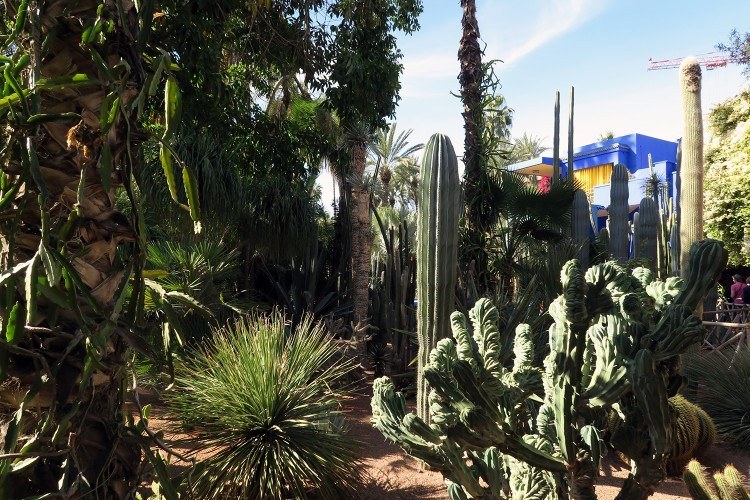
An Indian tailor, hard at work. (image source)

Jaipur is a city in Rajasthan that is on a well-trodden backpacker path. While taking camel safaris and visiting ancient forts in the region, why not invest a little cash in having some tailor-made clothing?

This is precisely what I expect to do in Jaipur this December, as many Indians have reliably informed me that this is the place to grab a well-made bargain.

Indian clothes can be beautifully intricate, and it's worth opting for something traditional. You can always have it tailored to make it more wearable.

For guys, a Sherwani, a long jacket with an upturned collar, is a statement choice, while women might opt for a Sari or Salwar Kameez.

Panama City, Panama

If you've ever read the book or seen the movie "The Tailor of Panama," you might have an inkling that this underrated travel destination in Central America is an excellent spot for buying new clothes.

And if you want to visit the *actual* tailor of Panama who fitted Pierce Brosnan for a custom suit while filming the movie, head to La Fortuna on Via España.

You'll be taken into a back room, where you can browse hundreds of fabrics and have something made precisely to your measurements. What's great about this place is that they don't charge extra for larger sizes.

Shanghai, China

Shanghai is a fantastic city for shopping, but if you want to invest in some high-end threads, you should head to the South Bund Fabric Market.

With masses of textiles, shouting clothes makers, and hordes of tourists, visiting this market isn't a relaxing experience, but it's authentic to Shanghai. If you commit to the craziness of it all, you'll end up with a garment you love.

This is one spot where the sellers will try to make some extra dollars from you, so know your price and stick to it if you want to grab a bargain. You'll find cotton materials for shirts, dresses, suits, beautiful wool blends, and cashmere for something luxurious.

Budapest, Hungary

Eastern Europe is another part of the world that budget travelers should consider visiting if they want a good tailor. Its affordable prices will make your money go further than in pricier Western Europe, not just for eating out and accommodation but also for tailor-made clothing.

Many tailors and shoemakers are in Nyugati Square, so it's easy to walk around the neighborhood and compare fabrics and prices at different stores. Believe it or not, you can find a new suit for as little as $80 in this area.

Good luck on your mission to find the perfect fit with cheap, tailored clothing!

10 Tips for Expats in the Middle East

The year I finally decided to follow the path of many Antipodeans (a term in the UK used to describe a person from Australia or New Zealand) before me and move to London, life threw me a curveball. I was offered the chance to spend three months living and working as an expat in the Middle East, specifically in the city of Doha in Qatar.

The author making friends with camels, in addition to other expats in the Middle East.
Making new friends in the desert

The decision-making process lasted about five seconds, and I responded emphatically in the affirmative. I thought I was signing up for the adventure of a lifetime, and I was not wrong.

What followed were three of the most confronting and rewarding months of my time on Earth so far. Life in the Middle East was not exactly what I had expected, but my time there was always an experience I would treasure.

Whether you're considering moving to the Middle East and becoming an expat or just visiting a country like Qatar, here are some points to consider.

Table of Contents

  • Expat Advice for the Middle East
    • 1. The Middle East is Hotter than Hades
    • 2. Stick to the Dress Code
    • 3. Eat at a Souq
    • 4. Hone Your Haggling Skills
    • 5. Negotiate Your Taxis
    • 6. Living in the Middle East Will Force You To Travel
    • 7. Everyone Drinks Bottled Water
    • 8. You Can Buy Alcohol and Pork (in Some Countries)
    • 9. The Deserts Miss the Rain and So Will You
    • 10. Don't Date in Public

Expat Advice for the Middle East

1. The Middle East is Hotter than Hades

It may seem like I'm pointing out the glaringly obvious here, but bear with me. I hail from Australia and think I can handle extreme heat. I was so, so wrong.

My three-month stint was in the middle of summer, with temperatures in the low hundreds Fahrenheit (mid-forties Celsius). One memorable day was recorded as having a high of 118 F (48 C)!

Interestingly, I found it wasn't the heat that got to me. It was the humidity. In July, the humidity can reach 100%. I would leave my home and, within thirty seconds, be drenched in sweat. That's a hot look right there.

All buildings are heavily air-conditioned to combat the extreme heat. This can be pretty discombobulating as you move from outside to inside, providing the perfect environment to catch a chill if you're not careful.

2. Stick to the Dress Code

Qatar in the Middle East advises that non-Muslim tourists and expats dress modestly. Men are asked not to wear shorts and tank tops in public, and women should avoid miniskirts, tight clothes, or short-sleeved shirts and dresses.

While I was there, people on the streets were handing out leaflets declaring that "Leggings are not pants"-an argument up for debate across most Western countries.

In the desert and within my accommodation, I wore shorts, bikinis, and tank tops. In the city, I observed the rules. My wardrobe consisted of baggy pants, flowing skirts, T-shirts, sunglasses, and a large sun hat. I also carried a beautiful cashmere shawl that I could throw around my shoulders when I needed to cover up.

You will get a lot of attention from men passing by, particularly if you're blonde. While I found it somewhat disconcerting initially, it became a regular part of my everyday life after a few weeks.

3. Eat at a Souq

Doha's local marketplace, the Souq Waqif, sells almost everything you can imagine, from trinkets to clothing, pet animals, and the most delicious food. If you were in a hurry, you could pick something cheap and tasty from a street vendor. I, however, tried to make the time to eat at any of the local restaurants.

I managed to sample a range of foods there: camel at a Moroccan restaurant, pigeon in an Egyptian setting, and I ate my body weight in eggplant purée at a particularly beloved Iranian restaurant.

Related: Flying Business Class on Qatar Airways

Eggplant puree
I still think longingly about that place

4. Hone Your Haggling Skills

Before living in Qatar, I hadn't had the opportunity to haggle much, simply accepting the often upsetting prices of goods in the Western world. Living in Doha did wonders for my assertiveness.

Haggling is the most common and accepted form of negotiation within the souq, and I was initially terrified to participate in it. With the patient encouragement of a colleague, I learned the subtle nuances of bartering for goods, which also improved my confidence.

5. Negotiate Your Taxis

Doha has minimal public transport, such as one free bus that makes a loop around the city. Most expats bought or rented cars, had private drivers, or used cabs.

Taxis were the cheapest options, but you had to be both wily and organized. If you wanted a cab at a specific place and time, you had to call the company and book a day in advance. If you were running late, they would sometimes leave without you.

I never really had any issues flagging one off the side of the road, but I found I had to keep my wits about me. Taxi meters in Doha calculated the fare by the distance driven, but many drivers refused to use theirs to charge as they pleased.

I would either negotiate a price in advance or ask them to switch the meters on. If they refused, I would tell them I no longer needed their service and wait for another taxi. For safety's sake, only travel with a clearly marked taxi or a vouched-for driver. Although it is not required or enforced, always wear a seatbelt!

6. Living in the Middle East Will Force You To Travel

The Middle East is ideally positioned for expats to travel, at least geographically. Europe and Asia are easily accessible, and it's only a 14-hour flight to my home country of Australia.

Although I didn't stay long enough to experience this, many other expats tend to get cabin fever after around three months. You need to get out and see some of the world, return to your country of origin, and chill in London or New York City-whatever it may be, to rebalance yourself and clear your head.

On top of that, many companies offer both accommodation and flights in and out of the country in exchange for working for them.

Tax-free pay also equals ample opportunities to save for travel if that is indeed your goal. The only glitch is that you need an exit visa to leave the country if you're on a working visa in Qatar. Your company can easily organize these if you allow plenty of time in advance for the process to take place.

Related: FIFA World Cup in Qatar

Desert
Post-dune-bashing

7. Everyone Drinks Bottled Water

The public perception is that the water in Qatar is easily contaminated and unsafe to drink. As a result, everyone drinks bottled water, going through stacks of it in a day. I had my bottle with me and would fill it from the filter at work, but I still drank my fair share of bottled water.

I hadn't researched and discovered this was an issue, nor was I aware that items such as the Steripen existed. It hurts my heart to think about how many bottles went to waste, particularly as there was no form of recycling within my hotel.

8. You Can Buy Alcohol and Pork (in Some Countries)

There is a common misconception that alcohol is illegal in Muslim countries. This isn't entirely true. Most hotels, bars, and clubs have liquor licenses and can sell alcohol to non-Muslims.

You will need to show your passport to get into these establishments, and some require membership, which you can pay for at the door. Alcohol is not cheap, although I found the prices comparable to those in England and Australia.

The local authorities frown upon drunken activity. If you go hard on the sauce, keep your antics within the confines of your apartment or hotel room.

Pork and alcohol can be bought from the Qatar Distribution Company, but you must apply for a license. To do so, you must submit an application form, a no-objection letter from a sponsor, and a letter from your company.

There is always a rush to buy these wares shortly before Ramadan, when the shop and hotel bars close for the month. If you don't have a license or have any friends who do, I guess you'll have to get used to the taste of turkey bacon.

9. The Deserts Miss the Rain and So Will You

I was in the desert for three months, and it did not rain once. It's not something I thought I would miss, but the heat and dryness get to you after that long.

In Qatar, it only rains a couple of times a year. I am told the entire city comes to a standstill. People rush outside, gaping openly at the sky, and the road traffic is maniacal.

It rained all week when I flew back to Australia after my contract ended. I was overjoyed. Then, I moved to London, where it rained for several days. It was enough to make me miss the desert.

10. Don't Date in Public

I was single while living in Doha, so I went on a series of bizarre dates with expats from around the world. We'd meet for meals, where we wouldn't be able to touch. Instead, we had stilted conversations and shook hands at the night's end.

The two short relationships I did have were intense (as were all relations and friendships between expats in the Middle East).

Being in this cultural setting, so different from my own, made everything feel extra concentrated. An affair of a few weeks seemed like the equivalent of a six-month relationship out in the "real world." Within the confines of hotels and friends' apartments, we could hold hands, cuddle, and finally feel at ease.

One of the best dates I had while living in the Middle East consisted of playing Monopoly and eating cheese in my hotel room. It was a relief to relax, be myself, and not worry that someone would throw me in jail for some indecent behavior.

My three months in Doha were unlike anything I had experienced before. It inspired an interest in this endlessly fascinating corner of the globe that is nowhere near being satiated.

If you ever have the opportunity to live and work as an expat in the Middle East-go! It was an adventure I'll never regret, and I wish the same for you.

Silk Road Explore Tours: Journey Through Central Asia

Journey Through Central Asia With Silk Road Explore
The peaceful Samarcanda in Uzbekistan (photo: Carlos R. de Queros)

Some travelers dream of hiking through breathtaking landscapes, some travelers dream of experiencing a culture completely foreign to their own, and some travelers dream of discovering the wonders of our world's past through exploring sites and architecture steeped in history.

But what many travelers don't know is that there is a region of the world that combines all these attributes and hasn't yet been overrun by tourists: Central Asia, and this area is easily accessible with SilkRoadExplore.com.

Central Asia

Central Asia traditionally consists of the following countries:

  • Kyrgyzstan
  • Kazakhstan
  • Tajikistan
  • Uzbekistan
  • Turkmenistan

While covering a huge land region, these countries share common cultural roots in their people's historically nomadic lifestyles and their key location along the Silk Road.

Even today, you can still see nomads living in yurts high up in the mountains and visit local markets set up in the midst of stunning Silk Road architecture dating back centuries.

This is a part of the world where people uphold their ancient culture and traditions, making for a fascinating window into our past.

Hosting important stopping points along the Silk Road, Central Asia became a crossroads in trade between Asia and Europe, connecting the East to the West.

This also culturally connects the core Central Asian countries with their Silk Road neighbors, including China, Azerbaijan, Iran, Georgia, and Armenia.

In all of these countries, you'll find beautiful remnants of the Silk Road and cultural reminders of this important crossroads of exchange between Europe and Asia.

Journey Through Central Asia With Silk Road Explore
From Tajikistan across to Afghanistan (photo: Ngaire Hart (Lawson))

Silk Road Tours

Silk Road Explore offers a variety of tours through Central Asia and neighboring Silk Road countries.

Touring the Silk Road is not just about seeing historic Silk Road sites (though that's of course a huge draw!) but also experiencing the unique culture of the crossroads between East and West, as well as the beautiful landscapes and lifestyles of Central Asia.

From one-day Silk Road tours to multi-country journeys and customized itineraries, Silk Road Explore offers something to every traveler interested in exploring this lesser known area of the world.

Silk Road Explore can help you organize:

  • cultural tours and excursions
  • trekking and mountaineering trips
  • horseback riding tours
  • jeep, ATV, and bike tours
  • rafting
  • skiing
  • paragliding
  • and much more

You can join fixed-date group tours, customize a tour to perfectly suit your schedule and interests, or create your own unique trip with the help of local experts.

As many countries along the Silk Road see relatively few tourists, they offer travelers a unique opportunity to explore a distinct culture still very tied to its history.

While this also means that communication in English can be difficult, a tour organized by Silk Road Explore can help you to avoid the stress of travel planning, and concentrate on enjoying the experience of exploring Central Asia and the Silk Road.

You will also discover the dramatic and varying landscape of Central Asia, where in a single day you can experience different climatic zones ranging from hot semi-deserts to icy tundras.

Nisa in Turkmenistan
The ancient city of Nisa in Turkmenistan (photo: Stefan Schinning)

Nomad Travel

Though Central Asia isn't incredibly well-known by many, when most people think of the region, and particularly of Kyrgyzstan, they probably think of nomads.

It would be impossible to travel through Kyrgyzstan without spotting white yurts sprinkled throughout the countryside.

Visit in the Summertime and you'll even find these yurts high in the mountains, set up by nomadic families who have moved their herds to alpine pastures for the summer.

These nomads live in harmony with nature, preserving their ancient traditions while moving their homes and animals along with the rhythm of the seasons.

A tour with Silk Road Explore can help you follow that same rhythm, moving from place to place to discover both the beauty of Central Asia and the meaningfulness of its ancient nomadic tradition.

About Silk Road Explore

Silk Road Explore's team includes Executive Director, Andrei Osyanin, and Project Manager, Evgenia, who are both from Kyrgyzstan. An American, Beth Hornung, helps with the writing and blog.

Many Central Asian and Silk Road countries have cash-based societies, which means that travelers can sometimes run into difficulties paying for tours online, often being asked to make wire transfers or other means of payments that don't offer security against fraud.

Silk Road Explore, however, eliminates this risk by offering secure online credit card payments.

You'll also benefit from the guidance of a highly knowledgeable and enthusiastic staff who can help you choose or design a tour perfectly suited to your travel style and interests.

SilkRoadExplore.com was created by a team who truly loves Central Asia and its beautiful landscapes, unique and meaningful culture and traditions, and ancient Silk Road heritage, and who aim to introduce more travelers to the region and help them to relax and enjoy the best vacation possible.

__________

This story was brought to you in partnership with Silk Road Explore. 

Can You Backpack The Caribbean?

Known for its all-inclusive resorts and couples looking for a romantic break, the Caribbean is a dream destination for many. Although it's not a region considered budget-friendly, you can still backpack the Caribbean.

Enjoying a Caribbean beach
Enjoy a Caribbean beach on a budget.

The Caribbean combines Dutch, French, English, and Spanish islands. Depending on which region you visit, each island offers something different, from culture to pirate history to plenty of rum.

For backpackers, steer clear of the glitzier islands of St Barts. These islands are known for attracting celebrities and have a very hefty price tag. The British and U.S. Virgin Islands are also known for their luxurious accommodation.

Table of Contents

  • Accommodation
  • Food
  • Tours
  • Transfers
  • Getting Around
  • Buying Goods
  • Conclusion

Accommodation

To backpack the Caribbean, stick to the Dutch islands for hostels.
Stick to the Dutch islands for hostels.

The Caribbean isn't known for having many hostels, but if you stay on the Dutch islands, Puerto Rico, or San Andres (Colombia), you can find at least one hostel per island. St. Maarten, Bonaire, Curacao, and Aruba each have a hostel to stay in, too.

Booking Airbnb and staying with a local is an excellent alternative to paying for a fancy hotel or resort. Countries like Cuba offer Casa Particulars, where you only pay $25 a night for a bed and breakfast.

You can even find Couchsurfing on more touristy islands, although some people are more receptive than others, and the speed of responses can vary.

If you're looking to splurge for a night of comfort, finding a perfect villa is easy. Whatever your budget or preferences, it's worth planning where to stay before you arrive.

Food

Traditional Caribbean food
It's not just chicken, rice, and beans.

If you stay in an apartment or a studio, you'll often have access to a kitchen to cook food, which reduces the cost of eating out. Some resorts have supermarkets on-site, but with much of the food imported to the islands (except Dominica), you'll still pay more for fruit and vegetables.

Although it's not as common as in Asia or Latin America, street food can still be found. Puerto Rico, for example, has fantastic street food, including mofongo (a dish made from mashed plantain), which costs just $5.

Fried chicken, rice, and beans are popular in the Caribbean, so avoid fancy restaurants and tourist areas and buy from street vendors or local cafes instead.

Jamaica is known for its traditional foods, including jerk chicken, curry goat, coco bread, and rum cake. If you're planning a trip to Jamaica for food, fun in the sun, and lots of reggae music, remember that a Jamaica immigration card must be completed.

Tours

Exploring a Caribbean island by yellow jeep.
Exploring the island in a yellow jeep is an adventure

Tours in the Caribbean don't have to be on a big 30-seater bus, listening to a guide with a microphone point out the places of interest from the windows.

They can be much more interactive, like riding in a jeep or ATV, or sailing around the island. A single full-day tour typically allows you to see an entire island.

Half-day tours are even cheaper, but if you're traveling with one or more people, it may be more cost-effective to hire a car rather than pay for two people.

For popular experiences like swimming with pigs in the Bahamas, you can join a half-day group tour from Staniel Cay or a full-day tour from Nassau.

Buying a prepaid travel SIM card from a company like Simify can help you stay connected while having fun.

Related: Things To Do in the Dominican Republic

Transfers

Small airport
With islands so small, there are no queues at the airports

In my experience, airport transfers are one of the most significant expenses if you want to backpack the Caribbean. These can cost up to $85 each way, making a severe dent in your budget.

The best way to avoid this is to either look for a local bus (which can be a nuisance when carrying your backpack) or hire a car as soon as you arrive to reduce the cost at least one way.

If you book a place through Airbnb, locals tend to offer their services to collect you from the airport for a fraction of the cost you'll pay with an airport taxi.

Getting Around

Caribbean Airlines planes
Island hop on a 30-minute flight

Some islands have a good bus network. Islands such as Barbados, Trinidad and Tobago, and Curacao are easily accessible by bus.
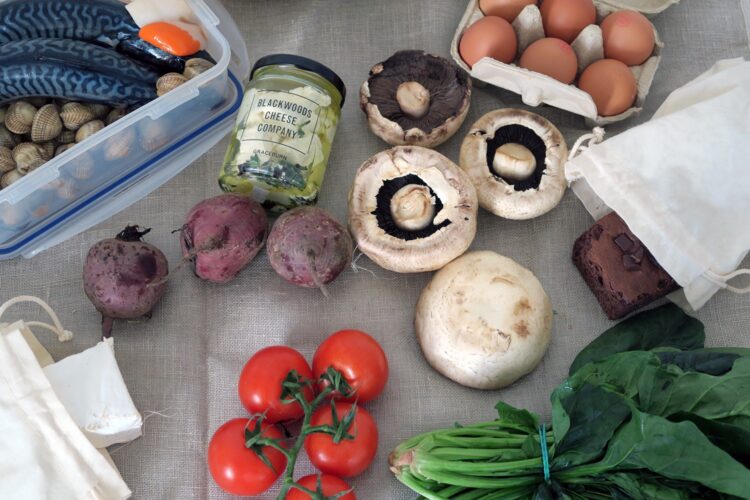
If you're limited in time, waiting until a bus (a minivan) fills up can be slightly frustrating if you want to get to your destination, but they are the cheapest way to get around. You may have to hire a car for the islands without sound public transport systems, such as Puerto Rico.

Flights between the islands can be expensive, so book well ahead for a lower price. Some are connected by ferry. St. Marteen, Anguilla, and Saba are easily reached by boat, plus St. Lucia, Dominica, Martinique, and Guadeloupe, making island-hopping easier.

Related: Backpacking the Turks and Caicos

Buying Goods

Home-made chocolate
Homemade chocolate is a perfect gift.

Don't get caught without the East Caribbean dollar. Antigua, Dominica, Grenada, Saint Kitts, St. Lucia, St. Vincent, Anguilla, and Montserrat use the EC dollar. Although souvenirs and food in supermarkets are quoted in EC, they will try to charge you U.S. dollars instead.

Conclusion

Can you backpack the Caribbean? If you look for cheaper alternative accommodation, you can eat street food or cook meals, and hire a car instead of going on a tour.

Visiting the Caribbean during the low season is also a good idea, as accommodation is cheaper than during the high season. The best approach is to choose a group of islands and plan how to get around and where to stay before you go.

Just arriving isn't the best plan for this region, so pre-plan as much as possible to maximize your backpacker budget. Of course, if you desire to lie on a postcard-perfect beach and get a tan, the Caribbean will suit you fine, backpack or no backpack.

We hope this story has opened your eyes to the possibility of backpacking in the Caribbean. 
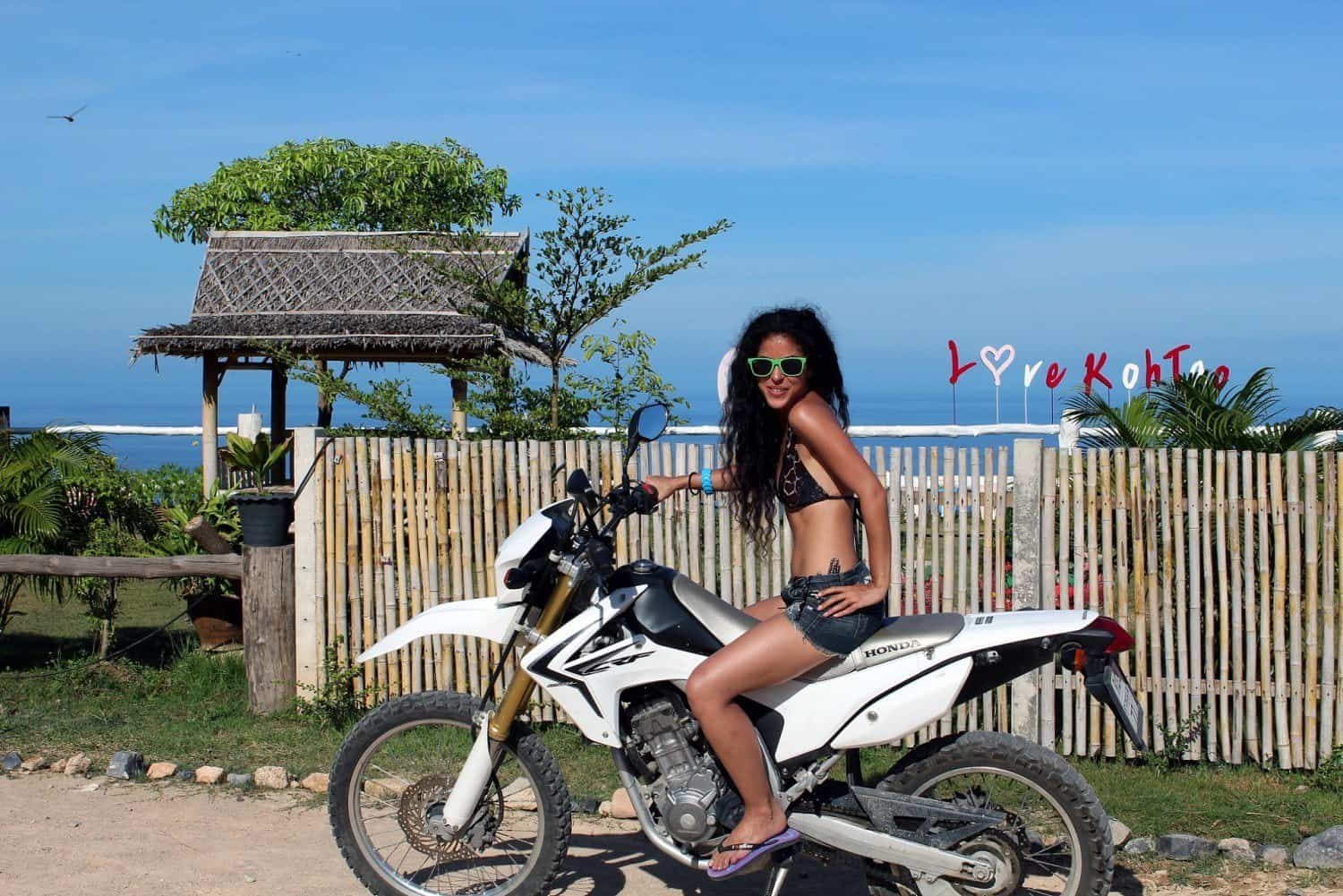
If you prefer to make things easy and skip the detailed planning, consider a tour with G Adventures:

  • Cuban Rhythms: Rum & Fun is a bestselling eight-day trip that begins and ends in vibrant Havana and includes stops in Viñales (the tobacco-growing region), Playa Larga, and Trinidad. 
  • Cuba: Salsa & Snorkeling is a 16-day trip that covers the entire island from east to west. Highlights include Havana, Viñales, Trinidad, Santiago de Cuba, and the beautiful beaches of Baracoa. 

The Challenges of Being a Gay Traveler

David
Here I am, as gay as Christmas with my rainbow flag

Editor’s Note: The following is the first story by David, one of several new contributors. 

Alert the presses – I am a gay traveler.

Back when I lived in London before I started traveling, I hardly thought about my gayness at all, and that’s not because it wasn’t a big part of my life – it’s because everything and everyone in my life was so gay that I took for granted that not everyone lives that way.

I lived in an East London neighborhood that was pretty much a gay ghetto, I only went out to gay pubs to socialize, and most of my friends were gay too.

In my last days in London, I was also working as a freelancer, so I didn’t go to an office where I could have met straight people.

Other than a few good friends from university and family members, straight people just weren’t in my life.

Cut to little old me with a backpack resting on my shoulders, wandering around wherever I might be, and discovering that most of the world just isn’t that gay.

Of course, this was something that I always knew in my head, but experiencing it was a shock to the system.

So the first challenge of being a gay backpacker, for me, was having the feeling of being a small fish in a big pond where all of my experiences and cultural references didn’t mean anything to most other travelers or local people I met on the road.

See also: Why Every Traveler Should Attend a Gay Pride Festival

Gay Travel 101: Seek out a tacky drag show

Disclaimer: LGBT Identity is not One Size Fits All

I happen to have been immersed in gay-gay-gayness during my roaring twenties, and so finding myself detached from it when I started traveling was a little challenging because that identity and culture was my safe place and something I enjoyed.

For other LGBT people don't live in neighborhoods with a huge gay influence, these difficulties might not be so apparent.

Choose Your Destinations Carefully

Another variable for every gay traveler is where you choose to travel. Some places in the world are more gay-friendly than others.

If it’s a priority for you to be able to smooch with a boy on a beach and hold hands on the street (and it’s totally cool for that to be a travel priority, by the way – you don’t have to throw yourself out of your comfort zone at all, if you don’t want to), you need to do your research and get to grips with how gay friendly one destination is compared to another.

This is pretty easy to do online – there is a Wikipedia page dedicated to LGBT rights in every country in the world.

Bangkok
A particularly gay street in Bangkok

There are many places where you won’t have too much of a problem being gay, but you still wouldn’t want to start kissing on the street – places like Singapore and Malaysia where same-sex activity is illegal but you’ll still find gay bars and saunas.

Then there are some parts of the world where you’ll 100 percent want to keep your sexuality under wraps.

If people are fleeing a country because of persecution based on their sexuality, you won’t want to give any sign that you are gay there. It’s not a nice thing to do, but it’s for your safety.

So in places like Jamaica, Pakistan, and much of the Middle East, a bit of acting might be necessary.

The Couple Thing

This also means that there are times if you are traveling as a couple, that you’ll have to deal with having two single beds instead of a double, and not causing a fuss about it.

You might also have to make a “just friends” line fly as horrible as that sounds.

I always travel as a solo backpacker, so this isn’t something that I’ve had to deal with, but it does mean that in certain places I would be wary about bringing guys back to my hotel room.

See also: Europe's Best Gay Beaches

Meeting Other Queers on Your Travels

Next up is the challenge of meeting other like-minded gay guys and gals on the road.

For me, it’s essential to meet other gay people when I am traveling, because in many ways I feel like the LGBT community is my tribe, and when I connect with gay people abroad, I can feel a bit more at home.

I love to connect with both gay locals and gay travelers, but how do you go about doing that?

I love scouting out the local gay bars wherever I happen to be, and I find it easier to talk to people and find a “way in” to a new town or city at a gay bar than I ever would in a hostel dorm.

But if you are not so much of a bar goer, there are other ways.

For major gay hubs like Bangkok and London, you will find LGBT-specific groups on sites like Couchsurfing. People on Couchsurfing are both interested in travel and making new connections – bingo.

And then there are the usual suspects – smartphone apps like Grindr, Scruff, and PlanetRomeo are popular all over the world, so don’t be shy and start sending some messages.

No matter if you are a Scene Queen who wants to spend his travels hopping from gay club to gay club, or an adventurer who wants to traverse more challenging terrain, absolutely don’t let being gay get in your way – there’s a whole world out there, full of gay travelers just like us.

5 Items that Will Reduce Waste While Traveling (and Save You Money)

Skógafoss Waterfall in Southern Iceland

After six years of traveling abroad, one thing has become abundantly clear.

The more I've traveled the world, the more I wanted to see of it.

If I wanted to continue traveling, I had to figure out a way to put every dollar I had towards achieving this goal.

Correspondingly, Earth is more amazing than any adjective in the English language that could adequately describe.

It is our responsibility to take care of our planet, and I often worry that traveling does more harm than good.

So, I made it my mission to find ways that I could cut waste when traveling and save money at the same time.

Despite first appearances, these statements are not contradictory.

With a little forward planning and upfront investment, the two can go hand in hand.

Yes, you read that right. It is possible to do your bit for the planet and limit your waste output while saving yourself money in the long run.

One way to reduce waste is to ditch single-use items for more long-lasting products when you're on the road.

Hankies from TSHU
Hankies from TSHU

Table of Contents

  • 1. Hankies - Not Just for Children
  • 2. Buy Yourself a Reusable Water Bottle
  • 3. Invest in a Long-Lasting Razor
  • 4. Carry Around A Container For Food
  • 5. Replace Cumbersome Bottles with Shampoo Bars

1. Hankies - Not Just for Children

Once I started carrying around a hanky (short for handkerchief), I was quick to realize just how versatile these little scraps of fabrics are.

Use them in lieu of disposable tissues, for napkins, to wrap up delicates or wipe down dirty surfaces.

Once you're done, chuck them in the wash, give them a clean and repeat the process.

I get mine from Tshu - a Canadian company that plants a tree for every hanky sold. Plus, they are so pretty.

I've also bought from Hankybook, which sells as the name suggests, books of hankies that are made from organic cotton.

Of course, you don't have to buy them new. Hankies tend to be abundant in thrift stores. You may have some lying around from your childhood. Or ask a grandparent if you can borrow a couple of them.

2. Buy Yourself a Reusable Water Bottle

This one is a bit of a no-brainer, as single-use bottles are terrible for both the environment and your wallet. It's important to stay hydrated when on the road, and having your own water bottle on hand goes a long way towards ensuring this happens.

I've carried a reusable bottle while traveling for years - in fact, I never leave home without it!

I empty it before going through airport security, refilling at available stations on the other end.

I top it up at any available tap (keeping in mind I have kept to Australia, North America, and Western Europe in my travels this year).

To my knowledge, there are no strange bugs incubating in my system from having drunk tap water in any of these countries.

If you feel particularly resentful about having to pay for water (especially in restaurants - here's looking at you, Germany), then you'll agree that the savings incurred from carrying around your own bottle are nothing to turn your nose up at.

A current obsession is my 750ml stainless steel S'Well water bottle.

My priority is using a bottle that's not been made of plastic, won't bend out of shape or break from excessive dropping (particularly handy if you're like me and suffer from poor hand-eye coordination).

Another noteworthy option is Kleen Kanteen, a company that makes bottles that are particularly aesthetically pleasing.

If you're concerned about the state of the tap water in the country you're traveling through, Clearly Filtered design bottles out of stainless steel and BPA-free plastic that come with their own inbuilt replaceable filters.

Stainless steel can be rather hefty, so if weight is a deal-breaker for you, there are plenty of other BPA free options available.

Look around your local outdoor store or online before your departure.

A tiny travel razor
A tiny travel razor

3. Invest in a Long-Lasting Razor

I had beef with disposable razors long before it occurred to me that I would be better off buying one that would last longer than a few weeks.

The ones I bought tended to come wrapped in a horrific amount of plastic, for starters.

I also found that the blade managed to rust and dull after only a couple of uses.

When I decided to make the switch from plastic, I chose to buy a razor made by the German company Merkur that is designed specifically for travel.

It collapses into three parts that take up hardly any room in my toiletries bag.

 You insert a blade, screw the razor together, and you're good to go. I use it both on the road and at home.

It never hurts to buy secondhand - scour Craigslist or Gumtree for options before turning to new.

4. Carry Around A Container For Food

One popular way of saving funds is to make use of the communal kitchens in hostels.

Consider cooking a little extra that you can bundle up into a food container, saving you the bother of having to worry about lunch the next day.

If the size is an issue, collapsible lunch boxes are readily available all over the internet.

Containers are also an excellent place to store anything in your backpack that may tend to leak or get damaged.

My go to brand for shampoo bars
My go-to brand for shampoo bars

5. Replace Cumbersome Bottles with Shampoo Bars

I promise you that shampoo bars will revolutionize your toiletry bag!

When I set off abroad, I used to have to pack body soap and big bottles of shampoo and conditioner…hank goodness those days are over!

While I'm still on the hunt for a conditioner that will play nice with my hair, I no longer take a bottle of shampoo when I travel, and I leave the body soap at home.

I instead place a shampoo bar in my travel soap case. I use this to lather up head to toe when washing.

They last a lot longer than my shampoo bottles ever did, and I can use the bar down to the very last scrap.

With a little research, planning, and up-front investment, you will not only save a ton of money in the long run.

You'll be making a conscious effort to reduce your impact on our beautiful planet.

Champagne At Sunrise Over Lake Tequesquitengo

Champagne At Sunrise OverLake TequesquitengoON

There are a few good reasons to wake before sunrise. Floating in a helium-powered hot air balloon as the orange-tinted Mexican sun rises over Lake Tequesquitengo is one.

The floating sensation is unlike any other aerial adventure experience because safely navigating the skies means avoiding the wind. I felt virtually no wind, hardly even a breeze.

Instead of an adrenaline rush, floating in a wicker basket has a calming experience akin to the feeling of Enya.

Suddenly the wind ceased. The air seemed motionless around us. We were off, going at the speed of the air-current in which we now lived and moved. Indeed, for us there was no more wind; and this is the first great fact of spherical ballooning. Infinitely gentle is this unfelt motion forward and upward. The illusion is complete: it seems not to be the balloon that moves, but the earth that sinks down and away... - Alberto Santos-Dumont, My Air-Ships, 1904.

Hot Air Balloon
Lifting off earth

I won't eat, drink, or sleep ballooning anytime soon. I'm not a balloonatic.

Santos-Dumont, however, does make a point in his description above as he describes my emotions from the get-go as the PIC (Pilot in Command) pulled down on the levers to release the helium.

The simple hand motion started a series of complex processes that lifted our crew of adventurers from across the United States and Mexico above the Mexican state of Morelos.

Opposite of our balloon, a happy couple celebrated their engagement while we rose higher above the mystical lake.

Lake Tequesquitengo had submerged a 19th-century colonial village.

Over 150 years later, the lake is an important getaway for wealthier Mexicans from nearby Cuernavaca and Mexico City to relax or party with margaritas and micheladas at the many marinas, beach clubs, restaurants, and hotels.

In the Air
Happy and engaged couple in a nearby balloon

Rather than sipping cocktails down below, we grabbed our chilled bottle of champagne; the cork popped the cork off gently.

With glasses in hand, the five of us softly mumbled "salud" as we took our first sip with the sun rising at eye level.

Each time our PIC pulled the lever, the heat briefly lit our faces, and we rose higher and away from the vicinity of Lake Tequesquitengo toward the fields and nearby cities.

We continued to float a while more as daylight finally appeared, and the horns from the city below sounded, a signal that our flight was ending.

But not before our balloon glide over Jardines de México, the largest botanical gardens in the world.

Our multicolored balloon lowered minute-by-minute until we were only a few feet above a large open field of grass before calmly touching down on earth.

Balloon landing
A soft touchdown

Half the art of ballooning is to make your crashes so gentle that you can fool yourself into calling them landings. - Richard Branson, In his book Reach For The Skies, 2011.

________

My hot air balloon ride in the Mexican state of Morelos was coordinated by English-speaking adventure tour operator Rogelio Teliz of Tlacuache Adventures. The experience was provided thanks to ATMEX, Morelos Secretary of Tourism, and Adventure Travel Trade Association. All opinions expressed above are my own.

From The Giant’s Causeway to Tokyo

From The Giant’s Causeway to Tokyo
Get expert advice at The Giant's Causeway in Northern Ireland (photo: Alan Meiss)

We’re an intrepid bunch, come rain or shine and whether we can speak the language or not, we can find our way around the world and have fun as we go.

But sometimes having such an independent streak can deprive us of some of travel’s best experiences, particularly those hard-to-reach attractions that make different regions great. Although we want to stay as independent as possible, sometimes it’s easier to let others lead and succumb to a tour.

If you’re traveling solo especially, they can be a good way to meet others, find your way around easier and they don’t have to cost the earth either.

Here’s why taking a tour can be easier than going it alone:

When You're in a Big City

A city of almost any size is far too big for a single person to navigate efficiently.

Sure you can just kind of cruise around at your own pace, letting yourself marinate in the sensations that are unique to this place. But for those who are hoping to suck the marrow out of every travel experience, you might need a guide to get the best out of a city especially if it’s a large, sprawling one.

Whether you just want to see the touristy sites or fly around a city on a Segway, there will be a tour.

No matter how much research you do, the knowledge of a local is unbeatable, and you’ll find insider tips on where to go and what to do. The best strategy for somewhere like Tokyo for example.

Tokyo
Learn insider tips on where to go in Tokyo (photo: Teruhide Tomori)

Places of Historical Interest

Part of the reason we visit historical places is to experience history. Of course, you could learn everything you want to know in a book, but experiencing it first-hand is the best way to learn.

Having a real expert relay knowledge to you is one of the best parts of traveling to places like Giant’s Causeway in Northern Ireland using Allen’s Tours.

A tour like this can let you see a haunted castle, salmon fishing spots, 400-year-old architecture, and all the other amazing things that you may not notice if you were by yourself. Without an expert guide, historical destinations just don’t have their spark.

Places Where You Don't Speak the Language

Finding someone who speaks English in a foreign country can be like finding a long-lost friend.

When you’re backpacking in a place with an unfamiliar language, a guide who speaks English can help you find the attractions and activities you are looking for or even point you in the direction of the local pharmacy or bus station for your onward journey. Some many even just want to grab a beer and hang out to practice their English.

Sometimes taking a tour takes the pressure of finding your way around and having to hire a car to see all the sights yourself.

With so many places to see around the world, a good guide can help you find them especially in those places that are hard to reach.

_______

This story was brought to you in partnership with Allen's Tours. 

Why Namibia Should Be On Your Itinerary

If you've traveled the Southeast Asia route, road-tripped through Oz, and dabbled in Central America, you could be wondering where next? For those looking for adventure, desert, and so much more, put Namibia in Africa on your bucket list. Here's why Namibia should be on your itinerary.

Why Namibia Should Be On Your Itinerary
Sossusvlei should be at the top of your list of things to do in Namibia

Table of Contents

  • Shipwrecks
  • German Towns & Townships
  • Ethnic Groups
  • Adventure Sports
  • Epic Landscapes

Shipwrecks

Along the entire desert coastline of Namibia is an area known as the Skeleton Coast, named so because of the numerous shipwrecks.

There are thousands of shipwrecked vessels caused by the coast's rough seas and currents. It's not just boats that you'll find, either, as you may even be faced with a fur seal or two.

The number of visitors is restricted, so the only way to see this area is by Land Rover on tour. It can be costly, but it's worth the visit.

German Towns & Townships

Surprisingly, Namibia has German towns, as a result of the German miners who used to come here.

You can find German bakeries and architecture in the coastal town of Swakopmund. It's just like a German town, and it's the place to be in Namibia with its infamous nightclub, where you'll find the other backpackers in town.

For an authentic experience of Namibian culture, head to a township in Windhoek or Swakopmund, where you can meet the village chief, visit the local doctor and their traditional remedies, and explore local life with a guide to show you around.

Here you can see one of Namibia's other ethnic groups, the Herero tribe wearing dressed from the Victorian era and horn-shaped hats made from newspaper. You can even pose for a picture outside one of their homes.

Ethnic Groups

Indigenous ethnic groups have lived in this part of the world for centuries, and none more so than the Himba tribe.

Painted from head to toe in red ochre, with their trademark red braids, the Himba tribe is a semi-nomadic group that roams with their livestock and lives in mud huts.

You'll find them in Swakopmund, where they come to sell their jewelry and miniature dolls of themselves.

Adventure Sports

Why Namibia should be on your itinerary
You'll be spoilt for a dune adventure

Whether you have the desire to climb a dune as dawn breaks or fling yourself off one to paraglide back down it, Namibia is a surprising destination for adventure sports.

With so many dunes, you can take your pick from dune carting, sandboarding, or even sand skiing, or skydive over them instead. There's always a hot air balloon ride for those less adventurous.

Then there's the thrill of the rock sports with the likes of abseiling, rock climbing, and of course, mountaineering over rocky terrain. There's kitesurfing too. Whichever adventure sport you're into, it's guaranteed to be in Namibia.

For those who prefer wildlife to an adrenaline rush, head to Otjitotongwe Cheetah Park for a chance to stroke a cheetah and gaze into its mesmerizing, chestnut-colored eyes.

Namibia even boasts the Big Five (lion, leopard, elephant, Cape buffalo, and white or black rhinoceros), and a safari in Etosha National Park is less touristy than those found in South Africa, offering the opportunity to get closer to the wildlife.

Epic Landscapes

The country boasts stunning landscapes, none more so than Sossusvlei - a dazzling view of a salt pan set amidst red dunes and camel thorn trees.

Namibia also boasts the second-largest canyon in the world - Fish River Canyon. At a length of 404 miles (650 kilometers), you can choose to hike the gorge or admire it from a viewpoint instead.

For Flintstone lovers, head to Spitzkopp, which resembles a scene from this famous movie, surrounded by bedrock.

The once-thriving mining town of Kolmanskop is a great place to pick up gems and minerals at a bargain price. You'll find sellers along the roadside selling crystals such as tourmaline, or head to the Kristall Galerie for the largest Quartz crystal cluster in the world.

Where else can you experience the thrill of paragliding, sandboarding, and African tribes all at once? Only in Namibia.

« Previous Page
Next Page »
Dave at Ahu Ko Te Riku on Rapa Nui (Easter Island), Chile.

Hi, I'm Dave

Editor in Chief

I've been writing about adventure travel on Go Backpacking since 2007. I've visited 68 countries.

Read more about Dave.

Footer

back to top

About

  • About
  • Archive
  • Privacy Policy
  • Cookie Policy

Follow Us

Contact

  • Contact
  • Work With Us
  • Submissions

Copyright © 2025 Go Backpacking