
Go Backpacking

  • About
  • Travel Tips
    • Accommodations
    • Budgeting & Money
    • Adventure Travel
    • Food & Drink
    • Gear & Gadgets
    • Packing Tips
    • Travel Blogging
    • Travel Insurance
    • Trip Planning
    • UNESCO Sites
  • Destinations
    • Africa
      • Botswana
      • Egypt
      • Ethiopia
      • Morocco
      • Rwanda
      • South Africa
      • Tanzania
    • Asia
      • Cambodia
      • China
      • Hong Kong
      • India
      • Indonesia
      • Japan
      • Laos
      • Malaysia
      • Nepal
      • Philippines
      • Thailand
      • United Arab Emirates
      • Vietnam
    • Europe
      • England
      • France
      • Germany
      • Greece
      • Iceland
      • Ireland
      • Italy
      • Portugal
      • Spain
      • Switzerland
      • Turkey
    • North America
      • Canada
      • Costa Rica
      • Cuba
      • Guatemala
      • Mexico
      • Nicaragua
      • Panama
      • United States
    • Oceania
      • Australia
      • French Polynesia
      • New Zealand
    • South America
      • Argentina
      • Bolivia
      • Brazil
      • Chile
      • Colombia
      • Ecuador
      • Peru
  • Advertise
menu icon
go to homepage
  • About
  • Travel Tips
    • Accommodations
    • Budgeting & Money
    • Adventure Travel
    • Food & Drink
    • Gear & Gadgets
    • Packing Tips
    • Travel Blogging
    • Travel Insurance
    • Trip Planning
    • UNESCO Sites
  • Destinations
    • Africa
      • Botswana
      • Egypt
      • Ethiopia
      • Morocco
      • Rwanda
      • South Africa
      • Tanzania
    • Asia
      • Cambodia
      • China
      • Hong Kong
      • India
      • Indonesia
      • Japan
      • Laos
      • Malaysia
      • Nepal
      • Philippines
      • Thailand
      • United Arab Emirates
      • Vietnam
    • Europe
      • England
      • France
      • Germany
      • Greece
      • Iceland
      • Ireland
      • Italy
      • Portugal
      • Spain
      • Switzerland
      • Turkey
    • North America
      • Canada
      • Costa Rica
      • Cuba
      • Guatemala
      • Mexico
      • Nicaragua
      • Panama
      • United States
    • Oceania
      • Australia
      • French Polynesia
      • New Zealand
    • South America
      • Argentina
      • Bolivia
      • Brazil
      • Chile
      • Colombia
      • Ecuador
      • Peru
  • Advertise
search icon
Homepage link
  • About
  • Travel Tips
    • Accommodations
    • Budgeting & Money
    • Adventure Travel
    • Food & Drink
    • Gear & Gadgets
    • Packing Tips
    • Travel Blogging
    • Travel Insurance
    • Trip Planning
    • UNESCO Sites
  • Destinations
    • Africa
      • Botswana
      • Egypt
      • Ethiopia
      • Morocco
      • Rwanda
      • South Africa
      • Tanzania
    • Asia
      • Cambodia
      • China
      • Hong Kong
      • India
      • Indonesia
      • Japan
      • Laos
      • Malaysia
      • Nepal
      • Philippines
      • Thailand
      • United Arab Emirates
      • Vietnam
    • Europe
      • England
      • France
      • Germany
      • Greece
      • Iceland
      • Ireland
      • Italy
      • Portugal
      • Spain
      • Switzerland
      • Turkey
    • North America
      • Canada
      • Costa Rica
      • Cuba
      • Guatemala
      • Mexico
      • Nicaragua
      • Panama
      • United States
    • Oceania
      • Australia
      • French Polynesia
      • New Zealand
    • South America
      • Argentina
      • Bolivia
      • Brazil
      • Chile
      • Colombia
      • Ecuador
      • Peru
  • Advertise
×
Home

Top 10 Things To Consider When Planning an Antarctica Trip

An Antarctic cruise is for the more adventurous traveler. An Antarctica trip means you head to our southern-most continent, not because you want to "play tourist" or hit another cruise line port town that is almost the same as any other.

Antarctica sea kayaking
Sea kayaking (photos: Andreas Kambanis)

You go because you're looking for something unique and clean -a trip you can take pride in. However, what makes an Antarctic expedition so special is also what makes it a little more work than other cruises.

Antarctica does not offer tourist amenities, so it is essential to ensure you are prepared for what lies ahead. Here are 10 quick tips to enjoy your Antarctic cruise.

Table of Contents

  • Antarctic Travel Tips
    • 1. There are no stores.
    • 2. It's environmentally protected.
    • 3. You may run into rough waters.
    • 4. The cruise itself is just the beginning of the costs.
    • 5. There are no medical facilities.
    • 6. It might be warmer than you think.
    • 7. You might need visas.
    • 8. Look for smaller ships.
    • 9. Some cruise ships offer helicopter rides.
    • 10. Look for "base camp" cruises.

Antarctic Travel Tips

1. There are no stores.

Antarctica has no tourist amenities; you're limited to what you bring with you and what's available for sale on your ship. Before you set out, double-check your gear against the information provided by your cruise line about what you should or should not bring on your trip.

2. It's environmentally protected.

Antarctica is primarily regarded as one great big national reserve park. This is partly to protect the remarkably rich ecosystem and partly to maintain its cleanliness for the various scientific studies conducted in the region.

Multiple countries use Antarctica as a base to study the effects of global warming and the spread of pollution; therefore, outside interference (e.g., seeds from foreign weeds, insect larvae) mustn't be introduced ashore.

This means that before you set foot on Antarctica or some of the remote islands you might visit along the way (e.g., the Falklands, South Georgia, etc.), you may have to go through some decontamination steps before you head to shore.

Half Moon Island, Antarctica
Half Moon Island

3. You may run into rough waters.

If you're in a ship that will cross the infamous Drake Passage to get to Antarctica, there's a decent chance that you will have to endure rough waters for about two days (each way).

If you have even the slightest inclination towards seasickness, you should visit your doctor and get your hands on some Dramamine or another anti-seasickness drug.

Do this for at least a week before you set sail; Dramamine is a preventative medication and has to be taken before you set sail.

4. The cruise itself is just the beginning of the costs.

Cruise costs alone should run you at least around $5,500; you can sometimes find discounts for last-minute berths. This will cover a room that you will likely share with other people.

Cruise costs will fluctuate depending on the level of luxury your ship offers, the size of your room, the destination, and the duration of your trip with the cruise line.

There are additional costs that you will need to consider, including:

  • Travel permits
  • Flight costs
  • Stay in port towns
  • Purchases on board the ship
  • Activities (kayaking, photography courses, ski-mountaineering, etc.)
  • Clothing and boots

5. There are no medical facilities.

Bigger cruise ships will have a doctor and limited medical supplies, but aside from that, you might be out of luck if you have a medical problem or if you've forgotten your medicine.

So if you're not sure if you're in good enough shape for a trip, schedule a checkup for yourself, and make sure you stock up on your prescription drugs.

Antarctica
Icebergs (photo: Christopher Michel)

6. It might be warmer than you think.

Temperatures for Antarctic summers (around the coastlines, at least) hover around 32 F (0 C). For many people, Antarctica may end up being warmer than home, as you'll leave the northern hemisphere's winter behind as you venture south.

Additionally, you're likely to generate some heat as you participate in various hikes and other activities. And on top of that, you may get wet as you journey on a Zodiac from ship to shore (they tend to splash a little).

Layers are your friend. They let you regulate your temperature much more easily than bulk clothing items, and they're more easily swapped out if something gets wet. Your cruise line will typically provide a guide outlining the types of clothing you should pack in your bag.

7. You might need visas.

Antarctica does not require permits or visas; however, you will likely need to fly from your home country to a port city in a foreign country, which may require some official documentation.

Check with your local tourism bureau to ensure that everything is in order well before your departure date.

Crabeater seal in Antarctica
Crabeater seal (photo: Andreas Kambanis)

8. Look for smaller ships.

Antarctica has a law prohibiting more than 100 passengers from landing at any one spot at any one time. To maximize the time you spend ashore, look for cruise ships with fewer than 200 passengers. The lower the number of passengers, the more time you get to spend ashore.

9. Some cruise ships offer helicopter rides.

Some of the most interesting wildlife spots (especially for particular species of penguins) are too far inland to be reached on foot.

One or two cruise lines now offer you the chance to take a helicopter ride inland to meet some of the more remote of these dapper fellows. (Don't worry, they land far enough away not to disturb the birds' environment.) Plus, a helicopter ride.

Polar diving
Divers explore an iceberg from a zodiac.

10. Look for "base camp" cruises.

If this is your first Antarctic cruise, consider finding a cruise line that offers a "base camp" experience. These cruises offer a variety of activities, all included under one price.

The activities can include:

  • Hikes with various levels of difficulty
  • Snowshoeing
  • Diving (usually only for the experienced)
  • Photography courses
  • History and wildlife lectures
  • Shoreline cruises in Zodiacs (rubber boats with outboard engines)
  • Ski-mountaineering
  • Ski-treks
  • Kayaking

And so on. If you're not sure yet how you'll most likely experience the Antarctic, a basecamp cruise lets you try a little bit of everything until you figure out what suits you best.

______

This story was brought to you in partnership with Oceanwide Expeditions.

Why You Should Consider Traveling Solo to Orlando’s Theme Parks

Disney Castle
Disney Castle (photo: Allie Caulfield)

We live in a day and age where it is accepted that people like to be alone.

Going to the movies solo? Not a problem; the lights are down, and it isn't polite to chat in the cinema. Brunch for one? Excellent; more bacon for me.

However, there are still some activities that you see raised eyebrows when you say you go solo.

One that stands out is theme parks. "That couldn't possibly be fun on your own."

"I enjoy screaming at the thrills with a group of friends."

"It's so romantic going on It's a Small World with my boyfriend/girlfriend."

Ok, I may have made the last one up - can It's A Small World be romantic?

The point remains that most people wouldn't consider a day at a theme park, much less a trip to the home of theme parks, Orlando, when traveling alone.

But, like anything else, if we all waited for someone else to be ready to take that trip or be free to have their heart fall out of them as you plunge down on Jurassic Park River Adventure, then we would be waiting forever.

There are many benefits to buying Disney tickets or Universal tickets and going solo to these iconic theme parks. Here are just a few!

Table of Contents

  • Line jumping
  • Meet new people
  • You can do what you want
  • You can do what you want (part two)
  • Final word

Line jumping

There's nothing more disheartening than rolling up to your favorite ride and seeing a 90-minute wait time.

The pre-ride experience is usually interactive, exciting, and builds tension, but after ten minutes, it can grow old on even the most patient of people.

For the solo adventurer, most major rides at the Disney and Universal parks offer a single line for riders.

This cuts wait time down to minutes or, if you're fortunate, seconds, enabling you to ride Space Mountain as many times as you feel necessary (my record is 19).

The Wizarding World of Harry Potter at Universal Studios
The Wizarding World of Harry Potter at Universal Studios (photo: Dave Lee)

Meet new people

Believe it or not, when you're riding Space Mountain 19 times, you tend to bump into many different people, and bonds can build as you share the super Space Mountain experience.

Theme parks are like anywhere else - you will meet many people similar to yourself.

It is possible to bond with strangers when 'Let It Go' is playing at the night-time illumination of the Disney Castle.

You can do what you want

This may seem like an obvious benefit, but it's especially so when 'theme parking.'

Theme parking is a tiring business; you are walking miles and standing in queues - this is a tiresome business.

When you are alone, you are free to grab a bite to eat, pause for popcorn in front of the princess castle or even return to the hotel for a nap.

When traveling as a group, it's harder to pause at times that suit everyone - someone will always be tired while another person is on a sugar rush.

You can do what you want (part two)

Again, everyone is different. Some people are thrill seekers and will want to ride on The Incredible Hulk roller coaster repeatedly.

Others find the Pirates of the Caribbean ride too adventurous.

These differences are brilliant - it means that Universal and Disney have something for everyone.

At the same time, if you're the sort of person who will ride Space Mountain 19 times in a row, you'd prefer not to go to the park with someone whose thrill limit is the Ratatouille ride.

Final word

As with all other things, going solo to a theme park for the first time is daunting.

Yes, people may look at you oddly when you hop on a ride on your own. No, you don't have anyone to hold your bags.

That said, it can be insanely fun to have the freedom to spend a day riding Space Mountain on your own!

_______

This story was written in partnership with OrlandoFunTickets.com.

RoamingMan 4G Mobile Hotspot Device Keeps You Connected

Cafe in the French Quarter of New Orleans
Cafe in New Orleans

In the ten years since I began blogging, I've experimented with all sorts of approaches to internet connectivity to ensure I can update Go Backpacking and social media from the road.

Braving China's smoky internet cafes, a $1,000 mobile data bill from a week's worth of roaming charges in Rwanda, and having to buy new SIM cards when arriving in new countries are just a few of the frustrations that spring to mind.

That's why when the folks at RoamingMan offered me the chance to try their 4G mobile hotspot, I agreed. I'm open to trying any device that can make it easier to connect.

And I quickly discovered this product is as simple to use and easy as it gets.

When the device arrived at my home in Austin, Texas, I opened the cardboard box and removed the contents of the soft canvas carrying case inside.

RoamingMan WiFi Hotspot

The photo above is what I received: a glass and metal hotspot device about the thickness of two smartphones, a short USB cable for charging, and a quick start guide.

RoamingMan speed test

I clicked the power button on the side of the device, and the mobile hotspot was connected to a local cell phone service in seconds.

The device was fully charged and ready to go. The 3.5-inch LCD showed the WiFi network name and password.

All I had to do was find the WiFi name on my laptop and iPhone and enter the given password. Boom! I was connected.

Using Speedtest.net, I clocked a 5.7 Mbps download and 12.9 Mbps upload speed from my iPhone.

This is more than enough to do everything I usually need the internet for on my phone, such as checking emails, uploading photos, and using social media.

The hotspot works by connecting to local mobile carriers, which means it's just as subject to weak signals as your smartphone, whether caused by human-made structures like buildings and tunnels or geographic ones like mountains.

My T-Mobile LTE connection clocked in at 14.4 Mbps download, and 11.9 Mbps upload at home, for comparison's sake. So, not too big a difference.

I'm not traveling as much, as usual, this year. However, I did make my first trip to New Orleans recently.

It was a family vacation. Therefore we were staying in a big hotel in the French Quarter.

Aside from the cost of rooms, one of my pet peeves about hotels is that many still charge high rates for WiFi access.

I clocked the RoamingMan WiFi speed in my hotel room at 7 Mbps download, and 18.9 Mbps upload on my iPhone, which was plenty for keeping tabs on my e-commerce business and blog while on vacation.

Unfortunately, I didn't get to test it much more than in New Orleans, as it was a weekend full of restaurant hopping!

Quick Recap

Benefits

  • Unlimited data
  • Works in dozens of countries
  • Flat daily rental price ($9.99/day)
  • No risk of roaming charges
  • Easy to use and connects to the internet quickly
  • It lasts up to 15 hours on a single charge
  • Supports up to five connected devices at a time (phone, tablet, laptop)
  • It acts as a battery pack and can recharge a typical smartphone three times
  • A pre-paid postage label is included, so you're not paying extra to return it

Things to Keep in Mind

While the device allows unlimited data, according to RoamingMan, "In some countries, FUP (Fair Use Policy) may be applied when an individual user has exceeded a certain amount of data within a specified period.

When the data usage reaches 500MB within a day (24 hours), your connection speed may slow down to 256kbps download and upload speeds."

Instructions advise against streaming video and indicate it's required to adjust your mobile phone settings to optimize network access.

This includes disabling iCloud settings, background app refresh, and automatic downloads from iTunes and the App Store.

It can take seven and a half hours to recharge the device entirely.

Conclusion

Given the daily rental cost, I think the RoamingMan WiFi hotspot makes the most sense for vacationers and business travelers (including pro bloggers and digital nomads).

______

Go Backpacking received a complimentary device rental for review purposes. All opinions are my own.

5 Items I Never Travel Without

There's no denying that packing tips have their uses. Although they can be dull to read at times, they can be handy - particularly if you're traveling to a destination you know next to nothing about. Or if you have to dress a certain way, which I did when I spent three months living in Doha in Qatar.

What do you refuse to leave home without? (photo: Jaymantri, Pexels)
What do you refuse to leave home without? (Credit: Jaymantri)

I ask you now - what items can you not travel without? Not the ones that you've been instructed to take with you. Instead, those that, through trial and error, automatically get placed into your backpack or suitcase immediately when you begin preparing for your next trip away. Here are five of mine.

Table of Contents

  • Travel Items
    • 1. A water bottle
    • 2. My travel pillow
    • 3. A book or Kindle
    • 4. Cold hard cash
    • 5. My joggers

Travel Items

1. A water bottle

A water bottle is the biggest no-brainer of all the items that help make plastic-free travel easy. Yet, I know plenty of people who are happy to turn up at the airport or train station or hop in their car, drink bottle free.

"Oh, I'll just buy one along the way," they'll casually say. I find this hard to comprehend for two reasons.

The first is what I thought was a well-known fact-that having your own bottle saves you money in the long run and reduces your plastic use. I also drink around three or four liters of water daily, so a water bottle is non-negotiable.

Cycling water bottles are great for traveling since they're designed to be carried and handled while on the move.

items never travel without
Me and my Ostrich Pillow

2. My travel pillow

I nearly always take my travel pillow with me. Not only for long haul flights, but even for a weekend trip away, especially if I'm taking public transport.

My particular pillow doubles as an eye mask, making sleeping anywhere easy. Any traveler will agree that any device that enables you to sleep fuller and better is worth having on hand.

3. A book or Kindle

I can't fathom not having a book on my person when traveling anywhere. What can I say - I'm a bookworm! Plus, travel involves a lot of waiting-in lines, on transport, etc. A book will prove invaluable in helping you pass the time.

I've stuck to tradition for a long time - either purchasing new books to take traveling or picking up new novels along the way, from secondhand bookstores and airport newsagents.

Having finally recently invested in a Kindle (and jumping on the bandwagon way after the fact), I have to admit that it has slightly revolutionized the way I travel. There are so many reads within such easy access!

I think I'll always buy books abroad-they make excellent souvenirs-but it's pretty special to know that I have an entire library essentially at my disposal in the form of one small, lightweight electronic device.

Related: Travel Packing List for Gen Y Women

Cash is never a bad thing to have on hand (photo: Mike)

4. Cold hard cash

Although many of us live in countries that are steadily moving towards being cash-free societies, this is not the case for many other places around the world.

When I'm in London or Australia, I tend to make nearly every purchase on plastic. Yet, I've been in other countries where I've had issues using a card and been shocked by it-and irritatingly caught out.

Many countries worldwide don't accept debit or credit cards. You can also risk losing your cards or having them fail when you stick them in a foreign ATM. That's why investing in the best wallet tracker on the market is a good idea.

No matter where I'm traveling, I always have some local currency on hand before I get to the country. I also always carry a backup debit card in case of a financial emergency.

5. My joggers

This one is admittedly a bit of a joke. Whenever I travel anywhere, even if it's only for a week, I tell myself that I will be good this time and keep up with my exercise regimen. And you know what I do to motivate myself to keep this promise? I pack my joggers.

There they are, staring at me from my suitcase day after day. And do you know how much exercise I end up doing? Usually, it is not very much at all unless you count walking around foreign cities, looking for restaurants that sell a surplus of carbs that I can gorge on at the end of the day, and exercising (you can't).

Staying healthy on the road isn't particularly difficult. I just happen to fail hardcore at it.

Get into the "Flow" with a good pair of headphones.

When traveling, you might not have the convenience of a gym where you can focus on your exercises and get into the "workout flow." Don't worry! All you need is a good pair of headphones and your workout music, and you're ready to go. However, not all headphones are suitable for workouts.

There are a few essential factors to take note of:

  • Sweatproof with at least an IPX4 rating.
  • Fit well and won't easily slip off your sweaty head.
  • They should be comfortable enough to last through your workout session. Over-ear headphones should have a reasonable clamping force and thick cushioning on the ear pads.

Consider a pair of wireless workout headphones like the Jabra Elite 65t to meet these specifications. Because who wants to worry about wires getting in the way during a workout.

_____

This story was updated in partnership with Headphonesty.

Where to Go For Australia's Finest Wine

Pinot Grigio in southern Tasmania (Credit: Stefano Lubiana)

There's a general perception of Australians as beer guzzling bogans (the Aussie term for rednecks).

While I won't deny that many of my country's people do enjoy a refreshing pint, schooner or midi of larger on a hot summer's day, Australia also has a flourishing wine scene.

In fact, we are the fourth largest exporter of wine in the world, with wine being produced in every state.

Don't let the large brand's like Yellow Tail or Jacob's Creek fool you - there is some darn good vino on offer in this country.

However, it is in the south of the country that the wine industry flourishes. It's common for visitors to these states (and residents alike) to spend a weekend boozing it up in the vineyards, surrounded by good wine, delicious food, and beautiful views.

In fact, I'd consider a tour of a wine region to be a quintessential experience for those wanting to visit the more alternative destinations of Australia.

Here's where you can find some of Australia's finest wine.

Table of Contents

  • Pokolbin/Hunter Valley, New South Wales
  • Mudgee, New South Wales
  • Barossa Valley, South Australia
  • King Valley, Victoria
  • Margaret River, Western Australia
  • Tasmania

Pokolbin/Hunter Valley, New South Wales

The Hunter Valley is one of Australia's best-known wine regions and probably one of the easiest to experience as a traveler.

It's quite simple to organize a wine tour within the area, and there's plenty of accommodation available for when you need to stumble towards the nearest bed at the end of the day.

Pokolbin (the name of the actual wine region) is almost worth visiting for the Hunter Valley Gardens alone - particularly in the summertime when they are covered in twinkling Christmas lights.

There's plenty of other things to do in the Hunter Valley for those wishing to branch out a bit. The vineyards are also a stone throw away from the coastal city of Newcastle, which is worth a visit in its own right.

Mudgee, New South Wales

If you're staying in New South Wales and want a taste of rural Australia, rent a car and drive out to the country town of Mudgee, which too is famous for its vineyards.

Mudgee is a stone throw away from Orange, which is also known locally for its wine. Or continue on another hour and a half to the town of Dubbo, which has an old gaol (jail) worth exploring and a large and wonderful zoo.

There certainly is an abundance of things to do in my home state!

The Barossa Valley (Credit: Kyle Taylor)

Barossa Valley, South Australia

Located in South Australia, the Barossa Valley is probably Australia's best-known wine region.

Barossa is worth visiting at any time of the year (I for one love Australia in the winter) and it's just as easy to eat yourself stupid as it is to drink your body weight in wine (if that is even a thing that is possible).

Rather than driving, it might be worth hiring a bicycle, so that you can soak up the incredibly beautiful scenery while you're touring from place to place.

However, same road rules apply. Don't drink and ride, folks!

Another region worth visiting in SA is Adelaide Hills. Or, anywhere. South Australia is certainly underrated as an Australian destination. They don't call the capital Radelaide for nothing.

King Valley, Victoria

I can attest to the awesomeness of this region, having recently visited it myself. I would happily return every week if I could.

King Valley is the place to head to if you love Prosecco above all else. Many of the vineyards in the area boast a strong Italian background, to the point that the route through the region has been lovingly dubbed "Prosecco Road."

It is here that you can taste and buy the best Prosecco produced in the country. I became addicted to this stuff while living in Europe, so this is a fact that makes me very happy.

Nearby Milawa is also known as the "Milawa Gourmet Region." There is an abundance of locally made cheese, mustard, bread, and honey. Feel free to stuff yourself silly at the local cafes and restaurants. You won't regret it.

Victoria has a bunch of wine regions - a slight advantage to the state being so damn cold. Rutherglen and the Yarra Valley are both worth looking into.

A watershed vineyard in Margaret Valley, Australia (Credit: Wiki Commons)

Margaret River, Western Australia

Margaret River is a three-hour drive south of Perth, which is a small distance in Australia's largest state. So, why wouldn't you take a few days out of your itinerary to check it out, if you're in the region?

The area is known for its top quality food, but there is also plenty else on offer there.

Check out some of the beautiful beaches on the region's rugged coastline, explore the underground caves or escape to a secluded area to have a picnic, where you feast upon WA's finest.

Tasmania

I will never stop proclaiming my love for Tasmania because it is perfect. Of course, it has a thriving wine industry.

Tasmania's climate is like that of Europe's, making it ideal for producing wine.

Journey down the East coast, visit the Huon Valley or enjoy the Tamar Valley Wine Route, among the many other adventures that can be had in Australia's most southern state.

Do I have you convinced? What do you think of Australian wine? Have you visited any of these regions for yourself?

The World's Most Interesting Lighthouses

I don't know about you, but I love interesting lighthouses that have stories to tell.

Sometimes, I think I subconsciously seek them out when traveling (having a preference for visiting seaside destinations helps with this mission).

They make for great photographs, and the history behind them can often be endlessly fascinating.

Lighthouses are iconic for a reason - sometimes for their looks, other times for their history. Here some of the most interesting lighthouses in the world.
Tacking Point Lighthouse in Port Macquarie, Australia (Credit: Wiki Commons)

Some were once defense forts. Others have had locals rally together to preserve or save them. Some are reputed to be haunted, and others have even sadder associations.

Either way, most of them have some story to tell. Here are some of the world's cutest and most interesting lighthouses.

Table of Contents

  • 5 Interesting Lighthouses
    • Tacking Point Lighthouse in New South Wales, Australia
    • Beachy Head Lighthouse, UK
    • Faro Castillo del Morro, Cuba
    • Portland Head Light in Maine, USA
    • Essentially Anywhere, Faroe Islands

5 Interesting Lighthouses

Tacking Point Lighthouse in New South Wales, Australia

Australia has roughly 10,000 beaches, which makes way for a lot of coastline, leading to an abundance of lighthouses. So, it's hard to narrow the nicest one down, but someone has to do it.

A high contender, at least, is Tacking Point Lighthouse in the coastal town of Port Macquarie in NSW. It's Australia's third oldest lighthouse, designed by James Barnet in the late 1800s.

He was responsible for five lighthouses around NSW, four of which still exist and two I've seen in the flesh. They are delightfully cute.

I must make two honorable mentions. One goes to Split Point Lighthouse in Aireys Inlet, Victoria, the setting for the popular kid's show Round the Twist in the late 1980s and early 1990s.

The second goes to the provincial town of Goulburn in NSW, whose War Memorial has a circling spotlight.

Many visitors wonder why a "lighthouse" is 62 miles (100 kilometers) from the sea. As Goulburnians like to quip, it's Australia's most successful lighthouse, with not one boating accident ever.

Beachy Head Lighthouse in East Sussex, England (Credit: Petr Kratochvil)

Beachy Head Lighthouse, UK

Beachy Head is one of Britain's most iconic lighthouses for many reasons. It has appeared in a Bond film and many TV shows and is as famous for its notoriety as its beauty.

It sits in front of the highest chalk sea cliff in Britain, making it sadly one of the most infamous suicide spots in the world. It is an iconic lighthouse and a popular tourist attraction in Britain.

Faro Castillo del Morro in Havana, Cuba
Faro Castillo del Morro in Havana, Cuba 

Faro Castillo del Morro, Cuba

This lighthouse sits at the entrance of Havana Bay in Cuba. Behind the lighthouse is Morro Castle, Havana's fortress, and the fort has seen some rough times.

It was initially under Spain's control, then captured by the British in 1762. It was then returned to the Spanish under treaty terms a year later.

The fortress now exists as an exhibition on the lighthouses of Cuba. The fort also offers beautiful views of Cuba's capital city.

Portland Head Light in Cape Elizabeth, Maine (Credit: Wiki Commons)

Portland Head Light in Maine, USA

Portland Head Light is the oldest lighthouse in Maine, with construction completed in 1791. It's now the most photographed lighthouse in America, and it's pretty easy to see why.

The lighthouse is situated along the shores of Fort Williams Park, popular for cliff walks and picnics. I feel the need to mention Ledge Lighthouse in New London, Connecticut.

Not only is it architecturally beautiful, but it's possibly haunted by a past keeper named Ernie, who is said to be responsible for various mishaps associated with the lighthouse.

Borðan Lighthouse in the Faroe Islands (Credit: Wiki Commons)

Essentially Anywhere, Faroe Islands

I was blown away by the Faroe Islands' natural beauty when I visited in 2016 and even more immediately excited by the presence of tiny, little lighthouses everywhere I turned.

Perhaps the most famous is Skansin in the capital of Torshavn. It's worth walking around the lighthouse grounds for a beautiful view of the town's port.

If you go hiking or driving around the islands, you will see many others, making you squeal with their cuteness.

You will take many photos of these exciting lighthouses and, on your return hope, will decide that it is simply too hard to pick a winner. They're all pretty amazing.

Allianz TravelSmart App Makes it Easy to File Insurance Claims

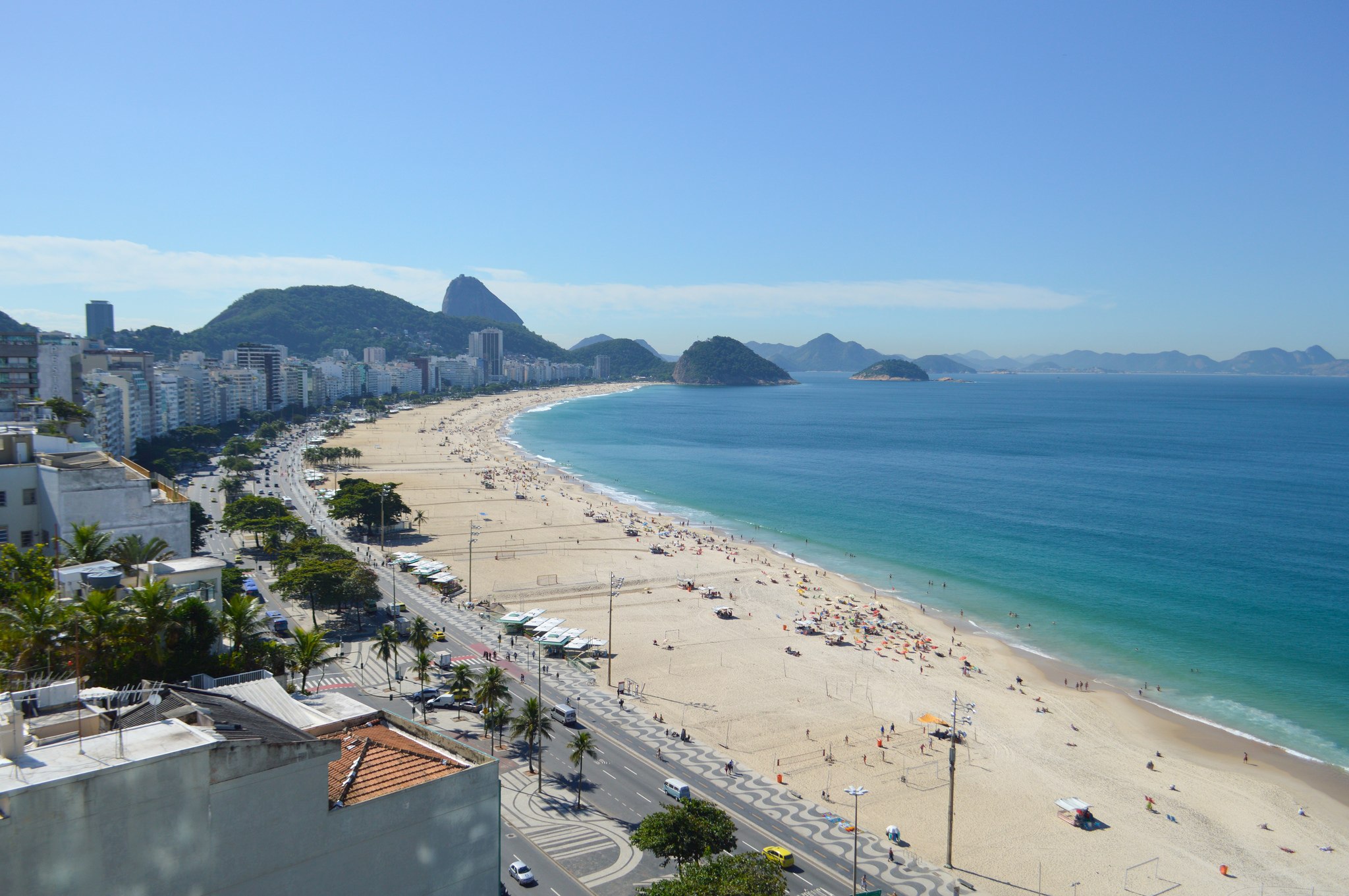
Copacabana Beach
Copacabana Beach, Brazil

Before I began pursuing life as a travel blogger in 2007, I was a call center manager for a health insurance company.

One of my team's many responsibilities was helping our customers understand how to submit claims, how claims are processed, and when, in the case of a refund, they could expect to receive a check in the mail.

It's not a stretch to say these are pain points for everyone who's needed travel insurance, too.

Allianz claim status in TravelSmart app.

Enter the latest version of the TravelSmart mobile app by Allianz Travel Insurance, which now makes submitting and tracking travel insurance claims even easier.

If you can do it on a cell phone, you know they've done everything they can to streamline the process, so you're compensated as soon as possible.

Another cool new feature is that, from within the app, you can choose to be reimbursed by direct deposit, so the money goes straight into your bank account.

No more waiting for a paper check in the mail.

According to Allianz Travel Insurance, choosing direct deposit can cut the time it takes to be reimbursed to as little as 48 hours from when the claim is filed.

No wonder a third of customers are choosing direct deposit.

I'm still kicking myself for not having purchased travel insurance in 2015 when in the Fall, I was surprised to find out I had a blood clot in my lungs and had to cancel a planned trip to Peru.

I have a way of learning things the hard way, whether it's losing phones to theft or losing money spent on airfare due to unexpected medical conditions.

Key app features:

  • Claims - quickly send and track claims and choose how to be reimbursed (direct deposit or check).
  • Policy Information - access your policy information, including coverage details and limits.
  • TravelSmart Hotline - easily call for medical assistance or customer service from anywhere in the world. No more remembering country phone codes.
  • International Hospital Search - find the closest Allianz-screened hospital or clinic.
  • Prescription Drug and First Aid Terms - store photos of your medications for easy reference and translate common medical words from English into 17 languages.

See the app in action in the video below.

The TravelSmart mobile app is available for free on iPhone or Android phones.

_______

I work as a travel insider for Allianz Global Assistance (AGA Service Company) and receive financial compensation.

Epic Road Trips To Take in Your Lifetime

Traveling is generally excellent, no matter where you go or what you do, but an epic road trip lingers in the memory. I go on a long drive every few months, and few haven't been amazing.

A few ingredients are needed for the perfect road trip: bring snacks, have some good music, and make sure you're traveling with people you don't mind being stuck in a car with for hours.

Here's a mixture of trips I have been on and two I desperately want to try for myself someday. I hope they inspire you!

Table of Contents

  • Road Trips
    • 1. Route 66, USA
    • 2. The Great Ocean Road, Australia
    • 3. The Wild Atlantic Way, Ireland
    • 4. Reykjavík to the Westfjords, Iceland
    • 5. Land's End to John o'Groats, UK

Road Trips

1. Route 66, USA

epic road trip
The historic Route 66 in the USA (Credit: Tony Hisgett)

The United States is made for road-tripping, with its diverse landscapes and long, endless stretches of road. I've merely road-tripped through a few Southern states and would love to return for a coast-to-coast trip one day, taking in as much of Route 66 as possible.

Before hitting the road, it's wise to consider practical preparations, such as affordable car insurance options detailed by Think Save Retire, to ensure peace of mind on your journey.

2. The Great Ocean Road, Australia

Australia is another country renowned for its road trips, and picking a favorite is tough. I've made some trips more than once, and others I've yet to do (I want to one day drive down the Eyre Highway across the Nullarbor Plain, which doesn't deviate from a straight road for some 90 miles).

The Great Ocean Road, above all, deserves a special mention. This 150-mile road stretches along the southeastern coast and is jaw-droppingly beautiful.

The road is filled with attractions: beaches, national parks, and the 12 Apostles-limestone stacks about three and a half hours west of Melbourne. As I'm currently spending the year living in Australia, I expect many more epic road trips.

3. The Wild Atlantic Way, Ireland

epic road trip
Ireland's Wild Atlantic Way along the West Coast (Credit: Greg Clarke)

Having driven around Ireland twice now (addicted, much?) I can assure you that the country is lovely wherever you go. For a proper, rugged coastline, head to the west coast and drive down the Wild Atlantic Way.

The route takes you through five different counties (the very underrated County Donegal, County Mayo, County Clare, County Kerry, and County Cork). Over 1,000 attractions, such as the Slieve League Cliffs, Mizen Head, and the Cliffs of Moher, are along the way.

4. Reykjavík to the Westfjords, Iceland

It's challenging to travel to Iceland without including a road trip. As many of the country's best sights are natural, hopping in the car and seeing where the road takes you can be fun.

I decided to do that the first time I traveled there in 2014. So, I grabbed a car, rounded up a couple of Canadians (Reykjavík was full of them then), and headed north to the remote Westfjords.

For a country whose tourism industry is booming, the Westfjords were almost entirely devoid of people at that time. We'd drive for hours without seeing a single soul.

We had no clear idea of what we wanted to do or see-merely a map and a few bookings at some faraway hostels. We drove for three days, covering a lot of ground and loving every second. It remains my favorite road trip to date.

5. Land's End to John o'Groats, UK

epic road trip
The hotel at John O'Groats (Credit: George Hodan)

Here's another hypothetical epic road trip. Living in London for two years, I made a couple of car trips to places that were harder to reach by public transport.

Yet, the one I dearly wanted to do but couldn't squeeze in was similar to my aforementioned trips around Ireland. I wanted to take a substantial chunk of time to drive from one end of the UK to the other, stopping at any town or sights I fancied.

If you're going to do it properly, why not go from tip to tip? Land's End in Cornwall and John o'Groats in northern Scotland are the two landmarks from which you can traverse the island, from top to bottom.

Technically, the most southern point of England is Lizard Head, and the furthest north you can get in mainland Scotland is Dunnet Head (we're excluding all islands here).

Yet, Land's End and John o'Groats have the novelty factor to them, so that's that. Alternatively, I'll happily drive around North Wales for a few days. I'm not picky.

Before embarking on your international road trip, get an IDP online for Brazil or wherever you're planning to drive. It's often required in countries like South America, the Middle East, Japan, Italy, and many others across Europe, helping you avoid potential legal hassles on your journey.

Why You Should Date Someone From a Different Country

Love locks (photo: Max Pixel)

There are plenty of reasons why living overseas is a terrifically fun thing to do.

You get to experience a culture that's different from yours. You'll try out a different walk of life.

You'll learn important things about yourself and what you want out of your time on this planet. And you'll get to meet lots of different and interesting people.

And if you do get the chance while you're over there (i.e., you arrive single and ready to mingle), you should consider dating someone who comes from a different country to you.

There's a clear difference between dating while traveling and dating while living overseas.

These sorts of relationships can be exciting and adventurous, but they can also be complicated and confusing. Sometimes all at once.

Yet, trust me, it's the best thing you could do. Here's why.

Table of Contents

  • 1. You'll go on amazing dates
  • 2. You may strengthen your language skills
  • 3. You'll find each other novel
  • 4. You'll learn more about the culture of the country you're living in
  • 5. You'll never forget your overseas adventure

1. You'll go on amazing dates

Although discovering a new country on your own can be quite fun, there's nothing like having a local on hand to show you the sights.

You'll go on some fantastic dates where you try new activities or foods.

Your romantic mini-breaks will be to destinations that you may not have thought of visiting if you were exploring the country on your own.

Boy meets girl (photo: Vladimir Kudinov, Pexels)
Boy meets girl (photo: Vladimir Kudinov)

2. You may strengthen your language skills

If your native tongue isn't widely spoken in your new country, this will be an excellent opportunity to work on your language skills.

Taking language lessons and eager to practice speaking aloud to a local? Well, go on a series of dates. That'll get you talking.

Even better if you strike a connection with someone and start seeing them seriously.

Not only will your language skills strengthen, but you may end up speaking a new tongue altogether - the language of love (I'm sorry, but I had to work that in, somehow).

3. You'll find each other novel

It's all very nice when you first start dating someone.

You're in that stage where everything they do and say is fresh and new, and you're finding out about each other. It can be a lot of fun.

When you're dating someone from a different country to you, there's that added layer of novelty and intrigue.

They have an accent! Their skin color might be the complete opposite of yours!

They speak another language, or three (and maybe they play the guitar too)!

These can all be very sexy things that add to the excitement of a new relationship.

Who doesn't like romantic weekends away to the seaside? (photo: free-photos)

4. You'll learn more about the culture of the country you're living in

You're going to be learning about a culture that's different from yours, regardless of whether you're dating at the time.

Yet, seeing someone who's grown up with that culture will give you insight into how things do and don't work in your new home.

Even cultures that seem quite similar at first (like British and American) have their differences - such as, don't start talking about your "pants" in a room full of Brits, lest you want to be teased and mocked mercilessly.

It's reassuring knowing that you have someone on your side who can field questions, to avoid making any embarrassing and unintended social faux-pas.

5. You'll never forget your overseas adventure

Whether or not the relationship lasts, you'll always remember that time that you lived in Italy and went out with that Italian fellow, who took you on rides through the cobblestone streets of Rome while you sat on the back of his Vespa. It helped that he could cook a mean pizza.

Putting all clichés firmly aside, it's often the people who you meet that make travel or expat life so much better.

And even if the relationship bites the dust or you're forced apart but irritating things like immigration laws, you'll never forget the times you shared with that person, and if you're lucky, their country will always have a special place in your heart.

Snow, Ski, and Sleepless Nights: Top Things to Do in Mont-Tremblant

Ice fishing
Ice fishing

Mont-Tremblant is a distinctly Canadian winter sports mecca.

The town's French Canadian roots make this a mish-mash of different cultures that made me wonder how it only takes 450 miles from New York City to Mont-Tremblant.

Located a little more than an hour north of Montreal, in the middle of the Laurentian Mountains, Mont-Tremblant is Canada's east coast winter sports capital with some of the largest ski hills, Disney-esque architecture, and inspiring French-Canadian cuisine to explore.

These are the top things to do in Mont-Tremblant in 2017, speaking from recent experience.

Table of Contents

  • 1. Skiing, Snowboarding, and Snow Tubing in Mont-Tremblant
  • 2. Dog Sledding with Siberian Huskies
  • 3. Ice Fishing Expedition
  • 4. The View from Above
  • 5) Microbrews, Smoked Meat, and Legendary Après
  • 6. Extreme Temperatures at the Spa

1. Skiing, Snowboarding, and Snow Tubing in Mont-Tremblant

2,871-foot mountain peak, 96 ski runs, and four slopes, and ten lifts and gondolas are what makes Mont-Tremblant one of the most prominent ski mountains on the east coast.

Fresh powder fell from the sky on an almost daily basis making the first trail runs something special each day.

A short two-minute gondola ride from the village takes you above the Disney-like hotels and shops to the base of the ski hill.

Steps away are the ski lifts that take you to the top of the mountain in minutes for plenty of green, blue, and black runs.

Stay on the north side of the mountain for the least windy trails if you can brave the cold. I preferred the south side with the covered gondolas that kept me warm in between each ski run.

Eric Guay is one of my favorite black diamond trails, with manageable and long curves on the Grand Prix trail on the south versant that eventually lead to plenty of green, blue, and black diamond trails to finish at the bottom.

Mont-Tremblant has all the equipment rentals, lessons, guided skiing, helpful staff, lifts, slopes of varying degrees of difficulty--the whole nine yards.

2. Dog Sledding with Siberian Huskies

Mont-Tremblant shines with a full range of other activities to rock out, some of which you will rarely find in other cities or countries around the world.

Ironically, Mont-Tremblant is probably one of the warmest hubs to experience dog sledding.

You'll listen to a quick explanation of how to both drive and ride the dogsled inside of a working Mongolian-style yurt, heated by a toasty fire with the packs of Siberian Huskies barking outside.

The dog sledding experience is otherworldly as you shout Allez Allez to your pack of six huskies down small hills, over ice-covered bridges, and past the ghost-white trees.

The dogs are nearly silent in a trance as they pull the sled at whatever speed you direct them.

Choose from a handful of professional dog sledding companies like Aventures Banquise with routes like the Mountain Adventure, the Diable Adventure, and the Forest Adventure departing from the Activity Center in front of the ski hill.

3. Ice Fishing Expedition

Ice fishing is an authentic Canadian experience.

Expect your guide to drill several holes with a power drill while you prepare a folding chair and blanket for a day of good conversation and drinks.

Ice fishing has become like second nature to the guides who grew up with this activity.

They will take you to the places with both the best scenery and most fish for a relaxing, but cold, day literally on top of a frozen lake.

Does that sound too adventurous?

Not to worry. A heated tent, underwater cameras to spot the fish, and only 20 minutes from the village allow you to fish in comfort.

If you're fortunate, you can catch smallmouth bass, perch, and pike.

See also: Fly Fishing for Beginners - A Guided Trip on the Poudre River

Mont-Tremblant
Mont-Tremblant

4. The View from Above

Did I mention that the scenery here is nothing short of incredible?

If you can afford it, it's highly recommended to take a helicopter tour through the Laurentian Mountains, lasting anywhere from 10 to 60 minutes.

You will pass frozen lakes, log cabins, inspiring mountain peaks, and small towns covered in white for panoramic views.

Sure, it's a little pricey. At the other end of the economic scale, you can take a gondola for slightly more than $9 CAD as of this writing for similar views atop the mountain peak.

Note, this is the same place for skiers.

Once at the top, there are a couple of restaurants for a cold beer or warm hot chocolate while you take in the view.

See also: Things to Do in Denver - 48 Hours in the Mile High City

Beer
Beer

5) Microbrews, Smoked Meat, and Legendary Après

Quebec knows how to party, and Mont-Tremblant is certainly no exception!

La Diable is a microbrewery smack in the middle of the village, with craft beer sold on tap only. Start with a beer sampler to find your ideal draft.

Besides craft beer, the Quebec region specializes in smoked meat and poutine, which you will smell from many restaurants each time you ski to the bottom.

It's hard to go wrong trying any of the restaurants directly in the village, like Le Shack beside the ski hill. Starbucks even has a fireplace.

And plenty of classic French fine dining restaurants exist if you want to splurge. Escargot, anyone?

Finally, Le p'tit Caribou is known as the best place to drink after a day on the slopes. It consistently ranks as the best bar for après on the continent.

The atmosphere is legendary, and the party picks up with twenty-year-olds raging until the early morning.

6. Extreme Temperatures at the Spa

Mont-Tremblant is a place for taking advantage of the outdoors.

Spa Scandinave is the only place that makes it comfortable to do so without a shirt.

This spa on the shores of the Diable River offers Scandinavian-style baths in an outdoor setting surrounded by snow, trees, wooden pavilions, solariums, outdoor fireplaces, terraces, and relaxation rooms with serene music.

Get a massage or skip it and head directly to the hot tubs, cold tubs, and a dip in the frozen lake.

Scandinavian Baths

An important point to note is that you should try to plan your itinerary if you intend on staying for just a few days.

Many of these activities require notice, assuming dog sledding and ice fishing are not already fully booked.

You will find plenty more activities besides the six I covered.

Snowmobiling, ice climbing, horse-sledding, snowshoeing, paintball, wilderness survival, dune buggies, and plenty of other activities are also options during the winter.

As you can see, Mont-Tremblant is a winter adventure destination, a reasonable drive, train, or plane from the east coast of the United States.

The value of the United States dollar compared to the Canadian dollar makes Mont-Tremblant a budget-friendly destination for Americans.

Come skiing, and you'll probably stay longer than you think to eat, drink, and explore the town and its various activities.

____

Certain aspects of this trip were provided by Tremblant. All experiences and opinions are my own.

Explore Svalbard: Adventure Activities Near the North Pole

Dog in Svalbard
Hanging out with John the dog in Svalbard

Your first thought after having read the title of this article might have been: “Where on Earth is Svalbard?”

Well. Grab your nearest world map or atlas and head north of Europe. Past the Scandinavian countries, past the Faroe Islands, even past Iceland and you’ll find Svalbard – a Norwegian archipelago 650 miles (1,050 kilometers) from the North Pole.

As you can imagine, it gets quite cold in Svalbard, all year round. This won’t stop you from having any of the outdoor adventures that the region is famous for – they’ll merely enhance them.

Table of Contents

  • Dog Sledding in the Snow
  • Chase the Northern Lights
  • Snowmobiling
  • ATV Adventuring
  • Learn about the Global Seed Vault

Dog Sledding in the Snow

This was the adventure I was most looking forward to, as I love man (and woman’s) best four-legged friend and regularly seek dogs out when I travel.

It had rained, rather than snowed the day I was scheduled to go dog sledding, so we ended up going… I want to call it dog karting, instead.

We journeyed to the doggie base camp to pick up some pups. The handlers all seemed very well acquainted with the dogs and knew them all by name and nature.

I asked what determined which dog was selected for the trip and they explained that they rotate them, so that they each get to go out for a run every couple of days.

The dogs were more excited to go running than we were and enthusiastically took us for a wee little tour around the outside of town (where I saw the Global Seed Vault for the first time, more on that below).

The rain made it quite a muddy experience, but it was a lot of fun, regardless.

Polar bear sign
The signs warning you to watch out for polar bears, outside the city limits

Chase the Northern Lights

Late October to early March is a period of time up north known as the “Polar Night,” where the entire region is shrouded in darkness for almost six months.

This time of the year is thus perfect for spotting the Northern Lights! I can assure you that their presence will quickly turn any holiday into the “trip of a lifetime”.

I did a tour that was northern lights specific, where we were taken outside the city boundaries, into a small cabin.

Here we enjoyed a delicious dinner and sipped on coffee and tea, in the hope of seeing the lights.

Unfortunately, they did not make an appearance that night, so we spent the evening learning about polar bears instead. Wasn’t too bad of a compromise, in the end.

Snowmobiling

Here was one activity I was quite disappointed to miss out on – snowmobiling!

I, unfortunately, didn’t have enough snow to justify going out when I visited (highly irregular for that time of the year, I was told) and had to choose another activity instead.

In normal conditions, snowmobiling is readily available in Svalbard – indeed it is a pretty normal mode of transport for locals.

ATV adventuring in Svalbard

ATV Adventuring

Instead of snowmobiling, I chose to climb on the back of an ATV bike (quad bike, for those of you who are as confused as I initially was) instead and go adventuring to some of the sights around Longyearbyen.

We headed outside of the city limits to visit the old airport and see the wreckage of a plane, before heading onwards, up nearby mountains to check out a couple of the now abandoned mines (Norway had several mines open in Svalbard when coal was a more sought after commodity – Russia continues to mine there to this day).

This involved driving up and down several hills that were iced over, which was a bit nerve-racking, but we were rewarded with some beautiful sights – and even saw a reindeer in the wild.

Learn about the Global Seed Vault

Not just for biology nerds, the Global Seed Vault is one of the neatest sights in Svalbard.

The vault was installed in 2008 by representatives of each Nordic government (Iceland, Norway, Sweden, Denmark, and Finland).

It contains specimens of seeds from countries around the world and is an insurance policy for the planet itself.

You can’t actually enter the vault (to my bitter disappointment) but you can learn about the history of the seed bank and how crops are grown in the arctic north.

That’s right… there are greenhouses in Svalbard.

There are plenty of other ways to explore Svalbard, from boat trips to glacier hikes.

Some activities are only available in the summer months, others during the polar night, ensuring that no matter what time of the year you go, you’re sure to have a unique and special experience.

I'll Be Back - Travel Destinations Worth Returning To

Nyhavn at sunset (photo: David Lee)
Nyhavn at sunset

I think most travel destinations can be categorized in four different ways.

There are the places that you go to that you can't get on board with.

Maybe they're not your cup of tea, or something happens that casts a shadow on your time there (like street harassment, getting robbed, or falling ill).

Whatever the case, you don't enjoy the place, and you're quite relieved to get out of there.

Then there are destinations that you travel to, which are okay.

You don't have a terrible time there, and you like it well enough, but you don't feel a burning desire ever to go back.

Some places, on the other hand, you can't get enough of. As you walk down the streets, you can imagine a life there.

You can see yourself living in a little apartment, getting your groceries from the local supermarket, and you've already picked out a favorite cafe.

You either make it your mission to move there, or daydream about the place whenever you're feeling a bit bored or stifled in your current situation.

Then there's those that you really, genuinely love - not to the point of wanting to live there, but you can see yourself returning at some point in the future, or at least you hope.

Here are five travel destinations worth returning to. I fell for these places hard - or felt I could genuinely love in different circumstances.

If I had the chance to go again, I wouldn't hesitate in the slightest!

Table of Contents

  • Vienna, Austria
  • Tortuguero, Costa Rica
  • York, England
  • Kyoto, Japan
  • Copenhagen, Denmark

Vienna, Austria

I'd been to neighboring Germany and Switzerland lots of times, but had somehow never stepped foot into Austria.

Last year, I had a chance to rectify this when wanting to fly from Zurich to Stockholm.

Flights from Switzerland were far too expensive, with nearby Vienna being a much cheaper option.

I decided to travel to the Austrian capital by train and spend a day there before flying on to Sweden.

It quite simply wasn't enough time. I spent a marathon day walking around the city, losing myself in art galleries, eating delicious meals, and taking in the sights.

I was quite disappointed when I left a day later - I could have spent a lot longer in Vienna and at the airport, swore I'd return... one day.

Tortuguero in Costa Rica (photo: Wiki Commons)

Tortuguero, Costa Rica

Costa Rica captured my heart in general, but no place so much as Tortuguero.

A small village on the North Caribbean coast, the name can be translated to "Land of Turtles."

This is because it is a breeding ground for turtles such as the leatherback, hawksbill, and the endangered green turtle, which nest there every year.

I wasn't there during the turtle season, and it's pretty much a life ambition for me to see one nest one day. I'd love to go back.

York, England

My time spent in York was fairly disastrous, with nearly nothing going to plan.

I was there for 24 hours and missed seeing the Minster Choir perform in the city's famous cathedral and mixed up the times for the local ghost tour that night.

That aside, I found York to be architecturally stunning and the people so friendly. It remains one of my favorite cities in England.

Fushimi Inari-taisha in Kyoto (photo: Wiki Commons)
Fushimi Inari-Taisha in Kyoto (photo: Wiki Commons)

Kyoto, Japan

Kyoto was the last stop of a whirlwind ten-day tour of Japan a few years ago.

I found Tokyo to be too big and busy, and Osaka left me wanting, but Kyoto seemed like a perfect mix of old meets new.

I spent one very idyllic day cycling around, looking at the various temples and shrines and ate quite a few tasty meals. I'll be making a return visit when I travel to Japan in the future.

Copenhagen, Denmark

Copenhagen was somewhere I wanted to love, yet I didn't.

I went there straight from Iceland, which I adored (like everyone else in the world, it would seem!), and so Copenhagen paled in comparison.

I was staying in a pretty terrible hostel as well, which didn't help and was having one of those moments when traveling solo, where I didn't know what to do with myself.

It was a shame, as Copenhagen is a lovely city, and I'd like to return one day.

I'll just make sure not to travel there straight after Iceland, ever again.

12 Fun Things To Do in Chicago

The Bean in Chicago (Credit: Vincent Desjardins, Flickr)
The Bean in Chicago (Credit: Vincent Desjardins)

Fancy a visit to the Windy City? Chicago, Illinois is attracting record numbers of people - with more than 50 million flocking there every year - and it's easy to see why.

If you're set to join the ever-growing crowd, here are 12 fun things to do in Chicago.

Table of Contents

  • Reflect on Life with 'The Bean'
  • Enjoy the Attractions at the Navy Pier
  • Soak up the Sun on the Beaches
  • Marvel at the Amazing Views at 360 Chicago
  • And Take a Trip up the Willis Tower
  • Tuck into the World's Best Pizza
  • Relax in Lincoln Park
  • Visit the Iconic Chicago Theatre
  • Shop 'til You Drop on the Magnificent Mile
  • Take Me Out to the Ball Game
  • Soak in the Culture at the Art Institute
  • Laugh the Night Away

Reflect on Life with 'The Bean'

Quite possibly the coolest public sculpture going, Anish Kapoor's Cloud Gate is widely known as The Bean on account of its distinctive shape.

This Stainless Steel structure - the highlight of the excellent Millennium Park - offers a unique reflection of the surrounding skyscraper-strewn skyline, making it the perfect place for a fun picture.

Enjoy the Attractions at the Navy Pier

Mere yards away from the skyscrapers is the Navy Pier.

Buzzing with attractions, this is the number one leisure attraction in the Midwest, with nine million visitors every year.

From the Chicago Children's Museum to the Ferris wheel, IMAX theater, and boat rides into Lake Michigan -- this is a must for the young and young at heart.

Soak up the Sun on the Beaches

What's that? Beaches? Yep, there's plenty of chances to hit the sand and soak up the sun along the banks of Lake Michigan in Chicago.

North Avenue Beach is one of the most popular, with the chance to play volleyball or hire a bike or jet ski from here.

The beach house is in the style of an ocean liner and should cater for all your refreshment needs.

Oakwood Beach plays host to festivals, while Montrose Beach is a little more relaxed and fashionable with dog walkers.

Chicago from above (Credit: tpsdave, Pixabay)
Chicago from above (Credit: tpsdave)

Marvel at the Amazing Views at 360 Chicago

This attractive city - so full of skyscrapers - is best viewed from above, probably from 360 Chicago.

This is the new name for the observation deck on the 94th floor of the John Hancock Center, and it is perfectly poised to gaze out over Lake Michigan and the Magnificent Mile.

Save plenty of space on your camera; you'll need it for this.

There's also the chance to try the TILT, a section of the tower than leans out to a 30-degree angle over Michigan Avenue.

And Take a Trip up the Willis Tower

What? Another tower?

Yes, even though the 360 gives you the best views of the city, the Willis Tower needs to be on your list too.

Formerly (and still by traditionalists) known as the Sears Tower, this 110-story giant is the second tallest building in the country.

Best of all is The Ledge, a heart-pounding experience in which you can step out into glass boxes that extend out from the 103rd floor and look straight down 1,353 feet to the street below.

Tuck into the World's Best Pizza

The pizza may have started in Italy, but it has been perfected in Chicago.

Once you've tried one of the city's famed deep-dish pizzas, you will never look back, and no visit is complete without one.

Pizzeria Uno is credited with creating the deep-dish style while Giordano's has also spread the gospel far and wide across the country, and both deliver the goods.
Pequod's Pizza, in N. Clybourn Ave, is an award-winning alternative, and its caramelized crust is guaranteed to please.

Ogling the city from Lincoln Park (Credit: Wiki Commons)

Relax in Lincoln Park

A short hop north of Downtown is the seven-mile-long Lincoln Park.

Within the park is a 35-acre zoo which is entirely free to enter - making it a great budget trip for a family - as well as sports facilities, beaches, parkland, gardens, public art, and the Chicago History Museum.

With an extensive list of attractions, it's no wonder that this attracts 20 million visitors every year.

Visit the Iconic Chicago Theatre

No Chicago photo album is complete without a picture at the iconic Chicago Theatre. Situated in N State Street, the venue's marquee has become something of a symbol of the Windy City and is a regular feature in film, TV, and art.

There's no need to stop at the photo, though; pop inside for a play, concert, comedy or magic show.

Shop 'til You Drop on the Magnificent Mile

The beating heart of the city, the Magnificent Mile, is host to virtually every world-leading retailer, along with photo-friendly landmarks such as the old Chicago Water Tower or the Tribune Tower.

Many of the best hotels in Chicago are found in and around the 'Mag Mile,' and you can rest assured that being close to here ensures you stay close to the action.

Take Me Out to the Ball Game

Chicago has a proud sporting pedigree - with teams in all five major pro sports - so you'll be spoilt for choice when it comes to getting a slice of the action.

For us, nothing quite tops the Wrigley Field. The 'friendly confines' is home to the Cubs and is a truly iconic ballpark.

Soak in the Culture at the Art Institute

If culture is what you're after, then there are plenty of museums to feed your passion.

Best of all is the Art Institute Chicago in Grant Park.

Famous works include Picasso's The Old Guitarist and Grant Wood's American Gothic, while this year's exhibitions see Whistler's Mother return to Chicago for the first time in more than 60 years.
Laugh the Night Away

If you fancy a laugh while you're in town, then head to The Second City in N Wells Street.
Since it was established back in the 50s, this has developed a reputation as one of the most influential comedy venues in the world - helping to foster the talents of such stars like Bill Murray, Tina Fey, Steve Carell, and John Candy.

It promises guaranteed laughs to cap off a fun day in the Windy City.

Comedy, culture, views, shopping, sports. Chicago has a lot. Make sure you plan to see as much as you can.

_______

This story was brought to you in partnership with Trip.com.

Hungry Travels: Favorite Foods from Around the World

I mostly travel to eat. Nothing excites me more than trying new foods, especially if the dish hails from that region. However, this can prove problematic if I fall head over heels for that meal, and I'll be somewhat devastated upon leaving the country.

A Full English Breakfast. It's a hearty meal! (Credit: Kate Hopkins).
A Full English Breakfast. It's a hearty meal! (Credit: Kate Hopkins)

I will spend months or years thinking about that particular food item and wondering when or if I'll ever get to eat it again. Here are some of my favorite foods from around the world, which have ruined me for life.

Table of Contents

  • Favorite Foods
    • Black Pudding and Scotch Eggs in Britain
    • Seafood Chowder in Ireland
    • Udon in Japan (and Heated Cans of Hot Chocolate)
    • Fresh Cream in Switzerland
    • Eggplant Purée in Qatar

Favorite Foods

Black Pudding and Scotch Eggs in Britain

I ate a lot of black pudding and scotch eggs while living in the UK, two of the things I miss the most in my daily life there.

Black pudding or blood sausage is, as the name suggests, a sausage made of pork blood (with fat and oatmeal) and an essential part of a Full English Breakfast (establishments who promise you a full English, then deliver a plate without this type of sausage should be ashamed of themselves).

Scotch eggs are chicken eggs encased in pork sausage meat and deep-fried. They taste especially good with pickles and English mustard. No one does sausages as well as the English, and I am bereft without these items.

Seafood Chowder in Ireland

I've road-tripped around Ireland twice, once in the winter and once in early autumn. It was chilly during the winter months, and I was also quite a broke student then, so most of my meals consisted of inexpensive soup bowls. As I journeyed down the country's west coast, I took a sample of seafood chowder when I could, hoping to find the creamiest, most delicious chowder of all.

I stumbled upon the jackpot in the small town of Dingle, in the southwest of the country. This was around seven years ago, but I can still close my eyes and imagine the taste of that chowder on my lips to this day.

Udon in Japan (and Heated Cans of Hot Chocolate)

Udon noodles from Japan (Credit: Wiki Commons)

Japanese cuisine is now one of my favorites, but this wasn't always the case. After suffering from a bout of food poisoning caused by a dish of teriyaki chicken at a restaurant in Australia, I didn't touch a single plate of Japanese food for over two years (which was difficult, as Australia is full of Japanese restaurants).

It wasn't until I traveled to Japan in 2011 and gave the food another go (faced with no other option) that I remembered how much I had enjoyed it - particularly udon, thick wheat flour noodles with broth, which is perfect on a cold day.

I visited Japan in the middle of winter. I was very excited by the many vending machines around the country, particularly those that served cans of hot chocolate, which came out warm. It was like being in the future!

Fresh Cream in Switzerland

I've spent a lot of time in Switzerland, and I have friends who live outside one of the major cities. They have the best of both worlds-Switzerland's excellent train system can get you into Zurich within twenty minutes, but you still enjoy Swiss country life.

This means that when I've visited them, we've journeyed out to the countryside, where we've been able to buy fresh blueberries, strawberries, the freshest cream I've ever tasted and incredibly potent plum schnapps - straight from local farms and dairy producers. Delicious.

Eggplant Purée in Qatar

Me with my beloved eggplant puree.

I was surprised by how good the food in Doha was, and there are many meals I'd be keen to sample if I ever were to return to the city. My favorite restaurant above all others was located in the local Souq Waqif.

It was Iranian and served the most tender lamb, beef, chicken, and a delicious eggplant purée. I'd go there as often as possible and was never disappointed.

I also really enjoyed "Chili Dog Tuesday" at the Gordon Ramsay restaurant, where you paid the equivalent of around $25 and could eat as many chili dogs as you could fit in your belly - along with a non-alcoholic drink of your choice and chocolate ice cream for pudding.

6 Alternative London Tourist Destinations

Millennium Bridge
Millennium Bridge at sunset. Simply wandering around the city has its merit too.

You could live a lifetime in London and never run out of things to do.

I genuinely believe this, as I spent over two years in the city and still managed to leave with a "to do" list that was miles long.

Some of these were well-trodden paths. (How have I not been to the Tate Modern?)

Others were quite alternative London tourist destinations, which many visitors do not hear about.

If you're traveling through the UK's capital, with minimal days to spare, it can be pretty challenging to narrow down exactly what you're going to experience during your time there.

Here are some sights I recommend, if you want to see a side of the city that many tourists are unaware of.

Or, if you're a local who wants to get to know the capital a bit better!

Tower of London
I'd been to the Tower of London years ago but had never seen the Traitor Gate!

Table of Contents

  • Take a cruise down the Thames
  • Look down on London From the Sky Garden
  • Have breakfast (or dinner) at Duck and Waffle
  • Tour the Forgotten Stations and Tunnels of the Underground
  • See a play or musical at the Old Vic
  • Visit the dinosaurs at Crystal Palace Park

Take a cruise down the Thames

In my experience, one of the easiest and most pleasant ways to see the city of London is from the water, and it's an alternative view, to boot!

City Cruises offer relatively inexpensive trips up and down England's most famous river, stopping at Greenwich, Tower Pier, the London Eye, and Westminster.

The price for one way is $15. If you have purchased a travel card, flash that, and they'll knock a few pounds off the price.

My advice is to start at Greenwich - the sights get more and more impressive as you cruise along, beginning with Canary Wharf and ending with beautiful Westminster.

Look down on London From the Sky Garden

There are plenty of places you can travel to gain a bird's eye view of London. My favorite is the Sky Garden, simply because it is free.

You have to book online in advance via their website, but it's a relatively straightforward process.

From there, you turn up at your allocated time, go through security, and journey up the lift, out into the garden.

The reason I like this particular view so much is that I find 20 Fenchurch Street (known colloquially as the Walkie Talkie) to be a bit of an eyesore.

As the garden is IN that particular building, you can enjoy uninterrupted views of London's skyline!

Duck and Waffles
Duck and Waffles at 11 p.m.

Have breakfast (or dinner) at Duck and Waffle

The Duck and Waffle restaurant is located at the top of Heron Tower, and its particular gimmick is that it's open all night.

Once again, you have to book in advance, but you can turn up for dinner in the middle of the night or have brunch at 3 a.m.

There are plenty of strange dishes available on the menu, but I'm a fan of the eponymous Duck and Waffle dish. This beautiful melding of flavors works, somehow!

Tour the Forgotten Stations and Tunnels of the Underground

London is littered with history, much of which is contained in its public transport system.

There are plenty of old stations and tunnels, which are no longer in use, but each has a story to tell.

Every year, London Transport Museum(?) releases highly coveted tickets to a selection of tours, known as Hidden London.

You may tour the old tunnels of Euston Station (which have been closed to the public since the 1960s), poke about in Aldwych Station, which has been out of use since 1994 or check out Down Street Station, where Prime Minister Winston Churchill took refuge secretly at the height of the Blitz during WW2.

You have to time your visit right, and tickets sell out fast, yet if the stars align, a tour of this kind is certainly something worth doing.

See a play or musical at the Old Vic

I know that many guides tell you to try to source tickets to the West End.

Don't get me wrong either - I love this part of town and have seen more plays and musicals there than I could count.

Yet, the Old Vic is something special, being one of the oldest theaters in London. It's not even in the West End, being a short stroll away from Waterloo Station.

It also tends to showcase musicals and plays which differ significantly from the usual tourist traps of Agatha Christie's play and Les Mis.

I saw "Groundhog Day - The Musical" there in 2016. I laughed, and I cried.

And finally, Kevin Spacey was the artistic director for over ten years.

Do you need any more convincing?

Crystal Palace Park
One of the dinosaurs of Crystal Palace Park

Visit the dinosaurs at Crystal Palace Park

Located in the often neglected south of London, the dinosaur statues of Crystal Palace Park are a marvel.

Construction of the dinosaurs was completed in 1854, meaning that they predate Charles Darwin's theory of evolution by six years.

People had no idea what our predecessors looked like, so they took an educated guess. In many instances, they weren't far off the money.

The park is lovely in itself, full of flowers and featuring a pond. So, pack a picnic, hop on the Overground and make an afternoon of it.

These are just a few of my favorite sights and things to do in London. What are yours?

New York Times Travel Show: North America's Largest Travel Trade Show

Walking Stone Street before The New York Times Travel Show.
Walking down historic Stone Street

In early 2010, while visiting New York City, I paid a few dollars and wandered into the New York Times Travel Show, the largest travel trade show in North America.

I was curious about what the show had to offer and wanted to use the opportunity to meet some of the people I'd been connecting with via Twitter.

I watched a talk by Julia Dimon, met Pauline Frommer as she was signing books, and entered every trip giveaway I could find.

A few hours later, I left feeling inspired by all the destinations I'd yet to visit, which were represented at the show.

The following week, to my surprise, I received an email notifying me I'd won free roundtrip airfare from New York to Tokyo courtesy of Japan Tourism.

I've been a fan of the New York Times Travel Show ever since!

This year, I attended as a guest of Allianz Travel Insurance, along with the company's global ambassadors Lee Abbamonte and Johnny Jet, and fellow bloggers Gareth Leonard from Tourist 2 Townie, Clint Johnston from TripHackr, and Drew Binsky.

Inside the Oculus
Inside the Oculus

Touring Lower Manhattan with Pauline Frommer

To jazz up the weekend, Allianz arranged for us to spend our first day on a tour of lower Manhattan led by Pauline Frommer.

We met Pauline outside the National Museum of the American Indian. From there, she led us across the street to Battery Park, sharing historical trivia from her book Frommer's EasyGuide to New York City along the way.

One of the things I love about New York City is that it's so huge, there's always something new to learn.

For example, as we walked along cobblestone-covered Stone Street, we discovered the first "paved" street in Manhattan.

We then walked north, past the famous Charging Bull sculpture and New York Stock Exchange to Trinity Church.

Founded in 1697, the church miraculously escaped damage after the World Trade Center Towers came down.

Seeing Alexander Hamilton's grave in the church cemetery was a fun surprise.

Next, we approached the Oculus, the dramatic $3.9 billion transportation hub connecting PATH trains from New Jersey with NYC's subways.

The bird-like design is by Spanish architect Santiago Calatrava.

We crossed the World Trade Center Memorial, which I'd visited before, and escaped the cold in the new North End Grill for lunch.

I had fresh oysters, local trout, and a shared order of the delicious duck fat fries.

Following lunch, we said goodbye to Pauline and took the fastest elevator I've ever experienced to the top of One World Trade Center.

Despite the gray skies, the visibility was excellent, and we were treated to 360-degree views of NYC and New Jersey.

Visiting the World Trade Center is still a somber experience for me.

I remember 9/11 like it was yesterday, and the images and tragedy I saw in the news that day will always be with me.

As the afternoon was winding down, we stopped by the Jacob Javitz Center to visit the Allianz booth and speak with some of their staff there.

The first day of the NY Times Travel Show is an industry day, so it's business-to-business instead of business-to-consumer like the rest of the weekend.

That night, Lee, Johnny, our hosts from Allianz, and us bloggers got together for a big family-style Italian dinner at Rubirosa, a popular restaurant in Little Italy. The fresh lasagna and pizza were fantastic.

Saturday at The New York Times Travel Show

Saturday morning, I walked over to the convention center to catch my friend Matt Kepnes share his budget travel tips.

He packed the room to the point where aisles were filled with people sitting on the floor, and those arriving late had nowhere to stand.

Following Matt's presentation, I walked the floor of the show. 

As well-traveled as I've become the last ten years, the allure of safaris in East Africa and white sand beaches in the Caribbean haven't lost their appeal.

Ever the optimist, I entered the trip giveaways just as I had in 2010.

For consumers, the New York Times Travel Show is primarily a place to go for inspiration. 

And to be around others who treat travel, domestically or internationally, as a priority.

The talks and book signings are an opportunity to bring together experts and authors with their fans.

For bloggers, the New York Times Travel Show is an opportunity to network with one another, as well as make contacts with travel companies and destinations.

If this is your primary interest, it's best to go on the industry day when it's less crowded.

_______

I was hosted by Allianz Travel Insurance during my weekend trip to the NY Times Travel Show.

How to Stay Sane While Living Overseas

Staying in close contact with people at home, going on adventures and reading tons of books - here's how to stay sane while living overseas. (photo: kaboompics, Pixabay)
Being able to communicate with people at home kept me sane (photo: kaboompics)

I was too excited by the prospect of living overseas to think about the consequences of what I was signing up for.

Changing friendships, culture shock, and homesickness plagued me throughout my three years overseas.

Not to say that I didn't have a jolly good time - as I certainly did. Yet, living abroad was a bit like riding a roller coaster. There were some superb highs, as well as spectacular downs.

What kept me sane as an expat was the little things, such as going on regular adventures, reading what seemed like a library of books, and being able to keep in touch with my family and friends.
Here's what I suggest you do to stay sane while living overseas.
Table of Contents

  • Communicate with loved ones at home
  • Plan travels and go on mini-adventures around your new home
  • Losing yourself in other people's stories
  • Forcing yourself to make friends
  • Challenging yourself

Communicate with loved ones at home

I couldn't have survived expat life without the means of communicating with those at home.

Thankfully, we live in a digital age, where we can instantaneously connect with those we love.

Gone are the times where you spent months waiting for a return letter abroad! With Skype, Whatsapp, mobile phones, email, Facebook... you're spoilt for choice when it comes to picking a method of communication.

Along with the digital means, I fully embraced letter, card, and postcard sending. I always loved receiving them myself - here was the opportunity to send someone I loved a little something to brighten up their day.

When reciprocated, my excitement was palpable.

There's something satisfying about maps (photo: ASSY, Pixabay)
There's something satisfying about maps (photo: ASSY)

Plan travels and go on mini-adventures around your new home

Going overseas from Australia is both expensive and challenging. Going abroad from the UK is almost as natural as breathing.

I never could wrap my head around the fact that I could get on a train and be in Brussels within a few hours, or pay $21 for a round ticket to Norway.

I think I became a bit addicted to travel in a way. Whenever I felt desperately homesick, or the English weather was getting me down, I distracted myself with trips abroad or mini-adventures around the UK. It gave me something to look forward to - to focus on instead of wondering what was happening at home.

I'm not saying this is a healthy thing to do, but it sure was fun at the time.

Losing yourself in other people's stories

If it's one thing I'm grateful for in life, it's the written word. Reading has been a form of escapism since I was a wee nipper.

When I was feeling a little disillusioned with my overseas stories, I picked up a book and immersed myself in someone else's.

I ended up reading a stack of books while I was living abroad (and buying a heap too, which was fun to ship home).

If you're finding your story a little lackluster, pick up a book and get lost in another's. I rarely finish a book without feeling a sense of achieving or learning something (there are the odd ones where I think "what a waste of time," but we'll not talk of those now). It's a nice feeling.

Having someone to share experiences with, makes all the difference (photo: Max Pixel)

Forcing yourself to make friends

There was no use wallowing in self-pity about anything I was missing out at home when my home was at least a day's plane trip away.

So, I set to making as many friends as possible, using a manner of different methods.

I was lucky enough to have more than a few like-minded people at my workplaces in both Doha and London. I still keep in touch with many of them today.

While I was in London, I got to do something I'd be wanting to try for a long time and took a writing class. This was also an excellent setting to meet people, as we had similar interests. I still keep in touch with a handful of people from the class.

Challenging yourself

Indeed, the reason expat life was the most interesting, was that I always had to challenge myself, in so many ways.

From searching for a place to live (in which it took over a year to find somewhere that felt like a home), to getting a job, making friends, fending off homesickness... there wasn't anything easy about living overseas.

Yet, there were so many factors that made it worth it. Getting to experience two different cultures - one not dissimilar to my own (England) and one completely different (Qatar). Meeting new people from all over the world and all sorts of walks of life. Trying new foods. Traveling to different countries. Being able to share my experiences with my friends and family back home.

All of this kept me going for the three odd years I spent abroad. And it's why, if I had the opportunity to become an expat again in life, I'd jump at the chance.

_________

This story was brought to you in partnership with Nobelcom.

How To Approach Language Learning as a Traveler

One of the most frustrating aspects of traveling is being unable to communicate with people. Depending on where you travel, this can lead to irritating consequences. Language learning can make your travels far easier and more enjoyable.

I'm a long, long way away from becoming a master of tongues myself, but I'm trying to get over my shyness and, in doing so, expand my cultural horizons.

Here are a few tips on language learning for travelers, as told by someone who has spent far too long in language classes for her own good.

Learning a language can be practical, in more ways than one (photo:  fzofklenz)

Table of Contents

  • Language Learning Tips
    • Memorize a few words and phrases that you'd use.
    • If you're traveling long-term, invest in a few classes.
    • Be brave. Speak up and out.
    • Don't discount languages because they're "hard" or not fashionable.

Language Learning Tips

Memorize a few words and phrases that you'd use.

Knowing a few words in another language is a good start. Wherever I go, I make sure I write down how to say "hello," "please," and "thank you."

As you can imagine, this list can get quite extensive when backpacking through Europe. Having a shocking memory, it usually takes a few attempts for these to stick, but I get there in the end.

I suggest taking it one step further by including some fully formed sentences. Daring, I know. But the good news is that many introductory language courses are AI-aided now.

For instance, the Langua AI language learning app helps you practice French, Italian, or Spanish with a "local."

Think about what you like doing when traveling - or even in your daily life. What's relevant will prove worth learning for your future travels.

For example, a friend of mine likes to make a point of learning how to order a beer and give a compliment in each country he visits. He frequents pubs in his country and is friendly in English, so it's natural for him to transfer this into another language.

I've tried to learn how to ask for drinks without straws in specific languages because I hate disposable plastics. Believe it or not, it sometimes works.

Travel should be a shared experience and communication helps with that (photo: JFXie)
Travel should be a shared experience, and communication helps with that

If you're traveling long-term, invest in a few classes.

If you're going to a region where a particular language is spoken prolifically, you'd be doing yourself a real disservice by not familiarizing yourself with the language in advance.

I've personally had the most success with classes, although it can be hard to find one that works for you. Luckily, we live in an age of online courses; you can get a good idea of what's available here.

You'll want to understand phrases you'd use while traveling-knowing things like "This is a black blouse" and "That dog looks sad" will only get you so far.

Either way, I don't think classes hurt - a crash course beginner's class will give you the fundamental blocks to build upon on your travels.

Here's a thought-why not look at taking some language classes in the country itself? Imagine basing yourself in Bishkek, Kyrgyzstan, and brushing up on your Russian before traveling through Central Asia.

Or learning some German in Berlin for a month while you experience what it's like to live in the city itself? Many adventures in language learning await, so long as you are willing to take the plunge.

One of the biggest challenges in language learning is finding opportunities to practice real conversations. If you don't have access to native speakers locally, online tools can help fill the gap. Platforms like Callmechat official allow you to connect with people from other countries for casual conversation, which can help build confidence before you arrive.

Be brave. Speak up and out.

I don't know about you, but I'm a terrible mumbler and can be a bit self-conscious, which has severely affected my ability to learn a language.

Half the time, I know what I'm trying to say, but I'm so scared of getting it wrong and "hurting someone's feelings" that I can't seem to cross the line.

It's silly. I hardly imagine anyone will be offended because I tried to learn their language and communicate with them.

I know I get worried that they'll think I speak their language and begin talking to me. Then, all I have to do is shrug and say, "I'm sorry. I don't understand what you're saying." It isn't exactly scary stuff.

It's pointless to learn words and phrases and never have a crack at saying them out loud. So, give it a go. You might surprise yourself by discovering that you absorbed more of the language than you initially thought, which could only be a good thing.

Stockholm, Sweden

Don't discount languages because they're "hard" or not fashionable.

It might seem "pointless" to learn Thai, but what if you're living in Thailand with no immediate plans to leave?

Likewise, you might decide to learn Spanish because you think it's more practical, yet still consider Arabic the most beautiful language in the world.

Learning a language is a significant and challenging commitment. It needs to be something you'll want to do, and it'll help you greatly if you hear it daily.

Even knowing a few foreign words here and there will make a difference in your travels and boost your overall self-confidence.

20 Facts You Didn’t Know About Mauritius

Whether you're planning a trip to the beautiful island of Mauritius or you want to find out more about what the nation has to offer, we've rounded up 20 top facts.

Mauritius
Mauritius

About Mauritius

A history of conquest and culture

Mauritius was colonized over 300 years ago by the Dutch, French, and British, following its discovery by the Portuguese and Arabs.

Its name is derived from Maurice van Nassau, later known as Maurice, Prince of Orange, and it was known as The Star and Key of the Indian Ocean due to its strategic position along trade routes.

On the southeast coast of the island, Vieux Grand Port was the scene of the sole French naval victory over the Royal Navy during the Napoleonic Wars - and the only maritime battle commemorated on the Arc de Triomphe, in Paris.

Having only become an independent state as recently as the 1960s, the multicultural influences of its past guests remain, with French, British, and its own Creole as the local vernaculars.

Although it has been a long time since the island was the British Empire's primary sugar-producing colony, sugar cane remains one of its main exports, with approximately 600,000 tons produced annually from the plantations that cover around 85% of the island's arable land.

Unusually for an African country, Mauritius' most populous religion is Hinduism, with exquisite temples like Surya Oudaya Sangam reflecting the distinct Asian influences also ingrained in the culture.

Sunrise on Mauritius

Peaceful resorts and wildlife

Comfortingly less varied than its historical influences, Mauritius' mild, tropical, maritime climate covers only two distinct seasons: a warm summer, from November to April, and reasonably cool winter, from June to September.

October and May are locally known as "transition months." The island lies in what meteorologists call the Indian Ocean's "Cyclone Belt." Between January and March, the island will occasionally feel the mild periphery of a balmy storm as it passes from West to South, way out at sea.

Subsequently, holidays in Mauritius can be taken at a time to suit any traveler, with the milder winter perhaps satisfying the more intrepid trekker as they explore Black River Gorges National Park.

At the same time, the more laissez-faire may prefer the sandy beaches of Haute Rive or Rivière Noire.

On the shores of the surrounding blue waters lives the world's third-largest coral reef, along with all the fluttering, iridescent underwater life that inhabits it, only a snorkel or the hire of a local guide away.

For those with a dry palate, The Seven Coloured Earths is an intriguing tourist attraction located in Chamarel, in the southwest of the island. Like the coral, these pastel dunes were formed by volcanic eruptions but never seemed to erode, despite the tropical climate above.

Across the Indian Ocean, Madagascar may boast its own lemur-laden DreamWorks movie franchise, but Mauritius is also home to its world-renowned indigenous species.

The Dodo may have been extinct for centuries, but it remains an enigmatic symbol of the curious nature of the natural world.

Endemic to Mauritius, it never evolved to learn to fly from the island, which, perhaps ironically, is also home to several species of Pteropus - or flying foxes.

Said to be one of Lewis Carroll's inspirations for Alice in Wonderland, The Dodo is still the island nation's national animal.

Along with the Mauritian Kestrel also soaring overhead and giant tortoises roaming free below in Mauritius' Ile aux Aigrettes nature reserve, those with a passion for nature can indulge to their heart's content for the duration of their stay.

Enriching entertainment

While Asia and Europe have shaped Mauritius' religious and economic history, one of its strongest African influences is evident in its music and dance, particularly in the Sega - the musical expression of Mauritian way of life, joy, and liveliness.

Often accompanied by the limb-loosening local rum, the music is produced by the Ravanne, a drum made of goatskin, the Triangle, a traditional guitar, and the Maravanne, a wooden box containing seeds or sand.

Derived from its empirical, slave history, the lyrics are traditionally sung in Creole, while there are no rules on expression - just let yourself go and dance! The expressive art form also holds significant nostalgic and spiritual meaning to the island's residents.

It's temporary freedom symbolizes the native and innate human desire to transcend beyond the boundaries of the everyday, albeit to return to the necessities of the real world.

It is no surprise, then, that alongside being a unique destination for both intrepid and tranquil tourists, the island has been the setting for nearly two hundred Bollywood movies over the last forty years.

_______

This story was brought to you in partnership with Imagine Holidays.

The 7 Cutest Animals in Australia

A rainbow lorikeet (photo: skeeze, Pixabay)
A rainbow lorikeet (photo: skeeze)

One of my favorite things about being back in Australia is the semi-regular sightings of its native birds and mammals.

Since I've been home, I've seen stacks of birdlife and plenty of animals (and insects too, gulp) both in the wild and at various nature reserves.

These critters sure are a sight for sore eyes. The urban foxes in London were sweet but didn't quite cut it.

Here are what I think are the cutest Australian animals.

Table of Contents

  • Cute Aussie Animals
    • Rainbow Lorikeets
    • Emus
    • Koalas
    • Tasmanian Devils
    • Kangaroos
    • Platypus
    • Common Brushtail Possum

Cute Aussie Animals

Rainbow Lorikeets

These brightly colored lorikeets were one of the first native animals I spotted in the wild - they're hard to miss with their rainbow feathers and piercing shrieks.

They're notoriously playful and friendly. If you leave them food, they will come and sometimes be okay with you getting up close to them in the process.

The clever looking emu (photo: HNBS, Pixabay)
The clever looking emu (photo: HNBS)

Emus

Hey, I'm a bird fan, and emus rate pretty highly on my list.

The emu is the largest bird in Australia (second to the ostrich worldwide) and is ancient - their ancestors roamed the land around the same time as the dinosaurs!

They're pretty but deadly - each foot has one talon-equipped toe that they use for fighting.

The emus are the Australian national bird and feature on the country's crest, alongside the kangaroo.

Koalas

Koalas are one of three mammals in Australia that survive on a diet of eucalyptus leaves.

They receive 90% of their hydration through these leaves. Their name comes from an ancient Aboriginal name, meaning "no drink."

These furry, sleepy little bears were once prolific across the continent, but their numbers have dropped as their habitat has been cleared (around 80% since European settlement over 200 years ago).

The population has also been affected by chlamydia, which manifests in times of stress (i.e., loss of habitat).

As a result, many of the colonies across the mainland are in decline. It's sadly uncommon to see them in the wild these days.

Tasmanian Devil (photo: Wiki Commons)

Tasmanian Devils

As the name suggests, the Devils are found in the southern island state of Tasmania.

They once populated the mainland, too, but became extinct around 400 years ago.

They're a type of marsupial, primarily black, with white markings. Their heads are ginormous, and they have powerful jaws that can crunch through bones.

Devils have been hunted in Tasmania since European settlement due to their fondness for farmhouse chickens.

They were pushed almost to extinction, nearly meeting the fate of the Tasmanian Tiger, until laws were put up to protect the species in the 1940s.

They're now dying out from a disease called Devil Facial Tumour Disease (DFTD).

Scientists are attempting to find a cure, and a breeding program called Devil's Ark has been set up in New South Wales to re-introduce them into mainland Australia.

Kangaroos

Well, at least one of our most iconic animals is under no threat of being wiped out anytime soon.

Kangaroos are the largest marsupials on the earth and native to Australia.

They were put on the Australian coat of arms due to their inability to move backward, to represent a country intent on moving forward.

Kangaroos are considered a pest across Australia. When shopping in local supermarkets, you can find roo steak sat next to more traditional meats, like lamb and beef.

The rare sight of a platypus in the wild (Credit: Wiki Commons)

Platypus

Not much is known about the platypus. They're shy creatures, which are rarely seen in their natural habitat.

Most Australians will have only seen them in captivity - myself included.

Platypuses are an odd mix of features. With a tail like a beaver, the body of an otter, and the flat bill and webbed feet of a duck, they were declared a hoax when first brought from Britain to Australia.

Sorry, but it was nature having a joke, not some other trickster.

They're one of the few venomous mammals. Males have a spur on the back of their hind feet, which secretes venom during mating season or when threatened.

The platypus is also one of two egg-laying mammals in the world - the echidna being the other.

Common Brushtail Possum

I've seen photos of American possums, and they now haunt my dreams.

Australian possums, on the other hand, are positively cuddly in comparison - particularly the brushtail.

This nocturnal creature can be found across Australia, and its numbers are substantial - meaning that many have the same attitude towards it as they do to roos, considering it to be an irritating pest.

Some idiot brought the possum to New Zealand in the 1800s to be hunted for its fur.

Naturally, it is wreaking havoc on the natural habitat in the islands as it competes with native birds for food.

7 Tips for Traveling with a Medical Condition

Plane

Traveling with a medical condition can be stressful, but it's entirely possible to travel safely by taking the necessary precautions and packing the appropriate medication.

Below, we've rounded up seven tips for travelers with medical conditions.

Table of Contents

  • 1. Overpack medication
  • 2. Carry your medical information
  • 3. Define your condition in your travel insurance
  • 4. Research your vacation
  • 5. Find out your medical care
  • 6. Don't overdo it
  • 7. Take somebody with you

1. Overpack medication

Travel can be unpredictable. Delayed trains and canceled flights can cause chaos to your travel plans, so packing more medication than you need will help you if you run into difficulty.

If you don't speak the local lingo or you're away from a pharmacy during your travels, it's even more essential to pack more than you'll need - and consider splitting up your medication in different bags and locations if you're prone to losing things.

Many travel experts recommend carrying medication in your carry-on bag in its original container. This way, if anything happens to your luggage, you won't be at risk.

2. Carry your medical information

Keeping your basic medical information on your person can keep you safe in an emergency.

Smartphones like the iPhone feature a medical card to input information about your allergies and current illnesses. Still, the job is just as effective with a printed card or medical alert bracelet.

3. Define your condition in your travel insurance

There's little point in taking out basic travel insurance if it doesn't cover your medical condition, so make sure that you state it clearly when submitting your travel insurance application.

Although pre-existing condition insurance may be more expensive, it's essential.

4. Research your vacation

Not all vacations are created equally. Whether you book a package deal to Spain or you splash out on a luxury river cruising holiday, it's essential that you research.

Find out whether your airline or cruising operator is wheelchair and disability-friendly, and make sure that you state your conditions, allergies, and other requirements when booking your holiday.

5. Find out your medical care

Once you've booked your holiday, you should take the opportunity to look at medical care providers in your chosen destination.

Consider contacting your travel insurance provider's team to find local medical care information, and keep their details on your phone so that you can get in touch in the case of an emergency.

6. Don't overdo it

While holidays can be an exciting time for the whole family, you should make sure that you do not overexert yourself or cause yourself harm.

Whether this means hiring a wheelchair, avoiding the swimming pool, or double-checking ingredients before eating out, remember to stay sensible on your travels.

The last thing you want to do is end up in the hospital!

7. Take somebody with you

With new research suggesting that 15% of us choose to travel alone, it may be tempting to consider a getaway without any ties.

However, if your medical condition requires you to have assistance, or you're not confident that you'll be able to manage symptoms on your own, you should consider taking a travel partner with you to ease the burden.

There you have it - seven top tips to follow if you're traveling with a medical condition. Remember to stay safe, plan and enjoy your time away from home.

_______

This story was brought to you in partnership with Imagine Cruising.

Backyard Travel: The Importance of Traveling Within Your Own Country

What are your New Year's resolutions?

I've done away with vague, ambitious sorts over the years like "lose this amount of weight" or "save twenty thousand dollars."

I prefer my goals to be both fun and achievable.

That is why my resolutions this year run along the lines of "touch my toes," "join a choir," and my favorite of all: "explore more of my own backyard."

The backyard I'm talking about is the country of Australia.

I am living at home for the first time in three years, and needless to say, I'm thrilled to be here.

Is backyard travel underrated?
One of the sights from my backyard.

As I'm pretty sure I'll be hanging around Oz for some time yet, I've made it my goal to see as much of the country as possible during the next twelve months of probably limited overseas travel.

It's always more fun to take a "cup half full" attitude.

There are many benefits to backyard travel, and here are some of my favorites.

Twelve Apostles
I was stoked to make it out to the Twelve Apostles in 2015.

It gives you a greater appreciation for where you come from

I learned a lot as an expat, but number one was how lucky I was to come from somewhere like Australia.

The more I travel around the country, the more I fall in love with it. The culture. The wildlife. The land itself.

I think it's important to appreciate your roots.

Too many people I meet traveling have disparaging things to say about where they come from, and being honest, I find it both short-sighted and sad.

It gives you bragging rights

If you're American, you'd probably love to be able to say that you've visited all 50 states.

I know plenty of people in the UK who have ambitions to go to every county.

Likewise, I've always wanted to journey to every state and territory in Australia.

We only have eight, but they're spaced out (Australia is roughly the same size as mainland USA) and can be relatively expensive to get to.

I have managed to visit seven out of eight. That sort of sounds impressive, but I've saved Western Australia for last.

It happens to take up more than a third of the landmass of the entire country.

One day, Perth. One day.

I might never have visited the Icelandic Westfjords had I not been accustomed to traveling to off-beat destinations in Australia.

It's a unique opportunity to get off the beaten path

Every country and city has its well-worn tourist trails.

Those going to London will undoubtedly go to the West End, check out Piccadilly Circus, and ride the London Eye.

Visitors to San Francisco will journey out to Alcatraz, ride the famous cable car, and sample a bowl of Clam Chowder.

Favorite activities in Sydney include climbing the Harbour Bridge, checking out Bondi Beach, and visiting Taronga Zoo.

These activities are favored for a reason - they're well worth the time and money, and you may experience some hardcore FOMO (Fear Of Missing Out) if you don't end up doing them.

However, it is pretty unique to journey to a place and go off the beaten track.

You might end up seeing a part of a country that most others don't tend to experience and having a unique trip by doing so.

If you have limited time in a country, the decision can be tricky.

For example, I drove through the Icelandic Westfjords when I first traveled to Iceland rather than do the Golden Circle route.

I had a blast, but there was a tinge of regret at the time.

I still haven't seen the Golden Circle, but I don't regret my decision in the slightest.

My Westfjords trip was unique and has led me to recommend this remote region of Iceland to friends and travelers alike.

All this has been leading to a point, I promise.

You have a unique opportunity to see sights in your home country that people passing through may not experience.

For example, one of my favorite destinations in Australia is the Great Lakes region in New South Wales.

It is stunningly beautiful and has the most perfect weather of anywhere in the country/possibly world.

If I didn't take the time to journey around my country, I'd miss out on gems like the Great Lakes. And although I wouldn't know it, my life would be emptier for it.

It makes you a better traveler

First and foremost, I think traveling around your native country turns you into a better traveler overall.

My appreciation for the beauty of the world stemmed from my love of Australia.

The desire to keep my country pristine led me to strengthen my efforts to keep my travels overseas green.

I think I'm overall a much more courteous and easy-going world traveler, thanks to the backyard travel I did in my country before stepping offshore.

What to Expect When Backpacking Punta Cana

Punta Cana - Dominican Republic
Punta Cana - Dominican Republic (photo: Ted Murphy)

Most of the time, when travelers choose to visit Punta Cana in the Dominican Republic, they’re seeking an all-inclusive vacation at a top-class resort. However, there are some that take an alternate route and instead, backpack through the area.

If you’re looking to do the same, there are a few things that you should know before heading off on your great adventure.

What is Punta Cana?

Punta Cana is a beautiful island town that lies in the Dominican Republic. This Caribbean oasis draws visitors from around the world, most of who decide to visit once a year.

Here you’ll find famed white sand beaches, zip lining, windsurfing, snorkeling, sailing and kayaking adventures. You’ll also find lots of great dining options with a range of prices. If you’re seeking a Punta Cana resort in a lower price range, you might be in luck.

Is Punta Cana conservative?

All in all, Punta Cana is pretty conservative. This means that you’ll want to make sure you dress a little nicer than you would out in the jungle. When traveling through the local streets, don’t stick to just bikinis and board shorts. It’s much better to wear a full outfit when off of the beach.

Are there good medical facilities in the area?

This is a crucial thing to consider when backpacking anywhere in the world. In Punta Cana, you’ll find that there are some good medical facilities to choose from. If seeking medical help within a resort, you’ll find that most of the staff is English speaking, making things a bit easier.

What are the typical costs of the area?

Because backpackers are usually on a budget, figuring out some of the costs before venturing somewhere can save you a lot of headache down the road.

The Dominican Republic, in general, is considered more expensive than some of its neighboring Caribbean islands. However, you can find a good deal if you know where to look.

This is why pre-trip planning is essential. When looking for something cheaper and more budget friendly, you’ll want to stay away from the main resort and tourist area as all you’ll find there are all-inclusive luxury resorts.

Also, you may want to skip some of the main tourist attractions and adventure tours as they can also add up in cost pretty quickly.

Your best route is to spend your days snorkeling and enjoying the free beaches with a drink in your hand.

If you want to, you can make Punta Cana a backpacking destination for the books. With a little pre-trip planning and a good sense of what you’re looking to get out of your trip, you’ll find that Punta Cana can quickly become one of your favorite island destinations.


_______

This story was brought to you in partnership with Bahia Principe Hotels & Resorts.

The 12 Craziest Laws in the United States

Going from one state to another can be fun and exciting, but be prepared for some of the craziest laws in the United States, which you might want to consider to avoid getting yourself in trouble.

It's illegal to take a selfie with a bear in Alaska (photo: Wiki Commons)

In this article, JustFly gives you a sense of the wildest laws in the United States, laws you'll want to remember when you set out on your next adventure.

Table of Contents

  • States
    • Alabama
    • Alaska
    • Arkansas
    • Hawaii
    • Maryland
    • Mississippi
    • Nevada
    • Pennsylvania
    • Utah
    • Wyoming

States

Alabama

No one is allowed to wear a fake mustache inside a church for fear that it would amuse people.

Why? Well, we all know that a church is a place of worship and prayer, and it should be respected at all times, so it should be expected that causing a distraction would be prohibited. I'm unsure why anyone would want to wear a fake mustache in a church, but there you go.

In Alabama, it is illegal to bike, roller-skate, skateboard, or inline skate in a commercial area and for a driver to operate a vehicle while wearing a blindfold.

I know that whoever made these rules was thinking about public safety. But really, who is going to be silly enough to wear a blindfold while driving? No one, I hope.

Also, it is against the law in Alabama to wrestle with a bear. Many years ago, bear wrestling was a crude form of entertainment for spectators and punishment for criminals.

Alaska

If wrestling with a bear seemed impossible, maybe taking a selfie with one is not a bad idea. After all, bears look so cute and cuddly, making them excellent photo material.

Have you ever dared to wake a bear that's fast asleep to get a selfie?

If you're in Alaska and thinking about doing that, you'd better stop that thought process immediately. It is against the law in Alaska to wake a sleeping bear to take a photo.

Arkansas

Doing a little research before going to a particular destination is always helpful, especially when visiting sensitive places regarding history and culture.

It is against the law to mispronounce 'Arkansas.' Accordingly, the name and pronunciation of 'Arkansas' (pronounced as ar-kan-saw) reflect the state's heritage.

Technically, it is still illegal to mispronounce it, but there are no consequences, except for some confused sideways looks.

Hawaii

You'd be surprised at what is still illegal in Hawaii (photo: Wiki)

You might want to be a little careful about where you place your change, especially if you are one of those rare individuals who enjoys putting coins in your ears, as it is illegal in Hawaii to do so.

Maryland

It's good to be aware of the dress code in particular locations in advance. What places come to mind? Qatar, UAE, and Maryland!

As it turns out, wearing sleeveless shirts in public parks in Maryland violates park rules. So you can say goodbye to showing off those well-toned biceps, triceps, or upper arm tattoos.

Mississippi

Love using 'colorful' language? You'd better bite your tongue when you go to Mississippi, or you'll be fined up to $100 for using profane language in public places.

If caught swearing in front of two or more people, you could be jailed. This law is thought to have been conceived to protect the public.

Nevada

Keep those camels off the road (photo: AnnicaB, Pixabay)
Keep those camels off the road (photo: AnnicaB)

In this state, "driving" a camel on the highway is against the law, maybe because this violates the minimum speed limit. What do you think?

Some say that this law was made because of camel races that some folks held in the past, which caused unnecessary traffic on the busy highways.

Pennsylvania

Have you ever tried having your fortune told to see if you'll get lucky this year?

Fortunately, the fortune teller might be able to tell you where and when you'll find your pot of gold, but unfortunately for them, it is illegal to be told where to dig for buried treasure.

Utah

It's important to keep hydrated in states like Utah (photo: Wiki)
It's essential to keep hydrated in states like Utah (photo: Wiki)

Love drinking milk? Fantastic - you must have excellent teeth and bones.

If you go to Utah and you're one of those people who find the taste of this white liquid disgusting, you've run out of luck. It is illegal NOT to drink milk in Utah.

I guess they're concerned about the state of calcium levels within residents of the state.

Wyoming

Rabbits are among the cutest animals to see, especially in zoos and forests.

But no matter how fluffy and cuddly looking they are, you're not allowed to take photos of these adorable creatures from January to April without an official permit if you're in Wyoming. Maybe try again in May?

We hope you enjoyed reading this article, which was brought to you by JustFly, an online travel agency. Before planning your next trip, visit their website or read more JustFly reviews.

_________

This story was brought to you in partnership with JustFly.

Introducing Smart Travel Articles (and a Giveaway)

The 21st century has made our life better and more fun in many ways, mainly by making smarter technologies available to the average citizen.

Smart TVs gave a previously rigid, one-way experience an interactive dimension.

Smartphones, on the other hand, have put the entire world of information in our pocket and made previously impossible things as simple as "open, unlock, tap."

Smart homes are gradually changing our lives by bringing more flexibility and more comfort with much lower energy consumption.

Now there is a better and easier way to travel, too, thanks to smart travel articles.

Table of Contents

  • What is a smart article?
  • Are smart travel articles computer-generated?
  • How does a smart travel article work?
  • A smart travel encyclopedia
  • The authors of the smart articles
  • Lifetime Membership

What is a smart article?

While traditional articles consist only of text and pictures, smart articles add a few extra layers of technology and open up new possibilities to travelers.

Exactly how is that done?

Well, first, a traditional article consisting of text and images is GPS-encoded.

Then a digital map is added to make the sights and attraction points described by the author easy to find.

Last but not least, a navigation engine is used to connect the content of the article and the map to the traveler to make the experience interactive.

Are smart travel articles computer-generated?

Modern technologies have brought a lot of improvements to our lives, but the human touch of a travel writer in describing his/her experience can never be replaced.

Smart travel articles are still written by professional travel writers and bloggers who want to share their unforgettable experiences through their own unique perspective.

Articles cover a broad range of topics.

From quick tours of the main attractions that you may want to check out during a short business trip or blitz vacation to lists of sights that would take days to explore.

From the most famous museums and historical buildings, restaurants, or clubs that you can find in most travel guides to local artisan workshops, flea markets, and underground stand-up comedy establishments that only locals know about.

How does a smart travel article work?

A smart travel article can be downloaded as a mobile app so that you can read it offline in case you have no connection during your trip.

When you make up your mind about which attractions you would like to see, a simple tap of a button will show you the desired location on the map.

The built-in navigation system can help you identify your current position and the precise location of your chosen destination using your smartphone's built-in GPS even when you are not connected to the internet.

Does this sound interesting? Why don't you give it a try yourself?!

GPSmyCity, the company that makes smart travel articles, offers a free upgrade for any travel article to all the readers of our blog until February 15th.

To get a free upgrade, write an email to the following address and mention that you're coming from Go Backpacking.

[email protected]

A smart travel encyclopedia

The GPSmyCity team has partnered up with hundreds of travel bloggers and writers to harness their knowledge of travel destinations and present it to travelers through an easy to carry iOS app.

Containing more than 6,000 city travel guides covering more than 750 cities around the world, this app is becoming the world's first GPS-powered Travel Encyclopedia.

The authors of the smart articles

What's in it for travel writers? Each of these thousands of articles can be downloaded to a smartphone and read offline free of charge.

For a small fee, one can get a premium version that combines an offline map with navigation capability. Most of the upgrade fee goes to the article author.

Travel writers and bloggers have embraced this travel article monetization platform.

Today over 1,200 travel writers and bloggers have joined forces with GPSmyCity to have their travel articles converted into GPS-powered ones.

Lifetime Membership

If you like the app, don't miss your chance to get the exclusive reward offered by GPSmyCity to the backers of the current crowdfunding campaign – lifetime membership at only 1% of its current market value.

Buying each one of the smart articles available in the app today would cost you over $6,000, and the market value increases every day as new cities and articles are added.

By pledging only $60 to the crowdfunding campaign, you can get full access to all the currently available as well as future articles:

www.gpsmycity.com/cfv

_________

This story was brought to you in partnership with GPSmyCity.


Recommended Travel Books For Every Reader

Books
New year, new books, new travels

Books are one of my favorite ways to travel, without physically going anywhere.

It's even better if the books are about travel itself - whether they be memoirs, instructive, reads that make you laugh, or think.

If you're hoping to get a little bit inspired (or even just looking for a way to pass the time before your next adventure), here are four travel books I recommend picking up this year, no matter what your reading preference.

Mother Tongue

by Christine Gilbert

Mother Tongue by Christine Gilbert

As I was an expat myself for three years (and will possibly be again in the future), I love reading about other people's perspectives of living overseas.

Christine Gilbert decides she wants to give her children the gift of knowing multiple languages. So, she and her husband commit to moving to several different countries, to immerse their young children in various cultures around the world.

It's an adventure that few would dare to undertake. The family lives through a blistering cold winter in Beijing, as Christine and her son attempt to learn Mandarin. They find their feet in Beirut (and Christine falls for the beauty of the Arabic language), before nearby turmoil forces them to move on to Mexico, where they try to wrap their tongues around the Spanish language.

They find their feet in Beirut (and Christine falls for the beauty of the Arabic language), before nearby turmoil forces them to move on to Mexico, where they try to wrap their tongues around the Spanish language.

I like memoirs you can learn a little something from. In Mother Tongue, Gilbert interweaves her personal story with in-depth details about each culture and current studies about bilingualism. She writes honestly and reasonably about what surely is one hell of an adventure.

This is a perfect read for those who are interested in off the path travel destinations, the harrowing aspects of expat life, and language learning.

Smile When You're Lying

by Chuck Thompson

Smile When You're Lying by Chuck Thompson

I picked up this book shortly before starting a 10-week travel writing course. It's an interesting look into the travel writing industry, as told from the perspective of a veteran.

In Smile When You're Lying, we learn a lot about the author, Chuck. How he felt growing up in Juneau, Alaska. His experiences teaching English in rural Japan. His travels to Thailand, where he swindled out of cash by some local girls. His short stint as an editor of a travel magazine.

Chuck's snarky humor may have you in stitches - although he can be trying at times. He expresses intense hatred for any number of things - Eric Clapton, travel writers, locals, and the entire Caribbean region, to name a few, and his negative attitude got me down at times.

Still, it's a fascinating insight into the life of a professional travel writer. Under the glossy pages of the magazines (and now perhaps, the curated photos on Instagram) it's a job that may not be as ultimately fulfilling as many would expect it to be.

How Not to Travel the World: Adventures of a Disaster-Prone Backpacker

by Lauren Juliff

How Not to Travel the World: Adventures of a Disaster-Prone Backpacker by Lauren Juliff

Lauren's book was popping up just about everywhere over the last year, and I was happy to give it a read myself.

I'd put How Not to Travel the World in the category of "books I read fast and ultimately enjoyed, but will probably never read again."

Lauren described herself as having "zero life experience, zero common sense and had never eaten rice."  Not exactly the type of person you'd pick to go traveling indefinitely for five years around the world, right?

Yet, Lauren pushes herself to do just that - overcoming her fears, trying new foods and having many misadventures along the way.

I did find myself getting exasperated with the story from time to time. Some of the situations are downright ridiculous and could be easily avoided. For example, when she goes bike riding in flip flops, after being explicitly told to wear proper shoes and chaos (and injury) ensues. That's not bad luck; that's just bad planning.

Overall, it was a quick, fun read - perfect for a long bus trip, or a day at the beach.

For the Intellectual - A Field Guide to Getting Lost

by Rebecca Solnit

A Field Guide to Getting Lost by Rebecca Solnit

Rebecca Solnit's interest is in how people get lost... and why.

One-half memoir and one half philosophical musing, Solnit has packed together a series of essays that explore the topic of nomadism.

What encourages us to explore? How does our thought process work, when we move?

She dives into our relationship with a place itself and litters her stories with interesting historical references and nuggets of information.

You can tell Solnit is a deep thinker from the way she writes. I found her prose difficult to keep up with at times. Ultimately, I enjoyed

In the end, I enjoyed A Field Guide to Getting Lost and even felt a smidgen smarter on its completion!

Have you read any of these novels, or have some titles of your own to recommend?

How to Pack Light For Paris

Iconic Paris (Credit: Wiki)

Paris, the city of love and light, attracts more than just lovers. Visitors flock from all over the world, to see all the sights that this city has to offer.

Its architecture is instantly recognizable; its history is sensational - it’s clear why Paris is one of the world’s most visited cities.

France’s delightful capital is filled with cafés, boulevards, fashion boutiques, plenty of museums and the 12th-century Notre-Dame cathedral to keep you busy.

French culture includes lounging in cafés (cigarette in one hand, glass of wine in the other), and they’re famous for their cuisine.

So, you’re finally headed to Paris. Fantastic! If you want to travel "in the way of the French," you'll probably want to pack light for Paris - after all, you don't want to cram too much into your suitcase when preparing for your adventure.

As with every destination in the world, Paris will have specific conditions you’ll need to consider in your packing.

So, you'll want to pack smart when headed to the “City of Lights.” Here are some tips to consider.

1. Pack as little as possible

The first thing you’ll need to know when embarking on your journey to Paris is that the city will provide most of your amenities and services in places you’re staying.

Try packing what supplies you think you’ll need first, and then repack until you sufficiently reduce excess baggage.

It wouldn’t be necessary to bring in a hairdryer or other space-consuming and messy toiletries because you'll probably be able to find them in your hotel.

For some occasions, you can bid adieu to most of the travel necessities other destinations would command and which Paris will not deem necessary.

Wandering the streets of Paris (Credit: Wiki)

2. Bring something black, and dress well

If you’re packing clothes, instead of packing a red shirt and black jeans, it would be better if you pack a black shirt instead.

Parisians have an unspoken uniform of black attire, and limiting your packed wardrobe to black items will make packing easier, and assure you you’ll fit once you get there. Plus, black goes with everything.

3. When in doubt, shop

As mentioned in tip number one, you won’t need to bring that much stuff with you.

Now that you’re in Paris, you can easily buy the things you forgot or new things you’ll need from practically anywhere in the city.

Smart shoppers know where, when, and how to shop in Paris, and thus save a lot of hassles at the airport baggage counter or a lot of space to pack in their treasury of souvenirs.

We hope that you enjoyed reading about how to pack smart for your trip to Paris.

Whether you’re a frequenter or a first-time visitor to Paris, the charm of this city will always catch your attention and keep you coming back for more.

This article is brought to you by JustFly, a friendly and affordable online travel agency to help make your journey budget-friendly.

Take a look at some JustFly reviews online to see what people are saying about them.

What are your opinions about Paris? If you have anything to add, feel free to leave your comments below this post!

______
 
This story is brought to you in partnership with JustFly. 

10 Tips for a Successful Road Trip

Road trips are an excellent way to see a country and create lasting memories. Popular options among travelers include staying in funky motels along Route 66 in the States, driving around the Balkans, or admiring the eerie landscape of New Zealand's North Island from the seat of a campervan. After choosing the route of choice, there are a few other things you'll need to consider for a successful road trip. Here are the top ten.

Empty roads in the Faroe Islands.
Empty roads in the Faroe Islands

Table of Contents

  • Road Trip Tips
    • 1. Good Company
    • 2. A Reliable Vehicle
    • 3. A Playlist
    • 4. Snacks
    • 5. Sufficient Hydration
    • 6. A Map
    • 7. A Sense of Direction
    • 8. Enough Cash for Gas and Food
    • 9. First-Aid Kit
    • 10. Sweaters and Swimsuit

Road Trip Tips

1. Good Company

This is a factor that can make or break a road trip. You'll need to be with people with the same travel style as yourself - whether that be a car full of type A's or the most easy-going folk you've met. So, choose your company wisely. If worst comes to worst, go on your own! There's a reason solo travel hasn't gone out of style.

2. A Reliable Vehicle

The second most important thing to consider is your mode of transport. If you're renting a car, you must ensure everyone can drive it. You don't want to rent a manual only to discover that no one else can drive a stick.

You'll also want to ensure everyone in the car can legally drive it. It may seem like a good idea to agree to a two-week road trip around Ireland with you driving, as you're the only passenger over 25. In reality, it'll be exhausting. Yes, I speak from experience.

If you're driving your own or a friend's car, get it properly checked out by a mechanic before hitting the road. Make sure at least one traveler has some basic knowledge of car maintenance, just in case you need to change the oil or replace a tire at some point in your trip.

Oh, the places you'll stay (photo: Nicolas Henderson)

3. A Playlist

Sometimes, you'll run out of things to talk about or refuse to play yet another game of "I Spy." You'll want a kick-butt playlist to fall back on in these moments. Make sure that it's songs that everyone in the car can agree upon.

If one of your travel companions is into heavy metal music, it wouldn't be fair to subject them to Beyonce's Lemonade album in its entirety. And if you can't find a playlist you agree on, it should be the driver's choice of tunes. It's only fair.

4. Snacks

You'll probably be driving for long periods without stopping, so it's a good idea to have snacks to fall back on if anyone gets peckish. Make sure to buy a few healthier options, like nuts and fruits. Sitting in a car seat for eight hours a day doesn't do much to burn body fat.

5. Sufficient Hydration

As with food, opportunities to drink water may be few and far between. It is best to pack a few bottles of water, or even better, fill up a jerry can with water before you go to cut down on plastic waste.

Norway is yet another ideal place for a road trip (photo: TimOve)

6. A Map

Here's an opportunity to ditch Google Maps for a few days and hone a rapidly dying skill - map-reading. You should be able to pick up a road map at any gas station, which you can refer to for the trip duration. Bonus - it makes a pretty good souvenir for when you reach your destination.

7. A Sense of Direction

You won't have much luck with that map unless you have a sense of direction to pair with it! If you have no set timeframe for your trip, occasionally following your gut can be fun. This could lead you to the most surprising places.

8. Enough Cash for Gas and Food

Although many of us live in cashless societies these days, this isn't the case for many countries worldwide. As the places you'll be stopping along the road will be most unpredictable, make sure that you have a reasonable amount of cash for emergencies, such as if you're close to running out of, such as when only a service station around doesn't take a card.

9. First-Aid Kit

It's best to be ready for every and any situation that may arise on your journey. Be sure to bring a basic first aid kit. Pack in paracetamol, ibuprofen, bandages, insect repellant, and motion sickness pills, just in case.

10. Sweaters and Swimsuit

If you're covering a long distance on your trip, you should probably prepare for all kinds of weather. Bring a sweater or a jacket to prepare for sudden nighttime temperature drops, even in the middle of summer. Remember to pack a swimsuit in case you happen upon an attractive body of water, particularly if you're road-tripping in Australia or on the West Coast of the United States.

Alternative Australian Destinations Worth Visiting

Australia is quite obviously a big country. It is the kind of place where you could spend a lifetime living and never run out of things to see and do.

On the one hand, it's lucky that there's a pretty well-loved backpacker trail in Australia. Melbourne and Sydney are hot spots to kick off or end your visit.

Tired of the well-worn backpacking route? Here are four alternative Australian destinations worth visiting the next time you head to the land Down Under.
Cradle Mountain in Tasmania (credit: Angela Thomas)

From there, most people work their way up the coast. Some even journey inland to see the famed "Outback" and ogle Uluru. Yet, what if you want to get off that well-worn backpacking path? Where should you go? What should you do?

As a born-and-bred Aussie, I'm here to suggest a few alternative Australian destinations that you might consider adding to your itinerary the next time you're planning a trip to the land Down Under.

Tasmania

This isn't the first time I've raved about Tasmania, and it won't be the last. It may be Australia's smallest state, but it sure does pack in many things to see and do.

Hobart alone is a delightful town to spend any time in, rich in natural beauty and history. My dream trip, however, would be to catch the Spirit of Tasmania from Port Melbourne to Devonport.

From there, I'd give myself two weeks to drive around the island, stopping in the towns along the way, doing nature walks, and sampling the local and severely underrated cuisine.

I'd drive to the bottom of the island and gaze out toward the Southern Ocean. If I were fortunate, I might catch a glimpse of Aurora Australis, also known as the Southern Lights.

Darwin

A Dingo in the Northern Territory (Credit: sunphlo)

Darwin is one of the most intriguing places I've traveled to in Australia. Like Tassie, it's a city that has easy access to nature and local wildlife.

Visit Crocosaurus Cove in the middle of the city to get up close to the area's famous reptiles. Drive the 45 minutes to the Territory Wildlife Park, where you can see dingos and native birds in the flesh.

Darwin is rife in history. The Bombing of Darwin on February 19, 1942, was the most significant attack on Australia by a foreign power in the country's history. Darwin can't catch a break - Cyclone Tracy decimated the city on Christmas Eve 1974.

There are also opportunities to learn more about the culture and practices of Indigenous Australians.

Visitors to Darwin should visit during the winter months, ideally between June and August. Darwin has only two seasons: the "wet" and the "dry."

During the dry (winter), the temperature is comfortable, and it becomes a bit of a party town. The easy access and abundance of flights to Southeast Asia make it an obvious destination for backpackers.

You can visit during the wet if you wish. However, be warned-you'll be unable to swim in the ocean due to the presence of box jellyfish.

It will storm almost every evening, and the humidity will be so intense that you won't be able to walk outside without being covered in a thick layer of sweat.

Adelaide

Adelaide is another capital city that visitors overlook a lot, which is a mystery to me. It's a city with the charm of Melbourne and the beauty of Sydney, without all the people.

Go shopping at the local Rundle Mall and take a photo in front of "The Spheres," a sculpture known to locals as "The Mall's Balls."

Take the city tram out to Glenelg to picnic on the beach. Do a day trip out to Kangaroo Island, where you can come face to face with much of Australia's native wildlife.

Or head out to the Barossa Valley, one of Australia's top wine-producing regions, and sample some of the country's best.

Port Douglas

Port Douglas (Credit: Malcolm Jacobson)

Australia has over 10,000 beaches, and as much as it pains me to admit it as a New South Welshwoman, Queensland has some of the nicest.

While living in the UK, I met countless people who had backpacked Australia. Many had taken the traditional trail up the east coast but had stopped short of Port Douglas at Cairns.

If I were heading to far north Queensland, I would happily drive that extra hour further to Port Douglas.

Four Mile Beach has to be one of the nicest beaches in the region. Not to mention that Port Douglas is an ideal gateway to the Great Barrier Reef.

The best and fastest way to get to Port Douglas is to take a short internal flight. Another budget-friendly option is to book one of the cruises from Brisbane that depart daily from the city. 

This town is the perfect base if you wish to visit the Daintree Rainforest. Yes, Australia does have diverse landscapes.

2016 Travel Highlights: Brazil, Oaxaca, Montreal, and More

Once again, I'm spending the last day of the year scrolling through my Instagram feed, momentarily reliving the moments of happiness I experienced at home and abroad.

Wearing Columbia sportswear on a walk around Ladybird Lake in downtown Austin
Ladybird Lake in Austin

In many ways, 2015 was a challenging year for me. I left Medellin, unsure of whether I'd return. My business partner at Travel Blog Success left to pursue a new job opportunity. And I celebrated my birthday with a CT scan that revealed a small pulmonary embolism.

Such a blood clot in your lungs, which in my case was likely from flying, can potentially be fatal. Ironically, health anxiety caused more significant disruption to my life than the blood clot itself.

Using prescription blood thinners, I was assured it would be dissolved within one to two months. I didn't mention this in my 2015 recap because I was still contemplating my mortality.

The experience left me wishing to slow down in 2016 and enjoy the comfort and (relative) security of living in the U.S. again. I accomplished the latter, at least for now, but I traveled more than expected.

Table of Contents

  • Oaxaca, Mexico
  • Austin, Texas
  • Montreal, Canada
  • Peru
  • New York City
  • Brazil

Oaxaca, Mexico

Co-working with Katie and Brock in Oaxaca, Mexico.
Co-working with Katie and Brock

My intention heading into 2016 was to spend more time with friends, which led me to spend January and February in Oaxaca, Mexico.

I spent my first few nights in a hostel until I found a spacious two-bedroom apartment right off the Zocalo, the square at the heart of the UNESCO-listed historic center.

I shared it with my friend Brock (Backpack with Brock) for one of my two months there. I'd work by day, sometimes at the quaint Impact Hub co-working space and other times from cafes or the apartment.

I'd indulge once or twice a week at upscale places like Los Danzantes and Casa Oaxaca for lunches. Given the dollar's strong performance in 2016, these meals were, and still are, great bargains.

At night, I'd meet friends for tacos and quesadillas from the various markets and street vendors. These cheap meals helped offset the higher-cost ones. My time in Oaxaca was a celebration of friends and food.

Read More 

  • Top 10 Things to Do in Oaxaca
  • A Taste of Oaxaca
  • Why Oaxaca is My Favorite Place on Earth

Austin, Texas

Meeting Matt Mullenweg, founder of WordPress, at WooConf.
Meeting Matt Mullenweg, founder of WordPress

In early April, I attended WooConf, an e-commerce conference by WooCommerce at the W Hotel in downtown Austin, Texas.

Austin was on my shortlist of cities to visit before deciding where to settle down. Other cities I was curious about included San Diego and Portland, but I never made it that far.

Following the conference, I rented a room in up-and-coming East Austin through Airbnb and spent the next two weeks connecting with a few friends in the city and meeting new people. One day, I casually began looking at apartments and ended up signing a lease on the third one I saw.

Austin is a good fit because it's a medium-sized but fast-growing city. Socializing revolves around eating and drinking, and from what I hear, the restaurant scene has improved significantly in the last five years. I also like the warmer winters, liberal attitudes, cost of living, and entrepreneurial spirit.

I skipped the popular ACL (Austin City Limits) music festival but went to my first Formula 1 race. While I arrived late for SXSW (South by Southwest), I look forward to experiencing it for the first time in 2017.

As a friend recently said, I don't know if Austin is my "forever home," but it suits me well now.

Montreal, Canada

Tam Tams drum circle in Montreal, Canada
Tam Tams drum circle

Like Austin, Montreal is a city I'd heard good things about for years. I visited for ten days in the Spring and am so glad I finally saw it firsthand. Once again, I found a budget-friendly room rental via Airbnb.

Highlights

  • Monumental street art
  • Gallery-hopping (I bought a colorful abstract painting now that I have a home to hang it in.)
  • Walking around Old Montreal and along the waterfront.
  • Tam Tams drum circle in Mount Royal Park.
  • Cafes
  • Poutine

Peru

Arequipa, Peru

In July, I took an impromptu trip to a familiar city, Lima, to see some friends and eat delicious food. I also tacked on a long weekend in Arequipa, Peru's second-largest city, which features a historic district that's a UNESCO World Heritage Site.

Arequipa is also a jumping-off point for visiting Colca Canyon, the world's deepest canyon, but I didn't give myself enough time. Highlights included dinners at Maido and Malabar in Lima and a chocolate tour and tasting at Chaqchao in Arequipa.

Read More 

  • Lima Travel Guide
  • Arequipa: Peru's Medellin
  • Hiking Colca Canyon: A Test of Endurance in Peru

New York City

I try to visit NYC once a year, and this year, the timing was perfect so that I could spend my 40th birthday with my brother and friends.

In my 30s, I was fine sleeping on my brother's couch, but that didn't work out this time, in part due to lower back pain, so I bit the bullet and rented a room through Airbnb.

I don't know if it's just good luck, but I've stayed with some super friendly hosts through Airbnb, and the experiences remind me of my Couchsurfing days.

My brother surprised me with a ticket to see Hamilton on Broadway, a musical well-deserving of all the praise it has received this year. Since seeing it live, I've been hooked on the soundtrack.

Read More 

  • The New York Times Travel Show
  • Why I'll Always Come Back to New York City
  • 5 Classic Summer Experiences in New York City

Brazil

Sweating it out in Copacabana

Brazil was the only new country I visited in 2016, and it's been on my bucket list since the mid-2000s, when I was brainstorming my first trip around the world.

Over the years, I've procrastinated for many reasons:

  • I don't want to take the time to learn Portuguese.
  • I don't want to mess up my Spanish.
  • The country is so big that I'll need a lot of time.
  • I have to organize a visa in advance.
  • It's expensive.
  • I don't want to deal with the World Cup or Olympics crowds.

Thankfully, I had the opportunity to burn these excuses out when my friends Mark and Fernanda invited me to their wedding at a beach near São Paulo last month.

It was my first invitation to an international destination wedding, and I wasn't about to pass it up.

I arrived five days early in São Paulo to allow time to recover from jet lag and enjoy a few meals.

We then took a bus a few hours southeast to the coast, where the picturesque wedding ceremony, which took place overlooking the Atlantic Ocean, was held.

Afterward, the wedding couple, some friends, family, and I headed to Rio de Janeiro. I spent ten days soaking up the sun in Ipanema and Copacabana, visiting Sugarloaf Mountain, and getting a selfie before Christ the Redeemer.

Sipping a caipirinha on Ipanema Beach at the start of summer was a dream come true. The Brazilian travel bug has bitten me, and I can't wait to go back.

Read More 

  • A Day in Rio de Janeiro: The Wonderful City
  • 5 Things to Do in Rio de Janeiro

Prior Annual Reviews

  • 2015
  • 2014
  • 2013
  • 2012 South America
  • 2012 Europe and Asia
  • 2011
  • 2010

Thank you, as always, for reading Go Backpacking. Have a happy and safe New Year, and I wish you the best as you pursue your trips in 2017 and beyond!

LC's Most Memorable Travel Moments of The Year

Cuba
Colorful Cuba

2016 has been an interesting year in many ways. For me, it was a great year for travel.

I had the opportunity to explore many new and exciting places and returned to some old favorites.

A lot of the memorable moments I've had while traveling this year have not necessarily been pleasant ones.

There have been times of sickness, sadness, and great emotion.

There's also been moments of joy and happiness, which have managed to help outweigh the bad.

Swings and roundabouts, as the English say.

So, here are my most memorable travel moments of the last 12 months.

I can now look back on the majority of them with a smile, although that wasn't necessarily the case at the time!

Table of Contents

  • Getting ridiculously sick in Trinidad, Cuba
  • Stepping foot in the Arctic Circle
  • Staying overnight in a church
  • Saying goodbye to London
  • Returning to Australia

Getting ridiculously sick in Trinidad, Cuba

I was more than a little excited to visit Cuba for the first time, as it was somewhere I'd always wanted to go.

So, I decided to escape the European winter for two weeks in February to finally check the place out for myself.

Unfortunately, I managed to get a horrific stomach bug on the bus to Trinidad (it luckily didn't hit in full force until I was off the bus).

I was bedridden for two days, unable to eat for more than a week and didn't feel fully recovered until the day before I left the country.

This had a massive impact on my time there, as you can imagine. I don't have the fondest of memories when I look back on the trip. It's a real shame.

Polar bear crossing in Longyearbyen
Watch out, polar bears about in Longyearbyen

Stepping foot in the Arctic Circle

One destination that did exceed my expectations was Svalbard - an archipelago that's not too far away from the North Pole.

I was enamored with the place from day one. Even the cold couldn't get me down.

While there, I went quad bike riding up a mountain, tried reindeer jerky, learned about the Global Seed Vault, hunted for the northern lights (no luck, unfortunately) and went dog carting.

Although I didn't see any polar bears (sob!), it was an incredible adventure, and I can't help but beam with pleasure when I reminisce about it.

Staying overnight in a church

One experience that I'll always look back on with great fondness is camping overnight in a church in the United Kingdom.

The UK has a high concentration of churches.

Many of these beautiful, historic buildings no longer have services held in them, although they remain consecrated.

Visitors often make donations when they visit, but it's not enough to fund their ongoing maintenance.

Champing is an idea conceived of by the Churches Conservation Trust.

For a fee, you and a group of friends, family members or your other half, can rent out the entire church for a night (or longer, if you so wish).

The money paid provides you with breakfast, either left at the church or a nearby pub.

Many of the churches that are in the program are located in tiny, picturesque towns - just the sort you'd picture when envisioning the English countryside.

It was a little terrifying I'll admit, but still one of the coolest things I had the opportunity to do this year.

London
Goodbye London terrace house

Saying goodbye to London

Before the year was out, I decided I'd had enough (for now) of expat life in London.

I'd lived in the city for over two years, and although I'd enjoyed my time there, I decided it was time for a new adventure.

Leaving was emotional, especially saying goodbye to my beloved flat.

I knew I was making the right decision and I haven't looked back.

Returning to Australia

The sadness I felt about leaving London was short-lived. Why? Well, I couldn't be miserable when I was heading home, to my favorite country in the world.

I was back in Australia for the last of spring, entering into the summertime. Perfect timing, if I don't say so myself.

In London, I'd be fighting off the beginning of the winter blues and drinking my weight in mulled wine (okay, that last bit still sounds good).

Instead, I've been exploring my home state, reading loads of books, and working on my tan at the nearby beach.

It's quite possibly the best holiday I've ever been on. And it's not over yet.

What to See in Tenerife on a Budget

Los Gigantes
Los Gigantes (photo: Capt' Gorgeous)

Tenerife has been one of Europe’s most popular tourist destination for decades.

Well known as an island of resorts and good times, it conjures up an image of package holidays and tourist bars.

While this is one side to Tenerife, there are plenty of other facets to this volcanic island awaiting your discovery.

The famed resorts of Playas de la Americas and Los Cristianos attract most of the visitors each year.

However, if you look a little closer, you can find plenty of delights on this enchanting island for those with a lower budget.

With beautiful colonial villages, stunning mountainous vistas, lush forests, and more hiking trails than most other islands, Tenerife has plenty to offer you no matter your holiday budget.

In fact, some of the island's best activities are free, so take a look at our guide so once you've landed in Tenerife, you'll know where to go without breaking the bank.

Teide National Park

This breathtaking natural park is home to Spain’s highest mountain and is entirely free to explore.

With multiple excellent hiking routes, you can take in the majesty of this otherworldly landscape at your leisure.

There are craters, lava flows, and other geological wonders to explore across nearly 20,000 acres.

There is even a cable car to take you closer to the summit.

The park is a must-do for any trip to Tenerife.

Acantilados de Los Gigantes

Another natural wonder of Tenerife! The cliffs at Los Gigantes are one of the Canary Island’s most famous sites.

These monstrous basalt cliffs rise five hundred meters from the surrounding Atlantic waters.

The best way to take in the beauty of the cliffs is by making a trip to the nearby town of Los Gigantes.

With a delightful harbor lined with lovely cafes and bars, you can enjoy a drink as you take in the awe-inspiring views.

La Orotava Valley

La Orotava valley takes its name from the La Orotava village off the northern coast of the island.

Offering a more verdant slice of Tenerife, the valley is a beautiful green part of the island, rich in wildlife and pine trees.

It is also one of the best parts of Tenerife to explore on foot as you'll walk through woodland, rock formations, and steep canyons.

The town of La Orotava is nearby, so you can enjoy a stroll through the countryside by day and enjoy one of the town's cheaper cafes at night.

Garachico

While the beaches of Costa Adeje may be the most popular with sun seekers, one of the finest places for a dip is elsewhere.

The village of Garachico was submerged in lava in the 18th century, and today the frozen lava takes the form of several rock pools, that have been fashioned into open-air swimming pools.

These unique fixtures give you a chance to enjoy a swim in the balmy waters of the Atlantic, and once you dry off, you can wander around the picturesque village of Garachico itself.

These are just some of the natural adventures you can have in Tenerife, that won't blow your budget.

______

This story was brought to you in partnership with TUI. 

5 Surprising and Affordable Luxury Destinations

What comes to mind when you think of a "luxury holiday?" All-inclusive resorts? Long days at the spa? Flying business or first class from place to place?

Many travelers shy away from anything classified as luxury, thinking that it prevents them from experiencing the best that a country or area has to offer. How can you immerse yourself in local culture when you're holed up in a resort, taking advantage of its swim-up bar?

Cartagena, Colombia is an example of an affordable luxury destination in Latin America.
Cartagena (photo: David Lee)

That and many luxury destinations seem firmly out of reach, not for ordinary, everyday travelers like you and me.

What if you could have the best of both worlds? Would you like to spend all day exploring a country and participating in adventure activities, then return to your affordable 5-star hotel to rest and recuperate for the next day?

Depending on how you define "luxury," some surprising destinations can fall into this category simply because they offer a proliferation of 5-star accommodations.

The best thing is that many of these countries are pretty cheap and definitely within the price range of most travelers. So, if you want to taste the high life, here are five affordable luxury destinations.

Table of Contents

  • Countries
    • 1. Colombia
    • 2. New Zealand
    • 3. The Dominican Republic
    • 4. Mexico
    • 5. Panama

Countries

1. Colombia

There aren't many countries in South America that are thought of as luxury destinations. Indeed, many backpackers head there in the first place because of the low travel cost.

Colombia, in particular, is a cheaper country, so much so that cities like Medellin have become popular hubs for digital nomads looking to expand their businesses in areas that don't cost an arm and a leg to live in.

Colombia seems like a good choice if you're traveling around South America and like the idea of staying somewhere a bit fancy rather than roughing it in hostels.

You can spend your days learning salsa, horseback riding, trekking, or paragliding, then sleep it off in your king-size bed. Sounds like a good compromise to me.

2. New Zealand

Aoraki/Mount Cook in New Zealand. (photo: Bernard Spragg. NZ)

New Zealand is a country that's synonymous with adventure activities. New Zealand has it all, set within unfathomably beautiful surroundings: hiking, canyoning, bungee-jumping, skiing.

One popular option among travelers is to rent a car or camper van and drive around either the North or South Islands (or, in some cases, both). After spending weeks roughing it in campsites around the country, it would be nice to treat yourself to a bit of luxury in one of the many 5-star hotels.

The best bit is that while on the pricier side, New Zealand is still cheaper than neighboring Australia. So, if you're putting your feet up anywhere in Oceania, New Zealand is a good choice.

3. The Dominican Republic

The Caribbean countries have long been considered ideal luxury destinations due to the number of all-inclusive resorts. If you want a taste of the Caribbean lifestyle without the cost, the Dominican Republic is the place to head to.

You'll be able to live it up in 5-star restaurants without paying the prices typical of other Caribbean destinations, such as Aruba, Grand Cayman, the Bahamas, or the top-of-the-top St. Barts.

While staying in the Dominican Republic, you could explore its UNESCO World Heritage Site capital, Santa Domingo, take a safari, or go diving.

The island is a popular place to get married, with cheap packages offered to couples wanting to tie the knot. If you're going to embrace a luxury holiday at any point in your life, it should be for your wedding.

4. Mexico

Beach in Tulum, one of many affordable luxury destinations in Mexico (photo: David Lee)
Tulum (photo: David Lee)

After journeying around the country and spending time in some of its cooler cities rife with life and adventure, such as the country's somewhat notorious capital, Mexico City, you may want rest or respite in a coastal setting.

How about Tulum? You can stay in a beachside bungalow, watch the sunrise and sunset every day, and check out the nearby Mayan ruins.

In Cancun, you'll find everything you'd expect of a Caribbean destination, but for an affordable price. There's a reason why it's so popular with spring breakers.

5. Panama

Central America is another region that, with perhaps the exception of Costa Rica, has a reputation as affordable for budget travelers. Yet Panama is at the top of the luxury list. There are plenty of adventure activities on offer.

Diving, jungle boat tours, or biking the Amador Causeway would be exciting for those who want to explore the country's most rugged aspects.

Those wanting a more laid-back adventure can visit Casco Viejo, Panama City's historic sector, a UNESCO World Heritage Site. You can also ogle Panama Viejo, the ruins of the original capital city, or enjoy the local nightlife.

_________

This story is brought to you in partnership with Lead Me to Luxury.

Decidedly Different Christmas Traditions From Around the World

Pavlova (Credit: Wiki Commons)

Although Christmas is celebrated around the world, many places have their own time-honored customs and traditions.

Some countries have had to embrace their way of celebrating the holiday, due to differences in seasons or weather.

Others have pop-culture to blame, where one simple act or smart marketing strategy has changed the way an entire country commemorates the day.

For some places, it's still a deeply religious affair. Other put more emphasis on time spent with families and with food.

Variety is the spice of life, after all. Here are some decidedly different Christmas traditions from around the world.

Table of Contents

  • Beach time and backyard cricket
  • Christmas in the dark
  • Roller skating through the streets
  • Forget the turkey - it's all about the KFC
  • It's not Christmas without a pooping log

Beach time and backyard cricket

What comes to your mind, when you think of Christmas? A steaming roast for lunch? Eggnog and mulled wine around a roaring fire? A white Christmas, with the family cozied up inside, while snow falls gently from the sky?

In country's like Australia and New Zealand, it couldn't be more different, as the holiday takes place during the summertime.

Christmas Down Under is more of an outdoor affair. In the lead up to the holiday, families gather at local parks for Carols by Candlelight, where everyone holds candles and sings Christmas songs from evening until night.

It's a favorite past time to go wild with Christmas lights. Sometimes entire streets are decked out in lights, with neighbors trying to outdo each other year after year.

The day itself is celebrated with a lunch that is mainly comprised of cold cuts and seafood. Typical activities include a dip in the pool or a few rounds of backyard cricket. If it's unusually hot, the day will be celebrated with a BBQ at the nearest beach.

Dessert is usually some sort of pavlova, which could be either an Australian or New Zealand tradition - there are ongoing arguments over which country first conceived of the dish.

Nuuk, the capital of Greenland all decked out for Christmas (Credit: Wiki Commons)

Christmas in the dark

On the flip side, there are places like Greenland and Svalbard, where the sun won't rise at all on Christmas Day.

Greenlanders adorn their villages in lights, with families gathering together to celebrate the holiday with a traditional Christmas lunch.

Delicacies include Mattak - a blubbery whale skin and Kiviak, the raw flesh of auks, an arctic bird. The meat is buried in seal skin months in advance so that it's cured by the time Christmas Day rolls around. Danish pastries are consumed in large numbers for dessert.

How about spending Christmas in the North Pole? In Svalbard, the holiday takes place during the polar night. If you're lucky (and the odds are probably in your favor), you might get to see the Northern Lights!

Roller skating through the streets

Venezuelans celebrate the advent of Christ, with morning masses (known as Misa de Aguinaldo) held from the 16th to the 24th of December.

This doesn't seem out of the ordinary. It's their choice of transport to church, which is unusual.

Citizens within the country's capital of Caracas are woken by bells ringing and firecrackers exploding before dawn.

They then strap on their roller skates and hurry on to church.

It's not just the adults who are getting in on the fun. Kids tie a piece of string to their big toe and let it hang out their bedroom windows. They're awoken by passing rollerskaters, who give the string a tug as they whiz past.

Forget the turkey - it's all about the KFC

In 1974, the fried food chain KFC held a nationwide marketing campaign in Japan, that executives must look back on as being the best idea ever.

It started with a group of foreigners, who were unable to find a turkey to eat on Christmas Day. They decided fried chicken was much the same, and celebrated with KFC instead.

KFC started offering deals around the country - fried chicken and wine (you can get champagne and cake these days) for around $40.

Today, many Japanese people order their Christmas Day KFC months in advance, as it can be a wait of around two hours if you rock up on the day.

Tió de Nadal is part of the Catalonian Christmas tradition. (Credit: OK Apartment)

It's not Christmas without a pooping log

Tió de Nadal is one of Catalonia's most well-loved Christmas traditions.

Put simply, he's a smiley-faced log that gets given to children around Christmas time. The kids lovingly tend to him - covering him with a blanket, so he stays snug and feeding him nuts and dried fruit every evening.

There's an ulterior motive behind their actions - if Tió de Nadal is well-fed, he'll poop out treats on Christmas Eve.

Yeah. You read right. Come the night before Christmas, the kids are given a stick. They'll start whacking the poor, defenseless log while singing:

"Si no vols cagar
Et donanem un cop de pal.”

This translates to:

“If you don’t want to poo
We will hit you with a stick.”

It sounds like Tió de Nadal doesn't have much of a choice!

Once this ritual is complete, the children will find sweets and small toys under his blanket, which have seemingly been pooped out by the smiling log.

After the gifts have been handed around, Tió de Nadal's time is up. The tradition ends with the log being thrown unceremoniously on the fire.

What are your favorite Christmas traditions?

5 Hawaiian Adventures Worth Adding to Your Itinerary

Hawaii is the ideal destination for adventure travelers and nature lovers alike. Regardless of your budget, there's plenty to do, see, and experience. For those seeking Hawaiian adventures, lovers of luxury and backpackers alike will find no end of activities to enjoy, whether scuba diving off Maui's shores or renting a board to surf in Oahu.

Sunset surfing in Oahu Hawaiian adventures (Credit: Anthony Quintano)
Sunset surfing in Oahu (photo: Anthony Quintano)

The sheer number of Hawaii vacation rentals will ensure that you have a comfortable place to rest after a day of adventuring. Here are some Hawaiian adventures you can't miss out on on your next visit to the 50th State.

Table of Contents

  • Adventures in Hawaii
    • 1. A Good Old-Fashioned Road Trip
    • 2. Scuba Diving in Maui
    • 3. Hike the Kalalau Trail on the Na Pali Coast in Kauai
    • 4. Hang Ten on a Surfboard in Oahu
    • 5. Explore Hawai'i Volcanoes National Park

Adventures in Hawaii

1. A Good Old-Fashioned Road Trip

A road trip is an excellent way to see a country in a minimal amount of time. Most of Hawaii's islands are drivable and worth visiting for different reasons.

A road trip on the Big Island will allow you to see the island's lava fields up close. Drive around Molokai while ogling its palm tree-filled beaches. And a scenic drive around Oahu is one of the best ways to get to know that island's beaches, parks, and coastal vistas.

The more adventurous can tackle Maui's Route 340 on the side of the island's cliffs, driving through steep ravines as the waves crash into the shores below - so long as their car rental agreement allows it.

2. Scuba Diving in Maui

Maui is an ideal place to go diving for several reasons. You can swim in from the beach and still expect to see a lot due to the island's gently sloping shores.

Also, you have a good chance of meeting Hawaiian green sea turtles. The turtles often show great curiosity in divers and may approach you to check you out. What a fantastic photo opportunity that would be. Remember not to touch the turtles, as they are a threatened species. Take the time to enjoy watching them in their natural habitat.

Related: Adrenaline Adventures in Maui

3. Hike the Kalalau Trail on the Na Pali Coast in Kauai

Green Sea Turtle
Here's your chance to see a green sea turtle up close (photo: snorkelingdives.com)

A trek along the coastal Kalalau Trail is one of the best things to do in Kauai for serious hikers. It features mud, raging streams, and scrambles up rocky inclines. What more could you ask for?

Remember to bring plenty of water, wear clothes you don't mind getting dirty, and wear a good pair of hiking boots.

Less experienced trekkers would do their best to spread the hike over two days. That way, you won't rush to finish it and can take in the scenery.

After completing the hike, you can reward yourself by coming home to one of the Kauai beach villas, where you can put your hopefully not-too-blistered feet up and enjoy the views.

4. Hang Ten on a Surfboard in Oahu

You can't go to Oahu and not try your hand (or foot, as it were) at surfing. Oahu's coastline is dotted with surf breaks - some friendly, making them ideal for beginners. Others are fierce, to be tackled by only the very experienced surfers.

Waikiki Beach is home to surf schools and locals offering lessons. This would be an excellent place to start if you're new to the surfing scene.

5. Explore Hawai'i Volcanoes National Park

Enjoy the endless flow of lava into the sea at the Hawai'i Volcanoes National Park. (Credit: Matt MacGillivray)
Hawai'i Volcanoes National Park (photo: Matt MacGillivray)

There's plenty to do on the Big Island of Hawaii, but the top of the list is visiting the Hawai'i Volcanoes National Park. This park is one of the few places in the world where you can trek through fields of lava. Imagine how cool that would be!

Five separate volcanoes formed the Big Island, two of which are still active. Kilauea, in particular, has erupted continuously for the last thirty years. The park has more than 150 miles of paths open to daring hikers seeking Hawaiian adventures.

_________

This story was brought to you in partnership with Luxury Retreats, which was later acquired by Airbnb in 2017.

Why Japanese Food is the Best in Asia

Fish market

Aside from its rich culture and snap-worthy scenery, Japan has always been famous for its unique cuisine. And how could it not be?

The distinct flavors and fresh ingredients make savoring Japanese food an unforgettable experience for tourists and locals alike.

The cuisine is pleasing to the eyes as much as it’s pleasing to the sense of taste, which is why in Japan, photographing food is an experience in itself.

Visiting Japan anytime soon? Here are some food experiences that you should try on your visit. And while you’re at it, try shopping for local Japanese ingredients to bring home.

You might find a certain dish that you’d like to replicate and include in your family’s recipe collection photo book.

Table of Contents

  • 1. Get Your Sushi Fix
  • 2. Try Out Natto
  • 3. Eat Your Ramen
  • 4. Load Up on Sukiyaki
  • 5. Get Banana Cake at a Local 7-Eleven
  • 6. Grab a Quick and Cheap Bowl of Japanese Curry
  • 7. Let Your Kids Try the Dagashiya
  • 8. Tickle Your Tastebuds with Japanese Street Food

1. Get Your Sushi Fix

Drop by Tsukiji Fish Market to taste Tokyo’s freshest seafood fare.

Considered as the world’s largest fish market, it’s one of the most popular tourist destinations in Tokyo.

If you’re planning to go there, arrive at around 4:30 a.m., so you’ll have enough time to register at the Kachidoki Gate off Harumi Street for the live tuna auctions.

When you’re done watching the auction, you can have your much-awaited sushi for breakfast.

In my experience, the best places to get sushi are Sushi Dai and Daiwa-Zushi near the main gate at Shin-ohashi street.

Sushi Dai is marked by pale green curtains, while Daiwa-Zushi has red curtains.

Just by looking at their colors, you’ll see how fresh the tuna and salmon are. They’re a feast not just for the belly but for the eyes as well.

If you can’t wake up early but still want to get your fill of sushi, sashimi, and chirashi, you can go to Sushi Zanmai’s main branch, which is open all day and all night long.

Natto

2. Try Out Natto

If you happen to check into a countryside hotel, you’ll see an odd pack of brown beans sealed in a small plastic container as part of the buffet spread.

This is what the Japanese call natto (fermented soybeans with a slimy texture).

Due to its smelly nature and strong flavor, not everyone likes eating natto.

But if you’re adventurous with food and want to give unique Japanese food a try, sink your teeth into this odd but nutritious dish.

Ramen Museum (photo: raichovak)

3. Eat Your Ramen

Just short of an hour away from Tokyo, the Ramen Museum at Yokohama is a must-visit for ramen lovers.

It’s a three-story food-themed amusement park filled with ramen stores and various offerings for the foodie traveler.

At the Museum Shop, you can create your own ramen fusion or your “own brand” of candies.

If you get bored with all the food on display, you can take a breather by renting race-slot cars at the IRIS Slot-Car Race Track inside the compound.

Sukiyaki
Sukiyaki

4. Load Up on Sukiyaki

Kyoto prides itself on having the best beef in Japan.

This city is more popularly known for its Kobe beef and Wagyu beef that are flavorful on their own, so much so that they don’t need much seasoning.

Being the former capital of Japan, Kyoto still has a lot of sukiyaki and teppanyaki restaurants where after-work socialization with clients and colleagues used to take place.

The Moritaya restaurant at Isetan Kyoto station serves good sukiyaki.

Sometimes, they offer unlimited meat, so you can eat all you can without going over your budget.

5. Get Banana Cake at a Local 7-Eleven

Far from the typical banana cake or bread that your grandmother used to make, banana cake in Japan is made up of whole or sometimes sliced bananas, sandwiched in moist chiffon cake, and slathered with whipped cream.

Sometimes, it goes with toppings like chocolate cream and sliced strawberries.

Biting into this creation is a heavenly experience, so if you find a 7-Eleven outlet that sells banana cakes, make sure to try one.

Note that this is different from the more popular Tokyo banana cake that has various flavors of banana custard.

image05

6. Grab a Quick and Cheap Bowl of Japanese Curry

Although not a popular Japanese dish in the eyes of outsiders, the Japanese can sure make a mean bowl of curry.

Their version of curry is of British influence and is just a bit milder compared to the traditional Indian or Thai curry that our palates are used to. But I assure you, it tastes divine.

In Tokyo, certain restaurants offer this dish through a vending machine.

You might want to try that for a unique and fun way to get your curry fix.

(Credit: Asobi Tsuchiya)

7. Let Your Kids Try the Dagashiya

At first glance, you’ll think there’s nothing special in dagashi stores (penny candy stores) or what the Japanese call the Dagashiya.

After all, they look like outdated candy stores. But there is a long-standing tradition behind these stores.

Back in the 1960s, when people in Japan had simple ways, they would take their children to the dagashiya so that they can pick out as many candies and toys as they wanted even on a limited budget.

But as the economy of Japan grew, stalls like these slowly began fading away.

Only a few of these candy stores remain across the country, so if you have kids, take them on a candy-buying spree there while they still can.

image00

8. Tickle Your Tastebuds with Japanese Street Food

Although not as many as their Asian counterparts, Japan has its distinct offering of street food, too.

Grab a stick or two of tako tamago (baby octopus stuffed with quail eggs) at Kuromon Ichiba Market.

Tako translates to baby octopus in English.

And if you still can’t get enough “tako,” you can try the ball-shaped takoyaki, which is wheat-flour batter stuffed with diced baby octopus, green onion, pickled ginger, and tempura scraps.

It’s topped with mayonnaise, takoyaki sauce, and dried bonito flakes.

It’s a filling snack to keep you going as you explore the streets of Japan.

When you’re in Japan, you don’t have to look far for a food adventure.

There may be even certain food finds not mentioned in this list that only locals know about and are right in the very area you’re staying at.

So keep your eyes open and go where the locals go!

_____

This story was brought to you in partnership with Adoramapix.

5 German Cities Worth Visiting

Berlin Cathedral with the Berlin TV tower in the background (Credit: Wiki)
Berlin Cathedral with the Berlin TV tower in the background (photo: Wiki Commons)

Europe, as a continent, is perfect for road trips. Rather than drive through endless borders, you could indulge in a bit of slow travel and explore one single country on wheels.

In my opinion, Germany would be ideal. Although Europe is packed with culture and history, Deutschland's is undoubtedly one of the most interesting, for many reasons.

A dream trip would be to charter a bus in Germany and drive across the country, soaking up the culture and views along the way.

Here are some German cities worth visiting.

Table of Contents

  • Berlin
  • Dresden
  • Munich
  • Cologne
  • Bremen

Berlin

You can't go to Germany without spending some time in its capital. I've raved about Berlin before, and I'd happily do it again.

It's a special place, mainly because there's such a varied amount of things to do there.

You could go to the top of the TV Tower and sip on a Berlini, while you look over the city.

Visit the very moving Memorial to the Murdered Jews of Europe.

Journey to the UNESCO World Heritage Museum Island to ogle art and learn some history.

Or experience hipster Berlin in the trendier areas of Kreuzberg and Prenzlauer Berg.

Many of Berlin's famous sights are free to visit, like the Brandenburg Gate, Checkpoint Charlie, the Reichstag (if booked online in advance), and the East Side Gallery, where you can see a section of the Berlin Wall.

The huge Tiergarten park is worth a visit - take a picnic if the weather is beautiful (and watch out for those who like to take advantage of the sun to strip naked and sunbathe in the grass).

Also worth a visit is the gigantic Flea Market in Mauerpark.

You can rummage around the stalls for a bargain, and there's usually some form of entertainment in the form of street dancing or pop-up karaoke going on.

You could never be bored in Berlin.

See also: 6 Things to Do in Hamburg, Germany

A park in Dresden (Credit: Bert Kaufmann)

Dresden

Dresden is one of the cities in Germany that's gone through an astonishing transformation over the last eighty years.

The city suffered significant damage when it was bombed in early 1945 during World War II.

An estimated 20,000 lives were lost, and the Frauenkirche (Church of Our Lady) was destroyed and not rebuilt until the reunification of Germany 50 years later.

The city then became part of Eastern Germany and Soviet territory. It was only in the 1990s that the restoration of the city truly began.

Dresden is a small city, so you'd only need a couple of days at the most to experience its highlights. Music lovers can see a performance at the Semperoper (Opera House).

Another attraction is Kunsthofpassage - a series of brightly painted courtyards, one of which is known as the Funnel Wall.

When it rains, "music" is made by the water running down the interlinked rain pipes.

Don't forget to check out Neustadt - the New City, which is decidedly the hippest part of the town.

Grab a drink at a local bar, have some brunch, or just wander around, admiring the urban art.

Munich

Munich is top of my list for Germany. I have been there before, but it was during Oktoberfest.

It'd be good to see the sights of the city, not merely the inside of the Hofbräuhaus beer tent.

On a hot day, I'd go to Englisher Garden, in the hope of catching some dudes hanging ten (surfing) on the river!

If I were there during the winter, I'd head straight to the Christmas Markets to stroll around the stalls, a cup of Glühwein in my hand.

And if I were there during Oktoberfest... well, it would be straight back to the Hofbräuhaus beer tent, I guess.

Read more: Top 10 Things to Do in Munich

Cologne's famous cathedral (Credit: Wiki Commons)

Cologne

Cologne (or Köln) is at its liveliest in late February/early March when Karneval kicks off.

Residents and visitors alike don costumes and run amok in the city, attending parties and drinking in bars.

There are no rules for what to wear - so long as you're in some sort of fancy dress, you'll fit right in.

Cologne is famous for its particularly spectacular Cathedral, which survived WWII to become a UNESCO World Heritage Site.

Work commenced on the structure in 1248, but it wasn't fully completed until 1880. It features spires that reach over 157 meters in height.

Those who choose to climb the 500-odd steps of the South Tower will be rewarded with views of the city.

If you're a fan of gothic architecture and history in general, you'll adore the cathedral.

Bremen

Bremen is another city in Germany that is on the smaller side - but what it lacks in size, it makes up for in charm.

Start in the Marktplatz (Market Square), where you can see the Roland Statue.

Another UNESCO World Heritage Site (Germany has several dozen), this statue has stood in the city for more than 600 years.

A two-minute walk from the Marktplatz is the Schnoor Quarter, the oldest part of the town. Imagine a maze of little lanes, filled with colorful 15th and 16th-century houses.

There's a bunch of cute little cafes that you can sit and people-watch in and souvenirs shops filled with many handmade items.

7 Easy Skin Care Tips for Long Flights

It's well documented that airline travel dries out your skin. For some, the recycled air and lack of water can cause mild irritation. Others may suffer from severe acne post-flight.

As someone with sensitive skin who regularly travels great distances, I've learned how to best care for my skin before, during, and after a flight. It's essential to take care of your skin when flying long-haul. Here are my tips for healthy skin care on long flights.

Flying high without a care in the world, apart from the possible state of your skin.

Table of Contents

  • Skin Care Advice
    • 1. Cleanse your face before the flight
    • 2. Don't skimp on the water
    • 3. Hydrate with a spraying mist
    • 4. Moisturize
    • 5. Turn off the air blower
    • 6. Try to bring along some healthy snacks
    • 7. Lightly exfoliate when you get off the plane

Skin Care Advice

1. Cleanse your face before the flight

While traveling to the Faroe Islands from Kyrgyzstan this year, I stumbled upon a girl diligently following a very complicated-looking skin routine in the Bishkek airport bathroom.

I visited the bathroom twice within half an hour and found her there on both occasions. She meant business. From what I gleaned, her elaborate routine involved applying a face mask, a deep cleanse, and a round of solid moisturizing around her eyes, lips, and the rest of her face.

Although it was time-consuming, I am positive her skin looked a lot healthier than mine after stepping off the plane (and I presume she wasn't traveling for 40-odd hours-hopefully, for her sake).

At the very least, it's good to cleanse your face before and during the flight. I carry a small bottle of cleanser in my carry-on for that purpose.

If you're feeling icky, carry a flannel to towel down. Please don't use wet wipes, as they wreak havoc on the environment.

2. Don't skimp on the water

Think about skipping the ice cream... and the red wine (Credit: Lisa Pinehill)
Think about skipping ice cream and red wine (Credit: Lisa Pinehill)

It's pretty simple stuff, but why shouldn't the most obvious thing be the one that helps you the most?

Most people find it quite challenging to stay hydrated on a plane. Yet, I implore you to do your darnedest to drink all the water you can. I always pack a water bottle with me for a flight. I empty it before going through security and then fill it up on the other end.

If you can't find a tap (it's happened to me plenty of times, so I sympathize), ask someone at a restaurant to fill it up. If not, wait until you're on the plane; the airplane staff can help then. It's water out of a bottle, but at least you're not using the plastic cup you get when ordering water.

I'm sorry to say it's probably best to lay off the wine, too. Don't do what I used to do and claim that it "helps put (you) to sleep." It's alcohol, and it's dehydrating you.

3. Hydrate with a spraying mist

If my face starts feeling dry and I don't fancy popping moisturizer on, I spray on a hydrating mist. Try making your own rather than shelling out wads of cash for an over-the-counter kind. It's easier than you think-and cheaper, too!

4. Moisturize

You can go the whole kit and caboodle and apply eye serum, face oil, and moisturizer, or rock it with Dame Jo! moisturizer alone. Just ensure you get one that won't cause a reaction with your skin. If it's a new bottle, do a quick patch test 24 hours out.

It's a good idea to use a moisturizer with SPF when flying, as you're closer to the sun. Buy the best face moisturizer you can afford. On a plane, it keeps your skin hydrated and protected from intensified rays at high altitudes.

I tend to get super-dry lips, so I fly with a goopy lip balm to boot and keep it close at hand.

See also: Travel Insurance - What is the Maximum Trip Length

Don't forget to slap on some sunscreen, a key skin care tip for long flights! (Credit: Michael Rehfeldt)
Don't forget sunscreen (Credit: Michael Rehfeldt)

5. Turn off the air blower

Mmmm, recycled air! The air blowers tend to dry your skin and eyes. Plus, is it just me, or does it get super cold as soon as the plane takes off? So, who needs the blower, anyway?

6. Try to bring along some healthy snacks

Airplane food is notoriously bad, so it might be good to pack a few snacks.

Nuts are always fun (not peanuts, as a fellow passenger might have a peanut allergy, which could have horrific consequences), and some fruit, like an apple, wouldn't go astray. If you're continuously in the air for more than 14 hours, do what you can.

7. Lightly exfoliate when you get off the plane

Skin care shouldn't stop when you get off your flight. Once you're home or at your intended destination, give your face a light once-over with a face scrub (please pick one that's microbead-free!) and gently dry. Reapply moisturizer, and you'll be good to go!

5 Reasons to Choose Train Travel Over Plane Travel

Given the choice between getting somewhere by plane or train, I would always choose train travel, so long as my funds and schedule permitted it. Here's why.
A Trans-Siberian train carriage (Credit: Simon Pielow)

If you ask me, train travel is truly the best form of travel.

Given a choice between getting somewhere by plane or train, I would always choose train travel, so long as my funds and schedule permitted it.

Here's why.

Table of Contents

  • 1. It's an adventure in itself
  • 2. You meet the most interesting people
  • 3. It's a good setting for work, relaxation, and chomping through life admin tasks
  • 4. There's always far less stress and hassle to train travel than flying
  • 5. You can stop in funky little places along the way

1. It's an adventure in itself

You rarely hear anyone rave on about the super cool plane trip that they just went on. If you're like me, you'll start looking forward to the end of the flight, as soon as you're on the plane (particularly if you're flying long haul.)

Yet, think about how many trips are based solely around train rides. The Blue Train in South Africa. Traversing from one end of Australia to the other. Or, the Trans-Siberian, which would surely be the trip of a lifetime.

I know if I were to go on an extended train trip across many exotic seeming countries (or, even my home country of Australia), I'd be just about wetting myself in excitement.

Safe to say that aside from the first time I flew to Europe at the age of 20, I've never felt that way about a flight.

2. You meet the most interesting people

Trains are a fantastic place to people watch, or strike up conversations.

Not to say that I haven't met lovely people while flying. I once traded tales with the girl next to me on a 14-hour flight for around six hours, which made the journey go so much quicker. I knew her entire life story by the time I got off the plane!

One of my favorite movies ever is Before Sunrise. When I was single, I used to have all sorts of romantically inclined daydreams about finding myself in a similar situation. Now, I still see train travel as a great way to make new friends.

PS. If you're in the mood for some travel-related movies, you can find a good list here (even if Before Sunrise doesn't make the top ten!).

Wine glasses on a first class train carriage - fill 'em up, please. (Credit: Michele Ursino)

3. It's a good setting for work, relaxation, and chomping through life admin tasks

One reason I've always rated train travel over plane travel is that is a far more conducive setting to get stuff done.

On planes, I feel too tired, drained, or weird about people looking over my shoulder at what I'm doing. Most longer train trips I've been on have left me with two chairs, or even an entire table to myself. Writing on my blog or reading a book then seems to be an excellent method of whiling away the hours.

Of course, it depends on the setting/country you're traveling through. Trains in Europe at least are usually comfortable, with readily available wi-fi, which makes them ideal workplaces - particularly for those of us who work while on the move.

4. There's always far less stress and hassle to train travel than flying

Planes actually wouldn't be that bad if getting onto them wasn't such an upsetting ordeal.

It's universally recognized that if you want to board a plane, you'll have to leave your dignity at the gate.

The rules and regulations imposed on travelers for their own "safety" are getting more and more rigid by the day. (My favorite is when you go through security before getting on the plane and then are forced to go through immediately once you disembark. It's a particularly fun thing to do when you're merely connecting through an airport, in a minimal amount of time.)

Not to mention getting charged astronomical prices for excess baggage and having items confiscated from you going through security and at customs. (Goodbye expensive cleanser that was in a 100ml bottle, taken by staff at Dublin Airport because it did not say 100ml on the bottle itself, a rule I did not know existed previously). Not to mention getting treated like human cattle by airport attendants.

On the flip side, I recently traveled through four countries in Europe, taking on as much baggage as I liked. No one stopped me to confiscate my liquids or gels. I didn't even get my passport checked at either end.

I both embarked and disembarked the train with a smile on my face.

Sun dappled train tracks in Switzerland (Credit: Patrick Finnegan)

5. You can stop in funky little places along the way

In adding to the adventure of a train trip, you don't have to simply travel from point A to point B.

You can choose to deviate from your initial journey at any point you wish, particularly if you're not on a rigid schedule.

This allows you to leave a train at any point in your trip, particularly if you pass through a town or city that strikes your fancy (so long as you have a flexible ticket!).

So, that's my piece said on the subject. I would always choose train travel. Which do you prefer? Train or plane?

Thoughts on Traveling the USA From a Foreigner's Perspective

I first traveled to the United States of America four years ago, and I liked it so much that I've been back every year since. My home country of Australia and the States have much in common-we mostly have pop culture and globalization to thank for that! That being said, I noticed a few things when traveling in the USA that properly wiped me out.

New York City, from above. (Credit: Aurelien Guichard)

On the other hand, there were several aspects of life in the States that I dearly wished my country would adopt-like the prices for electrical goods and Halloween! Here are some thoughts I've had when traveling in the USA, and if you're a foreigner like me, you've probably thought the same thing at one point or another.

Table of Contents

  • 5 Thoughts
    • "Tipping. I just don't get it."
    • "Why is everything here so much cheaper than in my country?"
    • "Driving on the right-hand side of the road. Fear."
    • "Halloween is the best holiday ever. Why isn't it a bigger deal in (insert country here)?"
    • "I could live in New York, Austin, San Francisco, etc."

5 Thoughts

"Tipping. I just don't get it."

This would be top of the list for many foreigners worldwide who have traveled through the United States. In my native country, tipping isn't customary. Bar and wait staff are paid reasonably decently, and employers are expected to pay their wages. You may leave a dollar or two if a meal or service is exceptional, but that's about it.

So, coming to America and hearing that tipping was not only expected but made up most workers' wages was a surprise. As it was not a form of social etiquette I was accustomed to, I was as confused as they came. I felt lost figuring out how much to tip, especially in circumstances outside of restaurants and bars.

I once got my nails done in Atlanta and had no idea I had to tip the staff in addition to paying for the service. Thankfully, I had an American friend there who told me it was done; otherwise, I would have just walked out the door!

If you grow up with tipping, it's ingrained, and you do it automatically; it's the norm. From an international perspective, the whole thing looks pretty confusing.

"Why is everything here so much cheaper than in my country?"

Here is another reason America annoyed and delighted me, but for different reasons. Shopping in the States was a lovely experience. Everything was so much cheaper here than in my home country.

The first time I flew over, the Australian dollar was more valuable than the US dollar. I shopped so much that I had to buy another suitcase to take home. Whoops. The delight, however, soon turned to anger. Why were we paying out the nose for the same things in Australia? It just didn't seem fair.

Then I moved to London and discovered that everything was more expensive there. My anger was slightly mollified. To this day, I consider my vacations to the USA primarily shopping trips, and I always arrive with a relatively empty suitcase.

"Driving on the right-hand side of the road. Fear."

Driving through the Badlands, Utah (Credit: Don Graham)

There's a reason why I haven't gone on my epic road trip across the United States yet - I find driving on the right (or, for me, the wrong) side of the road incredibly daunting. I always look for a train or bus ticket. That way, I can enjoy the epic countryside without the added stress of driving.

I'll eventually have to bite the bullet and get over it. I love road trips, and the USA offers some pretty good ones. Not to mention the appeal of driving in almost any other country in the world - Australia is in the minority in that regard!

"Halloween is the best holiday ever. Why isn't it a bigger deal in (insert country here)?"

I've always loved Halloween, thanks to my early appreciation for all things macabre (I mainly blame the Goosebumps books for this fascination). However, it wasn't ever a big deal in Australia. There would be a half-hearted attempt to sell Halloween chocolates at the local supermarkets and maybe a scary(ish) movie on TV, but that would be about it.

I was always so jealous of my American counterparts, getting to dress up and go Trick or Treating, or later on attending rad parties every year. Although Halloween is starting to catch on in Australia and the UK, as a fully-fledged adult, I think it's too little, too late!

"I could live in New York, Austin, San Francisco, etc."

Iconic San Francisco (Credit: Nicolas Raymond)

I've been to eleven of the fifty American states and have stepped foot in many of its cities. More often than not, I end up utterly enamored with whichever place I happen to be in. When this happens, I usually start to envision what my life would be like there.

I can imagine catching the subway to work every day in New York, spending the weekends at Barton Springs pool in Austin, or rollerblading in San Francisco. Yes, some of these activities are rather touristy, but then again, I am only passing through as a traveler.

I love many things about the States and am amazed by other factors. Yet, that's the appeal of the place. It is a country full of surprises, and I hope to revisit it again and again.

_________

This story was brought to you in partnership with GoTicket.

6 Mistakes I Made When I Moved to the UK

When I decided to move to London, I did so with the faith that I was walking down a fairly well-trodden path. Many aspects of England's capital make it the perfect place for first-time expats (although this was to be my second stint, as I'd previously lived in Qatar).

I traveled too much, I didn't understand British bureaucracy and found it hard to make friends. Here are six of the mistakes I made when I moved to the UK.
Very British graffiti in Soho.

Looking back on my two years in the city, there are a few things I wish I'd done a bit differently, as they would have made my transition to the UK all the smoother. Hindsight is a wonderful thing, sometimes. Here are some travel mistakes I made when I moved to the UK.

Table of Contents

  • My Mistakes
    • 1. I didn't research all the red tape.
    • 2. I didn't consider how much the exchange rate would hurt my savings.
    • 3. I traveled too much in the first year.
    • 4. I didn't consider living anywhere other than London.
    • 5. I didn't make enough effort to find friends outside of work.
    • 6. I treated it like too much of a home.

My Mistakes

1. I didn't research all the red tape.

It's far easier to settle in my home country of Australia than in the UK. I know this because I'm watching my boyfriend organize himself in Oz.

The other day, he entered the bank with only his passport and walked out with an account. That same process took me around three weeks in England. I got stuck in a vicious cycle of having to prove where I lived without any means of obtaining proof of address!

British bureaucracy is challenging to navigate. I never quite anticipated just how frustrating it could be. Through several cases of trial and error, I finally organized everything.

I just wish I'd done some solid research online in advance so I knew what to expect when I first arrived in London. Hitting the ground running would have been much nicer than struggling through.

2. I didn't consider how much the exchange rate would hurt my savings.

There's no real figure for how much you need to move overseas. Some people I know have moved over with thousands of dollars in the bank, while others have lived on the scent of an oily rag.

I moved over with enough money to support myself for around four months in Sydney if I were particularly frugal with my money. Unfortunately, I hadn't accounted for the pound's strength against the Aussie dollar, nor had I compared the cost of living in London to Sydney (both upsettingly expensive, but in different ways).

It then took me around six weeks to find a job and another six weeks to get paid (hooray for monthly pay!). I had around $50 left in my savings when my British bank account had its first top-up. I was so happy that day that I almost wept.

3. I traveled too much in the first year.

I know, cry me a river, right? Yet, when the going got tough in the UK, the appeal of hopping on a plane/train or into an automobile and running away to Europe was far too hard to resist.

Half of it was due to the appeal of living so close to Europe, after spending most of my life stuck in the middle of nowhere. I could go to France for the weekend! Jet over the pond to New York! Make as many trips as I desire to Iceland! Oh, the novelty wouldn't wear off.

Yet, between traveling and working to fund said travels, I completely burned myself out. Whoops.

Westminster.
Westminster

4. I didn't consider living anywhere other than London.

I am wild about London, but found it hard to love the place. It's a great city to spend time in, and although I enjoyed living there, there were many moments when I wondered if it genuinely was where I wanted to make home.

On the other hand, there are plenty of other places around the UK that I dug-Brighton, Bristol, and Edinburgh, to name a few.

As a fan of smaller cities, particularly ones with an easily accessible gateway to nearby nature, I sometimes wonder if I would've felt more comfortable living elsewhere than in London. Yet when moving there, it was an option that didn't cross my mind.

5. I didn't make enough effort to find friends outside of work.

Expat life can be pretty lonely, so it's imperative to put effort into making new friends from the start. I was lucky to know a few people living in London when I first moved there.

People came and went, and after a while, my core group of friends mainly consisted of people I worked with. Although they were a fantastic group of people, we were all rostered on shifts, which made socializing outside of work near impossible.

No joke-a group of us tried to organize a book club earlier this year. It took us four months to successfully schedule a date when we could all meet.

I wish I'd worked harder to find friends outside of work earlier. Here are some of the ways I would have gone about doing so.

The British Museum (Credit: Paul Hudson)
The British Museum in London (Credit: Paul Hudson)

6. I treated it like too much of a home.

Once again, this sounds like a bit of a non-issue, yes? London eventually started feeling a lot like home, which was not necessarily a bad thing.

Around this time, it became less imperative to explore the city at every opportunity. Some days were just better off spent sitting around in my pajamas, and not visiting the Kew Gardens or the National Portrait Gallery (these were both things I wanted to do, but somehow never managed to never get around to, boo). Oh well. Just gives me more to see when I go back to visit!

Top 5 Things to Do in Volcanoes National Park, Rwanda

For diverse wildlife, a range of treks and hikes and a window into the country's history, include Volcanoes National Park, Rwanda in your African itinerary.
The Virunga Mountains in Rwanda

Rwanda is a must-visit destination in Africa and receives thousands of tourists from different parts of the world.

It's a small landlocked country located in East Africa, bordered by Uganda to the north, Tanzania in the East, Burundi in the south, and the Democratic Republic of Congo in the West.

Kigali is the capital city, which is accessible via the Kigali International Airport.

The country has several principal attractions.

It has a diversity of wildlife found in the three national parks (Akagera, Nyngwe, and Volcanoes National Parks).

History buffs will revel in the historical and cultural sites. On a somber note, you can learn about Rwanda's sad recent history at the genocide memorial museums.

That aside, the people are friendly, the culture unique across the world, and the country itself as picturesque as they come, filled with greenery and rolling hills.

What more could you ask for?

Volcanoes National Park is the top tourist destination in Rwanda. Here's what you can expect from a visit to the park.

Mountain gorilla
See endangered gorillas in the wild

Table of Contents

  • 1. Mountain Gorilla Tracking
  • 2. Golden Monkey Tracking
  • 3. Adventurous Hike to Dian Fossey Tombs
  • 4. Mountain Hiking Adventures
  • 5. Guided Walks and Mountain Bikes Excursions

1. Mountain Gorilla Tracking

Gorilla tracking in Volcanoes National Park Rwanda is second to none in attracting tourists into the country.

The mountain gorillas are critically endangered, with fewer than 900 left in the wild worldwide.

Time is running out to see these gentle giants in their natural habitat, which is why this experience is at the top of most visitor's lists.

Volcanoes National Park has 11 habituated gorilla families.

In visiting the park, you may come to meet any of them - Susa, Amahoro, Sabyinyo, Ugenda, Hirwa, Umubano, Karisimbi, to name a few.

Each gorilla group can be seen by a maximum of eight people per day. To visit, you must book a gorilla permit in advance, which is priced at $750 each.

A maximum of 88 gorilla permits are on offer each day and are given on a first-come, first-serve basis.

Mountain gorilla trekking starts in the morning with assembly at the park headquarters for a briefing about the activity.

This is followed by a hike through the bamboo forests of Volcanoes National Park, keeping an eye out for the gorillas in their natural habitat.

The trek can take anywhere from one to six hours, depending on the movement of the mountain gorillas across their habitat.

You'll spend a maximum of one hour with the gorillas, where you'll be able to take photos and videos.

Trekkers are accompanied by trained Tour Guides who are well-informed about different wildlife in the park and will lend a hand along the trek.

They could carry your daypack or offer you a helping hand if you were to get stuck in the mud!

Golden Monkeys
Golden monkeys

2. Golden Monkey Tracking

Rare golden monkeys have been sighted in the magnificent Virunga Mountains.

Tracking the beautiful golden monkeys is another popular tourist activity in Volcanoes National Park, Rwanda.

A glimpse of these creatures is considered to be a wonderful lifetime experience.

Most visitors book a 3-day gorilla safari package to experience the golden monkeys in Volcanoes National Park.

Like gorilla tracking, this activity starts in the morning with an assembly at Kinigi Park Headquarters.

However, golden monkey tracking is less strenuous than to gorilla trekking, so you'll be finished by around midday.

At the time of writing, a golden monkey permit is priced at $100.

3. Adventurous Hike to Dian Fossey Tombs

A visit to Volcanoes National Park Rwanda can be mixed up with a hike to the tomb of the late Dian Fossey.

Dian Fossey was an American primatologist who spent close to two decades in the park, studying the mountain gorillas.

A biopic of her life was made into a movie in the late eighties, titled Gorillas in the Mist.

She was murdered by poachers in 1985. Her grave is nestled between the beautiful volcanic peaks of Bisoke and Karisimbi, near Karisoke Research Center.

The hike through the forest to the tomb takes about six hours (there and back).

Along the way, you may be lucky enough to see elephants, buffalo, primates like golden monkeys, and sometimes even the mountain gorillas that Dian dedicated her life to.

4. Mountain Hiking Adventures

Adventurous travelers can combine gorilla trekking with mountain hiking.

Mount Bisoke stands at 3,700 meters above sea level, with a deep crater lake on the top.

Hiking Mount Bisoke does not require prior hiking experience; you only need to be physically fit, due to the high elevation and length of the climb.

The whole trek takes five to seven hours, depending on your speed and the frequency of stops.

Mountain Karisimbi is the second highest volcanic peak in the Virunga ranges and takes two days and one night to experience.

While at the top of the volcano, you will enjoy fantastic views of the other five volcanoes and the beautiful Twin Lakes.

Near the summit is the Crater Lake, which features drier vegetation than other parts of the park, with giant heather growing all over the slopes of the volcano.

See also: Independent vs. Overland - What's Best in Africa?

A performance at Iby'iwacu Cultural Village.
A performance at Iby' 'iwacu Cultural Village

5. Guided Walks and Mountain Bikes Excursions

There are many guided and unguided walks around Volcanoes National Park, Rwanda.

One of the most popular walks will lead you to the Musanze market, where visitors can interact with the local people.

The park features a nature walk to the beautiful Twin Lakes of Burera and Ruhondo.

You can stroll around the lakes, snapping photos and videos of the scenery as you go.

If you don't fancy a journey on foot, you'll have the option to go via canoe.

The Nyange Community walk is designed to show all aspects of village life in Rwanda.

A guided walk through the Nyange community will allow you to see how locals work and earn a living.

You'll tour the homes of ironsmiths, mat weavers, local banana-beer brewers, and carpenters.

You'll also witness, and if you choose, partake in the preparation of traditional Rwandan food - not to mention sample the meal at the end!

Another option is a guided visit to Iby' 'iwacu Cultural Village, on the edge of Volcanoes National Park.

There are many cultural performances held here, where you can take part.

The Iby' ' Iwacu Cultural Village convinced ex-poachers to turn their back on gorilla poaching. They now make their living performing for tourists.

A tour to Iby' 'Iwacu Cultural Village allows you to see the traditional house of a local king as well as the preparation of an herbal mixture by a traditional medicine man.

You can take part in arrow and bow shooting, or enjoy Kinyarwanda cultural music, dances, and drumming performed by local people.

You'll have the option to explore local areas on mountain bikes through different routes with a guide.

Click here to make a booking, or read more information about visiting Volcanoes National Park and Rwanda in general.

_____

This story was brought to you in partnership with African Jungle Adventures.

« Previous Page
Next Page »
Dave at Ahu Ko Te Riku on Rapa Nui (Easter Island), Chile.

Hi, I'm Dave

Editor in Chief

I've been writing about adventure travel on Go Backpacking since 2007. I've visited 68 countries.

Read more about Dave.

Footer

back to top

About

  • About
  • Archive
  • Privacy Policy
  • Cookie Policy

Follow Us

Contact

  • Contact
  • Work With Us
  • Submissions

Copyright © 2025 Go Backpacking