Go Backpacking

  • About
  • Travel Tips
    • Accommodations
    • Budgeting & Money
    • Adventure Travel
    • Food & Drink
    • Gear & Gadgets
    • Packing Tips
    • Travel Blogging
    • Travel Insurance
    • Trip Planning
    • UNESCO Sites
  • Destinations
    • Africa
      • Botswana
      • Egypt
      • Ethiopia
      • Morocco
      • Rwanda
      • South Africa
      • Tanzania
    • Asia
      • Cambodia
      • China
      • Hong Kong
      • India
      • Indonesia
      • Japan
      • Laos
      • Malaysia
      • Nepal
      • Philippines
      • Thailand
      • United Arab Emirates
      • Vietnam
    • Europe
      • England
      • France
      • Germany
      • Greece
      • Iceland
      • Ireland
      • Italy
      • Portugal
      • Spain
      • Switzerland
      • Turkey
    • North America
      • Canada
      • Costa Rica
      • Cuba
      • Guatemala
      • Mexico
      • Nicaragua
      • Panama
      • United States
    • Oceania
      • Australia
      • French Polynesia
      • New Zealand
    • South America
      • Argentina
      • Bolivia
      • Brazil
      • Chile
      • Colombia
      • Ecuador
      • Peru
  • Advertise
menu icon
go to homepage
  • About
  • Travel Tips
    • Accommodations
    • Budgeting & Money
    • Adventure Travel
    • Food & Drink
    • Gear & Gadgets
    • Packing Tips
    • Travel Blogging
    • Travel Insurance
    • Trip Planning
    • UNESCO Sites
  • Destinations
    • Africa
      • Botswana
      • Egypt
      • Ethiopia
      • Morocco
      • Rwanda
      • South Africa
      • Tanzania
    • Asia
      • Cambodia
      • China
      • Hong Kong
      • India
      • Indonesia
      • Japan
      • Laos
      • Malaysia
      • Nepal
      • Philippines
      • Thailand
      • United Arab Emirates
      • Vietnam
    • Europe
      • England
      • France
      • Germany
      • Greece
      • Iceland
      • Ireland
      • Italy
      • Portugal
      • Spain
      • Switzerland
      • Turkey
    • North America
      • Canada
      • Costa Rica
      • Cuba
      • Guatemala
      • Mexico
      • Nicaragua
      • Panama
      • United States
    • Oceania
      • Australia
      • French Polynesia
      • New Zealand
    • South America
      • Argentina
      • Bolivia
      • Brazil
      • Chile
      • Colombia
      • Ecuador
      • Peru
  • Advertise
search icon
Homepage link
  • About
  • Travel Tips
    • Accommodations
    • Budgeting & Money
    • Adventure Travel
    • Food & Drink
    • Gear & Gadgets
    • Packing Tips
    • Travel Blogging
    • Travel Insurance
    • Trip Planning
    • UNESCO Sites
  • Destinations
    • Africa
      • Botswana
      • Egypt
      • Ethiopia
      • Morocco
      • Rwanda
      • South Africa
      • Tanzania
    • Asia
      • Cambodia
      • China
      • Hong Kong
      • India
      • Indonesia
      • Japan
      • Laos
      • Malaysia
      • Nepal
      • Philippines
      • Thailand
      • United Arab Emirates
      • Vietnam
    • Europe
      • England
      • France
      • Germany
      • Greece
      • Iceland
      • Ireland
      • Italy
      • Portugal
      • Spain
      • Switzerland
      • Turkey
    • North America
      • Canada
      • Costa Rica
      • Cuba
      • Guatemala
      • Mexico
      • Nicaragua
      • Panama
      • United States
    • Oceania
      • Australia
      • French Polynesia
      • New Zealand
    • South America
      • Argentina
      • Bolivia
      • Brazil
      • Chile
      • Colombia
      • Ecuador
      • Peru
  • Advertise
×
Home

8 Places in Norway to Add to Your Itinerary for a Christmas Getaway

If you are planning a winter vacation, there is no better place to visit than Norway. While Norway is a Christian country and does have a lot of influence from other European countries, they have their own culture and did not celebrate Christmas till the 10th century. Even today, the people of Norway refer to Christmas as Juletid.

Northern Lights
Northern Lights

You can book train tickets from Bergen to Oslo and easily explore many places in Norway. To get a feel of the blend of old traditions and new, visit these eight places in Norway for the perfect Christmas experience.

Table of Contents

  • Destinations in Norway
    • 1. Alta
    • 2. Tromsø
    • 3. Finnmark
    • 4. Sorrisniva hotel
    • 5. Notodden
    • 6. Røros
    • 7. Oslo
    • 8. Lillehammer

Destinations in Norway

1. Alta

Christmas feels incomplete without the cold and the snow, so if you want to enjoy snow-capped landscapes and pretty views of the mountains, then Alta is the place to go. However, make sure to pack your warm clothes as the weather does tend to get pretty cold. Due to the cold, it's the perfect place to go ice skating and build snowmen.

2. Tromsø

Norway is most famous for the Northern Lights, a beautiful natural phenomenon that occurs in the country during the winter months. The best place to view the Northern Lights in Norway is in Tromsø, so if you are in Norway, please make sure you make some space in your itinerary to witness this natural wonder.

3. Finnmark

Huskies
Huskies

Every year during the Christmas season in the town of Finnmark there takes place a dog sledding festival called the Finnmarksløpet, which is also Europes longest dog sled race. It is entertaining to watch, and later you can even hire a dog to take you around on a sled, which is an enjoyable experience, especially for children!

4. Sorrisniva hotel

Sorrisniva is a hotel situated in Alta, Norway, where you get a one of a kind experience of staying in a hotel made entirely of ice, and we mean everything! From the walls to the beds and the furniture, every part of the hotel has been sculpted from blocks of ice. This is a seasonal hotel that only works in the winters and lasts until the first signs of spring in March.

5. Notodden

Located in Notodden is the largest stave Church in Norway, called the Heddal stave church. Every year in winter, on Christmas Eve, there is a mass that happens in the church in honor of Christmas, or as the people of Norway call it, Juletid.

The service is extremely beautiful, with rich decorations and lovely music from the choir, and even if you are not religious, you must make time to witness a Christmas service at any of the churches in Norway.

6. Røros

Roros is one of the oldest towns in Norway and also one of the most beautiful ones. The specialty of this town is that most of the houses are made of wood. During the Christmas season, especially, it's quite a sight to see the rustic wooden houses against the white of the snow.

Not only that, but most of the houses and buildings in town light up on honor of the festive season and there is a spirit of festivities and joy in the atmosphere that is quite unlike any other city in Norway.

7. Oslo

The capital of Norway, Oslo, is one of the best places to visit during the Christmas season because of the Christmas fair that takes place here and goes on for almost a month, starting from November.

The fair, known as Winter Wonderland, is a combination of a number of stalls, serving some of the most delicious food, selling unique handicrafts and there are even some games and activities conducted for the children. The highlight of the event is the giant ferris wheel, which lights up on Christmas and grabs all the attention of the visitors!

8. Lillehammer

Christmas cookies
Christmas cookies

Lillehammer is another town in Norway where you can have the best small town Christmas experience. They conduct a Christmas market like any other town, but unlike other cities, they hold many interesting events like cookie-baking workshops, gingerbread-making workshops, and Christmas card-making workshops.

Apart from these, there are around 120 other stalls selling food, drinks and other handicrafts that you can bring back home as souvenirs and gifts for your friends and family. Though people love visiting big cities, they can never match the charm of smaller older towns.

Christmas is just around the corner, and if you haven't made any plans yet, Norway is the perfect destination for your next vacation. All that's left to do is book your tickets and pack your bags, and get ready for your next big adventure with Norway winter tours!

_____

This story was brought to you in partnership with Rail.Ninja and Firebird Tours®


Florence, Italy: Highlights from a Return Trip 20 Years Later

Twenty years ago, I arrived in Florence by train with three of my best friends from college. We were 21-year-old, fresh-faced backpackers, a somewhat clueless but innocent group of American guys bumbling across the European continent. About ten days into our two-month backpacking trip, it became apparent we had different priorities in Florence.

Dave in Florence, Italy (2018)
Dave in Florence, 2018

I loved Venice. A few didn't think much of it, leading us to head for Lake Como earlier than I would've liked. I wanted to explore every church and museum in Florence, the birthplace of the Italian Renaissance.

Two of my friends were content to spend an afternoon reading and sleeping in our hotel room while I used the time to visit the Palazzo Medici and Santa Maria Novella church. Despite our high points being on the ground in Paris the night the French beat Brazil to win the World Cup on their home turf and partying in Amsterdam and Prague, our travel group was coming unglued.

A few guys missed their girlfriends at home, and another had money issues. These concerns were aired in Florence, and decisions were made. My three friends altered course to fly home early while I remained in Florence before going to Rome, Nice, England, and Ireland.

Continuing the trip was a no-brainer for me, even if it meant traveling alone. By deciding to travel solo, I experienced a newfound sense of independence and self-reliance. After all, it was my friends' idea to spend the summer after college graduation backpacking in Europe, not mine. I was the friend who didn't want to miss out.

Friends at Duomo 1998
My friends reading at the Duomo, 1998

Fast-forward five years, and I set a more glorious goal: to save for a trip around the world. Five years later, I'd met my savings goal, resigned from a customer service management job, and was busy living my dream. Two decades after that decision to stay in Europe alone, I've traveled to nearly 70 countries (almost all solo) and turned my passion for travel into a career as a travel blogger.

This month marks the 11th anniversary of quitting my last job to pursue my passion for travel. When I joined the Adventure Travel Trade Association earlier this year and applied to attend the 2018 Adventure Travel World Summit in Tuscany, I saw it as an opportunity to learn more about the organization, its members (who are primarily tour operators), and Tuscany, and as a chance to revisit Florence.

Table of Contents

  • Florence 2018
    • Arrival and Accommodations
    • Santa Maria del Fiore (Duomo)
    • Palazzo Vecchio and Piazza della Signoria
    • Santa Maria Novella
    • Ponte Vecchio
    • Uffizi Gallery
    • Medici Chapel
  • Where To Stay
  • Side Trips

Florence 2018

Arrival and Accommodations

Basilica of Santa Croce in Florence
Basilica of Santa Croce, which houses the tombs of Michelangelo and Galileo

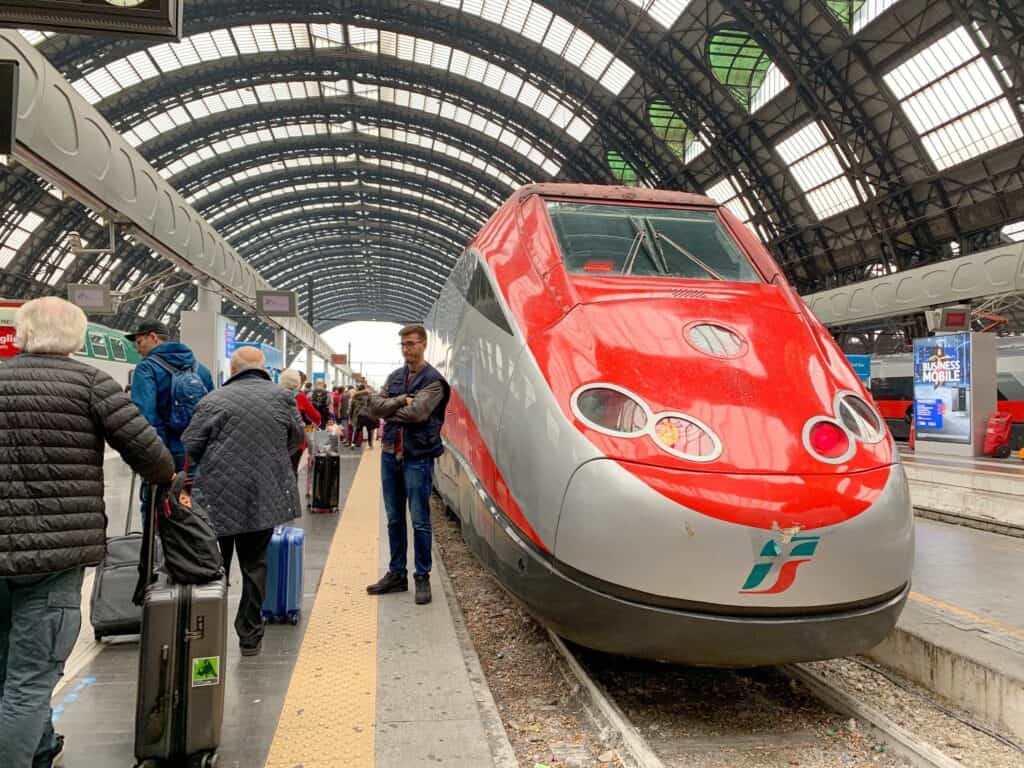
Stepping off the high-speed train from Milan, I arrived in Florence in a chilly rain. The taxi queue was at least a hundred people long, and I didn't have the patience to figure out the buses.

Google Maps suggested it was a 20 to 30-minute walk to my hostel. I took off, hoping to flag a taxi once I got away from the train station, but there were practically no taxis in the streets.

Still tired from jet lag, now wet and increasingly grumpy, I took shelter in a random restaurant in an alley. Once seated, the tables offered a direct view of the Palazzo Vecchio, a block away. I toured the palace in '98, though I remember it more for its iconic exterior than interior. I ordered overpriced lasagna, drank a hot cappuccino, and carried on the last little bit to my hostel.

When I checked into my dorm room at Riverbank's Hostel, which had four single beds and a queen-size bed with barely enough room to walk between them, I had flashbacks to when I was younger and didn't mind the random company of strangers.

At 42, I'm technically still welcome in most hostels but less willing to sacrifice privacy and a peaceful night's sleep to save money. Although I was still game to try it, it didn't last long. In addition to three young guys already in my room, I was informed that two women were sharing the large bed, making for six people in what was supposed to be a five-person dorm.

Between having trouble falling asleep due to jetlag and then once falling asleep being woken up by two young women being loud in another room, and later a guy in my room leaving at 4 am for an early flight, I gave up. I took a loss for the dorm and booked a small room near Sani Tourist House for my last two nights.

Over the next few days, I revisited some of Florence's most beautiful landmarks while quietly reflecting on my decision to stay in Europe 20 years ago and how that experience has impacted my life ever since.

I enjoyed a few things I couldn't afford as a backpacker, including a refreshing cocktail at Locale Firenze bar and dinners at La Leggenda dei Frati and the new Gucci Osteria. 

Santa Maria del Fiore (Duomo)

Duomo
Duomo

Florence's 13th-century cathedral, Cattedrale di Santa Maria del Fiore, is a testament to the craftsmanship of the Italian Renaissance. In the humble opinion of this former art history student, the white, pink, and green marble exterior makes it the most beautiful church facade in the world. It's also the fourth-largest cathedral in the world. Milan's cathedral, which I visited a few days earlier, is number three.

Travel Tip: Buy your Milan Duomo ticket in advance to avoid waiting in line when you arrive.

Brunelleschi's dome
Brunelleschi's dome

I was as enamored with its aesthetics in 2018 as when I first saw it in 1998. Back then, I went inside (which is still free to do today) and climbed the curved stairs around Brunelleschi's dome to the cupola up top. Today, access to the dome requires a timed ticket.

The 278-foot-high Campanile (clock tower) by Giotto and the 11th-century Baptistry add grandeur to the cathedral complex. Tourism-wise, there seemed to be more people around the cathedral in October 2018 than at the peak of summer, July 1998. Once you get away from the historic center of Florence, a UNESCO World Heritage Site, the crowds are not so overwhelming.

Travel Tip: Get Your Guide offers a popular one-hour dome climb, including an English guide and priority entrance. 

Palazzo Vecchio and Piazza della Signoria

The Palazzo Vecchio is a highlight of any visit to Florence.
Palazzo Vecchio

In addition to visiting Florence in shoulder seasons, like spring and fall, walking around at night is another good way to see the historical landmarks without the crush of tour groups. I was reminded of this while walking back to my room after dinner on my second night.

The Palazzo Vecchio ("old palace") was the former town hall of Florence. It overlooks Piazza Della Signoria, which features a copy of Michelangelo's famous David statue. The sculpture is based on the biblical hero David, who inspired my first name.

The original Michelangelo sculpture has been housed in the Accademia Gallery since 1873. My first time in Florence, I paid to see it. This time, I was happy to revisit the replica.

Travel Tips: Plan ahead with a skip-the-line ticket for the Palazzo Vecchio and a timed entrance ticket to see the original David.

Santa Maria Novella

Santa Maria Novella
Santa Maria Novella

Far more diminutive in size and scale than the Duomo, the 15th-century Santa Maria Novella always stuck with me as another gorgeous church facade in Italy.

Given its proximity to the station, most travelers arriving or departing by train will pass by Santa Maria Novella. I clearly remember walking through the church's plaza with my friends when we first arrived in the city 20 years earlier.

The nave in Santa Maria Novella

If you see the Duomo first, the simple interior of Santa Maria Novella will seem plain by comparison. However, some incredible works of art make the $6 (€5) admission price worthwhile.

One of my favorite works from the Italian Renaissance is Masaccio's Holy Trinity, historically significant for his skill in creating perspective. Aside from the Duomo, I was most excited to see this fresco again.

At the bottom, the inscription above the skeleton, representing Adam, states, "I was once what you are, and what I am you will become." This quote is an ancient reminder to live every day to the fullest, as we all share a common fate in death.

The Holy Trinity by Masaccio
Pulpit designed by Filippo Brunelleschi
Pulpit

And then there's the beautiful pulpit, designed by Filippo Brunelleschi (the same guy who designed the Florence Cathedral's expansive dome).

Travel Tip: Go beyond the church's interior and stroll through the outdoor crypt and covered arcades of the adjacent cloister.

Ponte Vecchio

Florence's famous Ponte Vecchio (bridge).
Ponte Vecchio

The 105-foot-long Ponte Vecchio ("old bridge") spans the Arno River at its narrowest point. A bridge has existed in this area in one form or another for over 1,000 years, though floods and wars have damaged various versions over the centuries.

The bridge is interesting because it's lined with shops, which were more common in the past. Originally lined with butchers, today, you'll find souvenir and jewelry shops instead.

Travel Tip: The bridge is narrow, so enjoying walking across it during the day can be challenging. Go at night to avoid the crowds. Musicians often perform on the bridge. When I walked across it one night, tourists danced in the street. 

Uffizi Gallery

Uffizi Gallery
Uffizi Gallery (center building with arches)

A stone's throw east of the Ponte Vecchio is the Uffizi Gallery, one of the world's largest and most important museums. The Uffizi Gallery is to Italy as the Louvre Museum is to France.

In 2016, two million people visited to see priceless works of art from the Italian Renaissance, including Botticelli's famous Birth of Venus. The museum was initially created when the Medici family, who long ruled over Florence, began to die out. Initial art was donated to the city from their private collections.

Travel Tip: Buy a timed entrance ticket to the Uffizi Gallery to avoid long lines, which can last for hours. 

Medici Chapel

The Medici Chapel in Florence, Italy
Medici Chapel

Speaking of the Medicis, this powerful Florentine banking family was critical to the artists working during the Italian Renaissance. They commissioned many vital works and even supported Galileo, the famous Italian astronomer. They also knew how to build themselves an incredible chapel.

Tomb of Lorenzo di Piero de' Medici

The Medici Chapel was even more stunning than I remembered, especially when I looked at the painted dome. I didn't recall seeing the tombs 20 years ago, so I was happy to see them this time. Lorenzo's tomb (above) is another example of Michelangelo's work.

Where To Stay

Florence is one of the most visited cities in Italy and, therefore, full of hostels, guest houses, B&Bs, and hotels. The closer you are to the historical center, the higher the cost.

Due to the city's popularity, book ahead for a shot at the best-rated hostels. Below are a few recommendations from Hostelworld:

  • Hostel Gallo d'Oro - Modern hostel a 20-minute walk east of the train station. High 9.2 rating through 3,000+ reviews; however, it's a good distance from the historic center-dorms from $28.
  • Leonardo House - Located in the middle of the historic center, between Santa Maria Novella and the Duomo, you pay for convenience when you stay here-dorms from $22.
  • Archi Rossi Hostel - A few blocks from the train station and boasting an 8.9 rating through 6,000 reviews, Archi Rossi is a perennial favorite-single private ensuite rooms from $45.

See all the hostels in Florence.

Side Trips

If you're extending your time in Tuscany, a day trip from Florence to Pisa is a classic choice. For a more relaxed experience, Daytrip offers private, door-to-door transfers with local drivers and optional sightseeing stops along the way. It's a great way to explore more of the region without the stress of public transport.

One Day in Milan: A Quick List of Things to Do

Milan Cathedral
Milan Cathedral

"One day in Milan is enough," my Italian Airbnb host shared as I peppered her with questions upon check-in.

I was excited to hit the ground running, having spent the last two days at airports and up in the air with Norwegian Air and another budget carrier.

It was a friend's wife who'd given Milan a positive plug when I mentioned I was heading back to Italy for the fourth time. She'd studied there when she was younger.

At a minimum, I knew Milan's cathedral was one of the largest in the world, and so with a personal recommendation and a UNESCO World Heritage Site to visit, I gave myself a few nights in Italy's fashion capital before continuing to Florence, Tuscany, and Bologna.

Due to jetlag, I ended up needing two days to see what I mentioned in this article. However, I'm confident travelers already in the region can comfortably see everything in a single day.

The historic area is walkable; however, to get there, you'll likely want to take the metro train as most hostels and budget accommodation is outside the center.

If you plan to stay further away or explore the surrounding region, you may want to consider renting a car in Milan.

The "Duomo" station on the #1 red line is the easiest place to start your day.

Table of Contents

  • Attractions in Milan
    • Milan Cathedral (Duomo di Milano)
    • Galleria Vittorio Emanuele II
    • Sforza Castle (Castello Sforzesco)
    • End the Day with Aperitivo
    • The Last Supper in Santa Maria Delle Grazie church
    • Where to Stay

Attractions in Milan

View from the roof of Milan's cathedral

Milan Cathedral (Duomo di Milano)

Exterior View

The Milan Cathedral, or Duomo for short, is the symbol of the city.

Construction on Italy's largest cathedral began in 1386, and it wasn't completed until 1965, nearly 600 years later.

Isn't St. Peter's Basilica more enormous, you may be asking?

Yes, it is. However, it's located in Vatican City, which isn't technically part of Italy.

Overall, Milan Cathedral is the third-largest in Europe and the fourth largest in the world.

The view of the ornate facade from the Piazza del Duomo, the plaza in front of it, is simply stunning.

As incredible as it is to view the cathedral's exterior, the ability to walk around much of the roof is what sets Milan Cathedral apart.

Walking under the flying buttresses that hold up the building gives one a genuine appreciation for the engineering and ingenuity required to construct such structures long before the use of modern technology.

Milan Cathedral roof
Hanging out on the rooftop

Roof View

While seeing the cathedral's interior is entirely free, I highly recommend purchasing a ticket that includes roof access (referred to as "terraces").

As of 2018, ticket prices that include the roof are:

  • $14 (€12) - Stairs to the roof, plus Cathedral, Duomo Museum, San Gottardo Church, and Archaeological area
  • $18 (€16) - Elevator to the roof, plus Cathedral, Duomo Museum, San Gottardo Church, and Archaeological area
  • $28 (€25) - FAST TRACK: the fastest way to the roof via separate security line and elevator, plus Cathedral, Duomo Museum, San Gottardo Church, and Archaeological area

To save time, check out the Cathedral ticket options on Get Your Guide, some of which include guided tours.

Regardless of how you get there, once you reach the roof, you're in for an experience unlike any other as you wind your way around the perimeter.

You'll see sculptural work up close and get a sense of the level of detail the artisans and architects aimed for that's hard to appreciate from the ground. I tried to take it all in, but it was overwhelming.

My favorite moment was standing atop the nave near the front facade (pictured above).

I've visited a lot of cathedrals in Europe. I can't recall having as much space and freedom to move around atop any of them as I had at the Milan Cathedral.

View of the 520-foot (158m) long nave

Interior View

If you're like me, you'll head straight for the roof first and walk through the interior on your way down.

The cavernous space created by the 354-foot (108m) high nave is spectacular.

Walking around, feeling mighty small amidst such soaring arches, reminded me of my visit to St. Peter's Basilica 20 years earlier.

The grandeur of such holy spaces has a way of putting our size as individuals into perspective.

The beautifully preserved stained glass windows allow plenty of natural light to enter while adding much-needed color to the walls.

According to Wikipedia, Milan Cathedral has a 40,000 person capacity. Incredible!

The Milan Cathedral at night

Night View

Before we move on to my other recommendations for spending one day in Milan, I also want to suggest stopping by the cathedral at night.

There will be far fewer people, and you'll see the facade in a whole different light.

View of Galleria Vittorio Emanuele II from the Piazza del Duomo

Galleria Vittorio Emanuele II

Once you've seen the cathedral, going for a quick walk through the Galleria Vittorio Emanuele II, Italy's oldest active shopping mall, is another popular thing to do.

You probably noticed the central arch when you arrived at the cathedral, as it faces the Piazza del Duomo.

"Only in Italy," I thought as I walked down the ornate 19th century, glass-covered arcade.

The mall is full of cafes, restaurants, and luxury shops like Louis Vuitton, as well as the mundane, including a TIM shop where you can buy a SIM card for your phone (passport required).

Inside Galleria Vittorio Emanuele II

At the north end of the mall is a small park with a monument to Leonardo da Vinci, worth a quick look.

There's also the Leonardo3 Museum dedicated to the inventions of da Vinci. However, the reviews didn't look too good, so I skipped it.

Across the street from the park is the rather plain-looking Opera House.

View from a courtyard inside the Castello Sforzesco
View from a courtyard inside the Sforza Castle

Sforza Castle (Castello Sforzesco)

A 15-minute walk (5-minute metro train ride) northwest of the cathedral is the 14th century Sforza Castle (Castello Sforzesco), Milan's other major historical landmark.

Adult admission is just $5.60 (€6), with free access on the first Sunday and the first and third Tuesday after 2 pm every month.

Inside the massive walls and towers are lots of art galleries and collections.

Michelangelo sculpture
Pieta, an unfinished sculpture by Michelangelo

If you're running short on time or energy, head straight for the highlights, works by Leonardo da Vinci and Michelangelo.

Leonardo's artwork is on display in the Sala delle Asse, Room VIII in the Museum of Antique Art.

You can also see a painting by a student of Leonardo da Vinci (which has da Vinci's signature on the back of the canvas, dated 1515).

The second highlight is Pieta, Michelangelo's last unfinished sculpture before his death (pictured above), depicting Jesus dying in Mary's arms.

It's a haunting work and one worth taking the time to enjoy. Several seats are available to admire the sculpture or rest your feet.

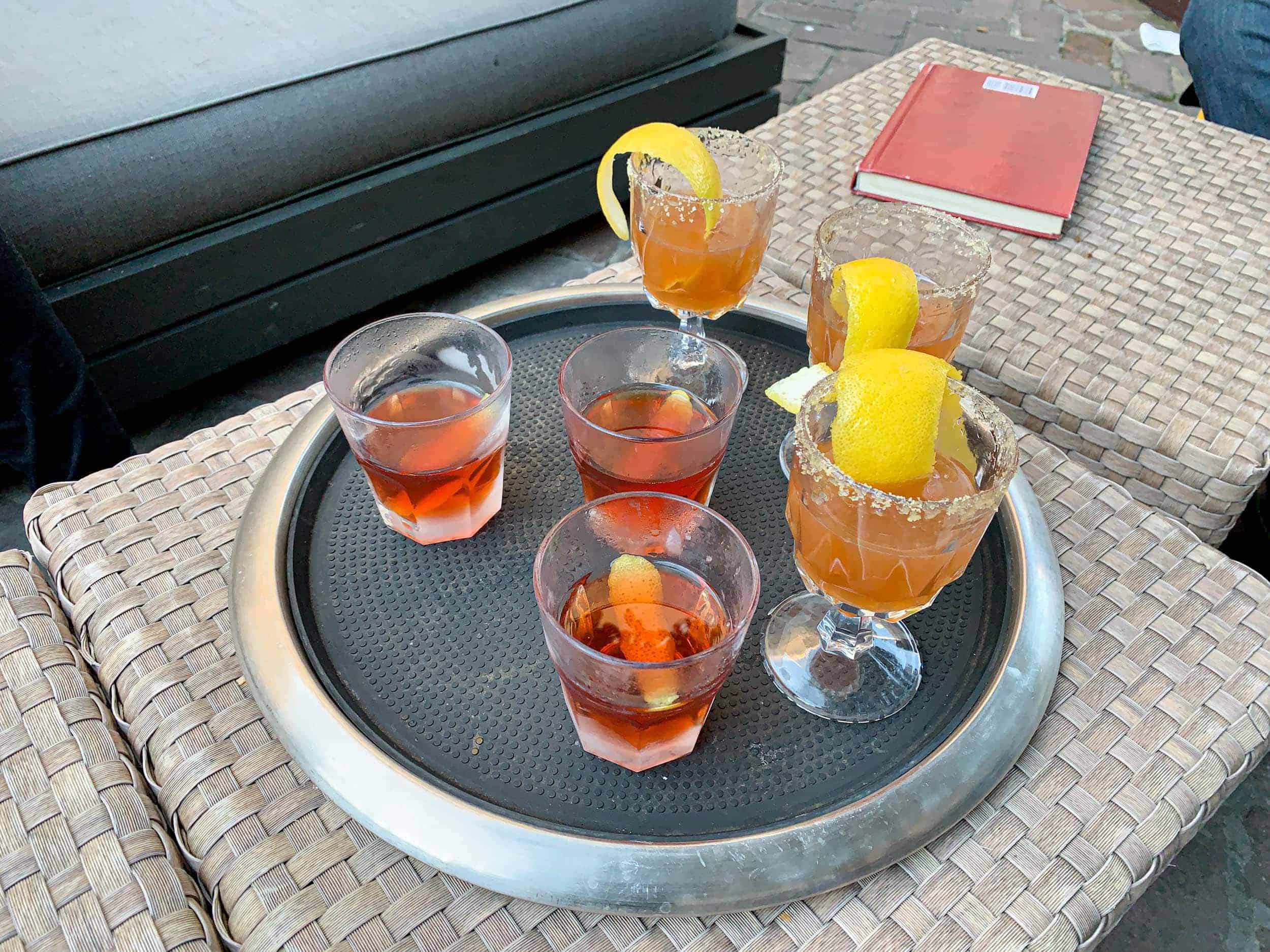
A Negroni Sbagliato at Bar Basso

End the Day with Aperitivo

When you've wrapped up sightseeing, take an hour to unwind with the Italian tradition of aperitivo in Milan, a pre-dinner drink enjoyed with light finger food.

The popular custom started in Milan during the 1920s and has slowly spread south over the ensuing century.

Typically from 6 pm to 8 pm, aperitivo is similar to happy hours in the US, only instead of drink discounts, you're likely to pay regular price for a cocktail and receive complimentary food.

The food is either brought to your table or available at a buffet.

This is an excellent time to try one of several classic Italian cocktails:

  • Negroni - gin, vermouth, Campari, garnished with an orange peel
  • Negroni Sbagliato - sparkling white wine, vermouth, Campari, garnished with orange
  • Aperol Spritz - Prosecco, Aperol, soda water

All three of the above are made using bitters, either Campari (which is originally from Milan) or Aperol.

I chose Bar Brosso (via Plinio 39) for my first aperitivo experience as it's where the Negroni Sbagliato was invented when a bartender accidentally added sparkling wine instead of gin to the Negroni he was mixing up.

The bar has been serving drinks since 1947 and currently boasts a cocktail list of more than 500 drinks!

Taking a seat on the sidewalk, I ordered their signature cocktail, presented in a wide glass. The bitterness was a bit too much for me, and I didn't finish the drink.

Small plates of green olives, potato chips, and little pizzas squares were provided. The total cost was $11.50 (€10).

A few days later, I tried a regular Negroni in Florence and also didn't like it too much. The lighter, less bitter Aperol Spritz, on the other hand, I enjoyed.

I also highly recommend checking out Nottingham Forest bar for its experimental drinks if you have the energy. 

The Last Supper in Santa Maria Delle Grazie church

Bet you didn't know one of the most famous frescoes of the Italian Renaissance, The Last Supper by Leonardo da Vinci (1498), can be found in Milan. Yes, Milan!

Access to The Last Supper in the Santa Maria Delle Grazie church is tightly restricted. Only 25 people are allowed in the room at a time, and for a maximum of 15 minutes. I didn't plan for it, so I missed the opportunity.

Since you can't just show up and expect to get in, booking a brief tour through a third party is your best bet.

Check out Get Your Guide's well-reviewed 30-minute Last Supper Guided tour.


Where to Stay

The historic area of Milan lies at the center, and the city radiates outward in all directions.

Most hostels and budget accommodation are at least a few metro stops away. If you only have one day in Milan, consider these options.

Queen Hostel: For the cost and proximity to the center, this is a good option. A 10-minute walk and two metro stops later will have you at the doorstep of the Duomo. I stayed at Queen Hostel my third night in the city. $29 dorms.

Ostello Bello: Centrally located and within walking distance of the Duomo and Castle, Ostello Bello is an appealing option with a superb 9.7 customer rating through 5,000 reviews. $46 dorms.

Norwegian Air 787 Premium Class (Austin to London)

Spoiler alert! I've been a HUGE fan of the Norwegian Air 787 experience since flying with them for the first time on an economy ticket from London Gatwick to Miami. 

Booking an Austin to London flight two and a half weeks in advance, I paid $400 for the base fare, plus another $81 for a hot meal, seat reservation, and checked bag (the last of which I didn't need as I was traveling with a carry-on size backpack).

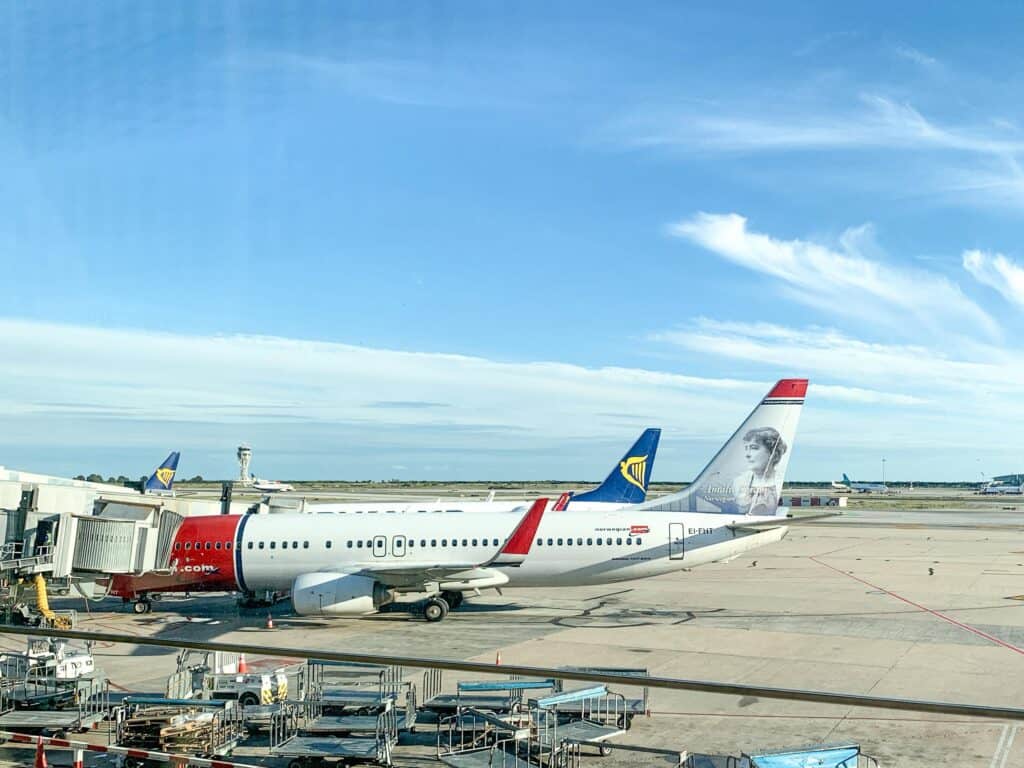
Red and white Norwegian Air 737 at Barcelona airport
Norwegian Air 737 at Barcelona airport

A one-way flight for $481 isn't ultra-cheap, but I was also paying for the chance to fly on a Boeing 787 Dreamliner. As advertised, the latest airplane tech makes for a noticeably more comfortable ride, a difference I could feel after the nine-hour flight-more on those features below.

Table of Contents

  • Flying Norwegian
    • The Cost of Norwegian Air 787 Premium Class
    • Why the Boeing 787 Dreamliner is Awesome
    • My Norwegian Air 787 Premium Class Experience
    • Conclusion
  • Packing for Long Flights

Flying Norwegian

The Cost of Norwegian Air 787 Premium Class

Norwegian Air 787 Premium seating cabin
Norwegian Air 787 Premium class seating on Austin to London Gatwick flight

When the opportunity arose to return to Europe for the first time in three years to attend the 2018 Adventure Travel World Summit, I looked to Norwegian Air first. I discovered they began a direct nine-hour flight from Austin, TX, to London Gatwick. Score!
While I didn't screenshot the October 2018 fares, I do recall the base economy fare being around $200 one way. Add another $80 for a hot meal and seat choice, and it totaled about $280. Incredible, I thought.

As I was fawning over the cheap cost of a trans-Atlantic flight, my eyes shifted to the right on the rate chart. For another $400, I could upgrade to Premium with all the added benefits and still pay less than $700, comparable to Economy seats on major airlines flying similar routes.

I was thoroughly happy with my Economy class experience in 2015. Still, only days after that flight, I learned I had a PE (pulmonary embolism) blood clot in my lungs, likely due to DVT (deep vein thrombosis) from flying.

Since that health scare, I've spent the extra money on flights for Premium Economy seating that offers more legroom to stretch my legs. I decided to go for it and booked a one-way Norwegian Air 787 Premium class ticket for $680.

Premium Class benefits include:

  • 2x checked bags, plus up to a 10kg carry-on bag and personal item
  • Lounge access (not available in Austin, unfortunately)
  • Priority check-in line at the airport
  • Priority boarding (yay!)
  • Comfortable seat with up to four and a half feet of legroom, USB charger, and power outlet
  • Hot dinner and pre-landing snack, plus complimentary drinks throughout the flight

It was the last three bullet points above that mattered most to me, not to mention it was another chance to fly the Dreamliner, with all its built-in comforts.

Norwegian Air Premium seating
The spacious 787 offers easy-to-use overhead bins (Premium cabin)

Why the Boeing 787 Dreamliner is Awesome

Why do I love Boeing's 787 Dreamliner? Let me count the ways.

Lower carbon emissions

It's built from composite material, making it lighter and more fuel-efficient than its predecessors. It has 20-25% lower CO2 emissions. Choosing to fly modern planes like the Dreamliner reduces my carbon footprint.

Lower noise levels in the cabin

Back in 2015, I would fly with a pair of Beats wireless noise-canceling headphones. I loved the quieter flying experience they offered, and they were useful. However, I travel as lightly as possible, and they take up a lot of space in my daypack.

The Dreamliner is designed for a quieter in-cabin experience, so to test this claim, I didn't use my Beats headphones for the entire nine-hour flight. Sure enough, I didn't feel the need to take them out to watch movies or listen to music, as the jet engines were noticeably quieter than those of older planes.

Better cabin experience - air quality, space, and lighting

The biggest reason I'm a fan of the 787 Dreamliner is how I feel after a nine-hour flight. HUMAN! The Dreamliner is designed to provide a more comfortable in-cabin passenger experience regardless of where you sit on the plane. The cabin altitude is lower, the humidity is higher, the air you breathe is cleaner, the temperature is better controlled, and the sound system is more refined.

Combined, this is the most significant selling point for me. I felt noticeably better at the end of a nine-hour trans-Atlantic flight versus ragged and worn out, dry, flaky skin on my face, looking and feeling like a zombie. Beyond improved air quality, the Dreamliner is more spacious, too, with increased headroom above and legroom below.

The LED lighting system dims and brightens gently around takeoff, sleep time, and landing. It can put on quite the technicolor show at times. I love it. The windows are significantly larger than average and are easily dimmed with the touch of a button. Considering all this, I believe the economy seats are the best value currently available for trans-Atlantic flights.

Norwegian Air 787 Premium seat legroom
Plenty of legroom

My Norwegian Air 787 Premium Class Experience

Check-in and Lounges

The benefits of flying Premium begin at the airport. I had to check in at the counter for my international flight, and while the regular line wasn't that long, it was nice to have a dedicated agent and no line.

Once I checked in, I passed through TSA Pre-check and got a bite to eat while waiting for my flight. Premium ticket holders get lounge benefits, but only at select airports, which doesn't include Austin.

Priority Boarding

Austin has a great airport, though. It is modern, spacious, has plenty of natural light, offers free Wi-Fi, and has good restaurant options. The time passed quickly, and I benefited from priority boarding to be the first on the plane.

Legroom

The seat pitch in the Premium cabin is 43-46" (109-117cm), and in Economy, it is 31" (78cm). So you get an extra foot of space, which is more than enough for me at 5'8" to stretch my legs out fully.

Seats

The seating configuration in Premium is 2-3-2, whereas it's a more crowded 3-3-3 in Economy. The most significant difference with the Premium seats is that you have a leg rest to pop up.

Combined with the recline, you won't get to a lie-flat position as you look for in Business class on other carriers. However, it does provide added comfort over the Economy seat.

Another difference between the seats is the location of the in-flight entertainment systems. In the Premium cabin, the touchscreen HD TVs are pulled out of the armrest, while in Economy, they are on the back of the seat in front of you.

This makes sense, given the added space between seats in the Premium cabin. However, it also means you can't use the entertainment system during takeoff and landing as you can in Economy. This didn't bother me.

Lastly, every Premium seat has a dedicated USB and electric outlet; in Economy, there are two outlets for every three seats. I rarely, if ever, use electrical outlets on flights as I charge my phone by USB.

In-flight Entertainment

Speaking of in-flight entertainment, I've flown three nine-hour flights with Norwegian Air now, and so far, I've enjoyed using their TVs. I can watch three to four movies in this amount of time.

You can also access a real-time map to track your flight's progress and estimated arrival time. All passengers have access to the same entertainment system and media library.

Hot dinner after take-off
Hot dinner after takeoff

Drink Service

Before takeoff, we were offered water or juice, and the drink offers in the Premium cabin continued throughout the whole flight. I was super impressed with the frequency with which the cabin crew would walk down the aisles with trays of water.

I felt more attended to on this flight than on any other flight aside from my business class experiences with Turkish Airlines and Qatar Airways. Staying hydrated is a huge help when it comes to feeling good after a long flight, and it's also the number one thing you can do to protect yourself from blood clots.

Meals

A Norwegian Air 787 Premium ticket (an $80 value) includes meals. After takeoff and the initial drink service, the food was served. I got the chicken with mashed potatoes, which came with a healthy side of cheese, quinoa salad, and bread.

This is the same meal served in Economy, so you're not getting anything fancier in the Premium cabin. And, frankly, the food is average. I've had hot meals on all my Norwegian Air flights, which is what you can expect. Following dinner, the cabin crew offered passengers complimentary alcoholic drinks, including Bailey's.

Snack service before landing at London Gatwick airport
Snack service before landing

Before landing at 7:15 AM in London, there was a second food service with cold pasta, ham, bread, and cheese. It was fine for nibbling on, but nothing special. I used my six-hour layover between London and a connecting flight to Milan to eat a proper breakfast at Gatwick Airport.

Bathroom

To stay hydrated and protect against blood clots, I drink water like a racehorse. This also means I get up to stretch my legs and use the bathrooms every one and a half to two hours. Sitting in the smaller Premium cabin means accessing the bathrooms frequently, which isn't an ordeal. I don't have to be on high alert to try to time my walk down the aisle.

The Dreamliner's bathrooms are modern and well-designed. I appreciate the tiny detail of the slight plastic protrusion on the bottom of the toilet seat. It makes pulling up and putting down the toilet seat ever so slightly less gross.

Disembarking

We arrived on time at London-Gatwick Airport at about 7:15 AM. It was a long, smooth ride over the Atlantic. Having extra space in the Premium cabin when getting luggage out of the overhead bins and everyone jostling to get off the plane first is a minor thing, but it is still worth mentioning.

Conclusion

As mentioned, I became an instant fan of Norwegian Air with my first Economy flight in 2015. The Economy experience on a Dreamliner is a step above Economy on any other plane. That said, I found the Premium experience worth the extra money in terms of added value, comfort, and service.

When it came time to fly home after my month in Europe, I booked the nine-hour Norwegian Air 787 from Barcelona to Newark, NJ. The cost of Premium class for that flight, reserving only a few weeks ahead, was even cheaper at $602.

Between my health concerns since 2015 and the fact that I only visit Europe on average once every two years, these recent flights have solidified my desire to continue flying Norwegian Air 787 Premium class.

Packing for Long Flights

Long flights can be tedious. Here are a few things I've found that can make the ride safe and a little more comfortable.

Apple AirPods Wireless Bluetooth Headphones 

These are a game-changer for iPhone-carrying travelers. They're tiny, hold a long charge, and offer good sound quality. When the AirPods came out in 2017, they became my daily headphones at home and abroad. I also find they're OK on planes, especially quieter ones like the Dreamliner. Available on Amazon

Beats Studio3 Wireless Headphones 

If you still prefer the ultra-quiet experience of over-the-ear noise-canceling headphones, I recommend the Beats Studio3. I had a pair in matte black I wore from 2013-15. I quickly found they weren't just excellent for blocking jet engine noise; they were also wonderful to have in often-loud departure gates. Available on Amazon

Compression Socks 

The longer your flight, the greater the risk of getting a potentially fatal DVT blood clot. Compression socks are constructed to constrict your lower legs and feet to help keep blood circulating. As they've grown in popularity, there are more playful colors and patterns. Available on Amazon

External charging device 

I don't know what it is, but I'm perpetually afraid of losing a charge on my phone, even when I have plenty of built-in options with my airplane seat. Sometimes, it's easier to pack consistently, so you don't have to keep track of which planes offer outlets and USB ports. Available on Amazon

SUAVS shoes

I was recently gifted a pair of SUAVS shoes from a company based in Austin, TX. They're so lightweight and comfortable; you won't want to wear socks. I tested them on my nine-hour flight to London and didn't feel any need to take them off. This saved me from the usual hassle of taking my shoes on and off whenever I wanted to use the bathroom. Plus, they're easy to compress, so they won't take up much space in your bag. Available at suavshoes.com

7 Beaches in Corfu That Will Leave You Speechless

Your trip to Greece will be incomplete if you do not visit the mesmerizing beaches in Corfu.

Many Corfu beaches have received the Blue Flag status for maintaining cleanliness and providing fantastic facilities for tourists.

Below are seven beaches in Corfu that will leave you speechless.

Palaiokastritsa beach, one of many beautiful beaches in Corfu.
Palaiokastritsa beach

Table of Contents

  • Corfu Beaches
    • 1. Paleokastritsa Beach
    • 2. Agios Gordios Beach
    • 3. Canal D'amour
    • 4. Halikounas Beach
    • 5. Myrtiotissa Beach
    • 6. Rovinia Beach
    • 7. Glyfada Beach

Corfu Beaches

1. Paleokastritsa Beach

The village of Paleokastritsa is 15.5 miles (25 kilometers) northwest of Corfu Town. It offers six clean and scenic beaches with pebbled sands and crystal clear waters.

The beautiful scenery of the olive groves surrounding the beaches will make you fall in love with the place.

Several boats are available that you can book to reach the nearby isolated beaches. Many restaurants, bars, and hotels near the beaches offer authentic Greek cuisine.

The fascinating beauty of Paleokastritsa beaches attracts innumerable tourists each year, so you should add this popular holiday beach to your Greece travel itinerary.

Agios Gordios Beach
Agios Gordios Beach (photo: plusgood)

2. Agios Gordios Beach

Located about 12 miles (19 kilometers) southwest of Corfu Town, the Agios Gordios beach is one of the most popular beaches around the city.

Visitors enjoy spending their time in the Agios Gordios beach as it is surrounded by lush green mountains, olive tree forests, vineyards, and remarkable rocks.

The clear blue shallow waters are ideal for swimming and participating in water sports.

Make sure you carry your water sports accessories in the best travel bag. There are special travel bags that will help you organize, protect and carry your gear comfortably.

The Agios Gordios beach is perfect for adults and kids, making it an ideal summer destination in Greece.

Canal D'amour in Corfu, Greece
Canal D'amour (photo: Rok Rok)

3. Canal D'amour

Also known as the Channel of Love, the Canal D'amour is one of the most famous Corfu beaches.

It is located between Sidari and Peroulades villages and is about 20 miles (32 kilometers) away from Corfu Town.

This crowded yet romantic and amazing beach got its name from a traditional story, which states that all couples who swim on the beach will remain in love forever.

This is why Canal D'amour attracts innumerable visitors each day and can get a bit crowded in the peak tourist season.

4. Halikounas Beach

If you want to visit one of the more secluded beaches in Corfu, head straight to Halikounas Beach.

Beautiful gold sandy beaches and clear blue waters make Halikounas a favorite tourist spot. Visitors feel relaxed and rejuvenated after reaching here.

The beach is located on the southwest coast of Corfu and has several sunbeds and umbrellas for hire. It's one of the best beaches for a quiet getaway.

You can even learn to kitesurf by visiting the kite surfing club near the beach. It's also a perfect beach for those who enjoy strolling on clean sand.

Myrtiotissa Beach
Myrtiotissa Beach offers crystal-clear water.

5. Myrtiotissa Beach

Myrtiotissa is officially the only nudist beach on the island, but the nudists are respected, and single males searching for fun are not accepted.

It's located about nine miles (15 kilometers) from Corfu City in a small bay that offers privacy, surrounded by sand dunes and lush greenery.

The water is crystal clear, with few rocks in some areas, and the sand is soft and clean. A kiosk offers yummy sandwiches and drinks at a reasonable price.

It is the most crowded beach in Corfu, so if you're traveling during peak tourist season, go early in the morning or late in the evening to enjoy the beach's scenic beauty.

Moreover, that will make it easier to find a place to park as there isn't much space to park vehicles.

6. Rovinia Beach

Do you want to go to an unspoiled and untouched beach in Corfu?

A visit to Rovinia Beach will provide a remarkable, unique experience compared to the other beaches of Corfu.

With crystal water and a long sandy beach, it's one of the best things about the island-a beautiful place to enjoy a quiet early morning.

You'll have to make a boat trip to get there because Rovinia Beach is accessible only by small boat.

To reach there, you need to hire a boat from the fleet of taxi boats and then hike about 1,969 feet (600 meters), making a trip to this beach unsuitable for small children.

The turquoise sea, fine sand, and mesmerizing harbor along the shore make Rovinia worth a visit.

There are several species of colorful fish near the rocks, so you will undoubtedly enjoy scuba diving.

It is a secluded and small beach, so you won't find restaurants or shops. Ensure you carry the essential beach items and drinking water in your travel bag.

Related: Best Beaches in Bulgaria

Glyfada Beach in Corfu
Glyfada Beach (photo: Falco Ermert)

7. Glyfada Beach

The Glyfada beach is covered with magnificent golden sand, high hills, and olive trees, making it one of the most beautiful beaches on Corfu Island and, indeed, on all the Greek islands.

As the crystal-clear water does not deepen abruptly, this quiet beach is popular for families with small children.

Due to the clean shores and water, Glyfada Beach has been awarded Blue Flag status.

You can hire parasols and lounge chairs to relax on the soft sand or rent a boat or canoe to visit various secluded beaches nearby.

Tourists even engage in several water sports and enjoy playing beach volleyball. Several hotels, bars, and restaurants on the beach offer various cuisines.

In sum, add one or more of these fantastic beaches in Corfu to your Greek vacation and have an enjoyable and relaxing stay on beautiful Corfu Island.

Top 10 Things To Do in San Diego

For the first half of my life, growing up in the northeast United States, California seemed as far away as Thailand. Much of what I knew came from skate videos and TV.

In spring 2010, I visited my friend Stephanie in Los Angeles for a long weekend. At my request, we went celebrity-spotting and visited famous spots, including the Sunset Strip, Griffith Observatory, Beverly Hills, and Malibu.

It has taken me eight years, but I finally returned to California to explore San Diego, another city I've long been curious about. Once again, I could stay with a friend, saving money and benefiting from a local's knowledge of the city. To get around when he wasn't available, I used Uber.

Here are my top ten things to do in San Diego, plus a few hostel recommendations if you don't have someone to stay with.

Table of Contents

  • San Diego Attractions
    • USS Midway Museum
    • Maritime Museum of San Diego
    • Balboa Park (Japanese Gardens)
    • Hotel de Coronado
    • La Jolla Cove (Sea Lions)
    • Happy Hour at Mister A's
    • Dinner in Little Italy
    • Drinks in Gaslamp Quarter
    • Beaches: Pacific Beach Pier, Mission Bay
    • Explore Point Loma
  • Getting Around in San Diego
  • Where To Stay: Hostels

San Diego Attractions

USS Midway Museum

Visiting the USS Midway is one of the top 10 things to do in San Diego
F-14 Tomcat on the deck of the USS Midway

Anchored at Navy Pier in downtown San Diego, the immense USS Midway is a must-see attraction for first-time visitors of all ages. Built over 18 years without the aid of a computer, it was the United States' longest-operating aircraft carrier of the 20th century. It was in service from 1945 to 1992 and opened as a museum in 2004.

Adult tickets cost $21 online, and you'll want to allow at least a half-day (3-4 hours) to explore this floating city, including the airplanes on the flight deck, control tower, and cavernous world below deck.

Among the many events hosted at the USS Midway each year are Top Gun movie nights, where viewers can watch the classic movie on the flight deck. I'd love to go back and experience that one day.

Maritime Museum of San Diego

The Star of India as seen from a Russian B-39 submarine
The Star of India, as seen from a Russian B-39 submarine

A few blocks north of the USS Midway is the Maritime Museum of San Diego, a floating museum of nine ships and two submarines.

I've never been on a submarine, so it was with great curiosity that I bought a ticket ($18 for adults) and boarded the 300-foot Russian B-39 submarine, which once carried a nuclear warhead as close to the US as Cuba during the Cold War.

The experience of crawling through the four large portholes of the diesel-electric sub was worth the price of admission alone. Seeing the bunk beds just feet from torpedoes gives you a sense of the confined living space and how uncomfortable it must've been to spend weeks down there.

I also toured the USS Dolphin, an American research submarine, and the Star of India, the world's oldest active sailing ship (built in 1863).

Related: Visiting Pearl Harbor

Balboa Park (Japanese Gardens)

Visiting the Botanical Building in Balboa Park is one of the top things to do in San Diego.
The Botanical Building at the heart of Balboa Park

Balboa Park is to San Diego, as Central Park is to New York City. Home to the world-famous San Diego Zoo, over a dozen museums, and many gardens, it'd be impossible to see it all in a single day or even several days. I began my visit to Balboa Park with a leisurely walk around the iconic Botanical Building.

I also visited the Timken Museum of Art (free) and the more extensive San Diego Museum of Art ($15) before stopping for a casual lunch at Panama 66, which has a nice view of the latter museum's sculpture garden.

After lunch, I continued west to see the exteriors of the Old Globe Theater, the San Diego Museum of Man, and the California Tower. Usually, I'd climb any tower for the view. However, I was getting the sense this could turn into a costly day if I didn't skip some attractions.

I walked through the Alcazar Garden and then headed south to the Japanese Friendship Garden, which I had been looking forward to experiencing ($12 adults). It was an even more peaceful park within the larger Balboa Park, full of bonsai trees, koi ponds, and waterfalls.

There's much I didn't get to see, including the zoo and the San Diego Air and Space Museum. Next time!
Hotel de Coronado

Hotel del Coronado
Hotel del Coronado

The beautiful beachfront Hotel del Coronado is a National Historic Landmark and is reportedly haunted. Opened in 1888, it has hosted multiple U.S. presidents, celebrities, and foreign royalty.

Just because it's beyond the backpackers' budget doesn't mean you can't walk around the grounds, including the central courtyard, and grab an ice cream, beer, or bite to eat. The hotel also offers direct access to Coronado Beach, where you can go for a walk.

La Jolla Cove (Sea Lions)

Seeing sea Lions in La Jolla is one of the most popular things to do in San Diego.
Sea Lions in La Jolla

Swimming with sea lions in the Galapagos is a wildlife highlight from my years of travel, so I didn't want to miss the opportunity to see these marine mammals in La Jolla Cove.

I wasn't alone. Onlookers got close to them on the beach and along the sandstone cliffs. The constant attention probably stresses them out, so I gave them plenty of space.

San Diego whale watching tours offer another opportunity to spot sea lions, as well as gray, blue, minke, and fin whales.

View from Mister A's rooftop bar
An American Airlines plane comes in for a landing

Happy Hour at Mister A's

My friend Christine Amorose, a San Diego local, recommended drinking at Mister A's for the rooftop views. I expected a nice view of the skyline. However, I was also surprised to find you have a perfect view of planes approaching and landing at the airport!
The outdoor patio is well worth a visit. I dropped by mid-afternoon, which meant it wasn't crowded, but the sun was intense. Be sure to check the dress code on their website before you go.

Dinner in Little Italy

Little Italy
Little Italy

Located downtown, the historic neighborhood of Little Italy is at the epicenter of San Diego's dining scene. Restaurants like Born & Raised and Kettner Exchange attract both locals and visitors.

If you can't find a restaurant that appeals to you, go for a coffee and people-watching or ice cream at Salt & Straw, the famous Portland ice cream shop.

Drinks in Gaslamp Quarter

Cocktails at Prohibition speakeasy

Once you've got your delicious food in Little Italy, it's a short walk to the Gaslamp Quarter, where bars and nightclubs draw everyone in for a drink (or three).

I only had one Saturday night in San Diego, and my friend made sure we took advantage of it by taking me to the Gaslamp Quarter for drinks, first at a rooftop bar and then across the street at Prohibition, a 1920s-style speakeasy.

Read more: Best Speakeasies in San Diego

Beaches: Pacific Beach Pier, Mission Bay

Pacific Beach
Pacific Beach

Beach culture is a big part of what makes San Diego an attractive place to visit and live. There are plenty to choose from, and while I didn't go swimming (or surfing) during my stay, I did enjoy a walk down the Pacific Beach Pier and boardwalk late one afternoon.

There's also the nearby 4,600-acre Mission Bay for watersports fans, where you can learn or practice your stand-up paddleboarding, wakeboarding, kitesurfing, and more. Mission Bay is also home to SeaWorld San Diego.

Related: Hiking California's Lost Trail

Explore Point Loma

Point Loma, San Diego (photo: Kip Evans)

The Point Loma peninsula is further south along the coast from Pacific Beach and Mission Bay. Home to lighthouses, tidal pools, and scenic sunset views, it's most easily accessible via car, though public buses can also get you there.

For Top Gun fans, the new Point Loma Lighthouse at the southern tip of the peninsula is where the scene with Maverick visiting Viper after Goose dies was shot. The nearby cottages house members of the Coast Guard, so you'll have to view the whole complex from afar.

Getting Around in San Diego

Driving is one of the easiest ways to explore San Diego, but it comes with the usual big-city challenges: traffic, tight parking, and the occasional fender bender.

Public transit, rideshares, and walking are great options in specific neighborhoods, but if you're behind the wheel, it helps to be prepared. In the event of an accident, having a reliable car accident lawyer you can call on will give you peace of mind while traveling.

Where To Stay: Hostels

San Diego is a sprawling city. While I stayed in the north with a friend, if I were traveling solo, I'd have chosen a hostel near the beach or downtown. Below are my picks from Hostelworld.

  • USA Hostels Ocean Beach: 2 blocks from the beach, free shuttle downtown, and a 9.6 customer rating through 2,000+ reviews. $31 dorms.
  • USA Hostels San Diego: Gaslamp Quarter. This is a good option if you want to walk to the city's best bars and clubs. 9.2 customer rating with 2,700+ reviews. $29 dorms
  • HI San Diego Point Loma: Further inland than USA Hostels Ocean Beach, but still walking distance to the water. 9.5 customer rating with 950 reviews. $25 dorms.

Are you planning to turn your visit to San Diego into a permanent stay? A smooth transition is essential. Look no further than the best movers in San Diego, your reliable partner in embracing the vibrant California lifestyle. With their professional help, you can focus on exploring your new city instead of the hassles of moving.

Are you ready to embark on your San Diego adventure as a visitor or resident? Embrace it, and let your new Southern California story unfold.

Top 5 Beaches of Bulgaria You Must Visit

The Bulgarian Black Sea Coast offers more than 236 miles (380 kilometers) of superb, sandy beaches, which attract millions of tourists. Some of the best beaches in Europe are in Bulgaria.

Beaches Of Varna
Beaches of Varna

The popularity of Bulgarian beaches has grown considerably; travelers love visiting them year after year.

Several popular resorts are along the Bulgarian Black Sea Coast, as well as water parks, amusement parks, fantastic beach bars, and loads of opportunities for fun activities like water skiing-all at affordable prices. Perfect for a relaxing summer vacation!

Some of the resorts offer apartments and villas for sale, while others have hotels that can be booked according to your requirements. However, a common thing that all these resorts have is blue waters and golden sands.

Travelers usually book a room in the resort to spend time with their loved ones on clean, well-maintained, and secluded beaches.

Some of the beaches are appropriate for families, while others are perfect for couples. Depending on what ambiance you require, you can select the beaches and add them to your itinerary.

Below are the top five Bulgarian beaches you must visit; review them before planning your trip.

Table of Contents

  • Bulgaria Beaches
    • 1. Sunny Beach
    • 2. Golden Sands Beach
    • 3. Rusalka Beach
    • 4. Golden Fish Beach
    • 5. Saxa Beach

Bulgaria Beaches

1. Sunny Beach

Located near Burgas, Sunny Beach has a six-mile-long tourist strip. It is the largest and most esteemed beach resort in Bulgaria. Innumerable bars and restaurants happily serve their clients until the early hours of the morning.

Tourists visiting Sunny Beach often try various water sports, including sailing, surfing, yachts, scooters, paddle boats, water skis, parachutes, and beach volleyball. Moreover, several events are held regularly for visitors. From May to October, the beach is jam-packed with tourists.

https://youtu.be/LG7Wb_le4F0

2. Golden Sands Beach

The beaches at Golden Sands are clean and free of pollution, which is why they have earned a Blue Flag status.

The resort is about 12 miles (19 kilometers) from Varna and an international airport on the north coast. It is famous for having the purest sand on the Black Sea Coast.

It is a magnificent area where you can book budget hotels, as well as luxurious ones. There is a hotel for every type of traveler.

Popular with young people and known for being one of the most beautiful places in Bulgaria, the central beach can be a bit crowded in high season.

The resort is built on 4,448 acres (1,800 hectares) of land and provides all the desired amenities and facilities.

Once you're here, remember to inquire about various boat cruises and water sports that will make your holiday memorable.

3. Rusalka Beach

Rusalka is a seaside resort located about 56 miles (90 kilometers) northeast of Varna. Travelers prefer staying in Rusalka because of its picturesque caves and small, beautiful, walkable beaches.

The Rusalka beaches are comparatively cleaner than other larger Bulgarian beaches. They are covered with fine sand, small pebbles, and clear water.

The resort consists of about 600 luxurious one-story villas with amenities such as a tennis court, volleyball court, yachting, horse riding, and scuba diving.

4. Golden Fish Beach

The Golden Fish Beach is about 1.9 miles (3 kilometers) north of Sozopol. Compared to other beaches, this one is calm and serene. The beach charges a small fee for entrance, camping, parking, and renting tents.

Travelers usually visit the beach for surfing, as a surf school nearby offers windsurfing equipment for rent.

There aren't many restaurants or snack bars near the beach. The beach is desolate most of the time, so if you want to visit a private beach, then you should head straight here. It's an apt beach for adventurous youngsters, couples, and honeymooners.

5. Saxa Beach

Saxa Beach is one of many Bulgaria beaches.
Hanging out on Saxa Beach

Saxa Beach is one of the most extensive beaches in Bulgaria, covering more than 3 miles (5 kilometers) in Burgas city.

Several restaurants and nightclubs in Saxa Beach are packed as visitors book them for celebrations, such as bachelor parties, graduation balls, private parties, etc.

Most of the restaurants serve multiple cuisines, including Mediterranean, European, and International.

During the day, tourists enjoy lying on the sunbeds and parasols, which can be rented for a small fee. In the late evenings, the beach is heaving with locals and tourists who come there to drink cocktails, enjoy the ambiance, and hear good music.

If you want to enjoy these beaches to the fullest, you should try the many water sports.

The stretch of coast between Varna and Burgas has several ideal snorkeling spots, where you can find lots of marine wildlife, including turbot, seahorses, sole, and grey mullet. Ensure that you carry your snorkeling gear with you.

Breathing underwater with a snorkel is a tough task, so buying a full-face snorkel mask is a better choice. It will let you breathe underwater as easily and naturally as you do on land.

However, many low-cost duplicate masks are available in the markets, which are dangerous as they are made of poor quality. So, it is necessary to read the full-face snorkel mask reviews and select the best one.

Now that you've read about the top five Bulgarian beaches, pack your bags and have a fantastic time!
Bulgaria is one of the best places for nature lovers and summer holidaymakers alike. It has clean waters, unblemished dunes, soft sand, warm water for swimming, and a rich history, complete with a UNESCO World Heritage site.

Come to soak up the history of an old town or simply to sunbathe with a good book-either way, Bulgaria's major resorts and top beaches are great places to spend the summer months.

Meet Adam Cheshier: Go Backpacking's First Community Manager

Adam Cheshier in Zakynthos, Greece
Zakynthos, Greece

Meet Adam Cheshier, Go Backpacking's first Community Manager!
Adam is taking the lead on all things social media, starting with Pinterest and Facebook.

In the coming weeks, he'll also be firing up our new accounts on Instagram and Twitter.

Our goal is to kick things up a notch and start sharing stories from the road more frequently, and with fresh perspectives, travelers are looking for inspiration and asking for advice.

Adam is 24 years old and has been living around parts of Europe and Africa for the past three years.

He likes to tell his best stories from the road on his blog, Wanderwayer.com.

He was born and raised an American, but following his decision to study abroad in his third year of university, he's decided more time abroad is in order.

What better way to get to know Adam than to ask him some questions about his experiences traveling.

Adam
Adam

Go Backpacking: When did you start traveling?

Adam: From a young age, my family would travel around the United States at least once a year. It wasn't until I got to college, though, that my love for solo travel arrived.

I was 20 years old the first time I went on a trip by myself. I'd always dreamed of a Californian summer, but growing up in the Midwest, I was about the furthest thing from it.

Then, one summer, I decided I had to do it. I rigged a bed (somehow) in the passenger seat of my 1998 Nissan Altima and took off for a summer on the road.

From the border of Mexico to the border of Canada, all along the west coast, plus some side trips, in addition.

I slept in my car every night and ate cold canned soup almost every meal just so that I could afford to stay on the road longer.

I lost twenty-five pounds that summer which was probably not the healthiest thing for me.

I loved it so much; I decided to do the same thing the next summer, except this time I had my passport and kept going through British Columbia and Alberta.

In total, I racked up about 20,000 miles on the road during those two trips.

Adam Cheshier , Go Backpacking's Community Manager

Go Backpacking: What is your favorite place you've ever been?

Adam: I've been to a lot of cities that I was surprised by.

Paris, New York, Berlin - big cities like these I thought I'd have no interest in but ended up liking all three a lot.

Budapest and Tbilisi, the capital of the country of Georgia, are two of my all-time favorites. The Faroe Islands was such a fun trip.

Even the Pacific Northwest in the U.S. always seems to pull out a sense of adventure in me.

I also hold my summer in Sub-Sahara Africa with my 76-year-old grandfather, very dear to me.

However, there's one place that will always be #1 in my heart. A small (I mean really small) island country in the middle of the Mediterranean; Malta.

It was the place I studied abroad, and I loved it so much, I stayed for two more years.

I made incredible friendships and memories which I will never forget. I suggest everyone travels to Malta at least once!

Go Backpacking: What's your favorite travel story to tell people?

Adam: Well, it's not my favorite story to tell, but I've certainly told it the most. It was actually the most difficult day in my life.

Long story short, I'm now banned from 26 countries. I regret the stupid decision that led to those consequences, but I must deal with it now. You can read more about that story later.

Adam

Go Backpacking: When did you start writing/blogging?

Adam: I've had a passion for writing for years. It started with baseball writing. Once I started traveling, though, I couldn't stop writing about it.

About three years ago, with the help of Travel Blog Success, I began Wanderway and have yet to stop writing.

Now, I've moved on to the next phase of my career as a writer. My debut travel novel, Summer of '92, will be published at the end of the year, and I can hardly wait to share it.

I put together a few things so anyone who is interested in learning more about it can get in the mood for its release.

Go Backpacking: Where to next?

Adam: I could never give a straightforward answer to that question. It's much more complicated than a single answer.

Right now, I'm in the Charlotte International Airport, about ready to head to Croatia.

I'd like to spend some time traveling the coast of Croatia and, after, I hope to see parts of Bosnia and Herzegovina that I've always had my eye on.

However, take that answer with a grain of salt because my plans change so often.

At some point, before too long, I want to make it to South America. That'd be taking on a whole new continent, for me.

Exploring the Faroe Islands

Go Backpacking: Check-in or Carry-on?

Adam: Carry-on all the way. There's no other way to do it.

Go Backpacking: Hostel or AirBnB?

Adam: Hostels will always be my favorite part of this kind of lifestyle. There are too many good stories waiting to be told in hostels.

Go Backpacking: Favorite travel writer? Favorite book?

Adam: No contest, it's Jack Kerouac. He will always be my idol. On the Road is my Bible (like so many others would say).

You can reach Adam by commenting on Go Backpacking's social media feeds.

Why Low Season is High Time for a Visit to Bali

Ask 10 people to name an example of a tropical island paradise, and chances are, at least half of them would suggest a visit to Bali in Indonesia.

It has a warm climate, with plenty of beaches, amazing landscapes, and some of the friendliest people you could hope to meet.

Temple in Ubud, Bali
Temple in Ubud (photo: David Lee)

This very reputation causes many to shy away from going.

They think it is a tropical paradise for people who can afford a tropical paradise, not for us regular folks.

Surely it will be too expensive, crowded, and touristy.

To a certain extent, they have a point. In peak seasons, prices go through the roof, and the roads around Denpasar and Seminyak are as congested all day long as Los Angeles or Mumbai in rush hour.

That's why a visit to Bali is all about timing.

Head there between June and September, and you'll get scorching temperatures, but you will pay for it with the bigger crowds and higher prices.

But, from November to March, the island returns to being a tropical paradise. Here are some of the highlights of a low-season visit to Bali.

Enjoy the genuine experience

What could be worse than jostling with other tourists to try and get a photo of a rice paddy or a temple?

The whole experience feels artificial, but that's what you'll be faced within the high season.

There are tourists in Bali all year round, but later in the year, things are far calmer.

You'll be able to see the sights for what they are and capture some great photos in peace - ideal for creating a stunning canvas to remember your holiday long after you have returned home!

Rice fields - Bali
Rice fields - Bali (photo: David Lee)

Fabulous accommodation at reasonable prices

Bali has a wealth of luxurious villas around its coastline, from those in the main tourist areas near Seminyak to more remote getaways along the north coast between Bubunan and Singaraja, the former capital.

In peak season, these are rented out for eye-watering sums, but you would be surprised at the deals you can strike in the low season.

This is particularly the case when you negotiate with private owners via platforms like Airbnb.

If you are searching for something more modest, there are plenty of homesteads in the Ubud area that will rent out a private annex.

These can best be compared with the western concept of "granny flats" as in Balinese culture, it is typical for all generations of the same family to live together, but under their own roofs.

As such, there are often additional annexes available for guests to rent, and in the low season, these can be as little as $200 per month.

Check out the durian

Durian must be the world's most controversial fruit.

People seem to be in one of two camps, in that they think it is either the most delicious foodstuff on the planet, or they despise it.

Make up your own mind, as you'll see them being sold at the roadside wherever you go in Bali during the low season.

And at only around a dollar for a durian that will feed at least two people, it's worth a try!

___

This story was published in partnership with Hello Canvas.

5 Best Things To Do In Eilat

Things to do in Eilat, Israel
Eilat, Israel (photo: Xiquinho Silva)

One of the best Israeli cities to visit is Eilat, located at the southernmost tip of Israel on the shore of the Red Sea.

This beach town is famous for many things: water-sports, duty-free shopping, and the glorious sun. Here are some fun things to do in Eilat during your stay.

Table of Contents

  • The Ice Mall
  • The Red Canyon
  • Dolphin Reef
  • Underwater Observatory Marine Park
  • The Beach

The Ice Mall

This circular mall will keep you busy for hours. The duty-free shopping and the food options alone are enough of an attraction, but this mall also boasts an ice-skating rink in the center, which will give you a good respite from the heat of the day.

You can also enjoy the arcade and the virtual reality attractions that this mall has on offer.

The Red Canyon

Take a break from the hustle and bustle of the city and take a hike in the most beautiful canyon in Israel.

Observe the unique flora and fauna of Israel’s South and don’t forget to take lots of pictures.

The Red Canyon hike has many shaded spots, but make sure you bring a hat and more water than you think you’ll need.

Kite surfer in Eilat
Kite surfer in Eilat (photo: Stanislav Vitebskiy)

Dolphin Reef

At Eilat’s Dolphin Reef, you can watch the dolphins frolic in the sea and sit on the deck and feel them move under your feet. You can also jump into the pool and swim right alongside them.

There is also a bar for relaxing and enjoying your favorite cocktail while the children play.

Underwater Observatory Marine Park

The classic Eilat activity, this site is not be missed. Here, you will see the shark movie that feels like real life up on the big screen and go for a ride on the glass-bottomed boat to see the sea life in its natural habitat.

You will also go down several meters into the sea via a glass-encased observatory and watch the fish, and other sea animals swim around.

The Beach

Of course, the best thing to do in Eilat is to simply soak up the sun after a full day of touring.

The coral beach is the place to snorkel, swim, suntan, or just read a book in the shade. You can rent a pontoon boat or a banana boat for some sea fun.

Whatever you choose to do, use car rental Israel service so you can get to see everything worthwhile in Eilat.

______

This story is brought to you in partnership with Shlomo Group. 

Traveling on a Shoestring Budget

Getting the urge to travel happens to all of us at some point or another but, in reality, it’s not as easy as packing a backpack and heading off on an adventure – at least, not for most of us.

While the investment is worth it, there’s no denying that travel costs a lot of money, particularly if you’re dreaming of far-flung places and exotic locations. But there’s good news.

There are ways to travel on a budget and not have it drain your bank account entirely. Saving money doesn’t have to mean a bad holiday experience. It’s all about how and when you travel that makes the difference.

By planning and making use of a few cost-saving travel hacks, you can travel the world on a modest budget and still have a fantastic time abroad.

Whether it’s shopping around for the lowest rates for your accommodation, finding a great deal on a package holiday, carefully planning when you travel for the cheapest airfare and cutting your food costs by eating at local hangouts instead of pricey restaurants – you can travel for cheaper than you may think.

And your trips don’t have to be packed with pricey excursions either. Some of the best activities you can take part in when visiting other countries are free, such as cathedrals and museums or walking tours.

Why not speak to the locals and ask about the best things to do in the area?

Some countries offer free entry to attractions on certain days of the month, such as Sundays, which can help you to stick to your budget.

Cutting costs can even be as easy as skipping the taxi and walking to the nearby attractions for a free way of getting around that also enables you to see more of your surroundings.

While staying in fancy hotels and eating at Michelin-starred restaurants is great, it limits the amount of travel you can enjoy.

Foregoing some of the everyday travel luxuries in favor of more travel time can result in surprising and enriching experiences. Traveling cheaply is all about being more creative with your trip and seeking out the more unique attractions or culinary options to save some extra pennies.

If you’re not tied to an expensive itinerary, you have more time to be open to spontaneous experiences, and these are ultimately what makes travel so exciting.

Here are some ways you can travel on a shoestring budget and enjoy other destinations for less.

Traveling on a shoestring budget

_____

This infographic was brought to you in partnership with Kayak.

Summer in Austin: Staying Cool with Columbia Sportswear

Thank you, Columbia, for sponsoring this post. While this was a sponsored opportunity from Columbia, all content and opinions expressed here are my own. 

Staying cool in Austin with Columbia sportswear on a walk around Ladybird Lake
Mid-day walks around Ladybird Lake

Since moving to downtown Austin, Texas, one of my greatest pleasures in 2016 is my walks around Ladybird Lake.

The hike and bike trail encircling the lake (technically a tributary of the Colorado River) is well-used by locals looking to get outdoors and exercise (or send their dogs jumping into the water to play fetch).

That summer in Austin starts early and ends late is an understatement.

Austin feels like it has little room for Spring or Fall, jumping straight to daily temps of 90+ degrees as early as May and lasting through September.

Heatwaves lasting a week or more with 100+ degree temps are typical.

August is peak heat in the Texas capital, so I welcomed it when Columbia offered me the opportunity to try some of their clothes to help me stay cool on the trail.

Table of Contents

  • Columbia Sportswear
    • Performance Shirts
    • Lightweight Hiking Shorts
    • Hat and Socks
    • Summary

Columbia Sportswear

Performance Shirts

Columbia's website is easy to navigate, which allowed me to quickly hone in on what I was looking for -- short sleeve athletic shirts that would keep me as cool as possible while offering protection from the intense Texas sun.

There were plenty of positive customer reviews for each item I ordered, giving me greater confidence that I made good choices.

My first pick was the Men's PFG Zero™ Rules Short Sleeve Shirt in vivid blue ($40, pictured above). Soft, lightweight, and with some stretch to it, I barely felt like I was wearing a shirt at all.

This shirt features Omni-Freeze™ ZERO, with little circles stitched into the fabric that works to wick moisture (i.e., sweat) away from your body.

That it's designed for fishing wasn't something that registered until I received it and saw "PFG (Performance Fishing Gear)" on the back.

Thistletown Park™ Crew (color: red spark)
Thistletown Park™ Crew and Silver Ridge Stretch™ Shorts

I also tried the Thistletown Park™ Crew ($19.99, pictured above) in a more bold color -- red spark heather.

Unlike the PFG Zero™ Rules shirt, which is 100% polyester, the Thistletown crew is 67% polyester and 33% cotton.

It feels heavier, although not by much, and still features moisture-wicking and sun protection.

Both shirts feel plenty comfortable in the 90-degree heat.

One mistake I made in ordering was choosing large. I'm 5'8" and 175lbs, and both shirts were too big on me. Medium would fit me better.

Lightweight Hiking Shorts

Thankfully I got the correct size for the shorts I picked, the Silver Ridge Stretch™ Short ($50, black, 34" waist, 8" inseam).

Working from home, I don't always want to wear regular street clothes if I'm not planning to leave my apartment, so I wore these at home for a few days before taking them outdoors.

They're incredibly lightweight and comfortable.

On the trail around Ladybird Lake, in peak Austin heat, they were just as enjoyable.

They look great, and the fit is perfect. The shorts have some stretch to them, allowing freedom of movement.

There are two front pockets and two rear pockets, with a fifth on the left leg that has a zipper closure.

This is a feature I'd use if I were hiking or climbing and wanted to make sure my wallet or keys didn't slip out.

Plus, they've got a water-repellant tech (which I have yet to test in a rainstorm) and UPF 50 sun protection.

Columbia's Titan Peak™ Ball Cap
Columbia's Titan Peak™Ball Cap

Hat and Socks

To round out my order, I picked up a Titan Peak™ Ball Cap ($24.90, size large, color: carbon) and a 3-pack of no-show white socks ($10.99).

For the last few years, I've worn traditional baseball caps on my walks, and they inevitably get sweat stains pretty quickly, leading to discoloring and generally making the hats look rather ugly in a short time.

The heavier material they're made of also makes me feel hotter when my goal is the opposite.

What attracted me to the Titan Peak hat, precisely, was the stain block technology that is supposed to diffuse sweat through the underside of the visor, thereby preventing stains on top.

I haven't used the hat long enough to say for sure whether this works as it should. However, we still have a few more months of summer in Austin, so I'll find out soon enough.

One minor design change I'd like to see is a change to the glossy "T" logo on the hat, as it doesn't hold any significance to me or anyone who'd see me in the hat.

If anything, I'd rather have a small, simple "Columbia" logo in the same color fabric as the rest of the hat. But that's a minor thing.

Summary

I've adopted the PFG Zero™ Rules Shirt, Silver Ridge Stretch™ Shorts, and Titan Peak™ as my new walking outfit as they're noticeably more comfortable than what I'd been using before.

Plus, they'd work just as well for kayaking on the lake.

As they're all lightweight and easily packable, I wouldn't hesitate to take any or all three items on my next trip abroad either.

Like what you see? It's easy to save with Columbia as they offer free shipping all the time.

Sign up with the Columbia Greater Rewards loyalty program to earn points for every purchase, receive free shipping on every order, and benefit from member-only offers.

And don't forget to check out what's on sale now! And, receive even deeper discounts on select Columbia styles here with code: COLBACK2SCHOOL through 8/28/2018.

___

*This article includes affiliate links. If you click and make a purchase, we may receive a small commission, which allows us to continue providing helpful travel stories.

5 Things to Know Before Visiting Cornwall

Bedruthen Steps in Cornwall
Bedruthen Steps in Cornwall (photo: Ed Webster)

Cornwall has been a popular holiday destination for people across the UK for generations. From families looking for a seaside holiday with the kids, to couples after a romantic retreat, Cornwall has plenty to offer for every type of trip.

The fantastic beaches on both the north and south coasts, picturesque towns and villages, and stunning inland scenery have made Cornwall a firm favorite when it comes to summer holiday destinations.

While Cornwall has a vast range of things to do and places to see, there are also a few things that most people don’t know. We’ve teamed up with Stay in Cornwall, a leading provider of holiday cottages throughout Cornwall, to bring you some of the top things you should know before visiting Cornwall.

Table of Contents

  • Summer Traffic
  • Explore Lesser-Known Beaches
  • Visiting St Michael's Mount? Check the Tide Times!
  • Bring Your Wet Weather Gear
  • Pasties are Delicious

Summer Traffic

Summer, particularly the school holidays, is Cornwall’s busiest time regarding visitor numbers, so it’s not a surprise that traffic is bound to increase.

Like Devon, this county has many small, narrow lanes, not built to deal with the influx of people and cars.

When visiting smaller towns and villages in the county, make sure to leave extra time to accommodate for the potential traffic levels.

Explore Lesser-Known Beaches

One of the main reasons people come to Cornwall are the amazing beaches that line the north and south coasts.

Cornwall benefits from some of the best beaches in the southwest, but during the summer months, they can become tourist traps.

If you don’t mind the extra people, then, of course, these beaches are perfectly fine, but for those looking for a quieter break, there are plenty of beaches throughout the county, lesser-known but just as beautiful.

St Michaels Mount
St Michaels Mount

Visiting St Michael's Mount? Check the Tide Times!

While you can visit the famous St Michael’s Mount via a boat departing from Marazion, the best and most authentic way is via the causeway.

Only accessible at low tide, the ancient cobbled causeway stretches from Marazion beach to the island and allows you to get the best views of St Michael’s Mount from sea level.

Bring Your Wet Weather Gear

As we know, the UK is not renowned for having long, hot summers, and while the recent weather has been very warm, at some point, there is a strong chance we will have a downpour of rain. If there is anywhere in the country where this is most likely to happen, it’s Cornwall.

Being right on the Atlantic, Cornwall gets the brunt of incoming weather systems, meaning that it can very suddenly change. So, wherever you’re going in Cornwall, at whatever time, make sure you’re prepared for any sudden weather changes.

Pasty
Pasty

Pasties are Delicious

If you’ve never tried a pasty before then you are seriously missing out. The pasty is a savory pastry food that originates from Cornwall and is one of the things the county has become famous for.

In the same way that pasta tastes better in Italy, pasties taste better in Cornwall, and whether you’ve tried one before or not, no trip to this county is complete without having a pasty.

Cornwall is a magical destination and well worth a visit. Whether on a family holiday or a romantic trip with your partner, Cornwall has so much to see and do. It is a beautiful county full of wonderful beaches and stunning scenery, all waiting to be explored.

_____

This story was brought to you in partnership with Stay in Cornwall.

The UK's Best National Parks for Hiking

Snowdonia (photo: Robert J Heath)

The UK is one of the best countries in Europe for hiking. Thousands of walking routes can be found across the country in many beautiful spots.

National Parks such as the Peak District, Exmoor, and Snowdonia offer incredible hiking routes and give lovers of the outdoors some of the best places to enjoy a walk in the countryside.

If you're looking at enjoying the best natural beauty the UK has so offer, exploring some of these areas is a must.

So, where are the best places for hiking in the UK? Well, we've teamed up with Peak Cottages, a travel company providing stunning cottages throughout the Peak District, one of the regions we've picked, so look at some of the best destinations in the UK for hiking.

Snowdonia National Park

One of, if not the most well-known region in Wales, Snowdonia National Park has been a firm favorite for walkers and adventurers for generations.

Overlooked by the impressive Mount Snowdon, this National Park has plenty of things to do, especially for walkers.

The many routes throughout this area are simply stunning, taking in breath-taking views from every angle.

Glacial landforms and rugged landscapes dominate this landscape, providing plenty of scenery to explore.

If you're looking for some of the best hiking routes in the country, Snowdonia is a fantastic place to start.

Views of the Dark Peak area from Bamford Edge (photo: Simon Harrod)

Peak District National Park

A picture-perfect destination in the heart of the North of England, the Peak District is a mix of mystical forests and moorland plateaus, providing some of the best walking routes in the country.

Hiking is one of the most common pastimes in this area, and it's easy to see why.

With so much stunning scenery to explore, spending a lot of time here is easily done.

The difference between the steep limestone valleys that make up the southern White Peak and the dramatic gritstone ridges in the northern Dark Peak is what makes the walking routes in this region so spectacular.

See also: Common Hiking Injuries and How to Treat Them

Woody Bay
Woody Bay (photo: Hassan)

Exmoor National Park

Making up a large part of North Devon, as well as stretching into Somerset, Exmoor National Park is home not only the native Exmoor Pony but also some of the best hiking routes in the southwest.

Dominated by hilly open moorland, it has a range of trails throughout the park.

From routes on top of hills in the region to coastal paths taking in some of the most picturesque towns and villages in the county, Exmoor has plenty of choices when it comes to walking.

Northumberland National Park

Offering a stark contrast in the landscape between the Tyne and Scottish border, Northumberland National Park is a diverse area perfect for keen adventurers and hikers.

Amazing valleys are the ideal place to start your walk from, and while some have restricted access, the ones that don't are staggeringly beautiful.

It's the largest county in northeast England and benefits from a great range of hiking routes, whether inland or along the coast. This is a National Park best explored on foot.

While these are some of our best picks, truth be told this list could have been a lot longer.

The UK has a fantastic range of scenic places to hike, and it's worth spending some time exploring these areas.

_____

This story was brought to you in partnership with Peak Cottages.

5 Underrated Destinations in the UK

Whitstable Oyster Co Boat
Whitstable Oyster Co Boat (photo: PughPugh)

As the warm weather of summer continues, there’s a good chance your thoughts are on your next trip.

Just before the start of school break in the UK, now can be an excellent time to get some last-minute deals on cheap flights and hotels.

While there is a long list of great destinations to visit across the UK if you're in the mood for a quieter holiday, why not head to one of the lesser visited destinations in the country?

We’ve teamed up with Cottages in Northumberland, a holiday cottage letting agency specializing in providing high-quality cottages in Northumberland, to look at some of the underrated destinations across the UK to consider for your next trip.

Table of Contents

  • Whitstable
  • Sheffield
  • Lincolnshire Wolds
  • Cannock Chase, Staffordshire
  • Quantock Hills

Whitstable

Located on the Kent coast, Whitstable is often forgotten about as a summer holiday destination but has plenty to offer those who do choose to visit.

A charming town less than two hours from London, Whitstable boasts a glorious coastline, narrow streets lined with traditional buildings and delicious fish and chips, not to mention the famous Whitstable oysters.

A shingle beach is great for evening walks, and a selection of restaurants serve delicious, locally sourced food.

Winnats Pass
Winnats Pass (photo: Stephen Bowler)

Sheffield

Generally not considered as a holiday destination, Sheffield could be another good option for your next trip.

Perhaps one of the biggest draws this city has is its location. It is situated right on the edge of one of the most beautiful places in the UK, the Peak District National Park.

Known for its stunning scenery and dramatic landscapes, the Peak District is a must visit for lovers of the outdoors, with walking and cycling routes throughout the region. Sheffield is the perfect base for exploring this fantastic place.

Lincolnshire Wolds

A lot of people may never have heard of the Lincolnshire Wolds, but this Area of Natural Beauty is the highest area of land in eastern England and one of the most beautiful.

Playing host to the unspoiled countryside, hidden valleys and gentle streams winding their way through the landscape, this region has some outstanding scenery all waiting to be explored.

Villages and towns throughout the region offer a vast range of places to stay in the heart of the Lincolnshire Wolds.

Cannock Chase, Staffordshire

A haven for mountain bikers, adventurers, and backpackers, Cannock Chase is a gem hidden away in the UK.

Forests make up a large part of this area, making it perfect for exploring, with trails winding their way throughout the woodland.

The region is also home to around 800 fallow deer, not to mention a fantastic array of rare and endangered birds. Within easy reach from Birmingham, it is the perfect place to let your adventurous spirit run wild.

Quantock Hills
Quantock Hills (photo: Sarah)

Quantock Hills

Often just driven past on the way to Exmoor or Dartmoor in Devon, the Quantock Hills is a stunning Area of Natural Beauty in Somerset oozing with stunning scenery. If asked to find the Quantocks on a map, a lot of people would struggle to find it.

As such, it’s an unspoiled area ideal for experiencing the great British countryside. The likes of Klive Beach and the Somerset Levels define this region with incredible natural beauty.

So, while popular destinations in the UK are popular for a reason, if you're open to an alternative holiday to somewhere a bit different, these destinations are perfect. Quieter, but just as beautiful, why not visit one of these five underrated places on your next holiday?

______

This story was published in partnership with Cottages in Northumberland.

Top 7 Things to Do in Vancouver

Dragonboats and Science World
Dragonboats and Science World (photo: Ruth Hartnup)

Are you planning on traveling to Vancouver this summer? If so, you are in for a treat, because the coastal seaport city has a lot to offer visitors of all ages.

One of the first things you should do to make sure you are fully ready for your upcoming trip is to create an itinerary.

Your itinerary will help you throughout your trip, by providing you with pertinent information that you have collected along the way. Below, are a few ideas to get you started.

Table of Contents

  • Bike Through the City
  • Visit Stanley Park
  • Take a Photo in Front of a Steam Clock
  • Tour the Vancouver Aquarium
  • Shop on an Island
  • Watch Standup Comedy
  • Jog along the Seawall

Bike Through the City

There's no more exciting way to experience Vancouver than by cycling the streets. There are several bike rental services located throughout the city.

These services include:

  • Bazooka Bikes
  • ezeeRIDERS
  • Stanley Park Cycle
  • Bayshore Bike Rentals
  • JV Bike
  • Tikki Tikki Pedicabs

If you believe your health will not endure a strenuous bike ride, you can always rent an electric assist bicycle from JV Bike.

Renting a bike is a great way to see the city. Also, it is cheaper than traveling by taxi or public bus. There's a bike for everyone, so get out there and pedal your heart out.

Stanley Park, Vancouver, BC
Stanley Park (photo: Sébastien Launay)

Visit Stanley Park

A favorite activity for the locals is to visit the park. Now, this is not just any park, but the Stanley Park, which just happens to be Vancouver’s most popular attraction.

While you are in the park, you can have a picnic, toss a Frisbee, bird watch, and take a stroll. Make sure your Canada ETA is up-to-date so that you can enjoy Stanley Park and the other wonderful Vancouver attractions listed here.

Take a Photo in Front of a Steam Clock

Another popular attraction is the steam clock in Gastown. The clock is located on the corner of Water Street and Cambie Street.

What makes the clock so unique is it is vintage, and it still blows out a puff of steam every 15 minutes. This is a great place to capture a few memories with your phone or camera.

Tour the Vancouver Aquarium

The Vancouver Aquarium is an excellent place for visitors of all ages. The aquarium features thousands of aquatic life and ocean species.

Since the aquarium opened in 1956, 40 million visitors have walked through its doors, with some of these people being returning visitors.

Downtown Vancouver
Downtown Vancouver (photo: Randy Landicho)

Shop on an Island

If you have never had the opportunity to shop on an island, you should take the opportunity to do it during your visit to Vancouver. The Granville Island, in South Granville, has a variety of shops and markets that are filled with interesting souvenirs.

Watch Standup Comedy

Standup comedy is extremely popular in Vancouver. Laugh has three clubs that host regular events with some of Canada’s most popular comics. You can even catch some of the best up and coming newbies in the comedy world.

Jog along the Seawall

Another top-rated attraction is the Seawall, beginning at Canada Place, wrapping around the Stanley Park and following along False Creek on the north shore. If you don't feel like walking along the Seawall, you can walk, Rollerblade or bike instead.

___

This story was brought to you in partnership with ETA Canada.

Now Hiring: Virtual Assistant

Go Backpacking is looking for a Virtual Assistant (VA) to help with the day-to-day activities required to help grow the business.

Our most significant demographic is US readers (and I, Dave, am based in Austin, TX); therefore, I'd prefer candidates based in North or South America for the majority of the year.

This is a part-time contract position with the potential for growth in responsibilities and compensation.

Laguna Apoyo - Nicaragua

Table of Contents

  • Responsibilities
  • Requirements
  • Desired Experience
  • Time Commitment and Pay
  • What It's Like Working with Me (Dave) on Go Backpacking
  • How to Apply
  • The Application Process

Responsibilities

This role's primary purpose is to provide administrative support for Go Backpacking.

The VA's primary responsibility will be to help grow Go Backpacking's social media channels to increase engagement and traffic to the website.

In order of priority, these channels are:

  1. Facebook
  2. Pinterest
  3. Instagram
  4. Twitter

Except for Facebook and, to a lesser degree Pinterest, they will be developing these channels from scratch, meaning it will take a concerted effort to gain followers and engagement in the beginning. However, they need not all be developed at once.

Additional responsibilities may include a variety of other tasks, such as updating the media kit, assisting with the email newsletter, creating a workflow for guest posts, invoicing advertisers, acting as an extra set of eyes for improving the website, etc.

I want to use Slack for written communication and video calls, Teamwork for task management (if necessary), and 1Password for password management (I'll cover the cost of this app if you don't already use it or another password management app).

Requirements

1. You must be familiar with Go Backpacking. If you're arriving here because someone thought you'd be a good fit for the job, please spend some time on the site before applying.

2. You're at least 21, English is your native language, and you have strong writing skills.

3. Your preferred method of travel is with a backpack, and your style of travel is congruent with the ethos of Go Backpacking.

4. You have experience managing multiple social media channels for a blog or business that is not your own. You are up-to-date with the latest features and growth/engagement strategies.

5. Familiarity with Canva.com or another app that can create original imagery for social media and blog use.

6. Working knowledge of WordPress.

7. Strong communication skills. You're able to take direction and run with it.

8. Strong organizational skills and attention to detail.

Desired Experience

  • Actively involved in travel blogging
  • Facebook ads
  • Affiliate marketing
  • Going on press trips
  • Working with brands/influencer campaigns

Time Commitment and Pay

I'm budgeting for 3-5 hours per week; the exact number depends on the person's hourly rate. Please include this info when applying.

Payment will be made monthly via PayPal.

What It's Like Working with Me (Dave) on Go Backpacking

"Over the past year and a half it has been a real pleasure and a great learning experience to work with Dave and GoBackpacking.com. While deadlines are important (in anything you do, especially writing), Dave is flexible and conveniently allows for writing and scheduling posts ahead of time.

Besides gaining extra traffic to my own personal blog by receiving exposure from GoBackpacking.com, I've been able to learn a lot about blogging strategy and get helpful personal tips.

Dave is not only knowledgeable about travel blogging, but he's just a nice guy that's willing to answer questions and offer valuable advice."

-- Mark Wiens, Migrationology (Contributor from 2012-2014)

"Working on GoBackpacking this year has been an absolute pleasure. Not only is Dave really easy to work with, but the position is generally flexible, which has been great considering I've spent a lot of this year on the road.

I've really enjoyed being able to share my writing with the much larger and more diverse audience of Go Backpacking, including tales of my time in Kyrgyzstan.

Getting people who pop over to comment on my blog or send me emails because they found me on Go Backpacking has become a normal occurrence, as well as seeing a steady flow of referrals to my blog in Analytics!"

-- Brooke Schoenman, Brooke vs the World (Contributor in 2013)

How to Apply

Interested? Please email a cover letter describing how you meet the requirements and why you want to work with me on growing Go Backpacking, including a copy of your resume, LinkedIn profile, or relevant work history [email protected].

Please include "Virtual Assistant" in the subject line.

The Application Process

Phase 1

All applications are due by 5 pm (Central Time), Friday, June 29, 2018.

Anyone interested should send their information as soon as possible. Applications submitted after the deadline will not be read.

Phase 2

Qualified applicants will be invited to a Skype interview where we can get to know each other better.

If you have questions, please send them via email to [email protected].

Thank you in advance for your interest!

How to Promote Your Favorite Travel Spots

Beach

The world is full of incredible destinations that offer a diverse range of experiences for travelers.

It’s inevitable, therefore, that you would have spots that you would consider your favorite. If those spots are not as well-known as you might like and want to give them some exposure, there are ways for you to promote them.

Now, it’s worth noting that not every beautiful travel spot would benefit from an increase in traffic. More travelers inevitably mean more environmental destruction.

However, if you do it right and coordinate with the proper authorities, you might provide such destinations with the exposure they need along with some much-needed government protections.

Make a Blog or Website About It

These days, one of the best ways to bring attention to a particular subject, whether it’s a person, a place, or an object is to create a website about it.

On that note, if you really want to bring attention to your favorite travel spots, it can’t just be any website. It needs to be eye-catching, and this means that you’ll need the best website builder tools for the job.

A huge reason for this is because many aspects need to work together to make a site worth paying attention to.

For starters, the design needs to be intuitive so that visitors automatically know where to go and what to look for. The images you take should also be eye-popping and from a unique perspective.

Consequently, the content needs to be strong and should give valuable information.

Get these aspects right, and you’ll be more likely to bring more exposure to the travel destination of your choice.

Naturally, there are a lot more important factors that you might want to take into consideration, so be sure to take a look at those as well.

Word of Mouth

If you don’t want to go through the effort of building an entire website to promote your favorite travel destination, you can always pass the word along to other travelers. The quality of a travel spot will always show.

If your favorite destinations are as good as you think they are, other avid backpackers would be more than happy to pass the message along.

You can also encourage your family and friends to give those destinations a chance, or perhaps just people you know. It can be your co-workers, classmates, friends of your friends; the list goes on and on.

The critical part of this discussion to keep in mind is that there is a reason why you are trying to promote those spots that you love. Use that reason to give them the exposure they deserve.

Social Media

Of course, we can’t forget about social media when it comes to spreading the word about something.

Platforms like Facebook, Twitter, Instagram, and Snapchat can be convenient when it comes to sparking a movement. Unfortunately, they can also be finicky, especially if you are not already a celebrity of some renown.

If you’re just an ordinary person who wants to gain attention on social media, your options can be a bit limited.

Fortunately, there are still ways for you to bring attention to the subjects that you want to promote.

You just need to do some research on social media marketing, connect with more prominent influencers on major platforms, and work your way forward.

Partner with Travel Agencies

Finally, some travel agencies recruit travelers to do a bit of promotion for them.

If you have an exciting destination in mind, you can get in touch with travel websites or agencies and see if they are willing to add them to their promotional materials.

This comes at the risk of funneling the wrong sort of tourists to the destination that you are so fond of, but it’s an option worth noting.
____

This story was brought to you in partnership with Alternatives.co.

Interesting Facts about Taxis in Paris

Avenue de Villiers - Paris
Avenue de Villiers - Paris (photo: Francisco Anzola)

Beyond their rivalry and its effects on customers, how much do you know about the taxis in Paris? Do you know how they work, their rights and duties, troubles and jargon?

Here are some interesting facts about Paris taxis and their drivers.

Table of Contents

  • A very masculine profession
  • Taxis and paramedics
  • X is the price to pay
  • The license at gold prices, but not everywhere
  • Two distinct clients

A very masculine profession

93 percent of Paris taxi drivers are men. More men work as midwives than women who drive taxis.

Taxis and paramedics

There are 55,000 taxis in France, including 20,000 in Paris. And yet, as soon as you leave the center of the capital and the airports, whether you are in the east of Paris, in the suburbs, in a regional metropolis or an average city, it becomes difficult to find a vehicle.

Where are the other 35,000 taxis? What are they doing? Answer: They drive patients to the hospital. It is the "seated transport of people." Excellent opportunities for the best Paris Airport taxi services.

X is the price to pay

In Paris, there are three types of tariffs per kilometer, which apply differently depending on the geographical area.

Be careful: rate A is valid for the urban area from 10 am to 5 pm, Monday to Saturday, the B the rest of the day from Monday to Saturday and from 7 am to midnight on Sundays and public holidays, midnight C at 7 am on Sundays and holidays.

The license at gold prices, but not everywhere

The taxi license, this right to practice the profession by parking his vehicle in a reserved place, sold at the end of the career, does not have the same value everywhere.

It is generally estimated at $240,000 in Paris, but it is worth $100,000 in Marseille, $80,000 in Arras and even $40,000 in Saone-et-Loire.

Two distinct clients

Of course, everyone is free to ride a taxi. But in fact, there is the coexistence of two types of clients that never cross.

There are those who take taxis by day, usually for business, and in their forties or fifties. They do not care about the cost, pay by credit card, and often treat it as a business expense.

These privileged customers, sometimes the same age as their drivers, are content to survey the neighborhoods of western Paris, being transported from a mansion to a head office, a restaurant to a shop. Not to mention, of course, train stations and airports.

Customers who are hiring a taxi on a Friday or Saturday night, between the ages of 20 to 35, consider the cost quite high.

There are taxis parked on public roads, on spaces reserved for them: they are stations of variable capacity.

Some of them, 116 in Paris, are equipped with a telephone terminal: one can theoretically order a taxi by calling the terminal of a telephone, such as from home.

In practice, terminal numbers have sometimes been reassigned to individuals or merchants. On the other hand, the other terminals, almost 300 in Paris, only serve to "store" drivers waiting.

It is the municipalities that are responsible for the maintenance of the stations, a task they do (rather badly) against a contribution of $17 every three months, paid by each taxi driver.

__

This story was brought to you in partnership with Airport Transfers Direct. 

5 Tips to Ensure You Book the Cheapest Flights

Plane

Jetting off on vacation is one of the most exciting things we look forward to in life. It’s also one of the most costly.

It can often be a battle against luck when it comes to booking flights. There are so many things to factor in when it comes to calculating the price, whether it be school holidays or significant events taking place.

Prices can fluctuate drastically, so how do you get the best deal? We take a look at the simple steps you can take to make sure you get the best deal when booking flights.

Table of Contents

  • Book Early
  • Use Your Air Miles
  • Set Price Alerts
  • Be Flexible With Your Timing
  • Be Flexible With Your Airport

Book Early

Perhaps the simplest option is book early. The further in advance you can book your flights, the more likely you are to get a good deal.

That’s because as more seats become booked up, the higher the demand will be for those booking them. It’s usually best to book flights around three to four months early.

Use Your Air Miles

The likelihood is you’ll be buying your flights via credit card, so why not make the most of your spending elsewhere and collect air miles.

There are dozens of cards that will not only help you buy flights with your air miles, but also receive travel rewards when spending away from home.

The best cards to travel abroad with will do both, and you can pick up some terrific deals with them.

Set Price Alerts

The cost of flights can fluctuate hugely, especially if airlines begin offering sales. Setting price alerts will help you keep track of how much your flights are currently costing, with the likes of Google Flights sending you alerts if the cost increases or decreases.

It’s certainly a good idea if you’re not quite ready to book flights, although it can also be a gamble waiting for flights to decrease.

Be Flexible With Your Timing

Certain times of the year are of course going to be more expensive than others. School holidays always drive prices up, particularly in the summer. The same applies to major events such as sporting tournaments, music festivals and marathons. Essentially, any event where an influx of people is expected into a city.

Being flexible will allow you to avoid said events and allow yourself to book a quieter flight for a lower price.

Be Flexible With Your Airport

Flying from different airports, and indeed to different airports could work out much cheaper. For example, flying to Paris Beauvais instead of Charles De Gaulle could save money, while your departure location can also often be changed to save money.

Some budget airlines prefer to fly out of certain airports, which can often be worth commuting over to save.

The same applies to connections. In many cases, it may be cheaper to connect rather than take a direct flight. Being flexible gives you that opportunity to get the best possible deal, even if it does take a little longer.

_____

This story was brought to you in partnership with Money Under 30. 

How Anthony Bourdain Inspired Me to Eat More Adventurously

Following in Anthony Bourdain's footsteps with a Singapore Sling at Long Bar in the Raffles Hotel.
Sipping a Singapore Sling at Raffles Hotel

Last Friday morning, I awoke to the tragic news that Anthony Bourdain, one of my personal hero's, had taken his life at a hotel in France. He was 61.

Bourdain was there shooting an episode for his CNN series, Parts Unknown, with best friend and French chef Eric Ripert of New York's famed Le Bernardin.

Ironically, while checking my friend Mark Wiens' Instagram account, I first caught wind of what happened.

Mark had announced he was back in Ethiopia, with his signature enthusiasm, and I had stopped to comment as it's a country I've wanted to visit since my twenties.

It was in the comments I saw someone mention Bourdain.

I opened Twitter to see his name trending for the worst possible reason, suicide.

A Cook's Tour: The Coolest Show on The Food Network

In the early 2000s, having graduated from college and a requisite Ramen noodle eating phase of early bachelor living, I began tuning into The Food Network.

The upstart cable channel featured now-familiar names, including Emeril Lagasse, Bobby Flay, and Mario Batali.

It was also how the world was introduced to Anthony Bourdain, the TV host when his show A Cook's Tour aired for two seasons from 2002-2003.

Unlike the other hosts, whose shows were shot in studio kitchens, A Cook's Tour saw Bourdain traveling the world, eating exotic foods. As far as I know, it was the first TV show of its kind.

Who was this tall, lanky, wise-ass from New York City eating the still-beating heart of a cobra in Vietnam in one episode (15:40 in the video above), then dining at the Michelin-starred French Laundry in Napa Valley in another?

I had to know. I bought Kitchen Confidential, his breakout book that takes readers behind the scenes of the NYC restaurant world.

It was an exciting story that clarified how much demanding work chefs put into cooking for their customers.

I read A Cook's Tour, too. Between those books and his first show, he singlehandedly made cooking and trying new foods cool to me.

I was inspired enough to spend $100 on a chef's knife but not so inspired as to switch careers.

I was already passionate about travel, having spent a summer backpacking in Europe after college.

Four years later, in March 2002, I'd set the larger goal to quit my job and travel around the world for a year or more.

However, I had grown up a picky eater and carried my distaste for vegetables and unknown foods into early adulthood.

When I read Bourdain's writing and saw him eating crazy foods in faraway places, my attitude began to change.

I wanted to challenge myself in similar ways.

Smoked duck with orange ancho chile sauce

In the meantime, I began spending Saturday afternoons cooking in my tiny apartment kitchen in northern Virginia.

Primarily for myself, however, on a few occasions, for my parents too.

I could spend a whole afternoon shopping and recreating a cover recipe from an issue of Gourmet Magazine, such as the shrimp with avocado and tamarind sauce I made in October 2005.

I didn't know what tamarind was then and can still recall hunting for it in the supermarket.

Discovering new ingredients became part of the fun. Even then, I'd use the camera on my flip phone to snap a grainy, low-fi photo of the result.

Unfortunately, it's hard to find A Cook's Tour to watch online today, though some episodes have unofficially been made available on YouTube here and here. A used DVD box set is available on Amazon for $44.

Bourdain wasn't afraid to criticize The Food Network, so it was of little surprise that he jumped to The Travel Channel in the mid-2000s, taking loyal viewers like me with him.

Bone marrow and oxtail marmalade at Blue Ribbon in NYC.
Bone marrow and oxtail marmalade at Blue Ribbon

Anthony Bourdain: No Reservations

No Reservations did for The Travel Channel what A Cook's Tour did for The Food Network. It made the channel worth watching.

As the storytelling and production quality improved, No Reservations became the hallmark show of The Travel Channel, and his fame exploded.

He built a global fan base one country at a time, endearing himself with the locals by highlighting what they ate and drank, and often, the challenges their countries faced.

He always had an opinion, and I respected that he wasn't afraid to use his growing platform to get political.

Most recently, he'd become a vocal supporter of the #metoo movement.

His values often aligned with my own, strengthening the connection I felt toward him.

I watched the first few years of No Reservations religiously. I loved his storytelling, style, and self-deprecating humor.

In April 2007, seven months before quitting my job to travel, I tried a Bourdain favorite, bone marrow, late one night at Blue Ribbon, a favorite hangout for NYC chefs I'd learned about from him.

Ten years later, I celebrated my 41st birthday in NYC with dinner at Uncle Boons, a Michelin-star Thai restaurant.

The menu featured an appetizer called Kaduuk, roasted bone marrow satay with peanut sauce, toast, pickled cucumber, and onion. Naturally, we ordered it.

Following in Bourdain's Footsteps

By November 2007, I'd saved enough money to embark on my global adventure.

I resigned from my job, sold my belongings, and flew to the South Pacific.

Tahiti, French Polynesia

My first stop was Tahiti, which was featured three months earlier in S3E10 of No Reservations.

However, I didn't have the chance to visit anywhere specific from the show.

Bali, Indonesia

In February 2008, I arrived in Bali, Indonesia (S2E12 of No Reservations).

I sought out babi guling (roast suckling pig) in Ubud at what I believed to be the same restaurant as Bourdain.

I remember enjoying the meat, but I didn't care for the hard, crunchy pork skin, unlike Bourdain.

Crab and noodles in Singapore, where Anthony Bourdain filmed an episode.
Crab and noodles

Singapore

I flew to Singapore from Bali, a city first featured on Season 2 of A Cook's Tour and later, Season 4 of No Reservations.

First, I visited the Long Bar at The Raffles Hotel, where the Singapore Sling was invented.

It was here that I realized I was seeking out experiences from a TV show for which I didn't know the cost.

In 2008, it turned out a Singapore Sling would cost me a budget-busting $18. I didn't care. I was having fun following in his footsteps.

With the help of my Couchsurfing host, I was also able to visit Sin Huat Eating House.

I ordered the crab and noodle specialty featured in A Cook's Tour (14:40 in the video above).

I hadn't eaten many crabs until that point, so it was a challenge taking it apart, let alone getting up the courage to eat the bright orange roe (guts) he savors on the show.

Again, I was so excited to be living scenes from his shows that I didn't think to ask how much the dish cost before I'd ordered it.

Sin Huat Eating House was a dive of a restaurant on the edge of the red-light district, so I was surprised to get the check and learn my crab and noodles cost $30!

Durian
Durian

After dinner, I mentioned to my Singaporean host that I wanted to try durian, the stinky fruit I first saw Bourdain eat on S1E5 of A Cook's Tour.

Of durian, Bourdain has said, "Your breath will smell as if you'd been French-kissing your dead grandmother."

My host walked me to a nearby durian stand and helped me buy and cut open the fruit to try.

It didn't smell as bad as I expected, and I was surprised to find I enjoyed the taste. I later had it again in Bangkok.

Eating pig's tail in Chengdu, China
Eating pig's tail

Chengdu, China 

I spent a total of nine months in Asia and India in 2008, and while I lost the scent of places featured on Bourdain's shows during that time, I remained open to trying new foods, no matter how strange.

In Chengdu, China, I went out for a traditional hot-pot with my friend Charlie, and he ordered me a cow brain, which arrived raw on a plate in front of me.

I cooked the fist-sized brain in the pot of red, spicy, boiling oil at our table and then took a few bites using my chopsticks.

Of the flavor, I remember it being rather bland. It was the creamy texture that made it hard for me to eat.

I also tried chicken gizzards in another restaurant, which I didn't care for, and pig's tail, which I enjoyed with crushed red pepper.

Cambodian dinner
Cambodian dinner

Battambang, Cambodia

I gave peanut-stuffed crickets in Cambodia a try but stopped short of the larger bugs and fried tarantulas (which Cambodians had begun eating out of necessity during the genocide).

When a Go Backpacking reader dared me to eat dog, I asked my Cambodian guide in Battambang if he knew any such restaurants.

He did, and so he took me to one for lunch. I grew up with dogs as pets and still love them, so this was a real challenge to my sensibilities, but I gave it a try. I was not too fond of it.

When that same guide invited me to eat dinner with his family, I accepted and kept an open mind about eating the curry-stuffed frogs his wife prepared.

When he asked me back the next night, his wife cooked chicken, as I'd said it was my favorite.

Being invited into the two-room home of my guide's family of ten to share traditional Cambodian food was one of the most humbling experiences of my life.

An unexpected stop for sheep's head in Soweto

Soweto, South Africa

On a Sunday tour of Soweto, a large township near Johannesburg, I asked the guide if he knew where we could get a smiley, the nickname given to a boiled sheep's head.

He was surprised at the question and amused that I wanted to try a local favorite.

We stopped at a person's home in Soweto, where there was a line of hungry people, each awaiting their smiley.

When the guide brought mine back to the minivan, he slowly unwrapped the newspaper and plastic wrap to reveal a cooked sheep's head covered in red sauce.

He offered me an eye, his favorite part, he said; however, it was too far beyond my comfort zone, and so I left that part to him.

Instead, I got my second taste of brain and my first of tongue. A truly Bourdain moment.

Arcachon, France

Earlier in my two-month overland journey through South Africa, I met a young French couple from Bordeaux, Magali and Sebastian, at an eco-hostel on the Wild Coast.

They invited me to stay with them if I made it up there, which I vowed to do.

Several months later, on my first day in Bordeaux, we went wine tasting in Saint-Emilion.

On my second day, Sebastien took me to the nearby beach town of Arcachon, known for having the largest dune in Europe.

It was atop that 104-meter mountain of sand, with its panoramic views of the bay and pine trees, that I began to recall scenes from A Cook's Tour. 

Season 1, Episode 9, to be exact. It was December 2008, so the town was empty. However, there was a small oyster shop that was open.

Curious, we walked over and ordered a half-dozen oysters and some white wine to wash them down.

Eating oysters in Arcachon, France like Anthony Bourdain
Oyster in Arcachon

I had tried oysters in northern Virginia before but have not been a fan nor understood their appeal.

However, if there was a place to keep an open mind and give them another try, it was a French seaside town known for oyster farming.

I squirted a splash of lemon on one and slurped it down. It was delicious, like tasting the ocean.

The three-year-old oyster's freshness and the added flavor of the saltwater, not to mention the setting, left a lasting impression.

I added oysters to the growing list of foods I never thought I'd enjoy.

We then drove around the bay toward Cape Ferret, stopping to take pictures of the oyster farms.

At La Pointe, we parked the car and walked to the beach, which featured heavily-graffitied concrete WWII battlements (which I had to climb on like a kid, of course).

I felt the connection to Bourdain grow, as I remembered him climbing on the same WWII structures with his brother as he relived his childhood memories for A Cook's Tour.

Not surprisingly, tasting his first oyster as a child in Arcachon was a defining moment in his life.

Lunch at La Queareparaenamorarte in Rio Negro, Colombia

Medellin and Cartagena, Colombia

Bourdain beat me to Colombia by at least a half-year when he featured Medellin and Cartagena on S4E12 of No Reservations, which aired July 14, 2008.

It was already my plan to go, and knowing he'd had such a good experience only served to excite me more. It was like foreshadowing for my experience.

Of course, I fell in love with Medellin at first sight and walked through Botero Plaza on day one as he had on the show.

I also ate at the small, casual Brasarepa restaurant in Envigado, where they filmed a segment talking about Pablo Escobar's impact on Colombian society.

Four years later, I ate lunch with a blog reader at Quearepaenamorarte, a more upscale restaurant featured in the episode.

And in Cartagena, I've twice eaten at La Cevicheria, which was also featured in the episode.

Beyond the show, Tony talked highly of Colombia in interviews, and he returned there on S1E3 of Parts Unknown to share how the situation with the FARC and civil was changing for the better.

Final Thoughts

I could keep going with the anecdotes-the many ways in which I channeled Bourdain's excitement and appreciation for food into my own experiences.

But I think you get the picture.

He inspired me to live a richer, fuller, tastier life, and I'll be forever grateful for his work and influence.

I'm sad and hurt he's gone. Too soon. We've lost an authentic voice, one that cannot be replaced.

___

Please, if you're reading this and feel like you've lost hope for your life, seek help. In the US, call the National Suicide Prevention Lifeline at 1-800-273-8255. 

11 Things to Know Before Visiting Marseilles 

Marseilles is the second-largest city in France and one of the major cities in the Mediterranean. Many people know Marseilles. The first thing that comes to mind is Alexandre Dumas and his world-famous novel The Count of Monte Cristo. The story's main hero was born in Marseilles, which is also the location of the legendary Chateau d'If fortress.

Visiting Marseilles, France (photo: Fred Romero)
Marseilles (photo: Fred Romero)

Another association is less pleasant. Marseilles is known as the most criminal city, not just in the south of France, but in the whole country. There are districts where you can be robbed day or night.

That said, it's a city worth visiting. It's not as famous as Paris, but there are still many beautiful and unforgettable places to see. It's the oldest city on the French Riviera, boasting a world-class museum of fine arts (Musée des Beaux-Arts) and countless new museums. We also recommend the Natural History Museum of Marseille, which has many fascinating exhibits.

Tourist attractions include beautiful narrow streets (full of street art and live music) and an old harbor (the Old Port of Marseille) that looks over the Mediterranean Sea toward North Africa. For all these reasons, Marseille was named the European Capital of Culture in 2013. If you're considering a visit, keep reading.

Marseilles Travel Tips

1. There's an excellent tourist office that should be visited by all guests of Marseilles at La Canebière Street. Here, you can take a map of the city center for free, choose an excursion, and learn about possible cultural events. It's one of the best places to get more information about the city. You can also buy tickets (travel cards) for public transport.

2. July and August are considered the hottest months of the year; pleasant, cool days may still occur that can be perfect for walking through this port city. There's a significant increase in tourists during the summer, so booking a hotel or hostel in advance is best. Booking rooms in popular neighborhoods like Le Panier or the Cours Julien may be challenging.

3. Many museums and sightseeing spots may change their working hours depending on the season. Before taking an excursion, confirm the opening hours in a tourist agency (an excellent place to start when planning any outing) or with the staff at your accommodation.

4. It's customary to leave tips in Marseille's restaurants and cafes, usually about 5 - 10% of the bill. In some prestigious establishments, the payment for the service is already included in the bill. You'll see a note "service compis," a signal you don't need to leave extra money. It's also proper to leave tips for drivers, hotel maids, and hairdressers.

Facade of Marseilles City Hall
The facade of Marseilles City Hall (photo: Fred Romero)

5. To rent a car, you must show your passport and a driver's license of international standard. You'll need to leave your credit card as a deposit. A person under 21 years old can be refused a car rental. Also, you can be denied if you obtained your driver's license less than a year earlier.

6. Car enthusiasts should remember that any road traffic offense involves a hefty fine. Exceeding the speed limit and parking incorrectly are among the most severe offenses. Children 12 years old and younger must travel in the back seats, and small children must be in special car seats.

7. In some museums and famous sightseeing places, photos and videos may be forbidden or only allowed if you pay a fee. Knowing all the rules before an excursion starts is best to avoid surprises.

8. If you want to save money, consider that some museums have no entrance fee, but only on certain days of the month. Planning can save you a lot, as you don't need to take a guide.

For example, Notre Dame de la Garde, a stunning cathedral on a hill that towers over the city, is a great place to visit for free. It offers an excellent way to learn about Marseilles' long history and is one of the top things to do on your trip.

You could also consider a day trip to the Chateau d'If (or Château d'If) and Fort Saint-Jean, which offer some of the best things to do and see in Marseilles.

9. The best way to see the beauty of Marseilles is to travel on foot through the city. You won't need to drive as most destinations are easily accessible on foot. In some cases, you can take a bus, and it can also be convenient to travel by tram. There's no need to use a taxi as you'll waste your money, and it's not as safe either.

10. Avoid walking alone at night in the city, and avoid walking in unknown and strange districts, as this can be dangerous. Stay in crowded places.

11. Finally, before going to Marseilles or any other city in France, it's best to learn some French phrases to order something or understand the locals. The French don't like to use English. It can be easy to learn French if you use an online platform where you can easily choose your native French-speaking teacher.

___

This article was published in partnership with Preply.

Top-Rated Tourist Destinations in the USA

Chautaugua Meadow - Boulder, Colorado (photo: Jeff Turner)
Chautauqua Meadow - Boulder, Colorado (photo: Jeff Turner)

The United States is a country of diverse landscapes, and while relatively young as a nation, full of historical attractions.

If you live outside the USA and are thinking of visiting on your next vacation, there's plenty of places to choose from.

The large cities, forests, beaches, and national parks offer memorable experiences for all tourists.

If your time is short, you may find it hard to choose where to go.

However, every traveler should visit the USA at least once in their life. Just be sure to check your ESTA status before buying flights. 

Table of Contents

  • What is ESTA?
  • Boulder, Colorado
  • Philadelphia
  • Myrtle Beach, South Carolina
  • Washington, DC
  • Florida Keys, Florida

What is ESTA?

The Electronic System for Travel Authorization (ESTA) is used by the administration to decide the credibility of the tourist.

It determines whether you can travel to the USA or not.

The United States is managing it under the Visa Waiver Program (VWP). The primary aim of ESTA is to take into consideration security concerns.

Checking your ESTA status is obligatory for every citizen of the world. However, there are some exceptions for selected countries such as Canada.

Boulder, Colorado

Located an hour northwest of Denver, Boulder, Colorado, is a popular university town.

There are many points of interest, including:

  • Boulder History Museum
  • Pearl Street Mall
  • Flagstaff Mountains
  • CU Heritage Center
  • Scott Carpenter Park

In the foothills of the Rocky Mountains, Boulder is a city for tourists who like the great outdoors.

If you are enthusiastic about hiking, check out the beautiful Chautauqua Park.

The clean environment and fresh breezes will transport you to another world. 

Independence Hall (photo: John Salvino)

Philadelphia

Philadelphia is a city of historical significance, as well as surprise.

The most visited sites include:

  • Philadelphia Museum of Art
  • Roding Museum
  • Philadelphia Zoo
  • Betsy Ross House
  • Masonic Temple

Independence Hall is one of the most important places to visit.

The Declaration of Independence and the United States Constitution were framed here.

Touring this historic hall and all of Philadelphia is possible only after fulfilling the visa process requirements.

So, don't forget to check the ESTA status. You must know ESTA to avoid any problems visiting the USA as a tourist.

Myrtle Beach (photo: Paula R. Lively)

Myrtle Beach, South Carolina

Some people have a particular affinity for water and beaches.

If you're one of them, then the 60 miles of Myrtle Beach in South Carolina is for you.

It's a popular, sandy beach that sees a significant number of tourists throughout the year.

There are plenty of accommodations to suit your needs, from budget-friendly to luxury.

Plus, beyond the beach, there are over 100 golf courses to choose from, scenic helicopter rides, and tons of excellent seafood restaurants from which to fill your belly.

United States Capitol Building
United States Capitol Building (photo: Phil Roeder)

Washington, DC

Washington, DC is the capital of the United States. It's packed with historical places, dozens of museums, and pretty parks.

The district has a clean, modern, safe Metro network that will help you get around in a short time for just a few dollars per ride.

Of the many well-known places to visit, a few include:

  • The White House
  • The Washington Monument
  • National Air Space and Museum
  • National Gallery of Art

The list of such amazing attractions goes on and on.

Art lovers, in particular, will have a field day on the National Mall, which is lined by museums that are part of the Smithsonian.

After processing for ESTA registration, make sure to keep checking your ESTA status, so you don't miss any critical notifications.

Key West, Florida
Beach in Key West, Florida (photo: Mercedea)

Florida Keys, Florida

Do you want your vacation to be a break from hectic city life and a monotonous schedule?

Consider a visit to the Florida Keys. It's known as one of the most relaxing parts of the United States for a good reason.

The tranquility of Keys, a series of small islands at the southern tip of Florida, makes it a worthy destination.

Enjoy peace of mind in a part of the USA unlike any other. Take some books because no one is going to disturb you here.

Multiple islands are known due to their magnificent beauty.

And don't forget to taste a slice of key lime pie before you leave!


This story was brought to you in partnership with GCL Internet Services LLC. 

Top 5 Tourism Activities for Your Uganda Safari Vacation

Bwindi National Park
Bwindi National Park (photo: Jule Lumma)

Uganda is a safe safari destination, which welcomes you with happy faces; it's a thriving nation full of natural beauty.

The Pearl of Africa is a country with a variety of wildlife, lush green vegetation, a tropical climate, and rich culture, all of which make Uganda a unique destination to visit.

While Kenya and Tanzania are most visited in search of the Big 5, Uganda has lions, elephants, leopard, buffalo, and rhinos distributed over several national parks.

Uganda is especially well-known as one of only three countries that are home to mountain gorillas. Chimpanzees abound, and it's a birder’s paradise.

Geographically, Uganda has the Nile River, the magnificent Murchison Falls, and the Rwenzori Mountains. The landscapes and wildlife all make Uganda safaris one of the most worthwhile adventures on the continent.

Below are some of the best activities to try in Uganda.

Mountain Gorilla in Uganda
Mountain Gorilla in Uganda (photo: Rod Waddington)

Table of Contents

  • Mountain Gorilla Trekking
  • Bird watching
  • Game drive
  • Chimpanzee tracking
  • Source of the Rive Nile Water Rafting

Mountain Gorilla Trekking

Gorilla tourism is one of the main reasons tourists flock to Uganda.

Mountain Gorillas are a highly endangered species with a population of 400 in Uganda, mainly in the Bwindi Impenetrable National Park and Mgahinga National Park.

Start off your Uganda safari with gorilla tracking, which takes place year around, although the majority of tourists prefer visiting from June to September and December to February.

There are 15 gorilla families in total in Uganda with 14 in Bwindi and one family in Mgahinga.

In Uganda, a gorilla permit goes for $600 in the high season and $450 in the low season. The exception to these prices is a gorilla habituation experience that goes for $1,500 but only allows for eight people per day, per gorilla family.

If this option interests you, secure your permit as early as possible so as not to miss out on this memorable experience.

Bird watching

Uganda is a top destination for bird lovers; with over 1,000 bird species at different birding sites, you're sure to catch a glimpse of rare birds.

Uganda has only one endemic bird species called the Fox’s Weaver and many other albertine endemic species that are found in different parts of the country.

You can get to see these and many more birds from places like the Queen Elizabeth National Park, the Bwindi Impenetrable Forest, Lake Mburo National Park, Lutembe Bay, Murchison Falls, Semuliki National Park, and Mabamba Island, common for the Shoebill among others.

Some of the albertine endemic bird species include: Ruwenzori Nightjar, Red-throated Alethe, African Green Broadbill, Red-faced Woodland Warbler, Handsome Francolin, Short-tailed Warbler, Collared Apalis, Mountain Masked Apalis, Archer’s Robin-Chat, Dawrf Honey guide, Grauer’s Warbler, Dusky Crimsonwing, Rwenzori Batis, Purple-breasted Sunbird, Regal Sunbird, Shelley’sCrimson wing, Strip-breasted Tit, Blue-headed Sunbird, Grauer’s Rush Warbler, Rwenzori Turaco, Strip-breasted Tit, Kivu Ground Thrush, Yellow-eyed Black Flycatcher, and the Strange Weaver.

A lion in Queen Elizabeth National Park - Uganda safaris
A lion in Queen Elizabeth National Park (photo: Brian Harries)

Game drive

This is a fascinating activity for wildlife diehards. It involves driving through the park in the early morning, spotting different animals waking up to start their day.

On this safari, you can spot the Big 5 and rare species like cheetah and jackals in the wild. There are three national parks that offer game drives to display their rich fauna.

Queen Elizabeth National Park is the most visited and famous because of the tree climbing lions and 96 other mammals found in the park.

North Kazinga Plains and the Ishasha Sector offer almost guaranteed buffalo, antelope, and elephant sightings, along with warthogs and baboons.

Kidepo National Park features rugged savannah plains and has 86 mammals along Narus Valley. Among them are several rare species like cheetah, aardwolf, mountain reedbuck, and caracal. Other wildlife includes elephants, leopard, bush duiker, jackal, bushbuck, bush pig, Kavirondo bush baby, buffalo, and much more.

Additional parks include Lake Mburo National Park with the famous impala antelope found nowhere else, Murchison Falls National Park, and Semuliki National Park.

Chimpanzee tracking

Kibale is a one-stop destination for chimpanzee; it’s referred to as the primate capital of the world.

Not only are there chimpanzees, but there are other primates including the black and white colobus, red-tailed monkey, blue monkeys, grey-cheeked mangabey, red-tailed monkey, olive baboon, bush baby, and potto.

Kibale National Park is connected to Queen Elizabeth and has a total of 1,450 chimpanzees at different tracking sites, Kyambura Gorge and Budongo Forest.

Tracking of these endangered primates is carried out in groups of four to six people who are escorted by a tour guide.

Chimpanzee tracking is conducted in the early morning, and for that reason, tourists are advised to prepare in advance of their journey by wearing hiking shoes and proper clothing.

Above all, book your permits in advance. The cost is $100 per person.

Whitewater rafting on the Nile River
Whitewater rafting on the Nile River (photo: Maciej)

Source of the Rive Nile Water Rafting

Following your safari adventures, visit the source of the Nile River.

One of the longest rivers in the world, the Nile flows up to the Red Sea in Egypt and is believed to have originated in Lake Victoria.

Jinja is located only a two-hour drive from Kampala, and the well-laid road takes you through the dense Mabira forests.

The boat ride is also a great way to indulge in some bird watching along the banks of the river.

Some of the other activities in and around here include whitewater rafting, a visit to the hydro-electric power plant at Bujagali Falls, bungee jumping, and visiting the Nile Brewery (prior booking required) which makes a favorite Ugandan beer called Nile Gold.


This story was brought to you in partnership with Gorilla Trek Africa.

9 Reasons to Take a Nile Cruise

Statue of Ramses II at Karnak Temple
Statue of Ramses II at Karnak Temple (photo: Edgardo W. Olivera)

You’ll never forget the incomparable feeling of cruising down one of the world’s most famous rivers— a river that has been essential to Egypt’s agricultural and economic wellbeing since ancient times.

As you travel between Luxor and Aswan, you’ll pass a dizzying array of temples, tombs, and monuments.

Here are a few of the highlights from a traditional Nile cruise, plus a few tips for your tours in Egypt.

Table of Contents

  • 1. Karnak Temple
  • 2. The Valley of the Kings
  • 3. Temple of Hatshepsut
  • 4. Temple of Edfu
  • 5. The Aswan High Dam
  • 6. Abu Simbel Temples
  • 7. Temple of Kom Ombo
  • 8. Traditional Markets
  • 9. Felucca Tours
  • Frequently Asked Questions

1. Karnak Temple

This stunning temple complex is far more than just one temple: it comprises temples, chapels, and colossal statues spread out over multiple precincts.

Construction began under Pharaoh Senruset I, who ruled from 1971 until 1926 BC during the Middle Kingdom, and continued for centuries under the pharaohs of the New Kingdom and Ptolemaic rule (305-30 BC).

As you walk through this complex, take your time to marvel at the endless columns, statues, carvings, and friezes, which bear witness to over 1,500 years of history.

2. The Valley of the Kings

Don’t be fooled by its unassuming appearance from the outside: this valley is one of the world’s most magnificent archaeological sites!

Numerous underground chambers contain the tombs of pharaohs, cut out from rock between the 16th and 11th centuries BC.

Tutankhamun is the most famous pharaoh to be buried here, but since his artifacts have been removed to the Egyptian Museum in Cairo, the other tombs are even more splendid.

3. Temple of Hatshepsut

This beautiful mortuary temple was constructed for Hatshepsut, who plays an unusual role in Ancient Egyptian history as a female pharaoh. The temple’s layered architecture makes a striking visual statement.

The interior at one time contained lavish decorations, sculpture, and relief paintings, but many of these items have been looted or damaged over time.

Nevertheless, this distinctive temple and its pharaoh are famous icons of Ancient Egypt and are well worth a visit.

If you want a sense of how vast this ancient landscape (including the nearby Valley of the Kings) is, consider taking a hot air balloon tour out of Luxor.

Temple of Edfu
The imposing Temple of Edfu (photo: yeowatzup)

4. Temple of Edfu

Monumental. Jaw-dropping. Spectacular.

This temple to the falcon god Horus is a real crowd-pleaser thanks to its size and level of preservation. It features a number of inscriptions, carvings, and decorated columns.

Built during the Ptolemaic Dynasty (3rd-1st century BC), this temple represents a blend of Egyptian, Greek, and Roman cultural influences and reflects the general wealth and prosperity enjoyed under the Ptolemaic rule.

5. The Aswan High Dam

Built during the 1960s, this dam is a remarkable feat of modern engineering.

For millennia, people living along the banks of the Nile have relied on its regular cycles of flooding. Yet sometimes the river proved unpredictable—high water levels could overwhelm crops, while low water levels caused drought.

This dam was built to take control of the Nile, ensuring favorable levels of flooding and allowing water to be stored for future use.

Construction of the dam, however, displaced thousands of people who lived in areas that became flooded by Lake Nasser.

Due to its sheer size and impact, the High Dam is worth a stop on your itinerary.

Abu Simbel
Abu Simbel (photo: Paula Asencio)

6. Abu Simbel Temples

These colossal temples were painstakingly chiseled out of the mountains under the rule of Pharaoh Ramesses II during the 13th century BC. The two structures honor Ramesses and his queen Nefertari.

During the 1960s—when the Aswan High Dam was under construction—these temples were dismantled and relocated so they would not be damaged by flooding.

7. Temple of Kom Ombo

Another Ptolemaic-era temple, this one is distinctive because of its double purpose and structure. Its northern half is dedicated to Haroeris, or Horus the Elder, while its southern half celebrates the crocodile god Sobek.

Fascinated by crocodiles? You’re in luck. You can also visit the nearby Crocodile Museum which displays some of the mummified crocodiles found in the area.

8. Traditional Markets

In both Luxor and Aswan, you’ll find delightful markets where you can stock up on local fruits, savor the aroma of spices, browse for clothing, and find countless souvenirs and handicrafts.

Whether you’re on the hunt for perfume or paprika, baskets or bracelets, you’re likely to find it if you look hard enough.

Feluccas in Aswan
Feluccas in Aswan (photo: David Lee)

9. Felucca Tours

Your large cruise ship may be luxurious, but why not try out a traditional felucca too?

These small wooden boats, a classic form of Nile transportation, are propelled either by oars or by the wind.

A smaller vessel will get you closer to the water and let you truly feel the breeze as you glide along the Nile.

Frequently Asked Questions

And now, some tips for having the best Nile cruise possible.

When should you book your Nile cruise?

Most people prefer going between November and February when the weather is best. The low season runs from June to August, when scorching temperatures deter all but the most intrepid.

What to pack?

Do some research before you book your trip so you know what kind of temperatures to expect.

In summer especially, pack plenty of lightweight clothes that wick away moisture (plus a hat, sunglasses, and lots of sunscreen).

Dressing modestly will help shield your skin from the sun, and it may be required when visiting temples and other religious sites.

How long will a cruise take?

Most cruises travel between Luxor and Aswan, which takes three to four days. Longer cruises of about a week go to Dendera and Abydos, then follow the usual route.

Enjoy your ship and take advantage of all its amenities. Many ships are fitted with swimming pools, spas, and comfortable cabins where you can relax after a long day in the sun.

___

This story was provided by and brought to you in partnership with Memphis Tours. 

5 Must-Have Items for Female Travelers to Pack

Backpacking in Thailand
Backpacking in Thailand (photo: David Lee)

Looking your best during a trip can be especially tricky, and at the same time, important.

Traveling involves lots of unexpected situations and decisions made in a hurry.

And while some may find packing enjoyable, others hate it. It takes a lot of time, a lot of guessing, and in the end, you may find you've still brought all the wrong things.

To make your travels, and especially your packing, easier, here are five tips to help you stay stunning while on the road.

I've made the following list based on my experience, as I have traveled a lot. These are the things I always take with me on any trip.

Table of Contents

  • 1. A special travel bag with makeup
  • 2. A travel hair dryer
  • 3. An accessory of some kind
  • 4. Shoe polish
  • 5. Sunscreen

1. A special travel bag with makeup

It shouldn't be so big as to take up a lot of room in your backpack, but it doesn't have to be too small either.

It should contain all the necessities for you to look your best.

Have it ready at all times, so you can just throw it into your backpack and be set without having to worry about gathering all the right makeup for every trip.

Such an approach can save you a lot of time.

Stick to the bare minimum.

For example, don't take ten different shades of lipstick or five nail varnishes, even though the idea of experimenting with your nail color during your trip may seem attractive.

Select the best things that will go well with any outfit and will suit any situation.

Carefully consider its contents. It should contain a small mirror, maybe some cotton pads, cream, etc.

This bag leaves a lot of space for your creativity and your self-expression.

Over time and with practice, you'll be able to figure out what you need.

2. A travel hair dryer

What? A travel hair dryer? Yes, sure, it is not the first thing that comes to mind when you start packing.

But consider this: while more expensive hotels usually offer a hairdryer, cheaper hostels don't.

And there are many more situations when your hair might need washing, and a hair dryer just isn't available. And once you've washed your hair, you will need to style it.

Depending on your schedule, you might have very little time for this.

Imagine: you've washed your hair, now it's drying up, and you have to leave in five minutes for a full-day tour. This is when a hair dryer comes in handy.

The best travel hair dryer weighs very little, and is compact, with a folding handle, so it's easy to fit into your overstuffed backpack.

At the same time, it features most options you'd find on a regular hair dryer.

For example, you can switch between different heat settings. It's as powerful as your regular hair dryer. And the prices are quite moderate.

3. An accessory of some kind

It may be a brooch or a scarf or maybe something else - based on your taste and imagination.

But such a thing can make all the difference for the way you look if something unforeseen should happen.

For example, you can cover with it an unwelcome stain on your outfit at a moment when you need to look stunning, or you can just use it to complete your ensemble.

A more creative thing to do, for instance, is to use the scarf to hold up the handle of your bag or purse, should it come off.

Some such solutions will not only help you remain beautiful at all times. It will give you points for creativity.

4. Shoe polish

It takes up practically no room in your backpack, and it's handy. It's so easy to neglect our shoes when we travel.

And the importance of well-polished shoes hardly needs to be emphasized.

You can't always predict what situation you might find yourself in during a trip, and buying a shoe polish at the time you most need it may not always be possible, so make sure you have one with you at all times.

Related: Essential Travel Packing List for Gen Y Women

5. Sunscreen

The research has now proved without a doubt that sun rays are harmful to our skin. No exposure to the sun is recommended.

So sunscreen is what you need, not just for looking pretty, but for staying healthy too.

Of course, having your shoulders all reddened or your nose red and peeling is not pretty.

But severe enough sunburn can cause high fever, and that won't make you into a beauty.

Most probably, you will stop worrying about your looks entirely.

Such an event may easily ruin more than just your appearance, but the whole trip. Finally, here is an important part.

You may think that you don't need sunscreen unless you're traveling closer to the equator in the middle of the summer, but you still do.

Sun reflected from bodies of cold water or snow can also cause severe damage to your skin.

The sun can be harmful in cold weather too. Even on a cloudy day, you can get some harmful radiation.

So whenever you are outdoors for significant periods, it's advisable to wear sunscreen.

As you can see, all these tips are easy to follow. Enjoy your travels, and always look your best!

_____

This story was brought to you in partnership with Bestadvisers.co.uk.

Fly Fishing in Colorado: A Guided Trip on the Poudre River

Fly fishing knee-deep in the chilly waters of the Poudre River, surrounded by the rugged landscape west of Fort Collins, Colorado, I was having a moment of reflection.

I wasn't carving down a mountain in 12" of fresh powder as I'd dreamed of as a kid, but instead enjoying nature's serenity as a 40-year-old man. As a young adult, I was an avid reader of National Geographic Adventure and could recall advertisements for fly fishing.

Fly fishing for beginners
About to cast the line

The scenic images of a man in a river appealed to me amidst the magazine's stories of mountaineering and extreme expeditions, most of which were well beyond the realm of ordinary men.

So it was no surprise that fly fishing was one of the first activities that popped into my mind when I was invited to spend a week in Colorado last Fall.

I'd only been fishing a handful of times before then, including deep-sea fishing in Florida as a kid and catching snapper off Caye Caulker in Belize as an adult. However, I enjoyed both experiences immensely.

There's something primal about catching one's dinner, and fishing is the most easily accessible way to have that experience.

Fly Fishing Tour

After my Fort Collins beer and bike tour, I was up bright and early for breakfast at Lucile's, a Creole cafe. The hot spiced house tea, beignets, and eggs Benedict were a delicious start to the day.

Fly Fishing equipment
Fly fishing equipment

Gearing Up at St Peter's Fly Shop

My next stop was St Peter's Fly Shop in Old Town Fort Collins, Colorado. The main floor was filled with fly fishing gear, including faux flies of all shapes and sizes, rods, and custom fishing apparel.

I was sized for waterproof overalls and boots, obtained a one-day fishing license ($9), and met Rex, my enthusiastic fly fishing guide for the day.

We hopped in Rex's pickup truck, picked up our bagged lunches from Backcountry Delicatessen (a deli I  became a fan of in Steamboat Springs), and headed west of Fort Collins.

Related: Packing for a Fall Trip to Colorado

Faux flies
Faux flies

Fly Fishing on the Poudre River

An hour later, we pulled off Route 14 into a parking lot and suited up in our waterproof overalls and boots, which turned out to be surprisingly comfortable.

The overalls included the feet, so it didn't matter that water would get into the boots. The boots were thick enough to protect against stubbed toes and had a felt-like substance on the soles to give grip while walking across slippery stones.

Outside the shop, where it was easier to focus, I gained a better appreciation for just how small and detailed the flies can be.

For example, the one pictured above was smaller than the size of my pinky fingernail. It dawned on me that we weren't fishing for a thousand-pound marlin with hooks that small.

I asked about the size of the fish we'd try to catch, and Rex responded that it was not about the size of the fish; it was about the process. I adopted his mindset, and we walked over to the gently flowing Poudre River.

Casting a line in Colorado
Casting the line

Upon wading halfway across the river and slightly upstream, Rex demonstrated how to cast the fly out and reel it in. He then pointed out a spot to target, further upstream about five meters, along an exposed rock.

For the first hour or two, I gripped the handle far too tightly and used more force than necessary to cast my line. I know this because my right hand would start to go numb, so I was forced to take a break and allow healthy circulation to resume.

Related: Fishing in Wales

Wild brown trout
My first of two wild brown trout that I caught

Within a few hours on the river, I felt a tug. A 12-inch wild brown trout had taken the bait. I shouted, "I got one!" Rex began wading over while instructing me to reel it in slowly.

As he arrived and I brought the fish close enough, he scooped it up with a handheld net, removed the hook, and handed it to me for a photo-op. I then released the little guy to continue on his way.

Wild brown trout are the most common fish in Colorado's Poudre River. According to Wikipedia, they can grow to five to eight pounds here. Farm-raised rainbow trout are also present.

Fly fishing is available year-round on the Poudre River, though the appeal of being out there in the winter is lost on me. So it should come as no surprise that summer is the most popular season.

Following lunch on the riverbank and a little more time in the water, we drove to another nearby spot, where a rocky canyon wall rose steeply above us.

See also: Summer Activities in Breckenridge

It was mid-afternoon, and my right hand and shoulder were tired of the repetitive motion. I'd about reached my limit, so after 30 minutes, we exited the second spot and headed back to Fort Collins.

All in all, fly fishing in Colorado was a lot of fun. It lived up to my expectations as a quiet, relaxing way to commune with nature, though my form could certainly use some work.

As a beginner, a guided trip is absolutely the way to go. Aside from an experienced guide like Rex, who was an encyclopedia of knowledge, he directed me to fish in places that gave me the best chance of catching something.

Websites like Dream Guides can also help improve one's fly fishing knowledge.

While it would've been an enjoyable experience regardless of whether I caught a few trout, it certainly made it more exciting.

_____

My tour was courtesy of St. Peter's Fly Shop and organized as part of my trip, which was hosted by the Steamboat Springs Chamber Resort Association and Visit Fort Collins.

Travel the World Like an Aussie with These 4 Tips

Mount Rinjani, Indonesia (photo: Trekking Rinjani)

It’s no secret that Australians like to travel. Study results from Wotif-Travel released in late 2016 show that they tend to travel internationally more often staying in-country.

So, when they travel abroad, they seek adventure, cultural experiences, and unique dining opportunities. Perhaps this describes your travel style, too.

Regardless of the thrill of choice, traveling Aussies budget for Australian travel insurance. This desire to have experiences outside of the norm leads to a plethora of possible variables that can inhibit a memorable experience.

Here are five tips to consider before undertaking the next quest.

1. Plan, Plan, Plan Ahead

Carefully research where you plan to travel and decide what you want to do. If you are heading to a winter destination, consider the typical regional weather and possible travel warnings or delays that may occur.

Weather variables are not limited to snowfall. Thunderstorms, tornadoes, and hurricanes may contribute to the potential for weather problems depending on where you decide to visit.

Other considerations are natural disasters such as volcanic eruptions, earthquakes, flooding, and mudslides.

The recent eruptions in Bali are a great example of how travel plans changed for thousands of people from all around the globe.

Many had to cancel their visit resulting in a loss of reservation fees or for those already there; they were stuck waiting for the next opportunity to leave.

Another example is in the United States, where the recent wildfires in Northern California and subsequent rain and mudslides have made a tremendous impact in obvious ways as well as subtle ways.

Subtly, the fires have changed the wine country terrain, production outflow, and availability, affecting the overall industry.

So, if you were planning to go to the Napa Valley wine country for a tasting affair, anticipate changes.

While these natural disasters may not prevent your travel in the region, it means that expectations about your experience may need to be adjusted.

2. Expect the Unexpected

So, now you’ve done your homework, booked transportation, arranged accommodations, and now it’s time to decide what to do when you arrive at your chosen destination.

As mentioned, Australians look for adventure, and it comes in all shapes and sizes from zip lining in Costa Rica to riding a mountain coaster in Switzerland, or perhaps, your thing is hiking Machu Picchu. Regardless of the thrill of choice, traveling Aussies budget for Australian travel insurance.

Adventures, by definition, have an intrinsic risk involved. While no one wants to have a calamity that brings an untimely end to a vacation, the wise traveler will understand and take responsibility for a potential fiasco.

Copacabana Beach, Rio de Janeiro (photo: Francisco Anzola)

3. City Thrills

Exploring the offerings of cities in another country is always an excellent option for vacationers.

Some countries host charming or majestic castles and palaces, exotic and lush gardens, or meandering museums rich in history and artistic beauty.

Other cities revolve around casual and relaxing activities such as swimming in the ocean or a private pool, sunbathing on the beach with a frothy beverage, or haute couture shopping.

While these activities are not as adventurous as riding a camel in Arabia, it is necessary to be aware of the potential pitfalls of city exploration - pickpockets, careless drivers and con artists to name a few of the obvious.

Additionally, sunburns or heat stroke can sneak up on a beach-bound sun worshipper.

Having one adult beverage too many by the pool can end in heartbreak if you are not aware of the city’s regulations.

Trekking over uneven castle cobblestones can quickly turn an ankle, hobbling a visitor.

The key is to prepare in advance by:

  • Looking up reliable transportation to get you back to your hostel or hotel if you like to imbibe.
  • Shopping for and testing appropriate footwear before rambling over ancient ruins.
  • Checking the tide tables for the beach, you choose your vitamin D therapy location.
  • Alerting your credit card company of your travel plans so that Visa doesn't decide for you that the fabulous new velvet hat with the flowers and feathers on the brim is outside of your typical spending habits.

4. Think Before You Eat

Seeking a cultural experience through another ethnicities food is a common aspiration with world travelers.

The rising popularity of food-related travel television programs is making it standard practice to travel with the intent of eating all manner of food once thought exotic.

Virtually nothing is off-limits or taboo; insects, extremely spicy fare, and a variety of raw foods are consumed with regularity.

These foodie aspirations are undoubtedly appealing, but also fraught with an element of potential hazard. Guaranteed, no foodie wants to spend their holiday in their hotel room, or worse, in the hospital with any manner of food-related illness.

Sampling unusual food close to home can help you learn your body’s limits and prepare your internal system for whatever cuisine shock you subject your body to while overseas, thus saving you from hotel or hospital room induced cabin fever.

So, there are many good reasons for buying travel insurance, but the main lesson is what Aussies have figured out - expect the unexpected. It’s how to be a savvy and happy traveler.

How do you prepare for travel around the globe? Share your tips in the comments below.


This story was brought to you in partnership with Fast Cover. 


The Best Food in Japan's Chubu Region

My love for food knows no bounds, and I'm comfortable admitting that Japanese food is my favorite cuisine on the planet.

Truthfully, It's not even close. So, when I was searching for the best food in the Chubu region, you can be sure that my search was thorough.

When I visited the Chubu region of Japan not so long ago, I certainly had goals of visiting castles, appreciating the beauty of Japanese nature, and experiencing shrines, but it was the food that I really had my eye on.

Food in Chubu Region
The Chubu Region of Japan may not be known for its cuisine, but it should be.

I am, quite literally, banned from several all-you-can-eat Japanese restaurants in my hometown of Toronto.

Spending hours at Japanese restaurants and taking on the menu taught me many things.

For one, your metabolism in your late teens is a gift worth cherishing, but, more importantly, I learned that Japanese food is more than just sushi.

Whenever I mention to people that Japanese food is my favorite cuisine, people always look at me, eyebrow raised, and say something like, "Oh, you love sushi that much?"

The answer is an unquestionable yes, but that's only the tip of the proverbial iceberg when it comes to Japanese cuisine.

This point was repeatedly proven when I was in Chubu. The local specialties are diverse, delicious, and, evidently, worth writing about.

Without further adieu, here are the dishes that I consider to be the best food in the Chubu region of Japan.

Table of Contents

  • The Must-Try Dishes of Japan's Chubu Region
    • Unagi
    • Miso-katsu
    • Crab Sashimi
    • Goheimochi
    • The Best Food in the Chubu Region (Honorable Mentions)
    • Final Thoughts on the Must Try Food in the Chubu Region

The Must-Try Dishes of Japan's Chubu Region

It was hard to narrow down what the absolute best dishes in the Chubu region would be, but here's what I'll say you need to try if you're visiting.

For those who don't know or aren't clear, the Chubu region of Japan is known roughly as the central region of the country and is often called "the heart of Japan."

It consists of major cities such as Nagoya and Nagano, and a slew of smaller cities and towns like Toyota, Toyohashi, Asuke, Ueno, Toba, and so on.

If you haven't been, you need to add it to your bucket list. There's no shortage of sights to see.

Unagi
Unagi

Unagi

Japanese Unagi, which is commonly known as eel, is heavenly when it's prepared correctly.

The Chubu region (and in particular the city of Hamamatsu) is widely considered to have the best eel in the country, and the best idea of how to prepare it.

When I had the opportunity to try some for myself, it was over a bed of rice.

The eel, or unagi, was basking in a semi-sweet teriyaki-style glaze that was just ideal. It went perfectly with the fluffy, steaming rice underneath it.

Beyond just its flavor properties, it's also very healthy for you. In the recently released list from the BBC, eel ranked 56 in the world's top 100 nutritious foods.

If you haven't tried eel or are weirded out about by the slithery motions of the oft-misunderstood creature, I'd tell you to look past all that.

All that to say, Unagi is scrumptious, and the Chubu region is the place to try it. It's some of the best food in the Chubu region, hands down.

Misokatsu
Miso-katsu is all kinds of delicious, and a must-try in the Chubu region

Miso-katsu

So, what is miso-katsu? Well, it's a variation on a Japanese classic. It's this small variation that, in my opinion, adds miso-katsu onto the "best food in Chubu" list.

Tonkatsu is the dish on which this is based. Tonkatsu is simply a breaded pork cutlet, but it's one of the most popular dishes in Japan.

It's downright ubiquitous and can be found in any city. Miso-katsu, not so much.

Miso-katsu is still breaded pork, but the sauce which is typically poured over the cutlet is a miso-based sauce that makes the dish flavorful.

In the picture above, you can see said sauce just to the left - it's a thick and robust sauce which is worth traveling to Japan's Chubu region for. I'm not exaggerating when I say that.

The dish is said to have been created in Nagoya, but you can find it all over the Chubu region these days.

Crab sashimi in the Chubu Region
Crab sashimi isn't necessarily common, but that doesn't mean it isn't delicious

Crab Sashimi

There are many reasons that you should visit the Chubu region, and crab sashimi is one of them.

As you may have gathered, my foray into Japanese food goes pretty deep, but I'd never seen crab sashimi on offer.

I'd tried pretty much all the Japanese fish and shellfish in their raw state, but not crab, so I was pleasantly surprised when I got the opportunity.

If you're a "texture person," this dish may not be for you, but I'd urge you to fight through it. It's marvelous.

The Chubu region is one of the premier places in the country to get your seafood fix, but look beyond the traditional, and go for crab sashimi.

I'd say the best place to get your hands on some would be in Nagoya and specifically a restaurant called Sappora Kani-Ya.

They do things right from start to finish.

While there, I indulged in five different courses of crab delicacies, headlined by the crab sashimi.

So, what are you waiting for? It easily qualifies as some of the best food in the Chubu region.

Goheimochi in Chubu
Grilled rice cake skewers? Um, yes, please.

Goheimochi

It isn't the sort of dish where if someone described it to you, your mouth would instantly water but don't discount it.

We're talking about flattened rice cakes, glazed in a delicate coating of miso or soy sauce (which is nice and sweet), then grilled to perfection.

Japanese street food comes in many forms, and some are hit or miss - but this is an absolute guarantee.

When talking about crab sashimi I noted that the texture might be a hindrance for some, well with this dish, I'd say it's the complete opposite.

The flavor of goheimochi is well and good, but it's also a pleasure to sink your teeth into.

Alright, that might just be me, but the moral of the story is that goheimochi certainly ranks in as some of the best food in the Chubu region!

The Best Food in the Chubu Region (Honorable Mentions)

It's easy to get carried away when you're talking about mouthwatering Japanese dishes.

I've mentioned four dishes that warmed my heart, but I'd be remiss to not share a few more, if only briefly.

  1. Oyaki - A dumpling from Nagano often stuffed with vegetables and healthy amounts of soy and miso.
  2. Oysters - Especially as you get closer to Toba and Osatusu, the oysters are to die for.
  3. Red Miso Soup - It's basically white miso, but with more soybeans and fermented a little longer. It's unique and well worth trying!
  4. Yakisabazuchi - Think mackerel sushi, but even fresher than you thought possible.
  5. Gifu - Also known as ayu, this fish is widely considered to be the sweetest fish around. It can only be found in the cleanest rivers, so the Chubu region takes great pride in them.

Final Thoughts on the Must Try Food in the Chubu Region

Let's be frank - you're not going to go wrong either way.

That being said, doing my research on what was available food-wise before landing allowed me to seek out a more enriching experience.

I was asking for miso-katsu when the folks I was with were asking how we would even get from the airport.

I'm all about traveling with intention because you may as well make the most of every minute, and food, for me, is a big part of that.

So, let us hope this article serves you well in your endeavors. In this region of the world, every bite is a blessing.

______

My trip was hosted in partnership with Go Backpacking and the local government of Japan. All opinions are my own. 

Virtually at Home: Why You Should Use a VPN While Traveling

Costa Brava, Spain
Online in Costa Brava, Spain (photo: David Lee)

The internet has made travel much easier on several fronts: it’s easy to compare lodging prices, book tickets, and navigate foreign cities. And yet even as we seek the allure of the foreign, it can be hard to give up the convenience of our familiar online environments.

Despite the web being world-wide, the digital landscape can vary significantly across countries.

There are blocked websites, pages in a foreign script, and the never-ending carousel of public networks in airports, cafes, and hotels—each one making vague claims of what it might do or not do with our user information.

If you’re looking to keep your online connections consistent while traveling, you should consider investing in a virtual private network (VPN) service.

A VPN establishes an encrypted connection between a user’s device and server or “endpoint” under the service’s control.

This provides many benefits to travelers regarding safety, convenience, and comfort.

Protect Your Data

Unless you get yourself a mobile hotspot before you go, you will probably rely on a public network for your online activities.

The flimsy security of public WiFi, coupled with travelers’ tendencies to keep important documents (e.g., itineraries, bookings, contact details) online can make for an information security nightmare.

The encryption provided by a VPN, however, makes up for the lapses in public network security.

With your VPN active, you don’t need to worry about other users on the network—in airports and hotels, there could be hundreds—snooping around your emails and transaction data.

Access Blocked Sites

The accessibility of web content can vary from country to country for many reasons, usually involving private licensing restrictions or government censorship laws.

Sometimes it’s no more than an annoyance, but other times it can get in the way of work or other essential tasks. Whichever it is, though, VPNs can help you get around it.

When you connect to one of a VPN’s endpoints, the server you’re using assigns you a new IP address based on where it’s located.

This effectively masks your IP address and tells any web service you’re accessing that you’re located in another region.

This will get you past the most common means of blocking web content, aptly called geoblocking.

With this, you can watch any shows you might be following on streaming services like Netflix, or you could keep up with news that might be censored in the country you’re in.

But if you’re circumventing policies and censors, are you going to get in trouble?

The answer is a bit of a gray area. Hardly any countries have established policies on VPN use.

That said, it’s a good idea to read up before traveling. The United Arab Emirates and China are both stricter than usual on them, for instance.

China’s hostility toward VPNs means that a VPN that works in China likely works anywhere in the world, though, making it an excellent litmus test for potential VPN services.

Savvy Shopping

Just as a VPN’s encryption protects your documents and correspondences, it can also safeguard transaction information, including payment details and receipts.

This is great for making online purchases abroad, especially if you’re limited to public or semi-public networks.

Moreover, because a VPN can make it seem as if you’re in another country, you can sometimes use it to get better deals on travel-related purchases.

Tourists often pay more than locals do for products, services, or access to places of interest. A VPN won’t eliminate this problem, but it can mitigate it in some cases.

Domestic flights, for example, are sometimes cheaper when booked locally—so you can have your VPN mark you as local when you book the flight.

You should note, however, that your transactions will be kept hidden from third parties, but not from anyone directly concerned with the purchase.

If you make online purchases from vastly different locales, your credit card company is bound to notice.

Choosing a VPN Service

All that being said, there’s still the question of which VPN service to use.

There are many reviews available online, but when it comes to VPNs specifically for use while traveling, here are a few things to consider:

  • Choose a VPN that lets you automatically connect to it. A VPN can't protect you if it's not active and in the rush of travel, you might forget to connect manually. (Unreliable WiFi signals can also cause disconnection from the VPN.)
  • Find one with endpoints where you need them. This might be endpoints in the country you're visiting (for faster connections while staying secure), or one near your home region.
  • Make sure it can support as many devices as you'll need. This is mainly for paid VPNs, which restrict the number of devices that can connect to them and often charge premiums for more devices. If you use several smart devices while traveling, make sure your VPN can cover them all.
  • Again, make sure it works in the country you're going to. Run searches to see if it's been working or not within the past few months; this will be a good gauge of reliability.
  • Finally, look up the VPN provider's reputation. You might think you're getting a good deal with a free service, but some providers have been known to sell user information to fund their operations.

This story was provided in partnership with Hotspot Shield.

Applying for an ESL Job in China: What to Look for in a Contract

Child

Are you thinking about applying for an ESL job in China? Already got an offer for a teaching contract?

Don't forget to check the details.

While it's undoubtedly an exciting time to be teaching overseas, it pays to check out all the aspects before heading to the airport.

You should read your contract carefully before accepting it.

An ESL contract is much like any other legal contract that you'll need to take seriously.

It's signed by you and your employer and binds you to what's written.

In essence, it's your responsibility to enter a contract that meets your expectations.

If this is your first time teaching abroad, you may not know what to be looking for, so we've provided a set of critical criteria you should be on the lookout for before you accept any ESL teaching position in China.

Similarly, should you decide to enlist in some help, popular services such as Career China will guarantee placement in reputable schools and help guide you through your contract and expectations to help reduce your risk of entering a bad agreement.

Table of Contents

  • Working Hours
  • Salary
  • Duration of Contract
  • Medical Insurance
  • Airfare Reimbursement
  • Visa and Permits
  • Holidays and Time Off

Working Hours

The contract should specify the hours you need to work in both classroom and non-classroom settings.

Non-classroom hours include the hours you'll be spending on testing or evaluating students, grading homework, or creating new lesson plans.

Make sure that the exact numbers are written on the contract; if there isn't one, confirm the details with the company before signing the contract.

You may be wondering what the minimum classroom hours should be in ESL teaching.

The standard is around 15 to 20 hours of classroom time and not more than 5 hours for non-classroom time.

Any more than that and you should be paid for the extra hours appropriately.

Moreover, English training institutions should not ask you for more than 25 hours for classroom and 5 hours for non-classroom weekly.

If there's a need for extra hours, then you need to make sure that you are getting a higher rate for them.

Chinese cash

Salary

Your salary should always be enough to meet your personal needs.

It should also be competitive and in line with the current value of ESL teacher salaries on the market.

Asking a local expert or checking online job listings should give you an idea of how much you should be getting for teaching English in China.

You'll also have to consider the region - teaching in Tier 1 cities like Shenzhen, Beijing, Shanghai, and Guangzhou should fetch you a higher salary as compared to the smaller cities because these cities have a higher demand for teachers and have a higher cost of living.

Salaries in public schools can fall in the range of 10,000 RMB up to 15,000 RMB while teaching in private or international schools could get you 16,000 to 24,000 RMB.

Treat this figure as a baseline - if you have more experience and training, then you can and should negotiate for higher pay.

Duration of Contract

Your ESL contract should state the start date and ending date as a teacher.

Standard lengths are ten months for public schools and 12 months for private schools.

When the contract ends, the residency and housing permit usually end as well.

During this time, it will be best to think about whether you wish to continue teaching ESL in China or leaving the country before your residency expires.

Medical Insurance

Your ESL contract should include the terms of your medical expenses.

Most public schools in China offer basic medical insurance for their teachers, i.e., reimbursement for basic hospital fees, etc.

Basic medical insurance changes if a private school decides to hire you. Some companies state a specific amount to pay for medical expenses.

Make sure to check this carefully, as it's a significant factor that shouldn't be taken lightly.

Airfare Reimbursement

Employers may or may not have airfare reimbursement as part of the contract. Travel costs include the airfare ticket from your country to China.

You can check and see if the costs of a travel ticket from China back to your country are included as well.

Generally, this is a set amount that you will be reimbursed regardless of where you are flying or how much it ends up costing you.

Passport

Visa and Permits

Spend some time going over the contract and check the part where visas and permits are stated.

As a standard, your employer should give you a valid work visa for the duration of your time teaching.

If the contract does not state that you will receive a working Z Visa, then you need to confirm with the school whether they will offer this visa.

If they intend to, then you must get this written in the contract.

If they do not give a working Z Visa, it is in your best interest to move on to an employer that will offer you working status.

Often, employers in China will try to get out of sponsoring your working Z Visa because it is both costly as well as requires lots of paperwork on their end.

What this means for you, if you are not provided a working Z Visa, is that you will be working illegally under a tourist visa.

You can face being sent home if you are caught working on a tourist visa and will need to "exit" the country every 90 days to reset your tourist visa.

If you are not living in a border city such as Guangdong or Shenzhen, this equates to a massive headache for you as the teacher and can be avoided simply if you confirm the Z working visa beforehand.

Holidays and Time Off

As a rule, public schools offer more holidays as compared to private schools.

The trade-off is that you're more likely to be paid less if employed as an ESL teacher in a public school.

Take a look and see if you'll be paid for time off as many Chinese holidays are quite lengthy (some up to 4-5 weeks during the Chinese New Year), especially if you're a public school teacher.

Some may pay you in full during these holidays, others at half a rate, while some won't pay at all.

The bottom line is that you should exercise due diligence and check out all these things before finally agreeing to the ESL contract's terms and conditions.

Being prepared and knowing what to expect is part of the ESL teaching experience!

______

This story was provided by and published in partnership with Career China. 

5 Reasons to Visit Japan's Chubu Region

Japan's Chubu Region
Japan's Chubu Region is full of wonder

It sounds strange, but the most exciting part of my plane ride over to Japan in November was that I didn't know much about the area where I was headed.

Isn't it refreshing to occasionally head to destinations where we don't have a roadmap of how exactly it will be?

Don't you love that feeling when you mention to a friend where you're headed, and all they can respond with is a furrowed brow which suggests that they've never heard of it?

It's entirely possible you've just answered no to both of the above questions, but that's beside the point.

The point I'm trying to make is this - When I got to the Chubu Region in Japan, I was totally blown away by what I encountered. It wasn't just the Izakaya culture either, I promise.

I found a cacophony of reasons that I was happy to be in the Chubu Region (colloquially called Shoryudo), and I thought I ought to share them.

Just as aside, when I'm referring to the Chubu Region, I'm roughly referring to the central area that's sandwiched between East and West Japan and includes highlights like Mt. Fuji, the Olympic city of Nagano, as well as modern and fast-paced Nagoya!

Chubu Region
You'll find views in the Chubu Region that you simply won't find anywhere else.

Table of Contents

  • 5 Reasons to Visit Japan's Chubu Region
    • 1. Nature
    • 2. It's Not Overrun by Tourists
    • 3. The Food
    • 4. The Craftsmanship
    • 5. The Vibe

5 Reasons to Visit Japan's Chubu Region

1. Nature

The nature that I was to experience in Japan's Chubu Region was something to behold.

You've got the majesty of the coastline down in Toba where hot spring culture is in full bloom, and that's juxtaposed with the autumn leaves (also in full bloom, I might add) in nearby Asuke.

What struck me was the attitude towards preservation there. The streets were clean, the forests were well taken care of, and the beaches were all neat and tidy.

I'm far from a biologist, but I'll at least say that it was refreshing to see a region that was conscious of their environmental footprint or, at the very least, interested in preserving their natural surroundings.

Everywhere I went I got the sense that the Japanese people understood what they had with the Chubu Region in terms of nature, but it had been entirely overlooked by those of us abroad.

Hiking, long walks through the forest, pilgrimages, mountain climbing, scuba diving - you name it, they've got it.

Nature in the Chubu Region
Some of the colors were so deep and vibrant; they hardly seemed real.

2. It's Not Overrun by Tourists

It's simple, the fewer people have heard about a region, the fewer tourists are going to be there.

However, my feeling is that international tourists are going to learn that Japan is more than just Tokyo and Kyoto soon.

I distinctly recall being at the Toyokawa Inari Shrine, and the experience was just so much richer since I didn't have to wade through a pool of tourists.

There were a fair amount of people paying their respects, but I certainly didn't see a tour bus of international tourists pull up. In a sense, that made things a lot more special.

I'm not suggesting that you should drop everything and head to the Chubu Region, which would ironically fill it with international tourists (the very thing I'm saying makes the region special), but I am saying that it should at the very least be on your radar.

3. The Food

It takes a big person to admit their bias, so let me just go ahead and admit that Japanese food is my favorite food on the planet.

That being said, there was something special about the food in this region. They had a range of Japanese delicacies that had tickled my fancy before, but it was the seafood that blew my mind.

There was one meal in particular where I literally ate five different crab dishes, and that was the meal. How great is that?

I also had eel on rice which baffled my senses, and fresh oysters grilled over an open fire.

I had more fish than one should reasonably consume in a week, though being reasonable was never my strong suit.

The real beauty is that eating in Japan really doesn't have to be that expensive to be delicious.

Japanese food
What I wouldn't do to be able to go back in time and eat this crab and tuna sashimi from the Chubu Region once more...

4. The Craftsmanship

I often compare my dexterity to that of a kindergartener, and as such, I was certifiably impressed with the level of care and coordination I saw in the making of some astonishing handmade products.

There was a Japanese papermaking and dying factory I visited in Mie Prefecture that prepared handmade paper with astonishing detail and design. And, in many ways, that was just the tip of the iceberg.

The place where I went from being impressed to being in awe was the handmade candle shop on a small side street of an even smaller town in Aichi Prefecture.

He sat there all day, in front of boiling vats, creating sheer beauty.

Candle maker in Japan
The candle maker quietly goes about his craft in the Chubu Region of Japan

5. The Vibe

When you visit the most populous or famous cities in a nation, I've found that those places can sometimes emanate a self-important sort of vibe. Now, sometimes, it's well deserved - New York is important, London is important, and so on and so forth.

However, in light of that, I often like to check out cities that are outside of that spectrum. With Nagoya, you've got exactly that.

It's the fourth largest city in the country, and it's growing rapidly, both culturally and from a population perspective.

I met people who wanted to show me the time of my life, just because I came to check it out. I'm not sure you'd find that in Tokyo.

Skyline of Nagoya
The skyline of Nagoya is one of the finest in the Chubu Region of Japan, in my humble opinion.

The moral of the story is that the places that are most popular are not necessarily the most worth going to.

There's no question that Toyko, Kyoto, and other popular cities are regions are well worth the money to visit, but don't forget about the Chubu Region along the way.

There's plenty to see, and plenty of paths that aren't over-trodden, yet are ready for your arrival.


My trip was hosted in partnership with Go Backpacking and the local government of Japan. All opinions are my own. 

7 Reasons To Choose Mexico for Adventure Travel

In early December, I visited ATMEX, Mexico's Adventure Travel conference.

Representatives included Mexican state tourism boards, adventure tour operators, travel agents, sustainability experts, and so much more.

Everyone shared in common, though, excitement and passion for travel in Mexico.

Cave rappelling
Ready for a caving and rappelling adventure in the state of Tabasco

The days preceding the conference were my first experiences with adventure travel in Mexico (though I'm pretty familiar with culinary, cultural, and beach travel within the country), and I couldn't have been more impressed.

Why was I so impressed with adventure travel in Mexico? Why should you choose Mexico as your next adventure destination?

There are a million reasons, but I've narrowed them down for you.

Table of Contents

  • Adventure Travel in Mexico
    • 1. World-class Adventure
    • 2. Affordable Prices
    • 3. Convenient Logistics
    • 4. Ecotourism Opportunities
    • 5. Sustainability Focus
    • 6. Cultural Contact
    • 7. Storytelling

Adventure Travel in Mexico

1. World-class Adventure

Whether you want to go white-water rafting, caving, bouldering, rock climbing, rappelling, surfing, flying, or almost anything else, Mexico's got it.

Because Mexico has such a diverse landscape and environment - including deserts, oceans, lakes, cenotes, caves, karsts, jungles, forests, and so much more -- you can find pretty much any adventure activity within this one single country.

Caving in Chiapas is an example of adventure travel in Mexico
Caving with Petra Vertical

2. Affordable Prices

I'll admit it: adventure hotspots in the Americas are pricey. For many travelers, adventure activities are prohibitively expensive.

BoThenited States and Costa Rica (two of the most popular adventure destinations) tend to have budget-busting prices, limiting many travelers' abilities to participate in all the incredible adventures they'd love to try.

In Mexico, your ability to do adrenaline activities is determined only by the extent of your thirst for adventure, not your wallet.

For example, in Tuxtla Gutierrez, for less than $100, you can get a full day of caving with the top experts in the industry, a whole day of mountain biking through indigenous towns (stopping to experience the culture, of course), or a full day of rappelling into the Sinkhole of Parrots and exploring sinkhole-perimeter trails: all including American-standard safety equipment and training, transportation to and from your hotel, lunch, and English-speaking expert guides.

Related: Why Mexico is the Ultimate Backpacking Destination

Enjoying a quick coffee between landing at Tuxtla Gutierrez Airport and arriving at Tzimbac Adventure Parkoffee in Chiapas, Mexico
Enjoying a coffee between landing at Tuxtla Gutierrez Airport and arriving at Tzimbac Adventure Park

3. Convenient Logistics

Transportation doesn't seem like a big deal in choosing an adventure destination until you've come off a thrice-delayed flight with two connections and now need to take a chicken bus.

Trust me, convenience is critical when reaching your destination, being ready to take on an adventure, and making the most of potentially short vacation time.

To get to two of the biggest adventure hubs in Mexico (Tuxtla Gutierrez or Villahermosa), you likely need two flights: an international flight into Mexico City and then a domestic flight to your destination.

From the airport, you can take an Uber or registered taxi to your hotel or hostel or arrange a pick-up with your accommodation.

From there, have a meal or coffee, maybe a shower or quick nap, and then get started exploring!

There's not much jet lag to get over (if any), no long bus rides, no shuttles, and no complicated connections. Does it get easier than that?

Bats in Kolem Chen Cave, another opportunity for adventure travel in Mexico
Bats clustered on the Kolem Chen cave ceiling

4. Ecotourism Opportunities

If you want to experience adventure without nature, you might as well go to a rock-climbing gym.

Mexico takes ecotourism adventures to the next level with some of the world's most biologically diverse ecological communities.

You've got an aptly named Parrot Sinkhole in Chiapas, an otherworldly firefly gathering in Tlaxcala, baby turtles on the beaches, the Monarch butterfly migration to Michoacan, all kinds of whales of the coast of Baja, the MesoAmerican reef (the second largest barrier reef in the world) off the Caribbean coast, bats in so many caves around the country, and endless other incredible animal and nature-encounter opportunities.

Representatives from a new Ecotourism Center under construction: El Gran Silencio del Jushalito

5. Sustainability Focus

Mexican adventure tour companies are increasingly aware of environmental impact and are involved in sustainable endeavors.

Exxi organizes trash collection on its routes to preserve the natural beauty and integrity of the trails and is committed to recycling.

RED Travel Mexico supports a nonprofit providing sustainable employment opportunities while protecting species and habitats in priority conservation areas.

Even ATMEX itself is carbon neutral, including a marked emphasis on fewer printed documents.

Many smaller communities traditionally left off the tourism trail realize the importance of and potential opportunities presented by ecotourism.

This is prompting them to better care for the environment and establish ecotourism centers and lodges.

A potter from Chiapas demonstrates the traditional technique of foot-powered, hand-thrown pottery

6. Cultural Contact

An adventure trip to Mexico won't be isolated from the incredible culture.

Whether you're dining on exquisite Mexican cuisine, hanging out in a town's plaza during your free time, or experiencing diverse styles of dancing: Mexico is a cultural hotspot, and you'll be able to enjoy it all without skimping on the adventure.

The current trend in Mexico's tourism is a renewed focus on culture.

Most adventure trips and tour operators include cultural contact as an integrated aspect of any tour, from scheduling lunch in a "Pueblo Magico" to using guides who grew up in the area and can share their perspectives.

Related: Fun Things To Do in Cabo San Lucas

"Pueblo Mágico" Tapijulapa near Kolem Chen
"Pueblo Mágico" Tapijulapa

7. Storytelling

What the heck does adventure have to do with storytelling?

Aside from having a great story to tell afterward, of course?

One of the unique trends in Mexican tourism now, in my opinion, is the emphasis on storytelling.

Rather than just doing something (taking a bike ride, charging down a zip line), guides share the story behind it: the area's history, details of the impact on the local community, and any meaning behind the activity.

When visiting the Parrot Sinkhole, I learned how the pit was created and how the community developed the ecotourism initiative as a symbiotic relationship between the land and the locals.

Before and after exploring Kolem Chen cave, we visited the nearby "Pueblo Mágico" (Magic Town) of Tapijulapa to see local handicrafts, hang out in the town square, and enjoy a traditional meal, providing context and an understanding of the culture that the cave is housed in.

This storytelling aspect creates a more profound and memorable experience and a connection between the visitor and the place (and its people) that extends far beyond a day trip activity.


My trip was hosted in partnership with Go Backpacking and ATMEX. All opinions are my own. 

Fort Collins Brewery Tour: A Taste of Colorado's Craft Beer Scene

Fresh from my night alone in a wilderness yurt, I made the scenic two-hour drive east from State Forest State Park for a Fort Collins brewery tour.

The second hour of the drive on Route 14 was fun as the highway swerved through the winding Poudre Canyon along the Poudre River, where I would be going fly fishing the following day.

I checked into a private room at the charming and historical Fernweh Inn & Hostel; a former B&B turned hostel.

Entrance to Odell Brewing Co., the first stop on my Fort Collins brewery tour.
Entrance to Odell Brewing Co.

My room featured a queen-size bed, bunk bed, bay window, and an antique tub in the en-suite bathroom. Being in a warm, comfortable house after a night in the yurt felt wonderful.

Once I was settled, I met Kelsey, the vibrant hostel owner, Katy from Visit Fort Collins, and Bob, the owner of Beer and Bike Tours.

After quickly determining what size bike I needed, we took off on an afternoon bicycle brewery tour to visit three of Fort Collin's 21 microbreweries.

Table of Contents

  • Breweries
    • Odell Brewing Co.
    • Horse & Dragon Brewing Company
    • Cooper Smith's Pub & Brewing
    • Final Thoughts

Breweries

Beer garden at Odell Brewing's
Odell Brewing's beer garden

Odell Brewing Co.

It was a leisurely ride from the hostel to our first brewery, Odell Brewing Co., the first craft brewery to open in Fort Collins in 1989. The original brewery was in a 100-year-old grain elevator nearby.

However, when they outgrew it, they built their current facility, which features a spacious indoor tasting room and a gorgeous outdoor beer garden.

Odell Brewing beer flight

I ordered the Classic beer flight, featuring the beers that helped build Odell Brewing Co. into the USA's 34th largest brewer.

From left to right in the photo above, I tasted their:

  • Easy Street Wheat
  • Levity Amber Ale
  • 5 Barrel Pale Ale
  • 90 Shilling Flagship Ale
  • Cutthroat Porter

I prefer medium to dark beers, so the Flagship Ale and Porter were my favorites.

As we were sipping beers and enjoying the beautiful weather, Katy mentioned that everyone in town enjoys visiting Odell's beer garden. I could see why!

Horse & Dragon Brewing Company, our second stop on the Fort Collins brewery tour
Horse & Dragon Brewing Company

Horse & Dragon Brewing Company

Feeling a slight buzz from my first tasting of the day, we cycled over to the nearby Horse & Dragon Brewing Company.

Opened by husband and wife duo Tim and Carol Cochran in May 2014, it's one of the newer breweries. And they've found an immediate following for their beers.

Carol was at the brewery when we arrived, and we immediately connected over having lived in Colombia (her in Bogota, me in Medellin).

The Horse & Dragon Brewing Company was another stop on the Fort Collins brewery tour.
The bar

In addition to immediately liking Carol, I loved the tasting room vibe, which felt warm and friendly.

I ordered a six-beer flight, including:

  • Atta Boy Jon (Marzen)
  • Old Tom's Rye (dark rye ale)
  • Whistle Blast (honey brown ale)
  • Sad Panda (coffee stout)
  • H&D N2 (stout)
  • H&D carbonated (dark chocolate stout)

It was quite a lineup! My favorite was the H&D N2 stout, as I preferred the nitrogenated stout vs. carbonated, which would explain why I became an immediate fan of Guinness when I first tried it.

Carol also took the time to give me a quick tour of the brewery. The room where the beer is made was adorned with flags, including Colorado, the USA, and Colombia.

Outside Cooper Smith's Pub & Brewing
Cooper Smith's Pub & Brewing

Cooper Smith's Pub & Brewing

As the sun was setting on our boozy afternoon, we made our third and final stop of the Fort Collins brewery tour at Cooper Smith's Pub & Brewery. Like Odell's, Cooper Smith's has been a staple of Fort Collins since 1989.

I tasted a few more local beers before demolishing a much-needed Baja burger topped with goat cheese, poblano pico, guacamole, and chipotle sauce with sweet potato fries.

It was as delicious as it sounds, the perfect way to end my first afternoon in Fort Collins.

Related: Famous Breweries Around the World

Cooper Smith's Pub & Brewing
Bikes locked up outside Cooper Smith's Pub & Brewing

Final Thoughts

Overall, my Fort Collins brew cruise was precisely the experience I was looking for, a fun and leisurely introduction to the city and its craft beer scene.

The tour costs $50 per person on weekdays and $65 per person on the weekends and includes a Raleigh cruiser bike, helmet, lock, local guide, and brewery tours when available.

Participants pay for their beers, helping to ensure they only drink as much as they want.

In addition to Fort Collins, Beer & Bike Tours offers cycling tours across Colorado of varying durations and internationally in Japan and Germany. Plus, they do custom group tours too!

______

My tour was courtesy of Beer & Bike Tours and organized as part of my trip hosted by the Steamboat Springs Chamber Resort Association and Visit Fort Collins.

The Toyokawa Inari Shrine: A Treasure of Japan

Toyokawa Inari Shrine
The fox plays a prominent role at the Toyokawa Inari Shrine

When I first stepped foot on the grounds of the Toyokawa Inari Shrine, the local tour guide smiled, looked me in the eye and proudly noted that "you could fit two Tokyo baseball stadiums" within its confines.

However, the actual size of the shrine area wasn't its most notable feature. What was most apparent, almost immediately, was the presence of stone foxes.

On the trip through Central Japan (known as Shoryudo or the Chubu Region) thus far, I'd witnessed striking examples of natural beauty, and visited breathtaking castles, but this was another beast entirely - quite literally.

I've visited Japan on three separate occasions, and visited more shrines and temples than I'm even comfortable estimating, but never had I seen a place like this.

I don't want to in any way generalize, but, historically speaking, the rules for what constituted true aesthetic beauty could be narrow in Japan.

I'd argue that this prevented much experimentation in the construction of Buddhist shrines and temples.

What makes the Toyokawa Inari Shrine unique is the way it evolved to truly become one of a kind, a jewel among Buddhist temples and shrines.

Toyokawa Inari Shrine
The Toyokawa Inari Shrine is widely considered to be one of the most important in the nation.

The History of the Toyokawa Inari Shrine

Tokai Gieki is the name of the Buddhist priest who founded what would end of becoming one of the three most important Inari shrines in the nation.

The other two famed Inari shrines are the Yutoku Inari Shrine in Saga and the Fushimi Inari Shrine in Kyoto.

For context, a significant number of shrines in Japan are considered Inari shrines, which are, on the most basic level, shrines dedicated to the Shinto god Inari Okami.

This god's spirit form (or kami) is said to be that of the fox, which is how we came to see the thousands of foxes begin to take their place on the premises.

Like many significant places of worship in Japan, the boundaries between Buddhism and Shintoism are very blurred.

In fact, I've spoken personally to many Japanese people of many generations, and most that I've talked to don't see a reason for there to be a great distinction.

Their attitude is very much that Shintoism and Buddhism meld together harmoniously, and that both feed into a holistic approach that reaps the benefits of the rich, spiritual life.

Many of the buildings we see today have been rebuilt at one time or another, but there are still structures in the complex that are original, and dating back to the middle of the 16th century.

Toyokawa Inari
There's much to explore at the Toyokawa Inari Shrine

Diving Deeper into the Tradition of the Toyokawa Inari Shrine

This shrine, in particular, is noted for its "success rate" in prayers answered.

There are tales going back to ancient times of Japanese warriors who came to Toyokawa Inari, prayed for victory, and were graced with decisive battles.

That being said, generally speaking, the god Inari is actually much more famous for being a god who listens closely to prayers on success, mainly for business. That makes this shrine one of the most popular around for the New Year.

If you're on a strict budget (or very strict budget) it may be worth popping by, just to see if you just might change your luck and be able to extend your trip!

Tourists aside, though, Japanese come by regularly to pray for fertility, a boost for their company or enterprise, or a particularly good harvest for their respective agricultural interests.

I'm not overstating how important this is either - some six million people visit each year.

The Hill of Foxes (Reiko-Zuka)
The Hill of Foxes (Reiko-Zuka) is truly something to behold.

The Hill of Foxes (Reiko-Zuka)  at the Toyokawa Inari Shrine

This area, to me, is by far the most intriguing, and really what makes it worth the visit from a photographer's perspective.

You must be thinking, as I was - where did all these foxes come from?

The answer that I got from the guide was one that I wasn't necessarily expecting, but one that allowed me to appreciate the Toyokawa Inari Shrine even more. It also explains why some are brand new, and some nearly have a layer of moss.

I mentioned before that this shrine is famous for people coming to pray here, largely for worldly success. Well, if someone comes here to pray, and their prayers are answered, it's customary to buy a fox and place it here.

When you look at this "Hill of Foxes" at Toyokawa Inari from that lens, this place becomes even more special. What you're looking at is the tangible evidence of dreams come true.

Toyokawa Inari
Right across from Toyokawa Inari, there's a great local neighborhood for food and shopping.

What You Need to Know about Toyokawa Inari

This trip to Toyokawa Inari doesn't have to be expensive in the slightest, which is how any visit to a Buddhist or Shinto shrine should be.

The entrance is completely free (though you may want to have a few coins to serve as an offering).

To get to Toyokawa Inari, simply go to Meitetsu Toyokawa-Inari Station, and it's less than a five-minute walk.

This shrine is located in the city of Toyokawa, which is technically in the gorgeous Aichi Prefecture.

My number one recommendation would be to schedule time to go across the street to the local vendors. There you'll find stellar food, and some fox/Inari related souvenirs that are worth sticking in your luggage, and not too pricey.

The whole point of visiting the Chubu Region is to change things up a bit as far as your traditional trips to Japan which may just include cities like Tokyo and Kyoto.

So head to the Toyokawa Inari Shrine, but don't forget to have a particular request in mind when heading there. Who knows, you may just end up adding a fox or two to the shrine yourself.


My trip was hosted in partnership with Go Backpacking and the local government of Japan. All opinions are my own. 

Belize by Land: Discovering the Ruins, Wildlife, and Culture

Actun Tunichil Muknal
Entrance to Actun Tunichil Muknal cave (photo: Antti T. Nissinen)

“Oh! You’re going to Belize! You must be so excited to go diving.”

Anyone who has ever booked a trip to Belize has probably heard something like this. And it makes sense: Belize is one of the top diving destinations in the world. With clear waters, abundant coral reefs, and of course, the “Big Blue Hole,” it’s easy to see why.

Unfortunately, because the water gets so much attention, people who don’t dive, or just aren’t all that interested in being in the water, often don’t consider Belize travel because they are afraid there won’t be much for them to do.

The truth is, though, that even if you never set foot in the water, you can easily fill your time in Belize with unique and exciting experiences.

So, before you cross Belize off your list of potential vacation destinations, consider these alternatives to diving and snorkeling.

Explore Maya Ruins

Belize was a center of the Maya civilization, and multiple archaeological sites throughout the country offer a fascinating glimpse into this ancient culture.

In northern Belize, the Lamanai Archaeological Reserve is the largest and most famous of the Maya sites.

The site itself is in the jungle on the banks of the New River, and you’ll need to take an hour-long boat trip up the river to reach the site.

The trip is worthwhile, though, as there are still more than 900 structures standing, including several temples, as well as a museum. Climb to the top of High Temple for panoramic jungle views.

You can find Maya ruins in other areas of Belize as well. If you are staying closer to the touristy Cayo District, you aren’t far from San Ignacio, home to several ruins and archaeological sites.

Among them is El Pilar, one of the country’s largest sites that was only discovered in 1993 and is still being explored.

In San Ignacio, you can also explore caves featuring remnants of Maya civilization — including skeletal remains.

Cockscomb Jaguar Preserve
Cockscomb Jaguar Preserve (photo: Larnie & Bodil Fox)

Wildlife Encounters

Sea life aren’t the only creatures you'll encounter in Belize. With its lush forests and diverse landscape, Belize is home to a wide variety of flora and fauna — and plenty of ways to see them.

If you are interested in birds, Belize is a birdwatcher’s paradise, with more than 300 species to spot.

While the Crooked Tree Wildlife Sanctuary near Belize City and the jungle areas in the north of the country offer the greatest diversity of avian life, with a pair of binoculars and some patients, you can spot exotic birds just about anywhere.

If you prefer your animal encounters on the ground, visit the Belize Zoo, just outside of Belize City.

Formerly a refuge for wildlife that had been used in documentaries, the zoo now features more than 150 species.

All of the animals have either been orphaned, were former pets, or were born at the zoo.

The zoo isn’t the only place to see Belize’s native wildlife.

Hiking in the Cockscomb Basin Wildlife Sanctuary, also known as the Jaguar Preserve, offers plenty of chances to see wildlife in its usual habitat.

The Mountain Pine Ridge Forest Reserve is another favorite hiking spot – and its higher elevation offers a nice refreshing respite from the tropical heat in the jungle.

This reserve is well-known for rivers, pools, and waterfalls, including Hidden Falls (also known as Thousand Foot Falls) a popular spot for hikers.

Soak Up Some Culture

The unique mix of cultures that comprise Belize makes it one of the most diverse countries in the world — and creates a unique culture that is well worth learning about and exploring.

Belize City offers insight into the history and culture of the country and its people.

Visit the Museum of Belize, housed in an old prison, to learn about Maya, colonial, and pirate histories, or check out the Old Belize Cultural and Historical Centre, which has its own private beach.

Just walking through the streets of Belize City, you’ll encounter architecture that hints at various stages of the nation’s history, as well as find shops, galleries, and restaurants.

Of course, even if you don’t dip your toes in the warm Caribbean waters of Belize, you can still relax on the white sandy beaches in the shade of palm trees. But if you want to see more of this country than what is underwater, try some of these activities instead.


This story was brought to you in partnership with Anywhere.com.


Kolem Chen: Facing Fear in Tabasco's Epic Cave

Hiking up to the top of Kolem Chen Cave
Hiking to the cave entrance

After experiencing Chiapas, I continued to Tabasco, the Mexican state that has pretty much nothing to do with the famous American hot sauce of the same name.

What I found surprised me.

Tuxtla Gutierrez, Chiapas, may be Mexico’s reigning Capital of Adventure… but Villahermosa, Tabasco is no snooze, either!

I was psyched to learn that within an hour’s drive of Tabasco’s capital, adventure-hungry travelers could be deep in nature: hiking, rappelling, mountain biking, and so much more.

Kolem Chen, an explorable cave of epic proportions (it means “Big Cave” in the indigenous Ch’ol language), is also conveniently located within Tabasco.

So, on my visit to Villahermosa, I opted for a Day of Adventure exploring the dark (and sometimes creepy-crawly-filled) reaches of the cave with Jungla Experience: rappelling down its sheer cliffs, and crawling through its tightest spaces.

I’m scared of the dark, of weird insects, of heights, and of tight spaces – what better opportunity to explore not only a cave but also these fears?

Let’s get started!

Kolem Chen in Tabasco, Mexico
Descending into the cave entrance for the first rappel

Along with my group, I got suited up for the adventure in a helmet (complete with the very necessary headlamp) and harness.

The guides double-checked everyone’s equipment to make sure it was fitted correctly, we took a few photos, and we were off!

First, our group needed to hike to the top of the cave.

I’m not going to lie; it was pretty tough.

After we’d climbed up a few hundred cement stairs, I thought we were done.

Nope! We’d just reached the entrance, and needed to continue up through the jungle.

The hike was difficult both in the environment (humidity and heat) and physically (the path was steep and required focus).

Luckily, it was short, less than 20 minutes or so, though it felt like longer.

Rappelling in Kolem Chen Cave
Rappelling down a cliff

At the entrance of the cave, we jumped right into the swing of things, with a rappel to the next level of the cave.

I don’t know about you, but my first rappel of the day is always my most nerve-wracking.

I think the movement is a bit counterintuitive (leaning back, having your “weak hand” free or only loosely holding onto the rope, keeping your legs fairly straight) and it can take the first go to get used to the rhythm and motion again and feeling confident.

Fortunately, the rappel instructors at Jungla were both patient and experienced (and Ramon speaks perfect English, appreciated at any point where I felt nervous and couldn’t think through my Spanish), and I got right back into the groove.

If you’ve never been rappelling before, this would be a great place to start!

As our group made our way through the cave, we stopped to look at bugs adapted to the strange environment, to consider the calcification of the walls, and to see the slow formation of stalactites and stalagmites.

In total, there were four big rappels (several broken up by a level section), a section of crawling, and a rope ladder at the end, taking about five hours from start to finish.

Enjoying the darkness

Aside from the adrenaline activities, it was rejuvenating to spend time in the silence and isolation of the cave.

Turning your headlamp off and sitting in complete and utter darkness needs to be experienced to be understood.

It feels a bit trippy and a bit disorienting… in a good way.

It’s all too easy to get stuck in a rut and routine of the daily grind, and doing something new is one way to break out of the doldrums.

There’s nothing like experiencing the blackness and silence of a cave to make you appreciate the sights and sounds of your life.

Bats in Kolem Chen Cave
Bats clustered on the cave ceiling

We ended our cave adventure by walking out through a bat cave, the little guys flittering above us, slowly growing more active as daylight began to die down.

Bats, like caves, are too often vilified and feared.

A single brown bat can eat up to 1,000 mosquitos per hour, so maybe think about saying thanks, instead of squealing, the next time you come across one.

Rappelling in the dark
Rappelling down through the dark and unknown with my headlamp to light my way

Fear grows in the unknown and thrives in misunderstanding.

Exploring what makes you scared (like, say, spending time in the dark by rappelling through bat-filled caves) provides an incredible opportunity to replace fears with understanding and appreciation, and maybe even allows you to discover a new hobby.

Kolem Chen Cave
Exiting the cave and the adventure

What fears will you be exploring next?


My trip to Kolem Chen in Tabasco was hosted in partnership with Go Backpacking, Jungla Experience, and ATMEX. All opinions are my own. 

All photos credited: Jungla Experience


Things to Do in Nagoya: Japan's Incredible Nagoya Castle

Nagoya Castle
Nagoya Castle

In many ways, Nagoya is a city too often overlooked when it comes to travel in Japan - people just aren't thinking about things to do in Nagoya, or what to see in Nagoya or the concept of "Nagoya sightseeing" at large.

Internationally (and domestically), Nagoya doesn't quite have the clout. Take my case, for example.

I had been to Japan twice (to see Tokyo and Kyoto) without ever thinking about the Chubu Region, or visiting the city of Nagoya.

Yet, in late October of this year, I explored the Chubu Region with fervor and began to discover its beauty and charm.

In the Chubu Region, often called the "Heart of Japan," there's plenty of natural wonders to go around.

While Nagoya isn't necessarily a place that is known for its nature, I felt it was worth recognizing, and in particular, Nagoya Castle.

In its heyday, Nagoya Castle was revered across the land, and as famous as any castle in Japan.

When you're thinking about what to do in Nagoya, the first thing to come to mind has to be Nagoya Castle.

Nagoya Castle
Nagoya Castle was the heart of one of the most important castle towns in the Edo Period

What You Need to Know About Nagoya Castle

Japan doesn't have to be expensive. That's something to think about when you're considering what to do in Nagoya.

Nagoya Castle is no exception to that rule either, as a full adult ticket will only cost you 500 yen (which is less than $5).

Free tours are also offered every day at 1 pm by the Aichi Goodwill Guides Network (AGGN). You can meet them at the East Gate of Nagoya Castle.

The regular hours are 9:00 am - 4:30 pm, and it's open each day, except December 29th to January 1st.

You'll most likely be heading from Nagoya Station. From there, take the Higashiyama Subway Line towards Sakae Station, then finally change to the Meijo Subway Line.

Your last destination will be Shiyakusho Station, and it shouldn't cost you more than around $2 (240 yen) to get there from Nagoya Station.

Nagoya Castle is just a three-minute walk from Shiyakusho Station.

Nagoya Castle
Nagoya Castle pays respects to the intriguing history in many ways

The History of Nagoya Castle

Japan has an illustrious history, from the food to the established cultural traditions and dramatic, intense wars and battles.

From the extensive documentation, it's easy to see that the castle town, known as Nagoya-juku, played a prominent role in Japan's history, especially in the Edo Period.

This castle town was important because of where it was situated on the established trade routes of the country, especially the Tokaido route, which linked Kyoto and Tokyo.

The first edition of the castle comes to fruition in the early 16th century, but it was abandoned shortly after that.

In the 17th century, it decided that Nagoya Castle ought to be rebuilt in such a way that Nagoya Castle (and, by proxy, the castle town) can become the new capital of the Owari Province.

It's important to note here that the castle isn't going to be one main fortified building, but more like a community of strong, aesthetically pleasing buildings within fortified stone walls.

In some ways, beauty was as important as strength. Stunning palaces needed to be built to entice important people passing by on trade routes to stop for a visit, and they needed to impress.

The 19th century was not kind to Nagoya Castle. The castle was defeated and pillaged in the latter part of the century, and to cap it all off, an earthquake struck before the turn of the century, causing significant damage.

In the 1930s, ownership transferred over to the government, and it became a respected public space, but, of course, World War II ended all that. Sadly, almost everything was destroyed in air raids.

What we see today is not original but a marvelous reconstruction, yet it's impressive by any standard.

Hommaru Palace
Hommaru Palace

Nagoya Castle's Hommaru Palace

The Hommaru Palace, on the castle grounds, was widely considered to be the most impressive example of castle architecture in modern Japan.

Currently, it is in the process of being rebuilt to give an accurate portrayal of its former glory, but its nearing completion.

The large building that we think of as being the "castle" itself is known as the "donjon," but that wouldn't necessarily be fitting to host dignitaries, so having a palace of this stature was crucial.

It was considered to be the palace to end all palaces for many reasons. What it is perhaps most famous for is the gold walls all over the palace, which have been brilliantly recreated.

The gold walls were removed and stashed away for safekeeping during World War II if the castle was destroyed, which sadly did occur in 1945.

The walls are adorned with paintings from the Kano school, which is the most respected and influential Japanese painting school, lasting some 300 years.

It is lavish, glorious, and a must-see if you're visiting Nagoya Castle, or thinking about what to do in Nagoya.

Though, I think it's worth noting that, for me, the exterior offers the wow factor, especially from a photography perspective.

Nagoya Castle

Nagoya Castle Today

Today, Nagoya Castle is very much a "place to be" in the city, whether you're looking for history, or to walk off the sake from the previous night's wild karaoke affairs.

In truth, it can be what you want it to be, even if that means wearing your most elegant ninja attire.

In all seriousness, Nagoya Castle is a place to spend a few hours and get a feel for what a prominent Japanese castle is all about.

The idea of the "castle" was profoundly engrained throughout Japanese history, so it's the ideal opportunity to dive into the culture.


My trip was hosted in partnership with Go Backpacking and the local government of Japan. All opinions are my own. 

Tuxtla Gutierrez: Mexico's Adventure Capital

Waterfall in Tuxtla Gutierrez, Mexico

There's a common misconception that Mexico is all about beaches. I even fall prey to this assumption, and I live here.

I'll admit, when planning a domestic trip, I first think of Tulum, Puerto Escondido, Baja, Puerto Vallarta, Isla Mujeres: beaches.

Don't get me wrong; there's nothing wrong with beaches (especially not in Mexico), but this diverse country has SO much more to offer than white sands and turquoise seas.

Each of the 32 states has a little something different going on, as I learned firsthand on my trip to lush green Chiapas, home of Tuxtla Gutierrez, Mexico's capital of adventure.

I've been living in Mexico for two years, and I always thought I had to leave the country to get my adrenaline fix.

Now I know: there's no need to fly all the way to South America or to overpay for the same activities in Costa Rica if you're after adventure.

Tuxtla Gutierrez is just a short flight (or two, with a potentially awesome layover in Mexico City) away from almost any major airport in North America, and the activities come with the same safety standards, adrenaline, and beautiful surroundings, but at a fraction of the price.

Boat ride

Whether you're into hiking, rappelling, bouldering, mountain biking, caving, flying, or so much more: Tuxtla Gutierrez is the place for you.

Trust me. I sampled it ALL over five action-packed, adrenaline-fueled days of adventure.

What follows are my favorite adventure activities in Tuxtla Gutierrez.

Sima de las Cotorras rappel

Table of Contents

  • Rappelling
  • Caving
  • Hiking
  • Mountain Biking
  • Flying

Rappelling

The unique landscape surrounding Tuxtla Gutierrez makes it the perfect jumping-off point for rappelling adventures, with cliffs and karst formations galore.

Never tried rappelling? Now is the best time to start!

Sima de las Cotorras

Translated literally as the Parrot Sinkhole. This unique formation (140 meters deep and 160 meters in diameter) is located inside the El Ocote Biosphere Reserve and was created by tectonic and erosive forces wearing away at the integrity of the limestone until it eventually collapsed.

Today, the forest at the bottom of the sinkhole is inhabited by a variety of birds, including hundreds of parrots.

Sima de las Cotorras rappel
Hanging out above the sinkhole

Aside from the ecological interests, it is the perfect formation for dropping yourself down via rappel.

It was my first time rappelling without using my legs to push-off of a cliff, and I have to admit I found it pretty terrifying and exciting just dangling into nothingness.

If you time your visit right (check with the guides for correct season and time of day), you can rappel during the parrots' return or departure, placing yourself in the midst of a whirlwind of hundreds of birds.

I visited Sima de las Cotorras with guides from Ecoexperiencias Chiapas.

Tzimbac Adventure Park

Tzimbac Adventure Park

Tzimbac Adventure Park offers a variety of eco-adventures just a short drive from downtown Tuxtla Gutierrez, including waterfall rappelling.

Never tried it? There's nothing like rappelling down a waterfall, with the greenery of the forest surrounding you, the sound of the water rushing filling the area. Adrenaline rush!

I visited Tzimbac with guides from Ecoexperiencias Chiapas.

If you want to get EXTRA adventurous with your rappelling, do it inside a cave!

Gearing up
Gearing up

Caving

There are a variety of caves open for guided exploration around Chiapas (and the nearby states).

Whether you call it spelunking, potholing, speleology, or just good ol' caving: strapping on some gear and getting messy in a cave is just fun!

Chorreadero Waterfall

Even if you've been there, and done that concerning caving, this is something special.

Take your caving up a notch by exploring a cave with a river running through it, like the Chorreadero Waterfall cave.

Because of this unique attribute, I was able to cliff jump into pitch-black pools (after a guide tested the depth, first, of course), rappel down both wet and dry cliffs, swim through an underground river, and slide down small (and not quite-so-small) waterfalls.

If you have worries about caves in general or tight underground spaces (like me!), the Chorreadero Waterfall could be a great place to try to challenge your fears.

The cave is spacious; I didn't once feel even slightly squeezed in.

If you have a medical condition or intense claustrophobia, though, speak to one of the guides BEFORE booking.

I visited Chorreadero Waterfall with Petra Vertical.

Aguacero Waterfall
Aguacero Waterfall

Hiking

One of the things to keep in mind about hiking around Chiapas is that going with an experienced local guide is ALWAYS the best choice.

The rocky, bouldered terrain means you'll frequently be scrambling over huge rocks and near cliffs, sometimes needing a rope to either pull yourself up or gently rappel down.

It's an absolute blast, and way more interesting than a typical flat walk, but you don't want to risk injury or a fall doing it alone, especially as cell reception isn't too great in case of an emergency.

Aguacero Waterfall

The Aguacero Waterfall hike is one of my favorites, for the not-so-surprising ending.

This fairly straightforward hike (that includes a section of supposedly 700 steps: feels like less going down, feels like more going up) offered incredible views and the BEST reward at the finish... an enormous waterfall!

Have you seen Fern Gully?

This place is Fern Gully come to life.

There were locals overnight and day camping at the bottom and seems to get more popular as the day goes on, so showing up early would be essential for anyone who wanted a secluded experience.

I visited Aguacero Waterfall with guides from Ecoexperiencias Chiapas.

Cañada Muñiz
All smiles

Cañada Muñiz

This five-hour hike from the road to the Sumidero Canyon river was one of the more difficult I've undertaken.

You KNOW it's going to be a hard hike when you're asked to put on a helmet, and there's a Red Cross paramedic accompanying your group!

It required climbing over boulders, using a rope to balance while walking down a cliff face, and a lot of time in the stream (I was thankful for my Vibram shoes that can get wet without getting slippery).

At various points, I encountered biting ants and somehow disrupted a wasp's nest, resulting in sharp stings all along my backside.

Still, it was honestly worth it for the incredible views and intense natural experience.

I visited Cañada Muñiz with guides from Ecoexperiencias Chiapas.

Tzimbac Adventure Park

Tzimbac has more than rappel adventures, offering hikes through the expansive property.

I was able to see enormous spiders (eek!) and some birds, as well as interesting rock formations and a lot of greenery.

I visited Tzimbac with guides from Ecoexperiencias Chiapas.

Sumidero Canyon
Sumidero Canyon

Mountain Biking

The hills of Chiapas make for an intense biking experience (quite different depending on if you're going up, or down) with some fantastic views.

Sumidero Canyon

I went for a 16km road bike ride along the Sumidero Canyon.

I'm not the best biker in the world (blame these short stubby legs of mine), so having periodic viewpoints like the one below located along the route as excuses (er, reasons) to stop and take a break to admire the view was much appreciated.

I visited Sumidero Canyon with guides from Enbiciando and Ecoexperiencias Chiapas.

Flying

I'm not a big plane fan.

Aside from being afraid of the dark, the underground, deep water, heights, spiders (and probably a few others I'm forgetting), I'm terrified of flying.

I'm on a flight at least a few times a month (for several years now), but I still can never sleep the night before.

I've found that one of the best ways to conquer (or at least, lessen) fears is through understanding and experience.

What better way to work on a fear of flying than to jump in an ultralight plane?

Ultralight flying

Valle Bonito

I visited the Valle Bonito flight club to experience ultralight flights for my first time.

Full disclosure: I didn't go up on a flight this time because darkness had arrived.

I did, however, get to see and touch the plane, and watch flights take off and land from up close.

At this unique flight club, you can take ultralight flights, or even learn to fly one yourself with the help of certified aviation instructor "Chino."

I visited Valle Bonito: Club de Vuelo with Richie "Chino" Gomez

How about it - when will you be visiting Mexico's capital of adventure?


My trip to Tuxtla Gutierrez was hosted in partnership with Go Backpacking, Tuxtla Gutierrez Tourism, and ATMEX. All opinions are my own.

North Fork Canadian Yurt: My Night Alone in the Colorado Wilderness

Fall foliage in northern Colorado

I'd never spent a night alone in the wilderness for all my travels, including high-altitude treks in the Himalayas and camping in the Okavango Delta. That was the challenge awaiting me in northern Colorado: to hike one mile with everything I needed for a night at North Fork Canadian Yurt.

Situated at the edge of State Forest State Park, at an altitude of 8,800 feet (2,682m), this yurt is one of many owned and operated by Never Summer Nordic.

Yurts, for those not familiar, are traditional circular shelters used by the nomadic tribesman of Mongolia.

Table of Contents

  • Yurt Experience
    • Supplies
    • Getting to North Fork Canadian Yurt
    • Arriving at the Yurt
    • Accommodations
    • The Wood Stove: A Source of Warmth
    • Starry Night
    • Sunrise
    • Hiking Out

Yurt Experience

Supplies

To prepare for my midlife wilderness adventure, I picked up the following before leaving Steamboat Springs:

  • 5-6 liters of bottled water
  • Snacks (nuts and cookies)
  • Two delicious sandwiches from Backcountry Delicatessen
  • A cheap backup flashlight should my Petzl headlamp stopped working
  • Demo sleeping bag and air mattress from Big Agnes (nightly temps were in low 30s Fahrenheit)

The yurt has a wood stove. However, I'd learned the hard way trekking in Nepal that it's better to be too warm than too cold.

Related: Packing for a Fall Trip to Colorado

North Fork Canadian Yurt
A sign points hikers toward the yurt and nearby lakes

Getting to North Fork Canadian Yurt

The scenic drive from Steamboat Springs took about an hour and a half, starting with Route 40 leading southeast out-of-town and then veering northeast on Route 14.

The entrance to the park was marked from Route 14. At an unmanned gate, I stopped to fill out a vehicle pass for my Jeep rental.

Parking overnight cost costs $10. I left the cash in a sealed envelope that's provided.

It was a beautiful, flat 8.5-mile off-road drive from the gate to reach a roundabout used as a parking lot and campsite.

A signpost marked the reserved space by the restroom for guests staying at the yurt.

Nervous I was about to leave any sense of modern civilization behind, I took some solace in seeing campers and hunters around, should an emergency arise.

It'd begun to drizzle, so I put on a fleece and my Clothing Arts jacket, gathered my supplies for the night, and began walking down an old logging road now closed to vehicles.

It's a 1.1-mile hike over the mostly flat ground to reach the yurt; however, given all the water I was carrying and the 8,800-foot elevation, it took me 30 minutes.

I stopped several times to take photos and catch my breath.

North Fork Canadian Yurt

Arriving at the Yurt

The North Fork Canadian Yurt is perched on a small hill, offering terrific views of the surrounding landscape and the Never Summer Mountain range.

I opened the metal gate to the property and surveyed the exterior of my abode.

The yurt is elevated, leaving plenty of room for firewood and a propane tank underneath.

A wooden deck with benches offers guests the option to sit outside and enjoy the views.

And a small outhouse sits just inside the wood fence encircling the property.

As I walked up to the yurt's staircase, I was greeted by a large sign offering instructions on how to behave if you encounter a bear.

I knew I was in moose country, and moose can be aggressive, but my anxiety shot up another level when I realized there were bears around too!

I quickly read the advice, which included what to do in the event you come eye to eye with a bear:

"Back away slowly while facing a bear."

"Speak softly to the bear and try not to show fear."

"Fight back if a bear attacks you. Use rocks, sticks, binoculars, or any object that may be available."

I briefly wondered whether anyone could speak softly and fearlessly to a wild bear before trying to put the thought of one approaching the yurt's flimsy front door out of my mind.

Related: Fly Fishing in Colorado

Bunk beds inside North Fork Canadian Yurt
Bunk beds

Accommodations

A few days earlier, upon confirming my booking with Never Summer Nordic, I'd received the combination to the door lock.

I spun the little wheels to the numbers provided, and it opened with ease. Inside, I took stock of my accommodations for the night.

Two sturdy wooden bunk beds with mattresses, a dining table, a gas stove for cooking, a wood stove for keeping the place warm, and plenty of matches, paper, kindling, and logs of varying sizes.

Kitchen with gas stove

As I was only staying for a night, I'd already decided to pack my meals, eliminating the need to turn on the propane gas and cook. That said, instructions were posted in the kitchen to do so.

I'd been told there's a stream about 100 meters away for collecting water to purify. However, I figured it'd be easier to carry in my drinking water.

Guests must take everything they bring with them out when they leave, which means carrying out the empty plastic bottles (and all trash) when I go.

I'd forgotten to bring a plastic bag for used toilet paper, but as it turned out, I didn't need any during my short stay.

Wood stove and lumber
Woodstove and lumber

The Wood Stove: A Source of Warmth

Instructions for starting a fire were posted as well, and as it was already 3 pm, I wanted to get one going.

The sun goes down earlier in the mountains, and I also told myself if I had trouble, I'd still have time to hike back to the car.

Once I crumpled up some newspaper and small pieces of wood, I lit it up. Boom! I had a fire crackling to keep me warm and comfortable.

There's an art to keeping a wood stove going in a way that makes efficient use of the wood. It's based on how much air you allow in through the flue.

I'm not sure how well I was doing, though. The stove had a voracious appetite for wood, and I found myself feeding it a new log or two every hour.

Initially, the yurt warmed up too much, so I cracked the windows open to allow fresh air in.

By early evening, though, the windows were closed again as I tried to preserve all the heat I could.

View toward the Never Summer Mountains
View of the Never Summer Mountains

I spent the few hours of daylight that afternoon staring out at the fall foliage, taking photos, and enjoying the silence.

The leaves of select trees were a bright yellow, but the entire landscape turned to gold as the sun began to set.

Along with keeping the fire going, I was drinking a lot of water to stay hydrated, leading to frequent trips to the outhouse.

The rule of thumb is a liter of water per day for every 1,000 meters of altitude.

Given the possibility of encountering a bear and not wanting to leave the fire unattended, I didn't go on a hike.

I suppose that was by design, but I was already pushing my boundaries well beyond what was normal for me, so I was okay with the tradeoff.

Selfie
Yours truly making time for a selfie

My nerves were high being out there by myself. I had trouble relaxing.

I had everything I needed, including shelter, fire, water, and food; however, I didn't have mobile internet access, only the intermittent ability to send brief text messages.

It sounds silly typing this now; however, at the moment, my mind was feasting on my insecurities.

I responded by telling myself it was only one night. I'd make it through okay, and feel proud of myself and animated by sunrise.

Big Agnes sleeping bag and air mattress

In addition to learning the importance of a warm sleeping bag in the mountains, I've also learned there's not much to do at night.

Given I was alone, that took having a conversation off the table.

I passed the hours tending to the fire, writing in my journal, reading an ebook on my phone, and listening to music.

And, of course, as I worked my way through the 5-6 liters of water I brought, I was going to the outhouse almost as often as I was feeding wood to the fire.

The Milky Way
The Milky Way was visible to the naked eye

Starry Night

I could not fall asleep as I desired to keep the fire going, so the yurt was as warm as possible.

Every time I needed to pee, I'd put on my headlamp, step out onto the deck, and scan the perimeter.

It was pitch black, and I was looking for the glow of animals' eyes, a trick I'd learned on safari in South Africa.

Despite the grunting of some animals I'd heard, probably moose in the distance, I didn't see any glowing eyes peering back at me during my trips to the toilet.

What I did see, when I switched off my headlamp and craned my neck up, was one of the brightest, most beautiful night skies of my life.

The stars looked huge, and it was clear enough to see the Milky Way with the naked eye.

I didn't have a tripod, so I settled for merely pointing my Canon G7X point skyward. The photo above doesn't do it justice.

This night's sky ranked up there with what I'd seen in the Annapurna region of Nepal and the Atacama Desert of northern Chile.

At 3 am, my body's wish for sleep outweighed my anxieties, and I drifted off to sleep.

Chopping firewood
Chopping firewood

Sunrise

When I awoke three hours later, around 6 am, the first thing I noticed was how much colder it was inside the yurt.

The fire had been reduced to a few embers, and I was thankful to have been inside a sleeping bag.

Eagerly anticipating the warmth of the sun, I had a bite to eat and began packing up my belongings.

I had to replace the wood I'd used, so I carried up some of the pre-chopped logs from under the yurt.

To make smaller kindling, I also tried my hand at chopping some wood myself.

I'd started to split a log, and the ax was wedged in the top half, so I raised the thing, ax attached to log, and slammed it down on the massive log used for chopping.

The wood immediately splintered in two, with one of the pieces flying up and grazing my right cheek.

That explained why the rubber handle of the ax has the warning to wear goggles!

Related: 7 Reasons to Visit Kyrgyzstan

North Fork Candian Yurt at sunrise
North Fork Canadian Yurt at sunrise

Hiking Out

With the wood restocked, my stuff packed, and the sun rising, I swept the floors, closed the flue on the woodstove, and closed the combination lock on the yurt's door.

Hiking back to my car, I felt triumphant.

I'd challenged myself to spend a night alone in the wilderness, in bear country no less, and survived.

____

My stay at the North Fork Canadian Yurt was courtesy of Never Summer Nordic and organized as part of my trip hosted by the Steamboat Springs Chamber Resort Association and Visit Fort Collins.

Autumn in Japan: The Colorful Town of Asuke

The Town of Asuke, Japan
The Town of Asuke in Japan's Chubu Region

When you mention aloud that you're heading to Japan, people's' minds instantly shift to visualizing the neon flashing lights of Tokyo, or perhaps the orange "torii gates" of Kyoto, but I can't imagine many people rush to think about little Asuke, and, by proxy, autumn in Japan.

That's not altogether surprising when considering that Asuke is a town that finds itself humbly sitting in the Aichi Prefecture, well off the beaten trail for many tourists internationally, but coveted and adored domestically.

Japan boasts a population of some 127 million, and less than 10,000 of said number live in Asuke.

This makes Asuke the ideal place to escape the often crowded cities and find a sanctuary from fast-paced, tech-savvy modern Japan.

Beyond that, this is one of the quintessential towns to truly take in autumn in Japan. If you're in Japan in November (or even late October or early December), then Asuke is a must-see.

To put this in perspective, the town's population is less than 10,000, and it's home to over 4,000 robust Japanese maples.

You can imagine what sort effect it has when you've got nearly half as many of these astounding trees as people.

Autumn in Japan, and the colorful leaves of Asuke
The famous autumn leaves of Asuke, Japan

How to Get to Asuke, Japan

As with any country, it always makes sense to try to visit a place in a way that fits your budget, whether that be extremely strict, or just generally conscious of allowing your money to go as far as it can.

First, before you get too deep into the planning process, it's worth noting that researching Asuke may not get you as far as researching Korankei.

Korankei, also known colloquially as Korankei Gorge, is the area in which you can find Asuke and the Taigetsukyo Bridge which is widely considered to be the quintessential autumn view, though there certainly are other views which rival it.

The first step is to find your way to either Toyota or Nagoya as these are the two closest cities nearby. Nagoya is likely your safest bet.

One thing to note about Nagoya is that Japan is in the midst of a tourism push for its fourth largest city.

As such, a slew of direct flights are being launched between Nagoya and a handful of American cities.

It's worth your time to check your preferred method of finding cheap flights, as flying into Nagoya could be less expensive than flying into Tokyo, Kyoto, or other Japanese cities.

If you happen to be renting a car, the drive should be an hour or less.

However, the standard route which would be easy and affordable would be to take the subway to Akaike, which is on the Tsurumai Line.

You'll then aim for the Meitetsu Toyota Line, and get off at Josui.

Finally, get the Toyota-city bus to the stop "Toyota Welfare Hospital - Asuke."

The whole journey should be less than 1500 Yen, which is less than $15.

Asuke, Japan
Asuke has housed the weary feet of many travelers over the years

Exploring Asuke

Asuke, historically speaking, was a place that people would stop on their travels to pray for further safe passage.

Indeed, there's a festival on the third weekend of March where people pray for strong legs for travel or a pilgrimage they are going to set out on.

Asuke was a common ancient stop between Nagoya and Okazaki as well as Nagoya and Nagano.

The area has been known for hundreds and hundreds of years as a place to stop to appreciate autumn in Japan, so it's not surprising that those with tired legs would choose to rest here for a moment over other towns in the area.

The story goes that the head priest of the local temple began planting Japanese maples along the water in the early 17th century, and the locals adored them so much, they started planting their own.

Asuke isn't all history though, they've got fantastic, cheap street food on offer that could satisfy any palate.

Street food in Asuke
Asuke's street food was on par with anything found in larger towns and cities nearby

The Views from Asuke Castle

Wandering around the town of Asuke and the surrounding forest is an opportunity to be cherished. But, to get the full effect of fall in Japan, it's essential to get an aerial perspective.

To do this, head towards Asuke Castle, which is a short walk up the hill, and well worth the walk.

It only boasts about 100 visitors a day, so you'll have plenty of space to get photographs clear of people, something not easily done in Japan.

Asuke Castle is excellent because it's not a monolithic reconstruction like other Japanese castles.

It's wooden, simple, and pragmatic with a functional design that's easy to appreciate from the outposts to the stronghold.

Asuke Castle, Japan
Asuke Castle sits high above Asuke offering unparalleled views of the area.

The castle itself is intriguing, but there's no question that the real prize is the ability the thousands of Japanese maples.

Again, I'd recommend, if possible, to visit this area of Japan in November or near to November to take in the full breadth of the view.

High up above the town, you'll see the reason so many people in Japan come from far and wide to witness what this region has to offer, but you'll be undoubtedly curious about why this isn't more well-known to the world.

As I arrived at the top, I took my camera off my shoulder and began to set up for the shot. I looked up and was just taken aback.

I put my camera back into my bag, took a deep breath, and gazed through the mist over the trees.

Asuke Castle in Autumn
The views from Asuke Castle are unforgettable in Autumn

It seemed futile to scramble for a photo without first truly recognizing what it was that I was photographing.

I took another breath, got the camera back out and snapped the shot that I wanted for myself, but also to show the world that visiting Asuke isn't a side-trip or a forgotten note on a trip between cities, it is a trip unto itself, and one that may be more memorable than anything else you do.

_____

My trip was hosted in partnership with Go Backpacking and the local government of Japan. All opinions are my own. 

Steamboat Springs, Colorado: Fall Scenes

Rabbit Ears Motel
The iconic pink sign for the historic Rabbit Ears Motel (where I spent two nights) greets new arrivals in Steamboat Springs.
The main street running through Steamboat Springs, Colorado
Lincoln Avenue, the main road running through town, is lined with bars, restaurants, shops, and galleries.
Shops and restaurants in downtown Steamboat
Shops and restaurants
Steamboat Smokehouse restaurant
The Steamboat Smokehouse restaurant and a gelato shop.
Chief Theater
Entrance to the Chief Theater, which shows movies as well as hosts concerts and special events.
Steamboat Springs Farmer's Market
The last Farmer's Market of 2017. In the background, the hill is used for Olympians to train for ski jumping.
Strawberry Park Natural Hot Springs
The Strawberry Park Natural Hot Springs is a short 20-minute drive from downtown.
Pastries at the local farmer's market
Pastries at the local farmer's market.
St Bernard
An adult St Bernard at the farmer's market.
Gondola Square at Steamboat Springs Resort
Vendors set up their tents for the annual Steamboat Oktoberwest beer festival.
Gondola
Riding the gondola up to Thunderhead Mountain.
Mountain biking trail map atop Thunderhead Mountain
Mountain biking trail map atop Thunderhead Mountain.

Mountain biking at Steamboat Springs Resort has grown into a popular off-season activity, catering to locals and visitors in the warmer months.

$109 will get you a high-end mountain bike rental, protective gear, and a three-hour lesson (two hours with the instructor and one hour of free-riding).

Related: Mountain Biking Cotopaxi Volcano

Mountain bikers
Mountain bikers
Wedding
The mountains at Steamboat form a beautiful backdrop for wedding ceremonies.
Scenic view
The scenic view toward town from atop Thunderhead Mountain.
Steamboat Springs, Colorado
Zooming in on the town of Steamboat Springs (center).

______

My stay in Steamboat Springs was hosted by the Steamboat Springs Chamber Resort Association.

« Previous Page
Next Page »
Dave at Ahu Ko Te Riku on Rapa Nui (Easter Island), Chile.

Hi, I'm Dave

Editor in Chief

I've been writing about adventure travel on Go Backpacking since 2007. I've visited 68 countries.

Read more about Dave.

Footer

back to top

About

  • About
  • Archive
  • Privacy Policy
  • Cookie Policy

Follow Us

Contact

  • Contact
  • Work With Us
  • Submissions

Copyright © 2025 Go Backpacking