Go Backpacking

  • About
  • Travel Tips
    • Accommodations
    • Budgeting & Money
    • Adventure Travel
    • Food & Drink
    • Gear & Gadgets
    • Packing Tips
    • Travel Blogging
    • Travel Insurance
    • Trip Planning
    • UNESCO Sites
  • Destinations
    • Africa
      • Botswana
      • Egypt
      • Ethiopia
      • Morocco
      • Rwanda
      • South Africa
      • Tanzania
    • Asia
      • Cambodia
      • China
      • Hong Kong
      • India
      • Indonesia
      • Japan
      • Laos
      • Malaysia
      • Nepal
      • Philippines
      • Thailand
      • United Arab Emirates
      • Vietnam
    • Europe
      • England
      • France
      • Germany
      • Greece
      • Iceland
      • Ireland
      • Italy
      • Portugal
      • Spain
      • Switzerland
      • Turkey
    • North America
      • Canada
      • Costa Rica
      • Cuba
      • Guatemala
      • Mexico
      • Nicaragua
      • Panama
      • United States
    • Oceania
      • Australia
      • French Polynesia
      • New Zealand
    • South America
      • Argentina
      • Bolivia
      • Brazil
      • Chile
      • Colombia
      • Ecuador
      • Peru
  • Advertise
menu icon
go to homepage
  • About
  • Travel Tips
    • Accommodations
    • Budgeting & Money
    • Adventure Travel
    • Food & Drink
    • Gear & Gadgets
    • Packing Tips
    • Travel Blogging
    • Travel Insurance
    • Trip Planning
    • UNESCO Sites
  • Destinations
    • Africa
      • Botswana
      • Egypt
      • Ethiopia
      • Morocco
      • Rwanda
      • South Africa
      • Tanzania
    • Asia
      • Cambodia
      • China
      • Hong Kong
      • India
      • Indonesia
      • Japan
      • Laos
      • Malaysia
      • Nepal
      • Philippines
      • Thailand
      • United Arab Emirates
      • Vietnam
    • Europe
      • England
      • France
      • Germany
      • Greece
      • Iceland
      • Ireland
      • Italy
      • Portugal
      • Spain
      • Switzerland
      • Turkey
    • North America
      • Canada
      • Costa Rica
      • Cuba
      • Guatemala
      • Mexico
      • Nicaragua
      • Panama
      • United States
    • Oceania
      • Australia
      • French Polynesia
      • New Zealand
    • South America
      • Argentina
      • Bolivia
      • Brazil
      • Chile
      • Colombia
      • Ecuador
      • Peru
  • Advertise
search icon
Homepage link
  • About
  • Travel Tips
    • Accommodations
    • Budgeting & Money
    • Adventure Travel
    • Food & Drink
    • Gear & Gadgets
    • Packing Tips
    • Travel Blogging
    • Travel Insurance
    • Trip Planning
    • UNESCO Sites
  • Destinations
    • Africa
      • Botswana
      • Egypt
      • Ethiopia
      • Morocco
      • Rwanda
      • South Africa
      • Tanzania
    • Asia
      • Cambodia
      • China
      • Hong Kong
      • India
      • Indonesia
      • Japan
      • Laos
      • Malaysia
      • Nepal
      • Philippines
      • Thailand
      • United Arab Emirates
      • Vietnam
    • Europe
      • England
      • France
      • Germany
      • Greece
      • Iceland
      • Ireland
      • Italy
      • Portugal
      • Spain
      • Switzerland
      • Turkey
    • North America
      • Canada
      • Costa Rica
      • Cuba
      • Guatemala
      • Mexico
      • Nicaragua
      • Panama
      • United States
    • Oceania
      • Australia
      • French Polynesia
      • New Zealand
    • South America
      • Argentina
      • Bolivia
      • Brazil
      • Chile
      • Colombia
      • Ecuador
      • Peru
  • Advertise
×
Home

LC's Most Memorable Travel Moments of The Year

Cuba
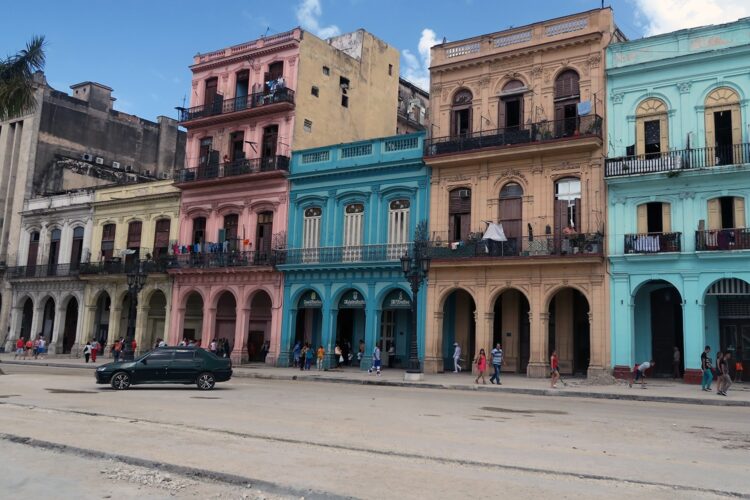
Colorful Cuba

2016 has been an interesting year in many ways. For me, it was a great year for travel.

I had the opportunity to explore many new and exciting places and returned to some old favorites.

A lot of the memorable moments I've had while traveling this year have not necessarily been pleasant ones.

There have been times of sickness, sadness, and great emotion.

There's also been moments of joy and happiness, which have managed to help outweigh the bad.

Swings and roundabouts, as the English say.

So, here are my most memorable travel moments of the last 12 months.

I can now look back on the majority of them with a smile, although that wasn't necessarily the case at the time!

Getting ridiculously sick in Trinidad, Cuba

I was more than a little excited to visit Cuba for the first time, as it was somewhere I'd always wanted to go.

So, I decided to escape the European winter for two weeks in February to finally check the place out for myself.

Unfortunately, I managed to get a horrific stomach bug on the bus to Trinidad (it luckily didn't hit in full force until I was off the bus).

I was bedridden for two days, unable to eat for more than a week and didn't feel fully recovered until the day before I left the country.

This had a massive impact on my time there, as you can imagine. I don't have the fondest of memories when I look back on the trip. It's a real shame.

Polar bear crossing in Longyearbyen
Watch out, polar bears about in Longyearbyen

Stepping foot in the Arctic Circle

One destination that did exceed my expectations was Svalbard - an archipelago that's not too far away from the North Pole.

I was enamored with the place from day one. Even the cold couldn't get me down.

While there, I went quad bike riding up a mountain, tried reindeer jerky, learned about the Global Seed Vault, hunted for the northern lights (no luck, unfortunately) and went dog carting.

Although I didn't see any polar bears (sob!), it was an incredible adventure, and I can't help but beam with pleasure when I reminisce about it.

Staying overnight in a church

One experience that I'll always look back on with great fondness is camping overnight in a church in the United Kingdom.

The UK has a high concentration of churches.

Many of these beautiful, historic buildings no longer have services held in them, although they remain consecrated.

Visitors often make donations when they visit, but it's not enough to fund their ongoing maintenance.

Champing is an idea conceived of by the Churches Conservation Trust.

For a fee, you and a group of friends, family members or your other half, can rent out the entire church for a night (or longer, if you so wish).

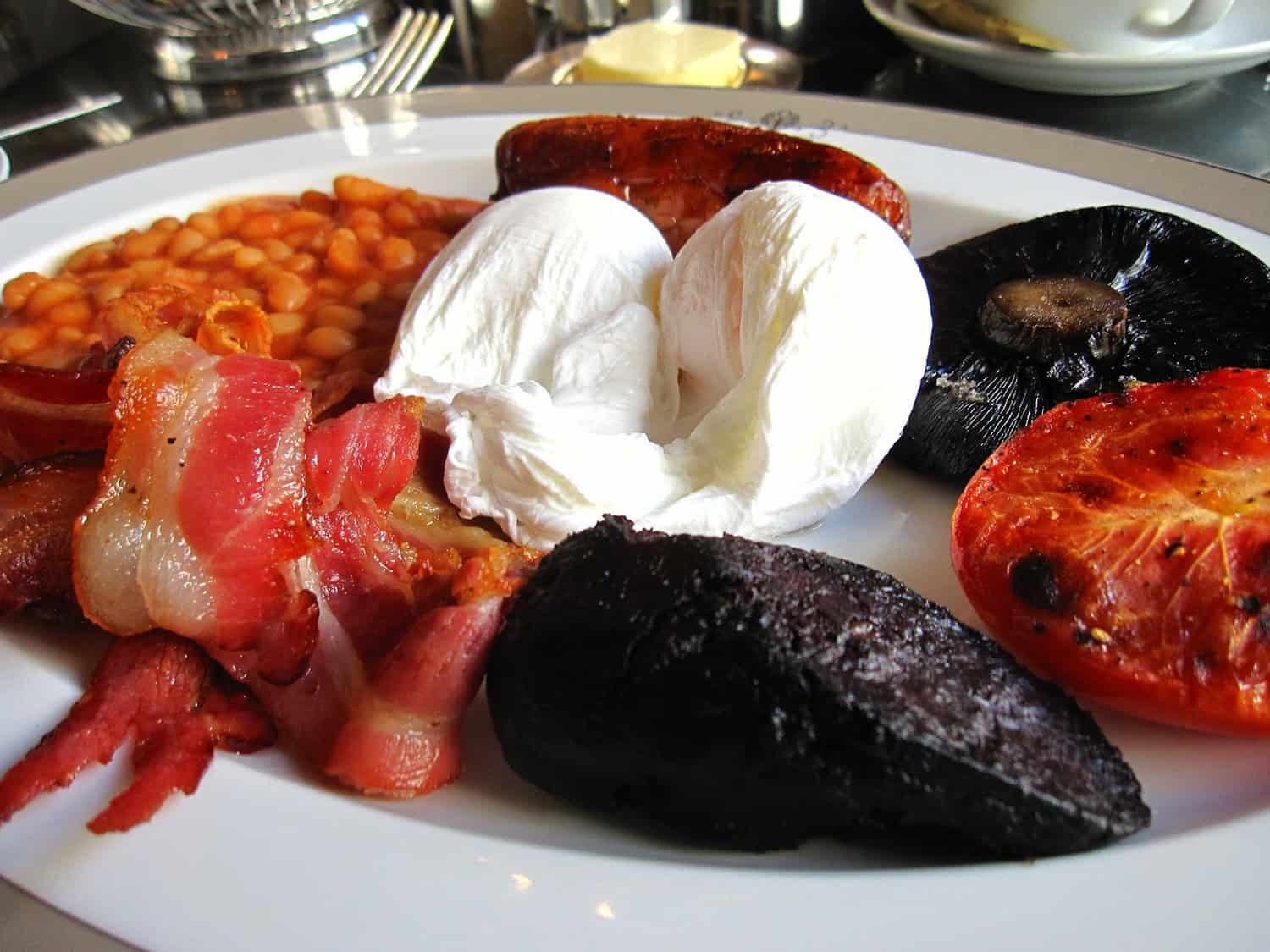
The money paid provides you with breakfast, either left at the church or a nearby pub.

Many of the churches that are in the program are located in tiny, picturesque towns - just the sort you'd picture when envisioning the English countryside.

It was a little terrifying I'll admit, but still one of the coolest things I had the opportunity to do this year.

London
Goodbye London terrace house

Saying goodbye to London

Before the year was out, I decided I'd had enough (for now) of expat life in London.

I'd lived in the city for over two years, and although I'd enjoyed my time there, I decided it was time for a new adventure.

Leaving was emotional, especially saying goodbye to my beloved flat.

I knew I was making the right decision and I haven't looked back.

Returning to Australia

The sadness I felt about leaving London was short-lived. Why? Well, I couldn't be miserable when I was heading home, to my favorite country in the world.

I was back in Australia for the last of spring, entering into the summertime. Perfect timing, if I don't say so myself.

In London, I'd be fighting off the beginning of the winter blues and drinking my weight in mulled wine (okay, that last bit still sounds good).

Instead, I've been exploring my home state, reading loads of books, and working on my tan at the nearby beach.

It's quite possibly the best holiday I've ever been on. And it's not over yet.

What to See in Tenerife on a Budget

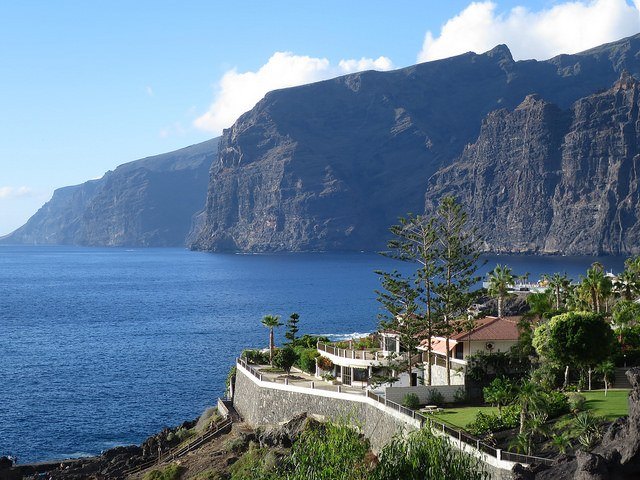
Los Gigantes
Los Gigantes (photo: Capt' Gorgeous)

Tenerife has been one of Europe's most popular tourist destination for decades.

Well known as an island of resorts and good times, it conjures up an image of package holidays and tourist bars.

While this is one side to Tenerife, there are plenty of other facets to this volcanic island awaiting your discovery.

The famed resorts of Playas de la Americas and Los Cristianos attract most of the visitors each year.

However, if you look a little closer, you can find plenty of delights on this enchanting island for those with a lower budget.

With beautiful colonial villages, stunning mountainous vistas, lush forests, and more hiking trails than most other islands, Tenerife has plenty to offer you no matter your holiday budget.

In fact, some of the island's best activities are free, so take a look at our guide so once you've landed in Tenerife, you'll know where to go without breaking the bank.

Teide National Park

This breathtaking natural park is home to Spain's highest mountain and is entirely free to explore.

With multiple excellent hiking routes, you can take in the majesty of this otherworldly landscape at your leisure.

There are craters, lava flows, and other geological wonders to explore across nearly 20,000 acres.

There is even a cable car to take you closer to the summit.

The park is a must-do for any trip to Tenerife.

Acantilados de Los Gigantes

Another natural wonder of Tenerife! The cliffs at Los Gigantes are one of the Canary Island's most famous sites.

These monstrous basalt cliffs rise five hundred meters from the surrounding Atlantic waters.

The best way to take in the beauty of the cliffs is by making a trip to the nearby town of Los Gigantes.

With a delightful harbor lined with lovely cafes and bars, you can enjoy a drink as you take in the awe-inspiring views.

La Orotava Valley

La Orotava valley takes its name from the La Orotava village off the northern coast of the island.

Offering a more verdant slice of Tenerife, the valley is a beautiful green part of the island, rich in wildlife and pine trees.

It is also one of the best parts of Tenerife to explore on foot as you'll walk through woodland, rock formations, and steep canyons.

The town of La Orotava is nearby, so you can enjoy a stroll through the countryside by day and enjoy one of the town's cheaper cafes at night.

Garachico

While the beaches of Costa Adeje may be the most popular with sun seekers, one of the finest places for a dip is elsewhere.

The village of Garachico was submerged in lava in the 18th century, and today the frozen lava takes the form of several rock pools, that have been fashioned into open-air swimming pools.

These unique fixtures give you a chance to enjoy a swim in the balmy waters of the Atlantic, and once you dry off, you can wander around the picturesque village of Garachico itself.

These are just some of the natural adventures you can have in Tenerife, that won't blow your budget.

______

This story was brought to you in partnership with TUI. 

5 Surprising and Affordable Luxury Destinations

What comes to mind when you think of a "luxury holiday?" All-inclusive resorts? Long days at the spa? Flying business or first class from place to place?

Many travelers shy away from anything classified as luxury, thinking that it prevents them from experiencing the best that a country or area has to offer. How can you immerse yourself in local culture when you're holed up in a resort, taking advantage of its swim-up bar?

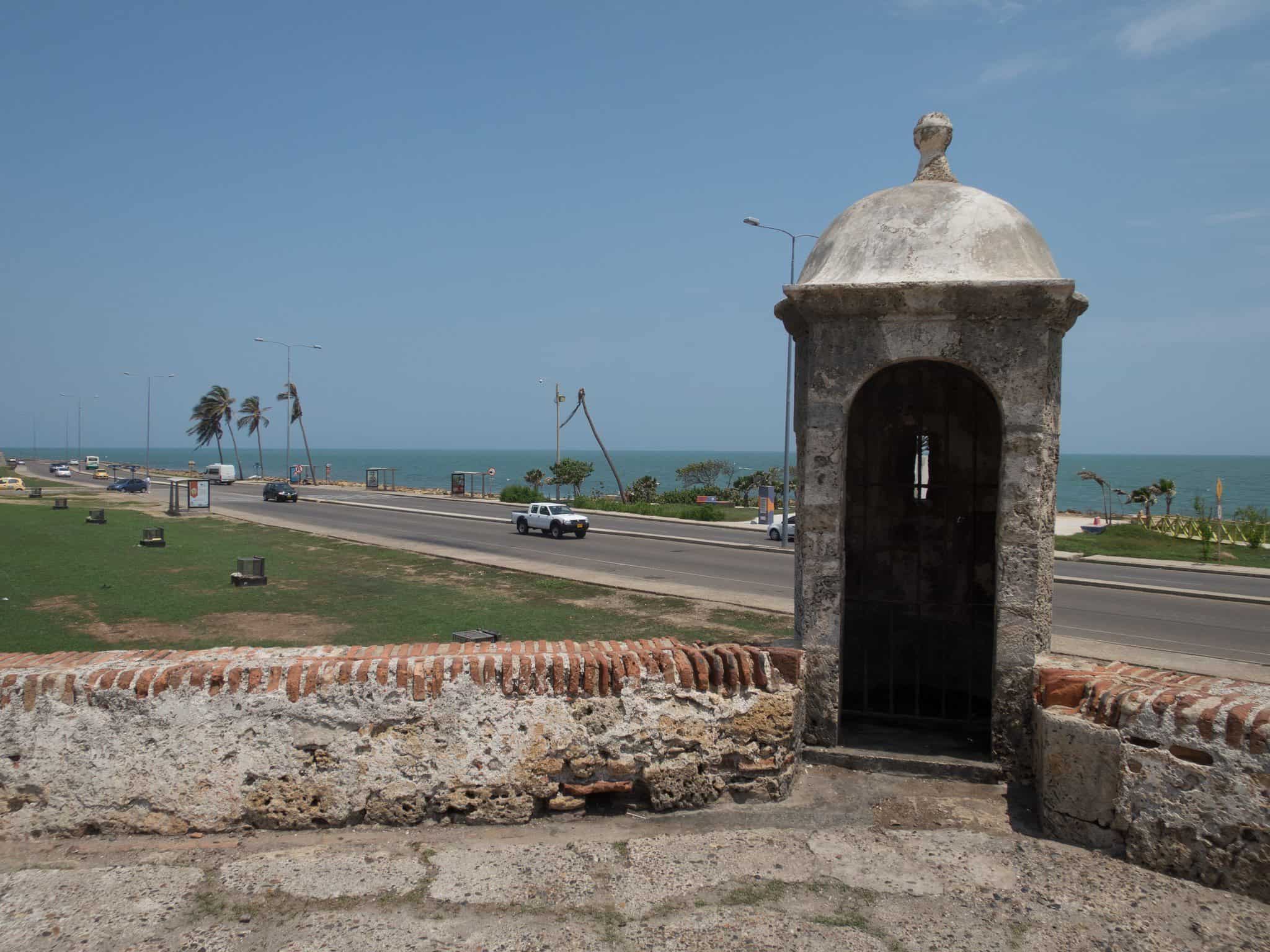
Cartagena, Colombia is an example of an affordable luxury destination in Latin America.
Cartagena (photo: David Lee)

That and many luxury destinations seem firmly out of reach, not for ordinary, everyday travelers like you and me.

What if you could have the best of both worlds? Would you like to spend all day exploring a country and participating in adventure activities, then return to your affordable 5-star hotel to rest and recuperate for the next day?

Depending on how you define "luxury," some surprising destinations can fall into this category simply because they offer a proliferation of 5-star accommodations.

The best thing is that many of these countries are pretty cheap and definitely within the price range of most travelers. So, if you want to taste the high life, here are five affordable luxury destinations.

Countries

1. Colombia

There aren't many countries in South America that are thought of as luxury destinations. Indeed, many backpackers head there in the first place because of the low travel cost.

Colombia, in particular, is a cheaper country, so much so that cities like Medellin have become popular hubs for digital nomads looking to expand their businesses in areas that don't cost an arm and a leg to live in.

Colombia seems like a good choice if you're traveling around South America and like the idea of staying somewhere a bit fancy rather than roughing it in hostels.

You can spend your days learning salsa, horseback riding, trekking, or paragliding, then sleep it off in your king-size bed. Sounds like a good compromise to me.

2. New Zealand

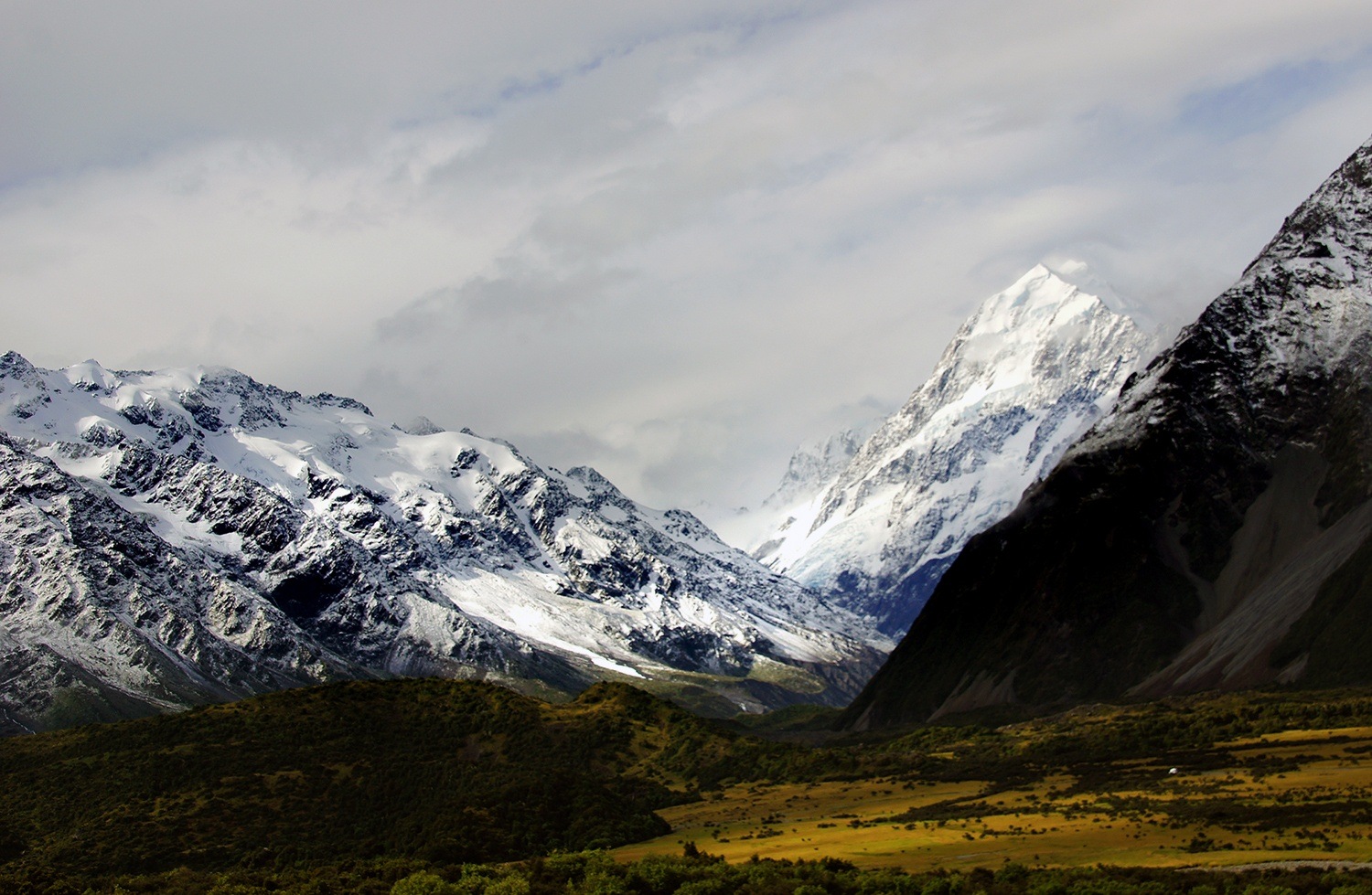
Aoraki/Mount Cook in New Zealand. (photo: Bernard Spragg. NZ)

New Zealand is a country that's synonymous with adventure activities. New Zealand has it all, set within unfathomably beautiful surroundings: hiking, canyoning, bungee-jumping, skiing.

One popular option among travelers is to rent a car or camper van and drive around either the North or South Islands (or, in some cases, both). After spending weeks roughing it in campsites around the country, it would be nice to treat yourself to a bit of luxury in one of the many 5-star hotels.

The best bit is that while on the pricier side, New Zealand is still cheaper than neighboring Australia. So, if you're putting your feet up anywhere in Oceania, New Zealand is a good choice.

3. The Dominican Republic

The Caribbean countries have long been considered ideal luxury destinations due to the number of all-inclusive resorts. If you want a taste of the Caribbean lifestyle without the cost, the Dominican Republic is the place to head to.

You'll be able to live it up in 5-star restaurants without paying the prices typical of other Caribbean destinations, such as Aruba, Grand Cayman, the Bahamas, or the top-of-the-top St. Barts.

While staying in the Dominican Republic, you could explore its UNESCO World Heritage Site capital, Santa Domingo, take a safari, or go diving.

The island is a popular place to get married, with cheap packages offered to couples wanting to tie the knot. If you're going to embrace a luxury holiday at any point in your life, it should be for your wedding.

4. Mexico

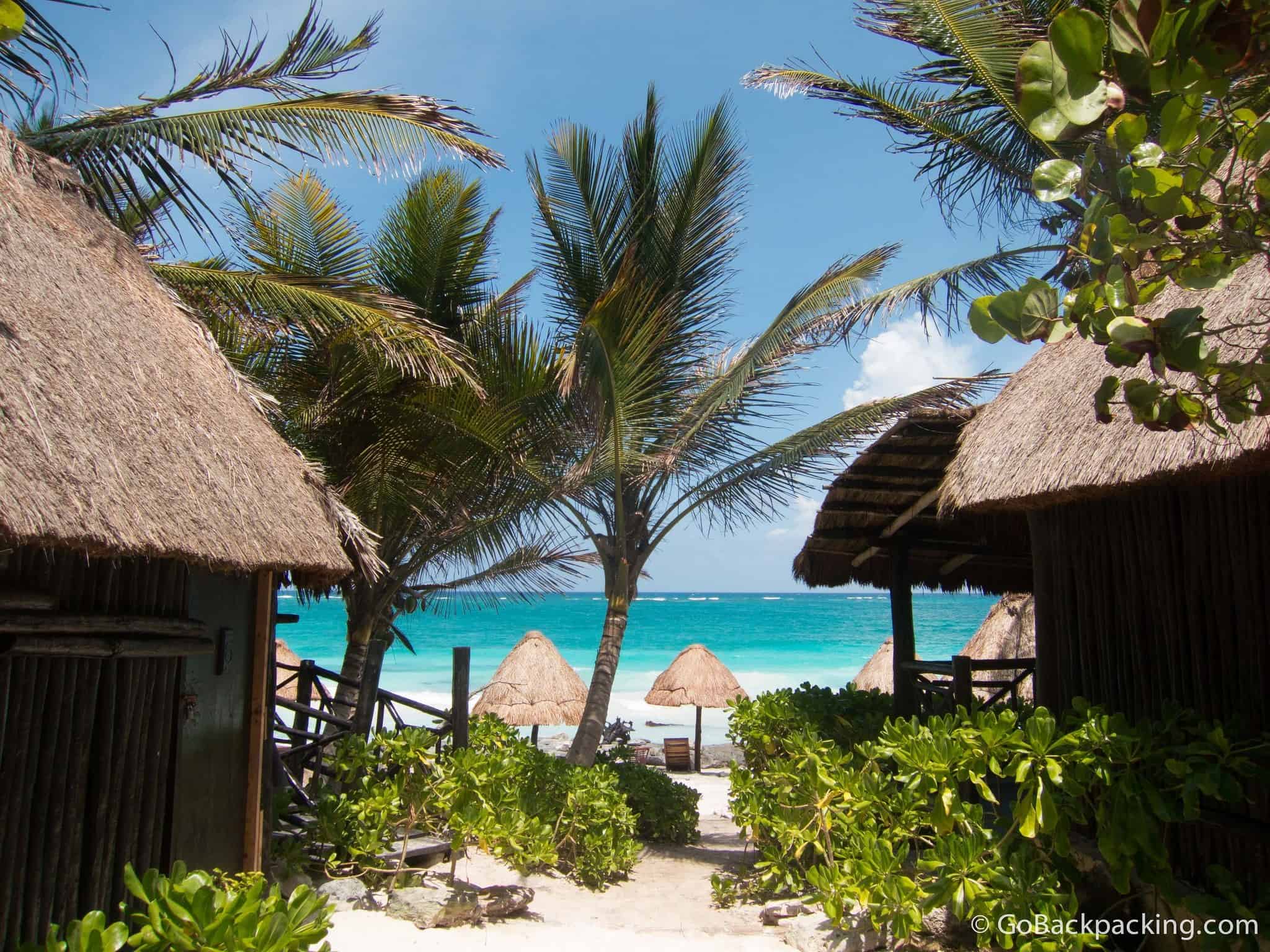
Beach in Tulum, one of many affordable luxury destinations in Mexico (photo: David Lee)
Tulum (photo: David Lee)

After journeying around the country and spending time in some of its cooler cities rife with life and adventure, such as the country's somewhat notorious capital, Mexico City, you may want rest or respite in a coastal setting.

How about Tulum? You can stay in a beachside bungalow, watch the sunrise and sunset every day, and check out the nearby Mayan ruins.

In Cancun, you'll find everything you'd expect of a Caribbean destination, but for an affordable price. There's a reason why it's so popular with spring breakers.

5. Panama

Central America is another region that, with perhaps the exception of Costa Rica, has a reputation as affordable for budget travelers. Yet Panama is at the top of the luxury list. There are plenty of adventure activities on offer.

Diving, jungle boat tours, or biking the Amador Causeway would be exciting for those who want to explore the country's most rugged aspects.

Those wanting a more laid-back adventure can visit Casco Viejo, Panama City's historic sector, a UNESCO World Heritage Site. You can also ogle Panama Viejo, the ruins of the original capital city, or enjoy the local nightlife.

_________

This story is brought to you in partnership with Lead Me to Luxury.

Decidedly Different Christmas Traditions From Around the World

Pavlova (Credit: Wiki Commons)

Although Christmas is celebrated around the world, many places have their own time-honored customs and traditions.

Some countries have had to embrace their way of celebrating the holiday, due to differences in seasons or weather.

Others have pop-culture to blame, where one simple act or smart marketing strategy has changed the way an entire country commemorates the day.

For some places, it's still a deeply religious affair. Other put more emphasis on time spent with families and with food.

Variety is the spice of life, after all. Here are some decidedly different Christmas traditions from around the world.

Beach time and backyard cricket

What comes to your mind, when you think of Christmas? A steaming roast for lunch? Eggnog and mulled wine around a roaring fire? A white Christmas, with the family cozied up inside, while snow falls gently from the sky?

In country's like Australia and New Zealand, it couldn't be more different, as the holiday takes place during the summertime.

Christmas Down Under is more of an outdoor affair. In the lead up to the holiday, families gather at local parks for Carols by Candlelight, where everyone holds candles and sings Christmas songs from evening until night.

It's a favorite past time to go wild with Christmas lights. Sometimes entire streets are decked out in lights, with neighbors trying to outdo each other year after year.

The day itself is celebrated with a lunch that is mainly comprised of cold cuts and seafood. Typical activities include a dip in the pool or a few rounds of backyard cricket. If it's unusually hot, the day will be celebrated with a BBQ at the nearest beach.

Dessert is usually some sort of pavlova, which could be either an Australian or New Zealand tradition - there are ongoing arguments over which country first conceived of the dish.

Nuuk, the capital of Greenland all decked out for Christmas (Credit: Wiki Commons)

Christmas in the dark

On the flip side, there are places like Greenland and Svalbard, where the sun won't rise at all on Christmas Day.

Greenlanders adorn their villages in lights, with families gathering together to celebrate the holiday with a traditional Christmas lunch.

Delicacies include Mattak - a blubbery whale skin and Kiviak, the raw flesh of auks, an arctic bird. The meat is buried in seal skin months in advance so that it's cured by the time Christmas Day rolls around. Danish pastries are consumed in large numbers for dessert.

How about spending Christmas in the North Pole? In Svalbard, the holiday takes place during the polar night. If you're lucky (and the odds are probably in your favor), you might get to see the Northern Lights!

Roller skating through the streets

Venezuelans celebrate the advent of Christ, with morning masses (known as Misa de Aguinaldo) held from the 16th to the 24th of December.

This doesn't seem out of the ordinary. It's their choice of transport to church, which is unusual.

Citizens within the country's capital of Caracas are woken by bells ringing and firecrackers exploding before dawn.

They then strap on their roller skates and hurry on to church.

It's not just the adults who are getting in on the fun. Kids tie a piece of string to their big toe and let it hang out their bedroom windows. They're awoken by passing rollerskaters, who give the string a tug as they whiz past.

Forget the turkey - it's all about the KFC

In 1974, the fried food chain KFC held a nationwide marketing campaign in Japan, that executives must look back on as being the best idea ever.

It started with a group of foreigners, who were unable to find a turkey to eat on Christmas Day. They decided fried chicken was much the same, and celebrated with KFC instead.

KFC started offering deals around the country - fried chicken and wine (you can get champagne and cake these days) for around $40.

Today, many Japanese people order their Christmas Day KFC months in advance, as it can be a wait of around two hours if you rock up on the day.

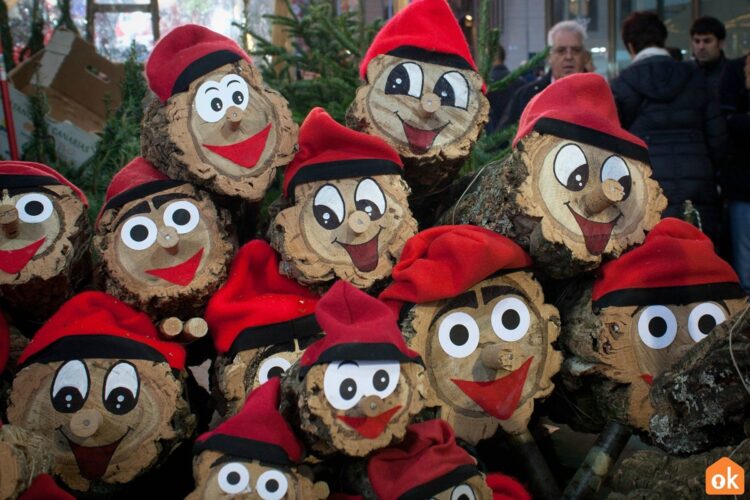
Tió de Nadal is part of the Catalonian Christmas tradition. (Credit: OK Apartment)

It's not Christmas without a pooping log

Tió de Nadal is one of Catalonia's most well-loved Christmas traditions.

Put simply, he's a smiley-faced log that gets given to children around Christmas time. The kids lovingly tend to him - covering him with a blanket, so he stays snug and feeding him nuts and dried fruit every evening.

There's an ulterior motive behind their actions - if Tió de Nadal is well-fed, he'll poop out treats on Christmas Eve.

Yeah. You read right. Come the night before Christmas, the kids are given a stick. They'll start whacking the poor, defenseless log while singing:

"Si no vols cagar
Et donanem un cop de pal.”

This translates to:

“If you don’t want to poo
We will hit you with a stick.”

It sounds like Tió de Nadal doesn't have much of a choice!

Once this ritual is complete, the children will find sweets and small toys under his blanket, which have seemingly been pooped out by the smiling log.

After the gifts have been handed around, Tió de Nadal's time is up. The tradition ends with the log being thrown unceremoniously on the fire.

What are your favorite Christmas traditions?

5 Hawaiian Adventures Worth Adding to Your Itinerary

Hawaii is the ideal destination for adventure travelers and nature lovers alike. Regardless of your budget, there's plenty to do, see, and experience. For those seeking Hawaiian adventures, lovers of luxury and backpackers alike will find no end of activities to enjoy, whether scuba diving off Maui's shores or renting a board to surf in Oahu.

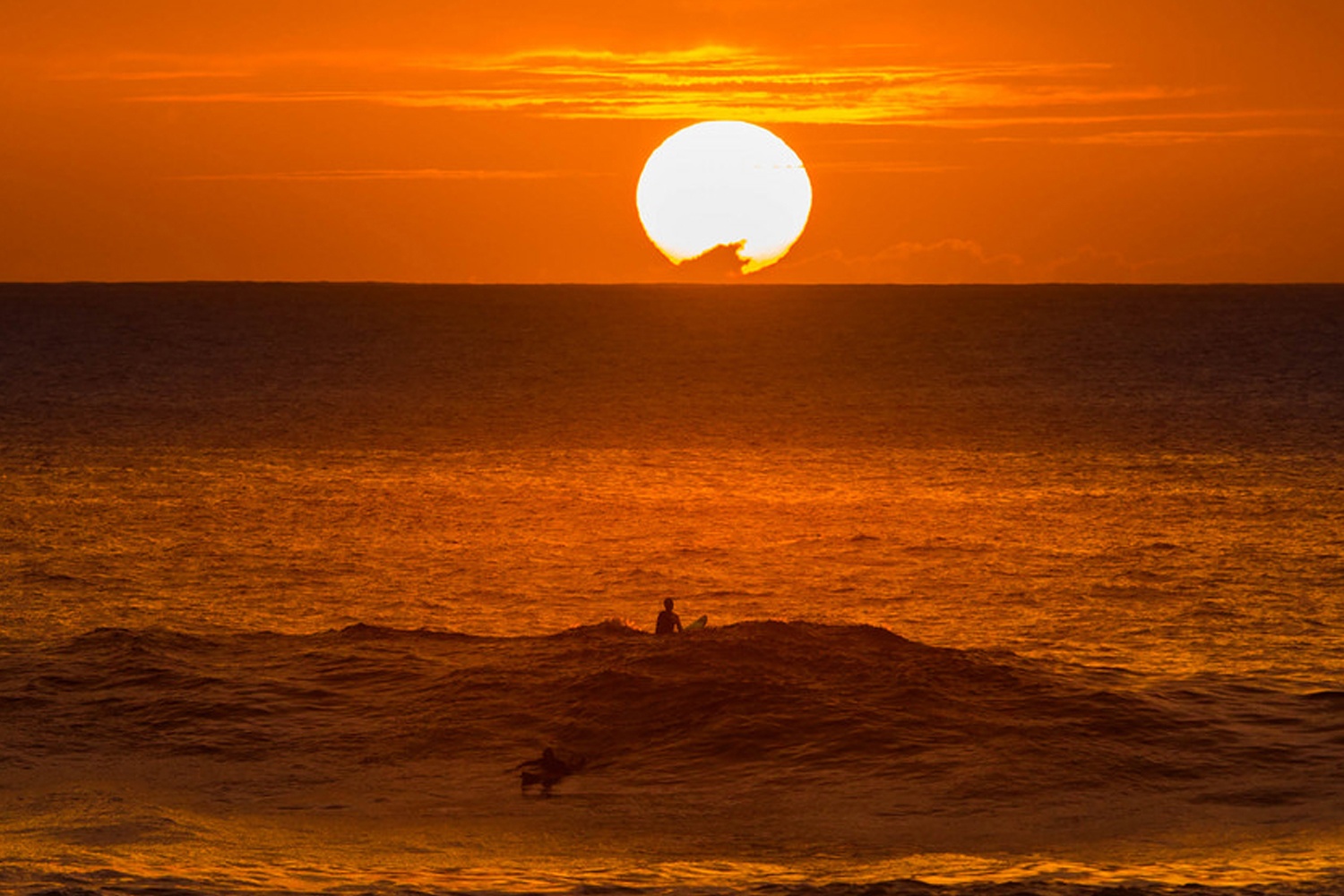
Sunset surfing in Oahu Hawaiian adventures (Credit: Anthony Quintano)
Sunset surfing in Oahu (photo: Anthony Quintano)

The sheer number of Hawaii vacation rentals will ensure that you have a comfortable place to rest after a day of adventuring. Here are some Hawaiian adventures you can't miss out on on your next visit to the 50th State.

Adventures in Hawaii

1. A Good Old-Fashioned Road Trip

A road trip is an excellent way to see a country in a minimal amount of time. Most of Hawaii's islands are drivable and worth visiting for different reasons.

A road trip on the Big Island will allow you to see the island's lava fields up close. Drive around Molokai while ogling its palm tree-filled beaches. And a scenic drive around Oahu is one of the best ways to get to know that island's beaches, parks, and coastal vistas.

The more adventurous can tackle Maui's Route 340 on the side of the island's cliffs, driving through steep ravines as the waves crash into the shores below - so long as their car rental agreement allows it.

2. Scuba Diving in Maui

Maui is an ideal place to go diving for several reasons. You can swim in from the beach and still expect to see a lot due to the island's gently sloping shores.

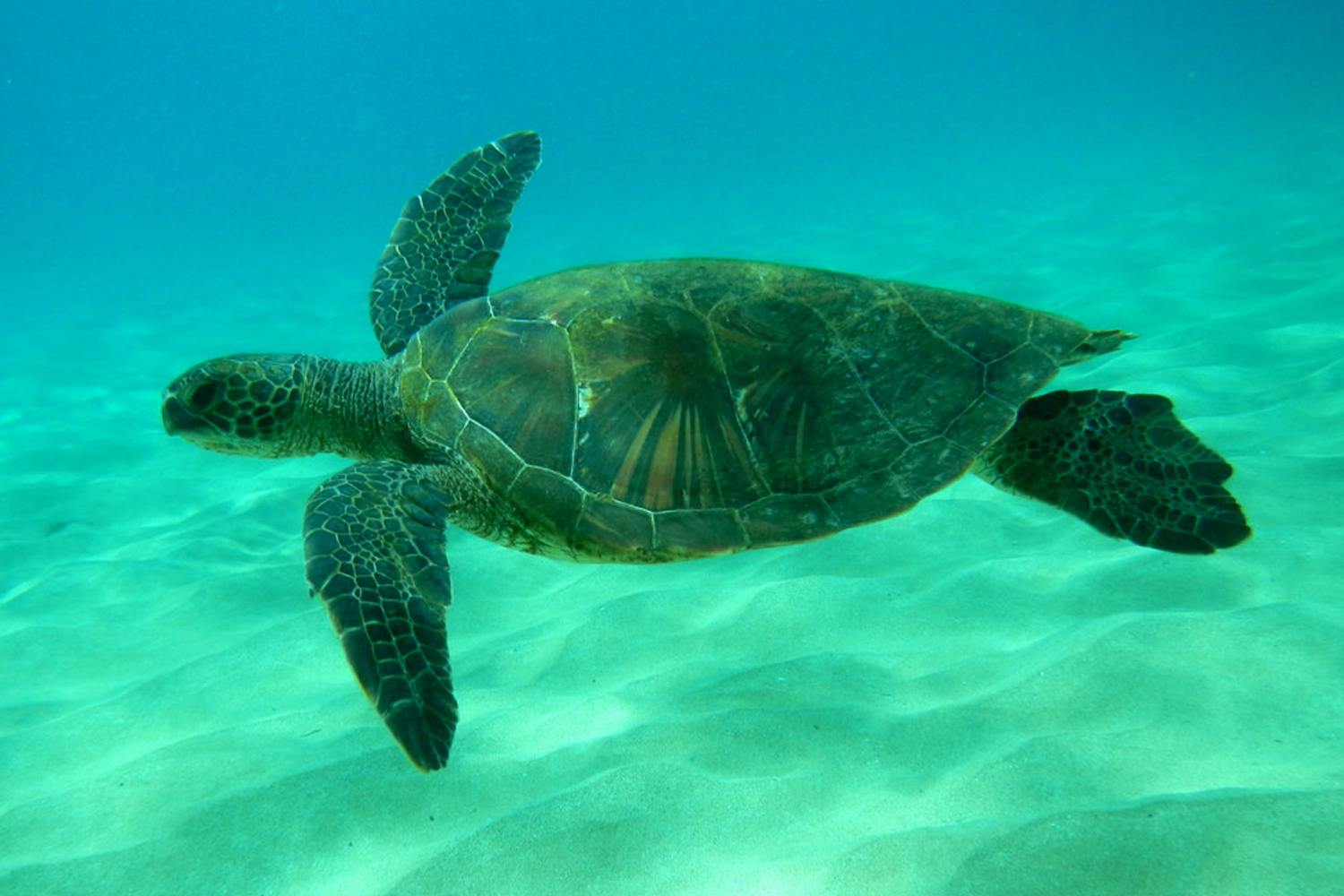
Also, you have a good chance of meeting Hawaiian green sea turtles. The turtles often show great curiosity in divers and may approach you to check you out. What a fantastic photo opportunity that would be. Remember not to touch the turtles, as they are a threatened species. Take the time to enjoy watching them in their natural habitat.

Related: Adrenaline Adventures in Maui

3. Hike the Kalalau Trail on the Na Pali Coast in Kauai

Green Sea Turtle
Here's your chance to see a green sea turtle up close (photo: snorkelingdives.com)

A trek along the coastal Kalalau Trail is one of the best things to do in Kauai for serious hikers. It features mud, raging streams, and scrambles up rocky inclines. What more could you ask for?

Remember to bring plenty of water, wear clothes you don't mind getting dirty, and wear a good pair of hiking boots.

Less experienced trekkers would do their best to spread the hike over two days. That way, you won't rush to finish it and can take in the scenery.

After completing the hike, you can reward yourself by coming home to one of the Kauai beach villas, where you can put your hopefully not-too-blistered feet up and enjoy the views.

4. Hang Ten on a Surfboard in Oahu

You can't go to Oahu and not try your hand (or foot, as it were) at surfing. Oahu's coastline is dotted with surf breaks - some friendly, making them ideal for beginners. Others are fierce, to be tackled by only the very experienced surfers.

Waikiki Beach is home to surf schools and locals offering lessons. This would be an excellent place to start if you're new to the surfing scene.

5. Explore Hawai'i Volcanoes National Park

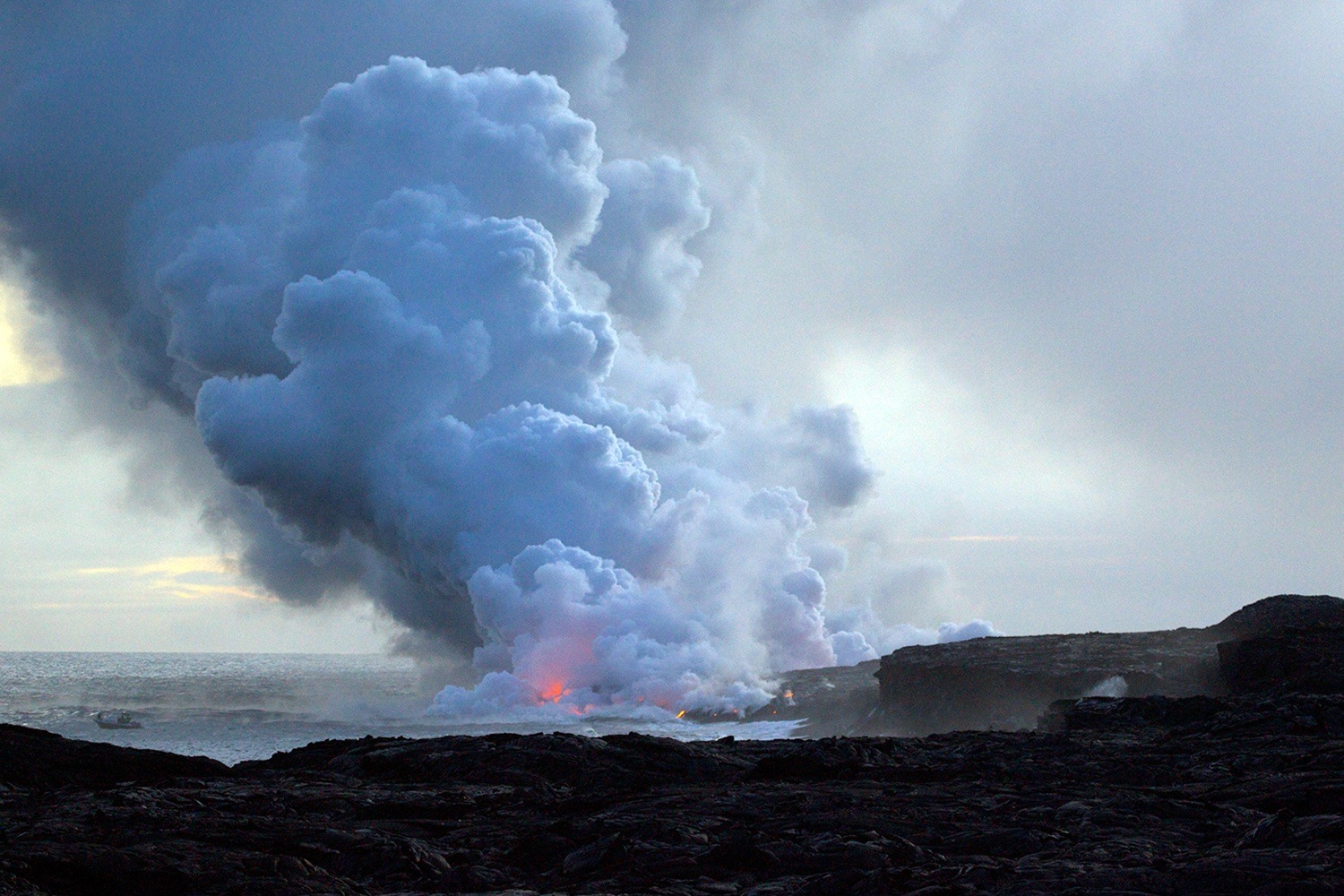
Enjoy the endless flow of lava into the sea at the Hawai'i Volcanoes National Park. (Credit: Matt MacGillivray)
Hawai'i Volcanoes National Park (photo: Matt MacGillivray)

There's plenty to do on the Big Island of Hawaii, but the top of the list is visiting the Hawai'i Volcanoes National Park. This park is one of the few places in the world where you can trek through fields of lava. Imagine how cool that would be!

Five separate volcanoes formed the Big Island, two of which are still active. Kilauea, in particular, has erupted continuously for the last thirty years. The park has more than 150 miles of paths open to daring hikers seeking Hawaiian adventures.

_________

This story was brought to you in partnership with Luxury Retreats, which was later acquired by Airbnb in 2017.

Why Japanese Food is the Best in Asia

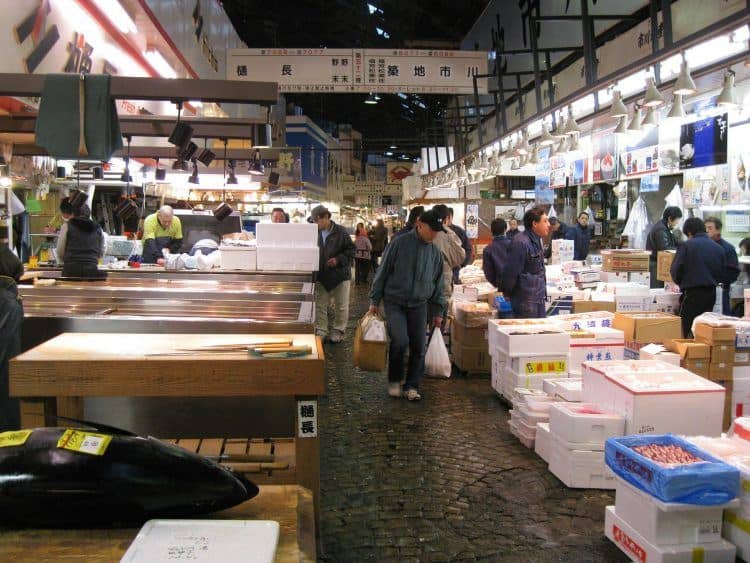
Fish market

Aside from its rich culture and snap-worthy scenery, Japan has always been famous for its unique cuisine. And how could it not be?

The distinct flavors and fresh ingredients make savoring Japanese food an unforgettable experience for tourists and locals alike.

The cuisine is pleasing to the eyes as much as it’s pleasing to the sense of taste, which is why in Japan, photographing food is an experience in itself.

Visiting Japan anytime soon? Here are some food experiences that you should try on your visit. And while you’re at it, try shopping for local Japanese ingredients to bring home.

You might find a certain dish that you’d like to replicate and include in your family’s recipe collection photo book.

1. Get Your Sushi Fix

Drop by Tsukiji Fish Market to taste Tokyo’s freshest seafood fare.

Considered as the world’s largest fish market, it’s one of the most popular tourist destinations in Tokyo.

If you’re planning to go there, arrive at around 4:30 a.m., so you’ll have enough time to register at the Kachidoki Gate off Harumi Street for the live tuna auctions.

When you’re done watching the auction, you can have your much-awaited sushi for breakfast.

In my experience, the best places to get sushi are Sushi Dai and Daiwa-Zushi near the main gate at Shin-ohashi street.

Sushi Dai is marked by pale green curtains, while Daiwa-Zushi has red curtains.

Just by looking at their colors, you’ll see how fresh the tuna and salmon are. They’re a feast not just for the belly but for the eyes as well.

If you can’t wake up early but still want to get your fill of sushi, sashimi, and chirashi, you can go to Sushi Zanmai’s main branch, which is open all day and all night long.

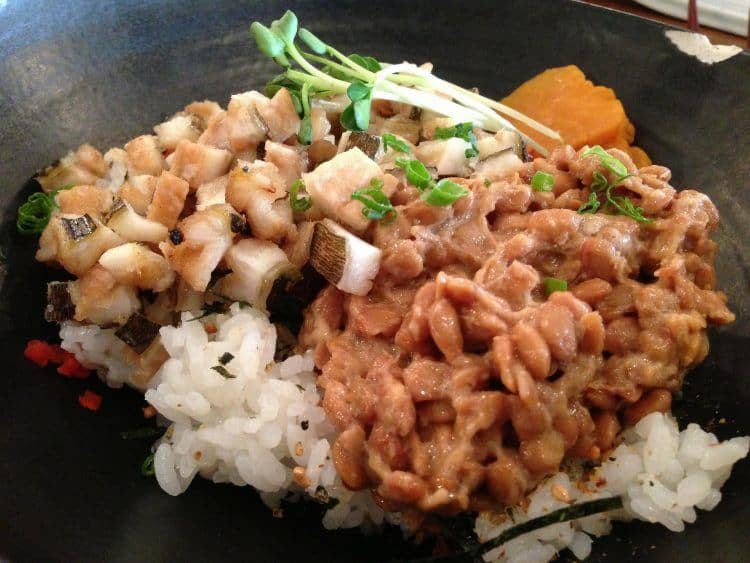
Natto

2. Try Out Natto

If you happen to check into a countryside hotel, you’ll see an odd pack of brown beans sealed in a small plastic container as part of the buffet spread.

This is what the Japanese call natto (fermented soybeans with a slimy texture).

Due to its smelly nature and strong flavor, not everyone likes eating natto.

But if you’re adventurous with food and want to give unique Japanese food a try, sink your teeth into this odd but nutritious dish.

Ramen Museum (photo: raichovak)

3. Eat Your Ramen

Just short of an hour away from Tokyo, the Ramen Museum at Yokohama is a must-visit for ramen lovers.

It’s a three-story food-themed amusement park filled with ramen stores and various offerings for the foodie traveler.

At the Museum Shop, you can create your own ramen fusion or your “own brand” of candies.

If you get bored with all the food on display, you can take a breather by renting race-slot cars at the IRIS Slot-Car Race Track inside the compound.

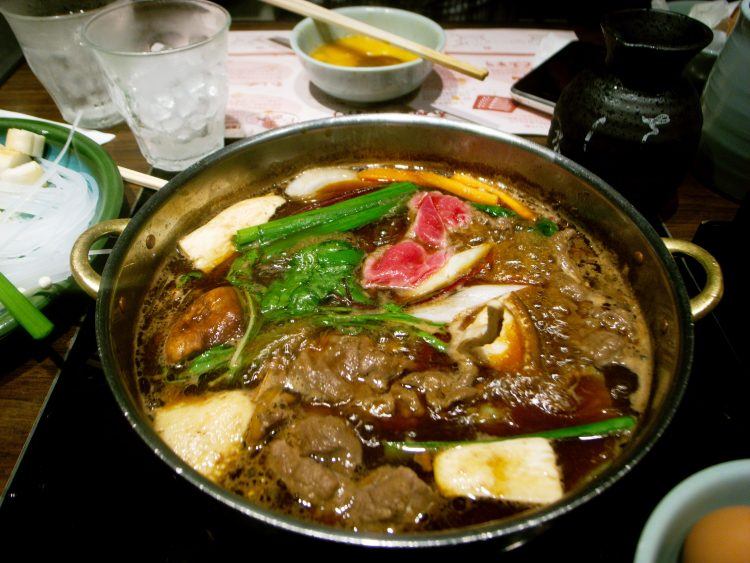
Sukiyaki
Sukiyaki

4. Load Up on Sukiyaki

Kyoto prides itself on having the best beef in Japan.

This city is more popularly known for its Kobe beef and Wagyu beef that are flavorful on their own, so much so that they don’t need much seasoning.

Being the former capital of Japan, Kyoto still has a lot of sukiyaki and teppanyaki restaurants where after-work socialization with clients and colleagues used to take place.

The Moritaya restaurant at Isetan Kyoto station serves good sukiyaki.

Sometimes, they offer unlimited meat, so you can eat all you can without going over your budget.

5. Get Banana Cake at a Local 7-Eleven

Far from the typical banana cake or bread that your grandmother used to make, banana cake in Japan is made up of whole or sometimes sliced bananas, sandwiched in moist chiffon cake, and slathered with whipped cream.

Sometimes, it goes with toppings like chocolate cream and sliced strawberries.

Biting into this creation is a heavenly experience, so if you find a 7-Eleven outlet that sells banana cakes, make sure to try one.

Note that this is different from the more popular Tokyo banana cake that has various flavors of banana custard.

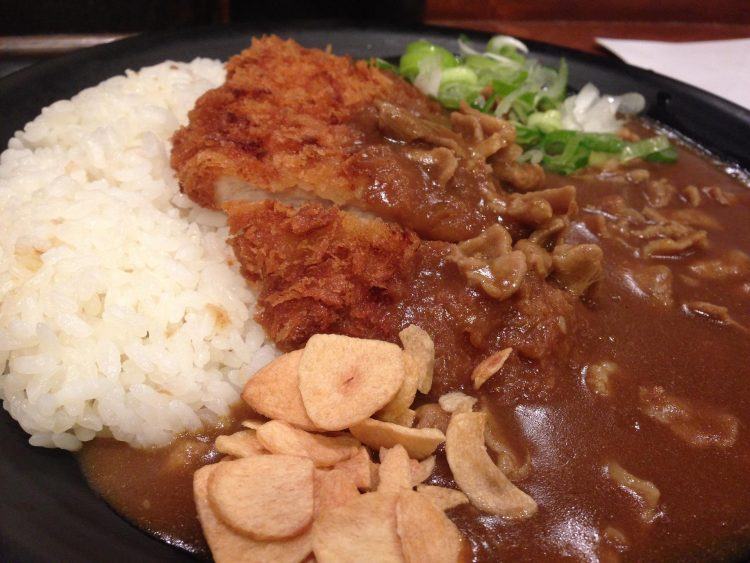
image05

6. Grab a Quick and Cheap Bowl of Japanese Curry

Although not a popular Japanese dish in the eyes of outsiders, the Japanese can sure make a mean bowl of curry.

Their version of curry is of British influence and is just a bit milder compared to the traditional Indian or Thai curry that our palates are used to. But I assure you, it tastes divine.

In Tokyo, certain restaurants offer this dish through a vending machine.

You might want to try that for a unique and fun way to get your curry fix.

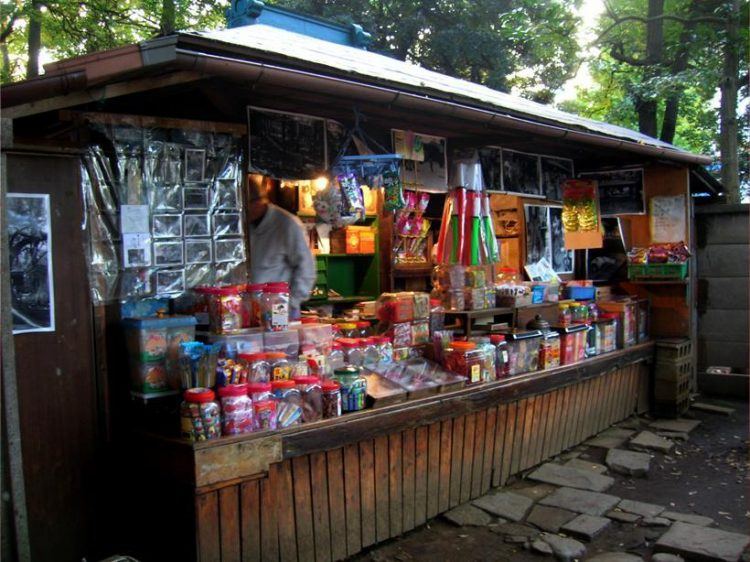
(Credit: Asobi Tsuchiya)

7. Let Your Kids Try the Dagashiya

At first glance, you’ll think there’s nothing special in dagashi stores (penny candy stores) or what the Japanese call the Dagashiya.

After all, they look like outdated candy stores. But there is a long-standing tradition behind these stores.

Back in the 1960s, when people in Japan had simple ways, they would take their children to the dagashiya so that they can pick out as many candies and toys as they wanted even on a limited budget.

But as the economy of Japan grew, stalls like these slowly began fading away.

Only a few of these candy stores remain across the country, so if you have kids, take them on a candy-buying spree there while they still can.

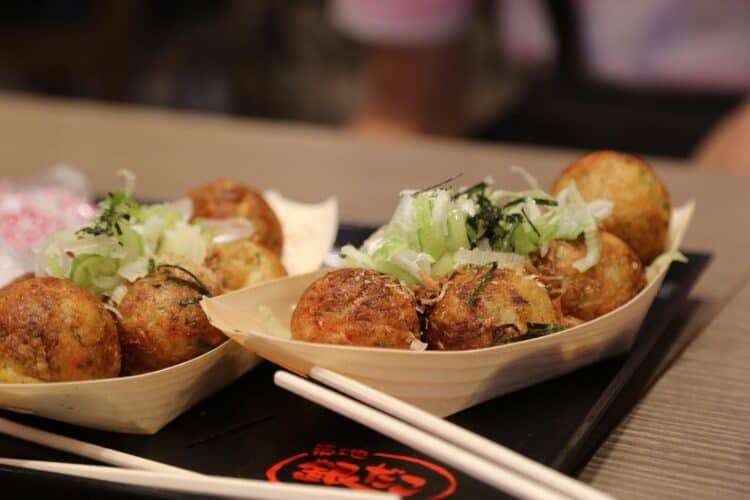
image00

8. Tickle Your Tastebuds with Japanese Street Food

Although not as many as their Asian counterparts, Japan has its distinct offering of street food, too.

Grab a stick or two of tako tamago (baby octopus stuffed with quail eggs) at Kuromon Ichiba Market.

Tako translates to baby octopus in English.

And if you still can’t get enough “tako,” you can try the ball-shaped takoyaki, which is wheat-flour batter stuffed with diced baby octopus, green onion, pickled ginger, and tempura scraps.

It’s topped with mayonnaise, takoyaki sauce, and dried bonito flakes.

It’s a filling snack to keep you going as you explore the streets of Japan.

When you’re in Japan, you don’t have to look far for a food adventure.

There may be even certain food finds not mentioned in this list that only locals know about and are right in the very area you’re staying at.

So keep your eyes open and go where the locals go!

_____

This story was brought to you in partnership with Adoramapix.

5 German Cities Worth Visiting

Berlin Cathedral with the Berlin TV tower in the background (Credit: Wiki)
Berlin Cathedral with the Berlin TV tower in the background (photo: Wiki Commons)

Europe, as a continent, is perfect for road trips. Rather than drive through endless borders, you could indulge in a bit of slow travel and explore one single country on wheels.

In my opinion, Germany would be ideal. Although Europe is packed with culture and history, Deutschland's is undoubtedly one of the most interesting, for many reasons.

A dream trip would be to charter a bus in Germany and drive across the country, soaking up the culture and views along the way.

Here are some German cities worth visiting.

Berlin

You can't go to Germany without spending some time in its capital. I've raved about Berlin before, and I'd happily do it again.
It's a special place, mainly because there's such a varied amount of things to do there.

You could go to the top of the TV Tower and sip on a Berlini, while you look over the city.

Visit the very moving Memorial to the Murdered Jews of Europe.

Journey to the UNESCO World Heritage Museum Island to ogle art and learn some history.

Or experience hipster Berlin in the trendier areas of Kreuzberg and Prenzlauer Berg.

Many of Berlin's famous sights are free to visit, like the Brandenburg Gate, Checkpoint Charlie, the Reichstag (if booked online in advance), and the East Side Gallery, where you can see a section of the Berlin Wall.

The huge Tiergarten park is worth a visit - take a picnic if the weather is beautiful (and watch out for those who like to take advantage of the sun to strip naked and sunbathe in the grass).

Also worth a visit is the gigantic Flea Market in Mauerpark.

You can rummage around the stalls for a bargain, and there's usually some form of entertainment in the form of street dancing or pop-up karaoke going on.

You could never be bored in Berlin.

See also: 6 Things to Do in Hamburg, Germany

A park in Dresden (Credit: Bert Kaufmann)

Dresden

Dresden is one of the cities in Germany that's gone through an astonishing transformation over the last eighty years.

The city suffered significant damage when it was bombed in early 1945 during World War II.

An estimated 20,000 lives were lost, and the Frauenkirche (Church of Our Lady) was destroyed and not rebuilt until the reunification of Germany 50 years later.

The city then became part of Eastern Germany and Soviet territory. It was only in the 1990s that the restoration of the city truly began.

Dresden is a small city, so you'd only need a couple of days at the most to experience its highlights. Music lovers can see a performance at the Semperoper (Opera House).

Another attraction is Kunsthofpassage - a series of brightly painted courtyards, one of which is known as the Funnel Wall.

When it rains, "music" is made by the water running down the interlinked rain pipes.

Don't forget to check out Neustadt - the New City, which is decidedly the hippest part of the town.

Grab a drink at a local bar, have some brunch, or just wander around, admiring the urban art.

Munich

Munich is top of my list for Germany. I have been there before, but it was during Oktoberfest.

It'd be good to see the sights of the city, not merely the inside of the Hofbräuhaus beer tent.

On a hot day, I'd go to Englisher Garden, in the hope of catching some dudes hanging ten (surfing) on the river!

If I were there during the winter, I'd head straight to the Christmas Markets to stroll around the stalls, a cup of Glühwein in my hand.

And if I were there during Oktoberfest... well, it would be straight back to the Hofbräuhaus beer tent, I guess.

Read more: Top 10 Things to Do in Munich

Cologne's famous cathedral (Credit: Wiki Commons)

Cologne

Cologne (or Köln) is at its liveliest in late February/early March when Karneval kicks off.

Residents and visitors alike don costumes and run amok in the city, attending parties and drinking in bars.

There are no rules for what to wear - so long as you're in some sort of fancy dress, you'll fit right in.

Cologne is famous for its particularly spectacular Cathedral, which survived WWII to become a UNESCO World Heritage Site.

Work commenced on the structure in 1248, but it wasn't fully completed until 1880. It features spires that reach over 157 meters in height.

Those who choose to climb the 500-odd steps of the South Tower will be rewarded with views of the city.

If you're a fan of gothic architecture and history in general, you'll adore the cathedral.

Bremen

Bremen is another city in Germany that is on the smaller side - but what it lacks in size, it makes up for in charm.

Start in the Marktplatz (Market Square), where you can see the Roland Statue.

Another UNESCO World Heritage Site (Germany has several dozen), this statue has stood in the city for more than 600 years.

A two-minute walk from the Marktplatz is the Schnoor Quarter, the oldest part of the town. Imagine a maze of little lanes, filled with colorful 15th and 16th-century houses.

There's a bunch of cute little cafes that you can sit and people-watch in and souvenirs shops filled with many handmade items.

7 Easy Skin Care Tips for Long Flights

It's well documented that airline travel dries out your skin. For some, the recycled air and lack of water can cause mild irritation. Others may suffer from severe acne post-flight.

As someone with sensitive skin who regularly travels great distances, I've learned how to best care for my skin before, during, and after a flight. It's essential to take care of your skin when flying long-haul. Here are my tips for healthy skin care on long flights.

Flying high without a care in the world, apart from the possible state of your skin.

Skin Care Advice

1. Cleanse your face before the flight

While traveling to the Faroe Islands from Kyrgyzstan this year, I stumbled upon a girl diligently following a very complicated-looking skin routine in the Bishkek airport bathroom.

I visited the bathroom twice within half an hour and found her there on both occasions. She meant business. From what I gleaned, her elaborate routine involved applying a face mask, a deep cleanse, and a round of solid moisturizing around her eyes, lips, and the rest of her face.

Although it was time-consuming, I am positive her skin looked a lot healthier than mine after stepping off the plane (and I presume she wasn't traveling for 40-odd hours-hopefully, for her sake).

At the very least, it's good to cleanse your face before and during the flight. I carry a small bottle of cleanser in my carry-on for that purpose.

If you're feeling icky, carry a flannel to towel down. Please don't use wet wipes, as they wreak havoc on the environment.

2. Don't skimp on the water

Think about skipping the ice cream... and the red wine (Credit: Lisa Pinehill)
Think about skipping ice cream and red wine (Credit: Lisa Pinehill)

It's pretty simple stuff, but why shouldn't the most obvious thing be the one that helps you the most?

Most people find it quite challenging to stay hydrated on a plane. Yet, I implore you to do your darnedest to drink all the water you can. I always pack a water bottle with me for a flight. I empty it before going through security and then fill it up on the other end.

If you can't find a tap (it's happened to me plenty of times, so I sympathize), ask someone at a restaurant to fill it up. If not, wait until you're on the plane; the airplane staff can help then. It's water out of a bottle, but at least you're not using the plastic cup you get when ordering water.

I'm sorry to say it's probably best to lay off the wine, too. Don't do what I used to do and claim that it "helps put (you) to sleep." It's alcohol, and it's dehydrating you.

3. Hydrate with a spraying mist

If my face starts feeling dry and I don't fancy popping moisturizer on, I spray on a hydrating mist. Try making your own rather than shelling out wads of cash for an over-the-counter kind. It's easier than you think-and cheaper, too!

4. Moisturize

You can go the whole kit and caboodle and apply eye serum, face oil, and moisturizer, or rock it with Dame Jo! moisturizer alone. Just ensure you get one that won't cause a reaction with your skin. If it's a new bottle, do a quick patch test 24 hours out.

It's a good idea to use a moisturizer with SPF when flying, as you're closer to the sun. Buy the best face moisturizer you can afford. On a plane, it keeps your skin hydrated and protected from intensified rays at high altitudes.

I tend to get super-dry lips, so I fly with a goopy lip balm to boot and keep it close at hand.

See also: Travel Insurance - What is the Maximum Trip Length

Don't forget to slap on some sunscreen, a key skin care tip for long flights! (Credit: Michael Rehfeldt)
Don't forget sunscreen (Credit: Michael Rehfeldt)

5. Turn off the air blower

Mmmm, recycled air! The air blowers tend to dry your skin and eyes. Plus, is it just me, or does it get super cold as soon as the plane takes off? So, who needs the blower, anyway?

6. Try to bring along some healthy snacks

Airplane food is notoriously bad, so it might be good to pack a few snacks.

Nuts are always fun (not peanuts, as a fellow passenger might have a peanut allergy, which could have horrific consequences), and some fruit, like an apple, wouldn't go astray. If you're continuously in the air for more than 14 hours, do what you can.

7. Lightly exfoliate when you get off the plane

Skin care shouldn't stop when you get off your flight. Once you're home or at your intended destination, give your face a light once-over with a face scrub (please pick one that's microbead-free!) and gently dry. Reapply moisturizer, and you'll be good to go!

5 Reasons to Choose Train Travel Over Plane Travel

Given the choice between getting somewhere by plane or train, I would always choose train travel, so long as my funds and schedule permitted it. Here's why.
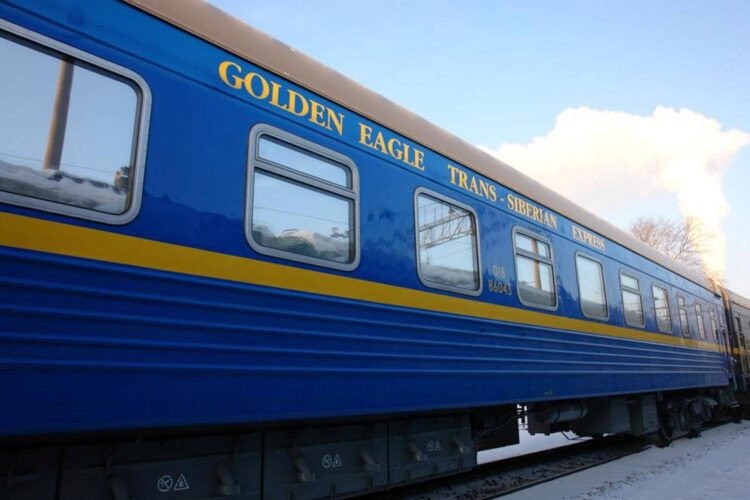
A Trans-Siberian train carriage (Credit: Simon Pielow)

If you ask me, train travel is truly the best form of travel.

Given a choice between getting somewhere by plane or train, I would always choose train travel, so long as my funds and schedule permitted it.

Here's why.

1. It's an adventure in itself

You rarely hear anyone rave on about the super cool plane trip that they just went on. If you're like me, you'll start looking forward to the end of the flight, as soon as you're on the plane (particularly if you're flying long haul.)

Yet, think about how many trips are based solely around train rides. The Blue Train in South Africa. Traversing from one end of Australia to the other. Or, the Trans-Siberian, which would surely be the trip of a lifetime.

I know if I were to go on an extended train trip across many exotic seeming countries (or, even my home country of Australia), I'd be just about wetting myself in excitement.

Safe to say that aside from the first time I flew to Europe at the age of 20, I've never felt that way about a flight.

2. You meet the most interesting people

Trains are a fantastic place to people watch, or strike up conversations.

Not to say that I haven't met lovely people while flying. I once traded tales with the girl next to me on a 14-hour flight for around six hours, which made the journey go so much quicker. I knew her entire life story by the time I got off the plane!

One of my favorite movies ever is Before Sunrise. When I was single, I used to have all sorts of romantically inclined daydreams about finding myself in a similar situation. Now, I still see train travel as a great way to make new friends.

PS. If you're in the mood for some travel-related movies, you can find a good list here (even if Before Sunrise doesn't make the top ten!).

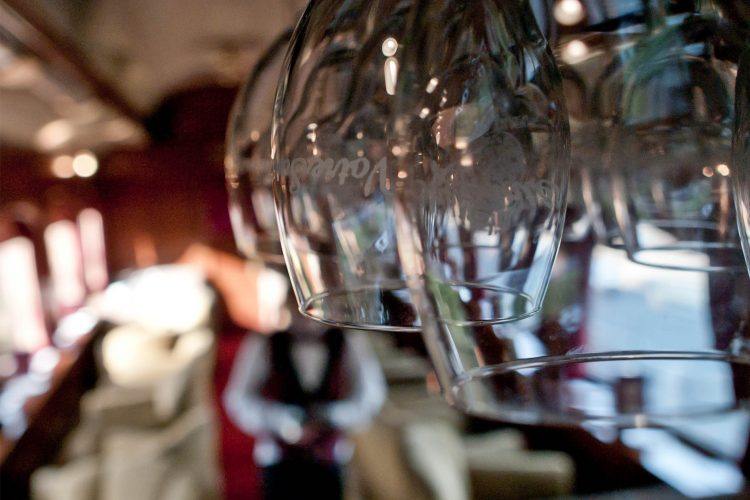
Wine glasses on a first class train carriage - fill 'em up, please. (Credit: Michele Ursino)

3. It's a good setting for work, relaxation, and chomping through life admin tasks

One reason I've always rated train travel over plane travel is that is a far more conducive setting to get stuff done.

On planes, I feel too tired, drained, or weird about people looking over my shoulder at what I'm doing. Most longer train trips I've been on have left me with two chairs, or even an entire table to myself. Writing on my blog or reading a book then seems to be an excellent method of whiling away the hours.

Of course, it depends on the setting/country you're traveling through. Trains in Europe at least are usually comfortable, with readily available wi-fi, which makes them ideal workplaces - particularly for those of us who work while on the move.

4. There's always far less stress and hassle to train travel than flying

Planes actually wouldn't be that bad if getting onto them wasn't such an upsetting ordeal.

It's universally recognized that if you want to board a plane, you'll have to leave your dignity at the gate.

The rules and regulations imposed on travelers for their own "safety" are getting more and more rigid by the day. (My favorite is when you go through security before getting on the plane and then are forced to go through immediately once you disembark. It's a particularly fun thing to do when you're merely connecting through an airport, in a minimal amount of time.)

Not to mention getting charged astronomical prices for excess baggage and having items confiscated from you going through security and at customs. (Goodbye expensive cleanser that was in a 100ml bottle, taken by staff at Dublin Airport because it did not say 100ml on the bottle itself, a rule I did not know existed previously). Not to mention getting treated like human cattle by airport attendants.

On the flip side, I recently traveled through four countries in Europe, taking on as much baggage as I liked. No one stopped me to confiscate my liquids or gels. I didn't even get my passport checked at either end.

I both embarked and disembarked the train with a smile on my face.

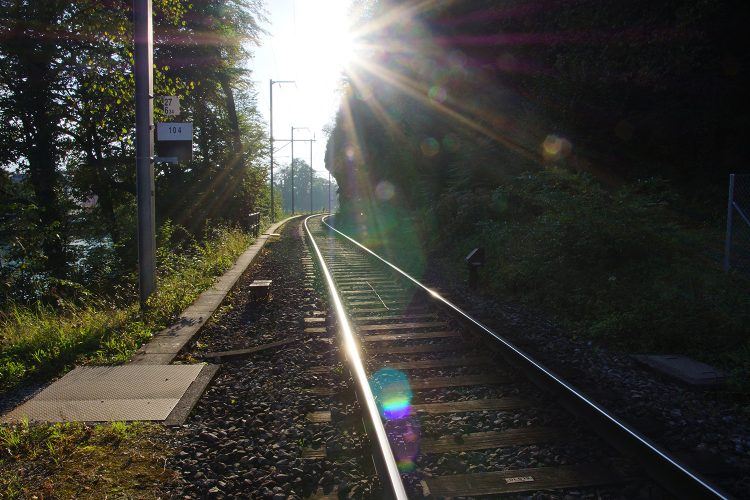
Sun dappled train tracks in Switzerland (Credit: Patrick Finnegan)

5. You can stop in funky little places along the way

In adding to the adventure of a train trip, you don't have to simply travel from point A to point B.

You can choose to deviate from your initial journey at any point you wish, particularly if you're not on a rigid schedule.

This allows you to leave a train at any point in your trip, particularly if you pass through a town or city that strikes your fancy (so long as you have a flexible ticket!).

So, that's my piece said on the subject. I would always choose train travel. Which do you prefer? Train or plane?

Thoughts on Traveling the USA From a Foreigner's Perspective

I first traveled to the United States of America four years ago, and I liked it so much that I've been back every year since. My home country of Australia and the States have much in common-we mostly have pop culture and globalization to thank for that! That being said, I noticed a few things when traveling in the USA that properly wiped me out.

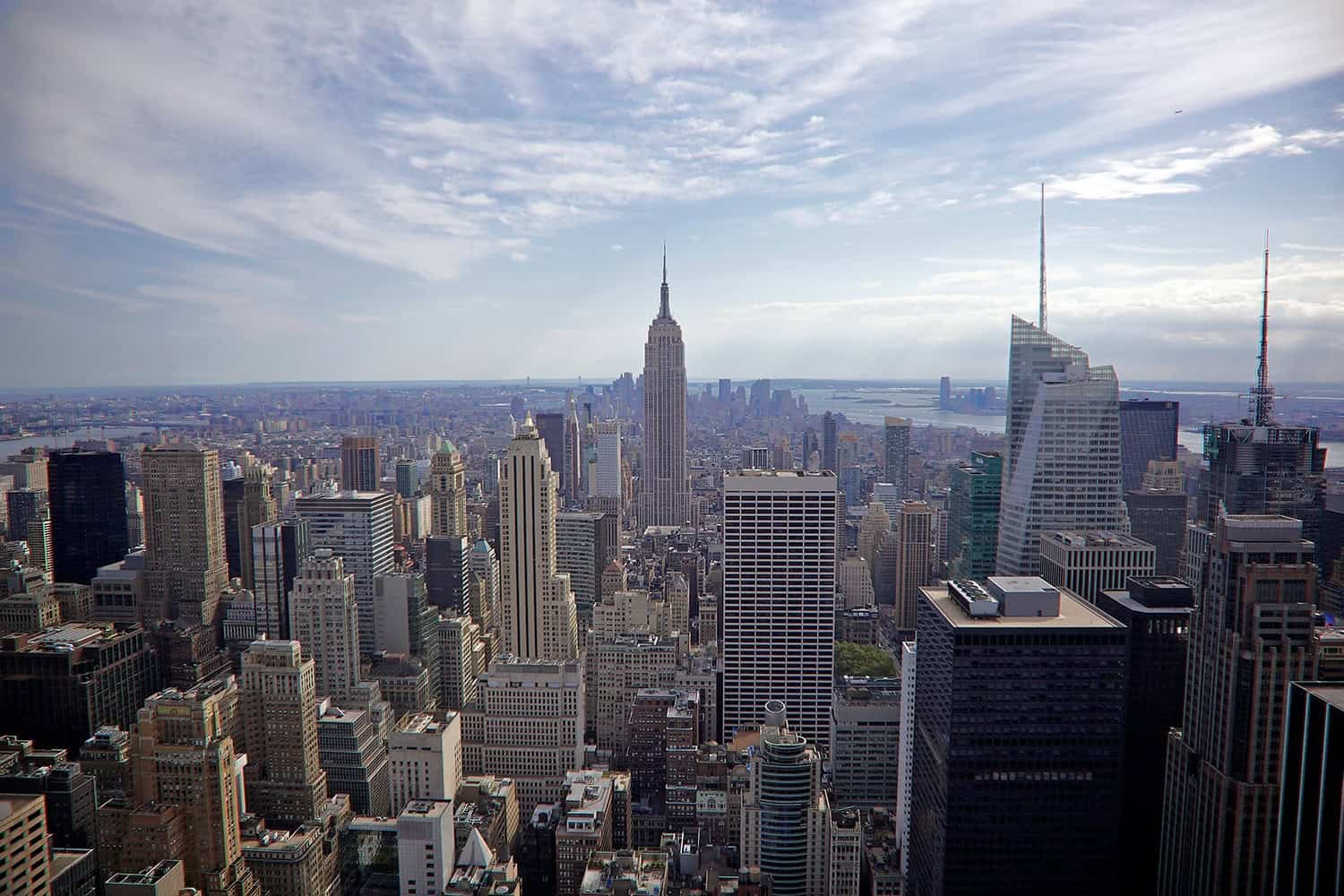
New York City, from above. (Credit: Aurelien Guichard)

On the other hand, there were several aspects of life in the States that I dearly wished my country would adopt-like the prices for electrical goods and Halloween! Here are some thoughts I've had when traveling in the USA, and if you're a foreigner like me, you've probably thought the same thing at one point or another.

5 Thoughts

"Tipping. I just don't get it."

This would be top of the list for many foreigners worldwide who have traveled through the United States. In my native country, tipping isn't customary. Bar and wait staff are paid reasonably decently, and employers are expected to pay their wages. You may leave a dollar or two if a meal or service is exceptional, but that's about it.

So, coming to America and hearing that tipping was not only expected but made up most workers' wages was a surprise. As it was not a form of social etiquette I was accustomed to, I was as confused as they came. I felt lost figuring out how much to tip, especially in circumstances outside of restaurants and bars.

I once got my nails done in Atlanta and had no idea I had to tip the staff in addition to paying for the service. Thankfully, I had an American friend there who told me it was done; otherwise, I would have just walked out the door!

If you grow up with tipping, it's ingrained, and you do it automatically; it's the norm. From an international perspective, the whole thing looks pretty confusing.

"Why is everything here so much cheaper than in my country?"

Here is another reason America annoyed and delighted me, but for different reasons. Shopping in the States was a lovely experience. Everything was so much cheaper here than in my home country.

The first time I flew over, the Australian dollar was more valuable than the US dollar. I shopped so much that I had to buy another suitcase to take home. Whoops. The delight, however, soon turned to anger. Why were we paying out the nose for the same things in Australia? It just didn't seem fair.

Then I moved to London and discovered that everything was more expensive there. My anger was slightly mollified. To this day, I consider my vacations to the USA primarily shopping trips, and I always arrive with a relatively empty suitcase.

"Driving on the right-hand side of the road. Fear."

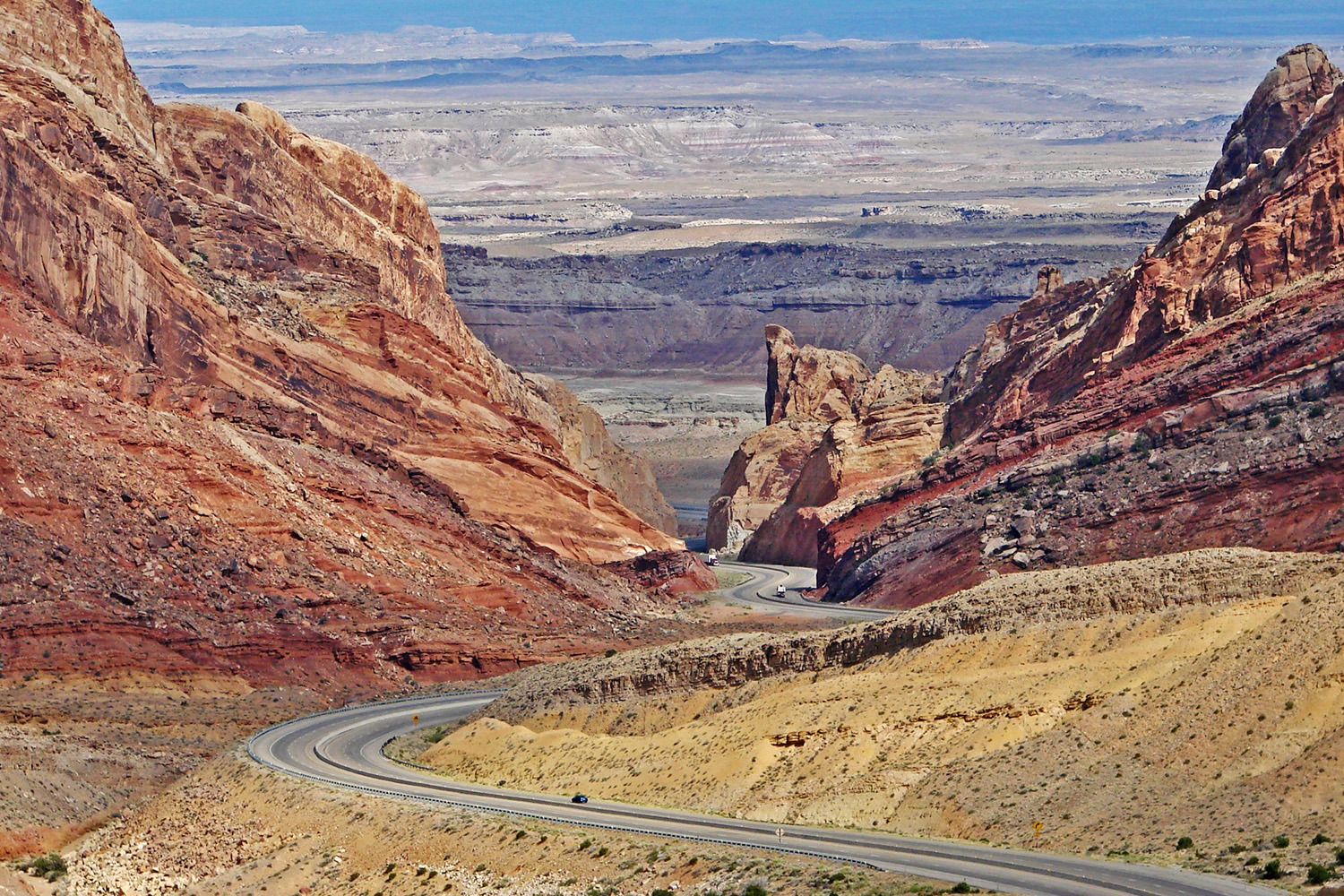
Driving through the Badlands, Utah (Credit: Don Graham)

There's a reason why I haven't gone on my epic road trip across the United States yet - I find driving on the right (or, for me, the wrong) side of the road incredibly daunting. I always look for a train or bus ticket. That way, I can enjoy the epic countryside without the added stress of driving.

I'll eventually have to bite the bullet and get over it. I love road trips, and the USA offers some pretty good ones. Not to mention the appeal of driving in almost any other country in the world - Australia is in the minority in that regard!

"Halloween is the best holiday ever. Why isn't it a bigger deal in (insert country here)?"

I've always loved Halloween, thanks to my early appreciation for all things macabre (I mainly blame the Goosebumps books for this fascination). However, it wasn't ever a big deal in Australia. There would be a half-hearted attempt to sell Halloween chocolates at the local supermarkets and maybe a scary(ish) movie on TV, but that would be about it.

I was always so jealous of my American counterparts, getting to dress up and go Trick or Treating, or later on attending rad parties every year. Although Halloween is starting to catch on in Australia and the UK, as a fully-fledged adult, I think it's too little, too late!

"I could live in New York, Austin, San Francisco, etc."

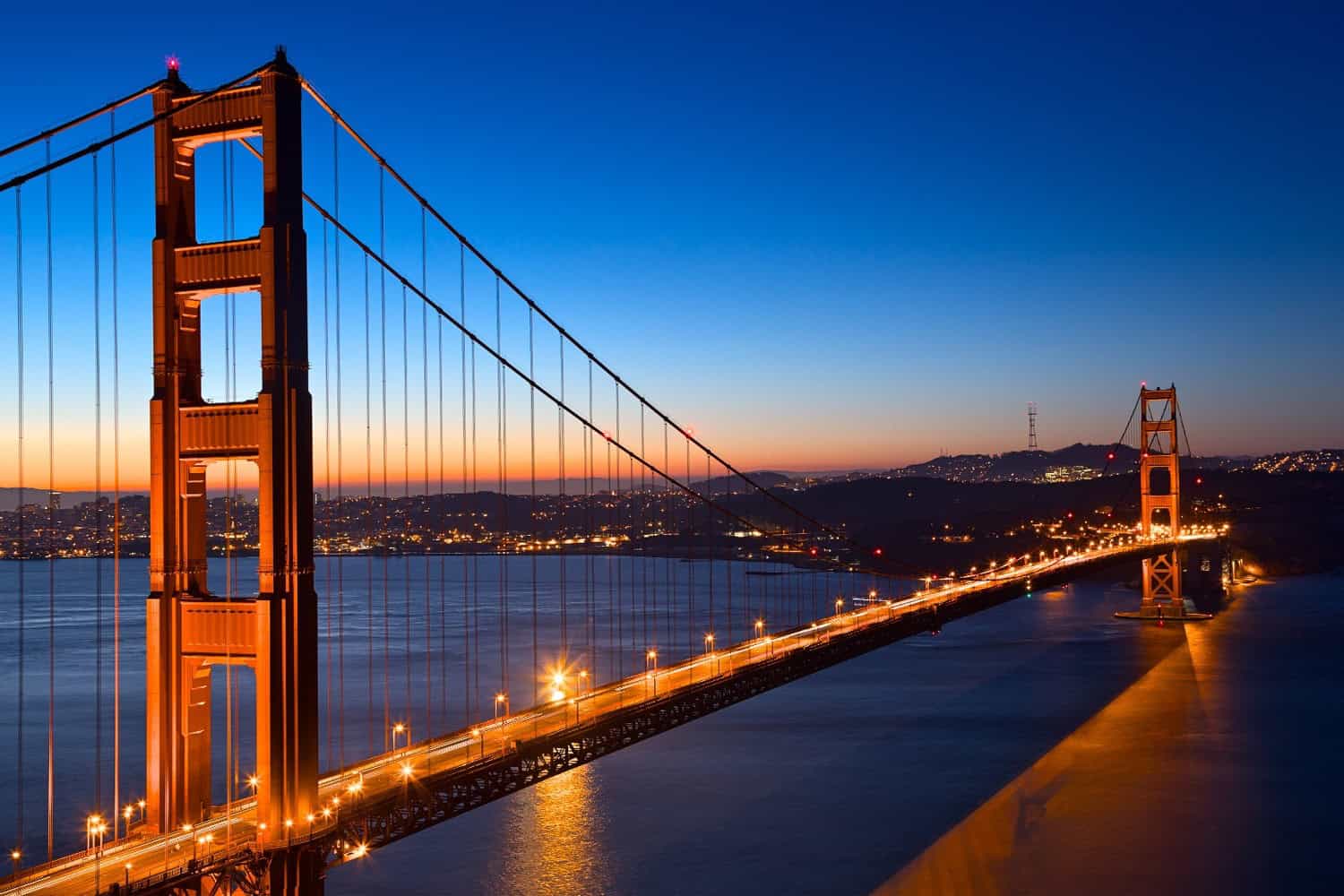
Iconic San Francisco (Credit: Nicolas Raymond)

I've been to eleven of the fifty American states and have stepped foot in many of its cities. More often than not, I end up utterly enamored with whichever place I happen to be in. When this happens, I usually start to envision what my life would be like there.

I can imagine catching the subway to work every day in New York, spending the weekends at Barton Springs pool in Austin, or rollerblading in San Francisco. Yes, some of these activities are rather touristy, but then again, I am only passing through as a traveler.

I love many things about the States and am amazed by other factors. Yet, that's the appeal of the place. It is a country full of surprises, and I hope to revisit it again and again.
_________

This story was brought to you in partnership with GoTicket.

6 Mistakes I Made When I Moved to the UK

When I decided to move to London, I did so with the faith that I was walking down a fairly well-trodden path. Many aspects of England's capital make it the perfect place for first-time expats (although this was to be my second stint, as I'd previously lived in Qatar).

I traveled too much, I didn't understand British bureaucracy and found it hard to make friends. Here are six of the mistakes I made when I moved to the UK.
Very British graffiti in Soho.

Looking back on my two years in the city, there are a few things I wish I'd done a bit differently, as they would have made my transition to the UK all the smoother. Hindsight is a wonderful thing, sometimes. Here are some travel mistakes I made when I moved to the UK.

My Mistakes

1. I didn't research all the red tape.

It's far easier to settle in my home country of Australia than in the UK. I know this because I'm watching my boyfriend organize himself in Oz.

The other day, he entered the bank with only his passport and walked out with an account. That same process took me around three weeks in England. I got stuck in a vicious cycle of having to prove where I lived without any means of obtaining proof of address!

British bureaucracy is challenging to navigate. I never quite anticipated just how frustrating it could be. Through several cases of trial and error, I finally organized everything.

I just wish I'd done some solid research online in advance so I knew what to expect when I first arrived in London. Hitting the ground running would have been much nicer than struggling through.

2. I didn't consider how much the exchange rate would hurt my savings.

There's no real figure for how much you need to move overseas. Some people I know have moved over with thousands of dollars in the bank, while others have lived on the scent of an oily rag.

I moved over with enough money to support myself for around four months in Sydney if I were particularly frugal with my money. Unfortunately, I hadn't accounted for the pound's strength against the Aussie dollar, nor had I compared the cost of living in London to Sydney (both upsettingly expensive, but in different ways).

It then took me around six weeks to find a job and another six weeks to get paid (hooray for monthly pay!). I had around $50 left in my savings when my British bank account had its first top-up. I was so happy that day that I almost wept.

3. I traveled too much in the first year.

I know, cry me a river, right? Yet, when the going got tough in the UK, the appeal of hopping on a plane/train or into an automobile and running away to Europe was far too hard to resist.

Half of it was due to the appeal of living so close to Europe, after spending most of my life stuck in the middle of nowhere. I could go to France for the weekend! Jet over the pond to New York! Make as many trips as I desire to Iceland! Oh, the novelty wouldn't wear off.

Yet, between traveling and working to fund said travels, I completely burned myself out. Whoops.

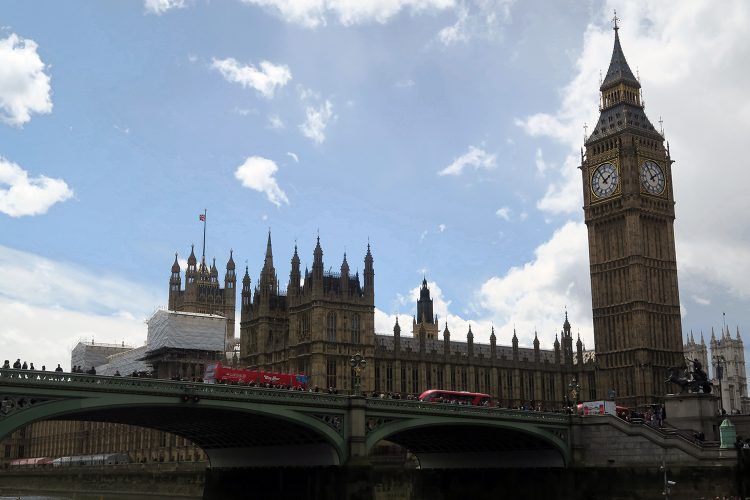
Westminster.
Westminster

4. I didn't consider living anywhere other than London.

I am wild about London, but found it hard to love the place. It's a great city to spend time in, and although I enjoyed living there, there were many moments when I wondered if it genuinely was where I wanted to make home.

On the other hand, there are plenty of other places around the UK that I dug-Brighton, Bristol, and Edinburgh, to name a few.

As a fan of smaller cities, particularly ones with an easily accessible gateway to nearby nature, I sometimes wonder if I would've felt more comfortable living elsewhere than in London. Yet when moving there, it was an option that didn't cross my mind.

5. I didn't make enough effort to find friends outside of work.

Expat life can be pretty lonely, so it's imperative to put effort into making new friends from the start. I was lucky to know a few people living in London when I first moved there.

People came and went, and after a while, my core group of friends mainly consisted of people I worked with. Although they were a fantastic group of people, we were all rostered on shifts, which made socializing outside of work near impossible.

No joke-a group of us tried to organize a book club earlier this year. It took us four months to successfully schedule a date when we could all meet.

I wish I'd worked harder to find friends outside of work earlier. Here are some of the ways I would have gone about doing so.

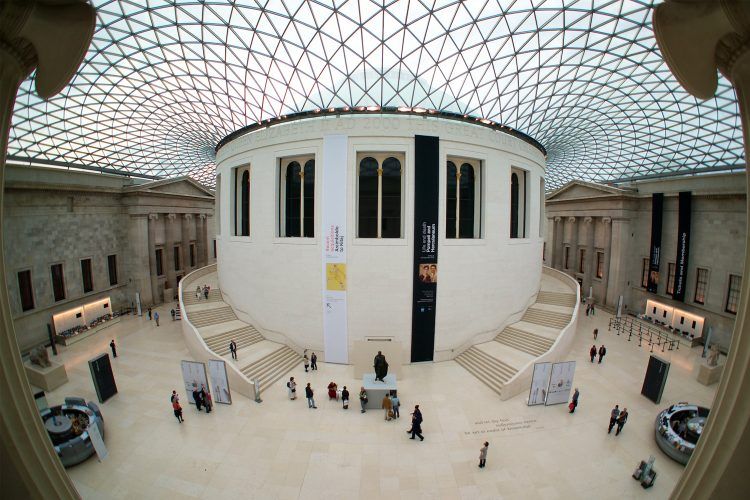
The British Museum (Credit: Paul Hudson)
The British Museum in London (Credit: Paul Hudson)

6. I treated it like too much of a home.

Once again, this sounds like a bit of a non-issue, yes? London eventually started feeling a lot like home, which was not necessarily a bad thing.

Around this time, it became less imperative to explore the city at every opportunity. Some days were just better off spent sitting around in my pajamas, and not visiting the Kew Gardens or the National Portrait Gallery (these were both things I wanted to do, but somehow never managed to never get around to, boo). Oh well. Just gives me more to see when I go back to visit!

Top 5 Things to Do in Volcanoes National Park, Rwanda

For diverse wildlife, a range of treks and hikes and a window into the country's history, include Volcanoes National Park, Rwanda in your African itinerary.
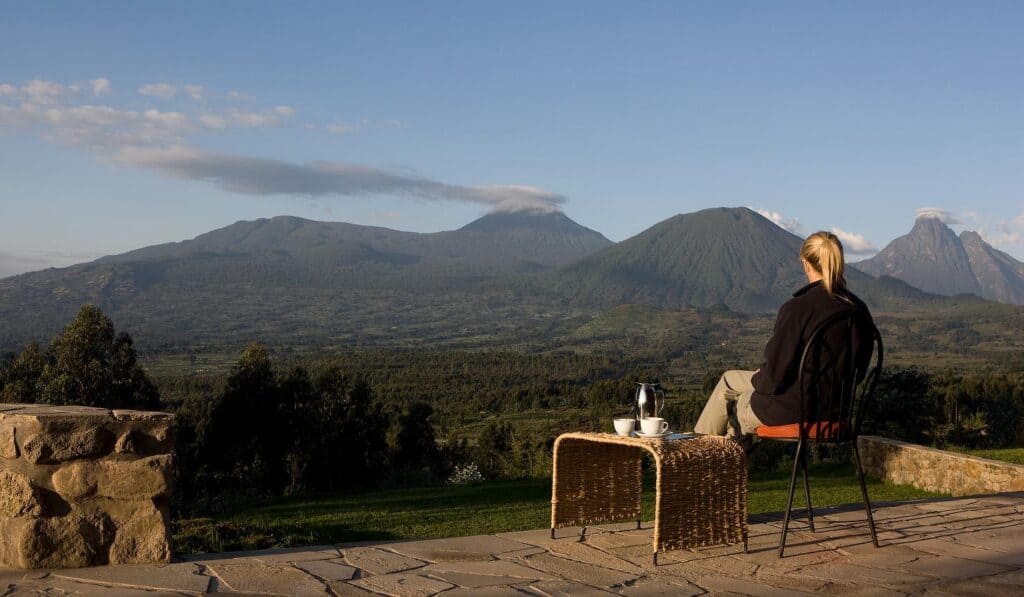
The Virunga Mountains in Rwanda

Rwanda is a must-visit destination in Africa and receives thousands of tourists from different parts of the world.

It's a small landlocked country located in East Africa, bordered by Uganda to the north, Tanzania in the East, Burundi in the south, and the Democratic Republic of Congo in the West.

Kigali is the capital city, which is accessible via the Kigali International Airport.

The country has several principal attractions.

It has a diversity of wildlife found in the three national parks (Akagera, Nyngwe, and Volcanoes National Parks).

History buffs will revel in the historical and cultural sites. On a somber note, you can learn about Rwanda's sad recent history at the genocide memorial museums.

That aside, the people are friendly, the culture unique across the world, and the country itself as picturesque as they come, filled with greenery and rolling hills.

What more could you ask for?

Volcanoes National Park is the top tourist destination in Rwanda. Here's what you can expect from a visit to the park.

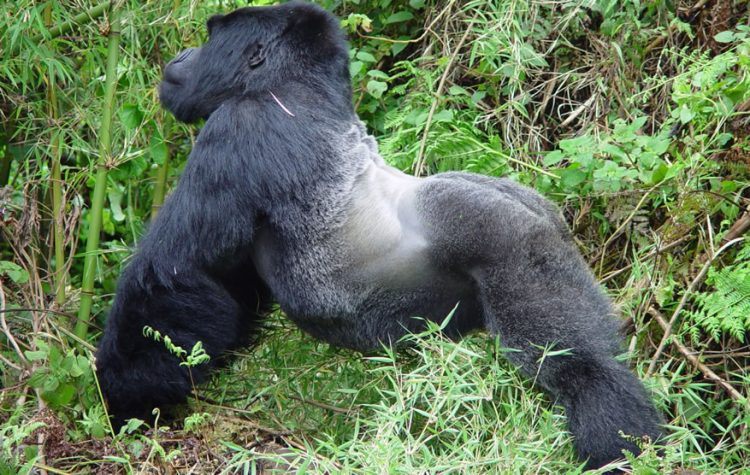
Mountain gorilla
See endangered gorillas in the wild

1. Mountain Gorilla Tracking

Gorilla tracking in Volcanoes National Park Rwanda is second to none in attracting tourists into the country.

The mountain gorillas are critically endangered, with fewer than 900 left in the wild worldwide.

Time is running out to see these gentle giants in their natural habitat, which is why this experience is at the top of most visitor's lists.

Volcanoes National Park has 11 habituated gorilla families.

In visiting the park, you may come to meet any of them - Susa, Amahoro, Sabyinyo, Ugenda, Hirwa, Umubano, Karisimbi, to name a few.

Each gorilla group can be seen by a maximum of eight people per day. To visit, you must book a gorilla permit in advance, which is priced at $750 each.

A maximum of 88 gorilla permits are on offer each day and are given on a first-come, first-serve basis.

Mountain gorilla trekking starts in the morning with assembly at the park headquarters for a briefing about the activity.

This is followed by a hike through the bamboo forests of Volcanoes National Park, keeping an eye out for the gorillas in their natural habitat.

The trek can take anywhere from one to six hours, depending on the movement of the mountain gorillas across their habitat.

You'll spend a maximum of one hour with the gorillas, where you'll be able to take photos and videos.

Trekkers are accompanied by trained Tour Guides who are well-informed about different wildlife in the park and will lend a hand along the trek.

They could carry your daypack or offer you a helping hand if you were to get stuck in the mud!

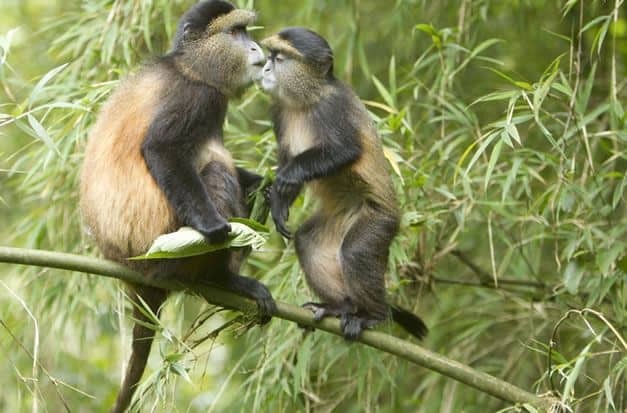
Golden Monkeys
Golden monkeys

2. Golden Monkey Tracking

Rare golden monkeys have been sighted in the magnificent Virunga Mountains.

Tracking the beautiful golden monkeys is another popular tourist activity in Volcanoes National Park, Rwanda.

A glimpse of these creatures is considered to be a wonderful lifetime experience.

Most visitors book a 3-day gorilla safari package to experience the golden monkeys in Volcanoes National Park.

Like gorilla tracking, this activity starts in the morning with an assembly at Kinigi Park Headquarters.

However, golden monkey tracking is less strenuous than to gorilla trekking, so you'll be finished by around midday.

At the time of writing, a golden monkey permit is priced at $100.

3. Adventurous Hike to Dian Fossey Tombs

A visit to Volcanoes National Park Rwanda can be mixed up with a hike to the tomb of the late Dian Fossey.

Dian Fossey was an American primatologist who spent close to two decades in the park, studying the mountain gorillas.

A biopic of her life was made into a movie in the late eighties, titled Gorillas in the Mist.

She was murdered by poachers in 1985. Her grave is nestled between the beautiful volcanic peaks of Bisoke and Karisimbi, near Karisoke Research Center.

The hike through the forest to the tomb takes about six hours (there and back).

Along the way, you may be lucky enough to see elephants, buffalo, primates like golden monkeys, and sometimes even the mountain gorillas that Dian dedicated her life to.

4. Mountain Hiking Adventures

Adventurous travelers can combine gorilla trekking with mountain hiking.

Mount Bisoke stands at 3,700 meters above sea level, with a deep crater lake on the top.

Hiking Mount Bisoke does not require prior hiking experience; you only need to be physically fit, due to the high elevation and length of the climb.

The whole trek takes five to seven hours, depending on your speed and the frequency of stops.

Mountain Karisimbi is the second highest volcanic peak in the Virunga ranges and takes two days and one night to experience.

While at the top of the volcano, you will enjoy fantastic views of the other five volcanoes and the beautiful Twin Lakes.

Near the summit is the Crater Lake, which features drier vegetation than other parts of the park, with giant heather growing all over the slopes of the volcano.

See also: Independent vs. Overland - What's Best in Africa?

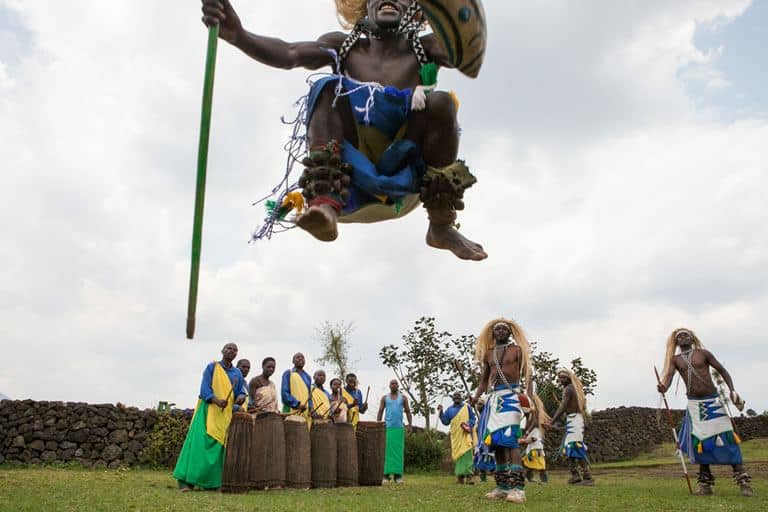
A performance at Iby'iwacu Cultural Village.
A performance at Iby' 'iwacu Cultural Village

5. Guided Walks and Mountain Bikes Excursions

There are many guided and unguided walks around Volcanoes National Park, Rwanda.

One of the most popular walks will lead you to the Musanze market, where visitors can interact with the local people.

The park features a nature walk to the beautiful Twin Lakes of Burera and Ruhondo.

You can stroll around the lakes, snapping photos and videos of the scenery as you go.

If you don't fancy a journey on foot, you'll have the option to go via canoe.

The Nyange Community walk is designed to show all aspects of village life in Rwanda.

A guided walk through the Nyange community will allow you to see how locals work and earn a living.

You'll tour the homes of ironsmiths, mat weavers, local banana-beer brewers, and carpenters.

You'll also witness, and if you choose, partake in the preparation of traditional Rwandan food - not to mention sample the meal at the end!

Another option is a guided visit to Iby' 'iwacu Cultural Village, on the edge of Volcanoes National Park.

There are many cultural performances held here, where you can take part.

The Iby' ' Iwacu Cultural Village convinced ex-poachers to turn their back on gorilla poaching. They now make their living performing for tourists.

A tour to Iby' 'Iwacu Cultural Village allows you to see the traditional house of a local king as well as the preparation of an herbal mixture by a traditional medicine man.

You can take part in arrow and bow shooting, or enjoy Kinyarwanda cultural music, dances, and drumming performed by local people.

You'll have the option to explore local areas on mountain bikes through different routes with a guide.

Click here to make a booking, or read more information about visiting Volcanoes National Park and Rwanda in general.

_____

This story was brought to you in partnership with African Jungle Adventures.

What to Expect When Backpacking Kyrgyzstan

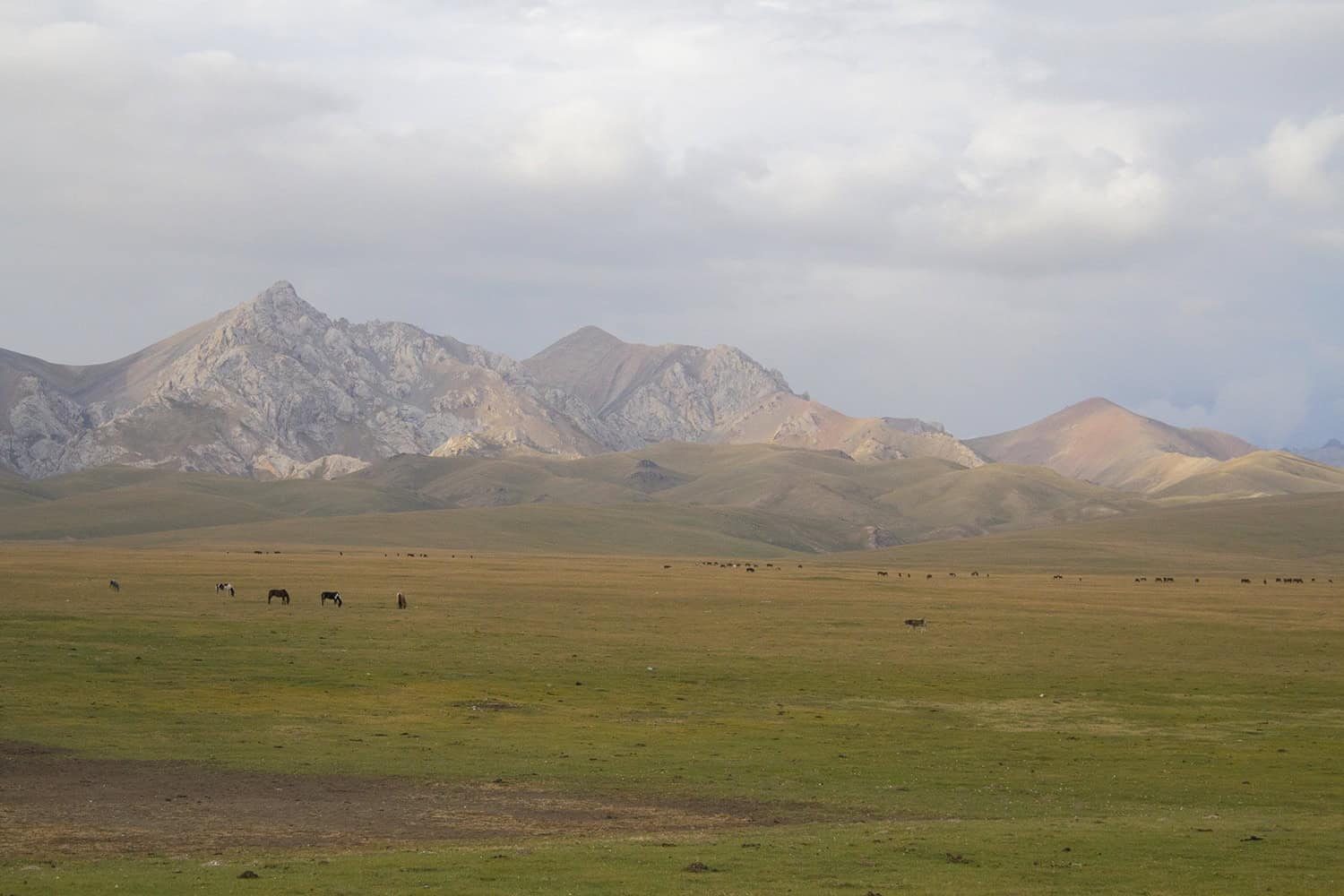
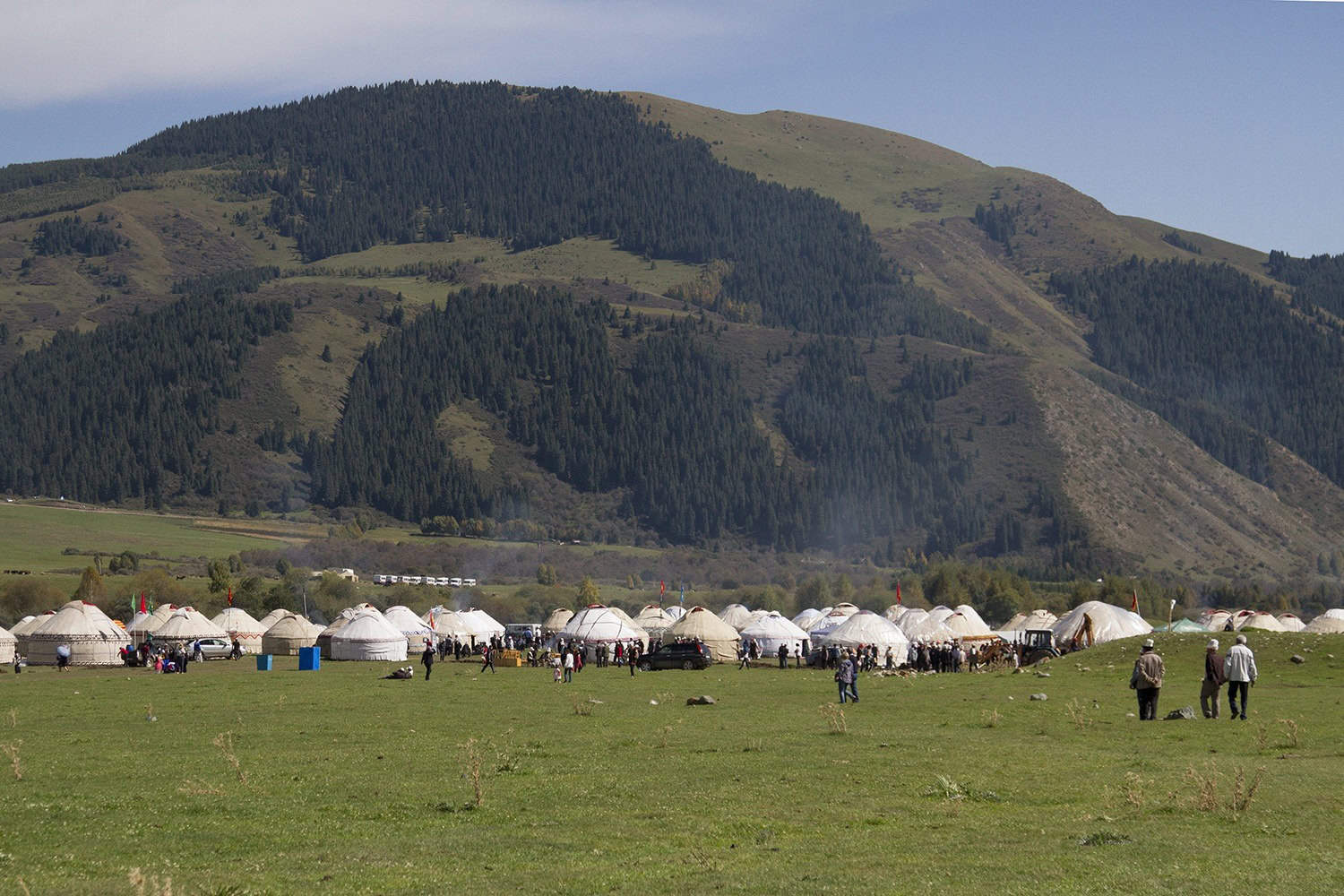
The mountains of Son Kol, Kyrgyzstan
The mountains of Son Kol.

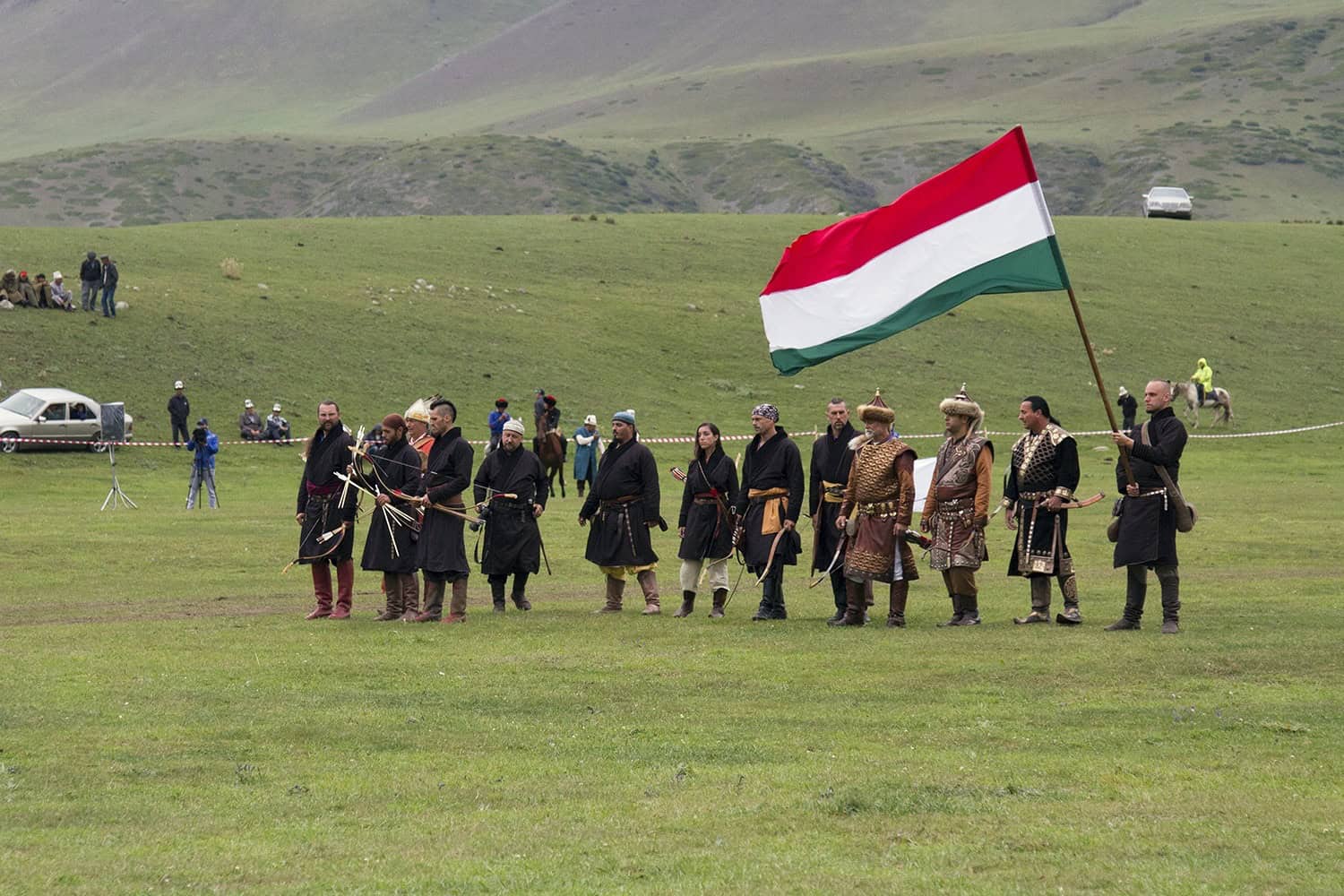
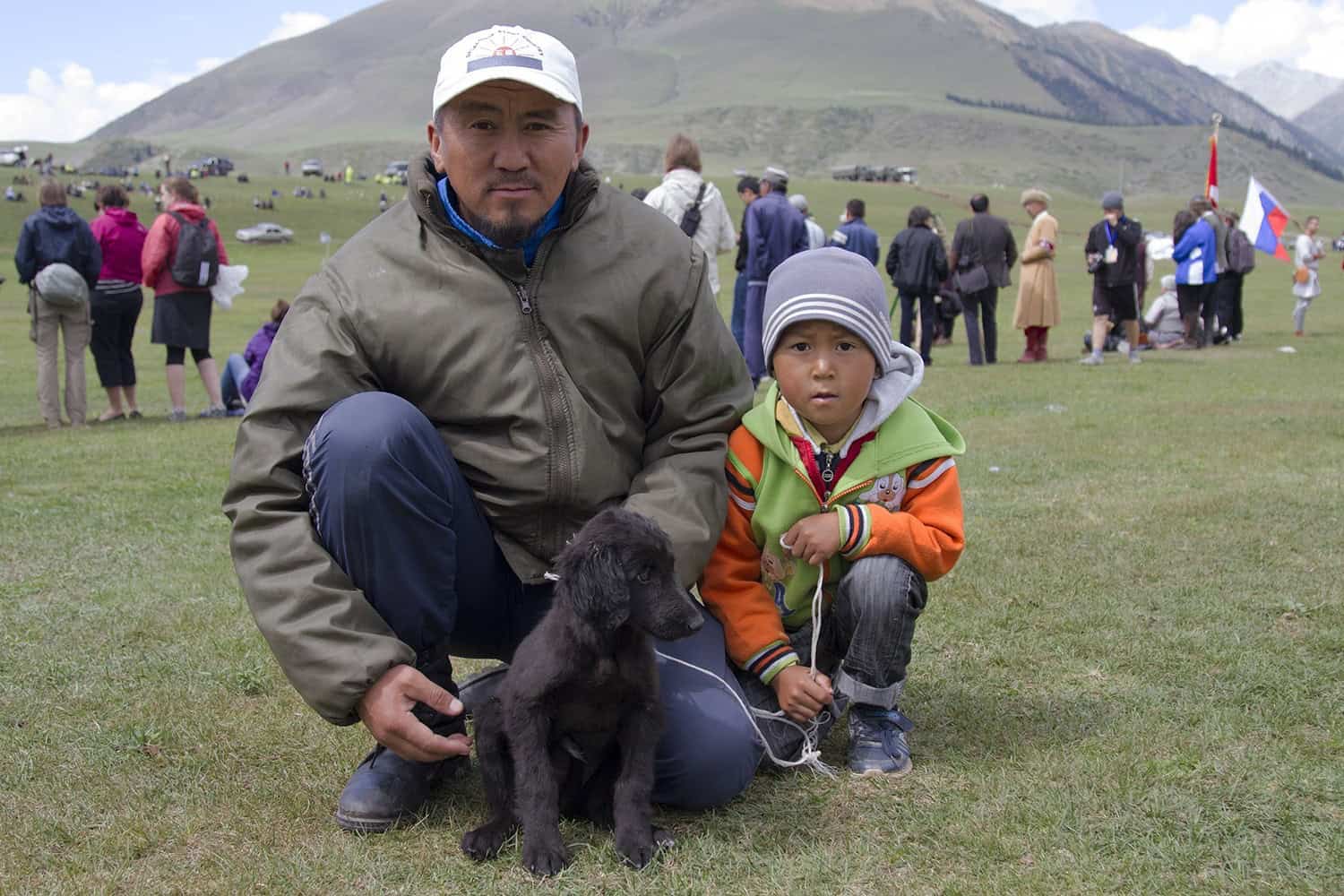
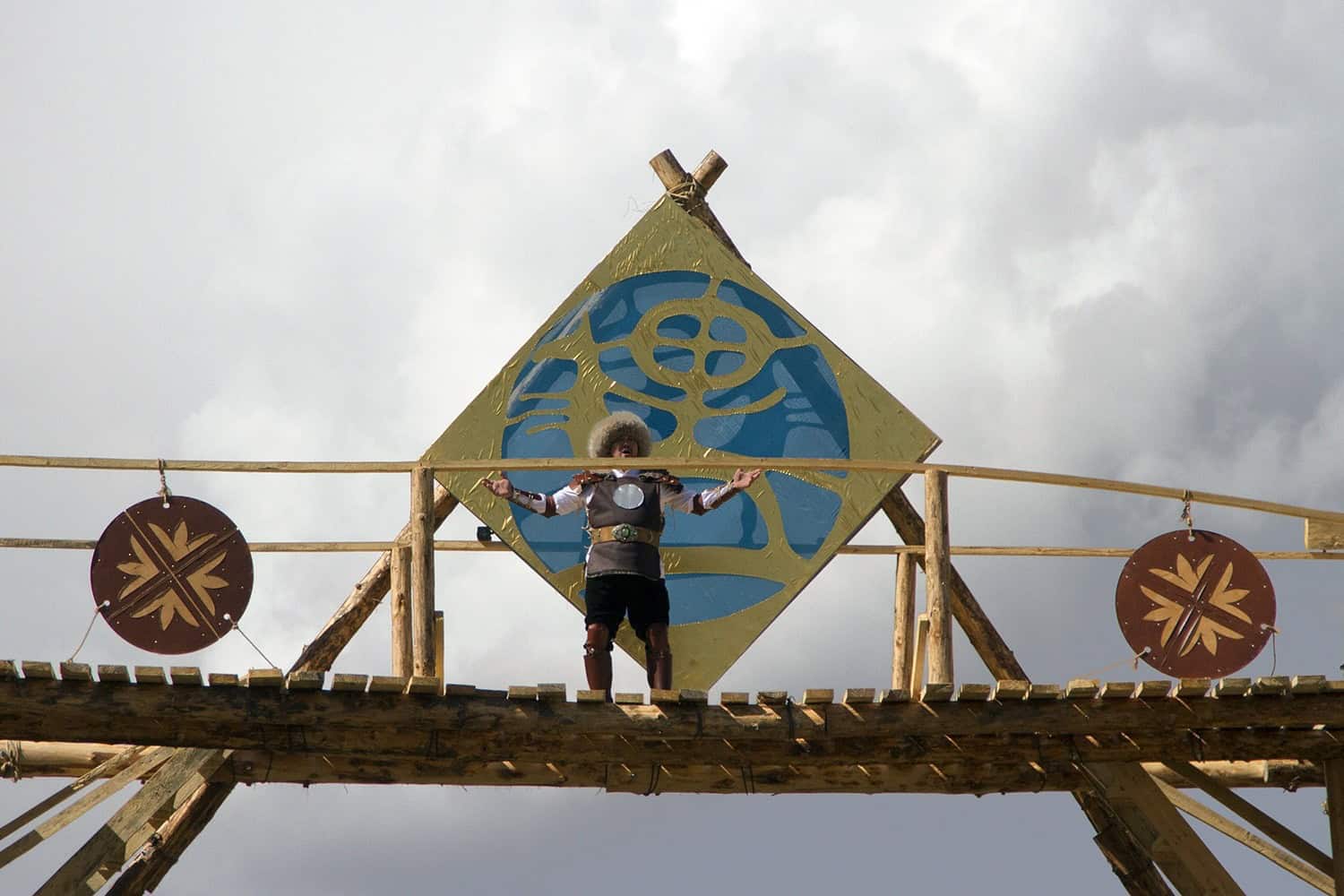
It's safe to say that I had no idea of what to expect when I began backpacking Kyrgyzstan for the World Nomad Games.

Would it be safe? Did I have to dress a certain way? Would I struggle because I didn't know any Russian?

Could I eat the food and drink the water? What would sleeping in a yurt (a Kyrgyz tent-like structure) be like?

Knowing hardly anyone else who had traveled to this particular region of the world, I bit my lip and threw myself forward with gusto and enthusiasm.

As it turns out, all my fears were for naught. The food was delicious. The people were some of the nicest I've met while traveling.

My ten days there were truly an incredible adventure.

Are you planning on backpacking Kyrgyzstan? Here are some tips and tricks, as well as a general idea of what you can expect.

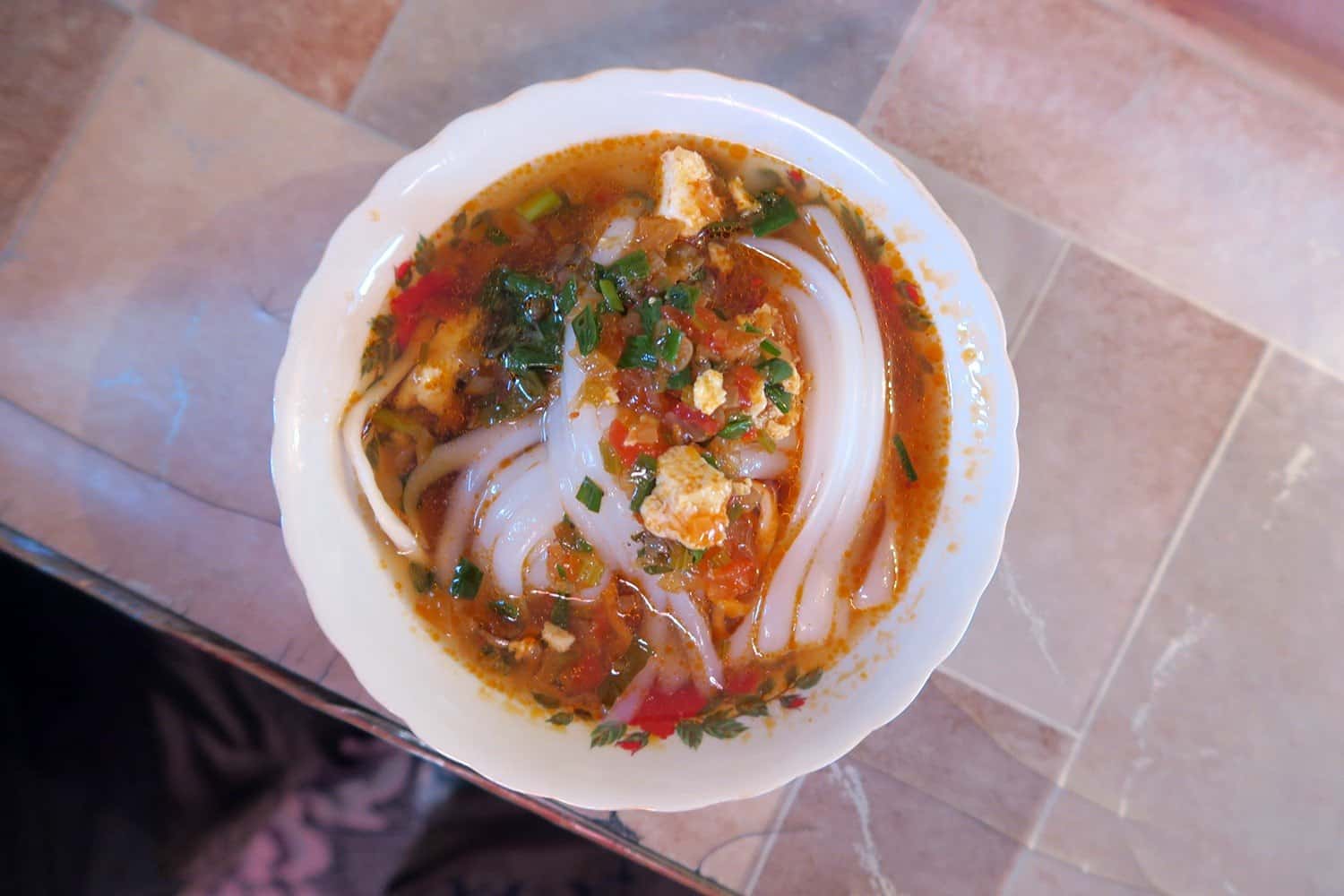
Ashlyan-Fu, bought and sampled at a street market for around 10 cents USD.

Travel Advice for Kyrgyzstan

Eat Everything

Simply because it will be delicious.

My favorites included:

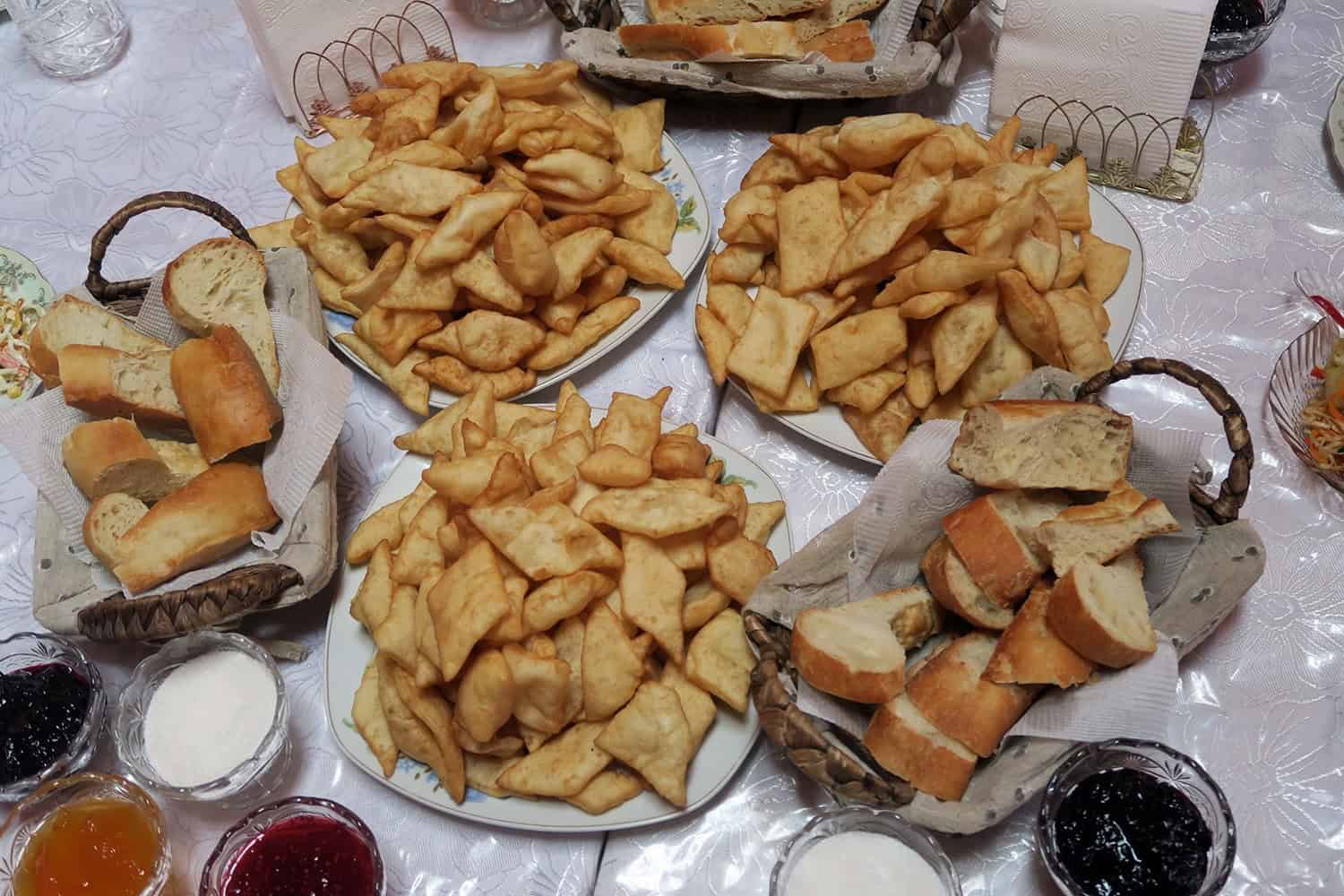
Manti: Kyrgyzstan's Asian influence becomes evident in the form of these steamed dumplings stuffed full of meat, onions, potatoes, and fat. Yummo.

Laghman: Imagine a bowl full of handmade noodles swimming in a spicy, salty soup. Good for the taste buds, great for the sinuses.

Ashlyam fu: A popular market dish served cold with a spicy broth, vegetables, and two types of noodles - one of which is made out of starch.

And a last, special shout-out to Kumys - fermented mare's milk that is best consumed at the end of a long day's riding while sprawled out inside your yurt.

As a side note - the tap water in Bishkek is allegedly drinkable, although you may want to avoid drinking water in other parts of the country.

I boiled water when I could store it in my trusty water bottle, although sometimes I did have to resort to drinking bottled water when that option wasn't available.

No Visa Required Before Entry

Rejoice! Travelers from countries such as the USA, Canada, UK, Australia, and New Zealand can rock up at any Kyrgyz airport, where they'll be stamped with a 60-day visa for entry to the country.

For this reason, travelers wanting to explore Central Asia often use Kyrgyzstan as a home base while waiting for this region's more challenging visas to be approved.

Related: Food in Kyrgyzstan - 5 Delightful Dishes

Backpacking Kyrgyzstan may require the use of squat toilets
The toilet in question had no door and no roof. What a view!

Roughing It

If you're into five-star hotels and shudder at the thought of squat toilets, then Kyrgyzstan may not be the country for you.

On the other hand, if you adore adventure travel, then you'll fit right in.

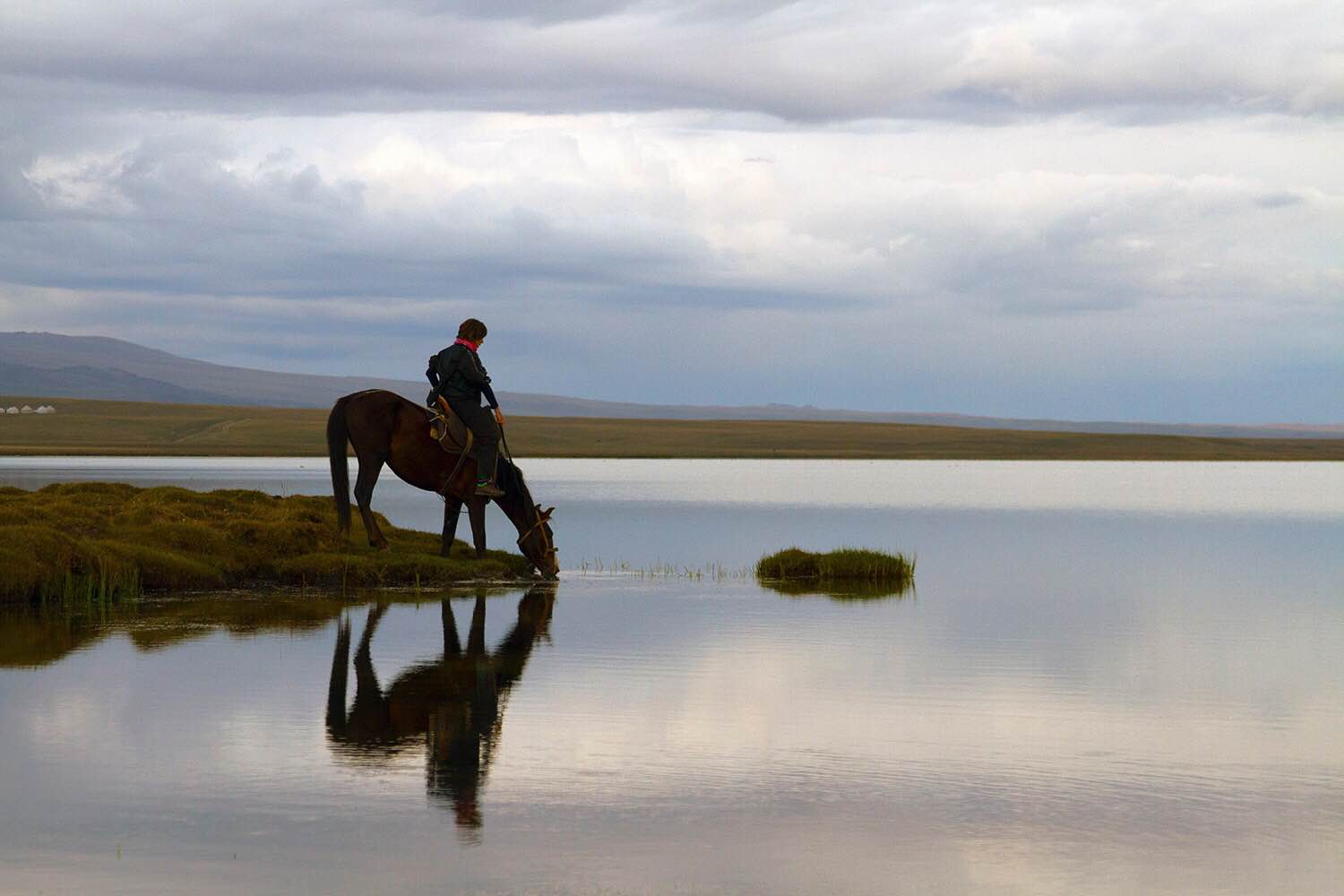
When told we would be unable to shower for a few days while trekking via horse to Son Kol, I was a little skeptical at first.

Yet, I loved every second of it. Even the squat toilets grew on me after a while - I felt they were doing great things for my thighs.

Plus, there's something poetic about popping down to the loo on a remote mountain, in a foreign country, under a sky full of stars.

I didn't realize at the time that would be a moment that stuck with me, but there you go.

It is advisable to pack a roll of toilet paper in your backpack (it is far and few between) and some soap or hand sanitizer too, to ward off germs.

Carry Cash

The local currency in Kyrgyzstan is the Kyrgyzstani Som, and at the time of writing, 1 USD equates to 69 Som.

I'd recommend pulling out some cash at an ATM in Bishkek or whichever large town you happen to hit first. Alternatively, you can exchange your dollars for Som at an airport.

This is an essential point if you're planning on going remote. Smaller towns may not have money exchanging facilities, which could put you in a bit of a pickle.

You won't need a stack of cash. Expenses in Kyrgyzstan are minimal, making the country ideal for budget travelers.

You'd also do well to make sure that you break your larger notes earlier than later, into tens and twenties wherever possible.

Any leftover currency can be easily exchanged for a decent rate at Bishkek's airport.

Related: Adventure Activities in Kyrgyzstan

Traditional Kyrgyz transportation.

Pack for Shoulder Season Weather

I traveled to Kyrgyzstan in the early fall and expected the weather to be moderately warm.

Thankfully, I had the foresight to pack leggings, thick socks, and a jacket.

These were welcomed while trekking through the extremely chilly mountains of Kochkor in the north of the country.

Kyrgyzstan's weather can be largely unpredictable. Depending on the time of the year, I'd come ready for any weather - including that of the wet variety.

Basic Russian Helps

I felt extremely fortunate to be traveling with a couple of people who spoke Russian (as well as having the assistance of the bilingual volunteers at the World Nomad Games).

English is not widespread in Kyrgyzstan, with most people understandably speaking the national languages of Russian or Kyrgyz.

As I know about 1.5 words of Russian, communication was difficult at times.

If I were to return to Kyrgyzstan, I would put a little more effort into learning some Russian phrases (or even a bit of Kyrgyz) to make for a smoother travel experience.

Related: 10 Things You Didn't Know About Russia

Sunset over Song Kol Lake.

5-Star Hospitality

The people of Kyrgyzstan were some of the most welcoming that I've met while traveling.

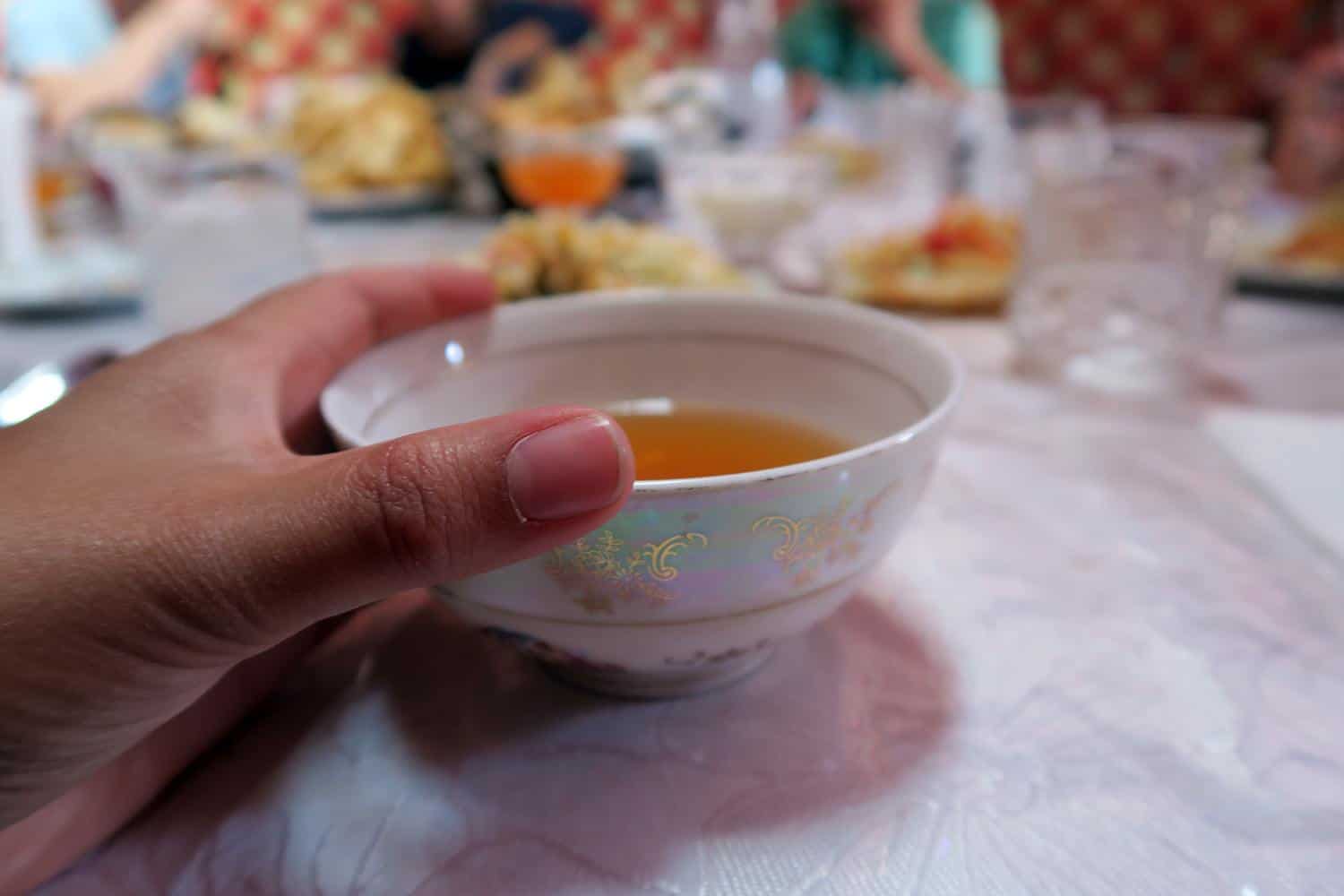
There was no shortage of folk who were willing to invite you into their yurts and ply you with food, tea, kumys, cognac, and conversation.

While I'd recommend showing the sort of caution there that you would be in many other parts of the world, there wasn't one point I felt unsafe or in any danger during my time there.

I've felt far nervier walking through the streets of Sydney or London at night than I ever did in Kyrgyzstan.

All in all, I found backpacking Kyrgyzstan to be a fascinating experience.

It's an excellent starting point for travelers wishing to get off the beaten track, those craving adventures, or others wanting to see the world on more of a shoestring budget.

_______

Our trip was organized in cooperation with Discover Kyrgyzstan and made possible by the support of the American people through the United States Agency for International Development (USAID). The contents are the sole responsibility of the author and do not necessarily reflect the views of USAID or the United States Government.

5 Reasons to Travel Europe in Winter

Snow covered houses in Longyearbyen, Svalbard.
Snow-covered houses in Longyearbyen, Svalbard.

The first time I traveled to Europe was during the winter months, several years ago.

By the end of my six weeks there, I'd pretty much decided that winter was just about the only time I'd want to visit the continent.

There weren't nearly as many crowds as I'd feared. I adored the Christmas markets and was able to keep to my tight student budget.

Fast-forward several years, and I've been lucky to live and travel in Europe through all four seasons.

Yet, winter remains at the top of my list as the best time of the year to step foot onto the continent.

Here are a few reasons why I prefer to travel through Europe during winter. Hopefully, you'll agree.

1. It's cheaper

As winter is not peak season, you can easily save money on traveling to places you have a deep burning desire to visit.

Flights and accommodation are cheaper during the colder months. I once flew from London to Oslo in December for around $30 roundtrip.

If you're at a loss of where precisely to travel to but want to get to Europe regardless, Skyscanner's Everywhere option is an excellent place to start.

2. There are fewer crowds to battle

Anyone who has traveled through Europe during the summer can attest to the surge in the crowds and people.

It's your first time in Paris, and you want to climb the Eiffel Tour? Well, enjoy your time queueing for the hours it will take to make it to the top.

Most people save their holiday for the summer for various reasons. They prefer the weather; it's the only time when they can take leave or wish to travel with their family.

If you're a traveler with a job that allows you to venture off when you want, particularly without kids, then you're far better off jetting over to Europe in the winter months.

On the downside - some places close up shop during the colder seasons.

This happened to me when I traveled to the North-East of England to see the Brontë Parsonage Museum in Haworth, only to find it closed for December and January. It was over seven years ago, but I'm still spitting.

All I can say is avoid disappointment by checking ahead.

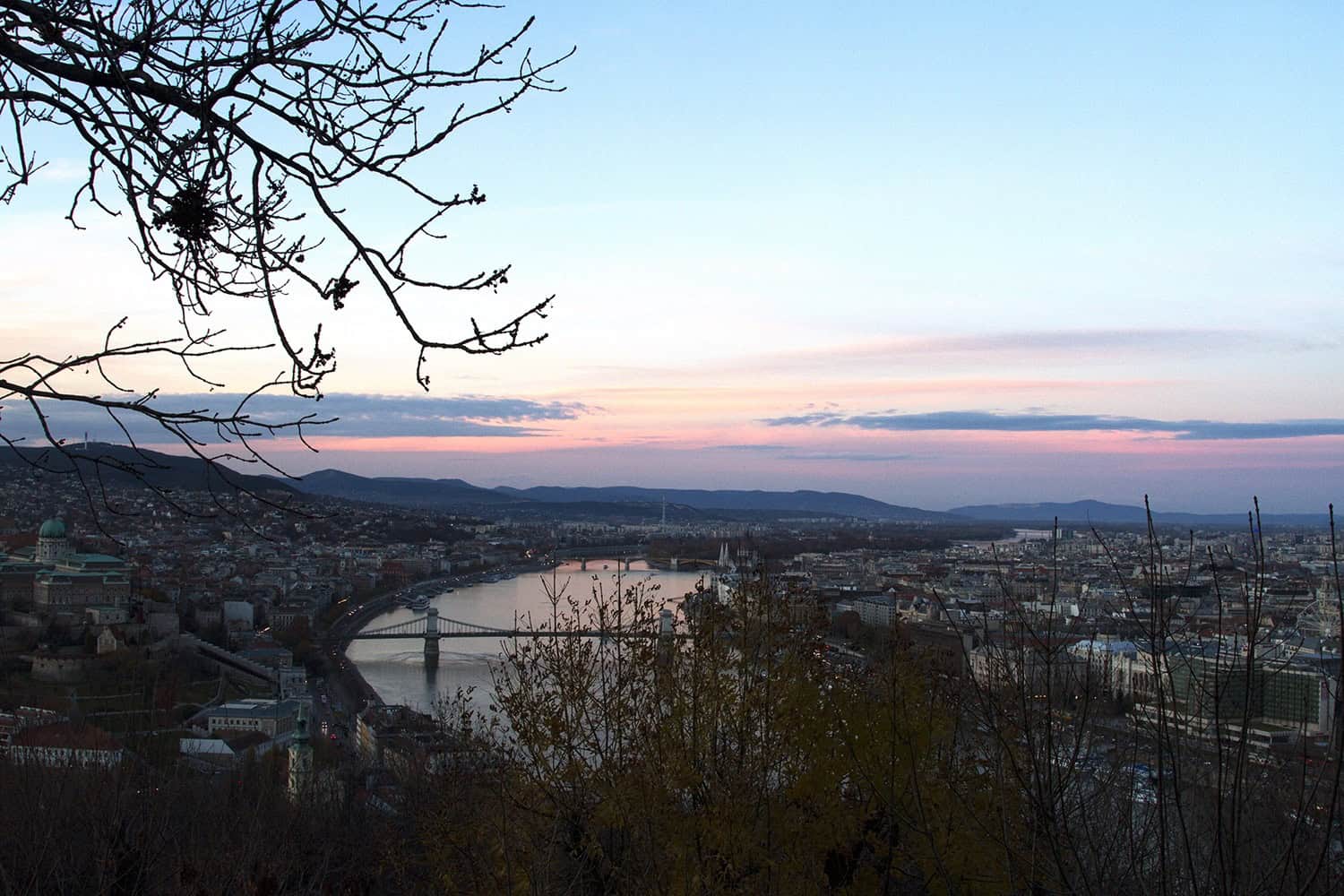
Budapest is beautiful in the wintertime.

3. It helps counteract the winter blues

I got smacked in the face with Seasonal Affective Disorder when I first moved to the UK. It wasn't pleasant.

When winter next rolled around, I'd clued up a bit more. I avoided the winter blues by traveling extensively to places like Iceland and Oslo, which are prettier at that time of the year.

4. The entire continent becomes even more picturesque

While there is no denying that Europe looks stunning in the summer, it's a part of the world that lends itself to the winter months.

Gothic architecture. Snow-capped trees. Castles. CASTLES IN THE SNOW. It doesn't get more European than that.

As someone who is not a fan of oppressive heat, the wintertime weather is a big plus when traveling.

Although it is appropriately chilly in some parts of the continent, others become pretty manageable temperature-wise.

I find countries like Spain, Portugal, and Greece sometimes a little too hot in the summer (as well as crowded - please refer to point number two). Winter weather is perfect for wandering around on foot.

It does depend on your personal preferences when traveling. If you're all about the beach, then summertime is for you.

On the flip side, if you prefer exploring cities, places like Athens have just about everything you could ask for, such as good food, excellent museums, and ancient historical sites.

These are aspects that can be enjoyed all year round but lend themselves more to winter weather.

A Christmas Market in Germany (sourced via Wikipedia Commons)

5. Christmas Markets

Perhaps the best perk of travel in winter is the Christmas Markets! No other continent does Christmas quite like Europe, and the December festivities can certainly attest to that fact.

Grab a sausage, order a steaming hot cup of glühwein and peruse the markets across Germany, the UK, Hungary, Switzerland, Austria, Norway - you name the European country, and it's guaranteed that there'll be some market on.

If it were anywhere else in the world, they'd seem tacky. In Europe, they work.

Nothing else will get you in the mood for the holiday season than a European Christmas Market; I can assure you of that.

NAMEYDO: Travel Planning for Solo and Budget Travelers

Bocas del Toro, Panama
Bocas del Toro, Panama (photo: Go Backpacking)

No money. No plan. No one to go with. These are probably the three most common answers when asked: "Why don`t you ever go abroad?"

Most of us are naturally curious, with the urge to explore the world and experience the fantastic adventures our planet has to offer. And yet it mostly remains just a dream.

But why is it that we do not pursue our wishes?

For most people, it is probably the fear that something could go wrong. Starting with the budget, which often feels too small.

Expensive flights, hotels and food - even if the internet helps you find bargains, it rarely gets you there.

Additionally, it isn't easy for everyone to wander around the world on their own.

The solution, of course, would be a travel partner, but it is often difficult to find like-minded peers with enough free time.

Especially during long journeys, it's always a challenge to coordinate holidays, semester breaks, or exam-breaks.

Last but not least there is also the planning that seems to overwhelm many people. How do I create my route?

Now imagine this: what if there was an online platform, where all you needed to do was to sign up to become member of a community where people with the exact same concerns can interact, exchange resources, and plan adventures together?

What if this platform would allow you to organize your accommodation, journey, and activities to any place you desire for a reasonable price, and at the same time save the environment and meet new people?

We have just the right solution for you.

NAMEYDO: individual travel planning for solo and budget travelers.

In order to facilitate personal travel, a new company called Nameydo has developed a brilliant concept.

The platform is in its starting period and has a lot to offer for travelers: Here you can offer your own resources - for example, a ride, a room in your apartment or your cooking skills - and in turn benefit from the resources of others.

Basically, everything can be offered as long as it is sensible and improves the experiences of all involved.

The platform is in its starting period and has a lot to offer for travelers: Here you can provide resources - for example, a ride, a room in your apartment or your cooking skills - and in turn benefit from the resources of others.

Basically, everything can be offered as long as it is sensible and improves the experiences of all involved.

Basically, everything can be provided as long as it is reasonable and improves the experiences of all involved.

In this way, you not only save money, but also get to know a lot of exciting people around the world.

All this while also contributing to preserve the environment.

Obviously, acquaintances are already made at this stage as you naturally get to know people when you share a ride or a meal.

But Nameydo goes a step further. An additional feature makes looking for people to share your experiences with incredibly easy.

With Nameydo you can filter through a range of categories such as tourism, nightlife, sport, etc.

You can participate in an existing event or create your own.

To help you tackle any budgeting concern, the Nameydo team has established a network of partners providing you with discounts on useful travel goods in their online shop.

Check out www.facebook.com/Nameydo/ to make sure you don't miss out on the frequent raffles. 

Sign up now for free.

And off we go!

_______

This story was published in partnership with Nameydo.

The Most Dangerous Hikes in Europe

Everyone has a different style of traveling. Some like to spend their free time basking in the sun at a 5-star resort on the Mediterranean coast.

Others prefer to risk life and limb by scrambling down mountainsides, hiking across rocky terrain, and camping out in the wild.

Europe is one such continent that offers plenty of opportunities for this particular type of adventure. Such holidays don't come without risk, so it pays to be prepared with a global health card.

With that in mind, here's a look at Europe's most dangerous hiking trails.

Does your idea of adventure involve scrambling down mountainsides and hiking across rocky terrain? If so, these are the most dangerous hikes in Europe.
A section of GR 20, in the Mediterranean island of Corsica (Credit: Jean-Baptiste Bellet)

Grande Randonnée (GR) 20, Corsica

GR 20 is a walking trail that stretches eastward from the north to the south of Corsica. Although it involves minimal climbing, it is considered Europe's most challenging long-distance trek.

The hike takes around 15 days to complete when walking for a minimum of six hours daily.

At 112 miles (180 km) long and twelve thousand meters of ascending and descending, it's safe to say that a decent level of fitness is needed to complete the trek.

The walk is impassable during the winter due to snow and made difficult in the peak of summer, thanks to Corsica's sweltering heat.

A rock cairn along the path to Knivskjellodden. (Credit: Wikipedia Commons)

Knivskjellodden (North Cape), Norway

Those wanting to stand at the most northern tip of Europe usually journey to the edge of Nordkapp Plateau in Norway and call it a day.

However, the real land's end is two miles west of this site, protruding a further 4,839 feet (1,475 meters) north.

The walk from Nordkapp to Knivskjellodden is an 11-mile (18-kilometer) round trip that takes around six hours to complete. However, the window throughout the year for hiking this route is small.

The path is often made impassable due to snow, and the lack of light after October makes it impossible to navigate during winter.

When walking in the summer months, you'll be rewarded by the constant presence of the midnight sun.

Watch out for the northern winds, which can whip you to and fro. But that's Norway for you - a country made all the more beautiful by its unpredictable weather!

The Dolomites, Italy

Located south of the Italian/Austrian border, the Dolomites form part of the Southern Limestone Alps and are popular among novice and seasoned hikers.

These peaks rise above 9,842 feet (3,000 meters) and contain the highest concentration of Via Ferrata (which roughly translates as "iron paths") in the world.

This means that the 170 routes come equipped with fixed cables, ladders, and bridges, making them accessible to walkers and climbers.

These paths are free to use and open to any enthusiast with substantial mountain experience and who isn't bothered by heights.

Related: Bucket List Destinations in Northern Europe

Beautiful Aonach Eagach (Credit: Wikipedia Commons)

Aonach Eagach Ridge, Scotland

The reward for scrambling Aonach Eagach Ridge in Bonnie Scotland is not just the sense of achievement that comes with completing a challenge but the views you'll be greeted with along the way.

Aonach Eagach runs along the northern side of Glencoe and is best hiked in winter for a genuinely alpine experience.

Many who complete the Aonach Eagach scramble do so due to having the goal of "bagging Munros." Munros are the mountains in Scotland, which are over 9,842 feet (3,000 meters) tall.

There are 282 Munros in the country, with Aonach Eagach boasting two of the most challenging - Meall Dearg and Sgor Nam Fiannaidh.

El Caminito del Rey, Spain

Located in the province of Málaga in southern Spain, this hike (also known as Camino del Rey) was once touted as one of, if not the scariest treks in the world.

This three-kilometer cliff path was built at the turn of the 20th century to give construction workers access while building the nearby Guandalhorce dam.

The rapidly deteriorating pathway was officially closed in 2000 and stayed shut for nearly 15 years after some people died trying to cross it.

Not that this deterred the most desperate thrill-seekers, who continued to trek along the path, despite the risk of injury and trespassing fine.

The path was re-opened in early 2015 after a $3 million refurbishment. Secure wooden walkways were installed and equipment replaced, with all hikers now required to wear hard hats.

Trift Suspension Bridge in Switzerland (Credit: Wikipedia Commons)

Trift Bridge Hike, Switzerland

The Trift Bridge is a pedestrian suspension bridge in the Swiss Alps. Located above the Trift Glacier, it stretches 558 feet (170 meters) across the lake.

The bridge is accessible via an aerial cable car, transporting visitors across the Trift Gorge and Valley. It's a 90-minute hike from there to the bridge, the crossing of which is a feat in itself.

The bridge is suspended 328 feet (100 meters) above the lake, and hikers need to have a steady head for heights to journey from one end to the other. I suggest gazing at the nearby glacier and lake rather than looking down.

Europe has various paths, walkways, and treks to cater to any hiker of all backgrounds. These particular hikes pack in a little something extra for those searching for both greater heights and thrills.

______

This story was written by LC and brought to you in partnership with GHIC Application UK. All opinions are the author's own.

World Nomad Games: Sports Competition in the Kyrchyn Gorge

The yurt village at the world nomad games.
The yurt village at Kyrchyn, the venue for the cultural highlights of the 2016 World Nomad Games.

I didn't know what to expect when attending the second-ever World Nomad Games in Cholpon-Ata, Kyrgyzstan.

As someone who is decidedly not a fan of sports, I suspected that there would be other events and activities that would spike my interest, if not the natural beauty of the country of Kyrgyzstan itself.

As it turned out, the games do go beyond traditional nomadic events, such as archery, Er enish (wrestling on horseback), and the nail-biting sport of Kok Boru (imagine horse polo, but replace the ball with a decapitated dead goat).

There are costume competitions where participants proudly deck themselves out in their national dress.

Salburun is hunting involving falcons, eagles, or the Taigan, a Kyrgyz dog that relates to the Greyhound.

There are even yurt-building competitions, which take hours to see through to completion. Yurts are portable round tents used for shelter by nomads.

Not to mention all the baby animals an animal enthusiast like myself could ever hope to see.

All of this could be found within the Kyrchyn Gorge, a 45-minute bus trip from the main stage, the Hippodrome in Cholpon-Ata.

I could have spent the entire duration of the event wandering around this particularly picturesque valley.

A Kyrgyz lady at Kyrchyn.
A Kyrgyz woman with Kyrchyn Gorge as her backdrop.

On my first trip out to Kyrchyn, a fellow travel blogger had commented: "This might be the most beautiful place in the world I've ever been to."

They had an impressive number of countries under their belt, so I stepped off the minibus with high expectations. These were met quickly and then exceeded.

Imagine a valley surrounded by mountains covered with an expanse of trees, their leaves turning golden with the changing seasons.

Above us, the sky rumbled as dark, threatening storm clouds rolled in, only to be swept away an hour later, revealing brilliant blue skies.

Four seasons in one day, that's Kyrgyzstan in Fall for you.

As we picked our way through the car park, yurts and stalls set up outside the entrance; we were routinely stopped by strapping young lads on horseback.

"Taxi?" They'd ask, stretching out a hand. If accepted, they would whisk you up onto the back of their steed, carrying you past the crowds of people and mud to the entrance of the venue - for less than you'd pay for a bottle of water in the USA.

Having just spent two days riding through the mountains of Kyrgyzstan on horseback and still a bit stiff in the legs, I smiled, shook my head, and declined with thanks.

A young Kyrgyz boy who very kindly let me snap a pic of him and his falcon.

You had to be on your toes. I was gazing around, lost in my little world, when a Kyrgyz boy ran up and popped a small falcon onto my arm.

I was unsure how to feel about the situation, but it's no secret that I love birds. I stroked the beautiful creature for a little while before handing it back over.

The author with a falcon
Bird girl with a bird (photo: Maksim Anosov)

We walked through the shipping container used as a bridge over a stream that cut through the gorge, officially entering World Nomad Games territory.

I didn't have a plan for Kyrchyn - I figured I'd wander around, camera in hand, stopping to look at whatever happened to take my fancy.

The Hungarian Archery team, before putting on a spectacle for all watching.
The Hungarian Archery team, prepping before their performance.

I followed the crowd to a nearby field, where the eagle hunting was taking place. My eye was caught by a small boy holding the leash of an equally tiny puppy.

Murat, his son and the beautiful little Taigan puppy.
Murat, his son, and the beautiful little Taigan puppy.

I leaned down in front of the two and asked him if I could pat his dog. He nodded. As I stroked the puppy's fur, a Kyrgyz local came over and introduced himself.

His name was Murat. He hailed from the Naryn Region and bred Taigan's on his property.

With the help of two of the Games volunteers Ermek and Roza (translated), Murat explained that the Taigan's were a type of Greyhound born and bred in Kyrgyzstan.

One day, this tiny puppy would grow to become a fierce hunter, an animal that could take on the likes of wolves... and win.

One day, this tiny puppy would grow to become a fierce hunter, an animal that could take on the likes of wolves... and win.

Related: What to Expect When Backpacking Kyrgyzstan

The entrance to the cultural village.

I ventured further up the hill, towards the cultural village. This was where locals walked around in their traditional dress, and the yurt-building competition was taking place.

It was here that many souvenirs were laid out on display. Small animals crafted out of wool.

Scores of Kalpaks, Kyrgyz headwear, made of felt or sheepskin. Intricately woven scenes yurts, horses, and goats, made of felt. I purchased one to send back to my mother in Australia.

Hot air balloon in Kyrgyzstan
Now, this would be an excellent introduction to hot air ballooning.

As we wandered back down to the car pack, we passed a hot air balloon drifting lazily in the sky. A small group of Kyrgyz boys was squatting on the nearby ground, watching the show.

Boys watching the balloon

Having never been in a hot air balloon, I imagined that the dynamic backdrop of Kyrchyn was not a bad place to start. Yet, the bus was waiting, and time was not on my side.

I left Kyrchyn on a high, having patted a falcon, Taigan, and baby camel, and learned something more about the traditional and fascinating culture of the Central Asian nomads along the way.

_______

Our trip was organized in cooperation with Discover Kyrgyzstan, and made possible by the support of the American people through the United States Agency for International Development (USAID). The contents are the sole responsibility of the author and do not necessarily reflect the views of USAID or the United States Government.

Backpacking Israel: When to Visit and What to Experience

Damascus Gate at Jerusalem Light Festival
Damascus Gate at Jerusalem Light Festival (photo: Miriam Mezzera)

Thinking of backpacking Israel? As it is one of the more expensive destinations in the Middle East, planning ahead is paramount.

Don't be put off by this, though! Today, we will guide you through the planning process, giving you top tips on when to visit, what to experience, and how to save money while backpacking the Holy Land.

Backpacking Israel Tips

1. Visit during one of these festivals or holidays

When's the best time to visit Israel? It highly depends on the experiences you are seeking. A good rule of thumb, however, is to visit during one of its many festivals and holidays.

Several of the Jewish holidays fall in autumn and winter--with most being free and open to the public.

Many celebrations, however, take place during the summer months of July and August. These typically include music, food, and art festivals--plus a heftier price tag.

Below, some of our favorites by calendar month:

  • January-February: Darom Adom (Scarlet South) Festival, where visitors enjoy a carpet of anemone flowers, can pick their own, and enjoy special activities.
  • March-April: Passach; Doof Festival (trance music); Zorba the Buddha Festival (spiritual music)
  • May: Taste of the City Food Festival
  • June: Jerusalem Light Festival; Midburn Festival (similar to Burning Man); Groovestock
  • July-August: Karmiel Dance Festival in Safed; Beer Festival in Tel Aviv
  • September: Sukkot; Reggae in the Desert; House/Techno Music UNITY Rising Spirit Festival
  • October: InDNegev Indie Music Festival; Neverland International Electronic Music Festival; Festival BeShekel (free!)
  • December: Hanukkah; Hiking in Boots Festival in the Carmel

2. Join a religious service

Even if you are not religiously inclined, joining a public religious service is a good way of meeting locals and delving deeper into Israeli culture.

There are several Friday evening Jewish services open to the public, for instance. You may just find yourself being invited to Friday night dinner.

Some of our favorites include:

  • Sunset service at the Tel Aviv Port
  • Progressive Judaism's Friday evening service at Jaffa Port's Daniel Center
  • Pluralist service at the First Station in Jerusalem
  • An Orthodox service at the Western Wall in Jerusalem

3. Learn Israeli folk dancing (Rikudei Am)

Israelis love folk dancing. They dance to traditional Israeli music--and the regulars really take it seriously. It can be done either as couples or in a group, similar to line dancing in the U.S.

Groups gather across the country almost every night of the week to folk dance, forming a circle. At these get-togethers, you’ll find that people of all ages are welcome to join in and learn the steps.

Some of these folk dance sessions are held at wonderful locations such as the Kiryat Haim beach, Rishon Lezion, Bat-Yam, Ashdod, Nahariya, and Gordon Beach in Tel Aviv (11 a.m. on Saturdays for that one). Other folk dance sessions are held in parks, universities and in community centers.

Check out the website Harokdim for dates, times, and locations. Many are free and, if not, the entrance fee is just a few shekels.

4. Take a Krav Maga martial art class

You have probably heard about the tough Israelis and their personal defense skills. The martial art form Krav Maga (contact fighting), in particular, was developed in Israel and is a serious form of combat training which uses techniques borrowed from judo, wrestling, and boxing.

Lessons are available across the country for all ages and abilities--including women-only classes. While some Krav Maga sessions are free, most will cost you a fee. For more information, contact the Israeli Krav Maga Association.

backpacking Israel, Haifa
The Baha'i Gardens in Haifa

5. Relax at its gorgeous (and free) gardens and parks

Israel may seem like it is built on a desert, but don’t underestimate its beautiful parks and gardens. Many of them offer wide green spaces to relax on, free activities, and plenty to see.

The most conveniently located, and one of the best parks in the country, is HaYarkon Park in Tel Aviv. Like an octopus' tentacles, HaYakon sprawls through several neighborhoods, offering several services and activities to visitors.

You'll find bikes to rent, row boats, themed gardens, a climbing wall, a hot air balloon ride, a water park, Monkey Park, Bird Park, mini golf, outdoor gym stations, playgrounds, cafes, and much more.

Warning: don't swim in the Yarkon River, which cuts through the grounds.

6. People watch and surf at its Mediterranean beaches

Perhaps it goes without saying that Israel’s beaches are a major (free) attraction. Whether you come in the summer or winter, the weather will probably be good enough for a beach day.

Better yet? No matter where you are based, you will probably find a great beach nearby.

Israeli beaches are generally clean--and interesting. For instance, some beaches are reserved for the orthodox Jewish community, with separate bathing hours for men and women (Hof HaNifrad Beach, Tel Aviv). In contrast, other beaches are favored by the gay community, such as the Hilton Beach/Atzmaut Beach in Tel Aviv.

Some fun, ongoing events take place on Israeli beaches as well.

One of our favorites? Drummers sunset jam Friday nights at Drummers’ Beach (Hof HaTofim). You can also try surfing at TopSea on Tel Aviv’s Gordon Beach. There, you will find companies offering lessons and board rentals.

7. Go shopping for cheap, fashionable clothes and accessories

It may just be the exchange rate, but you can find very reasonably priced clothing in Israel. While many malls cater to high-end customers with an array of both international and local brands, there are plenty of other places to scour for unique budget finds.

Several small, privately owned fashion stores are typically tucked away on nondescript streets at each Israeli city. We recommend checking out those along Allenby Street in Tel Aviv for unusual, yet cheap clothing.

The best destination for bargain hunters backpacking Israel, though? The traditional markets.

Speaking of which, perhaps the cheapest clothing you’ll find in the country can be found in the Jaffa Market. Piles of second-hand jeans and other accessories in great condition will make you go on a shopping  frenzy.

For more unique, trendy, and artistic items, try Shenkin Street (one of the coolest streets in Tel Aviv) and the side streets leading off to it.

8. Wander through traditional Israeli markets

Speaking of shopping, Israel has some fantastic markets where you can find an incredible array of goods--way beyond unique fashions.

Some must-sees include the famous Carmel Market and the adjacent, more gentrified arts and crafts market on Nahlat Benyamin, Tel Aviv. In Jaffa, the Shuk HaPishPashim (flea market) stands out due to its unique character. There, you'll see everything from furniture and antiques to second-hand clothes and household items.

In Jerusalem, the beautiful Machna Yehuda is a food lover's paradise, selling all kinds of ingredients and lined with several good-quality restaurants. Within the walled Old City, you can feel like a medieval trader haggling over souvenirs in the Arab Quarter market.

Speaking of which, go further a field to stumble upon the historical Thursday Market in Be’er Sheva. Also known as the Bedouin Market or Camel Market, you'll see wandering Bedouins in traditional garb. While camels are no longer sold here, it's easy to imagine how this market used to be.

Other cities with worthy traditional markets include Natanyia, Rosh Eyen, Eilat, Acre, and Ramle.

backpacking Israel, cheap food
Israeli food platter (photo: young shanahan)

9. Sample global cuisine for just a few shekels

Israel’s Jewish population immigrated here from across the globe; each community bringing with it unique customs and traditions. The best way to experience them? By sampling their most popular dishes!

You might have already heard of most traditional foods, such as falafel, hummus, and shawarma. What about the sabich Iraqi sandwich though? It's a unique pita pocket is stuffed with fried eggplant, a hardboiled egg, boiled potato, tachina (an insect!), and amba. We dare you to try it!

Other communities brought delicious variations of Jewish breads and couscous. The Jewish Moroccans, for instance, brought with them too many delicious dishes to name, but their most famous is couscous served with a slow-cooked stew known as tagine.

The Jewish Yemenite community, from the Arabian Peninsula, introduced malawach. The round, flaky pastry is typically fried and eaten wrap-style, stuffed with grated tomato, white cheese, and hot sauce. Nowadays though, many joints stuff it with a selection of meats or poultry (lamb, beef or chicken) as well. Its sweet version, known as fatut, is cut up and topped with cinnamon, raisins, and honey instead.

The Ethiopian community brought berekete, a large loaf of bread which is baked all night on Shabbat. There are Ethiopian eateries all over the country, but we recommend Habash Restaurant in Tel Aviv.

In Jerusalem, you must pay a visit to the Machane Yehuda market and have a bite of Georgian Khachapuri--a leavened, cheese-filled bread.

10. Observe the kaleidoscope of Israeli cultures

Many foreigners mistakenly assume Israel is just the home of three major religions: Judaism, Christianity, and Islam. However, there are other smaller, ethnic communities and religions that also call Israel a Holy Land.

Some of these fascinating minorities include the Druze and the Baha’i. To get a glimpse of the Druze, head over to towns near Haifa, such as Daliyat el-Carmel or Isifya. In that area, you'll also be able to get a closer look at Baha’i communities, especially in Haifa proper and Acre.

While up north, don't miss this chance to visit the impressive Baha’i Gardens. Not only is it a UNESCO World Heritage Site, but its Shrine of the Báb and 19 sloping terraces form one of the holiest sites of the Baha'i faith. Admission and tours are free and open to the public.

11. Explore its diverse geography

Israel is an elongated country, which means its geography and climates can be quite diverse from region to region.

Head to the northern areas of the Golan Heights and Galilee for the European-style countryside and lush forests. Then travel south into the Negev Desert to experience barren wilderness.

Sfat and Jerusalem, however, will give you a taste of life in the hills and mountains; while Eilat, the Gateway to the Red Sea, will warm you up with its Caribbean-style resort atmosphere.

12. Go wine tasting

Did you know Israel has more than 80 wineries? In fact, its vast wine-making tradition dates back thousands of years!

Many of these Israeli wineries offer wine tastings and tours of the vineyards--some of them are even free. Our favorites include:

  • Luria Winery in Moshav Safsufa (starting at 30 NIS)
  • Dalton Winery tours (starting at 15 NIS)
  • Flam Winery tour and tasting at Yaar Hakdoshim, Eshtaol (90 NIS)
  • Kadesh Barnea Winery tour and wine tasting on Moshav Kadesh Barnea, Negev (FREE!)
  • Bravdo Winery Visitor Center offers tastings and visits on Fridays (50 NIS)

Wondering where to stay in wine country for a few days? Zichron Yaakov is a picturesque village in the heart of it, home to several wineries. Don't miss the Tishbi Winery and the Carmel Winery.

In the Golan Heights wine country are several boutique wineries. The giant in this region is Golan Height Winery though, with its dedicated Visitor Center and a number of tour and tasting options.

backpacking Tel Aviv, beach
Beach in Jaffa, Tel Aviv

13. Dive into hip, trendy, freaky Tel Aviv

Tel Aviv has a sub-culture of weird and wonderful clubs, galleries, and special events. Among our favorites is the Tel Aviv Rollers, where every Tuesday night in-line skaters take over the streets and zip down a 12.4-mile route through the city. The rollers even get a police escort as they set off from Habima National Theatre at 10 PM!

Kuli Alma is another unique spot--an underground bar on the corner of Allenby and Yehuda Halevi Streets. Buxa Bar, on the other hand, is a dance bar with underground live music.

Looking to party all night? Some Tel Aviv bars and nightclubs that stay open until dawn include the Penguin Club, Breakfast+Milk Club, The Cat and The Dog, Radio E.P.G.B., and The Block.

If you’re in Tel Aviv in March, you should also check out the Zombie Walk. Locals dress up as the living dead and hit the streets of Tel Aviv, starting from the corner of Ben Zion Blvd and King George at 9 PM.

For other weird, unique events and happenings in Tel Aviv, check out the Secret Tel Aviv website.

Need some professional help optimizing your trip? Check out Tel Aviv tour packages by Yourway, a combination of day tours to major destinations in Israel with focus on this non-stop city.

14. Volunteer in a kibbutz or charity

One of the biggest trends in tourism these days is volunteer travel where you go abroad to volunteer. Well in Israel you could volunteer for any length of time from one hour to a year.

Wish to give back during your travels? A classic volunteer experience in Israel to work on a kibbutz. Not only do you get accommodation, food, and pocket money, what you get to experience one of the most unique immersions into Israeli society. For kibbutz volunteer opportunities, check out kibbutzprogramcenter.org.

Don’t have three months or more to spare? You could still volunteer with one of the many charities in Israel. Leket Israel, which distributes food to the needy, take on volunteers to harvest fruits and vegetables from farms, pack the food, and distribute it.

Other organizations which would be happy to take a lending hand are Yad Eliezer, Yad Sarah, and Magen David Adom.

Looking for a more adventurous opportunity? You could even volunteer for the IDF (Israeli Defense Force) and work on a real army base, side by side with Israeli soldiers. For more information, check out sar-El.org.

15. Gain a skill while mingling with locals

Why not take a class in some form of sport, arts or crafts? This is another great way to meet Israelis and have fun while gaining a new skill!

We recommend joining any of the following classes or studios:

  • Tel Aviv Art Studio on Ibn Gvirol
  • Ceramics class at the Benyamini Contemporary Ceramics Center
  • Paper mache making at the Anat Orpaz Paper Mache Studio
  • Join a workshop at the Tel Aviv Makers
  • Clay work at the Studio MIRA in Jaffa
  • Introductory classes in a variety of fields at the Israel Museum in Jerusalem
  • A course about traditional Druze cooking at Daliyat el-Carmel
  • Take Israeli cooking classes at Eat & Meet in Jerusalem
  • Learn more about the world of the blind and deaf at Nalagaat Center in Jaffa
  • Mosaics and other fine arts at the Open Studio in Jerusalem

______

This story was provided by and brought to you in partnership with Yourway Tourism.

The Must-Have Travel Apps for Backpackers in 2017

Backpacking has many bucket lists. After all, you can set yourself free, immerse yourself in foreign cultures, and see the beauty of the world.

Nowadays, you've probably got your smartphone with you to keep in touch with friends and family back home, to keep your social media updates, and to snap some photographs, so the memories of your travels last forever.

Backpacker

There are also many useful travel apps that backpackers should download to make their lives on the road easier.

Owners Direct

The Owners Direct App is a fantastic app for anyone on the road; it allows you to search for holiday rentals worldwide by simply tapping into your current location.

It informs you of the facilities available at each rental, including the number of rooms it accommodates, and provides ratings and reviews from previous guests. You can also contact the owner for additional information or to plan your stay down to every last detail.

The HomeAway & Owners Direct App provides you with all the tools you need to plan, book, and manage your stay without wasting time, allowing you to spend more time exploring. What's more, it's completely hassle-free.

You can even save your searches, so if you can't make up your mind just yet, you can delegate with your fellow backpackers and then book whenever you wish.

FlightBoard

For just £2.99, FlightBoard will immediately turn your iPhone or tablet into an arrivals or departures board for any airport around the globe.

The app covers 4,000 airports and 1,400 airlines worldwide, and it is updated every five minutes to regularly check the departures and arrivals from any said destination. You can also quickly switch between boards at different airports in various countries.

You can also share your flight information with others via Twitter, Facebook, and email, so if anyone is waiting for you, they will know where to meet you and be updated on any delays.

Packing Pro

Undoubtedly, one of the most stressful things about traveling is packing. The Packing Pro app will give you suggestions on what to pack based on whatever trip you're taking.

If you're not yet convinced, the app has won awards for its usability, and it syncs with your PC, allowing you to edit your lists using Excel, Numbers, or Google Docs.

An extensive catalog features more than 800 items for children of all ages, including sports, food preparation, and even religious items. The list will provide you with items you need to bring based on the number of adults and children traveling, the duration of your trip, the current temperature, and your destination.

XE Currency

Obviously, if you're traveling, you'll likely be traveling to countries with different currencies than those of your last and next destinations. XE Currency keeps you up to date with current exchange rates and can be used to calculate prices in shops or restaurants.

It also ensures that you can get the best deals available and that the currency exchange displays the correct rates, double-checking to ensure you're not being fleeced.

Foodspotting

Everybody knows how frustrating trying to find somewhere to eat can be when you're hungry, and if you aren't familiar with the area, this can often take some time.

The Foodspotting app is specifically designed for this purpose and utilizes GPS to locate restaurants in your vicinity. It will provide you with a slide show of nearby restaurants, accompanied by some mouth-watering pictures and customer reviews, so you can check if you want to eat there.

It also features a map mode, allowing you to find your chosen eatery with ease. Wi-Fi Finder is an app with a similar concept and is extremely useful if you'd like to use any of the above without them eating up your data.

________

This story was brought to you in partnership with Owners Direct.

6 Cities That Are Perfect for Life Overseas

Edinburgh Castle
Edinburgh Castle, looking as delightful as always.

There are some places you can travel to, that you'll find you like well enough. You'd probably happily visit again and again, if so inclined and able to. And that's enough. No matter how much time you do or don't spend there, you're always happy to eventually head back home.

Then, there're other places that somehow manage to steal your heart. You find yourself wandering the streets of these new cities, imagining what your life would be like if you lived there. This café is where you'd take your weekly Sunday brunch. That pub would be your local watering hole. And that beautiful house is where you'd like to live if you had all the money in the world.

It happens now and then. As someone who is more inclined to expat life than long-term travel, I'm always storing ideas and impressions away in my mind, for later contemplation.

I love traveling, but I also like to have a base - one that's preferably near the part of the world I'm most interested in seeing at the time.

So just for fun, here are some cities around the world that I'd happily live in if land boundaries were a thing that didn't exist.

1. If I were to live in the UK again, I'd pick Edinburgh, Scotland

I've loved my time spent living in London - however, if I were to move back to the UK, I'd probably head north to Edinburgh.

There's something about the Scottish capital that makes my heart swoon. The Georgian terraces, the cobblestone streets, the close proximity to nature... the general vibe of the city itself.

Plus, I love that you can travel an hour north and find yourself completely devoid of human company. As anyone who has lived in London knows, this is a thing that needs to be respected and cherished.

It's not hard to find urban art in Berlin.

2. For travel around Europe, I'd live in Berlin, Germany

Edinburgh is a great landing platform for traveling both around the UK and to far-flung places like the Faroe Islands. For easy access to Central Europe, I would choose a life in Berlin.

Berlin already has a thriving expat scene and is undeniably a cool place to visit in its own right. You could spend hours wandering around this vibrant city, soaking up its culture and history.

Should you ever get bored with that (yeah, right), you could easily board a bus or train and soon enough find yourself in Munich, Prague, Warsaw, Dresden - or anywhere else in Europe.

The hardest decision you'll face in Berlin is choosing where to visit next.

3. For North American Explorations, I'd base myself in Vancouver, Canada

As much as I'd like to experience a spell within the USA, acquiring a visa as an Australian is no easy feat.

However, being part of the Commonwealth means that our Canadian brothers and sisters will welcome us with arms wide open!

Vancouver is one city in Canada where I feel right at home. It reminds me of Sydney 15 years ago. It's staggeringly pretty. It's got a strong café culture. These are important factors to consider.

Plus, everyone is just so darn nice. I was shocked to hear people thanking the driver as they stepped off the bus - more a testament to the fact that I've spent way too much time in London, more than anything else.

I would love for this to be my lunch every day.

4. When traversing Asia, I'd base myself in Kyoto, Japan

I admittedly haven't seen much of Asia, but Kyoto in Japan was one place I really felt at home.

It had the same energy as Tokyo, without the hordes of people. I could easily imagine riding a purple fixie bike around the city, a wicker basket fastened to the front handlebars.

Perhaps I'd acquire a small puppy - maybe a pug, or French bulldog. It could nestle into my wicker basket and go with me on my jaunts around the city. We certainly wouldn't be out-of-place.

5. I'd search for Pura Vida in Monteverde, Costa Rica

I fell hard for Costa Rica - no place more so than Monteverde.

Monteverde is a mecca for nature lovers. The town lies near the Costa Rican cloud forests. These are areas that feature persistent cloud cover, keeping the forest evergreen. Only 1% of the global woodland can be classified as cloud forest, making this a very special place indeed.

This particular town is also a hub for adventure activity - you can go white water rafting, horse riding, ziplining, bungee jumping. You name the terrifying experience, it will surely be on offer in Monteverde.

Costa Rica is ideally situated for further travel around Central America - a region that is only going to become more and more popular for backpackers.

Fitzroy is a painfully hip suburb of Melbourne
Fitzroy is a painfully hip suburb of Melbourne.

6. If heading home to Australia, I'd move to Melbourne

I'm a Sydney gal at heart, but Melbourne has been in my sights for a very, very long time. In returning home, I would do everything in my power to establish myself in my own country's second biggest city.

I would spend a lot of money on events and shopping. I'd probably gain more than several pounds from all the food I'd consume. Yet, I'd be happy.

And that's the main thing we're gunning for in life, right?

Which cities have stolen your heart, while traveling?

TV Tourism Destinations: Stars, History, and Ancient Sites

TV tourism, Palenque Mexico
Palenque Pyramids in Chiapas, Mexico by LatinAbroad.com

Among those with the means and the inclination to travel, “TV tourism” is becoming increasingly popular. In fact, one out of five travelers from around the globe has visited a place because hey, “I saw it on television.”

That's a great travel tip if you don't know where to go on your first around-the-world trip. Some programs offer a wealth of fascinating sites to explore, making them good foundations on which to plan an itinerary. It's not only travel shows we are referring to by the way. TV tourism draws inspiration from any program that takes you to a dreamy destination.

Oh, the choices!

Wondering which program to use as a potential travel guide?

First, think about your favorite TV shows. If you like fictional dramas, you could choose to visit a location because it is the setting for the program or because it is the hometown of the show’s star.

Documentaries and nonfiction programs, however, offer entirely different reasons to venture to exotic locales—to personally experience the world and to learn. One such television show is “Ancient Aliens,” which explores mysterious ancient sites from all over the world.

Below, our favorite destinations from the show.

TV Tourism Destinations

Mexico

You might not have to go as far as you think for historic grandeur. There are many important sites throughout Mexico with mysterious structures that have perplexed scholars and explorers for centuries.

One of such mystical sites is Monte Alban, a pre-Columbian site high on the mountainside of Oaxaca. Way off-the-beaten-path, it will remind you of a more isolated, compact version of Teotihuacan.

Further south you will find Palenque, an Archaeological National Park in the state of Chiapas. Its beautifully preserved pyramids, almost swallowed by the jungle, will sure blow your mind.

Companies such as Royal Holiday Club make vacation planning easy by helping you arrange lodging, tours, and entertainment.

Guatemala

Speaking of the Mayas, did you know that they had some of the most advanced astronomical knowledge of any of the ancient cultures?

Their calculations were so accurate that their calendar had the world on edge on Dec. 21, 2012, with people around the globe holding their breaths while waiting to see whether life on Earth would end.

You can visit what many call their most impressive ceremonial city, Tikal. Located in Guatemala, it is, undeniably, one of the most dramatic Maya sites in Central America. Don't miss it!

Peru

Certainly among South America’s greatest mysteries are the Nazca Lines in Peru. Enigmatic figures ranging from animals to insects to geometrical shapes etched into land along the country’s southern coast of the country.

As the thousands of lines and shapes are best seen by air, many speculate on their origins and purpose. Were they agricultural and astronomical calendars?

Perhaps they were more? Some speculate they are signs from the gods or markings for extraterrestrial airstrips!

Differing views aside, they are believed to have been carved between 300 B.C. and A.D. 700.

United Kingdom

Some of the world’s most iconic ancient sites are just across the Atlantic Ocean. Case in point? Stonehenge in England.

Dated around 2000 B.C., this ring of standing stones is located in Wiltshire—two miles west of Amesbury and eight miles north of Salisbury. The purpose of this enigmatic site is lost in the mists of time, however.

Still, that doesn’t stop historians, explorers, archaeologists, and spiritualists from speculating on its origins. Were they erected by aliens? We might never know.

Other mystifying sets of standing stones worth visiting in the United Kingdom are Avebury and the Isle of Harris in Scotland’s Outer Hebrides.

Egypt

Likewise, Egypt is home to one of the most impressive, mysterious civilizations of antiquity. Pyramids—especially those in Giza—have dazzled and mystified explorers for millennia.

Once hailed as tombs, no bodies have ever been found in them, leading scholars and researchers to speculate on more mystical uses. Some posit that the Great Pyramids, which are built in precise astronomical alignments, were ancient energy machines that, combined with obelisks, efficiently distributed power around—and out of—this world.

United States

Many are surprised to find that the United States is home to an ancient culture of spiritualists and mystics who looked to the skies for answers.

The Zuni Indians, for instance, are perhaps one of the oldest surviving indigenous peoples of North America who still live on ancestral lands—dotted with drawings and important sites.

The Hawikuh Ruins, in the state of New Mexico, is one of them. Part of a larger complex of surviving ancient ruins on the Zuni Indian Reservation, it used to be a thriving Zuni pueblo several centuries ago.

Get up and go!

Whether through “Ancient Aliens” or some other TV show, you don’t need a passport to discover prehistoric ruins and learn about ancient legends—just a sense of curiosity and wonder.

If you're about to hit the road and need some inspiration, TV tourism can be a real catalyst to explore mysterious and fascinating destinations far, far away. Bon voyage!

______

This story was brought to you in partnership with Royal Holiday Club. 

Faroe Islands: Visiting the Tiny, Self-Governing Archipelago

A Faroese horse
A Faroese horse

The most common reaction I received when telling people I was headed to the Faroe Islands was a blank look, followed by this question.

"Where are they, exactly?"

Nestled between Scotland and Iceland, the Faroes are a tiny self-governing archipelago consisting of 18 volcanic and rocky islands.

The area sees around 60,000 visitors a year - nothing compared to neighboring Iceland, which received over 1.2 million visitors in 2015 alone.

However, there are many things to do and see within this collection of islands - particularly if you're a fan of hiking, bird-watching, or enjoying beautiful scenery.

The small town of Gàsadalur, made famous by its waterfall.
The small town of Gàsadalur made famous for its waterfall

Visit Gàsadalur and get a photo of the famous waterfall

Gàsadular is a tiny town (according to locals at last count, it had 12 people) on the third biggest island of Vágar.

Despite its size, Gàsadular is one of the most famous sights of the Faroes due to the presence of a waterfall that falls directly into the sea.

Budding photographers travel from all over the world to take a picture of this tiny village - indeed, it is often what attracts visitors to the island in the first place.

The island is around an hour's drive from the capital of Tórshavn and is easily accessed via a tunnel through the rock mountain.

This wasn't always the case, with the tunnel only having built only 10 years ago.

As little as a decade ago, Gàsadular was only accessible via boat or a long walk from the next town over.

Although connections in Gàsadular are now good, there are many little towns all over the islands that remain inaccessible by car to this day.

The Faroes are remote in every sense of the word, although you don't realize just how much so until you step foot on the islands.

Dine at KOKS Restaurant

Who would have thought that the Faroes could be considered a foodie destination?

I certainly wouldn't have expected it - yet every morsel of food that passed over my lips can be best described as delicious.

None more so than the 17 courses (yes, you read that right) that I sat through at KOKS restaurant.

KOKS is located in the small town of Kirkjubøur, a 15-minute drive from Tórshavn. It's set on a hill, overlooking the ocean.

If you time your visit in the summer months, you'll get to watch the sun slowly set over the ocean, which is not a terrible thing to view at all.

The restaurant's fare is described as "typically Faroese" food. What does this consist of?

Well, the Faroes are known for their seafood and lamb, so that should give you some sign of what's on offer.

A personal highlight for me was trying sea urchin for the first time.

My Airbnb hosts had already assured me that the langoustine and sea urchin were highlights, promising that the sea urchin, in particular, would probably be the most delicious thing I'd ever try in my lifetime.

They weren't wrong.

KOKS isn't the only place worth dining at in Faroes. I recommend ordering the shoulder of lamb at the very cute and cozy Áarstova, having a cake and coffee by the harbor at Kaffihúsið, or sampling a giant hot chocolate (made of real chocolate!) with marshmallows at Kafe Kaspar.

As a side note, it's probably best to buy cereal or toast from the supermarket to have for breakfast. This was learned the hard way from trying to find somewhere to brunch on a Sunday morning.

Go on a boat cruise and hunt for Puffins

I went on one of the wildest boat rides of my life, leaving the town of Vestmanna and circling the many cliffs only a short distance away by boat.

We'd had the boat trip planned for the previous day, but it had been canceled due to wild weather.

It was so windy that the water of the many waterfalls across the islands had been visibly blowing upwards, defying gravity itself.

Not that the ocean was much calmer that day. We'd sat on the top deck, occasionally having to grip on for dear life, while viewing the various cliffs where sheep nonchalantly munched on grass and birds would be nesting in the warmer months.

It was a lot of fun, although I was slightly relieved to step off the boat and back onto land.

I've heard that the island of Mykines is best for seeing puffins in the wild. It can be accessed by either ferry or helicopter.

The scenery in the Faroes is jaw-droppingly beautiful.
The scenery in the Faroes is jaw-droppingly beautiful

Drive around, armed with a camera!

Perhaps the most fun can be had by throwing your itinerary out the window and simply driving to wherever the roads take you.

I employed this method of adventuring many times during the handful of days I had in the Faroes. If I saw something I wanted to take a photo of, I stopped and took it.

If a road looked interesting, I drove down it.

This is what led me to the tip of the island of Eysturoy, to a little town called Eiði. I chanced upon two rock stacks, known as Risin og Kellingin (the Giant and the Witch).

This is especially exciting after internet research later showed that the stacks are predicted to fall into the ocean at

There's so much to see within these moody, mysterious islands. And best of all, their airline flies direct from Copenhagen and Edinburgh, two wonderful cities to visit in their own right!

Direct flights to the Faroe Islands are available via the country's own airline, Atlantic Airways. There are scheduled flights from Edinburgh in Scotland twice a week or around five times a week from Copenhagen. You can also reach the islands via the ferries that depart from both Iceland or Denmark, but flying is the cheaper and obviously quicker option.

Public transport is limited - you're best off renting a car and making your own way around the islands.

The Faroes are expensive, but there are ways to save funds. Travel during off-peak season (September-April).

You can save money by purchasing your food at local supermarkets rather than eating out.

Song Kol Lake: Horse Trekking in Kyrgyzstan

Two days spent horse trekking through the northern Naryn Region of Kyrgyzstan (from Kochkor to Song Kol Lake) in Central Asia was a significant highlight of my time there. I'd gone to cover the World Nomad Games for Go Backpacking and see some of the country.

Trekking by Horse to Song Kol Lake in Kyrgyzstan
We spent eight hours riding over these mountains.

Day 1

The journey started and ended in a yurt (a portable round tent used for shelter by nomads). We'd traveled by bus to the town of Kochkor and then further into the mountains, stopping at a remote yurt camp.

As per Kyrgyz tradition, we slipped off our shoes and entered the first yurt. Before us lay a spread of food-bread, jams, cream, chocolates, and lollies-but these were only the appetizers.

Soon, steaming plates of plov were brought out-rice with beef, carrots, garlic, and onions, served spicy. Kyrgyz food is severely underrated and particularly pleasing if you're a fan of fresh meat and carbs.

Traditional food in Kyrgyzstan
The type of spread you can expect within a yurt. These are only the snacks.

Choosing My Horse

Our bellies are full, and we exited the yurt. It was time to choose our horses and ride off into the distant horizon. I picked a pretty buckskin gelding, whom I later christened "Tortoise" due to his extremely (and sometimes frustratingly) slow and steady gait.

Strapping a helmet firmly onto my head (safety is sexy), I mounted Tortoise with the help of our guide, Daniyar. I just had to stay on my horse for the next ten hours, and I could call the ride a success.

Once everyone in our group was ready, we waved farewell to the camp members and started on what would be five hours of riding that day.

We spent the morning riding across open paddocks. These were peppered with livestock and the occasional yurt or renovated train carriage, used by the local shepherds as their home for the summer seasons. From there, we crossed into mountainous terrain.

We were to put complete faith in our horses, who knew the path well and picked their way across the sides of the mountains with precision. Being nervous of heights, I lost myself in my thoughts and did my best not to look down any more than I had to.

After riding for the better part of the day, we made it to our camp for the night - a collection of three yurts tucked into the hills. I dismounted, stumbled about on my legs until they stopped feeling like jelly, and entered the yurt to tuck into our second feast for the day.

Dinner and Kumys

It was here that we first tried kumys, a Kyrgyz drink made from fermented mare's milk. Although I was told it was an acquired taste, I took to it immediately. I could have drunk more had I not already been full from our lavish dinner.

Related: Backpacking Kyrgyzstan

Tea before dinner
Tea is served before, during, and after every meal in Kyrgyzstan-my kind of country.

Living in one of the world's biggest and most exciting cities comes with its costs. I'm lucky to see maybe five to eight stars on an average night in London.

We were blessed with clear skies this particular night. The absence of light pollution made for a perfect night sky - the kind where you can see the arms of the Milky Way with a naked eye.

The rest of our party had crawled into bed, exhausted. For some reason, I was revved (possibly due to the kumys and the five cups of tea I'd had during dinner). I caught a few extra precious minutes outside, staring at the sky. It was a humbling experience.

Sleeping in a Yurt

I wasn't sure what to expect when I slept in a yurt for the night. It was far cozier than I anticipated.

The Kyrgyz are traditionally nomadic, and it's not uncommon for families to pack up their lives and spend the summer months camping remotely in the nearby countryside.

They allow their animals to graze here, fattening them up for the harsh winter.

This particular family possessed three yurts: one for themselves and two guest "houses" set up for travelers like ourselves.

The eight of us were grouped by gender, and as it were, I snuggled down next to the girls under layers and layers of blankets for one of the most peaceful periods of sleep I'd had in a long time.

Day 2

We were up bright and early the following day, ready for our second and final day of riding. After a very satisfying breakfast, I hopped back on Tortoise.

We waved farewell to our host family and continued to reach Song Kol Lake before dark.

One of the dogs that followed us for a two hour trek around the lake.
One of the dogs followed us for a two-hour trek around the lake.

We'd spent the previous day riding uphill into the mountains. As Isaac Newton had famously noted: "What goes up must come down." Walking down the mountains turned out to be more strenuous than climbing them.

A few of our party opted to hop off their horses and walk instead. By this time, I had found my horse legs and felt at home in the saddle.

Lunch Break

We arrived at Song Kol Lake by lunchtime and were greeted with another delicious feast. After stuffing myself full of bread and freshly made cream, I went outside to play with an amiable local dog.

He and a friend ended up accompanying us on our last leg of the trip-a two-hour trek around the lake. It was during this time that we saw our first golden eagle. It would perch in the grass for a while, watching us. As soon as we got close, it would take off again, only to repeat the process.

Related: Reasons To Visit Kyrgyzstan

Song Kol Lake

Perched on the edge of Song Kol Lake.
Perched on the edge of Song Kol Lake

We arrived at our destination in the late afternoon. By this point, a storm had brewed for some time, dark clouds gathering over the lake. We made it just before the rain hit.

My first impression of Song Kol Lake was as if it were a caravan park for yurts. Imagine a giant, still lake, surrounded by snow-capped mountains, with a collection of white yurts nestled by the water's edge.

What excited me most was the prolific number of animals calling the camp home. Along with our dogs and horses, there were cows, turkeys, and a trio of donkeys-including a baby. The baby was incredibly friendly, following us around until we gave in and scratched his forehead.

I even found a tiny puppy who was no more than a few weeks old. It broke my heart to leave him behind, but admittedly, it would have been difficult logistically to take him home.

Making friends with a baby donkey at Song Kol Lake.
Making friends with a baby donkey at Song Kol Lake

Final Supper

The storm had passed, and the sun had started setting, casting a golden glow over the camp. We hung out, taking photos and just generally enjoying the view.

That night, we gathered in the main yurt for one last feast, which ended with vodka shots and stories around the table.

By this point, I could barely keep my eyes open (which was possibly the vodka's fault). It wasn't long before I was wrapped in three layers of blankets in a yurt with a stove and fireplace.

Our sleeping quarters for the night.
A yurt, our sleeping quarters for the night

I could have easily scrambled back onto Tortoise for another five hours the next day. However, the trek was over.

We had breakfast, said farewell to the dogs, horses, and donkeys, and boarded the bus, heading to our next destination - Cholpon Ata, for the second World Nomad Games!

_______

Our trip was organized in cooperation with Discover Kyrgyzstan and made possible by the support of the American people through the United States Agency for International Development (USAID). The contents are the author's sole responsibility and do not necessarily reflect the views of USAID or the United States Government.

Backpacking Australia? Top Reasons to Visit Cairns

Outer Great Barrier Reef, Norman Reef, Cairns, Australia (photo: Laya Clode, Unsplash)
Outer Great Barrier Reef, Norman Reef, Cairns

Thinking of backpacking Australia? You should visit Cairns, a major city on the east coast, in Far North Queensland.

Once a sleepy sugar-milling town, it's now a destination for sailing, diving, snorkeling, hiking, rafting, skydiving, and many other adventurous activities.

While Cairns is a popular travel destination for all kinds of tourists, young backpackers are a significant fraction of its more than two million annual visitors.

Thus, our team at Tourism Cairns will point out some of the top things to do in Cairns and other reasons why travelers backpacking Australia should visit.

Reasons to Visit Cairns when Backpacking Australia

The Lagoon and Esplanade

Cairns' primary attraction is a swimming pool filled with crystal clear seawater and surrounded by sandy beaches.

Located on the Esplanade, the vast four-hectare Lagoon is the perfect place to socialize, sunbathe, and cool off in the heart of the city.

The Esplanade is an ocean view, a three-kilometer boardwalk with great views and facilities. 

Workout with the outdoor fitness equipment; shower after a salty swim at the Lagoon; grill local food at one of the free BBQ areas; or enjoy an old-fashioned night out.

Since the boardwalk is located in the busiest part of town, there's something happening around the area 24/7.

It is lined with bars, restaurants, and pubs, providing an excellent environment day or night.

Great Party Scene

Speaking of nightlife, Cairns CDB is surrounded by bars, pubs, and clubs teeming with activity seven days a week.

Whether you like a laid-back pub to have a beer with friends while watching a football match or prefer a livelier venue to dance all night, this area has something for every backpacker.

One of the top backpacking tips for this area, though? Taking advantage of the 2-for-1 happy hour deals, happening at most bars and pubs mid-afternoon once or twice a week.

Cheap Accommodation Options

The selection of backpacker-friendly accommodation in Cairns is huge.

Not only do they offer a friendly atmosphere, but also vattractive price points at very convenient locations.

This means most hostels and budget hotels are located within the Central Business District or a short distance from it.

These are the perfect places to meet new people. Facilities such as "common" kitchens, TV rooms, computer rooms, lounges, swimming pools, and even BBQ areas facilitate mingling with other like-minded travelers.

Typically, these budget accommodation options will offer both dorm rooms (cheapest rates) and private double or twin rooms with either en-suite or shared facilities.

No matter which room you book, you will likely have a simple, but well looked after abode.

Great Barrier Reef and Rainforest Gateway

Cairns is very blessed for the amount of beautiful and unique attractions it has to offer.

There is so much to see and do around the region, meaning the number of tours available is endless.

The number one place to go in Cairns? The Great Barrier Reef!

Cairns is one of the easiest places to access the biggest barrier reef in the world, so it naturally draws many snorkelers and divers.

Thankfully, those backpacking Australia will find many budget tour options to explore this natural wonder of the world.

Another one of the top things to do in Cairns is to visit Cape Tribulation. Also known as the Daintree Rainforest, it is one of the oldest in the world.

Whether you go on a day trip or overnight there, you'll have several accommodation options to choose from.

Adrenaline Junkies' Paradise

In addition to natural attractions, Cairns offers a plethora of adventure sports, perfect for adrenaline seekers.

Popular tours that depart from the region daily include skydiving over the beach, bungee jumping, Minjin swinging in the rainforest, and white water rafting down one of the most raging rivers in Australia.

Tamer outdoor activities include horse riding, quad biking, flyboarding, sea kayaking, and hot air ballooning.

If any of these Cairns tours look attractive to you, research package options for great discounts!

_______

This story is brought to you in partnership with Tourism Cairns.

3 Themed Sydney Bars That Will Impress You

themed Sydney bars

When looking for a night out in Sydney, locals have to admit they're spoiled for choice.

The Central Business District (CBD) alone boasts a number of establishments that deliver stunning views of the harbor, spectacular live entertainment, and an assortment of creative cocktail concoctions.

The real magic Sydney has to offer, however, lies in the haunts that are not so obvious.

These establishments prefer to maintain a low-key presence with minimal marketing--saving their charm for that moment you walk through their doors.

Well-articulated themes are the real show stopper, giving you the impression that you have traveled back to a bygone era.

Here, three themed Sydney bars that will truly impress on your next night out:

Top Themed Sydney Bars

1. Baxter's Inn, Clarence Street, Sydney

This inconspicuous bar in an unmarked alley in Sydney’s CBD could have been all the rage during the Art Deco period.

It is easy to imagine immaculately groomed, waxed mustaches being enticed by swinging flapper dresses as alcoholic concoctions were splashed around generously.

Furthermore, Baxter’s Inn's disconnection from 21st-century digital marketing gives it a notable, tangible credibility.

Despite its non-conformity in marketing and use of social media, the bar recently earned the sixth spot in a Drinks International Magazine competition for World’s Best Bar.

Unintentionally, the establishment was catapulted to worldwide notoriety.

If Baxter's nonchalant character and atmosphere aren't enough to get you clambering through the door, its whiskey wall with over 360 different labels will certainly get your tongue a-wagging.

With the most attentive service in the city (donning garb fashionable in the height of the 20s) and enough hard liquor options to rival any jazz-aged speakeasy, Baxter’s Inn gets our vote as one of the best underground bars in Sydney.

2. Shady Pines Saloon, Darlinghurst, Sydney

Brought to you by the same guys who created Baxter’s Inn, Shady Pines Saloon is one watering hole that will not only give you a great night out but also a renewed sense of raw masculinity.

While this bar is as easy going as it gets, it is quite hard to find!

Like its older sibling Baxter's, Shady Pines Saloon is located in an unmarked, nondescript alley.

Once inside, though, you're transported back to the Wild Wild West. You will either fall in love with its eclectic Western charm or find the taxidermy a little unnerving.

You cannot, however, fault this venue for its genuine, unassuming character--cacti and cowhide rugs included.

Despite its Western theme, Shady Pines offers a bevy of choices to wet your whistle.

From ice-mountain slushy of Mint Julep to an Old Pal a mix of whiskey--from sweet vermouth to Campari.

Heck, you won't be even questioned if you order up a beer and a shot of whiskey (as that is what many good ‘ol cowboys do)!

No matter your beverage of choice, the staff will ensure that you leave with your pride intact and not spilled all over the floor.

How come? They are all full trained in responsible service of alcohol, so come in here worry-free.

3. Absinthe Salon, Surrey Hills, Sydney

As Sydney's only absinthe bar, Absinthe Salon is a hidden gem in Surrey Hills.

Its theme is a nod to the Art Nouveau period, where eccentric artists like Van Gogh and Baudelaire were the norm.

Likewise, the elixir of the creatively-inclined from the Belle Époque era, absinthe, is the drink of choice here.

What makes this spot truly unique though is the placement of an absinthe fountain on every table!

While the traditional green fairy has sugar often burned over the top of the glass before consuming, these peculiar fountains take an alternative approach. Instead, iced water is run over a lump of sugar, causing it to melt and create a cloudy effect in the drink.

With 24 options to choose from, there are plenty of ways to experience this drink from the past at Absinthe Salon.

However, choose wisely: you are only allowed three glasses per visit! 

The staff, well-versed not only in period dress but in RSA, are there to limit your consumption of the green aperitif as some varieties are up to 75% proof.

___

About the Author: Emma Bellucci is a staff writer at Express Online Training, Australia’s leading online trainer for certificates in hospitality. Emma specializes in insights and tips for some of Australia’s favorite tourist destinations. If you are looking to work in hospitality in Sydney, get started with your training with this $95 RSA Sydney Offer, saving you 35% off original rates.

The RSA qualification (SITHFAB201 - Provide Responsible Service of Alcohol) can be completed online or by correspondence by Express Online Training (Course RTO 40592).

Editor's Note: This story was brought to you in partnership with Express Online Training.

Highlights of the Hunter Valley, Australia

The Hunter Valley Gardens (Credit: Wyncliffe)

Australia is a great place to visit for many reasons.

It's not precisely the affordable backpacking destination it once was. Yet, there's still enough to see and do in this particularly quirky country that should place it firmly on your list.

One of the highlights of the state of New South Wales is the Hunter Valley, which is only a two-hour drive from Sydney.

The Hunter, as it is known, offers a range of activities to suit any traveler's budget.

Wine is a standout highlight of the Hunter Valley. (Credit: Lock the Gate Alliance)

Wine Country, Pokolbin

The Hunter is famous for its wine, both across the country and around the world.

Pokolbin is the place in which you can sample Australia's finest grapes. It's relatively easy to organize a wine tour of the region.

If you're afraid of being too drunk to drive home (it happens to the best of us), there's plenty of accommodation on site.

The area is home to the Hunter Valley Gardens.

The Gardens are a popular site for functions and weddings, but they're well worth having a poke around any time of the year.

I particularly like visiting them around Christmas time, when the entire area is covered in lights and opened up to the public after hours.

The Country Music Capital

Drive further on along both the Lower and Upper Hunter through some jaw-dropping scenery, and you'll reach the country town of Tamworth.

Tamworth is not only the biggest town past the Upper Hunter - it's the country music capital of Australia.

The Tamworth Country Music Festival takes place every January and is a highlight of the region, drawing in crowds from all over the country.

It turns out Tamworth is quite the foodie destination, as evidenced by the yearly Taste Tamworth Festival.

There are pop-ups, long lunches, and chances to drive out to the many farms around town to meet the farmers and sample their freshest produce.

Although it's a bit naff, no trip to Tamworth is complete without a photo of the giant Golden Guitar, conveniently located right outside the front of the tourist center!

The Hunter River (Credit: Doug Beckers)

Hunter River Boat Tours

At over 186 miles (300 km) in length, the Hunter River is one of the biggest rivers within New South Wales.

Starting at the Liverpool Plains, it flows through the Hunter Valley, reaching its mouth at Newcastle Harbour, within the state's second-biggest city.

Most areas are best seen by boat, and the Hunter is no exception. Tours are available during the warmer months, departing from both Morpeth and Newcastle.

Did you know you can go whale-watching in Newcastle?

If you're there during the right time of the year, you might be able to catch the Humpback whales, which migrate past the city.

Maitland Gaol

The Lower Hunter is home to what was once the longest continually running goal in Australia.

The correctional center closed in 1998 but was opened to the public shortly after. It now serves as a local museum and is a Heritage-listed building.

Visitors can take a guided tour, led by none other than ex-Warders, who are armed with some harrowing tales of the convicts that once graced the goal's cells.

On the first Friday of every month, the gaol opens itself up to ghost hunting tours, where visitors experience a vigil and play the part of Ghostbusters for the night.

The truly brave can gather 25 of their closest friends to spend the night sleeping in the goal - an activity that is certainly not for the faint-hearted.

Barrington Tops National Park (Credit: Nomad Tales)

Barrington Tops

The Hunter Valley is an area of incredible beauty as it is. Barrington Tops National Park is probably the icing on top of what is a beautiful cake.

The park features World Heritage-listed rainforests and plenty of local fauna (such as the Superb lyrebird, and yes, that is its name, although it truly is superb) and is ideal for hiking, fishing, picnicking, camping - all of which makes it a haven for outdoor enthusiasts.

Australia may be known as the "sunburnt country," but we get snow in the winter. The Barringtons is one such place in the state of NSW that enjoys its snow season.

On a good year, the park gets enough of the white stuff to resemble a winter wonderland.

Barrington Tops is one of the many parks across New South Wales involved in the Saving our Species Conservation Program.

As the name suggests, this program is in place to prevent the extinction of Australian plants and animals.

If you're a fan of offbeat travel, quirky destinations, and good wine, the Hunter Valley of Australia is a must-see for you.

World's Best Wildlife: 6 Unique Experiences and Destinations

Sea lions
Sea lions on Española Island in the Galápagos (photo: Dave Lee)

Seeing lions in their natural habitat; gliding alongside a leaping family of dolphins; getting close to a mountain gorilla--which to book?! 

As you plan your trip around the world, one of the most daunting tasks will be narrowing down your list of the world's best wildlife experiences.

Fear of missing out is real--especially if you're an animal lover.

For this reason, we hand-picked some top wildlife experiences from around the world to help you get started.

If you're still undecided by the end of this story, check out these selections from Exsus Travel to further inspire you.

World's Best Wildlife Experiences

A Rare White Rhino Safari in Kenya

The mind-blowing Great Migration of millions of wildebeest between the Serengeti and Masai Mara. 

Dusty four-wheel drives along vast plains, seeking the Big 5. 

These are the images most travelers conjure when a classic African Safari comes to mind.

While these experiences are bucket list-worthy, you could still be missing out…!

If you plan a trip to Kenya, make sure you pay a visit to the Ol Pejeta Conservancy.

Here, you can get up close and personal to the world's last three species of northern white rhinos: Sudan, Fatu, and Najin.

Fearless Encounters throughout the Galápagos Islands

Did you know Galápagos Islands animals are not afraid of humans due to their isolation?

Their remote location, coupled with the fact that they are the source of Charles Darwin's theory of evolution, make them remarkable spots for rare wildlife encounters.

Common experiences on these fabled islands include sea lions laying on your bench as you wait for a boat; both turtles and penguins swimming by as you snorkel its virgin waters; and spotting exotic blue-footed boobies as you hike along the rocks.

Giant Pandas in Chengdu, China
Giant Pandas in Chengdu, China (photo: Dave Lee)

Mountain Trekking in Central China

It might surprise you to find the world's most populous country on the same list as Kenya and Galápagos for wildlife encounters.

But what if I told you China is home to a diverse range of fauna, from primates and bears to big cats, foxes, and wolves?

In addition to offering you a glimpse into its endangered native species (the Giant Panda), nature reserves in mountainous central China serve as excellent off-the-beaten-path wildlife destinations.

Places such as Wolong, Baishuijiang, and Changqing allow travelers to go on long, cold treks in search of rare, fast-moving animals.

Bengal Tiger Conservation in India

While India's culture and history already rank it as a top destination for adventurous travelers, its wildlife has yet to make it into the spotlight. 

That's a shame, as India is one of only two countries where you can spot one of the world's most endangered species: Royal Bengal Tigers.

Better yet? The incredible biodiversity of the subcontinent allows you to also spot camels, crocs, elephants, rhinos, monkeys, and even pythons in one trip.

Several parks across India specialize in tiger conservation, so make sure you add a few to your itinerary to increase your chances of seeing the elusive Royal predator.

Unicorn Whales in Eastern Canada

Canada's East Coast is one of the premier regions in North America for wildlife lovers.

Notably, Newfoundland and Labrador offer some of the world's best sub-polar wildlife encounters.

Enjoy scuba diving? Don't miss the rare opportunity to swim with Narwhals, a unicorn-like whale.

Want to see an endangered polar bear?

While sightings here are less frequent than the Arctic Circle, you may be lucky enough to spot one.

Fancy a boat trip? Then whale watching is a must!

While much of Eastern Canada's unique wildlife is found in the ocean, you can also spot endangered species inland, such as wolverines and caribous.

On a Budget? Join a Volunteering Program

Even if you're on a budget, you can still experience some of the world's best wildlife encounters by participating in a volunteer program.

There are several volunteering schemes that involve wildlife conservation in all seven continents.

Some unique options include rearing monkeys in South Africa; working in wildlife parks in Namibia and Botswana; volunteering with bears in Romania and Cambodia; turtle conservation in Costa Rica; and even caring for sloths in Peru.

Some unique options include rearing monkeys in South Africa; working in wildlife parks in Namibia and Botswana; volunteering with bears in Romania and Cambodia; turtle conservation in Costa Rica; and even caring for sloths in Peru.

______

This story was brought to you in partnership with Exsus. 

5 Things to Do in Jersey, the Channel Islands

Most visitors to the United Kingdom don't consider making a sojourn south to Jersey, or any other of the Channel Islands.
Badongo the Gorilla at Durrell Wildlife Park

Most visitors to the United Kingdom don't consider making a sojourn south to Jersey, or any other of the Channel Islands. That's a shame, as they really should.

Although this collection of eight islands is closer to France than to the UK, they are considered to be British, rather than French. Jersey is the biggest of the bunch and from a foreigner's perspective, an excellent introduction to the Channel Islands.

Despite only being nine miles (14 kilometers) wide, there's a lot on offer within this tiny island. Here are five things you should consider doing if you ever find yourself stepping foot onto the "sunniest place in the British Isles."

Visit Durrell Wildlife Park

Formerly known as Jersey Zoo, Durrell Wildlife Park was started by and subsequently named after British conservationist and author Gerald Durrell.

The park is known for its conservation work around the world. One successful example is the Pink Pigeon, of the island nation of Mauritius. Its numbers have grown from 10 in 1991 to almost 500 today, thanks to the park's efforts.

So, Durrell is not your average zoo (in fact, they expressly shy away from being referred to as a "zoo," due to their conservation efforts). However, it still makes for a fun day out for children and animal-loving adults alike.

If you're so inclined, you can either glamp at the park or stay at their hostel. This would certainly make for an alternative and quite a fun holiday break.

Consume Your Weight in Seafood

Jersey is known for its cows, New Potatoes, and seafood. Indulging in the latter should be at the top of your list.

I thoroughly recommend the Fruits de Mer platter at the Quayside Bistro in St Helier, for a sampling of all the best ocean delights.

Fancy eating elsewhere on the island? The Salty Dog in St Aubin has a lovely view of the harbor. The Crab Shack overlooks the beautiful St Brelade's Bay and is quite reasonably priced.

Most visitors to the United Kingdom don't consider making a sojourn south to Jersey, or any other of the Channel Islands.
St Brelade's Bay

Go to the Beach!

Jersey's beaches are surely some of the prettiest within the Channel Islands.

St Brelade's Bay is one of the most popular spots to lay down a towel and absorb some all-important Vitamin D.

I also liked St Ouens. It spans nearly the entire length of Jersey's west coast and is said to be good for surfing.

Learn About Jersey's Recent History

Jersey's history is fascinating, to say the least.

The Channel Islands were left defenseless by the Crown during WWII. So, the islands were the only part of the British Isles that was occupied by the Germans during the War.

Remnants of the Nazi presence can be seen all over Jersey, particularly in the form of the tunnels that are dug deep into the hillside of the island.

Visitors can tour the tunnels and learn about this disturbing part of the island's history.

Most visitors to the United Kingdom don't consider making a sojourn south to Jersey, or any other of the Channel Islands.
Mont Orgueil Castle overlooking the small seaside town of Gorey

Check Out Some of the Island's Heritage

It's not all grim. Jersey is home to an impressive amount of castles, relics of a time long since passed.

Perhaps the most picturesque is Mont Orgueil, which looms over the small, seaside village of Gorey.

Entry is $16 USD (£12.15) for adults and $10 USD (£7.40) for both children and students.

The equally as beautiful Elizabeth Castle is conveniently located in the capital of St Helier.

What is most interesting about this particular castle is not so much the structure itself - more your options of access, which all depend on the tide.

You can enter the castle via the walkable causeway, which is available during low tide.

When the water levels are high, the Castle Ferry is the only option you can use to visit the castle.

Entry is $ 17.50 USD (£13.25) for the castle and ferry or $14 USD (£10.70) for castle access only.

If you're a history buff, you may want to look into purchasing a heritage pass. This allows you to see four sites for the price of three.

Most visitors to the United Kingdom don't consider making a sojourn south to Jersey, or any other of the Channel Islands.
The Freedom Tree in St Helier, Jersey's capital

A quick note on getting around the island

Although there are buses available, it's easier to drive your way around the island. In fact, I'd go so far as recommending it.

Car hire is simple and stress-free, with plenty of services available at the airport.

In line with the rest of Britain, cars in Jersey drive on the left side of the road. Some of the roads are teeny tiny, so it's best to navigate them carefully. And be warned - St Helier's is a labyrinth of one-way streets.

All that aside, Jersey is a beautiful little island, teeming with sights. Good beaches, good food, and the best weather in the British Isles - what more could you ask for?

Trekking Annapurna, Nepal: Top 3 Circuits Guide

Reality check: trekking in the Annapurna region is a humbling experience. When compared to other popular treks in Nepal, this region cannot compete in terms of quality accommodation or food.

trekking Annapurna Base Camp
Expedition camp on Annapurna Base Camp (photo by Marija Grujovska, Wiki Commons)

Why is it still considered one of the best treks the country has to offer, then?

While Annapurna boasts several peaks soaring over 7,000 meters, it still offers treks of various difficulty levels. From leisurely walks through beautiful terraces and foothills to challenging high-altitude circuits--there's an Annapurna trek for everyone.

This is, quite possibly, the top Annapurna appeal when compared to the well-trodden paths of the Everest region. Better yet? The Annapurna region is relatively easy to reach and highlights fascinating centuries-old traditions.

The town of Pokhara, for example, serves as a fantastic base due to its access to many of the region's trails. It is the perfect place to recharge and drift away--all while observing life in the Himalayas.

It can be overwhelming to plan your first trip after taking a look at the Annapurna trekking map, though. For this reason, we have featured the top three treks, including their duration, difficulty, travel costs, and other helpful planning tips.

Nepal trekking, Annapurna Pokhara view.
View of the Annapurna region from Pokhara

Trekking Annapurna: Top 3 Circuits

The Annapurna Circuit

Duration: 15 to 20 Days
Remote? No
Pricing: Cheap
Difficulty: Medium
Permits required? No
Maximum elevation: Thorong La Pass (5,416 m)
Accommodation available: Tea houses, lodges
Best time to visit: October to November; March to May

Advantages:
• Gorgeous views throughout the journey
• Visit the world's highest mountain pass - Thorung La
• Well-maintained trails; excellent accommodation options

Disadvantages:
• A road has been built close to specific sections of the trail.

It comes as a surprise to many, but the Annapurna Circuit won't put a smile on your face from the get-go. It takes time, demanding that you pull through some climbing before its real beauty unfolds before you.

The journey begins with a banana tree jungle teeming with monkeys. Next, you'll be greeted by soaring pine trees and beautiful rice fields, carved into the mountainside. And that's it for day one.

The majestic Himalayas won't come into view until after day two or three. Finally, then, the alluring vistas that have made the region so famous will brighten your eyes.

The Annapurna Circuit encircles the entire Massif and takes between 15 and 20 days to cover. Most visitors explore the trek in a counterclockwise fashion, as the terrain is more forgiving in this direction, including the crossing of Thorung La Pass.

Most importantly, trekking the Annapurna Circuit counterclockwise allows you to better acclimatize to the altitude. It also helps to know that this circuit boasts some of the very best scenery Nepal has to offer. Its views of some of the highest mountains in the world will sweep you off your feet.

Notable peaks you'll see while trekking the Annapurna Circuit include the Tilicho, Manaslu, Dhaulagiri, Machhapuchhre, Gangapurna, and Annapurna Massif.

Furthermore, the higher regions of the trek are home to Tibetan cultures that still lead their ancient way of life-time and technology pause here, transporting you to eras when life was simple yet beautiful.

Worried about services? You'll encounter many basic tea houses, as well as a few luxury lodges scattered in between. Local food is also plentiful and delicious throughout the famous Circuit, with many travelers calling it a highlight in its own right.

While it is possible to explore the Annapurna Circuit throughout the year, the Thorung La Pass is best avoided during the months of January and February. During those months, the uncomfortably snowy conditions may adversely affect your trekking trip.

Annapurna trekking, Nepal
A river running through the region

Annapurna Base Camp

Duration: 10 to 12 days
Remote? No
Pricing: Cheap
Difficulty: Moderate
Permits required? No
Maximum elevation: Annapurna Base Camp (4,320 m)
Accommodation available: Basic tea houses, lodges
Best time to visit: September to December; February to May

Advantage:
• More authentic trekking experience

Disadvantage:
• Physically tolling, as the trail requires you to climb many stairs

This trek is certainly not for the faint of heart: it is challenging. The journey entails trekking up the steep canyon of the Modi River for several days, culminating in the Annapurna Base Camp and offering beautiful views of Poon Hill.

The Annapurna Camp is popular due to its epic views of Annapurna I, the 10th-highest peak on the planet, as well as Machhapuchhre, often referred to as the Matterhorn of Asia.

The trek doesn't take as much time as the Annapurna Circuit, making it more popular among backpackers with limited time. In just 10 to 12 days, you get to see many peaks soaring over 7,000 meters.

Have a few more days, but not enough to trek the Annapurna Circuit? Add the Poon Hill trek to your itinerary. As you will see below, the sunrise views are worth it!

Sunrise on Poon Hill
Sunrise on Poon Hill (photo: Matt Zimmerman)

Poon Hill Trek

Duration: 5 to 7 Days
Remote? No
Pricing: Cheap
Difficulty: Easy
Permits required? No
Maximum elevation: Poon Hill (3,210 m)
Accommodation available: Tea houses, lodges
Best time to visit: October to November; March to May

Advantages:
• Fantastic sunrise views from Poon Hill
• Visit many culturally rich villages
• Easy, short trek boasting some of the highest peaks on the planet

Disadvantages:
• Physically tolling, as the trail requires you to climb many stairs

The Poon Hill Trek is unique, as it doesn't immediately take you into the mountains. Instead, you will be graced by incredible views of the lush countryside, passing by remote villages. Keep in mind that, although altitude is usually not an issue here, it is still advisable to wear warm clothing.

In addition to its varied topography, this trek offers numerous wide, well-maintained trails and luxury lodges. These make Poon Hill perfect for those seeking to splurge a bit or surprise a special someone.

As far as logistics go, most visitors decide to start at Birethanti and cover Poon Hill as a loop from Pokhara. This journey takes you through stunning rhododendron forests and by the beautiful Ulleri village.

As you gain elevation, the magnificent Himalayas start to peek out, preparing you for the magnificence that lies ahead. The actual highlight of Poon Hill, though? The sunrise views!

You may grumble as you wake up at 5 a.m. and start the trek to the peak in darkness. It will be easy to see why thousands of visitors do it each year once you make it to the top:

The vast sight of grandiose mountains unfolding their beauty, basking under the first rays of the morning sun.

_______

This story is brought to you in partnership with Bookmundi. 

Top 10 Things To Do in Dubai

Dubai is a fantastic city to visit. There is lots to see and do and beautiful conditions to relax on the beach or by the pool. The only problem you'll have on a trip there is fitting it all in. With its investment over the last decade, Dubai is fast becoming one of the world's must-visit places, whether you want to see the tallest building ever constructed or peek at the extravagant hotels.

Desert Safari, one of many things to do in Dubai
Desert Safari outside Dubai (photo: Courtney Walker)

While some dismiss Dubai as artificial and lacking culture, the mix of individuals who live and visit makes it a fascinating place to meet people from around the world. If and when you decide to visit, we suggest you prioritize the things to do below, which will give you a taste of authentic Dubai and allow you to sample some of the newer additions as the area has developed.

1. Hot Air Balloon Ride

You can take a hot air balloon ride that begins just as the sun rises. The ride takes you across the desert, over canyons, oases, and windswept dunes, where the sand changes colors with the sun's rising.

2. Spa Break

Get a taxi from the airport and once you've arrived at the hotel your relaxation can begin. Many hotels offer world-class spas, so it is a perfect place to unwind, indulge, and pamper yourself.

3. Desert Safari

Take a safari into the desert, where you can be the passenger in a luxury car, drive your own luxury car, or sit back in a 4-wheel drive and experience the beauty of the desert. You can expect to see herds of wild camels, onyx, and gazelles along the way. Experience a picnic in a luxury tent in the middle of the desert, or try riding a camel to truly enjoy your experience.

4. Tickle Your Tastebuds

You can get just about any food in Dubai, and world-class chefs from many countries have opened restaurants there. Whether you feel like having a snack on the street, a quick meal at a mall or pub, or a fine dining experience, Dubai offers everything you could want regarding food. Spend time working through everything, even if you return home slightly more plump than usual.

5. Golf

Some of the world's best golfers have designed first-class golf resorts in Dubai. They are challenging courses that offer exciting hazards, beautiful scenery, and world-class facilities to entertain those in your family who don't feel like playing.

6. Cruise

Whether you are interested in a dinner cruise or just seeing the sights like the artificial islands off the shore, this is an exciting option for your visit. The views of the city from the water are a fantastic way to top off your visit to Dubai.

7. Skydiving

Try skydiving from 10,000 feet to see the city from an entirely different point of view. Most providers offer pickup and drop-off back to your hotel as part of the package. Even when you're watching the skydivers sail down from the sky from the beaches, it gives you goosebumps.

8. Helicopter Tour

Take a breathtaking ride of the city and the surrounding area with a knowledgeable guide who will point out the highlights as you fly over the top of them. Dubai is the land of indulgence, and there's nothing as indulgent as a scenic helicopter flight.

9. See the World's Tallest Tower

Burj Khalifa, one of many things to do in Dubai
View from atop the Burj Khalifa (photo: Rob Young)

If you can't afford the helicopter tour, the Burj Khalifa, at 829.8 meters, is a good alternative. It is the world's tallest tower and comprises commercial, hotel, and residential space. The 148th-floor observation deck offers a bird' s-eye view of the city.

Before entering the building, visitors can explore a 27-acre park. A striking fountain at the base of the building is filled with lights, colors, and music to entertain visitors.

10. (Window) Shopping

Dubai offers some of the world's best shopping. Its 60 malls offer the latest haute couture and fabulous shopping at bargain prices.

Dubai is also known as the cheapest place in the world to pick up a used luxury vehicle like a Ferrari, Lamborghini, or Porsche, so if you can afford to ship it home, it is the best place to get a great deal.

Dubai continues to grow in size and popularity, and whatever your travel tastes, this is undoubtedly an intriguing place to visit. Whether you decide to visit now or in five years, expect to be wowed by a destination unlike any other on Earth.

_______

This story was brought to you in partnership with Taxi2Airport.com.

Lhasa to Everest Base Camp: The Ultimate Trip to the Roof of World

Lhasa to Everest Base Camp tour
View of North Face of Mt. Everest from Rongbuk Monastery, Shigatse, Tibet

Tibet is the second largest region in China, covering an astounding 474,288 square miles. Characterized by its awe-inspiring alpine scenery, the Chinese autonomous region is affectionately known as the "Roof of the World" due to its average altitude, soaring over 13,123 feet (4,000 meters).

It is the exotic Tibetan Buddhist culture and its mysterious aura, however, that lure most tourists to book a Tibet tour every year.

It is easy for many of them to be intimidated by its grand size and dozens of cultural and natural attractions it has to offer, though. For these reasons, tour operator Tibet Vista suggests that first-time visitors spend a minimum of 8 days exploring the region--making the Lhasa to Everest Base Camp Route the best option.

Lhasa to Everest Base Camp Route

Classic Travel Route from Lhasa to Everest Base Camp

Lhasa

Lhasa, the capital city and spiritual heart of Tibet, towers 12,000 feet over the Kyichu River. With a history of 1,300 years, it is full of prestigious monasteries, palaces, and temples. These sites make Lhasa an important Tibetan Buddhism pilgrimage destination, where tourists can take a deeper look at the region's customs and traditions.

Must-see attractions and things to do in Lhasa include:

  • Potala Palace, the most iconic of Tibet. Also known as the Winter Palace and residence of former Dalai Lama.
  • Jokhang Temple, the spiritual heart and holiest religious site in Lhasa City.
  • Barkhor Street, surrounding Jokhang Temple, is the most bustling place in the city. Join the devout Tibetan pilgrims for a Kora.
  • Relaxing in Lhasa's Old District, sipping sweet tea and sampling snacks in a local tea house.
  • "Great Three" Gelugpa Monasteries, namely Drepung Monastery, Sera Monastery, and Ganden Monastery. Each of them is unique: Drepung happens to be the largest Gelugpa monastery in Tibet; Sera hosts a dramatic monk debate that shouldn't be missed; while Ganden boasts the most beautiful view of Lhasa Valley.

Have more than eight days? Make it to heavenly Namtso Lake. Not only is it the largest saline lake in Tibet, but its sublime view will blow your mind.

Lhasa Tibet attractions, Namtso Lake
Panoramic view of sacred Namtso Lake

Onward to Gyantse and Shigatse City

After finishing the main tour in Lhasa, keep moving southwest to Shigatse. The prefecture is not only the second largest city in Tibet but also home to the world’s highest summit, Mt. Everest.

This road trip is incredibly scenic, passing by the turquoise Yamdrok Lake (one of top three sacred lakes in Tibet) and imposing Korola Glacier.

You will first go through Gyantse City, where it is worth visiting the Pelcho Monastery, the multi-story Kumbum Stupa, and Gyantse Fortress.

The journey continues toward Shigatse City, where the revered Tashilhunpo Monastery is a major attraction. Not only is it the residence of successive Panchen Lama, but also the center of Kora and religious events in the city.

Better yet? It will soon house the world's largest Buddha.

Lhasa to Everest Base Camp attractions
Turquoise Yamdrok Lake in Shannan Prefecture, Tibet

Arrival to Mt. Everest National Nature Reserve

Continuing the journey southwest from Shigatse City will take you to Mt. Everest National Nature Reserve. There, admire the world's top five highest mountains along the majestic Himalayan Range at Gawu La Pass.

Make sure you do a stopover at Rongbuk Monastery, though, as it happens to be the world’s highest monastery and prototype of the Hollywood blockbuster movie “2012.”

Go eight kilometers further and you will finally make it to the Everest Base Camp. At 17,060 feet, it affords impressive views of entire Northeast ridge and summit of Mt. Everest.

Mount Everest Natural Reserve attractions
Norbu, Tibet Vista’s seasoned guide with tourists at Gawu La Pass

When to Go

The Lhasa Valley enjoys quite pleasant weather year-round so that you may book a Tibet-only tour anytime.

Do keep in mind though that Tibet's travel season heats up between July to August and during the traditional Spring Festival, so demand for train tickets will far outpace the supply. If you visit during those dates, plan accordingly by pre-booking your flight from Beijing to Xining and Xining-Lhasa train ticket.

The best time to fully experience the Lhasa to Everest Base Camp journey though is from April to May and September to November.

During those months, top visibility increases the chances you will see the natural phenomenon known as “Flag Clouds” over the summit of Mt. Everest. Additionally, you are more likely to witness the magical “Golden Sunset” at the peak of the sacred mountain.
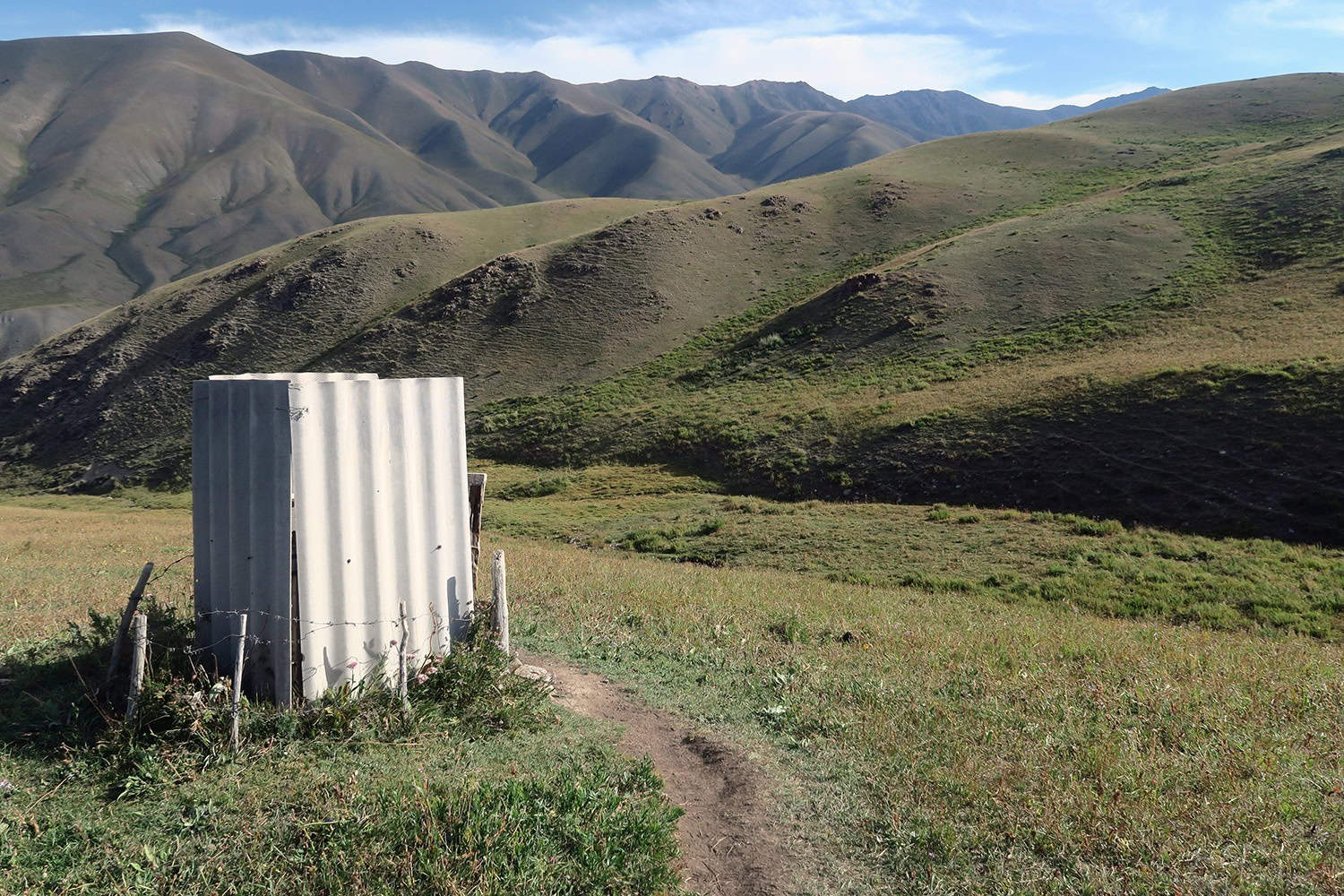
Moreover, you will avoid Everest Base Camp's rainy season (mid-June to August).

Additional tip: Tibet tours are typically available to international tourists from early April to mid-February. In March, however, Tibet tours are temporarily closed to foreigners.

Tibet attractions, Potala Palace
Potala Palace in Lhasa, one of the top Tibet attractions

How to Get to Tibet

International tourists need first to fly to mainland China, then later take a domestic flight or the Qinghai-Railway to Lhasa to enter Tibet.

Given the high altitude of Tibet's capital, though, it is highly recommended you take the train in and fly out. This is the best way to slowly acclimatize and avoid the possibility of experiencing altitude sickness.

It is also possible to book an overland tour from Nepal to Lhasa. However, the Sino-Nepal border was closed due to a landslide at the time of writing. For this reason, such overland tours are not currently available.

Please note: the only international flights connecting Tibet with the outside world are run by Air China and Sichuan Airline, from Kathmandu (Nepal) to Lhasa. If you as a foreigner enter Tibet from Nepal, however, it can get complicated. See visa requirements on the section below for details.

how to get to Tibet from China
How to get to Tibet from mainland China via Qinghai-Tibet Railway

Required Tibet Visas and Permits

Don't try to get a Chinese visa from any other country if you enter Tibet from Nepal, as it will not be valid for entry.

In this case, you need a Chinese Group Visa, which can only be issued by the Chinese Embassy in Kathmandu. This means not only that your Tibet trip is not guaranteed, but that you will be waiting around during your holiday.

If you enter Tibet from mainland China, however, the only two documents you need to visit Tibet are a Tibet Visa (also known as a Tibet Travel Permit) and an Alien’s Travel Permit. The former allows you to travel to Tibet, while the latter guarantees your Everest Base Camp tour.

As a well-established Tibet tour operator, Tibet Vista (www.tibettravel.org) can help tourists to not only customize their itineraries but also get these two documents free of charge. Don't hesitate to contact them for a complimentary consultation.

______

This article was brought to you in partnership with Tibet Vista.

Traveling with Kids in Europe? 4 Essentials to Bring with You

traveling with kids in Europe

You may be thinking about having a family holiday in Europe as a school break approaches. No matter what sort of trip you’re planning, it can become quite challenging to keep everyone happy and occupied during the journey.

To help you make the most of your European break together, we've rounded up four essential items families should bring along when traveling with kids in Europe.

1. European Health Insurance Card

It's vital to have health insurance when traveling, as you never know when you or a loved one may fall ill or become the victim of an accident. This makes having a European Health Insurance Card (EHIC) essential for every European family planning a holiday.

Owning a valid EHIC will entitle you access to any public healthcare facility should you need urgent medical attention. As the EHIC is the replacement of the old E111, medical care provided will come at a reduced cost or even free.

The card only covers the applicant, though, so each member of your family will need their own EHIC. You can apply for a European Health Insurance Card or carry out an EHIC Card Renewal by filling in the form provided.

Anyone over the age of 16 can apply for their own cards. However, those below 16 will need a parent or guardian to apply on their behalf.

Please note that an EHIC should not be used as a replacement for private travel insurance.

2. Portable games and offline apps

Whether you're traveling by car, ferry or plane, it can be hard keeping the kids occupied when confined to a small area. This why travel games are another essential.

You can find travel-sized versions of almost every popular board game. Their miniature size makes them easy to pack and handle by the little ones.

Are your kids more into technology? Make sure you download plenty of apps or games that are available in offline mode then, as you don't know how good connectivity will be where you're going.

It’s also a good idea to create your own games. In this case, you won’t even have to worry about needing a board. Bingo cards, for example, are very easy to make--all you need is a couple of cards and some marker pens. Maybe you could make them about things you’ll spot on your travels!

3. Cameras

Speaking of games, another way to keep your kids occupied while traveling is to give them cameras. Depending on their age, you could let them use your fancy DSLR or get them cheap disposable ones.

You can get even more creative with camera games. Set some challenges for them, like snapping different landmarks or animals (lens scavenger hunt, anyone?). Doing this can also give them a great project post-trip: create a beautiful family photo album that the whole family will enjoy.

4. Healthy Snacks

Traveling with kids is stressful enough, so don't give them sugary treats before or during the journey. Sugar will increase their hyperactivity or make them feel queasy. In turn, the children will become fuzzier than usual--making the trip uncomfortable for everyone.

Instead, pack some healthy snacks. Fresh fruits and mixed dried fruit and nut mixes, for instance, are perfect for keeping energy levels up while keeping queasy feelings at bay.

______

This story was brought to you in partnership with EHIC. 

How to Stay Safe Under the Sun

how to stay safe under the sun

It's always lovely to escape the unpredictable British weather and start catching some sun on holidays in Europe.

While caught up in all the excitement of our European adventure, though, it is easy to forget how to stay safe under the sun, how many rays we are catching, and how they can affect us.

By taking the right precautions, it is less likely we'll need to use our European Health Insurance Cards (EHIC). 

No one wants to be stuck in a clinic or hospital instead of making the most of the beautiful weather.

That being said, it is always a good idea to carry your EHIC in case of an emergency.

You can apply by looking up terms such as "E111 Renewal Apply" in your favorite search engine.

Below, our top tips to stay safe under the sun this holiday.

The Basics

The bad news? It only takes 10 minutes for your skin to start to burn. The good news? Sunburn is always preventable.

Avoid being out when the sun is at its highest, typically between 12 and 2 p.m.

Also, make it a habit to wear a hat and sunglasses, as they offer essential protection.

As some people are more susceptible to sunburn than others, the next step is to assess your level of risk.

Essential questions you should ask yourself before sun exposure include:

  • Am I fair-skinned?
  • Do I have moles or a history of skin cancer?
  • Am I taking any medications regularly?
  • Do I suffer from skin conditions such as eczema, vitiligo, or psoriasis?
  • Am I traveling with babies or children?

If you answered yes to any of these questions, the sun is more likely to affect you or your loved ones adversely.

For this reason, you must take additional precautions in caring for and protecting your skin.
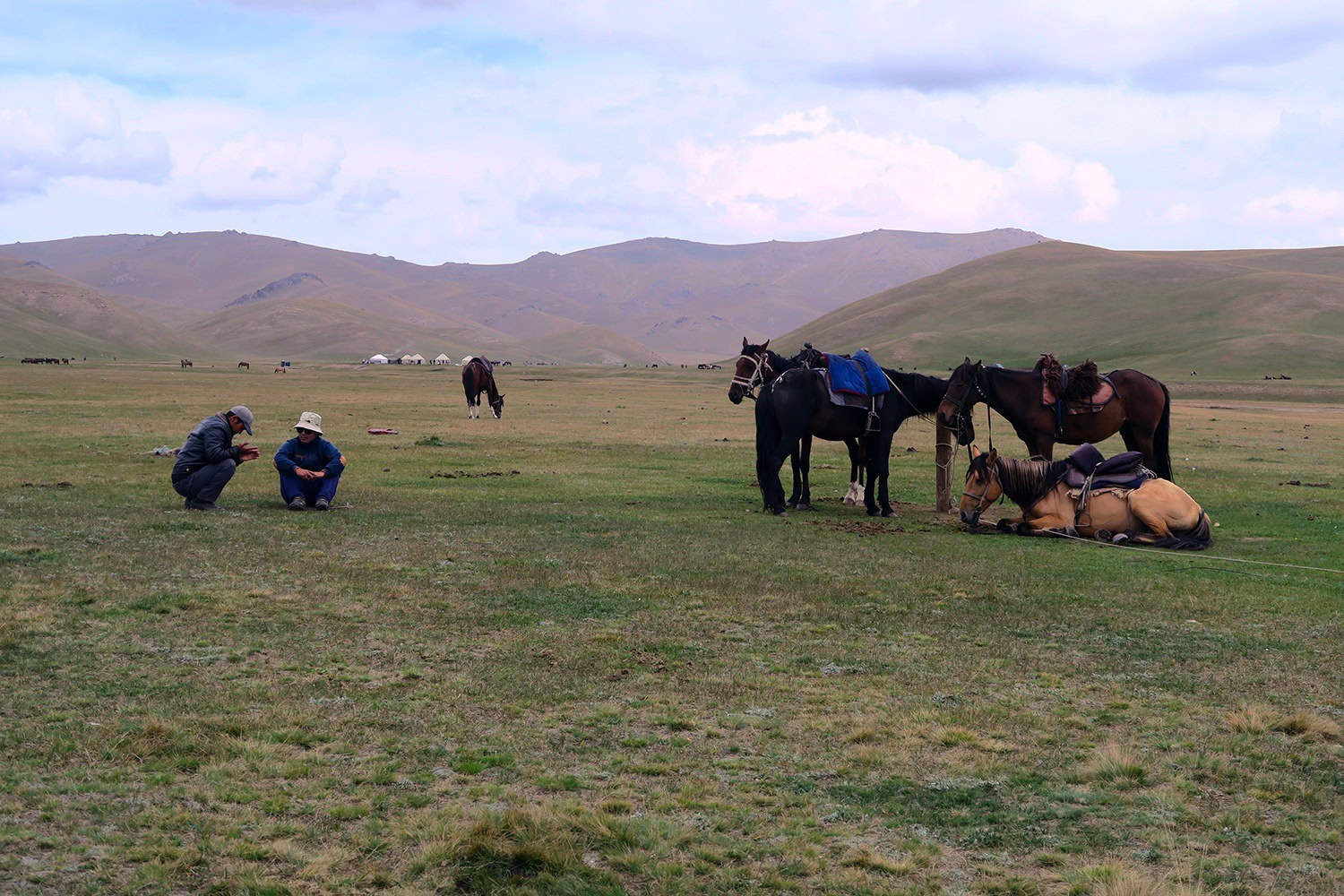
See also: Tips for Backpacking in the Heat

Properly Apply Sunblock and Sunscreen

The best thing to do when buying your sunblock or sunscreen is to choose whichever has the highest factor of protection (SPF)--not necessarily the most expensive.

It may come as a shock to some, but many studies prove that cheaper creams and lotions perform just as well as their brand-name counterparts.

But what does SPF mean? To put it simply, the higher the SPF, the longer you can stay under the sun without having to reapply.

To correctly calculate what level of SPF you'll need, take the lotion's SPF number and multiply it by 10--that's how long your protection will last (in minutes) before your skin starts to burn.
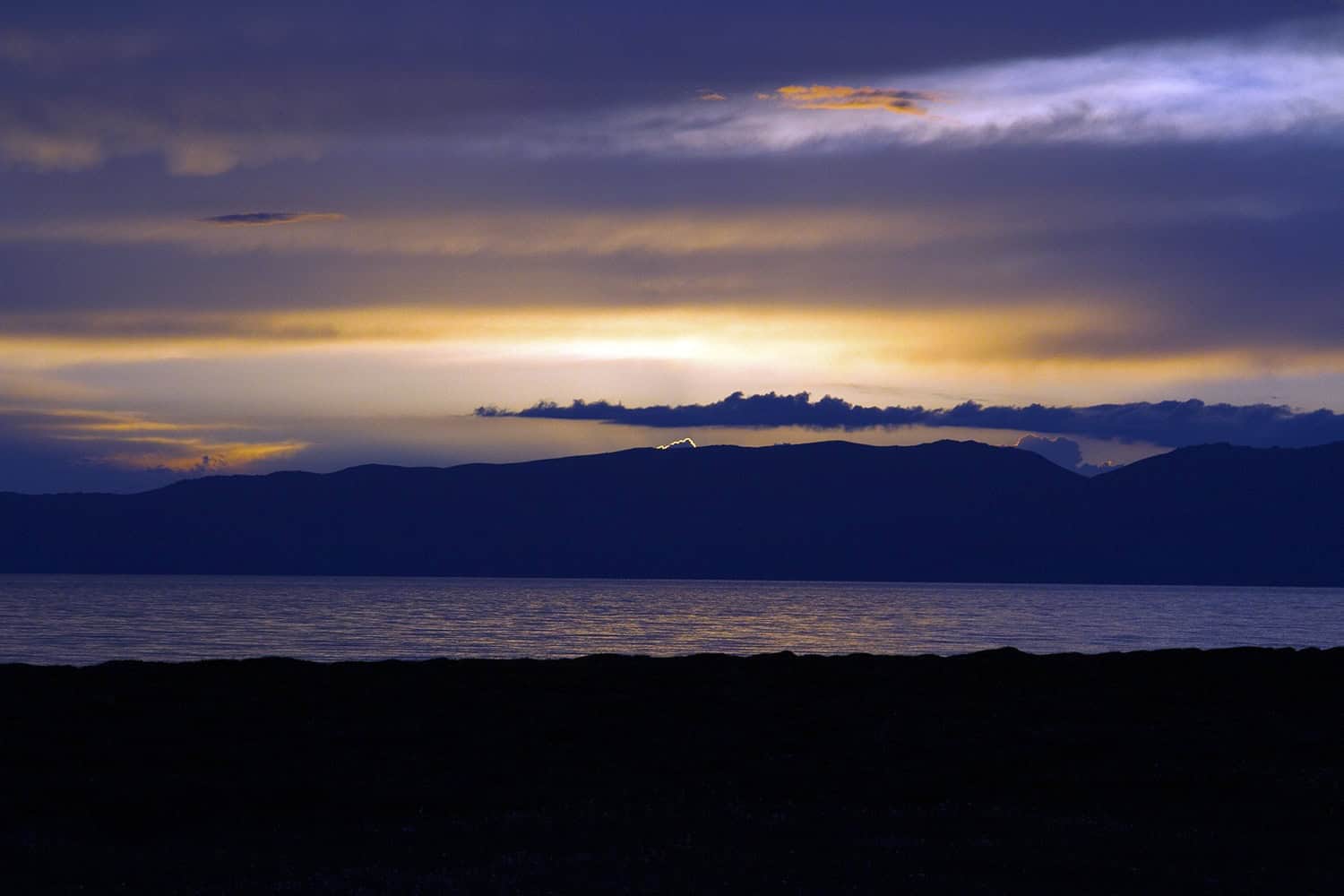
For example, SPF 8 will protect you for 80 minutes.
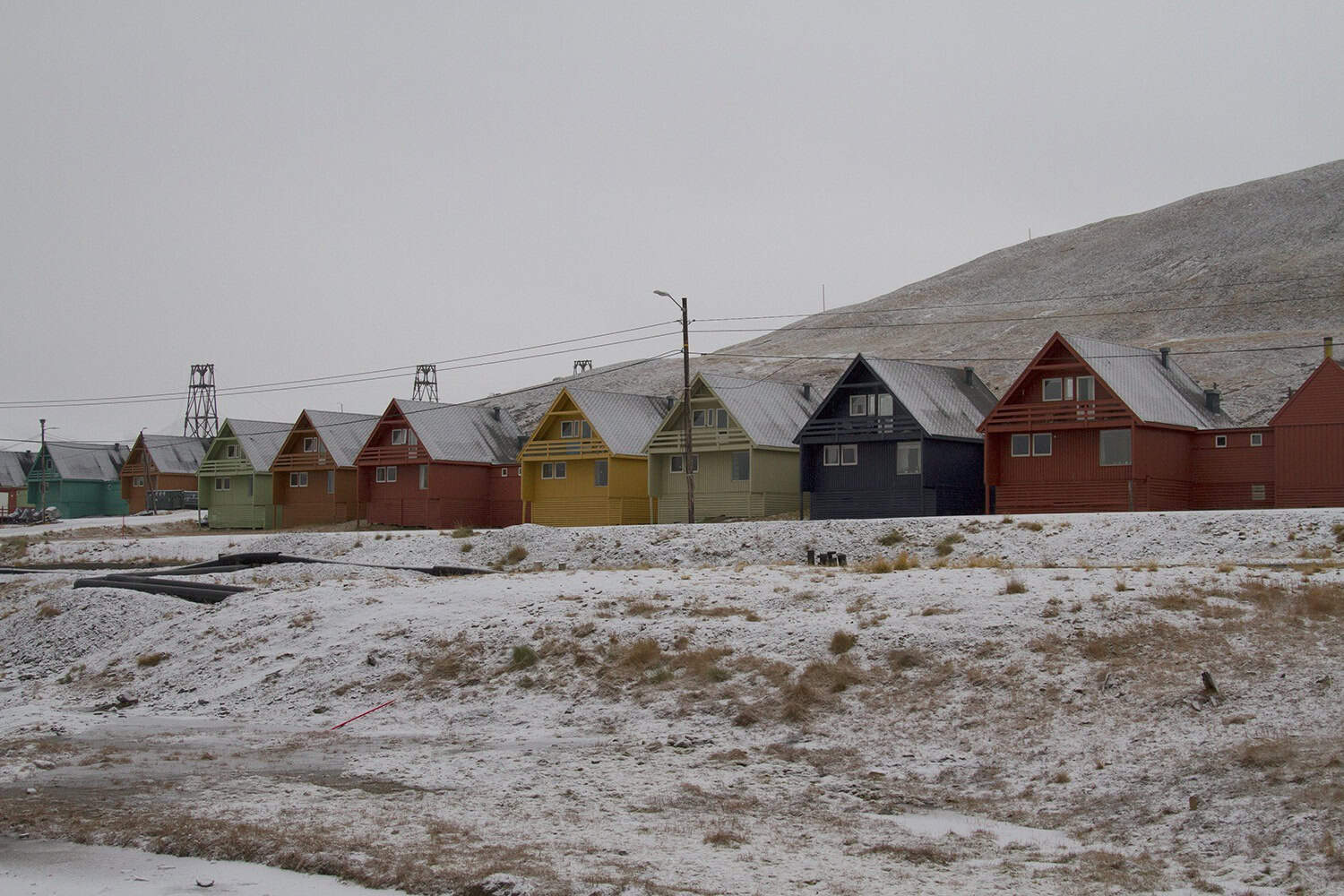
Also, make sure the product you choose also offers protection against both UVA and UVB rays, as they are equally harmful.

Most importantly, remember to reapply your sunscreen or sunblock after swimming or excessive perspiration.

Waterproof doesn't mean permanent, so those lotions can be washed away after some time as well.

Limit your Alcohol and Caffeine Intake

Alcohol and caffeine dehydrate you, increasing your risk of heat exhaustion or heatstroke.

We know there's nothing better than cold beers by the beach, but take it easy.

Drink less than usually do or forego coffee and alcoholic beverages entirely if you're in a higher risk group.

Also, stay under the shade or limit your time sunbathing if you do plan to drink on a hot day.

See also: 5 Must-Have Items for Female Travelers

When to Get Medical Help

It's essential that you seek medical help immediately if you believe you may be suffering from heat exhaustion or heat stroke.

Both reactions come with a different set of symptoms, though, so watch out for the following:

  • Heat exhaustion: persistent headaches, nausea, cramps, sweating, fast pulse with shallow breathing
  • Heatstroke: high temperatures, hot dry skin, confusion

It is vital to get medical help as soon as these symptoms start to develop, don't wait!

As heatstroke also causes loss of consciousness, always remember to bring your EHIC along for when you need access to public healthcare.

______

This story was brought to you in partnership with EHIC.

Dream of Traveling Without Parents? 5 Proven Tips

A chaperone-less trip probably makes a nervous wreck of 9 out of 10 parents.

Maybe it's the senior trip to an all-inclusive resort in Mexico; perhaps you're thinking of a full-on gap year to backpack around the world.

Whatever your reason to go traveling without parents is, this can be a tough one to pull as a teenager--or a 20-something still living under their roof.

To them, it probably all comes down to your safety and their degree of trust in you.

Test our five tips (and compromises), and you'll be more likely to open the door to newfound freedoms.

A woman traveling without parents.
Scenic view (photo: Adam Bautz)

How to Go Traveling without Parents

1. Ensure your safety

Show your parents your detailed itinerary. Highlight the incredible attractions you want to visit.

Explain to them how you'll stay safe in those areas. Draft a communication plan.

The more familiar they become with your plans and destinations, the more at ease they'll be.

They still don't want to hear it? Offer a compromise by getting a GPS tracker app.

Not only will it force you to stay out of questionable spots, but knowing they'll be able to follow your every step might finally convince them.

2. Pay for the trip yourself

Saving for a trip involves drafting both personal and financial goals.

You will have to make sacrifices and reach a certain level of responsibility: get and keep a job, not go out as much, etc.

Thus, financing your adventure in its entirety will show your parents not only maturity but also how badly you want it.

Don't be surprised if you gain more privileges after you complete the feat.

Most importantly, though? Asking for permission and money lengthens the already formidable list of arguments you will have to defend in front of the jury. Think about it.

3. Get on your parent's good side before you ask them

Take a moment to analyze your relationship with your parents.

Have you already proved to them you can act like a responsible adult?

If so, go ahead with tips # 1 and # 2. If not, you must work on building trust first.

It's as simple as respecting their curfews, offering to help around the house, maybe even pitching in next time mom goes grocery shopping or dad takes the family out to dinner.

Don't suddenly become Mother Teresa of Calcutta, though--they'll read right through it.

Be genuine in your efforts to become an independent young man or woman. This will benefit all parties involved.

4. Have friends your parents know and trust tag along

Whenever I asked mom for permission to go to a party or event as a teenager, the first question she asked me was, "who's going?"

I may not know your parents, but I'm sure they are way more likely to permit you to go on that trip with Lily, your childhood friend who lives across the street, than Stacy, the cheerleading squad's captain who you just met at a party last month.

You should always pick your friends wisely, but even more so when you're trying to go traveling without parents or chaperones.

5. Prove the trip's value

Lastly, vanish the idea that you're only going away to get trashed and make other destructive decisions. Show your parents this trip will teach you something.

Have you been taking Spanish classes? Say you want to practice your Spanish with locals in Playa Del Carmen.

Are you heading to Thailand? Say you've looked into yoga and meditation to become a more centered person.

Heck, just showing a genuine interest in whatever destination's heritage will let your parents know you're curious about the world around you and wish to explore it. Good luck!

______

This story was brought to you in partnership with Family Orbit.

5 Best London West End Shows

There's a reason London comes second on the list of the world's biggest tourist destinations. No matter your budget, there's no end to what you can do when visiting the UK's capital. One of the most popular tourist attractions in the city is the London West End, affectionately known as "Theatreland."

Piccadilly Circus in London (photo: skitterphoto, Pixabay)
Piccadilly Circus (photo: skitterphoto)

There are stacks of musicals and plays to choose from, some of which have been running for donkeys. (The longest-running West End play is Agatha Christie's The Mousetrap, which has been gracing London stages for over 60 years!)

Ticket prices can range from genuinely exorbitant to surprisingly cheap. Many theaters release "on the day" seats, which can often cost next to nothing. This largely depends on the show in question and its levels of popularity.

I've made it my mission to take in as many plays and musicals in London as possible while living in the city. Here are some of the best on offer I'd recommend to anyone traveling or living in the UK capital.

The Phantom of the Opera

Her Majesty's Theater in London West End
Her Majesty's Theater (photo: Dave Lee)

Phantom is my favorite musical, and I'd already seen it twice in Sydney before moving to London. Regardless, I felt it was important to witness this spectacle on its home turf.

The show depicts a love triangle between the chorus singer Christine, the handsome Raoul, and the eponymous, widely misunderstood Phantom in 19th-century Paris.

POTO has been running in the West End for 30 years, currently playing at Her Majesty's Theatre. It's an excellent introduction to London's West End scene, and I admittedly cry every time I see it.

Cats

Another spectacle straight from the brains of Andrew Lloyd Webber.

This musical tells the story of the Jellicle cats meeting one night to make the "Jellicle choice." They decide which cat ascends to the Heaviside Layer to come back in a new life.

Cats has been performed on and off in London since its 1981 inception. The first run lasted 21 years.

The lyrics of one song comprise a poem by T.S. Elliot, which always gets a thumbs-up, as does the impressive collection of luxury vacation rentals in London.

Harry Potter and the Cursed Child

Harry Potter and the Cursed Child
Outside Harry Potter in London's West End

Harry Potter and the Cursed Child officially opened in July 2016. It didn't take long for the two-part play to become the hottest show in London town.

The play picks up the story at the close of the seventh book, following the world's most famous wizard's son's efforts to find his place at Hogwarts and beyond.

Although tickets are sold out for next year's season, it is still possible to nab seats. Forty tickets are released every Friday for performances scheduled for the next week.

There's also a chance to grab a spot if you're willing to line up outside the box office before shows for an opportunity to score a refunded ticket.

Matilda

Matilda takes the story of one of British writer Roald Dahl's best-loved characters and transforms it onto the stage. Writer Dennis Kelly and composer and lyricist Tim Minchin have gone above and beyond in bringing the novel to life on the stage.

The play is imbued with the same humor that made Dahl's books accessible to generations of children worldwide.

The songs are fresh and fun, and the set design is astonishing. It's worth seeing Miss Trunchbull perform in all her truly formidable glory.

The musical is currently showing at the Cambridge Theatre and is worth every penny.

Les Mis showing within London West End (photo: Steve Collis, Wikimedia)
London's West End (photo: Steve Collis)

Les Misérables

Les Misérables is perhaps the city's most famous West End show. Based on the story by novelist Victor Hugo, the London production has run continuously since October 1985, making it the longest-running musical in the West End.

Set in 19th-century France, it tells the story of French peasant Jean Valjean, who seeks redemption after serving 19 years in jail.

Valjean is stalked by a police inspector named Javert before being swept up in the ideals of revolution towards the end of the play.

This is just the tip of the iceberg concerning London's West End. There is always some new play starting, restaurant opening, or festival happening in the United Kingdom's biggest city, which is precisely why it's such a great place to visit.

Rating Popular Methods of Transportation

How do you like to get around? Let's take a lot at some of the most popular methods of transportation and the pros and cons of using each.
Flying high

"It's the journey, not the destination."

This is a statement that is often thrown around by travelers across the internet for a good reason.

Traveling, by definition, involves taking transport of some kind.

Some methods are a way quite simply to get from point A to B. Yet others can end up being the best part of your journey.

Let's take a lot at some of the most popular transportation methods and the pros and cons of using each.

Plane

While I'm grateful to live in an era where air travel is so easily accessible, planes feature at the bottom of my list regarding ease of use and comfort.

To fly on almost any airline (at least within economy), you pretty much have to surrender your dignity at the airport entrance.

After being prodded, screened, and herded like cattle, you're squished in a tiny chair, surrounded by other people for hours on end.

Don't get me wrong - there are upsides to flying, besides the sheer efficiency of it.

I enjoy ten-hour flights, where I can snack on food, have a glass of red, catch up on my movies, and take an afternoon nap.

Yet, I worry about my carbon footprint and find the experience traumatizing.

These days I'm looking at flying as an option only when I have no other choice.

Ease of use: Depending on your access to an airport and the airline, getting from your home to your destination is relatively straightforward.

Enjoyment factor: 4/10 unless it's the long haul journey from London to Sydney. That gets 0/10, as that route is just upsetting.

Bus

There are pros and cons to buses. Once you're on the bus, all the hard work is taken care of for you by the driver.

On the other hand... well, I don't know about you, but I always get motion sickness/ actual sickness on buses.

Plus, if you don't get a seat and end up standing for hours - ugh.

Ease of use: You book a ticket, they're there, you get on them.

Enjoyment factor: Highly dependent on which country you're in and the distance of travel.

Road tripping in the Westfjords of Iceland

Car

Depending on where you are, a car can be the most convenient and enjoyable form of transport.

Some of the best holidays I've been on have involved piling a bunch of people I like into a vehicle and driving around a foreign country...or my own, especially when you have no map, nor a clear direction as to where you may be going.

Ease of use: Simple. Put everything you need in the car. Get in the car. Start driving in the comfort of your own, air-conditioned space.

Enjoyment factor: Dependent on several factors. The company can make or break a road trip.

That and the snacks you bring, the variety within your Spotify playlists, and how many rounds of "I Spy" you can stand.

Learn how to increase Spotify followers, and you can build a nice community around the service.

Bike

Like road tripping, traveling to a destination by bike tends to emphasize the journey.

You're not simply going from one location to another - the ride is the point of the trip.

Ease of use: Most people know how to ride bikes. The concern comes from interference by other cyclists, cars, and people... not to mention the elements.

Enjoyment factor: Flat roads on a sunny day - you're smiling.

horse-costarica

Horseback Riding

Although traveling by man's biggest four-legged friend is nowhere near as popular as it was in, say, the 1800s, there's something pretty special about trekking on horseback.

You have a chance to forge a special connection with another living being while placing complete trust in one another.

I've made a point of horse riding at any opportunity while traveling.

As a result, I have sweet memories of "tölting" on sweet little Icelandic ponies and cantering across open fields in Costa Rica.

The memories I regard with less fondness are horse riding in Cuba, but that's another story.

Ease of use: It depends on how experienced you are with riding horses/ how comfortable your horse is to have people ride it.

Enjoyment factor: Pretty good for the first few hours, before your leg muscles begin to seize up...

Boat

Boats are one of my favorite types of transportation. I've jumped on them to circle a harbor without bothering getting off; I love them so much.

Not only can they be used for transport, but they can also help you experience a city from a different point of view.

As for building an entire vacation around a boat ride?

The idea is popular for a reason. A cruise can serve as a way to sample different countries and cities on one holiday.

Ease of use: Wait at the harbor. Get on the boat. Enjoy the ride!

Enjoyment factor: So long as the weather is fine and you don't suffer from seasickness - 10/10.

The Shinkansen in Japan (Credit: FuFu Wolf)

Train

When it comes to getting from one place to the next, it's hard to beat a train journey. Plenty of travelers use them for their ready availability.

Although planes obviously move a lot faster, trains can often be a more efficient form of transportation.

Once you add in the airport's distance and the wait time for boarding the flight plus possible delays, planes can often end up taking more time than you originally bargained for.

Considering there are trains worldwide which travel along at breakneck speeds, they're often the simpler choice.

That and some of the best adventures are built around long train journeys, such as the Trans-Mongolian from China to Russia.

Ease of use: So long as you're at the station on time, perfectly easy.

Enjoyment factor: Nab yourself a window seat and the view or a good book.

What's your favorite way to get around?

Top Tips for Staying Fit While Traveling

So you want to backpack worldwide, yet don't want to look like a person living off airline food? Staying fit while traveling is not a myth; it is easier than you think! 

Follow these easy food and exercise tips to maintain (or even reach) top shape anywhere you go.

Staying fit while traveling (photo: Jlla00, Wiki Commons)
Staying fit while traveling (photo: Jlla00)

Stay Fit While Traveling

Make Simple Substitutions

Studying abroad on a limited budget made me creative. Eating from the supermarket might not seem attractive when visiting a new country.

Yet, there you can find healthier alternatives to local favorites. Better yet? Even cheaper than at the local restaurant or deli!

Are fatty foods or dressings your guilty pleasure, though?

Alternatives like the eggless Just Mayo by Hamptoncreek or reduced-fat Alfredo sauces allowed me to enjoy my favorite sandwiches and pasta on the cheap--while still making healthy choices.

Other accessible alternatives for your health include always taking the stairs and exploring that new city exclusively on foot.

It takes 30 minutes to get to that monument by public transportation and walk there instead. You have no idea how many hidden gems I discovered this way!

Is it possible to stay fit while backpacking and eating local delicacies? YES!

Eat Slow

There might be some situations where food substitutions are out, though. What if you are invited to a local family's home? We know it isn't polite to turn down local food...

What to do, then?! Eat slowly.

It takes your stomach 20 minutes to tell your brain it is full; thus, eating slower gives your stomach the time it needs to relay that message to the brain. We hope your local hosts understand.

Control your Portions

Pick up the habit of eating small meals or snacks throughout the day. Eating small every three to four hours will kick-start your metabolism, and you won't feel deprived of trying all those excellent new dishes.

Avoid Soda

To put it into perspective: sucking down a liter of soda is the same as chugging 4-5 chocolate bars.

Soda is liquid candy, for lack of a better term. Avoid it, and save those calories and grams of sugar for a local dessert you haven't tried before.

Deck of cards
Stay fit anywhere with a deck of cards

A Deck of Cards = A Deck of Exercises

The only piece of equipment I need to exercise anywhere in the world is a deck of cards.

Here's how it works: give each suit an exercise, i.e., clubs = sit-ups; hearts = push-ups; spades = squat; and diamond = jumping jacks.

Then, each number equals one rep of each exercise, with "royalty" counting as ten and Aces as 11.

What about the infamous Joker? Pick some dastardly exercise you hate, but you know it's great for you (my favorite for Joker is 25 burpees. Owww).

Lastly, try to rest as little as possible between exercises and attempt to make it one card further the next day.

What's best about this deck of cards workout? You can adapt the exercises to whatever equipment or terrain is available at each location.

Even if you stick with the same exercises for a week, all you have to do is re-shuffle the cards, and boom--an instant mix-up of different reps and exercises.

Related: Best Bodyweight Workout for Travelers

Travel fitness while backpacking: plan a scavenger hunt (photo: travelwayoflife, Flickr)
Travel fitness while backpacking: plan a scavenger hunt (photo: travelwayoflife)

Make your Workout a Social Event

Nothing is worse than you working out--then looking over and seeing five to six people drinking and partying. It sucks the will right out of you.

Get creative with your workouts, making them social events. Invite everyone at your hostel!

Things we have come up with include the following:

  • A travelers scavenger hunt, with the first team to complete certain feats and hit a predetermined bar (the finish line!), buying rounds for everyone else
  • Rent bikes and race down a pre-drawn course--with the finish line being a local food stall you all wanted to try

You get the idea! Having a partner or ten, even if for a few workouts, will make it easier to stick to your goal, work through those temptations, and burn them off in the process. Bring them cervezas by the beach.

Stockholm Museums: 9 Must-See Museums in Sweden's Capital

The number and variety of Stockholm museums ensure everyone visiting the Swedish capital finds one they like. 

Interested in Vikings and warships raised from the dead? Head to the Vasa! Are you a fan of the 70s Swedish pop sensation ABBA? The group has a dedicated museum filled with memorabilia.

Stockholm map

Prefer to learn about Nordic culture? Stockholm has several museums tracing the city and the country's history.

The question most visitors will face is not whether to go to a museum in Stockholm; it's which museums to go to first. 

We've compiled a list of our favorite Stockholm museums to help you decide where to spend your time.

Opening hours are included; however, as these may change over time, please confirm them via the museum websites.

Tip: Save time and money by purchasing a Stockholm Pass. Admission to most museums listed below will be included, plus royal palaces, bus and boat tours, and much more. 

Best Cultural Museums in Stockholm

1. Vasa Museum

Vasa warship
Vasa warship

Hearing the sad tale of this Viking warship is almost as enjoyable as seeing it in the flesh at the Vasa Museum.

The Vasa set off on its maiden voyage on August 19, 1628. It sailed for about 1,500 meters before sinking, taking all on board (an estimated 30 people) down with it.

The ship was rediscovered within the Archipelago in the late 1950s and was salvaged in 1961.

Since then, the utmost care has preserved the ship, which is now recognized as an integral part of Swedish history and cultural identity.

Seeing the warship in person is an experience not to be missed. It's no surprise that it is one of Stockholm's most popular tourist destinations today.

Opening hours:

  • September 1 to May 31: daily, 10 am - 5 pm, Wednesdays 10 am - 8 pm
  • June 1 to August 31: daily, 8:30 am - 6:30 pm

Address: Galärvarvsvägen 14, Stockholm

Price: Adults - 150 kronor ($15) / 18 years old and under - free. Admission is included with the Stockholm Pass. 

Related: Escape to Swedish Lapland

2. Spirit Museum

Spirit Museum
Spirit Museum

The small but fascinating Spirit Museum is dedicated to alcohol and the Swedish people's relationship with it.

It might be worth going to this Stockholm museum to eat at the restaurant, which looks out on the water (not a bad view). The food is said to be fantastic.

The Spirit Museum is adjacent to the Vasa Museum. 

Opening hours: 

  • Monday to Wednesday: 10 am - 5 pm
  • Thursday to Saturday: 10 am - 7 pm
  • Sunday: 12 pm - 5 pm

Address: Djurgårdsvägen 38, Stockholm

Price: Adults - 100 kronor ($10) / Pensioners and students - 70 kronor ($7) / Age 15-18 - 50 kronor ($5) / 14 and under - free. Admission is included in the Stockholm Pass. 

Related: Swedish Food - My Best Bites in Sweden

3. ABBA Museum

ABBA wax figures
ABBA Museum

The ABBA Museum is both informative and interactive. Many of ABBA's famously glitzy performance outfits, album covers, and awards are on display.

You'll also see rooms featuring replicas of their manager's office and the music room in a house by the sea where Benny and Björn wrote many of the band's hits.

Best of all, patrons can put their pride aside and get as involved as possible. Dance in an ABBA music video, or test your karaoke skills in a voice booth.

You can even take center stage to sing and dance with (a visual projection of) the band themselves!

Opening hours: Daily, 10 am - 6 pm

Address: Djurgården 68, Stockholm

Price: Buying admission online is cheaper, as over-the-counter tickets incur a service fee. Adults - 250 kronor ($25) / Children aged 7 to 15 (under 7s are free) - 95 kronor ($9.50) 

4. Skansen Open-Air Museum

Typical Swedish house (photo: Michelle Maria, Pixabay)
Typical Swedish house (photo: Michelle Maria)

Skansen is the oldest open-air museum in the world. One hundred fifty farms around Sweden were disassembled and moved to this dedicated space on the same island as the Vasa, ABBA, and Spirit museums. 

Opening hours: Daily, 10 am - 3 pm

Address: Djurgårdsslätten 49-51, Stockholm

Price: Adults - 140 kronor ($14) / Students, seniors, groups - 120 kronor ($12) / Children aged 4 to 15 (under 3s are free) - 60 kronor ($6). Admission is included in the Stockholm Pass. 

5. Nordic Museum

Nordic Museum
Nordic Museum

The Nordic Museum, located next to the Vasa, is Sweden's most significant cultural history museum. The exterior facade alone is worth a closer look. 

Inside, there's a spacious, multi-level hall with galleries full of traditional Nordic clothes, jewelry, and household items.

Opening hours:

  • September to May: daily, 10 am - 5 pm
  • June to August: daily, 9 am - 6 pm

Address: Djurgårdsvägen 6-16, Stockholm

Price: Adults - 140 kronor ($14) / Seniors - 120 kronor ($12) / 18 and under - free. Admission is included in the Stockholm Pass. 

6. Nobel Prize Museum

Exhibit at the Nobel Prize Museum

In 1895, Alfred Nobel, a Swedish industrialist known for inventing dynamite, established the Nobel Prize. 

He dedicated most of his estate (valued at nearly $500 million today) to awarding annual prizes for achievements in chemistry, literature, peace, physics, and medicine. 

All the Nobel prizes are awarded in Stockholm, except for the Nobel Peace Prize, which is given in Oslo, Norway.

The Nobel Prize Museum honors the contributions of Alfred Nobel and all of the winners.

It's filled with examples of discoveries made by past winners, including some of the tools used.

Opening hours: 

  • September to May: Tuesday to Thursday, 11 am - 5 pm, Friday 11 am - 8 pm, Sunday 10 am - 6 pm
  • June to August: daily, 9 am - 8 pm

Address: Stortorget (square) in Gamla stan (Old Town), Stockholm

Price: Adults - 120 kronor ($12), Students and Seniors  - 80 kronor ($8) / 18 and younger - free. Admission is included in the Stockholm Pass. 

Best Art Museums in Stockholm

7. Fotografiska

Not to play favorites or anything, but Fotografiska is a special place. The gallery is on the smaller side and can be seen in next to no time at all. 

That being said, giving yourself a good chunk of time at this Stockholm museum to savor the experience properly would be best. 

It would be best to get there first thing in the morning. However, the prospect of spending a Friday or Saturday evening at the gallery is intriguing. 

Opening hours: Sunday to Wednesday, 9 am - 11 pm, Thursday to Saturday, 9 am - 1 pm.

Address: Stadsgårdshamnen 22, Stockholm

Price: Adults - 120 kronor ($12) / Students and Seniors - 90 kronor ($9) / 12 and under - free. Admission is included in the Stockholm Pass. 

8. Nationalmuseum

Entrance to the Nationalmuseum

The Nationalmuseum is Sweden's premier art and design museum, and it was recently renovated and re-opened to the public in 2018. 

The permanent collection features art from the 1500s to the 1900s, and temporary exhibits touch on more modern themes. 

Opening hours:

  • Tuesday to Wednesday: 11 am - 5 pm
  • Thursday: 11 am - 9 pm
  • Friday: 11 am - 7 pm
  • Saturday to Sunday: 11 am - 5 pm

Address: Södra Blasieholmshamnen, Stockholm

Price: Free

9. Modern Art Museum

Guided tour at the Modern Art Museum

The Modern Art Museum is on the small island of Skeppsholmen, about a 10-minute walk east of the Nationalmuseum.

Walking across the bridge, you'll have fantastic views of Gamla Stan (the old town). 

The museum's permanent collection features 140,000 works of art.

The glass-walled cafeteria offers beautiful city views if you're visiting around lunchtime.

Opening hours: Tuesdays and Fridays, 10 am - 8 pm, Wednesday to Thursday

Address: Skeppsholmen, Stockholm

Price: Free to view the Moderna Museet Collection. Admission is charged to visit temporary exhibits.

***

As you can see, there's no shortage of Stockholm museums where you can learn about Swedish art, history, and culture. The museums on this list include the best the city has to offer.

If you exhaust these options, there are more museums and Royal Palaces you can visit by train in the surrounding area.

_____

This story was written by LC Hunter and later updated by Dave Lee based on his trip in 2019. Dave received a complimentary Stockholm Pass from Visit Stockholm AB. 

Amazing Places To Visit in Iceland

Situated in Northern Europe, Iceland offers numerous places to visit and some of the most unique and breathtaking landscapes on the planet. It's geologically active due to its location in the Mid-Atlantic Ridge, which features some of the most active volcanoes in the world. There is so much to see and do in this beautiful country. Below, you'll discover some of the best places to visit.

Top Places in Iceland

Bláskógabyggð - The Northern Lights

In the winter, find places to visit in Iceland where you'll have a good view of the Northern Lights (photo: David Phan)
Northern Lights (photo: David Phan)

Okay, so Bláskógabyggð isn't the first place you think of when looking at Iceland holidays, but it's one of the best places to witness the Northern Lights. The Northern Lights are one of Iceland's most significant attractions, drawing thousands of tourists each year.

While they can be viewed from many parts of the country and occasionally light up the skies of Reykjavík, the smaller towns and villages, such as Bláskógabyggð, offer a much clearer view of this natural phenomenon.

You'll also find the famous Gullfoss Waterfall here. So even if you aren't lucky enough to witness the Northern Lights during your stay, you'll still have a fantastic experience.

Grindavik - Home to the beautiful Blue Lagoon

People bathing in the Blue Lagoon, one of the most interesting places to visit in Iceland (photo: Heather R)
Blue Lagoon (photo: Heather R)

The village of Grindavik may be small, but it's home to the best-known attraction in Iceland. The beautiful Blue Lagoon boasts 6 million liters of geothermal water (a combination of fresh and saltwater).

Naturally heated between 98.6 F and 102 F (37 C and 39 C), the lagoon water is known for its excellent health benefits. There's also a waterfall, a steam bath made from a lava cave, a gift shop, and a café to be enjoyed.

But that's not all this charming village has to offer. It's one of the most surprising destinations for tourists, offering everything from exciting annual festivals to the best golf course in Iceland.

Greenland - The most remote part of the world

Although technically separate from Iceland, Greenland is a popular extension of an Icelandic holiday. If you book an Iceland holiday via Exodus Travels Limited, you'll find offers to explore the many beautiful sights of the world's biggest island.

To put Greenland's size into perspective, it runs the length of Scotland through to the Sahara! Despite being the largest island in the world, its population is only 57,500 people, with the majority residing in scattered settlements along the western coast.

A walking tour along the Eastern coast is highly recommended if you're looking to experience the more untouched parts of the island. There you will enjoy stunning views of icebergs and unspoiled wilderness. It's one of the most remote parts of the world, making any visit a truly unforgettable experience.

Related: Top 10 Things To Do in Iceland

Askja - An outer world experience

Eruption in Holuhraun, Iceland on Sept 1, 2014. The location is north of Bardarbunga volcano. (photo: Sparkle Motion)
Eruption in Holuhraun, Iceland, on Sept 1, 2014. The location is north of Bardarbunga volcano. (photo: Sparkle Motion)

As Iceland is mainly known for its volcanic activity, you don't want to miss out on witnessing its many. Askja is situated within the Dyngjufjoll Mountains, and it's one of the most impressive attractions the country has to offer.

Upon arrival, you'll feel like you've stepped onto another planet. A vast crater houses a geothermal lake with a beautiful, milky turquoise color. If you're willing to climb down the crater's sides, you can enjoy a relaxing dip in the lake.

An interesting fact about Askja is that American astronauts once used it as a training ground due to its unique lunar landscape.

Landmannalaugar - A hiker's paradise

Another part of Iceland that boasts a unique, unearthly landscape is Landmannalaugar. Situated in the Highlands of Iceland, its most significant appeal is its wild-colored hills.

It has a rugged, natural landscape and is a firm favorite with hikers worldwide. It's worth noting that this part of the country is only accessible in the summer months.

Iceland's location and geography give it a unique edge over most other countries, creating diverse and wild landscapes that you won't find anywhere else. We hope you'll consider these places to visit when planning your trip to Iceland.

How To Experience London on a Budget

On any list of the most expensive cities to visit in the world, London is bound to be present. Exploring London on a budget, however, is entirely possible, and there is much to see and do in the UK's capital.

Yes, it's possible to visit London and come away feeling satisfied with all you've seen and done, and the subsequent balance of your bank account to boot.

Tower Bridge London
Tower Bridge, London (photo: Hakan Dahlström)

Expenses like hotels, luggage storage, meals, show tickets, and transportation are expected anywhere in the world, but London is one of the most expensive cities, so these could add up quickly. Here are some tips and tricks for those wanting to experience London on a budget.

London Budget Tips

Purchase a Travelcard

Living and working in London, I find my Travelcard a financial godsend. Depending on how long you're spending in the city and how often you'll be using public transport, the Travelcards can seriously work in your favor.

A weeklong Travelcard for zones 1-2 costs around $42 (£32.40) and gives you unlimited travel on all London transport within those zones. Considering the Tube can cost around three quid a pop, you're looking at a significant saving.

Did you know that possessing a Travelcard gives you a discount on river cruises on the Thames? I didn't either until I tried it out and saved precious pounds.

Marvel at the Cityscape from the Sky Garden

You can leave the UK capital without too much damage to your bank balance. Here are some tips and tricks for those wanting to experience London on a budget.
The Sky Garden's viewing platform is a selfie stick-free zone.

London has one of the most distinctive and varied skylines in the world, dotted with four-century-old churches and cathedrals, 1960s concrete nightmares, and skyscrapers that are mere handfuls of years old.

If you're going to the city, it's worth seeing it from above. There are countless options for doing this, with various vantage points offered over a range of prices.

If you're concerned about cost, you might want to skip the View from The Shard (about $40 a ticket) for the Sky Garden, located in the Walkie Talkie, right across the river from Western Europe's tallest building.

All you'll need is some organization, as tickets usually become available around a week in advance. It's worth going to see. Not only is the view lovely, but you're surrounded by what is effectively, as the name suggests, a garden in the sky.

Buying Tickets for West End Shows

If you're a fan of theater, you have to see at least one West End show. There's always something going on in Theatreland, making it one of the most saturated tourist areas.

The problem is that some spectacles (mainly the classics such as Phantom of the Opera and Les Mis) can be ridiculously overpriced.

I like using the app TodayTix to scope out ticket prices. The app features every show playing at the West End and the lowest price available for each show that week.

It may not be the best seat in the house, but at least you can tick it off your list. Plus, some of the older theaters have binoculars that you can rent for a quid or so. There's a novelty factor there, for sure.

Take Advantage of Free Museums

You can leave the UK capital without too much damage to your bank balance. Here are some tips and tricks for those wanting to experience London on a budget.
The British Museum (Credit: Paul Hudson)

London is home to pretty fantastic museums, such as the Natural History Museum, the British Museum, the National Portrait Gallery, and the Maritime Museum.

You could spend an entire holiday in the UK's capital, going museum-mad, and come away totally satisfied. This endeavor won't break the bank as all of London's most significant museums are gloriously free.

That's right - you don't have to pay a single penny to enter them. Most ask for a small donation, but that is, of course, made entirely at your discretion. Here's a list of other free attractions in the city.

Plan and Book Online

If you're organized, you can save a percentage of your cash by booking online in advance.

So, if you know you can't leave London without having had a trip around the London Eye, you can save money by buying a ticket online. This also helps avoid the upsettingly massive queues often present at this particular attraction.

I've never tried it out, but I've heard the London Pass is an excellent way to see the sights in the city and save yourself a bit of dosh in the process, too. A word of advice - it's worth considering just how much sightseeing you plan to do before shelling out for a pass.

Timing is everything

Sometimes, all you need to do to save money is time your visits wisely. London tends to be packed out in the summer months and around Christmas.

While it is busy year-round, there are noticeable off-seasons where the city feels emptier - particularly during January.

Famous tourist attractions around London know this and tend to lower their prices accordingly. For example, the Royal Botanic Gardens, Kew, offers a winter discount to visitors.

So, it's not impossible to experience the plethora of activities London offers travelers on a strict budget. With some advanced planning, you'll get far more bang for your buck than anticipated.

Why Costa Rica is the Perfect Destination for Any Traveler

I have a little confession to make. I'm a bit of a wimp when it comes to adventure activities.

Heights terrify me. I have little to no desire to throw myself out of planes.

Plummeting headfirst to the ground while attached to a bungee rope does not sound like my definition of fun.

Why Costa Rica? Sunsets like these!
Costa Rican sunset

Even zip-lining makes me nervous, depending on how far up off the ground they are.

For these reasons, I wasn't sure how much I'd like Costa Rica. I thought I'd end up having to skip most of the activities on offer.

Yet, this Central American country is a mixed bag. There's something there for anyone, no matter what your travel preference.

Here's why Costa Rica is the perfect destination for any traveler.

For the Thrill Seeker in Costa Rica...

Costa Rica is the adventure hub of Central America. There's plenty of blood-pumping activities to suit any traveler, including digital nomads.

Adrenaline junkies can go canyoning, bungee jumping, or hurl themselves into oblivion while attached to a Tarzan swing.

White water rafting of all levels remains an attractive option, along with the zip lining through the country's beautiful cloud forests.

And me? I enjoyed cantering through fields on horseback at sunset.

If I'd had more time, I probably would have gone kayaking as well.

Macaw in Costa Rica
Macaw

For the Nature Lover...

Costa Rica reminded me a lot of my home country of Australia. You can't escape nature. It's right there, staring you in the face.

After almost two years in London, it was refreshing to contact creatures that weren't North American grey squirrels or pigeons.

Geckos in the bathroom, monkeys in nearby trees, toucans swooping overhead -- they were all welcome!

It wasn't just the beauty of the local fauna that had me weeping with emotion at every turn while screaming: "It's just so beautiful!"

There were also the lakes, beaches, rainforests, and cloud forests, which continually pulled at my heartstrings.

Only 1% of the global woodland can be classified as cloud forest (areas that feature persistent cloud cover, keeping the forest in question evergreen), and a chunk of it can be found in Costa Rica.

These cloud forests are an important part of the country's ecosystem and vital to preventing the extinction of rare birds, frogs, and salamander native to this area of the globe.

One of my favorite activities during my time in the country was the morning we spent planting mango trees.

After World War II, worldwide demand for beef led to 80% of Costa Rica's forests being cleared for pastureland.

Locals, expats, and visitors can work together through various reforestation programs throughout the country.

For the Luxury Traveler...

Costa Rica isn't just for backpackers. You can find various levels of comfort travel, wherever you go.

I had the opportunity to stay in an eco lodge, which looked out on the Caribbean Sea. This was not an upsetting experience.

On a "rest day," I chilled in another very nice hotel in La Fortuna.

Here, I took a dip in the hotel pool and had a massage. I finished the day off by going for a good soak in a thermal river.

Ten out of ten would repeat many times over.

Caribbean sunrise
Sunrise

For the Beach Bum...

Do you like beaches? Well, then guess what - you're going to love Costa Rica.

Costa Rica's Pacific coast is a popular destination for surfers.

People from all over the world head there to hang ten and catch some spectacular waves.

I consider myself a connoisseur of beaches.

The private beach at Manuel Antonio National Park fulfilled all my preliminary requirements and then some. It was worth the $16 entry free.

Even if we did have to chase the park's raccoons away from our belongings occasionally.

For the Foodie...

I had heard that Costa Ricans were big on their beans.

Having eaten my body weight in the stuff during a recent trip to Cuba, I wasn't all that keen on repeating the experience.

As it turns out, Costa Rica is a bit of a dark horse when it comes to dining out.

While beans and rice were always on the menu, a range of other Costa Rican foods suited this particularly picky eater.

I ate stacks of fish, including one of my favorites, red snapper, as well as all kinds of delicious veggies and meats.

I had a seafood curry in a restaurant housed within a military plane, the most delicious pasta in San Jose, and plate after plate of nachos.

Costa Rica is a special place that every traveler should prioritize visiting once in their lifetime. At the very least.

5 Kuala Lumpur Attractions for a Unique Stopover

I wasn't expecting much from my Malaysia stopover. The Petronas Towers weren't enough of a draw, in all honesty. Worst yet, I expected its food to be a mashup of Javanese stir fries and Sumatran curries. And so I mistakenly saw visiting Kuala Lumpur attractions as more of an excuse to stretch my legs before my transcontinental flights.

food tours, Kuala Lumpur attractions
Chinese-Malay mee or noodles

Oh, how terribly wrong I was. Instead, I was thoroughly entertained at a colorful rooftop bar, cried at a Malaysian musical, went off-the-eaten-track, and learned more about Islamic history. Man, did Kuala Lumpur surprise me! See Malaysia's capital as I did by adding these five experiences to your stopover.

Kuala Lumpur Attractions

Go Off-the-Eaten-Track

It's funny how I was expecting ultra-sweet Javanese stir fries and spicy Sumatran curries...only. You can find Javanese and Malays and several Arab, Chinese, Indian, and indigenous peoples in Malaysia! Their cuisine deliciously reflects that.

I'm so glad I went on two Food Tour Malaysia crawls off-the-eaten-track. By trusting locals to pick the best watering holes for me, I was able to save time to explore other hidden gems throughout Kuala Lumpur.

A Night at SkyBar, Traders Hotel

things to do in Kuala Lumpur, SkyBar
View of the Petronas Towers from one of SkyBar's large windows. Really.

My Couchsurfing host threw a birthday party at one of the VIP booths inside SkyBar, and we had a blast. If you really want to see the Petronas Towers, there is no better spot to do so! It is a great spot during the day and night, thanks to its long pool, specialty bars, and, of course, that view.

While you don't need a hotel booking to enjoy SkyBar's unique vantage point, Traders Hotel is ridiculously central and is an excellent base in KLCC. As a bonus, if you book via Traveloka like I did when I lived in Southeast Asia, you have the option to use several methods of payment (they accepted all my American credit and debit cards!) and never pay booking fees.

MUD: A Musical of Malaysia's History

top things to see in Kuala Lumpur, MUD musical
One of the top sights in Kuala Lumpur? MUD

This theater's Mughal design is worth a visit. Yet MUD's musical about Malaysian culture makes it one of the must-see attractions in Kuala Lumpur.

The theatrical performance, excellent for adults and children alike, follows three friends as they migrate to Kuala Lumpur in search of new opportunities. Then, the characters take you on a cultural roller coaster, highlighting different pieces that make up the colorful mosaic of KL's history.

Showtimes vary by day, holidays, and season, so drop by MUD during your visit to see which fits your schedule.

A Walk Down the Islamic Arts Museum Malaysia

top Kuala Lumpur attractions, Islamic Arts Museum
Intricate, hand-painted Koran at the Islamic Arts Museum Malaysia

While Malaysian society is a multicultural one, where several religions are practiced, Islam is the official religion of the country -- in addition to being practiced by approximately 61.5% of its population. As such, the Islamic Arts Museum Malaysia (IAMM) was erected.

Officially opened in December 1998, this unique Kuala Lumpur Museum is the largest of its kind in Southeast Asia. It houses over 7,000 Islamic artifacts from all over the world, and rotating exhibitions make it even more diverse and interesting.

Still, my jaw dropped in surprise when I found IAMM to be one of the world's most complete, impeccably curated Islamic museums. That's a feat for me, as someone who has lived and traveled throughout the Middle East for almost two years!

A Moment of Silence at the National Mosque

unique Kuala Lumpur attractions, National Mosque
Architectural details inside the National Mosque © Derivate of CEphoto, Uwe Aranas / CC-BY-SA-3.0

Speaking of Islam, you can't leave Kuala Lumpur without visiting one of the largest mosques in the country. With the ability to host up to 15,000 worshipers at a time, Masjid Negara (known in Bahasa Malayu) is one impressive, aesthetically-pleasing religious site. Non-Muslim visitors are allowed, but not during one of the five daily prayers or Muslims' official worship day on Fridays.

__________

This story was written in partnership with Traveloka. All pictures are by the author unless otherwise stated.

« Previous Page
Next Page »
Dave at Ahu Ko Te Riku on Rapa Nui (Easter Island), Chile.

Hi, I'm Dave

Editor in Chief

I've been writing about adventure travel on Go Backpacking since 2007. I've visited 68 countries.

Read more about Dave.

Footer

back to top

About

  • About
  • Archive
  • Privacy Policy
  • Cookie Policy

Follow Us

Contact

  • Contact
  • Work With Us
  • Submissions

Copyright © 2026 Go Backpacking