Go Backpacking

  • About
  • Travel Tips
    • Accommodations
    • Budgeting & Money
    • Adventure Travel
    • Food & Drink
    • Gear & Gadgets
    • Packing Tips
    • Travel Blogging
    • Travel Insurance
    • Trip Planning
    • UNESCO Sites
  • Destinations
    • Africa
      • Botswana
      • Egypt
      • Ethiopia
      • Morocco
      • Rwanda
      • South Africa
      • Tanzania
    • Asia
      • Cambodia
      • China
      • Hong Kong
      • India
      • Indonesia
      • Japan
      • Laos
      • Malaysia
      • Nepal
      • Philippines
      • Thailand
      • United Arab Emirates
      • Vietnam
    • Europe
      • England
      • France
      • Germany
      • Greece
      • Iceland
      • Ireland
      • Italy
      • Portugal
      • Spain
      • Switzerland
      • Turkey
    • North America
      • Canada
      • Costa Rica
      • Cuba
      • Guatemala
      • Mexico
      • Nicaragua
      • Panama
      • United States
    • Oceania
      • Australia
      • French Polynesia
      • New Zealand
    • South America
      • Argentina
      • Bolivia
      • Brazil
      • Chile
      • Colombia
      • Ecuador
      • Peru
  • Advertise
menu icon
go to homepage
  • About
  • Travel Tips
    • Accommodations
    • Budgeting & Money
    • Adventure Travel
    • Food & Drink
    • Gear & Gadgets
    • Packing Tips
    • Travel Blogging
    • Travel Insurance
    • Trip Planning
    • UNESCO Sites
  • Destinations
    • Africa
      • Botswana
      • Egypt
      • Ethiopia
      • Morocco
      • Rwanda
      • South Africa
      • Tanzania
    • Asia
      • Cambodia
      • China
      • Hong Kong
      • India
      • Indonesia
      • Japan
      • Laos
      • Malaysia
      • Nepal
      • Philippines
      • Thailand
      • United Arab Emirates
      • Vietnam
    • Europe
      • England
      • France
      • Germany
      • Greece
      • Iceland
      • Ireland
      • Italy
      • Portugal
      • Spain
      • Switzerland
      • Turkey
    • North America
      • Canada
      • Costa Rica
      • Cuba
      • Guatemala
      • Mexico
      • Nicaragua
      • Panama
      • United States
    • Oceania
      • Australia
      • French Polynesia
      • New Zealand
    • South America
      • Argentina
      • Bolivia
      • Brazil
      • Chile
      • Colombia
      • Ecuador
      • Peru
  • Advertise
search icon
Homepage link
  • About
  • Travel Tips
    • Accommodations
    • Budgeting & Money
    • Adventure Travel
    • Food & Drink
    • Gear & Gadgets
    • Packing Tips
    • Travel Blogging
    • Travel Insurance
    • Trip Planning
    • UNESCO Sites
  • Destinations
    • Africa
      • Botswana
      • Egypt
      • Ethiopia
      • Morocco
      • Rwanda
      • South Africa
      • Tanzania
    • Asia
      • Cambodia
      • China
      • Hong Kong
      • India
      • Indonesia
      • Japan
      • Laos
      • Malaysia
      • Nepal
      • Philippines
      • Thailand
      • United Arab Emirates
      • Vietnam
    • Europe
      • England
      • France
      • Germany
      • Greece
      • Iceland
      • Ireland
      • Italy
      • Portugal
      • Spain
      • Switzerland
      • Turkey
    • North America
      • Canada
      • Costa Rica
      • Cuba
      • Guatemala
      • Mexico
      • Nicaragua
      • Panama
      • United States
    • Oceania
      • Australia
      • French Polynesia
      • New Zealand
    • South America
      • Argentina
      • Bolivia
      • Brazil
      • Chile
      • Colombia
      • Ecuador
      • Peru
  • Advertise
×
Home

Top 5 Countries To Visit on a Budget

We all know international travel can cost a pretty penny. But in some countries, your money will stretch farther than in others. Here's a list of the top five best places to travel without breaking the bank.

Table of Contents

  • Destinations
    • 1. Poland
    • 2. Mongolia
    • 3. Thailand
    • 4. Colombia
    • 5. South Africa

Destinations

1. Poland

Main Market Square in Wroclaw, Poland
Main Market Square in Wroclaw

Poland isn't usually the first place that comes to mind when thinking about your next adventure, but its unassuming nature is part of the charm.

From gorgeous downtowns like Krakow and Wroclaw to Auschwitz's haunting tour, Poland is underrated and unforgettable in every way.

Even the largest cities, such as Warsaw and Krakow, are extremely walkable, and I recommend a free walking tour to learn a little bit about their history and culture.

Poland is a cheap food and drink paradise-big beers for less than $1, twenty homemade pierogies for approximately $8, mouth-watering paczkis for less than $1, plenty of borscht soup, and cheap vodka to keep you happy and full for days.

After you've learned a little about Poland's history and eaten your way through town, I suggest admiring all the gorgeous scenery.

Poland's cities boast colorful downtown market squares, opulent churches, stunning bridges, impressive fountains, and tranquil gardens that will make you want to melt the day away.

In addition to the above, no trip to Poland would be complete without a tour of the infamous World War II concentration camp, Auschwitz-Birkenau.

A tour of Auschwitz-Birkenau is a popular day trip. It is less than two hours away by bus or train from Kraków. It is a very emotional and somber experience, but it is also important and historical.

At first glance, Poland may seem like a lackluster destination, but look a bit harder, and you'll see a dazzling diamond in the rough.

Poland is rich in history, beauty, and things to do/see. It is also incredibly inexpensive to explore and travel around, making it a top pick for places to visit on a budget.  

Related: How To Travel Poland on a Budget

2. Mongolia

Bogd Haani Ordon Muzei - a history museum in Ulaanbaatar, Mongolia
Bogd Haani Ordon Muzei (history museum) in Ulaanbaatar

Mongolia is a wild adventure that everyone should take, and the fact that it's an affordable one makes it all the better.

Mongolia features cheap food, accommodations, and museums. In the city's capital, Ulaanbaatar, a private room costs $20, and a shared dorm costs $5 a night.

Take in a panorama view from the Blue-Sky Hotel & Tower's 23rd-floor sky bar with a $2 beer, and you'll wonder why you hadn't considered Mongolia before.

In addition to the low-priced food and drink options, Mongolia also features distinctive Buddhist monasteries, breathtaking mountains, untouched remote beauty, scenic hiking, and many impressive statues, such as the epic 131-foot-tall Genghis Khan Equestrian statue.

For an authentic experience, book a night in a ger (think a large, tent-like structure) with a traditional nomadic family.

I promise you it'll be an experience you never forget or regret. Mongolia is an exciting and affordable destination for those willing to undertake the journey.

Related: Hiking in Mongolia - An Epic 8-Day Adventure

3. Thailand

Ayutthaya Historical Park

Thailand has something for everyone and at a great rate. From the chaotic and sensory overload of Bangkok to the enchanting islands that will make you think you've died and gone to paradise, Thailand is an absolute must for anyone traveling on a budget.

Delight in Thai cuisine, such as spicy noodles and rice dishes, for less than $1, and make sure you sample Thai tea or Thai coffee, which features sweetened condensed milk.

In Bangkok, you can eat and shop your heart out through the Chatuchak Market, see a free Muay Thai kickboxing match, or get a famous hour-long Thai massage for less than $10.

After you've experienced the bustling Khaosan Road and seen hundreds of gorgeous temples, head to one or many of the Thai islands for a complete change of scenery.

Thailand is home to more than a thousand islands, so make sure to do your research as to what vibe you'd like to experience.

Koh Phangan is known for being a big party island, so if you want to rage until the wee hours of the morning, this might be the place for you.

Regarding accommodation, you can find private rooms for under $10 and shared dorms for under $5, making it a very inexpensive place to let loose.

Koh Lanta might be an option if you're looking for a more relaxed pace. It has the epic Thai Island beauty with a much more low-key, chilled-out feel. Dorms are $10 per night, and a private room is as low as $30.

4. Colombia

View from El Peñol monolith, Colombia
View from El Peñol monolith

Colombia is another destination with a little something for everyone on a budget. From bustling cities filled with excitement at every turn to smaller, picturesque towns with an authentic Colombian feel, this is one place you'll be daydreaming of returning to for years.

The bigger cities offer an endless itinerary of inexpensive things to do and see, such as admiring and learning about the unique street art, lounging in a lovely park or garden, checking out all the cool cafes, bars, museums, churches, and restaurants and of course trying all the exotic fruits and street food.

No trip to Colombia would be complete without some street empanadas and buñuelos, which cost less than $1 each.

The smaller towns or 'pueblos' have a much more leisurely vibe. Here, you can find plenty of Instagram-worthy hikes, waterfalls, cable cars, mountains, and colorful streets.

After a long day of hiking, sip 'un tinto,' a popular coffee drink for approximately 65 cents, and soak in the calming atmosphere around you.

Between the scenic hikes, insanely cheap food, endless activities, and gorgeous buildings, Colombia offers a budget-friendly, choose-your-own adventure that you'll be talking about for years to come.

5. South Africa

Franschhoek Wine Tram in Franschhoek, South Africa
Franschhoek Wine Tram in Franschhoek

If you want the beach, the mountains, and the most lavish yet inexpensive wineries in the world, head straight to South Africa. Cape Town has cheap eats, bars, and restaurants of all flavors and varieties.

You can spend a day hiking Table Mountain for free or take the cable car up for a little over $12 and hike down if you'd prefer. For those who are not in the hiking mood, a return cable car ticket costs approximately $23.

Explore the Victoria & Alfred Waterfront or head to the glittering coastline for a happy hour cocktail and idyllic sunset.

An hour from Cape Town, Franschhoek is a small town tucked into the countryside. With over 30 opulent wineries overlooking gorgeous mountains, you'll be astounded at how inexpensive the wine tastings are. Most places will have 4-8 tastings for just a few dollars.

For a little over $15 for the day pass, there is also a tram/bus to take you to the different wine farms, so you won't even have to worry about driving.

South Africa is a stunning and affordable destination with an incredible laid-back vibe that you won't want to miss. It is a top contender for places to travel on a budget.

Note: The above prices are listed in United States Dollars. I have continued to confirm their accuracy; however, they are subject to change at any time depending on season, availability, or business changes. 

Best Drones for Travel (A Buyer's Guide)

Are you looking for a drone for travel? Or do you want a drone to fly and take photos and videos?

The cool thing about a drone is that you can photograph something from a different perspective.

It's also a fun gadget and way of seeing the places you visit in a whole different way. We have a drone ourselves, and we love it!

We are happy to share our experience and help you choose the drone that suits you best.

There are a lot of drones nowadays, so choosing the right one can be difficult.

In this article, we mainly focus on the best drone to take traveling.

All the photos you see in this story were taken with a DJI Mavic Mini by Cynthia and Alexander, owners of Travel your Memories.

Table of Contents

  • Why Buy a Drone?
  • Professional vs. Recreational
  • How to Choose Drones for Travel
    • Quality Photos and Videos
    • Weight and Size
    • Flight Time and Flight Distance
    • Price
  • Conclusion
  • Travel your Memories

Why Buy a Drone?

The main reason to use a drone is so that you have a unique perspective to photograph.

Even if you have taken 1,000 pictures of the same object, you increase your ability to take a different picture of that same object by using a drone.

The big advantage is that a "normal" situation will become more interesting to photograph.

Photographing with a drone really opens up a world with a lot of new possibilities.

A drone is also great for making videos. You can make awesome videos with it that are completely different than those shot with a handheld camera.

Whether you use it to make B-roll footage or capture moments with your family, it is all possible.

Of course, it is also fun to just fly around with the drone.

There are even drones that have First Person View. These drones are built to fly through obstacles at high speeds (not just capture beautiful moments).

For bloggers, influencers, and storytellers, if you want to stand out with your content, a drone can help.

Nowadays, there is a lot of competition. A drone can help your stories stand out from the rest.

A drone also ensures that you leave home. While out flying, we often notice that people are interested and want to have a chat.

The effect is similar to owning a dog and having people approach you while you're taking it out for a walk.

Professional vs. Recreational

Before you buy a drone, it is important to decide whether you want to use it for professional or recreational purposes.

A professional drone is hundreds of dollars more expensive than a recreational drone.

In our opinion, recreational use is when the drone is used once in a while, and you mainly use it in special situations, such as when you are traveling.

Looking at the price-quality ratio, the best drone in this segment is the DJI Mavic Mini for $399.

Professional use is if you use the drone weekly and/or you earn money with it (or you just really like it).

If that's the case, we recommend buying a more advanced drone.

For example, the DJI Mavic 2 PRO for $1,599 or the DJI Mavic Air 2 for $799.

We have the DJI Mavic Mini because, for us, this is the best drone while we travel.

This article will show you why this drone is the best drone for traveling and not the DJI Mavic 2 PO or the DJI Mavic Air 2.

See also: Travel Photography Advice from a Five-Year Traveler

Windmill
Windmill

How to Choose Drones for Travel

There are a couple of important criteria to consider when choosing a drone.

The criteria are:

  • Quality
  • Weight
  • Flight time
  • Flight range
  • Usability
  • User intensity
  • Regulations
  • Price

Quality Photos and Videos

Make sure you have a drone with at least 12 megapixels and can film on full HD 1920x1080.

It is also important that your drone has a gimbal so that the image is stabilized during recording.

It is a lot easier to make sharp and beautiful material if a drone has these features.

The three drones that we recommend have the following characteristics:

  • DJI Mavic Mini: 12 megapixel 2.7k HD videos
  • DJI Mavic Air 2: 12 megapixel 4k HD videos
  • DJI Mavic 2 Pro: 12 megapixel 4k HD videos

Looking at the specifics, it does not seem like they have major differences, but in practice, a disparity in photo and video quality can be seen.

The more expensive the drone, the better the build quality, flying comfort, options while flying, frame rates to choose from, possible zoom options, and much more.

We won't get into these features here because it will be technical and will make it harder for you to choose the right drone.

It is also important to know that the DJI Mavic Mini cannot photograph in RAW files, while DJI Mavic AIR 2 and DJI Mavic 2 PRO can.

You can minimize this disadvantage by taking several photos with the DJI Mavic Mini and merging these via HDR so that you have a correctly exposed photo.

Colorful tree
Trees from above

Weight and Size

Weight is extremely important for two reasons.

First, the fewer kilograms you carry, the more comfortable it is. Second, the 250-kilogram limit is important in terms of legal restrictions.

Looking at weight, the lighter the drone is, the easier and faster you will take it with you during your activities.

If you carry a bag with food, drinks, a camera, an extra lens, and other belongings, the drone mustn't be too heavy.

Rest assured, if you buy a drone with fly more combo, you don't need to purchase a drone that exceeds 600 grams if you travel a lot.

The drone must be foldable so that you can easily store it in your bag.

Looking at the weight of the three best drones at the moment:

  • DJI Mavic Mini: 249 grams
  • DJI Mavic Air 2: 540 grams
  • DJI Mavic 2 Pro: 907 grams

Authorities look at the weight of a drone to determine the rules/boundaries.

In Europe, it's the pilot's responsibility to have a theory diploma for a drone that weighs more than 250 grams.

People in Europe are also working to allow drones under 250 grams to fly anywhere (except for military zones and other authority zones).

One of the main reasons we chose to buy the DJI Mavic Mini is because it's under the 250-gram limit.

Consult your authorities in your own country to find out which rules apply to you.

Flight Time and Flight Distance

An important aspect that many people might forget is to take a look at the flight time and flight distance of a drone.

Flight distance is important, but it depends on each person.

We always find it very pleasant when our drone is within sight.

In some situations, we fly our drone further away. The only risk is that you can crash the drone because you cannot see the obstacles.

Another risk is that the battery runs out and the drone crashes.

So always be vigilant and use common sense. A distance of one to two kilometers is more than enough.

Flight time is important because you need enough time to capture your surroundings.

We notice that 15 to 20 minutes is more than enough.

Some drones can fly much longer, but we do not see the advantage of it. The price of such a drone is very high.

We recommend buying an extra battery rather than buying an expensive drone.

The three drones have the following specifications:

  • DJI Mavic Mini: 4 kilometers / 30 minutes
  • DJI Mavic Air 2: 18.5 kilometers / 34 minutes
  • DJI Mavic Pro 2: 18 kilometers / 31 minutes

All three drones offer enough flight time. The DJI Mavic Mini can fly four kilometers, more than enough, in our opinion.

For some users, the Air 2 / Pro 2 may be better.

Price

Of course, price is an important factor in choosing which drone you should buy.

This subject is difficult because it depends on each person's individual budget.

The only thing we can tell you is that you have to spend at least $499 for a drone. This amount will get you the DJI Mavic Mini Combo.

This is highly recommended because it will give you extra batteries, a suitcase, and many small supplies.

There are cheaper drones available, but we strongly advise you to buy at least the DJI Mavic Mini and not a cheap Asian drone. The quality of those drones is really low.

DJI Mavic Mini Combo: $499

DJI Mavic Air 2: $799

DJI Mavic 2 Pro: $1,599

Conclusion

What is the best drone for traveling? That is the question we try to answer in this blog post.

The DJI Mavic Mini, DJI Mavic Air 2, and the DJI Mavic 2 Pro are all suitable drones for travel and daily use.

In our opinion, the DJI Mavic Mini is the best drone for travel, because the weight and price are unbelievably good compared to the other two.

The only disadvantage is that you cannot make videos in 4k, but you will not notice this difference on a mobile or laptop screen.

If you really want to work professionally and think it is important to work in RAW files, you should go for the DJI Mavic Air 2 or DJI Mavic 2 Pro.

In practice, we notice that working in JPG works fine. But, of course, you do not have all the flexibility as in a RAW file.

If you are in doubt, you can use it as a rule of thumb that the DJI Mavic Mini is a beginner drone, and the DJI Mavic Air 2 and DJI Mavic 2 PRO are for advanced drone pilots.

Hopefully this blog has helped you choose the drone that suits you.

We are assured that a drone will greatly expand your photography and video skills.

Good luck with the choices, and enjoy it. If you have any questions, you can always ask them in the comments below.

Essential Read

Are you curious about the content of Travel your Memories? Check for example the two travel routes they have made through Colombia and Mexico.

Perfect Colombia itinerary for travel 3 to 4 weeks

The perfect Mexico itinerary for backpacking in Mexico to discover the highlights of Yucatán

Travel your Memories

Writers and entrepreneurs Cynthia and Alexander are Dutch natives who are inspired to travel the world. "Normal" 9 to 5 jobs were not for them; they decided to follow their dreams and started Travel your memories #1 adventurous travel blog for everyone. This with a vision: sharing their travel passion. They like adventure and sports. They spend most of their
"down-time" out in the wilderness, climbing, hiking, and beyond, and are passionate about travel, sport, and health.

Bodrum Travel Guide by Turkish Travelers

In this Bodrum travel guide, we'll share our top recommendations for visiting one of the best places in Turkey. Bodrum is a district of Mugla on the Mediterranean coast of Turkey.

The city is home to the House of Heredot, the father of historical places on the Aegean coast, and the Mausoleum Halikarnassos, one of the Seven Wonders of the Ancient World.

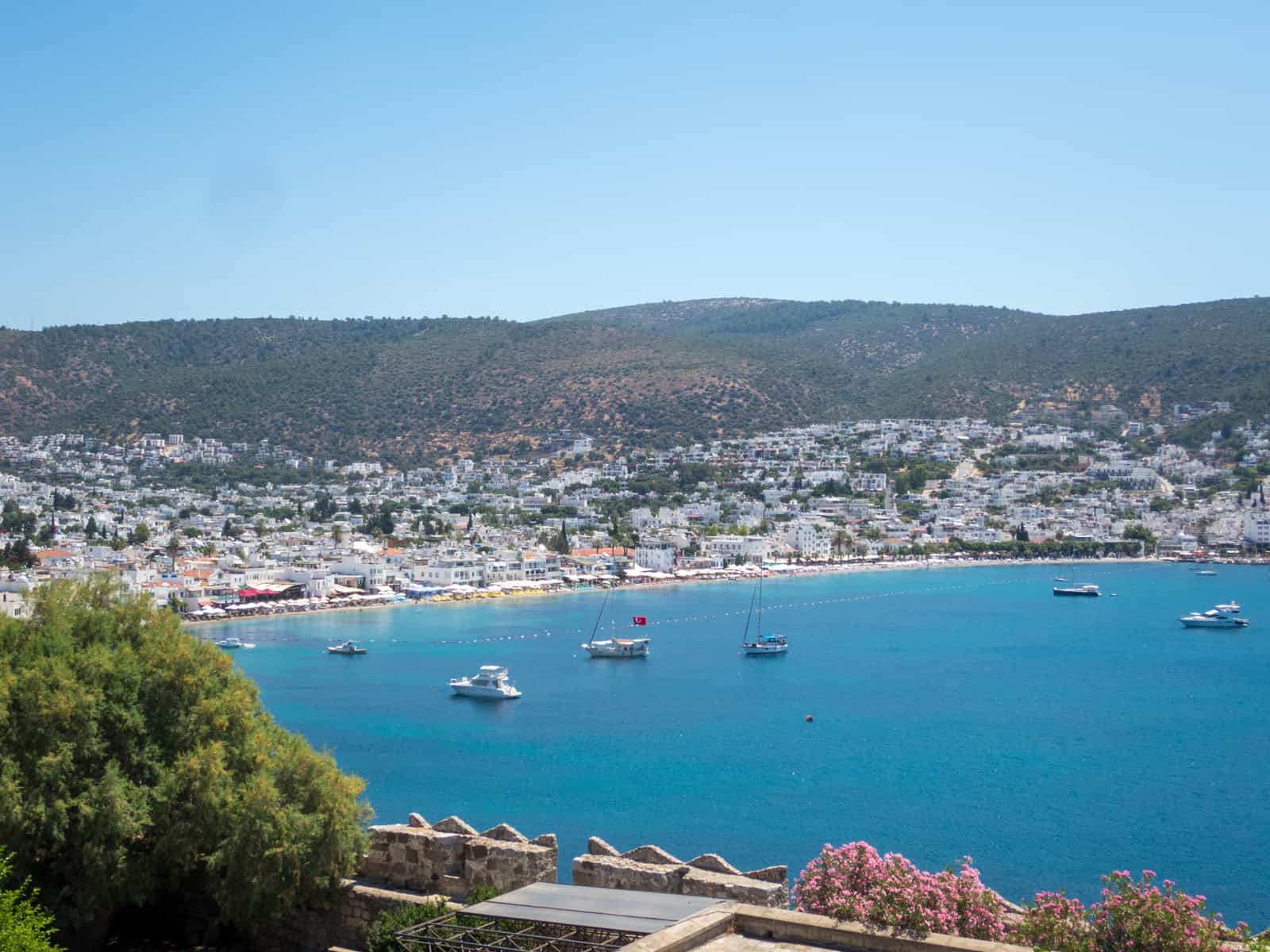
Bodrum, Turkey (photo: Dave Lee)

Bodrum is a heaven in the visitors' minds thanks to its combination of the sea, sun, and beach.

You will see beautiful settlements, history, the sea, and lively entertainment in Bodrum. It's got everything for the making of unforgettable memories.

The Bodrum Peninsula consists of Aegean and Mediterranean climates. Since humidity is rare in summer and very low in winter, hot and arid summers and warm and rainy winters occur.

The History of Bodrum

Bodrum has an incredibly rich historical background. Bodrum has hosted many civilizations, from ancient to modern.

According to Heredot, born in 484 BC, Bodrum is an ancient region founded by the Dorlars and later conquered by the Carians and Lelegians. In 650 BC, the name of the city was changed to Halikarnassos.

Bodrum Castle, also known as St. Peter's Castle, was built in the 15th century by the Knights of Jean.

The city joined the Ottoman Empire in 1522, and its name was changed to Bodrum after the Republic's proclamation.

Over time, Todrum is thought to have developed from the town's medieval name, Petrium (Petrum, Potrum, and ultimately, Bodrum).

Historic Places

St. Peter's Castle belongs in any Bodrum travel guide (photo: Dave Lee)
Bodrum Castle (photo: Dave Lee)

The Bodrum Peninsula is full of historical, natural, and touristic sites to be visited and explored. Bodrum's city center has many places to be seen, from ancient ruins to modern architecture.

Bodrum Castle

Bodrum Castle is an ancient building built on a rocky peninsula surrounded by sea and connected to the land from the north.

While visiting Bodrum Castle, you will see five main towers: the British, French, German, Italian, and Spanish towers.

Underwater Archeology Museum

Bodrum Castle is home to the Museum of Underwater Archeology, established in 1979. Artifacts from underwater excavations and research around Bodrum are displayed.

The Underwater Archeology Museum also has the world's most extensive Eastern Mediterranean amphora collection.

In the Serce Harbor Glass Shipwreck Hall, the world's largest Islamic glass collection is presented due to the sinking of a boat in t025.

Mausoleum at Halicarnassus

Mausoleum ruins (photo: Dave Lee)

The Mausoleum at Halicarnassus is considered one of the Seven Wonders of the Ancient World.

A huge monumental tomb crowned by a 21-step, 46-meter high pyramid decorated with 36 columns in the Ionic order, with four horses pulling a chariot on top.

An earthquake first destroyed the ancient tomb, and then its stones were used to construct Bodrum Castle.

Unfortunately, many reliefs and sculptures belonging to this tomb were taken to the British Museum by British archaeologist C. Newton in 1856.

For this reason, you can find most of the pieces of this monument in the British Museum.

Ancient Theater

The Ancient Theater is one of the significant remains from the Hellenistic period. With a long rectangular structure, the theater has a capacity of 13,000 people and consists of three main sections.

The Antique Theater was organized as an open-air museum. It was built in the 4th century and has a beautiful view overlooking Bodrum and Bodrum Castle.

The theater is on the Bodrum-Turgutreis road and still hosts many concerts and festivals in summer.

Zeki Muren Museum

The Zeki Muren Museum was created by transforming the house of the famous singer.

Items on display from Zeki Muren include his stage costumes, paintings he made, awards, and everything related to his life. In the museum garden, you can also see a giant statue of the artist.

Entertainment Spots

Windsurfing (photo: Keo Oran, Unsplash)
Windsurfing (photo: Keo Oran)

Outdoor Sports

Bodrum is a paradise for sports enthusiasts. You can do water sports such as diving, sailing, surfing, water skiing, and windsurfing, plus trekking, jeep safaris, camping, and cycling.

Boat Tours

One of the most enjoyable activities in Bodrum is exploring the sea and bays with a daily boat tour.

While experiencing these fun rides, you can enjoy the sea, sun, and coastal scenery. Longer, multi-day boat tours are also available.

Nightlife

Bodrum nightlife offers many options for entertainment on the Aegean and Mediterranean coasts.

Restaurants that offer the most delicious examples of Turkish and world cuisines, charming cafes, nightclubs where entertainment lasts until morning, countless bars where you can find all kinds of music, and the best drinks await you in Bodrum. On Bodrum Bar Street, the fun continues until sunrise!

Bodrum Marina Yacht Club

The Bodrum Marina Yacht Club offers a unique view overlooking the harbor and the castle. For this reason, it's a popular nightlife spot, too. 

Bodrum Marina Yacht Club is the only establishment that offers live music performances on its seafront stage every day during summer and winter.

There are three restaurants and four bars in Bodrum Marina Yacht Club that you can visit.

Water Parks

Water parks are ideal for families and children looking to have sun.

Two water parks on the Bodrum peninsula are independent of the hotels, plus others belonging to high-quality hotels.

Food and Drink

Happy hour (photo: Dave Lee)

Delve into the unique tastes of Turkish, Mediterranean, and world cuisine in Bodrum.

Seafood and herbs are prevalent, as is the Kopoglu appetizer made from yogurt, herb roasting, and stuffed zucchini flowers.

Bergamot jam and sage oil are special flavors you must try; both are unique to the region.

Shopping

For those who love shopping, Bodrum is one of the best places in Turkey. You can find every brand you would see in a metropolis and other big cities in Bodrum.

Bodrum is a holiday destination famous for its handicrafts and souvenirs. You can shop for handmade jewels and accessories.

Also, shopping malls are available in Bodrum for those who want to shop for specific brands.

Amusement and Theme Parks

The amusement and theme parks are ideal for families with children seeking a fun activity during their vacation.

Fun Town Yahsi Park in Ortakent and Country Ranch Equestrian Sports Club in Turgutreis are among Bodrum's popular amusement and theme parks.

Beaches

Bodrum beach (photo: Mehmet Belet, Unsplash)
Beach (photo: Mehmet Belet)

The Bodrum Peninsula has many beautiful bays and popular holiday resorts with magnificent beaches.

Beach clubs are indispensable in enjoying the sea during the day and participating in colorful entertainment that lasts until the morning.

The most outstanding beaches in Bodrum are:

  • Bardakci
  • Gumbet
  • Bitez
  • Guvercinlik
  • Yalikavak
  • Turgutreis
  • Golturkbuku
  • Aktur
  • Ortakent
  • Karaincir
  • Gumusluk
  • Bagla
  • Akyarlar 

Places to Stay in Bodrum

In Bodrum, you can stay in luxurious holiday resorts, five-star hotels, small boutique hotels, or hostels to enjoy your humble holiday.

According to your needs and desires, you can choose a place to stay among the wide range of accommodation options. We recommend you book your hotel before arriving due to the high demand.

With its serene days and dynamic nights, Bodrum offers visitors various experiences. There's something for everyone!

Bodrum carries all the elements expected from a holiday region in the Mediterranean and more. No matter your purpose or how many times you go, you will discover new things to enjoy every time.

For more details about Bodrum, check this page: https://otelleri.net/bodrum-gezi-rehberi

______

This story was brought to you in partnership with otelleri.net.

North Korea Tour: Traveling Inside the DPRK

Skyline view from the Juche tower in Pyongyang, North Korea
Pyongyang, North Korea - skyline view from the Juche tower

EDITOR'S NOTE: The author, Freddy Lansky, owns the copyrights to all of the rare North Korea photos in this article. For permission to use these photos, please contact him first.

"North Korea, North Korea? Why on god's green earth would you go on a North Korea tour? Why not Australia, or Hawaii, or something like that, but North Korea? What is wrong with you, man?" exclaimed one friend.

"Is North Korea safe to visit," exclaimed another.

The question of why I was there was on my mind before the trip and during the first few days.

2020 Update - Why I didn't finish publishing this article in 2013.

I took this trip to the DPRK (as North Korea is also known) in October 2013.

I started writing this article shortly after the trip but then decided not to finish and publish it for many reasons.

The main reason was even if you try not to "be political" about a visit to North Korea, the fact is the very act of going is "political," and I just didn't want to get that kind of attention.

However, I don't plan on going on a tour anytime soon with world travel shutdown due to Coronavirus and my adventure travel days mostly behind me (I went when I was 27, I'm 34 now).

Americans are banned from visiting North Korea by American law as of 2017 anyway.

Another reason for writing this is that in 2019 I started a Points and Credit Card Blog and moved into the travel space on my own. I now want the exposure that such an article would bring.

My goal in this post is to educate you on my experience, what I saw firsthand, and give you an idea of what to expect when going on an organized North Korea tour.

To be clear about the political ramifications or my opinions about visiting: I wouldn't have seen or known enough from a five-day propaganda tour to use such a trip to make any real commentary on the political situation anyways.

I would just be regurgitating whatever I heard on the news or media, which is pointless.

My goal here is only to share my experience.

Most videos and articles I've seen reviewing a North Korean tour tend to skew either on the side of making a propaganda fluff piece for the country or against it.

I'm trying to avoid both and simply provide an account of what I saw.

Table of Contents

  • Frequently Asked Questions
    • Why travel to North Korea?
    • What type of traveler visits DPRK?
    • What tour company did you use?
    • So, Americans can visit North Korea? 2017 update: no!
    • Warning for USA Visa Waiver Countries
    • Can you visit North Korea on your own?
    • How do you get to North Korea?
  • The Tour Experience
    • Beijing before the tour
    • Check-in at Beijing Airport
    • Air Koryo review: a 1-star airline
    • Pyongyang Airport
    • The Yanggakdo Hotel
    • The rooms in the Yanggakdo
    • Pyongyang: an extremely clean city
  • Where do you go on a North Korea tour?
    • Pyongyang tourist sites
    • Other places we visited in DPRK
    • What was the food and drink like?
    • Partying in North Korea?
    • Can you go to the North Korean border with China?
    • Dandong to Incheon, South Korea by ferry
  • How much freedom do you have on a DPRK tour?
    • Did you get a chance to talk and interact with any locals besides your guides?
  • Was everything you saw fake in North Korea?
    • Are a lot of the places you go to complete farces, setups, or just 100% propaganda?
    • What about conversations with your guides?
  • What's the deal with North Korean propaganda?
    • And the Posters and Speakers?
    • What about anti-USA billboards and propaganda?
  • How much does a North Korea tour cost?
  • Is North Korea safe to visit, and would you recommend going?
  • About the Author

Frequently Asked Questions

Why travel to North Korea?

Tourist with North Korean tour guides
My lovely North Korean tour guides

To get us started, I'll answer my friend's question "why not Hawaii or Australia?"

Since I work online and travel for fun, and all of the places I've been in 2012/13 are about sun, sand, and surf, I wanted to do something a little different.

News about the loosening of travel restrictions for tourism by the new leader, Kim Jong Un, has been spreading around the backpacking community for the last year.

You can now visit any time of the year, visit many cities and sites that were previously inaccessible, and they don't search your bags or take your phones.

I discovered the rumor that you have a lot more personal freedom than what a tourist could've expected a few years ago was correct.

It fascinated me how North Korea has been hermetically sealed off for nearly 60 years and is only now just starting to open up.

I wanted to see what it was like for myself. This is probably the main reason most of the other travelers joined the tour.

North Korean traffic women
The infamous North Korean traffic women

The thought of seeing what a bonafide communist country looked like seemed to be the closest thing to time travel that the world could offer. That alone, for me, was reason enough to go.

The final nail in the coffin was meeting a guy at a weekly Couchsurfing meet-up in Atlanta who told me all about his trip to North Korea, showing me all the pictures and telling me how incredible it was.

Jealousy finally got the best of me, and I said, "fuck it, I am going to North Korea and booking my flight tonight," and I did.

I got a lot more out of the trip and learned a lot more about myself, the world we live in, and North Korea than I ever expected.

North Korean propaganda

What type of traveler visits DPRK?

Well, besides Dennis Rodman…but I digress.

Everyone in our tour group was a hardcore travel junkie, like mega-hardcore travel junkie, like "the only purpose I have in life is to travel my ass off" type people.
Obviously, I hit it off almost right away with everyone on the trip.

The group was almost exclusively male between the ages of 23 and 38. The largest group of visitors to North Korea is Chinese, followed by Americans.

Yup, Americans were the #2 most common nationality for North Korean tourism until banned in 2017.

In our group, there were also a few Polish guys, one hilarious Russian dude, and a few Canadians, but about half our tour group, including our guide, was American.

What tour company did you use?

There used to be only one tour company that offered tours to North Korea, Koryo Tours, which still operates and has the most pristine reputation.

Since then, many tour companies have moved into North Korean tourism.

The company I used is the only company that caters exclusively to backpackers, Young Pioneers Tours, or YPT as they are frequently known.

They cater mainly to the 20s to early 40s crowd.

The idea of traveling to North Korea with a group of people my own age instead of with a bunch of seniors also got me more interested.

Almost everyone had visited dozens of other countries, and virtually everyone in the group spoke at least three languages and lived abroad at least once.

So, Americans can visit North Korea? 2017 update: no!

As of the time I went, October 2013, Americans were allowed into North Korea with no problem with either American law or North Korean law.

Before 2012, Americans were not permitted by the North Koreans to visit for tourism purposes.

In Sept 2017, the Donald Trump administration banned Americans from visiting North Korea.

So as you can see, there was only a 4-5 year window between the time that North Korea allowed Americans to the time the US Department of State shut down tourism to North Korea.

If I ever end up in legal trouble from this point, I want to emphasize: my visit was legal, according to both countries at the time (2013).

But if you are an American going now, even if you go on another passport, you are putting yourself at tremendous risk of falling afoul of US law as of 2020. Don't do it!

2020 Update: due to the pandemic, the North Korea borders are completely shut, including to tourists probably until at least 2021.

North Korean visa
My visa to North Korea (notice they use "Juche year" 102 instead of 2013)

Warning for USA Visa Waiver Countries

As of 2019, if you belong to any country on the USA Visa Waiver Program such as the UK, Australia, France, or Chile and have visited North Korea anytime since 2011, you will no longer be eligible for a visa waiver and will have to apply for a US Visa.

For citizens who live in those countries, would US immigration authorities ever know you went if you don't make a stink about it on social media and keep a low profile?

They probably would not, BUT you'd be taking the risk of being denied admission to the United States and having to apply for a regular visa for every visit.

Even once the COVID-19 pandemic ends, you should not travel to North Korea if you are in one of the 38 countries on the Visa Waiver Program and plan on ever visiting the United States. At least until the law changes.

This is not a complete list of the legal and political ramifications you may have from visiting North Korea.

Each country has its own rules regarding North Korea, but generally speaking, if you are not American and not in one of the 38 Visa Waiver Countries with plans to visit ever visit the US, you shouldn't have issues with your home country.

However, you'd still need to wait until North Korea opens its borders as they are closed to tourism for the indefinite future due to the pandemic.

Also, if you are a dual citizen of South Korea and another country and go to North Korea without prior authorization on your other passport, you could land yourself in hot water in South Korea.

If you have South Korean nationality, don't live in South Korea, and enter North Korea on another passport, I would advise you not to tell anyone on the tour you are South Korean.

Can you visit North Korea on your own?

Unless you are perhaps a Chinese, Russian, or Malaysian in the DPRK on business, virtually nobody can enter North Korea without a guide.

I should make it clear at this point that independent travel to North Korea by westerners is still not allowed.

You have to go through an independent tour company that works closely with the DPRK government's tourism arm known as the KITC (Korean International Tour Company).

The tour companies and guides want to give you the best trip possible, but they have to work within the restrictions of KITC.

Although those restrictions have loosened in recent years, they're still very strict.

If you don't want to go on a guided North Korea tour, you may be able to hire a private guide for a custom itinerary, but this is very expensive, and you'd still be very limited on what you can do.

North Korean debit card
North Korean Debit card

How do you get to North Korea?

Getting to North Korea can range from slightly difficult to logistical nightmare.

The hardest part of any trip to Asia is getting a Chinese visa, but I already knew this since I'd been to China before.

You have to get a Chinese Visa to go to the DPRK because all DPRK tours start and end in China.

Most DPRK and Chinese tour companies will tell you getting a Chinese visa is a "piece of cake" and can easily handle it yourself. That is a bit of an exaggeration.

Getting a Chinese visa can range from slightly difficult to a colossal pain in the ass, especially if your city doesn't have a Chinese Consulate, Embassy, or Visa Office.

You have a lot of forms to fill out, and you also have to give the consulate:

  • scans of your full itinerary
  • two passport photos
  • proof of a plane ticket in and out of China
  • proof you have enough money to support yourself
  • color copy of your passport

If you've visited China before, they'll need a copy of the visa from your previous trip, even if it's on an expired passport.

You'll also have to explain to the consulate/embassy why you'll need a double-entry visa.

Other than that, you also have to apply for a North Korean visa through your tour company.

You'll need to pay for the tour with a bank transfer.

If you don't want to deal with all the logistical mess, you can pay various "passport agencies" to deal with all the hassle of getting the Chinese visa for a fee.

Other than that you have a few small forms to fill out for the North Korean visa.

2018 Update: China now has a 72-144 hour visa waiver program for many western nationalities that you can use to go to North Korea as long as you don't spend more than 72 hours in China on either side of your trip.

2020 Update: This program is paused due to the COVID-19 pandemic, it remains to be seen if they will reactivate it anytime soon.

You'll also need to book your round trip plane ticket to Beijing on your own.

However, hard work brings the most delicious rewards: five days of access to the most secretive nation on earth.

The Tour Experience

The author (left) and his Couchsurfing host in Beijing, China
Saying goodbye to my Couchsurfing host in Beijing

Beijing before the tour

Virtually all tours start in Beijing, where you can either fly or take the train into Pyongyang.

The day before the tour, there is a meeting where your guide will give you your DPRK visas and a brief rundown on taboos to avoid while in the country and other vital information.

Part of the experience of going to North Korea is taking the train.

Unfortunately, Americans were not allowed to take the train at the time I did the tour. I had to fly in from Beijing Airport.

Air Koryo plane ticket and check-in counter

Check-in at Beijing Airport

Check-in at Beijing Airport was uneventful; the process was similar to any other commercial flight.

As we reached the terminal where we were taking off, I quickly realized tourists only account for maybe 25% of the passengers.

The majority of the passengers seemed to be either diplomats or high level North Korean politicians.  

Boarding Air Koryo DPRK
Last moment of freedom, before heading over the last remaining piece of the iron curtain

Air Koryo review: a 1-star airline

Despite being the world's only 1-star airline, I found the plane and service to be fine.

If you are an aviation geek, DPRK would be heaven as Air Koryo uses a bunch of older aircraft that are no longer in use for passenger service outside of the country.

  • North Korean enjoying the last few minutes of internet
  • Check-in Air Koryo
  • Onboard Service-
  • Enjoying a beer on Air Koryo
  • In flight reading - Air Koryo
  • In flight reading - Air Koryo
  • In flight reading - Air Koryo
  • In flight reading - Air koyro 3
  • In flight reading - Air koyro 2

They served us a small meal and a beer and handed us a magazine filled with propaganda.

The "in-flight entertainment" on the overhead screen was various tracks from the Moranbong band.

The view upon landing at Pyongyang (2013)

Pyongyang Airport

I don't have much to say about the new Pyongyang airport in the DPRK.

When I was there in 2013, the old airport had been torn down, and the "airport" was nothing more than a landing strip with a small one-room makeshift building.

The new airport was still under construction. I've since heard it's quite nice and up to international standards.

The Yanggakdo Hotel

We stayed at the 4-star Yankkhado Hotel, which is the most popular hotel for foreigners.

95% or more of foreign tourists stay in either the Yanggakdo Hotel or the more upscale "5-star" Koryo Hotel.

There are other hotels, but they are mainly for Chinese travelers as I think these are the only two hotels in Pyongyang that have the basic amenities a foreigner would expect.

But I could be wrong. Let me know in the comments!

The Yanggakdo Hotel is located on an island in the middle of the Taedong River. You can go outside, but you are not allowed to leave the island alone.

Legend has it (jokingly) that they have filled the river with sharks!

There are many myths and legends about the Yanggakdo Hotel, especially some "secret floors," which I won't get into in this article.

Night stand at Yanggakdo Hotel
Anyone know how to work this thing? (Yanggakdo Hotel)

The rooms in the Yanggakdo

The rooms were simple enough; they looked like any 3-star hotel would, but with a retro look and feel, including a radio I couldn't figure out how to work.

According to urban legend, they're bugged, but I doubt we were important enough for them to bother listening in on our rooms.

One of the most striking things is when you turn on the TV there is only one local channel, Koryo TV.

In the hotel, there were a few foreign channels, but I'm told outside of hotels with tourists, the only station is Koryo TV.

This channel is pretty much nothing but a reporter droning on and on for hours about the current and past exploits of Kim Il Sung, Kim Jong Il, and his son and the current leader of the DPRK, Kim Jong Un.

Once you arrive at the hotel from the airport and turn on the TV and see this, it hits you that you are really in North Korea!

Bowling alley
Bowling alley

The Yanggakdo Hotel has a bowling alley downstairs.

That is probably the most important thing you need to know as you'll spending plenty of nights down there bowling and laughing with chain-smoking Chinese business people.
(Many Chinese are now doing business in Pyongyang and starting companies in North Korea.)

Yanggakdo Hotel bowling waitresses

There is also a sketchy casino downstairs.

And a rather famous turtle in the lobby that is in way too small a tank for his size. It's left to just swim aimlessly back and forth.

There is a brewery on the premise that offers the most delicious beer.

Virtually every place we went to had its own brewery and tanks.

The Democratic People's Republic of Korea does not play around when it comes to their beer.

There is no wifi anywhere in the country as of the time I went, but you can send or receive an email for a whopping $2-$5 each.

View of Pyongyang from hotel room
View from the window in my room, not to shabby right! (Pyongyang, DPRK)

The rooms were nice enough, but we hardly spent any time in them.

The view from our 28th-floor room was incredible, though.

The hotel has around 48 floors, but as far as I could tell was empty.

Everywhere we went felt empty and as though things were "turned on" just for us much of the time.

Pyongyang: an extremely clean city

The first thing you'll notice almost right away is that Pyongyang is probably the most beautiful city in Northeast Asia.

The water and air are clean, there is an absurd amount of green space, and the lack of heavy traffic and corporate signage everywhere is a welcome break from places like Beijing and Seoul.

Note: this is starting to change as much to my surprise there were quite a few cars during rush hour, and we did see some advertisements for a car company.

There is also virtually no trash in the city, at least in the parts we went through. 

After studying where we were taken when writing this article, I realized I only saw a tiny section of Pyongyang.

Still, even when leaving town, it didn't seem like the non-touristy parts we passed were much different.

It seemed like everyone in the city has their basic needs taken care of, and you didn't see any poverty or homelessness.

One should keep in mind, however, that Pyongyang is supposedly reserved for the most connected and loyal 10% of North Koreas in the country (at least that's what the media says, I have no way of confirming this or not).

Where do you go on a North Korea tour?

I chose to do the Political Interest Tour (note: the tour has changed a bit since 2013 to the current time this article is being published in 2020).

These days, itineraries are pretty flexible, and there are plenty to choose from.

Still, virtually all tours will include:

  • Various monuments in Pyongyang
  • DMZ
  • Children's Palace, where you'll see a performance from North Korean's most gifted children
  • The nearby town of Kaesong (probably)

The remaining sites depend on the "theme" of your itinerary and may change depending on conditions.

Things we got to do that were unique to our trip, for example, were a visit to a steel factory and riding roller coasters with some North Korean soldiers (surely something I won't forget).

But your trip might include other sites and activities unique to your visit.

Truth be told, all tour companies such as Koryo and YPT try to make it sound like every tour is unique and different, but about 75-80% of the tour is fixed to particular destinations such as Kaesong City, the DMZ, and the main sites and monuments in Pyongyang.

My tour visited the main sites in Pyongyang, Kaesong City, and the DMZ.

Unique to our tour was a visit to a farm and steel factory in the seaside village of Nampho (also spelled Nampo) where most tourists usually don't go.

I won't bore you with every single detail, but here is a rough itinerary of the most interesting places we visited.

Virtually every visit begins with a Korean lady dressed in traditional clothing.

She comes out to tell you how many times Kim Il Sung and Kim Jong Il visited the factory, museum, hospital, etc. you are currently visiting and how their advice helped improve it.

Then the lady magically disappears, and you are usually free to walk around and do your thing and take some photos as long as you don't wander too far.

(And believe me, if you stray too far, the guides will freak out, I tried.)

Pyongyang tourist sites

Most of the tour took place in Pyongyang. I'll list the sites we visited below.

Unless you visit the economic zone of Rason on a separate trip, virtually every tour will cover the majority of the places in Pyongyang mentioned below.

Map of touristy part of Pyongyang
This map covers more or less mostly where you go

About 80% of the sites you'll see in Pyongyang will be limited to a small stretch of land, hugging the west bank of the Taedong River between Mansundae Hill and Kim Il Sung Square.

Other nearby sites just north of the map include the Arch of Triumph, Kim Il Sung University, and the Juche Tower on the East bank of the river.

You'll be bussed around to all the sites, and in one case, you may get to take the subway.

You'll quickly realize you could easily walk to almost all of the significant sites, but they choose to bus you around anyways, the reasons for which I won't speculate.

I've included a map showing you the two hotels where virtually all western tourists on a guided tour stay (Koryo and Yanggakdo hotels) as well as where the vast majority of sites are located.

(For the few places not on the map, they are mostly just outside what's shown.)

Click to see full size

Mansudae Hill Grand Monument

The Mansudae Hill Grand Monument is a large complex with statues.

The central part of the complex is two giant statues of Kim Il Sung and Kim Jong Il.

These are probably the most famous in the entire country, and you've probably seen video footage of it in various news broadcasts.

They are some of the biggest statues I've seen in my life.

Flanked on the sides are two elongated bronze murals of various workers of the "revolution" soldiers, farmers, and the like being patriotic, not all that different from some of the murals done in Eastern Europe before the fall of communism there. 

Kim Il Sung statue
Kim Il Sung Statue with people for a sense of scale

Part of your tour to the DPRK will be to buy flowers and leave them by the monument and then bow down to the dear leaders.

The statues are much more massive than the photos would suggest, and like all things DPRK immaculately clean.

We were warned that all photos must show the entire figures from head to toe as photos that cropped them would be considered a form of disrespect. 

The Korean Revolution Museum, which was on our itinerary, is nearby.

I don't remember if we went inside or not. (I don't think we did; I have no photos.)

Kim Il Sung Square
Kim Il Sung Square

Kim Il Sung Square

If you've ever watched footage of CNN announcing North Korea's latest nuclear ambitions with some video reel of soldiers and large model rockets being marched on parade by the army, it's here in Kim Il Sung Square.

Of course, on the day I went, things were much quieter, even desolate.

Kim Il Sung Square
Click to see full size

You can see marks on the giant square of where people should stand in an exact location (I guess DPRK was making social distancing markings on the ground before it was cool?).

The square was massive, probably the size of multiple football fields.

Mangyongdae School Children's Palace
Class is in session

Mangyongdae School Children's Palace

The Mangyongdae School Children's Palace is an extra-curricular after school facility, clearly for the most privileged children of North Korea.

Before we entered, a high school-aged girl came outside to give us an explanation of how this building relates to Kim Il Sung, how many times he and Kim Jong Il visited, etc.

On a more exciting, less scripted note, a group of four girls came and talked to us in the best English they could muster saying hello.

My Russian friend took a good photo before they scurried off to class! 

During the tour, we were able to walk in on a calligraphy class as well as a music class.

All the kids here were incredibly talented at whatever they were doing.

The building itself is stunning both on the outside and inside.

The inside has vast wide-open spaces and is almost 100% marble. This seemed to be common to nearly all the buildings we were shown.

Children enjoying the show with us at Mangyongdae School Children's Palace

We were then taken to a brief variety show performed in the auditorium by the children, which was very well, perhaps "too well" performed for kids that age.

They did things such as juggling, playing music, short vaudeville scenes, it was a fun show.

If you do a DPRK tour you will almost certainly make a stop here. Check out the Young Pioneers website for more information.

Arch of Triumph in Pyongyang
Arch of Triumph

Arch of Triumph

If you noticed this Arch, looks suspiciously like the Arc de Triomphe in France, its because it was modeled after it.

It was made to celebrate Korea overcoming the Japanese imperialists in World War 2 and, like all monuments in North Korea, specifically glorifies the country's founder, Kim Il Sung.

It is the second-largest arch in the world, and its impressive size is not adequately captured in the photos I've taken.

Cars are supposed to drive under the Arch, but we didn't see any vehicles go through it at the time as traffic in North Korea is sparse.

Juche Tower

No doubt, you will get the best views of Pyongyang from this thin, erhmm, "phallic" shaped structure.

Inside is a tiny museum that shows small plaques from "Juche organizations" around the world, including ones from the USA.

It's possible some of these organizations were real during communist times, but some of them were quite funny like "the Juche organization of southern United States thanks Kim Il Sung," etc.

It's supposed to show countries all around the world subscribe to the "Juche Idea," which is the North Korean version of "self-reliance" introduced by the country's first founder, Kim Il Sung.

This may have been partially true before communism fell apart in the late 1980s, but these days I find it hard to believe there are dozens of Juche organizations actively working around the world. But who knows, right?

Arch of Reunification
Striking a pose at the Arch of Reunification - DPRK (2013)

Arch of Reunification

Completed in 2001, The Arch of Reunification is a relatively new monument.

If you go here, it's one of the few chances you'll get (or at least I got) to step foot on the outskirts of Pyongyang.

The arch commemorates the ideas Kim Il Sung had to reunify the Korean peninsula and spans the main highway going into town.

Also, if you visit, they will quickly set up a "rest stop" near the arch for you to buy snacks.

They'll then take it apart right as you leave. DPRK is a weird place man!

Mangyongdae Funfair
Mangyongdae Funfair

Amusement Park (Possibly...Mangyongdae Funfair)

Have you ever dreamed of riding a roller coaster with a group of North Korean soldiers? We did exactly just that.

I believe the name of the park was the "Mangyongdae Funfair," but please don't hold me to it as this wasn't on the itinerary!

It was a standard small amusement park with North Korean's just acting just like any people from any country would at an amusement park, having fun with their friends, family, and loved ones.

This was a cool excursion because we got to interact with real North Korean's in the park in a non-scripted fashion, even though, of course, the language barrier limited communication to hand motions and laughing.

Pyongyang Maternity Hospital

Visiting the Pyongyang Maternity Hospital was one of the most interesting and weird parts of our North Korea tour.

This is supposedly one of the best, if not the best hospital in the country.

Everything felt staged, but I guess it is a real hospital.

One weird thing we noticed is there was no soap anywhere, which is a common shortage in socialist countries. 

The idea behind taking us to the hospital was to show us how modern North Korea's medical system was. Ironically, it had the exact opposite effect.

My favorite and most obviously staged part was the "Breast Endoscopy Room."

We were then taken to a tanning bed that was hooked up to some old soviet radio that was supposedly for use with pregnant women to get UV rays.

I was like, "come on; you gotta be kidding me."

  • Baby friendly hospital
  • Latest North Korean hardware
  • Brush your teeth for dear leader

I can hardly blame the Koreans for trying extra hard to impress us, given all the bad press coming out of the country.

It's clearly in their best interest to put their best face forward, even if it meant exaggerating or faking certain parts of the trip.

They then took us to a board room that had a bunch of old books in English on the walls, some of which had nothing to do with medical care such as "The 1997 A+ certification guide to repairing computers."

A doctor came in and talked to us about North Korea's medical system. We were told anyone who wants care can come to this hospital for treatment.

I looked it up, and it really is supposed to be one of the best hospitals in North Korea, so maybe it wasn't all a facade.

But other people who toured DPRK agree this place felt like one of the most "staged" sites in the country.

  • Kim Il Sung University
    Dead leaders are always watching you
  • Kim Il Sung University - Google
    They claimed the computers were on the internet, but they were not.
  • Exterior of one of of Kim Il Sung University's buildlings.
  • Kim Il Sung University Classroom
  • Kim Il Sung University internet
    Something about how the internet, which they don't have access too, works.

Kim Il Sung University

Taking us to Kim Il Sung University was another attempt by North Korea to show how modern they are.

The buildings in the university are stunning both on the inside and out. Virtually everything in the corridors is made out of real marble.

I believe this is the most important and famous university in North Korea. Only the smartest and most privileged North Koreans can study here.

They placed a special emphasis on showing us computers as North Korea is known for restricting their use and having virtually no external internet access.

We had a local student come and explain to us what they do at the university.

From the gist of it, they focus more on math and science than softer liberal arts topics, at least at this particular university, but I could be wrong.

North Koreans on a train
Having a moment with some locals on the train

Pyongyang Metro Subway Stations

No trip to DPRK would be complete without a trip down into the subway.

The Pyongyang Metro is one of the deepest in the world; the escalator to go down is ridiculously long.

Metro escalator
The escalator down to the subway

I believe the reason they built it so far underground is so it can double as a nuclear bomb shelter.

Like most communist-built subway stations, they are very opulent, similar to the ones you'd see in St Petersburg, Russia.

North Korean subway car

We got to see a few stations, including one's supposedly not seen by foreigners very often (unfortunately I couldn't find any photos I took myself of the stations).

The subway station only has two lines. This was also a great experience as we got to interact a bit with the locals on the train.

Kumsusan Palace of the Sun

Without a doubt, visiting the Kumsusan Palace of the Sun was one of the most bizarre experiences not just of my trip, but of my entire life.

Jews have the Western Wall, Muslims have Mecca and Medina, and North Koreans have the Kumsusan Palace of the Sun and, more specifically, the Mausoleums of Kim Il Sung and Kim Jong Il.

We were told that most likely, we would not be allowed to visit the inside of the Palace but low-and-behold when the day arrived, it turned out we could go in after all.

There aren't any amateur blogger photos or vlog footage from the inside of this building, as filming is strictly prohibited.

They make you empty all your pockets and confiscate all electronics, which are then returned to you later.

This building is so "holy" we weren't even supposed to take a photo

Mausoleum where Kim Jong Il rests in state

The tour starts with you being given the most serious security check of your life.

They're checking mainly for hidden cameras of any sort including in pens and eyeglasses.

All electronics are confiscated. You then are taken into a long moving walkway that goes on for about 15 minutes.

On each side are various paintings of the country's original leader Kim Il Sung doing various things, but almost always some form of providing field guidance at either a factory, a farm, or riding a horse in the wilderness.

Patriotic music is blasting through the loudspeakers. This goes on and on and on.

Eventually, you get off and are taken on another long people mover, which is essentially the same thing, but this time with Kim Jong Il.

This walkway is slightly shorter, about ten minutes or so.

At the very end of the walkway, they dedicated two or three portraits to the current leader Kim Jong Un.

(This was in 2013. I'm sure as of 2020, they probably added more.)

The Mausoleum - inconsolable crying North Korean women

After this, you are taken down some kind of opening in the wall with air blowers pushing air in all directions.

When you pop out, you'll see North Koreans, and especially women, hysterically crying.

Whether this is acting or not is anybody's guess, but it didn't seem like they were faking it to me.

I mean, the North Korean women near the mausoleum were crying there as if their child had died; it was a bizarre sight to see.

Then you are taken to Kim Il Sung's mausoleum. You must quickly pay your respects by bowing down.

You are then swiftly taken into the next room, which is Kim Jon Il's mausoleum, where you must bow down again.

Next, you're taken to a room that shows all the gifts, award medals, and plaques, as well as diplomatic "thank you" letters given by foreign governments and leaders.

90% were from European communist governments that no longer exist or dictators that were overthrown or died long ago, such as Indonesia's founder Sokharno and disgraced Romanian dictator Nicolae Ceausescu (a dictator who made Romania the spitting image of North Korea for 30 years).

Since North Korea's government has been a pariah for 30+ years now, they've had to get creative.

From 1995 onward, most of these "diplomatic gifts" are from organizations rather than governments, some of which may not even exist.

(I saw things like "The Juche Organization of South Australia," etc.)

The most interesting part is at the end of the tour where you can see all the countries Kim Il Sung visited, along with his train car.

In the next room, you'll see all the countries Kim Il Sung visited, and his train car as well.

They preserved his train car perfectly, even leaving the Macbook Pro on display!

I wish I got pictures but didn't want to risk a death sentence. If you watch the last two minutes of this video, it gives you a decent idea of what I saw.

Other places we visited in DPRK

  • Couple taking Wedding Photos in Kaesong DPRK
    Wedding Photos in a Park DPRK
  • Historical architecture preserved in Kaesong. It was almost the only city in North Korea not to be bombed to bits in the Korean war as it belonged to South Korea until it was given back to the North during negotiations.
  • People in Kaesgon City DPRK
    Scene of people smiling at people dancing in the park DPRK
  • People sitting Kaesong City, DPRK (2013)
    Typical scene in North Korea, people relax in a squat position much like in China
  • Propaganda poster, kaesong city
    Propaganda poster in Kaesong, DPRK
  • Couple taking a photoa in the park, Kaesong, DPRK (North Korea)

Getting out of Pyongyang is typically the highlight of your trip as you get to see some of the countryside on the bus ride.

And, more importantly, the propaganda is just a bit less intense outside of the city (though still substantial).

Locals in Kaesong, DPRK
Kaesong, DPRK

Kaesong city

Kaesong is a small and prosperous (by North Korean standards) city near the DMZ. Geographically, it is much closer to Seoul than Pyongyang.

Kaesong was famous for hosting an industrial park in collaboration with the South Korean government to produce goods, but it has long since been decommissioned.

The ancient city is very well preserved with tons of ruins and buildings.

Kaesong belonged to the South Koreans for most of the Korean War and was one of the few places in North Korea that weren't bombed.

Cyclists in Kaesong
Cyclists in Kaesong

More importantly, this was the only time during the 6-day trip when we had a fair bit of freedom to walk around outside by ourselves.

It was a relief not to have three different local guides continually breathing down our neck.

A small group of us went to a nearby park and saw lots of people taking wedding photos, relaxing, and enjoying their day off (I believe we were there on the weekend).

Shaking hands at the DMZ

The DMZ from the North Korean Side
(Panmunjom Truce Village)

If you visit the DMZ (demilitarized zone), you'll have far more freedom to walk around and take pictures on the North Korean side than the South Korean side.

Going to the Panmunjom from the north side was a much more pleasant experience than from the south.

North Korean minder with Japaneese celebrity
A colorful Japanese tourist

I also went to South Korea on this trip the following week.

When I visited the DMZ, they hardly let us take any pictures or talk to the soldiers; it was quite a disappointment.

This is pretty ironic because you'll be told that in North Korea everything is scripted, you'll have no freedom of movement. And this is mostly true.

However, if you are a history buff and want to explore the DMZ, you'll have more freedom to walk around if you go on the North Korean side.

(Just don't cross the line unless you want to get riddled in bullets!)

North Korean soldier with Japaneese celebrity
DMZ is no place to clown around

We were taken into a small room and given the North Korean version of events as it relates to the Korean War.

We were reminded that both Koreas, as well as the USA, are technically still at war.

And we were told about ten times that it was South Korea/"The American Imperialists" that started the war (fact check: virtually all historians agree that North Korea initiated hostilities, but again, who knows who's right).

We were also shown the official armistice agreement.

Technically the DMZ is the only place you are allowed to take a photo with a North Korean soldier.

The truth is, even though they tell you not to take pictures of soldiers, they are so ubiquitous in the country, it's almost impossible not to.

However, the DMZ is the only place you can interact with the soldiers and probably the only place with soldiers that speak a bit of English.

At the end of the tour, we got to wave to the tourists on the South Korean side, and they waved back.

When I later visited the South Korean side, I kept thinking how bizarre it is two such very different worlds exist right next to each other.

The DMZ from the North Korean side (top) and South Korean side (bottom)
Top: The DMZ (Panmunjom) from the North Korean side
Bottom: One week later - DMZ from the South Korean side

Nampho (Nampo) City - North Korea

A unique stop on our North Korea tour was an industrial town on the west coast of Korea called Nampho (also spelled Nampo).

Tourists don't usually go here, which means we could see more real-life scenes and less "acting" and propaganda.

Taen Machine Factory
Taen Machine Factory (click for full version)

Taen Machine Factory - Nampho

This was my first time stepping into a machine factory and smelter in nearly 12 years.

The last time I had done so was in China when studying business abroad in 2008.

The factory didn't look too different from any other factory, except for the propaganda slogans on the walls everywhere.

Taen Machine Factory - Nampho (Nampo) DPRK - North Korea
Taen Machine Factory - Nampho

Before we entered the factory, we were told how this all related to Kim Il Sung and how many times he had been there.

And we also were shown a mini-museum attached to the factory.

Not much else to say here. It was busy people working a smelter and making machines. The photos and videos were sick, though.

Chingsan Cooperative System Farm - Nampho

The first thing that struck me about this model "farm" is that very few people were there, even though it was harvest season!

Plus, there were no animals. We did see some people driving by.

Writing this seven years later, I still wonder if it was just a day off for the people working there?

It's tough to tell whether what you are shown is real, what is not, and what is real but exaggerated.

Adding to the Orwellian atmosphere, there was some propaganda blasting from speakers throughout the pasture, but the audio recording kept breaking and glitching.

We were allowed to roam around the farm for a little bit.

Koreans outside in the Nampho Farm
The only time I saw any Koreans outside in the Nampho Farm was in this photo. Again it could have been the season, time of day, or workers just had time off.

Perhaps, like the hospital visit, the farm is indeed real but this a "model" version made for tourists that is still partially used in real life.

2020 Update: It seems many tourists go to this specific farm and orphanage, so this would add evidence to the theory that it's not just "any other regular farm."

North Korean Kindergarten class in Napho (top photo), and South Korean class (bottom photo)
Top: North Korean kindergarten (Nampho, DPRK)
Bottom: South Korean kindergarten (Seoul, ROK)

Rural North Korean kindergarten "orphanage"

Following the farm, we were then taken to a North Korean kindergarten.

Was it real or not? Again impossible to say, but I'd lean on the "yes it was real but probably in better condition than most rural kindergartens."

The first thing you notice when walking inside is a giant painting of Kim Jong Il sitting with a bunch of young children.

Then as you walk in, you see a lot of propaganda posters everywhere, all of which are some variation of "kill the Japanese" or "kill the Americans."

You could tell the teacher was embarrassed that we were taking photos of this.

Also, we were told this was an orphanage, but interestingly enough it wasn't that they didn't have parents, they just went to school and lived there.

I guess it'd be considered more of a "boarding school for kindergarten-aged children."

  • North Korean Kindergarten - DPRK (Nampho)
  • Painting - Kim Il Sung and Kim Jong Il with orphans
  • North Korean Kindergarten - Orphanage
  • Killing a US Soldier - Propaganda inside a Kindergarten

After this, we went inside a classroom.

The children performed some songs on the piano and simple dance routines clapping their hands; we were invited to join.

The kids were lovely and it was a highlight of the tour.

What was the food and drink like?

Some foodies might kill me for saying this but I couldn't really spot major differences between North Korean and South Korean food either in dishes or presentation.

They fattened us up real good in North Korea.

I think it's their part to "show us" how much food they have in North Korea since the country gets so much bad press that their people are ostensibly malnourished.

I will tell you for a country that supposedly has no food I have never seen so much farmland in my life. It seems the whole country is one giant farm.

Pyongyang cold noodles
Pyongyang Cold Noodles

North Korean food, at least the way we had it presented to us, is very similar to South Korean food but without the western influences.

The most popular dish is "Pyongyang Cold Noodles," which is Korea's take on Ramen noodles. It's a bit of a misnomer as the broth is served hot.

You can get it in any Korean restaurant. I've even ordered it here in Mexico where I live. I'm not a huge fan, but some people love it.

People also eat massive amounts of kimchi, which is also true in South Korea.

The country's beer is all brewed by the Taedonggang beer company. It's a delicious lager but tastes very ale-like, like a lighter pale ale.

Also, many places seem to have their own brewery that produces delicious lager, which I presume is also Taedonggang beer.

Karaoke singer
Karaoke is as popular in North Korea as it is in South Korea or anywhere in Asia

Partying in North Korea?

Partying options are limited to your hotel, and this one fancy place called the "Diplomatic Club" that is made for foreigners and diplomats and their families.

Unfortunately, the guides aren't (yet) able to take us to where real North Koreans go out and have a good time.

After 12 hours straight of sightseeing and a round or two of bowling at the Yankhado bowling alley, you won't have much energy left to go out and party anyways.

Can you go to the North Korean border with China?

After the end of my DPRK tour, I decided to visit the borderland region in China in Dandong in Liaoning province.

As of 2020, the Chinese government has cracked down, and they do not like people flying to Dandong just to screw around near the border.

However, when I went in 2013, things were still pretty relaxed.

The border has a lot of fascinating history as it marks the end of the Great Wall of China, and the wall still serves as the approximate border between Korea and China.

A lot of smuggling and things go on in the border cities of Dandong and Sinuiju.

North Korean border with China
The border area is not just interesting its actually very pretty with a historical section of the great wall, but be careful if you go. More foreigners get in trouble here than in DPRK itself.

You can get close to the border, ostensibly to enjoy the Great Wall of China, but the real reason is to get a good vantage point to see North Korea over the border.

Here a few more photos of my time in Dandong.

I had a great Chinese guide who had, let us say, a "less than favorable" opinion on North Korea, which was a great counterbalance after hearing five days of propaganda.

  • Standing by sign DPRK-China border
    North Korea - China border Dandong
  • Funny sign North Korea / China
    Funny sign - DPRK/China border
  • Looking over North Korea
    What does this say in Chinese? tell me in the comments!
  • Right up to North Korea border Fence
    Feet away from North Korea (got yelled at by a guard!)
  • Mao Zedong statue - Dandong
    Famous Mao Zedong statue in Dandong
  • North Korean fishing boat - Dandong
    North Korean fishing vessel - Dandong

I managed to get right up to the river and border before I got yelled at by some guards, and my Chinese tour guide quickly whisked me away.

Later, the guard said the reason they were yelling at me is that they found a dead body in the river earlier that day. Yikes!

2020 Update: Apparently, Chinese authorities got fed up with curious westerners getting dangerously close to the border in Dandong, so if you go, just be careful and always go with a guide as I did.

Map

Dandong to Incheon, South Korea by ferry

I won't cover South Korea since there are already so many articles and videos on it, but it is a lovely country.

The boat ride was interesting in-and-of-itself.

And before you ask, I highly doubt North Korean refugees would be able to make it onto the ship as they checked everyone's papers pretty thoroughly on the Chinese side.

The ferry was packed to the brim with Chinese laborers trying to get back to Seoul, where they live and work.

Relaxing in Seoul, South Korea
Freedom! In Seoul, South Korea just four days after DPRK. South Korea is an incredible country, with stunning natural beauty, architecture, music, fashion, and food!

Some of them spoke a few words of broken English. I shared a room with three Chinese laborers.

We exchanged food, and they taught me a card game using just charades and hand gestures until I got the hang of it.

After a few beers, it seemed our communication improved a lot!

It's hard to believe I crammed so much adventure in just a little over one week.

Pyongyang's main train station - one of the places we had a chance to walk around on our own as long as we didn't wander too far

How much freedom do you have on a DPRK tour?

It depends, but generally speaking, you have very little freedom.

Nevertheless, you do get to walk around on certain streets for 15-20 minutes on your own sometimes, but you're asked not to go inside any buildings.

One time I snuck into what I believe was a mundane flower shop, and my guides immediately freaked out and pulled me back into the group.

You might "feel" like in some places you're given a little space, but in reality, you're probably being watched by at least one person, if not more.

One instance that surprised me was in the city of Kaesong, where we were basically in the city center and had about 30-45 minutes to walk around and do whatever we want.

This was the only time I ever remember being outside in smaller groups without minders breathing down our neck, BUT as I previously said, it only felt that way.

Did you get a chance to talk and interact with any locals besides your guides?

Unfortunately, since I don't speak Korean, I didn't have a chance to have a real conversation with anyone other than my guide, but we had plenty of moments with locals.

Not a lot of people spoke English, but we exchange plenty of hellos and small moments with people in Pyongyang and Kaesong.

Pyongyang Metro
Sharing a real moment with North Korean's on Pyongyang Metro. There's no hard rules against interacting with locals but the language/culture barrier is obviously huge.

There is a "rumor" or "perception" that all interactions with locals are set up and that they're not allowed to speak to foreigners. This isn't true at all.

We shared moments with them on the subway, and laughed and screamed together with DPRK soldiers on roller coaster rides at an amusement park in Pyongyang.

Of course, being a group of rambunctious guys, we did everything we could to distract the beautiful local traffic ladies and make them laugh as we passed by with varying levels of success.

We had plenty of smiling faces wave hello to us as we passed by.

Then again, the language barrier presented a considerable challenge, and even if we could speak Korean, most topics you'd be interested in asking a North Korean would be off-limits anyways.

If you want to meet "real" North Koreans and get their opinions on the country, you're probably better off arranging a tour of the North Korean neighborhood in Beijing with a Chinese guide that has connections.

If you're in Beijing or Dandong, it's relatively easy to arrange such a tour, but when you're actually INSIDE the DPRK, it's not the right place to ask these types of questions.

You can get everyone in trouble, including your guide, the western guides, and, most importantly, yourself.

Was everything you saw fake in North Korea?

If the government indeed setup every "moment," they must have had to hire tens of thousands of people to be at the exact right place at the exact right time--possible, but highly unlikely.

I doubt anyone on our tour was important enough to be worth the time to do that.

Are a lot of the places you go to complete farces, setups, or just 100% propaganda?

I'd say for the most part we went to real restaurants, real sites, a real amusement park, actual ancient ruins, and a genuine steel factory.

We went to the DMZ, and I'm pretty sure the hotel was, in fact, authentic and not a mirage.

I'm also pretty sure our guides were real North Koreans (albeit part of the privileged 1% with access to hard currency).

Some places felt real but very exaggerated, like the Pyongyang Maternity Hospital.

Other sites were real such as the factory we visited and walking around town in Kaesong.

Again, when you're going on a guided tour of North Korea, it's tough to say what's real and what's not.

Still, I'd say most of what you see is not fake, but rather exemplary schools, top hospitals, and facilities, etc.

They're probably not in line with what the average North Korean experiences at a minimum.

North Korean coal mining children
North Korean coal mining children. Despite the tours effort to block us from the reality of the country, poverty was visible everywhere when looking out the window on our bus rides.

So, in summary, you will be taken to mostly real places and real sites.

When you eat, you will probably be surrounded by locals in some of the restaurants.

However, you will still get a pretty hefty dose of "Kim" propaganda no matter where you go.

There isn't anything your foreign guides can do about this; it's just how they roll in the DPRK.

What about conversations with your guides?

The only locals that spoke enough English to have a conversation with were our guides.

The two sensitive subjects we were told to avoid beforehand were the labor camps and defectors.

Other than that, the guides would talk to us about anything we wanted, including sensitive topics like the famine in North Korea in the 1990s, the split of the two Koreas, and their day-to-day experiences living in Pyongyang.

Some of the responses they gave us were the "correct" propaganda answers.

But often, they were a lot franker with us and more honest with their day-to-day life than what you might expect.

If you go, there's a good chance the local guides won't be as robotic and as you might expect.

If you're respectful throughout the tour, they'll loosen up a bit.

Also, your guides will know way more about the outside world than you might expect, but this could be because the guides have so much contact with foreigners.

One example of a positive effect North Korean tourism has on the country, is that no matter how much they try to isolate you from people, interactions and conversations are inevitable.

You could get the guides to open up quite a bit about their lives. (as long as you avoided forcing them to talk about the two hot button topics mentioned above.

NOTE: If you go to the DPRK, don't be a jerk and force your guides to answer questions that might get them (and you) in trouble. Trust me. They already know about the internet. And they're very well aware the entire outside world sees the Kim family propaganda system as a "cult." You won't be telling them anything they haven't heard and will be getting them and yourself in trouble.

Propaganda in North Korea
Propaganda

What's the deal with North Korean propaganda?

The question people always want to know is whether North Koreans believe the propaganda.

My answer is I really couldn't tell you from a five-day tour.

Certainly, the people we encountered seemed very happy with the short and superficial brush-in's we had. 

I think many of them are true believers, and many of them are not, but virtually every site you see and everything you do will have something to do with them.

It's creepy but honestly no more disturbing than any other state-sponsored religion or religion in general.

The people of North Korea need something to believe in, and the government gave them something.

More propaganda
More propaganda

And the Posters and Speakers?

First of all, there is a giant bronze monument in the center of nearly every town of Kim Il Sung.

While I have my doubts that the people genuinely love Kim Jong Il, I have no doubt after talking to North Koreans and reading about Kim Il Sung that they hold him in high regard and aren't "forced" to respect and revere this man as some may suspect.

There is quite a bit of propaganda everywhere but not nearly as much as you expect.

Since North Korea is so well known for its propaganda posters, everyone tries to snatch as many photos of them as possible.

I'll put it like this. Those propaganda posters were rare enough that whenever anybody saw one when we were walking or on the bus, everyone would freak out and run to the posters.

Much more frequent then posters were slogans written in Korean. Who knows maybe the slogans are cheaper than the posters.

What about anti-USA billboards and propaganda?

In my entire time there, I only saw two billboards that specifically mentioned the USA.

Unfortunately, that billboard was in a school which shook me up.

I'm sure it affects them to an extent, but I'm sure a lot of them have formed their own opinions.

Either way, despite the propaganda, most North Koreans aren't the brainwashed fools that many believe, and I think many of them know quite a bit more about the outside world than we may suspect.

However, for the 15% of North Koreans who get to live in Pyongyang and Kaesong who have free housing, food, healthcare, clean air, a ridiculous amount of green space, and near-zero unemployment, I can't imagine they are asking too many questions.

For the rest of North Korea, I have no idea what is going on, but I imagine conditions are far worse.

Street scene - Pyongyang

How much does a North Korea tour cost?

If you go with any tour company other than Young Pioneer Tours, chances are you will be with a much older crowd.

The general profile of the North Korean tourist is retired males in their 50s and 60s traveling the world and wanting to relive and recreate their younger days of being a western tourist behind the iron curtain.

However, Young Pioneer Tours brings a much younger, and frankly wilder group, which made the trip a lot more fun.

I felt bad for our female DPRK (North Korean) tour guide for having to put up with a bunch of boisterous young men traveling the country by bus with her for six full days.

Young Pioneer Tours has by far the lowest price of any tour company that goes to North Korea.

My 5-day tour was just €900 ($1,075), while Koryo tours would charge about triple that amount.

Compare that to five years ago, where a 5-day tour would cost $4,000+.

To get such a low price, they cut a few corners, such as having shared accommodation, but that didn't bother me at all.

Is North Korea safe to visit, and would you recommend going?

What about all the messed up stuff that's supposedly happening in the country, you may ask?

I can't confirm any facts about North Koreans' day to day life and any restrictions they have on their freedoms based on a five day, highly choreographed tour when I don't even speak Korean. 

I don't feel there is any point in me talking about these things because virtually every article I've ever read already points these things out, so I wanted to talk about the Korean people living in the DPRK and the experiences I had.

Not to mention they worked hard on this highly choreographed tour to not let us see any poverty, but when we were on the road, we most certainly noticed it.

Visiting the country is certainly morally ambiguous I will admit that, and I probably won't go back (and cannot go back anyways since Americans are now prohibited from going).

I feel tourism is improving the country's situation, improving the way we see North Koreans, improving the way they see westerners, and improving the economic and political situation.

If you want to go, I wouldn't lose any sleep over it.

Once again, as of 2017, Americans can no longer visit. For people eligible for ESTA visa waivers to go to the United States, remember you will no longer qualify for a visa waiver if you go to the DPRK.

If you ever decide to get residency or a job in South Korea, having visited the DPRK could cause you problems as well.

If you don't have plans to visit the USA anytime soon, then go for it, it's safe!

About the Author

Freddy Lansky is a former backpacker turned luxury traveler that currently runs a points and travel hacking blog called Points Panda.

You can follow his adventures on Instagram @PointsPanda

COPYRIGHT DISCLAIMER: The copyrights to this article and all of the media in this article (including the photos) are owned by the author, Freddy Lansky, who took the photos. For permission to use any of the media in this article, please contact him first.

Top 4 Reasons a Makati Hotel in Manila is a Good Choice

Manila, Philippines
Manila

One of the most up-and-coming urban in the Philippines is Makati. Located in downtown Manila, this area is much more than just a financial hub.

Beyond the skyscrapers, you'll find a wealth of parks, shopping malls, restaurants, bars, museums, and so forth.

There is undoubtedly much more to Makati than meets the eye.

This area is vibrant and welcoming, popular with both business people and travelers alike.

Wander further afield than the Central Business District (CBD), and you'll quickly discover a whole world of exciting attractions and amusements.

If you've wisely decided to make a Makati hotel in Manila your base in the capital city, here is a road-tested list of the things you should include in your travel itinerary.

Yuchengco Museum

Originally established to house the private art collection of Ambassador Alfonso T. Yuchengco, the primary goal of Yuchengco Museum is to foster a greater public appreciation of national and international cultural, historical, and artistic design through progressive exhibits and programs.

The museum's collection includes works by such famous artists as Fernando C. Amorsolo, Juan Luna, and Carlos "Botong" Francisco.

Besides being an artistic canvas, the space also serves as an open forum for public exchange, debate, and education.

Well worth a visit, especially on a rainy or hot day!

Salcedo Market

A shared love of food is at the beating heart of Salcedo Market.

This lively community market takes place every Saturday at Jaime Velasquez Park in Salcedo Village.

Although often crowded and very hot, it's well worth a visit to explore the diverse aromas, sights, and smells that make up this food, produce, and handicrafts market.

There is much to love at this delectable international hangout, from Indian samosas and Japanese pancakes to Polish dumplings and Middle Eastern pastries.

This is definitely a must-visit place to add to your itinerary, to both fill your belly and delight your senses.

Ayala Triangle Gardens

This unusual triangle-shaped park resides at the intersection of three main streets: Makati Avenue, Paseo de Roxas Street, and Ayala Avenue.

Like Hyde Park in London, Lumphini Park in Bangkok, and Central Park in New York, Ayala provides local city dwellers with a lush green space to relax, exercise, and socialize.

From early morning joggers and weekend picnickers, you'll find people of all ages and backgrounds enjoying this green space daily.

Greenbelt Mall

Greenbelt has a whooping five shopping areas to enjoy between Greenbelt 1 to 5, in the heart of Ayala Center.

The cool thing is that each mall has its unique atmosphere, architecture, and attractions.

For something retro, head to Greenbelt 1, a mall dating back to the '70s. For modern entertainment, Greenbelt 3 has a state-of-the-art cinema.

At Greenbelt 5, the newest of the bunch, you'll find all the top international brands you could wish for.

At night the whole area transforms into a gigantic open-air entertainment hub with live music, food trucks, and pop-up bars. 

We hope this article has inspired you to make a Makati hotel in Manila your home-away-from-home on your next visit to the Philippines' capital city.

_____

This story is brought to you in partnership with Dusit International.

Barcelona Travel Guide for First-Timers

Barcelona is one of Europe's most exciting cities and a perennial favorite among first-time backpackers. In this Barcelona travel guide, I'll draw on my three trips to the capital of Catalonia to help you find a place to stay, see the sights, and get some delicious Spanish food.

The Museu Nacional d'Art de Catalunya is one recommendation in our Barcelona travel guide
View from Museu Nacional d'Art de Catalunya

But first, a word about the weather. Barcelona can be visited at any time of year. I first visited in January during my trip around the world.

However, I much preferred subsequent fall visits in September and October. The crowds aren't as bad, and the air is cool, not cold.

While fall is my favorite season, I suggest Barcelona in spring for first-time visitors.

The temperatures and people are warming up, flowers bloom, and you can take better advantage of the beach.

Traveling to Barcelona is easy. It's one of Europe's best-connected cities, with direct flights from cities throughout the United States.

If direct flights aren't available from your city, you can easily connect through other major cities like New York City, London, and Berlin.

Outside Els 4Gats restaurant in Barcelona's Gothic Quarter
Els 4Gats restaurant in Gothic Quarter

Where to Stay in Barcelona

Barcelona is Spain's second-largest city after the capital, Madrid. When looking at Barcelona apartments for rent, consider these neighborhoods.

Gothic Quarter

The centrally-located Gothic Quarter is my favorite place to stay in Barcelona.

Getting lost in narrow medieval streets will give you a sense of what life must've been like hundreds of years ago.

You'll have easy access to Las Ramblas, the marina, and the aquarium. Don't miss the impressive Barcelona Cathedral, built in the gothic style.

Barceloneta

If being by the beach is your preference, book a stay in Barceloneta, where you can rent a place within a block or two of the sea.

Plus, you'll still be within walking distance of the Gothic Quarter, several museums, and the marina.

Born

The small but trendy Born neighborhood lies between the Gothic Quarter to the west and Barceloneta to the east.

It's home to the Picasso Museum, the Basilica of Santa Maria del Mar, and several cool cocktail bars.

Casa Milà
Casa Milà

Eixample

North of the Gothic Quarter is Eixample, a large district that runs parallel to the coast.

This area is full of bars and restaurants and Antoni Gaudí's signature buildings, including La Sagrada Familia and Casa Milà.

Gràcia

Further inland, north of Eixample, is Gràcia, a neighborhood known for Gaudí's art nouveau architecture, exemplified in Casa Vicens Gaudí.

Stay here if you want to get a sense of Catalan culture without the crowds.

If you're looking to rent an apartment in Barcelona long term, you'd be well-served to choose one of these five neighborhoods.

Things to Do

First-time visitors to Barcelona have their work cut out for them regarding places to see and things to do.

Tens of millions of tourists visit the city annually, and there are plenty of tour guides, companies, and services competing for their attention.

Despite its size, Barcelona's central core is easily walkable, while sights and neighborhoods further away can be reached by subway or taxi.

Note: Uber is not operating in Barcelona at this time.

The ceiling of La Sagrada Familia in Barcelona (photo: CD_Photosaddict, Pixabay)
La Sagrada Familia's ceiling (photo: CD_Photosaddict)

Modernist Architecture by Antoni Gaudí

Antoni Gaudí (1852-1926) is a Catalan architect known for his modernist buildings, mainly in Barcelona.

La Sagrada Familia is Gaudí's most famous work, and it's also where he is buried.

The cathedral is slowly nearing completion according to his original plans. It's due to be completed in 2026.

Other notable works include:

  • Casa Milà
  • Casa Vicens Gaudí
  • Park Güell

While I've taken a more haphazard DIY approach, a Gaudí-specific tour would be an efficient way to see his significant works in a single day.

Barcelona Cathedral
Barcelona Cathedral

Explore the Gothic Quarter

The Gothic Quarter is the old medieval center of the city.

Labyrinthine alleys and passageways make it a delight to walk around day or night.

Plus, the Gothic Quarter offers visitors an escape from automobiles as it's closed to all but service vehicles.

Historic landmarks include the remains of Roman walls, Barcelona Cathedral (1339), and City Hall.

Walk La Rambla

La Rambla is a street and pedestrian walkway that runs from Plaça de Catalunya at the north end of the Gothic Quarter to the port at the south end.

Line with bars, cafes, and shops, it's a must for people-watching.

Just be sure to keep your wallet or purse tucked closely, as Barcelona is known for pickpockets that take advantage of distracted tourists.

Museu Nacional d'Art de Catalunya

Museums

Museum lovers will be in paradise. Barcelona is full of them!

The Picasso Museum in the Born neighborhood is home to over 4,000 works of art by the Spanish artist. If you only visit one museum, make it this one.

The Museu Nacional d'Art de Catalunya is built upon a hilltop, offering panoramic views of the city.

On the last day of my 2018 trip to Barcelona, I only had a few hours to spare, so I walked up to the rooftop, even though I didn't have time to see the museum's Catalan art collection.

Modern art fans will want to check out the Barcelona Museum of Contemporary Art near La Rambla and the Fundació Joan Miró dedicated to the works of Spanish artist Joan Miró.

Beach and boardwalk
Beach and boardwalk

Barceloneta Beach

Barceloneta Beach is easily accessible on foot from Barceloneta, Born, and the Gothic Quarter.

There's a restaurant-lined boardwalk to stroll, which is perfect for people-watching, especially in summer.

Soccer Match at Camp Nou

Soccer is Spain's national sport, and Barcelona is home to one of the world's best clubs, FC Barcelona.

Getting a ticket to see FC Barcelona and Lionel Messi play Atlético Madrid at Camp Nou stadium was a highlight of my first trip to the city.

See also: Off the Beaten Track in Barcelona

La Boqueria market is a must on any Barcelona travel itinerary
Sign outside La Boqueria

Where to Eat and Drink

Spanish food fills the streets of Barcelona. Whether you're traveling to Barcelona on a budget or have some money to spare, you'll eat well.

Boqueria Market

For starters, when walking down La Rambla, be sure and stop at the historic Boqueria Market, which dates back to 1836.

Markets like these are sprinkled throughout the city, but Boqueria is the most famous. You can make a meal out of sampling what's on offer.

Food Tour

Another fun way to explore Barcelona's culinary scene is through a food tour.

During my second visit in 2012, I took a food tour, which began with the chef walking us through Boqueria and showing us how to make sangria and paella. Yum!

4Gats interior
Inside Els 4Gats

Els 4Gats

Located in the Gothic Quarter, Els 4Gats (The 4 Cats) is a cafe that dates back to June 12, 1897.

It served as a meeting point for famous artists like Pablo Picasso during the modernist movement.

In 1989, it was fully restored and is now popular with tourists searching for coffee, drinks, and tapas.

Quimet & Quimet

In 2009, I stayed at a hostel next door to Quimet & Quimet, a tapas bar. Naturally, I got dinner there one night.

Months later, I saw the same tapas bar featured on No Reservations with Anthony Bourdain!

It was and remains one of the best tapas bars in the city. Don't miss it!

Sardines with olive oil at Bodega 1900 in Barcelona, Spain
Sardines with olive oil

Bodega 1900

Speaking of the best tapas bars in the city, I also want to shout out to Bodega 1900 by Albert Adria, brother to chef Ferran Adria.

Previously, the Adria brothers ran the world's #1 restaurant, El Bulli, in Costa Brava, Spain.

Albert now has many restaurants in Barcelona, and I managed to snag a counter seat for lunch at Bodega 1900 on my last visit to Barcelona.

The nice thing about tapas is you can control how much you spend. While you can find free tapas at bars, I recommend treating yourself to at least one high-quality experience.

Paradiso Bar

Last but not least, I want to end with a speakeasy. Paradiso Bar is hidden behind a secret door in a pastrami shop. Inside, they serve some of the most creative cocktails in Barcelona.

***

I hope this Barcelona travel guide helped orient you to this incredible Spanish city. There's so much to do. It's not surprising travelers go back again and again.

______

This story is brought to you in partnership with ShBarcelona.

Tents & Timing: 5 Tips For Planning Your First Camping Trip

Camping

There's nothing quite like packing up your rucksack, loading up your tent and sleeping bag, and heading off camping.

For first-timers, the camping experience might seem daunting.

While there is certainly a lot to think about before you embark on your first camping trip, with the right planning, you can be sure that you have a safe and enjoyable time. 

From choosing the right tents to selecting the right location and bringing enough supplies, many different elements need to come together to make your camping trip a success.

Preparation is everything, and you must create a checklist of your supplies before you go so you don't leave anything behind.

The last thing you want is to be out in the wilderness, putting your tent up only to find you forgot your pegs and poles.

Take the time to prepare, and your first camping trip will be memorable for all of the right reasons. 

Let's take a look at five tips to help you plan your first successful camping trip. 

Table of Contents

  • Research Your Destination
  • Practice Erecting Your Tent In Advance
  • Be Prepared For The Elements
  • Plan Your Menu
  • Pack Carefully
  • Prepare For A Successful Maiden Camping Trip

Research Your Destination

While heading off into the unknown might sound alluring, it's much better to know where you are going and what to expect when you get there.

Take some time to research where you are heading to see what facilities might be in the area and any local rules, regulations, or potential dangers. 

Practice Erecting Your Tent In Advance

No matter how easy the manufacturer tells you it is to put up a tent, it is always best to have a dry run before your first camping trip.

Find a flat area in your garden or at a local park and practice putting your tent up and packing it away.

Figuring this out now will ensure that everything goes smoothly when you're putting your tent up to sleep in it. 

Be Prepared For The Elements

Check the local weather a few days in advance, so you know what to expect.

If it looks like there will be rain or strong winds, it is advisable to change the date and wait for more suitable conditions.

Even if the weather looks good, be sure to pack waterproofs and warm clothing, so you're prepared in case bad weather arrives unexpectedly. 

Plan Your Menu

Cooking when you're camping is great fun, but it takes a little pre-planning. There are lots of great meals that you can cook or even prepare in advance.

However, be sure to avoid over-complicating your camping menu to make life easier for yourself and double-check your ingredients, so you don't leave anything behind.

That spaghetti bowl won't be as good if your pasta is left in a cabinet back home, and you'll be left to face hungry campers! 

Pack Carefully

With so much to consider, it's's often easy for something to slip through the cracks when you're loading up the car or packing your rucksack.

Make a list and check it off carefully as you pack each item.

Don't leave your packing to the last minute, as you'll almost certainly leave something important behind. 

Prepare For A Successful Maiden Camping Trip

Heading off on your first camping trip is an exciting time for anyone.

To ensure that it is a success, however, you must take the time to prepare properly in advance.

With the right preparations, you will be ready for anything that might come your way, and you and your fellow campers will be able to have a safe and enjoyable first-time camping trip.

______

This story was brought to you in partnership with Decathlon.

How to Cook Gourmet Meals While Camping

Camp breakfast (photo: Doran Erickson, Unsplash)
Camp breakfast (photo: Doran Erickson)

Camping is the cheapest form of vacation in the U.S. Because it gives you the thrill of exploring nature, about 28 million people went camping in 2018 alone.

For most people, camping is an inexpensive de-stressor. Once you have invested in camping gear, you are set for life.

Just because you're in the woods, it does not mean you can't enjoy a gourmet meal.

It may be served on a paper plate, but it shouldn't taste like paper. This article from Camping Forge teaches you how to make great coffee to go with your meals.

What's more, you can bond with your family while you cook and enjoy these treats.

Table of Contents

  • Eggs and Chips for Breakfast
  • Strawberry-Marshmallow Skewers
  • S'mores Three-Way
  • Pulled Pork Sandwiches to Go
  • Meat and Bean Dinner
  • Drinks Anyone?

Eggs and Chips for Breakfast

It's a new twist on the classic fish-and-chips.

Ingredients

  • One pound of potatoes
  • 4 tablespoons of olive oil
  • 1 onion
  • 3-4 eggs
  • paprika
  • salt
  • parsley, or any other herb that you can get your hands on

Steps to Cook

  1. Heat the pan with olive oil.
  2. Slice the potatoes into medium-sized chips and onions into thin slivers.
  3. Cook them together for about 20-25 minutes with the occasional toss.
  4. Once the potatoes are done, add seasoning.
  5. Make spaces in the pan for the eggs.
  6. Break open the eggs in those spaces and let them cook for a couple of minutes.
  7. Sprinkle with herbs, and you have yourself a hearty breakfast.

Strawberry-Marshmallow Skewers

If you prefer something sweet for breakfast, this will have you eating right off the skewers.

Thread the skewers with marshmallows and strawberries alternately.

You can take as many skewers as the number of people.
Hold them over the campfire and rotate continuously until toasted.

You can leave them on the skewer or remove them on a plate.

Drizzle with honey or caramel.

Dot them with roasted almond slivers, hazelnuts, pecans, or any other nutty friend at hand, and enjoy!

Campfire s'mores (photo: Autumn Mott Rodeheaver, Unsplash)
S'mores (photo: Autumn Mott Rodeheaver)

S'mores Three-Way

Yes, we are partial to marshmallows, but then they are the ultimate camping food. Need I say more?

This is a no-fuss anytime recipe that will have you licking your fingers and plates.

Strawberry S' mores need a cookie, topped with a toasted marshmallow, topped with a strawberry slice. That's about it.

Chocolate S' mores need thin chocolate wafers, topped with cinnamon-dusted marshmallows, and topped with milk chocolate (you can go with dark chocolate, too) squares. Tada!

The final take. Graham crackers topped with creamy peanut butter.

Place a couple of banana slices, a toasted marshmallow, and top with a chocolate square.

Furthermore, this article from Camping Forge brings recipes that are delicious and look like a work of art.

Pulled Pork Sandwiches to Go

These sandwiches are simple to make, and you can pack them up for lunch on the go while you trek and hike.

First, heat a few English muffins with a little butter.

Heat the pulled pork or any other meat leftover from dinner.

Fry eggs until just set, but still runny, and a slice of cheddar.

Assemble your sandwich. This makes for a perfect all-day meal.

Meat and Bean Dinner

After a day full of trekking, hiking, and other activities, you need a hot filling meal.

This one-pot meal is the perfect finish to your day.

All you need is three quarters of bacon and ground beef each, one can of baked beans, half a cup of barbeque sauce, and biscuits.

Grill the bacon and chop it up.

Cook the beef until done and add the chopped bacon and the rest of the ingredients.

Dunk your biscuit into it or layer it like an open burger.

Drinks Anyone?

Who won't enjoy sitting around the campfire with a warm drink in your hand?

Here we have two drinks; one for adults and the other for kids.

Warm Caramel Malt needs milk, caramel, and malted milk powder.

You can use the caramel left from marshmallow skewers.

Heat milk and caramel in a pan until steaming.

Add one spoon malted milk powder into mugs and pour hot mild.

For you adults, we have a warm spiced rum drink that will give you a fuzzy feeling.

It's as easy as heating 100 ml rum, 200 ml water, 25 g butter, 1 blood orange juice and zest, 4 cloves, 1 star anise, 1 teaspoon cinnamon powder, 1 bay leaf, and 1 teaspoon maple syrup.

Don't let it boil, and there you go. Oh! What a finish to a perfect day.

This article from Camping Forge is designed to make your meals quick, tasty, and out of a gourmet food magazine.

You don't need too many pots or pans. Sometimes, you don't need them at all. Therefore, you can pack light and still enjoy fantastic food.

______

This story was brought to you in partnership with Camping Forge.

Visiting Heilongjiang: China’s Frozen Northeast

Small town in Heilongjiang, China
Visiting Heilongjiang is best in winter

If you are thinking of traveling in China, visiting Heilongjiang Province might not feature as part of your travel plan.

However, this remote province in northeast China has a wealth of culture, tradition, activities, and sights to 'wow' any traveler.

In this article, we will talk about what you can expect from a trip to one of China's lesser-known corners during its famed winter months.

Table of Contents

  • Heilongjiang In A Nutshell
    • Where Is It Located?
    • What's The Landscape?
    • What's The Weather Like?
    • How Do You Get Around?
  • The Best Things To See And Do In Heilongjiang
    • Harbin Ice Festival
    • Yabuli Ski Resort
    • China Snow Town
    • Exploring Harbin City
  • Local Food Choices
  • Summing Up

Heilongjiang In A Nutshell

Where Is It Located?

Heilongjiang is simultaneously China's most northern and eastern province, making it one of the more remote areas in China.

Heilongjiang shares a border with Russia to the north and east.

Within China, the western edge of the province borders Inner Mongolia, and the southern edge borders Jilin.

The province is home to more than 38 million people, 10 million of which live in the provincial capital of Harbin.

What's The Landscape?

Heilongjiang is one of the most mountainous regions in China, with its highest peak of Mount Datudingzi standing at 1,690 meters (5,544 feet).

Along with the vast mountain ranges, Heilongjiang also has some of the largest forest reserves in China.

Its low lying areas have also remained relatively agricultural, outside of the major cities.

What's The Weather Like?

Heilongjiang is the coldest province in China, with temperatures averaging below -4C (24.8F) across the year.

The winters are some of the longest and coldest around.

The Provincial capital of Harbin has earned the nickname 'The Ice City,' with winter temperatures averaging around -15C (5F) during the day and dipping below -30C (-22F) at night!

During the summer months, temperatures average around 20C (68F) around July.

However, you can only expect temperatures this high for a couple of months during the year.

Bus driving through Heilongjiang woodland
Distances between cities can be long

How Do You Get Around?

Heilongjiang houses 15 airports, with the largest and most well known of them located in Harbin.

Although Harbin is a larger airport, it is still limited to predominantly internal flights.

Harbin is reachable by flight from Beijing in two hours, or from Shanghai in three hours.

Once you have reached Harbin, the best way to explore the province is by rail.

The train network is reasonably well connected and makes most of the major cities and attractions accessible.

However, the trains can be cold, old, and busy, so don't expect to travel in luxury!

Once you reach the area you wish to explore, taxis are readily available and inexpensive.

The Best Things To See And Do In Heilongjiang

The Harbin Ice Festival will be the best thing you do in Heilongjiang, China
Harbin Ice Festival

Harbin Ice Festival

The Harbin Ice Festival is an annual event that runs from December until February.

It is both the most famous and the largest tourist event that can be found in Heilongjiang, drawing between 10-15 million visitors each year.

The Ice Festival consists of monumental sculptures made from ice, some of which reach more than 40 meters in height!

The festival is split into two sections; snow sculptures and ice sculptures.

The snow sculptures are to be visited during the day.

Ice Festival in Heilongjiang

Each sculpture is a work of art, with everything from animals, buildings, historical figures, and more recreated in life-like detail.

Once the sun has set, the ice sculptures become the main event.

Carved from blocks of ice, the 'ice city' is built. It features buildings, towers, palaces, and even a re-creation of the great wall.

Adding to the spectacle, every sculpture is covered in bright multi-colored lights, making for a surreal experience.

The only thing that can detract from the Ice Festival experience is the temperature, which is often around -30C (-22F) during the evening.

This makes ultra-warm clothing a must if you want to enjoy the experience.

The Harbin Ice Festival is likely to be the highlight of any trip to Heilongjiang.

Yabuli ski resort in Heilongjiang
Interesting sights in Yabuli

Yabuli Ski Resort

Yabuli ski resort is situated around two hours outside of Harbin.

It's the largest and most well-known ski resort in China, making it a popular destination for ski tourists from both inside and outside the country.

With 35km of ski pistes, 11 ski lifts, and a mixture of high end/budget accommodation: Yabuli has the most well-developed ski facilities in Heilongjiang.

Yabuli also has some of the best snow conditions in China. Consistent natural snow can be found between early December and late March.

As well as offering some of the best skiing in China, Yabuli is also thought of as one of the coldest ski resorts in the world.

Temperatures on the mountain are known to go well below -30C (-22F) during the day.

When you factor in wind chill, you might be in for some exceptionally extreme conditions.

China Snow Town at night
China Snow Town is difficult to access, but worth it

China Snow Town

China Snow Town is a picturesque village famous for receiving the highest amount of snowfall in China.

The town is set deep in the heart of a forestry reserve and was initially designed to be a small ski resort.

However, its traditional wooden architecture and unique fluffy snow have turned the town into a tourist attraction.

When visiting the snow town, you will find the streets filled with pubs, restaurants, shops, and street food vendors selling all sorts of local food and handicrafts.

If you are more active, you can also find activities here, such as snow tubing, hiking, dog sledding, and ice-skating.

One of the best times to view the town is in the evening, when the buildings are lit up with multi-coloured lights and lanterns.

The Snow Town is located in one of Heilongjiang's remote forest reserves, 350km northeast of Harbin.

It's reachable by bus, taking six hours from Harbin.

The remote location of China Snow Town makes it a difficult place to access as a day trip, so you may need to make it a two-day trip.

The accommodation available is just as traditional as the town itself, so don't expect to find a Holiday Inn!

St. Sophia Orthodox Church in Harbin
Harbin is sprinkled with Russian architecture

Exploring Harbin City

The city of Harbin is unlike most regions you will find in China.

Its geography, specifically, is in close proximity to Russia. The influence is evident as you explore the city.

One of the most famous sights in Harbin is the St. Sophia Orthodox Church.

The church was built by the Russians in 1907 and has remained the largest Orthodox church in the Far East.

This Russian influence continues throughout the city.

The main street, called 'Central Street', is a one kilometer-long cobbled road lined with shops and restaurants.

The buildings here are built with prominently Russian features, with many shops selling Russian memorabilia and food.

Harbin is also home to the world's largest indoor ski centre, The Harbin Wanda Indoor Ski Resort.

The sheer size of the building is difficult to miss when you are walking around the city.

Inside the 'ski resort,' you will find six ski slopes serviced by four ski lifts covering a total area of 80,000 square meters.

Even if you do not plan on skiing, the stature of the resort certainly makes it a place that is worth visiting.

Local Food Choices

China is a country of many cuisines. Each province offers its delicacies; Heilongjiang is no different.

The most popular dishes in Heilongjiang are dumplings and hot pot.

Traveling around the province, it's easy to find dumpling specific restaurants with a huge selection of flavors and fillings.

The most popular fillings consist of pork or vegetables (or both!).

Another favorite food choice is hot pot. This Chinese cuisine consists of a large pot of boiling water placed on a portable 'stove' on the table.

You will then be provided with a selection of raw meats, vegetables, and noodles, which you can place in the pot and cook yourself.

Hot pot is commonly eaten as a group meal. However, many restaurants will provide single potions, or even cook it on request.

Throughout Heilongjiang, sausage, seafood, and Russian-influenced food are also prevalent.

If you've never tried real Russian vodka, this is the place to do it!

Summing Up

If you are looking for a China experience that is out of the ordinary, Heilongjiang will certainly provide what you are looking for.

It has a unique culture and a rugged landscape that is ready to be explored.

If you are a snow season enthusiast, then this is an adventure that you will remember.

However, it's certainly not for everyone.

The freezing winter temperatures, limited 'western-style' facilities, and difficulties involved with transport can make it a challenging trip from start to finish.

In my opinion: If you are the adventurous type, the challenges are certainly worth overcoming.

How to Prevent and Ease the Aches and Pains of Traveling

Crater Lake, OR (photo: Tim Stief, Unsplash)
Crater Lake, OR (photo: Tim Stief)

While premium grade hemp extract may be beneficial to use for chronic pain, the best approach is to prevent it.

If you're about to travel, then you should do everything that you can to prevent and ease pain, so your trip is not ruined.

So, let's see how you can prevent and ease the aches of traveling so that your trip can become less burdensome. Read on to find out more.

Tips for Drivers

If you're driving to a specific destination, then being in the driver's seat for hours can put some strain on your body.

As a result, you'll feel quite a discomfort when you get there.

Since you are the one responsible for transportation, you need to make sure you are in top shape.

Some things you can do to prevent or ease pain are:

Pulling Over for Breaks

It would be best if you pulled over now and then when you feel tense and tired, especially when the trip is a long one.

It will allow you to stretch, relax your mind and muscles, and feel much better overall. You'll gain new forces for the rest of the trip.

Moving Your Seat

You have to make sure that the seat is close enough to your steering wheel.

Your knees should also be a little bit higher compared to the hips when you drive, so position yourself properly before starting your trip.

Exercising in Your Car

Even when driving, you can still move a little bit.

Try to relax by moving your shoulders back and forth or stretching your toes and tightening and relaxing your leg muscles.

Aisle seats (photo: Gerrie van der Walt, Unsplash)
Aisle seats (photo: Gerrie van der Walt)

Tips for Plane Travelers

If you like to travel by plane, you can still experience aches, especially if it's a long flight.

So, you can still do a few things to prevent them. Some of these things are:

Give Yourself Some Space

Try to move sometimes, by either putting your luggage in the overhead bin or checking it.

You can also go to the toilet - even if you don't need it. But you can move a little and freshen up.

It will allow you to stretch out and relax your muscles.

Stretch

You can also stand up and move when needed. Your muscles will be more relaxed as a result.

Find a Comfortable Position

Make sure your seat is adjusted correctly so you can sit as comfortably as you need to.

If you have a blanket or pillow, it will make everything even better.

Opt for an Aisle Seat

If you want to have more room during the entire flight, you can request an aisle seat so you can stretch and do whatever you need to feel more comfortable without disturbing other passengers.

By stretching from time to time, you can prevent blood clots in the legs, so you'll have multiple benefits if you plan your seat early on.

In the end, the last thing you want before reaching the destination is experiencing discomfort and pain.

So, use these tips to prevent and ease the pains of traveling.

______

This story was brought to you in partnership with Pharmstrong™.

Post-Hiking Recovery: 6 Useful Tips

Whisky Falls, USA (photo: Nick Abrams, Unsplash)
Whisky Falls, USA (photo: Nick Abrams)

Have you returned from a hiking expedition, already feeling tired, with soreness settling into your body?

Worry not, these symptoms are typical and very common among even the most advanced hikers.

In this article, you will be given six useful tips and remedies to help with your post-hiking recovery.

Table of Contents

  • 1. Prepare in Advance
  • 2. Stay Active
  • 3. Get Some Rest
  • 4. Proteins and Hydration
  • 5. Pain Relievers
  • 6. Soak Away the Pain

1. Prepare in Advance

The first and probably the most important thing you want to do to help your post-hiking recovery process is to prepare for your trek in advance.

Things like dressing appropriately for the weather you will be hiking in, wearing comfortable and durable shoes, packing enough food and water, as well as extra underwear and a first-aid kit, can help reduce your body's stress and pain during the hike.

In turn, this lessens the recovery process afterward.

2. Stay Active

While the first thing you might want to do after a strenuous hike is to get some rest, it is crucial to stay active in your battle against the post-hiking fatigue.

You do not have to hit the gym after your hike; on the contrary, short walks should do the trick just fine.

Moreover, do not forget to stretch your body for at least five to ten minutes before and after your hike.

Continue with the stretching after you return home for a faster recovery.

Hiking boots (photo: Ian Taylor, Unsplash)
Hiking boots (photo: Ian Taylor)

3. Get Some Rest

While staying active will help you recover faster, so will getting enough rest.

Anything from removing your hiking boots and allowing your feet to relax to lying in bed and sleeping in can help with your post-hiking fatigue and recovery process.

While lying down, you can try applying ice packs to the swollen areas of your body, wearing compression socks, or massaging sore muscles with a massage roller.

4. Proteins and Hydration

Hikes take up a lot of your body's energy.

While hiking on a full stomach is not advised as it can slow you down, you want to make sure you still eat a healthy and nourishing meal before starting.

Pack enough snacks and water to keep you energized throughout your trek.

After the hike, you want to keep your body hydrated and feed it nutritious meals.

Go for fruits and vegetables or any food which is rich in healthy fats and proteins.

5. Pain Relievers

For a faster recovery, you might want to try pain relievers in the form of medication prescribed by your doctor.

Other options are ointments or gels for muscle recovery, or even cannabinoids derivates like Delta 8 THC, Delta 9 THC's less known and psychoactive brother.

6. Soak Away the Pain

Last but not least, you can try to soak away the pain and soreness.

You can opt for a warm bath with Epsom salt, a cold bath to cool down your body's temperature and relax your muscles, or a shower where you alternate between hot and cold water to help expand your blood vessels and dispose of any unwanted products in the tissues.

For a faster recovery process, make sure to tend to your body's needs, before, during, and after the hike because, in the end, it is better to prevent than to cure.

______

This story is provided in partnership with The Hemp Doctor.

San Andres Island, Colombia: A Travel Guide

Colombia's San Andres island offers visitors turquoise waters, sandy beaches, and boatloads of beach bars.

I learned about this small Caribbean island from a Lonely Planet guidebook I bought in Madrid days before flying to Colombia for the first time.

San Andres has long been a popular vacation destination for Colombians as the beaches and crystal clear water are among the country's best.

Beach bar on San Andres island
Beach bar

As tourism has grown, so has the number of foreigners adding this part of Colombia to their travel plans.

In February 2015, while still living in Medellin, I finally went to San Andres for myself and thought it similar to Cancun, Mexico, for many reasons:

  • Pretty waters
  • Beautiful beaches
  • Developed infrastructure and tourism services
  • Watersports (including snorkeling and scuba diving around coral reefs)
  • Family-friendly
  • Easily accessible by air from within Colombia
  • Relatively inexpensive (by Caribbean standards)
  • Cheap shopping
  • Lots of alcohol and beach bars
  • Mass tourism appeal

But please, don't let this comparison scare you off. I've had some great experiences in Cancun, such as snorkeling with whale sharks, and I also had fun in San Andres.

Table of Contents

  • San Andres Travel Guide
    • FAQ: Planning Your Trip
    • Things to Do in San Andres
    • Food and Drink
    • Getting to Providencia

San Andres Travel Guide

My San Andres island travel guide follows, including frequently asked questions, what to expect once you arrive, the best things to do, onward travel to Providencia Island, and more.

San Andres island beach
San Andres, Colombia

FAQ: Planning Your Trip

Where is San Andres, Colombia?

San Andres is the largest island of a 22-square-mile archipelago located 480 miles north of the Colombian mainland.

The north end of San Andres is the department's capital, known as San Andres Town. Other significant islands in the department include Providencia and Santa Catalina.

Geographically, San Andres is closer to the coast of Nicaragua (140 miles) than Colombia in South America. This reality has led to a long-time dispute between the two nations.

San Andres remains Colombian; however, in 2012, Nicaragua was granted increased rights over the islands' resource-rich waters.

Is it safe to visit?

Yes, San Andres is one of the safer places to visit in Colombia, as the island relies on tourists.

I still recommend taking common-sense precautions to protect your belongings against theft at night.

I didn't lock up a pair of sneakers in my hostel dorm, and someone took them. Whether it was another guest or staff, I'll never know. Next time, I'd pay for one of the private rooms.

When's the best time of year to go?

The best months to visit San Andres are February, March, and April, during the dry season when rainfall is at its lowest.

The rainy season runs from September to December and from May to June. The average temperature is relatively steady throughout the year, ranging from a high of 85 F to a low of 78 F.

Plane flying over San Andres island
A plane departs San Andres.

How do you get to San Andres?

San Andres (airport code: ADZ) is easily accessible from all major Colombian cities, including:

  • Bogota (direct, 2 h 15 min)
  • Medellin (direct, 1 h 47 min)
  • Cartagena (direct, 1 h 24 min)
  • Cali (direct, 1 h 58 min)

Copa Airlines flies direct from Panama City (1 hr 13 min), a significant hub in Latin America. Carriers with regular flights include Avianca, Copa, LATAM, Viva Air, and Wingo.

Viva and Wingo are discount Colombian airlines that usually offer the best deals, though additional fees can raise prices closer to those offered by larger carriers like Avianca.

One-way flights can be extremely cheap, as in $30, plus fees.

Note: Non-Colombian visitors to San Andres must buy a tourist card before boarding their flight to the island.

This is essentially an entry tax that can be paid at the airport. The current cost is 112,500 pesos ($30). Hold onto the tourist card until you return to the mainland.

Viajero San Andres Hostel

Where should you stay?

There's a variety of options in San Andres, from hostels to B&Bs and hotels.

When I took my solo trip in 2015, I stayed in a dorm room at Viajero San Andres Hostel because of its convenient location at the island's north end and low cost. Today, there are many more options to choose from on Hostelworld.

If you prefer the privacy and comfort of a hotel or B&B, try searching CozyCozy, an aggregator of various accommodations.

Related: Best Hostels in Colombia

How do you get around?

I'm glad you asked! The island of San Andres has a paved road encircling it, and it's just 19 miles to go around the little island.

The best way to get around comfortably and inexpensively is to rent a golf cart.

Motorbikes and bicycle rentals are also available. Taxis are available but not necessary, given the island's small size.

Do you need to know Spanish?

San Andres is so small, and the locals are so used to English-speaking tourists that it's unnecessary to speak Spanish to enjoy your time here.

However, learning some Colombian slang words is a quick and easy way to connect with locals, even if it's to exchange pleasantries.

How much does a trip to San Andres cost?

Given all the variables, putting a specific price on a trip is hard, but I'll give it a shot.

Let's say you want to take a 3-day, 2-night trip from Medellin.

  • Airfare: $100 roundtrip
  • Hostel dorm (including breakfast): $30
  • Lunch, dinner, drinks: $80
  • Visitor tax (required): $30
  • Acuario and Johnny Cay tour: $5
  • Golf cart rental: $50

This quick trip would cost about $295, or about $100 daily.

You could stay a few more nights, and the average daily price would decrease. Not bad for a Caribbean getaway!

Things to Do in San Andres

Spratt Bright beach, San Andres
Spratt Bright Beach, San Andres
View of Johnny Cay from Spratt Bright beach, San Andres
View of Johnny Cay from Spratt Bright Beach

Spratt Bright Beach

The main beach on San Andres is Spratt Bright, which runs for a few miles along the island's northern edge.

The water sparkles in various shades of blue when the sun is out. The sand is soft and comfortable for walking.

Look north, and you'll see Johnny Cay, a small island accessible by boat taxi throughout the day or as part of a multi-stop tour.

Restaurants, bars, and shopping are a short walk from the beach.

My first meal in San Andres was a fish filet and mojito at The Islander restaurant across the boardwalk from Spratt Bright Beach.

Acuario San Andres
Acuario San Andres

Cayo El Acuario

Haynes Cay and Rose Cay, off the east side of San Andres, make up Cayo El Acuario ("The Aquarium").

On my second full day in San Andres, I paid $5 for a boat tour to visit El Acuario, followed by Johnny Cay.

Combine clear waters with cheap boat trips, and you have the recipe for many people.
Acuario, San Andres island
Acuario, San Andres

Given the crowds, it was hard to appreciate the location's natural beauty. The spectacle reminded me of Cancun, but I got the appeal.

Most Colombians will never travel internationally, so an opportunity to see such pretty waters in their country is a legit cause for excitement.

In addition to snorkeling, it's possible to feed manta rays here, which I do not recommend as it creates a dependency on humans, which is not good.

Johnny Cay, San Andres
Johnny Cay

Johnny Cay

Johnny Cay is a tiny island, a short boat ride north of San Andres island.

This was the second stop of my boat tour and much more enjoyable than El Acuario (if you want to choose between the two).

The sandy beach facing south toward San Andres is perfect for swimming and lounging in the sun. Covered seating is available to rent.

Dave on Johnny Cay
Dave on Johnny Cay

The other sides of Johnny Cay are rockier, though still worth seeing. It only takes about 15 minutes to leisurely walk around the entire island.

Johnny Cay's green interior

The interior has grass and palm trees, making it the perfect place to sit back in the shade, relax, and enjoy the Caribbean breezes.

I paid $13 for a lunch of fried red snapper with rice, fried plantains, and salad. Fresh lobster was also available.

Golf cart rental on San Andres
My golf cart rental

Rent a golf cart for a self-driving tour

I spent my first full day on San Andres cruising around the island in a rented golf cart. The full-day rental cost me $50, which was well worth it.

I fear motorbikes and a bicycle would've taken too long. The golf cart was user-friendly and zero-stress.

Playa San Luis beach bar

I visited several of the best beaches, including Playa San Luis (above), the First Baptist Church (below), West View (swimming spot and restaurant), a blowhole, and a pirate cave. It was nice to get out of the north end for a day.

First Baptist Church
San Andres Island
Scenic view looking north

Old Baptist Church

The Old Baptist Church, established in 1847, is located in La Loma ("the hill") in the island's interior. For a dollar, you can climb up the steeple for scenic views.

As old as that may seem, English Puritans settled the island between 1627 and 1629.

Blowhole on San Andres
Blowhole

Visit El Hoyo Soplador (Blowhole)

It's not a Caribbean island experience without a few tourist traps. El Hoyo Soplador fits the bill. This blowhole sprays water up in the air to the delight of all around it.

Beach bars are there to serve visitors tropical drinks while they watch. It worked, too. I paid about $4 for agua de coco (coconut water) with rum.

Cueva de Morgan (Pirate Cave)

After a peaceful lunch at West View restaurant, I paid $6 to tour an old pirate cave called Cueva de Morgan ("Morgan's Cave").

Here, a handful of locals put on a little show. A small exhibition features a collection of old guns and swords. The cave itself was filled with murky blue water. I forget the backstory.

While this was one of the only tourist attractions that didn't seem worth my time, no harm was done, and my entrance fee supported the local economy.

Food and Drink

Lobster and snapper
Lobster and snapper

Seafood is typical on San Andres island, with a cuisine similar to the Colombian food on the mainland's Caribbean coast. Lobster fans will delight in the plentiful supply.

Fried snapper, rice, plantains

My favorite is a fried snapper (known in Spanish as "pargo"). It's traditionally served with coconut rice, fried plantains, a side salad, and a lime wedge.

Other typical dishes include:

  • Shrimp in _____ sauce (such as garlic)
  • Shrimp rice
  • Crab rice
  • Seafood casserole
  • Prawns
  • Conch

Rondon is a typical island meal made with coconut milk, seasonings, yucca, and fish or conch.

Restaurants are a little more expensive than you'd find on the mainland, but that's to be expected. Still, it's budget-friendly.

La Regatta restaurant

During my five-day stay in San Andres, I splurged on one nice meal, a lunch at La Regatta in the main town.

I chose La Regatta in the north end as it's set on the water with views of boats all around.

It must get a larger dinner crowd, as only a handful of other diners were there for lunch. I was given a corner table (above), which I loved.

Seafood lunch at La Regatta
Grilled fish, rice, and salad at La Regatta
Coconut pie
Coconut pie

I ordered grilled fish with rice and salad with three colorful sauces. For dessert, I went with a decadent coconut pie.

My lunch, including tax and tip, was $50, which I considered a good value given the setting and quality of the food. This is an excellent place for a romantic dinner, and it's family-friendly.

Ice cream pops
Ice cream pops

Since you're at the beach, there's no shortage of options for ice cream. I was impressed by the variety of flavors at the ice cream shop above. These artisanal pops are known in Spanish as "paletas" and go for a few bucks.

San Andres beach bar

Last but certainly not least, the ubiquitous beach bars offer visitors freshly made tropical cocktails.

The "Coco Loco" is a signature San Andres island drink, and while I can't recall what's in it, the name alone ("crazy coconut") suggests a lot of alcohol!

Caipirinhas, mojitos, Cuba Libres, and coconut water with rum are a few more standard options. Expect to pay $4 to $5 per cocktail.

Prop plane to Providencia

Getting to Providencia

Providencia is San Andres' sister island, and the two are often referred to together as San Andres and Providencia.

It's a smaller island with less development, fewer tourists, and a more laid-back vibe.

Unlike San Andres, which is accessible via direct flights from mainland Colombia, Providencia is only accessible from San Andres.

Most travelers to San Andres stop there due to budget, lack of time, or lack of awareness.

Based on my pre-trip research, Providencia seemed more my speed, and I expected to spend most of my nights there.

Unfortunately, I hadn't planned everything out ahead of time. It wasn't until I arrived in San Andres that I got a handle on the ferry and flight schedules.

By then, it only made sense to spend two nights in Providencia, so I splurged on the island's only boutique hotel to compensate.

I paid $107 for roundtrip airfare from San Andres to Providencia with Satena.

The flight was about 20 minutes each way versus the ferry, which can take 2.5+ hours and is subject to potentially rough seas.

Since I would only have two days and nights in Providencia, I justified the flights as affording me more time on the island.

The extra cost versus the ferry was worth the time and energy saved. Plus, it was fun to approach and depart Providencia from the air!

Chernobyl Tour: A Unique Adventure in Ukraine

Sarcophagus over Unit 4 reactor (photo: Michael Lis, Unsplash)
Sarcophagus over Unit 4 reactor (photo: Michael Lis)

The Chernobyl exclusion zone is one of the most fascinating and unusual touristic destinations not only in Ukraine but all over the world.

Chernobyl is located in the northern part of the country, close to the border with Belarus.

Sweeping the population and the culture out of there, the accident of 1986 affected this area severely.

At the same time, it converted the place into something unique: more than 2,500 km² of lands where human activity is reduced to contemplation, but not transformation; a reservation where nature has been recovering fighting ionizing radiation; and the only open-air laboratory in the world.

Today, the area consists of two parts: the 30 km zone and a 10 km one. Both of them can be visited.

Chernobyl gas mask (photo: Yves Alarie)
Book and gas mask (photo: Yves Alarie)

The Accident and its Consequences

On April 26, 1986, workers of Chernobyl nuclear power were supposed to carry out a test to check out the self-fueling system of Unit 4.

Because of various factors (e.g., defects in the construction of the reactor, human mistakes, etc.), the experiment resulted in an explosion that destroyed Unit 4 and led to massive contamination of surrounding lands.

Ukraine, Belarus, and Russia were the most affected. However, the radioactive cloud spread all over Europe.

Around the power plant, a 30 km zone was created.

The population had to be evacuated, but everyone was told that the evacuation would be temporary.

The idea was to decontaminate the area (to reduce the level of radiation to safe for human levels using different cleaning up methods) and bring the people back. Unfortunately, it never happened.

After 1986, the border of the exclusion zone was expanded several times.

The last change was made in 1998. Since that time, the area remains almost abandoned.

Nature is taking over, and the signs of human civilization are declining now.

Geiger counter (photo: Jorge Fernández Salas, Unsplash)
Geiger counter (photo: Jorge Fernández Salas)

Is It Safe to Visit Chernobyl

The exclusion zone has been open to tourists for almost ten years. Before we go deep into details, the answer is yes, it is safe to go there nowadays.

After the accident, more than 600 thousand liquidators put their vital forces into making the area less radioactive.

The idea was to make it as it was before the accident so that it can be inhabited again.

Contaminated crops, trees, and bushes were buried under the ground; the most contaminated villages were destroyed and buried as well.

New roads were built while the old contaminated ones were removed.

Probably, the most significant achievement of liquidators is the construction of the sarcophagus - a shelter that covers the ruins of the exploded unit.

The sarcophagus helped to keep the radioactive dust and particles within the building so that the wind wouldn't blow them off.

Unfortunately, even these steps didn't make the zone safe for permanent living; however, it was enough for a temporary one and even more for visits.

Special tour routes have been established. They were made taking into consideration not only the locations visited and their touristic value but also the level of radiation.

Chernobyl Story suggests that in a one-day tour, a visitor usually absorbs 0.3 Sievert, which is equal to one hour of flying in a plane.

Additionally, there are specific rules that people are required to follow, including:

  • no eating outside
  • no sitting on the ground nor putting your belongings there
  • avoid touching the plants and buildings
Duga 1 Soviet-era radar (photo: Yves Alarie, Unsplash)
Duga 1 Soviet-era radar (photo: Yves Alarie)

What to Expect from the Tour

The Chernobyl exclusion zone has a lot to offer.

A one-day tour is like an overview; two-day tours allow you to feel the atmosphere without rush, and three or more day tours are available if you are ready to explore and uncover the deepest parts of the zone.

Also, multi-day tours are suitable if you are into photography.

A basic tour starts from the village of Zalissya, which is located in the southern part of the exclusion zone.

It used to be the most significant settlement of the area before the accident: more than 3,000 inhabitants used to live there.

There, you will visit two streets: one with a shop and a doctor's house and the other - central one - with a House of Culture.

After visiting Zalissya, you will head to Chernobyl town.

This is the only settlement in the zone that can legally be inhabited. So, don't expect to see it abandoned.

There are several shops there, a post office, museum, dormitories of the workers, and a couple of hotels where you can stay the night in case you choose a multiple-day tour.

Later, you will be taken to the 10 km zone. This is the area where the most contaminated and interesting places are located.

At first, you'll visit Soviet military radar Duga-1.

This array was used during the Cold War to spot American missiles and was put out of service after the accident in 1986.

The Soviet Union had three radars of this type; however, when it collapsed, two of them were dismantled.

Duga-1 is the only one that remained because it's in the contaminated zone.

The power plant is in the heart of the 10 km zone. It is possible to go inside, but you have to book a separate tour.

In the basic tour, you will approach the plant, Unit 4 in particular, and will have a stop at the observing point so that you'll see the whole power plant, including unfinished Block 5.

Chernobyl Ferris wheel (photo: Michal Lis, Unsplash)
Chernobyl Ferris wheel (photo: Michal Lis)

The ghost city of Pripyat is the final destination. The city used to be a home for almost 50,000 people.
All of them were evacuated on April 27, 1986 and told that they would be back in three days. However, Pripyat was never inhabited again.

Today, it is a kind of museum of the Soviet era and the modern Soviet city.

You will visit Main Square there, an iconic amusement park with a Ferris wheel, river port, and other places.

Multiple day tours include these places too, however, with more time spent there.

More locations like villages, vehicle graveyards, churches, etc. might be added.

Multiple day tours also give the possibility to visit resettles - people who returned to their homes after the accident and continued living in the zone despite all restrictions and prohibitions.

Chernobyl deer mural (photo: Oleksandra Bardash, Unsplash)
Chernobyl deer mural (photo: Oleksandra Bardash)

How to Get to Chernobyl

Since the area is restricted, all the visits have to be agreed with the authorities.

If you decide to come, book the tour via tour agency, and the guys will take care of the entry permission and more stuff.

You will have to provide them with your passport details and to bring the mentioned document with you on the day of a tour.

A tour agency provides you with transport, but if you'd like to go there in your car, you are allowed to do that too.

All the visits (group, private, one day, several days) are guided, so you'll always have a professional who will instruct you about the safety rules, provide you with the information about the zone, and will take you to the most interesting spots.

All in all, Chernobyl is worth visiting no matter what exactly you are interested in: you can be sure to find it and even more there.

_____

This story is brought to you in partnership with Chernobyl Story Tours.

How to Find the Best Accommodation During Your Travels

Liverpool, UK (photo: Conor Samuel)
Liverpool, UK

If you plan on traveling anywhere, booking accommodation is going to be one of your top priorities.

Finding accommodation that is suitable and meets your needs can be tricky, so here is a guide on what to look for and things to consider to ensure you choose the best accommodation for you.

Table of Contents

  • Types of Accommodation
    • Hotels
    • Apartments
    • Bed and Breakfasts
    • Hostels and Backpackers Lodges
    • Considering Your Needs and Requirements
    • Choosing the Location

Types of Accommodation

There are a few types of accommodation to choose between, so deciding which kind you prefer is the first step to narrow your search down.

Hotels

Many people think of hotels as their first choice for accommodation.

Hotels offer a good source of support, with helpdesks to provide information about the city and advice on transport in the area.

Hotels make an excellent choice for short stays, with serviced rooms and the basic amenities included in the price.

You can often find a good selection of hotels in the city centres so that you can take your pick between the star-ratings and the variable prices of rooms.

Apartments

Another option worth considering is serviced apartments, like these apartments Liverpool city centre. They can give you a lot more freedom and independence, so if you are staying in a city for more than a few days, they are well worth considering.

An apartment gives you a good basepoint as you travel, giving you a 'home' to return to.

It also works well for larger groups, as you can split the costs and use the kitchen to save money on meals.

Bed and Breakfasts

B&Bs are often a cozy experience, with bedrooms available to lodge in overnight and cooked breakfast available in the morning.

They are usually a family-run business and provide a warm service; you should feel like a guest staying in an inn rather than one of many customers in a larger hotel.

The service is more personal and should be a pleasant experience, but the amenities are comparable with hotels.

Hostels and Backpackers Lodges

These are often the cheapest form of accommodation and are useful if you are packing lightly, but usually don't accept guests with a lot of luggage.

The rooms are usually shared dorms too, but if you are happy with that, then they are a good way to make travel more affordable.
Considering Your Needs and Requirements

You need to decide what you need during your travels to make the best choice of accommodation.

Making a checklist in your planner is a helpful step to help narrow things down.

You also need to keep in mind the length of your stay and your budget.

Consider the other expenses you will have, such as food and drinks or a laundry service.
Choosing the Location

If you are traveling to see the famous sights and touristy locations, then you will want to be in the centre of the city you are visiting or have easy access to travel links at the very least.
If you are traveling on business, make sure you are near your office or to the places you will be frequenting, to save time on travel.

It is essential you also keep in mind the security of the accommodation because your safety is the most important thing. Happy travels!

______

This story was brought to you in partnership with Dream Apartments.

How To Keep Your Cool On The Trail

Hiking Swiss Alps (photo: Yente van Eynde)
Swiss Alps (photo: Yente van Eynde)

Hiking is one of the most popular summer adventures, but when the mercury starts to rise, you need to take more precautions before heading out.

With the right planning, there is no need to avoid your favorite hiking destination when the weather starts heating up.

Going for a hike can be hard on your body even in the best conditions.

When you add extreme heat and humidity, you need to pay close attention to what your body is telling you to avoid heat exhaustion and dehydration.

According to kryptek.com, wearing the right gear, bringing enough water, and always hiking with a buddy are just a few of the things you can do to stay cool on the trail.

Let's take a look at a few summer hiking tips to help you get the most out of your trail adventure in the heat.

Table of Contents

  • Start Early
  • Stay Hydrated
  • Ice Pack
  • Cover Up
  • Choose Your Trail Wisely
  • Take A Bandana
  • Rest Often

Start Early

The hottest part of the day is generally between 12 - 4 pm. If you start your hiking trip early, you can avoid much of the worst heat.

Hitting the trail right after sunrise when the visibility is clear can keep you cool and give you lots of time to enjoy your hike.

Stay Hydrated

You can lose up to two gallons of water on a hot summer hike. It's vital to replenish as many fluids as possible to keep yourself cool.

Always carry more water than you think you will need.

It takes time for your body to process water, so it's better to take frequent sips from your hiking water bladder instead of gulping down too much at one time.

Ice Pack

If you start to feel overheated, you can quickly cool your body temperature with a small ice pack.

Leave an ice pack in the freezer for at least 24 hours before your hike for the best results.

You can also freeze a bottle of water to keep in your bag and then drink it once it's melted.

Cover Up

Keeping your skin covered in lightweight moisture-wicking fabric shirts and pants can help keep you cool.

Getting too much exposure can leave you feeling too warm.

Wear a wide-brimmed hat, UV protection sunglasses, and a good layer of sunscreen.

Choose Your Trail Wisely

When the weather is hot, your choice of trail can make a difference in your ability to stay cool.

Opt for a trail that has plenty of shade. A forest hike is perfect, keeping the heat at bay on your walk.

It's a good idea to choose hiking destinations with easy or moderate trails for the hot weather.

Take A Bandana

One of the handiest pieces of hiking gear is a cloth bandana.

Wearing a bandana around your neck or your forehead can help to absorb sweat on the trail.

For extra relief, you can soak your bandana in water before you put it on.

Rest Often

Hiking takes a lot of energy. It's essential to take a lot of short rest breaks when you are hiking in the heat.

Just a 10-minute rest can help your muscles regenerate and cool your body temperature.

If you can't resist getting out for a hike even during the hottest days of the summer, follow these tips to keep you cool.

______

This story is brought to you in partnership with Kryptek.

Are the Landmines in Myanmar a Real Threat For Tourists?

Author (left) and other trekkers in Myanmar
Author (left) and fellow trekkers

Over the past few years, you may have seen the horrific news stories sharing the deaths of tourists and locals in Myanmar.

The landmines in Myanmar are a real threat, resulting in hundreds of people being killed each year.

However, Myanmar is a beautiful country to visit, and I have enjoyed visiting and hiking there in the past.

Today I'm going to share with you the history and facts about the landmines.

I hope this will help you make an informed decision about your future travels to this area.

Hikers need to be careful about landmines in Myanmar
Myanmar

Table of Contents

  • History of Myanmar's Landmines
  • Areas Where Landmines Are a Threat in Myanmar
  • Statistics About Landmines in Myanmar
  • The future of landmines in Myanmar
  • Educating Yourself Before a Visit
  • Top Tips For Visiting and Hiking in Myanmar
  • Top Hikes in Myanmar

History of Myanmar's Landmines

The country of Myanmar has suffered the longest civil war in history, killing hundreds of thousands of people.
Due to decades of fighting between the national military and ethnic minority armed groups, the country has a severe threat of landmines.

They stop farmers and people from being able to work on the land, and citizens live in fear of them exploding.

In the rural areas of northern Rakhine, landmines are a threat to residents' incomes.

They rely on bamboo for making products and the forest as a source of food.

Mines generally have two purposes: to create defensive barriers and to deny enemy use of areas.

Myanmar and Syria are the only two countries in the world to lay land mines still.

In 2015, the re-election of the civilian government brought hope for the future to the people of Myanmar.

However, landmine clearance has still not taken place, and many children and adults have lost their lives due to them.

The threat of landmines and bombs has also stopped the return of refugees and displaced citizens.

In 2016 fighting continued between rebel groups, raising fear in citizens and visitors alike and causing more casualties.

Myanmar fields
Fields in Myanmar

Areas Where Landmines Are a Threat in Myanmar

Due to the ongoing conflicts, parts of Myanmar are still heavily contaminated by these landmines.

The central region of Bago is a high-risk area. The other major areas to be concerned about are the eastern and northern borders of Shan, Kayin, Kayah, and Kachin states.

Northern Myanmar, particularly Shan state, is a popular hiking region, and sadly tourists lost their lives in this area just last year.

Hsipaw in Northern Shan state is an area that appreciated the return of tourists; however, it has a risk of landmines during any hike.

I have enjoyed traveling in this area in the past. However, you do have to be very aware of the dangers and safety precautions to take.

Statistics About Landmines in Myanmar

In 2018 the estimated figure for landmine deaths in Myanmar was 430, almost double that of 2017.

Myanmar has the fourth-highest number in the world for landmine deaths, only beaten by Afghanistan, Syria, and Yemen.

However, accurate figures are very hard to find about Myanmar, so the statistics and injuries may be a lot higher than stated.

There is no government initiative to track landmines, and so figures are generally totaled from news stories and locals.

These deaths comprise of a wide range of ages and a split of genders.

The types of mines used include antipersonnel mines and antivehicle mines.

Back in 2016, two German visitors and their local guide also suffered injuries in Northern Myanmar.

They were in an area that had recently experienced fighting between ethnic minority rebel groups.

They were walking near Kyaukme Township in northern Shan State and were lucky to escape serious injuries.

So far, in 2020, it has been reported that more than 25 civilians have been killed and over 100 injured from landmine blasts.

This year the majority (over fifty percent) of incidents have taken place in the Rakhine state, where the Myanmar military and Arakan Army are still fighting in this area.

Shan and Kachin states have also received multiple deaths and injuries, so are still areas to be wary about visiting at this current time.

I'm sure you will remember some of the tragic stories that made international news in the last couple of years.

In November 2019, a German tourist was killed and an Argentinian woman hospitalized after driving over a landmine.

This took place in the Hsipaw Township in northern Shan State.

The woman was walking behind the motorbike due to the bumpy surface and was lucky enough to escape serious injury.

This remote area has many travel restrictions, especially for foreigners, however the hiking trails here still attract adventurous explorers.

The future of landmines in Myanmar

Myanmar has expressed support for the Mine Ban Treaty, however, has yet to agree to it.

The armed forces in Myanmar claim that they only use landmines on limited occasions.

During 2018, Myanmar stated that the process of peace in the country is the highest priority.

In May 2018, U Kyaw Tin, Myanmar's Minister for International Cooperation, said that Myanmar would join the treaty if a nationwide ceasefire agreement took place.

However, there appears to have been no progress on this to date in 2020.

There are calls for locals to be further educated on the risks of landmines in the northern states that are heavily affected.

The majority of accidents happen due to citizens not being aware of the threat of mines, resulting in them stepping on one.

Educating Yourself Before a Visit

Myanmar is a diverse and fascinating country to visit, and I would encourage anyone to plan a trip there.

However, when planning your trip, I'd recommend taking the time to research and understand the risk of landmines in the areas you are planning to visit.

Myanmar is continually undergoing modernization in certain regions.

Therefore it's recommended to visit while an authentic experience still exists.

If you are crossing borders, you will need to be very wary of landmines on Myanmar's side.

There are also other risks at the borders, including drug trafficking and armed forces.

I thoroughly enjoyed my time hiking in Myanmar, and with safety precautions, it's possible to enjoy your time here.

The two-day hike from Inle Lake to Kalaw is one of the highlights of any visit to the country.

I enjoyed the nature and cultural immersion I experienced during this trip and felt safe with my guide.

It is an incredible part of Asia that many people don't get to visit. With proper precautions and planning, you will have a fantastic time here.

Once in Myanmar, keep up with the local news, in case of any incidents that may affect your trip.

Top Tips For Visiting and Hiking in Myanmar

Here are some of my top tips for visiting Myanmar and planning a safe hiking adventure in the country.

Remember that a large part of Shan state and other nearby states are off-limits to visitors.

Ensure you only travel within areas that are recommended for foreigners at your time of visit.

  • Hike with at least one companion or even better, hire a guide for your trips. The best option is to find a reputable tour operator and travel with them for the entirety of your hiking adventure.
  • Some areas are restricted to foreigners. Ensure you don't step into these areas by researching your route before heading out.
  • Consider sticking to day hikes instead of multi-day experiences. As a foreigner, you need to be registered each night with local authorities by the owner of licensed accommodation.
  • In the rainy season take extra care, as trails can become very slippery and dangerous. The best time for hiking is generally between November and March.
  • Research your route before heading off and stick to trails that match your capability as a hiker.
  • Don't try to cross borders that are closed to foreign visitors and stick to the entry points at Yangon, Mandalay and Nay Pyi Taw International Airports. Plan your travel route thoroughly before entering the country. Be aware of any high-risk areas you are entering into.
Dinner with locals in Myanmar
Dinner with locals

Top Hikes in Myanmar

If you are ready to travel to Myanmar and feel comfortable with the risk of landmines, these are some of my favorite hikes in the Shan State area.

I recommend traveling with a guide or well-respected travel company to all of these locations:

  • Lashio - great for trekking and waterfalls
  • Hsipaw - travel with a guide over mountains and enjoy meeting residents
  • Kalaw to Inle Lake - take a two or three-day trek in the area and enjoy a local homestay
  • Mindat - in Chin State in Western Myanmar. Enjoy seeing the tattooed women in this area as you trek through the mountains.

I hope this information will help you to understand the ongoing issues and threats that Myanmar faces as a country.

It's a beautiful country to visit full of culture and adventure but has an unfortunate history and ongoing issues.

If you do get the chance to visit, you won't be disappointed and will have memories to last a lifetime.

Educate yourself before your trip, and follow the news while in Myanmar to keep up to date with any incidents.

Ensure you take precautions and look after yourself, especially while hiking and visiting northern Myanmar.

Have a wonderful time on your trip to Myanmar!

Book a Spacious Condo for Rent in Phuket, Thailand

Beach on Phuket, Thailand
Phuket, Thailand

For Thailand residents, the time to book a spacious condo for rent in Phuket is now.

The COVID-19 pandemic has necessitated the closure of the borders to international tourism.

This closure provides Thailand residents with a unique opportunity.

By booking a condo for rent in Phuket, you can explore the many attractions of the island without having to brave crowds of tourists and support the island's economy at the same time.

The people and businesses of Phuket have suffered some of the most significant losses due to the pandemic.

But by visiting the island before it opens to international tourism once again, you can help these people to get back on their feet and enjoy a spectacular holiday at the same time. 

For Thailand residents who have never before visited the island, it's the perfect opportunity to get out of the house after lockdown.

You can plunge your toes into the warm sand of a beautiful beach, gaze out at the turquoise ocean, and relax with a cold drink while the balmy sea breezes waft over you. 

Explore the Natural Beauty

For many visitors to Phuket, their trip would not be complete without a visit to the many islands of Phang Nga Bay.

These islands have served as the backdrops to countless Hollywood movies, and they are every bit as spectacular when seen in person. 

You can hire a speedboat to whisk you out the islands and spend the day snorkeling or swimming in the crystal-clear waters, hiking the jungles of the islands, or simply basking on a deserted beach. 

The closure of the borders has also meant that the island's wildlife, both underwater and on land, has had a chance to recover from the effects of tourism.

Visitors may be rewarded with an abundance of wildlife sightings that will gladden the hearts of naturalists and conservationists. 

You can also go scuba diving on the myriad coral reefs surrounding the islands or explore the many lagoons and caves of the islands by kayak.

You may find that you gain a better appreciation for the wonders of nature when you immerse and surround yourself with it. 

Experience Phuket's Nightlife

After your day of exploring the natural beauty of the island, it's time to discover the nightlife of Phuket, particularly in the town of Patong. 

Patong is the island's world-famous nightlife hotspot.

It boasts a large variety of excellent Thai and international restaurants, as well as an entire street filled with bars, nightclubs, and discotheques.

Bangla Road is the destination for people who love to party, and they'll be welcoming you with open arms. 

The island is open for business once again, and the best way to experience it is to book a condo for rent in Phuket in one of the towns, or on a secluded beach.

Booking a condo for rent in Phuket will reward you with a great holiday after months of dealing with the lockdown and other restrictions due to the pandemic.

It's time to let your hair down and soak up the tropical sun once again.

_____

This story was brought to you in partnership with Rental for the Holidays.

Hiking in Mongolia: An Epic 8-Day Adventure

Rain poured down on the tent, and lightning struck the rolling hills in the distance, setting the Mongolian steppe aglow. We wondered if we had made a mistake trying to hike 75 miles (120 kilometers) of "trail" in Mongolia that tourists had never visited.

A local on the Mongolian steppe trots away on horseback after leaving us with a gift of dried cheese
A local trots away after leaving us with a gift

As our doubts started creeping in, we heard the trit-trot of horse hooves outside. We unzipped the tent, and there was a man on a horse in the rain. He came bearing gifts.

Without a word, he hopped off his horse and handed me a ridiculously large bag of strong-smelling dried cheese before smiling, jumping back on his horse, and galloping off into the horizon.

This was the first of many visits on a hiking adventure that would go down in our books as one of the best experiences in our 12 years of travel.

This story starts in 2012, and while that may seem like a long time ago, the great thing about Mongolia is that it hasn't changed much in the past thousand years, let alone in the past decade.

We were finishing up a one-year teaching contract in China when we decided to head to Mongolia to escape the polluted cities of Central China and into the vast emptiness of the Mongolian steppe.

But we didn't want to join a tour or hire a guide. No, we decided to use Google Satellite imagery to locate a river connecting two towns and plot our route along it.

It took us about two weeks of zooming in and out of Google Maps to find the perfect river. Our plan involved 75 miles (120 kilometers) of trekking in the middle of nowhere, and we figured we'd be completely alone.

Was this a brilliant plan or a foolish and potentially fatal idea cooked up in the brains of two self-proclaimed "intrepid travelers?" Only time would tell.

Table of Contents

  • Arriving in Mongolia
  • Stocking Up in Ulan Bator
  • Planning in Tsetserleg
  • The Adventure Begins
    • Will The Rain Ever End?
    • Local Interactions
  • In Conclusion
  • Traveler Tips

Arriving in Mongolia

Like most travelers to Mongolia, we made our first stop in Ulan Bator, the capital. But instead of coming by plane, we hopped on the Trans-Mongolian train, an extension of the famed Trans-Siberian Express route.

Chugging along on the tracks in the countryside of one of the least populated countries on Earth gave us a good idea of what we would experience on this trek. The Mongolian steppe's emptiness was broken up only by small nomadic yurt camps, and the rolling green hills seemed to go on forever.

Stocking Up in Ulan Bator

We picked up the remaining supplies we couldn't find in China in Ulan Bator. The city has some good camping stores that have pretty much everything one needs for a multi-day trekking excursion.

We bought some dehydrated dinners, a small cooking stove, gas, and some other snacks and bits from the store before hopping on a tiny bus to the town of Chuluut Sum. We didn't pack enough food for the entire trip, because I planned to catch fish along the way.

I had packed up my best fly fishing rod and brought it from China. I planned to try catching some local Lenok to sustain us while on the hike, which would take around eight days.

Planning in Tsetserleg

Bayara and I. I'm holding a gift of smoked fish he gave me.
Bayara and I. I'm holding a gift of smoked fish that he gave me.

I'd say this is where we got very lucky. We ended up staying at Fairfield Guest House in Tsetserleg (the only hostel-type accommodation in town), and the owner was an Australian expat who had close relationships with many nomadic families in the area.

He put us in touch with a local fisherman, Bayara, who had been on the Chuluut River many times. He helped us procure our local fishing license and also helped us a lot with the trip's planning.

We told him our plan (translated by the hostel owner) to hike in Mongolia, and his first reaction was that we were wild.

Why not just do it on a horse?

After explaining to Bayara that it would be more dangerous for two inexperienced riders to head out onto the steppe for days on end on horses they didn't know how to care for, he became fascinated by our idea and eager to help.

He showed us some parts of the river that would be boggy and hard to cross and explained that on the last two days of the trek, the river would be at the bottom of a canyon, and we wouldn't have access to it.

He showed us where to stock up on water and supplies for the last two days, shared some of his favorite fishing pools, and marked them on the map. After speaking with Bayara for a few hours, we figured we were as ready as we would be to embark on this epic journey.

The Adventure Begins

Storm clouds while hiking in Mongolia.
Storm clouds

Bayara set us up with a driver who took us to the start of our proposed trail along the Chuluut River, just outside Chuluut Sum, a small, nondescript village in the middle of nowhere.

We were dropped off in the village, and with our compass in hand, we started heading north along the river. Within 30 minutes of being on the trail, dark clouds began forming on the horizon, and we quickly realized we were in for a storm.

After only about an hour of hiking in Mongolia, we set up our first camp and pitched the tent just in time to avoid the rain. It rained for about an hour, and we had our first visitor. The lone horseman was one of about a dozen people who came to see us during this eight-day hike.

Will The Rain Ever End?

For the first five days of the trek, it rained almost constantly. There was a 24-hour period when we could do nothing but sit in the tent and wait for the downpour to relent. Finally, we packed our backpacks and hiked for about an hour before the rain started again.

A family who came after the rain stopped to help confirm we were going the right way.

The amazing thing was that even though we were in the middle of nowhere, we were never far from other nomadic families.

No matter where we would set up camp, there would be a camp of yurts way off in the distance, and without fail, when the rains would stop, we would have a curious visitor or three at our campsite.

Local Interactions

I don't know how many people came to see us over the eight-day trek in the Mongolian steppe, but one thing was for sure: We were the only foreign faces they had ever seen.

The children who came on the back of their fathers' horses or motorbikes were always in awe-their mouths open and their eyes following our every move in complete disbelief.

Young children sporting our Canada Stickers proudly on their cheeks.

There was only one girl who visited us who we knew had seen foreigners before. She grew up living a nomadic life, traveling up and down the Chuluut River and around the steppe, but her parents managed to save enough money to send her to school in Ulan Bator.

There, she had British teachers who taught her how to speak English very well. She invited us into her yurt and showed us how they make cheeses, yogurts, and milk.

Her 20-year-old brother, who hadn't had the privilege of attending school in the big city, couldn't speak English and was as fascinated by us as the young children who had visited us. The young girl explained that her brother, and likely everyone we had met on this journey, had never seen a foreign face before.

He was equally interested in my fly rod, which he saw packed on the side of my bag. I asked him if he enjoyed fishing, and he said he did, so we went to the river together.

First, he showed me his fishing techniques, and then I explained as much as I could about fly fishing, even though I didn't speak any local language. I taught a Mongolian nomad how to cast a fly rod on the banks of the Chuluut River.

It was incredible. There's a lot of technique involved, but there he was, dressed in his deel (traditional Mongolian clothing), casting a rod back and forth, trying to get the fly out on the water.

As I sat there watching the scene unfold, I felt truly blessed to be in such a remote part of the world and to have such a transformative cultural exchange moment with a man born into a completely different life from mine. And yet, there we were, sharing a common passion.

This was just one of a dozen interactions with the local Mongolians on this journey. I have to say that we left the country with a great appreciation for Mongolian hospitality and warmth.

It seems ingrained in their culture that when you see a fellow nomad trekking on foot or horseback, you stop by to see how they're doing.

Even though no words could be exchanged in our case, their gestures and gift-giving made it clear they wanted to make sure we were okay as we adventured into the vast wilderness they all call their backyard.

We would repay their generosity with small gifts of stickers and pens from Canada, but we could never repay them for the experiences they gave us, which have stuck with us for nearly a decade and will never be forgotten.

In Conclusion

Despite the rain and the challenging hiking over flooded terrain, this eight-day trek will remain among our best travel experiences.

We were lucky to never be far from nomadic families during the trip, who made us feel welcome and a little less wild for being so far from civilization. We gained new respect not only for the Mongolian people and their generosity but also for their incredible way of life.

The vast beautify of Mongolia
Beautiful Mongolia

Sure, we had a week away from our devices and away from society, and it felt like it cleansed our souls, but for many Mongolians, this is simply life. Moving from place to place with the seasons and being self-sustaining is something they've mastered over the millennia.

Our freeze-dried meals and polyester waterproof tents were all interesting to them. Still, their beautifully decorated yurts and herds of animals that sustained them constantly reminded us of how far we've departed from our roots.

There was a time when everyone lived more like Mongols. A simpler time. Perhaps nowhere in the world can that remarkable lifestyle be witnessed as freely as in the Mongolian Steppe.

Traveler Tips

If you want to plan a similar hiking trip in Mongolia, here are some useful tips.

Follow a River: There's a reason we decided to follow the Chuluut River. It connected two relatively well-known sums (towns): the southern Chuluut Sum, where we started, and the northern Terkhiin Tsagaan Nuur, where the trek ended. Following a river in Mongolia will increase your chances of encountering many nomadic families, which is helpful in an emergency. Also, all their camps have dogs that help keep wolves away.

Pack Waders: While I did bring my fly rod and fly fishing gear, I wish I had also packed a good pair of fly fishing waders. Parts of the river were quite wide, and it would have been nice to have waterproof wading pants to wade into deeper waters and cast at larger fish.

Don't Do Laundry in the Rivers: We found out after we had already done it, but Mongolians consider the rivers sacred, so you should carry water away from the river to clean your clothes. A plastic garbage bag would work well, but it will take much longer to complete a load!

Pack Waterproof Boots: There were plenty of parts of our hike where the river had flooded, and we were trudging through ankle-deep water. Our boots weren't waterproof then, so we wish we had packed a better pair of hiking boots.

Learn a Bit of Russian: We wouldn't have been able to pronounce many Mongolian words correctly (it's a tough language to learn), but even in the Steppe, most Mongolians can speak Russian. Simply being able to say "thank you, hello, and goodbye" in Mongolian will impress them. If you know a bit more Russian, that would be even better.

Bring Gifts: We were delighted to have Canadian stickers, pens, and notepads. The children's faces lit up when we gave them the pens, and one of the local nomads proudly posted the Canada sticker on the gas tank of his motorbike!

The Perfect Face Coverings for Summer Road Trips

Arches National Park entrance (photo: Dino Reichmuth)
Arches National Park (photo: Dino Reichmuth)

With the big changes that the pandemic has brought us, it can be tough to imagine a world where international travel is possible and where we no longer need to stay home.

With summer on our front step, how can we still enjoy the fresh summer days but remain responsible and safe?

Well, we've come up with some great products that will allow us to explore the road this summer and keep the virus at bay with our list of selected face coverings below.

Table of Contents

  • Hoo-Rag Custom Face Masks
  • Nordstrom Cloth Face Mask
  • Adidas Face Covers
  • Nisolo Filtered Patterned Mask
  • Carbon 38 The Mask Kit
  • Athleta Non-Medical Grade Cloth Face Mask

Hoo-Rag Custom Face Masks

These cool Hoorag custom facemasks are a popular choice for anyone wanting to head outdoors.

Made to order, you can personalize your face mask to whatever design you like.

Whether it's a business logo, family crest, fun design, or anything else in between, the Hoo-Rag team offers great custom full color printed face masks at affordable prices.

If you're not sure about the design, the amazing designers on board can also help craft a personalized print that will blow you away.

Nordstrom Cloth Face Mask

These Nordstrom face coverings are perfect for when the summer nights get a bit cool, or you're driving through the night.

These face coverings provide adequate nose-to-chin coverage, helping to keep the virus at bay when social distancing is difficult to maintain.

Available in a pack of six, there's no excuse for not having one ready when you're out and about.

For each package of masks purchased, Nordstrom will also donate a mask to help protect kids and families against coronavirus.

Adidas Face Covers

For all the Adidas fans, this one comes in a handy three-pack, perfect for on the road travels.

Made with recycled materials, it is highly comfortable, machine-washable, and reusable.

The face mask is also made with flexible fabrics, providing just the right amount of comfortable coverage you need, without having to annoyingly adjust all the time.

Moab Valley (photo: Jaxon Lott)

Nisolo Filtered Patterned Mask

This product from Nisolo has made the list because of its mega adorable factor.

If hitting the road this summer means bringing the whole family, we have found the face covering for you and your little ones.

With matching 'mum n me' face masks, this product is one for the little ones when planning your road trip this summer. 

Carbon 38 The Mask Kit

Made with antibacterial and antimicrobial materials, Carbon 38's The Mask Kit is another favorite on our list of face coverings ideal for summer.

The set of two face masks features fast-drying cooling technology, an adjustable nose piece, and a secure fit, helping you to stay comfortable, cool, and safe on your travels. 

Athleta Non-Medical Grade Cloth Face Mask

To round out this list for your summer road trip, we can't go past a practical face covering.

Athleta has brought us a face mask that has the soft and durable quality we love.

The overall feel of this product tells us that it is designed with comfort as their number one priority for their customers.

Can't you just imagine stopping off at a picturesque location to do some afternoon summer yoga with this cloth face covering?

We surely can.

______

This story is published in partnership with Hoo-rag.

7 Essential Tips for a Great Hiking Trip

Hiking is a popular outdoor activity with numerous benefits. Studies have shown that it prevents osteoporosis and reduces depression and anxiety. Our minds and bodies are naturally connected to the world around us. And although it's exciting to be out there in nature, it's not always as easy as it seems.

Crested Butte, CO (photo: Holly Mandarich)

Hiking can be unpredictable, challenging, and intimidating if you don't take the proper steps. Knowing how to plan can ensure a safe and fun experience. With that in mind, here are seven essential tips for a great hiking trip.

Table of Contents

  • Hiking Tips
    • 1. Start Training
    • 2. Choose the Right Vehicle
    • 3. Get the Right Gear
    • 4. Don't Overextend Yourself
    • 5. Bring a Map
    • 6. Pack for the Weather
    • 7. Pace Yourself

Hiking Tips

1. Start Training

The word "training" might seem intimidating, but it's much less complicated than you imagine. Instead of conjuring up images of heavy weightlifting, replace the phrase training with "preparation."

As a beginner, you need basic training to ensure you're physically fit to complete a successful mountain trip. Training increases the strength of your major muscles, improves your balance, and builds endurance. If you can't go to the gym, you can do some yoga and light cardio at home to increase your muscle strength and flexibility.

When exercising for a hiking trip, you should focus on your foot muscles before gradually building up the other parts of your body to withstand any strain hiking places on your body.

2. Choose the Right Vehicle

Naturally, you might want to hike somewhere far from home-perhaps in a different state or even a different country. You may need to navigate rocky roads and uneven terrain. The last thing you want to deal with on a hike is vehicle problems to and from your trailhead.

Before you hit the road, get your vehicle checked for proper maintenance and ensure that it has the appropriate insurance in case of an emergency. For example, if you had a Q7-a great model for offroading-you might consider looking into Audi extended warranties for coverage beyond your basic manufacturer offering.

3. Get the Right Gear

You wouldn't go hiking in flip-flops and loose shorts-but you'd be surprised how many people make critical gear mistakes when mountain hiking. What you'll need on your hike will depend on your trip, but the basics are the same across the board.

For instance, reliable hiking boots are always necessary no matter where you're going. Good hiking boots strike a balance between support, functionality, and stability.

You also need layered, lightweight clothing; merino wool is a reliable hiking option. Other essentials include a first aid kit, plenty of water, a knife or multi-use tool, and healthy snacks.

Hiking in Crested Butte (photo: Holly Mandarich)

4. Don't Overextend Yourself

Let's imagine you have friends who are hiking aficionados and embarking on an 8-mile loop trip. You decide to join them-even though you've never hiked before. In this case, you will not only become exhausted before the end of the hike but also lose track of your friends.

When hiking, choose trails you can complete that are within your range of ability. Get familiar with the hike before you go. As you continue walking, you can increase your training plan by an extra mile or two miles weekly until you become a pro.

5. Bring a Map

A map is essential for hiking, particularly in national parks, thru-hiking trails, and trails with nuanced terrain. It's not unusual for hikers to get lost on the trail. Although chances are you have your phone, you never know what can happen.

If your phone dies, falls, and breaks, or if you get lost, you need a backup navigation option, and nothing is more surefire than a physical map. If it's raining, you can put your paper map in a Ziploc bag and continue reading it.

6. Pack for the Weather

The weather is one of the most unpredictable factors when hiking. You can't be sure if it will rain on your hiking day. Check the forecast a few days before your hike and hours before you take off. It helps to take the "better safe than sorry" approach and pack a lightweight rain jacket even if the weather recently suggested it wouldn't rain.

7. Pace Yourself

Some people arrive at the trail feeling like they can go around twice without feeling tired. As a result, they start with a lot of energy. Some even start running or jogging at the beginning.

However, hiking is not a marathon race. If you don't pick a pace you can maintain throughout the hike, you won't finish. The people you tried to leave behind will walk past you without breaking a sweat. But you'll have used up all your energy.

______

This story is brought to you in partnership with olive.

10 Great Ways to Spend 10 Minutes Online

Machu Picchu (photo: Dave Lee)

With everything that's going on right now, most people are spending more time online than they probably ever have before.

The world is in turmoil, and it's all too easy to get caught up and distracted by things like YouTube and social media.

While there's nothing wrong with that, spending too much time on social platforms can form negative feelings or thoughts.

Plus, it can also lead to periods of unproductive scrolling.

No one has to be productive and seize every minute of the day, but changing things up now and then isn't bad.

Let's take a look at some fun and valuable ways to spend time online when there's a quick 10 minutes between meetings or during lunch.

Table of Contents

  • 1. Use a Meditation App
  • 2. Read Interesting Articles
  • 3. Check Up on Personal Privacy
  • 4. Try a Brain Teaser or a Quiz
  • 5. Take a Virtual Tour
  • 6. Earn Some Cash Through a Survey
  • 7. Doodle Something Cool
  • 8. Try to Write a Very Short Story
  • 9. Learn a New Language
  • 10. Listen to a Quick Podcast Episode
  • Conclusion

1. Use a Meditation App

Meditation is a great way to get centered again and be present.

It also helps to work through any nagging thoughts or negative emotions, leaving (hopefully) refreshing energy in its wake.

There are many meditation apps and websites on the market, so this will take some shopping around.

Apps like Headspace offer tailored meditations that can be as short as 3 minutes.

2. Read Interesting Articles

No, this does not mean read the news - as that can often create negative feelings and anxiety as well.

Instead, take the time to read up on some interesting topics, from what's new in aerospace to a modern look at old folklore tales.

Platforms like Feedly do a great job of offering personalized blog article selections in a user-friendly design.

3. Check Up on Personal Privacy

It's never a bad idea to check up on personal privacy and digital security.

For instance, when someone searches on Google "how to hide my IP address," that's them taking an interest in their privacy.

And it's probably because they know how bad online tracking and spying has become.

Luckily there are a lot of tools that help people take care of their digital privacy.

For instance, virtual private networks (VPNs) keep advertisers and hackers from following people's every move online by giving them a different IP address.

And email encryption services make sure no one will intercept those crucial emails.

Even popular messaging apps like WhatsApp now use encryption.

Spending those 10 minutes looking at ways to protect accounts and devices might not be fun, but it is worth it.

4. Try a Brain Teaser or a Quiz

The internet is full of fun quizzes and brain teasers that can be played alone or with other people.
There are the standard Buzzfeed personality tests (that are still fun to do), but there's also more challenging stuff.

Those looking for something both fun and a little challenging can try something like Google Assistant's song quiz. Just ask her!

5. Take a Virtual Tour

Virtual tours keep getting more popular, and there are some amazing sites to see with no need to travel anywhere.

There's a lot to discover - from the magnificent slopes of Machu Picchu to the beautiful artwork in The Louvre.

More places are cropping up regularly too.

6. Earn Some Cash Through a Survey

It won't rack up enough cash to buy a plane ticket, but some online surveys pay for anyone willing to list off some answers.

Answer a few of them and earn enough to pay for that next Starbucks coffee.

7. Doodle Something Cool

Even letting go and just doodling something on a site like Silk can be both relaxing and therapeutic.

Great thinkers and scientists have espoused the merits of taking some time to daydream and thereby giving the brain time to process information.

8. Try to Write a Very Short Story

While getting off of social media is the key here, not all of them are to be avoided.

Reddit, for example, has a great sub called r/WritingPrompts that gets people flexing those writing muscles.

Try out a prompt and forge a quick short story. Who knows, it might just lead to the next full-fledged best seller!

9. Learn a New Language

Many people want to learn a new language but think it's a daunting task that takes up a solid couple of hours every day.

Break it up into 10-minute increments instead. Apps like Duolingo make this both easy and fun.

10. Listen to a Quick Podcast Episode

There are both fun and educational podcasts that are meant to be listened to in quick bites with episodes that are always under 10 minutes long.

Look out for interesting genres or topics and spend those minutes forgetting about everything else.

Conclusion

Put that free time to better use and learn something new or continue building a skill.

Even having fun with meditating, journaling, or doodling can lead to time well spent. Do things that feed the mind.

_____

This story was brought to you in partnership with NordVPN.

San Blas Islands: Paradise in Panama

Dave in San Blas
Dave in San Blas

The San Blas Islands in Panama are a paradise for backpackers, myself included.

This archipelago of 365 islands lies just off Panama's Caribbean coast, making it easily accessible from the mainland.

While living in Medellin, I met and spoke with a steady stream of travelers who'd sailed from San Blas, Panama, to Cartagena, Colombia.

The several days they spent island-hopping in beautiful San Blas was always the highlight.

The following two days spent traveling in the open sea involved varying tales of seasickness, sometimes leaving my stomach swirling at the thought of rough seas and inattentive boat captains.

After flying into Panama City, I learned it was possible to book a trip to San Blas, and it didn't have to be part of a sailing trip to Cartagena.

The idea of hanging out on a tiny Caribbean island for a few days sounded dreamy, so I added time for it at the end of my two-week Panama itinerary.

Kuanidup, one of the San Blas Islands in Panama
Kuanidup, Panama

Table of Contents

  • Planning a Trip to San Blas
    • Booking Your Trip
    • Traveling from Panama City to San Blas
    • A Tour of Kuanidup Island
    • Meals on Kuanidup
    • How to Spend Time in Paradise

Planning a Trip to San Blas

Booking Your Trip

It's straightforward to book a last-minute trip to the San Blas Islands from Panama City or tour offices anywhere in the country.

Many hostels can also help you make arrangements.

The company I used is called Panama Travel Unlimited.

How much does a trip to San Blas cost?

Traveling to the San Blas Islands is backpacker-friendly and varies based on several factors:

  • the island you pick
  • the number of nights on the island
  • type of accommodation (private, shared, camping)
  • extras like late check-out (departure from the island)
  • day trips to other islands
  • snorkeling rental
  • the tour company you use

How long does it take to get to San Blas from Panama City?

Travel one-way from Casco Viejo in Panama City to Kuanidup in San Blas takes about two and a half to three hours.

Most of that time is spent in a 4x4 SUV, starting with driving east on the Pan-American Highway (Central American Highway 1).

After about an hour, you'll turn north into the jungle, including a portion of unpaved road.

The last 20-30 minutes is spent on a small boat. Lifejackets are provided.

You can depart Allbrook Airport in Panama City for El Porvenir Airport in San Blas if you prefer to fly. The flight time is about 25 minutes.

How long should you spend in San Blas?

Anything is possible; however, the cost will likely be the determining factor.

If you're willing to stay in a tent or share a bungalow, you can keep the cost low per night and afford yourself more time.

If you prefer a private bungalow on a more exclusive island, the cost will go up.

I highly recommend staying at least one night, preferably two.

While day trips are available, you'll spend so much time en route if traveling overland from Panama City that it'd be hard to relax fully.

It's possible to fly, though it's more expensive and skips some of the fun.

Add at least an extra $100 to your trip cost if you prefer to save time and fly.

I booked a three-day, two-night trip on Kuanidup, a 100-meter long island with 12 bungalows, for $273.

What's included in a trip to Kuanidup?

My San Blas tour to Kuanidup island included:

  • roundtrip transportation from Panama City (including 4x4 and boat)
  • two nights in a private bungalow and full use of the island
  • three meals a day
  • a visit to Dog Island which features a shipwreck
  • a visit to an indigenous community

What's not included in a trip to Kuanidup?

Miscellaneous expenses that are not covered by standard tours to Kuanidup and other San Blas Islands include:

  • $22 entrance fee and port tax
  • $10 for one-day snorkel rental
  • $10 fee to visit Cartí Sugtupu, an indigenous village
  • $2 boat taxi
  • Alcohol, soda, and snacks (ex: one beer and two Cokes were $6, small Pringles for $1.50)
  • Tips for island staff, boat drivers
  • Souvenirs

Related: 10 Incredible Things to Do in Panama

Road to San Blas
Road to San Blas

Traveling from Panama City to San Blas

Once you've booked your trip, it's time to hit the road. Expect a 5 am or 6 am pickup in an SUV.

You'll be joining up to six other travelers on the road to paradise.

Much of the drive occurs by highway, so you'll cover a lot of ground quickly.

That is until you take a turn north into the jungle toward the Caribbean coast. The road starts paved before giving way to dirt and mud.

Conditions vary depending on the weather; we were told bad weather could add hours to this portion of the trip.

In my case, it took about two hours by road.

Boats to San Blas
Boats to San Blas

Once you reach the coast, you'll transfer to a boat taxi for the trip to your island of choice.

The amount of time spent on the boat will depend on which island you chose and the weather.

I was grateful for calm water and no rain, despite overcast skies. It took about an hour to reach Kuanidup island.

Bungalows on Kuanidup, one of the San Blas Islands
Bungalows on Kuanidup island

Approaching Kuandiup by boat, my eyes widened at the sliver of sand I'd be calling "home" for the next few days.

A dozen thatched-roof bungalows filled two-thirds of the island's interior, reminding me of months spent island-hopping in Thailand.

Kuanidup island
Kuanidup island

A Tour of Kuanidup Island

Kuanidup Island is a mere 100 meters long, making it about the same size as an American football field.

It doesn't take long to get to know it.

Let's begin with the gorgeous beach that wraps around the southwest side of the island.

The Beach

Main beach on Kuanidup island
The main beach on Kuanidup
Kuanidup beach
Beach

Just west of Kuanidup, as pictured above, is a small unnamed island.

A catamaran was anchored between it and Kuanidup during my stay.

At one point, one of the island staff offered to take another guest and me over to it for $1.

Of course, I took him up on it, allowing me to get some photos with Kuanidup in the background.

Picture yourself here
Picture yourself floating here

Mid-day, with the sun out, the waters were varying shades of blue, an idyllic environment to pass the time in total relaxation.

Dave in paradise
The author, in his element

Kuanidup is my kind of paradise. Lately, I've been thinking about it a lot and longing for that feeling of space, gentle breezes, and endless horizons.

Swing and volleyball net

There's a beach volleyball net, as well as a tree swing and some hammocks.

Kuanidup pier
Kuanidup pier

The view in the picture above is south toward the mainland.

The Bungalows

Thatched-roof bungalows
Bungalows

The traditional bamboo and thatched-roof bungalows with sand floors were just the kind of shelter I'd expect on a Caribbean island.

The basic foam "mattress" was sufficient for me to sleep at night.

The blue tarps help protect the interior from rain. And it did rain briefly at times during my stay.

Inside my bungalow
Inside my bungalow

Generator-powered electricity was available for a few hours every night, powering a single light in each bungalow, the bathrooms, and the dining room and bar area.

Communal guest bathroom
Communal bathroom

I was grateful for running water in the bathroom and a sit-down toilet (versus a squat toilet).

We only had cold water, if I remember correctly, but that's what you want in the tropics!

The Bar and Dining Room

Bar and dining room
Bar and dining room
Dining hall on Kuanidup in San Blas, Panama
The dining hall at night

The dining room and bar featured several communal tables and a pool table. Like the bungalows, the floors were sand.

Mealtime brought all the guests together, not that there was much room to get far away from one another.

Two couples staying on Kuanidup at the same time as me had visited 20 years earlier. They were back to show their teenage children the island.

Keep reading to see what you can expect for food on the San Blas Islands.

See also: 9 Ways to Island Hop in the South Pacific on a Budget

Seafood and rice
Seafood and rice lunch

Meals on Kuanidup

Upon arriving on Kuanidup at 9:45 am, the other guests and I dropped our backpacks off in the bungalows and began to enjoy the island.

Our first lunch, consisting of fresh seafood, white rice, a simple salad, and ripe cantaloupe for dessert, came at 12:15 pm.

I'll admit, I didn't find the cooked seafood all that appealing. I ate what I could and tossed the rest.

Dinner on Kuanidup
Fried fish dinner
Watermelon
Watermelon

We were called to dinner at 7:15 pm. Thankfully, it was more to my liking.

Fried fish with patacones and salad. We had watermelon for dessert.

Pancake and fried egg for breakfast
Pancake and fried egg breakfast

The following day, we were offered a pancake, fried egg, and slice of yellow cheese for breakfast-standard backpacker fare, which was fine by me.

Lunch was once again seafood and rice; dinner the second night was fried fish.

Breakfast on our final morning was scrambled eggs and veggies with bread and another slice of cheese.

Lobster and crab may be available. If you want to ensure you get either, ask in advance or on arrival to see if it's an option. They may cost extra.

See also: Traditional Costa Rican Food

Dog Island beach in San Blas
Beach on Dog Island

How to Spend Time in Paradise

As much as I like to relax, there's only so much one can do on a hundred-meter-long island.

Taking trips to other islands is an excellent way to add some excitement to your day.

Snorkeling around a shipwreck

Snorkel a Shipwreck on Dog Island

Following lunch on my first day at Kuanidup, we took a boat ride to Dog Island (Isla Perro).

Dog Island was larger than Kuanidup and made me appreciate my little island paradise all the more.

The beach is longer; however, it's the wreckage of an old army gunboat in shallow water that makes this a popular stop-off.

Snorkeling gear is available for rent. And given the clear, calm waters, it's easy to swim around the shipwreck.

Boat ride in San Blas
Boat ride to a village

Visit an Indigenous Kuna Community

On my second day in the San Blas Islands, a few of us from Kuanidup took a short boat trip to a nearby Kuna community.

The island was much more developed than the tourist islands.

Painted doors in an indigenous village

Still, many of the buildings were made of bamboo and thatched roofs. The road we walked down was dirt.

Women were wearing colorful traditional clothes with traditional bird and flower patterns.

We only stayed for 20 or 30 minutes, just long enough to get a peek into the lives of locals.

***

At 8 am on departure day, I devoured my eggs, cheese, and bread breakfast and said goodbye to Kuanidup and the San Blas Islands.

I'd be back in Panama City in time for lunch, with memories to last a lifetime.

How to Shop for Travel Binoculars

On safari in South Africa (photo: Dave Lee)

You need travel binoculars, but you don't know what kind. Start with these questions.

We're fortunate to have an abundance of handy tools and gadgets in 2020 that help us to experience and immerse ourselves in the great outdoors.

Whether it's the not-so-humble smartphone eternally in our pocket or the walking sticks that make eating up the miles easy, we must make the right calls on our kit, so we don't end up with that dreaded buyer's remorse.

Your travel binoculars are no exception. We trek the outdoors to experience and see the world, but our eyes our limited.

For the price of a few dollars (or more!) and a few extra grams (give or take), we can massively augment that vision - and our enjoyment as a result.

Travel binoculars come in many shapes and sizes, so you'll need to know what you want out of yours before you go buying.

Here are the right questions to ask yourself.

Are you expecting to look long-distance?

As you'd imagine, more powerful binoculars are heavier and, in some cases, larger than smaller binoculars or monoculars.

It's a trade-off between weight and comfort and magnification - and you'll find you don't always need a large set of binocs to see what you want to see.

As a rule, larger and more powerful binoculars are better for trips where you have to view things at a distance.

The most common examples of these are mountain ranges, whale watching, and safaris.

We've heard stories from many safari-enthusiasts about how their more powerful binoculars were able to show them every stunning detail on the animals they came to see but were unable to get close to for safety concerns.

You need to keep 200 meters away from elephants, for instance, yet it's wonderful to still be able to see the incredible detail of their bodies clearly from that distance.

Conversely, if you're on a gentle hike through the local countryside and don't want to miss out on birds and nearby scenery, a smaller set of binoculars will do you fine. It's an important consideration when you're getting into binocular comparisons.

Magnification power: less might be better than more.

You don't always need a high-magnification set of binoculars. Typical compact travel binoculars have a diameter of around 25mm.

When magnification power goes up, the field of view goes down.

That's bad if you want to scan for landmarks or enjoy a moderately augmented view of a landscape.

This makes lower-magnification binoculars ideal for general travel use; you'll spend less time scanning back and forth for that local landmark and more time seeing what you need to when you need to.

It's a less frustrating experience.

Does optics quality matter to you?

For some, binoculars are all about practicality. That usually means they are needed to find things and not for appreciating beautiful things at a distance.

This is an important question to ask yourself because the less expensive compact travel binoculars will have prisms that have a lower resolution - i.e., less detail in the view.

More pricy binoculars tend to have what is known as prim or roof prism lenses, which give you better detail.

Think similar to a higher resolution on a PC monitor. You'll pay more, but you'll get a picture with more precise detail.

If you want a set of travel binoculars for admiring the beauty of the land around you as much as for finding important locations, you might want to consider more expensive options that have better quality optics.

Conversely, if you wish to be able to quickly ID landmarks, so you know where you are, you'll do just fine with a cheaper set without those more expensive optics.

You won't get as crystal-clear a view as you would with the higher-end products, but you'll be able to view the land around you.

_____

This story was brought to you in partnership with Wild Life Chase.

The Ultimate Guide To The Lake District

Whiteless Pike (photo: Tobias Keller, Unsplash)
Whiteless Pike (photo: Tobias Keller)

The Lake District is home to rolling mountains, vasts bodies of water, and breathtaking natural beauty.

Located in northwest England, in the county of Cumbria, this part of the world is a honey trap for people who want to escape city life and get back to nature.

Although there are 16 bodies of water, only one (contrary to popular opinion) is officially classified as a Lake (Bassenthwaite).

From William Wordsworth to Beatrix Potter, this wondrous place inspired some of the most significant pieces of English Literature.

To those who visit, this is no surprise. With spectacular scenery which is steeped in history, this magnificent place has to be seen to be believed. 

Table of Contents

  • Top 5 Things to Do in The Lakes 
    • 1. Aira Force 
    • 2. Lakeside and Haverthwaite Railway 
    • 3. Grizedale Forest
    • 4. Stoneycroft Ghyll Scrambling 
    • 5. The World of Beatrix Potter Attraction 
  • Best Places to Eat and Drink 
    • Best Overall Place 
    • Best Hidden Gem
    • Best Place for a Cheap Eat
  • Best Places to Stay 
    • Campsites 
    • Hotels 
    • Hostels 
  • Best Walks In The Lake District 
    • Easy, Scenic Walks
    • Intermediate Walks
    • Mountain Walks 
  • How to Get to The Lake District 
    • By Car 
    • By Train 
    • By Bus

Top 5 Things to Do in The Lakes 

Aira Force waterfall (photo: Ian Cylkowski, Unsplash)
Aira Force, a 65-foot waterfall in the heart of the lakes. The unique sound of the water hitting the rocks is worth the visit. (photo: Ian Cylkowski)

1. Aira Force 

Aira Force is a stunning 65-foot waterfall that has been attracting visitors for over 300 years.

You will witness the water thundering off the edge of the fall before transforming into a wonderful symphony that plays a glorious tune as the water makes its descent.

Once you are done, you can rejoin the hiking trail and head into Ullswater Village.

Ullswater is home to the finest tea and cake shops in the lakes. If that isn't to your taste, I recommend trying out Chesnut House.

Carrying over 100 different gins, 70 Cumbrian ales, and a plethora of local spirits, there is no better places to get a taste for the Lake District then Chesnut House. 

Steam train (photo: Laura Donnellan, Pixabay)
Steam train (photo: Laura Donnellan)

2. Lakeside and Haverthwaite Railway 

For a truly unique experience, you should check out the Lakeside and Haverthwaite Railway.

It is one of the last remaining steam train routes in England.

The train itself offers a luxurious ride, and with its old fashioned carriages, you will be transported back to a simpler time.

Perhaps, the most impressive feature is the all-encompassing view of the Lake District you get from the comfort of your seat.

With multiple stops to get off and explore, make sure you leave a full day for this if it is to your fancy. 

3. Grizedale Forest

Grizedale Forest is a hub of activity all year round. Here you can explore off-road forest trails on an all-terrain Segway.

You can also hire mountain bikes and enjoy some of the best biking tracks in all of England.

If you prefer something a little different, you could undertake the treetop challenge.

This is a mecca for thrill-seekers who love canopy high tree-to-trees crossings, free-fall swings, and letting loose with a quick zip wire ride.

Once you are done, I would recommend getting some food in the on-site cafe - the soup is a great way to refill after a day out on the trail. 

4. Stoneycroft Ghyll Scrambling 

This is great fun for all of the family. Ghyll Scrambling is where you travel either up or down a mountain stream.

You will be required to weave over rocks and jump into water pools from small heights. This ensures that everyone is soaked by the end.

All you need is a good sense of humor. Wetsuits are provided.

Once finished, you should head into Keswick, which is a small town with loads of great places to eat, drink, and do a bit of R&R after your water adventures. 

5. The World of Beatrix Potter Attraction 

This is a must-see attraction if you are traveling with young children.

Beatrix Potter was a world-famous author who wrote the Peter Rabbit series.

When you visit this vibrant place you will encounter live performances of Potter's work, an award-winning garden, and a variety of exhibitions targetted at children and adults alike.

Afterward, pop into Windermere and treat yourself to an ice-cream next to the water. On a hot, sunny day there really is no better place to be. 

The Old Stamp House in Ambleside was awarded a Michelin Star in 2020

Best Places to Eat and Drink 

From Cumberland Sausage to Kendal Mint Cake, the Lake District has a vast and proud culinary tradition.

To go with this, it has some outstanding places to eat and drink. 

Best Overall Place 

There is only one choice for this: The Old Stamp House.

Located in Ambleside, this restaurant was the proud recipient of its first Michelin Star in 2020.

It is a tiny place, split over two low ceilinged rooms. If you want to eat here, you would have to book in advance.

The restaurant is run by two brothers who use only locally sourced food to create a fantastic menu.

I have had the good fortune to eat here on a few occasions, and it is worth the hype. 

Best Hidden Gem

This was a tough one because the Lake District has so many. Therefore, I have cheated and selected two. 

The first is the Butcher's Arms in Penrith. From the outside, this place looks like an old-traditional pub.

However, once you step inside, you find a warm, welcoming atmosphere and food that is to die for.

You will get heart portions of the best local ingredients. If you are after a roast dinner, this is the place to be. 

The second hidden gem is the 1863 Restaraunt.

Similar to the Butcher's Arms, this has a traditional feel from the outside, but the decor and furnishings could not be more different.

This modern, upbeat restaurant serves mouth-watering food, including the best steak I have ever had!

A top tip is to leave room for dessert, as this is always on point. 

Best Place for a Cheap Eat

If you are after a place to grab a quick lunch or a great value meal, then Fresher's Cafe is an excellent shout.

Located in Ambleside they specialize in quiches, sandwiches, cakes, coffee, and light meals.

Don't be fooled though - these are top quality and come with very healthy portion sizes. 

Piel Island is walkable, allows camping, and has a medieval castle (bottom right)

Best Places to Stay 

Campsites 

There are so many excellent campsites in the Lake District you could write a book.

They are a great option if you are looking to take a vacation on a budget. To keep things simple, here are my favorite three. 

Fisherground Campsite, Eskdale

Fisherground is tucked away in the heart of the Lake District and has loads of great hiking trails that you can explore.

Furthermore, it is surrounded by amazing hills and has a small river running through it, which is excellent for rafting.

The locals who run the site are super friendly are allow campfires (they will even give you some firewood to get started). 

Piel Island, Barrow-In-Furness 

Strictly speaking, Barrow is just outside the Lake District, but this campsite is worthy of a shoutout.

The Island of Piel is only accessible by Ferry and is entirely self-sufficient.

The local pub is a popular attraction, and there is an old tale that if you sit on the wooden throne by the bar, you become the King of Piel for an evening.

Just be careful, the laws of the Island state that the King must buy everyone in the bar a drink. 

Thirlspot Farm, Thirlmere 

Surrounded by intimidating mountains on all sides, Thirlspot Farm is perfect for those who want to explore some of the highest peaks in England.

Beyond the hiking, this Farm has excellent facilities and has loads of local pubs for you to check out on an evening. 

White ram in Lake District National Park (photo: George Hiles)
White ram (photo: George Hiles)

Hotels 

Armathwaite Hotel and Spa

This 17th Century stately home is at the height of luxury.

It is rated as a four-star hotel and is ideally located near to Keswick on the shores of Bassenthwaite Lake.

Each room has its own unique design and the hotel services are high-class.

I recommend spending an evening in the award-winning spa, especially if you have had a day out hiking.

Once you are finished, you can retire to the cocktail bar to enjoy a huge variety of drinks that are on offer. 

Windermere Boutique Hotel

Providing an ideal mix of value, comfort and convenience, this hotel offers a trendy setting with a variety of amenities designed for those who are looking to explore the Lake District from this central location.

Each room is stylishly designed, and you will be overwhelmed with comfort. If you are after a hotel with character, this is a great choice for you. 

Hostels 

If you are looking for a Hostel then check out the YHA. This is an association of hostels that are dotted around the lakes.

They are ideal if you are wanting to move around while keeping a solid rough over your head and a soft mattress in your bed.

All of the hostels have private rooms with en-suite bathrooms.

Equally, if you want to meet new people, these are a great place to socialize. 

Related: What is a Hostel? The Complete Guide

Tarn Hows is an easy-going walk  (photo: David Perkins)
Tarn Hows is an easy-going walk with different trails (photo: David Perkins)

Best Walks In The Lake District 

Easy, Scenic Walks

Tarn Hows 

This majestic 3-kilometer walk is a hidden gem that should be a 'must-do' on anyone's travel itinerary.

With a fully developed walkway, with no big hills to struggle up, this walk is suitable for wheelchair users and small children.

Such is the beauty of this spot; the local travel bureau even allows you to hire motorized scooters so that you can take it in.

If you are a beginner, then this route is ideal for you (I have put together a handy guide for beginners to backpacking, which you can read here). 

Corpse Road, Loweswater  

Corpse Road may sound morbid but the route is paved with history.

Furthermore, Loweswater is a gorgeous body of water, and the woodlands which surround it are home to many red squirrels.

This walk is tougher than Tarn Hows but is still accessible for most people. 
Ralph looking over the magnificent Low Water

Intermediate Walks

Coniston Old Man

Coniston Old Man is my favorite hiking route in the world. This small mountain is steeped in history.

You will encounter old mines, abandoned 18th Century houses, and a disused railway track - all on the route to the summit.

About three-quarters of the way up you will meet Low Water.

This transparent body of water (this is because of the slate which sits at the bottom) is one of the most stunning places in all of the Lake District.

I promise it is worth the climb.

Thirlmere to Blea Tarn

This walk is tougher than the Old Man and is only for people who are sure of foot. The route is three or four hours long.

You walk up Harrop Tarn, which an easy tarn to cross and has some beautiful scenery.

After a couple of kilometers, you come to Blea Tarn which is harder to walk around, as you have to cross over a number of waterfalls (tough but stunning).

All of this work is well worth the scenery, which is breathtaking, even on wet and miserable days. 

Mountain Walks 

Scafell Pike 

This is the largest mountain in England. You start off in the hamlet of Wasdale.

The walk is tough from the off with a steep incline. Once you reach the midway point, you get a slight breather as things flatten out.

However, this break is short-lived as you will have to scramble to the summit.

You will need to have the right gear, and you should not attempt this climb in the winter months unless you are an experienced climber.

Esthwaite lake (photo: APB, Pixabay)
Esthwaite lake (photo: APB)

How to Get to The Lake District 

By Car 

The M6 runs to the east of the Lake District National Park. You can merge onto it from the south by driving towards Manchester.

From the M6 take Junction 36 and then A590 for the southern end of the Lake District. Take Junction 40 and the A66 or A592 for the northern end of the Lake District.

If you are driving from the east, you can take the A69 and then join onto the M6 southbound, or take the A66 and join the M6 at Tebay Services. 

By Train 

The train network is not the best around the Lake District. You have only three options.

Get the train to Oxenholme and then get a bus to Windermere. From Windermere, you can branch out to different parts of the Lakes.

You can also get the train to Barrow-In-Furness and then get the bus to Kendal. Kendal is in the south of the Lake District.

The train to Carlisle is the best option for the north of the Lakes. Again, you will need to get a bus to forward you to your destination. 

By Bus

There are national express services to the Lake District. Having done a few of these, I can testify that they are long, and the road is not so good.

Most of the Lake District is serviced by local bus routes. 

Why Confronting Fears While Traveling Makes You a Better Person

At the top of a mountain in Vang Vieng, Laos, after a precipitous climb

I was about 1,000 feet above the jungle when I started to panic.

Questions started racing through my head: why did I think this was safe? How does the pilot even steer this thing? Are there many hot air balloon accidents in Laos?

A few slow, deep breaths and taking a minute to enjoy the horizon, rather than looking straight down, and my panic subsided into a healthy kind of nervousness.

The past few days in Vang Vieng, Laos, I had been zip-lining, kayaking, and completed a hike that is best described as a scramble up a sheer cliff rather than a walk through the jungle. 

But this hot air balloon ride takes the cake. This was the scariest thing I had ever done. And I am so glad I did it.

Table of Contents

  • Why Facing Your Fears Is Important
  • How to Face Your Fears
    • Step 1: Define Your Fears
    • Step 2: Mitigate the Risk
    • Step 3: Repair the Damage
    • Step 4: The Cost of Inaction
  • Final Thoughts

Why Facing Your Fears Is Important

Everyone has fears. I don't care who you are. And every fear leads to a smaller, more limited life unless you take that fear head-on.

Every person has a critical decision to make when it comes to their fears: you can face them, or you can avoid them.

Of course, you want to avoid them.

But according to Psychology Today, avoiding your fears makes you more afraid.

You're sending a subconscious message to your amygdala, the part of your brain that controls your fear, that you should be frightened.

The more you avoid facing a fear, the worse that fear gets. The worse it gets, the more it hangs over you like a ton of bricks.

These fears can eat away at your confidence and affect every area of your life.

Inflating a hot air balloon

Traveling is the perfect time to face your fears.

You're already outside of your comfort zone a little bit and more flexible to new ideas and pushing your boundaries even further.

People are more likely to try new things when they're on vacation or in a new place.

If you intentionally want to push yourself outside your comfort in hopes of becoming a more well-rounded human being (recommended), I recommend a specific process.

How to Face Your Fears

There's a very simple process to facing your fears that has helped me tremendously. 

There are four steps to this and we're going to walk through them together:

  1. Define your fears 
  2. Mitigate the risks
  3. Repair the damage
  4. Evaluate the cost of inaction

After this process, you will likely discover that many things are actually a lot less scary than you thought.

This process was adapted from a TED talk by Tim Ferris; you can watch it below.

Note - this process only works if you write it all out, so grab a notebook and let's get started!

Step 1: Define Your Fears

Start with something you're afraid of doing and list the exact things you're scared will happen. 

For example, let's say you want to travel to Morocco, but you're a little afraid.

You don't have anyone to go with, you're not sure about the food and water there, and you're worried about missing too much work back at home.

Once you've discovered your "reasons" for not doing something, you've just uncovered the best excuses you tell yourself. 

What you're afraid of is feeling lonely in a faraway land, getting sick, and angering your boss.

These are all legitimate things to be afraid of, but what can you do to prevent these things from happening?

Looking up into the hot air balloon as the burner heats the air. It's time for take-off!

Step 2: Mitigate the Risk

Now that we've dug a little deeper into what you're really afraid of, the second step is to write out how to reduce the chances of these things actually happening. 

If you're afraid of feeling lonely, you can search for friends of friends in your destination city on Facebook, see if there are any meetups on meetup.com, or just stay at popular backpacking hostels where you're likely to meet people.
If you're concerned about getting sick from the food and water, make sure you're up to date on your vaccinations and take some water purification tablets with you when you travel.  

As for angering your boss, that's easy.

You can talk to him/her well before your trip and make sure they're ok with it and put in extra hours before the trip to make sure you don't fall behind.

If those things don't work, maybe it's time to consider a new job?

None of these things guarantee your fears won't come true, but this sends a signal to your brain that they're less likely to happen.

The view from my ascending hot air balloon in Vang Vieng, Laos. It was around this point that I started to get nervous.

Step 3: Repair the Damage

The next step is to come up with ways to fix the situation if it happens despite your mitigation attempts.

To stick with our Morocco example, what are you going to do if you get lonely? 

You could call a family member or a friend. Tell them beforehand that you might call, so they're likely to answer.

What would you do if you get sick?

Chances are it'd be food poisoning or some bacteria in the water and go away in a day or two.

Keeping a list of local hospitals and clinics and purchasing travel insurance before a trip, just in case, may give you peace of mind.

How about that boss you're worried about?

I would say if you get in trouble for taking a vacation, it's time to find a new job. But you could also make it up by working some extra hours to catch up when you get back.

The purpose of this step is to tell your brain that you can deal with these situations if they did happen.

If you have a good solution to all the things you're afraid of happening, they are not so scary at all.

Step 4: The Cost of Inaction

This is by far the most important step. 

How would you feel about yourself if you didn't face your fears and do the thing you wanted to do?

How would you feel today? In six months? A year? Five years?

For me, just the thought of shying away from a challenge was enough to shame me into buying a hot-air balloon ticket.

Would you be ok with not going on that Morrocco trip?

Wouldn't a little part of you always feel ashamed you didn't do it?

Could you live with the curiosity of wondering what could have been?

I can't. Or at least,  I won't. 

Me at the height of my hot air balloon ride. Not panicking, but still a little nervous.

You might go through this process and decide you were right to be afraid. Some fears are well-founded...but most aren't. 

And you know that until you go through this process.

I am not encouraging you to do anything dangerous, just be realistic about what the dangers are.

By the way, hot air balloon crashes are actually rare and balloon rides are considered quite safe.

Final Thoughts

Having dinner with my wife after my terrifying hot air balloon ride, I wouldn't shut up about it.

My wife rolled her eyes as I went on and on about every detail. I was glowing.

I still remind myself of what I did that day and why I did it. I didn't take the balloon ride despite being scared; I did it because I was scared.

Months later, feeling very nervous before giving a presentation at work, I remembered looking down 1,000 ft into the jungle that day in Laos.

Suddenly, a room full of colleagues didn't seem so terrifying. 

Again, when  it was time to interview for a better job, I remembered the hot air balloon ride and told myself "If I could do that, this interview is a piece of cake."

Facing your fears will give you confidence that will permeate into other areas of your life and allow you to do things you would generally be hesitant to do or avoid altogether.

We're not just talking about going on adventures here, we're talking about living your best life. And you won't find that life inside your comfort zone.

How to Use Workaway to Travel for Free

Ghent, Belgium (photo: Thomas Somme)

If you have been involved in the backpacking community for a while, you may have heard of Workaway.

Do you want to travel the world, but just not sure how you can afford it? 

So did I before I started learning (almost studying) ways to travel hack. If so, then this article is for you.

Below, I have outlined what you need to know for your first Workaway experience.

Table of Contents

  • Backpacking on a budget
  • What is Workaway?
  • How do you sign up for Workaway?
  • My "contract"
  • My experience
  • Would I do it again?

Backpacking on a budget

There are a lot of ways to save money while you travel. 

Some of the most popular ways to save on accommodation are staying in hostels instead of hotels and, even better, Couchsurfing instead of staying in hostels. 

Those are both great accommodation options, but neither are consistent long-term options. 

And, if you are like me, your intentions of learning a city and culture before moving on are your highest priority. 

To do so, I began staying weeks or months in places I traveled. 

So, I needed a way to engage in sustainable, long-term travel consistently. In came Workaway.

What is Workaway?

Workaway is a concept that allows individuals, families, and businesses to host travelers in exchange for a few hours of help per day. 

I wanted to stay in Belgium for up to a month, so I figured I would start my search on Workaway's platform.

It sounded like my solution, but I didn't know a lot about it.

Once I signed up for a traveler account, I started searching for potential hosts in Belgium.

On Workaway, after an agreement is reached between the volunteer host and the traveler, a sort-of unwritten contract is made between the two. 

You can discuss how many hours you will be expected to work, how many meals they will provide to you per day, and what kind of work you can handle.

How do you sign up for Workaway?

There is an annual fee for Workaway. It's $44 per year ($56 to make a "couple" account with a significant other). 

This may seem steep to the budget-conscious traveler, but the investment can easily save you hundreds of dollars in the long-run.

Consider that, in most parts of the world, just three nights in a hostel dorm will cost more than that. 

I've only had one experience as a Workawayer, and it was phenomenal. I saved tons!

Related: How to Find Free Accommodation in Exchange for Work

Ghent food cart (photo: Kyle Arcilla)
Food cart (photo: Kyle Arcilla)

My "contract"

After scheduling and meeting each other on Skype to discuss our expectations, I finally flew to Belgium.

I was met by my host at the airport (already expenses I saved on airport transfer!). 

She took me to her home, and we had a lovely home-cooked, traditional Belgian meal that night. 

Over the month, I was only expected to help her three days a week. 

This gave me plenty of time to do whatever I please and only required me to work around 5-6 hours a day on the days I was supposed to. 

During my non-working time, I was free to sightsee around the city, lounge around her house, or even take day trips to neighboring towns.

Also, our agreement included a room to myself, laundry and bathroom amenities, and three meals per day, which she consistently out-did herself.

My experience

The work was fun -- strenuous at times, but enjoyable. 

I learned new skills as I tore down a bedroom wall and converted it into a master bedroom. I also renovated a garage. 

These were tasks I wasn't sure I could handle upon initially speaking with her. 

But, with a little training and the will to learn, I was happy to walk away with some new trade skills. 

While in Ghent, she showed me around the city, took me out to eat, and even let me participate (for free) in one of the meditation courses she taught. 

Almost everything I experienced with her was entirely new for me and gave me a whole array of new skills, hobbies, and interests -- exactly what traveling should be. New experiences!

I couldn't imagine a better host for the month. And the best part? 

I stayed in the beautiful medieval city of Ghent, Belgium for 28 days and spent less than $25 on food and accommodation (I couldn't pass up the famous Belgian French fries on occasion). You can't beat that. 

Would I do it again?

There will always be a sacrifice of freedom when coming to an agreement or exchange for accommodation. 

However, there are thousands of opportunities on Workaway, and you don't have to accept any "contract" less than precisely what you want. 

I highly recommend Workaway, and it surely won't be the last time that I use it. 

Feel free to reach me on social media if you have any questions about your upcoming Workaway experience. I would be happy to help.

3 Great Ways to Earn Money While You Travel

Map

Everybody's working for the weekend, right? Well, that's what the song says. The only thing about that song is that it's painfully true.

Everybody goes to work, day-in, and day-out, Monday through Friday. Unfortunately, this redundant and mundane routine leaves little to no room for travel.

Sure, working your full-time job, you'll have the weekends to relax at home or even go on mini road trips, but what if you wanted to go backpacking and hike from the Mediterranean to the Sea of Galilee?

Or if you wanted to do all the fun and exciting things in Phuket, Thailand.

You definitely won't be able to travel overseas and enjoy it in one weekend, and you only get so many vacation days per year.

So what's a wanderlust to do?

Well, there are only two things you can do. You can accept your full-time job's limited availability, or you can start making money while living a life of travel.

So many people say they can't afford it or that they're too old to travel, but according to trutravels.com, if you're not happy, no amount of money in the world is worth your happiness and peace of mind. Life is too short, wouldn't you say?

People tend to think that sitting behind a desk is the only way of life, and that's just not true.

There is indeed a real way of life that involves you being able to travel the world and make money while doing it.

What's the secret to this way of life, you ask? Well, the secret is building multiple streams of passive income.

What is Passive Income?

Passive income is money earned through a regular source of revenue outside of your full-time job, with little to no effort.

Passive income typically involves some type of investment and a bit of work on the front end before it becomes passive.

Take a look at the different ways to earn multiple streams of income with passive income, all while living a life of travel.

Working at the beach (photo: Peggy Anke)

Earning Money While You Travel

1. Investing in Real Estate

Investing in real estate is also something called income-generating assets.

The basic idea of this particular passive income opportunity is to buy a house or condo, rent it out, and collect rent every month from tenants.

Now, although this is a great way to earn income, there are also some significant considerations to think about because once you start renting out your properties, you're no longer a homeowner. You're a landlord.

Some considerations to think about include:

  • Finding reliable tenants who will pay rent on time
  • Paying for damages to the property
  • You'll be the person a tenant calls when the roof is leaking or when the air conditioner goes out
  • Some tenants may be difficult to evict and get out of the property
  • Property may sit on the market for a while

This isn't to talk you out of investing in real estate but more so to inform you of the realities of what could happen.

But remember, another reality of what could happen is you making a considerable profit from the property as well. It just depends on if you're willing to take that risk.

2. Starting an Online Business

Starting an online business -- oh the joys of being an entrepreneur, right?

With physical stores, it can indeed be a pain with the risks and labor that comes with it, not to mention the fact that it requires you to be there physically.

With online stores, you can build an online storefront with Shopify's website builder and make your money while traveling the world.

The remarkable thing about owning an online store is that you not only get to sell products, but you can also sell your services as well.

Maybe your store's niche is in backpacking apparel, but you're also an experienced translator and can speak three different languages.

You can not only make money through your online store of backpacking products, but you can also make money by teaching virtual language classes, or you can work remotely for different companies translating audio, videos, and documents.

Your online business allows you to have multiple streams of income through one platform. That's multitasking at its finest!

3. Dividend-Yielding Stocks

They say it takes money to make money, and in the world of stocks, it couldn't be any more accurate.

Dividend-yielding stocks are a pure and true version of passive income simply because there isn't any initial work or manual labor, other than the initial investment.

As a shareholder in a company with dividend-yielding stocks, you'll receive regular quarterly payments, so all you need to do is be the owner of the stock.

But because dividends are paid per stock, your earning potential will go up with the more stocks you own. So, if you have the money for it, invest in multiple stocks.

In the world of making money while traveling, there is no one-size-fits-all piece of advice or strategy that applies to all people wanting to live a life of travel. It truly depends on your financial situation.

For one, you truly have to have a love and desire to travel for this to benefit you because, as mentioned earlier, your full-time job is only going to give you a certain amount of vacation days.

So, even if you had multiple streams of income coming in, you wouldn't have enough time to enjoy it traveling.

Secondly, it takes a sizable amount of money to travel, so before you even start on your traveling adventures, you'll want to make sure you have enough money saved up to start.

Earning passive income is a great way to start until you've saved up enough to fund your first trip entirely.

There may not be a single piece of advice that applies to everyone wanting to live a life of travel, but the one that holds is the fact that you'll catch more fish when you have multiple fishing lines in the water.

If you genuinely want to live a life of travel, you're going to have to put more than one fishing line in the water!

______

This story is provided in partnership with an outside content partner.

How to Spend 5 Days in Salzburg, Austria

While planning your next backpacking trip to Europe, consider giving yourself five days in Salzburg, Austria. Salzburg is the fourth-largest city in Austria, with around 150,000 citizens, and it's situated on the country's northwest border with Germany.

Its renowned "Old Town" features classic baroque architecture and is one of the best-preserved city centers in Europe.

Salzburg (photo: Dimitry Anikin, Unsplash)
Salzburg (photo: Dimitry Anikin)

Salzburg is home to one of the greatest composers of all time, Wolfgang Amadeus Mozart -- you may have heard of him. If you have ever seen the musical or movie The Sound of Music, you will notice that Salzburg was the setting of that beloved film.

Although not huge, the city has three universities that flood the streets with students day and night, creating an electrifying atmosphere at almost any time of year.

A Perfect 5-Day Itinerary for Salzburg

Here are some fun ways to spend your five days in Salzburg.

Day 1: Take a stroll through the center and Stiegl Brewery

On the first day, we went on a walking tour through the heart of Salzburg. We covered a lot of ground and saw attractions such as Residenzplatz Square, Salzburg Cathedral, Festungsberg, and St. Peter's Abbey Monastery. 

Salzburg's center is very pedestrian-friendly and quite beautiful around every corner you turn. When I think of Salzburg, I think of brick-paved alleys and a sophisticated ambiance.

Afterward, we took a guided tour of the Stiegl Brewery. It's worth the trip outside the city center and is included in the city pass attraction package.

Stiegl prides itself on being the only beer company in Salzburg that a larger corporation does not own. When we finished the tour, we could try six beers at no extra cost. Each had a distinctive taste, but none were distasteful. Overall, it offered a different experience than many breweries I've visited.

See also: Top Things To Do in Vienna

Birthplace of Mozart (photo: Reiseuhu, Unsplash)
Birthplace of Mozart (photo: Reiseuhu)

Day 2: The Museum Circuit 

The next day, we spent time in all the Salzburg museums we could handle. My favorite was the Nature Museum. Another worth noting is Mozart's birth home and the house he grew up in, with all his pianos on display. It's a pretty cool experience for a classical music fanatic. 

Salzburg is undoubtedly good for museums. As mentioned, you can purchase an all-inclusive Salzburg Card for under $50. It's valid for 24, 48, or 72 hours, saving us a lot of money.

Day 3: Hallein Salt Mine

The Hallein Salt Mine is only a 20-minute train ride from the center of Salzburg. It's a bit out of the way and off the main sightseeing path, but after touring, I was happy we decided to do it. 

On tour, you will cross the border to Germany in deep underground tunnels before crossing back into Austria. It was an unusual experience and worth the short day trip.

Day 4: Barmstein

The following day, I did an early morning hike up Barmstein, which locals described as a "small hill." It was underplayed, as this is a vast rock formation shooting into the sky around 2,400 feet tall. 

Two rock formations tower over the area. I chose to hike the smaller one because the taller one is a more strenuous, dangerous climb, especially alone, and that is no joke.

Nevertheless, the smaller one wasn't much smaller and was still an exhilarating hike. It offered a beautiful city view on a gorgeous day full of sunshine. Barmstein is no more than 10 miles from Salzburg.

See also: 5 German Cities Worth Visiting

Hohensalzburg Castle with Gaisberg mountain in background (photo: Hans Braxmeier, Pixabay)
Hohensalzburg Castle and Gaisberg mountain (photo: Hans Braxmeier)

Day 5: Gaisberg and Hohensalzburg Castle

Gaisberg is Salzburg's tallest mountain peak, and you can drive up it. I gave my legs a break and took a short day trip to the top. 

Unfortunately, when we arrived, the previous storm had created a fog so intense that we couldn't even see 15 feet in front of us. Obviously, there wasn't much of a view that day, but locals say it's quite a spectacle on a clear day.

Later, we visited the Hohensalzburg Castle, perhaps Salzburg's crown jewel. The whole week, no matter where we were in the city, we could look to the hilltop in the middle of the city center and see the gorgeous, giant white castle looking us in the face. 

I was ready to get there on my last day, and it didn't disappoint. We couldn't have asked for better weather in the afternoon for viewing. 

The castle offers an excellent panoramic view of Salzburg and the surrounding cities. I took an audio tour and learned much about the castle's changing history.

More Attractions, Bars, and Restaurants

  • Mirabell Palace - a 17th-century palace and botanical garden.
  • Hellbrunn Palace - Renaissance palace and parkland.
  • Hangar-7 - owned by Red Bull CEO, full of racing planes and Formula 1 cars.
  • Christmas Markets - a must if you visit during the holiday season (runs from the third week of November until Dec. 26th.
  • Stern Bräu - perfect for an authentic Austrian meal in the city center.
  • Café Fürst - for a taste of Salzburg's coffee culture and good people-watching.
  • Afro Cafe - well-located between various attractions, consistently rated one of Salzburg's best foodie stops.
  • O'Malley's Irish Pub - This is a hot spot for locals on a weekend night.
  • Burgerista - Big burger baskets for around $10.
  • Mountain Biking - always popular for adventure and adrenaline enthusiasts in Salzburg.

Spending five days in Salzburg is incredibly easy, and I could have spent five more without getting bored. Next time, I'd like to do even more adventure activities, as the surrounding area is full of natural beauty.

If you are in Salzburg or planning a trip there, don't be shy about preparing more than you can handle. There is so much to see in Salzburg!

CBD Laws & Regulations in the US and Other Countries

Brooklyn Bridge (photo: Toms Rits, Unsplash)
Brooklyn Bridge (photo: Toms Rits)

The CBD industry is thriving. For starters, the growing concerns over prescription pain medications have led more people to seek alternatives.

The industry has also grown because of increased public awareness about how effective CBD is and how many health benefits it may offer.

However, laws have not always kept up with public opinions. How do you know which countries will allow your CBD oil and which will not?

As it turns out, there are complex laws about CBD within each country and unique laws about traveling with CBD, as well.

Table of Contents

  • CBD Laws in the United States
  • CBD Laws in Other Countries
    • Canada
    • United Kingdom
    • Mexico
    • China
    • Germany
  • Know the Rules

CBD Laws in the United States

CBD laws in the US are complicated because of how the country operates: there's a nationwide federal government in addition to governments for each state.

Federal law in the US permits CBD products if the CBD is derived from hemp.

According to the 2018 Farm Bill, this means the CBD must come from a particular strain of the cannabis plant. It must also contain no more than 0.3% THC.

If a product meets those requirements, it is legal everywhere in the US.

What about CBD products that contain higher levels of THC, though? These products are legal in some states but not others.

In some states, higher concentrations of THC may be legal but only for people over a set age, like 18 or 21 years old.

No matter where you're going in the US, it's important to find out about the state's CBD and THC laws in advance.

Canadian maple leaf (photo: Ali Tawfiq, Unsplash)
Canadian maple leaf (photo: Ali Tawfiq)

CBD Laws in Other Countries

Canada

Canada has looser CBD laws than the US does.

In fact, not only is CBD legal everywhere in Canada but so are other cannabis products, including marijuana for medical and recreational use.

Interestingly, Canadian law doesn't distinguish between CBD products with low THC rates and other cannabis products the way the US does.

As a result, non-psychoactive CBD oil is subject to the same laws and limits as your garden-variety marijuana.

There is one similarity between Canada and the U.S., though. Like the US states, Canada's provinces have each set specific regulations for cannabis.

One factor to watch is the age limits.

In Alberta and Quebec, you must be 18 years old or older to buy CBD and other cannabis products. In all other provinces, the requirement is 19 years of age.

There are also limits to the amount of cannabis you can possess at any given time. This can vary from situation to situation.

For example, in all provinces, you cannot have more than 30 grams of cannabis in public. However, Saskatchewan and Yukon don't allow more than 30 grams in your home, either.

Quebec has placed a limit of 150 grams allowable in private homes, while the limit is 1000 grams in British Columbia.

All other provinces place no limit on the amount of cannabis you can keep at home.

The ultimate lesson is this: find out the details of your province and any province you plan to visit.

United Kingdom

The UK has a similar law to the federal cannabis laws in the US.

CBD products are legal if the CBD is derived from an approved strain of hemp and if it contains less than 0.2% THC.

There is another interesting regulation in progress, though.

The UK's Food Standards Agency recently declared CBD to be a "novel food," which means the FSA will regulate it for quality and safety standards.

As a result, all CBD products need to apply for authorization from the FSA.

The current deadline is March 31st, 2021, and when this deadline arrives, any CBD products without authorization will be taken off the shelves.

Mexico

Mexico has similar CBD laws to their Northern neighbors, though they offer a bit more leeway.

In Mexico, CBD oil and other CBD products are legal if they contain less than 1% THC.

These products are available over the counter and legal for anyone to buy and use.

In fact, you can find them in many retail stores across the country, in addition to ordering them online.

China

China has more strict laws about CBD than most other large countries.

To date, China only permits CBD cosmetics to be sold. This means that ingestible forms of CBD, like capsules, oils, and edibles, aren't legal in China.

China does classify hemp and marijuana plants differently by specifying that hemp plants are those that contain less than 0.3% THC, which is a similar classification to most other companies.

However, even hemp-derived CBD is still only legal in cosmetic, topical products.

Germany

In Germany, as in many countries, the legality of CBD comes down to its THC level.

CBD products with 0.2% THC or less are legal for anyone to buy over the counter at retail stores or online.

Products with higher THC concentrations are also legal, but only with a doctor's prescription.

There's another catch to keep in mind: in Germany, edibles and gummies containing CBD fall under the classification of a "novel food" in the European Union.

Companies need to apply for and receive a special authorization to sell CBD edibles. As a result, you won't find CBD edibles in Germany.

Know the Rules

CBD products can offer excellent ways to relieve stress, ease pain, and enjoy a number of other popular benefits.

If you find yourself in jail because of them, though, all that stress relief is undone.

Any time you travel, it's important to learn the laws about CBD within your destination as well as the laws about traveling back and forth.

The details above can help you stay safe and stay legal while enjoying all the CBD benefits you love.

_____

This story is brought to you in partnership with Colorado Botanicals.

6 Things to Do in Hamburg, Germany

Hamburg
Hamburg skyline 

There are dozens of things to do in Hamburg -- one of Germany's most popular northern cities to visit. 

If you are planning an itinerary for your backpacking trip through Germany, then Hamburg must be included. 

Below, I will share a little bit about the city and break down what makes this place so unique.

About Hamburg

Hamburg is the second-most populous city in the country and the eighth-most populace city in the entire European Union with around 1.7 million inhabitants. 

Hamburg was ranked as the 16th city in the world for livability in 2015 and is noted for several popular culture and music festivals. 

The city is known as Germany's capital of sport and a major transport hub for the European continent. 

To be on the safe side, make sure you have travel insurance while visiting Europe. A health insurance policy will help you cover all unexpected expenses that might arise during your trip (and you don't want large expenses while on a budget).

Not only will your travel insurance cover any medical expenses, but it will also cover trip cancellation, trip interruption, or lost/stolen luggage by means of full or partial refund.

Things to Do 

I was fortunate enough to befriend a local guide in the city who showed me a unique perspective of the city.

Here are some of the cheap and wonderful things to do in Hamburg on your trip.

Boat Along the Elbe River

The first thing we did was take a boat tour along the Elbe River -- a gorgeous shipping river still very heavily relied on for trade. 

It was interesting to note that Hamburg has 2,576 bridges within its city limits. That is more than the city of Venice (Italy) with all of its canals. 

There was a lot of neat architecture along the river, including the newest Elbphilharmonie performance center, which has yet to be finished (2020). 

It has already gone over budget, costing the city a whopping 800 million euros. 

The performance hall has been deemed statistically incapable of ever turning a profit for the city.

Kapitan Prusse Half-Day River Tour: $18

Pro-Tip: Make sure the tour is given in English. It is not very clear by the signage in front of the various tour booths, so make sure you confirm before buying a ticket. 

Unfortunately, I ended up on a German tour, but luckily I had my local guide to translate. 

Head to the Beach

After the boat tour, we grabbed a bite to eat and headed for the beach! Well, kind of.

At Strandperle (beach) bar, which was one of many artificial beach bars along the river, you can grab a beer and a beanbag chair and watch the sun go down over the city.

The entire waterfront has a relaxing ambiance and is the perfect place to wind down after a long day of sightseeing.

Jever pint at Strand: $4 (return the empty bottle to the bar for a 25% refund)

See also: 5 German Cities Worth Visiting

St Michaelis Tower (photo: Karsten Bergmann, Pixabay)
St Michaelis Tower (photo: Karsten Bergmann)

Climb Michaelis Tower

I hiked to the top of the St. Michaelis Tower, which has gotten bombed, destroyed by fire, and rebuilt twice during the 20th Century. 

It wasn't a particularly good day because it was raining, which clouded the viewing experience. - however, I'm sure on a clear day there is a lot to see.

Plus, there is a lot of knowledge to gain through this educational experience with historical information to read on the way up.

Cost to climb: < $5

Experience the Hamburg "DOM"

The Hamburg DOM (city fair) runs four times a year for multiple weeks at a time, so I was a bit lucky to be here at the right time. 

Check Hamburg's visitor center to see if your itinerary aligns, though, you will probably know if you are visiting at the right time just by all the signage indicating the ongoing DOM.

Carnival meal + rides ticket: < $15

Tour of Miniatur Wunderland

Impressive model train museum within the popular Warehouse District of Hamburg. 

Be sure to make a reservation online to avoid long queues (especially in the summer months) and save time on your holiday!

Admission: $10 for students

Night Out in Kiez

Kiez is the bar district of Hamburg. There are over 4,000 bars in the area of Kiez, which is just one tightly-packed street. 

As one can imagine, there is a lot to witness, including its own version of a Red Light District (similar to in Amsterdam).

One-use tram pass to get there: < $2

See also: Poznan: Off the Beaten Path in Poland

Hamburg canal (photo: fsHH, Pixabay)
Canal

Bars, Foods, and Other Attractions

  • Birnen and Bohnen und Speck - Hamburg is known for several foods but first and foremost are the green beans cooked with pears and bacon
  • Franzbrötchen - while in Hamburg, you must get a taste of the renowned cinnamon pastry locals go crazy for
  • Bruecke 10 - home of the self-proclaimed "best fish sandwich in the world"
  • Rosi's - quaint budget bar within Kiez District, worth a visit
  • Dialog in the Dark - interesting initiative to take you into the life of a blind person within this interactive museum
  • Port of Hamburg - excellent area to walk around and spend an afternoon/ sunset
  • Park Planten un Blomen - free botanical gardens perfect if you have extra time

This is only the tip of the iceberg when it comes to all the great things to do in Hamburg. 

Whether you want to spend a weekend or a whole week in this city, you are sure to have enough to keep you occupied. 

Backpacking Panama: A Two-Week Itinerary

My first opportunity for backpacking Panama came tantalizingly close in 2005 when I traveled to Costa Rica and traveled south along the Caribbean coast. 

In Puerto Viejo, near the Costa Rican border, I encountered backpackers traveling overland, coming north from Panama (and South America), or heading that way next. 

Panama Metropolitan Cathedral

I considered making a border crossing but stuck to my original plan for an 18-day vacation exploring Costa Rica.

It would be another eight years before I returned to the region, this time dedicating two weeks to backpacking Panama. 

As a country on the Caribbean coast, travelers that get to Panama are often enticed to visit the Caribbean islands as well.

These regions offer many opportunities for adventure seekers. Those who fall in love with the places can get Caribbean countries citizenship by investment.

What follows is my Panama trip itinerary, which served me well as an introduction to the country.

Table of Contents

  • Where to Go in Panama
    • Panama City
    • Boquete (Coffee Region)
    • Bocas del Toro
    • San Blas Islands
    • Two-Week Panama Itinerary

Where to Go in Panama

Panama City

Panama City is unique among capital cities in Central America as it's located on the coast. Specifically, it faces Panama Bay on the Pacific coast.

A modern skyline full of high-rise buildings occupies the Punta Paitilla district. I had little interest in spending time in that part of the city. 

San Felipe, Panama City
Restored buildings in the old town

San Felipe (Casco Viejo)

Instead, I based myself in the historic San Felipe neighborhood, Casco Viejo ("Old Town" in Spanish).

This coastal area was settled in 1673 and recognized as a UNESCO World Heritage Site in 1997. 

The walkable old town reminded me of Cartagena, though smaller and with fewer renovated buildings.

Street art
Street art

Some buildings, like the one pictured above, even lacked a roof. It was just a few walls that had been re-painted, the interior used for a craft market. 

There were positive signs it was very much a work in progress, though, and I made a mental note to consider coming back in ten years to see how Casco Viejo has evolved. 

Several landmarks include: 

  • La Catedral Metropolitana, the city's main Catholic church
  • El Palacio de las Garzas, home to Panama's president
  • Ruins of Church and Convent of Santo Domingo (Arco Chato)
  • Plaza de Francia, the original town square

I view the capital city as a transportation hub for backpacking Panama.

I entered and departed the country via the city, using it as a jumping-off point for trips to the coffee region to the west and San Blas Islands to the northeast.

Of course, I didn't miss an opportunity to visit the famous Panama Canal. 

Related: 10 Incredible Things to Do in Panama

Miraflores Locks at Panama Canal
Dave at Miraflores Locks

Panama Canal

The Panama Canal is, without a doubt, a miracle of human engineering. However, it's about as thrilling as the Hoover Dam, impressive for its sheer size but challenging to get excited about. 

On my first full day in Panama, I took a taxi from Casco Viejo to the Miraflores Locks, the last lock before ships reached Panama Bay and the Pacific Ocean.

Shipping container in Panama Canal
A container exits the Miraflores Locks.

Three locks control the height of ships, allowing them to move from Gatun Lake (which empties into the Caribbean Sea) to Panama Bay (and vice versa). 

The canal features two lanes, and modern cargo ships are built to use every inch of space they afford. 

I spent less than one hour at the Miraflores Locks, watching ships pass through and walking through the small indoor exhibition.

David, Panama
Landing in David, Panama

Boquete (Coffee Region)

To reach Boquete, a great place in the heart of Panama's western coffee region, I hopped on an Air Panama prop plane for the 45-minute flight from Panama City to David.

The Pan-American Highway from North America through Central and South America passes through David.

It was a one-hour drive north from David to Boquete on the eastern side of Volcan Baru, the highest point in Panama (11,400 feet / 3,475 meters). 

Boquete, Panama
The town of Boquete

There's not much to see in Boquete, just the usual hotels, hostels, restaurants, and tour agencies. 

Where to Stay

I stayed at Hostal Refugio del Rio, which was nice because there was some outdoor garden seating by the Caldera River, which runs through town. 

I can't find the exact spot now, but it may be Hostal Garden by Refugio del Rio. Check Booking.com for more hostels in Boquete.

Coffee tour at Finca Dos Jefes

Best Things to Do

Boquete offers plenty of things to do, whether you want to spend a day or a week. 

Adventure sports and activities include:

  • Climbing Baru Volcano, which is a full-day experience that involves altitudes over 3,000 meters
  • Whitewater rafting the Chiriqui Viejo River (Class III rapids)
  • Hanging bridges in the jungle canopy and ziplining
  • ATV and horseback riding
  • Coffee tour

I was most interested in taking a coffee tour, an activity that underwhelmed me in Costa Rica but which I thoroughly enjoyed in Boquete. 

I spent several hours learning about coffee production, roasting, and tasting from an American retiree who bought the Finca Dos Jefes organic coffee farm.

He had no prior coffee-growing experience and learned on the job.

Getting to Bocas del Toro

It's easy to book onward travel from Boquete to Bocas del Toro. Check if your accommodation can organize or stop at any tour agency. The overland trip takes about five hours via a private minivan and boat. 

Bocas del Toro
Bocas del Toro from the air

Bocas del Toro

Midway through backpacking Panama, I arrived in Bocas del Toro on Isla Colon, a popular spot for backpackers traveling through Central America. 

I gave myself three days and two nights in Bocas Town, the province's capital, and home to the airport. 

Bocas Town
Bocas Town

If you're interested in partying and meeting other backpackers, stay here. There are many agencies to book tours and scuba diving, plus restaurants and bars looking out over the water.

The vibe would've appealed to me if I were in my twenties. But, I was in my thirties and more interested in spending time on quiet beaches and enjoying nature. This is not the atmosphere you'll get in Bocas Town.

Beach in Bocas del Toro
Red Frog Beach

My first full day in Bocas del Toro was overcast and rainy, but I didn't have time to waste, so I took a boat tour. We visited a beautiful undeveloped beach, but the grey weather detracted from the experience. 

The sun was out the next day, so I booked one of the water taxis for a day trip to Red Frog Beach on Bastimentos Island. 

Walking onto this beach was when it hit me that spending my nights in Bocas Town had been a mistake. 

A little advanced planning would've made a big difference in how I experienced Bocas del Toro. There are beautiful spots to base yourself in Bocas del Toro, so plan ahead. 

Getting to Panama City

Domestic flights in Panama are inexpensive, so I hopped on another Air Panama prop plane for the 45-minute flight from Bocas del Toro to Panama City.

Traveling overland takes about 30 minutes by boat and another 10 to 11 hours by public transport (long-distance buses).

Tip: The rainy season in Panama runs from April to December, leaving a relatively short three-month period from January to March for drier weather.

Related: Best Time to Visit Panama

Dave in San Blas Islands, Panama
Dave in San Blas Islands

San Blas Islands

Living in Medellin, I'd met many travelers on the three to five-day sailing trip between Panama and Colombia. The highlight was always their time in Panama's San Blas Islands.

The one to two days of sailing in the open sea was a wildcard, depending on the weather, captain, and boat they used. Some had smooth sailing, and others got seasick.

I'd been to Cartagena several times, so I wasn't interested in sailing there from Panama.

I was, however, thrilled to find out that it's possible to make trips to the San Blas Islands from Panama City. So that's just what I did, booking a 3-day, 2-night trip to Kuanidup island. 

Kuanidup island, San Blas
Kuanidup island

Kuanidup is a true tropical paradise. The island is about 328 feet (100 meters) long and 164 to 246 feet (50 to 75 meters) wide, about the same size as an American football field.

Guests sleep in thatched-roof bungalows with sand floors. There are about a dozen on the island, and it wasn't even full the nights I was there. 

They have sit-down toilets but no electricity. They run a generator for a few hours at night to coincide with dinner and drinks; meals are locally sourced, including fish and seafood. 

Days are spent hanging out on the beautiful beach, swimming, and on the occasional boat trip to other islands. 

When backpacking Panama, I recommend leaving the San Blas Islands for last or not visiting them before Bocas del Toro.

While day trips from Panama City are available and less costly, I recommend spending at least two nights on your chosen island so you can relax and have a good time. 

Two-Week Panama Itinerary

  • 3 days / 2 nights - Arrive in Panama City (Panama Canal, Casco Viejo)
  • 2 days / 2 nights - Boquete (coffee tour, adventure sports)
  • 3 days / 2 nights - Bocas del Toro (beaches, scuba diving)
  • 1 day / 1 night - Panama City
  • 3 days / 2 nights - San Blas Islands (beaches, relax)
  • 3 days / 2 nights - Depart Panama City

Overall, I found backpacking in Panama an easy and worthwhile experience in Latin America. Two weeks was just the right amount of time to see some of the best places and get a taste of the culture and islands.

Jet-Sweating: 4 Tips for Backpacking in the Heat

Summer in Mykonos, Greece (photo: Dave Lee)

Why is it that some of the best destinations in the world for backpacking are also some of the hottest?

The Mediterranean, Southeast Asia, Central America - these are all uniquely fantastic for backpacking, but they're also hot, sticky and humid.

By the time you hit the hostel after trekking from the train station, your back is drenched in sweat.

On the mild end of the spectrum, you can expect annoyances - excess sweating, decreased energy, and the general, uncomfortable feeling of baking in the sun.

On the more severe end of the spectrum, however, carrying a heavy through the heat and humidity can cause sunstroke or collapse.

To help stay cool and comfortable during your next backpacking jaunt, here are a few tips for hot weather travel.

Stay Hydrated

Drinking lots of water is crucial in hot weather. Without it, you can dehydrate quickly, causing a bevy of other symptoms, some severe.

If you anticipate having ready access to potable water during your trip, pack a collapsible water bottle and fill it up every chance you get.

You never know when dehydration will hit you, and you'll want a water bottle by your side when it does.

If you anticipate traveling places where drinkable water isn't a public amenity, just be sure to buy lots of bottled water, or bring a reliable purifier with you.

Pack Light, or Pack a Separate Day Bag

That heavy bag, while it may conveniently store all your changes of clothing and electronics, takes a lot of energy to carry.

The heavier the bag, the more energy you have to expend lugging it around. And the more energy you expend in humid weather, the faster your body temperature rises.

For trips to hot weather destinations, it's wise to either pack light or - if you absolutely can't - at least pack a small bag for day trips.

You can pack light by choosing clothing that stays fresh for longer (more on that below), as well as keeping your electronics to a minimum.

Merino wool

Pack Merino Wool Clothing

Merino wool stays fresh for a long time. Some backpackers even report wearing the same merino wool shirt, in humid climates, for weeks without noticeable smell.

You can cut down on backpack weight, therefore, by just packing a couple of merino articles of clothing.

But the real selling point for merino wool in hot weather is its breathability and sweat-wicking. It keeps you cool and dry in even the warmest weather.

Certain merino wool items like the button-down shirts from Unbound Merino can be easily dressed up or down, so you can stay cool while beach lounging or hitting the town.

Avoid Traveling at Mid-Day

Finally, be smart about when you travel.

Walking with your backpack in the 2 pm sun is a lot harder than either striking off early or waiting until evening.

If you're booking a bus or train ticket, make them for a cooler time of day.

Some of the best places in the world for backpacking are warm, but that doesn't mean you can't be cool. Follow these few simple tips, and you'll be fine.

_____

This story is brought to you in partnership with Unbound Merino.

Exploring the Maldives on a Budget

The Maldives are tropical islands located southwest of Sri Lanka and India. There are around 1,100 islands, of which 200 are inhabited. Twenty-six coral atolls attract visitors from all over the world. By choosing affordable accommodations and activities, you can explore the Maldives on a budget.

Outrigger Konotta Maldives Resort
Overwater bungalows on a private island, Maldives

The majority of the islands are available for vacation rentals. However, this doesn't mean that you need a big budget to afford a holiday in the Maldives. You can travel around this island in many ways without spending lavishly.

The Maldives has two types of islands: public islands and private islands. The public islands are inhabited by locals, while the private islands are home to expensive resorts with ostentatious price tags.

The government has allowed the construction of guesthouses on the local islands, making booking a room in a resort relatively easy. These guesthouses and bed and breakfasts have made it possible for an average vacationer to plan a budget-friendly holiday in the Maldives.

Boardwalk at COMO Cocoa Island, a private resort
COMO Cocoa Island, a private resort

In addition to the guesthouses, the food is tasty and inexpensive compared to the multinational resorts, which can charge $200 per person for one meal.

The government's new laws have also decreased the cost of accommodation and created a valuable income source for the locals.

You can now find and book your accommodation online through property portals such as Booking.com. Many guesthouses are listed on it, offering rooms with AC, wifi, snorkeling gear, breakfast, hot showers, and water for about $60/night.

You can also search through Airbnb, which has a list of guesthouses ranging from $50 to $100 per night.

Table of Contents

  • Experiencing the Maldives Islands for Less
    • Things To Do in the Maldives
    • Day Trips
    • Getting Around
    • Food 

Experiencing the Maldives Islands for Less

Bikini Beach, Maafushi island, Maldives
Bikini Beach on Maafushi Island

Although the country is home to thousands of islands, here are some excellent options narrowed down exclusively for tourists on a budget.

Maafushi, situated on the South Male atoll, is among the most popular islands. You can reach it in half an hour by speedboat from the international airport.

The island offers several cheap accommodations and food options, making it perfect for anyone who wants to explore it on a budget.

Fulidhoo on the Vaavu atoll is another good option. This island is best for scuba divers or anyone who wants to explore underwater marine life. It is thinly populated and quiet, making it a relaxed vacation destination.

It includes accommodation options up to $100 per night with perfect beachfront views at Kinan Retreat and Ukulhas in the North Ari Atoll. You can experience manta rays and hammerhead sharks if you're there in the right season. 

Things To Do in the Maldives

Diving in the Maldives

Vacation in the Maldives is not about tasting exotic drinks and experiencing fancy resorts. There are various activities that you can indulge in at a reasonable price.

The Maldives is home to some of the best surfing spots in the world. Some famous spots include Cokes, Sultan, Chicken, and Pasta Point, which make surfing fun and possible for beginners and professionals alike.

Scuba diving
Scuba diving

In addition to surfing spots, the Maldives also has scuba diving spots. Scuba diving is one of the most popular sports in the country.

South Ari Atoll and Hanifaru Bay in Baa Atoll are some of the most well-known spots. You can also experience manta rays during the annual migration at these points. Look for sharks by diving at the mud range of the Cinnamon Resort on the local Fulidhoo island.

Stand-up paddleboarding has also become quite popular. Non-motorized water sports are available for free in most of the resorts, except scuba diving. In saying that, you can still get some good deals by booking your scuba dives in advance.

Tourists staying in small guest houses can wait for guesthouse operators to recommend boat trips and watersports at affordable rates.

Day Trips

Coral nursery at COMO Cocoa Island
A coral nursery at COMO Cocoa Island

The Maldives, usually known for its pristine beaches, offers many other activities for those who don't want to spend all their time bathing in the sun.

Male, the capital, offers several unique sightseeing options, including the golden domes of the Islamic center, the surroundings of Sultan Park, and the market.

There are colorful corals, home to more than 2,000 species of tropical fish, sea turtles, whale sharks, stingrays, etc.

Some of the great day trips include:

  • Snorkeling tours
  • Island-hopping trips
  • Dolphin-watching tours
  • Snorkeling with manta rays
  • Snorkeling with whale sharks
  • Picnic trips on the sandbanks

Tip: Try to book your trip through the guesthouse where you are staying. This will help you get the best deals.

Getting Around

Transportation to the resort islands is only possible by seaplane or speedboat, both of which are expensive-$300 to $500 for a short ride.

If you want to visit a resort, try doing it through a fishing boat by inquiring with the locals. This can cost you ten times less than the cost of a speedboat.

Food 

Small restaurant in the Maldives
Casual restaurant in the Maldives

Food and dining options are all dependent on the accommodation. Opt for packages as they help you enjoy food while saving money.

The 4-star option, such as Kuredu Island Resort & Spa, hosts some packages, including meals at specific restaurants, afternoon tea daily, and other activities.

Most guesthouses serve classic Maldivian dishes for less than $12. However, fish, curry, and rice are still served in every restaurant.

You can also dine at the local restaurants in Maafushi, which have a price structure similar to the guesthouse restaurants but offer a lot more variety.

Taj Exotica Resort & Spa
Yoga on a swing at the Taj Exotica Resort & Spa

The Maldives isn't a cheap Asian destination; however, with planning and research, you can still visit on a backpacker-friendly budget.

As an insider tip, try sticking to the local islands for accommodation, day trips, and food. You can surely enjoy your time in the Maldives without breaking the bank.

How to Hike When You’re Overweight: 7 Actionable Tips

Despite what a catalog from your local sporting store might lead you to believe, not every single person who actively hikes is a model.

In reality, hiking is a sport enjoyed by many different people around the globe.

Female hiker

Most hikers are not the super fit few that you are continually being bombarded with on social media.

Hiking for fat people can feel like an entire battle against social standards.

People with more unique body types are blazing the trails every single day, and that includes overweight folks who are just as happy to get out in nature as everyone else.

Many people have this idea in their heads that only incredibly fit people are hiking the best and most beautiful trails, but that is simply a lie being perpetuated by social media.

You don't need to be a specific size to enjoy spending time out strolling in nature.

Everyone has a different body that will help carry them up the mountain just like anyone else's.

Nature has no rules about what anyone should look like, but some considerations can be helpful for those who are looking to spend time on the mountain and are bringing a little extra weight to the table.

Table of Contents

  • 1. Know You Belong There
  • 2. Consider Any Medical Conditions
  • 3. Always Talk with Your Doctor First
  • 4. Manage Any Chafing
  • 5. Find the Right Clothes
  • 6. Drink Plenty of Water
  • 7. Have Proper Arch Support

1. Know You Belong There

If there is one thing that we truly can't stand, it is the kind of person out in nature who knowingly aims to judge people.
Nature is a space that belongs to everyone. There is no right or wrong body to take into nature, and anyone who says otherwise is lying to themselves.

The sad truth is that some people harbor a kind of hate in their hearts that manifests itself in the most unpleasant ways.

Since a big part of enjoying nature is to step back from the stresses of daily life and open yourself up to nature, it is essential to remember that you belong on that mountain just as much as anyone else.

You deserve to be out there in your favorite hiking clothes breathing fresh air and having a grand old time.

Since we want you to have the best possible time out on your hike, let us be the first to say that you should ignore the haters and live your best life.

Do not get caught up in ideas of whether or not you deserve to be there. You do. Get out there and explore the world around you.

2. Consider Any Medical Conditions

This is not a section that will assume that you have any medical condition simply because you are overweight but depending on some of the factors commonly associated with being overweight, you might want to consider how these could impact you.

If you have high or low blood pressure or a condition like diabetes, you will need to go into your hike prepared if this could be impacted.

Some of these conditions are known to interact with certain activities in some regard.

You might find that you experience unfortunate problems at higher elevations or if you strain your body too hard. However, this doesn't have to stop you.

All you need to do is take the time to focus on living your best life and taking care of yourself.

If you need medication, take it. Think about what problems you might run into and act accordingly.

It is merely a matter of being educated on your body's needs so you can spend less time feeling bad and more time living your best life.

Doctor

3. Always Talk with Your Doctor First

This is something that every single person should do before pursuing a new kind of physical activity, and doing so can truly save lives.

In some instances, we might not be able to effectively do something at a certain point in time.

It could result in complications or even lead to injury if something was to go wrong.

Consulting a physician about the quality of exercise that your body can reasonably sustain can do you a lot of good.

While you will probably be just fine either way, understanding that there are many factors at work behind the scenes and acting accordingly is crucial for getting the most out of your hiking experience.

Your doctor can likely offer you some incredibly beneficial tips to help you successfully get the most out of your hiking experience.

Doctors are great for recommending what might help or hurt us, so chatting with your doctor in advance can save you a lot of time and effort.

4. Manage Any Chafing

Chafing is a genuine problem, particularly for people who will spend a prolonged time actively moving.

For those who are overweight, chafing can come at a much higher risk.

Suppose you want to get the most out of your hike while still maintaining comfort.

In that case, it can be helpful to recognize what parts of your body naturally rub together when you walk, then perhaps consider any other problem areas that might exist.

There is nothing worse than realizing halfway through a hike that you are chafed to an uncomfortable state and having to endure it throughout the rest of the walk as it slowly gets worse.

There are a variety of products on the market that can help with this.

You can choose from specific clothing, helpful accessories, or even certain balms and creams to ensure that you don't spend more time focusing on the areas where your skin is touching than you do taking in the stunning sights and sounds of the world around you.

5. Find the Right Clothes

A common complaint from plus-sized individuals is that the fashion industry does not cater to them.

This is a problem for several different reasons. First of all, you want to be able to be comfortable while you're on your hike.

Second, you want to wear something that you look and feel good in.

In many cases, plus-sized clothes are not made for plus-sized people.
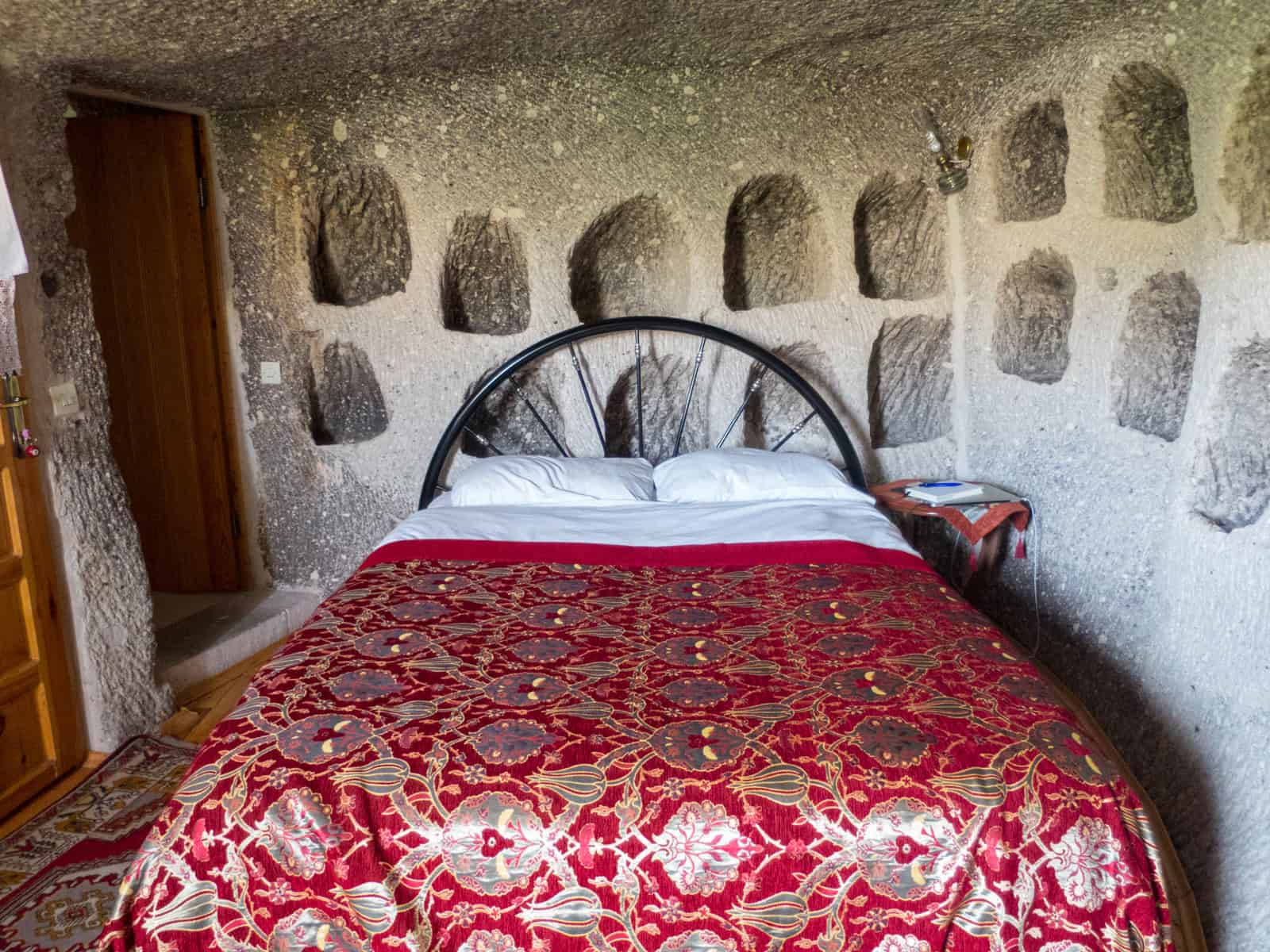
Often, stores do not provide the right kind of clothing for people to wear.

The larger sizes are not large enough, and even the genuinely plus-sized clothing options are just larger versions of existing clothing lines.

They are bigger but do not cater to the body shape of truly plus-sized people.

The fact that these clothes aren't shaped right isn't just insulting.
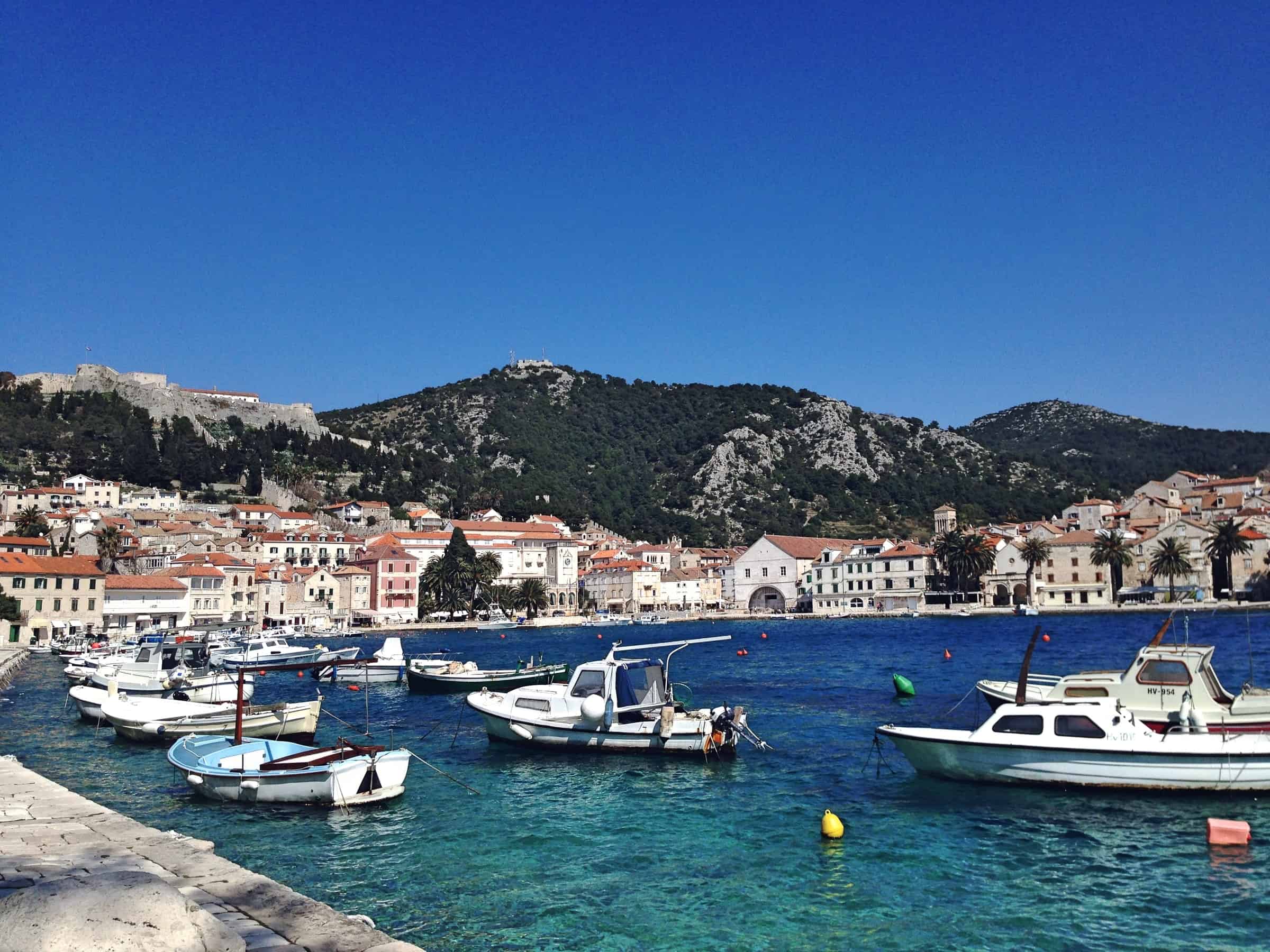
It's downright problematic, particularly when it comes to wearing clothes that you will be active in.

The last thing you want is your clothes to be tight in one spot and constantly rubbing against your skin.

This is one problem that will only get worse over time, so do your research and find good clothing options.

Fortunately, the modern world now understands that catering to a single body type is just unforgivable by this point.

You can find plenty of fantastic companies online and in-store that are ready to help you get your fabulous fitness outfit on so you can be comfortable and prepared to take on the trails.

Backpack and water (photo: Lukas Kurth, Pixabay)
Backpack and water (photo: Lukas Kurth)

6. Drink Plenty of Water

This is one rule of thumb that is important for every person who plans to go hiking, and we do not want you to forget it.

Staying hydrated while hiking is crucial for the overall success of your experience.

Hydration is what makes your muscles well, boosts your energy levels, and lets you think clearly.

Packing enough water is essential before setting out on a hike.

Whether you are using a backpack with a bladder or just aiming to get a bunch of water bottles and shove them in a bag, make sure that you hydrate.

Drink water before you go hiking. Drink water while you are hiking. Drink water after your hike.

Water is crucial for your body to function to the best of its ability. Make sure that you go out prepared.

Hiking boot

7. Have Proper Arch Support

For those who are bigger by nature, it is possible to find certain bodily strains that other people might not be acquainted with. One area where this is prevalent is the feet.

As you log miles hiking on your trail of choice, consider the fact that your feet are going to feel the strain of carrying you from place to place.

The majority of people experience this in one form or another, but it can be exacerbated more quickly for people who are a bit heavier.

You might have incredibly strong feet and arches, but that doesn't mean that you should push aside your need for quality shoes or inserts.

Make sure that your feet have the support that they need to safely and comfortably carry you. This is one golden rule that should be followed by all of us.

Don't miss out on a pleasant hiking experience because your feet hurt.

Conclusion

The reality is that hiking when you are larger isn't any different than hiking when you are smaller.

You might want to make a few considerations depending on the state of your health, but we are smart enough now to know that size is not an indicator of health.

The most important part of this process is to focus on treating your body well.

If you can make sure that you listen to your body and address your own needs, you will be thrilled to find that you are in for a wonderful and pleasant hiking experience.

There are a lot of stigmas about exercising and activity for people who don't necessarily fit the mold painted in society.

Time and time again, we are greeted with stories of people who are made to feel unwelcome because of how they look, and we are here to say that there is no room at all for that kind of negativity when you are out on the trail.

Leave the opinions of society back home and head out into the trees. You belong with all of the other beautiful things in nature.

The Dead Sea: 4 Facts You May Not Have Heard About

The Dead Sea is a natural body of water located on the border between Israel and Jordan, drawing visitors from around the world. Due to its unique properties, visitors often consider it a highlight of their time in the Middle East.

The Dead Sea (photo: Regina Shanklin, Pixabay)
The Dead Sea (photo: Regina Shanklin)

Here, we are going to look at some interesting facts about the Dead Sea. Continue reading if you're eager to learn more.

Saltiest Water on Earth

One of the facts that you might not know about the Dead Sea is that it has the saltiest water on planet Earth. The water is ten times as salty as regular seawater. Why is that, you may ask?

The water comes straight from the River Jordan, and once it reaches the Dead Sea, it has nowhere else to go, which causes it to evaporate. When it evaporates, the salt and minerals become more concentrated, resulting in approximately 37 billion tons of salt being found here.

Great for Skin Conditions

Another interesting fact about the Dead Sea is that it has properties that make it helpful in the treatment of common skin conditions. Due to its high mineral and salt concentration, this seawater can help with common skin conditions such as acne and cellulite, as well as arthritis.

Many people travel to the sea specifically to benefit from its natural properties, and many spas utilize treatments derived from this water to aid in the healing of skin conditions.

It is also suggested that Cleopatra frequently visited the Dead Sea and incorporated its natural products into her beauty and skincare routine.

Natural Buoyancy

Due to the high salt concentration, it is also possible to float naturally without having to keep yourself afloat in the water. This means that you can bob around and float in this water without having to use your hands and legs as much.

Many people enjoy slathering some mud on their faces and then lying back, relaxed, while letting their bodies float naturally.

Lowest Point of The Earth

A fourth fun fact about the Dead Sea is that it sits at the lowest point on Earth. The surface is measured at 1,388 feet (423 meters) below sea level.

Additionally, Highway 90, located near the sea on the Israeli side, is the lowest road on Earth as it runs 1,289 feet (393 meters) below sea level.

The Dead Sea is one of the most fascinating natural bodies of water in the world, attracting millions of visitors each year. If you haven't been before, make sure to add it to your bucket list.

_____

This story is brought to you in partnership with deadsea.com.

Should I Watch "First They Killed My Father" Before Traveling to Cambodia?

About six million travelers visit Cambodia each year to admire the world's largest religious temple complex, Angkor Wat, its national parks, and the stunning white-sand beaches on the southern coast.

A scene from First They Killed My Father
A scene from First They Killed My Father (photo: Pax Thien Jolie Pitt, Netflix)

However, behind all this beauty, hides a darker side of the country, the Cambodian war, led by the Khmer Rouge.

"First They Killed My Father" is a movie based on the memories of a young girl named Loung, growing up during the regime led by the Khmer Rouge. 

The movie provides excellent insight into the history of Cambodia and the struggles many families encountered. Learning about the country's dark history will make you feel more connected to the Cambodian citizens.

It will enhance your experience when traveling through this beautiful country, a country that is arguably one of the most interesting destinations in the whole of Southeast Asia.

Table of Contents

  • When did this story take place?
  • Who and what was the Khmer Rouge?
  • Why is it so important to watch this movie?
  • Movie plot
  • Where can I watch this movie?

When did this story take place?

In 1975, sadly, not so long ago, during the Vietnam War. The US had evacuated Cambodia and the American embassy, causing much upheaval within the country.

Upon the departure of the Americans from Cambodia, the Khmer Rouge regime found this the perfect time to take over and begin their dreadful rule completely.

The Khmer Rouge regime continued until 1979, quite possibly the four longest years any Cambodian has ever experienced.

First They Killed My Father
Breakfast in Cambodia (photo: Dave Lee)

Who and what was the Khmer Rouge?

The Khmer Rouge, led by Pol Pot, was the Communist Party that ruled Cambodia from 1975 to 1979.

The Khmer Rouge regime was a highly xenophobic, paranoid, and repressive party. The regime's attempts at agricultural reform led to extensive starvation throughout the country.

The regime was so set on being self-sufficient that it refused food and even medicine from outside sources, which led to the death of millions of citizens. Malaria, a treatable disease, was one of the leading causes of death for those who fell ill.

To become self-sufficient, they first ordered isolation from all foreign influences. They closed schools, hospitals, and some factories. They eliminated banking, finance, and currency.

The Khmer Rouge believed that a period of voluntary isolation would guarantee that they would become a self-sufficient country. They, essentially, wanted to recreate the country and ensure national purity.

The Khmer Rouge regime murdered hundreds of thousands of their political competitors. Due to their strong belief in national purity, they are also responsible for the genocide of the Cambodians.

Torture and execution were a daily and regular part of life during their rule. Tragically, the torture and death did not apply only to those fighting against the regime; women, older people, children, and even babies were also killed.

By the end of the Khmer Rouge regime, they had killed approximately 25 percent of the population, some 1.5 to 2 million people.

Why is it so important to watch this movie?

Cambodia is a fantastic country. To this day, it may be one of the rawest countries we have seen. Unlike Vietnam, Thailand, or Indonesia, you will not see a lot of Western influence here.

Poverty is apparent, and the lack of infrastructure is easy to see throughout the cities and towns.

Over 40 years later, the country is still trying to rebuild itself after the Khmer Rouge regime. You can see this in the faces of the citizens, the architecture, and of course, the museums and historical sights.

This movie is based on the non-fiction book by the same name, written by Loung Ung, a childhood survivor of the Democratic Kampuchea.

It does an excellent job of giving you an in-depth view of what life was really like during the Khmer Rouge regime. She writes about the daily struggles and the heartbreaking, unnecessary deaths of millions of people.

Movie plot

Loung and her family are forced from their home in the capital city of Phnom Penh by the Khmer Rouge.

They have been told that the Americans will bomb the country, and they need to escape to a nearby village with other refugees.

They are told they can leave their belongings behind, that everything will be safe, and that they can return home within a few days.

After traveling for days, they arrive at a labor camp where they are forced to build their shelters from practically nothing. Any possessions they were able to carry with them were confiscated.

They are forced to work in awful conditions, extremely long hours, and some were even forced to create Khmer Regime propaganda.

Loung witnesses the often daily beatings of her siblings by Khmer soldiers. Her eldest siblings are taken from the camp and reassigned to another work camp.

Soon after, her father is forced to leave for work purposes, the chances of his return are slim, and the family is horrifically aware of this.

Loung's mother, feeling defeated and unsure how to save her remaining children, tells them to flee the work camp and run in different directions.

Hoping they could arrive at new work camps and assume the roles of orphans in hopes of their safety.

Loung and her sister stuck together; however, soon after arrival at the new work camp, Loung is recruited to be a child soldier for the Khmer Rouge.

Loung is later granted a day-pass to visit her sister; however, instead of visiting her sister, she takes off in search of her mother.

Advised that the soldiers took her mother away, Loung goes in search of her other siblings. Throughout her search for her family, she is witness to countless bombings, murders, torture, and many other unthinkable acts of violence.

We don't want to give away too much about the movie, so we won't tell you the ending; however, we will say that this movie is a must-see before traveling to Cambodia.

Where can I watch this movie?

First They Killed My Father is available through Netflix. We strongly recommend you watch this movie before entering the country.

Cambodia has stringent laws regarding the history of the Khmer Rouge regime, and it also has strict internet policies.

If you are caught digging into the history of the regime too much, you could find yourself in trouble with the law.

Your best bet is to watch it before entering the country or download the movie on Netflix and watch it during your flight to Cambodia.

Poznan: Off the Beaten Path in Poland

Poznan, Poland (photo: David Mark, Pixabay)
Old Market Square (photo: David Mark)

Poznan, Poland, is a place you don't often hear tourists marking on their itinerary. I ended up there for five days as I visited a few local friends in the city. 

While there, I was reminded of the beauty of backpacking without expectation. Though it is not often visited does not mean it is not worth your visit. 

Below, I have put together a mini-guide for the misguided.

Table of Contents

  • Overview
  • Discovering Poznan
  • Things to Do 
  • Cost of Travel
  • Poznan, Poland: A backpacker-friendly place

Overview

Poznan is a city on the Warta River in the west-central part of Poland. 

It is known for its Renaissance old town (Old Market Square), which was destroyed during World War II before being re-built. 

It served as the country's capital for a short time in the 13th century and is, therefore, known as "The Capital City of Poznan." 

The city itself is home to over half-a-million people, but the surrounding metropolitan area is home to over 1.1 million people.

It is a calm city, and the people here seem genuinely friendly.

The city fits nicely on an itinerary (geographically) for anyone backpacking through Poland: located directly between the Berlin and Warsaw (three-hours drive/train from each) or only 4.5 hours north of the popular city of Krakow. 

It is also within a day's drive of Prague in the Czech Republic.

Imperial Castle (photo: Joan_world, Pixabay)
Imperial Castle

Discovering Poznan

Upon arriving, I found my way to Old Market Square, which is well-located in the center, and I immediately questioned why this place isn't as sought-after on the backpacking trail as its neighbor to the south, Krakow.

There were beautiful, vibrant-colored buildings in Old Market Square with very few tourists glued to their camera like I was. It was mostly locals surrounding me.

Near the square sits the elegant Adam Mickiewicz University, and next to it, the menacing Imperial Castle.

Adolf Hitler was going to move into this place shortly before he committed suicide at the end of WWII. 

The historical significance of Poznan will surprise some. As a first impression, you will love Poznan as soon as you reach its moody center. 

See also: Nazi Concentration Camps - Walking Among Ghosts

Tanks on display in Poznan (photo: Pixabay)
Tanks on display in Poznan

Things to Do 

Below are a few unique things to do in Poznan, which you won't find in any other Poland travel guide.

Find a traditional Poznan pastry

Rogal Swietomarcinski is a nutty, brown sugar-filled pastry coated in icing.

It is relatively pricey, especially to locals, so it is a treat-yourself-type of dessert.

They are also not easy to find -- especially freshly made. You will have to ask around.

Hike through Cytadela Park

A site of many deaths in WWII. We climbed tanks from the war and saw considerable craters in the ground formed from bombs dropped on the site.

This place is big, and you could easily spend a morning/ afternoon here.

Taste a traditional Polish dish

Pierogi, which is cabbage-stuffed dumplings that can be found in almost any restaurant, especially near the center.

If you are looking for a cheap taste of the culture, this is a must.

Experience a night in the town

Head to Brovaria in Old Market, which is certainly not the most budget-friendly bar in Poznan, but the Roaring 20's Gatsby-esque ambiance is unique and worth a visit.

Alternatively, you can go to a good student bar called Za Kulisami. Either one won't break the bank.

Take a stroll around Lake Malta

Used for several recreational and competitive sports, including mostly team rowing competitions.

The lake has a waterpark and even an artificial ski mountain around it. It is excellent for a sunny afternoon.

Adventure through Rope Park

Ropes and obstacles high up in the trees of a nearby wooded area.

Unfortunately, it doesn't open until May, so for those coming to Poland for skiing, you may be out of luck.

Other Attractions, Bars, Restaurants in Poznan

  • Poznan Town Hall - be there a few minutes before noon to witness a surprise from the clock tower
  • Archcathedral Basilica of St. Peter and St. Paul
  • Cuba Libre - student budget bar/club set in a basement of Latin-themed venue
  • Oberza Pod Dzwonkiem - affordable traditional Polish food
Horse and carriage in Poznan (photo: Jan Nijman, Pixabay)
Horse and carriage

Cost of Travel

It was relieving to finally be in Eastern Europe for a budget backpacker like myself.

The overall cost of living and travel is far less than in Western Europe.

In Poland, the currency is called Zloty, which you can exchange at a rate equal to 3.70 Zloty for every U.S. Dollar (2020). 

As stated, the cost of living is comparatively inexpensive in Poznan. 

For example, while there, I bought dinner for two, including an appetizer and two beers in the city center, all for under $11.

Other Random Expenses

  • A pint at the local market - < $1
  • Pint at a bar - < $2
  • Tram ticket - $1.50 for 40-minute unlimited access
  • Rogal Swietomarcinski - $1.75
  • Haircut -  < $5
  • Lunch at a restaurant - < $3

See also: How to Travel Poland on a Budget

Poznan, Poland: A backpacker-friendly place

Would I go back to Poznan? Yes, in a heartbeat. The city has a youthful soul which is coincidentally packed with so much history. 

It feels like one of the unexplored gems of Eastern Europe, and not many backpackers make it there. Exactly my kind of place. 

Finding underrated European cities with more to offer than you see on TripAdvisor is the essence of backpacking, and, in Poznan, you can find just that.

5 Places to Go Luxury for Less in Chicago

Chicago skyline
Chicago skyline (photo: R Boed)

We all enjoy the finer things in life. What is less enjoyable is the price tag that often accompanies those finer things.

However, when it comes to travel and accommodation, this is not absolute. 

With a bit of extra research and patience, cities can become a gold mine of bargains. Chicago is no exception.

One of America's largest cities, Chicago, offers a diverse culture, stunning vistas, impressive architecture, and enticing food.

With over 100 striking skyscrapers filling the skyline, framed by the idyllic Lake Michigan, Chicago is renowned for its multicultural makeup, which diversifies the city's cuisine, art, and neighborhoods. 

With so much to see and do, it would be short-sighted to spend so much money on somewhere that is, in essence, just a place to rest your head at night.

If you choose a cheaper hotel, then there is no need to compromise on experiences.

Splashing out on a meal at the top of Willis Tower won't leave as much of a dollar-shaped hole in your pocket, and indulging in a river cruise won't have you counting out every last penny.

But why compromise on the accommodation either?

While travel agents and comparison sites may overwhelm you with beautiful but pricey hotels, there are so many reasonably priced gems in Chicago that are shrouded by their costly siblings.

But the digging is done. Chicago's best hotels have been unearthed, and for you lucky readers, they are just a click away.

Cloud Gate, aka The Bean (photo by Conner Freeman, Unsplash)
Cloud Gate, aka The Bean

Table of Contents

  • Loews Chicago Downtown Hotel
  • Thompson Chicago
  • Freehand
  • Hotel Felix
  • Longman and Eagle

Loews Chicago Downtown Hotel

Having opened just five years ago, the Loews Chicago Downtown Hotel is a picture of sophisticated modernity.

With sleek lines, floor to ceiling windows, and glossy surfaces, this hotel is understated but trendy.

However, the slick style of the hotel does not exclude touches of Chicago charm.

Metal sculptures by local architect Louis Sullivan stud the lobby and walls of the lifts boast the words of Chicagoan poet Carl Sandburg.

An ideal location, some of the rooms overlook the iconic Navy Pier with dazzling views across the water.

Just a ten-minute walk away is Chicago's vast offering of parks, including Millennium Park, which features the iconic Cloud Gate (Bean) sculpture.

The third floor is a favorite among guests, featuring a spa, pool, gym, and a large rooftop bar.

Declared Chicago's biggest rooftop terrace, the space features a lawn, two bars, and an abundance of seating, making it the perfect alfresco hangout. 

Thompson Chicago hotel (photo: Paul Sableman)

Thompson Chicago

Located in one of Chicago's most expensive zip codes, this moderately priced hotel is a rare find.

Flanked by designer boutiques and suave restaurants, this hotel is primely situated just a ten-minute walk from Chicago's Museum of Contemporary Art and Oak Street beach.

Casually opulent, Thompson Chicago has an air of glamour without the arrogance.

Expect warm, exposed wood and brickwork, combined with gold and velvet accents.

In keeping with Chicago's impressive art scene, the Thompson Hotel has art by the bucket load, even featuring prints by Kanye West's graphic designer. 

The onsite restaurant, Nico Osteria, is hailed as one of Chicago's best.

An Italian seafood restaurant, book a reservation here when you've exhausted Chicago's famed deep pan pizza and Italian beef.  

Freehand Chicago cafe (photo: Lou Stejskal)
Cafe at Freehand (photo: Lou Stejskal)

Freehand

Promoted on both boutique luxury sites and hostel sites, Freehand Chicago breaks the boundary between luxury and budget with aplomb.

Located in a restored art deco building, Freehand blends bold and boho interiors in a light and expansive space.

Vibrant macramé wall-hangings and dream catchers adorn the mix of private and shared rooms, exuding a laidback kind of cool. 

While still being trendy, spacious, primely located, and clean, the Freehand Chicago is mind-blowingly cheap!

The guys at Freehand obviously have their fingers on the pulse too.

The food is seasonal and organic, recycled products are used wherever possible, and the coffee and cocktail game is strong and super Instagramable. 

Hotel Felix

Located in the River North neighborhood, this hotel is bright and eco-conscious.

Declared Chicago's first Silver LEED-certified hotel, the Hotel Felix takes great pride in the efforts they've made to be sustainable.

Upon entering the hotel, visitors are greeted with figures sculpted from recycled materials before being captivated by the colorful installation of hand-blown glass globes that hang from the ceiling.

Complimentary Fairtrade coffee and locally made truffles are the hotel's luxury touches that seem totally dissonant to the impressively low price. 

Despite being a little further away from Lake Michigan, River North is the king of restaurants, bars, and nightlife.

With a similar bustle to neighboring Streeterville, River North maintains a more local, friendly neighborhood vibe.

What's more, a position further away from Lake Michigan does have its perks, providing a more consistent temperature and a less windy side to Windy City.

Longman and Eagle entrance (photo: Lou Stejskal)
Longman and Eagle (photo: Lou Stejskal)

Longman and Eagle

Less of a hotel, more of a restaurant-bar with rooms, Longman and Eagle is a buzzing, laid back choice of accommodation in Logan Square.

One of the trendiest neighborhoods, Logan Square, has a young, indie community with a thriving music, art, and culture scene.

Expect brilliant farmer's markets and boulevards adorned with fairy lights. 

As cool as its neighborhood, Longman and Eagle offer a contemporary twist on an old-school Chicago inn.

The rooms ooze with a rustic charm that is complemented by more contemporary furnishings.

Lights hang from ceilings, vibrant art embellishes the walls, and terrariums sit on desks and shelves.

The restaurant-cum-bar that the rooms sit above is renowned in the neighborhood.

Boasting an impressive whiskey selection, a farm-to-table menu, and a lively atmosphere, Longman and Eagle attracts visitors and locals alike.

_____

This story was brought to you in partnership with Hotel Jules.

5 Surprising Things About Backpacking Pakistan

When somebody says, "I'm going backpacking," and you reply, "Where are you going?" Pakistan is not what you expect to hear.

Let's face it: The country has had its fair share of bad press, and negative stereotypes have developed over the years.

Yet, 29-year-old adventurer Will Hatton, contributor at The Broke Backpacker, is trying to dispel the myths about Pakistan.

Will Hatton doing a handstand in Pakistan
Will Hatton in Pakistan

Will truly believes that if you're intrigued by adventure, you need to go to Pakistan.

Will, a 26-year-old, first visited Pakistan in 2015, following an epic seven-year journey through some of the world's most wicked and wonderful places. All of this was done on an impossibly tiny budget, often no more than $10 a day.

Despite seeing the orange sunsets on Thai beaches or the ancient Latin ruins built into Machu Picchu, Will considers Pakistan "simply the greatest country in the world" for adventurers. But why? We asked Will.

Table of Contents

  • Surprises in Pakistan
    • 1. The Diverse Cultures of Pakistan
    • 2. The Gargantuan Mountains and Enormous Glaciers
    • 3. The Wealth of History in Pakistan
    • 4. The Safety for Foreign Travelers
    • 5. Attitudes Towards Women Traveling Alone

Surprises in Pakistan

1. The Diverse Cultures of Pakistan

Pakistan is home to dozens of languages, with its official language, Urdu, only the fourth most commonly spoken.

Hundreds of culturally unique communities across Pakistan follow various faiths, participate in different social practices, and speak many different languages.

Pakistan is perhaps one of the most multiethnic countries on the planet, and the average person can speak three or more languages. 

English-speaking visitors should not be afraid, as many in Pakistan speak excellent English - a mark left by the compulsory introduction of English in schools during the rule of the British Raj. 

2. The Gargantuan Mountains and Enormous Glaciers

Will hiking Passu Glacier in the Hunza District
Will crossing the Passu Glacier

Pakistan is home to an astonishing variety of climates. Its diverse landscapes range from sweeping arid desert plains to vast, towering ranges of ice-covered peaks to temperate forest valleys brimming with wildflowers.

Few countries on Earth can match Pakistan's varied beauty and mystique. In the country's furthest northern reaches, the Karakoram Mountains dominate the skyline.

These daunting peaks are often mistakenly included among the neighboring Himalayas, a testament to their grand scale. Four of the world's most massive glaciers, some dozens of miles long, are among these peaks.

Having participated in and led expeditions across these glaciers, Will Hatton describes them as "like worlds unto themselves," reflecting on the surreal experience of being surrounded by miles of ice at the top of the world.

Though Will has also spent many months exploring the Himalayas through several countries, he still regards the Karakoram mountains as the most stunning he has ever seen-and a natural paradise for trekkers. All this is found in a place many would never expect it to be. 

Related: India-Pakistan Border Ceremony

3. The Wealth of History in Pakistan

Some of the world's most ancient civilizations were born in the region now considered Pakistan.

Over 5,000 years ago, the Indus River, which flows centrally through Pakistan, gave sustenance to tens of thousands of people by allowing them to farm in an otherwise arid climate.

These people invented some of the earliest systems of writing and mathematics and built prosperous trading cities of stone and brick - some of the first in the world.

They held religions older than any found today, leaving only cryptic glimpses of their faith. After several thousand years, a quickly changing climate caused generations of crops to fail, ensuring a famine that doomed these civilizations to ruin. 

However, to this day, their ruins remain and can be seen on travels along the path of the Indus River (so Will tells us). Later, Pakistan was the heartland of the Mughal Empire, and many of their elaborate forts remain.

Pakistan is also home to some of the world's most significant Buddhist monuments and relics, primarily found in the northern provinces.

The northern regions were an essential segment of the historic Silk Road, a long-standing trading network that linked the Eastern and Western worlds in ancient times and through which vast wealth was passed for over a thousand years.

Pakistan's rich and ancient heritage is apparent to this day, for any adventurer curious enough to seek it. Will has some advice when it comes to discussing Pakistan's history.

"Despite the Pakistanis' love of discussing their local history, I would suggest keeping anything controversial to a minimum, just because it's a little bit disrespectful to go somewhere with any cultural baggage and not give them the time of day to give their own opinions."

Related: Places To Visit in Skardu

4. The Safety for Foreign Travelers

In the minds of many in the West, Pakistan is a country associated firmly with conflict and strife. In decades past, the country has seen perhaps more than its fair share of violence.

The Taliban's occupation of some northern regions ended only a decade ago, and more recently, contentions over the province of Kashmir have provoked a flare-up of violence along the southern border. 

Wait. Breathe. Despite all the taboos, it is crucial to recognize that any conflict within Pakistan is now highly concentrated in only a few particular regions, and the majority of the country is now considered safe for travel.

The people of Pakistan have a reputation among backpacking circles for being almost overwhelmingly hospitable, and Will tells us it has never been easier to acquire a travel visa. 

As holds true for any destination, though certainly some more than others, it is always important to do your research.

The broke backpacker has created a fantastic guide exploring some of the trickier planning considerations, at https://www.thebrokebackpacker.com/pakistan-travel-ultimate-backpacker-guide

5. Attitudes Towards Women Traveling Alone

Like many foreign countries, Pakistan adheres to a different set of cultural norms and values than those we may be familiar with.

Foremost among these are attitudes towards women, particularly in more conservative areas.

Aware of the questions surrounding this topic, Hatton reached out to several women he met during his travels with first-hand experience.

They unanimously explained that traveling as a woman can perhaps be daunting, but with certain precautions, it is entirely plausible.

A recurring theme was modesty in clothing: "Dressing appropriately is hugely important when traveling in Pakistan," said Emma.

"The more conservative you dress, the more comfortable you'll make yourself and others! It also shows respect, and so no misunderstanding occurs."

Another frequent mention was the importance of a male companion when traveling in some areas.

Will explains that some regions offer a police escort as a gesture of hospitality, not because of danger. As in all things, Pakistan seems to be an incredibly varied country.

Another famed Pakistani adventure lover, Alex Reynolds, said, "Northern Pakistan is the most welcoming to female travelers in Pakistan-the people there are very level-headed and much more used to women walking around and doing things on their own."

If you plan correctly, make reliable local contacts, and remain mindful, backpacking Pakistan as a woman seems manageable. Pakistan is a spectacular country and more open to all than expected!

Common Hiking Injuries and How to Treat Them

A hiker takes in the view (photo: Pexels, Pixabay)
A hiker takes in the view

This article is for entertainment purposes and does not constitute medical advice.

Hikers and campers are more than just accustomed to injuries, especially if they've been doing what they do for a long time.

They know everything from burns to cuts, rashes, and so on - as well as how to treat them.

However, beginner hikers and campers that want to spend significant amounts of time in nature may not know what to do if they get injured.

It's more likely that they will treat specific injuries improperly and develop infections - in the worst case. 

Therefore, in the following lines, we'll see how you can treat some of the most common hiking injuries so that you'll be fully prepared for your next hike.

Table of Contents

  • Deep Cuts
  • Sprained Ankles
  • Blisters and Rashes
  • Broken Bones
  • The Bottom Line

Deep Cuts

While small cuts are manageable with a bandage and some antiseptic, deep cuts will usually require medical assistance.

The only thing you have to do in such a case is to stop the bleeding and get to a hospital.

To stop the bleeding, you must apply and clean a gauze pad on the area and press.

Light bleeding will stop with gentle pressure, while severe bleeding (damaged veins or arteries) will require more pressure.

Last but not least, avoid walking. This will make your heart beat faster, thus accelerating the rate at which you lose blood. It is better to call for help.

Sprained Ankles

A sprained ankle is probably the most common type of injury for hikers - especially for newbies that don't watch their step.

If you're unlucky enough to sprain your ankle, the best you can do is to stabilize it with an ace bandage and get medical assistance.

The latter is not mandatory, but it is better to have the ankle checked to avoid further damage - and get some pain relief medicine, too. 

Blisters and Rashes

Walking through dense woods or simply touching one too many plants or green stuff may cause blisters and some nasty rashes as well.

In this case, all you can do is thoroughly wash your hands with soap and water.

On top of that, you can also use some pain relief creams, depending on the severity of the rash - for example, CBD cream can reduce inflammation, not to mention that it can relieve pain like no other cream. 

Broken Bones

Naturally, while some sprain their ankles in a moment of carelessness, others even manage to break some bones.

A slippery surface, for example, is the main thing that can lead to both broken arms or legs.

Even a simple slip and fall while you make the tent can lead to a broken bone.

If this happens, you first have to stabilize the area - only immobilize it and do not try to move or realign any of your bones.

Then, call the ambulance or have your group take you to a hospital. 

If you're in shock, you may also experience shortness of breath or loss of consciousness - make sure that all of those that accompany you know what to do in this scenario and how to keep you awake.

The Bottom Line

Naturally, depending on the location of your hike, you may experience other types of common injuries - such as snake bites, heatstroke, frostbite, and altitude sickness.

The main rule for hikers will be to never embark on a trip if they don't know what to do when the unexpected happens - not to mention if they lack a first aid kit. 

In short, hikers who are adequately prepared can go forth with confidence knowing they can handle minor injuries as well as having a plan to get help in the case of more significant ones.

_____

This story is brought to you in partnership with Joy Organics.

3 Travel Credit Cards for Beginners

It's been a little over a year since I first wrote about travel credit cards for beginners, drawing on my 2018 experience. I had a positive experience with all three cards that I obtained, and found it easier than expected to earn and redeem points for free flights. 

American Airlines in Nashville, TN
American Airlines in Nashville

To recap, in my first year, I obtained three new cards:

  • Chase Sapphire Reserve card
  • Chase Southwest Rapid Rewards Priority card
  • Citi Premier ThankYou card

In 2019, I took my own advice and continued a slow, steady approach to opening new lines of credit. 

It's important to me that I not get in over my head. I'd rather have fewer high-quality cards than a wallet full of random ones. 

I applied for three new credit cards, all of which offer significant bonus miles for new customers who meet the minimum spend requirements. All three also offer excellent travel-related rewards and benefits.

Disclaimer: For accuracy and clarity's sake, all rewards, benefits, and spending requirements in this article are based on what's associated with the card at the time the story was published and are not necessarily what they were when I signed up. 

Table of Contents

  • Travel Credit Cards I Got in 2019
    • AAdvantage Aviator Red World Elite Mastercard
    • Delta SkyMiles Gold American Express Card 
    • American Express Gold Card 
  • Summary 

Travel Credit Cards I Got in 2019

After spending January 2019 in Colombia, I returned home to Austin, TX, and set my sights on two airline credit cards.

The riverfront in downtown Nashville, TN
I visited Nashville for the first time using airline points

AAdvantage Aviator Red World Elite Mastercard

The first card I applied for was the AAdvantage Aviator Red World Elite Mastercard by American Airlines. 

The Bonus

New cardholders earn 60,000 bonus miles after making their first purchase and paying the $99 annual fee. 

Your first purchase could be anything. I bought a movie ticket for $12.50, and that met the requirement. So, after spending $111.50 in total, I was credited with 60,000 miles to use toward free flights. 

I don't fly American Airlines often. However, due to the number of routes they fly, I knew it wouldn't be hard to redeem their miles for domestic and short international flights. 

Additional Rewards

  • Earn a Companion Certificate for one guest at $99 (plus taxes and fees) after paying for your first purchase and the annual fee within the first 90 days
  • 2x miles for every one dollar you spend on eligible American Airlines purchases
  • 1x mile for every dollar on all other purchases
  • Save 25% on in-flight food and beverages when you use your card on American Airlines flights (applied as a statement credit)
  • Get up to $25 back on in-flight Wi-Fi (statement credit) each anniversary year on American Airlines flights.

Travel Benefits

  • First checked bag is free for the cardmember and up to four companions when traveling on domestic American Airlines flights.
  • Preferred boarding for the cardmember and up to four companions when traveling on domestic American Airlines flights
  • Travel accident insurance, auto rental collision waiver, baggage delay insurance, trip cancellation, and interruption coverage
  • No foreign transaction fees 

Overall, this card was easy to apply for and easy to use. It made traveling to Montreal for my first Canadian Grand Prix more affordable and helped me celebrate July 4th in Nashville. And I still have enough points left to use toward a third flight. 

Time with Card = 11 months (February to December)
Points Earned = 65,088
Points Redeemed = 42,750 for two free flights (Nashville to Austin | Montreal to Austin)

Delta SkyMiles Gold American Express Card 

I applied for the Delta SkyMiles Gold American Express card the same week as the American Airlines card above. The new cardholder bonus has changed a little since I signed up, but it is still very generous. 

Delta planes at JFK airport in New York City
Delta planes at JFK airport

The Bonus

New cardholders earn 60,000 bonus miles after spending $2,000 within the first three months. Plus, you'll get an additional 10,000 bonus miles on your first anniversary with the card. 

I used this card to pay my 2018 taxes, which was the most I've ever spent on taxes. I quickly met the spending requirement and received my bonus miles soon after.

Additional Rewards

  • 2x miles for Delta purchases, restaurants, and US supermarkets
  • 1x miles on all other eligible purchases
  • Receive 20% off Delta in-flight purchases (applied as a statement credit)

Travel Benefits

  • First checked bag is free (a potential savings of $60 on a round-trip Delta flight)
  • Enjoy Main Cabin 1 Priority Boarding
  • Car rental loss and damage insurance 
  • No foreign transaction fees

I used Delta points to help offset the cost of my trip home from Copenhagen (via New York City). I ended the year with enough points to cover several free flights in 2020.

Time with Card = 11 months (February to December)
Points Earned = 81,806
Points Redeemed = 32,500 for one free Delta Comfort+ flight (New York City to Austin)

Sebastian Vettel leads the Canadian Grand Prix in Montreal for Ferrari
Using airline points, I visited Montreal for the Canadian Grand Prix

American Express Gold Card 

The third card I applied for last year was the American Express Gold card, and it was my favorite of the three.

The required spend to earn the welcome bonus has changed since I got it, but the benefits and high value of the AmEx Membership Rewards points still make it an excellent card to have in your wallet. 

The Welcome Bonus

New cardholders will earn 50,000 Membership Rewards points when spending $4,000 using the card within the first three months. Terms Apply.

Additional Rewards

  • 4x Membership Rewards points on restaurants worldwide
  • 4x Membership Rewards points at US supermarkets (up to a maximum of $25,000 per calendar year)
  • 3x Membership Rewards points on flights booked directly with airlines or on amextravel.com
  • 1x Membership Rewards points for all other qualifying purchases
  • $120 dining credit (up to $10 per month) when you use your Gold card with select delivery apps and restaurants

Travel Benefits

  • $100 airline fee credit - pick one qualifying airline and receive up to $100 in statement credits per calendar year when incidental fees such as checked bags and in-flight drinks are charged by the airline to your Gold card
  • Car rental loss and damage insurance
  • Baggage insurance
  • No foreign transaction fees

This card has an annual fee of $250. However, as you can see above, the benefits are worth it. To quickly qualify for the welcome bonus, I put all my spending on this card for a month.

Once I met the requirement, I began using it primarily for food, one of my most significant monthly expenses. I previously used my Chase Sapphire Reserve card for restaurants; however, it only earns 3x points per dollar in this category. 

Because I got this card in late summer, I'd already accounted for how I would pay for and cover my remaining flights for the year. I chose to save my points for future use.

Time with Card = 5 months (August to December)
Points Earned = 77,466
Points Redeemed = zero

Summary 

New Credit Cards = 3
Total Points Earned = 224,360
Total Points Redeemed =  75,250
Number of Free Flights = 3
Credit Score = Excellent

I ended 2019 with over 250,000 points across six travel credit cards for beginners and various airline loyalty programs.

Even though I had thought about trying a hotel credit card, I didn't end up taking that approach, nor did I create the spreadsheet I had envisioned to track everything. 

The latter is becoming more critical as the number of accounts I have open continues to grow. 

I hope this update on my adventures in the world of frequent-flyer miles and travel rewards proves helpful. Flying for free is a great feeling, whether you're traveling an hour or two to visit family or across the world. 

Holiday in Style, On a Yacht

Yachts in Rhodes, Greece (photo: David Lee)
Yachts in Rhodes, Greece

The most adventurous holidaymakers are always looking for the next new way to travel, entertain, and push themselves, even when they are on vacation.

They are always on the hunt for new places and new ways of getting there.

If you count yourself among the most enthusiastic travelers and want to make your next vacation not only unforgettable but also more comfortable than the last, you should go for a yacht charter.

A yacht (or catamaran) holiday isn't as expensive, or as challenging to organize as you might think, with new companies such as plainsailing.com helping to make booking a sailing holiday in France as easy as searching for a hotel room on booking.com.

There are many facets to a yacht charter holiday, which make it an excellent option, whether you're a nature lover, Instagram-wannabe, prefer to relax in comfort, or simply enjoy visiting new places without having to unpack in a different hotel every night.

A Unique Holiday

You may have been on a ton of holidays in your life, but chance are they've been nearly all land-based - where you're hemmed in by the buildings, the beaches, the chaotic tourist streets, and even the sea.

On a yacht charter holiday, you'll find a perfect way to enjoy your vacation in the ocean.

Life on the waves is different. You'll see yourself tested and pushed outside of your comfort zone (a little). 

It's an opportunity to break new ground and create the kinds of memories that will inspire you when you've hung up your traveling boots.

Enjoy a Luxury Villa on the Water

But life on a boat needn't be all that different from a holiday on land. In fact, it steals all the best bits.

Almost all the yacht charter service providers are aiming for 100 percent on customer service feedback forms, and they have thought of everything possible to make the trip as easy as possible.

The yachts themselves can be pretty luxurious. And if you're on a crewed vessel, then once you enter, the staff will cater to you like they would in a 5-star hotel.

They cook, clean, bring drinks, and pamper their guests. You can even have a yoga teacher on board if you like).

Aqua Sports

If you're into aquatic adventures, then these kinds of yacht holidays are also perfect for fulfilling your dreams.

Whether it's a water scooter, banana boat, floating sunbath docks, or even a Seabob, you'll have access to all the latest water toys on board the yacht to bring a little more excitement while on the blue waters.  

Tailored Menu

If you're a foodie, then on top of stopping at the best waterfront dining spots - whether it's a small fish restaurant in Greece or the food-heaven on the island of Hvar in Croatia - you can create your own menu with the yacht's chef.

Most yacht charter service providers offer you the ability to completely customize your menu (subject to what is available locally, of course).

Clients are free to order whichever type of menu they want during their stay.

With the right food, the right entertainment, and the right service, these have all the makings of unbelievable holidays.

_____

This story was brought to you in partnership with Plain Sailing Yacht Charter Ltd.

« Previous Page
Next Page »
Dave at Ahu Ko Te Riku on Rapa Nui (Easter Island), Chile.

Hi, I'm Dave

Editor in Chief

I've been writing about adventure travel on Go Backpacking since 2007. I've visited 68 countries.

Read more about Dave.

Footer

back to top

About

  • About
  • Archive
  • Privacy Policy
  • Cookie Policy

Follow Us

Contact

  • Contact
  • Work With Us
  • Submissions

Copyright © 2025 Go Backpacking