Go Backpacking

  • About
  • Travel Tips
    • Accommodations
    • Budgeting & Money
    • Adventure Travel
    • Food & Drink
    • Gear & Gadgets
    • Packing Tips
    • Travel Blogging
    • Travel Insurance
    • Trip Planning
    • UNESCO Sites
  • Destinations
    • Africa
      • Botswana
      • Egypt
      • Ethiopia
      • Morocco
      • Rwanda
      • South Africa
      • Tanzania
    • Asia
      • Cambodia
      • China
      • Hong Kong
      • India
      • Indonesia
      • Japan
      • Laos
      • Malaysia
      • Nepal
      • Philippines
      • Thailand
      • United Arab Emirates
      • Vietnam
    • Europe
      • England
      • France
      • Germany
      • Greece
      • Iceland
      • Ireland
      • Italy
      • Portugal
      • Spain
      • Switzerland
      • Turkey
    • North America
      • Canada
      • Costa Rica
      • Cuba
      • Guatemala
      • Mexico
      • Nicaragua
      • Panama
      • United States
    • Oceania
      • Australia
      • French Polynesia
      • New Zealand
    • South America
      • Argentina
      • Bolivia
      • Brazil
      • Chile
      • Colombia
      • Ecuador
      • Peru
  • Advertise
menu icon
go to homepage
  • About
  • Travel Tips
    • Accommodations
    • Budgeting & Money
    • Adventure Travel
    • Food & Drink
    • Gear & Gadgets
    • Packing Tips
    • Travel Blogging
    • Travel Insurance
    • Trip Planning
    • UNESCO Sites
  • Destinations
    • Africa
      • Botswana
      • Egypt
      • Ethiopia
      • Morocco
      • Rwanda
      • South Africa
      • Tanzania
    • Asia
      • Cambodia
      • China
      • Hong Kong
      • India
      • Indonesia
      • Japan
      • Laos
      • Malaysia
      • Nepal
      • Philippines
      • Thailand
      • United Arab Emirates
      • Vietnam
    • Europe
      • England
      • France
      • Germany
      • Greece
      • Iceland
      • Ireland
      • Italy
      • Portugal
      • Spain
      • Switzerland
      • Turkey
    • North America
      • Canada
      • Costa Rica
      • Cuba
      • Guatemala
      • Mexico
      • Nicaragua
      • Panama
      • United States
    • Oceania
      • Australia
      • French Polynesia
      • New Zealand
    • South America
      • Argentina
      • Bolivia
      • Brazil
      • Chile
      • Colombia
      • Ecuador
      • Peru
  • Advertise
search icon
Homepage link
  • About
  • Travel Tips
    • Accommodations
    • Budgeting & Money
    • Adventure Travel
    • Food & Drink
    • Gear & Gadgets
    • Packing Tips
    • Travel Blogging
    • Travel Insurance
    • Trip Planning
    • UNESCO Sites
  • Destinations
    • Africa
      • Botswana
      • Egypt
      • Ethiopia
      • Morocco
      • Rwanda
      • South Africa
      • Tanzania
    • Asia
      • Cambodia
      • China
      • Hong Kong
      • India
      • Indonesia
      • Japan
      • Laos
      • Malaysia
      • Nepal
      • Philippines
      • Thailand
      • United Arab Emirates
      • Vietnam
    • Europe
      • England
      • France
      • Germany
      • Greece
      • Iceland
      • Ireland
      • Italy
      • Portugal
      • Spain
      • Switzerland
      • Turkey
    • North America
      • Canada
      • Costa Rica
      • Cuba
      • Guatemala
      • Mexico
      • Nicaragua
      • Panama
      • United States
    • Oceania
      • Australia
      • French Polynesia
      • New Zealand
    • South America
      • Argentina
      • Bolivia
      • Brazil
      • Chile
      • Colombia
      • Ecuador
      • Peru
  • Advertise
×
Home

10 Fun Outdoor Activities You Can Do with Your Dog

Dog with skiier

You already know that being outside is good for your physical and mental health. 

The experts say that time spent in the fresh air can help boost energy, lower stress, and improve your mood. 

And there's an easy way to double-down on the benefits of being outside - take your pup along with you! 

Yep, just like getting some fresh air, time spent with your four-legged pal brings some pretty amazing perks, like reduced stress and better cardiovascular health. Sign us up! 

Table of Contents

  • 1. Skijoring
  • 2. Go Dock-Diving
  • 3. Hit the Dog Park
  • 4. Go Swimming
  • 5. Try an Agility Course
  • 6. Take a Hike
  • 7. Hunt for Treasure
  • 8. Toss the Frisbee
  • 9. Go on a Bike Ride
  • 10. Play Tug of War

1. Skijoring

Break out your merino wool base layer and get your four-legged family member some doggie fleece because winter is as good a time as any to enjoy the brisk air with Fido.

Skijoring is a Norwegian sport that combines cross-country skiing with dog sledding.

The dog wears a harness and effectively tows his ski-wearing human for all sorts of fun and plenty of exercise for the both of you.

Note that skijoring is a serious workout, so leave it to the healthy, athletic dogs only.

2. Go Dock-Diving

Dock-diving is another excellent workout for the canine companion who can't stay out of the water.

It involves tossing a toy off a dock and seeing how far and high your pup will jump to retrieve it.

While this can be a fun, relaxing activity at the lake, it can also get super-competitive with organized events and leagues.

If you've got a pup who excels in athleticism, get ready to win a few trophies.

3. Hit the Dog Park

Running, playing, and exploring with other pets is undoubtedly great for your dog, but it may be good for you, too.

Time spent at the pup park is a great way to get exercise yourself and even meet new, like-minded people (AKA: other dog-lovers).

Oh yeah, and you'll also get to mingle with some cute pups while you're there.

Try to check out different dog parks in your area, so you don't get bored of the same old scenery.

Swimming dog

4. Go Swimming

Swimming is, without a doubt, one of the best ways to exercise for both you and your pup.

The best part about it is that it's relatively gentle on the joints, which means you can use it to strengthen and condition older dogs who have arthritis and achy hips or knees.

Younger pups can burn off a ton of energy and build strength by swimming laps or fetching a floaty toy.

Although it seems that swimming would be intuitive for dogs, remember that you do have to teach them to swim and be comfortable with the water.

5. Try an Agility Course

Teach your dog how to maneuver through various obstacles with a fun agility course.

You can set yourself up in your backyard or find a setup course at local parks, dog parks, and dog training facilities.

Teaching your furry friend agility not only helps them burn off excess energy and calories but also helps strengthen your bond.

Make sure to bring plenty of healthy treats (for encouragement) and water.

6. Take a Hike

Hiking is one of the best ways to work out, get some fresh air, and bond with your pup, which is why it's one of the most popular dog-and-owner activities.

Whether you go for a day hike or embark on a long overnight journey, hiking puts you in a great position to enjoy some of the best and most unspoiled views.

Make sure you're prepared for a trek with some quality merino wool apparel and plenty of water for the both of you.

Note that not all hiking trails are suitable for pets.

Slippery, rocky terrain, and protected wildlife areas may not be the best environment for your dog, so make sure you always get your miles in at dog-friendly parks.

7. Hunt for Treasure

You don't have to own a bloodhound to sniff out buried treasure! All four-legged friends can accompany you on a fun treasure hunt, especially if you go geocaching.

Nicknamed "the world's biggest treasure hunt," geocaching involves using an app - which provides guidance and coordinates - to discover treasure or "caches" hidden around your area.

There are millions of these caches stashed all over the world, so you and your dog can spend ample time discovering them in your city. 

Dog with frisbee
Dog with frisbee

8. Toss the Frisbee

There's no better way to rile up a retriever (or any breed) than with a good old-fashioned game of fetch.

But tossing an old tennis ball isn't always the most fun for you, so switch things up with a frisbee.

This is another one of those activities that are best left to the young, energetic, and athletic pups.

It involves a lot of sprinting and jumping, which could agitate arthritis, hip dysplasia, and other joint issues in order or sedentary dogs.

9. Go on a Bike Ride

If you're a fan of cruising on two wheels and you've got a brave, athletic pup, consider investing in a dog bike leash so the two of you can go rolling together.

Note that this requires a bit of training and practice, so don't expect your dog to get it right away.

It's essential to take it slow and start on a quiet, low-traffic trail or street with few distractions.

10. Play Tug of War

What dog doesn't love a good round of tug of war? Contrary to what you might have heard, the experts say that this game helps dogs release pent-up energy and can provide them with some much-needed mental stimulation.

Just make sure that you play in a way that protects your dog's mouth and teeth.

Don't use any hard objects (no sticks or bones), and don't pull too hard. In other words, it's best to let Fido win.

There are few things as wholly pure as time spent with an animal and time spent outdoors. 

Combining the two is an excellent way to double down on the good stuff for your physical and mental health. 

Whether it's a quick stroll in the neighborhood or a lesson in dock-jumping, you'll get so much out of enjoying the fresh air with your furry friend.

______

This story is brought to you in partnership with Ibex.

Best Beaches in Riviera Maya, Mexico

Every year, the best beaches in Riviera Maya on Mexico's Yucatan Peninsula attract travelers worldwide. Whether you're looking for comfort and convenience, the prettiest shades of water, or privacy, there's a beach for you.

Playa Norte on Isla Mujeres
Playa Norte, Isla Mujeres

Mexico's Riviera Maya runs from Cancun in the north to Tulum in the south, including the island of Cozumel. This stretch of the Caribbean coastline is easily accessible by car, bus, or motorbike. Since it's flat, let's add a bicycle, too!

This list of some of the best beaches in Riviera Maya is based on my time in the region. When you're ready to plan a trip, check out the various visa types for Mexico to ensure you follow the rules based on your reason for going and your citizenship.

Table of Contents

  • Riviera Maya Beaches
    • Playa Norte, Islas Mujeres
    • Playa del Carmen
    • Playa Palancar, Cozumel
    • Tulum
    • Sian Ka'an Biosphere Reserve

Riviera Maya Beaches

Playa Norte, Islas Mujeres

Playa Norte, Isla Mujeres
Playa Norte

Let's get this party started in Playa Norte ("North Beach") on Isla Mujeres, an island eight miles (13 kilometers) east of Cancun.

When I went snorkeling with whale sharks, our boat stopped at Isla Mujeres on the way back to Cancun. The captain dropped anchor, and we were afforded time to snorkel, swim, and hang out however we felt fit.

The water was calm and shallow; it was pretty relaxing. Boats from other tours were also in the area, so there was a bit of a scene. It wasn't a full-on party, but I could see how it could get that way in the high season.

Playa Norte is easily accessible as a day trip by ferry from Cancun, or you can stay longer at one of the island's hotels or resorts. Plenty of bars and restaurants keep you fed and feeling fine.

Playa del Carmen

Playa del Carmen, one of the best beaches in the Riviera Maya
Playa del Carmen

My favorite place in Riviera Maya is Playa del Carmen, an hour south of Cancun by bus or car. Here, you'll find white sandy beaches of varying depths.

The beach adjacent to the town center is narrower; however, the convenience can't be beaten. Further south, past the pier for ferries to Cozumel, the beach widens; you'll find a mix of resorts, condos, and casas (houses) for rent.

I like Playa del Carmen because it offers budget-friendly accommodations, is a block from the beach, and has plenty of rooftop restaurants where you can enjoy the Caribbean breeze.

If dancing late into the night is your style, there are loads of nightclubs catering to partiers. Playa del Carmen is also relatively safe. Whether you're on vacation or looking to live in Mexico, it's worth considering.

Playa Palancar, Cozumel

Playa Palancar on Cozumel island
Playa Palancar

During my first visit to Playa del Carmen, I took a day trip to Cozumel, connected via a ferry that runs throughout the day.

To make life easy, I booked a ticket that included the round-trip ferry ride and transportation to Playa Palancar. We could hang out on a small, unpretentious beach, eat lunch, and order drinks there.

Further south along this section of the coast is the larger Playa "El Cielo" ("The Sky"), which offers a broader expanse of turquoise waters. It's one of the best places for snorkeling on Cozumel, as it's got more of the reef.

If you want to skip over Cancun, Cozumel has an international airport with flights from the United States.

Tulum

Playa Paraiso at sunrise in Tulum
Playa Paraiso at sunrise

If Playa del Carmen is too big a city for you, you can continue south by bus or car to Tulum for another hour. Tighter rules around development in Tulum National Park have helped to protect the environment and beach from overdevelopment. That's the upside.

As a result, the downside is that accommodation is more expensive and primarily consists of small luxury eco-hotels. However, don't let that scare you away.

Bargains can be found during shoulder seasons, and there's always the option to sleep in the town of Tulum, a 15-minute bike ride inland from the beach.

I found a $29 bed for a night when I visited Tulum, as the hotel was located on a rocky outcropping. The water color was gorgeous; I just had to walk a minute to the north or south to reach the sand.

Playita Tortuga at Tulum ruins is one of the best beaches in Maya Riviera
Playita Tortuga at Tulum ruins

The morning after my arrival, I was up before dawn and walked along the beach to the Tulum ruins as the sun rose; I had the beach to myself, and it was terrific.

I was also one of the first visitors to the Tulum archaeological site that day. This former walled city, constructed between 1200 and 1450 AD, was one of the last cities inhabited by the Maya people.

Staircases have been built into the 40-foot cliffs to allow visitors access to some of the beaches below. Access to Playita Tortuga ("Turtle Beach"), pictured above, doesn't require stairs.

Sian Ka'an Biosphere Reserve

Sian Ka'an Biosphere Reserve
Mangroves in Sian Ka'an

Okay, this last one on my list isn't as much a beach as a biosphere reserve with tropical forests, mangroves, and marshes. Sian Ka'an ("Origin of the Sky") is a UNESCO World Heritage Site located south of Tulum.

It's a short trip by taxi or tour. I went independently and negotiated with a boat driver for a ride through the reserve.

Laguna Chunyaxché
Laguna Chunyaxché

We began in Laguna de Muyil and passed through marshland to reach the more expansive Laguna Chunyaxché. My guide pointed out the ruins of some tiny Maya buildings along the way. They sure knew how to live well back then.

The water's colors were spectacular. For inspiration, check out the satellite view of Sian Ka'an on Google Maps.

The reserve includes a marine area with a reef. A road runs along the coast, and a handful of small hotels are located there. So, if you want to get away from civilization, you can visit or stay at the beach in Sian Ka'an.

_____

This story is brought to you in partnership with Mexico Tourist Card.

Tips to Protect Your Data While Traveling Abroad

Laptop user in a cafe

Whether you are traveling abroad or working online, you need to ensure your sensitive data is protected from cybercriminals.

With growing concerns about the potential for cybercrime, you may want to consider taking some proactive steps to protect the data that is so important to you.

Read on for our essential tips for protecting yourself while traveling abroad.

Hide your IP address

Don't let cyber-criminals take advantage of your online identity!

Your IP address is not hidden from the websites you visit, putting your data at risk for identity theft and your computer for spam and even viruses.

Also, your internet service provider (ISP) can see what you do online if your IP address is not hidden.

ISP's can save your passwords and sell them to the highest bidder if you aren't careful.

Why you need to hide your IP address when traveling

A hidden IP is a unique address that allows you to browse the web without anyone knowing your real address. It's simple, fast, and easy to use.

Nobody will be able to track your new location after traveling since it will be hidden too.

Always get the privacy you deserve with a hidden IP address. You can stay private while you browse the internet.

For your data protection when traveling, use a VPN. First, a VPN service can help you stay anonymous and can protect your privacy. When using the internet, it is quite possible to identify you based on 3 things.

These can include your location, your internet provider, and the device you are using to get online (e.g. IP Address).

A VPN service allows you to mask or change these three identifying features of your activity so that others cannot determine what you are doing online.

Installing a good antivirus program

Antivirus software will do a great job at protecting your computer from danger while traveling.

It can detect and eliminate viruses that can destroy or damage your files and safeguard the important data you've worked so hard to accumulate.

Here are the features to look for in a good antivirus program.

Malware protection

The internet is full of malware that has been designed to steal important information, like credit card numbers, social security numbers, usernames, and passwords.

It's a serious threat, one that you don't have time to waste dealing with. Use antivirus software to protect your devices against malware.

When looking for one, make sure that it can detect and remove all kinds of malware such as ransomware, adware, Trojans, spyware, to name a few.

Email protection

Don't let annoying and potentially dangerous emails infiltrate your inbox. The best antivirus software will let you enjoy a clean inbox for your home or small business email accounts.

An antivirus program that offers email protection lets you know if any email is harmful to your computer before you download it, preventing anything that you don't want from getting in.

Ransomware protection

You need ransomware protection to protect your data while traveling. Ransomware is malware that installs itself into your computer system, encrypts your files, and asks for ransom money to give you access to your computer.

You can be protected against ransomware. Download the best antivirus software with ransomware protection to protect yourself from data loss.

Create strong passwords for your online accounts

Facebook, Twitter, Gmail, and Dropbox passwords that are easy to guess may be costing you $100 a year per account. Brute-force password hacking doesn't need human intelligence.

Password crackers can try every word in the dictionary in a few minutes. Don't be one of the four million people who get hacked. Create strong passwords to protect your data when traveling.

Here are the rules to follow when creating strong passwords:

  • Strong passwords are the first line of defense against cyber-attacks. 
  • Combining 8-12 characters that include numbers, upper and lower case letters, and special characters like punctuation marks is a good start.
  • Add in a few random words for more complexity.

Use a password manager

Using a password manager is essential when trying to create a secure online identity.

This helps you manage different login information types and makes sure that your passwords are strong enough to withstand cyber threats.

It will help you create a strong password when you need to make one, keep your passwords organized and prevent you from reusing the same ones across multiple accounts, which is a big security risk.

Do not use public Wi-Fi

When traveling, you might be tempted to use public Wi-Fi.

There are many dangers of using public/open Wi-Fi; identity theft, viruses, hackers, scam artists, malware, and more pose a significant risk to you and your personal information.

If you have to use a public Wi-Fi, use a VPN. A VPN provides privacy and security by using encryption and a secure tunnel to send data from one's computer to another network.

_______

This story is brought to you in partnership with VSS Monitoring.

9 Reasons Why You Should Consider Teaching English Abroad

When I started traveling over a decade ago, one of the first things I did was move abroad to teach English.

This allowed me to dive deeply into expat life, learn about a new culture, see a new part of the world, and save money for future trips.

I taught English in Thailand and Taiwan and used the money from those jobs to kick start my travels around the world.

Matt Kepnes on the beach in Hawaii, and sharing his thoughts on teaching English abroad.
On the beach in Hawaii

While I didn't continue teaching after those stints, I gained valuable skills and insight (and made many friends).

Whether you're looking for a new career or want an excuse to travel longer, learning how to teach English abroad is something I highly recommend.

Even if you don't plan on being a teacher back home, it's a job that will open all kinds of doors while letting you experience life in a new culture.

Not sure if teaching English overseas is for you? Here are nine reasons why you should consider it:

1. You get in-depth travel experience.

Traveling to a new country is a fantastic experience - but moving to one is life-changing.

You get to go deep, sample life as a local and immerse yourself in all kinds of activities your average traveler would miss out on. While it's not always easy (or fun), it is always rewarding.

Moving to a new country can be a daunting experience, but it will open your eyes to a new culture and way of life. Isn't that why we travel, to begin with?

2. You can save money for more travel.

Want to travel but lack the funds? Get a job overseas! While teaching in Thailand, I explored the country whenever I had vacation time.

Since I was making a decent salary as a teacher, I could afford to regularly travel around Southeast Asia, making the most of my new home base. Moreover, I was also able to save up money to travel full-time when I finally quit my job.

Could you stay in the US and save money? Sure. But the cost of living in Thailand is way cheaper, meaning you can save money much faster since the pay is proportionally better. Plus, why live in Boston when you can live in Bangkok?

3. It's good professional development.

While travel in and of itself isn't really "résumé worthy" (even though it can teach you a lot of hard and soft skills), teaching English abroad is a legitimate job you can add to your résumé.

Like teachers in your home country, as an ESL teacher, you'll need to manage students, prepare lessons, grade assignments, and handle administrative work, skills that translate to different jobs in various fields.

So even if you don't become a teacher back home, teaching English abroad is a great stepping stone for all kinds of careers. For example, check ESL teacher jobs in Calgary.

Visiting Pearl Harbor

4. There are jobs all around the world.

One of the best things about teaching English abroad is that there are so many opportunities out there all around the globe.

Salaries and perks will vary from country to country, but you can easily find jobs in every corner of the world.

Here's a quick overview of some of the most popular locations to work in:

  • Japan & South Korea - Lots of high-paying (but competitive) jobs with great perks. A bachelor's degree and TEFL certificate are usually required.
  • The Middle East - Many international schools make this the hub for high-paying jobs for qualified teachers (i.e., those with a degree in teaching).
  • Central & South America - Many low-paying opportunities with easy-to-meet requirements (usually just a TEFL certificate).
  • Southeast Asia & China - A mix of low-paying opportunities with no requirements (other than being a native English speaker) and mid-range jobs with decent pay and benefits (usually requiring a TEFL certificate and bachelor's degree).

5. There is always a high demand.

Since dozens and dozens of countries need ESL teachers, there is always demand.

While the best jobs will be more competitive, there are many other opportunities available if you're willing to invest the time and look for them.

As long as you're not picky about where you work, you can find a job without too much effort.

Here are some websites to help you find ESL job opportunities:

  • International TEFL Academy
  • i-to-i
  • TEFLPros
  • MyTEFL

The more qualifications you have, the more opportunities you'll find. If you don't have a bachelor's degree, consider getting a TEFL certificate.

One from any of the best TEFL companies will open many more doors and drastically improve your chances of finding a job.

6. It's an excellent choice for a career - or a career break.

Most ESL jobs are contract-based, making it easy for travelers to accept an appointment and see if it's their thing.

Most contracts are for one year and, in many countries, include a bonus if you complete the contract.

Not sure if teaching is for you? Give it a try! You can stay for a year and then move on to something else. 

Conversely, you can easily make this a career too - and it's a rewarding one. Contracts are available worldwide, so it's easy to teach somewhere for a couple of years and then move somewhere new.

There are also jobs in ESL administration, so there is room to grow professionally. It's a malleable industry.

7. It's open to all ages.

While most ESL teachers are in their twenties and thirties, plenty are older. I've seen ESL teachers in their fifties and sixties teaching all over the world.

Since there is a high demand for qualified teachers, teaching English can be a lifelong career - or a career you start later in life.

All that companies care about is that you have the skills and qualifications, and everything else is secondary. 

Whether you're a young college grad looking for your first job or are 50+ and looking for a career change, teaching English abroad can work for you.

8. There is a low bar to entry.

While most jobs require a bachelor's degree or TEFL certificate, there are many opportunities worldwide where the only requirement is that you are a native English speaker.

Sure, the pay might suck, and the hours might be terrible - but it's a start!

Getting your foot in the door with any ESL experience will help you move up the ladder and secure better jobs down the road. Leverage whatever opportunities you can.

Of course, getting a TEFL certificate is highly recommended, but there are still many jobs where you don't need one.

9. It can help you learn a new language.

Spending a more extended period in a new destination will give you a huge leg up when learning a language.

Immersion - while working day in and day out with locals - is one of the best ways to learn a language.

It's sink or swim, forcing you to step up your practice and giving you ample opportunity to learn from hands-on experiences. It can be intimidating, but it's super rewarding too.

By learning a language, you'll be able to unlock more doors in the ESL industry, interact with locals more authentically, and deepen your travel experiences during your stay. I can't recommend it enough.

***

I loved my time teaching English abroad. It helped me learn about new cultures, deepened my travel experience, and allowed me to save up money for more travel.

Whether you're looking for a career or want to try a new job in a new country, learning how to teach English abroad is a rewarding skill that's worth investing in. It changed my life - and I'm confident it will change yours too.

Visiting Chennai: 7 Places To See This Summer

Chennai, one of India's most populous cities, is located in the southern region and is the capital of Tamil Nadu state. Since Chennai is located along the Coromandel Coast of the Bay of Bengal, the weather is hot and humid most of the year. 

Temple in Chennai (photo: kk, Pixabay)
Temple in Chennai

The commonly spoken language in Chennai is Tamil; however, English and Hindi are also widely spoken.

Chennai's economy is multifaceted, ranging from automobile and software services to textiles and clothing. The city also boasts a thriving tourist industry. 

Formerly known as Madras, the city has a rich history and a vibrant culture. It has many temples and churches, a testament to the bygone British colonial era. Before the British arrived, the Dutch and the French ruled the city. 

Chennai offers a thriving city life. With various beaches, malls, shopping areas, and restaurants, the city has a lot to offer.

Here is an interesting fact for avid literary fans: Chennai houses Asia's largest library, home to more than 1.2 million books (more on this later).

If you plan to visit Chennai in the summer, there are various ways to get there. Airlines, such as Cathay Pacific, offer direct flights to Chennai. Such long flights often have one stop in between.

In addition, you can take a local flight from anywhere in India to Chennai. The flights take no more than a few hours.

Chennai Central train station (photo: Vellupura, Pixabay)
Central Train Station

If you are in the mood for adventure and exploration, you can also take a train to Chennai. Traveling via train takes longer, of course, but it allows you to discover the landscape and view the countryside.

The local trains offer convenience and economy for traveling within the city. Chennai is a must-visit place for a trip to Southern India. Here are seven places that you should visit in Chennai during the summer.

Table of Contents

  • 7 Places To Visit in Chennai
    • 1. Kapaleeswarar Temple
    • 2. Velleeswarar Temple
    • 3. Gurubaran Tanjore Art Museum
    • 4. Santhome Church
    • 5. Marina Beach
    • 6. Fort St. George
    • 7. Anna Centenary Library

7 Places To Visit in Chennai

Whether you are spending a few days in the city or are just transiting through it, the following sites are a must! Mylapore is Chennai's oldest neighborhood; some say it is about 1,500 years old. Within Mylapore, you will find many temples and historical monuments. 

1. Kapaleeswarar Temple

 Kapaleeswarar Temple (photo: wedschilde, Pixabay)
Kapaleeswarar Temple

The oldest temple is the Kapaleeswarar Temple, about a thousand years old. It's an iconic landmark that leaves all visitors in awe. The temple is a religious site, but it also hosts cultural events. 

2. Velleeswarar Temple

If you visit the Kapaleeswarar Temple, do not miss the nearby Velleeswarar Temple. The temples are around 300 years old and include important deities such as Lord Ganesha and Lord Muruga. 

3. Gurubaran Tanjore Art Museum

The museum showcases Tanjore paintings. These paintings are notable for various reasons. One reason is that it uses rich colors and often a gold foil. These paintings depict different scenes as well as deities.

Moreover, it uses glass beads and precious stones. These paintings are made on silk fabric and are local to the region. You can even purchase some of the art pieces.

4. Santhome Church

The Portuguese built the Santhome Church in the 16th century. It is also known as St. Thomas Cathedral Basilica. It is believed to have been made over the shrine of St. Thomas, one of Jesus's apostles, who was buried in Mylapore in 72 AD.

When you enter the church, the most striking feature is the contrast between the white interior and the wooden pews. The official website provides more information regarding the history and significance of the Santhome Church. 

Apart from these historical sites, Mylapore offers a rich cultural experience. In addition to the local restaurants, where tourists can try the local cuisine, you can roam around the streets for an immersive experience.

It will take you a good part of the day to visit the various sites in Mylapore.

5. Marina Beach

Beach in Chennai (photo: socialsudo)
Beach in Chennai

Spanning over 13 km, Marina Beach is India's largest beach. Since the climate in Chennai is humid throughout the day, the best time to go to the beach is at dusk or early in the day.

You can also avoid the rush during these hours. During this time, you can enjoy the cool breeze coming from the sea. While most people go to the beach to take a dip, swimming is not advised on Marina Beach.

Apart from swimming, there are several activities you can enjoy. Horseback riding is a popular activity. You can also enjoy local snacks from vendors along the beach.

6. Fort St. George

The British constructed the fort in the 1640s to curb the spread of Dutch and French influence in the city. The fort was primarily a trading post. Some say that it was the first British building constructed in India. The St. Mary's Church is inside the fort.

Also, there is Wellesley House (named after one of the Governors General of India). The fort is used as a government building; it recently opened to the public. 

7. Anna Centenary Library

An eight-story modern building, Anna Centenary Library, is not where you would find most tourists. The library contains books from various categories and even offers books for the visually impaired.

Moreover, it has a giant children's collection, which is bound to attract children. The library has no entry fee, so tourists can visit it for free.

Chennai offers tourists a unique experience. Remnants of the British colonial era are visible in the city's architecture and the local population.

But what is more striking is the city's historical landscape, which predates modern civilization. To say that the city offers the perfect mix of culture and history is not wrong.

______

This story is brought to you in partnership with Cathay Pacific.

5 Things to Do in Malta

La Valleta, Malta
La Valleta, Malta

Malta is an archipelago formed by three islands: Malta, Comino, and Gozo. 

It joined the European Union in 2004, and at only 316 km² it is one of the five smallest countries in Europe.

A fascinating fact about Malta is that despite its small size, the Maltese Islands have three sites inscribed on the UNESCO World Heritage List. 

The three sites are the City of Valletta (Malta's capital city), the Megalithic Temples, and the Hal Saflieni Hypogeum.

When you first start to explore Malta, you will be delighted by its turquoise waters (so characteristic of the Mediterranean Sea) and its breathtaking panoramic views. 

Here, we will explore the best five things to do in Malta and in some way demystify the idea that on an island, the only thing to do is to sunbathe or swim. 

Of course, Malta is great for relaxing, sunbathing, and swimming, but it also offers plenty of exciting sites to explore.

Table of Contents

  • 1. Tour in La Valletta
  • 2. Megalithic Temples
  • 3. Hal Saflieni Hypogeum
  • 4. Visit Ta'Qali Crafts Village
  • 5. Learning English

1. Tour in La Valletta

Valletta, the sunniest and smallest capital of Europe, is a city with a distinct personality.

Full of contrasts, this baroque city is full of history and culture. In 1980 Valletta was inscribed on the UNESCO World Heritage List and in 2018 became the European Capital of Culture. 

You can spend the entire day exploring Valletta's museums, shops, churches, cafes, and restaurants.

And, by night, find trendy and upmarket wine and cocktail bars that help entertain the Maltese and tourists alike until the early hours of the morning. 

Some places not to miss include:

  • Co-Cathedral of St. John
  • Upper Barakka Gardens
  • Lower Barakka Gardens
  • Triton Fountain
  • Manoel Theater
  • Valletta Waterfront
  • Strait Street
  • Merchant Street
Ggantija Megalithic temple (photo: kitmasterbloke)

2. Megalithic Temples

These prehistoric temples are older than the Egyptian pyramids! 

The Ggantija temples were listed as a UNESCO World Heritage Site in 1980. 

In 1992, UNESCO added five more megalithic temple sites:

  • Hagar Qim (in Qrendi)
  • Mnajdra (in Qrendi)
  • Ta'Hagrat Temples (in Mgarr)
  • Skorba Temples (in Zebbiegh)
  • Tarxien Temples (in Tarxien) 

3. Hal Saflieni Hypogeum

The Hypogeum is a Neolithic underground structure dating from the Zebbug Phase (ca 4100 - 3700 BC). 

Located in Paola, in the south of the country, it consists of a series of rock-cut chambers built on three different levels. 

Although carved in stone, the Hypogeum has similar features to the above-ground megalithic temples. 

The Hypogeum is famous throughout the world. It has been on the UNESCO World Heritage List since 1980 since as it "bears unique testimony to a civilization which has disappeared."

4. Visit Ta'Qali Crafts Village

Maltese glassware stands out for its beauty and lively colors thanks to the ancestral technique of blowing, introduced in the archipelago by the Phoenicians thousands of years ago. It turned into an industrial activity in 1968.

In the village, you will find various stores selling jewelry, glass, and wood items. There are many more artisans in the area, so if you like shopping, it's worth your time.

You can buy both in stores and in the factories themselves. Don't miss the live glassblowing demonstrations, an interesting experience!

Buy an original present handmade in Malta; you will have the opportunity to choose among pottery, vases, bowls, bottles, and glass figurines.

Maltese landscape (photo: Ferenc Horvath)

5. Learning English

Want to see all of the above and learn a new language? Did you know that English is one of the official languages in Malta? 

Thousands of keen language students visit the Maltese Islands every year to improve their English under the sun. 

Malta was an English colony until 1964, which is why English is one of the official languages. This allows English students to immerse themselves in the language outside of the classroom.

Malta is the perfect destination for learning or improving your English. You'll be able to practice the language all the time.  

One of the most recognized language schools for learning English in Maltalingua School of English due to its multiple awards and international EAQUALS accreditation.

The school also offers accommodation for students in comfortable apartments or the option to stay with host families. Students can choose how to live the experience. 

They also organize extracurricular activities to learn more about this charming island while studying and practicing your English.

These are just five places and activities for you to discover on the island of Malta. With over 300 days of sunshine each year, you will always find something new and fun to do! 

______

This story is brought to you in partnership with Maltalingua.

Traveling to the Netherlands: Sightseeing and Experiencing Nature

St. Catherine's Church (photo: Pedro)
St. Catherine's Church in Eindhoven

Considering traveling to the Netherlands? That makes perfect sense. The flat country has many beautiful landscapes ranging from tulips to canals and windmills.

Besides, it is quite convenient to go to the Netherlands from the UK. There are many options available such as a boat, train, and plane.

With the latter option, you can choose many local travel options such as car rental Eindhoven airport. This article will dive into the sights you can see and the places to visit. 

Start from Eindhoven: City of Light

Although Eindhoven is not the most historic city, it is worth a visit.

Eindhoven is located in the southern part of the country and is built on the foundation of Philips.

This large light bulb manufacturer turned to consumer goods and is now making medical devices.

Before Philips arrived, Eindhoven was a simple and small Dutch town.

But when the factories opened, the city was flooded with people from all over the country, thus giving Eindhoven its nice environment. 

Man driving (photo: Andy Art)

Affordable Car Rental Eindhoven Airport

The small airport makes it possible to be outside of the terminal within 15 minutes.

If you reserved a car rental beforehand, you have the option to select the 'valet rental' option.

This option allows you to collect the car directly outside of the terminal.

A representative of the car rental company will be waiting to receive you when you leave the terminal.

After a few quick checks, you will be able to start your journey conveniently.

No more hassle to travel to the car rental company or wait in long lines before you can leave the airport.

Biesbosch National Park (photo: Paul van de Velde)

Travel to the Biesbosch

This is one of the advantages of having a rental car in the Netherlands: you can go wherever you want.

The Biesbosch is a natural reserve park known for its beavers and spots to swim and enjoy water sports.

Here you can relax and enjoy nature or do some active hiking.

On your way to the Biesbosch, you can take your rental car to the Loonsche Duinen.

This is a mystical area with dunes that are known from medieval folk tales. A perfect getaway to enjoy nature and have a good hike.

Erasmus Bridge (photo: Flori & Almi Weit.Gereist)

Rotterdam: More than a Port

After you visit the Biesbosch, you can continue your travels to Rotterdam. This city is home to the largest port in Europe but is far more than that.

Rotterdam is home to incredible architecture, such as the Markthal and the Erasmus Bridge.

Due to its international character, you can find any type of restaurant and bar here, making everybody feel at home.

The Netherlands is a relatively small country, which allows you to start your journey from almost everywhere.

Take advantage of the flexibility in selecting your arrival airport and in choosing a rental service like bblcarrental.com.

_____

This story is brought to you in partnership with BB&L Autoverhuur BV. 

13 Incredible Things To Do in Cappadocia

Cappadocia is a city in central Turkey, famous for its unique natural landscapes, cultural heritage, and sunrise hot air balloon rides. But there are many more things to do in Cappadocia than ride in a balloon.

I arrived by bus after a day-long trip from Kahta, where I'd visited Mount Nemrut the day before. The initial bus broke down en route, causing delays. I didn't get into Cappadocia until after nightfall.

Aktepe "White Hill" is visible from Cappadocia in central Turkey
Aktepe "White Hill" in the distance

The views I missed on arrival were waiting for me the following day when I began to acquaint myself with the spectacular scenery. Cappadocia is a place where signing up for cheap sightseeing tours is an efficient way to use your time and money.

They're big business, run daily, and are easy to book on arrival if you're trying to keep your plans flexible. In this article, I'm sharing things to do in Cappadocia based on my five days in the city.

Table of Contents

  • Best of Cappadocia
    • 1. Uchisar Rock Castle
    • 2. Göreme Open Air Museum
    • 3. Fairy Chimneys
    • 4. Other Notable Rock Formations
    • 5. Derinkuyu Underground City
    • 6. Ihlara Valley
    • 7. Selime Monastery
    • 8. Pigeon Valley
    • 9. Sunrise Hot Air Balloon Ride
    • 10. Watch Balloons from Aydn Kiragi's viewpoint
    • 11. Watch the Sunset
    • 12. Sleep in a Cave Hotel
    • 13. Eat in a Cave Restaurant

Best of Cappadocia

1. Uchisar Rock Castle

Visiting the rock castle at Uchisar (far left) is one of the most interesting things to do in Cappadocia
Rock castle at Uchisar (far left)

Carved from volcanic rock, Uchisar Rock Castle is 197 feet (60 meters) tall and a dominant feature of Cappadocia. During Byzantine times, this multi-level castle housed up to 1,000 residents in rooms connected by tunnels, all carved from rock.

Due to erosion, many parts of the castle are no longer open to visitors. However, if you go to the top, you can still enjoy panoramic views of Cappadocia and the surrounding landscape.

2. Göreme Open Air Museum

Goreme Open Air Museum
Göreme Open Air Museum

The first significant site I visited in Cappadocia was the Göreme Open Air Museum, part of Göreme National Park, a UNESCO World Heritage Site since 1985.

In a spectacular landscape, entirely sculpted by erosion, the Göreme valley and its surroundings contain rock-hewn sanctuaries that provide unique evidence of Byzantine art in the post-Iconoclastic period.

Dwellings, troglodyte villages and underground towns - the remains of a traditional human habitat dating back to the 4th century - can also be seen there.

-- UNESCO

The Göreme Open Air Museum is a monastic complex featuring living spaces and churches carved into soft volcanic rock.

Related: Best Places to Visit in Turkey

Rock church
Rock Church
Interior of rock church
Interior of the rock church

Walking around the outdoor museum is a fascinating experience, as you can enter some of the rock churches and view their features and paintings up close.

Earlier decorations were kept simple, such as the crosses pictured above. Subsequent development included more sophisticated works of art. Unfortunately, erosion and vandalism have damaged all but the best-protected paintings.

If you like the Göreme Open Air Museum's look, the Zelve Open Air Museum is not as well-known and receives fewer visitors.

3. Fairy Chimneys

Walking among the fairy chimneys is one of the most common things to do when touring Cappadocia
Fairy chimneys

Following my walk around Göreme Open Air Museum, my tour took me to Pasabag ("Monks Valley"). Pasabag is home to some of Cappadocia's best examples of mushroom-shaped fairy chimneys.

These phallus-shaped geological formations, known as hoodoos, are formed by soft rock that forms a column, protected by a harder rock at the top.

Turkish travelers and me

Hoodoos are not unique to Cappadocia, although they're heavily associated with the city. They can also be found in the United States, Mexico, France, and Japan, among other countries.

While exploring the fairy chimneys of Pasabag, I ran into a group of Turkish travelers who asked for a photo. Far be it from me to turn them down!

4. Other Notable Rock Formations

The Three Beauties is a picturesque spot
Three Beauties

There is no shortage of interesting rock formations around Cappadocia. The Three Beauties is a worthy stop. You can sense the scale by noting the humans in the upper right of my photo above.

One wonders when the stronger rock at the top will topple over. Another spot worth considering is Devrent Valley ("Imagination Valley"), which features rock formations shaped like animals. I didn't make it to that one. There are so many rock formations to see and so little time!

See also: Things To Do in Istanbul

5. Derinkuyu Underground City

Cave staircase
Cave staircase

There's more to Cappadocia than what you see above ground. At least 250 underground cities lie below the surface. The largest, Derinkuyu, was constructed in the 7th or 8th century BC and had an estimated capacity of 20,000 inhabitants!

Carved into volcanic rock 279 feet (85 meters) below ground, the Derinkuyu Underground City is a maze of tunnels, vertical staircases, living and religious spaces, and animal rooms.

Approximately 15,000 ventilation ducts provide fresh air to the city from above ground, including a 180-foot (55-meter) tall vertical shaft, which also functioned well. This feature is visible to visitors.

Large, movable circular stone doors were carved as a defensive measure against potential invaders. These rudimentary yet effective doors evoke scenes from The Goonies and Indiana Jones movies.

I feel claustrophobic in tight spaces, such as the silver mine in Potosi, Bolivia. However, I'm glad I went underground to see Derinkuyu, as it's astonishing to believe an entire society developed down there.

6. Ihlara Valley

Ihlara Valley
Ihlara Valley

Following the underground city, the tour I was on took us to the Ihlara Valley. Carved by the Melendiz River over thousands of years, the valley is 328 feet (100 meters) deep and 8.7 miles (14 kilometers) long.

After the 4th century, priests and monks used the valley, and it became a center of monastic life. There are 105 rock churches and 10,000 caverns.

Daniel in the Lion's Den at Agacalti Kilise (Church Under the Tree)
Daniel in the Lion's Den

Descending the valley by a wooden staircase is easy, and once down there, the well-marked path is flat and follows the river. There are many notable stone churches you can visit.

One of the best church frescos I saw was Daniel in the Lion's Den at Agacalti Kilise (Church Under the Tree). Toward the end of the walk, my tour group stopped for a lunch of fresh fish at a riverside restaurant.

7. Selime Monastery

Walking the path to Selime Monastery
Path to Selime Monastery

At the end of the Ihlara Valley is Selime Monastery, one of my favorite rock dwellings to explore in Cappadocia. While it may be possible to walk there, my tour group drove about 15 minutes on a paved road to save time.

Walking up to the Selime Monastery is a theatrical experience, as seen in the photo above. Monastic rooms, a church, and a cathedral were carved into the rock facade by Christians in the first century AD who had escaped Roman persecution.

Exploring the cave monastery
Scenic views from Selime
Cathedral with paintings
Selime cathedral
Rock window
Rock window

My tour group spent about 40 minutes at Selime Monastery, which was plenty, though I could've easily doubled that if I were alone.

8. Pigeon Valley

Pigeon Valley is a top attraction in Cappadocia
Pigeon Valley

The last stop of my second full-day tour was Pigeon Valley, about an hour's drive from Selime Monastery. As the name suggests, you'll see lots of pigeons, an important bird in the lives of those who lived in ancient Cappadocia.

Pigeon droppings were a valuable resource. They were used as fertilizers for crops and grapes for winemaking. Plus, they were employed in the production of cave frescoes.

Caves in Pigeon Valley

Pigeon houses are carved into the rocks in this valley and throughout Cappadocia to attract pigeons and their precious droppings. Some remarkable stone facades are also carved into the rock here.

Hot air balloons over Cappadocia

9. Sunrise Hot Air Balloon Ride

I know you've been waiting for me to mention it. Magical hot-air balloon rides at sunrise draw travelers worldwide to Cappadocia every year, including me. My fear of heights was about to be tested like never before.

I've challenged myself many times over the years-skydiving at 23, jumping off a 30-foot waterfall in Costa Rica, a 100-meter canyon swing in Queenstown, and paragliding in Nepal and Colombia.

But giving up total control and lifting off into the clouds in a hot-air balloon, with no way down but to wait, was a challenge.

Hot air balloon rides are one of the most popular things to do in Cappadocia
Balloons landing

Thankfully, I stuck with it. Of course, once you were committed, there was no alternative. It's up, up, and away!

In retrospect, the whole experience was a rush, from watching and listening to a hundred balloons fire up before dawn to gently drifting back to earth, guided by the pilot's years of skill and experience in reading the winds and terrain.

It's worth paying extra for a highly reputable balloon company. I went with Butterfly Balloons after reading that Rick Steves used the same company. I'm happy to recommend them, too.

10. Watch Balloons from Aydn Kiragi's viewpoint

A hot air balloon passes a scenic outlook
A hot air balloon passes onlookers.

Whether or not the idea of waking up before dawn to board a balloon for the heavens sounds appealing, you can still catch them en masse from around town.

Shuffle up to Aydin Kiragi for the best views, the ridge pictured above. Be sure to give yourself enough time to get up there so you're not feeling rushed as the balloons begin to descend.

11. Watch the Sunset

Sunset in Cappadocia
Sunset viewpoint in Cappadocia

At this point, I hope it's evident how spectacular the scenery is around Cappadocia. There are plenty of places to view the sunset over this unique landscape, including the Aydn Kiragi ridge I mentioned above for balloon-watching.

12. Sleep in a Cave Hotel

Spending the night in a cave hotel is one of the most fun things to do in Cappadocia, Turkey.
My cave hotel room

I highly recommend staying in a cave hotel in Cappadocia to further your immersion in this beautiful little world. There are budget-friendly options for backpackers, so you won't have to break the bank.

I got a private room with a bathroom at Elif Star Cave Hotel (pictured above) and had a pleasant stay. Each of the rooms in my hotel featured different stone-carving motifs. Mine was full of pigeon houses.

13. Eat in a Cave Restaurant

Topdeck Cave Restaurant

Last but not least, I suggest eating in at least one cave restaurant during your stay in Cappadocia. They're all over the place and offer a unique dining experience.

There are also some terrific rooftop restaurants. Places like Topdeck Cave Restaurant are multi-level, offering diners the option of eating underground or with a view.

There you have it-my recommendations for incredible things to do in Cappadocia, Turkey. Between sightseeing in caves and underground cities and sleeping and dining in caves, you might get a feel for what life would've been like for Cappadocia's inhabitants over the last few millennia.

Hvar: Croatia’s Most Beautiful Island

The queen of all Croatian islands, with the title of the best island in Europe in 2019, Hvar has continued to maintain its spot at the top of the list. 

Since ancient times, Hvar has been significant due to its strategic position and maritime contributions.

Hvar, Croatia (photo: Ann)
Hvar, Croatia

Today, it attracts a diverse range of tourists, from those seeking a good time at nightclubs and parties to those seeking to learn about the culture and history.

Thanks to the warm summer days, Hvar is an ideal destination from which to explore the city and its surroundings. 

Whether you're the newly arrived owner of a dream house in Murter, Zadar, or Primošten, or you're just visiting Dalmatia for a few days, taking a trip to Hvar is something you can't skip!

Sightseeing in Hvar

Hvar Cathedral (photo: Call Me Fred)
Hvar Cathedral

History plays a crucial role in shaping any place into what it is today, endowing it with character and uniqueness. Founded in 385 BC as a Greek colony, Hvar's Old Town, initially called Pharos, is the center of historical ruins and monuments.

When going on a walking tour around it, don't miss the Tvrdalj Castle and Petar Hektorovi?'s home, representing the fishers' lifestyle. In addition to the Castle, the churches of St. Stephen, St. Rok, St. Peter, and St. Nicholas, all historic landmarks, are ready for your visit.

Outside of the Old Town, there's an adventure waiting. Španjola Fortress (also known as Fortica) offers a perfect viewpoint. You can get there by hiking, bus, or car. Explore as much as possible and ensure you see the former prison cells. 

For those who love the crystal clear sea and want to explore nature and beaches, it's time to head out to the Pakleni Islands. Known for Palmižana beach, on the Pakleni islands, you can witness a fantastic collection of exotic plants. 

You only need to decide when you're going - renting a boat or calling a taxi boat are options to reach this great area of Hvar's surroundings.

The list goes on. To keep this brief, be sure to also visit the Franciscan and Dominican monastery, the Arsenal, the Theatre, and the town of Jelsa.

The Beaches

Beach in Hvar (photo: Colton Jones)
Beach in Hvar

As you will most likely be visiting Hvar during the summer, here are some natural treats for you.

Dubovica beach is unique and probably the most beautiful beach in the area. This pebble beach offers you a chance to see heaven on Earth. Although it is very well-known, it is never too crowded. 

Zarae Beach, easily accessible by boat or car, is a secluded beach located 20 to 30 minutes from Hvar town. The fact that many people haven't heard of it allows you to escape from the world and be at peace.

Mlini Beach is located on Marinkovac Island, one of the many Pakleni Islands.

Boy jumping in pretty water (photo: Nikola Radojcic)
Hvar waters

Like every other island in this archipelago, Mlini beach offers you the most transparent and brightest sea, enticing you to jump in for a swim. In addition to these, there are sandy and pebble beaches around the island of Hvar, ideal for tanning and relaxation. 

Finally, to round out your experience, take a break from sightseeing, swimming, and hiking to try Dalmatian specialties in restaurants like Dalmatino, Gariful, and Grande Luna.

After the meal, sign up for boat tours from Hvar to other fabulous destinations where you can stay in the villa of your dreams!

______

This story is brought to you in partnership with Sea Tours Croatia.

How to Travel by Train After Lockdown

Train station in northern Denmark (photo: David Lee)
A train station in Denmark (photo: David Lee)

The coronavirus pandemic has changed the world.

It's not going away anytime soon, so instead of restricting ourselves, we should be committed to leading a more cautionary life to keep those around us safe.

While heroes with gowns continue to save lives on the frontlines, many industries have been hit badly, especially travel. Overall travel bookings are down by 95%. 

However, a public health problem of this scale cannot be ignored.

Nations have enacted "stay at home" orders of varying strictness, airlines hotels have gone bankrupt, companies are laying off workers, and some hotels are now hospitals. 

When the pandemic has been brought under control, the world will be completely different in some ways, especially in the travel industry. 

In this article, we'll cover essential safety tips for travel by train after lockdown.

But first, a quick recommendation. If you want to book a hotel, look at the TAJAWAL website to search by whatever criteria you prefer.

Table of Contents

  • Tips for Safe Train Travel 
    • Book tickets in advance
    • Avoid busy trains
    • Save money
    • Avoid excessive luggage 
    • Hands. Face. Space. 
    • Necessary precautions
    • Essential guidelines for traveling by train: 

Tips for Safe Train Travel 

Book tickets in advance

The pandemic has changed ticketing. For your safety, it is mostly online now.

If you have to physically buy tickets, try to stay contactless, maintain your distance, and buy in advance to avoid getting stuck in a potentially crowded place. 

Avoid busy trains

According to the current situation, any crowded place is dangerous, including busy trains and stations.

Avoid traveling during peak hours; choose odd hours so that there is a minimal chance of getting stuck in a crowded car.

Save money

Railcards can save you money when traveling by train, and they typically remain valid for a long time.

As a result, you'll have greater flexibility of when to travel and feel less pressure.

Avoid excessive luggage 

It's always a good idea to keep your baggage to a minimum.

An excessive amount can be a physical burden when traveling by train and potentially cost you extra. 

Hands. Face. Space. 

Now, this is perhaps the most important thing to keep in mind right now.

Keep your hands sanitized, face washed, and distance from other passengers maintained to reduce the risk of getting sick.

These precautions are necessary not just to keep you safe but also to keep others around you out of harm's way. 

Keep those most vulnerable in mind, including the elderly and obese.

Remember that even healthy-looking people can be at high risk for COVID-19 due to health conditions you can't see, such as diabetes.

Arlanda Express in Stockholm, Sweden (photo: David Lee)
Arlanda Express in Stockholm (photo: David Lee)

Necessary precautions

COVID-19 and its variants continue to spread globally, and many regions are currently seeing a huge increase in cases.

Despite this, many of us have resumed travel in some measure. 

Instead of an immediate return to previous habits, practice safe alternatives during your journey and stay at your destination. 

Be considerate about where you stay and whether the place you are staying follows proper procedures. 

Some of us prefer air travel more than ground transportation, especially while visiting regional destinations that are not close to home. 

Be careful when you book your airline tickets online or while using car rentals. 

With spring in the northern hemisphere just around the corner, the percentage of people traveling is likely to increase; take expert advice before traveling in times like these. 

Trains offer both regional and long-distance routes. 

For the travelers who prefer trains or would rather nap, read, and take in the sights versus managing navigation and traffic, trains offer a good alternative. 

Essential guidelines for traveling by train: 

Before Travel 

  • Stay up-to-date about travel conditions and restrictions. 
  • If possible, get an e-pass/ e-ticket and make sure everything is in order. 
  • Anticipate your needs. 
  • Prepare for the trip with all your standard necessities. 

During Travel

  • Minimize touching surfaces whenever possible. 
  • Follow social distancing guidelines. 
  • Sanitize or wash your hands with soap for at least 20 seconds after using a public bathroom.
  • Avoid buying food and water at the train station; keep everything with you instead. 

After Travel

  • Sanitize your hands or wash them for at least 20 seconds. 
  • Change the mask you wore during your travel and replace it with a fresh one. 
  • Avoid crowds in the cafeterias or at your workplace. 

All these tips and tricks are to keep you safe on your train travel and make it easy and straightforward at the same time. 

Follow all the recommended public health advice to stay healthy, safe, and out of harm's way.

Other than that, keep traveling and exploring and have an incredible journey!

______

This story is brought to you in partnership with tajawal.

Safety Implies Many Different Things to Travelers

Volcanoboarding in Nicaragua (photo: David Lee)

There is nothing quite like setting aside the cares of the world for a couple of weeks of uninterrupted travel. 

Whether that means backpacking across Europe or spending weeks exploring Africa's Serengeti plain, travel is invigorating and enlightening. 

It can also be dangerous to a certain degree. Therefore, safety is often on the minds of travelers from the very moment they leave home.

The thing about travel safety is that it implies so many different things.

Ask ten people to describe how they travel safely, and you are likely to get dozens of answers. 

We talk about safety in terms of:

  • health and well-being
  • avoiding criminal activity
  • protecting data and privacy
  • protecting against financial loss

There are as many safety concerns as there are people who worry about them. That makes it tough to nail down what it truly means to travel safely. 

Yet, that doesn't stop us from looking at those safety concerns that are most important to us.

Table of Contents

  • Health and Well-Being
  • Avoiding Criminal Activity
  • Protecting Data and Privacy
  • Protecting Against Financial Loss
  • Travel Safety Is a Personal Matter

Health and Well-Being

For some travelers, safety is all about health and well-being. 

Safety revolves around making sure you have enough prescription medication and researching buying guidance for first aid kits. It is about making sure the entire family enjoys illness- and injury-free travel.

When this is the focus, a lot has to be considered. What kinds of activities are on the agenda? 

Things like skiing and snowboarding tend to pose a greater risk than lying on the beach. But that's not all. 

Travelers have to consider everything from local weather to the potential for suffering from gastroenteritis or catching a cold. 

And nowadays, coronavirus exposure is a risk wherever you go.

Avoiding Criminal Activity

Safety for other travelers may be about avoiding criminal activity. Hand-in-hand is political unrest. 

There are plenty of travel destinations where both are legitimate risks. 

Who wants to travel to a destination where political insurgents and criminal thugs jeopardize one's safety?

Dealing with such issues centers around the research. You go online and look for government warnings about travel to individual hotspots. 

You also check travel websites for personal reviews from other travelers.

You brush up on what the professionals say regarding the destinations you plan to visit.

Providencia, Colombia (photo: David Lee)

Protecting Data and Privacy

Not all safety issues revolve around the dangers posed by injury, illness, crime, and political unrest. Some are related to data and privacy. 

Too many travelers have learned that the hard way, after discovering their identities were stolen while overseas.

Unfortunately, unfamiliar tourists engrossed in seeing the sights make easy targets. 

And make no mistake about it; scammers abound in all of the most popular tourist destinations. 

They seek out visitors who are not paying attention to their surroundings.

Maintaining data security and privacy under such circumstances requires diligence. 

For starters, travelers can never be too careful about using mobile devices on public wi-fi networks. 

Public wi-fi is an open door to identity theft. The best thieves in the business can steal information from a mobile device without actually handling the device itself.

Other safety tips in this category include things like using social media judiciously, not broadcasting to the world where you are or where you are going, not giving out personal information to unknown people, and so forth.

Protecting Against Financial Loss

Perhaps the one safety issue that doesn't get talked about enough is that of financial loss. 

Travelers suffer substantial losses more often than you might imagine. 

Said losses occur due to things like unexpected illness and missed flights. Just the cost of getting ill overseas could be substantial.

Imagine falling ill and requiring hospitalization in a foreign country.

Depending on your country of origin, you may have no way to pay for the care you receive. 

Take American travelers, for example. A lack of universal healthcare forces Americans to pay for services either out-of-pocket or with private health insurance.

Being hospitalized overseas could leave an American with a hefty bill. That bill could be even higher if the illness forced early repatriation. 

Facing tens of thousands of dollars in medical debt is a genuine possibility. What's the solution? 

Travel insurance that covers both illness and repatriation costs.

A good travel insurance policy covers other things as well. It covers financial losses due to missed flights, accidents with rental cars, theft, and so forth. 

The best thing about it is that travel insurance doesn't cost a lot compared to what it covers. Reasonably priced insurance policies abound.

Travel Safety Is a Personal Matter

The things discussed in this post barely scratch the surface of travel safety. Staying safe while traveling is a personal issue. 

Each of us has to gauge the risks we face while away from home. We also have to determine how much risk we are willing to assume.

Do not take safety for granted when you travel. Put some time and thought into it so that you can adequately prepare before you leave home.

You cannot eliminate all the risks, but you can mitigate most of them.

______

This story is brought to you in partnership with Seton.

Mount Nemrut: A 2,000-Year-Old Mountaintop Tomb in Turkey

Over 2,000 years ago, King Antiochus I chose the 7,000-foot-high Mount Nemrut in the Taurus mountains of southeastern Turkey for his tomb.

The result of his monumental effort to rest in peace close to the gods offers a fascinating experience for today's travelers.

Dave atop Mount Nemrut

I learned about these mountaintop ruins, recognized as a UNESCO World Heritage Site since 1987, from Adam Rapp of Clothing Arts.

We'd met up for a day of food and sightseeing in New York City before I departed for Istanbul with Turkish Airlines.

Based on his recommendation and doing little more than researching how to get there, I soon found myself in the nearby town of Kahta asking around for guides.

Mount Nemrut in southeastern Turkey
Mount Nemrut at a distance

I found one in Khadir, which charged $75 for a full-day tour with stops at:

  • Mount Nemrut (Nemrut Dagi in Turkish)
  • Yeni Kale Fortress
  • Severan (Cendere) Bridge
  • Karakus Tumulus

It was early June, and spring was in the air. Mount Nemrut is best visited in warmer months, from May to September. Snow makes the peak inaccessible from mid-October to April.

Visiting Mount Nemrut at sunrise or sunset is popular due to its commanding views of the surrounding countryside. I can't recall if I considered a sunrise visit or not.

I'd flown into Kahta (via Istanbul) from a side trip to Tbilisi, Georgia, and it's unlikely I'd have been interested.

The upside of skipping sunrise from Mount Nemrut was that there were fewer people by mid-morning. It felt like I had one of Turkey's most impressive sites to myself.

Getting to Mount Nemrut

Entrance to Nemrut Dagi Milli Park
Entrance to Nemrut Dagi Milli Parki

Mount Nemrut is 25 miles (40 km) northeast of Kahta; the drive takes about an hour.

If you want to cut your drive time to Mount Nemrut in half, there are several guesthouses in Karadut, a town within the national park.

The road was nearly wholly paved when I visited, with the last section near the parking area still under construction. I'm sure it's finished by now.

Stairs leading up Mount Nemrut
View from Mount Nemrut

The final stretch from the parking area to the tomb is a 20-minute walk along a stone pathway.

It's not too hard, and you can stop anywhere along the way to catch your breath and take pictures.

There are a few stone benches, too. However, it's safe to say this is not a wheelchair-accessible site.

A warning against climbing on the tumulus

Once you reach the top, a sign warns against climbing on the tumulus, the loose rock used to create a burial mound on the mountaintop.

The tumulus is about 164 feet (50 meters) tall, although it's believed to have been as high as 197 feet (60 meters) when it was first created.

Over the last 2,000 years, the tumulus and statues atop Mount Nemrut have been subject to earthquakes, vandalism, erosion, and overzealous tourists.

If you visit, please act responsibly to help maintain this delicate site for future generations to enjoy.

The Eastern Terrace

Eastern Terrace
Eastern Terrace

The base of the tumulus features two terraces, one on the eastern side and another on the western side, each of which has five 26 to 30-foot-high stone statues.

To the far left on the Eastern Terrace, the statue is King Antiochos I of Commagene, who lived from 69-34 B.C. and ruled over a small Greco-Iranian kingdom.

Three of the other four statues depict the gods of Zeus, Apollo, and Hercules. King Antiochos I certainly thought highly of himself.

Whether the heads of all ten statues were purposefully removed or shaken loose from earthquakes and erosion seems up for debate.

Lion head
Lion head

Regardless of how they ended up on the ground, the fact that you can stand next to them and examine their features in detail makes this site special.

Guarding the King and gods are animal heads, including that of a lion and an eagle.

The Eastern Terrace also features an altar, likely used for sacrifices, opposite the statues. It's here that you can watch the sunrise, just as they did thousands of years ago.

The Western Terrace

Heracles Artagnes Ares

Relatively flat pathways connect the Eastern and Western Terraces on both the north and south sides.

The seated statues aren't as well preserved on the Western Terrace, but the heads are better!

Dave points to the head of Heracles Artagnes Ares

The sage-looking head of Heracles Artagnes Ares was one of my favorites. There's no altar on the western side, but it's where you'll want to be if you're there for sunset.

Heads of statues
Heads of statues
Head of Persian Eagle God
Persian Eagle God
Sandstone Stele
Sandstone steles

You'll also encounter sandstone steles with engravings in addition to the stone heads of gods and their protectors.

Relief carvings were also found here. They have since been moved to the Adiyaman Archaeological Museum, an hour's drive west of Kahta.

Lion Horoscope (photo: Wikimedia Commons)
Lion horoscope (photo: Wikimedia Commons)

The museum's highlight is the relief of a lion with 19 stars and a crescent moon under its neck. It's thought to represent Leo and is, therefore, one of the earliest known representations of a horoscope.

After exploring the site for a little over an hour and taking all the photos I wanted, Khadir and I returned to the car.

We spent about two hours total at Mount Nemrut, including the walk up and down the peak. From there, Khadir took me to three nearby points of interest, all standard stops on any private or group tour.

Sites Near Mount Nemrut

Yeni Kale Fortress (atop mountain) (atop mountain)
Yeni Kale Fortress (atop the mountain)

Yeni Kale Fortress is perched atop rocky cliffs in Eski Kahta. While we didn't visit the ruins, I was glad we stopped along the road as I love the photo I got with flowers in the foreground juxtaposed against the jagged rock.

The fortress occupies an area once home to Commagene's rulers, which presumably included King Antiochos I.

Severan Bridge
Severan Bridge

Our second stop was the Severan (Cendere) Bridge, which the Romans built in the 2nd century A.D.

Running a total length of 390 feet (120 meters) with a span of 112 feet (34.2 meters), it's one of the largest Roman arch bridges.

The bridge was restored in 1997 and is now closed to vehicle traffic to ensure its preservation.

While I was there, I saw locals in Chabinas Creek below. It appeared some were there to do laundry while the kids were there to swim.

Related: 13 Incredible Things to Do in Cappadocia

Karakus Tumulus with Doric column
Karakus Tumulus (south face)

The third and final stop after my visit to Mount Nemrut was the Karakus Tumulus, a 115-foot (35-meter) high burial mound for three women:

  • Queen Isias, wife of King Antiochos I.
  • Princesses Antiochis, daughter of King Antiochos I
  • Princess Aka I, daughter of Princess Antiochis

Karakus means "blackbird" in Turkish, and a single 30-foot (9-meter) Doric column on the south side features an eagle atop it.

Facing the tumulus from the south, it was a clear enough day to see Mount Nemrut off to the northeast side. In the photo above, it appears as a dark triangular shape to the right of the burial mound.

***

It can be hard to decide where to spend your time in a culturally and historically rich country like Turkey. I spent six weeks backpacking in Turkey and saw ten UNESCO World Heritage Sites.

My experience visiting Mount Nemrut stands out as two of the most memorable hours of the entire trip.

Tips To Improve Your Food Photography Skills

Herbal tea (photo: Dave Lee)

Food photography is a niche that photographers develop over time.

While you can explore the genre with all kinds of additional tools and setup, you will have to keep at it to ace it.

Apart from skill and experience, it also requires a detailed understanding of technical support like camera lenses and image editing. 

Professionals have their signature style and process that helps them remain relevant yet unique. When it comes to lenses, you must choose the most appropriate one to express your imagination into reality. 

Here's a detailed breakdown of tips that can improve your food photography skills.

Table of Contents

  • Choose Your Angle
  • Play with Your Surroundings 
  • Natural is Best Modified
  • Hello, Lines and Layers
  • Hold the Color
  • Parting Thought

Choose Your Angle

It's unusual in photography, but there are not many camera angles available for food photography.

Therefore, all the world photographers are playing with the same, select a few angles to express their narrative.

This limitation only makes the job harder; however, you must find your preferred angle quickly. 

Your camera placement will determine how you want to tell your story.

One simple way to decode camera angles is by carefully examining the qualities of the food beforehand.

Your camera angle must capture or highlight the subject's dimensions and its unique element, i.e., size, shape, height. 

Croissant in Copenhagen (photo: Dave Lee)

Play with Your Surroundings 

You must develop a conscious understanding of backgrounds and foregrounds when in photography.

They are incredibly influential when it comes to building a narrative for your image. 

Try playing with the props around the food to fill all the empty spaces in the frame.

You could use sauces, oils, and cooking tools to deliver the cooking process for photographic depth as your background or foreground elements.

Natural is Best Modified

Like backgrounds and foregrounds, you must have adequate experience with light, regardless of the genre.

At the given moment, you may need to seek technical help from lighting gear if your subject is not getting enough light. 

It's crucial to mention that poor light management can destroy your photograph, thereby disappointing your audience.

For starters, you could always use a diffuser to adjust the natural light for your shot.

It contributes effectively in providing satisfying light for better photographic conditions. 

Hello, Lines and Layers

It's essential that your photograph can guide the audience to look at the subject and not get lost with the supporting cast.

You could be using all the props and tools in the world to create the perfect image, yet you can struggle to appeal to the audience.

Come in, lines, and layers that can help in this aspect. 

A staple photographic technique, you can use lines and layers with your props to create a symmetrical narrative in your image.

By doing so, you will be directing the audience to the main subject.

Hold the Color

This is again related to the background aspect of the subject. When doing food photography, make sure items with neutral tones surround the subject.

To put it simply, everything other than the subject must be colors that can encourage the food to stick out in the picture. 

You could use black metal trays, white china clay utensils, and baking papers for this cause.

They will amplify the bright yellow in the sunny poached eggs or the strawberries in the fruit porridge. 

Parting Thought

Food photography is a feast for the eyes, which needs to be done with the right system to yield superior results.

Food photography is most familiar with the urban crowd who celebrate their food; it's mostly a commercial photography genre found in advertisements, magazines, packaging, menus, or cookbooks.
_____

This story is brought to you in partnership with ShotKit. 

New Zealand’s Most Scenic Campsites

Bay of Islands (photo: Linde Lanjouw)

New Zealand, without a doubt, is one of the most beautiful places on Earth. It boasts an abundance of natural beauty and scenic spots.

And there's no better way to explore and soak up nature in all her glory than by camping in New Zealand.

Rent or buy a campervan or drive and pitch a tent, or even hitchhike between towns and campsites.

Whichever is your preferred mode of exploration, taking a road trip across New Zealand gives you a chance to get up close and personal with nature and enjoy the spectacular, raw beauty of the country by staying at a seaside campsite or holiday park.

Camping and road-tripping are common pastimes for New Zealanders and a recommended way to see as much of the country as possible for international travelers too.

With so many holiday parks and campgrounds to choose from, dotting the length and breadth of the country, we've compiled a list of the top campsites in New Zealand where you can experience nature at its best. 

Table of Contents

  • Bay of Islands Campsites
    • Matauri Bay Holiday Park and Urupukapuka Bay Conservation Campsite
    • Totaranui Campsite, Abel Tasman National Park
  • Coromandel Campsites
    • Opoutere Coastal Camping and Shelly Beach Top 10 Holiday Park
    • Okiwi Bay Holiday Park and Lodge, Marlborough Sounds
    • Maitai Bay Campsite, Karikari Peninsula

Bay of Islands Campsites

Matauri Bay Holiday Park and Urupukapuka Bay Conservation Campsite

Every visitor to New Zealand has the Bay of Islands on their to-do list, and what better way to fully embrace all that these islands have to offer than by camping out and exploring?

We recommend heading to Matauri Bay Holiday Park or Urupukapuka Bay Conservation Campsite.

Matauri Bay Holiday Park is a beachfront campsite with excellent ocean views.

It also overlooks the Cavalli Islands and some of the best white sand beaches in all of New Zealand.

Hiking, fishing, and diving are all activities you can engage in while camping here.

Another option is the small campsite at Urupukapuka Bay island, which can hold 60 sites, so booking in advance is important.

Do keep in mind that access to the Urupukapuka Bay Conservation Campsite is via water taxi or passenger ferry from either Russell or Paihia.

The charming local café on the island offers good food when you are tired of cooking for yourself or are in the mood for a treat.

Walking, kayaking, fishing, and swimming are all fun things to do while staying here.

Totaranui Campsite, Abel Tasman National Park

Glistening golden sand beaches and sparkling clear waters welcome the visitor to the campgrounds at Totaranui.

Hiking in Abel Tasman National Park is high on many adventure-seeking travelers' lists, and the 50 kilometers plus Abel Tasman Coastal Track is accessible right from the campgrounds itself.

Totaranui is a Department of Conservation camping facility, which means you have to make a booking to stay there.

With space for around 850 people at a time, the campsite extends from the beach all the way to the estuary. 

Coromandel Campsites

Opoutere Coastal Camping and Shelly Beach Top 10 Holiday Park

Those seeking an unspoiled, remote, and serene spot should head to the campsite at Opoutere, with its forests of local Pohutukawa trees for hiking, harbor, and white sand beaches for swimming.

Extending for more than five kilometers, this is one of the most pristine and well-kept secrets when it comes to camping grounds in New Zealand. 

The Shelly Beach Top 10 Holiday Park offers you the opportunity to camp right on the beach itself, a rarity among New Zealand camping grounds, despite many being located by the ocean.

This makes it ever so popular with both New Zealanders and visitors from abroad.

With myriad options from glamping pods to powered sites to no-frills, you can enjoy the beautiful beach and sound of the waves during your time here.

Marlborough Bay (photo: Mark de Jong)

Okiwi Bay Holiday Park and Lodge, Marlborough Sounds

Okiwi Bay is secluded thanks to its position in a nook; it's beautiful in the summertime.

Marlborough Bay offers some of the best seafood found in all of New Zealand, so make sure to indulge in a spot of fishing and reel in the freshest fish for lunch or dinner, which you can cook up on an open fire at the beachside campsite. 

Maitai Bay Campsite, Karikari Peninsula

Well known as the place to head to if you want to see amazing marine life, Maitai Bay is a popular destination for those with campervans and boats.

Diving and snorkeling are best enjoyed here. There are also ambling, hiking, and walking trails with spectacular vistas.

Since the Maitai Bay Campsite has a first-come, first-served policy, you won't be able to book in advance - drive in and hope they have a spot for you.

______

This story is brought to you in partnership with Wilderness Motorhomes Ltd.

Sweetwater, TN: Home of America’s Largest Underground Lake

Sweetwater is a city in Monroe County, in the center of the U.S. State of Tennessee. It's full of charming shops, eateries, and friendly people.

While you're there, don't miss a chance to explore the fascinating Lost Sea underground. A visit to the Sweetwater Valley Farm Cheese will satisfy your hunger after a long day of caving.  

The Lost Sea, an underground lake (photo: Jay Williams)
Underground lake (photo: Jay Williams)

Table of Contents

  • Top Activities in Sweetwater
    • The Lost Sea (Craighead Caverns)
    • Sweetwater Valley Farm
    • The Knoxville Zoo
    • Sweetwater Flea Market
    • Where to Stay

Top Activities in Sweetwater

The Lost Sea (Craighead Caverns)

Take a boat ride on the Lost Sea, a unique natural wonder listed as "America's Largest Underground Lake" in the Guinness Book of World Records.

The Lost Sea has been designated a Registered Natural Landmark by the U.S. Dept. of Interior.

When you go on a Lost Sea adventure at the bottom of the cave, you tour the cavern's rare formations while taking a boat ride on the underground lake.

The temperature remains a pleasant 58 degrees Fahrenheit year-round, and there are no stairs to climb!

Wide sloping walkways take you on an adventure to the many interesting rooms, some of which are among the widest, highest, and largest rooms of any caverns in the Southeast United States.

Upon entering the lake room, you will board large glass bottom boats for an exciting trip on the Lost Sea. While on the trip, you will observe some of the largest rainbow trout in the United States.  

Sweetwater Valley Farm (Photo: Middle East Tennessee Tourism Council METTC)
Farm (Photo: Middle East Tennessee Tourism Council METTC)

Sweetwater Valley Farm

Located on W. Lee Highway between Philadelphia and Loudon, TN, Sweetwater Valley Farm is known for producing cheese in a farmstead manner.

Visitors and locals stop by this farm to enjoy artisan cheese from a state-of-the-art facility and factory tours run by friendly team members. Award-winning cheddar cheese is made here in a highly controlled manner. Check out the gift shop for a souvenir before you leave.

The Knoxville Zoo

Visitors to the Knoxville Zoo will experience fauna from around the world. It houses about 800 animals, and you'll see them in their natural outdoor habitats in exhibits like Black Bear Falls, Chimp Ridge, and Grasslands Africa.

You can see mammals including giraffes, langurs, lions, rhinos; birds like laughing thrush, hornbills; and reptiles like rattlesnakes and turtles. All this makes a trip to the Knoxville Zoo a great value.

Sweetwater, TN (photo: Susans_view)

Sweetwater Flea Market

Go on a shopping spree at the Sweetwater Flea Market, which has about 800 vendor booths in a space as large as four football fields.

Check out the various vendors who are selected to provide the best shopping experience to all its visitors. Many of the shopkeepers here have spent significant time selling goods.

The flea market has both an outdoor and an indoor area that attracts many businesses offering their goods at low prices. There are a lot of products that can only be found at this flea market. 

Moreover, the shopping area is climate controlled and also has free parking. The market is open on weekends, year-round. Check out the website to confirm the opening hours when you plan to visit.

Where to Stay

Next on the list for planning your trip is to find decent and affordable hotels in Sweetwater and other nearby cities. The internet can drive you crazy with the many options, ranging from the local Days Inn to motels.

Gladly, I found the perfect place to stay and also unwind, all at the same time. My search stopped at OYO Hotel. The property is only 11 minutes away from the famous Lost Sea.

The hotel also offers many amenities such as free Wi-Fi, valet parking, anytime check-in (great for people who drive to Sweetwater), air conditioning, TV, mini-fridge, seating area, CCTV cameras, PlayStation, Jacuzzi and more at an astounding price. 

____

This story was brought to you in partnership with OYO Hotel.

13 Best Places To Visit in Turkey

The best places to visit in Turkey run the gamut, from relaxing beaches and towns on the Mediterranean coast to fascinating geological and cultural sights further inland.

My foray to Turkey began with Turkish Airlines' invitation to fly business class from New York City to Istanbul for a week-long trip.

The Hagia Sophia in Istanbul is one of the most popular places to visit in Turkey
Hagia Sophia, Istanbul

When the work portion of my adventure ended, I declined the return flight, choosing to backpack solo for another five weeks.
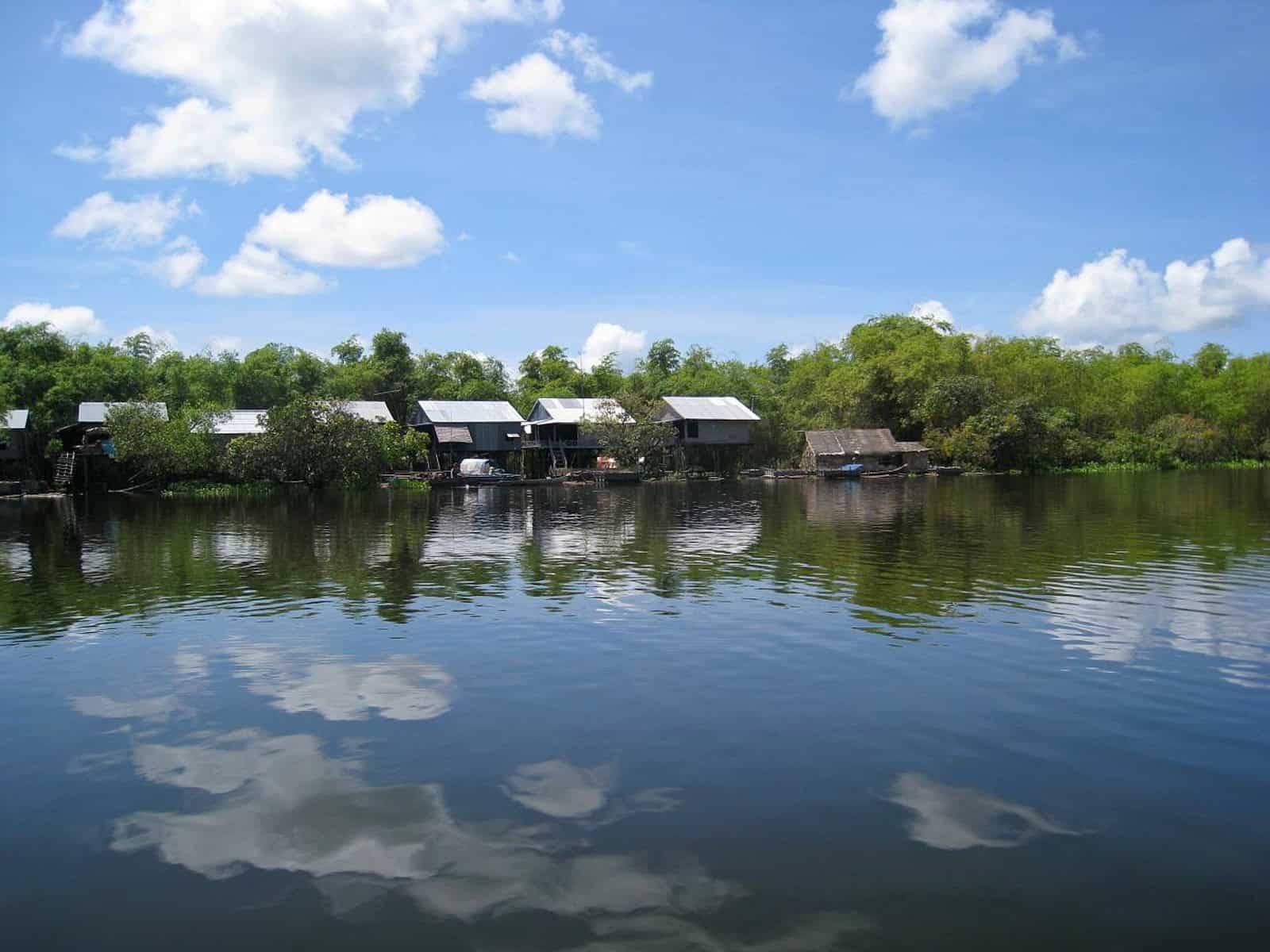
And six weeks, my friends, wasn't even enough! As often is the case, I prioritized the best way to spend my time, money, and energy.

This list is based on the most extraordinary places and historical sites I visited in Turkey. As with any trip, brushing up on some local vocab before you take off is always smart. I hope it serves you well to plan your trip when the time is right.

Table of Contents

  • Where To Go in Turkey
    • 1. Istanbul
    • 2. Cappadocia
    • 3. Ephesus
    • 4. Pamukkale
    • 5. Troy
    • 6. Gallipoli Peninsula
    • 7. Pergamon
    • 8. Mount Nemrut
    • 9. Konya
    • 10. Antalya
    • 11. Kas and Kekova
    • 12. Oludeniz
    • 13. Bodrum

Where To Go in Turkey

1. Istanbul

Located in Northwestern Turkey, Istanbul connects Europe to Asia and has played an essential role in trade and travel for millennia.

The Bosphorus Strait bisects this large city: the European side to the west and the Asian side to the right.

Istanbul's Old City, Sultanahmet, is a UNESCO World Heritage Site. The Blue Mosque, Hagia Sophia, Topkapi Palace, Galata Tower, and Grand Bazaar are some noteworthy tourist attractions worth visiting.

A sunset cruise on the Bosphorus will give you a different perspective on the city. I also chose Istanbul as the place to experience a traditional Turkish bath.

Related: Best Things to Do in Istanbul

2. Cappadocia

Dave in Cappadocia, one of the best places to visit in Turkey
Dave in Cappadocia

If learning about cave-dwelling societies or going for hot air balloon rides is your jam, then Cappadocia is the best place to visit in Turkey.

Here, you'll find fascinating landscapes full of fairy chimneys, stone spires rising from the ground, other intriguing rock formations, and underground cities. Stay in a cave hotel or hostel for at least one night to get the whole experience.
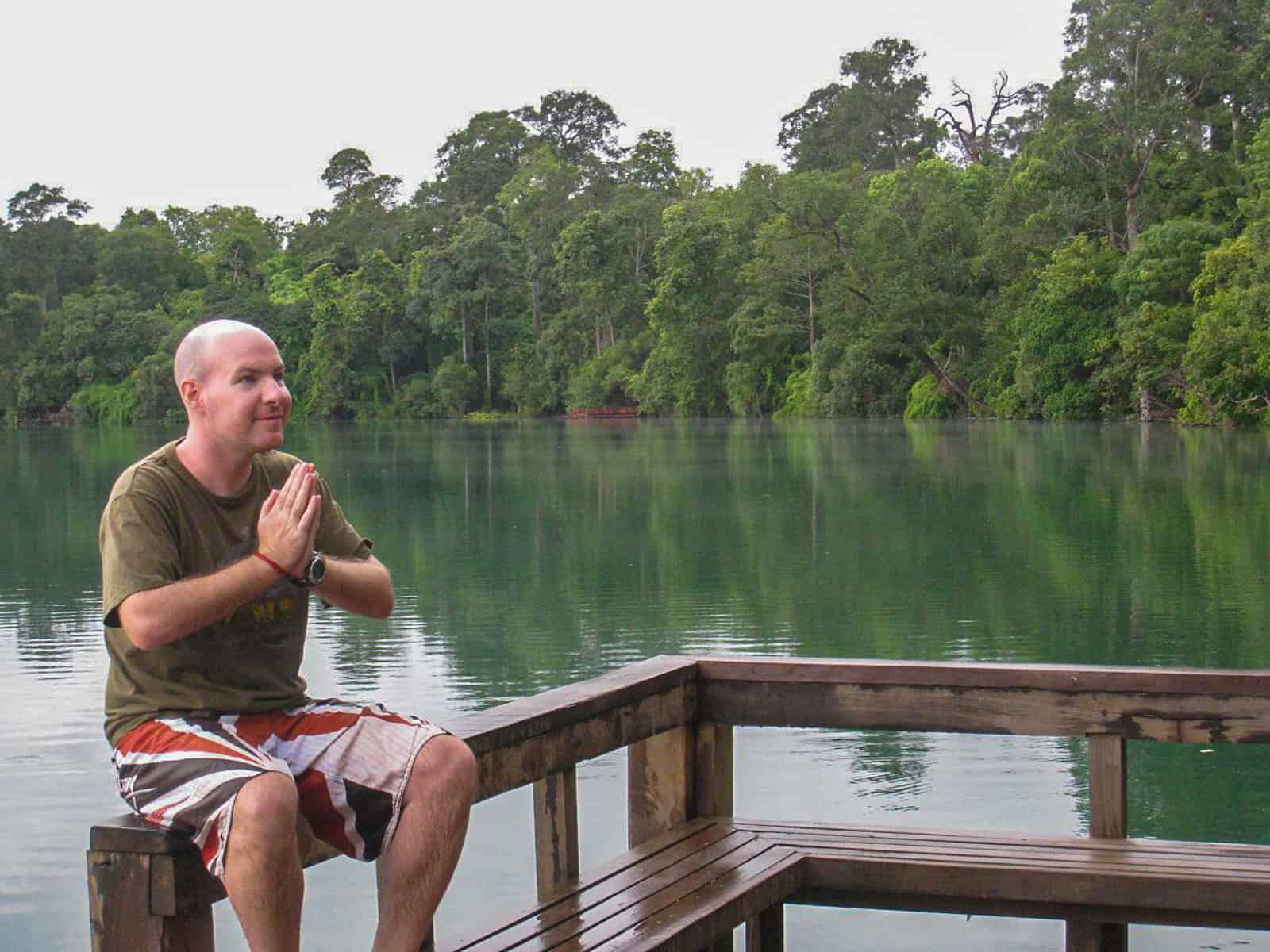
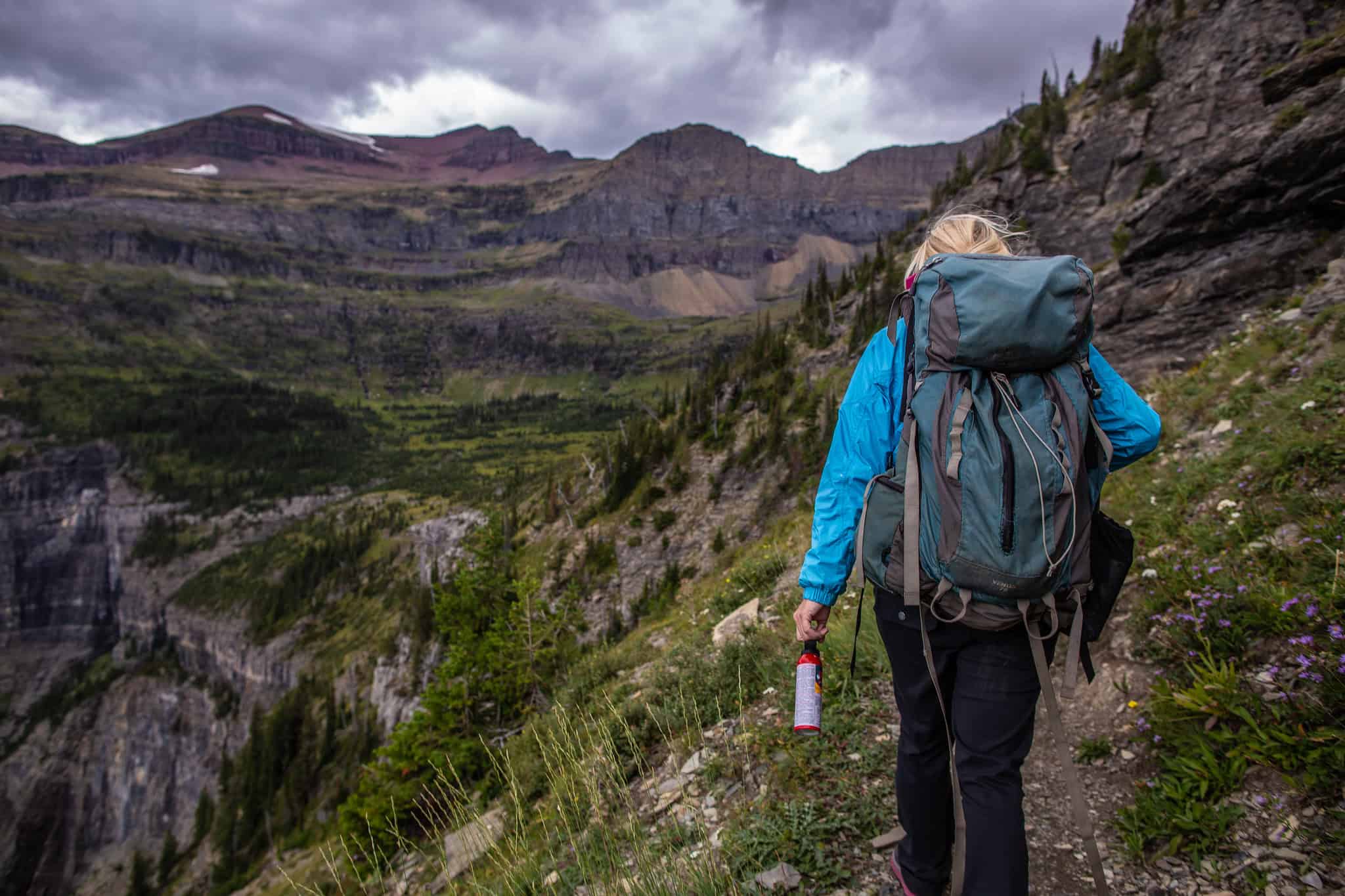
Goreme National Park and the Rock Sites of Cappadocia were added as UNESCO World Heritage Sites in 1985.

Hot air balloon rides are a big business in Cappadocia and for a good reason. They combine beautifully with the natural landscape, especially at sunrise.

Hot air balloons landing in Cappadocia
Hot air balloons in Cappadocia

I chose Cappadocia as the place to go on my first hot air balloon ride, an experience I was scared to undertake but did so nonetheless.

It was unforgettable, from the pre-dawn excitement of firing up the balloon and getting aboard to our rise through the clouds to see the morning sun. And it's all done without the pilots being able to steer where you're going.

For safety's sake, research and pay a little extra to ensure you're going with a company with a strong safety record. A week after I left town, I read in the news that a balloon had hit power lines, causing riders to get injured.

If taking flight isn't for you, it's still possible to enjoy the sight of a hundred or more balloons flying over town as they prepare to land in the surrounding area.

3. Ephesus

The Library of Celsus at Ephesus, a must-visit place in Turkey
The Library of Celsus

The Greeks first inhabited the ancient city of Ephesus as far back as the 10th century B.C. Later, the Romans used it until the 15th century A.D. That's 2,500 years of human history.

Highlights of these Roman ruins include the Library of Celsus (pictured above) and a 25,000-seat stone theater that once hosted gladiator fights.

"Little remains of the famous Temple of Artemis, one of the "Seven Wonders of the World," which drew pilgrims from all around the Mediterranean."

-- UNESCO

Also near Ephesus is a small stone structure discovered in the 19th century, considered the Virgin Mary's last home. The building now functions as a small chapel, so going inside is possible.

4. Pamukkale

Pamukkale
Pamukkale

A natural landscape derived from mineral deposits, Pamukkale (Cotton Castle in Turkish) has fascinated travelers in Western Turkey for over a thousand years.

The 656-foot (200-meter) tall outcropping features stepped terraces that fill with water, allowing visitors to soak in natural hot springs on their way down.

Pamukkale is one of the most beautiful places to visit in Turkey, so go early in the day to avoid crowds.

5. Troy

Trojan Horse model
Trojan Horse model

Canakkale is a city on the northwest coast of Turkey overlooking the Aegean Sea. It's worth visiting for two sites you can combine to see in a single day.

The ruins of Troy is one of the more fascinating places to visit in Western Turkey
Troy ruins

First and foremost, there's the 4,000-year-old archaeological site of Troy, another of Turkey's UNESCO World Heritage Sites.

Wander through the ruins on a guided or self-guided tour. There's not as much to see as at Ephesus, but it's still impressive.

The Troy Museum opened on-site in 2018 to offer further historical context and access to discoveries still being made today.

6. Gallipoli Peninsula

Turkish Memorial - Gallipoli

My second recommendation while staying in Cannakale on the Aegean Coast is a half-day tour of the Gallipoli Peninsula, the scene of fierce fighting during World War I.

Britain, France, and Russia lay siege to the Gallipoli Peninsula to weaken the Ottoman Empire's control of the Dardanelles Straits. These waters offered direct access to Constantinople (now Istanbul).

Australian Memorial - Gallipoli

Over 250,000 people died during the fighting, which went on from February 1915 to January 1916.

Ultimately, the defending Ottoman forces prevailed, paving the way for Turkey's independence eight years later.

The tour includes visits to memorials and cemeteries for Turkish troops and soldiers from Australia and New Zealand. The latter countries remember the fallen annually on April 25, Anzac Day.

7. Pergamon

The Temple of Trajan at Pergamon
The Temple of Trajan

It's about a four-hour bus ride south of Canakkale to reach the city of Bergama, home to the former city of Pergamon.

Pergamon was founded in the 3rd century BC as the capital of the Attalid dynasty.

Located in the Aegean Region, the heart of the Antique World, and at the crossroads between Europe and the Middle East, it became an important cultural, scientific and political centre.

-- UNESCO

Pergamon is built atop a 1,099-foot 335-meter high hill, offering a commanding view of the surroundings. It's accessible via cable car.

Amphitheater at Pergamon
Theater of Pergamon

I had the best time exploring Pergamon; it felt like I had the ruins to myself. Highlights included the Temple of Trajan, the steep 10,000-seat amphitheater built by the Romans, and a cute white and black dog that kept me company.

8. Mount Nemrut

Dave atop Mount Nemrut, one of the most interesting places he visited in Turkey
Dave atop Mount Nemrut

One of the most memorable places to visit in Southeastern Turkey is Mount Nemrut (accessible via the town of Kahta).

Atop a 7,000-foot (2,134-meter) high mountain is Nemrut Dag, the royal tomb for Antiochus I, who reigned in the 1st century B.C.

A sizeable 49-meter mound of loose rock, known as a tumulus, helps protect the tomb.

Sculptures at Nemrut Dag

Statues surrounding the tumulus were beheaded at some point in its 2,100-year history. Rather than reconstruct them, they've been placed upright on the ground, which makes them fun to photograph.

Mount Nemrut is covered in snow half the year, so you should plan to visit between April and October. I was there in June, and the weather was terrific.

Transportation to and from the mountain can easily be arranged in Kahta. Access to the ruins requires about a 15-minute walk up modern stone steps.

I flew into Kahta and took a seven-hour bus ride west to Capadoccia on my way out.

9. Konya

Konya, Turkey
Konya, Turkey

Following my time in Cappadocia, I traveled west by bus for about four hours to Konya, the province's capital. Konya is the final resting place of Rumi, a 13th-century poet and Sufi mystic.

"Your task is not to seek for love, but merely to seek and find all the barriers within yourself that you have built against it."

-- Rumi

I read Rumi's poetry in my twenties. I was surprised to learn he was entombed along my route to the Turkish Mediterranean coast.

Rumi's remains at Mevlana Museum
Rumi's mausoleum

"Set your life on fire. Seek those who fan your flames."

-- Rumi

Rumi's mausoleum is inside the Mevlana Museum in Central Konya. I stayed at a budget hotel a few blocks from this remarkable place.

If you visit Konya for Rumi and want to tick another UNESCO World Heritage Site off your Turkey bucket list, there's Catalhoyuk.

Located a 40-minute drive southeast of Konya, Catalhoyuk is a 9,000-year-old Neolithic (New Stone Age) settlement.

The earthen ruins aren't as ornate or grand as what you'll see at Ephesus and Pergamon; however, they're some 7,000 years older. Enough has been excavated and preserved to make for an enjoyable half-day trip.

10. Antalya

Antalya marina
Antalya's Old City Marina

I left Konya for the city of Antalya on the Turquoise Coast, a.k .a. the Turkish Riviera. It took about four hours by bus.

I spent the rest of my time in Turkey exploring its idyllic coastline, a popular vacation and yachting destination for Turkish and international travelers.

Antalya was founded by King Attalus II of Pergamon in 150 BC and became part of the Roman Empire in 133 BC.

Hadrian's Gate is a notable structure built in 130 BC to honor the Roman emperor Hadrian. It's in excellent condition, and you can still walk through it.

11. Kas and Kekova

Beach in Kas
Beach in Kas

Further west of Antalya is the small coastal town of Kas, one of my favorite places in Turkey and anywhere in the Mediterranean Sea. The coastline is dotted with beaches and inlets for swimming.

The highlight of my stay in Kas was a day-long boat trip for under $20 (lunch included). Sign up for a tour at the port downtown and spend the day sailing and swimming through some of the prettiest blue waters you'll ever see.

Enjoy lunch on the boat while taking in the natural beauty of your surroundings before disembarking to explore the ancient ruins of Simena, a 4th century B.C. Lycian city.

It's a short walk up a hill to reach Simena Castle and panoramic views of Kekova Island.

Xanthos-Letoon

Xanthos amphitheater
Amphitheater

Halfway between Kas and Oludeniz, another beach town on the Turkish Riviera, are the ruins of the Lycian capital of Xanthos.

Xanthos-Letoon is a remarkable archaeological complex. It represents the most unique extant architectural example of the ancient Lycian Civilization, which was one of the most important cultures of the Iron Age in Anatolia.

-- UNESCO

If you're planning to spend time in either Kas or Oludeniz, it's worth a quick stop en route from one to the other to see Xanthos.

12. Oludeniz

Paragliders above Oludeniz beach, one of the prettiest places to visit in Turkey
Oludeniz beach

When researching where to spend my time on the Turquoise Coast, one picture of Oludeniz was all I needed to see to add to my itinerary.

The sparkling blue waters of this long, rocky beach (and adjacent blue lagoon) live up to the coast's nickname, making it one of Turkey's prettiest places to visit.

Adventure seekers can go paragliding, taking off from a nearby mountaintop for scenic views while drifting over the water and beach.

The landing site is smack dab in the middle of town amid cafes and bars overlooking the beach. It's about a two-hour drive from Kas to Oludeniz (or vice versa).

13. Bodrum

Bodrum, Turkey
Bodrum, Turkey

The last stop of my six-week backpacking adventure in Turkey was Bodrum, one of the best cities for hanging out on the Turkish Riviera.

It's a popular departure point for travel to Greece, whether by ferry (which I used to reach Rhodes), sailing tour, or chartered yacht.

Bodrum features two bays, separated by a small peninsula, home to the early 15th century Bodrum Castle.

The beach in Bodrum is one of the most relaxing places to visit in Turkey
Bodrum beach view

The 45-foot-tall Mausoleum at Halicarnassus is worth a brief visit. It was constructed in 350 BC and was one of the original Seven Wonders of the Ancient World. A series of earthquakes from the 12th to 15th centuries left the mausoleum in ruins.

Beyond visiting those ruins and Bodrum Castle, I spent my time in Bodrum sipping fruit smoothies and enjoying the watery views.

I arrived in Turkey to promote Turkish Airways and was awed at a country full of ancient sites and ruins of lost civilizations.

Turkey's best places to visit reflect its rich history and unique geography in the Eastern Mediterranean.

______

Turkish Airlines paid for my initial flight to Istanbul and visits to Ephesus and Pamukkale; the rest of my trip was at my own cost.

Is It Safe To Drive Across America?

For many people, flying for a vacation anytime in the next few months is probably out of the question. The COVID-19 pandemic has made many people rethink their vacation plans, and an increasing number are choosing to drive across America rather than fly. 

Arches National Park (photo: Dino Reichmuth)

According to a recent US Travel Association and MMGY Travel Intelligence survey, 67% of travelers are likely to travel in their cars during the next six months. This figure is more than double the percentage of people planning to travel by air during the same period.  

The all-American road trip is enjoying a revival, but how safe is it to drive across America? Anyone thinking about making such a journey knows it's not a simple case of jumping in the car and putting the pedal to the metal. 

Safety measures must be considered, precautions taken, and plans made. And if you're heading out on the road because you're moving house, consider booking with one of the many companies shipping cars cross country. 

It's also important to realize that taking a road trip might not work for everyone. While it's very tempting to get away for a bit, coming into contact with others or visiting highly trafficked places increases your risk of exposure to the virus. Here are some travel tips if you want to enjoy a safe road trip this summer. 

Table of Contents

  • Road Trip Tips
    • Plan Your Route and Location
    • Remember To Protect and Sanitize
    • When Stopping at Gas Stations and Rest Stops, Take Proper Precautions
    • Before You Eat, Sanitize Your Space
    • Sanitize Your Accommodations
    • Be Prepared for Traffic
    • Watch Your Speed
    • Maintain Your Vehicle

Road Trip Tips

Plan Your Route and Location

Many places across the US are opening their doors again, but this doesn't signal the pandemic's end. It's possible to contract the virus wherever you might be, which makes it all the more important to plan. 

The AARP (American Association of Retired Persons) recommends mapping the roadways and states you will pass through. Make a list, and you can check whether there are any relevant travel advisories you should be aware of. These might include changes in rest-area food sales and toll collection. 

The Federal Highway Administration has a directory of state transportation department websites. There, you'll be able to find the latest information about state-specific coronavirus-related changes. Other links, such as weather and traffic alerts, are also available. 

It's also a good idea to call ahead and confirm which attractions and hotels are open. Find out about capacity limits and, if possible, make reservations in advance.  

Remember To Protect and Sanitize

It is essential to keep clean when out on the road, and this is especially true now. Pack your car with sanitizing wipes, hand sanitizer, sanitizing spray, gloves, a face mask, and perhaps even a thermometer. Above all, remember to practice good and frequent handwashing.

Try to reduce the time spent at rest stops by packing your snacks and drinks. Store an emergency kit in your car because you never know when you might need it.
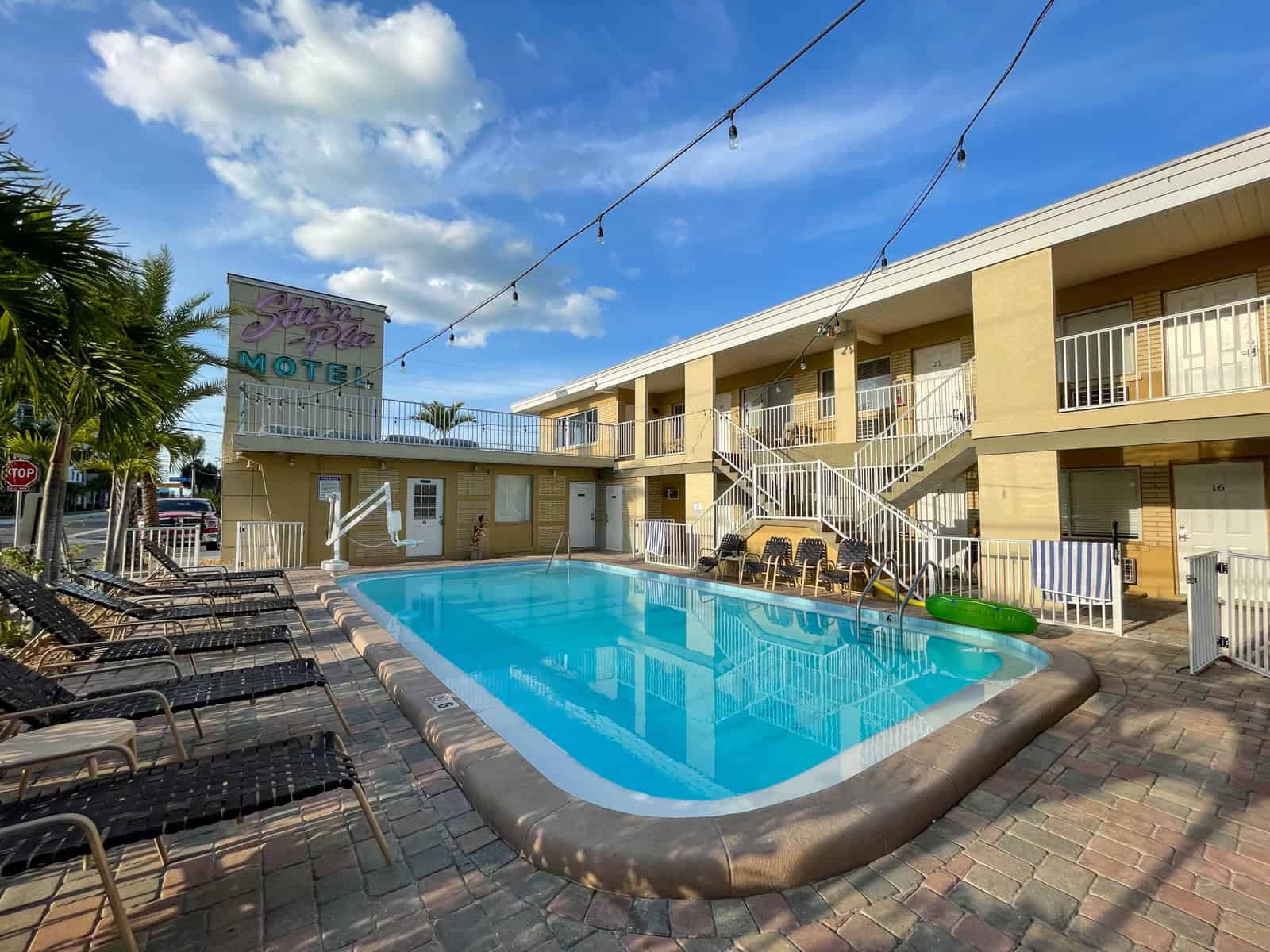
Your kit should include:

  • Car charger for your cell phone
  • First-aid kit
  • Blanket
  • Snacks and drinking water for humans and pets
  • Flashlight and spare batteries
  • Paper towels or rags
  • Ice scraper or snow brush
  • Basic tools
  • Road flares or reflectors
  • Traction aid (sand or salt)
  • Jumper cables
  • Shovel
  • Tarp
  • Raincoat 

Not all these items will apply to everyone, so use your best judgment.  

When Stopping at Gas Stations and Rest Stops, Take Proper Precautions

Nevada desert (photo: Suzanne Emily O'Connor)

You'll probably need to stop at a gas station and make rest stops along the way. To stay safe, you should try not to touch anything. If there are people close, wear a mask. Wear gloves as a barrier between your skin and other surfaces. When you're done, wash your hands thoroughly or use hand sanitizer. 
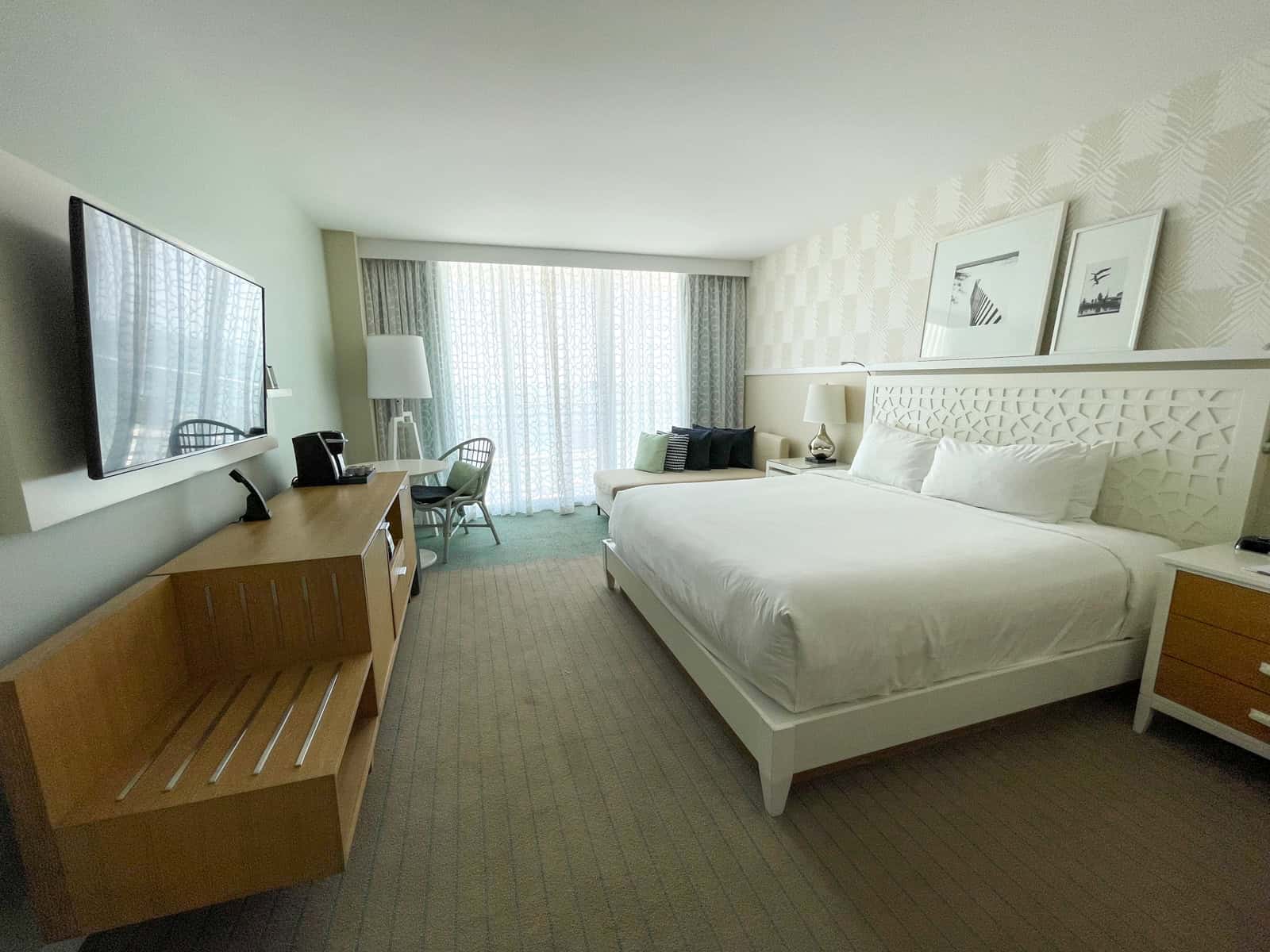
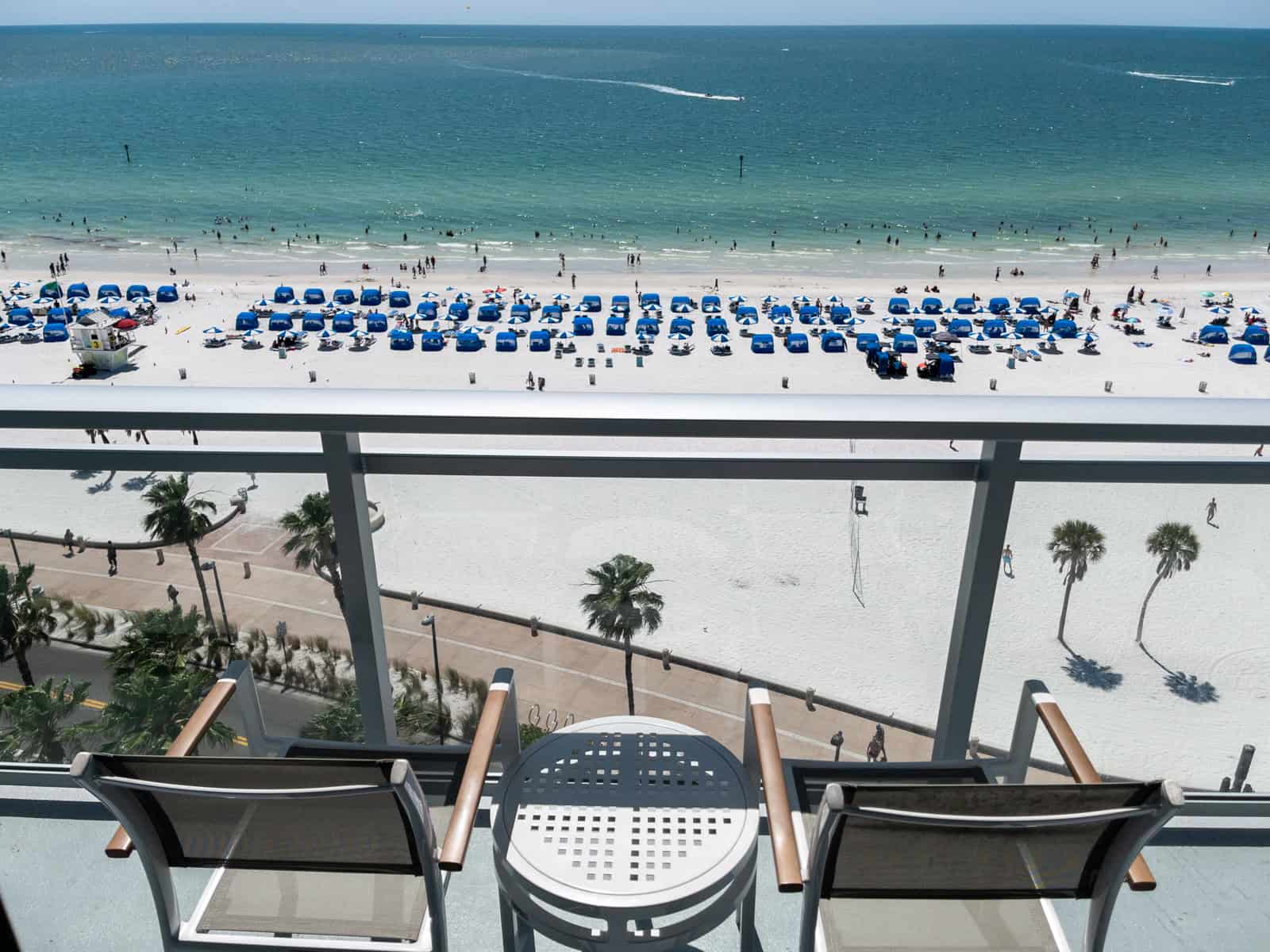
According to the CDC, physical cash, credit, and debit cards could be sources of virus transmission. The advice is not to touch your face after handling paper and coin money. Place cash on the counter rather than handing it over directly. Use a hand sanitizer after transactions and use touchless payment options if they're available.

Wear gloves or some other barrier between your skin and everything else when pumping gas. Many people touch gas pump number pads and touch screens during the day. Avoid contact with them if possible.     

Before You Eat, Sanitize Your Space

Pack extra refreshments in your car to cut back on convenience store trips. If you must eat in a restaurant, disinfect the table with wipes. Use hand sanitizer after interacting with servers or cashiers. Safer options include curbside pick-up or drive-through as they reduce your interaction with other people. 

Sanitize Your Accommodations

Not all hotels are operating normally, so the smart thing to do is call ahead to confirm your reservation if you want to stay somewhere overnight. The CDC has published a guide on how to clean and disinfect places like hotel rooms.  

Be Prepared for Traffic

Many people hesitate to use public transport, so they commute more in their cars. Driving is seeing a spike in popularity worldwide, and it could return even stronger than before. Be aware of traffic hotspots throughout your road trip. Avoid them if possible, but stay calm and patient if you can't. 

Watch Your Speed

According to Business Insider, there has been a spike in speeding on emptier-than-normal highways. When driving, always be aware of your speed. Local law enforcement knows this issue and will look out for it. 

Practice a system called READ the Road:

  • Right speed for right now
  • Eyes up, brain on
  • Anticipate their next move
  • Donut of space around your car, in case you need to make an emergency maneuver 

Maintain Your Vehicle

Breaking down on the highway or getting a flat tire is almost unavoidable. However, there are things you can do to reduce the chance of it happening. Maintaining your vehicle is key. Regularly schedule maintenance checkups and periodically change your oil.

Don't ignore any unusual noises, smells, or vibrations; always keep a close eye on the engine light. Disregard these signs at your peril. Nip them in the bud, and the potential for resulting damage will be less. 

To ward off a blowout or other tire issues, ensure they have a healthy tread before your journey. In the US, the standard tread depth is measured in 1/32" increments, according to Tire America. New tires have a tread depth of 10/32". If the tread on your tires is 2/32" or less, you need to replace them. 

If you're unsure about your car's tire depth, there's an easy way to check it. All you need is a quarter. Insert it into your tire tread groove. If the tread touched Washington's head, you have at least 4/32" of tread remaining.  

Another way is to look at the tread wear indicator bar molded into most tires. These bars are located at the bottom of the tread grooves in several locations around the tire. If the bar is visibly flush with the adjacent ribs, the tire has no more than 2/32" of tread remaining.  

______

This story is brought to you in partnership with SGT Auto Transport Corp.

Traveling by Car: How to Watch a Desert or Coastal Sunrise Comfortably

San Diego sunrise (photo: Frank Mckenna)

Sunrise is a magnificent moment that can take your breath away with its beauty.

It symbolizes the start of a new day, and only you decide how to spend it.

Unfortunately, it can be hard to catch a rising sun, especially for those living in urban areas with many tall buildings.

Therefore, many travelers, who like exploring the world by car, decide to stop somewhere in a remote area to enjoy the sunrise.

Coastlines and deserts are the top areas to observe the sunrise. The desert terrain is typically flat, as is the ocean's surface.

Have a stop in these areas and you can enjoy the best sunrise of your life. 

Below, you will find the best ways to comfortably watch the sunrise in the desert or on the coast while traveling by car.

Table of Contents

  • Hammock
  • Rooftop Tent
  • Outdoor Seating
  • Sunrise Viewing from Car
  • Tips for Car Travelers
  • Final Words

Hammock

It is one of the most comfortable ways to watch the sunrise.

You can sleep in a hammock, then wake up and watch the magnificent sunrise being 100% relaxed.

Also, you can share a hammock with your partner to make the moment even more unforgettable. 

Unfortunately, there is one drawback. You need to have at least two sturdy points to install a hammock. Three are better.

Having a viewing spot in the desert, you will hardly find a single tree. 

Making a stop along the coast, you will have to find at least one tree.

Then, you need to attach one end of a hammock to the tree and the other one to your car's roof rack.

However, if you have racks installed on your vehicle, there is a better and more convenient way to watch the sunrise. 

Sunrise near Uluru, Australia (photo: Mike Holford)

Rooftop Tent

The most convenient and safest way of sleeping and passing the time while traveling by car is using a rooftop tent.

It can be easily attached to racks on a car and can provide an outstanding camping experience.

A tent that is attached to a car's top keeps you safe.

Since the tent is placed more than six feet above the ground, wild animals and reptiles won't be able to reach it while you're sleeping.

It's very convenient to lay on a plain surface on top of a car and watch the sunrise. 

The best rooftop tents are equipped with a ladder to get into them with no hassle. Rooftop tents are spacious and can keep you safe from strong winds and cold weather.

Don't forget to bring a light source if you want to read before getting some sleep.

Outdoor Seating

It's certainly not convenient to enjoy the sunrise through the windshield, sitting in a car.

If you want to meet a new day conveniently, bring large camping chairs. They can be easily folded and packed in a vehicle.

After arriving at a great viewing spot, just set up your chairs to enjoy the sunrise.

Note that it might be quite cold and windy in the morning as sand loses heat rapidly, and the plain terrain of the desert and coast doesn't weaken the wind.

Therefore, an open fire will enhance your outdoor seating. 

First, it will be an additional source of heat. Second, you'll be able to brew some coffee and prepare breakfast.

Deserts and shores aren't rich in dried wood for an open fire. Therefore, don't hesitate to bring some wood with you.

Sunrise Viewing from Car

If you have a van, you can easily set it up for comfortable sunrise viewing.

Feel free to cover the cabin's floor with plywood to make the surface flat.

Also, wood has a bad heat conductivity value, so it will save heat. You can also put down an air mattress and lie inside your van.

To watch a spectacular view, you will only need to open the rear door of your van.

Tips for Car Travelers

Do you want your trip to be comfortable and problem-free? If so, don't be shy about using these tips from experienced travelers. 

Bring Cash

The more remote places you go, the harder it may be to find ATM machines. Also, stores in remote areas may not accept credit cards.

Therefore, it's always a good idea to bring cash on your road trips. It can be a life-saver if you need to purchase water, gas, or pay someone for help. 

Carry a Lot of Water

Water is the most important resource for living.

Planning a trip, especially to the desert, necessitates that you bring plenty of filtered water, preferably in a reusable container.

Always bring enough water to cover any possible needs, as well as the potential for your car or van to break down unexpectedly.

Create a Playlist

If you have to drive many hours to reach the final destination, don't forget to create a playlist of your favorite songs. Also, music can make camping more fun. 

Final Words

Traveling by car is a great way to pass a weekend, especially during an outbreak, when most international flights are canceled.

If you live in a crowded area, head to the nearest coast or dessert for one or two nights.

It can help distract you, if only temporarily, from everyday stresses and routines.

When a new day begins with witnessing a sunrise in natural surroundings, it'll be worth all the effort.

_____

This story is brought to you in partnership with RoofTopTentGuide.com.

Best Places to Backpack with Your Friends

Who's ready for a new adventure? After spending an entire year indoors, many of us are looking forward to resuming travel activities in a safe and socially distant way.

Let's face it: given all the current uncertainty, we could all use a break to unwind and relax.

Great Smoky Mountains (photo: Kirk Thornton)

So, how about making up for last year's canceled international vacation with a trip to the mountains?

Plan a road trip with one or two select friends if you're on a limited budget. After all, nothing can beat the feeling of being on the road with your favorite people, jamming to cool tunes.

You experience new things, take risks, and make lasting memories together. Whether cliff jumping or ziplining - friends often know just the thing to pull you out of your comfort zone. 

Open up to adventure and find creative ways to make the most of your trip.

Don't let fear and inhibition control every aspect of your life. Make spontaneity your friend.

If you're on a tight budget, have a look below. Here, we're sharing the best places to travel with your friends. 

Clingman's Dome (photo: Kirk Thornton)

Table of Contents

  • Newfound Gap, Smoky Mountain National Park 
  • Portland, Maine 
  • Nosara, Costa Rica
  • Maribor, Slovenia
  • Nassau, Bahamas 
  • Malibu, California 
  • Indianapolis, Indiana 
  • To Conclude

Newfound Gap, Smoky Mountain National Park 

Take the scenic route through the Great Smoky Mountains for a memorable journey. The Newfound Gap Road will let you experience a little of everything the national park offers.

The Newfound Gap Road runs from Gatlinburg, Tennessee, to Cherokee, North Carolina. Watch for gorgeous views of Mount LeConte - the perfect spot for selfies. 

After a few miles, you'll see the Rockefeller Memorial, where President Franklin D. Roosevelt commemorated Smoky Mountain National Park.

Portland, Maine 

Portland, Maine, is a perennial travel favorite. The Old Port's cobbled streets and colorful restaurants are a treat for the eyes.

Throw in farmer's markets and craft breweries, and Portland has cool credentials. You can also head to Peaks Island, a ferry ride from downtown Portland.

Want to know the best part? From hotel accommodation and food to getting around - Portland is super affordable. 

Nicoya Peninsula, Costa Rica (photo: ArianneBeeche)
The Nicoya Peninsula, Costa Rica (photo: ArianneBeeche)

Nosara, Costa Rica

Nosara is a gorgeous Costa Rican beach town on the Nicoya Peninsula with a fun-loving hippy spirit.

You will come across adorable cafes and exclusive boutiques, giving a California vibe. Apart from enjoying the culture, you can go surfing with your buddies.

Whether you're a beginner or a professional surfer, you can connect with a local surf instructor for fun lessons.

Once you've gotten a tan, consider heading on a riverboat safari to spot exotic birds, iguanas, and monkeys. 

Maribor, Slovenia

Are the iconic Lake Bled and the capital city of Ljubljana on your travel itinerary?

Maribor could be the best place to start your journey. It is the most mesmerizing spot, surrounded by medieval buildings and cozy wine cafes.

You'll see wine-growing hills and museums that offer tastings. So, why not get a little tipsy with your friends? It is a small city but packs a punch with its excellent line-up of summer festivals.

You can also visit Pohorje, a ski resort, to experience outdoor activities like hiking, biking, or a cable car ride. 

Nassau Atlantis Fish (photo: Sean Cotton)

Nassau, Bahamas 

Usually, budget travelers don't picture themselves visiting the Bahamas because they believe it would cost a fortune.

In 2021, the Bahamas could be one of the best backpacking destinations. If your friends like authentic experiences, this could be the picture-perfect travel spot.

The former British colony has been free and independent since 1973. It exudes Caribbean culture with its jerk joints, bars, and street food vendors on every corner.

You can also try thrilling activities, including swimming with pigs, diving with sharks, and cliff-jumping.

If you're not fond of aquatic adventures, head to the straw market and get some crafts. 

Malibu, California 

Malibu is all about pristine coastlines and charming oceanfront homes. The scenic shoreline attracts people worldwide while offering different outdoor activities.

Nothing could be more memorable than a fun beach trip, from playing throwball on spectacular beaches to thrilling water sports.

You can also escape to the Santa Monica mountains to catch sight of beautiful waterfalls and forests. Otherwise, visit The Getty Villa Museum if you like ancient art. 

Indianapolis, Indiana 

Indiana offers an energetic downtown with diverse restaurants, attractions, miles of bike paths, and a scenic Central Canal.

If you desire a green space to connect with nature, look no further than the White River State Park. It features sculptures, canals, and some of the best views in the city.

You can also visit The Indiana World War Memorial Plaza, which stands more than 200 feet tall; it was built to commemorate World War I. While you're there, check out the Soldiers & Sailors Monument too. 

To Conclude

Indeed, it doesn't matter where you are going once you have friends by your side; choosing your destination is just the beginning.

In addition to considering everyone's interests, you'll plan a budget-friendly trip. Thankfully, there are many places to head with a backpack.

Before heading out, book hostel or hotel accommodations and learn about different routes to ensure an unforgettable road trip. 

______

This story is brought to you in partnership with Smoky Mountain National Park.

3 Political Sites to Visit While In Russia

St. Basil's Cathedral, Red Square (photo: Anastasiya Romanova)

Do you love politics and history? Are you looking to spend your time in Russia immersing yourself in all things politics?

Then the following three tourist sites should be on your itinerary.

1. The Moscow Kremlin

Your visit to Moscow would not be complete if you did not stop at the Kremlin. This fortress traces its roots as far back as 1147.

In the 13th Century, the Kremlin was also the center of spiritual power for state leadership.

The complex consists of several cathedrals, palaces, walls, and towers.

The Grand Kremlin Palace within it used to be the Tsar's residence whenever he was in Moscow.

Currently, however, the Kremlin is a museum and the official residence of the Russian Federation President.

So, if you would like to visit a seat of political power, the Moscow Kremlin is a great place to see. In 1990, it was recognized as a UNESCO World Heritage Site.

Additionally, you will be able to take a tour and see other attractions such as historic wooden sculptures, artillery pieces, and the Tsar Bell. 

You can also view the museum collection of royal garments, state regalia, and other applied art pieces.

Some of these items are displayed at the Armory Chamber within the Kremlin.

2. The Museum of the History of Political Repression Perm-36

The Museum of the History of Political Repression Perm-36 is also known as the Gulag Museum.

It's also officially known as the Memorial complex of political repressions. 

In the Stalin era, it was part of a larger prison camp, which was then known as the Gulag.

The Gulag operated from 1946 to 1987. Some buildings have been preserved as they were, while others have been reconstructed.

During the period it was in operation, Perm-36 was used as a forced labor camp.

Both criminals and political prisoners were imprisoned there under very harsh conditions, including solitary confinement.

Many people, including scientists, writers, and politicians, died within its boundaries.

If you would like to learn more about the conditions in which people were confined during the Soviet Union era, the Gulag is a good place to start.

It's located about 100 km from Perm. After visiting, you'll have a new appreciation for the freedom of expression and what it means to be free of oppression.

Lenin's Tomb (photo: Hennie Stander)

3. Lenin's Mausoleum

Lenin's Mausoleum is also known as Lenin's Tomb. It can be found in Central Moscow at Red Square, one of UNESCO's World Heritage Sites. 

This site is the current resting place of Vladimir Lenin, the revolutionary Soviet Russian leader who led to the rise of Leninism.

The mausoleum designer borrowed from other significant architectural designs such as the Tomb of Cyrus the Great and the Step Pyramid.

Originally, Lenin's body lay in a coffin within a wooden tomb.

However, it now lies in a sarcophagus within a mausoleum made of materials such as marble and granite, among other things. 

There have been numerous debates on whether Lenin's body should be moved to a different resting place.

Therefore, the tomb is worth a visit now because its future is uncertain.

You can view the tomb on designated days so long as you respect the established rules.

Since this is one of the sites where photography is forbidden, the only way to experience the tomb is to visit it in person.

You don't have to agree with any political philosophy or politician to appreciate their contribution to history.

History is interesting and fun to learn for its own sake. So, when you visit Russia, take the time to enjoy some of its well-known and even lesser-known political sites. Get started: https://visaexpress.com/visa-for-russia-from-us/.

_______

This story is brought to you in partnership with Visa Express.

Kronborg Castle: Day Trip to Hamlet's Castle

Kronborg Castle, Denmark

On my first full day in Copenhagen, I hopped a train for the hour-long ride north to 600-year old Kronborg Castle, the setting of Shakespeare's Hamlet.

Strategically located in Helsingør (Elsinore) at the eastern edge of Denmark, the castle overlooks the Sound, a stretch of water separating the country from Sweden.

Kronborg's resident royalty grew incredibly wealthy by levying a toll on the estimated 1.8 million ships that passed by in route to the Baltic Sea from 1429 to 1857.

As a result, Kronborg became one of the most important castles in Northern Europe during the Renaissance.

In 2000, Kronborg Castle was recognized as a UNESCO World Heritage Site.

Got Denmark on your bucket list for 2022 or beyond? Now's the time to familiarize yourself with the European Travel Information and Authorisation System, or ETIAS, a visa waiver program for citizens from 60 countries, including the United States, to enter the Schengen Area.

Let's take a closer look at the castle so grand it was featured in one of William Shakespeare's most famous plays.

Table of Contents

  • Exploring Kronborg
    • Entering the Castle
    • The Royal Apartment
    • Church Chapel
    • The Cannons
    • Quirks of Castle Life
    • Little Hall
    • Casemates
  • Getting There and Away

Exploring Kronborg

Entrance to Kronborg Castle in northern Denmark
Entrance to Kronborg

Entering the Castle

It was a chilly, overcast fall morning when I arrived at Kronborg Castle. The steely-grey sky set the mood for a trip back in time.

Entering Kronborg Castle grounds happens in stages. First, there's the two small bridges over a wide moat leading to the main gate.

Then, there's a short walk around a smaller interior moat (pictured above) before passing through a thick exterior wall (below) where tickets are purchased.

Kronborg's exterior fortifications

The cost of admission ranges from $15 in the low season to $22 in the high (summer) season.

Free 30-minute guided tours are available from September through March; however, I was too excited to wait for one.

Kronborg Castle courtyard
Courtyard

Instead, I walked through to the spacious courtyard, which has hosted more than one live performance of Hamlet over the years.

The tragic play was first performed here in 1816 to celebrate the 200th anniversary of Shakespeare's death.

During my first trip to Europe after college, I have fond memories of attending Shakespeare's Much Ado About Nothing in Kilkenny Castle's courtyard in Ireland.

If you have the opportunity to see Shakespeare performed at Kronborg, or any other European castle, I highly recommend it.

Courtyard at Kronborg Castle
Courtyard

Kronborg Castle's grandeur is all but apparent in the courtyard.

Tall towers, sandstone walls, and copper roofing have been beautifully restored and kept in pristine condition.

King's Chamber at Kronborg
The King's Chamber

The Royal Apartment

I began my exploration of the castle's interior in the Royal Apartment, where the King and Queen lived, on the north wing's first floor.

The King's Chamber is one of the castle's most important rooms, as it was here that the King would meet with noblemen to discuss how to run the realm.

The room was also used for entertaining, such as hunting dinners, which King Frederick II enjoyed greatly during his reign in the late 16th century.

An accidental fire in 1629 led to the near complete destruction of the castle.

The exterior was rebuilt almost the same by Christian IV. The interiors, however, were rebuilt with less of a likeness to their original form.

Queen's bedroom
Queen's bedroom

Two tiny bedrooms are on display, one for the King and one for the Queen.

At the time, having one's own bedroom, warmed by a fireplace, was seen as a sign of wealth and privilege. Smaller rooms were easier to keep warm.

By comparison, those of lesser means may have had an entire family sleeping on a single bed.

The Queen's Chamber at Kronborg Castle
The Queen's Chamber

Like the King, the Queen had her own chamber for dining and entertaining guests.

Kronborg Castle chapel
Chapel

Church Chapel

Opened in 1582, Kronborg's chapel was the only structure not significantly damaged by the fire of 1629.

It's a modest space, richly decorated with original religious art and furniture.

View from Kronborg Castle
View from the castle

The Cannons

One of my favorite scenes at Kronborg was not of the castle itself but the view out toward the Sound.

From the vantage point shown above, it's easy to see how well defended the castle was from attack by sea.

Berms, walls, moats, and cannons offered layers of protection for the royal family.

Castle defenses
Castle defenses

Today, the castle can be rented for private and corporate events, such as weddings and concerts.

It's even possible to fire the cannons!

Castle staircase
Spiral staircase
Castle toilet
Castle toilet

Quirks of Castle Life

As you move around the castle, there are small glimpses of what it'd have been like to live there, such as the steep spiral staircases and basic toilet.

The Little Hall with tapestries
Tapestries in Little Hall
Kronborg tapestry
Tapestry

Little Hall

In Little Hall, you'll find seven tapestries from a series of forty depicting Danish kings.

The tapestries were made around 1580 at the behest of King Frederick II.

Holger the Dane
Holger the Dane

Casemates

"According to a legend linked to Arthurian myth, a Danish king known as Ogier the Dane (Danish: Holger Danske), was taken to Avalon by Morgan le Fay. He returned to rescue France from danger, then traveled to Kronborg castle, where he sleeps until he is needed to save his homeland."

Wikipedia

Toward the end of my visit, I went below ground to walk through the cellar, which once housed everything from the King's wine collection to prisoners in shackles.

In the casemates, passageways within the thick castle walls, rests Holger the Dane, a Danish national hero.

The original bronze sculpture was created in 1907 by Hans Pedersen-Dan for Hotel Maienlyst.

Despite the used plaster mold being placed under the castle, it became more popular than the bronze sculpture itself.

In 1985, the plaster mold was replaced with a concrete sculpture to ensure Holger the Dane would safely live on for centuries.

Kronborg Castle
Departing Kronborg Castle

Getting There and Away

Kronborg Castle is easily accessible from Copenhagen by train or car.

If traveling by DBS train, as I did, it's a 45-minute ride from central Copenhagen Central Station (or any other downtown station), plus a 15-minute walk from the Helsingør Station to the castle.

If driving, it's about 45 minutes to an hour north via the E47 highway.

Whichever way you choose, I highly recommend a stop at the Louisiana Museum of Modern Art on your way back to Copenhagen.

It's about a ten-minute walk from the Humlebæk Station, and taxis are available should you need a lift to the museum or back.

______

This story is brought to you in partnership with ETIAS.

Top 5 Best Beach Activities

Wakeboarder (photo: chadseiverson)

The beach has something for everyone, so if you're planning a solo or group beach holiday, don't be worried about the prospect of being stranded or bored at your destination.

This article will introduce you to some of the best activities to try out on your next trip to the beach.

Table of Contents

  • 1. Wakeboarding
  • 2. Surfing
  • 3. Beach volleyball
  • 4. Snorkeling
  • 5. Scuba diving

1. Wakeboarding

Wakeboarding was popularized back in the 80s, and its rise to popularity has been nothing short of remarkable.

Most people haven't tried the activity because its learning curve is rather intimidating at first glance.

However, you can excel in this watersport if you take the time to go through the basics and get all the necessary boating accessories for the sport.

If you own a boat, make sure it is in perfect shape before heading to the beach.

Also, consider equipping it with a wakeboard tower from a reputable boating accessories company such as Aerial Wakeboarding for a better experience.

2. Surfing

Surfing is arguably the most popular board sport. It involves standing on a surfboard and gliding on the waves.

One thing that makes the activity so popular is that it doesn't require as much equipment as wakeboarding, windsurfing, or kiteboarding.

All you need is a surfboard and some basic skills, and you are good to go.

The three most common types of surfing are longboarding or Malibu boarding, shortboard surfing, and traditional surfing.

3. Beach volleyball

Unlike most other activities on this list, beach volleyball is a team sport.

It is similar to conventional indoor volleyball but uses a sand court and has lighter restrictions on the number of players that can be in a team.

The players' main objective is to ensure the ball doesn't touch the ground on their side of the net.

4. Snorkeling

Snorkeling is one of the most rewarding beach activities.

Its main selling points include simplicity, as all you need is a couple of fins and a mask to get in the waters.

If this is your first time going on a snorkeling trip, it's worth noting that you will need some basic skills and safety knowledge before diving.

The experience might be tainted with fear, exhaustion, boredom, and, sometimes, injury.

Still, all these are typical products of human mistakes that you can avoid if you pay attention to the rulebook.

5. Scuba diving

Scuba diving has gained a reputation as a gratifying and adrenaline-boosting activity.

It allows you to explore the adventure-filled underwater world and lets you experience the planet's magic from a whole different perspective.

It also offers you a range of spinoff benefits, including physical fitness, stress relief, and a boost in concentration.

You can do it alone or in a group, but it's advisable to have an instructor close on your first tries.

***

There is a wide range of things you can do at the beach, depending on the company and equipment you have, your budget, and the amount of time you have.

The above five are worth a try if you are looking for a place to start.

_______

This story is brought to you in partnership with Aerial Wakesports Products.

Tips for Successful Travel Across New Zealand in a Campervan

Queenstown (photo: Omer Faruk Bekdemir)

Are you starting your travels around beautiful New Zealand in a campervan? Making the right choices from the outset will ensure you have the best experience possible. We're here to help new campervan travelers navigate their way to a memorable trip.

Traveling around New Zealand in a campervan is sure to be the experience of a lifetime.

It's a popular choice, aided by the fact that the country boasts more than 200 campsites dotted around its landscape.

There is so much to see and do:

  • Meeting fellow travelers from around the world.
  • Enjoying pristine vistas and numerous scenic spots and sandy beach.
  • Natural wonders like geothermal springs and a collection of fascinating flora and fauna unique to the region.

Table of Contents

  • Practical tips for your trip
    • Pick the camper option that works for you
    • Kitting up for your road trip 
    • Which season makes for a fabulous time of year to experience NZ in a campervan?
    • Food and cooking during your campervan travels

Practical tips for your trip

As a traveler, you will probably have several questions on how best to prepare for the adventure.

To get the most out of your campervan travels, you will want to know when the weather is at its best, where the campsites are located, what options they offer, and how to choose the right campervan and campervan equipment, as well as how and what to cook.

We have the answers for travelers, both local and international hoping to experience the wonders of New Zealand. 

Mount Cook (photo: Casey Horner)

Pick the camper option that works for you

Different types of travelers will have specific needs and expectations, which will influence your choice of campervan for your roadster adventure across New Zealand.

The first question is how much of the outdoors do you want to experience?

Do you want to sleep outdoors in a tent and use bathroom facilities at campsites, or would you prefer to travel in a campervan that comes equipped with its own loo?

Your packing list and list of things to purchase will vary accordingly. For more advice, visit Wilderness Campervans and Motorhomes. 

Kitting up for your road trip 

If you plan to sleep in the great outdoors, then you'll need to purchase sleeping bags, a tent, and tarps to ensure you can pitch your quarters easily and are well-protected against the elements.

You will also need a kettle/billy to heat water over a fire, matches, kindling, and firewood to get that fire going, a cooler for perishables (and beer!), and batteries, power banks, and charging gear to ensure your flashlight, mobile phone and other electronics can be charged when you are at a campsite. 

If you are renting a campervan, you will have several amenities to hand: a bed, kitchenette, stove, fridge, and maybe even a microwave, as well as outlets to plug in and charge your electronics, will be installed.

But you will still need things like a first aid kit, swimming gear, sunscreen, and repellent.

We highly recommend that you invest in quick-dry pants and a jacket, gloves, hat, hiking boots, a flask, and a water bottle, a backpack or other easy to fold and store bag that is lightweight too, a good quality flashlight, and of course, basic toiletries and prescription medications. 

Aoraki/Mount Cook National Park (photo: Casey Horner)

Which season makes for a fabulous time of year to experience NZ in a campervan?

New Zealand is gorgeous any time of the year for a road trip.

That said, winter (June to August) is a fabulous time to be on the road in NZ.

Campervan rentals and campsite costs will be lower (helpful for those on a budget), options will be greater since it is not peak season, and for winter sports lovers, opportunities to snowboard and ski sweeten the deal.

The second-best time is between March and May in the autumn, when the temperature is decent, the days are still long, and the costs remain lower than in the high season.

Between November and February will be the warmest season, but as December and January are when the kids are out of school, it becomes more crowded and expensive.

At the end of the day, it depends on whether you want a quieter time and are okay to travel in colder climes, or if the promise of warm weather trumps all. 

Food and cooking during your campervan travels

Food is not cheap, and eating out will be limiting and challenging in more rural parts of the country.

Therefore, it is best to stock up on essential groceries so that you can quickly whip up a simple rice or pasta meal, eggs, vegetables, and longer-lasting fruits, and some pantry staples such as spices and ready-made sauces.

Impressive local produce is abundant in New Zealand, so you should keep an eye open and purchase fresh groceries as you travel.

Don't forget to check out the wines, cheeses, and even beers at the various charming and award-winning local vineyards and breweries across the country. 

Keep in mind New Zealand's Freedom Camping Act of 2011, which affords campers the right to camp in public spaces free of charge and outlines their expectations, such as being responsible, not littering, not infringing on private property. 

Finally, make sure you understand the road rules, including speed limits and NZ-specific quirks such as one-lane bridges and roundabouts (important for those visiting from other parts of the world), so that you are safe and don't get into any trouble.

______

This story is brought to you in partnership with Wilderness Motorhomes Ltd.

How to Eliminate Plastic From Your Life

Plastic is everywhere, and today, you'd be hard-pressed to find a home that isn't filled with plastic products, whether purposefully or not.

Plastic is in everything from packaging and consumer products to landfills and natural environments, which is precisely why plastic has become the target of environmentalists throughout the past few decades. 

Kauai, Hawaii (photo: Karsten Winegeart)

Now, more people than ever before are determined to live a life without plastic by eliminating plastic products from their lives.

By making conscious choices for the environment, you can reduce your carbon footprint while protecting the planet from plastic pollution. 

Table of Contents

  • How Much Plastic Is In the Ocean?
  • Why Is There So Much Plastic Waste? 
  • Isn't Plastic Recyclable? 
  • How To Eliminate Plastic
    • B.Y.O.B
    • Stop Using Plastic Straws
    • Support Eco-Friendly Brands

How Much Plastic Is In the Ocean?

More than 150 million metric tons of plastic waste are currently floating freely through oceans and other water bodies, polluting vital ecosystems and inhibiting the health of millions of marine creatures.

Our ocean's pollution, which is hard to grasp, includes both industrial and consumer waste plastics. In just a few years, plastic waste could surpass the number of fish dwelling in the ocean. 

Bits of plastic are easily mistaken for floating pieces of food and snatched up by unsuspecting marine birds, fish, and mammals.

Thanks to decades of illegal dumping and thoughtless plastic litter, a shocking 60% of all seabirds and 100% of all marine turtle species have been found to consume plastic, according to the Ocean Conservancy.

Ultimately, it wreaks havoc on their sensitive digestive systems, often resulting in death. 

Plastic bottle (photo: Brian Yurasits)

Why Is There So Much Plastic Waste? 

Plastic is used in virtually every industry, whether as an additive in products or for packaging before sale.

Clothing, packaging, household products, commercial products, and much more are made from plastics. In some cases, plastic has become the standard/required material choice.

Plastics come in a wide range of forms, which is why many consumers may not even realize that their purchases contain plastic.

In all its forms, plastic is affordable and relatively durable, making it ideal for mass manufacturing a wide range of products. Try going into any room of your home - we guarantee you'll find plastic everywhere! 

Isn't Plastic Recyclable? 

Sure, plastic is used in tons of products, but why does that matter? Isn't plastic recyclable? 

In theory, yes, most plastics are recyclable, but being technically recyclable does not guarantee that an item will be recycled. 

Essential plastic products made from non-mixed materials are straightforward to recycle (i.e., plastic water bottles).

Still, even so, few consumers throw their plastic items in the recycling. Other plastic items are too complicated or costly to recycle and are often rejected by recycling facilities.

Additionally, mixed-material plastics can't be easily separated and reused, making them virtually impossible to recycle. 

So, is plastic recyclable? Sort of, but that doesn't mean it gets recycled.

Instead of relying on the recycling process to make plastic items less environmentally harmful, the best approach is to eliminate plastic from your life entirely. 

Water refill station on Caye Caulker, Belize (photo: Meritt Thomas)
Caye Caulker, Belize (photo: Meritt Thomas)

How To Eliminate Plastic

Worried about the impact plastic waste is having on the planet? You're not alone! Today, millions of people worldwide are making choices that help eliminate plastic from their homes, landfills, and oceans. 

Ready to join the plastic-free movement and begin eliminating plastic products from your life? Try following these simple tips. 

B.Y.O.B

Each time you go shopping, remember to B.Y.O.B: bring your own bag!

Single-use plastic bags are mostly non-recyclable and difficult to dispose of, which is why most end up in landfills or floating through lakes and oceans.

Some states have banned plastic bags altogether, whereas others have instituted fees to deter customers from using them. 

Whether your local government has taken steps to reduce plastic bag use or not, it's never too soon to use your own reusable bag.

Stop Using Plastic Straws

While plastic straws should be recyclable, they are considered 'too lightweight' for most commercial recycling companies. They are often spoiled by food/beverage residue.

Because of this, plastic straws are non-recyclable, making them among the most commonly found plastic products in lakes and oceans. 

Straws can easily be mistaken for food by marine creatures and can become lodged in nostrils, eyes, ears, and mouths.

Rather than using another plastic straw that will inevitably pollute the planet, choose a reusable stainless steel, glass, or bamboo option instead!

Support Eco-Friendly Brands

One of the best ways to combat plastic pollution is to support eco-friendly brands that are working to be plastic-negative and adopt more environmentally sustainable practices.

For example, Hawaiian wellness company Mana Artisan Botanics works to create a greener, cleaner planet by combating plastic pollution.

When you purchase products like their turmeric hemp oil, a portion of your purchase goes toward efforts to remove plastic from the ocean.

For every bottle sold, Mana Artisan Botanics helps to divert one pound of plastic from being dumped in oceans and natural ecosystems. 

_______

This story is brought to you in partnership with Mana Artisan Botanics.

8 Travel Tips for a Memorable Family Vacation

Arc de Triomphe in Paris (photo: Mika Baumeister)

Travel brings adventure and enlightenment for people of all ages.

New places, food, and modern and historical sights can be a great source of amusement and pleasure.

However, traveling with young kids can be overwhelming, mainly due to long packing lists, safety measures, and the kids' unpredictable nature.

Balancing the energy of cranky kids and managing temperament can be exhausting for the parents.

But, proper planning of activities before setting out for the journey can ensure a relaxed outing for everyone.

Below, we have provided some handy tips to help you create wonderful memories without bumping into trouble at every turn.

Table of Contents

  • 1. Choose Your Destination Wisely
  • 2. Keep Your Travel Documents Safe 
  • 3. Get Travel Vaccinations & a First Aid Kit
  • 4. Sort Entertainment Items 
  • 6. Budget Your Entire Trip & Use Cards 
  • 6. Thoroughly Inspect Your Accommodation 
  • 7. Get a Local Sim Card 
  • 8. Be Cautious with food
  • Conclusion 

1. Choose Your Destination Wisely

Before you surprise family members with your trip idea, consider their preferences, and see what would suit the majority.

Their likes and dislikes matter when you are doing something for their peace and pleasure.

For example, you might want to go for a vacation to Canada in the winter.

That choice may not land well for others as not everyone might tolerate extreme Canadian cold.

Also, it is wise to think about rest stops during your journey.

Otherwise, you and your loved ones could end up restless or exhausted over a long and unknown route.

Check weather forecasts, and search for motels and other fundamental facilities for a specific place before packing for your next trip.

Thus, to make sure everyone is happy and restful, think about their physical endurance and needs.

Similarly, long flights, mountainous terrains, or blazing summer heat can be exciting for some but challenging for others, especially if you take your pets along.

So, if you're departing for Pigeon Forge, you might want to explore pet friendly cabins in pigeon forge to keep your pet safe. 

2. Keep Your Travel Documents Safe 

Today, along with you and your children, even infants need international passports to travel abroad.

However, it is easy to apply and process their documents through various government sites online.

New applications for renewal purposes are often required to be submitted in person or by post.

So, carefully follow the instructions mentioned by your government to avoid any delays.

Also, be sure and check the passports' expiration date for family members who already possess them.

Some countries have stringent policies when it comes to the validation of visas to travel.

Furthermore, keep a close eye on all your documents while traveling; ensure they are safe and handy.

You can do this by carrying a small passport holder that has a sling attached to it so that it is secure all the time.

It can also help if you have different storage bag sections for each person's stuff.

This way, each person can access their things without disturbing others' belongings, reducing the risk of loss.

PS - it is mandatory to show original documents at any border crossing. Therefore, it is better to keep Xerox copies of your papers rather than always carrying the originals.

3. Get Travel Vaccinations & a First Aid Kit

While it is better to travel light, leaving out essentials such as a first aid kit is not wise.

It is highly advisable to prepare for medical contingencies, especially when your family has pre-existing conditions.

For instance, if a family member has asthma, you must keep his/her medical needs in mind and carry first aid equipment.

Furthermore, ensure that every member of your family is vaccinated correctly.

Check your doctor's availability well before a month of your trip so you and your loved ones get the right vaccinations.

Moreover, it is vital to have mosquito repellents, nets, and protective clothes for outdoor stays in hot climates.

4. Sort Entertainment Items 

Enduring long travel journeys can be overwhelming and highly irritating for young children.

To give them a better alternative to vent their frustration, keep things crafty by bringing some engaging games and movies with you.

Also, you can try audiobooks as they are a popular choice among children.

Portable video games or a customized music playlist can also keep the young ones busy.

However, not every child is fond of electronics; keep a good book on hand for reading, such as a suspenseful or comedic tale.

6. Budget Your Entire Trip & Use Cards 

Budgeting for a family trip will not only make leisure choices clear but also save you from spending needlessly at the end of the day.

Especially on international trips, it is easier to get carried away by an intriguing ice cream shop or a local vendor.

However, you must be watchful of your pocket and spend on things and activities that are worth it.

Be careful about the hidden costs while booking a hotel room or dining out.

Depending on where you go, it can be risky to carry hard cash while sightseeing.

To avoid a cash slip, use card payments through a credit card or any other international payment option.

6. Thoroughly Inspect Your Accommodation 

Hotels are a good option for spending a safe and cozy evening with your family.

However, it would help to read authentic reviews about the place of your choosing; otherwise, you can be in for surprises.

Rely on a well-reputed hotel for your stay and ensure that your space does not have any fitted spy cameras to intrude on your privacy.

Also, check for available utilities; see if there is an excellent and clean bath, a working fridge, and other essentials available.

Similarly, self-catering can be both economical and fun for your family.

So be practical while deciding your accommodation and consider your family needs in every way.

7. Get a Local Sim Card 

While planning a foreign trip, instantly get yourself a local sim card for calls and messages.

This way, you can immediately contact any local services such as police in case of an emergency.

It will help save money and ensure smooth connectivity with the locals in any time of need.

8. Be Cautious with food

Every other food stall may be tempting when you're traveling abroad. Your kids may want a taste of everything that looks attractive and delicious.

However, it is crucial that you only eat at selected places, which take care of hygiene and cleanliness.

Keep light snacks for your family or rely on international food chains such as McDonald's and KFC.

Be extra vigilant regarding fluids, such as tap water, as they cause health problems like diarrhea or typhoid.

Conclusion 

Planning a trip with your family can be tiresome and worrying.

However, a little planning and attention to detail can help you avoid significant problems before they arise.

If you genuinely want to please your family with an incredible trip, get prior bookings of as many things as possible.

And make sure you take suitable safety measures throughout your journey.

______

This story is brought to you in partnership with Timber Tops Cabin Rentals.

Guide to Traveling with CBD

Louis Armstrong New Orleans International Airport (photo: David Lee)
New Orleans Airport (photo: David Lee)

Traveling has always been a stressful experience, well before the COVID-19 pandemic, and fears over contracting the novel coronavirus ever existed in travelers' minds.

Waiting in long lines, handling complicated and personal paperwork, sitting in cramped seats, and breathing in recirculated germ-filled air for hours can result in muscle strain, mental stress, and emotional exhaustion.

To combat travel fatigue, many people have begun traveling with CBD to relieve physical and emotional strain, which leads us to this article's topic: how to travel with CBD. 

Table of Contents

  • What Is CBD or Hemp Oil? 
  • Is CBD Oil Legal?
  • Can You Take CBD Oil On A Plane? 
  • Tips for Traveling with CBD
    • Choose the Right Container
    • Keep CBD with Toiletries
    • Clear Labels

What Is CBD or Hemp Oil? 

CBD is the second most abundant of the 100 or more cannabinoids found in cannabis plants worldwide.

Revered for its healing and restorative properties, CBD is unlike THC in that it does not possess psychoactive properties that are a signature of the 'high' you get from THC.

Instead, CBD promotes physical relaxation, cellular rejuvenation, pain relief, and stress alleviation, making CBD a popular choice among stressed or anxious travelers. 

Individuals can use CBD products topically or as oral tinctures to reduce physical and emotional strain without the psychoactive effects of THC.

Given its incredible results, adults, children, and even animals use CBD in the pursuit of calm, peace, and comfort.

For instance, travelers can use CBD to help reduce the emotional toll from hectic airports and tight schedules.

Travelers may also use CBD to improve their physical comfort during the journey and encourage faster healing and recovery after the flight.

During those long flight hours, passengers may even turn to a CBD sleep aid to catch a few zzzs. 

Is CBD Oil Legal?

CBD oil is legal in all 50 states and at the federal level, thanks to the 2018 Farm Bill.

While CBD itself is legal, products containing both CBD and THC are not, and those wishing to travel legally with CBD must be aware of local laws and ordinances.

CBD products containing less than 0.3% THC are considered legal throughout the United States and can legally be purchased, consumed, and possessed by adults of legal purchasing age. 

Can You Take CBD Oil On A Plane? 

Because CBD is legal throughout the United States, individuals can bring CBD aboard planes.

There are few restrictions regarding CBD oil transportation in checked baggage as long as it meets the 0.3% THC or less regulation.

If you wish to bring CBD oils or tincture on board in your carry-on, it must not exceed the legally permitted 3.4oz bottle size. 

Although it is not legal to travel with CBD oil that contains THC, the TSA has made it clear that its agents do not search for drugs like marijuana, making it unlikely that anyone would check to see whether your CBD oil comes in under the required THC levels.

Regardless, you always travel with cannabis at your own risk, and it is advisable to make yourself aware of local ordinances before traveling.

If you are traveling outside of the U.S., it is not advisable to travel with CBD unless you are intimately aware of local guidelines and restrictions. 

Traveling in Colorado (photo: David Lee)

Tips for Traveling with CBD

While it may be a bit nerve-wracking to travel with CBD for the first time, it is perfectly legal and permitted to carry CBD with you throughout the United States.

If you'd like to enjoy the benefits of CBD on the road and want to try bringing your stash of CBD or hemp oil with you on your travels, try one of these tips for safely traveling with CBD.

Choose the Right Container

Some droppers and plastic topped containers designed for easy access to the products within can pop open or come loose during travel, leaking precious oil all over your stuff.

To avoid losing any oil or ruining your items during travel, try transporting your oil in an air-tight, reliable container. 

Keep CBD with Toiletries

Because of the potential for leakage, CBD oils are best kept with toiletries during travel.

If your CBD oil pops open in your toiletries bag, the mess remains contained, you'll easily be able to clean off your other beauty and bathroom products since they are designed to be washable.

Keeping your CBD in your toiletries bag can also help answer TSA questions regarding the product's nature. This method works best with CBD topicals, a more user-friendly alternative to a tincture.

Stored with your other medications, supplements, and personal care products, it'll be clear why you're carrying CBD. 

Clear Labels

If your CBD is clearly labeled with its ingredients and chemical composition, you will have a far easier time getting through security and handling TSA.

Clear, concise, easy to read labels make it easy for TSA agents to quickly glance over your CBD and help reduce the number of questions you might face. 

_______

This story was brought to you in partnership with Elevated Wellness LLC.

5 Amazing Cycling Routes in Europe

Calling all adventurous cyclists! Have you thought about taking a cycling trip to Europe? The most amazing cycling routes are in Europe, thanks to plenty of UNESCO sites, breathtaking sea views, and the various European cuisines you can try.

Danube River, Budapest (photo: Bence Balla-Schottner)

UNESCO stands for the United Nations Educational, Scientific, and Cultural Organization. Designated sites promote learning in these key areas. Every European country has unique landmarks and tourist attractions that will fill your Instagram with memories of an unforgettable cycling adventure. Enjoy one or more of these five best cycling routes in Europe!

Table of Contents

  • Cycling Routes
    • 1. Danube Cycle Path
    • 2. Via Francigena in Italy
    • 3. The Iron Curtain Trail
    • 4. Romantic Road in Germany
    • 5. Baltic-Adriatic Route

Cycling Routes

1. Danube Cycle Path

The Danube Cycle Path is known as the best bicycling trail in Europe. During your tour, you will pass through many historical sites and cultural landmarks. Once a military path and route for trading amongst Romans, you will be immersed in a European history lesson.

The Danube River's clear waters and the vast farmlands you'll pass through make this bicycle route one of the most captivating in Europe. Most of your time will be spent in Austria, with the tour concluding in Vienna. Discover delicious Austrian cuisine as you take breaks from your cycling adventure.

The trail is excellent for novice cyclists as a first-time bike tour. The terrain is flat and accommodating, and there is little vehicular traffic. A self-guided tour will cost at least $900. For a seven-day tour, you will travel about 35 miles per day.

2. Via Francigena in Italy

The Via Francigena offers one of the most scenic cycling routes in Europe (photo: Marco Biondi)
Via Francigena (photo: Marco Biondi)

The Via Francigena in Italy will take you through the dirt roads of the Tuscan hills and along the peaceful Dora River. Cycling through Colle Val d'Elsa to Poggibonsi will allow you to avoid city traffic.

For the duration of your Via Francigena trip, you will be on a safe bicycling trail. The trail's length of 1,056 miles means there is much to explore. It has 23 stages, each measuring about 31 miles.

Traveling between the Great St. Bernard Pass at the Swiss border and Rome, you will be immersed in a historical journey. Budget tours on Tour Radar range from $999 to $1,590.

The difficulty level is higher because of the trail's length and regularly hilly dirt roads. Therefore, you should use an affordable mountain bike or a hybrid model that can adequately handle the terrain. This trail is recommended for experienced adult cyclists, not families with small children joining them.

You'll need to purchase a pilgrim's credential to stay at lodging throughout the trail, which will allow you to rest adequately and recharge. You will receive a stamp for every place you sleep as a keepsake of your journey throughout Via Francigena.

3. The Iron Curtain Trail

Pamporovo, Bulgaria (photo: Vlad Tchompalov)

The Iron Curtain Trail is the longest bike trail on this list, at 6,182 miles. Tours start at $481 per person. You will pass by 14 UNESCO sites and three surrounding European seas during your trip. Stop at UNESCO sites for an enriching educational experience of European history.

This trail received its namesake from the 'Iron Curtain' border from the Barents Sea to the Black Sea. Known as the longest trail of the EuroVelo, you'll pass through vineyards in different parts of Czechia (Czech Republic) and Austria. Enjoy the beauty of the local port cities in the Baltic States. Brave the mountainous areas throughout Greece and Bulgaria.

Download the EuroVelo app for your smartphone to aid your cycling tour throughout the Iron Curtain Trail and any other European biking trails you decide to brave on your bucket list. What makes the Iron Curtain Trail the best is its hallmark tourist attractions, UNESCO sites, and various terrains.

4. Romantic Road in Germany

Rothenburg Germany (photo: Roman Kraft)

The Romantic Road is a highly recognized route that connects 16 German cities. What was once a region of American military bases in the 1950s has been turned into a historical trail for cyclists and hikers in the 21st century.

Your budget for the Romantic Road will depend on how many guided tours you take and how long you intend to spend on the route. Depending on the tours, souvenirs, food, and amenities purchased, one's budget could range from $200 to $1,000.

The trail is about 274 miles long. While on the short side in trail length, you can conquer it faster than others on this list. During your cycling trip, you will pass through two historic German cities, three medieval cities, and other highlights, including the Alps and the Neuschwanstein Castle.

The Romantic Road is suitable for beginners because of the connected bike paths that make it convenient to cycle the whole way through. It's mostly flat except for a few higher-altitude areas in Pfaffenwinkel and Rothenburg.

For your convenience, 12 hostels and 11 campsites are located throughout the Romantic Road. During the holidays, advent markets open along the route. Any gifts you purchase for family and friends must be mailed home so you can continue to travel lightly on your bike.

Wielkopolski National Park, Poland (photo: Artur Luczka)

5. Baltic-Adriatic Route

The Baltic-Adriatic biking route is 1,274 km long and passes by two European seas. It passes through six countries, including Slovenia, Croatia, Czechia, Italy, Poland, and Austria. This trail is also known as the Amber Route because of the amber stone found in the Baltic region. A 17-day Adriatic tour costs about $4,690.

Poland is the flatter part of the cycling route, where you will enjoy historical tourist attractions such as Wielkopolski National Park and Lower Vistula Valley. Once you hit Czechia, you can visit the Holy Trinity Column in Olomouc, a UNESCO site.

The Austrian portion will also be easy as you travel through spas and wineries offering relaxing breaks between cycling legs. On the Baltic-Adriatic route, you'll pass through the longest bike trail in Slovenia. You'll pop into Italy near Trieste before coming back to Slovenia again. When you pass through the Croatian portion of the trail, you can enjoy the Euphrasian Basilica, a UNESCO World Heritage site.             

_____

This story was brought to you in partnership with YesCycling.

Pre-Travel Planning and Post-Travel Recovery Tips

Bose noise-cancelling headphones on Norwegian flight
Bose headphones (photo: David Lee)

Whether you fly, drive, or take a train, traveling can be an exhausting experience that can leave you feeling mentally and physically strained.

Between jet lag, cramped seating, and long hours of sitting still, traveling can be a pretty miserable experience.

Add travel anxiety or stress to the mix, and you've got the perfect cocktail for fatigue.

Here, we're going to share a few tips to help you stay happy and healthy the next time you travel with simple tricks like basic breathing exercises and using CBD for muscle recovery and relaxation. 

Table of Contents

  • Double-Check Your Pre-Flight Checklist
  • Pre-Travel Wellness Tips
    • Eat & Hydrate
    • Use A Sleep Aid
  • Can You Travel with CBD Oil?
  • Post-Travel Wellness Tips
    • Do Some Stretching
    • Breathing Exercises
    • CBD Balms & Creams

Double-Check Your Pre-Flight Checklist

While time zone changes and long-hours spent traveling can contribute to fatigue, many people underestimate the role stress plays in causing the post-travel slump.

One of the easiest ways to reduce your stress and set yourself up for a pleasant traveling experience is to take time to plan the journey. 

Create a simple checklist that includes all the things you want to bring with you to help yourself keep track of all of your items, and feel more prepared.

Some of our must-have travel items include: 

  • CBD for muscle recovery
  • Gum to prevent ear popping
  • Phone charger and headphones
  • Nuts or jerky for brain power
  • Travel pillow
  • Eye mask for sleeping during the travels

Pre-Travel Wellness Tips

Want to set yourself up for success at the other end of your journey?

Try to address your wellness before the trip even begins.

You'll want to be sure to give both your body and mind what they need to remain calm and comfortable throughout the journey, so don't be afraid to indulge yourself in extra comfort. 

Water bottle refill station
Water station (photo: David Lee)

Eat & Hydrate

Hunger and dehydration are two surefire ways to ruin your traveling experience, so before you hit the road or board your plane, be sure to eat a good meal and drink plenty of water.

Traveling can quickly dry you out, especially if you are flying and sitting in recirculated air for hours on end.

Drinking plenty of water beforehand will help you stay hydrated during the journey and ward off fatigue and muscle soreness. 

Use A Sleep Aid

Longer journeys naturally cause more exhaustion, but if you can rest during the trip, you'll find that recovery afterward becomes much easier.

Sleeping while traveling can be difficult, especially if you need to sit upright or wear a seatbelt the entire time.

Try using a CBD sleep shot that combines relaxing hemp extract with sleep-inducing melatonin to help you sleep comfortably.  

Can You Travel with CBD Oil?

If you are looking to travel with CBD, then make sure you are taking the proper precautions.

Based on TSA guidelines, you can travel with CBD oil within the US as long as it does not contain more than 0.3% THC, but because some states still ban CBD products, you may want to reconsider if you are traveling to a region with more restrictions.

In general, TSA doesn't look for items like cannabis, but that doesn't mean you want to be caught carrying a joint through security.

If your CBD contains less than 0.3% THC, you probably have nothing to worry about when traveling, but as always, travel at your own risk. 

Contemplation (photo: Ben White)

Post-Travel Wellness Tips

Once you reach your destination and can step off the plane, out of the car, or off the train, you may not realize that there is still more to be done to ensure you stay healthy.

Soreness, illness, and fatigue from travel can set in days after you arrive, and aches and pains can sneak up on you overnight from sitting in cramped positions.

Luckily, there are a few easy ways to help yourself recover more quickly after you travel.

Do Some Stretching

Sitting for long hours will have your body feeling stiff and cramped, but with a few easy stretches, you can ward off tightness and help to reinvigorate your energy.

At the end of your journey, try stretching your back, arms, legs, neck, and shoulders for 10-15 minutes, or performing a quick yoga sequence of your choice. 

Breathing Exercises

To help you shed some of the mental stress and exhaustion of travel, try some basic breathing exercises once you have reached your destination.

Here's a simple one to try: 

  1. Sit in a comfortable position and relax your shoulders
  2. Breathe in slowly through your nose, allowing your chest to rise as you inhale
  3. Once your lungs are full, exhale through your mouth, pursing your lips slightly to make a quiet 'whooshing' sound
  4. Repeat with eyes closed, focusing on the movement of your breath

CBD Balms & Creams

Sometimes even a good stretch isn't enough to shake stiff muscles and soreness, and that's when you break out the CBD for muscle recovery. Rubbing CBD creams and balms into sore muscles can help reduce tension, improve pain, improve circulation, and promote full-body relaxation and rejuvenating rest.

The first night after your trip, try combining a CBD cream massage with a dose of CBD sleep aid to jumpstart your recovery overnight.

______

This story was brought to you in partnership with Tribe CBD.

Budget Food Guide for Florence, Italy

Editor's Note: Planning a trip to Italy? Misha Inglis of Misha Says shares her foodie tips in this budget food guide for Florence.

Florence is a food mecca in Italy, famous for its Tuscan cuisine, made with simple and fresh ingredients. Tuscan fare specific to this area includes the mouthwatering Florentine steak, lampredotto sandwich, wild boar ragu, artisanal truffles, and local olive oils.

The Duomo in Florence, Italy
The colorful Duomo

Florence is a walker's paradise, and because of this, most of the plentiful food options in this city can be accessed on foot. With so many options, you don't have to break the bank to eat well in Florence.

Table of Contents

  • Types of Restaurants in Florence
    • Tipping in Florence
  • Top Budget Food Recommendations
    • All'antico Vinaio
    • La Carraia
    • Mangia Pizza
    • Bondi Focaccine
    • Mercato Centrale
    • Venchi Gelato
    • Sapori & Dintorni
    • Pensavo Peggio
    • Arà: è Sicilia
    • King Grizzly
  • Bonus Location
    • Dot.Com at The Mall Firenze
  • Restaurants by Neighborhood in Florence
    • San Niccolò to Piazzale Michelangelo 
    • Ponte Vecchio to Pitti Palace
    • Piazza della Signoria
    • Piazza della Repubblica
    • Duomo
    • San Lorenzo
    • Santa Croce
    • Santa Maria Novella 

Types of Restaurants in Florence

Food establishments in Italy fall into four categories: cafés, osterias, trattorias, and ristorantes. Knowing these four terms can help you decide what type of meal you are looking for.

As a general rule for budget travel, always look for osterias for a good value meal. But, don't rule out trattorias as many dishes will only be a euro or two higher than the nearest osteria, or sometimes not higher at all. 

Cafés are plentiful in Florence, as Italians run on espresso. In tourist areas, you can expect to pay 2 euros for an espresso and 1 euro for more local spots. 

Osterias are traditionally low-cost, casual places for a bite to eat.

Trattorias are restaurants with take-out food available. They often are casual and have lively atmospheres. 

Ristorantes are typically elegant and fine dining establishments. Expect to dress to impress at these types of restaurants. 

However, as the restaurant scene has evolved, the words osterias, trattorias, and ristorantes are now used interchangeably.

Low-cost osterias can now offer opulent dishes, and a hole-in-the-wall restaurant may affix the word ristorante to its name, so it is always best to check the menu before assuming the type of restaurant.

All'antico Vinaio
All'antico Vinaio

Tipping in Florence

Restaurants situated near famous landmarks can often be tourist traps. With a quick search on your phone, you can check out some recent reviews to ensure that you are getting a good experience.

These are more likely to have a cover charge or coperto, which covers the cost of setting up the table and bread. Some restaurants will charge a coperto of 2 to 5 euros for sitting down.

When ordering at the counter, the server usually asks if the order is for takeaway or dining in and adds the charge accordingly based on your answer.

Most restaurants in Florence also account for service or servizio in the menu price. A menu will display something like "servizio e coperto incluso" at the end, noting that service and cover are included.

So, there is no pressure to tip on top of this final bill price, as a percentage of the bill already has a tip built in. At a café, you may round up the change for your coffee.

If you are at a fine dining establishment, you may leave a tip for the waiter if they provide exemplary service, but it is not generally Italian custom. 

See also: Revisiting Florence - Highlights from a Return Trip

Top Budget Food Recommendations

All'antico Vinaio

via dei Neri, 76 R, 50122 Firenze FI

Sandwich with artisanal meats and cheeses

All'antico Vinaio is my top recommendation for a unique sandwich experience that can't be found in any other city. The lines can be grueling depending on the time and day you visit, but are undoubtedly worth it.

I would recommend trying to eat at off-peak times, like when the shop opens or closes, to avoid the queues of locals and tourists alike.

Regular menu sandwiches are only 5 euros each and are large enough to feed two, but I have a feeling you won't want to share these delicious creations.

The sandwiches are made to order and feature artisanal meats and cheeses in unique combinations, unique to this family-run shop that has been making them since 1991.

I highly recommend the Inferno, made with Tuscan roasted pork, grilled vegetables, spicy cream, and rocket salad.

La Carraia

Piazza Nazario Sauro, 25/r, 50124 Firenze FI

Italian gelato at La Carraia
Gelato

This is the oldest gelateria in the city, and it has to be the best gelato in Florence. With flavors such as pear and mascarpone, amaretto cherry, pistachio, chocolate hazelnut, mango, mint chip, and the classic Limone, you really can't go wrong with any of the creamy flavors here.

It is just 1 euro for one scoop or 2 euros for two scoops. Lineups can be long, but they move quickly.

Mangia Pizza

Via Lambertesca, 24, 50122 Firenze FI

Mangia Pizza
Mangia Pizza

Magia Pizza offers delectable wood oven-made pizza in a self-seating, casual setting. You can either pick your topping or choose from an array of topping combinations on the menu. The small sizes, on average, cost 6 to 7 euros.

They make your pizzas to order, and each order is topped with fresh local ingredients and made with a thin and crispy crust, making this an excellent option for lunch as it won't weigh you down for the day. 

Bondi Focaccine

Via dell'Ariento 85R 50123 Firenze FI, Italy

This unassuming pizza and sandwich shop is a few steps away from the Mercato Centrale. There are self-seating benches, which offer a quiet respite from the busy street on which it is situated.

The sandwiches and pizza slices here are a steal, at only 2 to 3 euros each. The sandwiches come in varieties with porcini mushrooms, gorgonzola, shrimp, pesto, prosciutto, mozzarella, and more.

The pizzas are thin-crust squares of mozzarella, prosciutto, speck sausage, mushrooms, and more. For 2 euros, you can even add a glass of Chianti wine. This is a true gem. 

Mercato Centrale

Piazza del Mercato Centrale, Via dell'Ariento, 50123 Firenze FI, Italy

Mercato Centrale is a large food market where fresh produce and artisanal foods are sold to locals and restaurateurs.

On the second floor of the market is a bustling food court where you can save your money on a guided food tour and lead your own self-guided food tour from each of the vendors, all under the same roof.

Here you can find a rotating selection of vendors specializing in pizza, the lampredotto sandwich, arancini, wines, cheeses, burgers, sushi, coffee, truffles, cannolis, and more. 

Though I wouldn't consider this market a budget choice, it is a convenient way to sample different cuisines if you are short on time.

Venchi Gelato

Gelato with cone
Gelato with a cone

Okay, this is a chain found in most major Italian cities. However, if you stick to the chocolate and nut-flavored offerings, which are their specialty, they have some outstanding flavors. The chocolate hazelnut is my favorite as it reminds me of Ferrero Rocher. 

Sapori & Dintorni

Via de' Bardi, 45/47, 50125 Firenze FI, Italy

Sapori Dintorni
Meats and cheeses

One of my favorite ways to familiarize myself with a city's food is to visit the local supermarket. It is also a great way to stock up on some snacks to bring back to your accommodations after a jam-packed day.

In Florence, many mini markets are located throughout the historic center, with Conad, Coop, and Carrefour being some of the most popular chains.

Sapori & Dintorni stores by Conad are specialty supermarkets that have excellent deli selections of meats and cheeses, premade meals such as pasta and sandwiches made in-house, and all of the usual staples one would shop for.

I like to pick up different items to create my own meat and cheese boards-cured meats like prosciutto, fresh buffalo mozzarella, Parmigiano Reggiano, biscotti, and Italian pear juice, which has a thicker consistency with lots of pulp and is made with local sweet pears.

I prefer to go out of my way for Sapori & Dintorni shops because they are like destinations in themselves. They are priced very competitively for the quality of food as specialty shops, yet they stock many of the same things.

Pensavo Peggio

Via del Moro, 51, 50123 Firenze FI, Italy

Lasagna
Lasagna

Pensavo Peggio is a great option for a slice of their famous lasagna or any other homestyle Italian dish. The cuisine here is simple but all the more enjoyable. The majority of the pasta costs 6 to 13 euros, house wine is offered at 3 euros a glass, and Peroni Beer at 4 euros a glass. 

Arà: è Sicilia

Via degli Alfani, 127, 50122 Firenze FI, Italy

Ara
Pastries at Ara

Arà offers some of the most delicious cannolis in Florence. Though cannolis are from Sicily, this delicacy can be found throughout Italy.

Here, you can order one cannolo for 3 euros. It is stuffed in front of your eyes with fresh cream at the time of order to preserve the integrity of the crispy shell.

You have to try it to experience the creamy goodness juxtaposed with the semi-sweet hard shell, also made in-house.

This shop also offers many other sweet treats and traditional Italian street foods, such as fried seafood and arancini. Everything on the regular menu is under 5 euros.

King Grizzly

This classic tavern offers a great selection of craft beers from Italy, Belgium, and Germany. It also has several Italian microbrewery beers on tap. There is casual seating around tables made of old wooden barrels and a great atmosphere for a drink amongst locals and tourists alike.

Beer costs 3 euros for a small glass, 6 euros for a medium glass, and 15 euros for a large glass. A medium is about a pint. The barkeepers are very knowledgeable about their selection and eager to help you make an educated and pleasant choice.

Bonus Location

Dot.Com at The Mall Firenze

Via Europa, 8, 50066 Reggello FI, Italy

Pizza at Dot
Pizza at Dot

This luxury outdoor outlet mall outside of Florence has outlets for exclusive designers like Gucci, Ferragamo, Prada, Chloe, Saint Laurent, and more, making it the perfect location for designer bargain hunters.

Food options can also have luxury price tags at this mall, like the Gucci Caffè.

Dot.Com offers a wide selection of food, including salads, paninis, and a great slice of pizza at an affordable price. Many of The Mall's employees eat lunch here, so it can get jam-packed during lunchtime.

See also: Via Francigena - The Ultimate Walking Tour in Tuscany

Restaurants by Neighborhood in Florence

Santa Maria Novella
Santa Maria Novella

Sometimes it is more fun to find and wander into a spot of your volition. After all, dining on a budget in Florence doesn't mean that you need to make any sacrifices.

Here are some general rules of thumb for the types of restaurants located in Florence's central neighborhoods and some specific streets with a high concentration of restaurants.

San Niccolò to Piazzale Michelangelo 

The sloped streets between the Arno River and the Giardino delle rose, Giardino dell'Iris, and Piazzale Michelangelo are home to many upscale dining establishments, some even with Michelin stars.

However, it is also home to many casual establishments that serve homestyle Tuscan fare. This is a great area to visit in the evening, when the crowds have dispersed, for an enchanting nighttime view of the Arno River.

There is a great stretch of osterias and takeaway spots along Via di S. Niccolò.

Ponte Vecchio to Pitti Palace

Ponte Vecchio
Ponte Vecchio

The immediate area has many spots that would be considered tourist traps. However, walking a few blocks south of the Arno River along Via Maggio will lead you to many delicious osterias, trattorias, and the famous Gusta Pizza.

Piazza della Signoria

Several restaurants are situated around this square, many of which are geared towards tourists because of the views. This is a great place to grab a drink or espresso, but be wary of the coperto charge. 

Piazza della Repubblica

Piazza della Repubblica is a beautiful piazza. There are a few high-end cafes dotted along the square, and you can expect to pay extra for the ambiance. Because this is a public square, you can just as easily grab a takeaway drink and sit under one of the monuments.

Duomo

Many restaurants and cafés surround the famous Duomo. Meals can be had at any budget here with views of the majestic structure. Although there are your typical tourist traps, many great meals can be found in the area for under 10 euros per person.

San Lorenzo

There are many budget-friendly trattorias in this area along Via Borgo San Lorenzo and the surrounding streets of the Basilica de San Lorenzo. I like the neighborhoods because there is a more local feel while still being a stone's throw away from the attractions.

Santa Croce

From the historical center, the neighborhood of Santa Croce is only about 10-15 minutes away on foot. It is full of local spots to eat without breaking the bank. A few places along the Piazza di Santa Croce offer awe-inspiring views of the basilica while dining al fresco.

Santa Maria Novella 

Santa Maria Novella
Santa Maria Novella

This train station is the main lifeline for Florence and its surrounding regions. The Mok coffee shop inside the station is an excellent place to have coffee and a snack before embarking on your journey.

The surrounding streets can be almost as busy as the station itself. I wouldn't recommend eating in the area, as better experiences are available only a few blocks away.

Check out Where To Eat in Florence for Foodies on my blog for more recommendations.

8 Socially Distant Activities You Can Do Safely

Hiking in San Francisco (photo: Kace Rodriguez)
San Francisco (photo: Kace Rodriguez)

It might seem like all the fun has packed up and left town in the wake of the COVID-19 pandemic. No concerts, no sports, no bars, no movie theaters.

Are we all just condemned to sit in our living rooms forlornly tossing a tennis ball against the wall? 

Well, not quite! Once you start looking, there are quite a few fun things that you can do without violating social distancing rules.

You might enjoy the curves of a twisted mountain road with your friends while chattering through your motorcycle helmet communication system, or you might laugh late into the night with your buddies over a digital board game. 

These eight activities will help inject a fun dose of the new and unexpected into your pandemic lifestyle.

And with a little dedication, most of them can become lifelong hobbies that will provide you with years of enjoyment even after the pandemic ends. 

Table of Contents

  • 1. Go for a hike
  • 2. Start an online book club
  • 3. Explore home fitness
  • 4. Cook something new
  • 5. Go for a motorcycle ride
  • 6. Draw, paint, or use digital art tools
  • 7. Play board games or role-playing games online
  • 8. Participate in local government

1. Go for a hike

Hiking has been among the most popular activities of the pandemic era, and for a good reason.

It's a great exercise and allows you to appreciate the beauty of our planet.

That's especially important when many people spend long days cooped up indoors and secluded from the natural world. 

Use common sense in regard to social distancing, and remember that some parks may be crowded enough that you'll need to wear a mask on more crowded trails.

It's better to do day hikes close to home when possible, and it's also better to hike with a buddy who's in your quarantine circle, as hiking is safer when done in groups. 

2. Start an online book club

All the fun of a book club-the interesting discussions, the great reads, the many glasses of wine-can be had online.

A great book is a perfect way to break out of your comfort zone, and a discussion with friends can make it come alive.

Just make sure that everyone's on the same page regarding what kind of books are fair game so that you don't have your friends from work who were expecting a David Sedaris book end up with The Brothers Karamazov instead. 

Yoga at home (photo: LB)

3. Explore home fitness

Experts have been stressing the importance of staying active during the pandemic.

If you haven't quite gotten your home fitness routine down yet, now is the perfect time to start working it out (pun intended). 

There are many possibilities for home fitness routines out there, from yoga to kettlebells to bodyweight fitness.

Try a few different ones and discover which one your body seems to like best.

And go slowly. The last thing you want is to injure yourself and have to spend time recuperating. 

4. Cook something new

With many restaurants still shut down or only offering take-out, you've got the perfect opportunity to hone your kitchen skills.

Pick out a few recipes that you've always wanted to learn how to cook, watch some YouTube videos of people cooking them, and then try the recipe out yourself.

Not only will you make delicious meals, but you'll improve your proficiency with a crucial life skill. 

On the road
On the road

5. Go for a motorcycle ride

Whether you've always wanted to learn or you're an experienced rider, the quarantine might offer the perfect opportunity to get in some time on two wheels.

And with one of today's motorcycle communication systems, a motorcycle excursion is an ideal way to get in a socially distant chat with your friends who ride. 

The best place to start is with the Basic RiderCourse from the Motorcycle Safety Foundation.

Then, talk to your friends who ride and ask them about bikes, riding techniques, and what they wish they'd known when they started riding.

When you're ready, take the test and get your motorcycle license-then get ready to rev up on the open road. 

Related: How to Travel in India with a Motorcycle

6. Draw, paint, or use digital art tools

This one is for art school graduates and total novices alike.

Art is for everyone, so don't let a lack of formal training dissuade you from picking up a pencil and doodling or throwing some paint on a canvas.

Be gentle with yourself and allow your creativity to guide you in unexpected directions, and you might just surprise yourself. 

It's also a great time to explore all of the remarkable digital art tools available today.

Getting a basic drawing tablet places a considerable range of tools in your hands instantly, and playing with a program like Photoshop or Illustrator can help you develop useful professional skills in addition to being a lot of fun. 

D & D (photo: Mitaukano)

7. Play board games or role-playing games online

Board games and tabletop RPGs like Dungeons & Dragons have been a staple of rainy-day entertainment for decades.

It's now possible to play D&D, Catan, Trivial Pursuit, or just about any of your other favorite tabletop games online through virtual interfaces.

Need a group to play with? Try social networking sites like Meetup and Facebook groups that can help arrange virtual game nights. 

8. Participate in local government

There's a lot more to the government than what you see on the national news.

There's some important stuff that's going on in your local City Council chamber, mayor's office, and state legislature.

Educate yourself about issues that you've heard about recently and devote some time to getting involved. 

Now that many government functions have moved online, it's easier than ever to take civic actions, like commenting on a city council meeting.

You can also research local candidates and make voter guides to show their position on the issues.

Join a local political organization to get plugged in with a group with activist and organizing expertise. 

If you know where to look, there are almost as many activities as ever to occupy your free time while waiting out the pandemic.

And they can mostly be done without violating social distancing. So, what are you waiting for? 

______

This story was brought to you in partnership with Cardo Systems.

The Best Stories on Go Backpacking in 2020

This has been a tough year for everyone in the travel industry, including Go Backpacking. In the spring, I had a hard time concentrating on putting together a single blog post.

Nyhavn, Copenhagen
Nyhavn, Copenhagen

However, by summer, I'd come to value the escapism of spending hours revisiting past trips and travel experiences. In addition to writing about travel on Go Backpacking, I also write about food and craft cocktails on Feastio, my food blog.

Below my stories, you'll also find links to the best guest posts of the year. Go Backpacking is supported by advertising, and while I don't link to those articles here, I appreciate everyone I worked with this year.

Stories I Wrote

Copenhagen, Denmark

My first article of the year was the "20 Best Things To Do in Copenhagen," based on my week-long visit last autumn. There's so much to explore (and eat). I'd love to return in a few years to spend more time there.

If you're thirsty, check out the "6 Best Cocktail Bars in Copenhagen" on Feastio. Hungry? I also wrote about the best bakeries.

New Orleans, Louisiana

I visited New Orleans twice in 2019, once in the spring and again in the fall.

Based on my fall trip, I wrote about the Whitney Plantation outside New Orleans, the first museum dedicated to American slavery. Visiting was a moving experience, and I'll never forget reading some of the sad quotes from former slaves who have been memorialized.

I also wrote about my NOLA food tour with Doctor Gumbo, a company I was introduced to when I went on their cocktail history tour earlier in the year.

I check out live music almost every night when I'm in the Big Easy. So, it wasn't hard to put together a list of the 7 Best Jazz Clubs in New Orleans.

My most popular article for 2020 on Feastio is The Best Restaurants in New Orleans.

Los Angeles, California

In the Top 10 Things To Do in Los Angeles, I re-visited my first trip to Los Angeles to promote CheapOair.

Lockdown and Later

In a follow-up to my first article on travel hacking, I wrote about 3 Travel Credit Cards for Beginners based on my experience in 2019.

Writing about travel rewards, points, and credit cards is not my favorite thing; however, I saved thousands of dollars on flights in 2018 and 2019 and hundreds on Apple products in 2020.

I'm ending 2020 with a balance of about 250,000 points, about the same amount as I've ended each of the prior two years. I don't have much to say on this topic for 2020. I canceled several credit cards that were over a year old and only got one new one.

Panama

Backpacking Panama: A Two-Week Itinerary is based on my 2013 trip to the country connecting North and South America.

The highlight of my Panama trip was a three-day, two-night stay on Kuanidup in the San Blas Islands. The archipelago lives up to all the buzz I'd heard while living in Colombia.

I also wrote about 10 Incredible Things To Do in Panama if traveling to the country is on your bucket list.

San Andres and Providencia, Colombia

Continuing with the island theme, I also wrote travel guides for San Andres and Providencia, two Colombian islands in the Caribbean.

I visited both in early 2015, and between the two, I prefer Providencia. It's less developed and less visited, as the only way to get there is by boat or plane from San Andres.

Sadly, San Andres and Providencia were hit by Hurricane Iota in mid-November, the first-ever Category 5 storm to hit Colombia and only the second to develop in November.

While both islands were damaged, the smaller Providencia was practically leveled. An estimated 98% of the small island's infrastructure was destroyed.

According to El Espectador, 80% of houses on the island were destroyed and the remaining 20% damaged. The hospital is too damaged to use, making it difficult to treat those injured in the storm.

The Bogotá Post

Thankfully, the immediate aftermath saw a low death toll in the single digits. It will take years for the island's 5,000 residents to clean up and rebuild. In the meantime, my thoughts are with them. Hopefully, the damage to the world's third-largest reef was minimal.

Year in Review

Usually, I'd share notes on all the cool places I traveled during the year, but since I didn't leave Austin, TX, I share what I was up to at home. Check out 2020: A Year Without Travel for more.

Stories by Guest Writers

I'd also like to acknowledge and share some of the best guest contributions to Go Backpacking this year. Check out the Submissions page if you want to write for this site.

Africa

  • How to Travel West Africa on a Budget by Alissa
  • 7 Best Things to Do on Nosy Komba Island, Madagascar by James

Asia

  • Exploring The Maldives on a Budget
  • Hiking in Mongolia: An Epic 8-Day Adventure by Nick
  • Yam le Yam: Hiking from the Mediterranean to the Sea of Galilee by Erez Speiser
  • 5 Surprising Things About Pakistan by Rebekah Brandstratter
  • North Korea Tour: Traveling Inside the DPRK by Freddy Lansky
  • Are Landmines in Myanmar a Threat for Tourists by Catalin Geangos
  • Should I Watch "First They Killed My Father" Before Traveling to Cambodia by Maarten Cox
  • Visiting Heilongjiang: China's Frozen Northeast by James King

Europe

  • Andalusia on a Budget by Jeremy Palacios
  • Budget Food Guide for Florence, Italy by Misha Inglis
  • The Ultimate Guide to the Lake District by Joe McQuillan

Latin America

  • Top 10 Things to Do in Guatemala by Sean
  • Traveling on Your Period: South America Travel Guide by Laura May

General

  • Why Confronting Fears When Traveling Makes You a Better Person by Seth
  • The Essential Travel Packing List for Gen-Y Women by Laura May
  • How to Plan a Family Vacation on a Budget by Jared
  • Best Drones for Travel (A Buyer's Guide) by Alexander

Previous Reviews

Check out the highlights of past years when I traveled more:

  • 2019 - Sweden, Denmark, Colombia, USA
  • 2018 - Italy, Spain, Cuba, Mexico
  • 2016 - Montreal, Peru, Brazil
  • 2015 - Turkey, Greece, Georgia, Romania
  • 2014 - Guatemala, Honduras, El Salvador, Nicaragua, Italy
  • 2013 - Panama, Colombia, Mexico, Canada
  • 2012 - Peru, Argentina, Uruguay, Chile, Bolivia
  • 2012 - Iceland, Spain, Germany, Hungary, UK, Indonesia
  • 2011 - Japan, Ecuador, Peru, Colombia
  • 2010 - Rwanda, Colombia, USA

Thank you for reading, and I wish you a safe and healthy holiday season.

Staying Put In 2020: Growth, Grief, and Grounding Myself in Austin

This year has been a beast-a test of staying sane in the United States despite politics, pandemics, racism, and riots.

For someone who built his life and career around travel for the last 14 years, it's been hard to stay home and ride the waves of anxiety without the usual social outlets, such as seeing friends, meeting people, and going to events. I did my best to find the silver linings in a year without travel.

Women's March 2020 at Texas State Capitol
Women's March - Texas State Capitol

I continued to take improv classes online, reconnected with my Buddhism practice, and began attending Undoing White Supremacy in Austin Zoom events as I confronted my white privilege in the wake of George Floyd's murder.

I also discovered the global consciousness and tantra communities, improved my diet, and committed to consuming 52 books (I'm on #45 with 15 days to go).

I began buying fresh flowers and houseplants for my small indoor garden, a habit I imagine I'll stick with the rest of my life (much like washing my hands frequently).

And the whole experience has reaffirmed my appreciation for family, friends, and science-based public health policy.

Japan-inspired face mask

I recently reflected on how long it has been since my last calendar year without an international trip, which was in 2004. I'm incredibly grateful to have taken at least one international trip every year for the past 15 years. It took a global pandemic to stop me.

Books I read in 2020
Some of the books I read in 2020

I read The Stoic Challenge: A Philosopher's Guide to Becoming Tougher, Calmer, and More Resilient in May.

The takeaway was that if we frame difficult situations as challenges to overcome and survive, we can marshal our inner resources to get through them with integrity.

That's been my approach in 2020, and as tough as it's been, several highly effective vaccines are now being approved and distributed.

If all goes well, over 100 million U.S. citizens and I will be vaccinated by late spring, not to mention the millions more in other countries.

Therefore, while lonely days await as I prepare to celebrate Christmas and New Year's in Austin, I see a brighter 2021 on the other side.

I won't be the same person in the new year; I'm not the same person I was three months ago. I feel like I've matured a decade in 10 months.

Table of Contents

  • Highlights from Austin
    • January
    • February
    • March
    • April
    • May
    • June, July, and August
    • September
    • October
    • November
    • December

Highlights from Austin

I may not have left Austin, Texas, this year as planned, but I had fun in my hometown.

January

Hideout Theater
Hideout Theater in downtown Austin

I began the year by doing something I've long thought about-improv! This was new territory for me, but my anxiety about performing quickly gave way to lots of laughter.

When the lockdown hit Austin and classes moved online with Zoom, I stuck with it, and I'm so glad I did. Teachers and students adapted to the new reality, and the learning and laughter continued. My two-hour improv classes have been a weekly highlight for the past 12 months.

February brewery crawl (pre-lockdown)

January was also a month of going out to eat a lot, including a memorable dinner on an urban farm in South Austin, a brewery crawl, and the Women's March on the Texas Capitol Building.

February

LBJ Presidential Library

In February, I visited the Lyndon B. Johnson Presidential Library at the University of Texas in Austin. It's a stately building with many interesting exhibits.

Highlights included LBJ's former presidential limo, a mock-up of The Oval Office as he occupied it, and an incredibly lifelike robotic LBJ delivering a speech.

This was my first time visiting a presidential library, and perhaps fittingly, I ended the year listening to Barack Obama's first presidential memoir, A Promised Land.

University of Texas - Austin
Texas Coffee Traders

I also walked through the UT campus, which I like to do whenever I'm in the area for an event. Doing so brings back memories of my experience at Colgate University in upstate New York.

The restaurant meals and brewery crawls continued earnestly as I furthered my local knowledge for Feastio.com (my new food blog).

March

Lily in a Dripping Springs vodka bottle
Lily

March began with my best restaurant meal of the year at Hestia and ended with Austin under lockdown. I only left my apartment for a 30-minute daily walk around my neighborhood, during which time I became hyper-focused on spring flowers and street art. I also began ordering flowers from H-E-B along with my groceries.

April

Masked Dave
Masked Dave

In April, I began wearing a mask. The first time or two wearing it out on my walks felt strange. But the self-consciousness quickly faded, and it became my new normal when leaving home.

I did my best to support local restaurants and pastry chefs when they offered to hand-deliver their home creations. However, the writing was on the wall about my work as a travel writer, so I limited my ordering to special occasions and mostly cooked for myself.

May

Ladybird Lake
Ladybird Lake

As spring continued, I tried to get to the Hike and Bike Trail around Ladybird Lake in downtown Austin. It felt good to escape my industrial/residential neighborhood for the greenery around the lake.

Thunderbirds flyover

The Thunderbirds' flyover to honor healthcare workers (which also counted as flight training) was worth seeing in person.

I went out to eat at a restaurant for the first time in months to celebrate my friend Nick's birthday (we ate on a spacious patio). And I continued to try to find the link between staying safe and maintaining my mental health by getting out of the apartment.

I was deeply affected by the murder of George Floyd on May 25, 2020, and committed to doing the work to acknowledge and understand my white privilege and how today's institutional racism is based on slavery.

A mural painted in honor of George Floyd and others

June, July, and August

My summer in Austin was spent learning about racism and writing new stories for Go Backpacking and Feastio. This was the low point, at least in terms of my income. I need to support the sites and myself. Thankfully, I'd applied for an Economic Injury Disaster Loan a few months earlier, and it finally came through.

I also began to experience more pain and nerve problems from my sciatica, which then caused my anxiety to spike. I had to stop going for daily walks, which I missed immediately.

Symptoms of carpal tunnel syndrome also began to flare up as I was spending so much time at home on my computer and phone. The pain and numbness in my hands forced me to slow down, making me feel less productive.

This was a challenge for me throughout my mid-to-late twenties when I worked in cubicles. After much trial and error, I found that the best things I could do for myself were to respect a break timer on my laptop, do daily stretching exercises, and create boundaries around not working nights and weekends.

Quitting my job in November 2007 to take a trip around the world ultimately gave my body a break it needed to work relatively symptom-free through my thirties and early forties.

September

Highlights from September include moving into a new apartment in the same building, buying more houseplants, and celebrating my 44th birthday with a few good friends at Justine's, a French restaurant in East Austin.

It felt good-dare I say normal-to be out on a patio enjoying the warm weather and cool vibes. I devoured a steak and a mountain of French fries, and we ordered all the desserts to try.

Halloween pastries
Halloween pastries

October

I voted early in the U.S. election at a local library in October, and it took me just 22 minutes from standing in line to voting for Biden and Harris. I appreciate anyone who stood in line longer, up to 12 hours in some states. It shouldn't be so hard to vote in free and fair elections.

I ordered Halloween pastries from a local chef and ate them while watching The Rocky Horror Picture Show (live on Zoom). It was a good time!

November

The first part of November was consumed by election news, and I'm so happy Biden and Harris won. It was such a relief, I cried to release the tension and stress that'd been locked up in my body since 2016.

I continued to connect with friends for coffee or lunch when possible and stocked up on Thanksgiving foods from Whole Foods to celebrate the holiday. On T-day, I connected with my parents and brother via Zoom.

December

I'll be spending the Christmas holiday as I did Thanksgiving, stocking up on food from the grocery store and connecting with family via Zoom.

Between Biden's victory and the FDA approval of two highly effective COVID-19 vaccines, I feel more optimistic heading into 2021. I see the light at the end of the tunnel, and I will keep my head down and stay safe until I can get vaccinated.

If you've made it this far, I hope you also have a healthy and safe holiday season. Thank you for reading!

Prior Annual Reviews

  • 2019
  • 2018
  • 2016
  • 2015
  • 2014
  • 2013
  • 2012 South America
  • 2012 Europe and Asia
  • 2011
  • 2010

7 Unusual Places to Visit in Israel

Pool of Arches in Israel

The wonderful country of Israel offers visitors many important historical and religious sites, the Dead Sea, vibrant nightlife, and one of the world's best cuisines. 

But, there's more to Israel than these mainstream experiences.

Here, we have curated seven unusual places to visit on a trip to Israel. 

You may not have heard about them, but they can help provide a more fulfilling experience of visiting Israel. 

Table of Contents

  • Pool of Arches
  • Shrine of the Book 
  • Gan HaGat
  • Mount Tabor
  • Avshalom Cave
  • The Carmelit
  • David Waterfall
  • Choose the Best When Booking Your Trip

Pool of Arches

Visiting the Pool of Arches is a truly remarkable experience. 

It was built 1,200 years ago as an underground reservoir to supply water to residents located in Ramla. 

As goats used this reservoir for drinking water, it is also known as the Pool of Goats.

It is famous for its picturesque arches and massive stone pillars with a lofty ceiling.

To enter, you need to descend a steep staircase to the shores of the calm waters. There you'll find rowboats for personal use. 

The Pool of Arches has a stretch of 15 stone pillars where you can see ancient inscriptions.

When you finally complete the journey, there is a small exhibit describing its history.

Shrine of the Book
Shrine of the Book

Shrine of the Book 

Constructed in 1965, The Shrine of the Book is a museum in Jerusalem that houses the ancient biblical parchments known as the Dead Sea Scrolls. 

Its architecture is astounding, with a white exterior with sculpted striations across its body up to the rounded peak. The structure is both beautiful and enchanting.

The Dead Sea Scrolls are on display throughout the year. 

Due to their fragility, the documents are displayed inside a glass case in a spinning lit ring. 

The pages are cycled in and out so that every section has an opportunity to be displayed.

Gan HaGat

Gan HaGat is a 2,000-year-old wine press garden in Tel Aviv, Israel. 

It is accessible via a public garden and often visited by families as there is a specific area just for kids. The wine press is tall enough to require the use of a small staircase for better views.

It consists of three parts: a flat surface for the grapes to get tramped, a shallow silo to filter out the waste, and a deep silo for the collection of juice.

Historically, the same location served as a transportation base for the British Army and was later inherited by the Israeli Defense Forces when they received independence in 1948. 

The municipality further developed the site by planting trees and exotic plants, making it available as a public garden by 1971.

Mount Tabor (photo: RG in TLV)

Mount Tabor

Mount Tabor is a beautiful dome-shaped mountain at the northeast end of the Jezreel Valley in the Lower Galilee region. 

Since it is the sole mountain amongst the surrounding lower valleys, it can easily be seen from different observation points.

In addition to its unique features, it also harbors historical significance. 

It witnessed the most significant battle between the Israelis against the Canaanite Forces. It is mentioned at least seven times in the Old Testament. 

Due to its religious significance, many churches were built on its summit over the years. 

Two of them are still present -- the Franciscan Transfiguration Church and the Greek-Orthodox Church of St. Elias. 

Both were built at the beginning of the 20th century. The latter one is unfortunately closed to the public. 

There is also a hiking trail on the summit, roughly 1.2 miles long, which encircles the churchyard. 

Stalactites

Avshalom Cave

Discovered in 1968 and dating back 300,000 years, Avshalom Cave was kept hidden from the public due to fears the ancient formations would be damaged if opened to tourists.

Seven years later, in 1975, it opened to visitors. 

It is also known as the Soreq Cave and is one of Israel's most awe-inspiring natural wonders. 

Stalactites, some of which are as long as 13 feet, hang from the roof. The slow dripping of water formed them through the ceiling. 

Tall stalagmites rise from the floor. Some join together with stalactites to form pillars. 

Many other bizarre formations can be compared to objects like elephant ears, ice cream cones, etc. 

A modern lighting system makes some structures look even more glamorous. 

Due to algae formation via photosynthesis, it's necessary to use a lighting system with a limited part of the color spectrum.  

Avshalom Cave is on the western side of Mt. Ye'ela in the Judean Hills, approximately 12 miles west of Jerusalem.

Opening hours change between summer and winter and vary for holidays. 

Carmelit Subway
Carmelit Subway

The Carmelit

The Carmelit is an underground funicular known for being one of the world's smallest subways. 

Located in Haifa, it is Israel's only underground metro. It ascends from the Mediterranean shore to the top of Mount Carmel. 

It serves as a quick and easy transportation link between commercial districts along Haifa's waterfront and the city's residential center situated atop Mount Carmel. 

The train serves six stations from Paris Square at sea level to Gan Em at the mountain's peak, covering a 1.1-mile stretch. 

It is a truly wonderful experience to make the eight-minute journey up and down the mountain every day. 

David Waterfall

David Waterfall is near the Judean Desert, which is not far from the Dead Sea's edge. 

It drops 120 feet into a shallow pool. However, entry to the pool is forbidden. 

You have to walk from the Ein Gedi Nature Reserve about a mile away. 

There are several waterfalls, cascades, and pools along the walk, all flowing from the David River. 

The waterfall and river were named after the biblical figure King David. There is an interesting story behind this. 

In the first book of Samuel, a narrative describes King Saul with 3,000 soldiers chasing King David. 

The king confronted them using a piece of cloth, proving that he could have killed Saul but instead chose to spare his life. 

Although the spot is of historical importance, it also stands out as a spectacular place that contrasts with its barren desert surroundings. 

Choose the Best When Booking Your Trip

Currently, travel opportunities and restrictions vary by country due to the pandemic: safety and public health efforts of the utmost importance. 

If you want to have the best experience in travel booking, you can certainly rely on Cleartrip. 

Cleartrip provides travel trends, safety protocols, and airline advisories to help you make an informed decision about traveling because we need to be cautious now more than ever.

Many other features allow you to book your travel without any trouble. 

One such feature is setting travel alerts. Suppose you are booking a flight from Dubai to Kochi and find the rates too high, you can set alerts for a price drop. 

By doing this, you will receive an inbox notification for the same so that you can book right away! 

However, you need to plan; this feature may not work for you if you're booking last minute. 

You can also find the best travel deals on hotels and other accommodation. 

Cleartrip has Arabic language support, making it widely accessible. 

Travel booking to Israel can be made in an efficient, time-saving manner with Cleartrip.

______

This story is brought to you in partnership with Cleartrip.

Hostel Cooking on a Budget (3 Easy Recipes)

Today, most hostels have functioning kitchen appliances alongside a fair selection of pots and pans - everything you need to prepare a decent meal. If you're looking for some easy-to-make food that doesn't break the bank (and isn't the typical combination of pasta and sauce!), this article is for you.

Tomatoes (photo: Daria-Yakovleva)

Table of Contents

  • How To Be Successful at Hostel Cooking
  • Three Easy Recipes
    • 1. Vegetable Stir-Fry on Rice
    • 2. Simple Chicken Salad
    • 3. Mushroom Risotto

How To Be Successful at Hostel Cooking

If this is your first time planning to cook in a hostel or you haven't had much luck in the past, here are a couple of tips to help you.

1. Keep an Eye on Perishables

Even though you may be staying for a short time, keep in mind how long it takes for certain foods to spoil, especially if you plan to take some with you to your next destination. You don't want food going off and starting to smell in your backpack on a hot day while you're on the bus.

2. Plan your Grocery Shopping

Concerning the previous tip, always plan how much food you need. Consider how long you plan to stay in a hostel. If you aren't taking food with you to your next destination, you also don't want to have to throw any food away when it's time to move on.

Also, keep in mind that you may want to choose food that is easy to eat on the go. If you are sightseeing, you will need something you can carry with you, such as sandwiches.

3. Include Fresh Vegetables

Fresh vegetables are usually a cheap option, and you can find them anywhere you go. Even sautéed onions or garlic can serve as a substitute for spices if you don't have any.

4. Don't Over-Complicate Things

Recipes that require a million different ingredients are not a good choice. When you're cooking in a hostel, keep it simple and make one-pot or one-pan dishes.

5. Don't Forget about Proteins and Dairy

Often, people choose plain rice or pasta with sauce because it is easy to make. Don't forget about proteins from meat, fish, tofu, beans, nuts, and other sources. Additionally, consider incorporating dairy products into your diet, such as various types of cheese. It will keep you full for longer.

The bottom line: keep your dishes colorful. The unwritten rule is to have at least three colors on your plate.

6. Carry Some of Your Own Equipment

You can carry small necessities, such as a fold-up knife or a small non-stick skillet, and possibly food containers. This will make your life easier in case the hostel kitchen is not well-equipped.

7. Carry Some of the Basic Ingredients, Too

You can always carry some of the things that are light and don't take too much space-for example, oil, salt, rice, pasta, etc.

8. Cook More Than You Need

Having leftovers from one day to the next can be great when you are staying in a hostel. It can save you time from having to cook every single day.

9. Cook During the Off-Hours

When it's time to prepare lunch or dinner, the kitchen can become crowded. It can be nerve-racking when cooking in a crowded kitchen. You can avoid the crowd if you cook before or after a busy time. When cooking in a hostel kitchen, remember to always clean up after yourself.

10. Always Check the Kitchen "Situation" in a Hostel Before You Travel

You should always call or ask online to find out what the situation is - do they even have a kitchen? What do they offer?

Do they have any available ingredients, such as spices? What cooking equipment and dishes do they have? For example, do they have a mini rice cooker that would make cooking rice easier?

Three Easy Recipes

1. Vegetable Stir-Fry on Rice

Stir fry (photo: Cara Mia Gudelis)

Cooking veggies is always a good and healthy choice. What is excellent about vegetables is that you can play with various combinations to satisfy different tastes. When you serve it over cooked rice, it will provide you with plenty of nutrients to keep you full for a long time.

Ingredients

  • ¼ cup of olive oil
  • ½ large red onion - chopped
  • 3 whole garlic cloves - minced
  • 1 whole red bell pepper - chopped
  • 2 zucchinis - cut into medium wedges
  • 1 head of broccoli - cut into florets
  • ½ cup of soy sauce
  • 2 tablespoon of chili flakes
  • Cooked rice for serving

Directions

Prepare the rice

  1. Rinse the rice for about 20 seconds under cold water.
  2. Measure the water - for one cup of rice, you need two cups of water; for two cups of rice, you need four cups of water, and so on.
  3. Pour the water into a pot and bring to a boil.
  4. Then, add the rice and a little bit of salt.
  5. Reduce the heat, and bring the rice and water to a gentle simmer.
  6. Cover the pot with the lid and cook on low heat for approximately 18 to 20 minutes (or 30 minutes if cooking brown rice).

Prepare the vegetables

  1. Prepare all the veggies (chop onion and pepper, mince the garlic, and cut zucchinis and broccoli).
  2. Place a large skillet over medium-high heat.
  3. Then, pour in the oil, and once it is hot, add the chopped onion, bell pepper, and zucchini, along with chili flakes and soy sauce.
  4. Stir everything for about two to three minutes.
  5. Add the garlic and cook for an additional minute, stirring constantly.
  6. Then, add the broccoli and cook for an additional couple of minutes, stirring occasionally.
  7. If zucchinis are soft and broccoli is done (when you can stab it with a fork), then the vegetables are ready.
  8. Serve with rice and garnish with sesame seeds.

Related: Cheap and Healthy Meals To Cook Anywhere

2. Simple Chicken Salad

Chicken salad (photo: ExplorerBob)

Chicken is always a great choice, whether you are cooking at home or in a hostel. It is simple and easy to prepare, and it can be combined with a variety of different ingredients.

Also, it is an affordable and delicious source of protein. You can make a classic chicken salad and eat it plain. Alternatively, you can make a chicken salad and incorporate it into other dishes, such as a tortilla, pasta, rice, or even just simple bread.

Another plus is that you can find chicken anywhere in the world, whether fresh or frozen. Chicken is a healthy choice, especially when boiled.

Ingredients

  • 4 cups of chicken breast - diced
  • ¼ teaspoon of salt
  • Fresh lettuce
  • 1 cup of mayonnaise
  • ¼ teaspoon of ground black pepper
  • 2 teaspoon of lemon juice
  • ½ cup of celery - finely chopped
  • ¼ cup of almonds (optional)

Directions

Cook the chicken

  1. Cut the chicken breasts into small, bite-size pieces.
  2. Take a pot, pour in water, and bring it to a simmer (make sure it is not boiling too high, as the chicken might become a little tough).
  3. Then, cook for about 10 minutes.
  4. Remove it from the water and place it in a bowl.
  5. Let it cool down.
  6. When the chicken is cooled down, add the remaining ingredients and mix well.

See also: My Best Bites in Sweden

3. Mushroom Risotto

Mushroom risotto (photo: Valter Cirillo)

When you're on a budget, especially if you're cooking in a hostel, rice is an obvious choice. However, you don't have to eat plain rice. You can add a touch of flavor and create a delicious risotto.

With a couple more ingredients, you can have a dish that is not only cheap but also delicious and filling. Here is a recipe for a risotto with button mushrooms.

Ingredients

  • 10 button mushrooms - finely sliced
  • 400g of rice
  • 1 cup of white wine - dry
  • 2 teaspoon of olive oil
  • 1 liter of vegetable stock
  • 100g of parmesan or pecorino cheese - grated
  • 1 onion - finely chopped

Directions

  1. Take a saucepan, heat it to medium, and add the oil and chopped onion. Cook them until they crystallize.
  2. Add the rice and stir well until it is coated with oil.
  3. Add the white wine.
  4. Then, add the vegetable stock slowly, ⅓ at a time.
  5. Mix occasionally (to prevent the rice from sticking to the pan) for about 15 minutes.
  6. When the rice is over half-cooked, add the sliced mushrooms and stir well.
  7. Once the rice is cooked, take the pan from the heat and mix in the grated cheese.

Providencia Island, Colombia: A Travel Guide

The crystal clear waters surrounding Providencia Island, Colombia, are as gorgeous as any on our beautiful blue planet.

Looking at the photo below, you'd be forgiven for thinking it was taken in the South Pacific or the Gulf of Thailand. Alas, pretty Providencia is found in the Caribbean, closer to Nicaragua's coast than Colombia in South America.

Providencia Island, Colombia
Providencia

Providencia is a smaller island than its nearby neighbor, San Andrés, and is less developed. For readers who've been to Mexico's Maya Riviera, San Andrés Island is to Cancun as Providencia is to Tulum.

Whether Colombian or foreign, most travelers stop when they get to San Andrés. This has some advantages, especially if you're on a tight budget.

It saves you time and money on transportation. You're more likely to meet other travelers, whether Colombian or foreign.

The beaches of San Andrés are more extensive, and there are more bars and restaurants. If partying is your preference, this is the better island for it.

Dave in Providencia
Paradise

However, San Andrés doesn't feel particularly unique. It's been a popular Colombian vacation destination for decades. And it shows.

Meanwhile, low-key and laidback Providencia has remained relatively undeveloped. With its unspoiled beaches, the island has a population of just 5,000 residents.

Update: In mid-November 2020, the eye of Hurricane Iota, a ferocious Category 5 storm, passed within six miles (11 kilometers) of Providencia, resulting in significant damage. An estimated 98% of the tiny island's infrastructure was destroyed.

I advise prioritizing travel to this incredible small island over San Andrés. I've compiled this Providencia Island travel guide based on my experience of spending two days and two nights exploring the island's scenic spots.

Providencia Island Travel Guide

Isla de Providencia
Isla de Providencia

FAQ: Planning Your Trip

Where is Providencia, Colombia?

Providencia is located in the western Caribbean Sea, near Nicaragua. It's a part of the archipelago of San Andrés, about a 20-minute flight north of San Andrés Island (or several hours by ferry).

Providencia is a part of the Seaflower Biosphere Reserve, a UNESCO Marine Protected Area.

The Seaflower Biosphere Reserve is an oceanic archipelago with coral banks, small islands and islets forming part of atolls, which are rare systems in the Caribbean Sea.

-- UNESCO

Is it safe to visit?

Yes. Providencia is safe for travelers of all ages. The economy relies on tourism and has a much smaller population than San Andrés.

Sunrise in Providencia

When's the best time of year to go?

As with San Andrés, the best time to visit Providencia is February, March, and April, during the dry season, which is also the high season. The average temperature remains steady throughout the year, ranging from 78 F to 85 F.

I visited San Andrés and Providencia in mid-February, and the weather was beautiful.

Providencia island airport
Providencia airport

How do you get to Providencia Island?

No international flights to Providencia from the United States or anywhere else exist. You'll first need to fly from the mainland of Colombia to San Andrés. Search a site like CheapOAir for low rates.

If you'd like to fly from San Andrés to Providencia, expect to pay $50 to $100 each way. The prop planes hold about 20 people; the flight time is 20 minutes.

Two airlines operate between the islands. I flew Satena, a Colombian government-owned airline that uses Searca charter flights, for a $108 round trip.

The catamaran-style ferry, operated by Conocemos Navegando, takes approximately three and a half hours. Both options are subject to local weather conditions.

The plane is marginally more expensive than the ferry, but it saves significant time and avoids potential seasickness. I was happy to pay the slight price difference for flights, maximizing my time in Providencia.

Rooftop pool at Deep Blue Hotel

Where should you stay?

Providencia is much smaller than San Andrés, hopefully making your choice of where to stay more manageable.

After going ultra-cheap for five nights in San Andrés and spending only $92 on a hostel dorm, I made my stay in Providencia one I'd never forget.

I booked two nights at Deep Blue Hotel, Providencia's only boutique luxury hotel. It was expensive at $221 per night for a Junior Suite, but it was worth it.

I had a spacious room with a sea view and deck, a rooftop pool, easy access to the restaurant, a dock, and snorkeling around Cayo Cangrejo (Crab Caye).

Update: Although the Deep Blue Hotel was built to a higher standard than most structures on Providencia, it was still severely damaged by Hurricane Iota. The website remains online, displaying a message of intent to rebuild; however, photos from travelers on Google Maps reveal that the ruins are overgrown. The hotel appears abandoned.

If you're trying to keep your travel costs in Colombia down, your best bet is to stay at a posada or cabaña (check Booking.com or Airbnb).

My golf cart rental
My golf cart rental

How do you get around?

Providencia has one paved road that circles the island, and very few go inward to the island's lush green interior. A taxi from the airport to my hotel nearby was about $4.

I rented an electric golf cart (pictured above) from Deep Blue Hotel and spent the day driving around the island for my first full day.

I also used it in the evening to revisit Roland's Roots Bar. The cost was $50 for an 8-hour rental. It was in excellent condition and extremely easy to drive. I realized, by comparison, that the golf cart I'd rented in San Andrés was a piece of junk.

Renting a bicycle is another option if you prefer to get some exercise while traveling.

Crab Caye
Crab Caye

How much does a trip to Providencia cost?

The cost of visiting Providencia can vary greatly depending on your accommodation, length of stay, and activities. I blew my typical backpacker budget out of the water by splurging on luxury accommodation.

Eating several meals at the hotel restaurant was also more costly than if I'd been eating at mom-and-pop spots.

The total cost for my two-day, two-night luxury stay in Providencia was about $800. This included round-trip airfare from San Andrés, a luxury hotel, a golf cart rental, a three-hour snorkeling tour of Crab Caye, and meals and drinks.

If I'd rented a room at a posada (local inn) for $37 per night, my cost would've been half that at around $400 (if you factor in cheaper meals, too).

Suggested Budget

  • $100 round-trip airfare from San Andrés
  • $40 per night for accommodation
  • $50 for an 8-hour golf cart rental
  • $37 per person for a 3-hour snorkel tour to the reef and Crab Caye (I went with two others, so the total cost was about $110)
  • $6 entrance fee for Crab Caye
  • $6 to $8 per taxi ride within a few miles of the airport
  • $6 to $8 per meal
  • $2 for fresh coconut water or a beer at Roland's Bar

As you can see, it's relatively affordable, even for budget-conscious backpackers. You can reduce accommodation costs if traveling with another person, and the longer you stay, the lower the average daily price.

I'd wanted to stay three or four nights instead of two, but I waited too long to book flights. The result was five nights in San Andrés and two in Providencia instead of the other way around.

One upside of my lack of planning was that I felt comfortable booking Deep Blue because I knew I was limited to two nights.

Things To Do in Providencia

Crab Caye (snorkel)

Deep Blue Hotel dock

On my second day, the highlight of my stay on Providencia Island was a three-hour snorkeling tour of Crab Caye and the surrounding reef.

Both are a part of the Old Providence McBean Lagoon National Natural Park and are easily accessible from the dock at Deep Blue Hotel.

You don't need to be a hotel guest to arrange a boat trip. Also worth noting, my three-hour tour was not in the speedboat pictured above; it was a decidedly less glamorous boat.

I split the $110 cost with a couple, bringing the cost down to $37 per person. There's a $6 park fee when you visit Crab Caye.

Coral reef near Crab Caye
Crab Cay dock
Crab Cay dock

The short ride out to Crab Caye was spectacular. The sparkling water was picture-perfect, and the coral was so tall that it broke the surface in places.

Our boat driver was skilled at navigating these turquoise waters to avoid damaging the coral reefs. Crab Caye is tiny, and there's a bar on the dock, which is hard to resist while hanging out there.

View of Providencia
View of Providencia from Crab Caye
Atop Crab Caye

I first walked up the stairs to reach the top of this tiny tropical island. The views of the island of Providencia reminded me of idyllic places in Thailand, such as Koh Tao.

And unlike the popular snorkeling spots in San Andrés, which can be overwhelmed by Colombian vacationers, I felt like I had the perfect place to relax.

Fresh coconut on Crab Caye
Fresh coconut

After taking photos, I snorkeled around Crab Caye, enjoying the sparkling waters and colorful marine life. I wrapped up the trip with fresh coconut water on the dock.

Santa Catalina Island

Boardwalk connecting Providencia and Santa Catalina islands
Footbridge to Santa Catalina

My first day on Providencia, which began the morning I arrived by air, involved renting a golf cart and taking a self-driving tour of the island. I drove counter-clockwise from the Deep Blue Hotel on the northeast coast to Santa Catalina Island off the northwest.

A colorful, 100-meter floating footbridge known as Lover's Lane (Puente de Los Enamorados) connects Providencia to Santa Catalina. The legend says that couples who cross the bridge together are destined for eternal love.

Fort Warwick on Santa Catalina
Fort Warwick

Once I'd walked across the bridge, I turned left (west) and followed the contours of Santa Catalina until I reached Fort Warwick in the southwest corner.

The fort takes its name from the Second Earl of Warwick, an aristocrat who established a British colony on Providencia in 1639. A short climb up a staircase provides easy access to scenic views looking back at Providencia.

If you walk another ten minutes up the coast, you'll reach Morgan's Head, a rocky outcropping supposedly in the shape of the pirate Henry Morgan.

Morgan took control of Providencia and Santa Catalina in December 1670 and used them as a base to launch raids on the Spanish in Panama.

Beach bar on Santa Catalina

Before the fort, I encountered a dynamic local with a makeshift beach bar renting snorkeling gear. The waters around Santa Catalina are supposed to be terrific; however, I wanted to keep working around the island. I only stopped long enough to buy a coconut drink for a few bucks.

Almond Bay

Beach at Almond Bay
Beach at Almond Bay

Back in my golf cart, I continued driving down the west coast of Providencia until I saw a giant octopus sculpture in front of a sign pointing to Almond Bay.

I parked my cart and walked down a steep access road. A small Rastafarian restaurant and bar were at the bottom. I bought another fresh coconut (gotta stay hydrated!) and surveyed the scene.

There were a few beachgoers; seaweed lined the sand. Santa Catalina was visible to the north. It didn't do much for me, so I moved on.

Fresh Water Bay

Ten minutes south of Almond Bay is Fresh Water Bay, a nicer-looking beach with a small village. You'll find various accommodations here, including Blue Almond Hostel, posadas, and some hotels. There are a few dive shops, too.

Southwest Bay

Arturo Newball Restaurant

Southwest Bay is about five minutes south of Fresh Water Bay, where I stopped for lunch at Arturo Newball's open-air restaurant. It was situated perfectly on the beach, amongst the palm trees.

I ordered my favorite fried snapper (known locally as "pargo") for about $5. It was served with rice, plantains, and salad. There are some accommodations near this beach, too, and a dive shop.

Fried snapper
Fried snapper

The main road cuts across Providencia's southern tip from Southwest Bay to Bottom House on the southeast coast. Once you reach Bottom House, there's an access road to Manchaneel Beach.

Manchaneel Beach (Playa Manzanillo)

Roland Roots Bar in Providencia
Roland Roots Bar

Manchaneel Beach is one of the island's longer, more picturesque stretches of beach. It's mostly on its own, but you're not far from anywhere in Providencia!

There's a hotel, a dive shop, and the island's popular Roland Roots Reggae Bar. Eventually, it's hard not to see a beach like this becoming more developed.

Roland Roots Reggae Bar and Restaurant

Roland Roots Bar
Roland Roots Bar

Providencia is a super relaxed place to hang out, if you can't already tell. Therefore, it's no wonder the island's reggae music bar is a popular evening gathering spot.

After dinner at my hotel, I took the golf cart back to Roland's for a beer. I didn't talk to anyone or stay all that long, but I'm glad I went to see it at night. It would've been more fun had I gone with someone.

My self-guided tour of the island came to a close as I drove north up the eastern side of Providencia, past the airport, and back to my hotel.

Hike to the Peak

Due to my limited time in Providencia, I didn't get a chance to hike up to the peak (El Pico) at the center of the island's tropical forest.

Judging from the overwhelmingly positive reviews on Google Maps, it's a relatively easy three-to-four-hour round-trip hike to the island's highest point.

Scuba Diving

Last but not least, Providencia's 20-mile-long barrier reef is the third-largest in the world. Only Australia's Great Barrier Reef and the Belize Barrier Reef are more extensive. As I mentioned earlier, it's a UNESCO Marine Reserve.

Popular dives include swimming along the steep walls cascading with sponges at sites such as Blue Hole and Contour, exploring the caves and fissures at NX and Tete's Place, and cruising the sunlit shallow coral gardens at Bajo de San Felipe and Left Channel. Throw in a few shipwrecks such as Planchon, a World War II German tanker, and there's not much else you could ask for in a dive destination.

-- Scuba Diving

For detailed information on what to expect when diving around coral reefs in Providencia, check out this review by Joe's Scuba Shack.

Final Thoughts

I hope you found this information helpful for planning a trip to Providencia Island, Colombia. Providencia is on the shortlist of places I daydream about regularly, regardless of how much time passes. The "Sea of Seven Colors" surrounding this tiny Caribbean island is worth the effort to get there.

Employing Backpackers in Australia: Know the Law

Many Australian small businesses are happy to employ backpackers because they're a cheap labor source and generally not fussy about the pay, the working conditions, and the accommodations offered.

Backpackers often work on farms in Australia (photo: Wai Siew)

However, make sure this bargain does not turn into a legal nightmare and cost you more than it's worth. Here's what Australian law says about backpackers.

Working Holiday in Australia

Most backpackers asking for a job are foreign nationals who decide to discover Australia by working their way around the country.

It is perfectly legal, and young people from various countries are encouraged to apply for a Working Holiday Visa. This is your first clue-the visa.

Before hiring a fresh-faced foreigner desperate to earn his keep, you must ensure this kid with the funny foreign accent has a visa.

There are two types of visas for young foreigners: 462 and 417. The first one is granted for one year, while the other is extended for one year but can be renewed for another year.

Either way, foreigners knocking at your door are legally allowed to work in Australia, so you have no problem with the law.

How are Working Holiday visas granted?

Both types of Working Holiday visas are granted to foreigners between 18 and 30. The age limit for citizens of Ireland, Canada, and France is 35, so don't be alarmed if the job seeker doesn't look very young.

Working Holiday visas can be obtained by applying online with the Australian Department of Affairs. The foreign national must undergo rigorous checks before being allowed to travel to Australia, which is excellent news for potential employers.

To get a visa, a foreign national must submit police checks from every country where they have resided in the previous 10 years. If your backpacker has lived in Australia before, they must obtain a full AFP police background check.

When you apply for any Australian background check, know which check is appropriate for your needs before you apply. Also, understand the refund policy listed on the organization's FAQs page (Frequently Asked Questions) if you realize the check is inappropriate for your individual needs and require your money back.

While all this paperwork might appear tedious and time-consuming for the foreigner, it is a guarantee for the employer that the stranger looking for work is not a dangerous criminal.

How are backpackers protected?

When you decide to employ a foreign national on a Working Holiday, you must know that all work regulations apply. Your seasonal employee has the same rights and obligations as any Australian laborer, and so do you.

Remember that all deductions for meals and lodgings should be agreed upon at the time of hiring.

Before hiring a backpacker, you should verify their visa status personally using a VEVO visa check (visa entitlement verification online), as you cannot always rely on a recruiting agency.

It is in your best interests to do so because failure to comply with regulations concerning foreigners can have dire consequences.

If you hire someone who doesn't have the legal right to work in Australia, you risk paying a hefty fine, which can range from $15,000 for an individual hiring a fruit picker or something similar to $80,000 for a company.

______

This story is brought to you in partnership with Australian National Character Check.

Perfect Bonfire Checklist: What You Should Bring

For those who enjoy spending time outdoors, bonfire parties are a highlight of summer. We've put together the ultimate bonfire checklist with essential tips and fun ideas to help you make the most of your night. Bonfires are a great way for everyone to relax and enjoy quality time with friends and family.

Bringing the right stuff is essential if you're invited to a bonfire. With so many creative options, preparing for the event can feel overwhelming-but we've got you covered. Below is a list of must-have items to help create the perfect bonfire experience.

Bonfire (photo: Georgiana Avram)

Table of Contents

  • Supply List
    • Firewood
    • Bug Spray
    • Food
    • Speakers
    • Blankets
    • Drinks
    • Camping Chair
    • Marshmallow Skewers
    • S'mores
    • Important Considerations

Supply List

Firewood

This one is obvious. You can't have a big, beautiful bonfire without fuel wood, so why not bring some yourself? The host may already have firewood, but having extra can't hurt.

To build the perfect campfire, you need three types of wood: wood shavings (you can also use dry leaves or dry bark), small twigs, and larger pieces of wood or big logs.

Firewood is usually cheap, and it helps ensure the host won't have to use their entire supply in a single night. When in doubt, ask.

Getting the fire started (photo: Jon Asato)

Bug Spray

You'll all sit outside for a long time, so bug spray is a good idea. Bring your favorite brand to protect against flying insects and ticks.

Mosquitoes like to ruin all the fun and will most likely be drawn to where the bonfire is held. Unless you want to get bitten everywhere by these annoying insects, ensure you have enough bug spray.

Food

Good food and fire go hand in hand, so most people bring tasty treats to a bonfire. It's a given on any bonfire checklist.

Ask the host if they have any ideas for a dish. If they don't, you can check Google or Pinterest for popular campfire snacks. Look up some fun ideas and prepare a delicious dish everyone loves. 

One good idea is hot dogs, which you can cook well on an open fire. (Make sure to cook them for a long time if you haven't been able to build up a good campfire).

Speakers

Nobody wants to go to a boring bonfire. You may already sit in enough silence at home, or during a typical day.

Speakers are a must at a bonfire party. Before you bring any, contact the host, ask what they have, and see if they need help setting them up beforehand. If you have better speakers, you could take them and liven up the party. 

If you don't have any, you could always tell ghost stories over hot chocolate or bring a good book!

Beach bonfire (photo: Lasma Artmane)

Blankets

Many people underestimate the power of blankets at a bonfire. They think that because it's summer, they will not feel cold. Besides, there's also the fire to keep them warm, right? Not really.

In reality, even if you are sitting by the fire, it can feel good to have some blankets near you. Temperatures can be very unpredictable.

Even during summer nights, temperatures can drop considerably. This is especially true in the desert and mountains. It doesn't take much effort to bring some blankets with you. This way, you don't have to ask the host, and you'll be warm all night. 

Drinks

Drinks are also a must on every bonfire checklist. Contributing to the "drink inventory " will make many people, including the host, happy. 

It's important to remember that adults and children can attend a bonfire party, so you must bring drinks for both groups. Kids will enjoy a nice soda, especially if you purchase a popular one.

Meanwhile, you have more options for the adults, and you can bring something they'll enjoy, such as local craft beer. Don't just assume, though. Before you buy anything, you should ask your friends what they prefer to drink.

Maybe some of your friends will want to enjoy a natural hemp CBD drink. Make a list of their preferences and then go shopping. Everyone at the party will love you.

Camping Chair

If you're unsure whether there will be enough seats for everyone, bring a camping chair. Bring chairs for yourself and your partner, as well as a toddler camping chair if you have a little one.

If you're going with your family, securing a spot for everyone is essential. This will also leave some other places for people who didn't bring chairs, so there won't be any problems with the host or between the guests. 

When scouting your bonfire location, it's also useful to bring a serving or picnic table or find a public one. Bear in mind that, in peak season, someone else might already be using it.

Marshmallow Skewers

Roasting marshmallows (photo: Leon Contreras)

Let's be honest: would a bonfire party be complete without some delicious, toasted marshmallows?

If the party is big, there may not be enough skewers for everyone, so why not bring some more? The host will thank you, as will those who were not fast enough to get their own.

If you have skewers at home or want to buy some, don't hesitate to bring them. You could also bring another snack, like Graham Crackers, to eat them on.

S'mores

Everyone loves s'mores, so why not bring some to the bonfire? They're great for both children and adults, and they're not expensive either.

You can either prepare them yourself or get some ingredients when you go to the host's place and prepare them there. They're a treat for everyone. Bring the right tools, like roasting sticks and extra towels, in case things get messy.

Important Considerations

Remember to look up local laws before making your backyard bonfire. Your local fire department may have recommended a fire ban, and local governments often mandate burn bans in at-risk areas.

City bonfires are often also prohibited, but you may be able to use a fire pit table, a campfire ring, or an outdoor fire pit.

If your bonfire is legal, pay attention to fire safety. Follow the bonfire code by having a fire extinguisher on hand and leaving enough space between the fire and any seats or other items.

Don't bring the wrong items, either. Keep anything particularly flammable (like an adult beverage containing alcohol) away from the flames.

Don't show up to a bonfire empty-handed! Many of the things on this bonfire checklist are always welcome. Include them on your list, but always double-check with the host to see if they need anything else. This will ensure that your upcoming bonfire is a great success.

______

This story is brought to you in partnership with CanRelieve.

How to Pack Food for a Backpacking Trip: 8 Essential Tips

Camping in Vietnam (photo: Dung Anh)

One of the essential tasks in preparing a backcountry backpacking trip is planning what food to pack.

You'll want to pack foods that can hold up to all sorts of weather conditions.

You'll also want foods that are quick and easy to prepare, give you sufficient energy and nutrients, and, of course, taste good.

After a long day of hiking, you don't want mediocre meals.

Here are some ideas for you to pack your food so that you enjoy meals while backpacking in the great outdoors.

Table of Contents

  • 1. Get some good quality dry goods
  • 2. Bring cooking utensils
  • 3. Save space by repackaging
  • 4. Organize your food by meal types
  • 5. Don't forget the extras
  • 6. Remember variety
  • 7. Plan your meals ahead of time, including snacks
  • 8. Include enough calories

1. Get some good quality dry goods

These days there are quite a few types of dry foods that you can get from any local grocery store perfect for taking on a backpacking trip.

How about:

  • Snack bars
  • Dried fruit and nuts
  • Instant soups and rice mixtures
  • Instant milk powder
  • Light bread, such as tortillas or pita bread
  • Precooked noodles or pasta
  • Spice mixtures

You can also find specialty items such as powdered eggs, dehydrated veggies, and even entire meals that have been dehydrated or freeze-dried.

Look for these online to be prepared in advance.

There are so many dry packaged foods that can be purchased from grocery stores or markets ideal for the trail.

Get what you can at local markets to save money - for instance, granola, instant milk powder, snack bars, tortilla/pita, precooked pasta/noodles, couscous, instant rice, nut butter packets, dry fruits, nuts, and portioned spice packets.

2. Bring cooking utensils

No matter what you have planned for the trip, some food will likely either need to be heated or cooked.

The lightest way to go is to bring items that you can use over a fire rather than packing a stove.

If building a fire is possible on your trip, try saving some space and weight by bringing along multifunctional items.

Pie irons (like the ones here: https://unocasa.com) are a great option because you can cook a wide range of meals in them, and they are easy to split apart so you and a friend can share the weight.

Camping in Australia’s Blue Mountains (photo: Jonathan Forage)
Australia’s Blue Mountains (photo: Jonathan Forage)

3. Save space by repackaging

Most stores sell their food in large packages designed to take up space and attract the eye.

You'll save some space in your bag as well as weight on your back by repackaging your food in reusable Ziploc bags or similar.

You could pack one or two meal servings per bag, using heat-safe pouches to save you time.

Choose bags that allow you to write the cooking time and any other relevant instructions on the outside for easy food prep.

4. Organize your food by meal types

You could bag all of your breakfast items in one set of bags, the lunch items in another set, etc.

That way, you don't have to hunt through all of the food every time you want to prepare a meal.

5. Don't forget the extras

Little things such as olive oil or coconut oil (easier to pack than butter), salt, pepper, and other items are essential.

Read the instructions on the packets of food you buy to make sure you'll have what you need.

For example, dehydrated onions or other veggies are perfect for adding nutrition and taste to pasta or other savory dishes.

Because dehydrated food doesn't have the high nutrient count of fresh foods, you may want to consider packing multivitamins to make sure you're getting enough nutrition to keep you going.

Picnic lunch
Picnic lunch (photo: Dave Lee)

6. Remember variety

Make sure you're packing a variety of foods - different fruits, vegetables, grains, etc.

The more different colored foods you can include, the better, as you'll ensure you're getting a range of phytonutrients.

Different textures are essential, too, so that you're not bored. You don't want to pack only instant dried soups, as that will get old fast!

Make sure you've got crunchy, chewy, soft, and other textures.

7. Plan your meals ahead of time, including snacks

By planning your meals ahead of time, you can make sure you are only packing what you need.

Rather than pack extra meals, there may be times when you're too tired to cook.

Prioritize extra snacks rather than more meals. You'll be glad of those quick foodstuffs at the end of that extra-long hike!

Take into account how much hiking you'll be doing each day.

The more hiking you do per day, the less you'll want to make meals, and therefore the more snacks you'll want to pack.

Generally speaking, the average person needs 1 ½ to 2 pounds of food per day - that's all meals plus snacks.

8. Include enough calories

For all-day hiking, we will burn more calories than we usually would.

Each person should have between 2,500 and 4,000 calories of food a day.

Check the packaging when choosing your foods to make sure you are meeting this requirement.

Happy packing - or should we say happy backpacking!

______

This story is brought to you in partnership with Uno Casa.

11 Travel Tips from a World Traveler

If you dream of a life filled with adventure, connection, and unforgettable memories, these travel tips and personal stories will inspire you to pack your bags, stay curious, and say yes to the journey.

Table of Contents

  • Do Your Research
  • Try Local Cuisine
  • Be Enthusiastic, and Don't Be Shy
  • Pack Light
  • Meet Fellow Travelers
  • Safety in Numbers
  • Entertainment
  • Traveling at Night
  • Work Visas
  • Be Open to All Opportunities - To Create Beautiful Memories
  • Live life with no regrets.

Do Your Research

Do some research on the country you are going to explore before you arrive. This way, you can maximize your time while you are there. Be familiar with what interests you in that particular country.

You might want to buy a travel guidebook or Google the country or cities before traveling to see the different possibilities and attractions.

I would also recommend having a little pocketbook to document the information you have researched before your arrival, so you do not forget anything.

Try Local Cuisine

Be open to trying the local cuisine. You might surprise yourself and find your new favorite food or even delicacies.

You can introduce these to your friends and family back home by describing their delicious flavors to them or replicating the experience for them to sample. Either way, it brings that country into your home, and food is always an easy conversation topic.

While visiting the Austrian Alps, I came across one of my new favorite treats, where the aromas lure you to the street vendors selling warm toasted Maroni's.

The mouth-watering chestnuts are roasted on an open drum, buttered, and sold in paper packets. They pair nicely with a glühwein, a hot mulled spiced red wine.

Editor's Note: To explore more unique and exquisite wine selections, check out villapereirewines.com. Their collection offers a range of fine wines that can enhance any culinary experience, reminiscent of the rich flavors and aromas discovered during travel.

Be Enthusiastic, and Don't Be Shy

Always have a lot of enthusiasm and positivity packed in your traveling pocket. Be friendly, authentic, and sincere, and have conversations with the locals; some of the best things to see are hidden gems that may require local knowledge to discover.

They can also tell you some history, facts, or interesting stories about the places you visit. Some of these things can significantly impact your view of the country.

Pack Light

Pack light, as you will need to haul your backpack everywhere until you find a place to land for a few days.

Depending on the country you are visiting, if it is a warmer country, it is wise to bring a travel sleep sheet (two single sheets sewn together or one double sheet sewn together to form a sack). It's lightweight and compact, so it does not take up much room.

Bring a small pillow to help you feel comfortable at a hotel, an eye mask, noise-blocking headphones, and a lock if you plan on staying in shared accommodations.

The author on the slopes

Meet Fellow Travelers

A great way to meet fellow travelers is by choosing hostels instead of hotels, as everyone is in the same boat. If you are staying at hostels, they have common cooking areas, movie nights, game nights, dinner nights, and pub crawls; some even have pools.

Hostels usually offer a variety of activities to pique your interest. This is a great way to connect, mingle, make friends, and have conversations to get to know each other. Maybe you will become travel companions for a portion of your adventure.

Or they might have some great tips and knowledge they have encountered on their adventure, some helpful dos and don'ts.

Hostel bars and restaurants can be budget-conscious, so on some days, this may be a good option; however, make sure you remember to explore the city (and not just stay inside the hostel).

Hostels can help you book transportation (several will pick you up from the airport for a decent fee). Many are also like a concierge and have city information for you. They can book tours, and at times, they might have good deals on some tours.

Safety in Numbers

First and foremost, it is essential to travel safely and wisely. Travel with a companion; there is always safety in numbers.

If you are traveling alone, I recommend not going out at night in the dark by yourself. However, this might open up an opportunity for you to meet and travel with different people.

Don't travel with expensive jewelry; always keep your money and passport hidden or in a travel waist belt. While having fun, always be aware of your surroundings.

Entertainment

Bring entertainment with you - (my book) or small pocket games like cards to play while traveling on the train, plane, bus, etc. This is always a fun way to pass your travel time.

Traveling at Night

If you are traveling a long distance by train, it can be a great idea to travel at night. Consider booking a sleeping car in advance. This can be well worth the money. First, you save on a hotel or hostel and arrive at your destination energized from your sleep.

My husband and I went to Paris-the City of Love-on my honeymoon, and how romantic it was! We took the night train from Paris to Barcelona to relax on the beach.

It was a great way to get to our final destination, entertain us, and keep us busy on the train. We played cards, had wine, and brought dinner with us as well. It made the trip enjoyable, all while we looked at the countryside.

Yes, the sleeping car had bunk beds on our honeymoon, but I will never forget it! These memories make it unique and bring a smile to our faces. It was all part of the experience.

Scuba diving
Scuba diving

Work Visas

Obtaining a work visa might be a good idea to make your traveling adventure last longer. Always be open to any job opportunities, even if they are out of your comfort zone. For example, sometimes, you can help at the front desk or clean to earn your keep at a hostel.

Maybe you are passionate about something or have an exceptional talent, and you could use this to your benefit when traveling and possibly make some money doing it.

For example, maybe you are handy at fixing things or great at taking photos and posting blogs about the area you are in, or perhaps you are a hairdresser and can give affordable haircuts to fellow travelers.

Keeping my mind open to all job opportunities gave me the flexibility to explore the world while always having an income stream. Whether picking five-gallon pails of tomatoes, working in a pub, or being a barista, anything can help keep your adventure going.

Be Open to All Opportunities - To Create Beautiful Memories

When my girlfriend and I backpacked around Australia, we found work at a pub in Cairns to extend our travel adventures.

There, we met two co-workers, travelers from Australia who were backpacking around their vast country. They talked about their dream to go up the coast to Cape Tribulation and suggested we go with them.

This stop was never on our itinerary, but we decided to go with them because of our friendship. It did not disappoint; it was the most stunning, lush, and tropical place.

This is where the Daintree Rainforest meets the Great Barrier Reef. Here, we had the opportunity to ride horses bareback on the beach. We had landed in paradise, thanks to our newfound friends.

Live life with no regrets.

I have always wanted to live without regrets or "what ifs." This mindset helped me prioritize my dreams, keep my mind open to all job opportunities, focus on experiences over money, and see work as part of a bigger adventure.

It's better to look back on life and say, "I can't believe I did that!" than to say, "I wish I had dared." If you have a passion for travel but are unsure how to fit it into your life, I'd say, "Dare!"

***

If you liked these tips, check out the author's new book - All Over the Map: Two Lovers, Six Continents, and a Date with Destiny.

All Over the Map: Two Lovers, Six Continents, and a Date with Destiny.

What to Pack for an Ideal Egypt Vacation

Sphinx (photo: Spencer Davis)

Egypt is an ideal destination for all travelers. Through Egypt Tours, every traveler can explore the great Giza pyramids complex.

This complex is home to the Great Pyramid of Khufu, the last intact miracle of the famous Seven Wonders of the Ancient World, the Sphinx, guardian of these incredible lands, and the Valley of the Temples.

The magical city of Cairo is the most ancient market in the Arab world and the Middle East. 

The Khan El-Khalili market holds incredible items representing the diverse culture of Egypt across history.

When it comes to the vacation of a lifetime, preparation is key.

To fully enjoy an Egypt tour, it's important to pack everything you'll need in advance of stepping into these holy and divine lands.

Table of Contents

  • 1. Documents
  • 2. Money
  • 3. Clothing and Accessories
  • 4. Electronics
  • 5. Health and Hygiene

1. Documents

Every traveler coming to Egypt should have a copy of the following documents:

  • Visa
  • Passport
  • Travel insurance
  • Travel agency contact info
  • Hotel check-in information

Keep your travel insurance information with you at all times should you need to see a doctor in Egypt.

Every traveler should leave copies of these documents back home with a trusted friend or a family member. 

Students can save on admissions fees to Egypt's finest historical attractions if they possess an International Student Identity (ISIC) card.

2. Money

It's easy to use credit and debit cards in Egypt as all businesses accept payments with them.

ATMs are located in all the main cities and hot spots in Egypt.

You can bring cash up to $10,000 to exchange it for Egyptian pounds.

Keep your change and smaller bills like 5's or 10's for tipping, beggars, and other miscellaneous expenses.

Many travel agencies, hotels, Nile cruises, and shops in Egypt ask for payment in foreign currency, so it is wise to keep cash on you.

Keep your money and valuables in a hidden wallet or money belt, especially while in transit and in any of Egypt's tourist attractions and overcrowded public areas.

Visiting the Great Pyramids of Giza is a must for any Egypt vacation (photo: Julian Obejas)
Giza (photo: Julian Obejas)

3. Clothing and Accessories

For travelers visiting in winter, plan to dress in layers by bringing shirts and a light jacket.

You may also want to pack an umbrella.

In the summer, bring comfortable, lightweight clothing made of cotton or linen, a hat with a brim, and sunglasses to protect yourself from the hot sun.

Also bring the basics like a pair of shorts, socks, swimsuit, and underwear.

Comfortable walking shoes are ideal for moving more easily through Egypt's archaeological attractions.

Egypt is one of the only liberal countries in the Middle East, but women should still bring a head-covering scarf and long-sleeved blouse for religious sites.

The party scene in Egypt is wild, so everyone should pack for versatility and movement.

A backpack is ideal for easily being able to carry everything while you move around the country.

4. Electronics

To stay charged and connected, bring:

  • Power bank (extra battery)
  • Universal travel adapter
  • Portable Wi-fi
  • A small camera (your smartphone may be sufficient)

Once you arrive, you should buy a native SIM card charged with credit.

This will give you independence for staying in contact with tour guides and agencies.

You may also want to carry a portable travel power strip that can charge anything you desire, like a phone, tablet, or laptop, at the same time.

Mortuary Temple of Hatshepsut (photo: Jeremy Zero)

5. Health and Hygiene

Every traveler should bring a small medical kit that includes hygienic materials as they may not be available.

Some of the basic hygiene items include toilet paper for public restrooms, scissors, oral care items, tweezers, toothbrush, and anything else you may need.

The medical kit should contain bandages, Aspirin, Advil, Ibuprofen, antibacterial ointment.

If traveling off the usual roads like on a Nile cruise, you should carry re-hydration salts, anti-dizzying & anti-diarrhea drugs, and Dramamine.

Another must-pack item to carry while traveling in Egypt is sunscreen, as the temperature can reach very high degrees, especially in summer.

It's also a good idea to bring antibacterial hand gel and a face mask that you can change or clean frequently.

Take full advantage of your time in Egypt when you book one of these select Egypt tour packages to the majestic mythical cities of Cairo, Luxor, and Aswan. 

Behold the Giza Pyramids' magical grandeur, the Valley of the Kings, the charm of the Hatshepsut Temple, the divine Karnak Temple complex, Edfu Temple, Philae Temple, the grand Abu Simbel temples, and more.

The Red Sea in Hurghada and Sherm El Sheik will reveal their beauty and wonder, which showcases the spirit of the Earth's great tropical wonders.

_______

This story was brought to you in partnership with Egypt Tours.

Go All Out: Private Jet Charters for Bachelor and Bachelorette Trips

Las Vegas honeymoon

You know what they say, "what happens in Vegas stays in Vegas."

That is also the motto of the crew on the jet getting you out there, which is just as well as bachelor and bachelorette parties have a reputation for getting loud and messy.

Luckily for you, we have put together the best way to party in Vegas and stay in one piece.

Read on for tips on how to make the most of your trip.

McCarran International Airport

Getting There

There are two airports near Vegas for easy access.

The McCarran International Airport is five miles away, and there is also a domestic airport in Las Vegas, which is 3.2 miles away; the smaller airport serves the strip.

The strip is the 4.2-mile stretch that houses the casinos and attractions we all know and love.

It's a little known fact that the famous Vegas strip, which is home to MGM Grand and Caesars Palace, is not in Las Vegas but in the town next door called Paradise.

Once out of the airport, you'll need a ride into town; it's possible to hire a 2019 Lamborghini Aventador S Roadster for $999 a day or Ford Mustang GT 5.0 convertible at a more reasonable $99 for 24 hours.

If driving is not your thing, arrive in style via a helicopter or stretch limousine, even better, a stretch limo Hummer.

The monster H2 Hummer seats 14 party animals and comes complete with a crate of champagne and a chauffeur that can keep a secret.

All this luxury can be yours for $125 an hour.

Venetian hotel in Las Vegas (photo: Michelle Maria)

Best Hotels in Vegas for a Bachelor/ette Party

One thing is for sure there's no shortage of hotels in Vegas, and in fact, the variety is such that you can travel around the world in one day.

Visit Italy by staying at the Bellagio or The Venetian, with everything you imagine it would be.

The Venetian comes complete with Italian architecture to art-they've thought of everything when creating an authentic Italian experience in the middle of the desert.

Take a ride down the Grand Canal in a Venetian gondola, which includes your very own singing gondolier.

You can leave Italy and be in France in seconds. How about the Paris Las Vegas complete with the Eiffel Tower and French cafe experience.

Leave Europe and stay at the New York-New York Hotel and Casino. The hotel is a tribute to New York City and uses its name in several ways.

Its architecture evokes the New York City skyline in the romantic era of the 1940s.

The hotel includes replicas of New York City buildings such as the Empire State Building and the Chrysler Building, throwing in some modern buildings like the Lever House, Seagram Building, and the CBS Building to add to the effect.

In front of the hotel is a 150-foot tall replica of the Statue of Liberty.

The Soldiers and Sailors Monument, the Whitney Museum of American Art, the Main Immigration Building on Ellis Island, the Brooklyn Bridge, and Grand Central Station.

That's quite a list and enough to make you feel hungry.

Heart Attack Grill
Heart Attack Grill

Eat Out In Style

Try out the fondly named Heart Attack Grill - If you are looking for an opportunity to get served and spanked by your waitress, then look no further.

Diners come to this restaurant to feast on unhealthy food with some funny and brutally honest titles.

How about some Flatliner Fries?

These fries are deep-fried in lard or Butterfat milkshakes, and burgers ranging in size from large to gross, and anyone who doesn't finish their meal will incur the wrath of a waitress dressed like a nurse who will happily administer a spanking to the guilty guest.

Want something less trashy and more stylish? Then how about Top of the World Restaurant.

Eat under the stars in this fabulous restaurant perched 800 feet above Las Vegas; the Top of the World Restaurant offers breathtaking views of the city from its home in the Stratosphere hotel and casino, the tallest hotel in Vegas.

Fun Things To Do

The Bellagio hosts the best dancing water fountains in Vegas.

See more than a thousand fountains shooting water nearly 500 feet into the air accompanied by lights and the music of Frank Sinatra.

The show runs every 15 minutes at night and is so spectacular it draws large crowds.

Go downtown and visit the Neon Museum packs a lot of Vegas history into one place, offering guided tours of the grand old neon signs and marquees from casinos such as the Flamingo and the Stardust resort and casino made famous in the 1995 film Showgirls.

The attraction is especially good at night. Check out the light, video, and music display that brings some of those signs back to life.

You can't leave Vagas without taking in a show.

The most famous show in Vegas today is the "O" by Cirque du Soleil at the Bellagio Hotel.

The show is a creative aquatic-themed extravaganza held inside a grand theatre designed in the theme of a 14th-century opera house. Brilliant but bonkers.

Cirque du Soleil is a sell-out performance.

But no one can top Caesar's Palace for famous events, home to many famous residences.

Caesar's Palace has housed more famous people than any other venue, culminating in the multi-million dollar residency held by Celine Dion from 2003 to 2007.

Dion has made more money in Vegas than any other performer to date.

We hope you enjoyed your once-in-a-lifetime trip to Las Vegas, and just remember your secret is safe with us.

______

This story was brought to you in partnership with Air Charter Service.

How to Make Your Trip Safer and More Comfortable

World map (photo: Nicola Nuttall)

Traveling is fun most of the time, but it is not always the prestigious and care-free as we assume.

People love traveling as it brings them joy and memorable moments.

Traveling with your loved ones is an adventure that is usually both enjoyable and rewarding.

However, it takes a bit of effort and time to plan your journey and take the necessary precautions to ensure you're comfortable and safe.

Due to the cluster of traveling dangers, we must not forget to remain vigilant.

Thanks to the internet, it's now possible to find and book your entire trip from the comfort of your home, but that is just one side of the coin.

Staying comfortable and safe is the other. So, let's see how to do just that.

Table of Contents

  • 1. Do Some Research
  • 2. Plan Ahead
  • 3. Prepare All Necessary Documents
  • 4. Think About Security and Safety
  • Conclusion

1. Do Some Research

The sooner you start making your travel plans, the better. Start by requesting and reserving special services on time.

If you or your loved ones need special treatment due to any disabilities or health conditions, it's best to call the airport or hotel and see if they have what you need.

The same goes for any dietary needs. Establish communication with the reservation system to see if they offer what you and your loved ones need.

If you're taking seniors for a trip, make sure that they're healthy enough to travel.

Sometimes, it's better to take a trip closer to home than going long distances.

If you don't plan on traveling with seniors, make sure you're fully prepared for long trips and flights.

One of the best things to do when thinking about going on a trip is to determine the type of trip by considering the following determining factors:

  • Your health
  • Dietary needs
  • Traveling preferences
  • Destination
  • Pace of traveling
  • Budget

While younger generations prefer flying, cruises and bus trips are more appropriate for senior travel.

Passport at Machu Picchu (photo: Agus Dietrich)

2. Plan Ahead

Before you start finalizing your travel plans, make sure you have all the necessary documents prepared, as well as that your IDs and passports are all valid.

Also, make sure you have travel insurance, as it can be of great assistance if the situation calls for it, especially if you plan on spending some quality time with your family and loved ones.

Accidents tend to happen when you least expect them, so the best way to mitigate any situation is to be prepared for it.

If someone gets sick, it's better to have them covered by your travel insurance policy.

Insurance can also help if something unplanned causes the travel to be either delayed or interrupted.

3. Prepare All Necessary Documents

Take all the most important documents and have them all copied a few times.

Make sure you have your boarding passes, tickets, health insurance, and credit cards, driver's license, and passports copied, as well as any necessary medical documents along with physician statements and prescriptions.

You should also keep all the most important documents, such as passports, other documents, and medical files, all stored in one safe place.

Send one copy of your documents to the arrival destination to make sure.

Consider buying a local telephone card to easily contact your loved ones, friends, family, or the authorities if needs be.

Sidewalk art (photo: Ian Schneider)

4. Think About Security and Safety

One of the most important things about preparing for a trip is to make sure you're both safe and secure.

Besides keeping your documents, valuable items, and money safe, you should also think about using the internet safely while traveling.

Most travelers make the same mistake by using public or shared computers and public Wi-Fi hotspots to establish internet connections.

The problem is that this is what hackers are waiting for.

Traveling is the best opportunity to compromise your private, personal, and financial data.

Fortunately, you can quickly solve this problem by using a VPN (Virtual Private Network).

A good VPN service provider, such as Atlas VPN, can help you protect your privacy and valuable information like your passwords, credit card PINs, banking account information, etc.

Without such protection, hackers can quickly get their hands on your credit card numbers, steal your login credentials, and so on.

Therefore, use a VPN on all your devices to improve your security and protect online privacy.

A VPN is also an excellent way to prevent any third parties from tracking your internet traffic.

Plus, you can bypass any geo-restrictions and browse as if you are still in your home country.

Conclusion

By taking all these precaution steps, you can significantly improve your traveling experience and make your trip safer, more comfortable, and enjoyable.

It's always better to be prepared for whatever may come, and we hope that this short guide will help you have the time of your life.

Everything is so much simpler with a bit of planning.

Pack your things, secure your documents, make sure your devices are protected. Of course, don't forget to have a great time.

_______

This story is brought to you in partnership with Atlas VPN.

« Previous Page
Next Page »
Dave at Ahu Ko Te Riku on Rapa Nui (Easter Island), Chile.

Hi, I'm Dave

Editor in Chief

I've been writing about adventure travel on Go Backpacking since 2007. I've visited 68 countries.

Read more about Dave.

Footer

back to top

About

  • About
  • Archive
  • Privacy Policy
  • Cookie Policy

Follow Us

Contact

  • Contact
  • Work With Us
  • Submissions

Copyright © 2025 Go Backpacking