Go Backpacking

  • About
  • Travel Tips
    • Accommodations
    • Budgeting & Money
    • Adventure Travel
    • Food & Drink
    • Gear & Gadgets
    • Packing Tips
    • Travel Blogging
    • Travel Insurance
    • Trip Planning
    • UNESCO Sites
  • Destinations
    • Africa
      • Botswana
      • Egypt
      • Ethiopia
      • Morocco
      • Rwanda
      • South Africa
      • Tanzania
    • Asia
      • Cambodia
      • China
      • Hong Kong
      • India
      • Indonesia
      • Japan
      • Laos
      • Malaysia
      • Nepal
      • Philippines
      • Thailand
      • United Arab Emirates
      • Vietnam
    • Europe
      • England
      • France
      • Germany
      • Greece
      • Iceland
      • Ireland
      • Italy
      • Portugal
      • Spain
      • Switzerland
      • Turkey
    • North America
      • Canada
      • Costa Rica
      • Cuba
      • Guatemala
      • Mexico
      • Nicaragua
      • Panama
      • United States
    • Oceania
      • Australia
      • French Polynesia
      • New Zealand
    • South America
      • Argentina
      • Bolivia
      • Brazil
      • Chile
      • Colombia
      • Ecuador
      • Peru
  • Advertise
menu icon
go to homepage
  • About
  • Travel Tips
    • Accommodations
    • Budgeting & Money
    • Adventure Travel
    • Food & Drink
    • Gear & Gadgets
    • Packing Tips
    • Travel Blogging
    • Travel Insurance
    • Trip Planning
    • UNESCO Sites
  • Destinations
    • Africa
      • Botswana
      • Egypt
      • Ethiopia
      • Morocco
      • Rwanda
      • South Africa
      • Tanzania
    • Asia
      • Cambodia
      • China
      • Hong Kong
      • India
      • Indonesia
      • Japan
      • Laos
      • Malaysia
      • Nepal
      • Philippines
      • Thailand
      • United Arab Emirates
      • Vietnam
    • Europe
      • England
      • France
      • Germany
      • Greece
      • Iceland
      • Ireland
      • Italy
      • Portugal
      • Spain
      • Switzerland
      • Turkey
    • North America
      • Canada
      • Costa Rica
      • Cuba
      • Guatemala
      • Mexico
      • Nicaragua
      • Panama
      • United States
    • Oceania
      • Australia
      • French Polynesia
      • New Zealand
    • South America
      • Argentina
      • Bolivia
      • Brazil
      • Chile
      • Colombia
      • Ecuador
      • Peru
  • Advertise
search icon
Homepage link
  • About
  • Travel Tips
    • Accommodations
    • Budgeting & Money
    • Adventure Travel
    • Food & Drink
    • Gear & Gadgets
    • Packing Tips
    • Travel Blogging
    • Travel Insurance
    • Trip Planning
    • UNESCO Sites
  • Destinations
    • Africa
      • Botswana
      • Egypt
      • Ethiopia
      • Morocco
      • Rwanda
      • South Africa
      • Tanzania
    • Asia
      • Cambodia
      • China
      • Hong Kong
      • India
      • Indonesia
      • Japan
      • Laos
      • Malaysia
      • Nepal
      • Philippines
      • Thailand
      • United Arab Emirates
      • Vietnam
    • Europe
      • England
      • France
      • Germany
      • Greece
      • Iceland
      • Ireland
      • Italy
      • Portugal
      • Spain
      • Switzerland
      • Turkey
    • North America
      • Canada
      • Costa Rica
      • Cuba
      • Guatemala
      • Mexico
      • Nicaragua
      • Panama
      • United States
    • Oceania
      • Australia
      • French Polynesia
      • New Zealand
    • South America
      • Argentina
      • Bolivia
      • Brazil
      • Chile
      • Colombia
      • Ecuador
      • Peru
  • Advertise
×
Home

Yam le Yam: Hiking from the Mediterranean to Sea of Galilee

Amud Stream
Amud Stream

One most popular multi-day hiking treks in Israel is the "Yam le Yam" trek.

Yam in Hebrew means sea. The route takes you from the shore of the Mediterranean Sea on the west, across the Galilee ridge and down to the Sea of Galilee in the East.  

Back in the days when almost all Israeli teens were members of a Youth movement, it was the traditional journey towards the end of high school.

Decades later, it still keeps its popularity among local hikers.

The total length of the trail is about 70 kilometers (45 miles) and takes three to five days, depending on your pace and fitness.

Most of the ascent is along the Kziv Stream, reaching at the end of the climb the summit of Mount Meron at 1,200 meters above sea level (the highest point of the trek), then going down to the Sea of Galilee along the Amud Stream.

When to Go

The trail can be walked anytime between October and May.

The period between June and September is dry and very hot.

October and November are almost free from rainfall, but the landscape is still arid, and the vegetation is yellow and withered from the long summer.

December, January, and February are the rainier periods (about 40 percent of rainy days).

Temperatures are excellent for hiking, and the air is fresh. If you are not afraid of the rain, it's a great season.

The best period is from March to April. The chance for rain is much lower, and the landscape is green and dotted with carpets of colorful wildflowers.

If you love flowers come in March, if you want to further reduce the chance for, but still enjoy the green landscape, come in April.

Who you meet on the trail

Except for fellow hikers that you will meet along the way, the Yam le Yam also gives you the chance to meet several unique Israeli communities.

You can just pass through, but it is recommended to spend the nights as these settlements which are located ideally along the trail.

See also: The Golan Trail - Hiking in Northern Israel

Kziv Stream
Kziv Stream

Christian village of Fasuta (population 3,000)

Ninety-three percent of the Arab population in Israel are Muslims. Seven percent are Christians, and most of them belong to the Greek Orthodox church.

The residents of Fasuta are different. They belong to the Melkite Catholic Church that originated from Damascus, Syria.

The Melkites history is traced to the early Christians of Antioch, formerly part of Syria and now in Turkey.

You can enjoy delicious Arab food at local restaurants and learn about the unique history of the people.

The village is ideally located above the Kizv stream and is an excellent choice for your first overnight.

Druze village of Hurfeish (population 5,000)

The Druze people are the smallest religion minority in Israel (140,000 people, about 1.6 percent of the population).

They are a unique religious and ethnic minority that separated from Islam around the 10th century in Egypt.

Hurfeish is the northernmost Druze village in the Galilee, Situated in an altitude of 650-800 m ASL. The settlement dates back to the Byzantine period.

The origin of the village is Christian, and the mix of the population shifted gradually throughout history (today only four percent of the residents are Christians).

Hurfeish is a perfect location for the 2nd overnight of the trek. If you stay there, don't miss their famous local dish called Sambusak (A pastry filled with local cheese or ground meat).

The town of Safed (population 35,000)

Safed's history dates back to the 2nd temple period. It is rich in Jewish history.

Safed is one of five towns in the land of Israel where Jews lived continuously for more than 2,000 years.

Today it's a big town with many residential neighborhoods, but the old quarter with its picturesque narrow alleys, small synagogues, and art galleries is an excellent stop along the trail.

The town is about a 2 Km diversion from the path in a good location for the 3rd overnight.

See also: Backpacking Israel - When to Visit and What to See

Mount Meron
Mount Meron

The Trail

The first two days are spent mostly along the Kziv Stream.

It is the longest stream in the Galilee that flows from the ridge westwards to the Mediterranean Sea.

It used to be a perennial stream. However, the Israeli national water company pumps most of the water from its more significant springs.

During the summer and fall, only short sections have flowing water.

During winter and spring (and especially after heavy rainfall), water flow is much stronger and flows all along.

There are several springs with attractive nature water pools that make fantastic places to rest along the way.

Another attraction along the stream is the Monfort Crusader Fortress.

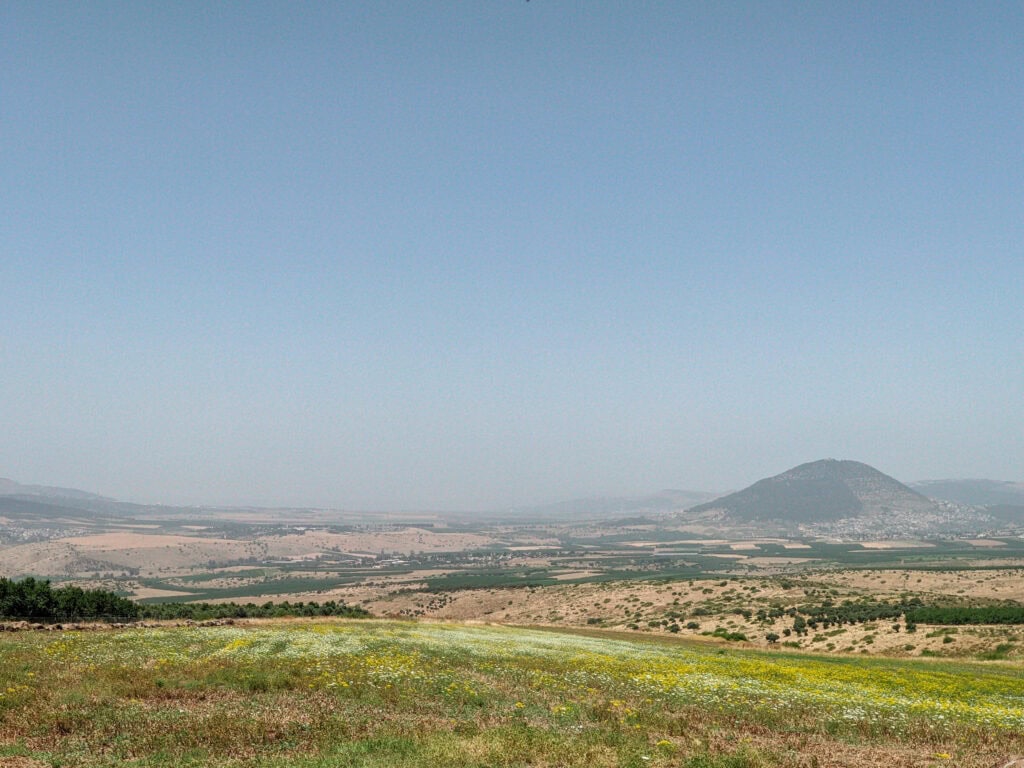
The third day starts with a climb to the summit of Mount Meron, the highest point in the Galilee, with great views to all of northern Israel.

After the descend to the other side of the mountain, the trail enters the Amud stream and we walk in its upper section. 

This stream is even more beautiful than the Kziv. In addition to the freshwater flow, you encounter ancient ruins from human activities in the forms of Aquaducts, flour mills, and wool factories that were operated with the water power.

The last day continues along the Amud stream until the sea of Galilee. What can be a better ending than a swim in the famous lake?

For more details check out Israel by Foot.

Sea of Galilee
Sea of Galilee

Logistics

This is not a "formal trail", and as such it does not have its own unique markings.

However, all the way is along well-marked local trails and is very easy to follow.  

Because the trail passes nearby the villages mentioned above (and a few more), the logistics are easy.

There are enough settlements along the path where you can get supplies and lodging.

It is also possible to make the journey by camping with your tent.

However, except for one campsite near the summit of Mount Meron, you will have to camp "wild" without any facilities.

It is more recommended to use lodges in the villages and small towns along the way.

Travel Insurance: What Is The Maximum Trip Length?

Boarding a plane in Swedish Lapland (photo: Dave Lee)
Boarding a plane in northern Sweden

When it comes to travel, it's easy to focus on exciting plans for the future, whether in your own country or far-off lands.

An essential step in the planning process involves ensuring you're safely covered in case of unexpected and unfortunate events. This is where travel insurance can make a difference.

Travel insurance refers to purchased coverage protecting travelers from losses and risks that can happen while traveling.

The losses can pertain to changes made in the itineraries, delayed or lost baggage items, last-minute flight cancellations, re-booking of flights, and medical emergencies.

It covers various details such as the maximum trip length, which refers to the longest period of travel to qualify for travel insurance coverage.

Table of Contents

  • How Long Can You Have Travel Insurance?
  • Regular Travel Insurance
  • Annual, Multiple Travel Insurance
  • Comprehensive Travel Insurance
  • Backpacking Travel Insurance

How Long Can You Have Travel Insurance?

You can pay for travel insurance to cover you from your departure to your time returning from the trip.

If you have a round-trip ticket, the coverage includes the day of return from your destination.

But if you are traveling for quite a while, then it is best to buy long stay travel insurance, which allows you to go to different countries while staying insured.

The long stay travel insurance policies depend on the length of your trip. Moreover, each plan has specific features that fit every traveler's preferences.

Regular Travel Insurance

This is for regular customers who have no intention of traveling for long periods of time.

The insurance policy covers a maximum of 60 days of travel as well as travelers who are below 84 years of age.

The coverage for trip cancellation is around £2,000, £5,000,000 for medical emergency expenses, and £1,000 for personal belongings.

However, this insurance does not include travel delays, service withdrawals, and unforeseen circumstances like natural disasters, hijacking, and mugging.

Annual, Multiple Travel Insurance

Now, if you want to be away for four months, then be sure to choose the Annual, Multiple Travel Insurance.

It covers a maximum trip length of 120 days. Travelers below 79 years old are eligible for this long stay travel insurance policy.

Other details included in the coverage include trip cancellations worth £6,000, medical emergency costs for £10,000,000, and personal possessions for £3,000.

It also covers flight delays, withdrawal of services, and unforeseen situations.

Comprehensive Travel Insurance

For those who love to travel full-time without having to worry about anything, Comprehensive Travel Insurance is a perfect choice.

This is almost the same as the Annual, Multiple Travel Insurance, having identical coverage for trip cancellations, medical expenses, personal possessions, travel delays, unforeseen circumstances, and service withdrawals.

The difference is that the policy covers travelers below 89 years of age whose trips have a maximum length of 18 months.

Backpacking Travel Insurance

Are you a backpacker? Then consider the Backpacking Travel Insurance option which is geared toward longer trips and younger travelers.

It is similar to Regular Travel Insurance, having the same coverage for trip cancellations, medical expenses, personal possessions, travel delays, unforeseen situations, and service withdrawals.

However, the insurance covers a maximum trip length of 18 months and travelers whose ages are below 51 years old.

***

Travel insurance is rarely the most exciting part of planning a new trip, however, it's arguably one of the most important decisions you'll make. 

Investing in high-quality travel insurance that fits your situation and you'll be better able to relax and enjoy the trip.

______

This story was brought to you in partnership with Globelink International.

The Best Things to Do in Ghent, Belgium

View of Lys River (photo: KimberleyJane)
Lys River in Ghent (photo: KimberleyJane)

There are many fun things to do in Ghent, but this historic Belgian port city is not exactly budget-friendly for backpackers.

I highly recommend you plan your visit so you can experience the city without breaking the bank. 

In this article, we'll take a closer look at some of the things to do in Ghent and what you can expect to pay.

Quick facts about Ghent and Belgium

The medieval city of Ghent in the northern part of Belgium is a quaint, but rather large city that should be a stop on everyone's agenda. 

Here are some things you may not have known:

  • During the Middle Ages, Ghent was a prominent city-state, but today it is a university town and cultural hub
  • With a population of almost 600,000 inhabitants, Ghent ranks as Belgium's second-largest city behind Brussels
  • Ghent is located about 35 miles west of Brussels and southwest from Antwerp at the confluence of the Scheldt and Leie Rivers
  • It was once one of the largest and wealthiest cities in northern Europe with some 50,000 people (12th century)
  • Belgium's currency is the euro
  • Belgians are best known for their beer
  • Although most think France created the fried potato, it is Belgium who created the French fry
  • The city of Ghent is a Dutch-speaking city, but the majority of the people in Belgium, especially from Ghent as it is a student town, speak English fluently 
  • Ghent has adopted a culture of riding cruiser bikes and is known by some as "Little Amsterdam"
Bicycles and flowers along a canal (photo: Massimo Parisi)
Bicycles along a canal in Ghent (photo: Massimo Parisi)

First Impressions: The Biking Culture

One of the first things I noticed about Ghent is the cleanliness of the city. 

Unlike other European cities I've visited, Ghent was very well taken care of and held to a standard of excellence. 

There was virtually no litter in the streets and no graffiti to be seen.

My favorite thing about the city of Ghent, besides the medieval city center, is the cycling culture. 

For a month, I was introduced to a place where people are more likely to take their bike from the garage than a car. 

It takes some astute observation, but foreigners can catch onto how the cycling traffic works in Ghent.

Being a student city and the fact that having a driver's license is so expensive in Europe, the city revolves around public transport and bicycles.

My suggestion if you're going to be in Ghent for more than a week is to rent or borrow a bike; it's fun and saves you a ton of money since everything on a typical Ghent itinerary is within biking distance.

Going for a walk in the historic center is one of many free and easy things to do in Ghent
Ghent's historic center

Cost of Travel in Ghent

Ghent is reasonably affordable. It leans more toward the expensive fifty percent of cities in terms of affordability. 

However, with that being said, it's not outrageously expensive given what the city provides.

Accommodation

Expect to pay around $25-30 for a hostel near the city center. 

Alternatively, you can check out Workaway because there are always plenty of opportunities in Ghent. 

Food

A traditional meal may cost anywhere between $10-$17, depending on where you eat. 

An average "fast food" meal can cost anywhere from $6-$8. 

You can get a cheap burger with Belgian fries for as little as $3.50, but be warned you will get what you have paid for.

Markets in Ghent are expensive. I'm usually an advocate for cooking hostel dinners to save money, but even that won't do you well in Ghent. 

Nightlife

As for the world-famous Belgian beers, expect to pay quite a bit on a night out. 

For a middle-of-the-line Belgian beer, it can cost you around $5 for a third of a pint. 

You can buy a quality Belgian beer at the store for around $1. 

And then, there's the infamous Cara Pils which you can buy for less than $0.50 at any market near you (hangover included).

Public transportation is relatively expensive. The bus fare is $3.30 for a ticket with one hour of validity. 

A train to the neighboring cities of Brussels, Antwerp, or Bruges will cost around $15-$20 for a one-way fare in second-class (note: it is only about a 30-minute commute to any of those cities).

WiFi

As is always the case, utilizing free WiFi can be a great strategy to save on data charges and SIM cards in Europe. 

Free WiFi can be found relatively easy, especially around the city center.

One of the best things to do in Ghent is see Gravensteen Castle (photo: Massimo Parisi)
Gravensteen Castle (photo: Massimo Parisi)

Things to Do in Ghent

Here are the top things to do in Ghent, Belgium's city center so you can easily access all of these attractions by bicycle:

  • Gravensteen Castle
  • Saint Bavo's Cathedral
  • Het Belfort Van Gent
  • Saint Nicholas Cathedral
  • Graslei
  • Korenmarkt
  • Sint-Michielsbrug
  • SMAK -- Municipal Museum of Contemporary Art
  • Gent City Hall
  • Overpoort

Budget accordingly for your weekend in Ghent.

I would describe Ghent as a city ahead of its time in philosophy and culture but one that has remained rooted in history with its architecture. 

It is a unique place to visit and an even more unique place to stay for a while. If you ever get the chance, I highly recommend a visit to Ghent.

The Essential Travel Packing List for Gen Y Women

So you're off on a backpacking adventure! You're in for a treat - traveling is one of the most amazing things you will do in your whole life, and as a millennial, it's a rite of passage before you settle down.

But what on earth do you bring with you?! This can be a bit of a minefield if you've never been traveling before.

Clothes are a must on any travel packing list (photos: Lum3n.com, Pexels)
Clothes (photos: Lum3n.com)

You want to have your bases covered and bring everything you need, but you also want to fit it all into your carry-on backpack - and still be able to walk with it on!

It's important to pack your travel essentials - things you won't be able to go without and might not be able to buy while you're out there or will at least struggle to find cheap).

Unfortunately, this can be harder for us women than it is for men (but men, you can also benefit from this list too - skip the bras and period product sections!).

This post will cover some of the top travel essentials for Gen Y women - including some you might not have thought of.

Read on for your travel packing inspiration.

Table of Contents

  • A Varied Wardrobe
  • Some Handy Travel Apps
  • Plenty of Music & Podcasts
  • Portable Battery Pack
  • Period Products
  • Travel Wash Bag & First Aid Kit

A Varied Wardrobe

Your clothes will occupy most of your rucksack space, so choose your items carefully.

Of course, your style is unique, and it's important to wear what you feel comfortable in, but as a rough guide, aim to pack:

A handful of t-shirts and vests will be great for beach days, wandering around cities, hiking, etc. Aim for light material that dries quickly.

Jumper, cardigans, or hoodies: You'll need warmer over-layers in cooler countries or if the temperature drops at night.

Avoid bulky knitwear that takes up lots of space in your bag, and bring items that can be layered to keep you warm.

Shorts & trousers: shorts are great in warmer weather, especially if you want to tan.

But you'll also want to bring trousers for cooler days, cold nights, or even to protect your legs from the hot sun or insect bites (Brazilian mosquitos, in particular, are super vicious). 

Floaty boho dresses and skirts can double up as beachwear or be dressed up for a fancy meal or drink.

A light scarf: scarves are fabulous - they can keep you warm if it's cold, cover your head or shoulders if you're visiting a temple or religious site, or even be used as a blanket on air-conditioned buses. Bring one, and you won't regret it.

A good amount of underwear. You don't want to overpack - I once met a guy in Bolivia who had packed a month's worth of boxers and was only away for six weeks!

Aim for 7-10 pairs; you'll have to wash your clothes as you travel.

A decent sports bra: A good sports bra is essential if you go anywhere seriously hot and humid.

Everyday bras can feel tight, sweaty, and uncomfortable in hot weather; a breathable sports bra will be moisture-wicking, quick-drying, and keep you cool while you're adventuring.

Multiple bikinis. There are going to be some fantastic tropical beaches along the way. Need I say more? You can check out the comfortable bikinis from Eberjey.

Depending on where you're going and what you're doing, your travel wardrobe will vary, but these are some staples to pack that you'll need.

Some Handy Travel Apps

While you're sorting out your phone with plenty of podcasts and playlists for those long bus journeys, it's another good idea to download some handy travel apps for your backpacking adventure.

The right apps will help you out massively when navigating your way around new countries, whether finding the best hostel in town, booking cheap flights, helping you translate a baffling menu, or even connecting you with like-minded explorers nearby!

Here are some of my faves that you should download:

Hostelworld: probably the number one most helpful app for travelers, Hostelworld lists hostels (as well as hotels, B&Bs, and guesthouses) all over the world, with plenty of pics, information, a score, and reviews from people who have stayed - meaning you can get a feel for the best accommodation at your next destination

Skyscanner: great for if you're booking flights on the go - Skyscanner helps you to easily search for and compare flight prices, as well as letting you set up alerts so that you can get the cheapest flights possible

Google Translate: probably the most comprehensive (and free) translation tool out there, Google Translate is a must if you're traveling in countries where you don't know the language.

To date, the app offers text translation for 108 languages and functions like speech, offline, and instant camera translation (helpful if you're trying to figure out dishes on a menu).

Travello: a few apps can connect you with nearby travelers with similar interests and itineraries, which are great for solo travelers looking to meet people and make new friends.

Travello is one, but you can also check out SoloTraveller and Tourlina (which is explicitly aimed at solo female travelers)

These are just a few super helpful travel apps out there - check out this list for more.

Earbuds
Earbuds

Plenty of Music & Podcasts

Next up, "pack" plenty of music and podcasts to keep you occupied on long journeys.

God bless the invention of the smartphone - these days, we can cram hundreds of hours of great music and podcasts into a tiny portable device.

It's well worth downloading a load of playlists and podcasts before you set off on your traveling adventure; you may be blessed with good wifi on some night buses (and even planes), but that's not a given.

And you don't want to be left at the mercy of whatever film they stick on the bus TV.

In Peru, pretty much every night bus I ended up on put on Adam Sandler films, so I have had the gross misfortune of inadvertently watching Adam Sandler's entire back catalog. Yikes.

Good music for any mood is a must, but don't forget podcasts as well - they're perfect for passing the time on long journeys, and there's something out there for everyone.

If you want to cackle your way through tedious bus journeys, download the hilarious smash-hit comedy, My Dad Wrote A Porno.

Orion's Stellar Life podcast features motivational interviews with fascinating guests if you want a regular dose of well-being, wisdom, and inspiration while traveling.

And if you want to lose yourself in something gripping and a bit darker, check out the compelling murder mystery podcast, Serial.

Portable Battery Pack

Now that your phone is full of apps, music, and podcasts, you must invest in a battery pack.

You'll be using your phone quite a bit when you're backpacking - for entertainment, navigation, and translation - and, honestly, you will be so thankful for this essential while traveling.

Many buses and trains have plug sockets for charging your phone these days, but it's not always guaranteed.

Investing in a travel-size battery pack will ensure that you are prepared and help to put your mind at ease; there are few things more stressful than finding your way to a hostel in the middle of nowhere when your phone has died, and you're on your own.

Period Products

If you're expecting to get your period at any point during your traveling adventures, then period products are essential.

The good news is that you'll be able to find period products in most places around the world; supermarkets and pharmacies in towns or cities will generally stock them.

However, they might be a bit different from what you expect. For example, in some Asian countries, pads can be pretty thick and bulky - a far cry from the subtle, thinner pads we're used to finding at home.

Tampons can be harder to find in some places, too, and often won't come with applicators - so if you want to use these, I'd recommend bringing your own.

It's always worth packing a supply of period products just in case you get caught out on a beach day or long bus trip, or you can't find any.

Remote regions and small villages off the beaten won't necessarily have a store or pharmacy where you can buy what you need.

And, if you're worried about taking up too much space in your bag with three months' worth of tampons and pads, you can always invest in reusable menstrual cups or period underwear.

For more helpful tips on traveling on your period, check out our South America Period Survival Guide.

Toiletry bag (photo: Henry Thong)

Travel Wash Bag & First Aid Kit

We don't need to tell you that packing a wash bag full of essential toiletries like shampoo, toothpaste, reusable cotton rounds, and sun cream is a must - you're not an idiot, and you've probably been away on vacation before.

However, one thing that you might not consider bringing is a small first aid kit.

A first aid kit full of essentials is a must-have. What you fill it with is up to you (and any medical needs you have), but it's a good idea to pack the below:

Painkillers: You'll probably have aches and pains (or a hangover) at some point, so these are a great shout.

Pocket-size hand sanitizer: This will kill off harmful bacteria and make using gross toilets slightly less traumatic.

Plasters: You will be doing a lot of walking, and plasters - especially blister plasters - will save your skin when needed.

Antimalarials: Bring these if you're heading somewhere where malaria is a risk.

You'll have to take them before arriving at a risk area - sometimes three weeks before. Your doctor will be able to advise you further.

Toilet paper: Handy in any situation. You will also encounter bathrooms with no toilet paper available (or you must pay).

These are just some things to pack in your first aid kit - the rest is up to you.

There you have it: the essential travel packing list for Gen Y women. Of course, there will be other things you'll want to bring, but these are the staples that every woman's rucksack should contain. So what are you waiting for? Get packing and get out there!

Travel Photography Advice from a Five-Year Traveler

Travel photography is one of the most exciting aspects of being a backpacker. I cherish the opportunity to capture life as it happens anywhere I go. 

I have been on the move for half a decade, traversing nearly every continent with only a backpack of necessities. However, one of the things I always have with me is my camera gear. 

Editing photos like this one from Bali is one way to improve your travel photography

My love for travel photography is all about the compassion and motivation I gain while witnessing the world through a lens. Below, I have outlined four rules of travel photography that I've developed over the years of perpetual travel.

Table of Contents

  • Travel Photography Tips: 4 Unwritten Rules
    • 1. Choose a Camera
    • 2. Know When To Bring a Tripod
    • 3. Master Editing Software
    • 4. Figure out which accessories you need to bring

Travel Photography Tips: 4 Unwritten Rules

Here are the most important things to know to improve your experience traveling with a camera and the quality of your work.

1. Choose a Camera

My best advice when choosing a camera is to pick one brand and roll with it. The classic photog debate, Canon vs. Nikon, can only be determined when you determine your preferences. Each camera has strong suits and faults.

There are thousands of articles online featuring the most intricate details of any camera you could be interested in, but trust me. You can only begin to learn the real powers of a camera by using the same one tirelessly. 

One of the biggest trends in travel photography is mirrorless cameras. They are more affordable and easier to travel with (lighter, smaller, point-and-shoot, etc.). Perhaps a novice photographer (or even veteran photogs) would prefer the convenience of going mirrorless. 

A little-known tip about camera shopping is that most cameras can be rented. Don't be afraid to rent for a day or two to test-drive a particular camera before you spend upward of $1,000-$3,000 on it, especially for high-spec DSLRs.

2. Know When To Bring a Tripod

Over the years, I have learned when to use tripods and when they become a nuisance to lug around. 

Generally, I like to follow these guidelines when determining whether or not I will bring a tripod with me:

  • If I am taking a video that requires a steady shot (this is usually only for project-based videographers/documentarians, not often beginners).
  • If I am taking long-exposure shots (usually nighttime photography or continuous motion).
  • If I am taking long-distance shots (usually wildlife or nature photography).

If you do not foresee taking these kinds of photos, I recommend leaving the tripods behind. They just become a burden if they are not necessary.

3. Master Editing Software

The quickest way to take your photography game to the next level is through editing. Maximizing results through editing is the best way to improve your work. Similar to choosing a camera brand and sticking to it, I believe it is best to master one photo editing software. 

The only way to develop a style for your craft is to get comfortable using the same tools. There are many photo editing software programs, and everyone has their preference. 

I recently began using a photo editor for PC by PhotoWorks. Among the many things I like about this software and have gotten used to, it has features that match or exceed those of other editors I've used in the past.

I love using the Curves feature on PhotoWorks' editor. Every change is smooth and natural, making using an often-complicated tool a breeze! I also liked that it allows you to automatically edit your photos with one click of a button. Going through thousands of pictures from a trip can be draining, so seeing results with one click was exciting.

As you can tell, the photos in this story were taken in dramatically different locations and on other days. Still, they could swiftly be edited using the intelligent software and the "Change Background" tool, which is unique to this software.

Even novice photographers can learn to edit their travel photos from the get-go. The sooner you start, the better your work will become. The best part of PhotoWorks is its affordability compared to other editing software. Its filters are even better than those of top competitors at a fraction of the price!

It probably isn't the first thing novice photographers want to spend their money on, but becoming a master editor is a must for anyone serious about taking their passion to the next level.

4. Figure out which accessories you need to bring

Lastly, as a novice photographer, I recommend taking a few trips before purchasing a wide range of photo accessories. 

Even after five years of capturing travel experiences, I try to bring the bare minimum, which is: 

  • Camera bag
  • Camera lens
  • SD card
  • Lens cap
  • External hard drive/ USB stick
  • Extra camera battery/charger
  • Tripod (see above)
  • Lens cloth

Anything more than this is a bit much, in my opinion. As your skills advance and you become more serious about the art, you may find yourself with a bigger bag of accessories, but until then, this list should be plenty.

It's a learning process. No matter your experience level or what tools you use, your primary focus should always be to hone your craft. Get interested in travel photography more than just as a way to brag about your trip on Instagram. Make it essential for you.

Once you have a deep-rooted interest in capturing life and moments around the world, your skills and dedication will increase, too. Travel photography is a hobby; you are rewarded for what you put into it. So enjoy it, and you will be happy with the opportunities it offers. 

______

This story was brought to you in partnership with AMS Software. 

Ladakh Travel Guide for First-Time Visitors

The Indus Valley with Thiksey Monastery in the distance

In this Ladakh travel guide, you'll learn the best time to visit Leh and Ladakh, how to get around, and what to see and do once you get there.

Ladakh, comprising Leh and Kargil districts, is situated amidst the Himalaya and the Karakoram mountain ranges.

Famous as a Buddhist ex-kingdom, Ladakh is well-known for its monasteries or gompas.

Ladakh is referred to as "Little Tibet" due to the strong influence of Tibetan culture on the region and "Land of High Passes" as it has natural beauty in abundance.

Ladakh is sandwiched between Tibet in the east, Kashmir in the west, the Xinjiang province of China in the north, Pakistan in the north-west, and Himachal Pradesh's Lahaul and Spiti valleys in the south.

Leh, the capital of Ladakh and one of the most popular destinations for tourists in the region, is located at an altitude of 3,500 meters.

The town of Leh was an important trade center for Central Asia on the Silk Route and also served as a transit point for traders on the Leh-Yarkand (presently in Xinjiang Uyghur Autonomous Region, China) route.

Table of Contents

  • How to Get to Ladakh
  • When to Visit
  • How to Get Around 
  • Things to Do 
  • Eco-responsible Tourism in Ladakh

How to Get to Ladakh

Ladakh is accessible either through the air or by road.

There are direct flights from New Delhi to Leh on all days, whereas direct flights are also available to Leh from Mumbai in summer.

Two roads connect Ladakh with the rest of the country.

One could reach Leh by road from Manali or Srinagar. The 490 km-long Leh-Manali highway is open from May or June until mid-October.

One has to cross three passes - Rohtang La (3,980 m), Baralacha La (5,030 m), and Taglang La (5,328 m) to enter Ladakh region from Manali.

On the Leh-Srinagar road, one has to cross two passes - Fotu La (4,108 m) and Zoji La (3,528 m) to reach Leh.

When to Visit

Summer is the best time to visit Ladakh. One could visit Ladakh from May to September when the weather is pleasant.

Ladakh is not accessible by road throughout the year as both the Leh-Manali and Leh-Srinagar roads are closed for more than six months due to heavy snowfall.

However, the roads within Ladakh are still open in winter.

When the roads are closed in winter, the airlines become the lifeline of the people.

It is altogether a different experience in winter with sub-zero temperatures and plenty of snowfall.

The Chadar Trek and Snow Leopard sighting trek are the major activities that are organized for tourists in Ladakh in winter.

See also: 5 Surprising Things About Backpacking Pakistan

Mask dance during the Naropa Festival at Hemis monastery
Mask dance during the Naropa Festival at Hemis Monastery

How to Get Around 

The bus services in Leh are limited. While the remote and far-flung areas are connected through a bus run by the road transport corporation (RTC), the bus services in Leh town and peripheral regions are privately-owned.

As a result, the schedule of the bus service is often erratic.

Taxis are available for traveling in and around Leh.

One can choose different types of taxi, ranging from Toyota Innova to Maruti Van, depending on the budget.

People traveling alone or in a small group are encouraged to book shared taxi tours while visiting Ladakh.

Shared taxis are available for tours to all the major tourist attractions (Nubra valley, Pangong lake, Indus valley, etc.).

Using shared taxis will not only save money but also reduce the impact of carbon emissions on the environment.

Murals inside Thiksey monastery, a popular site for first-time visitors to Ladakh, India
Murals inside Thiksey Monastery

Things to Do 

It's not only weather that one should keep in mind while planning a trip to Ladakh. One has to keep acclimatization to the altitude in mind too.

At a minimum, allow for a full day of rest on the day you arrive in Leh. It is vital to drink a lot of water to stay hydrated at high altitudes.

Inner line permits (ILP) are required for both domestic and foreign tourists visiting any of the sensitive zones such as Nubra, Pangong, Tsomoriri, and the Aryan valley due to security reasons.

ILPs are available online for both domestic travelers and foreigners and are valid for 15 days.

1. Monasteries of the Indus valley: Leh, Shey, Thiksey, and Hemis

As Ladakh is a Buddhist-dominated area, the region is peppered with monasteries of different sects and size.

Perched high on the hill behind the nine-story high Leh Palace is the Namgyal Tsemo Monastery.

Constructed in the 15th century, the monastery is famed for its three-story high gold idol of Maitreya or the Future Buddha.

Shey, once the summer capital of Ladakh, is the house to Shey monastery renowned for a giant copper statue of Buddha gilded with gold.

On the way to Pangong Lake is the majestic Thiksey monastery that is famed for its resemblance to the Potala Palace in Lhasa, Tibet.

The monastery is famous for its 15-meter high statue of the Maitreya Buddha.

Perhaps the most famous and well-known monastery in Ladakh is the Hemis Monastery, located at a distance of 45 km from Leh.

One of the largest and wealthiest monasteries in Ladakh, Hemis Monastery is famous for the Naropa Festival, which is held every 12 years according to the Tibetan lunar calendar.

See also: Song Kol Lake: Horse Trekking in Kyrgyzstan

Diskit monastery in the Nubra valley
Diskit monastery in the Nubra Valley

2. Nubra Valley

One of the major attractions in Ladakh is the Nubra Valley or "the valley of flowers."

Compared to Leh (3,524 m), Nubra is at a lower altitude of 3,048 meters above sea level.

Nubra is also the gateway to the famous Siachen Glacier, which lies to the north of the valley, whereas the Karakoram Pass is in the northwest of the valley.

Hundar and Turtuk are the two most visited villages in Nubra valley.

Hundar is renowned for its dunes and the double-humped Bactrian camel.

The village of Turtuk, famous for the Balti tribe, was opened for tourists in 2010. The Balti tribe still follows its age-old customs.

Diskit monastery is the largest gompa in the valley, located just 7 km from Hundar.

3. Pangong and Tsomoriri Lakes

The other major attractions for tourists are Pangong and Tsomoriri lakes.

Pangong Lake, situated at the height of 4,350 m, is a five-hour drive from Leh.

Pangong Lake is 134 km long, and almost 60% of the length of the lake is in the Tibetan Autonomous Region.

Pangong Lake is an important breeding ground for a variety of birds, including many migratory birds.

Meanwhile, to the southeast of Leh in eastern Ladakh at a distance of 240 km far from Leh is the Tsomoriri Lake situated at an altitude of 4,522 m.

The lake is the breeding ground for the highly threatened black-necked crane.

One of the outstanding features of the area around Tsomoriri Lake is the nomads known for moving from one place to the other.

Tsomoriri, one of the highest brackish water lakes in the world, is 19 km in length.

Pangong Lake (4,350 m) is worthy of inclusion in any Ladakh travel guide
Pangong Lake (4,350 m)

Eco-responsible Tourism in Ladakh

Ladakh's ecosystem is fragile. Since Ladakh is a cold desert, water is a precious resource in the region.

However, due to rapid urbanization and an increase in the number of hotels and guesthouses, mainly in Leh town, people have abandoned centuries-old practices.

Instead of traditional dry compost toilets, flush toilets are being used in hotels and households. 

These are putting a lot of strain on the already depleted sources of water, such as natural springs and it's also contaminating the groundwater.

It is, therefore, advisable to save as much water as possible by taking a bath using buckets instead of showers.

Also, because Ladakh has limited waste management infrastructure, make efforts to reduce garbage by consuming less packaged food and plastic bottles.

It is estimated that more than 3.5 million plastic bottles for mineral water and carbonated drinks are generated in Leh each tourist season.

Instead of buying plastic bottles, refill water bottles from the hotel or water vending outlets in Leh, such as Dzomsa.

***

I hope this Ladakh travel guide has provided insight into what it would be like to visit this wondrous region of northern India.

How to Plan a Family Vacation on a Budget

posing in a canyon

Family vacations are a vital part of our most nostalgic childhood memories for many of us.

Most families that go away on vacation need to budget for it.

Unless you are wealthy and have no need to budget, the alternative is overspending.

There is always the option of not vacationing, but that is simply out of the question.

I love to vacation with my family and like to talk about it on my site Travel TMI where I give additional stories and advice on traveling with family.

I believe the consensus is that most people would like to take nice family vacations.

Although traveling with children can be expensive, it does not have to break the bank. 

My wife is a teacher, and I have had a few different jobs in the past five years, so with three children and the desire and give our kids amazing experiences, we use the advice below all time.

Spur of the moment trips are fun and exciting, but they are hard to do when you are on a budget, so do like we do and plan ahead and budget.

Let's discuss how you can budget like a boss and still get the most out of your family vacation.

Table of Contents

  • Take Advantage of Travel Deals
  • Plan As Far in Advance as Possible
  • Maximize Your Spending by Venturing Abroad
  • Live Like a Local
  • Reduce Unexpected Costs with Backup Plans
  • Broaden Your Experience with Self-Guided Exploration
  • Make Your Camping Trip Vacation More Fun, Affordable, and Unforgettable
  • Conclusion

Take Advantage of Travel Deals

As you plan your family vacation, seek opportunities to save money by using special offers and coupons.

Be cautious and ensure that an offer or coupon is from a reputable and verifiable source.

Groupon can save you as much as 70% on domestic and international travel.

Travel deal sites can save you money on flights, hotels, and rental cars.

We use travel deal websites in the research process and are very careful to look at all the sites to ensure we get the best possible deal.

We travel a lot for my kids' soccer games, and gymnastics meets; therefore, we constantly research to find the best deals in a particular area.

These sites also offer deals on local activities, restaurants, and area attractions.

Use these types of sites in the early stages of your planning and for deciding on family-friendly activities.

Online forums offer lots of helpful tips when planning a trip. By referencing one, you can get deeper insights into the various aspects of the journey you are planning.

Forums are an excellent place for recommendations on free and low-cost activities. They can also provide you with information to help you avoid certain pitfalls.

See also: How to Save Money for Your Next Trip

Off the beaten path
Off the beaten path

Plan As Far in Advance as Possible

Planning further ahead of your intended travel date can save you a lot of money, and this is particularly the case concerning airfare and hotel expenses.

Booking your flight or a hotel stay is about timing; save money by booking three to six months before your travel date.

Peak season is not the best time to travel with kids. To avoid the massive crowds and unnecessary headaches, opt to travel off-season.

With my wife being a teacher, we like to do a family vacation/adventure in the summer because it works best for our schedules. We found the best time in the summer is mid-August because some schools start early and many kids have sports practices starting up.

So be mindful and what other families might be doing. We have found mid-August to be a perfect time.

You and your family can enjoy a fun and peaceful vacation. You will also get exclusive off-season deals and savings.

Airfare and hotel rates are at their highest on weekends. If you have the vacation time available, choose to travel during the week.

Weekday travel is never as pricey as weekend travel. The two cheapest days to fly during the week are Tuesday and Wednesday.

Maximize Your Spending by Venturing Abroad

Some people are surprised to learn just how inexpensive international travel can be.

For instance, European airline prices can be comparable to domestic flights.

If you are willing to wait for flight sales, you will save the most money. You can also save money with an Airbnb.

Sharing economy websites have changed the game by making it more accessible for anyone to travel. There is also the option of house swapping.

Sites like Love Home Swap allow you to swap housing with another family. You can dramatically cut the cost of accommodations.

If your children are teenagers and your family members are the adventurous type, you can plan a volunteer or work abroad trip.

If you are willing to work a little, companies like WWOOF and Diverbo will cover some or all of your travel expenses.

This may not sound like a vacation to some people, but it can be the experience of a lifetime.

One thing we do is look at where the exchange rate is excellent. Mexico, Brazil, and most South American countries are great adventures where your dollar goes a long way.

My whole family except me is fluent in Spanish, so we love South America!

See also: How to Find a Cheap Place to Stay

Live Like a Local

Children and many adults cannot resist all of a tourist trap's sweet treats and gadgets.

These areas are filled with multiple vendors and activities with grossly inflated prices.

A significant way to save money on your family vacation is to stay away from tourist traps.

Another way to save money is by opting for accommodations with home amenities like a full kitchen.

Food can take a huge chunk of vacation funds. If you have a kitchen, you can save by preparing a meal or two during the week.

If you have your heart set on a particular destination, try finding similar destinations for less.

Being flexible with where you wish to travel and the dates you want to go will save you money.

A small historic town may have as much to offer as a more popular destination. There is always some magic off the beaten path.

Imagine you want to take a beach vacation to Miami. We all know that South Beach is the most popular choice.

However, there are other beautiful beaches in the area. One of Miami's beaches is at a state park.

Accommodations near beaches away from Ocean Drive may be considerably less expensive and have more family appeal.

Reduce Unexpected Costs with Backup Plans

It is possible to save money on various aspects of travel with non-refundable deals. However, this is something that I do not advise.

Go ahead and budget for the upfront cost of insurance and money-back guarantees for trips you cannot take for some reason.

Take a look at options for backup accommodations if there is an issue with the place you initially chose. Look into car title loans if there is an unaffordable emergency during the trip. 

This is not something that usually happens, but you can never be too well prepared.

Also, plan for alternate transportation just in case something changes there.

Self-guided tour
Self-guided tour

Broaden Your Experience with Self-Guided Exploration

Take advantage of tourist information centers and the local newspaper to locate free events or festivals.

Lots of cities have local guides who offer free tours. An area museum may have specific days where entry is free. Work something like this into your itinerary.

When your family starts to get hungry, look for options outside of what is suggested in the guidebook.

Find out where the locals eat. You are likely to find a hidden gem at just a fraction of the cost of the more popular restaurants.

There are usually some hidden gems among an area's more popular attractions.

If you look a little further, you may find great opportunities for fun on the outskirts of main tourist areas.

For example, a nearby State Park may offer similar activities for much less.

Make Your Camping Trip Vacation More Fun, Affordable, and Unforgettable

Spontaneous camping in the wild is a great outdoor adventure that is cheap for families.

You want to live your life to the fullest by trying survival activities, even for a short time.

Instead of fine dining on most vacations abroad or out of town, it's fun to grill pork barbecue, campfire, and join summer campsites that bring a lot of enjoyment for the whole family.

To fully enjoy your camping vacation, you can chat and sleep comfortably in a great 10-person tent.

Here are some helpful camping etiquette tips to make your camping fun, affordable, and unforgettable:

  • Remember that every national park has trailer size restrictions for campsites. For most campgrounds, the proper size is between 20 to 40 feet.
  • Regardless if you're out for pitching a tent or a hike, leave no trace when you pack up. This means cleaning and throwing your garbage in the appropriate trash bins.
  • Never take plants, bugs, or other things you see in the wild.
  • Make sure to observe proper tent and RV etiquette. Shut your lights off when you're ready to call it a night. Awning lights can also be a source of complaint or bother other people.
  • If you're taking your dog with you, make sure it behaves to avoid irritating other campers. Dogs that are continually barking may ruin the experience of other people.
  • Quiet hours for most campgrounds are between ten o'clock in the evening and six in the following morning. Respect quiet hours by not playing loud music, laughing so loud, or shouting during these times.

Conclusion

You can give your family a great vacation without draining your bank account with some planning and creativity.

Plan your family vacation far in advance and use every resource available to you to save money.

Take advantage of discounts to make sure that your family vacation has lots of fun-filled activities.

I highly recommend using travel forums and sites offering travel deals and coupons.

Remain flexible and avoid peak travel periods.

Research travel transportation options, including transportation to and from your daily activities.

Always budget for the cost of everything you plan to do, including the little snack breaks your kids need between activities.

Remember that no two families are alike. Your family's vacation should be designed to suit everyone involved.

Choose the ways to save that will work best for them. Research and save for activities accordingly.

You can plan an epic family vacation one discount at a time.

_______

This story was originally written by Jared of Travel TMI. It was updated in partnership with Outdoor Command.

9 Places Every Harry Potter Fan Needs to Visit

Leadenhall Market in London (photo: Pierre Blaché, Pixabay)
Leadenhall Market in London (photo: Pierre Blaché)

It's hard to believe that the UK's favorite wizard, Harry Potter, has been with us for over twenty years.

Whether you're a massive fan of the series or are just starting to read the books or watch the movies, there are plenty of Harry Potter-themed places to visit in the UK.

Whether you're a wizard or a muggle, here are the best places to feed your Potter addiction.

Table of Contents

  • 1. Join a tour for Muggles in London
  • 2. Platform 9 ¾
  • 3. Stay at Oxford University
  • 4. Take a Warner Bros. Studio Tour
  • 5. Fly a Broomstick at Alnwick Castle
  • 6. Catch the Hogwarts Express
  • 7. The Cloisters at Durham Cathedral
  • 8. Visit Gloucester Cathedral
  • 9. Elephant House

1. Join a tour for Muggles in London

Start your journey in London on foot, with the popular walking Tour for Muggles.

It's a two-and-a-half-hour long tour led by actors who are all huge Harry Potter fans, and they'll even perform magic tricks for you as you explore.

You'll see a mixture of filming locations from the movies like Leadenhall Market, the site of the entrance to the Leaky Cauldron.

And you'll learn more about the history and places that inspired JK Rowlings, like the real Diagon Alley.

2. Platform 9 ¾

If you're in London, then it's worth heading to King's Cross Station to see Platform 9 ¾.

The station has been rebuilt in the past few years with an impressive million-dollar renovation, but platform 9 ¾ is still around.

Unfortunately, you won't be able to get on the Hogwarts Express for real.

Still, the trolley disappearing into the wall makes for a fantastic photo opportunity.

And there's a fun, well-stocked Harry Potter shop next door that's perfect for getting all the wizarding souvenirs you didn't know you wanted.

Christ Church College's Great Hall (photo: Waldo Miguez, Pixabay)
Christ Church College's Great Hall (photo: Waldo Miguez)

3. Stay at Oxford University

If you're looking for a day trip or a weekend away from London, Oxford should be your first stop.

The university was used for several filming locations in the Harry Potter movies.

You can see Christ Church College's Great Hall and staircase from Harry Potter and the Philosopher's Stone and the Bodleian Library, which was depicted as the library and infirmary at Hogwarts.

For an even more exciting and unique experience, you can book a stay in the university itself during the summer. 

A room in Christ Church is just $72 (£56) per night. Stay the night and you'll be able to eat breakfast in the Great Hall as though you're at Hogwarts.

4. Take a Warner Bros. Studio Tour

This one is essential if you live in the UK or you're visiting England and love Harry Potter.

Located near Watford in Leavesden, it's just twenty minutes from London Euston on the train, or you can book a guided tour with a pick-up option from the city.

These unique and unforgettable Harry Potter studios allow you to step into the magical wizarding world for real.

Walk around the sets including Diagon Alley, the Great Hall, the Gryffindor common room, and Dumbledore's office.

Catch the Hogwarts Express and check out how the special effects were done, before checking out original props and costumes.

Alnwick Castle (photo: nickfrom, Pixabay)
Alnwick Castle (photo: nickfrom)

5. Fly a Broomstick at Alnwick Castle

Do you think that you'd be excellent at Quidditch? Well, you can try out your skills at Alnwick Castle, in Northumberland.

You might recognize it from the Harry Potter movies. It was used as a set for outdoor scenes like Quidditch matches and broomstick flying lessons.

This 700-year-old castle is the place to be if you want to learn how to play the famous game.

They offer Quidditch lessons for the whole family, along with dragon and knight quests and spooky cellar tours.

Glenfinnan Viaduct (photo: Andreas Senftleben, Pixabay)
Glenfinnan Viaduct (photo: Andreas Senftleben)

6. Catch the Hogwarts Express

If you're itching to get on the magical train to Hogwarts, the closest you're going to get is up in the Scottish Highlands.

During the summer, catch the Jacobite steam train, which looks a lot like the Hogwarts Express, and travel along the West Highland Line, which was used in the Harry Potter movies.

It travels over the stunning Glenfinnan Viaduct, which you'll remember from the scene with the Weasley's flying car from Harry Potter and the Chamber of Secrets.

In 2009, readers of Wanderlust travel magazine voted it the greatest railway journey in the world.

7. The Cloisters at Durham Cathedral

The spectacular cathedral in Durhan was also used as a filming location for the Harry Potter movies.

Set next to Durham Castle on a rock above the medieval city, this Norman cathedral and UNESCO World Heritage Site is well worth the visit.

The cloisters here became the quadrangle where Harry sets the owl flying during the first Harry Potter film, and later, the scene of Ron's slug vomiting in Harry Potter and the Chamber of Secrets.

You might recognize the cathedral chapter house from Professor McGonagall's class.

See also: 5 Harry Potter Magic Items We Wish Existed

Gloucester Cathedral (photo: Michael Schwinge, Pixabay)
Gloucester Cathedral (photo: Michael Schwinge)

8. Visit Gloucester Cathedral

The remarkable cathedral at Gloucester has been a place of worship for over one thousand years, and its Anglo-Saxon past has made it a place of great history and heritage.

But today, it's a pilgrimage for Harry Potter enthusiasts, who make the journey to Gloucester to see the cloisters that were used for scenes like the troll trapping Hermione and Moaning Myrtle flooding the bathroom.

It's also where the bloody words "the chamber of secrets has been opened" appeared. And what's even better, is that entry is entirely free!

9. Elephant House

Finally, the Elephant House in Edinburgh is definitely worth a visit.

It's where the entire world of Harry Potter was imagined and brought to life in words by JK Rowling.

If you're not familiar with the famous writer's story, she began writing Harry Potter as a single mother struggling financially.

The Elephant House Cafe has some seriously emotional connotations as the birthplace of the wizarding world that's become so important to so many people.

If you're a fan of Harry Potter, there are tons of locations in the UK that you'll love, whether you want to see filming locations, buy souvenirs, or learn about how the magical wizarding world was brought to life.

______

This story is brought to you in partnership with Evan Evans Tours.

How to Save Money on St. Louis Airport Parking

St Louis Lambert Airport sign

When traveling on a budget, learning to save money at every stage of a trip is essential.

Finding cheap flights and avoiding baggage fees may get the lion's share of attention, but what about airport parking. Can you save money there, too? 

In short, the answer is yes, thanks to GlobalAirportParking.com. In this article, I'll show you how their service can help.

We'll use St. Louis airport parking as an example; however, keep in mind that the same service is provided at all major US airports, plus Toronto and Montreal. 

How to Use Global Airport Parking

Global Airport Parking has partnered with hotels near airports to allow travelers to safely park their cars in their lots. 

Travelers can then use the hotels' free airport shuttle services to travel to/from the airport. No hotel reservation is required. 

To walk you through the steps, let's pretend I'm living in St. Louis, Missouri, which is serviced by St. Louis Lambert International Airport (STL). 

Step 1 - The search

First, I need to head over to Global Airport Parking's Lambert airport parking page and enter the dates I want to drop off and pick up my car. 

After I hit the "search" button, the page refreshes the results (as shown in the screenshot below). 

Global Airport Parking search results

Step 2 - Choosing a parking lot.

As you can see, my search terms for a weekend trip are listed at the top. 

Below them, the parking options are displayed in descending order from the least expensive average daily rate to the most costly. 

Each listing features a description with necessary details such as the hotel airport shuttle schedule and frequency.

A map is also shown to get a quick visual of how far the parking lot is from the airport. 

Most importantly, every parking option includes user ratings and reviews so you can make an informed decision. 

According to reviews, it may be worth paying an extra dollar a day more for parking at a hotel whose airport shuttle is more reliable.

In this example, the Renaissance St. Louis Airport Hotel has a 4.56 out of 5-star rating through over 4,800 user reviews.

It also happens to offer the cheapest rate at just $4.99 per day. 

By comparison, the cheapest daily rate at Lambert International Airport is $7 a day.

That $2.01 per day difference may not seem like a lot on a three-day trip as it's only $6, but if I were going on vacation for two weeks, the long-term savings would be substantial ($28). 

Step 3 - Making a reservation.

Happy with the excellent rating and low price of $4.99 per day of the first hotel listed, my next step would be to click on the price button to make a reservation. 

A pop-up box appears and with the dates of my trip. Here, I need to enter the approximate time I plan to drop off and pick up my car and then hit the "Continue" button. 

Spirit of St. Louis airplane at Missouri History Museum (photo: Jonathan Cutrer)

Step 4 - Checkout

The checkout screen is nicely organized. The right side features a summary of all the park and fly details, including a line-by-line breakdown of what I'm paying, including any taxes and fees and Global Rewards I'm earning. 

There's also a field to enter a discount code, should I have a coupon, and the opportunity to round my total up to the nearest dollar, with the difference being donated to one of several charitable organizations, Global Airport Parking supports. 

To complete the reservation, on the left side of the checkout screen, I enter your email address, phone number, billing info, and additional details, including whether there will be any other passengers and my destination airport. 

For $2.99 extra, there's an opportunity to get trip protection. And there's a checkbox offering the chance to receive exclusive discounts from Global. 

Once I've decided on those options, I have to click the checkbox agreeing to their terms and hit the "Submit Reservation" button to finalize the purchase. 

Step 5 - Receive airport parking details by email.

Details of my reservation are then sent via email, including a confirmation number, directions, and the phone number of the hotel where I'll be parking. 

Step 6 - On the day of departure.

The only thing left for me to do is present my confirmation number to the hotel front desk staff on the day of my departure, and I'll be able to enjoy the free roundtrip hotel airport shuttle service.

***

There you have it, a nifty new way to save money when flying out of St. Louis Airport or any major US airport and those in Montreal and Toronto. 

Global Airport Parking is a family-owned business that values customer service.

Their phone number is on display in the top right corner of their website, and they're also accessible through their site by a chatbox.

With a TrustPilot score of 4.7 out of 5 through 28,000 customer reviews, you can feel confident using their services. 

_____

This story is brought to you in partnership with Global Airport Parking.

5 Underrated Cities for Backpackers Visiting the USA

New York City and Las Vegas. They're the two cities I've heard mentioned most often by backpackers on extended trips who are planning to pass through the United States for the first time. 

I can't argue about New York City; it's one of the greatest cities on the planet. Though I am slightly biased, I grew up 20 minutes from Manhattan.

Street performers on Frenchmen Street, New Orleans

And Vegas? Due to rapid growth in restaurants and non-gambling entertainment, it has earned the cliche of being known as "Disney Land for adults." However, there's so much more to see in the USA. 

Since moving to Austin in 2016 and doing more domestic travel, I've come to appreciate more wonderful cities in my country. 

If you're reading this from abroad, you'll need to apply for a USA Electronic visa before coming to visit. 

Below are five underrated cities for backpackers visiting the USA for the first time. 

Live music at Kermit's Treme Mother in Law Lounge in New Orleans
Live music at Kermit's Treme Mother in Law Lounge

Table of Contents

  • 1. New Orleans, LA
  • 2. Miami, FL
  • 3. Boston, MA
  • 4. Nashville, TN
  • 5. Austin, TX

1. New Orleans, LA

The Big Easy, as it's affectionately known, is unlike any other in the United States. 

Three hundred years of history, culture, and tradition combine at the mouth of the Mississippi River in southern Louisiana.  

The city's reputation may be forever linked to Mardi Gras and a raucous 24/7 party scene.

However, I've discovered there's much more to New Orleans than cheap drinks and Bourbon Street.

New Orleans is the birthplace of jazz -- the city is full of cool jazz clubs where you can catch live music, often for free. 

Even street performers can show a lot of talent. And there's no better place to go than Frenchmen Street.

The concept of the cocktail also owes its origin to New Orleans. In 1838, Antoine Peychaud created the Sazerac in his apothecary by mixing brandy, sugar, bitters, and absinthe. 

And the food. The food is incredible. Whether you're after Creole, Cajun, French, or American, there's no shortage of excellent places to eat in New Orleans.

Po'boys and muffulettas are no more than a few bucks each. Food and dining are certainly more affordable in New Orleans than what you'll find in New York City or Vegas.

South Beach, Miami
South Beach, Miami (photo: tammon, Pixabay)

2. Miami, FL

Miami is the capital of Latin culture in the US, which is one of the reasons I considered living there after Colombia. 

Here you'll find a mix of people from across the Caribbean and Central and South America.

Due to its proximity to Cuba, an exceptionally high number of Cubans live in Miami. 

My only visit to Miami was in 2012 when I couchsurfed in Miami Beach for five nights. 

I had a terrific experience staying a few blocks from the beach, hearing live music performed in a cigar shop during the monthly "Viernes Culturales" ("Cultural Friday") in Little Havana, and eating mofongo, a delicious Puerto Rican dish for the first time. 

Miami is also known for its year-round warm weather, wild nightlife, and colorful murals in the Wynwood district. 

Remember, if you visit from another country, you must complete a US visa application. 

Boston Public Gardens

3. Boston, MA

Despite growing up in the northeast, I didn't visit Boston until last year. It's hard for me to believe, too!

History buffs will appreciate how many pre-revolutionary landmarks are free and easy to visit. 

I highly recommend spending a half-day walking The Freedom Trail to see the most important ones.

Or, make an entire day out of it with stops in cafes, bars, and restaurants along the way!

Another highlight for me was the Boston Museum of Fine Arts, an excellent European art collection, including works by Monet, Van Gogh, and Degas. 

Honky-tonks in Nashville
Honky-tonks compete for attention while crews set up for the 4th of July

4. Nashville, TN

Nashville is known as "Music City" for its long history of producing and supporting country music stars. This is another city I visited for the first time in 2019, and I had a blast!

Country music fans will enjoy the Country Music Hall of Fame and Grand Ole Opry, a live show based on the longest-running radio show in US history (it began in 1925). 

The Johnny Cash Museum and the Frist Art Museum are also worth your time. Johnny Cash is buried in a cemetery a short drive outside the city. 

Fans of Jack Daniel's whiskey can make the pilgrimage an hour and a half south to Lynchburg, TN. The distillery offers daily tours and tastings.

Nashville puts on one of the country's biggest 4th of July fireworks displays yearly. It's a 30-minute pyrotechnic extravaganza. 

Native Hostel - Austin, TX (photo: Dave Lee)
Native Hostel - Austin, TX

5. Austin, TX

Last but not least, I present my hometown of Austin, Texas. I moved here on a whim in the spring of 2016 and have thoroughly enjoyed learning about the city and Central Texas ever since. 

Austin is a liberal city in an otherwise historically conservative state. Like Nashville, Austin is known for its dynamic music scene, and there are plenty of live shows every night of the week. 

The University of Texas at Austin has over 50,000 students, providing youthful energy to the city's signature events, including the annual South by Southwest festival and Austin City Limits Live, one of the country's biggest outdoor music festivals. 

Austinites love their breakfast tacos, which can fuel your morning for a few bucks each. And Austin's got some of the best barbecue restaurants in the country.

Come to Austin for the brisket. It'll be worth the flight alone. 

***

It'd be easy for me to continue writing about any of these cities as they all offer so much to first-time visitors and residents alike.

I hope I've given you a taste of each, and if you're planning a trip to the US, you'll look beyond NYC and Vegas. 

______

This story is brought to you in partnership with estaform.org.

4 Things to Know About Europe’s Public Transportation System

Tram in Budapest, Hungary (photo: Arunas Kazakevicius, Pixabay)
Tram in Budapest

Tickets? Passport? Itinerary? These are some of the essential things in a travel checklist.

If you are a frequent traveler, you know all too well that the secret to an exciting trip is excellent planning.

If you prepare before the trip, the only thing you have to do is enjoy yourself once you arrive at the destination.

When it comes to travel, there's no better place to explore than Europe.

Though it only covers 2% of the world's surface, Europe offers a plethora of sites, cultures, art, and architecture.

European states are tightly knit together, making it easily possible to travel to different countries on a single trip.

One of the most enjoyable ways to move across Europe is by using the public transportation system.

Read on to learn more about public transit in Europe and why you should consider it during your trip.

Table of Contents

    • 1. Why does it make sense to use local public transport?
    • 2. How well-developed is the public transport network in Europe?
    • 3. Is there anything special to consider?
    • 4. How can I find out about useful routes before I travel? How do I find the right connection?
  • Key to a Great Travel Experience

1. Why does it make sense to use local public transport?

When you pick a travel destination, the primary objective is to enjoy it to the fullest.

This means visiting every attraction, site, tasting different cuisines, and experiencing different cultures there.

In this regard, transport systems can be a major stumbling block in many destinations.

Often, the infrastructure is not good, or public transport systems are unreliable and insecure.

However, in Europe, the narrative is different. In general, Europe has arguably the best transport network, and the system is generally safe and reliable.   

What are the advantages?

Some of the benefits of using the public transport system as you travel through Europe include:

  • In most European cities, public transport systems will take you through or to famous attractions
  • It's easy to access bus stops and stations as there are extensive road and subway networks within cities
  • Europe has a wide inter-state road and subway routes that make it easy to travel from one country to the next
  • Public transport offers you firsthand experience of what living in that city is like

2. How well-developed is the public transport network in Europe?

In Europe, many city dwellers live without the desire to own a vehicle, and some even skip driving lessons altogether.

Such is the safety and reliability accorded by the public transport systems in Europe.

Their public transit system consists of trains, subways, buses, trams, and trolleys.

With many pick up and drop off points, you will often alight at the exact location you're traveling to or nearby.

If you love traveling by road, you're in luck. The E Road network in Europe is the largest international signed route network.

In its entirety, including regional roads, it is over 93,000 miles (150,000 kilometers) long and cuts through many European nations as well as some parts Asia.

Governments across Europe have invested heavily in making public transport systems safe and reliable.

In over two dozen European cities, public transport is free.

This has resulted in increased use of these systems by up to 142% in towns such as Aubagne, France.

Bernina Railway in Switzerland (photo: WikiImages, Pixabay)
Bernina Railway in Switzerland

3. Is there anything special to consider?

Even though public transport is safe and reliable, it is still essential to be cautious and alert.

Here are some of the things you should do to enhance your experience:

  • Do an online check of the type of tickets offered in every station. Don't worry about language challenges, as most sites offer multiple languages.
  • Pick up a transit map every time you arrive at a new city
  • Make sure your ticket is validated to avoid fines
  • Study your surroundings and remain vigilant. Keep valuables close and safe in a bag or zipped pocket.
  • Save time and money by traveling longer distances overnight 
  • Consult the station staff if you are not sure about anything. They're always willing to help.

4. How can I find out about useful routes before I travel? How do I find the right connection?

Navigation is one of the main challenges of traveling to new destinations. You're not sure of how things work, and there's nothing familiar to guide you.

Once you're on location, especially in city outskirts, getting the best connection from one site to the next is not easy even with your trusty map in hand.

However, identifying the best routes does not have to be stressful. With Omio, planning your travel is easy, takes less time, and saves you money.

The website has advanced filters to cater to unique travel needs. Here's how it works once you are on the website:

  • Choose your travel dates (arrival and departure)
  • View a list of different travel options such as planes, trains, and buses for the selected route
  • Use filters such as fastest or cheapest to get more suitable options
  • Choose your preferred option and book the tickets all while on the website
  • Download a mobile ticket or print a physical copy
  • Travel and enjoy yourself

Omio is undoubtedly a traveler's best friend. They take care of all of the complicated aspects of travel, leaving all the fun for you.

Their partnerships with over 800 transport service providers such as Eurolines, Easyjet, and Jetblue, ensure that you will have multiple travel options to choose from.

Key to a Great Travel Experience

There's no better way to rejuvenate after a long work period than traveling.

However, if you do not prepare adequately before the trip, the experience may not be as enjoyable as it could be. Make sure to start planning early and use Omio for hassle-free travel.

_____

This story is brought to you in partnership with Omio.


Andalusia on a Budget: Saving Money in Southern Spain

Great Mosque of Cordoba
The Great Mosque of Cordoba

It's no wonder that Andalusia is one of Spain's most popular destinations.

Andalusia in southern Spain is home to an extensive collection of genuinely mind-blowing Moorish palaces and castles.

The Great Mosque in Cordoba and the Alhambra palace in Granada stem from over 700 years of Muslim rule on the peninsula.

Plus, there are tranquil whitewashed towns in the mountains and sunny beachside resorts along the coast.

It's the perfect destination to enjoy tasty tapas on a terrace and completely immerse yourself in the place where flamenco was born.

The good news for visitors is that the south of Spain doesn't have a reputation for being particularly expensive - especially by northern European or American standards.

But that doesn't mean you can't save a lot of money with a few tips and tricks. Here are my tips for traveling Andalusia on a budget.

Table of Contents

  • Fly Cheap to Malaga and Seville
  • Visit in the low-season
  • Take the bus (usually)
  • Eat like a Spaniard - Eat a big lunch
  • Take advantage of free tapas in Granada
  • Visit attractions when they are open for free

Fly Cheap to Malaga and Seville

Flying into Andalusia from anywhere in Europe is easy and usually not very expensive.

All of the cheap airlines such as Ryanair and Easyjet fly to each of the two main airports: Malaga and Seville.

If bought in advance, tickets can be had for under $54 (50€) and, if you are lucky, for even under $22 (20€).

Malaga's airport is Spain's fourth busiest and the central hub in the region. In my opinion, it's the best city to start an Andalusian trip.

Ryanair alone offers cheap flights from 65 different European cities, and Malaga itself serves as a great introduction to the area.

But really, fly to whichever city has the cheapest flights. Use Skyscanner to find the best rates. Download the free app for iPhone or Android devices.

Looking for inexpensive lunches is one way to travel Andalusia on a budget
Enjoy some tapas on a sunny terrace

Visit in the low-season

One of your main expenses when traveling is your lodging. So why not visit in the low-season when hotel prices can be more than half off?

In Andalusia, that's from November to March. While those are the coldest months, winters are still pretty mild, especially when compared to northern European weather.

The coldest days will require a light jacket. But with over 300 sunny days per year, the afternoons usually warm up to a comfortable temperature.

In addition to the massive hotel savings that can be enjoyed in low-season travel, you also won't have to fight with tourist hordes, all vying for the perfect photo.

The difference between high and low season in some of the more popular tourist attractions is incredible.

Granada's Alhambra, arguably the most impressive attraction in all of Andalusia, sees double the number of visitors in May than it does in January.

See also: Walking the Camino de Santiago on a Budget

Malagueta Beach in Malaga, Spain
Malagueta beach in Malaga

Take the bus (usually)

Most people seem to search directly for train tickets in Spain, thinking that the train will be the easiest and cheapest way to travel. And that can be true.

However, it is as rare to see a unicorn as it is to find one of the 70% off deals from Renfe (the Spanish train company). But it never hurts to check.

Between Seville, Cordoba, and Malaga, the train is the fastest option. But the bus is not that much slower and costs a whole lot less!

The leading bus company in the area is ALSA, and they service most cities. From Malaga, you can travel to Seville, Cordoba, and Granada, starting at $6 (5.5€).

Another cost-saving option for moving between cities is using the Spanish rideshare app, BlablaCar.

There you can connect with others who have cars and are advertising their itinerary. Join them for a reasonable price and maybe make a new friend along the way.

Eat like a Spaniard - Eat a big lunch

First of all, if your breakfast isn't included in your hotel, don't pay for it! Instead, go out and have breakfast like a Spaniard.

The typical breakfast found at any bar/cafe is a toast with jamón, tuna, or tomato with olive oil. If you have a sweet-tooth, you can get it with butter and marmalade.

Add on a coffee such as a cortado or a café con leche, and your total bill should still come out to less than $4.30 (4€).

Lunch is the most important meal of the day in Spain. And it's usually the largest. This is the time of the day to fill up.

Look for restaurants serving a menú del día (menu of the day), and you will be able to feast like a king for little money.

The daily menus usually consist of a starter, main, coffee/dessert plus a drink.

Prices depend greatly on the city and neighborhood where you are, but it's not uncommon to find a complete set meal for as little as $11 (10€).

Stewed oxtail is a classic Andalusian dish

Clearly, the best deals are for lunch. Dinner tends to cost significantly more. But since you have already stuffed yourself for lunch, you probably could eat a lighter dinner.

Why not get your food directly from the source? And by that, I mean the supermarket!

Yes, I'll admit, going to the supermarket to get yogurt and a sandwich usually doesn't get me too excited.

But when in Andalusia, you can always put together a fantastic meal with simple products.

Get yourself some local charcuterie, such as jamón or chorizo, and pair it with a nice cheese.

Throw in some fresh local olives, maybe some sardines in vinegar, a baguette, and a great bottle of Rioja wine. Now you are living the high-life at a fraction of the price.

Take advantage of free tapas in Granada

Not many places in Andalusia offer free tapas. But Granada is thankfully one of them.

The city has a large population of university students, and the bars cater to those looking for good, cheap food.

With every drink you order, you will either be delivered a free tapa or given the option to choose one from a tapas menu.

But these aren't just a small dish of olives. No, these are mini-meals.

For example, you can get a small burger with fries, calamares (squid), bacalao (cod), or boquerones (anchovies). There are so many possibilities.

Each drink will cost around $2.20 to $2.70 (2-2.5€). And depending on how hungry you are, you could be satisfied with three to four tapa and drink combinations.

Getting free food with every drink is pretty amazing. What's not to love?

See also: Catalan Cuisine - An Introduction to Food in Costa Brava

The Gold Tower in Seville, southern Spain
The Gold Tower in Seville

Visit attractions when they are open for free

In most Andalusian cities, there is a day of the week when many attractions and monuments are accessible for free.

With an average entrance price of around $11 (10€) per person, this can add up to considerable savings!

In Seville, you can get a handful of free entrances on Mondays. Each place has specific times of the day when you can get free access.

The times often change, mainly depending on the time of the year, so it would be a good idea to check with each attraction separately. Some even require an online reservation.

Here is a list of participating landmarks in Seville:

  • Cathedral & Giralda tower
  • Royal Alcazar (royal Moorish palace)
  • Torre del Oro (Tower of Gold)
  • Casa de Pilatos (Pilate's House)
  • Bullring

In Cordoba, the main attraction is the Great Mosque. Surprisingly, it is open for free to the public from Monday to Saturday from 8:30 am to 9:30 am.

Cordoba's castle, the Alcazar de Los Reyes Cristianos, is open for free on Thursdays starting at 6 pm.

The day for free entrances in Malaga is Sunday. The Alcazaba fortress and Gibralfaro castle are both gratis after 2 pm.

Almost all of the art museums are free for portions of the day as well.

Those include the Picasso Museum, Picasso's Birthplace Museum, the Pompidou Center, and the Carmen Thyssen Museum.

Be sure to check with each museum for the exact times for free visits.

4 Riviera Maya Attractions You Won't Want to Miss

Playa Delfines (photo: Tristan Higbee, Pixabay)
Playa Delfines

The Riviera Maya is located on the east coast of the Yucatan Peninsula in Mexico.

This Caribbean region offers many beautiful places to explore, including Cancun, Playa del Carmen, Tulum, and Akumal.

Although the Riviera Maya is primarily known for its pretty turquoise waters and white-sand beaches, there's much more to do here.

Eco-tourism parks, cenotes, and ancient ruins, among many other places, are just some of the different activities and sites you can visit when traveling to the Riviera Maya.

Here are four specific spots to consider when planning your trip.

Playa Delfines

South of the Cancun hotel zone is Playa Delfines ("Dolphin Beach"), which is notable for the lack of development around it. 

Unlike the beaches closer to the city, you won't find hotels towering over everything. A blue flag indicates the availability of WiFi and free umbrellas for visitors. 

One of the significant disadvantages of Playa Delfines is that it is somewhat far from the city, so it isn't as easy to buy supplies for your stay. But it is always an option to rent a car in Cancun with City Car Rental.

Having a car makes getting to Playa Delfines, as well as the other places on our list, easier. 

Tulum ruins and stairs to beach (photo: David Lee)
Tulum ruins with stairs to the beach

Tulum Ruins

Two hours south of Cancun are the town, beaches, and archaeological zone of Tulum, one of the most visited places in the Riviera Maya.

Today we refer to the ruins as Tulum, which means "wall" in Mayan; however, this site was initially known as Zamá, which meant tomorrow or dawn.

This may be due to the importance that the north, south, and west zones have since they practically seem to wall off the central zone, while the east side borders the breathtaking Caribbean Sea.

The ruins of Tulum are a popular tourist destination, in part because the lower part of the archaeological site faces the sea. 

El Cielo beach at Cozumel

El Cielo Beach ("The Sky Beach") runs for about 800 meters along the coast of Cozumel, an easy-accessible island in the Riviera Maya.

This gorgeous spot offers turquoise waters where you can take part in various water activities.

Snorkeling, diving, and swimming are some of the options. The water's clarity makes it easy to observe fish of different colors, sea turtles, stingrays, and starfish of various sizes.

Xcaret (photo: Michelle Maria, Pixabay)
Xcaret (photo: Michelle Maria)

Xcaret Eco-Park

The Xcaret Eco-Park is one of the best eco-tourism parks not just in the Riviera Maya, but in the whole of Mexico.

This park allows you to get in touch with nature through activities such as snorkeling, diving, and swimming with stingrays.

The park's unique ecosystem is also home to many interesting and beautiful plants and flowers.

An all-inclusive ticket allows you to taste an incredible buffet with the best traditional dishes of the region, as well as natural waters or juices to stay hydrated and enjoy the activities of the park healthily.

How to get there? One of the best options to visit this site is to hire a Playa del Carmen car rental and drive to it since it is relatively close.

______

This story is published in partnership with Car Rental Cancun.

Summer Travel Ideas for the Solo Backpacker

The Burana Tower is a minaret east of Bishkek (photo: Ninara, Flickr)
The Burana Tower is a minaret east of Bishkek

Backpacking solo is becoming a trend these days. That's because more and more people realize the many benefits of going solo.

Aside from the freedom of doing things without the approval of anyone, going solo is a great way to meet friends and discover new experiences.

If you're a solo backpacker and wondering where to go this summer, check out our list below.

These are the best places to discover unique attractions while taking part in exciting adventures along the way.

Table of Contents

  • 1. Try Trekking through Bishkek, Kyrgyzstan
  • 2. Take on Tuscany
  • 3. Explore Tibet
  • 4. Explore Bourgogne
  • 5. Chill in Bali

1. Try Trekking through Bishkek, Kyrgyzstan

Kyrgyzstan is probably the last thing on your mind when going on a solo backpacking trip.

But if you want to get away from the usual tourist crowd, try trekking in Bishkek, the country's capital.

In case you didn't know, 90% of Kyrgyzstan's land is above 1,500 meters, which is why trekking in the mountains is the number one activity to enjoy in this amazing country.

If you're keen on adventure, Bishkek would be the perfect place for you to visit this summer.

San Gimignano, Tuscany (photo: kolibri5, Pixabay)
San Gimignano, Tuscany

2. Take on Tuscany

For solo female travelers who were inspired by the movie "Under the Tuscan Sun," it's time to fulfill your dream of living in this beautiful Italian region.

Tuscany is prettier during summer, which is why it's the perfect time to visit the Tuscan countryside, and perhaps stay longer.

There are tons of quaint villas in Tuscany that are available to rent for the long term.

Most of these villas are located in those beautiful towns and villages, surrounded by scenic vineyards.

The Potala Palace in Lhasa, Tibet (photo: nrxfly, Pixabay)
The Potala Palace in Lhasa, Tibet

3. Explore Tibet

Tibet is one of those off-the-beaten-track destinations that only a few solo backpackers would venture.

While traveling solo to Tibet is possible, you are required to book a pre-arranged tour and have a guide at all times.

This might be costly, but it's worth it! The country has plenty of delightful architectures and historical landmarks that have not yet been spoiled by tourism.

Its unique culture and history are also intriguing, and the stunning landscapes are not like you've ever seen before!

Pack your backpack or be sure and bring a sturdy wheeled bag.

Bourgogne, France (photo: infoqnas, Pixabay)
Bourgogne, France

4. Explore Bourgogne

If you're planning to visit France this summer, forget about Paris and other touristy places.

Instead, head to Bourgogne, or Burgundy, a charming region in the east-central part of the country.

While it's more famous for its wine, there are several other reasons to love this historic region.

There are gorgeous palaces that date to the 10th century that will remind you of those palaces from the pages of your favorite fairy tale book.

To make the most of your trip to Bourgogne, consider staying at a French campsite. You will find tons of campsites all over the region, including those that are surrounded by the scenic views of the vineyards.

Nusa Penida, a small island off the coast of Bali (photo: Christoph Smahel)
Nusa Penida, a small island off the coast of Bali

5. Chill in Bali

Bali is the ultimate destination for solo backpackers who love to party while frolicking at the beach during the day.

Aside from the beaches, this tropical island is home to temples and religious sites and has a culture that's different from the rest of Indonesia.

What's more, everything in Bali is affordable, from food to accommodation. There are lots of affordable villas on the island that cater to solo travelers.

So even if you plan on staying there for the entire summer, you wouldn't have to worry about going beyond your travel budget.

_____

This story is brought to you in partnership with Italian Breaks and Cool Camping. 

9 Best Jazz Clubs in New Orleans for Live Music

Jazz is as synonymous with New Orleans as Mardi Gras and gumbo. You're in the right place if you're wondering where to find the best jazz clubs in New Orleans.

Since I started going to the Big Easy in 2017, I've filled my nights with live jazz music at some of the city's best bars, clubs, and lounges. 

I first began listening to jazz during my college radio days at Colgate University. 

Kermit's Treme Mother in Law Lounge
Kermit's Treme Mother-in-Law Lounge

While living in South America during my thirties, I was consumed by Latin music and dance. However, since moving to Austin, Texas, I've gravitated to traditional jazz again.

Austin has a few downtown jazz clubs, which I enjoy, but they can't hold a candle to the vibe and sense of his history one feels going to jazz clubs in New Orleans. 

Top New Orleans Jazz Tours
- Frenchmen Street Live Music Pub Crawl
- Live Jazz Music Discovery Tour
- Jazz Cruise on Steamboat Natchez

The following list of the best places is based on my personal experience. These are all tried and true spots to enjoy this uniquely American musical genre any night of the week.

Table of Contents

  • Where To Find Live Jazz
    • 1. Kermit's Treme Mother-in-Law Lounge
    • 2. Preservation Hall
    • 3. The Spotted Cat Music Club
    • 4. d.b.a. 
    • 5. Blue Nile
    • 6. Fritzel's European Jazz Pub
    • 7. Mahogany Jazz Hall
    • 8. The Davenport Lounge
    • 9. 21st Amendment Bar 
  • Conclusion

Where To Find Live Jazz

1. Kermit's Treme Mother-in-Law Lounge

Before visiting New Orleans for the third time, I watched the HBO series Treme. The show is named after the neighborhood north of the French Quarter, where jazz music was born in the late 19th and early 20th centuries. 

Several lead characters are musicians; viewers are treated to terrific music. Many local musicians appeared on the show as themselves, including Kermit Ruffins, a trumpeter/singer.

When I learned that he opened Kermit's Treme Mother-in-Law Lounge in 2014, I checked it out.

I went on a Monday night and found an empty bar, but only because the party was in the backyard. Instead of paying a cover to walk into the bar, you pay it when you walk out the back door. 

I arrived a little before 9 p.m., and the music was in full swing at one of the best jazz clubs in New Orleans. I only caught Kermit's last song or two, which had everyone dancing. 

After leaving the stage, guest musicians, including another guy I recognized from the Treme show, took over. 

Kermit performs on Mondays and Thursdays, starting at 7 p.m. The cover is $20.

1500 N Claiborne Ave, kermitslounge.com

Travel Tip: Explore New Orleans with Go City and save money. Buy a 1, 2, 3, or 5-day all-inclusive pass to enjoy tours and museums, including the New Orleans Jazz Museum, at a discounted rate.

2. Preservation Hall

The line outside Preservation Hall, one of the best jazz clubs in New Orleans
The line outside Preservation Hall

I learned about Preservation Hall from some locals while enjoying a drink at Jewel of the South, a bar in the French Quarter. 

Dating back to the 1950s, Preservation Hall has to be the most unassuming jazz club in the world. 

Every night, a line of hopefuls forms outside this venerable institution for the chance to spend an hour listening to the house band, The Preservation All Stars, perform traditional New Orleans jazz.

The Preservation Hall jazz band performs five sets per night: 5 p.m., 6 p.m., 8 p.m., 9 p.m., and 10 p.m. 

Admission is $20 at the door (cash only), or you can pay $40-$50 in advance to make a reservation through their website.

Having a reservation means not waiting in line and sitting closer to the band. 

The room's seating is rustic. We're talking wooden benches and the option to sit on some cushions in the very front. No photography and no alcohol. All-ages. 

Preservation Hall offers a rare opportunity to enjoy an intimate performance in a historical setting. For that reason, it's my personal favorite. Don't miss it!

726 St Peter (between Bourbon and Royal Streets), preservationhall.com

3. The Spotted Cat Music Club

On my first trip to New Orleans with family in 2017, my brother and I walked to Frenchmen's Street after dinner in the French Quarter.

Frenchmen Street is lined with great music clubs. We stepped inside The Spotted Cat Music Club around 9 p.m. A few minutes later, Washboard Chaz took the stage to perform for a packed house.

His is just one of the many live bands The Cat, a smaller venue, regularly features on its tiny stage. When I returned to New Orleans for the third time, I re-visited The Cat and caught a terrific jazz band. 

Tip the musicians if they're not charging a cover at the door. Preferably, tip them regardless. 

623 Frenchmen St, spottedcatmusicclub.com

4. d.b.a. 

Swing dancing at d.b.a. on Frenchmen Street in New Orleans
Swing dancing at d.b.a.

Across the street from The Spotted Cat is d.b.a., which opened its doors in the spring of 2000, though the building dates back to the 1880s. 

Here, you'll find a steady stream of local and touring acts performing for a lively mix of residents and tourists. 

When I dropped in during my second trip to New Orleans, swing dancers were whipping up a storm in front of the stage. I had a ball sitting back and drinking a beer while taking in the whole scene. 

618 Frenchmen St, dbaneworleans.com

5. Blue Nile

The Blue Nile is one of the best jazz clubs in New Orleans, Louisiana
Live jazz at the Blue Nile

The Blue Nile is another excellent jazz club in New Orleans; it's also one of the longest-running on Frenchmen Street. 

I walked into the Blue Nile on two of my first three trips to New Orleans, and both occasions were free, indicating the band was playing for tips. If you stick around for a few songs, show some love, and drop a dollar or two in the tip jar. 

While other clubs like The Spotted Cat are smaller and fill up quickly, Blue Nile has a large stage and spacious dance floor. 

532 Frenchmen St, bluenilelive.com

6. Fritzel's European Jazz Pub

Live performance at Fritzel's
Jazz fans enjoy a live performance

Established in 1969, Fritzel's European Jazz Pub brims with the charm of old-world Europe, offering a unique twist to the New Orleans jazz scene.

The club's intimate atmosphere transports patrons to a bygone era, with its weathered brick walls and cozy ambiance, making it a standout among the city's many live music spots. The French Quarter building dates back to 1831.

If you can get a seat, you'll be treated to traditional New Orleans Jazz from a neverending roster of talented performers. At Fritzel's, you've got a convenient place to pop in and catch great jazz from 8 p.m. 'till whenever 365 days a year.

There's a one-drink minimum, or you can pay your server a $10 cover charge instead of a drink. Frizel's doesn't serve food.

733 Bourbon St, fritzelsjazz.com

7. Mahogany Jazz Hall

Paul Longstreth Trio
The Paul Longstreth Trio

The Mahogany Jazz Hall stands as a homage to the deep-rooted jazz traditions of the Big Easy. This music venue, with its exposed brick and warm wooden accents, exudes a rustic charm that beckons jazz lovers into its soul-soothing embrace.

Here, every night celebrates music's power to unite and inspire. The venue's lineup features an array of talented musicians who breathe new life into classic jazz standards, as well as infusing contemporary zest into their performances.

The hall's intimate setting allows for an up-close and personal experience with the artists, fostering a connection that resonates long after the last note has been played.

There's a one-drink minimum to enjoy live jazz here, and it can be non-alcoholic. I got a virgin mule with pineapple when I dropped by on a Friday night.

125 Chartres St, mjhnola.com

8. The Davenport Lounge

The Davenport Lounge is a ritzy jazz club in New Orleans
The Davenport Lounge, as seen from M Bistro at The Ritz

If you're feeling fancy or want to escape to a more comfortable jazz club in New Orleans, consider The Davenport Lounge.

Located in The Ritz-Carlton Hotel on Canal Street, the lounge is named after Jeremy Davenport, an American jazz trumpeter from Missouri (now based in New Orleans). 

Given I run a site called "Go Backpacking," it should come as no surprise I don't often hang out in luxury hotels. 

I was even a little nervous walking inside. However, those feelings disappeared as I took the elevator to the jazz lounge and saw a laid-back atmosphere. 

I had dinner in M Bistro, adjacent to the lounge, which allows you to continue enjoying the jazz shows as you eat. 

The Davenport Lounge offers light snacks and craft cocktails during the jazz shows, from 5:30 p.m. to 9:30 p.m. on Wednesdays and Thursdays and from 9 p.m. to 1 a.m. Fridays and Saturdays. 

This is the only jazz club on my list where I'd suggest you dress nicely, either smart casual or business casual. I wore a collared shirt, jeans, and stylish sneakers.

The Ritz Carlton, 921 Canal St, ritzcarlton.com

Related: New Orleans Cocktail Tour

9. 21st Amendment Bar 

A jazz band at 21st Amendment Bar in the French Quarter
A jazz band at the 21st Amendment Bar

My love for speakeasies led me to check out the Prohibition-era 21st Amendment Bar, a half-block off Bourbon Street in the heart of the French Quarter. 

The bar takes its name from the 21st Amendment to the U.S. Constitution, which repealed the 18th Amendment, creating Prohibition (the ban on alcohol production and sales) in 1920.

The space was originally a hotel and restaurant called La Louisiane when it was established in 1933, the same year Prohibition ended.

According to the website, "from the 1950s to 1980s, La Louisiane was owned by New Orleans' most notorious mobsters, Diamond Jim Moran, and Carlos Marcello." Today, black and white images of mobsters adorn the walls. 

The 21st Amendment Bar features live music seven days a week and craft cocktails starting at $12. 

725 Iberville St, 21stamendmentlalouisiane.com

Conclusion

Well, music lovers, I hope you've enjoyed my list of the best jazz clubs in New Orleans. In the birthplace of jazz, there's never a shortage of live music venues to experience.

There are many more places I'd like to check out in the Crescent City, including Snug Harbor Jazz Bistro on Frenchmen Street and The Jazz Playhouse at the Royal Sonesta Hotel. This list will be updated as I discover new spots to share.

_____

This story is based on multiple trips to New Orleans, including visits with New Orleans & Company, The Quisby, and HI New Orleans.

Stunning Places To Take a Last-Minute Break In the UK

From less obvious locations to famous tourist spots, there are many incredible places to take a last-minute UK break. Great Britain is diverse in landscapes, culture, and landmarks, and its history dates back thousands of years.

Bath is a wonderful option for a last minute break in the UK (photo: falco, Pixabay)
The city of Bath, England

Whether you're looking for a place to escape with your family for the weekend or fancy taking a city break for a romantic getaway, you'll find plenty of inspiration here!

Table of Contents

  • Last Minute Break in Bath
  • Weekend Breaks in York
  • Last Minute Aberdeen Deals
  • Reasons To Visit Glasgow for the Weekend
  • Liverpool has Great Places to stay
  • Brighton
  • Durham
  • London
  • Oxford
  • Bristol 
  • Cardiff
  • Newcastle 
  • Manchester
  • Edinburgh

Last Minute Break in Bath

Bath is one of the prettiest cities on our list. It is famous for its Roman baths, dating back to 60 AD, when the spa city Aquae Sulis was founded.

For its history and charm, Bath is a terrific destination for those looking to escape the hustle and bustle of big city life for the weekend.

The town's idyllic streets are lined with quaint cafes, perfect for relaxing with tea or coffee. And, if you need further tranquility, there are plenty of modern spas, too.

For those seeking a last-minute break in the UK, Bath may tick all your boxes. Its stunning architectural highlights and unpretentious atmosphere make this English city unique. 

Weekend Breaks in York

York, England (photo: Emphyrio, Pixabay)
York, England

As the capital of Yorkshire, the beautiful city of York is a hot spot for party-goers and families who want to soak up the Viking history.

The ancient walls surrounding the city were built thousands of years ago, while the eateries, York Minster, independent shops, and The Shambles also make it worth a visit.

Whether working with a budget or wanting to splash out, there is a perfect spot to stay for every visitor to the city. Many locals host guests in their homes, while York also offers luxurious boutique hotels. 

Last Minute Aberdeen Deals

Aberdeen Harbor (photo: Julie Adams, Pixabay)
Aberdeen Harbor

Scotland has many gems to offer the world, and while Aberdeen may not instantly spring to mind, it is a location worth considering for a last-minute break.

This beautiful port city in northeast Scotland is perfectly placed between the mountains and the sea. Visitors can enjoy the moors, vast dunes, farmland, and white sandy beaches all in one trip-what more could an outdoorsy man or woman want?

Visitors travel to this spot during winter to catch a glimpse of the northern lights, and The Mercure Aberdeen Ardoe House Hotel & Spa, with its luxurious settings, is a hotspot for accommodation.

You'll find plenty of idyllic places to stay at MyHotelBreak in Aberdeen. It's a fantastic last-minute break destination for those eager to explore the UK's lesser-known cities! 

Reasons To Visit Glasgow for the Weekend

Glasgow City Chambers in George Square (photo: Michael D Beckwith, Pixabay)
Glasgow City Chambers in George Square

An ideal location for those seeking a shopping-filled weekend, Glasgow is one of the most vibrant cities in the UK. The port city also has its fair share of cultural venues, including museums and some of the country's leading galleries.

Glasgow is one of Europe's most dynamic cities, renowned for its friendly locals and intertwined neighborhoods. Musically, the Scottish city always has something to offer for those who fancy an impromptu concert. It's not hard to catch a live show here.

The city is walkable, making it appealing to families and couples alike. You won't need a strict itinerary to enjoy its offerings. On the food map, Glasgow's restaurant scene is diverse. There are lots of options for accommodation, regardless of your budget. 

Liverpool has Great Places to stay

Liverpool, England (photo: Atanas Paskalev, Pixabay)
Liverpool, England

Famous for its accent, football culture, docks, and, of course, as a cultural hotspot for music, Liverpool is undoubtedly one of the coolest locations in the UK.

Those searching for last-minute breaks will find plenty of affordable offers here and plenty to do while visiting! The birthplace of the iconic rock group The Beatles and home to the Tate Liverpool gallery, Liverpool offers plenty to keep everyone entertained.

On an architectural note, the city is mostly modern and boasts a busy center, meaning you'll have plenty of options for food and lodging. If you're visiting by car, the coast is a short ride away too! 

Brighton

Brighton Royal Pavilion (photo: Adam Farrell, Pixabay)
Brighton Royal Pavilion

For those seeking a seaside escape or a last-minute break to a coastal destination, Brighton ticks the boxes and more. The town of Brighton itself has everything you'd expect - arts and crafts shops, quirky murals, plenty of places for a bag of chips, and lots of quaint cafes.

However, one architectural attraction that makes Brighton stand out is its Royal Pavilion. A fascinating palace in the middle of the town, it beautifully combines the visual styles of India and China.

Brighton offers a wide selection of places to stay, from chain-style comfortable hotels to independent spots such as artists' houses. It's no wonder many visitors flock to the town each year to take in its British seaside charm. 

Durham

Durham Castle (photo: buggump dekdee, Pixabay)
Durham Castle

The northeastern town of Durham has more than meets the eye. Here you'll find a welcoming atmosphere and beautiful scenes of the old castle overlooking the River Wear.

The imposing cathedral is at the top of this hilly city, as seen in Harry Potter. You'll find independent coffee and cake shops, cafes, and traditional restaurants down the road.

A popular drinking spot for those looking for lively nightlife, Durham is affordable and just a short train ride from the northeast's capital, Newcastle. 

London

Tower Bridge London (photo: Håkan Dahlström)
Tower Bridge, London

There are countless cool locations in London. From staying in the heart of the city to finding accommodation in the outer zones, the excellent public transport systems here make getting around a breeze.

There are plenty of attractions to explore, from prominent landmarks such as Buckingham Palace and Tower Bridge to the trendy corners of Covent Garden, including Neal's Yard. 

Families, couples, friends, and solo travelers will all appreciate the cultural diversity in the city's restaurants, art, museums, and entertainment. 

Oxford

Oxford, England (photo: papannon, Pixabay)
Oxford, England

Besides being known for its prestigious university, Oxford is an excellent getaway for anyone interested in British history.

With roots in higher education dating back to medieval times, the town's colleges offer some of the finest examples of traditional architecture.

Everywhere you turn, you'll find a stunning design to take in, and when you need a break from touring it all, there are plenty of cozy coffee shops.

Visitors to Oxford are also in for a treat when choosing accommodation. While the city is a bit on the pricier side, there are year-round offers for a last-minute break in the UK. 

Bristol 

Bristol Planetarium (photo: stux, Pixabay)
Bristol Planetarium

Bristol consistently comes out on top as the 'happiest' city in the UK, and after visiting the city, it's easy to see why! Less than two hours from London by rail, a weekend escape to the port city can do wonders for any workaholics needing a break from the capital.

Bristol boasts an array of must-visit galleries housed in old warehouses and wharves. Thanks to an active local arts and crafts community, there are also many entertainment and shopping opportunities.

Getting around the small city on foot is easy enough, and there are lots of hop-on ferries available when visiting the attractions. You'll find a mix of classy boutique hotels and more basic options for accommodation. 

Cardiff Castle (photo: Margaret Decker, Pixabay)
Cardiff Castle

Cardiff

There is plenty to see and do in the capital city of Wales. Cardiff's endearing local dialect attracts visitors to the bay city on the coast.

From historical sights, including mighty castles that stand almost entirely intact, to the shops that line its main high street, there is something here for every type of visitor.

Cardiff excels when it comes to the arts. There are plenty of art trails to follow and many museums, including the National Museum.

The picturesque city makes it a pleasant place to retreat to for a long weekend, and the surrounding waters have long inspired its culture. The Welsh town is affordable and excellent for families seeking a last-minute break in the UK. 

Newcastle 

Tyne bridges in Newcastle (photo: yorkshireman, Pixabay)
Tyne bridges in Newcastle

Newcastle is at the heart of northeast England and is a popular weekend getaway destination. Perhaps the city's friendly locals make it so charming, but outside of its inhabitants, Newcastle has lots to offer its visitors.

From the contemporary art gallery, The Baltic, to the streets adorned with countless bars and cozy eateries, the city is excellent for those looking for a calm atmosphere.

If you fancy a shopping spot, this one has a perfect balance between higher-end stores and independent shops selling local arts and crafts.

In the evening, head down to the quayside and take in the spectacular water views dominated by the Millenium Bridge.

There are also different types of accommodation options available, from 'posh' places to rest your head after a day of sightseeing to budget hotels. 

Manchester

Old Trafford stadium is home to Manchester United (photo: Jakub Mularski, Pixabay)
Old Trafford Stadium is home to Manchester United

Manchester has established itself as a cultural hotspot on the UK map, rivaling larger cities such as London and Edinburgh.

If you'd like to immerse yourself in a fun community over a weekend break, consider the friendly city of Manchester.

For foodies, there are endless restaurants to choose from with interesting spots around every corner.

The city is also blessed with art, from the Manchester Gallery of Art to The Whitworth, which showcases some of the country's best collections. For hipsters, the Northern Quarter is adorned with pretty bars, laid-back pubs, and unique shops.

Manchester is accessible on foot, and the trams serve the city well, meaning you can get from A to B in minutes. You won't need to spend a fortune to stay in Manchester either. 

Edinburgh

Edinburgh, Scotland (photo: Peggy Choucair, Pixabay)
Edinburgh, Scotland

Edinburgh, the capital of Scotland and home to the Fringe Festival, is not short on landmarks or charm. For this reason, it is a top break destination in the UK, with millions of visitors traveling to the city each year.

Its historic castle sits atop the Old Town, which is lined with Scottish boutique shops, pubs to dive into during the chillier months, and a healthy choice of spots to grab a bite to eat.

Outside of its history and bagpipe music, the city offers its fair share of whiskey. And Princess Street is a shopper's paradise.

You won't need to spend a fortune to visit the globally recognized Scottish capital. However, it is worth planning ahead of your dates to ensure the best deal is found.

Edinburgh's center can be easily accessed by bus if you stay on the outskirts, while once in the city's heart, it's easy to get around on foot-be prepared for plenty of hills, though, and wrap up warm! 

As you can see, the UK has a variety of locations for last-minute breaks. Whether you go to a busy city or choose a more remote setting, always check accommodation deals ahead of booking for the best savings! 

______

This story is brought to you in partnership with Myhotelbreak.com.

New Orleans Food Tour with Doctor Gumbo

New Orleans has so much to offer visitors; it's hard to know where to begin. So, allow me to help-the food. Start with the food, and go on a New Orleans food tour with Doctor Gumbo.

Readers may remember I took their cocktail history tour earlier in the year; it was led by Ben, a larger-than-life guide who entertained and informed our little group for an evening. 

Ben also leads afternoon food tours for Doctor Gumbo, so I was excited to see he'd be guiding me through the French Quarter once again.

Boudin balls are one of the things you'll try on a New Orleans food tour
Boudin balls

The three-hour food tour began at 1 pm at the SoBou Restaurant (310 Chartres St) in the W Hotel. SoBou takes its name from the neighborhood "south of Bourbon" street. 

Once the dozen or so people in our group had arrived and taken their seats, Ben introduced himself, and the food began arriving in earnest. 

Pork cracklings
Pork cracklings

Table of Contents

  • What We Ate on a New Orleans Food Tour
    • Pork Cracklings
    • Boudin Balls 
    • Beignets
    • Hot Sauces
    • Pralines
    • Po-boy Sandwich
    • Muffuletta Sandwich
    • Birthplace of Brunch
    • Beef Brisket
    • Gumbo

What We Ate on a New Orleans Food Tour

Pork Cracklings

The first food presented to us on our New Orleans food tour was pork cracklings.

The deep-fried pork skin wasn't new to me, so I chose to save room for the other dishes.

Boudin Balls 

Next up were plates of Boudin balls. Boudin is a sausage from southern Louisiana made with pork and rice.

Boudin balls are what you get when you take that pork and rice filling, roll it into a ball, and drop it in the deep fryer instead of stuffing it into a sausage casing. 

Add a dollop of mustard, and voila, you've got a tasty appetizer to start the meal. 

Beignets with foie gras fondue

Beignets

New Orleans is famous for its beignets -- light, fluffy fried dough with powdered sugar served up at historical spots like Cafe Du Monde in the French Quarter. 

At SoBou, they kicked up the traditional presentation, serving us beignets with foie gras fondue. 

These were an incredible indulgence.

Spicy BBQ sauce
Spicy BBQ sauce

Hot Sauces

After tasting our first three dishes of the food tour at SoBou, Ben walked us over to the Pepper Palace.

After a quick introduction, we were free to taste the various hot sauces and barbeque sauces.

The heat levels ranged from mild to extremely hot, with names like "Scorpion Death Stalker Hot Sauce" and "Reaper Barbeque."

We were all given a 3-ounce bottle of "You're Awesome Sauce" to take home with us as a gift. 

Related: 15 Cheap and Fun Things to Do in New Orleans

Praline cookies were a sweet surprise on my NOLA food tour
Praline cookie

Pralines

Our third stop was at Leah's Pralines, a small family-owned candy shop in operation since 1944. 

Here, Ben handed us individually wrapped praline cookies to try. Taking a bite, it all but melted in my mouth, and it tasted like pure sugar.

We also got to sample bites of bacon pecan brittle. Everything in Leah's is handmade the old-fashioned way. 

The display case was packed with incredible-looking sweets, including a "Cajun mud" brownie made of caramel, pecans, and chocolate I'd like to try on my next visit.

NOLA Poboys
NOLA Poboys

Po-boy Sandwich

Our longest walk of the tour was about 15 minutes to go from Leah's to NOLA Poboys on Bourbon Street. 

We entered the sandwich shop and walked past the colorful counter and up a flight of stairs. 

Once we were all settled in our seats, Ben schooled us on the history of po-boys. 

The po-boy is believed to be the creation of brothers Benny and Clovis Martin, who offered the sandwiches to striking streetcar drivers in 1929. 

Each time they saw a driver coming into their shop, they'd yell up to the kitchen, "here comes another poor boy." Over time, "poor boy" was reduced to "po-boy."

Fried catfish po'boy sandwich
Fried catfish po'boy

Po-boys are served on Louisiana French bread and can be filled with anything. They can be served cold or hot.

At NOLA Poboys, cold options include roast beef, ham, turkey, and BLT (bacon, lettuce, tomato). 

The hot options are more numerous, including:

  • sausage
  • pot roast
  • fried chicken
  • grilled cheese
  • crawfish
  • oyster
  • alligator

We each tried a sample of the fried catfish po-boy -- simple yet delicious!

Muffuletta sandwich
Muffuletta sandwich

Muffuletta Sandwich

The muffuletta is another famous New Orleans sandwich we were introduced to on the food tour.

The name "muffuletta" refers to both the sandwich and the type of round bread with sesame seeds used to serve it.

In 1906, Salvatore Lupo created the muffuletta, a Sicilian immigrant and owner of Central Grocery Co. 

The traditional ingredients include deli meats such as ham and salami, Swiss or provolone cheese, and olive salad. 

I'm not too fond of olives, so despite taking a bite of the sandwich to give it a try, it's not something I'd eat again. 

See also: Whitney Plantation: An American Slavery Museum

Our New Orleans food tour group at Tujague's Restaurant
Our guide, Ben, at Tujague's Restaurant

Birthplace of Brunch

After NOLA Poboys, we walked three blocks south to Tujague's Restaurant, which I'd first learned about on the cocktail history tour. 

Opened in 1856 on the corner of Jackson Square, Tujague's is New Orleans' second oldest restaurant. 

Ben sat us down in a dining room on the ground floor and shared that this was also where brunch was first offered. We were sitting in the room where it happened!

After our brief history lesson, I took a moment to look at the old black and white photos hanging on the walls.

Brisket
Beef brisket

Beef Brisket

At the oldest standing bar in the United States, plates of Tujague's signature boiled beef brisket were being served. 

I'm sure boiling brisket made sense in the 19th century, but flavorwise, it's a long way from the fatty barbecued brisket I'm accustomed to in Austin. 

As I learned previously, Tujague's bar is also responsible for giving us the sweet, creamy grasshopper cocktail. 

See also: 7 Best Jazz Clubs in New Orleans

The New Orleans food tour finished with a cup of gumbo
Gumbo

Gumbo

Our three-hour New Orleans food tour concluded with a hearty cup of gumbo at New Orleans Creole Cookery. 

Gumbo is a centuries-old stew representing a confluence of cultures and culinary traditions from Africa, Spain, France, and Germany.

Ingredients include meat or shellfish, the Holy Trinity (celery, bell peppers, and onions), a thickener, and flavored stock. 

Gumbo is beloved; it's the state cuisine of Louisiana, and you absolutely must try it when visiting the Big Easy.

***

Once again, this tour by Doctor Gumbo was made remarkable by our guide Ben. It was a quick and easy way to get to know some of New Orleans' most famous foods. 

The Food History Tour by Doctor Gumbo runs daily from 1-4 pm, seven days a week. The cost is $70 per person.

Where to Stay in New Orleans:  The Quisby is centrally located in the Garden District, a 15-minute walk from the French Quarter. Complimentary breakfast, an on-site bar open 24/7, and dorms starting at just $18 are a few reasons to stay here. Check availability

____

My trip to New Orleans was in partnership with New Orleans & Company and The Quisby; this tour was provided compliments of Doctor Gumbo Tours. 

Traveling On Your Period: South America Survival Guide

Traveling through a forest

Ask anyone who has done it, and they'll tell you that traveling is one of the most amazing things you can do in your life.

It's an opportunity to explore natural landscapes and bustling cities, try exotic cuisines, immerse yourself in different cultures, and meet new friends along the way.

However, one thing that isn't really spoken about — and one of the trickier parts of backpacking — is the troublesome topic of traveling on your period.

Periods are a pain, even in the relative comfort and safety of your own home and "normal" life; that's a fact.

But add periods to your travels around South America (or anywhere else, for that matter), and things get more complicated.

Painful cramps on hiking trips, heavy flows when you're on a night bus, and unexpectedly coming on just as you're heading to that remote, untouched beach.

Combining menstruation and backpacking can be a nightmare.

Luckily, there are things you can do (and information you can learn) that will make traveling on your period much more manageable — take it from someone who had to learn along the way (and sometimes the hard way!).

Read on for a South America survival guide to traveling on your period.

Tampons (image: Josefin, Unsplash)

Table of Contents

  • Be prepared: pack period supplies
  • Pack a period survival kit
  • Know the bathroom logistics of the countries you visit
  • Always have an accessible emergency stash
  • Track your period & plan accordingly

Be prepared: pack period supplies

First things first, it's essential to be ready and pack supplies.

Depending on where you're going in South America, the period product situation can vary, and you don't want to be caught out.

Pads are generally readily available in pharmacies and supermarkets across all South American countries.

In bigger cities like Rio or Buenos Aires, you'll be able to find tampons relatively easily too (though most tampons you come across won't have applicators, so if you prefer tampons with applicators, then definitely pack your own).

However, finding period products can be harder in remote areas and small towns.

Most places will have a pharmacy or supermarket where you'll be able to find sanitary towels (and rarely, tampons), but if you're going off the beaten track, then don't expect to see a stocked-up pharmacy waiting for you.

If you think you're going to get your period during your travels, then it's wise to pack at least some supplies before you jet off.

You can always buy extra along the way if you run out, but they may be slightly different from what you're used to.

Obviously, if you're going on a six-month trip, packing what you need will be more of a challenge — after all, you don't want your rucksack full to the brim with hundreds of pads and tampons.

In this case, investing in reusable (and compact) period products like menstrual cups and period panties could be your answer, saving you valuable space in your rucksack.

Satchel period kit (photo: socialcut, Unsplash)
Satchel period kit

Pack a period survival kit

Next up: pack a period survival kit. So you've got your tampons and your towels, and you can always pick up extra in stores if you need them.

But what happens when you're cramping and suffering from excruciating period pains in a 12-bed dorm in the middle of the night? Or you suddenly come on your period halfway through a 40-hour bus journey across Argentina, and you feel gross?

This is where your period survival kit comes in. Fill it with:

Painkillers like ibuprofen: if you're on the road, just arrived at a new destination, or it's the middle of the night, you might not be able to find a pharmacy to help ease those painful cramps. Painkillers are a must.

Heat pads: like portable mini hot-water bottles, you can place heat pads or wraps (like these by ThermaCare) on your stomach for pain relief. Once "activated," they heat up in five minutes to soothe cramps. I wish I'd discovered these before my South America travel trip!

Feminine wipes: traveling on your period can make you feel icky. Feminine wipes can help you to sort out all sorts of situations and leave you feeling fresh and clean.

Period underwear: a godsend if you're worried about leaking or a surprise attack from your period on long bus journeys or hostel dorms. Brands like Knix do a variety of menstrual underwear that is leak-proof, absorbent, and anti-odor — perfect for traveling on your period.

Hand sanitizer and tissues: while some are great, some South American bathrooms can be gross and often may not have soap or toilet paper. My advice? Always take hand sanitizer and tissues with you.

Packing a mini menstrual kit full of helpful stuff can make getting your period while traveling much, much easier, so I'd highly recommend it.

Male/female bathroom sign (photo: Tim Mossholder, Pexels.com)
Male/female bathroom sign

Know the bathroom logistics of the countries you visit

One key thing you need to know when you're visiting South America on your period is the toilet situation.

Like menstruating itself, it's not something that anyone ever wants to bring up or thinks to ask when they're planning a trip, but knowing the bathroom logistics of a new country can save you from some pretty awkward situations.

The fundamental rule when it comes to South American toilets is that you cannot throw toilet paper or anything else in the bowl, including tampons.

Even in big cities and developed areas, the systems really can't cope with anything extra flushed down them (even paper), and you will block the toilet or worse (which is extremely embarrassing when someone has to come to your room to fix it).

A waste bin is provided in bathrooms, so you will have to chuck stuff in there instead, although it will feel a bit weird and gross to start with.

The second thing worth knowing is that you'll probably need to bring your own toilet paper if you're using public toilets or bathrooms in bars (hostels tend to be fine) because there often isn't any.

There also may or may not be someone in the bathrooms giving out paper, but you are expected to "tip" if you want to use this.

The good news is that "Western-style" sitting-down toilets are widespread across the continent (but if you come across a squat toilet, fear not — you can use this guide).

Backpack and camera (photo: Porapak Apichodilok, Pexels.com)

Always have an accessible emergency stash

Packing the period products you need is great, but if your period suddenly appears mid-journey or during a day trip, and they're back at the hostel or buried in your big rucksack in the hold of a bus or plane, then they're not any use to you.

It's always good to have an emergency stash of tampons and towels that is accessible at all times.

Keep some in the top compartment of your rucksack for easy access — you don't want to have to empty your whole bag looking for a tampon, especially if you're on the move.

And if you're going on a long journey and your big bag is going in the hold, or you won't be able to get to it during transit, then pack some in a purse.

I always bring a small backpack on long bus journeys full of snacks, water, extra layers, and anything else I might need, as well as any valuable possessions like passport and money.

(If you haven't been traveling before, you should keep stuff like this on you while making bus/train/plane journeys in case your big rucksack gets lost or stolen).

The same goes for any day trips you do; it's easy enough to shove a few tampons or pads in your bag, and you'll thank yourself if your period unexpectedly starts when you're halfway through a rainforest hike or on a beach miles away from any stores.

Beach (photo: Pixabay, Petels.com)

Track your period & plan accordingly

Getting your period when you're traveling can be incredibly difficult and frustrating in certain situations.

For example, if you're thinking about trekking through the mountains in Patagonia or wild-camping under the stars in Chapada Diamantina, your period can be a serious hindrance.

Not only can it be challenging to hike when you're cramping up and struggling with a heavy flow, but you also need to think about the practicalities; if you're wild-camping out in a national park, then there is no toilet for you to use.

The same goes for beach days — those gorgeous untouched stretches of golden sand are much less appealing when you're in a panic about where you can change a tampon and worried you might leak on your beach towel.

But this doesn't mean that your period has to get in the way of all the fun things you want to do; it just means you may have to plan accordingly.

I found that tracking my period was super useful when I was traveling (God bless the many period trackers out there these days, making life easier for female backpackers).

Planning activities around your cycle means you can avoid any menstrual mishaps.

Due next week? Head to the hustle and bustle of a fun city where there are bathrooms and pharmacies a-plenty.

Period-free? Then that day-long boat tour of that nearby tropical island has your name written all over it.

Traveling on your period can be a pain, but there are many ways you can do to make it easier.

Follow the tips and advice in this South America survival guide, and you'll be prepped for your period.

Best Time to Visit Panama and Costa Rica

Have you thought about spending your holiday in Panama? What about Costa Rica?

You don't have to choose since it's so easy to travel back and forth between the two countries. Doing so allows you to enjoy everything from their natural beauty to the nightlife.

The question is when to time that trip to Costa Rica and Panama. What time of year is best?

The best time to visit Panama and Costa Rica is during the dry season (photo: grebmot, Pixabay)
Beach in Panama

A lot depends on what you like to do while on holiday and the setting that you prefer.

Given the weather changes that occur in this part of the world, one time of year is bound to be better for you than another.

Here are some basic weather facts to keep in mind when planning your first trip to Panama and Costa Rica.

There is a Rainy Season and a Dry Season

First, it's essential to understand both countries experience what's known as rainy and dry seasons.

During the dry season, you will enjoy a lot more sunshine. That's great if outdoor activities are more in line with how you want to spend your time.

You can plan on plenty of hikes, hanging out at the beach, fishing, and enjoying different types of festivals and celebrations associated with major and minor holidays.

The dry season is also the most popular with tourists.

Perhaps you're the type who thrives on being around a lot of people and spending most of your vacation on the go.

You will have no problem finding plenty of tours to take, including guided tours that allow you to spend more time in the jungle.

Keep in mind that while you may be tempted to wander off and explore on your own, that type of activity is best left to the cities.

Time in the jungles should be under the watchful eye of experienced local guides.

In spite of the name, the rainy season is not one long storm that lasts for months. Most of the time, you can count on having some periods of sunshine each day.

The rains can come on suddenly, so it helps to be prepared. While there will still be time for outdoor activities, do plan on spending more time indoors.

In the cities, you'll find plenty of museums, shopping, restaurants, and nightclubs to keep you busy.

People who prefer mingling with fewer tourists will want to consider making the trip during the rainy season.
There are still tour guides around to help you see the local sites.

The difference is it'll be easier to make reservations at the hotels of your choice.

Plenty of places to eat will still be available, and you can spend the holiday moving about at a more leisurely pace.

Waterfall in Costa Rica (photo: Frank Ravizza, Pixabay)
Waterfall in Costa Rica

So When Are the Dry and Rainy Seasons?

Now that you know a bit about what to expect during each season, it pays to know when those seasons take place.

Given the fact that the two countries are so close to one another, the timing for both seasons is almost identical.

With Costa Rica, you can expect the dry season to arrive toward mid-December.

It usually lingers until the final weeks of April. During that time, you'll find quite a few familiar holidays to celebrate.

Celebrating holidays in foreign cultures can be a new experience unto itself, one that can make your trip all the more exciting.

Things aren't much different in Panama. The dry season will also begin in December. Don't expect it to last quite as long, though.

Generally, the dry season in Panama begins to fade in March.

For that reason, you may want to cram more of your Panama activities into the first part of your trip.

The rainy season in both countries accounts for the remainder of the year. As mentioned previously, you won't deal with unrelenting rain around the clock.

There will be short periods in which the sun is out, and you can do things outside.

Keep in mind that the humidity is likely to be higher during the rainy season, especially around the coast.

Dressing for warm weather is a smart move during both seasons, although you might want to pack a light jacket for some of the cooler nights.

Exploring the Cost

As you might expect, the dry season comes with higher costs.

If you prefer to travel during this time of the year, be prepared to pay more for accommodations and many of the activities offered in different locales.

That's because the demand during the dry season is much higher than the rest of the year.

You may also find that you will wait for a table a little longer, or need to order tickets to an event sooner rather than later.

You may want to buy tickets for different venues before arriving for a holiday.

See also: The San Blas Islands - Paradise in Panama

Cathedral in Casco Viejo, Panama (photo: lapping, Pixabay)
Cathedral in Casco Viejo, Panama

Things That You Can Do

Most of what you can do during the dry season can be done during the rainy season.
The difference is that you may find some activities are restricted to mornings when it's less likely to rain along the coast.

At any time, you can enjoy museums, indoor shopping, restaurants, and clubs.

Time on the beach is more plentiful during the dry season; if you like, it's possible to spend most of the day enjoying the sand and playing in the water.

When the rainy season rolls around, most of your beach time will occur in the mornings.

Horseback riding as part of a guided tour is also a lot of fun. You'll have the opportunity to see much of the natural flora that's famous for this part of the world.

It's possible to venture further into the forests during the dry season, but you can still enjoy some beautiful views during morning rides during the rainy season.
Fishing is another possibility. Whether from a pier or as part of a group on a boat, it's possible to spend hours taking in the fresh air and maybe even catching a fish or two.

Don't worry about bringing along any equipment. Everything you need can be rented with ease.

Walking and biking tours are also available year-round. Even during the rainy season, you can reserve one of these tours during the morning hours.

This approach allows you to enjoy some of the fine architecture and historical sites found in different cities and towns of both countries.

Coffee beans in Poas, Costa Rica (photo: Ricardo Arce, Unsplash)
Coffee beans in Poas, Costa Rica

Would you be up for a coffee or a rum tour? These are particularly popular during the rainy season.
You can learn quite a bit about how coffee beans are harvested and how they are ground to perfection.

It's also possible to learn how rum is made. Along the way, you can participate in tasting events.

When you want to spend some time learning about history and culture, nothing beats a visit to the Panama Canal Museum in Casco Viejo.

This facility has it all. Feel free to wander around and take in the exhibits at your leisure.

You can also participate in tours. Don't feel left out if you don't know multiple languages.

One of the unique aspects of the Museum is prepared presentations that you can listen to using a set of headphones.

All you have to do is designate the language of your choice and hit "play."

When's the best time to visit Panama and Costa Rica?

You get to decide. Choose based on what you would like to do, the time of year that works best with your schedule, and the budget prepared for your vacation.

Whether you go during the rainy or the dry season, rest assured that there's plenty to keep you from getting bored.

______

This story is brought to you in partnership with Selina. 

5 Exciting Things to Do in Phuket, Thailand

Phuket is a dreamy, welcoming island in southern Thailand where finding ways to have a good time isn't hard. It boasts some of the best beaches in the world, not to mention a wild nightlife scene. But there's so much more to Phuket than tanning and partying.

From channeling your inner secret agent to diving for your own black pearls to putting yourself into capable massaging hands, Phuket has something for everyone. Here are five epic options for your next trip to this island of endless possibilities.

Table of Contents

  • Phuket Attractions
    • 1. Cast Yourself as James Bond
    • 2. Make the World Your Oyster
    • 3. Admire the Elephants from a Distance
    • 4. Walk on Water
    • 5. Get Savage (Vicariously)
    • 6. Bend it Like Buddha

Phuket Attractions

1. Cast Yourself as James Bond

James Bond Island (photo: Diego Muñoz Suárez, Unsplash)
James Bond Island

James Bond Island earned its name after The Man With the Golden Gun was filmed here in the 1970s. If you're feeling adventurous, go exploring in a kayak. But if you're looking for something less strenuous, you can always sit back and relax while someone else takes the helm and steers you around in a sailboat.

It's important to note that the island is protected, so boats can't get too close. However, you can visit Phang Nga Bay, which has about 100 other weirdly shaped islands. Pack a waterproof bag to protect your phone or camera.

2. Make the World Your Oyster

Or at least learn something about shellfish. Continue your adventure of living the high life by visiting a pearl farm. Once only within reach of royalty, pearls are now cultured, making them accessible to the rest of us. Learn all about the mysteriously beautiful black pearls that are a specialty of the region. The oldest pearl farm in southern Thailand is in Phuket.

3. Admire the Elephants from a Distance

Elephants embody the spirit of Thailand, and you can commune with these majestic animals at several sanctuaries in Phuket. It's best to avoid sanctuaries that allow you to bathe with elephants, which is considered stressful for them and unethical. Instead, hit the Tree Tops Elephant Reserve, where rescued elephants live in peace and tranquility.

4. Walk on Water

Your exceptional journey continues with a trip to a town built entirely on stilts. Koh Panyee is a traditional fishing village that looks quaint and old-fashioned, but never fear-it has plenty of modern amenities, such as restaurants and Wi-Fi.

Locals will warmly welcome you, especially if you're into soccer. (In case you're wondering, they have a floating soccer stadium.) Koh Panyee is Muslim, and women are expected to dress modestly.

5. Get Savage (Vicariously)

Muay Thai in Phuket (photo: Christopher Chiu, Pixabay)
Muay Thai in Phuket

If you want a real adrenaline rush, catch a Muay Thai match at the Bengala Boxing Stadium Patong in Phuket. Events featuring men and women from around the world are scheduled regularly. You can check out their calendar of events online.

6. Bend it Like Buddha

When you're ready to relax, nothing beats a Thai massage. This treatment combines yoga, acupressure, and massage. Many places in Phuket offer traditional Thai massages and other treatments, such as foot reflexology and herbal massage.

After a day like this one, you'll probably want to sign up for the longest session they offer. Some sessions can last hours, so you can recharge and prepare for tomorrow's exciting adventures!

Bonus tip

Now that you're rested, take a taxi or a tuk-tuk or rent a motorbike to visit the Big Buddha at Nakkerd Hill. The humongous marble statue and the panoramic view of the island are beyond amazing. Appropriate dress is required at Big Buddha, but you can borrow a free sarong from security to cover any exposed skin.

______

This story was brought to you in partnership with Laguna Pearl.

Top 10 Things to Do in Los Angeles

Growing up on the east coast, the glitz and glamour of Hollywood and the idea of experiencing all the famous things to do in Los Angeles seemed out of reach.

I remember how jealous I was when my parents took a vacation to California, leaving my brother and me at home to play Monopoly with the babysitter.

Griffith Observatory

Seeing KITT from Knight Rider and props from The A-Team at Universal Studios Hollywood would've been a dream come true at the time!

Thankfully, as an adult, I've had the opportunity to make up for it. The first step in that process, of course, was research.

So much has been said and written about Los Angeles, it can be hard to filter through the noise to find the best tips.

To help travelers, CheapOair has launched a new web series hosted by Beau Rials, The CheapOair Travel Guy, featuring "things to do" in cities around the country.

In the first episode, Beau introduces us to things to do in Los Angeles. At six minutes, it's a quick and easy way to get a feel for what the city has to offer.

CheapOair will be releasing new episodes every month. The best way to stay up-to-date with the series is to subscribe to their YouTube Channel.

In the coming months, they'll be reaching out to followers on social media to share an exciting opportunity to get involved.

Follow CheapOair on YouTube, Instagram, Facebook, or Twitter to be the first to find out more.

And now on to my picks for what to see and do in Los Angeles.

Most of these recommendations are from my first trip as an adult, with a few I didn't get to tops on my list for next time.

View of Hollywood sign from Griffith Observatory

Table of Contents

  • 1. Griffith Observatory / Hollywood Sign
  • 2. Hollywood Walk of Fame
  • 3. Sunset Boulevard
  • 4. Rodeo Drive in Beverly Hills
  • 5. Santa Monica Pier
  • 6. Malibu
  • 7. The Original Farmers Market and The Grove
  • 8. Venice Beach Boardwalk
  • 9. The Getty Museums
  • 10. Universal Studios Hollywood

1. Griffith Observatory / Hollywood Sign

The Griffith Observatory is a telescope and planetarium perched on the southern face of Mount Hollywood.

In addition to spectacular views of the night's sky, you'll also get an excellent view of Los Angeles and the Hollywood sign.

Countless movies have filmed scenes here. James Dean in Rebel Without a Cause (1955) and Ryan Gosling and Emma Stone in La La Land (2016) are most memorable for me.

Goofing around with Charlie Chaplin and Nacho Libre

2. Hollywood Walk of Fame

Take a walk down Hollywood Boulevard and check out some of the 2,500+ stars lining the sidewalks, honoring the titans of film, television, music, radio, and comedy.

Along the way, you'll pass the TCL Chinese Theater, which hosted the Academy Awards for several years in the 1940s

. The awards show is now hosted at the Dolby Theater next door.

As you peruse the stars, street performers dressed in costumes may proposition you for photos in exchange for a small tip.

Humor them, and you've got yourself a silly souvenir.

Hanging out on The Sunset Strip is one of Dave's top things to do in Los Angeles, California
The Sunset Strip

3. Sunset Boulevard

Walk 20 minutes west of the Walk of Fame, and you'll hit the legendary Sunset Strip, where many rock groups such as The Doors and Guns 'n Roses played early shows.

Old-school venues including The Roxy and Whiskey a Go Go still exist if you're in the mood for live music.

If you prefer a good laugh, The Comedy Store hosted up-and-coming comedians like Jim Carey and Sandra Bernhard in the 80s and 90s.

Up a small hill at the northern end of the Sunset Strip is the historic Chateau Marmont.

If you can get in for lunch, there's a good chance you'll see a celebrity or two.

I went with a friend who lives in LA, and sure enough, an A-list actress was having lunch in the courtyard a few feet from our table.

Rodeo Drive
Rodeo Drive

4. Rodeo Drive in Beverly Hills

Head south from Sunset Boulevard to Santa Monica Boulevard and then west to reach Beverly Hills.

This enclave of the rich and famous belongs on everyone's list of things to do in Los Angeles.

Walk Rodeo Drive and take in the ostentatious show of wealth from the luxury fashion shops to the exotic sports cars. Bentleys and Ferraris are a dime a dozen here.

What surprised me was that you can go for something as simple as lunch at The Grill on the Alley (a favorite for Hollywood power lunches) or a cupcake at Sprinkles, and you won't break the bank.

When I walked into Barney Greengrass for lunch with my friend, we immediately saw Arnold Schwarzenegger dining in the corner while still the Governor of California.

Take it from me. You can soak up the atmosphere in Beverly Hills, even on a backpacker's budget.

Santa Monica Pier
The colorful Santa Monica Pier

5. Santa Monica Pier

Follow Santa Monica Boulevard further west, and it'll take you right to the beach and the iconic Santa Monica Pier.

Walking onto the pier offers you a nice view of the beach. And don't miss the chance to ride the colorful Ferris wheel.

6. Malibu

Whether you've got access to a car or using a rideshare service, head north from Santa Monica on Pacific Palisades Highway to reach Malibu.

Many celebrities have a home here. Your best opportunity to spot them is to dine at one of the local seaside restaurants.

My friend recommended Taverna Tony, where we had a delicious Greek dinner (though we didn't spot any celebs).

If you're on a tight budget, you can skip the sit-down meal and head straight to Malibu Pier for scenic views.

Los Angeles Farmers Market
Farmers Market

7. The Original Farmers Market and The Grove

Established in 1934, the Original Farmers Market has served the Los Angeles community for over 85 years.

Due to its central location and proximity to Beverly Hills, it's also inextricably linked to Hollywood.

In 1953, for example, Marilyn Monroe appeared at the grand opening of Michael's Cheesecake.

When I went for lunch at a crepe shop on a Saturday afternoon, I spotted actor/director Fred Savage and his family strolling through the market.

8. Venice Beach Boardwalk

I visited Los Angeles once as a kid, if only for a few hours. My family was heading to Hawaii on vacation.

We must've had a long layover at the LA Airport because my dad rented a car and drove us to Venice Beach for a walk along the boardwalk.

Venice is located south of Santa Monica, which makes it easy to walk between the two neighborhoods.

Venice is known for having a more bohemian vibe than its pricier neighbor to the north.

Related: Hiking the Lost Coast Trail in California

The Getty Villa (photo: Marie Schneider, Pixabay)
The Getty Villa

9. The Getty Museums

The Getty museums are a pair of free museums with a collection covering an expansive 6,000 years of history.

The larger Getty Center is located north of Santa Monica, near the University of California -- Los Angeles campus.

It includes a free museum, sculpture garden, and library with over one million books, periodicals, and photographs.

The Getty Villa, the tycoon's former residence turned museum, is located along the Pacific Coast Highway between Santa Monica and Malibu.

Visiting these museums is one of the most popular things to do in Los Angeles. Though I didn't make it on my first trip, I won't miss them a second time.

10. Universal Studios Hollywood

If you're a Harry Potter fan, you'll want to head to Universal Studios Hollywood, where you can enter the Wizarding World of Harry Potter and ride the Flight of the Hippogriff roller coaster.

Fans of The Simpsons, The Walking Dead, Transformers, and Jurassic Park will also find rides and attractions to enjoy. Book your ticket online to save on admission.

You owe it to the inner kid in you to spend some time here!

***

There you have it, my recommendations for the top ten things to do in Los Angeles for first-time visitors.

As you may have noticed, most of them are entirely free, which makes Los Angeles an excellent destination for travelers on a budget.

For more ideas on what to do in Los Angeles and other cities such as San Francisco, New York, and Chicago, check out CheapOair's new "things to do" series.

And don't forget to subscribe to their YouTube Channel for more city profiles with Beau Rials, The CheapOair Travel Guy.

____

This story is brought to you in partnership with CheapOair. 

Incredible Fruits and Vegetables Unique to Southeast Asia

The countries of Southeast Asia are colorful, bright, and full-flavored in various ways, and this also applies to their organic produce.

The fruits and vegetables of countries like Vietnam, Thailand, Indonesia, and Myanmar are taste sensations and experiences for those more accustomed to temperate cuisines.

Durian is one of many delicious fruits and vegetables unique to Southeast Asia
Spiky durian fruit at an Asian market stall

Each one has a very distinct look, feel, and taste that is often found nowhere else in the world.

Many travel entrepreneurs may be looking to create a travel website to take things forward. A reliable and effective travel website builder is an essential tool for any business in the travel and tourism industry.

Southeast Asia continues to be a popular draw for digital nomads and travel bloggers seeking a lower cost of living.

Whether you're planning to move there or visit on vacation, here are ten different fruits and vegetables to try in Southeast Asia.

Table of Contents

  • Pomelo
  • Durian
  • Lychee
  • Jackfruit
  • Dragon Fruit
  • Mangosteen
  • Turmeric
  • Rambutan
  • Bamboo Shoots
  • Daikon

Pomelo

The pomelo is a large citrus fruit that seems like a grapefruit but without the sharpness. The flesh can be yellow, green, pink, or red, and they can be very sweet and rich in flavor.

Pomelos can be made into refreshing drinks or desserts and are commonly found across Southeast Asia.

Durian

Love it or hate it, the durian is something of a delicacy in the warmer countries of East Asia, especially in Malaysia.

Durians have an overpowering richness that is almost like a mature cheese. They also have a pungent smell that has led to durian bans in hotels, buses, and other public places.

Lychee

Lychee fruit (photo: Steve Buissinne, Pixabay)
Lychee fruit

Lychees are luscious, fleshy fruits that bear some resemblance to sweet grapes. They originate from Eastern China and are widespread across Southeast Asia, as well as in drinks and desserts.

Lychees are small fruits with a red or pink textured surface, and they grow on lychee trees. At the center, they have a large, black seed.

Jackfruit

A large, oval-shaped fruit that grows on the jack tree, these exotic fruits have starch and coarse flesh and a deep, rich taste with hints of banana, mango, and pineapple.

Jackfruits are often used in curries, as a meat substitute, or in desserts and sweets. They have a rough, spiky, and oily surface.

Dragon Fruit

Dragon fruit in Cambodia (photo: Simon Steinberger, Pixabay)
Dragon fruit in Cambodia

Easy to spot, dragon fruits have a bright pink exterior and the shape of a hand grenade. Beneath the skin, they have either white or purple flesh spotted with small black seeds.

Dragon fruits are known for their numerous health benefits from vitamins and antioxidants. The flesh is soft and with a mild taste, though purple dragon fruits are usually stronger and sweeter.

Mangosteen

Originally from the islands of Indonesia and Malaysia, Mangosteen is mainly grown in Southeast Asia and some parts of the Americas.

The fruit has a hard, purple, rounded exterior that opens up to a white segmented flesh that is sweet, tangy, and textured. Mangosteen is used in salads in Vietnam and in traditional medicine.

Turmeric

Turmeric is known for its anti-inflammatory properties (photo: Sergio Yahni, Pixabay)
Turmeric is known for its anti-inflammatory properties

Turmeric is the root of a flowering plant that belongs to the ginger family in Asia. It's used for coloring, flavoring, dyeing, and even in certain medicines.

It is often ground into an orange powder that is sold in markets and is commonly used in Southeast Asian curries, such as Indonesian Rendang. It is also used to flavor sweet rice cakes.

Rambutan

Another fruit that originates from the Indonesian archipelago, Rambutans are similar to lychees and longans in taste and appearance.

Now they are found throughout Southeast Asia and have a pink or red exterior with soft spines that make them look similar to sea anemones. They are small with sweet, white flesh and black seed in the center.

Bamboo Shoots

Bamboo shoots (photo: Wian Juanico, Pixabay)
White bamboo shoots

An unmistakable symbol of Asia, bamboo shoots or sprouts are the part of the plant that is edible.

These are delicious vegetables that are common to many Southeast Asian dishes, such as Tom Kha soup from Thailand or Ginataang Labong from the Philippines.

Bamboo shoots contain protein and fiber, but they must be boiled to destroy the natural toxins.

Daikon

Daikon is a large, white radish that is common in East Asia and Southeast Asia. They can vary in size and thickness and may be very large.

They are usually mild in taste and are commonly used in salads, Vietnamese bánh mì sandwiches, and sinigang stew from the Philippines.

There is evidence that Daikon was brought to Egypt along the Silk Road 5,000 years ago. This exciting region of the world has too many fruit and vegetable varieties to mention but not too many to try.

For every traveler to Southeast Asia, the weird, wonderful, and delicious produce should not be missed. This is all part of enjoying the travel experience in these unique and fascinating countries.

_____

This article is provided in partnership with Ning.com.

How to Feel Comfortable in Korean Culture

Temple architecture is a part of Korean culture (photo: Brady Bellini, Unsplash)
Temple in Seoul (photo: Brady Bellini)

So, you’re planning a trip to the far-off land of kimchi, K-pop, and raccoon cafes? But in spite of all that pent-up excitement, perhaps you may find yourself worrying about the potential for South Korean culture shock. 

Even though Korea is immensely popular among foreigners and is often cited as being an expat haven, it’s still normal to have some apprehensions about diving head-first into a culture that’s vastly different from your own.

Luckily, we’ve got a couple of handy tips to help you feel comfortable in Korean culture! 

Table of Contents

  • Learn the Korean Language
  • Familiarize Yourself with Korean Cuisine
  • Avoid Social Faux Pas' at All Costs
  • Take Note of the Little Things -- They Make the Most Difference
  • Conclusion 

Learn the Korean Language

This one should sort of go without saying. Knowing the language of the place your visiting can have a profound effect on your ability to navigate culture shock. 

Of course, some things are just universal — an American or European smile is the same as a Korean smile.

When in doubt, be kind and respectful, and you’ll no doubt have that treatment reciprocated. 

To be clear, I’m not making the case that you need to become fluent in Korean to feel comfortable there, but it would be worth a little of your time and effort to learn the basics.

You'll feel far more comfortable and confident exploring what the country has to offer as a result.

The best way to learn is to take up some lessons — 1-on-1 classes can help you get a good feel for conversational Korean.

To do this effectively, you’ll want to find a local Korean and take classes with them; their expertise as both a teacher and native speaker will no doubt have you well on your way to learning the basics. 

Learning the cuisine is one way to feel comfortable in Korean culture (photo: changupn, Pixabay)
Korean bibimbap (photo: changupn)

Familiarize Yourself with Korean Cuisine

If there’s one thing the late great Anthony Bourdain taught us, it’s that the best way to immerse yourself in the respective culture of the place you're visiting is to embrace its cuisine enthusiastically. 

Luckily for you, Korea is world-renowned for its delicious cuisine and your right in the heart of it all.

You’ll have an absolute blast trying all the amazing authentic restaurants Korea has to offer.

If you thought that maybe your bank account would fair better if you just hunkered down and cooked, you’d be dead wrong.

Seoul is home to some of the most exorbitant grocery costs in the world — it’s no wonder why so many people opt to eat out instead.

Korean women (photo: Kseniya Petukhova, Unsplash)
Korean women (photo: Kseniya Petukhova)

Avoid Social Faux Pas' at All Costs

Korean culture, much like every culture, has its respective social faux pas’ and taboos.

They may seem strange and foreign to you, but they’re not all too dissimilar in principle from the ones you’re used to at home — you just need to be aware of them.

I mentioned learning the language earlier, but it's also worth taking into account other varieties of Korean communication styles, particularly Korean hand gestures and body language.

For instance, Korea’s equivalent of the middle finger is holding your hand in a fist and sticking your thumb out between your middle and ring finger (so maybe don’t do that).  

South Korea is a high context culture, so there are many things that you should not do in a social atmosphere.

I’m going to list-off a number of the do's and don'ts to keep in mind while traveling to Korea.

Do

  • Pour someone else's drink, and in-kind, they will pour yours
  • Look away from the person who poured your shot while drinking it
  • Wait patiently and politely in a queue when you see one
  • Shake hands with both hands
  • Give and receive things with both hands
  • Keep public displays of affection to a minimum, reserve it for when you're in private

Don’t

  • Wear your shoes inside of places where you see a shoe rack at the entrance
  • Eat before elders during any formal dinner gathering
  • Write in red ink, especially someone's name
  • Be too touchy with people who you've just met
  • Blow your nose in public
  • Throw toilet paper in the toilet -- there are separate bins for it
  • Tip in restaurants 

In the interest of feeling as comfortable as possible, it’s best to try and adhere to these as much as you can.

Remember, you’re in another country, and its incumbent on you to respect the South Korean people and their way of life, even if it’s different from what you’re accustomed to. 

Train in South Korea (photo: yubong Jenog, Pixabay)
Train in South Korea (photo: Yubong Jenog)

Take Note of the Little Things -- They Make the Most Difference

In the interest of making your trip as seamless and stress-free as possible, I’m going to walk you through a few of the things that might catch you off guard when you first encounter them. 

For one thing, Korean bathrooms tend to be a lot different than what you’re used to.

First and foremost are the toilets: Korea either has extremely high-tech toilets — equipped with all the bells and whistles that you’ve likely never seen before — or extremely old ones in the form of squat toilets. 

Another strange thing you might find in a Korean bathroom is a Korean shower.

These are vastly different in that they generally aren't enclosed in any way.

Korean bathrooms serve as the shower space in many instances with a faucet hanging over the sink and toilet. 

Other things to note: Google Maps is very unreliable, public transport is excellent (you’ll rarely need a car), tipping is frowned upon (most people will not accept your tip money), and many restaurant tables are equipped with call buttons. 

Conclusion 

One of the most important and effective ways for you to feel comfortable in the heart of a separate culture from yours is to embrace the differences. 

After all, one of the main reasons for traveling to different parts of the world is to see and experience new things.

Of course, Korean culture will be different from what you’re used to — that’s the point!

By following the tips laid out here and opening yourself up to new and distinct experiences, you should have no problems facing the specter of South Korean culture shock.

Your only worry now should be maximizing the number of things you do and see while there.

______

This story is brought to you in partnership with Preply.

4 Smart Ways to Plan for Long-Term Travel

Many dream of ditching a 9-to-5 job to become long-term travelers. Exploring the colors of this beautiful planet without worrying about waking up early in the morning, following corporate rules, and managing piles of work is inspiring many more people to consider long-term travel.

But let's admit that long-term travel can also be difficult if you are not adequately prepared to be away from home for an extended time. However, it doesn't mean you should give up on your dream of living as a traveler. I have developed some hacks to help you plan for long-term travel.

Plan for long-term travel in Australia (photo: Nicole Geri)
Australia (photo: Nicole Geri)

1. Pack smartly

What you carry in your backpack plays a considerable role in shaping the comfort of your long-term travel. It can be tempting to take your favorite outfits to look cute in Instagram photos. But, carrying half your home and packing too many clothing items and shoes means less room for the other things that may provide more utility abroad. It is better to pass on your extra pair of stylish jeans and make space for a raincoat, base layers, comfy socks, battery packs, etc.

2. Find a way to make money on the road

Unless you are wealthy, it's impossible to enjoy the luxury of long-term travel without having a source of income. While you don't have to stick to your job for the rest of your life, you should find ways to keep your finances intact while taking the plunge into a multi-month (or multi-year) trip.

One of the best ways to earn money on the road is to find a freelancing job, such as writing or graphic design. You can do this while sitting on the train or taking flights from one destination to another. If you spend significant time in another country, you can also look for a part-time job there. Do whatever suits you best, but don't let empty pockets haunt you.

Paron Lake, Peru (photo: Willian Justen de Vasconcellos)

3. Find out how to pay your bills

Long-term travel doesn't mean things will be frozen back home. You might be busy enjoying the beautiful scenery on the other side of the world, but what about all your utility bills? You can hit pause on your newspaper and magazine subscriptions, but you can't ask the Department of Energy to hold on to your bills. Instead, learn how to send a money order so that you can pay bills back home. After all, you don't want to return from a memorable trip to enter a home where the electricity has been cut off due to non-payment of bills.

4. Revisit Your Traveling Perception

Most importantly, for long-term travel, you should change your attitude about traveling. Trade luxurious travel ideas and stay in high-end hotels for a philosophy of thrifty living. Don't splurge too much on dining out in expensive restaurants, and cook your meals when possible. Paid tours can be fun but look for free activities to make your money last longer.

_____

This story is brought to you in partnership with Western Union.

Whitney Plantation: Tour of an American Slavery Museum

Slave quarters on Whitney Plantation
Slave quarters

In planning my third trip to New Orleans, going on a Whitney Plantation tour was high on my to-do list.

I wanted my first southern plantation experience to be more than a photo-op. 

The Whitney Plantation is the first museum dedicated to American slavery. 

The 2,000-acre sugar plantation dates back to 1752 when it was developed by German immigrants Ambroise Haydel and his wife.

According to the plantation's website, it stayed in their family for 115 years, before being "sold to Bradish Johnson, a major businessman and plantation owner with roots in Louisiana and New York."

Fast forward to the early 2000s, and John Cummings, a successful lawyer from New Orleans, purchases the property as a real estate investment.

Over time, he realizes how little he knows about the history of the slaves who once worked on such properties.

And as he learns more, he decides to invest millions of dollars of his own money into turning the plantation into a museum honoring their experience.

Table of Contents

  • Whitney Plantation Tour
    • The Antioch Baptist Church
    • The Children of Whitney
    • The Wall of Honor
    • Allées Gwendolyn Midlo Hall
    • The Field of Angels
    • The Slave Quarters
    • Jail
    • Robin's Blacksmith Shop
    • The Kitchen
    • The Big House
  • Getting to Whitney Plantation

Whitney Plantation Tour

The Whitney Plantation opened in December 2014.

Unlike most plantation tours that focus on the large houses of the owners, the Whitney Plantation tour is given from the slaves' perspective. 

Visitors meet their guide in the Welcome Center, which also serves as a tasteful gift shop, primarily offering books on slavery.

The Antioch Baptist Church

The Antioch Baptist Church

The 90-minute walking tour begins with a visit to the Antioch Baptist Church, which was built in 1870 on the eastern side of the Mississippi River.

Slaves would come from nearby plantations to worship there. 

The church was donated and relocated to the Whitney after its community opened a new, larger one in 1999.

Slave children
Slave children

The Children of Whitney

Walking inside the historic wooden structure, one's attention is drawn to the lifesize sculptures of child slaves.

Their innocence and vacant eyes evoke empathy. 

"The Children of Whitney, a series of sculptures by Ohio-based artist Woodrow Nash, represent these former slaves as they were at the time of emancipation: children."

The children bring the space to life in a way I've never experienced in a museum before. We would see more of them as the tour continued.

Slave memorial
Slave memorial

The Wall of Honor

Next, we visited The Wall of Honor, which memorializes stories from the 350 slaves who worked on the Whitney Plantation.

Etched into the granite slabs, in their own words, are horrific, heartbreaking accounts of their treatment. 

My words certainly won't do these stories justice, so I took a few photos to share here. 

Webb story
Mrs. Webb's story

"The most crue master in St. John the Baptist Parish during slavery time was a Mr. Valsin Mermillion.

One of his cruelties was to place a disobedient slave, standing, in a box, in which there were nails placed in such a manner that the poor creature was unable to move.

He was powerless even to chase the flies or sometimes, ants crawling on some parts of his body."

-- Mrs. Webb, Louisiana Slave

Julien
Jenny Proctor's story

"We jus' have co'n braid and syrup and some times fat bacon, but when I et dat biscuit, she comes in and say, 'What dat biscuit?' I say, 'Miss, I et I's so hungry.'

Den she grab dat broom and start to beatin' me over de head wid it and callin' me low down nigger and I guess I jes' clean lost my head 'cause I know'd better fan to fight her if I knowed anything 'tall, but I started to fight her and de driver, he comes in and he grabs me and starts beatin' me wid dat cat-o'-nine tails, and he beats me 'till I fall to de floor nearly dead.

He cut my back all to pieces, den dey rub salt in de cuts for mo' punishment, I's only 10 years old."

-- Jenny Proctor

Allées Gwendolyn Midlo Hall
Louisiana slave memorial

Allées Gwendolyn Midlo Hall

Following The Wall of Honor, we had a few minutes to walk through a memorial to the 107,000 Africans enslaved in Louisiana during the 18th and 19th centuries.

The memorial is named after Gwendolyn Midlo Hall, a historian, teacher, and author who compiled a database known as "Afro-Louisiana History and Genealogy, 1719-1820."

The black granite walls are filled with more names, stories, and images of the enslaved. 

See also: Zanzibar's Prison Island in Tanzania

The Field of Angels
The Field of Angels

The Field of Angels

The Field of Angels recognizes the 2,200 slave children born in St. John the Baptist parish between 1823-1863, many of whom died before their second birthday.

Most were buried on the grounds of the plantation; some were buried in the cemetery of a nearby Catholic church.

"Death rates on Louisiana's cane plantations were relatively high compared to cotton or tobacco plantations.

Many of the children honored at this memorial died of diseases, but some of them died under tragic circumstances such as being hit by lightning, drowning, or burning."

-- Whitney Plantation website

The striking statue at the center of the memorial is "Coming Home" by Rod Moorehead. It depicts a black angel carrying a baby up to heaven. 

Slave cabin
Slave cabin

The Slave Quarters

The Whitney originally had 22 cypress slave cabins.

However, in the 1970s, all but two were destroyed to make more room for larger trucks and more modern harvesting equipment. 

Some of the family owners, who were focused on selling the property rather than preserving it, believed the value would increase as a result.

The rest of the cabins visible on the Whitney Plantation were purchased from the Myrtle Grove Plantation. 

Children of Whitney at a slave cabin
The Children of the Whitney on the porch of a slave cabin
Haunting eyes
Haunting eyes

The Children of the Whitney make another appearance on the porch of a slave cabin.

This particular cabin had a wall in the middle, splitting the single building up for use by two or more people.

Each side had a fireplace, a bedroom, and what appeared to be a sitting room.

Slave cell
Slave cell

Jail

Constructed in Pennsylvania in 1868, this rusty metal jail was donated to the Whitney by a Louisiana couple. 

The metal box, about the size of a shipping container, would have been used to hold slaves who were caught trying to escape. 

It is similar in design and appearance to what was used during slave auctions, as well.

Robin's Blacksmith Shop

As the Whitney Plantation tour continued, we passed by Robin's Blacksmith Shop.

According to a plaque, Robin was an enslaved man born in 1791 on the east coast of the U.S.

His job was to provide all the metalwork for the plantation, including "horseshoes, nails, hinges, and curtain rods."

Slave kitchen
19th-century kitchen

The Kitchen

Built in the early 1800s, Whitney's kitchen is the oldest detached kitchen in Louisiana. 

Here, a slave was responsible for cooking all the meals for the plantation owner's family.

Pigeon holes were cut in the roof so that the loft could be used as an additional pigeonnier (a space created for pigeons to nest). 

Whitney Plantation house
The Big House was where the plantation owners lived

The Big House

Last but not least, we walked from the kitchen to The Big House, where the plantation owners lived.

The house was rebuilt in its current form sometime before 1815, making it a little over 200 years old. 

It's an excellent example of Spanish Creole architecture. 

Front view of The Big House, which is the last stop on the Whitney Plantation tour
Front view of The Big House

Each floor has seven rooms. However, the guided tour only passes through the dining room in the middle of the ground floor.

There's not much to see. I found it the least interesting part of the experience. 

***

Overall, I found the effort to present plantation life from the slaves' perspective to be a success. 

Walking the grounds where so many indentured men, women, and children toiled without choice, were mercilessly tortured, and sexually abused is a heavy experience. 

The investment in bringing a church, slave cabins, and original artwork to the grounds has paid off.

The Children of the Whitney, especially, give faces to the names and stories. 

Seeing them throughout the tour reminds you what happened there was real, not some abstract history lesson. 

Getting to Whitney Plantation

There's no public transportation from New Orleans to the Whitney Plantation, so the easiest thing to do is sign up for a tour, which includes roundtrip bus transportation (from the French Quarter) and admission for a guided tour.

I went in partnership with Gray Line, which sells adult tickets for $69. Children age 6-12 cost $35 each. 

The whole trip takes five hours. To make a full day of it, you can add a second plantation for an additional cost. 

I also visited Oak Alley Plantation, where the focus is on the owners' home and oak trees. It's a beautiful property, and there are some slave cabins to see; however, the impact wasn't the same.

If you have a car and prefer to visit Whitney Plantation independently, it's recommended you buy your tickets in advance. Adult admission is $25; children age 6-18 are $11 each. 

Where to Stay in New Orleans:  The Quisby is centrally located in the Garden District, a 15-minute walk from the French Quarter. Free breakfast, an on-site bar open 24/7, and dorms starting at just $18 are a few of the reasons to stay here. Click here to check availability

_____

My trip to New Orleans was in partnership with New Orleans & Company and The Quisby; this tour was provided compliments of Gray Line. 

Top 10 Things To Do In Guatemala

Often overshadowed by its neighbors, Guatemala offers no shortage of amazing things to do. This list of ten incredible experiences includes witnessing an eruption on a volcano hike, touring jungle-covered Mayan ruins, and much more. The best part about the attractions in Guatemala is how frequently you can enjoy them in peace.

Nothing ruins an attraction more than getting smacked in the face by selfie sticks and stampeded by tourists. After backpacking Guatemala for over two months, I have developed the perfect list of things to do in this underrated country. Enjoy!

View of erupting Volcano Fuego from Acatenango

Table of Contents

  • Guatemala Attractions
    • 1. Hike Volcano Acatenango
    • 2. Relax on Flores Island
    • 3. Tikal Mayan Ruins
    • 4. Semuc Champey
    • 5. Hobbitenango
    • 6. Visit the Colonial Town of Antigua
    • 7. Learn Spanish in Quetzaltenango (Xela)
    • 8. Chichicastenango Market
    • 9. Lake Atitlan
    • 10. Roast Marshmallows on Volcano Pacaya
  • Guided Tours in Guatemala

Guatemala Attractions

1. Hike Volcano Acatenango

The Volcano Acatenango hike is probably the best thing to do in Guatemala. Why? Because by hiking up Volcano Acatenango, you can see the neighboring Volcano Fuego erupt.

If you ever want the bragging rights to tell your friends that you saw a volcano erupt and lived, this is your chance. However, these bragging rights don't come easily.

The hike up Volcano Acatenango is usually a two-day, one-night trip, with you camping at basecamp 3,800 meters above sea level.

Altitude sickness can become a severe issue at this altitude, but at least you will see lava spewing out of Volcano Fuego while you are puking into a plastic bag.

If you want an unforgettable experience on your Guatemala trip, hiking Volcano Acatenango will give you that experience.

Guided Trips

Don't want to go it alone? Check out the Guatemala tours offered by G Adventures, including the Mayan Adventure, which includes stops in Mexico and Belize. 

2. Relax on Flores Island

Visiting the island of Flores is one of the top things to do in Guatemala
The island of Flores

Flores Island is a peaceful island located on Lake Peten Itza in northern Guatemala. Connected to the mainland by a "bridge," the tiny island of Flores can be walked in 30 minutes. That doesn't mean there aren't many attractions in Flores.

Flores is the base for many of the best things to do in the rainforest region of Peten. The Tikal ruins, arguably one of the best Mayan ruins in the world, are a short bus ride away.

Jorge's Rope Swing, where you can rope swing into the lake, is less than 15 minutes away by boat. However, my favorite thing to do in Flores is to relax. The island is beautiful and filled with many bars and restaurants to watch the sunset on the serene lake. If you want to swim, you can jump in the lake. If you want to suntan, go ahead.

Flores is a beautiful small island with Caribbean vibes. With bright sun, warm people, and amazing views, Flores is a place you must visit in Guatemala.

3. Tikal Mayan Ruins

Tikal
Tikal

The Tikal Mayan ruins are one of the most impressive attractions in Guatemala. A UNESCO World Heritage Site located deep in the rainforest Peten region of Guatemala, Tikal was once the capital of the Mayan superpower.

You can see that when you visit this historic place, as it spans a vast area and only a tiny fraction has been unearthed. Visitors can spend an entire day exploring Tikal National Park and discovering the many different temples.

Unlike Chichen Itza in Mexico, where climbing to the top of the temple is prohibited, you can climb to the top of many temples in Tikal. One of Guatemala's most popular tourist activities is to watch the sunrise in Tikal, on top of Temple IV. If the view up there looks familiar, it was used in the original Star Wars movie. 

4. Semuc Champey

Semuc Champey is one of the most popular places to see in Guatemala
Pools of Semuc Champey

Semuc Champey is a natural paradise close to a small village called Lanquin. With numerous turquoise pools surrounded by a jungle-like environment, it is no wonder some travelers make the 8-hour journey to get here from Antigua or Guatemala City.

Visitors can jump in the beautiful, refreshing natural pools and relax in the heart-warming Guatemala sun. There is also a cave where you must squeeze through tight spaces and swim inside to navigate through. Semuc Champey is a must-visit place in Guatemala for adventure lovers.

5. Hobbitenango

Hobbitenango
Hobbitenango

For fans of "The Hobbit," Hobbitenango is a must-see place in Guatemala. Hobbitenango translates to "Land of the Hobbits," an eco-lodge located in the mountains of Guatemala. If you have ever visited Hobbiton in New Zealand, this is similar, but in Guatemala. Strange? Maybe a little.

Hobbitenango features two casitas or "Hobbit Holes" where guests can stay the night. However, you don't need to stay the night to visit Hobbitenango.

It is the perfect day trip from Antigua. Come for the day and enjoy the on-site restaurants, which serve dishes made exclusively from locally grown produce. Then, stroll around the green spaces, chill on the hammocks, or have a drink at the uniquely decorated bar!

6. Visit the Colonial Town of Antigua

Street performers in Antigua, Guatemala
Street performers in Antigua

Antigua is the most popular tourist destination in Guatemala. A colonial town devastated by many earthquakes, this beautiful UNESCO World Heritage Site still contains many historical ruins.

One of the best ruins in Antigua is the Antigua Guatemala Cathedral. Destroyed by the 1773 Guatemala earthquake, the remains of the destruction are still inside the building.

Antigua's beautiful cobblestoned streets and the three volcanoes surrounding the city are rare scenery. Don't forget to take the short hike to Cerro de La Cruz for a panoramic view of this breathtaking town.

7. Learn Spanish in Quetzaltenango (Xela)

Studying Spanish in Xela

Did you know Guatemala is one of the best countries to learn Spanish? Why? Because their type of Spanish is the most "neutral," the classes are some of the cheapest, and many Spanish schools feature "full immersion" programs.

The best place to learn Spanish in Guatemala is its second-biggest city, Quetzaltenango, or Xela for short. Though it is Guatemala's second-biggest city, few people can speak English, unlike Guatemala City or Antigua.

You can attend one of the Spanish schools in the city that will set you up with a homestay. Few people in the city speak English, so you are forced to order food and buy groceries in Spanish. You will be able to converse with locals in no time.

8. Chichicastenango Market

Statues on display at Chichicastenango market
Statues on display at Chichicastenango Market

Chichicastenango Market is the biggest outdoor market in Central America and one of the largest in Latin America. Local Guatemalans from all over the country come to Chichicastenango to buy and sell their products.

It is not a market where the primary visitors are tourists from other countries. When I visited Chichicastenango, there were hardly any tourists there.

Not only does Chichicastenango have endless vendors selling a wide variety of merchandise, but it is also a place where you can observe the locals and their daily lives. You can see mothers in traditional Guatemalan outfits carrying their newborns on their backs, going around the market, buying ingredients for dinner.

9. Lake Atitlan

Lake-Atitlan

Lake Atitlan is a refreshing volcanic crater lake located in the southwestern highlands of Guatemala, an hour away from Antigua. Surrounded by volcanoes and villages of different specialties, Lake Atitlan offers an activity for everyone.

San Macros is known as the hippie village of Lake Atitlan, a place where you can find many yogis and hand-made crafts. Santa Cruz is a chill village known chiefly for its very relaxing hostels and places to swim.

San Juan is the most traditional village, home to many locals, and a great place to learn about Guatemala culture. San Pedro is the most modernized party town, featuring high-end accommodations and trendy cafes and bars.

On top of all those small villages around the lake, Lake Atitlan is beautiful. Sometimes, I woke up in the morning and thought I was on a beach in Southeast Asia, but then I saw the volcanoes surrounding the lake and was reminded I was in Guatemala.

10. Roast Marshmallows on Volcano Pacaya

Visiting Volcano Pacaya is one of the best things to do in Guatemala
Volcano Pacaya

Was it ever your dream to roast marshmallows with volcanic lava? Now it is your chance.

Hiking Volcano Pacaya is one of the best things to do in Guatemala because when you get close to the top, you can use the volcano's lava to roast marshmallows. If you thought roasting a marshmallow on a bonfire was cool, you haven't seen anything yet.

For travelers with kids, I highly recommend hiking up Pacaya Volcano. A fun and educational lesson about volcanoes, kids will unquestionably love this activity. The hike to Pacaya is also much more manageable than Volcano Acatenango, so it is an excellent activity for everyone in the family.

Guided Tours in Guatemala

Traveling through Central America can be challenging. To make the most of your time, consider a small group tour with G Adventures.

Mayan Adventure, a 22-day tour that starts and ends in Playa del Carmen, Mexico, includes stops in Antigua, Tikal, Rio Dulce, and a homestay on Lake Atitlan.

Mayan Sun Southbound: Boat Rides & Ruins is a 16-day trip starting in Playa del Carmen and ending in Antigua. In between, you'll visit Belize, Tikal, Rio Dulce, and Lake Atitlan. 

How To Travel West Africa on a Budget

West Africa is an interesting puzzle when it comes to budget travel. Unlike many infamously expensive destinations - think Paris or Dubai - you'll be "roughing it" in West Africa regardless of your budget.

Colorful buildings in Ganta, Liberia
West Africa can be a very colorful place (Ganta, Liberia)

Yet compared to reliably cheap backpacker havens like Laos, West Africa is a bit of a splurge. Let's just come out and say it: the value for money might not seem significant. But that's just one way of looking at it because it all depends on what you value.

If you care more about interesting conversations with locals and less about air-conditioned transportation, if you prize vast tracts of jungle and empty wild beaches more than having a toilet seat in your motel room, and if you crave adventure in a camping tent more than comfort, West Africa definitely won't let you down.

Although you'll never reach the absurdly low prices of Southeast Asia, for example, it is possible to travel in West Africa on a budget.

To pull it off, you'll need to embrace a particular style of travel that can be unpredictable, slow, and sometimes hilariously frustrating. In return, you'll be welcomed into a vibrant land of natural beauty, rich culture, and unforgettable experiences.

I traveled through West Africa for three months on a limited budget, moving through five countries along the coast: Senegal, Guinea, Sierra Leone, Liberia, and Côte d'Ivoire.

I spent endless hours in cozy bush taxis, stayed in the cheapest local guesthouse rooms I could find, and ate my meals in the same roadside shacks as everyone else.

While it's challenging to generalize an entire region, I believe many of the budget travel tips I learned in these five countries will be helpful to others looking to travel affordably throughout much of West Africa. 

See also: How to Save Money for Your Next Trip

Table of Contents

  • Travel independently
  • Be flexible and don't rush
  • Venture outside the capital cities and beach resorts
  • Get used to bush taxis and moto-taxis
  • Stay in local guesthouses
  • Bring a small tent
  • Eat what the locals eat
  • Haggle confidently but kindly
  • Pack light
  • General West Africa Budget Travel Tips

Travel independently

Traveling West Africa on a budget is possible
The helpful tourism office in Maliville, Guinea

Some people believe the only way to experience West Africa is from the back seat of a private Land Cruiser, while a guide and driver take care of all the details, as traveling independently can be too challenging. While this would certainly be easier, it's neither cheap nor necessary, and in my opinion, you'll miss out on most of the fun. 

I traveled independently (and solo) for most of my time in West Africa, arranging my public transportation and lodging on the fly. Though it can be tricky at times, the kind people of West Africa made it possible.

Carry yourself with an open, friendly demeanor, and locals will offer directions, recommendations, rides, pineapples, and more. These many vibrant interactions were the highlights of my trip. That said, sometimes, it's worth hiring a guide.

First, hire a hiking guide - someone who knows the network of branching footpaths and the village chiefs - if venturing into the bush on foot. In some national preserves, a park ranger guide is mandatory.

Second, hiring a local guide for a day can be an excellent way to gain a deeper understanding of a specific area.

Finally, unless you speak a reasonable amount of French or have the patience of a saint, you'll find a guide helpful in Francophone countries like Guinea.

It's certainly possible to combine the two experiences by traveling between towns independently and then arranging guides for specific hikes or in-depth excursions upon arrival.

Be flexible and don't rush

Flat tire in Ivory Coast
Delays are common, as shown here in Côte d'Ivoire.

West Africa refuses to be rushed or overscheduled. If you try too hard, the travel gods will conspire to make a hilarious disaster of your trip until you've fully understood the concept of "Africa time." 

I once gathered opinions in Liberia about how long the day's bush taxi journey would take and received answers ranging from "a few hours" to "tomorrow morning" (the latter was the most accurate).

Especially if traveling independently on a budget, you're at the mercy of the unpredictable public transport system, the bad roads, and the fluid schedules of those you're attempting to coordinate with.

If you want to get the most out of West Africa on a budget and see more than just the capital city and surrounding towns, allow two weeks for a single-country itinerary. Three would be better.

It's not the place for whirlwind checklist-style travel. If possible, arrive with a rough plan, but be flexible with the number of days you'll spend in each area.

Many attractions in West Africa are not bookable online, so be prepared to arrive and make arrangements upon arrival.

There are a few exceptions: some nature preserves require booking via email or phone, and the more established hiking guides prefer to make arrangements in advance.

Venture outside the capital cities and beach resorts

Street in Freetown, Sierra Leone
Freetown, capital of Sierra Leone

Capital cities in West Africa are unlike anywhere else in the region. Their names roll off the tongue with allure: Dakar, Abidjan, Conakry.

Within each country, they are the economic powerhouse, the center of cultural progress, and home to growing affluent families, challenging the unhelpful perception that all Africans are poor.

It's hard to feel you've fully experienced a West African country until you've experienced its capital city. They can also be sprawling, gritty, chaotic, and impersonal.

Paradoxically, even though most foreigners are drawn to their familiar comforts, they are the only places I ever worried about theft and safety.

For the budget traveler, they are a significant hit to the wallet, with expensive hotels (mid-range might start around $70) and mandatory taxi rides to get between sprawling neighborhoods.

For budget travelers (and travelers in general) in West Africa, I recommend limiting your time in the capital city to just a couple of days.

Resist the temptation to linger for the foreigner-friendly restaurants and well-stocked grocery stores - you probably have those at home anyway - and head inland to explore the rest of the country.  

Related: Gambia in West Africa

Town of Man in Côte d'Ivoire
The beautiful mountain town of Man in Côte d'Ivoire

One word of caution to penny-pinching travelers: in capital cities, despite the expensive hotel rates, it's worth shelling out for a place where you'll feel comfortable, and making a booking in advance is recommended.

The big cities of West Africa are the only places in the region that have "bad neighborhoods," which are often over-saturated with young men from rural areas seeking relief from poverty.

Though you're unlikely to be hurt, it's not unheard of to be robbed in these areas after dark. Just pick a mid-range hotel in a foreigner-friendly neighborhood, and you'll have no trouble.

Get used to bush taxis and moto-taxis

Taking a bush taxi in Guinea will help you stick to a tight budget
A bush taxi in rural Guinea

Buses are not a standard mode of transportation in much of West Africa, except for a handful of well-traveled routes in countries like Côte d'Ivoire, which have more developed infrastructure.

Bush Taxis

Instead, locals and visitors alike take part in the organized chaos of the bush taxi system. A bush taxi - also known as a shared taxi, taxi brousse, or sept place - is a type of shared transportation.

Usually, it's a rather shabby car; you might need to reach through the open window to pull the door handle at the journey's end.

They gather at taxi parks on the main roads through town, each with a designated route for the day, and they leave when full: two people in the front passenger seat and at least four per row of three seats.

Bush taxis are cozy and sometimes quite uncomfortable. They can also lead to the most amazing conversations with the people whose elbows are in your ribs. I am still in touch with one Sierra Leonean, whom I met in a West African bush taxi.

Since the only alternative is to hire a private car and driver, bush taxis will save you money as a budget traveler. The rates are fixed for each route, and no one ever attempted to overcharge me (if concerned, ask the locals what they're paying).

If they're in the mood to apply a "foreigner tax," it will be an arbitrary fee charged for your luggage, which is negotiable, especially if your luggage is small.

Motorbike Taxis

Within towns or on rarely traveled longer routes, a motorbike taxi is your typical option. They're more expensive than cars, but the rates are generally negotiable. They can be dangerous, so try to avoid taking them on faster, paved roads.

Very occasionally, they might have a helmet available if you ask. Choose someone you feel comfortable with, as you'll be riding together in close proximity.

Typically, older men are less aggressive drivers and a more comfortable choice for female travelers, as you won't find many female drivers. If you anticipate taking a lot of motorbike taxis, consider bringing an AXE backpack by VikingBags.

Stay in local guesthouses

Basic guesthouse room in Sierra Leone
Basic but clean budget guesthouse room in Sierra Leone

In the capital cities and beach resort areas of West Africa, you can research and book hotels online. Some of these are mid-range or even budget accommodation. But in the rest of the country, where tourism is low, you'll need to stay where the local travelers remain.

Even in areas with tourist accommodation, learning to seek out these hidden spots will save you money. Many of the cheap local guesthouses have zero online presence.

You can't make a reservation, and you probably can't even find them on Google Maps or Maps.me (though the latter is a better bet).

Instead, find them by exiting your shared taxi and asking anyone-the driver, your fellow passengers, a moto-taxi driver, a friendly-looking stranger-where you can find a good, cheap guesthouse. 

Quality varies, but I required that I felt comfortable there and that the door locked.

Nice touches:

  • a mosquito net (optional since I had a tent)
  • a fan

Unexpected and often lacking:

  • running water
  • a toilet seat
  • uninterrupted electricity

This type of accommodation ranges from approximately $10 to $25 per night in the countries I visited. These small, family-run guesthouses were another great source of conversation, ranking just after bush taxis in terms of opportunities to meet locals. They don't see many foreigners and are often quite interested in chatting with one.

See also: How to Find a Cheap Place to Stay

Bring a small tent

Beach camping in Robertsport Liberia
Beach camping in Robertsport, Liberia

If you have room in your luggage, a small backpacking tent with a mesh inner can save money in several ways.

First, it gives you the flexibility to choose a cheaper guesthouse with no mosquito net without subjecting yourself to malaria bites all night long (a real risk - I got malaria during my trip). I've pitched my tent inside plenty of cheap motel rooms.

Second, you might find a hotel that allows camping for much lower rates in the more expensive resort areas. In Robertsport, Liberia, I stayed at a nice lodge that offered cabins starting at $100 per night.

I camped on their beach in my tent, with access to their bathroom and showers, for $5 per night. For security reasons, do not camp on beaches near cities unless it is under the supervision of a specific hotel.

Third, camping is often possible at nature preserves, such as the Gola Rainforest in Sierra Leone. You may be able to camp near the main lodge for a lower rate or book a longer overnight stay in the forest.

A tent will save you money and open up possibilities for exploring the preserves more deeply. Ideally, your tent would be freestanding (so you can pitch it on a hard surface), have a mostly mesh inner (for ventilation on hot nights), and a rainfly for those tropical downpours.

You won't need a sleeping bag thanks to the hot climate (unless venturing into the mountains, in which case, consider a metallic emergency bivy as a compromise). A silk sleeping bag liner would be perfect. 

Eat what the locals eat

Eating like a local can help you travel West Africa on a budget
Omelette and café in a small Guinean town

If you're traveling outside the capital cities or resort areas, you don't have other options. You'll eat your meals in the same roadside stalls and restaurants as the locals. 

Cuisine varies by country, but vegetarian meals, such as rice and beans, are often more affordable than meat, especially chicken. Egg sandwiches, sometimes called omelets, are filling and sometimes more appealing than a super-spicy heap of rice and sauce.

If you're not accustomed to spicy food, ask for "small pepper" or the local equivalent, as the sauces in West Africa can be extremely hot.

Coffee with sweetened condensed milk is readily available in some countries, while the delicious and leisurely ritual of attaya (Senegalese Tea) is familiar in others.

Mangoes and groundnuts (similar to peanuts) make great snacks and are readily available for purchase from street vendors. Ovaltine and milk powder can add protein to a budget traveler's diet.

In larger towns, I recommend buying a jar of peanut butter to bring to more rural areas, where you can add it to cookies or baguettes.

Local light beers can be very appealing in hot weather, but indulging in a couple can double the cost of your meal.

Haggle confidently but kindly

Handmade beads in Côte d'Ivoire
Beautiful handmade beads for sale in Côte d'Ivoire

Haggling culture is alive and well in West Africa. In most areas, it doesn't feel like the aggressive game of "overcharge the tourist" that you'll find in some backpacker havens; the locals haggle too in West Africa.

But it's certainly expected that people wealthy enough to travel won't mind chipping in a little extra to the local economy. 

Times when it's reasonable to haggle:

  • Motorbike taxi fares
  • Food or other goods sold in markets
  • Souvenir shops in tourist areas (especially this last one)

Times when it's not expected to haggle:

  • Bush taxi tickets
  • Meals in restaurants
  • Buying snacks from the women or kids on the street when their prices are already low

I found that haggling playfully, with a smile or a laugh, and spending a little time in conversation often worked best and kept everyone happy.

Remember that vendors are just trying to make a living, and to them, you seem unfathomably rich, no matter how small your budget may be. Consider that if someone doesn't budge on their rate, they may have initially quoted a fair price.

Pack light

Trekking in Guinea
Packed light enough to trek with everything on my back for several days in Guinea

West Africa is not the kind of place to be trailing a roller bag behind you, especially not when traveling on a budget. West Africa is the perfect destination for a backpack; ideally, a carry-on size, packed as lightly as possible. 

Your pack will be strapped to the roof of taxis, wedged in your lap, balanced on the handlebars of motorbike taxis, and carried on your back as you search for that perfect budget guesthouse.

Packing light keeps you flexible, independent, and better able to haggle your way out of any excess luggage charges. 

Stick with a few sets of comfortable and lightweight clothes, plus basic travel essentials for Africa, such as a water purification system, a power bank, and plenty of mosquito repellent. Keep it simple and functional; you'll be too busy exploring to use all that other stuff anyway.

See also: Guide to Buying a Backpack

General West Africa Budget Travel Tips

There are several factors to consider when preparing for a trip to West Africa. Here are a few essential travel tips that anyone, regardless of budget, should consider.

Health - Ensure your vaccines are up to date, take malaria precautions and prophylactics, avoid drinking unbottled water without purification, and refrain from eating cooked food that has been sitting out all day.

Money - Don't count on ATMs; they're scarce and often out of order. Bring cash in Euros or US dollars to exchange for the local currency (for Liberia, please bring only dollars).

Bills should be $50 or $100, new or nearly new, and in excellent condition. Wear your stash in a money belt or pocket underwear.

Cultural Tips - When eating, giving, or receiving things, use only your right hand. Greet everyone before moving forward with a question or request. Smile and shake hands.

Hospitality is valued, so don't be afraid to accept a kind gesture. If the person appears to be relatively poor, you can offer a kind gesture in return, but avoid minimizing their hospitality.

Dress - People in West Africa dress beautifully. There's no avoiding looking shabby by comparison, but try to keep your clothes clean and tidy- no easy task.

It would be culturally sensitive for both men and women to cover their knees and above, and sometimes also their shoulders, though this is truer in the predominantly Islamic countries.

Language - Depending on the country, French or English will be spoken by the educated. Don't expect to understand everyone, though, especially in rural areas, where local languages are used almost exclusively.

Safety - Take the usual precautions: avoid wearing excessive jewelry or displaying expensive electronics. Keep your phone tucked away safely in crowded areas. Avoid walking at night in unfamiliar neighborhoods in larger towns and cities.

Most countries are currently politically stable; however, it's essential to check before planning a trip. Most people who have traveled in West Africa feel that the government travel advice of countries like the US is overly alarmist in terms of safety and security.

Female travelers - West Africa is as safe as anywhere in terms of physical risk, and degrading street harassment is nearly nonexistent. However, the numerous marriage proposals, occasional blatant propositions, and endless questions about your marital status might get old. 

Requests - People will ask you for money. People will try to "make friends" because a foreign friend is a valuable asset. This is a natural and inoffensive aspect of the local culture, so try not to let it bother you. It's fine to say no politely.

Photography - As in most places, people dislike having close-up pictures taken without their permission. I believe it's harmful to spread "poverty porn" - pictures of poor and unhappy-looking people, especially with a foreign tourist as the centerpiece.

Kids often love having their pictures taken and seeing themselves on the camera screen, but you might choose not to post these pictures online to avoid spreading this unhelpful stereotype.

I hope these tips have convinced you that it's possible - and even very rewarding - to travel in West Africa on a budget. If you venture outside the big cities, a small budget can unlock a world of memorable interactions and experiences.

If you approach the experience with an open mind and heart, you may learn as much about yourself and your own culture as you do about Sierra Leone or Senegal.

Thoughtful travel in West Africa will probably remain a part of you long after you've returned home. When it comes to getting value for your money while traveling, it doesn't get much better than that.

Fun Destinations for Your Next All Girls Vacation

Women celebrating (photo: KAL VISUALS, Unsplash)

Planning for a vacation can be both exciting and daunting. You have to make sure that you choose the perfect destination; otherwise, your time, money, and effort will be in vain.

Whether you want to spend your vacation with your girlfriends at the beach or in another city, you have to carefully select which one will suit everybody’s preference for that so-called “best vacation ever.”

If you haven't decided yet where to go, check out the following fun destinations.

The Confidante Hotel in Miami (photo: Jason Briscoe, Unsplash)
The Confidante hotel

The Confidante

If you’re looking to spend a weekend getaway with your girlfriends, the city of Miami will never fail to satisfy your hunger for ocean views, live bands, and memorable cocktail lounges.

But, before you start your Miami adventure, make sure you have parked your car safely in the right parking space.

You should also keep in mind that Miami airport parking rates may largely differ depending on where you choose to park your car.

Look for the safest spot so you can relax and enjoy your weekend escapade and don’t have to worry about where you left your car.

When you’re in Miami, one of the best places to visit is The Confidante, where you will find breathtaking ocean views almost at every turn.

They also have the best Southern-style brunch spot if your stomach starts to scream for food.

Moreover, your girlfriends will genuinely enjoy the irresistible hair salon that is 1950s-inspired that you can only find in Miami.

Don’t forget to get that makeover before you head back to the airport.

Street art visible from The High Line (photo: behindbluueeyes, Pixabay)
Street art visible from The High Line

Manhattan, NYC

If you decide to go to Manhattan, New York City might as well opt to be in the Meatpacking District. This is where you will also be in the middle of Manhattan's best.

If you want to enjoy an early morning stroll with your friends, head to The High Line, which is an elevated park that is just a block away from the Meatpacking District.

You and your friends can also have the opportunity to visit a museum such as the Whitney Museum of American Art.

At night, feel free to take a cab ride to check out the best trendy bars known as Short Stories and The Flower Shop.

You may also spend a night at New York’s largest nightclubs, such as Le Bain and Tao.

Then, before leaving the city the next day, invite your friends to a blowout at the Benjamin Salon, which is located right on the first floor of The Dream hotel.

Beach in Tulum, Mexico (photo: Spencer Watson, Unsplash)
A beach in Tulum

Tulum, Mexico

If your all-girl venture happens to be a bachelorette party, the best place to be is in Tulum, Mexico.

This place is also ideal for people just wanting to unplug from the hectic and stressful modern day living. Ultimate relaxation can be experienced at the Yaan Wellness, which is an outdoor spa.

You can have plenty of options for hotels where you can stay, but the Papaya Playa Project is among the best. If you want a quieter hotel, opt for Nomade Tulum.

Dinner and drinks are also great at Tulum, especially if you experience it at the Posada Margherita and Gitano.

Spending some time away from work and the responsibilities of parenting while you go on a vacation with your friends is a wise move.

It will not only allow yourself to de-stress, but it will also give you the chance to strengthen your bond between your friends who have always been there for you whenever you need to keep your sanity.

_____

This story is brought to you in partnership with Parkos.


7 Best Things to Do in Nosy Komba Island, Madagascar 

If you are looking for a great beach town experience that is quiet but full of activities and opportunities, add Nosy Komba Island in Madagascar to your list. It's a place where you can get away from everything and appreciate the island's scenery and surroundings.

Nosy Komba, Madagascar
Nosy Komba Island, Madagascar

Table of Contents

  • Nosy Komba Island Attractions
    • 1. Explore the Village of Ampangorina
    • 2. Visit the Lokobe Strict Reserve
    • 3. Sail on a Local Outrigger Boat
    • 4. Scuba Diving in Nosy Tanikely Marine Park
    • 5. Snorkeling with Whale Sharks
    • 6. Kayaking on Nosy Komba 
    • 7. Take a Boat Tour Around the Island
    • How to Get to Nosy Komba Island

Nosy Komba Island Attractions

1. Explore the Village of Ampangorina

The island is fantastic and full of magnificent beauty. It's a place where you can truly unwind and enjoy your surroundings.

The locals are very welcoming, and the island is small enough that everyone knows everyone. If you cannot find something, ask the locals, and they will help you find it.

There is no need for a car because everything is within walking distance. Tourism is vital to the local community, but it is not overwhelming.

You may be out exploring the village and island for the whole day and not see another tourist, so you can feel like part of the community.

If you want to shop, the village offers local shops selling handmade textiles, arts, and crafts for great souvenirs. Madagascar is famous for its vanilla extract. If you enjoy cooking, buy some at the local markets or shops.

There are no chain restaurants; locals own most, if not all, the restaurants. The food is prepared fresh. You can eat local seafood caught by fishermen the same day.

Enjoy drinks at the local bars on the beach. Kick your sandals off, dip your toes in the sand, and watch the sun go down while sipping on a local beer or rum from Madagascar.

2. Visit the Lokobe Strict Reserve

A leaf-tailed gecko blends in with its surroundings

The Lokobe Strict Reserve is a short boat ride from the island. It's a beautiful park with lovely beaches and many trails to explore. The hiking trails are easy, and you will stay cool under the shade of the trees, even during the hot summer.

Local guides can take you through the protected park to see wildlife, such as the famous ring-tailed lemur, which is only found in Madagascar.

If you are fortunate, you might see the incredible leaf-tailed gecko of the genus Uroplatus, which is only found in the Nosy Komba area. You would never be able to spot them without the trained eye of your tour guide. Can you spot the gecko in the photo above?

3. Sail on a Local Outrigger Boat

Outrigger boat
Outrigger boat

These local sailboats are a way of life for most locals. They depend on them to transport people, food, and goods around the coastal towns of Nosy Komba.

Sailing around in outrigger boats is not considered a pleasure cruise but more of a local experience. You can even sail the vessels if you want. If you have sailing experience, this will most likely be a little different than what you are used to.

You steer the sailboat using a canoe paddle instead of a fixed rudder. In strong winds, keeping the boat on course will feel more like a workout.

4. Scuba Diving in Nosy Tanikely Marine Park

Nosy Tanikely is a Marine and Coastal Protected Area where no fishing is allowed. It's near Nosy Kombo, and dive shops are on the island. The marine park became official in 2010 and is recognized for its astonishing biodiversity.

The reef is colorful and full of tropical fish, and you will have a good chance of seeing sea turtles, rays, eels, and other exciting sea life.

You can relax on the beach between dives and have a nice picnic. The best time to go scuba diving is during the dry season because the visibility is exceptional.

5. Snorkeling with Whale Sharks

Snorkeling with whale sharks
Snorkeling with whale sharks (photo: Christian Jensen)

Swimming with whale sharks is a must. These slow-moving, filter-feeding sharks are enormous and reach lengths between 18 and 33 feet. They are the largest sharks in the world.

Even though they are harmless, they can still be intimidating when you jump in the water with such a beautiful shark because of their size. However, it's a thrilling experience.

You will be amazed at how much bigger these sharks are when you find them swimming next to you. They'll make you appreciate nature under the sea.

Just like scuba diving, snorkeling during the dry season is recommended. It is much harder to spot whale sharks when the visibility is not great because of the rain.

6. Kayaking on Nosy Komba 

You can go kayaking off the beach of Ampangorina village in Nosy Komba Island. Residents own and rent their kayaks to locals and tourists. If you can't find a kayak for rent, ask the locals, and they will point you in the right direction.

There are smaller islands off the beach where you can kayak and explore. You can even go snorkeling from your kayak.

7. Take a Boat Tour Around the Island

Take a boat tour around the island and see the other villages that make up Nosy Komba. The boat ride is relaxing, and the views are spectacular.

Canoes on Nosy Komba Island, Madagascar
Canoes on Nosy Komba Island

How to Get to Nosy Komba Island

The island of Nosy Komba is located an hour off the coast of Madagascar. You can fly in on a direct flight from South Africa to Antananarivo. From there, you will take another flight to Nosy Be. You should arrange a pickup from your hotel, and they will organize the taxi and boat fare for you.

20 Things to Do in Copenhagen, Denmark

Nyhavn at sunset

The best things to do in Copenhagen include visiting royal palaces, castles, world-class museums, and colorful neighborhoods. 

I was blown away by just how much there is to see and do in the Danish capital. Thankfully, it's easy to get around the city on foot.

I also used the occasional Uber at night, though, to my surprise, rides in Copenhagen were even more expensive than Stockholm.

Copenhagen is famous for its bicycle culture, but I felt a little intimidated seeing how locals effortlessly cruise up and down the bike lanes, especially during rush hour. 

The city also has an extensive underground metro system I all but forgot about. Oops. Next time. 

I included two places on this list, outside Copenhagen city limits but easily accessible by train, are Kronborg Castle and the Louisiana Museum of Art.

Everything else is within the city. I've included the current adult cost of admission, which is subject to change. Let's jump in!

Table of Contents

  • Canal Tour to Get Your Bearings
  • Royal Palaces
    • Christiansborg Palace
    • Amalienborg Palace
    • Frederiksberg Palace
  • Castles
    • Rosenborg Castle
    • Kronborg Castle (Hamlet's Castle)
  • Museums in Copenhagen
    • National Museum of Denmark
    • NY Carlsberg Glyptotek
    • Peder Skram Frigate
    • Louisiana Museum of Art
  • Parks and Cemeteries
    • Tivoli Gardens
    • Botanical Gardens
    • Hans Christian Andersen's grave
  • Cool Neighborhoods
    • Nyhavn
    • Freetown Christiania
  • Additional Points of Interest
    • The Little Mermaid Statue
    • The Round Tower
  • Foodie Favorites
    • Torvehallerne Food Market
    • Conditori La Glace
    • Juno the Bakery
  • Where to Stay in Copenhagen
    • Generator Copenhagen

Canal Tour to Get Your Bearings

Canal tour boat in Nyhavn

One of the easiest ways to see Copenhagen is to join a boat tour. 

These canal tours are cheap, effortless, and offer unobstructed views of some of the city's most exemplary modern architecture, including The Playhouse (theater), Opera House, and Royal Library. 

Additional points of interest include the Peder Skram Frigate (a naval ship and museum) and The Little Mermaid statue.

Tours depart hourly from the canal in front of Christiansborg Palace and Nyhavn and last about 75 minutes.

If you're taking the tour during fall or winter, wear warm clothes as it'll feel colder once you're moving, especially if it's a windy day. 

Royal Palaces

Christiansborg Palace

Christiansborg Palace

The immense Christiansborg Palace occupies a healthy chunk of Slotsholmen island in the center of Copenhagen. 

This plot of land has been the epicenter of Danish political and royal power since Absalon's Castle was built here in 1167.

Over the centuries, a succession of castles and palaces have been constructed. The current building was completed in 1928.

Christiansborg Palace is the home to the Danish Parliament, Prime Minister's office, and Supreme Court. Plus, it's still used for official royal functions. 

Tapestry in The Great Hall

Royal Reception Rooms (9 am - 5 pm, daily)

Start with the Royal Reception Rooms, where you can get a sense of the luxe interiors.

Highlights include the Throne Room and The Great Hall, which is home to 17 tapestries documenting the history of Denmark. They were given as a gift to the Queen for her 50th birthday. 

The Royal Stables (1:30-4 pm, daily)

The Royal Stables are home to the horses used for ceremonial purposes by the Danish Royal Family. Old carriages are also on display.

If you're lucky, you'll get to see a few of the horses cantering around the Show Grounds behind the palace. 

The Royal Kitchen

The Royal Kitchen was completed in 1928 as part of the third iteration of Christiansborg Palace.

Original pots and pans are on display. However, the kitchen is no longer used for cooking.

The Ruins 

Go under the palace to see an archaeological exhibit exposing elements of the previous buildings that once stood here.

The Tower

During limited hours, it's possible to take an elevator up the tower for scenic 360-degree views of Copenhagen. Don't miss this!

Adult admission: $24 for a combined ticket

Amalienborg Palace exterior
Amalienborg Palace

Amalienborg Palace

The 18th century Amalienborg Palace is the Queen's winter residence. 

The complex comprises four individual palace buildings, all of which surround a large square with a statue of King Frederik V at the center.

Only one of the four palaces is open to the public. Christian VIII's Palace is home to the Amalienborg Museum, which documents 150 years of royal history. 

The Royal Guards change every two hours. 

Adult admission: $14

Frederiksberg Palace (photo: Daniel Stello - own work, CC BY-SA 3.0)

Frederiksberg Palace

Built from 1699-1735, Frederiksberg Palace served as the summer home of the Danish royal family. 

Located in western Copenhagen, it features extensive gardens and is adjacent to the Copenhagen Zoo. 

Guided tours are offered on the last Saturday of every month.

Castles

Don't miss the stunning Rosenborg Castle, one of the coolest places to visit in Copenhagen
View of Rosenborg Castle from the rose garden

Rosenborg Castle

Centrally-located Rosenborg Castle is a 400-year old Reinassance castle built by Christian IV.

It's set within the King's Garden, Denmark's oldest royal garden. 

The castle's interior is ornately designed and full of original furniture, art, and incredibly intricate clocks. 

Highlights include the Throne Room, royal toilet (incredible tilework), ivory carvings, and royal jewels. 

Adult admission: $17

Kronborg Castle
Kronborg Castle

Kronborg Castle (Hamlet's Castle)

An hour north of Copenhagen by train, on the eastern coast of Denmark, lies 16th century Kronborg Castle.

Kronborg is also known as Hamlet's castle, as it was here that Shakespeare set his famous play.

The earliest live performances of Hamlet held at the castle date back to 1816. Kronborg is a UNESCO World Heritage Site. 

I recommend pairing a visit to Kronborg with a stop at the Louisiana Museum of Art on the same train line.

Adult admission: $14, except June to August when it's $21

Museums in Copenhagen

Golden horns of Gallehus
Golden Horns of Gallehus

National Museum of Denmark

The National Museum of Denmark is centrally located across the canal from Christiansborg Palace. 

The museum is housed in a former royal palace and covers 14,000 years of Danish history.

Due to its size, I relied on the museum brochure to see the most important artifacts, such as the Golden Horns of Gallehus (pictured above). 

The original horns dated back to the 5th century. However, they were stolen and melted down in 1802. The horns on display are replicas. 

Adult admission: $14

French Masterpieces at NY Carlsberg Glyptotek
French Masterpieces at the Glyptotek

NY Carlsberg Glyptotek

The Glyptotek is an art museum founded in the late 19th century by Carl Jacobsen, son of the founder of Carlsberg Brewery. 

The museum houses over 10,000 artifacts and works of art, covering 6,000 years, from Egyptian mummies to French Masterpieces by Claude Monet, Auguste Renoir, and Vincent Van Gogh. 

It was primarily the French impressionist and post-impressionist works that drew me to the museum. 

Adult admission: $17, Tuesdays are free

Peder Skram Frigate
Peder Skram Frigate

Peder Skram Frigate

During my canal tour, we passed by the Peder Skram frigate built for the Royal Danish Navy at the height of the Cold War in the mid-1960s. 

The frigate was decommissioned in 1990 and today serves as a museum. 

Ever since visiting the USS Midway aircraft carrier and a Russian submarine in San Diego, I've become a fan of naval museums.

If I had more time, I would've loved to have toured the Peder Skram Frigate.

Adult admission: $13

Calder sculpture at Louisiana Museum of Art

Louisiana Museum of Art

The Louisiana Museum of Art is a seaside modern art museum recommended to me by someone I met on my trip to Swedish Lapland.

I was thankful for the tip, as it was a scenic setting to experience art on a sunny autumn afternoon in Denmark.

Located 25 miles north of Copenhagen, it takes about 45-50 minutes to arrive by train and another 10-15 minutes to walk from the station to the museum (taxis are pricey but available). 

I chose to visit Kronborg Castle first and stopped by Louisiana on the way back to the city.

I began by walking through the sculpture garden. People were sitting and lying down on the grass, enjoying the beautiful weather.

A cafe perched on a hill overlooks the water, offering an idyllic place to eat lunch or sip a coffee.

Once I'd perused the garden, I stepped inside the museum and got lost in a string of galleries featuring selections from Louisiana's 3,500-piece permanent collection. 

The museum's architecture is fascinating, too. There was an effort to incorporate the buildings into the natural surroundings.

Plenty of glass windows and walls ensure you never forget where you were.

Adult admission: $19

Parks and Cemeteries

Entrance to Tivoli Gardens

Tivoli Gardens

Opened on August 15, 1843, Tivoli Gardens is the world's second-oldest amusement park.

The park occupies several square blocks adjacent to the central train station and receives over four million visitors annually.

Tivoli is open for three seasons: winter, summer, and Halloween, plus six weeks leading up to Christmas. It's best to check the website for specifics. 

I happened to visit on the last day of the summer season and walked around the grounds.

There are stages for musical performances, four roller coasters, and plenty of rides for kids. Tons of restaurants and souvenir shops fill in the gaps. 

It's a little expensive if all you want to do is take a look around out of curiosity as I did. 

Adult admission: $20

Copenhagen Botanical Gardens

Botanical Gardens

Fancy a free and leisurely walk through nature?

Check out Copenhagen's Botanical Gardens, which are centrally located on 25 acres in the heart of the city. 

Founded in 1600 and moved twice before settling at its current location in 1870, the Botanical Gardens are part of the Natural History Museum of Denmark at the University of Copenhagen.

The gardens feature 13,000 species and are notable for their use of glasshouses, the largest of which is the Palm House at 52-feet (16 meters) tall. It was built in 1874. 

A ticket to the Palm House includes a walk through the Butterfly House, a highlight of my visit.

Adult admission: free to walk the grounds, the Palm House costs $9 

Hans Christian Andersen's grave

Hans Christian Andersen's grave

Established in 1760, the Assistens Cemetery is the final resting place of the famed Danish fairy tale writer Hans Christian Andersen (1805-1875). 

Today, HC Andersen is best known for The Little Mermaid, The Ugly Duckling, and The Emperor's New Clothes.

Another notable Dane buried in Assistens is Søren Kierkegaard (1813-1855), considered the first existentialist philosopher.

I also visited his grave, though I'm not familiar with his work, at least not directly. 

It's free to visit the cemetery, and maps on the grounds make it easy to locate HC Andersen's and Kierkegaard's graves. They're also marked on Google Maps.

Cool Neighborhoods

Walking around Nyhavn is one of the most popular things to do in Copenhagen
Colorful Nyhavn

Nyhavn

Nyhavn is a canal and entertainment district in central Copenhagen featuring picturesque 17th and 18th-century townhouses. 

I first entered the canal by boat on my tour and returned the next day when the weather was better to take photos at sunset.

You can make a loop around the canal in about 20 minutes. 

Street art in Christiania
Street art in Christiania (photo: Sabrina Ariana)

Freetown Christiania

All I knew of Copenhagen for a long time was that it was home to Christiana, a 17-acre self-governing commune established in 1971 in a former military area southeast of the city center. 

The Danish authorities allowed the residents of Christiana to co-exist despite the commune's open sales of marijuana. 

Over the years, the drug trade has resulted in several violent incidents, the latest in 2016, according to the Wikipedia page.

It sounds like an interesting place for a walk; however, I ran out of time in Copenhagen before visiting. 

Additional Points of Interest

The Little Mermaid statue as seen from a canal tour boat

The Little Mermaid Statue

A bronze statue of The Little Mermaid by Edvard Eriksen is a mecca for fans of the HC Andersen fairy tale further popularized by Disney. 

I saw the back of the sculpture during my canal tour and deemed that sufficient.

Those wanting to see it from the front can get there on foot, by bicycle, or as part of a bus tour. Be prepared for a crowd. 

The statue's location is marked on Google Maps.

One of the best things to do in Copenhagen is walk up The Round Tower for 360-degree views of the city
Round Tower

The Round Tower

Dating back to 1637, The Round Tower was built by King Christian IV to house a church on the ground floor, a church library above it, and an observatory on the top floor. 

Instead of a staircase, The Round Tower features a spiral ramp that winds its way up the structure. The walk-up includes seven full turns. 

The walk isn't too strenuous and is worthwhile for the experience itself, as well as the city views from the top.

Adult admission: $3.75

Foodie Favorites

Torvehallerne Food Market

Torvehallerne Food Market

I try to visit at least one food market per country. I chose Torvehallerne Food Market in Copenhagen, conveniently located a block and a half from the Botanical Gardens. 

Everything looked amazing in this large, modern market. I had trouble deciding where to eat until I noticed the display case of a tapas bar. Problem solved!

I sat down and began pointing at various tapas with ham, chorizo, and salmon. Taking a seat at the bar also forced me to stop walking and observe the people around me. 

After the tapas, I tried a few traditional Danish pastries from other vendors. 

If you're looking for a relatively inexpensive meal in a social environment, check out Torvehallerne. 

Pastries at La Glace

Conditori La Glace

Opened in October 1870, Conditori La Glace is Copenhagen's oldest bakery and one of the oldest bakeries in Europe. 

Centrally located a block from the Copenhagen Cathedral, La Glace has sold pastries and cakes for 150 years!

Far be it from me to pass up the chance to devour their creations while in town. 

After waiting in a short line to get in, I ordered the HC Hat (caramel mousse, lemon-caramel ganache, and chocolate sponge cake) and the Harmonie (two pistachio macarons filled with fresh raspberries and pistachio cream). 

Prices aren't cheap here. The slice of caramel mousse cost $9.25 (62 Danish kroner). But, if you have someone to share with, you can split the cost, and it's not so bad. 

Pistachio pastry
Pistachio pastry

Juno the Bakery

Following two weeks of fikas in Sweden, I was still hungry for more baked goods. 

My research turned up plenty of well-regarded bakeries; however, Juno the Bakery was consistently mentioned as one of the best bakeries in Copenhagen. 

This little bakery is a bit out of the way from everything else mentioned on my list. But it's worth going out of your way for an hour. 

I ordered a cardamon bun and pistachio croissant, both of which were stellar.

You'll wish you could eat pastries like this every day. And, I'm guessing, the customers nearby do eat them every day!

***

And there you have it, my recommendations for the best things to do in Copenhagen. 

I can't say it enough. I had a wonderful time in this city and wouldn't hesitate to return for another week or more.

Where to Stay in Copenhagen

Generator hostel in Copenhagen
Generator Copenhagen

Generator Copenhagen

I chose Generator Copenhagen for budget accommodation, which is a cross between a hostel and a hotel. 

Positives

  • Low prices
  • Dorms available
  • Comfortable beds
  • Huge bar area and outdoor deck
  • Centrally located (many major sites are within walking distance)
  • Friendly staff
  • Easy to meet other travelers

Negatives

  • They charge for almost everything 
  • Only three washers and three dryers in the laundry room
  • There's no good place to refill a water bottle (aside from the handicap bathroom on the main floor)

Overall, I had a very positive experience at my first Generator property and would stay here again. 

My 2019 Travel Highlights: Colombia, Scandinavia, and U.S. Cities

Once again, I'm grateful to be hitting "pause" at the end of the year to look back and take stock of all the places I visited for work and fun. In 2018, I traveled frequently, didn't write much, and in all honesty, didn't bring in much income from this site.

In 2019, I tried to take fewer trips, travel shorter distances, and allow myself more time to write and do the behind-the-scenes admin work to earn a living as a travel blogger.

El Poblado, Medellin
El Poblado neighborhood in Medellin

Besides kicking the year off in Colombia and a fall trip to Scandinavia, I visited (and re-visited) cities in North America. 

Since the mid-2000s, when I planned my trip around the world, the idea was always to leave the U.S. for last, as it'd take the least effort to explore. 

This approach has worked well. There is something to be said for traveling far and wide while you're young and in your physical prime. 

Since entering my forties and moving back to the U.S., the motivation to go everywhere and see everything (as quickly as possible) has lessened.

I've been there, done that-more than most people ever will. I could've kept going, but I have lessons to learn and personal growth to experience by living in Austin. My challenge has been to stay still long enough to discover them.

Part of me continues to long for endless adventures on the road, while another part knows what that entails and isn't ready to rush back out there to the same degree I did in my thirties. Here's where I went in 2019 and my thoughts about each place. 

Table of Contents

  • Travel Experiences in 2019
    • Colombia
    • New Orleans, Louisiana
    • Tampa, Florida
    • Montreal, Canada
    • Boston, Massachusetts
    • Nashville, Tennessee
    • Sweden
    • Denmark
    • New York City
  • Final Thoughts

Travel Experiences in 2019

Colombia

Glamping in Guatape
Glamping in Guatape

On December 26, 2018, I flew to Medellin, Colombia, to start the new year in a familiar place. A few days later, I was in a taxi on my way to visit the Christmas lights in Parque Envigado when two men on motorbikes surrounded the car. 

I noticed the guy on the right first, but then I heard a tap on the window and looked to my left to see a gun pointed straight at me. Shit, I was being robbed again.

I handed my new iPhone through the driver's side window (which was down). The man on the right asked for my wallet in Spanish, but by the time I got it out of my pocket, they were speeding off. 

It was a horrible way to end 2018. Instead of going out, I stayed in my Airbnb and watched the new Nicky Jam show on Netflix. 

As much as I wanted to leave town, I'd already spent a significant amount on renting a comfortable apartment for a month, and it was more money than I was willing to throw away. 

On the other hand, I had a lot of anxiety, which affected my experience there. Still, I managed to finish my stay through January 2019 without further trouble.

I checked out many new restaurants that had opened since I last lived in Medellin, went on some fun dates, hung out with friends, and went glamping for the first time in Guatape (pictured above). 

After Medellin, I flew to Santa Marta on the Caribbean coast to stay at Cayena Beach Villa before returning to Austin via Bogota. 

Read more about Colombia.

  • 8 Essential Things to Do in Medellin
  • Visiting Colombia: Three Important Things to Know Before You Go
  • Learn Spanish Fast: Six Strategies for Success in Latin America

New Orleans, Louisiana

The Sydney and Walda Besthoff Sculpture Garden in New Orleans
Sydney and Walda Besthoff Sculpture Garden

2019 was the year I discovered there's more to New Orleans than the French Quarter. In mid-March, I returned to the Big Easy with Hostelling International USA to preview their new hostel on Canal Street (which opened on July 1) and explore the city. 

One of the prettiest and most relaxing places I discovered this year is the Sydney and Walda Besthoff Sculpture Garden in City Park. I recommend taking a detour from the French Quarter and Garden District to check it out.

I was so enamored with New Orleans that I returned in partnership with the city in November for the third time. I spent a day touring plantations, overate on a food tour in the French Quarter, and saw live jazz every night. 

Read more about New Orleans

  • 15 Cheap and Fun Things to Do in New Orleans
  • New Orleans Cocktail Tour: A History of Mixed Drinks
  • History of Mardi Gras, Then and Now

Tampa, Florida

My parent's pool
My parents' pool

In mid-April, I made an impromptu trip to Tampa, Florida, to visit my parents for a few days. They live in a retirement community, which, as you can imagine, is tranquil. 

I also visited in December to surprise my dad for his 80th birthday and celebrate Christmas.

The Austin and Tampa airports are similar in that they're both medium-sized, modern, being expanded, and easy to get in and out of.

Add TSA Pre-check and Southwest's direct flights between the two, and it's about as effortless as a trip can get. I've never written about Tampa, which is a nice change. I go to visit family and relax.

Read more about Florida

  • Clearwater Beach: Florida's Finest White Sand Beach
  • 10 Fun and Free Things to Do in Sarasota
  • 48 Hours in Miami
  • The Kennedy Space Center

Montreal, Canada

Canadian Grand Prix in Montreal, Canada
Canadian Grand Prix

In June, I visited Montreal for the second time in three years to catch the Canadian Grand Prix, visit my friend Jodi (Legal Nomads), and check out restaurants for my food blog (most notably, Joe Beef and Au Pied de Cochon).

I never wrote about my first trip in the spring of 2016, but it was an enjoyable experience, and I'd wanted to go back ever since. This was also when I stopped dithering and embraced being a Ferrari fan in F1 racing. 

Read more about Canada

  • Attending the F1 Race in Montreal
  • The 5 Best Alberta Road Trips
  • Backpacking in Canada: 7 Destinations Worth the Trip
Newbury Street, Boston

Boston, Massachusetts

I flew to Boston for the 2019 TravelCon blogging conference a few weeks after Montreal. I grew up in suburban New York City and New Jersey but never made it up to Boston, aside from flying out of the city for my first backpacking trip to Europe. 

Arriving a few days early, I walked a lot, including passing through Boston Commons and into the Cheers bar for a beer. I walked the historic Freedom Trail, stopping for a Boston Cream Pie in the restaurant where it was created. 

And I walked around Harvard University, Harvard Business School, and MIT in Cambridge. Additional highlights included the Boston Museum of Fine Arts, Sam Adams Brewery, and filming locations from Good Will Hunting.

As a tourist, I liked Boston more than I expected. That said, I saw much of what I wanted to see and didn't feel the need to go back.

Read more about Boston

  • 30 Free Things to Do in Boston

Conference: TravelCon

Dave and Tony Wheeler, founder of Lonely Planet
Me with Tony Wheeler (founder of Lonely Planet)

I've always seen travel blogging conferences as social experiences first and foremost, dating back to my first TBEX in 2010. At TravelCon, now in its second year, I caught up with many friends and saw some stellar speakers, too. 

Tony Wheeler, the founder of Lonely Planet guidebooks, was interviewed on stage. Cheryl Strayed, the author of Wild, also gave an enjoyable keynote.

I haven't read the book, but I enjoyed the movie version with Reese Witherspoon and respect anyone who completes the Pacific Crest Trail.

My friend Mark Manson also spoke. This year he released Everything is Fucked: A Book About Hope, a follow-up to the massively successful Subtle Art of Not Giving a Fuck. I recommend both books, and wouldn't be cursing in this story if not for Mark's influence. 

Nashville, Tennessee

Broadway is full of Honky Tonk bars
Broadway is full of Honky Tonk bars.

Given the conference's timing in Boston, I thought it'd be fun to stop in Nashville to celebrate July 4 on my way home. I was right, and Nashville was a blast. Seriously, they put on one of the country's biggest fireworks displays.

It was 30 minutes of pyrotechnic bliss made all the better by being so easy to watch from the side of the river. 

Jack Daniel's Distillery in Lynchburg, TN
At the Jack Daniel's Distillery

Additional highlights from my first trip to Music City included:

  • The Frist Museum
  • Bar-hopping and honky-tonks on Broadway
  • A night of country music at the Grand Ole Opry
  • Watching the U.S. men's national soccer team win a Gold Cup semifinal match at Nissan Stadium
  • Touring the Jack Daniel's Distillery in Lynchburg, TN

Unlike Boston, Nashville is a city I'd like to revisit for the bars, food, and live music. 

Read more about Nashville

  • Celebrating the 4th of July in Nashville
  • 3 Trip Ideas for the Ultimate Music Lover

Sweden

View of Stockholm's Old Town

I flew Norwegian Air to Stockholm via London before the Adventure Travel World Summit in Gothenburg. 

Stockholm

I couldn't imagine visiting Sweden for the first time and not seeing Stockholm, so I spent a few days there. The jet lag and two-day journey from Austin aggravated a pinched nerve in my lower back, causing increased physical symptoms and plenty of anxiety, on top of my inability to sleep at night.

As a result, I was in a fog during my time in Stockholm. However, I soldiered on and saw the Old Town, Royal Palace, City Hall, and several museums, including the Vasa.

Read more about Stockholm.

  • 10 Best Things to Do in Stockholm
  • 9 Must-See Museums in Sweden's Capital

Västerbotten in Swedish Lapland

Dave and a few huskies
Hanging out with huskies

Between sightseeing in Stockholm and Gothenburg's conference, I went on a four-day press trip to Västerbotten County in Swedish Lapland. 

Other conference attendees and I were hosted by Granö Beckasin, an eco-lodge with treehouses, cabins, and standard hotel rooms. Our activities included a guided nature walk, husky trekking, a moose safari, and whitewater rafting. 

Read more about Västerbotten

  • Fall Escape to Västerbotten in Swedish Lapland
  • Granö Beckasin: A Base for Adventure in Northern Sweden
  • Husky Trekking with Spruce Island Husky
Delawaremonumentet in Gothenburg
Delawaremonumentet

Adventure Travel World Summit in Gothenburg

My third and final stop in Sweden was in Gothenburg on the west coast for the adventure travel conference. 

It was great to see friends and familiar faces from the 2018 Adventure Travel World Summit in Tuscany and meet new bloggers, journalists, tour operators, and destination representatives. I managed to squeeze in some sightseeing, good fika, and meals.

Read more about Gothenburg

  • 11 Things to Do in Gothenburg on a Budget
  • Swedish Food: My Best Bites in Sweden

Denmark

Rosenborg Castle
Rosenborg Castle

Initially, I planned to spend a few days in Oslo, Norway, before continuing to Copenhagen, but I felt tired and chose to skip Oslo at the last minute.

I'm glad I was willing to alter my plans, as I ended up loving Copenhagen and was grateful for the extra days to explore the Danish capital. 

I spent a week in a four-bed dorm at Generator Copenhagen, which feels like a cross between a hostel and a hotel. My dormmates included a Japanese college student, a German optometrist, a UN worker from the Democratic Republic of Congo, and a traveler from Spain.

Dave and Geranium chefs
Dave with the talented chefs of Geranium

I celebrated my 43rd birthday with an extravagant lunch at Geranium, a three-Michelin-starred restaurant ranked fifth in the world by The World's 50 Best Restaurants. 

And that's how I continue to roll, at least in Europe. I'll choose cheaper accommodation if I can 1) take the trip and 2) splurge on a few high-end meals.

Read more about Gothenburg.

  • 20 Best Things to Do in Copenhagen

New York City

Ikinari Steak
Birthday dinner at Ikinari Steak in NYC

I flew Norwegian from Copenhagen to New York City, visiting family before returning to Austin. I try to visit New York City once a year, and this was the second year I did so on a return trip from Europe. Not a bad routine.

Read more about New York City.

  • Re-visiting The New York Times Travel Show
  • Why I'll Always Come Back to New York City
  • 5 Classic Summer Experiences in New York City

Final Thoughts

I spent a little over three months traveling in 2019, with about half of that time spent in other countries. Two of those countries, Sweden and Denmark, were new to me. 

I spent the rest of the time visiting friends and family in the U.S. and Canada, getting to know New Orleans better, and experiencing Boston and Nashville for the first time. 

Next year will be a change for me as I will look for part-time or full-time work for the first time since 2002. It's hard to believe I've been out of the job market that long.

But I also never planned to make a living from travel blogging for the past decade. It's been an incredible journey that has taken me around the world.

I plan to continue working on Go Backpacking and Feastio while looking for additional work.

Prior Annual Reviews

  • 2018
  • 2016
  • 2015
  • 2014
  • 2013
  • 2012 South America
  • 2012 Europe and Asia
  • 2011
  • 2010

Thank you, as always, for following along on my adventures!

Kick Your Vacation Up a Notch by Renting a Luxury Car

Renting a luxury car in Dubai like a Ferrari or Lamborghini can be a once in a lifetime experience (photo: 5ILI Ducati, Pixabay)
A Ferrari and Lamborghini at Dubai Marina

Many people think of glitz and glamour when luxury cars are mentioned in a conversation.

Luxury cars are associated with people that live a particular lifestyle that is not available to ordinary people. They're the domain of celebrities, famous athletes, and tech company founders. 

However, times have changed, and renting a luxury car is now more affordable to travelers.

If you're choosing Dubai for your next vacation destination, then you will need a car to get around.

The United Arab Emirates is a popular tourist destination with plenty to see. Attractions are scattered around Dubai, with some quite far from popular hotels; walking on foot is out of the question.

Public transport is available, but why bother with mass transit when you can have a once in a lifetime experience in a luxury car.

Hiring a Luxury Car Will Change Your Perspective

When you get a luxury car to drive around in the evenings, you'll feel like a celebrity.

Paying for taxis and other transport doesn't have the same effect. Why not hire something that will make you stand out from the crowd?

Going between venues will be much easier, quicker, and more comfortable if you are driving a Ferrari, Lamborghini, Mercedes Benz, Lexus, Audi, Bentley, or some other fantasy car.

Don't want to be responsible for driving a car worth six figures or any car at all? You can also hire a luxury car with a chauffeur that will pick you up and take you from one place to another.

That is what relaxing vacations are all about – maximum convenience and comfort while enjoying your time with loved ones.

When you think of which cars to get, think about Apex Luxury Car Hire. They offer cars to fit all kinds of budgets.

If you're traveling with a significant other, then you'll undoubtedly impress him or her if you get a special car for your romantic evenings.

Besides that, if you're mixing your vacation with a corporate event, then arriving in a luxury car can make a lasting impression.

Keep in mind that luxury cars today are much more affordable than they used to be.

There are all kinds of cars available from different brands, and all of them come equipped with many different features.

You can even get some great discounts if you book in advance, so get in touch with agents and plan this aspect of your vacation.

If you're nervous about the cost, think instead about the experience of riding around instead. You may only drive a fancy sports car once in your life, making it all the more memorable. 

Vacations are chances to spoil yourself with experiences you don't have at home. Renting a luxury or sports car is just such a way to break out of your comfort zone and go for a joy ride.

You'll have the thrill of a new experience, and some pretty rad photos to share with friends and on social media, too.

______

This story is brought to you in partnership with Apex Luxury Car Hire. 


Top Adventure Tours in Georgia to Explore

Are you heading to Georgia for your next backpacking adventure? Great choice! Adventure tours in Georgia are a perfect way to satisfy your adrenaline cravings while fueling your desire to travel. At the crossroads of Europe and Asia, Georgia has one of the oldest and richest cultural heritages.

If you're considering adventure tours in Georgia, check out Svaneti
Svaneti, Georgia

Despite being a small European country, Georgia boasts a contrasting landscape with cascading rivers, stunning valleys, mountainous terrains, green farmlands, coastlines, and beautiful deserts.

Georgia, primarily situated in the Caucasus Mountains, is a destination for offbeat adventures and a fantastic vacation. With the Greater Caucasus Mountains in the north and the Lesser Caucasus in the south, Georgia's diverse landscape is ideal for those who love exhilarating adventures.

If you are looking for ideas about how to spend your next vacation in this Caucasus country, keep reading. We will discuss the best on-road, on-air, on-water, and winter tours in Georgia! All that being said, let's get started with each adventure touring option in Georgia.

Table of Contents

  • On-Road Tours in Georgia
    • Hiking in Svaneti
    • Jeep Tour to Stepantsminda
    • Cycling Tour to Kakheti
    • Mountain Bike Tour to Samtskhe-Javakheti
    • Drive on the Treacherous Road to Tusheti
    • Mountain Climbing in Georgia
    • Hike Up to Abudelauri Lakes
    • Camping
  • On-Air Adventure Tours in Georgia
    • Paragliding in Batumi
    • Zipline in Tbilisi
    • Hot Air Balloon Ride
  • On-Water Adventure Tours in Georgia
    • Whitewater Rafting
    • Parasailing Over the Black Sea
    • Skiing and Snowboarding 

On-Road Tours in Georgia

Hiking in Svaneti

Ananurii
Ananurii

Svaneti is a UNESCO World Heritage Site renowned for its medieval villages and rich historical significance. This small district offers tourists more than just beauty-it comprises numerous villages, historic ruins, vibrant foliage, and warm, welcoming inhabitants.

You'll feel like walking in a fairyland while hiking through the snow-covered mountain hills, ancient towers, and scintillating landscapes. One can walk through richly decorated towers and churches dating back to the 9th century.

The tower houses, built to defend the city, stand proudly as a surviving example of ecclesiastical architecture. If you're vacationing near the Greater Caucasus Mountain region of Georgia, consider hiking in Svaneti.

Jeep Tour to Stepantsminda

Mountain scenery in Kazbegi, which you can visit during adventure tours in Georgia.
Kazbegi

Close to Tbilisi and surrounded by mountains, Stepantsminda is one of the best places to experience Georgia. To experience the scenic beauty, consider a one-day jeep tour to this famous destination.

While traversing through the beaten roads of Kazbegi, you can enjoy spectacular landmarks like Ananuri Castle, Gergeti Trinity Church, Vedza mineral springs, and Dariali.

Things to Remember

  • The best time to visit this region is from May to October.
  • Since the peaks are covered in snow all summer, pack warm clothes to help ensure you enjoy your trip.

Cycling Tour to Kakheti

Vineyards in Kakheti

If you wish to experience the whole of Georgia in one place, head to Kakheti by bicycle! Known as the wine region, this historic city is nestled between the Greater Caucasus and Azerbaijan and can be best explored by bike.

You can enjoy the thrill of cycling through picturesque villages, gravel tracks, and back roads. The road to Kakheti passes through historical sites, monasteries, cascading rivers, and Tuscan hilltops. Once you reach Kakheti, don't forget to treat yourself to some delicious delicacies and world-famous wine.

Things to Remember

  • Since the track is easy, even beginners can enjoy the route.
  • Equip yourself with cycling gear, including a helmet for safety and sunglasses, to ensure a safe and comfortable ride.

Mountain Bike Tour to Samtskhe-Javakheti

Javkheti is a remarkable district in Georgia that shares its land and culture with Armenia. Javkheti has several lakes, including Paravani, one of Georgia's largest lakes.

No matter what time of year you visit this quaint place, you will be greeted with spectacular sights. On a bicycle, you can revel in the beauty of the mountain passes and sprawling forest of Javakheti.

Things to Remember

  • The track has a total positive elevation of 2,000 meters and a negative elevation of 1,100 meters.
  • During your bike trip, you will pass through the Kharagauli National Park and the town of Borjomi.

Drive on the Treacherous Road to Tusheti

Tusheti
Tusheti

For a major adrenaline rush, get behind the wheel and head to Tusheti. This captivating region is only accessible through the Abano Pass.

Abano Pass is renowned for being one of the most treacherous roads due to its narrow passage and unpredictable weather conditions. Since this Caucasus region can only be covered on a four-wheeler, riding through the beaten road requires nerves of steel.

Things to Remember

  • The Abano Pass is only open from late May to early October.
  • The pass has numerous narrow turns and steep climbs-take this trip if you are an adventure-loving soul.

Mountain Climbing in Georgia

Ushba Mountain Peaks

This steep, snow-clad hill has two peaks and is regarded as one of the most challenging summits to climb. To reach the top, one must navigate complex routes and traverse steep and snowy terrain. You should consider scaling these gorgeous mountain peaks if you are a hardcore mountaineer.

Shkhara

If you are an extreme sports enthusiast and love testing your endurance, Shkhara, the highest peak in Georgia, will pique your interest. Shkhara has nine peaks in total, each featuring intense climbs. The area is flocked by hundreds and thousands of adventure travelers who love hiking, camping, and mountaineering.

Kazbek

Located to the east of the Central Caucasus, Kazbek is an 'ice peak mountain' known for its beauty and height. This particular mountain is associated with legends, Greek mythology, and folklore. This rocky region of Georgia boasts a diverse array of topographies that add to the thrill of trekking.

Hike Up to Abudelauri Lakes

If you admire nature and are willing to scale any terrain to feast on its beauty, plan a hiking tour to Abudelauri Lakes. Nestled near Roshka village of the Khevsureti region, the lakes are known for many reasons.

Many people are drawn to these lakes due to their distinctive colors: green, blue, and white. The lakes are 9,225 feet above sea level, and trekking is relatively easy. To make the most of your hiking expedition, you can camp near Green Lake or stay in the village.

Things to Remember

  • For an easy walk, start from Roshka village, located two hours away from the first two lakes.
  • For a challenging hike, start from the Juta district and walk across the Chiukhi pass to reach the lakes.

Camping

Georgia is an ideal destination for hikers and campers. It has some of the most spectacular places to explore and allows the freedom to camp anywhere. There are endless camping choices for serious hikers and enthusiastic backpackers. Here are a few options.

Tobavarchkhili Lakes

Tobavarchkhili Lakes, also known as the "silver lakes" by locals, are situated in Samegrelo. To reach here, you will have to trek through the Egrisi Mountains. The path has high passes, waterfalls, gorges, and valleys.

Camping in Bochorna

Bochorna is the highest inhabited region in Georgia. To camp here, you must trek 2,345 meters above sea level. You can enjoy camping amidst some of the most breathtaking landscapes of the Caucasus Mountains.

Visit the Martvili Canyon

Exploring the Martvili Canyon is highly recommended for those planning summer adventure tours in Georgia. This canyon is famous not only for its emerald-green Abasha River but also for some of the most magnificent landmarks of Samegrelo.

Batumi
Batumi

On-Air Adventure Tours in Georgia

Paragliding in Batumi

Georgia is blessed with mountainous terrain and beautiful landscapes, best experienced by exploring them from above. Your adventure Caucasus tour is incomplete without paragliding.

Nothing can match the experience of gliding over the icy mountains, lush green farmlands, and remote villages near Batumi and Tbilisi. It will provide you with the most spectacular views and create several memories to cherish for a lifetime.

Things to Remember

  • Dress in comfortable clothes to enjoy to the fullest.
  • If you are visiting between October and April, be sure to pack winter boots.

Zipline in Tbilisi

If you are in the capital of Georgia and want to enjoy the scenic beauty of Tbilisi and its world-renowned botanical garden from a high vantage point, consider taking a zipline ride.

The line starts from Narikala Fortress and runs down to the garden, offering incredible sights. The cable is 270 meters long and suspended 30 meters above the garden.

Things to Remember

  • In 30 seconds, one can cover the distance from the top of the fort to the middle of the garden.
  • The zipline can accommodate up to three people at a time.

Hot Air Balloon Ride

A hot-air balloon ride is another popular activity amongst those who come for adventure tours in Georgia. And why not? Being in a hot-air balloon is a thrilling experience.

The picturesque backdrop of the Atlantic skyline, Stone Mountain, and the Alazani Valley enhances the enjoyment of flying over the Kakheti region.

Things to Remember

  • Hot air balloon flights are scheduled according to the weather.
  • You can choose between riding during the dawn or near sunset.
  • Pilots will assist you while riding privately or in a shared ride.

On-Water Adventure Tours in Georgia

Whitewater Rafting

River rafting is one of the most enjoyed extreme sports in Georgia. The fast-flowing mountain rivers offer routes for all levels of rafting.

You can feel your heart pumping with thrill and excitement while rafting through the rocky river beds, icy water, and turbulent currents.

Depending on your skills and rafting experience, you can choose to raft in the Aragvi, Kura, Rioni, and the Taskhenitskali rivers.

Things to Remember

  • The rivers are open for rafting from April to late October.
  • Discussing security and safety concerns beforehand with the tour operator is advisable.

Parasailing Over the Black Sea

Are you thrilled by the sea and wish to view it from above? If your heart is pumping with excitement while reading this, add parasailing to your adventure sports list for Georgia.

Parasailing is best for those who are thrilled by flying over a large body of water or who want to conquer their fear of skydiving.

You will be strapped into a harness connecting you to a parachute and a speedboat for parasailing. As the boat moves forward, your parachute will lift you over the waves.

This action-packed activity will give you a once-in-a-lifetime experience above the water and beaches of the Black Sea.

Things to Remember

  • Like every other adventure sport, the weather and water will influence your parasailing experience.
  • Wear a bathing suit or a tight-fitted dress to avoid getting caught in the harness.
  • If you are a newbie, ask your tour guide or operator for all the safety details about the adventure.

Skiing and Snowboarding 

Skiing or snowboarding in Gudauri can make winter adventure tours in Georgia fun
Snowboarder in Gudauri

Thousands of tourists and extreme sports fanatics flock to the Caucasus Mountains to ski and snowboard here. Since the Soviet era, Gudauri, Mestia, Hatsvali, Adjara, and Bakuriani have been among the major ski resorts.

Georgia has endless options for adventure enthusiasts and leisure tourists. The burgeoning tourism industry has paved the way for improved infrastructure, which is attracting an increasing number of extreme sports enthusiasts.

If you plan to spend your vacation in Georgia, consider visiting between May and September. However, remember to pack clothes that dry quickly. The weather in Georgia is unpredictable and can change rapidly, so it's always a good idea to keep waterproof gear handy.

This was our humble attempt to compile a comprehensive list of Caucasus tours. We hope the list will help you plan your next adventure expedition to this stunning land.

_____

This story is brought to you in partnership with Sakura LLC.

Walking the Camino de Santiago on a Budget

Camino de Santiago (photo: xtberlin, Pixabay)

There are many to go about walking the Camino de Santiago, and the path you choose will influence the cost of your journey.

Camino de Santiago is a network of pilgrim paths strewn across Northern Spain.

The paths converge at Santiago de Compostela, a cathedral that is the final resting place of the remains of St. James.

Each year pilgrims across the globe flock to the Camino to walk one of its many paths.

This tradition dates back to the 9th century, and the number of people making the pilgrimage each year has been steadily increasing since.

This makes Camino de Santiago one of the oldest walking holidays in the world.

While the old pilgrims were primarily driven by religious fervor to complete the journey, modern-day hikers love the Camino for its budget-friendly nature.

A savvy traveler can walk the entire journey for as little as $24 (€22) per day.

And to prove it, we will walk you through the preparations for a budget-conscious walk down the Camino.

Hospital - El Ganso 24 cross and Astorga

Table of Contents

  • Choosing a Path on the Camino de Santiago
    • The French Way
    • The Northern Way
    • The Portuguese Way
  • Clothes & Gear
    • Backpack
    • Boots
  • Accommodation
    • Municipal Albergues
    • Parochial Albergues
    • Private Albergues
  • Food & Drink
  • Miscellaneous Costs
    • Pilgrim's Passport
    • Laundry
    • Luggage Transfer Company
    • Travel Insurance
  • Final Remarks on Walking the Camino

Choosing a Path on the Camino de Santiago

Longer routes take more time to complete, which means more money spent on food and accommodation.

Some routes will require you to bring additional equipment such as waterproof gear and clothes, increasing your expenses.

Routes that go through multiple major cities will be more expensive overall.

Here are some examples of what you can expect regarding costs for different routes.

The French Way

The French Way is the most popular route on the Camino de Santiago.

It is about 780 km long, and it stretches from Roncesvalles in Navarre to Santiago de Compostela in Galicia.

The journey usually takes about four weeks to complete from start to finish.

As the most popular route, the French Way has the most options available for food and accommodation, so it's easy to find something that fits your budget.

The Northern Way

The Northern Way is another popular route that pilgrims take on the Camino.

The route starts at Irun, Basque Country, and it stretches for around 820 km to Santiago de Compostela.

You can find affordable accommodation in bigger cities, such as apartments in Bilbao's center, the first bigger town on this route.

It is one of the more challenging routes to traverse due to frequent elevation changes, harsher climates, and more sparse accommodation.

Expect to spend more on your gear in preparation for the journey.

The Portuguese Way

The Portuguese Way is the most famous route outside of Spain.

It is one of the shorter routes if you take Porto as your starting point (only about 227 km).

The shorter length means you will spend less money overall on your trip, but accommodation can be costly if you choose to stay in major cities.

See also: Via Francigena - The Ultimate Walking Tour in Tuscany

Pilgrim's backpack on the Camino de Santiago (photo: rggroning, Pixabay)
Pilgrim's backpack on the Camino de Santiago (photo: rggroning)

Clothes & Gear

If Camino de Santiago is your first walking holiday, you will likely have to purchase additional gear before setting off.

Some travelers like to come prepared for everything, while others prefer to go with the bare necessities and figure stuff out on the road.

Digital nomads who like to work and travel simultaneously will also need to bring job-related equipment with them.

Here is a sample list of gear that you should acquire before the start of your trip.

Backpack

Choosing a quality backpack is essential for completing your journey on the Camino.

Choose a size that allows you to carry all your belongings comfortably.

The backpack should be light, sturdy, and ideally waterproof. Visit a local outdoor gear store to find something that fits your budget.

Boots

You'll be doing a lot of walking on the Camino, so make sure to buy a pair of quality hiking boots.

It is worth paying extra for quality and comfort - you don't want to end up shoe-less midway during your trip.

Investing in a sleeping bag is a great way to keep warm in a drafty hostel during the night.

You can pair it up with a tent if you're the outdoor type, and you plan on traveling during late spring or early summer.

Bunk beds
Bunk beds

Accommodation

You can find remarkably cheap accommodation on the Camino thanks to albergues.

An albergue is a type of hostel aimed specifically at pilgrims.

To sleep at an albergue, you will need to buy a pilgrim passport at the start of your journey (more on that later).

There are three main kinds of albergues: municipal, parochial, and private.

Municipal Albergues

Municipal albergues are run by local governments and are frequently staffed by volunteers.

They offer basic accommodation at a low price point. Most municipal albergues operate on a first-come, first-served basis.

You can expect to sleep in a shared dorm with only the basic amenities.

Parochial Albergues

Parochial albergues are hostels created by refurbishing monasteries, churches, and other religious buildings.

They are similar to municipal albergues in that they are operated by volunteers and offer only basic accommodation.

You can sometimes stay free at such albergues, making them exceptionally budget-friendly.

Private Albergues

Private albergues are, for the most part, hostels run by local families and businesses.

They have grown in popularity in recent years thanks to booking services such as Airbnb.

They offer modern accommodation with amenities such as wi-fi, laundry machines, bicycle storage, and more.

They also tend to be more on the expensive side.

See also: 11 Reasons to Rent an Airbnb While Traveling

Food & Drink

There is cheap sustenance aplenty on the Camino de Santiago. You will find a great selection of regional dishes, whichever path you choose.

Albergues offer cheap meals from locally sourced ingredients, and there are plenty of restaurants, cafes, food stalls, and other vendors for eating on the move.

The best place to grab a tasty breakfast meal is at cafes.

They offer a wide selection of tortilla-based dishes, omelets, salads, and sandwiches. You can also grab a cup of coffee while you're at it.

You can get away with spending as little as $2.20 (€2) for breakfast at most places.

Most restaurants on the Camino offer a pilgrim's menu for lunch.

It usually consists of pasta, chicken, and fruit, and it costs about $11 (€10) per meal, wine included.

If your budget is tight, you can buy ingredients yourself and cook at a shared kitchen in an albergue if one is available.

Parochial albergues often prepare communal dinners for guests, and you can help with the preparation if you feel like it.

This is an excellent opportunity to get to know fellow travelers as well.

You can replenish water anywhere on the Camino, so be sure to bring a reusable water bottle. Wine can be bought for cheap as well.

A town on the Camino de Santiago in northern Spain
A town on the Camino

Miscellaneous Costs

This section will cover some additional costs you can expect to pay on your journey.

They won't make a significant dent in your budget, but you should be mindful of them nonetheless.

Pilgrim's Passport

All travelers walking the Camino de Santiago will want to purchase a pilgrim's passport. You can buy one online or at a local pilgrim office.

The passport is used to track your progress along the Camino. You will receive a stamp on your passport at each albergue you visit.

If you collect enough stamps throughout your journey, you will receive a certificate of completion at Santiago de Compostela.

The pilgrim's passport costs around $2.20 (€2).

Laundry

If you like to travel light and carry little extra clothes, you will have to do laundry from time to time.

Most modern albergues have a washing machine the pilgrims can use.

And at the very least, you will have access to running water for handwashing.

You can also use a laundromat while passing through bigger towns. You can get your laundry done for about $3.30 (€3).

Luggage Transfer Company

If you've packed more luggage than you can handle, or if you like to travel unburdened, you can use the services of a luggage transfer company.

These companies will take your luggage from one albergue to another, but you will have to tell them exactly when and where you'll be arriving.

The service will cost you about $5.50 (€5).

Travel Insurance

While Camino de Santiago is one of the safest hiking holidays around, you'll still want to apply for travel insurance in case you run into an accident.

This is especially important if you're attempting longer, more difficult paths.

See also: Andalusia on a Budget - Saving Money in Southern Spain

Sign post on the Camino de Santiago (photo: rggroning, Pixabay)
Sign post on the Camino de Santiago (photo: rggroning)

Final Remarks on Walking the Camino

Camino de Santiago is the budget traveler's destination of choice.

The fact that it's a walking holiday means you won't be spending any money on transportation.

You can find affordable accommodation at every point along the path, thanks to albergues.

And you can eat for cheap, thanks to a wealth of restaurants, bars, and cafes along the way.

So tighten your shoelaces, and follow in the footsteps of pilgrims of old.

How to Get a Refund After Your Vacation has Been Cancelled

The end of the year is one of the busiest travel periods as people take off on vacation to visit family, friends, or explore a new destination. 

An end-of-the-year vacation, preferably somewhere warm and sunny, can help you unwind and relax from a busy year. The more you travel, the more you realize just how special it is to be able to do it on a regular basis.

Unfortunately, now and again, things do not go to plan. Floods, tornados, and storms can all wash away accommodation. Travel firms and budget airlines go bust; flights get canceled for all sorts of reasons.

When that happens, your vacation can end up canceled, leaving you stuck at home and out of pocket meaningful amounts of money. However, it need not be that way, as you will see.

Recently, I got sent this fantastic ”how to get your money back after a holiday cancelation” infographic from Creditfix. Using the information it contains should enable you to get most, if not all, of your money back so that you can book a new vacation.

It has been well researched. They have been unable to cover several potential ways to do it. Including, how you may be able to get your money back if it is only your flights have been canceled.

With these sorts of situations, knowing who to approach when things go wrong is half the battle. If you want to know if you are entitled to a refund and get your money back fast, this infographic will prove to be very helpful.

Creditfix Holiday cancellation infographic

_____

This infographic and article are brought to you in partnership with Creditfix.


10 Wildlife Destinations to See ‘Big Cats’ in Natural Habitats

For wildlife enthusiasts, some of their best wildlife holidays have been ones where they spotted fauna reveling in their natural habitat. Seeing the uninhibited animals in their natural environments and displaying their natural behavior makes a wildlife holiday perfect.

Male lion (photo: Kevin Phillips, Pixabay)
Male lion (photo: Kevin Phillips)

If you are a wildlife lover and 'big cats' catch your fancy, then there are some of the best destinations for your bucket list.

Table of Contents

  • Where To Go
    • 1. Masai Mara, Kenya
    • 2. Kalahari, Botswana
    • 3. Sabi Sand Wildlife Reserve, South Africa
    • 4. Namiri Plains, Tanzania
    • 5. Ranthambore National Park, India
    • 6. Bandhavgarh National Park, India
    • 7. Yala National Park, Sri Lanka
    • 8. Pantanal Wetlands, Brazil
    • 9. Torres del Paine National Park, Chile
    • 10. The Altai Mountains, Mongolia

Where To Go

1. Masai Mara, Kenya

The majestic king of the jungle licking its paws after a hunt or the leopard basking in the sun atop a boulder; these are sights you'll witness in Africa.

Masai Mara National Reserve is known for its game-viewing, with big cats like leopards, cheetahs, and lions dashing across the grassland after their prey. The large game population of this reserve sustains many prides of these big cats.

The reserve shot to fame after Jonathan Scott filmed his series called BBC Big Cat Diary here, a documentary that captured the life of the Marsh pride lions.

2. Kalahari, Botswana

Kalahari lion (photo: itprax, Pixabay)
Kalahari lion (photo: itprax)

Africa alone has so many locations offering you a peek into the lives of these big cats in their natural habitat, with Botswana being one of the top spots.

The Kalahari Desert, with its vast sandy terrain, is a beautiful landscape home to a large number of wildlife and predatory big cats, including the iconic Kalahari black-maned lion.

The Central Kalahari Game Reserve is one of the largest game reserves in the world, in part because it was closed to people for so long, allowing wildlife to flourish. At the start of the year, animals like zebras and springbok migrate to this reserve.

3. Sabi Sand Wildlife Reserve, South Africa

A leopard in Sabi Sand (photo: Richard Batka, Pixabay)
A leopard in Sabi Sand (photo: Richard Batka)

Itching to see a dash of spotted lightning across undulating grasslands? Then you must head to this wildlife reserve, which promises to give a thrilling and spine-tingling experience with these feline beauties.

This reserve comprises a cluster of private game reserves bordering the Kruger Park, which merges into the reserve without any boundaries, allowing wildlife to move freely.

For the brave-hearted, there is the option of taking an armed bushwalk along with a guide to spot leopards and lions racing after prey or simply lounging after a hearty meal.

4. Namiri Plains, Tanzania

Female cheetah and cubs in Serengeti (photo: Carole Henderson, Pixabay)
Female cheetah and cubs in Serengeti (photo: Carole Henderson)

These plains were only recently opened to tourists and have become very popular for sighting the big cats. Tanzania is often called the ideal big cat country because it is here that you can get fantastic cheetah sightings, right from one perched high in a tree to cute and cuddly cubs playing in the grass.

Serengeti National Park is set on the border of the Namiri Plains. It is home to almost 3,000 big cats and hosts the largest lion research project in Africa. It is a hair-raising experience to see lions ambush unsuspecting calves in this park.

5. Ranthambore National Park, India

Tiger stalking prey (photo: Annie Spratt, Unsplash)
Tiger stalking prey in Ranthambore (photo: Annie Spratt).

That mighty roar, those sharp as a knife canines and stripes that move when he strides along fluidly like water, make a tiger one of the most alluring feline beauties to watch out for.

Tigers are considered the largest of the cat clan and also the most endangered. Fewer than 4,000 tigers live worldwide, with the majority in India.

Ranthambore used to be a hunting ground for the royal family of Jaipur before being converted into a reserve. While navigating through the park, you can still see the remains of the Ranthambore Fort.

Book a morning or evening safari to glimpse the mighty cats and other animals in the wilderness. But remember, these big cats are pretty elusive, so consider yourself extremely lucky if you spot one on the first go.

6. Bandhavgarh National Park, India

Bengal tiger (photo: Free-Photos, Pixabay)
Bengal tiger (photo: Free-Photos)

If we are talking about Tigers and India, Bandhavgarh National Park has to be on the list for its large number of tigers; almost a hundred Bengal Tigers. It's not just the Bengal Tigers that you would spot here, but also leopards, cheetahs, and even a few white tigers.

The National Park is also known for Bandhavgarh Fort, which you must see when planning a park trip. The park has been divided into three zones: Tala, Bamera, and Magdi.

The chances of you spotting a tiger are the highest in the Tala zone, so more tourists head to this zone. This park is a breeding ground for leopards and deer, whose large numbers support the food cycle of these big cats.

7. Yala National Park, Sri Lanka

Yala National Park has the world's most substantial leopard population and spans over 12,000 square kilometers of wilderness. It is quite pleasant to see just a spotted tail flitting away joyfully from a branch where the leopards love to rest during the day.

The landscape of Yala is lined with dusty tracks, beaches, dense patches of forest, and marshes that provide a perfect backdrop for your adventure as adrenaline rushes through you in anticipation of a sighting.

8. Pantanal Wetlands, Brazil

Sleeping jaguar (photo: edmondlafoto, Pixabay)
Sleeping jaguar (photo: edmondlafoto)

Isn't a jaguar one of the most handsome ones in the cat family? Those who have been to the Pantanal wetlands in Brazil would never disagree with this after seeing these gorgeous creatures pursuing their prey with a determination that makes it almost impossible for the victim to escape.

Jaguars are known to kill with their leaps, and that is what their name denotes in the Guarani language. The Pantanal is the most extensive wetland in the world, and the riverbanks are where most jaguar sightings occur. Now, this is one cat you wouldn't mind crossing your path!

9. Torres del Paine National Park, Chile

Three Towers (photo: Dave Lee)
Three Towers in Torres del Paine (photo: Dave Lee)

It's the puma that will pull you to Torres del Paine, Chile's premier national park! These mountain lions will enchant you with their grace and beauty before suddenly giving you a display of their stealth and speed.

The park has soaring mountains that aim to touch the horizon, clear lakes, golden pampas, daunting icebergs, and almost 50 pumas. Not many places will give you a puma sighting, but spend enough time here, and your odds increase.

10. The Altai Mountains, Mongolia

Snow leopard (photo: Marcel Langthim, Pixabay)
Snow leopard (photo: Marcel Langthim)

Seeing a snow leopard up close is only possible when the guides of the Altai Mountains in Mongolia take you to spots they frequent.

These leopards are elusive by nature and can blend in with the mountains to evade the human gaze. If you visit the park in August, you may even see the cubs in action. So, get a good pair of binoculars before you travel.

The thrill, the surge of adrenaline through your veins, and the fight between the urge to run away and the desire to stay to look at these majestic creatures is what makes a wildlife holiday watching these gods of the jungle genuinely memorable.

When you know that those sharp eyes are looking at you from behind the bushes, fear and joy strike your heart, making the adventure complete.

_____

This post may contain affiliate and commercial links.

5 Must-Have Items for Your Next Backpacking Trip

Backpacking in Thailand
Backpacking in Thailand (photo: David Lee)

A lot of what you pack for traveling depends on where you are going; however, this list is aimed at being a universal guide for any trip in the world.

It's common to return from a trip having never used certain items you packed, but these are some essential items no backpacker will regret buying.

Table of Contents

  • 1. A good camera bag
  • 2. World travel adaptor
  • 3. Head torch
  • 4. Portable phone charger
  • 5. Compression packing cubes

1. A good camera bag

You are going to be carrying around all of your worldly goods, along with some tech gear, which will be tossed around while you are on the move.

One of the most valuable items will be your camera, so you'll want to invest in a quality camera bag, like a Crumpler backpack to protect it.

Chances are you will be on foot for most of the day or throwing your backpack under buses, on the decks of ferries, etc.

It's worth the investment to adequately protect your camera, especially as finding the same model to replace it may be difficult or more expensive abroad.

You want to be able to capture as many of the experiences as possible, regardless of how long you're on the road.

2. World travel adaptor

There are 15 different types of electric outlets in the world, so to avoid carrying multiple chargers around or having to purchase more, invest in a universal adaptor.

No matter where you go, you'll be covered.

Preferably, you should choose one that also includes USB charging so you can charge a couple of your gadgets at the same time.

Rappelling in the dark
Rappelling down through the dark and unknown, alone, with only a headlamp to light the way

3. Head torch

You never know when you might need a head torch (also referred to as a headlamp).

Trekking, caving, early departures from a hostel dorm room, and power outages are just a few of the typical situations where a head torch will be useful. 

It is always best to be prepared for every situation, so a head torch is an excellent investment.

Choose one that is lightweight, since you'll be carrying it everywhere you go. It'll also rest easier on your forehead.

Go for one that either has a long battery life or is rechargeable by USB..

It is a good idea to compare a few and then give your buy a test run first before a long trip.

4. Portable phone charger

When you are out all day, every day taking photos, videos, making calls and texts, using Google Maps, checking in on social media, etc., your phone's battery life is going to suffer.

Be sure to keep a portable phone charger on your person at all times.

Most models today can be charged just a couple of hours beforehand, which can then enable you to use your phone for several hours afterward.

Choose one that is light enough to carry in your backpack, and that can be used across several devices.

So, if you have an Android phone, but an iPad that you also want to take, you will need one that is suitable for both devices.

See also: How to Save Money for Your Next Trip

Bagail compression packing cubes
Bagail compression packing cubes (photo: David Lee)

5. Compression packing cubes

If you want to maximize space in your backpack, then compression packing cubes are a must.

They help you to keep your possessions organized, as they keep everything separate and neat within your bag.

They also do what they say and compress them down to make more space.

They are considered especially beneficial for bulkier items, such as knitwear, as well as stretchy layers that will not crease.

Use cubes to pack your thicker and warmer gear or your specialist clothing so that it reduces down and allows you to pack even more essentials.

_____

This story was brought to you in partnership with C.R. Kennedy.

How To Experience Plovdiv on a Budget

Bulgaria is one of Europe's hidden gems. It's not as popular as France, Italy, Greece, or other Balkan states, but it should be. Not only is there so much to see and do, but it is also one of the cheaper places to visit in Europe.

You don't have to spend a lot to live large in Bulgaria, but you can also take advantage of its affordability and maximize your trip.

One of the best places in Bulgaria to do that is Plovdiv, the country's second-largest city. You don't need to spend a lot to feel the city and to experience its ancient culture and architecture.

Table of Contents

  • Travel Tips
    • Getting to Plovdiv, Bulgaria
    • Places to Stay
    • Food & Drink
    • Cheap Activities in Plovdiv
    • Getting Around

Travel Tips

Getting to Plovdiv, Bulgaria

Plovdiv, Bulgaria.
Plovdiv, Bulgaria

Plovdiv is not that difficult to get to, and it is usually very cheap. From London, direct flights from Stansted to Plovdiv start at $40. It takes three and a half hours on Ryanair.

If you are planning on seeing more of Bulgaria and stopping in Sofia before Plovdiv, you can take a two-hour train or a bus for only $10 one-way. Getting to the city doesn't cost much, and it is well worth it once you arrive.

Places to Stay

Like many European cities, there are options for places to stay. You can go for the luxury accommodation, which will be much cheaper than in a place like Paris or Rome, or you can stay at one of the city's many guesthouses. If you do, you will be rewarded with unique experiences, fantastic hospitality, and low prices.

According to the experts at the site MoneyPug, which is known as a platform for finding cheap holidays, in the historic Old Town, where most tourists spend their time, you can stay at one of these accommodations for as little as $20. You won't regret the unique look into Bulgarian culture. You will be treated right.

Food & Drink

Since the Old Town is touristy, it is best to venture outside of it to get the best prices on food and drinks.

You will likely have a meal or two in the Old Town, as well as drinks, but if you take the time to get out of the tourist zone, you will find cheap plates, great drinks, and friendly locals. This is the best way to eat and drink in Bulgaria.

Not only will it be cheaper, the food will also be better, and the atmosphere will be authentic. A great way to eat and drink is to head to Kapana.

Go for a walk around this artistic and vibrant neighborhood. Look for places where the locals spill out onto the street and sit outside. You will be in for good food, drinks, and times.

Cheap Activities in Plovdiv

There is no shortage of great things to do in Plovdiv, many of which are affordable. Something you can't miss is the ancient Roman Theater.

While you can still see a show here, visiting this architectural and historical landmark doesn't cost anything. It seats 7,000 people, and the view of the mountains is spectacular.

Another option is to picnic at the Star Simeon Gardens, where you can enjoy the scenery for free. The fountains light up on weekend evenings, creating a romantic atmosphere for locals and tourists alike.

Visiting the Kapana neighborhood is another must. Come for dinner but stay for the nightlife. Spend some time here; the artsy environment is inspiring.

Finally, walking the main pedestrian street is a great way to learn about Roman history. Stroll past mosques and cafes, stopping for a beverage when you see fit. Don't forget to wear good shoes. The Roman cobblestone streets are not soft.

Getting Around

While walking is the most popular way to get around Plovdiv, public transportation is cheap and can be a bit confusing. Utilize it to get out of the main tourist areas and see a part of the city that few visitors do. Taxis are also cheaper than in most places in Europe.

Plovdiv is one of the best destinations for budget travelers. It offers culture, architecture, history, food, drink, and friendly people in a small area. Don't miss out on this must-see destination. It is, after all, the 2019 European Capital of Culture.

_______

This story was published in partnership with Cheap Travel To Go and Money Pug.

Is Long-Term Parking at ORD a Good Idea?

Plane landing at Chicago O'Hare International Airport (photo: Paul Bienek, Unsplash)
Plane landing at Chicago O'Hare International Airport (photo: Paul Bienek)

During your holiday travels, there are so many things to consider. Besides finding the best Thanksgiving sales, most people will be planning fall travels to visit family.

One of the most important decisions you need to make is how you are going to get to and from the airport. You have a few options.

You could call a friend or relative, take a Lyft or Uber, or drive to an area near the airport and park.

The most convenient option is to ride in and park near ORD Airport (Chicago O'Hare International Airport) because that means you can arrive and depart on your terms.

There are four other reasons to consider parking near ORD in Chicago.

How Long Is Your Trip?

If your planned trip is going to be for an extended amount of time, it may not be the best idea to leave your car at home during the Halloween season. This is especially true if you do not have off-street parking.
It may attract unsavory characters because the vehicle may look abandoned.

It would be a safer option to park it at a professionally managed lot near the airport.

Are There Parking Options Close to the Airport?

There are several parking options in and around the airport. Proximity to the airport and security is essential.

If you find an ORD long-term parking lot or garage, you want to make sure you can quickly get from the garage to the airport.

Some offer shuttles that bring you back and forth. Using an app like Way can help you find the parking lot to suit your travel needs.

Will Your Vehicle Be Safe?

It is a good idea to first make sure anything of value is not in your vehicle when leaving it for an extended period.

If you must keep something of value in your vehicle, place it in the trunk or another place where it cannot be seen.

Also, lock all doors and set the alarm. Finding a lot or garage that has security cameras and a security guard is important.

This provides a safe environment to leave your car for a long period of time.

How Much Does It Cost?

Prices for long-term parking near ORD vary, but there are some cheap O’Hare International parking choices out there.

The prices typically range from $3.00 a day to $19.00 a day.

It all depends on the lot’s proximity to the airport and what the establishment chooses to charge.

If you are not sure how to locate ORD airport parking, you can try the Way app. It not only finds airport parking options, but it tells you their proximity to the airport, the daily price, and offers customer reviews.

If you take the time to research and find dependable options, you will have a long-term parking location; you can use every time you travel out of O’Hare International.

Having the flexibility to come and go when you want takes some of the stress out of traveling.

_____

This story was provided and brought to you in partnership with Way.

Swedish Food: My Best Bites in Sweden

Traditional Swedish food

Traveling to Sweden for two weeks gave me ample opportunity to discover traditional Swedish foods. 

Locally-caught fish, game meat, colorful berries, and delicious pastries all played a starring role in my experience.

I also discovered eating well in Sweden doesn't have to cost a fortune. 

While the overall cost of travel is higher than in other countries such as Thailand and Colombia, there are cheap eats, food trucks, and good deals to be found. 

Plus, if you're taking advantage of a travel rewards program like Marriott Bonvoy, then whatever you're spending can benefit you later. 

What follows are my best bites in Sweden based on time in the two largest cities, Stockholm and Gothenburg, and my journey north to Västerbotten in Swedish Lapland. 

Table of Contents

  • Stockholm
    • Shrimp Salad
    • Swedish Meatballs with Lingonberries
    • S.O.S. Herring with Cheese
    • Boiled Pork Knuckle
  • Swedish Lapland
    • Tunnbröd (Swedish Bread)
    • Fish
    • Moose
    • Reindeer
    • Cloudberries
  • Gothenburg
    • Fika

Stockholm

As I began my adventure in Stockholm, severely jetlagged, I might add, it was here that I first delved into traditional Swedish foods.

Shrimp salad
Shrimp salad

Shrimp Salad

Specifically, I began with lunch at TAK, a rooftop restaurant my friend Gary recommended. 

Even simple decisions proved hard after two days of travel (and not much sleep), so I chose the three-course set lunch for $45. 

It began with an appetizer of tataki of arctic char with a heaping pile of trout roe. 

The main course was a massive shrimp salad with fresh tomatoes, egg, coriander, and a yuzu-koshu dressing. 

The impressive display of healthy, fresh ingredients signaled good things to come. 

Dessert was a chocolate mousse with olive oil and sea salt I won't soon forget. 

Swedish meatballs
Swedish meatballs

Swedish Meatballs with Lingonberries

That night, after realizing I was in too much of a daze for serious sightseeing, I stopped in the Nomad Swedish Food and Bar for dinner. 

There, I ordered traditional Swedish meatballs, which were served with silky smooth potato puree, pickled cucumbers, and lingonberries.

The meatballs were smothered in flavorful gravy, too! This is serious comfort food. 

I would later try the same dish with wild boar metaballs in Gothenburg, and it was equally as delicious.

Lingonberries are small red berries best eaten after being cooked in some way or made into jam or ice cream. 

SOS herring
SOS herring

S.O.S. Herring with Cheese

On my last night in Stockholm, I invited my friend Gary to dinner at Pelikan, a historic restaurant where Anthony Bourdain ate while filming the Sweden episode of No Reservations. 

Everything on the menu is typical Swedish food, so you can't go wrong. 

I started with an appetizer referred to as S.O.S., an assortment of herring with cheese. 

I don't have much (any?) experience eating herring, and certainly not with cheese, so this was new territory. And to my surprise, I quite enjoyed the dish. 

The waitress also said it was customary to drink schnapps (an alcoholic beverage) with herring, so I ordered some (which can be seen served on ice at the top left of the photo above).

Gary nor I liked the schnapps, which seemed to disappoint our kind waitress. 

Pork knuckle
Pork knuckle

Boiled Pork Knuckle

On No Reservations, Bourdain orders the boiled pig's knuckle while his Swedish guests enjoy the meatballs. 

I'd already eaten meatballs once by this point, so I went with the pig's knuckle.

It's a massive chunk of ham, easily enough to serve two or three adults. It's served with three types of mustard and mashed swede (rutabaga). 

Swedish flatbread
Swedish flatbread

Swedish Lapland

An hour north of Stockholm by air is the city of Umea, which acts as a gateway to the Västerbotten region of Swedish Lapland. 

I spent three nights at Granö Beckasin, a wonderful forest lodge that serves as a base for exploring northern Sweden.

Tunnbröd (Swedish Bread)

On my first night in Lapland, I learned about Swedish flatbread called Tunnbröd. It's made with barley and therefore lacks gluten. 

It's common to spread butter on the bread; however, I found the crunchiness slightly off-putting. 

I'm so used to softer pieces of bread. Having grown up in the United States, it'd take some time for me to get used to Tunnbröd.

Arctic Char
Arctic Char

Fish

Being surrounded by so much water, it should come as no surprise fish and seafood are an essential part of the Swedish diet. 

The country also features 30,000 lakes and three large rivers, so fresh fish can be accessible even in the interior. 

For my first dinner at Granö Beckasin, I ordered the arctic char (pictured above) with potatoes. 

Moose meat
Moose meat

Moose

Sweden has an estimated 300,000 to 400,000 moose during the summer months.

That's more moose than the rest of the world combined. 

With that many moose running around, hunting them is a long-standing and popular tradition. 

About 100,000 moose are killed each Fall by hunters, who turn around and cook up the meat to sustain them through the winter.

During my stay at Granö Beckasin, I got to try moose meat cooked with local mushrooms and vegetables over an open fire. 

I'd liken the flavor to beef. It's a lean source of protein, too.

Reindeer
Reindeer meat with potatoes and salad

Reindeer

Reindeer, like moose, are indigenous to northern Sweden.

The indigenous Sami people have long raised herds of reindeer for their skins and meat. 

I tried reindeer for the first time at a wilderness camp. It was served with potatoes, a salad of lettuce and tomatoes, and lingonberry jam. 

The flavor was similar to moose meat, which is to say, like beef. 

Cloudberries with ice cream
Cloudberries with sea buckthorn ice cream

Cloudberries

Cloudberries (I love the name) grow wild through northern Sweden. 

I first experienced them as a topping over sea buckthorn ice cream, and later, as the flavor of the ice cream itself. 

Like lingonberries, they're tart when eaten raw, and therefore best served with something else or eaten in jam-form. 

Swedish fika
Chocolate ball

Gothenburg

My final stop in Sweden was Gothenburg, the second-largest city. This is where I attended the Adventure Travel World Summit. 

Between keynotes and meetings with adventure travel tour operators, I had some time to explore the city. 

Fika

The concept of a fika, or Swedish coffee break, was new to me when I arrived in Sweden. By the time I reached Gothenburg, I was a fan. 

Fikas can happen any time of the day -- morning, afternoon, or evening, though as they typically feature coffee (or tea), mid-morning and mid-afternoon are common. 

All you need to do to enjoy a Swedish fika is stop whatever you're doing and take some time to relax over a warm drink. 

You can enjoy a fika alone. However, they're often used as a chance to be social, whether it's coworkers taking a break at the office or friends, family, or couples meeting at a coffee shop. 

In Gothenburg, I enjoyed a fantastic fika at da Matteo, a cafe and coffee roaster with multiple locations in the city center.

I ordered a cappuccino, chocolate ball, and cardamom bun. The latter two pastries are traditional fika sweets; the only pastry more popular in Sweden is the cinnamon bun. 

I read an estimate that the average Swedish person eats 300 cinnamon buns per year. And most of those, no doubt, are consumed during the daily fika.

***

I wasn't sure what to expect from Swedish food during my first trip to Sweden. However, I quite liked what I found. 

The emphasis on fish and seafood, lean meats like moose and reindeer, and colorful berries had me feeling like a healthy eater. 

And the Swedes' love of fikas and taking time out to enjoy a coffee and sweet pastry every day was right up my alley. 

______

This story was written by Dave and brought to you in partnership with CityAds.

5 Best Alberta Road Trips

Peyto Lake is visible on road trips in Alberta, Canada
Peyto Lake

From the flat plains where fruitful crops are grown to desert badlands where the remains of dinosaurs can be found, and to the majestic Rocky mountains where you will find some of the best hiking in the world -  all of these things can be found in one single province in Canada: Alberta. 

Alberta is a big province. Jetting around from one spot to another is possible, but taking it all in via four wheels is the best way to ensure nothing spectacular is missed.

While just about every highway has something interesting to offer, we've narrowed it down to these five best Alberta road trips so that you can have a sample of everything.

Table of Contents

  • 1. Icefields Parkway
    • Popular Points of Interest
  • 2. Cowboy Trail
    • Popular Points of Interest
  • 3. Smith Dorrien Spray Trail
    • Popular Points of Interest
  • 4. Crowsnest Highway 
    • Popular Points of Interest
  • 5. Canadian Badlands
    • Popular Points of Interest

1. Icefields Parkway

Where: Highway 93 between Lake Louise and Jasper

Whether you live in Alberta or plan to visit, it is an absolute travesty if you don't take the time to travel the Icefields Parkway.

Named one of the top road trips in the world by National Geographic, this adventure takes you on a 144 mile stretch of highway that serves up jaw-dropping scenery that includes ancient glaciers, cascading waterfalls, turquoise lakes, and stunning peaks and valleys.

The easiest part will be deciding that this is a must-do trip; the most challenging part will be figuring out where to stop along the way! 

Below are a few well-known stops to get you started, or read this Banff to Jasper post for an extensive guide on this popular trip.

Popular Points of Interest

Peyto Lake

If you have done any research on the area, chances are you have come across photos of this famous body of water. 

The brilliant turquoise color is thanks to a nearby glacier that feeds into the lake.

Glacier Skywalk

Take the Glacier Skywalk and stand upon a glass floor observation deck over almost a thousand-foot drop into the Sunwapta Valley below.

This view is not for the faint of heart. 

Columbia Icefield

Take a guided tour and travel onto the Athabasca Glacier in a giant Ice Explorer. 

Also, visit the Columbia Icefield Centre and its natural history museum or take a short walk up from the parking lot to come face to face with the impressive glacier.

This is a once-in-a-lifetime experience!

For the avid hiker, there are many more adventures to be had by accessing the trailheads to short walks or day hikes.

To make the most out of this experience, we recommend that you take in the Icefields Parkway during the warmer months.

Because of the higher elevation, this area can see large amounts of snow, making travel more treacherous. 

Snow tires are mandatory from November 1 to April 1.

Cowboy Trail (photo: Rebecca Bollwitt)

2. Cowboy Trail

Where: Highway 22 between Lundbreck Falls and Mayerthorpe

You don't need to wear a cowboy hat or boots to enjoy this 363 mile stretch of scenic highway! 

Take a drive through the foothills on this secondary road nestled between the Rocky Mountains and the Alberta prairies in the heart of ranching territory.

Experience the western culture and the richness of the land by following in the footsteps of those who originated here!

Along the way, you can take a horseback trail ride, experience a rodeo, festival, or pow-wow.

You can even plan a stay at a guest ranch - the number of activities and sites to be seen are plentiful! 

Here are a few well-known stops to get you started, or you can visit here for a more extensive list of popular points of interest.

Popular Points of Interest

Marv's Classic Soda Shop and Diner

Take a stop in Black Diamond to enjoy an old-fashioned milkshake and homemade burger at this world-famous '50s inspired Diner.

Put some money in the Jukebox and transport yourself back in time!

Bar U Ranch

Have you ever wanted to experience the life of a cowboy?

Celebrate Canada's ranching heritage by visiting this National Historic Site near Longview.

Bar U Ranch was once one of the leading ranching operations in Canada but has since been preserved and opened to the public.

Ride a wagon, try roping a steer, visit the cookhouse, or explore 100-year-old barns and other preserved buildings to get a sense of what it was like being a rancher back when the ranch was established in 1882.

Rocky Mountain House National Historic Site

Follow in the footsteps of Alberta's Indigenous Peoples, fur traders, and the most significant land geographer of his time, David Thompson.
Explore the nature trails or play in a small fort. Stay the night in a Métis trappers tent, or create your own drum, dream-catcher, or traditional craft!

There's plenty to see and do at this National Historic Site!

Spray Lakes in Alberta, Canada
Spray Lakes

3. Smith Dorrien Spray Trail

Where: Highway 742 between Canmore and Peter Lougheed Provincial Park

If you are looking for an adventure that is off the beaten path and a little less congested with tourists, this 56-mile drive is for you!

This lovely scenic trip through Kananaskis country will take you through the Smith-Dorrien Valley.

Though there is no need for an off-road vehicle, it is recommended that you don't take your beloved sports car as you will be traveling exclusively on a gravel road.

Don't forget to bring your camera, a pair of hiking boots, and a picnic lunch to enjoy beside one of the many beautiful mountain lakes that are easily accessible.  

Popular Points of Interest

Hiking

It is said that some of the best hikes in the Canadian Rockies are along the Smith Dorrien Spray Trail.

Make sure to check out the current trail conditions and the weather forecast before embarking.

Because the Smith Dorrien Spray Trail is located at such a high altitude (6,250 ft above sea level, in fact), the weather can change quickly and dramatically!

Wildlife

Because this stretch of road is the epitome of backcountry, chances are you are going to be able to witness some of the many animals that call the Rocky Mountains their home. 

It's not unusual to come across some rocky mountain sheep on the road, but also keep an eye out for bear, deer, elk, and moose.

Fishing

Because of the many lakes, big and small, seen from this trail, there is access to an abundance of fish. 

To name a few - Cutthroat, Rainbow, Bull, Brook Trout, as well as Mountain Whitefish and Arctic Grayling, are some of the fish you will find in these pristine mountain lakes.

There are some rules for fishing in Alberta, so make sure you bring your fishing license and brush up on the current rules and regulations.

Head-Smashed-In-Buffalo-Jump

4. Crowsnest Highway 

Where: Highway 3 spanning across southern Alberta from Medicine Hat to the British Columbia border.

The Crowsnest Highway, otherwise known as "The Crow," stretches along southern Alberta and connects the Rocky Mountains to the plains.

On this 190 mile stretch of highway, you will be sure to experience what makes southern Alberta so unique.   

Most notably, tour the five historic mining communities that make up the Crowsnest Pass and learn about the rich history of one of Canada's underground coal mines.

Witness the world's largest teepee or stop at Lundbreck Falls Provincial Recreation Area. The Crowsnest Highway is full of adventure and history!

Popular Points of Interest

Frank Slide Interpretive Centre

Back in 1903, a large portion of Turtle Mountain gave way and buried part of the town below, killing ninety people in a matter of minutes.

Take a tour of the many galleries inside of the center to learn about the slide and the history of the Crowsnest Pass, or take a hike between the large pieces of rock that have been left behind that mark this historic day.

Head-Smashed-In-Buffalo-Jump

Named a UNESCO World Heritage Site, this interpretive center is home to the location where thousands of years ago, First Nations peoples drove buffalo off of the sides of cliffs to kill them for their survival.

Many archeological artifacts like arrowheads and tools can still be found in the area.

Head just north of The Crow to explore the indoor and outdoor exhibits or take a short interpretive hike beneath the cliffs.

The Fort

Museum of the North West Mounted Police and First Nations Interpretive Centre

Located in Fort MacLeod, take the opportunity to learn about the history of the North West Mounted Police and the First Nations people of southern Alberta.

Explore the buildings and archives that contain documents, photographs, and maps relevant to the history of the NWMP.

You can also groom a horse or enjoy a scavenger hunt! If you happen to stop by in July or August, make sure to take in the world-famous NWMP Musical Ride.

Related: 9 Canadian National Parks

Writing-on-Stone Provincial Park

5. Canadian Badlands

Where: Land spanning east from Drumheller to the Saskatchewan border and south to the United States. (You can view a Canadian Badlands Regional Map here.)

The name of this region, the "Badlands," was coined by the French explorers who termed their steep-sloped mesas (flat-topped mountains) and deep, winding gullies as "bad lands" to cross.  

Transport yourself back in time to the prehistoric era, where you will find unusual rock formations, glacial valleys, and fossil beds.

This region of land was once home to the dinosaurs who roamed the earth.

A popular area for locals and tourists alike, the number of activities available is plentiful!

Take a ride on a vintage steam train, hike through the hoodoos, dig for fossils, or see some dinosaur artifacts up close in person.
Here are a few well-known stops to get you started, or you can read this entire Drumheller guide for a more extensive list of popular points of interest.

Popular Points of Interest

Royal Tyrrell Museum

Have you ever wondered what dinosaur bones look like up close? 

Located near Drumheller, the Royal Tyrrell Museum is home to more than 130,000 fossils and displays one of the world's largest collections of dinosaurs.

With many programs and exhibits available, you will be well on your way to being an expert in paleontology!

Dinosaur Provincial Park

This popular park is a UNESCO World Heritage Site and home to one of the top 15 hikes in Canada, according to Canadian Geographic.

Take a trip on a fossil-hunting safari, or comfort camp in one of the most unique places in the world. Dinosaur Provincial Park is full of adventure!

Writing-on-Stone Provincial Park

Located just north of the Alberta-US border near Milk River, explore ancient carvings and paintings left by the First Nations people that first lived in the area. 

Explore yourself or take a guided tour as you view the amazing artifacts left on the sides of sandstone cliffs and in between the unique rock formations.

Writing-on-Stone was named a National Historic Site in 2004, and a UNESCO World Heritage Site in 2019.

11 Things To Do in Gothenburg on a Budget

My first trip to Sweden began on the east coast in Stockholm and ended on the west coast in Gothenburg at the Adventure Travel World Summit. I discovered plenty of fun things to do in Gothenburg on a budget, both between official conference events and while wandering. 

Gothenburg, Sweden
View of Gothenburg from Skansen Kronan

This list is mainly made up of places I visited firsthand, and I included a few I wanted to check out but didn't have time for to give you a fuller picture. What is there to do in Gothenburg, Sweden's second-largest city? Let's find out! 

Pro Tip: Save money on sightseeing in Gothenburg with an all-inclusive pass from Go City. Pay once for a 1-, 2-, 3-, or 5-day pass, then show the QR code in the app at any included museums, tours, or activities.

Table of Contents

  • Parks in Gothenburg
    • 1. Explore the Horticultural Society and Palm House 
    • 2. Take a Walk in Slottsskogen Park
  • Scenic Views in Gothenburg
    • 3. The Delaware Monument 
    • 4. Climb Up to Skansen Kronan
    • 5. Go for a Boat Ride
  • Top Museums
    • 6. Gothenburg Artmuseum
    • 7. Gothenburg Museum of Natural History
    • 8. Maritiman Museum
    • 9. Universeum
  • Budget-Friendly Food Ideas
    • 10. Stora Saluhallen (Food Market)
    • 11. Enjoy a Fika
  • Conclusion
    • Where To Stay in Gothenburg

Parks in Gothenburg

The Palm House (greenhouse) is free to enter
The Palm House (greenhouse)

When it comes to trip planning, I'm a man of extremes. Either I'm flipping through a guidebook on the plane hours before arriving, or I'm approaching Google Maps from home like a CIA operative researching his next mission. Sweden was the latter.
Zoom in on central Gothenburg, and you'll notice a lot of green space, especially to the south and southwest of the city center.

1. Explore the Horticultural Society and Palm House 

Succulents outside the Palm House

A block south of the central train station, across a canal, is the Horticultural Society (Trädgårdsföreningen). This 19th-century park spans several city blocks and features lovely views across the canal, a rose garden, and the Palm House. 

The Palm House is a greenhouse that's free to visit. Before I stepped inside, I was enamored with the potted succulents near the entrance. The interior is also worth a look.

For accommodation, I rented a room through Airbnb near Gothenburg University, which allowed me to walk through this park on my way to and from the conference (at the Clarion Post Hotel).

2. Take a Walk in Slottsskogen Park

The much larger Slottsskogen park is a 20-30-minute walk from the city center. The park is home to the Gothenburg Museum of Natural History, the city zoo, an observatory (with a telescope), and plenty of trails for walking or running.

Scenic Views in Gothenburg

3. The Delaware Monument 

Delawaremonumentet in Gothenburg
The Delaware Monument

Here's a fun fact most Americans probably don't know. In the autumn of 1637, two ships left Gothenburg for the New World. They arrived in Delaware in March 1638 and set up a Swedish colony. But the Swedish explorers' foray didn't last long.

In 1655, the Dutch established colonies further north and sent their army to kick the Swedes out. The Delaware Monument in Gothenburg was installed in 1958 to commemorate the Swedish effort.

It's a replica of the original, unveiled in Delaware in 1938 to celebrate the 300th anniversary of the expedition. The sculpture features a pillar with inscriptions and a ship atop it. The spot offers terrific views of Gothenburg's port. 
Address: Enter "Delawaremonumentet" on Google Maps to pinpoint the waterfront location.

4. Climb Up to Skansen Kronan
Skansen Kronan
Skansen Kronan

Constructed in 1687, Skansen Kronan is a small stone fortress built atop a hill halfway between the city center and Slottsskogen Park. 

It's a short, steep walk up the hill, but the scenic views are worth the effort. Today, the site is primarily used for special events like weddings and conferences.

Address: Skansberget, Leijonsparres Väg 15, 413 01 Gothenburg, or enter "Skansen Kronan" on Google Maps.

5. Go for a Boat Ride

Gothenburg waterfront

On the first night of the conference, we took the ferry to the opening party, departing from Lilla Bommens Hamn (ferry terminal). It was a short sunset ride, lasting about 30 minutes, yet it helped expose a whole other side of the city I wouldn't have seen on foot alone.

For example, due to their limited autumn/winter hours, I didn't have time to visit the Maritiman Museum, but could still see the retired Swedish destroyer Småland as we passed by on the ferry.

Whether you take a public ferry or a cheap guided tour, find a way to spend some time on the water in Gothenburg. 

Top Museums

Gothenburg is full of museums. Of the ones listed below, I only made it to the first one, which I highly recommend.

6. Gothenburg Artmuseum

Gothenburg Artmuseum

About seven blocks south of the city center is the Gothenburg Artmuseum, which features a permanent collection of works by Pablo Picasso, Vincent Van Gogh, Claude Monet, and Edvard Munch. 

I enjoyed the masters, but the juxtaposition of "The Child" by Norwegian artist Fredrik Raddum with an older painting of nude women in a field captured my attention. 

According to the sign, "The Child" refers to the old myth that "if you swallow a seed, a tree will grow inside you." In this case, an almond tree. 

There's also a hall with modern works, including a larger-than-life stripper rotating upside down on a floor-to-ceiling pole, titled "Seconds in Ecstasy," by Cajsa Von Zeipl. Admission is free if you're under 25. Otherwise, it's $6.25.

Address: Götaplatsen 6, 412 56 Gothenburg

7. Gothenburg Museum of Natural History

As mentioned above, the Gothenburg Museum of Natural History is located southwest of the city center in Slottsskogen Park. Established in 1833, it's Gothenburg's oldest museum.

It's been at its current location since 1923 and features a collection of 10 million animals! Admission is free for everyone. Address: Museivägen 10, 413 11 Gothenburg

8. Maritiman Museum

A destroyer at the Maritiman Museum

The Maritiman Museum was high on my list of things to do in Gothenburg; however, it is only open on the weekends in autumn (and I was there during the week). 

This maritime museum showcases the Swedish destroyer Småland (pictured above), which served from 1959 to 1979. This 121-meter ship was the world's first to feature sea-to-sea missiles and required a crew of 272. 

Additional vessels you can visit at the museum include the Nordkaparen submarine, a patrol boat, a minelayer, and a Flodsprutan II fireboat.

The Maritman Museum is closed in winter. Adult admission is $14.60. Address: Packhusplatsen 12, 411 13 Gothenburg

9. Universeum

The Universeum is an interactive museum with exhibits on everything from health and wellness to our oceans, rainforests, and space. Whether traveling with kids, you're a kid at heart, or merely curious to learn more about our natural world, this is the museum for you.

Admission is $23.45 for adults, $18.25 for children ages 3-16, and free for children under three. Address: Södra Vägen 50, 412 54 Gothenburg

Budget-Friendly Food Ideas

Food, glorious food! Sweden was my introduction to traditional Swedish food and Nordic food in general.

10. Stora Saluhallen (Food Market)

Stora Saluhallen (food hall)
Outside the Stora Saluhallen (food hall)

Stora Saluhallen is a 19th-century food market in central Gothenburg. Established in 1888, it has been well-preserved and recently renovated. The interior is immaculate and full of natural light. It's the perfect place to stop for breakfast, lunch, or sweets.

Stora Saluhallen is open from 9 am - 6 pm, Monday through Friday, and 9 am - 4 pm Saturday. It's closed on Sundays. Address: Kungstorget, 411 17 Gothenburg

11. Enjoy a Fika

da Matteo cafe
da Matteo cafe

Fika is a traditional Swedish coffee break that allows people to stop whatever they're doing, grab a drink (usually coffee or tea) and a pastry, and relax. Fikas are often a social occasion, whether with coworkers in an office, friends, family, or a date around town. 

da Matteo

One of the best places to enjoy a fika in Gothenburg is da Matteo, a cafe and coffee roaster with multiple locations in the city center.

The patio at the Vallgatan location is pictured above. I'm happy to recommend it based on my experience with its lattes, chocolate balls, and cardamom buns. Address: Vallgatan 5, 411 16 Gothenburg

Broderi Borgskog

Pastries at Broderi Borgskog

Another excellent spot for a fika is Broderi Borgskog, one of the city's best bakeries. Inside, space is limited; however, there are a few tables where you can sit down and overeat, as I did. 

The picture above shows an incredibly well-made croissant, a sweet, muffin-like pastry made from leftover croissant dough, and a cinnamon bun for good measure. Address: Prinsgatan 3, 413 05 Gothenburg

Conclusion

There you have it, my recommendations for fun things to do in Gothenburg on a budget. Stockholm may be Sweden's best-known city, but the Global Destinations Sustainability Index recognized Gothenburg as the world's leader in sustainability from 2015 to 2019.

Sweden is largely cashless, but it's still smart to compare exchange rates and buy euros or other foreign currencies before a multi-country trip in Europe.

Where To Stay in Gothenburg

  • Airbnb - I rented a room from a Swedish woman for my five-night stay
  • Hostels - There are a handful of hostels, with dorm beds starting at $22 per night
  • Hotels - Hotel prices in central Gothenburg can be high; you might be able to find a good deal on Booking.com

_____

As a media member of the Adventure Travel Trade Association, I attended the Adventure Travel World Summit in Gothenburg at a reduced ticket price. The event included a free walking tour and ferry ride to the opening party.  

« Previous Page
Next Page »
Dave at Ahu Ko Te Riku on Rapa Nui (Easter Island), Chile.

Hi, I'm Dave

Editor in Chief

I've been writing about adventure travel on Go Backpacking since 2007. I've visited 68 countries.

Read more about Dave.

Footer

back to top

About

  • About
  • Archive
  • Privacy Policy
  • Cookie Policy

Follow Us

Contact

  • Contact
  • Work With Us
  • Submissions

Copyright © 2025 Go Backpacking