Go Backpacking

  • About
  • Travel Tips
    • Accommodations
    • Budgeting & Money
    • Adventure Travel
    • Food & Drink
    • Gear & Gadgets
    • Packing Tips
    • Travel Blogging
    • Travel Insurance
    • Trip Planning
    • UNESCO Sites
  • Destinations
    • Africa
      • Botswana
      • Egypt
      • Ethiopia
      • Morocco
      • Rwanda
      • South Africa
      • Tanzania
    • Asia
      • Cambodia
      • China
      • Hong Kong
      • India
      • Indonesia
      • Japan
      • Laos
      • Malaysia
      • Nepal
      • Philippines
      • Thailand
      • United Arab Emirates
      • Vietnam
    • Europe
      • England
      • France
      • Germany
      • Greece
      • Iceland
      • Ireland
      • Italy
      • Portugal
      • Spain
      • Switzerland
      • Turkey
    • North America
      • Canada
      • Costa Rica
      • Cuba
      • Guatemala
      • Mexico
      • Nicaragua
      • Panama
      • United States
    • Oceania
      • Australia
      • French Polynesia
      • New Zealand
    • South America
      • Argentina
      • Bolivia
      • Brazil
      • Chile
      • Colombia
      • Ecuador
      • Peru
  • Advertise
menu icon
go to homepage
  • About
  • Travel Tips
    • Accommodations
    • Budgeting & Money
    • Adventure Travel
    • Food & Drink
    • Gear & Gadgets
    • Packing Tips
    • Travel Blogging
    • Travel Insurance
    • Trip Planning
    • UNESCO Sites
  • Destinations
    • Africa
      • Botswana
      • Egypt
      • Ethiopia
      • Morocco
      • Rwanda
      • South Africa
      • Tanzania
    • Asia
      • Cambodia
      • China
      • Hong Kong
      • India
      • Indonesia
      • Japan
      • Laos
      • Malaysia
      • Nepal
      • Philippines
      • Thailand
      • United Arab Emirates
      • Vietnam
    • Europe
      • England
      • France
      • Germany
      • Greece
      • Iceland
      • Ireland
      • Italy
      • Portugal
      • Spain
      • Switzerland
      • Turkey
    • North America
      • Canada
      • Costa Rica
      • Cuba
      • Guatemala
      • Mexico
      • Nicaragua
      • Panama
      • United States
    • Oceania
      • Australia
      • French Polynesia
      • New Zealand
    • South America
      • Argentina
      • Bolivia
      • Brazil
      • Chile
      • Colombia
      • Ecuador
      • Peru
  • Advertise
search icon
Homepage link
  • About
  • Travel Tips
    • Accommodations
    • Budgeting & Money
    • Adventure Travel
    • Food & Drink
    • Gear & Gadgets
    • Packing Tips
    • Travel Blogging
    • Travel Insurance
    • Trip Planning
    • UNESCO Sites
  • Destinations
    • Africa
      • Botswana
      • Egypt
      • Ethiopia
      • Morocco
      • Rwanda
      • South Africa
      • Tanzania
    • Asia
      • Cambodia
      • China
      • Hong Kong
      • India
      • Indonesia
      • Japan
      • Laos
      • Malaysia
      • Nepal
      • Philippines
      • Thailand
      • United Arab Emirates
      • Vietnam
    • Europe
      • England
      • France
      • Germany
      • Greece
      • Iceland
      • Ireland
      • Italy
      • Portugal
      • Spain
      • Switzerland
      • Turkey
    • North America
      • Canada
      • Costa Rica
      • Cuba
      • Guatemala
      • Mexico
      • Nicaragua
      • Panama
      • United States
    • Oceania
      • Australia
      • French Polynesia
      • New Zealand
    • South America
      • Argentina
      • Bolivia
      • Brazil
      • Chile
      • Colombia
      • Ecuador
      • Peru
  • Advertise
×
Home

10 Best Wineries in Willamette Valley According to a Sommelier

If you're a wine lover, you must put the best wineries in the Willamette Valley on your list of places to visit. This stunning region in western Oregon is home to some of the world's best wineries.

In 2016, Wine Enthusiast Magazine recognized the Willamette Valley as its Wine Region of the Year. If you're seeking guidance on where to start in Oregon wine country, we've got you covered. Each winery in this article produces spectacular wine; you will not be disappointed.

My name is Mark, and I'm a certified sommelier with extensive knowledge from visiting many of the world's most significant wine regions.

I've got some great Willamette Valley winery recommendations for you to see. So, let's explore what the Pacific Northwest offers!

Table of Contents

  • Where is the Willamette Valley?
  • Why Visit the Willamette Valley?
  • Top Willamette Valley Wineries
    • 1. Trisaetum Winery
    • 2. Soter Vineyards
    • 3. Rex Hill Winery
    • 4. Chehalem Winery
    • 5. Adelsheim Winery
    • 6. King Estate Winery
    • 7. Domaine Drouhin Winery
    • 8. Argyle Winery
    • 9. Willamette Valley Vineyards
    • 10. Sokol Blosser Vineyards

Where is the Willamette Valley?

Vineyards in Southern Willamette Valley (photo: Tracie Caro, iStock license).
Vineyards in Southern Willamette Valley (photo: Tracie Caro)

The Willamette Valley is in western Oregon. It begins in Portland and extends about 150 miles (240 kilometers) south. The Cascade Range borders it to the east, the Coast Range to the west, and the Calapooya Mountains to the south.

The Willamette River runs through the valley's center, and over 500 wineries dot the region (about two-thirds of the state's wineries).

The Willamette Valley is one of the most picturesque wine regions in the world and a great place to visit if you love wine and nature. The Van Duzer Corridor AVA lies entirely within the Willamette Valley and is known for its cool Pacific Ocean breezes.

Why Visit the Willamette Valley?

Oregon's Willamette Valley is best known for its world-class Pinot Noir wines, but the region also produces excellent Chardonnay, Pinot Gris, Riesling, and Sauvignon Blanc.

The Willamette Valley's cool and wet climate is ideal for growing the best Pinot Noir grapes. The valley has a long growing season, with warm days and cool nights, which help wine grapes develop a complex flavor profile.

If you're starting your trip from the city, consider grabbing a bite at one of the best lunch spots in Portland before heading out to the valley.

Top Willamette Valley Wineries

1. Trisaetum Winery

Vineyards at Trisaetum Winery
Vineyards at Trisaetum

This is a quintessential family-owned boutique winery in the Ribbon Ridge AVA of Willamette Valley. Trisaetum comes from the two children's names, Tristen and Tatum.

The winery specializes in producing single-vineyard designated Pinot Noir and Riesling. The Trisaetum team is passionate about sustainable viticulture and uses organic and biodynamic practices in the vineyard.

Why Visit?

Trisaetum is a beautiful winery, and the team is passionate about producing high-quality wine. The single-vineyard designated Pinot Noir is a must-try, and the Riesling is an excellent wine.

They also have a patio tasting room with heaters, which offers an excellent view of the vineyards. The tasting room is also an art gallery, where the winery's founder, James Frey, showcases and sells his photographs and paintings.

Trisaetum is open for tastings daily from 11 a.m. to 4 p.m. Reservations are recommended via OpenTable, and the standard tasting experience costs $30 per person.

2. Soter Vineyards

Soter Vineyards is a family-owned winery in the Yamhill-Carlton AVA of Willamette Valley. Tony Soter, a world-renowned wine consultant, and his wife, Michelle, founded the winery in 1998. Soter Vineyards produces Pinot Noir, Chardonnay, and sparkling wine.

They are a certified biodynamic winery within a regenerative farming system focusing on biodiversity, plant and animal integration, and fertile soil.

Why Visit?

Soter Vineyards produces high-quality Pinot Noir, sparkling wines, and a new Rosé. The vineyards are beautiful, and the tasting room is intimate and cozy. The standard tasting fee is $10 per person and can be reserved on Tock.

In addition, they offer a Mineral Springs Provisions Tasting, a guided culinary experience showcasing their biodynamic farm and winery.

It's dependent on the season, so the pairing combinations will vary weekly based on what is being cultivated at the moment (100% from their farm). It's a fantastic experience that I highly recommend.

If you live in the region, they also offer a private tasting exclusively to winery members at no cost, as long as you've got four people in your party.

Tasing room at Rex Hill Winery
Tasting room

3. Rex Hill Winery

Rex Hill is a family-run winery in the Willamette Valley AVA. Founded in 1988, it specializes in producing Pinot Noir and Chardonnay. Rex Hill sources grapes from sustainably farmed vineyards, and the wines are made using traditional methods.

Why Visit?

Rex Hill is one of the oldest wineries in the Willamette Valley and has an excellent reputation. Its wines are of high quality, and the vineyards are beautiful. The tasting room has been newly renovated.

In addition, they host a "Music in the Garden" series throughout the summer featuring local bands. During the event, wines are available by the glass and bottle, as well as wood-fired pizzas from Tastebud and Ruby Jewel ice cream sandwiches. Event tickets are only $25 per person and can be purchased on Tock.

Rex Hill is close to Portland's city limits, so if you're planning a wine-tasting trip, consider using an Oregon limo service for a safe, comfortable ride there and back.

4. Chehalem Winery

Chehalem is a family-owned winery that started in 1990 in the Willamette Valley AVA. It's known for producing single-vineyard Pinot Noirs and taking a forward-thinking approach to white wine, which it believes should accompany every meal.

Chehalem Estate in the Chehalem Mountains AVA is their newest vineyard. They have a cozy tasting room in downtown Newberg with many tasting options.

Why Visit?

They have a very popular Chardonnay that you can try along with their Pinot Noirs. Their classic wine tasting features five wines and is $25 per person. Reservations can be made through Tock.

Their Culinary Director and Executive Chef, Becca Richards, created an expanded food menu so you can nibble on something. There's also live music every Saturday evening from 6 to 8 p.m.

Related: Oregon Coast Road Trip

Entrance to Adelsheim Winery, one of the best wineries in Willamette Valley
Entrance to Adelsheim Winery

5. Adelsheim Winery

Adelsheim Winery was founded in 1971 and was one of the Willamette Valley's first wineries. It is still a family-run operation, now by the second generation.

The winery specializes in Pinot Noir and Chardonnay and produces other varietals such as Gamay Noir, Pinot Gris, and Riesling.

Why Visit?

Adelsheim has been a pioneer in the Willamette Valley wine region, so it's worth visiting to taste their wines and learn about their history.

The tasting room is on a patio overlooking their beautiful vineyards. They offer several different tastings, but their standard tasting is $35 per person and can be reserved via Tock.

6. King Estate Winery

King Estate Winery is a family-owned winery that was founded in 1991. It is located on a 1,033-acre estate vineyard, making it the largest certified biodynamic vineyard in the United States.

They have an extensive library of wines but specialize in Pinot Noir, Chardonnay, and other wine varietals such as Pinot Gris, Riesling, and Gewurztraminer.

Why Visit?

They are one of the largest wine producers in Oregon, so there are many varied wines to taste. The tasting room is large and has a lot of natural light. There's also a lovely patio with views of the vineyards. In addition, they offer a full-service restaurant, so make lunch reservations.

Their standard wine tasting is $20 per person, and reservations can be made through Tock. This reservation is at their Tasting Room wine bar. You should contact them directly if you would like a tasting reservation at a table.

Related: Chianti Wine Tour in Tuscany

Wine tasting at Domaine Drouhin Winery
Wine tasting

7. Domaine Drouhin Winery

Domaine Drouhin is a family-owned winery located in the Dundee Hills. The Drouhin family has been making wine in Burgundy, France, for over five generations.

They moved to Oregon in 1987 to start their Willamette Valley winery, specializing in award-winning Pinot Noirs and Chardonnays.

Why Visit?

It's a must-visit for wine lovers, as the Drouhin family is passionate about crafting high-quality, award-winning wines. They make some of my favorite wines in the Willamette Valley.

The beautiful tasting room is modern and has a lot of natural light. There's also a lovely patio with views of the vineyards. They offer several tasting options, but their standard wine tasting is $30 per person. Reservations can be made through Tock.

8. Argyle Winery

Argyle Winery was founded in the Dundee Hills AVA in 1987. It is known for its award-winning sparkling wines, but it also produces Pinot Noir, Chardonnay, Riesling, and Rosé. Argyle's beautiful indoor/outdoor tasting house attracts a regular crowd.

Why Visit?

If you love sparkling wines, Argyle Winery is a must-visit. They have various sparkling wines, and the tasting house staff is very knowledgeable.

The standard wine tasting is $20 per person, and reservations can be made through Tock. They also offer a $30 cheese-and-charcuterie option.

Related: Russian River Valley Wineries

Willamette Valley Vineyards
Vineyard views

9. Willamette Valley Vineyards

Willamette Valley Vineyards was founded in 1983 and is one of the largest wineries in the Willamette Valley. It is located in Turner, Oregon, and has over 200 acres of vineyards. The company produces a variety of wines but specializes in Pinot Noir, Chardonnay, Riesling, and Pinot Gris.

Why Visit?

Willamette Valley Vineyards is a great place to learn about Oregon wines. They offer private tours of their production facility and vineyards for only $30 per person. They also have a full-service restaurant serving diverse cuisine and wine pairings.

The tasting room is on a hill with stunning views of the valley and a fantastic patio overlooking the vineyards. It offers several tasting options, but the standard wine tasting is $15 per person. Reservations can be made through Tock.

10. Sokol Blosser Vineyards

Sokol Blosser is a family-owned winery founded in 1971. It's located in the Dundee Hills AVA and has over 89 acres of vineyards. It produces Pinot Noir, Chardonnay, Riesling, and Rosé.

Why Visit?

Sokol Blosser offers a 75-minute guided tasting led by one of their wine experts and provides a variety of small dishes ideal for pairing with your wine.

The tasting room is modern and offers scenic views of the vineyards. A small patio overlooking the vineyards makes it a perfect place to relax and enjoy your surroundings.

They offer several tasting options, but their standard wine tasting is $30 per person. Reservations can be made through Tock.

I hope you enjoyed this round-up of the best Willamette Valley wineries to visit! For additional ideas, check out the Willamette Valley Wineries Association website.

7 Affordable Things To Do in Miami

As one of Florida's most prominent destinations, Miami has a lot to see and do. However, your vacation can get expensive quickly. Luckily, Miami offers fun and affordable options. 

We're here to help you enjoy your time in the city without cashing in your savings. Here are our favorite free and affordable things to do in Miami.

Table of Contents

  • Miami Attractions
    • 1. Hit the Beach
    • 2. Stroll on Calle Ocho
    • 3. Find Balance With a Yoga Class
    • 4. Visit Miami Museums for Free 
    • 5. Sightseeing By Bike or Foot
    • 6. Get the Crew Together for a Boat Party
    • 7. Browse a Local Market

Miami Attractions

1. Hit the Beach

South Beach (photo: Guzman Barquin)

Spending the day on the beach may already be on your Miami to-do list. The good news is that beaches are open for all to enjoy. 

South Beach is the place to be if your idea of a good time is party vibes and cocktails. To avoid overpaying for pricey food and drinks, pack supplies for the day and head to the bars at happy hour.

Escape the crowds and walk on the boardwalk at Crandon Park. Visitors love the on-site grills and tennis courts. 

Key Biscayne also has a more relaxed atmosphere and good snorkeling. Matheson Hammock Park Beach has an artificial tide pool where toddlers can safely wade.

2. Stroll on Calle Ocho

Classic car on Calle Ocho (photo: Phillip Pessar)

Little Havana is a cultural cornerstone of Miami. Experience authentic Cuban culture and take in this iconic street's sights, sounds, and smells.

Visit Domino Park, where locals converse over the game pieces. Witness the art of rolling a traditional cigar at El Titan de Bronze. And no visit to Calle Ocho is complete without a Cuban sandwich and churro ice cream.

Viernes Culturale is a festival held every Friday. This free event is fun for the whole family. Enjoy dancing, live music, art, and children's activities.

3. Find Balance With a Yoga Class

Yoga on Miami Beach (photo: Jose Mizrahi)

Miami has a very active yoga community. Stay healthy while traveling by joining outdoor yoga classes, free of charge.

Get up early and head to South Beach for a sunrise yoga session. Every morning at 7 a.m., there is an open practice near the 3rd street lifeguard tower. Stretch out in the park with free yoga sessions every weekday.

On Mondays and Wednesdays, yogis meet at Collins Park at The Bass. On Tuesdays and Thursdays, classes are held at Northshore Park Bandshell. All levels are welcome. Bring your yoga mat or a beach towel and water.

4. Visit Miami Museums for Free 

Many of Miami's museums offer free entrance on certain days. Check out the sculpture garden or take a guided tour at the Perez Art Museum, which is free every first Thursday and second Saturday of the month. 

Let the little ones explore the Castle of Dreams and other interactive exhibits at the Miami Children's Museum. Between 3 p.m. and 9 p.m. on the third Friday of every month, there is no admission fee. 

Be wowed by the exciting Museum of Contemporary Art exhibits. The museum holds a free jazz concert on the last Friday of every month.

5. Sightseeing By Bike or Foot

Street art in Wynwood (photo: Juan Carlos Trujillo)

Royal Palm gives free Coconut Grove bike tours on the first and third Saturdays of the month. Learn about the area's history and ecological treasures. Bring or rent a bike and meet in front of Miami City Hall at 9:30 a.m. or 12:30 p.m. 

Join local artist Ryan the Wheelbarrow for a street art tour of Wynwood. You will need a bicycle to experience as much of this hidden gem of a street art area as possible.

Miami Design District hosts free public art walks twice a month: every second Sunday and last Wednesday. 

6. Get the Crew Together for a Boat Party

Boating in Miami (photo: Lize-Mari Jooste)

Are you planning your bachelor's/bachelorette's party in Miami? You could club together and rent a yacht for a couple of hours.

Hiring a yacht with a group of friends is perfect for an exclusive party on open water. Most vessels include crew, so you don't need to worry about steering the boat. Pack wine and snacks for a sunset cruise.

Splitting the bill makes it possible to rent a boat in Miami and stay on budget. Look out for discounts and deals on free hours. 

7. Browse a Local Market

Every area of Miami has its local market. These are a great place to stock up on fresh ingredients if you cook your own food.

Coconut Grove, Surfside, Legion Park in Little Haiti, and Lincoln Road are just a few weekend markets. In addition to produce, you can pick up delicious baked goods and souvenirs. 

You don't necessarily need to spend money. Markets are a fun way to meet locals, and there are often samples to taste.

______

This story is brought to you in partnership with Click&Boat.

10 Fun Things To Do in Las Vegas

There are hundreds of fun things to do in Las Vegas for entertainment, making it a city where you're unlikely to feel bored. Sin City has excellent casinos, hotels, nightclubs, and attractions. But it's not all about gambling and partying. There are also numerous nearby places to hike, camp, and enjoy the views.

We've selected the ten most incredible things to do in Las Vegas this year to help you make the most of your trip, whether you're diving into this 4-day Vegas package or just stopping by for a quick weekend escape.

Table of Contents

  • Top Las Vegas Attractions
    • 1. A Helicopter Ride Over Las Vegas
    • 2. Seven Magic Mountains
    • 3. Bellagio Hotel
    • 4. Excursion to Zion National Park
    • 5. Bus Tour
    • 6. Grand Canyon Skywalk
    • 7. Cirque du Soleil
    • 8. Death Valley
    • 9. Las Vegas High Roller
    • 10. Nightclubs
  • Tips for Saving Money in Las Vegas

Top Las Vegas Attractions

1. A Helicopter Ride Over Las Vegas

Helicopter over Vegas (photo: Matthew Brodeur)

If you want to see the magic of Las Vegas in all its splendor, sign up for a helicopter tour. It's not as expensive as you think, and you'll have several options to fit your budget.

Flying in a helicopter over Las Vegas is one activity you must see at least once in your life. You'll have an unforgettable experience.

Whether you want to take a quick ride over The Strip or visit the Grand Canyon, doing it by helicopter is the most exciting option. Here are a few itineraries to help you find the helicopter ride that best suits you.

Strip Highlights

If you're considering taking a helicopter ride, this is the best option, as it's one of the shortest, lasting 15 to 20 minutes.

The Strip Highlights tour takes place at night and visits famous landmarks such as the New York-New York Hotel & Casino, Caesars Palace, LINQ Promenade, and the entire Strip. It costs approximately $80, making it an excellent investment.

Downtown Delights & City Sights

This is the perfect tour for those who enjoy tasting delicious dishes and want to discover the best restaurants in Las Vegas. The tour starts downtown, where a limousine picks you up and takes you to the helicopter, where you will then ride along The Strip.

The cost can range from $180 to $200 and lasts six hours, from walking through the restaurants until the helicopter ride. It's an excellent option for learning about the history, culture, and gastronomy of Las Vegas.

Helicopter Wedding

We know that Las Vegas weddings are iconic. But a helicopter wedding will undoubtedly be the best way to make your happiest moment with the one you love unforgettable.

This ride includes a limousine transfer, roses, wedding cake, champagne, ceremony, private flight over the Grand Canyon, and the Valley of Fire to finish on the Las Vegas Strip. The price starts at $800 and lasts at least five hours.

2. Seven Magic Mountains

Seven Magic Mountains (photo: Alexandra Chan)

Since 2016, the Las Vegas desert has been filled with color thanks to the work of Swiss artist Ugo Rondinone. The art installation consists of seven colorful mountains formed by 33 rocks, located at a strategic and balanced point in the city, between the artificial and the natural.

It's an excellent destination full of color, perfect for finding peace, connecting with nature, and taking amazing pictures. Admission to this play is free, so you don't have to worry about reservations or paying for tickets.

However, there is no public transportation to the site. Therefore, although you won't spend any money when you visit, you will have to pay for transportation unless you have rented a car.

The cost of an Uber from The Strip to Seven Magic Mountains can range from $25 to $45, and if you count round-trip, multiply that by two.

3. Bellagio Hotel

The author at the Bellagio

The Bellagio is one of the most elegant and exclusive hotels and casinos in Las Vegas. It receives millions of visitors, including guests, tourists, gamblers, and spectators of its shows and events.

The resort is a worthy destination, offering restaurants, bars, natural spaces, art exhibits, and iconic fountains. The Bellagio's world-famous fountains offer free daily shows that change every half hour.

The fountain has over 200 speakers playing music choreographed to the water jets' show. Its best moment is at dusk, when its lights are turned on and contrast with the night sky.

At the Bellagio, you can also see the most impressive horticultural floral show at the Bellagio Conservatory and Botanical Garden. This show changes every season and even features displays at the Chinese New Year. This attraction is also completely free.

The resort features the Bellagio Gallery of Fine Art, one of the premier destinations for art in Las Vegas. This institution partners with the Museum of Fine Arts in Boston to present rotating collections of art and private collections; notable artists frequently exhibited include Picasso and Andy Warhol.

Ideally, you should visit the hotel for its tourist attractions and stay at a less expensive place. A night at the Bellagio can vary depending on the day of the week and the suite type.

You can pay from $110 on a Monday to over $500 per night on the weekend. You can allocate that amount to other activities if you're on a budget.

4. Excursion to Zion National Park

Zion National Park
Zion National Park

Zion National Park is one of the most spectacular places you can visit. The reddish stone of its canyons contrasts with the blue of the waterfalls.

The National Park Service notes that Zion has 232 square miles of plateaus, a maze of canyons, and the Virgin River and its tributaries.

Its pine and juniper-clad slopes and beautiful waterfalls form breathtaking scenery you won't want to miss.

Zion National Park has three authorized camping areas, making this option ideal for those who appreciate nature. Ideally, if you're going camping, you'll want to be prepared and include a generator with your gear so you don't unexpectedly run out of batteries.

Prices to visit Zion National Park in 2022 are as follows:

  • Per person: $20
  • Motorcycle: $30
  • Automobile: $35
  • Annual pass: $70

Remember to accompany a guide or an expert during your visit, especially if you are unfamiliar with the park.

5. Bus Tour

Las Vegas is also famous for its bus tours, which give visitors the perfect opportunity to explore the city, take pictures of great sites, and learn a bit about each place they visit.

If you visit downtown Las Vegas and want to explore a little more of the Fremont Street Experience, there is a free bus route called the Downtown Loop. It takes you around the area's main points, including the Arts District.

Although there are also paid options with prices that are not too high, they can range from $45 and up. Since it is an open-top bus, it is best to wear sunscreen before your tour.

To save time and money, book in advance and note that prices may vary depending on the number of stops and the area you plan to visit.

6. Grand Canyon Skywalk

Grand Canyon Skywalk on the Hualapai Reservation (photo: Stan Lawrimore)
Skywalk (photo: Stan Lawrimore)

From Las Vegas, you can visit hundreds of attractions in the Grand Canyon, but you can't miss the Skywalk viewpoint. From there, you get a panoramic view of almost the entire canyon.

It's a visitor center where you can learn about the history and nature of the Grand Canyon and, depending on the season, admire the stars.

This viewpoint rises to 4,770 feet (1,454 meters), and its horseshoe-shaped glass floor will get your body pumping with adrenaline. If heights aren't your thing, skip this attraction because, to enjoy it, you must leave your fear of heights aside.

Access to the reserve costs approximately $45, and the combined ticket, which includes the Skywalk, costs around $80. Depending on the location you choose, you can include it in the helicopter tour packages and with your accommodation.

7. Cirque du Soleil

Cirque du Soleil offers us surreal shows, minutes that can entirely take you away from reality and immerse you in a fantasy. These shows are presented in the most famous hotels in Las Vegas. The company resumed operations in the summer of 2021.

Some of the shows include:

  • "O" mixes surrealism, romance, acrobatics, and synchronized swimming acts, and has been considered the best in Las Vegas in several votes. It is at the Bellagio Hotel.
  • "Ka" is one of the most dynamic shows; it combines an incredible mix of martial arts, romance, acrobatics, and gravity-defying acts. It's playing at the MGM Grand Hotel.
  • "Love" is a musical production based on the Beatles' creation. It is supported by visual effects, tales of passion, and overcoming, and is sure to leave audiences clapping and singing along. It's available at the Mirage Hotel.

The show lineup in Las Vegas is highly varied, as are the prices, which range from $69 and up.

8. Death Valley

The best times to visit Death Valley are spring, fall, and winter, as the weather is more comfortable. Activities include hiking, rock climbing, scenic drives, camping, and a tour of the history of the Wild West.

It is one of North America's hottest, driest, and lowest-lying places, so visiting in the summer is not recommended. The permanent drought and temperature records are extreme in this desert, offering incredibly colorful scenery despite its intimidating name. This valley is located two hours from Las Vegas.

Prices in 2022 are as follows:

  • Per person: $15
  • Motorcycle: $25
  • Automobile: $30
  • Annual pass: $55

Related: Visiting Macao, the Las Vegas of the Far East

9. Las Vegas High Roller

Las Vegas' High Roller Ferris wheel at sunset (photo: Kedar Gadge)
High Roller at sunset (photo: Kedar Gadge)

There are many attractions in Las Vegas, but few offer the opportunity to have fun in a tiny capsule while enjoying panoramic views of the city. The 548-foot (167-meter) High Roller is the tallest Ferris wheel in the world.

The ride lasts 30 minutes, the ideal time to take pictures and enjoy the view. The price of the tickets may vary depending on when you visit the attraction.

If you visit during the day, the admission price is $23.50 for adults and $8.50 for children aged 4 to 12 (under three are admitted free of charge). After 4 p.m., general admission is $34.75 for adults and $17.50 for children 4 to 12.

10. Nightclubs

Partying in Las Vegas is an opportunity you won't want to miss and doesn't have to be expensive. The leading clubs in the city offer the option to sign up for guest lists, allowing you to gain free admission and even receive complimentary drinks.

All you need to do is visit the club's website, which interests you, and check if they offer a free service. Another option is to stop by the place during the day and find one of the promoters who will give you free tickets and sometimes coupons for drinks.

See also: Best Oddball Attraction in Vegas

Tips for Saving Money in Las Vegas

Welcome to Las Vegas sign (photo: Grant Cai)

Take advantage of the shows and the different free attractions in the city, such as Fremont Street Experience, the downtown bus, and some shows in the casinos.

Check the buffet schedules at the hotels where you stay; the cost varies depending on the time. You can save over $20 if you have breakfast at 10:55 a.m. instead of 8 a.m.

Another way to save is to take public transportation. You can learn about routes and schedules and get to know the city. Don't wait in line at the hotel when checking in. If you can save more than an hour by managing it from the hotel app, you will save more than an hour.

You can also enjoy some free activities on The Strip:

  • Volcano at the Mirage
  • Hershey's Chocolate World
  • Palazzo Waterfall Atrium
  • The Park
  • Hershey's Chocolate World

Everything is allowed in the city of sin, from enjoying your favorite artist's concert to marrying the love of your life by an Elvis impersonator. What's not allowed is leaving without taking a picture of the famous Las Vegas sign.

You need to go south of The Strip, just before the Mandalay Bay hotel, and that's it. If you don't have a picture there, can you say you've been to Las Vegas? And remember, what happens in Vegas, stays in Vegas.

Palm Cove, A Tropical Paradise in North Queensland

Some holiday destinations have it all-activities, adventure, beautiful sites to see, a friendly atmosphere, sun, and relaxation. Palm Cove is one of them, offering something for everyone at this beautiful holiday spot in sunny tropical North Queensland, Australia.

Koala in Kuranda, Queensland (photo: David Clode)

Palm Cove is a gorgeous slice of paradise on the east coast of Australia and offers its visitors so much to see and do that they can't help but keep coming back time and time again. Here are some fantastic things you can do when you visit Palm Cove.

Table of Contents

  • Discover the Unique Wildlife
  • Explore the World's Oldest Rainforest
  • The Great Barrier Reef
  • Taste Palm Cove's Amazing Food
  • Relax in Total Bliss

Discover the Unique Wildlife

Australia is undoubtedly known for its wildlife; we have some of the most unique and interesting animals in the entire world. And in Tropical North Queensland, you can meet some spectacular ones along the way.

If you're an animal lover, Palm Cove is the place for you because there are some pretty impressive wildlife parks where you can meet many animals. There are sanctuaries for everything from birds to butterflies, and crocs to koalas.

Many wildlife sanctuaries do superhuman work to ensure the local animal population is cared for. When you visit them, you can see, feed, and even hold some of the animals, thereby contributing to these efforts.

You can also discover some of these animals organically when you explore the local area; many beautiful animals roam free throughout the land.

Explore the World's Oldest Rainforest

Palm Cove (photo: Matthew de Zen)

Tropical North Queensland is home to the Wet Tropics, a rainforest region recognized by the UNESCO World Heritage Convention. The area includes various landscapes, including the world's oldest rainforest, the Daintree.

Luckily, the Wet Tropics, including the Daintree rainforest, are close to Palm Cove, and you can be in its depths within an hour of Palm Cove.

There are many things to see in the region's rainforests and many ways to do so. Discover wildlife, plants, and waterfalls on river cruises, rainforest walking tours, and 4WD adventures.

You can also opt to discover at your own pace, so if you are a hiker or want to chase waterfalls, you can do so wherever and whenever you like.

The Great Barrier Reef

Daintree Rainforest and Great Barrier Reef (photo: Manny Moreno)

Palm Cove is in an enviable location, sandwiched between two Heritage-listed natural attractions. We already mentioned the Wet Tropics, and on the other side of town, heading out into the Coral Sea, is the Great Barrier Reef.

The Great Barrier Reef is the world's most extensive reef system, encompassing an area of 348,000 square kilometers. It has more than 3,000 individual reefs, more than 1,500 species of fish, and over nine hundred islands.

You can see this beauty in so many ways when you're here. You can glide above in a catamaran, dip below the surface and see up close by snorkeling and diving, or opt for a bird's eye view in a helicopter.

The Great Barrier Reef is an unmissable destination when you're in Palm Cove, and trust us, even if you've seen it before, it's worth returning to.

Taste Palm Cove's Amazing Food

You will not have fruit, vegetables, and seafood like you can have here in Palm Cove. This part of the world is spoiled with a fantastic array of tropical delights that are so delicious you will be stuffed to the gills at the end of every day (in a good way).

Seafood is a popular option with the Coral Sea close by, but even if you're not a seafood lover, it doesn't matter because the fruits and vegetables are unlike anything else you've ever had.

Pineapples, avocados, mangoes, and more are locally grown and available at restaurants, cafes, and markets. You can either eat your way around the town or take a foodie tour that will tantalize your taste buds.

Relax in Total Bliss

What is more relaxing than the ocean's gentle waves lapping at the shores? Nothing. Well, maybe a day at the Reef House Day Spa. You can indulge in massages, facials, manicures, or anything else you like at this beautiful destination.

The Reef House Day Spa is a destination in itself, but it also happens to be at the best beachfront accommodation Palm Cove offers - the Reef House Hotel.

A gorgeous, adults-only, colonial-style hotel, the Reef House is located directly in front of Palm Cove Beach and the Coral Sea, giving guests the most beautiful places to relax and enjoy life in the region.

From an in-house, award-winning restaurant to nightly traditions, the Reef House is the ideal holiday destination in Palm Cove and will provide you with memories that will last a lifetime.

_____

This story is brought to you in partnership with The Reef House.

Fiji Family Holidays: 8 Tips For a Fantastic Trip

Famed for its crystal-clear lagoons, rugged terrains, and palm-lined beaches, Fiji is an excellent place for family holidays. Enjoy stunning views of the South Pacific while spending quality time with the people you love.

The Yasawa islands are an excellent option for Fiji family holidays (photo: Jeremy Bezanger)
Yasawa, Fiji (photo: Jeremy Bezanger)

You'll also experience their culture and tradition firsthand while enjoying paradise. Before booking those tickets and packing your bags, here are eight tips for a fantastic family holiday in Fiji.

Table of Contents

  • Fiji Travel Planning
    • 1. Plan Your Activities and Choose the Best Time to Go  
    • 2. Make a Packing List
    • 3. Pay in Fijian Dollars or Use a Credit/Debit Card
    • 4. Get Used to "Fiji" Time and Embrace Spontaneity
    • 5. Do Something Fun With the Kids
    • 6. Explore the Islands and Witness Their Wonders 
    • 7. Take a Cultural Tour and Experience the Everyday Lives of Locals 
    • 8. Rest on Sundays or Visit a Church 

Fiji Travel Planning

1. Plan Your Activities and Choose the Best Time to Go  

Find out what activities you wish to do with the family, as most are only available during a specific time of the year. Thus, checking them before booking tickets and getting accommodation at any resort or hotel is best.  

Keep in mind that the peak seasons are between July and September. Hence, the best time to travel is April, May, June, October, or November when there aren't many people. You'll have enough time to wander around and spend quality time with your family.   

After researching, you can book your plane tickets and hotel or resort accommodations. Some websites, like Plantation Island Holiday, offer plane and hotel packages for your convenience.

2. Make a Packing List

Fiji is a tropical country; therefore, it's important to bring clothes suitable for the climate.   

Here are a few things you need to pack for your Fiji family holiday:  

  • Clothes and Accessories - Bring swimwear, sunglasses, hats, flip-flops, light cotton shirts, dresses, sandals, sleepwear, and underwear. If your hotel doesn't provide beach towels, pack them.  
  • Personal Care Essentials - Sunscreen, moisturizer, lip balm, toiletries, and a first aid kit are a few of your must-haves.  
  • Travel Documents - Passport, visa (if applicable), boarding ticket, and driver's license (if you wish to rent a car).  
  • Travel Accessories - Camera (underwater or waterproof), chargers, and a travel adapter.  
  • Kid's Things - Mosquito repellant, diapers, milk formula, baby bottles, and inflatables, to name a few.  

And these are some items you need to declare when you arrive in Fiji:  

  • Food - It's okay to bring food, especially for families traveling with small children.  
  • Camping and Sports Gear - It must be free from dirt and soil.  
  • Medicine - Be sure to bring any prescription drugs.  
  • Drones - You'll need to fill out some paperwork.

If you're unsure about an item, it's better to declare it than risk getting fined.   

Kuata, Fiji (photo: Nicolas Weldingh)

3. Pay in Fijian Dollars or Use a Credit/Debit Card

Fiji has its own currency; it's called the Fijian dollar. Change your money when you arrive in Fiji for a better conversion rate. Also, if you bring FJ$10,000 or more, you must declare it, and you'd need to fill out a border currency reporting form.  

Most places, like the main cities and resorts, accept credit card payments. However, other sites may only take cash. Hence, it's good to have both. It's important to know that they charge a VAT Value Added Tax of 9% on everyday items.

Visitors staying in the hotels are subject to a 10% Hotel Turnover Tax and an Environment Levy of 6%. Other goods and services may charge tax as well.  

Tipping is not mandatory in Fiji because it is not part of their culture. However, you can give tips to thank the staff for extra-good experiences or service. 

4. Get Used to "Fiji" Time and Embrace Spontaneity

Most locals will remind you to follow "Fiji time." They're very chill with time and don't follow any schedule. They're not keen on being on time, and you won't see any locals rushing. 

If you booked a tour for your family holiday in Fiji, don't expect the itinerary to be followed; instead, expect changes in places to see.

And the tour may take longer than initially planned. Don't stress about this-you're on vacation! Enjoy the quieter pace of day-to-day life. If you're meeting a local, check your expectations, as they may run late. You'll eventually get used to it and learn to embrace spontaneity as you stay longer.

Yasawa, Fiji (photo: Jeremy Bezanger)

5. Do Something Fun With the Kids

There are so many fun activities you can do with the kids. Go on an adventure: skydiving, whitewater rafting, jet skiing, ziplining, hiking, scuba diving, swimming with sharks, and more to see marine life.

The kids can also enjoy their time. The resorts are fully equipped to offer exciting and educational activities for children.

6. Explore the Islands and Witness Their Wonders 

Fiji is comprised of 333 islands and 540 islets. The main islands are the best places to visit with family. It would be a shame if you only stayed in the resorts. Go out and explore!

Here are some recommended islands to visit:  

  • Viti Levu: This is the adventure capital of Fiji.  
  • Mamanuca Islands: It has some of the world's great diving sites.  
  • Yasawa Islands: Also known as the "Blue Lagoon," famous for its scenic view.   
  • Vanua Levu Island: Location of Fiji's sugar cane production.
  • Taveuni: If you love nature, this is the perfect place for you as it's known as the "Garden Island."  

You can go through some of the islands via cruise ship. Guests can look around and stay on the islands, but passes are required. You can also go sightseeing on a helicopter or a plane. 

Family holidays in Fiji offer the opportunity for kids to learn about a foreign culture. (photo: Vijesh Datt)
Smiling woman in Fiji (photo: Vijesh Datt)

7. Take a Cultural Tour and Experience the Everyday Lives of Locals 

After all the adrenaline rush, you want to consider taking a cultural tour with the kids. Fiji has two cultures, the Indo-Fijians, located in the towns and big cities. You can find some of the most mouthwatering cuisines and experience their festivals here.

On the other hand, Fijians live in villages where you can witness the Kava ceremony, fire walking, weaving, traditional cooking, and South Pacific dancing.

It's a great way to immerse yourself in their traditions and beliefs. You may also learn some essential words you can use to show interest in their culture. 

8. Rest on Sundays or Visit a Church 

Sundays in Fiji are days of rest and worship for many locals. You're welcome to visit their churches, but remember to wear smart casual or appropriate clothing.

Make sure to cover your shoulders and legs. If you have to, wear the sulu to show respect for their religion.

Whether you prefer basking in the sun for hours, going on an adventure with the kids, or seeing what makes Fiji family holidays different, grab that chance and hop on a plane to this South Pacific paradise.

_______

This story is published in partnership with Hoot Holidays.

Top 10 Things To Do in Big Bend National Park

If you're driving through West Texas, plan the best things to do in Big Bend National Park. This remote national park in the United States has a lot to offer adventurers of all ages.

Following our brief stay in Marfa, Kel and I made the scenic drive through Big Bend Ranch State Park to reach Terlingua ghost town on the outskirts of the national park.

We'd booked three nights at an Airbnb cabin near the park entrance, which would allow us easy access for two full days of hiking and adventure.

Dave at entrance to Big Bend National Park (photo: Kelly Lemons)
Dave at the entrance to Big Bend National Park (photo: Kelly Lemons)

This list of the best things to do in Big Bend National Park is roughly in the order of our itinerary. To present a complete picture of what's available, I've included hikes and activities we didn't have time for or were beyond our comfort level.

The remoteness of Big Bend National Park in the Chihuahuan Desert is a large part of its appeal, and all the more reason not to overextend yourself.

The best time to visit is in the spring or fall when temperatures are relatively cooler during the day. Spring break is especially popular. The summer months are the hottest and arguably most dangerous.

Regardless of when you visit, bring plenty of drinking water and food. Signs posted at trailheads provide more specific warnings, including whether black bears and mountain lions are seen in the area.

Table of Contents

  • Things to Do in Big Bend
    • 1. Ross Maxwell Scenic Drive
    • 2. Hike the Santa Elena Canyon Trail
    • 3. Explore Chisos Basin
    • 4. Relax in the Hot Springs
    • 5. Hike to Balanced Rock
    • 6. Visit the Fossil Discovery Exhibit
    • 7. Stargazing
    • 8. Camp in Big Bend National Park
    • 9. Pay the Park Fee at the Panther Junction Visitor Center
    • 10. Cross the Border to Boquillas del Carmen, Mexico
    • Bonus: Explore Terlingua Ghost Town

Things to Do in Big Bend

1. Ross Maxwell Scenic Drive

The Ross Maxwell Scenic Drive is one of the top things to do in Big Bend National Park, Texas
Ross Maxwell Scenic Drive in Big Bend NP

I wasn't aware of the Ross Maxwell Scenic Drive as an experience until we were already inside Big Bend National Park, on our way to hike the Santa Elena Canyon along the Rio Grande River.

This 30.9-mile paved road is one of the most scenic drives in the park, and it can be driven in any car (we were in a compact).

To beat any potential morning crowds, we drove the entire length of the road, hiked the Santa Elena Canyon Trail first, and then stopped at additional points of interest on the return ride.

These included the Castolon Visitor Center, where you can see the rusting remnants of 20th-century cotton gin machinery and the ruins of several historic structures destroyed in a 2019 wildfire.

In addition to hiking Santa Elena Canyon, we walked the quick one-mile Lower Burro Mesa Pour-off Trail, which we had to ourselves.

The rock formations are incredible and can be seen with minimal physical effort.

Hiking Trails (from south to north)

  • Santa Elena Canyon Trail (1.4 miles)
  • Tuff Canyon Trail (1 mile)
  • Mule Ears Springs Trail (3.9 miles)
  • Lower Burro Mesa Pour-off Trail (1 mile)
  • Upper Burro Mesa Pour-off Trail (3.5 miles)
  • Homer Wilson Ranch (0.7 miles)
  • Sam Nail Ranch (0.3 miles)

In addition to hiking, there are at least four scenic outlooks where you can safely pull over in parking areas and get out of your car or van to take in the views.

Scenic Viewpoints (from south to north)

  • Santa Elena Canyon Overlook
  • Tuff Canyon Overlook
  • Mules Ear Viewpoint
  • Sotol Vista Overlook

Our first full day in Big Bend was spent exploring the western side of the park. If you wanted to do all the hikes, there would be enough to keep you busy for two days.

2. Hike the Santa Elena Canyon Trail

Entrance to Santa Elena Canyon
Santa Elena Canyon

I'm mentioning the Santa Elena Canyon Trail again, as it's perhaps the most popular hike in Big Bend. At 1.4 miles round-trip and about 80 feet of elevation gain, it's a pretty easy hike and accessible to most visitors.

The ease with which you can hike into the canyon doesn't diminish the surroundings, which feature 1,500-foot rock walls reminiscent of Game of Thrones.

The Rio Grande River flows through the canyon, providing a natural border between the United States to the north (right side) and Mexico to the south (left side).

As we learned, the hike only takes about 0.7 of a mile into the canyon, at which point the ground runs out, and only the river continues.

Guided raft, canoe, and kayak river trips allow visitors to paddle up to 21 miles through the Santa Elena Canyon.

You can choose from a day trip to a two-to three-day trip with camping. The time required can vary depending on the water levels and conditions.

The Terlingua Abajo campground is just a few miles away. It's a pretty simple campground and doesn't come with hookups or water, but it provides space for a vehicle and room for a large family tent. You'll need a backcountry permit to camp anywhere in Big Bend National Park, and this is available online or at the visitor centers.

3. Explore Chisos Basin

The Chisos Basin offers more than a half-dozen hikes in Big Bend National Park
Chisos Basin

We began our second full day in Big Bend by driving up to the Chisos Basin area, which is at a higher elevation. There was significantly more greenery, plants, and trees than we'd seen on the first day in the desert.

The Chisos Basin Visitor Center and Chisos Mountains Lodge are at opposite ends of a large parking lot. You can check in with park rangers about animal sightings (they told me black bears were being seen daily), weather, and trail conditions.

Numerous trails of varying lengths and difficulties are also easily accessible. We opted for the easy 1.9-mile Chisos Basin Loop Trail, which led to a deer encounter and plenty of pretty views.

Hiking Trails

  • Chisos Basin Loop Trail (1.9 miles)
  • Boot Canyon Trail (3.5 miles)
  • Pinnacles Trail (3.8 miles)
  • Laguna Meadows Trail (4.1 miles)
  • Colima Trail (4.5 miles)
  • Lost Mine Trail (4.8 miles)
  • Emory Peak (5.3 miles)
  • South Rim Trail (5.3 miles)
  • Window Trail (6 miles)
  • South Rim Loop (12.4 miles)

We were also interested in the moderately rated 4.8-mile Lost Mine Trail; however, no parking spaces were available along the steep, curvy road near the trailhead, so we skipped it.

If no spots are available when you pass by, you'll need to park at the visitor center and walk up the road to access the trail.

4. Relax in the Hot Springs

Visiting the hot springs on the U.S.-Mexico border is one of the most popular things to do in Big Bend National Park
Hot springs on the U.S.-Mexico border

Hiking to the hot springs is one of the most popular things to do in Big Bend National Park. However, whether you can take a dip in them can be hit or miss.

If there's been heavy rainfall, dirt and sediment drain into the rising waters of the Rio Grande River and quickly flood the low-lying natural hot springs.

While at the Chisos Basin Visitor Center, we asked about conditions at the hot springs and were told the aptly named Hot Springs Road had been damaged during heavy rain the week before.

Despite the news, we drove east past Panther Junction Visitor Center to the intersection with Hot Springs Road, where, sure enough, the road had been blocked for repairs.

A half-dozen cars had parked along the main road, suggesting their occupants had hiked down the road to reach the hot springs.

I did some quick math on Google Maps and determined that the walking distance to the hot springs was shorter than the more scenic Hot Springs Canyon Trail. The latter was accessible from the Rio Grande Village about three miles east.

It took us about three hours hiking 5.5 miles round-trip to the hot springs and back along the Hot Springs Canyon Trail, which we had to ourselves.

We only spent about 15 minutes in the hot springs, but they were a worthy destination and not muddy or flooded when we arrived.

5. Hike to Balanced Rock

Balanced Rock (photo: David Fulmer)

Kel and I both liked the idea of the 2.2-mile round-trip hike to Balanced Rock. However, I was concerned by the reviews on Google Maps of the 8-mile gravel and dirt road we'd need to drive to the trailhead.

We were in a compact car with low ground clearance, and I didn't want to risk damaging the vehicle or getting stuck up to 10 miles from Panther Junction Visitor Center. Most reviewers recommended an SUV, so we skipped this hike and photo op.

6. Visit the Fossil Discovery Exhibit

See a T-Rex skull at the fossil discovery center in Big Bend National Park, West Texas
T-Rex skull

Eight and a half miles northeast of Panther Junction Visitor Center is the Fossil Discovery Exhibit at Big Bend National Park.

The exhibit is free and open to the public at any time. It showcases incredible dinosaur fossils from the region that covers 130 million years.

About 100 million years ago, a shallow sea covered the land that comprises Big Bend. Eighty million years ago, the top predator in swampy Big Bend was a 39-foot alligator-like creature called Deinosuchus.

As the Rocky Mountains rose through what is now the United States and Canada, the sea abated, and dinosaurs continued to flourish.

Fifty-five million years ago, the sea had disappeared completely, volcanoes erupted, and mammals became more dominant.

7. Stargazing

Star-filled sky near Big Bend (photo: Kelly Lemons)
The star-filled sky near Big Bend (photo: Kelly Lemons)

The dark skies over Big Bend National Park are some of the best in the United States for seeing stars, constellations, and the Milky Way.

For decades, the McDonald Observatory near Marfa has taken advantage of the low levels of light pollution to conduct scientific research on our galaxy and universe.

The best way to enjoy the night sky is to camp inside Big Bend. But, based on our experience in Study Butte, we were still blown away by how many stars we could see just outside the park entrance.

The Milky Way was also visible, which reminded me of a star tour I did from San Pedro de Atacama in Northern Chile.

8. Camp in Big Bend National Park

Campground sign near the Lower Crooked Wild and Scenic River in Big Bend NP (photo: Bureau of Land Management)
Big Bend campground sign (photo: Bureau of Land Management)

As I mentioned above, stargazing is best experienced from one of the numerous campgrounds in Big Bend National Park.

The National Park Service website maintains up-to-date information on the official campgrounds, whether they're open, and if reservations are required.

Backcountry camping permits are available if you'd prefer to drive off-road and truly escape any signs of civilization in the Chihuahuan Desert.

9. Pay the Park Fee at the Panther Junction Visitor Center

Entrance to Panther Junction Visitor Center in Big Bend National Park
Panther Junction Visitor Center

Speaking of the National Park Service, there's a fee to enter Big Bend National Park, which I recommend you pay to support its care and maintenance. You can pay admission at the Panther Junction Visitor Center, the park's headquarters.

Entrance Fees (valid for seven days)

  • $30 per vehicle (includes all occupants)
  • $25 per motorcycle
  • $12 per bicycle or individual on foot

Big Bend National Park is open 24 hours a day, and you can enter and leave anytime. Panther Junction Visitor Center is only open from 8:30 a.m. to 5 p.m. daily and has reduced hours on Christmas day. Backcountry and river use permits are also issued here, and there's free public Wi-Fi.

10. Cross the Border to Boquillas del Carmen, Mexico

Big Bend National Park runs along the Mexican border, and there's an official border crossing visitors can use as long as they have their passports.

The Boquillas border crossing is accessible a few minutes east of Rio Grande Village. Before heading that way, check official U.S. government information on visiting the Boquillas border area.

Once you're in Mexico, there are a few small restaurants and bars next to the border where you can get a bite to eat. Check it out on Google Maps before deciding whether to go; there's not much to see.

A short drive east of the border crossing on the Texas side is the easy 1.2-mile Boquillas Canyon Trail.

Bonus: Explore Terlingua Ghost Town

Entrance to Terlingua ghost town in West Texas
Entrance to Terlingua

Terlingua is a legit ghost town registered with the National Register of Historic Places. Highlights of a walk through this dusty desert town include the ruined buildings of the Chisos Mining Company, a 100-year-old cemetery, and the Starlight Theatre, one of the few original buildings still in use today.

Kel and I stayed a ten-minute drive east of Terlingua to be closer to Big Bend's entrance. We drove to Terlingua for dinner and drinks all three nights. The Starlight Theatre has live music.

8 Reasons Why Pigeon Forge Should Be Your Next Family Trip

Have you been planning and budgeting for a summer vacation? It's the perfect time for families to head outside because the kids are out of school, and the weather is warm.

One of the hardest decisions you'll have is where to go. You may plan to visit various destinations across the country or prefer to stay close to home. A family-friendly destination that is centrally located and accessible is Pigeon Forge, Tennessee.

Pigeon Forge, TN (photo: Rodney Truitt Jr)

Whether you're a seasoned Pigeon Forge visitor or a first-timer, various fun and exciting activities are available. Let's explore some of them below.

Table of Contents

  • Discover Pigeon Forge, Tennessee
    • 1. Live Performances and Shows
    • 2. Magnificent Views
    • 3. Plenty of Entertainment
    • 4. Unparalleled Dining
    • 5. Affordable Lodging 
    • 6. Soft on Travel Budget
    • 7. A Nightlife Not To Be Missed
    • 8. Nearby Destinations
  • In a Nutshell

Discover Pigeon Forge, Tennessee

1. Live Performances and Shows

If you enjoy country music and live performances, you'll enjoy Pigeon Forge. There's a delightful theater venue that combines the two.

Some of its popular performances include the Magic Beyond Belief and the Smoky Mountain Opry Variety Show, which features lasers and flying musicians.

If you're visiting during the winter holidays, don't miss the Christmas-centered production and its various performances in the morning. No matter the season, you can enjoy the action on stage as it unfolds.

As for the live-action Pigeon Forge shows, you can choose between Lumberjack Feud vs. the Hatfield and McCoy Feud. It all boils down to whether you like reality TV or silly homey humor.

Hatfield and McCoy is a dinner show that takes your traditional sit-down restaurant experience to the next level. On the other hand, the Lumberjacks' Feud is an Adventure Park that is entirely outdoors.

Logger sports like log rolling and speed climbing, the Timber Towers, and The Flying Ox, a unique zipline roller coaster, are available on a two-hour pass for loggers. Both shows offer entertainment, so there's no right or wrong option.

2. Magnificent Views

Pigeon Forge is located in the heart of the Great Smoky Mountains. The small town, surrounded by nature's best, offers relaxing and refreshing vibes to anyone wishing to escape the hustle and bustle of city life.

If you're looking for a relaxing yet adventurous vacation, visiting the Great Smoky Mountains National Park and one of its hikes (which extend for 800 miles) is a perfect choice.

Several other sightseeing spots are available along this scenic route. Remember to enjoy the breathtaking views and take pictures of the mountain tops.

3. Plenty of Entertainment

Pigeon Forge has so many amusement parks and arcades that it has become the most popular vacation spot for many families and tourists in just a few years.

No matter what time of the year you visit, you won't be bored or run out of things to do in Pigeon Forge. These include mini-golf, snowball fights, bumper cars, and go-karting. This place promises all the thrills and chills. 

Pigeon Forge has eight different go-kart businesses. Each one is different, with some having indoor tracks and others with roller coaster-inspired go-kart tracks.

Dollywood is another popular Pigeon Forge attraction. Among the rides at the theme park are rollercoasters of all kinds. There is also a waterpark with some of the most extreme slides in the country.

In addition, you can enjoy upscale spas, luxurious pools, a full-service fitness center, kid-friendly activities, and plenty of shopping opportunities.

Pigeon Forge also has many fascinating museums. A highlight of the trip would be the Hollywood Wax Museum, where you can pose with some of your favorite celebrities.

Another museum you can explore is the Alcatraz East Crime Museum. In addition, the famous Titanic Museum visit is educational and entertaining.

Its one-of-a-kind attraction is snow tubing, the most popular in the U.S. There are 15 snow-covered lanes, a snowman-building area, and a snowball pit.

Indoor temperatures will remain between 60 and 70 degrees year-round, so guests won't have to bundle up too much.

The Mountain Mile is the ultimate shopping and entertainment arena. It has plenty of shops and restaurants and features entertainment options like arcades, sports bars, bowling alleys, and gastropubs.

The highlight of this mall is the Mountain Monster - a 200-foot thrill ride for thrill-seekers of all ages.

4. Unparalleled Dining

There are hundreds of restaurants in Pigeon Forge that satisfy everyone's palate. Pancake houses, usually associated with mountain resort towns, are popular dining choices.

You can also enjoy a pizza or burger while drinking a microbrew at the Smoky Mountain Brewery. Alternatively, you can visit The Old Mill, an authentic family restaurant since the 1830s.

5. Affordable Lodging 

Pigeon Forge offers a variety of accommodations to suit all budgets. Whether you prefer a motel or an independent cabin, they have it. Many people prefer the fantastic log cabins, the place's specialty.

These cabins are a treat. They are surrounded by nature and offer amenities like Jacuzzis, spas, and game rooms inside. Whether visiting with family, a partner, or solo, you'll find affordable accommodation in the picturesque Smoky Mountains.

6. Soft on Travel Budget

Pigeon Forge is an eco-friendly, affordable, and conveniently located family vacation destination in East Tennessee. No matter where you visit, you'll have to travel one-third of the United States, less than a two-day drive.

The savings on gas and plane tickets will undoubtedly add to the excitement and will be convincing enough to pack right now.

7. A Nightlife Not To Be Missed

Who says "nightlife" is for adults only? You want to make every second count when you're out on holiday. Pigeon Forge has a nightlife that isn't age-restricted.

Even after dark, there are still a lot of places where you can visit with family and have a thrilling time. A beautiful fountain show is available at the Island at Pigeon Forge.

The several nozzles of this fountain reach as high as 60 feet in the air, dancing to the music in perfectly synchronized movements. This colorful spectacle will delight the spectators and add to the list of memorable family moments.

8. Nearby Destinations

There are unlimited exciting destinations outside the boundaries of the Great Smoky Mountains National Park.

Either spend an afternoon hiking to a spectacular waterfall or drive through Cades Cove in hopes of spotting a black bear or elk; you'll find much to explore outside Pigeon Forge.

In a Nutshell

Pigeon Forge is a hub of entertainment and picturesque spots. With its breathtaking views of the Smokies and affordable accommodations amid nature, this place creates an atmosphere of relaxation and serenity unlike any other.

Additionally, there are so many things to do in the town, which offers something for everyone. You'll find numerous attractions such as Ripley's Aquarium, the National Park, the Mountain Mile, and Dollywood. The variety of malls and outlet stores here makes it an appealing shopping destination for shoppers of all ages.

Visitors can enjoy a hilarious dinner show and then play go-karts or laser tag with the kids. Overall, Pigeon Forge is a great place to make memories with your family that will last a lifetime.

_______

This story was brought to you in partnership with Hatfield & McCoy Dinner Feud.

Car Insurance And Traveling Out of State

There is nothing like a road trip to another city or state. No planes or ticketing are involved; you are the pilot of your car on this trip.

You are responsible for mapping out your gas stops and ensuring your car is up to the task. Another significant responsibility you have is making sure you have car insurance.

This is the case for something as simple as running errands and not just road trips. Car insurance is required in 49 out of 50 states.

June Lake loop, California (photo: Ross Stone)

You must carry at least a standard car insurance policy unless you live in New Hampshire. The insurance company you get the policy from is usually in your home state. The good news is that this coverage can stretch across the country if you decide to make an interstate road trip.

However, specialized coverage may be required if you travel outside the United States. Here is everything you need to know about car insurance and domestic and international travel. 

Table of Contents

  • How Car Insurance Covers You When Traveling Out of State
    • When You'd Be Insured Driving Out of State
  • When You Get Into a Car Accident Out of State
  • When You Wouldn't Be Covered While Out of State
    • When Traveling to Mexico, You Need Special Car Insurance 

How Car Insurance Covers You When Traveling Out of State

While car insurance is required in most states, you can't carry each state's required insurance. You need to get coverage from the state where you have legal residence.

Since you aren't a resident of the other states, you don't need to heed their car insurance laws. Yours from home is more than enough to cover you regardless of what state lines you cross. 

When You'd Be Insured Driving Out of State

There are several reasons to drive out of state for recreational or business purposes. Regardless of the cause, as long as your stay at your destination isn't permanent, your car insurance will provide the protection your policy guarantees.

Your driver's license, issued by your state's DMV, proves that you are a driver in that state. Your car's registration and license plate also identify your vehicle as registered in that state.

The specific law is that cars must be insured in their registered state. So, your residence determines which state you should get your insurance in. 

You would be insured when driving out of state if you are:

  • Driving along the interstate - These roads are designed with interstate travel in mind. On interstates, you'll notice diverse license plates from multiple states. Everyone is a traveler on an interstate and subject to their own car insurance. 
  • Road trip or vacation - A vacation implies that you will return home. So during the entirety of your visit or trip, your car insurance will cover you. 
  • Driving for work or school visits - Visits for work purposes or visiting a prospective university aren't strictly recreational trips, but they are still covered by your car insurance from home. 

When You Get Into a Car Accident Out of State

Airstream on the road in Utah (photo: Kai Gradert)

Let's examine precisely what happens when you need to file a car insurance claim while traveling to another state. The good news is that the claims process is still pretty standard. You would file it with your provider or the at-fault driver who caused the damages.

The United States operates with at-fault driver laws that determine who is responsible for the damage. The only difference is each state's minimum insurance requirements.

Let's say that you carry about $5,000 in personal liability coverage, as is the minimum requirement for your home state. Still, the state you travel to has the minimum liability coverage of $10,000.

Most car insurance companies will pay this difference as well. Ask your insurance agents about claims outside your home state to see if they do.

What's more, if you are in a state where personal injury protection insurance is required, your insurance provider may also cover this.       

When You Wouldn't Be Covered While Out of State

In short, the only time you wouldn't be covered by car insurance when driving out of state is when your stay in that state becomes extended or permanent.

So, if you are moving to a new state for a while (more than six months) or permanently, you will have to make some changes.

Your old car insurance should cover you during the move itself, but once it's complete, you'll have to get a policy from an insurer in the state. The insurer can be local or national, but it must be licensed to practice in that state.

The good news is that you don't have to limit yourself when shopping for low-cost car insurance. You can pick and pull as many quotes from as many insurers as possible. Finding the best rates in your new home state is a matter of research. 

When Traveling to Mexico, You Need Special Car Insurance 

Make sure you have car insurance when traveling to Mexico (photo: Alex Jumper, alexjumper.com)
Driving in Talpapa, Mexico (photo: Alex Jumper)

When taking road trips to Mexico, your car insurance from home will not carry over the border. When visiting Mexico, you should purchase what is known as Mexican car insurance from a provider in the country, should you get into any accidents or need to file a claim.

This is a type of temporary insurance that covers you for the duration of your visit. Of course, if you plan to move to Mexico, you would have to get regular car insurance there; it functions just like American auto insurance.

The underwriting process is also similar. This shows that car insurance is always a must-have regardless of where you are.

______

This story is brought to you in partnership with Insurance Navy Brokers.

Point Reyes National Seashore: Hike, Backpack, Kayak, and Explore

On a cool and lonely morning, I watched emotively as the full moon set into a distant fog bank beyond the crashing waves in Point Reyes National Seashore.

I thought it was a place where time had stood still for perhaps a century or more. My intended destination when I left the hotel that autumn morning was undetermined.

A white house on beautiful Point Reyes Peninsula
Beautiful Point Reyes Peninsula

I drove north across San Francisco's Golden Gate Bridge in the dark, loaded down with only my camera and an ambition to take some amazing photographs in a part of the world where I had never been.

This morning, I randomly drove onto some deserted roads and lovely narrow lanes, where I was the only car for miles around.

I did not know it then, but I had accidentally stumbled into what has become one of my favorite spots for a memorable day trip. That morning was twenty years ago; since then, I have returned several times.

CT strides toward a cliff in Point Reyes National Seashore

Point Reyes National Seashore is truly a memorable trip, where a day can be spent away from the modern world in a peaceful and historical location.

Cattle ranches and dairy farms have been operating in the area since the 1850s, and they're still going strong. Driving carefully is essential, as cows and their baby calves can cross the road before you.

In 1962, commercial development threatened the peninsula's beauty and uniqueness, so the United States Congress authorized Point Reyes National Seashore to protect the scenery and animal habitat.

Today, more than one-third of the land is set aside as wilderness, and the National Park Service administers the park.

Table of Contents

  • Where is Point Reyes National Seashore?
  • Tule Elk Reserve
  • Hiking in Point Reyes National Seashore
    • McClure's Beach
    • Point Reyes Beach
    • Chimney Rock Peninsula
  • Point Reyes Lighthouse
  • The Cypress Tree Tunnel
  • Backpacking and Camping
  • Kayaking

Where is Point Reyes National Seashore?

Map of Point Reyes
Point Reyes location map

Located just an hour's drive from San Francisco in the United States, Point Reyes is a peninsula that juts out into the cold, windy, and usually foggy Northern Pacific Ocean. The drive to Point Reyes is half the fun, too, as the bounty of beautiful scenery north of the Bay Area is hard to beat.

Tule Elk Reserve

Part of the large elk herd we saw

When I visit Point Reyes National Seashore, my first move is to take Pierce Point Road to see the elk herds and the historic Pierce Point Ranch.

I have never seen elk outside of the mountain states of Utah, Wyoming, Idaho, or Montana - so witnessing and photographing huge herds of elk along the beaches of California is a real treat.

Hiking in Point Reyes National Seashore

Historic Pierce Point Ranch

After arriving at the end of the road, a parking area allows visitors to stop and explore Pierce Point Ranch, hike down a short trail to McClure's Beach, or continue northward for up to 5 miles (8 kilometers) through herds of elk and to the end of Tomales Point.

McClure's Beach

Hiking down to McClure's Beach

On my last visit with CT and her friend Denise, we hiked to McClure's Beach, explored the coast, and dodged the high surf in a nearly empty stretch of endless sand.

McClure's Beach is also known for its tide pools and sea animals nestled among the rocks and swirling water. The beach seems to go on and on here in both directions, but some rocky outcroppings at the north end of Point Reyes cut it into sections.

Hiking from several trailheads will allow the explorer a different experience at each beach.

Point Reyes Beach

Miles of solo beach walks

From two parking lots (north and south beaches), a runner or long hiker can travel on the sand for many uninterrupted hours.

The National Park Service says this beach extends over 11 miles (18 kilometers), making it a significant "out-and-back" workout. However, the surf and tides in this area are dangerous, and rip currents and undertow waves can be deadly.

Point Reyes National Seashore has more than 150 miles of trails for hiking, running, bird watching, and on a few routes - biking.

Chimney Rock Peninsula

Elephant seals on the beach
Elephant seals

On a recent visit, we ventured out to a spot called Chimney Rock and hiked to the end of the high cliffs, which offered distant views of this southernmost point.

This section of the park has several beaches at the bottom of large bluffs where elephant seals bask in the sun during the breeding season. During our March trip, this area was also beautifully decorated with millions of wildflowers.

The deeply hued Pacific Ocean is in all directions. Emerald grasses, newly leafed shrubs, and the famous California cypress tree, Callitropsis macrocarpa, fill the visitor's eye with a variable spectrum of green and blue.

Point Reyes Lighthouse

Point Reyes' historic life boat station
Point Reyes' historic lifeboat station

When I first visited Point Reyes National Seashore twenty years ago, I was practically alone in this vast wilderness. I was greeted by a herd of elk and a smattering of cattle grazing on the foggy hillsides.

Hiking to the lighthouse through "California" cypress trees
Point Reyes Lighthouse

When I arrived at the lighthouse, I drove my car directly to a narrow spot at the top of a 400-step stairway, where a gate was locked. I took a photo that day without any people in it, and there was no sign of any National Park personnel anywhere.

Two decades later, it had all changed, and the car must be parked nearly a half-mile (800 meters) away. My former parking spot is now a small visitor center with park rangers and interactive displays.

Related: World's Most Interesting Lighthouses

Augustine Fresnel's beehive of crystals and lenses

The lighthouse grounds are open to the public if you are willing to hike down and back up the 400 steps, and on weekends, you can get inside the lighthouse and hear a short historical and technical presentation.

We learn how the lighthouse's crystal pieces and mechanical clockworks were built in France around 1867 and then shipped by boat and train to Point Reyes. The journey would have taken many thousands of miles and several months.

The lighthouse was the newest technology available. Built on Augustine Fresnel's design and invention, it directed light through hundreds of refraction points into large telescopic lenses.

Ranger Ritchey inside the lighthouse

This new lighthouse technology sent carefully timed light signals to the horizon, some 24 miles (40 kilometers) away. Before Fresnel's ingenious design, a mirrored lighthouse could only reach ships one-third as far.

It was an important piece of equipment as at least 30 large vessels were shipwrecked, and many lives were lost around the Point Reyes area.

Related: Hiking To the Makapu'u Lighthouse

The Cypress Tree Tunnel

CT and Denise walking down the Cypress tree tunnel
CT and Denise in the Cypress Tree Tunnel

Planted over 90 years ago, Monterey cypress trees now create a "tree tunnel" at the old Radio Corporation of America (RCA) building, a KPH Maritime Radio Receiving Station.

The Monterey cypress (pictured above) is one of the few tree species that can thrive in the harsh, windy, and wet ocean conditions at Point Reyes. During most of the 1900s, the RCA Station provided ship-to-shore communications. 

Years ago, the West Coast of the United States was dotted with Morse code radio stations, which were used to communicate with ocean-going vessels. The building at the end of the Cypress Tree Tunnel is the last one remaining.

Backpacking and Camping

Several Trails in Point Reyes lead to designated campsites where backpackers can enjoy a night or two in this coastal wilderness. Our goal is to make a two-night trip here soon. The trails leading to campsites are up to 6.7 miles long, with others being much shorter.

All campers must get a fire permit from the main visitor center to have any wood-burning fire and have a camping reservation from Recreation.gov to spend the night. Campgrounds with stunning views are available on the beach or in the hills.

Paddle in camping on the beach at Point Reyes National Seashore (photo: BluewaterKayaking.com)
Paddle in camping on the beach (photo: BluewaterKayaking.com)

Kayaking

Boating in a kayak or canoe is very popular in the Point Reyes area. While most of the Point Reyes Peninsula is Federal Land, some is private property, and a large portion is part of California's Tomales Bay State Park.

Day-use trips and boat-in camping are allowed in the area, but deep research is required before setting out on any of these trips.

There are at least 15 designated boat-in campsites in Tomales Bay. Near the town of Inverness, private outfitters are available, where visitors can rent boats and expert guides. As avid kayakers, we look forward to this trip as well.

Whether your journey here is to hike and explore for the day, or you plan to camp via backpacking or kayaking, Point Reyes National Seashore can help you make memories for a lifetime.

I have spent time at Point Reyes National Seashore at various times. If you want the whole national park experience, go on the weekend.

If you would rather find old-time solitude and a less commercial experience, show up on a weekday morning. Either way, Point Reyes National Seashore is a great place to visit.

For more info, visit the Point Reyes park service website.

Family-Friendly Vacation Ideas for Those in the U.S.

There are many great family-friendly vacation ideas for those in the U.S., but choosing which one is best for your crew can be challenging.

Do you want to stay close to home or travel far from your nest? Are you looking for an action-packed adventure or a relaxing getaway? 

We've got you covered with fabulous suggestions, no matter what you're dreaming of. So pack your bags and get ready for some fantastic memories! 

Table of Contents

  • Where To Vacation
    • Orlando - Walt Disney World
    • Gatlinburg - Scenic Overlook
    • Washington, D.C. - The Smithsonian
    • San Diego - The Zoo
    • Los Angeles - The Santa Monica Pier
    • New York City - Broadway Show
    • Niagara Falls - Maid of the Mist
    • Missouri - The Branson Strip
    • California - Anaheim
    • Maryland - Ocean City
  • Bottom Line

Where To Vacation

Orlando - Walt Disney World

Disney World is a perennial favorite for family-friendly vacation ideas (photo: Alyssa Eakin)
Cinderella Castle (photo: Alyssa Eakin)

"All it takes is faith, trust, and pixie dust." If you're looking for a place to wow your kids and make you, as parents, feel like kids again, look no further than Walt Disney World. 

There's something for everyone at this world-famous theme park, from the iconic Cinderella's Castle to thrilling rides and character meet-and-greets. And who wants to miss out on the Magic Kingdom's parade or Epcot's fireworks show?

Gatlinburg - Scenic Overlook

Have you ever felt like the mountains are calling you? If so, a trip to Gatlinburg is definitely in order. This charming town is nestled in the Great Smoky Mountains and is home to some of the most breathtaking views in the country. 

Pack a picnic lunch and hike to one of the many scenic overlooks for a day you and your family will never forget. You can also spend a night or two in the cabins in Gatlinburg for an authentic mountain experience.

Washington, D.C. - The Smithsonian

There's no place like the nation's capital for a history lesson your kids will enjoy. The Smithsonian Institution is home to some of the most impressive museums globally, including the Air and Space Museum, the Museum of American History, and the National Zoo. 

With so much to see and do, you could easily spend a week in Washington, D.C., and not see everything. And because this gorgeous city has lots of history, parents will love it too.

San Diego - The Zoo

Red panda at San Diego Zoo (photo: Jessica Weiller)

Elephants, giraffes, lions, tigers...wow! If your kids love animals (or even if they don't), a trip to the San Diego Zoo is a must. 

This world-famous zoo is home to over 4,000 animals, and there's always something new to see. The zoo is in a beautiful park, so you can take a break from the animals and enjoy a nice walk or picnic lunch. 

Los Angeles - The Santa Monica Pier

A little bit of everything never hurts anyone, and that's true when it comes to family vacations. San Diego is an excellent option if you're looking for a destination with something for everyone. 

With a world-famous zoo, fabulous beaches, and a fun-filled downtown area, there's something for everyone in this SoCal city. And don't forget to spend a day in L.A.

The bright lights and bustling city streets of Los Angeles will entertain everyone in your family. Or, head to the Santa Monica Pier for a day of rides and ocean views.

New York City - Broadway Show

Nothing beats the "Big Apple" for a city that never sleeps. If you're looking for a jam-packed trip with culture and excitement, look no further than New York City. With world-famous Broadway shows, outstanding museums, and vibrant nightlife, you'll feel like a clock turned back to your college days. 

Be prepared for the crowds and prices; New York is not budget-friendly. Oops! To cut down on vacation costs, you can always try to snag tickets to a show playing during the same time as your trip.

Niagara Falls - Maid of the Mist

Niagara Falls (photo: Darren Shen)

The cold spray of Niagara Falls is a must-visit for any family. Get up close and personal with the falls on a Maid of the Mist boat tour. Be prepared to get drenched as you journey into the heart of the falls.

It's an adrenaline rush your family will never forget. Before you confuse yourself, Niagara Falls has two sides, one in the U.S. and one in Canada.

Missouri - The Branson Strip

If you're looking for a family-friendly version of Las Vegas, check out Branson, Missouri. This small town on the edge of the Ozark Mountains is home to many restaurants, shows, and attractions. 

Branson has something for everyone, from theme parks to music theaters. And the best part? It's a fraction of the cost of Las Vegas. 

The Aquarium at the Boardwalk and the rides at Bigfoot Fun Park are two attractions that kids of all ages will enjoy. So, load up the minivan and head to the heartland for a vacation your family will never forget.

California - Anaheim

Planning a Disney trip to Anaheim, California, to see the original theme park? Disneyland is an excellent way for your family to enjoy some of your favorite childhood characters. Since its inception in 1955, Disneyland has delighted families with traditional attractions such as the stunning Sleeping Beauty's Castle. 

Families may now enjoy more than 500 acres of amusement at Disneyland and Disney California Adventure Park, which are chock-full of rides and activities like Star Wars: Rise of the Resistance and Haunted Mansion.

Maryland - Ocean City

It's no secret that Ocean City, Maryland, is one of the most incredible family vacation destinations in the United States. But the cherry on top is that it's also a budget-friendly destination with something to offer everyone in your group. 

A stroll down the Boardwalk, a day of fishing on the bay, or a ride on the Ferris wheel are all activities that will keep your family excited and entertained. And if you're looking for a little more excitement, Ocean City is only a short drive away from some of the best Atlantic Ocean beaches in the country.

Bottom Line

There are countless family-friendly vacation destinations, and the United States is a great place to start your search. If you're looking for packing tips, we recommend bringing your sense of humor and a willingness to try something new. Have fun and enjoy your family vacation. One final note: don't forget your sunscreen!

_____

This story was brought to you in partnership with Gatlinburg, TN Guide.

4 Best Places to Camp in Oregon

There's no shortage of great sites when looking for the best places to camp in Oregon. Oregon has wondrous beauty and varied terrain, from the seaside beaches to the high mountains.

For the backpacker, the Pacific Crest Trail's middle section runs the length of the state, in addition to thousands of miles of hiking trails open to camping.

Nearly half of the state is open public land, which means there is an endless supply of spots for car and backcountry camping.

When looking for places to camp in Oregon, you must decide whether to car camp or head into the backcountry. It will come down to what amenities you can't live without.

Mt. Hood, OR (photo: Uday Mittal)

Some options have everything, including RV hookups and hot showers, to an open bit of ground next to a mountain stream.

Oregon has many primitive camping sites without services, so you have to bring everything you need and be comfortable pooping in the woods.

Table of Contents

  • Where to Camp in Oregon
    • 1. Mt. Hood National Forest
    • 2. Crater Lake National Park
    • 3. The Oregon Coast
    • 4. The High Desert
  • Paid Vs. Free Campsites in Oregon
    • Paid Camping
    • Free Camping
  • Conclusion

Where to Camp in Oregon

1. Mt. Hood National Forest

Home of Oregon's tallest mountain, Mt. Hood National Forest is a vast tract of land that offers free camping and one of the best-paid campsites in the state.

Lost Lake Campground combines the beauty of lakeside campsites with an unparalleled view of Mt. Hood, which towers in the distance. It's only a short drive from Portland, so it is advisable to book in advance, especially on busy weekends.

To the south of the lake, there are a few first-come, first-served campsites, but they fill up quickly on the weekends. Countless hiking trails of all skill levels are accessible from the campground. Enjoy a leisurely walk near the lake or hike some of the smaller mountains surrounding the lake.

Mt Hood National Forest is one of the best places to camp in Oregon (photo: Sarah Ardin)
Mt. Hood campsite (photo: Sarah Ardin)

The lake offers paddling and fishing, while the adventurous can enjoy a dip in the cold water.

As this is a perfect place to bring the family for car camping, an SUV tent might be a wise investment. This will allow you to set up the camp quickly and sleep as close to the hiking trails as possible.

For those who want a more rugged experience, there are hundreds of legal free camping sites throughout the forest.

Forest Service rules allow for a 14-day stay at a given campsite. Check the Forest Service website for Mt. Hood for details about where you can camp for free.

2. Crater Lake National Park

Crater Lake National Park (photo: Amy Hanley)

The deepest lake in the United States is found in a collapsed volcano that is now a national park. Crater Lake National Park is a unique place to camp. The deep blue lake and surrounding mountains make for an idyllic getaway.

In addition to enjoying the lake views, there are many hiking trails around the crater's rim and surrounding mountains. The Pacific Crest Trail cuts through the park, allowing you to meet thru-hikers as they pass through if you are visiting in summer. 

The Mazama Campground has 214 sites with picnic tables, fire rings, and bear-resistant food storage lockers. You're within a short walk of the camp store, bathrooms, and showers.

There are both tent and RV campsites, as well as walk-in sites that put you farther from other campers. A quarter of the sites are kept open for first-come, first-served camping, but they fill up quickly on busy weekends.

If you don't require as many amenities, the Lost Creek Campground is tent only and requires you to bring your own water. These sites still have bear-resistant lockers.

While there are designated swimming areas, the lake is frigid even in the warmest summer months. Like most national parks, it can get busy, so booking ahead is recommended.

3. The Oregon Coast

Samuel H Boardman State Scenic Corridor (photo: Karsten Winegeart)

With 360 miles of coastline, Oregon offers many great beachfront camping spots. Sand beaches and rugged cliffs make for a scenic setting to stroll, relax, or even surf.

Harris Beach State Park, near the California border, has miles of sandy beach on the Pacific Ocean. Its mix of full-service RV and tent camping sites offers options for everyone. 

Further north on the Oregon Coast, in the middle of the coastline, you have South Beach State Park. Aside from the namesake beach, you have a jetty and marshlands, which are fun to explore by kayak or canoe.

Regarding camping, you have campsites and yurt rentals, so you can rough it or live in luxury, whichever is your preference.

For those coming from the Portland area, Fort Stevens State Park on the northern coast is easily accessible. The park is on a peninsula with a historic fort and shipwrecks along the shore, offering plenty to explore.

With trails for hiking and biking, lots of calm water to paddle, and miles of beach, you have a great spot to take the family or have a romantic getaway for two.

After a day of playing in the saltwater, it is wise to bring a shower tent to rinse off. Shower tents are indispensable in remote or public showerless areas.

4. The High Desert

Christmas Valley Sand Dunes (photo: Dan Meyers)

For a state with a lush coastline and snow-covered mountains, it might surprise you that Oregon's southeast corner is a desert.

If you're looking for a unique landscape to camp in, head to the barren rocks and steep canyons around the Steen Mountain Wilderness Area. When the coast and mountains forecast rain, this is a safe bet for a dry place to camp.

The area is open year-round as it gets little snow, but crossing some mountain passes might be difficult in winter.

You have a high desert reminiscent of Utah or Arizona, and Alvord Hot Springs to ease your tired muscles. You can either camp for free in the wilderness area or pay to camp at the Alvord Hot Springs Campground.

The hot springs have maintained pools that stay at 105 degrees year-round. For a small fee, you can soak for the day.

Many hikes are available for all fitness levels, but as it is a desert, make sure to bring extra water.

Paid Vs. Free Campsites in Oregon

Camping in southern Oregon (photo: photo: Makenzie Cooper)
Camping in southern Oregon (photo: Makenzie Cooper)

Paid Camping

Oregon has a bounty of terrific places to camp. These include private operations and state- and national-park-run sites. The advantage of paid sites is that you are guaranteed a spot, as you can usually book beforehand.

Additionally, you will find paid sites that offer amenities such as bathrooms, showers, RV power hookups, potable water, picnic tables, and fire pits. Most campgrounds will have a general store where you can get supplies and buy firewood.

If you are new to camping or out with your family, a paid campground is often the best choice, as you get the relaxation of being away without the extra work and planning that comes with off-the-grid camping.

Since many campgrounds are in parks, you'll often find more to do, such as canoe and kayak rentals, hiking trails, and game areas.

Pros of Paid Camping

  • Usually, easy access.
  • Amenities often include drinkable water, electrical hookups, and showers.
  • Guaranteed campsite if you book ahead.
  • Often have onsite recreational activities.

Cons of Paid Camping

  • It can be expensive.
  • Popular parks can be busy, especially around holidays.
  • Sometimes your neighbors can be loud at night.
  • Not an actual wilderness experience.

Free Camping

Car camping in Oregon (photo: Makenzie Cooper)

The United States Government has a very open policy regarding public land. After all, it is the people's land, so they should have access to it for multiple uses, including camping.

These areas are free, but there are no services such as clean water, power, or toilets. You will have to manage all of these things yourself, but you will save money and usually get the solitude you may seek when camping.

Oregon is nearly half public land, so there is plenty of free camping. Much of this is managed by the Bureau of Land Management (BLM) and has accessible free camping as long as you follow specific rules.

This means you can access free car and backcountry camping in these areas. While specific regions may have their own rules, check ahead of time, as most BLM land allows free camping as long as you adhere to the following guidelines.

Before heading out to an area, order the Motorized Use Map from the BLM, as it will have the rules for camping and usually show where you can camp.

General BLM Camping Rules

  • You need to be at least 1 mile from any building or major road.
  • Campsites must be 100 feet from the access road or water source.
  • When parking, you must not restrict road access.

Pros of Free Camping

  • It saves you money.
  • It's usually quieter and feels more remote.
  • Open year-round for the avid adventurer.
  • Available to both car camping and backcountry options.

Cons of Free Camping

  • Sites are first-come, first-served, so you might not get the place you want.
  • No services.
  • No garbage cans, so you have to carry everything out with you.
  • You have to poop in the woods or outhouse.

Conclusion

Oregon is an outdoor playground with various terrains and ecosystems. You could explore for years and not hit all the great camping spots. From the beautiful beaches of the coast to the snow-capped mountains to the high desert of the southeast, Oregon has a myriad of amazing places to camp.

______

This story is brought to you in partnership with The Wise Adventurer.

Pinnacles National Park: One of California's Best Kept Secrets

Fifteen years ago, on a family road trip during a long weekend, we stumbled upon a road sign that read "Pinnacles National Monument next exit."

We were on our way home after driving from Orange County up the California Coast on Highway 1 to Monterey, Carmel, and other coastal communities. By this time, we were tired and ready to travel for a few hours before sleeping in a cheap little motel.

Pinnacles National Park (photo by Cyrus Crossan)

However, the sign we saw announcing a place we had never heard of before caught our attention. Being the explorer in the family, I insisted that we check it out. My then-wife and two teenage sons resisted but agreed to go along.

Over the next couple of hours, we drove the long and lonely road 10 miles (16 kilometers) from the city of Soledad to the west entrance of Pinnacles. We stopped in the visitor center trailer and hiked in and around the west side's granite cliffs and pinnacles.

In 2013, President Obama signed the bill converting Pinnacles from a national monument to a national park. The unusual rock formations formed during multiple volcanic eruptions 23 million years ago.

The park is filled with towering cliffs and mounds of granite, creating a hiking and exploring wonderland of canyons, streams, caves, lookouts, native trees, and flowers.

Bear Gulch Reservoir

Table of Contents

  • Pinnacles History
  • Where is Pinnacles National Park?
  • Activities in Pinnacles National Park
    • Hiking Trails
    • The California Condor
    • Wildflowers
    • Camping
  • When To Visit

Pinnacles History

During the Anglo-American era of settlement in the area during the first half of the 19th century, the Pinnacles area, then known as Palisades, was considered useless land and remained undeveloped.

By the late 1800s, tourism interests and business people proposed building a resort hotel. The hotel was never built, but several entrepreneurs led tours in the area and bought up much of the surrounding "worthless land."

Pinnacles was first set aside as a forest reserve in 1906, and over the following decades, more land was protected by the federal government. Today, the park is California's ninth national park and, for many, its best-kept secret.

Where is Pinnacles National Park?

One reason Pinnacles National Park is California's best-kept secret is its relatively remote location. Located in Central California, it is far from any major cities or other attractions.

Map of Pinnacles National Park in Central California
Pinnacles National Park in Central California

Located between two major north-south routes (State Highway 101 and Interstate 5), Pinnacles National Park is a great place to stop and visit when traveling to other destinations.

Whether visiting California or just passing from one end of the state to another, Pinnacles National Park is a perfect place to take a break and spend the day in a beautiful natural environment.

Pinnacles is about a five-hour drive north of Los Angeles and 2.5 hours south of San Francisco and other Bay Area cities.

Activities in Pinnacles National Park

Pinnacles National Park is perfect for beautiful, short day hikes
Perfect for beautiful, short day hikes

A solid and well-planned "to-do list" at Pinnacles can vary greatly, depending on the time of the year.

Most people visit the park to hike the extraordinary trails, view the endangered and dinosaur-like California condors soaring above the pinnacles, gush over the beauty of seasonal wildflowers, or just camp and relax in the peaceful splendor of a national park.

Hiking Trails

As you might expect, CT and I are always looking for good opportunities to backpack or day hike in unfamiliar and beautiful places.

On our way back to Southern California, from a backpacking trip to California's Lost Coast Trail, we stopped at Pinnacles National Park to explore.

CT nearing one the the Pinnacle's many caves
CT is nearing one of the Pinnacle's many caves.

Pinnacles National Park is a small but wonderful place to hike. We could see most of the park in a single, long day hike.

We visited in late June, and the weather for hiking was clear and sunny in the morning. However, by the end of our four-hour journey, it was very hot.

CT peering into a deep canyon
Deep canyons

Our day started at the east side visitor's center, where we picked up maps and got some advice from a ranger.

We took lunch and plenty of water, left the car, and made a circular route on a connected series of trails called Sycamore, Moses Spring, Bear Gulch Cave, Rim, High Peaks, and Condor Gulch.

Related: 3 Days in Death Valley National Park

Looking for Bear Gulch Cave

The distant and gorgeous views, the exploration of caves, and many sightings of California condors soaring overhead made this hike one of our most memorable ever.

The California Condor

By the time we arrived at the highest point in the park on the High Peaks Trail, we were using stairs cut in the rock and handrails for safety.

The author is ready to climb up to the High Peaks Viewpoint
Ready to climb up to the High Peaks Viewpoint

The highest point on our hike is a steep and somewhat dangerous climb to the viewpoint, where the condors soar together and catch thermal updrafts.

California condors flying on thermal updrafts in Pinnacles National Park
California condors

Even from a distance, these birds and their 9.5-foot (3-meter) wingspan look huge from our vantage point. A couple of decades ago, the California condor was extinct in the wild.

However, a carefully executed and well-funded captive breeding program brought the California condor back to a population large enough to be reintroduced to the wild.

Today, you can find them scattered around the Southwestern United States and parts of Mexico.

California condor (photo by Jeffrey Eisen)

Your best chance to see them is at Pinnacles National Park and Zion National Park in Utah. Check the park websites before you go, as some hiking trails near the birds are closed during nesting times.

Wildflowers

March, April, and May are the most prolific months for wildflowers in the park. Dozens of varieties bloom along the trails in Pinnacles National Park.

Park officials say 80 percent of the plants bloom during these spring months. By mid-June, when we visited, the wildflowers were gone.

Camping

Pinnacles has a nice campground near the visitor center at the park's east entrance. There are 134 spots for recreational vehicles or tent camping, and reservations can be made at Recreation.gov or by calling 1-831-200-1722.

All lodging facilities are located outside the park in the small surrounding communities. Since we could not make camping reservations, we stayed at a motel about 30 minutes away. Also, remember this is a small national park with no restaurants or grocery stores.

Related: Climb Telescope Peak, Death Valley's Highest Mountain

When To Visit

CT climbing up High Peaks Trail in Pinnacles National Park, California
CT is climbing up the High Peaks Trail

As mentioned before, when you visit, it may affect your experience. We went in June, and if I returned, I would likely go at the same time.

Seeing the California condors up close was (and still is) our priority. At Pinnacles, summer is sweltering at midday, so we would be miserable hiking in that weather.

However, if you value cool weather camping and a less crowded park, a winter, spring, or fall visit may be just the ticket. If you visit Pinnacles National Park, you will find out why I think it is one of California's best-kept secrets.

Essential Things You Need When Planning A Hike

Going on a hike is a great way to enjoy nature, and it can also be a fun and challenging activity. If you plan to hike, ensure you're adequately prepared. You must bring some essential things for a safe and enjoyable experience. This blog post will discuss what you need to take when hiking.

Hiking on the W trail in Chilean Patagonia (photo: Toomas Tartes)
Hikers on W Trek, Patagonia (photo: Toomas Tartes)

Table of Contents

  • Hiking Gear
    • Quality Hiking Boots
    • Hat and Sunglasses
    • Extra Food and Water
    • Map and Compass
    • Hiking Poles
    • First-aid Kit
    • LED Headlamp
    • Multi-Purpose Tool
    • Sunscreen
    • Insect Repellent
    • Appropriate Clothing
    • Emergency Whistle
    • Bear Horn or Air Horn
    • Emergency Shelter

Hiking Gear

Quality Hiking Boots

It is essential for any hike, especially if you are planning on doing any off-trail hiking. Make sure your boots are comfortable and broken in before heading out on your walk.

Hiking socks are also important. They should be comfortable and provide support for your feet. If you get wet or sweaty during your hike, you may want to bring more than one pair.

Hat and Sunglasses

A hat and sunglasses are good to pack, even if the weather isn't warm. The hat can help protect you from the sun, while the sunglasses protect your eyes from UV rays.

Extra Food and Water

You should always bring more food and water than you think you need. Hiking can be a strenuous activity, and you will want to ensure you stay hydrated and have enough energy to finish the hike.

Bring snacks high in protein and easy to eat, like nuts or granola bars. And don't forget to pack plenty of water. Be sure to check out our Travel Berkey Water Filter. This will allow you to access clean water wherever you are hiking.

Map and Compass

Carpathian Mountains (photo: Anastasia Petrova)

This is essential if you are planning on doing any off-trail hiking. Before heading out, ensure you know how to read a map and use a compass.

Letting someone know where you're going and when you plan on returning is also an excellent idea. If something happens, and you don't return within an expected timeframe, they'll know where to start looking for you.

Hiking Poles

When hiking off-trail or in steep terrain, hiking poles can significantly help. They provide extra support and can help prevent injuries.

First-aid Kit

This is a must-have for any hike, no matter how short or easy the trail. Accidents happen, and it's always better to be prepared. Your first-aid kit should include bandages, gauze, tape, antiseptic wipes, and antibiotics.

LED Headlamp

Night sky with headlamp (photo: Stefan Stefancik)
Night sky with a headlamp (photo: Stefan Stefancik)

Even if your hike is during the day, bringing a headlamp is smart. They're small and lightweight; you never know when they may be needed.

Multi-Purpose Tool

A multi-purpose tool can be a lifesaver; it can be used for everything from fixing gear to opening cans of food. Make sure you get one with all the features you might need, such as a knife, pliers, and a screwdriver.

Sunscreen

If you are hiking in sunny weather, don't forget to pack sunscreen. It helps protect your skin from sunburn.

Insect Repellent

Bugs can be a big nuisance when trying to enjoy a hike. Insect repellent can help keep them away so you can focus on the trail ahead.

Appropriate Clothing

Dress for the weather and terrain. When hiking in cold weather, ensure you have enough layers to keep you warm. And if you are walking in wet or humid conditions, pack clothes that will dry quickly and wick away sweat.

Emergency Whistle

An emergency whistle can be valuable if you get lost or injured on a hike. It can help you attract attention and signal for help.

Bear Horn or Air Horn

Bringing bear spray or an air horn is a smart move when hiking in bear-prone regions. These can help scare off a bear if you encounter one on the trail.

Emergency Shelter

If hiking in an area with severe weather risks, bringing an emergency shelter is a good idea. This may range from a tent to a tarp. Having somewhere to take shelter can help keep you safe in bad weather.

Hiking is a great way to enjoy nature and get some exercise. But it's essential to be prepared beforehand, especially with safe drinking water. It's also crucial to dress with the weather and terrain in mind.

By following this list of essential items, you can ensure your hike is safe and enjoyable. So what are you waiting for? Start planning your next hike today.

______

This story is brought to you in partnership with Big Berkey Water Filters.

Hiking Hot Springs Canyon Trail in Big Bend National Park

The Hot Springs Canyon Trail is a moderately challenging 5.6-mile hike along the Rio Grande River in eastern Big Bend National Park.

The day after Kel and I hiked the Santa Elena Canyon Trail at the end of the Ross Maxwell Scenic Drive, we explored Big Bend's hot springs.

Hot Springs Canyon (middle) and Sierra del Carmen mountains of Mexico in the distance.
Hot Springs Canyon and the Sierra del Carmen mountains

At one of Big Bend's visitor centers, we were informed that heavy rains had washed out Hot Springs Road the previous week.

There's a small parking lot at the end of that access road. From there, it's a short 0.5-mile round-trip hike on the Hot Springs Historic Trail to reach the Langford Hot Springs.

Despite the road closure, we checked it out anyway, knowing there's a longer, alternative route via the east on the Hot Springs Canyon Trail.

We'd spent the morning exploring the Chisos Basin and some scenic viewpoints along the way, so it was about 12:30 p.m. when we reached the turnoff for Hot Springs Road.

The road was indeed blocked off. However, a few cars were parked at the intersection; people were hiking down the road.

Checking Google Maps on my phone, I did a quick calculation and determined that with the extra walking on the access road, it wasn't that much shorter than taking the Hot Springs Canyon Trail.

Hot Springs Canyon Trail

The Hot Springs Canyon Trail The trail was hard to follow at times
The trail was challenging to follow at times.

We continued driving east and stopped at the Rio Grande Village Store, where we chatted with the saleswoman inside about the hike. She said it's certainly the more scenic option.

We reached the Daniels Ranch parking lot near the Hot Springs trailhead at about 1 p.m. I was concerned we'd do a 5.5-mile hike in hot weather without shade.

I had a 20-ounce water bottle, but I'd brought my small Patagonia backpack, which didn't have space for much more than my bottle, bathing suit, and towel. Kel's water bottle was smaller than mine.

She'd been excited to visit the natural hot springs since we began talking about a road trip to Marfa and Big Bend National Park, and I didn't want to be the one to cancel.

The trail sign indicated the hike was 6.0 miles with 921 feet in total elevation gain. According to my watch, that distance might include hiking past the hot springs to the start of the Hot Springs Historic Trail, as we only walked about 5.5 miles.

The Rio Grande River on the U.S.-Mexico border in West Texas.
The Rio Grande River

The Hot Springs Historic Trail starts with a steep rocky incline before leveling off. There's no shade, so I was glad we were doing the hike in October-summer would be unbearable and dangerous mid-afternoon.

The trail was pretty clear to follow, but disappeared into the brush at times, giving us pause as to where to walk.

Once we'd hiked up in elevation, there was a point where we could see the rugged Hot Springs Canyon in the foreground and the imposing Sierra del Carmen mountains of Mexico in the distance.

At about 2 p.m., around one hour into our desert hike, I was relieved to catch our first glimpse of the Rio Grande River snaking along the U.S.-Mexico border. We were getting closer to the hot springs.

Kel hiking amid boulders to Big Bend hot springs.
Kel hiking amid boulders

Soon after, we arrived at a boulder-strewn section of the Hot Springs Historic Trail. I passed some fresh poop on the rocks, hoping it wasn't from a mountain lion, which had recently been spotted on a camera trap in the area.

It wasn't immediately clear where the trail went next, so it took us a minute to figure it out. Thankfully, I still had a GPS location on Google Maps (on my iPhone), so I could tell if we would ever go off the trail.

Boulders
Trying to find the trail on rocky terrain
Hot Springs Canyon Trail sign

Once we'd solved that problem, I felt more confident in our ability to safely hike to Big Bend's hot springs and back to the car. Still, I rationed my drinking water and encouraged Kel to do the same.

We passed a sign indicating the hot springs were only 0.25 miles away, a significant relief after 90 minutes of desert hiking.

Big Bend Hot Springs

Langford Hot Springs and the Rio Grande River, with Mexico on the opposite side.
Langford Hot Springs

As we descended to the Rio Grande River in that last quarter-mile, the rocky terrain turned to sand until we were upon the hot springs. They were tiny!

Before our trip, I'd read that flash floods from heavy rain can cover the hot springs in mud and silt. It's easy to see how that can happen as the hot springs are at river level. We lucked out and were happy to see clear water and an opportunity to dip.

There were no changing rooms or facilities, so we just held up a towel for one another as a few Mexican people were cooking tamales on the other side of the river.

Kel relaxing in the Langford Hot Springs in Big Bend National Park, Texas.
Kel is relaxing in Big Bend's hot springs
Big Bend's hot springs along the Rio Grande River. The U.S. is on the left (north) side, Mexico is on the right (south).
Big Bend's hot springs along the Rio Grande River

The water in the hot springs was warm but not too hot, which I appreciated, given that we were in a desert. We spent about 15 to 20 minutes there in total.

As we were packing up to hike out, another couple arrived, and the tall guy confidently strode across the river to buy a tamale. They'd been there before. I was surprised at how shallow the river was, though I imagine it changes quickly when it rains.

Hike Back to the Car

Dave hiking back from the hot springs (photo: Kelly Lemons)

The hike back to the car was familiar as you walked out the way you came in. Now I was hiking in my Prana board shorts as I didn't want to bother changing again.

The sun and heat were getting to me. I was slowly running out of water. I fantasized about taking big gulps from the extra bottles in the car.

As much as I didn't want to encounter a rattlesnake in Big Bend National Park, I secretly did as long as it was from a safe distance.

View from trail of mountains in Mexico in the distance.
View from Hot Springs Canyon Trail to the mountains in Mexico in the distance.

I constantly scanned the rocky terrain of the Hot Springs Historic Trail but came up empty. Camouflaged snakes may have been in short supply; however, incredible views were plentiful.

The hike back to the car gave me an even greater appreciation for Big Bend National Park's rugged beauty.

Related: Things To Do in Big Bend

The Rio Grande River on the border between the U.S. (left/north) and Mexico (right/south).
The Rio Grande River on the border between the U.S. (left/north) and Mexico (right/south)

Unlike the three shorter, easier trails we'd done previously, hiking the Hot Springs Historic Trail felt like earning my supper and a cold beer. We reached the car after about three hours total. I chugged plenty of water to rehydrate and felt a sense of accomplishment.

What To Look For in Your Vacation Lodgings

Traveling is one of the best ways to spend your hard-earned money. A great trip creates many good memories and helps you achieve peace of mind. Meanwhile, everyone fears a bad trip the most because it wastes time and money. People put their best efforts into making sure everything goes perfectly.

Travel lodging is the heart of your trip and can make or break your vacation. To ensure that you find the best vacation lodging, consider these tips before choosing the right stay for your next trip.

Cabin - Pigeon Forge, TN (photo: Steven Van Elk)

Table of Contents

  • 8 Tips for Choosing Accommodation
    • 1. Location
    • 2. Size of Vacation Lodging
    • 3. Amenities and Facilities
    • 4. Rating and Reviews
    • 5. Internet and Digital Services
    • 6. Hidden Charges
    • 7. Cost of Lodging
    • 8. Security

8 Tips for Choosing Accommodation

1. Location

Location is a basic yet essential factor to consider before finalizing your vacation lodging. Make sure that the accommodation is near the places you want to visit. It's great if you're within walking distance of these areas.

Read the description of the rental's location to confirm that:

  • It's near the bus station/train station.
  • The area is safe, and the crime rate is low.
  • Grocery stores and restaurants are easily accessible.
  • Neighborhoods must suit the type of trip you are taking.

2. Size of Vacation Lodging

The size of the accommodation should be considered. There is usually no problem if you're traveling alone or as a couple, but this is not always the case.

You may be traveling with a group of friends or the whole family and need to rent ample space at your destination.

For example, if you and your group are traveling to Pigeon Forge, Tennessee, you can look it up online with clear words like large cabin rentals Pigeon Forge. Always check whether the lodging is big enough to accommodate your family. 

3. Amenities and Facilities

The second thing you should look at is the hosts' facilities and amenities. It would be best to ask them before arriving so you can make the necessary amendments.

Make sure that they're providing at least these things mentioned below:

  • Washing machine and dryer
  • Landline and telephone
  • Fireplace
  • Walk-in closets
  • Proper furniture
  • Internet facilities
  • Hardwood floors

Check out if they're providing you with these facilities. If not, then you have to make your arrangements. If any problem arises, communicate with them to solve it instead of complaining at the end of the vacation.

Hotel pool (photo: Leah Hetteberg)
Hotel pool in Nashville (photo: Leah Hetteberg)

4. Rating and Reviews

While searching for accommodation online, the first thing you should check is the host's rating on online platforms. This gives you an overview of the vacation lodgings and services of the host. Go the extra mile and read five to ten reviews to see the problems travelers mostly face.

Consider the following things in reviews before booking a vacation lodging:

  • It should have more than ten recent reviews.
  • Maintained a response rate of 90%.
  • It should have received 5-star reviews from 90% or more of customers.

5. Internet and Digital Services

While on vacation, you want to rest to regain your energy. This doesn't mean you want to go dark and disconnect from the rest of the world.

Imagine being stuck in your lodging because of bad weather and not having internet facilities. Although most hosts provide these services, some do not or charge extra. Digital accessibility is considered an essential feature in a vacation home. 

6. Hidden Charges

Nobody wants to pay extra charges, but some hosts might charge you extra for the facilities they provide. These charges are not mentioned in the initial cost; adding them at the end can upset your budget. Always look for vacation lodgings without hidden charges, so the actual price will be lower than you expected.

7. Cost of Lodging

At this point, you've checked everything and selected your dream vacation accommodation, but the cost is very high, and you don't want to spend all your money on one trip.

The cost of accommodation usually plays the most significant role in deciding where to stay, and the price of the lodging depends on the location and amenities it offers. Accommodations can be expensive, so narrow your options until you find one that suits your budget.

Consider the following tips to get your dream location at a reasonable price:

  • Try to book your accommodation as early as possible, because the best rental lodgings are snapped up quickly.
  • Avoid traveling at peak times because prices are also at their peak.
  • Look out for special offers available on booking platforms.

8. Security

No matter where you stay, you always want the peace of mind to get the most out of your trip. You don't want to put your life at risk during vacations. Ensure the accommodation is in a secure area where you can safely approach it at odd hours.

According to a survey, 50% of people choose vacation rentals for privacy and security. You must take precautionary measures, especially if you are a solo female traveler or vacationing with kids. 

Tourists are always easy targets for thieves because they stand out. Check out the crime rate in the area you will visit, especially if these crimes are mainly committed by travelers.

If possible, keep your travel plans to yourself and avoid traveling at night. Use credit cards rather than cash as much as possible. If you're robbed, losing a few dollars rather than your life is better.

Everyone loves to travel and explore the world. Finding the best place for your stay is integral to the experience.

In the past, finding your dream accommodation was challenging. However, the internet's innovation and online platforms such as Airbnb and Booking.com have made this process easier and more reliable.

Four hundred fifty million people use vacation rentals from online platforms. There are many types of vacation lodging available. Before choosing a vacation lodging, make sure you look for the things mentioned above.

______

This story was brought to you in partnership with Pigeon Forge Large Cabin Rentals.

Tips for Traveling in a Group: How To Plan a Trip With Friends

C'mon, be honest, you have planned a trip with your friends around a zillion times in your imagination. The places you want to explore, the puns you wish to make about being "tourists" in your own city, the Bingo nights, the bar crawls-it's all planned and ready to go.

Summit of Helvellyn in the UK (photo: Matt Heaton)

What about putting your dream into action? Suddenly, those million-dollar ideas don't seem like enough, and you find yourself stuck on where to begin. In this article, I'll share tips for traveling in a group so you can plan a fun experience together.

Table of Contents

  • Tips for Planning Group Travel
    • Who Is On the List
    • Choose a Destination
    • Be Clear About Budget
    • Pack Smart
    • A Task for Everyone in the Group
    • Get Travel Insurance
    • Apps to The Rescue
    • Where's the First Aid Kit
    • Download and Pack Your Fun
    • The Essentials to Keep

Tips for Planning Group Travel

Who Is On the List

First things first, mate! You need to know who you are planning this trip for. Is it just for the girls? The guys? A group of both?

Once that's clarified, you can start to get a feel for what activities everyone would be interested in and what budget you're working with.

If it's just the ladies, a day of shopping and spa-ing might be in order. If it's just the guys, a golf or poker weekend might suffice. But if it's a group trip, you'll need to find a compromise on which everyone can agree.

Choose a Destination

Be prepared for this one because it can get heated. You and your friends might have different ideas about what trip you want to take.

Maybe you're more inclined toward a beach holiday in Bali with sunsets and cocktails in hand, while your bestie is looking for a more relaxing getaway in Gatlinburg condos with hot tubs.

Sit down and make a list of places everyone would like to visit. It'll help narrow it down, and eventually, you'll find a destination that will make everyone happy. If not, maybe it's time to travel in separate groups. Ouch!

Be Clear About Budget

We all have one or two such friends in our group who are always ready to splurge on a trip while the others are trying to save up. It can get frustrating when you have to skimp and save only to end up at an overpriced resort.

You should set a budget for the trip beforehand so that everyone has an idea of the cost involved. This way, your friend trying to save can also enjoy the journey without breaking the bank.

Speaking of expenses, one way to alleviate some of that financial pressure is to split costs evenly among all travelers. This could be anything from airfare and accommodation to food and activities.

It just takes a bit of organization before you leave and makes for fewer headaches once you're there.

Pack Smart

Backpacks (photo: S&B Vonlanthen)

It always sounds easier than it is, but your trip will be that much more enjoyable if you pack smartly. By this, we mean bringing only the essentials and clothes that can be easily mixed and matched.

No one enjoys lugging around a heavy backpack, especially if you're going to be doing a lot of walking. It can be downright confusing to choose between your best dresses and your favorite shoes, but trust us-you won't need them.

And if you really can't bear to leave them behind, consider storing them at your accommodation instead of packing them in your bag.

A Task for Everyone in the Group

Everyone in the group must be on board with the game plan if you want things to go smoothly.

Who is planning the itinerary (well, we are sure everyone would like to participate in this one)? What activities are everyone interested in doing? How much do those activities cost? Where will everyone be staying?

Everyone in the group is assigned a task, making it more organized and less stressful for all involved.

Get Travel Insurance

It's probably the essential tip on the list. No matter how well you plan, sometimes things happen that are beyond your control.

When traveling in a group, mishaps can cost a lot of money if someone gets sick or injured. That's why it's always safe to get travel insurance before you go on any trip.

When budgeting for your trip, factor in what your insurance will and won't cover, as well as the cost of the policy.

Apps to The Rescue

Let technology do some work for you. You'll find a few friendly apps that can help you keep track of your spending when you're on vacation.

One is Trail Wallet, an app that enables you to track your expenses by category (food, transportation, lodging, etc.) so you don't go over budget.

Another app to check out is TripIt, which organizes all your travel information (flights, hotels, car rentals, etc.) in one place.

This way, you always have everything at your fingertips and don't have to spend time digging through emails or printed-out confirmations. Ask your friends to install and familiarize themselves with the apps before the trip.

Where's the First Aid Kit

You forgot about it, didn't you? Of course, who thinks of dangers and damages when planning an exciting, long-awaited trip with friends? But like any vacation, Murphy's Law is always lurking around the corner, ready to strike.

Be sure to have a first-aid kit packed and easily accessible. It's not only for cuts and bruises but can also come in handy if someone gets sick while on vacation.

If you're really into planning and want to be extra prepared, consider packing over-the-counter medications like ibuprofen, acetaminophen, and antibiotics.

Download and Pack Your Fun

Is your music list updated? Download your favorite tunes and pack your headphones for some much-needed personal time.

If you're traveling with friends, ask each person to download their best travel playlist to share with the group. This way, you'll never be out of new music to listen to! If anyone in the group has a portable speaker, bring that too!

Another crucial thing is planning and packing games to keep everyone entertained. Monopoly, Cards Against Humanity, and charades are always great options.

The Essentials to Keep

Okay, you're going to have a good time, but don't you think you need some rest? Remember your travel pillow, an eye mask, and a scarf or shawl. These will come in handy on long car or plane rides when you need to catch some shut-eye.

Last but not least, don't forget your camera! With all of the new friends you'll make and the memories you'll create, you'll want to have a way to document it all.

If you don't have a physical camera, be sure to use your phone's camera function. If your device is short on storage, you can always delete old photos to make room for new ones.

Be sure also to pack your sense of adventure and spontaneity-essential for any good vacation. With a little planning and preparation, you'll have a fantastic time traveling with your friends.

______

This story was brought to you in partnership with Park Place On The River.

Ross Maxwell Scenic Drive in Big Bend National Park, Texas

Big Bend National Park is full of beautiful vistas, and the Ross Maxwell Scenic Drive is an efficient way to enjoy many of them from the comfort of your car or SUV.

The 30.9-mile paved road runs south from Panther Junction Road to the Santa Elena Canyon Trail and the Rio Grande River along the United States-Mexican border.

Driving south on the Ross Maxwell Scenic Drive in Big Bend National Park, Texas
Ross Maxwell Scenic Drive

It's the only paved road to the canyon, a popular spot for hiking and kayaking on the park's west side. Along the way are trailheads for short hikes, scenic overlooks, and historical points of interest.

Regardless of whether you plan to do any hiking, there are enough points of interest along the way to make the drive worthwhile.

[Note: Old Maverick Road is a shorter, more direct route to Santa Elena Canyon; however, it's a dirt road and not the focus of this article.]

Table of Contents

  • Where to Stop on the Ross Maxwell Scenic Drive
    • Santa Elena Canyon Trail
    • Santa Elena Canyon Overlook
    • Castolon Visitor Center
    • Tuff Canyon Overlook
    • Mule Ears Viewpoint
    • Lower Burro Mesa Pour-off Trail
    • Sotol Vista Overlook
    • Homer Wilson Ranch
    • Upper Burro Mesa Pour-off Trail
    • Sam Nail Ranch

Where to Stop on the Ross Maxwell Scenic Drive

On our first morning in Big Bend National Park, Kel and I drove straight from the Panther Junction Visitor Center to the Santa Elena Canyon to hike before it got busy.

After the hike, we enjoyed the incredible scenery on the drive back before calling it a day and getting dinner in Terlingua. I'd recommend the same approach if you've got one day in the park.

If you skip the hike at Santa Elena Canyon Trail, you'll save an hour, which you can spend in another part of the park (Chisos Basin would be my suggestion).

I will present the most interesting places to stop on the Ross Maxwell Scenic Drive from south to north as if you were to take the same approach as Kel and me. As this is a U.S. national park, there are marked signs along the road for everything I mention.

Santa Elena Canyon Trail

Santa Elena Canyon trailhead in Big Bend National Park
Santa Elena Canyon trailhead

As I mentioned, the Santa Elena Canyon is the Ross Maxwell Scenic Drive's southern terminus. Here, a towering 1,500-foot wall has slowly been pulled apart by seismic activity along the Terlingua Fault.

The Rio Grande River runs through the narrow canyon walls, separating the U.S. from Mexico just as it does throughout Big Bend National Park.

The 1.4-mile hike was pretty easy. From the time we left the car to the time we got back, Kel and I took 75 minutes.

If you're not interested in the whole hike, it's a short five-minute walk on flat ground to get a clear view of the canyon's entrance-it's pretty impressive.

Santa Elena Canyon Overlook

View of Santa Elena Canyon from the overlook

The first stop on Ross Maxwell Drive heading north from Santa Elena Canyon is a scenic viewpoint. It's a quick and easy stop to get another perspective on the canyon, though you can skip it if your time is limited.

Castolon Visitor Center

Antique cotton gin equipment

Drive 7.8 miles east of Santa Elena Canyon overlook to reach the Castolon historical district. It's just after the turnoff for Cottonwood Campground, a site big enough for a spacious 12 person tent.

Here, you can learn about an early twentieth-century cotton boom from 1922 to 1942, run by businessman Wayne Cartledge. He grew about 100 acres of cotton, totaling nearly one million pounds over his 20-year run.

Today, the only remnants are some of his old cotton gin machinery, which helped to separate the seeds from the cotton, thus increasing its value.

In 2019, a wildfire in Mexico jumped the Rio Grande River and burned several historical structures in Castolon.

As it was noon, I bought a turkey and cheese sandwich from a small convenience shop, and we had a quick lunch at a picnic table in the shade.

Tuff Canyon Overlook

View from Tuff Canyon Overlook on the Ross Maxwell Scenic Drive. The Santa Elena Canyon is visible in the distance (center right).
Cerro Castellan mountain (left) and Tuff Canyon (foreground)

It's a 2.8-mile drive from the Castolon Visitor Center to the Tuff Canyon overlook. You can see the Cerro Castellan mountain, Tuff Canyon, and the Santa Elena Canyon in the distance.

Tuff is a term for compressed volcanic ash, and the canyon is named after the material from which it is made. The easy one-mile Tuff Canyon Trail runs through the gorge and takes about 30 to 60 minutes to walk (round-trip).

Mule Ears Viewpoint

Mule Ears, a geographic feature as seen from the Ross Maxwell Scenic Drive in Big Bend National Park, TX
Mule Ears
Dave at Mule Ears (photo: Kelly Lemons)

Continue north from Tuff Canyon for 4.9 miles to reach the Mule Ears overlook. Look south to see the Mule Ears Peaks, two rock spires that make for silly photos.

The easy-to-moderate 3.9-mile Mule Ears Springs Trail begins from this parking lot. It's a shadeless walk through the desert that ends at the Mule Ears spring.

Lower Burro Mesa Pour-off Trail

Kel hiking Lower Burro Mesa Pour-off
Kel hiking Lower Burro

A 6.2-mile drive north of Mule Ears is the trailhead to the Lower Burro Mesa Pour-off Trail (a mouthful, I know). Kel and I stopped to do this easy one-mile hike and had the nature trail to ourselves in the mid-afternoon.

The trail follows a gravel creek bed into a box canyon, ending at a 100-foot-high pouroff carved through the Burro Mesa by summer rains.

A pouroff is a seasonal waterfall, meaning it's dry in the off-season and prone to flooding during periods of heavy rain. For Big Bend, that's in the summer, so it's essential to know the forecast before hiking here.

The scenery is fantastic. The yellow and orange bands in the bluffs (as pictured above) are ash-flow tuffs, geologic features that reflect the region's volcanic past.

Sotol Vista Overlook

View of Santa Elena Canyon from Sotol Vista

Continue north on the Ross Maxwell Scenic Drive for 5.4 miles to reach the Sotol Vista Overlook, a beautiful viewpoint offering an expansive look at Big Bend National Park.

Looking south, you can see the Santa Elena Canyon in the distance. Beyond that imposing wall, you're in Mexico. A spacious parking area makes it easy to stop here.

Homer Wilson Ranch

The Homer Wilson Ranch is visible from the Ross Maxwell Scenic Drive
Homer Wilson Ranch

Less than a minute north of the Sotol Vista Overlook is a viewpoint for the historic Homer Wilson Ranch, abandoned in 1945.

If you want to see the old buildings more closely, the end of the 11.5-mile Blue Creek Ranch Trail runs between the Ross Maxwell Scenic Drive and the ranch.

Upper Burro Mesa Pour-off Trail

The Upper Burro Mesa Pour-off Trailhead is less than a mile north of the Homer Wilson Ranch. This moderately strenuous 3.5-mile hike takes about two hours to complete.

The end of this trail is the same pouroff you see from the Lower Burro Mesa Pour-Off Trail, only now you're viewing it from above.

Sam Nail Ranch

The last point of interest when driving north on the Ross Maxwell Scenic Drive is the Sam Nail Ranch, which features a short trail (0.5 miles) around an old adobe two-room home built by Sam Nail in 1916.

This ranch is about 3.6 miles north of the Upper Burro Mesa Pour-off trailhead or 3.4 miles south of Panther Junction Road, where the scenic drive begins.

7 Off the Beaten Path Things To Do in Miami

Miami is one of the best places in the United States for leisure travel. However, most visitors tend to explore the same few locations. In this story, we'll explore Miami off the beaten path, including some of the city's unusual attractions.

Miami Beach, FL (photo: Antonio Cuellar)

These are the ones that don't get the spotlight but are worth your time if you visit this wonderful South Florida city. As the saying goes, it is always the right time to visit Miami; we've included places that are accessible any time of the year. 

Table of Contents

  • Miami Off the Beaten Path
    • 1. Miami Beach Cinematheque 
    • 2. Miami River Scene 
    • 3. Stiltsville
    • 4. PAMM Museum
    • 5. Giralda Plaza
    • 6. Soundscape Park
    • 7. Little Haiti Cultural Complex
  • Conclusion 

Miami Off the Beaten Path

1. Miami Beach Cinematheque 

If you are a cinephile, this is your go-to place in Miami and South Beach. It's a great nightlife scene, especially for couples. Located at 1130 Washington Ave, the Miami Beach Cinematheque is a 50-seat theater run by the Miami Beach Film Society.

Indie movies and classics are regularly showcased here; the limited seating capacity offers an intimate and quiet viewing experience. 

You can watch films, catch live performances, and visit art exhibitions if you plan. A bookshop, cafe, library, and art gallery add to the allure of this theater. 

2. Miami River Scene 

If you're looking for a day or two of tranquility in bustling Miami, we recommend staying at Selina Hotel Miami River. This hotel is at the heart of the Miami River scene and provides weekly BBQs, outdoor music concerts, morning yoga classes, and authentic Latin food. 

If that doesn't satisfy you, you can grab a healthy breakfast and stroll from downtown Miami to Biscayne Bay, which will take you through a scenic trail between the Miami River and residential condos. 

Enjoy evenings in your private pool or at the cocktail bar. This is an opportunity for a tropical retreat just a short walk from downtown Miami. 

3. Stiltsville

Experience Miami off the beaten path with a visit to Stiltsville (photo: Ines Hegedus-Garcia)
Stiltsville house and beer (photo: Ines Hegedus-Garcia)

If you plan to travel to visit Miami this year, keep these remnants of a sea community on your list. This unusual attraction will give you plenty of Instagrammable memories for months. 

Stiltsville, a curious destination in Miami, comprises seven stilt houses situated a mile off the coast of Key Biscayne, inside Biscayne National Park. 

Due to their long stilts, the houses tower over the water and can be seen from the coast, but you can get up close by booking a boat. While you're there, imagine what it'd be like to live in a house protected from the sea by long stilts.

4. PAMM Museum

If you want to admire contemporary art by international artists, Miami is the place to be. The Perez Art Museum of Miami (PAMM) features excellent international contemporary art. The diversity of art here reflects the diversity of Miami's people and culture. 

Located at 1103 Biscayne Blvd, Miami, this museum displays works from all over the world created in the last century. They also hold various educational programs on the African diaspora, the U.S. Latino experience, and more.

5. Giralda Plaza

If you're looking for a quiet and relaxing family hangout with some shopping, check out Giralda Plaza. This is a place where you can hang out in Miami, minus the crowds. 

Situated at Giralda Ave, Coral Gables, this plaza offers many shops and seating as you pass through the brick walkways. 

Thanks to the Umbrella Sky set up a few years ago, art installations are also popular. On weekends, you can find live musical performances and outdoor screenings of family-friendly movies.

6. Soundscape Park

Located next to the New World Center, Soundscape Park is a green urban oasis that acts as a tranquil retreat from the city's busy roads. This park has many open green spaces and sky-high palm trees, all of which offer a calming effect. 

This location also has another perk; it's incredibly budget-friendly and a perfect picnic spot. They also host regular musical performances and art exhibitions. 

7. Little Haiti Cultural Complex

If you want to see Caribbean architecture and experience Haitian culture in Miami, visit the Little Haiti Cultural Complex at 212 NE 59th Terrace. This place is excellent for Caribbean cuisine, musical performances by Haitian artists, shopping, and photography.

The venue also offers traditional drum classes, which are particularly popular with tourists. This complex is open to tourists from 10 a.m. to 6 p.m., Monday through Saturday. 

Conclusion 

Miami is one of the most popular warm-weather destinations in the U.S. and worldwide. Most people who visit this city on a tour visit the same cliche locations, even though the city has many unique attractions that are just as entertaining, if not more.

If you find yourself in Miami, don't limit your visit to downtown or the beach. Miami, off the beaten path, can be equally as fun.

Miami Beach Cinematheque is an excellent place to begin exploring the unusual side of the city. You can also experience the Miami River Scene, visit Stiltsville houses, go to the PAMM Museum, shop and dine at Giralda Plaza, and experience Haitian culture at the Little Haiti Cultural Complex.

______

This story is brought to you in partnership with Selina.

Travel Visa Requirements for Colombia

Colombia is a South American country known for its diverse culture and friendly people. Tourists are drawn to the country because of its rich history, archaeological ruins, and historic sites. 

Some of Colombia's most popular spots include Castillo de San Felipe in Cartagena, Monserrate mountain in Bogota, and the Tatacoa Desert.

Carnaval de Barranquilla (photo: Dawin Rizzo)

The Rosario Islands off Colombia's Caribbean coast are famous for their fantastic beaches, diverse landscapes, and coral reefs. They're an ideal place to spend your vacation.

Millions of travelers visit Colombia every year because they love nature and adventure. The South American country is famous not just for its biodiversity (second only to Brazil) but also for luring visitors with its beautiful architecture and delicious food.

If you're planning a visit to Colombia, you may need a Colombian visa.  However, suppose you belong to specific jurisdictions, such as the European Union, Australia, Brazil, Canada, El Salvador, Japan, and the United States. If so, you can enter Colombia without a visa if you plan to leave the country within three months.  

Also, if you have citizenship in Cambodia, India, China, Macau, Thailand, Myanmar, or Vietnam and a residence permit or short-stay visa from the USA or a Schengen country, you can enter Colombia for three months visa-free.

Browse Byevisa's Colombia page to learn about your eligibility and requirements for a Colombian visa, and read on to find out more!

Table of Contents

  • About the Visa Exemption for Colombia
  • Colombia Visa Types
    • Colombia Visitor Visa (V)
    • Colombia Migrant Visa (M)
    • Colombia Resident Visa
  • Basic Requirements for a Colombian Visa
  • Applying for a Colombian Visa

About the Visa Exemption for Colombia

About 100 countries enjoy visa exemption for Colombia, and citizens from these countries can enter for a short stay of up to 90 days. While these travelers may visit the country for tourism and leisure without applying for a visa, they will still need the relevant visa to live and work there.

Upon arrival in Colombia, the immigration control officer stamps the passports of tourists and travelers eligible for visa exemption with a PIP-5 Entry Permit.

This PIP-5 Entry Permit stamp allows you to stay up to 90 days. In specific situations, you can stay up to 180 days without a visa in Colombia.

Colombian flag (photo: Flavia Carpo)

Colombia Visa Types

People visit Colombia for different purposes. Depending on the reasons for and duration of the visit, you can apply for a visitor visa (V), a migrant visa (M), or a resident visa (R).

Colombia Visitor Visa (V)

Also known as a tourist visa, a visitor (V) visa is issued to foreigners who arrive in Colombia for tourism and leisure activities, airport transit, or business. 

You may be here for an academic program, other educational training, medical treatment, or a working holiday program. Many tourists who volunteer in development and human rights projects need a visitor visa.

Colombia's Visitor Visa is issued for 90 days, but you can extend it for two years if needed.

Colombia Migrant Visa (M)

Many foreigners enter Colombia with the intention of living and staying for a longer period for various reasons, such as marriage, studies, business, retirement, investment, etc. 

In this case, you need to apply for a migrant visa, which is issued for a maximum of three years and is renewable.

There are different categories of the Colombian migrant visa, such as:

  • Marriage visa
  • Work visa
  • Student visa
  • Investment visa
  • Retirement visa

In addition, religious visas are issued to religious missionaries, and refugee visas are given to those seeking refuge in Colombia.

Colombia Resident Visa

Certain foreign nationals who fulfill specific requirements can apply for a resident visa for Colombia. However, you need to have a Colombian child and should have had a migrant visa for at least four years. 

Other conditions include being willing to invest a significant sum of money in Colombia or reclaiming your Colombian nationality. The resident visa is issued for five years and can be renewed.

To travel to Colombia, tourists and visitors must apply under the type V category. Check the Colombian Ministry of Foreign Affairs' website for updated information. The tourist visa must be applied for online, issued, and sent via email.

Colorful Colombian pueblo (photo: Saul Mercado)

Basic Requirements for a Colombian Visa

When you apply for a visa, you will be required to submit certain documents as follows:

  • A passport valid for at least six months before your application.
  • A recent passport-size colored picture on a white background in JPG format and 3 cm x 4 cm in size.
  • Proof of your financial resources and bank statements.
  • Previous Colombian visas, if any, with entry or departure dates.
  • Airplane tickets and travel itinerary.
  • Accommodation/address proof in Colombia.
  • Evidence of your relationship with a friend or family member.
  • Details of the event, activity, or program you plan to attend.
  • A letter of invitation from the company if you're traveling for business.
  • A certificate of enrollment if your purpose is to study.

Note: You must also submit any other documents the Colombian consulate requires. All papers should be submitted in Spanish, and if they are not, they need to be translated into Spanish by a translator certified by the Colombian government. Notarize all your documents and legalize them with an Apostille stamp before getting them signed by the Colombian consulate.

Any requirement for any extra documents is at the discretion of the Colombian embassy or consulate you speak to.

Additional Document That May Be Needed

  • A return or onward ticket that confirms your return to your own country or any other destination outside Colombia.
  • If applying for the business e-visa, you must submit a business invitation letter.
  • For medical treatment, you need a medical certificate letter.
  • Travel insurance that covers Coronavirus.
  • A conditional document, such as a temporary residency or permanent residency permit.

Applying for a Colombian Visa

Those planning to apply for the Colombia visa need to follow specific steps. 

  • Step 1: Visit the Colombian Ministry of Foreign Affairs' website to complete the online application for a Colombian visa.
  • Step 2: Enter your personal information, such as your name, passport number, and nationality, to start the application process. Answer the questions carefully and correctly.
  • Step 3: Select the kind of visa you are applying for, and attach your visa photo and all the required documents in PDF files.
  • Step 4: Choose the Colombian Consulate location where you would like to submit your application.
  • Step 5: Now, select the payment method for the Colombia visa fee and submit the visa application.

During the eVisa application submission, you will get a registration code via email for your records. You must use the registration code to track and inquire about your application's status and to pay the fee.

When your application is approved, and you receive it via email, you must print it before visiting the Ministry of Foreign Affairs office.

The application process for an e-visa is much faster and easier than that for a regular sticker visa, as it can be completed online and granted within five days. However, if you prefer a sticker visa, contact the nearest consulate office once your online application is approved.

Essential Points to Note

  • Please complete the online application form within 30 minutes. Otherwise, your session will expire, and you will have to start again.
  • Those applying for visas from within Colombia must select the Ministry of Foreign Affairs (Ministerio de Relaciones Exteriores) office in Bogotá.
  • Before you apply, locate the Colombian Consulate office nearest to you, as it could be in your country or a neighboring country.
  • Once you locate the nearest office, contact the Colombian Embassy to learn about their requirements.
  • Please note that not all Colombian Consulates offer an online application service, and some may require you to submit the documents and application in person.
  • All foreign nationals, except some citizens of certain exempt countries listed above, require a Colombian visa to enter the country.
  • Eligible foreign nationals can fill out the form online to get their visa. However, for long-term stays, all foreigners, even those who enjoy visa exemption for Colombia, will need the relevant visa.
  • The applicant may pay the application fee with their credit or debit card. The visa fee depends on the kind of visa you're applying for and the activity.
  • Always keep a printed copy of your visa when you're in Colombia. Also, take all the documents necessary for your trip, such as proof of your travel purpose, sufficient funds, tour itinerary, etc.

What Is the Colombia Visa Fee?

The Colombia eVisa fee is to be paid in two payments as follows:

  • A first payment of $52 will be made once you submit your Colombia visa application for processing.
  • A second payment of $82 is to be made after your visa is approved, and this is for the visa's issuance.

Applicants stand to lose their first payment if their application is denied, so complete the form carefully and double-check it!

There are three methods to pay the visa fee, which we explain as follows.

  1. Pay with a credit card.
    • You can pay with your Visa or MasterCard. 
    • Notably, though, paying with a credit card is a new feature that is not streamlined within the eVisa application process. Therefore, when using your credit card to pay for your eVisa application, you must be very sure.
    • Refer to the Colombian Ministry of Foreign Affairs' guide on how to use the credit card payment system. Please be aware that the portal and guide are only in Spanish.
  2. Pay at the Colombian consulate.
    • You can pay the eVisa fee at any Colombian consulate around the world. 
    • One benefit of going to the consulate to pay the eVisa fee is that you can request the consul to process your visa immediately.
    • You may even be allowed to pay the second eVisa fee and pick up your passport with the visa sticker there and then.
  3. Pay in Bogota.
    • The third option is to pay the eVisa fee in Bogota, but you must have an account with a local Colombian bank. 
    • Alternatively, if you don't have a local bank account, you can hire a local Colombian agent to guide you and help you.

You will get emails notifying you about the status of your visa application, or you can check the status online. If the status indicates "approved," you must pay the second visa fee to receive your visa. 

Alternatively, you can reapply after six months if your application is rejected. Meanwhile, the "inadmissible" status is similar to "rejected," but you can reapply immediately.

Quick, Useful Facts About Colombia's Visa Policy

  1. Those eligible for visa exemption are allowed only 90 days after each entry.
  2. If you intend to apply with a US or Schengen visa, this must be valid for at least 180 days from your planned day of arrival in Colombia.
  3. Only C-Type or D-Type Schengen visas are allowed, and all US visas are permitted, except C1 (Transit).
  4. The Colombian Embassy's office hours are from 7:30 a.m. to 12:00 m., Monday to Friday, for an interview, although this may depend on the embassy you visit.
  5. Reception of online applications is carried out 24 hours a day.
  6. The Colombian Ministry of Foreign Affairs provides a step-by-step guide for online visa applications, but the guide is only in Spanish.
  7. Since March 2021, immigrant visa services have resumed and been made available, although priority is given to emergency cases. 
  8. All those whose appointments were canceled in 2020 due to the pandemic can reschedule their cases online through the visa appointment website.
  9. Applicants traveling from an area at risk of Yellow Fever must carry a vaccine administration certificate issued at least 10 days before entering Colombia.

To conclude, follow the above guidance on Colombia's visa requirements, which is straightforward.

Check your eligibility for the Tourist Visa. Depending on your nationality, you may be exempt from needing a visa. If so, this will make planning your trip much faster. Have a fantastic trip to this exciting South American country.

_____

This story was brought to you in collaboration with sources from Byevisa.

Jase Medical Offers Antibiotics for Your Travel First-Aid Kit

Telemedicine has gone mainstream in the last few years, making it easier to consult with doctors and mental health professionals. One company that may be especially appealing to outdoor enthusiasts and international travelers in the United States and Canada is Jase Medical, which offers emergency antibiotics.

Imagine preparing for a dream trip to the Amazon rainforest in South America, mountain gorilla trekking in Rwanda, or volunteering in Nepal-maybe all three if you're planning a trip around the world. What kinds of emergency medicine should you pack in your travel first-aid kit?

The Jase Case includes five emergency antibiotics and a guide for when to use them.
The Jase Case

It's worth asking before you leave the U.S., while you can still be confident in the quality of prescription drugs you're receiving. Traveling and living abroad for years at a time, I know how awful it feels to get sick in a foreign country.

From an infection of unknown origins in Thailand to extreme traveler's diarrhea after a trip to La Guajira in northern Colombia, falling ill abroad not only sucks, it can be downright scary.

Table of Contents

  • Introducing Jase Medical
  • Steps to Obtain Emergency Antibiotics
  • What You Receive
  • Use Cases
    • Trekking in Nepal
    • Camping in the Okavango Delta
    • Desert Adventure in Colombia
  • Conclusion

Introducing Jase Medical

Jase Medical allows U.S. and Canadian residents to consult with a doctor online and obtain emergency antibiotics before travel and backcountry adventures.

Shawn Rowland, M.D., a board-certified family physician, founded the Utah-based company. According to Dr. Rowland's bio, "he experienced firsthand the difficulty of obtaining life-saving medications during a natural disaster as well as due to supply and manufacturing issues."

He began Jase Medical after seeing the need arise during the COVID-19 pandemic.

The company's medical experts include:

  • Lisa Baird, M.D., Director of Neurosurgical Oncology at Boston Children's Hospital.
  • Andrew Thomas, M.D., is board-certified by the American Board of Obstetrics and Gynecology and has provided medical care in Nicaragua and Jamaica.
  • Brandon Webb, M.D., is an infectious disease expert in Salt Lake City, Utah.

As part of my review of their service, I had the opportunity to go through the ordering process and obtain a Jase Case. The process to get this medical kit is super simple.

The Jase Case unpacked

Steps to Obtain Emergency Antibiotics

First, you visit the order form on the Jase Medical website and choose whether you're a U.S. or Canadian patient.

Next, you'll complete a brief survey with your name, date of birth, phone number, email address, and any prescription drugs you currently take.

In accord with telemedicine laws, you'll also need to provide an active, government-issued photo ID, such as a driver's license or passport. Once submitted, a board-certified physician reviews your information.

If the doctor has no concerns, they'll submit the prescription for fulfillment by one of the pharmacies partnered with Jase Medical and send you an email confirmation.

Should the doctor have questions, such as concerns about how any of the prescribed antibiotics might react with a current drug you take, they will contact you for further discussion.

There were no concerns in my case, so the order was submitted and fulfilled by a pharmacy in Salt Lake City. It took about one week for me to receive my shipment in Texas.

Emergency antibiotic guide

What You Receive

The standard supply of Jase Medical emergency antibiotics includes the following types of medications:

  • Amoxicillin-Clavulanate, 875 mg (28 tablets), treats bite wounds, pneumonia, and sinusitis.
  • Azithromycin, 250 mg (6 tablets), for treatment of pneumonia, urinary tract infections, and travelers' diarrhea.
  • Ciprofloxacin, 500 mg (28 tablets) for treatment of anthrax exposure, plague exposure, traveler's diarrhea, and tularemia.
  • Doxycycline, 100 mg (120 capsules) for treatment of anthrax, bites (animal or human), plague, skin infections, tetanus, and tularemia.
  • Metronidazole, 500 mg (30 tablets) for treatment of bacterial vaginosis, diarrhea (caused by Giardia and Clostridioides difficile), giardiasis, tetanus, and trichomoniasis.

Plus, each Jase Case comes with an Emergency Antibiotic Guide that details how to take each drug for the specific situations where it can help and risk factors (such as allergies, breastfeeding, and dangerous interactions like alcohol).

The medications and booklet are shipped in a soft, attractive carrying case. The interior has little elastic pockets that can snugly hold up to ten prescription medicine containers.

The price for all of the above is 259.95 USD for U.S. patients and 435.95 CAD for Canadian patients. The cost includes the online consultation, antibiotics, carrying case, and shipping.

Use Cases

Based on my travel experiences in 66 countries, I can think of numerous occasions when having this emergency supply of antibiotics would've given me peace of mind.

Trekking in Nepal

Nepal is a gorgeous country, but unfortunately, it's also relatively poor. Spending six weeks trekking and traveling there was a wonderful experience. Thankfully, I didn't get ill, but I met others who did.

I was surprised to find it was standard for pharmacies in Pokhara, the second-largest city, to examine stool samples, as gut problems were common among visitors.

One concern I've had in developing countries is the quality of prescription and emergency medications. How do you know if you're getting the real thing or a counterfeit? You probably don't, so why gamble?

Camping in the Okavango Delta

Another remote place I visited on my trip around the world was the Okavango Delta in Botswana, where I camped for two nights as part of a week-long overland trip from Johannesburg, South Africa.

It truly felt like we were in the middle of nowhere, with nothing but our South African tour guide, a local (unarmed) Botswanan guide, and the hippos and lions of the Delta.

Getting a severe case of traveler's diarrhea, a cut that becomes infected, or being bitten by a wild animal on such a camping trip could be life-threatening.

Desert Adventure in Colombia

My three-day, two-night overland adventure to Cabo de la Vela in the desert of northern Colombia was an experience to remember.

Exploring this barren region of the country and outdoors in hand-knit hammocks by the indigenous Wayuu people was an adventure.

Whether it was the water quality I had access to or the fresh lobster I ate for lunch before the drive back to Santa Marta, I'll never know.

What I do know is that I had a miserable ride back to my hostel, where I spent several days trying to stay hydrated while diarrhea and vomiting wreaked havoc on my body.

Having a supply of Azithromycin and Cipro on hand may have saved me a lot of discomfort and uncertainty about when I'd be well enough to fly back to Medellin (where I lived then).

Conclusion

Whether you're planning to travel for fun, volunteer, study abroad, or work, consider your potential medical needs and whether an emergency supply of antibiotics is worth taking.

Jase Medical's telemedicine service makes it easy to buy five antibiotics that would cover you for many of the most common problems travelers experience.

To learn more and order your emergency antibiotics kit, visit Jase Medical.

_____

This story is brought to you in partnership with Jase Medical and does not constitute professional medical advice. All opinions are my own.

Telescope Peak: Climb Death Valley's Highest Mountain

Death Valley National Park's Telescope Peak reaches for the sky at 11,048 feet (3,564 meters) of elevation. From the top, hikers can look down onto Badwater Basin in the heart of Death Valley, the lowest point in the United States at 283 feet (85.5 meters) below sea level.

Looking toward the summit of Telescope Peak in Death Valley National Park.
Looking toward the summit of Telescope Peak

Telescope Peak is the highest point in the park and breaks all the rules in a location known as the hottest place on earth.

Table of Contents

  • Snow in Death Valley
  • Where is Telescope Peak?
  • Wildrose Charcoal Kilns
  • Telescope Peak Hike
  • An Emergency Back at Camp

Snow in Death Valley

Telescope Peak is covered in snow much of the year, and the climb to the top can be bitter, cold, and windy. In winter, steep, icy slopes hundreds of feet high surround the trail, and the inexperienced or unlucky climber can slide down the mountain to their demise.

However, during the summer, climbing Telescope Peak is a risky, way-too-hot 14-mile climb in a National Park with "Death" in the name.

Finding the right time to climb the peak is tricky. In late April, we did the climb one day before my 54th birthday, when most of the snow would be gone, but the summer heat would still be a few weeks away.

Telescope Peak as seen from Badwater Basin
Telescope Peak from Badwater Basin

Where is Telescope Peak?

The trailhead for Telescope Peak is at an elevation of 8,133 feet (2,624 meters) on the edge of Mahogany Flat Campground.

Mahogany Flat Campground is a site in any internet mapping application, and entering the name will give you excellent directions. Spending the night there is a good way to acclimate for the high elevation climb the next day.

Related: How To Prepare for a High Altitude Climb

Mahogany Flat Campground is a four to five-hour drive from Los Angeles
A four to five-hour drive from Los Angeles
Mahogany Flat Campground is a three to four-hour drive from Las Vegas, Nevada
A long three to four-hour drive from Las Vegas

Joshua Tree National Park and Sequoia National Park are less than half a day's drive from Death Valley. One reason Telescope Peak is a place to find solitude and peaceful hiking is that it is not accessible from the main part of Death Valley or vice versa without a very long go-around drive.

For example, even though you can see right down onto Badwater Basin from Mahogany Flat Campground, it is an 80-mile (121-kilometer) two-hour drive to get there.

A wild donkey on the road to Telescope Peak

Very few visitors to Death Valley National Park visit the Telescope Peak area. That's unfortunate because there is a lot to see.

Wildrose Charcoal Kilns

CT walks among the 140-year-old charcoal kilns
CT walks among the 140-year-old charcoal kilns.

On our way to Mahogany Flat Campground, we encountered an impressive sight. We had no idea this colossal 140-year-old set of ten charcoal kilns would be here.

Made of 25-foot-high masonry rock, these kilns are in near-pristine condition. Many historians say they are the best-preserved example of a charcoal production plant in the western United States.

The author standing in the entrance to an old charcoal kiln.
The kilns were an unexpected find.

Experts say the area is inside a protected national park, the air and climate are dry, and the kilns were only used for two years, which is why they're so perfectly similar to the day they were made in 1877.

Death Valley National Park's Telescope Peak is not, as it turns out, the only great thing to do or see on the park's western side. The road turns to dirt from the Wildrose Charcoal Kilns and continues steeply uphill for 1.6 miles to Mahogany Flat Campground.

The campsites have a parking spot, a flat area for a tent, a steel campfire ring, and a bathroom building at one end of the camp. There is no running water, so come prepared.

Sunrise in Death Valley National Park, California
We start the climb at sunrise.
Telescope Peak trailhead.

Telescope Peak Hike

Hiking the regular route up and down Telescope Peak is a round trip of 14 miles (22.5 kilometers), but we plan to add Bennet and Rogers Peak (each at nearly 10,000 feet or 3,050 meters) on the route back to camp.

These additional peaks will make the hike a bit longer, add a considerable amount of off-trail hiking, and create a rollercoaster profile of elevation gain and loss.

Stopping for a rest at the halfway point to Telescope Peak
Taking a rest at the halfway mark

The views in all directions from the trail as we climb up Telescope Peak are breathtaking. On this day, we can see nearly all of Death Valley and the mountains eastward into Nevada. We are delighted to have a clear enough day to see the snowcapped peaks of the Eastern Sierra Mountains to the west.

The author and his partner at the summit of Telescope Peak
We made the summit of Telescope Peak.

From this vantage point, we calculated that we could see Mount Whitney and Badwater Basin simultaneously. Thus, we are looking at the highest and lowest points in the contiguous United States from the one magical place where this is possible.

At the top, we celebrate by eating a small lunch and making coffee. It is frigid at this elevation, and the wind chill is well below freezing, so the hot coffee is a welcome and warming luxury.

Eventually, another small climbing group approached the summit and took our photo. They were also very envious of the hot coffee and wished we had some to share.

Bennett Peak with Telescope Peak in the background.

The hike back to camp includes stops at Bennett and Rogers Peaks, which brings our total elevation gains for the day to over 5,000 feet (1,613 meters) of climbing over a distance of 16 miles (25.5 kilometers).

In addition, there is no trail to these peaks, and the rough and steep terrain makes it even more taxing. By the time we summit Rogers Peak, I am exhausted and feel lucky that the remaining two miles back to the truck are steeply downhill.

An Emergency Back at Camp

When we arrive back at Mahogany Flat Campground, we are greeted by a group of hikers who did not make the summit but returned to camp to seek transport to their car parked at the Charcoal Kilns.

A woman in their group was very ill with severe altitude sickness, dehydration, or exhaustion-or perhaps all three. The sick woman's friends planned to rush her to the nearest hospital, which was two hours away in Ridgecrest, California.

This experience was a reminder that hiking in isolated locations with dangerous mountain conditions should not be taken lightly. Hiking in remote places and on challenging mountains requires high fitness and preparation.

Too often, we encounter people who are very underdressed, very underfit, very out of water, or very lost, with no map, compass, or GPS device.

A dual celebration

Back home the next day, we celebrated my 54th birthday and our safe return from another adventure. Telescope Peak turned out to be one of our most memorable mountain climbs. At the time, the addition of Bennett and Rogers made our list of climbed mountains grow to over 300.

So, if you want a unique challenge and an experience unlike any other, plan a trip to climb Death Valley National Park's Telescope Peak.

Do's & Don'ts When You Travel to the Falkland Islands

The Falkland Islands are now recognized as an excellent tourist spot that offers a distinct getaway to its visitors. One thing that many cannot forget is the history of this nature lover's paradise.

The Falkland Islands were entangled in a bitter war when Argentina invaded the United Kingdom's territory in 1982. After the conflict ended, the location inspired television shows, films, and documentaries.

Over time, the Falkland Islands, an archipelago of more than 750 islands and islets, have become an ideal vacation getaway. Here are some ways you can enjoy and respect your trip's unique location.

Penguins in the Falkland Islands (photo: Yuriy Rzhemovskiy)

Table of Contents

  • DO
    • Create an Itinerary
    • Learn About the History
    • Bring Essential Items
  • DON'T
    • Venture Off the Marked Trails
    • Participate in Restricted Activities
    • Disrupt Animals

DO

Create an Itinerary

The trip to the breathtaking islands may seem challenging without a proper itinerary. Creating a detailed plan when you visit the Falkland Islands will allow you to adequately allocate your time and resources throughout the trip. An experienced expedition team can assist you in the process and ensure you don't miss out on any unique activities. 

Building an itinerary will also help you pick the best places to visit and book anything you need to in advance to avoid disappointment on your trip.

Learn About the History

Since the Falkland Islands have a rich history, you can pay your respects by learning more about it before or during your trip. About 70 percent of the world's black-browed albatross inhabit Steeple Jason Island, northwest of West Falkland. Due to this, the Islands are the largest colony of this species on the planet.

You can learn many other facts about the location's history and culture by researching online or conversing with knowledgeable tour guides.

Bring Essential Items

The Falkland Islands are remote, so you may not find the same amenities you would in a big town. There are no ATMs in the Falklands, so you need to carry U.S. dollars or British pounds to cover all your costs. However, the bank offers a cash advance facility using Visa or Mastercard in case of emergencies.

You should also carry warm, comfortable clothing, sturdy walking shoes, and medication. Create a checklist and pack all the essentials ahead of time.

DON'T

Venture Off the Marked Trails

When hiking in the Falkland Islands, it is essential to respect the location and refrain from venturing off marked trails. You may harm their ecosystem, get lost, or injure yourself. Stick to the trails to ensure your safety and that of the islands.

Participate in Restricted Activities

You must abide by the local laws of the islands and refrain from participating in restricted activities. Photographing military installations, including RAF Mount Pleasant Airport, is prohibited, so you must follow the rule throughout your trip.

You may also receive penalties for possession of illegal items such as alcohol and drugs during your stay.

Disrupt Animals

When you come across unique wildlife, such as penguins and bird species, you must admire them from afar. Please don't go too close to their habitats. Let them enjoy their peace while you click photos from a distance. Avoid feeding them and distracting them as they continue their daily activities.

The Falkland Islands are a spectacular tourist spot with many unique adventures to offer. Learn about the dos and don'ts of traveling there to enjoy a peaceful vacation.

______

This story is brought to you in partnership with Quark Expeditions.

Death Valley National Park: A Three-Day Visitor's Exploration

Exploring Death Valley National Park was one of my most memorable experiences as a traveler and lover of unique places. Even though Death Valley is famous for scorching temperatures, there is so much to see and do in this distinctive desert landscape that most visitors can suspend the unbearable heat for a few days.

CT and I did that when we set out to see as much of Death Valley as possible in a three-day trip.

Dunes in Death Valley National Park, California
Dunes in Death Valley

The most challenging thing about seeing Death Valley National Park in just three days is that it is enormous (5,270 square miles / 13,600 square kilometers) and situated in the remoteness of the expansive desert on the eastern side of Central California. The nearest large city is Las Vegas, Nevada.

Table of Contents

  • Getting To Death Valley
  • Day 1
    • Where to Stay
    • Mosaic Canyon
    • Mesquite Flats Sand Dunes
  • Day 2
    • The Racetrack
    • Ubehebe Crater
  • Day 3
    • Badwater Basin
    • Artist's Palette
    • Natural Bridge

Getting To Death Valley

Map of Death Valley National Park
Map of Death Valley

Driving to Death Valley National Park is a long process from Los Angeles and other Southern California cities. Plan on a nearly 5.5-hour drive over 280 miles (450 kilometers) from any of those locations, but it is only a two-hour drive from Las Vegas.

Day 1

On the first day, we left early in the morning to do some sightseeing before dark. We arrived at the Furnace Creek Visitor's Center around noon, and even though we took this trip in February, it was hot when we got out of the car.

A welcome sign at Furnace Creek Visitor's Center shows high temperatures (photo: courtesy NPS)
A welcome sign with temperatures (photo: courtesy NPS)

Where to Stay

Death Valley National Park has hotels in various small villages scattered around the park, but the main entrance and visitor center are at Furnace Creek. Many of the most popular and accessible sites are near Furnace Creek, so it is an excellent place to stay if this is your first time at the park.

While many Death Valley National Park visitors arrive in recreational vehicles, Sprinter vans, or tents to take advantage of the many camping sites, Furnace Creek has two hotels. We chose to stay in Furnace Creek at what is known as The Ranch.

Entrance to Furnace Creek Ranch

We took a side trip up the hill to visit the crown jewel of hotels for hundreds of miles: The Inn at Death Valley. This four-diamond-rated resort has been serving tourists since 1927. Hollywood elites like Marlon Brando, Clark Gable, and Carole Lombard are on the historical guest list.

When we visited the Inn, it seemed like we had gone back in time. The hotel felt as old as it was, so we had drinks and dinner on the patio near the pool but chose to avoid the costly stay. A recent $100 million renovation has spruced up the place and added many more rooms and cozy casitas.

Hotels are Expensive

A quick check of the rates for staying in Furnace Creek revealed a wide range of overnight costs. On Monday, March 7, 2022, rooms or spaces were available at the Inn for $669, the Ranch for $319, and Fiddlers Campground for $29 per night.

If you choose to camp, Fiddlers Campground is adjacent to all the amenities at Furnace Creek Ranch, including the stores, gas stations, bars, restaurants, swimming pool, golf, and air-conditioned buildings.

Related: Anza-Borrego Desert State Park

Tent campsites in Death Vally
Tent campsites

Many of the dozen or so campgrounds in Death Valley are closed for the hottest months of the year. With little shade and rocky ground, a day at 120 F (48 C) is undesirable and unsafe. Check the official Death Valley website for dates and conditions before you go.

Mosaic Canyon

Mosaic Canyon in Death Valley National Park
Mosaic Canyon

After arriving at the park and eating lunch at the Furnace Creek Golf Club Cafe, we checked into the hotel and set out for our first day of adventure.

We decided to hike into Mosaic Canyon, a short drive (36 minutes) from Furnace Creek. We learned very quickly that Death Valley is huge, and everything is far away from everything else.

The canyon is stark and almost uniform in color; the hike is about four miles round trip and begins as a broad, rocky opening on the side of the mountain.

After a while, it narrows dramatically and even has some very skinny gaps to squeeze through to the end. It feels like I have been here before. As we turn a new corner, it looks familiar to me repeatedly.

Filming Star Wars

Mosaic Canyon slots
Mosaic Canyon slots

It turns out that Mosaic Canyon was used in the original movie Star Wars in 1977. As we hiked through the canyon, I could see the scenes in my mind where R2D2 wandered away from Luke into the canyon, where the Sand People later attacked them.

Star Wars scene in Mosaic Canyon

Every visitor to Death Valley should experience the short hike in Mosaic Canyon.

Mesquite Flats Sand Dunes

The author at Mesquite Flats Sand Dunes in Death Valley National Park
Mesquite Flats Sand Dunes

I have always loved climbing on and photographing sand dunes. Something attracts me to this remarkable geological feature. Many people mistakenly think Death Valley is all sand, but only about one percent of the park is covered in dunes.

Mesquite Flats Dunes are the best known and most accessible to visit in the national park. They're in the central part of Death Valley near Stovepipe Wells, a village with campgrounds and a hotel.

These dunes cover a wide area, and as the sun begins to set, we see very few people. We brought our headlamps to find our way back to the car, as it would be completely dark before long.

Hiking sand dunes
Hiking dunes

As the light fades and we find ourselves alone, we strip down to our birthday suits and run and jump around the dunes like we are little kids again. Such is the life of adventure and purposely found solitude. Once it is dark, we have lost our bearings and begin to wonder which direction to return to the truck.

There are moments of trepidation until we finally climb a very high dune, see a car's lights in the distance, and figure it's the road. With our lamps out, we climb up and down dune after dune in the dark, like sailors on a stormy sea with large waves, until we find our way back.

Related: Sandboarding in the Atacama Desert

Magical sand dunes
Magical dunes

Day 2

The Racetrack

The Racetrack
The Racetrack

I had wanted to explore the Racetrack in Death Valley National Park my entire life. The gigantic dry lake, mysterious moving rocks, and long, unexplained trails tracked into the hard lake mud are natural draws for travelers to Death Valley.

The drive from our hotel in Furnace Creek to The Racetrack is 83 miles or 134 kilometers each way. The last 18 miles are on a rocky, uneven road.

A display at the Visitor's Center gave dire warnings about driving on that road and the tire or suspension damage that could occur to your vehicle if you don't drive carefully or slowly. I scoffed at the information, thinking it was meant for someone else.

Ubehebe Crater

Ubehebe Crater
Ubehebe Crater

On the way to The Racetrack, we stopped at Ubehebe Crater to hike around its perimeter. While Ubehebe Crater is fantastic, I was anxious to get going and see the Racetrack dry lake.

The road is paved to Ubehebe, but from there on, a 4x4 vehicle with off-road tires is recommended. I wanted to get to the Racetrack quickly, so I drove up to 15 miles per hour. Not too far into the drive, our truck with street tires, going at those speeds, gave out.

Related: Hiking Diamond Head Crater in Hawaii

Sharp rocks destroyed our tire
Sharp rocks destroyed our tire.

I floundered on the rocky and sandy road, trying to change to the spare tire for what seemed like hours in the oppressive heat and on top of some unhappy, stinging ants.

As I wrestled with the spare tire and jack, dozens and dozens of other visitors passed us, driving very slowly over the rocky road. I wish I had driven the same way. Lesson learned.

With the help of a Good Samaritan, the spare was finally on the truck, and the very present worry that we would pop another tire and be stranded forever began to set in.

We slowly headed back to Furness Creek and called it a day by swimming in the hotel pool. Regrettably, as of this writing, I have not yet returned to the Racetrack.

Day 3

We explored Badwater Basin, Artist's Palette, and Natural Bridge on day three.

Badwater Basin in Death Valley National Park is the lowest point in the United States.
The lowest point in the United States

Badwater Basin

Badwater Basin is the lowest elevation in the United States, at 283 feet or 85.5 meters below sea level. The drive to Badwater Basin is only 20 minutes from our hotel in Furnace Creek. We are all alone when we arrive and quickly run out onto the crusty, salty, flat, dry lake bed.

Human traffic has packed a large area near the parking lot smoothly, but as we go further onto the flat, it gets rough and strangely like a storm on the sea.

Way out into the dry lake known as Badwater Basin

The vast lake bed covers over 200 square miles (518 square kilometers). In the distance to the east, we can see the snowy patches on Death Valley National Park's Telescope Peak, which is 11,048 feet (3,564 meters) high. It's one of the most dramatic rises in elevation, which can be seen simultaneously.

It is strange to think about how near places so high and so low in elevation can be to each other, let alone in the same National Park.

As diverse as the United States' geography is, the lowest and highest points in the contiguous states, Badwater Basin and Mount Whitney, at 14,503 feet (4,678 meters), are only about 100 miles (160 kilometers) apart. Badwater Basin was incredible, and we started to feel the sting of missing the Racetrack ease off a bit.

Our early morning arrival at Badwater Basin allows us to leave before it gets too hot and enjoy the peacefulness before two busloads of tourists arrive.

Artist's Palette

Photos do not do the Artist's Palette justice.

A short detour from Badwater Basin is a one-way drive through some of the most colorful natural landscapes I've ever seen. The rock and dirt of the Artist's Palette seems like a giant spilling his collection of paint all over a hillside. It is easy to get to and wonderful to look at.

Natural Bridge

Next to Artist's Pallet and Badwater Basin is a two-mile hike through an ancient river bed and around Natural Bridge, a carved rock feature.

The hike is easy but involves walking over sand and small gravel, which can be difficult without proper footwear. The most stunning rock feature is a natural bridge you can hike under, giving the hike its name.

Related: Bryce Canyon National Park in Utah

Getting ready to hike under Natural Bridge in Death Valley National Park
Getting ready to hike under the Natural Bridge

High walls on each side of the narrow canyon provide shade, so we are pleased with a not-so-hot hike. The lower sun angles of our winter visit help with the heat in some canyon hikes, as the sun's rays often hit one of the canyon walls while the trail is still shaded.

Even so, everywhere we went, we took loads of cool water in our packs and kept a cooler of cold drinks in the car for our return. After our morning activities, we returned to The Ranch, packed up our gear, checked out of the hotel, ate a quick lunch, and started our six-hour journey home.

While we didn't get to everything we came to do in the park on this trip, we returned a few years later to climb Telescope Peak. That story will be in another post, but I can say that we will surely visit Death Valley again and again.

Exploring Death Valley National Park should be on everyone's list of places to go and things to do in the United States.

The Pros and Cons of Hiring a Rental Car

Renting a car can be expensive and risky, but it is sometimes the better choice. Depending on the purpose of your travel, there are times when hiring a rental car would be a better choice than using your car or public transportation.

If you're looking for a car rental in NY, this article outlines the pros and cons of hiring to help you make an informed and timely decision.

Rental car in Colorado (photo: Dave Lee)
Jeep rental (photo: Dave Lee)

Table of Contents

  • Benefits of Hiring a Rental Car
    • 1. Cost
    • 2. Freedom
    • 3. Time
    • 4. Protection
    • 5. Variety of Choice
    • 6. More Mileage
    • 7. Cheap Insurance
    • 8. Additional Safety Features
  • Drawbacks of Hiring a Rental Car
    • 1. Expense
    • 2. The Car Isn't Yours
    • 3. Driving
    • 4. Getting Used to a Different Style of Driving
    • 5. Car Hire Insurance
    • 6. Bad Reviews
    • 7. Risks When Driving a Rental Car
  • Conclusion

Benefits of Hiring a Rental Car

1. Cost

Saving on cost is the most obvious advantage of hiring a rental car. You can save money by avoiding purchasing a new or used car or vehicle. You will also avoid the cost of gas, maintenance, insurance, and any potential breakdowns.

2. Freedom

When you hire a rental car, you have the freedom to travel and visit friends or family without any constraints of bus schedules or limited routes that you must take when using your vehicle. You can choose when to start and finish your journey depending on your timetable.

3. Time

It is easy to take a ride if you choose a long-distance car rental. You can arrive at your destination at the time that suits you best. For example, instead of booking a flight or train ticket to get back home at three o'clock in the morning, you can just rent the vehicle for the next day and start looking for an auto shop where you can fix whatever is wrong with your car.

4. Protection

When you hire a rental car, you have the proper insurance coverage. You must research the legal requirements in your state and ensure that you buy local insurance coverage for the entire rental period.

5. Variety of Choice

Car rental companies have a wide variety of cars and models from which you can choose. There are also all-terrain vehicles and off-road vehicles suitable for rental.

Rental companies also have a wide variety of cars, trucks, and minivans suitable for all kinds of trips, including shopping trips or excursions to warm places.

6. More Mileage

There are no restrictions on the distance you can drive during a rental period when you rent a car. If you have a long-distance trip planned and need to go farther than 160 miles without returning to your initial starting point, don't forget to ask about the rental mileage limits.

Also, if your rental car will be used only for short trips, make sure it can travel more than 160 miles.

7. Cheap Insurance

Rental car insurance is usually cheaper than regular car insurance. Some companies also offer additional coverage options for your liability when renting a car.

8. Additional Safety Features

Many rental cars have airbags and antilock brakes. They are also equipped with immobilizers to secure the vehicle and prevent accidental theft, as well as tracking devices that allow you to know where your rental car is at all times via an internet connection or mobile phone application.

Related: Take a Scenic Drive in Oahu

Rental car mileage (photo: Dave Lee)

Drawbacks of Hiring a Rental Car

1. Expense

Paying for all expenses is perhaps the main disadvantage of hiring a car for a relatively long period because you have to pay for it even if you don't use it. You also have to be aware that the cost will be higher if you want additional insurance or services from other rental car companies.

2. The Car Isn't Yours

Rental car companies give you the use of their vehicle for a certain period, and you have to obey the conditions. This means that you have to drive within the speed limit, return it at a specific time, and not alter the look of the interior or exterior of the vehicle.

You also have to fill out all the paperwork, including receipts and drop-off agreements.

3. Driving

If you don't have a good driving record, renting a car might be challenging. This can be inconvenient because you need to wait a certain amount of time before using the vehicle again.

If you are not used to driving big vehicles or heavy trucks due to your age, this can be another disadvantage, as lighter cars and minivans might not be available.

4. Getting Used to a Different Style of Driving

You might have to adjust to the way a rental car is driven. For example, if you are used to driving an automatic transmission, you might be required to drive a stick shift rental car. You must adjust your driving style to avoid damaging the vehicle or crashing into something.

To avoid these problems, you can rent an automatic transmission vehicle, as they are available at almost any car-rental agency.

5. Car Hire Insurance

Before you pick up your rental car, you should check with your insurance company to see if there are any changes. If your auto insurance policy does not include rental car coverage, you might have to purchase a separate policy from the rental agency. Depending on the situation, this can be convenient or inconvenient.

6. Bad Reviews

Some people have a negative experience and leave bad reviews for the car hire company. So, you need to check customer reviews before you decide where to pick up your vehicle.

Ask around and see what people say about the car rental agency you are considering, or visit a viable source like Nicelocal.com and read reviews of car rental companies near you.

7. Risks When Driving a Rental Car

Although you have insurance with your rental car, there are other risks to consider when driving. The most common risk is that you might get into an accident and damage the vehicle so badly that it is not economical to repair it. You might have other problems with your car while it is in your possession.

Conclusion

To sum up, there are many pros to renting a car and several cons, but you shouldn't let these discourage you from renting one from time to time when you need it. Renting a car is not just a matter of transportation; it's also a matter of convenience and cost.

_____

This story is brought to you in partnership with Nicelocal.

9 Outdoor Adventures for Your Poconos Vacation

Growing up in New York and New Jersey meant learning to ski in the mountains around me, including the Pocono Mountains of Pennsylvania. These experiences always made me look forward to a vacation in the Poconos.

The easily accessible Poconos cover a 2,400-square-mile region of eastern Pennsylvania between Scranton and Allentown. It's an hour's drive from north-central New Jersey, where I spent my early teen years, and about two hours from New York City.

Planning a vacation in the Poconos is an easy, affordable way to escape to the countryside for a weekend. Plenty of outdoor adventures await you, whether you're traveling solo, as a couple, with friends, or with kids.

Fall colors in the Pocono Mountains (photo: Manoj Kulkarni)

Table of Contents

  • Activities in the Poconos
    • 1. Hiking and Camping
    • 2. Whitewater Rafting
    • 3. Fishing
    • 4. Horseback Riding
    • 5. Mountain Biking
    • 6. Ziplining
    • 7. Paintball
    • 8. Skiing and Snowboarding
    • 9. Birdwatching

Activities in the Poconos

1. Hiking and Camping

The Poconos are full of parks, offering a seemingly endless variety of trails to explore. The immense Delaware Water Gap National Recreation Area covers 67,000 acres, including 40 miles of the Delaware River and more than 150 miles of hiking trails.

Twenty-eight miles of the famed Appalachian Trail are within this recreation area. So, if you'd like to backpack the Appalachian Trail, keep the Poconos in mind.

Picnicking, fishing, and boating are also popular during the warmer months. When winter arrives, visitors go cross-country skiing and snowshoeing for exercise.

The 3,000-acre Promised Land State Park east of Scranton features about 50 miles of trails among oak, beech, and maple trees. Two lakes and several streams also exist. Promised Land State Park allows visitors to hike, camp, and fish.

The even larger 6,000-acre Lehigh Gorge State Park boasts 33 miles of trails and two 50-foot waterfalls (Buttermilk Falls and Luke's Falls), which hikers can visit.

2. Whitewater Rafting

Lehigh Gorge State Park's location along the Lehigh River also makes it a popular whitewater rafting destination.

Here, you can get some excitement with Class II and III rapids while enjoying the beautiful natural scenery. Being on the water in the Poconos during peak fall foliage is incredibly gorgeous.

Tours can be arranged with experienced outfitters like Whitewater Challengers to ensure safety. They offer rafting trips ranging from 2 to 7 hours on the river.

Pocono Whitewater offers a moonlit rafting experience down an 8-mile section of the Lehigh River that ends with roasting marshmallows over a bonfire and a glass of wine.

3. Fishing

Fishing in the Poconos (photo: Ravi Shah)

Given the lakes and rivers flowing through the Poconos, it should come as no surprise that they are a popular fishing destination in the tri-state area.

Lake Wallenpaupack, the second-largest lake entirely within Pennsylvania, is a marquee spot to cast your reel. The lake has 52 miles of mostly wooded shoreline and reaches a depth of 60 feet.

Large and smallmouth bass, rainbow trout, and catfish are a few of the species you can catch. Whitetail deer and black bears can be seen visiting the lake.

Fishing at Lake Wallenpaupack is most popular in the summer; however, there's also the opportunity to try ice fishing in the winter. Anyone 16 or older who is not fishing at an official pay lake must obtain a Pennsylvania fishing license.

The annual Wally Lake Fest attracts locals and visitors to enjoy boating, farmers' markets, and live music.

4. Horseback Riding

Are you looking for a break from hiking? Give horseback riding in the Poconos a try. Bushkill Riding Stables, Daisy Field Farm, and Happy Trails Stables offer horseback riding experiences for visitors of all ages and experience levels.

Lower Klondike Pond (photo: Nicholas A. Tonelli)

5. Mountain Biking

The Pocono Mountains also offer plenty of exciting terrain for mountain biking, whether you bring your bike or rent one. The McDade Recreational Trail, with its 32 miles of gravel paths running along the Delaware River, is a popular option for mountain bikers. The Mauch Chunk Lake Park near the town of Jim Thorpe, Pennsylvania, is another fun option.

6. Ziplining

If you're looking for a new perspective of the forests and fields in the Poconos, consider signing up for a ziplining experience. Camelback Mountain Adventures offers ziplines from 1,000 to 4,000 feet that can take you up to 60 miles per hour and up to 80 feet off the ground. Kittatinny Canoes features a 3,000-foot zipline that reaches speeds of 40 to 60 miles per hour.

7. Paintball

If you're looking for an interactive adventure, consider playing paintball at one of the area's outdoor facilities. Duck, dodge, and dive through natural and artificial features as you try to evade your opponents and score points by hitting them first.

I've only played paintball once, indoors at a warehouse, and I imagine it's a heck of a lot more fun when you can play in nature.

8. Skiing and Snowboarding

My best memories of the Poconos are from early-, middle-, and high-school ski club trips with friends. On at least one occasion, we'd take a bus to Shawnee Mountain and Camelback.

Both mountains continue to operate and offer opportunities for people of all ages to learn to ski and snowboard. Sure, they're not as high in elevation as you'll find further north in Vermont, but they're an excellent place to start.

Need a little inspiration? Danny Kass, a 2002 Winter Olympics silver medalist in snowboarding, grew up on similar mountains in nearby New Jersey. Snow tubing and sleigh rides are also available.

9. Birdwatching

If your idea of an adventure involves binoculars and bird spotting, the Poconos has you covered, too. Of particular note is the American bald eagle, migrating south from Maine and Canada to feed in open waters in winter.

The clean, protected waters of the Upper Delaware Scenic and Recreational River and the Lackawaxen River are two well-known places for eagle sightings. Be sure to brush up on eagle etiquette before you go. You don't want to unknowingly stress these incredible birds of prey.

This list is the tip of the iceberg when it comes to planning outdoor adventures for a vacation in the Poconos.


This story is published in partnership with Holiday Keepers.

Santa Elena Canyon Trail: Big Bend's Signature Hike

Santa Elena Canyon Trail may be one of the most accessible hikes in Big Bend National Park, West Texas; however, that doesn't make it any less stunning. The Terlingua Fault line formed the canyon, tearing apart an otherwise impenetrable 1,500-foot rock wall reminiscent of Game of Thrones.

Santa Elena Canyon in Big Bend National Park, Texas
Santa Elena Canyon

The Rio Grande River flows west through the canyon, allowing kayakers and rafters to explore further than is possible on foot. The river also acts as the official border between the United States and Mexico, as it does throughout Big Bend National Park.

Getting There

On our first of two full days in Big Bend, Kel and I drove into the park from Terlingua before sunrise. We arrived at the Panther Junction Visitor Center at 8:30 a.m., just as it opened. There, we paid the $30 vehicle entrance fee for the park.

Next, we enjoyed incredible views while driving for 30 miles to reach the end of the Ross Maxwell Scenic Drive and the Santa Elena Canyon Trail. The 45-minute scenic drive through the Chihuahuan Desert was spectacular, and as it was early, we had the road to ourselves.

We hoped that by driving straight to Santa Elena Canyon, we'd have one of Big Bend's most popular hikes to ourselves. It was a bet that paid off, and we didn't miss anything because the only way back from this southwest region of the park was the Ross Maxwell Scenic Drive.

Santa Elena Canyon Trail

Dave at the start of the Santa Elena Canyon Trail

We arrived at the small parking area near the Santa Elena Canyon Trail entrance around 9 a.m. Finding a spot that early wasn't a problem. Picnic tables and a few basic restrooms with flush toilets are available.

While we were the only hikers I saw, local outfitters were unloading kayaks ahead of a tour group's river trip. Mid-morning is an excellent time for this short trail, as the sun is high enough to illuminate the canyon entrance but not yet directly overhead.

The sheer cliff walls are so tall that they afford plenty of shade, keeping temperatures cooler. Remember, it can get dangerously hot if you go in summer-we were there in October.

Santa Elena Canyon Trail sign and map
Santa Elena Canyon Trail sign

The Santa Elena Canyon trailhead, like all those in Big Bend National Park, has a sign in English with key information about this popular trail, including:

  • Duration of the hike (1.4 miles round trip)
  • Elevation gain (80 feet)
  • Geography
  • Trail safety tips (watch out for snakes and mountain lions)
  • Trail rules (no pets, bicycles, or camping)
The Rio Grande River passes through the Santa Elena Canyon, separating Mexico (left/south side, from the U.S. on the right/north side).
Rio Grande River (Mexico is on the left side, and the U.S. is on the right)

Hiking in Santa Elena Canyon

The hike into Santa Elena Canyon begins with a short walk on flat ground, parts of which are covered with a wooden boardwalk.

Terlingua Creek feeds into the Rio Grande River at the mouth of the canyon. You'll need to cross the creek to continue on the trail, which extends along the river's northern (U.S.) side.

We were there in mid-October, and while there'd been heavy rains the week before our arrival, enough time had passed for the water levels to go down. The water was about ankle-deep and easily crossed by hopping on well-placed rocks.

If you arrive and the water level is too high, you can't safely access the canyon. It's also important to be aware of the weather in the region. While it's a short hike in and out, you wouldn't want to get stranded in the Santa Elena Canyon due to a flash flood blocking your way out.

Kel smiling on the trail
Kel is all smiles.

Once you've crossed the creek, the Santa Elena Canyon Trail features a short but rocky series of switchbacks. A sign indicates that marine fossils, visible in the rock behind it, suggest that a vast sea covered Big Bend National Park during the Cretaceous Period 100 million years ago.

We were on our own walking into the canyon, but on our way out, we saw parents taking a break from hauling a wheeled stroller up this section of the trail (not something I'd recommend).

Related: Hiking to Big Bend's Hot Springs

Santa Elena Canyon Trail
Dave hiking amid 1,500-foot walls (photo: Kelly Lemons)

The elevation decreased as we continued our hike into the Santa Elena Canyon until we walked on soft, sandy ground, about level with the Rio Grande River.

The sky was a beautiful blue, and a partially white moon was visible above the canyon walls. We passed several large boulders that must've fallen off the rock walls long ago.

The Santa Elena Canyon Trail ends at the Rio Grande River
The Santa Elena Canyon Trail ends at the Rio Grande River.

To reach the Santa Elena Canyon Trail's endpoint, we walked casually for about 40 minutes. You'll know you've reached the end of the trail when it comes to an abrupt stop at the banks of the Rio Grande River.

Here, you can get a closer look at the striations in the rock walls, especially on the Mexican side. If it's calm, the water acts as a reflecting pool, making it an excellent photo spot.

Beyond this point, your only option is to cruise further into the canyon on a kayak or raft. We hadn't signed up for a tour, due in part to our limited time, so we turned around and hiked out the way we came.

Related: 10 Things To Do in Big Bend

View of Big Bend National Park
Kayakers prepare to paddle the Rio Grande River through the Santa Elena Canyon
Kayakers prepare to paddle the Rio Grande River through the Santa Elena Canyon.

On our way out, we passed more people on the hiking trail. At least we had it to ourselves for half the time! We ascended to the high point and saw Big Bend National Park's mountains in the distance.

More kayaks were lined up at the water's edge, and the clientele listened to a safety briefing on their excursion. We were back in our car after about 75 minutes total.

The Santa Elena Canyon Trail was a fun and easy hike to begin our Big Bend National Park adventure. The national park trail is easy enough for hikers of all ages, including kids, but more experienced hikers with limited time may prefer to skip it for the park's more strenuous options.

Check out the park's website for more info on visiting Big Bend.

5 Beginner Tips for Making a Great Travel Video

The rise of high-quality smartphones has made producing great travel videos more accessible than ever. Gone are the days of lugging a video recorder around, with the added weight of its accessories.

Today, even casual users can put together a nice-looking video to share with friends and family or followers on social media. Here are five tips for beginners interested in making a travel video to remember.

Recording video in Big Bend National Park, TX (photo: Kelly Lemons)

Table of Contents

  • 1. Watch Lots of Travel Videos
  • 2. Plan the Story You Want to Tell
  • 3. Get Plenty of Footage
  • 4. Edit, Edit, Edit
  • 5. Ask for Feedback

1. Watch Lots of Travel Videos

This first tip sounds obvious, but it's worth mentioning. If you want to become a better travel writer, spend time reading popular, award-winning travel stories.

The same holds true for creating travel videos. Spending time on YouTube is an excellent way to get a feel for the style of videos you enjoy.

Think about whether you want to be on-camera narrating or prefer to stay behind the camera and let the images do the talking. The former approach is more personal and can help your audience connect with you better, while the latter focuses on the imagery you captured.

Keep an eye out for trends, such as common transitions from one scene to the next and how music is incorporated. Many of today's top travel video creators are self-taught.

2. Plan the Story You Want to Tell

One of the most important habits to get into when beginning to create travel videos is to plan for the stories you want to tell. As it has existed for thousands of years, basic storytelling dictates that your story has a beginning, middle, and end.

How will you introduce viewers to what they're about to see, and how will you conclude the presentation?

Once you've reached a destination, your time is limited. Planning ahead for the people, places, and activities you want to capture can help ensure you don't miss out on opportunities.

Create a shot list to remember what you want to capture. Go a step further and prioritize your shots into high, medium, and low priorities.

Getting the hang of this can take some practice, so when you're just getting started, it's enough to put ideas on paper (or a mobile app, like the Notes app on iPhone).

The second travel video I have ever edited.

3. Get Plenty of Footage

The more footage you can record, the more options you'll have after the trip to put together a cohesive story, whether it's 30 seconds or five minutes.

In the beginning, keep it short and straightforward. For example, the second edited travel video I created featured the top five things to do in Indonesia (see it above).

I used it to highlight the five marquee attractions that I saw throughout a two-week trip. (Side note: the orangutans in Borneo were my favorite!)

Putting it together was a learning process, especially as I was backpacking through Europe at the time. I felt proud to finish and upload it to YouTube, where it's been viewed 22,000 times and received 210 likes.

4. Edit, Edit, Edit

A premium video editor can help you organize your footage, trim video clips, and put them together using various transition effects. Choose a software program that gives you access to stock music, so you don't have to worry about copyright infringement; it can save you time and energy.

Learning how to use your editing software is enough in the beginning. Expect your early video to be rough around the edges. Aim for "good enough," not perfect.

How long should you make your travel videos? That depends on your goals. It'll be easier to make shorter videos if you're just getting started. You don't want to delay getting to the moment when you can share it.

Besides, it seems that our collective attention spans continue to decrease as the number of social media and content platforms increases. If you'd like to earn money from ads on your travel videos, then you'll need to work your way up to long-form videos (think 45 minutes).

5. Ask for Feedback

Imagine you've uploaded your travel video to YouTube, Facebook, or Instagram. As the likes and comments from friends and followers begin to trickle in, you feel a sense of pride.

Now's the time to ask for honest feedback from trusted people, whether on your social media account or privately. As hard as it can feel after spending hours (or days) putting together a video, getting direct feedback will help you improve more quickly.

Plus, people love such opportunities to be involved in the creative process. They're now invested in your future travel videos in a way they weren't before and will (hopefully) cheer you on even more going forward. Use their support and interest to motivate you to do better with the following travel video.

Creating travel videos can seem intimidating initially; however, the tools to make them have never been more widely available, affordable, and easy to use than they are today. Take advantage of this and create a travel video to remember your next trip.

_____

This story was published in partnership with Movavi.

California Road Trip: Hike and Explore Truckee and Nevada City

Looking for a great California road trip that will include hiking, history, and cool places to eat and drink? Visit the area made famous in 1846 by the emigrants headed to California, known as the Donner Party.

Map of Truckee and Nevada City, two destinations to hit on a California road trip
Explore Truckee and Nevada City

Table of Contents

  • Where Are Truckee and Nevada City, California?
  • The Donner Party
  • Donner Peak
  • Truckee, California
  • Prosser Hill
  • Highway 20
  • Nevada City, California

Where Are Truckee and Nevada City, California?

Truckee and Nevada City are beacons of history along the Interstate 80 corridor between Reno, Nevada, and Sacramento, California.

Truckee is just 32 miles (51 kilometers) from Reno, Nevada, and Nevada City is 60 miles (97 kilometers) from Sacramento, California. Start this road trip from either direction.

The Donner Party

In winter, this stretch of highway and canyons between Nevada City and Truckee, through mountains and deep snow, is the same path that doomed the 1846 wagon train of 90 or so pioneers known as the Donner Party.

After being convinced to take a shortcut through the "Hastings Cut-off," heavy snow began to fall, and they became trapped for months.

When the supplies ran out, they feasted on their oxen and pets-before long, they began to eat each other. In the end, only half of them made it out alive.

Snow depths at Donner Pass

Despite the poor route choice, the infighting, the lack of proper supplies, and the cannibalism, the Donner family is honored by having everything named after them in this area. Donner Lake, Donner Pass, and Donner Peak, among other things, all bear the name.

See also: Pinnacles National Park

Donner Peak

Donner Summit Roadhouse

We started our journey by hiking to the top of Donner Peak. The trail to the top begins at the summit of Donner Pass. Knowing there would be many feet of snow, we brought our microspikes and snowshoes.

Climbing Donner Peak on snowshoes during a California road trip
Snowshoes up Donner Peak

The trail is completely covered in snow at this time of year. However, reports from drier times of the year describe a perfect two-mile route to the summit. With 10 feet (3 meters) of snow on the ground, it is challenging to navigate the forest.

The author on top of Donner Peak
On top of Donner Peak

Lucky for us, it was a bluebird day. The bright skies took some of the chill off this windy day at more than 8,000 feet (2,580 meters) of elevation. Jessi, the dog, did not seem to mind at all. She had a blast!

CT and Jessi pose with Donner Lake in the background

Our plans called for lunch at the top of Donner Peak. However, we scaled the mountain so fast that we settled for coffee instead. Lunch in the town of Truckee sounded better anyway.

Coffee break atop Donner Peak during a California road trip
Coffee break

I always bring my Jetboil stove and instant coffee for a warm, refreshing treat at the peak. In winter, this can be a real psychological boost.

Related: Climbing White Mountain Peak

The author moving down the mountain under a wave of snow.
I was moving down the mountain under a wave of snow.

Truckee, California

We hurried down Donner Peak and continued our road trip to Truckee, California. Although I had driven by on several occasions to and from Salt Lake City, Utah, and San Francisco, California, it was my first trip to stop and enjoy the quaint, historic town of Truckee.

Downtown Truckee is made up of buildings from the 19th century. It's a worthwhile town to visit on an northern California road trip.
Downtown is made up of 19th-century buildings.

Truckee is nestled in the Tahoe Sierra, 8 miles (13 kilometers) south of Donner Lake and 12 miles (19 kilometers) north of world-famous Lake Tahoe.

Truckee is also surrounded by six ski resorts, including Palisade Resort (formerly Squaw Valley), where most of the 1960 Winter Olympics events took place.

The proximity to many resorts makes Truckee a top-notch destination for lodging and dining. Hotels include everything from the Ritz-Carlton to the Hampton Inn. However, we were on a single-day road trip and were only looking for lunch.

After a good walk through town, we settle on Old Town Tap, a busy brewpub in a 19th-century building. The red bricks are crumbling into dust and falling onto the sidewalk out front. The food and service did not disappoint us.

A thorough review of all the places we could have gone showed us we could have eaten at many very nice places with talented chefs.

See also: Customize Your Van with White Top Adventures

Old Town Tap's mushroom pizza was a highlight of our road trip in California
Old Town Tap's mushroom pizza

We ordered potato leek soup and a mushroom pizza. Both were excellent. The pizza included shimeji, oyster, and chanterelle mushrooms. I even ate all the crust-it was so good.

We had more snowshoeing and driving to do, so we passed on the craft beer. Maybe another time, as the selection looked tasty.

Truckee is still a railroad town with the trappings of an old mining community. Walking the streets reminded me of the old part of downtown Park City, Utah.

The legend goes that Truckee got its name from the Paiute tribe of Native Americans, whose word for "everything's OK" is trokay, which, among White settlers, evolved into Truckee.

Besides skiing and snowboarding, Truckee is a California road trip destination in warmer months for hiking, trail running, river rafting, cycling, fishing, and golfing.

Prosser Hill

After lunch, we headed a few miles north of Truckee on Highway 89 to climb Prosser Hill. It was a good workout, and of course, I had pizza to burn off.

CT snowshoeing on Prosser Hill
The author summiting Prosser Hill on snowshoes
Summiting Prosser Hill

Highway 20

After our second hike of the day, we returned to the truck to warm up and make the trip through Donner Pass, again heading west toward Nevada City.

Once over Donner Pass, Interstate Highway 80 descends for a few miles, and an exit can be taken to continue on Highway 20. The narrow mountain road is scenic, shaded, and sprinkled with little cabins and side streets that conjure up mountain imagination and intrigue.

We continued our California road trip for 15 minutes, with very little traffic, and came to a sign that said a scenic overlook was around the next bend. CT and I debated whether an additional stop was worth it, but we pulled off and trudged through the snowy path to the Omega Diggings Overlook.

The Omega Diggings Overlook off Highway 20 is a worthwhile stop on a California road trip to the region
The Omega Diggings Overlook

We were treated to a 180-degree view of so much empty, wild space and as much history as the South Yuba Canyon and its river can divulge.

You could see the expanse of the canyon and the distant Sutter Buttes (the world's smallest mountain range), the scars of old logging on the mountainsides, and the still-visible wounds in the canyon left by hydraulic mining companies in the 1800s.

We felt reflective, pensive, happy, and sad after reading the interpretive signs, taking in the view, and learning about the area's past and present.

Nevada City, California

The art-deco City Hall is one of the newer buildings in Nevada City
The Art Deco City Hall is one of the newer buildings

Nevada City, California, is a special place. We were getting hungry again and running out of daylight, so we parked the truck and quickly walked the streets, looking in shops and scanning menus.

The sidewalks were filled with smiling people doing the same. Scattered around the parking stalls are several Sprinter-style custom vans with their van life owners taking a break during their long road trips.

The outdoor seating at each restaurant is stuffed with mountain bikes and their tired, dirty, and sometimes bloody cyclists, who nurse pints of beer and a wound or two from the nearby trails.

We are in heaven. It is totally our scene, and we delight in the late afternoon's cooling air as we duck in and out of the tiny, quirky shops and bars.

An original Nevada City fire station still stands from 1861
The fire station still stands from 1861

We spent time in JJ Jackson's boutique looking for a birthday card for my son Evan. The store was entertaining and perfect for the day, and we purchased a few items. The two or three employees were so nice and friendly that we felt like family.

JJ Jackson's: Home Accents and Gifts

We head for home, knowing we will visit these fun little towns again and again. Regarding hiking, we will find new peaks to climb and trails to backpack on all around Truckee and Nevada City.

Hiking, biking, and exploring Donner Pass and Donner Peak, the Truckee area, and Nevada City are great ways to make a one-day stop when passing through on I-80, or as a separate California road trip to explore the history and indulge in some good times.

Your Guide To Backpacking Europe on a Budget

Europe is one of the finest backpacking destinations in the world. Some backpackers plan epic multi-month adventures throughout Europe, while others travel faster on their overland tours. 

Travel veterans know that backpacking Europe on a budget can be a unique and life-changing experience. It's not just about the beautiful sights. It's about living the backpacking lifestyle, too. 

Backpacking Europe on a budget is doable for many, it just takes a little planning. Mallorca, Spain (photo: John McFetridge)
Backpackers in Mallorca, Spain (photo: John McFetridge)

The lure of backpacking Europe is a dream of many, including Dave, who founded Go Backpacking in 1998 to encourage others to take a summer trip like his. And it's easy to see why.

Who wouldn't want to see the picturesque landscapes, myths, legends, and historic buildings on one of the world's most amazing continents? As a result, thousands of travelers use it as a base while traveling across the globe every year.

Table of Contents

  • How to Plan Your First Backpacking Trip
    • Finding Cheap Flights
    • Planning Your Itinerary
    • Staying Safe and Comfortable
    • How to Pack for a Backpacking Trip
    • Conclusion

How to Plan Your First Backpacking Trip

You can go backpacking with friends or on your own. Sometimes travelers feel like they need to be alone to enjoy their freedom, but sharing the adventure with like-minded people can be fun.

Before you start making plans, consider your travel budget. If you look for deals, backpacking Europe can be affordable. 

For example, consider purchasing a hostel membership and only staying at places that offer a discount. Hostel membership cards allow you to stay in a dorm bed for as little as $10-12 per night and eat breakfast for free.

Moving to Europe from the US can be the best thing when you have all the belongings you need for the next destination. 

On the other hand, you may need the best deal. With a little effort, you can get the best deals and ensure that everything is organized before you leave. 

If you stay longer than a month, it's probably worth getting a rail pass - these usually allow unlimited travel for a specific period for a fixed price.

However, you should always check prices online before buying tickets or booking accommodation. This can lead to some fantastic offers.

Once you've decided on your itinerary, make sure that you leave enough time between each part of your journey so that if anything goes wrong (for example, if there's too much traffic or a train or flight is canceled), you have some leeway to fix it. 

If you've never been backpacking, it can be a bit daunting to take all your gear with you and then carry it through airports and trains.

Nevertheless, planning your first backpacking trip can make it one of your most significant learning experiences.

Ryanair offers cheap airfare in Europe (photo: Markus Winkler)

Finding Cheap Flights

The best time for booking flights is usually during the off-season. For example, it's easier to find budget flights from Europe in the late summer or between October and May. 

However, during the high season, when most people travel, airlines are forced to raise their prices to fill all the seats on their planes.

Traveling during the shoulder season is a great way to get cheap airfare and a fantastic method of saving money on accommodation costs.

Another thing worth considering when booking flights is looking for special deals and airline discounts. You can often make significant savings by purchasing a flight that includes one-way tickets and using it as a round-trip. 

For example, a two-way ticket can be purchased for flights between London and Edinburgh. By doing this, you can save on ticket costs and avoid paying additional airport taxes.

If you're staying in hostels or Airbnbs during your travels, look out for discount vouchers from booking sites such as Hostelworld and Airbnb. 

These usually range from 10% to 20% off your booking amount. Check them out before finalizing your reservation with the hostel or Airbnb.

Planning Your Itinerary

Whether heading to Europe on a package tour or backpacking independently, you'll want a plan before you go.

  • What will the weather be like at your destinations? 
  • Where can you get cash, if needed?
  • Can you drink the tap water?
  • Should you pack shorts or pants?

These are some basic questions to keep in mind before you leave. Then, to make your itinerary, figure out how long you'll stay in each place and what you'd like to see and do there. 

First-time backpackers in Europe typically take trains and planes from one major city to another. It's a fast and efficient way to see many European capitals in one trip.

US passports in Madrid, Spain (photo: Spencer Davis)
US passports (photo: Spencer Davis)

Staying Safe and Comfortable

Before you leave home, make sure that you have all of the essential documents with you. If you need to renew documents, do so before your departure date. Some countries require this. 

Your passport must be valid for at least six months after your arrival date, so make sure yours meets this requirement well before your planned departure.

You should also find out if any vaccinations are required for the countries you will visit and schedule an appointment with a doctor or health clinic to get them if necessary. 

A travel insurance policy is a good idea if you don't have health insurance, and even if you do, your policy at home may not cover emergencies abroad. 

Finally, check with your bank or credit card company before leaving home to find out what fees they charge while traveling.

How to Pack for a Backpacking Trip

"Backpacking is an exhilarating experience that offers a great way to explore the world while being frugal," says travel blogger and guidebook author Johnny Jet. 

"Whether you're going long-distance or short-term, packing for your trip should be done with care. This can seem daunting, but once you have done it, you will realize that it wasn't difficult."

  1. Clothing
  2. Toiletries
  3. Electronics
  4. Documents and money
  5. First aid kit
  6. Miscellaneous items

You'll want to bring clothing that will keep you warm at night and during rainy days, but that can also dry quickly. Synthetic fabrics are preferred over cotton (because cotton takes forever to dry). Avoid bringing clothes that take up too much space or weigh too much (such as winter coats).

Conclusion

Hopefully, these tips will help give you ideas for what's worth bringing and what's not. You can never predict what kind of weather you'll be facing, where your hostels will be located, or what activities you might want to schedule. 

You'll have to learn most of this along the way, but with the right amount of essential preparation, you'll be fine. So enjoy Europe to the fullest, stay safe, and take advantage of its attractions.

_______

This story is published in partnership with SDC International Shipping.

My Self-Guided Tour of McDonald Observatory in West Texas

The McDonald Observatory in Texas offers astronomers and curious visitors some of the darkest night skies in the continental United States.

Professional astronomers use the Hobby-Eberly Telescope, one of the world's largest optical telescopes, for astronomical research on dark energy, faraway galaxies, and planets orbiting distant stars. The observatory is a research unit of the University of Texas at Austin and is open to the public.

Telescopes at the McDonald Observatory in Texas
McDonald Observatory

Table of Contents

  • Planning Our Visit
  • Getting to McDonald Observatory
  • Self-Guided Tour
    • Otto Struve Telescope
    • Harlan J. Smith Telescope
    • Scenic Views from Mount Locke
    • Hobby-Eberly Telescope
    • Scenic Views from Mount Folkes
    • Frank N. Bash Visitors Center
  • Solar Viewing
    • Visiting McDonald Observatory in West Texas

Planning Our Visit

When I suggested we plan a trip to Marfa and Big Bend National Park, Kel excitedly brought up McDonald Observatory, located 38 miles north of Marfa in the Davis Mountains of West Texas.

The observatory is known for its star parties ($25), which include a lecture in an outdoor amphitheater and easy access to the Rebecca Gale Telescope Park, which is located next to the Visitors Center.

Star parties are held three times a week on Tuesdays, Thursdays, and Saturdays. Unfortunately, they were fully booked for the weeks we were considering.

However, there's more to visiting McDonald Observatory than its evening programs and star parties. The observatory also offers guided tours ($10), self-guided tours ($3), and solar viewings ($5).

Guided tours were also sold out on the day we planned to go; however, we both enjoyed the self-guided tour and a live view of the sun.

Getting to McDonald Observatory

Road to McDonald Observatory in West Texas
TX-118 N to McDonald Observatory

McDonald Observatory is about 440 miles west of Austin, Texas. The drive takes about seven hours, so you'll want to spend a few nights out there unless you're en route somewhere else.

We stayed in Marfa for two nights, 38 miles south of the observatory, or about a 45-minute drive (via TX-17 North and TX-118 North to Dark Sky Drive).

If you prefer to sleep even closer, hotels and RV parks are available in Fort Davis, about 17 miles southeast of the observatory.

The highways are all nicely paved. TX-118 North features twists and turns that may provoke motion sickness in some. It doesn't last too long, though.

Self-Guided Tour

Dave in Rebecca Gale Telescope Park
Dave in the Rebecca Gale Telescope Park

The entrance to the Visitor Center features a sundial and a clear view of the Hobby-Eberly Telescope, which is perched atop Mt. Fowlkes.

Upon arrival at noon, we checked in and were given a map of the facility for our self-guided tour and a sticker to indicate we were attending the 1 p.m. sun lecture and solar viewing. One hour was just enough time to explore the grounds before the lecture.

We returned to our car after taking photos around the Rebecca Gale Telescope Park, where astronomy buffs can look through small telescopes during the star parties.

See also: Visiting SpaceX in South Texas

Otto Struve Telescope

The 82-inch Otto Struve Telescope at McDonald Observatory in Texas
The Otto Struve Telescope

Keeping the time in mind, we drove to Mount Locke, home to the first telescope built at the McDonald Observatory in Texas. The 82-inch Otto Struve Telescope, completed in 1939, was the world's second-largest telescope.

Thanks to good maintenance and regular upgrades, this big telescope continues to be used for astronomical observations of the universe more than 80 years later.

According to the official website, this telescope "made some important discoveries, including the discovery of Uranus' fifth moon Miranda and Neptune's moon second-largest moon, Nereid. It was used to discover carbon dioxide in the atmosphere of Mars and methane in the atmosphere of Saturn's giant moon Titan."

A historical plaque outside the observatory says this site was chosen for its:

  • High ratio of clear nights
  • 6,800-foot altitude
  • Distance from cities and artificial light
  • Low latitude (which helps with observations of the southern skies)

This building is inaccessible, regardless of whether you're on a self-guided or guided tour.

Harlan J. Smith Telescope

Dave and Kel at the McDonald Observatory atop Mt. Locke
Dave and Kel atop Mt. Locke

Mount Locke is also home to the 107-inch Harlan J. Smith Telescope, completed in 1968. At the time, the 160-ton telescope was the third-largest in the world.

This telescope was initially used to study the planets in our solar system, so NASA could better understand them before designing new missions.

"For almost a decade, the telescope also reflected a laser off mirrors left on the Moon by Apollo astronauts, in a program called "lunar laser ranging." These results have helped refine the distance to the Moon and enabled a better understanding of its interior, and provided a test of Albert Einstein's theory of General Relativity."

- Official Website

On an unguided tour, you can enter the lobby of this telescope, but there's nothing more than a short video. Additional access is provided on a guided tour.

Scenic Views from Mount Locke

The Hobby-Eberly Telescope on Mt. Fowlkes (photo: Kelly Lemons)

The views from Mount Locke are expansive. A sign states that the summit of Mount Locke is the highest point on Texas highways (6,791 feet). Kel captured a terrific shot of the Hobby-Eberly Telescope on Mount Fowlkes from our vantage point on Mount Locke.

Related: Griffith Observatory in Los Angeles

Hobby-Eberly Telescope

Entrance to the Hobby-Eberly Telescope at the McDonald Observatory in Texas
Entrance to the Hobby-Eberly Telescope

The 433-inch Hobby Eberly Telescope (HET) was completed in 1996 and upgraded in 2016. It's one of the world's largest optical telescopes, designed to study the light emitted from far-off galaxies and stars.

Unlike the other large telescopes at McDonald Observatory in Texas, an exhibit spotlights the research conducted with the HET.

The Hobby-Eberly Telescope Dark Energy Experiment (HETDEX) aims to "make a three-dimensional map of the universe when it was about three billion years old and measure its expansion rate at that time."

To do this, HETDEX is mapping one million galaxies and measuring how fast they're moving away from us. The numbers are truly astronomical. Our galaxy, the Milky Way, contains 100 thousand million stars.

Inside the Hobby-Eberly Telescope
Hexagonal mirrors in the Hobby-Eberly Telescope
Detail of the 91 hexagonal mirrors

I loved that a window allowed visitors to see directly into the HET.

The HET's mirror is always tilted at 55 degrees above the horizon. However, the tracker mounted above the telescope moves in six directions, allowing the HET to study 70 percent of the visible sky. The 80-ton telescope rotates on a bed of air, using air cushions to lift and position the enormous instrument. 

- Official website

Scenic Views from Mount Folkes

The Harlan J. Smith Telescope (left), Astronomers Lodge (bottom left), and Otto Struve Telescope (right) on Mt. Locke (photo: Kelly Lemons)
Frank N. Bash Visitors Center, amphitheater, and public telescope park in Texas (photo: Kelly Lemons)
Visitors Center, theater, and public telescope park (photo: Kelly Lemons)

The view from Mount Fowlkes offered an excellent vantage for pictures of the other two giant telescopes we'd just visited on Mount Locke. You could also get a better feel for how the Visitor Center and public telescope park appear amid the natural landscape.

Related: Kennedy Space Center Attractions

Frank N. Bash Visitors Center

Exhibit explaining the legacy of the McDonald Observatory in Texas
Exhibit at the Visitors Center

The driving portion of the self-guided tour took us about 45 minutes. Afterward, we parked the car at the Visitors Center. Our remaining 15 minutes before the solar viewing were spent at a small exhibit about the history of McDonald Observatory and the gift shop.

Solar Viewing

The doors to the lecture hall opened at 1 p.m., and we took our seats in the center of the room. One of the guides gave us a 45-minute lecture on the sun, the closest star to Earth we can study.

He threw in a little self-deprecating humor, knowing we were all more interested in the live images of the sun's surface than hearing him talk.

However, the info he relayed helped us better appreciate what we saw on the screen once the special telescope used to study the sun was pointed at it. It was a little underwhelming but still neat.

Upon returning home to Austin, I watched a new episode of NOVA on PBS about the age of stars and their life and death cycles. The episode has incredible video images of our sun's surface, including solar flares. It is available to watch online at PBS.

Visiting McDonald Observatory in West Texas

Sundial and entrance to the visitors center

While I would've loved seeing the night sky at a star party, given how far we had to drive in the Lone Star State to reach the McDonald Observatory, I still felt like our daytime visit was worthwhile.

If you're planning a trip to the region, whether to visit Marfa or Big Bend National Park, I highly recommend seeing McDonald Observatory. The facility's website allows you to check the availability for guided tours, star parties, and solar viewing programs and pay for tickets.

To protect the night skies in the Big Bend region from light pollution, the observatory has applied to the International Dark-Sky Association to create an International Dark Sky Reserve.

The Best CBD Products for Travel

There has been a great deal of research into the various ways that using CBD products regularly can be beneficial and improve one's overall health and fitness levels. This has led to an increasing number of people who use CBD products daily, either as a health supplement or as a way of managing a particular health condition.

Most people who use CBD products daily tend to find a few products that suit their needs and use these routinely. While having a CBD routine and consistently using the same products will likely yield the best results, traveling can be slightly problematic.

When traveling away from home, there are a few things to consider when deciding which CBD products to take.

Woman in an airport contemplating the best CBD products for travel. (photo: Arthur Edelmans)
Woman in an airport (photo: Arthur Edelmans)

First, you'll need to know the rules governing CBD in the location you're visiting. Second, you must consider whether specific products will be usable or convenient while traveling.

People often have to adjust their CBD habits when traveling to ensure that they can still effectively consume it when needed. This can be a potentially daunting task for those who rely on CBD.

Here are the best CBD oil products to try while traveling and the essential rules to consider when using them.

Table of Contents

  • What Are the TSA Rules When Traveling With CBD Products?
    • CBD Capsules and Pills Compared to Oils
    • CBD Gummies and Edibles
    • CBD Topicals
  • Choosing the Best CBD Products for Travel

What Are the TSA Rules When Traveling With CBD Products?

The 2018 Farm Bill made it legal to purchase and use CBD on a federal level. Despite this change in federal law, traveling between states with CBD products remains a gray area.

The TSA recently addressed this issue, stating when it is and is not legal to travel with CBD products. Products containing less than 0.3% THC on a dry weight basis or approved by the FDA are legal to travel with.

The TSA recommends that anyone unsure about a particular product refer to the Agriculture Improvement Act of 2018. In theory, the 2018 Farm Bill means it's now possible to travel within the USA with CBD products and supplements.

Here are some of the best CBD products for travel that are guaranteed to be quick and easy to use while on the move.

CBD Capsules and Pills Compared to Oils

Many people who rely on CBD as a daily supplement find that oil tinctures provide them with the flexibility that many long-term users require. CBD oils allow users to calculate their chosen dosage perfectly and combine them with foods and drinks as needed.

When traveling, getting enough CBD oil suddenly becomes frustrating, especially when measuring out the oil. It's an even more difficult task for those who cook or make smoothies with their oils.

CBD capsules and pills are excellent alternatives to CBD oil tinctures when traveling. Often made from very similar ingredients, oils and capsules can provide similar effects and be used for almost identical purposes.

The main advantage of CBD capsules is that they can be used quickly and require nothing more than a quick swig of water to consume.

Another benefit of choosing CBD capsules is that they are easy to pack due to their small size and unbreakable components, especially when compared to CBD oil tinctures.

See also: Hostel Cooking on a Budget

Man waiting for train (photo: Christian Wiediger)
Man waiting for a train (photo: Christian Wiediger)

CBD Gummies and Edibles

When traveling, another excellent option is CBD gummies, as they share many of the same benefits as capsules. Unlike capsules, gummies double as a tasty snack, making them perfect during busy travel days.

Most CBD gummies are designed to look, taste, and be used precisely as regular gummies and candies. Their discreet nature allows them to be used in almost any situation, which is perfect when traveling.

CBD Topicals

For people who use CBD to treat skin conditions or surface-level aches and pains, an excellent option when traveling is to consider using CBD cream, as they provide fast-acting effects while also requiring minimal effort.

A common problem for people who use CBD to manage chronic pain when traveling is that oils often do not provide relief quickly enough. Travel usually requires much more physical exertion than a person is used to, resulting in more frequent pain.

CBD creams, and other topicals, have the advantage of being applied directly to painful areas, leading to quick relief. CBD creams can be used whenever pain occurs, minimizing the adverse effects quickly.

Choosing the Best CBD Products for Travel

When shopping for CBD products to use during travel, consider when and how they'll likely be used. Products that work well at home might not be ideal when traveling and in busy environments.

It is generally best to opt for CBD products that can be packed easily, used quickly, and provide results when needed. Consider products such as gummies, capsules, and creams for a convenient way to use CBD while traveling.

______

This story was published in partnership with WayofLeaf.com. Go Backpacking does not endorse the use of any of the products mentioned in this article.

Mount San Jacinto: Southern California's Favorite Peak

"San Jacinto is the most sublime specticale to be found on this earth!"

- John Muir

Muir, the great environmentalist, mountain climber, and founder of the Sierra Club, was right. Mount San Jacinto is sublime. To be succinct, my partner, CT, has often called it her "happy place."

Mount San Jacinto (photo: Raymond Shobe).
Mount San Jacinto (photo: Raymond Shobe)

Mount San Jacinto in Southern California is not your first thought when thinking of the California lifestyle. Known for sunshine, sandy beaches, surfing, Hollywood, and amusement parks, the Golden State's southern half is also filled with mountains and snowy peaks. More than 26 named peaks are over 10,000 feet (3,226 meters) in elevation.

Mount San Jacinto: CT's happy place
CT's happy place
Climbing San Jacinto in winter

My partner, CT, and I have climbed to the top of all 26, but our favorite is the highest point on the San Jacinto massif. The peak is 10,834 feet high (3,611 meters) and is accessible from seven different trails.

If you are hardy, fearless, and unafraid of the cold, you can climb the mountain all year. The view from the top of Mount San Jacinto goes in all directions and for many hundreds of miles. We have seen the Pacific Ocean, parts of Mexico, the Sultan Sea, and Telescope Peak in Death Valley.

Table of Contents

  • Where is Mount San Jacinto?
  • San Jacinto Routes to the Top
  • Mt. San Jacinto Camping
  • Backpacking
  • Permits and Fees
  • Staying Safe on the Mountain

Where is Mount San Jacinto?

Map of Mount San Jacinto
Map of Mt San Jacinto

Hiking to the top of Mount San Jacinto can begin from either side of the mountain. The resort city of Palm Springs sits at the base of the mountain and is on the east side, and the little town of Idyllwild is on the west side. You can choose either side. It is a 2.5-hour drive from San Diego or a 3-hour drive from Los Angeles.

Every trailhead I list below is accessible through Google Maps, which will guide you directly to the parking area. Over the last seven years, I have climbed to the summit of more than 430 mountains, but only a few peaks have received a second hike. Conversely, since I have climbed Mount San Jacinto 21 times, it is my favorite mountain.

CT and I taking a rest
CT and I are taking a rest

San Jacinto Routes to the Top

Climbing Mount San Jacinto never gets boring. There are eight routes to the top, and we have done seven of them.

  • Via the Palm Springs Aerial Tramway / Round Trip 11 miles (17.8 kilometers) Elevation gain 2,200 feet (709 meters).
  • Marion Mountain Trail / RT 11 miles (17.8 kilometers) Elevation gain 4,500 feet (1,451 meters).
  • Skyline Trail or Cactus to Clouds RT 30 miles (48.3 kilometers) Elevation gain 10,100 feet (3,258 meters).
  • Deer Springs Trail / RT 19 miles (30.6 kilometers) Elevation gain 5,121 feet (1,652 meters).
  • Devil's Slide Trail / RT 16 miles (26 kilometers) Elevation gain 4,410 feet (1,422 meters).
  • Fuller Ridge Trail / RT 15 miles (24.2 kilometers) Elevation gain 3,950 feet (1,274 meters).
  • South Ridge Trail / RT 20.5 miles (33 kilometers) Elevation gain 6,500 feet (2,100 meters).
Stopping to put on snowshoes

In addition to trying many trails to the top, we often used a snowshoe route in the winter when all the trails and bushes were covered in snow. We were able to hike Mount San Jacinto's summit every month of the year using snowshoes, crampons, or even microspikes.

Some of the trips we made in the winter were thrilling, and some were brutally cold and miserable. Each of them was memorable.

Snowshoeing through deep snow at 10,500 feet on Mount Saint Jacinto in California.
Deep snow at 10,500 feet

If there had been a recent snowfall, we would wear snowshoes the whole way. By springtime, the snow had begun to melt and become hard ice as it froze each night. Under these conditions, we used crampons and an ice axe.

See also: Sierra Nevada Adventure - White Mountain Peak

A sunny, but icy April ascent of Mount Saint Jacinto
A sunny but icy April ascent

We have started our journey to the peak via the Palm Springs Aerial Tramway more than ten times. This ride not only saves time on the hike but also makes it safer and more reasonable in winter.

It is common to be in line for the first ride up the tram and see a dozen or more folks ready with snowshoes to try for the summit of Mount San Jacinto. The tram is not just for summit hikers, though.

Palm Springs Aerial Tramway (photo: oomer, Pixabay)
Palm Springs Aerial Tramway (photo: oomer)

Thousands of people take the tramway up to 8,500 feet daily for the viewing decks, to eat and drink in the restaurants, to play in the snow, or to stroll through the easy trails in Mount San Jacinto State Park.

The Tram is billed as the world's largest rotating tramcar. It takes guests 2.5 miles up the mountain in less than 15 minutes. It's also a great place to start a hike to the summit of San Jacinto Peak.

Mt. San Jacinto Camping

CT and I have often stayed in Idyllwild before climbing one of the peaks on San Jacinto. We have twice stayed at a friend's cabin and twice at a small hotel in Idyllwild. We have tent-camped at two places on the west side of San Jacinto near Idyllwild.

Idyllwild County Park is a Riverside County-owned RV and tent camping campground with 88 sites. We stayed here and hiked right out of the camp to the Deer Springs Trail and made it a long 24 mile (39 kilometer) round trip hike to the peak and back.

Marion Mountain Campground is the most secluded and pleasant of all the choices. It comprises just 24 sites and is at the trailhead for the Marion Trail to the peak. We stayed at campsite number 20, the best site in the campground.

Other sites for tent and RV camping at the base of the mountain include:

  • Idyllwild Campground at Mt. San Jacinto State Park
  • Stone Creek Campground
  • Boulder Basin Campground
  • Hurkey Creek Campground (best if you have a large recreational vehicle)
  • Yellow Post Campsites are a good choice for primitive camping. There are no services or water, but the camping is free.
The snow-covered "Hut" near the summit of Mt. San Jacinto
The "Hut" near the summit

Backpacking

We have backpacked into San Jacinto State Park twice and pitched a tent in the wilderness area. While I have seen tents pitched in various places on the mountain, the three spots for camping are Little Round Valley, Round Valley, and Tamarack Valley. The official rules are designed to mitigate the wilderness's degradation and keep guests safe.

Designated campsites on San Jacinto

Permits and Fees

To hike into the wilderness areas of Mount San Jacinto State Park, which include the peak, you must have a permit. There is no permit fee, but volunteers and official rangers will check for permits on the trail.

If you plan to hike from the western side, permits can be obtained at the Idyllwild Ranger Station, 25905 Hwy 243, Idyllwild, CA 92549. Pick them up the day before your hike, or get there early, as the permits are limited.

If you ride the tram up the mountain or hike from the east side, you must stop in the Long Valley ranger station after getting off the tram to pick up and fill out a wilderness permit.

A backcountry wilderness permit is needed to backpack into the wilderness and stay the night, and a $5 per person fee is required.

Related: Climbing the 10 Highest Peaks in Joshua Tree

Dead tired and cold: 5 F (-15 C) at the peak

Staying Safe on the Mountain

During the summer, the peak and the trails are crawling with people trying to reach the top. We have been on the summit on a summer's day with perhaps 50 people crowding the boulders. You will be in good shape if you bring enough water and stay on the trail.

However, if you decide to climb this peak in the dead of winter as we did, be ready and trained to take care of yourself. There have been many days when we have hiked to the summit in winter, and we have been the only people on the peak for hours.

All alone in deep snow on San Jacinto

Avalanches and slipping and sliding to one's death on mountain slopes are possibilities. We found that the best trip reports come from a blog called Sanjacjon.com. He hikes to the peak several hundred times annually and runs the blog to inform folks about the mountain and the current conditions.

Whatever your dreams may be, when it comes to climbing mountains, Mount San Jacinto can fulfill nearly anyone's climbing fantasies.

Offbeat Amsterdam: A Peek Into the City's Hidden Corners

There are never-ending possibilities to have fun in Amsterdam. It's lively, inclusive, and innovative. If you plan to visit Amsterdam, you probably already know about all the go-to spots for tourists, but that's not where you get to see the city. 

Instead of following the usual itinerary for Amsterdam, we've combined a list of hidden gems across the city, where you will see and experience firsthand how the locals live and have fun in their free time. Plus, you won't get swallowed up by the enormous crowds of tourists, which is a nice bonus. 

Colorful Amsterdam (photo: Javier M)

Table of Contents

  • Lesser-Known Attractions
    • 1. Czaar Peterstraat
    • 2. IJ Brewery
    • 3. An Original Picasso in the Vondelpark
    • 4. An 18th-Century Herbalist's Shop
    • 5. Buddhist Temple in the Old Town
  • How To Stay Safe Traveling in Amsterdam
    • Keep Personal Items Close
    • Avoid Using Public Wi-Fi

Lesser-Known Attractions

1. Czaar Peterstraat

This lovely tree-lined street in Amsterdam is filled with independently-owned stores and cafes. Every establishment has its unique vibe, inspiring story, and distinct style. 

The street offers an entirely different feel from what you'd experience in a city center, where all the cafes and shops are indistinguishable and lack character. Here, the locals like to spend a nice day outside, shopping and taking a coffee break between purchases. 

This street houses the Netherlands' first peanut butter shop, De Pindakaaswinkel, and boutique shops like Dreamboat Design, which are perfect for gifts at any time of the year.  

You can also get some delicious waffles at Wicked Waffles or have a piece of cake at Coffee and Friends. If you feel like having something heartier at the end of the day, you can visit a local favorite, InStock, which uses rescued food in all of its dishes. 

2. IJ Brewery

Located next to the Netherlands' tallest windmill, IJ Brewery is the home of Amsterdam's craft beer movement. "Brouwerij het IJ" was first created in 1985 in a former public bathhouse. 

In the 1980s, finding good beer in Amsterdam was challenging, which is why the IJ Brewery was founded. Many followed in its footsteps, and soon, getting a nice pint of beer in Amsterdam was more effortless than ever. 

IJ Brewery offers tours of its facilities where you can try various brews, including limited editions and seasonal brews. These breweries offer indoor and outdoor seating, but make sure to call in advance to secure a table for the evening. 

3. An Original Picasso in the Vondelpark

Vondelpark bike path (photo: Hung Tran)

Vondelpark is a beautiful park to visit if you love outdoor picnics or being near nature in general. But what many people don't know is that there is an original Picasso sculpture in Vondelpark. 

Picasso donated the "Figure decoupee l'Oiseau" or "The Bird" to the city to honor his friendship with Willem Sandberg, a former director of the Stedelijk Museum. 

The sculpture was created in 1965 as part of an outdoor exhibition celebrating Vondelpark's 100th anniversary. After the exhibition, the famous painter donated it to the city, where it has remained ever since. 

4. An 18th-Century Herbalist's Shop

Near Nieuwmarkt, an 18th-century herbalist's shop opened in 1743. The shop still has the original decor, small barrels that feature the Latin names of the herbs and plants, wooden drawers, and a unique set of scales embellished with two serpents. 

If you feel like going back in time, visit this herbalist's shop, which will transport you to the 18th century. 

5. Buddhist Temple in the Old Town

Fo Guang Shan Temple (photo: ruddy.media)

The golden-tiled Fo Guang Shan temple is often described as a "slice of Shanghai in the heart of Amsterdam." The temple is in Chinatown, part of the city's historic center. Its ornamentation simultaneously complements the surroundings and stands out. 

The temple is open to the public on Saturdays and even offers guided tours. Visitors can reserve a spot for a tour that includes guided meditation.

How To Stay Safe Traveling in Amsterdam

Keep Personal Items Close

Amsterdam is generally a safe city, but pickpockets usually manage to snag a purse or two in areas with many tourists. There are never-ending possibilities to have fun in Amsterdam. It's lively, inclusive, and innovative. If you plan

Avoid Using Public Wi-Fi

Access to the Internet is essential when traveling, so it's understandable that tourists may be tempted to use public Wi-Fi. However, most people don't know the real risks of using public Wi-Fi. Because these network connections aren't encrypted, they are more vulnerable to attacks. 

If you have to use public Wi-Fi, use it through a VPN. Get the fastest VPN on the market and browse the web with public Wi-Fi without risks. 

_______

This story is brought to you in partnership with Harold Kilpatriack of PR Consultancy.

Studying Abroad in Spain? Try Eastern Europe Instead

Every year, tens of thousands of international students (many American) descend on Italy and Spain to study abroad for a semester. The practice has become so ubiquitous that when you tell someone you're studying abroad, they reflexively ask whether you're going to Italy or Spain.

And this is understandable - both countries offer fantastic food, culture, landscapes, and tourist attractions. But I'm here today to propose something different. What about studying abroad in Eastern Europe?

Crowded street in Gdansk, Poland
Street in Gdansk, Poland

Often overlooked as a premier locale to spend five months of your student life, Eastern Europe offers several sneaky benefits. Let me convince you why you should alter your plans and pick Ukraine, Poland, or the Czech Republic instead of Spain or Italy.

Table of Contents

  • Make Your Dollars Go Further
  • Great Jumping Off Point
  • Try Something Different
  • Better For Business
  • Downsides

Make Your Dollars Go Further

Eastern European countries are undoubtedly cheaper than their Western counterparts. Everything is more agreeably priced in Eastern European countries, from rent prices to bus fares to food and nightlife.

To put some numbers on it, the cost of traveling (and living) in Eastern Europe is 25% to 30% cheaper than in Western Europe. What would cost a budget-conscious backpacker $100 per day in Western Europe costs $70 per day in Eastern Europe.

This has some far-reaching implications for those studying abroad on a budget. It means more weekend getaways, more rounds at the bar, and eating out more often.

As any experienced backpacker will tell you, Western Europe requires sacrifices - it's simply too expensive. By contrast, the depressed prices in Eastern Europe allow you to stretch your dollars and do more, see more, and eat more.

Great Jumping Off Point

While people will argue that Spain and Italy are great jumping-off points for weekend trips, I would contend that places like Hungary are better.

Though labeled as "Eastern" Europe, countries like Ukraine and the Czech Republic are probably more fairly called "Central" Europe.

These nations are closer to Greece, Croatia, and the Scandinavian countries. This is a crucial point, given that transportation costs are lower in Eastern European countries.

In short, you're physically closer to your destinations, and your train and flight tickets cost less. This is especially true if you want to travel within Eastern European countries. For example, Prague to Budapest is cheaper than Paris to Amsterdam in terms of transport costs.

Szechenyi Thermal Bath, Budapest (photo: Victor Malyushev)

Try Something Different

Everybody goes to Western Europe to study abroad. You can pull up Facebook and look at the pictures of anyone you know who has studied abroad in Europe or gone on a backpacking trip.

You'll see the same photos over and over - the Eiffel Tower, the Coliseum, Buckingham Palace. So if everyone is doing the same thing, why not try something different?

Life shouldn't be about following the crowd and being a sheep (at least in this humble traveler's opinion). There's always time to see Western Europe later.

When you're young and have energy (and little money), go for it with something out of the ordinary. This point is particularly salient for social media lovers.

If you're trying to impress people on social media and maximize your followers, likes, and comments, give people something they haven't seen before.

Better For Business

If you're studying business, Eastern Europe may offer some hidden benefits. Tech companies are pouring into places like Poland and Slovenia to escape the high taxes of the West.

When was the last time you heard someone say that a company relocated to France because of its "business-friendly" environment? I'll wait.

Tech companies and startups are popping up all over Eastern Europe due to their low taxes and talented and affordable workforce.

For business or computer science majors, this might give you a unique chance to score an internship or even an excellent job. You never know when you might want to start your career by working for an SEO software company in Wroc?aw, Poland.

Downsides

In all fairness, studying abroad in Eastern Europe is not all sunshine and roses. There are downsides, too.

Not nearly as many locals speak English in places like Hungary and Ukraine as in the Netherlands and Germany. And though transportation costs are cheaper in Eastern Europe, it is also less predictable and comfortable.

When a train says it will arrive in Munich at 9:24 a.m., you better believe it will. When a train says it will arrive at 9:24 a.m. in Warsaw, that's anyone's guess.

But I have some solutions for these less rosy aspects of Eastern Europe. Wherever you're going to study abroad, learn a little bit of that language.

Language apps like Rocket Languages and Pimsleur have made it incredibly easy to learn a new language. With their focus on memory science and the incorporation of machine learning, learning a language like Hungarian or Polish is easier than ever.

Pick up some conversation skills in your target language, and you'll be fine. And as for the less reliable or secure transportation, my advice is to deal with it! Such experiences are part of the adventure and make for great stories.

Some of my best tales are riding on chicken buses in South America and breaking down on boats in Malaysia. The little things in traveling make your trip, so embrace the out-of-the-ordinary and have a great time.

______

This story is brought to you in partnership with Test Prep Insight.

Top 10 Things To Do in Marfa, Texas

Marfa is a tiny art town in the Chihuahuan desert of West Texas. Despite a population of about 2,000 people, there are plenty of things to do in Marfa to make the journey worthwhile.

At about seven hours, the 431-mile drive from Austin to Marfa is a proper Texas-sized road trip best combined with a visit to nearby Big Bend National Park. Marfa's reputation has grown thanks to celebrities like Beyoncé and Anthony Bourdain, who've made the trip.

Dave in Marfa (photo: Kelly Lemons)

Flights to Marfa, Texas, aren't an option unless you fly your own plane or can afford to charter one. While I considered flying from Austin to El Paso, I'd still have had to rent a car and drive 190 miles to Marfa. It wasn't cost-effective, nor would it have saved much time.

Instead, Kel and I drove her car from Austin into the great wide open, under them skies of blue (to quote Tom Petty). What follows are my top ten things to do in Marfa, Texas, based on our three-day visit and a few nearby attractions we enjoyed.

Table of Contents

  • City of Marfa
    • 1. Walk Around Marfa
    • 2. Presidio County Courthouse
    • 3. The Hotel Paisano
    • 4. Cafes and Restaurants
    • 5. Shopping
    • 6. Prada Store in Marfa
    • 7. Ballroom Marfa
    • 8. Chinati Foundation
    • 9. Stargazing
    • 10. Look for the "Marfa Lights"
  • Beyond Marfa
    • Visit McDonald Observatory
    • Big Bend Ranch State Park
    • Big Bend National Park

City of Marfa

Kel listening to "Shake It Off" by Taylor Swift on a faux payphone in Marfa, Texas
Kel is listening to "Shake It Off" by Taylor Swift on a faux payphone

First, a quick word of warning about the little city of Marfa-it's more of a weekend destination. If you want to visit everything Marfa offers, plan to stay there over the weekend.

We were there from Monday to Wednesday, and some art galleries and restaurants that interested us were closed early in the week. It didn't turn out to be a big deal, and I liked having Marfa to ourselves, but it's worth remembering.

Go early in the week if you want to pay less for accommodation, but ensure you won't miss out on anything you're excited to see.

1. Walk Around Marfa

Brite Building (1931)

My first recommendation is to go for a walk around Marfa. It's small, historical, and has interesting textures, details, and materials. The main drag is the four blocks of South Highland Avenue from the Presidio County Courthouse to East Antonio Street (Route 90).

When we walked past a payphone our first morning, Kel picked up the handle expecting to hear a dial tone and was instead treated to Taylor Swift's "Shake It Off."

Light and shadow
Light and shadow

I don't know if it's by design or a byproduct of desert light, but I was captivated everywhere I looked. Whether it was the desert sun casting shadows of leaves on walls or the colorful hand-painted murals around town, there's always something to catch your attention.

2. Presidio County Courthouse

Presidio County Courthouse

Built in 1886, the pink Presidio County Courthouse is the most stately building in Marfa. It was registered as a Historic Texas Landmark in 1964 and later added to the National Register of Historic Places. While trees block the facade from Highland Street, you can get an unobstructed view if you walk around the building.

The courthouse is open to the public during the day, and you can walk upstairs to the dome for 360-degree views of Marfa and the surrounding desert landscape.

3. The Hotel Paisano

The Hotel Paisano in downtown Marfa

The Hotel Paisano is a half-block south of the courthouse. It is named after the nearby Paisano mountain pass. This elegant hotel, built in the Spanish Baroque style, opened in 1930 with 65 rooms.

Twenty-five years later, in the summer of 1955, the Paisano Hotel hosted the cast and crew of the movie Giant, starring Elizabeth Taylor, Rock Hudson, and James Dean.

The three-hour epic Western drama was filmed nearby and earned Dean his second Academy Award nomination for acting. Tragically, he died in a car crash before the movie was released.

Lobby at Hotel Paisano

The Hotel Paisano has changed ownership several times over its nearly 100-year history. Today, it is a modern, fully renovated luxury hotel with 41 rooms, a pool, a ballroom, and a full-service bar and restaurant.

The ground floor features 3,000 square feet of retail shops and a room dedicated to Giant memorabilia. Check out the tiled lobby, and imagine Hollywood legends getting together after a day of filming to chat over drinks.

I highly recommend happy hour on the patio or making dinner reservations at Jett's Grill (open daily).

4. Cafes and Restaurants

Migas and tortilla at The Water Stop
Migas with a flour tortilla

Speaking of food, there are enough options to satisfy foodies even early in the week. Be sure to check hours of operation in advance, as they may shift based on the time of year and other factors.

Restaurants

LaVenture at Hotel Saint George (105 S Highland Ave) offers elevated casual dining. While the large plates range from $26 for ravioli to $53 for a 12-ounce NY strip steak, we found the smaller plates sufficient. I had a surprisingly good baked crab cake, and they've got a wood-fired oven for pizzas, too.

Jett's Grill at Hotel Paisano (207 Highland St) - Make a reservation for the most popular restaurant in town. I delighted in my first chicken fried steak, while Kel enjoyed the Giant burger. The main courses range from $25 for the burger to $60 for a prime ribeye steak.

Marfa Burritos (515 S Highland Ave) - Located three blocks south of the sole traffic light in town. Relatively cheap eats. Pictures of Anthony Bourdain, Matthew McConaughey, and Kevin Bacon with the owner adorn the walls of this humble eatery. Marfa Burritos offers a variety of options for $7 to $10. The freshly made tortillas are delicious, and there's a funky patio where you can enjoy them.

The Water Stop (1300 W San Antonio St) - A new American restaurant open for lunch and dinner. I loved their green chile cheeseburger, and Kel was happy with her migas plate.

Cafes

Homemade sourdough with honey and butter at Do Your Thing Coffee
Sourdough with honey and butter

The Sentinel (209 W El Paso St) - A cafe, bar, restaurant, and gift shop in a historic adobe building named after a local newspaper. Drink here to support local journalism.

Do Your Thing Coffee (201 E Dallas St) - Specialty coffees and homemade sourdough. I wish I had time to try their entire menu, including the horchata latte, honey spice latte, and Oaxacan coffee. Alas, I only had room in my belly for a Mayan mocha with ancho chile and sourdough toast with honey and butter.

Aster Marfa (215 Highland St) - This popular cafe makes fresh-baked goods daily. It was packed when Kel and I went inside, although, to be fair, it's pretty tiny. Think bagels, cookies, macarons, and scones.

Related: Fun Food Finds in the Desert

Grocery Stores

The Get Go grocery store in Marfa, Texas
The Get Go grocery store

If you want to save money by self-catering, a few small grocery stores are in town. We perused food offerings at The Get Go (208 S Dean St) and Para Llevar (203 E San Antonio St), within one block of Marfa's traffic light.

5. Shopping

Textiles at The Sentinel Marfa, a stylish cafe and gift shop
Textiles for sale at The Sentinel

Marfa has cute gift shops offering locally produced products such as soap, candles, and jewelry. Kel wanted to check out a rock shop, so we stopped at Moonlight Gemstones (1001 W San Antonio St). I bought a small polished sphere of semi-translucent selenite from Mexico.

We both wanted to shop at The Wrong Store (110 Highland St) just for its name, but it wasn't open when we were there.

6. Prada Store in Marfa

Prada Marfa art installation

Perhaps the most popular thing to do in Marfa isn't even in the city; it's 37 miles northwest of town on Route 90, near the even smaller village of Valentine.

Make the drive, and you'll come across Prada Marfa, a site-specific art installation by Elmgreen & Dragset (2005). The mock Prada store features authentic shoes and handbags from the luxury brand's 2005 collection.

However, the front door is locked, and a camera mounted on the wall inside deters vandalism. Unfortunately, from time to time, people do deface the installation, and it needs to be repaired.

Prada, the company, was not involved in this project. The artists intended it to be a critique of luxury goods, not an advertisement for them.

The desert landscape reflected in the windows of the Prada Marfa art installation (photo: Kelly Lemons)
Landscape reflection (photo: Kelly Lemons)

Beyoncé famously jumped in front of Prada Marfa on her West Texas road trip in the summer of 2012. I jumped, too, but preferred the shot of me standing in the doorway. The risk of being hit by a speeding car was much lower.

Shoes and bags from the 2005 Prada collection
Shoes and bags from the 2005 Prada collection (note the wall-mounted camera)

I liked the way the desert landscape was reflected in the glass windows. The fencing around the sides and back of the Prada Marfa is filled with love locks in all shapes and sizes. Some are humorous, so take a look if you visit.

7. Ballroom Marfa

Ballroom Marfa (108 E San Antonio St) is a contemporary museum that commissions art projects like Prada Marfa. Its art and performance space is in a 1920s ballroom that is open to the public. However, it was closed during our visit. The white Ballroom building is on Route 90, a block east of Marfa's traffic light.

Sign for the John Chamberlain Building
John Chamberlain Building

8. Chinati Foundation

The Chinati Foundation is a contemporary art museum by Donald Judd (1928-1994), an American minimalist artist who began spending time in Marfa in 1971.

From Thursday to Sunday, a 1.6-mile path along which he exhibited his 15 untitled works in concrete is open for outdoor viewings. The walk takes about 1.5 hours to complete.

Works by other artists inspired by Judd are also on display. Visiting the Chinati Foundation was the most significant experience we missed out on because we saw Marfa early in the week.

9. Stargazing

One thing I didn't miss out on in Marfa was the stargazing. Kel and I took some time to stare at the stars from the patio of our Airbnb. The Milky Way was visible, as were numerous sparkling stars and constellations (including Orion).

The clarity of the night sky in Marfa got us even more excited for what we'd soon see outside Big Bend National Park.

10. Look for the "Marfa Lights"

The "Marfa Lights" are unexplained phenomena that began in the 19th century. Accounts speak of glowing blue and red lights on the horizon east of Marfa. Explanations include human-made artificial light, such as highway traffic, natural effects of atmospheric conditions, and aliens.

Whatever the reason, they've drawn enough people to warrant the construction of a viewing platform nine miles east of Marfa on Route 90 so visitors can safely look for them at night. There's also a free annual Marfa Lights Festival with live music, vendors, and a parade.

Beyond Marfa

Visit McDonald Observatory

McDonald Observatory telescopes

One of the most incredible things we did on our West Texas road trip was a half-day trip from Marfa to the McDonald Observatory.

The observatory is a research unit of the University of Texas-Austin, perched on a hill 36 miles north of Marfa. The drive took about 45 minutes.

Several fun activities are available, but they book quickly, so plan ahead. The observatory offers solar viewings ($5) daily, including a lecture about the sun and a live viewing of its surface through a special telescope.

The star parties ($25), held every Tuesday, Thursday, and Saturday evening, are more popular and thus more challenging to attend. These involve a lecture and viewing the night sky through several telescopes.

If none of the above interests you, you can buy a general admission ticket for $3 and take a self-guided tour of the observatory. Kel and I took the self-guided tour, which involved driving the grounds to see the telescopes up close and the solar viewing.

There's also a small exhibition where you can learn more about the observatory.

Big Bend Ranch State Park

Driving FM 170 through Big Bend Ranch State Park

While Kel and I were in one of the Marfa gift shops, we received a terrific tip from a shop owner. We'd mentioned our plans to drive from Marfa to Big Bend National Park, and he recommended we take Route 67 south to FM 170 east for a more scenic drive.

FM 170 runs along the Texas-Mexico border at the southern edge of Big Bend Ranch State Park. I'm glad we took his tip.

The 127-mile drive from Marfa to our Airbnb near Big Bend National Park was only 18 miles longer than if we'd gone the more direct route, and the drive through the state park was stunning.

Driving through Big Bend National Park in Far West Texas
Big Bend National Park views

Big Bend National Park

Big Bend National Park in Far West Texas offers visitors over 800,000 acres of desert wilderness, canyons, and mountains. It's one of the least-visited national parks in the United States.

There you have it-my list of the best things to do in Marfa, plus a few ideas for exploring this part of the state further.

Fundamental Factors That Will Influence the Travel Industry in 2022

Since the outbreak of the COVID-19 pandemic two years ago, travel businesses have had to deal with some challenging economic times.

Tourism operators are developing innovative strategies to attract visitors worldwide as the industry recovers from the pandemic's grip. Since vaccination and digital health passports are now widely available, we can finally plan our next vacations.

World map (photo: Andrea Piacquadio)
World map

The old saying "trip of a lifetime" has never been more relevant than now. After months of sitting around the house, people realize there's no better time to go on that trip of a lifetime.

In 2022, many people will finally take the long-awaited dream journey, whether to sail around the world or visit family on another continent. It's a good thing Next Vacay's travel survey is here to make your travel dreams come true.

Table of Contents

  • Key Factors Shaping the Travel Industry in 2022
    • Responsible Travel and Active Ecotourism
    • Changes in Consumer Preferences 
    • As the Economy Improves, Leisure Travel Will Take Center Stage
    • Contactless Hospitality Services: Technology and Innovation
    • A New Era of Traveling in Modern Times

Key Factors Shaping the Travel Industry in 2022

When it comes to vacationing, people are doing more and more of what they've always wanted: staying close to home, taking a bike ride across the country, or seeing iconic sites in far-flung destinations.

A wide range of factors, such as the environment at the destination, the economy of the country, and the historical or cultural importance of the destination, influence the tourism industry.

Such factors have an effect in the long run; however, fundamental factors immediately impacted the new normal. What follows are the factors that currently influence global tourism.

Responsible Travel and Active Ecotourism

Because of our long absence from travel, we could see the world in a more sustainable light. Consumers are increasingly concerned about the impact of their actions, especially travel, on society, natural resources, and ecosystems.

Travel places and services that reflect a consumer's dedication to environmental sustainability have become more popular. Because of this expanding market trend, businesses in the travel industry are compelled to reconsider every area of their operations.

Changes in Consumer Preferences 

After staying indoors for months, travelers are itching to leave the house. Because of the increased uncertainty surrounding the virus's spread and the possibility of travel restrictions, travelers have begun to gravitate toward the known and reliable.

Now, they like to travel with close friends and family. They also want to book quickly, so they book on shorter lead times. According to recent research, 80 percent of bookings are made within a week of departure, as opposed to 36 days before COVID-19.

Short-term destination travel to domestic regions is also becoming popular to escape the risk of the pandemic in congested areas. Hotels must understand the shifting dynamics of the travel and hospitality industries to create a delightful experience in the new normal.

In addition, the pandemic has opened up new revenue streams for hotels, which they can take advantage of. Some hotels started delivering food, and others got more innovative and began offering a chef-at-home service.

The bottom line is that hotels in the post-COVID era should emphasize creative solutions that distinguish them from industry incumbents by delivering a unique guest experience.

Waikiki Beach, Oahu (photo: Dave Lee)
Waikiki Beach, Oahu

As the Economy Improves, Leisure Travel Will Take Center Stage

Leisure travel will lead the way when things start to get better. Business travel, a significant revenue source for hotels and airlines, may shift permanently or return only in short bursts. As the popularity of remote work grows, more individuals realize that it does not necessarily imply working from home.

It's time for the sector to rethink business travel in a world where the workforce is increasingly dispersed. For example, company retreats, which are meant to bring employees together from different places, may become a new type of business travel.

Contactless Hospitality Services: Technology and Innovation

Sanitation, safety, and contactless services are primary objectives for guests in many areas following the pandemic.

Companies in this field are embracing technology quickly to keep up with shifting market expectations. Check-in, check-out, upsells, cross-sells, menus, and in-room service are all done online with little to no touch with staff.

In addition, many hotels now use QR codes that customers can scan with their mobile devices without physically interacting with hotel personnel and accessing a digital concierge that offers clients an entirely frictionless experience.

A New Era of Traveling in Modern Times

The pandemic has been a game-changer for the worldwide tourism and hotel business. Significant changes in consumer behavior, expectations, and priorities have occurred, and these shifts will continue for years to come.

Many people are itching for fresh experiences after months of daydreaming while stuck at home, unable to leave the country, let alone go on vacation.

After the COVID-19 epidemic is over, the future of the tourism sector is unclear. This crisis can reform the industry's operations through digitalization and environmental sustainability.

Returning tourists and rebuilding traveler confidence will necessitate new approaches to tourism that reflect the shifts over the past months. Next Vacay's travel survey offers to guide travelers in this new era!

______

This story is published in partnership with Next Vacay®.

3 Reasons To Drive Yourself To the Airport

People used to wait anxiously for an airport taxi to pick them up at home and bring them to their terminal, hopefully on time. Taking public transit with luggage is difficult, and because parking overnight at the airport costs an arm and a leg, people were dependent on cabs.

A new model has upended this approach, making it cheaper and more convenient for people to drive themselves. While you might be surprised to hear it, let's look at four reasons why it's better to drive yourself to the airport.

Rooftop parking at San Francisco International Airport
Rooftop parking at San Francisco International Airport (photo: David Lee)

1. Lower Cost

Reason number one is the money. Anybody familiar with the Nashville airport parking cost knows that leaving your vehicle overnight used to be prohibitively expensive. Now, leave your car at a parking lot right beside the airport in major cities across North America for a fraction of the cost it used to be.

You can park overnight at, for example, a hotel adjacent to the airport, even if you haven't booked a room. Show your reservation when you arrive at the lot, and the attendant will direct you to the free shuttle to your terminal.

Keep your receipt for the way back home. When it's time to fly home, call the shuttle number provided to you to get picked up and taken to your car.

Pre-pay online or by phone on a secure platform that will never charge you hidden costs or fees for cancellations. Look for a platform that offers reward points, allowing you to save even more money.

2. Convenience and Familiarity

Sometimes, hustling to the airport can be stressful, and when it is, the last thing you want is to wait for your driver to arrive. Put your bags in your vehicle and head over at your own pace.

You won't have to sit around anxiously for someone to get there or sit in someone else's vehicle without control over things like directions or even the music. When you return to the airport, you won't have to wait in a lineup for taxis or the subway.

3. Works in Cities Across North America

Just as Uber quickly took off and spread across the world, driving yourself to the airport and parking your car is becoming a growing trend in cities across North America. From Albuquerque to Washington, DC, and many destination cities in between, stop relying on cabs and take yourself where you need to go. 

Before your trip, search to confirm that the city you're going to has a parking disruptor so you can drive yourself to the airport for less. Being dependent on somebody else is never fun, especially when you're trying to catch a plane and aren't feeling very relaxed.

Take control of your trip and do it in your vehicle and on your terms. Of course, the best part is saving a significant amount of money on transportation to and from the airport, allowing you to spend more during your trip.

______

This story is published in partnership with OneStopParking.

Van Life Dreams vs. Reality: Before You Hop on The Van Wagon

If you've heard of van life before, you might have considered it. The digital nomad lifestyle appeals to anyone fantasizing about living near the beach. 

For years, backpacking has been one of the most popular ways to live the digital nomad lifestyle. However, a new wave of travelers has taken up van life instead. Why is everyone suddenly interested in van life?

Van life (photo: Nubia Navarro)

The trend appears to be driven primarily by vloggers who share their van customizations and daily routines. While the vlogs are entertaining, they also serve as a resource for people looking to start living in their vans.

The availability of information and inspiration has increased van sales all over the U.S. That said, a quick search for "van life" will reveal several blogs, vlogs, and Reddit posts from people who have decided to quit the #vanlife. 

Their reason? Van life isn't as idyllic as it seems. Here are just a few things that newbie digital nomads fail to consider when they start living home-free. 

Table of Contents

  • Van Life Isn't All It's Hacked Up to Be
    • You'll Be Sacrificing A Lot of "Basic Amenities"
    • You Won't Have Much Space
    • Van Life Isn't As Free As You Think
    • It's Dangerous - Especially If You're a Woman
  • Alternatives to Van Life
    • Motorhomes
    • Tiny House Living
    • Move to a Cheaper Area
    • Try Homesteading

Van Life Isn't All It's Hacked Up to Be

You'll Be Sacrificing A Lot of "Basic Amenities"

Many vlogs rave about how van life allows you to open your doors and enjoy majestic views of the Great Lakes. However, they fail to mention that you'll be worrying about where you'll shower half the time.

If you travel in your van, you may find yourself in places without easy access to showers or toilets. Van lifers typically circumvent this by getting a gym membership and installing a composting toilet in their van.

If you can resolve your plumbing-related problems, the next thing to worry about is how you will work. While being a remote worker is a no-brainer for anyone looking to live on the road, some areas in the U.S., and especially abroad, lack reliable internet.

You'll have to rely on eSims for the internet. However, their usability will depend on signals even more vulnerable to weather changes than your typical Wi-Fi or LAN connection.

You Won't Have Much Space

This may sound obvious, but people new to van life tend to underestimate it. Let's clarify: you will always need more space than you think. When you choose a van, ensure you can fit all your essentials and household items. An excellent solution to the lack of space is to adopt a minimalist approach.

You won't often see van lifers with a PC in their van, as many opt for a travel-friendly laptop with specs that meet their basic work requirements.

You'll also need to consider how much clothing to bring. Even if you tend to pack light, winter clothes can be bulky and take up a lot of space. This is why some digital nomads leave their seasonal items with family members or put them in a storage facility.

Unless you want to be coat-free during winter, you'll also need to plan a similar arrangement. 

Van Life Isn't As Free As You Think

You'll have to deal with the law no matter where you go. While it's typically not illegal to sleep in your van, some states are implementing policies that prohibit overnight vehicle sleeping. 

Even if you find yourself in a state where sleeping in a vehicle is legal, you must ensure you aren't parking on private property. Some nomads attempt to resolve this issue by parking their vans near a commercial establishment, but not all stores permit overnight parking.

Truck stops and camping spots are better, more secure options, as they are usually well-lit and relatively quiet. That said, van life won't be as safe as having a permanent address.

It's Dangerous - Especially If You're a Woman

There are inherent dangers associated with van living that you'll need to be prepared for, regardless of whether you're a male or female traveler. You're automatically putting yourself at risk if you ever find yourself in a remote location.

While cities provide more stability and lessen the likelihood of you suffering from an accident or medical emergency alone, parking your van in the wrong area could mean getting robbed or worse.

Female solo travelers have it especially tough since criminals tend to think of them as easy targets. If you choose van life, you must learn to be a light sleeper.

Alternatives to Van Life

Tiny house (photo: James Frid)

After reading all that, you might have second thoughts about living in a van. It's only natural, after being given many reasons not to live on the open road.

However, other options might suit you better if you want to experience something different than suburban life or apartment living.

Motorhomes

If you yearn for van life but crave more space and amenities, motorhome living might be the perfect alternative. Many motorhomes on the market feature a small kitchen, a serviceable bathroom, and even a bedroom.

There are three distinct types of motorhomes. The first is Class A, which tends to have the most house-like features.

Then, you have the slightly smaller Class Cs, which offer more modest accommodations than Class A. Lastly, the Class B motorhome will have just enough space for a toilet, a small kitchen, and a fold-down bed.

Of course, this tends to be a bit more expensive than living in a van on average, which is why people choose van life in the first place. But if you can scrounge up the difference, the massive improvements in comfort are more than worth it.

Tiny House Living

If your reason for considering van life isn't the travel aspect, but the promise of having a space all to yourself, you might want to look into tiny houses. The small-house movement is one of many alternative living arrangements that have gone mainstream in recent years.

As the name suggests, you'll move into a smaller house that requires fewer materials, less time, and less real estate to build. Some tiny homes are as small as 107 square feet - small enough to put the house on wheels. 

Tiny houses have the advantage of feeling more homelike than motor homes and vans. They're designed to resemble a home, but on a smaller scale. If you plan on long-term alternative living, that kind of environment brings a sense of comfort that's difficult to quantify until you've experienced the difference. 

However, you will have a more challenging time finding a place to put your tiny home. Unlike vans and RVs, tiny houses can be conspicuous in a parking lot, such as a McDonald's.

But if you decide to make your tiny home more permanent, you'll have an easier time setting up electricity, water, and internet connections for your home. 

Move to a Cheaper Area

If you want to travel, this might seem less appealing, but if you've been considering living in a van to save money, you might be better off simply relocating to a more affordable area. If you decide to move into a van to travel, you'll have to look for a job that allows you to work remotely.

In that case, you won't miss out on many opportunities by moving into an area with low property and rent prices. You'll have to manage a lot more paperwork if you buy a house, but if you're at a point where you're looking to settle, the sense of security, peace, and privacy you get with a home might be worth it.

Try Homesteading

Not everyone who looks into van life does so to save money or go on an adventure. Some of you want to connect with nature and live more sustainably. If that's your goal, you may want to consider homesteading.

Homesteading is a form of sustainable living that puts you in charge of growing your own food and building your own home in the wilderness. Believe it or not, there are still places in the U.S. where you can homestead without buying land. 

Whether you opt for van living or choose one of the home-free alternatives listed above, be aware that you'll need to adjust to a significant lifestyle change. So, research and pick the one you see yourself living in for the next few years.

Visited Travel App: Create Custom Maps to See Where You've Been

Twenty years ago, I scribbled my dream of taking a trip around the world on a piece of notebook paper and taped it to my bathroom mirror. I taped a National Geographic map of the world below a whiteboard in my tiny studio apartment in northern Virginia for further inspiration.

The map and goal greeted me every morning as I got ready for work. Frankly, my apartment was so small there was no escaping them.

I'd stare at the world map and daydream about where I'd go once I'd met my savings goal and tendered my resignation at work. I even recorded some early YouTube videos in front of it. Watch Exhibit #1 below.

Early video of Dave

I made my trip a reality in 2007, visiting 20 countries in about 13 months - more than I'd been to in my entire 31 years up to that point, and the list has only grown since then.

The result was a novel problem. How do I keep up with all the places I've been? I didn't have enough fingers (and toes) to count that high.

Table of Contents

  • Introducing the Visited App
    • Setting Up the App
    • Your Custom Map
    • Additional Features in the Free Version
    • Paid Features in Visited Travel App
  • Final Thoughts

Introducing the Visited App

Maps in Visited app
Maps in the Visited app

Enter the Visited travel app, an easy-to-use mobile app for iPhone and Android devices that allows you to make custom maps.

I became aware of Visited when Anna, one of the co-founders, asked me to give it a try and share any feedback. Anna's company, Arriving in High Heels, began as a travel blog before transitioning to mobile app development.

There's something so entertaining about listing the places I've traveled. Each country brings back memories, even if they only last a few seconds.

The jetlag of landing in Tahiti after traveling for two days, seeing mountain gorillas in Rwanda, and cruising through the Galapagos Islands. Give me a reason to revisit these places in my mind, and I'll always take you up on it!

Setting Up the App

Visited travel app in Apple's App Store
Visited in App Store

The Visited app is free and easy to download from the App Store for iPhone users or Google Play for Android owners. Once you've downloaded it, the sign-up process requires you to enter your email address.

Next, you'll designate your location, starting with the country, followed by the state (if applicable in the U.S.), and then the city. The second question asks where you've been, which is the fun part. Here, you'll scroll through the list and select all the countries you've visited.

Lastly, you'll need to agree to the Privacy Policy, Terms of Use, and receipt of electronic messages (i.e., emails, from which you can unsubscribe at any time).

Your Custom Map

Once you've completed the above steps, you'll be able to see your custom map. Look below for a portion of mine.

Dave's map on the Visited app

The navy blue indicates countries I've visited, red is where I want to go (I see you, Antarctica!), and yellow indicates the country where I presently live.

Filling out a map like this makes it easy to see at a glance not only where you've been but, for the well-traveled among us, regions of the world where you haven't.

For me, that includes a handful of countries in South America, Eastern Europe, Central and East Asia, and most of Africa.

There's also an option to toggle between countries and cities; however, creating maps with cities visited is a premium feature-more on those later.

As shown in the screenshot above, a navigation menu is located at the bottom of the app.

Click over to "Progress," and you'll see some stats.

Dave's travel stats in the Visited app
Dave's travel stats

My Travel Goal shows the percentage of places you've visited out of everywhere you've been and want to go.

I have ten countries marked as places I want to go, so I'm 86.5% of the way to my travel goal. But that's a moving target, as I'll always add new places to visit. I don't expect to reach every country in the world before I die, but who knows? I've got time.

More helpful for me is the simple number of countries I've visited, 64, which doesn't include the one where I live. I can also see that I'm in the top 1% of travelers who use the app, and I've seen 25% of the world.

There's also a list of the top countries I've visited; however, I don't see any rhyme or reason for what's shown.

Additional Features in the Free Version

Inspiration

The Visited travel app also features an "Inspiration" tab, where you can view photos of specific places and either mark them as destinations you want to visit or places you've already been. You can then see a collection of pictures for each designation if you need some inspiration.

Lists

Another feature built into the app is "lists," which offers collections of specific places. For example, if you click on the Pyramids category, you'll see a bunch of different pyramids from ruins around the world.

Click on all the ones you've visited, and you'll get a percentage score. I got 18.2%. My pyramid game could use some attention! Other lists include art museums, world capitals, and wonders of the world. I scored 38.2% on the "wonders" list.

Customization Options

Under the "More" tab, there are some features I haven't seen in past travel maps I've created online. These include whether to count only sovereign countries, whether to count U.K. countries separately, and a choice of how to handle disputed territories.

I especially like that last option. For example, the app shows Crimea, and the user can choose whether it should go with Ukraine or Russia. Other disputed territories include Hong Kong, Taiwan, Kashmir, and Abkhazia.

Paid Features in Visited Travel App

If you like the free version of the Visited app, there's even more to experience for a few extra dollars.

  • Remove ads for $2.99
  • Unlock regions (for 30 countries) for $2.99
  • Unlock cities (and create a city map) for $2.99
  • More inspirations (see more travel photos) for $2.99

Alternatively, you can obtain all of the above in a Pro license for $8.99.

Final Thoughts

The Visited app has a solid 4.6 rating on the App Store, based on 6,800 user reviews -a testament to Anna and her partner's work on it over the years. If you're looking for an easy way to visually track where you've been and where you want to go, check out the Visited travel app.

  • Download on the App Store
  • Download on Google Play

______

This story is published in partnership with Visited App. All opinions are my own.

Where To Stay in Tuscany for a Dreamy Holiday

Tuscany is one of the most popular year-round tourist destinations for a good reason. Indeed, it can fulfill the desires and dreams of all sorts of visitors. From medieval villages and museums featuring Renaissance masterpieces to rolling hills, lush landscapes, sugary shores, hearty dishes, and delicious wine, Tuscany offers a wealth of options.

The same impressive diversity of choices is highlighted with the provided types of accommodation.

Villa Benedetta in San Casciano dei Bagni, Val d'Orcia, Tuscany
Villa Benedetta

Visitors are welcomed to a wide range of possibilities based on the holiday experience they seek, their base, budget, and level of luxury, privacy, and exclusivity. If you're wondering where to stay in Tuscany on an upcoming trip, here are three common options.

Chic Farmhouses

Agriturismo has been on the rise in recent years and refers to renting a room, an apartment, or an independent unit on a working farm set amidst the enchanting Tuscan countryside.

Most people choose this kind of accommodation for the opportunity to experience rural life. Modern Tuscany farmhouses are renovated, incredibly stylish, and range from elegant to rustic.

They also offer a wealth of luxury amenities, including a spa and pool, while enveloping guests in a refined atmosphere and offering heart-stopping views of the verdant Tuscany terrain, featuring olive groves, cypress forests, and vineyards. Additionally, you may be pampered with facilities such as wine tasting, cooking classes, organic food, and more. 

The great advantage of farmhouses is that they are perfect for families with children, as they can connect with nature and farm animals, and even learn a thing or two about growing their produce. Plus, they can be as far from the main local attractions as you wish. 

Dashing Villas 

Fienile di Montesoli in Buonconvento, Val dOrcia, Tuscany
Fienile di Montesoli

In the past, villas were large properties associated with agricultural activities. During the Roman era, the concept and function of a villa underwent significant evolution, becoming synonymous with the residences of the elite and upper classes. 

Built in prominent locations across Tuscany (mainly around the Italian capital), they symbolized wealth and prestige until the Renaissance, which gave birth to mind-blowing suburban villas epitomizing idleness and pleasure.

Today, you can find a plethora of Renaissance-style villas dotting the countryside; most bear the signature of the powerful Medici family. They offer an incredible range of facilities and services, from fully equipped kitchens and infinity pools to private verandas and pool bars. 

Villas can be a superb choice for groups of friends who seek more privacy, families with children who desire more space and isolation from the city's hustle and bustle, and couples accustomed to a VIP lifestyle.

You get to decide the privacy level you need, with villas in the heart of all the action and options scattered across a profoundly charming rural setting.

Imposing Tuscan Castles 

When deciding where to stay in Tuscany, consider medieval towns like San Gimignano (photo: David Lee)
View from San Gimignano (photo: David Lee)

It's mind-blowing to know that you can live in a medieval, fairy-tale-like castle even for a short while. Situated up in the hills, the local fortresses and castles boast stunning locations and captivating panoramas.

Although there are not many options available at this time, staying in a castle-turned-into-a-luxury-hotel is, undoubtedly, something different. 

Other Accommodation Options

Of course, when deciding where to stay in Tuscany, you can always choose a hotel (we suggest one with at least three stars). But, be mindful of the provided services - they can vary significantly between hotels (especially those close to or in big Tuscan cities).

Other than that, you may also consider a B&B in a central Tuscan town or small village, an apartment rental, or a historical residence (usually located in the town center) with ancient frescoes, eager to narrate its century-old story.

In any case, Tuscany will undoubtedly satisfy your desire for a memorable and exciting adventure. This region of Italy is surrounded by unimaginable natural beauty, quaint villages nestled in lush valleys, and landmarks dating back to the Middle Ages.

_______

This story is published in partnership with Kinglike Concierge.

Anza-Borrego Desert State Park: A Real California Adventure

Anza-Borrego Desert State Park is one of California's best-kept secrets. The park is known for spectacular desert vistas, hidden wonders, slot canyons, 4x4 vehicle exploration, solitary hiking, desert mountain peaks, and alien-like landscapes.

If the U.S. State of California did not already have nine national parks, Anza-Borrego could easily become another one.

Anza Borrego: one of my favorite places
Anza-Borrego: one of my favorite places

Table of Contents

  • Where is Anza-Borrego Desert State Park?
  • How Did Anza-Borrego Get Its Name?
  • Where To Stay
  • Anza-Borrego Activities
    • Explore Slot Canyons
    • Hike To the Top of Whale Peak
    • Spring Wildflowers
    • Climb Villager Peak
    • Climb Coyote Peak
    • Borrego Palm Canyon
    • Fonts Point
    • The Elephant Tree
    • Clark Dry Lake
    • Elephant Knees and Wind Caves

Where is Anza-Borrego Desert State Park?

Anza-Borrego Desert State Park is located well into the middle of nowhere. It is a two-hour drive from San Diego and just north of the desolate international border with Mexico.

From Los Angeles, you can count on a four-hour trip over 157 miles (252 kilometers) and some beautiful winding desert mountain roads. This remote location is part of what makes Anza-Borrego so fantastic.

The park is enormous, nearly the size of the state of Rhode Island at about 100 square miles or 640,000 acres (260,000 hectares). Such a large area, far from major cities, creates a feeling that you are almost alone in the park.

An Anza-Borrego map shows the park is well off the beaten path in Southern California.
An Anza-Borrego map shows the park is well off the beaten path

There are more than 500 miles (800 kilometers) of dirt roads and an infinite number of hiking routes within the park boundaries. At times, my better half and I have been completely alone for hours while hiking in Anza-Borrego State Park.

We have visited Anza-Borrego four times, and I can't wait for the opportunity to go back again. The massive distances from significant cities also eliminate light pollution.

When we first camped in Anza-Borrego, we kept singing the Eagles' song Peaceful Easy Feeling and repeated the line about "sleeping in the desert with a million stars all around" over and over.

In 2018, the International Dark Sky Association named Anza-Borrego Desert State Park a Dark Sky Park. The stars on a clear night are better than anywhere else.

Most days and nights are clear, with only occasional rain clouds; our photos capture these bright blue skies. The weather in Anza-Borrego Desert State Park is usually scorching.

Our four trips have been in January or March when the temperature is pleasant. However, it will be well over 100 F (38 C) or more every day in the summer.

How Did Anza-Borrego Get Its Name?

Bighorn sheep in Anza-Borrego Desert State Park
"Borrego"

Borrego is the common Spanish language name for the bighorn sheep found in the Colorado Desert and mountains in Southern California. The "Anza" is named after the Spanish explorer Juan Bautista de Anza, who visited the area as early as 1774.

Where To Stay

A variety of campgrounds are available in Anza-Borrego
A variety of campgrounds are available.

Whether you are looking for luxury accommodations or a primitive campsite, Anza-Borrego has it all. In the middle of the park sits the small town of Borrego Springs. It offers a variety of accommodations, including motels, hotels, and RV campgrounds, to suit all tastes.

We have stayed at La Casa Del Zorro twice, a full-service luxury resort with exceptional restaurants, five swimming pools, and six tennis courts.

We have camped in Borrego Canyon Campground on other trips; there are several sites available for parking an RV, a Sprinter van, or pitching a tent. It's easy to find a spot camping at Anza-Borrego State Park.

If you're looking for a place to eat away from the resort or camp stove, we've found the best little restaurant in Borrego Springs for breakfast, lunch, or dinner. With an organic garden on the property and fantastic food, the Red Ocotillo has become our favorite place to eat in Borrego Springs.

Anza-Borrego Activities

CT in a slot canyon
CT in the slot canyon

Anza-Borrego offers hundreds of things to do in the park or the city of Borrego Springs. The choices of things to do are endless, from golf and dining to spa treatments and off-road travel in 4x4 vehicles. However, we prefer getting out of the car and away from the resort to delve deeper into the adventure side of the desert.

With hundreds of square miles of wild places and hidden gems of yet-to-be-discovered places, we know that we have only scratched the surface of discovering all of Anza-Borrego Desert State Park in four trips.

I will provide a list of the things we have done and recommend to adventurous people, but before that, please do two things before you go.

  1. Stop at the visitor's center, pick up information, and ask questions.
  2. Purchase Lowell and Dianna Lindsay's guidebook: Anza-Borrego Desert Region. It is billed as "Your complete guide to the State Park and adjacent areas of the Western Colorado Desert."

We have treated this book like a bible for Anza-Borrego, and it has not let us down. Below is a list of our top activities for adventurous individuals.

Explore Slot Canyons

The slots can be a tight squeeze
The slots can be a tight squeeze.

There are slot canyons and other places to stomp around in the park. Explore and go wild in your wanderlust.

Hike To the Top of Whale Peak

All alone at the top of Whale Peak in Anza-Borrego Desert Park
All alone at the top of Whale Peak

Whale Peak is one of the highest points in Anza-Borrego State Park. The route starts at the Pictograph Trail and ascends to an elevation of 5,349 feet (1,725 meters).

The trail's total length is almost nine miles (15 kilometers) and is steep, rocky, and full of sharp, prickly plants. The view from Whale Peak is unreal. Get details of Peakbagger.com or Alltrails.com.
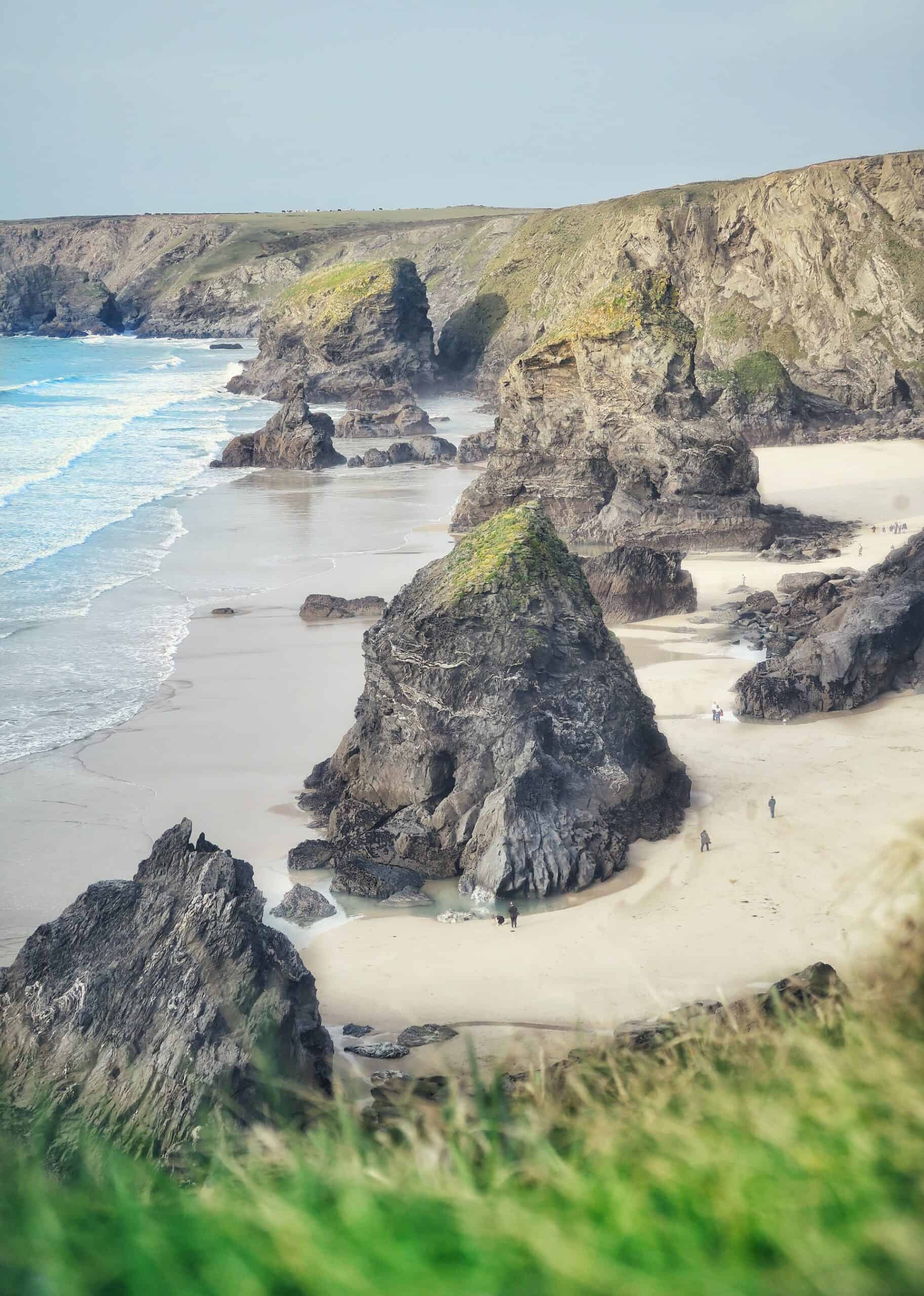
Spring Wildflowers

Stunning views in Anza-Borrego Desert State Park
Stunning desert views

Nearly every year, the wildflowers in Anza-Borrego Desert State Park are a big tourist attraction. Keep tabs on the timing of the blooms and the intensity of the seasonal wildflowers at the Anza-Borrego Foundation.
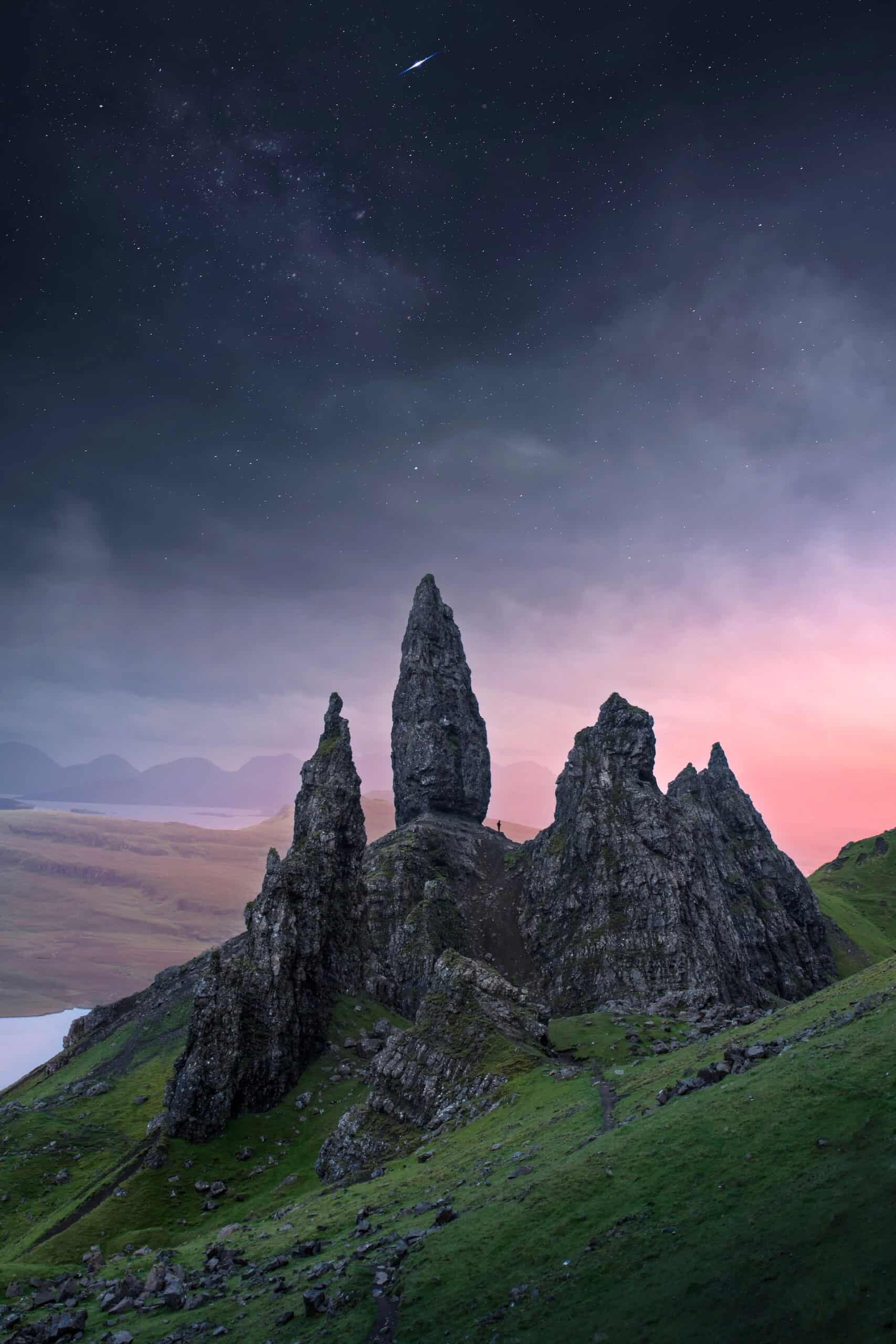
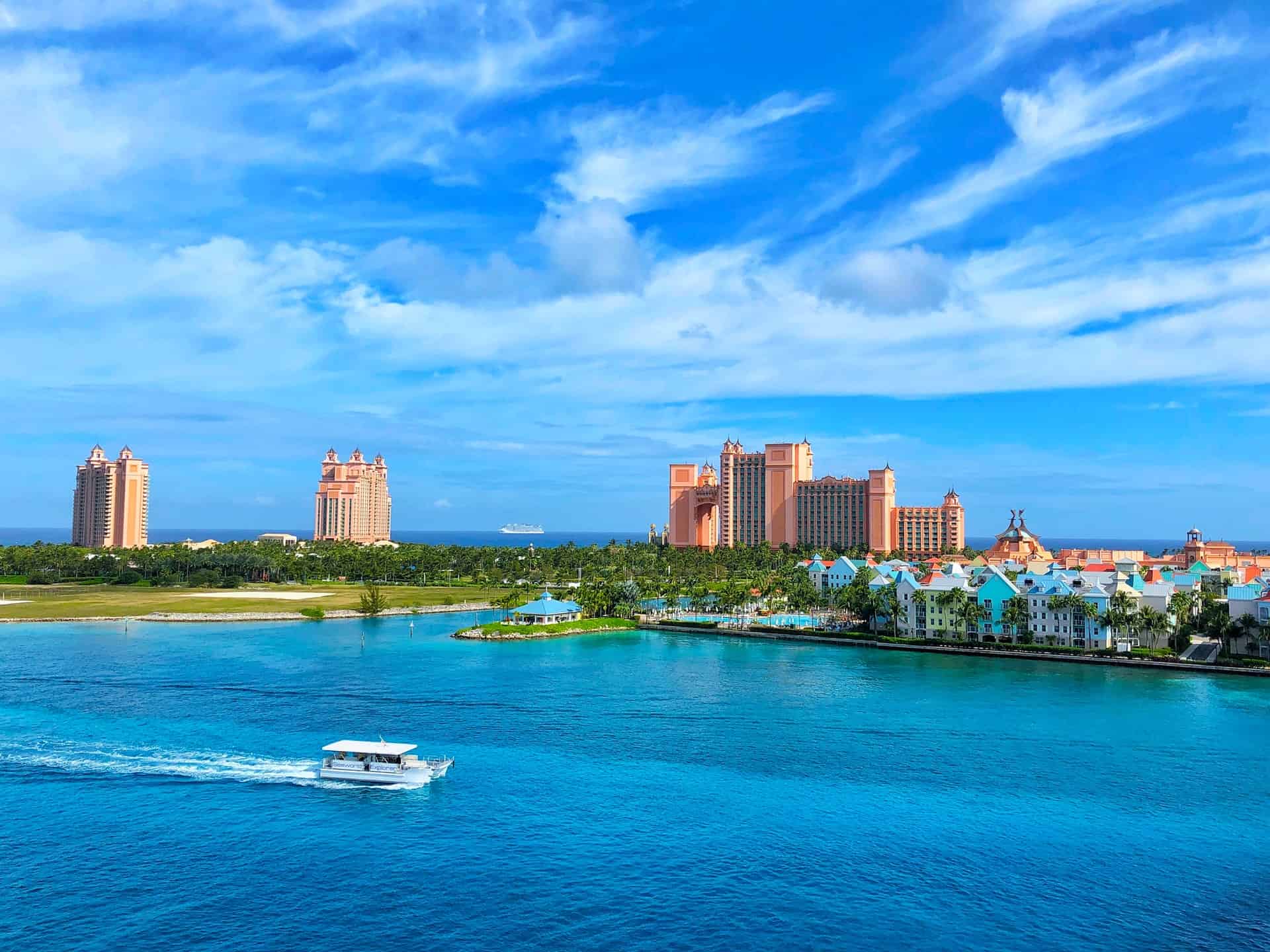
Climb Villager Peak

Signing the peak register

This is a brutal 15-mile (24-kilometer) climb to one of the park's most iconic peaks. There is no water on the route, and you will need to take more than you can carry. We ran out! Store water in the car to drink when you return to the start.

Climb Coyote Peak

The view from the top of Coyote Peak
The wind is blowing hard on the Coyote Peak summit
The wind is blowing hard on the summit

Situated in the middle of the park, Coyote Peak is one of the real challenges of Anza-Borrego. At 3,192 feet in elevation, it goes straight up from the valley floor. We saw no humans on the mountain all day.

Borrego Palm Canyon

Tired and getting left behind in Borrego Palm Canyon
Tired and getting left behind

Just a 3-mile (4.5-kilometer) hike from the trailhead near the visitor's center, this is a great hike to see bighorn sheep and a desert oasis.

Fonts Point

Sunrise at Fonts Point

Get up early for the sunrise at Fonts Point. You will need to drive in the dark on a sandy 4x4 road to get there, but the views are truly exceptional. Bring your camera.

The Elephant Tree

Park information claims this is the last known Elephant Tree in the United States. It is worth the two-mile walk to see the tree and the surrounding desert fauna.

Clark Dry Lake

Otherworldly: Clark Dry Lake

This was a highlight of our last trip to Anza-Borrego Desert State Park. The lake is vast and flat with strange and weird properties. We were all alone in this expansive place, and it was a bit unsettling but very cool.

Elephant Knees and Wind Caves

Long, long shadows at sunset in California's Anza-Borrego Desert State Park
Long, long shadows at sunset

This area is on the far eastern side of the park, but it is well worth the trip. I brought my camera and found this place to be a goldmine for artsy photographs. The black-and-white photos I took were stellar. Plus, it was a great place to explore and have fun.

The Elephant Knees in black & white

The Wind Caves were similar to a playground. We climbed, darted, ducked, and ran around like school kids.

Exploring the whimsical Wind Caves in Anza-Borrego Desert State Park
Exploring the whimsical Wind Caves

Anza-Borrego Desert State Park in California is one of the best adventure areas in the United States. If you have the chance to visit Southern California, be sure to make a stopover at Anza-Borrego. You will never be the same again. That is why I call Anza-Borrego the real California adventure.

12 Best Places to Visit in Bangalore

Human-made wonders encompass cities that reflect the rich cultural heritage of a bygone era, as well as cutting-edge and technologically advanced cities. Bengaluru, the city formerly known as Bangalore, is an ideal location for a combination of the two. 

As a result of the city's excellent climate, you can book tickets from Cathay Pacific online, making your stay and journey more enjoyable. Once you've decided to travel to Bengaluru, be sure not to miss out on the best places to visit in Bangalore, listed below.

Table of Contents

  • Bangalore's Top Attractions
    • 1. The Fort of Tipu Sultan
    • 2. The Botanical Gardens of Lal Bagh 
    • 3. Palace of Bangalore
    • 4. The Nandi Mountains
    • 5. Park Cubbon
    • 6. The Museum of Public Administration
    • 7. National Museum of Modern Art
    • 8. Bengaluru's St. Mary's Basilica
    • 9. Soudha Vidhana 
    • 10. The Chola Temples 
    • 11. The ISKCON Temple
    • 12. The National Park of Bannerghatta

Bangalore's Top Attractions

1. The Fort of Tipu Sultan

One of the best places to visit in Bangalore is the Tipu Sultan Palace (photo: Heather Cowper)
Tipu Sultan Palace (photo: Heather Cowper)

The Tipu Sultan Fort, situated in the heart of the city's commercial district, is a reminder of the artistic prowess of the past. In the year 1537, Kempegowda used mud bricks to build it. Using granite stones, Haider Ali made modifications and additions to it. 

Tipu Sultan further improved the fort in 1791, and it served as his summer residence. Arches, pillars, and balconies decorate the two-story structure. 

It features a mosque in the style of Islamic architecture and a Hindu temple dedicated to Ganesha. This sheds light on the ruler's tolerance of religion. 

Visit the fort's art gallery, which features historical paintings, photographs, and carvings, to gain insight into the area's past through visual means.

2. The Botanical Gardens of Lal Bagh 

In India, you'll find one of the most stunning botanical gardens. Haider Ali constructed it, and Tipu Sultan later modified it. 

Inspired by the London Crystal Palace, the Glass House in the gardens was built. It spans 240 acres and features over 1,800 plants, herbs, and trees. The Garden clock in India is the first of its type.

3. Palace of Bangalore

Bangalore Palace (photo: Masaru Kamikura)

Bangalore Palace was built in 1884 by Chamaraja Wodeyar. England's Windsor Castle was the inspiration. The Tudor-style building, situated in the heart of the city, features Gothic windows, woodcarvings, and towers that showcase the spectacular architecture of the period. 

Beautiful gardens adorn the 430-acre estate where the palace is located. Today, exhibitions and concerts take place in the palace. The palace is undoubtedly one of the best places to visit in Bangalore.

4. The Nandi Mountains

Nandi Hills is an ideal spot for experiencing a sense of oneness with the natural world. With a massive monolithic granite mass spanning 37 miles (60 kilometers) from Bangalore, it is one of the top hill stations around Bangalore. This is where the Palar and Arkavathi rivers start. 

On the summit of the hill lies the Nandi temple, one of India's most revered Hindu shrines. It's 4,849 feet (1,478 meters) above sea level. As long as the weather is favorable, visitors are welcome to visit at any time. 

Visitors can see the Amrutha Sarovar, Tipu's Summer Palace, Tipu's Fort, the Horse Way, the Palar and Arkavathi River Sources, the Yoga Nandeeshwara Temple, and the Tipu Drop. You'll find a playground for kids here that has a lot of great amenities to help children's spirits soar.

5. Park Cubbon

Three hundred acres of land make up Cubbon Park. In Mysore, Richard Sankey served as the Chief Engineer and oversaw its construction. Spectacular parks and well-kept lawns deserve special praise. 

A lovely path winds its way through the park. During your hectic holiday tour, it's the ideal spot for you to stay. 

It's a walker's paradise, and it earns the title. Here you'll find statues honoring some of history's most illustrious figures. You'll be in awe of the beauty of Cubbon Park at night when the lights come on.

6. The Museum of Public Administration

The Museum of Public Administration was constructed in 1886 and is still standing today. In the museum's 18 halls, you'll find Neolithic artifacts from diverse civilizations, antique jewelry, and a wealth of other treasures.  Astonishing sculptures and antiquated artwork can be found here.

7. National Museum of Modern Art

All art and history enthusiasts should visit the National Gallery of Modern Art in Bengaluru. The museum boasts an extensive collection of over 500 paintings. Rabindranath Tagore, Amrita Shergill, Raja Ravi Varma, and Jamini Roy are a few well-known painters whose work has been on display. 

All the artwork has been labeled and arranged by period, art school, and artist for the sake of accessibility. The National Museum of Modern Art deserves a spot on any list of Bangalore's top attractions.

8. Bengaluru's St. Mary's Basilica

St. Mary's Basilica is one of the best places to visit in Bangalore, India (photo: Ajith Kumar)
St. Mary's Basilica (photo: Ajith Kumar)

In September, Bengaluru's oldest church, St. Mary's Basilica, is known for its annual St. Mary's Feast. The church has a rich history, and the two St. Mary statues in the cathedral have a fascinating origin story.

Built on a 17th-century foundation, the church was restored to its former glory in 1875. This church's Gothic design, gorgeous pillars, and stunning stained-glass windows make it a pleasure to behold. This is India's sixth minor basilica.

9. Soudha Vidhana 

As one of the city's most prominent landmarks, Vidhana Soudha is a spectacular example of Indian and Dravidian architecture. Pt. Jawaharlal Nehru laid the foundation stone in 1951, and the project was finished in 1956. The largest legislative building in India attracts many visitors curious to take a peek at it from the outside.

10. The Chola Temples 

One of the most powerful in South Asia, the Chola dynasty governed Bangaluru for several centuries. Bangaluru was under their power for more than a century, and the many temples they erected throughout the city bear witness to their rule. 

Over a millennium old, these temples in Bangaluru serve as a reminder of the once-proud Chola Empire. Chola temples that may be visited include the Domlur Chokkanathaswamy temple, the Halasuru Someshwara Temple, and Sri Ananda Lingeshwara Temple in the city of Domlur.

11. The ISKCON Temple

ISKCON Bengaluru, one of the world's largest ISKCON temples, is a must-see for everyone interested in religious zeal and architectural splendor. Youth programs, cultural events, and numerous festivals are just a few examples of the temple's offerings to devotees of Krishna. 

A 55-foot gold-plated flag pole and a 29-foot gold-plated kalash shikara stand out in this temple's complex.

12. The National Park of Bannerghatta

Bannerghatta National Park is a wildlife enthusiast's dream come true because it's located just outside the bustling city of Bengaluru. The park's mission is to promote ecotourism and instill a sense of conservation among the next generation. 

Located inside the Bannerghatta National Park in the magnificent Champakadhama hills valley, a zoo was built. There's also a butterfly farm to enjoy.

There you have it, my list of the best places to visit in Bangalore. I hope you've enjoyed reading about this dynamic capital city in India's southern state of Karnataka.

_______

This story was published in partnership with Cathay Pacific.

« Previous Page
Next Page »
Dave at Ahu Ko Te Riku on Rapa Nui (Easter Island), Chile.

Hi, I'm Dave

Editor in Chief

I've been writing about adventure travel on Go Backpacking since 2007. I've visited 68 countries.

Read more about Dave.

Footer

back to top

About

  • About
  • Archive
  • Privacy Policy
  • Cookie Policy

Follow Us

Contact

  • Contact
  • Work With Us
  • Submissions

Copyright © 2025 Go Backpacking