Go Backpacking

  • About
  • Travel Tips
    • Accommodations
    • Budgeting & Money
    • Adventure Travel
    • Food & Drink
    • Gear & Gadgets
    • Packing Tips
    • Travel Blogging
    • Travel Insurance
    • Trip Planning
    • UNESCO Sites
  • Destinations
    • Africa
      • Botswana
      • Egypt
      • Ethiopia
      • Morocco
      • Rwanda
      • South Africa
      • Tanzania
    • Asia
      • Cambodia
      • China
      • Hong Kong
      • India
      • Indonesia
      • Japan
      • Laos
      • Malaysia
      • Nepal
      • Philippines
      • Thailand
      • United Arab Emirates
      • Vietnam
    • Europe
      • England
      • France
      • Germany
      • Greece
      • Iceland
      • Ireland
      • Italy
      • Portugal
      • Spain
      • Switzerland
      • Turkey
    • North America
      • Canada
      • Costa Rica
      • Cuba
      • Guatemala
      • Mexico
      • Nicaragua
      • Panama
      • United States
    • Oceania
      • Australia
      • French Polynesia
      • New Zealand
    • South America
      • Argentina
      • Bolivia
      • Brazil
      • Chile
      • Colombia
      • Ecuador
      • Peru
  • Advertise
menu icon
go to homepage
  • About
  • Travel Tips
    • Accommodations
    • Budgeting & Money
    • Adventure Travel
    • Food & Drink
    • Gear & Gadgets
    • Packing Tips
    • Travel Blogging
    • Travel Insurance
    • Trip Planning
    • UNESCO Sites
  • Destinations
    • Africa
      • Botswana
      • Egypt
      • Ethiopia
      • Morocco
      • Rwanda
      • South Africa
      • Tanzania
    • Asia
      • Cambodia
      • China
      • Hong Kong
      • India
      • Indonesia
      • Japan
      • Laos
      • Malaysia
      • Nepal
      • Philippines
      • Thailand
      • United Arab Emirates
      • Vietnam
    • Europe
      • England
      • France
      • Germany
      • Greece
      • Iceland
      • Ireland
      • Italy
      • Portugal
      • Spain
      • Switzerland
      • Turkey
    • North America
      • Canada
      • Costa Rica
      • Cuba
      • Guatemala
      • Mexico
      • Nicaragua
      • Panama
      • United States
    • Oceania
      • Australia
      • French Polynesia
      • New Zealand
    • South America
      • Argentina
      • Bolivia
      • Brazil
      • Chile
      • Colombia
      • Ecuador
      • Peru
  • Advertise
search icon
Homepage link
  • About
  • Travel Tips
    • Accommodations
    • Budgeting & Money
    • Adventure Travel
    • Food & Drink
    • Gear & Gadgets
    • Packing Tips
    • Travel Blogging
    • Travel Insurance
    • Trip Planning
    • UNESCO Sites
  • Destinations
    • Africa
      • Botswana
      • Egypt
      • Ethiopia
      • Morocco
      • Rwanda
      • South Africa
      • Tanzania
    • Asia
      • Cambodia
      • China
      • Hong Kong
      • India
      • Indonesia
      • Japan
      • Laos
      • Malaysia
      • Nepal
      • Philippines
      • Thailand
      • United Arab Emirates
      • Vietnam
    • Europe
      • England
      • France
      • Germany
      • Greece
      • Iceland
      • Ireland
      • Italy
      • Portugal
      • Spain
      • Switzerland
      • Turkey
    • North America
      • Canada
      • Costa Rica
      • Cuba
      • Guatemala
      • Mexico
      • Nicaragua
      • Panama
      • United States
    • Oceania
      • Australia
      • French Polynesia
      • New Zealand
    • South America
      • Argentina
      • Bolivia
      • Brazil
      • Chile
      • Colombia
      • Ecuador
      • Peru
  • Advertise
×
Home

Oahu Scenic Drive: Ultimate One-Day Itinerary in Hawaii

Are you planning a trip to the Aloha State? If your vacation to Hawaii includes a visit to Honolulu, allow yourself a full day for a scenic drive through Oahu. I did this upon returning to Oahu for the first time in 30 years, having visited the Hawaiian Islands as a 13-year-old.

I traveled with my girlfriend this time, and we made the most of our week on the island. What follows is our one-day itinerary for a self-guided scenic drive around Oahu. It was one of the best drives of my life.

At the end of the article, I'll share a few alternative ideas for you to swap in. Before we continue, though, a word of warning.

Dave on his one-day Oahu scenic drive in Hawaii
Dave in Oahu

Table of Contents

  • Rental Car Logistics
  • Top Oahu Attractions
    • Kona Coffee Purveyors / b Patissiere
    • Hanauma Bay
    • Halona Beach Cove and Blowhole
    • Makapu'u Point Lighthouse Trail
    • Nu'uanu Pali Lookout
    • Tropical Farms Macadamia Nuts
    • Kualoa Ranch
    • Hukilau Cafe
    • Giovanni's Shrimp Truck
    • Dole Plantation
    • Waimea Valley and Waterfall
    • Matsumoto Shave Ice
    • Sunset at Haleiwa Beach Park
  • Alternative Places To Go
  • Wrapping Up

Rental Car Logistics

While we had no trouble reserving a rental car a few days in advance, the pick-up times in Waikiki Beach were limited to 8 a.m. or later. This was the case for all the companies. I would've preferred to hit the road an hour earlier.

However, it wouldn't have been worth our time to take an Uber to the airport to get a car there, only to backtrack through downtown Honolulu to reach the east side of Oahu.

Instead, we did our best to work with this limitation. Ultimately, we saw everything we wanted on our Oahu road trip and were quite tired when we returned to our Waikiki Beach hotel. So, even if we had gotten the car earlier than 8 a.m., I don't think it would've made a big difference.

Picking up the Rental Car

Ford Fusion rental car

Our Ford Fusion rental car was both economical and comfortable. The cost for a 24-hour rental, including insurance, fees, and taxes, was about $150.

The 24-hour rental is important because Budget doesn't accept returned cars after 3 p.m. I found this odd because they don't allow you to pick them up before 8 a.m. Seven hours won't buy you much in the way of stops on a drive around Oahu.

To get the most out of your day and car rental, return the car to the garage whenever you return to Waikiki, and then drop off the keys at the Budget kiosk the next day before 8 a.m. The cost would've been less had we booked the rental a few weeks earlier.

Direction of Travel

Everything I read about taking an Oahu scenic drive suggested traveling east of Honolulu and going counterclockwise around the island. I suspect this is because it allows you to see the sunrise on the East Coast and sunset on the West Coast if you're up early.

If this is your first time driving around Oahu, drive safely. There's no rush; you're on island time, and getting in an accident would be a surefire way to ruin the trip.

Budget Tip: Save money in Oahu with Go City. Buy a 1, 2, 3, or 5-day all-inclusive pass to enjoy tours, surf lessons, and access to parks like Waimea Valley at a discounted rate. Get your Go City pass here.

Top Oahu Attractions

Kona Coffee Purveyors / b Patissiere

Kona Coffee Purveyors in Waikiki Beach, Oahu
Kona Coffee Purveyors

Since the rental car wasn't available until 8 a.m., we got breakfast at Kona Coffee Purveyors, which opens at 7 a.m. daily. This shop offers Hawaiian coffee and fresh pastries by b Patissiere, one of the best bakeries in San Francisco.

We spent a week in Waikiki Beach and saw a line outside the cafe every morning. I'm pretty sure it was for the incredible pastries! My favorite was the chocolate banana almond croissant.

Kona Coffee is conveniently located in the International Market Place, the indoor/outdoor shopping mall where we picked up the rental car.

Hanauma Bay

Once we'd eaten and gotten our car for the day, I drove east of Honolulu on Route 72 to Hanauma Bay, our first stop. This stunning nature preserve, featuring a sandy beach, offers some of Oahu's best snorkeling. I remember swimming among the marine life here as a teen.

The clarity of the water and the quantity of colorful fish and coral set a high bar by which I judged all future snorkeling experiences. Unfortunately, the bay and beach were closed to visitors *unless* you had booked a snorkeling tour.

While we hadn't planned to snorkel that day, we at least wanted to get some photos from an observation deck above the beach. Thankfully, we didn't have to wait long for a beautiful beach view.

Halona Beach Cove and Blowhole

The beautiful Halona Beach Cove is worth a stop on your Oahu scenic drive.
Halona Beach Cove

Our Oahu scenic drive continued a few minutes east on Route 72, which led us to the lookout points for Halona Beach Cove and Blowhole on the side of Koko Crater.

The beach is not easily accessible, but if you're willing to climb down steep volcanic terrain, you may have it to yourself. We were satisfied with the view from above.

The Halona Blowhole is a popular stop for tourists on scenic drives around Oahu.
Halona Blowhole

When a strong enough wave hits the rocks, the Halona Blowhole spouts water up like a geyser. It was anticlimactic but still worth a quick stop on your day trip around Oahu.

Related: Planning for Hawaii on a Budget

Makapu'u Point Lighthouse Trail

Hike to the Makapu'u Point lighthouse on an Oahu scenic drive
Makapu'u Point Lighthouse

Driving another few minutes east on Route 72 will bring you to the Makapu'u Point Lighthouse Trail parking lot. This trail is a relatively easy uphill walk on a paved path.

We took about 30 minutes to reach the top, including a few stops for photos. We saw one pair of parents carrying their baby in a harness and another pushing a stroller.

Oahu's east coast as seen from Makapu'u Point
Oahu's east coast is seen from Makapu'u Point.

Once you reach the top, you will see gorgeous views of Oahu's Windward Coast. On a clear day, look east; you might see Moloka'i, another Hawaiian island.

The ocean views make this one of the best spots on the island to see humpback whales. Whale-watching season in Hawaii runs from December to April.

They may have come early, but the coastal views of turquoise waters from Makapu'u Point were some of my favorites that day. The walk down was faster, taking about 15 minutes. We spent approximately 75 minutes at this stop.

Nu'uanu Pali Lookout

View from Nu'uanu Pali lookout, a recommended stop on any scenic drive of Oahu.
Nu'uanu Pali lookout

Our next photo-op on the Oahu scenic drive was the stunning Nu'uanu Pali lookout, a 30-minute drive from the Lighthouse Trail (take Route 71 North to 61 South, the Pali Highway).

The scenic road ascends 1,200 feet into the Ko'olau Range, giving visitors a different perspective on the lush vegetation of Oahu's windward side.

To the northeast, you can see the azure waters off Kailua Beach. Equally beautiful, Lanikai Beach, located south of Kailua, is hidden by lush green hills. Give yourself 10-15 minutes in this remarkable place.

The Nu'uanu Pali scenic view is included on many of Get Your Guide's most popular half-day and full-day Oahu tours.

Tropical Farms Macadamia Nuts

Tropical Farms macadamia nut coffee samples
Tropical Farms macadamia nut coffee

My girlfriend, Kel, was keen to stop at a macadamia nut farm, and I'm glad we did. Tropical Farms is a great place, about 30 minutes up the coast from the Nu'uanu Pali lookout. Take Route 61 North to 83 North (part of the Kamehameha Highway).

While they weren't offering tours when we visited, they had free samples of their nuts and macadamia nut coffee. My favorite was the onion and garlic.

Kualoa Ranch

Dramatic view of the Kualoa Ranch and surrounding mountains
Kualoa Ranch's dramatic setting

Go a few minutes north on Route 83, and you'll see the dramatic entrance to Kualoa Ranch. This Hawaiian ranch is renowned for being the location where scenes from Hollywood films, including Jurassic Park, Jumanji, and 50 First Dates, were shot.

Tours are costly and sell out well in advance. For example, the 2.5-hour Jurassic Adventure tour, which takes guests to the Hakipu'u and Ka'a'awa Valleys, is $140.

Other activities include horseback riding, electric mountain bikes, and ATVs. Even though we stopped to look, I already knew no tours were available that day.

If you want to incorporate a tour at Kualoa Ranch during your scenic drive around Oahu, you may need to book weeks in advance. Given the time required, I suggest taking a standalone day trip.

The Ranch offers round-trip transportation from Waikiki hotels for $30 per person, so you don't need a rental car to get there.

Hukilau Cafe

Hukilau Cafe
Hukilau Cafe

Speaking of 50 First Dates, a romantic comedy starring Drew Barrymore and Adam Sandler, many scenes are shot in a fictional Hukilau Cafe.

There's a cafe by the same name in Laie, a 25-minute drive north of Kualoa Ranch (on Route 83 North). However, this isn't the location where the scenes were filmed.

Despite that fact, or regardless of it, former Go Backpacking contributor and food blogger superstar Mark Wiens (and I) still went in the hopes of enjoying a typical Hawaiian meal.

You can read about Mark's experience at Hukilau Cafe here. During my drive around Oahu, the restaurant was closed for lunch that day, so I missed the opportunity to try their food.

Giovanni's Shrimp Truck

Giovanni's shrimp truck attracts vacationers out for an Oahu scenic drive.
Giovanni's shrimp truck

That was fine since I also had eyes on Giovanni's Shrimp Truck a few minutes north on Route 83. Giovanni's was one of the first shrimp food trucks on the North Shore of Oahu to make a name for itself.

There's a lunch line every day, year after year, and that was certainly the case when we stopped by around noon.

Giovanni's shrimp plates

It took about 15-20 minutes to get our food. I ordered shrimp with butter and lemon while Kel got their signature shrimp scampi (i.e., garlic shrimp).

A third option is the hot and spicy shrimp plate. All three are the same size, come with white rice, and cost $15. By this point in the trip, I felt hungry, so I quickly worked on the dozen medium-sized shrimp.

Related: Best Places to Eat in Oahu

Dole Plantation

Stopping for a Dole pineapple whip dessert is a must on any Oahu scenic drive
Dole pineapple whip

One of the places I remember best from my visit to Oahu as a teenager was the Dole Plantation. Tasting the fresh-picked pineapple was unforgettable.

I can also remember seeing the inside of a canning facility and the shape of machines used to remove pineapple cores.

Thirty years later, the Dole Plantation had become a much bigger tourist attraction, and it is now included on many Oahu island tours.

You can ride a train around the plantation to learn about pineapples and navigate a giant maze on foot. However, we were more interested in dessert, specifically the Dole pineapple whip dessert.

A Dole whip is pineapple-flavored soft-serve ice cream, and we paid an extra dollar for fresh pineapple chunks to be added.

Behind the gift shop, where you can buy the dessert and all forms of pineapple paraphernalia, there's a patio and a small garden that are free to enjoy.

Waimea Valley and Waterfall

Waimea Falls
Waimea Falls

Our daylight hours were running out by mid-afternoon, and we desperately wanted to swim under Waimea Falls. The Falls are open from 9 a.m. to 4 p.m. daily, and we left the Dole Plantation around 3 p.m.

We backtracked along Route 99 and Route 83 North to Waimea Bay, where we turned right onto Waimea Valley Road, which provides access to Waimea Valley. From there, it was an easy 30-minute walk on paved paths through the botanical garden to reach Oahu's best-known waterfall.

There are rustic changing rooms and bathrooms, as well as a small hut where a gentleman handed out life jackets, which were required for swimming. He said we'd arrived at this beautiful place at the best time of day when most visitors had already left.

Kel and I enjoyed a 15-minute swim in the freshwater pool before drying off, changing, and returning to the car for another North Shore food experience.

Matsumoto Shave Ice

Tropical shave ice with mochi at Matsumoto's in Hale'iwa on Oahu's North Shore
Tropical shave ice with mochi

Heading south on Route 83 for a few minutes brought us to Haleiwa town, still on Oahu's North Shore. You'll find many cute shops, restaurants, and the historic Matsumoto Shave Ice here.

Matsumoto has been serving their refreshing dessert since 1951. On a typical day, they produce around 1,000 desserts for customers. President Obama has been seen getting shaved ice here, so you know it's good!

They have special machines to shave the ice and dozens of housemade flavored syrups to choose from. There are many places to buy shave ice on Oahu, but Matsumoto's is one of the best.

Related: 5 Hawaiian Fusion Foods

Sunset at Haleiwa Beach Park

Sunset at Hale'iwa Beach Park, Oahu
Sunset at Haleiwa Beach Park

I'd initially planned to watch the sun go down at Sunset Beach Park on the North Shore. This beach is just a minute or two up the road from the Banzai Pipeline beach, a mecca for surfers worldwide.

However, upon arrival, we found parking at both beaches to be extremely limited, with many cars already occupying the spots.

Instead, we left the shave ice shop for nearby Haleiwa Beach Park, which has plenty of parking. A rainbow appeared inland, to the west, while we watched the sunset over the Pacific Ocean. Stand-up paddleboarders could be seen gently floating on the water in the distance.

Once the sun went down over the horizon, we hopped in the car and drove back to Waikiki Beach, marking the end of the drive.

Despite an unexpected torrential downpour, it took about one hour. The day made for one of the best scenic drives I've experienced in the United States.

Related: Beauty of Oahu Island

Catching rainbows at sunset on an Oahu scenic drive
Rainbow on the North Shore

Alternative Places To Go

Hopefully, our Oahu scenic drive gave you some ideas to make your one-day tour of the island a reality. Follow it, and you'll see some of the most beautiful places on the island.

There are many more exciting stops on Oahu than one day allows, so I thought I'd share a few alternatives to what we did.

If you prefer to try malasadas (Portuguese donuts) for breakfast, head to Leonard's Bakery instead of Kona Coffee Purveyors. Leonard's is open from 5:30 a.m. to 7 p.m. daily.

If you come to Honolulu from the east, such as the mainland United States, Canada, or Europe, jet lag may cause you to wake up very early.

Consider taking advantage of this by doing a sunrise hike at the Diamond Head crater. We did this on a different day from our drive around Oahu and used Uber.

It was a 30-minute hike to the top of the crater; our reward was breathtaking views. Allow 15-20 minutes to return. Check the official website for travel advisories and hours.

The Polynesian Cultural Center in Laie is a popular destination on the eastern side of Oahu. Here, you can discover the local cultural traditions through live shows, guided tours, and authentic cuisine.

I recommend leaving Pearl Harbor for another day, as you will need to reserve a time slot for the USS Arizona. Visiting the USS Missouri battleship alone can take an additional hour or two.

Wrapping Up

Whether you follow this route precisely or mix and match with your preferred stops, a one-day scenic drive around Oahu delivers a remarkable taste of Hawaii.

From the morning views at Hanauma Bay lookout to sunset at Haleiwa Beach Park, the island's natural wonders, famous beaches, and lush mountains make every mile memorable.

This drive is as much about the journey as the destination-an unforgettable day exploring the scenic routes of Oahu that will leave you dreaming of your next island adventure.

Top 10 Free Things To Do in San Francisco

As I recently discovered, there are numerous free things to do in San Francisco, California, whether you're visiting for the first time or living there.

Twenty years ago, I visited the Golden Gate City for the first time. My spur-of-the-moment decision to fly across the country for a long weekend with someone I barely knew was more of a social visit than a sightseeing experience. Ever since, I've wanted to go back and explore more of the city.

Visiting the Golden Gate Bridge is one of the best free things to do in San Francisco, California.
Golden Gate Bridge

That opportunity came when my girlfriend and I planned a week on Oahu, and I spent a weekend in San Francisco before meeting her in Honolulu.

Table of Contents

  • Free Activities in San Francisco
    • 1. Golden Gate Bridge
    • 2. Fisherman's Wharf
    • 3. Sea Lions at Pier 39
    • 4. Lombard Street
    • 5. Alamo Square Park and the Painted Ladies
    • 6. Ghirardelli Square
    • 7. Ferry Building
    • 8. City Lights Booksellers & Publishers
    • 9. Vesuvio Cafe
    • 10. Chinatown

Free Activities in San Francisco

San Francisco may have one of the highest living costs in the United States, but I found plenty to do for free. If you're planning a move here, especially from Southern California, hiring experienced long distance movers from Temecula can help ease the transition and give you more time to enjoy your new home.

Additional worthwhile activities cost $20 or less; I'll also mention those. However, the emphasis here is on free things to do in San Francisco.

1. Golden Gate Bridge

The Golden Gate Bridge towers over a  Civil War fortress below it.
The Golden Gate Bridge towers over a Civil War fortress below it.

First and foremost, I knew I had to see the Golden Gate Bridge in person. I'd been kicking myself for twenty years for not seeing it the first time I visited. I was unsure if I'd get any pretty pictures because my visit coincided with an unusual cold snap in August.

On my second full day in the city by the bay, the clouds began to part around noon, and bluish skies emerged. I took a break from visiting the best bakeries in San Francisco and headed by Uber to Battery Godfrey, an old gun battery dating back to 1895.

There are many places to choose from for scenic views of the Golden Gate Bridge. I wanted to do a little hiking, so I picked that one. I walked north, passing under the bridge, before visiting a few more outlooks on the east side.

If I had more time, I would've loved to spend an hour walking across the bridge to take in the detailed craftsmanship and the best views from the north side. Bicycling will get you across faster.

The white tarps in the photo above are related to work on installing nets, a deterrent for would-be jumpers.

2. Fisherman's Wharf

Fishermans Wharf sign
Fisherman's Wharf sign

The day before the Golden Gate Bridge, I walked around Fisherman's Wharf while San Francisco was overcast and moody. This bustling neighborhood is full of seafood restaurants. I got crab chowder, served in fresh-baked sourdough bread, for $12.

The historic Boudin Sourdough Bakery & Cafe is just a block from the large Fisherman's Wharf sign. It has been baking bread since 1859.

Seafood restaurants in San Francisco
Seafood restaurants

Naval attractions include the USS Pampanito, a World War II submarine, and the SS Jeremiah O'Brien. Both vessels are located at Pier 45, which you can access on foot for free.

A self-guided tour of the submarine is $20. I did it; however, if you've walked through a WWII submarine before (as I had in San Diego), there's not much new to see. Save your money unless you want the photos standing on top of it.

Antique arcade games in Fisherman's Wharf
Antique arcade games

Pier 45 is also home to the Musée Mécanique, a free museum filled with classic arcade games. And by classic, I don't mean Pac-Man. These are games so old you'll get a kick out of what used to pass as cutting-edge entertainment.

Bring quarters or small bills (such as $1 or $5) to use in the change machines if you want to play. I didn't have any or see any that took debit cards, so I missed the opportunity.

3. Sea Lions at Pier 39

Pier 39 sea lions in San Francisco
Sleepy sea lions

Another fun and free activity in San Francisco is visiting the sea lions at Pier 39. I LOVE sea lions. They're adorable, make silly sounds, get testy with each other, and are generally neat to observe. Swimming with sea lions in the Galapagos Islands was a highlight of my week there.

But you don't need to fly to Ecuador to get up close and personal with these cute mammals. You have to survive the gauntlet of commercialism that exists at Pier 39. Walk through this sizeable outdoor mall to reach the sea lions.

Then, take all the time you want to watch them from the observation deck. Thankfully, it was possible to walk off Pier 39 without passing by all the shops again.

4. Lombard Street

Driving down Lombard Street

My awareness of Lombard Street, one of San Francisco's most popular tourist attractions, dates back to childhood. I don't know precisely when or where I learned about it, but I knew I had to see what's been dubbed the "most crooked street in the world" because of its eight hairpin turns.

Walking up or down Lombard Street is possible, depending on your preference for physical activity. The benefits of walking are that it's free, and you can take your time and enjoy the eccentricity of this short but winding street in San Francisco.

In the interest of time, I took an Uber down it on my way from Coit Tower ($10 scenic view) to the Beat Museum ($8). I quickly learned this is not an original idea. There was a continuous line of cars doing the same thing! Perhaps that's unsurprising, considering the street sees two million visitors annually.

5. Alamo Square Park and the Painted Ladies

The Painted Ladies as seen from Alamo Square Park in San Francisco
The Painted Ladies, as seen from Alamo Park.

Any child of the 80s likely remembers the Full House sitcom, set in San Francisco. The opening features scenes of the fictional Tanner family playing in Alamo Square Park, across the street from beautiful old Victorian houses, known colloquially as The Painted Ladies.

Original Full House opening (skip to 1:14 for Alamo Square Park)

Hanging out in Alamo Square Park with the Painted Ladies was one of my favorite free things in San Francisco. Sure, there were travelers like me there to snap photos. However, many locals were also picnicking there to enjoy the weather and the view.

See also: Things To Do in Temecula

6. Ghirardelli Square

The line for a hot fudge sundae at Ghirardelli Square.
The line for a Ghirardelli hot fudge sundae.

I love chocolate almost as much as sea lions, so walking through Ghirardelli Square near the San Francisco Maritime National Historical Park was a no-brainer.

This complex, now featuring restaurants, bars, a cheese shop, and a sweet gift shop, was once a 19th-century chocolate factory owned by Domenico "Domingo" Ghirardelli. It's been preserved and protected on the National Register of Historic Places.

I skipped one here since I indulged in one of their famous hot fudge sundaes at a Ghirardelli cafe in San Diego. I was content to walk around and take in the views, including a distant Alcatraz Island.

7. Ferry Building

Ferry Building
Ferry Building

Across downtown, on the eastern coast, is another historic landmark that's free to explore - the Ferry Building. Opened in 1898, the Ferry Building was once a transportation hub for people traveling to and from San Francisco. As the name suggests, travelers took ferries.

This historic building underwent a complete restoration in 2003. Today, it houses a marketplace (a mall) full of restaurants, cafes, and food and wine shops. Book Passage is a small but well-known bookstore that hosts an annual travel writing conference.

While you're here, walk across the street to Embarcadero Plaza for a quick look at the Vaillancourt Fountain, a fascinating 1971 sculpture.

8. City Lights Booksellers & Publishers

Visiting the historic City Lights Bookstore is one of many free things to do in San Francisco, California.
City Lights Bookstore

No bookstore was more influential than City Lights Booksellers & Publishers during the Beat Generation.

Founded in 1953 by poet Lawrence Ferlinghetti and Peter D. Martin, City Lights is one of the few truly great independent bookstores in the United States, a place where booklovers from across the country and around the world come to browse, read, and just soak in the ambiance of alternative culture's only "Literary Landmark."

City Lights website

Ferlinghetti passed away in February 2021 at the age of 101. His bookstore was an important meeting place for Beat-era writers and poets, such as Jack Kerouac and Allen Ginsberg, whom I read, studied, and grew fond of in college.

A dedicated poetry room on the second floor is full of beatnik literature. There's a basement, too, in addition to the street-level space. Perusing a historic Beat Generation bookstore is one of the best free things in San Francisco.

9. Vesuvio Cafe

Inside Vesuvio Cafe
Inside Vesuvio Cafe

If I've sold you on City Lights, take a minute to walk down Jack Kerouac Alley, which separates the bookstore from Vesuvio Cafe, another worthy destination on this list.

Vesuvio is a bar and café that was once popular among the Beat poets and writers. It's a symbiotic relationship, having a restaurant and bar across an alley from a groundbreaking bookstore.

Inside, you'll see old photos and memorabilia on the walls. Walk up the creaky old wooden staircase to glimpse even more on the second floor, which looks down on the first.

Whether you stop in for a quick look or grab a drink to soak up the atmosphere, Vesuvio Cafe is worth a minute of your time in San Francisco.

Related: San Francisco's Coffee Culture

10. Chinatown

Street art in Chinatown, San Francisco
Street art in Chinatown

I will round out my list with a walk in Chinatown, which I learned is more of a ghost town on Saturday mornings. I walked past the Golden Gate Fortune Cookie Factory, which I'd hoped to visit but was closed.

Still, I enjoyed multiple street art murals depicting dragons and Bruce Lee, and getting a feel for the Chinese shops and restaurants here.

On my last night in town, I returned for a Chinese Mai Tai at Li Po Cocktail Lounge, which Anthony Bourdain featured on his show The Layover.

I was proud that I could see and do so many things in San Francisco, but there was much more I missed out on during my visit.

Next time, I'd love to explore Golden Gate Park, including the San Francisco Botanical Garden, the Japanese Tea Garden, and the Clarion Alley Street Art in the Mission District. All of these places are free.

Is It Safe to Buy Bus Tickets Online?

Travelers sometimes fear that they will be charged for tickets they won't receive and that an online booking service provider will keep their money.

These travelers tend to express this fear before using safe online booking services for the first time. In contrast, customer reviews and feedback have shown that the internet has made booking everything online easier, representing a significant advance.

It's now possible to buy bus tickets online for Iceland and many other countries. (photo: Juan Encalada)
Bus in Iceland (photo: Juan Encalada)

The website where we purchase the tickets is not important; what matters is how we book the tickets. You should use a trusted payment method when booking a ticket through a different process.

Online shopping nowadays relies on secure and safe online payment methods. If a network issue prevents the booking of a ticket, you may be eligible for a refund according to the guidelines of the payment method used.

Using online safe booking websites to book tickets is a perfectly safe and legal practice. You can now book tickets to different places while in the comfort of your home, just as we can for grocery shopping, or a short weekend trip, or even for essential business travel. 

Why should anyone book bus tickets online?

Everyone who wishes to take the bus service should read this message. As most bus ticket websites offer discounts and benefits to their customers, buying tickets online has its advantages.

Organizing your tickets online will give you the advantage of the internet and technology for an easier travel experience. Traveling by bus can be on short notice in some situations, while planning a trip is more common.

If you plan to book your bus ticket in advance, it is recommended that you do so online. In the first instance, if you need to catch a bus at the last minute, you may not be able to secure a seat of your choice at the stand unless you book your ticket beforehand.

It will be invaluable to purchase your ticket online if you plan to travel in the second case. Consequently, you will be able to compare many bus companies based on their prices, facilities, timing, etc.

Additionally, you will know in advance where you will stop on your journey. Often, when we book tickets online, we receive surprise offers and discounts.

Furthermore, most bus operators offer 100% refunds for cancellations made 12 hours to 24 hours before your trip. You can now book your bus tickets online in advance through recent promotions provided by bus operators.

They also ensure that the travel is insured and offer cashback to some bus companies. This summarizes the benefits of booking online bus tickets safely.

Bus Tickets Online: Benefits

Bus tickets can be booked online with us, a significant improvement over physical reservations at travel agents or counters.

  • Queues at off-line bus ticket counters are long, so do not stand in them.
  • The transactions are simple, secure, and safe.
  • View bus schedules, ticket prices, and boarding and dropping points online.
  • Access to cashback and discount offers from payment partners.
  • There are numerous bus operators to choose from.
  • Ticket availability for buses can be checked online.
  • A 24-hour customer service desk.
  • Travel agents can be avoided.
  • You can choose any seat you desire.
  • Book a bus ticket and enjoy discounts and offers.
  • Protect yourself with travel insurance.
  • Cancellation of bus tickets is easy.

Although everyone loves to travel and see new places, many people avoid driving due to increased traffic.

Accessing different destinations can be pretty challenging. Select redBus when you want to travel together. The website will assist you with any questions regarding ticket booking and travel in general.

Various discounts and deals are available for use when booking. Support is available to answer any queries. In addition to TV, Wi-Fi, and AC, the bus hire includes some other things.

RedBus offers various benefits and promotions when booking a bus with their service. Booking a ticket with redBus can be easy, safe booking, and comfortable. When you combine all these things, you'll have an unforgettable experience traveling in a group.

_____

This story is brought to you in partnership with redBus.

Packing Guide for an Ultralight Backpacking Trip

Ultralight backpacking has gained significant popularity over the past few years. This form of travel allows you to carry less, travel farther, and have a much better overall experience.

If you are new to the concept of ultralight backpacking or camping, though, you may be wondering how to get started. Here are some guidelines to follow.

Hiking in Finland (photo: Hendrik Morkel)

Table of Contents

  • Shop for the Right Gear 
  • Remember - Safety First
  • Weigh Your Clothes 
  • Fill Up as You Go 
  • Pack in the Right Order

Shop for the Right Gear 

Your first order of business is finding the proper backpacking and camping gear for this type of trip.

As mentioned, this form of adventure has become increasingly common. As a result, you can find ultralight sleeping bags, pads, tents, and more.

Investing in these items can help significantly reduce weight. And, it isn't just these items that you should look for in the ultra-light form.

If your trip is several days long, consider compact, lightweight stoves. Also, if you need fuel supplies, opt for the smallest and lightest options. 

Remember - Safety First

It is essential to prioritize your safety and well-being above all else. As such, your first focus shouldn't be shaving off weight. Instead, it should be to make sure that you are safe and healthy every step of the way. 

For instance, if you are backpacking or camping during cooler months, you shouldn't try to pare down with a too-light tent. When shopping at a camping equipment store, it's essential to prioritize a durable shelter that will protect you from the cold and other elements. 

Weigh Your Clothes 

Your clothes can add more weight and take up a lot more space than you might think. This is why it is a good idea to take a long, hard look at what you are packing on your trip.

If the weather is mild, you may want to opt for lighter, breathable fabrics instead of thick cotton clothes. The same goes for heavy denim. 

Instead, look for clothes that have been specifically designed for hiking or backpacking. This includes lightweight, moisture-wicking clothes that are easy to roll up and fit into backpacks. Such a move can make all the difference. 

Fill Up as You Go 

One or more bottles filled with water will add unnecessary weight to your pack. Thus, it would help if you carried empty water bladders around instead. This will allow you to draw from various water sources.

To be on the safe side, take water purification tablets with you as well. Get into the habit of drinking your fill at the water source. Then, fill up your bottles. This will ensure that you will need to carry far less. 

Pack in the Right Order

There is little use in having lightweight gear if you aren't going to access it properly. Ensure that the heaviest and least used items are placed at the bottom.

The next layer can consist of things that you need to access more readily. The topmost layer should include everything you need to access frequently. 

These are the top guidelines to follow when packing for an ultra-light trip. Keep these in mind, and packing will be a breeze!

_______

This story is brought to you in partnership with Woods.

Where to Hike on a Road Trip to Zion National Park

Taking a road trip to Zion National Park in Utah can be a wonderful experience in the fall or winter. Nearby day hikes and places to camp make the city of St. George a worthy stop on your journey.

Snow Canyon State Park is a terrific stop on any road trip to Zion National Park in Utah.
Utah's Snow Canyon State Park

Table of Contents

  • Snow Canyon State Park
    • Hiking on the Rocks
    • Exploring Slot Canyons
    • Lava Tubes
    • Neverending Fun
    • Beautiful Views
  • Climb a Volcano
  • Hike or Bike Red Rocks
    • Red Reef Canyon and Prospector Trail Loop

Snow Canyon State Park

Just north of St. George is a state park that locals have lauded as a place that would be a national park if it were in any other state in the United States.

Utah's Snow Canyon State Park comprises more than 7,000 acres of hiking and biking trails and a scenic and dramatic campground for travelers en route to Zion National Park.

Spend the day hiking and exploring, or spend the night in the campground on your way to Zion National Park.

Trail hunting in Snow Canyon State Park
Trail hunting

True adventurers will not be disappointed as they hike the lava formations, caves, and colorful sandstone cliffs. Zion National Park's boundaries are some distance away, but stopping at Snow Canyon State Park before or after your stay in Zion should be mandatory.

Hiking on the Rocks

Hiking the Snow Canyon Loop Trail
Snow Canyon Loop Trail

My favorite hike takes you through gorgeous scenery and sandstone and white limestone rock formations that we were allowed to walk and climb upon.

The Snow Canyon Loop Trail took us through most of the park's features in a 3.5-mile moderate loop. Check out trail guides here.

Exploring Slot Canyons

Lava tubes
Slot canyons

During our exploration of Snow Canyon State Park, we hiked in and out of mysterious slot canyons. This one pictured above is often referred to as Utah's most accessible slot canyon.

Lava Tubes

Exploring underground lava tubes during a road trip to Zion National Park.
Snow Canyon lava tubes

One of the highlights of the Snow Canyon Loop Trail was our journey into a huge lava tube. We took our headlamps!

Lava tubes are formed by the hot flowing lava traveling underneath the layers of already hardened rock above. When the lava stops flowing, a cave or tube is left behind.

Neverending Fun

Hiking red sandstone on a road trip to Zion National Park.
Hiking red sandstone

Hiking over the red rocks, taking in beautiful vistas, and spending time together with very few people around us was fun.

Snow Canyon State Park is an excellent place for photographers to get that unusual shot. Snow Canyon is as scenic for photography as any place I have visited, hiked, or backpacked in the Western United States.

The author walking on red sandstone at Snow Canyon State Park
Strange and wonderful places
Amazing 360 degree views
Amazing 360-degree views

Snow Canyon State Park is just the right place to warm up your body and mind before visiting Zion National Park.

Beautiful Views

Snow Canyon State Park, Utah, has excellent views any time of year and day. We hiked in the middle of the day during one November, but we soon realized that sunrise or sunset would be stellar, too, as the rocks would glow in the low setting or rising sun.

The author smiling amid the beautiful landscape.
Miles of smiles

Any time of day is a great time to hike in this majestic place. The red rocks and white limestone are so beautiful; it was very emotional for me. Making a road trip stop at Snow Canyon State Park is an easy way to make your visit to Zion National Park even more memorable.

Climb a Volcano

Standing on a volcano crater rim during a road trip to Zion National Park.
Standing on the crater rim

Just a few miles north of Snow Canyon State Park on Highway 18 sit two very distinct and impressive extinct cinder cone volcanoes that you can climb and explore.

This cinder cone volcano is about 500 feet above the valley floor below. From downtown St. George, it is just a short 15-minute drive to the parking area and trailhead. It's a great stop before you continue to Zion National Park.
One of the Santa Clara Volcanoes

Standing on the crater's edge, I saw Snow Canyon State Park and the entire Santa Clara volcanic field. Although this field of lava and cinder cones is inactive, it is one of the most recent active fields in the Colorado Plateau.

Use your favorite internet map and enter "Cinder Cone Trail" on Highway 18, and it will direct you to the parking lot. It is a steep hike, but worth it.

Hike or Bike Red Rocks

Zion National Park has many great trails, but it is not a place for mountain biking. So, if you are on a road trip with your mountain bikes, make a stop and get a nice ride just outside the park.

Red Reef Canyon and Prospector Trail Loop

Red Reef Trail
Red Reef Trail

One of the most popular places to go hiking near Zion National Park is the Red Reef Canyon and Prospector Trail.

While these two trails merge and form a loop, it may be better as an out-and-back for less experienced hikers and bikers, as the trail can be more than difficult in certain parts.

During Spring and early summer, water run-offs make this trail a swimming area. Late summer, fall, and winter are your best bets.

In 2009, the US Congress designated this area as wilderness. Named the Cottonwood Canyon Wilderness, it is managed by the Bureau of Land Management.

Related: Things To Do on a Utah Road Trip

Hiking Red Reef Trail on our road trip to Zion National Park.
Mysterious Red Reef Trail

Red Reef Canyon and Prospector Trail are not far from Zion National Park, right off Interstate 15, just north of State Highway 9. There is no direct exit, so use your internet mapping software to follow the directions for north and southbound approaches.

Sometimes, even Google Maps or Waze does not work. So, I have found the following directions helpful.

  1. Take I-15 Exit 16 to Hurricane City (SR 9).
  2. Take the exit ramp south toward Hurricane and continue to the first traffic light in 0.8 miles.
  3. Turn left at the light onto 6300 West and continue for 2.0 miles as 6300 West turns into Old Highway 91.
  4. Just past Winkle Distributing, turn left onto a gravel road between Winkle Distributing and the Rocky Mountain Power maintenance building.
  5. Continue through two freeway tunnels to reach the trailhead.

I hope these tips inspire you to make the most of your road trip to Zion National Park.

Planning a Move to Dubai: Tips to Remember

Are you planning to move to Dubai? Here's what you need to know before making such a big decision. 

The UAE is known for its oil, a rich natural resource that has become the foundation of its progress.

Camels in Dubai (photo: Fredrik Ohlander)

However, Sheikh Rashid bin Saeed Al Maktoum, a former leader of the UAE, stressed that the future of the oil industry would soon be at risk if all nations become overdependent on their supply.

And the UAE must resort to another source that will maintain its economic development. Thus, tourism was declared as one of the Dubai government's foremost programs to increase the entry of foreign money into the Arab federation.

The government introduced the Dubai Tourism Strategy 2020 to transform the city into a major tourist destination and bring this goal to life.

Now, Dubai has become one of the world's top tourist attractions and is constantly attracting visitors from around the world. Their target visitor population ranged from 20 million in 2019 to 21-23 million by 2022 and 22-25 million by 2025.

Who knows, you may even be included in one of those visitor stats. Whether or not Dubai continues to rank highly among the world's most visited places, coming to the city will still require preparation.

There's a great need to note all the important things while staying in Dubai, especially since it is a place with a culture that is deeply rooted in religion. But there are also other reasons why many people travel to Dubai aside from tourism.

One of these includes taking job opportunities that entail better living conditions and higher pay. Most, if not all, choose to be permanent residents because the chances of living a better life are easier to reach.

What's even better about their employment is that the incomes earned are tax-free. Of course, being employed in Dubai doesn't stop you from being a tourist and freely exploring this magnificent city.

I have written this article to help you become aware of the things to remember when you've finally decided to both work and visit Dubai, and avoid any mistakes that could get you in trouble.

I have directly detailed what I should've known before messing up most of my travels in this location.

Ensure that you've landed a job as soon as you arrive in the city.

While it's all right to visit Dubai's famous tourist spots immediately, you have to remember the primary intention of your trip to Dubai. This was the first significant conflict I encountered.

I chose to look for a job in the city on my own, rather than using an employment agency in my home country, as most foreign workers do, to reduce the burden of job hunting.

I was afraid of the many employment agencies that scam their clients. So, as soon as I arrived in Dubai, my curious and excited self was dying to see the renowned Burj Khalifa.

Guess what? I immediately booked a ride to the said destination after buying a UAE SIM card at Dubai Airport.

Since the Dubai Mall is near Burj Khalifa, I entered it and was tempted to shop to the point that I almost didn't have money to spare for my job search.

Lesson learned: The Burj Khalifa can wait. The Dubai Mall and Aquarium will remain unchanged, but available job opportunities could be missed.

Dubai's modern skyline (photo: Drew Mckechnie)

Have an estimate on the living costs of staying in Dubai.

Moving to a foreign country is no joke. This is not just applicable in Dubai but to all countries.

I deeply regretted having the mindset of "figuring things out once I get there" instead of planning things out, like having a rough estimate of the potential costs of moving to Dubai.

It was my first time traveling to a new place, and I was unaware that accommodations near the Burj Khalifa were costly. But I wanted a room with a closer view of the majestic building.

I mean, who doesn't want to wake up or drink wine at night to such a beautiful view? Unfortunately, I had to stay longer at the inn because I had to look for a job.

I didn't do initial research on which accommodations were cheaper and their locations in the city, which was wrong. It's only required to compute the living expenses since it will help you plan out your budget during your stay.

If only I had looked for cheaper inns, I would have also been able to hire some movers and packers from a moving company in Dubai to help me with my things.

Find affordable accommodation.

As previously mentioned, I became too reckless in availing a place to stay without knowing or even comparing prices.

I was overly confident that job hunting in Dubai would be too easy to accomplish. This is necessary because you will be staying there until you can eventually find a place to settle.

Cheaper accommodations are usually situated in places far from the central business districts or busy areas. Look for affordable movers in Dubai that can immediately cater to your requests as soon as you've found a good place to stay.

In cases where you are not familiar with the exact location of your accommodation, the movers can help in locating it for you. However, do also consider whether the place is near essential services like hospitals, convenience stores, bus stops, and markets.

Dubai Marina (photo: Ling Tang)

Opt for cheaper modes of transportation.

Remember when I told you about me zooming off to Burj Khalifa from the airport?

I was amazed by the limousines I saw upon arrival and thrilled to see the Burj Khalifa, prompting me to hail a taxi. The ride cost me at least 36 dirham, which was expensive.

I was late realizing that Dubai has the Dubai City Pass, which offers a free ride to the city's top tourist spots. I could have saved a lot of money and visited many places in a day.

The ticket was a ride on the Hop-on Hop-off Bus and was valid for the whole duration of the pass. You get to visit the places from 8:30 in the morning to 6 in the evening.

Unfortunately, I didn't make the most of the time, but I'll find the time to take such a ride. Meanwhile, Dubai's public transport consists of a monorail system, metro, tram, and buses.

The Road and Transport Authority (RTA) has launched a phone app that helps you find the cheapest way to reach your destination and view transportation time schedules.

It's called WOJHATI and can be downloaded either from the Google Play Store or the Apple App Store.

Be prepared to finalize the tenancy contract.

Set a time to sign the rental contract if you've already chosen the best place to stay that fits your budget.

The requirements include showing proof of your work visa and bank account as legal proof of your stay in the city and your ability to pay for the rental fees on time.

You also have to check whether the people you're dealing with are operating legally and registered under the Real Estate Regulatory Authority (RERA).

Another tip is that only the landlords' names should appear on the checks. Before sending your payment, verify that the landlord's name and title deed are accurate to avoid possible scams.

Since the payments are made in four checks, including the initial deposit, once the contract has been finalized, you can decide to buy essential items, like appliances.

There are furniture movers in Dubai that can pick up your belongings and have them delivered safely to your new place.

This is the best time to hire house movers who can efficiently and carefully handle your items, ensuring they arrive at their destination with utmost care.

Set aside some budget for food and other emergencies.

Yes, it was a big mistake of mine to be so careless in how I spent my money. I was on the verge of not eating much during the first days of my stay in Dubai.

I had to settle for cheap canned goods and small amounts of rice. Dividing it was difficult, and it was hard fighting the urge not to eat the food saved for the following days.

You need to apply a bit of belt-tightening when deciding which expenses to make to avoid unnecessary purchases.

It's also very tempting to visit luxurious restaurants. However, you'll have time for that soon, trust me. Whenever possible, avoid spending too much on food deliveries unless you're out of food and have unused ingredients.

If you need help transferring necessary cooking items or just food, call the best movers in Dubai, and they can quickly help with your kitchen dilemma.

Atlantis, The Palm hotel (photo: Aldo Loya)

Immerse in the city's culture and traditions.

Moving to Dubai is not just about visiting many places and experiencing the lavish lifestyle.

Although you may have heard that Dubai is one of the most friendly cities because of its tolerance of different cultures and faiths, the city has become much more welcoming than other cities in the UAE.

Imagine hundreds of expatriates entering Dubai due to the numerous job-related opportunities, to the point where they've made up most of Dubai's and even the UAE's population.

Many people have been saying that to experience the environment of Dubai fully, you have to undergo their religious practices, as it gives you a glimpse of their daily lives.

As a result of the recent influx of immigrants, Dubai became more accepting of foreigners. But this should not be considered a free pass to be disrespectful about their religion and beliefs.

You must remain mindful of your mannerisms and be careful in your interactions with citizens, avoiding questions about their faith. Remember that the UAE is a Muslim region in Asia; therefore, respect is required for most of its visitors.

Conclusion

Moving to a foreign place can evoke a multitude of emotions all at once. Once you set foot at the airport, you begin to sense the excitement.

The entire experience was irreplaceable, and it is essential to most of us, especially in learning what needs to be done during our stay.

Moreover, the moving experience will seem easy and less burdensome when hiring moving services in Dubai.

Their services are hassle-free and easy to contact, as they recognize the value of time and respond immediately.

Looking back at my mistakes during the first few days in Dubai, I couldn't help but laugh at my absentmindedness and apparent lack of preparation.

I was too complacent and very neglectful of the plans and their execution. But I truly learned a lot from those experiences and the people I've met.

I can't stress this enough: please conduct thorough research on the essentials of moving abroad to prepare for financial and other vital needs in case of an emergency.

Choosing Travel Shoes: The Ultimate Guide

One of the most frequently discussed issues in internet travel forums, in my opinion, is how to choose the best travel shoes.

What is it about shoes that makes them one of the most crucial considerations you make while packing for a vacation? Because the shoes you wear may frequently make or ruin your holiday!

Trail running sneakers and hiking shoes (photo: Dave Lee).
Trail running sneakers and hiking shoes (photo: Dave Lee)

The fact is that we can't bring our complete closet full of shoes with us on every trip, especially when traveling by plane. A lot of your shoe packing options will be influenced by the activities you have planned.

If you're going for more than one season or environment, you won't need to bring any more shoes; instead, choose more adaptable shoes. Here are some of the aspects that you should keep in mind when making your decision.

Table of Contents

  • Planned Activities
  • Type of Shoes
    • Walking Shoes
    • Activity Shoes
    • Elegant Shoes
  • Characteristics
    • Cushioning and Comfort
    • Color
    • Durability
  • Conclusion

Planned Activities

First and foremost, understanding what you intend to accomplish when traveling is essential in selecting the appropriate shoe for the occasion.

If you are going for a short period and are confident that you will not be doing anything physically demanding, you might travel with only a pair of casual shoes.

As with clothing, be sure that your shoes are appropriate for the weather, your location, and the culture you will be traveling to.

To enjoy city excursions, we recommend bringing one pair of shoes that can tolerate extended walking. You should choose black slides or sneakers that will go with most of your clothing, rather than heels or high heels that will stand out.

You should always have a good pair of white tennis shoes or running shoes on hand. Make your outfit more casual while still being comfy with this simple trick!

Heavy-duty shoes are recommended for trips that include hiking or other activities that will take place on trails or in harsh terrain.

It is recommended that you choose trail runners or hiking footwear that is specifically designed for hiking. These shoes are dependable and durable enough to keep you comfortable and at peace when it comes to lengthy, demanding adventures.

To wear to more formal events: If you have the capacity in your suitcase to include a pair of heels, by all means, do so!

However, for individuals wishing to bring shoes that can be used for various activities, we recommend packing shoes that are both fashionable and economical in price. The chances are slim that you'll require those six-inch pumps.

When traveling for an extended time, it is impossible to anticipate every eventuality. The most practical answer is to get shoes that are appropriate for any occasion.

Type of Shoes

Once again, it is dependent on what you intend to do in this situation. If you plan to walk, consider investing in a good pair of walking or running shoes.

If you plan to go trekking, consider investing in some hiking boots. It's self-evident - unless you're engaging in activities that change often.

Running shoes are excellent, even if you don't plan to run, because they are often very lightweight and comfortable.

Walking Shoes

These will serve as your go-to, everyday shoes anytime you need to get out of the hotel room. Whether you're taking a stroll through the square, visiting an art museum, or doing something more daring, your walking shoes will be your reliable buddy throughout it all. A good pair of running shoes or tennis shoes will almost certainly come in handy for this!

Activity Shoes

If you have any particular activities planned, your activity shoes will be pretty valuable. If you aren't expecting to go on a full-fledged walk, it is still a good idea to bring along a pair of athletic shoes if you wish to participate in an impulsive and thrilling activity that demands something a little more substantial.

Elegant Shoes

Not every trip is a laid-back backpacking adventure, and you may find yourself in need of more elegant footwear to complement the occasion. You'll most likely discover that a pair of sandals or flats that are both casual and dressy will do the trick.

Characteristics

Cushioning and Comfort

The most significant feature of a travel shoe is its level of comfort. We can't emphasize enough how important it is that you check the weather forecast for wherever you're heading before you go.

Take precautions to avoid the rookie mistake of packing open-toed shoes for a week of rain-soaked exploration.

Running shoes are the most comfortable shoes for me, which is just my subjective opinion. Walking shoes that are both comfortable and supportive will be your greatest buddy in warmer cities.

Suppose your itinerary is comprised chiefly of visits to tourist attractions in a city. In that case, it may be wise to carry a pair of your coziest shoes to ensure that your vacation gets off to a comfortable start.

For snowy, chilly weather: a pair of lightweight yet dependable boots can keep your feet from getting (literally) cold feet while on vacation.

We recommend wearing these boots to the airport if you're trying to save space in your luggage, as they tend to be the heaviest pair you'll carry.

When walking, cushioning can be beneficial, making travel more pleasant. Shoes that mimic the sensation of walking barefoot provide your feet with a more natural feel, similar to walking barefoot.

According to reports, wearing barefoot shoes when jogging or traveling offers several health advantages, and you will feel better as a result.

Color

It is all up to you on this one. If you want to stand out from the crowd, consider purchasing neon sneakers.

If you are like me and want to keep a low profile, black is the color to choose. Black shoes are also quite versatile since they go with almost anything. Remember that comfort should always take precedence over fashion.

Once you've given careful consideration to the type of terrain your feet will be traversing throughout your journey, it's critical to consider the surroundings of your final destination as well.

Durability

Durability is, in my opinion, the most significant feature in a shoe, second only to comfort in terms of importance. Ensure that the shoes you receive are durable enough to survive repeated wear before you go for your trip.

The worst thing that can happen is if your shoes break in the middle of a trip, forcing you to buy new ones, which can put a dent in your travel budget.

Every time I go shopping for travel shoes, I search for something lightweight and long-lasting. It's a bit tricky for me to gauge a product's durability since I always buy shoes online, so I have no way of knowing. When that happens, I rely on customer reviews.

Conclusion

Nothing is more disappointing than missing out on an unforgettable encounter because one's attention was diverted by the discomfort caused by an inappropriate pair of shoes.

When it comes to packing, some individuals tend to forget about their shoes until the last minute. You will not make that error, though, if you follow our comprehensive and helpful advice above.

______

This story is brought to you in partnership with Freedom Moses.

Skiing Alaska: How to Prepare for a Sub-Zero Trek

Did I say sub-zero? I mean way lower than the red line you find on those old-school, white plastic thermometers pinned to the wooden walls of a service station on the roadside in the middle of nowheresville. I'd say the temperatures will be closer to minus 86 F (30 C), which is rather chilly.

Table of Contents

  • My Background
    • Why Alaska
  • Preparation
    • Money
    • Fitness
    • Expedition Gear Choices
    • Food
  • The Route
    • Start Point
    • Destination 

My Background

Hi, my name is James, and, along with my blogging buddy Jake, I run TrekSumo. We are UK-based, and much of our writing focuses on gear reviews and hiking routes around the British Isles.

Most of our writings are tongue-in-cheek - we don't take anything too seriously, apart from safety. Here's a little more of my background.

I'm a former soldier in the British Army; most of my time in the military was spent in an airborne unit where we did a huge amount of very interesting work. Well, more interesting than painting vehicles and sweeping the barracks every other day.

After 13 years of service and many operations, I decided it was time to give my broken body a break - I resigned. In the civilian world, I chose to start an IT consultancy.

I should add that I don't particularly like technology. It's more that the job is relatively easy as I have a very technical (read: logical and borderline 'Vulcan' aka emotionless) mind, which serves my clients well.

Now we've done the intro, let's get to the nitty-gritty. In February 2022, I'll be setting off with a teammate to ski/trek 600 miles across the northwest slope of Alaska. So, a walk in a very big park. Very big.

Some of you may well have already trodden the wild and rugged extremes of the frozen states. For those who haven't, here's a rundown of what it takes to prepare and complete a trip like this.

Quick note: I've already completed skiing expeditions to the North Pole, across Greenland, and several trips across northern Norway. Oh, and a 12-day, 400-mile run/hike/ski along the frozen surface of Lake Baikal in Russia.

Lake Baikal - 400 miles long, a mile deep, and very cold if you go through the ice.
Lake Baikal

If you're looking for truly wild places where you'll only cross paths with a few people, I highly recommend Baikal as a destination for one of your future adventures.

Why Alaska

Why go skiing in Alaska? For a multitude of reasons, but mainly because of the remote expanses of snow-covered terrain.

Also, I love traveling across ice and snow, but getting to 'famous' destinations like the North and South Poles is an expensive game ($55,000 and $73,000, respectively).

This trip is far less expensive, requires no dedicated support, and the route is accessible to pretty much anyone with a modest amount of spending and a bit of willpower.

And for the sheer beauty of the region. Mountains to our left, oceans to our right, and sheets of ice in the middle.

There are no 'firsts' here, no bragging about being the first person to carry out the crossing. It's simply a chance to experience something beautiful and challenging.

Preparation

The three keys to success. Planning, planning, planning. Well, along with suitable gear and lots of food (including a couple of tons of dark chocolate--delicious).

Now you're probably wondering what kind of planning and preparation goes into a trip where you'll be hauling 220+ pounds (100+ kilograms) over snow and ice for about six weeks, right?

Well, I hope so; otherwise, what I'm about to write will be wasted.

Still here? Cool, let's take a high-level view of the preparation I'll go through.

Money

Far cheaper than even a one-day South Pole Marathon, this journey will cost you about $5,300 (£4,000) if you're setting out from the UK.

As Brits, we often find that local companies rip us off, and travelers from other countries will likely see their costs to be less expensive. If you live in the US or Canada, you easily drop $1,500 off this price, assuming you have all the gear you need.

Fitness

When I pause and close my eyes, I see images of explorers gliding across the snow and ice with little effort. Not a bead of sweat clings to their foreheads. Their faces betray no sign of effort. They make it look so easy. But it's not.

When you set your mind to covering hundreds of miles across snow and ice while hauling a small house-sized sled behind you, you've got to be aware of the toll the trip will take on your body, especially if you're unfit.

If you're not reasonably fit, there's no way you should ever consider a journey like this.

Here's a minimum standard I recommend you:

  • Be able to run 10 miles without stopping. Not because you'll be running on the snow, which is REALLY hard work, but because a good level of cardiovascular fitness is a must for anyone planning to haul considerable distances.
  • Can drag several car tires, cross-country, for several hours at a time because, well, it just looks cool, and everyone wants to know what you're training for, and then you get to bask in the limelight. Okay, joking aside, pulling tires is a great way to condition your body in readiness for hours and days in a harness.
  • Get to the gym and start pumping iron! Do squats! Lots of them to build leg muscles that would make Arnie cry with envy. The stronger your legs, the easier the haul. No arguments.
  • Train your body to be on the move for two hours at a time. No, that doesn't mean put in a few more hours in the daily car commute. Your big training runs - the 10 milers we talked about a minute ago - need to be a minimum of 120 minutes. Why? Because that's the average amount of time you'll ski for non-stop.

While you're getting fit, you need to think about your equipment.

Related: How To Get Ready for a High Altitude Mountain Climb

Expedition Gear Choices

So far, we've learned that money is pretty important, and fitness is essential. And both considerations can be tweaked up or down, depending on your plans for skiing Alaska.

But the one most vital consideration you need to make before you set off is the equipment you'll take. Only food is more important. Take the wrong gear, and you'll pay the price - maybe one your body can't afford!

I could list all the gear variations for different environments, but that would be a waste of time. The best suggestion I can make for you is to talk to someone familiar with the environment you're planning to trek through.

First-hand knowledge is a lifesaver (and you might even gain a few tips that help you cut down on the weight of your pulka, a Nordic-style sled, which is always welcome).

Some of the gear I use on my polar trips.

Once you've chosen the right gear, consider how many delicious calories you'll get out of your meals.

Food

Unless you're planning to stop at villages and settlements along the way, you'll need to haul all your food.

Hunting wouldn't be an option, even if there were an abundance of creatures hopping around in the depths of winter, as you'd waste too much energy tracking down your lunch.

And I hate to break it to you, but there aren't many, if any, McDonald's on the snow plains (a fact that puzzled my youngest daughter: "But daddy, aren't McDonald's EVERYWHERE?" I can still feel the moment my answer broke her heart.)

When planning your meals, consider 'high calorie' and plenty of protein.

On average, my body burns around 7,000 calories per day on a trip, so I need to replenish those exact numbers.

Now, if you're wondering what kind of diet would provide me with these levels of energy, here's an example of an average day's meals when I skied to the North Pole:

  • Breakfast: porridge made with hot water and chocolate powder mixed with cooked bacon and melted cheese.
  • Lunch: noodles, cheese, bacon, and salami. All was thrown into a giant mug and heated with water that had been boiled before we dropped camp that morning.
  • Dinner: a freeze-dried meal containing a minimum of 1,800 calories, jazzed up with Tabasco sauce and, you've guessed it, bacon, and cheese.
  • Marching rations: bags of nuts, chocolates, raisins eaten on the move. No cheese or bacon this time.

As you can see, there's a lot of fat and protein. Yummy! So, we are fit and ready to eat lots of high-calorie foods. Now it's time to look at where we're headed.

The Route

My teammate and I took a few precautions when plotting the route. Our estimated traveling time for the entire 600 miles is six weeks, but we've given ourselves some leeway by adding finish points at the 400- and 500-mile marks.

While we want to cover the entire distance, hitting the 500-mile mark will be acceptable, although only covering 400 miles in the allocated time will be a little disappointing (I covered a longer route crossing Greenland during storms that caused six days of delay).

Imagine skiing Alaska!
Alaskan wilderness

Where is our…

Start Point

If you're a visual person with a good knowledge of Alaska and Canada, close your eyes and picture the northwest slope of the 49th US state.

Right there on the border of the country, which, with the help of some Brits who just so happened to be in the country, is a place called Prudhoe (we have a town with the same name in the northeast of England, a fact my partner was keen to point out - she's an honorary Geordie!).

Just below Prudhoe is Kaktovik, the place we will launch from, famous for its oil storage depots and polar bear watching tours.

As you can imagine, we won't be staying there long. From there, we'll track inland before turning due west and on to our endpoint.

Destination 

A place called Point Hope. Six hundred miles or so from Kaktovik. The journey should be completed in six weeks or less.

The starting pistol has been loaded, and we're now into the swing of actual physical prep work. My teammate and I are working hard on our cardio; insurance has been paid for, and we've secured some of the equipment we'll need for the journey.

I'm genuinely excited about this journey. We'll be building our pulks, preparing gear, and getting seriously fit. Then we'll travel hundreds of miles through frozen wilderness, capturing images and movies of wild Alaska. It's fair to say I can't wait to begin skiing in Alaska.

Working on the Move: Three Things You'll Need

Traveling around your home country or the world can open up work and networking possibilities that may not be possible in a fixed location.

Although you may see more of what the world offers, you should consider other aspects of the remote work experience as you continue to travel. Let's take a look at three things you should always have when working on the move.  

Woking on the move with laptops. (photo: Marvin Meyer)
Co-working (photo: Marvin Meyer)

Remote Work Essentials

1. Invoicing for Work

Although you may be working on the move, you still, of course, need to get paid. Most of those who work for themselves facilitate payment via an invoice sent to each client or customer with whom they've worked.

This is an unavoidable aspect of small business administration. However, invoicing needn't be too time-consuming, as an easy to use invoice template will allow you to craft these tailored to your client.

Include your personal information and payment details, and inform the recipient of exactly how much they owe and why. It's a streamlined approach that helps you keep track of your finances and get paid faster. 

2. Portable Wi-Fi Hotspot

You may have checked and double-checked the signal strength and connection possibilities in the places you plan to travel. However, there can be many reasons why your connection might fail.

From needing to pay a premium for daily usage to weather conditions damaging power supplies, a lack of internet connection could severely hinder your business operations.

Taking a portable Wi-Fi hotspot with you doesn't mean you need to use it all the time, but whenever the connection is poor or non-existent, it can help to have a backup to hand. One of the key things to remember is to keep the hotspot charged; otherwise, it's useless! 

3. Secure Laptop Case

A padded case for your travel laptop isn't just to make life easier when moving from place to place. It can also serve the purpose of protecting your computer from incidental damage.

You might want to consider all the different ways that your laptop could be broken in transit or even when out and about.

Water damage, accidental damage, and even debris such as sand or grit could cause extensive problems and lead to needing a replacement.

When working in a different country, you may end up paying more than you would at home, or struggle to find a suitable job due to the language barrier.

Simply investing in a waterproof case can reduce this risk. Working on the move can allow you to make the most of your life, even while generating an income.

Trading in a fixed home and office for working on the move may be a bit daunting, but, over time, you may never want to return to your old ways.

_______

This story is in partnership with FreshBooks.

Hiking in Zion National Park: Best Fall Hikes

Autumn hiking in Zion National Park, Utah, can be extremely rewarding. Fall season trips are best as crowding is down and the heat has melted away.

Leaves on the trees are changing to gold and red, and the spring and summer snowmelt water flow has eased up in the rivers and streams that must be crossed. One year, I went to Zion during the week of Thanksgiving. It was the perfect time to go.

Angels Landing can be reached while hiking in Zion National Park.
Atop Angels Landing

Table of Contents

  • Angels Landing Trail
    • Hiking Tips
    • Endangered California Condors
  • Hidden Canyon Hike
    • Find Hidden Arch
  • Kolob Canyon
    • How To Avoid Crowds
    • The 2nd Longest Arch

Angels Landing Trail

Hiking Tips

Make it an early morning start for the famous Angels Landing Trail. Crowds for this hike in Zion have been so severe over the last few years that the Park is considering implementing a reservation or quota system.

Hiking Angels Landing in Zion National Park, Utah.
A November hike up Angels Landing is less crowded.

Angels Landing must be hiked when there is no snow on the ground, too, as the rock pathway along a chained handrail can be slippery enough to send a hiker down hundreds of feet to their death.

One particular source claims that more than a dozen hikers have fallen to their deaths over just the last 20 years.

Sheer drops on Angels Landing.
Sheer drops on Angels Landing

We left at first light, and still, the path was crowded by our standards. Reading other accounts of hiking here, I realize now that this was a light day for Angels Landing.

Out and back, Angels Landing Trail is about 4.5 miles, and depending on the crowds and how comfortable you are hiking at speed with huge drop-offs on each side of you, it can take anywhere from two to five hours to complete.

A chain helps guide and steady hikers in Zion.
A chain for use by hikers.

Don't use the chain handrail.

Frustrated with the pace of those hikers shuffling their feet and grabbing onto the National Park Service-provided chain handrail for dear life, I chose not to touch the chain at all and go around them.

Ignoring the chain handrail for the final half-mile up and back was a spectacular way to do the climb, as it was the way it was done for decades by early park-goers.

The author on top of the world.
On top of the world

The views at the top are worth every sweaty, fearful step, and looking down at the valley floor some 1,500 feet straight down.

One is fully aware of how the rock formation got its name. Early explorers must have thought that only angels would ever land on its summit.

Endangered California Condors

California Condors call Zion National Park home.

A California Condor with its 10-foot wingspan.

A special treat on the way up Angels Landing is a resting place and photo opportunity spot called Scout Lookout.

On this day, a park ranger was on hand to point out the perch below the gargantuan California Condor family who had settled in the area. He even had one of the feathers from their 10-foot wingspan.

California Condor feather

In 1987, the California Condor was considered extinct in the wild as all the remaining 27 birds were in captivity.

Since then, successful breeding and reintroduction to the wild programs have found their footing in Coastal Central and Southern California, Grand Canyon National Park, and Zion National Park.

Related: Best Hiking Trails in the United States

Hidden Canyon Hike

Find Hidden Arch

Find the Hidden Arch while hiking in Zion National Park.
The Hidden Arch

Angels Landing is not the only hike with dangerous drop-offs and otherworldly scenic views. Hidden Canyon is my favorite Zion National Park hike. Your trek into this seldom-used trail starts at the Weeping Rock trailhead.

At the "Y" on the paved trail, veer right and enjoy a 3.5-mile out-and-back journey seldom visited by the masses.

Hiking Zion's Hidden Canyon Trail.
Hidden Canyon Trail

After leaving the paved switchbacks, venture onto a trail with stones cut into the shape of stairs and a trail carved out of the cliff with 200-foot drops to the right and a safety chain secured to the cliffside on the left.

Climbing steep sections of Hidden Canyon Trail.
Long drops to the right.

Journey next to sheer cliffs and sandy dry creek beds until it becomes impassable. At some point, you may notice that the Hidden Arch never materialized until you see it on the way back down the trail. Hidden indeed.

Climbing stone stairs in Zion National Park.
Beauty and solitude in Zion National Park

One of the reasons we loved this trail is that over two-plus hours, we saw only a handful of other people. In a national park, that is a rare opportunity and one worth taking.

Fall colors on Hidden Canyon Trail.

It was closed due to rockfall.

Not long after I visited the Hidden Arch on my favorite Zion National Park hike, a massive rockfall covered part of the trail and nearly wiped out the trailhead at Weeping Rock. Stay tuned for the opening dates of my favorite trail.

Related: How To Enjoy U.S. Fall Foliage

Kolob Canyon

Hiking Kolob Canyon in Zion National Park.
Kolob Canyon in Zion National Park

An overnight stay in the backcountry of Zion National Park can be a wonderful way to enjoy the peace and serenity that is not always available in the park's main areas.

More than 90 miles of trails in Zion National Park allow the adventurous soul to leave a vehicle behind and see the park in its most natural state.

Map of Kolob Canyon's backpacking areas.
Kolob Canyon's backpacking areas.

How To Avoid Crowds

Planning involved obtaining Wilderness Permits online, as the Kolob Canyon Visitor's Center does not issue permits.

Zion's North Entrance is the hidden hack that provides a nearly solo experience, especially during the fall. Use exit 40 near Cedar City on Highway I-15.

The 2nd Longest Arch

Kolob Arch is regarded as the second-longest natural arch in the world at 287 feet. It's accessed via the La Verkin Creek Trail.

Kolob Arch
Kolob Arch

Plan to spend one or two nights backpacking in this beautiful area. There are 13 campsites along the trail. Some are walk-in sites, while others must be reserved in advance.

La Verkin Creek Trail

Advanced reservations or walk-in permits are available for various areas in Zion National Park. Check the park website at nps.gov/zion for details.

Related: Where To Hike on a Road Trip to Zion

Soaring spires as seen hiking in Zion National Park.
Soaring spires

The out-and-back hike to Kolob Arch is about 15 miles, but the journey can be longer if you want to explore beyond the Arch. Most of the trail is exposed and hot in summer, as it can be well over 100 degrees (40+ Celsius).

Autumn is great because the temps are cooler, the bugs are rare, the leaves are turning colors, and the crowds are nowhere to be found.

Why an eSIM is the Best Way to Connect to the Internet Abroad

Backpacker with eSIm and mobile phone.

Editor's Note: I am thrilled to see the arrival of eSIM technology in the latest mobile phones, including my new iPhone 13 Pro.

One of my great frustrations as a digital nomad backpacking his way through Latin America in the 2010s was the need to get new physical SIM cards for my mobile phone in each new country.

Finding a local carrier's office, waiting in line, feeling confused, and having to go through it all again every time I crossed a border became a real hassle.

eSIM is a game-changer for long-term travelers and digital nomads working abroad. -- Dave Lee

If you're like me, there's nothing you hate more than losing an internet connection. Modern travelers need the internet more than ever.

A growing tribe of remote workers relies on an internet connection to make a living, but even if you're just traveling for a few days, can you spend those days unconnected?

But getting online abroad is notoriously tricky (and, worst of all, expensive). You can try relying on free WiFi, but only if you never want to leave hotels and cafes.

That leaves turning on data roaming and using mobile data from your current provider, but be prepared for a huge phone bill when you return. 

A megabyte of data in a foreign country could cost you $15. To put that into perspective, that's like paying $15 for an hour of Spotify or just eight minutes of Netflix.

Travelers avoid these costs by purchasing a local SIM card with data when they land at their destination.  

As much as I love local SIM cards, they have their problems. Do you know the Chinese for "SIM card"? Or the Vietnamese for "pay-as-you-go"? 

If you're not in a tourist area, linguistic barriers can make it hard to get what you want.

Even if you can speak the language, visiting a local phone store to fiddle with tiny pieces of plastic can be time-consuming. And where do you go if you have technical problems?

What if there were a way to connect to the internet abroad in just seconds? Without having to go to a shop or wait for delivery?

Well, say hello to the eSIM - revolutionary technology for travelers. 

Woman taking a photo with her phone.

eSIM Explained

What is an international eSIM?

An eSIM is a virtual SIM card. You can buy an eSIM online and set it up on your phone within five minutes. That's right; you can do it all from the hotel, the airport, or anywhere.

The "e" stands for "embedded" because the eSIM is already located in your phone. But what does this mean?

Well, it means that all you need to do is activate your eSIM, and your phone can connect to the internet - there's no need to go to a shop or insert a physical chip. 

You just scan a QR code, download a data plan, and you'll be connected. Let's take a closer look at how a travel eSIM compares to a regular SIM card.

Holafly eSIM

Advantages of an eSIM:

  • Easy purchase and activation process - you can buy your eSIM from an online store, and it will arrive in your email in seconds. You just need to scan a QR code and you'll be connected in minutes - there's no lengthy contract to fill out or fiddly installation process. 
  • Get it to your email in seconds - with a virtual card, you receive your eSIM instantly, no matter where you are. There's no waiting around for parcels or couriers.
  • Eco-friendly - it's simple. As a virtual product, the eSIM helps reduce waste. 
  • No chance of loss or damage.  

Disadvantages of an eSIM:

  • Limited compatibility - not all phones are compatible with eSIM.
  • Fewer "Unlimited data" options are available, as international SIM cards typically offer more data, including packages with unlimited data.

How can I use an eSIM? Where are they available?

So how do these eSIMs work? You can install the eSIM on your phone by scanning a QR code provided by an online store. From then on, you can use your phone to access the internet in a specific country or region.

A growing number of providers are using eSIM worldwide, meaning that you can use an eSIM in almost all common travel destinations.

For example, Holafly offers eSIMs for more than 100 countries. You can also buy eSIMs for multiple countries or even entire continents, such as this eSIM for Europe covering more than 40 countries.

This is the perfect choice if you're traveling around several countries, as it saves you from having to buy a SIM card in each country. Why not check to see if an eSIM is available for your next destination?

What devices are compatible with an international eSIM?

Before you get too excited, it's important to remember that not all devices can use an eSIM. As it's a very new technology, eSIM only works on the latest high-end devices. 

Apple led the way by incorporating eSIM in the iPhone XR and XS. Since then, all iPhones have used eSIM. The latest iPhone 13 even allows you to have two eSIMs activated at the same time.

Samsung, Google Pixel, and Huawei also offer several phones with eSIM compatibility. Motorola became the first manufacturer to remove the physical SIM card in favor of an eSIM.

If you want to use an eSIM abroad, make sure to check if your device is compatible before you buy.

Taking photo with a mobile phone.

Are eSIMs the future for international travelers?

eSIMs are fast becoming the most convenient way to connect to the internet abroad, but are still relatively unknown. So far, only a small number of travelers have taken the brave step to switch to eSIM.

The one thing holding eSIMs back is their limited compatibility with mobile devices, as only travelers with the latest phones can make the most of them.

But experts predict that by 2024, an estimated 2.5 billion devices will be equipped with eSIM technology (Thales Group).

In the future, we could see more global eSIMs without expiration. That means long-term travelers and digital nomads can stay connected anywhere with just one data plan.

So you can say goodbye to suitcases full of SIM cards and have everything you need in one phone.

Where to buy an eSIM for travel

If you're ready to make the switch to eSIM for your travels, check out Holafly's international eSIM plans. And join the eSIM revolution today.

______

This story was brought to you in partnership with Holafly.

Lost Coast Trail: A Four-Day Adventure on the California Coast

When the opportunity to backpack into a rugged and isolated black-sand coastline comes along, the call of the wild is, for some, too hard to resist. This was the case for me and a group of five other adventurers who were game for a completely new experience this time out while backpacking California's Lost Coast Trail.

California's Lost Coast Trail

My backpacking companions, Cynthia, Paul, Jim, Sam, and his friend Tim, planned and executed a four-day, three-night sleep-on-the-beach excursion, which has been placed on a world list as "one of the fifty places you must hike before you die."

This dramatic 68,000-acre conservation area, 200 miles north of San Francisco, is part of California's 'Lost Coast.' 

It is a 35-mile stretch where land and sea converge, a spectacular blend of primeval mountains and unspoiled seashore - almost untouched by civilization. 

Black sand beach on the Lost Coast Trail
Black sand beach

Known for its diverse geography and ecosystems, this breathtaking coastline is one of the longest stretches of pristine beach anywhere along the Pacific. 

The Lost Coast Trail, as I discovered, is mostly not a trail at all but more of a trek along the water's edge in wet sand, rocks, and boulders. However, a significant portion does divert into forest, grassland, and meadows above the rocky cliffs.  

Most of my beach days near home are not a time for finding solitude and wilderness. Southern California's lakes and ocean coastlines are typically lined with houses, boat docks, businesses, and parking lots. I hope that this trip will bring a new experience.

Table of Contents

  • Backpacking the Lost Coast Trail
    • The Village of Shelter Cove
    • Starting at Mattole Beach: Day 1
    • On to Big Flat: Day 2
    • Black Sand and Redwoods: Day 3
    • Sunrise over the King Range: Day 4

Backpacking the Lost Coast Trail

The Village of Shelter Cove

The Lost Coast Trail begins with a stay at the village of Shelter Cove, 200 miles north of San Francisco. We drove up Interstate 5 until we reached the Bay Area, where the route changed to the 580 and then the 101 Freeways. 

It is a full-day journey, but our weariness is quickly alleviated over the final 80 or so miles as the road skirts the South fork of the beautiful Eel River. It is one of the most beautiful stretches of road I have ever driven. 

We are trying to move fast, but stopping and enjoying the sights is tempting as we road trip through the Russian River wine country and coastal redwood forests. We arrive in Shelter Cove just in time for dinner and a good night's sleep at the Inn of the Lost Coast.

Starting at Mattole Beach: Day 1

Mattole Beach Trail Head

After a quick breakfast at the inn, the six of us load into a hired van with a very experienced local (lostcoastadventures.com) who takes us on a two-hour drive through the King Range of coastal mountains. 

The destination is north of Mattole Beach. We have determined that starting at Mattole will allow us to hike the trail back to Shelter Cove, and the prevailing wind will be at our back the whole way. 

After a dizzying mountain ride, we tip generously and then wave goodbye to the shuttle driver as we heft our loaded packs onto our backs and set off into the windy morning. None of us would see another car, truck, or road for nearly four days.  

Backpacking along Mattole Beach on California's Lost Coast Trail
Hiking along Mattole Beach

At Mattole Beach, a sign at the trailhead reads: "Allow at least three days to backpack the wilderness coastline. Hardy hikers are rewarded with solitude and ever-changing vistas." This sign is more than accurate, as the views constantly change, and other hikers are rarely encountered.

After negotiating a series of dunes, we are greeted by sunbathing sea lions and endless blue-green water. We are stunned by the grand expanse of wild beach, the Hawaii-like black sand, and the realization for some of us that this once-in-a-lifetime hike is finally underway. 

Sea lions at rest near the Punta Gorda Lighthouse

Later, in the noonday sun, we navigate the trail as it winds its way high above the sea. We skirt poison oak, skip over small streams, and climb up cliffs, where we can finally see the 100-year-old Punta Gorda Lighthouse - our perfectly timed break for lunch. 

Related: Hiking To the Makapu'u Lighthouse

Punta Gorda Lighthouse

The building has stopped being lit up to warn ships many decades ago, but it still serves as a beacon for Lost Coast hikers. Relieved from our heavy packs and with our weary backs propped against the white walls of the tower, we eat and watch the seals play in the surf below.
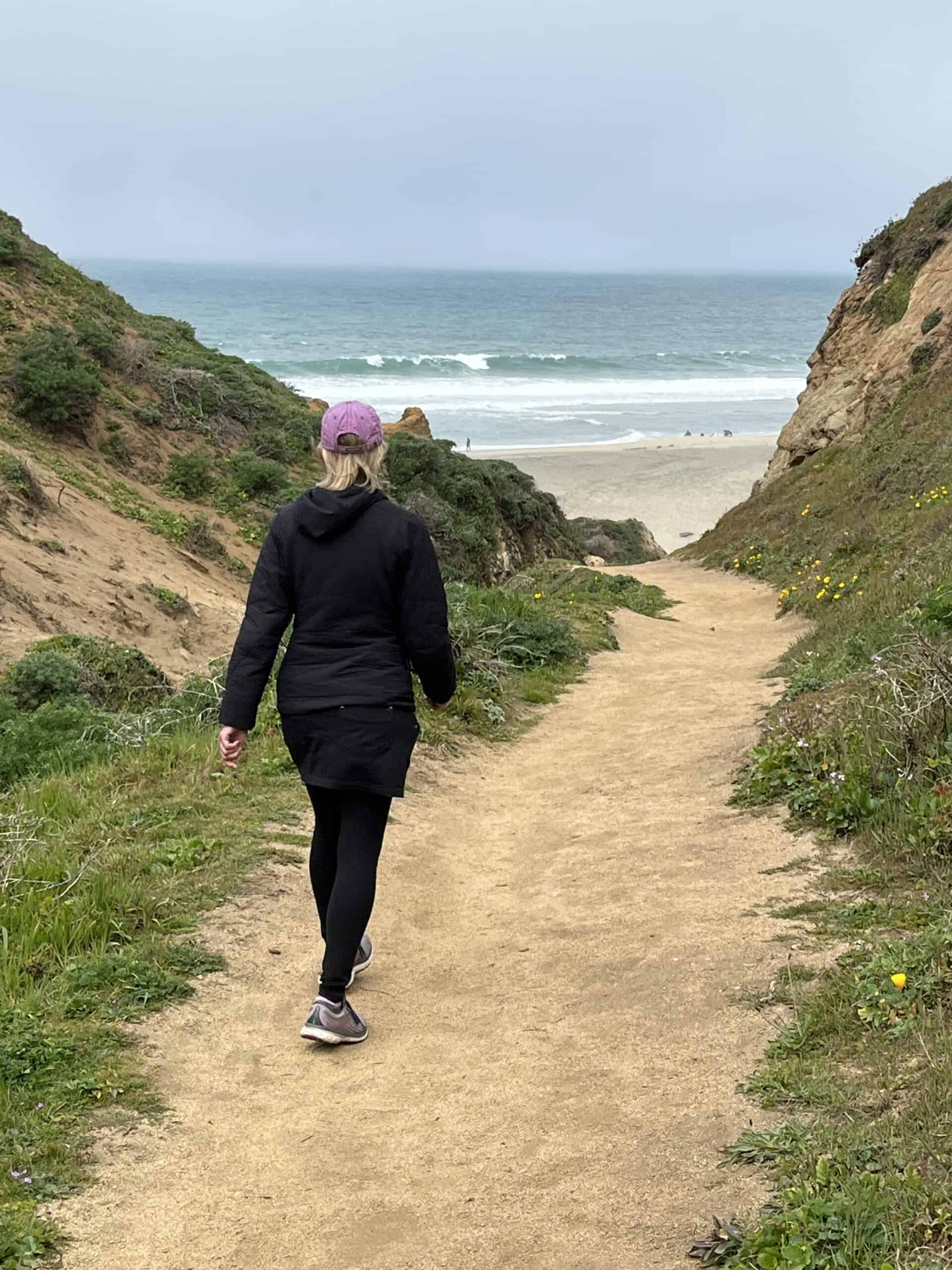
Our original plan for day one is to hike about five miles to the start of the first impassable zone. However, it is still early afternoon, and high tide is more than an hour away, so a discussion, which turns into a mild argument, begins over whether we should continue. 

There is no suitable campsite, so a few of us insist that we push on. As a less-than-cohesive group, we start into the unknown. Several parts of the trail go underwater at high tide, so a tide chart is essential to traverse through this area.

Our Lost Coast trail permit instructions include a warning that people have died after getting caught in the rocks and surf. So, we hustled along since we were unsure about the conditions.   

Finding our way
Finding our way

As we near our newly projected campsite, some 2.5 miles into the impassable zone, the tide is beginning to reach the cliffside, and our hustling soon becomes a series of desperately timed dashes over rocky terrain and the surges of high tide. 

I begin to grow concerned over the ability to reach our objective as the water surges over our ankles and the loose rocks we must step on for the final mile.

Around the final cliff face, we settle in a remote canyon along Cooskie Creek and pitch our tents a few hundred feet from the ocean. We have the camp to ourselves - except for a few deer.

As soon as it becomes the norm, we gravitate to the water's edge every evening and watch the sunset before returning to the campfire.

On this first night, Cynthia and I packed a special surprise to celebrate Sam's birthday - two bottles of wine and the ingredients to make s'mores!

This surprise birthday party lifts everyone's spirits after a day of travail and fear. Later, sleeping is not as difficult as the rumbling waves and the din of a babbling brook soothe our slumber.

On to Big Flat: Day 2

Wildflowers
Wildflowers

Low tide this week is during the mid to late mornings. Since we are already halfway through the first impassable zone, we only have two more miles until we are in the clear for the day. After coffee, breakfast, and a morning campfire, we set out on our longest day.

We alternate between traveling as a group or in pairs. Jim always wants to get a little head start in the morning, as this is his first backpacking trip. He claims to be slow but hikes like a champ. He is so methodical, however, that he earns the trail name 'Metronome.'

By 10 am, we are at the end of the first impassable zone. We all take a break, enjoy a drink from Randall Creek, refill our water bottles, and take in the scenery-only ten more miles to get to our next camp at Big Flat.

Our second day changes with each mile, and we experience a variety of conditions. The morning starts calm and cool.  

After our first break, the cold blast of wind picks up considerably, and although it is at our backs, it sometimes pushes us along whether we like it or not. 

Crossing creeks is tricky, especially when balancing yourself on a log bridge, only to have the wind catch your backpack and almost toss you into the creek.

Footing conditions change quite a bit on this stretch, too - from sand to sand and rocks to boulders and hard-pack trails.

Thirty-five miles of pristine coastline

In the late morning, we discovered a stash of huge whalebones, the only remnant of a beached giant on this lonely coast. Each of its vertebrae is larger than a basketball, and we can only imagine the scale of the entire animal. 

By afternoon, we have an unending, strong, cold wind coming in from the sea, and our only relief is found in a creek canyon or a huge rock.

In addition to the wind, we struggle to walk mile after mile, hauling heavy packs in the sand. Our feet sink and slide with each stride. Sometimes, we can walk in each other's footsteps to make it easier.

Other times, we seek out rocks that are flat and provide some traction. When we are on a hard trail, we feel like Superman.

By late afternoon, we find ourselves on a grassy plateau. This turns out to be the beginning of Big Flat, an area that is the drainage from Kings Peak, a mountain Cynthia, Sam, Tim, and I hiked earlier in the week, and the highest point in Humboldt County at 4,088 feet. 

Lost Coast Trail on the California coast
Lost Coast Trail

We find a flat and windless place to camp along the creek. After dinner, we stand on the beach again and look west as the sun settles below the horizon. It was about a 12-mile day. We are beat and ready to sleep. 

Before climbing into our tents, however, we enjoy the last of the fire as it dies down, and we look in the direction of the trail, where we see the distant shimmering lights of Shelter Cove - our goal in two days.

Black Sand and Redwoods: Day 3

Sunrise on the Lost Coast Trail
Sunrise

We wake to another gorgeous sunrise. The air is cool, and the sky is misty, but we are warm around our campfire as we laugh together and share stories from the trail over coffee and breakfast. By now, the routine of breaking down camp and repacking our gear is streamlined.

Many of us regard this day's hike as the most scenic part of the trail. The sand is cleaner and darker -- the mountains greener and steeper.

A graveyard of gigantic, bleached-out redwood trees up to six feet thick and as much as a hundred feet long, washed out to sea in flash floods, has been returned to the beach as barge-like driftwood during high tide or big surf and now remains strewn along the beach as a memorial to their greatness.  

This morning's fog floats among the hills and beach in a mystical, otherworldly setting. Last evening's high tide has smoothed out the beach from the water's edge to the base of the mountains.

There's not a footprint in the sand for miles. We feel like we are alone in the world. After a mile, Cynthia and I turn up the heat and power hike to secure the next campsite by lunchtime. 

We eat lunch, go for a swim, fly a packable yellow kite, and get sunbaked in the now clear and torrid blue sky. We see the others much later. 

Sam is a loyal friend and slows his pace to keep company with Tim as he struggles with an injured knee. Parts of the trail over the last 20 miles have been very challenging, and we are grateful there have not been more injuries. 

At this camp, we pitch our tents about 100 feet from the rolling surf and then spend the rest of the afternoon relaxing on the sand and wading in the water. 

This beach has no parking lots, no lifeguards, no rules, no signs, no trash, and no people. This beach, in every direction, is ours. 

Our time here feels as though we have traveled to a different era. A time and place unchanged for millennia. Our campfire, dinner time, and evening camaraderie are felt more deeply as we know this is our last night in this land of the Lost Coast Trail. 

There is a bond that forms in the sharing of struggle, the primacy of privation, and the enjoinment of joy. The six of us feel this bond tonight, the way we all feel the soreness in our muscles, the need for a shower, and the longing for a cold beer. We sleep like babies.

Sunrise over the King Range: Day 4

Morning brings the awareness that everything is wet. The night's coastal humidity and dense fog have soaked everything completely. 

As the sun rises over King Range, the towering pine trees split the sun's rays into streaks of focused light, the way a spot shines down upon the actor on a stage. 

These streaks of light illuminate the black sand, and we relocate our tents, sleeping bags, and wet clothes to these areas to dry. Soon, thick, smoke-like steam rises from our gear as though it will combust at any moment. 

Sunrise on Day 4 backpacking the Lost Coast Trail
Sunrise on Day 4

As our gear dries out, we eat our final meal on the trail. Our bear canisters are now empty of food, and we stuff whatever we can in them to create room in our packs. 

The bear-proof containers are an entry requirement on the trail and, indeed, a necessity as the local bear population can visit these wild beaches in search of an easy, hiker-provided meal. 

Over the 35 miles, we did not see any bears or bear tracks. To some of us, this is a good thing. To me, it is a missed opportunity. I have seen many bears while backpacking, but to see one on the beach would have been fantastic.

Our final miles are difficult. We are tired, and the rest of the route is nothing but soft, hot, black sand. 

Trudging along, Shelter Cove grows nearer, and we spread out over the last few miles. Still, a cheer rings out for each of us as we climb the steep incline and cross the finish line into the parking lot. 

At the trail's end, we celebrate and begin the conversation about lunch in town. The beauty of this rare expedition should be enjoyed by anyone who loves adventure and solitude. 

For the six hikers on this trip who do enjoy those things, we have a new story to tell, a new voyage to expand our experiences, and a big wilderness checkmark to clear our bucket list. When it comes to The Lost Coast Trail… Sometimes you just have to go.

Information and permits for the Lost Coast can be found at recreation.gov/permits/72192.

What I Learned Backpacking Through Cambodia

During my trip around the world, I was excited to backpack in Cambodia in Southeast Asia for many reasons.

Ancient temple ruins set the scene for Hollywood movies, villages that float on water, and killing fields where the worst of humanity was witnessed. Cambodia, a primarily rural country, is full of complexity.

In this post, I'll share five reasons to visit the country, plus the best places to add to your Cambodia itinerary, all of which I hope will inspire you to spend time here, too.

Table of Contents

  • Getting To Know Cambodia
    • Historical Influences
    • Learn About Genocide
    • The People
    • Wonderful Weather
    • Natural Landscapes

Getting To Know Cambodia

Historical Influences

Offerings for Buddha at Bayon ruins in Cambodia
Offerings for Buddha at Bayon ruins

Over the last 2,000 years, Cambodia has been heavily influenced by Chinese and Indian culture, acting as a conduit to spread those influences to Thailand, Laos, and Vietnam.

One such influence has been Buddhism, written into the country's constitution and practiced by 97% of the population. Perhaps this is part of why Cambodian people are known to be so friendly.

As a practitioner of Buddhism, I loved being immersed in a country with such a rich tradition. Today, there are more than 4,000 monastery temples across the country.

In the 12th Century, Cambodia's Khmer Empire was the largest in Southeast Asia. Their capital was Angkor, and it was during this time that Angkor Wat and Bayon were constructed.

Fast forward to the mid-19th Century, and Cambodia reached out to France for protection from Siam (now Thailand). As a result, Cambodia was a French colony from 1857 to 1953.

The French language was taught in school. However, once the Khmer Rouge began waging its genocide in the mid-1970s, most educated, multilingual Cambodians were killed.

Modern-day Cambodia has benefited from its growth as a premier travel destination in the last 20 years. The influx of travelers, expats, and businesses has also had an impact.

Learn About Genocide

Tuol Sleng Genocide Museum

When the Khmer Rouge took power in 1975, led by Pol Pot, millions of Cambodians were marched into the countryside to perform forced agricultural labor.

The educated class was tortured and killed en masse. Even babies, the most innocent form of human life, were brutally murdered by the regime.

An estimated two to three million Cambodian people died during the genocide, or approximately 30% of the country's population. For this reason, you may not see many older Cambodians (over the age of 60); however, as time passes, this effect is slowly fading.

I realize recommending visits to the Tuol Sleng Prison (aka S-21) and the Killing Fields at Choeung Ek, both in Phnom Penh, sounds like dark tourism.

By all accounts, it is. There's nothing darker and few things crueler than genocide. But it's critical for us as world travelers to educate ourselves on these atrocities so we can support efforts to prevent them in the future.

The People

Phi-Lay, my Cambodian guide, on his motorbike outside Battambang
Phi-Lay on his motorbike

A defining experience from my backpacking trip to Cambodia was spending time with Phi-Lay, a motorbike guide in Battambang.

I'd hired him to take me around the rural villages. We spent the day driving through green fields of rice and visiting colorful Buddhist temples. We also made a somber stop at the Killing Caves (a genocide memorial).

Afterward, as I was eating lunch at a nearby restaurant, Phi-Lay shared his experience living through the genocide. I hadn't asked out of respect; however, I appreciated his willingness to share.

When we returned to Battambang at the end of the day, he invited me to dinner at his house with his wife and eight children. I said yes.

That night, I dined on curry-stuffed frogs at Phi-Lay's home, and afterward, watched Bollywood DVDs together with his family. I enjoyed the day so much, I hired him for the next day, too. And once again, he invited me over to dinner!

A few days later, after I arrived in Phnom Penh, I mailed Phi-Lay a few of the pictures I'd taken of him and his family. I hope he enjoyed them as much as I did.

Wonderful Weather

Floating village on Tonle Sap lake, a site I visited when I went backpacking in Cambodia
Floating village on Tonle Sap Lake

Cambodia is in the northern hemisphere, and given its proximity to the equator, has fairly consistent temperatures year-round.

You can expect temperatures ranging from 70 F (21 C) to 95 F (35 C). Perfect for wearing a t-shirt and shorts day or night.

More importantly, there's a wet and a dry season, which is good to know before choosing dates to backpack in Cambodia.

The cool, dry season is from October to April, and the wet season runs from May to September.

I visited during the first few weeks of September and did experience some rain, but it wasn't enough to cause any issues.

However, I did run into a delay when my minivan to rural northeast Cambodia had to detour around a very muddy, almost impassible stretch of road.

So, if you intend to get off the beaten path and spend more time in the countryside, perhaps it's best to go in the dry season.

Natural Landscapes

Enjoying the silence at a volcano crater lake

Why, you may wonder, was I going to Ban Lung in northeast Cambodia? I'd learned there was a volcano crater lake (Boeng Yeak Laom) you could swim in, and that sounded swell to me at the time!

It was a heck of a long day in a crowded minivan to get there, but the journey was worth it. The lake was completely undeveloped, except for a small wooden dock from which to stare out at the scenery or go for a swim. I hope that's still the case.

To get there, I'd hired a motorbike guide who also took me to three local waterfalls, including one large one you could stand under without getting wet.

One thing I missed while backpacking in Cambodia was the beaches, specifically those around Sihanoukville. Lonely Beach on Koh Rong and Otes Beach were highlighted as two of the best beaches in Southeast Asia by Thrillist.

The list could go on. The 18 days I spent backpacking in Cambodia were a truly remarkable experience, I still savor years later.

_____

This story is brought to you in partnership with Karambol.

6 Essential Safety Rules For Backpackers

Terrifying for some but thrilling for many others, backpacking is a fundamentally exciting way to experience the world.

Without a fixed schedule to limit your options or overcrowded tourist spots to dampen your enthusiasm, you can get off the beaten path and enjoy unique adventures, with every trip bringing new horizons and fresh challenges.

Hiking with bear spray (photo: GlacierNPS)

Most of the terror it inspires in some people stems from the freedom and lack of structure being intimidating, of course - but not all of it. There are other compelling reasons to be wary of backpacking, with the most notable being that it's relatively dangerous.

The beaten path doesn't feature any surprises, but it's very safe. Leaving it puts you at risk. Does this mean you should be reluctant or even afraid? No, of course not.

Backpacking isn't that much riskier than any other form of travel: it just requires you to follow some key safety rules. If you can do that, you probably won't experience any significant issues.

To help you proceed with care, here are six essential safety rules for backpackers.

Table of Contents

  • Arrange comprehensive travel insurance
  • Pack basic medical supplies
  • Research an area before you visit
  • Keep friends updated on your location
  • Safeguard your money and valuables
  • Bring company whenever possible

Arrange comprehensive travel insurance

Just about anything can go wrong, no matter how careful you are, but specific problems are more common to backpackers than to other travelers.

Take injuries, for instance. If you slip and break your leg while hiking overseas, will you be able to cover the medical care? It's not uncommon for a traveler to end a hospital stay with a massive bill they can't afford to pay.

The solution here is to ensure that you have travel insurance to cover those core needs. There are now holiday insurance options that cover you for healthcare and the money you could lose due to your journey being negatively impacted by restrictions stemming from COVID-19.

Line up a comprehensive policy, and you can proceed with confidence.

Pack basic medical supplies

If you're away from civilization, even a simple cut on your finger can cause huge problems. Similarly, a poorly-timed headache can leave you unable to focus on taking necessary safety precautions.

This is why you need to pack basic medical supplies to treat cuts and dampen any pain you might experience. It's easy to find travel medical kits, so choose the biggest one you can carry around.

Research an area before you visit

It's vital to know your enemy, and a backpacker's greatest enemy is their immediate environment.

The natural world holds more than its fair share of threats, be they animals, geographical features, and weather conditions - and the more you know about what you'll be facing, the better you'll be able to protect yourself. This calls for extensive research.

You may not know exactly where you'll be going, but you'll know the broad area, and you can use that to form a solid idea of what the temperature will be and what wildlife you'll encounter.

You won't be caught out in the bitter cold in just a T-shirt and shorts or struggle to get through bramble patches because your clothing can't stand up to the friction.

Keep friends updated on your location

Now that smartphones are common and internet access is reasonably easy to achieve almost anywhere in the world (mobile hotspots are affordable), there's no reason not to keep friends updated about where you're going.

The more dangerous the area, the more critical it is to be clear. That way, if you don't check back in by a specific time because you're stuck somewhere, they can call for help (and possibly save your life).

Safeguard your money and valuables

Even though the pandemic has reminded people of the importance of community spirit, it hasn't changed human nature, and there are still plenty of pickpockets around. Relying on the decency and kindness of strangers will always be a risky move.

Due to this, you shouldn't make the mistake of keeping all your valuables in a conspicuous place. If those vital things (including your money and passport) get stolen, you'll be left in a challenging position.

So don't make it easy. Keep different things in different compartments. Lock them, if you can. Fill other pockets with less essential items, making it harder to identify the most important things.

And don't be too quick to trust the people you meet. Enjoy their company, but take your time to decide whether they're trustworthy.

Bring company whenever possible

The solitude of backpacking can be extremely nice, but it's always safer to be part of a group - so if you have the opportunity to travel with someone, you should take it.

Vet them first to ensure that you can trust them, of course (don't just leave with someone you just met), but always be aware that there's strength in numbers.

You'll also enjoy your backpacking more if you can break up the parts alone with some group adventures.

_____

This story is brought to you in partnership with Post Office.

Keith Robinson's Road Trip into Adventure

Keith Robinson nears the top of El Capitan in Yosemite National Park
Nearing the top of El Capitan in Yosemite National Park

Editor's Note: Keith Robinson is Go Backpacking's new contributor.

My quest for travel and adventure began when I was just three years old. My parents owned a home in the eastern suburbs of San Diego, just south of Miramar Marine Airbase.

Most of the time, my mother, who was eight months pregnant with child number three and still doting over my one-year-old brother (child number two), allowed me to play in the backyard by myself. She was busy and tired.

There was a hole in the back fence, which intrigued me for months. It led to a field of rolling hills and a distant housing development construction site.

Once I got over the fear of the CH46E Sea Knight Helicopters, which flew loudly over our yard every day, I chose an afternoon to venture out to see the world beyond the fence.

Hours later, I rode home to my fear-struck mother in the back of a police car. Let's just say, since that day, I was hooked, and I haven't looked back with any regret about my life of adventure.

My father, who had his NFL career cut short by a grotesque knee injury, left San Diego for Los Angeles, then Orange County, and then Utah as he was transferred from one executive director's job to another for the Boys Clubs of America.

Lucky for me, I was taken along on every one of the clubs' hiking, exploring, mountain climbing, backpacking, spelunking, hunting, rock climbing, and survivalist trips available. By the time I was old enough to join the Boy Scouts - it seemed like a demotion - and I gave it up.

Table of Contents

  • My Road Trip
    • Writing Becomes a Career
    • Discovering and Exploring Caves
    • Climbing in Yosemite National Park
    • Kayaking near Yellowstone National Park
    • A Lack of Adventure
    • I Lost the Weight

My Road Trip

Writing Becomes a Career

I was in the fourth grade when I started a writing career. It was a short story about my classmates and me climbing Mount Everest. I sold a couple of dozen copies for a dollar each.

I learned early that including them in my tales made good copy as each kid wanted to see if they lived or died on the big scary mountain. From that day forward, I have been a professional writer (on and off) ever since.

Discovering and Exploring Caves

Around that time, I took to the foothills of the Wasatch Mountains with my friends Mike and Doug to search the karst landscape for caves.

Over the years, we found three of them and explored them in secret with our homemade candles. One of the caves was more than 175 feet deep into the mountainside.

I returned to these caves years later with my son Evan, only to find one of them sealed up with concrete and the others too small for me to fit through the opening. I was disappointed.

Taking a break high over the valley below

Climbing in Yosemite National Park

My father did not shy away from adventure sports either. It was his influence and insistent "go for it" mentality that pushed me into all sorts of adventures.

I still cannot believe that the two of us climbed some of Yosemite's big, multi-pitch walls when I was just 12 years old and barely 100 pounds.

I was not afraid of heights or falling, but I was terrified that I was expected to save him as I belayed him from below at the other end of the rope.

Kayaking near Yellowstone National Park

By the time I was 14, my father had given me an experience that served as a marker in my life and changed our relationship.

He trusted me on my own, at least at some level, for the first time on that warm summer's day at the end of a family road trip vacation to Yellowstone National Park.

Earlier that winter, I had finally beaten him in one of our regular footraces, moving his undefeated record against me to about 189 wins and one loss. That race was a turning point, but this day was different.

Campsite on the Pacific Crest Trail
Our campsite along the Pacific Crest Trail

It was on this day that he placed me in one of our homemade pine frame and canvas-covered kayaks and sent me all alone down the icy, cold, rough and tumble rapids of the Snake River in Southeastern Idaho.

I had done some occasional kayaking before that day, but I was never more than a few yards from my father on decidedly more docile and safer bodies of water.

My brothers and I watched him and learned as he would shoot a rapid or pull out of an eddy right before it was our turn to try it next. If one of us ever got in trouble, he was right there - coming to our rescue.

As I climbed into the kayak, my mother later claimed that she said goodbye to me under her breath, sure that it would be the last time she would see her firstborn alive. Her long sighs could not hide her discomfort.

My younger brother's stilted laughter and broad smiles proved to me they were envious.

My father was matter-of-fact. "It looks like there is a beach about 13 miles down the highway," he said. "We'll be out waving at you when you get there. Pull out, and we will put the kayak on the car together."

The car was a 1970s Ford Station Wagon painted Sky blue, and just for looks, it came with a full-length section down the side made of wood paneling.

Over the years, the roof rack secured nearly everything under the sun, including a full-sized foosball table, which unfortunately ended up flying off onto the interstate at 65 miles per hour. But that is another story.

Setting off into the dark green water of the Snake River, I had a hard time not showing how delighted I was. I made a concerted effort also not to show how terrified I was.

None of us had ever run a kayak on the Snake River. For all I knew, there could be a waterfall just around the next bend.

All alone, with hundreds of feet of water between each shore and me - I was the master of my own little universe, and I loved it.

The journey was fun and exhilarating, but also uneventful as I made it safely to the rest of my family, who, as promised, were all waiting on the beach.

Looking back, I thought that I was indeed a man now. But more significantly, I was now a die-hard kayak enthusiast. It was not long after my solo kayak experience that life took a new direction.
A Lack of Adventure

For more than three decades, my focus was football and track and field- throughout high school, college, and a bit beyond.

After that, it was two marriages, four children, and several jobs, where that something extra was some serious extra weight gain and a case of extra boring dad.

I no longer did sports, fitness, and adventure but watched my children do them instead. By the time I hit the age suitable for a midlife crisis, I was more than 125 pounds overweight and couldn't even climb a ladder.

I Lost the Weight

Fast-forward to today - I have lost weight, gotten fit, and embarked on a fanatical resurgence into mountain climbing, hiking, kayaking, long road trips, and exploring places that have always captivated the child in me.

During the last seven years, my partner and I have climbed more than 400 different peaks and explored a great deal of the country on foot with a pack on our backs.

Hiking with her, I am constantly challenged, as she is almost impossible to keep up with unless carrying a pack with at least 30 pounds in it. We have slept in all sorts of places, but the nights in a tent are the ones we remember most.

Road trips to U.S. National Parks are among our favorite journeys, and in every park and stop, we are looking for a trail to hike, a forest to explore, or an alpine lake to swim in.

My travels have taken me to 46 states and 25 National Parks. I have backpacked thousands of miles. Still, there is so much more to see and do, and I hope to do it.

Enjoying life in a lake
Enjoying life

I am looking forward to sharing my experiences with you here at gobackpacking.com - experiences from my past and my experiences yet to come.

My stories, gentle advice, lessons learned, and campfire tales will hopefully teach, entertain, and encourage you to make some of the same journeys. But most of all, make the trip an adventure, wherever you go.

Editor's Note: Keith Robinson will be writing a new weekly series for Go Backpacking highlighting road trips, hiking, U.S. National Parks, and much more.

Worldpackers Review: Find Work Exchange Opportunities Abroad

Volunteering has long been a way for thrifty travelers to experience new cultures while helping to make the world a better place. The challenge has always been how to find organizations you can trust.

Enter Worldpackers, a platform that connects travelers with vetted volunteer opportunities in more than 140 countries. In this Worldpackers review, we'll take a closer look at what the service has to offer and how you, too, can find work exchange opportunities abroad.

Worldpackers

Discount Offer

But first, if you're familiar with Worldpackers and ready to find volunteer work, you can save $10 on an annual membership (starting at $49) by clicking the button below.

Click to Save $10

The membership fee does *not* auto-renew by default. So you can pay now and not worry about getting charged again if you choose not to continue.

Membership fees support the administrative costs of running a platform that makes it easy for travelers to find volunteer jobs.

If you haven't heard about Worldpackers yet, continue reading to learn more.

Table of Contents

  • About Worldpackers
  • How it Works
    • Sign-Up Process
    • Search
    • Results
    • Is WorldPackers Safe?
    • How much does it cost?

About Worldpackers

Worldpackers is a collaborative community that connects travelers with volunteer opportunities around the world. Trade your skills, time, and energy for a place to stay and possibly more, including meals and local activities.

It's a chance to give back to local communities, whether you're a returning visitor to a favorite destination or exploring for the first time.

Top destinations include:

  • United States
  • Mexico
  • Costa Rica
  • Brazil
  • Thailand
  • Spain
  • Italy

These also happen to be some of the most popular backpacking destinations, too. You can make a volunteer experience the primary focus of a trip or incorporate it into a long journey to one or more of these countries.

Worldpackers was founded by two friends, Riq Lima and Eric Faria. Riq left an investment banking career to travel the world for four years.

Eric, an accountant, moved to the USA to learn English and ended up working at a hostel in San Diego (excellent choice!) before helping to found "International Travellers House, a hostel chain located in California and whose staff was made up entirely of volunteers."

They both lived a life of travel before they began Worldpackers and saw a need for an online platform to connect travelers with volunteer and work opportunities safely.

How it Works

Sign-Up Process

Signing up on the Worldpackers website is free and easy. It'll allow you to get familiar with how it works and to begin scoping out potential opportunities.

To register for free, click the "Join Community" button on the home page and choose to sign up with your email address or Facebook account. When using email, you'll also be asked for your name, gender (he, she, neutral), and date of birth.

You'll have the chance to opt-in (or out) of receiving host recommendations, "travel tips, inspiring stories, and upcoming opportunities."

The next screen asks for your nationality and current location (city, country), information that's used to help connect you with potential hosts.

Worldpackers sign-up screen

Search

Then it's on to define, in broad terms, what kind of experience you'd prefer.

There are three types of trips:

  • Work Exchanges, where you trade your skills/expertise for free accommodation.
  • Social Impact, working with non-governmental organizations (NGOs), schools, and social programs.
  • Eco Program, where you may live on a farm or participate in agricultural projects.

Then, choose your travel interests, such as professional or personal development, solo or couples travel, English or Spanish practice, backpacking, or digital nomadism.

Now the fun part, which part of the world do you want to explore? Pick a region that inspires you to want to get up and go! South America has the most experience, followed by Europe and Asia.

And lastly, choose the ways you can help out, which include (but are not limited to):

  • Welcoming and helping guests (think hostel reception).
  • Building and hands-on chores.
  • Communications and marketing.
  • Eco-activities.

You'll then be shown opportunities that take your preferences into account.

Worldpackers search results
Search results page

Results

The search results page has two columns. On the left, there are options to refine your search, including preferred timeframe and skills. On the right, there are snippets of the work exchange and volunteer opportunities.

An effort was made to make the website easy to use and navigate. Information is easy to find and read. It's well laid out and not too busy.

I saw many opportunities, including a homestay helping with dogs and a family (think au pair), farm stays, working at a children's refuge in Mexico, and hostel jobs.

The opportunities to volunteer and work abroad in exchange for free accommodation are seemingly endless.

One of the best features of the Worldpackers platform is the ability to read reviews from people who previously volunteered at a place you're considering.

Not only can you see their star ratings and written reviews about the experience, but you can also reach out and ask them questions directly!

Worldpackers vets their hosts; however, nothing can beat direct and private feedback from those who previously spent time with the hosts.

If you want to make sure your time is well spent, make the most of this option and ask any specific questions.

Just make sure the answers aren't already available to you on the listing or in the written reviews. Nobody wants to feel like their time is being wasted.

Is WorldPackers Safe?

This is all well and good, but you may be wondering if Worldpackers is safe. How can you trust that you won't be taken advantage of, or worse, harmed?

These are important questions, especially for women. And the founders know it. That's why they've put into place a layered approach to ensuring the safety of volunteers. The Travel Safely page on the Worldpackers website outlines their safeguards.

WorldPackers verify hosts before they can join the platform. Hosts and volunteers sign formal agreements before a trip occurs. This contract outlines expectations and responsibilities to ensure both parties are aligned before any action is taken.

Hosts and volunteers leave community reviews after each experience, as you see on Couchsurfing and Airbnb. You can reach out to past volunteers for any given host to ask questions not answered in the profiles or public reviews.

If, for any reason, you need to leave your host unexpectedly, WP Insurance means Worldpackers will help you find a new one, or they'll pay for three nights at a hostel in the same city.

Lastly, there's this:

"Reports that compromise the physical, moral, and/or psychological integrity of hosts or travelers may lead to profile deactivation in order to keep our community safe for collaboration."

-- Worldpackers

When it comes to online communities, the potential loss of access to the platform and opportunities it affords is one of the best safeguards to ensuring people behave responsibly.

How much does it cost?

While you can search Worldpackers' opportunities for free, you'll need to join as a paying member to contact the hosts about potential stays.

The good news is it's incredibly affordable. Ridiculously cheap, in my opinion.

Just think about how much you stand to save by getting hooked up with free accommodation in major cities worldwide (or farms, if you prefer nature).

  • $49 - Solo trips for one year
  • $59 - Couples/friends for one year
  • $99 - Pack (includes access to online courses for travel planning and becoming a digital nomad, a $78 value)

If you're ready to sign up for Worldpackers, you can save $10 by clicking the button below.

Click to save $10

The discount will automatically be applied to the membership of your choice. And remember, you'll only be charged for one year, so you have the option to decide whether to renew without automatically being billed again.

______

This article was brought to you in partnership with Worldpackers. Go Backpacking is an affiliate, and we'll receive a small commission at no extra cost if you sign up as a member. This helps to support our site.

How To Make a Boat Hire Part of Your Backpacking Journey

Backpacking is an excellent way for curious travelers to see the world. It allows people to explore more while staying on a budget, discover new cultures, and connect with friends from around the globe.

Traveling with just a backpack encourages resourcefulness, as you learn to manage with limited belongings and money. It also offers the chance to challenge both body and mind while moving at your own pace.

Sailing in Croatia (photo: Sergii Gulenok)

Traditional backpacking adventures entail globetrotters using airplanes, trains, buses, and walking as modes of transportation to gain distance across oceans and land. But recently, backpackers' choice for transport has been changing, as more people are opting to hire boats.

For pointers on how aspiring backpackers can make boating a part of their travels, guidance on what to consider during their search. And tips on how to prepare for a voyage. This post provides you with everything you need to know.

Table of Contents

  • How To Hire a Boat
  • Benefits of Boating
    • Island Hopping
    • Scuba Diving
    • Budget-Friendly
    • Boating Assistance
    • Travel Together
  • Essential Tips for Traveling by Boat

How To Hire a Boat

With the internet at hand, numerous boat hiring platforms are a few clicks away. For instance, the website Borrowaboat advertises over 35,000 boats and yachts worldwide for travelers to choose from. 

Individuals can explore the boats on offer by adjusting the toggles and filters on the site, such as the size of the ship needed, location, amenities, and budget. Moreover, there's an option to contact the owner of the boat with any additional queries. 

Once travelers have selected a boat, they can check the availability and book the desired dates for renting ahead of their journey.

Sailboat in Trogir, Croatia (photo: Sergii Gulenok)
Trogir, Croatia (photo: Sergii Gulenok)

Benefits of Boating

To decide whether hiring a boat is for you. Here are a few of the many reasons why more backpackers are hiring boats on their trips.

Island Hopping

By hiring a boat, travelers aren't restricted to a specific island; they can hop and explore multiple islands as they please. In turn, they can take in a myriad of cultures and scenery along the way and maximize their backpacking experience.

Scuba Diving

Part of backpacking for many is about indulging in new experiences they may not have the chance to have at home. With a boat available for hire in every area of the globe imaginable.

Aspiring divers can pick an ocean of interest, hire a boat (and scuba diving equipment), and start exploring the beauty and life that lies beneath the sea.

Budget-Friendly

There are thousands of boats available for hire to suit all budgets. So, backpackers are sure to find something affordable for their trip. In addition, there's often a price tool on boat rental websites, which users can adjust to find boats that fit their budget.

Boating Assistance

Most boats for hire come with a skipper. The skipper is essentially the captain who takes charge of the vessel.

  • Keep everyone safe.
  • Plan the route to each chosen destination.
  • Move the boat safely in and out of the marinas.
  • Abide by the maritime laws. 

Moreover, besides ensuring everyone on board is safe, skippers often know hidden locations, such as secluded beaches and spots off the beaten track, which can enhance a backpacker's trip.

Travel Together

Lastly, there are numerous boats to hire with different capacities for guests. As such, no matter how small or large a friendship group is, there's sure to be a boat they can travel in together.

Essential Tips for Traveling by Boat

Location: Take time to research and select a place that fits your needs and wants before booking. Travelers can find an assortment of the best oceans and islands to explore by boat by reading travel blogs and books.

Popular areas for renting a boat include 

  • Fiji
  • Greece
  • Italy
  • The Whitsunday Islands in Australia

Boat Research: Backpackers will often have a skipper on board who intends to keep the party safe. However, it's still wise and helpful for backpackers to learn about the boat they will be boarding and any safety requirements it may have.

Weather forecast: Be mindful of where and what time of year you're planning to hire a boat and the expected weather conditions for that time and place. After all, a skipper is unlikely to permit sailing a boat during poor weather conditions. 

As such, try to choose a time and place when the weather is likely to be warm and the oceans calm to avoid a boat rental being canceled. 

Pack Light: Boats often have a limited amount of space for guests and their belongings. So, where possible, it helps if guests pack light to allow more room to move around on the boat and fewer tripping hazards.

Travelers should consider packing lightweight, quick-drying clothing for boat trips, adequate food supplies and water, and, of course, a swimsuit for swimming and diving. 

Be Responsible: As with any part of a backpacker's journey, taking time to look after themselves is essential. On a boat, particularly in hotter climates, this means wearing protective clothing, sunscreen, drinking lots of fluid, getting enough rest, and taking precautions before getting into the sea, especially if a traveler is not a strong swimmer.

To make a backpacking vacation unforgettable, hiring a boat adds a unique twist to the trip and something exciting for backpackers to look forward to on their travels.

_______

This story is brought to you in partnership with Borrow A Boat.

Top Kennedy Space Center Attractions

Try as I might, I couldn't remember visiting Kennedy Space Center attractions during my childhood trips to Florida. My parents had taken my brother and me to Disney World twice. And with Cape Canaveral just an hour's drive east of Orlando, it was hard to imagine we hadn't been.

Dave at Kennedy Space Center  (photo by Kelly Lemons).
Dave at Kennedy Space Center (photo by Kelly Lemons)

The lack of photographic evidence in family albums seemed to confirm it. So, this summer, my girlfriend and I planned a weekend at Cocoa Beach, a mere half-hour drive south of the Kennedy Space Center Visitor Complex.

We gave ourselves one full day to explore this awe-inspiring museum, a testament to human ingenuity. Given our time constraints, we had to prioritize what to see. The museum's visiting hours, combined with our limited energy levels and attention spans, restricted us.

Even with some of the tours, activities, and experiences unavailable due to pandemic restrictions, we still found it challenging to access everything available.

This article reflects our game plan that day, so you can get an idea of how long it can take to see the top attractions at the Kennedy Space Center in Florida.

Table of Contents

  • Kennedy Space Center Tickets and Arrival
    • Tickets
    • Arrival
  • Top Attractions
    • Rocket Garden
    • Apollo/Saturn V Center
    • Space Shuttle Atlantis
    • Other Exhibits
    • Space Mirror Memorial
    • Journey to Mars
  • Additional Experiences

Kennedy Space Center Tickets and Arrival

Tickets

Kennedy Space Center entrance
Entrance

I bought two adult tickets in advance for $57 apiece to ensure we could get into the Kennedy Space Center on the day we wanted. Kids age 12+ are considered adults. Children's tickets for those aged 3-11 are $47.

Tickets are only valid for your selected date and do not include parking ($10 for cars). However, unless otherwise noted, they provide access to all of the attractions in this article.

You can present the ticket on your mobile device at the gate, pick it up at Will Call, or print it at home if you prefer paper.

Arrival

The Kennedy Space Center is currently open from 9 a.m. to 5 p.m. We left Cocoa Beach a little later than I'd wanted, arriving at the Visitor Complex parking lot around 9:25 a.m.

A Blue Origin Rocket Factory is visible from the road as you near the entrance to the Space Center, a reminder that innovative rocket science continues.

Thankfully, it wasn't too busy. There were other visitors before us, but it wasn't the crush of humanity I had imagined it could be during a typical summer season. I flashed our tickets on my iPhone at the entry gate, and we were in a one-of-a-kind engineering wonderland.

Top Attractions

Rocket Garden

Rocket Garden at the Kennedy Space Center
Rocket Garden

The first Kennedy Space Center attraction visitors see is the Rocket Garden. It's impossible to miss, and it's one of the park's original features. All of the rockets on display are real, though none were launched into space, as that technology only recently became available (thanks, SpaceX).

The 95-foot silver rocket (front-left, pictured above) is a full-scale replica of the Mercury-Atlas rocket that launched John Glenn into outer space on February 20, 1962. He was the first American to orbit Earth.

The 223-foot-long Saturn 1B rocket, positioned horizontally, launched Apollo 7, the first crewed Apollo mission. It was another step toward landing astronauts on the Moon. A full-size Saturn V rocket engine is on display, and you can also sit inside a Mercury capsule.

Apollo/Saturn V Center

Shuttle and Vehicle Assembly Building

Vehicle Assembly Building

Seeing the Saturn V rocket, which launched people to the Moon multiple times, was tops on my list of things to do at the Kennedy Space Center.

The Apollo/Saturn V Center is 20 minutes north of the Visitor Complex. A general admission ticket includes complimentary round-trip shuttle bus rides. However, you must reserve a time.

I didn't know how busy the park would get over the day, but I didn't want to risk missing this experience, so I suggested we go early and get it out of the way.

We booked a 10 a.m. shuttle, which drove past the immense Vehicle Assembly Building. Sit on the right side of the bus if you want a shot at good photos.

If not for the pandemic, it would be possible to get closer to the building where rockets are assembled via a 20-minute bus tour and launch complex 39 B.

Firing Room

Firing Room - Apollo 8

Upon arrival at the Apollo/Saturn V Center, you'll first see the actual Firing Room where engineers launched the Apollo 8 mission in 1968. The Apollo 8 mission was the first to send humans into orbit around the Moon, setting the stage for later missions to land on it.

Once everyone is in the room, a launch sequence occurs, culminating in video footage of the Apollo 8 launching from Cape Canaveral. It must have been extremely tense in that room as everyone waited with bated breath to launch that rocket. When the show ends, doors open to the full-size Saturn V rocket.

Saturn V Rocket

Saturn V rocket
Beneath the Saturn V rocket engines

Walking into the exhibition space, you first see five enormous Saturn V F-1 engines, each capable of generating more than 7.5 million pounds of thrust.

That's how much power was required to lift the 363-foot, 6-million-pound Saturn V rocket out of Earth's atmosphere and toward the Moon.

This rocket is the most complex machine ever built. From 1967 to 1972, thirteen Saturn V rockets were launched.

It was a team effort, to say the least. About 400,000 people were estimated to have been involved in its design and construction.

Dave under Saturn V engines
Dave under the Saturn V engines
Saturn V engines
Looking straight up at the Saturn V engines

There's more to the Saturn V than just the engines at the bottom, though those were the most powerful. As you walk the length of the rocket, from bottom to top, you pass by the various stages, which reveal yet more engines.

The second stage (pictured below) boasts another five engines and a lot of wiring. It's hard to imagine how meticulous the engineers needed to be to assemble everything.

Although there were backup systems in place, overall, everything had to work correctly for the Apollo missions to be successful and bring the astronauts home safely.

Second stage of Saturn V rocket
The second stage of the Saturn V rocket
Third stage of Saturn V rocket
Third stage

The third stage of the Saturn V had just one engine, and boy, it looks delicate.

While much of my attention was on the enormity of the rocket, there were some other interesting displays, including:

  • "Moonscape" features a real Lunar Module 9 in a scene from the Apollo 11 mission, during which Buzz Aldrin and Neil Armstrong planted a US flag on the Moon.
  • Lunar roving vehicle from Apollo 16.
  • Command Service Module.
  • A 3.7 billion-year-old lunar rock sample you can physically touch.
  • Life-size holograms of astronauts that answer your questions.

Apollo Treasures Gallery

Apollo 14 crew capsule

The Apollo Treasures collection features the actual crew capsule "Kitty Hawk" from the Apollo 14 mission in a dedicated space off the main exhibition hall. I find the exterior fascinating, especially the burn marks from the small rockets firing to position the capsule as needed.

I also find it amazing that humans have been able to engineer materials to withstand the temperatures of re-entry into Earth's atmosphere. This capsule can float (with the help of some airbags deployed upon landing) in the ocean.

A collection of astronaut space suits showing their evolution is also displayed. Once we'd finished at the Apollo/Saturn V Center, we caught a shuttle bus back to the Kennedy Space Center Visitor Complex.

Space Shuttle Atlantis

Space Shuttle booster rockets and fuel tank

At 11:50 a.m., our return bus from the Apollo/Saturn V Center dropped us off outside the Space Shuttle Atlantis exhibit, another of the park's marquee attractions.

Standing tall outside the entrance are two solid rocket boosters and the orange external fuel tank, which launched NASA space shuttles into orbit around Earth for 30 years.

I have to admit, the rockets and fuel tank seemed smaller in person than I'd imagined watching them on TV over the years.

Atlantis shuttle with robotic arm
The Atlantis shuttle with a robotic arm

Inside, visitors are treated to a stunning display of the Atlantis shuttle, mounted with a rotation of 43.21 degrees. This allows visitors to peer into the cargo bay. Atlantis was in operation from October 1985 through July 2011.

Key missions included:

  • Deploying interplanetary probes (Magellan to Venus, and Galileo to Jupiter).
  • Docking and crew change at the Russian Space Station Mir.
  • Delivery of components for the International Space Station.
  • Servicing Mission 4 to the Hubble Space Telescope.
Heat shield tiles
Heatshield tiles

I loved the close-up view of individual tiles that make up the heat shield plating. During STS-27, a classified four-day mission in December 1988 to launch a satellite, some protective tiles were significantly damaged under a wing during liftoff.

It was so bad that some of the crew, including Commander Robert Gibson, thought they would die during re-entry, much like the Space Shuttle Columbia would be lost 15 years later. To the crew's relief, Atlantis survived re-entry into the Earth's atmosphere and landed safely.

Atlantis
Atlantis
Atlantis cargo bay
Atlantis cargo bay

Seeing a Space Shuttle up close for the first time in my life was a treat. I grew up with this type of space travel, whereas the Apollo program had ended by the time I was born.

Other Exhibits

Hubble Space Telescope

There's also a replica of the Hubble Space Telescope, which I believe was built to be as large as possible while still fitting in a shuttle cargo bay.

On the lower level, you'll find Forever Remembered, a touching tribute to the 14 astronauts who died in the Challenger and Columbia accidents. There's wreckage from each shuttle on somber display, along with some personal effects of each astronaut.

You'll also see some examples of how new technologies allowed astronauts to eat, sleep, and, yes, poop in zero gravity.

We left the shuttle exhibit at 1 p.m., after spending about 75 minutes there. It was lunchtime, and we took a 45-minute break to eat in one of the cafeteria-style restaurants.

Northrop T-38 Talon supersonic jet

Space Mirror Memorial

Space Mirror Memorial

Near the Space Shuttle exhibit is a giant white steel square. That's the back of the beautiful Space Mirror Memorial, dedicated to the 24 astronauts who have died due to US space exploration.

Each name is lit up amidst polished black granite, which brilliantly reflects the sky. Take a few minutes to wander over to this unique tribute.

Journey to Mars

Perseverance rover
Perseverance rover

At 2 p.m., we checked out the Mars exhibit, which was timely considering I watched the Perseverance rover land on the planet live back in February. Also fascinating about that mission is the drone helicopter, which successfully flew on the Red Planet.

The Mars exhibit features life-size replicas of the rover and its predecessors, Curiosity and Spirit. The rovers' evolution is evident, as they have become larger and more equipped with cameras and sensors.

We only gave the Mars exhibit 15 minutes. By this point, I was running out of steam, and I still wanted to leave time to swim at Cocoa Beach.

Related: Clearwater Beach, Florida

Additional Experiences

US Astronaut Hall of Fame at Kennedy Space Center
US Astronaut Hall of Fame

The best Kennedy Space Center attractions are the Apollo/Saturn V Center, Space Shuttle Atlantis, and Rocket Garden. Taking your time at all three can quickly fill a full day at the park, as it did for us. But, there's more.

  • IMAX Theater: A rotating selection of space movies, some in 3D.
  • Heroes & Legends: Explore the US Astronaut Hall of Fame.
  • Astronaut Training Experience ($175): In this unique four- to five-hour experience, pretend you're going on a mission to Mars and train accordingly.
  • Dine with an Astronaut.

If you're inclined to watch movies during your visit and want to pay extra for the Astronaut Training Experience, you'll want to budget two days. I want my next visit to the region to watch a rocket launch.

5 Traditional Foods in Portugal You Should Taste

Portugal's rich gastronomic history and culture are, arguably, the most influential cuisine in the world today. In the 15th Century, Portuguese explorers traversed the globe and were introduced to flavors and spices from regions as diverse as South America, the Far East, India, and Africa.

Lisbon, Portugal (photo: Tom Byrom)
Lisbon (photo: Tom Byrom)

After each trip, new and exciting foods were introduced to willing Portuguese cooks. Each new spice, herb, pepper, fruit, or other foodstuff enriched and expanded the nation's larder, giving Portugal's cuisine distinct flavors not found anywhere else on the continent.

This is why traditional Portuguese food is fragrant, hearty, simple, and based on fresh, seasonal produce. We have compiled a list of Portugal's five most popular traditional foods for gourmets planning to visit the homeland of Vasco da Gama and Fernand Magellan. 

Table of Contents

  • Traditional Portuguese Dishes
    • Arroz de Marisco
    • Caldo Verde
    • Francesinha
    • Feijoada
    • Pastel de Belém

Traditional Portuguese Dishes

Arroz de Marisco

Regarding the number of fish and seafood dishes consumed, Portugal ranks third in the world, behind Japan and Iceland.

It's not surprising that one of the most popular local recipes is the delicious meal Arroz de Marisco, also known as "Portuguese paella." The basis of the dish includes squid, shrimp, mussels, scallops, and crabs.

Fresh gifts of the ocean are cooked, and the resulting broth is used to stew rice mixed with a sauce of tomatoes, garlic, and onions.

Then the prepared mixture is combined with seafood, saffron, and coriander, and the dish, one of the seven masterpieces of Portuguese cuisine, is ready!

Caldo Verde

Soups take a special place among the national dishes of Portugal. A vivid example of this is the fragrant soup that comes from the northern province of Minho. The thick dish consists of vegetable broth, onions, potatoes, garlic, and olive oil.

Chorizo pork sausages, with a spicy note and piquant flavor, pair well with couve gallega cabbage, which lends a rich green color to the dish.

Connoisseurs of Portuguese cuisine claim that the best Caldo Verde can be tasted at Lisbon restaurants. Here, the soup is served with a fortified Madeira wine or a young, refreshing Vinho Verde.

Francesinha

The Francesinha, a traditional food in Portugal (photo: Nelson Alexandre Rocha)
The Francesinha (photo: Nelson Alexandre Rocha)

An authentic sandwich is slices of toast, beef steak, pork belly, and ham. The delicious multi-layered "pyramid" is generously filled with tomato, beer sauce, and melted cheese. This is what an authentic Portuguese Francesinha looks like.

The recipe for a high-calorie sandwich, which translates as "little Frenchwoman," was invented in the middle of the last century by Daniel da Silva, a chef in love with gastronomy and women of the Fifth Republic.

The uncomplicated dish has become so popular that a festival dedicated to it takes place annually in Porto. You can participate in the festival and feel the carnival atmosphere by organizing your Portuguese trip with a Lisbon to Porto train! It will take you just three hours to go from the capital of the sunny state to the national holiday!

We're halfway through this list; continue reading for two more traditional foods in Portugal.

Feijoada

African land colonization and the enslavement of the local population led to the creation of this meal. Enslaved people who were taken to Lisbon, living off bread and water, invented a stew. The meal included the plantation owner's products, such as beef tripe, pork ears, and black beans.

Today's standard Feijoada dish includes spicy sausages, smoked pork, mixed beans, and cabbage, and is served with white rice.

The traditional recipe is saturated with new ingredients in different regions of Portugal. The most original version can be tried in the Algarve - here, cuttlefish meat is added to the dish.

See also: Portugal's Best Hikes

Pastel de Belém

Portuguese egg tart (photo: Nick Fewings)

The most famous dessert of Portugal is known far beyond the country's borders. In the 19th century, novices of the Jeronimush monastery began to bake puff, crunchy baskets with sweet custard inside. The Portuguese egg tart was born.

The monks took a vow of silence to preserve the Pastel de Belém recipe. Since then, the ancient technology of cake production has been kept secret.

When planning a Portugal trip, visit the local pastry shops. The best shops are in Belém, one of the districts of Lisbon. It is so famous for its delicacies that visitors come here daily from all corners of Europe to try the sweets themselves.

Finally, we want to emphasize the drinks that will add even more excitement and reveal a kaleidoscope of dish flavors.

The most traditional drink in Portugal is the famous port wine. In addition, the wines of Madeira, including "Likosh," "Verdiglia," "Sercial," and "Bual," have become world-famous. Such areas as Alentejo, Vinho Verde, and Bairrada are known for their high-quality wines.

Beer lovers should try a foamy drink called "Coral." The excellence of traditional foods in Portugal will seduce any gourmet enchanted by the sunny countryside's eternal love of wine and food.

Enjoy the flavors of each dish slowly, tasting incredible craft drinks and savoring all the spicy, fragrant food simultaneously. Bon appétit! ("Enjoy your meal!")

______

This story is brought to you in partnership with Firebird Tours.

12 Camping Essentials For a Successful Experience

Camping is one of the most enjoyable ways to spend weekends with close friends and family. However, it's generally not something you do on a whim. You'll need to plan if you want to enjoy your camping trip to the fullest.

Camping in Los Padres National Forest, USA (photo: Laura Pluth)
Los Padres National Forest, USA (photo: Laura Pluth)

This can make it seem daunting, but if you're willing to invest in some camping supplies and equipment, you'll find that camping can be a safe and laid-back activity that doesn't require much effort. To help you out, we will cover 12 of the most important camping essentials to carry with you.

Table of Contents

  • What To Bring Camping
    • 1. A Good Tent
    • 2. Sleeping Options
    • 3. Cooking Equipment
    • 4. A Power Station
    • 5. Power Banks
    • 6. Cleaning Equipment and Supplies
    • 7. Camping Chair
    • 8. First Aid Kit
    • 9. Multitool or Swiss Army Knife
    • 10. Flashlight
    • 11. Insect Repellent
    • 12. Sun Cream

What To Bring Camping

1. A Good Tent

We could write an entire blog post about picking a tent, but here are some tips on choosing a good one to keep things simple.

Don't skimp on your tent. It's the thing that will keep you safe and dry when you're camping, so make sure that you invest a bit more in buying a high-quality tent.

Tents are rated for seasons. Pick the right tent for the time of year you plan to go camping. Consider how much space you need based on how many people are coming with you.

Always look at reviews from experienced camping enthusiasts. Don't just look at Amazon reviews!

Your tent should be a sizable portion of your budget because it's one of the most important aspects of a successful camping trip. If you don't spend more on a quality tent, don't be surprised if it collapses after the first night and ruins the entire trip.

2. Sleeping Options

You typically have a few sleeping options when camping, but sleeping bags and air mattresses are the most common. A sleeping bag is the go-to because it's small, quick to set up, and takes up less space.

An air mattress will require an electronic air pump, and you'll also need blankets and pillows. However, the advantage is that it's much more comfortable and a closer experience than a real bed.

Whatever you choose, ensure it fits in your pack or vehicle so you don't run out of space for other things.

3. Cooking Equipment

"Cooking equipment" is vague, and the essentials you must take will generally revolve around your needs. For example, if you plan to eat pre-packaged meals, you only need to boil some water, which simplifies things.

Some camping meals don't require extra utensils or cooking equipment; you can heat them with the supplied items or eat them cold.

However, if you plan to bring a vehicle and have plenty of space, you could take everything from a gas stove to pans and even fresh ingredients stored in a cooler. It's down to personal preference and how much space you want to dedicate to food.

4. A Power Station

A power station is another item that is down to personal preference. Some people enjoy having a fully charged power station with sockets and plenty of charging options, but it's not something you'll carry around in a backpack.

This is more for campers who will travel with several people and will have a car, van, or RV they can use to haul things around.

If you're running other electronics and have entertainment planned that uses electricity, then a power station is a must-have for camping in 2021. However, it's OK to omit this item if you're trying to pack light or don't plan to use any electronics.

Arches National Park, Utah (photo: Jack Sloop)

5. Power Banks

Camping in 2021 involves a smartphone. No matter what people say about unplugging and getting away from technology, not having a smartphone is a bad idea for first-time campers, as it's essential for helping you stay safe.

A power bank or two ensures you can keep your phone charged to access its GPS for maps or even contact others should you be lost or in trouble. Ensure you charge up your power banks before taking them out on a camping trip.

6. Cleaning Equipment and Supplies

Cleaning supplies are essential but often forgotten. Whether cleaning off some mud from your boots or having toilet paper, it's a good idea to carry a few basics to help you stay clean.

If you have plenty of space in your backpack or plan to travel in a car, you can take extra luxuries such as shower gel (especially if you plan to take a portable shower) and a spray bottle for cleaning your equipment. However, if you're packing light, a pack of wet wipes should be enough.

Taking some antibacterial supplies can also be important, especially if you plan to travel and camp during a pandemic. Hand wipes are good, and sanitizing gel can give you peace of mind when heading into a store.

7. Camping Chair

Camping chairs are surprisingly comfortable and can fold into a minimal shape, making them a great option even if you only have a single backpack.

Camping chairs can give you a dry surface to sit on, and they're generally a lot more comfortable than sitting on a log or the ground.

Even if you plan to be on your feet for most of the trip, a camping chair is still a great item and will add much more comfort to your trip.

8. First Aid Kit

We all pray that nothing goes wrong on our camping trips, but if somebody is injured or cut, it's a good idea to have a first aid kit with you to help clean wounds and patch up cuts.

First aid kits should also contain basic medication, such as painkillers, if someone feels unwell. Stomach medication can also help if you eat something bad.

Night sky in Korlai Fort, India (photo: Rahul Bhosale)
Korlai Fort, India (photo: Rahul Bhosale)

9. Multitool or Swiss Army Knife

A small multitool or Swiss Army Knife is a small and helpful tool to have around, thanks to all of its features.

Whether you need to cut something, open a bottle, trim your nails, or even tighten some screws, a Swiss Army knife is incredibly convenient and something that you should always keep in your camping bag.

These are relatively inexpensive and will help you more times than you'll realize. It's worth investing in a good-quality multitool and even keeping a spare in your car.

10. Flashlight

A flashlight helps when the sun goes down, and you need a source of light so you can see what you're doing.

Using your phone or even your car's headlights might be tempting, but we highly recommend against those options. Using your phone for a flashlight drains the battery, and your car's headlights can be overkill.

You might also want to consider some extra flashlight batteries from brands such as EcoGearFX.com to ensure that you can always keep it running.

While flashlights last a very long time on a single battery charge, having a spare or two for emergencies doesn't take up much space and can be very convenient.

11. Insect Repellent

Camping usually occurs in nature, so you will encounter a few bugs and insects. This is just a natural part of camping, but there are plenty of ways to keep them at bay.

For starters, make sure you have some insect repellent to keep them away from your body, camping bag, and tent. If you want a more drastic option, you can also have a net for your tent to filter out the larger bugs and insects.

If you're not keen on bringing chemicals with you, you can use natural insect repellents, such as lavender, lemon eucalyptus oil, and tea tree oil.

12. Sun Cream

Sun cream is the last essential that we'd recommend you take. Camping involves a lot of hiking and walking around, which means you'll be exposed to the sun for most of the day.

Keep a small bottle of sun cream for yourself, or bring a large one to share with your friends and family. This will help you stay safe from the sun and protect your skin during those long days.

_____

This story is brought to you in partnership with EcoGearFX.com.

Now Hiring: US-Based Adventure Travel Writer

Editor's Note: This position has been filled. Meet Keith Robinson.

Go Backpacking, one of the web's longest-running indie travel websites, is looking for a writer to expand our adventure travel coverage in the United States.

Our main demographic is US readers (and I, Dave, am based in Austin, TX); therefore, I prefer writers in the United States. This is a part-time contract position with the potential for growth in both responsibilities and compensation.

North Fork Canadian Yurt in State Forest State Park, Colorado
State Forest State Park, CO

Table of Contents

    • Responsibilities
    • Requirements
    • Desirable Experience
    • Time Commitment, Pay, and Acknowledgement
    • What it's Like Working with Me
  • How To Apply

Responsibilities

The writer's primary responsibility will be to produce original blog posts every week. 

I am looking for someone who has firsthand travel experience and could be considered a subject matter expert (authority) on one or more of the following topics:

  • US National Parks (example: Yellowstone, Zion, Glacier, Sequoia, Grand Canyon, Rocky Mountain, Acadia, Yosemite, Arches, Big Bend)
  • Road trips
  • Van or RV life
  • Adventure travel and activities
  • Sustainable travel (environmentally-friendly advice)

How do you know if you're an authority? It could be as simple as being the go-to person for friends and family when it comes to this topic. Or you've written about it at length for several years.

The applicant should be able to go deep on their theme(s) based on personal experience. You can come up with 10 individual article ideas, each of which would be 1,000 words or more.

Maybe it's 10 individual articles on parks, or five on specific parks you've visited and five on how to visit parks responsibly, creating an efficient road trip itinerary, etc. 

If you currently or have previously lived out of a van, could you write a 10-post series on how someone else can do it, too?

Ideally, you have several related areas of expertise and could therefore write multiple series. For example, you enjoy rock climbing and have experienced living out of a van for six months while traveling to national parks. 

Or you are an expert at collecting points and miles with credit cards and use them to travel in the US. 

These stories can be submitted all at once each month or weekly. I ask that the writer be consistent with the approach they prefer.

If we're working well together, further responsibilities could include writing new posts for advertisers and updating existing content to improve SEO and increase traffic. Additional compensation would be provided.

In the long term, if a trusting relationship has been built, I am happy to work with the writer to pitch hosted (sponsored) trips that result in new content for Go Backpacking and recommend the writer for press trips.

The former is more likely to occur through at least spring 2022, given our current pandemic status and vaccination rates. We're all just playing it by ear right now.

To start, we'll use email for written communication, Zoom for video calls, and Teamwork for task/story management. 

Fall colors in Colorado

Requirements

1. You must be familiar with Go Backpacking. If you're arriving here because someone thought you'd be a good fit for the role, please spend some time on the site (starting with the About page) before applying.

2. You're at least 21, English is your native language, and you have strong writing skills.

3. Your preferred method of travel is with a backpack. Your style of travel is congruent with the ethos of Go Backpacking.

4. You have experience writing for the web, and specifically, travel blogs or publications. This may be your own or others.

5. You're able to use photos from your own trips for most, if not all, articles. And are comfortable using at least one photo with you in it per article (it adds to the authenticity of the stories and makes them more personable). You don't need to be a pro, but they need to be similar in quality to what you see on this site.

6. Working knowledge of WordPress; comfortable with the Gutenberg editor.

7. Strong communication skills. You're able to take direction and run with it.

8. Well organized, able to meet deadlines, and attentive to details.

Desirable Experience

  • Actively involved in travel blogging
  • Keyword research experience
  • Effective use of affiliate marketing links
  • Working with brands/influencer campaigns

Time Commitment, Pay, and Acknowledgement

The time required will vary depending on the writer's experience and efficiency. I prefer to work with writers who can see themselves contributing to Go Backpacking for at least six months.

Pay is $50 per article with a minimum length of 1,000 words (preferably closer to 1,500 words). Payment will be made via PayPal biweekly, monthly, or for every four articles submitted.

Your name will be in the byline of all your articles, and you'll be able to include a blurb in the author's bio. If you have your own website or social media account, you're welcome to link to that as well. I'll also add you to the About page as an active contributor.

What it's Like Working with Me

"Over the past year and a half it has been a real pleasure and a great learning experience to work with Dave and GoBackpacking.com. While deadlines are important (in anything you do, especially writing), Dave is flexible and conveniently allows for writing and scheduling posts ahead of time. Besides gaining extra traffic to my own personal blog by receiving exposure from GoBackpacking.com, I've been able to learn a lot about blogging strategy and get helpful personal tips. Dave is not only knowledgeable about travel blogging, but he's just a nice guy that's willing to answer questions and offer valuable advice."

Mark Wiens (2011-2014), Migrationology

"Working on GoBackpacking this year has been an absolute pleasure. Not only is Dave really easy to work with, but the position is generally flexible, which has been great considering I've spent a lot of this year on the road. I've really enjoyed being able to share my writing with the much larger and more diverse audience of Go Backpacking, including tales of my time in Kyrgyzstan. Getting people who pop over to comment on my blog or send me emails because they found me on Go Backpacking has become a normal occurrence, as well as seeing a steady flow of referrals to my blog in Analytics!"

Brooke Schoenman (2012), Her Packing List
Dave learning to fly fish on Colorado's Poudre River
Dave is learning to fly fish in Colorado.

How To Apply

Editor's Note: This position has been filled. Meet Keith Robinson. If you're interested in contributing a one-time guest post, please see our submission guidelines.

Goose Down or Synthetic Sleeping Bag - What’s Better?

You've decided that it's time to upgrade your camping equipment, and choosing the right sleeping bag is an essential part of this process. Educate yourself on the high-quality gear that companies offer so that you can have the best camping experience possible. It's never too late to make the clear-sky nights memorable. 

Sleeping bag in tent (photo: Unsplash).

This article will compare synthetic and goose down bags, specifically the common durable type that comes as a lightweight down sleeping bag. We'll mention the pros and cons of each, and by the end, we hope it'll be easier for you to make the right decision!

Table of Contents

  • Essential Gear for Outdoor Adventures
  • Battle of the Sleeping Bags
    • Price 
    • Warmth to Weight Ratio 
    • Water Resistance 
    • Talking About Ethics 
    • Durability and the Ability To Compress
  • Summary

Essential Gear for Outdoor Adventures

When it comes to camping, there are certain things that you learn along the way. The importance of great equipment is one of them.

Speaking of equipment, you'll need to invest in several things that can impact your overall experience. First and foremost, you need to make sure that the gear is safe and high-quality so that it can last at least several years.

High-quality gear can be pretty expensive, so you'll want to invest wisely. You'll need a tent, a sleeping bag, a comfortable and spacious backpack, and of course, the right clothes and shoes, since there can be a lot of walking.

Battle of the Sleeping Bags

There are several noteworthy differences when it comes to sleeping bags. Here, we'll compare goose-down and synthetic bags.

Price 

Your budget will likely play a role in determining what kind of product you can purchase. Down-filled sleeping bags are somewhat more expensive than synthetic ones.

Lately, goose and duck-filled sleeping bags and jackets are in high demand because they provide a warm feeling. Since the demand is high, so are the prices. They can go for around $300. 

Synthetic sleeping bags are cheaper, but they aren't as warm as the goose-down-filled ones. They run for about $200. Duck-down-filled bags are more affordable than the goose ones, but they cannot be compared to one another. 

Warmth to Weight Ratio 

Goose-down sleeping bags are light and give enough warmth for you not to feel how cold it is outside. This is really important if you're camping without fire, or it's winter. The lightweight of the down material is also important, especially if you're walking a lot or climbing uphill. 

Synthetic sleeping bags don't provide that much warmth. They certainly can, but more synthetic material is needed. For example, a synthetic sleeping bag that gives out the same warmth as a goose-down bag is twice its size. That means carrying extra weight with you all day, which is not ideal.

Water Resistance 

When it comes to water resistance, synthetic bags are your go-to. Or at least they were. Synthetic bags are great for outdoor activities, including rain, snow, and camping near rivers. Even if they get wet, they dry out easily. The same cannot be said for the down-filled sleeping bags. 

But, recently, a hydrophobic material was introduced into sleeping bags. With this new technology, down-filled sleeping bags came one step closer to synthetic ones. What's even better is that the material adds zero pounds of extra weight to the bag.

Sleeping bag

Talking About Ethics 

Down-filled sleeping bags are a product of the food industry. That means, when meat companies produce specific products, they don't need the feathers, so they sell them to companies that will use them.

That's how the goose and duck-down-filled bags are made. They are closer to nature because of this approach. If this represents an ethical issue for you, you can always opt for a synthetic sleeping bag. They can do the same job as the down-filled, with some minor differences.

You should check for allergies with both down-filled and synthetic sleeping bags, as some individuals may experience adverse reactions to these materials. 

Durability and the Ability To Compress

A high-quality down sleeping bag can last up to a decade if properly cared for, retaining its fluffiness. The ability to compress a down-filled bag is also impressive. Many can be compressed into a size that would easily fit into your backpack. 

Synthetic sleeping bags can also be resistant and durable, depending on the other materials, besides the synthetic fibers. The ability to compress them would be much lower, but you can always pack them atop your backpack and secure them.

Either way, this is a win-win situation, and it mostly depends on the rest of the materials used in the sleeping bags. 

Summary

Regardless of whether you choose a down-filled or a synthetic sleeping bag, you won't have to give up much in the way of performance. They can both be highly durable and made with high-quality materials.

Having the right clothes and skills for setting up a fire, finding an excellent place for camping, and bringing enough food and drinkable water are also essential for a successful camping trip.

_____

This story is brought to you in partnership with Hyke & Byke.

5 Tips for Travel with Eyeglasses and Contact Lenses

Traveling with glasses can be a hassle. Eyeglasses are fragile, and you have the task of cleaning them every time you wear them.

Losing or damaging glasses can be another stressful experience. If you're on a short trip, you can likely get by without them, but if you're traveling long term, you may need a replacement pair. 

Car travel (photo: Sam Manns).
Car travel (photo: Sam Manns)

Thankfully, it's now easier than ever to buy glasses online, regardless of where you are when the need arises. Here are some tips to consider when traveling with eyeglasses.

Table of Contents

  • 1. Know Your Prescription Before You Leave Home
  • 2. Carry a Spare Pair of Eyeglasses and Extra Contacts
  • 3. Keep Your Glasses Clean 
  • 4. Use a Neck Strap
  • 5. Prescription Sunglasses
  • Final Thought

1. Know Your Prescription Before You Leave Home

Always carry a copy of your glasses and contact prescription along with your other essential travel documents.

You can also snap a photo of the prescription and store it in an email to yourself. That way, you can print it wherever you are in the world when you need to replace it.

Saving it to your phone also makes it easily accessible if you don't have an internet connection. If your glasses get damaged and you have the prescription, replacing them can be easy. 

All you need to do is find a reputable optician and shop that can make a new pair for you. And, you can always buy glasses online at any point since you've got your prescription.

2. Carry a Spare Pair of Eyeglasses and Extra Contacts

Backpackers typically engage in physical activities where they're at risk of quickly breaking or losing eyeglasses.

For example, you could be zip-lining through Monteverde Cloud Forest in Costa Rica when they slip off. Or maybe you accidentally sit on them while getting into a rickshaw.

When such things happen, you'll need a quick solution. Consequently, the same applies to contact lenses. When a contact gets contaminated or slips off and gets lost, you'll want an immediate backup to continue enjoying your trip.

If all else fails, then you can opt to buy glasses online instead of facing the struggle of locating an optician in a new country. 

3. Keep Your Glasses Clean 

As all eyeglass wearers know, keeping them clean and smudge-free ensures the best quality sight. You can do this by carrying a microfiber cloth and a cleaning solution specifically made for eyeglasses. Doing so allows you to get the whole experience of the sites you traveled all that way to see.

On the road, you'll encounter different environments, some of which may not be ideal for wearing eyeglasses. Ensuring you are fully prepared in such instances can help you relax. The way one cleans their eyeglasses can make a big difference in how long they'll last. 

4. Use a Neck Strap

You may think this looks goofy, but a neck strap can save your eyeglasses. For example, you may go whitewater rafting in Nepal and hit some Class IV or V rapids, throwing you into the water.  Or maybe you go horseback riding in Colombia, and your glasses bounce off your head.

Protecting your eyeglasses with a neck strap can provide some reassurance that you won't lose them unexpectedly. I would therefore advise you not to leave them out while packing for your trip.

5. Prescription Sunglasses

A significant drawback to wearing eyeglasses is that you can't just buy a pair of sunglasses from a roadside shop. Before my last trip, I bought a cheap pair of prescription sunglasses from an online shop, and they have served me well.

If you decide to purchase prescription sunglasses, ensure they offer UV protection. While traveling, you tend to spend more time outside in the sun than usual.

Sunglasses sound fancy and give you a good look at all times, but the safety of your eyes is always a priority. I would therefore advise that you buy glasses online that suit your prescription well.

Final Thought

Unless you have perfect vision, traveling with glasses or contact lenses is a hassle we all need to live with. While traveling, cleaning, and caring for eyeglasses can be annoying, it's necessary to ensure you see the world clearly.

Always be ready with everything needed to buy glasses online, since you might not have access to the services you need everywhere.

_____

This story is brought to you in partnership with DesignerOptics.com.

7 Reasons to Base Yourself in Brooklyn

Williamsburg, Brooklyn (photo: Enzo Tica)

Brooklyn may not be the first place you think of staying when planning a trip to New York City; however, this borough has much to offer.

Located across the East River, Brooklyn covers a sprawling area three times the size of Manhattan. It boasts a larger population, too, at 2.6 million people. 

The neighborhood of Williamsburg is as close to Lower Manhattan as you can get without actually being on the island.

It's connected by the massive Williamsburg Bridge, which allows for cars, cyclists, and pedestrians.

Colombian coffee at Devocion in Williamsburg, Brooklyn
Colombian coffee at Devocion in Williamsburg

I grew up in a suburb of New York City and have tried to visit friends and family annually for the last 20 years.

One year, I visited while my brother was living in Williamsburg, which gave me a chance to walk around this trendy area in person. Numerous Brooklyn coffee shops, bars, and restaurants caught my eye. 

Devocion was one of them. This Latin American cafe sourced their beans from Colombia, where I used to live, and first gained an appreciation for coffee.

The interior featured exposed brick and a skylight, allowing natural light to fill the space occupied with folks on their laptops. It was my kind of place!

Side note: a few years after I stopped into Devocion in Williamsburg, I came across a Devocion cafe in Bogota!

Other notable neighborhoods include Greenpoint, Brooklyn Heights, Prospect Heights, Park Slope, and Bushwick.

Beyond the hipster hangouts, cool cafes, and incredible eats, here are seven more reasons to base yourself in Brooklyn. 

Table of Contents

  • Why Brooklyn?
    • 1. It's More Affordable
    • 2. The Brooklyn Bridge
    • 3. The Scenic Views
    • 4. Street Art and Galleries
    • 5. The Brooklyn Museum
    • 6. Prospect Park
    • 7. Coney Island and the Beach

Why Brooklyn?

1. It's More Affordable

I'll just put it out there for the few readers who don't already know. Hotel prices in Manhattan are insanely high.

Staying in Brooklyn is the more budget-friendly choice, thereby allowing you to keep your overall trip cost in check.

The NYC subway system is easily accessible, so you're not losing anything in terms of getting around.

And, as you'll see below, there are plenty of fun things to do in Brooklyn that won't cost you much at all.

View of Manhattan from Brooklyn Bridge (photo: Ethan Bykerk)

2. The Brooklyn Bridge

An icon of New York City, the Brooklyn Bridge spans the East River, connecting Lower Manhattan with downtown Brooklyn.

This neo-Gothic suspension/cable-hybrid bridge took 14 years to build. It opened more than 138 years ago, on May 24, 1883.

Walking across the Brooklyn Bridge is a popular and free experience available to anyone visiting the city. The bridge is 6,000 feet long, or about 1.1 miles.

If you're staying in Brooklyn, give yourself some extra time to explore the Brooklyn Bridge Park before your crossing.

Check out Jane's Carousel, a fully-restored (and working) carousel that dates back to 1922.

Once you're on the bridge, you'll be treated to beautiful views of Manhattan, including One World Trade Center.

3. The Scenic Views

Manhattan has one of the world's best skylines, yet it's hard to appreciate when you're in it.

Base yourself in Brooklyn, and you'll be better able to enjoy the view. Beyond a walk across the Brooklyn Bridge, you can take in views from the park and piers below it.

Plus, you'll also be able to see the Statue of Liberty and Ellis Island too.

Mural (photo: Nelson Ndongala)
Mural in Williamsburg (photo: Nelson Ndongala)

4. Street Art and Galleries

If you like street art and monumental murals, then you're better off in Brooklyn, where local artists brighten the streets with their thoughtful pieces.

Casual fans can soak up the artsy atmosphere as they go about their day, while those more interested in the local scene can try a self-guided walking tour or a paid one with a company like Graff Tours.

After taking a graffiti tour in Buenos Aires, I gained a much greater appreciation for these artists.

But, there's more to Brooklyn's art scene than what you see on the streets. There's a thriving gallery scene, too.

Timeout highlighted 16 of the best art galleries in Brooklyn, so you can get a feel for what's available.

5. The Brooklyn Museum

Located at the northeast edge of Prospect Park, the Brooklyn Museum is New York City's third-largest museum by physical size and has a collection of 1.5 million works.

The Egyptian collection covers 3,000 years, while American luminaries such as Norman Rockwell, Winslow Homer, and Georgia O'Keefe are well represented.

General admission is $16 for adults and $10 for students (with a valid ID). Ticketed exhibitions are extra.

6. Prospect Park

Prospect Park is to Brooklyn as Central Park is to Manhattan. This sprawling green space includes the Brooklyn Botanic Garden, Brooklyn Museum, historical landmarks, and a lake.

Take a break from the city with a leisurely walk through the park. There are plenty of street vendors, or you could buy some food at a local deli and make a picnic.

7. Coney Island and the Beach

Visiting Coney Island is a quintessential NYC experience, especially in the summer when the beach is packed.

The amusement park is home to the famous Nathan's Hot Dog Eating Contest, held every July 4th since 1967. But you don't need to eat 76 hot dogs to get a feel for it. One will do just fine!

When I visited Coney Island in my twenties, it was to get over my fear of roller coasters.

Coney Island is home to the Cyclone, the world's second steepest wooden coaster, which reaches 60 mph. Not bad for a ride that opened nearly 100 years ago (in 1927).

The Coney Island boardwalk is home to the New York Aquarium. And if you keep walking east, you'll hit Brighton Beach.

***

As you can see, there are plenty of good reasons to base yourself in Brooklyn when visiting New York City.

Each neighborhood has its own vibe and culture, and you could easily spend months (or years) trying to get a feel for them all.

______

This story is brought to you in partnership with Condor Hotel.

10 Tips for Safe Travel During the Pandemic

Travel tips

The traveling dynamics have changed considerably since Covid hit us in late 2019. Now, we have to ensure a few things before we pack our bags and hit the road.

Some places require us to undergo a mandatory quarantine on arrival, while some only welcome vaccinated travelers.

Therefore, it's in the best interest of travelers to keep themselves updated regarding the latest Covid-restrictions to travel safely.

One advantage of traveling these days is that you can easily grab cheap flights and affordable plane tickets.

Here, we cover ten tips on how to travel in a hassle-free manner during these tough times.

Table of Contents

  • Get Vaccinated
  • Check the Covid Status in Your Destination 
  • Know the Local Restrictions
  • Plan Ahead
  • Take Precautions While Flying
  • Avoid Indoor Spaces Whenever Possible
  • Wash your Hands Frequently
  • Use a Face Mask all the Time
  • Disinfect a Cab Before Boarding It
  • Avoid Sharing Vehicles 

Get Vaccinated

Needless to say, the most effective way to ensure you are safe from catching an infection while traveling is to get vaccinated.

So if you are supposed to travel and have still not got the shot, we suggest you go for it as soon as possible.

In fact, vaccination is one of the primary requirements for entering major destinations around the globe these days. So make sure you get vaccinated before booking your international flight tickets.

Check the Covid Status in Your Destination 

Even if you are vaccinated, it's prudent to first assess the current Covid-19 infection numbers in the destination you are traveling to.

It's best to avoid visiting a destination where the infection rates are high because you can still carry the virus home even if you have protection from it and infect friends and family.

Choose your destination wisely, keeping the latest Covid trends in mind.

Know the Local Restrictions

Almost all prominent destinations across the globe are observing some traveling restrictions like night curfews and weekend lockdowns to prevent the spread of Covid.

Make sure you are well aware of the restrictions in place at your chosen destination, or else you might land in trouble.

Local administrative websites can be your best sources to know about these curbs imposed by the respective governments.

Plan Ahead

Plan your vaccinations or Covid tests early, depending upon the travel requirements at your destination.

Local public health websites may have clear and precise instructions regarding this.

Planning your travel early can also help you in booking cheap flight tickets to your place of travel. 

Take Precautions While Flying

Wearing a face shield and a mask in an aircraft and limiting contact with fellow passengers in a crowded flight can be your best defense mechanism against Covid.

Although the filtration system of an aircraft is designed to prevent the spread of viruses on flights, it's best to take necessary precautions for an extra layer of protection.

Avoid Indoor Spaces Whenever Possible

If the daily number of Covid cases at your destination is above 500, it is best suited to avoid crowded places like bars and clubs.

You can alternatively opt for more open spaces like parks and open-air restaurants. The risk of contracting Covid in enclosed spaces is multiple times more than in an open area.

Wash your Hands Frequently

Before entering and after exiting any place, try and wash your hands with soap and water for at least 20 seconds.

If this sounds difficult, you can carry a hand sanitizer and sanitize your hands properly after touching surfaces.

This becomes all the more important before eating anything or if you are in the habit of touching your face now and then.

Use a Face Mask all the Time

Even if you are vaccinated, it is always advisable to use a face mask when you venture out of your hotel room.

Even vaccinated people can catch the virus, but the chances of getting severely ill are rare, but they can still be carriers and transmit the virus.

Therefore it becomes important to be a responsible traveler and help contain Covid by always carrying your masks. 

Disinfect a Cab Before Boarding It

We normally use cabs and taxis to explore the places we are traveling to.

But these days, there is no harm in carrying a sanitizer and disinfecting door handles, seat belts, and seat covers before you touch them.

Hopefully, your cab driver, too, will not mind it, considering the situation.

Avoid Sharing Vehicles 

It's best to avoid rideshare vehicles or public transport in the Covid era and prevent yourself from coming in unnecessary contact with a stranger.

Sharing a vehicle might help you save some money, but these days it's not worth the risk.

______

This story is brought to you in partnership with MyFlightSearch.

FIFA World Cup Qatar: Travel to the Persian Gulf in 2022

Doha Corniche (photo: Lucca Belliboni)

The world's biggest soccer tournament, the FIFA World Cup, is coming to Qatar on November 21, 2022. 

As the small Persian Gulf nation puts the finishing touches on its eight world-class soccer stadiums, countries worldwide compete in qualifying matches.

I, for one, just bought tickets to the United States versus Jamaica match to be played in Austin, TX, this October. I can't wait to see the men's national team play in my hometown.

In 2014, I had a blast rooting for Colombia while living in Medellin. And I'll never forget being in Paris the night France beat Brazil to win the tournament in 1998.

For soccer fans attending the 2022 World Cup Qatar, this premier sporting event presents an excellent opportunity for travel to the Persian Gulf.

Here are a few ideas for making the most of your trip to the region.

Table of Contents

  • Where to Go in the Persian Gulf
    • Qatar
    • Saudi Arabia
    • Bahrain
    • United Arab Emirates
  • Conclusion

Where to Go in the Persian Gulf

Qatar

Qatar is an easy country to access internationally by air. I've flown through Doha several times en route to South Africa and Indonesia, although those layovers were at the old airport. 

Today's travelers will have an even better experience. Skytrax recognized the new Hamad International Airport (HIA) as the "Best Airport in the World" for 2021.

Unlike recent, large World Cup host countries such as Russia in 2018 and Brazil in 2014, Qatar's small size will allow soccer fans to choose one place to stay for as long as they're in attendance. 

Doha, the capital, is centrally located amongst the various venues, so staying there would make a lot of sense. The final match will be played in Lusail, 14 miles north of Doha.

Between soccer matches, there are plenty of cool things to do in Qatar, including:

  • Walk the Corniche, a promenade offering city views.
  • Get lost in the Souq Waqif market.
  • Explore the Museum of Islamic Art.
  • Visit Al Zubarah Fort, Qatar's first UNESCO World Heritage Site.
  • Off-roading on dunes.
Edge of the World (photo: Khalid Elkady)

Saudi Arabia

If you're traveling halfway around the world to reach Qatar, think about where else you might want to visit while you're in the Gulf region. 

Visiting several countries on the same trip is a staple budget travel strategy and is more environmentally friendly.

Bordering Qatar to the south, Saudi Arabia is one of the largest countries in the Persian Gulf. 

A tourist visa, which can be arranged online in advance, is required to enter. And you'll also want to stay up-to-date on pandemic-related entry requirements.

Once inside the Kingdom of Saudi Arabia, there's plenty to see and do. Reduce transit times and save money with Flyadeal flight booking, Saudi Arabia's low-cost budget airline. 

Consider the following points of interest to get you started:

  • Jeddah, the nation's former capital until 1982.
  • Riyadh, the current capital.
  • The Edge of the World is tall cliffs rising dramatically from the desert north of Riyadh.
  • Al-Hijr Archaeological Site, Saudi Arabia's first World Heritage Site.

The Kingdom of Saudi Arabia is continuing to build its tourism industry. 

Chances are nobody you know has been before, so why not be among the first of your friends to see it.

Bahrain World Trade Center (photo: Charles Adrien Fournier)

Bahrain

The Kingdom of Bahrain is a small island nation east of Saudi Arabia and northwest of Qatar. 

Fifty natural islands and 33 artificial islands make up this often-overlooked country in the Persian Gulf. 

Despite covering an area the size of Chicago, Bahrain boasts three UNESCO World Heritage Sites:

  • Bahrain Fort
  • Pearling Sites
  • Dilmun Burial Mounds

But that's not all. There's also Dive Bahrain, the world's largest underwater theme park. 

A 747 airplane was used to create a massive artificial reef. Phase 2 of the project involves the addition of decommissioned ships.

Other points of interest include the 400-year-old Tree of Life and the Mountain of Smoke. At just 134 meters above sea level, it's Bahrain's highest point.

Fans of Formula 1 may also recognize Bahrain as a host country for one of the annual races. 

United Arab Emirates

Like Doha in Qatar, Dubai in the United Arab Emirates acts as an international gateway to the Persian Gulf region and for travelers moving around the globe. 

Much has been written about Dubai's spectacular growth in recent years. It boasts the 160-story Burj Khalifa, an 830-meter skyscraper so tall it pierces the clouds.

If taking an elevator up the world's tallest building isn't enough of a thrill, there's always XLine Dubai Marina. 

This urban zip line will take you from a height of 560 feet back down to Earth, at speeds of up 50 miles per hour. Along the way, you'll be treated to unparalleled views of the cityscape.

Looking for a sporting event unique to the Middle East? Head to the Al Marmoom Camel Race Track. Races are held in the mornings from 7 am to 9 am. 

Beyond Dubai, other significant points of interest in the United Arab Emirates include:

  • Abu Dhabi, the capital and home to an annual Formula 1 race.
  • Ferrari World, a race car-inspired indoor theme park in Abu Dhabi.
  • Visiting the grand Sheikh Zayed Grand Mosque.
  • Hiking up ??6,207-foot Jebal al Jais, the country's tallest mountain.

The UAE currently has one UNESCO World Heritage Site, Cultural Sites of Al Ain, and an additional 12 sites under consideration for future nomination.

Conclusion

The World Cup in Qatar 2022 presents travelers with a unique opportunity to get a feel for the host country's culture and those of neighboring nations. 

Whether you're interested in a quick trip to Bahrain or taking advantage of Flyadeal flight booking to see Saudi Arabia, there's no shortage of nearby opportunities.

When the world's greatest soccer players convene in November 2022, will you be watching from home or there in person? 

If the latter, I'm a little envious. And I highly recommend taking full advantage of the chance to discover this region's traditions, foods, and cultures.

_____

This story is brought to you in partnership with Supramind Digital.

What Should You Know Before Traveling to America?

You can never be too prepared before taking a trip to a foreign country. Even a nation with as much prominence as the United States takes a certain level of preparation.

Understanding that, there are aspects of the pre-travel portion of any vacation that require more attention to detail than ensuring you have packed the correct number of t-shirts.

Golden Gate Bridge (photo: Patrick Tomasso)

One of those crucial details is researching your eligibility for entering the United States.

Fortunately, depending on which country you hold a passport from, that process is quick, simple, and carried out entirely online.

The electronic system travel authorization (ESTA) for the United States is available to passport holders from 39 nations, including Canada, members of the European Union, Australia, the UK, and more.

The news gets even better, though, as the virtual application process has a turnaround time of just 48 hours, meaning applicants will receive a fast response, which is perfect for procrastinators.

If you are set to fly in the morning and have only just now realized that you need an ESTA to enter America, then fear not, there is also an urgent ESTA option that will provide you with a response within one hour for an additional fee.

So once you have acquired your ESTA, what other things do you need to know before traveling to America?

Table of Contents

  • What Is America's Entry Policy Regarding COVID-19?
    • Do I Need to Quarantine Upon Arrival in America?
    • Am I Required to Be Vaccinated to Enter the US?
    • What About a PCR Test?
  • What About America's COVID-19 Regulations?

What Is America's Entry Policy Regarding COVID-19?

A large part of the conditions for governments reopening their borders to foreign travelers has been each country's restrictions for entry.

To continue to suppress the spread of the virus and keep people healthy, limiting human movement from one area of the world to another is key, not only for individual transmission rates but also to contain any new Coronavirus variants.

Some countries require visitors to quarantine upon arrival.

Others need proof that they have been vaccinated, and still others need each passenger to show a negative PCR test that has been taken within the last 48 or 72 hours.

So, where does the US fall on that spectrum?

Do I Need to Quarantine Upon Arrival in America?

No, as of now, there is no need to quarantine when entering the United States. In fact, there was never much talk about forcing all visitors to quarantine.

However, the CDC and other government offices still recommend socially distancing as much as possible, even if you are vaccinated.

Fortunately, few places on Earth are more fun to socially distance in than the US, which boasts some of the most famous and beautiful national parks around.

Am I Required to Be Vaccinated to Enter the US?

Once their vaccination campaign was ramped up, the US surged towards the top of the charts for countries whose populations had the highest vaccine rates.

Although there have been efforts to prioritize their own citizens, the US does not currently require tourists to be fully vaccinated upon arrival.

What About a PCR Test?

There is currently one Coronavirus-related condition for entry into the United States.

Ever since the country first began allowing the admission of foreigners again, they have required them to show proof of a negative PCR test within 72 hours of the America-bound leg of their trip.

Some airports around the world offer Coronavirus testing to passengers or people transiting through.

If you have a particularly long travel time, culminating in your flight to the US, ensure that you have access to a COVID test within that 72-hour timeframe.

Officials reserve the right to deny anyone entry into the United States should they not provide documentation (digital or hard copy) of a recent negative PCR.

What About America's COVID-19 Regulations?

Nobody wants to fly across the world for a much-needed vacation only to find things partially locked down. Travel can be stressful enough.

The point of getting away is to temporarily escape the day-to-day doldrums of your life, not be reminded of their ubiquity.

That is why travelers must research the guidelines of their destination before traveling.

In the United States, that may take a bit more research than elsewhere.

As the US is broken up into 50 states and multiple territories, it is tough to paint a picture of the current restrictions.

That is why it is absolutely key for people planning a trip to the US to research the individual locations they are hoping to visit.

That way, they can be assured of their safety and be confident that they will not be disappointed to find things closed down upon arrival.

Still, if you do find yourself visiting the US only to find that your favorite attraction or restaurant is closed down, don't worry.

There will always be the great outdoors to get lost in and get away from it all.

______

This story is brought to you in partnership with ESTA USA.

Cruising Indonesia: Best Destinations to Visit

Padar Island, Komodo (photo: Rizknas)

Cruising Indonesia is one of the best ways to explore this country. The Indonesian archipelago has over 17,000 islands, and 6,000-7,500 of these are inhabited.

It can be overwhelming, but it's so worth the journey. This blog post will highlight some of the best destinations in Indonesia for cruisers to explore.

From Bali to the well-known Spice Islands in Indonesia, we will walk you through them all and highlight the most interesting activities that you can do there.

Carry on reading to find out our top Indonesia-cruising choices.

Table of Contents

  • Cruising Indonesia 
  • Best Destinations in Indonesia
    • Bali  
    • Komodo Island
    • The Spice Islands
    • The Gili Islands

Cruising Indonesia 

Indonesia is a country known for its mesmerizing islands. But that's not the only notable thing about it.

For example, Indonesia has a wide range of cultures, religions, and a rich tradition worth exploring. 

Nature is another unforgettable aspect of the country. Indonesia has many forests, parks, hiking trails, and mountains that are waiting to be discovered.

The beaches and crystal clear waters allow swimmers and divers to relax and literally see the underwater life that surrounds them, all the way to the bottom.

Its wildlife is a completely different topic that deserves a whole article. Still, we will mention that Indonesia is the original habitat of the Komodo Dragon - the biggest lizard on Earth.

Indonesia is also great for getting the adrenaline rush that you crave. Diving and swimming are possible nearly everywhere.

Surfing and sea canoeing are also activities that we highly recommend.

In addition, there's plenty of hiking, jogging, or simply walking the trails that lead into the forests. You'll find spectacular waterfalls and rivers along the way.

Visiting Mount Bromo volcano or climbing a mountain, Indonesia truly has it all. 

Best Destinations in Indonesia

Diving in Bali (photo: Sebastian Pena Lambarri)

Bali  

Bali is an island in Indonesia with a rich culture and laidback lifestyle. It offers so many things to do, from surfing to volcano climbing.

The people are friendly, and the food is delicious. You can find anything on this island paradise, from ancient temples to beautiful beaches. 

Bali has something for everyone--from adventure seekers who want to hike volcanoes or surf all day long to those looking for a more relaxing vacation without sacrificing fun activities like snorkeling or exploring Balinese villages.

Bali's local cuisine includes delicious dishes made of fresh vegetables and fruits grown locally and other imported goods such as rice, fish sauce, soy sauce, chili peppers, etc.

Komodo Island

The Komodo Islanders have inhabited the island of Komodo for centuries and are one of Indonesia's few remaining tribal cultures. 

The island is home to many exotic animals such as elephants, deer, boars, and giant lizards that you can see on a safari tour through the jungles.

One thing that sets this destination apart from others is its active volcano that last erupted in 2010.

There are also waterfalls with natural pools perfect for swimming. Or you can relax under the refreshing waters after hiking up to see them.

With all these things considered, it's no wonder people flock here year-round on vacation. If you're looking for a fun-filled adventure where nature takes center stage, then look no further.

The Spice Islands

One of the most remote places on earth, Indonesia's Spice Islands offer a glimpse into one of the world's most fascinating and diverse cultures.

The islands are located just off the coast of New Guinea - an area rich in both history and natural beauty.

Some highlights include: exploring exotic rainforest canopies, experiencing traditional village life with villagers who have not yet been influenced by modern society, hiking through ancient limestone caves, or enjoying a boat trip around Komodo National Park with its famous dragons.

There is also plenty to do for thrill seekers, including bungee jumping from a bridge over the Komodo River.

Gili Trawangan, Indonesia (photo: Danny de Groot)
Gili Trawangan (photo: Danny de Groot)

The Gili Islands

The Gili Islands are three small Indonesian Islands off the coast of Lombok that have become a popular destination for backpackers and travelers looking to get away from it all.

The best thing about these islands is how undeveloped they still are, with no high-rise condos or resorts on the beaches.

This makes them an ideal place for travelers who want to avoid crowds but don't mind getting dirty or doing some work when they're there.

To really make this your own island paradise experience, you can find a homestay in one of the villages and stay with a local family while you explore.

Indonesia is a beautiful country that offers both peace and adventure to everyone who visits. Tourists from all over the world go there to relax, get an adrenaline rush, and fill out their bucket lists.

Whatever your reason for visiting, you will leave satisfied and full of unforgettable memories.

_____

This story is brought to you in partnership with Aqua Expeditions.

4 Bucket List-Worthy Vacations to Consider

Ask any travel lover, and you'll no doubt find that they have a long bucket list of trips they'd like to take.

While everyone has different interests when choosing travel destinations, a few bucket list-worthy adventures deserve a spot on every list.

Keep reading about the four trips you should consider adding to yours.

Machu Picchu is a popular bucket list destination (photo: Dave Lee)
Machu Picchu (photo: Dave Lee)

1. An African Safari

One of the most popular bucket list trips is an African safari.

While this type of travel was once a logistical nightmare to plan, internet and booking companies now make it easy to enjoy a once-in-a-lifetime adventure through the African wilderness.

Whether you choose a rugged backcountry trip or a more accessible, shorter ride, you'll undoubtedly return home with an even greater appreciation for the incredible species with whom we share the planet.

To ensure your visit to see some of the world's most endangered species doesn't cause any additional harm to their delicate habitat, there are plenty of ways to make your visit more sustainable.

Choose a group safari over a private one, and opt for eco-friendly accommodations. And don't forget-take only pictures, and leave only footprints!

2. Cruise to Alaska

Some bucket-list trips on this list will feel more like a workout than a vacation.

And while hiking a glacier or going sea kayaking might help you work up a sweat, this next trip also includes plenty of rest and relaxation.

A cruise to Alaska is the ultimate bucket-list vacation. Between exploring glaciers and scenic towns and spotting wildlife, you can unwind in the spa, enjoy world-class dining, or take in some entertainment.

Your journey will take you straight to the action, so you won't have to spend any of your precious vacation time driving between sights or hopping from one plane to the next.

3. Hike the Inca Trail to Machu Picchu

Another popular bucket list trip is a hike to the famous Incan ruins of Machu Picchu.

While there are multiple routes to the ruins, the Inca Trail is the best-known and most prized.

It's a challenging three-to-five-day hike through the Andean mountains of Peru until you reach the remains of the impressive 15th-century empire.

While you'll hike just 25 miles to reach the ruins, much of your journey will be steep.

Perched high above the Sacred Valley, these ruins we voted one of the New Seven Wonders of the World.

After exploring the ruins, you can catch a relaxing train ride back to Cuzco to continue your trip.

If you're up for the challenge, you'll be rewarded with memories and photographs you're certain to treasure.

4. Go for a Ride on Route 66

Stretching nearly 2,500 miles from Chicago, Illinois, to Los Angeles, California, Route 66 is perhaps the most famous road in the U.S.

While it may not be the favored travel route it once was, today, the highway is marked by countless landmarks, historical destinations, and classic roadside motels and restaurants.

Driving even a short portion of Route 66 is like taking a step back in time.

Add this adventure to your list if you're interested in learning more about your own backyard or love a good road trip.

You can customize your trip to suit your time and interests or take to the road and drive the entire route!

***

Whether you want to hike to Machu Picchu or see glaciers by sea on an Alaskan cruise, any of the trips on this list would make a great addition to your bucket list. 

______

This story is published in partnership with Holland America Line.

Traveling New Zealand in a Motorhome: What You Need to Know

South island, New Zealand (photo: 377053, Pixabay)
South island, New Zealand

Taking a motorhome trip around Aotearoa? We have some tried and tested advice and top tips so you can travel worry-free.

It is universally accepted amongst everyone in New Zealand that a road trip is the best way to see the country.

Driving around in a motorhome allows you the flexibility to stop and stay places at your own pace.

You can explore the beautiful sightseeing spots and breathtaking scenery that makes New Zealand unique and memorable with no time crunches.

If a motorhome is new to you, this article shares advice and tips from seasoned travelers. This means that you are well prepared and can enjoy your travels without worries or mishaps.

Table of Contents

  • Plan Your Trip
    • Choosing the right vehicle
    • What's an "extra?"
    • Understanding types of insurance
    • Driving and parking your motorhome

Plan Your Trip

Choosing the right vehicle

Motorhomes come in various sizes and layouts, and there are also differences in the amenities and equipment you will get.

You have to think about what you prefer. Would you like a smaller vehicle that will be easier to drive around but will have limited space and may get cramped with a family onboard?

Or, if you don't mind driving slower in a bigger vehicle and are not concerned about your turning radius, you can have a bigger space and live comfortably during your motorhome adventures.

This will be your home for the duration of your trip, so if space and convenience are important to you and your travel companions, we suggest booking a four-person sleeper, even when there are only two of you.

This means you have more space to move around, and you don't have to make up the beds every single day to have space to chill out.

If you plan to spend a large part of your trip exploring off-the-beaten-track locations or want to head to remote areas of NZ, then prioritize a large water tank, self-contained toilets and shower, solar panels, and a tap water filter as necessary amenities in your motorhome.

What's an "extra?"

Each motorhome rental company will have a set of things that are included in the upfront rental cost, and this will vary.

You must understand whether things like deposits, diesel tax, driver fees, and insurance are part of the deal or considered extra, adding to the overall rental cost. 

Understanding types of insurance

You can get three types of insurance, and we strongly recommend that you get full insurance to ensure peace of mind during your motorhome travels.

The type you will most likely end up choosing is insurance specifically for a motorhome, and there are a ton of options.

You probably don't need the most expensive, so do some research and check out what level of coverage makes sense for you. 

The second option is to get travel insurance.  Some policies offer accident coverage in addition to standard illness, theft, and repatriation.

But do keep in mind you have to field the costs upfront in case of an accident and then apply for reimbursement afterward.

This means you need to keep a chunk of change aside in case there is an accident.

Finally, there's the insurance provided by your credit card company.

This is the least likely to apply given that the majority of motorhomes are 3.5 times over 8m3 or even bigger, making them ineligible for coverage.

But it is worth checking in with the bank or company that has issued your credit card to see if you can use this option.

Driving and parking your motorhome

Given the size of a motorhome, it is not just a typical passenger vehicle. It comes with its own set of requirements and challenges when it comes to driving and parking.

Even when you are driving on the designated left side of the road, your POV from the motorhome makes it seem like you're in the middle of the road, which takes some adjusting to.

Braking distance and accelerating take more time when driving a motorhome, and you literally take up more space on the road.

This means you need to allow more time for travel than you're used to, and also need to be a more courteous driver.

If traffic is building up behind you and cannot pass due to winding roads and your bulk, pull over when possible and let them pass.

Third, a motorhome is significantly taller than a car, so keep that in mind when parking under trees or shelters.

Driving at night becomes more challenging, as it's harder to see branches or know where you are on the road.

It's a great experience and the ultimate way to travel across NZ. Plan ahead, do your research, and it will be a trip of a lifetime.

______

This story is brought to you in partnership with Wilderness Motorhomes Ltd.

Clearwater Beach: Florida's Finest White Sand Beach

Going for my first walk on the white sand of Clearwater Beach, Florida, felt like a rebirth. I'd survived the pandemic, been fully vaccinated, and reconnected with my parents in person. It was time for a few days of R&R at one of the best beaches in the United States.

Beautiful Clearwater Beach, Florida
Beautiful Clearwater

Clearwater Beach is located on a barrier island off the western coast of Florida, a half-hour west of Tampa Bay and north of St. Petersburg.

In mid-May, when I visited, the weather on Clearwater Beach was ideal. Highs were in the 80s, with lots of sun and wisps of white clouds across the otherwise blue skies.

I chose Clearwater Beach for its accolades and because it's one of the most convenient beaches close to Tampa Airport, with direct Southwest Airlines flights from Tampa International to Austin.

I fly this route often enough that it made sense to get a Southwest credit card to earn points for free flights.

On the other hand, choosing where to stay was a more difficult decision. Clearwater Beach is pricier than I expected.

Clearwater Beach Travel Guide

Where To Stay

Sta 'n Pla Motel, Clearwater Beach, FL
Sta 'n Pla Motel

I began by searching for Airbnbs in Clearwater Beach, only to find the cheapest options available were still expensive for what you get. The big hotels were $400 or more per night, and there was no way I would pay that. I prefer to fly to Mexico for the weekend for that price.

Sta 'n Pla Motel

I settled on a one-bedroom apartment in the Sta 'n Pla Motel two blocks from the beach. Including fees, it came out to $200 per night. Thankfully, I had $80 in Airbnb credit, bringing the cost down to $160 per night, or $320 total.

Still a lot, but I'd been waiting 17 months to see a beach and didn't lose too much sleep over it. Besides, I had a trick up my sleeve to end the trip on a high note.

Wyndham Grand Clearwater Beach room
Gulf view room

Wyndham Grand Clearwater Beach

The last night of my Florida trip would be spent in a Gulf-view room at the Wyndham Grand Clearwater Beach Resort, a $500+ value that I received for significantly less.

A few years earlier, while at the Austin Kite Festival in Zilker Park, I was approached by a woman signing up people to attend a Wyndham timeshare presentation. The reward for attending was 30,000 points that could be redeemed at Wyndham's locations.

I signed up, earned the points in exchange for a few hours of my time (during which I did not buy a timeshare), and waited for an excellent opportunity to use them. That opportunity came in the form of a night at their premier Clearwater Beach resort. It would be my first time staying at a Wyndham property.

Balcony and Gulf view at Wyndham Grand Clearwater
Balcony and Gulf view

The points were enough for a standard room, which I booked. I later received an email offering the chance to upgrade to a Gulf view room for $60, based on availability.

I signed up and was happy to learn I'd received the upgrade at check-in. As you can see from the view from my balcony above, the scenery was spectacular.

Wyndham Grand Clearwater pool
Wyndham Grand pool

Staying at the resort afforded me access to the pool, though I didn't use it for more than a quick dip. However, I enjoyed a happy hour cocktail and salad with chicken for dinner at the pool bar.

I sat in one of the resort's shaded lounge chairs on the beach the morning of my departure. I left mid-morning before anyone came by to charge me. My stay at the Wyndham Grand Clearwater was well worth my time listening to the timeshare presentation.

Where To Eat

Columbia Restaurant

Columbia Restaurant
Columbia Restaurant

When it comes to Clearwater Beach restaurants, I made a few discoveries. First and foremost, Columbia Restaurant is technically located just south of the bridge on Sand Key.

Columbia is a family-owned and operated Spanish restaurant that has been in operation for more than 117 years. The original location is in Tampa Bay.

Chicken and plantains at Columbia Restaurant
Chicken and plantains at the Columbia Restaurant

I had the chicken and plantains, a mojito, and a terrific view of the sparkling blue waters outside. I sat inside due to the heat; however, they have a large outdoor deck and a dock with jet skis!

Palm Pavilion

My friend, Shannon of A Little Adrift, was in the area when I was visiting, so we met up for lunch at the Palm Pavilion Beachside Grill & Bar. It was the ideal spot for a leisurely lunch, catching up with an old friend.

Palm Pavilion Restaurant
Fish tacos
Fish tacos

We had chips, salsa, and guacamole, and I ordered fish tacos as the main course. Shannon and I last shared Mexican food in Oaxaca five years earlier. I appreciated being able to linger as long as we liked on the restaurant's deck without pressure to pay and leave.

As mentioned above, I also had dinner at Wyndham's pool bar one night.

Shor American Seafood Grill

Another night, I ate at Shor American Seafood Grill at the Hyatt Regency Beach Resort. I picked it for the convenient location and Gulf view. The grilled avocado and salmon dishes were excellent, too.

Things To Do in Clearwater Beach

Clearwater Beach
Clearwater Beach

If all you want is to hang out at the beach, I can't blame you. After a year and a half in landlocked Austin, TX, that was my focus. However, there are plenty of activities available as well.

Hang Out on Clearwater Beach

Let's start with the white sandy beach and calm, clear Gulf waters. It's a legit world-class beach, even if it doesn't sound as exotic as a Thai beach half a world away.

Clearwater Beach, Florida

I went for walks on the beach in the mornings and left my footprints on the freshly groomed sand. The beaches were packed with families, couples, and groups of friends in the afternoons. On one walk, I noticed the music played went from Guns 'n Roses to reggaeton to electronica.

Sunset on Clearwater Beach, FL
Sunset

The vacationers were in a generally upbeat mood. It was the largest concentration of people I'd been around since 2019, and I felt comfortable and safe (both being outside and fully vaccinated).

I watched the sunset each evening, first from the beach and the next night from my balcony at the Wyndham. As fair-skinned as I am, I can better enjoy beaches in the early mornings and late afternoons when the risk of burning is lower.

Pier 60

Pier 60
The pier

Anyone who walks along Clearwater Beach will see and eventually run into Pier 60. This wooden pier provides visitors with a unique vantage point to view the beach.

Pier 60 Clearwater Beach
View of the beach from Pier 60

Fishing with the best baitcasting reels from the pier is allowed, and plenty of people were fishing when I walked out on it. There's a $2 charge if you want to walk to the far end of the pier, which I recommend. If you're lucky, you may spot some dolphins!

Dolphin Watching

Want to increase your odds of seeing wild dolphins at play? Book one of the many boat tours in Clearwater.

Watersports

Pelican on Pier 60 at Clearwater Beach
Pelican

There are numerous watersports to enjoy in Clearwater Beach. Banana boat rides, jet skiing, parasailing, snorkeling, and scuba diving are popular activities.

Explore Nearby Beaches and Islands

If you'd like to escape the crowds on Clearwater Beach, many other beaches on nearby islands are worth exploring. Having a car, either your own or a rental, helps here, as rideshare prices can be costly during the summer.

  • Sand Key Park and Beach - a few minutes' drive south of Clearwater Beach.
  • Caladesi Island State Park is at the north end of the same island as Clearwater Beach. Accessible via foot or boat.
  • Honeymoon Island State Park is just north of Caladesi Island, accessible by boat or car (via the Dunedin Causeway).
  • If you're willing to travel further south along Florida's Gulf Coast, consider booking a Treasure Island beach hotel for easy access to beautiful sunsets, waterfront dining, and a relaxed small-town vibe.

Overall, my experience at Clearwater Beach surpassed my expectations. The white sand and warm Gulf waters are vacation-worthy. Finding affordable accommodation may be challenging, so consider visiting during the shoulder seasons (spring or fall).

Florida often comes to mind when discussing unusual and odd behavior in the United States. But it's also the state that undeniably offers some of our best beaches, and Clearwater Beach is one of them.

How to Debunk Common Myths About OCD

 Friends hanging on train tracks (photo: Warren Wong)
Friends (photo: Warren Wong)

For many people, obsessive-compulsive disorder (OCD) is controlling and mood-altering. 

OCD can be challenging, but luckily there are time-tested activities that have been shown to help people with OCD. 

One such activity is traveling. Traveling can help people with OCD live for the present day instead of focusing too intensely on the past or the future. 

In some cases, people never expect to have OCD, as the symptoms can be highly variable. 

Many different stereotypes surround this condition, making it difficult for people to identify and self-diagnose their OCD. 

The myths associated with OCD are plentiful and inaccurate, potentially leading to difficult conversations between people with OCD and their family members. 

Read more about how misunderstanding and poor communication skills can lead to familial fighting at BetterHelp. 

OCD: Debunking the Stereotypes

Myth - People who have OCD need to be neat 

Many people jokingly say that they are OCD when they are cleaning up and making things neat.

While these jokes may not be intended to be harmful or malicious, they are hurtful to people who genuinely do experience symptoms of OCD.

OCD is a real mental health disorder characterized by patients' high levels of emotional agony and anxiety. 

While some people with OCD have cleanliness routines, this is not true of all people with OCD.

For those patients who do adhere to cleaning routines, they do not particularly enjoy them. Instead, they feel like they have no choice but to follow these regimens. 

Explaining to family members that not all people with OCD have neatness compulsions is a great first step in helping them understand the illness.

Additionally, it may help if you advise them to no longer joke about neatness associated with OCD since it can be hurtful to those who have the condition.

Myth - A person with OCD will display obvious symptoms

There are people we meet each day who have OCD but display no signs of the condition.

When receiving the proper treatment and in other select scenarios, they can often hide their symptoms around other people. 

The best treatment option available for many people with OCD is Exposure and Response Prevention Therapy (ERPT). To read more about this technique, visit the following link. 

Additionally, some patients never show symptoms of OCD, even when they are alone.

Pure-O, or Pure Obsessional OCD, is a type of OCD characterized by mental compulsions only. Due to the lack of physical compulsions, people with Pure-O may never realize they have the condition. 

It is vital to help your family and friends understand that if a person does not display physical compulsive behavior, they may still have OCD.

OCD presents in different ways, and we must recognize OCD in all its forms to properly care for the mental health of people who experience it. 

Myth - people with OCD just need to relax

To people who do not live with OCD, the condition's symptoms may appear to be quite outrageous and funny.

For instance, people who must constantly wash their hands might hear friends say simply, "stop washing your hands." 

This can be quite hurtful, as it minimizes their symptoms and delegitimizes their condition.

Having OCD does not simply make you a quirky person; it makes you a person with a mental illness who may need some help managing the symptoms. 

Helping friends and family to understand that shaking OCD symptoms is no simple task can go a long way in promoting harmonious relationships.

Knowledge is the foundation for understanding. Helping family and friends understand OCD is an excellent step in the right direction. 

People who are more knowledgeable about the condition can be more accepting of OCD symptoms and can help others learn more about OCD. 

If you have been diagnosed with OCD or think you may have it, know there are effective treatment options available, including Exposure and Response Prevention Therapy, Cognitive Behavioral Therapy, and medication. 

You can learn to manage your symptoms, so you can live according to your values (not your fears). 

______

This story is brought to you in partnership with BetterHelp. 

How to Find Support for Travel-Related Trauma and Depression

(photo: Kulli Kittus)
Support (photo: Kulli Kittus)

Traveling the world or even just your country is often seen as a life-changing experience for all of the right reasons. 

People proclaim that you get to experience new activities and cultures while getting away from the hustle and bustle of your everyday life. 

The act of traveling can feel like going on vacation, even if the reason for travel is a work conference or family reunion. 

However, as can happen in life, things can go wrong, and a vacation can end up leaving you changed for the worse.

Table of Contents

  • Managing and Treating Trauma
    • Speak with a Therapist
    • Speak with Loved Ones
    • Look for Support Groups
    • Ask About an Official Diagnosis
    • Trauma Does Not Define You

Managing and Treating Trauma

Even though travel can be a life-affirming experience, it can also leave someone managing trauma they didn't have before going on a trip. 

The most prepared and cautious travelers can't account for everything, and some things are just out of their hands. 

Go Backpacking's founder, Dave, learned this firsthand when he was robbed in broad daylight while living in Medellin.

Additional examples of trauma that can occur while traveling include (but are not limited to):

  • Illness (ex: malaria, dengue fever)
  • Physical injury from a sports activity
  • Physical assault or rape
  • Car, bus, motorbike or plane accident
  • Natural disaster
  • Terrorist attack

Thankfully, though, there are ways to heal from the effects of a traumatizing travel experience.

Speak with a Therapist

The very first step that should be taken is arranging an appointment with a trauma-informed therapist. 

Although speaking with friends and family about the experience that left you traumatized may feel like it's working and it's all you need, a therapist could help even more. 

Arrange an appointment with your primary care physician and see if they have any recommendations. Oftentimes, they will be able to refer you to a therapist who they trust. 

You can also look for a therapist via the internet or referrals from friends or family.

Keep in mind, though, that a certain therapist may not be right for you. 

Don't be discouraged if you find that therapy isn't working or that you don't feel comfortable enough around your therapist to speak with them about your trauma or depression. 

Sometimes, a person will need to visit several therapists before they find the right one for them. It's normal, so keep at it.

Related: Is Anger a Warning Sign of PTSD?

Speak with Loved Ones

Although your friends and family cannot do the work of a therapist, that doesn't mean you should exclude them from your recovery and management of your trauma. 

Perhaps you don't tell your family about negative things that have happened while you travel. Or you don't want to worry them when there's nothing they can do from so far away. 

But they can help you, even if it's just by listening.  

By allowing them to be a shoulder for you to cry on or a hand to hold to pull yourself up, or even just simple motivation, you might be able to assuage them of that guilt, and you're able to remember that you're not alone. 

Look for Support Groups

You could also try reaching out to support groups composed of those who have had similar experiences or are dealing with similar problems. 

Many of them have gone virtual thanks to the pandemic, and they are still virtual now, so it's easy to log in and see if the group is a good fit for you. 

You might even make a friend or two while attending the meetings, which you'll then be able to add to your support network.

See also: How to Debunk Myths About OCD

Ask About an Official Diagnosis

After meeting with a therapist, you may want to ask them to refer you to a psychiatrist. 

If you have not yet received a formal diagnosis for depression or any other condition that may have arisen from your traumatizing experience, then it would be best to do so. BetterHelp has some amazing therapists that specialize in trauma, PTSD, and depression.

Your therapist can then use that diagnosis to more accurately offer treatment plans and options for you. 

Before a diagnosis, they have to go off of what they can safely assume about you, while a diagnosis opens up more possibilities for them and you. 

Putting a name to what you're experiencing can also make the situation feel less overwhelming.

Trauma Does Not Define You

Lastly, try not to let your bad experience define travel for you. If you've decided that it just isn't for you, that's perfectly understandable.

Men's Health recently profiled Travis Barker's struggle with PTSD after surviving a plane crash. He gave up flying in favor of buses and boats, however he still intends to fly again one day.

There are some amazing places out there waiting to be experienced. Obviously, a traumatizing event can keep you from taking risks again. 

Traveling is always an option you can revisit once you feel more secure, so keep that in mind. 

Going on a trip may even help you to manage your trauma as you might realize what happened was well and truly out of your control.

______

This story is brought to you in partnership with BetterHelp.

Pros & Cons of Traveling by Car in UAE

Dubai, UAE (photo: Anirudh Gaur)
Dubai (photo: Anirudh Gaur)

Traveling has always been a pleasant pastime, allowing you to relax while learning about new cultures. 

Today, tourism is on the rise again, and it's becoming easier to move around without significant restrictions. 

Now, imagine you're in a country you've wanted to visit for a long time-such as the United Arab Emirates (UAE). 

You've prepared everything, booked a hotel, and marked the places to visit on a map. 

And then, a crucial question arises: what is the best way to move around during your vacation? 

Would it be more convenient to use rent a car or travel on foot? Let's compare the pros and cons of each.

Ways to Get Around in the UAE

The Metro

The two most common types of transport in the UAE are metro and taxi. And the work of quiet vehicles differs from the usual European type. 

The metro runs in the city and looks a little futuristic (everyone has seen the sensational videos). And it is expensive. 

It is not advisable to trust only this type of transportation: a fairly limited route, expensive fares, and massive crowds. 

Taxis

With a taxi, things are even more interesting. You need to know which car you are getting into. 

Taxi drivers only work for large services and they are quite expensive to have the right to do this. 

Always remember to check the meter is running, and remind the driver to turn it on at the beginning of the trip if they haven't. Otherwise, you may be surprised by a higher-than-expected fare. 

It is more convenient and safe to travel by car than public transport. Fast, comfortable, and secure. This option has more privileges than any other. 

But, it's still not the most convenient choice right now because of contact with the driver, for example.

Rent a Car

So, could it be easier to rent a car then? Let's consider all the pros and cons:

  1. You can rent a car for whatever length of time is convenient.
  2. Price availability. It will be more cost-effective than constantly paying for transportation. It is easier to pay for fuel once and drive as needed.
  3. You can use a rented car to move not only around the city but also between them. For example, you can go to the desert on your own and look at the starry sky without boring guides.
  4. You can see the sights yourself in different parts of the country.
  5. Health and safety. There are no crowds nor dust and dirt.

Of course, any coin has a reverse side:

  1. Parking can be a challenge, as in any other large city.
  2. The possibility of an accident or any other unpleasant incident. But in this case, there is insurance, so you don't have to worry.

There are not too many disadvantages, but they always exist. 

After weighing all your options, choose the transportation method that you think will be the most convenient and budget-friendly. And travel with pleasure!

_____

This story is brought to you in partnership with Evolve.ae.

Is Anger a Warning Sign of PTSD? Exploring PTSD Symptoms and Red Flags

Angry bird (photo: David Knox)

PTSD or post-traumatic stress disorder is a mental health disorder brought on by the onset of some form of trauma. 

These are usually the after-effects of an accident or a life-threatening situation that gets too overwhelming to process. Such events can happen at any time, whether at home or traveling.

The symptoms or red flags of PTSD are consistent with those of other mental illnesses like anxiety and depression, and therefore can be hard to diagnose in some people.

Listed below are four red flags/symptoms that a person experiencing symptoms of PTSD could display. BetterHelp is a reliable website you can visit to learn more.

1. Feeling Extra Irritable

One of the first noticeable red flags of PTSD is feeling an emotion to the extreme, especially anger. 

Anger is believed to be one of the earliest warnings of PTSD, as it can be used as a defense mechanism to avoid feeling any other triggering emotions. 

It is thought to be a hyperarousal symptom of PTSD. It is the most common response to trauma and often goes unnoticed. 

For people experiencing symptoms of PTSD, one of the most noticeable adverse effects of anger can be that it becomes the default response to all kinds of life stressors, making them feel stuck in a loop they cannot escape. 

Some other subcategories of anger that can be considered warning signs are explosive reactions to unexpected situations, trouble sleeping, and engaging in risky behavior. 

Therapy and lifestyle changes are among the several treatments of how one can try controlling this symptom.

2. Selective Amnesia

Selective amnesia is a defense mechanism of the brain to protect itself from triggering memories, often resulting from some form of violence. 

It is considered a survival mechanism based on the concept of dissociation or disconnection. 

This form of amnesia could be considered both a symptom and a cure for people living with PTSD. 

Contrary to popular belief, patients of PTSD who experience dissociative amnesia are not any less traumatized. 

The aftereffects of this form of amnesia often present themselves in other activities in their daily lives, like substance abuse and engaging in risky sexual behavior. 

Dissociative amnesia is not permanent, and unknowingly being exposed repeatedly to triggering events, people, or even words can push someone over the edge. 

This could potentially result in those terrifying memories coming back uncontrollably, which can have severe side effects. 

On the other hand, in an event where a person has experienced extreme PTSD, selective amnesia could be one of the best forms of therapy. 

Inducing this form of amnesia has even potentially cured some patients. 

Dissociative amnesia is a serious treatment decision and, medically, is considered a last resort. 

Some other ways to try controlling PTSD symptoms are cognitive therapy, psychotherapy, and written exposure therapy.

3. Physical Symptoms

PTSD is considered an illness of the mind, and it can sometimes be hard to diagnose. 

People living with PTSD may not always show regular signs associated with the illness, like flashbacks and nightmares. 

Research shows that the symptoms of many patients with PTSD start with physical manifestations. 

Some physical warning signs to look out for are chronic pains in the joints or lower back, digestion issues, ringing ears, aggravated skin issues, and icy hands and feet. 

Frequent aches are usually the telltale physical sign of a person experiencing this disorder. 

High cortisol levels (associated with PTSD) deplete your adrenal glands, which results in increased sensitivity to pain. 

Anxiety can also be a significant contributor to aches, as muscles tense up when one is anxious. 

For many people, an essential step in getting on the road to controlling the physical symptoms of PTSD is to try getting stress and anxiety under control. 

There are various therapies offered for this, like psychotherapy, family therapy, and cognitive therapy, among other resources.

Related: Backpacking as Therapy - 10 Best Hiking Trails in USA

4. Insomnia

Insomnia is one of the most common sleep disorders globally, affecting 10% to 30% of the general population. 

It can be a symptom of various mental illnesses, making it difficult to pin it as a symptom for just one. 

Like anger and irritability, insomnia is considered a hyperarousal symptom of PTSD. 

Hyperarousal can be described as a permanent feeling of being on edge. 

One of the reasons why insomnia is prevalent in people experiencing PTSD is because sleeping would mean not being in control. 

Letting the subconscious mind take the wheel is a scary thought, which is what keeps many people awake. 

Some PTSD patients describe insomnia not as the lack of sleepiness but the inability to calm down. 

Natural ways to induce sleep include essential oils and candles, reading, light exercise before bed, and any other methods recommended by a therapist according to a treatment plan.

_____

This story is published in partnership with BetterHelp.

Will You Need a Covid-19 Vaccine to Travel?

Awaiting my free JetBlue flight from NYC to Austin
JetBlue in NYC (photo: Dave Lee)

As Covid-19 vaccination efforts are in full swing, people who have spent months in lockdown keep wondering - will we soon get a chance to travel, and, if so, will we need a vaccine?

The answer is probably yes to both, even though regulations can vary depending on the destination. Domestic travel will probably follow some fixed requirements.

International travel is more complex because different countries have different admission rules regarding vaccination and quarantines.

Still, some countries and travel providers have already announced preliminary guidelines. So, let's take a closer look at what we already know. 

Covid-19 and Travel

Which Health Apps Will We Need for Air Travel?

Airlines, especially international ones, suffered significant losses during the pandemic.

It's no wonder many businesses are determined to resume their operations as quickly as possible.

Several airlines have already started testing different health apps to help prove the traveler's Covid-19 test results or vaccination status. 

IATA Travel Pass

One such app is IATA Travel Pass, developed by the International Air Transport Association.

The idea is to store Covid-19 test and vaccination records on your smartphone. The app is currently being tested by a dozen international airlines worldwide. 

CommonPass

Another app actively being tested by various airlines is CommonPass, developed by private organization CLEAR, a non-profit organization Commons Project, and the World Economic Forum.

CommonPass is more complex than IATA's app because itallows passengers to take a test at home, send it to the lab, and upload the results to the app. 

Right now, fewer airlines are testing CommonPass since it is designed by third parties instead of IATA.

On the other hand, its potential seems more promising than the solution offered by IATA.

If you are going to fly with Virgin Atlantic, United, or Qantas anytime soon, you will have a chance to test CommonPass, too. 

Still, given that all apps store both negative results and vaccination records, the question remains - do you need a test or a vaccine to travel?

According to Qantas CEO Alan Joyce, the airline has already made vaccination obligatory for all passengers flying to or from Australia.

Of course, the situation may change, and if you want to keep an eye on what Alan Joyce has to say, check out his list of available social media channels here. You can even look at the common email templates among Qantas employees and reach out to them for updates.

The vaccine might not be necessary for domestic travel, though. According to Delta's CEO Ed Bastian, obligatory vaccination and even testing can hinder internal flights.

Not that additional paperwork is good for international travel, but regulations between countries leave airlines no other choice. 

Alaska Airlines shares the same ideas and already announced that it would not require vaccination or negative test results.

The airline believes masks and distancing are more than enough to ensure safe air travel.

However, this rule does not apply to international visitors because the US requires all foreigners to have vaccine proof.

VeriFLY

To this end, Alaska Airlines has already begun testing another health app, VeriFLY.

VeriFLY will work like a Covid-19 passport, but right now, no one can say for sure how all of these apps will work with paper IDs.

Besides, different countries will probably use different apps, which leads us to the next point. 

Which Countries Will Require Vaccination for Admission?

Our ability to travel will greatly depend on international collaboration. Right now, it seems that a Covid-19 vaccine will act as a free pass to enter any country.

But, before that happens, governments worldwide will have to come up with some international vaccine certificate or, at least, agree to accept certificates issued in other countries.

This process will take time, but fortunately, there is already some progress.

Iceland has already started issuing vaccination certificates and accepting similar certificates from other countries.

Georgia and Romania have made either prior vaccination or Covid-19 testing obligatory to enter.

Both countries are ready to collaborate and accept vaccination proofs issued in other countries. 

However, it is still unclear when a universal admission standard will be outlined, if it ever will be.

After all, different countries have always had different admission rules, even though some common procedures were present.

Right now, it looks like the Covid-19 vaccine will become mandatory in most countries - just like the yellow fever vaccine was necessary when traveling to some African countries.  

On the other hand, certain countries may introduce flexible vaccination and testing requirements based on age and risk status, becoming an additional complication.

So, all international travelers will still need to triple-check the admission rules before they book flights.

Will a Vaccine Become an End for Masks and Distancing?

Very unlikely, and for a good reason. For starters, vaccinated people can still transmit the virus to other non-vaccinated people, as scientists believe.

Besides, there is still too little data on how long the immunity after two rounds of vaccination lasts. 

Then again, allowing some people to walk without masks would be bad for morale because there is a great chance that non-vaccinated people will start taking off masks, too.

That is why experts believe that the same rules will still apply to vaccinated and unvaccinated people, and it will take quite a while before the world gets back to normal. 

On the bright side, some things are already turning for the better. At the very least, some countries are already opening their borders.

The anti-Covid-19 vaccine might not be necessary for all countries, but most of them will probably make it obligatory.

This will cut down costs on testing and help to avoid lengthy self-isolation periods, which is the main obstacle for travel.

So, if you haven't been vaccinated yet, it looks like you should get an appointment before you can book any travel tickets.

_____

This story is brought to you in partnership with SignalHire.

Tips for Safe and Healthy Travel This Summer

For every devoted backpacker, the world is ready to be explored. Sure, coronavirus may have delayed your plans, but there's a light at the end of this long, dark tunnel called COVID-19.

Greek ferries on Ios (photo: Dave Lee)
Greek ferries (photo: Dave Lee)

The vaccines are rolling out, and the world is slowly reopening. And with summer approaching, it's a good time for a new adventure. If you love traveling, it's time to start planning your next trip.

But don't take things for granted-not that you used to. If recent events have taught us anything, it is that you need to take your health seriously. So, while you get ready to travel this summer, here are some ways to stay healthy.

Table of Contents

  • Are You Vaccinated?
  • Make Time To Cook
  • Take Healthy Snacks
  • Protect Your Skin
  • Stay Hydrated
  • Get Enough Rest

Are You Vaccinated?

First, you must ensure that you are fully vaccinated before you set off. If you're planning to visit other countries, take the time to find out which vaccination options you need to include.

Even if you've received your vaccine shot for COVID-19, that's no license to ignore the safety protocols. Finally, it would help if you tucked some wipes and a small bottle of hand sanitizer in your pack for added safety. 

Make Time To Cook

What's safer or healthier than preparing your meals yourself? Before you depart, book an accommodation option with a kitchen, no matter how small. The most important thing is that it allows you to cook meals.

To make things easier, draw a timetable for your meals before you leave. This way, you won't have to guess what you should cook. And don't forget to buy healthy ingredients.

Ensure you have any essential nutritional supplements, especially if cooking healthy will be too challenging. You can visit any trusted online pharmacy like Oxford Online Pharmacy to get the supplements you need.

Take Healthy Snacks

Having enough portable and healthy snacks with you should be a no-brainer. It is safe to assume experienced travelers know the importance of having snacks within reach. But the focus here is on healthy snacks.

To the uninitiated, backpacking requires a lot of physical exercise and endurance. However, it also exposes you to many health risks as you move outside of your comfort zone.

That said, your snack options should not only keep your stomach from growling hungrily but also provide your body with the essential nutrients it needs.

What should you carry? Some fresh or dried fruits, protein bars, and healthy nuts are excellent options - lightweight, filling, refreshing, and nutritious!

Ios, Greece (photo: Dave Lee)

Protect Your Skin

As an adventure traveler, one of the leading health issues you may have to deal with is overexposure to the sun. You want to enjoy your time outside and experience nature at its best, but you don't want to expose your skin to the sun's harmful UV rays.

Sunburns can also put you at risk of skin cancer. Therefore, make sure you apply a generous amount of sunscreen before you set out into the sun. Doing this is crucial regardless of whether you expect adequate cloud cover.  

Stay Hydrated

Summer also means you can expect hot or warm weather. For any active traveler, that means quickly losing body fluids. You don't want dehydration and tiredness to dampen your vacation.

So drink loads of water or fluids during your travels, especially while sightseeing under the scorching sun (Greece, anyone?).

Also, when you travel outside your home country, be careful where you get your water. If you're not sure about the quality of tap water, stick with bottled water (and recycle wherever possible).

Speaking of drinks, try to minimize alcohol consumption. And energy drinks may get you through a draining day, but they're also loaded with unhealthy sugars.

Get Enough Rest

With loads of hiking and other daily activities, your body needs to get all the rest it can get at night. If you're backpacking in a group, it is easy to lose track of time at night while enjoying each other's company.

Lack of proper sleep can make you feel dull during the day. Try not to load your day with too many activities so that you can get enough snooze time.

______

This story is brought to you in a partnership with Oxford Online Pharmacy.

Best Places to Visit on an Abu Dhabi Tour

Sheik Zayed Grand Mosque (photo: Nick Fewings)

Great modern and historical tourist attractions, high skyscrapers, best beaches, and parks help make the United Arab Emirates (UAE) one of the best holiday destinations in the world. 

The peaceful and safe atmosphere, luxury lifestyle, and shopping attract thousands of tourists and families worldwide. 

What follows are some of the best tourist attractions in Abu Dhabi and Al Ain city, all of which can be included in a day tour itinerary.

These experiences offer an escape from the business of Dubai. 

Table of Contents

  • What to See in Abu Dhabi
    • Sheik Zayed Grand Mosque
    • Heritage Village Abu Dhabi 
    • Ferrari World Abu Dhabi 
    • Al Ain Best Tour Places

What to See in Abu Dhabi

Abu Dhabi is the capital city of the UAE and the residence city of the UAE ruler. The city is on an island in the Persian Gulf. 

It's about 140km from Dubai and takes around 1 hour and 40 minutes by private tourist bus via Sheik Zayed Road from central Dubai. 

Below are a few of the top tourist attractions you can include in an Abu Dhabi city tour itinerary. 

Sheik Zayed Grand Mosque

The Abu Dhabi Grand Mosque is a religious landmark and one of the most visited places in the city. 

The mosque spans over 30 acres and can accommodate up to 45,000 people at one time. It's one of the largest mosques in the world. 

The holy mosque is not just famous for its large size. The engineering is a sparkling finish of culturally diverse impacts. 

The modelers were Emirati, Italian, and British, uniting plan components from Turkey, Morocco, Pakistan, and Egypt. 

This is a special place to be visited on an Abu Dhabi city tour. Visitors often take extra time to explore it. 

The mosque has 82 beautiful white marble domes, a beautiful blue water pool, and a fantastic garden that boosts this tourist attraction's beauty. 

Visitors can explore some parts of the mosque on their own or go with a mosque tour guide. 

Some places like the main prayer hall are not allowed to enter except for prayer time. 

Heritage Village Abu Dhabi 

If you want to know more about Arab traditions and culture, then visit Abu Dhabi's Heritage Village, which is one of the must-see attractions on a city tour. 

People from all over the world visit this heritage attraction.

Heritage Village is a recreation of an Emirati village; it showcases the Bedouin lifestyle. Located near Marina Mall Abu Dhabi, you can enjoy a walk on the beach to reach this traditional spot. 

Here you can find Bedouin tents, animals like camels, goats, sheep, eagles, and traditional Souq and Arab dress shops. 

Ferrari World (photo: Victor Malyushev)

Ferrari World Abu Dhabi 

The Ferrari World Abu Dhabi is a primarily indoor amusement park located in Yas Island Abu Dhabi. 

It's the first Ferrari branded theme park, and it holds a record of having the world's fastest roller coaster. 

It's one of the best entertainment places for travelers of any age, especially for families with kids. You can spend a whole day at Ferrari Word and have a fun time. 

In short, an Abu Dhabi tour without visiting Ferrari World would be incomplete. 

Al Ain Best Tour Places

Al Ain is the green city of UAE filled with lots of natural tourist attractions. You will find pretty trees and date gardens everywhere in Al Ain city. 

The weather is very comfortable compared to the United Arab Emirates' other cities, making Al Ain the most visited city in UAE. 

If you would enjoy spending a day in a peaceful green space, then book an Al Ain city tour from a Dubai-based tour operator and explore this green city of the UAE. 

Al Ain city is not an artificial city like Dubai. You will not see high skyscrapers or luxury shopping malls here, but you can enjoy the natural attractions, gardens, zoos, mountains, and parks. 

Below we have highlighted few top tourist attractions which must be included in an Al Ain city tour itinerary for maximum fun. 

Steppe Eagle - Al Ain Zoo (photo: Jeff Kingma)

Al Ain Zoo

The Al Ain Zoo is the largest in the UAE, located at the foot of the Jebel Hafeet Mountains. It was founded in 1968 by the late ruler and president of the UAE, HHH Sheikh Zayed.

The zoo is home to over 4,000 different kinds of animals; it's the best leisure destination for travelers who love to learn about animals. 

Al Ain Zoo is one of the top tourist attractions and most visited places in the city. It's a great place to hang around with family and kids. 

Green Mubazzarah

The Green Mubazzarah or The Spring Park of Al Ain opened to the public in 2004 and has since become one of the best weekend destinations. 

The green Mubazzarah is a spring garden surrounded by the tall rocky Jebel Hafeet mountains.

There is an artificial lake in the middle of Green Mubazzarah Park. Aside from this lake, there are a few others. One of the lakes is in the Green Mubazzarah resort. 

Typically, water that flows down from a mountain is cold, but the one that flows from the top of Jabil Hafeet is warm. 

Jebel Hafeet Mountain

The 1,240 meter Jebel Hafeet Mountain is the UAE's second-highest mountain, and it's on the border of Al Ain and Oman. 

Jabel Hafeet is a popular tourist attraction. The top has a broad and fantastic view of Al Ain city. 

At the foothills of Jebel Hafeet lies Green Mubazzarah Park, which adds to the grandeur of this scenic viewpoint. 

Jebel Hafeet is also home to many animals, including bats, snakes, and foxes. The Al Ain city tour is incomplete without going to the top of Jabel Hafeet mountain.

______

This story is brought to you in partnership with AALI Transport and Bus Rental Dubai LLC.

Touring Europe in a Motorhome: Everything You Need to Know

Touring Europe in a motorhome  (photo: Tobias Tullius)
Campervan in Norway (photo: Tobias Tullius)

It is not easy to see the whole of Europe. It may not be as big as other continents, but it indeed has many places worth visiting.

So what is the best way to do it? A campervan! Buying used campers from Oaktree Motorhomes or dealers alike may be the perfect way to see the beauty of this continent.

It gives you the freedom to explore places wherever and whenever you want to without the need to worry about things like hotels or restaurants. 

In this article, you can find helpful information on how to travel in a motorhome in Europe.

You can read about standard rules at campsites, in which countries you are allowed to wild-camp, where to park your RV when sightseeing, and much more.

Read on and have the best camping experience possible!

Table of Contents

  • Motorhome Travel Tips
    • Camping in Europe
    • Rules for Driving
    • Parking Your Campervan
    • Wild Camping
    • Final Note

Motorhome Travel Tips

Camping in Europe

Touring Europe in a campervan is the best way to see the many sights in a short time.

After all, you have a vehicle that can carry almost anything you'll need to live on your own. But there are still some things you need to do and know if you want to enjoy your trip.

First of all, if you want to camp at the campsites, you will need to book in advance as some of them get full early.

You can also camp on private land with the owner's permission, but it's best to check where you can do that in the country you are visiting.

It is possible to wild-camp in some areas, but always make sure that you don't disturb the locals or damage nature.

If you see a sign saying that camping is forbidden, don't go there.

When parking on the roadside, make sure that your vehicle doesn't block the road.

Avoid parking near landmarks and historical buildings, and in front of shops and restaurants. Also, check if it is allowed to park in the area.

Parking areas need to be free of obstacles, so make sure that you choose an unobstructed space that isn't close to any dangerous objects that may cause damage to your motorhome.

Pit-stop in the Dolomites (photo: Kenny Leys)

Rules for Driving

Most of Europe's roads are quite good, except for those that run through forests and some mountain areas.

Due to the nature of these roads, they are often not up to standard and always have unpaved parts that may require special skills when driving a motorhome.

The other problem with them is that they are narrow, making it hard to pass by larger vehicles.

You should always anticipate slower traffic ahead of you and make sure that you have enough room to pass by everyone safely.

When driving on highways, always stick to the speed limit so as not to endanger other drivers.

When using the right-hand side of the road, make sure you do it only when it is safe and legal.

Don't cross into oncoming traffic just because you are used to driving on the left side of the road at home. 

When passing by slower vehicles or crossing intersections, make sure that they see you first and give them enough time for maneuvering.

And remember that pedestrians always have priority over cars and motorhomes at pedestrian crossings.

Another thing you should keep in mind is that every country has different rules when it comes to driving on single-track roads and gravel paths.

In some countries, access is prohibited, while in others, it is only allowed if you have a 4×4 vehicle. Always check with local authorities before hitting the road.

Parking Your Campervan

When driving around Europe, it is crucial to know where you can park your RV easily.

There are certain places where parking is forbidden or restricted and where you need special permission.

The best approach is to stay overnight at a campsite or a secure parking lot near tourist attractions or cities.

You can find spots on websites like Parkopedia, which lists thousands of parking lots all over the world.

This website is handy if you travel outside the big cities - it may not be easy to find a safe place to leave your motorhome overnight.

If you decide to go wild-camping, make sure that you don't disturb people who live nearby and don't damage nature in any way.

Before going off-road, visit local authorities and ask how far away from houses and tourist attractions you can park your campervan legally.

You may even ask locals about good places for overnight parking. After all, there is nothing better than friendly advice!

Camping in Romania (photo: Alexandra Mirghe)

Wild Camping

There are some European countries where you can stay overnight in a wild camping area.

By doing that, you can avoid paying for the campsite or the parking lot and see beautiful nature at night.

Although wild camping in the UK will differ from Poland, one thing remains essential in every country - you have to make sure that you don't disturb nature and the wildlife and don't leave any traces of your stay behind.

When choosing a place for wild camping, make sure that you don't select an area used by locals to live.

It is best to avoid populated areas and locations near schools and kindergartens.

Unfortunately, many wild-camping sites are filled with the garbage left behind by irresponsible campers, so make sure not to add to that.

Pack all your trash into plastic bags and dispose of it properly.

Keep in mind that most of the wild-camping sites have no toilets or washing facilities.

If that's the case, make sure that you have a portable toilet and a camping shower with you. When you are done, make sure that your space is spotless and leave no trace.

When it comes to cooking, you should always use a portable stove. It is best to avoid open fire, as it can be unsafe for you and cause damage to nature.

If necessary, always light a campfire away from trees and bushes, and make sure that you have a fire extinguisher with you.

You can find many of them on Amazon at an affordable price. This will help you protect your camping site and nature. Also, remember to never cut any plants in the wild.

Final Note

If you camp with your motorhome for the first time, think of it as a great adventure! It may be scary at first, but it will get easier every time you do it.

Before hitting the road and traveling Europe in a campervan, make sure no significant events or festivals are going on in the area.

That way, you can enjoy your trip without worrying about crowded places and traffic jams. Make sure that you are safe and enjoy every moment of your trip!

______

This story is brought to you in partnership with Oaktree Motorhomes.

Turkish Riviera: Exploring Turkey's Turquoise Coast

The Turkish Riviera may not be the first region we think of when it comes to vacationing in the Mediterranean; however, I hope you'll see the appeal by the end of this story. My experience along Turkey's Turquoise Coast came toward the end of my six-week stay in the country.

The beautiful blue waters were calling me after adventures in Central Turkey, including Mount Nemrut and a hot air balloon ride in Cappadocia. I traveled on the Southwest coast by bus to Antalya (via Konya), which is the best option if you're on a tight budget.

Antalya's ancient city and port
Antalya's old port

Over two weeks, I backpacked from Antalya to Bodrum, stopping in Kas and Oludeniz. Then, I boarded a ferry from Bodrum to Rhodes, kicking off my first visit to the Greek islands. I'll share more about island-hopping in Greece soon, but first, let's take a closer look at the underrated Turkish Riviera.

Table of Contents

  • Where To Go
    • 1. Antalya
    • 2. Kas
    • 3. Xanthos
    • 4. Oludeniz
    • 5. Bodrum

Where To Go

1. Antalya

Hidirlik Tower on Turkey's Turquoise Coast
Hidirlik Tower

Antalya is the capital of the Antalya Province, with a population of one million. Its airport is one of several international airports on the Turkish Riviera. The coastal city is Turkey's most popular summer destination, and tourism reached a record 13.6 million people in 2019.

The old town dates back 2,000 years and is pedestrianized, making for a more relaxing experience as you stroll the stone streets. This is where I chose to stay and recommend it to readers, too.

On my first day, I walked to Hadrian's Gate, named after the Roman emperor who visited Antalya in AD 130. I then walked to Hidirlik Tower to view the Turquoise Coast and the Mediterranean Sea.

The Romans built the 46-foot (14-meter) tower in the 2nd Century BCE. Nearby, canons aimed toward the water and mountains were visible in the distance.

Mermerli beach in Antalya, the largest city in the Turkish Riviera
Mermerli beach

From Hidirlik Tower, it's a short walk to the city's old port, which is full of sightseeing boats. Walk along the edge of the port, and you'll catch a glimpse of the small but picturesque Mermerli beach.

Continue walking west along the coast past the port, and you'll encounter the cliffside Yavuz Ozcan Park, restaurants, and cafes with scenic views.

Eventually, you'll reach Konyaalti Beach, one of Antalya's two larger beaches; it's a pebble beach. If you're looking for sandy beaches, consider Lara Beach.

Parasailer off the coast of Antalya
Parasailer

As I approached the edge of Konyaalti Beach from above, I saw a parasailer towed by a speed boat while paragliders flew overhead.

I stopped at an outdoor restaurant to get some shade under an umbrella and food to go with the view. I'd read there are nicer beaches elsewhere on the Turkish Riviera, so I didn't use my time in Antalya to hang out there.

The Antalya Museum is conveniently located near the cliffs at the east end of the beach. It features over 5,000 archaeological items, including sculptures and ornately carved sarcophagi dating back to Roman times.

Where to Stay in Antalya: Sabah Pension is the charming option I chose in the old town due to its excellent location, just a block from the sea.

Related: Best Places to Visit in Turkey

2. Kas

Kas, Turkey
Kas

After getting my bearings in Antalya, I boarded a bus for the 3.5-hour drive southwest along the Turkish Riviera to the former fishing village of Kas (pop: 50,000).

Now a predominantly tourist-driven town full of boutique hotels and outdoor pools, Kas has the look and feel of a Mediterranean vacation destination.

On my first afternoon in town, I wandered through the bougainvillea-lined streets to the main square, where I gained a greater appreciation for Kas's location. The village occupies a narrow area between the sea to the south and the towering mountains to the north.

Derya Beach on the Turkish Riviera
Derya Beach

As I walked through the marina, I booked a $26 gulet (boat) tour for the following day. Lunch is included in the price.

I stumbled upon the picturesque and rocky Derya Beach east of the marina. Little more than an inlet, the waters here epitomize the beauty of Turkey's Turquoise Coast.

Several places cater to those who want to relax and enjoy this spot with food and drink, including Derya Beach Restaurant and Cinarlar Plaji. I finished my day with fresh, whole fish served at sunset on the rooftop of the Hideaway Hotel, where I was staying.

Kekova Boat Tour

Sunken city
Sunken City

The following day, I returned to the marina for a Kekova boat tour on Bermuda, a gulet that advertised no music (for a more relaxing experience). Kekova is the name of a region in southwest Turkey, as well as an island located just off the coast.

These boat trips are extremely popular, and for good reason. You'll spend the day cruising through crystal clear waters, swimming in quiet coves, and catching glimpses of a Sunken City on the north side of Kekova Island.

Mediterranean Sea views from Simena Castle on the Turkish Riviera
View of Kekova Island from Simena Castle

The last stop is Kalekoy (formerly Simena), a small village on the mainland opposite Kekova island, which dates back to the 4th Century BC.

Here, you'll have free time to wander around and climb Simena Castle. A wooden staircase makes ascending easier. However, prepare to be fully exposed to the Turkish sun while up there. The views are worth it, though.

Once everyone is back on the boat, you will motor home to Kas, where you can enjoy another fantastic sunset. Additional activities available from Kas include diving, paragliding, hiking, canyoning, and cultural tours.

Where to Stay in Kas: I stayed at the Hideaway Hotel, which offered a good balance of cost and comfort. The rooms are comfortable, and a fantastic rooftop terrace offers sea views and a 24/7 bar.

Related: My Travel Year in Review

3. Xanthos

Xanthos amphitheater ruins
Amphitheater ruins

The archaeological ruins of Xanthos-Letoon, a UNESCO World Heritage Site, are located halfway between Kas and Oludeniz on the Turkish Riviera.

Xanthos-Letoon is a remarkable archaeological complex. It represents the most unique extant architectural example of the ancient Lycian Civilization, which was one of the most important cultures of the Iron Age in Anatolia. The two sites strikingly illustrate the continuity and unique combination of the Anatolian, Greek, Roman, and Byzantine civilizations.

- UNESCO

Xanthos is located near the highway, just north of Kinik village, making it an easy side trip for bus passengers traveling from Kas to Oludeniz or vice versa.

The amphitheater is the most impressive feature that the ancient Lycians built here. The Harpy Monument, a sarcophagus built from a single massive 26-foot (8-meter) hunk of rock, is also noteworthy.

Letoon is a short drive southwest of Xanthos, so I didn't bother to visit. If you've already seen enough ruins in Turkey, skip these.

4. Oludeniz

Oludeniz Beach on the Turquoise Coast
Oludeniz, Turkey

After all, it's hard to think about ancient sites when gorgeous Oludeniz Beach calls your attention. A national park was established in 1978 to protect this remarkable place.

Oludeniz (translation: "Blue Lagoon") deserves all the superlatives, though this beautiful beach consists of rocks, not sand (a pet peeve of mine).

Here, you can relax and enjoy the Turquoise Coast in all its glory. Sunbathing, swimming, scuba diving, water sports, and paragliding are all options to pass the time.

Paraglider preparing to land in Oludeniz
Paragliders preparing to land

Oludeniz is one of the world's most renowned destinations for paragliding, with flights taking off daily from nearby mountains and landing at a designated zone next to the beach.

I'd already been paragliding a handful of times in Nepal and Colombia, so I didn't do it in Oludeniz, although it was tempting. The photos I saw of tourists flying over these aquamarine waters were incredible. Instead, I watched paragliders land while enjoying lunch from the rooftop deck of a beachside restaurant.

Oludeniz Beach on the Turkish Riviera
Oludeniz Beach

At the far northwest end of the main beach is an inlet into a lagoon, where the water is even calmer. The nightlife in Oludeniz is well-suited to whatever you prefer, whether relaxing conversations on the beach or dancing late into the night. Still traveling solo in my third month of backpacking through Eastern Europe, I was content to retire to my hotel early.

Where to Stay in Oludeniz: I only spent two nights here, so I splurged on the modern Sundia Oludeniz, a comfortable hotel two blocks from the beach. Cheaper accommodation is available if you stay further north and are willing to take a shuttle to the beach.

Side Trips: Butterfly Valley, a nature reserve renowned for its diverse butterfly population, is a six-mile (11-kilometer) drive south of Oludeniz. The valley features a small beach, several 200-foot (60-meter) waterfalls, and a handful of restaurants, B&Bs, and campgrounds.

A six-mile (11-kilometer) drive north of Oludeniz is the Gulf of Fethiye, one of Turkey's critical nesting grounds for loggerhead sea turtles.

See also: Ephesus - An Ancient City of Surprises

5. Bodrum

Bodrum Castle on the Turkish Riviera
Bodrum Castle

My fifth and final stop on the Turkish Riviera was Bodrum, a popular destination for sailing trips to Greece. Of the ancient cities on this list, Bodrum is the only one on the Aegean Sea. Ferries are also available, and I ultimately took one to Rhodes, but not before seeing a little of what Bodrum has to offer.

I began with a glass of white wine at sunset on a rocky, restaurant-lined beach with a view of the 15th-century Bodrum Castle.

The following day, I walked over to Bodrum Castle, which offers excellent views of the town, marina, and blue water. It's also home to the Bodrum Museum of Underwater Archaeology, which features items recovered from ancient shipwrecks in the Aegean Sea.

Mausoleum at Halicarnassus in Bodrum on the Turquoise Coast
Mausoleum at Halicarnassus

Next, I visited the Mausoleum at Halicarnassus, one of the Seven Wonders of the Ancient World. The towering structure was built for Mausolus, a ruler, in 350 BCE and likely remained intact until the Middle Ages, when an earthquake brought it down.

In the 15th century, the remains were used as a source of stone for the construction of nearby Bodrum Castle. Today, you'll find little left to appreciate at this archaeological site; however, it's still worth a visit. Sections of columns and statues are strewn about the former foundation.

***

The Turkish Riviera is a stunning stretch of the Mediterranean coast, easily accessible by bus or car. Its ancient ruins and beautiful beaches, big and small, are worth exploring. Budget-friendly accommodations are available for backpackers, along with a range of mid-range hotel options.

The best times to visit are the shoulder seasons of April to May and September to October; the temperatures aren't as hot as the summer (high season), and are not as crowded. I hope this story gives you a taste of the experiences that await you on Turkey's Turquoise Coast.

Top 3 Places in Bulgaria to Travel Post-Pandemic

Now that European life is gradually transforming into the 'new normal,' people are craving travel again. However, many of us don't know how to do it in the post-COVID-19 world, where the virus is still alive and kicking.

Coast of Nesebar (photo: Yuliyan Grozdev)

Most travel limitations in Europe are expected to be reduced this summer. International travel, however, remains unclear.

In this post, you'll find out why Bulgaria is the perfect option for your post-COVID-19 trip. You can let Boiana-MG be your guide to Bulgaria or choose to discover the country under your own steam. 

Let's begin by saying that by the end of spring, the Balkan country saw under 2,500 Covid-19 cases and fewer than 150 deaths.

These numbers are among the lowest in the EU and the world. Even during the most intense outbreak, the Bulgarian health system didn't collapse, and many lives were saved.

The country is active and vibrant, with shopping malls, restaurants, movie theaters, museums, indoor bars, and concert halls open. 

All that being said, a brilliant mix of preventative measures applied far in advance, firmly closed borders, and strict discipline has now allowed Bulgaria to avoid being labeled an 'orange' or 'red' zone.

Read on to learn more about the top three places in Bulgaria to travel post-pandemic. Be careful, though, for upon reading this post, you might be way too tempted to plan your own Bulgaria holidays soon!   

Table of Contents

  • Destinations
    • 1. Sofia: Authentic & Non-Crowded
    • 2. Post-COVID-19 Nesebar: Still the Pearl of the Black Sea 
    • 3. Sozopol: Another Must-Visit Place in Bulgaria
  • Bulgaria is Worth Visiting

Destinations

1. Sofia: Authentic & Non-Crowded

Alexander Nevsky Cathedral

Sofia remains one of the least-visited European capitals. Even though the number of tourists has recently grown, Bulgaria's capital is much less crowded than Prague, Warsaw, or Budapest.

So, if you're looking for an off-the-beaten-track place to visit, a trip to Sofia would be a great choice. 

Sofia flaunts multiple parks and other public spaces perfect for outdoor communication in a world of social distancing.

With its long, cozy summers and relaxing Mediterranean feel, you won't even need to spend much time inside if you visit the city during warmer months.

Furthermore, Sofia is fortunate to be located near mountains, which means beautiful views and hiking possibilities all year. If you choose to stay in the city, no worries-tons of outdoor activities await you. 

Take a walking tour of Sofia, and you won't be disappointed. The city is full of little quirks that make it unique. You will notice one-of-a-kind street art, astounding sculptures, cool shops, and more when you look around.

You will love the city's dynamic atmosphere, especially in summer. Sophia doesn't fall asleep until late, so you will have a blast exploring its outdoor dining spots and spending time outside.

A few must-see places in Bulgaria are a short distance from Sofia, so you can also enjoy exciting day trips from the capital. 

We all know what traveling to some of the world's most frequently visited places feels like. First, you wait in line endlessly and then fail to get a peaceful moment looking at the Mona Lisa in Paris.

As much as it's worth all the effort, spending time in the crowds of tourists is against the new COVID-19 precautions we've been living under for months.

Now, the capital of Bulgaria boasts a variety of great attractions that don't require waiting in line. You can enjoy discovering this beautiful city at your own pace without being dependent on typical distractions.

2. Post-COVID-19 Nesebar: Still the Pearl of the Black Sea 

Nesebar (photo: Oleg Brukh)

Bulgaria has a lot more to offer than its capital, Sofia. Take Nesebar, for example. This unbelievably beautiful ancient Bulgarian town is among the major beach getaways on the Black Sea.

With its alternative spelling, 'Nessebar,' the town lies in a beautiful area with gorgeous beaches, where tourists flock searching for sun and party vibes.

You'll enjoy strolling down Nesebar's narrow cobbled lanes, feeling like you've traveled back in time.

The town will amaze you with its rich history, amazing sights, and the possibility to relax and soak up the sun on the beach, leaving all your worries behind.

No wonder Nesebar is called the Pearl of the Black Sea. It's a magnificent place to visit post-pandemic, indeed!  

3. Sozopol: Another Must-Visit Place in Bulgaria

Like Nesebar, Sozopol is among the most ancient Bulgarian cities. A beach getaway, it flaunts incredible natural beauty, one-of-a-kind restaurants, vibrant nightlife, and fantastic historic sights.

The city consists of two parts: the old town and the advanced town. With its charming cobbled streets and cute wooden houses, you will enjoy the romance and warmth of ancient Sozopol. 

You will love Sozopol's two magnificent beaches, relaxed atmosphere, excellent transport links, and top-notch exploration possibilities. The resort also offers a blend of ancient architecture and comfy, inexpensive hotels.

There's also a vibrant cultural life here, with many free outdoor shows and exciting events, especially in summer. Although Sozopol is not as frequently visited as Nesebar, it attracts more tourists from across the globe each year. 

Bulgaria is Worth Visiting

Bulgarian flag
Bulgaria's flag

Irrespective of how you travel to Bulgaria, the country is undoubtedly worth visiting. Sofia, Nesebar, and Sozopol are breathtaking destinations that will astonish you once you decide to explore them.

Coronavirus-wise, this Balkan country is a safe destination. Now that the Bulgarian tourism industry's post-pandemic expectations are muted, you can enjoy uncrowded beaches and nature returned to its pristine condition.

Before traveling to Bulgaria, make sure you are fully vaccinated. Also, when visiting the country and its beautiful cities, wear a mask in public places and stay six feet apart from others.

Have you been to Bulgaria? Would you like to visit it soon? Share your thoughts on the topic in the comment section below.

______

This story is brought to you in partnership with Boiana-MG Travel Company. 

Should You Take a Follow Me Drone on Your Next Trip?

Man with drone (photo: Aleksey Zatevahin)

If you love to create everlasting memories on your trips, you could use one of the most advanced robots on the market to create breathtaking footage and photos.

Follow Me drones have a special mode that allows them to track an object while keeping a fixed distance as it is moving.

However, are they equipped for travelers and advanced enough to keep up with their demands?

Let's find out whether a Follow Me drone is worth taking on your next trip!

Table of Contents

  • What Is A Follow Me Drone?
  • Benefits of a Follow Me Drone
    • Effortless Footage and Photos
    • Take Excellent Selfies
    • Enjoy The Moment
  • Disadvantages Of Follow-Me Drones
  • Other Aspects To Consider
  • Final Thoughts

What Is A Follow Me Drone?

Follow Me drones have already been on the market for a few years.

Since 2015, new models have been developed to include more and more intelligent features, so many travelers and vloggers find them extremely useful. 

Depending on the model you choose, a Follow Me drone can have different technologies that allow it to track you.

Some of them use GPS tracking and following, and they are the most affordable models.

This will enable them to follow you by tracking your phone or the controller while you move. This may not be very accurate, and you may struggle to keep it in the frame. 

The second type of technology is known as vision recognition. More advanced models can detect the set subject and make real-time decisions while following your movements.

Some of them are even able to predict your next move, allowing you to capture some of the best footage or stills.

Most models also come with highly advanced sensors, so they can fly autonomously while avoiding crashes.

Benefits of a Follow Me Drone

Effortless Footage and Photos

Follow Me drones come with the precious advantage of making your trips effortless and more enjoyable.

You can create memories or content without any hassle as the drone simply follows you wherever you go.

A drone without this mode will have to be controlled by you at all times, which means that you will need to advance your flying skills, making it more challenging to record videos or shoot stunning photos.

Also, you will have to constantly split your attention between piloting your drone, taking your photos and videos, and staying on track if you are, for instance, walking, bicycling, climbing, canoeing, etc.

Automating your drone to follow you and to keep its camera on a set target will free you up to focus on your surroundings.

The Skydio 2 (photo: skydio.com)

For instance, the Skydio 2 can record 4K 60 FPS videos, even in slow motion, and has a top speed of 58km per hour (36 mph). It is relatively lightweight, so it is ideal for trips. 

Another drone option includes the Holy Stone 720, with a 4k Ultra-HD camera that provides high value for your money.

It is recommended for adventure vloggers who are beginners or have a modest amount of drone experience.

DJI Mavic 2 Pro (photo: dji.com)

The DJI Mavic 2 Pro has one of the longest flight times on the market (31 minutes), with 4K Ultra HD video, clear and crisp photo-taking, and is suitable for longer videos and continuous stills. 

Take Excellent Selfies

With a follow-me drone, you can hike, climb rocks, skate, surf, or do any activity while the drone takes high-resolution shots of you at all times, without you being required to control it.

In other words, it's just like having a family member or friend continuously recording or taking photos, but even better!

Not only can your loved ones enjoy all the fun along with you, but a drone can take selfies or group photos with higher accuracy and from interesting, mid-air perspectives. 

Enjoy The Moment

Follow Me drones will allow you to free your hands and enjoy your trips and favorite activities.

They are ideal for fast-paced sports, so you can take high-resolution photos or record stunning videos of you and your friends in action.

Most models come with numerous obstacle-avoidance sensors, so you can enjoy the peace of mind of knowing that they won't crash. 

Disadvantages Of Follow-Me Drones

One of the main challenges when it comes to Follow Me drones is perhaps the cost.

If you want a drone able to follow you in challenging environments, such as through the forest or even tunnels (like the Skydio 2), you need to be prepared to spend some cheddar.

Unlike the older models that track an object that you carry with you (usually your phone or the drone's controller), the Skydio 2 can see everything around itself as it has six navigation cameras.

Having so many sensors turns it into a nearly crash-proof device, even if you go hiking in a dense forest.

DJI Mavic Air 2 (photo: dji.com)

If you do not need the most advanced drone or you're going backpacking or traveling in a less challenging environment, there are more affordable options.

For instance, the Mavic Air 2 (not to be confused with the Mavic 2 Pro mentioned above) is an excellent choice thanks to the ActiveTrack technology developed by DJI.

It is fast and accurate, but it doesn't have as many sensors as Skydio 2, so it has a slightly higher probability of impacting objects if you take it to a crowded environment. 

Other Aspects To Consider

If you are thinking of purchasing a Follow Me drone for your next adventure, you should be ready to capture some of the best videos while focusing on your favorite activities.

For many travelers, this reason is enough to consider investing in a hassle-free, Follow Me drone for their next trip. 

If you also want autonomous shooting, a Follow Me drone is the best option on the market, although it can be quite expensive. 

Some other aspects to consider include:

  • The total weight of the model, as a bulky, heavy drone, can be cumbersome when traveling. 
  • Buying additional batteries as most models come with 20-30 minutes of flight time, while charging can take several hours. 
  • Getting to know the regulations and rules regarding the use of drones at your destination. 
  • If it's your first time using a Follow Me drone, or any type of drone, take some time to practice and get used to its features before you travel. It's essential to explore all of the drone's capabilities before arriving at your destination. That way, you have a realistic idea of what you can expect to accomplish and what limitations your drone might have.
Man holding drone (photo: Unsplash.com)

Final Thoughts

All in all, many travelers would consider a follow-me drone worth the investment because of the autonomy and the freedom it provides.

You can let the drone take care of flying itself and keeping objects in frame for photos and videos so that you can set up amazing shots and enjoy your adventure.

« Previous Page
Next Page »
Dave at Ahu Ko Te Riku on Rapa Nui (Easter Island), Chile.

Hi, I'm Dave

Editor in Chief

I've been writing about adventure travel on Go Backpacking since 2007. I've visited 68 countries.

Read more about Dave.

Footer

back to top

About

  • About
  • Archive
  • Privacy Policy
  • Cookie Policy

Follow Us

Contact

  • Contact
  • Work With Us
  • Submissions

Copyright © 2025 Go Backpacking